I Deliver Parcels in Beijing by Hu Anyan: an unforgettable look at gig-economy hardship

Source: The Conversation – UK – By Bran Nicol, Professor of English, University of Surrey

From HBO drama Succession to Netflix reality show Selling Sunset, TV depictions of work tend to treat it as a vehicle for social betterment rather than a means to survival. The Chinese writer Hu Anyan’s arresting memoir, I Deliver Parcels in Beijing, just published in an English translation, provides an alternative perspective.

The book began life as a lockdown blog post about its author’s experiences in a logistics warehouse. When it went viral, he reshaped it into a book about his time working as a courier and in a range of other low-paid positions, from waiter to gas station attendant.

It has now sold almost 2 million copies in China, and nearly 20 countries have translation rights. The 46-year-old Hu was dubbed “one of China’s most remarkable new literary talents” by the Financial Times.

Despite documenting hardship and frustration, I Deliver Parcels in Beijing is narrated in an intimate and witty style – for which English translator Jack Hargreaves deserves great credit.

It’s an unforgettable portrayal of the gruelling realities of work in the gig economy. The book covers the dire effects on sleep and health, punishing shifts without breaks, stressed-out bosses and rivalries between workers. It’s packed with engaging stories about the people Hu works with and delivers to.

Though the central theme is about work in general, the book’s title shrewdly highlights one job which now occupies a particularly prominent position both socially and culturally. During the pandemic online delivery driving was termed a new “emergency service” – a function which had been prophetically mythologised in the 2019 action-adventure video game, Death Stranding, which casts the courier as post-apocalyptic saviour.


Read more:
Souleymane’s Story: the quietly devastating tale of an immigrant worker’s struggles in Paris


Earlier this year Stephen Starring Grant’s touching memoir Mailman showed that the true purpose of being a letter carrier in rural Appalachia was to provide a lifeline for the isolated and lonely.

Autobiographical writing such as Grant’s – and now Hu’s – shows that the narrow perspective of one person’s experience can also illuminate something much broader. By presenting his life as a patchwork of all the jobs he has had, Hu provides a powerful insight into a much larger system – or rather into three vast systems which have profoundly shaped contemporary existence.

There is the enormous, largely hidden, network of logistics and “platform capitalism” – the system which uses digital platforms to connect different users in the economic chain – upon which we all increasingly depend. I Deliver Parcels in Beijing allows us to peek inside this world, and learn how it operates – from the bureaucratic labyrinth of being onboarded as a contractor to the frustrations of having to cover the cost of lost parcels, or to wait while customers try on clothes they’ve ordered on the spot.

Then there are the glimpses of everyday life in contemporary China, a driving force behind much of the world’s economy but still mysterious to those in the west. Hu’s book shines a light on the predicament of “internal migrants” – the members of a 300-million strong workforce uprooted from their rural hometowns to find work in cities, where their undocumented status forbids them access to social services.

But it also provides rich insight into all sorts of distinctive aspects of Chinese life, from social and culinary customs to a village in which everyone still shares the same surname.

But enveloping all this is the irrepressible system of late-stage capitalism – which China is able to inhabit so formidably through its unique blend of market economy and state-owned and private business. For those in the west, to read I Deliver Parcels in Beijing is to enter a fascinating parallel universe.

There is no Amazon but the vast Alibaba ecosystem of online retail, WeChat instead of Facebook, and Goade Maps rather than Google Maps. But in its charming, understated way, the book is a vivid account of the process Marxists term “alienation”.

Work in the gig economy is a means to survive rather than a form of self-expression. Its workers do not control their labour nor own its products, and can become dehumanised.

Though too modest and self-deprecating to be a memoir with a strong political message, I Deliver Parcels in Beijing is nevertheless a quietly critical story of how it feels to be stuck in this system.

After a few weeks as a delivery driver Hu begins to notice his personality changing. He finds himself shouting at an annoying customer, and feeling nothing when he makes an old man wait for his delivery on the sidewalk for nearly three hours.

It is reasonable to assume, from his memoir’s inspiring, open-hearted humanity, that this does not represent the person Hu really is. As he writes, however: “There is a reason that deep-sea fish are blind, and animals in the desert tolerant of thirst – a big part of who I am is determined by my environment and not my nature.”


Looking for something good? Cut through the noise with a carefully curated selection of the latest releases, live events and exhibitions, straight to your inbox every fortnight, on Fridays. Sign up here.


This article features references to books that have been included for editorial reasons, and may contain links to bookshop.org. If you click on one of the links and go on to buy something from bookshop.org The Conversation UK may earn a commission.

The Conversation

Bran Nicol does not work for, consult, own shares in or receive funding from any company or organisation that would benefit from this article, and has disclosed no relevant affiliations beyond their academic appointment.

ref. I Deliver Parcels in Beijing by Hu Anyan: an unforgettable look at gig-economy hardship – https://theconversation.com/i-deliver-parcels-in-beijing-by-hu-anyan-an-unforgettable-look-at-gig-economy-hardship-269157

Choking during sex is common among young adults, but the risks are poorly understood

Source: The Conversation – UK – By Christopher Saville, Clinical Senior Lecturer, School of Psychology and Sport Science, Bangor University

B-D-S Piotr Marcinski/Shutterstock

Choking during sex has moved from the margins to the mainstream for many young adults, but the risks have not changed. New research shows how common the practice has become, and how confused many people are about what makes it dangerous.

A survey commissioned by the Institute for Addressing Strangulation (IfAS) has found that more than one-third of people aged 18 to 34 have been choked or strangled at least once during consensual sex. IfAS is a UK-based organisation that aims to reduce harms from strangulation in domestic abuse, sexual contexts and forensic settings – environments where injuries are examined for legal, evidential or investigative purposes.

The survey findings suggest that pornography featuring choking is helping to normalise strangulation during sex among young adults. The report was published as the UK government prepares to ban such content in the upcoming crime and policing bill.

While many participants reported positive experiences, others described deeply negative experiences, and just over one-quarter said they had been choked without agreeing to it first. This raises particular concern because choking during sex sometimes intersects with domestic abuse and non-fatal strangulation is a known predictor of serious harm in intimate partner violence.

When a behaviour that is well documented in coercive and violent relationships becomes normalised in consensual settings, the boundaries can blur. Young people may struggle to distinguish experimentation from harm and may feel pressured to accept acts they do not want. The survey’s accounts of distress and lack of consent highlight how these boundaries can erode.

One of the most revealing parts of the survey explored how people think about danger. Almost three-quarters of respondents described choking during sex as either “very dangerous” or “somewhat dangerous”. However, when asked whether it is possible to strangle someone safely during sex, opinions were divided. Twenty-nine percent believed it is possible, 39% believed it is not and 32% were unsure.

Participants also gave a wide range of answers about how a person might try to make this safer. One important theme was that participants were divided about whether it is more important to avoid pressing on the airway or on the blood vessels in the neck.

This confusion matters because the body responds very differently to these types of pressure. Strangulation denies the brain oxygen and this can happen in two ways.

One involves blocking the airway, which makes breathing difficult or impossible. The other involves interrupting the flow of blood to and from the brain, by blocking blood vessels on the side of the neck.

Some people use the word choking for the first and strangulation for the second, but these terms are often used in confusing ways.

A key difference is how quickly these two types of strangulation affect the brain. Blocking breathing can take around one minute to cause unconsciousness. Blocking blood flow can cause unconsciousness in as little as five to ten seconds.

Another difference is that restricted breathing feels uncomfortable and obvious, while restricted blood flow can be hard to recognise until it is too late. It is not intuitive to people that they can be strangled while still being able to breathe.

Strangulation’s rapid effects happen because the brain depends on a constant supply of oxygen. If oxygen is cut off, the brain can suffer damage very quickly. Some areas such as the hippocampus, which plays a central role in memory, are particularly vulnerable.

As oxygen levels fall, the brain tries to protect itself by reducing its own use of oxygen, which causes unconsciousness. If oxygen is not restored quickly, brain cells begin to die.

Strangulation can also harm the body in other ways. Sexual choking can cause a range of physical and psychological injuries and, in extreme cases, can be fatal. During or after choking a person may experience trouble breathing, pain or difficulty swallowing, loss of bladder or bowel control, memory problems or psychological trauma.

In rare cases, choking during sex can trigger a stroke. This can happen if a blood vessel is damaged and bleeds, or if blood pools behind a blockage and forms a clot that later travels to a smaller vessel.

What can be done?

Public health has two broad approaches to risky behaviour. The first is prohibition, which creates legal or practical barriers to prevent dangerous acts.

The UK government’s plan to ban pornography that shows choking is one example. However, sexual practices take place in private settings and cannot be monitored or restricted in the same way as access to pornography, which limits the reach of prohibition.

The second approach is harm reduction. It accepts that people may continue a behaviour even if discouraged and aims to help them reduce the risks. This approach is complicated in the case of sexual choking, because misinformation is widespread and many online communities promote inaccurate ideas about “safe” practice.

Both approaches attract debate. Prohibition is sometimes criticised as intrusive or unrealistic, and harm reduction as condoning dangerous or immoral behaviours. But they do not have to work against each other. They can operate together by reducing the likelihood of a behaviour while equipping people with accurate information about risk.

The IfAS survey shows that many young people misunderstand what makes strangulation dangerous – and this gap in knowledge could have life-threatening consequences. Education that explains how strangulation affects the body could help reduce harm by giving people a clearer sense of the risks involved.

Accurate information would also support wider public health efforts by helping people recognise why certain sexual practices carry significant danger, and why legal and clinical responses are being developed to address them.

The Conversation

Christopher Saville was a partner on a Home Office funded research project with IfAS, who conducted the survey, and provided some early advice to them about the survey.

ref. Choking during sex is common among young adults, but the risks are poorly understood – https://theconversation.com/choking-during-sex-is-common-among-young-adults-but-the-risks-are-poorly-understood-270252

Why Japan’s support for Taiwan has gone down so badly in China

Source: The Conversation – UK – By Lewis Eves, Lecturer in the School of Politics and International Relations, University of Nottingham

Tensions are rising between China and Japan again over a dispute in the East China Sea. Such tensions are usually over the Senkaku Islands, an uninhabited chain administered by Japan but claimed by China. The current row, however, stems from international anxiety over a possible Chinese invasion of democratically ruled Taiwan.

On November 17, in her first parliamentary address since taking office in October, Japan’s prime minister Sanae Takaichi suggested that her country could intervene militarily in the event of an attack on Taiwan. Takaichi’s comments sparked anger in China, with state media framing her rhetoric as reminiscent of Japanese acts of violence towards China during the second world war.

Beijing has demanded that Takaichi retract her comments – a call she has rebuffed – and is advising Chinese citizens against travelling to Japan, claiming there has been a deterioration in public security there. China has also introduced a blanket ban on Japanese seafood imports as the row continues to escalate.

The ruling communist party, which frames itself as the protector of the Chinese nation, has long sought to reunify China following the so-called “century of humiliation”. Starting with the first opium war in 1839 and concluding with the end of the second world war in 1945, this period saw China victimised and partitioned by various foreign powers.

Taiwan is thus problematic for the party. The island state broke away from China in 1949 at the end of the Chinese civil war, and its autonomy from Beijing contradicts the goal of national unity that the party has promised. Some observers fear that China will seek reunification through force, with some predictions suggesting it will be ready to invade Taiwan as soon as 2027.

There is no guarantee that an invasion will occur. But the international community, led by the US, is preparing for a confrontation over Taiwan regardless. On the same day Takaichi made her comments, the US government announced it had agreed to sell US$700 million (£535 million) of arms to Taiwan.

In this context, Japan’s show of support for a strategic partner in the region is not surprising – yet Takaichi’s remarks about Japanese intervention are particularly provocative for China. One reason is that Japan occupied and colonised Taiwan from 1895 to 1945, contributing to China’s century of humiliation. This makes Japanese threats to intervene in Taiwan’s defence a contentious prospect for China to consider.

Another reason is that anti-Japanese sentiment is a prominent characteristic of Chinese nationalism. Many Chinese nationalists are vocal in condemning Japan for any provocation, pointing to historical atrocities committed against China as evidence of a need to stay vigilant against renewed Japanese aggression. The idea of Japan intervening to maintain the status quo in what China considers a breakaway province probably falls under their idea of an aggressive act.

Will tensions escalate?

Outright conflict between China and Japan remains unlikely. It is possible that Takaichi’s remarks were simply an effort to shore up domestic political support, rather than a genuine military threat.

Her rightwing Liberal Democratic party (LDP) previously governed Japan in coalition with the centre-right Komeito party. This coalition broke down in October 2025, forcing the LDP to rely increasingly on its nationalist base for support – a group that is generally suspicious of China’s growing military and economic strength.

Irrespective of Takaichi’s motive, China has responded assertively. It sent its coast guard to the Senkaku Islands in what it called a “rights enforcement patrol”. The Japanese government has also accused China of flying military drones near Japan’s most westerly territory, Yonaguni, which is close to Taiwan’s east coast. Any misfire risks open hostility between the two nations.

A map showing the location of the Senkaku Islands in the East China Sea.
The Senkaku Islands are administered by Japan but claimed by China as the Diaoyu Islands.
vadimmmus / Shutterstock

Relations between Japan and China are tense, yet I see cause for optimism. Takaichi has positioned herself as a successor to the late Shinzo Abe, who served as Japan’s prime minister from 2006 to 2007 and again from 2012 to 2020.

Like Takaichi, Abe promoted an assertive Japanese foreign policy. He oversaw reinterpretations of Article 9, the pacifist clause of Japan’s constitution, to lessen restrictions on his country’s use of military force. This included passing legislation in 2015 which allows Japan’s self-defence force to deploy to protect the country’s allies. This legislation has enabled Takaichi to consider military intervention in Taiwan’s favour.

When Abe entered office in 2012, it was also a tense time for China and Japan. Japanese nationalist activists swam to the Senkaku Islands and raised their country’s flag, triggering massive anti-Japanese protests in China. Tensions remained high for several years, with both countries deploying ships and warplanes to the region.

This resulted in several near-misses that could have escalated into outright conflict. In 2014, Chinese fighter jets flew extremely close to a Japanese surveillance plane and intelligence aircraft near the islands, passing about 30 metres from one plane and 50 metres from another.

However, once tensions passed, Abe and China’s leader, Xi Jinping, oversaw several years of relative calm and cooperation between their two countries. In fact, this is usually linked to the familiarity Abe and Xi developed through their interactions while managing their countries’ mutual animosity over the disputed islands.

So, if Takaichi can follow her mentor’s lead and successfully navigate the tensions to build an effective working relationship with Xi, a more stable relationship between China and Japan in the future is still possible.

The Conversation

Lewis Eves does not work for, consult, own shares in or receive funding from any company or organisation that would benefit from this article, and has disclosed no relevant affiliations beyond their academic appointment.

ref. Why Japan’s support for Taiwan has gone down so badly in China – https://theconversation.com/why-japans-support-for-taiwan-has-gone-down-so-badly-in-china-270112

Just follow orders or obey the law? What US troops told us about refusing illegal commands

Source: The Conversation – USA – By Charli Carpenter, Professor of Political Science, UMass Amherst

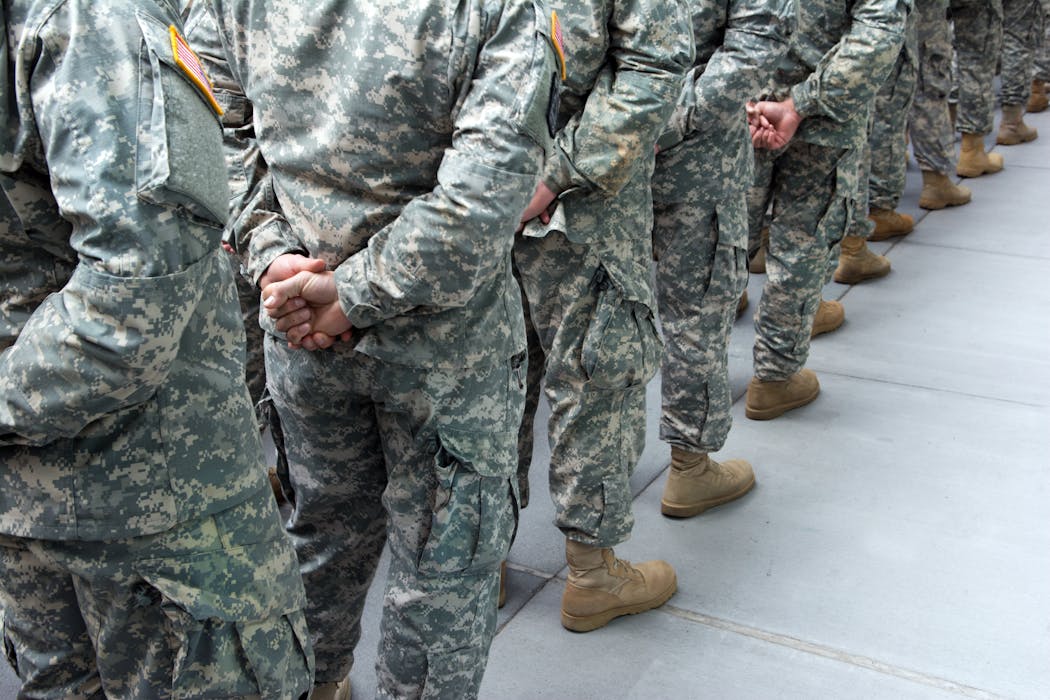
There are certain situations in which the military should not fall in line. Bo Zaunders/Corbis Documentary via Getty Images

As the Trump administration carries out what many observers say are illegal military strikes against vessels in the Caribbean allegedly smuggling drugs, six Democratic members of Congress issued a video on Nov. 18, 2025, telling the military “You can refuse illegal orders” and “You must refuse illegal orders.”

The lawmakers have all served either in the military or the intelligence community. Their message sparked a furious response on social media from President Donald Trump, who called the legislators’ action “seditious behavior, punishable by death.”

One of the lawmakers, Sen. Elissa Slotkin, told The New York Times that she had heard from troops currently serving that they were worried about their own liability in actions such as the ones in the Caribbean.

This is not the first time Trump has put members of the military in situations whose legality has been questioned. But a large percentage of service members understand their duty to follow the law in such a difficult moment.

We are scholars of international relations and international law. We conducted survey research at the University of Massachusetts Amherst’s Human Security Lab and discovered that many service members do understand the distinction between legal and illegal orders, the duty to disobey certain orders, and when they should do so.

The ethical dilemma

With his Aug. 11, 2025, announcement that he was sending the National Guard – along with federal law enforcement – into Washington, D.C. to fight crime, Trump edged U.S. troops closer to the kind of military-civilian confrontations that can cross ethical and legal lines.

Indeed, since Trump returned to office, many of his actions have alarmed international human rights observers. His administration has deported immigrants without due process, held detainees in inhumane conditions, threatened the forcible removal of Palestinians from the Gaza Strip and deployed both the National Guard and federal military troops to Los Angeles, Portland, Oregon, Chicago and other cities to quell largely peaceful protests or enforce immigration laws.

When a sitting commander in chief authorizes acts like these, which many assert are clear violations of the law, men and women in uniform face an ethical dilemma: How should they respond to an order they believe is illegal?

The question may already be affecting troop morale. “The moral injuries of this operation, I think, will be enduring,” a National Guard member who had been deployed to quell public unrest over immigration arrests in Los Angeles told The New York Times. “This is not what the military of our country was designed to do, at all.”

Troops who are ordered to do something illegal are put in a bind – so much so that some argue that troops themselves are harmed when given such orders. They are not trained in legal nuances, and they are conditioned to obey. Yet if they obey “manifestly unlawful” orders, they can be prosecuted. Some analysts fear that U.S. troops are ill-equipped to recognize this threshold.

A man in a blue jacket, white shirt and red tie at a lectern, speaking.
President Donald Trump, flanked by Secretary of Defense Pete Hegseth and Attorney General Pam Bondi, announced at a White House news conference on Aug. 11, 2025, that he was deploying the National Guard to assist in restoring law and order in Washington.
Hu Yousong/Xinhua via Getty Images

Compelled to disobey

U.S. service members take an oath to uphold the Constitution. In addition, under Article 92 of the Uniform Code of Military Justice and the U.S. Manual for Courts-Martial, service members must obey lawful orders and disobey unlawful orders. Unlawful orders are those that clearly violate the U.S. Constitution, international human rights standards or the Geneva Conventions.

Service members who follow an illegal order can be held liable and court-martialed or subject to prosecution by international tribunals. Following orders from a superior is no defense.

Our poll, fielded between June 13 and June 30, 2025, shows that service members understand these rules. Of the 818 active-duty troops we surveyed, just 9% stated that they would “obey any order.” Only 9% “didn’t know,” and only 2% had “no comment.”

When asked to describe unlawful orders in their own words, about 25% of respondents wrote about their duty to disobey orders that were “obviously wrong,” “obviously criminal” or “obviously unconstitutional.”

Another 8% spoke of immoral orders. One respondent wrote that “orders that clearly break international law, such as targeting non-combatants, are not just illegal — they’re immoral. As military personnel, we have a duty to uphold the law and refuse commands that betray that duty.”

Just over 40% of respondents listed specific examples of orders they would feel compelled to disobey.

The most common unprompted response, cited by 26% of those surveyed, was “harming civilians,” while another 15% of respondents gave a variety of other examples of violations of duty and law, such as “torturing prisoners” and “harming U.S. troops.”

One wrote that “an order would be obviously unlawful if it involved harming civilians, using torture, targeting people based on identity, or punishing others without legal process.”

An illustration of responses such as 'I'd disobey if illegal' and 'I'd disobey if immoral.'
A tag cloud of responses to UMass-Amherst’s Human Security Lab survey of active-duty service members about when they would disobey an order from a superior.
UMass-Amherst’s Human Security Lab, CC BY

Soldiers, not lawyers

But the open-ended answers pointed to another struggle troops face: Some no longer trust U.S. law as useful guidance.

Writing in their own words about how they would know an illegal order when they saw it, more troops emphasized international law as a standard of illegality than emphasized U.S. law.

Others implied that acts that are illegal under international law might become legal in the U.S.

“Trump will issue illegal orders,” wrote one respondent. “The new laws will allow it,” wrote another. A third wrote, “We are not required to obey such laws.”

Several emphasized the U.S. political situation directly in their remarks, stating they’d disobey “oppression or harming U.S. civilians that clearly goes against the Constitution” or an order for “use of the military to carry out deportations.”

Still, the percentage of respondents who said they would disobey specific orders – such as torture – is lower than the percentage of respondents who recognized the responsibility to disobey in general.

This is not surprising: Troops are trained to obey and face numerous social, psychological and institutional pressures to do so. By contrast, most troops receive relatively little training in the laws of war or human rights law.

Political scientists have found, however, that having information on international law affects attitudes about the use of force among the general public. It can also affect decision-making by military personnel.

This finding was also borne out in our survey.

When we explicitly reminded troops that shooting civilians was a violation of international law, their willingness to disobey increased 8 percentage points.

Drawing the line

As my research with another scholar showed in 2020, even thinking about law and morality can make a difference in opposition to certain war crimes.

The preliminary results from our survey led to a similar conclusion. Troops who answered questions on “manifestly unlawful orders” before they were asked questions on specific scenarios were much more likely to say they would refuse those specific illegal orders.

When asked if they would follow an order to drop a nuclear bomb on a civilian city, for example, 69% of troops who received that question first said they would obey the order.

But when the respondents were asked to think about and comment on the duty to disobey unlawful orders before being asked if they would follow the order to bomb, the percentage who would obey the order dropped 13 points to 56%.

While many troops said they might obey questionable orders, the large number who would not is remarkable.

Military culture makes disobedience difficult: Soldiers can be court-martialed for obeying an unlawful order, or for disobeying a lawful one.

Yet between one-third to half of the U.S. troops we surveyed would be willing to disobey if ordered to shoot or starve civilians, torture prisoners or drop a nuclear bomb on a city.

The service members described the methods they would use. Some would confront their superiors directly. Others imagined indirect methods: asking questions, creating diversions, going AWOL, “becoming violently ill.”

Criminologist Eva Whitehead researched actual cases of troop disobedience of illegal orders and found that when some troops disobey – even indirectly – others can more easily find the courage to do the same.

Whitehead’s research showed that those who refuse to follow illegal or immoral orders are most effective when they stand up for their actions openly.

The initial results of our survey – coupled with a recent spike in calls to the GI Rights Hotline – suggest American men and women in uniform don’t want to obey unlawful orders.

Some are standing up loudly. Many are thinking ahead to what they might do if confronted with unlawful orders. And those we surveyed are looking for guidance from the Constitution and international law to determine where they may have to draw that line.

This story, initially published on Aug. 13, 2025, has been updated to include a reference to a video issued by Democratic members of Congress.

Zahra Marashi, an undergraduate research assistant at the University of Massachusetts Amherst, contributed to the research for this article.

The Conversation

Charli Carpenter directs Human Security Lab which has received funding from University of Massachusetts College of Social and Behavioral Sciences, the National Science Foundation, and the Lex International Fund of the Swiss Philanthropy Foundation.

Geraldine Santoso does not work for, consult, own shares in or receive funding from any company or organization that would benefit from this article, and has disclosed no relevant affiliations beyond their academic appointment.

ref. Just follow orders or obey the law? What US troops told us about refusing illegal commands – https://theconversation.com/just-follow-orders-or-obey-the-law-what-us-troops-told-us-about-refusing-illegal-commands-270401

La Corée du Nord, la guerre en Ukraine et le théâtre indo-pacifique

Source: The Conversation – in French – By Marianne Péron-Doise, Chercheur Indo-Pacifique et Sécurité maritime Internationale, chargé de cours Sécurité maritime, Sciences Po

En s’impliquant directement dans la guerre que la Russie livre à l’Ukraine, la Corée du Nord renforce l’axe qu’elle forme avec la Russie et la Chine, ce qui suscite l’inquiétude de la Corée du Sud et du Japon. Dès lors, ces deux derniers pays se rapprochent de l’Otan. Les théâtres européen et asiatique sont plus interconnectés que jamais.


En octobre 2024, la révélation de la présence de militaires nord-coréens sur le front russo-ukrainien et de leur engagement aux côtés des forces russes dans la guerre de haute intensité déclenchée par Vladimir Poutine a suscité choc et malaise. Dans les mois suivants, les services de renseignement de Séoul et de Kiev ont évoqué le déploiement de jusqu’à 12 000 soldats nord-coréens dans la région russe de Koursk, où avait alors lieu une incursion ukrainienne.

Cet envoi de troupes combattantes a révélé l’ampleur de la coopération militaire russo-nord-coréenne et la proximité existant entre les deux régimes depuis la visite de Vladimir Poutine en Corée du Nord en juin 2024. Il était déjà établi que Pyongyang livrait des armes et des munitions à Moscou, mais le flou persistait sur le contenu de leur partenariat stratégique et de leur engagement de défense mutuel.

L’analyse la plus courante était qu’en échange de ses livraisons d’armements, Kim Jong‑un escomptait des transferts de technologies et d’expertise pour ses programmes d’armes. Ceci sans négliger une indispensable assistance économique et un approvisionnement dans les domaines de l’énergie et des denrées alimentaires. On sait désormais que ce « deal » inclut également l’envoi de militaires nord-coréens sur le théâtre ukrainien. Un millier d’entre eux auraient été tués et 3 000 sérieusement blessés durant les trois premiers mois de leur déploiement. Ces chiffres élevés s’expliqueraient par leur manque de familiarité avec le combat actif mais aussi par leur exposition en première ligne par le commandement russe

Cinq mille spécialistes du génie et mille démineurs nord-coréens auraient également rejoint la région de Koursk à partir de septembre 2025. Parallèlement, le nombre d’ouvriers nord-coréens envoyés sur les chantiers de construction russes augmente, révélant un peu plus combien les renforts humains que Pyongyang envoie sans s’inquiéter de leur emploi s’avèrent profondément nécessaires pour une Russie qui épuise sa population.

Le retour de Kim Jong‑un au premier plan

On peut estimer qu’un contingent de 12 000 soldats et officiers constitue une quantité dérisoire pour un pays comme la Corée du Nord, qui dispose de plus d’un million d’hommes sous les drapeaux. Cette implication n’a pas changé le cours de la guerre russo-ukrainienne. Mais elle n’a pas non plus incité les États européens à s’engager davantage militairement, par crainte de provoquer une escalade russe. L’année 2025 les aura vu tergiverser alors que les États-Unis entamaient un désengagement stratégique assumé, confortant indirectement la posture russe.

C’est en Asie, à Séoul comme à Tokyo, que cette présence militaire nord-coréenne sur le théâtre européen a suscité le plus d’inquiétudes et a été perçue comme une menace directe et sérieuse. On peut y voir le résultat du fiasco diplomatique de l’administration Trump sur le dossier nord-coréen, amplifié par l’arrivée en 2022 de l’ultra-conservateur Yoon Suk-yeol à la tête de la Corée du Sud. Celui-ci, à peine nommé, avait adopté une ligne particulièrement offensive face à Pyongyang, n’hésitant pas à évoquer l’éventualité que son pays se dote de capacités nucléaires.

Ces dernières années, humilié par l’absence de résultats après ses deux rencontres au sommet avec Donald Trump en 2018 et en 2019, alors qu’il espérait une levée partielle des sanctions, le dictateur nord-coréen Kim Jong‑un n’a eu de cesse de reprendre une stratégie de provocation, notamment vis-à-vis de la Corée du Sud, bouc émissaire tout désigné de sa perte de face.

L’épisode de Covid et la fermeture totale du régime de 2020 à 2021 n’auront fait qu’accentuer ce retour de balancier vers une diplomatie extrême dont la multiplication des tirs de missiles balistiques tout au long de 2022 aura été une manifestation spectaculaire.

Le rapprochement avec la Russie, autre « paria », lui aussi sous embargo et en quête de munitions, aura permis à Kim Jong‑un de raffermir sa stature d’homme d’État et de se poser en allié indispensable de Moscou.

La chaîne de causalités politico-diplomatiques qui aura conduit à cette situation, à bien des égards impensable, ne fait qu’arrimer davantage la sécurité de l’Europe à celle de l’Indo-Pacifique. Une équation qui n’a pas été clairement analysée par l’Union européenne et beaucoup de ses États membres, en dépit des ambitions dans le domaine de la sécurité et de la défense affichées dans les nombreuses stratégies indo-pacifiques publiées à Bruxelles ces dernières années (dont celle de la France, de l’UE, de l’Allemagne et des Pays-Bas).

L’étrange configuration d’une « guerre de Corée » revisitée

L’environnement diplomatico-militaire de ce rapprochement russo-nord-coréen n’est pas sans rappeler la guerre de Corée dans laquelle l’alliance entre Kim Il-sung (le grand-père de l’actuel dirigeant nord-coréen) et Joseph Staline a joué un rôle majeur.

Conflit emblématique de la guerre froide, la guerre de Corée a pérennisé la partition de la péninsule en deux régimes distincts, fortement opposés, tout en redistribuant les équilibres stratégiques régionaux. Les États-Unis se retrouvaient durablement ancrés en Asie de l’Est et leurs deux principaux alliés, le Japon et la Corée du Sud, constituaient un front mobile autour d’un bloc communiste formé par la Corée du Nord, l’Union soviétique et la Chine maoïste. La différence majeure réside dans le fait que pour Washington, à l’époque, l’Asie constituait un théâtre secondaire par rapport à la primauté stratégique du « monde occidental ».

Ce n’est plus le cas aujourd’hui ; les administrations américaines successives n’ont de cesse de réaffirmer l’identité pacifique des États-Unis et l’importance décisive des enjeux indo-pacifiques. Mais si l’administration Trump 2, focalisée sur la Chine – rival systémique – monnaye désormais son assistance à ses alliés européens, le Japon et la Corée du Sud se montrent particulièrement proactifs dans leur soutien multidimensionnel à l’Ukraine.

La question se pose en Corée du Sud de savoir si le voisin du Nord mène en Russie une guerre par procuration et comment y répondre. En se servant de l’Ukraine pour se rapprocher de la Russie, Pyongyang opérationnalise ses moyens conventionnels, peu rodés au combat réel, en envoyant ses troupes s’aguerrir sur le front russe. Conjuguant à terme capacités nucléaires, balistiques et conventionnelles, le régime des Kim gagne en crédibilité face à l’alliance Washington-Séoul-Tokyo. Il démontre ainsi qu’il n’est plus dans une logique de survie mais d’affirmation de puissance aux côtés de ses pairs.

Vers un axe Moscou-Pékin-Pyongyang durable ?

Jusqu’où cette entente militaire entre la Russie et Pyongyang peut-elle aller ? Et quel rôle la Chine entend-elle y jouer ?

Durant des années, Pékin a fait ce qu’il fallait en termes d’assistance humanitaire et économique pour éviter que le régime nord-coréen ne s’effondre et que les États-Unis n’en profitent pour orchestrer avec la Corée du Sud une « réunification » en leur faveur. Désormais, la Chine doit jouer le même rôle vis-à-vis de la Russie et éviter que celle-ci ne s’épuise dans sa guerre d’agression. Le soutien nord-coréen est donc bienvenu, dans la mesure où Pékin ne peut trop ouvertement aider Moscou. En revanche, la Chine s’irrite de ne pas être en position dominante au cœur de cette nouvelle construction triangulaire.

Il n’en reste pas moins que la réalité de cette forte conjonction d’intérêts entre la Chine, la Russie et la Corée du Nord – illustrée notamment par la première rencontre simultanée entre leurs leaders, le 3 septembre dernier à Pékin, à l’occasion d’un défilé commémorant le 80e anniversaire de la fin de la Seconde Guerre mondiale – renvoie à une coalition d’opportunité particulièrement dangereuse pour la sécurité européenne. Ce que ni Bruxelles, ni Washington n’ont su, ou voulu prendre en compte pour le second, pour qui l’aide militaire à Kiev s’est muée en opportunité commerciale.

Plus fondamentalement, le rapprochement entre la Chine, la Russie et la Corée du Nord (auquel les cercles stratégistes américains rajoutent l’Iran sous l’acronyme CRINK, China, Russia, Iran, North Korea) tend à constituer un front anti-occidental face à un ensemble euro-atlantique fragmenté. Il affirme d’ailleurs un certain niveau de cohérence alors que les États-Unis n’entendent plus assumer leur rôle de leader traditionnel du libéralisme international. Aux côtés de la Chine et de la Russie, la Corée du Nord contribue ainsi au narratif d’un Sud prenant sa revanche contre un Nord donneur de leçons et pratiquant les doubles standards quant au respect du droit international.


À lire aussi :
Chine, Russie, Iran, Corée du Nord : le nouveau pacte des autocrates ?


Sécurité asiatique versus sécurité euroatlantique

Le phénomène le plus marquant résultant de la constitution de l’axe Russie-Corée du Nord-Chine est la porosité entre les théâtres asiatique et européen, les pays d’Asie s’impliquant désormais davantage dans les questions de sécurité européenne.

L’intérêt grandissant de Séoul et de Tokyo envers l’Organisation du traité de l’Atlantique Nord (Otan) et leur souci d’accroître la coopération avec l’Alliance en élargissant les interactions conjointes à travers le mécanisme de Dialogue Otan-pays partenaires de l’Indo-Pacifique (Australie, Corée du Sud-Japon-Nouvelle-Zélande) en témoigne.

L’ancien président Yoon (il a été destitué en avril 2025) a manifesté son soutien à l’Ukraine dès 2022 par une aide humanitaire et économique massive, y compris en livrant des équipements militaires non létaux de protection.

La Corée du Sud, qui est un acteur industriel très actif en matière d’exportation d’armements, a diversifié son aide militaire en livrant des équipements lourds (munitions, chars, lance-roquettes multiples) à plusieurs pays européens – Norvège, Finlande, Estonie et principalement la Pologne, comme elle fidèle allié des États-Unis au sein de l’Otan. La coopération industrielle en matière d’armement entre Séoul et Varsovie devrait par ailleurs se poursuivre, permettant à la Corée du Sud de participer durablement à la sécurité de l’Europe et, plus largement, à celle de l’Otan.

Prendre en compte la nouvelle réalité

Le Japon et la Corée du Sud peuvent-ils s’impliquer davantage dans la guerre russo-ukrainienne et contribuer à une sortie de crise qui déboucherait sur des négociations équilibrées ? Il est de plus en plus difficile de nier l’impact de la guerre en Ukraine sur les équilibres stratégiques en train de se redéployer en Asie et de maintenir des partenaires comme la Corée du Sud et le Japon en marge de l’Otan, ce qui revient à ne pas prendre en compte leurs capacités à renforcer les efforts européens en faveur de la résistance ukrainienne.

Nier la réalité d’un front commun regroupant Russie, Corée du Nord et Chine serait une erreur d’appréciation stratégique qui peut se retourner contre la sécurité européenne alors que le discours chinois sur la gouvernance mondiale s’impose de plus en plus au sein du « Sud Global ».

The Conversation

Marianne Péron-Doise ne travaille pas, ne conseille pas, ne possède pas de parts, ne reçoit pas de fonds d’une organisation qui pourrait tirer profit de cet article, et n’a déclaré aucune autre affiliation que son organisme de recherche.

ref. La Corée du Nord, la guerre en Ukraine et le théâtre indo-pacifique – https://theconversation.com/la-coree-du-nord-la-guerre-en-ukraine-et-le-theatre-indo-pacifique-269955

La France est très endettée auprès du reste du monde, mais pourtant bénéficiaire. Explication d’un paradoxe

Source: The Conversation – in French – By Vincent Vicard, Économiste, adjoint au directeur, CEPII

La France est endettée vis-à-vis du reste du monde : -670 milliards d’euros en 2024. Pourtant, le reste du monde nous paie plus de revenus d’investissement que nous n’en payons. Pourquoi ce paradoxe ?


Selon le dernier rapport de la Banque de France, la position extérieure nette de la France, soit l’endettement des résidents en France vis-à-vis du reste du monde, affiche -670 milliards d’euros en 2024, soit -22,9 % du PIB. Concrètement, les Français ont reçu davantage de capitaux de l’étranger qu’ils n’y ont investi.

Une position débitrice qui rapporte paradoxalement. Longtemps réservée aux États-Unis, cette situation, qualifiée de privilège exorbitant, se vérifie pour la France. Elle s’explique par la structure des encours de la France – créances et engagements. Les créances résultent majoritairement d’investissements de multinationales françaises à l’étranger, qui affichent des taux de rendement plus rémunérateurs. Les engagements de la France viennent surtout de la détention de la dette publique française par les investisseurs étrangers.

Si la récente hausse des taux d’intérêt sur les titres de dette en a réduit la portée, les revenus d’investissement continuent pourtant à afficher un solde positif, qui contribue à maintenir le solde courant français proche de l’équilibre.

Recours massif à la finance de marché

Ce solde courant de la France dissimule des situations très contrastées selon les types d’investissements (graphique 1).

La position déficitaire tient avant tout à l’acquisition d’obligations ou d’actions rassemblées sous la catégorie d’investissements de portefeuille (-1 073 milliards d’euros), notamment des titres de dette publique détenus par des étrangers. Les titres de créance à court et long terme sur les administrations publiques contribuent pour environ -1 400 milliards d’euros.

À l’inverse, les investissements directs étrangers (IDE) ont une position positive de 568 milliards d’euros. Les entreprises multinationales françaises ont plus investi à l’étranger que les multinationales étrangères en France.


Fourni par l’auteur

Rémunération des investissements

La rémunération des investissements n’est pas la même selon leur nature.

Les investissements en actions, et en particulier les investissements directs étrangers (IDE), sont plus rémunérateurs que les titres de dettes. En 2024, le rendement apparent des IDE français était en moyenne de 6 %, contre seulement 2,4 % pour les investissements de portefeuille (en obligation et en action).

L’actif total de la France, soit l’ensemble des investissements par des résidents français à l’étranger, s’établit à 10 790 milliards d’euros. Il est de 11 460 milliards d’euros pour le passif, à savoir l’ensemble des investissements détenus par des résidents étrangers en France. De facto, la position extérieure nette est de -670 milliards.

Appliquées à de tels montants, même des différences mineures de rendement des investissements entre actif et passif peuvent avoir un impact important sur les revenus d’investissement dus ou payés par la France au reste du monde.

Privilège exorbitant

La combinaison d’un actif biaisé en faveur des actions et d’investissements directs étrangers (IDE) plus rémunérateurs et d’un passif biaisé vers les obligations, dont les intérêts sont moins importants, permet à la France d’afficher des revenus d’investissement positifs depuis deux décennies (graphique 2).


À lire aussi :
Les multinationales françaises, de nouveau à l’origine de la dégradation du solde commercial


C’est cette situation, caractéristique des États-Unis (pour ce pays elle est liée au rôle dominant du dollar), que l’on qualifie de privilège exorbitant. La France a pu financer sa consommation en empruntant au reste du monde, mais sans avoir à en payer le coût. La détention par les étrangers de dettes, en particulier de dette publique française, constitue le pendant des investissements directs à l’étranger des multinationales françaises, dont les rendements sont plus importants, et de facto du privilège exorbitant français.

Revenus des investissements

Les entrées nettes de revenus d’investissements persistent aujourd’hui malgré la récente remontée des taux d’intérêt, ces derniers augmentant la rémunération des titres de dette.

Les revenus nets sur les investissements directs étrangers (IDE) restent positifs et importants – de l’ordre de 76 milliards d’euros. Le solde des revenus d’investissement de portefeuille est aujourd’hui négatif de 39 milliards d’euros, soit près de deux fois plus que jusqu’en 2022 (graphique 3).

La hausse des taux d’intérêt est particulièrement frappante pour les autres investissements. Leur rendement apparent est en moyenne de 3,5 % en 2024, contre 0,8 % en moyenne dans les années 2010. De telle sorte que les intérêts sur les autres investissements se sont aussi dégradés (-24 milliards d’euros en 2024). Les rendements sur les titres de dette restent cependant inférieurs à ceux sur les investissements directs étrangers (IDE).

De telle sorte que les revenus d’investissement restent positifs dans leur ensemble, à +0,5 % du PIB.

Amélioration du solde commercial

À rebours des États-Unis, la France affiche une balance courante équilibrée. C’est le cas en 2024, mais aussi en 2021 et en 2019, soit toutes les années hors crise depuis cinq ans (graphique 4). L’accumulation de déficits courants pendant les années 2000 et 2010 a entraîné la dégradation de la position extérieure française, mais cela n’est plus le cas sur la période récente.

Aujourd’hui, le solde commercial est proche de l’équilibre, l’excédent des services compensant le déficit des biens. L’équilibre du compte courant ne tient plus tant au privilège exorbitant français, et aux revenus d’investissements qu’il génère, qu’à l’amélioration du solde des biens et services.

La réduction partielle du privilège exorbitant français, liée à la hausse récente des taux d’intérêt, n’entraîne pas de risque de soutenabilité extérieure lié à la position extérieure nette négative de la France.

La structure de l’actif et du passif des investissements de la France continue à générer des revenus nets positifs, malgré une position négative. Le solde courant est équilibré en 2024 (comme sur les années hors crises depuis 2019).

Pour rappel, à l’aube de la crise de la zone euro en 2010, la position extérieure nette de la Grèce était de -100 % du PIB et son solde courant déficitaire de 10 % du PIB, de -107 % et -10 % respectivement pour le Portugal, et -90 % et -4 % pour l’Espagne. Bien loin des -23 % de position extérieure nette de la France, du quasi équilibre du compte courant et du privilège exorbitant français en 2024.

The Conversation

Vincent Vicard a reçu des financements du Programme Horizon Europe.

Laurence Nayman ne travaille pas, ne conseille pas, ne possède pas de parts, ne reçoit pas de fonds d’une organisation qui pourrait tirer profit de cet article, et n’a déclaré aucune autre affiliation que son organisme de recherche.

ref. La France est très endettée auprès du reste du monde, mais pourtant bénéficiaire. Explication d’un paradoxe – https://theconversation.com/la-france-est-tres-endettee-aupres-du-reste-du-monde-mais-pourtant-beneficiaire-explication-dun-paradoxe-269003

Hacia ciudades más saludables: las medidas de la COP30 para el futuro urbano

Source: The Conversation – (in Spanish) – By Cesar Quishpe Vasquez, Investigador, Universidad de Navarra

La COP30 que se celebra en Belém este mes de noviembre llega en un momento crítico para las ciudades. El cambio climático ya no es un escenario lejano, sino una realidad que afecta a la salud, la movilidad y la calidad ambiental urbana.

España no es una excepción: olas de calor más intensas, contaminación persistente y demanda creciente de espacios verdes están redefiniendo las prioridades públicas. Comprender qué representa la COP30 y cómo puede impulsar políticas urbanas saludables es clave para avanzar hacia ciudades resilientes y sostenibles.

La relevancia global de la COP30

La conferencia reúne a las Partes de la Convención Marco de Naciones Unidas sobre el Cambio Climático entre el 10 y el 21 de noviembre de 2025. Se celebra coincidiendo con el décimo aniversario del Acuerdo de París, y veinte años desde el Protocolo de Kioto, lo que subraya la necesidad de pasar de declaraciones de intención a resultados concretos que impacten en la vida de las personas.

La presidencia brasileña ha definido como prioridades fortalecer el multilateralismo, acelerar la implementación del Acuerdo de París y vincular la acción climática con la vida cotidiana de las comunidades.

El Programa de Naciones Unidas para el Medio Ambiente (UNEP) organiza la COP30 en seis ejes: transición energética, gestión de ecosistemas, sistemas alimentarios, resiliencia urbana e hídrica, desarrollo humano y social, y catalizadores como financiación, tecnología y capacitación. Este marco abre espacio para abordar temas urbanos como calidad del aire, infraestructura verde, movilidad sostenible y participación ciudadana.


Leer más:
COP30 de Brasil: una cumbre incierta, pero imprescindible para la acción climática


La visión europea y española

La Unión Europea ha actualizado su Contribución Determinada a Nivel Nacional, proponiendo una reducción de emisiones netas entre el 66,25 % y el 72,5 % para 2035 respecto a 1990. Este compromiso no solo exige mitigación, sino también adaptación, transición energética justa y atención a los colectivos más vulnerables.

En España, estos objetivos se traducen en legislación nacional y planificación urbana, situando a las ciudades como actores esenciales para cumplir con los compromisos climáticos.

Impactos urbanos del cambio climático

El cambio climático afecta a las ciudades tanto a través de fenómenos extremos como en la vida cotidiana. El aire contaminado, la pérdida de vegetación, el calor urbano y el ruido impactan especialmente a las personas más vulnerables. En España, factores como tráfico denso, parque automovilístico envejecido y olas de calor frecuentes generan entornos urbanos menos saludables.

Al mismo tiempo, el interés en soluciones basadas en la naturaleza ofrece oportunidades para regenerar espacios urbanos, incrementar biodiversidad y generar beneficios sociales tangibles.


Leer más:
Barreras a la implantación de soluciones basadas en la naturaleza en las ciudades


Ciencia e innovación para ciudades saludables

La investigación aplicada es clave para orientar la acción urbana. Desde la Universidad de Navarra y el Instituto BIOMA, el proyecto OPTIGREEN combina sensores móviles, modelización y datos satelitales para evaluar cómo la vegetación urbana puede mejorar la calidad del aire y el confort térmico.

Este enfoque permite identificar zonas críticas, como calles con acumulación de contaminantes o barrios expuestos a altas temperaturas, y diseñar intervenciones con un impacto directo en la salud urbana. Además, se alinea con estrategias globales centradas en salud y clima así como iniciativas europeas como el Green Deal, que tiene como fin lograr la neutralidad climática para 2050 a través de un paquete de iniciativas políticas que transforman la economía en una sociedad más sostenible, justa y próspera

Oportunidades y limitaciones

Las decisiones adoptadas en Belém pueden definir marcos de financiación internacional, fortalecer la adaptación urbana y orientar inversiones hacia monitoreo ambiental, movilidad sostenible e infraestructura verde. Esto permite reducir desigualdades territoriales, mejorar la calidad del aire y promover entornos más habitables. La digitalización y las redes de sensores facilitan traducir evidencia científica en políticas públicas efectivas.

Sin embargo, las negociaciones globales presentan limitaciones. La atención suele centrarse en energía, industria o agricultura, dejando a los retos urbanos con menor visibilidad, pese a que las ciudades concentran la mayor parte de la población y de las emisiones. El monitoreo ambiental se convierte entonces en un instrumento de justicia climática: permite identificar las zonas más afectadas y fomentar la corresponsabilidad ciudadana.

La COP30 representa una oportunidad histórica para conectar la acción climática global con transformaciones urbanas tangibles. Mediante investigación científica, innovación tecnológica y planificación inclusiva, ciudades como Pamplona pueden convertirse en referentes de resiliencia, salud y sostenibilidad.

The Conversation

Cesar Quishpe Vasquez no recibe salario, ni ejerce labores de consultoría, ni posee acciones, ni recibe financiación de ninguna compañía u organización que pueda obtener beneficio de este artículo, y ha declarado carecer de vínculos relevantes más allá del cargo académico citado.

ref. Hacia ciudades más saludables: las medidas de la COP30 para el futuro urbano – https://theconversation.com/hacia-ciudades-mas-saludables-las-medidas-de-la-cop30-para-el-futuro-urbano-270136

G20 in a changing world: is it still useful? Four scholars weigh in

Source: The Conversation – Africa – By Danny Bradlow, Professor/Senior Research Fellow, Centre for Advancement of Scholarship, University of Pretoria

US president Donald Trump’s address to the annual gathering of the United Nations general assembly in late September 2025 set a new low in international relations. Trump delivered a broadside attack on multilateralism – the effort to solve the world’s problems through collective endeavour – as well as issues that have found common cause among rich and poor countries alike, such as climate change.

So where does this leave the work of organisations such as the G20? The body was set up by the G7 in 1999 in the wake of the Asian financial crisis. The purpose was to create a bigger grouping of countries to help manage the governance of the global economy.

The group now represents about 67% of the global population and about 85% of the global economy. But it’s a strange beast: it is a self-selected group, which raises questions about its legitimacy. And it doesn’t have a permanent secretariat, which makes its work cumbersome.

We asked four leading scholars for their answers. Given the changing global context, is the G20 still useful?

The Conversation

Danny Bradlow, in addition to his position at the University of Pretoria, is Senior G20 Advisor to the South African Institute of International Affairs, a Senior Non-Resident Fellow, Global Development Policy Center, Boston University and co-chair of the T20 task force on sustainable finance.

My research is funded by the Grantham Foundation for the Protection of the Environment.

Sandy Africa is the Research Director of the Mapungubwe Institute for Strategic Reflection (MISTRA) and a Research Associate at the University of Pretoria and writes here in her personal capacity. MISTRA is providing technical support to the RSA government during its G20 Presidency.

Ana Saggioro Garcia does not work for, consult, own shares in or receive funding from any company or organisation that would benefit from this article, and has disclosed no relevant affiliations beyond their academic appointment.

ref. G20 in a changing world: is it still useful? Four scholars weigh in – https://theconversation.com/g20-in-a-changing-world-is-it-still-useful-four-scholars-weigh-in-266221

Climate change and inequality are connected – policies need to reflect this

Source: The Conversation – Africa – By Anda David, Senior researcher, Agence Française de Développement (AFD)

An increasingly strong case is being made to bring inequality into discussions about climate change. The logic behind this has been set out by leading international institutions such as the International Labour Organisation, the UN Environmental Programme and the Network for Greening the Financial System.

All have begun to highlight the connection between climate outcomes and inequality. They are stressing that inequality should be viewed as posing systemic and macroeconomic risk. Inequality has been found to undermine democracy, social and political cohesion and economic stability. Inequality also undermines our ability to deal with climate and environmental challenges.

In a recent summary paper we analysed how environmental policies can be designed and implemented with an inequality-reduction lens. We used examples from South Africa, Colombia, Indonesia and Mexico.

As researchers in the research department of the French development agency the AFD, specialising in the analysis of inequality and the social implications of energy and economic transitions, we have seen how climate action can either narrow or deepen existing divides, depending on how policies are designed.

The core of the case we make is that reducing inequality should be a guiding principle in decisions on climate change. There are numerous cases we studied in which it’s clear that countries often simply opt for compensating those who stand to lose from environmental transitions rather than seeking more equitable solutions. This needs to change. But a shift requires focusing on a meaningful reduction of inequality as well as understanding who wins from the transition.

The green transition and the absence of equity

We take the just transition as a starting point as it is increasingly cited as the accepted framework for building sustainable economies. This approach focuses on the social dimension of the ecological and energy transition and highlights the need to secure the livelihood of those negatively affected by the green transition. It highlights an inclusive transition to a low-carbon and sustainable economy, leaving no one behind.

Countries are progressively incorporating just transition principles into their national climate strategies. Examples include South Africa’s 2022 just transition framework and Mexico’s upcoming NDC 3.0. But when it comes to the actual design and implementation of policies, equity is rarely treated as the central concern. This becomes obvious when we look at some of the characteristics of the current green transitions.

Green jobs: The promise often is that these jobs are better, more stable and more sustainable. But the research we coordinated in Colombia with the University of Los Andes shows that these opportunities benefit groups that already have advantages. Examples include university-educated urban men. Women, youth and rural populations remain largely excluded.

Green infrastructures: We looked at who owns green infrastructures, such as solar parks, wind farms, smart grids, and storage systems. We often saw it remained largely in the hands of large private and multinational companies. In South Africa, for instance, the union Numsa has pushed back against a profit-driven renewable energy programme that transferred risks to the state and kept electricity tariffs high. The main beneficiaries of the programme are financial actors and multinational corporations. This is a good illustration of how ownership determines who controls energy as well as who truly gains from the transition.

Environmental protection policies. These include:

  • protected areas – defined spaces with the goal of nature conservation and the preservation of ecosystems

  • biodiversity offsets – intended to compensate for environmental damage caused by development projects.

These policies and plans for environmental protection can generate inequalities as they are often designed top-down. As a result, local communities can lose out.

What needs to shift

Putting inequality reduction at the centre means more than adding a social component to existing programmes.

In Colombia, the findings point to the need for early and targeted public policies to address labour market disparities. Examples include:

  • integrating training in renewable energy, energy efficiency and other sustainability-related skills into technical and vocational training

  • using approaches tailored to local needs and that are sensitive to gender differences.


Read more:
33 million women grow food on plots in sub-Saharan Africa. Greener farming can boost their earnings — study


Another thing that needs to change is the level of support for businesses and particularly small enterprises so that they can contribute to job creation. Most of them operate informally and rely on survivalist strategies. Evidence from South Africa showed that they’re excluded from just energy transition plans.

We also identified areas that need improvement around taxation. A fair climate policy should start with recognising that carbon taxes are not neutral: their burden falls differently across income groups.

In Indonesia, the study we led with our partners using microsimulation found that a €30-per-ton carbon tax would slightly increase costs for lower-middle income households. But when revenues were recycled through targeted cash transfers to low-income and energy-poor households, the policy had positive outcomes.


Read more:
Renewable energy projects in rural Ghana have some built-in limitations


This example shows that equity depends less on the tax itself than on how its proceeds are used.

Finally, democratising ownership of the energy transition process is key to ensuring that it’s just. Our evidence shows that community and user-owned models can make renewable infrastructure inclusive as well as viable. Examples include community-owned solar installations, worker share ownership schemes and multistakeholder cooperatives.


Read more:
We studied smallholder farming in three African countries for 10 years: why profitable irrigation is key


In Mexico’s Río Lagartos, for example, a local fishing cooperative invested in a solar-powered ice machine. This led to costs being cut and local incomes being boosted.

Next steps

Inequalities threaten the commitment to existing efforts in the climate domain. Embedding the reduction of inequality into climate action is an opportunity for a meaningful transformation.

The examples we found of best practice as well as the weaknesses in initiatives can help guide policymakers. The needle is moving in discussions on inequality. The suggestion by the G20 Extraordinary Committee of Independent Experts on Global Inequality is a case in point. It has recommended the creation of a global panel to provide guidance to countries on how they can ensure that reducing inequality sits at the heart of their development trajectories.

The Conversation

The authors do not work for, consult, own shares in or receive funding from any company or organisation that would benefit from this article, and have disclosed no relevant affiliations beyond their academic appointment.

ref. Climate change and inequality are connected – policies need to reflect this – https://theconversation.com/climate-change-and-inequality-are-connected-policies-need-to-reflect-this-269657

Pour transiter vers une économie carboneutre, la biomasse a un rôle clé à jouer

Source: The Conversation – in French – By Normand Mousseau, Directeur de l’Institut de l’énergie Trottier, Polytechnique Montréal et Professeur de physique, Université de Montréal

Feux de forêt records, résidus agricoles sous-utilisés, scieries fragilisées : le Canada se retrouve avec une grande quantité de biomasse sous-valorisée. Pourtant, cette ressource pourrait devenir l’un de ses meilleurs alliés dans la lutte contre les changements climatiques, à condition d’en planifier l’usage avec rigueur.

Les secteurs de la biomasse au Canada font face à de fortes incertitudes à cause de perturbations politiques et naturelles. Le secteur forestier canadien a récemment été frappé par de nouveaux tarifs douaniers annoncés par l’administration américaine sur les produits forestiers canadiens, portant le total des droits imposés sur le bois d’œuvre canadien à 45 %. Le secteur agricole et agroalimentaire est également particulièrement vulnérable, car il exporte plus de 70 % de ses principales cultures.

En plus de faire face à ces incertitudes politiques, les secteurs de la biomasse subissent de plus en plus les effets des catastrophes climatiques. En 2025, les incendies avaient brûlé 8,3 millions d’hectares de forêts canadiennes au 30 septembre, soit la deuxième pire saison de feux de forêt au Canada. Avec le changement climatique, les phénomènes climatiques extrêmes, tels que les feux de forêt et la sécheresse, risquent de devenir plus fréquents et plus intenses.

Les transformations s’accélèrent et les risques augmentent. Pour les industries et les communautés qui dépendent de la biomasse, le moment est venu d’imaginer une vision à long terme de son rôle dans la transition climatique.

Les ressources de la biomasse : un élément clé

Le Canada a besoin de se diriger vers une économie carboneutre et les secteurs de la biomasse ont un rôle clé à jouer dans cette transition.

La disponibilité de diverses ressources de biomasse dans les forêts et les terres agricoles au Canada, combinée aux nouvelles technologies pour la convertir en bioproduits et bioénergie, fait de la biomasse une solution potentielle pour réduire les émissions de carbone dans plusieurs secteurs, comme l’industrie, le bâtiment et tous les modes de transport (routier, maritime, ferroviaire et aérien).

La biomasse peut faire partie des stratégies d’atténuation du changement climatique. Bien utilisée, elle peut remplacer les combustibles et produits fossiles, et aider à stocker le carbone de différentes façons : dans des matériaux durables fabriqués à partir de bois ou de résidus agricoles, sous forme de biochar qui retient le carbone dans le sol, ou grâce à la bioénergie combinée au captage et au stockage du CO2 (BECSC), qui empêche le carbone libéré lors de la production d’énergie de rejoindre l’atmosphère.

L’intérêt pour les matières premières de la biomasse par de nombreuses industries est élevé, comme le démontrent plusieurs projets récents. En 2025, la première usine de biochar à échelle industrielle du Canada a été inaugurée au Québec, tandis que la raffinerie Strathcona en Alberta, qui deviendra la plus grande installation de diesel renouvelable du Canada, a été achevée.

Le rôle de la biomasse ressort clairement dans les modélisations de trajectoires possibles pour atteindre les objectifs climatiques du Canada. Ces analyses montrent que, si une partie importante de la biomasse disponible était utilisée différemment, il serait possible de séquestrer jusqu’à 94 millions de tonnes équivalant CO2 par an grâce au BECSC et au biochar.

Ces résultats soulignent la nécessité pour le Canada de planifier soigneusement les développements de nouveaux projets et de répartir judicieusement la biomasse entre ses usages traditionnels et émergents.

Identification des utilisations optimales de la biomasse

Comme nous l’expliquons dans un rapport récent, plusieurs facteurs influencent le potentiel de la biomasse à réduire les émissions, notamment le type d’écosystème où elle est récoltée, l’efficacité de sa conversion, les combustibles employés et les produits qu’elle remplace dans les secteurs concernés. Autrement dit, les bénéfices climatiques de la biomasse ne sont pas automatiques : ils dépendent des choix faits à chaque étape de la chaîne de valeur. Ainsi, si les transformations ou le transport des ressources exigent beaucoup d’énergie fossile ou si le produit final déplace une alternative peu émettrice, le gain pour le climat peut devenir marginal, voire négatif.

Pour utiliser la biomasse de façon optimale, il faut bien comprendre les ressources disponibles dans un contexte de changement climatique, ainsi que leur réel potentiel de réduction des émissions. Un potentiel qui dépend à la fois de l’efficacité des technologies et des réalités culturelles, environnementales et économiques des communautés.

Il manque encore une vision à long terme

Les décideurs doivent éviter de travailler en vase clos et tenir compte des effets collatéraux de l’allocation des ressources. Les pratiques dans les secteurs de la biomasse, qu’il s’agisse de la foresterie ou de l’agriculture, évoluent lentement. Les forêts, notamment, suivent de longs cycles de croissance et de récolte : les choix faits aujourd’hui influenceront les émissions pour des décennies.

Pourtant, malgré l’importance de ses ressources, le Canada n’a pas de stratégie définissant une vision du rôle de la biomasse dans la transition vers la carboneutralité d’ici 2050.

Le Canada s’est doté de plusieurs cadres liés à la bioéconomie, notamment le Cadre renouvelé de la bioéconomie forestière (2022) et la stratégie canadienne pour la bioéconomie (2019). Mais il manque encore une stratégie d’ensemble qui définirait la place de la biomasse dans les différents secteurs, énergétiques ou non, dans la perspective d’un avenir carboneutre.


À lire aussi :
Océans : les poissons, un puits de carbone invisible menacé par la pêche et le changement climatique


Le Canada peut s’inspirer de sa propre Stratégie canadienne pour l’hydrogène pour concevoir une stratégie similaire sur la biomasse, appuyée sur une modélisation intégrée de son potentiel dans différents secteurs de l’économie canadienne. Il est urgent d’adopter une approche réaliste, fondée sur des analyses à plusieurs échelles – du régional au national – plutôt que sur des cibles sectorielles isolées.


Déjà des milliers d’abonnés à l’infolettre de La Conversation. Et vous ? Abonnez-vous gratuitement à notre infolettre pour mieux comprendre les grands enjeux contemporains.


De nombreux acteurs du secteur soulignent l’urgence d’adopter une stratégie nationale claire pour la bioéconomie, afin d’offrir plus de prévisibilité aux industries de la biomasse au Canada. Dans un article publié par Biomass Magasine, Jeff Passmore (fondateur et président de Scaling Up) déclare attendre que le Canada élabore une stratégie nationale concrète en matière de bioéconomie. Dans un article publié par Bioenterprise en 2023, il est souligné que « l’un des éléments clés nécessaires pour construire l’avenir de la biomasse au Canada est une stratégie nationale de bioéconomie solide à long terme, soutenue par l’industrie et les gouvernements ».

Enfin, un article de Bioindustrial Innovation Canada recommande de « réviser la stratégie nationale pour la bioéconomie en fixant des objectifs mesurables visant à assurer une coordination interministérielle et intersectorielle, assortis d’une feuille de route claire pour la collaboration entre l’industrie et le secteur public ».

La biomasse ne se gère pas à l’aveugle. Ses impacts varient selon les régions et les usages. Pour que les projets futurs contribuent réellement aux objectifs climatiques du Canada, il faut dès maintenant une vision nationale cohérente.

La Conversation Canada

Dans le cadre du travail rapporté pour cet article, Normand Mousseau a reçu des financements d’Environnement et Changements climatiques Canada, de la Fondation familiale Trottier (via son soutien pour les activités de l’Institut de l’énergie Trottier) et de l’Accélérateur de transition, un organisme à but non lucratif donc le mandat est d’appuyer la transition énergétique dans divers secteurs économiques. Aucun droit de regard sur les analyses et les conclusions n’ont été accordés aux organismes qui ont financé ce texte ou des rapports sur lesquels il s’appuie. Les auteurs sont seuls responsables de celles-ci.

L’Institut de l’énergie Trottier de Polytechnique Montréal a été créé grâce à un généreux don de la Fondation familiale Trottier. Sa mission couvre la recherche, la formation et la diffusion d’information en lien avec les enjeux de décarbonation des systèmes énergétiques.

Pour soutenir le mandat de recherche du Groupe consultatif sur la carboneutralité, le projet de l’IET sur la biomasse a été réalisé avec le soutien financier du gouvernement du Canada. Le financement a été réalisé par le Fonds d’action et de sensibilisation pour le climat du Fonds pour dommages à l’environnement, administré par Environnement et Changement climatique Canada. Aucun droit de regard sur les analyses et les conclusions n’ont été accordés aux organismes qui ont financé ce rapport. Les auteurs sont seuls responsables de celles-ci.

Roberta Dagher travaille à l’Institut de l’énergie Trottier en support à l’Accélérateur de transition. Roberta Dagher ne travaille pas, ne conseille pas, ne possède pas de parts, ne reçoit pas de fonds d’une organisation qui pourrait tirer profit de cet article.

ref. Pour transiter vers une économie carboneutre, la biomasse a un rôle clé à jouer – https://theconversation.com/pour-transiter-vers-une-economie-carboneutre-la-biomasse-a-un-role-cle-a-jouer-268634