Why Trump blames decisions on others – a psychologist explains

Source: The Conversation – UK – By Geoff Beattie, Professor of Psychology, Edge Hill University

It was US president Harry S. Truman who, in the years just after the second world war, kept a little wooden sign on his desk which read: “The buck stops here!”. It emphasised his willingness to accept ultimate responsibility for his decisions and actions as president, even the ones that didn’t quite work out.

This phrase has since become emblematic of presidential accountability and leadership. Truman wasn’t interested in trying to pass the buck, not as a man and certainly not as president.

Interestingly, the sign was made in the Federal Reformatory (prison) at El Reno, Oklahoma, suggesting an implicit moral dimension to this issue of responsibility and accountability. We’re all accountable for our actions, whoever we are, but the president above all.

But how things seem to have changed with Donald Trump in the White House.


Get your news from actual experts, straight to your inbox. Sign up to our daily newsletter to receive all The Conversation UK’s latest coverage of news and research, from politics and business to the arts and sciences.


Trump continually takes personal credit for any perceived successes as president – fixing global tariffs, Nato members paying more, the Middle East (even taking credit for things that were completed before he took office). But he makes sure that any failures are immediately attributed elsewhere.

He frequently positions himself as surprised or “blindsided” by unpopular decisions, which are always somebody else’s doing, somebody else’s fault. Subordinates are held responsible. He is not averse to pointing the finger directly at them, and often in public, high-profile settings.

That great loyal Trump supporter, defense secretary Pete Hegseth, for example, has recently been in the firing line for being personally responsible for pausing the delivery of missile shipments to Ukraine. US defence officials had apparently become concerned that weapons stockpiles were becoming low, as they needed to divert arms to Israel to help in the war with Iran.

But the pause in supplying some weapons to Ukraine announced by the Pentagon on July 2 was a hugely unpopular decision that resonated around the world. Hegseth was blamed.

Some have suggested that having loyalists such as Hegseth in critical positions like secretary of defense is highly strategic, and not just for the more obvious reasons. You could argue that having loyal supporters with delegated but overlapping authority is highly advantageous when it comes to the blame game.

Trump can publicly distance himself when things go wrong (as he did here), claim a degree of surprise, and swiftly change course. That way he is publicly reasserting his role as leader without admitting fault.

It is also noteworthy that Trump often reverses these decisions made by his subordinates in high-visibility environments, which suggests a determined pattern of strategic image management.

It’s a simple set of moves – you allow a subordinate to initiate a controversial decision, then you rein it in publicly and reassert your authority, thus showcasing your resolve. In other words, delegation to loyal insiders like Hegseth becomes a useful buffer against political fallout.

Loyal insiders still stay loyal (for the foreseeable future at least). They won’t sling mud, like some might in their position. So Trump can appear masterful.

Are you going to send weapons to Ukraine? President Trump reverses a policy and decides he will.

But of course, there’s more to this than everyday political shenanigans. Personality plays a major role. Some psychologists have argued that not internalising failure is psychologically beneficial.

If you take credit for success but externalise failure, that makes you resilient (and happy). But there are clearly limits to this, and there’s a darker side.

People with high levels of narcissism (“I like to be the centre of attention”; “I am an extraordinary person” – both items on the narcissism personality inventory, a method of measuring personalities) often avoid accountability because they perceive themselves as superior to others. But only, it should be noted, in certain “key” aspects of life.

In the words of Jean Twenge and W. Keith Campbell, authors of The Narcissism Epidemic: “Narcissists think that they are smarter, better looking and more important than others, but not necessarily more moral, more caring or more compassionate.”

Narcissistic individuals tend to externalise blame to protect their fragile self-esteem and maintain their self-image. They may refuse to admit fault because doing so threatens their grandiose concept of self.

Individuals exhibiting Machiavellian traits, characterised by manipulativeness and a lack of empathy, are also more prone to shifting blame. They may deflect responsibility to serve their self-interest, which is clearly a highly manipulative manoeuvre. You just do whatever is required.

Research also indicates that individuals with low conscientiousness, one of what are considered the “big five” personality traits, are less likely to accept responsibility for their actions. They may be somewhat careless or irresponsible in their work or actions, and when mistakes do occur – which they will – they blame external factors or other people.

In other words, certain personality traits are associated with a tendency to avoid accountability and responsibility.

It has been said that Trump’s inner circle consists of loyal sycophants who, even when it’s cringeworthy for outsiders, publicly praise him to amplify and protect his self-image. He needs this from them.

But they have another use as well. When things don’t go so well, they take it on the chin for him. That’s almost part of the job description. When things go wrong, his inner circle all understand the buck really stops with them.

The Conversation

Geoff Beattie does not work for, consult, own shares in or receive funding from any company or organisation that would benefit from this article, and has disclosed no relevant affiliations beyond their academic appointment.

ref. Why Trump blames decisions on others – a psychologist explains – https://theconversation.com/why-trump-blames-decisions-on-others-a-psychologist-explains-260877

From athlete’s foot to smelly soles: why daily washing is key to healthy feet

Source: The Conversation – UK – By Dipa Kamdar, Senior Lecturer in Pharmacy Practice, Kingston University

Anastasia1507/Shutterstock

Washing your feet might not top your list of daily priorities – but it should.

While most of us shower regularly, our feet are often forgotten. Letting water run over them isn’t enough. To keep them healthy, you need to actively wash your feet with soap and water, paying close attention to the soles and the spaces between your toes. This helps remove sweat, dead skin and microbes that build up throughout the day and helps prevent infections, irritation – and that all-too-familiar smell.

Feet, particularly the spaces between toes, are a breeding ground for bacteria and fungi. Thanks to socks, shoes, and sweaty soles, they spend most of the day in a warm, humid environment that’s perfect for microbial growth. This can lead to common conditions like athlete’s foot, fungal nail infections, and bromodosis (smelly feet).

Stinky feet

Sweat itself doesn’t smell. But when bacteria break down sweat on your feet, they release smelly compounds called volatile fatty acids (VFAs). Staphylococcus bacteria are key players here, feeding on amino acids in sweat and producing isovaleric acid, which smells distinctly cheesy or sour (fun fact: it’s the same compound found in certain cheeses).

A study found that 98.6% of bacteria on the soles of participants’ feet were Staphylococci, and the intensity of foot odour was directly linked to how much of this bacteria was present.

Good foot hygiene isn’t just about avoiding odour, though; it also helps prevent infections. Athlete’s foot, a fungal infection, thrives in the damp space between your toes. It causes itching, redness, cracked skin and sometimes blisters. And despite the name, you don’t have to be an athlete to get it. The infection spreads easily in communal places like swimming pools, showers and changing rooms, particularly if you go barefoot.

If left untreated, the fungus can spread to the toenails, making them thick, yellow and brittle. Catching it early makes treatment much easier.


Read more:
Fighting fungal nail infections: simple steps for healthier toenails


Bacterial infections are also a concern, especially when Staphylococcus or Pseudomonas enter through small cuts or cracked skin. Washing regularly helps reduce the number of bacteria living on the surface, lowering the risk of infection for anyone with vulnerable or damaged skin.

Diabetic foot care

If you have diabetes, foot care becomes even more important. People with diabetes are more prone to ulcers and infections and wounds often heal more slowly, particularly when blood sugar levels are poorly controlled.


Read more:
Five ways to save your legs – by a vascular surgery specialist


This is due to several factors: poor circulation means less oxygen and fewer nutrients reach the site of the wound, the immune response is weaker, and inflammation may persist. Nerve damage (diabetic neuropathy) in the feet can also mean that injuries go unnoticed – and untreated.

According to Diabetes UK, daily foot washing is a key part of diabetes care; not just to reduce infection risk, but to check for any early signs of damage, such as redness, swelling, or breaks in the skin.

Too clean?

If you’ve been in closed shoes all day, or exercising, a proper wash is a good idea. For most people, once a day is enough, particularly during warm weather.

But not everyone needs to scrub their feet daily. The skin is home to a healthy community of beneficial microbes that defend against harmful bacteria and support the skin’s natural barrier. Overwashing, particularly with hot water or harsh soaps, can strip these helpful organisms and remove natural oils, leaving skin dry, irritated and more prone to cracking.

This is especially problematic for people with skin conditions like eczema where the skin barrier is already weakened.

The use of antibacterial soaps can also disrupt the skin’s microbial balance, killing off friendly bacteria and potentially encouraging the growth of more harmful, antibiotic-resistant strains. Some scientists also suggest that excessive hygiene might reduce the immune system’s exposure to everyday microbes; exposure that helps build a healthy immune response.

How to wash your feet properly

Here’s how to do it right, according to NHS guidance:

  • use warm (not hot) water and a mild soap

  • wash thoroughly, paying close attention to the soles and between the toes

  • dry your feet completely, including the spaces between your toes

  • apply moisturiser to keep the skin soft and less likely to crack — but skip the areas between the toes, as added moisture there can encourage fungal growth

  • inspect your feet regularly for any signs of redness, swelling, or blisters — vital for those with diabetes.

If you notice persistent itching, unusual odours, or signs of infection, speak to a pharmacist. They can recommend over-the-counter treatments or refer you to a podiatrist if necessary.

Whether you’re active, managing a chronic condition, or just trying to stay fresh in summer, proper foot hygiene matters. It might seem like a small step – but it makes a big difference to your overall health.

The Conversation

Dipa Kamdar does not work for, consult, own shares in or receive funding from any company or organisation that would benefit from this article, and has disclosed no relevant affiliations beyond their academic appointment.

ref. From athlete’s foot to smelly soles: why daily washing is key to healthy feet – https://theconversation.com/from-athletes-foot-to-smelly-soles-why-daily-washing-is-key-to-healthy-feet-259301

What’s the forever chemical TFA doing in the UK’s rivers?

Source: The Conversation – UK – By Daniel Drage, Associate Professor of Environmental Health, University of Birmingham

The river Kelvin runs through Glasgow, Scotland. Jeff Whyte/Shutterstock

Most UK rivers are contaminated by a chemical called trifluoroacetic acid (TFA). This is a type of human-made chemical known as perfluorinated alkyl substances (PFAS), often called “forever chemicals”.

This widespread contamination highlights the extensive scale of work required to remove synthetic forever chemicals from our environment.

Many PFAS are known to be toxic (including associations with altered liver and thyroid function and various cancers). PFAS all contain at least two carbon-fluorine (C-F) chemical bonds, one of the toughest bonds to break so they tend to be persistent. Once they are released to the environment, they don’t easily degrade.

The PFAS class incorporates a vast but unknown number of different chemicals – estimates vary from around 5,000 to 6.5 million. TFA is just one of many PFAS.


Get your news from actual experts, straight to your inbox. Sign up to our daily newsletter to receive all The Conversation UK’s latest coverage of news and research, from politics and business to the arts and sciences.


TFA enters the environment from different sources. It’s used to make blowing agents (used to make things like expanded foams and plastics such as packaging materials), pesticides and pharmaceuticals. So it is intentionally used for some useful applications.

But it can also be produced unintentionally as a by-product from various processes that involve “pre-cursor” PFAS chemicals. The biggest environmental source of TFA is as a by-product from manufacturing “F-gases” or flourinated greenhouse gases – these are used as refrigerants instead of CFCs (chlorofluorocarbons) and HCFCs (hydrochlorofluorocarbons) which are known to cause ozone depletion.

While F-gases may not deplete ozone, they are greenhouse gases with extremely high global warming potential with some several thousand times more potent then CO₂. An F-gas called fluoroform has a global warming potential of 14,800. This means that when fluoroform is released into the atmosphere, it will trap 14,800 times more heat for an equivalent amount of CO₂.

TFA is highly persistent so it resists most forms of physical, chemical and biological degradation. TFA is also highly mobile so it can enter waterways and move around them easily, while remaining in the environment for hundreds of years. This is why it’s now accumulating and cropping up in our environment more often, contaminating our rivers, food and even our wine.

gloved hand holding glass jug with water sample, river in background
Scientists have analysed levels of a particular forever chemical in 32 UK rivers.
Inessa Boo/Shutterstock

TFA has been found in rivers across the globe including the US, China, Germany and Switzerland. These findings have triggered joint research between environmental charity Fidra and scientists at the University of York to sample water from and analyse the TFA levels in 32 UK rivers, streams and lakes. They found TFA present in 31 of the 32 sites investigated, including an exceptionally high level in the River Kelvin, Glasgow (the second highest recorded globally to date). This is approaching levels where TFA has been previously observed to start having adverse effects on aquatic organisms.

The trouble with TFA

Apart from its major source being as a breakdown product from the production of greenhouse gases (and knock on climate change effects), the presence of TFA in our environment represents a genuine threat to human and environmental health.

Currently there is no guidance for safe levels of TFA in drinking water, and it is not something that is measured. However, if it is present in our rivers and lakes, then there is a potential pathway for it to enter our drinking water. This needs to be addressed so that our levels of exposure, and the level of threat that TFA poses, can be assessed by scientists, industries and regulators.

While evidence is limited on human toxicity of TFA, studies dating back more than 25 years have highlighted its potential effects on aquatic organisms, including effects on development of zebrafish, as well as various algaes, which act as important food sources in aquatic ecosystems. Studies on mammals have that continuous TFA exposure could lead to shown increased liver sizes (suggesting the possibility of a significant underlying, unknown medical condition) and potential disruption to reproductive hormones, causing fertility and foetal development issues.

The EU’s chemical regulator, the European Chemicals Agency is responsible for ensuring chemical safety in Europe. They suggest TFA poses a low threat if exposure is short term. However, longer-term exposure effects remain unknown. With other PFAS, recommended weekly maximum intakes have been substantially reduced as knowledge has advanced.

While TFA pollution continues unabated, levels in the environment beyond those 32 rivers – and in our food and drink – remain difficult to quantify. It is also hard to confidently suggest methods to reduce personal TFA exposure. However, work by myself and colleagues has shown that exposure to many PFAS can be reduced by filtering tap water with activated carbon or charcoal filters. Other researchers have suggested that this could be an effective way to remove TFA from drinking water, as long as filters are changed regularly.


Don’t have time to read about climate change as much as you’d like?

Get a weekly roundup in your inbox instead. Every Wednesday, The Conversation’s environment editor writes Imagine, a short email that goes a little deeper into just one climate issue. Join the 45,000+ readers who’ve subscribed so far.


The Conversation

Daniel Drage has previously received funding from the Natural Environment Research Council, DEFRA, Environmental Protection Agency of Ireland. He is an Associate Professor at University of Birmingham and an Honorary Research Fellow at the University of Queensland.

ref. What’s the forever chemical TFA doing in the UK’s rivers? – https://theconversation.com/whats-the-forever-chemical-tfa-doing-in-the-uks-rivers-259411

Johnny Depp’s new film about Modigliani is in danger of downplaying his importance as an artist – an art expert’s verdict

Source: The Conversation – UK – By Frances Fowle, Personal Chair of Nineteenth-Century Art, History of Art, University of Edinburgh

In 2018 an oil painting of a nude by the Italian artist Amedeo Modigliani broke a world record when it sold at Sotheby’s for US$157.2 million (£115.2m). It was created in 1917, at a time when Modigliani was unable to sell his pictures for more than a few francs.

Johnny Depp’s new film Modi: Three Days on the Wings of Madness explores the artist’s struggle to sell his work, and the tension that existed between his own idealism and the need to be commercially minded.

The film also addresses Modigliani’s mental instability, brought on by self-medication while suffering from tuberculosis. He took refuge in hashish and alcohol (including absinthe), and this movie pulls out all the stops when it comes to visualising the horrors and hallucinations that afflicted him as the illness progressed and the drugs took hold.

Set against the background of Paris during the first world war, the action takes place over three days in 1916. It takes its inspiration from Modigliani – A Play in Three Acts by Dennis McIntyre and remains remarkably faithful to the plot.


Looking for something good? Cut through the noise with a carefully curated selection of the latest releases, live events and exhibitions, straight to your inbox every fortnight, on Fridays. Sign up here.


This revolves round Modigliani’s friendship with the artists Chaïm Soutine (Ryan McParland) and Maurice Utrillo (Bruno Gouery); his tempestuous relationship with the English poet and writer Beatrice Hastings (Antonia Desplat); and his reliance on the art dealer Léopold Zborowski (Stephen Graham). It is Zborowski who sets up a much-anticipated meeting with an important collector, Maurice Gangnat (Al Pacino).

Modigliani, brilliantly and energetically portrayed by Riccardo Scamarcio, comes across as a passionate, idealistic and irresistible genius. However, he is also haunted by ghosts, and a slave to his drug addiction, perhaps echoing Depp’s own past.

Depp’s film – his second as director – never loses pace. In one scene Modigliani plunges through a stained-glass window. In another he shocks potential buyers by setting fire to a painting; in a third he trashes his studio, destroys his most recent sculptures and slashes several canvases.

The title of the film, Modì, was the artist’s nickname, but is also a play on the French word maudit, meaning cursed. As a young man Modigliani was an avid reader of the German philosopher Nietzsche, whose own descent into madness was punctuated by periods of lucidity.

Nietzsche saw no clear distinction between dreaming and waking, and the film reflects this in the way in which hallucination, memory and reality become confused. Modí masks his increasing pain with alcohol, drinking with his artist friends Utrillo and Soutine in the seedy Bateau Lavoir in Montmartre.

Of Belarusian extraction, Soutine, like Modigliani, was a Jewish outsider. In 1916 the two artists occupied neighbouring studios in La Ruche, a down-at-heel artists’ residence in the 15th arrondissement of Paris. Before he achieved commercial success, Soutine lived in abject poverty, forced to sleep rough in stairways and on park benches. He suffered from depression and anxiety, and his internal turmoil is reflected in his highly expressive work.

The third member of the triumvirate, Maurice Utrillo, also suffered from mental health issues, and took up art to ward off depression. The movie alludes to this as the reason he was unable to enlist during the war. Instead, he spent regular periods in hospitals and mental institutions and painted many of his views of Paris from postcard images.

Modigliani, too, tried to join up, but was refused due to poor health. In the film this memory sparks an episode of disturbing hallucinations, featuring walking wounded with horrific injuries, and a plague doctor doubling as a spectre of death, a leitmotif for Modigliani’s own fear of dying.

Following such nightmarish episodes, Modigliani turns to Beatrice Hastings, who adopts the role of carer (and, as the film implies, substitute mother) as well as lover. She was however, motivated as much by Modigliani’s genius, as by her own burgeoning career as a poet, literary critic and co-editor of the British avant-garde magazine The New Age.

In the film she is frustrated by Modigliani’s idealism. She encourages him to be more pragmatic and commercially minded and berates him, not for embracing life, but for constantly “running from death”.

She is also the artist’s muse, the model for his “masterpiece”, a reclining nude, and an unfinished sculpted head of a woman. Both are cinematic devices; there is no evidence that Beatrice ever posed nude, while the sculpted head was produced in 1911-12, before the two had even met. Despite this, both works play a central role in the film’s denouement, sparking the artist’s falling out with Zborowski.

The climax of the movie is the artist’s much-anticipated meeting with Gangnat, a rich industrialist and significant figure in art history, whose collection included 160 works by Auguste Renoir. The meeting, predictably, is a disaster, but, even though he leaves without a penny, Modigliani has the last word: “I am much richer than you, Monsieur Gangnat,” he insists, “You have merely existed…I have lived”.

Was Modigliani as idealistic as the film portrays? Possibly, but perhaps not, for by 1916 he had already met a new and influential dealer, Paul Guillaume, who would ensure a commercially successful future, not only for our hero, but also for Soutine and Utrillo.

In the end, the film is an enjoyable romp, even if it is in danger of downplaying Modigliani’s importance as an artist in favour of the more sensational aspects of his life.

And yet it is undeniable that his life really did read like a film script. He died of tuberculosis in January 1920 at the age of 35. Two days later his common-law wife, Jeanne Hébuterne, pregnant with their second child, took her own life. Soon after, however, thanks to dealers such as Zborowski and Guillaume, the importance of Modigliani’s work was finally recognised, and today he is remembered as one of the most significant artists of his generation.

The Conversation

Frances Fowle does not work for, consult, own shares in or receive funding from any company or organisation that would benefit from this article, and has disclosed no relevant affiliations beyond their academic appointment.

ref. Johnny Depp’s new film about Modigliani is in danger of downplaying his importance as an artist – an art expert’s verdict – https://theconversation.com/johnny-depps-new-film-about-modigliani-is-in-danger-of-downplaying-his-importance-as-an-artist-an-art-experts-verdict-260340

What would it take for a new British left-wing party to succeed?

Source: The Conversation – UK – By Colm Murphy, Lecturer in British Politics, Queen Mary University of London

Last week, the MP for Coventry South, Zarah Sultana, made an audacious decision. Having already lost the Labour party whip for opposing the two-child benefit cap, Sultana announced she would co-lead a new left-wing party with Jeremy Corbyn, who was expelled from Labour in 2024.

From one angle, her decision may seem simple. Discontent with Keir Starmer’s Labour government, on everything from welfare cuts to Gaza, has never been higher, and Sultana is a vocal critic. Yet, launching a (still unnamed) new party is bold. It tackles head-on an old and vexing question for socialist critics of capitalism in the UK.

In 1976, the socialist theorist Ralph Miliband (yes, Ed and David’s dad) described the faith in Labour’s capacity to become a socialist vehicle as “the most crippling of all illusions”. But socialists who agree with Miliband senior then have an almighty problem.

Writing months after the 2019 defeat of Corbyn’s Labour party, the veteran “New Left” academics Colin Leys and Leo Panitch echoed Miliband in their book Searching for Socialism. But they also saw few immediate alternatives with “any prospect of electoral success”. This, they wrote, is the “central dilemma” for British democratic socialists.


Get your news from actual experts, straight to your inbox. Sign up to our daily newsletter to receive all The Conversation UK’s latest coverage of news and research, from politics and business to the arts and sciences.


The reaction to Sultana’s announcement from the British left has been accordingly mixed. Leaks revealed that Corbyn’s team was caught off guard. Responses from prominent potential supporters were reserved. Momentum, the left-wing grassroots organisation, hastily distributed the pamphlet Why Socialists Should Be in the Labour Party.

It’s too early to know whether these issues are teething problems or portents. But the barriers to Sultana’s venture are formidable. What would it take for a new left-wing party to succeed? What would “success” even look like?

A careful reading of political history can help us answer these questions. This is not the first time that new parties have emerged from Labour factionalism. Many readers will be aware of the 1981 departure of the “gang of four” Labour figures, who founded the Social Democratic party (SDP) that later merged with the Liberal party to form the Liberal Democrats.

Nor is it the first time that smaller parties have appeared on Labour’s left. Between 1920 and 1991, the Communist party of Great Britain was a potent force in the trade union movement. From the 1990s to the 2010s, several vehicles contested local and national elections against Labour, from the Socialist Alliance to Left Unity.

Challenges for a new party

Each of these iterations had its historical peculiarities. But stepping back, we can identify three recurring challenges that any left-wing insurgent party must confront.

First, they must agree on an electoral strategy and purpose, given the institutional brutality of British democracy. The UK has some proportional elections, including in Scotland and Wales (expected to be next contested in 2026). Councils are also possible avenues of influence.

But there is no avoiding the fact that legislative and executive power is hoarded in the House of Commons, elected by first past the post. Labour will discourage possible defectors by warning that a split in the left vote will let in the right. Neil Kinnock, Labour’s former leader who found himself fighting off the SDP while trying to evict Thatcher in the 1980s, dubbed Sultana and Corbyn’s venture the “Farage assistance party”.

Left of Labour parties are often aware of the risk. Indeed, far left activists have in the past advocated voting Labour, with “varying degrees of (un)enthusiasm”.

Advocates of a new party will note that Labour is only polling in the low 20s, suggesting a pool of ex-Labour voters potentially interested in shopping around. However, there are others it could torpedo too.

One recent poll on support for a hypothetical Corbyn-led party – which we should take with some salt – found that its 10% support comes partly from eating into the Green vote. An electoral arrangement with the Greens, on the other hand, may require shared policy platforms, raising the question of why a separate party is needed.

A poll from More in Common conducted specifically about a Sultana-Corbyn party found 9% of Labour voters and 26% of current Green voters saying that would vote for such a party.

The Socialist Labour party (SLP) – founded in 1996 by the prominent trade unionist Arthur Scargill in reaction to Tony Blair’s New Labour – is the obvious cautionary tale. Scargill wanted a purer, better Labour party. Yet, Labour looked set to kick out an 18-year-long Conservative government.

Scargill could not convince many sympathetic activists to join. As historian Alfie Steer argues, the SLP instead became dominated by socialists hostile to the Labour party. The party could not overcome the resultant contradictions in its purpose and collapsed into acrimony.

The SLP also illustrates the second key consideration: timing. The SLP struggled partly because it launched just as Labour was sweeping triumphantly into power. Sultana’s timing is arguably more astute. She has waited for Starmer’s bubble to burst and for disillusionment to fester.

However, the broad left within Labour has also just found its voice by rebelling against government policy. The temptation for a risk-averse Labour activist may be to leap onto this critical bandwagon without taking the more dangerous step of defecting.


Read more:
The mistakes Keir Starmer made over disability cuts – and how he can avoid future embarrassment


Starmer and Corbyn side by side
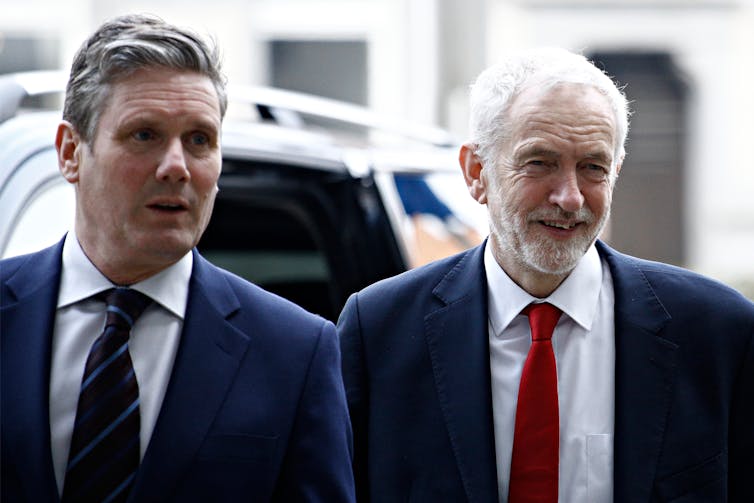
Keir Starmer, then shadow Brexit secretary, accompanies then-Labour leader Corbyn to Brussels in 2019.
Alexandros Michailidis/Shutterstock

The final challenge is securing institutional durability without debilitating splits. It is telling that Sultana felt compelled to include Corbyn’s name despite his reported reservations.

Sultana herself has an impressive political profile, especially on TikTok. Any new party will rely heavily on prominent spokespeople to force it into the national conversation. Yet, such vehicles can become trapped by their dependence on individuals. The Respect party of the 2000s, for example, was reliant on the charismatic but polarising figure of George Galloway.

The fledgling party will also need a lasting structure that determines how candidates are selected and policy is formed. This risks dragging it into dreaded constitutional debates. It is already reportedly divided over the existence of co-leaders.

Intra-party democracy is off-putting to outsiders. But as constitutional scholar Meg Russell argues, it speaks to fundamental questions about the extent, and limits, of democracy. Such disputes have frequently wracked the left (and the radical right, as Reform’s recent constitutional changes show).

To what extent should policy be “democratically” decided? Should a new party limit who can join, and if so, on what criteria? How will leaders be selected? From the CPGB to the SLP, these questions have proven divisive in the past. They could easily prove so again.

The new party faces severe challenges, but it would be unwise to write it off completely. In a volatile context, it has a chance to make its mark if it is clear in its strategic electoral purpose, cultivates an institutional and activist base and times its interventions astutely. But the obstacles to success are enormous – and with Reform currently polling top, the risks are high.

The Conversation

Colm Murphy is currently a member of the Labour Party, but he is writing purely in an academic capacity.

ref. What would it take for a new British left-wing party to succeed? – https://theconversation.com/what-would-it-take-for-a-new-british-left-wing-party-to-succeed-260599

Vuelve Superman, un superhéroe para su tiempo

Source: The Conversation – (in Spanish) – By David Moriente Díaz, Profesor de Historia y Teoría del Arte, Universidad Autónoma de Madrid

Fotograma de ‘Superman’, la versión de 2025 de James Gunn. FilmAffinity

En junio de 1938 el dibujante Joseph “Joe” Shuster y el guionista Jerome “Jerry” Siegel presentaron, en el primer número de la revista Action Comics, a Superman. Este personaje, además de convertirse en celebérrimo, abriría la puerta a un nuevo género que continúa hasta hoy: el de las aventuras de superhéroes.

Portada de una revista en la que un hombre vestido de azul y con capa roja levanta un coche por encima de su cabeza.
Portada del primer número de Action comics con Superman haciendo de las suyas.
RTVE/Heritage Auctions

En su icónica portada y en apenas once páginas, los autores del cómic desplegaron el origen extraterrestre del personaje, su llegada a la Tierra, sus habilidades sobrehumanas y su dedicación al bien. De hecho, en el último minuto salvaba a una mujer acusada injustamente de haber cometido un asesinato de ser ejecutada en la silla eléctrica.

Con apenas 24 años y con formaciones casi autodidactas, Shuster y Siegel marcaron los inicios de un mito que alcanza hasta hoy.

Ambos, de origen judío-lituano, eran norteamericanos de segunda generación que vivían en el barrio judío de Glenville (Cleveland). Se habían criado en el seno de familias muy humildes que habían llegado a Estados Unidos huyendo del creciente antisemitismo en Europa, de igual modo que otros nombres axiales para la industria cultural del cómic de los años cincuenta y sesenta –la denominada “edad de oro”– como, por ejemplo, Jack Kirby o Will Eisner.


Leer más:
De ‘Superman’ a ‘Maus’, los creadores judíos son parte esencial de la historia del cómic


Shuster y Siegel no crearon a Superman de la nada, sino que absorbieron la influencia de numerosos elementos que conformaban el ambiente de la cultura popular del momento, que se transmitía a través, principalmente, del pulp (publicaciones de papel barato). Así, por ejemplo, bebieron del virtuosismo de un personaje como Doc Savage (Henry Rawlston y John Nanovic, 1933), quien en sus peripecias buscaba eliminar “las injusticias y castigar a los malvados”, como rezaban los lemas de la época. O se inspiraron, un poco después, en la sólida brújula moral y la identidad secreta en la figura cuasifantástica de The Phantom (Lee Falk y Ray Moore, 1936).

Superman tiene ‘algo más’

Sin embargo, el matiz diferencial de Superman –y que sería la clave de su éxito– es que introducía el superpoder, una característica que lo hacía entroncar directamente con los mitos de los semidioses: podía volar, y tenía una fuerza y resistencia inmensurables, además de facultades como proyectar rayos ópticos o despedir un aliento helado.

Ahora se estrena la última adaptación cinematográfica de la historia del personaje, de la mano del director James Gunn. Tras su exitosa trilogía dedicada a los personajes de la editorial Marvel, los Guardianes de la Galaxia, Gunn ha sido contratado por DC Comics para ordenar el mundo cinematográfico del Universo DC –el de Superman y Batman, entre otros– y competir con la compañía rival Marvel Studios.

Gunn ha decidido no ahondar en los inicios del mito de Superman, que ya han sido tratados infinidad de veces en la gran pantalla. Así, los espectadores dan por sabida su historia: Superman –de nombre original Kal-El– es el único superviviente de la destrucción del planeta Krypton causada por la explosión de su sol. Lo hace gracias a que su padre lo manda a la Tierra siendo un bebé en una pequeña cápsula. Lo encuentran los Kent, un humilde matrimonio de granjeros de Kansas, quienes lo crían inculcándole el valor supremo de hacer el bien.

Una década convulsa

A finales de la década de los treinta, cuando se publicó el cómic, la sociedad estadounidense trataba de olvidar la brutal recesión del país acaecida a consecuencia del crack del 29. La crisis había sido atajada gracias a las medidas del New Deal propuestas por el presidente Roosevelt, que reforzaban la necesidad de premiar el trabajo duro y el heroísmo cotidiano de la clase trabajadora, un estrato al que pertenecían los padres adoptivos de Superman.

Simultáneamente, esa sociedad encaraba con incertidumbre un futuro cuyo escenario prebélico ya era palpable en Europa tras el ascenso de los nazis al poder en 1933. Como nota curiosa, durante la Segunda Guerra Mundial, y con toda la maquinaria propagandística al servicio del ejército de Estados Unidos, Superman se enfrentó con personajes inspirados en la Alemania nazi, aunque nunca “zurró” directamente a Hitler (como sí hizo, por ejemplo, el Capitán América).

El héroe y su punto débil

¿Qué significa el héroe (uso deliberadamente el género masculino) como sujeto narrativo?

La voz procede del griego hḗrōs, un concepto usado para referirse a los semidioses, es decir, los hijos habidos de la unión entre dioses y mortales. Estos seres, en términos generales, se situaban a medio camino entre lo humano y lo divino. Según esto, el valor, el sacrificio y la empatía se atribuían a la humanidad, mientras que la superioridad moral y las habilidades sobrenaturales serían de origen celestial. La combinación de ambas, entonces, conformaba el perfecto modelo a seguir.

Los héroes procedentes de la mitología de todas las culturas, de Gilgamesh a Hércules pasando por Kintaro o Beowulf, encarnan el prototipo de lo bello, lo bueno y lo verdadero.

No obstante, Superman –al igual que, por ejemplo, Aquiles– también tenía un punto débil: la kriptonita, un material procedente de su mundo natal que podía anular sus superpoderes y lo transformaba en un mortal como el resto de nosotros.

Quién somos y quién queremos ser

La RAE define a un “supermán” como un “hombre de capacidades y cualidades sobrehumanas”.

Sin embargo, el triunfo de su impronta en la sociedad como mito moderno hay que buscarlo en la doble faz del personaje. Tenemos, por un lado, al tímido, torpe y algo estúpido Clark Kent que con sus gafas permitía a cualquiera –siempre que fuera caucásico y occidental– identificarse con él. Pero además, existía la posibilidad de que esa envoltura endeble albergase un otro yo capaz de enfrentarse a todo. Alguien que, como el Übermensch (superhombre) de Friedrich Nietzsche, hubiese alcanzado un estado supremo.

Un chico con traje, pelo rizado y gafas mira hacia arriba, fuera de campo.
Tal vez no todos podamos ser Superman, pero sí podemos ser Clark Kent.
IMDB

Tras numerosas adaptaciones al medio fílmico en los últimos años, quizá haya que destacar que, a diferencia de la penúltima visión de Zack Snyder y su Man of the Steel (2013), la de Gunn recupera la esencia más humanista –más clásica incluso– y bondadosa de un personaje. Tal vez estos sean los ideales necesarios para subsistir en los Estados Unidos de hoy, con un ambiente casi distópico. Como se suele decir: la realidad supera a la ficción.

The Conversation

David Moriente Díaz no recibe salario, ni ejerce labores de consultoría, ni posee acciones, ni recibe financiación de ninguna compañía u organización que pueda obtener beneficio de este artículo, y ha declarado carecer de vínculos relevantes más allá del cargo académico citado.

ref. Vuelve Superman, un superhéroe para su tiempo – https://theconversation.com/vuelve-superman-un-superheroe-para-su-tiempo-260658

Raison d’être : une nouvelle arme stratégique pour les conseils d’administration européens ?

Source: The Conversation – in French – By Rodolphe Durand, Professeur, stratégie et Politique d’Entreprise, HEC Paris Business School

Comme des centaines de grandes entreprises européennes, le groupe Véolia s’est doté d’une raison d’être. Shutterstock

Une étude menée auprès de 21 très grandes entreprises européennes comme Accor, Barclays, Decathlon, Enel, L’Oréal, Michelin, Philips ou RTL Group, révèle une approche nuancée du corporate purpose par les conseils d’administration des entreprises européennes interrogées. Quatre approches se dégagent: la raison d’être comme slogan, guide, style et boussole, chacune avec ses avantages.


Le 24 avril dernier, l’assemblée générale de Veolia a voté à plus de 99 % l’inscription de la raison d’être dans les statuts de la société. Ce qui veut dire que le conseil d’administration de Veolia plus encore qu’avant devra suivre la mise en œuvre de sa raison d’être par la direction générale de l’entreprise. Quelle sera son approche ?

Dans cet article, plutôt qu’une fois encore se poser la question du management de la raison d’être de l’entreprise (ou corporate purpose) par la direction de l’entreprise, nous nous demandons comment les conseils d’administration des grandes entreprises européennes orchestrent… leur administration. Pour rappel, le conseil d’administration organise les pouvoirs de décision, définit la stratégie de la société, et s’assure de sa mise en œuvre.

La récente étude menée par HEC Paris et Oxford University auprès de 21 très grandes entreprises européennes comme Accor, Barclays, Decathlon, Enel, L’Oréal, Michelin, Philips ou RTL Group, révèle une approche nuancée du corporate purpose par les conseils d’administration des entreprises européennes interrogées . Elle révèle une vision de la raison d’être comme un principe organisateur qui structure la prise de décision, définit les activités et contours identitaires de l’entreprise.

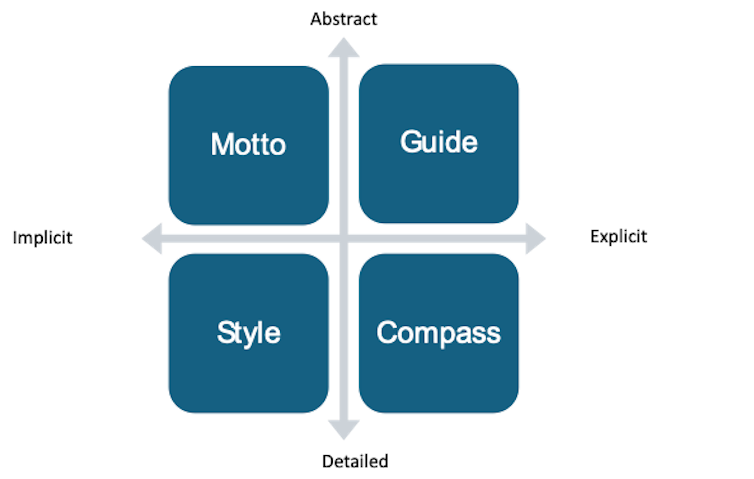
En Europe, au sein des conseils d’administration, quatre approches existent, que nous avons appelé: slogan, guide, style et boussole, chacune avec ses avantages et ses inconvénients. Le maître mot ? Ajuster l’approche de la raison d’être par le conseil d’administration avec les objectifs et les moyens donnés à la direction générale et au management pour sa bonne mise en œuvre.

Quatre approches de la raison d’être

Notre étude identifie ces quatre approches au niveau des conseils d’administration des grandes entreprises européennes. L’approche change selon deux dimensions : si le conseil, et ses comités associés se réfèrent à la raison d’être de façon implicite ou explicite et si les mesures, valeurs et comportements associés à la raison d’être sont abordés de façon générale – abstraite – ou précise – détaillée.

Types de mode d’administration de la raison d’être au sein des conseils des grandes entreprises européennes. Motto signifiant slogan.
Fourni par l’auteur

L’une des conclusions les plus frappantes concerne l’importance cruciale de l’alignement entre l’orchestration au niveau du conseil et la mise en œuvre opérationnelle par le management. Les entreprises qui échouent à synchroniser ces deux niveaux risquent de dysfonctionner. Soit elles engagent trop de ressources, alors que leur mode d’administration ne le requiert pas. Soit elles engagent trop peu de ressources, alors que leur mode d’administration l’exigerait.

Le défi principal ne réside pas tant dans la formulation du corporate purpose, que dans sa traduction opérationnelle au sein des conseils d’administration, à l’interface des représentants des actionnaires – les administrateurs – et de ceux qui agissent pour le développement de l’entreprise – les managers.

Slogan : l’agilité au prix de la cohésion ?

L’approche « Slogan », implicite et abstraite, est la version la plus libre et fluide des quatre approches. Dans cette celle-ci, la raison d’être demeure implicite, car elle n’est pas inscrite dans des pratiques formalisées. Elle est invoquée sous forme de rappel lors de certaines décisions, sans processus formel au sein des comités. Prenons l’exemple d’une des entreprises interrogées.

« La raison d’être est partie intégrante de qui nous sommes et alimente la prise de décision, tant au sein du conseil qu’à l’intérieur de l’entreprise ». rappelle la présidence d’un comité interviewé

Cette approche permet une grande agilité, sans brider la capacité à innover rapidement. En laissant aux équipes de management la liberté d’interpréter la raison d’être selon leur contexte culturel et concurrentiel, elle autorise une forte résonance locale à la raison d’être. Elle séduit particulièrement les entreprises opérant dans des environnements complexes ou multiculturels. Cette flexibilité peut toutefois virer à la dispersion. Lorsque chaque filiale ou business unit s’approprie à sa manière les valeurs et la finalité de la raison d’être de l’entreprise, le risque existe de perdre la cohésion d’ensemble. Le sens commun s’effiloche, et avec lui, l’alignement stratégique.


Abonnez-vous dès aujourd’hui !

Chaque lundi, recevez gratuitement des informations utiles pour votre carrière et tout ce qui concerne la vie de l’entreprise (stratégie, RH, marketing, finance…).


Style : les valeurs comme moteur, au risque de l’ambiguïté ?

L’approche « Style » correspond à une compréhension implicite de la raison d’être par le corps social de l’entreprise corrélée à un suivi par le conseil d’un certain nombre d’indicateurs. Cette approche valorise la confiance et l’autonomie des dirigeants dans les propositions stratégiques qu’ils soumettent au conseil. En retour, le conseil suit des indicateurs d’engagement des salariés, de cohérence des valeurs dans les décisions, notamment au sein de comités spécifiques traitant de la stratégie ou de la rémunération des dirigeants.

Pour le management, le caractère implicite permet de s’appuyer sur la force de cultures professionnelles. Le suivi détaillé d’indicateurs fournit des appuis pour décliner des pratiques managériales au sein des unités opérationnelles. Comme pour l’approche « slogan », l’absence de cadre explicite peut générer des interprétations ambiguës de la raison d’être et mener à des incohérences. Chacun y projette son propre sens, au risque de créer de la confusion stratégique. Si des mécanismes de suivi trop lourds sont mis en place, cette approche se retrouve piégée dans une logique d’exécution… plus que d’inspiration.

Guide : des principes affichés, mais pas infaillibles ?

L’approche « Guide » rend explicites les valeurs de la raison d’être sans pour autant imposer un suivi détaillé d’indicateurs par le conseil d’administration. Ce mode d’orchestration renforce la coordination entre les équipes, installe une culture d’entreprise partagée par le plus grand nombre, ce qui favorise l’engagement des collaborateurs. Le conseil peut mobiliser la raison d’être au sein de comités, notamment le comité stratégique au sujet des cessions et des acquisitions. La raison d’être sert de guide informel pour orienter le management dans ses plans de développement de l’entreprise.


À lire aussi :
La « raison d’être » de l’entreprise rebat les cartes du jeu concurrentiel


Du point de vue de la direction générale, cette approche peut s’avérer difficile à suivre en l’absence de critères détaillés. La culture forte de l’entreprise peut, avec le temps, devenir une fin en soi, voire réduire la raison d’être à un symbole plutôt qu’un véritable moteur stratégique. En période de crise, en l’absence d’indicateurs suivis précisément par les comités du conseil, le « guide » peut être oublié pour se tourner vers les solutions plus immédiatement lucratives. Et le management pourrait prendre des décisions déconnectées de la raison d’être initiale, semant les graines de dilemmes futurs.

Boussole : aligner mais sans étouffer

Le modèle « Boussole » combine une explicitation de la raison d’être avec un suivi détaillé de nombreux indicateurs. Dans cette configuration, l’espace de jeu entre le conseil et le management est réduit : ils sont conjointement tenus responsables de la réalisation de la raison d’être.

« Les chiffres des budgets vus en conseil reflètent de façon précise et détaillée l’application factuelle de la raison d’être et le développement à long terme des projets qui viennent la soutenir », confie un président de conseil d’administration

Une autre présidente souligne que l’ensemble des comités (y compris celui sur les risques) se réfèrent explicitement à la raison d’être et aux indicateurs pour porter ses analyses. Cette approche crée une forte mobilisation, des comportements alignés et une cohérence globale. Cette rigueur a un prix. La mesure et le reporting de la raison d’être peuvent devenir complexes, voire paralysants selon certains dirigeants. Lorsque les résultats ne sont pas à la hauteur des attentes élevées, le risque est de susciter incompréhensions, frustrations, voire désenchantement au sein de l’entreprise.

La raison d’être s’administre autant qu’elle se manage

L’avenir du corporate purpose en Europe ne se résume pas à une compliance réglementaire ou à une stratégie de communication. Non plus à un ensemble de pratiques managériales. Pour en retirer le meilleur, il s’agit de bien aligner les pratiques du conseil d’administration et les demandes et moyens alloués au top management pour mettre en œuvre la raison d’être. Quatre approches existent, chacune avec ses forces et ses faiblesses.

Nous pensons que cette conception européenne du corporate purpose, ancrée dans l’histoire du continent et tournée vers l’avenir, dépasse désormais la simple question du management. Elle concerne la définition, le rôle et les responsabilités des membres des conseils d’administration et plus généralement de la gouvernance des entreprises, au service d’une compétitivité repensée dans ses dimensions, sa finalité, et sa temporalité.

The Conversation

Les auteurs ne travaillent pas, ne conseillent pas, ne possèdent pas de parts, ne reçoivent pas de fonds d’une organisation qui pourrait tirer profit de cet article, et n’ont déclaré aucune autre affiliation que leur organisme de recherche.

ref. Raison d’être : une nouvelle arme stratégique pour les conseils d’administration européens ? – https://theconversation.com/raison-detre-une-nouvelle-arme-strategique-pour-les-conseils-dadministration-europeens-256615

Trump is aiming to silence public media in the US – and if he succeeds, his supporters here will take note

Source: The Conversation – Global Perspectives – By Bruce Wolpe, Non-resident Senior Fellow, United States Study Centre, University of Sydney

The ABC dodged a bullet in the Australian election. The Albanese government supports the ABC. In the United States, however, the 2024 presidential election severely wounded public media in America.

Fresh from his decisive victory in Congress – passage of the One Big Beautiful bill that locks in the legislation to prosecute Trump’s domestic policy agenda – Trump is demanding Congress cancel funding for public media, the Public Broadcasting Service (PBS) and National Public Radio (NPR). Hardliners in the US House of Representatives have already voted to end all federal funding for public media. The Senate will vote on this issue in mid-July.

We have tale of two vital and powerful media institutions in Australia and the US. What happens over there can affect what happens here.

Towards the end of Australia’s election campaign, Peter Dutton, then leader of the Liberal Party, opened up on the ABC. He looped in The Guardian for good measure. And he implied other media deserved his words:

Forget about what you have been told by the ABC, The Guardian and the other hate media.

Dutton’s words embellished previous policies under Coalition governments, with budget cuts to the ABC of over $500 million, and several inquiries into the degree of ABC’s neutrality and objectivity in its coverage of news and current affairs.


Read more:
Peter Dutton calling the ABC and the Guardian ‘hate media’ rings alarm bells for democracy


Kim Williams, chair of the ABC, said the network would “perform well” under any scrutiny from a Dutton government. Dutton himself, shortly before the election, demanded the ABC show “excellence” in order to prove to taxpayers that its almost $1.2 billion annual budget was justified.

The Coalition’s defeat aided the ABC’s victory in its longstanding quest for financial stability and future growth. The ABC can continue to build on the commitments established by the Albanese Labor government in 2023 – even though there are choppy waters for the ABC as its new leadership makes programming and staffing decisions for the years ahead.

With a new Coalition shadow cabinet in place, we will see as future budgets play out whether they have changed their tune on their approach to the ABC.

We will see how both the government and the Coalition react to Kim Williams’ powerful case he recently presented for “more investment for much-needed renewal” in the ABC.

Public media in Trump’s America

In America today, public media are facing Trump’s wrath.

Trump’s hatred of mainstream media is legendary. For the past decade, Trump has called the major media outlets the “enemy of the people” – the same label that Soviet dictator Joseph Stalin used against those who dared to oppose him.

In his second term, Trump is engaged in aggressive muscling of the enemies he sees in the media. The Associated Press is barred from the pool of journalists covering the president. Trump has silenced the Voice of America. The US ABC and CBS television networks have both settled lawsuits filed by Trump to seek damages for their broadcast coverage of him and the 2024 presidential campaign. The price to help avoid regulatory punishment by the government of those two networks: $US16 million (A$24.5 million) each.

For a country that established freedom of the press under its Constitution, Trump’s attacks on news media are an ongoing assault on America’s democracy.

Trump’s attacks on PBS and NPR show the existential threat they face.

In 1967, Congress established and funded the Corporation for Public Broadcasting to bring to life public television and radio across America. Money from CPB supports the stations. The stations contract with PBS and NPR to help produce the programming they air, from the PBS NewsHour, Frontline and Sesame Street on PBS to Morning Edition and All Things Considered on NPR – and much more.

Trump holds the same sentiment that Dutton expressed against the ABC – that the public broadcasters are biased toward the “extreme woke Marxist left”. Trump wrote on Truth Social that:

Jim Jordan of Ohio, one of the most influential Republican leaders in the House of Representatives, was in-your-face direct on the case against public media:

This bill’s real simple. Don’t spend money on stupid things, and don’t subsidize biased media.

In late April, Trump ordered the firing of three of CPB’s five directors. On May 1, Trump issued an executive order that will savage public media’s existence:

At the very least, Americans have the right to expect that if their tax dollars fund public broadcasting at all, they fund only fair, accurate, unbiased, and nonpartisan news coverage […] The CPB fails to abide by these principles to the extent it subsidizes NPR and PBS.“

Public media has filed red-hot lawsuits against Trump and his officials for crushing the First Amendment free-speech rights of public televion and radio stations, and for cancelling funds appropriated by Congress. The court rulings in these cases will be crucial to the outcome.

The last near-fatal threat to public broadcasting was in 1981, when President Ronald Reagan sought Congress’ approval to decimate its funding. Under Reagan conservatism, media belong in the private sector. The conservative’s political bias against public broadcasting framed the push to cancel government funding.

But Congress rose up successfully against the Reagan cuts – led not only by Democrats but with Senate Republicans from rural states who understood how important public broadcasting was to their communities. Their budgets were trimmed, but PBS and NPR were not decapitated.

Lessons for the ABC

The same is true here: ABC stations in country areas are similarly held in high regard.

The cuts to public media passed the US House by one vote on June 12.

The Senate will vote in the coming days. We will see if some Senate Republicans who voted against Trump’s One Big Beautiful bill last week will stand up again and vote to buck Trump on this issue and protect public media in their states.

If Trump succeeds in silencing public media in America, the Trump echo chamber in Australia will take note. Some hard conservatives in Canberra and the Murdoch media will likely leverage Congress’ approval of Trump’s order that PBS and NPR be punished for their left-wing bias and that public media should become the province of the private sector. Defunding public media in the US will sustain the sentiment that one day, under a future government here, the scythe will be wielded at the ABC.

If the US Senate supports Trump, the fight for the ABC in Australia – not just over money, but over its role, responsibilities and standing in Australia – may not be over.

The Conversation

Bruce Wolpe is a (non-resident) Senior Fellow at the United States Studies Centre at the University of Sydney. The views expressed herein are his own. Wolpe served on the staff of Prime Minister Julia Gillard. He worked on the Democratic staff in Congress on public broadcasting issues and was an executive with NPR. He is the author of two books on Trump and Australia.

ref. Trump is aiming to silence public media in the US – and if he succeeds, his supporters here will take note – https://theconversation.com/trump-is-aiming-to-silence-public-media-in-the-us-and-if-he-succeeds-his-supporters-here-will-take-note-260584

Does Donald Trump deserve the Nobel Peace Prize? We asked 5 experts

Source: The Conversation – Global Perspectives – By Emma Shortis, Adjunct Senior Fellow, School of Global, Urban and Social Studies, RMIT University

Israeli Prime Minister Benjamin Netanyahu has formally nominated United States President Donald Trump for the Nobel Peace Prize. He says the president is “forging peace as we speak, in one country, in one region after the other”.

Trump, who has craved the award for years, sees himself as a global peacemaker in a raft of conflicts from Israel and Iran, to Rwanda and the Democratic Republic of Congo.

With the conflict in Gaza still raging, we ask five experts – could Trump be rewarded with the world’s most prestigious peace prize?

The Conversation

Emma Shortis is Director of International and Security Affairs at The Australia Institute, an independent think tank.

Jasmine-Kim Westendorf has received funding from the Australian Research Council.

Shahram Akbarzadeh receives funding from Australia Research Council.

Ali Mamouri and Ian Parmeter do not work for, consult, own shares in or receive funding from any company or organisation that would benefit from this article, and have disclosed no relevant affiliations beyond their academic appointment.

ref. Does Donald Trump deserve the Nobel Peace Prize? We asked 5 experts – https://theconversation.com/does-donald-trump-deserve-the-nobel-peace-prize-we-asked-5-experts-260801

Does AI actually boost productivity? The evidence is murky

Source: The Conversation – Global Perspectives – By Jon Whittle, Director, Data61, CSIRO

Roman Samborskyi/Shutterstock

There’s been much talk recently – especially among politicians – about productivity. And for good reason: Australia’s labour productivity growth sits at a 60-year low.

To address this, Prime Minister Anthony Albanese has convened a productivity round table next month. This will coincide with the release of an interim report from the Productivity Commission, which is looking at five pillars of reform. One of these is the role of data and digital technologies, including artificial intelligence (AI).

This will be music to the ears of the tech and business sectors, which have been enthusiastically promoting the productivity benefits of AI. In fact, the Business Council of Australia also said last month that AI is the single greatest opportunity in a generation to lift productivity.

But what do we really know about how AI impacts productivity?

What is productivity?

Put simply, productivity is how much output (goods and services) we can produce from a given amount of inputs (such as labour and raw materials). It matters because higher productivity typically translates to a higher standard of living. Productivity growth has accounted for 80% of Australia’s income growth over the past three decades.

Productivity can be thought of as individual, organisational or national.

Your individual productivity is how efficiently you manage your time and resources to complete tasks. How many emails can you respond to in an hour? How many products can you check for defects in a day?

Organisational productivity is how well an organisation achieves its goals. For example, in a research organisation, how many top-quality research papers are produced?

National productivity is the economic efficiency of a nation, often measured as gross domestic product per hour worked. It is effectively an aggregate of the other forms. But it’s notoriously difficult to track how changes in individual or organisational productivity translate into national GDP per hour worked.

AI and individual productivity

The nascent research examining the relationship between AI and individual productivity shows mixed results.

A 2025 real-world study of AI and productivity involved 776 experienced product professionals at US multinational company Procter & Gamble. The study showed that individuals randomly assigned to use AI performed as well as a team of two without. A similar study in 2023 with 750 consultants from Boston Consulting Group found tasks were 18% faster with generative AI.

A 2023 paper reported on an early generative AI system in a Fortune 500 software company used by 5,200 customer support agents. The system showed a 14% increase in the number of issues resolved per hour. For less experienced agents, productivity increased by 35%.

But AI doesn’t always increase individual productivity.

A survey of 2,500 professionals found generative AI actually increased workload for 77% of workers. Some 47% said they didn’t know how to unlock productivity benefits. The study points to barriers such as the need to verify and/or correct AI outputs, the need for AI upskilling, and unreasonable expectations about what AI can do.

A recent CSIRO study examined the daily use of Microsoft 365 Copilot by 300 employees of a government organisation. While the majority self-reported productivity benefits, a sizeable minority (30%) did not. Even those workers who reported productivity improvements expected greater productivity benefits than were delivered.

AI and organisational productivity

It’s difficult, if not impossible, to attribute changes in an organisation’s productivity to the introduction of AI. Businesses are sensitive to many social and organisational factors, any one of which could be the reason for a change in productivity.

Nevertheless, the Organisation for Economic Co-operation and Development (OECD) has estimated the productivity benefits of traditional AI – that is, machine learning applied for an industry-specific task – to be zero to 11% at the organisational level.

A 2024 summary paper cites independent studies showing increases in organisational productivity from AI in Germany, Italy and Taiwan.

In contrast, a 2022 analysis of 300,000 US firms didn’t find a significant correlation between AI adoption and productivity, but did for other technologies such as robotics and cloud computing. Likely explanations are that AI hasn’t yet had an effect on many firms, or simply that it’s too hard to disentangle the impact of AI given it’s never applied in isolation.

AI productivity increases can also sometimes be masked by additional human labour needed to train or operate AI systems. Take Amazon’s Just Walk Out technology for shops.

Publicly launched in 2018, it was intended to reduce labour as customer purchases would be fully automated. But it reportedly relied on hiring around 1,000 workers in India for quality control. Amazon has labelled these reports “erroneous”.

More generally, think about the unknown number (but likely millions) of people paid to label data for AI models.

AI and national productivity

The picture at a national level is even murkier.

Clearly, AI hasn’t yet impacted national productivity. It can be argued that technology developments take time to affect national productivity, as companies need to figure out how to use the technology and put the necessary infrastructure and skills in place.

However, this is not guaranteed. For example, while there is consensus that the internet led to productivity improvements, the effects of mobile phones and social media are more contested, and their impacts are more apparent in some industries (such as entertainment) than others.

Productivity isn’t just doing things faster

The common narrative around AI and productivity is that AI automates mundane tasks, making us faster at doing things and giving us more time for creative pursuits. This, however, is a naive view of how work happens.

Just because you can deal with your inbox more quickly doesn’t mean you’ll spend your afternoon on the beach. The more emails you fire off, the more you’ll receive back, and the never-ending cycle continues.

Faster isn’t always better. Sometimes, we need to slow down to be more productive. That’s when great ideas happen.

Imagine a world in which AI isn’t simply about speeding up tasks but proactively slows us down, to give us space to be more innovative, and more productive. That’s the real untapped opportunity with AI.

The Conversation

Jon Whittle works at CSIRO which receives R&D funding from a wide range of government and industry clients.

ref. Does AI actually boost productivity? The evidence is murky – https://theconversation.com/does-ai-actually-boost-productivity-the-evidence-is-murky-260690