L’activité physique peut améliorer la santé mentale des adolescents

Source: The Conversation – in French – By Paula Cordova Alegre, Personal docente – investigador en los grados de fisioterapia y enfermería de la Universidad San Jorge, Universidad San Jorge

Les adolescents qui pratiquent un sport régulièrement sont moins sujets aux troubles de santé mentale que ceux qui sont sédentaires. BAZA Production/Shutterstock

Pensées suicidaires, addictions, troubles alimentaires, anxieux ou dépressifs… en matière de santé mentale, l’adolescence est une période à risque. Une tendance encore aggravée par certains facteurs socio-économiques et par une actualité anxiogène. Pour lutter contre leur apparition à la puberté, l’activité physique peut avoir un rôle à jouer.


L’adolescence est une période essentielle et déterminante de notre développement. Durant cette phase, les adolescents traversent de nombreux bouleversements qui affectent non seulement leur corps et leurs émotions, mais aussi leurs relations sociales.

Cette étape de construction identitaire peut s’avérer particulièrement éprouvante, en raison notamment de l’exposition accrue aux pressions extérieures auxquelles sont exposés les jeunes en quête d’autonomie. En l’absence de ressources adaptées, les adolescents peuvent être victimes d’un déséquilibre émotionnel qui accroît le risque de troubles mentaux.

Selon l’Organisation mondiale de la santé (OMS), un jeune de 10 à 19 ans sur sept souffre de tels troubles, soit 15 % des 1 300 millions d’adolescents qui vivent aujourd’hui sur notre planète. Ce qui représente environ un sixième de la population mondiale… Au sein de ce groupe d’âge, les troubles mentaux figurent parmi les principales causes de maladie et d’invalidité.

Autre chiffre marquant : chez les 15-29 ans, le suicide est la troisième cause de décès. Une statistique alarmante qui souligne l’urgence de mettre en œuvre, dès le plus jeune âge, des stratégies préventives efficaces.

Adopter une bonne hygiène de vie pour se protéger des troubles mentaux

La dépression et l’anxiété semblent être les affections les plus répandues chez les adolescents. Ces deux troubles partagent certains symptômes et, dans bien des cas, se traitent selon des approches similaires. Psychothérapies et traitements pharmacologiques se sont révélés des outils efficaces pour les prendre en charge.

Pour prévenir leur survenue, les habitudes de vie jouent un rôle déterminant. Les recommandations en matière de santé mentale insistent notamment sur le fait d’éviter de consommer alcool, tabac et autres drogues. Cultiver un environnement social sain et pratiquer une activité physique régulière font également partie des conseils à suivre. L’Organisation mondiale de la santé et d’autres instances internationales soulignent régulièrement les effets bénéfiques de l’exercice, qui permet de renforcer le bien-être physique, psychologique et social.


Chaque mardi, le plein d’infos santé : nutrition, bien-être, nouveaux traitements… Abonnez-vous gratuitement dès aujourd’hui.


Néanmoins, ces préconisations sont ignorées par une grande partie de la population mondiale, et notamment par les plus jeunes. Entre 2016 et 2022, plus de 80 % des jeunes de 11 à 17 ans n’ont pas atteint l’objectif des soixantes minutes quotidiennes d’activité physique modérée à soutenue.

Au cours de l’adolescence, nombre de comportements évoluent. On constate notamment que la pratique du sport et de l’activité physique par les élèves diminue nettement lorsqu’ils passent dans l’enseignement secondaire.

Quatre conclusions à la lumière de la science

Plusieurs études récentes démontrent que pour améliorer sa santé mentale, il est important de ne pas rester sédentaire. Voici les principaux points à ce sujet :

1. Les adolescents inactifs présentent davantage de symptômes de dépression et d’anxiété

Les jeunes ne pratiquant pas d’activité physique régulière sont de loin ceux qui souffrent le plus de symptômes émotionnels négatifs (tristesse, découragement, nervosité et inquiétude). Deux études récentes, menées en Espagne auprès de plus de 10 000 adolescents, l’ont à nouveau confirmé.

Bouger régulièrement ne fortifie pas seulement le corps : cela protège également l’esprit. On estime que chez les adolescents actifs, le risque de présenter des symptômes dépressifs est réduit de 20 % à 30 % par rapport à celui encouru par leurs homologues sédentaires.

2. Plus le niveau d’activité physique et de performance est élevé, moins les symptômes sont marqués

L’effet bénéfique du sport sur la santé mentale dépend non seulement de sa pratique, mais aussi de son intensité et de la façon de le pratiquer. Les adolescents inactifs ont jusqu’à quatre fois plus de risques de souffrir de symptômes dépressifs modérés que des sportifs de haut niveau. Les jeunes qui s’entraînent plusieurs heures par semaine et qui participent à des compétitions, notamment nationales ou internationales, affichent un meilleur état d’esprit et présentent des niveaux d’anxiété réduits. Si le type de sport importe peu, l’engagement et la régularité s’avèrent déterminants.

Plus le mode de vie sportif d’un adolescent est structuré et motivant, plus les retombées positives sur sa santé mentale sont importantes, surtout lorsque le sport fait partie intégrante de son quotidien.

3. Les adolescentes en souffrent davantage

Les filles tendent à présenter plus de symptômes d’anxiété et de dépression que les garçons, particulièrement à mesure qu’elles avancent dans l’adolescence et la puberté.

Cet écart se creuse à partir de 14–15 ans. Selon certaines études, les adolescentes ont un risque de manifester des symptômes dépressifs 50 % à 70 % plus élevé que leurs homologues masculins.

Les causes de cette situation plongent leurs racines dans les changements hormonaux, sociaux et culturels qui surviennent à cette période. Les fluctuations d’œstrogènes, la pression esthétique accrue, la comparaison sur les réseaux sociaux, le harcèlement scolaire et une moindre perception des compétences physiques renforcent cette vulnérabilité émotionnelle.

On observe également que les adolescentes ont tendance à s’enfermer dans des pensées négatives, répétant indéfiniment leurs préoccupations dans un mode de pensée dit « de rumination », ce qui peut exacerber les symptômes anxieux et dépressifs.

Il est donc primordial d’encourager la pratique sportive chez les adolescentes, afin qu’elles se sentent en confiance, soutenues et motivées au sein d’environnements positifs et bienveillants.

4. Des bénéfices durables

Enfin, au-delà des effets immédiats, une revue de littérature récente suggère que les filles et les garçons pratiquant des activités physiques en loisir durant l’enfance et l’adolescence pourraient bénéficier, sur le long terme, d’avantages comportementaux et sanitaires.

Au regard de ces éléments, les autorités, les entraîneurs, les proches des adolescents et les jeunes eux-mêmes devraient prendre conscience des bénéfices qu’ils peuvent tirer de la pratique régulière d’une activité physique soutenue. Promouvoir le sport, qui protège et améliore tant le corps que l’esprit, est indispensable pour se forger une jeunesse plus saine et équilibrée, clé d’un futur à l’identique.

The Conversation

Les auteurs ne travaillent pas, ne conseillent pas, ne possèdent pas de parts, ne reçoivent pas de fonds d’une organisation qui pourrait tirer profit de cet article, et n’ont déclaré aucune autre affiliation que leur organisme de recherche.

ref. L’activité physique peut améliorer la santé mentale des adolescents – https://theconversation.com/lactivite-physique-peut-ameliorer-la-sante-mentale-des-adolescents-261078

Peut-on se fier aux informations sur le climat ? Comment et pourquoi les acteurs puissants induisent le public en erreur

Source: The Conversation – in French – By Semahat Ece Elbeyi, Postdoctoral fellow in the Department of Communication, University of Copenhagen

Il y a dix ans, le monde s’est engagé à maintenir le réchauffement climatique bien en dessous de 2 °C (et si possible à moins de 1,5 °C) par rapport à l’ère préindustrielle. Pour y parvenir, les pays devaient réduire considérablement les émissions de gaz à effet de serre d’ici 2030 et mettre fin à toutes les émissions de gaz à effet de serre d’origine humaine d’ici 2050. C’est à ce moment-là que 195 pays ont signé l’Accord de Paris, le traité mondial juridiquement contraignant sur le climat.

Dix ans plus tard, cependant, la crise climatique est plus urgente que jamais. Selon les Nations unies :

La première période de 12 mois a dépassé en moyenne 1,5 °C. Cette période s’étendait de février 2023 à janvier 2024, à cause du phénomène El Niño. Pendant cette période, la température moyenne mondiale était estimée à 1,52 °C au-dessus du niveau entre 1850 et 1900.

Il existe un décalage entre les politiques annoncées et les pratiques réelles, et nous avons voulu en comprendre les raisons.

Nous sommes des chercheurs en médias et communication spécialisés dans la communication environnementale. Récemment, nous avons rejoint une équipe de 14 chercheurs qui ont enquêté sur la désinformation relative au changement climatique pour le Panel international sur l’environnement informentionnel.

Notre équipe a réalisé l’étude la plus complète à ce jour sur la recherche scientifique relative à la mésinformation et la désinformation en matière de climat. La mésinformation climatique consiste à faire des déclarations erronées sur le changement climatique et à diffuser des informations incorrectes. La désinformation climatique consiste à diffuser délibérément de fausses informations. Par exemple certaines entreprises font du “greenwashing” (écoblanchiment, verdissage): elles prétendent à tort que leurs produits sont écologiques pour mieux les vendre.

Nous avons examiné 300 études publiées entre 2015 et 2025, toutes axées sur la désinformation climatique. Notre étude montre que la réponse humaine à la crise climatique est entravée et retardée par la production et la diffusion d’informations trompeuses.

Nous avons identifié les principaux responsables : des acteurs puissants, notamment les compagnies pétrolières, des partis populistes, ou même certains États.

Pourtant, les citoyens ont besoin d’informations fiables sur le climat.
C’est indispensable pour pouvoir agir et limiter le réchauffement.
Sans une information juste, nous ne pourrons pas faire les bons choix, ni pour notre avenir, ni pour la planète.

Comment nous avons identifié ceux qui manipulent l’opinion

Depuis des décennies, la science du climat documente l’aggravation de la crise climatique et les solutions pour y remédier. Les Nations unies affirment que l’accès à l’information sur le changement climatique est un droit humain. Elle a même défini un ensemble de principes mondiaux visant à garantir l’intégrité des informations accessibles au public sur le changement climatique.

Pourtant, notre étude montre que des informations trompeuses aggravent la crise climatique.

Notre étude s’est penchée sur cinq questions simples : qui dit quoi, sur quel canal, à qui et avec quels effets ?

Voici ce que nous avons découvert :

  • Qui ? : Les principaux responsables de la désinformation sur le climat sont de puissants acteurs économiques et politiques. Il s’agit des entreprises du secteur des énergies fossiles, des partis politiques, des gouvernements et certains États. Ils forment des alliances opaques, sans contrôle public, avec des think tanks bien financés, comme The Heartland Institute aux États-Unis, qui conteste activement la science du climat.

  • Quoi? : Le déni de la réalité du changement climatique est remplacé par un scepticisme stratégique. Celui-ci tente de minimiser la gravité du changement climatique en prétendant que ses conséquences pour l’humanité ne sont pas si graves. Il en résulte un retard dans la mise en œuvre des mesures d’atténuation du changement climatique visant à limiter les émissions de carbone des pays. Les efforts d’adaptation, en particulier la préparation aux phénomènes météorologiques extrêmes, sont insuffisants. Pire encore, les solutions scientifiques éprouvées depuis des décennies par la science du climat sont remises en question.

  • Par quel canal? : Les médias traditionnels (journaux, chaînes de télévision) et les réseaux sociaux diffusent des informations fausses et trompeuses sur le changement climatique. Les rapports sur la durabilité des entreprises constituent un autre vecteur de communication tout aussi important. En effet, ces documents sont souvent utilisés pour faire du greenwashing en présentant des entreprises sous un jour favorable, alors qu’elles sont conscientes de leur impact sur le climat mais choisissent de le cacher.

  • À qui? : Tout le monde est visé par la désinformation. Mais les élus, les fonctionnaires et les autres décideurs sont des cibles privilégiées, car ils sont des maillons essentiels de la chaîne de communication qui influencent les décisions et les actions.

Par exemple, des think tanks transmettent leurs notes à des cadres intermédiaires, qui relayent ensuite des conseils biaisés aux responsables politiques.

  • Avec quels effets? : Cette désinformation fausse les perceptions du public et influence les politiques publiques. Les théories du complot, en particulier, sapent la confiance envers la science du climat et les institutions chargées de la traduire en décisions. Il en résulte une inaction et une aggravation de la crise climatique.

Ce qu’il faut faire maintenant

Pour être positive, notre étude a identifié plusieurs leviers d’action pour améliorer la compréhension du public et renforcer la réponse politique face au changement climatique.

1) Législation : des lois sont nécessaires pour garantir que des informations précises, cohérentes, fiables et transparentes sur le changement climatique soient mises à la disposition du public et des décideurs politiques. Par exemple, les entreprises privées et les institutions publiques devraient être tenues par la loi de rendre compte de leur empreinte carbone de manière standardisée. Les plateformes numériques et les médias devraient aussi être tenus de signaler clairement les contenus trompeurs sur le climat diffusés en ligne.

2) Poursuites judiciaires : celles-ci doivent être engagées contre les entreprises qui se livrent à du greenwashing et à d’autres pratiques trompeuses. Par exemple, des poursuites ont été engagées pour désinformation dans le cadre de fraudes à la consommation.

3) Coalitions de volontaires : des mouvements doivent être créés au-delà des frontières et entre les secteurs privé, public et civil. Celles-ci peuvent contrebalancer les alliances entre les puissants intérêts économiques et politiques. Le groupe mondial d’organisations militantes Climate Action Against Disinformation en est une illustration. Ces coalitions doivent s’appuyer sur les connaissances locales et encourager la participation des citoyens à la base

4) L’éducation doit élargir et approfondir les connaissances scientifiques et médiatiques des citoyens et des décideurs politiques. L’éducation est une source d’autonomisation et d’espoir pour l’avenir.

5) Notre étude n’a trouvé qu’une seule étude portant sur l’ensemble du continent africain. Il est urgent que des chercheurs africains mènent davantage de recherches sur la désinformation climatique en Afrique.

Le Brésil accueillera la conférence annuelle sur le changement climatique, la COP30, en novembre 2025. Le pays a lancé une Initiative mondiale pour l’intégrité de l’information sur les changement climatiques. Il s’agit d’une première étape pour combler les lacunes actuelles en matière de connaissances sur la crise mondiale de l’intégrité de l’information.

La réponse à la crise climatique et à la désinformation climatique doit venir des responsables politiques, des scientifiques et des citoyens.

Entre 2025 et 2050, nous disposons dune courte fenêtre de temps pour éviter une catastrophe mondiale pour l’humanité et la biodiversité.

Des informations climatiques précises et exploitables sont indispensables pour répondre à la crise climatique et la résoudre.

The Conversation

Semahat Ece Elbeyi bénéficie d’un financement du Conseil européen de la recherche et est consultante scientifique auprès du Panel international sur l’environnement informationnel.

Klaus Bruhn Jensen bénéficie d’un financement du Conseil européen de la recherche et est affilié au Panel international sur l’environnement informationnel.

ref. Peut-on se fier aux informations sur le climat ? Comment et pourquoi les acteurs puissants induisent le public en erreur – https://theconversation.com/peut-on-se-fier-aux-informations-sur-le-climat-comment-et-pourquoi-les-acteurs-puissants-induisent-le-public-en-erreur-261014

Don’t blame toxic masculinity for online misogyny – the manosphere is hurting men too

Source: The Conversation – Global Perspectives – By Kate Cantrell, Senior Lecturer – Writing, Editing, and Publishing, University of Southern Queensland

“Imagine her tenderly pressing her soft lips against yours”, writes one incel on Reddit, before concluding, “you will never get to experience this because your skeleton is too small or the bones in your face are not the right shape”.

In his debut book, The Male Complaint, Simon Copland escorts his readers through the manosphere and into the minds of its inhabitants. He illustrates how boys and men who are “terrifyingly normal” become attracted to the manosphere’s grim logic – and the cognitive distortions of anti-feminist influencers like Andrew Tate and Jordan Peterson.

While mainstream debates often cite toxic masculinity as the cause of online misogyny, Copland, a writer and researcher at the Australian National University, shifts the blame to a deeper cultural malaise. It’s caused, he argues, by the cruel optimism of the manosphere, the multiple social and economic crises of late-stage capitalism and a collective nihilistic misery in which complaint becomes futile and destruction “the only way out”.


Review: The Male Complaint – Simon Copland (Polity)


The manosphere is a network of loosely related blogs and forums devoted to “men’s interests” – sites like The Rational Male, Game Global and the subreddits ForeverAlone, TheRedPill and MensRights. These online communities, separate in their specific beliefs, are united by their misogynistic ideas – and anti-women and anti-diversity sentiments.

They’re also united by the growing tendency of the men in these communities towards nihilistic violence: not only against others, but also against themselves.

In The Male Complaint, Copland relays his dismay at discovering “a constant stream” of suicide notes on Reddit, including a subreddit, IncelGraveyard, which catalogues close to 100 suicide notes and letters posted by self-identified incels.

Since I was a kid I was fed up with ‘Don’t worry, it will get better’, ‘You will find someone’ […] it’s not even that I want a SO (significant other) anymore. Women are awful. People are awful. I have no friends.

For Copland, the violence incels inflict on themselves is a form of passive nihilism. Incels “don’t just express disgust and despair at the world, but in themselves – their looks, body, lives, personality, intelligence, and more”.

Who’s in the manosphere?

The manosphere includes men’s rights activists, pick-up artists and “Men Going Their Own Way” (male separatists who avoid contact with women altogether). And of course, incels: men who believe they are unable to find a romantic or sexual partner due to their perceived genetic inferiority and oppression.

Incels also blame their problems on women’s alleged hypergamy: the theory women seek out partners of higher social or economic status and therefore marry “up”. Put another way, hypergamy, a concept rooted in evolutionary psychology, is the belief “women are hard-wired to be gold diggers”.

Rollo Tomassi, the so-called “godfather of the manosphere”, complains on his blog that “women love opportunistically”, while “men believe that love matters for the sake of it”.

According to Tomassi, the “cruel reality” of modern dating is that men are romantics who are “forced to be realists”, while women are realists whose use “romanticisms to effect their imperatives”. Tomassi complains:

Our girlfriends, our wives, daughters and even our mothers are all incapable of idealized love […] By order of degrees, hypergamy will define who a woman loves and who she will not, depending upon her own opportunities and capacity to attract it.

Ten years ago, these communities were largely regarded as fringe groups. Today, their ideology has infiltrated the mainstream.

On Sunday, ABC TV’s Compass reported that misogyny is on the rise in Australian classrooms, with female teachers sharing their experiences of sexual assault and harassment on school grounds – ranging from boys writing stories about gang raping their teachers to masturbating “over them” in the bathrooms. One student even pretended to stab his pregnant teacher as a “joke”.

A 2025 report published by UN Women shows 53% of women have experienced some form of technology-facilitated, gender-based violence. The dark side of digitalisation disproportionately affects young women aged between 18 and 24, LGBTQI+ women, women who are divorced or who live in the city, and women who participate in online gaming.

‘Biologically bad’?

Copland argues that simplified critiques of toxic masculinity minimise the problem of male violence. They fail to consider the context and history of gendered behaviour, assuming toxic traits are somehow innate and unique to men, rather than the product of social expectations and relations.

This, in turn, promotes the idea that male violence derives from something “biologically bad” in the nature of masculinity itself. As Copland explains, “this is embedded in the term ‘toxic’, which makes it sound like men’s bodies have become diseased or infected”.

Blaming toxic masculinity for digital misogyny also embraces a form of smug politics in which disaffected men are dismissed as degenerates who are fundamentally different to “us” (meaning the activist left and leftist elites). They are “cellar dwellers”, “subhuman freaks”, or “virgin losers” who need to be either enlightened or locked up. “We”, on the other hand, are educated, progressive, superior.

This kind of rhetoric, as Copland explains, is unhelpful. It does not create the conditions for changing the opinions, narratives and futures of manosphere men because it does not allow people to understand their complaints and where those concerns come from – even if we do not agree with them.

Belittling attitudes and demeaning discourses alienate men who already feel socially isolated. This pushes those men further to the fringes – into the hands of “manfluencers” who claim to understand.

‘Not having love becomes everything’

The manosphere, Copland observes, is not “an aberration that is different and distinct from the rest of the world”, nor is it a community that exists solely on the “dark corners of the web”.

Rather, the manosphere, as an echo chamber, enables and encourages what Copland calls “the male complaint”: a sense of collective pain or “injury” so intrinsic to the group’s identity, it cannot be redressed.

As injured subjects who believe their problems are caused through no fault of their own, manosphere men cannot mend the “wound” they believe society has inflicted upon them. Their “marginalisation” and injured status are the lens through which they view themselves and the world.

In the Men Going Their Own Way (MGTOW) community, for example, some men talk about the movement as a hospital where “physicians of the male soul” use different “methods of healing” to treat the “illness of gynocentric-induced disease weighing them down”. These methods include “self-improvement” strategies that are designed to build men’s power and wealth: purchasing gym equipment, investing in the stock market, even abstaining from pornography and sex.

Others in the MGTOW community are vocally anti-victim: “You can live an extraordinary life,” one man says to another, “but you’re wasting your time on complaints and negativity”.

Even when they disagree, though, manosphere men frame women and feminism as the enemy. In this way, the machinery of the manosphere capitalises on men’s discontent, reflects that messaging back to them and displaces their anger and hurt onto an easy scapegoat.

As Copland observes, it is easier for men to blame women for their unhappiness than it is to blame the complex systems of capitalism: “if love and sex is everything, then not having love becomes everything as well”.

Blackpilled incels, lookism and anonymity

This preoccupation with intimacy is central to the incel community. It is exemplified by the various artefacts Copland embeds in his book – memes and posts from the manosphere itself.

Blackpilled incels are a subgroup of incels who believe their access to romantic and sexual relationships is doomed because of “lookism”: the belief women choose sexual partners based solely on their physical features.

Blackpilled ideology attributes romantic failure to genetically unalterable aspects of the human body, such as one’s height or skull shape. Some blackpilled incels, who call themselves wristcels, even blame their lack of sexual success on the width of their wrists.

This logic is countered by research that demonstrates men, in fact, show stronger preferences for physical attractiveness than women, with women tending to prioritise education level and earning potential.

On Reddit, incels often imagine and bitterly dismiss the potential for love and intimacy because of their looks.
Ohsineon/Pexels

The manosphere, however, amplifies this type of thinking and filters out information that challenges these ideas and opinions, increasing group polarisation. Despite its promise of solidarity, the manosphere isolates boys and men, and ultimately distances them from their wider community. This segregation results in a deep sense of alienation – these boys and men become stuck in a perpetual cycle of ideological reinforcement.

The manosphere thrives on anonymity, writes Copland, which only reinforces the idea it is not designed to foster deep relationships or connections.

No silver bullets

The sense of community the manosphere claims to offer is a sham; its alienating structures do not offer boys and men genuine belonging and connection, or real solutions to their problems.

“From one day to the next, the ability to communicate depends on the whims of hidden engineers,” writes media studies professor Mark Andrejevic of online networks more broadly. The manosphere, like other virtual constructs, is subject to manipulation by those who control the infrastructure and the rules of engagement.

More than this, the manosphere does not provide an alternative to complaint. When complaint is the only option, writes Copland, nihilism and violence are the inevitable result.

When nothing matters, there are no consequences to anything, including violence […] Manosphere men do not look to convince others, but rather seek their destruction. Destruction is the outlet they find to deal with their complaint.

That’s what makes the manosphere so dangerous.

‘Popular boys must be punished’

In 2014, 22-year-old Elliot Rodger, a British-American college student, embarked on an hours-long stabbing and shooting spree in the university town of Isla Vista, California, killing six and injuring 14. On the morning of May 23 – the “Day of Retribution” – Rodger emailed a 140-page “manifesto” to his family, friends and therapists. He also uploaded several YouTube videos in which he lamented his inability to find a girlfriend, the “hedonistic pleasures” of his peers and his painful existence of “loneliness, rejection, and unfilled desires”.

In his memoir-manifesto, Rodger – the supposed “patron saint of inceldom” – explains the motive for his violence:

I had nothing left to live for but revenge. Women must be punished for their crimes of rejecting such a magnificent gentleman as myself. All of those popular boys must be punished for enjoying heavenly lives and having sex with all the girls while I had to suffer in lonely virginity.

Four years later, in April 2018, Alek Minassian, a self-described incel, drove a rented van onto a busy sidewalk in Toronto, killing 11 (nine of them women) and injuring many more. On Facebook, Minassian explained that his actions were part of the “incel rebellion” led by the “Supreme Gentleman Elliot Rodger”. Later, Minassian told police, “I feel like I accomplished my mission”.

Rodger, too, ended his final YouTube video with a similar message: “If I can’t have you girls, I will destroy you”.

In his book, Copland even draws a parallel between the Westfield Bondi Junction attack and the explanation for attacker Joel Cauchi’s violence, put forward by his father just two days after the attack: “To you, he is a monster. To me, he was a very sick boy […] he wanted a girlfriend and he’s got no social skills and he was frustrated out of his brain”.

In fact, Cauchi suffered from treatment-resistant schizophrenia and had been unmedicated at the time of the attack: “after almost two decades of treatment, Cauchi had no regular psychiatrist, was not on any medications to treat his schizophrenia and had no family living nearby”. The multifaceted causes of Cauchi’s crime are more complex than misogynistic violence.

Indeed, the pieces of the manosphere puzzle, when put together, reveal a sobering image of the male complaint. However, they demonstrate misogyny is bad for everyone – not just women and girls.

As Copland concludes:

The manosphere promises men that it can make their lives better […] But it really cannot deliver. The promises it offers are not real, and in many cases make things worse […] This is how cruel optimism works, always offering, but never delivering.

‘It’s the combinations’

Recent evidence suggests there is no single route to radicalisation, and no single cause of violent extremism. Rather, complex interactions between push, pull, and personal factors are the root causes of male violence.

The Netflix sensation Adolescence – the harrowing story of a 13-year-old boy who is arrested and charged with murder – is powered by a single question: why did Jamie kill Katie?

In attempting to answer this question, critics and fans have offered a range of explanations: bullying, low self-esteem, emotional dysregulation, obsession with love and sex, deprivation of love and sex, the manosphere. The real answer is less obvious and infinitely more complex. It can be found in a simple line of dialogue, spoken at the end of the series by Jamie’s sister.

“It’s the combinations,” Lisa says. “Combinations are everything.”

In this moment, Lisa is justifying her outfit to her parents as they await Jamie’s trial. But subtextually, her statement doubles as the most likely explanation for his actions. And it’s the closest explanation for why some boys and men commit extreme acts of violence: the combinations.


If this article has raised issues for you, or if you’re concerned about someone you know, call Lifeline on 13 11 14.

The Conversation

Kate Cantrell does not work for, consult, own shares in or receive funding from any company or organisation that would benefit from this article, and has disclosed no relevant affiliations beyond their academic appointment.

ref. Don’t blame toxic masculinity for online misogyny – the manosphere is hurting men too – https://theconversation.com/dont-blame-toxic-masculinity-for-online-misogyny-the-manosphere-is-hurting-men-too-254802

UNESCO grants World Heritage status to Khmer Rouge atrocity sites – paving the way for other sites of conflict

Source: The Conversation – Global Perspectives – By Rachel Hughes, Associate Professor of Geography, The University of Melbourne

A series of atrocity sites of the Khmer Rouge regime in Cambodia have been formally entered onto the World Heritage list, as part of the 47th session of the World Heritage Committee.

This is not only important for Cambodia, but also raises important questions for atrocity sites in Australia.

Before this, the World Heritage list only recognised seven “sites of memory” associated with recent conflicts, which UNESCO defines as “events having occurred from the turn of the 20th century” under its criterion vi. These sat within a broader list of more than 950 cultural sites.

In recent years, experts have intensely debated the question of whether a site associated with recent conflict could, or should, be nominated and evaluated for World Heritage status. Some argue such listings would contradict the objectives of UNESCO and its spirit of peace, which was part of the specialised agency’s mandate after the destruction of two world wars.

Sites associated with recent conflicts can be divisive. For instance, when Japan nominated the Hiroshima Peace Memorial, both China and the United States objected and eventually disassociated from the decision. The US argued the nomination lacked “historical perspective” on the events that led to the bomb’s use. Meanwhile, China argued listing the property would not be conducive for peace as other Asian countries and peoples had suffered at the hands of the Japanese during WWII.

Heritage inscriptions risk reinforcing societal divisions if they conserve a particular memory in a one-sided way.

Nonetheless, the World Heritage Committee decided in 2023 to no longer preclude such sites for inscription. This was done partly in recognition of how these sites may “serve the peace-building mission of UNESCO”.

Shortly after, three listing were added: the ESMA Museum and Site of Memory, a former clandestine centre for detention, torture and extermination in Argentina; memorial sites of the Rwandan genocide at Nyamata, Murambi, Gisozi and Bisesero; and funerary and memory sites of the first world war in Belgium and France.

A number of legacy sites associated with Nelson Mandela’s human rights struggle in South Africa were also added last year.

Atrocities of the Khmer Rouge

The recently inscribed Cambodian Memorial Sites include prisons S-21 (now known as Tuol Sleng Genocide Museum) and M-13, as well as the execution site Choeung Ek.

These sites were nominated for their value in showing the development of extreme mass violence in relation to the security system of the Khmer Rouge in 1975–79. They also have value as places of memorialisation, peace and learning.

The Khmer Rouge developed its methods of disappearance, incarceration and torture of suspected “enemies” during the civil conflict of 1970–75. It established a system of local-level security centres in so-called “liberated” areas.

One of these centres was known as M-13, a small, well-hidden prison in the country’s rural southwest. A man named Kaing Guek Eav – also called Duch – was responsible for prisoners at M-13.

Shortly after the entire country fell to the Khmer Rouge in April 1975, Duch was assigned to lead the headquarters of the regime’s security system: a large detention and torture centre known as S-21.

Under his instruction, tens of thousands of people were detained in inhumane conditions, tortured and interrogated. Many detainees were later taken to the outskirts of the city to be brutally killed and buried in pits at a place called Choeung Ek.

The sites operated until early 1979, when the Khmer Rouge was forced from power.

The S-21 facility and the mass graves at Choeung Ek have long been memorialised as the Tuol Sleng Genocide Museum and the Choeung Ek Genocidal Centre.

However, the former M-13 site shows few visual clues to its prior use, and has only recently been investigated by an international team led by Cambodian archaeologist and museum director Hang Nisay. The site is on an island in a small river that forms the boundary between the Kampong Chhnang and Kampong Speu provinces.

Further research, site protection and memorialisation activities will now be supported, with help from locals.

From repression to reflection

The Cambodian memorial sites have been recognised as holding “outstanding universal value” for the way they evidence one of the 20th century’s worst atrocities, and are now places of memory.

In its nomination dossier for these sites, Cambodia drew on findings from the Khmer Rouge Tribunal to verify and link the conflict and the sites.

In 2010, the tribunal found Duch guilty of crimes against humanity and grave breaches of the Geneva Conventions. Duch was sentenced to 30 years in prison (which eventually turned into life imprisonment). He died in 2020.

While courts such as the International Criminal Court have previously examined the destruction of heritage as an international crime, drawing on legal findings to assert heritage status is an unusual inverse. It raises important questions about the legacies of former UN-supported tribunals and the ongoing implications of their findings.

The recent listings also raise questions for Australia, which has many sites of documented mass killing associated with colonisation and the frontier wars that lasted into the 20th century.

Might Australia nominate any of these atrocity sites in the future? And could other processes such as truth-telling, reparation and redress support (or be supported by) such nominations?

The Conversation

Rachel Hughes has consulted to UNESCO Cambodia.

Maria Elander does not work for, consult, own shares in or receive funding from any company or organisation that would benefit from this article, and has disclosed no relevant affiliations beyond their academic appointment.

ref. UNESCO grants World Heritage status to Khmer Rouge atrocity sites – paving the way for other sites of conflict – https://theconversation.com/unesco-grants-world-heritage-status-to-khmer-rouge-atrocity-sites-paving-the-way-for-other-sites-of-conflict-260923

Many fish are social, but pesticides are pushing them apart

Source: The Conversation – Global Perspectives – By Kyle Morrison, PhD Candidate in Ecology and Evolutionary Biology, UNSW Sydney

Kazakov Maksim, Shutterstock

Scientists have detected pesticides in rivers, lakes and oceans worldwide. So what are these pesticides doing to the fish?

Long before pesticides reach lethal doses, they can disrupt hormones, impair brain function and change fish behaviour. Many of these behaviours are essential for healthy ecosystems.

In a new study, my colleagues and I found that pesticides affect many different behaviours in fish. Overall, the chemical pesticides make fish less sociable and interactive. They spend less time gathering in groups, become less protective of their territory, and make fewer attempts to mate.

Imagine the ocean without the vibrant schools of fish we’ve come to love – only isolated swimmers drifting about. Quietly, ecosystems begin to unravel, long before mass die-offs hit the news.

A variety of fish above healthy coral reef in the Coral Triangle.
Healthy reef ecosystems feature fish swimming together and socialising.
Mike Workman, Shutterstock

Fish are living and dying in polluted water

Australia is a major producer and user of pesticides, with more than 11,000 approved chemical products routinely used in agricultural and domestic settings. Remarkably, some of these chemicals remain approved in Australia despite being banned in other regions such as the European Union due to safety concerns.

When a tractor or plane sprays pesticides onto crops, it creates a mist of chemicals in the air to kill crop pests. After heavy rain, these chemicals can flow into roadside drains, filter through soil, and slowly move into rivers, lakes and oceans.

Fish swim in this diluted chemical mixture. They can absorb pesticides through their gills or eat contaminated prey.

At high concentrations, mass fish deaths can result, such as those repeatedly observed in the Menindee Lakes. However, doses in the wild often aren’t lethal and more subtle effects can occur. Scientists call these “sub-lethal” effects.

One commonly investigated sub-lethal effect is a change in behaviour – in other words, a change in the way a fish interacts with its surrounding environment.

Our previous research has found most experiments have looked at the impacts on fish in isolation, measuring things such as how far or how fast they swim when pesticides are present.

But fish aren’t solitary — they form groups, defend territory and find mates. These behaviours keep aquatic ecosystems stable. So this time we studied how pesticides affect these crucial social behaviours.

Pesticide exposure makes fish less social

Our study extracted and analysed data from 37 experiments conducted around the world. Together, these tested the impacts of 31 different pesticides on the social behaviour of 11 different fish species.

The evidence suggests pesticides make fish less social, and this finding is consistent across species. Courtship was the most severely impacted behaviour – the process fish use to find and attract mates. This is particularly alarming because successful courtship is essential for healthy fish populations and ecosystem stability.

Next, we found pesticides such as the herbicide glyphosate, which can disrupt brain function and hormone levels had the strongest impacts on fish social behaviours. This raises important questions about how brain function and hormones drive fish social behaviour, which could be tested by scientists in the future.

For example, scientists could test how much a change in testosterone relates to a change in territory defence. Looking at these relationships between what’s going on inside the body mechanisms and outward behaviour will help us better understand the complex impacts of pesticides.

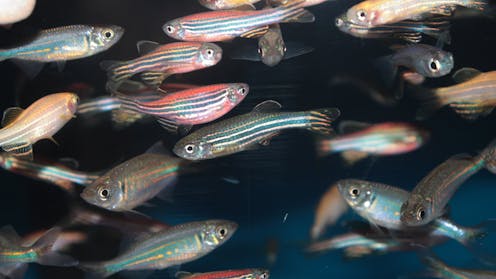
We also identified gaps in the current studies. Most existing studies focus on a limited number of easy-to-study “model species” such as zebrafish, medaka and guppies. They also often use pesticide dosages and durations that may not reflect real-world realities.

Addressing these gaps by including a range of species and environmentally relevant dosages is crucial to understanding how pesticides affect fish in the wild.

A large group of convict surgeonfish on the reef in French Polynesia
One of the experiments in our study involved convict surgeonfish, which gather in large groups or ‘shoals’.
Damsea, Shutterstock

Behaviour is a blind spot in regulation

Regulatory authorities should begin to recognise behaviour as a reliable and important indicator of pesticide safety. This can help them catch pesticide pollution early, before mass deaths occur.

Scientists play a crucial role too. By following the same methods, scientists can produce comparable results. A standardised method then provides regulators the evidence needed to confidently assess pesticide risks.

Together, regulatory authorities and scientists can find a way to use behavioural studies to help inform policy decisions. This will help to prevent mass deaths and catch pesticide impacts early on.

Leave no stone unturned in restoring our waters

Rivers, lakes, oceans and reefs are bearing the brunt of an ever-growing human footprint.

So far, much of the spotlight has focused on reducing carbon emissions and managing overfishing — and rightly so. But there’s another, quieter threat drifting beneath the surface: the chemicals we use.

Pesticides used on farms and in gardens are being detected everywhere, even iconic ecosystems such as the Great Barrier Reef. As we have shown, these pesticides can have disturbing effects even at low concentrations.

Now is the time to cut pesticide use and reduce runoff. Through switching to less toxic chemicals and introducing better regulations, we can reduce the damage. If we act with urgency, we can limit the impacts pesticides have on our planet.

The Conversation

Kyle Morrison does not work for, consult, own shares in or receive funding from any company or organisation that would benefit from this article, and has disclosed no relevant affiliations beyond their academic appointment.

ref. Many fish are social, but pesticides are pushing them apart – https://theconversation.com/many-fish-are-social-but-pesticides-are-pushing-them-apart-256230

ABC’s and CBS’s settlements with Trump are a dangerous step toward the commander in chief becoming the editor-in-chief

Source: The Conversation – USA – By Michael J. Socolow, Professor of Communication and Journalism, University of Maine

Will settlements by news companies with President Donald Trump turn journalists into puppets? MARHARYTA MARKO/iStock Getty Images Plus

It was a surrender widely foreseen. For months, rumors abounded that Paramount would eventually settle the seemingly frivolous lawsuit brought by President Donald Trump concerning editorial decisions in the production of a CBS interview with Democratic presidential nominee Kamala Harris in 2024.

On July 2, 2025, those rumors proved true: The settlement between Paramount and Trump’s legal team resulted in CBS’s parent company agreeing to pay $16 million to the future Donald Trump Library – the $16 million included Trump’s legal fees – in exchange for ending the lawsuit. Despite the opinion of many media law scholars and practicing attorneys who considered the lawsuit meritless, Shari Redstone, the largest shareholder of Paramount, yielded to Trump.

Redstone had been trying to sell Paramount to Skydance Media since July 2024, but the transaction was delayed by issues involving government approval.

Specifically, when the Trump administration assumed power in January 2025, the new Federal Communications Commission had no legal obligation to facilitate, without scrutiny, the transfer of the CBS network’s broadcast licenses for its owned-and-operated TV stations to new ownership.

The FCC, under newly installed Republican Chairman Brendan Carr, was fully aware of the issues in the legal conflict between Trump and CBS at the time Paramount needed FCC approval for the license transfers. Without a settlement, the Paramount-Skydance deal remained in jeopardy.

Until it wasn’t.

At that point, Paramount joined Disney in implicitly apologizing for journalism produced by their TV news divisions.

Earlier in 2025, Disney had settled a different Trump lawsuit with ABC News in exchange for a $15 million donation to the future Trump Library. That lawsuit involved a dispute over the wording of the actions for which Trump was found liable in a civil lawsuit brought by E. Jean Carroll.

GOP presidential nominee Donald Trump said the CBS interview with Democratic nominee Kamala Harris was ‘fraudulent interference with an election.’

It’s not certain what the ABC and CBS settlements portend, but many are predicting they will produce a “chilling effect” within the network news divisions. Such an outcome would arise from fear of new litigation, and it would install a form of internal self-censorship that would influence network journalists when deciding whether the pursuit of investigative stories involving the Trump administration would be worth the risk.

Trump has apparently succeeded where earlier presidents failed.

Presidential pressure

From Jimmy Carter trying to get CBS anchor Walter Cronkite to stop ending his evening newscasts with the number of days American hostages were being held in Iran to Richard Nixon’s administration threatening the broadcast licenses of The Washington Post’s TV stations to weaken Watergate reporting, previous presidents sought to apply editorial pressure on broadcast journalists.

But in the cases of Carter and Nixon, it didn’t work. The broadcast networks’ focus on both Watergate and the Iran hostage crisis remained unrelenting.

Nor were Nixon and Carter the first presidents seeking to influence, and possibly control, network news.

President Lyndon Johnson, who owned local TV and radio stations in Austin, Texas, regularly complained to his old friend, CBS President Frank Stanton, about what he perceived as biased TV coverage. Johnson was so furious with the CBS and NBC reporting from Vietnam, he once argued that their newscasts seemed “controlled by the Vietcong.”

Yet none of these earlier presidents won millions from the corporations that aired ethical news reporting in the public interest.

Before Trump, these conflicts mostly occurred backstage and informally, allowing the broadcasters to sidestep the damage to their credibility should any surrender to White House administrations be made public. In a “Reporter’s Notebook” on the CBS Evening News the night of the Trump settlement, anchor John Dickerson summarized the new dilemma succinctly: “Can you hold power to account when you’ve paid it millions? Can an audience trust you when it thinks you’ve traded away that trust?”

“The audience will decide that,” Dickerson continued, concluding: “Our job is to show up to honor what we witness on behalf of the people we witness it for.”

During the Iran hostage crisis, CBS News anchor Walter Cronkite ended every broadcast with the number of days the hostages had been held captive.

Holding power to account

There’s an adage in TV news: “You’re only as good as your last show.”

Soon, SkyDance Media will assume control over the Paramount properties, and the new CBS will be on the airwaves.

When the licenses for KCBS in Los Angeles, WCBS in New York and the other CBS-owned-and-operated stations are transferred, we’ll learn the long-term legacy of corporate capitulation. But for now, it remains too early to judge tomorrow’s newscasts.

As a scholar of broadcast journalism and a former broadcast journalist, I recommend evaluating programs like “60 Minutes” and the “CBS Evening News” on the record they will compile over the next three years – and the record they compiled over the past 50. The same goes for “ABC World News Tonight” and other ABC News programs.

A major complicating factor for the Paramount-Skydance deal was the fact that “60 Minutes” has, over the past six months, broken major scoops embarrassing to the Trump administration, which led to additional scrutiny by its corporate ownership. Judged by its reporting in the first half of 2025, “60 Minutes” has upheld its record of critical and independent reporting in the public interest.

If audience members want to see ethical, independent and professional broadcast journalism that holds power to account, then it’s the audience’s responsibility to tune it in. The only way to learn the consequences of these settlements is by watching future programming rather than dismissing it beforehand.

The journalists working at ABC News and CBS News understand the legacy of their organizations, and they are also aware of how their owners have cast suspicion on the news divisions’ professionalism and credibility. As Dickerson asserted, they plan to “show up” regardless of the stain, and I’d bet they’re more motivated to redeem their reputations than we expect.

I don’t think reporters, editors and producers plan to let Donald Trump become their editor-in-chief over the next three years. But we’ll only know by watching.

The Conversation

Michael Socolow’s father, Sanford Socolow, worked for CBS News from 1956 to 1988.

ref. ABC’s and CBS’s settlements with Trump are a dangerous step toward the commander in chief becoming the editor-in-chief – https://theconversation.com/abcs-and-cbss-settlements-with-trump-are-a-dangerous-step-toward-the-commander-in-chief-becoming-the-editor-in-chief-261006

Campeones con bienestar: Sinner, Alcaraz y la generación que está cambiando las reglas del deporte

Source: The Conversation – (in Spanish) – By Maite Aurrekoetxea Casaus, Profesora Doctora en Sociología en la Facultad de Ciencias Sociales y Humanas, Universidad de Deusto

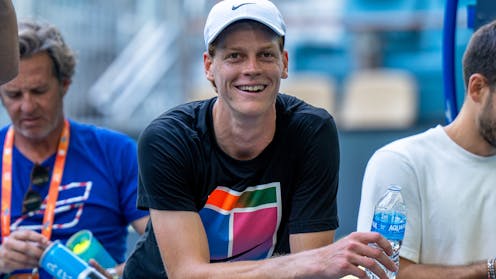
Jannik Sinner en el Open de Miami, 19 de marzo de 2024. Juarez Santos/Shutterstock

Jannik Sinner, reciente campeón del Open Wimbledon 2025, lo resumía al acabar el partido: “Lo importante es estar sano”. Durante esta misma final, Carlos Alcaraz pedía abiertamente ayuda a su equipo en plena pista.

Lejos de mostrar debilidad, ambos representan una nueva forma de estar en el deporte y en el mundo. Es la voz de una generación, la Z (18 a 24 años), que desmiente el estigma de la fragilidad.

Compiten de forma distinta a las generaciones anteriores. No porque tengan menos talento, sino porque llevan otra mochila: emocional, digital, conectada.

Han crecido poniendo nombre a lo que sienten, pidiendo ayuda, sabiendo que llorar no es rendirse. No les falta dureza mental, les sobra lucidez emocional.

Necesitan disfrutar, descansar, desconectar. Y en esa necesidad están expresando algo más profundo: un cambio de paradigma en la relación entre juventud, deporte y salud mental.

Malestar juvenil y cultura del rendimiento

En Europa, uno de cada cinco jóvenes de la Generación Z declara tener una salud mental pobre o muy pobre. Esta cifra es cinco veces superior a la registrada entre los baby boomers (nacidos antes de mitad de los 60), lo que marca una brecha generacional inédita en términos de bienestar psicológico.

La percepción creciente de malestar entre los jóvenes deportistas va más allá de las experiencias individuales. Detrás de esa incomodidad subyacen factores sociales que a menudo ignoramos: la cultura del rendimiento extremo, la presión constante por encajar y el choque de valores entre generaciones. Es en ese punto de fricción donde surge el verdadero desajuste y el deseo de cambiar las reglas del juego.

La Encuesta de Valores Europeos muestra, tanto en Europa como en España, que las tres cualidades más promovidas en el entorno familiar son tolerancia y respeto por los demás (92,6 %), sentido de la responsabilidad (82 %) y buenos modales (81,8 %).

Aunque estas cualidades puedan parecer positivas, su carácter relacional y normativo apunta a un modelo centrado en la conformidad y la adecuación a las expectativas sociales, más que en la gestión emocional o la creatividad.

Por el contrario, otras cualidades estrechamente vinculadas con la capacidad de afrontar la frustración o sostener procesos de largo recorrido aparecen relegadas: imaginación (22 %), trabajo duro (31,4 %), anticipación (2,6 %) y determinación/perseverancia (44,7 %).

Este patrón no solo ilustra una preferencia educativa, sino que configura el universo emocional que se manifiesta en toda una generación de jóvenes deportistas.

El deporte no es una burbuja

Aunque el deporte de élite pueda parecer un mundo aparte, no vive ajeno a las dinámicas culturales y sociales. Muchos jóvenes deportistas son formados para evitar mostrar debilidad y para seguir las reglas sin cuestionarlas.

Este modelo podía funcionar para otras generaciones, cuando la obediencia y la disciplina eran premiadas. Pero los jóvenes de la Generación Z, educados en otros valores, necesitan de autonomía emocional, capacidad de improvisación y fortaleza psicológica, especialmente en momentos de presión. Ahí, el modelo hace aguas.

Generación emocionalmente explícita, culturalmente distinta

Las consecuencias de este desajuste son cuantificables. En Suiza, el 52 % de las atletas femeninas de élite reportaron síntomas de al menos un trastorno mental, un porcentaje superior al registrado entre los hombres (30 %). Estos problemas de salud mental afectan más a los deportistas lesionados.

En Alemania, más del 95 % de atletas de élite manifestaron angustia psicológica y un 28,6 % mostró síntomas depresivos, asociados a lesiones graves y precariedad económica.

Las cifras invitan a dejar de ver el malestar de los jóvenes deportistas como un simple problema individual de adaptación. Más bien apuntan a un desajuste profundo entre el modelo educativo-deportivo tradicional y las exigencias reales del alto rendimiento actual.

A ello se suma un dato clave. Esta generación no solo experimenta más malestar, sino que también tiene una mayor conciencia de su salud mental y se atreve a hablar de su deterioro.

Es importante entender que no se trata de una fragilidad mayor, sino una transición desde lo que se ha llamado la cultura del sacrificio hacia una cultura del bienestar, donde el rendimiento ya no se concibe en oposición a la salud, sino como dependiente de ella.

Estas generaciones de jóvenes han sido formadas en un contexto emocionalmente más expresivo, digitalizado e interdependiente. Lejos de tratarse de una generación débil, se trata de jóvenes capaces de nombrar su ansiedad, pedir ayuda y rechazar narrativas que niegan el malestar.

Nuevos esquemas de intervención psicológica

La transición exige revisar los esquemas de entrenamiento a quienes trabajan con estos/as deportistas. Y pensar que las expectativas puestas sobre los/as deportistas que aún operan bajo lógicas de disciplina, silencio emocional y tolerancia al sufrimiento ya no encajan con los esquemas de esta generación.

La buena noticia es que existen intervenciones respaldadas por la evidencia científica.

El entrenamiento en habilidades psicológicas, las terapias de tercera ola, como la de aceptación y compromiso, y los enfoques de psicología positiva pueden mejorar significativamente el bienestar mental en atletas de élite.

Las estrategias apuntan hacia una visión preventiva, integral y contextualizada del bienestar psicológico, donde el papel de entrenadores/as, compañeros/as y la propia organización deportiva es central y por supuesto el entorno familiar.

El pilar de la familia y las amistades

Esta generación configura su entorno familiar y de amistades como uno de los grandes pilares para alcanzar logros personales y deportivos. No se trata solo de intervenciones clínicas individuales, sino de repensar los entornos de práctica como espacios emocionalmente sostenibles y seguros.

Deben crearse entornos donde se valoren los siguientes aspectos:

  • La imaginación como herramienta táctica y emocional.

  • La perseverancia como proceso, no solo como resultado.

  • El pensamiento crítico como antídoto frente al conformismo.

  • La gestión emocional como una competencia clave del rendimiento.

Y esto exige, a su vez, revisar nuestras propias ideas adultas sobre el éxito, el esfuerzo y la dureza mental. Tienen difícil encaje los reproches de exjugadores/as y entrenadores/as, que cuestionan estas expresiones sin caer en la cuenta que lo hacen desde modelos que no responden a los esquemas de los jóvenes actuales.

No están pidiendo menos exigencia, sino otro tipo de acompañamiento: más coherente, más humano, más actualizado. Escucharles con atención, no solo con compasión, no es una opción ética, es una necesidad estructural.

Atender y aprender de esta nueva generación es, quizás, el mayor desafío y la mejor oportunidad para construir un deporte, y una sociedad, más saludable, humana y sostenible.

The Conversation

Las personas firmantes no son asalariadas, ni consultoras, ni poseen acciones, ni reciben financiación de ninguna compañía u organización que pueda obtener beneficio de este artículo, y han declarado carecer de vínculos relevantes más allá del cargo académico citado anteriormente.

ref. Campeones con bienestar: Sinner, Alcaraz y la generación que está cambiando las reglas del deporte – https://theconversation.com/campeones-con-bienestar-sinner-alcaraz-y-la-generacion-que-esta-cambiando-las-reglas-del-deporte-260669

School lunches, the French way: It’s not just about nutrition, but togetherness and ‘bon appetit’

Source: The Conversation – Canada – By Rachel Engler-Stringer, Professor, Department of Community Health and Epidemiology, University of Saskatchewan

This spring, as part of a sabbatical project, I had the privilege of visiting school food programs and meeting with school food researchers in six cities in France, England and Scotland.

I got to eat school lunches, visit central kitchens in two cities where meals are prepared for thousands of children, visit school kitchens and discuss school food with the countries’ leading experts.

This visit intersects with my research with colleagues on promising food programs across Canada. This research offers insights for consideration as regions navigate the federal government’s first National School Food Program and National School Food Policy.

Government announcements about the program and policy were followed by negotiations with the provinces and territories, all of which have since signed agreements for a portion of the funding.

In most parts of Canada, officials are just beginning to plan for new approaches to school food (with a few exceptions especially in Atlantic Canada where school food programs have been transforming much more quickly).

Based on my research about international food programs, here are four key things Canadians should pay attention to:

1) In Canada we need to shift from thinking of school lunches as a safety net for kids living in poverty to thinking about them as benefiting the health and well-being of children and their families. In France, this shift in thinking is particularly clear.

School lunches in France are about teaching children about food and culture and all kids are encouraged to eat together with an adult facilitator who teaches them about the components of the meal and creates a family-meal context at each table. By contrast, if you ask many parents in Canada what school meals are for, they will tell you they are for kids living in poverty to make sure they have food to eat at school.

If Canada wants a national school food program that achieves the benefits of the best programs in the world in the areas of education, well-being and on the economy, we need to think of school meals as supporting young people to be the best students they can be.

2) One important benefit of school food programs globally is to encourage picky eaters to try new foods due to the social pressure of all kids eating the same foods together. In three cities in France I visited, and one in England, school lunches look like home-cooked meals. One main dish with meat is served (and in England, a vegetarian alternative), and kids can choose if and how much of the side vegetables and fruit to take.

In Canada, following a similar practice — one main and a vegetarian alternative when meat is served — might work well. But it’s also important that in developing a menu, the cultural diversity of Canadian school communities is reflected in the food on offer.

In the other two locations in England and Scotland, kids choose from multiple main dishes — something that adds cost to the program and does less to encourage kids to try new foods, given one choice is always something basic like a cheese sandwich.

Kids need to have some autonomy when it comes to eating, but school food programs should not be facilitating eating the same food every day. Nor should school food programs aspire to a model where broad choice is afforded from a large menu.

3) With care, planning and sufficient resources, centralized kitchens can prepare thousands of servings of a main dish daily. The French central kitchens I visited prepare 6,000 to 10,000 servings a day of high-quality food following strict food safety protocols.

I ate two simple yet delicious meals cooked in municipally owned central kitchens. In the three cities in France where I visited, they used central kitchens where main dishes were prepared and chilled to be delivered for heating at the school level. Central kitchens also delivered the salads and sides (like chopped veggies, bread, cheese and fruit) and dressings.

In the small school kitchens, the salads were dressed, and the cheese and fruit were cut for service.

The central kitchens were also used in at least one city to prepare food for daycares and for seniors who were home-bound — something to consider for Canadian cities.

Centralizing kitchens can reduce costs and provide a way for high-quality food to be produced from basic ingredients without commercial kitchens in every school capable of preparing meals for hundreds of children at a time.

4) When designed with requirements for purchasing foods from local farmers and other Canadian producers, school food programs can benefit the agricultural sector and multiply their benefits to communities beyond direct school food jobs. In France, for example, there are specific percentages to be purchased from local and sustainable sources. Percentage requirements for local and sustainable purchasing should be enacted now in Canada as its program establishes itself, perhaps beginning with 20 per cent and growing over time.

I have many more reflections from my visits, both positive and negative, but the four I have discussed are important for Canada to learn from as it begins to design the National School Food Program to meet the needs of diverse communities from coast to coast to coast.

The Conversation

Rachel Engler-Stringer receives funding from the Canadian Institutes for Health Research, the Social Sciences and Humanities Research Council of Canada, the Public Health Agency of Canada and received a University of Saskatchewan International Travel Award for program visits. She sits on the Steering Committee of the Coalition for Healthy School Food.

ref. School lunches, the French way: It’s not just about nutrition, but togetherness and ‘bon appetit’ – https://theconversation.com/school-lunches-the-french-way-its-not-just-about-nutrition-but-togetherness-and-bon-appetit-259832

Acoso escolar: ¿cómo se pueden reparar los daños tras un caso grave?

Source: The Conversation – (in Spanish) – By Cecilia Ruiz Esteban, Profesora Titular de Universidad. Psicología de la Educación., Universidad de Murcia

Ground Picture/Shutterstock

Un adolescente de 16 años con parálisis cerebral, acosado física y sexualmente durante días por sus compañeros de clase. Tras la denuncia y el clamor de medios y opinión pública: ¿qué ocurre con la víctima y los agresores? ¿Cómo se puede reparar un daño como este? ¿Qué contempla la ley y qué recomiendan las investigaciones especializadas?

Este reciente caso de bullying en un instituto de Almendralejo (en la provincia extremeña de Badajoz, España) nos obliga a plantearnos no solo cómo prevenir y detectar mejor, sino también qué medidas tomar una vez detectado.

Colectivos vulnerables

El mayor riesgo para sufrir agresiones reiteradas en la escuela es “ser diferente”. Es la situación de los alumnos o alumnas que tienen algún tipo de discapacidad, y que representan el 80.3 % de las víctimas de acoso en España. En todo el mundo, el 40 % de las víctimas de bullying escolar pertenecen a colectivos vulnerables (discapacidad, migrantes, LGTBIQ+).

Sabemos también gracias al mismo informe que 8 de cada 10 casos de acoso consisten en burlas, rechazos o aislamientos (en este último caso, los más afectados son los niños y niñas con alguna discapacidad física), y que el riesgo de victimización aumenta en los casos de trastorno del espectro autista y de alumnado con dificultades comunicativas o lingüísticas.

Curiosamente, aunque dichas situaciones suelen ser más frecuentes en la etapa de Educación Secundaria (el 40 % de los casos durante primer y segundo curso), sabemos que hasta un 50 % de los casos podrían prevenirse con detección temprana en etapas educativas iniciales.

¿Cómo atendemos a las víctimas?

A pesar de la prevalencia de este problema en los centros educativos, aún faltan protocolos de reparación integral que incluyan atención psicológica, seguimiento académico y mediación restaurativa. Por ejemplo, en España, el 94 % de las víctimas sufre algún problema psicológico y una de cada cinco necesita tratamiento psicológico especializado.

Por esta razón la prioridad absoluta es garantizar la seguridad física y emocional inmediata de la víctima mediante medidas de protección (como cambios de rutina o supervisión) y ofrecer apoyo psicológico especializado para manejar el trauma y empoderarla para recuperar su voz y control. ¿Cómo podemos hacerlo?

Espacios para el perdón emocional

Si la víctima así lo desea, de manera voluntaria y sin coerción alguna, puede disponer de un espacio seguro donde liberar la carga emocional (rabia, miedo) asociada al agresor como camino hacia el perdón emocional.

Los encuentros cara a cara (como los “círculos restaurativos”) pueden ser herramientas poderosas para la reparación, pero solo bajo condiciones estrictas. Su éxito depende de la voluntariedad explícita y preparación psicológica adecuada de la víctima, quien jamás debe sentirse presionada. Ambos actores, especialmente la víctima, necesitan apoyo individual previo para clarificar necesidades y emociones. El agresor debe mostrar signos de arrepentimiento y haber iniciado su proceso de responsabilización.


Leer más:
Qué nos dicen los comportamientos agresivos en la escuela infantil


El objetivo no es únicamente “pedir perdón”, sino que el agresor escuche el impacto real de sus acciones, la víctima exprese su dolor en un entorno protegido y, si es viable, se exploren conjuntamente formas de reparación y acuerdos de convivencia futura.

Es vital subrayar que estos encuentros no son adecuados en todos los casos; situaciones de trauma severo, desequilibrio de poder extremo o falta de disposición del agresor pueden hacerlos retraumatizantes. Son una opción, no un imperativo.

Reparación del daño

La evidencia científica es contundente: intervenir únicamente con la víctima resulta insuficiente y contraproducente a largo plazo. Abordar el acoso de forma efectiva y restaurativa requiere un cambio de paradigma: del castigo aislado a la responsabilización activa, la reparación del daño y la construcción de una comunidad escolar segura y respetuosa para todos. La “reparación” debe servir para que la víctima se sienta apoyada y protegida, y la escuela entera aprenda y mejore.

El enfoque restaurativo trasciende el castigo tradicional, priorizando la sanación de las heridas, la responsabilización activa de los agresores y la reconstrucción de relaciones seguras dentro de la comunidad escolar.

Se trata de guiar a los involucrados –especialmente al agresor o agresores– hacia la comprensión profunda del impacto causado y la asunción de acciones concretas para enmendar el perjuicio: disculpas significativas, gestos reparadores simbólicos o cambios de comportamiento verificables, fundamentales para que la víctima sienta validado su sufrimiento y perciba el apoyo comunitario.

¿Qué hacemos con los agresores?

Respecto a los agresores, la ley española prioriza medidas educativas sobre las punitivas, es decir, el 85 % de los casos se gestionan con programas de reeducación conductual y mediación, pero solo el 35 % de los centros aplican estos programas de forma efectiva.

Por eso es crucial ir más allá de las sanciones: se requiere una intervención terapéutica y psicoeducativa obligatoria que aborde las causas subyacentes de su comportamiento (falta de empatía, necesidad de dominio, problemas familiares), fomente una genuina responsabilización por el daño causado y desarrolle habilidades prosociales. Sin este trabajo profundo, el riesgo de reincidencia es alto.

El apoyo activo de los compañeros

Los testigos y compañeros desempeñan un papel vital. Es esencial educarles para romper la “cultura del silencio”, enseñarles a reconocer e intervenir ante el acoso de forma segura, y fomentar un clima de aula que rechace activamente el acoso y apoye a quien sufre.

Para que una víctima se sienta verdaderamente segura nuevamente en el mismo entorno donde ocurrió el acoso, la investigación señala que es indispensable que perciba cambios concretos y sostenidos. Además de una respuesta clara y contundente del centro escolar, las medidas de protección visibles y la evidencia de un cambio genuino en el agresor, es crucial sentir el apoyo activo de los compañeros.


Leer más:
La otra cara del acoso escolar: los que observan también tienen un papel


¿Qué deben saber las familias?

Además de contar con la información sobre las principales características del acoso para saber identificar indicadores o signos de riesgo, la familia puede contribuir desde la educación con un estilo educativo centrado en una comunicación eficaz y en un apoyo incondicional.

Siempre es imprescindible encontrar un equilibrio entre el apoyo y la comunicación y el control y las normas. En el caso de los menores con alguna discapacidad, la sobreprotección puede ponerles aún en mayor riesgo de vulnerabilidad.

Propuesta de Protocolo Estatal Integral

Un protocolo estatal efectivo contra el acoso debe ser obligatorio, claro y cubrir todas las fases del proceso:

  1. Mecanismos accesibles y confidenciales para la detección y reporte.

  2. Formación obligatoria para el personal.

  3. Actuación inmediata: implica garantizar la seguridad y derivación psicológica urgente para la víctima, y aplicar medidas protectoras iniciales (como separación o suspensión cautelar) y notificación formal a la familia del agresor.

  4. Investigación rápida y rigurosa que recoja información imparcial de todas las partes.

  5. Intervención integral: apoyo psicológico continuado a la víctima; intervención obligatoria con el agresor; trabajo con las familias de ambos e intervención grupal con testigos para cambiar dinámicas y fomentar apoyo.

  6. Comunicación a la comunidad: realizada con prudencia y respetando la privacidad, debe informar sobre los pasos generales tomados (aplicación del protocolo, apoyo a la víctima, medidas con el agresor, trabajo en el clima (EN EL AULA?) para reforzar la confianza y el mensaje de tolerancia cero.

Aunque todavía no hay un protocolo general a nivel estatal, en España varias comunidades autónomas integran elementos restaurativos en sus protocolos generales contra el acoso, como Andalucía, Cataluña y el País Vasco.

Romper el ciclo de violencia y sanar a la víctima

Cualquier forma de violencia es intolerable e injustificable. Los centros educativos tienen un papel fundamental para prevenir y erradicar las situaciones de acoso educando en la no violencia y en la tolerancia hacia la diversidad, reforzando la educación emocional y promoviendo valores de convivencia y de respeto.

Un enfoque holístico debe combinar prevención temprana, inclusión real y estrategias de reinserción basadas en evidencia, no solo para sanar a las víctimas, sino para romper el ciclo de violencia desde su raíz.

The Conversation

Las personas firmantes no son asalariadas, ni consultoras, ni poseen acciones, ni reciben financiación de ninguna compañía u organización que pueda obtener beneficio de este artículo, y han declarado carecer de vínculos relevantes más allá del cargo académico citado anteriormente.

ref. Acoso escolar: ¿cómo se pueden reparar los daños tras un caso grave? – https://theconversation.com/acoso-escolar-como-se-pueden-reparar-los-danos-tras-un-caso-grave-257851

¿Es España un país racista?

Source: The Conversation – (in Spanish) – By Gloria Fernández- Pacheco Alises, Profesora en Criminología y coordinadora del Grupo de investigación sobre Migraciones, Universidad Loyola Andalucía

Manifestación en Palma de Mallorca contra el racismo en 2020. MF_Orleans/Shutterstock

Torre Pacheco es una localidad murciana de 40 000 habitantes –el 30 % de la población es inmigrante– que en los últimos días vive asediada por grupos de ultraderecha. Armados con bates y machetes, atacan o amenazan a los extranjeros en los barrios donde viven.

En España es cada vez más frecuente toparse con algún tipo de incidente de tintes xenófobos. Los partidos de ultraderecha, además, alientan el odio a los extranjeros, especialmente a los latinos y subsaharianos. Por eso preguntamos a siete expertos si España es un país racista y esto es lo que nos han contestado:


Gloria Fernández-Pacheco Alises, profesora en Criminología y coordinadora del Grupo de investigación sobre Migraciones. Universidad Loyola Andalucía.

En los últimos tiempos se han publicado noticias sobre estudios de opinión que sitúan la inmigración como una de las primeras preocupaciones de la ciudadanía en España. Ante ello surge la cuestión sobre si es racista tener prejuicios si estamos protegiendo nuestra seguridad.

Estas preocupaciones sociales han sido alimentadas por discursos políticos que esgrimen argumentos basados en la “infantilización”, la “despersonalización” y la “ridiculización” de la inmigración.

Nos hablan de menores migrantes no acompañados como colectivo peligroso al que imputarle delitos de toda índole. Atribuyen gastos desorbitados a los sistemas de protección social de menores en riesgo de exclusión en detrimento de las pensiones de nuestras abuelas. Frivolizan sobre expulsiones masivas de personas que llevan meses o años trabajando en España en la agricultura o el empleo doméstico.

Todos estos discursos contribuyen a generar un imaginario colectivo basado en estereotipos sociales que genera racismo estructural y debates sociales muy peligrosos. A través de etiquetas negativas que relacionan delincuencia e inmigración, se construyen identidades marginadas y sociedades violentas.

Este fenómeno ya fue estudiado por las denominadas teorías del etiquetado, que hablan de una reacción social basada en etiquetas. A través de la criminalización se genera marginalidad y delincuencia entre los colectivos etiquetados. Por el otro lado, se construyen sociedades deshumanizadas e inseguras.


Raúl Martínez Corcuera. Profesor de Comunicación. Investigador sobre el discurso del odio –racismo, sexismo, LGTBIfobia– en medios de comunicación, el deporte o la publicidad. Universitat de Vic – Universitat Central de Catalunya.

En España existe un racismo estructural contra personas migrantes y racializadas que confirmaría esta afirmación. Racismo institucional de una ley de extranjería que las lleva a vivir en situación irregular y limita sus derechos de participación política.

Existe el control policial selectivo por fenotipo y partidos políticos que asumen discursos y programas de ultraderecha legitimando actitudes xenófobas. Hay antigitanismo e islamofobia.

Se ha normalizado la discriminación y explotación laboral, agravada por el desconocimiento de los propios derechos y/o la dificultad para hacerlos respetar o el rechazo en el acceso a la vivienda por propietarios que niegan el alquiler a personas migrantes o racializadas.

Son múltiples las denuncias por discriminación en servicios públicos de salud y educación, limitando el acceso a una atención justa y respetuosa.

La presencia de inmigrantes y personas racializadas es residual en espacios de liderazgo político o social, pero son habituales insultos y violencia racista en los espacios públicos. Sufren una criminalización mediática que les culpa de la delincuencia y los conflictos públicos. Se normaliza una miserable estigmatización y deshumanización de niños y adolescentes llegados a España sin familia y en máxima vulnerabilidad.


Ana Alba Catoira, profesora de Derecho Constitucional. Universidade da Coruña.

El racismo es un fenómeno que está en todas las sociedades y que se convierte en muchas ocasiones en algo sutil o inconsciente presente en todas las estructuras. De hecho, ¿cuántas personas se reconocen como racistas? o ¿cuántas identifican comportamientos muy normalizados como racistas y discriminatorios?.

España es el cuarto país menos racista de la Unión según un informe de 2023 realizado por la Agencia de los Derechos Fundamentales, muy por debajo de Austria, Alemania, Finlandia, Dinamarca, Luxemburgo, Bélgica, Irlanda, Italia o Francia.

No obstante, sí somos un país racista, por lo que no debemos restar importancia a este problema. El racismo es en sí mismo ignorancia, por eso necesitamos sensibilización y educación de toda la sociedad en igualdad y diversidad con políticas públicas comprometidas y con la colaboración responsable de todos los sectores. Debemos construir entre todos y todas una sociedad más justa e igualitaria donde se respete la dignidad de todos los seres humanos.


Antonio Miguel Nogués Pedregal. Catedrático de Antropología Social. Universidad Miguel Hernández.

Imposible responder con un sí o un no a la pregunta. España es desde hace décadas una realidad social, cultural y económicamente muy heterogénea. Son muchos los ejes que la atraviesan y de muchos tipos las prácticas sociales que la conforman. No podemos hablar de una sola España o, si se prefiere, de una única forma de habitar este territorio que llamamos España.

Cada persona y cada grupo sociocultural que convive aquí se construye una imagen de los otros que enfatiza, sobre todo, aquellas características con las que quiere y cree distinguirse de esas otras personas o grupos.

En este sentido, considero que la dimensión económica, por aporofobia (fobia a los pobres) y clasismo, es la que más condiciona las relaciones y prácticas sociales entre individuos, independientemente de su origen étnico. La dimensión estética, llena de estereotipos y fenotipos, es la que condiciona la visión del otro agrupado y anónimo. Baste recordar las diferencias en las acogidas a ucranianos o a subsaharianos y su dispar representación en los medios.


Juan Carlos Jiménez Redondo. Catedrático de Historia del Pensamiento y Movimientos Sociales. Universidad CEU San Pablo.

Mantener que España es un país racista es tan absurdo como sostener lo contrario. Hay españoles racistas como hay racistas en Francia, Italia, Portugal o Reino Unido. Las democracias han desarrollado normas radicalmente contrarias al racismo, pero no han podido extirpar grupos con fuertes inclinaciones racistas. Muchos de ellos anidan en ámbitos de amplia trascendencia pública como el deporte, y muy especialmente el fútbol, porque es un entorno que deja salir lo peor del hombre-masa.

Igual sucede en las redes sociales, en las que el anonimato deja aparecer a todos esos grotescos incivilizados que dan rienda suelta a sus locuras racistas y de odio contra todo y contra todos, amparados en una supuesta impunidad.

España es un país tan racista o tan poco racista como otros. Lo que sí concentra es una amplia masa de peligrosos ultras, odiadores y toda esa calaña de violentos que pueblan el país.


Lucas Andrés Pérez Martín. Profesor de Derecho Internacional Privado. Universidad de Las Palmas de Gran Canaria.

Esta pregunta no es posible contestarla con un sí o un no. Desde la visión de un jurista que investiga en el ámbito de las migraciones y los derechos humanos, y sin un sustrato científico estadístico, en España descubrimos dos perfiles esenciales. El primero, el de una gran parte de la población que en absoluto es racista. No diferencia a las personas por su raza, el color de la piel o por la religión que profesen, e incluso acogen activamente a los migrantes. Sin embargo, hay otra parte de la población que sí lo es, que tiene claros prejuicios con las personas que llegan de otros lugares por su religión, color de piel y origen y no duda en difundir noticias absolutamente falsas sobre estas personas.

Por desgracia, esta parte de la opinión está marcando y ganando el debate político con discursos de odio y provocando confusión en la población que inicialmente no tenía prejuicio racista alguno.


Berta Álvarez-Miranda Navarro. Profesora titular de Sociología, especializada en Sociología de las Migraciones. Universidad Complutense de Madrid.

España participa de la tendencia general en Europa a centrar el debate público en la categoría religiosa “musulmanes” como principal criterio de alteridad, y no tanto en categorías raciales. Ambas formas de distinción, de raza y religión, se superponen para señalar como “otro” o “extraño” sobre todo al que proviene del norte de África, particularmente de Marruecos.

Se renueva así una desconfianza muy arraigada históricamente, que se ha reflejado a lo largo de los años en las encuestas de opinión y en estudios sociológicos muy variados que coinciden en que este grupo es el percibido como más ajeno. Un grupo que se denomina cada vez más frecuentemente por su religión, aunque la categoría “musulmanes” no ha alcanzado en el debate público español el grado de cristalización de otros países como Francia o Gran Bretaña, ni ha sido objeto de una polarización política tan marcada.

The Conversation

Las personas firmantes no son asalariadas, ni consultoras, ni poseen acciones, ni reciben financiación de ninguna compañía u organización que pueda obtener beneficio de este artículo, y han declarado carecer de vínculos relevantes más allá del cargo académico citado anteriormente.

ref. ¿Es España un país racista? – https://theconversation.com/es-espana-un-pais-racista-240874