La dinde, histoire d’une domestication

Source: The Conversation – in French – By Aurélie Manin, Chargée de recherche en Archéologie, Archéozoologie et Paléogénomique, Centre national de la recherche scientifique (CNRS)

La dinde constitue un mets de choix sur les tables des fêtes d’Europe et d’Amérique du Nord, que ce soit pour Thanksgiving ou Noël. Son origine et les péripéties qui l’ont menée jusque dans nos cuisines sont toutefois peu connues du grand public.


La période des festivités de fin d’année semble tout indiquée pour revenir sur l’histoire naturelle et culturelle de cet oiseau de basse-cour, qui a fait l’objet d’un ouvrage collectif sorti en juin 2025 aux éditions scientifiques du Muséum national d’histoire naturelle.

La dinde ou le dindon commun, selon que l’on parle de la femelle ou du mâle, appartiennent à l’espèce Meleagris gallopavo que l’on retrouve encore à l’état sauvage sur l’essentiel du territoire des États-Unis, dans le sud du Canada et le nord du Mexique. Les sociétés américaines ont longtemps interagi avec ces oiseaux, essentiellement à travers la chasse. Le plus ancien kit de tatouage retrouvé en contexte archéologique, au Tennessee (États-Unis), daté d’entre 3500 et 1500 ans avant notre ère, était constitué d’os de dindon appointés. Mais ce n’est ni dans cette région ni à cette époque que la domestication du dindon a commencé, c’est-à-dire que le dindon et les humains sont entrés dans une relation de proximité mutualiste conduisant aux oiseaux de basse-cour que l’on connaît aujourd’hui [figure 1].

Figure 1 : Dindon commun sauvage (gauche, photographie de Franck Schulenburg) et domestique (droite, photographie de Wee Hong).
CC BY-SA

Une première domestication en Amérique centrale

Jusqu’au début de notre ère, les indices archéologiques d’un rapprochement entre dindons et humains sont, de fait, ténus. C’est en Amérique centrale, au Guatemala, que l’on retrouve la plus ancienne preuve de la gestion et de la manipulation des dindons. Dans cette région tropicale, on ne trouve pas de dindon commun sauvage mais son proche cousin, le dindon ocellé [figure 2]. Or sur le site d’El Mirador, quelques os de dindon commun ont été retrouvés, datés entre 300 avant notre ère et le tout début de notre ère – une identification confirmée par la génétique.

L’analyse des isotopes du strontium contenus dans ces os, spécifiques de l’environnement dans lequel un animal a vécu, ont quant à eux montré que les oiseaux avaient été élevés dans l’environnement local. Il s’agit de la trace la plus ancienne de translocation de l’espèce, son déplacement dans une région dans laquelle elle ne vivrait pas naturellement. Or un tel déplacement, sur des milliers de kilomètres et vers un environnement très différent, nécessite une connaissance fine du dindon et de ses besoins ainsi que des compétences zootechniques certaines. C’est donc l’aboutissement de plusieurs générations d’interactions et de rapprochement dans la région où le dindon commun se trouve naturellement, probablement sur la côte du golfe du Mexique ou dans le centre du Mexique, près de l’actuelle ville de Mexico. Au fil du temps, le nombre de restes de dindon augmente dans les sites archéologiques jusqu’à l’arrivée des Européens au XVIe siècle.
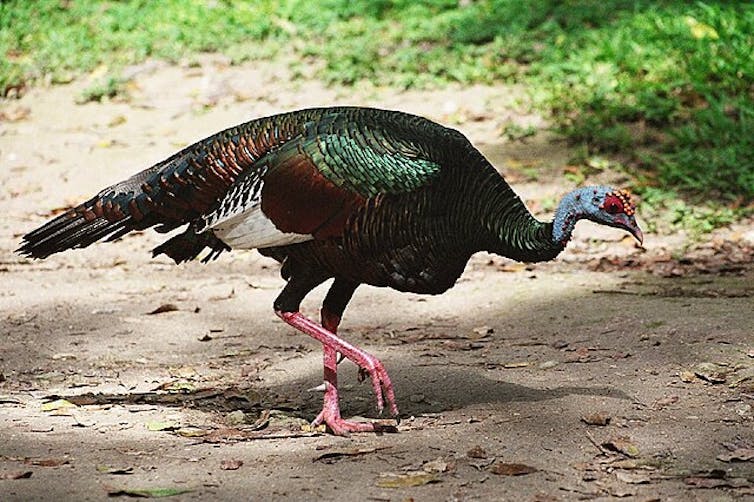
Figure 2 : Dindon ocellé sauvage (photographie Bruno Girin).
CC BY-SA

Dans le sud-ouest des États-Unis, à la convergence de l’Utah, du Colorado, du Nouveau-Mexique et de l’Arizona, on sait que les dindons étaient déjà présents il y a environ 10 000 ans, au début de la période holocène mais ils sont particulièrement rares dans les sites archéologiques.

Ce n’est qu’entre le début et 200 de notre ère qu’on voit leurs ossements apparaître régulièrement dans les sites archéologiques, bien qu’en faible proportion. Les traces les plus abondantes de leur présence sont leurs crottes (que l’on appelle coprolithes une fois fossilisées, dans le registre archéologique) retrouvées en particulier dans des structures en briques de terre crue complétées de branches qui servaient probablement à maintenir les dindons en captivité.

Des oiseaux convoités pour leurs plumes

Ces oiseaux appartiennent à une lignée génétique différente de celle des dindons sauvages locaux et l’analyse des isotopes du carbone contenu dans leurs os indique qu’ils ont consommé de grandes quantités de maïs. Ce sont donc des oiseaux captifs, certainement domestiques, mais on retrouve rarement leurs os dans ce que les archéologues étudient le plus, les poubelles des maisons. Ils n’auraient donc pas été mangés, ou assez rarement par rapport aux efforts mis en place pour les garder sur les sites. Les plumes d’oiseaux étaient néanmoins importantes pour ces populations et on retrouve notamment des fragments de plumes de dindon incluses dans le tissage d’une couverture en fibre en yucca. Une seule couverture aurait nécessité plus de 11 000 plumes, soit cinq à dix oiseaux selon la taille des plumes sélectionnées. Les oiseaux maintenus en captivité auraient ainsi pu être plumés régulièrement pour fournir cette matière première.

Au fil du temps, l’usage de dindons domestiques s’étend entre cette région du sud-ouest des États-Unis, le Mexique et l’Amérique centrale, mais les dindons sauvages restent bien présents dans l’environnement. Dans l’est des États-Unis, en revanche, si les restes osseux de dindons peuvent être abondants sur les sites archéologiques, il s’agit d’oiseaux sauvages chassés. C’est une mosaïque d’usage du dindon que les Européens ont ainsi rencontré à leur arrivée sur le continent américain [figure 3].
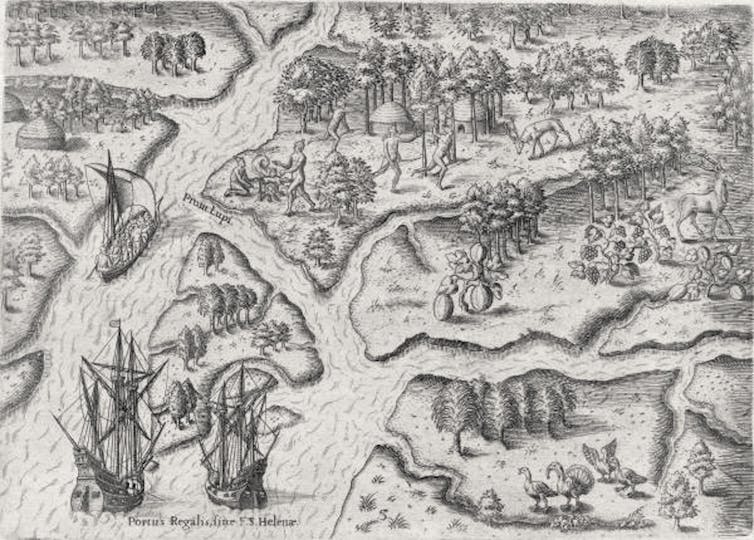
Figure 3 : Illustration du voyage de JacquesLe Moyne (1562-1565), qui accompagnait l’expédition de Laudonnière en Floride. Des dindons sont figurés sur la droite.

Poules d’Inde

C’est lors du quatrième voyage de Christophe Colomb en Amérique, alors qu’il explore les côtes de l’actuel Honduras, que l’on trouve ce qui peut être la première rencontre entre des Européens et des dindons, en 1502. On ne sait pas exactement comment leur réputation atteint l’Europe, probablement à travers les premières villes européennes construites dans les Antilles, mais en 1511 une lettre est envoyée par la couronne d’Espagne au trésorier en chef des Indes (les Antilles) demandant à ce que chaque bateau revenant vers la péninsule rapporte des « poules d’Inde » (d’où la contraction « dinde » apparue au XVIIe siècle en français), mâle et femelle, en vue de leur élevage.

En 1520, l’évêque d’Hispaniola (île englobant aujourd’hui Haïti et la République dominicaine) offre à Lorenzo Pucci, cardinal à Rome, un couple de dindons.

L’ouvrage publié au Muséum national d’histoire naturelle montre la multiplication des témoignages de la présence du dindon dans l’entourage de l’aristocratie européenne au cours du XVIe siècle. En France, en 1534, on trouve des dindons à Alençon, en Normandie, dans le château de Marguerite d’Angoulême, sœur de François Ier et reine de Navarre.

C’est aussi en 1534 qu’une amusante histoire se déroule en Estonie, où l’évêque de Tartu envoie un dindon en présent au duc Glinski – dindon qu’il avait précédemment reçu d’Allemagne. Mais l’oiseau exotique se répand aussi progressivement dans les basses-cours et sa consommation se généralise.

Entre le XVIe et le XVIIe siècle, il accompagne de nombreuses missions maritimes commerciales, atteignant même le Japon et revenant en Amérique – depuis l’Europe – dans les établissements coloniaux. Il semble toutefois être longtemps resté réservé aux repas de fêtes, et ce n’est qu’au cours du XXe siècle, avec l’essor de l’industrie agroalimentaire et la sélection de races de plus en plus lourdes, que sa viande entre dans la production de nombreux produits transformés. Finalement, l’animal complet, rôti et dressé sur une table à l’occasion de Thanksgiving ou de Noël, conserve la trace de cette longue histoire.
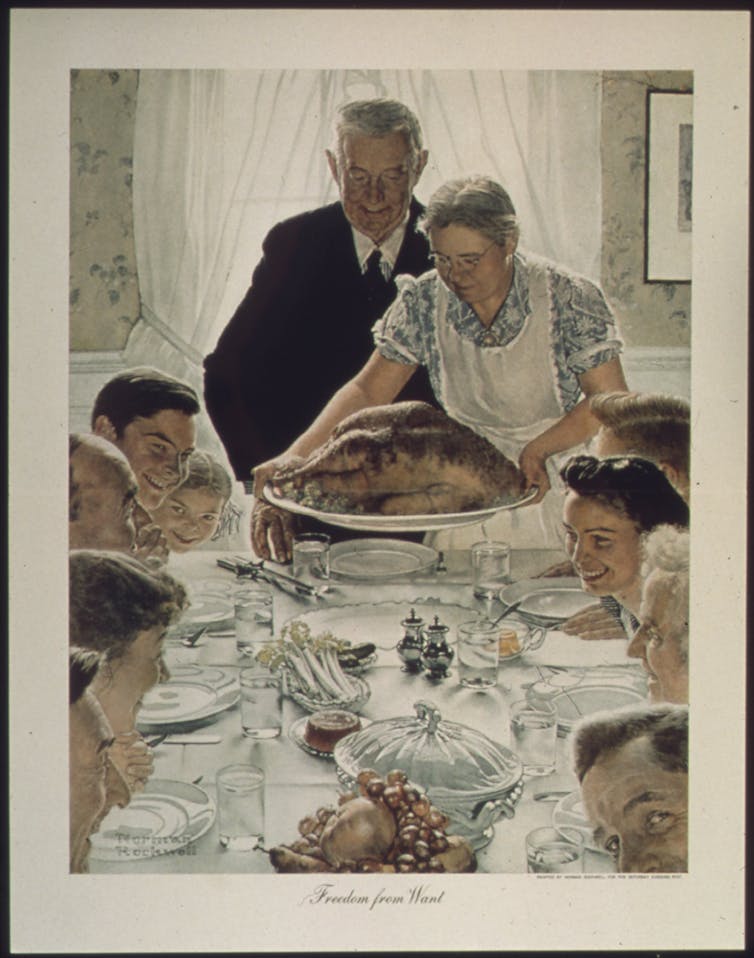
À l’abri du besoin, Norman Rockwell, 1941. « Notre cuisinière l’a faite rôtir, je l’ai peinte, puis nous l’avons mangée. C’est l’une des seules fois où j’aie jamais mangé le modèle. », déclara le peintre avec humour.
Wikimedia

The Conversation

Aurélie Manin a reçu des financements des Actions Marie Sklodowska-Curie pour réaliser ce travail.

ref. La dinde, histoire d’une domestication – https://theconversation.com/la-dinde-histoire-dune-domestication-270472

Le jeûne affaiblit-il vos capacités mentales ? Nous avons analysé les données pour vous donner les meilleurs conseils

Source: The Conversation – in French – By David Moreau, Associate Professor of Psychology, University of Auckland, Waipapa Taumata Rau

Le jeûne intermittent peut avoir des effets bénéfiques sur la santé, mais la faim affecte-t-elle nos capacités cognitives ? (Getty Images)

Vous avez déjà craint que le fait de sauter le petit-déjeuner puisse vous rendre confus au travail ? Ou que le jeûne intermittent vous rende irritable, distrait et moins productif ?

Les publicités pour les collations nous avertissent que « vous n’êtes pas vous-même lorsque vous avez faim », renforçant ainsi la croyance commune selon laquelle manger est essentiel pour garder notre cerveau en forme.

Ce message est profondément ancré dans notre culture. On nous dit que s’alimenter constamment est le secret pour rester alerte et efficace.

Pourtant, manger à des heures limitées et le jeûne intermittent sont devenus des pratiques de bien-être très populaires au cours de la dernière décennie. Des millions de personnes les pratiquent pour leurs bienfaits à long terme, allant de la gestion du poids à l’amélioration de la santé métabolique.

Cela soulève une question urgente : pouvons-nous profiter des bienfaits du jeûne pour la santé sans sacrifier notre acuité mentale ? Pour le savoir, nous avons mené l’étude la plus complète à ce jour sur les effets du jeûne sur les performances cognitives.

Pourquoi jeûner ?

Le jeûne n’est pas seulement une astuce diététique à la mode. Il fait appel à un système biologique perfectionné au fil des millénaires pour aider les humains à faire face à la pénurie.

Lorsque nous mangeons régulièrement, le cerveau fonctionne principalement grâce au glucose, stocké dans l’organisme sous forme de glycogène. Mais après environ 12 heures sans nourriture, ces réserves de glycogène s’épuisent.

À ce stade, le corps effectue un changement métabolique astucieux : il commence à décomposer les graisses en corps cétoniques (par exemple, l’acétoacétate et le bêta-hydroxybutyrate), qui constituent une source d’énergie alternative.

Cette flexibilité métabolique, autrefois cruciale pour la survie de nos ancêtres, est aujourd’hui associée à une multitude de bienfaits pour la santé.

Certains des effets les plus prometteurs du jeûne proviennent de la manière dont il remodèle les processus à l’intérieur du corps. Par exemple, le jeûne active l’autophagie, une sorte d’« équipe de nettoyage » cellulaire qui élimine les composants endommagés et les recycle, un processus considéré comme favorisant un vieillissement plus sain.

Il améliore également la sensibilité à l’insuline, permettant à l’organisme de gérer plus efficacement le sucre dans le sang et de réduire le risque de maladies telles que le diabète de type 2.

Au-delà de cela, les changements métaboliques déclenchés par le jeûne semblent offrir une protection plus large, contribuant à réduire le risque de développer des maladies chroniques souvent associées à la suralimentation.


À lire aussi :
La diète méditerranéenne est en vogue, car elle représente ce que l’on a perdu


Ce que montrent les données

Ces bienfaits physiologiques ont rendu le jeûne attrayant. Mais beaucoup hésitent à l’adopter par crainte de voir leurs performances mentales chuter sans un apport alimentaire régulier.

Pour répondre à cette question, nous avons mené une méta-analyse, une « étude des études », en examinant toutes les recherches expérimentales disponibles qui comparaient les performances cognitives des personnes à jeun et celles des personnes nourries.

Notre recherche a permis d’identifier 63 articles scientifiques, représentant 71 études indépendantes, avec un échantillon combiné de 3 484 participants testés sur 222 mesures cognitives différentes. La recherche s’est étendue sur près de sept décennies, de 1958 à 2025.

Après avoir regroupé les données, notre conclusion était claire : il n’y avait pas de différence significative dans les performances cognitives entre les adultes en bonne santé à jeun et ceux qui étaient rassasiés.

Les personnes ont obtenu des résultats tout aussi bons aux tests cognitifs mesurant l’attention, la mémoire et les fonctions exécutives, qu’elles aient mangé récemment ou non.


Déjà des milliers d’abonnés à l’infolettre de La Conversation. Et vous ? Abonnez-vous gratuitement à notre infolettre pour mieux comprendre les grands enjeux contemporains.


Quand le jeûne a de l’importance

Notre analyse a révélé trois facteurs importants qui peuvent modifier l’effet du jeûne sur votre esprit.

Tout d’abord, l’âge est un facteur clé. Les adultes ne présentaient aucun déclin mesurable de leurs performances mentales lorsqu’ils jeûnaient. Mais les enfants et les adolescents obtenaient de moins bons résultats aux tests lorsqu’ils sautaient des repas.

Leur cerveau en développement semble plus sensible aux fluctuations de l’apport énergétique. Cela renforce un conseil de longue date : les enfants doivent aller à l’école après avoir pris un petit-déjeuner équilibré afin de favoriser leur apprentissage.

Le moment choisi semble également faire une différence. Nous avons constaté que les jeûnes plus longs étaient associés à un écart de performance moins important entre les états de jeûne et de satiété. Cela pourrait s’expliquer par le passage métabolique aux cétones, qui peuvent rétablir un apport énergétique régulier au cerveau lorsque le glucose vient à manquer.

Les performances des personnes à jeun avaient tendance à être moins bonnes lorsque les tests étaient effectués plus tard dans la journée, ce qui suggère que le jeûne pourrait amplifier les baisses naturelles de nos rythmes circadiens.


À lire aussi :
Le jeûne intermittent est-il pour vous ? Voici ce qu’en dit la science


Le type de test avait également son importance. Lorsque les tâches cognitives impliquaient des symboles ou des formes neutres, les participants à jeun obtenaient des résultats tout aussi bons, voire parfois légèrement meilleurs.

Mais lorsque les tâches comprenaient des indices liés à l’alimentation, les participants à jeun ont vu leurs performances baisser. La faim ne provoque pas un brouillard cérébral universel, mais elle nous rend plus facilement distraits lorsque nous pensons à la nourriture.

Ce que cela signifie pour vous

Pour la plupart des adultes en bonne santé, ces résultats sont rassurants : vous pouvez essayer le jeûne intermittent ou d’autres protocoles de jeûne sans craindre de perdre votre vivacité d’esprit.

Cela dit, le jeûne n’est pas une pratique universelle. La prudence est de mise chez les enfants et les adolescents, dont le cerveau est encore en développement et qui semblent avoir besoin de repas réguliers pour fonctionner au mieux de leurs capacités.

De même, si votre travail exige une vigilance maximale en fin de journée ou si vous êtes fréquemment exposé à des stimuli alimentaires tentants, le jeûne peut sembler plus difficile à maintenir.

Et bien sûr, pour certains groupes, tels que les personnes souffrant de troubles médicaux ou ayant des besoins alimentaires particuliers, le jeûne peut ne pas être recommandé sans l’avis d’un professionnel.

En fin de compte, le jeûne doit être considéré comme un outil personnel plutôt que comme une prescription universelle. Ses avantages et ses inconvénients varient d’une personne à l’autre.

La Conversation Canada

David Moreau ne travaille pas, ne conseille pas, ne possède pas de parts, ne reçoit pas de fonds d’une organisation qui pourrait tirer profit de cet article, et n’a déclaré aucune autre affiliation que son organisme de recherche.

ref. Le jeûne affaiblit-il vos capacités mentales ? Nous avons analysé les données pour vous donner les meilleurs conseils – https://theconversation.com/le-jeune-affaiblit-il-vos-capacites-mentales-nous-avons-analyse-les-donnees-pour-vous-donner-les-meilleurs-conseils-270255

L’évolution de l’accent de Bernard Derome raconte l’affirmation du français québécois

Source: The Conversation – in French – By Marc Chalier, Maître de conférences en linguistique française, Sorbonne Université

Pendant près de quarante ans, Bernard Derome a incarné la voix du Téléjournal et accompagné les bouleversements du Québec moderne. Derrière cette constance, sa façon de parler a pourtant changé, révélant à sa manière l’évolution linguistique et identitaire du Québec.

Dans une étude sur le français parlé dans les médias audiovisuels québécois, je me suis penché sur un détail de prononciation en apparence négligeable : la façon dont Bernard Derome prononce les sons t et d devant des voyelles comme i ou u. Il est bien connu qu’en français québécois, dans ce type de contextes phonétiques, ces consonnes ont tendance à se transformer en sons « affriqués », ts et dz : tu dînes sera prononcé tsydzɪn alors qu’un Français prononcera les mêmes mots tydin. Ce phénomène, caractéristique du français québécois, est appelé affrication.

On pourra se demander ce qu’un linguiste de la Sorbonne fait à tendre l’oreille aux t et aux d d’un présentateur québécois. Il se trouve que j’étudie depuis plusieurs années les accents et les normes du français à travers le monde francophone, notamment, mais pas uniquement, au Québec. L’évolution du parler de Bernard Derome m’a paru emblématique d’un phénomène que j’observe aussi ailleurs : la montée en légitimité de variétés locales face à la norme parisienne.

Une oreille dans les archives

Pour mesurer l’évolution de cette prononciation à travers les décennies, j’ai analysé plusieurs heures d’extraits de journaux télévisés de Radio-Canada diffusés entre 1970 et 2008 dans lesquels Bernard Derome prend la parole. Ce faisant, j’ai écouté, analysé acoustiquement et codé plus de 1300 cas de t et d dans tous les contextes d’affrication possibles.

Résultat : la proportion d’affrications chez Bernard Derome passe de près de 45 % en 1970 à plus de 80 % en 2008. Autrement dit, le présentateur adopte progressivement une prononciation de plus en plus proche du parler québécois courant, du moins pour ce qui est des t et des d. Au premier abord, cette évolution peut sembler anodine, mais elle est au contraire très révélatrice : elle reflète non pas seulement un changement personnel, mais surtout une transformation de la norme de prononciation imposée à l’écran.

Du « français international » au français d’ici

Dans les années 1960 et 1970, Radio-Canada prônait encore un modèle de français dit « international », qui était en fait largement inspiré de la norme parisienne de l’époque et que l’on associait souvent à ce que l’on pouvait entendre dans les émissions de radio et de télévision françaises.

En 1965, l’Office québécois de la langue française, dans son premier Cahier sur la « Norme du français écrit et parlé au Québec », mentionnait même explicitement les affrications et affirmait que « trop nombreux sont les sons que nous (les Québécois) réalisons de façon défectueuse, (notamment) les consonnes assibilées (ts-dz) au lieu de (t-d) […] ». On l’aura bien compris : les présentateurs se devaient de parler « sans accent » québécois en calquant au maximum leur diction sur celle de leurs collègues français. Tout cela dans le but de donner de la crédibilité à un média public qui, à l’époque, était encore jeune, et aussi pour mieux l’intégrer dans le paysage médiatique du monde francophone.

Mais le Québec des décennies suivantes a changé. À mesure que la société s’affirmait politiquement et culturellement dans la foulée de la Révolution tranquille des années 1960, les médias ont progressivement relâché leur écart par rapport au parler local. À la fin des années 1980, des linguistes notaient déjà l’émergence d’un modèle québécois de prononciation plus naturel et plus représentatif du public. Les journalistes eux-mêmes, désormais tous largement formés comme des reporters, journalistes et présentateurs et non plus comme de simples « lecteurs de nouvelles », privilégiaient une prononciation plus proche de l’usage courant du français québécois.

Dans ce contexte, l’évolution du parler de Bernard Derome devient donc presque emblématique : son affrication croissante illustre la québécisation progressive de la parole médiatique.

La fin de la voix uniforme dans les médias audiovisuels

Le passage d’un parler standardisé à un usage plus proche de celui du français québécois parlé au quotidien ne concerne pas seulement la phonétique. C’est tout un style de présentation télévisuelle qui s’est transformé.

Autrefois, certains lecteurs de nouvelles pouvaient se contenter de lire des textes écrits, souvent rédigés par d’autres, dans un français soutenu et dépourvu d’émotion. Les linguistes appellent cela de l’« écrit oralisé ».

Aujourd’hui, les journalistes s’expriment davantage en direct avec une part d’improvisation et une recherche de proximité. Le discours se fait de moins en moins normatif et laisse une plus large marge à l’expressivité et la spontanéité du journaliste.

Cette « oralité mise en scène » a ouvert la porte à des formes de langue plus authentiques, plus proches de la réalité langagière quotidienne des Québécois. Et l’affrication, longtemps jugée « trop populaire » pour la télévision, a pu s’y installer sans choquer.

Une norme qui bouge

Mais qu’on ne s’y trompe pas : ce glissement vers un parler plus local ne signifie pas l’abandon de toute norme. Au contraire, une étude récente montre que Radio-Canada reste un modèle majeur en termes de « bon usage » du français pour une majorité des Québécois. La norme que la chaîne diffuse s’est simplement redéfinie. Elle n’imite plus le français de Paris, mais intègre désormais des traits propres au français québécois, qui sont devenus des signes d’appartenance – on appelle cela des « schibboleths » – alors qu’ils avaient longtemps été considérés comme des signes de relâchement ou de mauvaise diction.

Cette réévaluation du « bon usage » n’est pas unique au Québec : dans plusieurs régions du monde francophone, des variétés autrefois perçues comme « périphériques », comme celles de la France méridionale, de la Belgique ou encore des Antilles, acquièrent à leur tour une nouvelle légitimité. Le prestige linguistique se décentre peu à peu de Paris pour mieux refléter la pluralité du français.

L’étude du parler de Bernard Derome montre aussi que ce changement s’est fait sans rupture brutale. Bernard Derome n’a pas « pris l’accent » québécois à l’antenne du jour au lendemain : sa manière personnelle de parler, son « idiolecte », a évolué lentement, à mesure que les usages médiatiques et les attentes du public se transformaient.

Quand la langue bouge avec la société

Cette observation dépasse le cas d’un seul présentateur. Elle illustre le phénomène bien connu du changement linguistique : la langue d’un individu n’est jamais figée, même à l’âge adulte. Elle peut certes en partie se calquer sur des modèles de prestige, mais elle s’adapte surtout en permanence aux usages courants de son milieu et de son époque.


Déjà des milliers d’abonnés à l’infolettre de La Conversation. Et vous ? Abonnez-vous aujourd’hui à notre infolettre pour mieux comprendre les grands enjeux contemporains.


Il existe de nombreux autres exemples d’idiolectes de personnalités publiques n’échappant pas au changement. En 2005, une étude britannique avait par exemple observé qu’entre les années 1950 et 1980, la manière de la reine Élisabeth II de prononcer ses voyelles dans ses vœux de Noël s’était rapprochée de celle de ses contemporains. Autrement dit, même les figures publiques les plus symboliques n’échappent pas au changement linguistique : leur manière de parler évolue, y compris dans les contextes les plus formels et contrôlés, où l’on pourrait s’attendre à une plus forte stabilité.

Bernard Derome a connu un parcours linguistique comparable : sa voix a raconté l’histoire du Québec moderne, mais elle en a aussi porté les changements. En suivant la trajectoire de ses t et de ses d, c’est toute une évolution du rapport des Québécois à leur langue qui se laisse entendre : de la peur de mal parler et du souci d’imiter à la fierté d’assumer.

La Conversation Canada

Marc Chalier ne travaille pas, ne conseille pas, ne possède pas de parts, ne reçoit pas de fonds d’une organisation qui pourrait tirer profit de cet article, et n’a déclaré aucune autre affiliation que son organisme de recherche.

ref. L’évolution de l’accent de Bernard Derome raconte l’affirmation du français québécois – https://theconversation.com/levolution-de-laccent-de-bernard-derome-raconte-laffirmation-du-francais-quebecois-267600

Beyond Zohran Mamdani: Social media amplifes the politics of feelings

Source: The Conversation – Canada – By Merlyna Lim, Canada Research Professor, School of Journalism and Communication, Carleton University

Zohran Mamdani’s election as New York City mayor has spurred global celebrations and pride. Scores of social media users worldwide celebrate and claim him as one of their own.

Muslims across the globe, including in Indonesia — home to the world’s largest Muslim population, where I was born and raised — rejoice that he is Muslim. Indians take pride in Mamdani’s Indian roots. Ugandans cheer his victory because Kampala is his birthplace.

Representation does matter. It can be deeply affirming to see someone whose identity resonates with you succeed in a foreign political landscape.

However, Mamdani didn’t win simply because of who he is. He won because of what he did, the politics that his campaigns were based on — a platform that focuses on the cost of living, from utility bills to grocery bills to bus fares to child care to rent — and, more importantly, the feelings, the trust and cohesion generated in the network of people who organized with and for him.

As a scholar who examines digital media and information technology in relation to citizen participation and democracy, I know that political behaviour research has long observed that voters don’t choose based on policy alone: they vote based on identity, group belonging, emotional attachments and symbolic cues, all of which speak to “the politics of feelings.”

This refers to politics that mobilize and build power through shared feelings and emotional bonds.


Read more:
Zohran Mamdani’s transformative child care plan builds on a history of NYC social innovations


Identity, platform, visibility

That Mamdani is Muslim — the son of a South Asian African Muslim father and a Hindu Indian mother, born in Uganda — and that he has lived an immigrant community experience in New York is a formidable part of his story.

This profoundly matters in a political landscape that often marginalizes such identities — and helps explain why he has become so visible online and globally.

Viral videos, algorithmically boosted content and his public persona amplified this visibility. Online, the Zohran Mamdani phenomenon illustrates the power of emotion-driven mobilization, the process through which emotional currents bring people into alignment or connection with a cause, figure or community.

Identity and emotion have always been central to politics. Social media didn’t invent the politics of feelings; it accelerated and amplified them.

Branding a politician

Social media political participation doesn’t operate within a deliberative civic culture, but within an algorithmic marketing culture where algorithmic targeting and data-driven marketing principles shape how persuasion, visibility and emotion circulate.

Branding shapes the way content looks and feels. Algorithms push what’s likely to grab attention, and human users — naturally drawn to emotion — interact with it, feeding the system in return. Together, they produce a self-reinforcing loop where high-arousal content dominates, as a consequence of the interplay of marketing logic, machine learning and user behaviour.

The algorithm rewards emotion, not analysis. It privileges what’s instantly legible — a name, a face, a faith — over the collective labour and work behind a political movement.

Hope, pride as well as fear, outrage

Posts highlighting Mamdani’s Muslim, immigrant or brown identity, whether in celebration or attack, elicit emotions — hope, pride, fear or outrage. These emotions fuel engagement, which algorithms amplify, generating cycles of visibility which can simultaneously mobilize support and provoke backlash.


Read more:
The urgent need for media literacy in an age of annihilation


Indeed, the same identity categories that make him so celebrated abroad have also been weaponized against him at home in the United States.

Through social media disinformation fuelled by racism and Islamophobia, Mamdani’s opponents have framed him as a “Muslim extremist,” “communist,” “jihadi terrorist,” “brown” and “dirty” or a “threat” to American values.

The flattening happens from both sides: he is either attacked for his identity or adored because of it.

The irony is sharp. For example, some Indonesians embrace a man named Mamdani — Mamdanis are part of the Khoja Shia community — while turning a blind eye to anti-Shia persecution at home.

Similarly, some Modi supporters claim Mamdani’s Indian heritage without acknowledging that he is a vocal critic of Modi.


Read more:
Listen: Indian PM Modi is expected to get a rockstar welcome in the U.S. How much is the diaspora fuelling him?


Identity becomes politicized

We can see similar dynamics elsewhere. Sadiq Khan’s visibility as a Muslim mayor of London generated both celebration and Islamophobic backlash on social media, amplified through viral videos, memes and algorithmically boosted news cycles.

In Canada, former prime minister Justin Trudeau’s youthful, multicultural and photogenic persona generated strong emotional attachment and global circulation while overshadowing his substantive political work.

This is how identity becomes politicized. By focusing the debate on who someone is, attention is diverted from what they stand for. It’s easier to categorize than to engage with structural critique.

In an algorithmic age, we consume politics in byte sizes, where visibility often displaces understanding and emotional attachment overshadows knowledge-seeking. It’s easier to celebrate a face than to join a struggle.

Emotion meets lived experience

But visibility is not the same as electoral power. We learn from Mamdani’s case that, for local politics, symbolism is rarely enough. It operates in a different register from national or global scales.

While Mamdani’s online persona benefited from algorithmic amplification, his campaign was also built on grassroots, volunteer-based mobilization combining door-knocking and neighbourhood conversations across the city of New York.

In local elections, voters aren’t distant algorithmic audiences. They’re neighbours, co-workers and community members who experience the effects of policy in their daily lives. A candidate’s identity, promises and track record must resonate with the residents’ tangible needs. Branding and emotional attachment help, but they cannot replace direct knowledge of local realities and persistent organizing work.

Mamdani platform

To cast a ballot for Mamdani in New York, voters needed to not only embrace his identities, but also his platform and the fact that, like Bernie Sanders and Alexandria Ocasio-Cortez, he’s unapologetically a democratic socialist.

The word “socialism” is not widely accepted in the United States, as it’s often conflated with “communism” — the remnant of Cold War anti-communism propaganda. It’s not popular in Indonesia, India and Uganda either.

Whether Mamdani will fulfil his voters’ expectations is too early to tell. What is clear is that his story isn’t just about Muslim pride or immigrant success. It’s about what’s possible when people organize across differences for a common cause. It’s about choosing to see beyond who someone is to what they stand for.

The Conversation

Merlyna Lim does not work for, consult, own shares in or receive funding from any company or organisation that would benefit from this article, and has disclosed no relevant affiliations beyond their academic appointment.

ref. Beyond Zohran Mamdani: Social media amplifes the politics of feelings – https://theconversation.com/beyond-zohran-mamdani-social-media-amplifes-the-politics-of-feelings-269792

Flu shots: how scientists around the world cooperate to choose the strains to vaccinate against each year

Source: The Conversation – UK – By Gemma Ware, Host, The Conversation Weekly Podcast, The Conversation

Twice a year, 40 scientists gather together for five days to decide what strains of influenza to vaccinate against for the next flu season. It takes around six months to prepare the vaccine – which usually includes protection against three different strains of flu. So in February, the group’s decision affects the northern hemisphere’s flu season, and in September, it’s about the southern hemisphere.

Europe and the US are heading into a flu season that some are warning could be particularly severe this winter. While even as summer approaches in Australia, the country is still registering high numbers of cases after a record-breaking flu season earlier in the year.

So how does the process of deciding on a flu vaccine each year actually work? And does what happens in the southern hemisphere influence the way the virus circulates in the northern hemisphere?

In this episode ofThe Conversation Weekly podcast, we speak to Ian Barr, deputy director for the WHO Collaborating Centre for Reference and Research on Influenza, based at the Peter Doherty Institute for Infection and Immunity, part of the University of Melbourne. Barr is one of those 40 scientists who attend the meetings to decide what strains to focus vaccination efforts on.

After a tour around his lab, Barr explains how the different parts of the global flu monitoring system cooperate – and why it can be misleading to think that what happens in the southern hemisphere influences the northern hemisphere, and vice versa. Barr says that might be the case in some years – including in 2025 – but in “other years, I think it’s less clear that the viruses are coming from south to north … they may come from other places that have had unseasonable outbreaks during the summer or autumn.”

Listen to the interview with Ian Barr on The Conversation Weekly podcast.

This episode of The Conversation Weekly was written and produced by Gemma Ware and Mend Mariwany with assistance from Katie Flood. Mixing by Michelle Macklem and theme music by Neeta Sarl.

Newsclip in this episode from 7News Australia.

Listen to The Conversation Weekly via any of the apps listed above, download it directly via our RSS feed or find out how else to listen here. A transcript of this episode is available via the Apple Podcasts or Spotify apps.

The Conversation

Ian Barr owns shares in an influenza vaccine producing company, and his centre receives funding from commercial groups for ongoing activities.

ref. Flu shots: how scientists around the world cooperate to choose the strains to vaccinate against each year – https://theconversation.com/flu-shots-how-scientists-around-the-world-cooperate-to-choose-the-strains-to-vaccinate-against-each-year-270621

Will the budget save Rachel Reeves and Keir Starmer? Experts give their views

Source: The Conversation – UK – By Thomas Caygill, Senior Lecturer in Politics, Nottingham Trent University

Simon Dawson/Number 10/Flickr, CC BY-NC-ND

Rachel Reeves’s budget was seen as a “make or break” moment for the chancellor and the government, which is suffering from low approval ratings and rapidly fading public confidence. At the same time, threats of a leadership challenge and the impending May elections mean Keir Starmer has a tricky path to navigate.

Can this budget save the chancellor and the prime minister’s careers? Here’s what our panel of politics experts has to say.

Breathing room before tough May elections

Thomas Caygill, Senior Lecturer in Politics, Nottingham Trent University

The two main audiences for this budget were backbench Labour MPs and the financial markets. The morning after, both appeared broadly content. This gives Starmer and Reeves some short-term breathing space.

But local elections in England and Scottish and Welsh parliamentary elections in May mean this won’t last long. The current polling for Labour is not pretty, particularly in Wales. This is where the longer-term impact of the budget will be key.

The scrapping of the two-child benefit cap is popular with Labour MPs and will be popular with Labour members and their core voters. However, across the electorate overall, retaining the cap was popular.

Reeves announced a £150 cut to fuel bills, which will give Labour something to campaign on, along with a financial boost to both the Scottish (£820 million) and Welsh (£505 million) governments, and the freeze in rail fares. But some of these measures will not come into effect until April. This means that voters will not really have felt the benefit of them by the time they go to the polls.

It remains to be seen whether these measures can improve the party’s fortunes in time for May’s election and save the prime minister and chancellor beyond next summer (another key moment of danger, if May’s election results are as bad as feared).

Stability now, spending later

Despina Alexiadou, Reader at the School of Government and Public Policy, University of Strathclyde

The budget delivered by Rachel Reeves prioritises income redistribution over business incentives and macroeconomic stability over ambitious public investments.

But it fails in two central promises made during the election: first, to not raise income tax, and second (I think even more importantly) to kickstart the economy through large public investment in ambitious projects, such as the now seemingly abandoned green prosperity plan to invest billions in transitioning the economy to net zero. UK public investment lags behind most OECD countries
and the new budget does not address this.

The government cannot achieve its goals for economic growth unless it survives. And being still early in the legislative cycle, Reeves had to prioritise the government’s popularity in parliament rather than in the polls.


Read more:
What will the budget mean for economic growth? Experts give their view


Democratically-elected governments time policies to stabilise themselves early in the electoral cycle, hoping to deliver a stronger economy closer to the elections.

If Reeves’s plans work out, she will be able to moderately grow the economy through economic stability and the improvement of public services. If the government brings public debt down, she might be able to cut taxes during the next election, though this is probably too optimistic as many of the new tax rises do not kick-in until 2029, (an election year).

This budget has saved the government for now and should mute backbenchers’ demands. But for her to deliver a more ambitious budget next year, she will have to grow the economy, against the meagre projections.

Reeves delivering her budget statement
Can this budget bring the chancellor back from a rocky first year?
House of Commons/Flickr, CC BY-NC-ND

The government still needs a narrative

Alex Prior, Lecturer in Politics with International Relations, London South Bank University

Even before the budget was delivered, there was an impending sense of doom. At best, it was seen as a “last chance” for the chancellor. At worst, there was an assumption of it already being over for Labour before it had begun. One Labour MP told the BBC that they were “on a four-year walk to the guillotine”.

If the narrative of doom has set in, it’s because Starmer and Reeves haven’t supplied a more convincing one. The Office for Budget Responsibility’s leak of its budget analysis ahead of Reeves’s speech also meant that the information was in the public domain before the chancellor could “set the scene”.

The budget itself did little to salve the feeling that this Labour government is sorely lacked a uniting narrative – a reason why we should all get behind higher taxes to rescue our stagnating public services.


Read more:
What the budget could mean for you – experts react to the chancellor’s announcement


Times columnist Daniel Finkelstein argues that “so powerful is a feeling of purpose that support for difficult decisions can even go up the harder people are being hit” because of “our ability to rationalise the sacrifices we make”.

Similarly, economist Jo Michell concludes: “With a clear understanding of the destination, Labour could articulate a narrative that balances pain … with gain, by explaining how peoples’ lives will improve.”

Budgets can work when leaders convey purpose, and rationalise sacrifices in a narrative that people believe and feel part of. If Starmer and Reeves want saving, their narrative and destination need to be made clear, for themselves and for citizens.

They might regret not taking more risks

Colm Murphy, Senior Lecturer in British Politics, Queen Mary University of London

This was a survival budget, not a salvation budget.

In a sulphurous political atmosphere, Reeves needed to satisfy three audiences: mutinous Labour MPs, markets and target voters. This explains, respectively, the abolition of the two-child benefit cap, the £26 billion of tax rises (largely through threshold freezes), and the choice of symbolic taxes on the wealthy and energy bill reductions.

The political narrative accompanying each decision could unravel. Lifting the two-child cap will give over half a million families an extra £5,000 a year on average. But Labour MPs might baulk at implied later cuts, for example to special needs provision.

Markets reacted positively, but the fiscal consolidation is backdated to the end of forecast. If there is another shock, the headroom could vanish.

The government’s political opponents will claim that, through freezing tax thresholds, it has effectively killed its manifesto pledge not to tax “working people” through a back-alley assassination.

Reeves and Starmer swerved the alternative of a righteous public execution: breaking the letter of their pledge by openly raising tax rates to enable a fast delivery of “change” in public services. This is therefore a defensive budget, and their caution is understandable.

But if global and domestic conditions do not improve, it may be remembered as a missed opportunity to take a greater political risk – with bigger potential costs, but also rewards.

The Conversation

Thomas Caygill has previously received funding from the British Academy/Leverhulme Trust and the Economic and Social Research Council.

Alex Prior, Colm Murphy, and Despina Alexiadou do not work for, consult, own shares in or receive funding from any company or organisation that would benefit from this article, and have disclosed no relevant affiliations beyond their academic appointment.

ref. Will the budget save Rachel Reeves and Keir Starmer? Experts give their views – https://theconversation.com/will-the-budget-save-rachel-reeves-and-keir-starmer-experts-give-their-views-270519

Distance learning changes lives, but comes with its own challenges

Source: The Conversation – Africa – By Ashley Gunter, Professor, University of South Africa

For students outside cities, participation in distance learning can be a lonely struggle. Tobi Oshinnaike via Unsplash

Across Africa, distance education has become one of the most powerful forces for expanding access to higher learning. Open and distance learning institutions such as the Open University of Tanzania, the Zimbabwe Open University and the National Open University of Nigeria have joined long-standing providers like the University of South Africa in offering flexible study opportunities to millions of students who would otherwise be excluded from higher education.

These institutions are reimagining what it means to go to university in contexts where geography, cost and social responsibilities often keep young people out of the classroom.


Read more:
How place of birth shapes chances of going to university: evidence from 7 African countries


The value of distance education is undeniable. It allows working adults to continue their studies without leaving employment, gives rural youth the chance to stay in their communities while earning qualifications, and provides people with opportunities to balance learning alongside family responsibilities. During crises such as the COVID-19 pandemic, distance education proved to be a lifeline when face-to-face teaching was impossible.

Across the continent, it is not simply an alternative to traditional universities; for many, it is the only route into higher education.

The World Bank has reported that only 9% of the African population in the five years after secondary school is enrolled in tertiary education – the lowest rate in the world.

My own research takes the University of South Africa (Unisa) as a case study to dig deeper into how geography and inequality shape students’ experiences of distance learning: their access, participation, and outcomes. With over 370,000 students in South Africa and other countries, Unisa is the continent’s largest provider. It’s an ideal lens through which to understand both the promise and the challenges of this educational model.

I’m a geographer with an interest in international education and economic development. For the Unisa case study, I took a qualitative research approach, interviewing 28 Unisa postgraduate students from different regions of Africa. I chose them to reflect the diversity of students enrolled at Unisa and because they already had experience of studying.

The study found that although distance education can meet educational needs where people can’t access face-to-face learning, it’s not a perfect solution. There are still challenges which make it hard for some people to study, like inadequate infrastructure (poor internet connectivity and electricity supply), financial constraints, and language and cultural barriers. There’s a need for interventions to improve the effectiveness and equity of distance education.

Experiences of distance education

My interviews with postgraduate students across Africa showed a complex picture. For the 18 students based in cities, distance education can be genuinely empowering. Internet connections, though costly, are usually accessible in cities. Electricity supply is more stable, and digital platforms are within reach. Students in urban areas spoke of the freedom and flexibility they gained, describing distance education as the only way to balance work, family life and study.

But geography matters. For students in rural or marginalised regions, participation in distance learning can become a daily struggle.

Downloading a file may take hours. Travelling long distances to internet cafés eats into scarce time and resources. A student in Zimbabwe explained how he missed deadlines simply because the university portal would not load in his village. Another said:

Some days I feel like I’m learning less and figuring out how to connect more.

Another, in Kenya, described travelling to Nairobi every two weeks to collect academic materials. She felt the sacrifice was worth it because she knew education could change her life. For others:

I begin to wonder if it’s really worth it.

These obstacles, however, underline rather than diminish the value of distance education. Students are willing to endure enormous effort and cost to access learning because they believe in its power to transform their futures. Their determination is itself evidence of the demand for and importance of this model of education.

Still, the barriers are real. High data prices, unstable internet, and unreliable electricity continue to limit access. Women in rural areas often face additional responsibilities that leave them with little time or energy to study.

It’s hard to keep up with my guy classmates who don’t face the same rules at home.

And the flexibility that makes distance education attractive can sometimes turn into a sense of isolation when students don’t have peer support.

I feel alone a lot. Even when I try to share, they don’t seem to understand what I’m facing.

Persistent inequities in distance education

Distance education can actually keep existing inequities in place, because students from wealthier, urban backgrounds are better positioned to succeed than rural students are.

My study also revealed how the realities of students’ lives not only affect their ability to use digital tools but also their sense of belonging to the academic community. There is a growing digital divide within distance education itself.

The task ahead is to make sure that these challenges do not undercut the progress distance education has already made. Over the past decade, distance education has expanded access, increased enrolment far beyond the capacity of traditional campuses, and improved the quality of digital teaching, learner support, and flexible study pathways.

Investment in affordable broadband and electricity is essential, particularly in rural and underserved regions. Financial aid needs to cover the hidden costs of learning, from devices to data. Outreach centres should be located closer to marginalised communities, and policies must explicitly address the gendered realities that shape women’s access to higher education.


Read more:
Hunger among South African students: study shows those studying remotely need financial aid for food


Across Africa, open universities have already demonstrated how distance education can widen participation and build inclusive futures. Unisa’s story, and the experiences of its students, highlight both the opportunities and the work still to be done.

Geography continues to shape who can learn, but it does not have to decide who gets left behind. With the right investments and policies, distance education can move closer to fulfilling its full promise: to provide equitable, life-changing access to higher learning for all.

The Conversation

Ashley Gunter receives funding from, The Arts and Humanities Research Council UK, British Academy UK, National Research Foundation, Newton Fund UK.

ref. Distance learning changes lives, but comes with its own challenges – https://theconversation.com/distance-learning-changes-lives-but-comes-with-its-own-challenges-266431

New study finds Pacific Northwest birds are becoming more common in the mountains as the climate warms

Source: The Conversation – Canada – By Benjamin Freeman, Assistant Professor, School of Biological Sciences, Georgia Institute of Technology

We know that climate change is affecting animals and habitats across our world, but figuring out how isn’t always easy. In fact, for years, I told audiences we simply could not know how mountain birds in the Pacific Northwest were responding to climate change. But as my recent research proves, I was mistaken.

It wasn’t for lack of scientific interest — biologists worry that mountain species are vulnerable to warming temperatures. It wasn’t for lack of personal interest — I grew up among the snow-capped mountains of the region and wanted to know what was happening in my own backyard. It was because we lacked the data.

Specifically, I thought there was no historical data describing where Pacific Northwest birds lived along mountain slopes prior to recent climate change. Historical data provides a crucial baseline. With good historical data in hand, researchers can compare where species live now to where they used to live. In protected landscapes where people aren’t directly changing the habitat, climate change is the main force that could impact where birds live.

As a postdoctoral fellow at the University of British Columbia, I had found historical datasets and conducted resurveys in far-flung locations from Peru to Papua New Guinea. Yet I did not know what was happening to the birds living in the mountains visible from campus.

The city of Vancouver is visible in the distance from nearby mountain peaks
Researchers conducted surveys in the mountains near Vancouver, B.C. to find out how climate change is impacting birds that live in the area.
(Benjamin Freeman)

Then, one day I found a scientific paper describing an impressive bird survey from the early 1990s from these nearby mountains. I contacted the lead author, wildlife ecologist Louise Waterhouse, who told me she still had the original data and was interested in a resurvey.

The expectation is that mountain species should respond to hotter temperatures. Some species like the warmer areas at the base of the mountain, while others require cold areas near the mountain top.

Bird surveys

The general prediction is that plants and animals will move to higher elevations where temperatures remain cool, as if they are riding a slow-motion escalator. This spells trouble for mountaintop species, which have nowhere higher to move to. For them, climate change can set in motion an “escalator to extinction.”

To determine whether this was true, I first had to relocate the locations that Waterhouse and her colleagues had surveyed. Global positioning system units did not exist at the time, so they marked their survey locations on maps. I spent days in the forest, tracing my finger along the map as I walked through the woods.

Luckily for me, Waterhouse conducted her surveys in old-growth forests. With their towering trees and massive decaying logs on the forest floor, it was easy to tell when I stepped from the surrounding younger forest into one of these ancient groves.

Then I had to do the modern surveys. This required waking up at 4 a.m. for a month. Birds are most active in the early morning, so that’s the best time to conduct research.

While it’s never fun to set an early alarm, it was glorious to spend dawn among giant trees listening for birds. One morning a bobcat padded along a mossy log just a couple of metres from where I stood.

Another day a barred owl swooped noiselessly past me like a forest ghost. And every morning I conducted survey after survey, scribbling the species I encountered in my notebook.

What we found

After the survey work was completed, our team analyzed the data. We found that temperatures have increased by around 1 C in southwestern British Columbia since the early 1990s.

We wondered whether this warming would set the escalator to extinction in motion. But the main response we found was that species still live in the same slices of mountainside but have become more abundant at higher elevations. That suggests most species living in old-growth forests in this region are resilient to climate change so far.

Our resurvey is kind of like going to your doctor for a routine physical exam, but for an entire bird community. We found most species are doing well, akin to a general good report from your doctor. But we also identified problems.

Most notably, the Canada jay has dramatically declined and is on the escalator to extinction. This grey-and-white bird, also known as “whiskey jack,” is well-loved for its bold behaviour and intelligence and is considered by some to be Canada’s national bird. Follow-up research is urgently needed to help these charismatic jays persist in this region.

Our study provides a clear picture of how birds are responding to climate change in the mountains near Vancouver. This information is directly useful to land managers and conservationists.

I think back to the years when I said this study was impossible. If I hadn’t come across Waterhouse’s study that one grey afternoon, the hard-won data that she and her team collected might have been lost.

Now, as an assistant professor at Georgia Tech, I have created the Mountain Bird Network to save and share such legacy datasets from mountains across the globe. Who knows what other mountains have high-quality historical data?

Thinking about mountain birds, I realize my toes are tapping as I look to the alarm clock and decide that maybe I need more 4 a.m. wake-ups in my life.

The Conversation

Benjamin Freeman receives funding from the David and Lucille Packard Foundation.

ref. New study finds Pacific Northwest birds are becoming more common in the mountains as the climate warms – https://theconversation.com/new-study-finds-pacific-northwest-birds-are-becoming-more-common-in-the-mountains-as-the-climate-warms-270041

How ‘digital twins’ could help prevent cyber-attacks on the food industry

Source: The Conversation – UK – By Sabah Suhail, Research Fellow, School of Electronics, Electrical Engineering and Computer Science, Queen’s University Belfast

Earlier this year, a cyberattack on British retailer Marks & Spencer caused widespread disruption across its operations. Stock shortages, delayed deliveries, and logistical chaos rippled through the retailer’s network.

In 2025 alone, several other UK food businesses, including Harrods and Co-op, have been targeted by cyber-attacks.

The food sector is highly dependent on different links in a chain. This makes it an appealing target for hackers, because a single weak link can compromise an entire supply chain. Because of the essential role of food for public health and safety – and its importance to the economy – it is regarded as critical national infrastructure.

So how can the UK’s vital food sector be made more resilient to cyber-attacks? One possible way is to use what’s called a “digital twin”. A digital twin is a virtual replica of any product, process, or service, capturing its state, characteristics, and connections with other systems throughout its life cycle. The digital twin will include the computer system used by the company.

It can help because conventional defences are increasingly out of step with cyber-attacks. Monitoring tools tend to detect anomalies after damage occurs. Complex computer systems can often obscure the origins of breaches.

A digital twin creates a bridge between the physical and digital worlds. It allows organisations to simulate real-time events, predict what might happen next, and safely test potential responses. It can also help analyse what happened after a cyber-attack to help companies prepare for future incidents.

For companies in the food sector, becoming resilient to cyber-attacks involves the ability to detect suspicious activity early, and keep operations running, even under attack. This will ultimately protect food quality and consumer trust.

Simulating an attack

Let’s focus on the example of a strawberry packhouse, where strawberries are sorted, cooled, and packed for distribution. Due to strawberries spoiling easily, controlling the temperature and humidity in these areas is essential to ensuring a high quality product. Sensors and HVAC (heating, ventilation, and air conditioning) systems maintain these conditions to keep the fruit fresh from the field to the shelf.

But what happens if the HVAC system gets hacked, perhaps through weak passwords or software that isn’t regularly updated to account for new computer security vulnerabilities. Temperatures could rise unnoticed, causing spoilage before the fruit even reaches the supermarket. The results: food waste, lost revenue, delayed deliveries, and reputational harm. A single breach can reverberate through the chain, leading to wasted produce and empty shelves.

A digital twin might be able to avert disaster under this scenario. By combining operational data such as temperature, humidity, or the speed air of flow with internal computing system data or intrusion attempts, digital twins offer a unified view of both system performance and cybersecurity.

They enable organisations to simulate cyber-attacks or equipment failures in a safe, controlled digital environment, revealing vulnerabilities before attackers can exploit them.

A digital twin can also detect abnormal temperature patterns, monitor the system for malicious activity, and perform analysis after a cyber-attack to identify the causes.

Over time, these insights can enable the strawberry packhouse, in our
example, and by extension the broader supply chain, to strengthen its defences against hackers and reduce the future risk of a cyber-attack.

As cyber-threats become more sophisticated, the question is no longer whether the food sector will be targeted again, but whether it will be ready when further attacks inevitably happen.

Digital twins cannot prevent every cyber-attack, but by turning uncertainty into foresight, they give the food sector a fighting chance to stay safe, sustainable, and secure.

The Conversation

Salil S. Kanhere receives funding from the Australian Research Council, the Department of Defence and the Alexander von Humboldt Foundation.

Sabah Suhail does not work for, consult, own shares in or receive funding from any company or organisation that would benefit from this article, and has disclosed no relevant affiliations beyond their academic appointment.

ref. How ‘digital twins’ could help prevent cyber-attacks on the food industry – https://theconversation.com/how-digital-twins-could-help-prevent-cyber-attacks-on-the-food-industry-267667

Zootropolis 2: this funny, heartfelt crowd-pleaser is a worthy sequel with something to say

Source: The Conversation – UK – By Laura O’Flanagan, PhD Candidate, School of English, Dublin City University

Zootropolis 2 arrives in cinemas with real confidence: a fun, fast-paced sequel bursting with sharp gags, lovable characters, beautiful animation design and a heartwarming central message which avoids turning syrupy. The film, titled Zootopia 2 in the US, will delight younger viewers and, thankfully, has more than enough charm for adults too.

This new chapter returns to the first instalment’s central duo, Nick (Jason Bateman) and Judy (Ginnifer Goodwin), a mismatched fox-and-bunny partnership working in the Zootropolis Police Department.

Bateman brings knowing, mischievous charisma to the roguish Nick, while Goodwin’s Judy is energetic and flawed, with an endearingly warm dollop of emotional depth. Nick and Judy spend much of the story at odds, creating many of its most poignant moments.

Early on, they are ordered to attend “partner therapy” in a wonderfully over-the-top scene which sets the tone for the rest of the film, prompting giggles from little ones and knowing laughter from the adults, while the surprisingly insightful advice lands with the pair. This is Zootropolis 2’s strength: the humour is blended with heartfelt moments, always preventing it from tipping into the saccharine.

The world of Zootropolis is expanded in this sequel as Judy and Nick leave the confines of the city for the countryside in pursuit of a mysterious snake. This gives the film’s production team ample opportunity to stretch their design muscles, and the result is breathtaking.

Vast animated expanses recall the most stunning snowscapes of Frozen and dazzling twilight skies of Tangled. Vibrant colours and countless animals with individual quirks create genuine playfulness which feels fresh and inventive.

At times the jokes steal the spotlight, leaving our lead duo a bit shortchanged and the central reptile mystery a little muddled and under-explained. But this never undermines the film’s appeal. The script delights in its new, exuberant characters, who bring a generous dose of joy and entertainment.

Nibbles Maplestick (Fortune Feimster) – a beaver who has a podcast investigating mysterious reptiles – steals every scene she is in, with slapstick physical comedy and hilariously odd questions like “Do snakes wear half a pant or just one long sock?” (which she later answers).

Gary De’Snake (Ke Huy Quan), an electric blue, heat-sensing pit viper, is animated with a dynamism that recalls The Jungle Book’s villainous Kaa. But he manages to pull off the impossible: making snakes likeable.

There are so many Easter eggs, quick quips, action set-pieces and fast-paced jokes that even the keenest-eyed viewer won’t catch them all on first viewing. Puns and visual gags abound and will keep the audience smiling throughout.

We get a macho pair of zebras calling themselves “Zeebros”, a carrot logo on Judy’s phone, and even a weather “furcast”. A music festival cheekily named Burning Mammal pokes fun in all the right ways and the high-octane tube transport system is begging to be a theme park ride.

Especially fun are several call-backs to other Disney films. A loving riff on Ratatouille’s rat chef and an uproariously awkward parody of Lady and the Tramp’s spaghetti scene give the film the comic sensibility of the best of DreamWorks’ Shrek, but with a gilded Disney flair that is both nostalgic and hilarious at the same time.

Behind all of the thrills and jokes lies a message of community and harmony between species. This is gently woven through the film, never becoming didactic. Nick and Judy’s strained partnership mirrors the wider anxieties of Zootropolis itself, while the reptile mystery quietly explores prejudice and fear of the unfamiliar.

Nick says, “Our differences don’t make a difference.” It’s a resonant and powerful idea in 2025’s zeitgeist, shaped by war, conflict, political and cultural unrest.

Zootropolis 2 is a sharp, funny sequel with a heartwarming and vital idea at its core. Confident and imaginative, it bursts with colour and heart, offering crowd-pleasing thrills without losing sight of something worth saying.

By keeping sentimentality at bay and balancing its spectacle with humour-laced sincerity, it proves the world of Zootropolis is still as vibrant and rewarding as ever.


Looking for something good? Cut through the noise with a carefully curated selection of the latest releases, live events and exhibitions, straight to your inbox every fortnight, on Fridays. Sign up here.


The Conversation

Laura O’Flanagan does not work for, consult, own shares in or receive funding from any company or organisation that would benefit from this article, and has disclosed no relevant affiliations beyond their academic appointment.

ref. Zootropolis 2: this funny, heartfelt crowd-pleaser is a worthy sequel with something to say – https://theconversation.com/zootropolis-2-this-funny-heartfelt-crowd-pleaser-is-a-worthy-sequel-with-something-to-say-270484