Lions rugby tour: why visual training, including juggling, can be a secret weapon in elite sports

Source: The Conversation – UK – By Zoe Wimshurst, Senior Lecturer of Sport Psychology, Health Sciences University
Odua Images/Shutterstock

Much of the pre-series attention on the 2025 British and Irish Lions tour of Australia has been on injuries, player omissions and personal rivalries.

One of those rivalries involves the Australian sensation Joseph-Akuso Suaalii facing Lions centre player, Sione Tuipulotu, with whom he had a fiery encounter in a match last year.

Suaalii only switched codes from rugby league to rugby union in 2023 and has just five international caps to his name. But despite his lack of union experience, he has been catching attention lately for more than just his powerful runs and physicality. In recent weeks, Suaalii’s unusual pre-match warm-up has also sparked curiosity, most notably, his use of juggling and peripheral awareness drills to prepare his visual system.

For many spectators, seeing a player showing off their juggling skills is more suited to a circus performance than international rugby. But there is science behind his bizarre approach. This preparation could be giving him an edge the Lions should fear.

Growing evidence

Visual performance in elite sport remains an under-applied area of sport science, yet the evidence for its effectiveness is growing.

My own research has found that a county cricket team which underwent six weeks of visual training improved their basic cricket skills more than a control group which did extra cricket skills exercises. This demonstrates that we need to be looking beyond the confines of the sport itself to bring about maximal performance.

Visual skill in sport is about more than just 20/20 vision. Each sport has its own specific demands, and rugby requires skills such as peripheral awareness, depth perception, rapid eye movement, reaction speed, dynamic visual acuity and eye-body coordination.

Joseph-Akuso Sua’ali’i .
Joseph-Akuso Suaalii.
wikipedia, CC BY-SA

Combining these visual skills will allow the most accurate information to be sent to the brain for processing – helping players to make the best decisions, even under intense pressure and high levels of fatigue.

By using exercises such as juggling, Suaalii is training several of these visual skills at once. Juggling requires excellent eye-body coordination, the use of the peripheral system and reaction speed. These are all skills which are also used in rugby for catching high balls kicked by opponents, reading attacking threats and spotting the movement of teammates and opposition players.

Juggling has also been shown to bring about positive structural changes in the human brain – particularly in areas linked to processing visual information – and integrating this with motor control.

This demonstrates that this relatively simple exercise can lead to improvements not only in the eyes, but also the brain. In rugby, the visual array will be constantly changing. A shift in the defensive line, a looping support run, a player slightly slow to recover from a ruck, or a spiralling high kick – the ability to spot, process and respond to these visual cues can be the difference between success and failure.

Suaalii is by no means the first rugby player to train his visual system. Former coach Clive Woodward famously brought in a visual performance coach to work with the England team – and they went on to win the 2003 Rugby World Cup.

I also worked with the Harlequins rugby team in the English Premiership as a visual performance coach. We won three trophies in my first three seasons with the team, which is known for free flowing, creative play. This style of play places extremely high demands on the players’ visual systems.

Lions test series

So what particular visual skills can you look out for over this Lions test series and how might they impact the outcome?

When defending close to their own try line, players should be scanning across the width of the pitch to ensure that they do not become outnumbered on either side of the field. Conversely, the attackers should be making rapid scans to quickly identify any mismatch (for example, a slow front row forward versus a swift and agile winger) they can take advantage of.

In these situations, players can often focus too much on the ball, allowing opposition players to craftily reposition themselves unseen. The best players will, wherever possible, be looking at everything, everywhere, all at once, improving their spatial awareness and enabling them to maintain an overview of the game in their minds.

To catch a kicked spiralling highball, a fullback or winger needs exceptional tracking ability and depth perception. Players in this situation are sometimes let down by “convergence issues”, where as the eyes track an object moving towards them, they can drift outwards or become misaligned. This can cause players to mistime their jump, or for the ball to hit their chest before being caught, wasting vital milliseconds. Training these convergence issues has been shown to bring about improvements in sports performance.

As a scrum-half is collecting the ball from a breakdown, they need quickly to scan the positions of teammates on either side of them, and be aware of the depth of the defensive line. Having this visual information will lead to better decisions and creating faster attacking opportunities.

A crunching tackle may seem like a purely strength-based skill. But to ensure it is both perfectly timed and legal, a defender must perfectly anticipate the speed and direction of the oncoming player. They can then use this information to precisely position their own body to impart their full momentum, while using their reaction speed to make last-second adjustments to ensure they do not put their opponent in danger.

Subtle visual advantages, honed through practice, can influence these moments. During this test series, they may well be the difference between winning and losing. Suaalii’s juggling may seem better suited to the circus, but it could be the secret weapon Australia need to secure the series.

The Conversation

Zoe Wimshurst is the owner and director of Performance Vision Ltd, a company which provides visual training and consultancy services.

ref. Lions rugby tour: why visual training, including juggling, can be a secret weapon in elite sports – https://theconversation.com/lions-rugby-tour-why-visual-training-including-juggling-can-be-a-secret-weapon-in-elite-sports-261424

Britain’s ban on lead ammunition could save tens of thousands of birds from poisoning

Source: The Conversation – UK – By Deborah Pain, Visiting Academic, University of Cambridge; Honorary Professor, University of East Anglia, University of Cambridge

CHUYKO SERGEY/Shutterstock

The UK’s environment minister Emma Hardy has announced a ban on toxic lead ammunition to protect Britain’s countryside. This ban includes the sale and use for hunting of both lead shotgun ammunition (each cartridge of which contains hundreds of small lead pellets called “shot”), used mainly for hunting small game animals like gamebirds, and large calibre lead bullets, used for hunting large game animals like deer.

This is great news for Britain’s birds because the ban will eventually prevent the deaths and suffering of the vast numbers affected by lead poisoning each year after ingesting lead from ammunition.

Most shot fired do not hit their targets and thousands of tonnes of lead shot are scattered in the environment every year.

Waterbirds and land-based gamebirds mistakenly eat these because they look like food or the grit they ingest to help grind up their food. Shot are retained in their gizzards (a muscular part of the stomach), ground up, and the lead dissolved and absorbed into the bloodstream.

Lead poisoning kills an estimated 50,000-100,000 waterbirds annually in the UK. These birds suffer considerably before they die. Many more birds are poisoned, but not killed.

While this additional “sublethal” poisoning does not kill birds directly, they may be more likely to die of other causes. This is because lead poisoning affects the immune system and behaviour.

dead pheasants hanging along black door
Gamebirds will no longer be able to be killed using lead shot under a new ban in Britain.
AdamEdwards/Shutterstock

The use of lead shot for hunting waterfowl and over certain wetlands is already banned in England and Wales. It is also banned for shooting over all wetlands in Scotland.

However, compliance with the regulations in England is only about 30%, and is also low in Scotland, although has not been measured in Wales. This new comprehensive ban should dramatically improve the situation across all habitats throughout Britain.

Birds of prey, including eagles, common buzzards and red kites ingest lead fragments when they scavenge flesh from animals killed by lead ammunition, or prey on animals wounded by lead ammunition. The acidic conditions in their stomachs help dissolve the lead.

Our research shows that while fewer birds of prey than waterbirds are estimated to die of lead poisoning, it can have a far greater effect on their populations, especially for species that first breed at a later age, produce fewer young, and would otherwise have higher annual adult survival rates.

The lead ban will benefit birds that live in Britain permanently or for just part of the year. But it will not entirely solve the problem for migratory species. If lead shot continues to be used elsewhere, these species may still ingest it on migration or on their breeding or wintering grounds.

Beyond borders

To protect all species, lead ammunition needs to be replaced by non-lead alternatives everywhere. The use of lead shot is already banned in many wetlands globally. Across the EU, a ban on the use of lead shot in or close to wetlands came into force in February 2023.

Denmark was the first country to ban lead ammunition across all habitats. In 1996, it banned the use of lead shot and in April 2024, it banned lead bullets. Our research shows that the lead shot ban in Denmark has been very effective, with good levels of compliance.

Now, Britain is set to become the second country to ban most uses of lead ammunition. This has been made possible by the increasing availability of safe, efficient and affordable non-lead ammunition alternatives, primarily steel shot and copper bullets.

In February 2025, the European Commission published a draft regulation banning most uses of lead ammunition and fishing weights. This awaits approval under EU processes – if successful, it will represent a major step forward.

Beyond birds

Birds are particularly susceptible to the effects of ingested lead from ammunition due to their muscular gizzards and stomach acidity. But it also puts the health of many other animals at risk, including pets and people.

In the UK, we found average lead concentrations in raw pheasant dog food from three suppliers to be tens of times the legal maximum residue limit for lead in animal feed.

The UK government based its decision to ban lead ammunition on a report by the Health and Safety Executive which highlighted risks to the health of young children and women of pregnancy age if they frequently eat meat from game hunted with lead ammunition. Children’s developing nervous systems are particularly sensitive to the effects of lead.

We recently urged the EU’s committee of member states for Reach (the chemicals regulation), the European parliament and council to fully support the European Commission’s proposal to restrict lead ammunition.

We also encouraged the European Food Safety Authority to recommend that the European Commission set a legal maximum level for lead in game meat marketed for human consumption. This maximum level should be similar to the one already set for meat from most farmed animals.

Until this happens, and more countries follow suit by banning all use of lead ammunition for hunting, the health of wildlife, domestic animals and vulnerable groups of people will continue to be threatened by the toxic effects of lead from ammunition.


Don’t have time to read about climate change as much as you’d like?

Get a weekly roundup in your inbox instead. Every Wednesday, The Conversation’s environment editor writes Imagine, a short email that goes a little deeper into just one climate issue. Join the 45,000+ readers who’ve subscribed so far.


The Conversation

Deborah Pain is an Honorary Professor at the University of East Anglia (Biological Sciences) and a Visiting Academic in the Department of Zoology, University of Cambridge. She has been an independent scientist since April 2018. She has received no remuneration for research on lead poisoning since that time, but, along with colleagues, has received funding for the costs of research and chemical analysis from a number of sources, as acknowledged in published papers. She was a member of the UK REACH Independent Scientific Expert Pool (RISEP) and within this the Challenge Panel on Lead in Ammunition and received payment for that work. However, her published research on lead poisoning was independent of that process.

Rhys Green has received funding for research from several organisations including the RSPB, where he was principal conservation scientist until 2017. He is now retired. He is an unpaid volunteer research scientist at RSPB and Emeritus Honorary Professor of Conservation Science in the Department of Zoology, University of Cambridge. He is a member of the UK REACH Independent Scientific Expert Pool (RISEP), which is an expert group set up by a UK government agency, the Health & Safety Executive. He receives occasional payments for work done on behalf of RISEP. He is on the Board of Trustees of Chester Zoo.

Niels Kanstrup does not work for, consult, own shares in or receive funding from any company or organisation that would benefit from this article, and has disclosed no relevant affiliations beyond their academic appointment.

ref. Britain’s ban on lead ammunition could save tens of thousands of birds from poisoning – https://theconversation.com/britains-ban-on-lead-ammunition-could-save-tens-of-thousands-of-birds-from-poisoning-260958

Going on holiday? What you need to know about taking your meds with you

Source: The Conversation – UK – By Dipa Kamdar, Senior Lecturer in Pharmacy Practice, Kingston University

YAKOBCHUK VIACHESLAV/Shutterstock

As summer holidays begin, many travellers are packing more than just swimsuits and sunscreen – for millions, medicines are essential. But taking them abroad isn’t always simple. From legal pitfalls to temperature-sensitive drugs, here’s how to travel safely and legally with your medication.

Know the law

Medicines that are legal in the UK can be restricted or even banned in other countries. Having a valid prescription doesn’t guarantee you can take a medicine into another country.

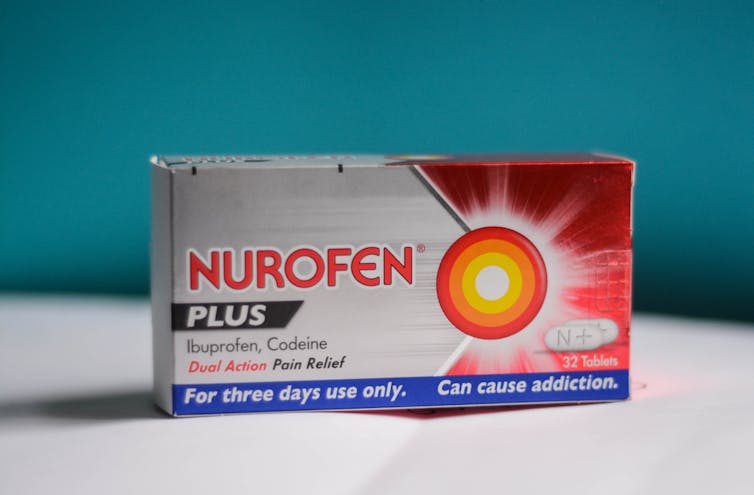
For example, Nurofen Plus, which contains codeine (an opioid painkiller), is prohibited in countries like Egypt, Indonesia and the UAE.

Even common cold remedies containing decongestants like pseudoephedrine can land you in trouble in places like Japan and South Korea. This is because pseudoephedrine can be used to make methamphetamine (“speed”). Likewise, many stimulant ADHD drugs are also banned from these countries.


Get your news from actual experts, straight to your inbox. Sign up to our daily newsletter to receive all The Conversation UK’s latest coverage of news and research, from politics and business to the arts and sciences.


Some countries have restrictions on the amount of medication that you are allowed to bring into the country – usually a maximum of three months supply.

Travellers often overlook how strict customs regulations can be regarding medications. Even if prescribed for a valid medical reason, carrying a prohibited drug can lead to confiscation (leaving you without essential treatment), fines (especially in countries with tough drug laws) and detention or arrest in rare but serious cases.

If you’re travelling with certain controlled drugs – such as opioids, stimulants or psychotropic substances – you may need to apply for an export licence from the UK Home Office. This is typically required when carrying a supply of three months or more. Examples of controlled drugs include diazepam (for anxiety and muscle spasms), codeine and morphine (for pain), amphetamines (for ADHD) and temazepam (for insomnia).

Before you travel, check whether your medicine is affected by any of these restrictions. Use the country’s embassy website or the UK government’s travel advice to check the rules of your destination country.

This should provide guidance on whether you simply need a copy of your prescription, a doctor’s letter or a special import certificate (some countries require official documentation even for personal use).

The UK government advises carrying controlled drugs or any drugs that might be restricted in your hand luggage. You should take along a prescription or a signed letter from your doctor detailing your medication, dosage and travel dates.

Ensure you take sufficient supplies for the duration of your trip and include extras for unexpected delays, damage or loss.

A packet of Nurofen Plus.
Even some over-the-counter medicines can fall foul of the law.
olesea vetrila/Shutterstock.com

Store your medication properly

It might be tempting to save space by transferring pills or liquids into smaller containers or pill organisers. While this can be convenient, it’s not always advisable. Customs officials may not recognise unlabelled containers, increasing the chance of delays or confiscation.

Some medications are sensitive to light, air or temperature, and must remain in their original packaging to stay effective. For example, HRT (hormone replacement therapy) sprays like Lenzetto must not be decanted.

These products rely on precise metered dosing and specialised packaging to deliver the correct amount of hormone. Transferring them to another container could result in incorrect dosing or loss of potency.

Similarly, GTN (glyceryl trinitrate) tablets, used to treat angina, should always be stored in their original glass bottle. The active ingredient can evaporate if exposed to air, reducing the tablets’ effectiveness.

You might be worried about the 100ml liquid in hand luggage restriction – with a doctor’s letter certifying the need for this medicine, you should be able to take larger amounts of liquid medicine through security.

Medicines should always be kept in their original packaging with labels intact. When in doubt, ask your pharmacist whether your medication can be safely repackaged for travel.

It’s also important to split your supply of medicines between bags (if more than one is used) in case one is lost. Tablets and capsules can sometimes be placed in a pill organiser for daily use, but always carry the original box or prescription label as backup.

Some medicines require refrigeration – like Wegovy and Ozempic (semaglutide) injections for weight loss or insulin.

Usually, unopened Wegovy pens and insulin preparations should be stored between 2°C and 8°C in a fridge. Once out of the fridge, they can be kept at room temperature (up to 25°C) for up to 28 days, but must be protected from heat and sunlight. High temperatures, such as in direct sunlight or a hot car, can damage insulin.

When travelling, use an insulated travel case or cool pack, but avoid placing pens or other medicines directly next to ice packs to prevent freezing.

Airlines generally do not provide refrigeration or freezer storage for passenger items, including medicines, due to space and liability concerns, but it’s worth contacting them to see if they can help with arrangements for storage. Inspect insulin for crystals after flying – if any are present, it should be discarded.

You can bring needles and injectable medicines like EpiPens (for allergies), insulin or Wegovy in your hand luggage. But it’s important to carry a doctor’s note stating your medical condition and the necessity of the medication, and a copy of your prescription.

You should also declare them at airport security. Security officers may inspect these items separately, so allow for extra time going through security.

Contact your airline for any specific rules on needles and injectable medicines. Always carry such medicines and medical devices in your hand luggage – checked bags can be lost or exposed to extreme temperatures.

Don’t skip doses

Tempting as it may be to leave your medication behind for a short trip, doing so can be risky. Stopping treatment – even temporarily – can lead to relapse or worsening of symptoms (especially for chronic conditions like diabetes, hypertension or depression).

For medicines like antidepressants or opioids, people may start feeling withdrawal effects. You’re also at risk of reduced effectiveness if you miss doses of medicines that require consistent levels in your bloodstream.

If you’re considering a break from your medication, consult your doctor first. They can advise whether a short pause is safe or help you plan a travel-friendly regimen.

Take the right documents

While showing your NHS app to border officials may help demonstrate that a medicine is prescribed to you, it’s not always sufficient – especially when travelling with restricted or controlled drugs and injectable medicines.

Most countries require a copy of your prescription, and a doctor’s letter confirming the medication is for personal use. Your doctor is not legally obliged to issue this letter, but most will do so upon request.

It’s best to ask at least one to two weeks in advance, as some practices may charge a fee or require time to prepare the documentation.

Travelling with medication doesn’t have to be stressful, but it does require planning. With the right preparation, you can enjoy your holiday without compromising your health or running afoul of foreign laws.

The Conversation

Dipa Kamdar does not work for, consult, own shares in or receive funding from any company or organisation that would benefit from this article, and has disclosed no relevant affiliations beyond their academic appointment.

ref. Going on holiday? What you need to know about taking your meds with you – https://theconversation.com/going-on-holiday-what-you-need-to-know-about-taking-your-meds-with-you-261018

Afghan data leak: how selective state secrecy and cover-ups can harm civilians

Source: The Conversation – UK – By Victoria Canning, Professor of Criminology, Lancaster University

In 2022, somebody in the UK Ministry of Defence (MoD) mistakenly shared a spreadsheet containing the personal information associated with 18,714 Afghans and their family members. This data breach, and the efforts to cover it up, raises serious questions about state secrecy, blame-shifting and accountability.

After discovering the mistake in August 2023, the government covered up their spectacular error with an unprecedented injunction “contra mundum (against the world). This “superinjunction” prohibited journalists and others in the know – like one author of this article (Professor Sara de Jong) – from reporting the breach and even the very existence of the injunction.

When the superinjunction was finally lifted on July 15, John Healey, the defence secretary, revealed that the MoD had operated a secret resettlement scheme for Afghans whose data had been leaked at risk from the Taliban. To date, 900 Afghans and 3,600 family members have been flown to Britain or are currently in transit via this scheme. A further 600 people and their immediate family members are still in Afghanistan, being promised evacuation. Many thousands of others on the list were already resettled in the UK via two other official routes.

The spectacular nature and impact of this data leak should not distract from the fact that it is not entirely unique. The personal data of Afghan applicants had already been exposed by the MoD in an earlier series of data breaches in September 2021.

The superinjunction is only the latest in a string of silences that have prevented accountability on Afghanistan and other issues to do with national security.


Want more politics coverage from academic experts? Every week, we bring you informed analysis of developments in government and fact check the claims being made.

Sign up for our weekly politics newsletter, delivered every Friday.


In the wake of the dramatic Nato withdrawal from Afghanistan in August 2021, the foreign affairs select committee was dependent on whistleblowers to get to the truth about then prime minister Boris Johnson’s prioritisation of an animal charity for evacuation, over others at acute risk. Political accountability over the chaos of the evacuation was compromised by the foreign office who, according to then committee chair Tom Tugendhat, “repeatedly has given us answers that, in our judgement, are at best intentionally evasive, and often deliberately misleading”.

The Ministry of Defence – including Healey in his statement on the data breach – routinely cites the deaths of 457 British soldiers as the “costs of war” in Afghanistan. But the department only released the data on how many Afghan interpreters died alongside them after a freedom of information request by Sara de Jong. The MoD, even after several freedom of information Requests and appeals, refuses to provide further details about the circumstances of their deaths.

Even the latest shocking revelations didn’t end with the lifting of the superinjunction. A secondary injunction was lifted on July 17, revealing that the leaked list also contained the identities of dozens of British officials, including spies and special forces.

Selective secrecy

In the wider context of government leaks and secrecy, critical questions need to be asked about which secrets are kept, by whom and why.

In his judgement lifting the superinjunction, Mr Justice Chamberlain credited media organisations and individual journalists involved with the fact that they had kept the leak confidential. Like Sara, some had become aware of the breach several months before Healey (the then-shadow defence secretary was informed in December 2023). But all kept quiet to keep Afghans at risk safe, not to cover up their own errors.

The government invests in secrecy when it also has its own embarrassment to hide, whether it is an extraordinary superinjunction or secrecy about the prioritisation of a pet charity during the Afghanistan evacuation.

Appeals to national security routinely obstruct media, legal and public access to information to hold the government to account. Meanwhile, many Afghans are left wondering why their and their loved ones’ data was on a spreadsheet that could be emailed around with a click of the wrong button.

Effects on Afghans

The consequences of the cover-up will be felt most acutely by Afghans – those on the leaked list still waiting for evacuation, including family members of Afghans already in the UK, whose own presence may be complicated further by anti-immigration sentiment.

Following the revelations, Healey announced that the secret relocation scheme was now closed, following the sudden decision to close the two official Afghan resettlement schemes.

The decision to shut down the two publicly known resettlement schemes, he claimed, was based on “policy concerns about proportionality, public accountability, cost and fairness”, as well as a commissioned report on the impact of the leak.

He defended his decisions saying that “the taxpayer should be paying £1.2 billion less over the next few years, and that around 9,500 fewer Afghans will come to this country”. In the context of ongoing anti-immigration rhetoric, the mention of costs combined with refugees is as unsurprising as it is inflammatory.

On the day of announcement, affected Afghans were sent a notice by the MoD and a link where they could find out if their data had been compromised. The email said very little about what the MoD could offer, and said a lot about what measures Afghans were now supposed to take: use a virtual private network, limit who can see your social media profiles.

Afghans unlucky enough to be Afghanistan were simply advised that, “If you are outside the UK, please do not try to travel to a third country without a valid passport and visa. If you do so, you will be putting yourself at risk on the journey, and you may face the risk of being deported back to Afghanistan”.

It is almost impossible for Afghans to travel legally without international assistance. And, since the Taliban are not recognised as a legitimate government, embassies are closed for citizens to even obtain legal travel documentation.

Given that the British government recognises the real risk of rights violations in Afghanistan, as well as the ongoing assault on women’s rights by the Taliban, it seems contradictory – and a remarkable abdication of responsibility – to close routes to safety.

The Conversation

Victoria Canning has received funding from UKRI and British Academy.

Sara de Jong has received funding from the British Academy (Mid-Career Fellowship 2022) for research on Afghan interpreters and their claims to protection and rights. She is the chair of the board of trustees of the Sulha Alliance CIO, which advocates for and supports Afghan interpreters employed by the British Army.

ref. Afghan data leak: how selective state secrecy and cover-ups can harm civilians – https://theconversation.com/afghan-data-leak-how-selective-state-secrecy-and-cover-ups-can-harm-civilians-261394

Florida plan to deputize National Guard officers as immigration judges at Alligator Alcatraz would likely violate constitutional rights

Source: The Conversation – USA – By Raquel Aldana, Professor of Law, University of California, Davis

President Donald Trump visits Alligator Alcatraz in Ochopee, Florida on July 1, 2025. Andrew Caballero-Reynolds/AFP via Getty Images

Seeking to expand Florida’s role in federal immigration enforcement, Florida Gov. Ron DeSantis in May 2025 submitted the state’s Immigration Enforcement Operations Plan to the Trump administration.

The plan, endorsed by President Donald Trump, says all of Florida’s roughly 47,000 law enforcement officers have received, or soon will receive, training to act as immigration officers. It’s part of an effort to, as the plan notes, “maintain state-led border security operations in the absence of federal support.”

The DeSantis plan includes a proposal to deputize Florida’s nine National Guard Judge Advocate General’s Corps officers to serve as immigration judges. JAG officers are attorneys who serve as legal advisers, prosecutors, defense counsel and military judges in a wide range of matters specific to the armed forces. That includes courts-martial and civil matters involving the military.

DeSantis has said the move is necessary to create a fast-track deportation system at Florida’s new immigration detention facility in the Everglades, Alligator Alcatraz.

He has dismissed due process concerns – such as a lack of training and independence – from legal experts, pointing to the backlog in immigration courts. Immigration judges in Florida’s immigration courts have one of the largest backlogs in the country, with over half a million cases.

Congress establishes immigration policy

The Constitution grants Congress, not the president or state governments, the power to establish immigration laws.

Under the Immigration and Nationality Act of 1952, also known as the McCarran-Walter Act, Congress created a clear process for immigration removal cases.

In general, a U.S. noncitizen may face removal from the country based on violations to the immigration laws. Those range from unauthorized entry to committing or being convicted of certain crimes.

Congress designated the Executive Office for Immigration Review, an agency within the Department of Justice that houses the immigration courts and the Board of Immigration Appeals, as the body exclusively responsible for deciding immigration removal cases. The office also details the authority and standards for how immigration judges conduct deportation hearings.

Immigration judges undergo rigorous vetting and training. And their decisions are subject to appeal to the Board of Immigration Appeals, the administrative appellate body for decisions made by immigration judges.

The McCarran-Walter Act also contains several provisions that subject most immigration court decisions such as removal or asylum to judicial review in federal courts. That can happen on direct appeal or as part of habeas corpus petitions that challenge the legality of detention or removal.

The system is far from perfect. But Congress designed it to ensure legal expertise and due process guarantees.

As an immigration scholar, I believe that allowing Florida JAG officers to serve as immigration judges bypasses this framework that is set in law, and violates the constitutionally mandated separation of powers.

JAG officers, including those in Florida’s National Guard, are not governed by the McCarran-Walter Act. They are military lawyers in an entirely separate system, overseen by the Uniform Code of Military Justice, which defines the role of military judges. The code retains a unique military character that is substantially different from the judicial appellate system that governs immigration administrative rulings.

Simply put, neither Trump nor DeSantis can create an entirely new system of immigration judges outside of the one already established by Congress.

Federal agencies cannot deputize JAGs

A current immigration provision, known as the 287(g) program, authorizes U.S. Immigration and Customs Enforcement to collaborate with local law enforcement to enforce federal immigration laws.

But this provision only authorizes deputizing local law enforcement to assist “in relation to the investigation, apprehension, or detention” of immigrants – not the arbitration of deportation cases.

In the nearly three decades since 287(g) was enacted, no state or local officials – let alone military officers – have been permitted to act as immigration judges.

DeSantis’ plan seeks to convert Florida’s JAG officers from state to federal officials to function as immigration judges. Trump’s approval of this plan would also exceed the scope of his statutory authority.

Federal statutes allow the president to federalize the National Guard in limited instances: during times of war or national emergency.

But neither DeSantis’ rhetoric nor Trump’s framing of undocumented immigration as an “invasion” meet these legal thresholds.

A detention center is seen from a helicopter.
An aerial view of the migrant detention center in Ochopee, Florida on July 4, 2025.
Alon Skuy/Getty Images

JAGs cannot engage in domestic law enforcement

Even if Florida’s National Guard were federalized, JAG officers still could not legally serve as immigration judges.

The Posse Comitatus Act, enacted in 1878, restricts the use of federal military personal in civilian law enforcement. It reflects a longstanding American principle: The military should not police civilians.

Immigration enforcement – including deciding whether someone is deported – is fundamentally a civilian enforcement function.

The only narrow exceptions to the Posse Comitatus Act’s restrictions require a clear statutory basis, such as Trump invoking the Insurrection Act of 1807, a law that would allow the president to rely on the military for domestic enforcement to quell a rebellion or widespread violence.

Due process concerns

The DeSantis plan also compromises constitutionally guaranteed rights to a fair process for immigrants facing removal.

Immigration law is notoriously complex. Even experienced immigration lawyers struggle to keep up with its constant changes.

JAG officers, trained primarily in military law, would face immense challenges interpreting and applying immigration statutes. That’s especially true with only weeks of preparation, as DeSantis proposes.

But due process isn’t only about knowledge of legal technicalities. The Fifth Amendment guarantees due process rights to all persons on U.S. soil, regardless of immigration status.

For decades, courts have interpreted these protections to include fair hearings before qualified immigration judges – and, in most instances, judicial review.

By circumventing established procedures, DeSantis’ plan risks creating a system where expedited deportations come at the expense of accuracy and constitutional rights.

The Conversation

Raquel Aldana does not work for, consult, own shares in or receive funding from any company or organization that would benefit from this article, and has disclosed no relevant affiliations beyond their academic appointment.

ref. Florida plan to deputize National Guard officers as immigration judges at Alligator Alcatraz would likely violate constitutional rights – https://theconversation.com/florida-plan-to-deputize-national-guard-officers-as-immigration-judges-at-alligator-alcatraz-would-likely-violate-constitutional-rights-260677

Adaptation au changement climatique en Afrique pendant 10 000 ans : une étude offre des enseignements pour notre époque

Source: The Conversation – in French – By Leanne N. Phelps, Associate research scientist, Columbia University

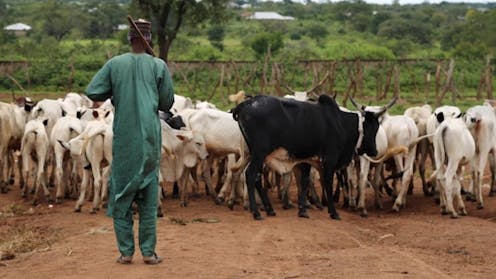
Un éleveur guide son troupeau de bœufs à travers les paysages du sud-ouest nigérian. Leanne Phelps, Fourni par l’auteur

Imaginez que vous vivez dans un endroit où une seule sécheresse, un seul ouragan ou une seule coulée de boue peut anéantir votre approvisionnement alimentaire. C’est exactement le cas de nombreuses communautés à travers l’Afrique, qui doivent faire face à des chocs climatiques tels que des inondations, des vagues de chaleur et à de mauvaises récoltes.

Les politiques de développement visant à lutter contre ces menaces négligent souvent une source d’information précieuse : l’histoire même de l’Afrique.

Il y a environ 14 700 à 5 500 ans, une grande partie de l’Afrique a connu des conditions plus humides, une période appelée « période humide africaine ». Puis, vers 5 500 ans (avant notre ère), le climat est devenu plus sec. Cela a entraîné de grands changements sociaux, culturels et environnementaux sur le continent.

Nous faisons partie d’une équipe de chercheurs en sciences sociales, naturelles et environnementales. Nous avons récemment publié une étude sur la façon dont les communautés africaines ont réagi aux changements climatiques au cours des 10 000 dernières années. C’est la première recherche à utiliser des données isotopiques pour retracer l’évolution des modes de vie sur l’ensemble du continent africain.

Cette approche à l’échelle du continent offre un nouvel éclairage sur la formation et l’évolution des moyens de subsistance dans l’espace et dans le temps.

Les théories précédentes partaient souvent du principe que les sociétés et leurs systèmes alimentaires évoluaient de manière linéaire. En d’autres termes, elles passaient de communautés de chasseurs-cueilleurs à des sociétés socialement et politiquement complexes pratiquant l’agriculture.

Mais notre étude montre une réalité plus riche. Pendant 10 000 ans, les communautés africaines se sont adaptées en combinant l’élevage, l’agriculture, la pêche et la cueillette. Elles ont mélangé différentes pratiques en fonction de ce qui fonctionnait à différents moments dans leur environnement spécifique. Cette diversité entre les communautés et les régions a été essentielle à la survie de l’humanité.

Cela nous enseigne des leçons concrètes pour repenser les systèmes alimentaires actuels.

Notre recherche montre que les politiques rigides venues d’en haut ont peu de chances de réussir. C’est notamment le cas des programmes qui misent tout sur l’agriculture intensive au détriment de la diversification des économies. Bon nombre de politiques actuelles adoptent une vision étroite, en privilégiant uniquement les cultures commerciales.

L’histoire nous apprend autre chose : pour être résilient face aux chocs, il ne faut pas tout miser sur une seule méthode. Il faut rester souple, combiner plusieurs approches et s’adapter aux réalités locales.

Les indices laissés par le passé

Nous avons pu tirer nos conclusions en examinant les indices laissés par l’alimentation des populations et leur environnement. Pour ce faire, nous avons analysé les traces chimiques (isotopes) présentes dans les ossements humains et animaux domestiques anciens provenant de 187 sites archéologiques à travers le continent africain.

Nous avons classé les résultats en groupes présentant des caractéristiques similaires, ou « niches isotopiques ». Nous avons ensuite décrit les moyens de subsistance et les caractéristiques écologiques de ces niches à l’aide d’informations archéologiques et environnementales.

Nos analyses ont révélé une grande diversité de systèmes de subsistance.
Par exemple, dans les régions correspondant aujourd’hui au Botswana et au Zimbabwe, certains groupes combinaient l’agriculture à petite échelle avec la cueillette de plantes sauvages et l’élevage de bétail après la période humide africaine. En Égypte et au Soudan, les communautés combinaient l’agriculture – axée sur le blé, l’orge et les légumineuses – avec la pêche, la production laitière et le brassage de la bière.

Les éleveurs, en particulier, ont développé des stratégies très souples. Ils se sont adaptés aussi bien aux plaines chaudes qu’aux montagnes sèches, et à toutes sortes d’environnements intermédiaires. Les systèmes pastoraux (agriculture avec des animaux de pâturage) sont plus nombreux que tout autre système alimentaire sur les sites archéologiques. Ils présentent également la plus grande variété de signatures chimiques, preuve de leur adaptabilité à des environnements changeants.

Notre étude s’est également penchée sur la manière dont les gens utilisaient le bétail. Dans la plupart des cas, les troupeaux se nourrissaient de cultures locales (comme le mil ou les pâturages tropicaux) et s’adaptaient à différents milieux écologiques. Certains systèmes étaient très spécialisés, adaptés aux zones semi-arides ou montagneuses. D’autres rassemblaient des troupeaux mixtes, mieux adaptés aux zones plus humides ou situées à basse altitude. Parfois, les animaux étaient élevés en petit nombre pour compléter d’autres activités. Ils fournissaient du lait, de la bouse pour les cultures ou le feu, et servaient de sécurité en cas de mauvaise récolte.

Cette capacité d’adaptation explique pourquoi, au cours du dernier millénaire, les systèmes pastoraux sont restés si importants, en particulier dans les zones de plus en plus arides.

Stratégies de subsistance mixtes

L’étude apporte également des preuves solides d’interactions entre la production alimentaire et la cueillette, que ce soit au niveau communautaire ou régional.

Des stratégies de subsistance mixtes et dynamiques, comprenant des interactions telles que le commerce au sein et entre les communautés proches et lointaines, étaient particulièrement visibles pendant les périodes de stress climatique. C’est notamment le cas à la fin de la période humide africaine, il y a environ 5 500 ans, quand le climat est devenu plus sec et plus difficile.

Dans le sud-est de l’Afrique, il y a environ 2 000 ans, on voit apparaître des modes de vie très diversifiés. Ils mêlaient élevage, agriculture et cueillette de manière complexe. Ces systèmes ont sans doute émergé en réponse à des changements environnementaux et sociaux complexes.

Des changements complexes dans les interactions sociales – notamment en matière de partage des terres, des ressources et des connaissances – ont probablement favorisé cette capacité d’adaptation.

Comment le passé peut éclairer l’avenir

Les stratégies anciennes de subsistance peuvent servir de guide pour faire face aux changements climatiques d’aujourd’hui.

Notre analyse montre qu’au fil des siècles, les communautés ont combiné élevage, agriculture, pêche et cueillette en tenant compte des réalités locales. Ces choix leur ont permis de mieux résister à des conditions imprévisibles.

Elles ont mis en place des systèmes alimentaires qui fonctionnaient en harmonie avec la terre et la mer, et non contre elles. Elles s’appuyaient également sur des réseaux sociaux solides, fondés sur le partage des ressources, des connaissances et du travail.

Les réponses du passé face aux changements climatiques peuvent inspirer les stratégies actuelles et futures visant à renforcer la résilience des régions confrontées à des pressions sociales et environnementales.

The Conversation

Leanne N. Phelps est affiliée à la Columbia Climate School de l’université Columbia, au Jardin botanique royal d’Édimbourg, au Royaume-Uni, et à l’ONG Vaevae basée à Andavadoake, Toliara, Madagascar.

Kristina Guild Douglass bénéficie d’un financement de la Fondation nationale pour la science des États-Unis. Elle est affiliée à l’ONG Vae Vae.

ref. Adaptation au changement climatique en Afrique pendant 10 000 ans : une étude offre des enseignements pour notre époque – https://theconversation.com/adaptation-au-changement-climatique-en-afrique-pendant-10-000-ans-une-etude-offre-des-enseignements-pour-notre-epoque-261282

Leaders in India, Hungary and the US are using appeals to nostalgia and nationalism to attack higher education

Source: The Conversation – USA (2) – By Riyad A. Shahjahan, Professor of Higher, Adult and Life Long Education, Michigan State University

Two scholars argue that nostalgia and resentment fuel government attacks on universities. Rick Friedman/AFP

Harvard University is under siege by the Trump administration – and the world is watching. But this case isn’t just an American issue.

It’s part of a global trend: universities cast as enemies and institutions in need of reform. Populist, right-wing governments are blaming universities for tearing at the fabric of nations.

These attacks are part of a broader strategy known as affective nationalism. It occurs when leaders use emotions, not just ideas, to build national identity. Feelings such as fear, pride, nostalgia and resentment are deployed to create a story about who belongs, who doesn’t and who’s to blame.

As scholars who study nationalism, emotion and higher education, we explore the emotional politics behind these attacks.

Prime Minister of Hungary Viktor Orbán addresses a crowd.
Prime Minister Viktor Orbán of Hungary has been hostile to academic freedom.
Pierre Crom/Getty Images News

Global backlash

Much of President Donald Trump’s vision and rhetoric is inspired by Hungary, where Prime Minister Viktor Orbán has waged a culture war on higher education for over a decade, banning gender studies and reshaping university governance. Orbán’s attacks on Central European University expose his hostility to academic freedom, critical thinking and diversity. All are viewed as threats to his nationalist “illiberal democracy.”

Trump followed Orbán’s playbook. On May 22, 2025, his administration declared that Harvard could no longer enroll foreign students. A U.S. Department of Homeland Security statement claimed that university leaders “created an unsafe campus environment by permitting anti-American, pro-terrorist agitators.” The statement suggested that many of the so-called agitators were foreign students.

Similarly, in India, students at Jawaharlal Nehru University were labeled “anti-national” for protesting the Citizenship Amendment Act, which provides fast-track citizenship to non-Muslim refugees. The students argued that it marginalizes Muslims. Since 2016, the Modi government has increasingly used “anti-national” and sedition charges to silence student and academic dissent.

These labels – “elite,” “foreign” or “anti-national” – are not neutral. They fuel fear, resentment and powerful narratives that frame universities as threats. Harvard, Central European University and Jawaharlal Nehru University have become symbols of broader national anxieties around identity and belonging.

British-Australian feminist scholar Sara Ahmed’s work on the sticky nature of emotions helps reveal the two emotions that often appear in attacks on universities: nostalgia and resentment.

U.S. President Donald Trump signs an executive order with a 'Make America Great Again' hat near the document.
The Trump administration has used nostalgia as a tool in its attacks on Harvard University.
Chip Somodevilla/Getty Images News

Glorifying the nation’s past

Nostalgia is a longing for a better past.

Consider Trump’s “Make American Great Again” slogan. It implies the nation was once great, has declined and must reclaim its former glory. That’s a powerful emotional story. Nationalism often works this way – by telling a tale of a lost golden age and a future that must be saved.

For that reason, nostalgia is central to populist attacks on universities and institutional reform. U.S. Secretary of Education Linda McMahon, for example, evoked Harvard’s symbolic past as part of the American Dream, arguing it has lost its way and “put its reputation in serious jeopardy.”

In India, Modi’s government rejects Western influence, while using nostalgia to revive a Hindu past in higher education. The Modi government promotes national pride on campuses by glorifying military heroes and installing symbolic figures – such as the statue of Swami Vivekananda, a Hindu monk and philosopher, at Jawaharlal Nehru University – to shape student identity and loyalty.

In Hungary, Orbán mobilizes a glorified Christian past to challenge discourses on diversity, inclusion, critical inquiry and academic freedom in higher education. A 2021 bill tasks universities with defending the nation and preserving its intellectual and cultural heritage.

Prime Minister of India Narendra Modi arrives at an event.
In India, the Modi government has increasingly framed public universities as institutions corrupted by Western ideas.
Tomas Cuesta/Getty Images News

Enemies of the nation

Resentment is a powerful emotion often used by states that see themselves as defenders of national unity and values. When Harvard resisted Trump’s reforms, the president framed the university’s stance in a Truth Social post as a betrayal to the nation, denouncing it as “terrorist inspired/supporting ‘sickness.’” Meanwhile, the Department of Education issued a statement that accused the university of a “troubling entitlement mindset.”

Similarly, in India, the Modi government has increasingly framed public universities – especially those with critical voices – as “anti-national” spaces. By casting critical voices as enemies within, the state turns resentment into a political weapon to justify the erosion of academic freedom.

In Hungary, the Orbán government mobilized resentment to portray universities and academics as disloyal elites working against the nation. One example of Hungary’s war on universities is the 2018 ban on gender studies, justified by the Orbán government as rejecting “socially constructed genders” in favor of “biological sexes.” This move reflects how the government uses resentment to assert ideological control over academic institutions.

Jawaharlal Nehru University students show their degrees during a convocation ceremony
Universities are under attack for what they represent.
Hindustan Times

Emotional battlegrounds?

Universities, especially elite ones such as Harvard and Jawaharlal Nehru University, carry deep symbolic weight. People care because of what the institutions represent.

Harvard, with its elite status, has long been a symbol of academic authority. But more recently, it has been cast as a defender of liberal higher education – making it a Trump administration target.

Jawaharlal Nehru University in India holds similar symbolic weight. It’s historically associated with producing the country’s social elites and is seen, especially in mainstream media, as left-leaning, making it a lightning rod in India’s polarized political landscape.

In Hungary, the Orbán government viewed Central European University as a danger because it threatened the government’s Christian-nationalist vision of the nation-state.

Universities are under attack not just for what they teach and research, but for what – and who – they represent. These are not just ideological disputes; they are emotional struggles over identity, belonging and public trust.

The Conversation

The authors do not work for, consult, own shares in or receive funding from any company or organization that would benefit from this article, and have disclosed no relevant affiliations beyond their academic appointment.

ref. Leaders in India, Hungary and the US are using appeals to nostalgia and nationalism to attack higher education – https://theconversation.com/leaders-in-india-hungary-and-the-us-are-using-appeals-to-nostalgia-and-nationalism-to-attack-higher-education-258975

About a third of pregnant women in the US lack sufficient vitamin D to support healthy pregnancies − new research

Source: The Conversation – USA (3) – By Melissa Melough, Assistant Professor of Nutrition Science, University of Delaware

Higher vitamin D levels in a mother’s blood during pregnancy have been linked to higher IQ scores in early childhood and reduced behavioral problems.
gpointstudio/iStock via Getty Images

Children whose mothers had higher vitamin D levels during pregnancy scored better on tests of memory, attention and problem-solving skills at ages 7 to 12 compared with those whose mothers had lower levels. That is a key finding of a new peer-reviewed study that my colleagues and I published in The American Journal of Clinical Nutrition.

While vitamin D has long been known for its role in maintaining bone health, scientists have since uncovered its importance in regulating immune function, reducing inflammation and protecting the nervous system. Now, growing evidence – including our new findings – suggest it may also support brain development beginning in the womb.

My team and I found that the link between prenatal vitamin D levels and childhood cognition was strongest among Black families, who also face higher rates of vitamin D deficiency.

This suggests that vitamin D supplementation may be a promising, low-cost strategy to support brain development while reducing racial disparities. Our study also suggested that vitamin D levels early in pregnancy may be most important for childhood cognitive development, highlighting the importance of early action by health care providers.

We analyzed more than 900 mother-child pairs across the U.S. who participated in a large national study called ECHO, short for Environmental influences on Child Health Outcomes. We measured vitamin D in the mothers’ blood during pregnancy and assessed children’s cognitive abilities using a standardized test battery. We also accounted for other important factors that shape childhood development such as the mother’s education, neighborhood conditions and the child’s age and sex.

This new study builds on our earlier findings that higher vitamin D levels during pregnancy are linked to higher IQ in early childhood and with reduced behavioral problems in middle childhood.

Collectively, these studies suggest that vitamin D plays a crucial role in brain development during pregnancy, with lasting benefits for children’s cognitive and behavioral outcomes.

A female doctor holding a clipboard and pen watches a young child play with blocks.
The children of mothers who had higher vitamin D levels during pregnancy scored better on tests of memory, attention and problem-solving skills at ages 7 to 12.
Prostock-Studio/iStock via Getty Images Plus

Why it matters

Vitamin D deficiency is a common global problem.

In the U.S., about 42% of adults have vitamin D levels below 20 nanograms per milliliter, or ng/ml, a commonly used cutoff for deficiency. About a third of U.S. pregnant women are deficient, and the rates are even higher among Black pregnant women, with 80% found to be deficient. This racial difference is partly due to differences in skin pigmentation, as melanin pigment reduces the skin’s ability to produce vitamin D from sunlight.

Although we can get vitamin D both from sun exposure and our diets, deficiency is common because these sources don’t meet everyone’s needs. Sunlight isn’t always a reliable source, especially for people with darker skin, those living in northern climates or those who often wear sunscreen or sun-protective clothing. Natural food sources such as fatty fish, egg yolks and certain mushrooms contain some vitamin D, and fortified products such as milk and breakfast cereals help, but not everyone eats enough of these foods to maintain healthy vitamin D levels.

That’s why supplements are often necessary and are recommended in many cases by the Dietary Guidelines for Americans.

Although current guidelines recommend that pregnant women consume 600 international units, or IUs, of vitamin D daily, higher doses of at least 1,000 to 2,000 IU are often needed to correct deficiency. On average, U.S. women consume only 168 IU from food and beverages, and many prenatal vitamins provide just 400 IU. This highlights an important opportunity for clinicians to improve screening and support around vitamin D supplementation both before and during pregnancy.

If a simple, low-cost strategy such as prenatal vitamin D supplementation can help support brain development, it may yield lasting benefits for children. Long-term studies have shown that higher cognitive scores in childhood are linked to better memory and reasoning in older age, as well as longer lifespan.

What still isn’t known

While our studies have linked higher vitamin D levels in pregnancy to improved cognitive and behavioral development in children, we cannot yet prove that vitamin D is the direct cause.

Therefore, studies called randomized controlled trials – the gold standard of research – are needed to confirm these findings and determine how best to translate them into clinical practice. These studies will be essential for determining the optimal target levels for vitamin D to support brain development in pregnancy.

The Research Brief is a short take on interesting academic work.

The Conversation

Melissa Melough receives funding from the National Institutes of Health (NIH).

ref. About a third of pregnant women in the US lack sufficient vitamin D to support healthy pregnancies − new research – https://theconversation.com/about-a-third-of-pregnant-women-in-the-us-lack-sufficient-vitamin-d-to-support-healthy-pregnancies-new-research-259433

‘I just couldn’t stop crying’: How prison affects Black men’s mental health long after they’ve been released

Source: The Conversation – USA (3) – By Helena Addison, Postdoctoral fellow, Yale University

Black men who have been incarcerated have elevated rates of PTSD, depression and psychological distress. da-kuk/E+ Collection via Getty Images

Mike returned home to Philadelphia after a 15-year prison sentence and suffered an emotional breakdown.

“I just couldn’t stop crying … I don’t know. It was the anxiety. It was just a lot,” he said. “I was under a lot of pressure and it just came crashing down.”

Mike, who was in his late 40s when we spoke, told me about his childhood filled with abuse, his first arrest at age 14, and the over 20 years of his life that he spent behind bars.

As a registered nurse and nurse scientist who studies how incarceration affects mental health, I know Mike’s experience after release from prison is not uncommon. Studies show that Black men who have experienced incarceration have higher rates of PTSD, depression and psychological distress compared with Black men who have never been incarcerated.

Working in psychiatric hospitals in Philadelphia, I met many patients in crisis who had been incarcerated at some point in their lives. As a part of my doctoral research, funded by the National Institute of Nursing Research, I interviewed 29 formerly incarcerated Black men to understand how incarceration has affected their mental health.

My peer-reviewed findings were published in the journal Social Science & Medicine. All quotes shared here use pseudonyms to protect the men’s privacy.

Trauma of incarceration

Mass incarceration in the U.S. has serious health consequences for individuals, families and communities. In Philadelphia alone, over 20,000 people return home from incarceration each year.

While incarceration rates are declining in Philadelphia, the needs of those coming home remain significant.

Many formerly incarcerated men described experiencing or witnessing violence, including being beaten by correctional officers and witnessing close friends get assaulted or killed.

“You know you are not regular because you come from a traumatic situation, right?” said Thomas, 44, who spent 18 years incarcerated.

The participants expressed that racism was common, especially while incarcerated in facilities located in the rural central and northern regions of Pennsylvania.

“I ain’t gonna sugar coat it – Black people going up into them white people mountains, they call you [n-word] all day long and you basically there to accept it,” Antonio told me.

Incarceration was especially difficult for those who were held for months pretrial without ever being convicted and those incarcerated during COVID restrictions who spent more than 23 hours a day in their cells.

‘Even though I’m free, I ain’t free’

Participants described life on parole or probation, or in transitional housing, as another form of confinement.

Ken, 56, has been out of prison for over a decade but said, “I’m still locked up, even though I’m free, I ain’t free. You just get a whole new set of rules and regulations.”

Men described significant anxiety related to community supervision requirements, including difficulty sleeping the night before a probation appointment.

Participants also described distress caused by “no association” restrictions. These are common parole and probation requirements that prohibit people under supervision from interacting with others who have criminal records, are also under supervision or are currently incarcerated. Violating this requirement can lead to a technical violation and reincarceration.

While these requirements are meant to reduce the risk of reoffending, they often isolate people from supportive relationships and resources, including housing and employment.

“[There are] a lot of smart brothers in there. And it hurts my heart. And that’s where the depression coming in too,” said Reese, who spent six years incarcerated. “I can’t contact them in jail. … That’s just how it is in the system.”

Philadelphia has the highest rate of community supervision – including probation and parole – among the largest U.S. cities, according to a 2019 analysis by The Philadelphia Inquirer.

At that time, the Inquirer reports, 1 in 23 adults in Philadelphia were under community supervision – and 1 in 14 Black adults in Philadelphia.

The men I interviewed said they felt like parts of them never left jail or prison, while others felt that they brought prison or jail home with them.

Tyrese, 34, said he stays home as often as he can.

“I’ve been out of the joint for seven years now and feel like I’m still institutionalized, I guess,” he said. “I know people that don’t even come outside,” referring to other formerly incarcerated men.

Others had dreams that they were back in a cell, or at home still wearing jail clothing. Long after release, many described constant hypervigilance and anxiety.

“I can be walking to the bus station and there be people walking around me, I’m constantly watching them,” said Anthony, who was first incarcerated at age 18 and served 16 years. “I’m watching every movement they’re doing. That’s a habit I had from jail.”

Man in black hoodie that says 'Free Meek' interacts with crowd of supporters in street
Philly rapper Meek Mill, shown here at a 2018 rally outside a Center City courthouse, was sentenced to probation for 10 years after a conviction on drug and gun charges. He became an advocate of criminal justice reform.
Michael Candelori/Pacific Press/LightRocket via Getty Images

Finding work

People who have been incarcerated often struggle to find employment after release, as many employers are unwilling to hire a person with a criminal record.

This leaves about 35% of formerly incarcerated Black men unemployed.

At the time of our interview, Tay, 31, was working part-time in carpentry. “Because I had felonies on my record a lot of places won’t hire me,” he said. “And a couple of places that I was working with, they ended up firing me once they did the background check.”

These frustrations can easily spill over into family life.

Mark, 30, also works part-time and said he found himself frequently becoming agitated and snapping at his kids, other family members and his girlfriend. “I can’t get the job I want or the job that I need to do what I need to do for my family and I’ll be frustrated,” he shared.

Participants struggled with having to depend on others for basic needs upon release. Kenny, who is now self-employed as a caterer, recalled his experience a few years earlier. “I was crying. I was a grown man, almost 40 years old, and my mother had to buy me underwear, socks,” he said.

The importance of fatherhood

Despite their many hardships, some of the men spoke with joy about reconnecting with their children.

“I think the most positive thing that happened since I’ve been out of prison is I got custody of my sons,” said Ken, a father of two. “Them kids saved me.”

Like many of the other participants with children, however, he was frustrated about being unable to provide for them and worried about repeating harmful cycles.

“You want to do good, but it makes you think bad stuff when you don’t have the right resources,” he continued. “You don’t want [your kids] to do the same things you did.”

Others struggled to bond with their children after years of separation.

John, 29, explained, “The bonding is kind of awkward, because you wasn’t there, especially during the pandemic when there was no visits allowed.”

Returning to disadvantaged neighborhoods

Most people released from incarceration return to neighborhoods with high rates of poverty, violence and other disadvantages.

Shawn, who lives in pubic housing, showed me abandoned buildings and boarded storefronts in his neighborhood and described how the environment made rebuilding his life harder.

For many participants, returning to divested communities brought stress. They experienced frequent exposure to substance use, violence and negative police encounters, and they had limited access to basic resources and job opportunities needed to support recovery and stability.

“This is my real life. It’s not fake. It’s not no, ‘Well, why did he go back and do this or that?’” he said. “I live in an underserved, impoverished, danger zone – period.”

Moving forward

The experiences these men shared with me demonstrate how traumatic incarceration is, even many years after release.

Supporting the mental health of formerly incarcerated Black men requires trauma-informed services, such as culturally responsive counseling, peer support and care that acknowledges the lasting effects of incarceration.

It also means helping them build or rebuild their financial resources, reconnect with their children and loved ones, and supporting the broader communities they return to through investment in housing, employment and accessible health and social services.

The Conversation

Helena Addison received funding from National Institute of Nursing Research of the National Institutes of Health under Award Number F31NR020434, the Substance Abuse and Mental Health Administration and American Nurses Association Minority Fellowship Program, the University of Pennsylvania’s Presidential PhD Fellowship, and Jonas Philanthropies to support this study and/or her PhD training. The content is solely the responsibility of the authors and does not necessarily represent the official views of the National Institutes of Health, or any other funding organizations or institutions. The views expressed in written training materials or publications and by speakers and moderators do not necessarily reflect the official policies of the Department and Human Services; nor does mention of trade names, commercial practices, or organizations imply endorsement by the U.S. Government.

ref. ‘I just couldn’t stop crying’: How prison affects Black men’s mental health long after they’ve been released – https://theconversation.com/i-just-couldnt-stop-crying-how-prison-affects-black-mens-mental-health-long-after-theyve-been-released-259975

Can AI think – and should it? What it means to think, from Plato to ChatGPT

Source: The Conversation – USA (3) – By Ryan Leack, Assistant Professor of Writing, USC Dornsife College of Letters, Arts and Sciences

Ancient Greek concepts about intelligence can shed light on 21st-century tech they never knew. agsandrew/iStock via Getty Images Plus

In my writing and rhetoric courses, students have plenty of opinions on whether AI is intelligent: how well it can assess, analyze, evaluate and communicate information.

When I ask whether artificial intelligence can “think,” however, I often look upon a sea of blank faces. What is “thinking,” and how is it the same or different from “intelligence”?

We might treat the two as more or less synonymous, but philosophers have marked nuances for millennia. Greek philosophers may not have known about 21st-century technology, but their ideas about intellect and thinking can help us understand what’s at stake with AI today.

The divided line

Although the English words “intellect” and “thinking” do not have direct counterparts in the ancient Greek, looking at ancient texts offers useful comparisons.

In “Republic,” for example, Plato uses the analogy of a “divided line” separating higher and lower forms of understanding.

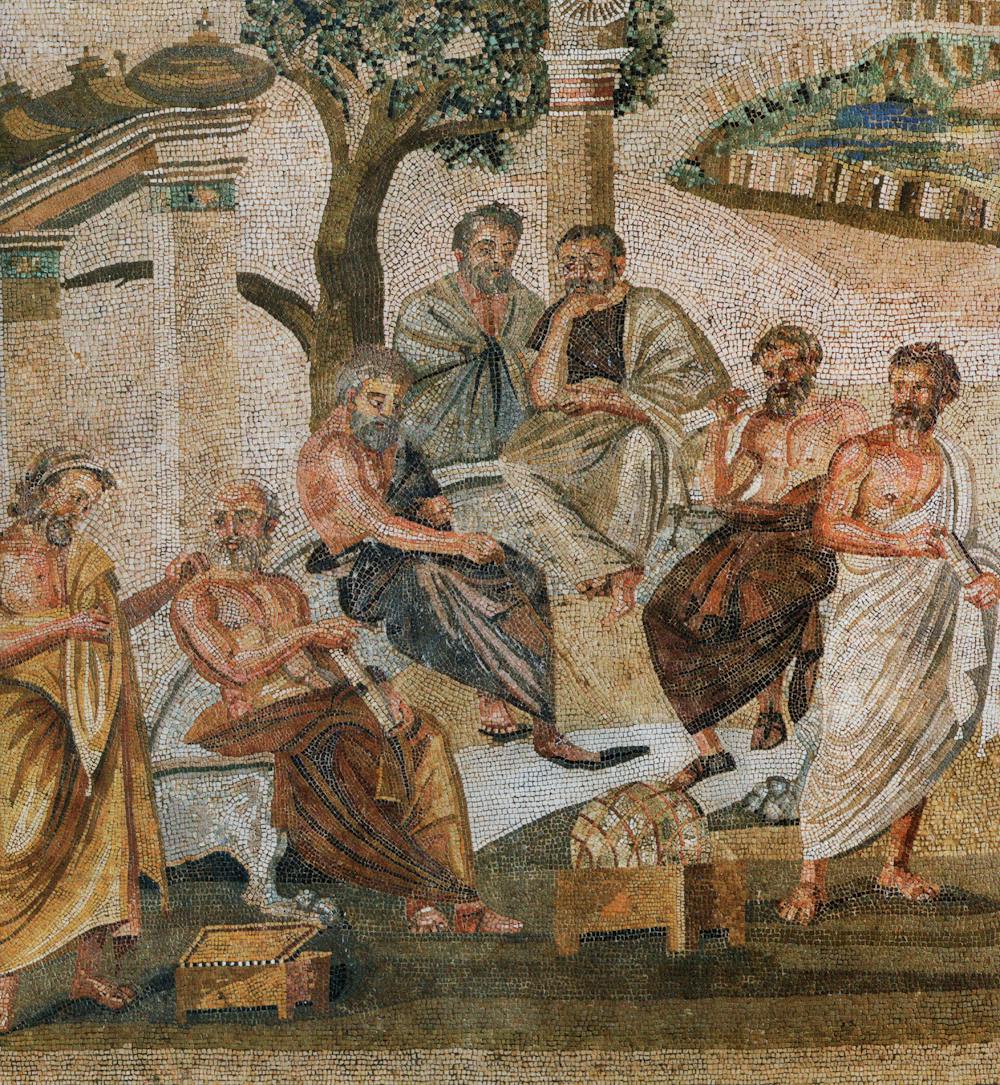
A close-up of a mosaic shows several men talking and sitting in a semicircle outside, wearing robes.
A Roman mosaic from Pompeii depicts Plato’s academy in Greece.
Wikimedia Commons

Plato, who taught in the fourth century BCE, argued that each person has an intuitive capacity to recognize the truth. He called this the highest form of understanding: “noesis.” Noesis enables apprehension beyond reason, belief or sensory perception. It’s one form of “knowing” something – but in Plato’s view, it’s also a property of the soul.

Lower down, but still above his “dividing line,” is “dianoia,” or reason, which relies on argumentation. Below the line, his lower forms of understanding are “pistis,” or belief, and “eikasia,” imagination.

Pistis is belief influenced by experience and sensory perception: input that someone can critically examine and reason about. Plato defines eikasia, meanwhile, as baseless opinion rooted in false perception.

In Plato’s hierarchy of mental capacities, direct, intuitive understanding is at the top, and moment-to-moment physical input toward the bottom. The top of the hierarchy leads to true and absolute knowledge, while the bottom lends itself to false impressions and beliefs. But intuition, according to Plato, is part of the soul, and embodied in human form. Perceiving reality transcends the body – but still needs one.

So, while Plato does not differentiate “intelligence” and “thinking,” I would argue that his distinctions can help us think about AI. Without being embodied, AI may not “think” or “understand” the way humans do. Eikasia – the lowest form of comprehension, based on false perceptions – may be similar to AI’s frequent “hallucinations,” when it makes up information that seems plausible but is actually inaccurate.

Embodied thinking

Aristotle, Plato’s student, sheds more light on intelligence and thinking.

A small relief depicts two men in robes gesturing while they speak animatedly with each other.
A 15th-century relief of Aristotle and Plato by Luca della Robbia in the Florence Cathedral in Italy.
sailko/Wikimedia Commons, CC BY-SA

In “On the Soul,” Aristotle distinguishes “active” from “passive” intellect. Active intellect, which he called “nous,” is immaterial. It makes meaning from experience, but transcends bodily perception. Passive intellect is bodily, receiving sensory impressions without reasoning.

We could say that these active and passive processes, put together, constitute “thinking.” Today, the word “intelligence” holds a logical quality that AI’s calculations may conceivably replicate. Aristotle, however, like Plato, suggests that to “think” requires an embodied form and goes beyond reason alone.

Aristotle’s views on rhetoric also show that deliberation and judgment require a body, feeling and experience. We might think of rhetoric as persuasion, but it is actually more about observation: observing and evaluating how evidence, emotion and character shape people’s thinking and decisions. Facts matter, but emotions and people move us – and it seems questionable whether AI utilizes rhetoric in this way.

Finally, Aristotle’s concept of “phronesis” sheds further light on AI’s capacity to think. In “Nicomachean Ethics,” he defines phronesis as “practical wisdom” or “prudence.” “Phronesis” involves lived experience that determines not only right thought, but also how to apply those thoughts to “good ends,” or virtuous actions. AI may analyze large datasets to reach its conclusions, but “phronesis” goes beyond information to consult wisdom and moral insight.

‘Thinking’ robots?

Today, AI takes on many physical forms, from autonomous vehicles and humanoid robots to health care robots and drones. If intelligence requires embodiment, as Plato and Aristotle believed, it might seem as if AI is coming closer than ever to human thinking.

AI does take on many forms, but they’re still not bodies; they run on code, algorithms and datasets. Intuitive understanding, emotion, integrity and practical wisdom seem to require an embodied, perishable form that is moved by experience.

Perhaps we should ask AI itself – so I did. When I prompted ChatGPT with the simple question, “Can you think?” it responded: “I can process information, analyze patterns, and generate responses based on data. So in some ways, it might ‘seem’ like I’m thinking. But it’s not thinking like a human does. I don’t have consciousness, emotions, intentions, or awareness. Everything I ‘do’ is based on patterns learned from huge amounts of text and a set of rules and probabilities. I can ‘simulate’ certain aspects of thinking, but I don’t truly think or understand in the human sense.”

That response aligns with Plato and Aristotle’s views. For now.

The Conversation

Ryan Leack does not work for, consult, own shares in or receive funding from any company or organization that would benefit from this article, and has disclosed no relevant affiliations beyond their academic appointment.

ref. Can AI think – and should it? What it means to think, from Plato to ChatGPT – https://theconversation.com/can-ai-think-and-should-it-what-it-means-to-think-from-plato-to-chatgpt-256648