¿Por qué tenemos una mano menos hábil que otra?

Source: The Conversation – (in Spanish) – By Álvaro Carmona, Coordinador académico & docente, Universidad Loyola Andalucía

Aproximadamente un 10% de la población es zurda. Anastassiya Bezhekeneva/Shutterstock

Este artículo forma parte de la sección The Conversation Júnior, en la que especialistas de las principales universidades y centros de investigación contestan a las dudas de jóvenes curiosos de entre 12 y 16 años. Podéis enviar vuestras preguntas a tcesjunior@theconversation.com


Pregunta formulada por Alejandro, de 15 años, del IES Sierra de las Villas, Villacarrillo (Jaén)


Seguro que te has fijado en que al escribir, jugar al fútbol o cepillarte los dientes siempre utilizas una mano con más destreza que la otra. No es casualidad: se trata de una característica llamada lateralidad manual, que significa que nuestro cerebro prefiere usar una mano concreta para tareas de precisión. Pero ¿por qué ocurre esto?

Una cuestión de ahorro energético

Cerca del 90 % de las personas son diestras, alrededor del 10 %, zurdas y muy pocas, menos del 1 %, ambidiestras (pueden usar ambas manos con igual habilidad). Esta característica tiene mucho que ver con cómo está organizado nuestro cerebro.

El cerebro humano está dividido en dos partes o hemisferios que se encargan de controlar movimientos diferentes. Mientras que el hemisferio izquierdo maneja principalmente la parte derecha del cuerpo, el derecho controla la parte izquierda. Esta organización cruzada explica por qué, si alguien sufre una lesión en el lado izquierdo del cerebro, su mano derecha podría perder movilidad o precisión.

La lateralización es una maravillosa estrategia para ahorrar energía. Si ambas manos hicieran todo con la misma eficacia, nuestro cerebro necesitaría más esfuerzo y energía para coordinarse. La naturaleza, que es muy práctica, optó por la especialización: una mano se convierte en la “principal” y se dedica a movimientos finos, mientras que la otra la apoya realizando tareas menos delicadas. De esta forma, el cerebro ahorra energía y mejora la coordinación.

Aunque no existe un gen de la mano izquierda o derecha, sí se sabe que la genética juega un papel clave. Un estudio realizado con más de 300 000 personas en Reino Unido descubrió decenas de genes relacionados con la lateralidad manual. Estos influyen en cómo crecen y se conectan las neuronas durante el desarrollo del cerebro, favoreciendo una preferencia hacia una mano u otra desde etapas muy tempranas.

Zurdos o diestros incluso antes de nacer

Gracias a las ecografías, hoy sabemos que muchos bebés ya prefieren chuparse un pulgar en particular desde antes de nacer, algo que ocurre alrededor de la 15ª semana del embarazo. Esto indica que la preferencia manual se empieza a formar muy pronto, probablemente influida por pequeñas diferencias en el desarrollo del cerebro dentro del útero.

Además de los genes y la biología, nuestro entorno y la cultura pueden influir en esa primacía. Por ejemplo, hasta hace no mucho tiempo, ser zurdo no estaba bien visto en la sociedad, por lo que muchos niños zurdos eran obligados a usar la mano derecha. Hoy sabemos que esto no es para nada recomendable, ya que fuerza al cerebro a usar circuitos menos eficaces, causando incomodidad, torpeza e incluso trauma.

Otra curiosidad sobre la lateralidad manual es su relación con el lenguaje. En la mayoría de los diestros, el hemisferio izquierdo controla la función lingüística. En cambio, en los zurdos esta distribución puede ser diferente: algunos utilizan el hemisferio derecho y otros tienen esta función repartida entre ambos hemisferios. Esto muestra lo increíblemente compleja que es la organización cerebral.

Entonces, ¿es mejor ser diestro o zurdo?

Aunque hay algunos estudios que relacionan la zurdera con ciertos trastornos del desarrollo del lenguaje, las personas “no-diestras” tienen una vida perfectamente saludable. De hecho, pueden disfrutar de ciertas ventajas, especialmente en deportes como el tenis, el boxeo o la esgrima, porque sus movimientos son menos predecibles para la mayoría diestra.

Además, creencias populares afirman que los zurdos pueden tener mayor creatividad y capacidad de adaptación por estar acostumbrados desde pequeños a un mundo diseñado mayoritariamente para diestros. En realidad, un estudio reciente concluyó que no existen diferencias significativas en creatividad divergente entre zurdos y diestros; de hecho, en algunos tests estandarizados los diestros obtienen puntuaciones ligeramente superiores. Este hallazgo desmonta el mito de la diferencia creativa entre zurdos y diestros y sugiere que la organización cerebral y la práctica individual, más que la lateralidad, determinan la creatividad.

Y aunque siempre tendremos una mano preferida, la buena noticia es que la menos hábil puede mejorar con la práctica. Realizar pequeñas actividades diarias, como cepillarte los dientes o escribir notas breves con tu mano más torpe, puede fortalecer sus conexiones neuronales y aumentar su precisión. Nuestro cerebro es muy adaptable y puede perfeccionar sus habilidades con el entrenamiento.

También es importante tener en cuenta la importancia del diseño inclusivo. Tijeras, pupitres y otros utensilios suelen estar pensados para diestros, dificultando las tareas cotidianas de muchas personas zurdas. Apostar por diseños cómodos y accesibles para cualquier mano es un paso más hacia un mundo más justo y adaptado para todos.

Así que la próxima vez que te sientas torpe al usar tu mano menos hábil, recuerda que detrás de esa simple preferencia hay un fascinante proceso que combina genética, cerebro y ambiente. Comprenderlo no solo es interesante, sino que también es un ejemplo diario que nos ayuda a apreciar mejor cómo funciona nuestro cuerpo.


El museo interactivo Parque de las Ciencias de Andalucía y su Unidad de Cultura Científica e Innovación colaboran en la sección The Conversation Júnior.


The Conversation

Álvaro Carmona no recibe salario, ni ejerce labores de consultoría, ni posee acciones, ni recibe financiación de ninguna compañía u organización que pueda obtener beneficio de este artículo, y ha declarado carecer de vínculos relevantes más allá del cargo académico citado.

ref. ¿Por qué tenemos una mano menos hábil que otra? – https://theconversation.com/por-que-tenemos-una-mano-menos-habil-que-otra-259918

Loi Duplomb : un grand bond en arrière environnemental et sanitaire ?

Source: The Conversation – in French – By François Dedieu, Directeur de recherche en sociologie, Inrae

En moins de quinze jours, une pétition demandant l’abrogation de la loi Duplomb a obtenu presque 2 millions de signatures – un record depuis la création de la plateforme de pétitions de l’Assemblée nationale. Les pétitionnaires refusent la réintroduction de pesticides dangereux alors que certains agriculteurs réclament le droit de les utiliser. Ces points de vue sont-ils irréconciliables ? Les recherches en agronomie montrent que protéger l’environnement et la santé, tout en assurant la compétitivité des productions agricoles, est possible.


La contestation de la loi Duplomb adoptée le 8 juillet s’est manifestée par une pétition recueillant plus de 1,8 million de signatures (en date du 24 juillet) – de quoi permettre l’ouverture d’un nouveau débat à l’Assemblée nationale. Les principaux points de contestation portent sur la réintroduction de deux pesticides controversés (l’acétamipride et le flupyradifurone) et sur le grignotage des prérogatives de l’Agence nationale de sécurité sanitaire de l’alimentation (Anses) dans la mise sur le marché des pesticides.

Face à cette mobilisation inédite, le porteur de la loi, le sénateur LR Laurent Duplomb, a déclaré que les centaines de milliers de signatures recueillies « ne lui inspire(nt) pas grand-chose », considérant que sa loi est « diabolisée et instrumentalisée par la gauche.

Un débat sur les pesticides fortement polarisé

Pour les écologistes et la gauche, soutenus par une partie de la communauté scientifique, la dangerosité des pesticides concernés n’est plus à démontrer. Ils sont multirisques pour la biodiversité, en particulier pour les abeilles, et suscitent de sérieux doutes quant à leurs effets neurodéveloppementaux sur la santé humaine selon l’European Food Agency. La ré-autorisation de l’acétamipride, interdite en France en 2023, mais toujours autorisée en Europe, apparaît inacceptable. Elle revient à privilégier les intérêts économiques au détriment de la santé humaine et environnementale.

De l’autre côté, pour les agriculteurs et leurs représentants, en particulier pour les producteurs de betteraves et de noisettes, l’acétamipride constitue le seul moyen efficace pour lutter contre le puceron vert qui transmet la maladie redoutable de la jaunisse. En 2020, celle-ci a provoqué la chute du tiers de la production de betteraves, entraînant une hausse des importations de sucre brésilien et allemand traités à l’acétamipride. Au final pourquoi l’agriculture française, effrayée par sa perte actuelle de compétitivité, devrait-elle payer le prix de son interdiction ?

Protéger la betterave sans pesticides, c’est possible

Ces deux positions clivées apparaissent aujourd’hui irréconciliables. Qu’en dit la science ? Tout d’abord, les preuves sont désormais suffisamment robustes pour établir que les dangers des néonicotinoïdes pour l’homme et l’environnement sont trop préoccupants et trop diffus pour penser les contrôler.

La technique d’enrobage (c’est-à-dire le processus par lequel des poudres et des liquides sont utilisés pour former une enveloppe autour de la graine) ne permet pas de limiter l’impact du pesticide. Outre ses dangers pour les abeilles, l’acétamipride s’insère durablement dans l’environnement. Le produit est soluble dans l’eau et possède une forte mobilité dans les sols, ce qui présente des risques énormes pour la biodiversité démontrés par l’expertise collective Inrae/Ifremer, de 2022.

Mais est-il pour autant possible de laisser les producteurs dans la situation consistant à être écrasés par la concurrence de denrées importées et remplies de substances interdites sur leur sol ? Tout le défi politique consiste ainsi à réunir « biodiversité » et « agriculture ». Or, les travaux d’expertise de l’Inrae montrent que l’agriculture peut s’appuyer sur la biodiversité pour obtenir des performances tout à fait satisfaisantes.

Cette approche avait été choisie par le plan pour la filière betteravière 2020 à 2023 pour faire face à l’interdiction des néonicotinoïdes. Le ministère de l’agriculture avait alors mis en place avec l’Inrae et l’Institut technique de la betterave, un « plan » permettant de trouver des substituts aux néonicotinoïdes.

Une autre manière de protéger les cultures était proposée : il ne s’agissait plus de s’attaquer au puceron qui provoque la jaunisse mais aux foyers propices à son apparition. Les résultats étaient probants : supprimer ces réservoirs permettait d’obtenir des rendements équivalents à ceux obtenus avec les traitements chimiques. Cette solution restait imparfaite puisque les pesticides pouvaient être utilisés en dernier recours (mais dans des quantités bien moindres), mais uniquement lorsque des solutions sans chimie échouaient. Par ailleurs, des solutions n’ont pas encore été trouvées pour toutes les cultures, notamment pour la noisette.

La loi Duplomb, une réponse simpliste et rétrograde

La loi Duplomb s’inscrit théoriquement dans la lignée de ces plans mais prend en réalité le chemin inverse : elle maintient la chimie comme solution prioritaire et ne pense les alternatives qu’en surface, et dans le plus grand flou. Les décrets de dérogations à l’usage des néonicotinoïdes seront, selon la loi, accordés moyennant « la recherche d’un plan d’alternative ». Mais comment le nouveau Comité d’appui à la protection des cultures prévu par le texte et placé sous la tutelle du ministère de l’agriculture pensera-t-il ces alternatives ? Avec quels moyens et quelle temporalité, alors que les décrets d’autorisation sont signés en parallèle au pas de course ?

La loi Duplomb nourrit finalement un puissant effet pervers : en allant au plus simple, elle retarde la recherche d’alternatives aux pesticides.

Pourquoi un tel recul ? Sans doute pour répondre au mouvement des agriculteurs de 2024 qui exprimait un « ras-le-bol » face aux normes environnementales et qui menace sans cesse de reprendre. Mais ces revendications masquent un problème profond que j’ai cherché à identifier dans mes travaux : l’incompatibilité entre normes environnementales et exigences commerciales qui peut conduire les producteurs à enfreindre la loi lorsqu’ils utilisent les pesticides (en dépassant la dose-hectare fixée par le réglementation, par exemple).

Mais la loi Duplomb répond à cette colère de manière doublement simpliste. Elle reprend sans discussion les revendications du mouvement de 2024 – demande de maintien des pesticides sans alternatives, souplesse dans l’autorisation des produits phytopharmaceutiques, ou assouplissement des formalités encadrant la taille des élevages et l’accès à l’eau (mégabassines).

En revanche, la loi ne traite nullement des réelles contraintes administratives qui pèsent sur les producteurs (déclarations, formalités en tous genres). Surtout, elle ne s’attaque pas à la racine des distorsions de concurrences qui se jouent au niveau supranational.

La réduction de la distorsion devrait passer par une possibilité d’harmoniser la décision d’homologation au niveau européen et non plus uniquement à l’échelle nationale. L’instauration de « clauses miroirs » dans les accords commerciaux internationaux permettrait d’interdire l’importation de denrées alimentaires produites avec des substances phytosanitaires interdites en Europe.

Menaces sur l’Anses

La loi Duplomb n’est-elle qu’une énième loi conçue pour envoyer des signaux symboliques aux agriculteurs ou est-elle l’outil d’une politique régressive plus profonde sur le terrain environnemental ?

Une disposition de la loi justifie cette inquiétude. Elle concerne les prérogatives de l’Agence nationale de sécurité sanitaire de l’alimentation (Anses) sur la commercialisation des pesticides.

Pour rappel, avant 2014, le ministère de l’agriculture délivrait les autorisations des pesticides après une évaluation scientifique réalisée par l’agence. À cette date, Stéphane Le Foll, alors ministre de l’agriculture, avait transféré cette compétence à l’Anses afin d’offrir de meilleures garanties contre la collusion d’intérêt pouvant exister entre le ministère de l’agriculture et les intérêts des filières agricoles.

Les concepteurs de la loi Duplomb ont envisagé plusieurs pistes pour réduire le pouvoir de l’Anses et pour restaurer les prérogatives du ministère de l’agriculture. Finalement, devant la menace d’une démission du directeur de l’agence, une solution de compromis a été trouvée : l’Anses devra désormais rendre davantage de comptes à ses ministères de tutelle en cas de rejet d’un pesticide.

Le texte prévoit aussi une liste des « usages prioritaires » de ravageurs menaçant le potentiel de production national. L’Anses devra donc considérer les priorités du ministère de l’agriculture lorsqu’elle établira son calendrier d’examen des autorisations de mise sur le marché. En somme, l’Anses conserve ses prérogatives mais avance désormais plus sous contrôle, quand il ne devrait être question que de renforcer ses compétences.

Ces dernières années, le ministère de l’agriculture a multiplié les tentatives de mise à mal de son expertise. En 2023, le ministère demandait expressément à l’Anses de revenir sur l’interdiction des principaux usages de l’herbicide S-métolachlore. Tout imparfaite que soit l’évaluation des risques, l’agence réalise un travail considérable de consolidation des savoirs scientifiques sur les dangers des pesticides, notamment à l’aide d’un réseau de phytopharmacovigilance unique en Europe.

Ainsi, la loi Duplomb semble bel et bien signer la volonté de revenir à l’époque où le ministère cogérait avec les syndicats toute la politique agricole du pays, comme il y a soixante ans avec le Conseil de l’agriculture française (CAF). Ceci au prix de la suspension des acquis scientifiques en santé-environnement s’ils contreviennent à court terme à la compétitivité agricole ? Les futures décisions politiques permettront de répondre avec plus de certitude à cette question.

The Conversation

Membre du comité de Phytopharmacovigilance de l’ANSES (2015-2024)

ref. Loi Duplomb : un grand bond en arrière environnemental et sanitaire ? – https://theconversation.com/loi-duplomb-un-grand-bond-en-arriere-environnemental-et-sanitaire-261733

Ukrainian protests: Zelensky faces biggest threat to his presidency since taking power

Source: The Conversation – UK – By Jennifer Mathers, Senior Lecturer in International Politics, Aberystwyth University

Protests have erupted in Kyiv and other Ukrainian cities against a new law that threatens the independence of Ukraine’s anti-corruption institutions. The legislation was hastily passed on July 22 by parliament and signed by the Ukrainian president, Volodymyr Zelensky, that same day.

It places Ukraine’s national anti-corruption bureau and its special anti-corruption prosecutor’s office under the direct control of the prosecutor general, one of Zelensky’s appointed officials. Zelensky has argued that the measure was necessary to address Russian infiltration of anti-corruption bodies.

Critics of the measure, however, believe the real purpose of the law is to give the president the power to quash ongoing investigations into alleged corruption by members of his inner circle. These include his close ally and former deputy prime minister, Oleksiy Chernyshov.

Politicians from opposition parties and civil society activists also regard the new law as an example of the president attempting to take advantage of wartime conditions to silence critics and consolidate power.

The protests have involved thousands of ordinary people. This includes veterans of the war against Russia’s invasion, some with visible war injuries such as missing limbs. Anger at the attempt to curb the independence of anticorruption bodies has broken the informal agreement between the government and Ukrainian society to show a united front to the world while the war continues.

The protests may be the most serious domestic political challenge Zelensky has faced since he was elected president in 2019.

Ukrainians protest after Zelensky signs law clamping down on anticorruption agencies.

Formally, Zelensky’s political position is secure. His Servant of the People party holds the majority of seats in parliament and governs without the constraints of coalition partners. Zelensky and his party will also not face voters anytime soon. There is a ban on holding elections during martial law, which is due to continue for the duration of the war.

Zelensky is not unpopular in Ukraine. According to a survey conducted in June by the Kyiv International Institute of Sociology, Zelensky’s personal popularity was running at 65%. This is down from the heady heights of 90% in the first few months after Russia’s 2022 invasion, but up significantly from 52% in December 2024.

However, Zelensky was quick to respond to the street protests by promising to reverse the new law. He said he would submit a new bill to parliament to restore independence to the agencies. The speed of his response reveals the sensitivity of the president – and indeed most Ukrainian politicians – to criticism on the corruption issue.

Why corruption is a big issue

Corruption is a topic that resonates strongly with Ukrainian society. Anger at the corruption of Viktor Yanukovych’s presidency fuelled the Maidan protests of 2013 and 2014, which began in response to his decision to break off negotiations with the EU and instead pursue closer political and economic ties with Russia.

The “revolution of dignity” that followed robustly rejected Yanukovych’s leadership and his policies, and ultimately saw him ousted from power. The revolution was a resounding demonstration of the strength of Ukraine’s civil society and its determination to hold its elected officials to account.

Any suggestion that Ukraine is failing to address corruption is also a matter of great concern for Ukraine’s international supporters. This is especially the case for major lenders such as the International Monetary Fund. Its willingness to disperse the large loans that help keep the Ukrainian economy functioning depends on Kyiv reaching the good governance milestones it sets.

European leaders have expressed concern at the new law and the possibility that Zelensky may be taking a backwards step when it comes to dealing with corruption.

President of the European Commission, Ursula von der Leyen, phoned Zelensky to express her strong concerns and ask for an explanation for diluting the independence of anti-corruption bodies. French and German leaders have also indicated that they intend to hold discussions with Zelensky about the issue.

Meanwhile, Russia has been quick to take advantage of the protests in Ukraine. According to intelligence from Ukraine’s ministry of defence, Moscow has already distributed doctored photographs of the protesters that show them holding pro-Russian signs. It has falsely claimed that Ukrainians are coming on to the streets to demand an immediate end to the war.

So far, there are no indications that these protests will spill over from demanding the reversal of one controversial piece of legislation into calls for a change of government. Some protesters have even been explicit in their remarks to the media that they are broadly supportive of Zelensky, but are calling on him to take action on this specific issue.

However, Zelensky cannot afford to be complacent. He needs to act quickly to keep his domestic and international supporters on side. A great deal of effort has been expended to demonstrate Ukraine’s commitment to democratic values and its suitability to join western institutions like the EU and Nato. Any hint of backsliding on anti-corruption could undermine that message.

Ukrainians continue to be remarkably united in their support for the war effort and their approval of the armed forces. But the mobilisation process is itself tainted with corruption. Ordinary citizens are reluctant to respond to the state’s call for more soldiers when it is widely known that the family members of powerful and wealthy Ukrainians are able to avoid military service and instead lead comfortable lives abroad.

Zelensky cannot afford to let dissatisfaction with corruption grow. Even if it does not threaten his hold on power today, society’s anger at corrupt practices and the inequalities they create is already damaging the war effort. Ukraine’s political leaders need to demonstrate that their commitment to democracy is as strong as that of the society that they lead.

The Conversation

Jennifer Mathers does not work for, consult, own shares in or receive funding from any company or organisation that would benefit from this article, and has disclosed no relevant affiliations beyond their academic appointment.

ref. Ukrainian protests: Zelensky faces biggest threat to his presidency since taking power – https://theconversation.com/ukrainian-protests-zelensky-faces-biggest-threat-to-his-presidency-since-taking-power-261876

The US has sanctioned UN special rapporteur Francesca Albanese – here’s why she’s the wrong target

Source: The Conversation – UK – By Alvina Hoffmann, Lecturer in Diplomatic Studies, Department of Politics and International Studies, SOAS, University of London

The United States has imposed sanctions against the UN’s special rapporteur in the Palestinian territories, Francesca Albanese. It’s an unprecedented situation. The US secretary of state, Marco Rubio, cited as the reason her direct engagement with the International Criminal Court “in efforts to investigate, arrest, detain, or prosecute nationals of the United States or Israel”.

The statement also described Albanese’s “threatening letters to dozens of entities worldwide, including major American companies” as an escalation of her strategies. The sanctions were framed as preventing “illegitimate ICC overreach and abuse of power” and as part of Trump’s Executive Order 14203 on imposing sanctions on the ICC.

This raises the question: who are special rapporteurs and why would Albanese’s performance of her role elicit such a strong reaction from the US? Special rapporteurs are independent human rights experts, part of the UN Human Rights Council’s special procedures system established in 1979. There are 46 “thematic mandates” on issues such as extrajudicial killings, enforced disappearances and the environment, and 14 “country mandates”, including in Palestine.

Experts on human rights from academia, advocacy, law and other relevant professional fields are appointed to fulfil a variety of tasks. These include undertaking country visits, sending communications to states about individual cases of human rights violations, developing international human rights standards, engaging in advocacy and providing technical cooperation based on their legal and thematic expertise.

In 1967, 22 years after it was set up, the United Nations established institutional provisions for independent experts on human rights. This happened first in 1967 when it appointed an ad hoc working group of experts on apartheid and racial discrimination in southern Africa. In 1968 the same group of experts was appointed to investigate “Israeli Practices Affecting the Human Rights of the Palestinian People and Other Arabs of the Occupied Territories”. This is still in place today.

Neither South Africa nor Israel allowed experts to enter their territories to inspect their human rights record at the time. But in 2003, nearly a decade after it first held democratic elections, South Africa issued a standing invitation to all thematic special procedures, meaning they committed themselves, at least in theory, to always accept requests to visit from rapporteurs.

Attacks on individual rapporteurs

Albanese, a specialist in international human rights law, is the eighth rapporteur since the creation of her mandate in 1993. She was appointed to this pro bono position in 2022 for three years, and her mandate was recently renewed for another period of three years.

It was her most recent report from June 30 which led to her being sanctioned by the US. The report focused on the role of the corporate sector in “colonial endeavours and associated genocides” and named over 60 companies as “complicit”.

A host of institutions and leading human rights figures have come to her defence. Agnes Callamard, a former special rapporteur on extrajudicial killings, now the secretary general of Amnesty international noted the “chilling effects for all special rapporteurs” of the US decision. Top UN human rights officials denounced this dangerous precedent and called for its reversal.

In February 2024, the government of Israel declared Albanese persona non grata in response to her remark that “the victims of the October 7 massacre were not murdered because of their Jewishness, but in response to Israeli oppression”. As with the newly imposed sanctions, she called this step a distraction and called upon the world to keep their focus on Gaza.

Diplomatic immunity

Special rapporteurs are granted diplomatic immunity which, in theory, should enable them to speak up or write critical reports without the fear of reprisals. But in 1989 and 1999 the ICJ had to intervene with an advisory opinion on two cases when this status was jeopardised after the home countries of two special rapporteurs tried to restrict their freedom of speech. This involved Romanian national Dumitru Mazilu, tasked with writing a report on “Human rights and youth”, and Malaysian national Dato’ Param Cumaraswamy, special rapporteur on the independence of judges and lawyers.

Special rapporteurs wrote a collective letter denouncing the second case, when the Malaysian government filed several legal proceedings against Cumaraswamy. The body of experts called this “judicial harassment of a special rapporteur” and “a challenge to the status of the United Nations as a whole, its officials and its experts on mission”.

Special rapporteurs occupy an ambiguous institutional position. They take their mandate from the Human Rights Council, but they act in their personal capacity, and hence are not considered to be UN officials. In practice, they need to balance relations carefully between the UN secretariat, civil society, state representatives and, at times, their own countries.

The advisory opinions helped clarify that it was the secretary general, as the head of the United Nations, that entrusts them with the privileges of diplomatic immunity. The arrangement also leaves the door open for national courts to disagree with the secretary general. This enabled individual countries in some cases to exercise some form of control over their own nationals.

The recent attack on Albanese adds to the broader budgetary crisis of the UN, as the Trump administration is withholding funds of about US$1.5 billion (£1.2 billion) in addition to other countries such as China, Russia and Saudi Arabia. These are serious challenges for the UN human rights and humanitarian aid programmes. As past cases of attacks against individual rapporteurs have shown, it is important for all rapporteurs to stand together as one body and defend the integrity of the system as a whole.

Despite these attacks on her integrity and person, Albanese maintains faith in the human rights law instruments. As she stated during a public talk I attended at SOAS University of London in November 2024, we are yet to unlock the full potential of these instruments. This can only be done as a collective.

The Conversation

Alvina Hoffmann has previously been funded by the Economic and Social Research Council (UKRI).

ref. The US has sanctioned UN special rapporteur Francesca Albanese – here’s why she’s the wrong target – https://theconversation.com/the-us-has-sanctioned-un-special-rapporteur-francesca-albanese-heres-why-shes-the-wrong-target-261788

Gaza is starving – how Israel’s allies can go beyond words and take meaningful action

Source: The Conversation – UK – By Simon Mabon, Professor of International Relations, Lancaster University

In the past two months, more than 1,000 people seeking food have been killed, according to the UN Human Rights Office. While the figure has been disputed by Israel and the Gaza Humanitarian Foundation which was set up to distribute aid, 28 nations this week condemned the “horrifying” killing of Gazans trying to get food.

As the Israel Defense Forces continues its assault in the city of Deir al-Balah in central Gaza, including an attack on the staff residence of the World Health Organization on July 21, UN bodies are warning that the besieged strip’s last lifelines are collapsing.

Already around 60,000 Gazans have been killed and growing numbers are now dying from hunger and malnutrition, according to the Hamas-led Gaza Health Ministry. More than 90% of the private homes in Gaza have been damaged or destroyed.

For all the talk of a ceasefire – one that is long overdue – there is little hope. Israeli military operations continue and Gazans must risk their lives in search of food and aid.


Sign up to receive our weekly World Affairs Briefing newsletter from The Conversation UK. Every Thursday we’ll bring you expert analysis of the big stories in international relations.


Malnutrition is rife. According to the IPC’s report in May – the international organisation that monitors food security – “goods indispensable for people’s survival are either depleted or expected to run out in the coming weeks” with nearly 500,000 people considered to be facing “catastrophe”, with a further 1.1 million in an “emergency” risk category.

For the IPC, the catastrophe category is one of extreme food shortages, critical malnutrition leading to starvation and high death rates. The emergency category is one of severe food shortages, very high malnutrition and even death.

Israeli officials continue to speak of moving Gazans into what has been termed a “humanitarian city” but what former Israeli prime minister Ehud Olmert described as a “concentration camp”. In the same interview Olmert called decision to move Gazans into the camp as “ethnic cleansing”.

All the while, the world’s leaders look on. Most are apparently content to condemn – but little action has been taken.

The clamour for Israel’s allies to take a harder stance on its actions in Gaza is growing louder by the day. On July 23, a group of 38 former EU ambassadors published an open letter to EU heads of states and senior officials accusing Israel of taking “calculated steps towards ethnic cleansing” and calling out the EU’s failure to “respond meaningfully to these horrific events”.

But what do actions look like? Pressure must be applied to the Netanyahu government. In the UK, both prime minister Keir Starmer and foreign minister David Lammy have been quick to stress that the UK has urged Israel to respect international law.

They point to the sanctions the UK has imposed on Itamar Ben-Gvir and Bezalel Smotrich, two rightwing ministers in Benjamin Netanyahu’s coalition government, as a result of their repeated incitements of violence against Palestinians. While Lammy suggests that further sanctions could follow if Israel does not change its behaviour in Gaza and bring about an end to the suffering, the atrocities continue.

Practical steps to pressure Israel

Pressure is growing on the UK government to recognise Palestine as a state – something that I was told by a contact in the Labour government more than a year ago was on Labour’s agenda before October 7. Lammy insists the government is committed to a two-state solution, but this is not diplomatically viable given that the UK only recognises one state involved in these events.

The state of Palestine is recognised as a sovereign entity by 147 other members of the UN. That’s 75% of all members.

Other steps could be a full arms embargo, something that has long been called for but rejected by the UK government, which has banned some, but by no means all arms sales to Israel. A number of countries have properly banned arms sales to Israel since October 2023, including Italy, Spain, Canada, the Netherlands, Belgium and Japan.

There are other more incendiary options. One would be for the UK and others to properly adhere to their obligations under international law.

The International Criminal Court issued an arrest warrant for the Israeli prime minister Benjamin Netanyahu and his defence minister, Yoav Gallant, in November 2024. There are 125 countries that have signed up to the ICC (the US isn’t one of them). They could arrest Netanyahu if he enters their countries.

There are a range of other things that could be tried. A look at what the international community did to make South Africa a pariah during the later years of apartheid would be worthwhile.

EU should use its diplomatic muscle

As Israel’s biggest trading partner, the EU has the potential to wield considerable clout, so the question must be asked: why has so little been done, beyond mere words.

In June, the EU found Israel to be in breach of its human rights commitments under the terms of the EU-Israel association agreement. Yet to date there have been as yet no moves to suspend trade.

Kaja Kallas, the EU’s foreign policy chief declared that “all options remain on the table if Israel doesn’t deliver” on its pledges. These include full or partial suspension of the EU-Israel Association Agreement, sanctions on members of government, military or settlers, trade measures, arms embargoes, or the suspension of academic cooperation – including the prestigious Horizon Europe Research and Innovation programme.

Of course, getting all 27 member states to agree to such an approach is easier said than done. And national leaders will obviously have to consider that taking steps to put pressure with Israel could damage relations with the Trump administration in the US.

But all the while, the situation on the ground is deteriorating, with the world watching while Gaza burns. The failure by Israel’s allies to take meaningful steps to pressure Israel to prevent the wanton killing and displacement is a stain on humanity.

After the horrors of the second world war, Rwanda, Myanmar and Srebrenica, the world said “never again”. Without action, there’s a risk it will shrug its shoulders and say “never mind”.


Get your news from actual experts, straight to your inbox. Sign up to our daily newsletter to receive all The Conversation UK’s latest coverage of news and research, from politics and business to the arts and sciences.

The Conversation

Simon Mabon receives funding from Carnegie Corporation of New York and The Henry Luce Foundation.

ref. Gaza is starving – how Israel’s allies can go beyond words and take meaningful action – https://theconversation.com/gaza-is-starving-how-israels-allies-can-go-beyond-words-and-take-meaningful-action-261783

Thailand and Cambodia’s escalating conflict has roots in century-old border dispute

Source: The Conversation – UK – By Petra Alderman, Manager of the Saw Swee Hock Southeast Asia Centre, London School of Economics and Political Science

There has been a dramatic escalation in a long-running border conflict between Thailand and Cambodia. On July 23, five Thai soldiers from a border patrol unit in Ubon Ratchathani province were seriously injured after stepping on a land mine – a second such incident in a week.

This prompted the Thai government to expel Cambodia’s ambassador from the country and recall its own ambassador from Cambodia. The following morning, Cambodia retaliated by expelling the Thai ambassador and recalling its embassy staff from Bangkok. Both sides have exchanged increasingly lethal fire.

Cambodia has fired rockets and artillery across the Thai border into several provinces, killing at least 11 civilians and one soldier. Thailand launched air strikes at Cambodia in return, reportedly targeting military bases in the disputed area around the Preah Vihear Hindu temple. Verified information is currently scarce as both sides are blaming each other for starting the fight.

The current flare-up started in late May, when a Cambodian soldier was killed in a exchange of fire between the two armies. But the roots of the conflict date back to the colonial era in the 19th and early 20th centuries.

Before European powers expanded their colonial interests to south-east Asia, the concept of a bordered nation-state was alien to local rulers. Life in pre-colonial south-east Asia was organised into loosely structured polities that had no clear boundaries.

There were several larger cities, which served as important centres of power and trade, and many smaller towns and villages that maintained relations with these cities. The further these towns and villages were from the cities, the less control and influence the cities had over them.

The British and French introduced the concept of nations with borders to mainland south-east Asia, drawing the first official maps of Thailand (then known as Siam) and Cambodia. In the case of Thailand, the only south-east Asian nation never to be formally colonised, the mapping was also done at the request of the Siamese kings.

Thailand’s current borders were shaped by several different maps and treaties that followed the 1893 Paknam incident, during which two French gunboats sailed up the Chao Praya River and blockaded Bangkok.

To preserve its sovereignty as an emerging nation, Siam ceded considerable territorial claims to France after this incident. This included several provinces in present-day Cambodia, which are home to ancient temples.

A 1907 map drawn by the French defined these territories, although with a considerable degree of vagueness. The map became a sore point in Cambodia-Thai relations following Cambodia’s independence in 1953, especially in regard to disputes over the Preah Vihear temple.

Preah Vihear temple

Following France’s withdrawal from south-east Asia in 1954, Thailand occupied Preah Vihear. Cambodia raised the issue of Thai occupation with the International Court of Justice (ICJ), which ruled in 1962 that the temple belonged to Cambodia based on the French map. Thailand reluctantly accepted the ruling, but continued to dispute the area surrounding the temple.

The conflict flared up again in 2008 when the UN world heritage body Unesco awarded the temple world heritage status. Cambodia’s application initially received support from the then new Thai government of prime minister Samak Sundaravej, a close ally of the recently ousted Thaksin Shinawatra.

Anti-Thaksin groups used the government’s support to drive an ultra-nationalist campaign against the Samak government. This eventually contributed to large-scale domestic political protests that saw Samak’s government and that of his successor, Somchai Wongsawat, both ousted from power in 2008 in a series of judicial coups.

The period from 2008 to 2011 was marked by high tensions between the two countries, with sporadic armed clashes between their respective armies in the areas surrounding the temple.

The newly appointed Thai government of Abhisit Vejjajiva was sympathetic towards the ultra-nationalist anti-Thaksin groups. So there was no de-escalation of the conflict from the Thai side. Hun Sen, who was then Cambodia’s prime minister, also benefited from the conflict as it helped buttress his nationalist credentials.

But a particularly violent round of armed clashes followed in February 2011, resulting in at least eight civilian fatalities, 20 injured soldiers and many displaced civilians on both sides. Hun Sen then raised the issue of Cambodian sovereignty over the temple and its surrounding area with the ICJ.

The ICJ issued a provisional ruling favouring Cambodia and ordered both sides to withdraw military personnel from the area. Despite the initial refusal of Thai troops to leave, the two countries agreed to withdraw their forces in December 2011.

The final ICJ ruling came in late 2013, again affirming Cambodia’s sovereignty of the area. It coincided with another period of domestic political instability in Thailand. The government of Yingluck Shinawatra, Thaksin’s younger sister, was facing mass public protests from anti-Thaksin groups.

While the ruling did not play a decisive role in the eventual downfall of her government, it added fuel to the already explosive political environment. The border conflict went largely dormant after the 2013 ICJ ruling, until the new round of clashes broke out in May 2025.

The Preah Vihear temple in Cambodia.
Thai and Cambodian troops have periodically clashed in the area surrounding the Preah Vihear temple.
Kim Za / Shutterstock

Given the history of tensions and armed disputes over territory between Cambodia and Thailand, the recent escalation is not without precedent. What is new, though, is that this round is as much between two countries as it is between two ruling families.

Over the past 20 years, a close personal relationship formed between Hun Sen and Thaksin. But this relationship unravelled when Hun Sen, who remains a hugely influential figure in Cambodian politics, released a private audio recording of his call with Thaksin’s daughter, Paetongtarn. The leak put her premiership on the line.

Paetongtarn has since been suspended from office pending a court ruling, with Cambodia-Thai relations reaching new lows. Given the intermixing of personal animosities, a quick diplomatic resolution to the escalating conflict seems unlikely.


Read more:
A border conflict may cost the Thai prime minister her job


Get your news from actual experts, straight to your inbox. Sign up to our daily newsletter to receive all The Conversation UK’s latest coverage of news and research, from politics and business to the arts and sciences.

The Conversation

Petra Alderman does not work for, consult, own shares in or receive funding from any company or organisation that would benefit from this article, and has disclosed no relevant affiliations beyond their academic appointment.

ref. Thailand and Cambodia’s escalating conflict has roots in century-old border dispute – https://theconversation.com/thailand-and-cambodias-escalating-conflict-has-roots-in-century-old-border-dispute-261873

Ukraine joins other Russian neighbours in quitting landmines treaty: another deadly legacy in the making

Source: The Conversation – UK – By Marcel Vondermassen, Scientific Coordinator and Deputy Executive Manager of the IZEW, University of Tübingen

Ukraine’s president, Volodymyr Zelensky, recently signed a decree to withdraw from the Ottawa convention banning the use of anti-personnel landmines. This move follows the example of Finland, Poland, Estonia and Lithuania, who all quit the treaty in recent months.

The logic behind these states withdrawing from the treaty is mostly because of the threat posed by Russia. At first glance landmines seem like a cost-effective way to deter or slow an invader. Proponents see them as a necessary evil to protect national sovereignty against the threat from a much larger conventional force deployed by an aggressive neighbour.

But this short-term thinking can be dangerous, because it doesn’t consider the long-term cost of putting explosive devices into the ground. According to the Landmine Monitor for 2024, more than 110,000 people were killed by landmines and explosive remnants of war in the past 25 years, and over 5,700 died just last year. Eight out of ten of those killed were civilians, many of whom were children.


Sign up to receive our weekly World Affairs Briefing newsletter from The Conversation UK. Every Thursday we’ll bring you expert analysis of the big stories in international relations.


Although it is cheap to lay landmines, demining is expensive and creates a financial burden for future generations. The UN estimates that it can cost between five and 100 times more to clear a mine than to lay one, depending on the circumstances.

In Angola, for example, demining efforts continue nearly 50 years after the civil war broke out and 23 years after it ended. Encouragingly, Angola has reduced the threat with help of Halo Trust, a UK-based nongovernmental organisation. In 30 years they destroyed over 123,000 landmines. But to get Angola landmine free will require about US$240 million (£177 million) in additional funding.

While Angola aims to be landmine-free within a few years, the current scale of contamination in Ukraine will pose a deadly hazard to civilians for generations, as Sarah Njeri – a landmines expert at SOAS, University of London, wrote in 2023.

Looking through the prism of peace

What Europe needs today is better analysis and more public awareness of the current crisis and its long-term effects. This is a tricky task, especially for the media, because the violence is “asynchronous”. This means that mines can be laid years before anyone is harmed by them. It’s important to have open and honest conversations in public so that both politicians and the public have something clear and trustworthy to rely on when making these fateful decisions.

This means accepting that the concerns of the Baltic nations, Poland and Finland are valid. Their actions are a response the threat posed by Russia and the uncertainty surrounding America’s future role on the world stage. But there’s also an opportunity. Nobody in these countries takes the decision to use landmines lightly. This means, that if their European allies can provide credible security guarantees, these countries might change their plans.

Nevertheless, the Peace Report 2025, compiled by four leading German peace research institutes, highlights that this way of thinking remains rooted in a military mindset. The planned increase in military budgets among Nato countries should be complemented by greater investment in diplomacy, peace research and peace building.

The Peace Report lists nine recommendations for a more peaceful world, which are not pacifist. They recognise the need to close the gaps in European defence capabilities – but this is not enough. To create a peaceful Europe the legitimate security interests of all sides need to be considered. This includes Russia. At the same time, the report emphasises the need to strengthen, not weaken, the rules-based order. Abandoning the Ottawa treaty will further weaken that order.

Withdrawing from the landmine treaty is not just a military calculation, and it affects more than just eastern European countries. It’s an issue that presents a real challenge to Europe as a whole. Laying mines would litter future farmland and forests with an indiscriminate threat that recognises no ceasefire and cannot distinguish friend from enemy, combatant from civilian or adult from child.

If we don’t learn from the past, future reports will still be counting thousands of child casualties, but from the landmines laid in the 2020s.


Get your news from actual experts, straight to your inbox. Sign up to our daily newsletter to receive all The Conversation UK’s latest coverage of news and research, from politics and business to the arts and sciences.

The Conversation

Marcel Vondermassen does not work for, consult, own shares in or receive funding from any company or organisation that would benefit from this article, and has disclosed no relevant affiliations beyond their academic appointment.

ref. Ukraine joins other Russian neighbours in quitting landmines treaty: another deadly legacy in the making – https://theconversation.com/ukraine-joins-other-russian-neighbours-in-quitting-landmines-treaty-another-deadly-legacy-in-the-making-261684

Who Will Bury You? Short stories from Zimbabwe about women who refuse to be easily defined

Source: The Conversation – Africa – By Gibson Ncube, Senior Lecturer, Stellenbosch University

Zimbabwe-born, Canada-based Chido Muchemwa’s debut short story collection, Who Will Bury You?, was published late in 2024 and immediately attracted the right kind of attention.

Here was an unexpected range of themes: queer identity, dislocation in the diaspora, the lingering complexities of family and cultural belonging. The 12 stories, set between Zimbabwe and Canada, trace moments of rupture and reconnection across time and geography. And they’re mostly about women. Women, selfhood, loss and love.

Gibson Ncube, who researches queer African fiction, unpacks why it’s such a good read.


What are some of the stories about?

The recurring questions in Who Will Bury You? are: who will remain when we are gone – who will understand us, who will grieve for us, and who will honour the truths we live by? These questions are animated through emotionally layered stories that centre the lives of Zimbabwean women and queer characters.

Written with subtlety and care, some of the stories draw on Zimbabwean folklore, allowing Muchemwa to bridge the mythical and the present-day. She demonstrates how ancestral narratives continue to shape how people experience love, loss and belonging.

The title story introduces a Zimbabwean “church going woman” and her daughter, who is living in Canada and has embraced a lesbian identity. In Zimbabwe, same-sex relationships remain criminalised under laws inherited from colonial rule and reinforced by state-sponsored homophobia. Political leaders often frame queerness as un-African or morally deviant.

The story is told through alternating perspectives and offers a portrait of intergenerational estrangement, cultural friction, and love strained by silence. What one of the characters calls “things that might never feel sayable”. The theme of queerness recurs in several other stories like This Will Break My Mother’s Heart and If It Wasn’t for the Nights.

Muchemwa allows these stories to gather meaning through multiple vantage points. She seems to resist resolution in favour of complexity. The collection is a significant contribution to the small but growing body of Zimbabwean literature that openly addresses queerness.

What’s Muchemwa saying about queer African life?

One of Muchemwa’s most powerful acts in the book is to treat queer life not as peripheral, but as central to the cultural, emotional and political worlds her characters inhabit. Queer desire, intimacy and estrangement are not exceptional disruptions. They are ordinary realities that are woven into everyday life. In these stories, queerness is at once a site of tenderness, conflict and hope. The effects of religion and colonial morality continue to shape how love is expressed and denied.


Read more:
7 queer African works of art: new directions in books, films and fashion


The stories challenge the erasure of queer voices by positioning them at the heart of families and communities. Queer characters are neither idealised nor victimised. They are allowed to simply be joyful, ambivalent, flawed, and resilient.

Aside from identity, what are some of the other themes?

The book also grapples with questions of memory, history and myth. In Finding Mermaids, Muchemwa blends contemporary reportage with folklore. A journalist and her grieving mother investigate the disappearance of young girls in a rural Zimbabwean town who are suspected to have been captured by njuzu, water spirits.

Other stories, like Kariba Heights and The Captive River, explore the legacies of colonialism and the spiritual power of the Zambezi River. In these stories, Muchemwa is attentive to how land, history and belief have an impact on personal experiences.

Living away from home, in the diaspora, is also a theme. Zimbabwe’s collapsing economy and ongoing political instability have driven many to seek better lives abroad, looking for jobs or educational opportunities.

Characters in Toronto grapple with cultural dislocation. They long for home as they tackle the challenges of forging new forms of kinship abroad. The Toronto that Muchemwa renders is richly textured. It’s far from a generic western backdrop. It is portrayed as a space of possibility and tension in which characters remake themselves in the face of displacement.

Why is it a special book to you as a scholar?

Muchemwa’s prose is precise, controlled, and emotionally resonant. She writes with confidence, trusting the power of implication and delicate shifts in tone. The plots of the stories are simple. They are not driven by dramatic revelations. Rather, by accumulative emotional insight. Her characters often seem to border on the edge of decision or reconciliation. In fact, their silences are as revealing as their speech.

Throughout the collection, there’s a sense of hushed intensity. The question of who will be there – at the end, in crisis, in love – lingers and ties the stories together. Even as her characters move between countries, generations and identities, they remain tied by their desire for recognition and care.


Read more:
Books: folklore and fantasy combine in Langabi, a supernatural historical epic from Zimbabwe


Muchemwa’s debut contributes to a growing body of contemporary African writing that focuses on intimacy, friendship and queerness as legitimate and urgent narrative concerns. Who Will Bury You? offers a fresh take that avoids the clichés and stereotypes often associated with African literature – what Nigerian writer Chimamanda Ngozi Adichie has famously called the single story.

Rather than dwelling on recurrent tropes of suffering or political crisis, Muchemwa’s stories place a spotlight on private lives and emotional entanglements. They compel us to be attentive to the quiet yet consequential turmoil that takes place within families and intimate relationships.

The collection does not avoid the cultural and religious violences that have an impact on everyday life. But Muchemwa faces them through the perspective of those who survive, and remake, these constraints on their own terms.

Who Will Bury You? is a carefully crafted collection that demands close attention. It’s a book about women who refuse to be easily defined. With this collection, Muchemwa asserts herself as a compelling new voice in Zimbabwean and African literature. Her debut represents new African storytelling which continues to expand the narratives of African writers. It dares to centre the personal, the queer, and the emotionally complex.

The Conversation

Gibson Ncube receives funding from the National Research Foundation.

ref. Who Will Bury You? Short stories from Zimbabwe about women who refuse to be easily defined – https://theconversation.com/who-will-bury-you-short-stories-from-zimbabwe-about-women-who-refuse-to-be-easily-defined-261291

What makes a person cool? Global study has some answers

Source: The Conversation – Africa – By Todd Pezzuti, Associate Professor, Business School, Universidad Adolfo Ibáñez

From Lagos to Cape Town, Santiago to Seoul, people want to be cool. “Cool” is a word we hear everywhere – in music, in fashion, on social media. We use it to describe certain types of people.

But what exactly makes someone cool? Is it just about being popular or trendy? Or is there something deeper going on?

In a recent study I conducted with other marketing professors, we set out to answer a simple but surprisingly unexplored question. What are the personality traits and values that make someone seem cool – and do they differ across cultures?

We asked nearly 6,000 people from 12 countries to think of someone they personally knew who was “cool”, “not cool”, “good”, or “not good”. Then we asked them to describe that person’s traits and values using validated psychological measures. We used this data to examine how coolness differs from general likeability or morality.


Read more:
What makes a person seem wise? Global study finds that cultures do differ – but not as much as you’d think


The countries ranged from Australia to Turkey, the US to Germany, India to China, Nigeria to South Africa.

Our data showed that coolness is uniquely associated with the same six traits around the world: cool people tend to be extroverted, hedonistic, adventurous, open, powerful, and autonomous.

These findings help settle a long debate about what it means to be cool today.

A brief history of cool

Early writing on coolness described it as emotional restraint: being calm, composed and unbothered. This view, rooted in the metaphor of temperature and emotion, saw coolness as a sign of self-control and mastery.

Some of these scholars trace this form of cool to slavery and segregation, where emotional restraint was a survival strategy among enslaved Africans and their descendants, symbolising autonomy and dignity in the face of oppression. Others propose “cool” restraint existed long before slavery.

Regardless, jazz musicians in the 1940s first helped popularise this cool persona – relaxed, emotionally contained, and stylish – an image later embraced by youth and various countercultures. Corporations like Nike, Apple and MTV commercialised cool, turning a countercultural attitude into a more commercially friendly global aesthetic.

This is what makes someone cool

Our findings suggest that the meaning of cool has changed. It’s a way to identify and label people with a specific psychological profile.

Cool people are outgoing and social (extroverted). They seek pleasure and enjoyment (hedonistic). They take risks and try new things (adventurous). They are curious and open to new experiences (open). They have influence or charisma (powerful). And perhaps most of all, they do things their own way (autonomous).

This finding held remarkably steady across countries. Whether you’re in the US, South Korea, Spain or South Africa, people tend to think that cool individuals have this same “cool profile”.

We also found that even though coolness overlaps with being good or favourable, being cool and being good are not the same. Being kind, calm, traditional, secure and conscientious were more associated with being good than cool. Some “cool” traits were not necessarily good at all, like extroversion and hedonism.

What about South Africa and Nigeria?

One of the most fascinating aspects of our study was seeing how consistent the meaning of coolness was across cultures – even in countries with very different traditions and values.

In South Africa, participants viewed cool people as extroverted, hedonistic, powerful, adventurous, open and autonomous – just like participants from Europe to Asia. In South Africa, however, coolness is especially distinct from being good. South Africa is one of the countries in which being hedonistic, powerful, adventurous and autonomous was much more cool than good.


Read more:
Which African countries are flourishing? Scientists have a new way of measuring well-being


Nigeria was the only country in which cool and uncool people were equally autonomous. So basically, individuality wasn’t seen as cool. That difference might reflect cultural values that place a greater emphasis on community, respect for elders, or collective identity. In places where tradition and hierarchy matter, doing your own thing might not be cool.

Social sciences, like all science, however, are not perfect. So, it’s reasonable to speculate that autonomy might still be cool in Nigeria, with the discrepancy resulting from methodological issues such as how the Nigerian participants interpreted and responded to the survey.

Nigeria was also unique because the distinction between cool and good wasn’t as notable as in other countries. So coolness was seen more as goodness than in the other countries.

Why does this matter?

The fact that so many cultures agree on what makes someone cool suggests that “coolness” may serve a shared social function. The traits that make people cool may make them more likely to try new things, innovate new styles and fashions, and influence others. These individuals often push boundaries and introduce new ideas – in fashion, art, politics, or technology. They inspire others and help shape what’s seen as modern, desirable, or forward-thinking.

Coolness, in this sense, might function as a kind of cultural status marker – a reward for being bold, open-minded and innovative. It’s not just about surface style. It’s about signalling that you’re ahead of the curve, and that others should pay attention.

So what can we learn from this?

For one, young people in South Africa, Nigeria, and around the world may have more in common than we often think. Despite vast cultural differences, they tend to admire the same traits. That opens up interesting possibilities for cross-cultural communication, collaboration and influence.

Second, if we want to connect with or inspire others – whether through education, branding, or leadership – it helps to understand what people see as cool. Coolness may not be a universal virtue, but it is a universal currency.

And finally, there’s something reassuring in all this: coolness is not about being famous or rich. It’s about how you live. Are you curious? Courageous? True to yourself? If so, chances are someone out there thinks you’re cool – no matter where you’re from.

The Conversation

Todd Pezzuti received funding from ANID Chile to conduct this research.

ref. What makes a person cool? Global study has some answers – https://theconversation.com/what-makes-a-person-cool-global-study-has-some-answers-261266

Le pouvoir des petits changements : ce que nous enseigne Atomic Habits

Source: The Conversation – in French – By Gerardo Meneses, Profesor Primaria, Profesor asociado URV. Profesor Universidad Internacional de la Rioja. Profesor colaborador UOC, Universitat Rovira i Virgili

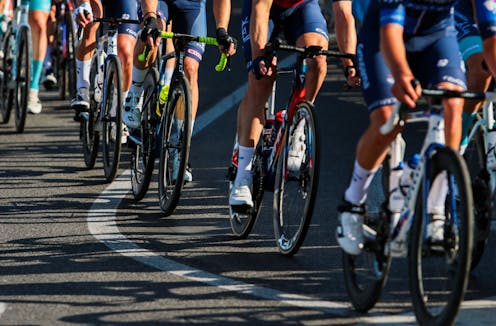
Dave Brailsford, directeur de l’équipe cycliste britannique, a mis en place dès 2003 une série de petits changements qui ont permis à son équipe de briller. (Raffaele Conti 88/Shutterstock)

Cet article fait partie de notre série Les livres qui comptent, où des experts de différents domaines décortiquent les livres de vulgarisation scientifique les plus discutés.


Le coussin de selle d’un cycliste peut-il vraiment faire la différence sur ses performances ? Suffisamment pour remporter un Tour de France ou améliorer nettement ses résultats ?

La réponse est oui, mais à condition de l’intégrer à de nombreux autres petits ajustements : revoir la conception des sièges, appliquer de l’alcool sur les roues pour augmenter la traction, porter des collants chauffants pour maintenir une température musculaire optimale, utiliser de capteurs pour surveiller la réponse de chaque cycliste à l’entraînement, tester des tissus plus légers et plus aérodynamiques… jusqu’à repeindre en blanc l’intérieur du camion de transport des vélos pour détecter pour repérer la moindre particule de de poussière.

C’est ce que Dave Brailsford, directeur de l’équipe cycliste britannique, a mis en place en 2003. Résultat : une équipe qui, en 100 ans, n’avait jamais brillé aux Jeux olympiques ni sur le Tour de France, a remporté entre 2007 et 2012 pas moins de 178 médailles aux championnats du monde, 66 médailles olympiques et paralympiques et cinq victoires au Tour de France.

L’idée derrière cette transformation? Améliorer chaque élément de 1 % au quotidien. Et c’est précisément ce principe qu’explore James Clear dans son livre, Atomic Habits (Un rien peut tout changer), devenu best-seller de la liste du New York Times avec plus de 15 millions d’exemplaires écoulés.

Devenir meilleur, un petit geste à la fois

Pour James Clear, la clé pour atteindre ses objectifs réside dans la formation d’habitudes simples, basiques – « atomiques » – et régulières. Accumulés, ces petits gestes finissent par produire des changements puissants dans nos carrières, nos relations et notre qualité de vie.

Son livre se veut un mode d’emploi pour devenir la personne que l’on souhaite être. Son approche s’appuie sur un modèle cognitivo-comportemental et repose sur quatre principes :

  1. Rendre l’habitude évidente

  2. La rendre attrayante

  3. La garder simple

  4. La rendre satisfaisante

Une fois que nous avons déterminé qui on veut devenir, il faut traduire cet objectif en une action réalisable en deux minutes et choisir un moment et un lieu précis pour l’« ancrer » dans notre quotidien. Il est également essentiel d’adapter son environnement et de limiter les obstacles. En se concentrant sur une action claire et en s’entourant d’un soutien social et de récompenses.

La règle des deux minutes

L’idée est de commencer par de petits objectifs, réduits à leur version la plus simple : une action qui prend deux minutes ou moins.

Par exemple :

  • Lire avant de dormir devient lire une page

  • Faire 30 minutes de yoga devient déplier son tapis

  • Écrire un livre revient à écrire une phrase

  • Courir 10 kilomètres commence par enfiler ses chaussures

Loin des clichés de la pensée positive

Atomic Habits ne se présente pas comme un simple ouvrage de développement personnel, mais comme un plan structuré pour améliorer ses habitudes progressivement. Clear ne nous dit pas que « rien n’est impossible » mais plutôt que « certaines choses finissent par être impossibles. » Autrement dit, la pensée positive seule ne fait pas disparaître les problèmes.

C’est une position qui est également défendue par le psychologue Buenanventura del Charco Olea dans Hasta los cojones del pensamiento positivo, où il décrit le « positivisme forcé et simple » comme un nouveau « dogme » qui finit par devenir oppressant.

Objectif : ce que nous voulons être, pas ce que nous voulons obtenir

James Clear soutient que la meilleure manière de changer nos habitudes n’est pas de se concentrer sur ce que nous voulons accomplir, mais plutôt sur la personne que nous voulons devenir. Comme le dit le personnage du « Commendatore » (Enzo Ferrari, fondateur de l’écurie Ferrari) dans le film Ferrari à propos de la rivalité entre Jaguar et Ferrari : « Jaguar gagne des courses pour vendre des voitures. Nous vendons des voitures pour gagner des courses. »

Pour construire ces habitudes, il est important de donner du sens à ce que l’on fait. Par exemple, deux personnes qui souhaitent arrêter de fumer peuvent réagir de deux manières différentes à l’offre d’une cigarette :

  1. « Non merci. J’essaie d’arrêter de fumer. »

  2. « Non merci. Je ne fume pas. »

Dans le second cas, la personne a déjà intégré ce changement à son identité : elle ne se considère plus comme un fumeur. De la même façon, il ne s’agit pas seulement de lire un livre, mais de devenir lecteur; pas seulement de courir un marathon, mais de devenir un coureur ; pas seulement d’apprendre à jouer d’un instrument, mais de devenir musicien. Nos comportements et nos habitudes construisent notre identité.

Atomic Habits ne propose rien de nouveau. Auparavant, Aristote ou Saint Thomas d’Aquin enseignaient déjà comment la répétition des bonnes actions est essentielle pour atteindre la vertu.

Croissance du personnel dans le domaine de l’éducation

Dans le milieu éducatif, la notion d’habitude est essentielle au développement personnel. Promouvoir certaines habitudes intellectuelles et morales peut rendre notre vie plus épanouissante. Les habitudes sont une extension de notre nature première ; elles rendent notre existence plus « vivable » et nous donnent accès à une plus grande liberté.

À l’école, la répétition d’actions simples – commencer une activité à temps, la mener à bien, aider un camarade de classe – peut être essentielle au développement des valeurs.

Dans deux chapitres téléchargeables, Jame Clear propose des applications concrètes de sa méthode dans le cadre de la parentalité et l’éducation des enfants et dans le monde des affaires.

Comme le chantait l’auteur-compositeur-interprète catalan Joan Manuel Serrat lors de son concert d’adieu : « Aujourd’hui peut être un grand jour… cela dépend en partie de vous ».

La Conversation Canada

Gerardo Meneses ne travaille pas, ne conseille pas, ne possède pas de parts, ne reçoit pas de fonds d’une organisation qui pourrait tirer profit de cet article, et n’a déclaré aucune autre affiliation que son organisme de recherche.

ref. Le pouvoir des petits changements : ce que nous enseigne Atomic Habits – https://theconversation.com/le-pouvoir-des-petits-changements-ce-que-nous-enseigne-atomic-habits-254671