First evidence in the UK of breeding aegypti mosquito – the main spreader of dengue, chikungunya and Zika

Source: The Conversation – UK – By Marcus Blagrove, Senior Lecturer in Intregrative Virology, University of Liverpool
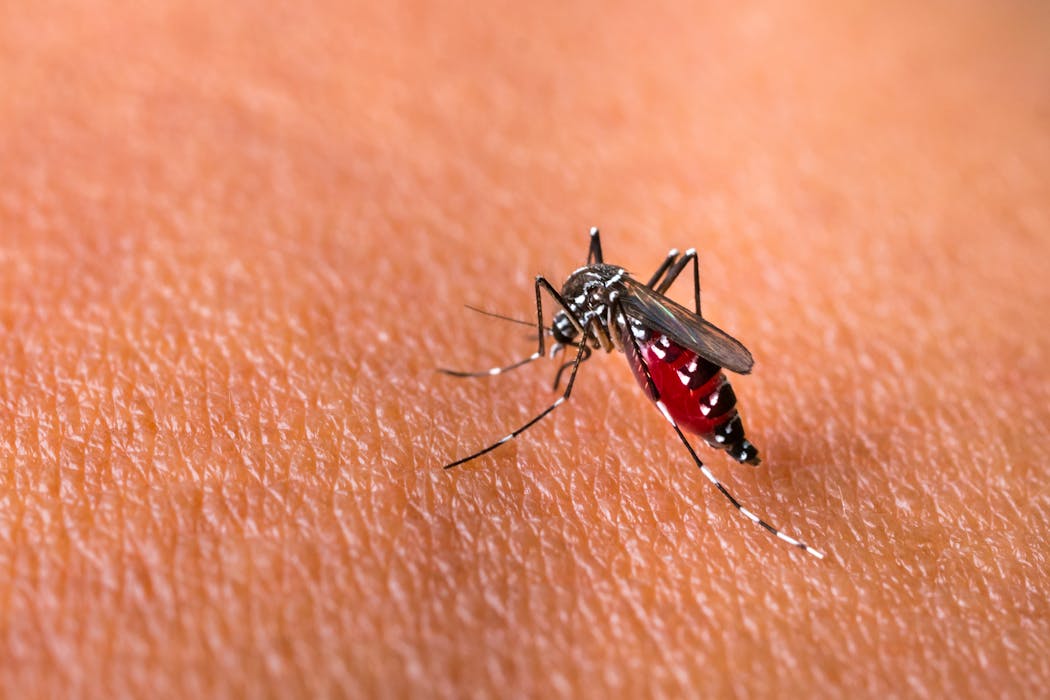
Thammanoon Khamchalee/Shutterstock.com

Scientists have found eggs of the Aedes aegypti mosquito in the UK for the first time – a mosquito that spreads many tropical diseases.

The eggs were recently discovered in a trap at a freight depot near Heathrow airport and confirmed by DNA testing to be Ae aegypti. The discovery, led by the UK Health Security Agency, also reported further findings of Aedes albopictus, the “Asian tiger” mosquito, at a site in Kent in summer 2024. Both species are invasive and thrive in warm, humid conditions.

These Aedes mosquitoes matter because they can spread viruses such as dengue, chikungunya and Zika. Outbreaks of these diseases, once confined to the tropics, are now appearing in Europe.

In 2024, Italy recorded over 200 locally acquired dengue cases, mainly in the Marche region, while France and Spain also reported domestic dengue transmission. Chikungunya has become another European concern, with France reporting nearly 500 locally transmitted cases in 2025. Zika has not yet taken hold in Europe, but the same mosquito species could carry it if conditions allow.

Two related viruses, West Nile and Usutu, are also spreading further north across Europe. West Nile virus has caused outbreaks in birds, horses and people across Europe, and has now been detected in the UK for the first time.

In summer 2023, scientists found West Nile virus genetic material in wild mosquitoes from samples collected in Nottinghamshire. Usutu, which mainly infects birds, was first detected in London blackbirds in 2020 and has been found in birds or mosquitoes every year since, making it now endemic to the UK.

Both viruses belong to the same family as Japanese encephalitis, and although they primarily circulate in birds and mosquitoes, they can also incidentally infect humans. They also tend to move together. Usutu often establishes first, with West Nile following as temperatures rise.

The UK Health Security Agency notes that West Nile’s range has recently expanded “to more northerly and western areas of Europe”. Together, these findings show how climate change is shifting mosquito-borne diseases northwards.

Laboratory studies have confirmed that native British mosquitoes could transmit these viruses under local UK-climate conditions. Research has shown several species can become infected and even pass the virus on at typical summer temperatures.

For instance, common native Culex mosquitoes from England were found capable of transmitting Usutu in their saliva at just 19°C. In the same study, Culex pipiens and Culiseta annulata were able to transmit the UK Usutu strain, suggesting the virus could spread northwards.

Another experiment found that the salt-marsh mosquito Ochlerotatus (Aedes) detritus can transmit West Nile at 21°C, but not dengue or chikungunya. Combined, these results demonstrate that native UK mosquitoes are able to carry and transmit viruses like West Nile and Usutu if the right climate conditions occur.

London Heathrow, Terminal 5 interior.
Eggs of the Egyptian mosquito, Aedes aegypti, were found at Heathrow.
Alexandre Rotenberg/Shutterstock.com

More welcoming

The pattern is clear: climate change and global travel are together loading the dice. Warmer summers, milder winters and heavier rainfall are making the UK more welcoming to these insects.

Climate models already predict that Ae albopictus could become established in southern England within the next few decades. At the same time, more people and goods are travelling between the UK and regions where these diseases are endemic, bringing both mosquitoes and infections with them.

The UK Health Security Agency recorded hundreds of imported dengue and chikungunya cases last year. Each one a potential spark if the right mosquitoes are present.

The Animal and Plant Health Agency, a UK government agency, warns that this northward jump of mosquito-borne diseases is “primarily driven by movement of people and global climate change”.

In plain terms, the UK is warming into range for these tropical “vectors” and the viruses they carry. Already, Ae albopictus breeds widely across continental Europe, while local dengue and chikungunya outbreaks are appearing further north each year. West Nile and Usutu are following a similar path.

The UK’s surveillance network, coordinated by the Health Security Agency with universities and local authorities, is already monitoring sites most at risk of mosquito introductions. This coordinated approach is designed to catch incursions early and keep Britain ahead of a rapidly shifting global disease map.

The combination of a changing climate, international travel and the ability of these insects to thrive means both invasive mosquito species and the viruses they carry are edging closer to establishing in the UK.

The continuing surveillance and early detection will be crucial to catch incursions before they spread. As Britain’s summers grow warmer and wetter, the insects and diseases once confined to the tropics are finding a new home – even in today’s not-so-chilly UK.

The Conversation

Marcus Blagrove currently receives research funding from UKRI (cross council), BBSRC, MRC, NERC, DEFRA, The Leverhulme Trust, and The Pandemic Institute.

ref. First evidence in the UK of breeding aegypti mosquito – the main spreader of dengue, chikungunya and Zika – https://theconversation.com/first-evidence-in-the-uk-of-breeding-aegypti-mosquito-the-main-spreader-of-dengue-chikungunya-and-zika-266767

Why higher ed’s AI rush could put corporate interests over public service and independence

Source: The Conversation – USA (2) – By Chris Wegemer, Postdoctoral researcher, University of California, Los Angeles

A new AI research center opening in North Carolina: Colleges and universities are embracing AI technology, often through corporate partnerships. North Carolina Central University via Getty Images

Artificial intelligence technology has begun to transform higher education, raising a new set of profound questions about the role of universities in society. A string of high-profile corporate partnerships reflect how universities are embracing AI technology.

The University of Florida began assembling one of the fastest university supercomputers through a collaboration with Nvidia encompassing AI infrastructure, research support and curriculum development. Princeton launched the New Jersey AI Hub with Microsoft, CoreWeave and the state government, which will house AI startups on university-owned land under a Princeton director. Meanwhile, the California State University system partnered with OpenAI to provide ChatGPT Edu to all students and faculty, branding itself as “the first AI-powered university system in the United States.”

As a social scientist who studies educational technology and organizational partnerships, I view these collaborations as part of a decades-long shift toward the “corporatization” of higher education – where universities have become increasingly market-driven, aligning their priorities, culture and governance structures with industry partners.

I see the rise of generative AI as accelerating this trend, which risks undermining higher education’s autonomy and public service mission. Examining the underlying organizational forces that shape the future of higher education can shed light on how AI challenges universities’ traditional principles – and how they might resist corporate influence.

The rise of corporate partnerships

Over the past 50 years, private sector support for university research has increased tenfold, outpacing overall growth in higher education research spending. A pivotal shift came in 1980, when universities gained the right to retain intellectual property from federally funded research. This made commercialization of university research far easier. Over time, corporate involvement pushed university research toward commercial needs and increasingly exposed universities to the profit motive.

But partnerships haven’t just brought in money for universities; they’ve reinforced a shift toward closer alignment with industry. Universities expanded dramatically in the second half of the 20th century to meet companies’ demand for skilled labor, further coupling higher education to market incentives.

After decades of growth, however, university enrollment peaked in 2010, partly due to demographics, and the decline is projected to continue. Meanwhile, competition from training programs offered by tech companies has been growing, and federal funding has been slashed under President Donald Trump.

As colleges continue to close at record rates, the imperative to attract tuition dollars and research grants increasingly dictates institutional priorities. I argue that universities risk sidelining research that serves the public interest by looking toward corporate funding and partnerships to fill the gaps.

In my view, the shift away from public-good scholarship to monetizable content and services shaped by external industry partners jeopardizes the academic freedom and intellectual stewardship that once anchored the mission of higher education. For example, under financial constraints, university administrators may be inclined to overlook glaring value misalignments between their public mission and the commercial objectives of AI firms.

The forces driving universities’ AI initiatives

At many universities, AI adoption and the turn toward corporate collaborations are driven by more than economic vulnerabilities. The broad range of partnerships with AI companies across higher education can provide insight into the deeper dynamics at work.

Differences in AI partnerships are emerging around long-standing divides between types of institutions. Stanford’s Institute for Human-Centered AI can be interpreted as an attempt to steer global discourse on ethical AI while preserving human-led research as a marker of elite prestige. Meanwhile, AI initiatives at institutions with a strong focus on teaching and accessibility, such as California State University and Arizona State University, appear to prioritize efficiency in learning outcomes and workforce development.

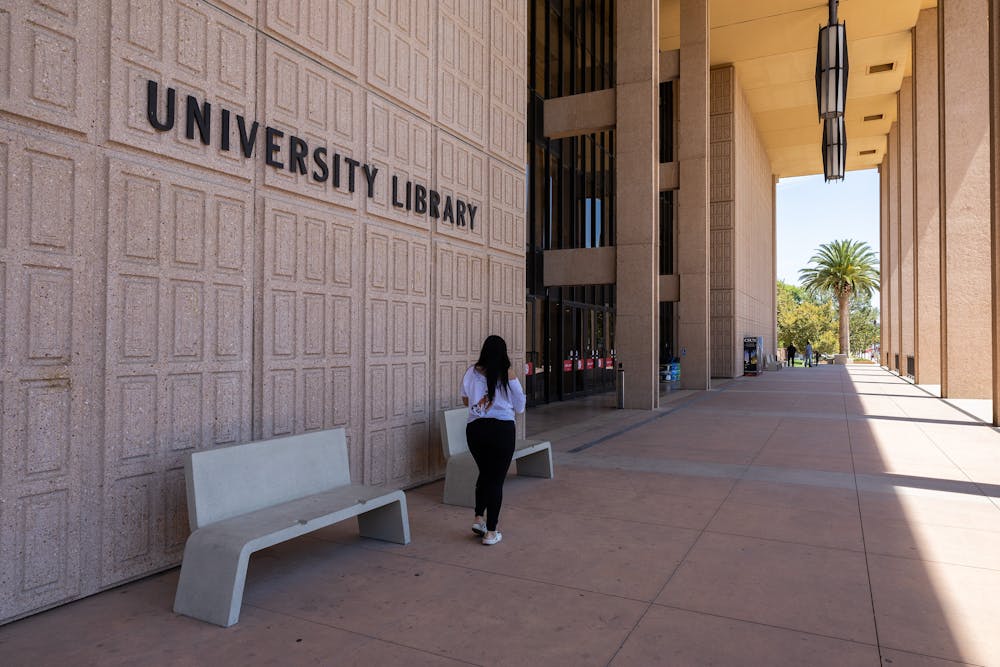
A student at California State University campus walks past a library.
The California State University system aims to become the first and largest ‘AI-powered university system,’ motivated in part to prepare students for careers in an AI-driven economy.
Myung J. Chun via Getty Images

This underscores how AI partnerships are not guided by market incentives alone. Before universities grew into multibillion-dollar businesses, their decision-making was primarily driven by markers of intellectual prestige, such as scholarly excellence and faculty reputation. Universities largely held a monopoly over knowledge production and served as the primary gatekeepers of intellectual legitimacy, until the digital revolution dramatically decentralized access to knowledge and its production. Universities now coexist in – and increasingly compete with – a crowded, complex ecosystem of companies and organizations that produce original research.

Generative AI represents a powerful new mode of knowledge production and synthesis, which further threatens to upend traditional forms of scholarship. Confronted with challenges to their authority, universities may attempt to preserve their elite intellectual status by rushing into partnerships with AI companies eager to capture the higher education market.

My interpretation is that economic pressures and the pursuit of prestige may be converging to reinforce a technocratic approach to higher education, where university decision-making is primarily guided by performance metrics and corporate-style governance rather than the public interest.

A purposeful path forward

The evolution of higher education in response to AI has brought long-standing debates about the purpose of universities to the forefront of public discourse. Decades of corporatization has helped fuel widespread “mission sprawl” and conflicting institutional goals across higher education. Consistent with organizational theory, ambiguity about universities’ role in society could lead many institutions to become increasingly susceptible to corporate co-optation, political interference and eventual collapse.

Although partnerships between universities and corporations can advance research and support students, corporate norms and academic principles are inherently distinct. And at many universities the process through which differences in institutional values are surfaced and reconciled is unclear, especially as AI initiatives have often sidestepped democratic faculty governance.

The recent surge in AI partnerships puts in plain view the growing dominance of market forces in higher education. As universities continue to adopt AI technologies, the consequences for intellectual freedom, democratic decision-making and commitment to the public good will become an increasingly pressing question.

Research support was provided by undergraduate research assistant Mehra Marzbani, whose contributions are gratefully acknowledged.

The Conversation

Chris Wegemer is affiliated with UCLA.

ref. Why higher ed’s AI rush could put corporate interests over public service and independence – https://theconversation.com/why-higher-eds-ai-rush-could-put-corporate-interests-over-public-service-and-independence-260902

Winning a bidding war isn’t always a win, research on 14 million home sales shows

Source: The Conversation – USA (2) – By Soon Hyeok Choi, Assistant Professor of Real Estate Finance, Rochester Institute of Technology

In today’s hot housing market, winning a bidding war can feel like a triumph. But my research shows it often comes with a catch: Homebuyers who win bidding wars tend to experience a “winner’s curse,” systematically overpaying for their new homes.

I’m a real estate economist, and my colleagues and I analyzed nearly 14 million home sales in 30 U.S. states over roughly two decades. We found that people who paid more than the asking price for their homes – a reliable sign of a bidding war – were more likely to default on their mortgages and saw significantly weaker returns.

How much weaker? On average, homebuyers who won bidding wars saw annual returns that were about 1.3 percentage points lower than those who didn’t, we found. We specifically looked at “unlevered” returns – basically, the returns you’d get if you bought the home outright with cash, without factoring in a mortgage.

Since the typical homeowner in our sample held a property for 6.3 years before selling it, this translates to about an 8.2% overpayment. Bidding-war winners were also 1.9 percentage points likelier to default.

Perhaps that loss would be worth it to someone who absolutely loves the property – but we found that homebuyers who purchase after a bidding war are also faster to resell. This suggests their overpayment is based less on enduring affection and more on bidding-war fever.

We also found that the effects of the winner’s curse – lower home appreciation and higher default rates – are stronger in places where bidding wars are more common. One example is my hometown of Rochester, New York, which has become a bidding-war hot spot in recent years.

Who bears the brunt? Lower-income, Black and Hispanic buyers are more likely to overpay in bidding wars, we found, making them more likely to suffer from the winner’s curse. This suggests that hot housing markets can worsen inequality.

Why it matters

While housing is the largest single form of wealth Americans own, past research on the winner’s curse mostly dealt with land auctions and company mergers – not the nation’s roughly 76 million owner-occupied, single-family homes. Our work is the first to show the direct evidence of the winner’s curse in residential housing markets.

This matters now because the housing market is cooling. Those who bought in the post-pandemic housing market and listed their homes in 2025 are already facing the risk of selling at a loss. Because this risk falls disproportionately on Black and Hispanic homebuyers, it could further widen the wealth gap.

By one measure, foreclosures are up 18% year over year. If the brunt of these losses falls on lower-income or otherwise vulnerable homeowners, the result could be an increase in housing insecurity and homelessness.

The good news is that the winner’s curse may be preventable. Better resources to prepare first-time homebuyers and comprehensive financial education related to mortgages and debt could help.

What still isn’t known

It’s possible more transparent bidding processes – or even formal auction systems for popular homes – could better inform prospective buyers and help them stave off the temptation of overpayment. Should the U.S. require real estate brokers or banks to caution their clients to think twice before going above the asking price? Or would that be unfair to sellers? Experimental research on these points would be useful.

Finally, our research focuses on the U.S. housing market. Whether the winner’s curse afflicts buyers in other countries remains an open question.

The Research Brief is a short take on interesting academic work.

The Conversation

Soon Hyeok Choi does not work for, consult, own shares in or receive funding from any company or organization that would benefit from this article, and has disclosed no relevant affiliations beyond their academic appointment.

ref. Winning a bidding war isn’t always a win, research on 14 million home sales shows – https://theconversation.com/winning-a-bidding-war-isnt-always-a-win-research-on-14-million-home-sales-shows-266723

Jane Fonda, other stars, revive the Committee for the First Amendment – a group that emerged when the anti-communist panic came for Hollywood

Source: The Conversation – USA (2) – By Kathy M. Newman, Associate Professor of English, Carnegie Mellon University, Carnegie Mellon University

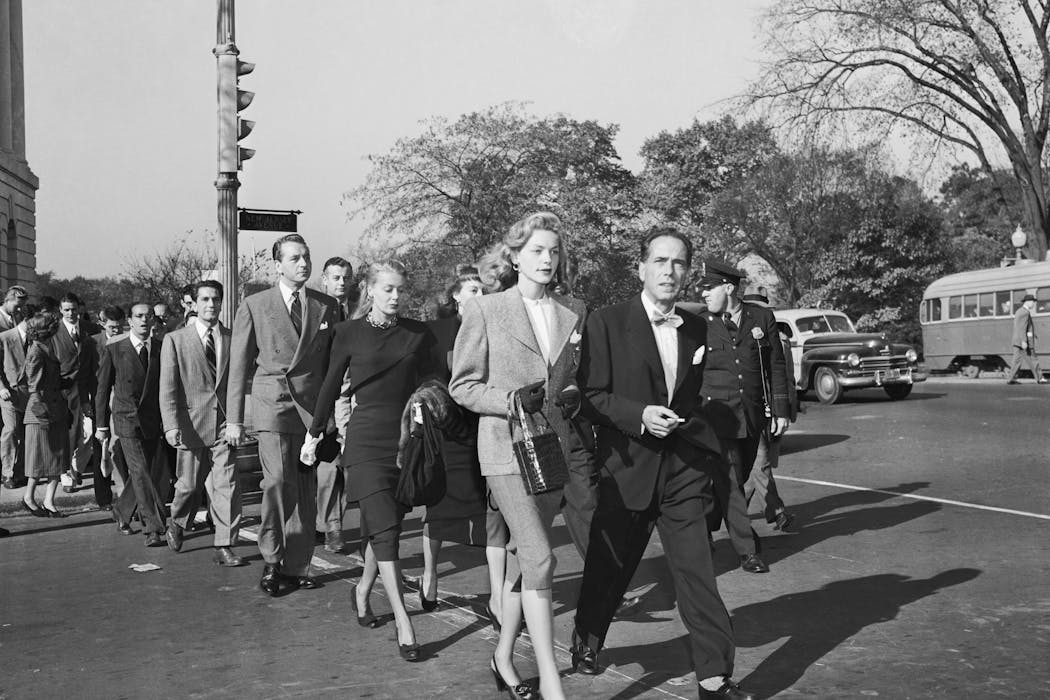
Movie stars, led by Lauren Bacall and Humphrey Bogart, protest hearings by the House Committee on Un-American Activities in 1947. Bettmann/Getty Images

Jane Fonda is joining forces with more than 500 celebrities and Hollywood heavyweights to defend free speech.

The membership roll already includes scores of famous actors like Jamie Lee Curtis, Viola Davis, Whoopi Goldberg, Pedro Pascal, Natalie Portman and Michael Keaton. Successful directors like Spike Lee and Ben Stiller have signed on, along with singer and actress Barbra Streisand and pop star and songwriter Billie Eilish.

Fonda, a star who has championed progressive causes since the 1970s, explained when she announced the group’s new edition on Oct. 1, 2025, that the effort isn’t really new. Instead, it marks the relaunch of the Committee for the First Amendment, an organization her father, actor Henry Fonda, had belonged to.

The original Committee for the First Amendment was formed in October 1947 at a time when the U.S. government worried that there were communists in Hollywood who were putting left-wing propaganda into the movies.

Jane Fonda looks at the camera against a backdrop that says 'Hollywood Climate Summit.'
Jane Fonda, here shown attending the 2024 Hollywood Climate Summit at the Academy of Motion Picture Arts and Sciences, has been a famous activist almost as long as she’s been a leading lady.
Kevin Winter/Getty Images

Hearings divided Hollywood

The attack on Hollywood started when a bipartisan congressional committee held a series of highly publicized hearings in 1947 on what it said was the “communist infiltration of the motion picture industry.”

The House Un-American Activities Committee, known as HUAC, invited 23 “friendly” anti-communist witnesses to testify.

Ayn Rand, a Russian-born novelist and screenwriter who hated communism, was one of the witnesses. She testified that the 1944 MGM movie “Song of Russia” showed clean, well-dressed, happy peasants, which she said was a sanitized, propagandized version of life in the USSR.

Another movie that came under suspicion was “It’s a Wonderful Life.” The FBI complained that the 1946 blockbuster, which starred Jimmy Stewart as a broken man who learns the true value of his life, “deliberately maligned the upper classes” with its negative portrayal of Mr. Potter, the town’s richest man.

The HUAC hearings continued for a decade and divided Hollywood. The committee’s interrogators demanded that people turn on each other and “name names.” Due to these hearings, as well as an anti-communist publication called Red Channels, hundreds of screenwriters, directors, producers, actors and musicians were fired or blacklisted for having ties to liberal groups.

Ten men in suits stand together in a black-and-white photograph taken in the mid-20th century.
Nine of 10 Hollywood writers, directors and producers, indicted by a Washington grand jury on charges of contempt of Congress, surrender in a group at the U.S. Marshals Service office in Los Angeles on Dec. 10, 1947.
AP Photo/Harold Filan

Fighting back

The HUAC hearings brought Hollywood stars and the flashbulbs of the nation’s press corps to Capitol Hill. Conservative screen idols like Gary Cooper testified that communism wasn’t “on the level.”

Friendly witnesses, like Rand and Cooper, were allowed to read prepared statements and to speak for as long as they liked. Such courtesies were not granted to the 10 “unfriendly” witnesses – the suspected communists who became known as the “Hollywood 10.”

Screenwriter John Howard Lawson was the first of the Hollywood 10 to testify. Lawson, after refusing to answer if he was a communist or not, was shouted down by Rep. J. Parnell Thomas, a New Jersey Republican who served as HUAC chair. After Lawson was removed from the courtroom, HUAC’s chief investigator, Robert Stripling, read detailed evidence of Lawson’s communist affiliations.

Prominent Hollywood liberals understood that these hearings were an attack on free speech, free assembly and other rights guaranteed by the First Amendment.

Ira Gershwin, the lyricist known for his hit show tunes such as “I Got Rhythm” and “They Can’t Take That Away From Me,” hosted the first gathering of the Committee for the First Amendment at his Beverly Hills mansion. Attendees included Judy Garland, Humphrey Bogart, Lauren Bacall and Gene Kelly.

The committee quickly raised US$13,000 – the equivalent of $188,000 today – and chartered an airplane to Washington. Upon their arrival in the capital, they marched and spoke out in support of the Hollywood 10. Next, they produced a radio broadcast, “Hollywood Fights Back,” as a defense of the rights of Americans to write, produce, act in and see whatever movies they pleased.

The committee released an initial statement with 35 signatories. A few months later, it published a pamphlet with more than 300 additional names supporting the effort.

Purging Hollywood

If you’ve never heard of that committee, or if you only learned about it recently when the new version made headlines, you’re not alone. The group fizzled out almost as quickly as it had mobilized.

Bogart, perhaps its most famous member, soon retracted his support for the Hollywood 10, saying in March 1948 that he regretted his trip to Washington.

I’m no Communist,” the “Casablanca” star declared in a widely circulated statement.

Two crucial developments kneecapped the committee. First, the HUAC cited the Hollywood 10 for contempt of Congress. They were later tried in court and convicted of that crime. They eventually served prison time.

Also, studio executives drafted new hiring policies for the movie industry. Later known as the “Waldorf declaration” because the meeting took place in the Waldorf-Astoria hotel in Manhattan, the studio heads announced that the Hollywood 10 would be fired and banned from any studio, and that all the studios would agree to fire and ban any known communists.

Over the next decade, hundreds more stars and other key players in the entertainment industry were fired, purged and blacklisted in what became known as the blacklist era.

I’m a professor of English and film studies, and I’m writing a book about progressive films made during those years. The original committee’s members were mainly leftists and liberals whose careers survived the political pressures to root them out of show business.

The Committee for the First Amendment ultimately failed to protect the Hollywood 10 from professional attacks or incarceration, nor did it prevent hundreds of others from being blacklisted.

Bad timing

But I don’t believe that the original Committee for the First Amendment was destined to fail.

The Hollywood 10’s legal strategy, rooted in the First Amendment, reflected the hope that their convictions might be eventually overturned by the Supreme Court.

Unluckily, however, Frank Murphy and Wiley Blount Rutledge, two of the court’s most liberal justices, died before the appeal of the first two Hollywood 10 convictions could reach them.

After President Harry Truman replaced them, the Supreme Court declined to hear the appeals. Most of the Hollywood 10 served prison sentences between 1950 and 1951.

Why bother?

Given that the Committee for the First Amendment failed to protect Hollywood from conservative repression in the 1940s and 1950s, why would anyone revive it?

One reason is that there are parallels between the blacklist era and today.

For example, the Trump administration is trying to get comedians who poke fun at him kicked off the air, as evidenced by talk show host Jimmy Kimmel being temporarily pulled off the air.

Hollywood has also seen a surge in labor organizing. Many members of the new Committee for the First Amendment were on the front lines of the screenwriters and actors strikes of 2023.

Finally, this fight is arguably worth waging. Most Americans see the First Amendment as enshrining valuable rights. An October 2025 Marist poll found that 4 in 5 Americans think the U.S. is restricting First Amendment freedoms too much.

Americans still debate whether or not it was right to fire and blacklist Hollywood’s suspected communists. While many see the HUAC hearings as a travesty, others defend the House committee and the anti-communist fervor that inspired it.

‘The Pajama Game,’ a hit movie made in the 1950s, featured a fight by workers for higher pay.

Resilience and silence

Many look at the blacklist era as a time of capitulation by progressives in the face of repression. While there’s some validity to these claims, I’ve found that many progressive filmmakers also banded together, using allegory and other creative techniques to make movies with progressive – sometimes radical – messages.

Take “The Pajama Game,” for example. It’s a musical comedy about labor trouble in a pajama factory. While the film is a sexy, frothy romp, on the one hand, the film also casts Doris Day as Babe, a feisty union steward. In “Racing with the Clock,” workers sing about the pressure they feel to speed up the pace of their labor.

Scenes include workers organizing a slowdown, sabotaging machinery and going on strike. The last word spoken in the film is “solidarity.”

To me, the revival of the Committee for the First Amendment draws attention to the dangers implicit in efforts to muzzle writers, artists and filmmakers.

“Silence the artist, and you silence the most articulate voice the people have,” the actress Katherine Hepburn said in May 1947 in a speech written for her by Dalton Trumbo, one of the Hollywood 10. “Destroy culture and you destroy one of the strongest sources of inspiration from which a people can draw strength to fight for a better life.”

The Conversation

Kathy M. Newman does not work for, consult, own shares in or receive funding from any company or organization that would benefit from this article, and has disclosed no relevant affiliations beyond their academic appointment.

ref. Jane Fonda, other stars, revive the Committee for the First Amendment – a group that emerged when the anti-communist panic came for Hollywood – https://theconversation.com/jane-fonda-other-stars-revive-the-committee-for-the-first-amendment-a-group-that-emerged-when-the-anti-communist-panic-came-for-hollywood-266751

The story of Apollo and Daphne in Ovid’s Metamorphoses needs a new translation for the #MeToo era

Source: The Conversation – UK – By Alison Habens, Head of Creative Writing, University of Portsmouth

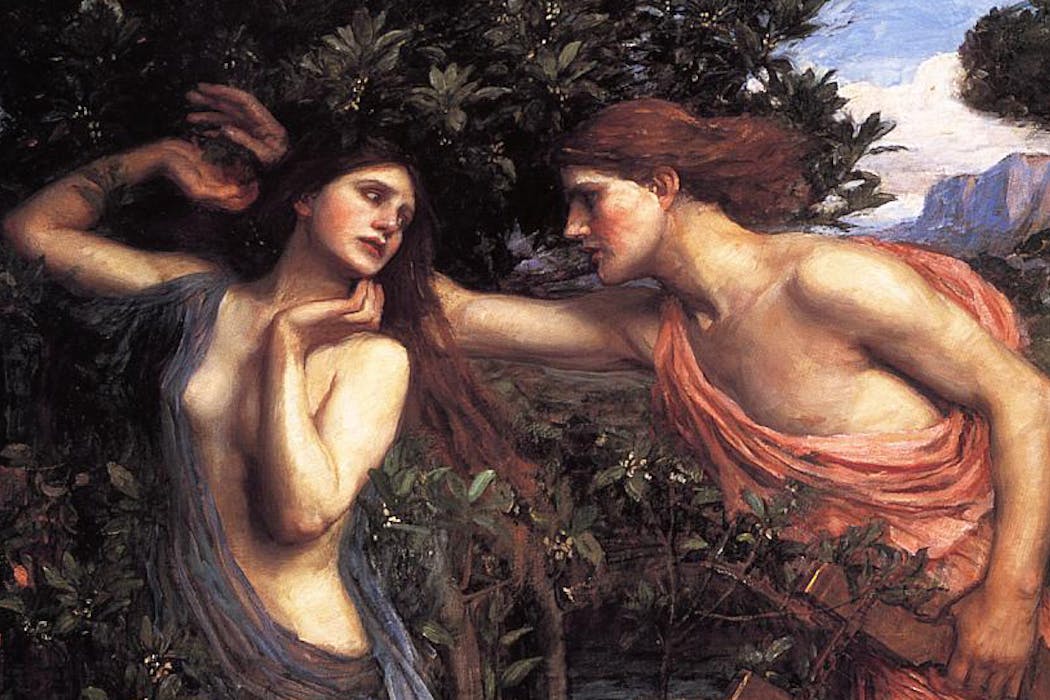
Apollo and Daphne by John William Waterhouse (1908). Wiki Commons

The story of Apollo and Daphne was written around the year zero by Roman poet Ovid in the Metamorphoses. Ovid was a trainee lawyer and student of rhetoric. In the story, a woman named Daphne becomes a laurel tree to escape the unwanted advances of the sun god, Apollo.

It’s part of a collection of his stories in which humans transform into plants and animals (and vice-versa) amid the mountains and woodlands of early Greece. But I believe it must be reviewed in the era of #MeToo – a period marked by widespread awareness, activism and accountability around sexual harassment and assault.

The first literary celebrity, Ovid, was “cancelled” in his own day. There’s no record of an actual crime he committed, but he was exiled to a settlement on the Black Sea for something he called carmen et error (a poem and mistake).


This article is part of Rethinking the Classics. The stories in this series offer insightful new ways to think about and interpret classic books and artworks. This is the canon – with a twist.


Metamorphoses begins with Apollo slaying the monster python, a feat celebrated with the first Olympic Games. In competition with Cupid, Apollo is struck with an arrow that makes him fall him love. He then pursues Daphne, an unwilling nymph until, in desperation to escape his advances, she turns herself into a tree.

Like the famous sculptures and paintings, (by Paolo Veronese, Gian Lorenzo Bernini and John William Waterhouse to name a few) this transformation of lady into tree still emphasises her curves. “There with all about hir breast did grow a tender barke” and “a thin bark closed around her gentle bosom”.

Beyond this objectifying treatment, the poem focuses on the hurt feelings of Apollo at her rejection, effectively saying: “Don’t you know who I am?”

In a 1960s edition of the poem, retold by Enid Blyton, it’s all made out to be a misunderstanding: “You should not have been so fearful of me, I would not have harmed you.” But this isn’t what the aroused sun god tells Daphne in the classic text: “Resistless are my shafts.”

Daphne wishes to stay unwed, but her father, the river god Peneus, says that she is too pretty for spinsterhood. In the 1632 translation by George Sandys, he explains: “thy owne beautie thy desire with-stands” and in a 1717 version the young woman is told she’s fair game: “For so much youth, and so much beauty join’d / Oppos’d the state, which her desires design’d.”

A mosaic of a man and woman.
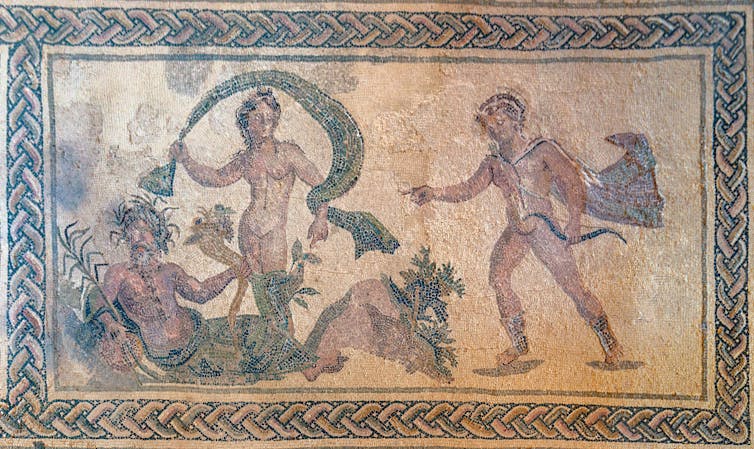
A mosaic of Apollo and Daphne from Paphos, Cyprus (c. 3rd century AD).
Wiki Commons, CC BY

Apollo’s fragile ego is prioritised and the affront to his self esteem is not permissible: “Perhaps thou know’st not my superior state/ And from that ignorance proceeds thy hate.” The sun god makes it clear who is the more insulted but, while he is listing his accomplishments (he invented music and medicine), Daphne runs away.

Even her escape is framed as erotic. In Arthur Golding’s 1567 translation: “Hir running made hir seeme more fayre”. The Puritan poet’s gaze lingers on her: “And as she ran the meeting windes hir garments backewarde blue / So that hir naked skinne apearde behinde hir as she flue.” And English poet and literary critic
John Dryden, too, found her fear titillating: “the wind … left her legs and thighs expos’d to view / Which made the God more eager to pursue”. In agonising rhyming couplets, the translators follow her flight.

Daphne’s looks are a curse – it is no blessing to be beautiful. Her pleas reach Peneus as she races with attacker in hot pursuit: “Destroy the beauty that has injured me / or change the body that destroys my life.” So finally, her feet take root, the toes digging in; her arms become branches, her fingertips leafy. In imagery more fit for horror than romance, the bark closes over her mouth and she says no more.

Painting of a woman with trees for hands, a man holding her waist.
Apollo and Daphne by Piero del Pollaiuolo (c. 1470).
National Gallery

But Apollo still gropes her, though he calls it love. The poets describe him embracing the trunk, handling the boughs, kissing the boles, revealing how he: “fixt his lips upon the trembling rind / It swerv’d aside, and his embrace declin’d”.

If the sun god couldn’t tell she didn’t fancy him as a woman, he’s even less clear about her feelings now. He insists: “Although thou canst not bee / The wife I wisht, yet shalt thou be my Tree.” In another version he says: “Because thou canst not be / My mistress, I espouse thee for my tree.” He gleefully claims her leaves, wreathed around his own head, to symbolise his greatness for ever.

Does Daphne consent? She may be nodding in the account by Golding, “and wagging of hir seemely toppe, as if it were hir crowne”. Or is she coerced? In the 1922 translation by Brookes More: “unto him the Laurel bent her boughs, and it seemed to him her graceful nod gave answer to his love.”

The latest version of Metamorphoses (updated by Rolfe Humphries in 2018) emphasises the unreliability of Apollo: “He hopes for what he wants – all wishful thinking! – Is fooled by his own oracles.”

The tale’s awful moral can still be heard; men may use passion as a weapon and love as a reason to attack. Perhaps it’s finally time for a translation that offers the point of view of the tree, too.

Beyond the canon

As part of the Rethinking the Classics series, we’re asking our experts to recommend a book or artwork that tackles similar themes to the canonical work in question, but isn’t (yet) considered a classic itself. Here is Alison Habens’s suggestion:

The Chilean group Lastesis translate feminist theory into public performances. In 2019, they created perhaps the best example of a contemporary riposte to Apollo in the Daphne story, with their performance Un Violodor en tu Camino (A Rapist in Your Path).

Performing Un Violodor en tu Camino in 2021.

Inspired by the writings of Argentine anthropologist Rita Segato, this popular protest was seen and heard around the world. It made a strong statement about victim-blaming and authoritarian violence against women. Its work of genius is to resist the silence and stillness of the laurel tree, using poetry and dance.


Looking for something good? Cut through the noise with a carefully curated selection of the latest releases, live events and exhibitions, straight to your inbox every fortnight, on Fridays. Sign up here.


The Conversation

Alison Habens does not work for, consult, own shares in or receive funding from any company or organisation that would benefit from this article, and has disclosed no relevant affiliations beyond their academic appointment.

ref. The story of Apollo and Daphne in Ovid’s Metamorphoses needs a new translation for the #MeToo era – https://theconversation.com/the-story-of-apollo-and-daphne-in-ovids-metamorphoses-needs-a-new-translation-for-the-metoo-era-235985

It shouldn’t take undercover journalists to expose policing’s sexist and racist culture

Source: The Conversation – UK – By John Fox, Senior Lecturer in Police Studies, University of Portsmouth

Ceri Breeze/Shutterstock

As a researcher of police occupational culture, I was horrified, but not at all surprised by the recent Panorama programme in which an undercover reporter exposed sexism, racism and general thuggishness among some Metropolitan Police officers.

Nearly a quarter of a century ago, the BBC produced another groundbreaking example of undercover reporting in the world of policing. In The Secret Policeman (2003), journalist Mark Daly joined Greater Manchester Police as a recruit officer. He covertly recorded his new colleagues making racist remarks. This was just five years after the publication of the Stephen Lawrence inquiry, and the report finding the Met “institutionally racist”.

This latest Panorama demonstrated unequivocally that the Met still has not rooted out these views in its ranks.

My first thought when sitting down to watch the programme was, “Why can the BBC successfully infiltrate the closed world of police misconduct when the force’s own teams are seemingly incapable of doing so?”

Every police force has a branch called a professional standards department (PSD). They are supposed to gather intelligence on corrupt or bad officers, which can lead to a misconduct tribunal. If gross misconduct is found, the officer may ultimately be dismissed.

The Met has seen several high profile cases of police misconduct in recent years. These offenders – from Wayne Couzens, who murdered Sarah Everard, to serial rapist David Carrick – have often been dismissed as “bad apples”.

After Carrick’s conviction in 2023, I argued that the Met culture was so toxic that to protect the public (as well as its own good officers), their PSD should employ intrusive workplace monitoring. This should mean using covert devices and undercover operatives, no matter how uncomfortable it may make staff feel.

In 2021, Hampshire police’s PSD used a listening device to covertly record officers using racist language after a whistleblower was brave enough to come forward. I am not aware that this form of evidence gathering has been utilised in the Met.

In his response to the Panorama documentary, Met Commissioner Mark Rowley said he had “disbanded” the team in question. A serving officer has since been arrested over an allegation linked to a Panorama investigation.

But I would like to know that the Met PSD will go further, and conduct a thorough and systematic review of samples of past video footage from each similar team across the force.

Throughout the Panorama episode, officers were wary about talking to the undercover reporter – one actually asked if he was wearing a wire. Despite the horror of the programme as a whole, I was encouraged by this. For the culture to change, any police officer who is a racist or misogynist must be made to feel that they, rather than decent officers, are the ones working in a hostile environment.

I would suggest that a few years ago it was the other way round. We know that Carrick was openly nicknamed “bastard Dave” and Couzens was openly known as “the rapist”. Yet their notoriety among colleagues did not seem to come to the attention of the Met PSD. If Rowley has achieved nothing else, I am hopeful that he has at least reduced the feeling of impunity and being “untouchable” which seemed to prevail among bad officers under previous Met command teams.

Whistleblowers and workplace culture

Of greater concern though was the disturbing evidence of a complete distrust in any whistleblowing procedure. Rowley claimed that over the last four years, “internal reporting has trebled thanks to the courage and conviction of colleagues”.

This is very good news, but Panorama clearly revealed that officers making sexist or racist comments were still protected by higher-ups and the overall force culture, with detractors, who wish to work in a safe, ethical environment, still feeling intimidated into silence.

There is ample research which has shown that casual misogyny towards women in the police service – both officers and other staff – is rife. Panorama has now provided clear evidence of this. Sadly, it seems many women in the police workforce feel they have to silently put up with it.

Currently the police have the highest-ever rate of voluntary resignations on record. More officers than ever are choosing to resign after a short period of service because they quickly realise they don’t enjoy, or feel comfortable, working in the police. Two of the main reasons for leaving early were a sense they needed to “fit in” with the prevailing workplace culture, and discovering that their new job did not match the “values” they expected to find.


Read more:
Misogyny in police forces: understanding and fixing ‘cop culture’


Police tackle organised crime groups using all sorts of covert methods, including undercover operatives infiltrating gangs to gather intelligence on their activity. The bad officers in the Met who are relentlessly dragging down public trust in not only their own force, but all the UK’s forces, need to be treated like members of an organised crime group. As well as much better initial recruitment vetting, senior leaders must be bold and ruthless in finding out how their staff think and behave, both on and off duty. The BBC has shown them how.

The Conversation

John Fox does not work for, consult, own shares in or receive funding from any company or organisation that would benefit from this article, and has disclosed no relevant affiliations beyond their academic appointment.

ref. It shouldn’t take undercover journalists to expose policing’s sexist and racist culture – https://theconversation.com/it-shouldnt-take-undercover-journalists-to-expose-policings-sexist-and-racist-culture-266681

Trump is willing to flout the rules of war like no other US president

Source: The Conversation – UK – By Thomas Gift, Associate Professor and Director of the Centre on US Politics, UCL

The US vice-president, J.D. Vance, recently declared that he “doesn’t give a shit” if the Trump administration’s strike on a suspected Venezuelan gang boat is called a “war crime”. In a speech to hundreds of senior US military officers weeks later, the defense secretary, Pete Hegseth, then called for troops to ignore “stupid rules of engagement”.

These anecdotes are a reminder that, for all the focus on President Donald Trump’s overt attacks on democratic institutions at home, his administration’s approach to the law of armed conflict – the corpus of laws governing how militaries fight wars – is just as suspect.

In my upcoming book, Killing Machines: Trump, the Law of War, and the Future of Military Impunity, I make the case that Trump is unique among US presidents in the extent of his willingness to discard the law of war. This doesn’t mean that all of Trump’s predecessors in the White House have meticulously followed the law to the letter – far from it.

President George W. Bush, for example, was widely accused of riding roughshod over the law of armed conflict in waging his “war on terror” after the 9/11 terrorist attacks in 2001. His administration was alleged to have authorised or tolerated “enhanced interrogation techniques”, including waterboarding, stress positions and sleep deprivation, which are widely considered torture.

However, unlike past American commanders-in-chief, other US executives at least showed outward deference to the law of armed conflict, even as they pressed the law’s limit behind the curtains.

Writing in the Washington Post in 2020, during Trump’s first term as president, Georgetown University law professor Rosa Brooks said: “Bush at least tried to cloak his administration’s use of torture in legal sophistry, a backhanded testament to the strength of the norms his aides sought to circumvent.” Brooks added that “in contrast to Bush, Trump makes no secret of his disdain for the laws of war”.

The list of ways Trump has openly attacked the law of war is long. He denounced the Geneva conventions, a set of treaties that established rules for humane treatment during armed conflicts, in his 2016 presidential campaign. He described them as a “problem” for the conduct of US wars and pledged to bring back “a hell of a lot worse than waterboarding” if elected as president.

Around the same time, Trump also advocated the killing of civilians. In an interview with Fox News in December 2015, Trump said militaries needed to “take out” the families of Islamic State militants. He even endorsed dipping bullets in pig’s blood, considered impure in the Muslim religion, to intimidate Islamic terrorists.

Trump’s expressed contempt for international law doesn’t stop there. He has attacked global laws on state sovereignty and the use of force against terrorists, urging the US to “fight fire with fire”. Trump has also threatened to bomb cultural sites, proposed pillaging Middle Eastern oil fields for profit and lambasted the need to fight “politically correct” wars while terrorists “chop off heads”.

Not least, in 2019 and 2020, Trump pardoned multiple US servicemembers and private military contractors accused or convicted of war crimes. In 2019, condemning a decision by military courts to prosecute US service members convicted under the Uniform Code of Military Justice, Trump mocked on social media: “We train our boys to be killing machines, then prosecute them when they kill!”

Trump’s desire to challenge the law of war prompted journalist Adam Serwer to denounce him as a “war-crimes enthusiast” in the Atlantic magazine later that year. And around the same time, the New York Times ran a headline questioning whether the laws of war were “history” under Trump.

Challenging the law

Why has Trump so openly challenged the law of war? Put simply, as I argue in my book, he has had the means, motive and opportunity.

Trump has relied on right-wing allies in Washington. The Congressional Justice for Warriors Caucus is the group on Capitol Hill that has most vociferously advocated for war crime pardons. It has also defended Trump’s actions in office regarding the military.

Meanwhile, elements of the media have positively spun Trump’s explicit attacks on the law of war to conservative audiences. In his former days as a Fox News personality, Hegseth highlighted war crimes cases on his show and described the accused or convicted service members as heroes facing malicious prosecution.

Data also shows that Republican voters, who emphasise law and order domestically, are willing to discount the law when it comes to conduct by American military personnel overseas. For example, following Trump’s November 2019 war crime clemencies, a national poll showed that nearly 80% of Republicans approved of his actions.

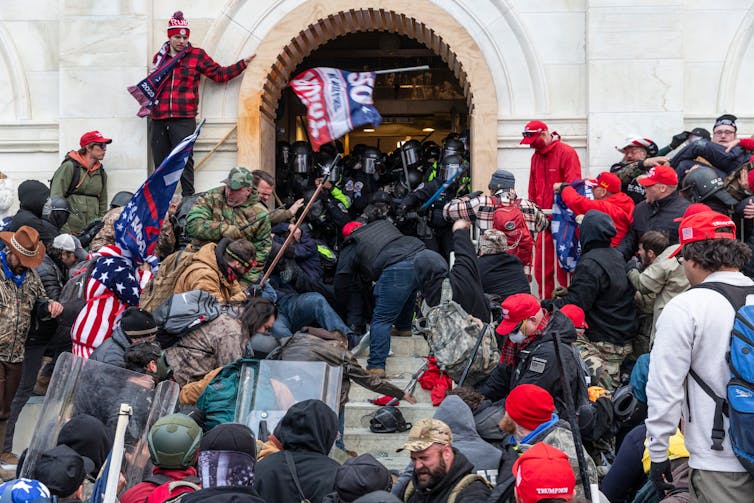
At the same time, study after study has shown that people in or affiliated with the US military tend to lean to the right politically. That tilt was evident on January 6, 2021, when a disproportionate number of former service members ended up in jail for storming the Capitol building in Washington.

Rioters clash with police trying to enter Capitol building.
Military personnel and veterans were overrepresented among the people arrested for offences in the violence at the US Capitol building in 2021.
lev radin / Shutterstock

Many ex-combatants and current service members within the military have absorbed Trump’s calls to dismiss the laws of war and, by extension, the rule of law itself. The byproduct has been little resistance within the ranks to Trump’s agenda of military impunity.

Prior to Trump, there was little disagreement among US presidents about the moral and strategic imperative of upholding the law of war. Trump’s breaking of this precedent is yet another way in which he has taken the US into uncharted political waters.

The Conversation

Thomas Gift does not work for, consult, own shares in or receive funding from any company or organisation that would benefit from this article, and has disclosed no relevant affiliations beyond their academic appointment.

ref. Trump is willing to flout the rules of war like no other US president – https://theconversation.com/trump-is-willing-to-flout-the-rules-of-war-like-no-other-us-president-262635

How does the world look through a spider’s eyes?

Source: The Conversation – UK – By Christopher Terrell Nield, Senior Lecturer, Bioscience, Nottingham Trent University

Hyllus diardi jumping spider – you’ll hear more about these spiders below. Magdalena Teterdynko/Shutterstock

It’s a quiet autumn evening. You’re enjoying some TV, when an unscripted movement catches your eye. A large house spider (Tegenaria domestica) is striding across the rug towards you. You make a sudden movement. The spider freezes. You reach for a paper to shoo it away, look back and it’s gone. What did the spider see? Was it afraid of you?

To a house spider we appear as a potential predator. Yet, despite having more eyes than us, most spiders don’t actually see much detail. Their world is sensed mainly by vibration, air currents, touch and taste.

Spiders usually have four pairs of eyes and there are two types: principal and secondary. Principal or direct eyes help the spider see detail; the photo receptor cells of their retinas are at the front. As in other animals they detect light and turn it into signals for the brain. In secondary or indirect eyes the photo receptor cells are inverted. These eyes are sensitive to movement, rather than detail and can give spiders an early warning of potential prey or predators.

About half of Britain’s 37 spider families spin webs to catch prey. Their eyes are usually arranged in two rows and of roughly similar size. They have poor eyesight and use vibration to sense where their food is.

However, in some spider families, vision is important. These are the spiders which hunt or ambush prey and they have much better vision than their web spinning cousins. In the UK, this includes crab spiders (with about 30 species), wolf spiders and jumping spiders (both have about 40 UK species). Wolf and jumping spiders have one pair of eyes much larger than the others. These principal eyes focus on prey and the smaller secondary ones detect movement. Many jumping spiders can wavelengths of light we can’t, such as ultraviolet. They use it to locate prey and in mating displays.

Crab like spider in pink flower
Some crab spiders like to blend in with flowers.
Macronatura.es/Shutterstock

Crab spiders (Thomisidae), named for their flattened bodies and tendency to move sideways, live in meadows and gardens. They can detect movement with their principal eyes from a distance of up to 20 cm. They are ambush predators that use camouflage to blend into flower heads and catch unwary insects with their long front legs. Misumena vatia, another crab spider, takes this strategy further. Its base colour is white, but it can gradually change to yellow. This broadens the number of flower species it can use to trap prey, and hides it from predators.

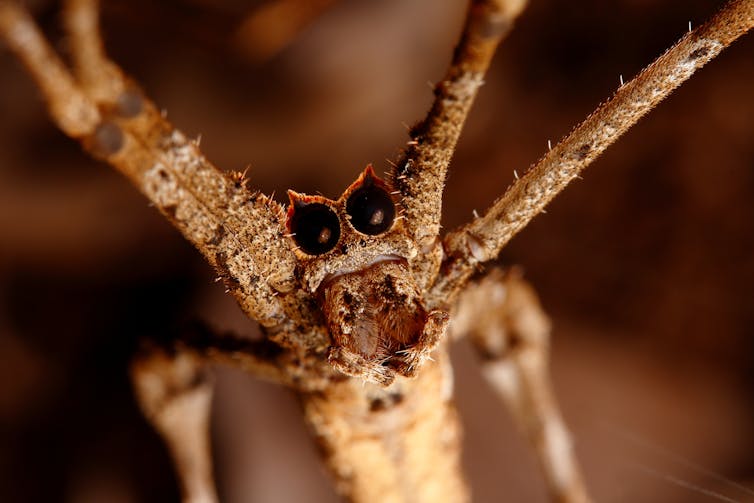
Net-casting spiders (Deinopidae) are called “ogre-faced” spiders because of their enormous eyes and angry looking appearance. They live in dark tropical habitats. Deinopis species have huge principal eyes whose lenses have a wide field of view. They can concentrate light more efficiently than a cat or an owl. Each night a light sensitive membrane is produced inside the eyes but destroyed at dawn as it is too sensitive to use in daylight.

Deinopus spinosa catches prey by making an expandable silken net. It deposits white faecal droppings onto a leaf as aiming points then waits above the net, head down. When an insect walks across the target area the spider opens the net and thrusts it down to enclose its prey.

Close up of spider with large eyes.
Imagine if this ogre-faced spider was the last thing you saw.
Ondrej Michalek/Shutterstock

Wolf spiders (Lycosidae) are ambush predators, also with enlarged principal eyes. Pardosa amentata scans its surroundings for movement with its secondary eyes, though it can only focus on prey up to a few centimetres away. As its target moves closer, a row of secondary eyes, which detect movement, is used to gauge distance. Wolf spiders also use vision for courtship. On encountering a female, a male stands on its back legs, waves its palps, and vibrates its front legs in time with them. A spider’s palps are appendages in front of its mouth. They can sense touch and taste and are also used in mating. Pardosa dances differ from species to species, enabling females to recognise males they can mate with.

Wolf spiders often hunt at night and their posterior median eyes shine in torchlight because they have a reflective membrane. This membrane acts as a mirror, so light passes their photo receptors twice which enhances low light vision. This structure is an example of parallel evolution as it is seen in nocturnal animals as diverse as cats and crocodiles.

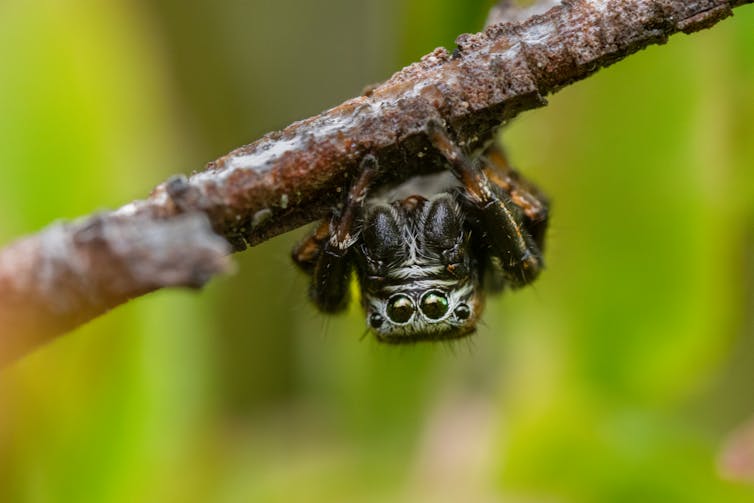
Jumping spiders (Salticidae) are among the few invertebrates with large camera-like eyes like those seen in most vertebrates (including us). Their eyesight is sharper than any other spider and is comparable to that of pigeons or cats. Portia africanus can image up to about 75 cm, relying on shape and colour to identify prey. Jumping spiders detect movement with their secondary eyes, which give a blurry image. The spider then turns and focuses its primary eyes onto the object. These give a sharp image. The spider then uses its lateral eyes to judge distance, and when close enough (2-3 cm) it jumps.

Small hairy spider sitting upside down on a twig.
Was a jumping spider responsible for frightening Little Miss Muffet?
Lukas Zdrazil/Shutterstock

So how does this relate to our hearthrug spider? Any of these seen in autumn are usually males searching for females. As a web builder, Tegenaria senses changes in light and motion, but not detail. So they would see us as a large moving shape.

This may cause it to freeze, part of the looming response of many animals, including humans. Freezing or faking death can be effective protection as many predators are stimulated by movement. Was this a conscious act, or just a reflex? Research suggests insects might feel joy and pain, so why not spiders? Freezing and flight suggests they are more afraid of us than we are of them.

The Conversation

Christopher Terrell Nield does not work for, consult, own shares in or receive funding from any company or organisation that would benefit from this article, and has disclosed no relevant affiliations beyond their academic appointment.

ref. How does the world look through a spider’s eyes? – https://theconversation.com/how-does-the-world-look-through-a-spiders-eyes-264406

What work means to working-class young men in an age of increasing automation

Source: The Conversation – UK – By Richard Gater, Research Assistant at the Centre for Adult Social Care Research, Cardiff University

For years we’ve been warned that technological advances and artificial intelligence (AI) are set to sweep people out of work. But when we think about whose jobs are really under threat, the answer isn’t quite so simple.

Forecasts differ, and the speed of technological change makes it hard to predict exactly which roles will disappear. But one thing is clear – some groups are far more vulnerable than others. In particular, low-skilled, manual jobs – work that many working-class young men often find themselves in – are especially exposed.

My latest book looks at how young working-class men in the south Wales valleys view work, masculinity and the future. What I’ve found is a troubling mismatch between the kinds of careers being automated, the policy solutions being put forward and the identities and aspirations of those who rely most heavily on manual employment.

If such issues are not addressed, we risk rising youth unemployment and a widening of social inequality.

The workers most vulnerable to automation are those in routine manual roles. These include jobs like factory work, for example. These roles, often held by men with fewer qualifications, are easier for machines to replicate because of their repetitive nature.

By contrast, jobs that rely on social and emotional skills such as nursing and counselling are harder to automate. These roles are often associated with femininity or softer expressions of masculinity.

Governments are not blind to these risks. The UK government has promoted lifelong learning and digital upskilling as strategies to help workers adapt to technological change since 2021. The goal is to improve access to training and education so people can work alongside machines rather than be replaced by them.

Yet sociological evidence raises doubts about how effective this approach will be for marginalised men.

Masculinity and manual work

Many sociological studies have found that young working-class men are often drawn to manual work. This pull is rooted in social ties and an inherited sense of masculine identity, where physical jobs are seen as suitably “manly”.

At the same time, formal education and customer‑facing service roles are frequently rejected, viewed as feminised and at odds with traditional ideas of masculinity.


Read more:
Why ‘toxic masculinity’ isn’t a useful term for understanding all of the ways to be a man


In my work with young men in the south Wales valleys, I’ve found both continuity and change in how they think about jobs and masculinity. The continuity is clear. Manual work remains attractive, with fathers, uncles and grandfathers serving as role models. These careers are visible in communities, reinforcing the idea that this is “what men do”.

By comparison, other forms of employment – especially those coded as caring or service-oriented – are less visible and less valued.

‘Rupturing process’

But there are also signs of change. Some of the young men I spoke with expressed interest in careers beyond traditional manual roles. These included becoming a paramedic, a chef, or working in the media.

These changes often came through what I call a “rupturing process”, when a person or experience disrupts long-held ideas of masculinity and work. One young man’s decision to train as a chef, for example, was inspired by learning to cook with his grandmother. The experience influenced him to pursue a path outside the usual gendered expectations, and to embrace a softer, more expressive form of masculinity.

I also found that these young men are not entirely “anti-education”. Rather, they approach it pragmatically. They engage with subjects they see as useful for their ambitions and dismiss those they view as irrelevant. This nuance is often missed in policy debates that paint them as simply resistant to learning.

Large factory production line with industrial robot arms
Factory work is vulnerable to more automation.
IM Imagery/Shutterstock

My research offers grounds for optimism. Despite the stereotypes, working-class young men are not all bound to regressive notions of manhood or limited to manual ambitions. Some are broadening their goals, sparked by different influences that alter their views on work and masculinity.

But optimism alone is not enough. Current policies centred on digital upskilling and lifelong learning will fail if they ignore the cultural and structural barriers that shape job choices. For some young men, a preference for manual labour remains strong, tied to community traditions and masculine identity. Simply offering new skills will not address that.

If we want the future of work to include everyone, we need targeted interventions that speak directly to this situation. That means community-based programmes, mentoring by relatable role models and education pathways that are flexible and practical.

Just as importantly, it means telling a new story about what work – and masculinity – can be. The robots may be coming, but the future doesn’t have to leave working-class young men behind.

The Conversation

Richard Gater has received funding from the Economic and Social Research Council (ESRC).

ref. What work means to working-class young men in an age of increasing automation – https://theconversation.com/what-work-means-to-working-class-young-men-in-an-age-of-increasing-automation-262298

La selección: Premio Luis Felipe Torrente de Divulgación sobre Medicina y Salud Fundación Lilly-The Conversation

Source: The Conversation – (in Spanish) – By Pablo Colado, Redactor jefe / Editor de Salud y Medicina, The Conversation

sfam_photo/Shutterstock

“Cambia lo superficial, cambia también lo profundo, cambia el modo de pensar, cambia todo en este mundo”.

Con este fragmento de la canción de Mercedes Sosa “Todo cambia” arrancaba el artículo ganador del Premio Luis Felipe Torrente de Divulgación sobre Medicina y Salud Fundación Lilly-The Conversation, un penetrante análisis sobre la validez de los testamentos vitales en los individuos aquejados por una demencia. “¿Existen cambios tan radicales que hagan que una persona deje de ser ella misma?”, se pregunta y hace preguntarnos su autor, Luis Espericueta, de la Universidad de Granada.

Entre las 132 candidaturas que se han presentado al certamen, dirigido a investigadores, doctorandos y docentes universitarios menores de 35 años, las propuestas han sido muy diversas en fondo y forma, como ilustra el tono más desenfadado del segundo premio: Partirse de risa: el origen científico del ja, ja, ja. Marta Calderón García, de la Universidad Miguel Hernández, nos invita a embarcarnos en un amenísimo viaje por los pormenores psicológicos, neurobiológicos y culturales de la risa humana.

Lo que no cambia es la voluntad de claridad y la pasión por la ciencia que también transmiten los ocho artículos finalistas, publicados durante estos últimos tres meses en The Conversation. Sus autores, por ejemplo, son capaces de situarnos en un ring (la placenta) donde libran un trascendental combate los genes paternos y maternos durante el desarrollo de feto; o de imaginar a las células mandándose mensajes de WhastApp (las vesículas extracelulares), como si una película de Pixar se tratara.

Queda, por tanto, demostrado que las metáforas constituyen una poderosa herramienta para hacer divulgación. Encontramos otro exponente de su buen uso en el artículo Neurohambruna: cómo la escasez de comida reprograma a los hijos de la guerra, donde se compara el cuerpo de las embarazadas con un canal de noticias: “todo lo que ocurre afuera –lo que la madre come, cómo se siente, etc.– se traduce en mensajes químicos que informan al bebé sobre el entorno donde crecerá”, escribe la autora. Y sin salir de la biomedicina de vanguardia, también hemos aprendido que las células madre cancerígenas son “como brasas escondidas, invisibles pero activas, esperando el momento justo para arder otra vez”.

Además, gracias a esta variopinta antología podrá ponerse al día de las últimas novedades en materia farmacológica –los medicamentos biosimilares y el papel de los excipientes en los fármacos– o averiguar si puede considerarse como “normal” algún consumo de alcohol.

Y, por supuesto, no podía faltar el gran tema de nuestro tiempo: el artículo ¿Se fiaría del criterio de ChatGPT para su diagnóstico médico? Por si acaso, busque una segunda opinión pondera con sentido común los pros y contras del uso de la inteligencia artificial en el ámbito de la salud. Porque como cantaba Mercedes Sosa, “cambia el modo de pensar, cambia todo en este mundo”, y necesitamos más que nunca voces autorizadas que nos iluminen en estos tiempos de furia y ruido.

P. D. En memoria de Luis Felipe Torrente, que nos dejó hace poco más de un año y que desde esta quinta edición honra con su nombre al Premio. Su magisterio sigue siendo una brújula para todos quienes hacemos The Conversation.

Feliz lectura.

The Conversation

ref. La selección: Premio Luis Felipe Torrente de Divulgación sobre Medicina y Salud Fundación Lilly-The Conversation – https://theconversation.com/la-seleccion-premio-luis-felipe-torrente-de-divulgacion-sobre-medicina-y-salud-fundacion-lilly-the-conversation-266554