Trump on a coin? When Julius Caesar tried that, the Roman republic crumbled soon after

Source: The Conversation – Global Perspectives – By Peter Edwell, Associate Professor in Ancient History, Macquarie University

A proposed one dollar coin featuring US President Donald Trump is causing ructions across the political divide. It’s also provoking discussion in the world of ancient Roman numismatics (coin studies).

The proposed coin depicts Trump in profile on one side (the obverse). On the other side (the reverse) the president raises his fist in defiance accompanied by the words “fight, fight, fight”.

While only a draft proposal, the coin could be minted in 2026 to mark 250 years since the US declaration of independence. But an old law prohibits the “likeness of any living person” from being “placed upon any of the bonds, securities, notes, fractional or postal currency of the United States.”

More than 2,000 years ago, the depiction of living figures on Roman coins caused similar ructions.

It came at a time when the Roman republic was in trouble. The republic would crumble altogether soon after, ushering in the long period of Rome being led by emperor-kings who saw themselves as almost akin to gods.

Perhaps the American republic is at a similar stage.

Sulla’s image on a coin

Rome was said to be founded by the mythical king Romulus, who killed his own twin (Remus). The fledgling state was led by seven kings before it became a republic in about 509 BCE.

By the late second century BCE it was led by Roman general and politician Gaius Marius. Marius and his later rival, Lucius Cornelius Sulla Felix, broke many of the republic’s long-held conventions. They also fought Rome’s first major civil war.

In 88 BCE, while consul, Sulla marched an army on Rome to defend the city from “tyrants” (by which he meant the faction of Marius, who had ousted him). After Sulla won the civil war that followed, he held the dictatorship from 82-79 BCE. Dictatorships were only to be held for six months in times of emergency. Sulla claimed the emergency was ongoing.

As part of this he ordered a list (known as proscriptions) of enemies drawn up. Hundreds or even thousands were killed and had property confiscated.

In the same year a silver coin (called a denarius) was minted in Sulla’s name. One side featured Sulla himself riding in a four-horse chariot.

Coin Denarius, L. SVLLA IMP, Ancient Roman Republic, 82 BC
In 82 BCE a silver coin (known as a denarius) was minted in Sulla’s name.
The Conversation/Museums Victoria Copyright Museums Victoria / CC BY (Licensed as Attribution 4.0 International), CC BY

This was the first time a living person was depicted on a Roman coin. Up to this point only gods and mythological figures had that honour.

It was highly unusual.

Caesar’s challenge to the old republic

Sulla was the first but he wouldn’t be the last leader of the Roman republic to have his image on a coin.

In 44 BCE Julius Caesar went a step further. Only months before his assassination, coins appeared with Caesar’s bust dominating their obverses. Some included the words dict perpetuo meaning “dictator for life”.

By this time, Caesar and many before him, including Marius and Sulla, had broken the mould of the old republic.

Early in 44 BCE, Caesar took the dictatorship for life.

From 46-44 BCE he held the consulship, which was only meant to be held for a one-year term at a time. (Sulla held the dictatorship three years running, which partly set the scene for Caesar’s later emergence and the final breakdown of the republic.)

For many at the time, it seemed Caesar was moving the republic in the direction of monarchy. In January 44 BCE, when a throng hailed him as “rex” (king) Caesar responded, “I am Caesar and no king”. His very name was by now more powerful.

The coins of 44 BCE containing a profile bust of Caesar were an important part of his public program, and part of his challenge to republican convention.

Sulla paved the way 40 years before.

The parallels with Trump are hard to miss

Some emphasise that Caesar did not directly order his image to be placed on coins. Those wanting to curry favour read the room and Caesar did not object.

A similar scenario appears to be playing out with the coin design bearing Trump’s image.

The parallels with Trump are hard to miss. Trump has signed more than 200 executive orders in less than nine months. His predecessor Joe Biden issued 162 in his entire presidency.

Trump’s deployment of federal troops to US cities under emergency decrees provokes cries of tyranny. Sulla’s march on Rome and the proscriptions that followed drew a similar response.

The possibility of a one dollar coin depicting Donald Trump on both sides echoes the coins of Sulla and Caesar.

They might not technically break the law but they would break convention. In the process they also symbolise a notable shift in the US from democracy to autocracy.

When the “no kings!” demonstrations took place in the US earlier this year, they reminded us of a key motivation for the declaration of independence.

A coin celebrating its 250-year anniversary may well symbolise its journey to demise.

The Conversation

Peter Edwell receives funding from the Australian Research Council.

ref. Trump on a coin? When Julius Caesar tried that, the Roman republic crumbled soon after – https://theconversation.com/trump-on-a-coin-when-julius-caesar-tried-that-the-roman-republic-crumbled-soon-after-266887


How voice training can help teachers improve wellbeing in the classroom

Source: The Conversation – UK – By Claire Oakley, Researcher and Lecturer in Psychology, University of Essex

PeopleImages/Shutterstock

Teachers use their voices in the classroom to build enthusiasm, convey knowledge and defuse tensions.

A warm, encouraging voice boosts pupils’ motivation, reduces anxiety and improves connections with teachers and classroom dynamics. Controlling or harsh tones can unknowingly create stress for pupils, erode trust and lead to disengagement.

But teachers are also stressed, and stress can affect the way we speak. Being stressed affects the control we have over our speech. We tend to speak at a higher pitch with more variation, which can induce vocal strain.

Further, listeners can perceive the speaker’s stress from their speech. That perceived stress has the potential to influence the emotions of the listener, too, which in a school can negatively shape a classroom’s atmosphere.

Few teachers are trained in how to use their voice effectively. Neither are teachers trained in how to protect their voice to ensure career longevity and prevent voice-related illness. Providing voice awareness training for teachers could help reduce the impact of stress and overuse on teachers’ voices and transform communication within the classroom.

Supportive classrooms

It has long been known that children learn more and participate better in supportive and engaging classroom atmospheres. The way teachers speak can affect their pupils’ wellbeing, engagement and self-esteem.

Teachers can create these environments by using a tone or style of voice that demonstrates their interest in their pupils. Vocal delivery affects cooperation, and emerging evidence suggests that it has an influence on how pupils learn.

Pupils are less likely to engage in thinking about concepts and problem solving after hearing a harsh-sounding voice. Instead, they rely more on simple repetition, which is less effective for long-term learning. Together, these studies suggest that teachers can create supportive, optimal learning environments through a nuanced use of voice in the classroom.

After hearing harsh, controlling-sounding voices, pupils have reported heightened negative emotions and feeling disconnected from teachers. Listeners take less than a quarter of a second to detect harsh voices, suggesting specialised brain mechanisms for processing threat-inducing voices.

Listening to supportive-sounding voices, which are often soft, warm and slower-paced, enhances wellbeing, increasing feelings of self-esteem and competence.

Adult talking to child in school corridor
How teachers speak can encourage children to express themselves.
Rido/Shutterstock

Research has found that showing an interest in others through voice cues changes the way listeners disclose information. This means that teachers using a supportive tone of voice could help pupils talk to them about important or difficult issues, such as bullying.

Vocal training

One of us (Silke Paulmann) has carried out research to evaluate the vocal awareness training offered by a teacher training organisation. After training, the teachers spoke in a less monotone voice, increasing their pitch and volume range, and at a slower pace. They used softer ways of speaking, demonstrating that vocal awareness training can alter teachers’ speech patterns.

Teachers are also at risk of voice problems. In a 2018 study, 30% of teachers surveyed reported voice problems, such as hoarseness, a sign of vocal strain or fatigue, or voice loss. In general, teachers are more likely to develop voice disorders compared with the general population.

However, unlike actors or singers, who also rely extensively on their voices, teachers do not typically receive vocal training. Voice training helps prevent long-term voice damage or strain. Proactively addressing teacher voice health could reduce missed work days due to voice-related issues and help improve teacher wellbeing, as they often occur together.

The vocal training we evaluated included techniques to help the trainee teachers master vocal delivery, as well as tips and tricks around voice health. The training emphasised how harsh and sharp-sounding voices can negatively affect students’ wellbeing.

It focused on how classroom communications benefit from soft, warm-sounding tones, creating a supportive and motivating classroom environment. Comparisons of the teachers’ voices before and after training indicated that their vocal quality improved.

Incorporating even short voice awareness training into teacher education and professional development could better equip educators to create supportive, engaging learning environments, protect their vocal health and support their wellbeing. Currently, though, the availability of voice awareness training for teachers is sparse.

Vocal awareness training can improve teachers’ vocal delivery, enhancing classroom communication and engagement. As education systems focus on both teacher and student wellbeing, incorporating such training into teacher development programmes is a crucial step forward.

The Conversation

In future work, Claire Oakley will collaborate with Mario Education (https://marioeducation.com/) as part of an evaluation project.

Silke Paulmann receives funding from the University of Essex Impact Fund and work on motivational prosody has previously been funded by the Leverhulme Trust. She collaborates with Mario Education (https://marioeducation.com) and 5Voices (https://the5voices.com) on projects related to teacher voice use.

ref. How voice training can help teachers improve wellbeing in the classroom – https://theconversation.com/how-voice-training-can-help-teachers-improve-wellbeing-in-the-classroom-249771

Twenty-five years of data shows how link between identity and views on Scottish independence has grown stronger

Source: The Conversation – UK – By John Curtice, Professor of Politics, University of Strathclyde and Senior Research Fellow, National Centre for Social Research

Shoppers on Edinburgh’s famous Victoria Street. Shutterstock/Ssisabal

When the Labour government established the Scottish parliament in 1999, it hoped the new institution would demonstrate that Scotland’s distinctive needs and aspirations could be addressed within the framework of the UK. Consequently, the theory went, support for independence would melt away.

However, the project was not without its risks. As a symbol of Scotland’s distinctiveness, the parliament might foster people’s sense of Scottish identity rather than the British identity that helps bind the four parts of the UK together.

And by creating a space in which policy issues are discussed separately from Westminster – and sometimes different solutions implemented – the balance of public opinion north of the border might diverge from that in the rest of the UK, making it more difficult to keep the union together.

Ever since the parliament first met on July 1 1999, the Scottish Social Attitudes (SSA) survey has been charting the evolution of public opinion north of the border. Together with the British Social Attitudes (BSA) survey, it also provides a means of comparing the trend of public opinion on the two sides of the border.

A report published on October 9 by the Scottish Centre for Social Research and based on the 25 years of data collected by SSA shows that public opinion and identities in Scotland have not diverged from those elsewhere in the UK. Nevertheless, support for independence is higher now than 25 years ago. This is because some of the features of the country’s attitudinal landscape that were already distinctive to Scotland have come to be more closely aligned with whether people are for or against independence.

Consider national identity, for example. Acknowledgement of a British identity has always tended to play second fiddle to feeling Scottish. In 1999, two-thirds of SSA respondents said they were either “Scottish, not British” or “more Scottish than British”. Just 22% indicated they were “equally Scottish and British”, while only 7% stated they were either “British, not Scottish” or “more British than Scottish”.

The figures are little different in the latest survey conducted last autumn. Nearly three in five (59%) said they were wholly or predominantly Scottish, 22% (again) stated they were equally Scottish and British, while only one in ten (10%) claimed to be wholly or predominantly British.

It is often claimed that public opinion in Scotland is more leftwing than in England. The social attitudes data confirm this – though the gap is small and has not widened.

Both the Scottish and British surveys have regularly asked a suite of questions designed to ascertain people’s attitudes towards inequality and what the government should do about it. This produces a scale from 0 to 100, in which the higher the score, the more tolerant of inequality – and therefore more rightwing – somebody appears to be.

In 2000, the average score in Scotland was, at 34, just four points less than the equivalent figure for England (38). In our latest survey, the scores are 33 and 35 respectively.

Similar analysis of attitudes towards tax and spend shows that, while in any particular year, people in Scotland have usually been a little more likely to back more government spending and the taxes needed to fund it, the gap has not widened. Rather, attitudes have moved in parallel. When people in England have shifted away from tax and spend (or vice-versa), typically much the same shift has occurred north of the border.

Why the rise in support for independence?

Yet despite the absence of divergence in identity and policy preferences, support for Scottish independence is markedly higher now than when the Scottish Parliament was created. In 1999, just 27% said Scotland should become independent. As many as 59% backed having a devolved parliament, while just one in ten (10%) thought Scotland should not have any kind of parliament of its own.

Now, support for independence stands at 47%, while 41% back the devolved parliament and 9% do not want any kind of separate institution. Despite the 2014 vote against independence, the period before and after that ballot witnessed a sharp increase in support that has subsequently largely been sustained.

How has it been possible for independence to be more popular now even though the attitudes and identities of people in Scotland are no more distinctive now than in 1999? The answer lies in how some of the ways in which Scots’ attitudes and identities were already distinctive have become more closely aligned with their constitutional preferences.

People’s views on how Scotland should be governed have always reflected to some degree whether they feel Scottish or British. In 1999, only 6% of those who felt wholly or predominantly British said Scotland should become independent. In contrast, 44% of those who said they were “Scottish, not British” wanted Scotland to leave the UK.

Now, however, the link between people’s sense of national identity and their constitutional preference is much stronger. Support for independence among those who feel wholly or predominantly British is, at 14%, only eight points higher now than 25 years ago. In contrast, among those who say they are “Scottish, not British”, 74% now support independence, an increase of 30 points.

In 2000, those on the left on our scale (38%) were 15 points more likely than those on the right (23%) to say they supported independence. Now the gap is 34 points; 64% of those on the left are in favour, but only 30% of those on the right.

Public opinion and national identity in Scotland have not significantly diverged from the rest of the UK during the devolution years. Nevertheless, within Scotland, the constitutional debate has become more polarised.

No longer is it simply about how much sovereignty the country should have. Rather, it has become more strongly embedded in differences of identity and disagreements about the proper direction of public policy. That polarisation seems unlikely to make it any easier to find a lasting settlement to Scotland’s continuing constitutional debate any time soon.

The Conversation

John Curtice is currently in receipt of funding from the Economic and Social Research Council (ESRC) and has previously received funding from a range of government and charitable sources. The Scottish Social Attitudes survey is funded each year on a modular basis. This has included funding from both the Scottish and the UK governments, while the survey is currently in receipt of funding from the ESRC.

ref. Twenty-five years of data shows how link between identity and views on Scottish independence has grown stronger – https://theconversation.com/twenty-five-years-of-data-shows-how-link-between-identity-and-views-on-scottish-independence-has-grown-stronger-266963

Metal-organic frameworks: Nobel-winning tiny ‘sponge crystals’ with an astonishing amount of inner space

Source: The Conversation – USA – By Stavroula Alina Kampouri, Assistant Professor of Chemical and Biomolecular Engineering and Chemistry, Rice University

Three chemists will share the Nobel Prize for their work on metal-organic frameworks. Jonathan Nackstrand/AFP via Getty Images

The 2025 Nobel Prize in chemistry was awarded to Richard Robson, Susumu Kitagawa and Omar Yaghi on Oct. 8, 2025, for the development of metal-organic frameworks, or MOFs, which are tunable crystal structures with extremely high porosity. These are a class of materials that have truly changed the way scientists design and think about matter, inspiring progress in various applications.

I’m a MOF scientist and for many of us in the field, this recognition feels both historic and deeply personal. MOFs are not just elegant crystals you’d admire under a microscope; they’re an entire universe of structures, each like a miniature city of tunnels and rooms waiting to be filled. They’ve been my scientific home since I first stepped into research, and they still feel a little bit like magic to me.

So, what exactly are MOFs?

Metal-organic frameworks are like crystalline scaffolds built from two ingredients: metals that act like connective joints and organic – that is, carbon-based – molecules that behave as bridges to link those joints in a repeating pattern. The result is a highly ordered, porous framework – a kind of molecular architecture that’s both sturdy and full of empty space.

A model constructed out of metal bars and spheres, showing a cubic structure with smaller molecule models in the center.
Metal-organic frameworks, shown in this model, can trap smaller molecules inside their larger frame.
Jonathan Nackstrand/AFP via Getty Images

These frameworks are so porous, like sponges with tiny voids, that it’s almost impossible to picture them. One gram of a MOF has so many pores that it can expose as much internal surface area as a soccer field. It’s astonishing that a handful of powder could hide an entire landscape of surface within it.

That enormous surface area is one of the unique things that make MOFs so powerful, and it comes from the nanoscale pores – tiny molecular rooms that can trap, separate, transform or transport gases, ions and other molecules. In a way, MOFs are like molecular hotels with countless doors, each programmed to admit only certain guests.

Why scientists love them

What fascinates me most about metal-organic frameworks is their limitless design space. Just by glancing at the periodic table, every metal could, in principle, serve as a cornerstone, and countless organic molecules can act as bridges connecting them. Even using the same combination can produce entirely different architectures.

Chemist Omar Farha compares metal-organic frameworks to Lego sets that you can build and customize.

So far, scientists have synthesized over 90,000 MOFs, and computational chemists have predicted hundreds of thousands more. Few material families offer this much versatility.

I like to think of MOFs as puzzles or Lego sets, but on the atomic scale. You can replace a single piece, or change its color or shape, and end up with a material that behaves completely differently.

Add a new “decoration” – what chemists call a functional group – and the framework suddenly recognizes a new molecule. Stretch the organic bridges, and the same architecture inflates like a balloon, giving what we call isoreticular MOFs. These have the same structure, but bigger pores. In short, MOFs can come in almost every imaginable shape, size and texture.

Pushing the boundaries of these materials

Beyond their scientific elegance, MOFs are incredibly promising for real-world technologies. Different structures and functionalities lead to different properties and, therefore, different uses.

Some MOFs act as molecular sieves, selectively capturing carbon dioxide from industrial exhaust or even directly from air. Others clean polluted water by removing heavy metals, dyes or “forever chemicals.”

Certain MOFs can also carry drugs or imaging agents inside the body for medical applications. In the energy world, they function as electrodes or electrolytes that make batteries safer and more efficient. And many serve as catalysts, accelerating chemical reactions that transform one molecule into another.

When I began my Ph.D., my senior colleagues warned me that MOFs might be too delicate – beautiful crystals that would crumble at the first hint of air or moisture. And indeed, some of the early frameworks were fragile curiosities, admired more for their elegance than their endurance. But that perception has changed dramatically.

A diagram of molecules arranged in a cube structure, with empty space in each cube.
Metal-organic frameworks, like MOF-5 shown here, have metal components, organic ‘linkers’ and a cavity which can allow in gases.
Tony Boehle/Wikimedia Commons, CC BY-SA

Many MOFs are now remarkably robust. The material I first worked on was a titanium-based metal-organic framework named MIL-125. It was first reported by Gérard Férey, one of the foundational figures in the MOF and porous framework community who sadly died in 2017. MIL-125 was not only stable, it was practically indestructible in my lab. After synthesizing two grams of it, I stored it on my bench in an open vial and used that same batch for every catalytic experiment throughout my Ph.D. No glovebox, no desiccator – just a jar of yellow powder sitting happily on my bench.

That experience taught me something important: While stability can be a legitimate concern, MOFs have grown up. Thanks to smart chemistry, we have materials that can withstand water, heat and repeated use. Since their foundation, researchers around the world have introduced new properties to these materials – from electrical conductivity to light responsiveness – and, crucially, made major progress in scaling up MOF synthesis for industrial applications.

Scaling is the key step in bridging the gap between fundamental discovery and large-scale deployment. Researchers are no longer content with studying MOFs in milligrams – we’re often planning for grams, kilograms and beyond.

Some startups are turning these advances into real technologies – from storing gases more safely, to pulling clean water straight from desert air, to building more energy-efficient air conditioners. What once felt like science fiction – powders that breathe, trap and transform molecules – is now science fact.

Despite these advances, researchers will need to continue improving the stability and scalability of MOFs to fully realize these materials’ potential in the real world.

A Nobel moment that honors creativity

The 2025 Nobel Prize in chemistry goes beyond honoring three remarkable scientists – it celebrates an entire community: a generation of chemists and engineers who transformed a single idea into a thriving field. The pioneering visions of Richard Robson, Susumu Kitagawa and Omar Yaghi laid the foundations for a vibrant discipline that has grown to encompass everything from gas storage and catalysis to energy and environmental technologies.

When I attended my first MOF conference as a second-year Ph.D. student, I listened in awe to many of the pioneers of this field, some of whom are now Nobel laureates. Back then, MOFs felt like magical sponges, and that sense of wonder never left me. It led me to continue my research on conductive MOFs: materials that can carry electricity. Now, in my own research group, we study how these frameworks can make batteries safer and more efficient, and how they can capture waste gases and turn them into useful chemicals using sunlight.

For me, this Nobel Prize celebrates more than a discovery, it celebrates a philosophy: Chemistry is creative, we can design and engineer matter with imagination, and sometimes emptiness can be the very essence of a material.

The Conversation

Stavroula (Alina) Kampouri receives research funding from the American Chemical Society Petroleum Research Fund (ACS PRF) and other public research agencies.

ref. Metal-organic frameworks: Nobel-winning tiny ‘sponge crystals’ with an astonishing amount of inner space – https://theconversation.com/metal-organic-frameworks-nobel-winning-tiny-sponge-crystals-with-an-astonishing-amount-of-inner-space-267089

Toronto Blue Jays: Amid Canada-U.S. tensions, ‘Canada’s team’ is excelling at America’s pastime

Source: The Conversation – Canada – By Noah Eliot Vanderhoeven, PhD Candidate, Political Science, Western University

Amid threats from United States President Donald Trump to make Canada the 51st state, the Toronto Blue Jays’ season started with protocols aimed at avoiding booing during the American national anthem and the removal of someone wearing a “Canada is not for sale hat” at the ballpark.

Nonetheless, the Blue Jays are being heavily marketed as “Canada’s team” as they advance to the American League championship after beating the New York Yankees, America’s most storied baseball team.

Why do the Blue Jays frame themselves as not just Toronto’s team, but Canada’s? And is their current post-season run their biggest and most important opportunity in years to fully establish themselves as representing all of Canada?

Truly Canada’s team?

The Jays serving as Canada’s team may make sense since they’re the only Canadian team currently playing in Major League Baseball (MLB). But to some Canadians, positioning the Jays as the nation’s team may not sit well.

After all, for baseball fans in Québec, memories of the now-defunct Montreal Expos still loom large.

For fans closer to the Windsor-Detroit border, the Detroit Tigers are a more proximate and accessible team.

Finally, some British Columbia MLB enthusiasts — despite the trips Blue Jays fans make to take over T-Mobile Park when the Blue Jays play the Seattle Marinersstill opt to support the Mariners since the team is so much closer than the Blue Jays are in Toronto.

What all this means is that to some Canadian baseball fans, the Blue Jays aren’t really Canada’s team — they’re just Toronto’s.

Huge market

It’s unsurprising that the Toronto Blue Jays organization, owned by Rogers Communications — “proud owner of Canada’s team” — is intent on framing the squad this way because it provides a substantial financial boon. The Jays benefit greatly from being Canada’s team by compelling baseball fans from across the country to attend their games, and most importantly, to watch them on television.

Despite playing north of the border and earning revenues in the weaker Canadian dollar, the Jays operate in one of MLB’s largest markets — Toronto — and can also market to fans across the country. That gives them the largest geographical market in professional baseball — an entire nation.

This massive audience contributes to equally massive television ratings, even at a time when most MLB teams are struggling for regional television revenues. Being “Canada’s team” has also allowed the Blue Jays to spend competitively over the past 10 years and operate a Top 5 payroll, as they have in 2025, alongside other teams in huge markets like Los Angeles and New York.

Cross-border trash-talking

In the midst of the series against the Yankees, Prime Minister Mark Carney met with Trump to discuss trade, tariffs and security. Intitial reports suggested the meeting, held just days after Trump made yet another veiled annexation threat, went well.

But the ongoing backdrop of tense relations between the U.S. and Canada is perhaps echoed by some of the commentary about both teams.

Early in the season, the Yankees’ play-by-play man, Michael Kay, called Toronto “not a first-place team” despite the Blue Jays having just passed the Yankees for first place in the American League East.

In September, Jays colour-commentator and former catcher, Buck Martinez, said that the Yankees were “not a good team.”

Also in September, a Baltimore Orioles television analyst, Brian Roberts, questioned how well Canadians understood baseball, leading to the Blue Jays themselves defending the baseball intelligence of their fans.

There was even a popular hoax online about Trump not inviting the Blue Jays to the White House should they win the World Series — an invite he’s extended to many championship teams in American sports leagues.

Stoking Canadian nationalism

Ultimately, the Blue Jays bested the Yankees and are advancing to the American League championship series. Blue Jays players and their manager, John Schneider, have spoken of the intense atmosphere Blue Jays fans create for their opponents and how the team draws on the support of the entire nation of Canada.

The Jays’ success so far in the post-season in this current political moment — as Trump is once again making veiled threats about making Canada the 51st state during tense trade negotiations — presents the Blue Jays with perhaps their best opportunity to fulfil their role as Canada’s team.

In a season defined by rivalry, politics and national pride, the Blue Jays are proving that even America’s pastime can become a canvas for Canadian nationalism.

The Conversation

Noah Eliot Vanderhoeven does not work for, consult, own shares in or receive funding from any company or organisation that would benefit from this article, and has disclosed no relevant affiliations beyond their academic appointment.

ref. Toronto Blue Jays: Amid Canada-U.S. tensions, ‘Canada’s team’ is excelling at America’s pastime – https://theconversation.com/toronto-blue-jays-amid-canada-u-s-tensions-canadas-team-is-excelling-at-americas-pastime-266882

Organised crime may be infiltrating Timor-Leste’s government. One minister is sounding the alarm

Source: The Conversation – Global Perspectives – By Michael Rose, Adjuct Lecturer, University of Adelaide

Two decades after Timor-Leste gained its independence, the country is a complicated and qualified success story. Poverty and deep economic problems persist, but the country boasts a thriving democracy. Its ascension to the ASEAN regional bloc will come later this month.

As this milestone approaches, however, a senior official with oversight over the national intelligence agency has gone public with explosive claims that Timorese institutions are allegedly being bought by organised crime.

His concerns come after a recent UN report that describes in vivid detail a sophisticated attempt by figures linked to triad gangs in China and Southeast Asia to allegedly establish a base of operations in the Timorese region of Oecusse-Ambeno.

If the allegations are true, they could pose the one of the greatest tests for Timor-Leste in its short history. Is its democracy robust enough to confront the challenge?

Allegations of corruption

Agio Pereira is the Timorese minister of the Presidency of the Council of Ministers. He is one of the most powerful elected officials in his country.

On September 21, Pereira published on Facebook what he called A Manifesto for the Defence of Timor-Leste. In it, he claims to have
“undeniable and damning evidence” that US$45 million (A$68 million) has been brought (in some cases flown) into the country by “transnational criminal syndicates from Cambodia, Malaysia, Macau and Hong Kong”.

He says the money was allegedly used to influence regulatory bodies to grant “fraudulent licences” and set up “protected enclaves” where “illegal gambling, cyber-scam centres and human trafficking would be able to operate under state protection”.

He said the country faces a simple choice:

Will we be a sovereign nation governed by democratic laws and institutions, or will we become a criminal state owned by foreign mafia syndicates?

Pereira also listed numerous demands, including:

  • the revocation of any licences that may have been granted to criminal networks
  • government cooperation with international law enforcement to dismantle the networks
  • an investigation of all officials who have allegedly taken any money.

Pereira did not provide any evidence in the post to back up his claims, but especially given his status and oversight of the national intelligence service, many are taking his claims seriously.

In response to the allegations, President José Ramos-Horta told me via WhatsApp:

I always said Timor-Leste does not have homegrown organised crime. […] But Timor-Leste, being still a fragile country, is very attractive to organised crime from Asia.

I have full confidence in our authorities with support from Australian Federal Police and from Indonesian police in tackling the challenges by organised crime.

Prime Minister Xanana Gusmao also took a measured response to the allegations. He told local media Pereira would be given a chance to raise the issue with the government directly.

On October 1, he was given his chance, addressing a meeting of Timor-Leste’s Counsel of Ministers. This resulted in the swift approval of a draft resolution cancelling all existing licences granted for online gambling and betting operations and prohibiting any new licences from being issued.

But Pereira’s other key demand – an investigation into officials accused of taking money from organised crime syndicates – appears not to have been addressed.

Scammers taking root

Cyber-scammming is a booming industry in Southeast Asia, bringing in billions of dollars in revenue annually.

Illegal gambling and scam centres have proliferated in recent years in “special economic zones” in Cambodia, Laos, Myanmar and the Philippines. The organised crime groups behind them are constantly looking for new bases of operations where local officials can be persuaded to look the other way, or lack the capacity to stop them.

Although Timor-Leste is small, it’s important due to its strategic location (just a 1.5-hour flight from Darwin) and the fact Australia and its allies are increasingly competing for influence there with China. Australia cannot afford to ignore any threat to the security of a fledgling democracy on its doorstep.

Pereira’s manifesto came in the wake of an August 25 raid on a suspected scam centre in Oecusse-Ambeno, where 30 foreign nationals from Indonesia, Malaysia and China were detained. The head of the regional government, Rogerio Lobato, was given notice two days later.

Oecusse, as it’s commonly known, is a rugged coastal exclave on the western half of Timor island, surrounded by Indonesia. Once extremely isolated, Oecusse was granted autonomy in 2014 and a special economic zone was established to spur foreign investment.

The report from the UN Office on Drugs and Crime in September described how organised crime groups took advantage of the region’s loose regulatory structures late last year to allegedly establish an “Oecusse Digital Centre”. It reads:

The Special Administrative Region of Oecusse-Ambeno (RAEOA), Timor-Leste appears to have already been targeted by criminal networks through FDI [foreign direct investment].

As Timor-Leste prepares to join ASEAN in October 2025, the reported infiltration of RAEOA and its national ID system by convicted cybercriminals poses a serious security risk.

The report notes that Timor-Leste shares “stark similarities” with the development of the scam industry in Cambodia, Laos and the Philippines, which have now become notorious hubs for cyber fraud, drug trafficking and human trafficking.

In his message to me, Ramos-Horta declined to address the allegations surfaced by the UN report, saying:

I know well the work of UN agencies. They should focus more on solid research and less on allegations against individuals because this is not their mandate.

In his manifesto, Pereira appears to suggest operations like the one recently raided in Oecusse are made possible through the bribery of Timorese officials. He says directly this influence is occurring on a scale that risks state capture.

Reactions to Pereira’s allegations

It’s unclear why Pereira chose to appeal directly to the people rather than take his concerns to others in the government.

Nelson Belo, director of the civil society and security monitoring organisation Fundasaun Mahein, criticised Pereira’s choice to go public. He said as a minister, he should “lead and act within the law”.

Belo’s group had also recently warned of the risks transnational organised crime groups could pose to the country.

Abel Pires, a former government minister and former member of Timor-Leste’s Council of Defence and Security, had a different view.

He reasoned that because “the problem may involve too many people within the system”, Pereira might have had no choice but to go public.

He also called the cancellation of gambling licences a positive step, but said there must be an independent investigation into Pereira’s allegations.

On the street, the allegations have fed into frustration with official greed and incompetence, which fuelled recent student demonstrations against government waste.

That a leading minister felt he needed to go public with the accusations to have them taken seriously by his own government is telling.

The potential subversion of Timor-Leste’s institutions by organised crime is a serious threat to the country’s security. Its government – as well as Australia’s – would do well to pay heed.

The Conversation

Michael Rose does not work for, consult, own shares in or receive funding from any company or organisation that would benefit from this article, and has disclosed no relevant affiliations beyond their academic appointment.

ref. Organised crime may be infiltrating Timor-Leste’s government. One minister is sounding the alarm – https://theconversation.com/organised-crime-may-be-infiltrating-timor-lestes-government-one-minister-is-sounding-the-alarm-265879

Vox y la maquinaria del populismo: Torre Pacheco, Jumilla y otros odios fabricados

Source: The Conversation – (in Spanish) – By Marta Pérez-Escolar, Profesora e investigadora en la Facultad de Comunicación y Documentación, Universidad de Murcia

Roman Samborskyi/Shutterstock

El mordaz periodista Henry Louis Mencken desconfiaba de los líderes políticos. En su Chrestomathy, una selección de sus mejores escritos sobre una variedad de temas (incluidos la política, la música, la religión y la lengua y cultura estadounidenses), Mencken retrató a los populistas como oradores indiscretos y audaces que, motivados por sus propias aspiraciones, disfrazan sus discursos con un espectáculo contaminado, en ocasiones, por el resentimiento: simplifican sus mensajes, alimentan prejuicios y popularizan estereotipos para conseguir halagos fáciles.

En este terreno de confianza ciega es donde las narrativas de odio proliferan. De forma más provocativa, el filósofo Harry Frankfurt denominó bullshit a esos discursos manipuladores que ni siquiera se preocupan por la verdad.

Mientras que los mentirosos, al menos, reconocen que hay una verdad que ocultan o distorsionan, los prestidigitadores de patrañas (bullshit) fabrican diatribas oportunistas: mercantilizan el odio para ganar poder, convencer a la opinión pública y seducir a la audiencia. Los charlatanes son indiferentes a lo que es falso o verdadero. Lo único que les interesa es que su invectiva sea efectiva.

En estos términos, los líderes políticos actúan como auténticos charlatanes cuando utilizan el poder de la tribuna pública y mediática para inocular odio y resentimiento. Bajo el disfraz de “ciudadanos preocupados”, como los calificó Carolin Emcke en Contra el odio, los líderes populistas fingen hablar desde el sentido común y del interés general de los ciudadanos para escapar de la responsabilidad ética de sus palabras.

Esta estrategia discursiva, propia del populismo y de la demagogia moderna, articulan las narrativas de odio en la actualidad, especialmente, aquellas dirigidas contra la inmigración.

La ola de odio en Torre Pacheco (Murcia) así lo ilustra: los mensajes racistas y los bulos xenófobos alimentaron el clima de violencia en esta localidad murciana, según documentó el estudio de VerificaRTVE y EFE Verifica.

Otros sucesos confirman este patrón, como la prohibición de celebrar actos islámicos en espacios públicos en Jumilla (Murcia), la agresión a menores en el centro de acogida de Hortaleza (Madrid) o la publicación de Santiago Abascal en X donde instaba a hundir el barco “de negreros” de Open Arms.

Estos hechos son remanentes de la narrativa xenófoba cultivada, poco a poco, desde la retórica electoral, tal y como evidencia el estudio Populist Rhetoric and Hate Speech: Analyzing Xenophobic Narratives in Vox’s 2023 Election Campaign, que analizó la campaña de Vox en las elecciones de 2023.

Para comprender las ambiciones de un partido o candidato político basta con observar sus discursos en época de campaña electoral, cuando cada mensaje busca atraer la atención de la opinión pública.

Hoy en día, esta observación debe efectuarse también en redes sociales, donde lo que emerge no siempre es un debate democrático, sino que, con frecuencia, brotan retóricas incendiarias de odio que convierten a colectivos vulnerables, como los inmigrantes, en adversarios políticos y enemigos.

Mensajes de odio de Vox en X

El análisis del discurso político de los candidatos regionales de Vox en X durante la campaña electoral de 2023 demostró que el odio es un recurso sistemático de la comunicación digital del partido.

De entre más de 4 300 publicaciones en X, cerca del 17 % contenían mensajes de odio y una cuarta parte de ellos eran explícitamente xenófobos y dirigidos, sobre todo, a dos colectivos: los menores extranjeros no acompañados y la comunidad árabe-musulmana (especialmente, la marroquí).

La estrategia de odio de Vox fue muy selectiva: en Madrid, por ejemplo, los ataques se centraron en los menores migrantes, mientras que, en las zonas costeras, el blanco principal fue la población marroquí.

Estos mensajes se apoyaban, además, en tres grandes marcos retóricos. El más frecuente fue el victimista, que presentaba a los españoles como mártires de la inmigración y defendía una identidad nacional amenazada.

En segundo lugar, aparecía el discurso alarmista, que vinculaba a los migrantes con la inseguridad, la delincuencia y el terrorismo.

Finalmente, en menor proporción, se detectaron mensajes deshumanizantes, que comparaban a los inmigrantes con plagas o animales, con la intención de denigrar su condición humana.

Estos tres registros retóricos –victimista, alarmista y deshumanizante– reforzaban un relato binario de “nosotros contra ellos” y han dejado un legado de enfrentamiento social constante.

El contagio digital de la retórica xenófoba

El mismo estudio sobre Vox también demostró que el partido desplegó narrativas de odio de manera calculada para maximizar el impacto de su retórica en X.

La cuenta nacional del partido fue, con diferencia, la más activa, ya que difundió la mitad de los mensajes xenófobos. Con todo, figuras regionales como Rocío Monasterio, en Madrid, o Carlos Flores, en la Comunidad Valenciana, también desempeñaron un papel destacado como instigadores de odio contra los inmigrantes.

La estrategia populista de Vox incluía, además, picos de actividad en momentos clave del calendario electoral y de la agenda mediática como, por ejemplo, tras el caso Vinicius, que sirvió de excusa para intensificar ataques contra el mundo árabe y el racismo en el fútbol.

Asimismo, Vox vulneró el artículo 53 de la Ley Orgánica 5/1985, de 19 de junio, del Régimen Electoral General (LOREG) al difundir mensajes de odio racistas durante la jornada de reflexión del 27 de mayo de 2023, cuando estaba prohibido hacer actos de campaña o de propaganda política. Esta práctica confirmó la apuesta del partido por llevar la confrontación hasta el límite legal con tal de mantener la atención mediática.

El alcance de las publicaciones de odio en X generaron un notable nivel de interacción: miles de “me gusta”, comentarios y posts compartidos confirmaron que las narrativas racistas de Vox logran captar la atención de los usuarios y movilizar a la opinión pública.

Aprender, recordar y desenmascarar

En definitiva, los resultados del estudio confirman que Vox utiliza el discurso de odio no como un accidente retórico, sino como un instrumento populista de movilización política.

La selección de sus dianas, la combinación de los marcos victimistas, alarmistas y deshumanizadores, y la explotación de coyunturas mediáticas reflejan una estrategia política clara: amplificar el resentimiento y la división social para ganar visibilidad y apoyo electoral, a costa de erosionar la convivencia democrática.

Ante ello, resulta trascendental que la ciudadanía aprendan a reconocer y detectar los patrones de odio que, bajo distintos disfraces, repiten los populistas. Solo así será posible entrenar el pensamiento crítico y resistir a la seducción de los mensajes simplistas.

En este camino, la inteligencia artificial y el deep learning pueden contribuir, como complemento, a identificar el bullshit que alienta la polarización, pero la tarea más esencial sigue siendo humana: aceptar que la realidad no se reduce a un relato binario de “nosotros contra ellos”.

No todo es blanco o negro. El complejo ecosistema actual está hilvanado con matices y con infinitas gamas de grises que contextualizan los dilemas sociales en su justa dimensión. Porque, al final, como recordaba el protagonista de Macbeth, la vida es “una historia cantada por un idiota llena de ruido y furia, que nada significa”.

The Conversation

Las personas firmantes no son asalariadas, ni consultoras, ni poseen acciones, ni reciben financiación de ninguna compañía u organización que pueda obtener beneficio de este artículo, y han declarado carecer de vínculos relevantes más allá del cargo académico citado anteriormente.

ref. Vox y la maquinaria del populismo: Torre Pacheco, Jumilla y otros odios fabricados – https://theconversation.com/vox-y-la-maquinaria-del-populismo-torre-pacheco-jumilla-y-otros-odios-fabricados-264717

Liderazgo de servicio: cuando las personas del equipo están por encima del lucimiento personal del líder

Source: The Conversation – (in Spanish) – By Benito Yáñez Araque, Profesor Administración de Empresas en Escuela de Ingeniería Industrial y Aeroespacial, Universidad de Castilla-La Mancha

El liderazgo de servicio prioriza a las personas y a la comunidad alphaspirit.it/Shutterstock

Sean gestores de lo público o de lo privado, los líderes que ponen primero a las personas –los líderes servidores– mitigan la depresión, reducen la resistencia al cambio y elevan la capacidad adaptativa en las organizaciones. Y, además, se puede enseñar a ser un líder de este tipo.

Los diferentes estilos de liderazgo –como el autocrático, el transaccional, el transformacional o el carismático– tienen impactos distintos en el clima laboral y social, y en el desempeño y bienestar de los trabajadores y ciudadanos. Entre estos estilos, el de líder servidor (servant leader) ocupa un lugar singular: por encima de su lucimiento personal, está orientado hacia el otro, prioriza su crecimiento y la administración responsable de los recursos que están bajo su gestión.

A diferencia del liderazgo transformacional, que se centra en mover al grupo hacia metas organizativas, el liderazgo servidor reorienta la ambición del líder hacia el desarrollo y empoderamiento del seguidor y la comunidad. Esa diferencia, que puede parecer sutil, marca la diferencia en los resultados: menor resistencia al cambio, mayor capital social y bienestar.


Leer más:
Los líderes que cuidan y escuchan contribuyen al bienestar general de sus equipos


¿El líder servidor nace o se hace?

La polémica viene de antiguo, pero los datos actuales ofrecen una respuesta concluyente. La evidencia acumulada indica que, si bien hay rasgos de personalidad que predisponen al liderazgo, particularmente el de servicio se aprende, se institucionaliza y se refuerza. Datos procedentes de investigaciones realizadas en España en sectores como la hostelería, la sanidad o las finanzas apuntan a una idea simple: el liderazgo servidor no es una cualidad innata sino un conjunto de comportamientos aprendidos que generan resultados medibles.

Por ejemplo, en contextos laborales tensos, el liderazgo servidor se combina con un mayor compromiso de los trabajadores y reduce síntomas depresivos en la plantilla al activar redes de apoyo y mejorar el capital social. También se ha observado que, cuando el liderazgo servidor potencia la inteligencia emocional de los equipos, disminuye la resistencia al cambio.

Además, a escala de empresa, la capacidad de adaptación mejora cuando los directivos, a través de este estilo de liderazgo, fomentan vínculos de confianza dentro y fuera de la organización, con efectos especialmente pronunciados en las empresas familiares.

En este mismo ámbito, sabemos que, en posiciones directivas, emerge un patrón de liderazgo sostenible en el que, en promedio, las mujeres destacan por encima de los hombres.

En definitiva, los datos confirman que se ejerce un liderazgo servidor al diseñar y promover entornos que refuercen el servicio a las personas y a todos los grupos de interés.


Leer más:
Liderazgo femenino en la empresa: participativo y transformacional


La ética como “sistema operativo”, no como postureo

El liderazgo servidor no va de gestos amables sino de arquitectura institucional, de diseñar reglas, rutinas y métricas de largo plazo. Empieza desde el primer momento, con cómo se selecciona y promociona al personal. Se añaden rutinas de aprendizaje que plantean: “¿A quién servimos y cómo? ¿El líder se sirve a sí mismo o sirve a los empleados, a los clientes, a los ciudadanos…?”.

Sigue con qué medimos. Más allá de los indicadores financieros, como las pérdidas y ganancias, hay que incorporar indicadores de calidad en las relaciones, apoyo percibido, equidad y aprendizaje. Y cerramos con transparencia operativa: debe haber trazabilidad en las decisiones, y la gestión de conflictos de interés, y, por defecto, una verificación documental de méritos, no por excepción.

Todo eso es ética aplicada: más servicio, más integridad y más gestión responsable de los recursos.

The Conversation

Las personas firmantes no son asalariadas, ni consultoras, ni poseen acciones, ni reciben financiación de ninguna compañía u organización que pueda obtener beneficio de este artículo, y han declarado carecer de vínculos relevantes más allá del cargo académico citado anteriormente.

ref. Liderazgo de servicio: cuando las personas del equipo están por encima del lucimiento personal del líder – https://theconversation.com/liderazgo-de-servicio-cuando-las-personas-del-equipo-estan-por-encima-del-lucimiento-personal-del-lider-264930

La chistorra: historia y cualidades de un icono gastronómico

Source: The Conversation – (in Spanish) – By José Miguel Soriano del Castillo, Catedrático de Nutrición y Bromatología del Departamento de Medicina Preventiva y Salud Pública, Universitat de València

JG Fotografia/Shutterstock

En las últimas semanas, la chistorra se ha puesto de moda en España por motivos ajenos a la gastronomía. Según el informe de la Unidad Central Operativa de la Guardia Civil (UCO) sobre el caso Koldo-Ábalos, la palabra se usó como clave para referirse a billetes de 500 euros en conversaciones cifradas.

Pero antes de este golpe de fama inesperada, la chistorra ya era uno de los embutidos más emblemáticos del norte de España, especialmente de Navarra y del País Vasco. Reconocida por su sabor intenso, su color rojizo y su textura jugosa, pasó de ser un producto doméstico rural a convertirse en un símbolo gastronómico nacional con reconocimiento europeo.

Un embutido con solera

En sus orígenes y en el contexto de las economías rurales del norte español, la conservación de la carne de cerdo ha sido un factor esencial. Tras la tradicional matanza, las familias elaboraban distintos embutidos destinados a su consumo durante el invierno. Entre ellos surgió la chistorra: un alimento curado de forma breve, condimentado con ajo, pimentón y sal, y embutido en tripas naturales.

El término “chistorra” deriva del euskera txistor, que significa “salchicha” o “embutido”. Ya en el siglo XIX se describía como un producto típico de Navarra y el País Vasco. Con el tiempo, su consumo se extendió a todo el país, especialmente durante fiestas populares como las de San Fermín en Pamplona, donde se sirve tradicionalmente en bocadillos o frita en pequeñas raciones.

Durante el siglo XX, la chistorra se consolidó como un producto de consumo habitual. Aunque su elaboración artesanal sigue siendo una práctica muy valorada, la industrialización permitió que se expandiera comercialmente. En la actualidad, la Txistorra de Navarra cuenta con Indicación Geográfica Protegida (IGP), que garantiza la autenticidad de su origen y su elaboración conforme a métodos tradicionales.

A qué llamamos chistorra

Desde el punto de vista técnico, la chistorra se encuadra dentro de los derivados cárnicos curado-madurados o semicurados. Su clasificación se aborda según tres criterios:

  • Composición. Elaborada principalmente con carne y grasa de cerdo –en ocasiones con una pequeña fracción de vacuno–, el contenido graso de la chistorra debe suponer entre el 25 % y el 35 % sobre peso total. No obstante, estudios de composición expresada en materia seca, como el del grupo de María José Beriain, catedrática de Nutrición y Bromatología de la Universidad Pública de Navarra, indican valores próximos al 67 % en las muestras mejor valoradas sensorialmente. En lo que se refiere al adobo, este contiene pimentón dulce o picante, ajo y sal, junto con otras especias opcionales.

  • Proceso tecnológico. Como hemos apuntado, se trata de un embutido de curación corta, con un secado de entre 24 y 72 horas, lo que le confiere una textura tierna y un sabor fresco y especiado. Puede consumirse frita o asada, y algunas versiones se comercializan frescas, sin secado previo.

  • Presentación. Se caracteriza por su forma alargada y delgada, con un diámetro de 22–25 mm, embutida en tripas naturales de cerdo o cordero.

Lo que dice la ley

El Código Alimentario Español (CAE), aprobado en 1967, estableció las normas básicas sobre carnes y derivados cárnicos, aunque hoy se considera una referencia histórica y no una norma vigente. Su contenido fue progresivamente sustituido por legislación europea y por disposiciones nacionales actualizadas, como el Real Decreto 474/2014, que aprueba la Norma de Calidad de los Derivados Cárnicos.

Según este Real Decreto, la chistorra se define como:

“Una mezcla de carnes picadas o troceadas de cerdo o de cerdo y vacuno y tocino o grasa de cerdo, adicionada de sal pimentón, amasada y embutida en tripas naturales o envolturas artificiales que han sufrido un corto proceso de maduración-desecación con o sin ahumado, de calibre máximo de 25 mm en producto acabado, que se caracteriza por su coloración roja y por su olor y sabor característicos”.

Por su parte, la IGP Chistorra de Navarra especifica que es un derivado cárnico elaborado con carne y grasa de cerdo, finamente picadas y adobadas con sal, pimentón y ajo. Tras el amasado, se embute en tripa natural y se somete a una breve maduración o desecación. El producto final presenta un calibre de 17 a 25 mm, color rojizo uniforme debido al pimentón y una textura firme, con diferenciación visible entre carne magra y grasa.

En cuanto a sus parámetros físico-químicos, debe cumplir un pH superior a 5,0; actividad de agua (aw) igual o inferior a 0,94; un contenido en grasa igual o inferior a 80 %; proteína igual o superior al 14 %; hidroxiprolina (un aminoácido) igual o inferior al 0,7 %, y un porcentaje de hidratos de carbono igual o inferior al 9 % sobre extracto seco.

Su producción se limita a la Comunidad Foral de Navarra, donde se elabora sin aditivos y con tripa natural de cordero o cerdo, garantizando autenticidad y origen geográfico.

Propiedades nutricionales y sensoriales

Desde el punto de vista nutricional, la chistorra es un alimento de alto valor energético y fuente destacada de proteínas y grasas. Según la Fundación Española de la Nutrición, cada 100 gramos de producto comestible aporta 514 kilocalorías, 17,4 gramos de proteínas y 49 g de grasa total (20 g correspondientes a grasas saturadas) y alrededor de 900 mg de sodio, lo que equivale a unos 2,3 g de sal.

Adicionalmente, contiene pequeñas cantidades de hidratos de carbono (1 g) y es fuente de vitaminas del grupo B (tiamina, riboflavina, niacina, B6 y B12), esenciales para el metabolismo energético y la función neuromuscular. Entre los minerales destacan el hierro, zinc, fósforo y magnesio.

Debido a su alto contenido en grasas y sodio, se recomienda un consumo moderado dentro de una dieta equilibrada.

Por otro lado, la chistorra presenta un perfil sensorial muy característico. De color naranja-rojizo intenso por efecto del pimentón, tiene una alta fuerza de corte que otorga resistencia inicial al mordisco, si bien ofrece una jugosidad y ternura equilibradas, con un aroma y sabor cárnico especiado. Además, presenta una grasa bien integrada, lo que aporta una sensación untuosa sin dominar el conjunto.

Estos atributos, combinados con su fuerte presencia cultural, como es el caso de su asociación a tapas, parrilladas y festividades populares, convierten a este embutido en un producto con alto valor gastronómico y emocional.

Entre lo gastronómico y lo simbólico

La chistorra es un ejemplo paradigmático de cómo la tradición alimentaria y la ciencia moderna pueden converger: combina una identidad cultural profunda con parámetros medibles de calidad sensorial y nutricional. Tal y como demuestra María José Beriain, su complejidad composicional justifican la protección bajo la IGP Chistorra de Navarra.

Sin embargo, el giro semántico que le ha conferido la actualidad la convierte en metáfora de lo oculto: lo que antaño se compartía en celebraciones colectivas reaparece como símbolo de poder y transacción clandestina.

La chistorra representa la calidez de la mesa popular, pero también nos recuerda cómo los lenguajes culinarios pueden transformarse en códigos de sigilo. En ambos casos, sigue siendo un signo inequívoco del carácter español: intenso, sabroso y lleno de significado.

The Conversation

José Miguel Soriano del Castillo no recibe salario, ni ejerce labores de consultoría, ni posee acciones, ni recibe financiación de ninguna compañía u organización que pueda obtener beneficio de este artículo, y ha declarado carecer de vínculos relevantes más allá del cargo académico citado.

ref. La chistorra: historia y cualidades de un icono gastronómico – https://theconversation.com/la-chistorra-historia-y-cualidades-de-un-icono-gastronomico-267031

La importancia de tener en cuenta la cultura local para elaborar planes climáticos de éxito

Source: The Conversation – (in Spanish) – By Alexandra Delgado Jiménez, Profesora de Urbanismo, Universidad Nebrija

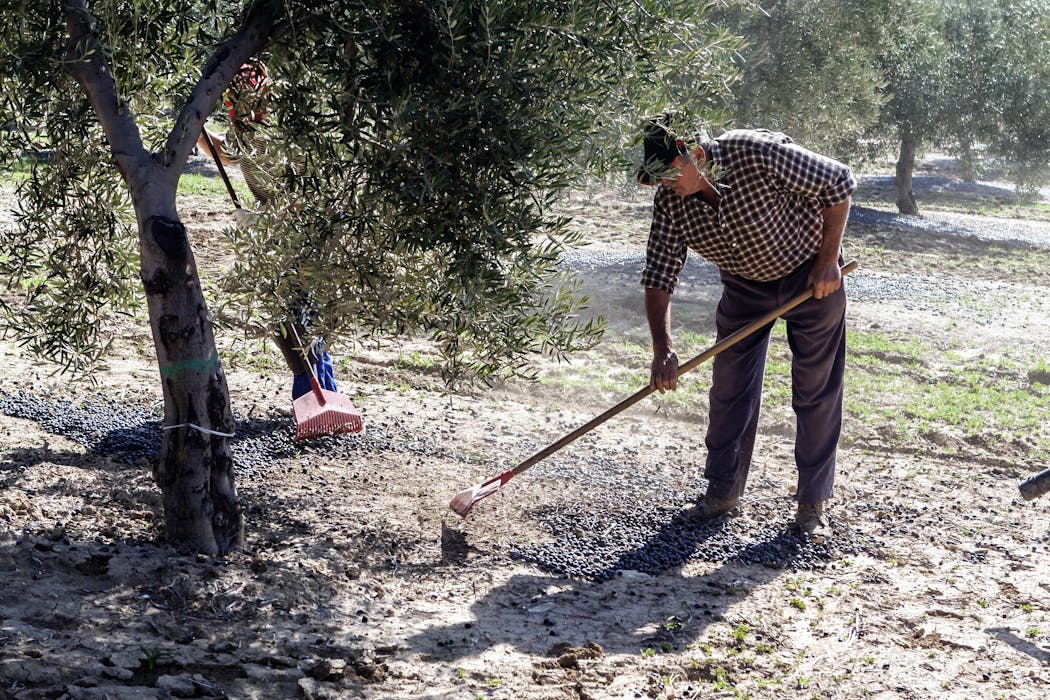
Agricultor recogiendo aceitunas en Jaén. Digicomphoto/Shutterstock

El cambio climático no es una amenaza abstracta del futuro; es un problema presente, y su magnitud crecerá exponencialmente si no actuamos poniendo en marcha planes de adaptación y mitigación. Nos enfrentamos como humanidad a graves retos climáticos, pero algunas zonas son intrínsecamente más vulnerables que otras. Esta vulnerabilidad no solo depende de factores geográficos y ecológicos, sino también de la capacidad de adaptación de sus habitantes.

Así, las comunidades locales emergen como un pilar fundamental para la creación de planes de mitigación que sean no solo efectivos, sino también socialmente justos y culturalmente sostenibles. Su inclusión no es una opción, sino una necesidad imperiosa para lograr una transición ecológica exitosa.

La región mediterránea

En Europa, la región mediterránea es una de las que corren mayor riesgo frente a los efectos del calentamiento global. Con una combinación de ecosistemas frágiles, costas densamente pobladas y economías dependientes del turismo y la agricultura, la zona enfrenta un alto riesgo de vulnerabilidad climática.

En un estudio reciente, centrado en esta área, hemos analizando cómo las políticas de transición energética pueden preservar y mejorar la salud y el bienestar de la sociedad. Los resultados para países como España, Grecia y Montenegro revelaron que estos territorios han desarrollado diversas formas y mecanismos para alcanzar sus objetivos climáticos a múltiples niveles: desde políticas nacionales hasta planes y acciones locales.

Sin embargo, el mismo análisis subraya una realidad crucial: los objetivos medioambientales deben ajustarse a las necesidades de desarrollo local. De lo contrario, se corre el riesgo de que las políticas, diseñadas a gran escala, ignoren las particularidades que hacen a cada comunidad única.

Deficiencias de la planificación a gran escala

Existen deficiencias notables en la aplicación de las políticas climáticas debido, en gran medida, a la falta de atención a las características locales. Este descuido no solo compromete la eficacia de las medidas de mitigación, sino que también amenaza la identidad cultural y pone en peligro los recursos naturales de estas zonas.

Un ejemplo claro se encuentra en las prácticas agrícolas tradicionales. Una política que promueva la agricultura intensiva y tecnificada podría contribuir a garantizar la seguridad alimentaria de los territorios y la autosuficiencia. Sin embargo, los métodos de cultivo milenarios, aunque menos productivos en el corto plazo, son más sostenibles, utilizan el agua de manera más eficiente y conservan la biodiversidad local. Al no considerar este conocimiento ancestral, se pierde una valiosa oportunidad para integrar saberes locales en las soluciones climáticas.

De la misma manera, las intervenciones urbanas que no involucran a los residentes pueden generar resistencia y fracasar. La instalación de sistemas de transporte público o la promoción de energías renovables solo tendrán éxito si se alinean con los patrones de vida y las necesidades cotidianas de los ciudadanos. Cuando se impone una política sin el respaldo y la comprensión de la comunidad, esta se convierte en una imposición externa que puede ser rechazada o ignorada.


Leer más:
Para que las energías renovables contribuyan al desarrollo rural deben involucrar a los vecinos


Estrategias para involucrar a las comunidades locales

Los planes regionales y locales requieren mucho más que la participación del gobierno. Los ciudadanos también deben participar activamente en el proceso, pasando de ser meros receptores de políticas a agentes de cambio. Las diferentes regiones que hemos analizado en nuestro estudio aplican diversas estrategias para incluir a la población y abordar el cambio climático.

En la actualidad, los mecanismos más exitosos se centran en la creación conjunta de soluciones. Esto implica ir más allá de las consultas públicas superficiales y establecer mecanismos de participación genuinos, como talleres colaborativos, presupuestos participativos y la formación de consejos ciudadanos para el clima. En estos foros, los habitantes pueden aportar su conocimiento empírico sobre el territorio, sus recursos y sus vulnerabilidades, permitiendo que las políticas se adapten de forma inteligente y flexible.

La educación ambiental a nivel local es también una herramienta poderosa para empoderar a las comunidades, dándoles la información necesaria para tomar decisiones informadas sobre su consumo energético, la gestión de sus residuos y la promoción de la movilidad sostenible.

En la escala municipal, los nuevos planes climáticos hacen hincapié en las intervenciones urbanas. Promueven medidas de ahorro energético en edificios, la reducción del uso de combustibles fósiles y el fomento de energías renovables como la solar fotovoltaica. Asimismo, impulsan el transporte eficiente a través de la expansión de carriles bici y la mejora de los servicios de transporte público. Además, invierten en sistemas de datos inteligentes para optimizar el uso de los recursos.

Todas estas acciones, aunque a pequeña escala, tienen un impacto acumulativo masivo cuando se coordinan de manera efectiva.


Leer más:
¿Y si los urbanitas participaran en el diseño de sus ciudades?


El camino hacia un futuro resiliente

La lucha contra el cambio climático es un desafío global, pero sus soluciones más efectivas y sostenibles son inherentemente locales. Las comunidades, con su conocimiento profundo de su entorno y su cultura, representan un recurso único que debe ser activamente integrado en los planes de mitigación. La transición ecológica no puede ser un proceso puramente tecnológico, científico, político o económico; es también un proceso social y cultural.

Ignorar las particularidades locales y la participación ciudadana no solo limita la eficacia de las políticas, sino que además crea una brecha entre los gobiernos y la sociedad. Un enfoque que respeta la identidad cultural y empodera a las comunidades a través de la creación conjunta de soluciones es el único camino viable hacia un futuro resiliente y sostenible.

Solo cuando las personas sienten que son parte de la solución, y no solo del problema, puede lograrse la acción colectiva necesaria para enfrentar los desafíos climáticos que tenemos por delante. El éxito global dependerá de nuestra capacidad para actuar de manera inteligente y empática a nivel local.

The Conversation

Alexandra Delgado Jiménez no recibe salario, ni ejerce labores de consultoría, ni posee acciones, ni recibe financiación de ninguna compañía u organización que pueda obtener beneficio de este artículo, y ha declarado carecer de vínculos relevantes más allá del cargo académico citado.

ref. La importancia de tener en cuenta la cultura local para elaborar planes climáticos de éxito – https://theconversation.com/la-importancia-de-tener-en-cuenta-la-cultura-local-para-elaborar-planes-climaticos-de-exito-263134