La paz según Trump: el acuerdo contempla pocas garantías para el futuro del pueblo palestino

Source: The Conversation – (in Spanish) – By Aritz Obregón Fernández, Investigador y profesor de Derecho internacional, Universidad del País Vasco / Euskal Herriko Unibertsitatea
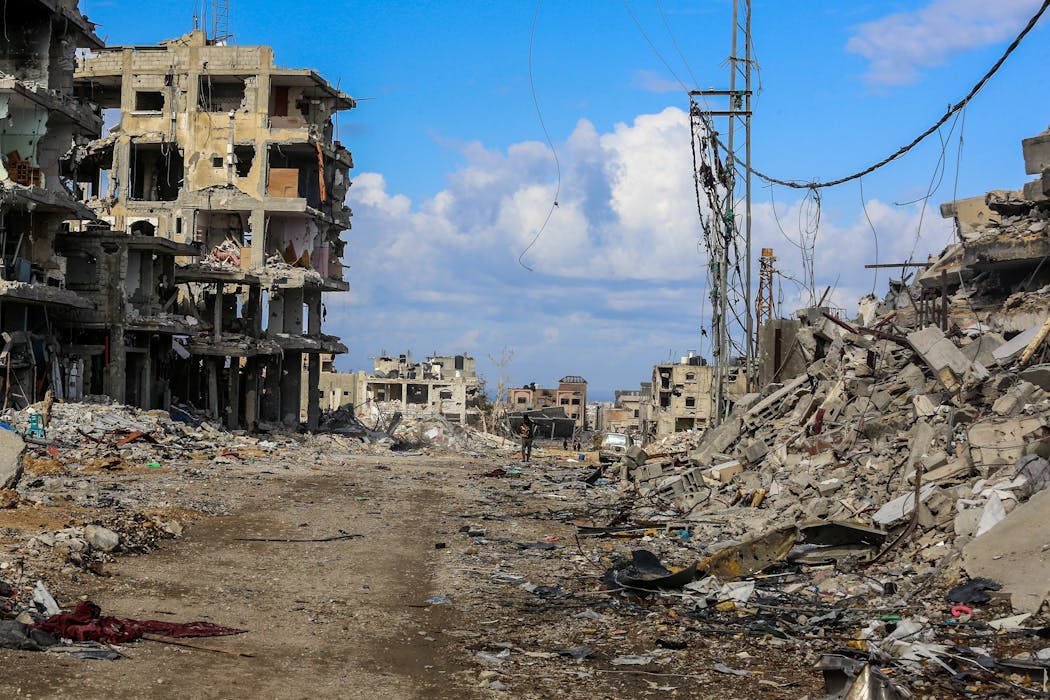
Panorama de la ciudad gazatí de Rafah en enero de 2025. Anas-Mohammed/Shutterstock

Israel y Hamás han anunciado que han alcanzado un alto al fuego, que constituiría una primera fase de un acuerdo mayor inspirado en el plan del presidente de Estados Unidos, Donald Trump.

Por el momento, no se ha publicado ningún texto del acuerdo, por lo que todas las informaciones se basan en declaraciones de las partes, en algunos puntos contradictorias.

A grandes rasgos, en esta primera fase de duración indeterminada, se daría un cese a las hostilidades, se permitiría la entrada de ayuda humanitaria, se realizaría un intercambio de personas retenidas y se produciría una retirada parcial de Israel a la zona de amortiguación dentro de la Franja de Gaza.

Hamás liberaría a las 20 personas que llevan en su poder desde el 7 de octubre de 2023, entregando de forma gradual los cuerpos de los fallecidos. Israel, por su parte, liberaría a 2 000 detenidos, 250 de ellos condenados a cadena perpetua, excluyendo a los implicados en el ataque del 7 de octubre.

Asimismo, hay informaciones que apuntan a que la retirada del ejército israelí solo se produciría después de la liberación de todos los rehenes retenidos y estaría condicionada al desarme de Hamás.

Primera fase de un plan en el aire

Lo cierto es que el alto al fuego anunciado no es el acuerdo de “paz fuerte, duradera y eterna” que buscaba el presidente estadounidense. En este sentido, es similar a la primera fase del acuerdo alcanzado en enero de 2025 que, sin lugar a dudas, supuso un respiro momentáneo para la población gazatí.

A partir de aquí, queda pendiente negociar el resto de los aspectos fundamentales: retirada de la Franja de Gaza, desarme y futuro papel de Hamás, creación y despliegue de la fuerza internacional y forma de gobierno de la Franja. El propio marco de acuerdo establecido por la propuesta de Trump y la experiencia reciente no invitan al optimismo.

Aunque los 20 puntos del plan de Trump tienen aspectos indudablemente positivos, como la liberación de personas retenidas ilegalmente, el restablecimiento de la ayuda humanitaria bajo la supervisión de Naciones Unidas, la renuncia al desplazamiento forzado y el fin de las hostilidades, adolece de unos elementos que en su origen socavan una resolución definitiva.

Por ejemplo, prevé la anexión ilegal de un “perímetro de seguridad” en Gaza, la creación de una fuerza internacional que podría constituir una nueva fuerza de ocupación o el establecimiento de un gobierno que excluye a la Autoridad Nacional Palestina, que quedaría supeditada a un organismo de naturaleza colonial.

La coacción estadounidense resumible en “genocidio u ocupación” no es ninguna solución, si bien es comprensible que para las víctimas este plan sea preferible a la continuación del genocidio.

El comportamiento de Israel durante el acuerdo de enero es otro aspecto que desalienta la posibilidad de que se alcance una paz definitiva. El ejecutivo israelí cumplió únicamente con la primera fase para tratar de recuperar al mayor número posible de rehenes, mientras saboteaba cualquier posibilidad de acuerdo y preparaba la Operación Poder y Espada.

En la medida en la que la correlación de fuerzas en el interior de Israel no cambie y, sobre todo, no renuncie a sus aspiraciones coloniales, la continuidad de estas negociaciones se fía a la voluntad de Trump.

Trump: un hombre en busca del Nobel de la Paz y del negocio

Es de dominio público que el presidente estadounidense ansía el premio Nobel de la Paz, galardón que está previsto que se anuncia este 10 de octubre. No en vano, en su peculiar campaña como candidato, durante su discurso ante la Asamblea General de Naciones Unidas, afirmó que había puesto fin a siete guerras. Un somero repaso evidencia que no estuvo implicado en la resolución de estos conflictos o, en su caso, se trató de acuerdos de marketing sin relevancia práctica.

Junto con esta aspiración personalísima se encuentra la necesaria reconstrucción de la Franja de Gaza, percibida como una oportunidad de negocio. Jared Kushner, el yerno de Trump y miembro de la delegación negociadora, animó a Israel a expulsar a la población local gazatí señalando que las propiedades costeras de la Franja podrían ser muy valiosas. Podríamos encontrarnos ante una explotación ilegal de los recursos palestinos sin su consentimiento, una práctica que violaría la soberanía permanente del pueblo palestino a sus recursos.

El resto de actores

La mayor parte de Estados, con los matices que se quieran hacer, han respaldado el plan de Trump. Destacan los países de la zona, que han presionado a Hamás para que acepte los términos del acuerdo. Su voluntad por recomponer cierto equilibrio en la región, que desde 2023 se ha ido inclinando en favor de Israel, y garantizar que los palestinos de Gaza no son expulsados a sus países, son garantía de que continuarán presionando a Hamás.

Quien destaca, por su inacción, es la Unión Europea y sus Estados miembros. Tradicionalmente implicados en los intentos de procesos de paz de Oriente Próximo, en esta ocasión no han jugado ningún papel. En este sentido, es remarcable la pasividad de la Alta Representante de la UE para Asuntos Exteriores y Política de Seguridad, Kaja Kallas, quien se ha limitado a aplaudir con seguidismo la labor estadounidense calificando el acuerdo de un “gran logro diplomático”.

Por el bien de la población gazatí, esperemos que se negocie una segunda fase, si es posible, en línea con la Declaración de Nueva York de septiembre, más acorde con el derecho internacional vigente.

The Conversation

Aritz Obregón Fernández no recibe salario, ni ejerce labores de consultoría, ni posee acciones, ni recibe financiación de ninguna compañía u organización que pueda obtener beneficio de este artículo, y ha declarado carecer de vínculos relevantes más allá del cargo académico citado.

ref. La paz según Trump: el acuerdo contempla pocas garantías para el futuro del pueblo palestino – https://theconversation.com/la-paz-segun-trump-el-acuerdo-contempla-pocas-garantias-para-el-futuro-del-pueblo-palestino-267179
László Krasznahorkai: vida, obra literaria y el camino hacia el Premio Nobel

Source: The Conversation – (in Spanish) – By Dra. Emőke Jámbor, Hungarian Language Reader, Teacher, Universitat de Barcelona

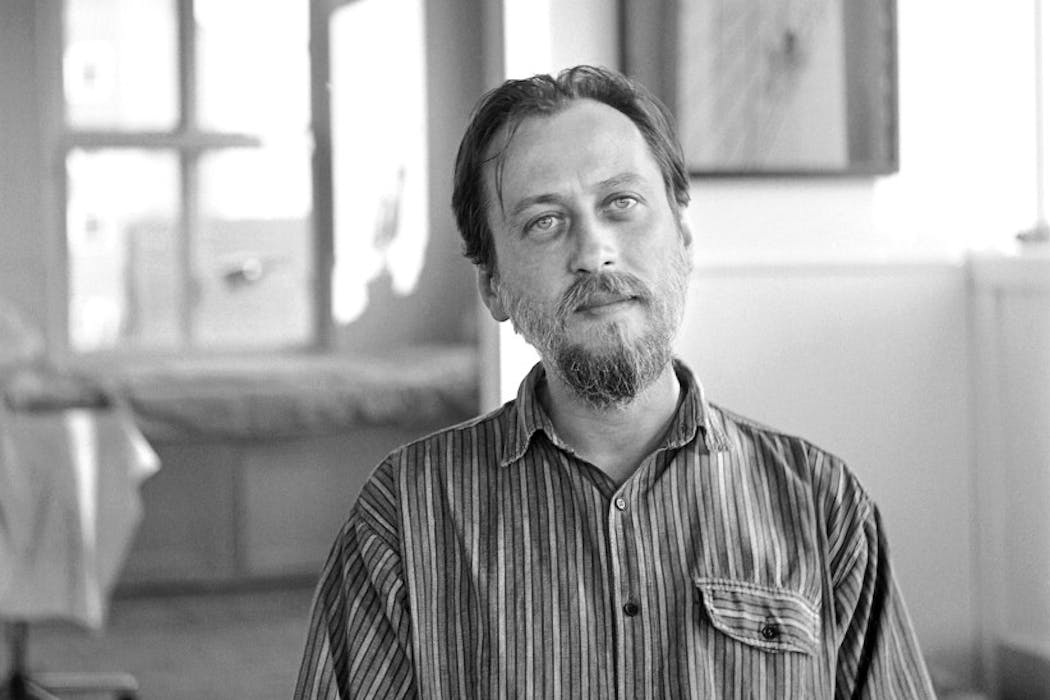
Fotografía de László Krasznahorkai en 1990. Lenke Szilágyi/Wikimedia Commons, CC BY-SA

La Academia Sueca acaba de otorgarle al escritor húngaro László Krasznahorkai el Premio Nobel de Literatura, destacando su “obra visionaria y sin concesiones que explora las ruinas espirituales de la modernidad”. Aunque muchas de sus obras se han traducido al español, ¿qué se puede decir de él a quien todavía no haya leído nada de su literatura?

László Krasznahorkai nació el 5 de enero de 1954 en Gyula, una pequeña ciudad del sureste de Hungría, cerca de la frontera con Rumanía. Este entorno periférico, marcado por la historia y el aislamiento, influyó profundamente en su sensibilidad literaria.

Cursó la escuela primaria y secundaria en su ciudad natal, en el Instituto Erkel Ferenc, donde estudió en la sección de latín entre 1968 y 1972. Más tarde, estudió Derecho en la Universidad de Szeged y en la Universidad Eötvös Loránd (ELTE) de Budapest, pero pronto abandonó los estudios jurídicos para dedicarse a la literatura y la filología húngara. Durante sus años universitarios comenzó a publicar sus primeros textos, entre ellos Tebenned hittem (“Creí en ti”, 1977), que llamó la atención por su estilo oscuro y filosófico.

Trayectoria literaria y estilo

Krasznahorkai es uno de los escritores húngaros más singulares y complejos de su generación. Su obra se caracteriza por una prosa densa, hipnótica y desafiante, con frases extremadamente largas y una estructura narrativa ininterrumpida. Su estilo combina la melancolía centroeuropea con una visión apocalíptica del mundo moderno, y en ocasiones incorpora influencias filosóficas orientales derivadas de sus viajes a China y Japón.

Sus textos abordan con frecuencia la desesperanza, la decadencia social, el colapso moral y la búsqueda de sentido en un universo desintegrado. El tono sombrío de su narrativa no excluye una profunda espiritualidad ni una sutil ironía.

Entre sus obras más destacadas se encuentran:

Portada del libro Tango satánico de László Krasznahorkai.
Edición en español de Tango satánico.
Acantilado
  • Sátántangó (Tango satánico, 1985): su primera gran novela, ambientada en un pueblo abandonado tras la caída del comunismo. Es una alegoría sobre la corrupción, la fe y la manipulación colectiva. La versión cinematográfica de Béla Tarr (de más de siete horas de duración) consolidó la fama internacional de ambos artistas.

  • Az ellenállás melankóliája (Melancolía de la resistencia, 1989): explora la irrupción del caos en una comunidad provincial y el enfrentamiento entre el orden y el colapso moral.

  • Herscht 07769 (2021): esta narración está compuesta por una sola frase de cientos de páginas, ejemplo extremo de su dominio formal y su experimentación lingüística.

Además, ha publicado colecciones de relatos y ensayos que profundizan en los mismos temas: la soledad, la violencia y la imposibilidad de redención. Sus textos se han traducido a numerosos idiomas, y varios de ellos han sido adaptados al cine por directores como el ya citado Béla Tarr y György Fehér.

El Premio Nobel de Literatura 2025

A la hora de otorgarle el Nobel de Literatura, la Academia Sueca se ha basado en varios aspectos esenciales:

Ilustración de un hombre de barba y pelo largo.
Ilustración de László Krasznahorkai en los Premios Nobel.
Niklas Elmehed © Nobel Prize Outreach
  1. Una visión apocalíptica profundamente humana: Krasznahorkai describe un mundo en descomposición –social, moral y espiritual–, pero su escritura conserva una fe radical en el poder del arte. La Academia subrayó que su literatura “busca redención en medio del derrumbe”, un gesto que conecta con la tradición de autores como Franz Kafka o Samuel Beckett.

  2. La herencia centroeuropea y la innovación formal: aunque se inscribe en la tradición centroeuropea, Krasznahorkai no la repite: la transforma. Su prosa recuerda la intensidad de Thomas Bernhard o la lucidez de Kafka, pero su tono es propio, casi musical. En sus frases interminables se refleja la obsesión por el tiempo, la percepción y el pensamiento continuo.

  3. El riesgo estilístico y la experimentación: su uso del lenguaje es radical. Al rechazar la estructura tradicional de la novela, propone un flujo narrativo sin pausas que desafía al lector. Obras como Herscht 07769 son prueba de su voluntad de llevar la literatura al límite, donde la forma se convierte en una experiencia existencial.

  4. Reconocimiento internacional: antes del Nobel, Krasznahorkai ya había recibido el Man Booker International Prize en 2015 por el conjunto de su obra. Críticos y escritores de todo el mundo lo han considerado una de las voces más originales de la literatura contemporánea.

  5. El arte como resistencia: su literatura no ofrece consuelo, sino conciencia. En un tiempo marcado por la saturación de información y la pérdida de sentido, Krasznahorkai propone un acto de resistencia: la lentitud, la atención al lenguaje, la exploración interior. Esa ética de la escritura –exigente, profunda, sin adornos– es precisamente lo que la Academia quiso reconocer.


¿Quiere recibir más artículos como este? Suscríbase a Suplemento Cultural y reciba la actualidad cultural y una selección de los mejores artículos de historia, literatura, cine, arte o música, seleccionados por nuestra editora de Cultura Claudia Lorenzo.


Conciencia de nuestro tiempo

László Krasznahorkai es hoy una figura central de la literatura universal. Desde su infancia en Gyula hasta su consagración con el Premio Nobel, su trayectoria representa la fidelidad absoluta a una visión artística propia. En un mundo que busca la inmediatez, él reivindica la complejidad; frente a la superficialidad, ofrece profundidad; ante el caos, una forma literaria que lo contiene y lo trasciende.

Sus novelas, difíciles pero luminosas, recuerdan que el lenguaje puede ser un espejo de la desesperación y, al mismo tiempo, un instrumento de redención. Por ello, Krasznahorkai no solo es un escritor húngaro galardonado: es una de las conciencias más agudas de nuestro tiempo.

The Conversation

Dra. Emőke Jámbor no recibe salario, ni ejerce labores de consultoría, ni posee acciones, ni recibe financiación de ninguna compañía u organización que pueda obtener beneficio de este artículo, y ha declarado carecer de vínculos relevantes más allá del cargo académico citado.

ref. László Krasznahorkai: vida, obra literaria y el camino hacia el Premio Nobel – https://theconversation.com/laszlo-krasznahorkai-vida-obra-literaria-y-el-camino-hacia-el-premio-nobel-267166

Nobel laureate Shimon Sakaguchi on his immune system breakthrough – and the treatments he hopes it will unlock

Source: The Conversation – Global Perspectives – By Gemma Ware, Host, The Conversation Weekly Podcast, The Conversation

Back in the 1980s, when Shimon Sakaguchi was a young researcher in immunology, he found it difficult to get his research funded. Now, his pioneering work which explains how our immune system knows when and what to attack, has won him a Nobel prize.

Sakaguchi, along with American researchers Mary Brunkow and Fred Ramsdell, were jointly awarded the 2025 Nobel prize in physiology or medicine for their work on regulatory T-cells, known as T-regs for short, a special class of immune cells which prevent our immune system from attacking our own body.

In this episode of The Conversation Weekly podcast, Sakaguchi tells us about his journey of discovery and the potential treatments it could unlock.

Sakaguchi was inspired by an experiment involving newborn mice conducted by his colleagues at the Aichi Cancer Center Research Institute in Nagoya.  They’d removed the thymus from mice three days after they were born. It was already known that the thymus is important in the development of immune self-tolerance: it’s where T-cells, a type of lymphocyte or white blood cell, that could attack the body are isolated and destroyed. Sakaguchi was intrigued by what happened. He said that if you remove the thymus in a normal mouse in the neonatal period, you would expect immune deficiency because the lymphocytes are gone.

But what happened is just the opposite: they developed autoimmune diseases.  This disease is very similar to what we see in humans … but of course, human patients are not removed of the thymus, so there must a common mechanism, which can explain spontaneous autoimmune diseases in humans.

Sakaguchi  decided to try a new experiment to stop the mice’s immune system going into overdrive. When he took some T-cells from genetically identical mice and injected them back into the mice who’d had their thymus removed, he found that autoimmune disease can be prevented. “ This suggests that there must be a T-cell population which can prevent disease development,” he said.

In the 1980s, Sakaguchi said it was not easy to get research funding “because the immunology community were very sceptical about the existence of such cells”. He spent time in the US and he says he was “very fortunate” to be supported by a grant from a private foundation.

After ten years of looking, he published a paper in 1995 setting out his discovery of regulatory T-cells, which act as the body’s security guard, controlling any adverse reactions and keeping the immune system in balance in a process called peripheral tolerance. When these T-regs don’t work properly, this can cause autoimmune diseases. Later work by Sakaguchi, and his fellow laureates Brankow and Ramsdell, discovered the specific gene, called Foxp3 that controlled T-regs.

Cancer, auto-immune treatments and more

When Sakaguchi started out, his interest was in autoimmune diseases and how they occur. “But in the course of my research we have gradually understood that T-regs are more important,” he says. These cells are now implicated in the way cancer attacks the body, as well as the acceptance of organ donations. Sakaguchi is also working on new ways to harness T-regs for treatment, and also on converting other, attacking types of T-cells, into T-regs to target specific autoimmune diseases.

His immediate hope is that some of the clinical trials for cancer immunotherapy can become a reality for treating patients. But he’s also fascinated by recent research which shows the importance of T-regs in diseases which cause inflammation – and what this could mean for potential to repair damaged tissue.

Neuro-degenerative diseases such as Alzheimer’s disease or Parkinson’s disease, all involve inflammation. By just targeting that kind of inflammation, we maybe [could] stop the disease progressions, or delay the disease progression. We hope that it is very true and then it really works for such diseases.

Listen to the interview with Shimon Sakaguchi on The Conversation Weekly podcast.

This episode of The Conversation Weekly was produced by Mend Mariwany and Katie Flood and is hosted by Gemma Ware. Mixing and sound design by Michelle Macklem and theme music by Neeta Sarl.

Listen to The Conversation Weekly via any of the apps listed above, download it directly via our RSS feed or find out how else to listen here. A transcript of this episode is available on Apple Podcasts or Spotify.

The Conversation

Shimon Sakaguchi is the scientific founder and a director of RegCell, a Japanese start-up working on treatments based on regulatory T-cells. He is also a scientific advisor for biotechnology company Coya Therapeutics.

ref. Nobel laureate Shimon Sakaguchi on his immune system breakthrough – and the treatments he hopes it will unlock – https://theconversation.com/nobel-laureate-shimon-sakaguchi-on-his-immune-system-breakthrough-and-the-treatments-he-hopes-it-will-unlock-267054

Gauteng’s ‘Coloured’ community feels unsafe: who they are and why they’re discouraged

Source: The Conversation – Africa (2) – By Rashid Seedat, Executive Director, Gauteng City-Region Observatory

The “Coloured” community in Gauteng, South Africa’s economic heartland, continues to face barriers to full economic and social inclusion. Despite progress in post-apartheid South Africa, this historically oppressed community continues to experience significant socio-economic challenges.

The term “Coloured” is initially placed in quotation marks to acknowledge its contested nature. Historically, the formation of Coloured identity in South Africa emerged from a complex colonial encounter involving Dutch and British settlers, slaves from south and east Asia and east Africa, and the indigenous Khoi and San peoples. This produced a distinct, mixed group that did not neatly fit into colonial racial categories. During apartheid, Coloured people were legally defined by the 1950 Population Registration Act as those who were neither white nor Black African.

Today, it remains an official racial classification in South Africa. It is also used in everyday discourse. But it is not a universally accepted label.

Quotation marks signal critical distance and sensitivity to the complex debates surrounding the term.

The Coloured population is concentrated mainly in the Western Cape (42.1%) and the Northern Cape (41.6%). There are smaller proportions in the Eastern Cape (7.6%), Gauteng (2.9%), Free-State (2.6%), North-West (1.6%), KwaZulu-Natal (1.5%), Mpumalanga (0.6%) and Limpopo (0.3%).

Current, albeit limited, research on the Coloured community is usually focused on the Western Cape province. This means that there is no new substantial scholarship providing a deeper and more nuanced understanding of this community in Gauteng.

In a bid to fill this gap, the Gauteng City-Region Observatory (GCRO) initiated a research project that delves into the issues in greater detail. This follows findings from a GCRO Quality of Life Survey released in 2024 which revealed concerning data on the Coloured community in Gauteng. This included the fact that a larger proportion of Coloured people within Gauteng felt unsafe, discouraged, apathetic and dissatisfied compared to the provincial average.

The concerns highlighted in the survey are not separate from questions of Coloured identity. There is a link between an enduring perception of marginalisation within Coloured communities and real material struggles.

Biggest concerns

Safety: The survey indicated that safety remains a concern for the Coloured community in Gauteng. When asked about the main problems in their community, 2.3% indicated gangs as a problem. This compared with 0.2% of the general Gauteng population.

Additionally, 61% of Coloured people believed that the crime situation had worsened in their neighbourhoods over the past year. The provincial average was 48%.

South Africa is often regarded as “the protest capital of the world”. Over 680 protests were recorded in the country from August 2024 to August 2025, an average of nearly two a day. In September 2025, Johannesburg’s majority-Coloured suburbs, Westbury, Coronationville, Newclare and Claremont, erupted in violent protests following prolonged water shortages. These protests reflected broader frustrations over basic service delivery failures.

When Coloured respondents were asked about reasons for protests in the neighbourhood in the survey, 17% indicated that it was a result of crime and safety issues, compared to the provincial average of 4%.

Joblessness and financial stresses: The survey highlighted that 5% of Coloured residents are discouraged work seekers. This is double the average in Gauteng. A total of 26% of Coloured people felt that saving money was impossible, compared to 17% of the general population.

The highest proportion of households experiencing severe food insecurity in Gauteng belong to the Coloured (12%) and Black African (13%) population groups.

Food insecurity refers to individuals who do not have access to sufficient food to lead an active, healthy life. The GCRO developed a food security index based on four indicators: whether households could afford enough groceries, whether there was a place nearby to buy food, and whether adults or children had skipped a meal due to financial constraints.

Political apathy: Among Coloured people who stated that they intended not to vote or were unsure if they would vote, 40% indicated that they do not like politics, broken promises or believed that voting is a waste of time. This is nearly double the provincial average of 26%.

The Coloured community had the highest proportion of people who were dissatisfied with their local municipalities. This dissatisfaction extended to provincial and national government:

  • 72% of Coloured people expressed dissatisfaction with provincial government, compared to 63% across Gauteng, and

  • 78% were dissatisfied with the national government, compared to 67% for the province.

Over a quarter of Coloured people believed that politics was a waste of time (26%) and that South Africa was a failed state (29%). This was much higher than the provincial average.

The survey also shed light on the ongoing racial tensions within Gauteng. Eighteen percent of Coloured residents reported experiencing racial discrimination either always or often. This compares with 13% of the general population.

Unpacking Coloured identity

A range of South African scholars and authors are engaged in debates on the Coloured identity. In developing our own understanding of Coloured identity, we draw on a three-part framework for thinking about its formation developed by professor of anthropology Zimitri Erasmus and set out in the introduction of the book Coloured by history, shaped by place: New perspectives on Coloured identity in Cape Town.

First, Coloured identity cannot be reduced to a “race mixture”. It is a cultural formation shaped by the conditions of appropriation and dispossession under slavery, colonialism and apartheid.

Second, Coloured identity was developed through creolisation, the blending of subaltern and ruling cultures, and is continually, and creatively, remade by Coloured people across time and space in ways that help them make sense of their lives.

Third, the apartheid racial hierarchy placed Coloured between Black African and White. This gave rise to the common refrain, “not black enough to be Black and not white enough to be White”. This position is twofold. On the one hand researchers must recognise the intra-Black racism of Coloured people under apartheid. On the other hand, they need to recognise the community’s enduring sense of marginalisation.

Next steps

The GRCO‘s project, “The Coloured community in post-apartheid Gauteng” aims to understand and explore dimensions of the Coloured experience in Gauteng.

The research initiative includes these areas of focus: a political and historical overview; a demographic and geographic profile; an examination of social and economic conditions; subjective well-being; political attitudes; and the role of religion.

Shamsunisaa Miles-Timotheus and Shannon Whitaker, junior researchers at the GCRO, are co-authors of this article.

The Conversation

Rashid Seedat receives funding from Gauteng Provincial Government for the Gauteng City-Region Observatory. He is affiliated with the Ahmed Kathrada Foundation as a member of the Board of Trustees.

ref. Gauteng’s ‘Coloured’ community feels unsafe: who they are and why they’re discouraged – https://theconversation.com/gautengs-coloured-community-feels-unsafe-who-they-are-and-why-theyre-discouraged-264716

Southern right whales are having fewer calves: what this says about ocean health

Source: The Conversation – Africa (2) – By Matthew Germishuizen, Postdoctoral research fellow, Mammal Research Institute Whale Unit, Department of Zoology and Entomology, University of Pretoria

Most people are lucky to simply get a glimpse of some fragment of a whale. A subtle puff of mist over the horizon, the curve of a dark smooth back sliding beneath the surface, or for the fortunate, the flash of a tail or the explosive splash of 40 tons of flesh pounding the surface of the water when they breach. The immense satisfaction experienced during these brief appearances is a testimony to the whales’ elusiveness, and the immense difficulty of studying them.

For scientists, the challenge is even greater: whales spend most of their lives far offshore, hidden beneath the waves, or even well within the ice pack in some of the most remote and inhospitable oceans on Earth.

This difficulty has driven researchers to creative extremes – like using crossbows to gather skin samples, flying helicopters to count them, and sticking cameras with suction cups on their backs. I faced the challenge myself during my doctoral research at the University of Pretoria, which set out to unravel how southern right whales are responding to the combined pressures of climate change and shifting ocean ecosystems.

Southern rights are the species that draws thousands of visitors to Hermanus, a town on South Africa’s southern Cape coast, each spring when they reach peak numbers at their calving grounds. They generally start arriving here in June after feeding for a couple of years in the Antarctic, and generally all leave by November back into the Southern Ocean.

Southern right whales are one of the three species of right whales worldwide. All belong to the baleen whale group – the filter-feeding giants that include the blue, humpback and fin whales. Reaching up to 17 metres in length, they are among the larger whale species. The southern right is the only right whale found in the southern hemisphere, with populations off South America, South Africa, Australia and New Zealand.

My research shows that the South African population of southern right whales is being squeezed by climate change in the Southern Ocean. Their reproductive slowdown is a clear biological signal of environmental disruption: fewer calves in Hermanus most likely means there is less food under the ice thousands of kilometres away.

This has two important implications. First, it highlights the vulnerability of whale populations. These animals face an uncertain future in a warming ocean. Second, it demonstrates the remarkable role whales can play as sentinels. By monitoring their health and behaviour, we gain insight into vast, remote ecosystems that are otherwise costly and difficult to study.

Why southern right whales matter

Southern right whales were named by whalers who considered them the “right” whales to hunt: slow, predictable, and buoyant when killed. Those same traits almost drove them to extinction. Today, with international protection, many populations are recovering. But recovery is no guarantee of security. The very qualities that made them easy targets now make them excellent sentinels of environmental change.

These whales are what biologists call capital breeders. Mothers must accumulate enormous energy reserves during their foraging season in the Southern Ocean, then draw down on these stores through pregnancy, birth and nursing. If food is scarce, reproduction falters. This tight link between feeding and breeding makes them a living barometer of ocean health.

What I set out to investigate

For decades, South Africa has been at the forefront of southern right whale research. Since 1969, annual aerial surveys along the Cape coast have tracked mothers and calves, building one of the world’s most detailed datasets on any whale species.

In recent years, however, worrying trends have emerged. After 2009, calving intervals, the time between births, lengthened dramatically. Instead of a calf every three years, many mothers were only giving birth every four or five years. Female body condition declined, and stable isotope studies, which analyse molecules in the skin to indicate what whales have been feeding on, suggested whales were feeding further north than before. This indicates that mothers are potentially taking longer to meet the energy requirements of reproduction.

These red flags raised an urgent question: was climate change disrupting the whales’ food supply in their distant Southern Ocean feeding grounds?

Peering into the whales’ world

To answer this, I combined multiple approaches. I analysed 40 years of environmental data: sea ice cover, chlorophyll (a measure of ocean productivity), and historical whaling records. I deployed satellite tags on living whales to follow their migrations offshore. And I worked with international colleagues to use instruments attached directly to whales, tags that measure conductivity, temperature and depth, to understand the physical and biological features of their foraging habitats.


Read more:
How microscopic ocean organisms and the earth’s temperature are linked


Together, these methods painted a clear picture. The traditional high-latitude feeding grounds, once rich in one of their preferred prey, Antarctic krill, have experienced dramatic environmental shifts driven by changes in the Earth’s climate. Sea ice, critical for krill survival and reproduction, has declined by 15%-30% in key regions. The marginal ice zone, once a reliable nursery for krill, has retreated southward. In parallel, whale mothers showed signs of poorer body condition, consistent with struggling to find sufficient food.

At mid-latitudes, meanwhile, whales were often found foraging near ocean fronts, dynamic boundaries where warm and cold waters meet, concentrating nutrients and prey. This suggests that when their polar larder fails, whales are forced to adapt by exploiting less predictable feeding zones further north.

Why it matters to all of us

Southern right whales are more than just a tourist attraction. They are indicators of the health of the Southern Ocean, a region that regulates Earth’s climate by absorbing heat and carbon dioxide. Changes in this system ripple far beyond Antarctica, shaping weather, fisheries, and biodiversity across the globe.

When fewer whale calves appear along South Africa’s coast, it is not only a local conservation concern. It is a message carried on the backs of these giants: our oceans are changing faster than they can adapt.

As we celebrate their return each spring, we should also reflect on the bigger story they tell. Protecting whales, and the oceans they depend on, is inseparable from protecting our own future.

The Conversation

Matthew Germishuizen does not work for, consult, own shares in or receive funding from any company or organisation that would benefit from this article, and has disclosed no relevant affiliations beyond their academic appointment.

ref. Southern right whales are having fewer calves: what this says about ocean health – https://theconversation.com/southern-right-whales-are-having-fewer-calves-what-this-says-about-ocean-health-266375

What do Nigerian children think about computers? Our study found out

Source: The Conversation – Africa (2) – By Ismaila Sanusi, Postdoctoral Researcher, School of Computing, Faculty of Science, Forestry and Technology, University of Eastern Finland

Digital literacy is the ability to use digital tools and technologies effectively, safely and responsibly. This includes the use of smartphones and devices, navigating the internet and exploring coding basics.

In an era where digital literacy is more important than ever, it’s essential to understand how young children perceive computing concepts.

As a computer science education researcher, I led a team of researchers to study young children’s ideas about computing in an African setting. Our recent study sheds light on how children aged five to eight in Nigeria think about computing, including computers, the internet, coding and artificial intelligence (AI).

While most children were familiar with computers and had some idea of the internet, coding and AI were largely unfamiliar or misunderstood. The children’s understanding was shaped by what they observed at home, school and through the media.

This kind of research matters because early digital literacy prepares children for future learning and careers. In African countries, studies like this highlight the urgent need to bridge the digital divide – the wide variation in access and exposure to technology. Without early and inclusive computing education, many children risk being left behind in a world where digital skills are essential. They are crucial not just for the jobs of tomorrow, but for full participation in society.

The study approach

The study took place in two socio-economically distinct communities in Ibadan, Nigeria. It offers valuable insights into how concepts and ideas are formed in relation to understanding technology.

This research chose a small group of children for an in-depth study, rather than a huge sample. Using a “draw-and-talk” method, the researchers asked 12 children to draw what they believed computers, the internet, code and AI looked like.

Artificial intelligence is when machines act smart, like answering questions or recognising faces. Coding is writing instructions that tell computers what to do. The internet is a global network that lets people connect, share and learn online.

These drawings were followed by interviews to explore the children’s thoughts and experiences. This method revealed not only what the children knew but how they formed their ideas.

What children know and don’t know about computing

The study found that most children were familiar with computers, often describing them as resembling televisions or typewriters. This comparison highlights how children relate new concepts to familiar objects in their environment. But their understanding was largely limited to what computers looked like. They had little awareness of internal components or functions beyond “pressing” keys.

When it came to the internet, children’s conceptions were more abstract. Many associated the internet with actions like watching videos or sending messages. This was often based on observing their parents using smartphones. Few could say what the internet actually was or how it worked. This suggests that children’s understanding is shaped more by observed behaviours than formal instruction.

Coding and AI were even less understood. Most of the children had never heard of coding. Those who had offered vague or incorrect definitions, such as associating “code” with television programmes or numbers. Similarly, AI was a foreign concept to nearly all participants. Only two children offered rudimentary explanations based on media exposure, such as robots or voice assistants like Google.

Children’s misconceptions about computers, coding and AI reflect limited exposure and are consistent across different cultural contexts in Nigeria and outside Nigeria. They highlight the need for hands-on programming education and tailored learning models.

This study was based on a prior study conducted in Finland, and the results also have similarities with other studies.

The role of language and environment

A key finding of the study is the influence of socio-economic status and language on children’s understanding. Children from the higher-income community generally had more exposure to digital devices and could express slightly more informed views, especially about the internet.

In contrast, children from the lower-income community had limited access. They struggled to express their ideas, particularly when computing terms lacked equivalents in their native language, Yoruba.

This language barrier underscores a broader challenge in computing education in Africa. There are few culturally and linguistically appropriate teaching materials. Without localised terminology or relatable examples, children may struggle to grasp abstract computing concepts.

Implications for education and policy

The study’s findings have implications for educators, curriculum developers and policymakers. First, they highlight the need to introduce computing concepts like coding and AI at earlier stages of education.

While many African countries, including Nigeria, Ghana and South Africa, have begun integrating computing into school curricula, the focus remains on basic computer literacy. There’s little emphasis on programming or emerging technologies.

Second, the research emphasises the importance of informal learning environments. Children’s conceptions were largely shaped by interactions at home and in their communities. It seems parents, guardians and media play a big role in early digital education.

Initiatives like after-school coding clubs, community tech hubs and parent-focused digital literacy programmes could help bridge the gap.

Finally, the study calls for a more inclusive and equitable approach to computing education. Children from lower socio-economic backgrounds must be given equal opportunities to use technology. This includes not only access to devices but also exposure to meaningful learning experiences that foster curiosity and understanding.

Building a digitally inclusive future

As the digital divide continues to shape educational outcomes globally, studies like this one provide a roadmap for more inclusive computing education. Educators and policymakers can design interventions that are developmentally appropriate, culturally relevant and socially equitable.

The future of computing in Africa depends not just on infrastructure and policy but on nurturing the next generation’s curiosity and creativity. And that journey begins with listening to how children see the digital world around them.

The Conversation

Ismaila Sanusi does not work for, consult, own shares in or receive funding from any company or organisation that would benefit from this article, and has disclosed no relevant affiliations beyond their academic appointment.

ref. What do Nigerian children think about computers? Our study found out – https://theconversation.com/what-do-nigerian-children-think-about-computers-our-study-found-out-260602

How vaping primes the lungs for COVID damage

Source: The Conversation – UK – By Keith Rochfort, Assistant Professor, School of Biotechnology, Life Sciences Institute, Dublin City University

Vitaliy Abbasov/Shutterstock

As colder months set in, respiratory infections begin to climb: everything from the common cold and flu to COVID. It’s a time when healthy lungs matter more than ever. Yet the very tissue that lets oxygen pass from air to blood is remarkably delicate, and habits such as vaping can weaken it just when protection is most needed.

The lungs are often pictured as two simple balloons, but their work is far more intricate. They act as a finely tuned exchange system, moving oxygen from inhaled air into the bloodstream while releasing carbon dioxide produced by the body’s cells.

At the centre of this process lies the blood–air barrier: a paper-thin layer where tiny air sacs called alveoli meet a dense network of hair-thin pulmonary capillaries. This barrier must remain both strong and flexible for efficient breathing, yet it is constantly exposed to stress from air pollution, microscopic particles and infectious microbes.

Vaping can add another layer of strain, and growing evidence shows that this extra pressure can damage the surface that makes every breath possible.


Read more:
Want to quit vaping this year? Here’s what the evidence shows so far about effective strategies


The cloud from an e-cigarette carries solvents such as propylene glycol, flavouring chemicals, nicotine (in most products) and even trace metals from the device itself. When this cocktail reaches the lungs it doesn’t stay on the surface. It seeps deeper, irritating the endothelium – the thin layer of cells lining the blood vessels that mesh with the air sacs.


Read more:
What’s in vapes? Toxins, heavy metals, maybe radioactive polonium


Healthy endothelium keeps blood flowing smoothly, discourages unnecessary clotting and acts as a selective gatekeeper for the bloodstream – controlling which substances, such as nutrients, hormones and immune cells, can pass in or out of the blood vessels while blocking harmful or unnecessary ones.

Studies show vaping can disrupt these defences, causing endothelial dysfunction even in young, otherwise healthy people. Controlled human exposure experiments reveal rises in endothelial microparticles – tiny cell fragments released when vessel linings are under stress.

My own research group has linked these changes to surges in inflammatory signals and stress markers in the blood after exposure to vaping aerosols. Together these findings indicate that the endothelium is struggling to maintain its protective role.

Laboratory work shows that vaping aerosols (even without nicotine) can loosen the tight seal of pulmonary endothelial cells. When the barrier leaks, fluid and inflammatory molecules seep into the alveoli. The result: blood–gas exchange is disrupted and respiratory infections become harder to fight.

COVID is usually thought of as an infection of the airways, but the SARS-CoV-2 virus also injures blood vessels. Doctors now describe the condition as causing endotheliopathies – diseases of the blood-vessel lining. In severe cases, capillaries become inflamed, leaky and prone to clotting. That helps explain why some patients develop dangerously low oxygen levels even when their lungs are not full of fluid: the blood side of the barrier is failing.


Read more:
How COVID-19 damages lungs: The virus attacks mitochondria, continuing an ancient battle that began in the primordial soup


The virus exploits a key protein called ACE2, normally a “thermostat” that helps regulate blood pressure and vessel health. SARS-CoV-2 uses ACE2 as its doorway into cells; once the virus binds, the receptor’s protective role is disrupted and vessels become inflamed and unstable.

Vaping and COVID: a dangerous combination

My team is using computer models to investigate how vaping may affect COVID infections. Evidence already shows vaping can increase the number of ACE2 receptors in the airways and lung tissue. More ACE2 means more potential entry points for the virus – and more disruption exactly where the blood–air barrier needs to be strongest.

Both vaping and COVID drive inflammation. Vaping irritates and inflames the blood-vessel lining while COVID floods the lungs with pro-inflammatory molecules. Together they create a “perfect storm”: capillaries become leaky, fluid seeps into the air sacs and oxygen struggles to cross the blood–air barrier. COVID also raises the risk of blood clots in the lung’s vessels, while vaping has been linked to the same, compounding the danger.


Read more:
Is lung inflammation worse in e-cigarette users than smokers, as a new study suggests?


Vaping can also hinder recovery after a bout of COVID. Healing the fragile exchange surface requires every bit of support the lungs can get. Vaping adds extra stress to tissues the virus has already damaged, even if the vaper feels no immediate symptoms. The result can be prolonged breathlessness, persistent fatigue and a slower return to pre-illness activity levels.

The blood–air barrier is like a piece of delicate fabric: it holds together under normal wear but can tear when pushed too hard. Vaping weakens that weave before illness strikes, making an infection such as COVID harder to overcome. The science is still evolving, but the message is clear: vaping undermines vascular health. Quitting, even temporarily, gives the lungs and blood vessels the cleaner environment they need to heal and to keep every breath effortless.

The Conversation

Keith Rochfort receives funding from Research Ireland.

ref. How vaping primes the lungs for COVID damage – https://theconversation.com/how-vaping-primes-the-lungs-for-covid-damage-266162

Europe is allowing itself to be dominated by the US. It just isn’t admitting as much

Source: The Conversation – France – By Sylvain Kahn, Professeur agrégé d’histoire, docteur en géographie, européaniste au Centre d’histoire de Sciences Po, Sciences Po

For 80 years, Europe maintained an asymmetric yet cooperative relationship with the United States. This imbalance, long accepted as the price of stability and protection, has shifted dramatically under US President Donald Trump. What was once a strategically uneven interdependence has become an unbreakable grip, which is used to exert pressure while being denied by its victims.

In my book, l’Atlantisme est mort ? Vive l’Europe ! (Is Atlanticism Dead? Long Live Europe!), I describe this shift by introducing the concept of “emprisme”: a permitted grip in which Europeans, believing themselves to be partners, become dependent on a power that dominates them without their full awareness.

Emprisme does not merely refer to influence or soft power, but an internalised strategic subordination. Europeans justify this dependence in the name of realism, security, or economic stability, without recognising that it structurally weakens them.

In Trump’s worldview, Europeans are no longer allies but freeloaders. The common market enabled them to become the world’s largest consumer zone and strengthen their companies’ competitiveness, including in the US market. Meanwhile, through NATO, they let Washington bear the costs of collective defence.

The result? According to Trump, the US – because it is strong, generous, and noble – is being “taken advantage of” by its allies. This narrative justifies a shift: allies become resources to exploit. It is no longer cooperation, but extraction.

Ukraine as a pressure lever

The war in Ukraine perfectly illustrates this logic. While the EU mobilized to support Kyiv, this solidarity became a vulnerability exploited by Washington. When the Trump administration temporarily suspended Ukrainian access to US intelligence, the Ukrainian army became blind. Europeans, also dependent on this data, were left half-blind.

The administration’s move was not a mere tactical adjustment, but a strategic signal: European autonomy is conditional.

In July 2025, the EU accepted a deeply unbalanced trade agreement imposing 15% tariffs on its products, without reciprocity. The Turnberry agreement was negotiated at Trump’s private estate in Scotland – a strong symbol of the personalization and brutalization of international relations.

At the same time, the US stopped delivering weapons directly to Ukraine. Europeans now buy American-made arms and deliver them themselves to Kyiv. This is no longer partnership, but forced delegation.

From partners to tributaries

In the logic of the MAGA movement, which is dominant within the Republican Party, Europe is no longer a partner. At best, it is a client; at worst, a tributary.

In this situation, Europeans accept their subordination without naming it. This consent rests on two illusions: the idea that this dependence is the least bad option, and the belief that it is temporary.

Yet many European actors – political leaders, entrepreneurs, and industrialists – supported the Turnberry agreement and the intensification of US arms purchases. In 2025, Europe accepted a perverse deal: paying for its political, commercial and budgetary alignment in exchange for uncertain protection.

It is a quasi-mafia logic of international relations, based on intimidation, brutalization and the subordination of “partners”. Like Don Corleone in Frances Ford Coppola’s The Godfather, Trump seeks to impose an unpredictable American protection in exchange for an arbitrary price set unilaterally by the US.

Emprisme and imperialism: two logics of domination

It is essential to distinguish emprisme from other forms of domination. Unlike President Vladimir Putin’s Russia, whose imperialism relies on military violence, Trump’s US does not use direct force. When Trump threatens to annex Greenland, he exerts pressure but does not mobilize troops. He acts through economic coercion, trade blackmail, and political pressure.

Because Europeans are partially aware of this and debate the acceptable degree of pressure, this grip is all the more insidious. It is systemic, normalized, and thus hard to contest.

Putin’s regime, by contrast, relies on violence as a principle of government – against its own society and its neighbours. The invasion of Ukraine is its culmination. Both systems exercise domination, but through different logics: Russian imperialism is brutal and direct; US emprisme is accepted, constraining, and denied.

Breaking the denial

What makes emprisme particularly dangerous is the denial that accompanies it. Europeans continue to speak of the transatlantic partnership, shared values, and strategic alignment. But the reality is one of accepted coercion.

This denial is not only rhetorical: it shapes policies. European leaders justify trade concessions, arms purchases, and diplomatic alignments as reasonable compromises. They hope Trump will pass, that the old balance will return.

But emprisme is not a minor development. It is a structural transformation of the transatlantic relationship. And as long as Europe does not name it, it will keep weakening – strategically, economically and politically.

Naming emprisme to resist it

Europe must open its eyes. The transatlantic link, once protective, has become an instrument of domination. The concept of emprisme allows us to name this reality – and naming is already resisting.

The question is now clear: does Europe want to remain a passive subject of US strategy, or become a strategic actor again? The answer will determine its place in tomorrow’s world.


A weekly e-mail in English featuring expertise from scholars and researchers. It provides an introduction to the diversity of research coming out of the continent and considers some of the key issues facing European countries. Get the newsletter!


The Conversation

Sylvain Kahn ne travaille pas, ne conseille pas, ne possède pas de parts, ne reçoit pas de fonds d’une organisation qui pourrait tirer profit de cet article, et n’a déclaré aucune autre affiliation que son organisme de recherche.

ref. Europe is allowing itself to be dominated by the US. It just isn’t admitting as much – https://theconversation.com/europe-is-allowing-itself-to-be-dominated-by-the-us-it-just-isnt-admitting-as-much-267060

Le genre sous algorithmes : pourquoi tant de sexisme sur TikTok et sur les plateformes ?

Source: The Conversation – in French – By Hélène Bourdeloie, Sociologue, maîtresse de conférences en sciences de l’information et de la communication, Université Sorbonne Paris Nord; Centre national de la recherche scientifique (CNRS)

Le rapport de la commission parlementaire sur les effets psychologiques de TikTok sur les mineurs montre notamment que la plateforme laisse proliférer des contenus aggravant les stéréotypes de genre.

Au-delà de ses effets délétères sur la santé mentale des jeunes, le récent rapport de la commission parlementaire sur TikTok montre que la plateforme laisse proliférer des contenus sexistes, valorisant le masculin et dénigrant le féminin. Une occasion de s’interroger sur les mécanismes qui, au cœur des plateformes numériques, amplifient les stéréotypes de genre, bien loin des promesses émancipatrices portées par l’essor de l’Internet grand public des années 1990.


Alex Hitchens est un influenceur masculiniste, coach en séduction, actuellement fort de 719 000 abonnés sur TikTok. Son effarant succès est emblématique du rôle des algorithmes de recommandation dans l’amplification des discours réactionnaires. La récente commission d’enquête parlementaire sur les effets psychologiques de TikTok a donc logiquement convoqué l’influenceur star – parmi plusieurs autres aux discours tout aussi douteux – pour l’entendre en audition. Et le 11 septembre 2025, elle a rendu son rapport. Celui-ci met clairement en cause la responsabilité des algorithmes des plateformes dans la diffusion de contenus problématiques aggravant les stéréotypes de genre


À lire aussi :
TikTok et les jeunes : rentabilité et fabrique du mal-être


Cette réalité s’inscrit dans un contexte plus large renvoyant à l’état du sexisme et des inégalités entre les hommes et les femmes dans toutes les sphères de la société. Ainsi, le Baromètre sexisme 2023 du Haut conseil à l’égalité (HCE) signale la présence d’une nouvelle vague d’antiféminisme. On y apprend que 33 % des hommes considèrent que le féminisme menace leur place et rôle dans la société, et 29 % d’entre eux estiment être en train de perdre leur pouvoir.

L’Internet émancipateur, une promesse déçue

De telles données ne sont pas sans interroger la promesse émancipatrice des débuts de l’Internet. Loin d’être un espace neutre, à l’intersection du technique et du social, l’Internet est en effet sans cesse modelé par des décisions humaines, des choix politiques et des logiques économiques. Celles-ci influencent nos usages et nos comportements, qu’il s’agisse de nos manières de construire notre identité de genre (selfies, filtres, mise en scène de la féminité/masculinité), de nos pratiques relationnelles et amoureuses (applications de rencontre, codes de séduction numérique), ou encore de notre rapport au corps et à l’intimité.

Alors qu’il était censé nous libérer de normes contraignantes, l’Internet semble finalement renforcer l’ordre patriarcal en laissant proliférer des stéréotypes qui valorisent le masculin et dénigrent le féminin. En favorisant la circulation de discours qui présentent des caractéristiques prétendument féminines comme biologiques, l’Internet peut contribuer à confondre sexe et genre, à naturaliser les différences de genre, et par conséquent à essentialiser les femmes et à les inférioriser.

Les chiffres du rapport du HCE sur l’invisibilité des femmes dans le numérique sont à ce titre plus qu’éloquents. A partir de l’analyse des 100 contenus les plus vus sur YouTube, TikTok et Instagram, il établit que sur Instagram, plus des deux tiers de ces contenus (68 %) véhiculent des stéréotypes de genre, tandis qu’un quart (27 %) comprend des propos à caractère sexuel et près d’un cinquième (22 %) des propos sexistes. TikTok n’échappe pas à cette tendance avec 61 % de vidéos exposant des comportements masculins stéréotypés et 42,5 % des contenus humoristiques et de divertissement proposant des représentations dégradantes des femmes.

Fin de l’utopie cyberféministe

Aux débuts de l’Internet grand public des années 1990, héritier de l’utopie technoculturelle des années 1960-1970, on pouvait penser que cette technologie redistribuerait les cartes en matière de genre, classe ou race. Le numérique promettait plus d’horizontalité, de fluidité, d’anonymat et d’émancipation.

Dans une perspective cyberféministe, ces espaces numériques étaient vus comme des moyens de dépasser les normes établies et d’expérimenter des identités plus libres, l’anonymat permettant de se dissocier du sexe assigné à la naissance.

Si plusieurs travaux ont confirmé cette vision émancipatrice de l’Internet – visibilité des minorités, expression des paroles dominées, levier de mobilisation – une autre face de l’Internet est venue ternir sa promesse rédemptrice.

Dans les années 2000, avec la montée en puissance des logiques marchandes, les Big Tech de la Silicon Valley – et en particulier les Gafam (Google, Apple, Facebook/Meta, Amazon, Microsoft) – ont pris le contrôle du réseau et cet espace décentralisé, ouvert et commun, est devenu la propriété économique de quelques entreprises. L’Internet a pris une autre forme : oligopolistique, verticale et néolibérale.

Banalisation des discours sexistes

Aujourd’hui, les plateformes numériques, à commencer par les réseaux sociaux, cherchent à capter et retenir l’attention des internautes pour la convertir en revenus publicitaires ciblés. Cette logique est notamment poussée par des plateformes, comme TikTok, qui, en personnalisant les fils d’actualité des utilisateurs, tendent à valoriser les contenus sensationnalistes ou viraux, qui suscitent un temps de visionnage accru, à l’exemple des contenus hypersexualisés.

Dès lors, si le sexisme n’est pas né avec le numérique, les algorithmes des plateformes offrent néanmoins un terreau favorable à sa prolifération.

Les plateformes (avec leurs filtres, formats courts, mécanismes de partage, systèmes de recommandation… – à l’exemple du filtre « Bold Glamour » de TikTok, censé embellir les visages sur la base de standards irréalistes et genrés) contribuent à perpétuer et amplifier les biais de genre et sexistes, voire à favoriser la haine et la misogynie chez les jeunes.

Une étude universitaire de 2024 illustre bien la manière dont les utilisateurs de TikTok sont surexposés aux contenus sexistes. Pour observer cela, des chercheuses et chercheurs ont créé des profils fictifs de garçons adolescents. Après seulement cinq jours, ils ont constaté que le niveau de contenus misogynes présentés sur les fils « Pour toi » de ces profils avait été multiplié par quatre, révélant un biais structurel dans le système de recommandation de TikTok.

La plateforme n’est dès lors pas seulement le miroir de clivages de sexe, mais aussi le symptôme du pullulement et de la banalisation des discours sexistes. Cette idéologie, enracinée dans les sous-cultures numériques phallocrates rassemblée sous le nom de « manosphère » et passant désormais des écrans aux cours de récréation, n’a pas de frontière.


À lire aussi :
« Manosphère » : ce que les parents doivent savoir pour en parler avec leurs enfants


TikTok et les attentes genrées

Concernant TikTok, le rapport de 2023 du HCE sur l’invisibilité des femmes dans le numérique est on ne peut plus clair. Il montre que la plateforme privilégie structurellement les contenus correspondant aux attentes genrées les plus convenues. Les corps féminins normés, les performances de genre ou représentations stéréotypées, comme celle de la femme réservée, hystérique ou séductrice, y sont ainsi surreprésentées. En fait, les grandes plateformes les représentent sous un angle qui les disqualifie. Cantonnées à l’espace domestique ou intime, elles incarnent des rôles stéréotypés et passifs liés à la maternité ou l’apparence. Leurs contenus sont perçus comme superficiels face à ceux des hommes jugés plus légitimes, établissant une hiérarchie qui reproduit celle des sexes.

On se souvient ainsi du compte TikTok « @abregefrere ». Sous couvert de dénoncer le temps perdu sur les réseaux sociaux, ce compte s’amusait à résumer en une phrase le propos de créateurs et créatrices de contenus, le plus souvent issus de femmes. Créant la polémique, son succès a entraîné une vague de cyberharcèlement sexiste, révélateur d’une certaine emprise du masculinisme.


À lire aussi :
#SkinnyTok, la tendance TikTok qui fait l’apologie de la maigreur et menace la santé des adolescentes


De telles représentations exacerbent les divisions genrées et les clivages entre communautés en ligne. Sur TikTok, est ainsi né Tanaland, un espace virtuel exclusivement féminin, pensé comme un renversement du stigmate associé à l’insulte misogyne « tana » (contraction de l’espagnol « putana »), et destiné à se protéger du cybersexisme. En miroir, a été créé Charoland, pays virtuel peuplé de femmes nues destinées à satisfaire le désir masculin ; une polarisation qui opère non seulement au détriment des femmes, mais aussi des hommes qui contestent le patriarcat.

Des effets délétères en termes d’inégalités et d’image de soi

Comme en témoigne le rapport 2025 du HCE, ce contexte peut conduire à polariser les enjeux d’égalité de genre et, ce faisant, à renforcer les inégalités et violences.

Ce sont ainsi les femmes et les minorités qui restent les plus exposées à la cyberviolence et au cyberharcèlement. Selon l’ONU, 73 % des femmes dans le monde ont déjà été confrontées à des formes de violence en ligne. Et selon l’enquête « Cyberviolence et cyberharcèlement », de 2022, en cours de renouvellement, les cyberviolences visent surtout les personnes les plus vulnérables comme les jeunes (87 % des 18-24 ans en ont ainsi subi), les personnes LGBTQI+ (85 %), les personnes racisées (71 %) et les femmes de moins de 35 ans (65 %).

Ces violences affectent particulièrement la santé mentale et l’image de soi des jeunes filles, soumises à une pression permanente à la performance esthétique et constamment enjointes à réfléchir à leur exposition en ligne. De fait, leurs corps et leurs sexualités sont plus strictement régulés par un ordre moral – contrairement aux hommes souvent perçus comme naturellement prédatoires. En conséquence, elles subissent davantage le body-shaming (« humiliation du corps »), le slut-shaming ou le revenge porn, stigmatisations fondées sur des comportements sexuels prétendus déviants.


À lire aussi :
Que fait l’Europe face aux géants du numérique ?


Reflet de la société, le numérique n’a certes pas créé la misogynie mais il en constitue une caisse de résonance. Pharmakon, le numérique est donc remède et poison. Remède car il a ouvert la voie à l’expression de paroles minoritaires et contestatrices, et poison car il favorise l’exclusion et fortifie les mécanismes de domination, en particulier lorsqu’il est sous le joug de logiques capitalistes.


Un grand merci à Charline Zeitoun pour les précieux commentaires apportés à ce texte.

The Conversation

Hélène Bourdeloie ne travaille pas, ne conseille pas, ne possède pas de parts, ne reçoit pas de fonds d’une organisation qui pourrait tirer profit de cet article, et n’a déclaré aucune autre affiliation que son organisme de recherche.

ref. Le genre sous algorithmes : pourquoi tant de sexisme sur TikTok et sur les plateformes ? – https://theconversation.com/le-genre-sous-algorithmes-pourquoi-tant-de-sexisme-sur-tiktok-et-sur-les-plateformes-262897

L’intelligence, un concept aux multiples facettes

Source: The Conversation – in French – By Romuald Blanc, MCU-Psychologue clinicien, Université de Tours

Qu’est-ce que l’intelligence ? Comment la définir, et l’évaluer ? Il n’existe pas de réponse simple à ces questions, qui ont fait l’objet de nombreux travaux de recherche. Voici quelques pistes de réflexion.


L’intelligence est un concept complexe, qui englobe plusieurs sortes de capacités cognitives, comme la résolution de problèmes, la pensée abstraite, l’apprentissage et l’adaptation.

Elle ne se limite pas aux performances scolaires, mais inclut aussi des dimensions émotionnelles (l’ajustement émotionnel aux autres, la capacité à agir sur ses propres émotions ou « autorégulation émotionnelle »), sociales (l’adaptation sociale et prise en compte des règles et des conventions sociales qui régissent les relations humaines) et pratiques (l’adaptation au quotidien).

Pour cette raison, définir l’intelligence et l’évaluer est une tâche ardue. Les experts eux-mêmes peinent encore à s’accorder sur sa nature (unique ou multiple), son origine (innée ou acquise) ou ses mécanismes (concernant les processus cognitifs sous-jacents).

Si de nombreux modèles d’intelligence ont été proposés, jusqu’à présent, aucun consensus scientifique incontesté n’a émergé. Globalement, 3 grandes façons de définir l’intelligence se dessinent : les modèles factoriels, les approches dites « multiples » et les modèles neurocognitifs. Voici ce qu’il faut en retenir.

Les modèles factoriels

Parmi les modèles factoriels, citons le modèle mis au point par Charles Edward Spearman, psychologue britannique. Développé en 1904, il repose sur le calcul d’un facteur général d’intelligence (appelé « facteur g »). Celui-ci serait commun à toutes les tâches cognitives, tandis que pour chaque activité il existerait des facteurs spécifiques : un facteur verbal pour le langage, un facteur spatial, etc. Ces « facteurs mentaux » sont déterminés grâce à une méthode mathématique appelée analyse factorielle.

Le modèle de Spearman implique que toutes les performances intellectuelles sont corrélées. L’intelligence serait donc une capacité unique. Bien que critiqué pour son caractère réducteur, il reste une référence dans la psychométrie et la conception des tests de quotient intellectuel.

Dans les années 1930, Louis Leon Thurstone, un psychologue américain, conteste cette vision. Il affirme que l’intelligence n’est pas une capacité unique, mais un ensemble de compétences mentales primaires indépendantes. En se basant sur des analyses factorielles de tests d’intelligence qu’il a fait passer à des étudiants, il détermine qu’il existerait 7 aptitudes mentales primaires : la compréhension verbale, la fluidité verbale, les aptitudes numériques, la visualisation spatiale, la mémoire, la vitesse perceptive et le raisonnement inductif.

En 1963, dans la lignée de ces travaux, le psychologue anglo-américain Raymond Bernard Cattell défend l’idée que l’intelligence générale se divise en deux catégories principales : l’intelligence fluide, qui correspond à notre capacité à traiter de nouvelles informations, à apprendre et à résoudre des problèmes ; et l’intelligence cristallisée, qui s’apparente à nos connaissances stockées, accumulées au fil des ans.

Ce dernier modèle a influencé de nombreux tests d’intelligence modernes, comme les échelles d’intelligence de Wechsler. Il explique pourquoi certaines personnes âgées peuvent exceller dans des domaines nécessitant des connaissances établies, malgré une baisse de leurs capacités de raisonnement abstrait. Il est utilisé en psychologie cognitive et en neurosciences pour étudier le vieillissement cognitif.

Les approches multiples de l’intelligence

En se positionnant face aux modèles antérieurs, jugés réducteurs, le psychologue états-unien Howard Gardner a développé, au début des années 1980, un autre modèle de l’intelligence, intégrant les composantes sociales et culturelles. Son intérêt pour des populations atypiques telles que les enfants dits « prodiges », les « idiots-savants », ou encore les personnes avec autisme lui ont permis de prendre en considération des différentes facettes de l’activité cognitive, en respectant des différences de chacun selon ses forces, ses faiblesses et ses styles cognitifs.

Il définit ainsi huit grandes facettes de l’intelligence : linguistique, logico-mathématique, spatiale, kinesthésique, musicale, interpersonnelle, intrapersonnelle et naturaliste. Gardner propose que chacun peut développer ces intelligences à différents niveaux et qu’il existe de nombreuses façons d’être intelligent dans chacune de ces catégories.

Bien que novateur, ce modèle est critiqué pour son manque de fondement scientifique et la subjectivité de ses catégories. Certains chercheurs y voient plutôt des talents que de véritables formes d’intelligences, et son efficacité pédagogique reste à démontrer. Des critiques suggèrent que la théorie des intelligences multiples manque de fondements scientifiques solides et repose sur des catégories subjectives, souvent perçues davantage comme des talents ou des traits de personnalité que comme des formes distinctes d’intelligence.

En 1985, le psychologue américain Robert Sternberg propose un modèle triarchique de l’intelligence, intégrant des aspects cognitifs, créatifs et pratiques. Il distingue trois formes d’intelligence : analytique (résolution de problèmes logiques), créative (pensée originale et adaptation à la nouveauté) et pratique (adaptation au quotidien, intelligence sociale).

Contrairement à Spearman et Thurstone, qui envisagent l’intelligence comme un ensemble de capacités cognitives mesurables (facteur g ou aptitudes primaires), Sternberg la conçoit comme un processus adaptatif. Être intelligent, c’est savoir s’adapter à de nouvelles situations, choisir des environnements favorables et les modifier si nécessaire.

Réussir à s’intégrer dans un nouvel environnement culturel illustre par exemple cette intelligence pratique et contextuelle. Là où Spearman ou Thurstone y verraient l’expression d’aptitudes générales (raisonnement, compréhension), Sternberg y voit surtout la mise en œuvre de stratégies d’adaptation à un contexte changeant.

La théorie de Sternberg est plus étayée empiriquement que celle de Gardner, car ses composantes (analytique, créative, pratique) peuvent être testées et appliquées en éducation ou en milieu professionnel, pour mieux évaluer les compétences individuelles. La typologie proposée par Gardner, séduisante, est en revanche moins validée scientifiquement.

Si Sternberg reste plus opérationnel et crédible sur le plan scientifique, les deux approches complètent les modèles psychométriques, en mettant l’accent sur l’adaptation et le contexte.

Les modèles neurocognitifs de l’intelligence

Les modèles les plus récents d’intelligence s’appuient sur les connaissances acquises notamment grâce aux progrès effectués en neuro-imagerie (notamment grâce à l’IRM fonctionnelle, qui permet d’observer le fonctionnement cérébral lors de la réalisation d’une tâche donnée).

Ces modèles mettent en avant le rôle des réseaux cérébraux et des fonctions cognitives. Parmi les principaux, on peut citer :

  • la théorie de l’intégration fronto-pariétale : selon cette théorie, l’intelligence serait basée sur l’intégration, c’est-à-dire le traitement coordonné et harmonieux des informations entre différentes régions du cerveau, notamment entre le cortex pariétal (impliqué dans le raisonnement et le traitement spatial) et le cortex préfrontal (impliqué dans le contrôle exécutif, c’est-à-dire la régulation et la coordination des pensées, des actions et des émotions pour atteindre un but) ;

  • le modèle des fonctions exécutives : ce modèle souligne le rôle clé de la mémoire de travail (capacité à maintenir et manipuler temporairement des informations), de la flexibilité cognitive (capacité à changer de stratégie ou de point de vue) et de l’inhibition (capacité à résister à des automatismes ou distractions). Ces fonctions, essentielles pour la planification et l’adaptation, sont fortement associées au cortex préfrontal ;

  • les approches bayésiennes : elles mettent en avant l’idée que le cerveau agit comme un système prédictif, c’est-à-dire qu’il formule en permanence des hypothèses sur le monde à partir de ses expériences passées, puis les ajuste en fonction des nouvelles informations sensorielles (par exemple, lorsque nous marchons dans une rue et que nous entendons un bruit de moteur derrière nous, notre cerveau prévoit qu’une voiture approche. Si le bruit s’éloigne au lieu de se rapprocher, il met à jour son modèle interne pour ajuster sa prédiction) ;

  • le modèle des réseaux en petits mondes : ce modèle repose sur l’idée que l’intelligence dépend de l’efficacité des connexions neuronales et de la plasticité cérébrale. Le cerveau humain est organisé selon une architecture dite en petit monde, c’est-à-dire un réseau dans lequel les neurones (ou régions cérébrales) sont à la fois fortement connectés localement (favorisant la spécialisation) et efficacement reliés à distance (favorisant l’intégration globale de l’information).
    Cela signifie qu’il existe des différences interindividuelles : certaines personnes présentent des réseaux cérébraux plus efficaces, caractérisés par un équilibre optimal entre connectivité locale et connectivité globale, ce qui serait associé à de meilleures performances cognitives et à un quotient intellectuel plus élevé. Cependant, cette efficacité n’est pas figée : elle peut être modifiée par l’expérience, l’apprentissage, l’entraînement cognitif ou encore par des changements développementaux (enfance, adolescence) et neurobiologiques (plasticité synaptique, myélinisation). En d’autres termes, le cerveau peut réorganiser ses connexions pour améliorer la circulation de l’information.

Tous ces modèles postulent que l’intelligence est distribuée : elle reposerait sur l’interaction entre différentes régions du cerveau.

La théorie de l’intégration fronto-pariétale et le modèle des fonctions exécutives sont bien étayés empiriquement, grâce à des données de neuro-imagerie et des tâches expérimentales standardisées. Les approches bayésiennes offrent un cadre explicatif puissant, mais plus théorique et difficile à tester directement. Enfin, le modèle des réseaux en petits mondes est empiriquement mesurable, mais surtout corrélationnel.

Ces modèles ne s’opposent pas aux approches développementales classiques, ils les complètent en proposant une explication cérébrale et fonctionnelle des mécanismes qui sous-tendent le développement de l’intelligence

Une absence de consensus

À la fois universelle et plurielle, l’intelligence est un concept complexe, polymorphe et multidimensionnel. L’évaluer n’est pas chose aisée. Sa richesse ne peut être appréhendée à la seule aune de tests standardisés tels que le quotient intellectuel, car celui-ci ne prend pas en compte toutes les formes d’intelligence, ignorant notamment l’intelligence émotionnelle ou créative.

Une compréhension complète de l’intelligence exige de ce fait une approche globale et nuancée. À ce titre, les divers modèles de l’intelligence offrent une vision enrichissante de la complexité de ce concept, en proposant de reconnaître et de valoriser les différentes compétences et talents que chaque individu possède.

En nous incitant à adopter une perspective plus large sur l’intelligence, ils nous aident à mieux comprendre et à soutenir le développement des capacités des individus dans toute leur diversité.


Cet article est publié dans le cadre de la Fête de la science (qui a lieu du 3 au 13 octobre 2025), dont The Conversation France est partenaire. Cette nouvelle édition porte sur la thématique « Intelligence(s) ». Retrouvez tous les événements de votre région sur le site Fetedelascience.fr.

The Conversation

Romuald Blanc ne travaille pas, ne conseille pas, ne possède pas de parts, ne reçoit pas de fonds d’une organisation qui pourrait tirer profit de cet article, et n’a déclaré aucune autre affiliation que son organisme de recherche.

ref. L’intelligence, un concept aux multiples facettes – https://theconversation.com/lintelligence-un-concept-aux-multiples-facettes-255131