Flamingos are making a home in Florida again after 100 years – an ecologist explains why they may be returning for good

Source: The Conversation – USA – By Jerome Lorenz, Biology Researcher, Florida International University

Peaches, who was blown into Florida by Hurricane Idalia in 2023, was sighted in Mexico in June 2025. Kara Durda/Audubon Florida

Hurricane Idalia blew a flamboyance, or flock, of 300-400 flamingos that was likely migrating between the Yucatan Peninsula and Cuba off course in August 2023 and unceremoniously deposited the birds across a wide swath of the eastern United States, from Florida’s Gulf Coast all the way up to Wisconsin and east to Pennsylvania.

After Hurricane Idalia, more than 300 credible sightings of flamingos across the eastern U.S. were reported.
Audubon Florida

I’m an estuarine scientist. That means I study ecosystems where fresh water flows into the ocean. I’ve spent 35 years with Audubon Florida studying the ecology of American flamingos and other wading birds in Florida Bay, Everglades National Park. So naturally, I was thrilled and intrigued by the sudden arrival of these flamingos.

One of the birds was rescued in the Tampa area after nearly drowning in the Gulf of Mexico. His rescuers named him Peaches.

A colleague and I were able to place a GPS tracking device and a bright blue band around his spindly leg, with the code “US02” engraved in white letters.

A woman holds a flamingo while two men are trying to put a band on its leg.
Melissa Edwards, Avian Hospital Director at Seaside Seabird Sanctuary, holds Peaches still while Dr. Frank Ridgley of Zoo Miami and the author, Dr. Jerome Lorenz, place a band and GPS tracker on his leg. Dr. Lorenz has banded or supervised the banding of nearly 3,000 roseate spoonbills, but Peaches was his first and only flamingo to date.
Linda Lorenz

We were hoping to track his movements and see whether he ended up settling in Florida. Unfortunately, a few days after Peaches was released back into the wilds of Tampa Bay, the tracking device failed. His last reported sighting was on a beach near Marco Island on Oct. 5, 2023.

Then, in June 2025, I received an email from colleagues at the Rio Lagartos Biosphere Reserve in Yucatan, Mexico, who had photographed Peaches, blue band still in place, nesting in the reserve.

Peaches’ story is the latest piece in the historical puzzle of flamingos in Florida. Though the native population disappeared more than 100 years ago, recent events lead me to believe that flamingos may be coming back to the Sunshine State, and that their return has been facilitated by the concerted effort to restore the Everglades and coastal ecosystems.

Decimation of a population

In 1956, ornithologist and founder of the National Audubon’s Everglades Science Center Robert Porter Allen wrote “The Flamingos: Their Life History and Survival,” which is still considered a seminal document on the history of flamingos in Florida.

In his book, Allen cites several historical and scientific manuscripts from the 1800s that indicate flamboyances of hundreds to thousands were seen in the Everglades, Florida Bay and the Florida Keys.

Allen documents the demise of flamingos in the late 1800s, in Florida and throughout their Caribbean and Bahamian range. Like all wading birds in Florida, they fell victim to the women’s fashion trend of adorning hats with bird feathers. Wading bird feathers were literally worth their weight in gold.

Led by the National Association of Audubon Societies’ vocal opposition, the grassroots environmental movement that followed brought about laws prohibiting the hunting and sale of bird feathers. But enforcement of those laws in sparsely populated Florida was difficult, and on two occasions deputized Audubon wardens were murdered protecting wading bird nesting colonies.

Fortunately, within a few years, societal pressure turned the tide against the practice of wearing feathers. The passage of the Migratory Bird Treaty Act in 1918 officially ended the feather trade.

Given legal protection, most species managed to reestablish huge nesting populations in the Everglades by the 1930s-1940s, presumably migrating from remote populations in Central America and the Caribbean.

Flamingos, however, did not.

A long road to recovery

In 1956, 40 years after hunting had ended, Allen estimated flamingo populations were only about 25% of what they had been in the previous century, with numbers plummeting from 168,000 to 43,000 breeding adults. They nested in significant numbers at only four locations, compared to 29 historically.

Flamingos’ unique breeding behaviors and their longevity – they can live up to 50 years in the wild – may account for their struggle to bounce back. Other Florida wading birds can nest multiple times a year at different locations, laying three to five eggs at a time.

Flamingos, on the other hand, nest only once a year, generally returning to the same location year after year, and lay only one egg. Furthermore, they prefer forming huge nesting colonies, with thousands of nests, in part due to their elaborate group courtship rituals.

Reason to hope

As a result of their rarity from the 1950s to 1980s, scientists – including myself – believed that any flamingos sighted intermittently around Florida were not wild birds but rather escapees from captive populations.

The largest flock observed in the state between 1930 and 1976 was 14 birds spotted in Biscayne Bay in 1934, on the day after Hialeah Race Track in Miami imported a group of about 30 flamingos. The track’s owners had failed to pinion the birds, and they simply flew away upon release.

But my opinion began to change in 2002, when a flamingo that was banded as a chick at Rio Lagartos was photographed in Florida Bay. In 2012, a second bird from Rio Lagartos was photographed.

By that time, I had observed flamingos in Florida Bay on several occasions, including larger flamboyances of 24 and 64 individuals. Although I still thought the majority of these flocks were escapees, the banded birds provided some evidence that at least a few wild flamingos were starting to spend time in Florida.

Then in 2015, my colleagues put a tracking device on a flamingo they had captured at the Key West Naval Air Station. Conchy, as we called him, was given the blue band US01 and released in Florida Bay in December 2015.

He lived in Florida Bay for two years, and the fact that he stayed for that long was proof to me that it was possible for flamingos to make a more permanent home in Florida.

Conchy was banded and given a GPS tracker by Dr. Frank Ridgley of Zoo Miami before being re-released into Florida Bay in 2015.

In 2018, several colleagues and I published a paper laying out both evidence from historical accounts and also previously overlooked evidence from museums that flamingos were native to Florida. We also presented new data from researchers and citizen science portals that strongly indicated that wild flamingo numbers were increasing in Florida. This suggested that the population might be finally recovering.

Call it a comeback

Fast-forward to today, and it appears that this slow comeback may finally have legs. Six months after Hurricane Idalia, my colleagues at Audubon Florida and I conducted a weeklong online survey of flamingo sightings in Florida.

We received more than 50 reputable observations. After sorting through these observations to remove duplicates, we concluded that at least 100 flamingos were left in the state.

Then in July 2025, a flock of 125 individuals was photographed in Florida Bay. Based on our observations, my colleagues and I believe that the flamingos that arrived with Idalia may be reestablishing a home in Florida.

Progress toward restoration

The question is, why now? The 24 flamingos I saw in 1992 and the 64 I saw in 2004 didn’t take up permanent residence in the state. So what’s changed?

To me, the answer is clear: Efforts to restore the Everglades and Florida’s coastal ecosystems are beginning to show progress.

When I arrived in the Keys in 1989, Florida Bay was undergoing an ecological collapse. A 1993 interagency report by the federal government found that a hundred years of draining, diking and rerouting the flows of the Everglades to create urban and agricultural lands had raised the salt content of the water, making it uninhabitable for many estuarine animals.

The report noted that the bay’s famous seagrass beds were undergoing a massive die-off, accompanied by algal blooms that depleted oxygen levels, thereby killing fish in large numbers. Mangrove trees were dying on its myriad islands, and birds that for decades had nested in them had disappeared.

These events kick-started Everglades restoration efforts, and in 2000 the U.S. Congress passed the Comprehensive Everglades Restoration Plan with nearly unanimous bipartisan support. With a cost in the tens of billions of dollars, it was to be the largest and most expensive ecological restoration project the world has ever seen.

Today, the bay’s health is vastly improved from the condition I observe in the 1980s. Water flow has gotten better, and the salinity is back to appropriate levels to support wildlife.

In 2018 and 2021, more than 100,000 pairs of wading birds such as white ibis, wood storks and roseate spoonbills nested in the Everglades. These numbers hadn’t been seen since the 1940s. In the 1980s and 1990s, 20,000 nesting pairs was thought to be a banner year.

While the Everglades and Florida Bay are still a long way from full restoration, I believe that the return of flamingos such as Conchy and Peaches is evidence that these efforts are on the right track.

The Conversation

Jerome Lorenz has received funding from The Lynn and Louis Wolfson II Family Foundation, the Batchelor Foundation and the Ron Magill Conservation Endowment. He is retired from the National Audubon Society but still does some volunteer work for the Everglades Science Center.

ref. Flamingos are making a home in Florida again after 100 years – an ecologist explains why they may be returning for good – https://theconversation.com/flamingos-are-making-a-home-in-florida-again-after-100-years-an-ecologist-explains-why-they-may-be-returning-for-good-258658
Government shutdown hasn’t left US consumers glum about the economy – for now, at least

Source: The Conversation – USA (2) – By Joanne Hsu, Research Associate Professor at the Institute for Social Research, University of Michigan

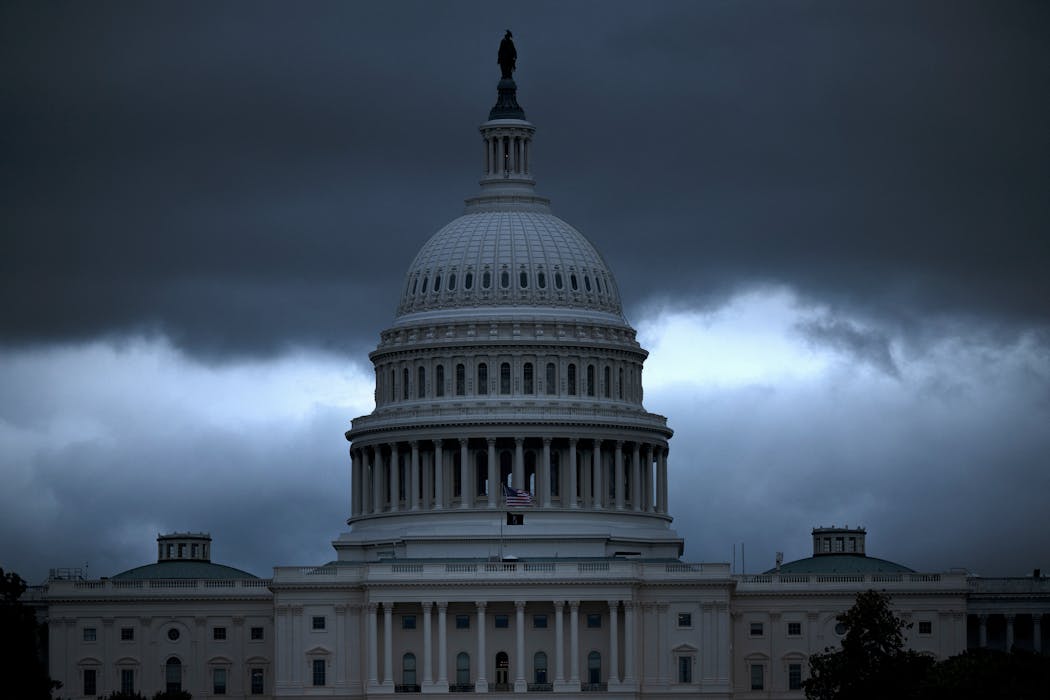
Economic clouds gathering? Perhaps not yet. Brendan Smialowski/AFP via Getty Images

The ongoing federal shutdown has resulted in a pause on regular government data releases, meaning economic data has been in short supply of late. That has left market-watchers and monetary policymakers somewhat in the dark over key indicators in the U.S. economy.

Fortunately, the University of Michigan’s Surveys of Consumers is unaffected by the impasse in Washington and released its preliminary monthly report on Oct. 10, 2025; the final read of the month will be released in two weeks.

The Conversation U.S. spoke with Joanne Hsu, the director of the Surveys of Consumers, on what the latest data shows about consumer sentiment – and whether the shutdown has left Americans feeling blue.

What is consumer sentiment?

Consumer sentiment is something that we at the University of Michigan have measured since 1946. It looks at American attitudes toward the current state of the economy and the future direction of the economy through questions on personal finances, business conditions and buying conditions for big-ticket items.

Over the decades, it has been closely followed by policymakers, business leaders, academic researchers and investors as a leading indicator of the overall state of the economy.

When sentiment is on the decline, consumers tend to pull back on spending – and that can lead to a slowdown in the economy. The opposite is also true: High or rising sentiment tends to lead to increased spending and a growing economy.

How is the survey compiled?

Every month, we interview a random sample of the U.S. population across the 48 contiguous states and the District of Columbia. Around 1,000 or so people take part in it every month, and we include a representative sample across ages, income, education level, demography and geography. People from across all walks of life are asked around 50 questions pertaining to the economy, personal finances, job prospects, inflation expectations and the like.

When you aggregate that all together, it gives a useful measure of the health of the U.S. economy.

What does the latest survey show?

The latest survey shows virtually no change in overall sentiment between September and October. Consumers are not feeling that optimistic at the moment, but generally no worse than they were last month.

Pocketbook issues – high prices of goods, inflation and possible weakening in the labor market – are suppressing sentiment. Views of consumers across the country converged earlier in the year when the Trump administration’s tariffs were announced. But since then, higher-wealth and higher-income consumers have reported improved consumer sentiment. It is for lower-income Americans – those not owning stock – that sentiment hasn’t lifted since April.

In October, we also saw a slight decline in inflation expectations, but it remains relatively high – midway between where they were around a year ago and the highs of around the time of the tariff announcements in April and May.

Has the government shutdown affected consumer sentiment?

The government shutdown was in place for around half the time of the latest survey period, which ran from Sept. 23-Oct. 6, 2025. And so far, we are not seeing evidence that it is impacting consumer sentiment one way or another.

And that is not super-surprising. It is not that people don’t care about the shutdown, just that it hasn’t affected how they see the economy and their personal finances yet.

History shows that federal shutdowns do move the needle a little. In 2019, around 10% of people spontaneously mentioned the then-shutdown in the January survey. We saw a decline in sentiment in that month, but it did improve again the following month.

Looking back, we tend to see stronger reaction to shutdowns when there is a debt ceiling crisis attached. In 2013, for example, there was a decline in consumer sentiment coinciding with concerns over the debt ceiling being breached. But it did quickly rebound when the government opened again.

Whether or not we see a decline in sentiment because of the current shutdown depends on how long it lasts – and how consumers believe it will impact pocketbook issues, namely prices and job prospects.

The Conversation

Joanne Hsu receives research funding from NIA, NIH, and various sponsors of the University of Michigan Surveys of Consumers.

ref. Government shutdown hasn’t left US consumers glum about the economy – for now, at least – https://theconversation.com/government-shutdown-hasnt-left-us-consumers-glum-about-the-economy-for-now-at-least-267264

New president of The Church of Jesus Christ of Latter-day Saints inherits a global faith far more diverse than many realize

Source: The Conversation – USA (3) – By Brittany Romanello, Assistant Professor of Sociology, University of Arkansas

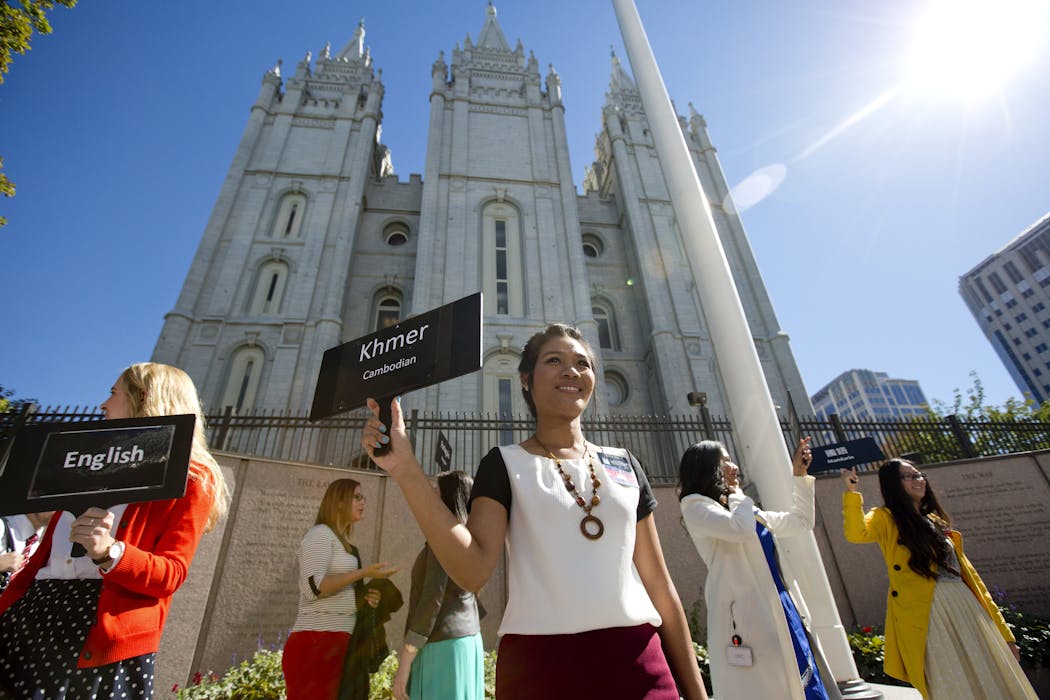
Missionary Sayon Ang holds up a sign signifying she speaks Cambodian during the twice-annual conference of The Church of Jesus Christ of Latter-day Saints on Oct. 4, 2014, in Salt Lake City. AP Photo/Kim Raff

The Church of Jesus Christ of Latter-day Saints has spent the past few weeks in a moment of both mourning and transition. On Sept. 28, 2025, a shooting and arson at a Latter-day Saints meetinghouse in Michigan killed four people and wounded eight more. What’s more, Russell M. Nelson, president of the church, died the day before at age 101. Dallin H. Oaks, the longest-serving of the church’s top leaders, was announced the new president on Oct. 14.

Oaks will inherit leadership of a religious institution that is both deeply American and increasingly global – diversity at odds with the way it’s typically represented in mainstream media, from “The Secret Life of Mormon Wives” to “The Book of Mormon” Broadway musical.

As a cultural anthropologist and ethnographer, I research Latter-day Saints communities across the United States, particularly Latina immigrants and young adults. When presenting my research, I’ve noticed that many people still closely associate the church with Utah, where its headquarters are located.

An ornate white building with a tall spire, and green mountains in the background.
The Latter-day Saints temple in Cochabamba, Bolivia, was dedicated in 2000.
Parallelepiped09/Wikimedia Commons, CC BY-SA

The church has played a pivotal role in Utah’s history and culture. Today, though, only 42% of its residents are members. The stereotype of Latter-day Saints as mostly white, conservative Americans is just one of many long-standing misconceptions about LDS communities and beliefs.

Many people are surprised to learn there are vibrant congregations far from the American West’s “Mormon Corridor.” There are devout Latter-day Saints everywhere from Ghana and the United Arab Emirates to Russia and mainland China.

Global growth

Joseph Smith founded The Church of Jesus Christ of Latter-day Saints in upstate New York in 1830 and immediately sent missionaries to preach along the frontier. The first overseas missionaries traveled to England in 1837.

Shortly after World War II, church leaders overhauled their missionary approach to increase the number of international missions. This strategy led to growth across the globe, especially in Central America, South America and the Pacific Islands.

Today, the church has over 17.5 million members, according to church records. A majority live outside the U.S., spread across more than 160 countries.

One way the church and researchers track this global growth is by construction of new temples.These buildings, used not for weekly worship but special ceremonies like weddings, were once almost exclusively located in the United States. Today, they exist in dozens of countries, from Argentina to Tonga.

During Nelson’s presidency, which began in 2018, he announced 200 new temples, more than any of his predecessors. Temples are a physical and symbolic representation of the church’s commitment to being a global religion, although cultural tensions remain.

Two men in suits walk by a large map of the world framed on the wall of a hallway.
Two missionaries for The Church of Jesus Christ of Latter-day Saints walk through the Missionary Training Center in Provo, Utah, in 2008.
AP Photo/George Frey

Among U.S. members, demographics are also shifting. Seventy-two percent of American members are white, down from 85% in 2007, according to the Pew Research Center. Growing numbers of Latinos – 12% of U.S. members – have played a significant role sustaining congregations across the country.

There are congregations in every U.S. state, including the small community of Grand Blanc, Michigan, site of the tragic shooting. Suspect Thomas Jacob Sanford, who was fatally shot by police, had gone on a recent tirade against Latter-day Saints during a conversation with a local political candidate.

In the following days, an American member of the church raised hundreds of thousands of dollars for Sanford’s family.

Growing pains

Despite the church’s diversity, its institutional foundations remain firmly rooted in the United States. The top leadership bodies are still composed almost entirely of white men, and most are American-born.

As the church continues to grow, questions arise about how well the norms of a Utah-based church fit the realities of members in Manila or Mexico City, Bangalore or Berlin. How much room is there, even in U.S. congregations, for local cultural expressions of faith?

Latino Latter-day Saints and members in Latin America, for example, have faced pushback against cultural traditions that were seen as distinctly “not LDS,” such as making altars and giving offerings during Dia de los Muertos. In 2021, the church launched a Spanish-language campaign using Day of the Dead imagery to increase interest among Latinos. Many members were happy to see this representation. Still, some women I spoke with said that an emphasis on whiteness and American nationalism, as well as anti-immigrant rhetoric they’d heard from other members, deterred them from fully celebrating their cultures.

A couple dressed nicely and holding hands walks by a large portrait of Jesus, portrayed as a bearded white man, inside a large hallway.
People attend the twice-annual conference of The Church of Jesus Christ of Latter-day Saints on April 6, 2024, in Salt Lake City.
AP Photo/Rick Bowmer

Even aesthetic details, like musical styles, often reflect a distinctly American model. The standardized hymnal, for example, contains patriotic songs like “America the Beautiful.” This emphasis on American culture can feel especially out of sync in places in countries with high membership rates that have histories of U.S. military or political interventions.

Expectations about clothing and physical appearance, too, have prompted questions about representation, belonging and authority. It was only in 2024, for instance, that the church offered members in humid areas sleeveless versions of the sacred garments Latter-day Saints wear under clothing as a reminder of their faith.

Historically, the church viewed tattoos as taboo – a violation of the sanctity of the body. Many parts of the world have thousands of years of sacred tattooing traditions – including Oceania, which has high rates of church membership.

Change ahead?

Among many challenges, the next president of the church will navigate how to lead a global church from its American headquarters – a church that continues to be misunderstood and stereotyped, sometimes to the point of violence.

A white building in the distance, with palm trees and a clear reflecting pool in the foreground.
The temple in Laie, Hawaii, opened in the early 1900s, making it one of the church’s oldest.
Kaveh/Wikimedia Commons, CC BY-SA

The number of Latter-day Saints continues to grow in many parts of the world, but this growth brings a greater need for cultural sensitivity. The church, historically very uniform in its efforts to standardize Latter-day Saints history, art and teachings, is finding that harder to maintain when congregations span dozens of countries, languages, customs and histories.

Organizing the church like a corporation, with a top-down decision-making process, can also make it difficult to address painful racial histories and the needs of marginalized groups, like LGBTQ+ members.

The transition in leadership offers an opportunity not only for the church but for the broader public to better understand the multifaceted, global nature of Latter-day Saints’ lives today.

This article has been updated with Dallin Oaks officially named president of The Church of Jesus Christ of Latter-day Saints on Oct. 14.

The Conversation

Brittany Romanello does not work for, consult, own shares in or receive funding from any company or organization that would benefit from this article, and has disclosed no relevant affiliations beyond their academic appointment.

ref. New president of The Church of Jesus Christ of Latter-day Saints inherits a global faith far more diverse than many realize – https://theconversation.com/new-president-of-the-church-of-jesus-christ-of-latter-day-saints-inherits-a-global-faith-far-more-diverse-than-many-realize-266337

How the high-rise tower block came to symbolise the contradictions of modern Britain

Source: The Conversation – UK – By John Flint, Professor of Town and Regional Planning, University of Sheffield

Between 2007 and 2010 Southwark council licensed 76 films to be shot on the high-rise Heygate estate in London’s Walworth area, providing a gritty backdrop for dramas of poverty and crime. This “theatre of stigma”, a term coined by historian of modern Britain Holly Smith, had come to dominate the narrative of high-rise social housing.

But it didn’t chime with the reality of those who live in these places. A decade earlier in Liverpool, mostly elderly residents from the city’s high-rise tower blocks attempted to “challenge perceptions of high-rise living” through the creation of Tenantspin television productions.

The slippery relationship between the representation and reality of high rises and their residents is one that Smith identifies from the earliest case study in her book Up in the Air:
A History of High-Rise Britain
.

The history of the social housing high-rise has seen them exist in many forms, with varying designs and organisational structures. She also offers a nuanced account of the many contradictions in the high-rise, which “has signified modernity and decay, community and exclusivity, privilege and disadvantage, luxury and privation”.

Even during the boom periods of construction of social housing between 1945 and 1976, flats made up only a fifth of the dwellings built and the majority were in buildings of four storeys or less. Given how few high-rises exist, it is remarkable how these buildings became such a powerful symbol of social progress and of the problems and evolution of the welfare state.

There have always been those who romanticised high-rise living. For instance, the French architect Le Corbusier called it a “flirtation with the stars”. However, such sentiments were always offset by the pragmatic necessities of local authorities.

High-rise housing was seen as a crucible for forging a new welfare state offering radical new ways of living. The book illustrates how demolished tower blocks came to be seen by some commentators as the tombstones or ruins of this dream.

Smith makes the important point that it is not the high-rise’s design that is inherently broken, but the projections that we put on it. She contrasts, for example, the popular cultural denigration of high-rise council housing with New Labour’s portrayal of new, lavish, expensive and overwhelmingly private sector high-rise housing. These buildings became emblematic of thriving cities in a prosperous Britain.

A key contribution of the book is to get “within the walls” of high-rise Britain and document the lives of its residents. Smith documents their feelings about these complex buildings, which range from affection to ambivalence, to aversion.

One tenant reminds us how these towers were much-loved homes full of memories and friends, where individuals and families were powerfully invested, despite their frustrations and limitations: “During 35 years you become attached to the four walls even if they’re not very good walls.”

As Smith argues, the major failures in high-rise construction and management were also a devaluing of the lives and voices of their residents.

Smith avoids romanticising high-rise council housing, and tackles issues such as racism and a “welfare nationalism”, which is the prioritising of housing allocations for white British nationals.

However, one of her main goals is to debunk the myth, perpetuated by Margaret Thatcher and others, that high-rise housing resulted in passive tenants lacking initiative. Instead, she documents how local and national action by tenants was consistently creative, resourceful and visionary, leading to forms of democratisation, participation and cooperation.

Tragedy in towers

The failure to understand this is tragically illustrated in the two disasters that powerfully bookmark a key period in this history. The first is the partial collapse of the Ronan Point tower block in east London in 1968 only two months after it opened, which killed four people. The second is the Grenfell Tower fire in central London in 2017 in which at least 72 people lost their lives.

These disasters were the product of state neglect, corporate wrongdoing and inadequate regulation. There are depressing parallels between them and how the state responded each time.

In 1968, the investigation into what went wrong at Ronan Point found that a gas explosion had been able to blow out three load-bearing precast concrete wall panels. This triggered the catastrophic collapse of a corner of the tower.

The minister of housing, Anthony Greenwood, directed that the inquiry’s “terms of reference should be carefully considered to ensure that they implied no blame on the part of the local authority”. And, despite the incident exposing the vulnerability in the design, the government continued to approve the precast panels so as to cause no alarm to residents living in similar buildings.

The Ministry of Housing and Local Government told tenants to “leave the worrying to us”. Smith describes years of tenants raising concerns about potential future disasters. Tenant banners stating that “we live in fear” were a chilling foretelling of what was to come at Grenfell and after.

That is the key message from this book: that there are lessons from the history of high-rise housing in Britain about safety, investment, dispossession and the perspectives of tenants, that still have not been fully learned.

Delivering good quality, suitable and affordable accommodation for all has always been daunting. It remains to be seen whether we can collectively rise to the challenge.

Up in the Air:A History of High Rise Britain will be published by Verso Books on October 28 2025


Looking for something good? Cut through the noise with a carefully curated selection of the latest releases, live events and exhibitions, straight to your inbox every fortnight, on Fridays. Sign up here.


The Conversation

John Flint is not currently receiving funding from an organisation. He has previously received research funding from the UKRI, Joseph Rowntree Foundation, Nuffield Foundation, a number of UK Government Departments, the Scottish Executive/ Government, the Welsh Assembly Government and local authorities He is a Trustee of the Housing Studies Charitable Trust.

ref. How the high-rise tower block came to symbolise the contradictions of modern Britain – https://theconversation.com/how-the-high-rise-tower-block-came-to-symbolise-the-contradictions-of-modern-britain-267047

Egypt peace summit showed that Donald Trump’s Gaza deal is more showbiz extravaganza than the ‘dawn of a new Middle East’

Source: The Conversation – UK – By David Hastings Dunn, Professor of International Politics in the Department of Political Science and International Studies, University of Birmingham

Following the Middle East summit in Sharm el-Sheikh, Donald Trump’s Gaza ceasefire deal has been compared in the media to the Good Friday agreement which brought an end to the conflict in Northern Ireland and the Dayton accords which achieved a (so far) lasting peace in the Balkans. The fact is that Trump’s deal differs significantly from both.

It is largely imposed from the outside. It’s highly transactional in nature. And it lacks a clear blueprint as to what happens next.

But it’s worth noting that one of the defining things about the US president as a politician is the way that he will typically make an exaggerated claim about an achievement which then sets the framing for the rest of the world to react to. So he boasted of his ceasefire deal that it was “not only the end of war, this is the end of the age of terror and death”.

Others have run with the Good Friday agreement comparison. The Christian Science Monitor asserted on October 2, the day after the US president unveiled his 20-point plan: “Mr. Trump’s blueprint rests on the hope that what worked in Northern Ireland will work in Gaza, and on one assumption above all: that Israelis and Palestinians are ready to accept that continued violence won’t get either of them what they want.”

This, of course, is no small assumption, nor is there anything to suggest it has any foundation.

What has been agreed between Israel and Hamas is an end to the fighting and the release of prisoners and hostages. But serious obstacles remain. The disarmament of Hamas is by no means a done deal (in fact it looks less likely by the day).

Meanwhile the withdrawal of Israeli troops from Gaza also looks to be a non-starter and the plan’s text remains very vague as to the extent the Israel Defense Forces will move out of Gaza, if at all. Questions of governance, the agreement of a process towards a Palestinian state and the cost of reconstruction have yet to be resolved.

But the most important hurdle in the way of this ceasefire deal holding firm is the profound lack of trust between the parties.

Set against these obstacles, the ceasefire and return of the hostages and release of Palestinian prisoners, momentous though these two things have been, represent the low-hanging fruit of any end to the conflict. They should be seen as the first steps on a difficult and uncertain diplomatic path that has been characterised by decades of setbacks and political failure.

By contrast the Dayton and Northern Ireland peace processes that led to those agreements were painstakingly negotiated between all the parties in advance through detailed diplomacy and resulted in complex power-sharing arrangements. They were guaranteed by intricate governing structures that addressed the long-standing sectarian divisions through detailed constitutional changes and new institutions.

Aspiration is not agreement

No such details are part of “The Trump Declaration for Enduring Peace and Prosperity”. This, it turns out, is a 462-word document signed in Egypt by a hastily arranged group of international leaders that notably did not include representatives from Hamas or Israel.

It states: “We, the undersigned, welcome the truly historic commitment and implementation by all parties to the Trump Peace Agreement, ending more than two years of profound suffering and loss – opening a new chapter for the region defined by hope, security, and a shared vision for peace and prosperity.”

While laudable, aspiration is no substitute for detailed agreement and at this point Trump’s claims appear to be a case of premature congratulation.

Given how tentative the peace agreement is and the fact that October’s ceasefire looks remarkably similar to that which was agreed and then breached in January 2025, why is this being treated with such fanfare? Is it really, to quote Trump, “the historic dawn of a new Middle East”?

Beyond the obvious fact that Trump loves the adulation that has come with this peace process, there are also other political calculations in play. For the US to be openly and obviously committed to the peace process makes it more difficult for the opposing parties to reopen hostilities without the risk of incurring US displeasure for ruining their achievement.

The more it is hyped as part of this theatre the more violators might reap the wrath of a president who felt his achievement and chances of a Nobel peace prize had been undermined.

What’s in it for other leaders?

The presence of so many world leaders at Trump’s peace summit requires a different explanation. The French president, Emmanuel Macron, UK prime minister, Keir Starmer and Canada’s Mark Carney might be forgiven for wondering why their presence was required as extras in this performative political theatre.

Behind their smiles and applause, they must have been acutely aware that such optics are damaging to the way they are viewed by their domestic public and press – and that their presence there will be criticised as evidence of supplication to Trump’s adulation. The presence in Sharm el Sheikh of Hungary’s Victor Orban added to the impression that Trump had gathered what he considers his fan club to Egypt.

But why they were willing to attend is equally revealing. As well as being seen to be supportive of the peace process and being keen to add to its momentum to raise the cost of its failure, Carney, Macron and Starmer are also playing a longer game. They perhaps hope to nudge Trump in the direction of further acts of international leadership.

Most notably, they are keen for Trump to embrace his self-identification as a “peacemaker” in order to pressure the Russian president Vladimir Putin to end his aggressive war against Ukraine.

Like most second-term US presidents Trump is concerned for his legacy. If flattering his ego into directing his energies towards this end achieves this goal, then their part in this iteration of the Trump Show should probably be judged by history as worthwhile.

The Conversation

David Hastings Dunn has previously received funding from the ESRC, the Gerda Henkel Foundation, the Open Democracy Foundation and has previously been both a NATO and a Fulbright Fellow.

ref. Egypt peace summit showed that Donald Trump’s Gaza deal is more showbiz extravaganza than the ‘dawn of a new Middle East’ – https://theconversation.com/egypt-peace-summit-showed-that-donald-trumps-gaza-deal-is-more-showbiz-extravaganza-than-the-dawn-of-a-new-middle-east-267472

Why some autistic people don’t speak

Source: The Conversation – UK – By Aimee Grant, Associate Professor in Public Health and Wellcome Trust Career Development Fellow, Swansea University

shutterstock PeopleImages/Shutterstock

Around a third of autistic people – children and adults alike – are unable to share what they want using speech.

You may have heard the term “non-verbal” to describe them, but that’s nearly always inaccurate. Many people without reliable speech still make noises which those close to them can interpret. Others use a small number of words or phrases.

You may also have heard of the term “selective mutism”. It means being unable to speak in some situations, and isn’t limited to autistic people. The NHS says that it is linked to anxiety in children.

But the word “selective” can be misleading. It doesn’t mean someone is choosing not to speak. For many autistic people, speaking can be impossible, extremely difficult, or even exhausting. So called “selective mutism” also isn’t limited to childhood.

For this reason, experts and those impacted increasingly use the term “semi-speaking”. It covers a wide range of people, from those who can say a few words now and then, to those who can speak fluently most of the time but not always.

Speech ability can also change depending on the environment. For example, being in a loud and bright space like a hospital or being in pain, may make it harder to speak. Many autistic people find it harder – and more unpleasant – to speak on the telephone.

Being able to communicate is crucial, not least because it provides a way of sharing needs. Not having your needs met is associated with distress. In autistic people this can lead to meltdowns, and it can lead to “burnout” in the long-term, which is associated with a loss of skills.

Alternatives to speech

When speech is impossible or too tiring, a variety of augmentative and alternative communication tools can help. Sign languages, including simplified languages like Makaton, can be used. Although because they rely on a communication partner who understands the language, they can be ineffective.

Paper-based methods, such as “picture exchange”, use cards to represent concepts or objects, such as “food” or a specific object, such as “banana”. But these can be frustrating. Imagine having to sort through a pile of cards to find the right word before speaking, and knowing that someone else chose those words for you.

The advent of tablets and smartphones has revolutionised augmentative and alternative communication applications. These apps allow the user to press a button representing words, or type messages that the device reads aloud. Both Android and Apple offer simple versions built into their systems.

But some autistic people do not find any of these strategies accessible. They may need a communication partner to work with them using a letter board to spell out words. While some critics claim that partners may falsely attribute words to the autistic person, eye-tracking research suggests this is not true.

Two women sitting at a desk with tablets.
Different types of augmentative and alternative communication are available on tablets and smartphones.
ABO PHOTOGRAPHY/Shutterstock

Research shows that alternative communication methods benefit autistic adolescents and adults. But the majority of autistic people who struggle to speak still lack access to effective communication tools. This is probably in part due to a lack of speech and language therapists who could support parents and carers to better facilitate communication.

A common misconception is that non-speaking autistic people don’t understand or have nothing to communicate. But a significant body of research shows these autistic people are literate and have thoughts. Studies with mothers of non-speaking children demonstrate that deep connections can exist without spoken words.

It’s essential that autistic people, regardless of age, have a way to communicate. Spoken words should not be valued above other methods, and alternative communication should never be taken away by parents, teachers, or caregivers. For many autistic people, using alternatives to speech is not a choice – it’s a lifeline.

The Conversation

Aimee Grant receives funding from The Wellcome Trust, MRC and ESRC.

ref. Why some autistic people don’t speak – https://theconversation.com/why-some-autistic-people-dont-speak-263244

How to use AI to guide your holiday plans – by a tourism expert

Source: The Conversation – UK – By Joseph Mellors, Research Associate in Management and Marketing, University of Westminster

icemanphotos/Shutterstock

If you ask an AI service like ChatGPT or Google Gemini to recommend a destination for your next summer holiday, it will happily provide you with a list of attractive destinations. But many of them will be very familiar.

Paris, Venice, Santorini and Barcelona are all likely to feature, because the AI algorithm is nudging you towards the same old places. The illusion of personalised advice is what makes people less likely to question it – and why AI risks intensifying overtourism.

And the use of AI for holiday inspiration is growing fast. A recent survey found it has doubled in the past year, with uptake strongest among younger travellers. Nearly one in five Britons aged 25–34 now turn to AI tools to plan their trips.

In my own research, I analysed ChatGPT’s travel recommendations and found that it gravitates towards the most visited destinations by default. Lesser-known or more sustainable locations only tend to appear when travellers explicitly ask for them.

This could easily exacerbate the overtourism which is already testing the limits of many residents in highly visited places. In Mallorca, locals are demanding limits on flights and holiday rentals, while Venice introduced a day-tripper fee in an attempt to manage visitor pressure.

AI will quickly add to that pressure if millions of holiday makers make plans using the same online filters and tips. These algorithms are trained on what’s most visible online – reviews, blogs and social media hashtags – so quickly focus on what’s already popular.

And if travellers simply accept the defaults, the result will be more of the same, and more strain on places already under pressure.

But consumers aren’t entirely powerless. With a bit more intent, AI research can yield different and fascinating destinations.

My research suggests that discerning travellers need to start by asking better and more searching questions. Generic prompts such as “the best beaches in Europe” or “beautiful city” lead straight to the same results.

Instead, try something like: “Which towns are reachable by train but overlooked in most guides?” Or maybe: “Where can I go in July that’s not a major tourist hotspot?”

Push the system, ask follow-up questions and scroll past the first few results. That’s where the surprises often lie.

You could also change your timings. AI tends to focus on peak season because that’s when the most online reviews are posted and the most travel content is published.

Asking about off-peak months is a simple way to beat this built-in bias, so perhaps specify the Italian lakes in October or the Greek islands in May.

Or ask AI to dig a little deeper for its source material. AI draws heavily on English-language content, which favours international hot spots, but is also capable of finding independent travel blogs or local tourism cooperatives.

Type in something like “Spanish-language blogs about Asturias” or “community-run agritourism in Slovenia” and you could unearth something rewarding and off the beaten track. This is the kind of thing that can really unearth the vast potential benefits of AI and its capabilities.

The road less travelled

It could also easily help you to compare the costs and timings of various travel options, and assess the carbon footprint of your journey. It just requires a little bit of digging to get past the surface layer.

After all, these systems are designed to serve up the most obvious and well-documented suggestions, not what’s diverse or sustainable. (Although the same technology could just as easily be coded slightly differently to show rail travel before air for example, or to prioritise locally run independent businesses.)

So while the convenience of AI is seductive, it can also be predictable. If your holiday plans could be copy-pasted from Instagram, any sense of adventure can easily get left behind.

Secluded beach.
AI can help to get away from it all.
organtigiulia/Shutterstock

Consider using AI as a starting point, not the final word. Guidebooks, local media and conversations with residents restore the unpredictability that makes travel memorable.

By asking sharper questions, shifting their timing, checking footprints and seeking local voices, travellers can use AI as a tool for discovery rather than congestion. Every prompt is a signal to the system about what matters.

The next time you ask ChatGPT where to go, make it work a bit harder. Test it, argue with it and use its extraordinary capabilities to find somewhere new – or settle for the same crowded itinerary as everyone else.

The Conversation

Joseph Mellors does not work for, consult, own shares in or receive funding from any company or organisation that would benefit from this article, and has disclosed no relevant affiliations beyond their academic appointment.

ref. How to use AI to guide your holiday plans – by a tourism expert – https://theconversation.com/how-to-use-ai-to-guide-your-holiday-plans-by-a-tourism-expert-267277

Israel is still not allowing international media back into Gaza, despite the ceasefire

Source: The Conversation – UK – By Colleen Murrell, Chair of the Editorial Board, and Full Professor in Journalism, Dublin City University

The world’s media are currently busy recording the tales of released Israeli hostages, freed Palestinian prisoners and their families after a ceasefire came into effect for the war in Gaza. But they are doing so while still being held at a distance from the centre of the story.

Foreign journalists have been banned by Israel from entering the Gaza Strip independently since the start of the war. And senior members of the international media are not optimistic that access to Gaza will change any time soon.

I asked Phil Chetwynd, global news director at Agence France-Presse (AFP), why he thought Israel was so insistent at keeping out external reporters. He told me:

Any situation where independent media are kept out or targeted gives rise to questions about the motivation. We are told it is because of our safety, but we have been covering wars non-stop for the past 100 years. We are ready to assume the risks. Given the extraordinary high death toll of journalists in Gaza, we have to presume it is a deliberate attempt to stop media revealing the full impact of the war and the Israeli military campaign.


Read more:
How Israel continues to censor journalists covering the war in Gaza


He reflected on how AFP would like to plan its coverage.

Our Palestinian journalists have done an amazing job, but all our Gaza staff journalists were evacuated over a year ago. They would like to return. The Palestinian freelancers who work for us have also done incredible work, but they are absolutely exhausted after two years of conflict. So we need journalists to be able to enter the Gaza Strip – I do not make a distinction between Palestinian and international.

He added:

I think it is important to have fresh eyes on the situation on the ground. I would also say it is sometimes easier for international journalists to report more freely on the activities of Hamas.

Reporting on Gaza

For the past two years, the only access Israel has provided for foreign media to enter Gaza has been under embedded conditions with the Israeli military. In the weeks following the October 7 Hamas attacks in 2023, a number of British reporters including from the BBC and Channel 4 News did avail of this restricted coverage. American correspondents and news agencies have also taken up offers.

But this access has been sporadic and has favoured Israeli journalists. In August 2025, an ABC Australia team managed to secure an “embed” trip to the Kerem Shalom aid site in southern Gaza after repeated requests were turned down.

In his report, ABC’s Matthew Doran pointed out that embeds are “highly choreographed and controlled”. However, Doran explained that he accepted the trip as “an opportunity to gain access to a site Israel is using to prosecute its case it is trying to feed the population of Gaza – an argument the humanitarian community, and world leaders, argue is full of holes”.

Doran noted that the small embed trip included an Israeli media outlet, an Israeli writer and “a handful of social media influencers”, all eager to post pro-Israeli sentiments. Israel has consistently accused the international media of succumbing to Hamas propaganda.

A number of initiatives have been tried over the past 24 months to enable external reporters access to Gaza. The Foreign Press Association (FPA) in Jerusalem has challenged the restrictions in Israel’s supreme court.

On September 11, the FPA noted that it had been a full year since it submitted its second petition to the court. But despite the urgency, it said “the court has repeatedly agreed to the [Israeli] government’s request for delays and postponed one hearing after another”.


Read more:
Gaza: high numbers of journalists are being killed but it’s hard to prove they’re being targeted


Petitions have also been sent to the Israeli authorities with the backing of international media organisations and groups such as Reporters Without Borders and the Committee to Protect Journalists (CPJ). Both of these have coupled their campaigns with calls for an immediate end to the killing of Palestinian journalists in Gaza who have been the world’s only eyes on the conflict as witnessed by those under fire.

According to the CPJ’s Jodie Ginsberg, writing in the Guardian in August, more than 192 journalists and media workers have been killed in Gaza since the start of the war. This number includes 26 journalists whom the CPJ believes have been targeted deliberately in “the deadliest conflict for journalists that we have ever documented”.

Israel has denied targeting journalists, except in cases where it has accused particular Palestinian journalists of being terrorists. The CPJ has argued in return that Israel should stop “its longstanding practice of labelling journalists as terrorists or engaging in militant activity, without providing sufficient and reliable evidence to support these claims”.

The BBC calls for access to Gaza.

As recently as September, the BBC along with AFP, Associated Press and Reuters launched a film calling on the Israeli authorities to allow the international press access to Gaza. It noted the media’s part in informing the world about the D-Day landings, the Vietnam war, the Ethiopian famine, the Tiananmen Square massacre, the Rwandan genocide, the Syrian refugee crisis and the current conflict in Ukraine.

David Dimbleby’s narration calls on Israel to allow international reporters in, “to share the burden with Palestinian reporters there so we can all bring the facts to the world”.

But looking at the current stalemate, a cynic might ponder if the the first open access to Gaza will be to the Washington press caravanserai that will surely be allowed in to document the rebuilding of Gaza into a Trump-envisioned riviera.

The Conversation

Colleen Murrell has received funding from Irish regulator Coimisiún na Meán (2021-4) for research for the annual Reuters Digital News Report Ireland.

ref. Israel is still not allowing international media back into Gaza, despite the ceasefire – https://theconversation.com/israel-is-still-not-allowing-international-media-back-into-gaza-despite-the-ceasefire-267356

Why it is so hard to estimate the number of victims of modern slavery in the UK

Source: The Conversation – UK – By Todd Landman, Professor of Political Science, University of Nottingham

r.classen/Shutterstock

How many people in the UK are victims of modern slavery? At present, we don’t actually know. There is no consensus on the answer to this question, despite the wide interest in finding it, and the tools and data to do so.

Over a decade ago, before the passage of the UK Modern Slavery Act 2015, data analysts estimated that there were between 10,000 and 13,000 victims of modern slavery in the UK. Since then, there have been four further estimates between 2014 and 2023, ranging from 8,300 to 136,000.

Why such a huge range? Estimates use different indicators and definitions of modern slavery, as well as different estimation methods.

Several parliamentary inquiries have now been conducted focusing on how the UK can strengthen its response to modern slavery. Part of an effective response is understanding the nature and extent of the issue. And this understanding relies on better methods to produce statistically robust estimates of the scale of the problem.

The UK Independent Anti-Slavery Commissioner asked our team of researchers at the University of Nottingham’s Rights Lab to carry out a scoping review of modern slavery estimates.

To do this, we reviewed 46 published studies and 57 data sources, conducted a survey and held workshops with public sector leaders. We identified several methods of estimating modern slavery prevalence in the UK. These can be used depending on the type (or types) of modern slavery and populations that are of interest.

Our report also details how the UK might use existing data in novel and innovative ways, such as producing detailed modern slavery risk and vulnerability maps.

‘Hard to find’ populations

Any robust and statistically sound attempt to estimate the number of victims of modern slavery in the UK confronts what methodologists call “the fundamental problem of unobservability”.

Victims and survivors are a seldom heard, often hidden population comprised of both UK and foreign nationals. The use of force, fraud and coercion that underpin modern slavery are often difficult to detect. They are practices that, while directly experienced, are often not easily observable.

Our review examined studies from around the world that address this problem of hidden populations. Most of the studies we examined carefully follow data collection and data analysis principles to produce robust prevalence estimations for the whole world, for specific countries and cities.

The remit of our review was not to produce a new estimate, but to identify promising methods of estimation. Our findings show that the best methods to date are either “multiple systems estimation”, which analyses multiple overlapping administrative lists of victims, or some combination of sampling and carefully designed surveys. Both involve collecting and analysing data, and draw careful inferences from the data in making their estimations.

For the UK, the original estimation from 2014 adhered most closely to standard principles of data collection and analysis. But since the passage of the Modern Slavery Act in 2015, the picture has changed. The number of offences that qualify as modern slavery has expanded considerably in that time and thus a new estimate is much needed.

While sampling and survey approaches used in other parts of the world produce sound prevalence estimations, no such study using these methods has been done in the UK.

View of Europe from space at night, with lights across the continent
Data could be used to create maps that help governments and organisations end modern slavery.
buradaki/Shutterstock

Why counting matters

Official statistics from the National Referral Mechanism (NRM) – the UK government’s framework for identifying victims of modern slavery – show that there have been 21,285 potential victims identified between July 2024 and June 2025. However, these referrals are only for people who are known and have been formally identified. The true number, should a new estimation be produced, is likely to be much higher.

We also know that the referral process itself is highly skewed. Those who took part in our survey and workshops explained that identification varies considerably across police jurisdictions, nationalities and types of offence. These views are corroborated by a new report from the anti-slavery charity Unseen.

While providing a strong foundation, the NRM remains a “convenience sample” from which prevalence estimations and statistical inferences currently remain limited.


Read more:
Ten years after the Modern Slavery Act, why has this ‘world-leading’ legislation had so little impact?


Our review argues that a slight reform to how data is recorded in the case management system – multiple referrals for the same person should be maintained and not merged into the same record – would enable analysts to provide an up-to-date estimate using multiple systems estimation.

This, along with other studies that focus on particular modern slavery practices for specific subpopulations in the UK, would provide strong evidence on the true number of modern slavery victims. Such analysis would be of benefit to policymakers, law enforcement, academics, charities and survivors themselves.

The Conversation

Todd Landman received funding from the UK Independent Anti-Slavery Commissioner (IASC) and from Research England via the Institute for Policy and Engagement at the University of Nottingham.

Vicky Brotherton received funding from the UK Independent Anti-Slavery Commissioner (IASC) and from Research England via the Institute for Policy and Engagement at the University of Nottingham.

ref. Why it is so hard to estimate the number of victims of modern slavery in the UK – https://theconversation.com/why-it-is-so-hard-to-estimate-the-number-of-victims-of-modern-slavery-in-the-uk-266711

We turned off moths’ sex signals – this could be the key to greener pest control

Source: The Conversation – UK – By Marie Inger Dam, Researcher, Biotechnology, Lund University

This moth was genetically engineered to be unable to attract a mate. Kristina Brauburger

A single “sexy” gene could help us combat one of the world’s most destructive fruit pests. By deleting the gene that lets female moths produce their mating scent, colleagues and I created an “unsexy” moth – and showed one way to turn insect attraction into a powerful pest control tool.

You’ve probably seen moths flittering around a bright lamppost on a balmy summer night. Those same insects, in their larval form, are the worms that burrow into your apples and peaches, making them serious pests in agriculture.

Moths are usually controlled with chemical pesticides, but pests evolve resistance and these sprays also harm bees and other pollinators. We need new and more sustainable methods to protect important crops targeted by moth larvae, like apples, maize, tomatoes and rice.

In a new study published in the Journal of Chemical Ecology, colleagues and I have demonstrated a way to unravel sexual communication in insects and provide a more sustainable alternative to pesticides. It seems we can stop moths by using their natural instincts against them.

Moths find their mates through chemical communication. Female moths release a species-specific pheromone, which males can detect and follow over long distances.

Farmers have long used synthetic versions of these pheromones to lure male moths away from females so that they don’t reproduce. But the problem is, every species has its own unique blend of pheromones, and replicating the exact recipe in a factory can be costly.

To achieve pheromone-based control on a large-scale, we need to understand how insects make them in the first place – and find the genes responsible.

How we found the sexy gene

Our study focused on the oriental fruit moth (Grapholita molesta), a serious pest on peaches, apples and other fruit. We wanted to identify the gene responsible for making its pheromone.

Pheromones are made from fatty acids by a specific enzyme. To find the genetic material responsible for that enzyme, we needed to identify the fatty acid, the enzyme and eventually the gene.

The fatty acids from which moth pheromones are derived are the same ones that all organisms make in abundance – like the fats in cooking oils and butter.

We first found the small fatty acid that served as the raw material for the moths’ scent, using a technique called gas chromatography, which separates fatty acids based on their size. When we placed this particular fatty acid onto the moth’s pheromone gland, it was converted into the pheromone, confirming we had the right starting point.

Next, we needed to find the exact enzyme that turned that specific fatty acid into that specific pheromone. The key was a double bond between two carbon atoms – that’s a job done by enzymes called desaturases. Searching the moth’s DNA we found many desaturase genes, but only one that was active in females but not in males. This looked like the right gene.

Creating an unsexy moth

Woman using lab equipment
A lab moth being ‘Crispr-ed’ by the author.
Kristina Brauburger

To test the gene’s function, we used Crispr – a precise gene-editing tool sometimes described as “genetic scissors” – to delete the suspected desaturase gene in moth eggs. When the moths grew into adults, females without the gene could no longer produce their pheromone, confirming it as the crucial link in their sexual communication.

Silencing this single gene meant we’d effectively created an “unsexy” moth – one that couldn’t hope to attract a mate. Our method can also be applied to different species, including other pest moths that make similar pheromones.

Pest control with insect genes

Chemical pesticides remain the main defence against crop pests, but resistance is spreading fast and pesticides are linked to soil contamination, pollinator declines and more.

Pheromone-based pest control avoids these problems. When synthetic pheromones are spread in a field or orchard, males become confused because they follow the synthetic trails instead of those made by the female moth, reducing their breeding success.

Our “unsexy” moths helped us identify the exact gene behind this mating signal. Knowing which gene produces the pheromone means we can now reproduce the pheromone outside the insect – for example, by inserting the gene into yeast or plants that act as “biofactories”.

These engineered organisms can then produce the pheromone naturally and cheaply, the same way we use genetically modified yeast to make medicines like insulin.

Our discovery connects lab research to real-world pest management: by decoding the moth’s love signal, we’ve taken a step towards greener, gene-based production of pheromones that could one day replace chemical pesticides.

The Conversation

Marie Inger Dam is a co-inventor on several patent applications relating to pheromone production.

ref. We turned off moths’ sex signals – this could be the key to greener pest control – https://theconversation.com/we-turned-off-moths-sex-signals-this-could-be-the-key-to-greener-pest-control-266312