The making and breaking of Uganda: an interview with scholar Mahmood Mamdani

Source: The Conversation – Africa (2) – By Mahmood Mamdani, Herbert Lehman Professor of Government, Department of Anthropology, Columbia University

In his latest book, Slow Poison: Idi Amin, Yoweri Museveni, and the Making of the Ugandan State, anthropologist Mahmood Mamdani explains the factors and characters – Idi Amin and Yoweri Museveni – that shaped post-independence Uganda.

As he explains to The Conversation Africa, there are striking differences between the two men.

Museveni has been in office for almost four decades. Amin lasted eight years. What explains Museveni’s endurance?

I try to explain in the book some of the most important reasons Museveni has lasted for more than four decades. I think these reasons are both internal and external.

The internal reason is that he has tried to perfect what the British introduced as “divide and rule”, which is to undermine the basis of a unified citizenship in the country. Not just as the British did, taking existing ethnic groups and politicising them into political structures we call tribes. But more than that, taking some sub-ethnic groups and turning them into tribes. So from fewer than 20 tribes, he has created more than 100. It’s an endless process.

And then there is the external. Unlike Amin, who was the sworn enemy of big powers in the west, Museveni is the sworn protégé and the sworn friend of the big powers in the west.

Some analysts seem to suggest that it’s only now, particularly after his son has started making sort of political pronouncements, that Ugandan politics is being militarised. But a theme that comes out clearly in your book is that under both Amin and Museveni, the army has always been a substitute for political organisation in Uganda.

I think that’s a correct reading of the book. Now, within that very broad comparison, there are some important differences in the route taken by Amin.

Amin was recruited as a child soldier by the British at the age of 14 or so. He was trained in what they call the arts of counter insurgency, which is really a polite term for state terrorism. He used to publicly demonstrate, particularly to African heads of state, for example, at their meeting in Morocco, how he could suffocate with a handkerchief.

And Amin went through some kind of a transformation in the first year after he had gained power.

He gained power through the direct assistance of the British and the Israelis. The Israelis, in particular, advised Amin that he could not just overthrow Uganda’s first post-independence president Milton Obote and think that that was the end of the story. He would have to deal with his cohorts, the people he had brought to key positions, and the reckoning would be around the corner.

So the only way he could avoid the reckoning was to annihilate them. And his first year in power was brutal. I mean, he killed hundreds of people in different army barracks. These were massacres. There’s no other word to describe it.

And then, after that, he went to Israel and to Britain with sort of a list of what he wanted. He thought he had gone forward for the Israelis and the British, and now it was time for them to do him a favour. And they were amused, and he was humiliated. He looked for an alternative, and that is how he, through the then Egyptian president Anwar Sadat, met Libyan leader Muammar Gaddafi, and that is how, through Gaddafi, he met Sudanese leader Gaafar Muhammad Nimeiry. Amin, along with Ethiopian emperor Haile Selassie, played a key role in the Addis Ababa agreement of 1972 which brought the first civil war in Sudan to an end.

After the second year of his coming to power, I don’t know of any massacres. He still killed opponents, but he did not generalise the killing to either family or friends or clans or just groups that the person was identified with or associated with. His killing was much more that of a dictator who uses violence to deal with his opposition.

It’s very different in Museveni’s case. Museveni came to power with the sense that violence is critical to politics, and especially critical to liberation politics. Museveni is an avid devotee of Frantz Fanon, particularly The Wretched of the Earth. And the key lesson he takes from Fanon is the essentiality of violence in any emancipatory politics.

And so I try to trace the path whereby Museveni begins by thinking of violence as central to dismantling an oppressive state and ends up with the notion that violence is central to building a state. He arrives at exactly the opposite conclusion. And this is long before his son comes into the picture.

There’s a whole chapter I have in the book on the first few decades after 1986 when Museveni comes to power in his operations in the north and in successive massacres and killings, claiming that what he was fighting in the north was a continuation of the war on terror, which had begun after the 11 September 2001 attacks in the US.

And these claims were just accepted at face value by the international community, which is the name we give to western powers.

So would you say the war on terror was a godsend for Museveni in helping him advance his agenda?

Definitely. Ever since the structural adjustment programme of the late 1980s, he understood that if he was going to stifle opposition at home, he would need support overseas, and this support would come to him if he claimed to be central to waging the war on terror.

Museveni was smart enough to realise that American foreign policy, American military involvement, had political limitations. And those limitations were: how many Americans could be killed? And when these killings took place in Somalia, the Black Hawk Down incident, Museveni offered his services.

He took his soldiers to Somalia. You remember that slogan, African solutions for African problems. Museveni offered that African solution in South Sudan, in Rwanda, in eastern Congo. The African solution was just a fancy name for Africans massacring Africans in the service of imperial powers. And that’s what happened at the end.

You recommend a federation as the most likely to succeed in post Museveni Uganda. Is there a political base for it at the moment? Or would something need to happen for the proposed federation to succeed?

Those of us who are militant nationalists and independents understood federation as a British project. We understood that it was the right wing, it was those who were interested in creating tribal fiefdoms, who used federation as a fig leaf to describe their agenda. We understood that this was their way of undercutting any attempt to build a strong nationalist state.

But since then, with a strong state having been built, we have understood the conditions have changed and the times have changed. Local organisation, local autonomy, has come to have a very different significance.

It is a way of resisting a development of autocracy in the centre and I think people are beginning to draw lessons from this.

Now, the thing is what kind of federation, because Museveni has also promoted something resembling a federation. But he has, as in Ethiopia, promoted what you can call an ethnic federalism. So in each single unit, he has divided the majority from the minority, the majority belonging to the ethnic group living in the country, and the minority having descended from other ethnic groups, even though living in the country, even though born in that place, still deprived of rights.

This is what’s happened in Ethiopia. If you look at Ethiopia, if you look at Sudan, you will see that the British politicised ethnic groups and turned them into tribes. And then after colonialism, what we have done is to militarise these tribes. So we have created tribal militias. That’s what they have done in Ethiopia. That’s the fighting between different tribal militias. That’s what they did in Sudan. They created tribal militias, starting in Darfur and then in other places. It is the state military which led the systems in creating these tribal militias. Then it is the tribal militias which have begun to swallow the state.

So this current civil war we have going on is between the state army and the tribal militias. It’s the same process you see in Uganda. We have not gone to the point of creating tribal militias, but we have been manufacturing tribe after tribe after tribe in order to fragment the country.

Some of these trends that you describe about Uganda can be found in most African countries. What are the lessons about the way forward for the rest of the African continent?

Broadly, we can see these trends in many African countries. The British model of colonialism became the general colonial model. Even the French, known for their assimilationist preferences, adopted indirect rule when they moved from assimilation to what they called association in the 1930s. And the Portuguese followed the French.

South Africans were the last ones in – they called it apartheid. But it was the same thing, the creation of homelands, the tribalisation of local differences. So that’s one trend in much of the thinking on the continent.

The alternative to that trend has been described as centralisation, so we’ve been moving between beefing up autocratic, centralised power and then opposing with fragmented, tribal powers.

I’m proposing a third way. I’m proposing a federation which is more ethnic. I’m proposing a federation which is more based on territory, more based on where you live. So it doesn’t matter where you’re from, but just the fact that you live there means that you have cast your lot with the rest of the people there in creating a common future.

And what matters in politics, more than where you came from, is the decision to make a common future. Migration is characteristic of human society. Human society has not come into being through homelands. So homeland is a colonial fiction.

The idea that Africans did not move, that they were tied to a particular piece of territory, is absurd, because Africans moved more than anybody else. We know that humanity began in Africa and spread to the rest of the world. So where is the homeland? You can have a homeland for this generation, for the previous few generations, but all African people have a story of migration. This is, I think, central.

So the way forward: one is a federation which consolidates democracy rather than eroding it.

The second way forward is to critically think through the whole neoliberal economic model and the empowering of elites, whether they are racial or ethnic or whatever.

I think we have to find a different economic model. But as you say, the book is not dedicated to looking for solutions. The book is dedicated to the proposition that we need to understand the problem before rushing to solutions.

And each country will have its own nuances. Different to Uganda.

The Conversation

Mahmood Mamdani does not work for, consult, own shares in or receive funding from any company or organisation that would benefit from this article, and has disclosed no relevant affiliations beyond their academic appointment.

ref. The making and breaking of Uganda: an interview with scholar Mahmood Mamdani – https://theconversation.com/the-making-and-breaking-of-uganda-an-interview-with-scholar-mahmood-mamdani-272181

Research institutions tout the value of scholarship that crosses disciplines – but academia pushes interdisciplinary researchers out

Source: The Conversation – USA – By Bruce Weinberg, Professor of Economics, The Ohio State University

Interdisciplinary researchers are trained to conduct work that crosses between fields. PixelsEffect/E+ via Getty Images

The most exciting landmark scientific achievements don’t happen without researchers sharing and collaborating with others outside their field. When people first landed on the Moon in 1969, Neil Armstrong’s first footsteps marked the realization of a century-long vision that integrated a variety of scientific fields. Landing on the Moon required expertise in electrical, mechanical, chemical and computer engineering, as well as astronomy and physics.

Similarly, the advances in genetics that have made the biotechnology revolution possible involved contributions from disciplines as far ranging as biology, mathematics and statistics, chemistry and computer science.

Today, some of the biggest challenges that scientists face are interdisciplinary in nature – from studying the effects of climate change to managing generative artificial intelligence.

Climate change isn’t only an environmental problem, just like the impact of AI isn’t solely technological. Scientists in a variety of disciplines can independently come up with ways to examine these issues, but as research has shown, the most effective approaches often integrate multiple fields.

Our own interdisciplinary team of researchers in economics and informatics – itself an interdisciplinary field focused on technology, information and people – explored the career hurdles that many interdisciplinary researchers face in a study published in July 2024. We studied how these challenges affect their careers and the production of interdisciplinary research.

Infrastructure and interdisciplinary work

Government and private funders alike have introduced programs to support interdisciplinary work. Universities foster interdisciplinary research through joint appointments, hiring multiple faculty at once, centers that span disciplines, and graduate programs that join different fields.

With these efforts, you might expect a high demand and exceptional career outcomes for interdisciplinary researchers. However, this does not appear to be the case. The American academic system is still very much dominated by disciplines and academic departments. A researcher whose work doesn’t fit neatly into a category can easily fall through the cracks.

The structure of distinct disciplines and departments is deeply embedded in universities. Many researchers have trouble finding a journal willing to publish interdisciplinary papers or a department willing to offer interdisciplinary classes. Students interested in this work have difficulty finding mentors.

Interdisciplinary researchers may have a harder time publishing their work.
Maggie Villiger, CC BY-ND

When interdisciplinary researchers apply for jobs, promotion and tenure, hiring committees made up of members of a single discipline may have difficulty evaluating their work. That issue can put these researchers at a disadvantage, compared to candidates with more traditional backgrounds.

Interdisciplinary centers, institutes and programs are often less permanent structures than departments. Sometimes they’re devised as solutions to fill in the cracks between the work done in different departments or to address real-world problems. These centers are a kind of borderlands – they can attract scientists, especially established ones, who want to identify and pivot toward new research problems. But they’re not generally designed to support scientists’ careers long term.

Career challenges

Our 2024 study focused on biomedical research, which can benefit from an interdisciplinary approach because of the complexity of biological processes and human behavior.

A venn diagram of three circles
Interdisciplinary researchers work at the nexus of multiple academic subfields.
MirageC/Moment via Getty Images

To start, we wanted to understand whether researchers with interdisciplinary training had longer careers publishing their research than those without. The results were stark.

Interdisciplinary researchers stopped publishing much earlier than researchers who stuck to a single discipline. The most interdisciplinary researchers – those whose work draws the most on other disciplines beyond their primary field – had the shortest careers. Half of the most interdisciplinary researchers – the top 1% in terms of the interdisciplinarity of their work as graduate students – stopped publishing within eight years of graduation. Moderately interdisciplinary and single-discipline researchers kept publishing for more than 20 years.

Many interdisciplinary researchers left academia early in their career, by the point when most scholars transition into faculty positions and start to get promoted or receive tenure.

Many researchers who leave do important work in industry and other sectors. However, the high attrition rate of these researchers in biomedicine means that few senior scientists remain in academia to conduct interdisciplinary research or train future interdisciplinary researchers.

Researchers who started out as interdisciplinary tended to become more focused on one discipline early in their careers, as if recognizing that disciplinary work is the smoothest route to success.

However, we also found that over the 40-year period our study examined, biomedical research became more interdisciplinary overall. Ironically, single-discipline researchers, whose interdisciplinary work tends to be lower quality, drove that growth, becoming more interdisciplinary as their careers progressed.

But our study found that these researchers usually didn’t have specialized training in interdisciplinary research. They may have become more interdisciplinary through collaborations with researchers in other fields.

So, even though the overall level of interdisciplinarity in the field increased, trained interdisciplinary researchers left academia, and the single-discipline researchers without the same training were the ones conducting much of the interdisciplinary work.

Consequences for research

Our findings indicate another striking trend: Researchers entering the research community tended to be less interdisciplinary than the ones already in it.

Studies have shown that early career researchers often do the most innovative work. But at this formative career stage, they do not lend their talents to interdisciplinary work as frequently.

While many people in the academic community say they want to see more interdisciplinary research, the new, more discipline-focused scholars joining the system aren’t conducting this work.

Our analysis suggests that finding ways for universities, departments and funders to support early career interdisciplinary researchers could keep these scholars from leaving and increase the output of interdisciplinary work.

Many difficult societal problems will require research that cuts across the lines of established disciplines to solve. Right now, academia rewards scholars who work within disciplinary boundaries and climb the departmental career ladder.

To remedy this issue, universities and funding agencies could create better incentives for collaboration and research that addresses critical problems regardless of the discipline. These changes could create space for interdisciplinary researchers to thrive and become mentors for future generations of scientists.

The Conversation

Bruce Weinberg receives funding from the National Science Foundation, the National Institutes of Health, the Ewing Marion Kauffman and Alfred P. Sloan Foundations, as well as the National Bureau of Economic Research.

Enrico Berkes received funding from the National Science Foundation and the National Institutes of Health while a postdoctoral researcher at The Ohio State University.

Monica Marion has received funding from the National Science Foundation.

Staša Milojević received funding from the National Science Foundation and the Air Force Office of Scientific Research.

ref. Research institutions tout the value of scholarship that crosses disciplines – but academia pushes interdisciplinary researchers out – https://theconversation.com/research-institutions-tout-the-value-of-scholarship-that-crosses-disciplines-but-academia-pushes-interdisciplinary-researchers-out-254034

Wars without clear purpose erode presidential legacies, and Trump risks political consequences with further military action in Venezuela

Source: The Conversation – USA – By Charles Walldorf, Professor of Politics and International Affairs, Wake Forest University

The body of U.S. Army Spc. Israel Candelaria Mejias is carried in a transfer case at Dover Air Force Base in Delaware after he was killed on April 5, 2009, near Baghdad. AFP Photo/Paul J. Richards via Getty Images

Despite public support in the U.S. for deposing Venezuelan leader Nicolás Maduro, President Donald Trump is unlikely to find that level of support for fighting an actual war in that country.

Even as Trump tries to work through Delcy Rodríguez, Maduro’s vice president and now the acting leader of the country, to manage Venezuela, there are echoes of President George W. Bush in Iraq with Trump saying that the United States will “run” Venezuela and “nurse it back to health” with Venezuelan oil wealth. None of that – which requires a lot of control by Washington and a major presence on the ground – can or will happen without a significant commitment of U.S. military forces, however, which Trump hasn’t ruled out.

“We’re not afraid of boots on the ground,” Trump said.

Yet U.S. citizens have been and remain deeply skeptical of military action in Venezuela. From Lyndon Johnson to George W. Bush, history shows that leaders often pay a high political price – and costs to their legacy, too – when wars they start or expand become unpopular.

As an expert on U.S. foreign policy and regime change wars, my research shows that every major U.S. war since 1900 – especially those that involved regime change – was buoyed at its outset by a big story with a grand purpose or objective. This helped galvanize national support to bear the costs of these wars.

During the Cold War, a story about the dangers of Soviet power to American democracy and the need to combat the spread of communism brought strong public support, at least initially, for wars in Korea and Vietnam, along with smaller operations in the Caribbean and Latin America.

In the 2000s and 2010s, the dominant narrative about preventing another Sept. 11 and quelling global terrorism generated strong initial public support for wars in Iraq – 70% in 2003 – and Afghanistan, 88% in 2001.

A big problem Trump now faces is that no similar story exists for Venezuela.

President Donald Trump said on Jan. 3, 2026, that the US is “not afraid of boots on the ground” in Venezuela.

What national interest?

The administration’s justifications for war cover a hodgepodge of reasons, such as stopping drugs that flow almost exclusively to Europe, not the U.S.; seizing oil fields that benefit U.S. corporations but not the wider public; and somehow curtailing China’s efforts to build roads and bridges in Latin America.

All these are unrelated to any story-driven sense of collective mission or purpose. Unlike Korea or Afghanistan at the start, Americans don’t know what war in Venezuela will bring them and whether it is worth the costs.

This lack of a holistic story or broad rationale shows up in the polls. In November, only 15% of Americans saw Venezuela as a national emergency. A plurality, 45%, opposed an overthrow of Maduro. After Maduro was removed in early January 2026, Americans’ opposition to force in Venezuela grew to 52%. No rally around the flag here.

Americans also worry about where things are heading in Venezuela, with 72% saying Trump has not clearly explained plans going forward. Few want the mantle of regime change, either. Nine in 10 say Venezuelans, not the United States, should choose their next government. And more than 60% oppose additional force against Venezuela or other Latin American countries.

Only 43% of Republicans want the United States to dominate the Western Hemisphere, indicating Trump’s foreign policy vision isn’t even popular in his own party.

Overall, these numbers stand in sharp contrast to past U.S. wars bolstered by big stories, where there was generally a deep, bipartisan consensus behind using force.

For the moment, 89% of Republicans support removing Maduro. But 87% of Democrats and 58% of independents are opposed.

Reflecting the national skepticism – and in a rebuke of Trump – the U.S. Senate advanced a measure to final vote requiring Trump to get congressional approval before taking further military action in Venezuela. Five Senate Republicans joined all Democratic senators in voting for the measure.

All told, the U.S. political system is flashing red when it comes to war in Venezuela.

Hubris can turn deadly

Research shows that U.S. regime change wars almost never go as planned. Yet, the hubris of U.S. leaders sometimes causes them to ignore this fact, which can result in deadly trouble. In Iraq, influential Vice President Dick Cheney told one interviewer, “We’ll be greeted as liberators.” We weren’t, and U.S. forces got bogged down in a bloody insurgency war.

Experts say the same trouble could come in Venezuela.

US soldiers sitting at a table with a tv behind them showing an image of Barack Obama.
U.S. Army soldiers watch a TV airing election coverage of Democratic presidential candidate Barack Obama at a base located along the Afghanistan-Pakistan border on Nov. 4, 2008.
David Furst/AFP via Getty Images

What might stop the United States from rolling into a deeper war that’s not in line with how the public views U.S. interests? My research shows that the answer lies with U.S. leaders taking steps to back away from owning what comes next in Venezuela.

This turns a lot on presidential rhetoric. When leaders make robust commitments to action, it often boxes them in politically later on to follow through, even if they don’t want to do so. Their words create what political scientists call “audience costs,” which are domestic political setbacks, or punishment, that leaders will face if they fail to follow through on what they promised to do.

Audience costs can even form in a case like Venezuela, because despite limited public support for force, the media along with proponents of war inside and outside government often pick up on a president’s words and produce a churning conversation. That conversation is visible now in the news cycle, with leading Republicans and other prominent voices calling for more robust action. It’s the “you broke it, you fix it” discussion.

This churn raises questions about the president’s credibility that sometimes makes leaders feel boxed in to act, even when public support is questionable.

As a presidential candidate in 2008, Barack Obama promised to devote greater attention and resources to the war in Afghanistan. When he got in office, Obama’s words came back to bite him. Political pressure generated by his campaign pledge made it almost impossible for Obama to avoid surging troops into Afghanistan at a much higher level than what he intended.

While presidents should always strive to keep the public informed of the direction policy is headed, research shows that leaders can avoid the trap of audience costs by remaining relatively vague and noncommittal, which the public now prefers, about future military actions.

On Venezuela, Trump has done some of this vague language work already by sidestepping specifics about when and if force will be used again, and by also downplaying talk of U.S.-led democracy promotion. If he stops talking about “running” Venezuela and adopts the more measured language used by advisers such as Secretary of State Marco Rubio, who says the goal is to “move (Venezuela) in a certain direction” but not run the country, Trump could take another step away from being boxed in to do more militarily.

Events on the ground in Venezuela might also factor into future U.S. policy. Obama would not have faced the political pressure for the surge that he did when coming to office if the Afghan war had been going in a more positive direction.

Venezuela is close to economic collapse, according to some experts, due to Caracas’ inability to reap the profits of selling oil abroad. If that happens, political chaos could follow and leave Trump, like Obama in Afghanistan, feeling lots of pressure to act militarily, especially if Trump is still saying he “runs” Venezuela.

Again, Americans don’t want that, which means taking steps, such as loosening the current oil embargo, to alleviate economic pain in Venezuela might make sense for Trump. Otherwise, if American troops are sent in by Trump and deaths mount, even a president deemed virtually untouchable by scandal and failure could find himself finally paying a political price for his decisions.

The Conversation

Charles Walldorf is affiliated with Defense Priorities.

ref. Wars without clear purpose erode presidential legacies, and Trump risks political consequences with further military action in Venezuela – https://theconversation.com/wars-without-clear-purpose-erode-presidential-legacies-and-trump-risks-political-consequences-with-further-military-action-in-venezuela-273199

Nearly half of Detroit seniors spend at least 30% of their income on housing costs − even as real estate values fall

Source: The Conversation – USA – By Amanda Nothaft, Director of Data and Analysis, Poverty Solutions at the University of Michigan, University of Michigan

The high costs of maintaining a home can put Detroit seniors at risk. Nick Hagen/The Washington Post via Getty Images

For Detroit homeowners over 65 who overwhelmingly live on fixed incomes, unexpected costs – increases in grocery prices, rising health care premiums or an emergency repair – heighten their risk of financial instability and can even lead to them falling into poverty.

I am a policy researcher at Poverty Solutions at the University of Michigan. Our initiative uses action-based research, an approach that seeks to understand real-world problems and inform policy changes that could make life work better for people with low incomes. The center recently examined data from the 2023 American Community Survey to explore how low-income seniors in Detroit are affected by declining housing values and high housing costs compared to seniors across Michigan.

Federal, state and local programs to help seniors with these costs are already strained. As the population of older adults in metro Detroit continues to grow, demand for support services, such as caregiving and healthy meal programs, will likely increase.

Housing cost burdens are more acute for Detroit seniors

The poverty rate of senior-headed households in Detroit is nearly twice as high as the rate statewide.

Detroit seniors, both owners and renters, are more likely to be housing cost-burdened than Michigan seniors overall, with 45% paying more than 30% of their income on housing costs compared to 31% of seniors statewide. This is partially driven by lower median incomes in the city compared to the state.

Even when we focus on the seniors who would be considered the most financially stable, those who own their homes free and clear, the proportion burdened by housing costs is twice as high as the state: 32% versus 16%.

Detroit seniors pay more for property taxes and utilities

Lower incomes aren’t the only thing driving the higher housing cost burden. Detroit seniors pay more for all homeownership costs, including utilities – not only as a proportion of home values and income, but also in terms of real costs.

Detroiters face higher rates for auto insurance, and they pay more for utilities, compared to others in the state, adding to a situation where many residents, especially seniors on fixed incomes, struggle to make ends meet.

While the cost of living in urban areas is often higher compared to suburban and rural places, my analysis found that comparative costs for insurance, water, electricity and gas are lower in cities such as Milwaukee and Pittsburgh, which points to systemic issues that might be unique to Detroit.

Insurance and property taxes are also higher for seniors in Detroit compared to seniors across the state, especially relative to median home values. Detroit seniors pay the same or slightly more for these essentials despite living in homes that are worth less, based on the analysis.

The median house value for senior property owners in Detroit is $65,000, compared to $170,000 for seniors in Michigan.

High property taxes and insurance rates drive costs

Detroit lost over half a million residents between 1980 and 2020, causing an oversupply of single-family housing stock and a steady drop in home prices.

As residents left and businesses followed, the property tax base eroded. To generate the same revenue as cities with a richer tax base, Detroit levies property taxes at relatively high rates. Detroiters face a property tax rate close to 3%, significantly higher than the national average of 1.38%.

The housing market in Detroit has seen such large declines in property values that a disconnect has emerged. The replacement cost of a home, which is the actual expense required to reconstruct the dwelling, is often substantially higher than its current market value. This makes the cost of homeowner’s insurance disproportionately expensive relative to the market value of a home in Detroit.

A property’s condition and the condition of neighboring properties also raises the cost of homeowner’s insurance because insurance premiums are primarily influenced by the risk associated with insuring a property. Poor property and neighborhood conditions limit the availability of homeowner’s insurance, driving those who want homeowner’s insurance to purchase costly policies from insurers of last resort, or companies that provide coverage to people who cannot obtain it through other means due to high insurance risks.

The high cost drives many Detroit residents to forgo homeowner’s insurance. According to my analysis, almost 35% of Detroit seniors do not insure their homes, putting their main financial asset at risk.

Big utility bills

Utility bills in Detroit are higher compared to those statewide for two reasons: higher use and higher rates. The housing stock in Detroit is significantly older, with 88% of Detroit seniors living in houses built before 1960, compared to 34% of seniors in the rest of the state. These older homes use more energy because they often lack modern insulation and have single-paned windows, outdated appliances, older plumbing fixtures and poor seals around windows and doors.

Detroiters and others in Michigan served by DTE Energy, a utility provider, pay gas and electricity rates that are higher than others in the state. Detroiters also pay more for utilities due to a 5% “utility users tax” added to their gas and electricity bills. This surcharge isn’t new. It stems from legislation originally passed in the 1970s, and the funds collected flow to the Public Lighting Authority, which is responsible for improving and maintaining street lights in the city, and to the Detroit Police Department.

In the wake of Detroit’s bankruptcy filing in 2013, the Detroit Water and Sewerage Department carried out widespread shut-offs. From 2014 to 2020, the shut-offs affected as many as 141,000 Detroit residents, mostly those with low incomes. The crisis garnered national and international attention.

The initial crisis has passed, yet the cost of water continues to increase across the entire state, with those in the metro Detroit area served by the Great Lakes Water Authority seeing substantially higher rate increases than the state overall to cover deferred maintenance and infrastructure costs.

Costs are compounded by social isolation

Costs stemming from isolation and disability exacerbate the financial strain Detroit seniors already face.

Several factors contribute to older adults living alone, including increased life expectancy for women as well as children and family members moving farther away from each other. Older adults living alone are also more likely to be poorer than older adults who are a part of a larger household.

This issue is more pronounced in Detroit, where 54.7% of seniors live alone compared to the 43.2% statewide average. Living alone increases the risk of social isolation, which is linked to poorer health outcomes. Detroit seniors also have higher rates of disability than other seniors in the state of Michigan, which can lead to higher health care costs, decreased mobility and increased social isolation.

Less funding could create more hardship

Historically the demand for support outstrips the available resources, with only a small proportion of eligible households receiving energy assistance. And now, programs that help vulnerable seniors with the costs of utilities are at risk of funding cuts.

Detroit Water and Sewerage Department’s Lifeline Plan, launched in 2022, ran out of state and federal money in October 2025.

Meanwhile, the entire staff that administers the federal Low Income Home Energy Assistance Program, known as LIHEAP, was cut in April 2025. While the program is funded in the continuing resolution passed on Nov. 12, 2025, it is zeroed out in the president’s fiscal year 2026 proposed budget.

Even before funding uncertainties emerged, Detroit seniors who own their homes faced institutional barriers accessing property tax relief, putting many at risk of tax foreclosure. Additionally, Detroiters struggle to keep up with home repair costs, heightened by the needs of older homes and because the home repair assistance system is fragmented and difficult to access.

Without these programs, Detroit seniors will be left without an essential lifeline.

The Conversation

Amanda Nothaft does not work for, consult, own shares in or receive funding from any company or organization that would benefit from this article, and has disclosed no relevant affiliations beyond their academic appointment.

ref. Nearly half of Detroit seniors spend at least 30% of their income on housing costs − even as real estate values fall – https://theconversation.com/nearly-half-of-detroit-seniors-spend-at-least-30-of-their-income-on-housing-costs-even-as-real-estate-values-fall-268075

Viruses aren’t all bad: In the ocean, some help fuel the food web – a new study shows how

Source: The Conversation – USA (2) – By Steven Wilhelm, Professor of Microbiology, University of Tennessee

A research ship sails in the Atlantic Ocean, where scientists are studying the roles of marine viruses. SW Wilhelm

Virus. The word evokes images of illness and fears of outbreaks. Yet, in the oceans, not all viruses are bad news.

Some play a helpful, even critical, role in sustaining marine life.

In a new study, we and an international team scientists examined the behavior of marine viruses in a large band of oxygen-rich water just under the surface of the Atlantic Ocean. What we discovered there – and its role in the food web – shows marine viruses in a new light.

Studying something so tiny

Viruses are incredibly small, typically no more than tens of nanometers in diameter, nearly a hundred times smaller than a bacterium and more than a thousand times smaller than the width of a strand of hair.

In fact, viruses are so small that they cannot be seen using conventional microscopes.

Four highly magnified images show a tiny round object, the virus. In two of the images, the tail is visible.
An electron microscope view shows examples of Prochlorococcus myoviruses. Images A and D show different viruses with their tails. In B and C, the tail is contracted. The black scale bar indicates a length of 100 nanometers.
MB Sullivan, et al., 2005, PLOS One, CC BY

Decades ago, scientists thought that marine viruses were neither abundant nor ecologically relevant, despite the clear relevance of viruses to humans, plants and animals.

Then, advances in the use of transmission electron microscopes in the late 1980s changed everything. Scientists were able to examine sea water at a very high magnification and saw tiny, circular objects containing DNA. These were viruses, and there were tens of millions of them per milliliter of water – tens of thousands of times greater than had been estimated in the past.

A theory for how viruses feed the marine world

Most marine viruses infect the cells of microorganisms – the bacteria and algae that serve as the base of the ocean food web and are responsible for about half the oxygen generated on the planet.

By the late 1990s, scientists realized that virus activity was likely shaping how carbon and nutrients cycled through ocean systems. We hypothesized, in what’s known as the viral shunt model, that the marine viruses break open the cells of microorganisms and release their carbon and nutrients into the water.

This process could increase the amount of nutrients reaching marine phytoplankton. Phytoplankton provide food for krill and fish, which in turn feed larger marine life across the oceans. That would mean viruses are essential to a food web that drives a vast global fisheries and aquaculture industry producing nearly 200 million metric tons of seafood.

Watching viruses in action

In the new study in the journal Nature Communications led by biologists Naomi Gilbert and Daniel Muratore, our international team demonstrated the viral shunt in action.

The team took samples from a meters-thick band of oxygen that spreads for hundreds of miles across the subtropical Atlantic Ocean. In this region, part of the Sargasso Sea, single-celled cyanobacteria known as Prochlorococcus dominate marine photosynthesis with nearly 50,000 to upwards of 100,000 cells in every milliliter of seawater. These Prochlorococcus can be infected by viruses.

What are Prochlorococcus? Science Magazine.

By sequencing community RNA – molecules that carry genetic instructions within cells – our team was able to look at what nearly all viruses and their hosts were trying to do at once.

We found that the rate of virus infection in this oxygen-rich band of the ocean is about four times higher than in other parts of the surrounding ocean, where cyanobacteria don’t reproduce as quickly. And we observed viruses causing massive infections in Prochlorococcus.

The viruses were attacking cells and spilling organic matter, which bacteria were taking up and using to fuel new growth. The bacteria respired away the carbon and released nitrogen as ammonium. And this nitrogen appears to have been stimulating photosynthesis and the growth of more Prochlorococcus cells, resulting in greater production that generated the ribbon of oxygen.

The viral infection was having an ecosystem-scale impact.

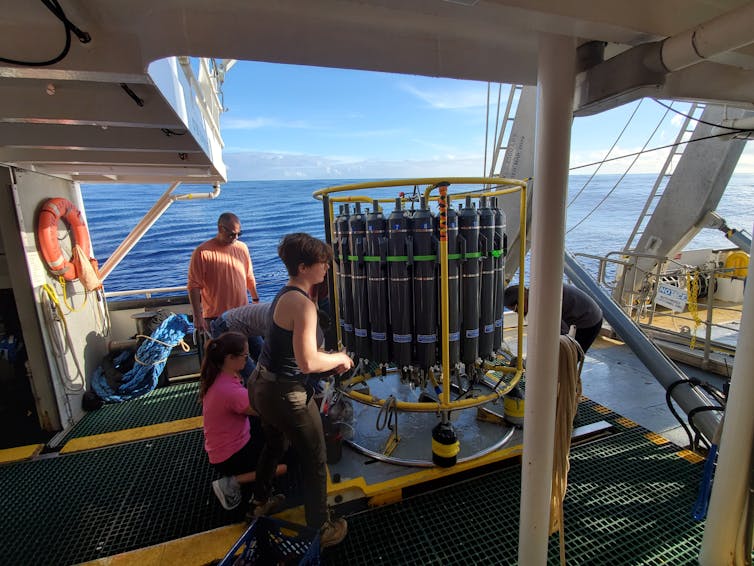
Scientists aboard a research vessel prepare a large device with many tubes for collecting samples once lowered into the ocean.
Scientists aboard a National Science Foundation research expedition in the open Atlantic in 2019 prepare equipment to collect water samples at different depths to analyze the activity of marine viruses.
SW Wilhelm

Understanding the microscopic world matters

Viruses can cause acute, chronic and catastrophic effects on human and animal health. But this new research, made possible by an open-ocean expedition supported by the National Science Foundation, adds to a growing range of studies that demonstrate that viruses are central players in how ecosystems function, including by playing a role in storing carbon in the deep oceans.

We are living on a changing planet. Monitoring and responding to changes in the environment require an understanding of the microbes and mechanisms that drive global processes.

This new study is a reminder of how important it is to explore the microscopic world further – including the life of viruses that shape the fate of microbes and how the Earth system works.

The Conversation

Steven Wilhelm’s work on this study was supported by The National Science Foundation, The National Institute of Environmental Health Science, the Simons Foundation and the Allen Family Philanthropies.

Joshua Weitz’s work on this study was supported by The National Science Foundation, the Simons Foundation, and the Blaise Pascal Chair of the Île-de-Paris Region.

ref. Viruses aren’t all bad: In the ocean, some help fuel the food web – a new study shows how – https://theconversation.com/viruses-arent-all-bad-in-the-ocean-some-help-fuel-the-food-web-a-new-study-shows-how-273088

Rural areas have darker skies but fewer resources for students interested in astronomy – telescopes in schools can help

Source: The Conversation – USA (2) – By Emma Marcucci, Executive Director of STARS, Smithsonian Astrophysical Observatory, Smithsonian Institution

Observing the night sky can get kids interested in astronomy and STEM careers. Jeremy Thomas/Unsplash

The night sky has long sparked wonder and curiosity. Early civilizations studied the stars and tracked celestial events, predicted eclipses and used their observations to construct calendars, develop maps and formulate religious rituals.

Scholars widely agree that astronomy is a gateway science – that it inspires a core human interest in science among people of all ages, from senior citizens to schoolchildren. Helping young people tap into their excitement about the night sky helps them build confidence and opens career pathways they may not have considered before.

Yet today the night sky is often hidden from view. Almost all Americans live under light-polluted skies, and only 1 in 5 people in North America can see the Milky Way. When people live in areas where the night sky is clearer, they tend to express a greater wonder about the universe. Altogether, this means communities with less light pollution have great potential to educate the next generation of scientists.

Rural communities have some of the darkest skies in the country, making them perfect for stargazing. Yet while students in rural areas are in the optimal physical environment to be inspired by the night sky, they are the most in need of science, technology, engineering and mathematics, or STEM, education resources to support their interests and build the confidence they need to pursue careers in science.

Stargazing, finding constellations and watching meteor showers as a kid inspired my own sense of awe around the vastness of space and possibilities in our universe. Now, I’m the executive director of the Smithsonian’s Scientists Taking Astronomy to Rural Schools, or STARS, a new program led by the Smithsonian Astrophysical Observatory, part of the Center for Astrophysics | Harvard & Smithsonian, that delivers telescopes and associated lesson plans to rural schools across the United States, free of charge. I’m working to share my excitement and wonder with students in rural areas.

The Sun, partially blocked by the Moon.
A solar eclipse, as viewed through a telescope.
STARS

Why hands-on STEM learning matters

Students need direct exposure to STEM careers and hands-on experiences that help them learn the skills they will need to pursue these careers on their own. Hands-on activities ground new knowledge in ways that lectures and reading often cannot. Experiential opportunities connect what may be distant or abstract concepts to clear, tangible, real-world skills. This experiential learning improves students’ understanding of astronomy content and increases their motivation to learn.

Telescopes are important tools for astronomy that scientists use all the time. When students use telescopes as part of their learning, they are experiencing real techniques that scientists use. Using a telescope brings the viewer closer to fantastic celestial objects – allowing them to see galaxies, nebulas, planets, the Moon and the Sun, with solar filter protection, more closely or in greater detail.

A full Moon, tinged orange from sunlight, during a lunar eclipse.
Telescopes help students view astronomical objects, like the Moon, up close.
STARS

There is nothing quite like seeing the soaring peaks and shadowed valleys of the Moon, or the distinct ring structure of Saturn, or endless other astronomical objects, through a telescope lens. This inspiration can motivate students to use their curiosity to explore the universe and see STEM careers as potential pathways.

Rural STEM education

The National Rural Education Association’s Why Rural Matters 2023 report estimates that there are 9.5 million students attending school in rural areas in the U.S., across more than 32,000 schools. This is more students than the student population of the 100 largest U.S. school districts combined.

While rural communities around the country all look different, they can face similar challenges: limited access to broadband internet, reduced state funding support and restricted geographical access to field trip opportunities, such as museums. Why Rural Matters found, on average, that 13.4% of rural households have a limited internet connection, and for some states this increases to 20%.

Each state distributes their education funding differently. The percentage allocated to rural schools varies from state to state, ranging from 5% to 50% of the total funding, which results in a wide range of money spent per student. Nonrural districts spend an average of US$500 more per student than rural districts. Looking state by state, however, this disparity climbs into the thousands of dollars.

Given their remote locations, rural areas host only 1 in 4 museums in the United States. Only 12% of children’s museums are in rural areas.

Educators may also consider STEM topics daunting. Many teachers do not feel adequately prepared or confident to introduce these topics to students. In other situations, there simply aren’t enough teachers to cover these topics. Shortages of STEM-focused teachers occur at some of the highest rates in rural districts, reducing rural students’ access to these subjects.

These reasons are why, through the STARS program, we give teachers access to a national community of practice that supports peer sharing and participation, alongside the telescope and science-aligned lesson plans. The lesson plans will be available online for anyone to use later this spring, whether or not they are part of the program.

STARS isn’t the only program connecting students with the night sky. Teachers, parents and students can also participate in national activities such as Observe the Moon Night and Globe at Night, and local activities, like their local amateur astronomy clubs.

A starry sky, silhouetted by trees.
Rural areas farther from cities tend to have darker skies, better for stargazing.
Ryan Hutton/Unsplash

Opportunities to observe the sky with telescopes lead to an improvement in learning outcomes and STEM identity, and rural schools are uniquely situated to introduce students to the night sky. With a little extra support, through community events and educational programs, these schools have the opportunity to inspire the next generation of scientists and engineers.

The Conversation

Emma Marcucci works for the Smithsonian Astrophysical Observatory, as Executive Director of the Smithsonian STARS program, which is supported through private gifts and donations.

ref. Rural areas have darker skies but fewer resources for students interested in astronomy – telescopes in schools can help – https://theconversation.com/rural-areas-have-darker-skies-but-fewer-resources-for-students-interested-in-astronomy-telescopes-in-schools-can-help-266848

Small businesses say they aren’t planning to hire many recent graduates for entry-level jobs – here’s why

Source: The Conversation – USA (2) – By Murugan Anandarajan, Professor of Decision Sciences and Management Information Systems, Drexel University

Small businesses often do not have the time or resources to onboard recent graduates with little or no experience. 020 Creative/iStock via Getty Images Plus

Small businesses are planning to hire fewer recent college graduates than they did in 2025, making it likely harder for this cohort to find entry-level jobs.

In our recent national survey, we found that small businesses are 30% more likely than larger employers to say they are not hiring recent college graduates in 2026. About 1 in 5 small-business employers said they do not plan to hire college graduates or expect to hire fewer than they did last year.

This would be the largest anticipated decrease in small businesses hiring new graduates in more than a decade.

Small businesses are generally those with fewer than 500 employees, based on standards from the U.S. Census Bureau and federal labor data.

This slowdown is happening nationwide and is affecting early-career hiring for people graduating from both college and graduate programs – and is more pronounced for people with graduate degrees.

Nearly 40% of small businesses also said they do not plan to hire, or are cutting back on hiring, recent grads who don’t have a master’s of business administration. Almost 60% said the same for people with other professional degrees.

National data shows the same trend. Only 56% of small businesses are hiring or trying to hire anyone at all, according to October 2025 findings by the National Federation of Independent Business, an advocacy organization representing small and independent businesses.

Job openings at small employers are at their lowest since 2020, when hiring dropped sharply during the early months of the COVID-19 pandemic.

Some small businesses may change their hiring plans later in the spring, but our survey reveals that they are approaching hiring cautiously. This gives new graduates or students getting their diplomas in a few months information on what they can expect in the job market for summer and fall 2026.

How small businesses tend to hire new employees

Our survey, which has been conducted annually at the LeBow Center for Career Readiness at Drexel University, collected data from 647 businesses across the country from August 2025 through November.

About two-thirds of them were small businesses, which reflects their distribution and proportion nationally.

Small businesses employ nearly half of private-sector workers. They also offer many of the first professional jobs that new graduates get to start their careers.

Many small employers in our survey said they want to hire early-career workers. But small-business owners and hiring managers often find that training new graduates takes more time and support than they can give, especially in fields like manufacturing and health care.

That’s why many small employers prefer to hire interns they know or cooperative education students who had previously worked for them while they were enrolled as students.

Larger employers are also being more careful about hiring, but they usually face fewer challenges. They often have structured onboarding, dedicated supervisors and formal training, so they can better support new employees. This is one reason why small businesses have seen a bigger slowdown in hiring than larger employers.

Then there are small businesses in cities that are open to hiring recent graduates but are struggling to find workers. In cities, housing costs are often rising faster than starting salaries, so graduates have to live farther from their jobs.

In the suburbs and rural areas, long or unreliable commutes make things worse. Since small businesses usually hire locally and cannot pay higher wages, these challenges make it harder for graduates to accept and keep entry-level jobs.

A cartoon image shows a man walking between two cliffs and heading toward an office chair with briefcase.
Recent graduates often land their first jobs with small businesses.
Alina Naumova/iStock via Getty Images Plus

Industry and regional patterns

Job prospects for recent college graduates depend on the industry. The 2026 survey shows that employers in health care, construction and finance plan to hire more graduates than other fields. In contrast, manufacturing and arts and entertainment expect to hire fewer new graduates.

Most new jobs are in health care and construction, but these fields usually do not hire many recent college graduates. Health care growth is focused on experienced clinical and support roles, while construction jobs are mostly in skilled trades that require prior training or apprenticeships instead of a four-year degree.

So, even in growing industries, there are still limited opportunities for people just starting their careers.

Even though small businesses are hiring less, there are still opportunities for recent graduates. It’s important to be intentional when preparing for the job market. Getting practical experience matters more than ever. Internships, co-ops, project work and short-term jobs help students show they are ready before getting a full-time position.

Employers often say that understanding how the workplace operates is just as important as having technical skills for people starting their careers.

We often remind students in our classes at LeBow College of Business that communication and professional skills matter more than they expect. Writing clear emails, being on time, asking thoughtful questions and responding well to feedback can make candidates stand out. Small employers value these skills because they need every team member to contribute right away.

Students should also prepare for in-person work. Almost 60% of small employers in our survey want full-time hires to work on-site five days a week. In smaller companies, graduates who can take on different tasks and adjust quickly are more likely to set themselves apart from other candidates.

Finally, local networking is still important. Most small employers hire mainly within their region, so building relationships and staying active in the community are key for early-career opportunities.

The Conversation

The authors do not work for, consult, own shares in or receive funding from any company or organization that would benefit from this article, and have disclosed no relevant affiliations beyond their academic appointment.

ref. Small businesses say they aren’t planning to hire many recent graduates for entry-level jobs – here’s why – https://theconversation.com/small-businesses-say-they-arent-planning-to-hire-many-recent-graduates-for-entry-level-jobs-heres-why-272020

Colorado ranks among the highest states in the country for flu – an emergency room physician describes why the 2025-26 flu season is hitting hard

Source: The Conversation – USA (3) – By Jean Hoffman, Associate Professor of Emergency Medicine, University of Colorado Anschutz Medical Campus

Nationally, doctor’s visits for flu-like symptoms are at a 30-year high. Boston Globe/Getty Images

Colorado is in the midst of a record-breaking flu season. In the week ending Dec. 27, 2025, 831 people were hospitalized with influenza – the most since the state started tracking flu cases two decades ago. Hospitalizations eased the following week to 737 but still remain higher than prior years.

Colorado is among the top five states with the most flu activity in the country, with doctor’s visits for flu-like illness at a 30-year record high, according to the Centers for Disease Control and Prevention’s weekly influenza surveillance report.

I’m an emergency medicine and critical care physician at the University of Colorado. In my 18 years of practicing clinical medicine, this year is one of the worst I have seen. Our emergency department hit a record number of single-day total visits over the holidays, and visit volumes have stayed high. Flu is likely contributing to this trend.

While there is always a season where respiratory viruses hit hard, this year influenza is making patients miserable and wreaking havoc on both the state and national health care system.

How does this year’s ‘super flu’ differ from other flu seasons?

This season is especially rough because of the volume of people seeking emergency care. This flu came on fast and seems to be very contagious, and its symptoms are more severe than other recent years’ flu strains.

Flu tends to cause fever, body aches and maybe a cough. But this so-called super flu has also caused vomiting and diarrhea, which has made people feel much worse than isolated respiratory symptoms alone. When people are feeling worse, they seek emergency care, which is part of why our emergency department is seeing so many people.

In past flu seasons, which typically run from October through February, emergency rooms were full because they were facing multiple outbreaks, such as the 2022 “tripledemic” of COVID-19, flu and RSV.

But this 2025-26 flu season, we’re seeing high emergency department visits specifically from the flu. The first group of patients we’re seeing are healthy people who are feeling worse with this flu, which comes with nausea, vomiting and diarrhea, and come to the emergency department looking for symptomatic relief.

The second group are those with severe manifestations of the flu or who have underlying comorbidities such as asthma or heart disease that can be exacerbated by influenza. This is a population that may require oxygen, or they’re a transplant patient and they’re requiring hospitalization.

This double whammy of people feeling really miserable from their symptoms plus people with comorbidities experiencing complications is when you really see a strain on the health care system.

The CDC ranks Colorado’s flu activity among the highest in the U.S., along with Louisiana, New Jersey, New York and South Carolina.

Are any age groups being hit harder than others?

The U.S. is seeing the highest number of visits to emergency departments in children ages 5 to 17.

Kids generally seem to be having milder flu cases than adults, which is typical for some of these viruses. But there have been 17 pediatric deaths associated with influenza across the U.S., with eight in the week ending January 3. That number of deaths in children is not typical at this point in the season.

Young people in their 20s are feeling pretty bad from this year’s flu, but we’re not seeing a lot of complications or hospitalizations in this group across the U.S. and in emergency departments in Colorado.

We’re seeing a lot of people who have underlying conditions, such as asthma, as well as diabetes, obesity, heart disease and those who are immune-compromised. They get the flu, and then it leads to kind of a cascade, or a worsening of their underlying medical problems. This is different from what we saw with COVID-19, where healthy people got very, very sick from COVID-19 itself.

The older you get, the more likely you are to experience complications, such as needing oxygen, which typically requires hospitalization.

Are you still encouraging people to get the flu shot if they haven’t yet?

Yes, you should still consider getting your flu shot, especially if you have medical problems.

Getting an annual, updated flu shot helps with severity of diseases, even if it doesn’t provide total protection. Especially if you have underlying conditions, it’s important to do everything you can to decrease symptom severity, duration and risk of hospitalization.

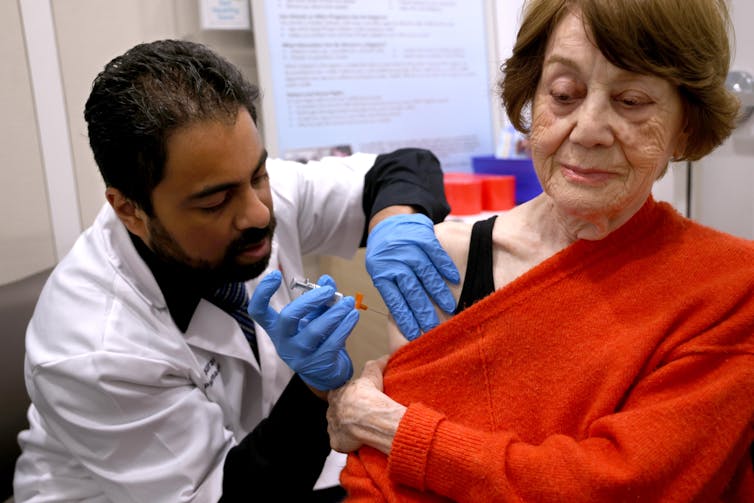
An older woman in a red sweater is getting a shot in her arm by a man in a doctor's coat with blue gloves on.
Getting the flu shot reduces the risk of severe illness and hospitalization, especially for people who are older or have other medical conditions.
Genaro Molina/Getty Images

When should you consider going to an emergency room?

Anytime breathing becomes difficult, or you experience severe chest pain or headaches that are abnormal, that’s something that we want you to seek medical care for right away. And of course, if somebody’s worried about a symptom, we’re here 365 days a year, and we’re happy to help.

If you are feeling bad – such as a mild headache, body aches, fever, sometimes some cough and congestion, and as I mentioned with this flu, potentially vomiting and diarrhea – that is very normal.

If it’s flu, COVID-19 or RSV in a healthy, mildly symptomatic patient, it doesn’t really matter what they have, because there’s not a specific treatment. There’s not anything that we can do that’s going to make them better, other than “tincture of time,” meaning lots of rest.

If you have underlying medical problems, such as diabetes, lung problems or are immune-compromised, and you are experiencing severe symptoms, you should at the very least see your primary care doctor if not the emergency department.

Is it important to get tested for the sake of knowing what you have?

A lot of patients want to know what virus they have, but if you’re young and healthy, there’s not really a need for testing other than surveillance.

Colorado’s infectious disease trackers say wastewater surveillance is the No. 1 way to figure out what infectious diseases are in the community. We can’t get a comprehensive sample through hospitals and clinics, because there are so many people who are home, don’t get tested and do not seek health care.

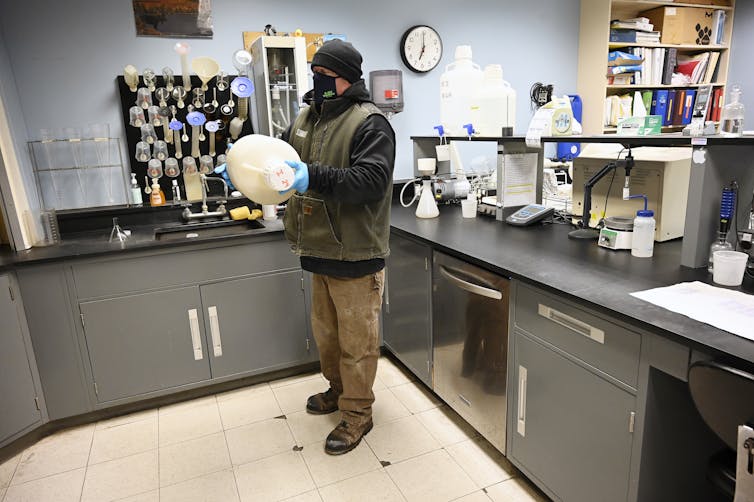
A man wearing a mask and gloves shakes a large jug in a room with lab equipment.
In Colorado and other states, wastewater is tested for infectious pathogens, including influenza, COVID-19 and RSV. This testing indicates the prevalence of a virus in a given community.
Portland Press Herald/Getty Images

Right now, wastewater samples in Colorado are testing extraordinarily high for the flu and pretty low for RSV and COVID-19. Wastewater is a very reliable test because everybody produces wastewater.

In addition, it’s important for the overall health care system that laboratory testing be used judiciously. Testing does help us understand what’s in the community. But from a hospital and emergency department lens, the more tests we send to the lab that have to be run, the more testing services for other illnesses get backed up. It also adds a burden to nursing and other clinical staff, as well as costs for the patient and hospital.

But if a patient is sick with manageable symptoms from a virus, it’s the same standard advice: Stay at home, wash your hands and consider a mask if you have to go out in public.

The Conversation

Jean Hoffman does not work for, consult, own shares in or receive funding from any company or organization that would benefit from this article, and has disclosed no relevant affiliations beyond their academic appointment.

ref. Colorado ranks among the highest states in the country for flu – an emergency room physician describes why the 2025-26 flu season is hitting hard – https://theconversation.com/colorado-ranks-among-the-highest-states-in-the-country-for-flu-an-emergency-room-physician-describes-why-the-2025-26-flu-season-is-hitting-hard-273069

The book that changed my mind – 12 experts share a perspective-shifting read

Source: The Conversation – UK – By Mark Lorch, Professor of Science Communication and Chemistry, University of Hull

Sylverarts Vectors/Shutterstock

Our beliefs aren’t fixed. They’re shaped, stretched and sometimes overturned by the ideas we encounter as we move through life. For many of us, books are the moments where that shift happens – a sentence that lingers, an argument that unsettles, a story that re-frames how we see the world. We asked 12 academic experts to share the book that challenged their assumptions and changed their thinking in a lasting way.

1. A Very Short Introduction to the Philosophy of Science (2002)

For much of my life as a scientist, I struggled to understand how anyone could have religious faith and follow the scientific method. Then I came across A Very Short Introduction to the Philosophy of Science and within it philosopher David Hume’s problem with inductive reasoning.

Induction lets us predict from patterns – if 11 eggs in a dozen are rotten, we expect the 12th to be rotten too. But as Hume notes, this reasoning is logically flawed: we justify induction by saying it has worked before, which is circular because it uses induction to defend itself.

This line of thought reshaped my views. There is no ultimate logical proof that induction works; I simply believe it does. In other words, I have faith in the scientific method.

Realising this stopped me fretting about how others reconcile science and religion. Faith and evidence coexist in my own thinking. I’m no more inclined to believe in a god, but I no longer have a problem understanding how faith and science can inhabit the same mind.

Mark Lorch is a biochemist, writer, and Professor of science communication

2. Nature is a Human Right, edited by Ellen Miles (2022)

Like so many others, I found myself gravitating back towards the natural world during the COVID pandemic, both in my academic work and my personal life. And I’d come to understand how disconnection and detachment from nature was harming the health and happiness of millions of people worldwide. But I hadn’t given much serious thought to equitable access to nature until I’d read Nature Is a Human Right.

The collection of essays and writings in this edited volume irrevocably convinced me that contact with, and access to, the natural world should not just be a privilege for some, but enshrined as a basic right for everyone.

The collection of ideas and arguments in this book – sometimes uncomfortable, sometimes upsetting – has persuaded me that we have to take action, not just to protect the natural world, but to ensure that contact with nature is a birthright for everyone.

Viren Swami is a professor of psychology

3. The Sketchnote Handbook by Mike Rhode (2012)

When I completed my PhD in 2012, I felt a strong pressure to adhere to a narrow view of computer science, where creativity and storytelling were often seen as superfluous. Then I attended a sketchnotes workshop, a practice I had never encountered before. Sketchnotes is a visual note-taking method that combines words and sketches to support creativity and memory recall.

The facilitator recommended Rohde’s book, and during my postdoctoral research, it quietly transformed my perspective. Joining the sketchnotes community, I met people from diverse backgrounds – teachers, chief technical officers and physicists – creating compelling visual stories. The book and community showed me that sketching should not be overlooked in computer science. Something I had always kept as a personal practice could become central to my research and teaching.

I challenged the stereotype of sketching as a “soft skill” and embraced it as a disciplined, creative and impactful way to understand people and their interactions with technology. Now, sketching is not just a tool, but a mindset that shapes everything I do.

Makayla Lewis is an senior lecturer of computer science (user experience)

4. Children of Time by Adrian Tchaikovsky (2015)

In Tchaikovsky’s novel, Earth has become uninhabitable and humanity spreads out into the stars in search of a new home. After much trial and error, we find a viable world – but it’s already home to a species of intelligent spiders.

I’m arachnophobic, so this novel might seem like an odd choice. However, Children of Time is told partly from the spiders’ perspective, and though they don’t think exactly like us, we can empathise with them as we follow the sometimes-painful growth of their civilisation, and their inevitable encounter with scary alien invaders – us.

I’m not claiming this novel to be a miracle cure, but it prompted me to reflect on my anxiety. I’m not going to get a pet tarantula anytime soon, but I’m more mindful of spiders than I was before. They really are quite fascinating little creatures when you get to know them.

Jack Fennell is a lecturer in English

5. On the Plurality of Worlds by David Lewis (1986)

Is the past real? How about the future? Common sense says no: the present encapsulates all existence. I used to agree. Then, in my early 20s, I read On the Plurality of Worlds. David Lewis’s metaphysical masterpiece changed my mind about many things, but most profoundly about time.

Lewis convinced me that time is analogous to space. Spatially distant objects (a café in Paris, a crater on Mars) are real, even if they aren’t “here”. Lewis argues time is identical. The past and future are merely temporal locations.

This leads to a stunning conclusion: Julius Caesar and the dinosaurs have just as much existence as you and I, even if they aren’t “now”. They haven’t vanished into nothingness. They are simply located elsewhere in the temporal dimension. The same applies to future things and events. Once I accepted this, I stopped seeing reality as a fleeting moment and began to see it as a vast, existing landscape of time. It was a complete conceptual shift that has remained with me ever since.

Benjamin L. Curtis is a senior lecturer in philosophy

6. Humankind: A Hopeful History and Utopia for Realists by Rutger Bregman (2019)

From criminal punishment to tax incentives, modern society assumes humans need guidance to avoid their worst instincts. Humankind by Rutger Bregman offers a very different perspective on our species and how peace can be achieved.

Have you ever felt embarrassed by blushing? You shouldn’t – blushing is a “superpower”. Our capacity to show shame helps form complex social bonds. History shows the most stable societies temper leaders’ ambitions and promote humility. Humans generally prioritise fairness over harm, and when violence occurs, it’s often due to hierarchy, not innate instinct. Bregman cites studies showing that leadership can reduce empathy, increase selfishness and encourage cheating.

The book challenged my view of government. I’d believed strong laws create order, but often it’s attempts to control others that empower strong leaders and cause instability. True social order comes from daily human relationships. A better world requires rethinking how we distribute power.

Michael Strange is an associate professor of international relations

7. Shikasta by Doris Lessing (1979)

When I was 18, Doris Lessing’s Shikasta first crossed my path. Even if I now, 46 years later, no longer remember the details of the plot, I still recall the unsettling feeling the novel gave me. It was as if I had glimpsed a dark future.

Materialism, egoism, war and unemployment thrived while deeper values as striving for collaboration or peace (ha!) vanished in to the air. When I read the book, I started to look upon the state of the world in new light. I wondered if the injustices on our planet could be avoided. And what we could expect in a nearby future.

I was both a bit scared and at the same time had the feeling that I had understood or seen something others didn’t talk about. For a long time, I waited to see Lessing’s vision unfold. Perhaps, in some ways, it now has.

Eva Wennås Brante is an associate professor in educational science

8. Sapiens by Yuval Noah Harari (2011)

Sapiens brilliantly weaves its author’s expertise in anthropology, behavioural science, geopolitics and socioeconomics into an enthralling, astute and thoroughly entertaining book that challenged, demolished and rebuilt my worldview. The unexpected ways creating, sharing and learning from stories have influenced who we trust, what we believe and how we govern ourselves, as individuals and as organised groups, are masterfully explained in the book.

In particular, the exploration of the impact of storytelling on our communities and the way we define, experience and shape culture fascinated me.

Harari draws from a wealth of real world examples that offer a fresh perspective on key historical events and core aspects of our societies that we routinely take for granted. I gained a new understanding of life and how to live it.

Alina Patelli is a senior lecturer in applied artificial intelligence

9. 50 Simple Things You Can Do to Save the Earth (1990)

In the 90s, my father gave me 50 Simple Things You Can Do to Save the Earth by the Earth Works Group. It started with short summaries on global environmental concerns at the time (the hole in the ozone layer, pollution, biodiversity loss). But then, importantly, it proceeded to give readers ideas about practical changes in their lives they could do to address those global concerns.

As a child, this book taught me that these were global issues but that my actions mattered, that we all had the power to help our natural world. It changed my mind about who can solve global problems and helped set me on a path to get involved in environmental conservation, which eventually became a career in marine climate change research. Today, this experience tells me that it is never too early to start thinking about what we as individuals can do for nature.

Ana M. Queirós is a professor in climate change and marine biology

10. Man’s Search for Meaning by Viktor Frankl (1946)

During my postdoctoral research, I was drawn towards Holocaust testimonies including Survival in Auschwitz by Primo Levi (1947) and Night by Elie Wiesel (1956). These are powerful, remarkable memoirs, but the book that redirected my thoughts was Viktor Frankl’s Man’s Search for Meaning.

Holocaust testimonies explore the experience of struggle, the shock of witnessing the unthinkable, the terrifying logistics of a genocide. But Man’s Search for Meaning also offers the reader an insight into Frankl’s enlightened psychological perspective as this book was written while he was still inside the camp, rather than as a reflection afterwards.

Frankl was an established psychiatrist when sent to Auschwitz, but his reflections on the meaning of abject psychological and physical suffering pushed him into philosophical territory. In the darkest place on Earth, he found an existential truth: A person can “choose one’s attitude in any set of given circumstances, to choose one’s own way”. He refers to this choice as “the last inner freedom … a spiritual freedom” in the face of despair and death.

Laura Stephenson is a senior lecturer in film

11. The Concept of the Mind by Gilbert Ryle (1949)

Pre-eminent among the books that have forever changed my thinking is Gilbert Ryle’s The Concept of Mind. In medical school I learnt all about the human sciences but was baffled by psychology, a parallel universe where the laws of physics didn’t seem to apply. Ryle explained that there’s no “ghost in the machine” but that we can describe our one world using a physical or a psychological vocabulary.

When I worked as a psychiatrist, The Concept of Mind showed me that different models of mental illness based on neurophysiology or psychoanalysis or behaviourism or social rehabilitation could all, in principle, be correct.

So I was free to help change patients minds by altering their neurochemistry or by psychological means, confident that their brains would also heal.

Ryle implies that inferences about mental facts should be as carefully drawn as those about physical phenomena. But it has seemed to me, as a mental capacity law researcher, that the process of inferring capacity is tortuous and irretrievably subjective. The Concept of Mind has given me the confidence to challenge the law and to provide radical alternatives. I am greatly in Gilbert Ryle’s debt.

Jonathan Fisk is a PhD candidate in law

12. The Mushroom at the End of The World by Anna Tsing (2015)

We are not used to reading stories without human heroes – and yet, as researchers, these are exactly the narratives we often reproduce. During my PhD, I spent four months in Botswana and South Africa chasing tails (and tales) of African wild dogs. For me, this is where Anna Tsing’s work came alive.

Though much of the research in my field tells us that non-human beings are active participants in shaping encounters and environments, this co-production is rarely extended to our work. The Mushroom at the End of the World asks us to “bring back curiosity”, noticing beyond seeing, opening up a multi-sensory world of presence and possibility.

In the field, this meant adapting my methods in situ, incorporating sound and smell to attend to wild dogs’ ways of moving through and understanding space. This counter-mapping transgresses imagined human boundaries and paths, opening up ways to research and respond to more-than human worlds.

Anna Bedenk-Smith is a lecturer in human geography

Has a book ever changed your mind? Let us know in the comments below


Looking for something good? Cut through the noise with a carefully curated selection of the latest releases, live events and exhibitions, straight to your inbox every fortnight, on Fridays. Sign up here.


This article features references to books that have been included for editorial reasons, and may contain links to bookshop.org. If you click on one of the links and go on to buy something from bookshop.org The Conversation UK may earn a commission.

The Conversation

The authors do not work for, consult, own shares in or receive funding from any company or organisation that would benefit from this article, and have disclosed no relevant affiliations beyond their academic appointment.

ref. The book that changed my mind – 12 experts share a perspective-shifting read – https://theconversation.com/the-book-that-changed-my-mind-12-experts-share-a-perspective-shifting-read-271243

Indoor air pollution is a global health issue, not just a domestic heating one

Source: The Conversation – UK – By Avidesh Seenath, Course Director, MSc Environmental Change and Management, University of Oxford

A kitchen in a traditional house with smoke from a tea kettle heated with wood fire in a village in Nagaland, India. balajisrinivasan/Shutterstock

When indoor air pollution makes the news in western countries, it often feels like a local issue. One week it focuses on wood-burning stoves. Another it is gas cookers or the question of whether people should open their windows more often in winter.

In developing countries, indoor air pollution is framed as a development problem, linked to people cooking and heating with wood, charcoal or other solid fuels, often in homes with limited ventilation.

These two debates rarely meet. Our new study, which analyses air pollution mortality risk across 150 countries, suggests they describe the same public health challenge.

We have found that air pollution, including exposure inside homes, contributes substantially to premature death worldwide – that is, deaths occurring earlier than expected due to air pollution-related increases in disease risk. Exposure levels and sources vary widely, but indoor air pollution consistently adds to national mortality risk across income levels.


Read more:
Toxic air in the home is a global health emergency


One problem, different sources

When indoor air pollutants enter the lungs, they can trigger inflammation and place long-term strain on the heart and respiratory system. The same biological processes occur when pollution comes from a wood stove in a rural village or from a poorly ventilated cooker in a modern flat.

Our study does not measure household-level exposure or behaviour. Instead, taking a wider view, we studied country-level patterns and examined how access to clean cooking fuels, electricity, healthcare and broader socioeconomic conditions relate to air pollution mortality risk.

Our results show a clear and consistent pattern. Countries such as the UK with greater access to clean household energy and stronger health systems experience much lower mortality risk linked to air pollution. Countries such as Benin, Cameroon, Guinea, Sierra Leone and Togo, where energy deprivation remains widespread, face far higher risks.

Most existing research on indoor air pollution focuses on rural households and communities. Such work is essential, but it misses the bigger structural picture. Our research reveals the global picture and shows that the same broad drivers influence risk across the world.

At a macro level, access to clean fuels and reliable electricity lowers air pollution mortality risk. Higher healthcare spending also decreases this risk. Larger rural populations and limited household energy access increases such risk.

These patterns help explain why air pollution deaths remain concentrated in emerging and developing economies, while advanced economies experience far fewer deaths, even though air pollution has not disappeared. They also show that indoor and outdoor air pollution cannot be treated as separate problems, because both reflect how energy is produced, used and regulated.

toast burning in red toaster, woman in background in modern kitchen
Indoor air pollution is a public health issue all around the world.
Andrey_Popov/Shutterstock

In the UK, people spend most of their time indoors, especially during winter. Heating, cooking and reduced ventilation can raise indoor pollution levels, particularly in poorly ventilated homes. Recent debates about wood-burning stoves reflect growing concern about these risks.

Our research does not assess indoor air quality in UK homes directly. What it offers instead is context. It places the UK debate within a wider pattern where household energy systems shape health outcomes.

The situation in the UK looks less like a narrow lifestyle issue and more like part of a broader global environmental health challenge. This links indoor air quality to energy policy, housing standards and long-term public health costs, not just personal choice.


Read more:
Wood-burning stoves are a serious problem for your health – and the environment


On one hand, reducing indoor air pollution does not require drastic change in the UK. Simple steps such as using extractor fans when cooking, ventilating homes regularly and ensuring heating appliances are properly maintained can lower exposure. On the other hand, reducing indoor air pollution in developing countries requires access to clean cooking fuels and technology, rural electrification and greater healthcare expenditure.

At a wider level, our findings underline the importance of clean household energy and strong health systems in reducing deaths linked to air pollution. These factors contribute to risk levels across countries, even when the sources of pollution differ.

Indoor air pollution is often treated as either a development issue or a domestic heating issue. Our research suggests it makes more sense to see it as one shared global and national health challenge, with common health effects and structural roots. This connects the indoor air pollution issue more directly to global public health – and the case for action becomes much clearer.


Don’t have time to read about climate change as much as you’d like?

Get a weekly roundup in your inbox instead. Every Wednesday, The Conversation’s environment editor writes Imagine, a short email that goes a little deeper into just one climate issue. Join the 47,000+ readers who’ve subscribed so far.


The Conversation

The authors do not work for, consult, own shares in or receive funding from any company or organisation that would benefit from this article, and have disclosed no relevant affiliations beyond their academic appointment.

ref. Indoor air pollution is a global health issue, not just a domestic heating one – https://theconversation.com/indoor-air-pollution-is-a-global-health-issue-not-just-a-domestic-heating-one-273065