Scary stories for kids: Watership Down made me aware of my mortality at four

Source: The Conversation – UK – By Aislinn Clarke, Lecturer in Film Studies, Queen’s University Belfast

When I think of my first encounter with horror, I don’t think of a vampire, a witch, or even a possessed girl’s head spinning round (I saw The Exorcist at the age of seven). I think of a Sun God, I think of teeth and claws slicked with blood, I think of the Black Rabbit of Death. And he wasn’t even the bad guy.

I’m not talking about some campy folk horror from the 1960s. I’m talking about the 1978 animated version of Richard Adams’ Watership Down.

I was perhaps four when I saw it. The opening sequence remains a core memory: the myth of the Prince with a Thousand Enemies, the Original Rabbit, rendered in gorgeous animation that evoked Aboriginal art via the films of New Zealand artist Len Lye. Then the great crimson wave of blood flowing across the fields. Death, cold and indiscriminate, was coming to the gentle slopes of Watership Down.

That was the moment I first felt awe and terror at the fragility of life. And the utter indifference of death. The kind of awe and terror we assume children’s minds can neither comprehend nor bear.

And that was just the beginning.


This article is part of a series of expert recommendations of spooky stories – on screen and in print – for brave young souls. From the surprisingly dark depths of Watership Down to Tim Burton’s delightfully eerie kid-friendly films, there’s a whole haunted world out there just waiting for kids to explore. Dare to dive in here.


It’s easy to assume that because Watership Down is a cartoon about woodland animals, it must be gentle. It isn’t. And that’s why it’s so powerful. My parents had already let my older siblings and I watch the campy spectacle of Hammer Horror at Halloween, but they couldn’t have guessed the deeper impact of Adams’s rabbits – they let me watch alone from the safe distance of the shag rug one sunny afternoon in 1984.

Nothing terrible had yet happened to me. I hadn’t known grief or loss. Watership Down cracked that open. For the first time, I understood, viscerally, that all the earth’s creatures – including myself – are mortal, and that death was coming for us all.

But don’t let that put you off sharing it with your four-year-old.

The value of horror is that it gives us a safe space to process fear. It takes the anxieties we can’t name and turns them into something we can face. I watched horror films with my family every weekend – Poltergeist, Day of the Dead, The Evil Dead.

Afterwards I slept like the actual dead. Soundly. Peacefully. I didn’t have nightmares, even if I did dream of rabbits. I didn’t need nightmares. For, what is a horror film, after all, if not a nightmare you share with people you love – a nightmare that can be switched off and tucked back into its case?

And, yes, I am saying that Watership Down is a horror film. Like Lovecraft’s cosmic horror, like The Thing or Alien, the terror of Watership Down arises from mortal insignificance. We too are small, powerless, unmoored, no different to the rabbits fleeing the down.

The film’s horror depends on empathy, the recognition that every creature wants what we want: to live, to love, to survive. Children understand that we are not special.

However, it is perhaps the most primal and defining characteristic of humanity that, not only do we fear death, but we know it is coming. Such darkness is part of being human and we can’t insulate children from the fullness of being human.

If we try, the chances are that the darkness will come out anyway in their nightmares, understood as a terrible thing that their own mind created in the dead of night. To share a film like Watership Down with them is to say: “I trust you with this. You are ready for awe, wonder, and yes, for fear too. And it is because we fear that we hope.”

Richard Adams opened his novel with a gruesome quote from the ancient Greek tragedian Aeschylus and added: “If that makes the child put it back on the shelf, then to Hell with the child.”

His provocation was not contempt but a refusal to patronise. Children, he argued, deserve stories that take them seriously. Indeed, to live without curiosity, without discomfort, without provocation, is the stuff of nightmares. That is hell.

Both the book and the film trust their audience to confront mortality honestly. That trust makes for stronger children – and stronger adults. Adams rejected allegorical readings of his story, insisting that this gut wrenching heroes’ journey, with its keen sense of justice, really was about rabbits.

Children understand that not everything has to be about us. Only adults insist on being the default main character. Children know that in this beautiful, terrible world, everything – even us – just wants to live.

Perhaps all of this is more than one would expect from a cartoon film about woodland animals. Maybe we could all use a sunny afternoon on the rug, watching Watership Down, and remembering what it is like to be small and afraid and full of hope.


Watership Down has a PG rating, which means some material may not be suitable for young children, so parental guidance is advised.

This article features references to books that have been included for editorial reasons, and may contain links to bookshop.org. If you click on one of the links and go on to buy something from bookshop.org The Conversation UK may earn a commission.


Looking for something good? Cut through the noise with a carefully curated selection of the latest releases, live events and exhibitions, straight to your inbox every fortnight, on Fridays. Sign up here.


The Conversation

Aislinn Clarke does not work for, consult, own shares in or receive funding from any company or organisation that would benefit from this article, and has disclosed no relevant affiliations beyond their academic appointment.

ref. Scary stories for kids: Watership Down made me aware of my mortality at four – https://theconversation.com/scary-stories-for-kids-watership-down-made-me-aware-of-my-mortality-at-four-267052
Protecting Brazil and Indonesia’s tropical forests requires political will, law enforcement and public pressure

Source: The Conversation – UK – By Rachael Garrett, Moran Professor of Conservation and Development, University of Cambridge

Tarcisio Schnaider/Shutterstock

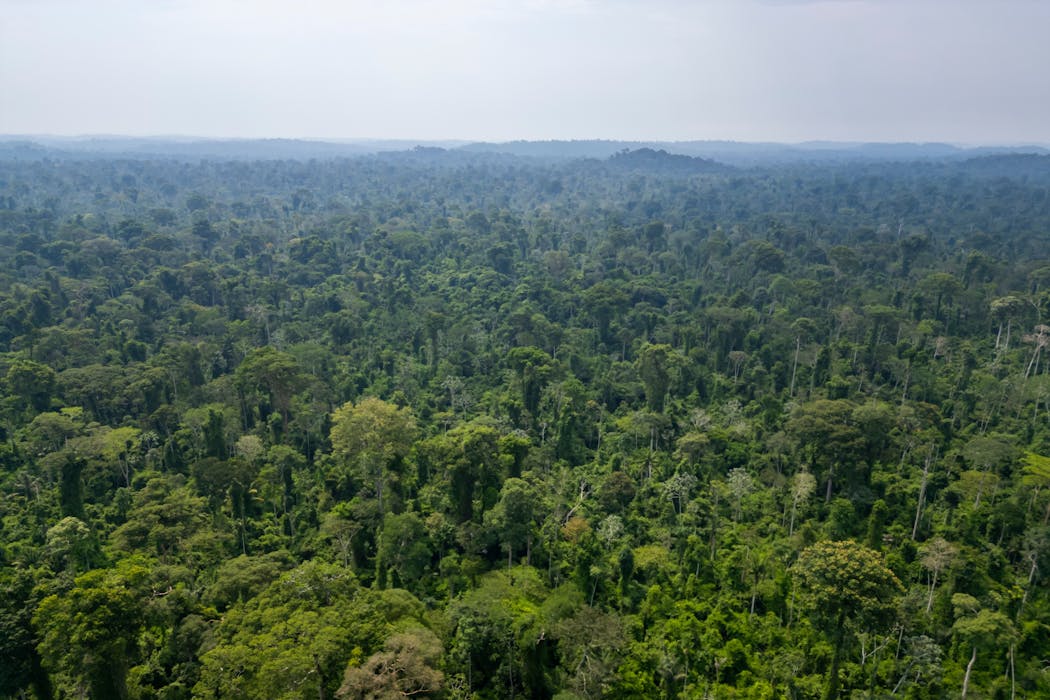
The vast tropical forest nations of Brazil and Indonesia are both home to millions of people, including Indigenous communities. They store enormous amounts of carbon to protect our climate and are home to staggering numbers of species found nowhere else in the world.

How are their forests still standing while other forests have fallen? Answering this question is critical in the current global moment. As people gear up for the 30th UN climate summit (Cop30) in Belém, Brazil, in November, this “Amazon Cop” could help galvanise action to save the world’s forests with a clearer blueprint for success.

While progress at global climate and biodiversity summits often seems limited, our study highlights how sustained pressure from civil society and international commitments can lead to improved political will for forest protection.

In the agricultural powerhouse of Brazil, 60% of the land area (511 million hectares – more than 20 times the size of the UK) is still covered in natural forests. In the diverse archipelago of Indonesia, known for its globally important production of palm oil, among other tropical crops, 50% of the land (nearly 94 million hectares) is remaining.

Last year, global records for deforestation were shattered, with 6.7 million hectares of pristine tropical forests being cleared – an area almost the size of Ireland. Even by recent standards this was a huge amount of loss, driven by raging fires in the hottest year on record. Yet over a billion hectares of tropical forests remain. Two of the forest giants – Brazil and Indonesia – have both bucked the trend of increasing forest loss at different times in recent years.

aerial shot of rainforest and river
Brazil reduced deforestation in the Amazon rainforest by 84% between 2004 and 2012.
Curioso.Photography/Shutterstock

Brazil reduced deforestation in the Amazon rainforest by 84% between 2004 and 2012. However, deforestation picked up again in the late 2010s and under President Jair Bolsonaro’s administration.

In Indonesia, a similarly impressive 78% reduction in deforestation was achieved between 2016, when devastating forest fires created a haze across south-east Asia, and 2021. Fortunately these reductions have been sustained, at least for now.

To understand the reasons for Brazil and Indonesia’s success, we brought together the world’s leading experts in forest conservation in these two regions. Most of them came from these two countries. By asking our experts to participate in multiple rounds of surveys and providing feedback on responses from one round to the next, we could identify the full range of factors that are important for protecting forests. This approach, known as a Delphi process, enabled us to avoid groupthink or excessive influence by strong-willed or well-respected characters.

Still standing?

Our results were clear: across both countries, our experts judged that political will and law enforcement were by far the most important factors for protecting forests.

The study revealed how international diplomacy and advocacy by civil society have been pivotal in creating the awareness and demand for political leadership to emerge. Moving to the 2010s, Indigenous rights were seen as an important complement to political will and law enforcement.

These results point to the need to accelerate pressure on policymakers to protect forests and continue to spread public awareness. This is a difficult task with a human toll: worldwide, more than 2100 environmental defenders were killed between 2012 and 2023.

Political will to conserve forests also waned in the late 2010s in Brazil, and is in question under the current Indonesian administration.

Yet the need for instant results and a temptation to pursue the latest big idea should not overshadow the long-lasting and hard-won consequences of sustained pressure for good forest stewardship.

As policymakers, activists and scientists from around the world converge on the Amazon for the next UN climate summit, the message from our research is clear: above the fray of tense negotiations and discussions over policy minutiae, political leadership and persistent advocacy can and do protect forests. We’ve done it before, and we can do it again.


Don’t have time to read about climate change as much as you’d like?

Get a weekly roundup in your inbox instead. Every Wednesday, The Conversation’s environment editor writes Imagine, a short email that goes a little deeper into just one climate issue. Join the 45,000+ readers who’ve subscribed so far.


The Conversation

Rachael Garrett consults for the businesses Sumthing and Rainforest Builder. She receives funding from the European Research Council (ERC) grant 949932 and the company Suzano. She is affiliated with the Global Land Programme as co-chair of the Science Steering Committee and the UK Joint Nature Conservation Committee. She serves on the UN Science Panel for the Amazon and UN Forum on Sustainability Standards Academic Advisory Board.

Joss Lyons-White receives funding from the European Research Council (ERC) grant 949932.

Matthew Spencer works for IDH, which works on forest-risk commodities and agricultural market transformation and is funded by European government donors and philanthropic foundations. His visiting fellowship at the Cambridge Conservation Initiative is supported by the Turner Kirk Trust.

ref. Protecting Brazil and Indonesia’s tropical forests requires political will, law enforcement and public pressure – https://theconversation.com/protecting-brazil-and-indonesias-tropical-forests-requires-political-will-law-enforcement-and-public-pressure-261958

Le développement des études supérieures entre « faux procès » et vraies questions…

Source: The Conversation – in French – By Marie Duru-Bellat, Professeure des universités émérite en sociologie, Centre de recherche sur les inégalités sociales (CRIS), Sciences Po

Les études s’allongent, le niveau de diplôme progresse chez les jeunes. Mais cela se traduit-il vraiment par une hausse des compétences ? Et dans quelle mesure cet investissement apporte-t-il une plus-value sur le marché du travail ? Éclairages sur un débat qui invite à repenser les liens entre formation et emploi.


Dans un article intitulé « Le faux procès des études supérieures trop longues », et publié par The Conversation, l’économiste Guillaume Allègre revient sur les discours souvent idéologiques et les analyses, plus sérieuses, qui interrogent dans un sens critique le développement des études supérieures.

Ce développement est particulièrement marqué depuis le début du XXIe siècle (2,16 millions d’étudiants, dont 1,397 million à l’université, en 2000, contre 2,96 millions, dont 1,6 million à l’université, en 2023), accompagné, sur la longue période, de conséquences massives sur l’entrée dans la vie. En 1986, à l’âge de 21 ans, environ 20 % des jeunes étaient encore scolarisés, c’est le cas de près de la moitié d’entre eux, en 2021.

Pourtant, pour Guillaume Allègre, « en durée, les jeunes ne font pas plus d’études qu’avant », et l’accroissement du nombre de diplômés s’explique par la baisse des redoublements.

Des diplômes, mais quel « capital humain » ?

Les jeunes parviendraient donc à des niveaux de diplôme plus élevés du fait de carrières scolaires moins perturbées par des redoublements. La baisse du redoublement – en elle-même positive vu l’inefficacité, largement démontrée, de cette pratique – a été le fruit d’une politique volontariste. On a laissé passer plus facilement dans la classe supérieure, mais personne n’oserait dire que c’est parce que les élèves ou les étudiants étaient (tout simplement) meilleurs…

À l’école primaire, on observe une baisse du niveau des élèves, si l’on se réfère aux notes d’information de la direction de l’évaluation, de la prospective et de la performance (DEPP) du ministère de l’éducation nationale, de 2008 à 2020.

Dans l’enseignement supérieur, où il n’existe pas de mesures standardisées de ce que savent les étudiants, certains chercheurs, constatant que « les règles de validation des enseignements par les compensations de notes n’ont jamais autant favorisé l’obtention des diplômes », suggèrent plutôt « une tolérance nouvelle, bon gré mal gré, à la fragilité des aptitudes scolaires des étudiants ».

On peut donc craindre que ces jeunes qui ont moins redoublé et qui font des études plus longues n’aient pas, malgré un niveau formel d’instruction plus élevé, des acquis proportionnellement plus importants. Certes, plus de jeunes qui vont plus loin, moins de jeunes qui font du surplace en redoublant, c’est en moyenne une hausse de leurs acquis, mais à niveau de diplôme identique, ils en savent moins, ce qui traduit une baisse d’efficacité de l’école.

Il y a donc de la marge entre le diplôme et le « capital humain » qu’il est censé certifier, ce qui devrait interroger les économistes dans leur a priori favorable à l’élévation du niveau d’éducation.

On constate ainsi que si la France compte autant, voire plus, de diplômés du supérieur que la plupart des pays voisins, leur niveau de compétences en littératie – la capacité à maîtriser l’écrit – n’est pas toujours très supérieur à celui de personnes moins diplômées d’autres pays. Par exemple, le niveau des Néerlandais dotés d’un diplôme de second cycle du secondaire est très proche de celui des Français diplômés de l’enseignement supérieur, selon les évaluations de l’Organisation de coopération et de développement économiques (OCDE).

Or,pour Guillaume Allègre, dès lors que le diplôme reste rentable, il est « individuellement utile ». Il l’est effectivement pour se placer : la rentabilité relative d’un diplôme, par rapport au diplôme immédiatement inférieur, est incontestable.

D’où vient alors ce leitmotiv des jeunes qui se plaignent de la situation qu’ils trouvent au sortir de leurs études, sur le mode de « Avec un master, t’as plus rien » ? Tout simplement du fait qu’ils considèrent également le rendement « absolu » du diplôme, le poste qu’il permet d’obtenir ; et là, le déclassement est réel et incontesté chez les économistes, par rapport à ce que le diplôme permettait d’obtenir dans un passé pas si lointain, à l’époque de leurs parents notamment.

Se former à entrer dans la vie…

Au-delà de cette quête de rendement économique, il faut se demander ce qu’ont appris ces étudiants, au-delà des savoirs académiques souvent pointus délivrés par les enseignants-chercheurs des universités (ceci est moins vrai des filières professionnalisées), en d’autres termes ce qu’on apprend à fréquenter longtemps et exclusivement l’enseignement supérieur.

Certaines enquêtes montrent que la quête d’un diplôme toujours plus élevé nourrit chez les étudiants des attitudes qui peuvent s’avérer dysfonctionnelles à l’heure de l’insertion. Lors de l’entrée sur le marché du travail, ils réalisent parfois que leur diplôme ne sera pas forcément apprécié dans un monde où la valorisation du savoir pour le savoir n’a pas cours.

Formés, dans les filières universitaires généralistes du moins, à des savoirs dont les applications concrètes sont rarement dégagées, ils découvrent que la vie professionnelle minimise de fait la valeur des connaissances théoriques au profit de ce qu’elles permettent de réaliser. Une véritable reconversion s’impose parfois pour désapprendre très vite ce qu’on a mis du temps à apprendre.


À lire aussi :
« L’emprise scolaire » : les diplômes ont-ils trop de poids sur nos vies ?


Par contraste, quand ils ont combiné études et emploi, les étudiants estiment pour les trois quarts d’entre eux qu’un travail rémunéré occupé pendant leurs études apporte des compétences et des réseaux (même, à hauteur des deux tiers, quand il s’agit d’un travail non qualifié). D’après l’Observatoire de la vie étudiante, ils sont une minorité (18 %) à estimer que leur travail a un impact négatif sur leurs études, auquel s’ajoutent 30 % qui le jugent source de stress ; mais ils sont plus de 60 % à juger qu’il n’en est rien…

Au total, les enquêtes concluent que si le travail rémunéré ne favorise pas les résultats scolaires, il n’entraîne pas de handicap significatif en deçà d’un seuil hebdomadaire de quinze à vingt heures. Et, par ailleurs, il favoriserait plutôt l’insertion professionnelle.

Articuler formation et emploi

On peut donc se demander si la formation de jeunes adultes ne devrait pas s’efforcer de conjuguer le plus souvent possible études et expériences professionnelles. En France, le modèle de l’élève des classes préparatoires, entièrement absorbé par ses études, domine et, en arrière-plan, la conviction que ce que notre pays peut offrir de mieux à la jeunesse, c’est de rester le plus longtemps possible dans les enceintes scolaires.

La proposition de Guillaume Allègre développée dans un rapport de Terra Nova de 2010 s’inspire des dispositifs de type « allocation d’études » qui existent dans certains pays du Nord, pour favoriser l’autonomie des jeunes. Mais rappelons que ces pays sélectionnent à l’entrée du supérieur, et sont donc moins exposés que nous au risque de voir des étudiants s’engager dans des nasses sans débouchés.

Surtout, le cumul emploi-études est bien moins répandu dans notre pays que chez nombre de nos voisins – Danemark, Pays-Bas, Royaume-Uni ou Allemagne. On pourrait tout à fait imaginer des « emplois pour étudiants », adaptés à leur emploi du temps, comme il existe dans de nombreux campus américains. Les étudiants y gagneraient en diversité d’expériences – possiblement aussi formatrices que ce qu’on apprend en milieu universitaire – et en autonomie financière.


À lire aussi :
Le mérite est-il encore un idéal démocratique ?


Qu’en est-il pour le pays ? Sans verser dans la polémique sur le thème « les Français ne travaillent pas assez », il faut rappeler, sur la base notamment de la note 110 du Conseil d’Analyse économique, publiée en mars 2025, « Objectif “plein emploi” » que ce n’est pas la durée annuelle de travail des actifs qui distingue la France mais la faiblesse des taux d’emploi et des seniors et des jeunes.

Si la question du travail des « seniors » fait couler beaucoup d’encre, celle du travail des jeunes, en particulier des jeunes en cours d’études, s’avère des plus taboues : le « droit aux études » ne saurait se discuter… sachant qu’on parle en l’occurrence du droit aux études à temps plein.

Si l’on s’attache à la formation des jeunes adultes, favoriser la conjugaison études-emploi serait sans doute une piste intéressante, tout en étant également « rentable » en termes économiques, ce qui n’a pas de raison d’être négligé. Sans évidemment faire le « procès » des études supérieures, il est nécessaire de réfléchir à la formation que nous devons offrir à ces jeunes qui constituent à présent la majorité des générations montantes.

The Conversation

Marie Duru-Bellat ne travaille pas, ne conseille pas, ne possède pas de parts, ne reçoit pas de fonds d’une organisation qui pourrait tirer profit de cet article, et n’a déclaré aucune autre affiliation que son organisme de recherche.

ref. Le développement des études supérieures entre « faux procès » et vraies questions… – https://theconversation.com/le-developpement-des-etudes-superieures-entre-faux-proces-et-vraies-questions-267336

La selección: la importancia de la educación financiera

Source: The Conversation – (in Spanish) – By Elba Astorga, Editora de Economía, The Conversation

pogonici/Shutterstock

Muy pronto en la vida comienza nuestra relación con el dinero: desde las primeras monedas dejadas por Ratoncito Pérez a cambio de pequeños dientes de leche (compra-venta) a las pagas de padres y abuelos (rentas). Y bueno es aprender pronto a gestionarlo.

Empoderar para decidir

La educación financiera no es solo cuestión de concienciar y transmitir información, sino de empoderar a las personas para que se sientan capaces de tomar decisiones acertadas de ahorro e inversión.

Más allá de entender conceptos económicos básicos (inflación, tasas de interés, diversificación), la educación financiera también consiste en aprender a aplicar esos conocimientos en la vida cotidiana.

Para invertir es importante conocer y comprender las características de los productos de inversión y ahorro: cuentas, depósitos, fondos, acciones, bonos. Y, para ahorrar de manera consistente en el tiempo, disciplina: anticipar, o al menos monitorizar, y controlar los ingresos y gastos.

La condición humana

Un elemento que dificulta el ahorro es nuestra propia naturaleza: más allá del pensamiento racional, a la hora de tomar decisiones tendemos a elegir el gasto inmediato y su fogonazo de dopamina a postergar la recompensa del ahorro (y sus intereses). Caemos en la tentación del consumo y dejamos el guardar para más adelante.

La cuestión es que la llegada de las tecnologías financieras ha facilitado tanto los pagos que los usuarios han dejado de percibirlos como lo que son: gastos. Apenas un clic en el ordenador o pasar el teléfono inteligente por la terminal de pago aumentan el riesgo de hacer compras impulsivas y, por tanto, hacen caer la capacidad de ahorro.

La eficiencia fintech pone a prueba, pues, nuestra capacidad de tomar decisiones racionales en el uso de nuestro dinero.

Educación financiera para reducir la desigualdad y la pobreza

La educación financiera trasciende el bienestar de las familias, se globaliza y participa en la consecución de los objetivos de desarrollo sostenible (ODS). Tres ejemplos:

  • Es clave para alcanzar el objetivo 1, la erradicación de la pobreza, pues permite tomar decisiones financieras informadas.

  • La educación financiera de las mujeres es determinante si se quiere alcanzar la igualdad de género (objetivo 4): mejora las perspectivas de autonomía económica y acceso a recursos financieros (préstamos, ahorro, inversión).

  • El diseño y aplicación de programas de educación financiera puede ayudar a reducir la desigualdad económica (objetivo 10).

Las edades del ahorro

Lo cierto es que las decisiones de ahorro e inversión dependen de factores que van más allá del conocimiento, la racionalidad y la autoconfianza: las necesidades y posibilidades financieras no son las mismas comenzando el propio proyecto vital y profesional que alcanzada ya la edad de retiro.

Pero, además, hay que tomar en cuenta la aversión al riesgo, que va a depender del perfil del inversor (de más arriesgado a más conservador) y determinará qué instrumento financiero se adapta mejor a la relación entre su disposición a perder (riesgo) y sus expectativas de ganancias (rentabilidad).

Llegada la jubilación, haber tenido un ahorro planificado y haber sido capaz de tomar decisiones de inversión adecuadas ayudará a obtener unas rentas que, más allá de la pensión, permitan una buena calidad de vida durante un periodo que cada vez tiende a ser más largo.

The Conversation

ref. La selección: la importancia de la educación financiera – https://theconversation.com/la-seleccion-la-importancia-de-la-educacion-financiera-253591

Suplemento cultural: todos somos ‘otakus’

Source: The Conversation – (in Spanish) – By Claudia Lorenzo Rubiera, Editora de Cultura, The Conversation

Imagen de _Guardianes de la noche: la fortaleza infinita_. Cortesía de Sony Pictures

Este texto se publicó por primera vez en nuestro boletín Suplemento cultural, un resumen quincenal de la actualidad cultural y una selección de los mejores artículos de historia, literatura, cine, arte o música. Si quiere recibirlo, puede suscribirse aquí.


Otoño, como todos los años, ha empezado fuertecito en las salas de cine. Se entrelazan varias razones: la vuelta a la rutina, la inmediatez de las entregas de premios, la saturación de festivales de cine… El caso es que, una vez presentados ante la crítica, los estrenos plagados de grandes estrellas esperan a que el público les eleve por encima del resto y produzca grandes beneficios.

Y eso ha ocurrido, aunque no como se predecía en los círculos más cinéfilos. Porque, hace unas semanas, en los primeros puestos de la recaudación emergió una sorpresa. O, al menos, una sorpresa para quien no lo tuviese en el radar: Guardianes de la noche: la fortaleza infinita. La película, secuela del anime televisivo del mismo nombre, se estrenaba con la idea de triunfar en salas, habida cuenta de que eso había hecho el anterior largometraje en 2020. Pero más que triunfar, ha arrasado, convirtiéndose en el anime más taquillero de la historia.

Eso, unido al hecho de que en las últimas semanas se ha visto cómo, por todo el mundo, los manifestantes de la generación Z enarbolaban la bandera pirata del manga (y también anime) One Piece, indica que el impacto de los dibujos animados japoneses ha alcanzado nuevas cotas. La puerta que se abrió en los 90 y de la que muchos fuimos televidentes -“Oliver, Benji, los magos del balón”- ha ido haciéndose cada vez más y más grande con ayuda, como explica Antonio Horno López, de un incremento de la calidad de los productos. Por eso, el anime ya no es solo cuestión de unos pocos otakus. Es un fenómeno mainstream.

Un Nobel para descubrirlos

“Todos los años igual”, pensamos. Quiniela arriba, quiniela abajo, hacemos predicciones del Premio Nobel de Literatura y, como también esperamos, no damos una. Pues no. No en 2025, cuando finalmente el galardón ha recaído en un nombre que llevaba días circulando: László Krasznahorkai. Para celebrarlo (y situarlo al margen de las apuestas) la profesora de Lengua y literatura húngaras en la Universidad de Barcelona, Emőke Jámbor, ha trazado el perfil de un autor que “combina la melancolía centroeuropea con una visión apocalíptica del mundo moderno”.

Otro Nobel que está de actualidad es el noruego Jon Fosse, cuya nueva novela, Vaim, acaba de publicarse en español. Una excusa tan buena como cualquier otra para repasar sus vínculos con el paisaje rural, mucho más que un telón de fondo en su obra.

50 años del fallecimiento de una memoria

La memoria a veces es traicionera. La memoria histórica de un país, repleta de vaivenes, conflictos y alteraciones, todavía más. Pero conviene saber que hace poco menos de un siglo España ardía creativamente y la modernidad era un tren imparable en el arte, la literatura y la música. Escribo esto mientras escucho a Rubén Lorenzo interpretar al piano las tres danzas de La romería de los cornudos, un ballet con argumento de Federico García Lorca y el dramaturgo Cipriano Rivas Cherif, coreografía original de “La Argentinita” y música compuesta por quien nos ocupa hoy: Gustavo Pittaluga González del Campillo.

De su muerte se acaban de cumplir 50 años -mal recordados por la sociedad española, como indica Juan Pablo Fernández-Cortés- a pesar de que no solo nos dejó su obra sino también sus esfuerzos en el exilio por recordar y mantener la memoria de la España que fue moderna.

La moda se renueva

Hablé no hace mucho de que la temporada no solo se inicia en las salas de cine, también en las pasarelas de moda. Este otoño desembarca una nueva generación de diseñadores (mayoritariamente, todo sea dicho, masculinos) que coparán la dirección de las grandes marcas. Uno de ellos es Jonathan Anderson, al frente de Dior. Sandra Bravo Durán explica a quienes, como yo, están menos familiarizados con la historia de la maison, por qué su llegada y su presentación han sido una bocanada de aire fresco no solo para Dior sino para todo el sector.

Pequeñas y grandes

Y no abandonamos las pantallas porque noticias no faltan.

Por un lado, tenemos el auge de las telenovelas turcas, que no solo sirve como promoción de una industria sino también de un país al completo. Si lo vemos y nos gusta, queremos ir a conocerlo en persona. Ahí están Irlanda del Norte y Juego de tronos para demostrarlo.

Y si, efectivamente, nos gusta y queremos ir a conocerlo en persona, también es cierto que, si lo escuchamos y nos apela, queremos profundizar en ello. Eso pasa con muchos monólogos, que entre risa y risa dejan un poso que hace pensar, lo que incomoda a los poderes políticos. Así lo están dejando claros los casos de Stephen Colbert y Jimmy Kimmel en Estados Unidos, no precisamente los primeros ejemplos de censura cómica en la historia de ese país.

En este 2025 que estamos de aniversario, apuesto a que, cuando Jane Austen escribió hace tres siglos sobre el señor Darcy, no imaginaba que se iba a convertir en el ideal romántico que actualmente es (aunque puede que funcione mejor en el papel que en la realidad).

La que seguro que tampoco se imaginó los derroteros que iba a tomar su personaje masculino cuando esbozó la personalidad de Heathcliff en Cumbres borrascosas es Emily Brontë. Sobre sus adaptaciones (y cómo se olvidan de medio libro) hablamos a propósito del tráiler de la última de ellas, que se estrenará el 14 de febrero de 2026 y que ya tiene haters. Aunque, en este 2025, ¿quién no los tiene?

The Conversation

ref. Suplemento cultural: todos somos ‘otakus’ – https://theconversation.com/suplemento-cultural-todos-somos-otakus-267231

Why The Traitors is still a masterclass in the psychology of human deception

Source: The Conversation – UK – By Paul Jones, Associate Dean for Education and Student Experience at Aston Business School, Aston University

The Traitors might sound like another reality TV gimmick. But look closer, and you’ll find a psychological pressure cooker where deception, trust and paranoia are all on view.

Contestants live together in a Scottish castle. A few are secretly chosen as Traitors, tasked with “murdering” their fellow players while avoiding suspicion. The rest are “Faithfuls”, trying to banish the Traitors before it’s too late.

With no evidence, alliances are fragile and instinct becomes weaponised. Let’s unpack the psychology driving every twist, accusation, and betrayal.

At the heart of The Traitors is theory of mind. This is our ability to guess what others are thinking. In normal life, it helps us empathise. In the castle, it fuels suspicion.

Players spiral through layers of paranoid thinking: “Does she know I suspect her?” It’s mentally exhausting. Stress impairs our judgement. We misread silence, mistake nerves for guilt, and project our fears.

Alyssa (who featured in the first series) was banished simply for being quiet. Her calmness was seen as coldness, and that was enough to say goodbye, despite the fact that she was a Faithful, not a Traitor.

Lying is mentally taxing. Suppressing the truth, inventing a story, managing facial expressions, it all increases our cognitive load. Under pressure, even skilled liars show cracks: pauses, micro-expressions (brief, involuntary facial expressions that reveal a person’s true emotions) and anxiety.

But here’s the twist, truth-tellers look just as twitchy. Psychologist Paul Ekman called this the “Othello error”: mistaking fear for deceit. Series 2’s Paul played a cool, calculated game, manipulating perception with emotional detachment. The group couldn’t keep up.

The roundtable is where logic crumbles. Once a few confident voices point fingers, others fall in line. This is known as groupthink, and it is where the drive for agreement overrides critical thinking.

Add confirmation bias, which is where we see what we expect, and things escalate fast. In Series 2, contestant Kyra was banished after one comment was misread. No one challenged it. Bye Kyra. Often, they don’t just get it wrong, they agree on getting it wrong.

The problem with ‘vibes’

When facts fail, instinct fills the gap. But “weird vibes” are shaped by in-group bias. We can’t help but trust those who seem like us.

Players who don’t match the group’s emotional script – those who are too
quiet, too blunt, too intense – become scapegoats. In contrast, Traitors who mirror emotions survive. Wilf (Series 1) played this to perfection: loyal friend on the outside, silent assassin within.

Traitors don’t see themselves as villains. They rationalise: “It’s just a game.” By rewriting the story, their cognitive dissonance (the discomfort of acting against their values) is soothed away.

Faithfuls do it too. When they wrongly banish someone, they convince themselves the signs were there. It’s not evil. It’s self-preservation. Few people enjoy the tension of contrasting values and actions.

In the absence of truth, perception rules. Every laugh, pause or raised eyebrow becomes part of the performance.

Sociologist Erving Goffman called this “impression management”. On The Traitors, it’s survival. Too passive? You’re hiding something. Too assertive? You’re manipulative.

The goal is to appear confident, sincere and harmless. Even silence is strategic, but dangerous if misread.

We watch The Traitors knowing more than the players, and yet we still get it wrong. It flatters our instincts, then flips them. We shout at the screen and we fall for the same tricks.

It reflects our real lives: teams, friendships, group chats. We all manage impressions. We all judge others. And under pressure, we all rewrite reality to stay safe. The real twist? The psychological traps of The Traitors aren’t locked in a castle. They’re everywhere.

The Conversation

Paul Jones does not work for, consult, own shares in or receive funding from any company or organisation that would benefit from this article, and has disclosed no relevant affiliations beyond their academic appointment.

ref. Why The Traitors is still a masterclass in the psychology of human deception – https://theconversation.com/why-the-traitors-is-still-a-masterclass-in-the-psychology-of-human-deception-267750

How an international security force in post-war Gaza could work

Source: The Conversation – UK – By Nir Arielli, Associate Professor of International History, University of Leeds

With the first phase of the ceasefire agreement in Gaza nearing completion, diplomatic discussions are underway to establish a multinational security force that could pave the way for longer-term stability in the war-riven territory.

The US is already planning to deploy 200 troops to the region to monitor and support the ceasefire. Several Arab and Muslim countries, including Egypt, Turkey and Indonesia, are also considering contributing troops to assist the implementation of the ceasefire agreement inside Gaza.

But at the same time, the prospects of a long-term ceasefire hang in the balance. Hamas has started to redeploy its forces around the enclave, and has attacked civilians it sees as opposing its rule. Israel’s prime minister, Benjamin Netanyahu, has also threatened to return to war if Gaza is not completely demilitarised.

This is why an international stabilisation force (ISF) is a central plank in the plans for post-war Gaza that have been put forward by the US president, Donald Trump.

In November 2023, a few weeks after the war in Gaza began, we worked with Mary Elizabeth Walters from the US Air Force to produce a proposal for deploying a multinational peacekeeping force in Gaza.

We examined historical cases where the deployment of peacekeeping troops had been unsuccessful, such as in Lebanon from 1982. We also analysed cases that yielded more positive outcomes, including the missions sent to Bosnia and Herzegovina in late 1995 and East Timor and Kosovo in 1999. Many of our recommendations remain relevant.

Equipped, mandated and ready

For the ceasefire to last, the ISF will need to tackle the thorny problem of disarming Hamas and other Palestinian armed groups. In the event that Hamas refuses to hand over its weapons, the ISF must be equipped, mandated and ready to compel militants to do so.

The UN’s peacekeeping mission in southern Lebanon, Unifil, has never been equipped, mandated or ready to disarm Hezbollah. Lacking a mandate that would allow the use of force (other than in self-defence), Unifil troops have been unable to prevent Hezbollah from establishing fortifications – even right next to Unifil positions.

Had Unifil been more robust, perhaps the war along the Israeli-Lebanese border between Israel’s military and Hezbollah in 2024 could have been prevented.


Read more:
Israel-Hezbollah ceasefire deal promises a precarious peace in a region racked by conflict


The ISF in Gaza, if it does materialise, will require endorsement by the UN security council. While this is not guaranteed, none of the council’s five permanent member states – China, France, Russia, the UK and US – have an obvious interest in blocking it.

Such endorsement could empower the peacekeepers to use force where they deem it necessary. Chapter VII of the UN Charter gives the security council the power to authorise peacekeepers to target particular combatant groups, demobilise warring parties and decommission their weapons.

There are historical examples of such forces achieving a degree of success. The Kosovo Force (Kfor) was deployed to Kosovo in 1999 in the wake of Nato’s bombing campaign, which halted Serbia’s ethnic cleansing of Albanian Kosovars.

Kfor was authorised by the UN security council under Chapter VII of the UN Charter, granting the mission the legal standing to adopt robust rules of engagement. Numbering 50,000 troops, Kfor’s mandate was to ensure the withdrawal of Serbian forces, disarm and demilitarise the Kosovo Liberation Army militant group, and provide security and public safety.

It was also tasked with supporting humanitarian assistance and the return of refugees, and coordinating with the UN’s Interim Administration Mission in Kosovo. Kfor’s robust mandate and capabilities allowed it to prove largely successful in these tasks.

The legitimacy of the Gaza force among Palestinians will also be crucial. Without it, the ISF will constantly need to defend itself and would struggle to carry out any other tasks. Some Palestinian armed groups, including the Democratic Front for the Liberation of Palestine, have already rejected suggestions of an international security mission in Gaza.

But the ISF may be able to boost its standing among Gazans by playing a role in relief efforts and coordinating international aid. Ensuring that the supply of electricity and water returns quickly, and minimising any risk caused by sewage spillages, may help the force gain initial legitimacy.

In the longer term, the ISF must be prepared to train local forces so that its responsibilities could gradually be handed over to Palestinians. A peacekeeping mission in Gaza should be an interim phase – otherwise, it will be seen by many Gazans as just another foreign occupying force.

The ISF in Gaza is rightly conceived as just one part of a broader plan to improve Palestinian governance and promote peace between Israel and Palestine.

But for this broader plan to succeed – and for the current precarious moment to be traversed – a carefully planned and adequately staffed security force will be key. Without it, Gaza is likely to become embroiled in conflict once again.

As we pointed out in 2023, successfully deploying a robust and capable multinational force in Gaza could send a message to Palestinians, Israelis and the rest of the region that a new path has been taken. It would make clear that there will not be a return to the conditions prevailing before the war in Gaza began.

The Conversation

The authors do not work for, consult, own shares in or receive funding from any company or organisation that would benefit from this article, and have disclosed no relevant affiliations beyond their academic appointment.

ref. How an international security force in post-war Gaza could work – https://theconversation.com/how-an-international-security-force-in-post-war-gaza-could-work-267657

Europe’s climate is changing fast – here’s how it’s affecting people and the economy

Source: The Conversation – UK – By Rosemary Anthony, Lecturer in Climate Change and Sustainability, University of Salford

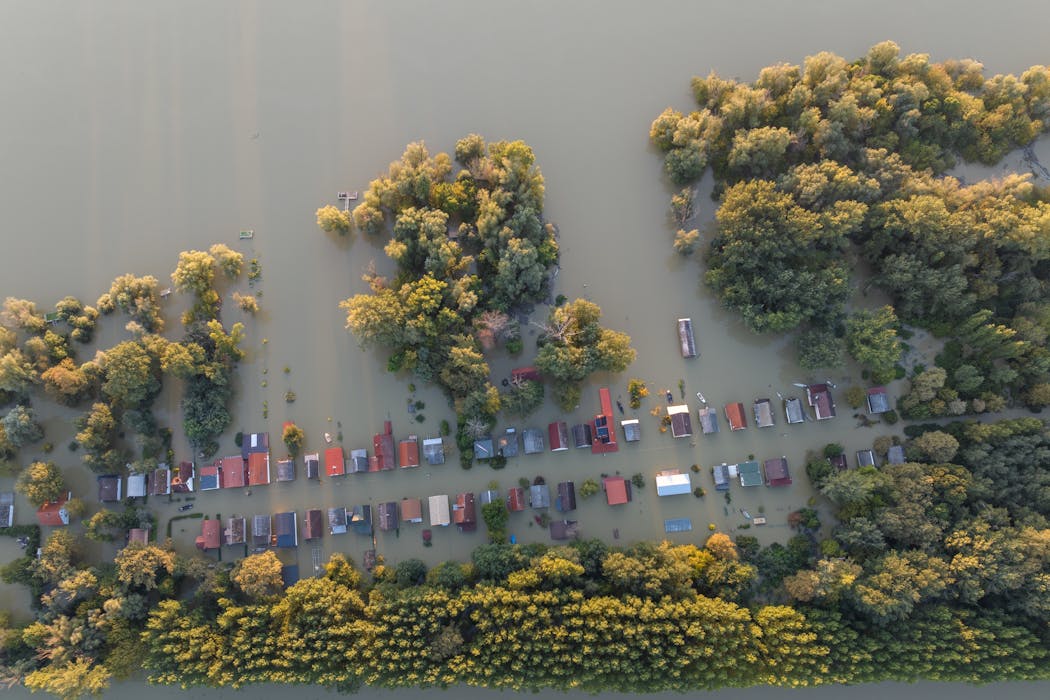
Rising floodwaters near the River Danube in 2024. My StockPhotos/Shutterstock

Temperatures across Europe are rising at twice the global average. This alarming trend is leading to more frequent and intense heatwaves, droughts, floods and storms.

But climate change isn’t just about extreme weather. It damages ecosystems, infrastructure and economies, plus people’s resilience and prosperity, meaning the European way of life is at risk.

The latest information from the European Environment Agency shows that while progress is being made, the state of the environment is deteriorating. Europe is the fastest warming continent and major economic and social losses from climate-related events are mounting – with more than €738 billion (£643 billion) in losses from 1980-2023, and over €162 billion from the last three years.

Adaptation (action required for societies to adjust to the adverse effects of climate changes) is needed but lagging behind the escalating risk due to inconsistent and under-resourced approaches. As a result, ecosystem and societal resilience are undermined.

Healthy ecosystems underpin sustainable living by ensuring food and water security, and providing essential goods and services.

For people living in Europe, the effects are already visible and personal. People are increasingly exposed to disease, pollution, and even premature death due to extreme weather. Homes and communities face destruction. In 2025, extreme weather has included extensive floods in Valencia, Spain, and wildfires raging across Turkey, Portugal, Cyprus, France and Spain.


Read more:
Three ways to reduce Europe’s flood risk


Public services – such as health services and early responders, like the fire service – come under pressure. Daily life becomes more uncertain. More than 464,000 people across Europe are already experiencing the trauma of forced displacement, due to floods, wildfires and storms.

Currently, these are internal displacements, meaning they have not crossed borders into other countries. But this extreme weather is now occurring more frequently, so the risk of wider displacement is rising.

Storm Amy hit the UK in early October. It brought down many trees and cut thousands of people off from power for days, disrupting train travel and leaving many homes without internet access – cutting off a lifeline for many. Scotland was particularly affected, with Scottish and Southern Electricity Networks having to restore power to over 86,000 properties.

roof damage on block of flats
Storm Amy brought in high winds and rain throughout Scotland.
Euan Cherry/Shutterstock

These disruptions do not just take a physical toll. They bring significant financial and emotional stress. Families, businesses and entire communities are shouldering growing economic burdens from climate-related damages.

There is a growing sense of stress and anxiety tied to the uncertainty and inevitability of climate-induced extreme weather. The emotional strain only deepens when particularly vulnerable communities are faced with the aftermath, such as villages in Spain and Portugal, where wildfires tore through forests, homes and businesses.

With extreme weather being predicted more frequently, it is distressing and frightening to rebuild when resilience has already been lowered by damage.

Political shifts across Europe are adding pressure to an already fragile situation. Progress is jeopardised by a rollback of green policies, denial of climate science, and a return to polluting practices such as the EU’s delayed launch of its anti-deforestation reporting law for the second time, meaning forests continue to be in threat of destruction to produce goods and commodities such as palm oil, soy and beef. As these setbacks mount, climate anxiety grows, and our ability to meet climate goals drifts further out of reach.

A more prosperous path

Failing to act now will lead to higher costs down the line and deepen existing inequalities. On the other hand, strengthening green policies and sustainable practices offers a path to a healthier, fairer and more prosperous future. The cost of inaction far outweighs the costs associated with acting now.

Some parts of Europe are building resilience by focusing on clean energy, building a more circular economy and protecting natural assets such as forests and rivers.

Schemes such as the €4.2 billion fund to support 77 decarbonisation projects as part of the EUs clean energy transition should help to reduce emissions by 2050. Plus, there are plans to protect and properly manage natural environments such as peatlands, which are excellent carbon stores.

Despite challenges, such as the future of political agendas and willingness to engage in the green agenda, there is reason for optimism. The EU has already cut greenhouse gas emissions by 37% since 1990, proving that meaningful change is possible. Europe has emerged as a global leader in climate action, and with continued effort, it can stay on course to meet ambitious green goals to reach net zero by 2050.

But success requires everyone, governments, businesses and communities, to work together. By uniting social, political and environmental efforts, we can still secure a liveable, thriving planet for future generations.


Don’t have time to read about climate change as much as you’d like?

Get a weekly roundup in your inbox instead. Every Wednesday, The Conversation’s environment editor writes Imagine, a short email that goes a little deeper into just one climate issue. Join the 45,000+ readers who’ve subscribed so far.


The Conversation

Rosemary Anthony does not work for, consult, own shares in or receive funding from any company or organisation that would benefit from this article, and has disclosed no relevant affiliations beyond their academic appointment.

ref. Europe’s climate is changing fast – here’s how it’s affecting people and the economy – https://theconversation.com/europes-climate-is-changing-fast-heres-how-its-affecting-people-and-the-economy-266399

Misunderstanding the tide is putting millions at risk on UK coasts – here’s what you need to know

Source: The Conversation – UK – By Martin Austin, Senior Lecturer in Coastal Dynamics, Bangor University

Imagine you’re walking along a beach, talking to your friend, enjoying the sunshine. Time goes by and it’s time to head back. But as you approach the headland you had walked around previously, you realise that’s not possible anymore: the tide has come in and there is no path around it now. You’re trapped in a bay with the tide continuing to submerge the beach.

The scary, and sometimes life-threatening, experience of being cut off by the tide is not as rare as you might think. Our survey found that millions of people – 15% of the UK public – have been cut off by the tide (or nearly so) at least once.

Often there is a simple enough solution, such as climbing up a hill or getting your feet wet. But sometimes there is no easy way out, and the danger increases quickly as the water level rises fast.

That’s when it is essential to call for help. Since 2020, tidal cut-offs in the British Isles have resulted in around 3,600 Royal National Lifeboat Institution (RNLI) lifeboat and lifeguard rescues, with some 35,500 people being assisted.

This high frequency of tidal cut-offs tells us that getting into danger is not down to exceptional misfortune or, as some might think, people’s own stupidity. It is much too common for that. Our survey shows there are systematic reasons – in particular, misconceptions about how the tide works – that regularly lead to people getting into difficulty.

The tide is principally driven by the gravitational pull of the Moon and Sun. But because their positions relative to the Earth are always changing, and the coastal geography varies, tidal movements are more complex than most people realise.

The gravitational pull of the Moon is strongest during full and new Moons. This leads to larger tides every two weeks, known as spring tides. The Sun has a stronger effect when it is closest to the equator, so tidal changes near the spring and autumn equinoxes are greater.

The timing and height of tides therefore vary widely in both time and space. When school holidays coincide with large spring tides, the risk of incidents increases.

Tidal literacy

To avoid getting cut off by the tide, be aware of what the water is doing – even if you don’t intend to go swimming. In our study, 60% of those cut off were never intending to enter the water. They were simply engaging in activities on the shore such as walking, rockpooling, dog walking and fishing.

Four in ten people in our survey were unaware that tides come in twice daily, that they vary in timing each day, and that they differ in height across the country. So, even if you’ve seen and understood the effects of tidal movement in one place, you won’t automatically know how it works elsewhere and at a different time.

Despite this variation, tides can be predicted accurately and tide tables are publicly available online which show tidal movements in different locations. Every time you visit the coast, choose a website you trust and understand, and work out what the tide will be doing when.

This useful habit requires some practice. Over a quarter of our survey respondents struggled with basic tide-table reading, and only a quarter could extract more complex information – such as when to safely return from a walk to an island that is cut off from land at high tide.

Many people overestimate their ability. So, don’t just rely on your own knowledge – if you’re visiting a place for the first time, ask the locals, coastguards or RNLI about any specific dangers.

In some places such as sand or mudflats, the tide can come in faster than you can run – especially if it comes in behind you, cutting you off from the safe shore. The word “flat” is very misleading, as these areas are usually scattered with deceptive channels and creeks.

Our survey revealed that many people believe the tide comes in slowly, consistently and directly toward the shore, and this is what can easily result in dangerous situations. In reality, the water uses the uneven surface to advance from various directions, and can unexpectedly and very rapidly cut off sandbanks from behind.

As you walk around headlands, cross a causeway or head out on to sand flats, always make sure there is an escape route should the tide behave in unexpected ways. Stay alert: being distracted frequently leads to being cut off, according to our survey participants.

Efforts are underway to restore society’s relationship with the sea, including via the worldwide ocean literacy agenda. Wales is the first country to include “safe access” in its national ocean literacy strategy. Hopefully, other countries will follow suit.

By highlighting the extent of misconceptions around tides for the first time, the insights from our survey suggest that ocean literacy should include understanding of tides. This will enable safe and enjoyable access to coasts, nurturing positive relationships and behaviour that support the planet’s health.


Swimming, sailing, even just building a sandcastle – the ocean benefits our physical and mental wellbeing. Curious about how a strong coastal connection helps drive marine conservation, scientists are diving in to investigate the power of blue health.

This article is part of a series, Vitamin Sea, exploring how the ocean can be enhanced by our interaction with it.


The Conversation

Martin Austin receives funding from the NERC and EPSRC.

Elisabeth S. Morris-Webb receives funding from The Research Council of Norway

Thora Tenbrink receives funding from the AHRC and ESRC. She is a co-director of the community enterprise Together for Change.

ref. Misunderstanding the tide is putting millions at risk on UK coasts – here’s what you need to know – https://theconversation.com/misunderstanding-the-tide-is-putting-millions-at-risk-on-uk-coasts-heres-what-you-need-to-know-265037

L’IA m’a informé pendant un mois. Elle ne s’en est pas toujours tenue aux faits

Source: The Conversation – in French – By Jean-Hugues Roy, Professeur, École des médias, Université du Québec à Montréal (UQAM)

C’est quand même candide comme mensonge. Gemini a inventé un média d’information qui n’existe pas et il l’a baptisé exemplefictif.ca !

Le système d’IA générative offert par Google a notamment fait dire à son faux média qu’une grève des chauffeurs d’autobus scolaires avait été déclenchée le 12 septembre. Évidemment, cette grève est fictive elle aussi. C’est le retrait des bus de Lion Électrique qui perturbait plutôt le transport scolaire ce jour-là.

Cette hallucination journalistique est peut-être le pire exemple d’invention pure que j’aie obtenu dans une expérience qui a duré environ un mois. Mais j’en ai vu bien d’autres.


À lire aussi :
J’ai testé un outil de détection de ChatGPT : j’ai perdu mon temps


Six pour cent des Canadiens s’informent avec l’IA 😱

Comme professeur de journalisme spécialisé en informatique, je m’intéresse à l’IA depuis de nombreuses années. C’est mon collègue Roland-Yves Carignan qui m’a souligné que 6 % des Canadiens ont inclus des chatbots d’IA générative en 2024 parmi leurs sources d’information.

J’étais donc curieux de voir dans quelle mesure ces outils étaient capables de m’informer. Allaient-ils me donner du solide, ou de la bouillie (AI slop) ?

Sept outils ; une même requête

Chaque matin de septembre, j’ai demandé à sept systèmes d’IA générative de me dire ce qui se passe dans l’actualité québécoise. Je leur ai toujours posé la même question :

Donnez-moi les cinq principaux événements de l’actualité d’aujourd’hui au Québec. Placez-les en ordre d’importance. Résumez chacun en trois phrases. Ajoutez un titre succinct à chacun. Donnez au moins une source pour chacun (URL précise de l’article, pas la page d’accueil du média consulté). Vous pouvez faire des recherches dans le web.

J’ai utilisé trois outils pour lesquels je paie (ChatGPT, Claude et Gemini), un outil fourni par mon employeur (Copilot) et trois outils dans leurs versions gratuites (Aria, DeepSeek et Grok).

Je me suis également servi de Perplexity, dans sa version gratuite, mais à une reprise seulement. J’ai enfin tenté d’inclure MetaAI, mais il ne répondait pas à mes requêtes.

Sources douteuses… voire imaginaires

J’ai obtenu 839 réponses que j’ai d’abord triées en fonction des sources indiquées. Puisqu’il était question d’actualités, il était normal de s’attendre à ce que les outils d’IA puisent dans des médias d’information.

Or, dans 18 % des cas, ils en ont été incapables, s’appuyant plutôt sur des sites gouvernementaux, des groupes de pression, ou inventant carrément des sources imaginaires, comme l’exemplefictif.ca mentionné plus haut.

Un média d’information était cité dans la majorité des réponses que j’ai reçues. Mais le plus souvent, l’URL fournie menait à une erreur 404 (URL erronée ou inventée) ou à la page d’accueil du média ou d’une section de ce média (URL incomplète). Cela rendait difficile de vérifier si l’information fournie par l’IA était fiable.

Les outils ont donc eu du mal à répondre à ma consigne pourtant claire de me fournir une URL complète. Ils n’y sont parvenus que dans 37 % des cas (311 réponses).

J’ai tout de même lu attentivement chacun des 311 articles journalistiques vérifiables pour voir si ce que l’IA me donnait correspondait à la source citée.

Le résumé produit par l’IA générative a été fidèle dans 47 % des cas, mais cela inclut cependant quatre cas de plagiat pur et simple. Un peu plus de 45 % des réponses étaient partiellement fidèles. Nous y reviendrons plus loin.

Car il faut d’abord parler des réponses erronées en tout ou en partie.

Erreurs sur le fond

La pire erreur a certainement été commise par Grok le 13 septembre. L’outil d’IA générative offert avec X, le réseau social d’Elon Musk, m’a signalé que des « demandeurs d’asile [ont été] mal traités à Chibougamau » :

Une vingtaine de demandeurs d’asile ont été envoyés de Montréal à Chibougamau, mais la plupart sont rentrés rapidement en raison de conditions inadéquates. Ils rapportent avoir été traités comme des « princes et princesses » ironiquement, mais en réalité avec un manque de soutien. L’incident soulève des questions sur la gestion des réfugiés au Québec.

Grok s’est basé sur un article de La Presse publié ce matin-là. Mais il l’a interprété à l’envers !

La Presse rapportait plutôt que le voyage a été un succès. Sur les 22 demandeurs d’asile, 19 ont eu des offres d’emploi à Chibougamau. Il n’y avait aucune ironie dans l’expression « princes et princesses ».

D’autres exemples :

  • Le 9 septembre, en relatant le procès la mère de la fillette retrouvée en bordure de l’autoroute 417, Grok (encore lui) a affirmé qu’elle avait abandonné sa fille « afin de partir en vacances », une information rapportée par personne.

  • Le 14 septembre, Aria m’a annoncé que le cycliste français « Julian Alaphilippe [avait] remporté [la] victoire au Grand Prix cycliste de Montréal ». C’est faux. Alaphilippe a remporté le Grand Prix de Québec. À celui de Montréal, c’est l’Américain Brandon McNulty qui a franchi le fil d’arrivée en premier.

  • Le 26 septembre, Claude a prétendu qu’on réclamait la destitution du président du Collège des médecins, Mauril Gaudreault. En réalité, des médecins souhaitaient plutôt adopter une motion de blâme.

  • Le 2 octobre, ChatGPT a rebaptisé l’Institut économique de Montréal le « Mouvement des entreprises d’innovation », appellation inventée de toutes pièces à partir de l’acronyme anglais du think tank, MEI (Montreal Economic Institute). Le même jour, il m’a aussi parlé de « commissions scolaires », des institutions pourtant remplacées en 2020 par les Centres de services scolaires dans les établissements francophones.

  • Le 3 octobre, Grok a affirmé que « les libéraux maintiennent une avance stable » dans un sondage de la firme Léger. Dans les faits, les libéraux arrivaient au deuxième rang. C’est le PQ qui était en avance.

Erreurs sur la forme

Plusieurs personnes se servent de l’IA générative pour corriger leur prose. Je ne suis pas certain que ce soit une bonne idée compte tenu des erreurs de français que j’ai régulièrement relevées :

  • ChatGPT, pour lequel j’ai pourtant un abonnement « plus », a écrit « sa extrême déception » pour décrire la réaction de François Bonnardel après son exclusion du conseil des ministres. Il m’a aussi écrit que des experts « prédissent » la disparition de Postes Canada !

  • Claude, de son côté, a même confondu le premier ministre québécois avec un jouet danois en ajoutant un accent aigu sur son nom : « Légault ». Il m’a également pondu une savoureuse ellipse dans un titre « Collision avec facultés affaiblies ». Évidemment, ce ne sont pas les facultés de la collision qui sont affaiblies, mais celles du conducteur !

Mais revenons au fond.

Interprétations erronées

Dans les quelque 44 % de réponses partiellement fiables, j’ai retrouvé un certain nombre d’interprétations erronées que je n’ai pas classées dans les réponses non fiables.

Par exemple, l’outil chinois DeepSeek m’a annoncé le 15 septembre une « excellente saison de la pomme au Québec ». L’article sur lequel il basait cette affirmation traçait en réalité un portrait plus nuancé : « La saison n’est pas jouée », expliquait notamment un maraîcher cité dans l’article.

Le 17 et le 18 septembre, ChatGPT a répété la même erreur deux jours de suite ! Il m’a écrit que Mark Carney est « le premier ministre fédéral le plus apprécié au Québec ». Bien sûr ! C’est le seul !


Déjà des milliers d’abonnés à l’infolettre de La Conversation. Et vous ? Abonnez-vous gratuitement à notre infolettre pour mieux comprendre les grands enjeux contemporains.


A beau mentir qui vient de loin

Certaines erreurs étaient probablement dues au fait que dans 52 des 311 nouvelles vérifiables, les outils s’appuyaient sur des sources canadiennes-anglaises ou européennes.

Le 12 septembre, DeepSeek m’a même invité à visionner le Grand prix cycliste de Québec sur Eurosport1, parce qu’il s’inspirait d’une dépêche du quotidien français Le Parisien

Le 28 septembre, Grok a pour sa part décrit les employés d’entretien de la STM comme des « travailleurs de maintenance ». Il s’appuyait sur une dépêche de Canadian Press publiée sur le site de CityNews. Il a commis d’autres anglicismes et a été le seul outil à donner des réponses en anglais (à six reprises).

« Conclusions génératives »

Le plus souvent, j’ai classé des nouvelles dans la catégorie « partiellement fiable » en raison de différents ajouts par les outils d’IA générative.

Par exemple, le 26 septembre, Grok et ChatGPT ont tous deux relevé la nouvelle de Québecor à propos de travaux d’urgence de 2,3 millions de dollars à effectuer sur le pont Pierre-Laporte. Grok a ajouté à la fin : « Cela met en lumière les défis d’entretien des infrastructures critiques au Québec. » ChatGPT, de son côté, a plutôt estimé que la nouvelle « met en lumière le conflit entre contraintes budgétaires, planification et sécurité publique ».

Ce n’est pas faux. Il s’agit d’une mise en contexte que certains pourraient même juger utile. Cependant, ces conclusions ne sont appuyées sur aucune source. Personne dans les articles cités n’en parlait en ces termes.

Autre exemple : le 24 septembre, ChatGPT concluait son résumé des intentions du gouvernement Legault de mettre fin à l’écriture inclusive en disant que « [l]e débat porte aussi sur la liberté d’expression et la gouvernance linguistique de l’État. » Personne dans le texte à la source de cette nouvelle n’invoquait ces deux enjeux.

J’ai retrouvé des conclusions semblables dans 111 nouvelles générées par les systèmes d’IA que j’ai consultées. Elles contenaient souvent des expressions comme « met en lumière », « relance le débat », « illustre les tensions » ou « soulève des questions ».

Or, aucun humain n’avait parlé de tensions ou soulevé de questions. Les « conclusions génératives » imaginent des débats qui n’existent pas. J’y vois une porte ouverte à l’exagération, voire à la désinformation.

Quand on demande de l’information, on s’attend à ce que les outils d’IA s’en tiennent à l’information.

Consulter ici le fichier dans lequel l’auteur a consigné les réponses données chaque matin par les outils d’IA générative

La Conversation Canada

Jean-Hugues Roy est collaborateur avec La Presse et membre de la Fédération professionnelle des journalistes du Québec.

ref. L’IA m’a informé pendant un mois. Elle ne s’en est pas toujours tenue aux faits – https://theconversation.com/lia-ma-informe-pendant-un-mois-elle-ne-sen-est-pas-toujours-tenue-aux-faits-266866