Trump’s words aren’t stopping China, Brazil and many other countries from setting higher climate goals, but progress is slow

Source: The Conversation – USA (2) – By Shannon Gibson, Professor of Environmental Studies, Political Science and International Relations, USC Dornsife College of Letters, Arts and Sciences

Sea walls now ring much of the Marshall Islands’ capital, Majuro, as the ocean rises. Lt. Anna Maria Vaccaro/U.S. Coast Guard

In the Marshall Islands, where the land averages only 7 feet (2 meters) above sea level, people are acutely aware of climate change.

Their ancestors have lived on this string of Pacific islands for thousands of years. But as sea level rises, storms more easily flood communities and farmland with saltwater. Warming ocean water has triggered mass coral-bleaching events, harming habitats that are important for both tourism and fish that the islands’ economy relies on.

If the world fails to rein in the greenhouse gas emissions driving climate change, studies suggest low-lying islands like these could be uninhabitable within decades.

Marshall Islands President Hilda Heine talks about climate risks to her homeland while in New York for the United Nations General Assembly in September 2025.

Climate change isn’t just a problem for islands. Countries worldwide are experiencing intensifying storms, dangerous heat waves and rising seas as global temperatures rise.

Yet, after 30 years of international climate talks, 10 years of a global treaty promising to keep temperatures in check, and trillions of dollars in damage, the world is still not on track to stop rising global temperatures. Greenhouse gas emissions were at record highs in 2024, and it was Earth’s hottest year on record.

I study the dynamics of global environmental politics, including the United Nations climate negotiations. And I and my lab have been tracking countries’ latest climate pledges – known as nationally determined contributions, or NDCs – to see which countries have stepped up their efforts, which have slid back and who has ideas that can deliver a safer world for everyone.

While the Trump administration has been pressuring countries to back away from their climate commitments – and succeeded in delaying an International Maritime Organization vote on a global plan to tax greenhouse gas emissions from shipping after threatening other counties with sanctions, visa restrictions and port fees if they supported it – many countries are still pressing ahead.

Trump agitates, but many countries are steadfast

U.S. President Donald Trump, whose administration came into office vowing to eliminate climate regulations and boost the fossil fuel industry, derided concerns about climate change in his Sept. 23, 2025, speech to the U.N. General Assembly. He called climate change the “greatest con job ever perpetuated” and ridiculed green energy and climate science.

Trump’s language no longer surprises world leaders, though. More than 100 other countries announced new climate commitments during a high-level summit a few days later.

China, currently the world’s largest greenhouse gas emitter, was lauded for hitting its green energy targets five years early. Its rapid expansion of low-cost renewable energy and electric vehicle manufacturing has reduced pollution in Chinese cities while also boosting its economy and expanding the government’s influence around the world.

Chinese President Xi Jinping announced the country’s first absolute emissions reduction goal at the summit, committing to cut its net greenhouse gas emissions by 7% to 10% from peak levels by 2035. China also committed to nearly triple its solar and wind power capacity and expand reforestation efforts.

While advocates and other governments had hoped for a stronger announcement from China, the new goals mark an important shift from the country’s earlier carbon intensity targets, which aimed to decrease the amount of greenhouse gas emissions per unit of economic output but still allowed emissions to grow over time.

The European Union has yet to submit its new commitments, but the group of 27 European countries delivered a letter of intent, saying it would commit to a 66% to 72% collective decrease in net greenhouse gas emissions by 2035 compared with 1990 levels. Europe has seen a swift rise in renewable energy, up sharply since Russia’s invasion of Ukraine put the continent’s natural gas supplies in jeopardy.

The EU has also made waves by extending its carbon pricing rules beyond its borders.

The EU’s Carbon Border Adjustment Mechanism, scheduled to begin in January 2026, will be the first system to charge for the climate impact of imported goods coming into Europe from countries that don’t have carbon prices similar to the EU’s. The measure, meant to even the playing field for EU industries, sets a global precedent for linking carbon emissions to trade.

However, the EU’s climate plans are also facing some headwinds. Its parliament is moving toward softening new corporate sustainability requirements after pressure from companies. And it may face calls from some member countries to delay a new carbon market meant to cut emissions from road transportation and buildings, Politico reported.

The EU has pledged to mobilize up to 300 billion Euros (about US$350 billion) to support the global clean energy transition in developing countries.

The United Kingdom, Japan and Australia submitted their most ambitious targets to date. All three put them on track to reach net-zero emissions by 2050, meaning any greenhouse gases they emit will be offset by projects that avoid carbon emissions or remove carbon from the atmosphere.

In Australia, Queensland’s recent announcement that it would extend existing coal power plant use to the 2030s and 2040s may slow national progress. But Queensland also supports scaling up renewable energy and is still aiming for net-zero emissions by 2050.

Norway committed to reduce its greenhouse gas emissions by at least 70% by 2035 compared with 1990 levels, which would align with the Paris Agreement goal to keep global emissions below 1.5 degrees Celsius (2.7 degrees Fahrenheit). However, it plans to remain a major oil and gas exporter.

Notably, many developing countries also stepped up their commitments.

Brazil pledged a net emissions reduction of 59% to 67% by 2035 and is maintaining its 2050 net-zero target.

Free riding and taking cover behind the US

However, while some new climate commitments signal important momentum in the fight against climate change, the tug-of-war between global ambition to slow climate change and strategic self-interests was palpable at the New York summit. The responses to Trump’s remarks revealed both veiled critiques and deceleration of climate action by some governments.

China criticized backsliding by some countries, without naming names.

Brazil used the summit to call out countries that were late in submitting their updated climate commitments. Only about a third had submitted their updated pledges at that point.

Lula da Silva stands in a group talking, including heads of the UN and EU.
Brazilian President Luiz Inácio Lula da Silva, who will host the 30th annual U.N. climate conference, COP 30, in November 2025, talks with other world leaders at the U.N. in September 2025.
AP Photo/Peter Dejong

While it is difficult to parse out individual country motivations – economic stress, wars and political influence can all play a role – many scholars worry that U.S. backsliding will lead other countries to reduce their climate commitments, and some recent pledges appear to back this up.

Many petroleum-producing countries missed the U.N. pledge deadline. Qatar, which recently gifted the U.S. a jet plane for Trump’s use and has an economy largely bolstered by the oil and gas industry, has not updated its pledge since 2021. The six-member Gulf Cooperation Council’s average emissions reduction target is even lower than Qatar’s, at around 21.6% by 2030.

Similarly, Argentina, among the world’s top holders of shale oil and gas reserves, has not released its updated commitments. Progress on its previous commitment has been undermined by political shifts since President Javier Milei’s election in 2023.

Milei and Trump seated on a stage. Milei is holding a piece of paper up.
Argentine President Javier Milei meets with U.S. President Donald Trump during the United Nations General Assembly on Sept. 23, 2025, in New York. Trump offered Argentina a $20 billion currency swap to help Milei stabilize his struggling economy.
AP Photo/Evan Vucci

Milei initially vowed to abandon the 2030 agenda entirely and withdraw from the Paris Agreement, though his administration later backtracked. His dismissal of climate change as a “socialist lie” has aligned Argentina closely with Trump, culminating in a recently planned US$20 billion aid package from the U.S. to Argentina and raising questions about whether Argentina’s climate stance reflects genuine policy or geopolitical strategy.

Also noticeably absent are commitments from India, Mexico, South Africa and Saudi Arabia. Angola weakened its climate pledge, citing lack of international funding.

A new way to make climate commitments?

While many countries are promising progress to reduce greenhouse gas emissions, the commitments formally submitted as of Oct. 20 were still far below the level needed to keep global temperatures from rising by 2 C (3.6 F), let alone 1.5 C.

Chart shows slow progress
Countries’ new climate pledges – known as nationally determined contributions, or NDCs – as of Oct. 20, 2025, compiled by ClimateWatch, were still far from keeping global warming under 2 C (3.6 F), let alone 1.5 C (2.7 F). The total includes 62 countries that had submitted pledges, including a U.S. pledge submitted before the Trump administration took office. It does not include China’s announced pledge or the European Union’s expected pledge.
ClimateWatch, CC BY

To help boost national efforts and accountability, Brazil has proposed a new approach it calls a globally determined contribution. Unlike the 1997 Kyoto Protocol framework, which set fixed, country-specific emission reduction targets based on historical baselines, or the 2015 Paris Agreement’s pledge-as-you-can system, it would establish global targets aligned with the Paris Agreement’s temperature goals.

So, a globally determined contribution might state, for example, that the world will triple its renewable energy production and reverse deforestation by 2030. A target like that gives countries a clearer path of action. The new format would also allow city and state actions to be counted separately, increasing incentives for them to act.

As the host of the COP30 climate talks Nov. 10-21, 2025, Brazil is uniquely positioned to champion this concept. In the absence of U.S. leadership, the proposal could offer a rare opportunity for countries to collectively strengthen commitments and reshape treaty language in a way never seen before – leaving open the possibility for progress.

Wila Mannella, a research assistant and graduate student in environmental studies at USC, contributed to this article.

The Conversation

Shannon Gibson does not work for, consult, own shares in or receive funding from any company or organization that would benefit from this article, and has disclosed no relevant affiliations beyond their academic appointment.

ref. Trump’s words aren’t stopping China, Brazil and many other countries from setting higher climate goals, but progress is slow – https://theconversation.com/trumps-words-arent-stopping-china-brazil-and-many-other-countries-from-setting-higher-climate-goals-but-progress-is-slow-267194
Many Colorado homeowners are underinsured − here’s what to do before the next fire

Source: The Conversation – USA (2) – By Tony Cookson, Associate Professor of Finance, University of Colorado Boulder

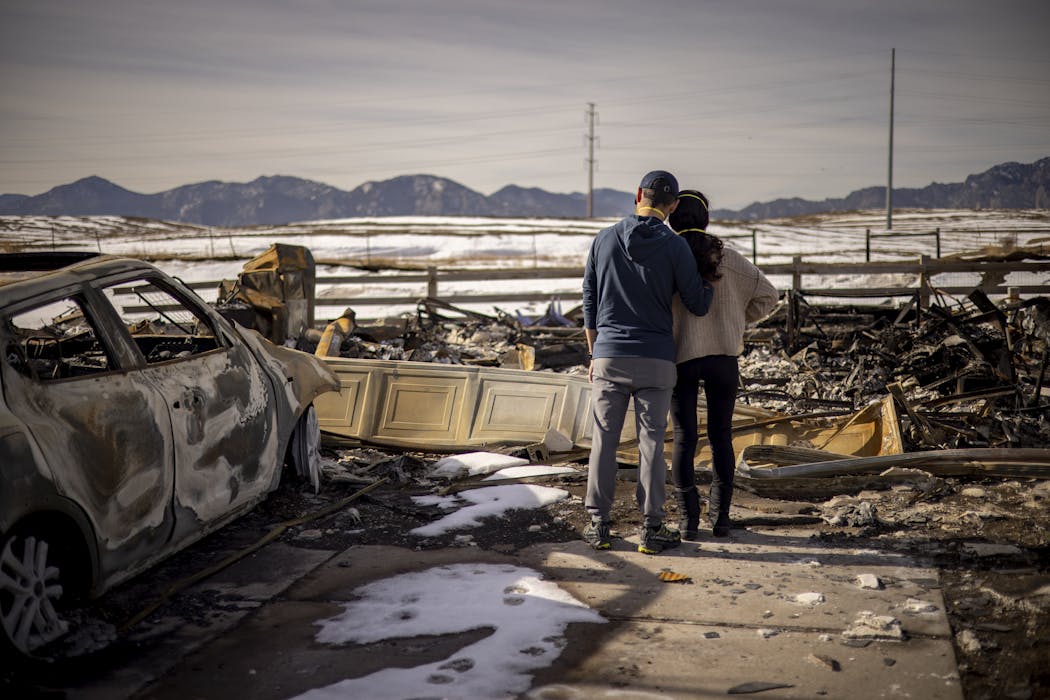
Many people who lost their homes in the Marshall Fire were underinsured. The Washington Post/GettyImages

Most Colorado homeowners do not have enough insurance coverage to rebuild their house after a total loss. That’s according to our new research examining whether homes destroyed in Colorado’s Marshall Fire — which burned more than 1,000 houses in suburban Boulder County — have been rebuilt.

We are economists who study the financial resources available to households to cope with disasters, including insurance, crowdfunding and federal disaster aid.

Over the past five years, insurance premiums in Colorado rose nearly 60%, driven by mounting losses from wildfire, hail and other disasters. These patterns are not unique to Colorado. They reflect a broader national reassessment of risks.

Our new research sheds light on this issue by linking confidential, contract-level data to real rebuilding outcomes.

Our study analyzes 3,089 policies from 14 major insurers held by people affected by the Marshall Fire. The findings offer concrete steps homeowners can take now to reduce the risk of holding insufficient coverage.

How common is underinsurance?

Underinsurance is determined by comparing the amount of coverage a homeowner carries to rebuild the physical structure of their home to the actual cost of rebuilding after a disaster.

To estimate each unique home’s rebuilding cost, the study used construction-cost software and adjusted the estimates to align with a sample of real-world construction quotes received by homeowners after the Marshall Fire.

We found that 74% of homeowners affected by the Marshall Fire were underinsured, and 36% were so severely underinsured that their policy covered less than 75% of the rebuild cost.

According to our research, underinsurance was not just a problem for poorer households. Even for households with incomes above US$180,000, 72% held policies that did not cover the cost of a complete rebuild.

Credit scores and mortgage debt amounts were unrelated to how underinsured people were.

Dozens of homes are in various stages of being built.
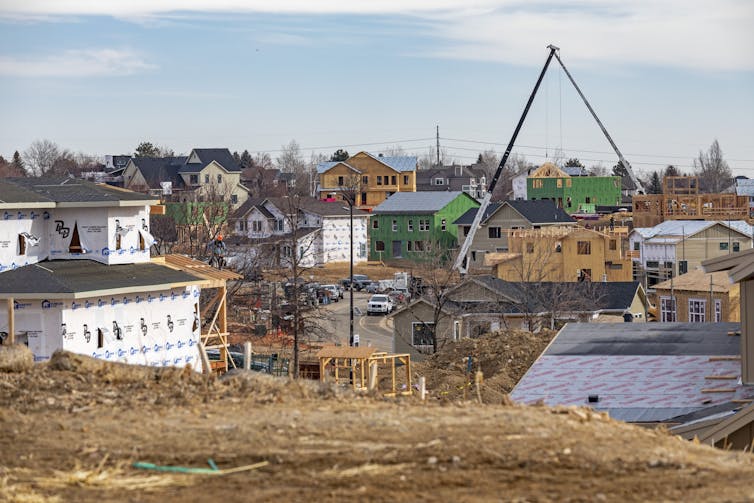
After the Marshall Fire, hundreds of homes were being rebuilt at once, which drove the costs of rebuilding up.
UCG/GettyImages

After major fires, construction costs typically spike as hundreds of survivors rebuild at once. To help manage this risk, many homeowners purchase an Extended Replacement Cost policy, which boosts coverage by a set percentage of the existing coverage limit if rebuilding costs end up higher than the coverage limit.

Eighty-seven percent of the Marshall Fire policies we studied included extended coverage. But nearly three-quarters of them still fell short of covering the full cost to rebuild. Our study found that while extended coverage policies cushion the impact of postfire construction cost inflation, they do not solve the deeper problem of underinsurance.

In other words, even without the surge in costs, most households had bought too little coverage from the outset.

Price shopping vs. the coverage you actually need

Our research finds that the insurance company a household chooses strongly predicts how much coverage the household has. That’s even after accounting for income, mortgage status, credit score, home value and property characteristics. In other words, insurers differ systematically in the coverage levels they tend to provide.

When shopping, homeowners attend to the headline premium, or the total cost of insurance, but not to how much coverage that premium actually buys. Indeed, if shoppers compared insurer quotes for the same coverage amount, they would gain about $290 per year in value, roughly 10% of the average annual homeowners insurance premium.

Why underinsurance slows recovery

Underinsurance isn’t an abstract problem offset by savings, loans and federal aid. It leaves real gaps in rebuilding.

The study found that when a household’s insurance coverage falls short of the home’s replacement cost, the household is significantly less likely to rebuild after a total loss. Instead, some families end up selling and moving away.

A
A home lot for sale after the Marshall Fire.
UCG/GettyImages

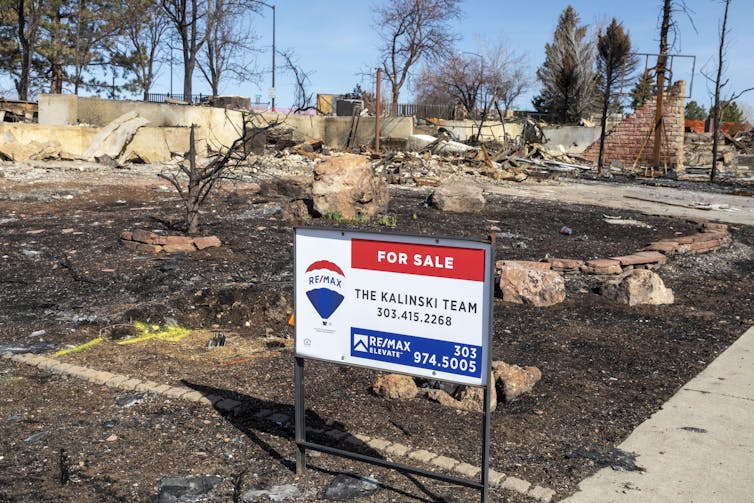
In fact, the research shows that if all underinsured households in the sample had been fully insured, 25.4% of homeowners would have filed for reconstruction permits within a year of the fire, instead of the 18.8% that filed. In addition, only approximately 5.4% of homeowners would have sold their destroyed properties that year, as opposed to the 9.7% that did sell. Overall, this means more families could have rebuilt and stayed in their communities.

What Colorado homeowners can do now

Here are some practical steps Colorado homeowners can take to make sure their coverage keeps pace with rising risks and rebuilding costs:

  • When getting quotes or renewing, request a side-by-side comparison where coverage limits and any extended coverages are held constant across insurers. Shopping this way helps avoid underinsuring in pursuit of a lower premium.

  • Revisit limits after renovations and big economic changes. Construction costs in the region rose steeply in the lead-up to the Marshall Fire due to the pandemic and related inflation. If you haven’t updated your coverage recently, revisit it annually — especially if you remodeled or added square footage.

A good explainer of how to make a home inventory from the Minnesota Department of Commerce.

Consider insurer reputation and local presence. Different insurance companies will suggest different coverage limits for the exact same property. The study finds that companies with deeper roots in the community are less likely to underinsure, likely due to concerns about their reputation — something worth weighing alongside price.

The Front Range will continue to face wildfire seasons where wind, drought and human ignition interact in populated areas, and premiums are unlikely to snap back quickly. For households, the most practical step is to shop for insurance and renew policies as if a total loss could happen tomorrow.

The Conversation

Tony Cookson received funding from the National Bureau of Economic Research Household Finance Small Grants Program.

Emily Gallagher is affiliated with the Federal Reserve Bank of Philadelphia. The views expressed are solely hers and do not necessarily reflect the views of the Federal Reserve Bank of Philadelphia, the Federal Reserve Board of Governors, or the Federal Reserve System. No statements should be treated as legal advice or as an endorsement by the Federal Reserve System of a specific product or service.

ref. Many Colorado homeowners are underinsured − here’s what to do before the next fire – https://theconversation.com/many-colorado-homeowners-are-underinsured-heres-what-to-do-before-the-next-fire-263702

Bubble tea’s dark side: from lead contamination to kidney stones

Source: The Conversation – UK – By Adam Taylor, Professor of Anatomy, Lancaster University

norikko/Shutterstock.com

They’ve become as ubiquitous on British high streets as coffee shops – bubble tea outlets offering their Instagram-worthy drinks in countless flavour combinations. The Taiwanese beverage, a blend of black tea, milk, sugar and chewy tapioca pearls, has gained global popularity since its origins in the 1980s. But recent findings suggest this trendy drink may warrant closer scrutiny.

A Consumer Reports investigation revealed high lead levels in some bubble tea products in the US, echoing previous concerns about cassava-based foods. (No equivalent UK testing has been published.) The tapioca pearls – those signature “bubbles” – are made from cassava starch, and the root vegetable readily absorbs lead and other heavy metals from soil as it grows.

The tapioca pearls also pose other risks beyond contamination. Their starchy composition means that consuming large quantities can slow stomach emptying – a condition called gastroparesis – or, in some cases, lead to complete blockages.

Both can cause nausea, vomiting and abdominal pain, and symptoms can be particularly severe in people who already have slow-moving digestion. Even guar gum — a thickener often added to bubble tea and harmless in small amounts – can lead to constipation if you drink it often.

The drink’s composition also affects kidney health. In 2023, Taiwanese doctors removed over 300 kidney stones from a 20-year-old woman who’d been drinking bubble tea instead of water. Certain components, including oxalate and elevated phosphate levels, can contribute to stone formation. However, this extreme case probably reflects exceptionally high consumption.

For children, the risks are more immediate. The pearls can be a choking hazard – a risk that is well documented by paediatricians. Adults are not immune to this risk. According to media reports in Singapore, a 19-year-old woman died after inhaling three pearls when sucking harder on a partially blocked straw, while another woman narrowly avoided the same fate thanks to fast-acting bystanders.

Woman sitting on a toilet, holding her stomach in agony.
High consumption of bubble tea may contribute to constipation.
goffkein.pro/Shutterstock.com

The sugar problem

The sugar content raises longer-term health concerns. Most bubble teas contain 20–50g of sugar, comparable to or exceeding a can of Coca-Cola (35g). Research in Taiwan found that by age nine, children who regularly consumed bubble tea were 1.7 times more likely to have cavities in their permanent teeth.

In California, the drink is considered a contributing factor to the youth obesity epidemic, yet many young adults remain unaware of these risks. The high sugar and fat content increases the likelihood of developing type 2 diabetes, obesity and metabolic disease, while prolonged consumption may contribute to fatty liver disease – outcomes associated with any high-sugar product that spikes blood glucose and promotes fat storage in the liver.

Perhaps most surprisingly, emerging research suggests potential mental health implications. Studies of Chinese children who frequently consume bubble tea show an association with increased rates of anxiety and depression. Similar patterns appear in adults: research on Chinese nurses found that regular bubble tea consumption was associated with anxiety, depression, fatigue, job burnout and reduced wellbeing, even after controlling for other factors. The same study linked lower consumption to reduced thoughts of suicide, though establishing causation remains complex.

Strange scans

There’s even a curious medical phenomenon associated with consuming bubble tea: tapioca pearls appearing on scans of patients admitted for unrelated emergencies.

Doctors treating people after car accidents or with appendicitis have found dozens of pearls visible in stomachs and digestive tracts. These can occasionally cause diagnostic confusion, as they appear denser than the surrounding tissues and have stone-like properties similar to those seen with kidney- or gallstones.

This doesn’t mean bubble tea should be banned, but it does suggest we treat it as an occasional indulgence instead of a daily habit. And if you do indulge, consider skipping a straw. Drinking directly from the cup gives you better control, and allows your mouth’s sensory receptors to properly prepare for what’s coming.

The Conversation

Adam Taylor does not work for, consult, own shares in or receive funding from any company or organisation that would benefit from this article, and has disclosed no relevant affiliations beyond their academic appointment.

ref. Bubble tea’s dark side: from lead contamination to kidney stones – https://theconversation.com/bubble-teas-dark-side-from-lead-contamination-to-kidney-stones-266299

How higher states of consciousness can forever change your perception of reality

Source: The Conversation – UK – By Steve Taylor, Senior Lecturer in Psychology, Leeds Beckett University

Prostock-studio/Shutterstock

A few years ago I climbed over a gate and found myself gazing down at a valley. After I’d been walking for a few minutes, looking at the fields and the sky, there was a shift in my perception. Everything around me became intensely real. The fields and the bushes and trees and the clouds seemed more vivid, more intricate and beautiful.

I felt connected with my surroundings. What was inside me, as my own consciousness, was also “out there”. Within me, there was a glow of intense wellbeing.

This is an example of a higher state of consciousness – or, in my preferred term, an awakening experience. Awakening experiences are a temporary expansion and intensification of awareness that transforms our perception of the world.

As a psychologist, I have been studying such experiences for more than 15 years. Awakening experiences are sometimes viewed as mysterious and random, but I have found that, to a large degree, they can be explained.

My research has found that they have three main triggers.

The most common trigger may seem counter-intuitive. Around one-third of awakening experiences are linked to psychological distress, such as stress, depression and loss. For example, a man described to me, as part of my research, how he went through inner turmoil due to confusion about his sexuality, which led to the breakdown of his marriage.

But amid this turbulence, he experienced an awakening experiences in which, he said: “Everything just ceased to be. I lost all sense of time. I lost myself. I had a feeling of being totally at one with nature, with a massive sense of peace. I was a part of the scene. There was no ‘me’ anymore.”

Second, around one-quarter of the experiences are induced by the beauty and stillness of nature. A woman reported an awakening experience to me that occurred when she was swimming in a lake.

She said she “felt completely alone, but part of everything. I felt at peace… All my troubles disappeared and I felt in harmony with nature.” These types of experiences were often described by poets such as Wordsworth and Shelley.

The third most significant trigger (with a similar proportion to contact with nature) is spiritual practice. This primarily means meditation but also includes prayer and psycho-physical practices such as yoga or tai chi.

Perhaps surprisingly, I haven’t found that psychedelics are a major trigger of higher states. It may be that this is because my samples have been drawn from the general population, and not so many people have tried psychedelics. And psychedelics by no means always induce awakening experiences. They may simply induce perceptual distortions, or a state of dissociation.

Causes of awakening experiences

Some neuroscientists have suggested that awakening experiences are the result of stimulation of the temporal lobes (one of the most important parts of the brain, associated with memory, language comprehension and emotion). This is partly because some reports of higher states of consciousness come from people who suffer from temporal lobe epilepsy.

Illustration of scuba diver shining a torch on an iceberg.
There’s more going on in our minds than we know.
fran_kie/Shutterstock

Another theory is that experiences of oneness arise when the part of our brain responsible for our awareness of boundaries (the superior posterior parietal cortex) is less active than normal.

However, such theories have been criticised by other reseachers for a lack of control groups and successful replication. While some people who suffer from temporal lobe epilepsy may have awakening-type experiences, they are more likely to experience anxiety and disorientation.

In fact, other studies show no connection between seizures and higher states of consciousness. Other neuroscientists dispute the claim that spatial awareness is associated with the posterior parietal cortex.

Perhaps it makes more sense to explain awakening experiences in psychological rather than neurological terms.

Many awakening experiences are related to relaxation and mental quietness, induced by meditation or contact with nature. Normally, our awareness switches off to familiar objects and surroundings, as a way of saving energy.

But in moments of inner quietness, we expend less mental energy than normal. As a result, mental energy may intensify, generating more vivid awareness.

But how can we explain awakening experiences linked to psychological turmoil? A sense of shock and loss may bring a deconstruction of normal psychological processes.

In most states of turmoil, this may only cause further distress. But occasionally this may cause a transcendence of familiar modes of perception, and even a dissolution of our normal sense of ego, causing a sense of oneness.

Awakening experiences really are “higher states.” We tend to assume that our normal way of seeing the world is reliable and objective, offering a “true” vision of reality. But higher states teach the opposite: that our typical consciousness is limited and filtered.

We are normally trapped in a familiarised automatic perception of the world. This is why higher states carry a strong sense of revelation – because they reveal a wider reality to us.

As a result, even though awakening experiences typically only last from a few moments to a few hours, they often have a life-changing effect. Many people in my research described an awakening experience as the most significant moment of their lives.

In a study of 90 awakening experiences, my colleague Krisztina Egeto-Szabo and I found that the most significant after-effect was a positive shift, with increased trust in life, confidence and optimism. For example, one person reported that: “To know that it’s there (or here, I should say) is a great liberation.”

It would be a stretch to say that we can induce higher states of consciousness. However, we can create the conditions that make them more likely to occur. We do know that many are linked to relaxation and inner quietness. So we can create try to try to cultivate a still and relaxed state of mind – for example, through meditation and contact with nature. In doing so, we might find ourselves awakening to a wider and deeper reality.

The Conversation

Steve Taylor does not work for, consult, own shares in or receive funding from any company or organisation that would benefit from this article, and has disclosed no relevant affiliations beyond their academic appointment.

ref. How higher states of consciousness can forever change your perception of reality – https://theconversation.com/how-higher-states-of-consciousness-can-forever-change-your-perception-of-reality-265151

Louvre heist: the turbulent history of the stolen royal jewels

Source: The Conversation – UK – By Laura O’Brien, Associate Professor in Modern European History, Northumbria University, Newcastle

It sounds like the plot of a heist movie. On October 19, priceless items of jewellery and royal regalia were stolen, in broad daylight and in a matter of minutes, from the Louvre’s gilded Gallery of Apollo in Paris. The theft of these items from one of the world’s most famous museums, however, is merely the latest instalment in the chequered history of the crown jewels of France.

In many other countries, the term “crown jewels” is commonly understood as referring to regalia – in particular, the items used as part of the coronation ceremony for a monarch. In France, however, the crown jewels – or, to give them their French title, les joyaux de la Couronne de la France – is a more expansive term. It includes royal regalia, items of jewellery and precious stones.

The collection originated in the 16th century, when Francis I decreed that a set of jewels in his possession would become part of the inheritance of his successors. Eight items were stolen, including the reliquary brooch, diadem and large corsage-bow broach, and the 1855 crown of the Empress Eugénie, wife of Emperor Napoleon III.

The thieves also took an emerald necklace and earrings made for Empress Marie Louise, second wife of Napoleon I, and a sapphire diadem, necklace and single earring from a matching set linked to Queen Marie Amélie, wife of King Louis-Philippe.

Few items of royal jewellery and regalia survived the French Revolution in 1789. For centuries, the chapter of the Abbey of Saint-Denis, just outside Paris, had been the custodians of the coronation regalia as well as overseeing the preferred burial place of most French monarchs.

Most of the various crowns made for French kings since the Middle Ages were lost or destroyed in revolutionary attacks on the abbey, such as the Crown of Charlemagne and the 13th-century crown of Saint Louis. Both were melted down between 1793 and 1794.

The crown of Louis XV, created in 1722 and on permanent display in the Louvre since the late 19th century, is the only crown from the pre-revolutionary period to survive to this day. This crown was left untouched during the heist, suggesting that the thieves had done their research – the precious jewels that once adorned Louis XV’s crown were removed and replaced with glass replicas in the 1880s.

The history of the jewels

Napoleon I enhanced and expanded the French collection of crown jewels as part of the preparations for his coronation as emperor in 1804, commissioning a new crown and a replica of the medieval Hand of Justice sceptre.

As a nod to the ancient regalia – and, undoubtedly, as a way of cementing Napoleon’s own legitimacy as ruler – this new version of the sceptre included cameos and other jewels from the collection once held at Saint-Denis. This created a sense of continuity between the ancient French monarchies and the emperor born of the French Revolution.

Painting of Empress Marie Louise
Empress Marie Louise’s jewels were among the stolen haul.
Wiki Commons

The revolutionary upheavals of the 19th century raised questions about the future of the joyaux de la couronne and their place in post-revolutionary France. In 1848, following the creation of the French Second Republic, some republican politicians suggested that the jewels might be sold off. By 1852, however, the republic had fallen and a new emperor – Napoleon III, nephew of Napoleon I and erstwhile president of the republic – had come to power via a coup d’état.

Napoleon III and his wife, Eugénie, significantly expanded the crown jewels during the Second Empire (1852-1870). Yet this period also saw some of the collection go on public display for the first time.

Surviving items of coronation regalia were displayed alongside personal items belonging to previous French rulers as part of the Musée des Souverains (Museum of Sovereigns), which opened at the Louvre in 1852 and traced the history of France through displays devoted to the country’s various ruling dynasties. Here, the crown jewels were presented as an integral part of France’s national heritage, one that included both monarchical tradition and revolutionary transformation.

The fate of the jewels in the latter decades of the 19th century reflected broader debates about the meaning of this national heritage and how to preserve it. In 1878 a selection of the jewels – described in guidebooks as the “Diamonds of the Crown” – generated considerable public interest when they were displayed at the Paris Universal Exhibition.

Increased awareness of the collection prompted renewed calls for the jewels to be sold. Advocates of a sale argued that the Third Republic, founded after the fall of the Second Empire in 1870, should rid itself of these monarchical trappings once and for all and reinvest funds raised in social welfare schemes.

Their opponents pointed to the value of the joyaux de la couronne not just in monetary terms, but as examples of French craftsmanship worth preserving, and symbols of the complex history and heritage of modern France. Eventually, a compromise saw the most historically and aesthetically important items retained by the French Republic, and the rest auctioned off in 1887. Many of the items deemed worthy of preservation found a permanent home in the display cases of the Louvre’s Gallery of Apollo.

Responses to the recent heist suggest that in 21st-century republican France, the place of royal relics in the national heritage is no longer up for debate. Interior minister Laurent Nuñez has described the stolen jewels as having an “inestimable heritage value”. President Emmanuel Macron, meanwhile, commented on social media that the theft was “an attack on a heritage that we cherish because it is our history”.

Much of the immediate reaction to the audacious theft has concentrated on the Louvre’s security problems, rather than on the jewels themselves. The absence of these particular items from the museum’s collections is unlikely to bother most tourists.

Indeed, the Galerie d’Apollon and the crown jewels do not even feature on the Louvre’s suggested “masterpieces” visitor trail. However, the likelihood of increased security at the museum, particularly as it undergoes a major programme of renovation works, will affect every visitor to the Louvre – and potentially museums worldwide, as they tighten security measures in response to this extraordinary theft.


Looking for something good? Cut through the noise with a carefully curated selection of the latest releases, live events and exhibitions, straight to your inbox every fortnight, on Fridays. Sign up here.


The Conversation

Laura O’Brien does not work for, consult, own shares in or receive funding from any company or organisation that would benefit from this article, and has disclosed no relevant affiliations beyond their academic appointment.

ref. Louvre heist: the turbulent history of the stolen royal jewels – https://theconversation.com/louvre-heist-the-turbulent-history-of-the-stolen-royal-jewels-267994

Record-breaking CO₂ rise shows the Amazon is faltering — yet the satellite that spotted this may soon be shut down

Source: The Conversation – UK – By Paul Palmer, Professor of Quantitative Earth Observation, University of Edinburgh

titoOnz / shutterstock

Atmospheric carbon dioxide (CO₂) rose faster in 2024 than in any year since records began – far faster than scientists expected.

Our new satellite analysis shows that the Amazon rainforest, which has long been a huge absorber of carbon, is struggling to keep up. And worryingly, the satellite that made this discovery could soon be switched off.

Systematic measurements of CO₂ in the atmosphere began in the late 1950s, when the Mauna Loa observatory in Hawaii (chosen for its remoteness and untainted air) registered about 315 parts per million (ppm). Today, it’s more than 420ppm.

But just as important is the rate of change. The annual rise in global CO₂ has gone from below 1ppm in the 1960s to more than 2ppm a year in the 2010s. Every extra ppm represents about 2 billion tonnes of carbon – roughly four times the combined mass of every human alive today.

Across six decades of measurements, atmospheric CO₂ has gradually increased. There have been some large but temporary departures, typically associated with unusual weather caused by an El Niño in the Pacific. But the long-term trend is clear.

In 2023, CO₂ in the atmosphere grew by about 2.70ppm. That’s a large step up, but not too unusual. Yet in 2024, it was an unprecedented 3.73ppm.

How satellites observe atmospheric CO₂

Until recently, we could only monitor CO₂ through stations on the ground like the one in Hawaii. That changed with satellites such as Nasa’s Orbiting Carbon Observatory (OCO-2), launched in 2014.

The OCO-2 satellite analyses sunlight reflected from Earth. Carbon dioxide acts like a filter, absorbing specific wavelengths of light. By observing how much of that specific light is missing or dimmed when it reaches the satellite, scientists can accurately calculate how much CO₂ is in the atmosphere.

But air is always on the move. The CO₂ above any one point can come from many sources – local emissions, nearby forests, or air carried from far away. To untangle this mix, scientists use computer models that simulate how winds move CO₂ around the globe.

They then adjust these models until they match what the satellite sees. This gives us the most accurate estimate possible of where carbon is being released and where it’s being absorbed.

The decade-long data record from OCO-2 allows us to put 2023 and 2024 into historical context.

The result

From the satellite data, we infer that the largest changes in CO₂ emissions and absorption during 2023 and 2024, compared with the baseline year of 2022, were over tropical land.

shaded map of tropics
Data from 2023 and 2024 shows the areas where more carbon was emitted (in red) and withdrawn (blue) compared with the ‘normal’ year of 2022. The Amazon stands out in both years.
Feng et al

The largest change was over the Amazon, where much less CO₂ is being absorbed. Similar slowdowns also appeared over southern Africa and southeast Asia, parts of Australia, the eastern US, Alaska and western Russia.

Conversely, we detected more carbon being absorbed over western Europe, the US and central Canada.

Other data backs this up. For instance, plants emit a faint glow as they photosynthesise – remarkably, we can see this glow from space. Measurements of this glow along with vegetation greenness both show that tropical ecosystems were less active in 2023 and 2024.

Our analysis suggests that warmer temperatures explain most of the Amazon’s reduced capability to absorb carbon. Elsewhere in the tropics, changes in rainfall and soil moisture were more important.

Why 2023 and 2024 were special

In many ways, these years resembled previous El Niño years such as 2015-16, when drought and heat led to less carbon absorption and more wildfires. But what’s interesting about 2023-24 is that the responsible El Niño event was comparatively weak.

Something else must be amplifying the effect. The most likely culprit is the extensive, record-breaking drought that has gripped much of the Amazon basin. When plants are already stressed by a lack of water, even modest warming can push them beyond their tolerance, reducing their ability to absorb carbon.

Small boats in shallow water
Small boats left stranded as the Tapajós river (a major Amazon tributary) dries up in late 2023.
Tarcisio Schnaider / shutterstock

Roughly half of the CO₂ emitted by humans stays in the atmosphere. The other half is absorbed, more or less equally, by the land and the oceans. If drought or heat means plants are less able to absorb carbon, even temporarily, more of our emissions will remain in the air.

Our ability to meet climate targets relies on nature continuing to provide this vital carbon storage.

Satellite shutdown

It’s not yet clear whether 2023-24 is a short-term blip or an early sign of a long-term shift. But evidence points to an increasingly fragile situation, as tropical forests are stressed by hot and dry conditions.

Understanding exactly how and where these ecosystems are changing is essential if we want to know their future role in the climate, and whether drought will delay their recovery. One step is to urgently send scientists to tropical ecosystems to document recent changes in person.

That’s also where satellites like OCO-2 come in. They offer global and almost real-time coverage of how carbon dioxide is moving between the land, oceans and atmosphere, helping us separate temporary effects like El Niño from deeper changes.

Yet, despite being fit and healthy and having enough fuel to keep it going until 2040, OCO-2 is at risk of being shut down due to proposed Nasa budget cuts.

We wouldn’t be blind without it – but we’d be seeing far less clearly. Losing OCO-2 would mean losing our best tool for monitoring changes in the carbon cycle, and we will all be scientifically poorer for it.

The Amazon is sending us a warning. We must keep watching – while we still can.


Don’t have time to read about climate change as much as you’d like?

Get a weekly roundup in your inbox instead. Every Wednesday, The Conversation’s environment editor writes Imagine, a short email that goes a little deeper into just one climate issue. Join the 45,000+ readers who’ve subscribed so far.


The Conversation

The authors do not work for, consult, own shares in or receive funding from any company or organisation that would benefit from this article, and have disclosed no relevant affiliations beyond their academic appointment.

ref. Record-breaking CO₂ rise shows the Amazon is faltering — yet the satellite that spotted this may soon be shut down – https://theconversation.com/record-breaking-co-rise-shows-the-amazon-is-faltering-yet-the-satellite-that-spotted-this-may-soon-be-shut-down-264908

Comment le Sénégal peut financer son économie sans s’endetter davantage

Source: The Conversation – in French – By Souleymane Gueye, Professor of Economics and Statistics, City College of San Francisco

Le modèle d’endettement externe, longtemps présenté comme le moteur du développement des pays sous-développés en général et du Sénégal en particulier, révèle aujourd’hui ses limites. Le Sénégal fait face à un endettement public record (119 % du PIB) selon le Fonds monétaire international – aggravé par des « dettes cachées » hors bilan et une contrainte budgétaire qui menace à la fois sa stabilité macro-économique et sa capacité à financer un développement durable et inclusif. Lors des assemblées du FMI et de la Banque mondiale, Kristalina Georgieva a salué la transparence dont les autorités sénégalaises ont fait montre en révélant la dette cachée, estimant qu’elles ont eu “le courage de dire la vérité”.

Les crises successives – dette des années 1980, pandémie de COVID-19, guerre en Ukraine, guerre commerciale décrétée par la nouvelle administration américaine, la suspension/diminution de l’aide au développement – ont ravivé une question centrale : comment financer la transformation structurelle du pays sans replonger dans la dépendance et le surendettement ?

En tant qu’économiste ayant étudié les mécanismes d’endettement et les sources alternatives de financement du Sénégal, j’examine dans cet article les alternatives au modèle classique d’endettement. Je défends l’idée que des instruments concrets existent pour soutenir une croissance inclusive, génératrice de richesse, d’emplois et porteuse de réduction des inégalités des revenus.

Les limites d’un modèle fondé sur la dette

Selon la théorie économique néo-classique, un pays avec un taux d’épargne faible peut accélérer sa croissance économique en finançant ses investissements productifs par la dette internationale. C’est sur ce principe que le Sénégal, comme d’autres pays africains, a beaucoup emprunté sur les marchés internationaux pour construire routes, ponts et infrastructures censés soutenir la croissance et conduire le pays vers l’émergence.

La réalité dément cette théorie dans le cas du Sénégal. Après quarante années de recours aux financements extérieurs, la dette publique dépasse aujourd’hui 118 % du PIB. Le déficit budgétaire s’élève aussi à plus de 14 % du PIB. Le service de la dette absorbe plus de 25 % des recettes fiscales. Les charges d’intérêts sur la dette ont augmenté de 32,7 % durant ce trimestre, atteignant 823 milliards de FCFA (environ 1,34 milliard de dollars US), d’après le ministre des Finances. La croissance économique reste très volatile, avec une productivité stagnante et un taux de chômage très élevé (22,8 %).

Le taux moyen de croissance économique est de 5 %. La productivité du travail n’augmente en moyenne que de 0.6 %. Elle est freinée par la mauvaise orientation de la main-d’œuvre et de l’insuffisance d’équipements performants.

Les investissements massifs n’ont pas créé le cercle vertueux attendu. Au lieu de créer une croissance endogène et inclusive, ils ont consolidé une économie dépendante des importations et des devises étrangères.

Cette dépendance a entraîné un cycle de surendettement. L’État doit sans cesse emprunter de nouvelles sommes pour rembourser les dettes contractées en devises. Le service de la dette augmente chaque année (+21 % sur les intérêts). S’y ajoute un besoin de financement du compte courant estimé à 2700 milliards de FCFA (environ 4,39 milliards de dollars US). Autant de ressources soustraites aux dépenses sociales et d’investissement.

Cette situation n’est pas passagère. Elle traduit un blocage structurel.La théorie de la dépendance montre que l’emprunt international entretient une dépendance durable vis-à-vis des grands centres financiers. Celle-ci est aggravée par des contrats opaques et la pression des agences de notation comme Moody’s qui ne cessent de dégrader la note du pays.

La doctrine de la “dette odieuse” formulée par Alexander Sack considère qu’une dette contractée sans consentement démocratique et contraire à l’intérêt public peut être annulée. Cette idée refait surface au Sénégal : la Cour des comptes a révélé l’existence d’une dette « cachée » estimée à 13 milliards de dollars fin 2024, contre 7 milliards sous le régime précédent.

Ce fardeau de la dette cachée pèse lourdement sur les finances publiques et nuit à la crédibilité du pays sur les marchés. Le Sénégal doit désormais emprunter à des taux très élevés . C’est pourquoi une partie des Sénégalais demande que le pays refuse de rembourser cette dette cachée qu’ils jugent “odieuse”.

Ces analyses montrent la nécessité de diversifier les sources de financement pour atténuer la dépendance du pays à l’endettement.

## Financer autrement l’économe

La recherche d’alternatives au modèle classique d’endettement devient urgente. Au-delà de la mobilisation des ressources domestiques (réformes fiscales, épargne nationale), plusieurs instruments offrent des solutions crédibles pour financer autrement la croissance. Un fonds souverain, alimenté par les revenus des ressources naturelles (or, zircon, hydrocarbures), pourrait constituer une base de financement stratégique.

Les échanges de dette contre développement offrent une solution. Ils convertissent une créance en financements pour des secteurs comme la santé ou l’éducation. Résultat : la dette s’allège tout en soutenant les services publics.

La diaspora sénégalaise, dont les transferts représentent près de 10 % du PIB, constitue un autre levier majeur pour financer des infrastructures stratégiques. Le lancement du premier Diaspora Bond a d’ailleurs permis de lever 450 milliards de FCFA (environ 731,7 millions de dollars US), bien au-delà de l’objectif initial de 487,8 millions de dollars US. Ces obligations citoyennes, assorties de taux de rendement compétitifs, peuvent devenir un outil structurant de patriotisme économique.

L’utilisation des Sukuk islamiques qui sont des obligations en conformité avec la charia (loi islamique) limiterait le risque de change tout en mobilisant une épargne nationale et étrangère compatible avec les valeurs islamiques de nombreux investisseurs. Pour le Sénégal, il faudra simplement rationaliser le recours à cette finance islamique en travaillant sur un cadre juridique et réglementaire transparent. En 2014, le gouvernement l’avait déjà utilisé pour lever 325,2 millions de dollars US.

Un autre levier de financement consisterait à émettre des obligations indexées au PIB. Avec ce système, le remboursement de la dette dépend de la santé économique du pays. Si la croissance est forte, les créanciers sont mieux remboursés. Si l’économie ralentit ou subit un choc climatique (inondation, disette sécheresse), les remboursements diminuent. Ce mécanisme testé en Argentine après 2001 prouve que les finances publiques, en partageant les risques avec les créanciers, laissent aux autorités une marge de manoeuvre budgétaire.

D’autres mécanismes financiers méritent d’être développés. La microfinance, les fintechs, le capital-risque et les sociétés de capital d’investissement peuvent non seulement accompagner les start-up et les PME innovantes mais aussi cibler une partie de la population non bancable.

A ces leviers de financement, il faudra y inclure les fonds verts pour le climat et les obligations vertes, niches qui permettront de lever des fonds pour lutter contre le réchauffement climatique ou de financer des projets environnementaux structurants.

Le Sénégal doit s’appuyer sur une stratégie bien pensée qui combinerait ces formes de financement alternatif avec les investissements directs étrangers (IDE) et les partenariats public-privé transparents dans des secteurs tels que le BTP, les énergies renouvelables, l’agro-industrie et les hautes technologies.

Bien articulés et adossés à une diplomatie économique efficace, ces leviers peuvent diminuer la vulnérabilité externe du pays. Ils peuvent renforcer la nouvelle approche de financement des politiques publiques pour une transformation systémique de l’économie sénégalaise tout en renforçant la crédibilité internationale du Sénégal.

Une réforme en deux temps

Pour rompre ce cercle vicieux dans lequel le Sénégal s’est empêtré, il est nécessaire d’amorcer des réformes qui auront un double objectif.

D’une part, assainir l’héritage de dettes accumulées par un audit rigoureux, une restructuration ciblée et une gouvernance budgétaire plus transparente.

D’autre part, bâtir une nouvelle stratégie de financement capable de mobiliser les ressources domestiques, de diversifier les partenariats et d’intégrer des instruments innovants tels que les échanges de dette contre développement, les sukuk islamiques, les obligations indexées au PIB et les diaspora bonds.

Cette transformation exige une discipline institutionnelle exemplaire et une sélection stratégique des instruments de financement afin de protéger les dépenses sociales, soutenir l’emploi des jeunes et préserver le pouvoir d’achat des Sénégalais les plus vulnérables. En maîtrisant ces leviers, le Sénégal pourra libérer son potentiel productif pour une transformation systémique de son économie et réduire sa dépendance aux marchés financiers internationaux.

Il s’agira ainsi de bâtir une trajectoire de croissance durable, résiliente et véritablement inclusive, capable d’éradiquer la pauvreté et de réduire les inégalités économiques.

La réussite de la Vision Sénégal 2050 – référentiel de développement du pays – dépendra de cette capacité à financer autrement les politiques publiques et l’ économie.

The Conversation

Souleymane Gueye receives funding from Fulbrith et le college de San Francisco.

ref. Comment le Sénégal peut financer son économie sans s’endetter davantage – https://theconversation.com/comment-le-senegal-peut-financer-son-economie-sans-sendetter-davantage-266225

Why Prince Andrew is still a prince – and how his remaining titles could be removed

Source: The Conversation – UK – By Craig Prescott, Lecturer in Law, Royal Holloway, University of London

A small group of MPs is calling for the government to formally remove Prince Andrew’s titles. SNP Westminster leader Stephen Flynn has tabled an early day motion asking the government to take legislative steps to remove Andrew’s dukedom.

At the time of publication, only 14 MPs have signed and there is no obligation for the government to act. But it is an opportunity for MPs to vocalise their desire for action. And it highlights that there are routes by which Andrew could be stripped of his titles.

He has already announced that he will no longer use his title, Duke of York, or honours such as holding a knighthood of the Order of the Garter. This takes further his ostracism from public life due to his associations with the convicted sex offender Jeffrey Epstein.

His announcement came the week before the publication of a posthumous memoir by Epstein victim Virginia Giuffre, who had long accused Andrew of sexually assaulting her when she was a teenager. He denies the accusations. Giuffre died by suicide in May of this year.

In 2019 after the now infamous Newsnight interview, Andrew “stepped back” from his work as a public-facing royal. In 2022, it was announced that he would defend a lawsuit against him from Giuffre (that he later settled) with confirmation that he would not return to public duties.

His remaining military positions and royal patronages were returned to the queen to be redistributed to other working members of the royal family. He also announced that he would no longer use his HRH status.

Andrew has now voluntarily stopped using his remaining titles but will continue to use his princely status. This is significant – Andrew placed great stock in his titles. Yet for the public, this maybe insufficient. Though the titles have effectively been placed into abeyance, they legally still exist.

When faced with what to do, the king is in a difficult position. The monarch must act within the confines of the law – but the law is not designed to easily allow someone to become an ex-royal. The assumption is that all titles and honours are for life. For every scandalous development in Andrew’s life, Buckingham Palace has done the minimum necessary to head off each particular media storm, each time just going a little further.

An act of parliament

Andrew’s honours, such as his Knighthood of the Order of the Garter, can be removed by the king. However, to remove some of his other titles, an act of parliament is required. The precedent for this is the Titles Deprivation Act 1917. This 1917 law was enacted during the first world war to remove titles from British princes or peers who sided with the enemy.

However, the Titles Deprivation Act 1917 only applied in the context of the “present war” – the first world war. This means that fresh legislation would be required to remove Andrew’s titles today. The 1917 act provided for a committee tasked with considering whether a peerage or a title should be removed from a person, and subject to parliament’s approval, made a recommendation to the king when action should be taken.

Rachael Maskell, MP for York Central, has suggested a model that would amend the 1917 act to apply more generally today. The SNP’s Stephen Flynn has also called for similar legislation to strip titles that would extend to others, including Lord Mandelson, who was fired from his role as the UK ambassador in Washington over his links to Epstein.

Alternatively, bespoke legislation could be enacted to remove Andrew’s peerages in law (in addition to being the Duke of York, he is the Earl of Inverness and the Baron Killyleagh). This could be relatively simple, with a clause making those peerages extinct, and instructing the keeper of the Roll of the Peerage (which is the responsibility of the Lord Chancellor) to strike out Andrew’s name.

In principle, an act of parliament could remove Andrew’s princely and HRH status (again following the 1917 precedent). Such legislation could also address his continuing position as a counsellor of state, which under the Regency Acts 1937-1953 stems from his position in the line of succession, and means he can deputise for the king. Assuming King Charles remains on the throne, Andrew will lose this position once Prince Louis turns 21.

Yet, such legislation comes with risks. Once introduced into parliament, the palace loses control over the process. It would be open to MPs to table any amendments and some may wish to extend the legislation to others, including Prince Harry, Duke of Sussex. The palace or indeed the government is unlikely to want to open up such a debate.

For this reason, the palace only asks parliament to legislate for the monarchy when absolutely necessary. One example is the Counsellors of State Act 2022, which added Princess Anne and Prince Edward to the pool of counsellors of state, avoiding the need for Andrew to ever act again.

Options without parliament

Ultimately, princely and HRH status is in the gift of the monarch of the day. Who is entitled to such status is dictated by letters patent, an official document issued by George V in 1917.

The reason for its creation was, again, the first world war, and the need to restrict princely and HRH status to those connected to the direct line of succession. This is why Andrew was born a prince with HRH status as a son of the monarch. But fundamentally, what the crown gives, the crown could take away. Again, there is precedent for this. In 1996, Elizabeth II issued letters patent to remove HRH status from former wives of princes – Sarah Ferguson (formerly known as the Duchess of York) and Diana, Princess of Wales.

Finally, Andrew remains eighth in line to the crown. This is hereditary, and would remain even if he was no longer a prince. In theory, his position in the line of succession could be removed, but such a step would also require the approval of the 14 other countries (including Canada, Australia and Papua New Guinea) that share the British monarch as their head of state.

On Monday, the king exemplified the best of the monarchy, by visiting the scene of the recent Manchester synagogue of attack to show support for the Jewish community. Yet this was almost entirely overshadowed by the coverage of Prince Andrew. Should Andrew become embroiled in further controversy, it would be in the interests of the crown to exercise what few options the king has left remaining.

The Conversation

Craig Prescott does not work for, consult, own shares in or receive funding from any company or organisation that would benefit from this article, and has disclosed no relevant affiliations beyond their academic appointment.

ref. Why Prince Andrew is still a prince – and how his remaining titles could be removed – https://theconversation.com/why-prince-andrew-is-still-a-prince-and-how-his-remaining-titles-could-be-removed-267816

La edición genética podría desactivar uno de los principales culpables del cáncer de pulmón

Source: The Conversation – (in Spanish) – By Pedro Pablo Medina Vico, Catedrático en el Departamento de Biología Molecular y Bioquímica. Director del Grupo de Investigación de Regulación Génica y Cáncer en el Centro de Investigación Genómica y Oncológica (GenyO)., Universidad de Granada

Yok_onepiece/Shutterstock

El paso del tiempo lo cambia casi todo menos la principal causa de cáncer en el mundo, que en las últimas décadas ha sido el cáncer de pulmón. Solo en España se diagnostican más de 30 000 casos cada año, y la supervivencia a cinco años apenas alcanza el 20 %. Parte del problema es que los tumores suelen detectarse tarde y que los tratamientos, incluso los más novedosos, acaban perdiendo eficacia.

KRAS: el interruptor genético que no se apaga

Entre los principales culpables está un gen con nombre propio: KRAS. Codifica una proteína con un interruptor que indica a las células cuándo crecer y dividirse. Cuando el gen que la produce muta, el interruptor queda atascado en la posición de “encendido”, desencadenando una proliferación descontrolada.

Aproximadamente un tercio de los pacientes con adenocarcinoma de pulmón presenta mutaciones en KRAS. Y los tumores se vuelven “adictos” a estas versiones mutadas de la proteína: si se eliminan, el tumor no sobrevive.

Del “gen intocable” a un blanco terapéutico

Durante años, KRAS fue considerado inabordable desde la farmacología. Todos los intentos de bloquearlo fallaban. El panorama cambió con la llegada de inhibidores como Sotorasib, aprobado en 2021 para una mutación concreta de KRAS llamada G12C. El fármaco supuso un avance histórico, aunque con limitaciones importantes: muchos pacientes no responden y otros desarrollan resistencia en cuestión de meses.

Nuestro equipo ha explorado otra vía. En lugar de bloquear la proteína mutada, hemos intentado eliminar la mutación de raíz, atacando al gen que produce la proteína. Para ello empleamos HiFi-Cas9, una versión de alta fidelidad de la herramienta CRISPR-Cas9.

KRAS.

La clave es la precisión. Diseñamos guías capaces de distinguir las mutaciones más comunes en KRAS (G12C y G12D). HiFi-Cas9 corta exclusivamente el ADN mutado y respeta la copia normal del gen. Así, las células tumorales –adictas a las proteínas mutadas– dejan de producirlas y, en consecuencia, mueren, mientras que las normales no se ven afectadas.

En modelos preclínicos, las células cayeron fulminadas

En cultivos celulares y en esferoides tridimensionales, que reproducen mejor la realidad de un tumor, la viabilidad celular se desplomó tras la aplicación de nuestra terapia. Es decir, las células no resistieron y cayeron fulminadas.

El siguiente paso fueron los xenoinjertos PDX, pequeños fragmentos de tumor de pacientes directamente implantados en ratones. En este modelo más realista, HiFi-Cas9 frenó de manera significativa el crecimiento tumoral. En algunos casos, la eficacia fue incluso superior a la de Sotorasib. Y lo más prometedor: también mostró actividad en modelos resistentes al fármaco.

En organoides de pacientes, es decir, minitumores cultivados en laboratorio, los resultados fueron consistentes: nuestra terapia experimental volvió a limitar la proliferación de las células con KRAS mutado.

Lo más interesante es que KRAS no es exclusivo del pulmón: también está implicado en tumores de páncreas y colorrectales de mal pronóstico. Si logramos aprovechar esta “adicción tumoral” como vulnerabilidad terapéutica, la estrategia podría extenderse a varios tipos de cáncer.

Eliminar la mutación desde el origen

¿Qué aporta la edición genética frente a los fármacos actuales? La diferencia esencial es que CRISPR elimina la mutación en su origen, mientras que los inhibidores como Sotorasib solo bloquean la proteína una vez producida. Esto podría explicar por qué las herramientas de edición genética funcionan en contextos donde los fármacos dejan de hacerlo.

Pero hay que ser cautos. Se trata aún de una prueba de concepto preclínica. El gran reto pendiente es encontrar formas seguras y eficientes de llevar las herramientas de edición génica a las células tumorales dentro del organismo. En nuestro estudio usamos partículas virales como vehículo, pero esta tecnología debe continuar mejorándose antes de que pueda ser suministrada de manera generalizada a los pacientes.

¿Puede ser esta la terapia oncológica del futuro?

La edición genética con HiFi-Cas9 abre un camino distinto en oncología. No es todavía una terapia disponible en la clínica, pero combina la potencia de la investigación básica con la ambición de la medicina personalizada. Mostrar que es posible eliminar mutaciones clave directamente en el ADN tumoral es un primer paso hacia nuevas terapias para quienes más lo necesitan.

Obviamente, plantea una serie de cuestiones importantes. Por ejemplo, ¿podemos garantizar que el sistema actúe solo en células tumorales? ¿Cómo evitamos reacciones inmunes frente a los vehículos de entrega? ¿Qué consecuencias a largo plazo puede tener alterar de forma permanente el ADN?

Responderlas llevará años de investigación y ensayos rigurosos. No obstante, nuestros resultados, junto con otros trabajos pioneros, sugieren que esta terapia es prometedora y merece seguir siendo explorada.


Este estudio ha sido realizado por investigadores de la Universidad de Granada (GENYO), el Hospital 12 de Octubre (Madrid), el Hospital General Universitario de Valencia y la Universitat Politècnica de València. El trabajo ha contado con la financiación de la Asociación Española Contra el Cáncer, el Ministerio de Ciencia e Innovación y la Junta de Andalucía.


The Conversation

Las investigaciones que han dado lugar a este artículo, cuentan con financiación de la Asociación Española contra el Cáncer (AECC). La AECC no ha tenido ninguna injerencia en el diseño, desarrollo, análisis ni interpretación de los resultados.

ref. La edición genética podría desactivar uno de los principales culpables del cáncer de pulmón – https://theconversation.com/la-edicion-genetica-podria-desactivar-uno-de-los-principales-culpables-del-cancer-de-pulmon-265573

Pollution : quand l’environnement menace la fertilité féminine

Source: The Conversation – France in French (3) – By Sophian Tricotteaux-Zarqaoui, Doctorant, laboratoire Périnatalité et Risques toxiques (UMR_I 01), Université de Picardie Jules Verne (UPJV)

La fertilité mondiale est en recul depuis plusieurs décennies. Si l’on connaît de multiples facteurs impliqués dans cet inquiétant phénomène, une partie des cas d’infertilité demeure sans explications. Un nombre croissant de preuves semble toutefois incriminer divers polluants environnementaux, en raison de leur capacité à perturber les cycles hormonaux.


Depuis plus de soixante-dix ans, un phénomène discret, mais de plus en plus préoccupant prend de l’ampleur dans le domaine de la santé reproductive : la fertilité mondiale connaît une baisse continue. L’Organisation mondiale de la santé (OMS) dresse un constat alarmant : aujourd’hui, pour un couple sur six dans le monde, devenir parents s’apparente davantage à un rêve difficile à réaliser qu’à une perspective aisément envisageable.

Les raisons de cette situation, qui affecte aussi bien les hommes que les femmes, sont multiples : évolutions sociétales, choix de vie, facteurs médicaux… Mais ils ne suffisent pas à expliquer l’ampleur du phénomène. Pour l’expliquer, les chercheurs s’intéressent de plus en plus aux effets des polluants environnementaux, et en particulier à ceux des perturbateurs endocriniens.

Ces substances, avec lesquelles nous sommes en contact au quotidien, peuvent interférer avec le système hormonal, clé de voûte de la reproduction. Ces substances ont la capacité de dérégler notre système hormonal, pourtant essentiel au bon fonctionnement de la reproduction. Aujourd’hui, les preuves sont accablantes et mettent en cause leur rôle dans les troubles de la fertilité féminine. Explications.

Un recul important de l’âge de la première grossesse

L’âge demeure l’un des facteurs majeurs influençant la fertilité. En effet, les femmes naissent avec un stock limité d’ovules qui diminue progressivement au fil des années jusqu’à la ménopause. Ce processus naturel réduit les chances de conception au fil du temps, jusqu’à l’arrêt complet des règles, qui survient généralement entre 45 et 55 ans, (avec un âge moyen de 51 ans en France).

Or, au fil du XXe siècle, l’accès aux études, l’entrée massive des femmes sur le marché du travail, d’une part, et le coût élevé lié à l’éducation des enfants, d’autre part, ont modifié les stratégies familiales, repoussant toujours plus loin l’âge moyen de la première grossesse. Ainsi, en France, celui-ci ne cesse de reculer depuis les années 1970. En 2022, il atteignait 31 ans, alors qu’il était de 24 ans en 1974.

Facilité par un meilleur accès à la contraception, ce report de l’âge de la parentalité au-delà des 30 ans pose un véritable défi, car la fertilité féminine décline drastiquement après 35 ans. Cette situation rend aussi plus complexe la prise en charge médicale des troubles de l’infertilité. En effet, plus le diagnostic d’infertilité est posé tardivement, plus le projet de devenir parents est mis en péril, car les traitements peuvent être longs.

Il faut souligner que les causes de l’infertilité ne se limitent pas uniquement à l’âge ; d’autres problèmes gynécologiques peuvent être impliqués. Parmi ceux-ci, on y trouve les anomalies utérines, le syndrome des ovaires polykystiques, les problèmes anatomiques, et l’endométriose.

Toutefois, en France, selon l’Institut national de la santé et de la recherche médicale (Inserm), 10 % à 25 % des cas d’infertilité sont aujourd’hui d’origine inexpliquée. Une partie de ces cas pourrait être due à l’exposition à des polluants environnementaux, qui interfèrent avec le système hormonal et perturbent les mécanismes de la reproduction.

Les polluants environnementaux, la face cachée de l’infertilité

On sait aujourd’hui que des problèmes d’infertilité peuvent résulter d’un certain nombre de facteurs environnementaux, tels que le tabagisme, la consommation excessive d’alcool ou encore l’obésité pour ne citer que les plus connus.

Depuis plusieurs années, différentes études scientifiques incriminent également les perturbateurs endocriniens, parmi lesquels on retrouve certains pesticides, d’être à l’origine de certains cas d’infertilité inexpliquée.

Selon l’OMS, un perturbateur endocrinien est :

« Une substance ou un mélange de substances qui altère les fonctions du système endocrinien et de ce fait induit des effets néfastes dans un organisme intact, chez sa progéniture ou au sein d’une population »

Pour le dire simplement, les perturbateurs endocriniens sont des substances qui ont la capacité d’interférer avec le système hormonal perturbant ainsi le cycle menstruel.

Aujourd’hui, nous sommes tous exposés à un large spectre de perturbateurs endocriniens, qu’il s’agisse de bisphénols (notamment le bisphénol A, mais pas uniquement), de pesticides tels que le chlorpyrifos, ou de substances telles que les polychlorobiphényles, les phtalates et leurs métabolites, etc.

Ces composés sont présents dans de nombreux produits du quotidien, par exemple les bouteilles en plastique, les contenants alimentaires, les revêtements internes des boîtes de conserve métalliques, les détergents, les microplastiques, les retardateurs de flamme, les appareils électroniques et même les produits cosmétiques…

Notre mode de vie, notre alimentation, les lieux que nous fréquentons, et même notre métier influencent notre exposition à ces substances, et certains sont plus exposés que d’autres : agriculteurs et agricultrices, personnes exerçant des métiers de la coiffure, de l’esthétique, fleuristes

Naturellement, vivre à proximité de zones polluées, comme un champ cultivé en utilisant des pesticides, par exemple, accroît de même le risque de contamination par des perturbateurs endocriniens.


À lire aussi :
Exposition des fleuristes aux pesticides : « Ce qui nous a beaucoup surpris, c’est l’absence totale de prévention »


Une mécanique hormonale finement régulée

L’exposition aux perturbateurs endocriniens peut avoir des effets particulièrement délétères chez la femme, car elle peut perturber le cycle menstruel.

Ce cycle naturel, qui prépare le corps à une éventuelle grossesse, est contrôlé par un ensemble d’organes qui communiquent entre eux grâce à des hormones : le cerveau (l’hypothalamus et l’hypophyse), les ovaires et l’utérus. Il repose sur deux processus qui se déroulent en parallèle.

L’un se déroule au niveau des ovaires, lesquels passent par plusieurs étapes au cours du cycle menstruel : développement des follicules contenant les ovocytes, libération d’un ovule prêt à être fécondé (l’ovulation), puis formation d’une structure temporaire appelée corps jaune qui permettra la continuité de la grossesse.

Le second processus se passe au niveau de l’utérus, qui se prépare à accueillir un futur bébé en épaississant sa paroi. Si la fécondation n’a pas lieu, cette muqueuse épaissie est éliminée par les voies naturelles : ce sont les règles.

Ce système est orchestré par plusieurs hormones essentielles, produites par les ovaires (œstradiol et progestérone) ainsi que par le cerveau (la GnRH, LH et FSH). C’est cette fine régulation hormonale qui permet au cycle menstruel de se dérouler chaque mois.

Une désorganisation, ne serait-ce que minime, de ce système millimétré, sous l’effet par exemple de perturbateurs endocriniens, peut se traduire par une infertilité dite « inexpliquée ».

Perturbateurs endocriniens et infertilité féminine

Des substances comme le bisphénol A, les phtalates et certains pesticides ont pu être liées à une accélération du vieillissement ovarien. En provoquant un stress oxydatif dans les follicules ovariens, elles endommagent les cellules impliquées dans le développement des ovocytes. Le contact avec ces substances se traduit par une diminution précoce de la qualité et de la quantité des ovules disponibles.

Les perturbateurs endocriniens sont aussi soupçonnés de jouer un rôle dans un trouble plus grave, appelé insuffisance ovarienne précoce. Celui-ci se traduit par un arrêt définitif du fonctionnement des ovaires avant 40 ans. Cette pathologie entraîne une ménopause prématurée, des troubles hormonaux et des difficultés à concevoir.

On sait que l’insuffisance ovarienne précoce peut avoir des causes génétiques, mais certains perturbateurs endocriniens semblent être eux aussi impliqués. C’est par exemple le cas des dioxines ainsi que des perfluoroalkyls et polyfluoroalkyls (aussi nommés PFAS).

Mais ce n’est pas tout : les perturbateurs endocriniens interfèrent également avec la grossesse elle-même. Pour qu’une grossesse puisse survenir, il faut qu’un ovule arrive à maturité et soit libéré lors de l’ovulation. Or, les perturbateurs endocriniens perturbent ce processus de différentes manières.

Certains d’entre eux bloquent la maturation des ovules, empêchant le développement normal des follicules ovariens

D’autres entraînent un déséquilibre hormonal, en modifiant la production des hormones comme l’œstrogène et la progestérone, ce qui perturbe le cycle menstruel et réduit les chances d’ovulation.

Des impacts au-delà de la conception

Les perturbateurs endocriniens peuvent aussi altérer les récepteurs hormonaux. C’est par exemple le cas de substances telles que l’atrazine, un pesticide très répandu, qui diminuent la réponse des ovaires aux hormones essentielles à l’ovulation.

Tous ces mécanismes se traduisent à des perturbations de l’ovulation qui interfèrent avec la fécondation. La conséquence, chez certaines femmes exposées, est la survenue de problèmes de fertilité, voire, dans certains cas, d’une infertilité totale.

Enfin, les perturbateurs endocriniens peuvent aussi s’avérer problématiques lors des étapes qui suivent la fécondation. Pour qu’une grossesse survienne, la fécondation seule ne suffit pas : l’œuf ainsi formé doit ensuite parvenir à s’implanter correctement dans l’utérus. Il faut pour cela que la muqueuse utérine (appelée endomètre) soit réceptive.

Or, les perturbateurs endocriniens, en particulier le bisphénol A, perturbent également cette étape. Les conséquences peuvent être des fausses couches à répétition, des difficultés d’implantation de l’embryon ou les complications pendant la grossesse : dysfonctionnement du placenta (prééclampsie), retard de croissance du fœtus, etc.

Enfin, les perturbateurs endocriniens semblent aussi jouer un rôle dans le développement de l’endométriose. On peut prendre le cas du TCDD, un herbicide agissant comme perturbateur endocrinien, qui est associé à la sévérité de la maladie.

Ce que la science sait… et ce qu’elle ignore encore

Aujourd’hui, nous savons que certains polluants présents dans notre environnement, comme le bisphénol A, les phtalates, certains pesticides, les dioxines ou les PFAS, peuvent altérer la fertilité féminine en perturbant la réserve ovarienne, l’ovulation, l’implantation embryonnaire ou en favorisant des pathologies comme l’endométriose.

Cependant, de nombreuses zones d’ombre subsistent : la proportion exacte de cas d’infertilité liés à ces substances reste inconnue, notamment en raison de la difficulté à mesurer l’exposition réelle et de l’effet « cocktail », autrement dit les résultats des interactions entre différentes molécules (nous sommes en effet exposés simultanément à de nombreuses substances différentes).

Parmi les questions qui restent en suspens, quelle est la part exacte de ces polluants dans les cas d’infertilité ? Quels sont les effets combinés des expositions multiples ? Quelles périodes de la vie sont les plus vulnérables ?

Informer, prévenir, agir

Face à l’ampleur du fléau silencieux que représente l’infertilité, il est essentiel de conjuguer les efforts de la recherche à la prévention et à l’information du public. On peut ainsi espérer mieux comprendre les effets des perturbateurs endocriniens sur la fertilité féminine, et en limiter l’impact.

Adopter quelques gestes simples, tel que limiter l’usage des plastiques alimentaires ou opter pour des cosmétiques exempts de perturbateurs connus peut permettre de réduire son exposition. Si possible, mieux vaut également avancer le plus possible dans le temps son projet parental.

Il est également important que recherches et actions de prévention soient soutenues par les institutions. Celles-ci doivent veiller à ce que la dimension environnementale soit pleinement intégrée aux stratégies visant à améliorer la santé reproductive. Cela peut passer par des réglementations plus strictes et par un meilleur suivi de l’utilisation de ces substances, tout en préservant la responsabilité individuelle.

Agir dès aujourd’hui pour protéger la fertilité féminine, par des choix éclairés et par une mobilisation collective, permettra de préserver la santé reproductive des générations futures.

The Conversation

Sophian Tricotteaux-Zarqaoui a reçu des financements de la région Haut de France dans le cadre de sa thèse

Hafida Khorsi, Mariame Kabbour, Marwa Lahimer et Moncef Benkhalifa ne travaillent pas, ne conseillent pas, ne possèdent pas de parts, ne reçoivent pas de fonds d’une organisation qui pourrait tirer profit de cet article, et n’ont déclaré aucune autre affiliation que leur poste universitaire.

ref. Pollution : quand l’environnement menace la fertilité féminine – https://theconversation.com/pollution-quand-lenvironnement-menace-la-fertilite-feminine-241654