Diabetes y gasto sanitario: prevenir es más barato que tratar

Source: The Conversation – (in Spanish) – By Elena Andrade-Gómez, Profesora del Grado en Enfermería de la Facultad de Ciencias de la Salud de la Universidad de La Rioja, Universidad de La Rioja

Halfpoint/Shutterstock

La diabetes, una de las enfermedades crónicas más prevalentes a nivel mundial, es también una de las más costosas. Y no hablamos solo de salud: hablamos de economía, productividad y sostenibilidad de los sistemas sanitarios.

Un estudio macroeconómico publicado recientemente estima que, entre 2020 y 2050, la diabetes generará costes acumulados de 10,2 billones de dólares (8,6 billones de euros) a nivel mundial. En términos anuales, esto equivale aproximadamente al 0,22 % del PIB mundial. Si se incorporan los costes del cuidado informal –familiares que reducen su jornada laboral o abandonan el empleo para atender a un ser querido–, la cifra alcanza los 78 billones de dólares (65,7 billones de euros).

Son cifras difíciles de imaginar, pero detrás de ellas hay una realidad concreta: consultas médicas recurrentes, hospitalizaciones, tratamientos farmacológicos o complicaciones que requieren atención especializada.

Cuando la enfermedad avanza, el coste se multiplica

Si el diagnóstico se retrasa o el control metabólico no es adecuado, el riesgo de padecer complicaciones graves aumenta. Y cuando estas se presentan, el impacto sanitario y económico se dispara.

Problemas como los trastornos cardiovasculares, la insuficiencia renal, la neuropatía, la retinopatía o las amputaciones deterioran gravemente la calidad de vida e implican ingresos hospitalarios, intervenciones complejas, tratamientos crónicos y seguimiento multidisciplinar, lo que se traduce en un incremento significativo del consumo de recursos sanitarios.

Pero el impacto no termina aquí.

El coste invisible: productividad y cuidado informal

La diabetes también tiene un coste menos visible, pero igual de relevante: el económico indirecto, es decir, el que la enfermedad ocasiona en el ámbito laboral.

El absentismo, el presentismo (acudir al trabajo sin estar en buenas condiciones), la incapacidad temporal o la jubilación anticipada afectan a la productividad. A ello se suma el cuidado informal o no remunerado, que a menudo recae en familiares. Cuando un familiar reduce su jornada o abandona su empleo para cuidar a un ser querido, también disminuye la productividad, lo que incrementa la carga económica de la enfermedad.

A diferencia de estudios previos, el estudio macroeconómico considera también la pérdida de productividad y el efecto sobre el crecimiento económico. La diabetes, en este sentido, no es solo una cuestión clínica: plantea un desafío estructural.

La paradoja: una enfermedad en gran parte prevenible

Lo más llamativo es que buena parte de esta carga podría evitarse.

Se estima que hasta el 90 % de los casos de diabetes tipo 2 podrían evitarse mediante la adopción de hábitos de vida saludables, como aumentar la actividad física regular, reducir el sedentarismo, seguir una alimentación equilibrada y evitar el tabaquismo. Es decir, no hablamos de una condición inevitable, sino de una enfermedad fuertemente influida por el estilo de vida y el entorno.


Leer más:
¿Por qué la diabetes tipo 2 sigue ganando la batalla?


Además, la detección precoz y el control adecuado en personas ya diagnosticadas permiten intervenir antes de que aparezcan complicaciones irreversibles. Prevenir no significa únicamente evitar nuevos casos: también implica frenar la progresión de la enfermedad, retrasar complicaciones y mejorar la calidad de vida de quienes ya conviven con diabetes.

Invertir antes o pagar después

Desde una perspectiva estrictamente económica, la pregunta es sencilla: ¿es más eficiente invertir en prevención o asumir el coste creciente de las complicaciones?

La prevención requiere recursos: programas de promoción de actividad física, acceso a alimentación saludable, educación sanitaria, cribado poblacional y seguimiento clínico temprano. Dado que las complicaciones avanzadas concentran una parte sustancial del gasto sanitario, intervenir de forma temprana se perfila como una estrategia potencialmente más eficiente.

Además, la innovación farmacológica está aportando herramientas prometedoras. Nuevos tratamientos, como los agonistas del receptor GLP-1, no solo han demostrado mejorar el control glucémico, sino también reducir eventos cardiovasculares. Utilizados de forma adecuada, con supervisión médica y garantizando un acceso equitativo, podrían ayudar a disminuir complicaciones futuras y, con ello, parte del gasto.

No obstante, ningún medicamento puede sustituir a la prevención estructural. Sin entornos que faciliten elecciones saludables –ciudades caminables, acceso a alimentos frescos, políticas que reduzcan el sedentarismo…–, la tendencia difícilmente cambiará.

Más allá de los números

Las cifras macroeconómicas impresionan, pero no deben eclipsar lo esencial: detrás de cada dato hay personas que viven con una enfermedad crónica que condiciona su día a día.

El impacto no es solo sanitario ni laboral, también es social. Franz Martín Bermudo, catedrático de Nutrición y Bromatología de la Universidad Pablo de Olavide y vicepresidente segundo de la Sociedad Española de Diabetes, explica que el coste social de esta enfermedad –entendido como el efecto en la esfera emocional, personal y familiar, incluyendo posibles estigmas o situaciones de discriminación– es 2,2 veces mayor que el de una persona que no padece la enfermedad, y hasta 5 veces mayor cuando aparecen complicaciones.

Invertir en prevención no es solo una estrategia para equilibrar presupuestos sanitarios, sino también una inversión en calidad de vida, en años de vida saludable y en sostenibilidad social.

La lección resulta clara: evitar complicaciones supone menos sufrimiento y menos gasto, el diagnóstico precoz ofrece oportunidades de intervención y las políticas públicas orientadas a la prevención generan un retorno tangible.

Quizá la pregunta más relevante no sea cuánto cuesta la diabetes, sino cuánto estamos dispuestos a invertir hoy para que no cueste aún más mañana. El reloj corre: ¿actuaremos a tiempo?

The Conversation

Las personas firmantes no son asalariadas, ni consultoras, ni poseen acciones, ni reciben financiación de ninguna compañía u organización que pueda obtener beneficio de este artículo, y han declarado carecer de vínculos relevantes más allá del cargo académico citado anteriormente.

– ref. Diabetes y gasto sanitario: prevenir es más barato que tratar – https://theconversation.com/diabetes-y-gasto-sanitario-prevenir-es-mas-barato-que-tratar-275342

Vitoria, 3 de marzo de 1976: la matanza que aceleró la Transición

Source: The Conversation – (in Spanish) – By Gaizka Fernández Soldevilla, Responsable del Área de Archivo, Investigación y Documentación, Centro Memorial para las Víctimas del Terrorismo

Carlos Arias anuncia la muerte de Franco en Televisión Española.
Archivo General de la Administración, CC BY

El 22 de noviembre de 1975, dos días después del fallecimiento del dictador Francisco Franco, Juan Carlos I fue proclamado Rey de España. Confirmó al entonces presidente Carlos Arias Navarro, pero le impuso como ministros a algunos de los políticos franquistas en principio más favorables a la apertura, como Manuel Fraga, al frente de Gobernación.

Pese a tal impulso, el Gobierno Arias fue un fiasco. El presidente temía que las reformas pusieran en peligro la esencia del régimen, por lo que su política resultó vacilante y contradictoria. No solo no se legalizaron partidos y sindicatos, sino que ni siquiera se aprobaron los derechos de reunión, manifestación y huelga. No es de extrañar que Arias suscitara el rechazo tanto de los antifranquistas y de los franquistas liberales como del sector más reaccionario. Este era conocido como “el búnker” y tenía un carácter minoritario, pero con presencia en las Fuerzas de Orden Público (FOP).

Por otro lado, la coyuntura socioeconómica resultaba adversa. La crisis del petróleo (1973) había producido carestía de vida, pérdida de poder adquisitivo, inestabilidad laboral, despidos y progresiva dureza de la patronal a la hora de la negociación de los convenios colectivos. De ahí que el clandestino movimiento obrero, con la impronta del Partido Comunista de España (PCE) y la extrema izquierda, protagonizase un ciclo de protestas de enorme incidencia.

Ese fue el contexto en el que hay que enmarcar los sucesos de Vitoria. Debido a un enconado conflicto laboral, las plantillas de varias empresas de la ciudad mantenían un paro desde comienzos de 1976. Tales movilizaciones no estaban impulsadas por los sindicatos, sino por asambleas de trabajadores.

Manifestación en Vitoria, 3 de marzo de 1976.
Fundación Juan Muñiz Zapico (CC OO), CC BY

Represión y muerte a las puertas de la parroquia

El 3 de marzo, por tercera vez consecutiva, llamaron al conjunto de la población a una huelga general en solidaridad con su lucha. Por la mañana se registraron piquetes, barricadas, pedradas contra los agentes y cargas policiales. Por la tarde se celebró una asamblea en la iglesia de San Francisco de Asís, situada en el barrio de Zaramaga. El Gobierno Civil ordenó el desalojo, pero no fue obedecido por las mil personas que se habían reunido allí.

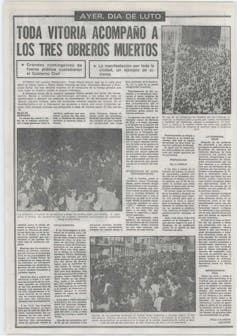
El Correo Español, 4 de marzo de 1976.
Hemeroteca El Correo, CC BY

Como Fraga estaba en Alemania, el Gobierno trasladó la responsabilidad a los mandos policiales. Optaron por la mano dura. Incumpliendo el Concordato con la Santa Sede, que protegía el ámbito eclesiástico, la Policía Armada lanzó gases lacrimógenos dentro del templo, por lo que los asistentes a la asamblea se vieron obligados a salir. Los agentes no solo usaron porras y pelotas de goma contra ellos, sino también armas de fuego.

Todavía hay incógnitas por resolver. En palabras del historiador Carlos Carnicero, se trató de “una actuación criminal claramente, pero si hubo una orden directa de actuar así porque era aquello de especial gravedad o fue una decisión de los cuerpos policiales que estaban allí y fue una negligencia, eso es algo que por la documentación no hemos podido saber”.

En total, la Policía Armada mató a cinco trabajadores: Pedro María Martínez, Francisco Aznar, Romualdo Barroso, José Castillo y Bienvenido Pereda. A la lista habría que sumar cerca de un centenar de heridos, incluyendo algunos agentes. Por añadidura, el día 6 un manifestante que protestaba por aquella masacre en Tarragona, Juan Gabriel Rodrigo, falleció al caerse de una azotea cuando huía de la Policía.

El Correo Español, 6 de marzo de 1976.
Hemeroteca El Correo, CC BY

Huelga general en memoria de las víctimas

Siguiendo la consigna “Vitoria, hermanos, no os olvidamos”, se convocó una huelga general para el 8 de marzo. La oposición calculó que habían parado 500 000 trabajadores vascos y navarros. Aunque las fuentes oficiales rebajaban la cifra, reconocieron que tan solo en Guipúzcoa habían hecho huelga 105 000 empleados.

En aquella jornada se sucedieron los enfrentamientos entre los manifestantes y las Fuerzas de Orden Público, que se saldaron con una nueva víctima mortal: un guardia civil mató de un tiro al joven Vicente Antón Ferrero en Basauri. Al día siguiente unas 50 000 personas se concentraron en aquella localidad.

Ningún funcionario fue condenado por el brutal operativo de Vitoria. Tampoco dimitieron sus responsables políticos. Fraga, quien había acuñado el lema “la calle es mía”, se escudó en su ausencia. Al ser incapaz de modernizar las FOP, su imagen reformista y su gestión como ministro fueron muy cuestionadas.

La tragedia que aceleró la transición

La tragedia de Vitoria tuvo dos consecuencias políticas. Por una parte, empujó a la oposición moderada a fusionar los dos organismos en los que se encontraba dividida. Así se creó la Coordinación Democrática, más conocida como “Platajunta”.

Por otra, aumentó las tensiones entre Juan Carlos I y Arias, que a la postre provocaron su dimisión en julio de 1976. El Rey encargó la formación de un nuevo Gobierno a Adolfo Suárez, el hasta entonces ministro secretario general del Movimiento. A pesar de la lógica desconfianza inicial de la oposición, el nuevo presidente sumó voluntades y lideró la Transición democrática.

Enfrentamiento de manifestantes con la policía en el funeral por los cinco obreros asesinados el año anterior, marzo de 1977.
Germán Gallego Picó, CC BY

ETA vampirizó el 3 de marzo

¿Se ha recordado el 3 de marzo de 1976? Sí, pero con dos escollos. Por un lado, el olvido institucional. Durante décadas ni se amparó a las víctimas ni hubo homenajes oficiales. Por otro, la utilización política. Las reivindicaciones del movimiento obrero alavés, en gran medida nutrido por inmigrantes de la España rural, eran laborales, no abertzales. Ni ETA ni su entorno habían tenido incidencia.

No obstante, no tardaron en instrumentalizar los sucesos. El 6 de septiembre de 1980, ETA político-militar asesinó al capitán de la Policía Nacional Basilio Altuna con el pretexto de haber participado en el operativo. Posteriormente, usando la expresión del profesor Jesús Casquete, la izquierda abertzale ha vampirizado la memoria del 3 de marzo.

A pesar de todo, el trabajo del Instituto de Historia Social Valentín de Foronda de la Universidad del País Vasco, con historiadores profesionales como José Antonio Pérez, Antonio Rivera y Carlos Carnicero, ha servido para localizar las fuentes disponibles, analizarlas, contrastarlas y ofrecer un relato histórico documentado, sólido y riguroso.

En los últimos años, el compromiso de las instituciones ha permitido que las víctimas fuesen reparadas y homenajeadas de manera oficial. En 2024, el Gobierno Vasco, la Diputación Foral de Álava, el Ayuntamiento de Vitoria-Gasteiz, el Obispado de Vitoria y las asociaciones Martxoak 3 y Memoria Gara crearon la Fundación Memorial 3 de Marzo. Al año siguiente la iglesia de San Francisco de Asís fue declarada Lugar de Memoria Democrática por el Gobierno de España. En el futuro albergará un museo para recordar los sucesos de Vitoria.

Mural de las víctimas en la iglesia de San Francisco de Asís (Vitoria)
Wikipedia, CC BY

The Conversation

Gaizka Fernández Soldevilla no recibe salario, ni ejerce labores de consultoría, ni posee acciones, ni recibe financiación de ninguna compañía u organización que pueda obtener beneficio de este artículo, y ha declarado carecer de vínculos relevantes más allá del cargo académico citado.

– ref. Vitoria, 3 de marzo de 1976: la matanza que aceleró la Transición – https://theconversation.com/vitoria-3-de-marzo-de-1976-la-matanza-que-acelero-la-transicion-272637

Mark Carney’s visit to India hits the reset button on the Canada–India relationship

Source: The Conversation – Canada – By Saira Bano, Assistant Professor in Political Science, Thompson Rivers University

Prime Minister Mark Carney’s visit to India marks the most consequential step in years to rebuild Canada–India relations after the diplomatic rupture in 2023 over allegations linking Indian agents to the killing of a Canadian Sikh activist.

The visit signals a deliberate shift from crisis management to economic statecraft.

In Mumbai, Carney announced that Canada aims to conclude a Comprehensive Economic Partnership Agreement (CEPA) with India by the end of this year, with the goal of doubling two-way trade by 2030. The message was pragmatic: the two countries may not always agree, but engagement must continue.

From rupture to reset

Canada-India relations deteriorated sharply in September 2023, leading to diplomatic expulsions, reduced staffing and suspended trade negotiations. For much of the past two years, the relationship was defined by security tensions and mutual distrust.

The first signs of stabilization came at the 2025 G7 Summit in Kananaskis, Alta., when Carney’s invitation to Prime Minister Narendra Modi signalled a diplomatic breakthrough. High commissioners were reinstated and ministerial channels reopened. Carney’s India visit suggests the reset is moving from symbolism to implementation.

The logic is clear. Canada’s heavy trade dependence on the United States has become riskier amid tariff threats and political volatility. Diversification is no longer aspirational; it’s strategic.

India, as one of the world’s fastest growing major economies and an increasingly central figure in global supply chains, offers scale and long-term opportunity.

Energy as the anchor

Energy emerged as the central pillar of Carney’s two-day visit. Canada and India have relaunched the Ministerial Energy Dialogue and are advancing discussions on uranium supply, conventional energy trade and clean energy co-operation.

India’s energy demand continues to rise as economic growth accelerates. It remains heavily import-dependent on crude oil and natural gas while also seeking to expand low-carbon baseload power. Canada, meanwhile, is looking to reduce its overwhelming reliance on the U.S. market.

With expanded export capacity through the Trans Mountain pipeline and growing LNG infrastructure, Canada is better positioned to reach Indo-Pacific markets than at any point in recent decades.

While Canada will not displace other suppliers, it can become part of India’s diversification portfolio. Long-term uranium agreements, in particular, would embed trust through decades of commercial interdependence. Nuclear co-operation offers durability that few other sectors can match.

Critical minerals, structural alignment

Beyond fuels, critical minerals represent a deeper strategic opportunity. Canada’s Critical Minerals Strategy aligns closely with India’s National Critical Minerals Mission in terms of lithium, nickel, cobalt, rare earth elements and downstream supply chains.

For Canada, the goal is not simply exporting raw resources, but building integrated value chains through processing partnerships, recycling and technology collaboration. For India, secure access to minerals is essential for electric vehicles, semiconductors, defence industrial supply chains and clean energy technologies, particularly as it seeks to reduce dependence on China-dominated processing networks.

Progress in critical minerals would move the relationship beyond symbolic diplomacy toward structural alignment.

Although CEPA negotiations have stalled in the past, both countries now face stronger incentives to revive them amid global trade turbulence and diversification pressures.

Progress on energy and minerals can help build domestic support for stability while wider trade talks continue.

Innovation, security

Carney’s visit also emphasized people-to-people and innovation ties. Foreign Affairs Minister Anita Anand launched a new Canada–India Talent and Innovation Strategy, including 13 new university partnerships spanning artificial intelligence, hydrogen research, digital agriculture and health sciences.

Education has long anchored Canada–India relations. Embedding research collaboration and talent mobility strengthens long term institutional linkages that outlast political cycles. Artificial intelligence co-operation, in particular, aligns Canada’s strengths in responsible AI governance with India’s scale in digital infrastructure and AI deployment.

Despite economic progress, however, security concerns between India and Canada remain unresolved. The diplomatic fallout of 2023 continues to affect trust.

During the visit, Anand faced repeated questions about foreign interference and transnational repression. She emphasized that public safety concerns must be addressed through direct engagement rather than disengagement.

Recent reports of ongoing threats and warnings to Sikh activists in Canada show that underlying tensions persist, even as both governments seek to prevent them from defining the entire relationship.

Ottawa’s tone appears more measured, but the conflicting narratives between the two countries remains evident.

The road ahead

Carney’s challenge is now therefore twofold: advance economic co-operation while preventing unresolved security disputes from derailing the broader reset of the Canada-India relationship.

Improved ties with India also align with Carney’s broader foreign policy vision, articulated in Davos, that middle powers must co-operate more closely in response to fractures in the global order.

India’s inclusion in a broader Indo-Pacific tour alongside Australia and Japan underscores that this engagement is part of a wider strategic recalibration.

Stabilizing relations with India is therefore not simply a bilateral exercise. It’s about positioning Canada more credibly in the Indo-Pacific region and strengthening co-ordination among democratic middle powers navigating geopolitical uncertainty.

The significance of Carney’s visit lies less in rhetoric and more in trajectory. By setting a target for a trade agreement, advancing energy and uranium co-operation, deepening critical minerals alignment and expanding academic partnerships, Ottawa is attempting to anchor the relationship in long-term interdependence.

The reset is not complete. Security tensions still cast a shadow. But the visit suggests that both governments are willing to compartmentalize disputes and focus on areas of shared economic and strategic interest.

The Conversation

Saira Bano does not work for, consult, own shares in or receive funding from any company or organisation that would benefit from this article, and has disclosed no relevant affiliations beyond their academic appointment.

– ref. Mark Carney’s visit to India hits the reset button on the Canada–India relationship – https://theconversation.com/mark-carneys-visit-to-india-hits-the-reset-button-on-the-canada-india-relationship-277015

Cuando la comida se convierte en un problema: trastornos de la conducta alimentaria en la adolescencia

Source: The Conversation – (in Spanish) – By Laura Viqueira Gutiérrez, Directora Máster Formación Profesorado Secundaria, Universidad Internacional de Valencia

New Africa/Shutterstock

La adolescencia es una etapa de profundas transformaciones físicas, psicológicas y sociales. En este contexto, los trastornos de la conducta alimentaria se han convertido en una preocupación creciente de salud pública, afectando a un porcentaje relevante de jóvenes en todo el mundo: a entre aproximadamente el 5,5 % y el 17,9 % de las mujeres y a entre el 0,6 % y el 2,4 % de los hombres jóvenes han experimentado un trastorno de la conducta alimentaria a lo largo de la vida.

Lejos de reducirse a una simple preocupación estética o a “modas”, se trata de trastornos mentales con causas variadas y complejas, que implican una alteración persistente en los hábitos alimentarios y en la percepción del propio cuerpo.

Trastornos más frecuentes en la adolescencia

Entre los más habituales en la etapa adolescente están la anorexia nerviosa, caracterizada por una restricción extrema de la ingesta y un miedo intenso a ganar peso; la bulimia nerviosa, con episodios de atracones seguidos de conductas purgativas, como vómitos autoinducidos o ejercicio excesivo; y el trastorno por atracón, marcado por ingestas compulsivas sin conductas compensatorias posteriores.

Estas condiciones pueden aparecer desde los primeros años de la adolescencia y se observan tanto en chicas como en chicos, aunque muchas veces queden infradiagnosticados en estos últimos.

Señales de alarma

Identificar estos trastornos en sus etapas iniciales es crucial para una intervención temprana. Algunas señales incluyen:

• Cambios en los hábitos alimentarios o evitar comidas en grupo.

• Preocupación excesiva por el peso o las calorías.

• Fluctuaciones importantes de peso.

• Aislamiento social y descenso del rendimiento escolar.

• Comportamientos extremos, como ejercicio compulsivo o purgas.

La evidencia muestra que cuanto antes se detecten estas señales, mejor es el pronóstico y menor el riesgo de complicaciones a largo plazo.

Factores de riesgo

El desarrollo de un trastorno de conducta alimentaria no responde a una única causa, sino a la interacción entre factores biológicos, psicológicos y sociales. La presión por cumplir idealizados estándares corporales (amplificada por las redes sociales) favorece la insatisfacción corporal entre adolescentes.

Además, características como el perfeccionismo, baja autoestima o experiencias de acoso escolar pueden incrementar la vulnerabilidad, así como cambios familiares o situaciones estresantes. Aunque tradicionalmente se han visto más en mujeres adolescentes, la diversidad de perfiles ha aumentado y hoy también se identifican casos en jóvenes varones y de distintas realidades sociales.


Leer más:
La anorexia nerviosa también es miedo a madurar


Consecuencias psicológicas, físicas y académicas

Las repercusiones de estos trastornos van más allá de la alimentación. A nivel físico, pueden provocar malnutrición, alteraciones hormonales, problemas cardiovasculares y hasta poner en riesgo la vida. A nivel psicológico, se asocian con ansiedad, depresión, pensamientos obsesivos y baja autoestima.

El impacto académico también es considerable: dificultades de concentración, mayor absentismo y rendimiento escolar deteriorado son comunes, lo que afecta el desarrollo educativo y las oportunidades futuras.

El papel de la familia y la escuela

Adultos de referencia en la familia y la escuela son quienes pueden observar los primeros signos de alerta de un trastorno alimentario; además tanto el hogar como el centro educativo son espacios clave para intervenir de manera preventiva y de apoyo. Relaciones familiares complicadas o disfuncionales (como poca cohesión, falta de comunicación abierta o niveles altos de conflicto) se asocian con un mayor riesgo de desarrollar y mantener conductas alimentarias problemáticas.

Esto no significa que la familia sea la causa, sino que la calidad del ambiente relacional influye en la forma en que un adolescente percibe su cuerpo, regula sus emociones y afronta el estrés. Espacios familiares donde se fomente el diálogo, se promueva la empatía y se reduzca la presión por la apariencia corporal pueden actuar como factores de protección importantes.


Leer más:
Jóvenes bajo presión: cuando los ‘influencers’ son sus modelos de cuerpo perfecto


Del mismo modo, la escuela tiene un papel crucial en identificar cambios de comportamiento, ofrecer apoyo emocional y promover programas educativos que integren salud mental, educación sobre alimentación saludable y aceptación del cuerpo.

La colaboración institucional entre docentes, orientadores escolares y equipos sanitarios facilita una detección temprana y un acompañamiento más eficaz. Por ejemplo, programas que fomentan la autoestima y la resiliencia han demostrado reducir factores de riesgo asociados a los trastornos de conducta alimentaria, especialmente cuando se implementan como parte de la educación regular.

Romper mitos para facilitar la ayuda

A pesar de la evidencia científica acumulada, estos trastornos de conducta aún están rodeados de mitos que dificultan la percepción real del problema. Un error común es pensar que se trata de una “fase”, de una elección o de una preocupación superficial por el peso. Nada más lejos de la realidad: son trastornos de salud mental complejos con raíces biológicas, psicológicas y sociales que requieren un abordaje profesional y multidisciplinar.

Además, existen otros mitos ampliamente extendidos, como la creencia de que los TCA solo afectan a mujeres adolescentes, cuando también se presentan en varones y en otras etapas de la vida; o que solo son graves cuando hay un peso corporal muy bajo, lo que invisibiliza cuadros clínicamente severos en personas con normopeso o sobrepeso. Asimismo, atribuir el trastorno a la responsabilidad individual o familiar refuerza el estigma y puede retrasar la búsqueda de ayuda.

Romper estos mitos es fundamental para fomentar una cultura de comprensión y apoyo que facilite la detección precoz y el acceso al tratamiento. Normalizar conversaciones sobre salud mental y alimentación —por ejemplo, en los medios de comunicación, en el ámbito educativo y en las familias— puede disminuir la vergüenza y la culpa que sienten muchos adolescentes antes de buscar ayuda profesional.

¿Cómo y cuándo se recuperan?

La recuperación de los trastornos de la conducta alimentaria es posible, aunque suele requerir un enfoque multidisciplinar y sostenido en el tiempo. Los tratamientos combinan atención médica para supervisar la salud física; apoyo psicológico para abordar los patrones de pensamiento y las emociones relacionadas con la alimentación; educación nutricional para establecer hábitos saludables; y trabajo con el entorno social, incluyendo familia, amigos y escuela, para garantizar un acompañamiento constante.

Además, la integración de programas de prevención y sensibilización en los centros educativos y la promoción de redes de apoyo comunitarias pueden fortalecer la resiliencia de los adolescentes y reducir el riesgo de recaídas.

The Conversation

Las personas firmantes no son asalariadas, ni consultoras, ni poseen acciones, ni reciben financiación de ninguna compañía u organización que pueda obtener beneficio de este artículo, y han declarado carecer de vínculos relevantes más allá del cargo académico citado anteriormente.

– ref. Cuando la comida se convierte en un problema: trastornos de la conducta alimentaria en la adolescencia – https://theconversation.com/cuando-la-comida-se-convierte-en-un-problema-trastornos-de-la-conducta-alimentaria-en-la-adolescencia-272655

La guerra por Warner y el futuro del entretenimiento: quién decidirá qué vemos y por qué debería importarnos

Source: The Conversation – (in Spanish) – By Jose Antonio Cortés Quesada, Profesor Contratado Doctor por ANECA. Coordinador Académico del Grado en Marketing., UNIR – Universidad Internacional de La Rioja

Estudios de Warner Bros. en Burbank, CA. Robert V Schwemmer/Shutterstock

La posible compra de Warner Bros. Discovery (que nació en 1923 como estudio de cine y ahora es un gigante audiovisual propietario, entre otros, de la plataforma digital HBO Max) se ha convertido en uno de los mayores pulsos corporativos de la historia del entretenimiento audiovisual. Lo que parecía una integración entre Netflix y el histórico estudio cinematográfico ha derivado en una nueva fase de negociación encabezada por Paramount Skydance.

Más allá de cómo finalice el acuerdo, la operación muestra algo más profundo: el sector audiovisual ha entrado en una etapa de consolidación industrial. Los estudios tradicionales, plataformas digitales y empresas tecnológicas compiten por controlar el contenido, la distribución y los datos de los espectadores.

Una batalla corporativa con múltiples frentes

El 5 de diciembre de 2025 Netflix anunció que compraba Warner por casi 83.ooo millones de dólares. La operación fue interpretada como un movimiento capaz de redefinir Hollywood, al concentrar gran parte de la producción cinematográfica bajo una sola empresa, y generó inquietud entre reguladores y parte de la industria creativa estadounidense.

La situación cambió apenas cuatro días después, cuando Paramount lanzó una ofensiva corporativa para la compra de Warner aunque todo quedó en stand-by, a la espera de la junta de accionistas de Warner Bros. Discovery, que se celebraría el próximo 20 de marzo. Finalmente, la última semana de febrero Paramount mejoró su oferta, aumentando la presión financiera y legal sobre el acuerdo inicial, y Netflix optó por retirarse de la operación. El gigante del streaming afirmó que, en lugar de invertir en esta compra, dedicaría casi 20.000 millones de dólares en producir contenido para su propia plataforma.

El foco se desplaza ahora hacia los accionistas de Warner y hacia los organismos reguladores estadounidenses, que deberán evaluar si una integración de este tamaño altera el equilibrio competitivo del sector audiovisual.

De momento, tanto las acciones de Paramount como las de Netflix, se disparan en bolsa.

Mucho más que estudios de cine

Warner no es únicamente un estudio fundado hace más de un siglo. Su valor estratégico reside en combinar producción cinematográfica, franquicias globales, como Harry Potter, Juego de Tronos, The Last of Us, y muchas más, y una plataforma digital consolidada como HBO Max.

Además, Paramount, alineado con el entorno del mismo Donald Trump, se quedaría con el canal informativo CNN (https://cadenaser.com/nacional/2026/02/27/paramount-se-queda-con-mucho-mas-que-warner-asi-sera-el-nuevo-imperio-mediatico-de-sintonia-trumpista-cadena-ser/).

Así, en la economía del streaming, poseer contenido ya no es suficiente; lo decisivo es controlar todo el ciclo de consumo.

Las plataformas actuales funcionan como ecosistemas de datos. Cada reproducción, pausa o abandono alimenta sistemas algorítmicos basados en IA capaces de anticipar preferencias y maximizar el tiempo de visionado. Ese tiempo se traduce directamente en fidelización… y cada vez más, en ingresos publicitarios.

Por ello, independientemente del comprador final, Warner representa un activo clave para cualquier compañía que aspire a liderar modelos híbridos basados en suscripción y publicidad.

El segundo pilar del streaming: la publicidad

Durante años, el streaming se presentó como la alternativa sin interrupciones (publicidad) frente a la televisión tradicional. Sin embargo, el modelo ha evolucionado rápidamente. Hoy, prácticamente todas las grandes plataformas, incluidas Netflix, Disney+ o Prime Video, incorporan planes con anuncios (https://doi.org/10.5209/esmp.104856).

El crecimiento de suscriptores se ha ralentizado y la publicidad permite ampliar ingresos sin aumentar excesivamente los precios.

Este cambio introduce una transformación en la experiencia cultural. Las decisiones sobre qué contenidos se producen, promocionan o destacan dejan de depender de criterios creativos y pasan a ser estrategias de retención algorítmica. Series, películas u otros formatos comienzan a diseñarse pensando en mantener la atención del espectador el mayor tiempo posible.

Como señalaba recientemente el actor y productor Matt Damon (https://www.fotogramas.es/noticias-cine/a70048045/matt-damon-actor-netflix-trama-peliculas-repeticiones-dialogos-telefono-movil/), las plataformas prefieren impactos narrativos tempranos capaces de evitar que el espectador abandone el contenido en los primeros minutos. De esta manera, la narrativa audiovisual empieza a adaptarse a métricas más propias del entorno digital que del cine tradicional.

¿Qué ocurrirá con las salas de cine?

Otro de los grandes interrogantes afecta a la exhibición cinematográfica. Históricamente, las producciones de Warner seguían un modelo clásico, estreno en salas y posterior llegada a plataformas.
Las negociaciones recientes han puesto sobre la mesa modelos híbridos con ventanas de exclusividad cada vez más cortas, en torno a 45 días (https://es.hollywoodreporter.com/netflix-mantendria-los-estrenos-de-warner-en-cines-durante-45-dias/), que permiten combinar ingresos en taquilla con explotación rápida en streaming. Sea cual sea el resultado final de la operación, esta tendencia parece irreversible.
Quien controle Warner decidirá cómo se producen, distribuyen y monetizan las grandes producciones audiovisuales de los próximos años, aumentando la presión sobre salas independientes y productoras externas.

El cambio real: concentración y cultura algorítmica

La retirada de Netflix de la operación no supone el final de la historia, sino la confirmación de una tendencia más amplia. El entretenimiento audiovisual está entrando en una fase en la que contenido, distribución, datos y publicidad tienden a integrarse bajo grandes empresas globales.
La batalla corporativa por Warner Bros. Discovery ha mostrado que el futuro del sector ya no depende solo de quién produce las historias, sino de quién controla los sistemas que las recomiendan, las financian y las monetizan.
Este tipo de fusiones obliga a preguntarnos como consumidores no solo qué servicios pagamos, sino qué tipo de relación queremos mantener con el entretenimiento audiovisual: ¿una centrada en experiencias culturales comunitarias y cinematográficas o dominada por consumo inmediato, métricas algorítmicas y publicidad personalizada?
Ese es, en última instancia, el verdadero desafío para quienes, al final del día, solo buscan disfrutar de una buena historia.

The Conversation

Las personas firmantes no son asalariadas, ni consultoras, ni poseen acciones, ni reciben financiación de ninguna compañía u organización que pueda obtener beneficio de este artículo, y han declarado carecer de vínculos relevantes más allá del cargo académico citado anteriormente.

– ref. La guerra por Warner y el futuro del entretenimiento: quién decidirá qué vemos y por qué debería importarnos – https://theconversation.com/la-guerra-por-warner-y-el-futuro-del-entretenimiento-quien-decidira-que-vemos-y-por-que-deberia-importarnos-272109

¿Por qué estudiamos mutantes en biología?

Source: The Conversation – (in Spanish) – By Monica Folgueira Otero, Profesora Contratada Doctora- Área Biología Celular, Universidade da Coruña

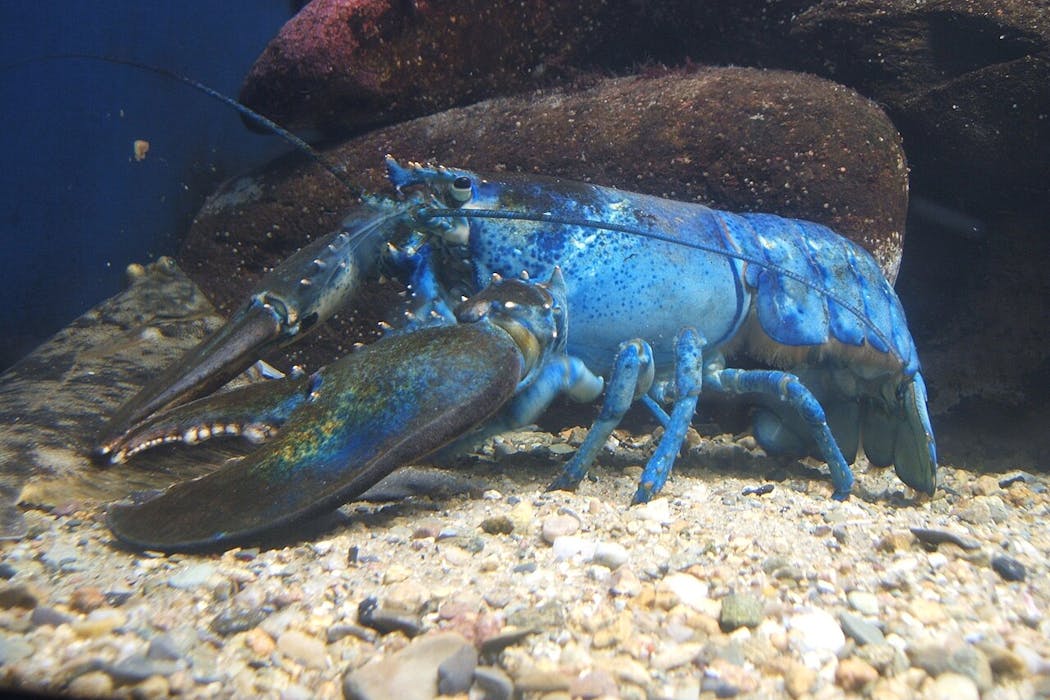
La langosta azul es un ejemplo de mutante. Steven G. Johnson / Wikimedia Commons., CC BY

En biología, usamos mutantes para entender cómo funcionan las células y qué pasa cuando algo falla. Pero nuestros mutantes se parecen poco a los X-Men, que tienen capacidades extraordinarias. En esta saga de Marvel, Lobezno tiene una capacidad asombrosa de curarse heridas y Cíclope puede disparar descargas de energía por los ojos.

En cambio, los peces cebra cíclopes tienen un solo ojo, el cerebro deformado y no vivirán mucho. No tienen superpoderes, pero nos permiten entender aspectos cruciales del desarrollo embrionario, incluido el de humanos. ¿Quién es el verdadero superhéroe?

Figura de cera del actor Hugh Jackman como Lobezno, en el Museo Madame Tussaud, Sydney, Australia.
Eva Rinaldi / Wikimedia Commons., CC BY

Como una radio estropeada

Hay un símil utilizado en biología para explicar por qué es tan útil estudiar mutantes. Lo compara con abrir una radio sin saber para qué sirven sus componentes. Si sacamos una pieza y el sonido cambia, podremos quizá inferir para qué sirve ese componente. De manera análoga, al observar qué falla cuando un gen muta, se puede deducir su función biológica.

Un pez cebra cíclope con los ojos fusionados (derecha) frente a un ejemplar normal (izquierda).
Universidade da Coruña.

Hay quien ha criticado este símil, diciendo que acabaríamos con un diagrama lleno de flechas que pocos entenderían y que no explicaría cómo funciona la radio realmente. Admito que, a veces, los biólogos deberíamos aprender de los ingenieros y adoptar una visión más pragmática, pero esa es otra historia…Podemos quedarnos con la primera versión del símil, la de la curiosidad por saber qué hace cada pieza de la radio.

Del hallazgo fortuito al diseño preciso

El biólogo Thomas Hunt Morgan, en 1891.
The University Press of Kentuky.

Los primeros mutantes que se usaban en biología aparecían de forma espontánea. Uno de los primeros científicos que trabajó con ellos fue Thomas Hunt Morgan (1866-1945). Su laboratorio en la Universidad de Columbia (Estados Unidos), llamado el cuarto de las moscas, estaba bastante desordenado y apestaba a plátano fermentado. Trabajaba con las moscas de la fruta, esas a las que a veces llamamos erróneamente “mosquitos” y que tienen afán suicida por nuestra copa de vino tinto.

Durante años, Morgan y sus discípulos intentaron introducir mutaciones en las moscas, sin éxito. Cuando estaban al borde de abandonar estos experimentos, apareció de forma fortuita un macho mutante con los ojos blancos en lugar de rojos. Se dice que Morgan estaba tan entusiasmado que se llevó al insecto a casa para cuidarla, pero no sabemos si esto es verdad.

Gracias a este macho, Morgan y su equipo demostraron que los genes están en los cromosomas y explicaron las bases de la herencia genética ligada al sexo. Un avance clave para entender muchas enfermedades hereditarias.

Ahora los científicos ya no tienen que esperar a que aparezca algún mutante por azar, los pueden generar en el laboratorio. Para ello se usan compuestos que inducen cambios en el ADN y, después, se seleccionan los que muestran características interesantes. Una vez seleccionado el rasgo, los científicos tendrán que localizar la alteración en el ADN responsable.

También se pueden hacer mutantes a la carta mediante edición genética por CRISPR, de forma que desde el principio se sabe qué gen está modificado.

El curioso nombre de los genes

Para poder referirnos a algo, le tenemos que dar nombre. Y si un científico es el primero en ver algo, tiene el honor de bautizarlo, sea una especie, un mutante o un gen. Sobre esto, hay muchas anécdotas divertidas. Y es que los científicos también somos humanos y, a veces, con sentido del humor. Vayamos a mutantes y genes, que es lo que nos ocupa.

Pez cebra con una mutación que afecta a los ribosomas, utilizado para investigar trastornos relevantes para la salud humana.
Mónica Folgueira.

Resulta que hay un gen fundamental para nuestro desarrollo embrionario que se llama igual que el erizo de los videojuegos de Sega, Erizo Sonic. Recibió este nombre porque los embriones de la mosca de la fruta con este gen mutado se parecen a un erizo, pues están cubiertos de pelos puntiagudos.

A la compañía Sega no parece importarle tener este alter ego de su personaje. No fue así con la compañía Pokémon, que amenazó con demandar a un centro de investigación en cáncer porque uno de sus grupos llamó Pokémon a un gen. Los titulares no se hicieron esperar: “Se revela el papel de Pokémon en el cáncer”. Ante la amenaza de demanda, los científicos cambiaron el nombre del gen a Zbtb7, lo cual es mucho más aburrido. Algo parecido también pasó con un gen inicialmente bautizado Velcro, que tampoco gustó a la compañía con el mismo nombre.

Divertirse mientras se aprende

Hay más mutantes y genes con nombres curiosos. Algún ejemplo más: Groucho (por el exceso de vello facial), Cita barata (por ser muy sensible al alcohol), Aún no estoy muerto (por ser más longevo) o Desaliñado (por sus pelos desordenados). Esto no solo denota humor entre científicos, sino que hace a los mutantes más memorables.

Un gen mutante hallado en la mosca Drosophila recibió el nombre de Groucho, en honor al comediante.
ABC Photo / Wikimedia Commons., CC BY

Pero nombres como estos pueden transmitir una idea poco rigurosa de la ciencia y los científicos. Y puede surgir un problema si el gen acaba teniendo un papel importante en alguna enfermedad humana. Lo que es gracioso en un laboratorio de moscas o gusanos puede ser ofensivo y plantear problemas éticos cuando atañe a humanos.

¿Se imaginan a un médico informando de un cáncer causado por un gen llamado Desaliñado? Podría ocurrir. Por suerte, la mayoría de los diagnósticos clínicos no son tan detallados y no mencionan genes. Además, como los nombres suelen venir del inglés, al menos, hablaríamos de dishevelled, que suena menos incómodo.

Así que la próxima vez que vean una mosca sobrevolando su copa de vino, no la miren con desprecio. Podría ser una “cita barata” o estar un poco “desaliñada” y esconder en su ADN la respuesta a muchas preguntas biológicas.

The Conversation

Mónica Folgueira Otero recibe fondos del Ministerio de Ciencia, Innovación y Universidades.

– ref. ¿Por qué estudiamos mutantes en biología? – https://theconversation.com/por-que-estudiamos-mutantes-en-biologia-275327

Actually, Doug Ford, basket-weaving is innovative and in-demand

Source: The Conversation – Canada – By Victoria MacBeath, PhD Candidate, Art History, Concordia University

Salish Nlaka’pamux basket made of cedar or spruce root, cedar wood and hide. (McCord Museum)

The Ontario government recently announced massive cuts to Ontario Student Assistance Program (OSAP) funding, decreasing the maximum funding from 85 per cent to 25 per cent.

Student response to this has been largely negative. Speaking to the media, Ontario Premier Doug Ford said that he received “thousands of calls” from students expressing concerns. Ford’s response: telling them to invest in education that leads to in-demand jobs.

At a February news conference responding to OSAP cuts, Ford relayed that he told frustrated students: “You’re picking basket-weaving courses, and there’s not too many baskets being sold out there.” He said, instead, students should invest in their future through their program decisions — insinuating that craft curriculums hold no value in the job market. Ford mentioned trades, STEM and health-care fields as ones that would provide post-graduation employment.

As a researcher that engages with scholars specialized in the history of craft practices in Canada, alongside teaching art history courses that highlight the social, political and economic importance of fibre arts, Ford’s response is troubling and unsurprising.

Basket-weavers push back

Ford’s rhetoric demonstrates a misunderstanding of Canada’s cultural sector, basket weaving and the purpose of higher education.

In response to Ford’s comments, basket-weavers and craft organizations across the country noted the lucrative nature of their practice alongside the widely applicable skills learned through craft education.

Basket-maker Spencer Lunham Jr., of the Chippewas of Kettle and Stony Point First Nation, for example, told CBC that he sells a couple hundred baskets per year for around $150 to $3,000 each.

The prosperity of Canada’s cultural sector is backed by data from the Canadian chamber of Commerce, whose business data lab reported in October 2025 that the arts and culture sector’s GDP has grown nearly eight per cent, outpacing an overall economic growth of four per cent. In addition, the sector supports “13 jobs for every million in output, which is more than oil and gas, manufacturing or agriculture.”

Ontario is one of the provinces to see the highest economic impact from the sector, according to the report.

Winner of Sobey Art Award

Ford’s emphasis on the uselessness of craft practices is also challenged by recent winners of the Sobey Art Award, one of the most prestigious art awards in the country.

Many of the recent winners incorporate craft or craft-like practices into their work. This includes the 2017 winner of the award, Ursula Johnson,
an artist from the Eskasoni First Nation, in Cape Breton, Nova Scotia, who has an innovative basket-making practice. It seems that, at the very least, gallerists are buying baskets.

Johnson’s practice in particular highlights that — despite craft’s common framing as traditional, overly indulgent and frozen in time — basket-weaving is an innovative, adaptive and in-demand field.

As curator Heather Anderson argues in her 2021 writing on Johnson’s work: the artist utilizes weaving practices to highlight Canada’s ongoing role in colonization, and to question the contemporary museum’s implication in it.

Craft and technological innovation

A large wooden weaving loom.
Wooden Jacquard loom shown at the Museum of Science and Industry in Manchester, England.
(Wikimedia), CC BY

Craft practices have always been at the centre of technological innovation.

Some scholars contend that the inventor of the computer, Charles Babbage, was likely inspired by the Jacquard loom: a weaving machine whose invention had a profound impact on the industrial revolution in Europe.

Other writers, like journalist Brian Merchant, have recently argued that those opposed to artificial intelligence can take inspiration from the first rebellions against big tech: the 19th century Luddites who opposed the mass industrialization of weaving practices.

Illustration of a 19th century protest figure outdoors.
‘The Leader of the Luddites,’ illustration, 1812.
(Wikimedia)

From AI to the clothes we wear, weaving has shaped the contemporary global economy.

While weaving can be lucrative, members of the Toronto Guild of Spinners and Weavers noted that basket-weaving courses do not emphasize their monetary value, but rather their educational value.

Purpose of learning

This is where Ford’s real misunderstanding of education is revealed: the purpose of learning is not simply to remember and regurgitate facts, it is to problem solve, to expand our horizons and to think critically. These skills can be developed in basket-weaving courses just as well as math courses.


Read more:
Ada Lovelace’s skills with language, music and needlepoint contributed to her pioneering work in computing


Johnson, for example, says that her grandmother taught her that the maker does not manipulate the wood they use to weave, but instead the wood guides the maker. Basket weaving teaches us to listen, to collaborate and build from a strong foundation and work our way up.

TED talk with Ursula Johnson, an artist from the Eskasoni First Nation who tells the story of preserving Mi’kmaq culture through the art of basketry.

College admissions expert and counsellor Scott White, writing for Forbes Magazine, wrote in 2025 that “we need a system that prioritizes critical thinking, emotional intelligence and practical skills over rote memorization.”

He and many others who are invested in supporting young people and helping our systems change to support our society through turbulent times note that current education systems still reflects outdated ideas about the future of workers: of those in factories, rather than creative thinkers.

Pipeline to a job?

The Ford government’s approach to higher education seems to be the same — funding a system that put us on a pipeline to a job and where programs that demand critical and creative thinking are undervalued, and also, underfunded: Recent reports note that funding for Ontario’s post-secondary sector is low compared to support in other provinces.

Author Ursula K. Le Guin argued in 1986 that rather than a weapon for killing, the first human tool was likely a container: a basket or a woven net. She writes that the basket — and craft practices — are not supplemental to human survival: rather, they enable it.

Craft practices allow us to carry our culture, our belongings and our sustenance. If we focus only on the money-making schemes in society, then we lose a part of ourselves.

This is the real power of craft education: when we engage hands-on craft, we learn about our past and build problem-solving skills.

The Conversation

Victoria MacBeath receives funding from the Social Sciences and Humanities Research Council of Canada for craft history research.

– ref. Actually, Doug Ford, basket-weaving is innovative and in-demand – https://theconversation.com/actually-doug-ford-basket-weaving-is-innovative-and-in-demand-276496

U.S.-Israeli strikes against Iran may succeed on a military basis, but at what political cost?

Source: The Conversation – Canada – By James Horncastle, Assistant Professor and Edward and Emily McWhinney Professor in International Relations, Simon Fraser University

Israel and the United States have launched combat operations against Iran via Operation Epic Fury. The air campaign appears aimed at three targets: Iran’s military bases and command structure, its air defences and strategic missile sites and its leadership.

Early strikes were successful in killing Iran’s Supreme Leader Ali Khamanei and several key members of the leadership.


Read more:
Ayatollah Ali Khamenei ruled Iran with defiance and brutality for 36 years. For many Iranians, he will not be revered


The strikes themselves are likely to be successful from a strictly military standpoint. Israeli and American forces are quickly establishing air superiority over Iran and disabling Iran’s anti-air capabilities.

These attacks occur at a moment when Iran is weakened both domestically and internationally.

The Iranian regime is still recovering from the December and January protests that were the greatest challenge to the Iranian government since the 1979 Iranian Revolution.

Internationally, key members of Iran’s “ring of fire,” like the Houthis in Yemen and Hezbollah in Lebanon, are in a vulnerable position. Furthermore, the domestic unrest have emboldened people around the world to challenge the Iranian regime’s legitimacy.

Nevertheless, the U.S. and Israel are unlikely to be successful in their stated goal of regime change. Historically, air power alone is insufficient. Furthermore, even if they succeed in regime change, they may create an even more volatile geopolitical situation.

Escalating tensions

The tensions between the U.S.-Israel and Iran are nothing new. Their foundations go back to the birth of the Islamic Republic.

There’s been a significant escalation of tensions, however, over the past few years. The Oct. 7, 2023, Hamas attack against Israeli citizens and Iran’s role in supporting Hamas and other paramilitary groups opposed to the Israeli state resulted in Israel launching extensive strikes against Iranian assets in the region.

These strikes culminated in last year’s Twelve Day War between Israel and Iran, with the U.S. playing an auxilliary role. American and Israeli strikes inflicted significant damage on Iranian infrastructure. But they didn’t achieve the American goal of eliminating Iran’s nuclear program, despite President Donald Trump’s claims to the contrary.

Iranian protests

Against this backdrop of rising tensions between Israel/the United States and Iran, the economic situation in Iran deteriorated, resulting in shopkeepers and merchants in Tehran going on strike. These protests served as a spark for what became the largest public demonstrations against the Iranian regime that it had encountered since the birth of the Islamic Republic.

This latest uprising by the Iranian people presented an opportunity for the U.S. and Israel. Israeli Prime Minister Benjamin Netanyahu has never backed down from his goal of regime change in Iran. Trump actively encouraged the protesters to fight for regime change.

The protesters, however, needed material support that only the U.S. could provide. But with American military assets in the Caribbean challenging Venezuela, there were insufficient forces available.


Read more:
‘Woman, Life, Freedom’ hasn’t faded in Iran — it’s being actively eliminated


The result was that the U.S. was not able to intervene, and the Iranian regime succeeded in quashing the protests. Total deaths from the government’s crackdown are estimated to be in the thousands.

The U.S., having missed its ideal opportunity for regime change due to its fixation on Venezuela earlier in the year, nevertheless went through with pursuing its goal on Feb. 28.

An uncertain end

The problem now faced by Israel and the U.S. s the stated goal of regime change and the long-term stability of Iran. Not only is regime change uncertain due to the limitations of a strictly air campaign, but it could also create a scenario where more radicalized forces come to power.

This comes from the fact that, while the Iranian regime is often equated with prominent figures like the Ayatollah, it operates as more than a system centred on a single individual.

Unlike other authoritarian countries where key individuals or families have power, Iran is a complex state with a complex governance structure. At its heart is the Islamic Revolutionary Guard Corps (IRGC). Far from merely a military unit or secret police, the IRGC is a vast institution integrated within the security, economy and governance of Iran.

This is where the difference between “regime change” and “regime building” comes to light. Removing key leaders may destabilize Iran and change who wields power, but that usually means power is then consolidated by people already in place. That’s not the citizens Iran, who Trump urged to rise up, but the vast infrastructure of the IRGC.


Read more:
Trump and Netanyahu want regime change, but Iran’s regime was built for survival. A long war is now likely


Conflict could spread

This outcome is more likely given the instability of Iran over the past few weeks. If the regime were stable, Iranian political and military leaders wouldn’t view the current attacks as posing a threat to their control. But under the current volatile domestic circumstances, these leaders are likely to respond more forcefully and broadly because they believe their own future — and lives — are at stake.

The IRGC isn’t likely to be a more conciliatory or ideologically permissive interlocutor. In fact, the opposite is probably true.

Faced with the threat of further American and Israeli attacks and nascent discontent at home, the IRGC may move quickly to further lock down its own power and respond aggressively. This power struggle could not only result in significant Iranian deaths, but cause the war to spread throughout Middle East.

The Conversation

The authors do not work for, consult, own shares in or receive funding from any company or organisation that would benefit from this article, and have disclosed no relevant affiliations beyond their academic appointment.

– ref. U.S.-Israeli strikes against Iran may succeed on a military basis, but at what political cost? – https://theconversation.com/u-s-israeli-strikes-against-iran-may-succeed-on-a-military-basis-but-at-what-political-cost-277182

The hidden enemy on Mount Kilimanjaro: Safely dealing with low oxygen at high altitude

Source: The Conversation – Canada – By Stephen L Archer, Director of Translational Institute of Medicine (TIME), Queen’s University, Ontario

Last October, my daughter Elizabeth and I stood at Londorossi gate (elevation 2,250 metres), the western entrance to Mount Kilimanjaro National Park in Tanzania, ready to begin the nine-day Lemosho route up Mount Kilimanjaro. Climbing “Kili” would fulfil a dream I’ve had since working as a medical student in Kenya. Elizabeth’s dream was to ensure her dad came back in one piece.

Unlike Mount Everest, Kilimanjaro is a hike, not a technical climb requiring ropes or crampons. However, as a cardiologist and researcher in oxygen sensing, I knew that our key challenge would be the lack of oxygen — a condition called hypoxia.

Altitude and oxygen

Hypoxia occurs at altitude. At sea level, gravity creates barometric pressure, which compresses nitrogen and oxygen, accounting for Earth’s oxygen-rich atmosphere. However, gravity diminishes with distance from the planet’s centre. At altitude, the low barometric pressure causes gases to expand, meaning there are fewer molecules of oxygen per volume of air.

Mount Kilimanjaro, one of the world’s seven summits, is Africa’s highest point at 5,895 metres and the world’s tallest free-standing mountain. At its summit, barometric pressure falls 50 per cent compared to sea level (around 50 kiloPascals compared to 101 kiloPascals), so although oxygen still makes up 21 per cent of air, there are only half as many oxygen molecules in each breath.

Venture above 2,400 metres and you may develop acute mountain sickness (AMS) as a result of hypoxia. At altitudes of around 4,000 to 6,000 metres, the chances of developing AMS are 50/50.

Fortunately the risk of the more life-threatening hypoxia-related conditions — like high-altitude pulmonary edema (HAPE) or high-altitude cerebral edema (HACE) — is lower.

Acute mountain sickness is defined by a constellation of symptoms, including headache, nausea and vomiting, loss of appetite and dizziness.

HAPE and HACE are different than acute mountain sickness. HAPE is driven by excessive hypoxic constriction of the lung’s arteries (called pulmonary arteries). The pressure in these arteries rises, flooding the lung’s airways with bloody fluid, causing severe shortness of breath, bloody sputum and low blood oxygen.

Even more severe is HACE (hypoxic brain swelling), which shows up as severe headache, disorientation and imbalance. While one may endure acute mountain sickness with minor medical assistance, both HAPE and HACE require immediate medical intervention and rapid descent. However, distinguishing acute mountain sickness from early HAPE or HACE and choosing to descend is not always easy, particularly as climbers are often motivated to summit. Careful monitoring by impartial, safety-focused guides with twice daily oximetry is important. Oximetry measures oxygen in blood using a probe placed on the finger.

By the time we reached Barafu base camp (4,673 metres), our oxygen saturations had dropped from over 95 per cent at sea level to 87 per cent and 83 per cent. Those with oxygen saturations below 80 per cent at base camp are advised not to proceed to the summit.

Once the decision to descend due to low oxygen saturation is made, the choices are to walk down (if able), to be wheeled down on a stretcher or to take a helicopter, which is expensive and not without its own risks.

Aspiring climbers should be aware of three factors relating to hypoxia that can reduce their risk of altitude sicknesses and make climbing safer:

1. How the body detects hypoxia

Your body has oxygen sensors to detect hypoxia. These sensors are mitochondria, tiny intracellular powerhouses that trigger adaptive responses to boost oxygen uptake and delivery to vital organs.

In the carotid body — a tiny sensor in the carotid artery — and in the lung’s pulmonary arteries, mitochondria produce signalling molecules (called oxygen radicals) that trigger responses. These responses include neurotransmitter release, contraction of lung blood vessels and changes in gene expression.

The carotid body samples blood headed to the brain and, if it is acidic or hypoxic, signals the brain to increase the depth and rate of breathing. This is a helpful response because it increases ventilation, bringing more oxygen into your body.

A similar sensor in the lung’s pulmonary arteries constricts those arteries in response to hypoxic air (hypoxic pulmonary vasoconstriction, or HPV). HPV is helpful when lung hypoxia involves only a segment of lung, as in pneumonia. But at altitude, where the entire lung is filled with hypoxic air, HPV raises the pressure in the pulmonary arteries, which promotes fluid leakage from blood vessels into the airways, causing HAPE.

2. Acclimatization is key to surviving hypoxia

Slow ascent gives oxygen sensors time to condition climbers to function in the rarified air at altitudes like Kilimanjaro. The first adaptation, carotid body activation, happens quickly: breathing increases within minutes of hypoxic exposure.

Hours later, gene and protein expression changes. This is due to activation of transcription factors that control genes’ on and off switches. One such transcription factor that is activated by hypoxia, named HIF-1, regulates the hormone erythropoietin. More erythropoietin means more production of hemoglobin and red blood cells which increases the blood’s oxygen-carrying capacity.

Third, with a slow climb and sustained hypoxia, HPV gradually lessens, preventing pulmonary hypertension and HAPE. Our guides were very familiar with the necessity of acclimatization, and cheered us on with the refrain “Pole pole,” Swahili for “slowly slowly.”

Going slowly reduces the risk of developing acute mountain sickness. Like the parable of the tortoise and the hare, it more often strikes fit young people, whose bravado and strength allow rapid ascent, rather than slow-moving seniors. In addition to going “pole pole,” one can improve the chances of summiting by choosing a longer route (on Kilimanjaro, ideally a six- or seven-day ascent, like the Lemosho route) and following a “climb high, sleep low” philosophy: Hike to a higher altitude each day and then descend to your campsite.

Dr. Peter Hackett, an experienced mountaineer, documented the importance of acclimatization in a 1976 study.

Of 278 unacclimatized hikers ascending to 4,243 metres en route to Everest base camp, he found that 53 per cent developed acute mountain sickness; fewer experienced HAPE (2.5 per cent) or HACE (1.8 per cent). Acute mountain sickness was commonest among younger climbers and those who began their hike at 2,800 metres (after flying in), rather than those who hiked to the starting point at that altitude. Among those who did not acclimatize, acute mountain sickness incidence was reduced by taking acetazolamide, a drug that enhances breathing and suppresses HPV.

A more recent study further illustrates the dangers of rapid ascent, finding that 2.5 per cent of hikers trekking to 5,500 metres over four to six days developed HAPE, compared to 15.5 per cent of those airlifted directly to 5,500 metres.

3. Medications can help

Certain medicines do prevent and/or treat high altitude illnesses, increasing the chances of a safe climb by enhancing breathing and suppressing HPV (acetazolamide, brand name Diamox), suppressing HPV (sildenafil, brand name Viagra; and calcium channel blockers like nifedipine) and preventing inflammation (ibuprofen, brand name Motrin; and dexamethasone).

Our own Kilimanjaro medicine kit included three prescription medications (acetazolamide, sildenafil and dexamethasone) and one over-the-counter medicine (ibuprofen).

I’d like to stress that this article is not intended as medical advice. See your physician for fitness confirmation and prescriptions (and try any medicine pre-climb to check for allergies or side-effects) prior to climbing. Most of the medications recommended by the Wilderness Medicine Society’s 2024 Clinical Practice Guidelines for the Prevention, Diagnosis, and Treatment of Acute Altitude Illness require a prescription.

Lest you think that using medications is a cheat, trust me: The climb will be challenging despite pharmacological assistance. Elizabeth and I safely summited. Emerging happy but tired through the Mweka gate (1,680 metres), we felt gratitude to our guides, respect for the mountain and pride in realizing our dreams together.

This article was co-authored by Elizabeth Archer MFA, of Chicago, Illinois. She is a Canadian-Ukrainian playwright.

The Conversation

Stephen L Archer receives funding from CIHR

– ref. The hidden enemy on Mount Kilimanjaro: Safely dealing with low oxygen at high altitude – https://theconversation.com/the-hidden-enemy-on-mount-kilimanjaro-safely-dealing-with-low-oxygen-at-high-altitude-271716

Kansas revoked transgender people’s IDs overnight – researchers anticipate cascading health and social consequences

Source: The Conversation – USA – By Jae A. Puckett, Associate Professor of Psychology, Michigan State University

Anti-trans bills effectively restrict transgender people’s ability to participate fully in society. AP Photo/Julia Demaree Nikhinson

The number of bills directly targeting and undermining the existing legal rights of transgender and nonbinary people in the U.S. has been escalating, with sharp increases since 2021 and with each consecutive year. Kansas dealt the most radical blow yet on Feb. 26, 2026, as a law that immediately invalidates state-issued driver’s licenses, identification cards and birth certificates for holders whose gender marker does not match their sex assigned at birth took effect overnight.

This new law, called the House Substitute for Senate Bill 244, passed after legislators overrode the governor’s veto to rush it through legislation.

There is no grace period for this law, meaning trans and nonbinary people will have immediately invalid documents putting them at risk of a US$1,000 fine and up to six months in jail for driving with an invalid license. The law also restricts bathroom use to assigned sex at birth, and it allows citizens to sue transgender people for up to $1,000 for not complying.

While 21 states have passed similar bathroom restrictions, Kansas is the first to invalidate state-issued identification documents that were legally obtained.

We are researchers who study how marginalization and resilience affect the lives of trans and nonbinary people. Our work has documented how lack of access to accurate and affirming identification documents affects the health and well-being of this community.

By mandating the use of birth-assigned sex on identity documents, Kansas denies transgender people legal recognition and curtails their freedom of movement. These laws open the door to an even wider range of discriminatory policies.

People holding signs in protest, one reading 'My trans patients risk their health every day, because they are scared to use public restrooms. You just made this so much worse for them. I'll be sending the KS legislature the bill to treat those UTIs'
In addition to invalidating the IDs of transgender people, the Kansas law included what some have called a bounty hunter approach to bathroom restrictions.
AP Photo/John Hanna

ID is essential to participate in society

Invalidating someone’s identification documents has immediate and powerful consequences that cascade into all aspects of their life.

For example, without a valid driver’s license, many trans and nonbinary people will be unable to get to work, attend classes, pick up their children, visit the doctor, see friends or go to the grocery store. Trans and nonbinary people who need to drive with an invalid license risk fines and jail time, where they would be housed according to their sex assigned at birth.

Taking a train or bus is not a solution that would work for many people. Almost half of the U.S. population does not have access to public transportation, and for those who do, it is often poorly maintained, sparse or unreliable. The two transgender men who sued the state of Kansas to block the law noted how loss of their ability to drive makes them unable to work.

The effects of invalidating someone’s legal documents goes far beyond just transportation. Legal IDs are required to access health care, obtain housing, have a job, vote, attend college, access financial assistance or even purchase cold medicine at a pharmacy.

Health effects of incorrect ID

Not having identification documents with the correct gender marker also poses a safety and health risk.

Trans and nonbinary people who have not updated their identification documents are more likely to experience psychological distress and suicidality, in part due to increased day-to-day stress. For trans and nonbinary people whose physical appearance no longer aligns with their ID, not having updated documents puts them at increased risk for harassment and violence.

Roughly a quarter of trans and nonbinary people who have not updated their identification documents experience subsequent mistreatment when showing their IDs, including verbal harassment, assault and denial of services or access to settings. In our research, we similarly found that not having one’s gender legally affirmed is associated with greater discrimination and social rejection – one pathway to negative effects on mental and physical health.

To comply with the current law sets up an impossible situation for many trans and nonbinary people who have been using the restroom aligning with their gender identity and presentation for years. These individuals are set up to face violence, legal action or criminal penalties even when they are complying with the law, as using the restroom aligned with their sex assigned at birth will appear to others as contradicting their gender presentation.

Researchers and public health officials consider accurate and affirming identification documents an essential determinant of health. The World Health Organization, United Nations and the World Professional Association for Transgender Health have called for trans and nonbinary people to have the right to legal recognition of their gender.

Small LGBTQ+ and trans pride flags adorn two legislators' desks
Hundreds of anti-trans bills have circulated in the courts since 2021.
AP Photo/John Hanna

Another blow in a broader battle

The Kansas law is a flash point in the ongoing battle across the country for legal recognition of trans and nonbinary people’s existence.

The process for gender marker changes varies widely across states. Some require documentation of medical procedures to affirm one’s gender, while some do not allow gender marker changes at all. Some allow for gender-neutral gender markers, like the letter X.

According to the 2022 U.S. Trans Survey, which had over 92,000 participants, 59% of trans and nonbinary people have not updated their gender on any of their documents, and 23% have some of their documents updated but not others. This law and others like it will disadvantage even more trans and nonbinary people.

To us, this is about more than access to driving a car – it is a direct attack on the ability of trans and nonbinary people to live and survive. As of February 2026, 711 bills are under consideration across 41 states, with 110 at the national level. The restrictions these bills propose are far-reaching – prohibiting access to gender-affirming medical care, prohibiting students from using their chosen names and pronouns, banning trans and nonbinary youth from participating in sports, restricting access to bathroom facilities and censoring public education on issues related to gender.

In the face of these legislative efforts to control and erase trans and nonbinary people from public life, trans and nonbinary people, along with their allies, continue to stand up for each other and fight for their rights.

The Conversation

Jae A. Puckett co-leads the Gender Affirmation Project.

Noelle Martin is affiliated with the Gender Affirmation Project.

L. Zachary DuBois does not work for, consult, own shares in or receive funding from any company or organization that would benefit from this article, and has disclosed no relevant affiliations beyond their academic appointment.

– ref. Kansas revoked transgender people’s IDs overnight – researchers anticipate cascading health and social consequences – https://theconversation.com/kansas-revoked-transgender-peoples-ids-overnight-researchers-anticipate-cascading-health-and-social-consequences-277052