Réseaux sociaux : une hyper-conscience de soi qui amplifie le mal-être des jeunes ?

Source: The Conversation – in French – By Caroline Rouen-Mallet, Enseignant-chercheur en marketing, Université de Rouen Normandie

Sur les réseaux sociaux, les jeunes font face à un jugement collectif permanent. cottonbro studio / Pexels, CC BY

Troubles alimentaires, genre, corps, identité… Sur les réseaux sociaux, chaque sujet intime devient un thème de débat public. Si ces discours permettent de sensibiliser à des enjeux de santé et de société, ils peuvent aussi inciter à une auto-surveillance source de mal-être.


Les indicateurs de santé mentale des jeunes se dégradent de manière continue.

Selon l’Organisation mondiale de la santé (OMS), près d’un jeune sur cinq souffre aujourd’hui d’un trouble mental : anxiété, troubles alimentaires, sentiment d’isolement, épuisement émotionnel. Les demandes d’aide explosent. En parallèle, le temps passé sur les réseaux sociaux ne cesse de croître : les 15–24 ans y consacrent plus de trois heures et demie par jour en moyenne (Arcom, 2024).

Cette génération n’est pas seulement la plus connectée : elle est aussi la plus exposée à des discours permanents sur la santé mentale, le corps, l’identité et la performance. Cette exposition continue redéfinit la manière dont les jeunes perçoivent leurs émotions, interprètent leurs comportements et évaluent leur « normalité ».

Des réseaux qui apprennent à se scruter et se comparer

Sur les réseaux sociaux, chaque sujet intime devient un thème de débat public : identité sexuelle, genre, TDAH, haut potentiel, troubles alimentaires, dyslexie, stress, normes physiques… Ces conversations, parfois initiées dans une intention bienveillante de sensibilisation, finissent parfois par nourrir une hyper-conscience de soi.

Les jeunes y apprennent, jour après jour, à se scruter, à se diagnostiquer, mais surtout, à se comparer. Chaque émotion devient suspecte : « Suis-je stressé ? TDAH ? Hypersensible ? », chaque écart par rapport aux normes visibles sur les réseaux sociaux devient motif d’inquiétude. Cette peur permanente à propos de soi-même crée un terrain fertile pour le mal-être.

Les jeunes d’aujourd’hui ne sont pas nécessairement plus stressés biologiquement que les générations précédentes – ils ont surtout appris à avoir peur d’être stressés selon Sonia Lupien, chercheuse en neurosciences. Autrement dit, c’est la représentation négative du stress qui en augmente l’intensité.

Nos recherches soulignent que les réseaux sociaux agissent comme une caisse de résonance du mal-être. En véhiculant en continu des messages alarmistes selon lesquels le mal-être est un poison ou en diffusant des discours emprunts d’une positivité exacerbée, ils entretiennent la croyance qu’un individu équilibré devrait être constamment serein et performant.

Le mal-être est donc devenu social et symbolique. Par le biais des réseaux sociaux, il devient diffus, constant et se renforce au gré de la visibilité des contenus numériques et de la comparaison sociale qu’ils sous-tendent. Ainsi, les jeunes ne fuient plus une menace extérieure, mais un jugement collectif permanent, celui des pairs et des algorithmes qui régulent leur image de soi.

En définitive, à force de présenter l’anxiété, la fatigue ou encore la différence comme des signaux alarmants, les jeunes finissent par redouter de ne pas souffrir de pathologies qui les rendent « normaux » aux yeux des autres.

Une internalisation des normes

Selon la théorie de l’apprentissage social, les individus apprennent à se comporter et à se percevoir en observant les autres. Les réseaux sociaux fonctionnent précisément sur ce principe : chaque image, chaque témoignage agit comme un micro-modèle de comportement, de posture ou d’émotion.

Nos recherches dans le cadre du [projet ALIMNUM], qui vise à étudier l’impact de la consommation numérique des étudiants sur leur santé, et notamment leurs pratiques nutritionnelles, constituent un cas concret illustrant ce phénomène. Les influenceurs sont pour les jeunes des figures médiatiques et incarnent aujourd’hui de véritables modèles normatifs. Dans le domaine du fitness par exemple, leurs contenus prônent la discipline, le contrôle de soi et la performance corporelle.

Cette exposition répétée favorise l’internalisation des normes esthétiques et une auto-surveillance constante – ce que Michel Foucault décrivait déjà comme une « gouvernementalité du corps ». Les jeunes ne se contentent plus de voir ces modèles : ils apprennent à se juger à travers eux.

Retrouver le sens de la nuance

Les réseaux sociaux se transforment en outil d’auto-surveillance : les jeunes y apprennent à reconnaître des symptômes, mais aussi à s’y identifier. L’expression du malaise devient un marqueur de légitimité sociale où la souffrance se mesure, se compare et se valorise.

Nos travaux mettent en évidence une peur d’être imparfait ou non conforme aux normes sociales, corporelles circulant en ligne. L’environnement numérique fonctionne alors comme un amplificateur de vigilance intérieure, qui transforme la régulation émotionnelle en source d’angoisse.

Plutôt que d’éliminer le mal-être, il faut réhabiliter l’ambivalence : la peur, le doute, l’imperfection. La santé mentale ne consiste pas à supprimer ces états, mais à apprendre à vivre avec eux.

À l’ère des réseaux sociaux, cet apprentissage de la nuance devient une forme de résistance : accepter de ne pas tout mesurer, de ne pas toujours aller bien. C’est sans doute là le véritable enjeu : dépathologiser l’expérience ordinaire, pour permettre aux jeunes de vivre avec eux-mêmes – et non contre eux-mêmes.


Le projet Alimentation et numérique – ALIMNUM est soutenu par l’Agence nationale de la recherche (ANR), qui finance en France la recherche sur projets. L’ANR a pour mission de soutenir et de promouvoir le développement de recherches fondamentales et finalisées dans toutes les disciplines, et de renforcer le dialogue entre science et société. Pour en savoir plus, consultez le site de l’ANR.

The Conversation

Caroline Rouen-Mallet a reçu des financements de l’Agence Nationale de la Recherche (ANR) ) pour les projets ALIMNUM et MEALS.

Pascale Ezan a reçu des financements de Agence Nationale de la Recherche (ANR) ) projets ALIMNUM et MEALS.

Stéphane Mallet a reçu des financements de l’Agence Nationale de la Recherche pour les projets Alimnum et Meals

ref. Réseaux sociaux : une hyper-conscience de soi qui amplifie le mal-être des jeunes ? – https://theconversation.com/reseaux-sociaux-une-hyper-conscience-de-soi-qui-amplifie-le-mal-etre-des-jeunes-267705
COVID-19 mRNA vaccines could unlock the next revolution in cancer treatment – new research

Source: The Conversation – USA (3) – By Adam Grippin, Physician Scientist in Cancer Immunotherapy, The University of Texas MD Anderson Cancer Center

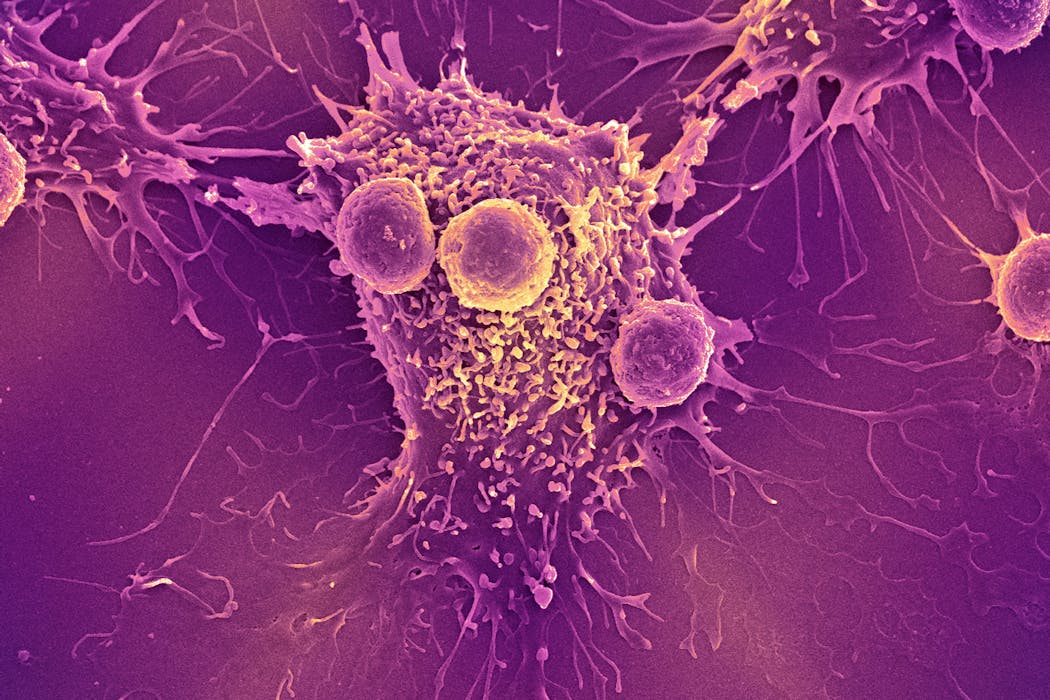
With a little help, your immune cells can be potent tumor killers. Steve Gschmeissner/Science Photo Library via Getty Images

The COVID-19 mRNA-based vaccines that saved 2.5 million lives globally during the pandemic could help spark the immune system to fight cancer. This is the surprising takeaway of a new study that we and our colleagues published in the journal Nature.

While developing mRNA vaccines for patients with brain tumors in 2016, our team, led by pediatric oncologist Elias Sayour, discovered that mRNA can train immune systems to kill tumors – even if the mRNA is not related to cancer.

Based on this finding, we hypothesized that mRNA vaccines designed to target the SARS-CoV-2 virus that causes COVID-19 might also have antitumor effects.

So we looked at clinical outcomes for more than 1,000 late-stage melanoma and lung cancer patients treated with a type of immunotherapy called immune checkpoint inhibitors. This treatment is a common approach doctors use to train the immune system to kill cancer. It does this by blocking a protein that tumor cells make to turn off immune cells, enabling the immune system to continue killing cancer.

Remarkably, patients who received either the Pfizer or Moderna mRNA-based COVID-19 vaccine within 100 days of starting immunotherapy were more than twice as likely to be alive after three years compared with those who didn’t receive either vaccine. Surprisingly, patients with tumors that don’t typically respond well to immunotherapy also saw very strong benefits, with nearly fivefold improvement in three-year overall survival. This link between improved survival and receiving a COVID-19 mRNA vaccine remained strong even after we controlled for factors like disease severity and co-occurring conditions.

To understand the underlying mechanism, we turned to animal models. We found that COVID-19 mRNA vaccines act like an alarm, triggering the body’s immune system to recognize and kill tumor cells and overcome the cancer’s ability to turn off immune cells. When combined, vaccines and immune checkpoint inhibitors coordinate to unleash the full power of the immune system to kill cancer cells.

University of Florida Health pediatric oncologist Elias Sayour, who led the research, explains that mRNA vaccines that are not specific to a patient’s cancer can ‘wake up the sleeping giant that is the immune system to fight cancer.’

Why it matters

Immunotherapy with immune checkpoint inhibitors has revolutionized cancer treatment over the past decade by producing cures in many patients who were previously considered incurable. However, these therapies are ineffective in patients with “cold” tumors that successfully evade immune detection.

Our findings suggest that mRNA vaccines may provide just the spark the immune system needs to turn these “cold” tumors “hot.” If validated in our upcoming clinical trial, our hope is that this widely available, low-cost intervention could extend the benefits of immunotherapy to millions of patients who otherwise would not benefit from this therapy.

Countless clear vials of liquid with labels reading 'CANCER mRNA vaccine 10 ML' on a table
Combining immunotherapy with mRNA vaccines could allow more patients to benefit from this treatment.
Thom Leach/Science Photo Library via Getty Images

What other research is being done

Unlike vaccines for infectious diseases, which are used to prevent an infection, therapeutic cancer vaccines are used to help train the immune systems of cancer patients to better fight tumors.

We and many others are currently working hard to make personalized mRNA vaccines for patients with cancer. This involves taking a small sample of a patient’s tumor and using machine learning algorithms to predict which proteins in the tumor would be the best targets for a vaccine. However, this approach can be costly and difficult to manufacture.

In contrast, COVID-19 mRNA vaccines do not need to be personalized, are already widely available at low or no cost around the globe, and could be administered at any time during a patient’s treatment. Our findings that COVID-19 mRNA vaccines have substantial antitumor effects bring hope that they could help extend the anti-cancer benefits of mRNA vaccines to all.

What’s next

In pursuit of this goal, we are preparing to test this treatment strategy in patients with a nationwide clinical trial in people with lung cancer. People receiving an immune checkpoint inhibitor will be randomized to either receive a COVID-19 mRNA vaccine during treatment or not.

This study will tell us whether COVID-19 mRNA vaccines should be included as part of the standard of care for patients receiving an immune checkpoint inhibitor. Ultimately, we hope that this approach will help many patients who are treated with immune therapy, and especially those who currently lack effective treatment options.

This work exemplifies how a tool born from a global pandemic may provide a new weapon against cancer and rapidly extend the benefits of existing treatments to millions of patients. By harnessing a familiar vaccine in a new way, we hope to extend the lifesaving benefits of immunotherapy to cancer patients who were previously left behind.

The Research Brief is a short take on interesting academic work.

The Conversation

Adam Grippin receives funding from the National Cancer Institute (NCI), the American Brain Tumor Association, and the Radiological Society of North America. He is an inventor on patents related to mRNA therapeutics that are under option to license by iOncology. He is currently employed by the MD Anderson Cancer Center and consults for Sift Biosciences.

Christiano Marconi works for the University of Florida. He receives funding from the UF Health Cancer Center.

ref. COVID-19 mRNA vaccines could unlock the next revolution in cancer treatment – new research – https://theconversation.com/covid-19-mrna-vaccines-could-unlock-the-next-revolution-in-cancer-treatment-new-research-258992

Les « cassos », ces jeunes ruraux dont on ne veut pas

Source: The Conversation – France in French (3) – By Clément Reversé, Sociologie de la jeunesse, sociologie des espaces ruraux, Université de Bordeaux

« Cassos ». Derrière ce mot devenu banal se cachent des vies : parfois celles de jeunes ruraux précaires, sans diplôme, qui se sentent (à juste titre) disqualifiés par la société. À travers leurs récits se dessine le portrait d’une France invisible, marquée par un stigmate, une domination sociale et une fiction méritocratique.


« J’ai une vie de cassos. »

C’est par cette phrase que Loïc, jeune Charentais tout juste sorti de prison, se décrit lui-même. « Cassos » n’est pas une fonction objective, c’est un stigmate qui finit parfois par s’intérioriser, mais qui semble surtout devenir du langage ordinaire. Ce mot de honte ne semble plus seulement renvoyer au « cas social » imaginé par les classes moyennes et supérieures (qui sont les premiers à avoir utilisé pendant longtemps cette expression), il semble également (et peut-être surtout) se jouer au sein des classes populaires, face à une expérience vécue de la précarité, de la relégation et de l’isolement.

Dans la Vie de cassos. Jeunes ruraux en survie (2023), j’ai tenté de saisir le poids du stigmate et de la domination chez des jeunes dont on ne semble pas vouloir dans les territoires ruraux. Cet ouvrage est issu d’une enquête de sociologie auprès d’une centaine de jeunes sans diplôme vivant en milieu rural.

Ces derniers vivent dans une société qui ne leur laisse pas de prise sur leur destin. Le terme de « cassos » est une clé de lecture du rapport entre domination, identité et survie dans nos campagnes contemporaines.

Le « cassos » : un miroir de la société néolibérale

Ce que révèle cette enquête, c’est la fonction politique du stigmate. En désignant les plus précaires comme « inadaptés », voire comme des « assistés », la société contemporaine entretient la fiction méritocratique : si certains réussissent, c’est que les autres n’ont pas voulu jouer le jeu. Ce terme de « cassos » condense cette morale néolibérale en accusant les précaires d’être responsables de leur précarité et les stigmatisés d’être responsables de leur stigmate.

En outre, cette assignation peut être lue dans l’autre sens et devenir un miroir tendu à la société actuelle.

Derrière les visages d’Érika, de Lucas, de Safâ ou de Vincent, c’est la normalisation de la précarité qui se lit. En ce sens, « cassos » n’est pas un type social, mais une condition. Celle de quiconque se trouve disqualifié dans un monde où le diplôme, l’emploi stable et la reconnaissance deviennent des privilèges de plus en plus rares et difficiles d’accès. Ainsi, là où les discours politiques célèbrent l’autonomie et la responsabilisation des jeunes, ces jeunes font l’expérience de la dépendance contrainte : aux petits boulots, à l’aide publique et à la famille.

Le risque à terme est que cette « galère » ne soit pas seulement une « phase », mais se structure en condition d’existence à part entière. Ceux que l’on appelle les « cassos » ne sont pas des marginaux extérieurs à la société : ils en sont pleinement issus, et – si on prend le temps de les écouter – ils en révèlent les mécanismes avec une grande lucidité. « Cassos » cesse alors d’être une insulte et devient un diagnostic des symptômes de domination contemporaine.

Jeunes ruraux en galère : la pointe extrême de la domination

Louna, 22 ans, se souvient :

« Je voulais être archéologue, mais on m’a vite fait comprendre qu’il fallait garder les pieds sur terre. »

Sa phrase renvoie à la logique scolaire qui produit des « inégalités justes », c’est-à-dire présentées comme légitimes au nom du « mérite ». Pour ces jeunes, l’école n’est pas vraiment une promesse d’ascension, mais plutôt les débuts d’un parcours qui sera marqué par la honte sociale.

En quittant l’école (puisque tous les enquêtés sont des « décrocheurs scolaires »), ils tentent de s’investir dans un marché de l’emploi qui ne veut pas non plus d’eux. Les enquêtés finissent très souvent désaffiliés, car s’ils « touchent » à de l’emploi, leur insertion se fait généralement sans stabilité, dans la précarité et donc sans reconnaissance sociale ni autonomie par le travail. Pour financer son quotidien, on vend ses meubles, on mange de la semoule uniquement pour faire des économies, on pratique une prostitution de « débrouille », et parfois aussi on revend de la drogue. Comme pour Loïc :

« C’était pas un choix, c’était une nécessité. »

Cette galère n’est pas un écart à la norme ou à l’honorabilité, mais une condition d’existence ordinaire, marquée par la domination. Ces jeunes, précaires et stigmatisés comme « cas sociaux », incarnent cette pointe extrême de la domination en subissant à la fois le déclassement scolaire, le marché du travail fragmenté et l’interconnaissance locale (le fait que les habitants se connaissent directement ou indirectement, ne serait-ce que de réputation). Ce fut notamment le cas de Charlotte, 19 ans, qui, après s’être fait arrêter par la gendarmerie pour avoir consommé du cannabis au collège, est devenue le bouc émissaire du village :

« À partir du moment qu’il y avait une connerie de faite dans le village c’était moi. […] On a dû déménager à cause de ça avec ma mère et mon frère. »

Le stigmate comme langage

Ce qui frappe aussi, c’est la banalisation du terme « cassos » dans le langage commun. Non pas que les enquêtés soient « objectivement » des « cas sociaux » (cela n’aurait pas de sens), mais ils sont vulnérables à l’image que le monde extérieur fait d’eux. Dans les bouches de certains agents des services publics, comme dans celles des habitants, ce terme désigne ceux que l’on ne veut plus voir : « les familles à problèmes » ; « ceux du fond du bourg », me raconte un conseiller municipal d’une petite commune de Gironde. Ce dernier rajoute :

« C’est pas les bons [jeunes] qui partent […]. »

Mais plus que cela, les jeunes eux-mêmes peuvent s’en emparer ; « Y’a qu’un cassos comme moi pour faire ça », me dit un enquêté en riant. Il n’y a, certes, pas de retournement de stigmate comme cela a pu être le cas avec les mouvements queer, mais le dire peut être un moyen de se nommer avant d’être nommé : de retourner la honte en ironie acide. D’ailleurs, les travaux sur la stigmatisation montrent que cette dernière fonctionne d’autant mieux qu’elle est incorporée par les dominés. En effet, quand elles intériorisent les jugements négatifs qu’on porte sur elles, les personnes dominées finissent par y croire et se les appliquer, reproduisant ainsi la domination.

Ici, le « cassos » est un marqueur d’identité négative qui signale l’appartenance d’un individu à une « minorité du pire » au sein même des classes populaires. Pour ceux qui ne sont pas désignés comme tels, il convient alors de se distancer. Une mère de famille m’explique ainsi refuser que son fils aille chez un ami parce que « chez eux, ça sent le cassos ». En réalité, ce refus est avant tout en lien avec la réputation locale puisque ladite famille est « connue pour les mauvaises raisons ». En clair, être cassos c’est être expulsé de l’honorabilité locale : celle de la respectabilité, du travail, mais aussi du bon voisinage.

Les enquêtés ont d’ailleurs conscience de ne pas « [avoir] les bonnes cartes en main », ils le répètent souvent. Mais le mot « cassos » reste stigmatisant et surtout insultant. Enzo, 18 ans nous raconte l’un de ces évènements :

« Y’a une fois j’étais à la caisse du Leclerc et j’ai pas fait gaffe, mais je passe devant un mec. Là, le mec prend les nerfs et me dit “Nanani, marre des cassos” ou je sais pas quoi. J’ai serré, vraiment, j’ai cru que j’allais le démarrer. »

« Sans rien »

Cette jeunesse « sans monde ; sans rien » est privée d’espaces légitimes d’existence. Ces jeunes ne se reconnaissent ni dans les classes populaires « honorables » – qu’a pu, par exemple, étudier le sociologue Benoît Coquard en 2019 – ni dans une culture juvénile mainstream. Ils n’ont pas de place dans l’espace public local, ne se perçoivent ni comme « beaufs » ni comme « kékés » et se refusent à devenir des « assistés ».

Leur quotidien est fait d’instabilité entre de l’inactivité (beaucoup) et des emplois en intérim ou du « travail au black ». Le quotidien et l’expérimentation de la jeunesse sont souvent sacrifiés pour se « débrouiller » :

« Je sais ce que j’ai fait, j’ai mis de côté tout plein de choses […] en me disant que c’est un pari sur l’avenir. […] C’est pas un regret, j’avais pas trop le choix. » (Sheyenne, 19 ans.)

À la différence des « gars du coin » étudiés il y a un quart de siècle par le sociologue Nicolas Renahy, ces jeunes ruraux ne peuvent compter ni sur la solidarité locale ni sur leur travail. Tout d’abord puisqu’ils ne font pas partie des jeunes « honorables », mais aussi parce que cette solidarité et l’accès à l’emploi des jeunes se précarise de plus en plus. Ils sont marqués par une triple absence : de stabilité, de réseau et de reconnaissance. Ils sont ceux que le monde social rejette comme inutiles.

En outre, le rural renforce l’isolement symbolique de ces jeunes. Dans les villages où « tout se sait » et où tout le monde se connaît, ne serait-ce que de vue ou de réputation, la réputation négative se transmet comme un héritage.

The Conversation

Clément Reversé a reçu des financements de la région Nouvelle-Aquitaine.

ref. Les « cassos », ces jeunes ruraux dont on ne veut pas – https://theconversation.com/les-cassos-ces-jeunes-ruraux-dont-on-ne-veut-pas-265333

How a new online game helps imagine life on Earth in 2100

Source: The Conversation – UK – By Lynda Dunlop, Senior Lecturer in Science Education, University of York

What will the world look like in 2100? This question is central to a new free online game called FutureGuessr. Launched in June 2025, this new form of climate communication combines gameplay with visual climate imagery and encourages players to explore future scenarios.

Players are shown an image from the future and asked to guess the location. Information is revealed about how close they are, what the climate change consequences would be, what will happen if no action is taken and how things could be different.

Available to play in English and French, the game takes inspiration from GeoGuessr, the online geography game that has enabled millions of people to travel virtually from their phone and guess where they are. FutureGuessr uses pictures to give users a visual representation of how familiar landscapes will look in 2100 as a result of climate change.

FutureGuessr is part of a broader trend in the use of games in climate communication. Creative board games and video games can reach diverse audiences and communicate climate change in serious, playful, thought-provoking and surprising ways.

Games played for pleasure, like Game Changers (an online story-based game produced by Megaverse) can generate conversations on climate actions by creating an innovative visual game world and integrating climate change into the plot. Collective decision making in the game allows players to learn and discuss climate change with others.

Our research suggests that this helps players critique corporate power, learn about greenwashing and enjoy an aesthetic experience. In the world of board games, Daybreak challenges players to cooperate and stop climate change by trying out different technical, social and economic projects.

Play with purpose

Serious games go beyond entertainment to connect with real-world problems. The most successful ones are fun while engaging with social, environmental and economic issues that players really care about.

Games can support players in thinking about becoming disaster ready and building disaster resilience. A game called The Flood Recovery Game is being used by researchers to identify disaster recovery gaps. It can also help policymakers create more comprehensive strategies to address flooding.

In terms of climate education, interactive in-person game-based workshops like the Climate Fresk already connects millions of people with science from the Intergovernmental Panel on Climate Change (IPCC), the UN body that assesses the science on climate change. These three-hour workshops also enable people to consider how they might act to create positive climate solutions.

FutureGuessr is a game for pleasure with a serious purpose: to make climate change data visible. Produced in partnership with Résau Action Climat, a network of non-governmental organisations, it shows the negative effects of climate change in familiar locations such as Antarctica and Easter Island.


Read more:
How interactive ‘climate fresk’ workshops are trying to accelerate environmental awareness around the globe


Research on visual climate communication found that images showing climate impacts such as extreme weather and floods moved people, especially when it featured localised impacts. There is a balance to be struck between highlighting local relevance and linking to the bigger picture. Showing the future of recognisable places we care about might be powerful in building support for climate action.

But photographs from the future don’t exist. FutureGuessr uses images generated from a bespoke AI model which combines maps with photographs of locations and data from IPCC reports.

This has a cost. The climate cost of the AI revolution is increasingly measured and documented, and image generation is one of the most energy intensive tasks you can do with AI. Experts in computing have called for “frugal AI”: to treat AI as finite, only to be used when necessary, and even then, as effectively as possible.

It is important to consider not just the message, but the medium, and the environmental effects of game production. The Playing for the Planet Alliance has produced a carbon calculator for the industry and offers awards and game jams to support the video game industry to take climate action.

Now that the images have been created, an effective use of FutureGuessr might be to generate conversations about the effects of climate change, and about how research, game design and communication can be carried out in the most environmentally sensitive way.

People won’t act just based on facts alone. The development of creative ways to communicate the climate emergency that connect people with why this matters is essential for people and communities. Already, some games are making an increasingly visible contribution to the conversation but we need greater transparency in the environmental impacts of game production, and consideration of how to minimise these impacts through visible commitments to sustainability as modelled by Daybreak.
FutureGuessr demonstrates value of bringing games and visual climate communication together to raise awareness of how climate change affects landscapes everywhere on the planet. We all need to play for the planet. Our research shows that whether played for purpose or pleasure, games can create space for serious conversations about how to tackle climate change.


Don’t have time to read about climate change as much as you’d like?

Get a weekly roundup in your inbox instead. Every Wednesday, The Conversation’s environment editor writes Imagine, a short email that goes a little deeper into just one climate issue. Join the 45,000+ readers who’ve subscribed so far.


The Conversation

Lynda Dunlop has received funding from the Economic and Social Research Council, the Education Endowment Foundation, British Educational Research Association, the Engineering and Physical Sciences Research Council, the Templeton World Charity Foundation, Wellcome and UK Research and Innovation.

Steven Forrest works for the University of Hull. He has received funding from the Aviva Foundation and Ferens Education Trust to carry out serious gaming projects.

ref. How a new online game helps imagine life on Earth in 2100 – https://theconversation.com/how-a-new-online-game-helps-imagine-life-on-earth-in-2100-267353

Le potentiel oxydant : un nouvel indice pour mesurer la pollution atmosphérique

Source: The Conversation – France (in French) – By Cécile Tassel, Doctorante en géochimie de l’atmosphère, Université Grenoble Alpes (UGA)

Elle est à l’origine de 7 % des décès en France. La pollution atmosphérique est un fléau invisible, mais bien réel. Mais pour s’attaquer à ce problème, il faut d’abord le mesurer.

C’est le travail de Cécile Tassel (Doctorante à l’Université Grenoble Alpes) et Gaëlle Uzu (Directrice de recherche à l’IRD). Ces géochimistes de l’atmosphère sont à l’origine d’une étude inédite tout juste parue dans Nature. Elles y utilisent un nouvel indicateur pour mesurer les dommages des particules fines : le potentiel oxydant. En réunissant des données issues de 43 sites dans toute l’Europe, il s’agit de la base de données la plus complète jamais réalisée sur ce sujet.


The Conversation : Jusque-là, les particules fines et la pollution atmosphérique étaient avant tout mesurées en fonction de leur diamètre et leur concentration massique, avec les PM10 (masse cumulée de toutes les particules inférieures à 10 µm) et les PM2,5 (particules inférieures à 2,5 µm). Quelles sont les limites de ces mesures ?

Gaëlle Uzu et Cécile Tassel : Effectivement. Depuis 1996, en France, la loi sur l’air et l’utilisation rationnelle de l’énergie (dite loi LAURE) a rendu obligatoire la mesure des particules fines, et l’indicateur réglementaire de référence a depuis lors été la concentration massique des particules en fonction de leur diamètre. La France était à l’époque pionnière et l’UE s’est beaucoup inspirée de cette loi pour élaborer la directive européenne. Ces données sont bien sûr capitales, car nos poumons sont censés ne voir entrer et sortir que des flux de gaz lors de la respiration. Mais ces particules fines, de par leur taille, peuvent entrer dans les poumons et perturber le fonctionnement de ces organes. La taille est donc bien sûr très importante, comme la fréquence répétée d’exposition à ces particules.

Mais ces indicateurs ne nous disent pas tout. Car il y a des particules d’origine naturelle (celles des embruns marins, des volcans, des forêts, avec les végétaux qui émettent des polyols), et d’autres d’origine humaine, émises notamment par le trafic routier.

Donc si on regarde seulement la concentration massique, on peut trouver qu’un bord de mer a la même concentration de particules fines que Grenoble, une ville notoirement polluée en hiver de par sa position géographique de fond de vallée. Seulement, en bord de mer, ces particules seront essentiellement du sel, du magnésium qui auront plutôt un effet hydratant bénéfique sur nos poumons, tandis qu’en ville ce sera plutôt des microgrammes émis par le trafic routier, qui n’auront pas du tout le même effet.

Pour avoir donc plus d’informations sur les caractéristiques physiques et chimiques des particules et leur dangerosité pour la santé, nous avons utilisé un autre indicateur : le potentiel oxydant.

Cet indicateur permet de mesurer le stress oxydatif dans les poumons. Ce stress est un mécanisme biologique qui signale un déséquilibre entre la quantité d’antioxydants qui nous protègent et les espèces réactives de l’oxygène, qui peuvent être libérées ou générées dans les poumons suite à l’inhalation de particules atmosphériques. En cas d’excès, un stress oxydatif croissant peut survenir, induire une inflammation des cellules pulmonaires et la mort de celles-ci. Il s’agit d’un mécanisme biologique clé dans l’apparition de maladies cardiovasculaires et respiratoires, qui font partie des premières causes de mortalité en France aujourd’hui.

Pour mieux comprendre et lutter contre ce fléau, nous avons donc réuni 11 500 mesures de potentiel oxydant issues de 43 sites répartis en Europe.

Du côté des institutions, ce nouvel indicateur a été recommandé dans la nouvelle Directive Européennes sur la qualité de l’air fin 2024.

À vous écouter, tout cela paraît limpide. Pourquoi alors cet indicateur est-il si peu utilisé ?

G. U. et C. T. : Déjà, c’est un indicateur relativement récent. Il a d’abord été utilisé dans des travaux de chimistes japonais et américains au début des années 2000, mais leurs études sont restées confidentielles pendant des années. Il faut en fait attendre 2015 pour que des liens soient faits entre d’un côté la santé humaine et de l’autre les sources de pollution. À partir de là, on a pu intégrer cet indicateur dans des études épidémiologiques un peu plus larges. On a également pu modéliser les sources au niveau européen.

Comme ces mesures sont relativement nouvelles, il n’existe pas encore de protocole standardisé pour mesurer le stress oxydatif, donc les résultats ne sont pas toujours comparables d’une étude à l’autre. Pour avoir cependant une comparaison à grande échelle, nous avons réalisé nos 11 500 mesures en provenance de toute l’Europe avec le même protocole. Concernant les antioxydants que l’on mesure, sur lequel il n’y a pas toujours non plus de consensus, nous avons décidé de réaliser deux types de test qui sont représentatifs de deux grandes familles d’antioxydants pulmonaires, et qui sont également les plus utilisés à ce jour dans la recherche.

Enfin, il n’existe pas encore d’appareil automatisé de mesure du potentiel oxydant en temps réel. Par ailleurs, modéliser cet indicateur est très coûteux en calcul.

Si l’on regarde maintenant du côté des sources de stress oxydatif, que constate-t-on ?

G. U. et C. T. : Les deux principales sont le trafic routier et le chauffage au bois. Pour le chauffage au bois, il est facile à détecter car quand on brûle du bois, on brûle de la cellulose. Or quand la cellulose brûle, elle crée des molécules de levoglucosan, et on ne connaît pas d’autres sources que la combustion du bois ou du charbon de bois qui en émettent. Donc quand on constate cette présence on sait que c’est lié au chauffage au bois. Cela arrive généralement entre octobre et mars. Il arrive très rarement qu’on en mesure en été, et ce sera alors sans doute plutôt dû à des barbecues, mais cela reste très négligeable. Le stress oxydatif lié au trafic routier est lui présent en continu, avec bien sûr des pics lors des vacances scolaires par exemple, ou en fonction des jours de la semaine.

Avec toutes ces mesures d’ampleur inédite à l’échelle d’un continent, quels constats avez-vous pu faire qui étaient impossibles avec la seule mesure de la taille et de la concentration des particules fines ?

G. U. et C. T. : On a par exemple vu que les niveaux à Athènes, où le préleveur est installé en face de l’Acropole, dans une zone plutôt boisée avait une concentration massique à peu près équivalente à celle d’une école de zone périurbaine d’une vallée alpine. Mais le potentiel oxydant est beaucoup plus élevé dans cette zone périurbaine du fait de sa topographie notamment, dans une vallée.

On a pu aussi constater que certains pics de concentration n’étaient pas tellement dus à des émissions locales, mais plutôt à des phénomènes météorologiques comme des épisodes de poussières sahariennes. En tant que tel, le potentiel oxydant d’un microgramme de poussière du Sahara n’est pas très élevé, c’est plutôt l’accumulation qui est néfaste. Nos poumons ne sont pas faits pour recevoir de grandes quantités de poussières de sable par mètre cube d’air inhalé pendant plusieurs jours, ça les irrite.

Enfin, de façon plus globale, nous observons des niveaux de potentiel oxydant beaucoup plus élevés dans les sites de trafic proches des grandes voies routières par rapport aux sites ruraux ou même urbains. Ces différences ne sont pas aussi marquées lorsqu’on mesure seulement la concentration massique.

Mais la bonne nouvelle, c’est que l’on peut jouer sur les deux sources d’émissions principales à savoir le chauffage au bois non performant et le trafic routier. Nos simulations montrent qu’une réduction d’au moins 15 % des émissions de chacune de ces deux sources permet d’abaisser les niveaux urbains moyens de potentiel oxydant au niveau de ceux observés dans les zones urbaines les moins polluées.

Après cette publication d’ampleur inédite, quelles sont les prochaines étapes pour mieux comprendre le stress oxydatif, et lutter contre la pollution atmosphérique ?

G. U. et C. T. : Nous avons, en publiant notre étude, proposé des valeurs cibles de potentiel oxydant à atteindre pour l’Europe et mis à disposition de tous notre base de données avec le code qui nous a permis de faire nos simulations de baisse des émissions. Elles peuvent donc désormais être répliquées à des niveaux plus locaux, pour fixer certains objectifs, réfléchir aux stratégies à mettre en place.

Plusieurs études tâchent également de modéliser spatialement le potentiel oxydant, mais c’est un volet de recherche toujours en cours. Des prototypes de mesures en ligne du potentiel oxydant sont aussi développés dans plusieurs laboratoires, dont l’Institut des Géosciences de l’Environnement, mais leur sensibilité ne dépasse pas encore les mesures en laboratoire.

The Conversation

Cécile Tassel est membre de l’Institut des Géosciences de l’Environnement (IGE) et de l’Institut pour l’Avancée des Biosciences (IAB). Sa thèse est financée sur les projets IDEX Université Grenoble Alpes (UGA) MOBIL’AIR/ACME.

Gaëlle Uzu a reçu des financements de l’Agence Nationale de la Recherche, de l’Europe, de l’Université Grenoble Alpes, et de sa fondation, d’Actis-FR et de l’Ademe.

ref. Le potentiel oxydant : un nouvel indice pour mesurer la pollution atmosphérique – https://theconversation.com/le-potentiel-oxydant-un-nouvel-indice-pour-mesurer-la-pollution-atmospherique-268134

Côte d’Ivoire’s elections have already been decided: Ouattara will win and democracy will lose

Source: The Conversation – Africa (2) – By Sebastian van Baalen, Associate Senior Lecturer, Uppsala University

Even before the ballot, the 25 October presidential polls in Côte d’Ivoire can already be described as a loss to democracy and democratic values. Incumbent president Alassane Ouattara is running for a fourth term. With his two main contenders barred from participating, the president will most likely win by a landslide.

Ouattara has previously claimed three electoral victories. The first, in 2010, was marred by widespread violence and a re-escalation of armed conflict that led to the loss of more than 1,500 lives.

His second electoral victory, in 2015, was carried on the back of a broad coalition that later broke apart. The third, in 2020, ended in a violent opposition boycott.

Accusations of constitutional capture by the incumbent have only increased since then. In this way, the otherwise divided political opposition is unanimous in condemning the president’s fourth-term bid.

Ouattara announced his candidacy for a fourth five-year term in office in August 2025. The political opposition has condemned the announcement and the international community has remained silent.

Ouattara and his supporters argue that he is eligible because the 2016 constitutional revision has reset the count and allows him a second term. His opponents insist that the constitutional limit is of one five-year term renewable once, and that Ouattara’s third and fourth-term bids are constitutional coups, which have precedents across the continent.

Undermining democracy

Regardless of the legal reasoning, Ouattara’s fourth-term bid is a loss for democracy at the hands of a politician who, in the run-up to the 2020 election, himself insisted that Ivorian politics was in dire need of a generational change.

In addition to the principle of adhering to a two-term mandate limit, the 2025 election undermines Ivorian democracy because the contest is heavily tilted in the incumbent’s favour. In September, the constitutional council confirmed that the two main opposition candidates, Tidjane Thiam and Pascal Affi N’Guessan, would be excluded from contesting the election on technical grounds.

Thiam is the new leader of the country’s oldest party, the Democratic Party of Ivory Coast – African Democratic Rally (PDCI), and was expected to give Ouattara a run for his money. He was excluded on the grounds that his renouncement of his French citizenship was finalised too late.

N’Guessan inherited the second major opposition party, the Ivorian Popular Front, from the polarising former president Laurent Gbagbo when the latter was indicted at the International Criminal Court in the Hague. This was for his alleged role in crimes against humanity in the wake of the 2010 elections.

Gbagbo, and his long-time collaborator Charles Blé Goudé, were both acquitted of all charges in 2021, and they have both gone on to found new political parties in Côte d’Ivoire, despite being ineligible due to criminal rulings against them in the Ivorian courts.

N’Guessan has been unable to mend the fractures within his party – between Gbagbo-loyal hardliners and his own support base of Ivorian Popular Front moderates – but with Thiam out of the race, he could have been a serious contender. N’Guessan was excluded because he allegedly lacked the number of patron signatures needed to support his candidacy.

Whether these technical knock-outs of the two main opposition candidates were due to negligence on their part or due to bureaucratic foul play by the regime is secondary to the fact that the absence of the two main opposition candidates casts a worrying shadow over the 2025 election.

The political climate is already polarised and rife with conspiracy theories about Ouattara’s corruption and more genuine allegations of his political divisiveness. The amputated political contest only serves to deepen the fault lines between the government and the opposition and spur further voter disillusionment. Such polarisation and disillusionment may also trigger violence, a serious risk in a country where elections are regularly marred by violence.

To complete the autocratic hat-trick, the National Security Council has banned public gatherings, citing concerns over public safety. It seems likely that the authorities were acting preemptively in light of the 2020 election, during which the political opposition called on its supporters to engage in street protests and “civil disobedience”. Those events left at least 83 people dead and 633 people injured in clashes between protesters and security forces and between rivalling communities.

Banning protests may easily backfire as opposition supporters take to the streets anyway. The opposition has called for daily protests during the brief official electoral campaign.

Silence from the international community

Despite this threefold blow to democracy playing out ahead of the 25 October vote, international reactions have been muted at best. Ouattara is a favourite among international partners such as France and the EU. Since coming to power, he has presided over continent-leading economic growth rates large-scale infrastructure investments, and an unlikely victory in the Africa Cup of Nations on home soil.

His popularity in Europe has been further galvanised by the virtual collapse of French influence in its other former colonies. Ouattara is now one of the few west African leaders still pursuing its diplomatic relations with Paris in a “business as usual” manner.

Afraid of rattling anti-French sentiment in yet another former colony, the French government has remained silent on Ouattara’s slow deconstruction of Ivorian democracy. The rest of the EU follows suit, as it has yet to establish a position in the sub-region independent of France’s unspoken leadership.

Both France and the EU are losing further credibility by lending support to Ouattara’s constitutional capture. Accusations of double standards and hypocrisy when insisting on democratic norms are central to the anti-French rhetoric of leaders such as Burkina Faso’s junta leader Ibrahim Traoré. By remaining silent on the slow death of democracy in Côte d’Ivoire, western leaders undermine their own position in the sub-region.

A similar impasse characterises the regional economic community, Ecowas, which is still coming to terms with the withdrawal of the three Sahelian states currently under military rule. With Côte d’Ivoire and Nigeria the most important Ecowas members still insisting on its relevance and credibility, the regional bloc is unlikely to take a strong stand on Ouattara’s fourth-term bid or electoral foul play.

What the future hold

Much is still unknown with regard to Côte d’Ivoire’s upcoming election. Coalitions are forming among the opposition candidates left in the race.

Some of the excluded candidates are joining forces in a “common front” to call for street protests and demand their inclusion on the electoral list. And street protests are growing. More than 200 protestors were arrested on 11 October during a peaceful rally in Abidjan.

While street protests failed to sway the incumbent’s anti-democratic tendencies in 2020, recent events in Madagascar and Kenya indicate that governments ignore the popular appetite for change at their own peril.

Regardless of how the final days of the electoral campaign play out, democracy has already suffered a loss in Côte d’Ivoire. The most pressing question may not be about the outcome of the vote but about the more enduring marks on Ivorian electoral politics.

The incumbent, the opposition and the international community all share a responsibility to pave the way for a peaceful and constitutional transfer to a post-Ouattara era. We hope that democracy can recover, and a younger generation can gain more genuine influence.

The Conversation

Sebastian van Baalen receives funding from the Swedish Research Council (grant VR2020-00914, VR2020-03936, and VR2024-00989. He is a member of the Conflict Research Society steering council, a not-for-profit academic organization.

Jesper Bjarnesen receives funding from the Swedish Research Council (grant VR2024-00989).

ref. Côte d’Ivoire’s elections have already been decided: Ouattara will win and democracy will lose – https://theconversation.com/cote-divoires-elections-have-already-been-decided-ouattara-will-win-and-democracy-will-lose-267798

Cancer drug quality in Africa is a worry: what we found in a 4-country study

Source: The Conversation – Africa (2) – By Marya Lieberman, Nancy Dee Professor, Department of Chemistry and Biochemistry, University of Notre Dame

The number of people receiving treatment for cancer has risen dramatically in the last decade in many African countries. For example, 10 years ago in Ethiopia and Kenya, cancer care was available to only a few thousand patients per year in a few hospitals. Today, over 75,000 people receive cancer treatment each year in each of these countries.

Over 800,000 people on the continent are diagnosed with this disease each year.

But medicine regulatory agencies in many countries don’t have the capacity to measure the quality of anticancer drugs. This is particularly problematic for two reasons. Firstly, the high cost of the drugs is an incentive to opt for unverified ones. And secondly, they are highly toxic.

The combination of high demand but low capacity for regulatory oversight in a market renders it vulnerable to substandard and falsified medical products. There have been disturbing reports of substandard or falsified products causing harm to patients in a number of countries, including Brazil, the US and Kenya. But no systematic studies of anticancer drug quality across low and middle income countries have been done. As a result little is known about the quality of the drugs being used to treat cancer in Africa.

I am a cancer researcher in the US and I develop technologies for finding substandard or fake medicines in low-resource settings. In 2017, I teamed up with Ayenew Ashenef at Addis Ababa University to test a device designed to evaluate quality of cancer medicines. We were dismayed to find that most of the drug in use at a hospital in Ethiopia was substandard. We then extended the study.

Our recent study investigated the quality of seven anticancer drugs in four African countries. The drugs were cisplatin, oxaliplatin, methotrexate, doxorubicin, cyclophosphamide, ifosfamide, and leucovorin. Most of these drugs are given to patients intravenously. They are used to treat breast cancer, cervical cancer, cancers of the head and neck, cancers of the digestive system, and many other types. Some are also used to treat autoimmune diseases such as lupus.

Members of our research team collected 251 anticancer products in Cameroon, Ethiopia, Kenya and Malawi in 2023 and 2024. Products were collected both covertly and overtly from 12 hospitals and 25 private or community pharmacies, covering both public and private healthcare systems in each country.

We assessed the assay value – the quantity of the active pharmaceutical
ingredient in each dose – of the samples we had collected.

We found substandard or falsified anticancer medicines in all four countries. We discovered that 32 (17%) of 191 unique lots of seven anticancer products did not contain the correct amount of active pharmaceutical ingredient. Substandard or falsified products were present in major cancer hospitals and in the private market in all four countries.

Based on our findings it’s clear that oncology practitioners and health systems in sub-Saharan Africa need to be aware of the possible presence of substandard anticancer products. We also recommend that regulatory systems be strengthened to provide better surveillance.


Read more:
Genetic tests for cancer can give uncertain results: new science is making the picture clearer to guide treatment


The research

To measure the amount of active pharmaceutical ingredient present in a vial or tablet, we used high-performance liquid chromatography, or HPLC. This separates and quantifies molecules and is the “gold standard” method for testing the amount of active pharmaceutical ingredients in tablets, capsules and vials of medicine.

Before we prepared the medicines for analysis, we inspected the medicines and their packaging materials. Then we used the HPLC to measure the amount of active pharmaceutical ingredient present to see if it matched the claim on the label. Every pharmaceutical product has a target assay range that is defined in its pharmacopeial monograph. This is usually 90%-110% of the amount of active pharmaceutical ingredient claimed on the package. So, for example, if a vial claims to contain 100 milligrams of doxorubicin, it is still counted as “good quality” if it has 93 milligrams of doxorubicin, but not if it contains 38mg or 127mg.

Out of the 191 unique batch numbers, 32 failed assay – about one in six.

There were several manufacturers whose products failed assay at higher rates. There were no significant differences in failure rate for products collected in different countries, in hospitals versus pharmacies, or even for products that were tested after their expiration date vs before their expiration date.

Most countries in Africa use visual inspection to identify suspect anticancer medicines. Products can fail visual inspection if they are the wrong colour when reconstituted or contain visible particles, or if there are irregularities related to the packaging. One surprising result from our study was that products that failed high-performance liquid chromatography could not be distinguished visually from products that passed the test. Only three of the 32 failed products showed any visible irregularities.


Read more:
Africa imports over 70% of its medicines. Making active ingredients locally would change this


Moving forward

The situation we uncovered is likely to be similar in other low income countries. Our hope is that the global research community can focus more attention on the quality of this class of medicines through increased research. This was done for antimalarials in the 2000s, and resulted in a turnaround in quality for those drugs.

We have shared our findings with regulators in the four countries where the samples were collected, and are working to build capacity for post market surveillance of these critical medicines.

Information about the quality of anticancer medicines is critical because cancer chemotherapy is a careful balance between killing the cancer and killing the patient. If the patient’s dose is too large, they can be harmed by toxic side effects of the drug. If the patient’s dose is too small, the cancer may continue to grow or spread to other locations, and the patient may lose their precious window for treatment.

The Conversation

Marya Lieberman receives funding from the US National Institutes of Health (NIH). Research reported in this publication was supported by the National Cancer Institute of the NIH under Award Number U01CA269195. The content is solely the responsibility of the author and does not necessarily represent the official views of NIH.

ref. Cancer drug quality in Africa is a worry: what we found in a 4-country study – https://theconversation.com/cancer-drug-quality-in-africa-is-a-worry-what-we-found-in-a-4-country-study-262529

Why some populist supporters want a strong-arm leader and others just want change

Source: The Conversation – Canada – By Dr. Andrea Wagner, Associate Professor, Political Science, MacEwan University

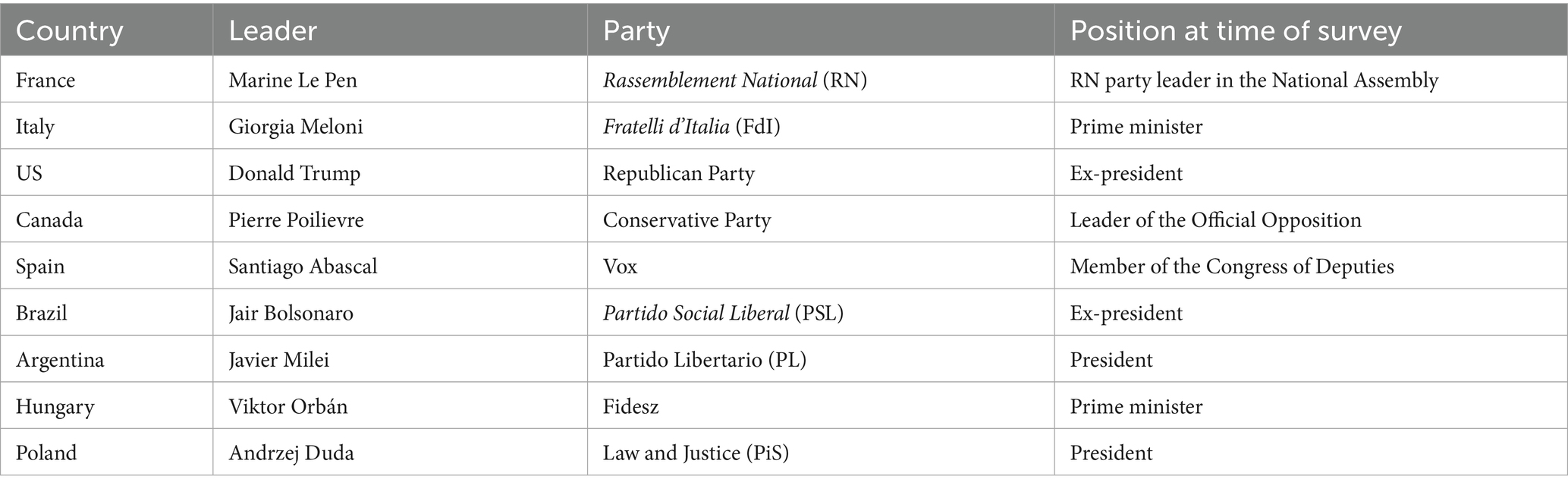
The rise of populist leaders has drawn significant attention over the past two decades. Around the world, they have reshaped politics, from Donald Trump in the United States to Viktor Orbán in Hungary, Marine Le Pen in France, Giorgia Meloni in Italy, Santiago Abascal in Spain and Jair Bolsonaro in Brazil.

These leaders often rise to power by promising to speak for “the people” against the established “corrupt elites.” But our recent research shows that not all populist voters want the same things.

Our study examined public opinion data from nine countries to better understand what drives support for “strongman” populist leaders. The findings reveal that there are two very different kinds of populist attitudes, and the authoritarian variety most strongly predicts whether people will support a leader who is willing to bend the rules.

Nine-country comparison

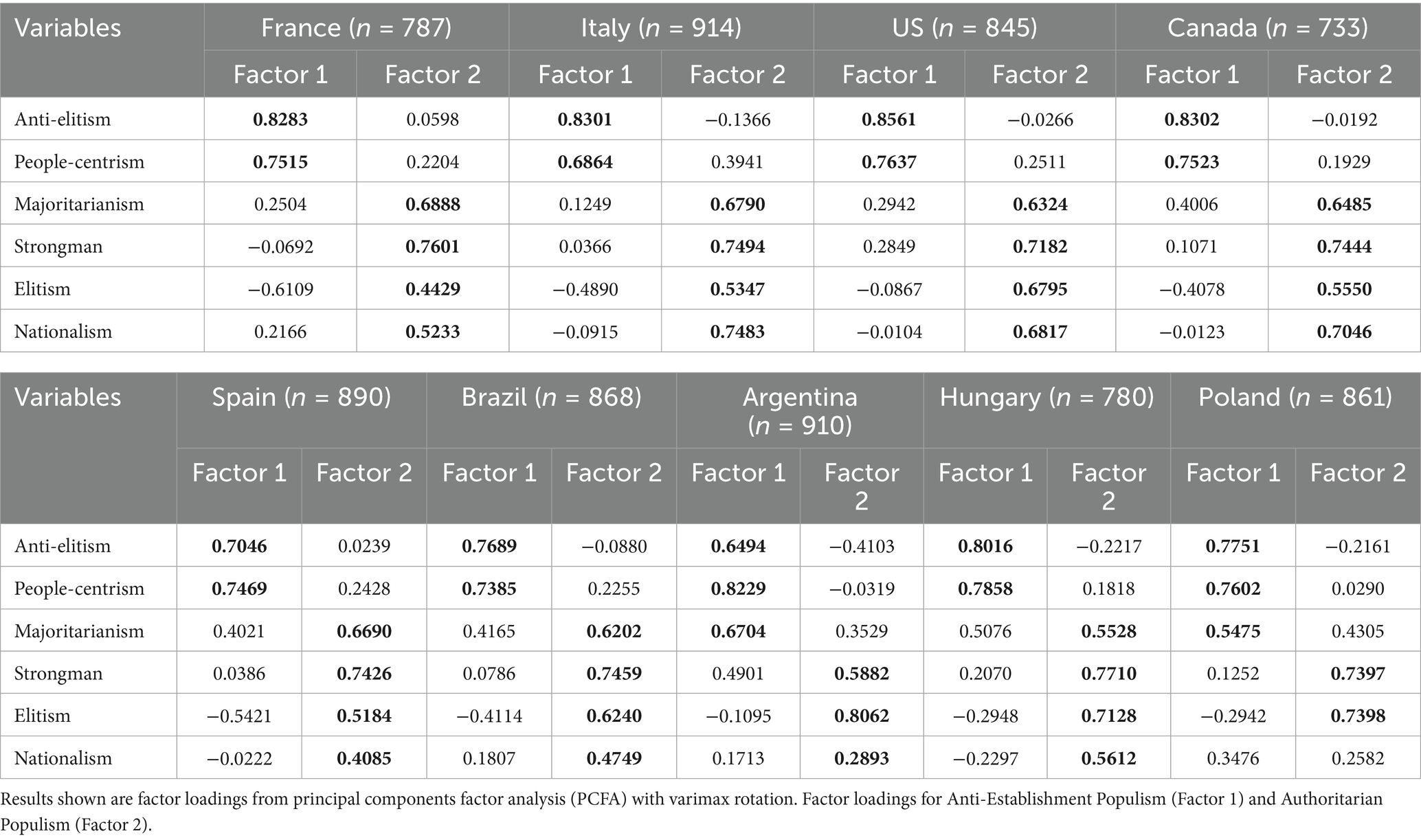
We conducted public opinion surveys in France, Italy, Spain, Hungary, Poland, Canada, the United States, Brazil and Argentina. Our Varieties of Populist Attitudes (VoPA) survey included multiple questions designed to tap into the two varieties of populism.

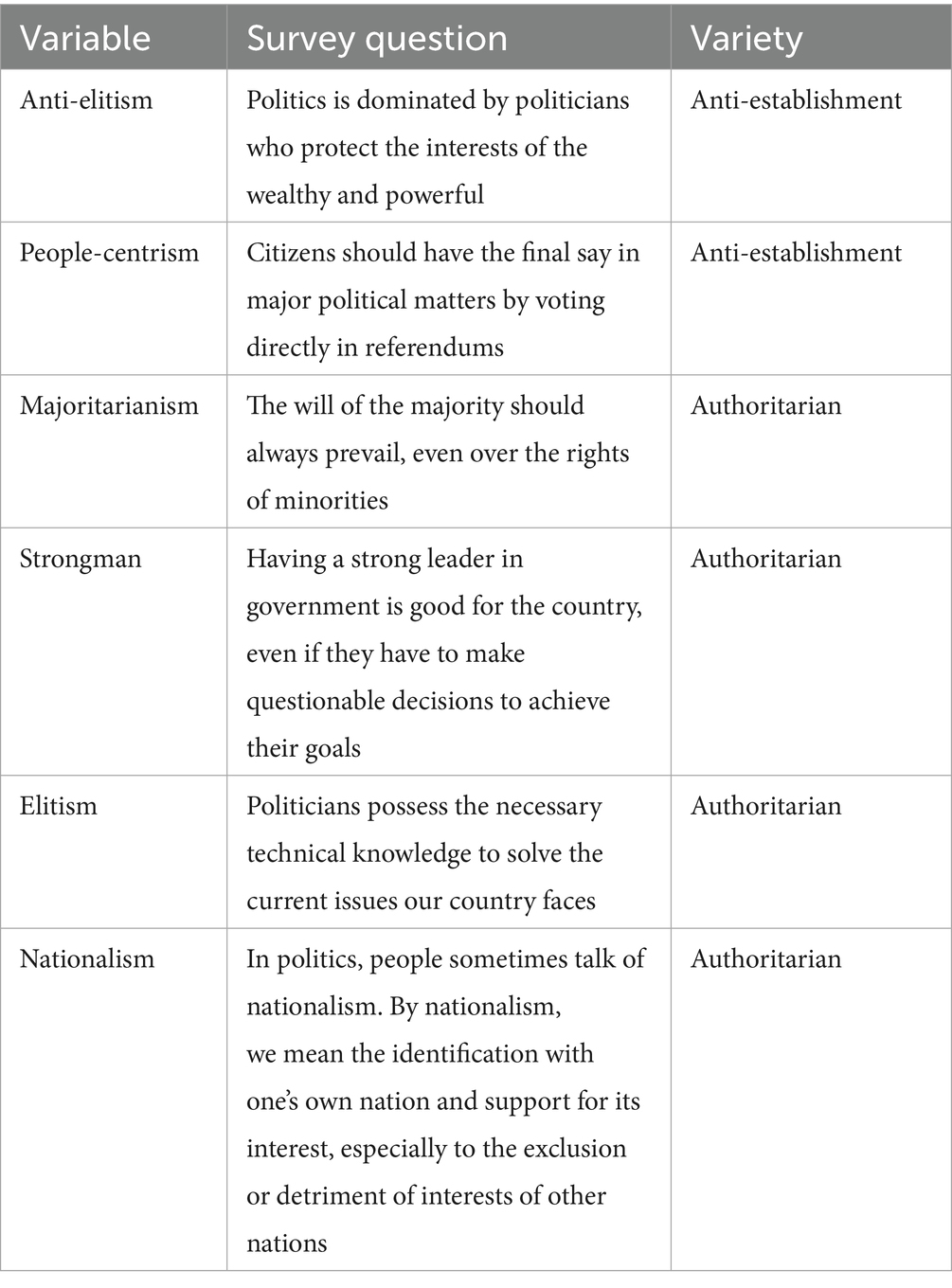
Respondents were asked about their trust in politicians, their support for referendums, their belief that the majority should always prevail and their preference for strong leadership — even if it means violating rules and norms — as well as their degree of nationalism.

Factor analysis confirmed that the variables associated with the above questions clustered into two distinct dimensions — anti-establishment and authoritarian populism — rather than forming a single populist attitude. This suggests that populist attitudes come in two distinct forms.

Next, we examined how each type of populist attitude predicted support for prominent populist leaders in each country who had positioned themselves as speaking on behalf of citizens against corrupt elites.

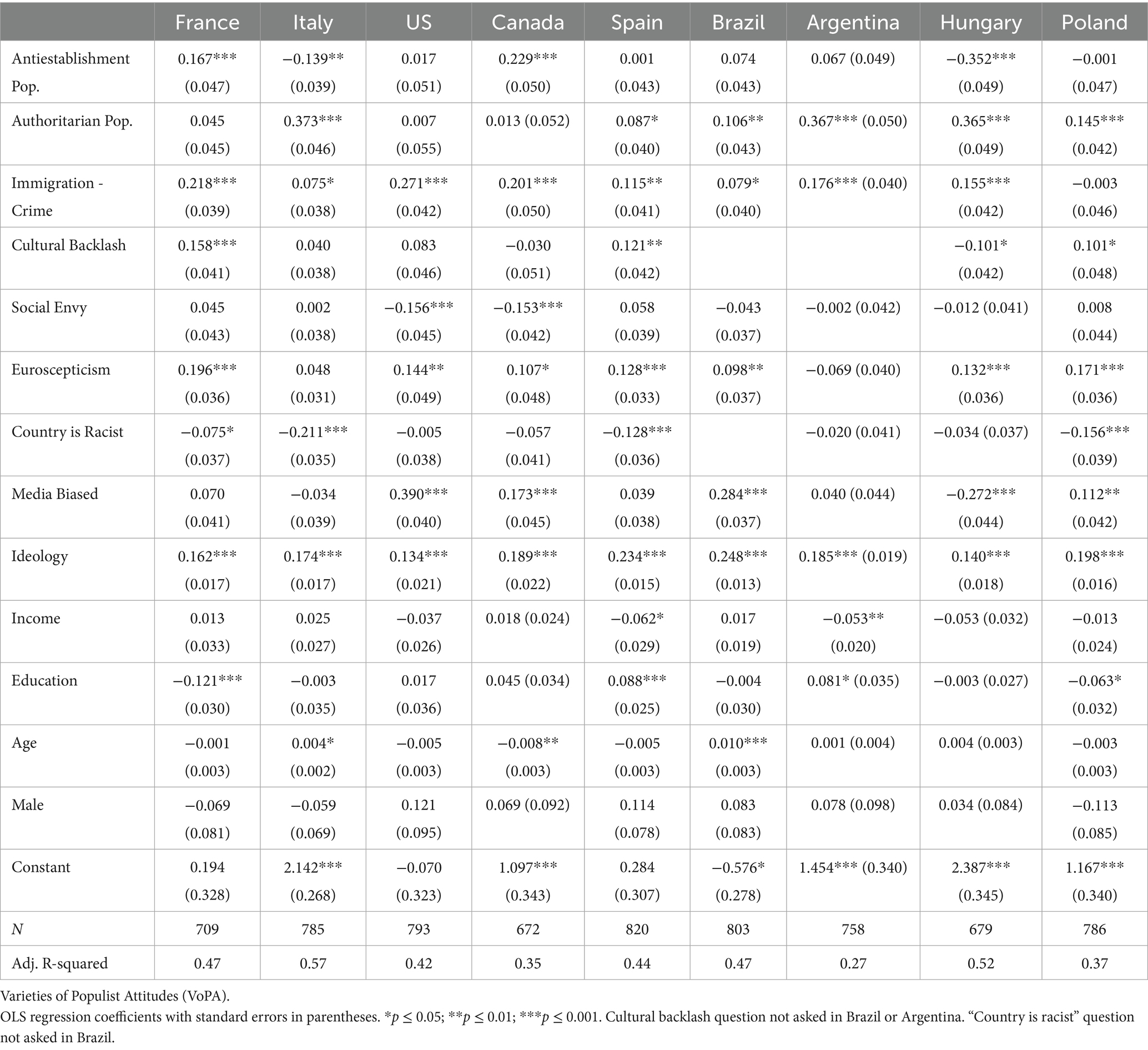
The results were striking. In most countries, including Italy, Spain, Brazil, Argentina, Hungary and Poland, authoritarian populism was the strongest predictor of support for populist leaders. In other words, people who subscribed to majoritarianism, nationalism and strong leadership were most likely to back leaders willing to centralize power and challenge liberal democratic norms.

By contrast, anti-establishment populism played a weaker role, and in some countries even a negative one. In other words, citizens who simply disliked elites or wanted more direct democracy were not drawn to strongman figures. In fact, in Italy and Hungary, anti-establishment populists rejected Meloni and Orbán.

Anti-establishment populism

France and Canada stood out as exceptions. In these countries, anti-establishment populism played a more important role than authoritarianism in explaining support for populist figures like Le Pen and Pierre Poilievre.

In Canada, multiculturalism, the unpopularity of overtly anti-immigrant rhetoric and the existence of the more authoritarian People’s Party of Canada limit the appeal of strongman politics, positioning Poilievre as an anti-establishment rather than authoritarian figure.

In France, Le Pen’s focus on referendums and institutional reform, combined with the presence of Éric Zemmour as an authoritarian alternative, reinforces that her base is motivated more by democratic discontent than authoritarianism.

In the U.S., surprisingly, neither dimension significantly predicted support for Trump. This suggests that Trump’s appeal may depend more on other dynamics such as partisanship, racial and anti-immigrant attitudes or cultural identity and backlash.

These findings shed light on the different democratic implications of the two kinds of populism.

Anti-establishment populism can be understood as a demand for more responsiveness and accountability in democratic institutions. While it can disrupt existing political systems, it doesn’t necessarily threaten the basic principles of pluralism, minority rights or checks and balances. In fact, some scholars argue that this kind of populism can serve as a corrective when elites become too insulated from the public.

Why this matters for democracy

Authoritarian populism is another story. It is linked to a preference for strong leaders who are willing to bypass institutional constraints, weaken independent oversight bodies or undermine minority protections, ostensibly in the name of the people.

This kind of populism is associated with democratic backsliding of the type seen in places like Hungary and Brazil, where populist leaders have concentrated power in the executive branch and eroded liberal democratic norms.

Our research reveals that the real threat to liberal democracy comes less from people who simply dislike elites, and more from those who desire a leader they regard as tough to embody and enforce the will of the majority at the expense of minority rights.

Recognizing this difference is important when designing democratic safeguards that distinguish between legitimate demands for accountability and more direct participation or more dangerous authoritarian impulses.


Read more:
Do you know what populism is? Research suggests most don’t, but some view it with disdain anyway


Populism is not monolithic

For years, populism scholars have debated whether populism is inherently dangerous or potentially democratic.

Our findings show that both views can be correct, depending on which variety of populism is at play. Anti-establishment populism reflects widespread frustration with elites but does not automatically lead to democratic erosion. Authoritarian populism, on the other hand, is more likely to support leaders who chip away at democratic safeguards.

This reminds us that defending democracy requires more than just countering populism in general. It requires recognizing and addressing the authoritarian currents that run through some forms of populist politics.

The Conversation

Dr. Andrea Wagner received funding from Erasmus + Jean Monnet Chair and MacEwan University

Anna Brigevich does not work for, consult, own shares in or receive funding from any company or organisation that would benefit from this article, and has disclosed no relevant affiliations beyond their academic appointment.

ref. Why some populist supporters want a strong-arm leader and others just want change – https://theconversation.com/why-some-populist-supporters-want-a-strong-arm-leader-and-others-just-want-change-266765

Satellite data shows methane emissions are declining in part of Canada’s oil patch, but more monitoring is needed

Source: The Conversation – Canada – By Chris Hugenholtz, Professor, Geography, University of Calgary

Governments in Canada’s major oil and gas producing provinces, Alberta and Saskatchewan, have touted their efforts in recent years to reduce methane emissions.

Methane is a greenhouse gas released into the atmosphere at oil and gas facilities through leaks, vents, maintenance activities and incomplete combustion. Methane traps significantly more heat than carbon dioxide, making it a potent climate pollutant.

We set out to independently verify if government claims of decreasing oil and gas methane emissions were accurate. Our new study shows that the answer is yes — but with important caveats and valuable lessons for Canada’s energy sector.

We studied satellite observations between 2019 and 2023 to understand how methane emissions rates in Canada’s main oil-producing region were changing. We focused on the heavy oil belt near Lloydminster, Alta., where a distinctive extraction method known as CHOPS (cold heavy oil production with sand) has long been associated with notable methane emissions.

CHOPS brings a mix of oil, water, sand and gas to the surface. The oil is collected, but the co-produced gas — which is mainly methane — has historically been vented or flared.

Observing emissions from space

Methane emissions can now be monitored from space, offering a powerful vantage point. Satellites can be used to independently measure and monitor emissions, helping to better understand and confirm emissions in regions where ground-based or other data are lacking.

To track changes over time, we evaluated the ratio of methane emissions to the energy produced, a measure known as emissions intensity. This metric provides an important benchmark for understanding how efficiently energy is being produced and how effectively emissions are being managed, regardless of production rates, which can change over time.

Satellites also pass over the same locations repeatedly, over days or weeks, enabling tracking of emissions over time. This can capture how emissions may be responding to policy changes, new technology or economic shifts. The large scale of satellites can average out day-to-day fluctuations from individual sites.

While satellite data provide unique coverage, they have limitations. Cloud cover, sun angle, terrain and other atmospheric or surface conditions can reduce effectiveness. In our study, we overcame these limitations with new techniques using data from the European Space Agency’s Tropospheric Monitoring Instrument aboard the Sentinel-5 Precursor satellite.

We combined those with a mass balance emissions flux model to estimate emissions from 2019 to 2023. This method was effective within the context of this study, but it may not work elsewhere, particularly where satellite observations are even more limited.

What we found was striking. Methane emissions in the Lloydminster heavy oil region declined by approximately 71 per cent between 2019 and 2023, and the intensity of methane emissions dropped by 63 per cent, reaching 0.69 gCH₄ per megajoule of energy produced.

The reasons for these reductions are likely multifaceted. Improved regulations, greater adoption of gas capture and combustion systems and enhanced operator compliance have all likely contributed to lower emissions. At the same time, a decline in oil production during portions of the study period likely played a role in driving emissions downward.

Distinguishing between efficiency-driven and production-driven reductions remains an important focus for future research, as rising production could reverse some of these gains.

These findings indicate that between 2019 to 2023, CHOPS operations are becoming less polluting and progress toward emission reductions is being achieved, even within one of Canada’s most methane-intensive oil-producing areas.

Measurement-reporting gap

Our satellite-based emissions estimates, however, were about 4.5 times higher than industry-reported values for the region. This gap underscores the flaws in traditional emissions reporting frameworks, which may not fully capture all emissions, sources or reflect real-time changes in operations.

This difference highlights the importance of independent measurement. Satellite and other measurement-based data can complement conventional reporting, providing a clearer and more dynamic picture of regional methane trends.

The study shows that substantial emissions reductions are achievable, even in mature oil fields with complex infrastructure, without fully curtailing production. This finding provides a valuable example for energy-producing regions pursuing practical pathways to decarbonization.

Reducing methane emissions

Methane is a short-lived but highly potent greenhouse gas and can trap much more heat than carbon dioxide. However, it breaks down relatively quickly in the atmosphere — around 12 years. Cutting methane emissions offers one of the fastest and most cost-effective ways to slow global warming.

Unlike many emerging climate technologies that remain costly or unproven at scale, methane mitigation can be implemented immediately using existing tools and proven methods. For example, a fraction of proposed private sector investment into expensive and highly uncertain emissions reduction technologies and projects could yield substantial and quick greenhouse gas emissions reductions from Canada’s oil and gas sector if redirected to mitigating methane.

There are benefits to industry for taking strong action on methane, including cost savings through efficiency improvements, increasing marketable gas volumes and securing access to premium markets demanding increasingly low-carbon oil and gas.

While Canada has struggled to meet its climate goals, progress is evident at the regional level. The reductions observed near Lloydminster suggest that emissions control and energy production can coexist when supported by sound policy, modern technology and transparent monitoring.

If Canada wants to achieve its commitment of cutting oil and gas methane emissions by 75 per cent by 2030 relative to 2012 levels, more independent measurement and monitoring efforts, such as those demonstrated in our study, are needed.

These are necessary to confirm whether regulations and other initiatives are delivering results, to guide future policy developments and to credibly demonstrate reductions.

The Conversation

Chris Hugenholtz receives funding from the Natural Sciences and Engineering Research Council of Canada. In the past, he has received funding from the oil and gas industry, but not for this project.

Coleman Vollrath receives funding from a Natural Sciences and Engineering Research Council of Canada CGS-D scholarship and performs occasional part-time work on methane emissions for the Pembina Institute in Calgary.

Thomas Barchyn receives funding from the Natural Sciences and Engineering Research Council of Canada. In the past, he has received funding from the oil and gas industry, but not for this project.

Zhenyu Xing does not work for, consult, own shares in or receive funding from any company or organisation that would benefit from this article, and has disclosed no relevant affiliations beyond their academic appointment.

ref. Satellite data shows methane emissions are declining in part of Canada’s oil patch, but more monitoring is needed – https://theconversation.com/satellite-data-shows-methane-emissions-are-declining-in-part-of-canadas-oil-patch-but-more-monitoring-is-needed-265940

The disgraceful history of erasing Black cemeteries in the United States

Source: The Conversation – USA – By Chip Colwell, Associate Research Professor of Anthropology, University of Colorado Denver

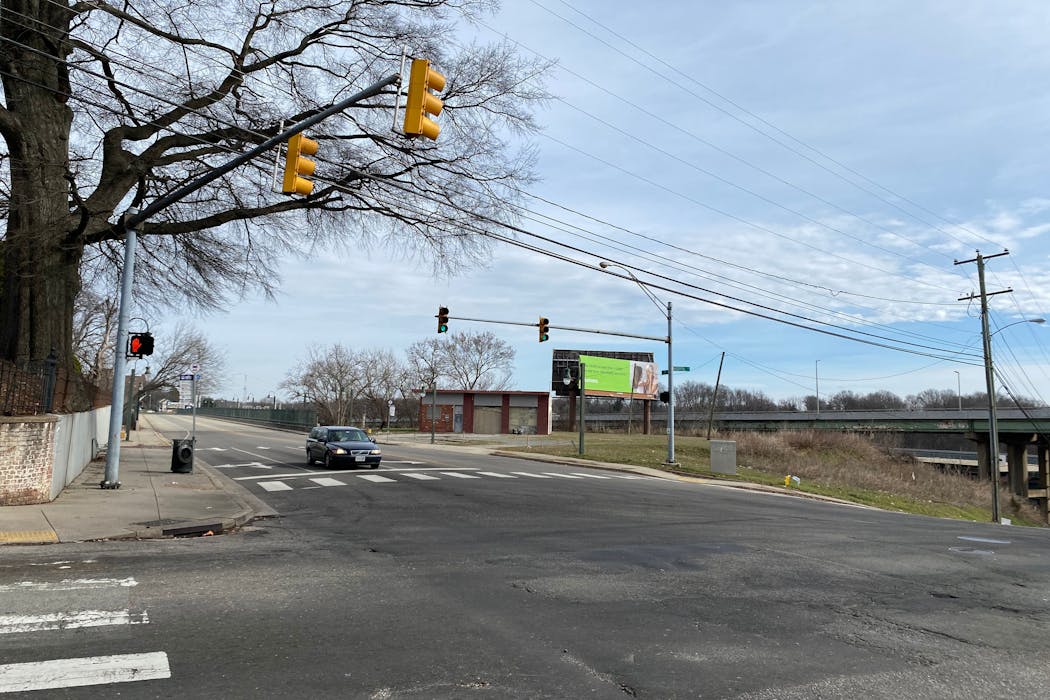
The Shockoe Hill African Burying Ground in Richmond, Va. CC BY-SA 4.0, CC BY

The burying ground looks like an abandoned lot.

Holding the remains of upward of 22,000 enslaved and free people of color, the Shockoe Hill African Burying Ground in Richmond, Virginia, established in 1816, sits amid highways and surface roads. Above the expanse of unmarked graves loom a deserted auto shop, a power substation, a massive billboard. The bare ground of the cemetery is strewn with weeds.

In contrast, across the way sits Shockoe Hill Cemetery. Established in 1822, it remains a peaceful cemetery with grass, large trees and bright marble headstones. This cemetery was created for white Christians.

I am an archaeologist who studies how the past shapes public life. Several years ago, I wrote with colleagues about the legacies of stolen human remains of African Americans in museums. During this time, I learned more about how African Americans often had to bury their dead in unsanctioned spaces that received few protections.

As I dug into this history, what struck me the most was that the different treatment of African Americans in death paralleled their long mistreatment in life. Places like Shockoe have not been accidentally forgotten.

Although its purpose has endured and graves survive, Shockoe Hill African Burying Ground, the largest burial ground for enslaved and free people of color in the United States, has witnessed deliberate acts of violence. As the historian Ryan K. Smith writes, Shockoe “was not, as some would say, abandoned – it was actively destroyed.”

African burying grounds found and lost

This issue of protecting Black cemeteries first came to popular attention in 1991, when the African Burial Ground in downtown New York City was rediscovered and nearly obliterated by a construction project. It was preserved only through the valiant efforts of African American leaders and scientists.

In recent years, similar threats to Black cemeteries and questions about preservation have been reported at the Whitney Plantation in Louisiana, the Morningstar Tabernacle No. 88 in Maryland and a rediscovered graveyard in Florida, among many others.

Like these other cemeteries, the Shockoe Hill African Burying Ground has long faced constant perils, from grave robbing to construction projects.

Lenora McQueen, whose ancestor Kitty Cary was buried there in 1857, has been leading the effort to protect the cemetery. McQueen’s tireless work – like the efforts needed at any disregarded Black cemetery in the country – has ranged from collaborating with city officials to purchase part of the site, establishing a marker and mural, and assembling a team to earn the burying ground the recognition of the National Register of Historic Places.

Smith has detailed how, ever since Richmond’s founding in the 1730s, people of European and African descent in the city lived divided lives. By the early 1800s, officials formalized different cemeteries for Richmond’s different ethnic and racial communities.

A 1-acre cemetery for free Black people and another one for enslaved people were situated near the city poorhouse and gunpowder depot. Yet, these grounds were hallowed to the African American community. Burial rituals included long processions, biblical-inflected homilies, spirituals and public displays of grief.

However, the violations of these graves were easy enough. The cemetery was neither fenced nor formally tended. In the 1830s, medical schools began robbing the burying ground for cadavers. At the close of the Civil War, retreating Confederates exploded the gunpowder magazine, reportedly destroying a section of the cemetery.

City officials formally closed the cemetery in 1879, and the site’s systematic destruction began, despite constant objections of Black residents. Road and construction projects cut through the burial grounds. An African American editor at the time denounced the “people who profited by the desecration of the burial ground … when graves were dug into, bones scattered, coffins exposed and the hearts of the surviving families made to bleed by the desecration of the remains of their loved ones.”

In the years that followed, a railroad track and an elevated highway were built on portions of the cemetery. In 1960, Richmond city officials sold a portion of the burying ground to Shell, and a gas station was built atop the remains of human beings.

The struggle to preserve Shockoe

In 2011, the Virginia Department of Historic Resources conducted a survey to determine the eligibility of the deserted auto shop for the National Register of Historic Places. It did not even consider the history of the Shockoe Hill African Burying Ground beneath and around the building as part of the site’s evaluation.

Six years later, McQueen learned that her ancestor was interred at the burying ground. Horrified by the cemetery’s state of disarray, she became its leading advocate. Eventually, McQueen put together a team of scholars and preservationists to pursue their own study of the site’s eligibility for the national register. They found the cultural landscape – the traces of human activity that give a place its history and meaning – to be highly significant.

Additionally, the site’s history of destruction was a vital record of the unequal treatment shown toward Black burying grounds in the U.S. The team formally pursued its own nomination to the National Register of Historic places.

In 2022, Shockoe Hill Burying Ground Historic District was successfully listed is on the national register.

Even with this success, the threats continue. Being listed on the national register provides prestige, grant opportunities and reviews for federal projects, but few guaranteed protections. In the same year Shockoe was listed on the national register, utility lines were installed in the area without consulting heritage officials.

A high-speed rail project, if implemented as planned, could violate the cemetery’s historical landscape. Designs for a memorial, while well intentioned, might further harm the site and threaten its national register status if it is not treated as a cemetery with graves.

What the Shockoe Hill African Burying Ground reveals is the need for the U.S. to provide dignity to all its citizens, in life and in death. A cemetery does not need famous inhabitants or marble tombstones to be significant.

As McQueen has said of her ancestor’s eternal resting ground, “Burial spaces are sacred.”

The Conversation

I have sat in on some meetings about the burial ground’s preservation as a heritage expert, at the request of the descendant Lenora McQueen.

ref. The disgraceful history of erasing Black cemeteries in the United States – https://theconversation.com/the-disgraceful-history-of-erasing-black-cemeteries-in-the-united-states-264864