More than 1,000 properties flooded in London in 2021, resulting in insurance losses of more than £281 million. Record-breaking floods continue to hit the UK.
In the capital, 13% of properties have been classed as having a high or medium risk of flooding. Danger-to-life warnings could soon become a reality, especially for people living in east London on low-lying land next to the river Thames.
Boroughs like Tower Hamlets, Newham and Hackney are built on former marshland. These areas would have originally absorbed water naturally, but have been used for urban development. More than 85% of London marshland was lost during the 20th century. London has lost the natural buffer that used to help water drain away. As the sea level rises and storm surges get more prevalent, chances of flooding are greater.
Large-scale infrastructure like the Thames Barrier and tidal flood defences protect London from large-scale river flooding, but they cannot prevent surface water flooding from local storms. As these structures age, maintenance costs rise. Relying solely on them is a risky strategy for the future, especially as storm surges become more intense due to climate change.
East London also faces high levels of deprivation. Many people lack the resources to cope with floods and possible water contamination, often due to being constrained by socioeconomic inequities. High child poverty rates in east London boroughs like Tower Hamlets (47%), Newham (45%) and Hackney (45%) mean that flood preparation is often overlooked.
Aside from strengthening infrastructure and physical barriers, there are natural ways to manage flood risk.
Planting suitable wetland species alongside rivers and roof tops helps delay surface water runoff by up to 90%. Plants absorb water and release it over several hours rather than releasing it immediately like impermeable surfaces such as concrete and tarmac. This slows down the flow of water into the drainage system and reduces the risk of overwhelming the sewers and pollution spills.
In the Netherlands, there are hundreds of green roofs on bus stops. Data shows that each square metre green of roof cover absorbs 20 litres of water, reducing how much water enters the drains. More natural solutions like these can also improve air quality, attract pollinators and provide shade (which prevents the sun from heating up buildings or walkways).
Green roofs on bus stops are now a common sight in some UK cities, including Brighton and Cardiff. Introducing them to east London would be a good first step.
One charity-led initiative, East London Waterworks Park, involves rewilding a former depot. By converting land covered by concrete into swimming ponds, with reedbeds for filtration, this project provides more space to hold floodwater and a place for the local community to socialise and engage with nature.
At the Queen Elizabeth Olympic Park in London, an area that used to be a depository for building rubble has been transformed into a large-scale sustainable urban drainage system. This involves the creation of open spaces interspersed with natural features like reedbeds, wetlands and swales (marshy channels) that slow down runoff.
This helps slow down the flow of water into rivers, especially during intense rainfall. Studies show that improved water management at the park has saved 4,000 homes from flood risk since it opened in 2014.
London’s population is increasing. This constrains its resources and exacerbates the effects of increased urbanisation. Socioeconomic inequities raise the level of vulnerability of London’s population. Flood risk is a national security threat, not just an environmental issue.
Including nature in urban resilience plans helps reduce risk and empower people. But policymakers need evidence of which solutions are more effective before they’ll act.
Don’t have time to read about climate change as much as you’d like?
Source: The Conversation – UK – By George E. Barreto, Associate Professor in Cell Biology and Immunology, Department of Biological Sciences, University of Limerick
As dementia and other neurodegenerative diseases become more common worldwide, researchers are searching urgently for ways to protect the brain as we age. One area attracting growing attention is hormones, particularly the role of hormone therapy during and after menopause.
This interest is partly driven by the fact that women develop Alzheimer’s disease more often than men, especially after midlife, suggesting that hormonal changes around menopause may influence long-term brain health.
Our research has focused on tibolone, a synthetic form of hormone therapy prescribed to relieve menopausal symptoms such as hot flashes and poor sleep. While it is commonly prescribed to ease menopausal symptoms, our findings suggest tibolone may also offer important protection for the brain.
In laboratory studies, tibolone helped brain cells survive under stressful conditions. These included reduced glucose use (glucose is the brain’s main fuel) and the build-up of saturated fats such as palmitic acid, which is often higher in people with obesity. Both reduced glucose use and excess saturated fat are known risk factors for cognitive decline and neurological diseases.
Tibolone appears to protect brain cells in several ways. It activates protective proteins, reduces inflammation and limits damage from free radicals. Free radicals are unstable molecules produced during normal energy production or when the body is exposed to pollution or cigarette smoke. They behave like tiny sparks inside cells, damaging structures unless neutralised.
This gap likely reflects a combination of genetic, hormonal and social factors. Certain genes, including the APOE ε4 variant, a version of a gene linked to how the brain processes fats and clears harmful proteins, are associated with a higher risk of Alzheimer’s. Other genes on the second X chromosome may also contribute. Differences in reproductive history, number of pregnancies and access to education and healthcare also play a role, because these factors influence lifelong brain health, cardiovascular risk and how early cognitive problems are detected and treated.
However, hormonal changes around menopause appear to be especially important. When menstruation ends, levels of estradiol (the main form of oestrogen) fall sharply, while follicle-stimulating hormone rises. Both changes are linked to cognitive decline and Alzheimer’s disease.
Many women experience the everyday effects of these shifts: forgetfulness, difficulty concentrating, slower thinking, low mood, poor sleep and reduced motivation. Estradiol normally helps brain cells use energy efficiently. When levels drop, the brain uses glucose less effectively, producing a metabolic pattern similar to that seen in early Alzheimer’s.
Estradiol also helps regulate fat distribution and cholesterol. When it declines, women often gain visceral fat around the abdomen. This type of fat releases inflammatory chemicals that can damage blood vessels and the brain. The loss of estradiol’s natural anti-inflammatory effects further increases the risk of metabolic syndrome (a cluster of conditions including high blood pressure and insulin resistance), cognitive decline and dementia.
Can hormone therapy help?
These findings have led researchers to ask whether hormone therapy might offset some of this risk.
Hormone therapy usually combines oestrogen and progesterone and is widely prescribed to relieve hot flashes, insomnia and mood changes. It can also improve mood and reduce depression, which indirectly supports cognitive health.
Until the early 2000s, millions of women used hormone therapy and reported benefits. Then, in 2002, the Women’s Health Initiative (WHI) trial reported a higher risk of breast cancer and cardiovascular events in women taking combined hormones. Headlines warning that hormone therapy “increases cancer risk” led many women to stop treatment or avoid it altogether.
The WHI memory studies also found that starting hormone therapy at age 65 or older did not protect cognition and was linked to a higher risk of dementia. Later analyses revealed an important nuance: timing matters.
Lower lifetime exposure to oestrogen is linked to faster cognitive decline and greater build-up of Alzheimer’s-related changes in the brain. Women who enter menopause early (before about age 45 to 50) face higher risks of Alzheimer’s and more pronounced memory loss. Surgical menopause, caused by removal of both ovaries, leads to a sudden drop in oestrogen and can trigger noticeable problems with memory and attention, particularly in younger women.
Growing awareness of the link between menopause and brain health is beginning to shape public policy.
In a landmark move, Ireland introduced a programme in June 2025 providing hormone therapy free of charge. Removing cost barriers allows women to start treatment earlier and continue it consistently, conditions that may maximise its benefits.
Elsewhere in Europe, access varies. In England, women who do not qualify for free NHS prescriptions can purchase an annual hormone therapy prepayment certificate for £19.80. Prescriptions are free in Scotland, Wales and Northern Ireland, while France and Spain partially reimburse costs through national insurance.
Given tibolone’s protective profile, reducing financial barriers could improve access and support larger clinical trials to test its effects on brain health.
Hormone therapy is not a guaranteed way to prevent dementia. The strongest protection still comes from a broad approach: managing menopausal symptoms effectively, possibly with hormone therapy, while also controlling blood pressure, cholesterol and diabetes, staying physically active, sleeping well and avoiding smoking.
Women face a higher lifetime risk of Alzheimer’s because of intertwined genetic, hormonal and social factors. Hormone therapy, particularly when started around menopause, may help protect cognitive function as well as relieve symptoms. Alongside a healthy lifestyle, it offers one promising tool for supporting brain health and narrowing the gender gap in dementia risk.
George Barreto receives funding from Research Ireland.
Miguel G. Borda does not work for, consult, own shares in or receive funding from any company or organisation that would benefit from this article, and has disclosed no relevant affiliations beyond their academic appointment.
Source: The Conversation – UK – By Stefan Stern, Visiting Professor of Management Practice, Bayes Business School, City St George’s, University of London
Having survived what looked a lot like a coup attempt, Prime Minister Keir Starmer now needs to decide how to move forward. One of the biggest problems in the immediate term is what to do with his health secretary, Wes Streeting.
Streeting has long been named as a contender to replace Starmer – and has made no secret of his personal ambitions. Like every other cabinet minister, he made a statement in support of Starmer after the Scottish Labour leader Anas Sarwar publicly called for his resignation. However, Streeting’s has been singled out for its tepid tone.
Now Starmer has a man who openly wants his job in his top team at a moment when he is trying to steady the ship. Might the PM find some inspiration about what to do from the private sector?
There is an old joke in the corporate world which states that when you take over as a new chief executive, your first task is to search the business high and low to find your natural successor – and then destroy them.
That is one (bleak) view of the rat race, or what is sometimes called “tournament theory”, the acknowledgement that within organisations there will always be a battle to get to the top. A more far-sighted approach to succession planning would look different. It would involve making sure that a range of senior people are developing their skills and experience, ready to take on the top job when it becomes vacant, as it inevitably will do some day. Ideally a company’s succession plan should contain a list with more than just one name on it.
In Westminster, however, discussions over the future leadership of the country are rather less dignified and rather more frenzied. Politics and business are different. This is a tournament all right, but the rules are less than clear. And they are subject to sudden change. Leadership in the political world is a far cry from what we call leadership in businesses and organisations.
Starmer, it seems, has survived a perilous moment. Still, as they say in Scotland, his coat is hanging on a shoogly nail.
Starmer looks around his top team, the cabinet, and sees several potential rivals staring back at him. Streeting denies that he is plotting to challenge Starmer, but few in Westminster believe him. A bad result in the byelection in Gorton and Denton this month or a collapse in support for Labour in the May local elections and Scottish parliamentary and Welsh Senedd elections, could prove the trigger for Streeting to act.
How should a leader look on the threat of a close colleague who is also a rival? Few are as generous or imaginative as Abraham Lincoln, who famously brought defeated candidates for the US presidency into his cabinet, as described by the historian Doris Kearns Goodwin in her book “Team of Rivals”.
Tony Blair survived as prime minister for ten years with his closest rival, Gordon Brown, at his side the whole time. Blair used to say, with apparent nonchalance, that it was not an “ignoble ambition” for Brown to want to succeed him. Blair seemed to hope, however, that another candidate might emerge to prevent Brown from getting the top job.
A confident and effective leader need not worry about having capable potential successors in their top team. On the contrary. Leadership is not a solo endeavour. A good leader will want to delegate tasks to talented people and draw on their advice. This is what is sometimes called “distributed leadership”.
Starmer has already revealed his insecurity by making sure that Andy Burnham, the mayor of greater Manchester, could not stand in the Gorton and Denton byelection. And hardened Westminster watchers will tell you that the prime minister could not have afforded to have Burnham back in parliament, preparing his own leadership challenge.
But Starmer could instead have been inspired by the ghost of Abraham Lincoln. Why not welcome Burnham back to Westminster, after winning a byelection that would have slowed his opponents’ momentum (in this case the Greens and Reform)?
And why not salute Streeting for his energy and dash? And Angela Rayner for her talents too while he is about it? Confident leaders want to have the best people around them. For a government that is seen to be struggling it would arguably make sense to put the best players on the pitch, and encourage them to perform. Leadership should not be a selfish ego trip. It is about them, not you.
Starmer has had a “clear the air” chat with Streeting and has, at least, not sacked him, yet. Starmer’s allies concede that the prime minister is not currently in a strong enough position to move against him in any case. Perhaps the cabinet will now pull together and prove they can get along.
Such thoughts will be dismissed as naïve and unrealistic by the inhabitants of London SW1. And, in that context, perhaps they are. But if so it tells you a lot about how far the practice of modern politics has departed from what many would regard as healthy and benign leadership.
Want more politics coverage from academic experts? Every week, we bring you informed analysis of developments in government and fact check the claims being made.
This article contains references to books that have been included for editorial reasons, and this may include links to bookshop.org. If you click on one of the links and go on to buy something from bookshop.org The Conversation UK may earn a commission.
Stefan Stern does not work for, consult, own shares in or receive funding from any company or organisation that would benefit from this article, and has disclosed no relevant affiliations beyond their academic appointment.
About a decade ago, author Mandy Len Catron wrote an essay for the New York Times about “36 questions that lead to love”. The idea suggests that two people can grow closer – and even fall in love – by answering a series of increasingly intimate questions.
Catron described how in 2014 she and an acquaintance went on a date together. During the evening, they took turns asking and answering 36 questions. Before that meeting the pair both admitted to a slight mutual attraction, but the exercise changed this fairly dramatically.
Within weeks they had developed strong feelings for each other. The following year they moved in together, had children in 2021 and in 2025, more than a decade after their first date, they got married – and the 36 questions were included in a bowl at the reception bar.
The idea behind the 36 questions is simple enough – that by answering a series of intimate questions, two people become vulnerable and develop a close connection. But can the 36 questions really cause two people to fall in love?
In the 1990s, US psychologist Arthur Aron and his colleagues developed a sharing game that could be used to develop feelings of closeness between strangers. They wanted to provide researchers with a fast track to developing closeness in the lab, for studies involving participants who didn’t know each other.
The task is simple. Two strangers sit across from each other and take turns asking and answering 36 questions arranged in three sets. The task takes about 45 minutes to complete, with the questions becoming increasingly intimate and personal.
One question from the first set asks the strangers to describe their perfect day, while a question from the final set asks them to describe whose death they would find most disturbing.
Why does it work?
The main mechanism that helps build closeness in the 36 questions is reciprocal self-disclosure. This is when sharing intimate information about oneself prompts the other person to share similarly intimate information about themselves.
Reciprocal self-disclosure is an important part of relationship development. When people engage in reciprocal self-disclosure, they signal to each other that they’re willing to be responsive and share their vulnerabilities. In turn, this process helps to build mutual trust and liking, leading to greater feelings of closeness and intimacy.
Imagine that, over the course a conversation, I share with you that I’ve been struggling with my mental health. In sharing this information, you infer that I trust you and that I want to have an authentic, honest and meaningful relationship with you. This, in turn, might encourage you to share something intimate about your own mental health, which encourages deeper trust and connection between us.
But can the 36 questions really cause people to fall in love? In the original study, Aron and his co-researchers suggested that the 36 questions – sometimes called the “fast friends procedure” – could create real feelings of “interpersonal closeness” between strangers.
To test this, they randomly assigned strangers to take part in the fast friends procedure or to a small-talk exercise, which also included 36 questions but that did not increase in intensity over the sets. In a series of studies, Aron and his fellow researchers found that participants who’d completed the fast friends task felt closer to each other than those who had engaged in small talk.
A 2021 study found that participants engaging in the fast friends task not only felt closer than those who engaged in small talk, but also felt greater liking for their partners, believed their partners were more responsive, enjoyed the interaction more and had more fun.
However, Aron and his co-researchers also cautioned that the fast friends procedure does not produce feelings of loyalty, dependence or commitment between strangers – key ingredients for love. The procedure also does necessarily produce respect for the other person, which takes time to develop, nor does it produce feelings of passion, romance and physical and sexual attraction.
In studies where existing couples take part in the procedure with other couples they haven’t met before, the participants later report greater closeness to the couples they interacted with. But they also report greater closeness to and passionate love for their own partners.
The procedure could actually help foster loving relationships of all kinds. One group of researchers adapted the 36 questions to make them suitable for children aged eight to 13 and their parents. When the researchers asked parents and their children to take turns asking and answering the question, the children seemed to end the task feeling more loved.
The fast friends procedure also shows promise in developing closeness outside the lab and in different circumstances. In educational settings such as schools and universities, the task seems to be both an effective ice-breaker and a way to promote closeness and friendship formation. There’s even some evidence that tasks that promote closeness could increase productivity and creativity among team members working together.
The fast friends procedure could also be used to reduce prejudice and stigmatising views. In a 2015 study, heterosexual people took part in the fast friends task with a stranger who revealed they were gay or a lesbian.
These heterosexual participants reported stronger feelings of closeness and lower sexual prejudice at the end of the task compared to the start. Other studies have suggested that the procedure could also reduce racial prejudice and ageism.
So don’t let romantic couples usurp the 36 questions. If you’re spending Valentine’s day with friends, it could be a great way to deepen your bond.
Viren Swami does not work for, consult, own shares in or receive funding from any company or organisation that would benefit from this article, and has disclosed no relevant affiliations beyond their academic appointment.
And despite the politicians being, in many ways, unlikely partners, the union has quietly been redefining Europe’s power balance. In the latest display of this dynamic, a joint-policy paper drawn up by Merz and Meloni is set to be delivered to European Union partners at an informal summit on Feb. 12, 2026, urging reforms to improve the bloc’s competitiveness.
As a scholar of European politics, history and culture, I see the union as being born of necessity but nonetheless serving the interests of both parties – and possibly those of the European Union, too.
For nearly a decade after Britain’s exit, Europe revolved around the axis of Germany’s Angela Merkel and France’s Emmanuel Macron, an alliance given the nickname “Merkron”: Merkel’s clumsy charm and cautious pragmatism paired with Macron’s charisma and sweeping European idealism. Their dual-stewardship helped steer the EU through Brexit, Donald Trump’s first presidency and the pandemic.
But times have changed.
Merkel is gone. She stepped down as German chancellor in December 2021. Macron, meanwhile, has struggled politically at home and increasingly resembles what diplomats and journalists describe as a European “Cassandra”: right in his warnings about global instability, yet less able to mobilize support domestically or across the continent to confront the issues.
The end of the “Merkron” era coincided with myriad crises confronting Europe, including Russia’s ongoing war in Ukraine, current U.S. unpredictability, growing climate pressures, never-stopping migration tensions and the collapse of arms-control regimes.
Into this vacuum stepped Merz and Meloni. At first glance, the pairing looks odd.
Merz is a conservative Atlanticist and unapologetic economic liberal. His message, and the title of his 2008 book, “Dare More Capitalism,” signals a move toward an assertive pro-market agenda after years of cautious centrism under Merkel. Merz insists Germany must rebuild military capacity – a departure from decades of both German domestic and EU-wide reticence toward such a move.
What unites Merz and Meloni is less ideology than necessity.
Germany remains Europe’s economic engine but needs partners to push Europe toward greater defense capacity and economic competitiveness. Italy is seeking greater influence and credibility at Europe’s core.
Both governments now speak the language of strategic autonomy: Europe must be able to defend itself and protect its interests even if the U.S. becomes unreliable. As the joint-paper reportedly being presented to other EU partners puts it: “Continuing on the current path is not an option. Europe must act now.”
Europe unites against a frenemy
Ironically, Europe’s unity has often emerged in response to crisis.
Recent surveys show overwhelming European support for stronger EU defense cooperation and greater unity against global threats.
For leaders like Merz and Meloni, this creates political space for policies that would have seemed unthinkable, or certainly more difficult, a decade ago, such as military buildups, defense integration, industrial protection and tougher migration policies.
Defense and militarization
The most dramatic change is, arguably, happening in Germany. For decades, Berlin avoided military leadership, haunted by its history and sheltered under U.S. security guarantees. That era is ending. German officials increasingly speak about rearmament, European defense readiness and long-term strategic competition.
The timing could not be more urgent. Merz, framing Moscow’s ongoing aggression as a direct assault on European security and unity, stated in September 2025 that “we are not at war, but we are no longer at peace either.”
The new German-Italian action plan explicitly strengthens cooperation on defense, cybersecurity and strategic industries. Both governments stress NATO loyalty while simultaneously pushing for stronger European military capacity.
The idea of a future European defense force, once dismissed as fantasy, now circulates seriously in policy circles. Rome is reportedly planning a major procurement deal with German arms manufacturer Rheinmetall worth up to US$24 billion (20 billion euros). Including hundreds of armored vehicles and new-generation tanks, it would represent one of Europe’s largest joint defense projects.
The move reflects a shared push by Berlin and Rome to strengthen Europe’s military capacity while anchoring rearmament in European industrial partnerships.
At the same time, Meloni can present herself as both nationalist at home and indispensable to Europe. Her political positions allow her to maintain channels with Washington while remaining inside EU consensus – a balancing act few European leaders can manage.
Germany, meanwhile, gains political flexibility and a partner more aligned with big-picture EU politics.
Macron’s ambitious federalist vision has at times alienated more cautious partners in the bloc. Italy offers a pragmatic counterweight for Merz, focused on competitiveness, migration control and industrial policy rather than a grand European redesign.
Macron isn’t being entirely squeezed out. France still leads on nuclear deterrence and many diplomatic initiatives. Yet political momentum is shifting and now lies with governments willing to prioritize economic competitiveness and security over institutional reform.
Will it work?
The Merzoni partnership faces major tests.
Italy’s economy remains fragile, and Germany’s export model struggles amid global economic shifts. Far-right and populist movements still challenge EU cohesion. And defense integration remains politically sensitive across member nations.
Yet necessity often drives European integration. And as crises accumulate, cooperation becomes less optional.
The real question is whether Europe can move from reactive crisis management to having a proactive geopolitical strategy. For now, the unlikely German-Italian partnership suggests Europe’s political map is being redrawn – not through grand federal visions but through pragmatic alliances shaped by fear, necessity and opportunity.
Julia Khrebtan-Hörhager does not work for, consult, own shares in or receive funding from any company or organization that would benefit from this article, and has disclosed no relevant affiliations beyond their academic appointment.
Source: The Conversation – France – By Jean-Lou Justine, Professeur, UMR ISYEB (Institut de Systématique, Évolution, Biodiversité), Muséum national d’histoire naturelle (MNHN)
What was discovered?
Domestic dogs and cats can carry invasive flatworms (Platyhelminthes) attached to their fur. Unwittingly, this is how they contribute to the spread of these invasive alien species. Our work on the subject has just been published in the scientific journal PeerJ.
Globally, invasive alien species represent one of the major threats to biodiversity. It is striking to discover that dogs and cats, our everyday companions, unwittingly contribute to the invasion of gardens by a species potentially dangerous to biodiversity.
How was the research conducted?
We were alerted by e-mails from individuals reporting the presence of worms attached to the fur of dogs and cats. We then re-examined over 6,000 messages received over 12 years and found that these observations were far from anecdotal: they represented approximately 7% of the reports. Remarkably, among the dozen or so species of exotic flatworms introduced into France, only one was affected: the yellow-striped flatworm, or Caenoplana variegata, a species from Australia whose diet consists of arthropods (woodlice, insects, spiders).
Caenoplana variegata, the land flatworm which is carried by dogs and cats. by Jean-Lou Justine, CC BY
Why is this discovery important?
It has long been known that exotic flatworms are transported from their countries of origin to Europe through means linked to human activities: containers of plants shipped by boat, trucks then delivering them to garden centres, and finally transported by car to gardens. It was not well understood how flatworms, which move very slowly, could then infest surrounding gardens. The mechanism identified is quite simple: a dog (or cat) rolls in the grass, a worm sticks to its fur, and the animal then deposits it a short distance away. In some cases, it even takes it home, bringing it to owners’ attention.
Furthermore, it is surprising to note that only one species is affected in France, even though it is not the most abundant. Obama nungara is the most widespread species, both in terms of the number of districts affected and the number of worms found in gardens, but there were no reports of animal transport for this species. This difference is explained by their diet. Obama nungara feeds on earthworms and snails, while Caenoplana variegata eats arthropods, producing a very abundant and sticky mucus that traps its prey. This mucus can adhere to animal fur (or to shoes or trousers, for that matter). On top of that, Caenoplana variegata reproduces asexually by cloning itself: just one single, transported worm can infest an entire garden.
We then attempted to estimate the distances travelled by the ten million cats and sixteen million dogs in France each year. Based on existing data, we arrived at a spectacular estimate: several billion kilometres in total, which is many times the distance from the Earth to the Sun! Even if only a small fraction of domestic animals carry worms, this represents an enormous number of opportunities to spread these invasive species.
It is important to clarify that this is not parasitism, but a phenomenon called “phoresy”. This is a well-known mechanism in nature, particularly in plants with sticky or spiny seeds, which cling to animal fur and fall a short distance away. But here, it is a sticky animal that accidentally becomes attached to a domestic pet and is dislodged some distance away.
What’s next?
We hope this discovery will stimulate further observations, and we expect more reports of the same kind. Furthermore, our published results concern France, for which citizen science has provided a wealth of information, but some observations suggest that the same phenomenon exists in other countries, albeit with different species of flatworms. It is now necessary to expand this research internationally to better understand the extent of this dispersal method and the species involved.
_The Research Brief is a short three-minute take on interesting academic work with context and commentary from the academics themselves.
Les auteurs ne travaillent pas, ne conseillent pas, ne possèdent pas de parts, ne reçoivent pas de fonds d’une organisation qui pourrait tirer profit de cet article, et n’ont déclaré aucune autre affiliation que leur organisme de recherche.
Source: The Conversation – France in French (3) – By Silke Oldenburg, Senior Researcher in Anthropology, Graduate Institute – Institut de hautes études internationales et du développement (IHEID)
Drones hover low over coca fields in Catatumbo, a remote region in northeastern Colombia along the border with Venezuela, tracing invisible lines of control across the land. They are joined by rumours circulating on social media, naming alleged collaborators, announcing new allegiances, warning of imminent violence. Together, drones and rumours kill arbitrarily: they determine who can move, who must flee, and who disappears. This is the texture of war in Catatumbo today.
The fragile border region has experienced a sharp escalation of armed conflict since early 2025, as multiple illegal armed groups, including the ELN, dissident factions of the FARC, and elements linked to the Clan del Golfo, vie for control of territory long marked by weak state presence and lucrative illicit economies. Civilians have been displaced, confined, and threatened with violence, including forced recruitment and targeted attacks. Local communities report that armed actors’ actions have disrupted food production, limited mobility, and hindered access to basic services, while official humanitarian relief remains scarce. These conditions have left communities to rely on their own initiatives and networks for survival Norwegian Refugee Council (NRC).
Last year’s humanitarian emergency briefly pushed Catatumbo into the national spotlight. Slogans such as ‘Al Catatumbo Nada lo Tumba’ (nothing can strike down Catatumbo) were painted on walls across Colombia in a loud and clear show of solidarity. The government declared a ‘conmocion interior’ state of emergency allowing for exceptional humanitarian measures. By April 2025 it had ended, but the violence had not. On January 3 2026, the collapse of the Maduro regime in neighbouring Venezuela acted as a further trigger for unrest.
According to estimates by OCHA and the Norwegian Refugee Council, more than 100,000 people have been displaced from Catatumbo since January 2025. As armed actors continue to fight for territorial control, and exceptional humanitarian relief is shrinking, the responsibility for survival falls back onto those who live on and from the land itself.
Catatumbo’s ‘care-land’ history
Humanitarian relief is not delivered to Catatumbo; it is improvised from within the land. Here we trace the terrain of survival that shows how humanitarian care operates when merged into a land, fractured by violence and sustained through its connections.
In Catatumbo, care and land are inseparable. Access to food, health, protection, and dignity depends on the ability to inhabit, move through, and claim territory under conditions of violence. For the local Peasant Farmer Association Ascamcat, the guiding principle remains: “Life, dignity, land tenure, and permanence in the territory”.
Returning to care-land
Catatumbo sits at the crossroads of multiple crises. It is one of the world’s most productive coca-growing regions, a strategic corridor along the Venezuelan border, and a territory where state presence has long been fragile. It experienced egregious violence during the ongoing Colombian armed conflict, including mass executions and furnaces built to dispose of bodies. Left largely to its own devices, local institutions have long relied on a patchwork of humanitarian programmes, community organisations, and civil society platforms to fill persistent gaps.
As a result, responsibility for care and humanitarian relief has been returned to the land itself. Homegrown initiatives such as the Zona de Reserva Campesina– legally recognised rural reserve zones created under Colombian law to support small‑scale farming and campesino territoriality; and the Pacto Catatumbo have played a central role: stabilising rural livelihoods, formalising land rights, and anchoring development plans in community priorities. Human rights defenders and regional civil society organisations including Ascamcat, describe these arrangements as uneven and incomplete, yet indispensable; systems that made life bearable without ever delivering security or peace. In crises, these initiatives are the only option that enables humanitarian care to work at all. The fragile ‘care-land’ they sustain is now under acute strain. As fighting intensifies, it is at breaking point.
Access to medical and humanitarian supplies is increasingly blocked. Ambulances cannot reach remote areas, roads are mined, and infrastructure like schools, clinics, administrative offices is neglected or destroyed. Local contacts or staff from regional humanitarian networks report that billions of Colombian pesos are spent on arms while essential services languish. These blockages are embedded in the region’s topography, shaping who can survive.
Care networks are breaking down. Local, legally-recognised community organisations such as the Juntas de Acción Comunal (JAC) are disintegrating. Social leaders are fleeing or disappearing, and with them the work they sustained. Families abandon their homes with little more than the hope that aid awaits in shelters and registration centres in towns near the border with Venezuela such as El Tarra, Tibú, Ocaña, or the departmental capital, Cúcuta. Some remain to protect land, crops, or elderly relatives. The fractures run deep.
Connecting care-land
Yet continuity of care is patched together across Catatumbo. Families, neighbours, and local organisations improvise systems of mutual support that extend beyond village boundaries and displacement routes. Community leaders coordinate relief, share information, and maintain connections between rural areas and shelters in nearby cities. Care here is fragile and constantly renegotiated, yet it persists.
The Mesa Humanitaria, established in 2018, illustrates how such care is coordinated under these conditions. As a recognised governance platform in Colombia, it brings together Indigenous resguardos, women’s organisations, municipal authorities, and international observers to negotiate access to humanitarian aid, document violations, and coordinate relief in areas otherwise cut off. Through the Mesa, strategies emerge to distribute food and medicine, verify incidents of displacement or violence, and advocate for basic rights.
While formal, the Mesa depends on informal practices and social ties: neighbours checking on one another; connections between those who have fled and those who stayed; the sharing of scarce resources; exchanges of information about risks and safe passage; pooling medical supplies; or collectively monitoring landmines. These connections hold care-land together across fractures, weaving humanitarian action into the terrain itself. Any engagement in Catatumbo must work with these connections rather than around them.
Care-land at stake
Today, this care-land is under direct threat. Armed groups, shifting geopolitics along the Colombian border with Venezuela, where conflict dynamics between armed groups extend across the frontier, the shadow of US interventions, and a diminishing humanitarian presence erode the fragile conditions under which care can be sustained. What remains is not continuity secured by institutions, but care unevenly patched together across fractured territory. Humanitarian relief in Catatumbo is neither stable nor assured. It is living on the brink of violence and abandonment. Hanging on, as one human rights activist puts it, by little more than half a hope.
Silke Oldenburg a reçu des financements du Fonds National Suisse (FNS) de la recherche scientifique et fait partie du projet de recherche « The Future(s) of Humanitarian Design ».
Anna Leander a reçu des financements du Fond National Suisse pour le project ‘The Future of Humanitarian Design’ (CRSII5_213546)
Nora Doukkali a reçu des financements du Fonds National Suisse (FNS) de la recherche scientifique et fait partie du projet de recherche « The Future(s) of Humanitarian Design ».
Source: The Conversation – in French – By Julien Réveillon, Vice-Président Transitions Environnementales et Sociétales, Université de Rouen Normandie
La Normandie, protégée par son climat océanique, s’est longtemps pensée à l’abri des bouleversements climatiques. Pourtant, les données scientifiques racontent une autre histoire : celle de risques nouveaux qui s’installent peu à peu. Comprendre et intégrer ces mécanismes est urgent pour aider le territoire à s’adapter
Seuls 52 % des Normands disent en effet ressentir le dérèglement climatique dans leur quotidien, contre 71 % au niveau national. Ce sentiment de sécurité relative ressenti par une partie de la population normande face au changement climatique s’explique par un facteur géographique réel, associé à des biais psychologiques naturels.
Depuis toujours, les territoires délimités par la Manche sont ouverts aux flux atmosphériques d’ouest perturbés, qui ont conduit à la construction d’une réputation, pas toujours élogieuse – ni usurpée – de risques de pluie importants, y compris durant l’été.
Ce rideau de fumée météorologique mène naturellement à un fort décalage de perception du dérèglement climatique. Il entretient chez nous, les Normands, un biais d’optimisme irréaliste accentué. De ce fait, nous avons une tendance naturelle à nous considérer comme mieux protégés que les autres et, parfois paradoxalement, à l’abri.
Lors des deux épisodes caniculaires de l’été 2025, alors que les stations météo du sud de la France dépassaient 40 °C, la Normandie atteignait péniblement les 30 °C. Une température tout à fait accueillante pour les touristes ayant eu l’audace de choisir Deauville (Calvados) ou Dieppe (Seine-Maritime) comme destination estivale, mais beaucoup moins adaptée à nos écosystèmes normands.
En réalité, le changement climatique touche la Normandie, comme toutes les autres régions.
La Normandie, loin d’être épargnée
À Rouen (Seine-Maritime), la fréquence des jours de chaleurs à plus de 25 °C est passée de 14 jours par an en 1971 à 40 jours par an en 2023. Les huit années les plus chaudes depuis 1970 se sont toutes produites après 2014.
Pendant ce temps, sur nos côtes, les falaises reculent de 20 cm à 25 cm par an, parfois 40 cm dans certaines zones où nos constructions amplifient le phénomène. Ce recul n’est pas régulier, il se fait souvent au prix d’effondrements spectaculaires… et dangereux.
Cette mer qui monte peut aussi provoquer un phénomène de blocage de l’écoulement des eaux fluviales vers la mer, comme cela a été observé en mars 2020 quand les quais de Rouen se sont retrouvés inondés. La tempête Ciara avait alors provoqué une surcote au niveau de l’embouchure de la Seine.
D’ici la fin du siècle, ce phénomène va s’accentuer. Sur le littoral, la menace changerait d’échelle avec une élévation du niveau de la mer projetée entre 1,1 m et 1,8 m. Dans les terres, le réchauffement moyen de la Normandie pourrait atteindre plus de + 3 °C, augmentant radicalement le stress hydrique et les risques sanitaires.
Modélisation du risque d’inondations à Rouen en 2100.
Petit à petit, nous nous habituons à ces étés plus chauds, à ces hivers plus doux et à voir les bâtiments de nos villes les pieds dans l’eau. Mais si chaque événement semble acceptable, pris isolément, leur répétition et surtout leur combinaison changeront, dans un futur proche, la nature du risque sur le territoire normand.
Le risque n’est plus seulement ponctuel : il provoque un enchaînement de conséquences territoriales et sociales, souvent invisibles au moment de l’événement, mais persistantes dans le temps.
L’équilibre et la dynamique d’un territoire découlent de multiples facteurs étroitement liés par des interactions complexes. La modification d’un seul élément, comme l’élévation des températures, entraîne des conséquences en chaîne sur l’ensemble des autres secteurs : eau, biodiversité, économie, santé, etc.
Or la complexité de ces interactions peut créer des angles morts, c’est-à-dire à des zones non visibles par les observations et les projections, et donc des procédures de prévention et d’adaptation inadéquates face aux risques qui menacent la Normandie.
Ce risque dépend de la combinaison d’un aléa climatique, comme une canicule ou de fortes pluies, du niveau d’exposition d’enjeux humains ou matériels et enfin de la vulnérabilité de ces enjeux. L’un des premiers leviers d’action, pour le diminuer, est d’abaisser le niveau de vulnérabilité : par exemple, construire une digue face à des habitations menacées ou d’engager des actions de renaturation dans une ville exposée aux canicules.
Mais ce faisant, un premier angle mort peut apparaître : en réduisant une vulnérabilité précise, nous pouvons en accroître d’autres. Une digue mal conçue va accélérer le recul du trait de côte à proximité de sa zone de protection. Une végétation urbaine inadaptée peut entraîner des risques sanitaires en diffusant des allergènes ou en abritant des insectes porteurs de maladies.
D’autres angles morts existent, comme la fragilisation d’un territoire entier ou l’existence de grands décalages temporels entre les temps politiques et les temps climatiques. Par exemple, des choix d’urbanisation (par exemple, constructions en bord de plage) ou d’artificialisation réalisés il y a plusieurs décennies n’expriment pleinement leurs effets que tardivement. Aujourd’hui, ils augmentent les risques d’inondation avec des épisodes pluvieux ou des tempêtes littorales devenus plus intenses.
Quitter l’approche en silo
L’angle mort qui permet à tous les autres d’exister, enfin, réside dans notre difficulté persistante à prendre en compte les liens qui existent entre les différents risques climatiques. Inondations, sécheresses, canicules, submersions, risques industriels ou sanitaires sont mesurés, analysés et combattus séparément. Cette vision en silo nous empêche de voir l’ensemble de leurs relations, et par là même les mécanismes de déclenchement, d’amplification ou de cascade, qui sont pourtant au cœur des crises climatiques actuelles et à venir.
À Rouen, par exemple, de fortes pluies associées aux grandes marées, à la montée des eaux et à une tempête à l’embouchure de la Seine pourront mener à des inondations, et notamment dans le secteur industriel de la rive gauche où se concentrent plusieurs usines Seveso.
L’aléa naturel entraîne alors des risques industriels qui peuvent conduire à des pollutions des captages ou des sols, des tensions sanitaires, et même sociales, avec l’arrêt de certaines activités professionnelles et l’évacuation de quartiers d’habitation.
Cette cécité culturelle court des chercheurs, évalués sur leur hyperspécialisation dans un domaine, aux opérateurs de l’État ou des collectivités au sein desquels l’action reste structurée par secteurs, compétences et dispositifs spécialisés. Une organisation qui favorise l’expertise, mais rend difficile une approche systémique pourtant indispensable.
Prendre en compte la société face aux changements
La création en 2019 du Giec normand, suivie des premiers rapports publiés en 2020, a permis d’établir un diagnostic scientifique sur l’évolution physique du territoire. Très vite, les limites d’une lecture classique des risques sont apparues : face aux interactions multiples entre activités humaines et équilibres environnementaux, les réponses ciblées ou sectorielles se sont révélées insuffisantes.
Avec le Giec normand, dont la seconde mouture de travaux a été publiée en 2023 et 2024, un cap a été franchi : l’analyse s’est élargie aux effets sociaux, juridiques et économiques du changement climatique.
Si plus de 80 % des Français reconnaissent l’origine humaine du réchauffement, les travaux en sciences humaines et sociales montrent que cette prise de conscience se traduit encore peu en actions concrètes. Ils mettent aussi en évidence des vulnérabilités socialement différenciées face aux aléas, comme la submersion marine.
Il ne s’agit plus seulement de comprendre les changements induits par le dérèglement climatique, mais aussi d’analyser la société face à ces transformations et face aux solutions d’adaptation qui se déploient.
Élaborer des scénarios pour l’avenir
Cependant, une étape majeure reste à franchir, sans doute la plus difficile : passer de la phase de diagnostic à une transformation opérationnelle des politiques publiques. Et si nous, citoyens, avons parfois tendance à reporter l’ensemble des responsabilités sur nos décideurs politiques, une part de ce travail nous revient également.
Pour penser système, il ne faut plus raisonner à l’aune d’événements isolés, mais en scénarios. Il s’agit, par exemple, de dépasser le raccourci « pluie = crue » pour déplier un enchaînement de conséquences possibles, de l’inondation à l’interruption de certains secteurs économiques, en passant par l’accident industriel et la saturation des services hospitaliers.
Cette lecture en scénarios implique aussi de revisiter les choix d’adaptation. Les décisions prises aujourd’hui en matière d’aménagement, de travail ou de formation engagent les territoires sur le long terme et produisent souvent leurs effets à distance, dans le temps comme dans l’espace. Sans une compréhension claire de ces enchaînements, le risque est de multiplier des réponses locales cohérentes prises isolément, mais inefficaces, voire contre-productives.
Agir à l’échelle des métropoles et des régions
À l’échelle de nos choix individuels, cela implique de sortir d’une logique de réponses immédiates et de réussir à relier nos décisions d’aujourd’hui aux effets qu’ils auront plus tard, peut-être dans longtemps, sur les systèmes dont nous faisons partie.
Mais les actions individuelles seront vaines sans une action collective pensée de manière globale. Ce rôle incombe aux institutions publiques, aux collectivités territoriales, aux acteurs associatifs mais aussi aux universités, qui produisent des connaissances, forment des acteurs et font dialoguer sciences, territoires et société.
Le territoire joue ici un rôle crucial et les échelons des métropoles et de la région apparaissent les plus pertinents : ils sont assez larges pour permettre des actions adaptées aux risques à venir, mais assez proches pour que chaque citoyen s’y sente concerné et impliqué.
Réduire les inégalités face aux risques
Une action territoriale structurée, appuyée sur les savoirs scientifiques et leur appropriation collective, est aussi un enjeu de justice, dans un contexte où tous les citoyens ne disposent pas des mêmes ressources pour s’informer, s’adapter ou agir. Elle permet de réduire ces inégalités d’exposition et de vulnérabilité face à des risques climatiques qui dépassent largement l’échelle des choix individuels.
La vision systémique prend alors tout son sens. Elle nous aide à relier les aléas, les risques en cascade qu’ils engendrent, leurs conséquences mais aussi les effets parfois contradictoires des solutions d’adaptation. Elle permet de regarder la société dans son ensemble et de construire des réponses justes et adaptées à la diversité des situations.
Julien Réveillon a reçu des financements de ANR France 2030 – ANR-23-EXES-0013.
**Les élections législatives et le référendum constitutionnel organisés le 8 février 2026 en Thaïlande ont conduit à une recomposition du paysage parlementaire. Le parti Bhumjaithai, avec Anutin Charnvirakul, le premier ministre sortant candidat à sa propre succession, s’impose comme la première force politique, devant le Parti du peuple, héritier du parti progressiste Move Forward, et Pheu Thai, formation issue du clan de l’ancien premier ministre Thaksin Shinawatra. Si le référendum, qui s’est tenu le même jour, a validé le principe d’une réforme constitutionnelle, sa mise en œuvre s’inscrit dans un cadre institutionnel fortement contraint par les rapports de force parlementaires et sénatoriaux.
¨¨
Le 8 février 2026, les électeurs thaïlandais ont été appelés aux urnes pour renouveler les 500 sièges de la Chambre des représentants et se prononcer simultanément sur un référendum constitutionnel. Le Parti de la fierté thaïe (Bhumjaithai) est arrivé en tête avec 193 sièges, devant le Parti du peuple (Phak Prachachon, 118 sièges) et Pour les Thaïs (Pheu Thai, 74 sièges).
Ces élections, qui se sont déroulées dans un contexte économique fragile et marqué par de fortes incertitudes régionales, notamment le conflit frontalier avec le Cambodge, confirment une recomposition du paysage politique thaïlandais et marquent un tournant symbolique. Anutin Charnvirakul, qui occupait le poste de premier ministre depuis seulement cinq mois au moment du scrutin, a su transformer une position gouvernementale fragile en victoire électorale décisive pour son parti.
Pour la première fois depuis plus d’une décennie, la stabilité et l’ordre se sont imposés comme valeurs centrales du débat électoral, dans un contexte où le nationalisme et la promesse de continuité institutionnelle ont primé sur les revendications réformistes.
Bhumjaithai, d’un parti à ancrage territorial à un pivot conservateur du système
La victoire de Bhumjaithai, qui n’avait obtenu que 71 sièges aux précédentes législatives, tenues en 2023, confirme la trajectoire d’un parti longtemps perçu comme périphérique. Fondé en 2008 par Newin Chidchob après sa rupture avec Thaksin Shinawatra, le parti s’est construit comme une organisation de pouvoir local fondée sur le patronage et les dynasties politiques, solidement ancrée à Buriram, dans l’Isan (Nord-Est du pays). Depuis ses bastions initiaux, Bhumjaithai a progressivement étendu son influence à l’ensemble de la région.
Le contrôle de ministères clés, notamment la santé publique, les transports puis l’intérieur, lui a permis de tisser des réseaux durables avec les administrations locales et les exécutifs provinciaux. Cette stratégie a été renforcée par une participation active aux élections des Provincial Administrative Organizations (PAO), organes décentralisés élus au niveau provincial qui gèrent le développement local, les infrastructures et les services publics, et constituent des relais essentiels du pouvoir dans les provinces. Elle explique la capacité du parti à transformer un soutien électoral diffus en victoires décisives.
Cette dynamique a culminé en septembre 2025 avec l’accession de Bhumjaithai au cœur du pouvoir parlementaire après la destitution par la Cour constitutionnelle de la première ministre Paetongtarn Shinawatra, et son remplacement par Anutin Charnvirakul.
Bhumjaithai s’est imposé comme l’acteur central de la recomposition conservatrice. L’effondrement progressif des partis pro-militaires issus du coup d’État de 2014 – qui avait renversé le gouvernement de Yingluck Shinawatra et instauré une junte dirigée par Prayut Chan-o-cha –, notamment le Palang Pracharath et le Ruam Thai Sang Chart, affaiblis par leurs divisions internes et leur perte de soutien populaire, a laissé un vide que le parti a su occuper. La domination de ses réseaux lors de l’élection sénatoriale de 2024 a débouché sur un Sénat largement aligné sur ses intérêts. Dans un système où la Chambre haute conserve un pouvoir décisif, toute stabilité gouvernementale passe désormais par Bhumjaithai.
Cette montée en puissance s’est accompagnée d’un travail ciblé en direction des classes moyennes et supérieures. Bhumjaithai a opéré ce repositionnement en s’entourant de figures technocratiques issues des élites administratives et économiques – Ekniti Nitithanprapas aux finances, Suphajee Suthumpun au commerce et Sihasak Phuangketkeow aux affaires étrangères –, ce qui a permis au parti de projeter une image de compétence économique et de crédibilité internationale. Cette configuration, explicitement assumée durant la campagne, a contribué à rendre Bhumjaithai politiquement acceptable pour un électorat jusque-là réticent.
La campagne électorale a combiné deux registres complémentaires. Sur le plan économique, le parti a promis le redressement de la croissance, la restauration de la confiance des investisseurs et une gestion budgétaire rigoureuse. Sur le plan sécuritaire, les tensions frontalières avec le Cambodge ont été instrumentalisées pour hiérarchiser les priorités autour de l’ordre et de la souveraineté nationale. Anutin a donné carte blanche à l’armée lors des affrontements de juillet et décembre 2025, présentant le conflit comme une « guerre contre l’armée des arnaques », visant les casinos cambodgiens utilisés pour la cybercriminalité.
Parallèlement, le parti a mobilisé le registre de la peur : instabilité politique chronique, risque d’ingérence étrangère (illustré par le scandale de l’appel entre Paetongtarn Shinawatra et Hun Sen), et menace supposée de bouleversement radical incarnée par le Parti du peuple. Le vote en faveur de Bhumjaithai s’est ainsi structuré autour d’une promesse de stabilité, de compétence technocratique et de fermeté face aux menaces extérieures.
Le Parti du peuple : le choix du pragmatisme
Le Parti du peuple arrive en deuxième position avec 118 sièges, ce qui constitue un recul par rapport aux 151 sièges gagnés en 2023 par Move Forward, auquel il a succédé après que celui-ci a été dissous par la Cour constitutionnelle en 2024. Ce résultat reflète une transformation de cette formation : née des mobilisations de rue et ancrée dans les mouvements sociaux, elle s’est progressivement tournée vers une approche plus pragmatique, au risque de perdre une partie de sa base militante.
En 2023, Move Forward promettait une transformation structurelle : réforme de l’article 112 du code pénal (qui punit de trois à quinze ans de prison toute critique, insulte ou menace envers le roi, la reine, l’héritier du trône ou le régent), démantèlement des monopoles, abolition de la conscription militaire. Trois ans plus tard, le Parti du peuple a opéré un virage stratégique. En septembre 2025, sa décision de soutenir Anutin Charnvirakul a déçu nombre de ses partisans.
Thanathorn Juangroongruangkit, cofondateur de Future Forward (dissous en 2020, dont Move Forward était l’héritier direct) devenu conseiller du parti, avait justifié ce choix par la nécessité de se montrer pragmatique. En échange, sa formation avait négocié un calendrier pour un référendum constitutionnel et une dissolution du Parlement dans les quatre mois.
Les dissolutions répétées ont affaibli les structures participatives. Le Parti du peuple s’est appuyé sur les réseaux sociaux et sur un leadership centralisé. Sur les listes de 2026, technocrates et entrepreneurs ont remplacé les militants. Le parti avait présenté trois candidats au poste de premier ministre : Natthaphong Ruengpanyawut, leader du parti, Sirikanya Tansakun, économiste et dirigeante adjointe du parti, et Veerayooth Kanchoochat, économiste. Aucun n’a réussi à recréer l’engouement de la campagne de 2023. Même le retour lors de la dernière semaine de Pita Limjaroenrat, ancien leader de Move Forward lors des élections de 2023, n’a pas suffisamment galvanisé l’électorat.
C’est Ruckchanok Srinok, 31 ans, qui a incarné l’énergie de la campagne. Candidate sur la liste proportionnelle nationale (100 sièges répartis entre les partis en fonction de leur score national, contrairement aux 400 sièges de circonscription attribués au candidat arrivé en tête localement), elle a exposé la corruption systémique, notamment les détournements de fonds au sein du Bureau en charge de la sécurité sociale, qui ont affecté 24,5 millions de personnes. Son comportement tranche avec les conventions politiques thaïlandaises : elle se déplace simplement à vélo, ne porte pas de vêtements de créateurs, ne provient pas d’une famille célèbre et n’a pas hérité d’une quelque fortune. Mais sa condamnation à six ans de prison pour lèse-majesté (elle est en liberté sous caution) incarne le dilemme du parti : comment réformer un système qui criminalise la réforme ?
Le résultat du 8 février 2026 est donc en deçà des espérances. Le Parti du peuple fait face à une question cruciale : né de la défiance contre l’establishment conservateur, peut-il s’appuyer sur le pragmatisme sans perdre son identité ?
Pheu Thai, l’échec d’une reconquête territoriale
Pheu Thai, parti populiste à l’identité idéologique aujourd’hui brouillée par ses alliances avec les conservateurs, arrive en troisième position avec 74 sièges, un recul très marqué par rapport aux 141 obtenus en 2023. Pour un parti qui se présentait encore récemment comme une force dominante, ce résultat constitue une défaite électorale nette. Il met en lumière l’échec de la stratégie de reconquête de ses bastions historiques dans le Nord du pays.
Le parti a mobilisé ses ressources habituelles, en s’appuyant sur des candidats sortants, des héritiers de dynasties politiques locales et des figures issues de ses réseaux traditionnels. Pheu Thai avait présenté trois candidats au poste de premier ministre : Yodchanan Wongsawat, neveu de Thaksin Shinawatra (premier ministre de 2001 à 2006, renversé par coup d’État, exilé pendant quinze ans, rentré en 2023 et actuellement incarcéré pour corruption), Julapun Amornvivat, le chef du parti, et Suriya Juangroongruangkit, ancien ministre des transports. Le parti a également cherché à élargir son audience par des politiques populistes, dont un projet de loterie quotidienne de 9 millions de bahts (près de 250 000 euros) adossée à un dispositif fiscal numérique. Cette mesure a suscité de nombreuses critiques et n’a pas produit les effets escomptés.
De plus, la campagne s’est déroulée dans un contexte politique fortement dégradé pour Pheu Thai. La divulgation d’une conversation téléphonique où Paetongtarn Shinawatra adoptait un ton informel et conciliant à l’égard de Hun Sen, ancien premier ministre cambodgien, aujourd’hui sénateur et père de l’actuel premier ministre Hun Manet, avait provoqué la chute du gouvernement en août 2025 et sérieusement ébranlé la crédibilité du parti. Tout au long de la campagne, cet épisode a été abondamment exploité par les adversaires de Pheu Thai. Cette fragilisation s’est trouvée accentuée par l’incarcération de Thaksin Shinawatra depuis le 9 septembre 2025, ce qui a privé le parti de sa figure tutélaire.
Le Parti démocrate survit et Kla Tham entre au Parlement
Au-delà des trois partis arrivés en tête, le scrutin de février 2026 a révélé deux évolutions importantes : le Parti démocrate a enregistré des résultats contrastés mais notables et Kla Tham a réalisé une percée lors de sa première participation électorale nationale d’ampleur.
Après plusieurs cycles de recul électoral, le Parti démocrate a opéré un repositionnement sous la direction d’Abhisit Vejjajiva. L’ancien premier ministre (2008-2011) avait quitté la direction du parti en 2019, à la suite d’une lourde défaite électorale et de divisions internes persistantes. Pour ces élections, il s’est entouré de figures technocratiques telles que Korn Chatikavanij, ancien ministre des finances, et Karndee Leopairote, spécialiste des politiques économiques. Leur stratégie s’est fondée sur la rigueur institutionnelle, la discipline budgétaire et la lutte contre la corruption.
En apparence, le résultat du Parti démocrate peut sembler décevant. Le parti a perdu des sièges par rapport à 2023. Avec seulement huit députés sortants au moment de la dissolution, il faisait face à un défi majeur pour remporter des sièges en circonscription. Mais ce résultat global masque une dynamique importante. Sur les listes proportionnelles, le parti a obtenu environ 3,6 millions de voix, un score très proche de sa performance de 2019. En quelques mois seulement après son retour à la tête du parti, Abhisit Vejjajiva est parvenu à reconquérir une part importante de l’électorat démocrate. Pour un parti en difficulté depuis plusieurs années, ce résultat constitue une forme de stabilisation.
Kla Tham a effectué une entrée marquante au Parlement avec 58 sièges de circonscription. Le parti n’a obtenu que deux sièges proportionnels. Thammanat Prompao dirige cette formation. Cette figure controversée possède un passé judiciaire chargé. Il a joué un rôle central dans les négociations de coalition sous Prayut Chan-o-cha. Le parti s’est structuré comme un véhicule électoral. Plus de la moitié de ses candidats avaient concouru sous d’autres étiquettes lors de scrutins précédents.
Sa campagne s’est appuyée sur l’implantation territoriale de ses candidats et sur une stratégie de continuité, faisant de la politique locale la racine d’une politique plus large. Les propositions programmatiques ont joué un rôle secondaire, l’accent étant mis sur le travail de terrain et l’ancrage dans les réseaux locaux. L’entrée de Kla Tham au Parlement s’opère dans un contexte de soupçons persistants liés aux financements politiques et aux liens de certains cadres avec des intérêts économiques controversés. Le soir du scrutin, Thammanat a souligné la position charnière de sa formation dans les négociations à venir.
Le référendum constitutionnel et ses contraintes politiques
Organisé simultanément aux élections législatives, le référendum constitutionnel portait sur l’ouverture d’un processus de réécriture de la Constitution de 2017. 58,3 % des votants se sont prononcés en faveur de ce processus, contre 30,8 % d’opposition et 8,3 % de votes blancs. Ce vote exprime une attente de réforme constitutionnelle, sans pour autant constituer un mandat précis sur la nature ou l’ampleur des changements à venir.
Le cadre institutionnel demeure particulièrement contraignant. La procédure implique plusieurs étapes successives, combinant un vote parlementaire à majorité qualifiée, la désignation d’un comité de rédaction, puis l’organisation de nouveaux référendums. Dans ce processus, le Sénat conserve un rôle central.
Le rapport de forces issu des élections législatives pèse directement sur l’interprétation politique du référendum. La victoire de Bhumjaithai et sa position dominante au Parlement et au Sénat orientent le processus vers une gestion étroitement encadrée de la réforme constitutionnelle. Les positions défendues par Bhumjaithai et par Kla Tham, favorables au maintien des principaux mécanismes institutionnels, suggèrent que les dispositifs centraux du système apparaissent peu susceptibles d’être substantiellement remis en cause.
Alors que la bataille des coalitions s’ouvre, le référendum de 2026 engage une séquence institutionnelle sans en déterminer l’issue. Il met en évidence un décalage entre une demande de réforme et les équilibres conservateurs qui dominent le système politique.
Alexandra Colombier ne travaille pas, ne conseille pas, ne possède pas de parts, ne reçoit pas de fonds d’une organisation qui pourrait tirer profit de cet article, et n’a déclaré aucune autre affiliation que son organisme de recherche.
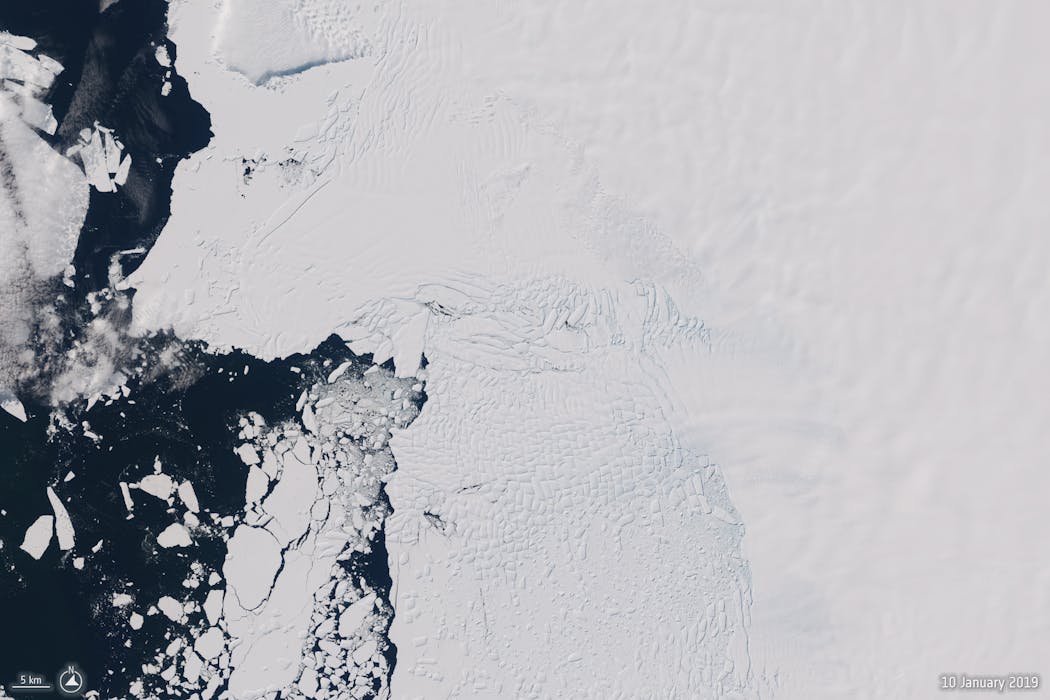
L’extrémité du glacier libère de grands icebergs, dont le basculement, ou vêlage, déclenche des secousses sismiques.Copernicus/ESA, CC BY
Grâce à l’utilisation de stations sismiques locales, des chercheurs ont identifié des centaines de séismes glaciaires au glacier de Thwaites, jusqu’ici passés inaperçus. Ils permettent de suivre l’activité d’une zone critique pour la stabilité antarctique.
Les séismes glaciaires sont un type particulier de tremblement de terre dans les régions froides et glacées. Découverts pour la première fois dans l’hémisphère Nord il y a plus de vingt ans, ils se produisent lorsque d’énormes blocs de glace tombent des glaciers dans la mer, générant des vibrations qui se propagent ensuite dans le sol sous le glacier et au-delà.
Jusqu’à présent, seuls très peu de ces séismes provoqués par la chute de blocs de glace avaient été détectés en Antarctique. Dans une nouvelle étude publiée dans Geophysical Research Letters, je présente des preuves de centaines d’occurrences en Antarctique entre 2010 et 2023, principalement à l’extrémité océanique du glacier Thwaites – le fameux « glacier de l’Apocalypse », qui pourrait provoquer une montée rapide du niveau de la mer en cas d’effondrement.
Un séisme glaciaire se produit lorsque de hauts icebergs effilés se détachent de l’extrémité d’un glacier et tombent dans l’océan.
Lorsque ces blocs basculent, ils heurtent violemment le glacier principal. Ce choc génère de fortes vibrations mécaniques du sol, ou ondes sismiques, qui se propagent sur des milliers de kilomètres depuis leur origine.
Ce qui rend les séismes glaciaires uniques, c’est qu’ils ne génèrent aucune onde sismique à haute fréquence. Et comme ces ondes sont essentielles pour détecter et localiser les sources sismiques classiques, comme les tremblements de terre, les volcans ou les explosions nucléaires, les séismes glaciaires n’ont été découverts que relativement récemment, alors que d’autres sources sismiques sont, elles, analysées quotidiennement depuis plusieurs décennies.
Variations saisonnières
La plupart des séismes glaciaires détectés jusqu’à présent ont été localisés près des extrémités des glaciers au Groenland, la plus grande calotte glaciaire de l’hémisphère nord.
Ils présentent des magnitudes relativement élevées, dont les plus importantes sont comparables à celles des séismes provoqués par les essais nucléaires menés par la Corée du Nord au cours des deux dernières décennies. Ces magnitudes assez importantes permettent de suivre ces séismes glaciaires avec un réseau sismique international, opérationnel en continu.
Les événements groenlandais sont saisonniers. Ils surviennent plus fréquemment à la fin de l’été. Ils sont également devenus plus fréquents au cours des dernières décennies. Ces tendances pourraient être liées à un réchauffement climatique plus rapide dans les régions polaires.
En Antarctique, des preuves difficiles à obtenir
Bien que l’Antarctique abrite la plus grande calotte glaciaire de la planète, les preuves directes de séismes glaciaires causés par le basculement d’icebergs (on parle de vêlage) sont difficiles à détecter.
La plupart des tentatives précédentes reposaient sur le réseau mondial de détecteurs sismiques – qui pourraient ne pas être suffisamment sensible si les séismes glaciaires antarctiques sont de magnitude beaucoup plus faible que ceux du Groenland.
Dans ma nouvelle étude, j’ai utilisé des stations sismiques situées en Antarctique. J’ai détecté ainsi plus de 360 événements sismiques glaciaires. La plupart ne figuraient pas dans les catalogues de séismes.
Ces événements sont situés dans deux zones, près des glaciers de Thwaites et de Pine Island. Ce sont les deux principales sources de la montée du niveau de la mer en provenance de l’Antarctique.
Les séismes du glacier de l’Apocalypse
Le glacier de Thwaites est parfois surnommé « glacier de l’Apocalypse », car, s’il venait à s’effondrer complètement, il ferait monter le niveau mondial des mers de 3 mètres – et parce qu’il est susceptible de se désintégrer rapidement.
Environ les deux tiers des événements que j’ai détectés – 245 sur 362 – se situaient près de l’extrémité du glacier en contact avec l’océan. La plupart sont probablement des séismes glaciaires causés par le basculement d’icebergs.
La période la plus prolifique pour les séismes glaciaires à Thwaites, entre 2018 et 2020, coïncide plutôt avec une accélération de la progression de la langue glaciaire vers la mer. Cette accélération, confirmée de manière indépendante par des observations satellites, pourrait être liée aux conditions océaniques, mais leur effet est encore mal compris.
Le deuxième plus grand groupe de séismes glaciaires antarctiques que j’ai observés se trouve près du glacier de Pine Island. Mais ces séismes étant situés à 60–80 kilomètres du rivage, il est peu probable qu’ils aient été provoqués par le basculement d’icebergs.
Ces événements demeurent énigmatiques et nécessitent des recherches complémentaires.
Perspectives pour la recherche sur les séismes glaciaires en Antarctique
La détection de séismes glaciaires liés au vêlage d’icebergs sur le glacier de Thwaites pourrait contribuer à avancer sur plusieurs questions scientifiques importantes. Parmi elles, figure l’interrogation fondamentale sur l’instabilité potentielle du glacier de Thwaites, en lien avec l’interaction entre océan, glace et substrat rocheux à l’endroit précis où il rejoint la mer.
Mieux comprendre ces mécanismes est essentiel pour réduire les grandes incertitudes sur les projections de montée du niveau de la mer au cours des prochains siècles.
Thanh-Son Pham a reçu des financements de l’Australian Research Council.