Sí que existen los vampiros

Source: The Conversation – (in Spanish) – By A. Victoria de Andrés Fernández, Profesora Titular en el Departamento de Biología Animal, Universidad de Málaga
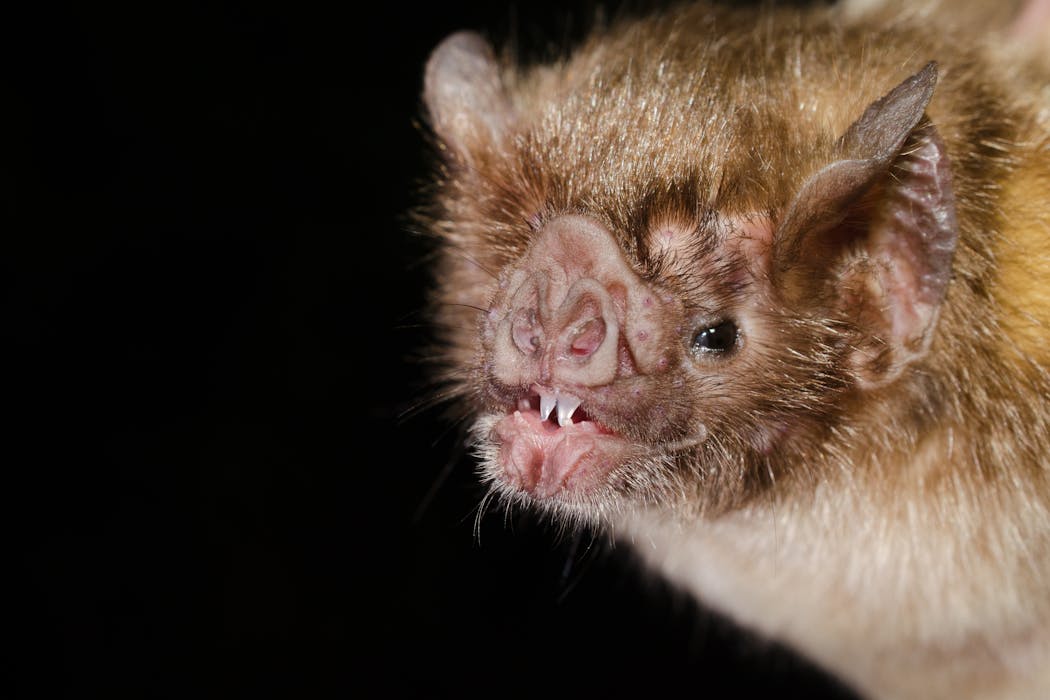
Ejemplar de vampiro común (_Desmodus rotundus_), una especie de murciélago que se alimenta de sangre. Mendesbio/Shutterstock

Pocos mitos hay tan redondos como el del Conde Drácula. Es una creación literaria perfecta, tanto que ha trascendido la intención de Bram Stoker para hacerse eterno en la vida real. Porque aunque Drácula se ha ido metamorfoseando con los tiempos, adaptándose a estéticas y modas variadas, siempre ha mantenido su misterioso y ambiguo atractivo.

Empezó en el contexto más puro del romanticismo, inspirándose en ese tenebroso príncipe de Valaquia que pasó a la historia como Vlad III, el Empalador. Más tarde, y tras saltar de las páginas de los libros para hacerse pieza clave del terror clásico, terminó haciendo extrañas incursiones en escenografías tan insospechadas como la erótica o la cómica. Actualmente (y por desgracia), ha perdido una gran parte de su original glamour para pasar a ser uno más de los “cutredisfraces” del Halloween de bazar barato que nos invade.

Esperando que vuelva algún día a recuperar su dignidad aristocrática, me centro en lo que lo hace un personaje único: su hematofagia.

¿Qué significado biológico tiene ser hematófago?

Alimentarse es caro, biológicamente hablando. Hay que buscar el alimento, ingerirlo y trocearlo en la boca, digerirlo con los enzimas digestivos y absorber los principios inmediatos con el intestino. Estos pasan a la sangre, que los distribuye a todas y cada una de las células de nuestro cuerpo.

Lo mismo ocurre con la respiración. El oxígeno entra por la vías respiratorias y, al llegar a los capilarizados alveolos pulmonares, difunde hacia la sangre. La hemoglobina lo capta y, en el interior de los glóbulos rojos, lo reparte por todo el cuerpo.

Nutrientes y oxígeno. Los dos requisitos para mantener el metabolismo celular y, con ello, la vida. La sangre es vida y mantenerla es caro.

Pensemos una alternativa: alimentarnos a costa de la sangre de otro. Nos ahorraríamos gran parte del trabajo. La hematofagia, desde una óptica energética, es muy rentable biológicamente. Como la naturaleza no entiende de justicia ni de moral, ha seleccionado esta manera tan “poco ética” de vivir en grupos animales muy diferentes.

Vampiros de toda índole

La hematofagia constituye un caso típico de convergencia evolutiva, esto es, llegar a Roma (la suculenta sangre del vertebrado) por diferentes caminos (líneas evolutivas muy distintas y distantes).

Quizás el caso más conocido de todos sea el de los mosquitos. Su eficacia alimenticia depende de su sorprendente aparato bucal, una versión biológica de una auténtica aguja hipodérmica conectada a una bomba de aspiración. Detectan el vaso sanguíneo quimiotáctica y térmicamente, pinchan con precisión mejor que la cualquier enfermero y… ¡a tragar!

Las chinches (hemípteras y homópteras) y las pulgas (sifonápteros) presentan un pico chupador análogo, pero con diferentes piezas bucales. Aunque quizás, y siguiendo con los insectos, la lucha más desesperante es la que mantenemos contra los piojos. No solo se limitan a alimentarse a nuestra costa, sino que se se quedan a vivir y a reproducirse en nuestras cabezas.

Una pulga succionando sangre en una piel humana.
Tomasz Klejdysz/Shutterstock

Las sofisticadas sanguijuelas

No obstante, el invertebrado más sofisticado en este aspecto son las sanguijuelas. Aseguran que no se le escape su presa pegándose a ella mediante potentes ventosas. En el centro de una de ellas se abre la boca, de potentes mandíbulas que cortan la piel y producen una herida que sangra a borbotones.

La razón estriba en su compleja y plural saliva, que contiene un anestésico insensibilizador de la zona sangrante que hace que la víctima ni se percate de lo que le está ocurriendo. También incluye en su composición un vasodilatador que procura el sangrado a borbotones. Termina esta sofisticada formulación química con hirudina, un potente inhibidor de la coagulación. Por todo ello, y en los tiempos en los que se creía que muchas enfermedades las causaba la “mala sangre”, las sanguijuelas se utilizaban en escenas de sangrías a enfermos más propias de una película de terror que de una técnica científica.

Ejemplar de sanguijuela.
Juta/Shutterestock

Actualmente ya no se utilizan estas drásticas terapias, aunque sí que se aprovechan las propiedades de la hirudina en el ensayo de nuevos fármacos para el tratamiento de pacientes con síndrome coronario agudo, trombosis venosa profunda o la embolia pulmonar donde los riesgos de trombosis son muy elevados.

Aunque la adaptación evolutiva de la hematofagia de quienes nos chupan la sangre “desde fuera” no está mal, es mejor hacerlo desde dentro. Nematodos (como Ancylostoma duodenale y _Necator americanus)_ o trematodos (como Schistosoma mansoni, S. haematobium o S. japonicum) son unos espantosos gusanos que pueden parasitarnos desde el interior de nuestros intestinos o nuestros vasos sanguíneos. No los rechazamos porque su adaptación parasitaria es tal que son capaces de producir moléculas inmunosupresoras para poder alimentarse de nuestra sangre sin ser eliminados por el sistema inmune. Horrible para nosotros, fascinante para la biología.

Vampiros de leyenda

Pero de todos los “chupasangre”, los más noveleros son los que encarnan la universal leyenda de los vampiros. Quizás sea debido a que estos quirópteros (mamíferos alados), tres especies de murciélago pertenecientes a la subfamilia Desmodontinae, funcionan de una manera bastante bruta y cruenta. Con sus afilados incisivos (no caninos, como los de su alter ego el Conde Drácula) cortan la piel y la musculatura subyacente de su víctima para que la herida produzca sangre.

Para que el delicioso “maná” no deje de brotar, también utilizan su anticoagulante saliva, pero la aplican de una manera mucho más espeluznante. Con el fin de evitar la formación del tapón plaquetario (que los dejaría sin postre), los vampiros, cada ratito, dejan de succionar y lamen la herida. Desde nuestro antropomórfico punto de vista, este hecho nos produce, cuanto menos, escalofríos.

La fuerza potencial del gesto lo supo ver muy bien Francis Ford Coppola. En su película Drácula (1992), un espléndidamente caracterizado Gary Oldman lame el borde de la sangrienta navaja en una escena de terror con una estética difícil de olvidar.

Más que chupasangres

Está clara la acción desvitalizante que nos producen todos estos organismos, pero es que hay mucho más. Mosquitos, pulgas o chinches pican a unos y saltan a otros, lo que trasforman a sus “agujas biológicas” en vehículos de transmisión de enfermedades bacterianas, víricas y protozoáricas. La malaria, por poner un ejemplo de una de las primeras causas de muerte de la humanidad, es causada por un protozoo transmitido a través de picaduras de mosquitos del género Anopheles.

Y después están los vampiros de dos patas, esos que te chupan la ilusión, la confianza y la filantropía. Pero esos se escapan del campo de la biología.

The Conversation

A. Victoria de Andrés Fernández no recibe salario, ni ejerce labores de consultoría, ni posee acciones, ni recibe financiación de ninguna compañía u organización que pueda obtener beneficio de este artículo, y ha declarado carecer de vínculos relevantes más allá del cargo académico citado.

ref. Sí que existen los vampiros – https://theconversation.com/si-que-existen-los-vampiros-268501
Morir no es igual en todas partes: cómo las culturas viven el duelo y reescriben el sentido de la pérdida

Source: The Conversation – (in Spanish) – By Belén Jiménez Alonso, Profesora e investigadora en el departamento de Psicología (UOC), especialista en duelo, UOC – Universitat Oberta de Catalunya

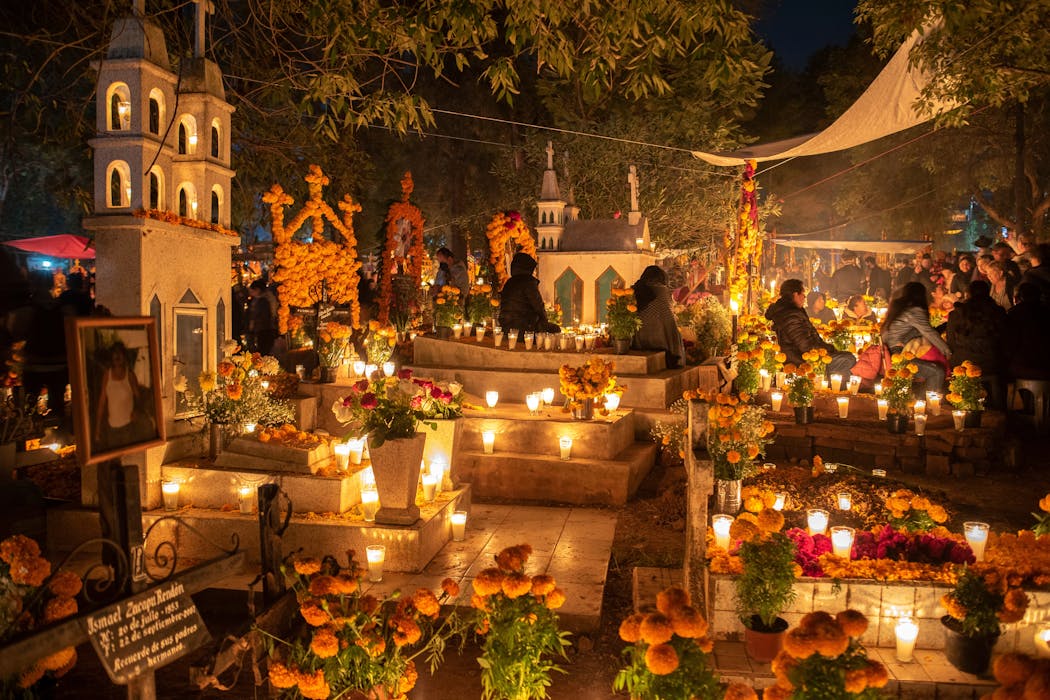
Celebración del Día de los Muertos en Tzintzuntzan (Michoacán, México). Claudio Briones/Shutterstock

La pérdida no solo hiere: desordena el mundo. Después de una muerte, no desaparece solo una persona, sino el entramado de gestos y significados que sostenían la vida. El duelo es ese proceso que intenta recomponer el sentido.

Desde hace décadas, la psicología cultural ha mostrado que el duelo no es “superar”, sino reconstruir. En lugar de cerrar el vínculo, muchas culturas buscan seguir conversando con los muertos, mantenerlos presentes en los relatos y los objetos. Las mediaciones culturales –una tumba, una foto, un canto, un perfil digital– son los puentes que permiten seguir en relación con lo ausente, rehaciendo la historia desde la fractura.

Las muchas formas de acompañar a los muertos

El mundo está lleno de lenguajes para el duelo. En Madagascar, las familias celebran el famadihana o “vuelta de los huesos”, un reencuentro festivo en el que se desenvuelven los cuerpos de los ancestros, se les cambia la mortaja y se baila con ellos.

Celebración de la famadihana en Antsirabe (Madagascar).
Vladislav Belchenko/Shutterstock

En Japón, muchas familias conservan en casa un butsudan, un pequeño altar budista con las tablillas de los antepasados –los llamados ihai se colocan en el altar con el nombre y la fecha de la muerte del difunto–. Allí se ofrecen flores o incienso como forma de mantener viva su presencia.

Un butsudan en Goshogawara (Japón).
Wikimedia Commons, CC BY

En Ghana, los funerales pueden durar días y reunir a cientos de personas; los ataúdes se tallan con formas simbólicas –un pez, una herramienta– que representan la historia o el oficio de quien ha muerto.

En México, el Día de Muertos celebra el regreso simbólico de los difuntos al mundo de los vivos. En casas y cementerios se levantan altares con flores, pan, velas y objetos personales, mientras las familias se reúnen entre música, comida y calaveras literarias que, con humor, conversan con la muerte.

En los Andes, entre comunidades quechuas y aymaras, la muerte se entiende como regreso al territorio. Los cuerpos se confían a la tierra o al agua que los vio nacer, porque el vínculo entre persona y paisaje se transforma. Las cosmologías, silenciadas por la colonización, recuerdan que morir también puede ser volver a la trama que nos sostiene.

Estas prácticas muestran algo esencial: no existe una sola manera de llorar. Cada cultura ha inventado herramientas para transformar la ausencia en relación y la memoria en cuidado.

Europa y la pérdida del lenguaje del duelo

En gran parte de Europa, el duelo se ha vuelto más íntimo y menos visible. La muerte suele tener lugar en instituciones, lejos de los espacios domésticos, y muchos de los rituales que antes acompañaban la pérdida se han ido diluyendo.

La discreción ha sustituido en gran medida a las formas colectivas de despedida.
En España, como en otros países europeos, aún cuesta hablar del duelo y la muerte sin incomodidad. Iniciativas como el Festival Vida al final de la vida invitan a la ciudadanía a participar en actividades artísticas y conversaciones abiertas sobre ello.

Pensar el duelo desde una mirada decolonial implica también reconocer que no todas las muertes pesan lo mismo, ni todas las culturas han tenido el mismo derecho a elaborarlas.

Las historias coloniales de desplazamiento, racismo o violencia estructural han generado duelos sin reconocimiento: migraciones forzadas, desaparecidos, pueblos enteros privados de sus ritos.

La modernidad colonial no solo administró cuerpos, sino también muertes: decidió cuáles eran dignas de luto y cuáles podían ser olvidadas. Frente a ello, muchas comunidades han hecho del duelo una forma de resistencia.

Las madres de los desaparecidos que marchan con las fotos de sus hijos o los altares improvisados en las fronteras encarnan una práctica afectiva que no busca cerrar la herida, sino sostenerla en común para reconocer la violencia que la produjo y recuperar la capacidad de cuidar más allá del marco colonial.

Mediaciones nuevas, memorias viejas

En el siglo XXI, el duelo también se ha desplazado a los espacios digitales. Las redes sociales albergan memoriales, perfiles donde los vivos siguen escribiendo a los muertos, y los llamados deathbots –programas que reproducen la voz o los mensajes de una persona fallecida– prolongan esas conversaciones más allá de la vida.

Las pantallas, los rituales, los cuerpos, los paisajes… todos median la continuidad entre vida y muerte. En esa diversidad de mediaciones –ancestrales o tecnológicas– se manifiesta la misma necesidad: seguir hablando con lo ausente, aunque el idioma cambie.

Mirar el duelo desde la diferencia cultural y desde la herida colonial no significa idealizar otras prácticas, sino recordar que llorar también es un acto de conocimiento y de justicia.

Cada cultura encarna una forma de relación con el tiempo y con la memoria, y todas reconocen que el dolor, cuando se comparte, reconstruye comunidad.

En un mundo que acelera el olvido, el duelo puede ser una forma de resistencia: una práctica que devuelve lentitud, vínculo y sentido. Morir no es igual en todas partes. Tampoco lo es recordar.

En los modos en que cada sociedad acompaña la pérdida se revela su idea de vida, de justicia y de mundo. El duelo, lejos de ser una enfermedad del alma, es una mediación entre la memoria y el porvenir, entre la ausencia y la continuidad de la vida.

The Conversation

Belén Jiménez Alonso no recibe salario, ni ejerce labores de consultoría, ni posee acciones, ni recibe financiación de ninguna compañía u organización que pueda obtener beneficio de este artículo, y ha declarado carecer de vínculos relevantes más allá del cargo académico citado.

ref. Morir no es igual en todas partes: cómo las culturas viven el duelo y reescriben el sentido de la pérdida – https://theconversation.com/morir-no-es-igual-en-todas-partes-como-las-culturas-viven-el-duelo-y-reescriben-el-sentido-de-la-perdida-268438

Charles Aznavour, una vida en canciones

Source: The Conversation – (in Spanish) – By Ana María Iglesias Botrán, Profesora del Departamento de Filología Francesa en la Facultad de Filosofía y Letras. Doctora especialista en estudios culturales franceses y Análisis del Discurso, Universidad de Valladolid

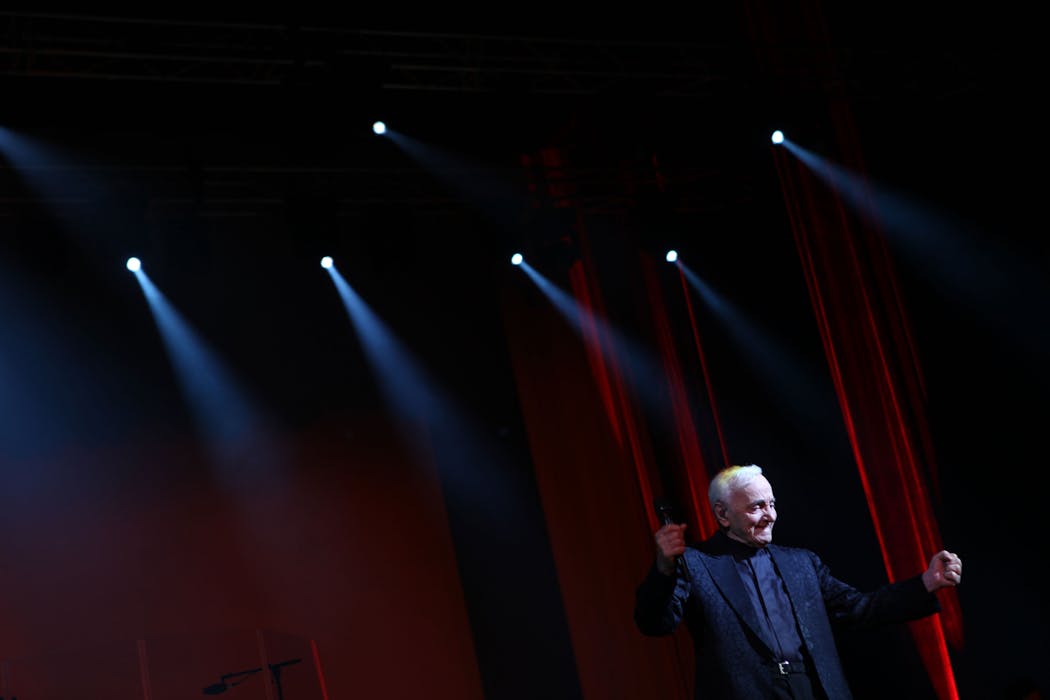
Charles Aznavour, en el concierto por su 90 aniversario en Ereván, capital de Armenia. President of the Republic of Armenia/Wikimedia Commons

Tras ocho décadas de carrera musical, 80 películas, más de 180 millones de discos vendidos –cantados en hasta 8 idiomas– y conciertos en 110 países, el legendario cantante Charles Aznavour murió en octubre de 2018 a los 94 años, plenamente en activo. De hecho, su último concierto en España fue el 20 de abril de ese mismo año.

Su contribución a la canción francesa fue de tal importancia que Francia le dedicó un funeral de estado al que asistieron, entre otras muchas personalidades, el presidente de Francia y el primer ministro de Armenia, país natal de sus padres, y fue retrasmitido en directo por los medios de comunicación franceses. Emmanuel Macron, en un emotivo discurso, terminó diciendo “Parce qu’en France, les poètes ne meurent jamais” (“Porque en Francia, los poetas nunca mueren”).

Y así es, porque Charles Aznavour es universal y sigue de total actualidad. La prueba: tras un éxito rotundo de taquilla en Francia y cuatro nominaciones a los premios César, llega a España la película francesa que cuenta su travesía vital, Monsieur Aznavour (2024). Una ocasión perfecta para repasar sus canciones más inolvidables.

“La bohème” (1965)

Su canción quizá más icónica y que nunca dejó de interpretar en sus conciertos. Aparece en el álbum con el mismo nombre en 1966 y estuvo en el número 1 en Francia durante varias semanas. La cantó también en español, inglés, alemán y portugués.

La letra nos transporta al París bohemio de finales del siglo XIX. Además del amor por el arte, es una reflexión sobre el paso del tiempo, de un mundo artístico que ya no existe y del efímero optimismo de la juventud.

Se compuso para la opereta Monsieur Carnaval, con libreto del escritor Frédéric Dard. Aznavour la cantó antes del estreno, lo cual generó algunas tensiones entre su discográfica y la del cantante que la interpretaría en la opereta, Georges Guétary. Sin embargo, el éxito fue tan rotundo que el desencuentro se disipó. En escena, Aznavour llevaba siempre un pañuelo blanco que dejaba caer al final de la canción, metáfora de la juventud que se escapa.

Hoy, en Montmartre (París), el Belvédère de la Bohème recuerda su legado, un mirador que celebra la magia de su voz y la eternidad de sus sueños.

“Tous les visages de l’amour” (1974)

Se asocia en las últimas décadas a la banda sonora de la película Notting Hill (1999), cuyo tema central en inglés, “She”, está interpretado por Elvis Costello.

En esta versión, la original, la música es de Aznavour y la letra de Herbert Kretzmeren. Se compuso para la serie de televisión británica Seven Faces of woman (1974) y fue durante cuatro semanas el número 1 en el Reino Unido. Después, Aznavour la grabó también en alemán, italiano y francés, con el título “Tous les visages de l’amour” (“Todos los rostros del amor”).

“Hier encore” (1964)

Esta canción también retoma el tema de la nostalgia de la juventud pero con una tonalidad triste, desde la mirada que aporta la madurez, haciendo una profunda reflexión en el presente sobre las decisiones tomadas y los errores cometidos.

La letra es de Aznavour y la música de Georges Garvarentze. El texto se tradujo y se adaptó a varios idiomas: al español como “Ayer aún”, al inglés como “Yesterday When I was Young” y a otros, como el armenio o japonés.

Su melodía sigue estando de moda sesenta años después. No sólo porque el cantante Bad Bunny haya insertado un sample en su canción “Mónaco”, sino también porque su letra continua siendo atemporal y universal:

Hier encore/

J’avais vingt ans/

Mais j’ai perdu mon temps/

À faire des folies/

Qui ne me laissent au fond/

Rien de vraiment précis/

Que quelques rides au front/

Et la peur de l’ennui.

(Ayer todavía/ tenía veinte años/ pero perdí mi tiempo/ haciendo locuras/ que no me dejan, en el fondo/ nada realmente concreto/ salvo algunas arrugas en la frente/ y el miedo al aburrimiento)

“Emmenez-moi”(1967)

Un sueño convertido en canción, una invitación a escapar y dejar atrás la rutina. Charles Aznavour nos conduce hacia lugares lejanos, exóticos, llenos de luz y felicidad. Por eso fue la última canción que sonó en su funeral al salir de los Inválidos de París.

“Llévame hasta los confines de la tierra, llévame al país de las maravillas; me parece que la miseria sería menos dolorosa al sol.”

La estela brillante de la canción trascendió al cine con la película homónima (2005), donde un fan de Aznavour decide emprender un viaje para encontrarse con su ídolo, mostrando cómo la música puede inspirar, guiar e influir en la vida de quienes la escuchan.

No se pierdan esta interpretación de 1972: magistral y emocionante.

Cantante poéticamente comprometido

Aznavour se consideraba política y poéticamente incorrecto, y no faltan pruebas.

Aunque él mismo reconoció que le costó mucho escribirla, en 1974 lanzó “J’ai connu”, sobre el Holocausto. Nunca olvidó que sus padres huyeron del genocidio armenio y que él mismo asistió a los horrores de la Segunda Guerra Mundial.

En 1972 publicó una canción sobre la homosexualidad, “Comme ils disent”. Fue pionero, arriesgado y adelantado a su tiempo cuando en Francia no se trataba este tema abiertamente. Sin embargo, el público la recibió con respeto, precisamente por tratarse de él.

Canciones para otros artistas

Interpretó sus temas en dúos con cantantes como Frank Sinatra, Plácido Domingo, Julio Iglesias, Céline Dion, Elton John, Laura Pausini, Johnny Hallyday, Nana Mouskori o Sting, entre otros. También con Édith Piaf, su descubridora y gran amiga, para la que compuso “Jezebel” (1951) y “C’est un gars” (1950).

Entre las canciones que escribió para otros, todas ellas de gran éxito, se encuentran “Retiens la nuit” para Johnny Hallyday, “La plus belle pour aller danser” para la joven yeyé Sylvie Vartan, o “Je hais les dimanches” para Juliette Gréco. También compuso para artistas actuales, como la cantante Amel Bent, para quien creó “Je reste seule”.

Aznavour inolvidable, hasta en los Juegos Olímpicos

Las competiciones y ceremonias de los Juegos Olímpicos de París en 2024 estuvieron repletas de referencias culturales francesas. Las canciones de Charles Aznavour también fueron protagonistas.

En la inauguración, la cantante Aya Nakamura interpretó un mix de dos de sus canciones con segmentos de “For me, Formidable”, que previamente había sido interpretada a capela por la Guardia Republicana. Asimismo, incluyó la melodía de “La bohème” para anunciar su aparición. Además, uno de los momentos más emotivos de la clausura fue cuando sonó “Emmènez-moi”, cantada a coro por las miles de personas que asistían como público.

Charles Aznavour es la prueba de que, efectivamente, los poetas no mueren nunca.

The Conversation

Ana María Iglesias Botrán no recibe salario, ni ejerce labores de consultoría, ni posee acciones, ni recibe financiación de ninguna compañía u organización que pueda obtener beneficio de este artículo, y ha declarado carecer de vínculos relevantes más allá del cargo académico citado.

ref. Charles Aznavour, una vida en canciones – https://theconversation.com/charles-aznavour-una-vida-en-canciones-266731

¿Queda mucho por saber sobre la vida en los océanos?

Source: The Conversation – (in Spanish) – By Oihane Díaz de Cerio Arruabarrena, Profesora de Biología Celular, Universidad del País Vasco / Euskal Herriko Unibertsitatea

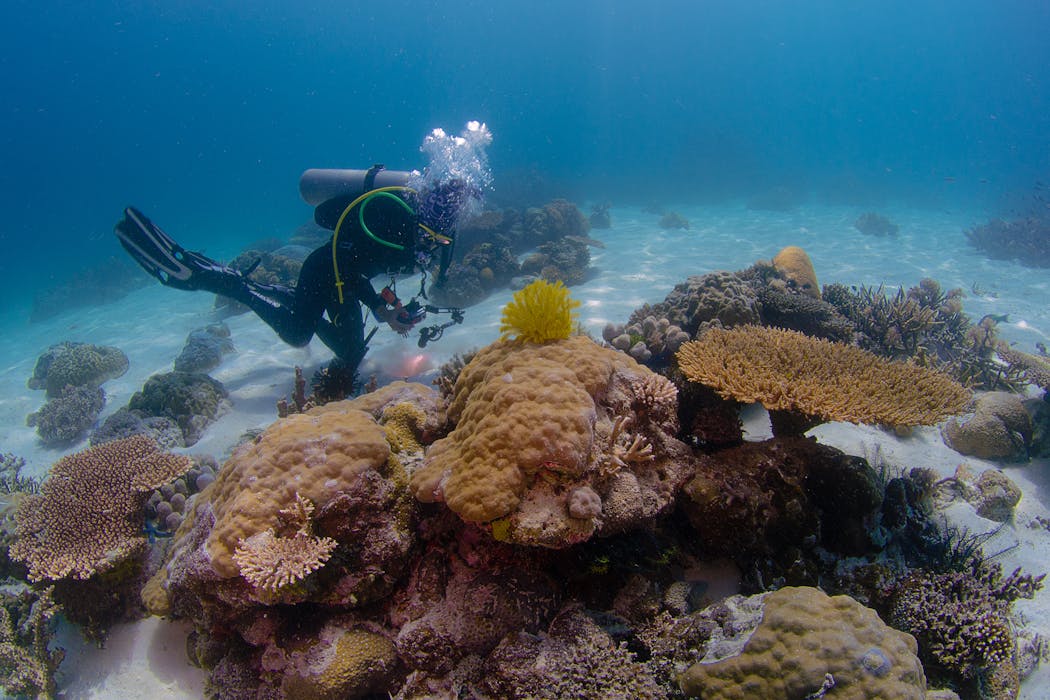
Un buceador explora los corales del mar de Célebes, en la parte occidental del océano Pacífico. Bahaman Hashim/Shutterstock

Este artículo forma parte de la sección The Conversation Júnior, en la que especialistas de las principales universidades y centros de investigación contestan a las dudas de jóvenes curiosos de entre 12 y 16 años. Podéis enviar vuestras preguntas a tcesjunior@theconversation.com


Pregunta formulada por el curso de 3º de la ESO de Aranzadi Ikastola. Bergara (Gipuzkoa)


“¿Dónde están las llaves? ¡En el fondo del mar!”, dice la canción infantil. La llave al conocimiento se encuentra en el fondo de los océanos. Aunque la vida se formó bajo el agua, realmente no sabemos apenas nada sobre lo que habita allí y aún menos sobre cómo viven esos habitantes.

Según el diccionario de la Real Academia de la Lengua Española, el término “vida” tiene 18 acepciones. La cuarta es la más estudiada en la investigación del océano: “Existencia de seres vivos en un lugar”. En otras palabras, la biodiversidad. Pero la vida tiene más dimensiones: relacionarse, producir energía para no morir, adaptarse al lugar y mantenerse vivo un tiempo, entre otras. Esto es, la ecología marina.

¿Conocemos qué vida hay en los océanos?

La respuesta es no. La ciencia estima que hemos visualizado el 0,001 % de los seres vivos gracias más de 44 000 inmersiones de diferentes expediciones. ¿Por qué un porcentaje tan pequeño? Porque en una vasta extensión el océano tiene 200 metros o más de profundidad. La presión a esas profundidades es tan alta que hacen falta tecnologías muy avanzadas que la soporten. A medida que se desarrollan, se descubren nuevas especies.

Por ejemplo, en septiembre de 2025 ha culminado la expedición Uruguaya (Uruguay sub200). Gracias al robot ROV SuBastian, los investigadores han explorado profundidades superiores a los 1 200 metros y han descubierto más de 30 especies potencialmente nuevas que ahora toca verificar. Pero su mayor hallazgo ha sido un arrecife de coral que vive en aguas más profundas de lo que está científicamente descrito. El siguiente paso es averiguar cómo se mantiene vivo en ese ambiente.

A vista de lupa o microscopio

No hace falta irse a las lejanas profundidades del océano para realizar nuevos descubrimientos. Si descendemos en la escala de observación, abrimos la puerta a otro universo de biodiversidad. Las lupas y microscopios siguen siendo hoy en día herramientas útiles.

Por ejemplo, en 2020, en la costa de Mutriku (Gipuzkoa), un grupo de científicos localizó entre la arena una nueva especie de acelo, un pequeño gusano aplanado al que bautizaron como Faerlea assembli. Y en 2022, un investigador de la estación marina PiE-UPV/EHU descubrió en pequeños crustáceos un parásito al que llamó Txikispora philomayo. Este nuevo género puede incluso ayudar a entender evolutivamente cómo se formaron los organismos multicelulares.

Bajemos aún mas en escala de tamaño. Las bacterias y arqueas que viven en aguas oceánicas constituyen el microbioma marino. Compone casi dos tercios de la biomasa oceánica, pero es el gran desconocido. Para estudiar su diversidad usamos una técnica molecular llamada metagenómica. Consiste en secuenciar el ADN extraído del agua de diferentes puntos y profundidades del océano. Con los resultados se identifican grupos y comunidades de microorganismos gracias a las habilidades de la bioinformática y la inteligencia artificial.


Leer más:
Microbioma oceánico: el Leviatán bondadoso que cuida de nuestro planeta


Aquí surge un problema: no podemos identificar lo que ignoramos. Las identificaciones se basan en el conocimiento del ADN de microorganismos que hemos sido capaces de cultivar en el laboratorio, pero de muchos otros lugares extremos del océano no han sido cultivados aún. Por eso, numerosas secuencias de ADN quedan huérfanas de identificación. Es la llamada “materia oscura”.

Recapitulemos:

  • Desconocemos los organismos grandes (macroorganismos) que habitan zonas abisales. Faltan medios.

  • A escalas más pequeñas, ni siquiera conocemos los que pisamos al caminar por la arena de la playa.

  • Desconocemos los parásitos que cohabitan con especies ya conocidas.

  • Y si vamos a organismos más pequeños, en el caso del microbioma… ¡andamos entre materia oscura!

Un océano de desconocimiento

Y de lo que hemos identificado, ¿sabemos cómo se mantiene la vida en el océano?

Piensa en el cuerpo humano. Conocemos nuestra anatomía y los tejidos, que llevamos siglos investigando. Pero aún ignoramos muchos detalles: cómo funciona nuestra consciencia, cómo guardamos información o recuerdos en el cerebro, cómo reacciona nuestro cuerpo a nuevas enfermedades, cómo respondemos a la contaminación, cómo nos adaptamos en ambientes extremos, etc. No sabemos al 100 % cómo funcionan nuestras unidades de vida, las células.

Si lo extrapolamos a cada especie que habita en el océano, nos queda muchísimo por averiguar. Si no conocemos todo lo que vive en las aguas marinas, no podemos saber cómo interactúan con el medio; cómo se relacionan con otras especies; cuánto tiempo viven y pueden vivir en situaciones de contaminación; qué tipo de células tienen; cómo funcionan y se comunican esas células… Podríamos seguir así hasta el infinito y más allá.

En definitiva, el océano guarda la llave a muchos hallazgos a diferentes niveles, de ecosistemas y de biodiversidad, por no hablar de la vida a nivel celular y molecular. Si recopiláramos el código genético de todos los organismos marinos descubiertos y aún por descubrir, escribiríamos nuevas enciclopedias de la vida con volúmenes e idiomas nuevos para cada especie. Las baldas del conocimiento sobre los habitantes de los océanos aún están casi vacías.


La Cátedra de Cultura Científica de la Universidad del País Vasco colabora en la sección The Conversation Júnior.


The Conversation

Algunos de los ejemplos que he usado han sido descritos por compañeros de investigación del centro en el que trabajo o por investigadores invitados al centro.

ref. ¿Queda mucho por saber sobre la vida en los océanos? – https://theconversation.com/queda-mucho-por-saber-sobre-la-vida-en-los-oceanos-266177

Sex with 1,000 men in 12 hours: why Bonnie Blue is neither a feminist nor a monster

Source: The Conversation – Global Perspectives – By Lexi Eikelboom, Senior Research Fellow, Institute for Religion and Critical Inquiry, Australian Catholic University

Stan

The documentary, 1,000 Men & Me: The Bonnie Blue Story, has made Tia Billinger – stage name Bonnie Blue – a household name.

Famous for her sexual stunts, including one in which she has sex with more than 1,000 men in 12 hours, Bonnie Blue fascinates us because we do not understand her.

Billinger claims to be an embodiment of feminism. She points out she is rich and independent, and says she has taken control of her sexualisation. Yet it is difficult to imagine how sleeping with 1,000 men in a day could lead someone to feel empowered rather than degraded.

Some have offered personality-based explanations for Billinger’s choices, saying she may simply be an opportunistic sociopath.

But explanations like these relegate her to the status of a social oddity, or a monster. And this discounts the social conditions that produce someone like Billinger – the same social conditions all women face.

The contradiction Bonnie Blue embodies reveals just how fraught a woman’s relationship to power and influence is. Women who seek power often encounter a double bind that leads them to use their power in a way that also curtails it.

Power through subservience

Power requires two ingredients. It involves autonomy and self-determination. It also requires being embedded in society so as to exert influence within it.

These two aspects of power work in tandem for men, and especially white men. But for women, and people with other marginalised identities, they often pull in opposite directions.

US feminist writer Andrea Dworkin described this situation in her 1978 book Right-wing Women: for women, power comes through subservience to male values.

For a woman, to be embedded in society is, by definition, to have her autonomy and self-determination restricted. As a result she is forced to choose: do what you want or have influence.

The reward for protecting men’s access to women

Billinger’s business model is striking. She makes enormous amounts of money by offering sex for free. The fact the sex itself is free enables her to turn around and sell a desirable commodity through subscription-based platforms such as Fansly – namely, the fantasy of female availability.

After her 1,000 men stunt, Billinger told her documentary film makers

I loved […] seeing how many men had wedding rings on. I just loved knowing I was doing something their wives should’ve done.

She tells men not to “feel guilty for doing something you deserved and you was, well, you was owed”. Despite appearances, then, Billinger is not autonomous at all. Her power is the result of subservience to male entitlement.

There have always been women who gain power by protecting men’s access to women. Consider, for example, US conservative activist Phyllis Schlafly (1924–2016). While Billinger is famous for her extreme sexual stunts, Schlafly could be considered the original tradwife.

Initially an expert in foreign policy, Schlafly was unable to gain political traction through her expertise, so she built a career opposing women’s liberation on behalf of housewives. She got the political power she wanted, but not in the field she really cared about.

A black and white photo shows US conservative political activist Phyllis Schafly in a winter coat, and a badge fastened to it that reads 'stop ERA'. Her hair is done up and she is smiling at something out of view.
Conservative activist Phyllis Schafly wearing a Stop ERA (Equal Rights Amendment) badge in front of the White House, Washington DC, in February 1977.
Library of Congress

Womanliness as a masquerade

Both Schlafly’s and Billinger’s personas map squarely onto one side or the other of what psychoanalyst Sigmund Freud called the Madonna-whore complex, in which a misogynistic society categorises women according to the kind of service they offer men – either as a saintly mother figure or as a sexual object.

Each of these roles also deflects attention by attacking the opposite side of the dichotomy.

Billinger positions herself as a rival to men’s wives, claiming her critics simply want to turn her into a housewife. Schlafly positioned herself as a housewife opposing equal rights because she considered such rights to be bound up with sexual promiscuity.

In reality, each stance relies on the other. And we’re beginning to see this manifest in the emergence of tradwife Onlyfans content.

In 1929, psychoanalyst Joan Riviere wrote about a tendency in her female patients she called “womanliness as a masquerade”.

Riviere notes how women who exhibited traits socially coded as “masculine”, or who occupied positions historically reserved for men, attempted to hide this masculinity through a performance of femininity. She wrote:

women who wish for masculinity may put on a mask of womanliness to avert anxiety and the retribution feared from men.

To undertake a “masculine” pursuit of power, both Schlafly and Billinger uphold a particular ideal of femininity. And both women’s careers are logical – if misguided – responses to the messages women receive about where their value lies.

A never-ending tradeoff

Our systems punish women for wanting things such as power, money, or visibility, requiring them to turn against other women, give up their expertise, or make themselves infinitely available to men.

If women were allowed to pursue power without these sacrifices, it might curtail the harms other women face as a result of the masked pursuit of power.

Women should not have to choose between power, money and visibility on one hand, and community and liberation on the other. They should not have to choose between Madonna and the whore.

Yet as political gains continue to shrink around the world, many women are starting to feel this double-bind more forcefully. There may be more Bonnie Blues and Phyllis Schlaflys on the horizon.

The Conversation

Lexi Eikelboom does not work for, consult, own shares in or receive funding from any company or organisation that would benefit from this article, and has disclosed no relevant affiliations beyond their academic appointment.

ref. Sex with 1,000 men in 12 hours: why Bonnie Blue is neither a feminist nor a monster – https://theconversation.com/sex-with-1-000-men-in-12-hours-why-bonnie-blue-is-neither-a-feminist-nor-a-monster-267982

90 years of Monopoly: how the ‘new craze’ morphed from socialist critique to capitalist dream

Source: The Conversation – Global Perspectives – By Lisa J. Hackett, Senior Lecturer, Sociology & Criminology, University of New England

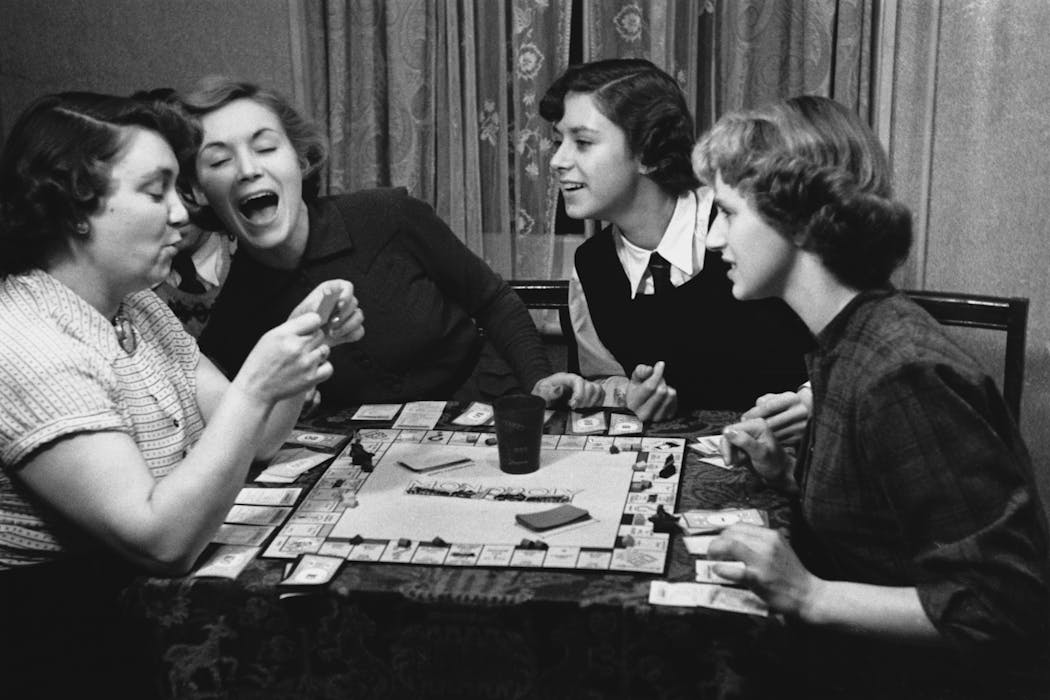
© Hulton-Deutsch Collection/CORBIS/Corbis via Getty Images

Monopoly is the best-selling licensed board game of all time, popular since its 1935 release when “the new craze” swept the world.

It has remained a staple, with over 390,000 copies sold in Australia to date.

Its transformation from an economic critique to a capitalist icon highlights its historical evolution and adaptability.

A game with a message

Monopoly’s roots trace back to The Landlord’s Game (1903), created by Elizabeth Magie to critique monopolistic land ownership.

It featured two sets of rules – one emphasising wealth accumulation, the other wealth distribution. The aim was to demonstrate how different policy levers, taxing income versus taxing land, affect economic outcomes of players.

It was based on economist Henry George’s proposition for a “land value tax” or “single tax”. Under this regime, people would keep all they earned, with public funds raised from land ownership instead.

An old board game.
The board for Elizabeth Magie’s 1906 version of The Landlord’s Game.
Wikimedia Commons/LandlordsGame.Info

The two sets of rules in the Landlord’s Game demonstrate how wealth is either concentrated in the hands of landlords (taxing income) or is more fairly distributed across society (taxing land).

In 1935, a man named Charles Darrow removed the game’s socialist critique (the version that taxed land), renamed it Monopoly and sold it to Parker Brothers. The game was now focused on the accumulation of real estate until one player remained, having bankrupted their fellows.

The game thrived during the Great Depression, offering an escapist fantasy of financial success.

Photograph of an old man with a Monopoly board.
In 1935, Charles Darrow reworked the game to become Monopoly.
The Salem News Historic Photograph Collection, Salem State University Archives and Special Collections, CC BY

In 1935, Parker Brothers paid Magie US$500 (US$11,800 today) for the rights to her game, ensuring their ownership of Monopoly was unchallenged. As part of the deal, they released her original game, but it failed to gain traction with players.

Not everyone welcomed its capitalist themes – Fidel Castro famously ordered all Monopoly sets in Cuba destroyed in 1959

Playability and house rules

Philip Orbanes, former vice president of research at Parker Brothers, argued a good board game must have clear rules, social interaction and an element of luck. Monopoly ticks all three boxes.

Despite this, Monopoly is notorious for causing arguments. Hasbro (who bought out Parker Brothers in 1991, acquiring Monopoly in the process) found that nearly half of Monopoly games end in disputes, often over rule interpretations. Monopoly is the game most likely to be banned, or see a particular player banned, on game nights.

Four men around the board.
A group of sunbathers having a smoke and playing a game of monopoly at an open air pool, 1939.
Fox Photos/Getty Images

Monopoly’s rules have been adjusted and manipulated as players have sought to overcome the inequities in the game. Another of Hasbro’s surveys found 68% of players admitting to not having read the rules in their entirety, and 49% said they had made up their own rules.

These “house rules” include things like cash bonuses on Free Parking or modifying auctions to make the game more engaging.

Identity and nostalgia

Monopoly’s use of real-world locations makes it adaptable to local markets.

The original version reflected Atlantic City’s socio-economic hierarchy. When Waddingtons released the English version in 1936 under license (the same version which would go on to be released in Australia in 1937), Atlantic City’s wealthy Boardwalk and working class Mediterranean Avenue became London’s Mayfair and Old Kent Road, respectively.

The game can also serve as a bridge to former geographies. The 1980s Yugoslav edition remains a link to the past for those who lived through that era, recording changing political geographies and cultural shifts.

People at tables on train platforms.
More than 240 players compete for the British Monopoly title at Fenchurch street station, London, in 1975.
WATFORD/Mirrorpix/Mirrorpix via Getty Images

Monopoly is a flagship brand for Hasbro, worth an estimated US$272m in 2018. Part of Monopoly’s success lies in its licensing strategy. The board layout is extremely flexible, allowing for localised adaptations to be made to suit different markets, without any substantial change to the game play.

There are believed to be over 3,400 different versions of Monopoly issued, from classic city street layouts to popular culture imaginings.

It is this aspect that attracts collectors; world record holder Neil Scanlon owns 4,379 sets of Monopoly (he is still searching for the Cronulla Sharks set).

Monopoly reflects the world’s economic systems, embodying both the dream of wealth and the realities of financial inequality.

It has been studied by economists and educators as a tool for understanding capitalism, wealth accumulation and market control.

The game originally meant to critique monopolistic practices became a celebration of them. Each player has the opportunity to accumulate vast wealth, reflecting the promise of capitalism: where anyone can enjoy riches as long as they work hard enough.

Magie’s message was leveraged by Federal MP Andrew Leigh in his 2023 critique of the growing concentration of business monopolies in Australia. Leigh noted how monopolies affected Australian families and how the Albanese government had “increased penalties for anti-competitive conduct, and banned unfair contract terms” with the aim of creating a fairer society.

Enduring popularity

In 2025, Hasbro introduced digital banking versions – though many players lament the feel of physical wads of cash.

The game continues to be a favourite, ranking as the top childhood game among Baby Boomers, Gen X and Millennials – and fourth for Gen Z. The sense of nostalgia was strong among all groups, not surprising as board games were found to be an integral part of family bonding.

Monopoly has evolved from an anti-capitalist critique into a commercial juggernaut. While it has faced criticism for erasing its socialist origins and its reliance on luck, its ability to reinvent itself has ensured its lasting appeal.

As both a cultural artefact and a competitive game, Monopoly remains firmly embedded in board game culture.

The Conversation

Lisa J. Hackett does not work for, consult, own shares in or receive funding from any company or organisation that would benefit from this article, and has disclosed no relevant affiliations beyond their academic appointment.

ref. 90 years of Monopoly: how the ‘new craze’ morphed from socialist critique to capitalist dream – https://theconversation.com/90-years-of-monopoly-how-the-new-craze-morphed-from-socialist-critique-to-capitalist-dream-252738

If the US resumes nuclear weapons testing, this would be extremely dangerous for humanity

Source: The Conversation – Global Perspectives – By Tilman Ruff, Honorary Principal Fellow, School of Population and Global Health, The University of Melbourne

US President Donald Trump has instructed the Pentagon to resume nuclear weapons testing immediately, “on an equal basis” with other countries’ testing programs.

If Trump is referring to the resumption of explosive nuclear testing, this would be an extremely unfortunate, regrettable step by the United States.

It would almost inevitably be followed by tit-for-tat reciprocal announcements by other nuclear-armed states, particularly Russia and China, and cement an accelerating arms race that puts us all in great jeopardy.

It would also create profound risks of radioactive fallout globally. Even if such nuclear tests are conducted underground, this poses a risk in terms of the possible release and venting of radioactive materials, as well as the potential leakage into groundwater.

The Comprehensive Nuclear Test Ban Treaty has been signed by 187 states – it’s one of the most widely supported disarmament treaties in the world.

The US signed the treaty decades ago, but has yet to ratify it. Nonetheless, it is actually legally bound not to violate the spirit and purpose of the treaty while it’s a signatory.

What testing is used for, and why it stopped

In earlier years, the purpose of testing was to understand the effects of nuclear weapons – for example, the blast damage at different distances, which provides confidence around destroying a given military target.

Understanding the consequences of nuclear weapons helps militaries plan their use, and to some extent, protect their own military equipment and people from the possible use of nuclear weapons by adversaries.

But since the end of the second world war, states have mostly used testing as part of the development of new weapons designs. There have been a very large number of tests, more than 2,000, mostly seeking to understand how these new weapons work.

The huge environmental and health problems caused by nuclear testing prompted nations to agree a moratorium on atmospheric testing for a couple of years in the early 1960s. In 1963, the Partial Test Ban Treaty banned nuclear tests in all environments except underground.

Since then, nuclear-armed states have stopped explosively testing at different times. The US stopped in 1992, while France stopped in 1996. China and Russia also aren’t known to have conducted any tests since the 1990s. North Korea is the only state to have openly tested a nuclear weapon this century, most recently in 2017.

These stoppages came in the 1990s for a reason: by that time, it became possible to test new nuclear weapon designs reliably through technical and computer developments, without having to actually explode them.

So, essentially, the nuclear states, particularly the more advanced ones, stopped when they no longer needed to explosively test new weapon designs to keep modernising their stocks, as they’re still doing.

Worrying levels of nuclear proliferation

There is some good news on the nuclear weapons front. The Treaty on the Prohibition of Nuclear Weapons has now been signed by half the world’s nations. This is a historic treaty that, for the first time, bans nuclear weapons and provides the only internationally agreed framework for their eventual elimination.

With the exception of this significant development, however, everything else has been going badly.

All nine nuclear-armed states (the US, China, Russia, France, the United Kingdom, India, Pakistan, North Korea and Israel) are investing unprecedented sums in developing more accurate, stealthier, longer-range, faster, more concealable nuclear weapons.

This potentially lowers the threshold for their use. And it certainly gives no indication these powers are serious about fulfilling their legally binding obligations to disarm under the Nuclear Non-Proliferation Treaty.

Moreover, multiple nuclear-armed states have been involved in recent conflicts in which nuclear threats have been made, most notably Russia and Israel.

Worryingly, we have also seen the numbers of nuclear weapons “available for use” actually start to climb again.

This includes those in military stockpiles, those that have been deployed (linked to delivery systems such as missiles), and those on high alert, which are the ones most prone to accidental use because they can be launched within minutes of a decision to do so. All of these categories are on the increase.

Russia, in particular, has weapons we haven’t seen before, such as a nuclear-powered, nuclear-armed cruise missile that President Vladimir Putin said on Sunday his country has successfully tested. China, too, is embarking on a rapid build-up of nuclear weapons.

And the US has just completed assembling a new nuclear gravity bomb.

A new START treaty also not moving forward

Nearly all of the hard-won treaties that constrained nuclear weapons since the end of the Cold War have been abrogated.

There’s now just one remaining treaty constraining 90% of the world’s nuclear weapons, which are in the hands of the US and Russia. This is the New START Treaty, which is set to expire in February next year.

Putin offered to extend that treaty informally for another year, and Trump has said this is a good idea. But its official end is just four months away, and no actual negotiations on a successor treaty have begun.

The US has also said China needs to be involved in the successor treaty, which would make it enormously more complicated. China has not expressed a willingness to be part of the process.

Whether anything will be negotiated to maintain these restraints beyond February is unclear. None of the nuclear-armed states are negotiating any other new treaties, either.

All of this means the Doomsday Clock – one of the most authoritative and best-known assessments of the existential threats facing the world – has moved forward this year further than it has ever done before.

It’s really an extraordinarily dangerous time in history.

The Conversation

Tilman Ruff is affiliated with International Physicians for the Prevention of Nuclear War, the International Campaign to Abolish Nuclear Weapons and the Medical Association for Prevention of War.

ref. If the US resumes nuclear weapons testing, this would be extremely dangerous for humanity – https://theconversation.com/if-the-us-resumes-nuclear-weapons-testing-this-would-be-extremely-dangerous-for-humanity-268661

4 urgent lessons for Jamaica from Puerto Rico’s troubled hurricane recovery – and how the Jamaican diaspora could help after Melissa

Source: The Conversation – USA (2) – By Ivis García, Associate Professor of Landscape Architecture and Urban Planning, Texas A&M University

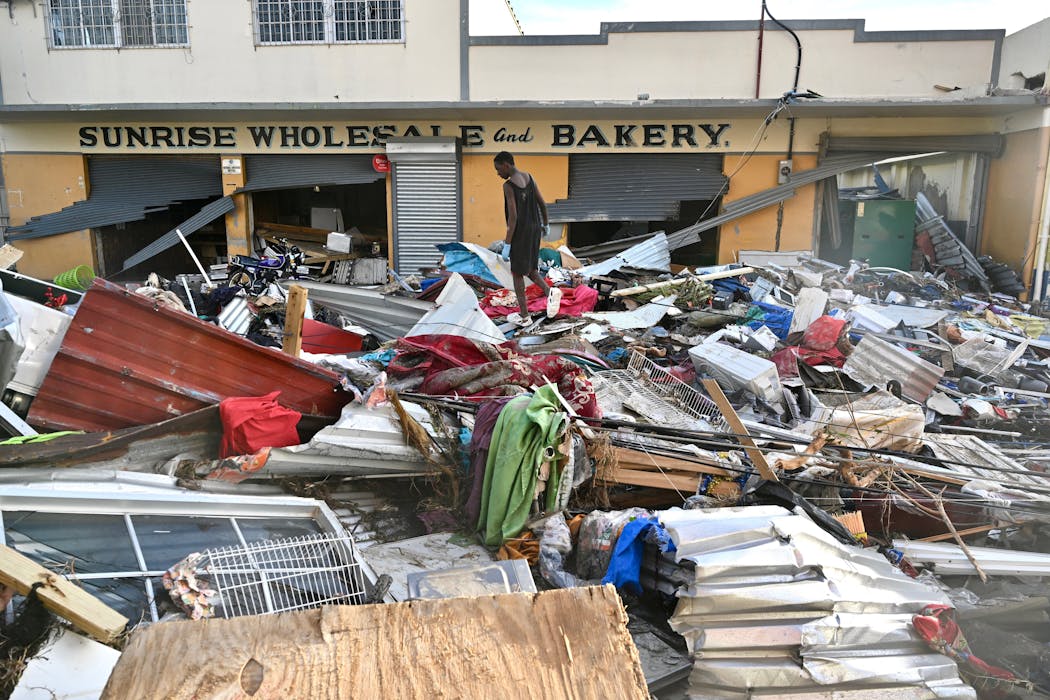
Hurricane Melissa’s 185 mph winds and storm surge tore apart buildings and left streets strewn with debris in Black River, Jamaica, on Oct. 28, 2025. Ricardo Makyn/AFP via Getty Images

Across Jamaica, streets are littered with torn-off roofs, splintered wood and other debris left in the wake of Hurricane Melissa. Downed power lines have left communities in the dark, and many flooded and wind-damaged homes are unlivable.

Recovering from the devastation of one of the Atlantic’s most powerful storms, which struck on Oct. 28, 2025, will take months and likely years in some areas. That work is made much harder by the isolation of being an island.

As a researcher who has extensively studied disaster recovery in Puerto Rico after Hurricane María in 2017, I know that the decisions Jamaica makes in the days and weeks following the disaster will shape its recovery for years to come. Puerto Rico’s mistakes hold some important lessons.

An aerial view of a business district shows buildings and homes with roofs and siding shredded, with mud covering the streets.
An aerial view shows some of the widespread damage caused by Hurricane Melissa’s storm surge and powerful winds in Black River, Jamaica.
Ivan Shaw/AFP via Getty Images

Why island recovery is different

Islands face obstacles that most mainland communities don’t experience. Geographic isolation compounds every problem in ways that make both the emergency response and the long-term recovery fundamentally harder.

Communities can easily be cut off by damaged roads, particularly in rugged areas like Jamaica’s Blue Mountains. Every damaged port facility, every closed airport, every blocked road multiplies isolation in both the short and long term.

People push shopping carts on a muddy street with tangled power lines and damaged homes and vehicles.
Power was out in communities across Jamaica after Hurricane Melissa, and several coastal communities were caked with mud. On the U.S. mainland, surrounding states will send fleets of repair trucks and linemen to rebuild power infrastructure quickly, but on an island, that kind of fleet isn’t available, and the damage is often widespread.
Ricardo Makyn/AFP via Getty Images

As Puerto Rico saw after Hurricane Maria, in the early days after a disaster, basic emergency supplies like tarps, batteries, fresh food and water and generators can become scarce.

Weeks and months later, reconstruction materials can still take a long time to arrive, extending the recovery time far beyond what most mainland communities would experience. This isn’t just a price-gouging ploy; it’s the reality of island supply chains and shipping infrastructure under stress.

Research on Hurricane Maria’s impact on Puerto Rico has shown how an island’s isolation, limited port capacity and dependence on imports create unique vulnerabilities that slow disaster recovery.

Local organizations: From response to recovery

One of the most important lessons I saw in Puerto Rico is that local nonprofits and community organizations are essential first responders in the emergency phase and then transition into recovery leaders.

These organizations know their communities intimately: who is elderly and homebound, which neighborhoods will have the greatest need, and how to navigate local conditions.

Two people put a piece of metal in place on a roof with a view of mountains in the background.
People use sheet metal to cover a home after Hurricane Melissa tore the roof off. Getting supplies for many repairs will take time on an island with so much damage.
Ricardo Makyn/AFP via Getty Images

Right now, Jamaican churches, community groups and local organizations are in emergency response mode — checking on residents, distributing water and providing shelter. For example, the Jamaica Council of Churches, which has extensive disaster response experience, has started to coordinate relief efforts though its community networks.

Over the long term, my research shows that local organizations are crucial for helping families recover. They help to navigate insurance claims, organize rebuilding efforts, provide mental health support, and advocate for community needs in recovery planning, among many roles.

However, many disaster recovery funding sources favor larger, international nonprofits over local groups, even for distribution once supplies have arrived. In Puerto Rico after Hurricane María, only 10% of the nearly US$5 billion in federal contracts went to Puerto Rico-based groups, while 90% flowed to mainland contractors.

Several houses covered with blue tarps to keep the rain out
In Puerto Rico, blue tarps covered homes with damaged roofs for months after Hurricane Maria, as owners waited for the supplies and repair help. Even the tarps were hard to come by at times.
AP Photo/Carlos Giusti

Jamaica will face similar dynamics as international funding arrives from sources such as the World Bank and Inter-American Development Bank. Ensuring the recovery funding goes through established Jamaican organizations can help the recovery.

The diaspora: Urgent help, long-term support

When institutional systems such as the Federal Emergency Management Agency and the government of Puerto Rico could not offer aid fast enough after Hurricane Maria, diaspora communities became crucial lifelines. Puerto Ricans in Chicago, New York and Florida organized relief efforts, raised funds and shipped supplies within days.

Months later, Puerto Ricans living on the U.S. mainland continued providing financial support. They hosted displaced family members and advocated for federal aid. As my co-author Maura I. Toro-Morn and I document in our book “Puerto Ricans in Illinois,” diaspora communities that mobilized statewide in the aftermath of Hurricane Maria demonstrated how Puerto Ricans supported the island during crisis.

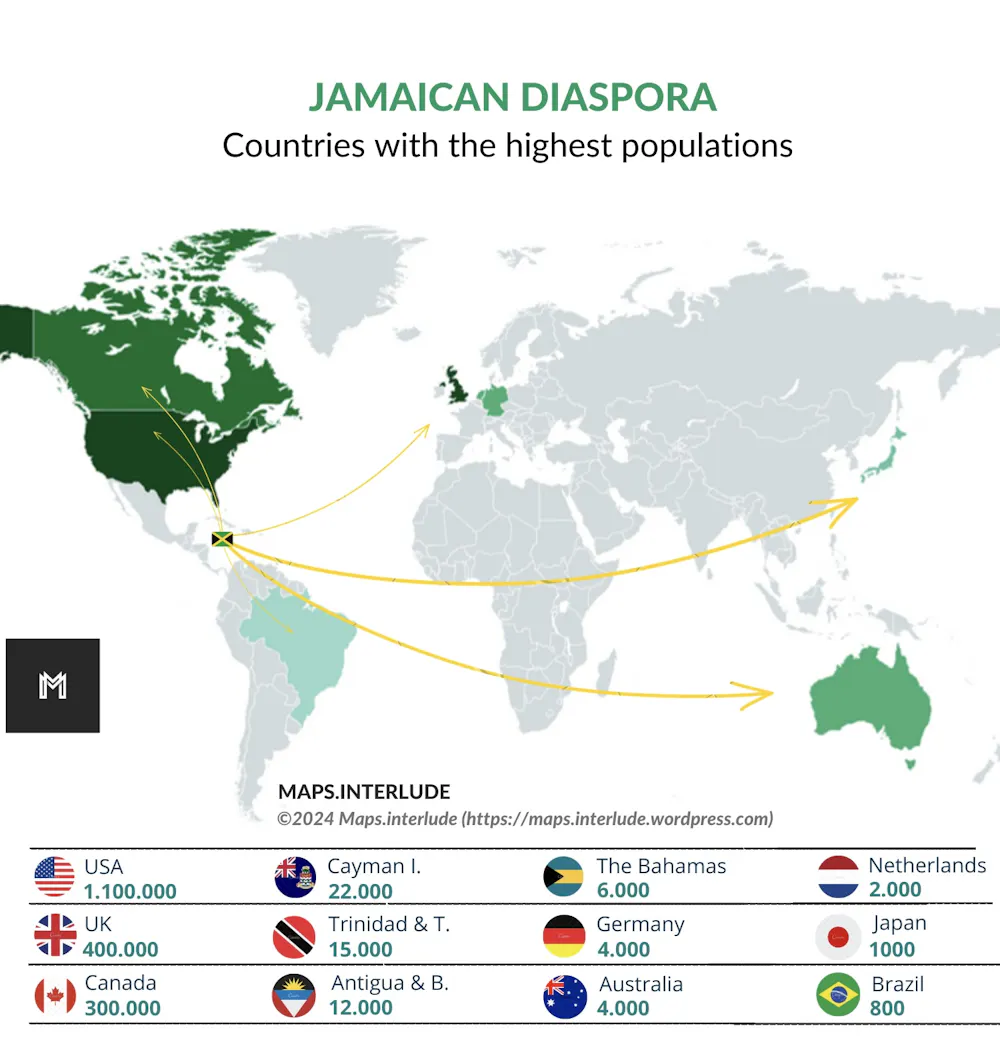
The Jamaican diaspora in London, Toronto, New York and Miami represents a massive potential resource for both immediate relief and long-term recovery.

A map shows where millions of Jamaicans live overseas, led by the U.S. (1.1 million), United Kingdom (400,000) and Canada (300,000).
Where Jamaicans lived outside their homeland in the early 2020s.
Maps Interlude/Wikimedia Commons, CC BY

In the hours after Melissa made landfall, these communities were already trying to reach family members and organize help. In Florida, Jamaican American student associations at several universities set up a GoFundMe page for relief efforts in Jamaica. In Connecticut, Caribbean social groups were gathering their communities to send support.

Jamaica’s government has multiple diaspora engagement platforms, such as JA Diaspora Engage, the Global Jamaica Diaspora Council and JAMPRO. But these primarily focus on economic development and investment rather than disaster response coordination. In contrast, Haiti established the Haitian Diaspora Emergency Response Unit in 2010 specifically for disaster coordination. After the 2021 earthquake, it coordinated relief efforts across more than 200 organizations, raising $1.5 million within weeks.

A worker gestures for more supplies while filling a cardboard box with package snacks.
Volunteers assemble relief packages to help Jamaica in the aftermath of Hurricane Melissa at the Global Empowerment Mission headquarters in Miami. Foreign-based organizations can coordinate large quantities of supplies, but distribution on the ground can be more efficient when run by local organizations that know where people are in need.
Chandan Khanna/AFP via Getty Image

Jamaica could adapt its existing diaspora infrastructure to include an emergency response component. It could provide regular updates on community needs during disasters, verify trusted local partners for aid distribution, and facilitate logistics for shipping supplies over the years of recovery.

The out-migration risk: When emergencies becomes permanent

Perhaps the most devastating long-term impact of Hurricane María was massive population loss — a recovery failure that began with emergency response decisions.

Of Puerto Ricans who applied for federal assistance, approximately 50% had new addresses on the U.S. mainland. Their displacement that began as a temporary evacuation became permanent when Puerto Rico couldn’t restore viable living conditions quickly enough.

Without housing, employment or basic services for months, families had little choice but to leave. About a quarter of Puerto Rico’s schools were closed by the storm damage. I saw similar patterns in Maui, Hawaii, as it recovered from devastating wildfires in 2023. Limited lodging and high costs made it impossible for many displaced residents to stay.

Researchers estimated that of the nearly 400,000 people who left Puerto Rico in 2017 and 2018 after María, maybe 50,000 had returned by 2019.

Jamaica faces similar risks. The out-migration crisis doesn’t happen all at once – it’s a slow bleed that accelerates as emergency response transitions into prolonged recovery.

The time to prevent that pressure to leave is now. The government can help by communicating realistic timelines for service restoration and prioritizing school reopening. Every week increases the risk that temporary displacement becomes permanent emigration.

Building back better: Recovery, not just response

Disasters create opportunities to build back better, but that requires thinking about the future rather than simply recreating what existed before.

Jamaica can prioritize speed in emergency response by rebuilding the old system, or it can invest in a recovery that also builds resilience for the future. Climate change is fueling more intense and destructive hurricanes, leaving Caribbean islands at growing risk of damage.

Hurricane Maria revealed serious infrastructure vulnerabilities as the aging power grid collapsed under Category 4 winds. Puerto Rico could have rebuilt with more modern, resilient infrastructure. However, RAND Corporation research found that reconstruction largely restored the old, vulnerable centralized power system, rather than transforming it with distributed renewable energy, hardened transmission lines and microgrids that could withstand future storms.

Solar panels on roofs and apartment balconies
Many businesses and homeowners in Puerto Rico added solar panels after Hurricane Maria to help manage frequent power grid outages. Rebuilding the U.S. territory’s grid and power system was slow, and it continued to rely on fossil fuels.
Ricardo Arduengo/AFP via Getty Images

Water systems, roads, schools and hospitals could also be rebuilt to better withstand storms and with redundancy – such as backup power sources and distributed water systems – to help the island recover faster in future hurricanes.

These improvements are expensive, and Jamaica will need international donors to help fund the recovery, not just the immediate emergency response.

The decisions made today will echo for years. Jamaica’s recovery doesn’t have to repeat Puerto Rico’s mistakes.

The Conversation

Ivis García receives funding from National Science Foundation, U.S. Department of Housing and Urban Development, Ford Foundation, National Academy of Sciences, Fundación Comunitaria de Puerto Rico, UNIDOS, Texas Appleseed, Natural Hazard Center, Chicago Community Trust, American Planning Association, and Salt Lake City Corporation.

ref. 4 urgent lessons for Jamaica from Puerto Rico’s troubled hurricane recovery – and how the Jamaican diaspora could help after Melissa – https://theconversation.com/4-urgent-lessons-for-jamaica-from-puerto-ricos-troubled-hurricane-recovery-and-how-the-jamaican-diaspora-could-help-after-melissa-268631

How the physics of baseball could help Kevin Gausman and the Blue Jays win the World Series

Source: The Conversation – Canada – By Patrick Clancy, Assistant Professor, Physics & Astronomy, McMaster University

There are few sports more exciting than playoff baseball, but behind every pitch there is also a fascinating story of physics. From gravity to spin, the science shaping the game can be just as compelling as the action on the field.

When the World Series returns to Toronto for Game 6, right-handed pitcher Kevin Gausman will take the mound. Gausman’s best pitch is the splitter, an off-speed pitch that looks like a conventional fastball but travels more slowly and drops more sharply before it crosses the plate.

Physicists consider the flight of a baseball as an example of projectile motion. The trajectory of the ball depends on several forces: the force of gravity (pulling the ball downwards), the drag force (slowing the ball as it moves through the air), and the Magnus force (which causes the ball to curve if it spins as it travels).

Why splitters are so hard to hit

So why is the splitter so difficult to hit? Start with speed. The average speed of Gausman’s fastball is 95 miles per hour (or 42.5 meters a second). Since the distance from the pitcher’s mound to home plate is 18.4 meters, this means that it takes 430 milliseconds, or less than half a second, for Gausman’s fastball to reach the batter.

In contrast, the splitter, which travels at an average speed of 85 mph (or 38.0 m/s), takes 490 milliseconds. That 60 millisecond-difference may seem small, but it can be enough to separate a strike from a base hit.

For context, a typical swing for a major league batter takes approximately 150 milliseconds. This includes time for the batter’s eye to form a picture of the ball leaving the pitcher’s hand, for their brain to process this information and send signals to the muscles in their arms, legs and torso, and for their muscles to respond and swing the bat.

This means a batter has roughly a quarter of a second to judge the trajectory of a pitch and decide whether to swing. Considering that it takes approximately 100 milliseconds for a blink of the human eye, it’s remarkable that batters can hit any major league pitch at all.

The importance of the drop

The second secret to the splitter is the drop. All baseball pitches drop as they travel towards home plate due to the force of gravity, which causes a baseball (or any object in freefall) to accelerate downwards.

If there were no other forces acting on the ball, this would cause Gausman’s fastball to drop by about 92 centimetres on the way to home plate, and his splitter to drop by approximately 115 centimetres.

In practice, however, there is another important force that acts on the ball to oppose the effect of gravity — the Magnus force. The Magnus force arises from the rotation or spin of an object (like a baseball) as it passes through a fluid (like air).

The ball’s rotation makes air move faster over one side than the other. On the side spinning in the same direction as the airflow, air speed increases; on the opposite side, it slows down. This difference in air speed creates a pressure imbalance, generating a force that acts perpendicular to the ball’s path.

This is an example of Bernoulli’s Principle, the same phenomenon that generates lift as air passes around the wing of an airplane.

In the case of a fastball, the pitcher creates a strong backspin by pulling back with their index and middle fingers as they release the ball. This rotation results in an upwards force, which causes the ball to drop far less than it would under the effect of gravity alone. The faster the rotation, the stronger this lift force becomes.

Gausman’s signature pitch

Gausman’s fastball typically drops 25 to 30 centimetres on the way to home plate — less than one third of the drop experienced by a “dead ball” without spin.

On the splitter, he changes his grip to dramatically reduce the amount of backspin, weakening the Magnus force and allowing the ball to fall much farther, about 50 to 75 centimetres, before it hits the plate. The result is a pitch that doesn’t reach the batter when or where they expect it to be.

Kevin Gausman explains the art of the splitter. (Toronto Blue Jays)

As the Blue Jays edge closer to third World Series title — their first in 32 years — Gausman’s splitter offers an example of how physics can shape performance in elite sport. Understanding the science behind the pitch offers a new way to appreciate the game.

The Conversation

Patrick Clancy does not work for, consult, own shares in or receive funding from any company or organisation that would benefit from this article, and has disclosed no relevant affiliations beyond their academic appointment.

ref. How the physics of baseball could help Kevin Gausman and the Blue Jays win the World Series – https://theconversation.com/how-the-physics-of-baseball-could-help-kevin-gausman-and-the-blue-jays-win-the-world-series-268732

Drinking tequila and mezcal sustainably on the Day of the Dead

Source: The Conversation – Canada – By Brendon Larson, Professor, School of Environment, Resources and Sustainability, University of Waterloo

People in Mexico and elsewhere will soon be marking the annual Día de Muertos (Day of the Dead) on Nov. 2. Many will celebrate the day with the quintessential Mexican beverage, tequila; perhaps in the form of a slushy margarita or a shot.

Tequila comes from a single species, blue agave. Agaves are fleshy plants of arid lands that accumulate sugars over several years to power their sole blooming. To produce tequila, the leaves and flower stalk are removed, the agave hearts (called piñas) roasted, and their sugars fermented and distilled.

Tequila was intentionally branded for a global market in the late 19th century, and it’s become an industrial product. There are vast blue-gray monocultures of it across the state of Jalisco, centred around the namesake town of Tequila.

Yet, in the interest of ethical consumption, we must consider the environmental impacts of industrial tequila production. There are several issues here. In Jalisco, the region’s ecosystems are being destroyed and replaced by a uniform crop that is prone to pest outbreaks.

Tequila’s manufacturing process consumes huge amounts of energy, water and agrochemicals. While some in the tequila industry make lots of money (such as celebrities who have their own brands), those who harvest the crops make significantly less.

In addition, despite the marketing, most commercial tequilas taste alike given their uniform source, standard yeast and mechanical production, not to mention added sugars and artificial flavours.

The mezcal shift

People have recently been turning to mezcal, perceiving it as a more authentic, tastier alternative. After all, tequila is simply mezcal from Tequila.

Mezcal-making derives from a relationship between Indigenous Peoples and their landscape that goes back millennia. They learned that agave fibers have many uses, for architecture, medicines and textiles. They drank the sweet, non-alcoholic sap, known as aguamiel and realized it could be fermented.

This history is the basis of peasant communities’ continued harvest of agave to make mezcal. They collect dozens of types of wild agave or grow them among other crops. They roast the hearts for several days in an earthen pit, then ferment them in a homegrown bacteria-and-yeast soup.

The distillation appears to be a more recent, colonial addition to the process. The resulting spirit has vital cultural meaning, not least in festivals such as Día de Muertos, where it honours those who have died and connects people to them.

Traditional production is slow and varied. It distils the diversity of life and the people’s history into a delightful bouquet: not just smoky, as many people think, but floral, fruity, herbal, metallic and so much more.

Is mezcal sustainable?

Many consumers find the narrative of mezcal’s authenticity and sustainability appealing. Its volume is a blip relative to tequila, so surely it must be better for both people and the planet. It’s never simple to assess sustainability, though, and the rapid growth of the industry — with eight per cent more expected annually through 2030 — raises a flag.

Traditional practices have been co-opted, and the same powerful families and multinational brands that drove tequila’s rise grow the main agave used for mezcal, espadín, in large farms of clones.

The spread of commercial farming destroys habitat, specifically the tropical dry forest where many of Mexico’s restricted, native species occur. In San Juan del Río, an Indigenous Zapotec town in the state of Oaxaca, remote sensing has shown an increase in agave cover from six to 22 per cent in 26 years. In addition to soil degradation and loss, these cash crops supplant ones grown for local consumption and strain traditional governance.

From a biodiversity perspective, it’s an open question whether family-scale operations are better given the pressure to expand. Agave and the trees used for firewood for roasting and distilling are interwoven ecological hubs in this dry landscape, along with the bats who visit them for nectar. Overharvesting can lead to ecosystem strain, if not collapse.

Connoisseurs have worsened the problem by developing a taste for particular species like cuish, jabalí and tepeztate, some of which cannot be cultivated, take decades to mature or yield less mezcal.

There has been a documented decline in desirable species of agave, including tobalá, which is listed as vulnerable. Many agaves used for mezcal production are rare.

Sustainability concerns

A few studies have begun to quantify the broader impacts, reinforcing questions about sustainability. It takes two tobalá plants, which require 10-15 years to mature, to produce one bottle of mezcal. Ten kilograms of both liquid and solid waste are released. Even if firewood is used rather than fuel, its weight may match that of the hearts.

Overall, production of one bottle requires the equivalent of about five litres of gasoline. While this may be less carbon than tequila, it’s more than beer and wine.

Mezcal production may bring money into communities, but the interface with global markets brings its own issues. For example, mezcal is now controlled under a Denomination of Origin (DO) certification. While this geographic indicator was ostensibly intended to protect small producers, evidence suggests they’re struggling to meet its standards (and cost) while power and profits concentrate elsewhere.

If you are celebrating this Día de Muertos with mezcal, consider buying from a collaborative that still relies on traditional practices: caring for agave and the land by leaving some flowers for the bats, replanting, reducing chemical use and recycling waste. Bear in mind that growing human consumption is at the root of unsustainability, which just adds to the reasons to moderate one’s drinking.

This article was co-authored by Diana Pinzón, a forestry engineer and co-founder of Zinacantan Mezcal and Fondo Agavero Asociación Civil.

The Conversation

Brendon Larson receives funding from the Social Sciences and Humanities Research Council of Canada.

Ronda L. Brulotte has received funding from the U.S. Fulbright Program.

Raymundo Martínez Jiménez does not work for, consult, own shares in or receive funding from any company or organisation that would benefit from this article, and has disclosed no relevant affiliations beyond their academic appointment.

ref. Drinking tequila and mezcal sustainably on the Day of the Dead – https://theconversation.com/drinking-tequila-and-mezcal-sustainably-on-the-day-of-the-dead-268119