A brief history of congressional oversight, from Revolutionary War financing to Pam Bondi

Source: The Conversation – USA – By Gibbs Knotts, Professor of Political Science, Coastal Carolina University
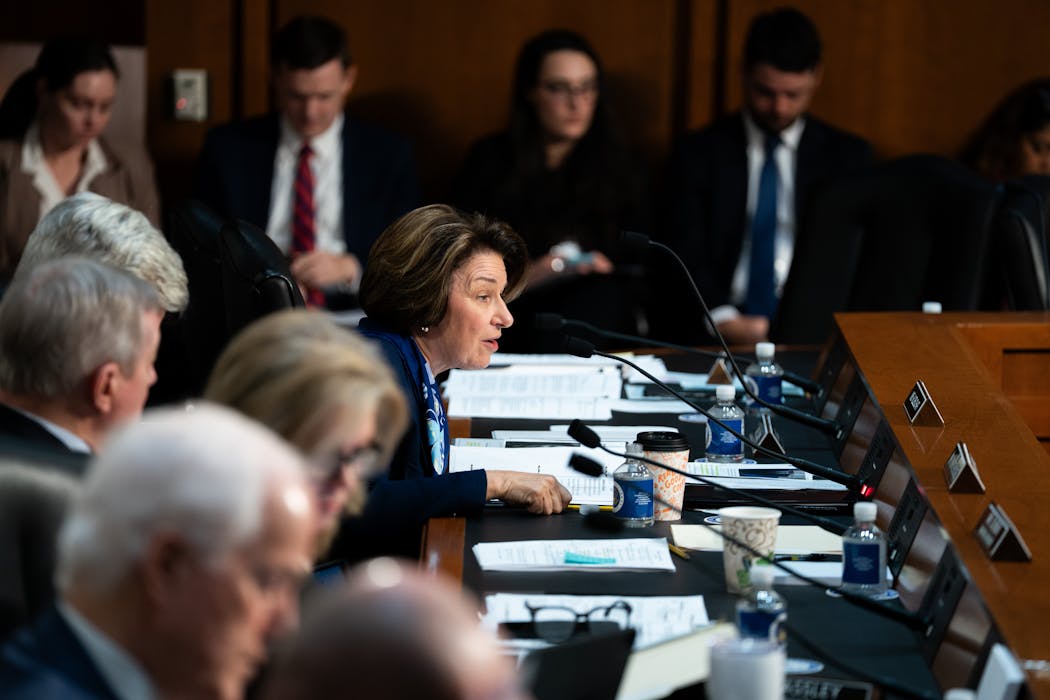
U.S. Sen. Amy Klobuchar of Minnesota speaks at an oversight hearing before the Senate Judiciary Committee on Oct. 7, 2025. AP Photo/Allison Robbert

Routine congressional oversight hearings usually don’t make headlines. Historically, these often low-key events have been the sorts of things you catch only on C-SPAN – procedural, polite and largely ignored outside the Beltway.

But their tone has shifted dramatically during the second Trump administration.

When Attorney General Pam Bondi appeared before the Senate Judiciary Committee on Oct. 7, 2025, what took place was a contentious, highly partisan, made-for-TV-and-social-media confrontation.

The hearing occurred on the heels of the indictment of former FBI Director James Comey, which many legal experts view as an example of a president targeting his political enemies. Bondi came ready to fight. She refused to answer many questions from Democrats, instead launching personal attacks against these members of the U.S. Senate.

When Illinois Sen. Dick Durbin, a Democrat, asked about the deployment of National Guard troops in Chicago, Bondi retorted, “I wish you loved Chicago as much as you hate President Trump.” The clip went viral, as Bondi likely intended.

From our perspective as political scientists who study the U.S. Congress, congressional oversight has played an important role in American democracy. Here’s a brief history.

Congressional oversight hearings help keep executive branch agencies accountable to the public.

Inquisitory powers

In simple terms, oversight is the ability of Congress to ensure that the laws it passes are faithfully executed. This generally means asking questions, demanding information, convening hearings and holding the executive branch accountable for its actions.

Oversight isn’t specifically mentioned in the Constitution. Article 1, Section 8, which lists the powers of Congress, includes the power “to make all laws which shall be necessary and proper,” without identifying an oversight role. Once laws are enacted, Article 2, Section 3, states that the president “shall take Care that the Laws be faithfully executed.”

However, the framers viewed congressional oversight as a key component of legislative authority. They wanted presidents to take Congress seriously and structured the Constitution to ensure that the executive would be accountable to the legislature. As James Madison urged in Federalist 51, the separate branches of government should have the power to keep each other from becoming too powerful. “Ambition must be made to counteract ambition,” Madison wrote.

The framers drew from the examples of the British Parliament and Colonial legislatures. In 1621, Sir Francis Bacon was charged with corruption and impeached as Lord High Chancellor after an investigation by a committee of the British Parliament. And in 1768, the Massachusetts Assembly conducted an investigation of Gov. Francis Bernard that led to a formal request to the King of England for his removal.

At the Federal Convention in 1787 that produced the Constitution, Delegate George Mason noted that members of Congress possessed “inquisitory powers” and “must meet frequently to inspect the Conduct of public officials.” Even though this idea was never written down, it was a habit of self-government that early Congresses put into practice.

A white-haired man, wearing glasses and holding a sheet of paper, sits at a dais speaking into a microphone.
Sen. Sam Ervin, chair of the Senate Watergate Committee, announces on July 23,1973, that the committee has decided to subpoena White House tapes and documents related to the Watergate burglary and cover-up.
AP Photo

Early oversight hearings

Congressional oversight began almost as soon as the first Congress met. In 1790, Robert Morris, the superintendent of finances during the Continental Congress and a financier of the American Revolution, asked Congress to investigate his handling of the country’s finances and was exonerated of any wrongdoing.

During this period, congressional investigations were often referred to select committees – bodies created to perform special functions. These panels had the power to issue subpoenas and hold individuals in contempt. Since there was no official record of debates and proceedings, the public relied on newspaper accounts to learn about what had happened.

In March 1792, congressional oversight exposed businessman William Duer, who signed contracts with the War Department but failed to furnish the needed military supplies. This shortfall contributed to a stunning U.S. military defeat against a confederation of Native American tribes in the Northwest Territory.

Congress eventually removed the quartermaster general from his role for mismanaging the contracts. Duer was simultaneously involved in perhaps the first American economic bubble, which burst at the same time as Congress’ hearings. He ended up in a debtor’s prison, where he died in 1799.

Throughout the 19th century, Congress continued to quietly exercise this power. The work was often invisible to the public, but the issues were important. Hearings from December 1861 to May 1865 on the conduct of the U.S. Civil War produced a detailed record of the war, exposed military wrongdoing and condemned slavery. In 1871, the Senate created a select committee to investigate Ku Klux Klan violence during Reconstruction.

Investigating corruption and criminal acts

Congress started to use its oversight power more aggressively in the 1920s with the Senate Committee on Public Land and Surveys’ high-profile investigations into the Teapot Dome scandal.

Hearings revealed that Interior Secretary Albert Bacon Fall had secretly leased federal oil reserves in Wyoming to two private corporations and had received personal loans and gifts from the companies in return.

The investigation found clear evidence of corruption. Fall was indicted and became the first U.S. Cabinet member to be convicted of a felony.

The U.S. Supreme Court helped to shape the legal foundation of congressional oversight. In McGrain v. Daugherty, decided in 1927, the court held that congressional committees could issue subpoenas, force witnesses to testify and hold them in contempt if they fail to appear. Two years later, in Sinclair v. United States, the court ruled that witnesses who lied to Congress could be charged with perjury.

These cases granted the judicial branch’s sanction to what had long been an implied legislative power, cementing the constitutionality of congressional oversight.

Oversight highs and lows

The modern era of congressional oversight has produced some very important reforms – and some truly regrettable spectacles.

The most important example of bipartisan congressional oversight came in response to reporting by The Washington Post’s Carl Bernstein and Bob Woodward. The two journalists wrote about the 1972 burgling of Democratic National Committee offices in Washington, D.C.’s Watergate Hotel and subsequent cover-up efforts by the Nixon administration.

On Feb. 7, 1973, the U.S. Senate voted 77-0 to establish a Select Committee on Presidential Campaign Activities, which brought together Democrats and Republicans to investigate what came to be known as the “Watergate scandal.” The committee’s work spurred action in Congress to impeach President Richard Nixon, leading to Nixon’s resignation in 1974 and to the enactment of legal reforms to provide an institutional check on presidential power.

Another high point for congressional oversight came after the 9/11 terrorist attacks in 2001. Seeking to learn how the deadliest terrorist strike on American soil had occurred, Democratic Sen. Bob Graham and Republican Rep. Porter Goss, who chaired the Senate and House Intelligence committees, formed a joint committee to investigate intelligence failures before and after the attacks.

This inquiry produced several important recommendations that were ultimately adopted, including the creation of a director of national intelligence and a Department of Homeland Security, as well as better information sharing among law enforcement agencies.

Firefighters train hoses over the rubble at the former site of the World Trade Center towers in New York City.
After the Sept. 11, 2001, attacks on the World Trade Center in New York City, shown here, and targets in Washington, D.C., a congressional committee investigated intelligence failures that had impeded detection of the terrorist plot.
Universal History Archive/UIG via Getty Images

Congress’ oversight can extend beyond the executive branch when the actions of private actors raise questions about existing laws or spur the need for new ones. As examples, investigations into medical device safety and Enron’s 2001 collapse examined malfeasance in the private sphere that existing regulations failed to prevent.

However, the power to expose corruption can also be used as a tool to score partisan points and generate outrage, rather than holding the executive branch accountable for actual malfeasance. Notably, in the 1950s, Wisconsin Sen. Joseph McCarthy turned oversight into inquisition and used the power of media to amplify his accusations of communist influence within the federal government.

Democracy needs oversight

Congressional oversight has strengthened the democratic system at many points. But hearings like Bondi’s recent session before the Senate Judiciary Committee aren’t the first, and likely won’t be the last, to substitute sound bites for substance.

As we see it, the problem with allowing oversight to become political theater is that it distracts Congress from quieter and more meaningful oversight work. Slow, procedural work isn’t likely to go viral, but it helps keep government accountable. The task of a deliberate legislative body is to reconcile those very different impulses.

The Conversation

The authors do not work for, consult, own shares in or receive funding from any company or organization that would benefit from this article, and have disclosed no relevant affiliations beyond their academic appointment.

ref. A brief history of congressional oversight, from Revolutionary War financing to Pam Bondi – https://theconversation.com/a-brief-history-of-congressional-oversight-from-revolutionary-war-financing-to-pam-bondi-267623

Trump’s White House renovations fulfill Obama’s prediction, kind of

Source: The Conversation – USA – By Chris Lamb, Professor of Journalism, Indiana University

The facade of the East Wing of the White House is seen on Oct. 20, 2025. Kevin Dietsch/Getty Images

President Barack Obama famously chided Donald Trump in April 2011 during the annual White House correspondents’ dinner. The reality show star had repeatedly and falsely claimed that Obama had not been born in the United States and was therefore ineligible to be president.

Trump’s demands that Obama release his birth certificate had, in part, made Trump a front-runner among Republican hopefuls for their party’s nomination in the following year’s presidential election.

Obama referred to Trump’s presidential ambitions by joking that, if elected, Trump would bring some changes to the White House.

Obama then called attention to a satirical photo the guests could see of a remodeled White House with the words “Trump” and “The White House” in large purple letters followed by the words “hotel,” “casino” and “golf course.”

Obama’s ridicule of Trump that evening has been credited with inspiring Trump to run for president in 2016.

My book, “The Art of the Political Putdown,” includes Obama’s chiding of Trump at the correspondents’ dinner to demonstrate how politicians use humor to establish superiority over a rival.

Obama’s ridicule humiliated Trump, who temporarily dropped the birther conspiracy before reviving it. But Trump may have gotten the last laugh by using the humiliation of that night, as some think, as motivation in his run for the president in 2016.

There is a further twist to Obama joking about Trump’s renovations to the White House if Trump became president. Trump has fulfilled Obama’s prediction, kind of.

The Trump administration has razed the East Wing, which sits adjacent to the White House, and will replace it with a 90,000-square-foot, gold-encrusted ballroom that appears to reflect the ostentatious tastes of the president.

The US$300 million ballroom will be twice the size of the White House.

It’s expected to be big enough to accommodate nearly a thousand people. Design renderings suggest that the ballroom will resemble the ballroom at Mar-a-Lago, the president’s private estate in Palm Beach, Florida.

“I don’t have any plan to call it after myself,” Trump said recently. “That was fake news. Probably going to call it the presidential ballroom or something like that. We haven’t really thought about a name yet.”

But senior administration officials told ABC News that they were already referring to the structure as “The President Donald J. Trump Ballroom.”

The renovation will have neither a hotel, casino nor golf course, as Obama mentioned in his light-hearted speech at the 2011 correspondents’ dinner.

A video is shown depicting a fictitious White House.
A video is shown as President Barack Obama speaks about Donald Trump at the White House Correspondents’ Association dinner in Washington on April 30, 2011.
AP Photo/Manuel Balce Ceneta

Obama pokes fun at Trump

In the months before the 2011 correspondents’ dinner, Trump had repeatedly claimed that Obama had not been born in Hawaii but had instead been born outside the United States, perhaps in his father’s home country of Kenya.

The baseless conspiracy theory became such a distraction that Obama released his long-form birth certificate in April 2011.

Three days later, Obama delivered his speech at the correspondents’ dinner with Trump in the audience, where he said that Trump, having put the birther conspiracy behind him, could move to other conspiracy theories like claims the moon landing was staged, aliens landed in Roswell, New Mexico, or the unsolved murders of rappers Biggie Smalls and Tupac Shakur.

“Did we fake the moon landing?” Obama said. “What really happened at Roswell? And where are Biggie and Tupac?”

Obama then poked fun at Trump’s reality show, “The Apprentice,” and referred to how Trump, who owned hotels, casinos and golf courses, might renovate the White House.

When Obama was finished, Seth Meyers, the host of the dinner, made additional jokes at Trump’s expense.

“Donald Trump has been saying that he will run for president as a Republican – which is surprising, since I just assumed that he was running as a joke,” Meyers said.

Trump gets the last laugh

The New Yorker magazine writer Adam Gopnik remembered watching Trump as the jokes kept coming at his expense.

Trump’s humiliation was as absolute, and as visible, as any I have ever seen: his head set in place, like a man on a pillory, he barely moved or altered his expression as wave after wave of laughter struck him,” Gopnik wrote. “There was not a trace of feigning good humor about him.”

A man in a tuxedo and woman in a dress pose for photos.
Donald Trump and Melania Trump arrive for the White House correspondents’ dinner in Washington on April 30, 2011.
AP Photo/Alex Brandon, File

Roger Stone, one of Trump’s top advisers, said Trump decided to run for president after he felt he had been publicly humiliated.

“I think that is the night he resolves to run for president,” Stone said in an interview with the PBS program “Frontline.” “I think that he is kind of motivated by it. ‘Maybe I’ll just run. Maybe I’ll show them all.‘”

Trump, if Stone and other political observers are correct, sought the presidency to avenge that humiliation.

“I thought, ‘Oh, Barack Obama is starting something that I don’t know if he’ll be able to finish,’” said Omarosa Manigault, a former “Apprentice” contestant who became Trump’s director of African American outreach during his first term.

“Every critic, every detractor, will have to bow down to President Trump,” she said. “It is everyone who’s ever doubted Donald, whoever disagreed, whoever challenged him – it is the ultimate revenge to become the most powerful man in the universe.”

The notoriously thin-skinned Trump did not attend the White House correspondents’ dinner during his first presidency. He also did not attend the dinner during the first year of his second presidency.

Although Trump has never publicly acknowledged the importance of that event in 2011, a number of people have noted how pivotal it was, demonstrating how the putdown can be a powerful weapon in politics – even, perhaps, extending to tearing down the White House’s East Wing.

The Conversation

Chris Lamb does not work for, consult, own shares in or receive funding from any company or organization that would benefit from this article, and has disclosed no relevant affiliations beyond their academic appointment.

ref. Trump’s White House renovations fulfill Obama’s prediction, kind of – https://theconversation.com/trumps-white-house-renovations-fulfill-obamas-prediction-kind-of-268458

Comment les boomers vivront-ils leur fin de vie au Québec ?

Source: The Conversation – in French – By Jean-Ignace Olazabal, Responsable de programmes, Université de Montréal

Les personnes âgées de 65 ans et plus (environ 2 250 000 personnes en 2033) représenteront 25 % de la population du Québec au début des années 2030, les enfants du baby-boom composant dès lors la presque totalité de la population aînée.

Le taux de mortalité augmentera cela dit progressivement à partir de 2036, avec plus de 100 000 décès par année, et dépassera de loin le nombre de naissances, maintenant le Québec dans un contexte de post-transition démographique qui pourrait provoquer un déclin de la population globale.

Quoi qu’il en soit, l’augmentation de la longévité prévue fera que ces nouveaux vieux, les enfants du baby-boom, seront plus nombreux à devenir octogénaires et nonagénaires que ceux des générations précédentes. En effet, les 80+ pourraient représenter près de 8 % de la population en 2033, alors que l’espérance de vie prévue par Statistique Canada sera de 82 ans pour les hommes et de 86 ans pour les femmes.

Il est clair que la balise 65+ n’est plus la même qu’il y a 50 ans, et que la vieillesse est désormais un cycle de vie long, avec les enjeux et défis que cela comporte. Or, paradoxe remarquable, alors que le Québec figure au palmarès des sociétés où l’espérance de vie est la plus haute, elle est également celle où la demande d’aide médicale à mourir est la plus importante.

Anthropologue de la vieillesse et du vieillissement, je suis responsable de la formation en vieillissement à la Faculté de l’apprentissage continu (FAC) de l’Université de Montréal et je m’intéresse aux aspects sociaux du vieillissement des enfants du baby-boom au Québec.


Cet article fait partie de notre série La Révolution grise. La Conversation vous propose d’analyser sous toutes ses facettes l’impact du vieillissement de l’imposante cohorte des boomers sur notre société, qu’ils transforment depuis leur venue au monde. Manières de se loger, de travailler, de consommer la culture, de s’alimenter, de voyager, de se soigner, de vivre… découvrez avec nous les bouleversements en cours, et à venir.


Des vieux nouveaux genres ?

Si le baby-boom est un phénomène démographique englobant les personnes nées entre la fin de la Seconde Guerre mondiale et le milieu des années 1960, il est convenu, ici comme en France ou aux États-Unis, de réserver le nom baby-boomers aux personnes nées entre 1946 (1943 au Québec) et 1958.

Dans son livre intitulé Le fossé des générations, publié en 1971, l’anthropologue Margaret Mead disait des baby-boomers états-uniens qu’ils constituaient une génération préfigurative, en ce sens qu’ils ont inversé les termes de la transmission intergénérationnelle, les jeunes instruisant leurs aînés et, du coup, leurs pairs, plutôt que l’inverse, défiant ainsi la tradition.


À lire aussi :
La génération des boomers a profondément changé la société… et continue de le faire


Cette inscription en faux contre les valeurs parentales et ancestrales aura permis l’essor de la contreculture dans les années 1960-1970, comme l’expliquent les sociologues Jean-François Sirinelli dans le cas de la France et Doug Owram dans celui du Canada, à travers des valeurs jeunes (la musique pop, la consommation de drogues récréatives ou l’amour libre par exemple). Elle aura également permis de rompre avec la traditionnelle transmission des rôles et des statuts au sein de la famille, comme le souligne le sociologue québécois Daniel Fournier.

Un effet de génération

On parle ici d’un effet de génération au sens sociologique du terme. Au Québec, les baby-boomers seraient, selon le sociologue québécois Jacques Hamel, ceux qui constituent cette fraction des enfants du baby-boom ayant souscrit au slogan « qui s’instruit, s’enrichit » et qui détiennent ces « diplômes universitaires, expression par excellence de cette modernisation » que connut le Québec dans les années 1960.

Ces derniers auront fomenté, sous l’égide des aînés ayant réfléchi la Révolution tranquille (soit les René Lévesque, Paul Gérin-Lajoie et autres révolutionnaires tranquilles), des transformations majeures au sein d’institutions sociales et d’idéaux aussi fondamentaux que la famille (en la réinventant), la nation (en la rêvant) ou la religion catholique (en la reniant de façon massive).

Le sociologue américain Leonard Steinhorn reconnaît dans cette génération des personnes aux valeurs progressistes ayant tendance à une plus grande reconnaissance de la diversité culturelle, des nouvelles mœurs (comme la légalisation du mariage homosexuel, de l’aide médicale à mourir, ou du cannabis récréatif), ou de l’égalité entre les hommes et les femmes, par rapport aux générations précédentes.


Déjà des milliers d’abonnés à l’infolettre de La Conversation. Et vous ? Abonnez-vous gratuitement à notre infolettre pour mieux comprendre les grands enjeux contemporains.


Mais ce qui distingue surtout ces baby-boomers vieillissants des générations de personnes âgées d’antan, c’est la persévérance dans la conviction de la primauté du sujet, par delà les conventions sociales, même dans la dépendance et la fin de vie.

L’effet de génération, bien qu’il diffère chez chacun des membres d’un même ensemble générationnel, est un produit de l’histoire et des conditionnements sociohistoriques auxquels le sujet aura été exposé au cours des premières décennies de sa vie. Les premières générations du baby-boom ont dès leur jeune âge adulte participé activement à la laïcité de l’État et de l’espace public et privé, et souscrit à l’État technobureaucratique promu par la Révolution tranquille, libérant le sujet des attaches communautaristes pour le rendre autonome.

Les enfants du baby-boom et la fin de vie

L’affranchissement des contraintes religieuses chez les Québécois d’origine canadienne-française, le difficile accès aux soins palliatifs pour les personnes âgées et, surtout, la volonté de contrôler sa propre destinée, sont autant de facteurs qui risquent d’influer sur la fin de vie et la mort des enfants du baby-boom au Québec.

En 2023, 7 % des personnes décédées au Québec – majoritairement des personnes âgées – ont choisi la mort médicalement assistée, dans un contexte d’acceptation sociale presque unanime. En effet, 90 % de la population québécoise appuie la loi sur l’aide médicale à mourir, selon un sondage Ipsos, soit le plus haut taux au Canada.

La détresse existentielle face à la fin de vie et le refus de la souffrance et de l’agonie pourraient expliquer l’engouement des enfants du baby-boom pour ce qu’ils considèrent une mort digne.

Or le grand volume de personnes qui constituent l’ensemble des cohortes du baby-boom, soit les personnes nées entre 1943 et 1965, invite à réfléchir au sort qui sera réservé à beaucoup d’entre eux et elles quant à la qualité et à la quantité des soins et des services publics qui leur seront alloués. Étant donné le contexte plutôt critique du Réseau québécois de la santé et des services sociaux, se pose la question des conditions dans lesquelles se dérouleront ces nombreux décès, estimés à plus de 100 000 par année dès 2036.

Pas tous égaux devant la vieillesse

Certes, une bonne proportion de personnes parmi ce grand ensemble populationnel seront effectivement à l’aise financièrement et jouiront d’un bon état de santé grâce à leur niveau d’éducation, à de généreuses pensions et autres fonds de retraite, à de saines habitudes de vie, et à la biomédecine. Cela étant dit, une proportion non négligeable vieillira appauvrie et malade. Les inégalités sociales de santé demeureront importantes au sein de ces nouvelles générations de personnes âgées.

Les hommes bénéficieront globalement d’un avantage sur les femmes en termes de conditions de retraite et de qualité de vie, tout comme les natifs par rapport aux immigrants, soulignent les démographes Patrik Marier, Yves Carrière et Jonathan Purenne dans un chapitre de l’ouvrage Les vieillissements sous la loupe. Entre mythes et réalités. Cela aura une incidence sur les conditions d’habitation et de résidence, sur les coûts privés en santé et sur la qualité du vieillissement en général.

Ces inégalités sociales de santé feront que les dernières années de vie de plusieurs, des femmes surtout, risquent de l’être en mauvaise santé, appauvries et sans forcément un entourage de qualité. Mais vivre plus longtemps à n’importe quel prix n’est pas le souhait de beaucoup parmi les enfants du baby-boom, et ce indépendamment de leur statut socioéconomique.

L’aide médicale à mourir deviendra-t-elle, dès lors, un acte médical ordinaire, alors que le système public de santé et de services sociaux connaîtra une pression accrue ? Quoi qu’il en soit, ce geste médical ultime devrait toujours jouir d’une popularité incontestable parmi les nouveaux vieux Québécois, du moins ceux d’origine canadienne-française qui ont rompu avec le catholicisme, ce qui pourrait contribuer à freiner l’augmentation de l’espérance de vie au Québec.

Mais encore faut-il que la fin de vie se déroule également dans la dignité.

La Conversation Canada

Jean-Ignace Olazabal a reçu des financements du CRSHC, IRSC.

ref. Comment les boomers vivront-ils leur fin de vie au Québec ? – https://theconversation.com/comment-les-boomers-vivront-ils-leur-fin-de-vie-au-quebec-252148

L’espace-temps n’existe pas, mais c’est un cadre qui permet de comprendre notre réalité

Source: The Conversation – in French – By Daryl Janzen, Observatory Manager and Instructor, Astronomy, University of Saskatchewan

L’espace-temps fournit une description puissante de la manière dont les événements se produisent. (MARIOLA GROBELSKA/Unsplash), CC BY

La question de l’existence de l’espace-temps ne devrait pas prêter à controverse, ni même poser de problème conceptuel, si l’on tient compte des définitions des termes « espace-temps », « événement » et « instant ». L’idée que l’espace-temps existe n’est pas plus valable que la vieille croyance concernant l’existence d’une sphère céleste : dans les deux cas, il s’agit de modèles centrés sur l’observateur, efficaces et pratiques pour décrire le monde, mais qui ne représentent pas véritablement la réalité.

Pourtant, du point de vue de la physique moderne, de la philosophie, de la vulgarisation scientifique et des thèmes familiers de la science-fiction, il peut être controversé d’affirmer que l’espace-temps n’existe pas.

Mais qu’est-ce que cela signifierait pour un monde où tout ce qui s’est déjà produit ou se produira d’une manière ou d’une autre « existe » actuellement en tant que partie intégrante d’un réseau entrelacé ?

Les événements ne sont pas des lieux

Il est facile d’imaginer que les événements passés, comme la perte d’une dent ou l’annonce d’une bonne nouvelle, existent quelque part. Les représentations fictives de voyages dans le temps illustrent bien cette idée : les voyageurs temporels modifient les événements et perturbent la ligne du temps, comme si le passé et le futur étaient des lieux que l’on pouvait visiter grâce à une technologie appropriée.

C’est souvent ainsi que les philosophes présentent les choses. L’éternalisme affirme que tous les événements de toutes les époques coexistent. La théorie de l’univers-bloc en croissance propose que le passé et le présent existent, tandis que l’avenir n’existe pas encore. Pour les adeptes du présentisme, seul le présent existe, tandis que le passé a existé et que le futur existera. Et la relativité générale présente un continuum à quatre dimensions qui se courbe et se déforme – on peut facilement imaginer ce continuum d’événements comme existant réellement.

La confusion provient du sens que l’on donne au mot « exister ». Dans le cadre de l’espace-temps, on a tendance à appliquer ce terme sans discernement à une description mathématique des événements, transformant ainsi un modèle en une théorie ontologique sur la nature de l’être.

Le physicien Sean Carroll explique les concepts de présentisme et d’éternalisme.

Un ensemble d’événements

En physique, l’espace-temps désigne l’ensemble continu des événements qui se produisent dans l’espace et dans le temps, d’ici à la galaxie la plus éloignée, du big bang à un avenir lointain. Cela constitue une carte en quatre dimensions qui indique et mesure le lieu et le moment de chaque événement. En physique, un événement est un phénomène qui a lieu à un endroit et à un moment précis.

Un instant est l’ensemble tridimensionnel d’événements séparés dans l’espace qui se déroulent « en même temps » (avec la précaution habituelle de la relativité, selon laquelle la simultanéité dépend de l’état de repos relatif de chacun).

L’espace-temps est l’ensemble continu de tous les événements qui se produisent.

C’est également le moyen le plus efficace de cataloguer les événements. Ce catalogage est indispensable. D’autre part, les mots et les concepts que nous utilisons pour l’effectuer ont leur importance.

Il existe une infinité de points dans les trois dimensions de l’espace et, à chaque instant, un événement unique se produit à chaque endroit.

Positionnement au fil du temps

Les physiciens décrivent une voiture roulant en ligne droite à vitesse constante à l’aide d’un simple diagramme de l’espace-temps, avec l’emplacement sur un axe et le temps sur l’autre. Les instants s’accumulent pour former un espace-temps bidimensionnel. La position de la voiture correspond à un point pour chaque instant, et ces points se rejoignent pour constituer une ligne d’univers, c’est-à-dire un relevé complet de la position de la voiture tout au long de l’intervalle de temps. La pente de cette ligne représente la vitesse de la voiture.

Le mouvement réel est bien plus complexe. La voiture roule sur une Terre en rotation qui tourne autour du Soleil, lequel tourne autour du centre de la Voie lactée, qui dérive dans l’univers local. Pour déterminer la position de la voiture à chaque instant, il faut donc recourir à un espace-temps à quatre dimensions.

L’espace-temps est la carte qui indique où et quand les événements se produisent. Une ligne d’univers est l’enregistrement de tous les événements tout au long de la vie d’une personne. Il reste à savoir si la carte – ou l’ensemble des événements qu’elle recense – doit être considérée comme existant de la même manière que les voitures, les personnes et les lieux qu’elles atteignent.

Les objets existent

Réfléchissons à la signification du mot « exister ». Les objets, les bâtiments, les personnes, les villes, les planètes, les galaxies existent : ce sont des lieux ou ils occupent des lieux, et ils perdurent pendant un certain temps. Ils survivent aux changements et peuvent être observés à plusieurs reprises.

Considérer les occurrences comme des choses qui existent entraîne une confusion dans notre langage et nos concepts. Si l’on analyse l’espace-temps, est-ce que les événements, les instants, les lignes d’univers ou même l’espace-temps dans son ensemble existent au même titre que les lieux et les personnes ? Ou est-il plus juste de dire que les événements se produisent dans un monde qui existe ?

De ce point de vue, l’espace-temps est la carte qui enregistre ces événements, nous permettant de décrire les relations spatiales et temporelles entre eux.


Déjà des milliers d’abonnés à l’infolettre de La Conversation. Et vous ? Abonnez-vous gratuitement à notre infolettre pour mieux comprendre les grands enjeux contemporains.


L’espace-temps n’existe pas

Les événements n’existent pas, ils se produisent. Par conséquent, l’espace-temps n’existe pas. Les événements surviennent à différents endroits au cours de l’existence, et l’occurrence d’un événement est fondamentalement différente de l’existence de quoi que ce soit, qu’il s’agisse d’un objet, d’un lieu ou d’un concept.

D’abord, il n’existe aucune preuve empirique qu’un événement passé, présent ou futur « existe » de la même manière que les choses qui nous entourent. Pour vérifier l’existence d’un événement en tant qu’objet continu, il faudrait disposer d’une machine à remonter le temps afin de l’observer en ce moment. Même les événements présents ne peuvent être examinés en tant que choses qui existent.

En revanche, les objets matériels existent. Les paradoxes liés au voyage dans le temps reposent sur l’idée erronée que les événements sont des lieux que l’on peut revisiter. Reconnaître la différence fondamentale entre occurrence et existence permet de résoudre ces paradoxes.

Ensuite, cette constatation redéfinit la philosophie du temps. Au cours du siècle dernier, de nombreux débats ont considéré les événements comme des choses qui existent. Les philosophes se sont concentrés sur leurs propriétés temporelles : un événement est-il passé, présent ou futur ? S’est-il produit avant ou après tel autre événement ?

une pipe peinte au pochoir sur un mur en béton avec les mots « ceci n’est pas une pipe » en dessous
Reproduction au pochoir de La Trahison des images, tableau de René Magritte réalisé en 1929, dans lequel l’artiste met en évidence le fait que la représentation d’un objet n’est pas l’objet lui-même.
(bixentro/Wikimedia)

Ces discussions reposent sur l’hypothèse que les événements sont des choses existantes qui possèdent ces propriétés. De là, il n’y a qu’un pas à franchir pour conclure que le temps est irréel ou que le passage du temps est une illusion, en partant du principe que le même événement peut être qualifié différemment selon les points de vue. Mais on a perdu de vue la distinction ontologique dès le départ : les événements n’existent pas, ils se produisent. Le temps et l’ordre sont des caractéristiques de la manière dont les événements s’articulent dans un monde existant, et non des propriétés d’objets existants.

Pour finir, parlons de la relativité. Cette théorie mathématique décrit un continuum espace-temps à quatre dimensions. Il ne s’agit pas d’une théorie sur une chose à quatre dimensions qui, dans le cours de son existence, se courberait et se déformerait sous l’effet de la gravité.

Clarté conceptuelle

La physique ne peut pas réellement décrire l’espace-temps lui-même comme une entité qui existe réellement ni expliquer les changements qu’il pourrait subir.

En revanche, l’espace-temps fournit une description éloquente de la manière dont les événements se produisent : comment ils s’ordonnent les uns par rapport aux autres, comment les séquences d’événements sont mesurées dans leur déroulement et comment les longueurs sont mesurées dans différents cadres référentiels. Si nous cessons d’affirmer que les événements – et l’espace-temps – existent, nous retrouvons une clarté conceptuelle sans sacrifier la moindre prédiction.

La Conversation Canada

Daryl Janzen ne travaille pas, ne conseille pas, ne possède pas de parts, ne reçoit pas de fonds d’une organisation qui pourrait tirer profit de cet article, et n’a déclaré aucune autre affiliation que son organisme de recherche.

ref. L’espace-temps n’existe pas, mais c’est un cadre qui permet de comprendre notre réalité – https://theconversation.com/lespace-temps-nexiste-pas-mais-cest-un-cadre-qui-permet-de-comprendre-notre-realite-268044

Why Jim Henson should be recognised as one of the foremost creators of fairytales on screen

Source: The Conversation – UK – By Andrea Wright, Senior Lecturer in Teaching and Learning Development, Edge Hill University

In March 1955, an 18-year-old Jim Henson built a puppet from his mother’s old coat, a pair of blue jeans and some ping pong balls. The lizard-like creation first appeared on Afternoon, a television series on Washington D.C.’s WRC-TV, but became a regular on the five-minute Sam and Friends puppet sketch comedy show from May 1955. Over 70 years, the creature evolved into Kermit. The bright green frog now is a cultural icon.

To mark 70 years of The Jim Henson Company, the company has curated an auction of official memorabilia, including puppets, props, costumes and artwork. In a specially-recorded promotional video, Brian Henson, Jim’s son, provides a useful reminder that his father’s legacy is far greater than The Muppets.

Indeed, Henson made a significant contribution to the screen fairytale, a genre all too often dominated by Disney. To encourage fans and viewers to think beyond The Muppet Show and Disney, I offer a reappraisal of his career in my book The Fairy Tales of Jim Henson: Keeping the Best Place by the Fire.

By far the biggest section of the auction is made of items created for the productions and publicity from The Dark Crystal (1982) and the revival Netflix series The Dark Crystal: Age of Resistance (2019). The original fantasy evolved from an idea Henson had to create a story around an anthropomorphised reptilian race, which eventually became the formidable Skeksis.

The trailer for The Dark Crystal.

His collaboration with the British artist Brian Froud led to the evolution of the intricate world of The Dark Crystal. The film follows Jen (voiced by Stephen Garlick), a delicate, fey-like creature from the nearly-extinct Gelfling race. Jen embarks on a quest to save the planet Thra by healing the Dark Crystal. He must complete his mission before the “great conjunction”, an event that would give the evil Skeksis power over the fragile world forever.

This ambitious endeavour was not the first time that Henson had used a fairytale-inspired story or aesthetic. As early as 1958, following a trip to Europe, he began to develop a version of Hansel and Gretel. Although it remained unfinished, fairytales became an established strand in Henson’s work.

This included two unaired pilots called The Tales of the Tinkerdee (1962) and The Land of Tinkerdee (1964), as well as the three television specials that make up Tales from Muppetland (1969-72). The latter are playful, gentle parodies and a Muppetisation of the well-known stories Cinderella, The Frog Prince and The Bremen Town Musicians.


Read more:
The Muppet Christmas Carol turns 30: how the film became a cult classic


Fairytales even inspired two of Henson’s mid-1960s commercials for The Compax Corporation’s Pak-Nit and Pak-Nit RX – preshrunk fabrics used to make leisurewear. The ads were titled Shrinkel and Stretchel and Rumple Wrinkle Shrinkel Stretchelstiltzkin. Fairytale themes also appeared from time to time in segments of Sesame Street (1969-present) and The Muppet Show (1976–81).

Henson’s film Labyrinth (1986) is a beguiling blend of well-known coming of age fairy stories, most overtly Alice’s Adventures in Wonderland (1865) and The Wonderful Wizard of Oz (1900). These references are combined with original and innovative puppetry and design, and, of course, David Bowie as the charismatic Goblin King.

The trailer for Labyrinth.

One of Henson’s final projects was the imaginative and technically inventive television series Jim Henson’s The Storyteller (1987-89). Inspired by her folklore studies at Harvard University, Lisa Henson encouraged her father to develop a show based on the rich European folk tale tradition, importantly, one that avoided the best-known tales, in favour of more the more unusual and challenging.

Fairytales are an important – and often overlooked – part of Henson’s legacy, from the final productions made during his lifetime to The Jim Henson Company’s later output (for example, Jim Henson’s Jack and the Beanstalk: The Real Story in 2001 and The Dark Crystal: Age of Resistance). Fans are also consistently teased with rumours of a Labyrinth sequel or reboot. Most recently, Robert Eggers is reported to be directing.

Henson should be considered one of the foremost creators of screen fairytales of the 20th century. As his fans celebrate the 70th anniversary of his creations, it’s time for the world to rediscover his magical body of work, beyond the much-beloved Muppets.


Looking for something good? Cut through the noise with a carefully curated selection of the latest releases, live events and exhibitions, straight to your inbox every fortnight, on Fridays. Sign up here.


This article features references to books that have been included for editorial reasons, and may contain links to bookshop.org. If you click on one of the links and go on to buy something from bookshop.org The Conversation UK may earn a commission.

The Conversation

Andrea Wright does not work for, consult, own shares in or receive funding from any company or organisation that would benefit from this article, and has disclosed no relevant affiliations beyond their academic appointment.

ref. Why Jim Henson should be recognised as one of the foremost creators of fairytales on screen – https://theconversation.com/why-jim-henson-should-be-recognised-as-one-of-the-foremost-creators-of-fairytales-on-screen-268927

Frankenstein: could an assembled body ever breathe, bleed or think? Anatomists explain

Source: The Conversation – UK – By Michelle Spear, Professor of Anatomy, University of Bristol

Frankenstein’s creature is coming back to life – again. As Guillermo del Toro’s new adaptation of Mary Shelley’s gothic masterpiece airs on Netflix, we provide an anatomist’s perspective of her tale of reanimation. Could an assembled body ever breathe, bleed or think?

When Shelley wrote Frankenstein in 1818, anatomy was a science on the edge of revelation and respectability. Public dissection theatres drew crowds, body snatchers supplied medical schools with illicit corpses and electricity promised new insights into the spark of life.

Shelley’s novel captured this moment perfectly. Victor Frankenstein’s creation was inspired by real debates: Luigi Galvani’s experiments on frog legs twitching under electric charge, and Giovanni Aldini’s demonstrations making executed criminals grimace with applied current. To early 19th-century audiences, life might indeed have seemed a matter of anatomy plus electricity.

The first problem for any modern Frankenstein is practical: how to build a body. In Shelley’s novel, Victor “collected bones from charnel houses” and “disturbed, with profane fingers, the tremendous secrets of the human frame”, selecting fragments of cadavers “with care” for their proportion and strength.

From an anatomical perspective, this is where the experiment fails before it begins. Once removed from the body, tissues rapidly deteriorate: muscle fibres lose tone, vessels collapse and cells deprived of oxygen enter necrosis within minutes. Even refrigeration cannot preserve viability for transplantation beyond a few hours.

To reattach limbs or organs would demand surgical anastomosis – precise reconnection of arteries, veins and nerves using microsutures finer than a human hair. The notion that one could sew together entire bodies with “instruments of life” and restore circulation across so many junctions defies both physiology and surgical practice.

Shelley’s description of construction is vague; we estimate that the limbs alone would require over 200 surgical connections. Each piece of tissue would have to be matched to avoid immune rejection, and everything would need to be kept sterile and supplied with blood to stop the tissue from dying.

The electrical illusion

Let’s assume the parts settle into place. Could electricity reanimate the body? Galvani’s twitching frogs misled many into believing so. Electricity stimulates nerve membranes, triggering existing cells to fire – a fleeting simulation of life, not its restoration.

Defibrillators work on this principle: a well-timed shock can reset a fibrillating heart because the organ is already alive, its tissues still capable of conducting signals. Once cells die, their membranes break down and the body’s internal chemistry collapses. No current, however strong, can restore that balance.

The thinking problem

Even if a monster could be made to move, could it think? The brain is our most hungry organ, demanding constant oxygen-rich blood and glucose for energy. A living brain’s vital functions only work under tightly-controlled body temperature and depend on the circulation of fluids – not just blood but cerebrospinal fluid (CSF), too, pumped under appropriate pressure, delivering oxygen and carrying away wastes.

Brain tissue can stay alive for only six to eight hours once it is removed from the body. To keep it going for that long, it has to be cooled on ice or placed in a special oxygen-rich solution. During this time, the brain cells can still work for a while – they can send signals and release chemicals.

Cooling the brain is already used in medicine, for example, after a stroke or in premature babies, to protect the brain and reduce damage. So, in theory, cooling a donor brain before a transplant could help it survive longer.

If we can transplant faces, hearts and kidneys, why not brains? In theory, a rapidly transplanted brain could have its vessels connected to a new body. But the severed spinal cord would leave the body paralysed, without sensation, requiring artificial ventilation.

With circulation restored, pulsing CSF flow and an intact brainstem, arousal and wakefulness might be possible. But without sensory input, could such a being have complete consciousness? As the organ for every memory, thought and action we make, receiving a donor brain would be confusing, programmed with another mind’s personality and legacy of memories. Could new memories form? Yes, but only those born from a body severely limited by the absence of movement or sensation.

Controversial surgeon Sergio Canavero has argued human head transplants may enable “extreme rejuvenation”. But beyond the ethical alarms, this would require reconnecting all peripheral nerves, not just joining the spinal cord – a feat far beyond current capability.

Life support, not resurrection

Modern medicine can replace, repair or sustain many parts once considered vital. We can transplant organs, circulate blood through machines and ventilate lungs indefinitely. But these are acts of maintenance, not creation.

In intensive care units, the boundaries between life and death are defined not by the beating heart, but by brain activity. Once that ceases irreversibly, even the most elaborate support systems can only preserve the appearance of life.

Shelley subtitled her novel The Modern Prometheus for a reason. It is not just a story about science’s ambition, but about its responsibility. Frankenstein’s failure lies not in his anatomical ignorance but in his moral blindness: he creates life without understanding what makes it human.

Two centuries later, we still wrestle with similar questions. Advances in regenerative medicine, neural organoids and synthetic biology push at the boundaries of what life means, but they also remind us that vitality cannot be reduced to mechanism alone. Anatomy shows us how the body works; it cannot tell us why life matters.

The Conversation

The authors do not work for, consult, own shares in or receive funding from any company or organisation that would benefit from this article, and have disclosed no relevant affiliations beyond their academic appointment.

ref. Frankenstein: could an assembled body ever breathe, bleed or think? Anatomists explain – https://theconversation.com/frankenstein-could-an-assembled-body-ever-breathe-bleed-or-think-anatomists-explain-269112

How the US cut climate-changing emissions while its economy more than doubled

Source: The Conversation – USA (2) – By Valerie Thomas, Professor of Industrial Engineering, Georgia Institute of Technology

Wind power near Dodge City, Kan. Halbergman/iStock/Getty Images Plus

Countries around the world have been discussing the need to rein in climate change for three decades, yet global greenhouse gas emissions – and global temperatures with them – keep rising.

When it seems like we’re getting nowhere, it’s useful to step back and examine the progress that has been made.

Let’s take a look at the United States, historically the world’s largest greenhouse gas emitter. Over those three decades, the U.S. population soared by 28% and the economy, as measured by gross domestic product adjusted for inflation, more than doubled.

Yet U.S. emissions from many of the activities that produce greenhouse gases – transportation, industry, agriculture, heating and cooling of buildings – have remained about the same over the past 30 years. Transportation is a bit up; industry a bit down. And electricity, once the nation’s largest source of greenhouse gas emissions, has seen its emissions drop significantly.

Overall, the U.S. is still among the countries with the highest per capita emissions, so there’s room for improvement, and its emissions haven’t fallen enough to put the country on track to meet its pledges under the 10-year-old Paris climate agreement. But U.S. emissions are down about 15% over the past 10 years.

Here’s how that happened:

US electricity emissions have fallen

U.S. electricity use has been rising lately with the shift toward more electrification of cars and heating and cooling and expansion of data centers, yet greenhouse gas emissions from electricity are down by almost 30% since 1995.

One of the main reasons for this big drop is that Americans are using less coal and more natural gas to make electricity.

Both coal and natural gas are fossil fuels. Both release carbon dioxide to the atmosphere when they are burned to make electricity, and that carbon dioxide traps heat, raising global temperatures. But power plants can make electricity more efficiently using natural gas compared with coal, so it produces less emissions per unit of power.

Why did the U.S. start using more natural gas?

Research and technological innovation in fracking and horizontal drilling have allowed companies to extract more oil and gas at lower cost, making it cheaper to produce electricity from natural gas rather than coal.

As a result, utilities have built more natural gas power plants – especially super-efficient combined cycle gas power plants, which produce power from gas turbines and also capture waste heat from those turbines to generate more power. More coal plants have been shutting down or running less.

Because natural gas is a more efficient fuel than coal, it has been a win for climate in comparison, even though it’s a fossil fuel. The U.S. has reduced emissions from electricity as a result.

Significant improvements in energy efficiency, from appliances to lighting, have also played a role. Even though tech gadgets seem to be recharging everywhere all the time today, household electricity use, per person, plateaued over the first two decades of the 2000s after rising continuously since the 1940s.

Costs for renewable electricity, batteries fall

U.S. renewable electricity generation, including wind, solar and hydro power, has nearly tripled since 1995, helping to further reduce emissions from electricity generation.

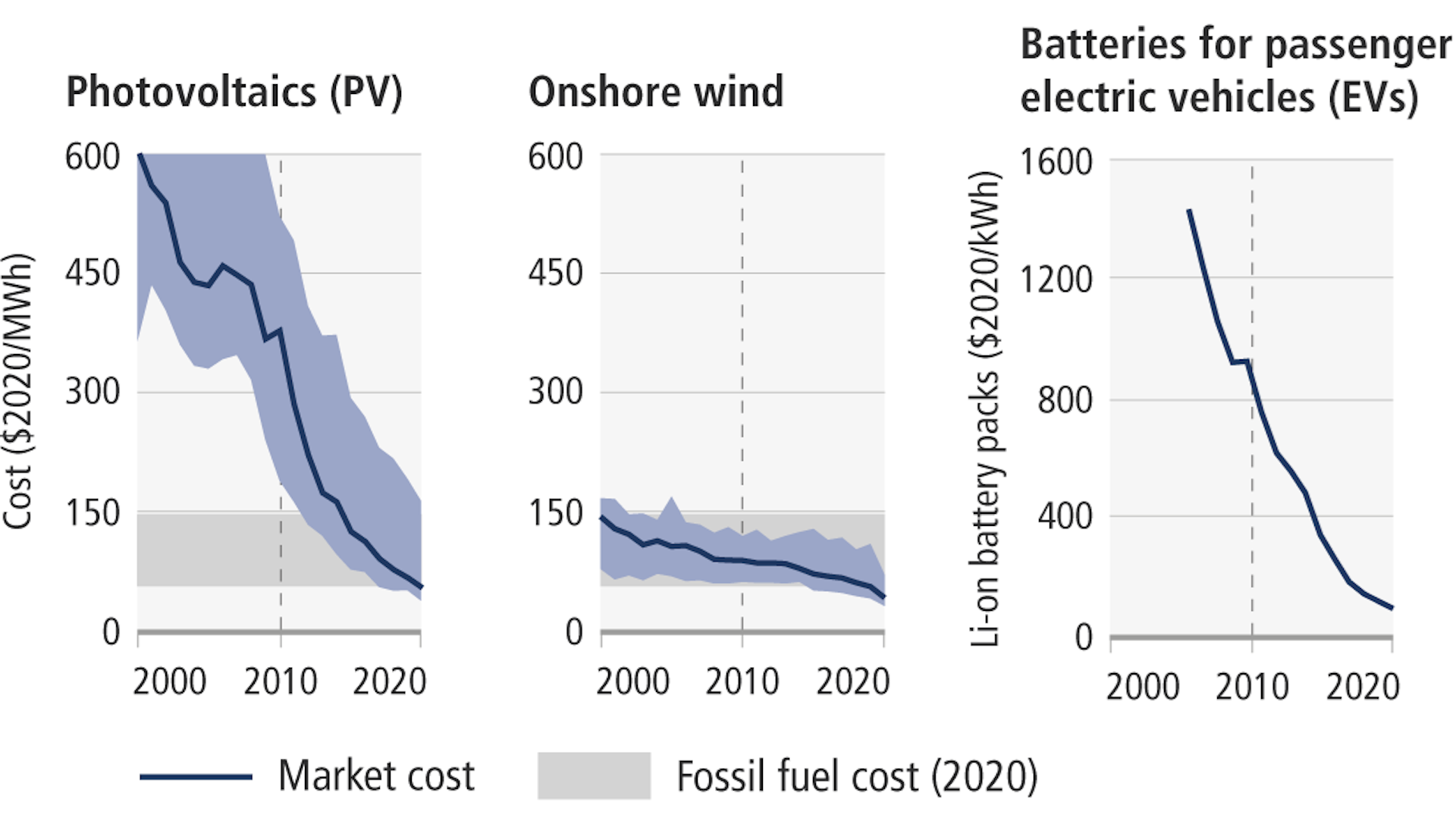
Costs for solar and wind power have fallen so much that they are now cheaper than coal and competitive with natural gas. Fourteen states, including most of the Great Plains, now get at least 30% of their power from solar, wind and battery storage.

While wind power has been cost competitive with fossil fuels for at least 20 years, solar photovoltaic power has only been competitive with fossil fuels for about 10 years. So expect deployment of solar PV to continue to increase, both in the U.S. and internationally, even as U.S. federal subsidies disappear.

Both wind and solar provide intermittent power: The sun does not always shine, and the wind does not always blow. There are a number of ways utilities are dealing with this. One way is to use demand management, offering lower prices for power during off-peak periods or discounts for companies that can cut their power use during high demand. Virtual power plants aggregate several kinds of distributed energy resources – solar panels on homes, batteries and even smart thermostats – to manage power supply and demand. The U.S. had an estimated 37.5 gigawatts of virtual power plants in 2024, equivalent to about 37.5 nuclear power reactors.

Charts show cost decline compared with fossil fuels.
Globally, the costs of solar, onshore wind and EV batteries fell quickly over the first two decades of the 2000s.
IPCC 6th Assessment Report

Another energy management method is battery storage, which is just now beginning to take off. Battery costs have come down enough in the past few years to make utility-scale battery storage cost-effective.

What about driving?

In the U.S., gasoline consumption has remained roughly constant and electric vehicle sales have been slow. Some of this could be due to the success of fracking: U.S. petroleum production has increased, and gasoline and diesel prices have remained relatively low.

People in other countries are switching to electric vehicles more rapidly than in the U.S. as the cost of EVs has fallen. Chinese consumers can buy an entry-level EV for under US$10,000 in China with the help of government subsidies, and the country leads the world in EV sales.

In 2024, people in the U.S. bought 1.6 million EVs, and global sales reached 17 million, which was up 25% from the year before.

The unknowns ahead: What about data centers?

The construction of new data centers, in part to serve the explosive growth of artificial intelligence, is drawing a lot of attention to future energy demand and to the uncertainty ahead.

Data centers are increasing electricity demand in some locations, such as northern Virginia, Dallas, Phoenix, Chicago and Atlanta. The future electricity demand growth from data centers is still unclear, though, meaning the effects of data centers on electric rates and power system emissions are also uncertain.

However, AI is not the only reason to watch for increased electricity demand: The U.S. can expect growing electricity demand for industrial processes and electric vehicles, as well as the overall transition from using oil and gas for heating and appliances to using electricity that continues across the country.

The Conversation

Valerie Thomas receives funding from the US Department of Energy

ref. How the US cut climate-changing emissions while its economy more than doubled – https://theconversation.com/how-the-us-cut-climate-changing-emissions-while-its-economy-more-than-doubled-268763

Chatbots don’t judge! Customers prefer robots over humans when it comes to those ’um, you know’ purchases

Source: The Conversation – USA (2) – By Jianna Jin, Assistant Professor of Marketing at Mendoza College of Business, University of Notre Dame

When it comes to inquiring about – ahem – certain products, shoppers prefer the inhuman touch.

That is what we found in a study of consumer habits when it comes to products that traditionally have come with a degree of embarrassment – think acne cream, diarrhea medication, adult sex toys or personal lubricant.

While brands may assume consumers hate chatbots, our series of studies involving more than 6,000 participants found a clear pattern: When it comes to purchases that make people feel embarrassed, consumers prefer chatbots over human service reps.

In one experiment, we asked participants to imagine shopping for medications for diarrhea and hay fever. They were offered two online pharmacies, one with a human pharmacist and the other with a chatbot pharmacist.

The medications were packaged identically, with the only difference being their labels for “diarrhea” or “hay fever.” More than 80% of consumers looking for diarrhea treatment preferred a store with a clearly nonhuman chatbot. In caparison, just 9% of those shopping for hay fever medication preferred nonhuman chatbots.

This is because, participants told us, they did not think chatbots have “minds” – that is, the ability to judge or feel.

In fact, when it comes to selling embarrassing products, making chatbots look or sound human can actually backfire. In another study, we asked 1,500 people to imagine buying diarrhea pills online. Participants were randomly assigned to one of three conditions: an online drugstore with a human service rep, the same store with a humanlike chatbot with a profile photo and name, or the same store with a chatbot that was clearly botlike in both its name and icon.

We then asked participants how likely they would be to seek help from the service agent. The results were clear: Willingness to interact dropped as the agent seemed more human. Interest peaked with the clearly machinelike chatbot and hit its lowest point with the human service rep.

Why it matters

As a scholar of marketing and consumer behavior, I know Chatbots play an increasingly large part in e-retail. In fact, one report found 80% of retail and e-commerce business use AI chatbots or plan to use them in the near future.

When it comes to chatbots, companies want to answer two questions: When should they deploy chatbots? And how should the chatbots be designed?

Many companies may assume the best strategy is to make bots look and sound more human, intuiting that consumers don’t want to talk to machines.

But our findings show the opposite can be true. In moments when embarrassment looms large, humanlike chatbots can backfire.

The practical takeaway is that brands should not default to humanizing their chatbots. Sometimes the most effective bot is the one that looks and sounds like a machine.

What still isn’t known

So far, we’ve looked at everyday purchases where embarrassment is easy to imagine, such as hemorrhoid cream, anti-wrinkle cream, personal lubricant and adult toys.

However, we believe the insights extend more broadly. For example, women getting a quote for car repair may be more self-conscious, as this is a purchase context where women have been traditionally more stigmatized. Similarly, men shopping for cosmetic products may feel judged in a category that has traditionally been marketed to women.

In contexts like these, companies could deploy chatbots – especially ones that clearly sound machinelike – to reduce discomfort and provide a better service. But more work is needed to test that hypothesis.

The Research Brief is a short take on interesting academic work.

The Conversation

Jianna Jin does not work for, consult, own shares in or receive funding from any company or organization that would benefit from this article, and has disclosed no relevant affiliations beyond their academic appointment.

ref. Chatbots don’t judge! Customers prefer robots over humans when it comes to those ’um, you know’ purchases – https://theconversation.com/chatbots-dont-judge-customers-prefer-robots-over-humans-when-it-comes-to-those-um-you-know-purchases-266105

The unraveling of workplace protections for delivery drivers: A tale of 2 workplace models

Source: The Conversation – USA (2) – By Daniel Schneider, Professor of Social Policy, Harvard Kennedy School

American households have become dependent on Amazon.

The numbers say it all: In 2024, 83% of U.S. households received deliveries from Amazon, representing over 1 million packages delivered each day and 9 billion individual items delivered same-day or next-day every year. In remarkably short order, the company has transformed from an online bookseller into a juggernaut that has reshaped retailing. But its impact isn’t limited to how we shop.

Behind that endless stream of packages are more than a million people working in Amazon fulfillment centers and delivery vehicles. Through its growing dominance in retail, Amazon has eclipsed its two major competitors in the delivery business, UPS and FedEx, in terms of package volume.

What is life like for those workers? Between Amazon’s rosy public relations on the one hand and reporters’ and advocates’ troubling exposés on the other, it can be hard to tell. Part of the reason is that researchers like us don’t have much reliable data: Workers’ experiences at companies such as Amazon, UPS and FedEx can be a black box. Amazon’s arm’s-length relationship with the drivers it depends on for deliveries makes finding answers even harder.

But that didn’t stop us. Using unique data from the Shift Project, our new study, co-authored with Julie Su and Kevin Bruey, offers the first direct, large-scale comparison of working conditions for drivers and fulfillment employees at Amazon, UPS and FedEx based on survey responses by more than 9,000 workers.

What we found was deeply troubling – not only for Amazon drivers but also for the future of work in the delivery industry as a whole.

2 models, 2 realities

For nearly a century, driving delivery trucks has been a pathway to the middle class, as epitomized by unionized jobs at UPS. UPS drivers, who have been members of the Teamsters union for decades, are employees with legal protections and a collective-bargaining contract.

In contrast, Amazon has embraced a very different model. Most important is that Amazon does not directly employ nearly any of its delivery drivers.

Instead, its transportation division, Amazon Logistics, relies on two methods to deliver most of its shipments: Amazon Flex, a platform-like system that treats drivers like independent contractors, and Amazon DSP, a franchise-like system that uses subcontractors. DSP subcontractors are almost all nonunion, and the company has cut ties with DSP contractors whose drivers have attempted to unionize. These practices place downward pressure on the wages and working conditions of drivers throughout the industry.

The impact on workers is stark.

Delivery workers at Amazon receive significantly lower wages than at UPS and FedEx, we found. Wage gaps are especially large between the delivery workers at Amazon, who earn US$19 an hour on average, and the unionized drivers at UPS, who make $35.

We also found that unionized UPS drivers have a clear pathway to upward mobility, while Amazon drivers don’t. At UPS, wages increase sharply the longer a worker has been on the job. Pay starts at $21 an hour, reaching nearly $40 an hour for drivers who’ve been with the company for at least 10 years – which is more than half of them.

At Amazon, wages start at $17 an hour and don’t increase with tenure. Nearly half of workers have less than a year on the job.

Between lower wages, more unstable schedules, fewer benefits and limited protections from employment laws, Amazon drivers struggle to make ends meet. More than 1 in 4 told us they had gone hungry because they couldn’t afford enough to eat within the past month, and 33% said they couldn’t cover their utility bills. Compared to drivers at UPS and FedEx, Amazon drivers face significant financial instability.

On top of that, Amazon drivers face intense workplace surveillance and speed tracking – as do workers at the company’s fulfillment centers. Sixty percent of both types of Amazon workers received frequent feedback on the speed of their work from a technological device, and more than two-thirds said that Amazon monitors the quality of their work using technology. That degree of technological surveillance and tracking far outpaces what UPS and FedEx workers told us they were exposed to, representing an extreme case of worker monitoring and performance assessment.

Using nonemployee drivers contributed to the exponential growth of Amazon as a package delivery company. In 2023, Amazon for the first time delivered more packages than UPS, making it the second-largest parcel carrier in the country – surpassed only by the U.S. Postal Service.

By building an online retail empire with the capacity to deliver the majority of its own shipments, Amazon’s expansion continues. UPS, by contrast, has seen drops in its revenues, stock value and market capitalization. Amazon’s sheer size and giglike approach are therefore changing industry standards, putting downward pressure on wages, benefits and job stability across the delivery sector.

The contrast between Amazon and UPS drivers isn’t just about two companies using different models for package delivery – it represents two competing futures for work. As the second-largest retail company and now largest private delivery company in the U.S., Amazon exerts market power that impacts the working conditions of workers beyond its own delivery drivers. Recent reporting indicates that UPS has been experimenting with using gig deliveries, much to the consternation of the union that represents three-quarters of its workforce.

In the post-World War II era, increasing unionization led to better wages and conditions across much of the economy, including nonunionized sectors. The continuing expansion of Amazon’s business model could signal the unraveling of wages, benefits and protections for working people more generally.

The Conversation

The authors do not work for, consult, own shares in or receive funding from any company or organization that would benefit from this article, and have disclosed no relevant affiliations beyond their academic appointment.

ref. The unraveling of workplace protections for delivery drivers: A tale of 2 workplace models – https://theconversation.com/the-unraveling-of-workplace-protections-for-delivery-drivers-a-tale-of-2-workplace-models-268164

How to keep dementia from robbing your loved ones of their sense of personhood – tips for caregivers

Source: The Conversation – USA (3) – By R. Amanda Cooper, Assistant Professor of Communication, University of Connecticut

Different communication styles are needed for the progressive phases of dementia. Halfpoint Images/Moment via Getty Images

Every three seconds, someone in the world develops dementia. There are over 6 million people living with dementia in the U.S. and 57 million globally.

These figures will only increase in the coming years, as rates of dementia are predicted to double by 2060. If you don’t know someone affected by dementia, you probably will at some point.

Dementia is incredibly difficult both for the person experiencing it and for their loved ones, not only because of the symptoms of the disease but also because of the social stigma associated with cognitive decline. Experiencing stigma makes it difficult for people with dementia to ask for help, increases anxiety and depression, and ultimately leads to social isolation.

Dementia-related stigma is perpetuated through media messages that portray people with dementia as mindless and incapable, as well as through daily interactions in which others dismiss and dehumanize the person living with dementia.

These forms of invalidation – usually unintentional – accelerate and intensify the loss of self-worth and identity that dementia patients are already experiencing.

Fortunately, educating and spreading awareness can help reduce behaviors that propagate stigma and dehumanizing treatment of people with dementia.

As a social scientist and researcher in interpersonal communication and family caregiving, I explore the social and relational side of dementia. Through my work with these patients and families, I’ve learned that reducing stigma and supporting self-worth for people who have dementia is often done through daily conversations.

Back shot of two seniors sitting on edge of bed in front of window, speaking to one another.
People living with dementia can continue to have fulfilling interactions when caregivers carry out person-centered care.
Jessie Casson/DigitalVision via Getty Images

How is dementia defined?

Dementia is an umbrella term that refers to a family of cognitive conditions involving memory loss, difficulty thinking or processing information, changes in ability to communicate and challenges with managing daily tasks.

The most common form of dementia is Alzheimer’s disease, but there are several other forms of dementia that can severely affect a person’s quality of life and that of their loved ones.

Most forms of dementia are progressive, meaning that the symptoms of the disease get steadily worse over time. A person with dementia can live with the disease for several years, and their symptoms will shift as the disease progresses.

People in the early stages of dementia, including mild cognitive impairment, continue to engage socially and participate in many of the activities they have always done. In the middle stage of the disease, people often need more help from others to complete daily tasks and may have more difficulty holding conversations. In the late stage, people with dementia are dependent on others and often lose the ability to communicate verbally.

Despite the cognitive declines that come with dementia, people living with dementia can maintain many of their former abilities as the disease progresses. Even in the late stages, research shows that people with dementia can understand tone of voice and nonverbal communication such as body language, facial expressions and gentle touch.

This makes it clear that people with dementia can continue having meaningful social connections and a sense of self-worth even as their disease progresses.

Senior man with dementia sitting at table with smiling young girl and colored pencils.
Engaging in meaningful activities that are appropriate to the person’s stage of dementia can help foster a sense of self.
Jessie Casson/DigitalVision

Focusing care around the person

In the 1990s, psychologist Tom Kitwood, who studied dementia patients in long-term care settings, introduced the notion of “personhood.” Personhood is a recognition of a person’s unique experiences and individual worth. He had observed that residents with dementia were sometimes treated as objects rather than people and were dismissed as being “no longer there” mentally. In response, Kitwood advocated for a new model of person-centered care.

In contrast to the medical model of care that was standard at the time, person-centered care aims to provide people with dementia comfort, attachment, inclusion, occupation and identity.

Comfort includes both physical and psychological comfort, ensuring that the person with dementia feels safe and is as pain-free as possible. Attachment and inclusion have to do with supporting a person with dementia’s closest relationships and making sure they feel included in social activities.

Occupation is about giving the person meaningful activities that are suited to their abilities, while identity is about preserving their unique sense of self. According to Kitwood, each of these elements of personhood can be upheld or threatened through a person’s interactions with others.

I find Kitwood’s work particularly important because it suggests that communication is at the heart of personhood.

Communicating to support personhood

So how can family members and friends communicate with their loved one with dementia to help preserve their sense of self?

Researchers have identified several evidence-based communication strategies that support person-centered care both in long-term care settings and within the family.

These include:

Communication shifts as the disease progresses

Supporting personhood requires adjusting to the communication abilities of the person with dementia. Some communication strategies are helpful in one stage of the disease but not in others.

In a recent study, my team and I found that asking the person with dementia to recall the past was affirming for those who were early in the disease and who could still recall the past. But for people who were in later stages of the disease, asking them “Do you remember?” was received more like a test of memory and led to frustration or confusion. Similarly, we found that suggesting words to prompt recall was helpful later in the disease but demeaning for people who were in earlier stages of the disease who could still find their words without help.

Providing more help in conversation than is needed can lead people with dementia to withdraw, whereas appropriately adjusting to a person’s communication abilities can empower them to continue to engage socially.

Ultimately, supporting a person with dementia’s sense of self and self-worth in conversations is about finding a communication sweet spot – in other words, matching your approach to their current capabilities.

Changing your default approach to conversations can be challenging, but making simple communication changes can make all the difference. Meaningful conversations are the key to helping your loved one live their days to the fullest, with a sense of personal worth and a feeling of meaningful connection with others.

The Conversation

R. Amanda Cooper is affiliated with the Alzheimer’s Association as a Community Educator.

ref. How to keep dementia from robbing your loved ones of their sense of personhood – tips for caregivers – https://theconversation.com/how-to-keep-dementia-from-robbing-your-loved-ones-of-their-sense-of-personhood-tips-for-caregivers-265477