Anxiety over school admissions isn’t limited to college – parents of young children are also feeling pressure, some more acutely than others

Source: The Conversation – USA (2) – By Bailey A. Brown, Assistant Professor of Sociology, Spelman College

Shifting policies such as school choice give parents more school options than they had a few decades before. iStock/Getty Images Plus

Deciding where to send your child to kindergarten has become one of the most high-stakes moments in many American families’ lives.

A few factors have made selecting an elementary school particularly challenging in recent years. For one, there are simply more schools for parents to pick from over the past few decades, ranging from traditional public and private to a growing number of magnet and charter programs. There are also new policies in some places, such as New York City, that allow parents to select not just their closest neighborhood public school but schools across and outside of the districts where they live.

As a scholar of sociology and education, I have seen how the expanding range of school options – sometimes called school choice – has spread nationwide and is particularly a prominent factor in New York City.

I spoke with a diverse range of more than 100 New York City parents across income levels and racial and ethnic backgrounds from 2014 to 2019 as part of research for my 2025 book, “Kindergarten Panic: Parental Anxiety and School Choice Inequality.”

All of these parents felt pressure trying to select a school for their elementary school-age children, and school choice options post-COVID-19 have only increased.

Some parents experience this pressure a bit more acutely than others.

Women often see their choice of school as a reflection of whether they are good moms, my interviews show. Parents of color feel pressure to find a racially inclusive school. Other parents worry about finding niche schools that offer dual-language programs, for example, or other specialties.

Several children and adults walk into a large brick building with green doors.
Children arrive for class at an elementary school in Brooklyn in 2020.
Angela Weiss/AFP via Getty Images

Navigating schools in New York City

Every year, about 65,000 New York City kindergartners are matched to more than 700 public schools.

New York City kindergartners typically attend their nearest public school in the neighborhood and get a priority place at this school. This school is often called someone’s zoned school.

Even so, a spot at your local school isn’t guaranteed – students get priority if they apply on time.

While most kindergartners still attend their zoned schools, their attendance rate is decreasing. While 72% of kindergartners in the city attended their zoned school in the 2007-08 school year, 60% did so in the 2016-17 school year.

One reason is that since 2003, New York City parents have been able to apply to out-of-zone schools when seats were available. And in 2020, when the COVID-19 pandemic began, all public school applications moved entirely online. This shift allowed parents to easily rank 12 different school options they liked, in and outside of their zones.

Still, New York City public schools remain one of the most segregated in the country, divided by race and class.

Pressure to be a good mom

Many of the mothers I interviewed from 2015 through 2019 said that getting their child into what they considered a “good” school reflected good mothering.

Mothers took the primary responsibility for their school search, whether they had partners or not, and regardless of their social class, as well as racial and ethnic background.

In 2017, I spoke with Janet, a white, married mother who at the time was 41 years old and had an infant and a 3-year-old. Janet worked as a web designer and lived in Queens. She explained that she started a group in 2016 to connect with other mothers, in part to discuss schools.

Though Janet’s children were a few years away from kindergarten, she believed that she had started her research for public schools too late. She spent multiple hours each week looking up information during her limited spare time. She learned that other moms were talking to other parents, researching test results, analyzing school reviews and visiting schools in person.

Janet said she wished she had started looking for schools when her son was was 1 or 2 years old, like other mothers she knew. She expressed fear that she was failing as a mother. Eventually, Janet enrolled her son in a nonzoned public school in another Queens neighborhood.

Pressure to find an inclusive school

Regardless of their incomes, Black, Latino and immigrant families I interviewed also felt pressure to evaluate whether the public schools they considered were racially and ethnically inclusive.

Parents worried that racially insensitive policies related to bullying, curriculum and discipline would negatively affect their children.

In 2015, I spoke with Fumi, a Black, immigrant mother of two young children. At the time, Fumi was 37 years old and living in Washington Heights in north Manhattan. She described her uncertain search for a public school.

Fumi thought that New York City’s gifted and talented programs at public schools might be a better option academically than other public schools that don’t offer an advanced track for some students. But the gifted and talented programs often lacked racial diversity, and Fumi did not want her son to be the only Black student in his class.

Still, Fumi had her son tested for the 2015 gifted and talented exam and enrolled him in one of these programs for kindergarten.

Once Fumi’s son began attending the gifted and talented school, Fumi worried that the constant bullying he experienced was racially motivated.

Though Fumi remained uneasy about the bullying and lack of diversity, she decided to keep him at the school because of the school’s strong academic quality.

Pressure to find a niche school

Many of the parents I interviewed who earned more than US$50,000 a year wanted to find specialty schools that offered advanced courses, dual-language programs and progressive-oriented curriculum.

Parents like Renata, a 44-year-old Asian mother of four, and Stella, a 39-year-old Black mother of one, sent their kids to out-of-neighborhood public schools.

In 2016, Renata described visiting multiple schools and researching options so she could potentially enroll her four children in different schools that met each of their particular needs.

Stella, meanwhile, searched for schools that would de-emphasize testing, nurture her son’s creativity and provide flexible learning options.

In contrast, the working-class parents I interviewed who made less than $50,000 annually often sought schools that mirrored their own school experiences.

Few working-class parents I spoke with selected out-of-neighborhood and high academically performing schools.

New York City data points to similar results – low-income families are less likely than people earning more than them to attend schools outside of their neighborhoods.

For instance, Black working-class parents like 47-year-old Risha, a mother of four, and 53-year-old Jeffery, a father of three, who attended New York City neighborhood public schools themselves as children told me in 2016 that they decided to send their children to local public schools.

Based on state performance indicators, students at these particular schools performed lower on standard assessments than schools on average.

A group of young children wearing face masks sit at a table and color on white paper.
Students write down and draw positive affirmations on poster board at P.S. 5 Port Morris, a Bronx elementary school, in 2021.
Brittainy Newman/Associated Press

Cracks in the system

The parents I spoke with all live in New York City, which has a uniquely complicated education system. Yet the pressures they face are reflective of the evolving public school choice landscape for parents across the country.

Parents nationwide are searching for schools with vastly different resources and concerns about their children’s future well-being and success.

When parents panic about kindergarten, they reveal cracks in the foundation of American schooling. In my view, parental anxiety about kindergarten is a response to an unequal, high-stakes education system.

The Conversation

Bailey A. Brown does not work for, consult, own shares in or receive funding from any company or organization that would benefit from this article, and has disclosed no relevant affiliations beyond their academic appointment.

ref. Anxiety over school admissions isn’t limited to college – parents of young children are also feeling pressure, some more acutely than others – https://theconversation.com/anxiety-over-school-admissions-isnt-limited-to-college-parents-of-young-children-are-also-feeling-pressure-some-more-acutely-than-others-265537

FDA recall of blood pressure pills due to cancer-causing contaminant may point to higher safety risks in older generic drugs

Source: The Conversation – USA (3) – By C. Michael White, Distinguished Professor of Pharmacy Practice, University of Connecticut

Nitrosamines are by-products of many common chemical reactions. FatCamera/iStock via Getty Images Plus

A generic blood pressure drug called prazosin, made by Teva Pharmaceuticals, is being recalled by the Food and Drug Administration because it contains elevated levels of cancer-causing chemicals called nitrosamines.

The recall, which Teva announced on Oct. 7, 2025, affects more than 580,000 prazosin capsules. Prazosin is prescribed to around 510,000 patients yearly and is used to treat post-traumatic stress disorder as well as high blood pressure.

I am a pharmacologist and pharmacist who has studied nitrosamine contamination of popular blood pressure, diabetes and heartburn drugs, as well as other issues in generic drug manufacturing.

Prazosin has been available as a generic medication for more than 25 years and, like many generics that have been around that long, is now produced by multiple manufacturers. This ratchets up competition on price, which may explain why older generics are more prone to manufacturing issues that may harm patient health.

What are nitrosamines and where do they come from?

Nitrosamines are by-products of many common chemical reactions. They form when a type of chemical building block called a nitrite group interacts with another type called an amine group.

Industrial processes like rocket fuel, rubber and sealant manufacturing can produce high concentrations of nitrosamines during chemical reactions. Bacon, pepperoni and salami are high in nitrite preservatives that interact with the amine groups in the meats to form small amounts of nitrosamines. The chemical reaction that happens when chlorinated water interacts with naturally occurring chemicals that contain nitrogen and oxygen can also form small amounts of nitrosamines.

Occasional and small exposures to nitrosamines are not thought to be dangerous. But some studies have found that certain nitrosamines are carcinogenic when ingested in high amounts for long periods of time

European regulators first discovered in 2018 that prescription drugs could also be contaminated when testing revealed that an active ingredient in a blood pressure drug called valsartan contained a nitrosamine chemical. Since the Chinese company that made the drug’s active ingredient sold it to multiple manufacturers of valsartan tablets, many companies, including Teva Pharmaceuticals, recalled the drug at the time.

Gloved hands overflowing with manufactured tablets
Drugmakers have identified nitrosamine contamination in many widely used drugs.
Starkovphoto/iStock via Getty Images Plus

The FDA then launched a major effort to identify nitrosamines in prescription and over-the-counter drugs and to define unsafe levels for tablets and capsules. It published an initial industry guidance in 2021 and an updated version in 2024.

Based on the agency’s new testing requirements, drugmakers have identified nitrosamine contamination in widely used blood pressure, diabetes, heartburn, antibiotic and smoking cessation drugs. Most of the recalled drugs were contaminated during the chemical processing at a manufacturing plant.

What should people who take prazosin do?

Teva Pharmaceuticals’ prazosin is just one of many generic versions – but it’s the only one that is contaminated. You can determine whether your medication came from Teva by looking at your prescription label. Search for the abbreviations MFG or MFR, which stand for “manufacturing” or “manufacturer.” If it says “MFG Teva” or “MFR Teva,” that means Teva Pharmaceuticals supplied the medication.

The first four numbers of a National Drug Code, abbreviated as NDC on the prescription label, also reveal the manufacturer or distributor. Teva products have the number 0093.

If Teva Pharmaceuticals is the distributor, a pharmacist can cross-reference your prescription number to obtain the lot number and compare it with the posted lot numbers on the FDA website for recalled prazosin. If your product has been recalled, your pharmacy may have other generic versions of prazosin in stock that are not part of this recall.

Based on its risk assessment for these tablets, the FDA gave the recall a Class II status, which means that the medication could cause “temporary or medically reversible adverse health consequences.” If no other prazosin version exists at your pharmacy, do not stop taking your drug without talking with your physician first. The risk of temporarily taking tablets with an elevated amount of nitrosamines may be less than the risk of suddenly stopping this medication.

Prazosin, the drug being recalled, is prescribed to more than a half-million patients each year.

Your physician may also be able to prescribe an alternative treatment such as clonidine or trazodone.

Do older generics made overseas pose higher risks?

Until recently, it wasn’t possible to compare whether the safety records of generic drugs manufactured overseas differed from the same generics made in the U.S., because the FDA does not disclose which manufacturing plants companies use to create their tablets and capsules. But in a 2025 study, researchers managed to triangulate that information from an FDA dataset.

They found that the risk of serious adverse events was 54.3% higher with generics made in India as compared with those made in the United States. And the longer a drug has been available in generic form, the greater the difference in safety risk between its U.S.- and India-made forms. As my colleague and I wrote in a commentary accompanying the study, the findings suggest that when the market for generic drugs is crowded by multiple manufacturers, lower-priced options naturally sell better. As a result, manufacturers in developing countries are more apt to produce poorer quality products that are less expensive to produce.

Teva Pharmaceuticals has manufacturing plants around the world, including in India. The company has not disclosed where its recalled prazosin capsules and their active and inactive ingredients were manufactured.

The FDA publishes ratings on generic drug quality and claims that generics with an “A” rating meet the same manufacturing quality standards and achieve the same blood concentrations as brand-name drugs. But pharmacies can’t tell from those ratings if a drug comes from manufacturing plants that are at higher risk for quality issues.

Patients are at the mercy of choices pharmacies make in the generic versions of drugs they procure for their stores. In my view, if pharmacies could access reliable information about quality, they might be able to make choices that are safer for American consumers.

The Conversation

C. Michael White does not work for, consult, own shares in or receive funding from any company or organization that would benefit from this article, and has disclosed no relevant affiliations beyond their academic appointment.

ref. FDA recall of blood pressure pills due to cancer-causing contaminant may point to higher safety risks in older generic drugs – https://theconversation.com/fda-recall-of-blood-pressure-pills-due-to-cancer-causing-contaminant-may-point-to-higher-safety-risks-in-older-generic-drugs-268968

Grenades lacrymogènes, LBD, Flash-Ball : une doctrine d’État au service de la violence légale ?

Source: The Conversation – in French – By Clément Rouillier, MCF en droit public, Université Rennes 2

Filmées à Sainte-Soline (Deux-Sèvres) en mars 2023, lors de la mobilisation contre les mégabassines, des vidéos, diffusées par « Médiapart » et « Libération », issues des caméras-piétons des forces de l’ordre montrent des gendarmes lançant illégalement des grenades en tirs tendus sur les manifestants et se félicitant d’en avoir blessé certains. Ces images ravivent le débat sur l’utilisation des armes dites « non létales ». Présentées comme un moyen d’éviter le recours aux armes à feu, leur usage est censé être strictement encadré. Mais ces règles apparaissent largement théoriques, ces armes infligeant régulièrement des blessures graves. Dans le cas du lanceur de balles de défense, l’évolution des règles d’emploi interroge : cherche-t-on vraiment à protéger les manifestants ou à légitimer l’usage d’une arme controversée ?


Tirs de lanceurs de balles de défense LBD 40 depuis des quads en mouvement, tirs tendus de grenades lacrymogènes ou encore jubilation des agents à l’usage de la violence armée (« Une [grenade] dans les couilles, ça fait dégager du monde », « Je compte plus les mecs qu’on a éborgnés », « On n’a jamais autant tiré de notre life »), la manifestation de Sainte-Soline (Deux-Sèvres, 25 mars 2023) montre que les pratiques et consignes pourtant illégales revêtent une certaine constance dans les opérations de maintien de l’ordre.

La gravité des blessures causées par les lanceurs de balles de défense (Flash-Ball et LBD 40) et leurs modalités d’emploi interroge la doctrine des autorités publiques. Les conditions d’usage des lanceurs sont fixées par la loi, qui arrête un nombre limité de cas où leur utilisation est légale. C’est notamment le cas de la légitime défense, de l’état de nécessité, ou encore, en maintien de l’ordre, dans l’hypothèse où les agents sont visés par des violences ou qu’ils ne peuvent défendre autrement le terrain qu’ils occupent, à la condition de respecter une stricte exigence de nécessité et de proportionnalité.

Toutefois, au-delà de ce cadre très général, la loi n’indique rien quant à la manière d’utiliser ces armes, notamment en ce qui concerne leurs précautions d’emploi. Celles-ci sont fixées par les autorités du ministère de l’intérieur elles-mêmes : ministre de l’intérieur, directeur général de la police nationale (DGPN) et directeur général de la gendarmerie nationale (DGGN) ont adopté de nombreuses circulaires, instructions et notes de service. Ces dernières renseignent sur la façon dont les autorités de la police et de la gendarmerie interprètent la nécessité et la proportionnalité inhérentes à l’usage de la force, et la façon dont elles se représentent l’intensité acceptable de la force physique armée contre les manifestants.

LBD : de l’absence de cadre légal à l’introduction progressive de précautions d’emploi

Les lanceurs de balles de défense (LBD) ont été introduits dans l’arsenal des forces de l’ordre avec des précautions d’emploi très superficielles. Alors que certaines unités de police s’équipent des premiers Flash-Balls, dès 1992, en dehors de tout cadre légal, le DGPN réglemente leur usage par une note de service en 1995, sans prévoir de précautions particulières d’emploi. Les premières distances de tirs n’apparaissent dans les textes qu’en 2001 à titre indicatif. L’introduction expérimentale du LBD 40, en 2007, est accompagnée d’une instruction qui indique des distances opérationnelles (lesquelles varient dans le texte même de l’instruction), mais sans fixer de distance minimale ou maximale ni interdire les tirs à la tête.

Ce n’est qu’après son expérimentation in vivo en manifestation et les premières blessures qu’une instruction rectificative de 2008 interdit explicitement les tirs à la tête et dans le triangle génital.

Aujourd’hui, si les précautions réglementaires en vigueur prohibent les tirs à la tête, ceux dans le triangle génital sont à nouveau autorisés, et aucune distance minimale de tir n’est impérativement prescrite. Les textes précisent simplement qu’un tir en deçà de 3 mètres ou de 10 mètres, selon le type de munitions, « peut générer des risques lésionnels plus importants ».

La protection des manifestants : une considération secondaire

L’encadrement succinct des lanceurs de balles de défense (LBD) et leur enrichissement a posteriori semble s’expliquer par une logique institutionnelle. L’essentiel est d’éviter que les policiers aient à tirer avec leur arme létale.

Selon l’ancien préfet de police Didier Lallement, « les LBD visent à maintenir à distance les manifestants pour éviter un corps-à-corps qui serait tout à fait catastrophique, les fonctionnaires risquant même d’utiliser leur arme de service s’ils étaient en danger ». Les blessures infligées par le LBD semblent parfois regardées comme un « moindre mal ».

Considérer que l’utilisation du LBD 40 évite le recours à l’arme létale renseigne sur la doctrine française du maintien de l’ordre et explique pourquoi les LBD sont introduits dans l’arsenal des forces de l’ordre sans aucun critère de puissance et sans concertation avec des médecins spécialisés en traumatologie. Le préfet de police et le commissaire en charge de l’ordre public à Paris eux-mêmes semblent ignorer les caractéristiques balistiques de l’arme lorsqu’ils estiment que la balle d’un LBD 40 est d’une vitesse de 10 mètres par seconde. Elle est en réalité dix  fois supérieure.

Auditions du 3 avril 2019 devant la commission des lois du Sénat de la ministre de la justice Nicole Belloubet et du préfet de police de Paris Didier Lallement qui semble ignorer (à partir 3:32:17) les caractéristiques balistiques du LBD.

Aujourd’hui, les précautions d’emploi des LBD sont particulièrement fournies. L’instruction de 2017 impose une multitude de paramètres à prendre en compte avant un tir : s’assurer que les tiers se trouvent hors d’atteinte, prendre en compte la distance de tir, la mobilité, les vêtements et la vulnérabilité de la personne, s’assurer qu’elle ne risque pas de chuter, etc. Cependant, cette méticulosité ne signifie pas nécessairement une meilleure protection des manifestants, les agents soulignant eux-mêmes la grande difficulté à les respecter en pratique :

« Pour bosser avec des collègues habilités LBD, j’ai pu constater la difficulté [à l’utiliser] sur les manifs, avec la mobilité et la foule autour. Souvent, le point visé n’est pas celui atteint, à cause de ces conditions, et aussi parce que, passé une certaine distance, le projectile n’a plus une trajectoire rectiligne. » (Déclaration d’un syndicaliste policier.)

Une guerre de communication : encadrer pour légitimer la violence légale

Pourquoi prévoir autant de précautions d’emploi si leur respect semble aussi délicat en pratique ? Ce caractère en partie théorique des précautions d’emploi s’explique parce qu’elles ne visent pas seulement à fournir un guide de maniement des armes : elles remplissent également une fonction de légitimation de la violence légale.

En maintien de l’ordre, les forces de l’ordre sont engagées dans une guerre de communication destinée à imposer un récit officiel des événements. Légitimer l’usage de la force suppose de garder la main sur ce récit, là où une blessure ou un décès fait toujours courir le risque de la perdre. L’édiction et l’enrichissement des textes réglementaires au gré des blessures que causent les LBD et des critiques permettent notamment aux autorités de démontrer leur activisme sur la dangerosité d’une arme.

Bien plus, en définissant les contours du « bon usage » des armes, ces textes posent un cadre juridique formel qui permet de désamorcer les critiques en sous-entendant que les blessures ou les décès résultent d’un mauvais usage individuel ou d’une faute de la victime.

Pour autant, cet encadrement est problématique pour les autorités policières, car il réduit la marge de manœuvre des agents sur le terrain en les soumettant à des règles à respecter au moment de tirer. C’est le double tranchant des instructions : elles permettent de légitimer l’usage des armes en montrant qu’elles sont bien encadrées, mais elles contraignent les agents parce que les victimes pourront se servir de ces instructions dans leurs recours juridictionnels (pénal ou en responsabilité) en montrant qu’elles ne sont pas respectées. C’est toute l’ambiguïté de la légitimation par le droit, et c’est ce qui explique la réticence initiale à prévoir des conditions trop strictes ou à les publier trop ouvertement.

Mais cette rhétorique réglementaire du mauvais usage individuel semble validée par les juridictions elles-mêmes. Lorsque le Conseil d’État est saisi, en 2019, de la demande d’interdiction du LBD 40, un magistrat compare à l’audience les 193 blessures graves causées par le LBD 40 durant le mouvement des gilets jaunes aux quelque 12 000 tirs effectués entre novembre 2018 et janvier 2019 pour conclure que les précautions d’emploi paraissent respectées.

C’est probablement là une des fonctions essentielles des textes réglementaires adoptés par les autorités du ministère de l’intérieur. Dans un État de droit, pour être légitime, le monopole étatique de la violence physique doit apparaître contrôlé, soumis à des règles juridiques qui neutralisent les arbitrages politiques fondant le choix d’autoriser la force armée contre les individus. À travers les précautions réglementaires d’emploi, les autorités publiques prévoient des règles juridiques à respecter qui, en encadrant et en limitant la violence légale, permettent d’en légitimer le principe même.

The Conversation

Clément Rouillier ne travaille pas, ne conseille pas, ne possède pas de parts, ne reçoit pas de fonds d’une organisation qui pourrait tirer profit de cet article, et n’a déclaré aucune autre affiliation que son organisme de recherche.

ref. Grenades lacrymogènes, LBD, Flash-Ball : une doctrine d’État au service de la violence légale ? – https://theconversation.com/grenades-lacrymogenes-lbd-flash-ball-une-doctrine-detat-au-service-de-la-violence-legale-268820

What will the UK do in a new nuclear arms race?

Source: The Conversation – UK – By Jonathan Este, Senior International Affairs Editor, Associate Editor, The Conversation

This newsletter was first published in The Conversation UK’s World Affairs Briefing email. Sign up to receive weekly analysis of the latest developments in international relations, direct to your inbox.


It’s probably just as well that the Doomsday Clock is only changed once a year. The clock, which measures existential risks to humankind, was moved forward by one second at the end of 2024 to 59 seconds to midnight. This was in large part because of the war in Ukraine and the very real risk that it might bring a confrontation between the US and Russia which could turn nuclear.

As things stand you would get fairly short odds on the second hand nudging even closer to midnight at the end of 2025. And what would probably prompt a hollow laugh from the scientists that decide where the hands should point is that the latest crisis appears to be the result of some characteristically wayward talk from the US president, Donald Trump.

Flying home from South Korea after his summit with Xi Jinping on the sidelines of the Apec conference on October 30, Trump announced that “because of other countries’ testing programs”, he had ordered the Pentagon to restart the process for testing nuclear weapons “on an equal basis. That process will begin immediately.”

His statement followed an announcement by the Russian president, Vladimir Putin, about recent tests of a new nuclear-powered cruise missile, the Burevestnik. Days later, Putin announced that Russia had tested a nuclear powered drone torpedo called Poseidon.

Potent weapons both, no doubt. And both capable of carrying nuclear payloads. But neither are nuclear weapons in themselves. Russia has not carried out nuclear tests since the end of the cold war and nor has China, the third largest nuclear power after Russia and the US.

So now Putin has responded by announcing Russia will also resume testing, citing Trump’s statement and the ongoing modernisation of America’s nuclear forces. But at the same time, Russian diplomats are talking with their US counterparts to clarify Trump’s intention, reporting that the White House and the State Department “evaded a specific response”.

It’s a reminder from the cold war of just how delicate the balance can be with two leaders at loggerheads who control the means to destroy the planet several times over.

Tom Vaughan, a lecturer in international security at the University of Leeds, notes that the UK is pressing ahead with its procurement of F-35 stealth fighter aircraft. These can carry nuclear bombs but, as Vaughan notes, would require US authorisation before they could be used. Equally, Britain’s nominally independent nuclear weapons system, Trident, is reliant on US support and maintenance.

As Vaughan points out, it makes the UK into “a target in any nuclear war that might be started by two unpredictable and violent superpowers”.

For anyone who grew up in the 1970s and 1980s, these are familiar themes. But we heaved a sigh of relief when, thanks to leaders such as Ronald Reagan and Mikhail Gorbachev, it felt as if we were stepping back from the brink of an unthinkable conflagration. And when the fall of the Berlin Wall was followed by the end of the cold war, it felt as if those days might be gone for good.


Read more:
Talk of new atomic tests by Trump and Putin should make UK rethink its role as a nuclear silo for the US


Nor has the rapidly increasing diplomatic temperature escaped Hollywood film-maker Kathryn Bigelow. Bigelow, whose successes include The Hurt Locker and Zero Dark Thirty, has a new film streaming on Netflix which addresses this theme. A House of Dynamite imagines how officials in the US might respond if it looked like a nuclear strike was imminent.

Mark Lacy, a philosopher at the University of Essex, who has written for us several times about the future of war, says the film paints an imaginative picture of the confusion and complexity of such a situation, in which it’s more than likely that an enemy which is capable of disrupting communications – something we are already seeing in the forms of repeated cyberattacks by inimical state-sponsored enemies.

To paraphrase Lacy’s conclusion, it’s just as well this is fiction. But Trump and Putin’s latest exchanges have made it just that little bit more easy to imagine things getting out of hand.


Read more:
Netflix’s A House of Dynamite sounds the nuclear alarm, but how worried should we be?


Mamdani: a politician who listens

The other big US news this week was from Big Apple, where democratic socialist Zohran Mamdani won the New York City mayoral election. He was up against Andrew Cuomo, the former Democrat governor of New York state who won 41.6% of the vote, and Republican Curtis Sliwa, who won just 7%.

Mamdani is the first Muslim mayor of New York city, the youngest since 1892 and the first mayor born in Africa. He won on a platform of lowering the cost of living, introducing rent controls and providing free buses and childcare for all. To do this, he proposes taxing millionaires more.

Predictably Trump, who has launched regular attacks on Mamdani in recent months, calls him a communist and has said he will defund New York (something he doesn’t have the constitutional power to do – not that this would stop him trying, of course). Israeli prime minister Benjamin Netanyahu has called him a “mouthpiece for Hamas propaganda”. Which is all very predictable.

But most New Yorkers weren’t in the mood to listen to either criticism. Which is apt, as one of the refreshing features about Mamdani’s style of politics is his ability to listen to others, says Daniel Hutton Ferris, a lecturer in political theory at Newcastle University.

Hutton points to Mamdani’s habit on the campaign trail of soliciting people’s views, especially those of people who weren’t intending to vote for him. He says this is a smart tactic, not only because people like to be heard and respect politicians who listen, but also because of the voting system in New York.

Similar to the single transferable vote system used for Australia’s federal elections, New York’s voting system asks voters to rank candidates in order of their preference rather than choosing just one. That way they can put the candidate who they dislike most at the bottom of the list. If their candidate doesn’t win, the vote goes to the person next on the list of a voter’s preferences.

As Hutton says, it’s a great way of dealing with polarising candidates. It penalises people who rely on taking extreme and divisive positions to attract the support of a core base of passionate supporters. The UK spurned a chance to switch to something like this in the 2011 referendum.


Read more:
How Zohran Mamdani’s ‘talent for listening’ spurred him to victory in the New York mayoral election


Mamdani wasn’t the only winner on Tuesday. The Democratic party scored victory in two gubernatorial elections and successfully passed proposition 50 in California, which allows for the “redistricting” of voting areas. It’s a move that could provide the party with as many as five seats in next year’s midterm elections.

It’s a sign, says Andrew Gawthorpe, an expert in US politics at Leiden University, that the coalition that delivered Trump to the White House in 2024 might be beginning to collapse. Close analysis of the voting patterns shows that groups like Latino voters, who came out in unexpectedly high numbers for Trump in the 2024 election, may be moving back to the Democrats. Equally, many suburban areas of Virginia and New Jersey, which turned out for Trump in 2024, voted heavily for the Democrat candidates.

It’s premature to predict the outcome of next year’s elections based on Tuesday night’s results, cautions Gawthorpe. But it’s certainly a sign that the self-styled “highest polling Republican President in HISTORY!” may not be as popular as he likes to tell himself.


Read more:
US election results suggest Trump’s coalition of voters is collapsing


Sign up to receive our weekly World Affairs Briefing newsletter from The Conversation UK. Every Thursday we’ll bring you expert analysis of the big stories in international relations.


The Conversation

ref. What will the UK do in a new nuclear arms race? – https://theconversation.com/what-will-the-uk-do-in-a-new-nuclear-arms-race-269224

Madagascar : les clés d’une véritable refondation démocratique

Source: The Conversation – in French – By Juvence Ramasy, Maître de Conférences en sciences politiques et juridiques, University of Toamasina

Madagascar a été secoué par une crise majeure avec les manifestations de rue qui ont débuté le 25 septembre. La révolte de la génération Z, née de la colère contre les coupures d’eau et d’électricité, a conduit le 13 octobre à la chute du président Andry Rajoelina, renversé par le Corps d’armée des personnels et des services administratifs et techniques (Capsat). Suspendue de l’Union africaine, l’île aborde une transition incertaine.

Dans cet entretien, le politologue Juvence Ramasy – qui a étudié la formation de l’Etat malgache, l’armée et la trajectoire démocratique du pays – décrypte les racines sociales du mouvement, les risques qui pèsent sur cette transition et le rôle majeur de l’armée dans la vie politique malgache.

Quels sont les principaux risques auxquels Madagascar fait face après le départ d’Andry Rajoelina ?

Le nouveau régime devrait faire en sorte que sa suspension par l’Union africaine, suite au changement inconstitutionnel de régime conformément à la Charte de Lomé, n’entraîne pas un arrêt des financements internationaux. Ces financements proviennent de bailleurs multilatéraux et bilatéraux.

En 2023, Madagascar a reçu 1,25 milliard de dollars d’aide publique, d’après l’OCDE, dont un demi-milliard de la Banque mondiale, 172 millions des États-Unis, 126 millions de l’Union européenne, 100 millions du Japon, 81 millions de la France et 22 millions de la Banque africaine de développement.

Cette aide ne représente que 3,5 % du PIB, mais reste vitale, bien qu’elle soit assez faible en comparaison avec d’autres pays en développement. Par ailleurs, la faible part des appuis budgétaires de 1,2 % du PIB en 2025 reflète la méfiance des bailleurs.

L’aide extérieure soutient aussi les importations de riz, aliment de base de la population, et de carburant, essentiels pour maintenir des prix accessibles et pour offrir de l’électricité. Si ces importations venaient à diminuer, des tensions sociales pourraient surgir. D’ailleurs, le FMI venait de décaisser 107 millions de dollars. Un financement destiné à soutenir les réformes de la compagnie nationale d’électricité et d’eau, Jirama.

Toutefois, la présence diplomatique à l’investiture du 17 octobre marque un début de reconnaissance renforcé par les rencontres entre les représentations diplomatiques et les nouvelles autorités.

Face à un possible arrêt de l’aide internationale, les nouvelles autorités pourraient se tourner vers des solutions alternatives. Elles pourraient solliciter des bailleurs non traditionnels pour obtenir des financements parallèles. Une autre option risquée serait de recourir à l’économie illicite, suivant l’exemple de la transition de 2009-2013.


Read more:
Madagascar : quand les coupures d’électricité déclenchent une crise sécuritaire amplifiée par les réseaux sociaux


Quels facteurs ont sous-tendu les manifestations de la GenZ?

La Gen Z, composée principalement des jeunes urbains, est descendue dans la rue pour plusieurs raisons. Elle a exigé le respect de la liberté d’expression, l’accès à l’eau et à l’électricité en raison de délestages fréquents. D’après la Banque mondiale, avec seulement 30 % de taux d’électrification, 7 Malgaches sur 10 n’ont pas accès à l’électricité, et 54,4 % de la population a accès à l’eau avec seulement 12,3 % qui a accès à l’assainissement. Cette situation place Madagascar parmi les 76 pays les plus mal classés en la matière.

Elle s’est également levée contre la corruption systémique. Tous les régimes précédents ont érigé la corruption en mode de gouvernance. Madagascar se situe à la 140ème place sur 180 pays, au même rang que l’Irak, le Cameroun, le Mexique. Malgré les discours officiels, la lutte anti-corruption se heurte à des moyens insuffisants, à l’impunité des puissants et à une justice souvent instrumentalisée, une restriction de l’espace civique, une capture et une privatisation de l’État. Le régime de Rajoelina a été éclaboussé par plusieurs affaires de corruption impliquant des membres du gouvernement, sans que des poursuites ne soient engagées.


Read more:
Madagascar : quand les coupures d’électricité déclenchent une crise sécuritaire amplifiée par les réseaux sociaux


L’île a une longue histoire de crises politiques. En quoi la situation actuelle est-elle différente ?

En effet, depuis la première crise postcoloniale en 1972, la rue est devenue l’arbitre des luttes politiques. Son contrôle reste un enjeu politique central et s’inscrit dans une logique de production de pouvoir par le bas.

La Gen Z a démontré que la « rue-cratie » continue de peser sur les manières de faire et défaire les équilibres politiques. Ce mouvement a permis une mobilisation coordonnée à l’échelle nationale au sein des principaux centres urbains (Antananarivo, Antsiranana, Mahajanga, Toamasina, Toaliary), contrairement au précédentes crises grâce notamment à une utilisation habile des réseaux sociaux (Facebook, Discord, WhatsApp, Tik Tok).

Autre différence, ce sont les jeunes qui ont été les meneurs de ce mouvement au sein d’une société hiérarchisée où prédomine l’idéologie lignagère de l’aînesse. Les Z ou Zandry, cadet en malgache, se sont saisis de la parole pour porter à voix haute les maux de la société malgache.

Quel rôle l’armée a-t-elle joué dans la vie politique malgache jusqu’à présent ?

Les militaires malgaches correspondent à la figure du prétorien, c’est-à-dire qu’ils exercent un pouvoir politique indépendant de l’utilisation – ou la menace d’utilisation – de la force. Cette entrée dans le monde politique, déjà perceptible dans le Royaume de Madagascar, s’est manifestée au sein de l’État postcolonial en 1972, marquant le début de la prétorianisation de la vie politique.

Depuis lors, elle exerce le pouvoir de manière officielle ou officieuse participant à la régulation de l’ordre politique aussi bien dans les luttes de conquête, de monopole et de conservation du pouvoir. Son soutien est donc recherché par la société civile et politique en temps de crise. D’ailleurs, selon une enquête d’Afrobaromètre de fin 2024, 6 Malgaches sur 10 (60 %) considèrent qu’il est « légitime que les forces armées prennent le contrôle du gouvernement lorsque les dirigeants élus abusent du pouvoir à leurs propres fins ».

La prise de pouvoir par le Capsat, le 14 octobre, s’apparente à un « bon » coup d’État ayant reçu le soutien de l’autorité constitutionnelle et celui de la population. Ce “coup correctif” se donne comme mission de rectifier la trajectoire de l’État en vue de rétablir un ordre plus démocratique après sa refondation.

N’y a-t-il pas un risque que les militaires décident de conserver le pouvoir ?

La nomination d’un Premier ministre civil et d’un gouvernement majoritairement civil s’inscrit dans une tradition remontant à 1972, permettant de rassurer une partie de la société civile et politique et les partenaires internationaux. Or, cela est contesté par la Gen Z et une partie de la société en raison des liens présumés avec les anciennes élites dirigeantes.

Par ailleurs, l’accès au rang de chef d’État des quatre colonels composant le Conseil présidentiel de la refondation pourrait fragiliser le passage au pouvoir civil et ouvrir la voie à une restauration prétorienne. Gageons que les prochaines assises militaires veilleront à une meilleure délimitation des frontières entre le politique et le militaire.

Quelles mesures seraient nécessaires pour répondre aux revendications qui ont poussé les citoyens à descendre dans la rue ?

La refondation, à travers les assises sectorielles, devrait s’atteler à mettre un terme à la bonne gouvernance “autoritaire” où le capitalisme de connivence se combine à un autoritarisme concurrentiel avec des élections non libres. Elle devra en outre :

  • restaurer la confiance envers les institutions et surtout la politique ;

  • assurer une meilleure inclusion des citoyens, avec une emphase sur les ruraux ; la définition d’un nouveau contrat social ;

  • établir une Constitution non partisane ;

  • fournir des services publics de qualité (l’adoption du budget national au cours de la session parlementaire actuelle et les aides bailleurs donneront une indication) ;

  • reconquérir la confiance des bailleurs en vue d’obtenir une aide budgétaire plus importante.

En définitive, la refondation devra garantir de manière effective la liberté et l’égalité des citoyens grâce au fonctionnement légitime et correct de ses institutions et mécanismes. Cela suppose une réinvention de l’État passant d’une réalité symbolique à un État “juste” et proche de la population reposant sur des valeurs partagées par la majorité des Malgaches en tant que socle du vivre-ensemble.

The Conversation

Juvence Ramasy does not work for, consult, own shares in or receive funding from any company or organisation that would benefit from this article, and has disclosed no relevant affiliations beyond their academic appointment.

ref. Madagascar : les clés d’une véritable refondation démocratique – https://theconversation.com/madagascar-les-cles-dune-veritable-refondation-democratique-267898

Katingan Dayak bronze bells: Traces of migration or local creative expression?

Source: The Conversation – Indonesia – By Muhammad Rayhan Sudrajat, Ethnomusicologist & Lecturer, Universitas Katolik Parahyangan

The scent of tabalien wood (Eusideroxylon zwageri) and the laughter of children playing in the yard greeted me as I stepped into a wooden house in Tumbang Panggu, a remote village in Indonesia’s Central Kalimantan province.

The house owner, Pak Awim (Pak is an Indonesian honorific similar to “Mr”, used respectfully for older men), is a local villager. He is one of my informants during my 2019 study on the traditional musical instruments of the Dayak Katingan Awa people.

After offering me a seat, Pak Awim carefully pulled a small wooden box from the corner of the room. It looked simple enough, but the way he opened it — with deliberate care as if he adored it — suggested something fragile and deeply treasured lay inside.

He then lifted a dark, curved piece of metal. Its smooth bend resembles the body of a shrimp. “Neng neok takung undang, a musical instrument shaped like a shrimp’s tail,” he said softly, naming an instrument most villagers no longer recognised.

Pak Awim picked up a small wooden stick and gently tapped the side of the metal, closing its opening with his palm. The tone that followed was distinct, yet strangely familiar.

In Java, a similar instrument is known as kemanak: a pair of banana-shaped bronze bells commonly played in gamelan ensembles.

How kemanak is played in the royal gamelan of the Kraton Ngayogyakarta Hadiningrat.

Unlike kemanak, though, the instrument used by the Dayak Katingan Awa people is not played in pairs but as a single piece. It is also performed using a different technique.

Its role is specific: it serves as a complement to the gong gandang ahung ensemble in the tiwah ritual, a Hindu-Kaharingan funeral ceremony.


Baca juga:
Tradisi Gandang Ahung suku Dayak: Tak hanya musik tapi juga cara hidup


This difference shows that the history of sound is never singular, nor confined to one place. It can emerge from evolving cultural encounters or from the creativity of local communities who, by coincidence, arrive at similar forms.

A Javanese origin?

The similarity raises a questios: did neng neok takung undang originate from Javanese kemanak?

Kemanak itself is often associated with a similar instrument in Africa. In the early 20th century, Dutch ethnomusicologist Jaap Kunst proposed that unique instruments like kemanak spread from Java to the continent through maritime migration, linking it to the split bells used by the Pangwe or Fang peoples in Central Africa. He also points to rock paintings in Brandberg, Namibia, that depicts figures carrying instruments resembling the Javanese kemanak.

A human figure believed to be holding a split-bell-shaped instrument (similar to a ‘kemanak’).
From Henri Breuil’s book ‘The White Lady of Brandberg, South-West Africa: Her Companions and Her Guards’.

However, judging the similarity of instruments by shape alone is not sufficient. Linguistic, archaeological, genetic, and trade-historical evidence would all be needed before concluding that a cultural migration of this scale took place.

Colonial history has further muddied the origins of this instrument. Many monumental African works — such as the architecture of Great Zimbabwe or ceremonial masks — were once attributed to foreign civilizations, reflecting the colonial belief that Africans were “incapable” of creating high cultural forms.

This kind of colonial narrative also crept into the world of music: when an instrument appeared “complex,” it was often assumed to have originated “elsewhere.”

So, did the kemanak from the Indonesian archipelago really spread all the way to Africa, or do the instruments on these two continents merely resemble each other by coincidence?

British researcher Roger Blench found that the “African kemanak” was actually a different instrument, known as pellet bells or slit-bells, each with its own local function.

Moreover, slit-bells are deeply rooted in many African cultures. From Ghana to the Congo, they serve different ritual, social, and musical functions.

What connects all of these instruments, from neng neok takung undang to African split bells, is not migration but a shared resonance — the human desire to summon spirit, time, and togetherness through the lingering sound of metal.

Traces of local distinction

The neng neok takung undang of the Katingan Awa people bears its own identity, distinct from both the Javanese kemanak and the African bell.

This instrument consists of a single piece rather than a pair, and is played in a distinctive way: by striking it and then covering its opening to modify the resonance. Its timbre is bright and penetrating, sharply contrasting with the deep tones of the large ahung gongs.

Within the gandang ahung ensemble, its presence is optional — sometimes included, sometimes not — often played alongside the flat tarai gong. Yet as it becomes increasingly rare, the neng neok takung undang is no longer used in gandang ahung performances.

In other words, the neng neok takung undang is not just a copy of the Javanese kemanak, let alone evidence of cultural migration across oceans. It arose from the sonic logic, ritual practice, and musical ecology of the Dayak Katingan Awa people themselves.

To regard it merely as an offshoot of the Javanese gamelan kemanak would be to overlook the creative ingenuity of the local community.

Wider collaboration needed

The resemblance between the neng neok takung undang and the kemanak has long intrigued researchers. How did communities in the Indonesian archipelago and Africa come to share such similarities — in history, form, structure, function, materials, playing technique, and even sound classification?

Rather than asking who borrowed from whom, the idea of an “African gamelan” invites deeper collaboration between scholars of Africa and Southeast Asia.

Just as the Sound of Borobudur interprets temple reliefs as sonic archives, the concept of an “African gamelan” could serve as a platform for comparing instruments, recordings, and stories — allowing us to rewrite the history of world music from a new perspective.

To test such assumptions, researchers could establish fairer ways of documenting instruments, languages, and histories — while local communities contribute photos, recordings, and stories to a shared archive.

This way, the idea of an “African gamelan” would move beyond claims of origin or authenticity, fostering a cross-continental dialogue based on mutual respect.

Through collaboration and shared documentation, we can begin to see that sound does not belong to any single nation; it is the product of humanity’s long encounter with nature, metal, and the meanings we give to what we hear.

The Conversation

Muhammad Rayhan Sudrajat tidak bekerja, menjadi konsultan, memiliki saham, atau menerima dana dari perusahaan atau organisasi mana pun yang akan mengambil untung dari artikel ini, dan telah mengungkapkan bahwa ia tidak memiliki afiliasi selain yang telah disebut di atas.

ref. Katingan Dayak bronze bells: Traces of migration or local creative expression? – https://theconversation.com/katingan-dayak-bronze-bells-traces-of-migration-or-local-creative-expression-268292

The Roman empire built 300,000 kilometres of roads: new study

Source: The Conversation – Global Perspectives – By Ray Laurence, Professor of Ancient History, Macquarie University

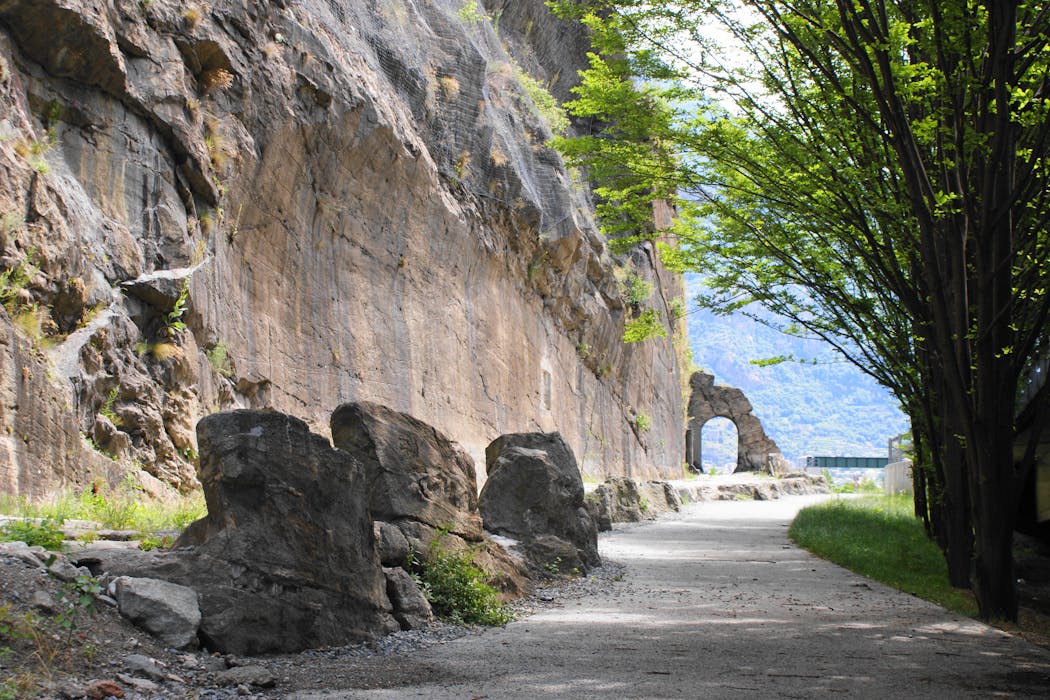
Rosario Lepore / Wikimedia, CC BY

At its height, the Roman empire covered some 5 million square kilometres and was home to around 60 million people. This vast territory and huge population were held together via a network of long-distance roads connecting places hundreds and even thousands of kilometres apart.

Compared with a modern road, a Roman road was in many ways over-engineered. Layers of material often extended a metre or two into the ground beneath the surface, and in Italy roads were paved with volcanic rock or limestone.

Roads were also furnished with milestones bearing distance measurements. These would help calculate how long a journey might take or the time for a letter to reach a person elsewhere.

Thanks to these long-lasting archaeological remnants, as well as written records, we can build a picture of what the road network looked like thousands of years ago.

A new, comprehensive map and digital dataset published by a team of researchers led by Tom Brughmans at Aarhus University in Denmark shows almost 300,000 kilometres of roads spanning an area of close to 4 million square kilometres.

A map of Europe and north Africa showing a huge network of roads.
The Roman road network circa 150 AD.
Itiner-e, CC BY

The road network

The Itiner-e dataset was pieced together from archaeological and historical records, topographic maps, and satellite imagery.

It represents a substantial 59% increase over the previous mapping of 188,555 kilometres of Roman roads. This is a very significant expansion of our mapped knowledge of ancient infrastructure.

A paved road stretching into the distance.
The Via Appia is one of the oldest and most important Roman roads.
LivioAndronico2013 / Wikimedia, CC BY

About one-third of the 14,769 defined road sections in the dataset are classified as long-distance main roads (such as the famous Via Appia that links Rome to southern Italy). The other two-thirds are secondary roads, mostly with no known name.

The researchers have been transparent about the reliability of their data. Only 2.7% of the mapped roads have precisely known locations, while 89.8% are less precisely known and 7.4% represent hypothesised routes based on available evidence.

More realistic roads – but detail still lacking

Itiner-e has improved on past efforts with improved coverage of roads in the Iberian Peninsula, Greece and North Africa, as well as a crucial methodological refinement in how routes are mapped.

Rather than imposing idealised straight lines, the researchers adapted previously proposed routes to fit geographical realities. This means mountain roads can follow winding, practical paths, for example.

A topographical view of a town and hills showing a road winding through them.
Itiner-e includes more realistic terrain-hugging road shapes than some earlier maps.
Itiner-e, CC BY

Although there is a considerable increase in the data for Roman roads in this mapping, it does not include all the available data for the existence of Roman roads. Looking at the hinterland of Rome, for example, I found great attention to the major roads and secondary roads but no attempt to map the smaller local networks of roads that have come to light in field surveys over the past century.

Itiner-e has great strength as a map of the big picture, but it also points to a need to create localised maps with greater detail. These could use our knowledge of the transport infrastructure of specific cities.

There is much published archaeological evidence that is yet to be incorporated into a digital platform and map to make it available to a wider academic constituency.

Travel time in the Roman empire

A crumbling stone pillar in a desert landscape
Fragment of a Roman milestone erected along the road Via Nova in Jordan.
Adam Pažout / Itiner-e, CC BY

Itiner-e’s map also incorporates key elements from Stanford University’s Orbis interface, which calculates the time it would have taken to travel from point A to B in the ancient world.

The basis for travel by road is assumed to have been humans walking (4km per hour), ox carts (2km per hour), pack animals (4.5km per hour) and horse courier (6km per hour).

This is fine, but it leaves out mule-drawn carriages, which were the major form of passenger travel. Mules have greater strength and endurance than horses, and became the preferred motive power in the Roman empire.

What next?

Itiner-e provides a new means to investigate Roman transportation. We can relate the map to the presence of known cities, and begin to understand the nature of the transport network in supporting the lives of the people who lived in them.

This opens new avenues of inquiry as well. With the network of roads defined, we might be able to estimate the number of animals such as mules, donkeys, oxen and horses required to support a system of communication.

For example, how many journeys were required to communicate the death of an emperor (often not in Rome but in one of the provinces) to all parts of the empire?

Some inscriptions refer to specifically dated renewal of sections of the network of roads, due to the collapse of bridges and so on. It may be possible to investigate the effect of such a collapse of a section of the road network using Itiner-e.

These and many other questions remain to be answered.

The Conversation

Ray Laurence does not work for, consult, own shares in or receive funding from any company or organisation that would benefit from this article, and has disclosed no relevant affiliations beyond their academic appointment.

ref. The Roman empire built 300,000 kilometres of roads: new study – https://theconversation.com/the-roman-empire-built-300-000-kilometres-of-roads-new-study-269186

Geopolitics, backsliding and progress: here’s what to expect at this year’s COP30 global climate talks

Source: The Conversation – Global Perspectives – By Jacqueline Peel, Professor of Law, The University of Melbourne

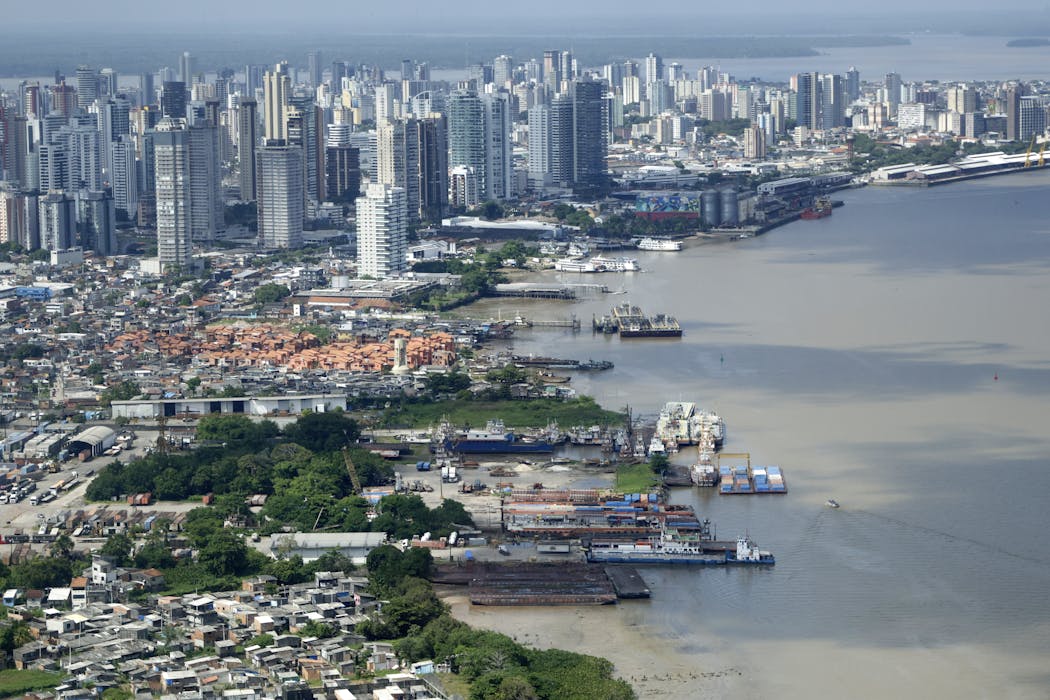
The Amazonian city of Belém, Brazil Ricardo Lima/Getty

Along with delegates from all over the world, I’ll be heading to the United Nations COP30 climate summit in the Brazilian Amazon city of Belém. Like many others, I’m unsure what to expect.

This year, the summit faces perhaps the greatest headwinds of any in recent history. In the United States, the Trump administration has slashed climate science, cancelled renewable projects, expanded fossil fuel extraction and left the Paris Agreement (again). Trump’s efforts to hamstring climate action have made for extreme geopolitical turbulence, overshadowing the world’s main forum for coordinating climate action – even as the problem worsens.

Last year, average global warming climbed above 1.5°C for the first time. Costly climate-fuelled disasters are multiplying, with severe heatwaves, fires and flooding affecting most continents this year.

Climate talks are never easy. Every nation wants input and many interests clash. Petrostates and big fossil fuel exporters want to keep extraction going, while Pacific states despairingly watch the seas rise. But in the absence of a global government to direct climate policy, these imperfect talks remain the best option for coordinating commitment to meaningful action.

Here’s what to keep an eye on this year.

A smaller-than-usual COP?

A persistent criticism of the annual climate summits is that they have become too big and unwieldy – more a trade show and playground for fossil fuel lobbyists than an effective forum for multilateral diplomacy and action on climate change. One solution is to deliberately make these talks smaller.

The Belém conference may end up having a smaller number of delegates, though not by design so much as logistical headaches.

Brazilian President Luiz Inácio Lula da Silva backed the decision to invite the world to the Amazon to display how vital the massive rainforest is as a carbon sink. But Belém’s remote location on the northeast coast, limited infrastructure and shortage of hotels have seen prices soar, putting the conference out of reach for smaller nations, including some of the most vulnerable. These constraints could undermine the inclusive “Mutirão” (collective effort on climate change) sought by organisers.

person dressed as a folklore figure at the Brazil climate talks with large ship in background.
Many delegates will sleep on ships at the Belem climate talks. Pictured is Curupira, a figure from Brazilian folklore and the COP30 mascot.
Gabriel Della Giustina/COP30, CC BY-NC-ND

Show me the money

Climate finance is a perennial issue at COP meetings. These funding pledges by rich countries are intended to help poorer countries reduce emissions, adapt to climate change or recover from climate disasters. Poorer countries have long called for more funding, given rich countries have done vastly more damage to the climate.

At COP29 in Baku, Azerbaijan last year, a new climate finance goal was set for US$300 billion (~A$460 billion) to be raised annually by developed countries by 2035, with the goal of reaching $US1.3 trillion (~A$2 trillion) in funding from both government and private sources over the same period.

To deliver the second goal, negotiators laid out a “Baku to Belém” roadmap. The details are due to be finalised at COP30. But with the US walking away from climate action and the European Union wavering, many eyes will be on China and whether it will step into the climate leadership vacuum left by developed countries. The EU has only just reached agreement on a 2040 emissions reduction target and an “indicative” cut for 2035.

Climate finance will be the priority for many countries, as worsening disasters such as Hurricane Melissa in Jamaica and Typhoon Kalmaegi in the Philippines once again demonstrate the enormous human and financial cost of climate change.

The latest UN assessment indicates the need for this funding is outpacing flows by 12–14 times. In Belém, poorer countries will be hoping to land agreement on greater finance and support for adaptation. Work on a global set of indicators to track progress on adaptation – including finance – will be key.

Brazilian organisers hope to rally countries around another flagship funding initiative set to launch at COP30. The Tropical Forests Forever Facility would compensate countries for preserving tropical forests, with 20% of funds directed to Indigenous peoples and local communities who protect tropical forest on their lands. If it gets up, this fund could offer a breakthrough in tackling deforestation by flipping the economics in favour of conservation and protecting a huge store of carbon.

2035 climate pledges

Belém was supposed to be a celebration of ambitious new emissions pledges which would keep alive the Paris Agreement goal of holding warming to 1.5°C. Nations were originally due to submit their 2035 pledges (formally known as Nationally Determined Contributions) by February, with an extension given to September after 95 per cent of countries missed the deadline.

When pledges finally arrived in September, they were broadly underwhelming. Only half the world’s emissions were covered by a 2035 pledge, meaning the remaining emissions gap could be very significant. Australia is pledging cuts of 62–70% from 2005 emissions levels.

That’s not to say there’s no progress. A new UN report suggests countries are bending the curve downward on emissions but at a far slower pace than is needed.

How negotiators handle this emissions gap will be a litmus test for whether countries are taking their Paris Agreement obligations seriously.

Rise of the courts

Even as some countries back away from climate action, courts are increasingly stepping into the breach. This year, the International Court of Justice issued a rousing Advisory Opinion on states’ climate obligations under international law, including that national targets have to make an adequate contribution to meeting the Paris Agreement’s temperature goal. The court warned failing to take “appropriate action” to safeguard the climate system from fossil fuel emissions – including from projects carried out by private corporations – may be “an internationally wrongful act”. That is, they could attract international liability.

It will be interesting to see how this ruling affects negotiating positions at COP30 over the fossil fuel phase-out. At COP28 in 2023, nations promised to begin “transitioning away from fossil fuels in energy systems”. If countries fail to progress the phase-out, accountability could instead be delivered via the courts. A new judgement in France found the net zero targets of oil and gas majors amount to greenwashing, while lawsuits aimed at making big carbon polluters liable for climate damage caused by their emissions are in the pipeline.

An Australia/Pacific COP?

A big question to be resolved is whether Australia’s long-running bid to host next year’s COP in Adelaide will get up. The bid to jointly host COP31 with Pacific nations has strong international support, but the rival bidder, Turkey, has not withdrawn.

If consensus is not reached at COP30, the host city would default back to Bonn in Germany, where the UN climate secretariat is based.

Outcome unknown

As climate change worsens, these sprawling, intense meetings may not seem like a solution. But despite headwinds and backsliding, they are essential. The world has made progress on climate change since 2015, due in large part to the Paris Agreement. What’s needed now on its tenth anniversary is a reinfusion of vigour to get the job done.

The Conversation

Jacqueline Peel receives funding from the Australian Research Council under a 2024 Kathleen Fitzpatrick Australian Laureate Fellowship.

ref. Geopolitics, backsliding and progress: here’s what to expect at this year’s COP30 global climate talks – https://theconversation.com/geopolitics-backsliding-and-progress-heres-what-to-expect-at-this-years-cop30-global-climate-talks-268662

Can the world prevent a genocide in Sudan?

Source: The Conversation – Global Perspectives – By Philipp Kastner, Senior Lecturer in International Law, The University of Western Australia

Two years ago, a power struggle erupted between two factions of Sudan’s military. Today, this conflict is spiralling out of control, with thousands being killed in what a United Nations report has called “slaughterhouses”.

Last week, the Rapid Support Forces (RSF), the paramilitary group battling Sudan’s army, captured the city of El Fasher, the last hold-out in the western Darfur region held by the military.

Soon after, reports of ethnically motivated massacres emerged. The World Health Organization said 460 people were killed in just one incident at the city’s hospital. Witnesses described widespread executions and sexual violence targeting certain ethnic groups.

A UN fact-finding mission found already last year that both sides in the conflict have committed war crimes and crimes against humanity.

Rights groups and analysts are now sounding the alarm about a possible genocide taking place. Some say the killings are reminiscent of the start of the Rwanda genocide in 1994, which killed a staggering 800,000 people.

The atrocities are also following the same troubling pattern as in Darfur 20 years ago, which killed an estimated 300,000 people.

Back then, celebrity activists such as George Clooney helped put Darfur on the map. It became a major foreign policy issue in the United States, Europe, Africa and elsewhere. The genocide in Rwanda was still relatively fresh in people’s minds. The slogan “never again” was still taken somewhat seriously.

The global attention eventually led the International Criminal Court to indict Sudanese President Omar al-Bashir for allegedly directing the campaign of mass killings in Darfur, the first sitting head of state to be indicted.

Sudan is now home to the worst humanitarian crisis in the world. Hundreds of thousands have been killed since 2023, 12 million people have been displaced and 21 million people face what the UN calls “high levels of acute food insecurity”.

Yet, compared to the early 2000s, the international community has been largely silent.

Why global attention matters

It would be tempting to say the wars and suffering in Gaza and Ukraine have overshadowed Sudan in the minds of global leaders and concerned citizens alike. But this does not mean the world can’t do anything.

Global awareness did not solve anything by itself in Darfur 20 years ago, but it was a first step. It led to the eventual deployment of a peacekeeping mission by the United Nations and the African Union.

The mission was too small and limited, but it showed that international peacekeepers can still have a positive impact in the 21st century. They can monitor ceasefires, implement disarmament programs, protect civilians and prevent further escalations of violence.

More attention – and pressure – also needs to be placed on the external actors supporting both sides in the current conflict. These countries are pursuing their own strategic interests in Sudan and consider the power struggle a chance to increase their influence in the region and exert control over Sudan’s natural resources.

The Sudanese Armed Forces (SAF) are backed by Egypt, Turkey, Iran and Russia. The United Arab Emirates, meanwhile, has been accused of funding and providing weapons to the Rapid Support Forces in clear violation of an arms embargo.

While these countries deny arming both sides, rights groups say a flood of weapons has nonetheless entered the country. The United Arab Emirates, in particular, is accused of covertly supplying drones, howitzers, heavy machine guns and mortars to RSF fighters in Darfur.

The United Arab Emirates has only just started to distance itself from the RSF following the recent atrocities in El Fasher.

What’s needed to bring peace

A ceasefire must urgently be agreed to, so humanitarian corridors can be opened to allow aid organisations to do their work.

All outside military support to the warring parties must end immediately. The current arms embargo is too limited and has been poorly implemented – it needs to be strengthened.

And more sanctions should be imposed, especially on the perpetrators reportedly responsible for international crimes. In January, the Biden administration levied sanctions on the RSF commander and several UAE-based companies supporting him – these must now be expanded.

This would make it more difficult for Sudan’s lucrative gold trade to continue to be used by both sides to sustain the war.

For the peace to hold in the long term, both sides must also agree on a mechanism to disarm or integrate the RSF fighters into the regular forces.

Establishing some form of justice and reconciliation process can also contribute to preventing further violence. This sends a clear signal that committing crimes will not be rewarded. It can also help communities heal and give peace a better chance.

Nothing of this sort has really happened in Darfur over the past couple decades. Instead, political actors continued to exploit and aggravate ethnic tensions. The RSF, in particular, has recruited fighters from the infamous Janjaweed militias responsible for the Darfur atrocities in the early 2000s.

A further complication is the increasing fragmentation of the situation, as the Sudanese Armed Forces and RSF are not perfectly integrated armies. They do not have centralised control over their various coalitions of fighters.

This means that while getting the leaders to agree on a ceasefire is important, it may not be sufficient.

As a result, peace initiatives must include local agreements with individual rebel leaders and smaller factions of fighters, which can greatly increase the security of the population in particular areas.

To be clear, lasting peace does not come from some miracle peacemaker. In fact, nothing tangible came out of previous attempts at peace talks aimed at ending the conflict this year.

But this is where other actors can play an important role. The United Arab Emirates, for example, may now feel pressured to exert a more positive influence on the RSF and urge it to come to the negotiating table. The same applies to Egypt and the Sudanese Armed Forces.

And a more comprehensive plan then needs to be worked out, ideally through an international organisation like the United Nations or the African Union, with the goal of empowering the people of Sudan to make their own political decisions.

Sudan is a stark reminder that making lasting peace takes huge efforts. The devastating situation in the country demands the world keep trying.

The Conversation

Philipp Kastner does not work for, consult, own shares in or receive funding from any company or organisation that would benefit from this article, and has disclosed no relevant affiliations beyond their academic appointment.

ref. Can the world prevent a genocide in Sudan? – https://theconversation.com/can-the-world-prevent-a-genocide-in-sudan-269088

Federal budget: Mr. Prime Minister, child care is infrastructure too

Source: The Conversation – Canada – By Gordon Cleveland, Associate Professor Emeritus, Economics, University of Toronto

Why is Prime Minister Mark Carney’s budget pressing the pause button on early learning and child care?

Carney believes he is “protecting” the $10-a-day child-care program — but with its substantial shortages and unsatisfied families, staying still means going backwards.

The budget says Carney will continue the child-care funding that was already committed before he became prime minister — around $8 billion per year that extends federal transfers to provinces and territories for five years, mostly for operating funding, but about $150 million per year for the next couple of years for capital. It also notes more than 900,000 children benefit from the $10-a-day program so far.

However, the Liberal electoral platform promised 100,000 new spaces by 2031 on top of the 250,000 already promised by 2026. It also promised good wages for early educators, expansion of child care in public infrastructure and linking child care with housing developments that receive federal funds. None of this gets so much as a mention in the budget.

The Liberal platform also said the $10-a-day child-care program “has become a core part of Canada’s social infrastructure. We cannot let it be taken away or weakened.” But that may be what is happening.

Access to high-quality care

The goal of the federal government’s early learning and child-care program was “to ensure that all families have access to high-quality, affordable and inclusive early learning and child care no matter where they live.”

Canada is still a long way from that goal. True, there are more than 900,000 children currently in licensed child care at drastically reduced fees compared to 2021, and that is a big accomplishment.

But according to my analysis of Statistics Canada data from the 2023 Canadian Survey on Early Learning and Child Care, when looking at the number of children on waiting lists for child care outside Québec, Canada needs about 278,000 more child-care spaces.

To take a different metric, if looking instead at the goal of providing spaces for 59 per cent of all children aged zero to five (written into a number of the federal-provincial child-care agreements), Canada would need about 384,000 more child-care spaces. Whichever way you look at it, Canada needs to invest a lot more in building child care to meet its goals.


Read more:
Staffing shortages risk Ontario’s $10-a-day child care


Prior to the budget, larger provinces were already complaining that existing federal funding levels are too low to support existing spaces, let alone additional expansion or higher wages.

Canada’s Auditor General has also found that fewer than half of the spaces promised over the first five years have been created.

Quality of expansion matters

This is a time of pivotal decisions for Canada in building its early learning and child-care system — and we should heed policy and outcome lessons from Québec.

The Parti Québecois launched Québec’s child-care program in 1997 and rapidly built up non-profit and family child-care capacity to provide $5-a-day child care to Québecers. But when Liberal Jean Charest became premier, there were only spaces for about 50 per cent of children and waiting lists were long.

Charest invited in the private sector by providing parents with a tax credit to fund their child-care spending. That allowed for-profit operators to enter the market and charge whatever fee the market would bear.


Read more:
Ottawa’s $10-a-day child care promise should heed Québec’s insights about balancing low fees with high quality


Child-care capacity grew quickly, because parents were desperate for a space. But as Québec’s Auditor General found, the quality and staffing of these new centres were very poor.

Relying on for-profit expansion

Profit-making and good quality child care don’t really go together; the federal program takes this into account. So far, the federal government has insisted that the expansion of child care should take place predominantly in the non-profit, public and family child-care sectors.

But it hasn’t provided enough capital support for non-profits, so some provinces want to emulate Charest and rely mostly on for-profit expansion.

According to the 2021 federal budget, $10-a-day early learning and child care is “a plan to drive economic growth, secure women’s place in the workforce, and give every Canadian child the same head start.” These objectives would seem to align quite well with Carney’s budget priorities.

Employment rates affected

Take mothers’ employment for instance. In Québec, more than 85 per cent of mothers with children are employed. In Canada as a whole, that number is 79.2 per cent.

If Canada moved up to Québec’s employment rate, there would be more than 220,000 additional women in the workforce, more money in families’ pockets and more tax money in federal and provincial coffers.


Read more:
Investment in child care yields countless social and economic returns


This is the same point Stephen Poloz, then the governor of the Bank of Canada, made back in 2018, arguing that if the rest of Canada mimicked Québec’s child-care system, it could raise Canada’s potential output by tens of billions of dollars per year.

Unlock loan program

What do I think Carney should do? If there isn’t enough funding for new agreements to be signed with provinces and territories, reduce the priority placed on continuing to lower fees for everyone.

The top priority right now should be improving access for those who are not yet served. Make capital money available for expanding non-profits.

Child-care expansion should be as high a priority for public capital investment as housing and other infrastructure. Unlock the $1 billion loan program promised in last year’s federal budget through Canada Mortgage and Housing Corporation for non-profit child care.


Read more:
Canada-wide child care: It’s now less expensive, but finding it is more difficult


Manage waiting lists to make access more fair. Make sure low- and middle-income families gain access by ensuring them room on the waiting lists and making sure child-care subsidy systems are not cancelled. Encourage non-profit and public expansion on public lands. Encourage provinces and territories to at least match total federal dollars.

The prime minister should be inspired by the new mayor of New York City — universal child care is both popular and economically positive.

He needs to find some federal dollars for continued investment in early learning and child care.

The Conversation

Gordon Cleveland receives funding from SSHRC Partnership Grant “What is the Best Policy Mix for
Diverse Canadian Families with Young Children? Reimagining Childcare, Parental Leave, and Workplace Policies” Principal Researcher Andrea Doucet, Brock University.

Gordon Cleveland is a member of the National Advisory Council on Early Learning and Child Care, advisory body to Minister Patty Hajdu, Minister of Jobs and Families. This article does not reflect the opinions of the National Advisory Council.

ref. Federal budget: Mr. Prime Minister, child care is infrastructure too – https://theconversation.com/federal-budget-mr-prime-minister-child-care-is-infrastructure-too-269177