How former jihadist Ahmed al-Sharaa ended up being welcomed to the White House

Source: The Conversation – UK – By William Plowright, Assistant Professor in International Security, Durham University

A few years ago, you might have balked if someone told you that the US president would be photographed in the White House shaking hands with a man who was a former member of al-Qaeda, an insurgent against US forces in Iraq, and had led one of the largest Syrian Islamist armed groups.

But that’s exactly what happened when Donald Trump welcomed his Syrian counterpart, Ahmed al-Sharaa, to Washington on November 10. Al-Sharaa became the first Syrian leader in history to be invited to the White House.

Al-Sharaa’s stunning ascendancy to power has seen him become an almost mythic figure in Middle Eastern regional politics. As the head of an armed group known as Hayat Tahrir al-Sham (HTS), he overthrew Syrian dictator Bashar al-Assad in 2024 and ended the family’s 50-year reign.

In the process, HTS also brought the Syrian civil war to a close. This was a brutal 13-year period in which more than 600,000 lives were lost and more than 6.5 million people were displaced.

Al-Sharaa has complicated roots in the broader al-Qaeda family, but he has long taken steps to distance himself from that legacy. His approach has been described by some observers as shifting “from jihad to politics”.

During the latter half of the war, HTS was restricted to its powerbase in the north-western governorate of Idlib. The group began to eschew terrorism by publicly breaking with al-Qaeda, and instead sought to earn trust and provide a legitimate base of governance.

Since taking control of Syria, HTS has continued this public personification of tolerance and stability. The group’s leadership regularly asserts that it is willing to accept diversity and that its primary goal with all parties – even longstanding rival Israel – is peaceful cohabitation.

Al-Sharaa has also worked hard to project a moderate image. He was recently photographed playing basketball with US military commanders – hardly the typical image most of us would have in mind of a former jihadist leader.

Some people have raised concerns that HTS is only pretending to be moderate and is hiding its true intentions. Others have noted conservative policies that were put in place while HTS was in control of Idlib.

Although the war in Syria has largely ended, it would also be naive to think that sectarian violence has disappeared. Conflicts have broken out between communities including the Druze and Sunni Bedouin groups.

There have also been a string of targeted killings against the Alawite community, the Assad family’s traditional base of support. It is in this context that al-Sharaa undertook his trip to Washington.

US-Syria ties

Since HTS took power, there has been a large international debate over how to engage with the new regime in Syria. Clearly, the approach of the Trump administration is to be pragmatic. This is not the first time that powerful figures in the US have contemplated working with al-Sharaa in some way.

As far back as 2015, former CIA director David Petraeus suggested that the US should consider working with members of HTS’s predecessor, Jabhat al-Nusra, in the battle against Islamic State (IS). And although HTS was officially listed as a terrorist organisation by the US in 2018, this approach was softened in July 2025.

The question remains of what Trump and al-Sharaa want from each other. The legitimacy granted by the trip to Washington is incentive enough for al-Sharaa, but he stands to gain more. With an aggressive and retaliatory Israel still occupying the Golan Heights and other parts of southern Syria, and regularly bombing inside Syria’s borders, al-Sharaa needs allies.

Trump has already revoked most of the US sanctions that were placed on Syria during the civil war – and suspended some more following the meeting in Washington. He will also probably play a role in unlocking World Bank funding for rebuilding in Syria.

The incentives for the US may include gaining an airbase in Syria’s capital, Damascus, that would help it rival Russia’s influence in the region. There is also a rumour that Syria will join the Abraham accords, the agreements normalising diplomatic relations between Israel and several Arab states, which Trump is pushing to expand. However, this is unlikely as long as Israel occupies the Golan Heights.

Stronger ties between the US and Syria would mean successfully turning Iran’s strongest regional ally away from it, while also helping the US further combat the IS group. During his visit to Washington, al-Sharaa publicly joined the global coalition against IS. Though, in reality, HTS has been fighting the group on the ground for years.

Many regional players have an interest in al-Sharaa’s project succeeding. Lebanon, Turkey and Jordan want an end to conflict on their borders and to see refugees return home, while Saudi Arabia is keen to steal Syria as an ally from Iran. Al-Sharaa is even in talks with Israel about a military and security agreement, and he has already visited the Russian leader, Vladimir Putin, in Moscow.

Shia-led Iraq is likely to be at best suspicious and at worst hostile to al-Sharaa, though both it and Iran may be left with no choice but to accept the new status quo. And this is to say nothing of the Kurds in north-eastern Syria. They bore the brunt of the war against IS and have already been repeatedly abandoned by Trump in their conflict against Turkish forces. They may not react positively to al-Sharaa’s plans to reunify the country.

It remains to be seen if al-Sharaa can consolidate power, end the sporadic violence in Syria and stabilise the country. An unstable Syria means an unstable Middle East, and an unstable Middle East is a problem well beyond the borders of the region.

The Conversation

William Plowright does not work for, consult, own shares in or receive funding from any company or organisation that would benefit from this article, and has disclosed no relevant affiliations beyond their academic appointment.

ref. How former jihadist Ahmed al-Sharaa ended up being welcomed to the White House – https://theconversation.com/how-former-jihadist-ahmed-al-sharaa-ended-up-being-welcomed-to-the-white-house-269631

Down Cemetery Road: Emma Thompson and Ruth Wilson delight in this light conspiracy thriller

Source: The Conversation – UK – By Andrew Dix, Senior Lecturer in American Literature and Film, Loughborough University

When a house mysteriously explodes in the sleepy suburbs of south Oxford and a child goes missing in the aftermath, concerned neighbour Sarah Trafford is driven to seek the truth. As an art conservator, Trafford is way out of her depth, so she enlists the help of a private investigator, Zoë Boehm. However, the pair end up in a plot far more serious than Boehm’s usual work of checking credit ratings and tracking adulterous husbands.

This is the story of Down Cemetery Road (2003), the debut novel of writer Mick Herron, which has been adapted into an eight-part series by Apple TV. Down Cemetery Road is the second of Herron’s book series to be adapted by Apple, coming hot on the heels of the fifth season of the critically acclaimed Slow Horses, which centres on misfits and renegades navigating bureaucracy and corruption at MI5.

Like Slow Horses, Down Cemetery Road is fronted by British acting greats, with Ruth Wilson as art conservator Sarah Trafford and Emma Thompson as private investigator Zoë Boehm. It also exposes failings at the heart of British institutions, this time the UK government.


Read more:
Slow Horses: high drama and comedy abound in this gripping spy thriller about reject spooks


Boehm and Trafford uncover evidence that the UK government has deliberately maimed its own soldiers during illicit chemical weapons testing on the battlefield (the Gulf war in Herron’s novel, Afghanistan in the adaptation). To an even greater extent on screen than on the page, however, this military premise feels like one of Alfred Hitchcock’s “MacGuffins”: something to get the narrative engines firing, rather than a theme for profound exploration.

As a conspiracy thriller, then, Apple’s Down Cemetery Road does not compare with such classics of British TV as Edge of Darkness (1985, exploring a shadowy expansion of nuclear power) and State of Play (2003, about corrupt links between politicians and the oil industry). But while it is politically thin, it is nevertheless satisfying as a TV spectacle.

One of the incidental delights in watching the series is to encounter stalwarts of British acting even in minor roles. Mark Benton, a PI himself in the long-running series Shakespeare & Hathaway, turns up here as an Oxford academic.

He momentarily emerges from his wineglass to reminisce about Sarah as a gifted student who memorised the whole of The Waste Land (including, he marvels, the footnotes). Sara Kestelman, best known for her career in theatre, is touching as a bereaved mother. Gary Lewis, the initially scornful father in Billy Elliot, is bracing as a Scottish skipper who believes Zoë and Sarah to be yet more English folk intent on telling “humble Highlanders” what to do.

But the star turns are Thompson and Wilson. Zoë’s sustained presence on screen actually represents a promotion from the novel, where she is surprisingly absent until the second half.

Thompson is visibly having fun as she breaks away from the buttoned-up gentility of films such as Sense and Sensibility, Howards End and The Remains of the Day that, even now, will define her for many viewers. Her language is as spiky as her punkish silver hair, such as when she talks of collecting her husband from “the fuck-up creche”.

Wilson, as throughout her film, TV and theatre career, embodies intelligence and curiosity as Sarah. We are alerted to her vigilance from the start, as we see her scrutinising a painting through her art conservator’s magnifying glasses. But if she looks outwards keenly, she has fewer opportunities as the series unfolds to turn her gaze inwards.

The adaptation is relatively uninterested in the inner lives of others, too. In Herron’s novel, even the frightening government operative Amos Crane has interiority, chafing at the bureaucratic confines within which he has to work. Here he is played by Fehinti Balogun as a robotic killer, seemingly incapable of feeling (other than briefly mourning his brother and, improbably, laughing at an episode of the BBC sitcom Keeping Up Appearances).

While characterisation is thinned in Apple’s adaptation, the action is thickened. Morwenna Banks and her co-screenwriters are unafraid to introduce fights and chases not found in Herron’s novel. In an especially thrilling sequence, Down Cemetery Road joins films such as The Lady Vanishes and Murder on the Orient Express in exploiting the suspense possibilities offered by a speeding train, with no opportunity to get off.

The spectacular sometimes takes a homelier form. The moment when Zoë eats a giant meringue is made striking when it shatters into sugary shards, an explosion scarcely less apocalyptic than that in the opening episode.

The moment is funnier than the repeated conversations between civil servant mandarin C. (Darren Boyd) and hapless underling Hamza Malik (Adeel Akhtar). Their scenes, offered as comic relief, come to grate and indicate a certain self-indulgence about the adaptation.

There are thoughtful sounds, too. Mozart’s Requiem is heard as the action reaches a deathly climax. And bebop jazz by Dizzy Gillespie plays over a scene of narrative discordance at the end of the opening episode. Particular thought has also been given to each episode’s closing music: songs such as P.J. Harvey’s Big Exit and Björk’s Bachelorette are witty, apt choices.

Over the final credits, we hear Billie Holiday’s I’ll Be Seeing You. With three more Zoë Boehm novels already written by Herron, it is an open question whether we will be seeing her again.


This article features references to books that have been included for editorial reasons, and may contain links to bookshop.org. If you click on one of the links and go on to buy something from bookshop.org The Conversation UK may earn a commission.


Looking for something good? Cut through the noise with a carefully curated selection of the latest releases, live events and exhibitions, straight to your inbox every fortnight, on Fridays. Sign up here.


The Conversation

Andrew Dix does not work for, consult, own shares in or receive funding from any company or organisation that would benefit from this article, and has disclosed no relevant affiliations beyond their academic appointment.

ref. Down Cemetery Road: Emma Thompson and Ruth Wilson delight in this light conspiracy thriller – https://theconversation.com/down-cemetery-road-emma-thompson-and-ruth-wilson-delight-in-this-light-conspiracy-thriller-269536

Tutankhamun was decapitated 100 years ago – why the excavation is a great shame instead of a triumph

Source: The Conversation – UK – By Eleanor Dobson, Associate Professor in Nineteenth-Century Literature, University of Birmingham

November 2025 marks 100 years since archaeologists first examined Tutankhamun’s mummified remains. What followed wasn’t scientific triumph – it was destruction. Using hot knives and brute force, Howard Carter’s team decapitated the pharaoh, severed his limbs and dismembered his torso. Then they covered it up.

Tutankhamun’s tomb was first discovered in the Valley of the Kings by a team of mostly Egyptian excavators led by Howard Carter in November 1922. However, it took several years for the excavators to clear and catalogue the tomb’s antechamber – the first part of what would become a decade-long excavation.

This meticulous work, as well as delays caused by friction between Carter and the Egyptian government, meant that it wasn’t until 1925 that Tutankhamun’s remains were uncovered. This milestone whipped up another wave of what has been termed “Tutmania” after the tomb’s initial discovery generated a wave of popular fascination for Egyptian archaeology.

When Carter’s team eventually opened Tutankhamun’s innermost coffin, they found the pharaoh’s body fused to the casket by a hardened, black, pitch-like substance. This resin was poured over the wrappings during burial to protect the body from decay.

Carter described the corpse as “firmly stuck” and noted that “no amount of legitimate force” could free it. In a desperate attempt to soften the resin and remove the body, the coffin was exposed to the heat of the sun. When this failed, the team resorted to hot knives, severing Tutankhamun’s head and funerary mask from his body in the process.

The autopsy that followed was devastating. Tutankhamun was left “decapitated, his arms separated at the shoulders, elbows and hands, his legs at the hips, knees and ankles, and his torso cut from the pelvis at the iliac crest”. His remains were later glued together to simulate an intact body – a macabre reconstruction that concealed the violence of the process.

Egyptologist Joyce Tyldesley has pointed out that this destruction is conspicuously absent from Carter’s public account of the autopsy. It is also absent from his private excavation records, which are available at the University of Oxford’s Griffith Institute and online.

Tyldesley suggests that Carter’s silence may reflect either a deliberate cover-up or a respectful attempt to preserve the dignity of the deceased king. His omissions, however, were documented in photos by the archaeological photographer Harry Burton. These shots offer a stark visual record of the dismemberment.

In some of Burton’s images, Tutankhamun’s skull is visibly impaled to keep it upright for photography. These images sit in grim contrast to the one Carter chose for the second volume of his work detailing the excavations, The Tomb of Tut-Ankh-Amen, published in 1927. In this sanitised image, the pharaoh’s head is wrapped in fabric, concealing the severed spinal column, presenting a more palatable view for public consumption.

As we reflect on the centenary of this examination, it is worth reconsidering the legacy of Carter’s excavation, not just as a landmark in Egyptology, but as a moment of ethical reckoning. The mutilation of Tutankhamun’s body, obscured in official narratives, invites us to challenge narratives of archaeological triumph and to look back on the past with a more critical view.

“Today has been a great day in the history of archaeology,” Carter wrote in his excavation diary on November 11 1925, when the medical examination of Tutankhamun’s remains began. But the archival evidence suggests something far more morally complicated, even grisly, lying behind the seductive glint of gold.


Looking for something good? Cut through the noise with a carefully curated selection of the latest releases, live events and exhibitions, straight to your inbox every fortnight, on Fridays. Sign up here.


The Conversation

Eleanor Dobson does not work for, consult, own shares in or receive funding from any company or organisation that would benefit from this article, and has disclosed no relevant affiliations beyond their academic appointment.

ref. Tutankhamun was decapitated 100 years ago – why the excavation is a great shame instead of a triumph – https://theconversation.com/tutankhamun-was-decapitated-100-years-ago-why-the-excavation-is-a-great-shame-instead-of-a-triumph-269015

No time to recover: Hurricane Melissa and the Caribbean’s compounding disaster trap as the storms keep coming

Source: The Conversation – USA (2) – By Farah Nibbs, Assistant Professor of Emergency and Disaster Health Systems, University of Maryland, Baltimore County

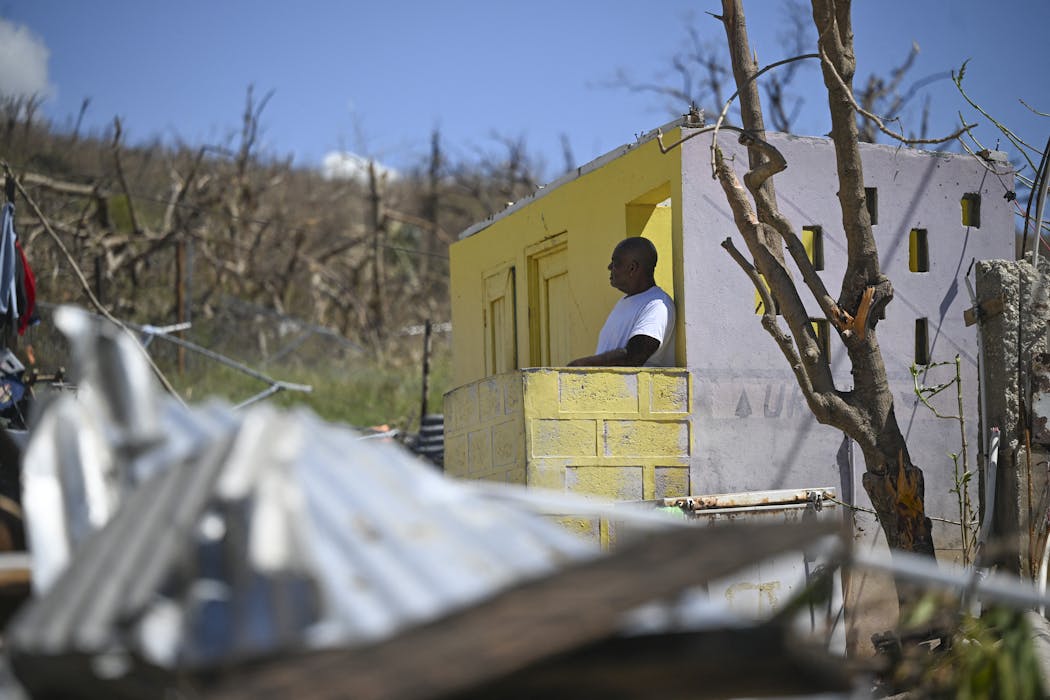
Hurricane Melissa tore off roofs and stripped trees of their leaves, including in many parts of Jamaica hit by Hurricane Beryl a year earlier. Ricardo Makyn/AFP via Getty Images

Headlines have been filled with talk of the catastrophic power of Hurricane Melissa after the Category 5 storm devastated communities across Jamaica, Cuba and Haiti in October 2025. But to see this as a singular disaster misses the bigger picture: Melissa didn’t hit stable, resilient islands. It hit islands still rebuilding from the last hurricane.

Jamaica was still recovering from Hurricane Beryl, which sideswiped the island in July 2024 as a Category 4 storm. The parish of St. Elizabeth – known as Jamaica’s breadbasket – was devastated. The country’s Rural Agriculture Development Authority estimated that 45,000 farmers were affected by Beryl, with damage estimated at US$15.9 million.

An aerial view of a city damaged by the hurricane. Mud is in the streets and buildings have lost roofs and walls.
St. Elizabeth Parish, Jamaica, suffered intense damage from both Hurricane Melissa in October 2025 and Hurricane Beryl a year earlier.
Ivan Shaw/AFP via Getty Images

In Cuba, the power grid collapsed during Hurricane Oscar in October 2024, leaving 10 million people in darkness. When Melissa arrived, it struck the same fragile infrastructure that Cubans had barely begun to rebuild.

Haiti’s fragile situation before Hurricane Melissa cannot be overstated. The island nation was still reeling from years of cascading disasters – deadly hurricanes, political instability, gang violence, an ongoing cholera crisis and widespread hunger – with over half the population already in need of humanitarian assistance even before this storm hit.

This is the new reality of the climate crisis: Disasters hitting the Caribbean are no longer sequential. They are compounding and can trigger infrastructure collapse, social erosion and economic debt spirals.

The compounding disaster trap

I study disasters, with a focus on how Caribbean island systems absorb, adapt to and recover from recurring shocks, like the nations hit by Melissa are now experiencing.

It’s not just that hurricanes are more frequent; it’s that the time between major storms is now shorter than the time required for a full recovery. This pulls islands into a trap that works through three self-reinforcing loops:

Infrastructure collapse: When a major hurricane hits an already weakened system, it causes simultaneous infrastructure collapses. The failure of one system – such as power – cascades, taking down water pumps, communications and hospitals all at once. We saw this in Grenada after Hurricane Beryl and in Dominica after Hurricane Maria. This kind of cascading damage is now the baseline expectation for the Caribbean.

Economic debt spiral: When countries exhaust their economic reserves on one recovery, borrow to rebuild and are then hit again while still paying off that debt, it becomes a vicious cycle.

Hurricane Ivan, which struck the region in 2004, cost Grenada over 200% of its gross domestic product; Maria, in 2017, cost Dominica 224% of its GDP; and Dorian, in 2019, cost the Bahamas 25% of GDP. With each storm, debt balloons, credit ratings drop and borrowing for the next disaster becomes more expensive.

Social erosion: Each cycle weakens the human infrastructure, too. More than 200,000 people left Puerto Rico for the U.S. mainland in Maria’s aftermath, and nearly one-quarter of Dominica’s population left after the same storm. Community networks fragment as people leave, and psychological trauma becomes layered as each new storm reopens the wounds of the last. The very social fabric needed to manage recovery is itself being torn.

The interior of a school that has been torn apart by hurricane winds. Desks and debris are scattered and light shines through the rafters
When schools are heavily damaged by storms, like this one in Jamaica that lost its roof during Hurricane Melissa, it’s harder for families to remain.
Ricardo Makyn/AFP via Getty Images

The trap is that all three of these loops reinforce each other. A country can’t rebuild infrastructure without money. It can’t generate economic activity without infrastructure. And it can’t retain the skilled workforce needed for either when people are fleeing to safer places.

Rebuilding a system of overlapping recoveries

The Caribbean is not merely recovering from disasters – it is living within a system of overlapping recoveries, meaning that its communities must begin rebuilding again before fully recovering from the last crisis.

Each new attempt at rebuilding happens on the unstable physical, social and institutional foundations left by the last disaster.

The question isn’t whether Jamaica will attempt to rebuild following Melissa. It will, somehow. The question is, what happens when the next major storm arrives before that recovery is complete? And the one after that?

Without fundamentally restructuring how we think about recovery – moving from crisis response to continuous adaptation – island nations will remain trapped in this loop.

The way forward

The compounding disaster trap persists because recovery models are broken. They apply one-size-fits-all solutions to crises unfolding across multiple layers of society, from households to national economies, to global finance.

Breaking free requires adaptive recovery at all levels, from household to global. Think of recovery as an ecosystem: You can’t fix one part and expect the whole to heal.

A line of people pass bags of food items one to another.
Residents formed a human chain among the hurricane debris to pass food supplies from a truck to a distribution center in the Whitehouse community in Westmoreland, an area of Jamaica hit hard by Hurricane Melissa in October 2025.
Ricardo Makyn/AFP via Getty Images

At the household level: Helping amid trauma

Recovery isn’t just about repairing a damaged roof. When families experience back-to-back disasters, trauma compounds. Direct cash assistance and long-term, community-based mental health services can help restore dignity.

Cash transfers allow families to address their own needs, stimulate local economies and restore control to people whose lives have been repeatedly upended.

At community level: Mending the social fabric

Repairing the “social fabric” means investing in farmer cooperatives, neighborhood associations and faith groups – networks that can lead recovery from the ground up.

Local networks are often the only ones capable of rebuilding trust and participation.

At the infrastructure level: Breaking the cycle

The pattern of rebuilding the same vulnerable roads or power lines only to see them wash away in the next storm fails the community and the nation. There are better, proven solutions that prepare communities to weather the next storm:

A man looks into an open drainage area that has been torn up out by the storm
Hurricanes can damage infrastructure, including water and drainage systems. Hurricane Beryl left Jamaican communities rebuilding not just homes but also streets, power lines and basic infrastructure.
Ricardo Makyn/AFP via Getty Images

At the global level: Fixing the debt trap

None of this is possible if recovery remains tied to high-interest loans. There are ways for internal financial institutions and global development lenders to allow for breathing room between disasters:

The current international disaster finance system, controlled by global lenders and donors, requires countries to prove their losses after a disaster in order to access assistance, often resulting in months of delay. “Proof” is established by formal evaluations or inspections, such as by the United Nations, and aid is released only after meeting certain requirements. This process can stall recovery at the moment when aid is needed the most.

The bottom line

The Caribbean needs a system that provides support before disasters strike, with agreed-upon funding commitments and regional risk-pooling mechanisms that can avoid the delays and bureaucratic burden that slow recovery.

What’s happening in Jamaica, Cuba and Haiti today is a glimpse of what’s coming for coastal and island communities worldwide as climate change accelerates. In my view, we can either learn from the Caribbean’s experiences and redesign disaster recovery now or wait until the trap closes around everyone.

The Conversation

Farah Nibbs does not work for, consult, own shares in or receive funding from any company or organization that would benefit from this article, and has disclosed no relevant affiliations beyond their academic appointment.

ref. No time to recover: Hurricane Melissa and the Caribbean’s compounding disaster trap as the storms keep coming – https://theconversation.com/no-time-to-recover-hurricane-melissa-and-the-caribbeans-compounding-disaster-trap-as-the-storms-keep-coming-268641

How the Canadian Armed Forces could help solve the youth employment crisis

Source: The Conversation – Canada – By Ilona Dougherty, Managing Director, Youth & Innovation Project, University of Waterloo

Every year on Remembrance Day, I think about my grandfathers — my American grandfather who flew his Stinson L-5 along the coast of Burma and my Hungarian grandfather who fought in the Second World War.

I also reflect upon my grandmothers, one of whom used her language skills to translate for army officers and the other who suffered the loss of her first child while her husband was overseas.

These stories are often shared in our family as remembrances of young people who served and sacrificed during difficult times.

Buried deep in the Liberal government’s recently released 2025 budget is a line that is worth paying attention to: “Modernizing the Canadian Armed Forces (CAF) enhances opportunities for youth to serve and lead.” With that one sentence, the federal government connected the dots between Canadian sovereignty, youth employment and youth service.

But if Canada hopes to see its current generation of young people thrive, it must ensure that youth employment and youth service programs are expanded.

The only way this will happen, given the investments outlined in the federal government’s budget, is if organizations dedicated to youth employment issues and youth service work closely together to ensure the Canadian Armed Forces (CAF) figures out how to recruit and meaningfully retain young Canadians.

Paltry investments

As outlined in the budget, there is a clear commitment from Mark Carney’s Liberals to rebuild and reinvest in the CAF to protect Canadians and lead internationally. This commitment includes an investment of more than $9 billion in 2025-2026.

An important part of this rebuilding will require recruiting and retaining new members, which is being facilitated by a significant pay increase for the lowest paid recruits.

But as young people in Canada face the worst job market in more than a decade, which is only projected to worsen with the widespread adoption of AI, it was troubling that funding related to tackling youth unemployment was limited in this year’s budget.

The investment in Canada Summer Job placements, while up from the investment made in the 2024, was only brought back to pre-pandemic funding levels, not actually increased.

The Youth Employment and Skills Strategy investment in the budget was up slightly from 2025-2026, but down significantly from 2024-2025 and far below investments made in 2019-2020.

The only significant increase came with the investment in the Student Work Placement Program, which increased by more than $100 million per year.

The most generous read of investments in youth employment-related programs in the 2025 budget would suggest the government is investing approximately $220 million more per year. But this pales in comparison to the $20.4 billion over five years that the government has committed to investing in recruiting and retaining “a strong fighting force” for the CAF.

When it comes to youth service, supporting young people who are struggling to enter the job market — and providing them with opportunities to serve their communities — can be achieved in part through the Youth Climate Corps and the Canada Service Corps. Combined, their budgets represent a moderate increase in spending of about $20 million per year.

But it’s unclear whether the Canada Service Corps will receive additional funding in the future, parallel to the Youth Climate Corps funding, or whether it will be phased out and replaced.

Despite it being touted as a budget containing generational investments, the government has made minimal investments to seriously tackle the youth employment crisis in the 2025 budget.

Recruitment challenges

It’s no secret that recruiting and retaining new members is a significant challenge for the CAF. A 2025 Auditor General of Canada’s report outlines how the CAF is not recruiting and training enough candidates to meet its operational needs.

To make matters worse, even when a recruit does join, a recently leaked internal report suggests that many leave in frustration shortly after joining due to their inability to get trained and to secure roles within the CAF that they’re interested in.

Adding to this is the CAF’s well-documented issues with radicalization and hate speech, racial discrimination and sexual harassment. As an external monitor outlined in a recent report, “a culture that is largely misogynistic has created an environment that allows and sometime encourages unprofessional conduct to persist.”


Read more:
Not just a few bad apples: The Canadian Armed Forces has a nagging far-right problem


Despite recent apologies and signs that things are changing for the better within the CAF, these issues make the institution unattractive for young Canadians even if they don’t feel as though they have any other employment options.

There is also the perception that joining the army means going into active combat. Around 65.2 per cent of CAF members ever deploy — and deploying doesn’t necessarily mean active combat. In fact, it can very often mean humanitarian missions either domestically or internationally.

Making the CAF attractive to youth

All of this presents a unique opportunity for Canadian policymakers.

There are many organizations in Canada working to tackle youth employment — and the CAF has just been given what can actually be called a generational investment. That investment could significantly enhance existing government initiatives aimed at addressing the youth employment crisis and preparing young people for the future of work.

For this to happen, youth employment and service organizations must leverage the government’s investment in the CAF to expand their impact. At the same time, the CAF will need to engage with civilian organizations that specialize in recruiting and supporting young people. CAF recruiters should adopt best practices in youth-focused recruitment, training and retention to ensure meaningful participation and long-term success.

Young people will only be attracted to and stay in the CAF if they feel valued, if they’re offered meaningful opportunities to contribute and if intergenerational collaboration is prioritized.

In a time of multiples crises, none of them can be viewed in isolation. Disparate groups need to work together to address their unique challenges.
Canadian young people have a lot to offer — they’re the most educated generation in Canadian history, they have the desire to make a difference, their brains are wired to be bold problem solvers and they have diverse and relevant lived experiences.

This is a generation Canada can’t afford to leave on the sidelines of its economy or in the fight for Canadian sovereignty.

The Conversation

Ilona Dougherty does not work for, consult, own shares in or receive funding from any company or organisation that would benefit from this article, and has disclosed no relevant affiliations beyond their academic appointment.

ref. How the Canadian Armed Forces could help solve the youth employment crisis – https://theconversation.com/how-the-canadian-armed-forces-could-help-solve-the-youth-employment-crisis-268433

Bringing the dance studio home can improve balance and reduce the risk of falls for older women

Source: The Conversation – Canada – By Emma Hsiaowen Chen, PhD Candidate in Health & Exercise Science, Concordia University

Exercise can help reduce the risk of falls — a major cause of injuries in older adults — but only four per cent of older Canadian women complete 30 minutes of daily physical activity. As a PhD candidate in health and exercise science at Concordia University, I am interested in developing fun and accessible balance-training programs using online dance classes.

Dance can act as a fun “exercise in disguise.” Studies have consistently shown that dance can inspire social connections, improve mood and aid cognition, while also leading to improvements in mobility, endurance and walking abilities.

It is also an ideal form of balance training because learning various dance steps requires high precision of movement, which can help increase our proprioception (our perception of our body movement and position in space). This can help improve or maintain our postural stability.

Age and postural stability

Postural stability refers to our ability to stay upright and control our body’s position in space. This ability relies on sensory and motor systems. Our vision helps see potential obstacles or tripping hazards, the vestibulocochlear system of the inner ear helps with our sense of orientation as well as hearing, and finally our somatosensory system, which comprises the body’s sense of touch, pain, temperature and position, works to feel the surfaces beneath our feet.

After these sensory signals reach the brain, they are sorted and then the appropriate motor response is selected for our musculoskeletal system to execute

With age, postural stability reduces as the sensory systems experience change. We measure this decline by having people stand as still as possible and observing how much they move or sway. If someone sways more, they are considered less stable and at greater risk of falls.

While research on in-person dance classes of various styles have consistently shown improvements to postural stability and fall risk, these classes are often inaccessible. Many older women face barriers to exercise such as lack of transportation, caregiver roles at home, inaccessible exercise facilities etc. Additionally, specialized dance teachers are often only found in larger cities that act as dance hubs. Online dance classes can offer solutions to reduce barriers and improve access for older adults.

Bringing the dance studio home

Working with Andreas Bergdahl, PhD, and Mary Roberts, PhD, our research published in International Journal of Exercise Science has found that online dance classes improve the postural stability, dynamic balance and calf strength of older women. In this work, we recruited women aged 65+ from Montréal to participate in 75-minute ballet-modern inspired classes twice per week, for 12 weeks over Zoom.

Each dance class started with a 15-minute warm-up followed by:

  • Pliés (bending the knees)
  • Tendus (standing on one leg and extending the other one out)
  • Balancé sequence (a travelling step done to a waltz rhythm)
  • Jose Limón/Martha Graham sequence (styles of modern-dance that emphasize fall recovery and rounded shapes of the spine)
  • Cooling-down with seated stretches

These exercises were selected because they emphasize transferring weight, balancing on one leg, bringing the body off centre and contracting the leg as well as core muscles. A helper was present on Zoom for each dance class to help with technical support and monitor online participants for safety.

Before the first class, halfway through the study, and at the end, participants completed in-person assessments of their leg strength, dynamic balance and postural stability.

Within six weeks, participants showed reductions in how much they swayed side-to-side while standing still (what is called mediolateral sway) and increases in their dynamic balance. By the end of the program, they also had greater calf-muscle strength, assessed as the number of heel-raises participants completed in 30 seconds.

Improvements in these abilities can translate to greater ease in daily activities that require weight transfers, such as walking, stepping down from the sidewalk or even chores like sweeping the house.

Benefits of online access

Even after COVID-19 lockdowns have ended, online dance classes can serve an important role in reaching people who are traditionally left out.

For those living in remote locations, for caregivers who cannot spend too long away from their loved ones or even for older adults anxious to walk on icy streets in the winter, online programs can provide a level of accessibility and new opportunities to socialize and exercise. They also give opportunities for people to express themselves creatively from the comfort of their own homes.

Our current studies are exploring how different styles of online dance programs, combined with blood flow restriction training, can benefit older adults. This provides more options to suit people’s interests and varying mobility needs. Additionally, we are working to share our program with communities. To date, our research has reached older women across Canada, Mexico, Colombia and Spain, encouraging them to remain active and independent.

While many of us have returned to in-person programming, let’s not forget the benefits of online access. Bringing the dance studio home can still help people connect, socialize and improve their balance.

The Conversation

Emma Hsiaowen Chen receives funding from Fonds de recherche du Québec – Santé – Formation de doctorat 2024-2025 (346910). Her MSc work presented here was funded by the Canadian Graduate Scholarships – Master’s Program 2022 and the Fonds de recherche du Québec – Santé – Formation de Maîtrise 2022-2023 (319116). She works as a freelance dance instructor specialized in teaching older adults.

ref. Bringing the dance studio home can improve balance and reduce the risk of falls for older women – https://theconversation.com/bringing-the-dance-studio-home-can-improve-balance-and-reduce-the-risk-of-falls-for-older-women-268266

Team work and power plays: What Alberta’s Bill 2 says about Canadian democracy

Source: The Conversation – Canada – By Jared Wesley, Professor, Political Science, University of Alberta

Across Canada, elected representatives are opting to toe the party line on major discussions about the future of the country — or even to sit out the debates entirely.

Take recent events in Alberta. Bill 2 (the Back to School Act) ended a provincewide teachers’ strike by imposing a contract and ordering more than 50,000 teachers back to work. Most government members of the Alberta legislature (MLAs) chose to remain silent throughout the entire dispute.

The incident drew national attention because the government also invoked the Canadian Charter of Rights and Freedoms’ notwithstanding clause to remove the teachers’ Charter right to strike.


Read more:
The history of the notwithstanding clause


Limiting debate

But the other half of the story is the process: party discipline helped push the law through the legislature in record time. For Canadians elsewhere, Bill 2 is a window into how hyper-partisanship and polarization can weaken the checks and balances meant to restrain premiers and prime ministers from acting unilaterally.

Here’s what happened in practical terms: the government moved the bill from first reading to final passage in less than 12 hours, after which teachers were ordered back and a four-year agreement was set in law.

Approved by members of the government caucus, debate windows were cut to just one hour and concluded in the early hours of the morning.

The speed mattered as much as the substance: it limited the chance for MLAs to probe details, air local concerns or test alternatives in public. It also sidestepped an important constitutional responsibility: according to the notwithstanding clause, legislatures — not cabinets or premiers — are charged with removing Canadians’ rights.

According to critics of Premier Danielle Smith’s United Conservative Party (UCP), that duty is meant to be exercised after meaningful debate.

Why would a legislature — whose members are elected to debate, amend and oversee — vote to shorten its own deliberation on bills, particularly those that affect fundamental freedoms?

Our research in our book No “I” in Team: Party Loyalty in Canadian Politics points to a simple, powerful answer: hyper-partisanship has evolved from traditional “party discipline” (voting together) into “message discipline” (speaking together). Leaders and their entourages co-ordinate what caucus members say and do, reward conformity and punish dissent. In that environment, opposing fast-tracked legislation can feel like deserting “the team.”

Choosing silence

Message discipline reshapes everyday incentives inside caucus.

Rather than seeing alternative arguments as quality control, members learn to treat them as obstacles. Rather than pushing for extended committee study or open negotiation, they face heavy pressure to back procedures that guarantee quick passage and limit the ability of opposing parties to weigh in. This means members of the governing caucus sometimes choose to silence themselves to prevent their opponents from engaging.

Over time, MLAs become more willing to trade their own leverage — floor time, clause-by-clause scrutiny, amendments — for the promise of team unity.

Bill 2 shows how those incentives and tools play out in real life. The government framed speed as a virtue and unity as a necessity; caucus members delivered both. The result was swift law-making on a file with broad public impact and limited room for local voices or cross-party problem-solving.

None of this depends on one leader or one issue. Once normalized, the approach can be applied to labour disputes, health-care reforms, school governance or tax changes — any area where moving quickly is easier than debating in public.

But when disagreements are handled through discipline rather than deliberation, conflict doesn’t disappear. It often relocates, sometimes spilling outside the governing caucus. This is made more likely when constituents pressure their representatives to act as delegates rather than partisans.

Locker-room mentality

Earlier this year, UCP MLA Peter Guthrie resigned from cabinet and was expelled from caucus after sustained criticism of his party’s ethics record.

He has since emerged a steady critic of the government, assuming the role of Independent as Canada’s parliamentary traditions intended all representatives to play: holding the government to account through members’ statements and Question Period. That he felt unable to do so within cabinet or caucus is a symptom of the hyper-partisanship we cover in our book.

For those beyond Alberta, that’s why Bill 2 matters. The notwithstanding clause justifiably drew the most attention, but it isn’t the whole story. Canadians need to pay attention to how hyper-partisanship pushes parliamentarians into decisions that mute their own roles as delegates of their constituents, overseers of government and trustees of the public good.

When legislatures are organized as team locker rooms first and democratic institutions second, elected representatives are more likely to support rule changes and time limits that make government faster and more centralized, and less likely to insist on the public work that tests ideas before they become law.

In that sense, Bill 2 is a case study, not an outlier. The mechanics are portable.

Watch for the telltale signs in other parts of the country: tight debate clocks, late-night sittings, caucus silence in constituencies and message unity presented as proof of strength. Our research suggests those are the symptoms of message discipline at work — and the reason Canadians across the country should pay attention to what happened in Alberta.

The Conversation

Jared Wesley receives funding from the Social Sciences and Humanities Research Council (SSHRC).

Alex Marland received funding from an SSHRC Insight Grant with Jared Wesley and Mireille Lalancette to study Canadian parliamentarians crossing the floor that supported this research.

Mireille Lalancette receives funding from the Social Sciences and Humanities Research Council (SSHRC) for this project.

ref. Team work and power plays: What Alberta’s Bill 2 says about Canadian democracy – https://theconversation.com/team-work-and-power-plays-what-albertas-bill-2-says-about-canadian-democracy-269373

Rudeness is hurting auditors’ ability to protect the public — here’s how

Source: The Conversation – Canada – By Ala Mokhtar, Assistant Professor in Accounting, McMaster University

Auditors play a crucial role in keeping the financial system honest. Their job is to protect investors by making sure financial reports are accurate and trustworthy, helping people have confidence in financial markets.

Auditors are trained to be level-headed, impartial watchdogs that remain skeptical when evaluating evidence so they can give an objective opinion on whether a company’s financial statements are fairly reported.

Without auditors, the public would struggle to trust what companies say about their finances. But this, of course, depends on auditors doing their jobs objectively and consistently.

Our new study, co-authored with Tim Bauer from the University of Waterloo and Sean Hillison from Virginia Tech, shows something unexpectedly human gets in the way of auditors doing their job well: incivility, or rudeness. When clients snap at, dismiss or belittle auditors, it doesn’t just sting — it can wear away at audit quality.

Maintaining audit quality

The quality of audits has become a growing concern among regulators. In recent years, both Canadian and American audit watchdogs have reported concerning rates of audit deficiencies.

These deficiencies include failing to properly test accounting estimates by firms, failing to test key controls that prevent errors or fraud and overlooking whether management’s significant assumptions were reasonable.

Regulators are urging auditors to “step up” by doing a better job of scrutinizing their financial statements.

Understanding and addressing how client incivility affects auditor performance could be a crucial step toward improving audit quality in financial reporting.

When rudeness gets in the way

To find out how often auditors face incivility, my co-researchers and I surveyed 70 auditors across Canada and the United States at all ranks, from entry-level auditors to auditors at the partner level.

We defined incivility as minor disrespectful actions that break workplace norms of mutual respect. These behaviours are often rude and discourteous, displaying a lack of regard for others.

We found that auditors don’t experience incivility from time-to-time — they experience it a lot. Ninety per cent of auditors said they had encountered negative client behaviour at some point in their careers.

Seventy-seven per cent said clients had rudely told them how to do their jobs or questioned their procedures. More than 60 per cent had their skills or abilities questioned and more than 50 per cent had been ignored or faced hostility when approaching a client. One-third reported being bullied — a more serious form of incivility — at some point in their career.

Rude clients, weaker audits

We wanted to know whether auditors’ experiences with incivility actually affected auditors’ judgment and skepticism. Did auditors brush off rude behaviour and continue to diligently do their work?

To test this, we ran an experiment with 114 experienced auditors. We asked them to read a scenario showing an interaction between an auditor and their client. In one version the client was openly rude, while in the other version, the client was not portrayed as rude.

The auditors were then asked how likely they would be to challenge an aggressive accounting choice — that is, a decision by the client to report a preferred inventory write-down amount supported by weak assumptions.

We found that auditors who read about a scenario with an uncivil client became less likely to challenge an obviously aggressive accounting choice by the client — the opposite of what auditing standards call for in a situation where skepticism matters.

Why did this happen? Our findings suggest that emotional distress from interacting with the rude client interfered with auditors’ judgment, leading to less effective scrutiny of the client’s decisions.

How active coping can help

Auditors play a vital role in protecting investors and the public by ensuring that companies’ financial statements can be trusted. Our findings suggest that something as commonplace as everyday discourtesy can have very real, negative effects on audit quality.

But there is some good news. Our research also found that the right coping strategies can help auditors recover their focus.

When auditors were encouraged to use an active coping approach — like looping in a senior colleague to intervene with the situation — their willingness to push back against the aggressive accounting choice largely returned to normal levels. Active coping prevented the distress of the rude exchange from interfering with auditors’ judgment.

By contrast, passive approaches, such as venting or trying to accept the situation, didn’t show the same clear benefit.

Together, these results suggest that client incivility triggers emotional distress that blunts auditors’ judgment, and that active coping helps auditors refocus on the facts and their duty to the public.

Protecting audit quality

For firms and regulators trying to maintain audit quality, negative behaviour from clients should be treated as a risk factor, not a normal, everyday inconvenience. If left unaddressed, persistent rudeness or pressure from clients can undermine auditors’ ability to do their jobs.

Fortunately, the solution is simple and low-cost. Audit firms can equip auditors with concrete coping playbooks and train them to use active coping when they encounter incivility. Rather than expecting auditors to grin and bear rude treatment, firms can equip them to address incivility actively by bringing in a senior member who can handle the rude client.

It’s a simple step that helps prevent audit quality from slowly deteriorating, and protects the integrity of financial reporting and the people responsible for upholding it.

The Conversation

Ala Mokhtar does not work for, consult, own shares in or receive funding from any company or organisation that would benefit from this article, and has disclosed no relevant affiliations beyond their academic appointment.

ref. Rudeness is hurting auditors’ ability to protect the public — here’s how – https://theconversation.com/rudeness-is-hurting-auditors-ability-to-protect-the-public-heres-how-267953

To tackle e-waste, teach kids to be responsible consumers

Source: The Conversation – Canada – By Saidia Ali, Environmental Scientist, PhD Candidate, Toronto Metropolitan University

The world is undergoing rapid electronification and digital transformation, reshaping how we live. Many of us have numerous electronic devices around us at all times, from smartphones and watches to our home appliances and cars.

A sharp increase in e-waste has accompanied the surge in electronic equipment. In 2022, 62 million tons of e-waste was produced globally.

Canada’s e-waste tripled between 2000 and 2019 and is expected to reach 1.2 billion kilograms by 2030. These statistics demonstrate an urgent environmental crisis that demands new ways of thinking and educating future generations.

A key part of tackling the problem is educating people about it. As educators, we need to expand school education to include resource recovery, sustainability and pro-environmental behaviours to inform students on what to do with their old gadgets.

The language and techniques we use to communicate this issue in classrooms play a significant role in helping children understand and engage with safe e-waste management.

Schools and educators must equip youth of all ages with the values, attitudes, knowledge and skills necessary to manage e-waste responsibly.

Gaps and limitations

My research uses machine learning tools to develop effective circular economy policies focused on e-waste management in Canada, with insights reflecting Ontario’s evolving practices.

In Ontario, schools are failing to provide comprehensive and consistent e-waste education, leaving a dangerous gap in our students’ environmental literacy.

Environmental education in Ontario introduces students to the concept of environmental stewardship and the provincially mandated curriculum does include it in a cross-disciplinary manner. However, due to decreased priority and budget cuts, attention on e-waste and resource conservation is absent.

According to a 2024 report by EcoSchools Canada, a number of obstacles exist to successful school e-waste management such as COVID-19, provincial inconsistencies, curriculum disconnect, custodian participation, poor school engagement and a lack of key infrastructure and information.

The Ontario government and municipalities have made efforts in revising the school curriculum, with non-profits stepping in to help bridge the knowledge gap.

For example, in municipalities like Peel Region, teachers’ resources include a plethora of interactive, online activities and lesson plans that focus on the 3Rs and proper sorting, as well as additional workshops, events, games and other resources for students in grades K to 8.

Likewise, Durham Region offers a specific presentation, including one for grades 7 and 8 entitled “Electronic Waste: The Hidden Impact of Our Gadgets,” allowing students to discover the possible environmental, social and economic consequences of devices.

Several schools are also active participants of the EcoSchools program, a certification initiative originally developed by the Toronto District School Board to promote environmental education and action.

The program offers opportunities for student-led projects such as e-waste collection drives and awareness campaigns, providing meaningful experiential learning.

Although these are valuable and necessary, the focus and depth of these initiatives are often at the discretion of individual teachers and schools, leading to an uneven and often limited understanding of the e-waste problem. While commendable, these programs represent a patchwork rather than a cohesive, province-wide strategy.

Furthermore, a lot of education on waste tends to place much emphasis on recycling. While recycling is an important part of the solution, comprehensive e-waste education should also emphasize reducing consumption, repairing and reusing electronics and understanding the principles of a circular economy. Educational institutions and educators need to equip students to be able to critically question our throw-away culture.

The path forward

Educational institutions can play a substantial role in devising initiatives that will help future generations build foundational knowledge about sustainable e-waste management.

At the Montgomery School in Saskatoon, students have taken part in a project that allows them to disassemble old electronics to learn about e-waste, its materials and proper disposal. As part of an initiative, students look through the school’s garbage bins to see what could be reused.

The project links classroom learning with Saskatchewan’s grade 6/7 curriculum of understanding the social effects of sustainability issues, such as waste management, and encouraging students to think critically about technology use and environmental responsibility. The students have been successful in making keychains from old circuit boards that they sold at a school event to raise money for upcoming projects.

A CBC News segment on the Montgomery School’s e-waste project.

Provincial education ministries must take the lead by embedding clear learning expectations into their provincial curriculum in subjects like science, technology, geography, social studies and civics. This will ensure that all students, regardless of their school or location, receive an introductory understanding of this growing issue.

Cross-sectoral collaboration among provincial governments, school boards, municipalities and environmental organizations will be key in developing high-quality curriculum-linked educational materials.

Other initiatives can include organizing field trips to recycling facilities or setting up e-waste collection campaigns to allow students to see the impact of sustainable activities.

Schools can also invite guest speakers to give students an opportunity to learn from front-line environmental experts who have first-hand knowledge of sorting through e-waste.

Integrating e-waste literacy into the curriculum is a crucial step toward creating a more sustainable future. It will involve much more than just teaching students where the recycling bin is. It is about providing the know-how that will help them challenge our throw-away culture and empowering them to become responsible consumers.

The Conversation

Saidia Ali is affiliated with CanRepair Canada.

ref. To tackle e-waste, teach kids to be responsible consumers – https://theconversation.com/to-tackle-e-waste-teach-kids-to-be-responsible-consumers-265712

Así son las auroras rojas que han iluminado (y pueden volver a iluminar hoy) los cielos de España y toda Europa

Source: The Conversation – (in Spanish) – By Josep M. Trigo Rodríguez, Investigador Principal del Grupo de Meteoritos, Cuerpos Menores y Ciencias Planetarias, Instituto de Ciencias del Espacio (ICE – CSIC)

La pasada noche del 11 noviembre fue posible disfrutar desde toda Europa, Norteamérica y Centroamérica del espectáculo de las auroras. Desde España se han visto y fotografiado las llamadas auroras SAR (acrónimo de Arcos Rojos Estables o Stable Aurora Red arch), una especie de reflejo lejano de las que se dan a gran altura en latitudes boreales. Se aprecian como una luminosidad rojiza cercana al horizonte norte que se aprecia a simple vista, aunque las cámaras la captan maravillosamente dada su mayor sensibilidad.

Que veamos auroras SAR es normal, incluso que cambien de intensidad según el devenir de la actividad geomagnética. También se produjeron en mayo del año pasado, en un momento álgido (como ahora) de la actividad solar.

En estos momentos, el Sol se encuentra en una fase especialmente activa en la que sufre grandes erupciones, acompañadas de la emisión masiva de protones y partículas alfa (núcleos de helio) a grandes velocidades (algunas del orden de 1 800 km/s).

Muchos astrofotógrafos aprovechan estos días para tomar imágenes increíbles de la fotosfera solar que muestran la gran actividad del astro rey.

El origen de las auroras y sus preciosos colores

Tras la emisión de masa coronal del Sol, las partículas atómicas, en buena parte cargadas eléctricamente, pasan a formar parte del llamado viento solar y se difunden por el medio interplanetario. Esa gigantesca ola de átomos e iones tardará entre 1,5 y 4 días en llegar a la Tierra, en función de la velocidad de la ráfaga de masa coronal eyectada.

Los cinturones de Van Allen nos protegen de la radiación llegada del Sol.
Nasa Space Place

Las energéticas partículas quedan retenidas en el campo magnético de nuestro planeta. Posteriormente, viajan por las líneas de dicho campo hasta golpear la atmósfera superior de la Tierra, cerca de los polos Norte y Sur. Cuando estos átomos interactúan con los gases de nuestra atmósfera, producen las auroras boreales y australes, respectivamente.

Y, aunque en latitudes medias como las de España se suelan ver únicamente las auroras SAR rojas, desde latitudes más boreales o australes es posible contemplar hermosas cortinas de colores. El cromatismo de los hermosos arcos de la luz que se mueven por el cielo dependen de las moléculas ionizadas que emiten esa luz. Por ejemplo, el oxígeno emite luz verde y roja, mientras que el nitrógeno molecular brilla intensamente en colores azules y púrpuras.

El Sol dispara y los planetas reciben

Precisamente, el 11 de noviembre hubo una enorme emisión de masa coronal desde la región solar activa catalogada AR14274. Debido a la magnitud de esa erupción, esperamos que haya actividad geomagnética extraordinaria también en las próximas noches.

Precisamente las regiones más activas están asociadas a los grupos de manchas solares, a veces vinculados a brillantes segmentos llamados fáculas. Desde esas regiones suelen producirse las erupciones solares, desencadenadas por los cambios magnéticos que tienen lugar en la fotosfera solar.

El grupo activo 14274 fotografiado el 11 de noviembre desde el Observatori de Gualba, Barcelona, una hora después de la erupción que protagonizó y que ahora está produciendo auroras. Podemos apreciar una brillante fácula debajo de las manchas principales.
Albert Sànchez Caso/MPC442-Gualba Obs./AstroMontseny

Muy atentos a las próximas noches

Es una gran oportunidad para los astrofotógrafos, pero cualquiera que disponga de un teléfono móvil también puede capturar alguna imagen nocturna de pocos segundos si se apoya en algún objeto o tiene un buen pulso. Precisamente esta misma tarde, la del 12 de noviembre, ya desde el crepúsculo tendremos muchas posibilidades de volver a ver auroras SAR desde la península ibérica.

De hecho, podremos seguir en tiempo real la actividad geomagnética en esta página de la Universidad de Kioto (Japón). Webs muy útiles para comprobar el grado de actividad geomagnética son Heliomon, creada por Josep María Llenas, y la del director del Observatori Astronòmic i Meteorològic de Pujalt, en Barcelona.

En particular existe un índice representativo de las condiciones geomagnéticas globales, conocido como Kp. Estos valores indican la actividad geomagnética esperada para cualquier período de tres horas durante los próximos tres días, como refleja la gráfica que sigue a este párrafo.

El índice Kp da cuenta de la actividad geomagnética global en períodos de tres horas durante los próximos tres días. Las horas son en tiempo universal coordinado (súmese una hora para la hora local peninsular, CET).
NOAA/SWPC Boulder, Col, EUA

Un buen ejemplo de las sesiones fotográficas que espero incentivar fue la realizada anoche por el astrofotógrafo Joan Manuel Bullón desde el pico de la Travina, en el municipio valenciano de Aras de Alpuente. Imágenes como esta precisamente me han animado a escribir el presente artículo para enfatizar que la próxima noche podría también ser histórica, una gran oportunidad para los amantes del tiempo (espacial).

Aurora captada la pasada noche desde Aras de Alpuente, Valencia.
Joan Manuel Bullón i Lahuerta

The Conversation

Josep M. Trigo Rodríguez recibe fondos del proyecto del Plan Nacional de Astronomía y Astrofísica PID2021-128062NB-I00 financiado por el MICINN y la Agencia Estatal de Investigación.

ref. Así son las auroras rojas que han iluminado (y pueden volver a iluminar hoy) los cielos de España y toda Europa – https://theconversation.com/asi-son-las-auroras-rojas-que-han-iluminado-y-pueden-volver-a-iluminar-hoy-los-cielos-de-espana-y-toda-europa-269614