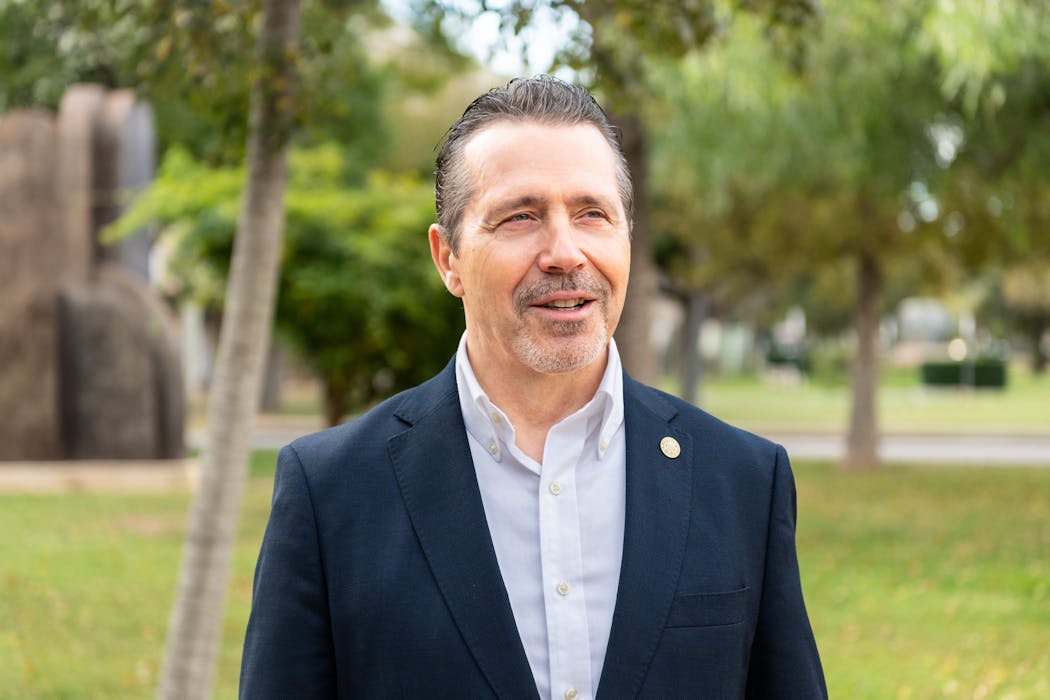
José Capilla, rector de la UPV.Vicente Lara-ACOM UPV
La inteligencia artificial generativa llegó al mundo académico con grandes promesas de transformación (personalización de itinerarios de aprendizaje, retroalimentación en tiempo real, tutores virtuales) pero hoy, tres años después de su aparición, todavía no está claro si su impacto está siendo positivo. Lo que sabemos hasta la fecha es que su gran potencial solamente puede desarrollarse con un conocimiento profundo de su funcionamiento y que su aplicación depende casi exclusivamente de la ética personal de cada usuario.
Hablamos con José Capilla, rector de la Universitat Politècnica de València y presidente de la Sectorial de Digitalización de la Crue (Conferencia de rectores y rectoras de la universidad española), de esta herramienta tecnológica tan disruptiva en el mundo universitario, de la posibilidad de imponer ciertas normas comunes y de regular su uso, y de cómo pueden las instituciones de educación superior aprovechar la oportunidad y responder al desafío.
¿Qué está suponiendo la inteligencia artificial para el funcionamiento de las universidades?
Parece que la inteligencia artificial lleva diez años con nosotros, porque nos hemos acostumbrado muy rápido, pero en realidad Open AI salió hace menos de tres años. Sin embargo, ha irrumpido en la vida académica de una manera espectacular. Uno de los grandes retos que tenemos es actualizar tanto las estructuras como el personal de la universidad para entenderlas y conocerlas también nosotros, porque los estudiantes ya las están usando, y no necesariamente bien. Y eso plantea ciertos peligros.
Su postura hacia la IA es positiva, la considera una “aliada estratégica”.
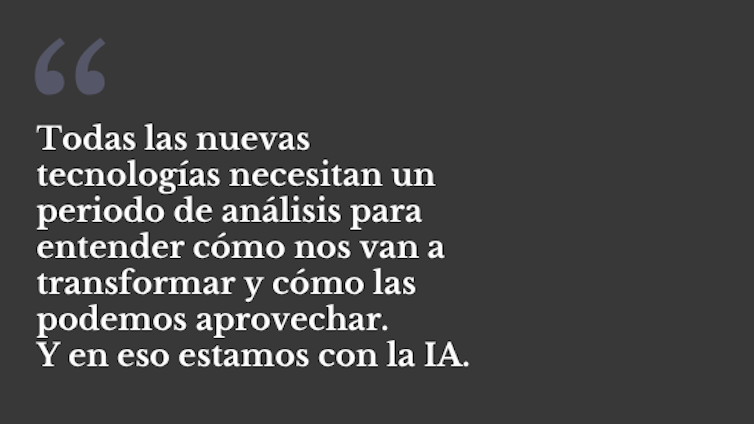
No soy partidario de limitar el uso ni de prohibir. Creo que lo que hay que hacer es instruir y buscar la manera de utilizarla lo mejor posible. Todas las nuevas tecnologías, cuando llegan, necesitan de un periodo de análisis. Tenemos que entender cómo nos va a transformar y cómo podemos aprovecharla. Y estamos reflexionando sobre cómo cambiar las metodologías de enseñanza y aprendizaje y de evaluación, porque no pueden seguir siendo las mismas. Quizás podamos evaluar y enseñar centrándonos más en competencias blandas. Y al mismo tiempo, dedicarnos a conocer a fondo esas herramientas de IA que evolucionan a una velocidad impresionante. Hay que incorporar estas tecnologías, aprender a usarlas, aprender qué sesgos pueden tener y, desde luego, incidir mucho en los aspectos éticos sobre su uso.
El gran peligro es la brecha que se puede crear. Antes se hablaba de brecha digital, ahora yo creo que podemos hablar de brecha de IA.
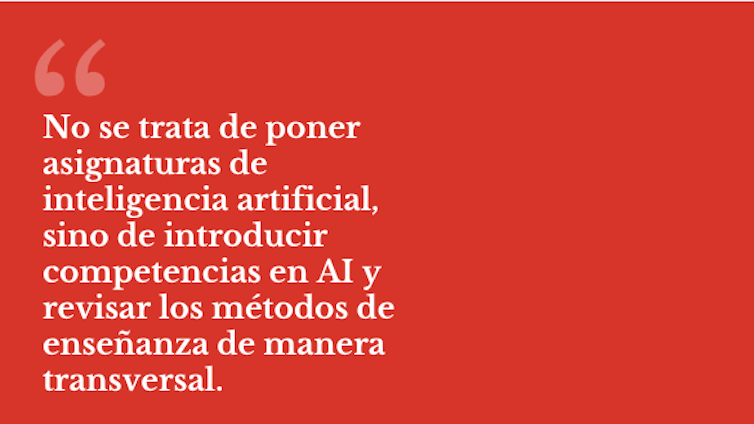
No se trataría tanto de incluir nuevas asignaturas de inteligencia artificial, sino de introducir competencias en IA dentro de las materias de manera transversal. Probablemente sí que puedan ser útiles algún tipo de microcredenciales, con instrucciones de corta duración, orientadas a todo tipo de disciplinas. Pero la revisión de los métodos de enseñanza tiene que ser transversal.
¿Es algo fácil de llevar a cabo?
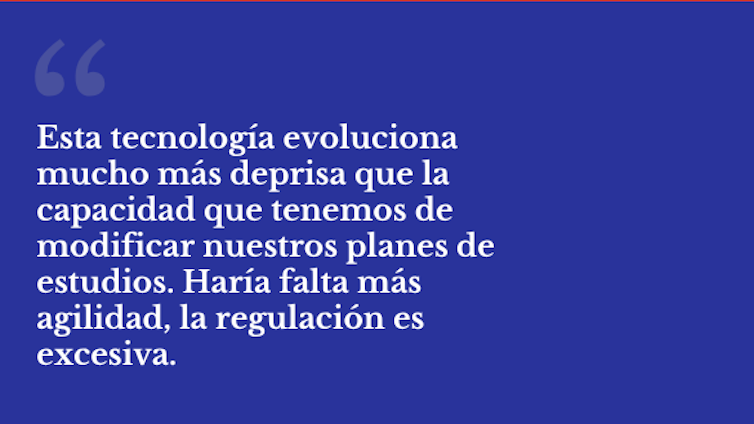
Esta tecnología evoluciona mucho más deprisa que la capacidad que tenemos de modificar nuestros planes de estudios. Ese es otro gran reto: la rigidez de las normas universitarias, el marco legal, para poder actualizar los contenidos de los planes de estudios o los propios planes. A lo mejor hay algunos que tienen que desaparecer y crearse otros nuevos.
¿Existe un desfase entre lo que ofrecen los planes de estudio de las universidades y lo que necesita la sociedad?
A veces va la universidad por delante y es la propia industria la que tiene que recurrir a los grandes especialistas que están moviendo la frontera del conocimiento. Pero hay desfases, claro. Seguimos con un sistema para aprobar planes de estudios que desde que se hace una propuesta para un grado hasta que se pone en marcha y salen los primeros titulados pueden haber pasado 7 años. Y hay campos donde en siete años todo cambia radicalmente. En el ámbito de las tecnologías, necesitamos más agilidad.
Creo que la regulación es excesiva. Establecida con muy buena intención para controlar la calidad, sin duda, pero no tenemos más que compararnos con lo que pasa en el mundo anglosajón, ver la agilidad que tienen sus universidades porque no se les han impuesto estos corsés. Desde luego tiene que haber entidades independientes que puedan evaluar la calidad y hay que ser transparentes. Pero aquí hemos querido poner unas reglas que garanticen que todos lo hacemos muy bien y al final no está muy claro que lo estemos garantizando, y sin embargo, añadimos trabas para progresar.
¿Cómo lo estamos supliendo las universidades? En la UPV, y sé que otras universidades lo hacen, con los títulos propios y la formación permanente. Ahí podemos dar respuesta a lo que determinadas industrias y sectores necesitan y rompemos el desfase. Por nuestra universidad, por ejemplo, pasan cada año 35 000 estudiantes en formación continua, que son distintos de los de enseñanzas regladas. Esto fomenta y enriquece la relación entre universidad y empresa.
De todas maneras, hay que tener cuidado con un utilitarismo excesivo de la formación superior: también hay que dar formación básica que no está orientada a la empleabilidad. La empleabilidad es fundamental, pero no toda la formación tiene que estar ahí. Y lo mismo pasa con la investigación: debe haber investigación básica en paralelo a la investigación aplicada. Se trata de encontrar un equilibrio. En España a nivel de investigación realmente con respecto al tamaño que tenemos somos una potencia, por la cantidad de publicaciones científicas y de calidad que aportamos. Pero si miramos la parte de patentes, ahí ya cojeamos. Eso lo tenemos que trabajar.
¿Cuáles son ahora mismo las grandes preocupaciones en la universidad española en relación con las nuevas tecnologías?
Estamos viviendo un momento crucial en cuanto a la digitalización de las universidades. La digitalización no es algo nuevo, empezó hace muchos años y las universidades estuvimos ahí desde el primer momento, lo cual no quiere decir que estemos siempre a la cabeza, porque esto es una carrera acelerada. Curiosamente, las universidades que empezaron a digitalizarse antes se encuentran con que ahora pueden estar por detrás de algunas que han empezado después pero se han incorporado con una tecnología más madura. Claramente, es preciso planificar e invertir.
En el tema de la administración electrónica y la contabilidad analítica, en Crue estamos haciendo un diagnóstico de cómo lo están poniendo en marcha las universidades, y antes del verano ya más de la mitad tenían estrategias elaboradas, seguramente ahora sean casi las dos terceras partes. Somos un grupo muy heterogéneo: universidades de distinto tamaño, distintas especializaciones, públicas y privadas.
Las universidades somos estructuras muy complejas, con muchísimos servicios comunes, transversales, y una contabilidad analítica permite mayor transparencia y rendición de cuentas. También hemos ido desarrollando a lo largo de los años herramientas para que el investigador o profesor gestione directamente por la intranet, portales para la investigación. Todo esto es digitalización.
Y también la seguridad…
Sin duda: la ciberseguridad es una preocupación importante. Somos entidades especialmente abiertas, por fuera y por dentro, y no es fácil contar con unas estructuras suficientemente blindadas.
Tenemos cortafuegos, pero eso no evita pequeños incidentes. Estamos siempre pendientes para que no sean graves, con sistemas estructurados en función de la sensibilidad de la información, con partes más blindadas, partes más accesibles… pero en este momento es una gran preocupación. Tenemos que actualizar continuamente servidores y servicios operativos, desechar ordenadores útiles porque ya no están al día de las necesidades de seguridad que se nos plantean.
Una de las inquietudes que plantea el uso de la IA por parte del alumnado tiene que ver con la evaluación… Ahora es más complicado distinguir qué ha hecho el alumno y qué la máquina.
Así es. Existe una preocupación generalizada en las universidades con lo que ocurre con la redacción de trabajos fin de grado y fin de máster, por ejemplo. Tenemos que buscar mecanismos que garanticen la originalidad de esos trabajos. No se trata de impedir que se utilicen las herramientas de inteligencia artificial, pero debemos asegurar que hay un trabajo original del estudiante y un aprendizaje. Y cambiar cómo se les evalúa.
Hemos visto que hasta las revistas científicas han publicado artículos elaborados totalmente con una herramienta de inteligencia artificial: esto demuestra lo difícil que es de detectar, es un reto enorme.
¿En qué áreas dentro de la educación superior puede ser más ventajosa la IA?
Las herramientas de inteligencia artificial nos han permitido automatizar tareas de gestión tediosas. También hay herramientas que se están desarrollando para que complementen y enriquezcan la tarea de tutorización del profesorado, y que el estudiante pueda incluso ir autoevaluándose. Bien empleada, es una herramienta utilísima.
Cuando empezó a hablarse de la enseñanza online, hace muchos años, mucha gente predecía que toda la enseñanza acabaría siendo online. Yo creo que no. La enseñanza presencial es fundamental porque tiene muchas cosas que lo online no puede suplir de ninguna manera. La IA puede ayudar, pero no sustituir. Puede mejorar la experiencia en los campus, potenciar y amplificar el rendimiento, pero habrá que ir al laboratorio, habrá que tener el contacto humano dentro del campus con el profesorado, con los investigadores, con los compañeros. El periodo de enseñanza presencial en la universidad es básico: construyen redes de relaciones humanas que luego en lo personal y en lo profesional se mantienen toda la vida. Todo eso es irreemplazable.
Peter Thiel, empresario tecnológico fundador de Paypal y Palantir, recomienda a los jóvenes que no vayan a la universidad. Ha puesto en marcha un programa para financiar a los que dejen los estudios universitarios y pongan en marcha empresas. ¿Qué opina?
El otro día, en una reunión con funcionarios de la UNESCO, nos hablaron del fenómeno de la desconfianza hacia las instituciones de educación superior. Me parece muy preocupante. En muchos aspectos nos tenemos que reinventar para estar siempre pegados a la realidad de la sociedad y las necesidades de la economía. Es verdad que las oportunidades de aprendizaje que hay ahora son innumerables, pero eso no significa que no sean necesarias las universidades. Sí creo que tenemos la obligación de trabajar muy pegados a la realidad, no se nos puede ir de la cabeza, de nuestras estrategias. Los doctorados industriales, las prácticas en empresas, la formación dual, cada vez van a ser elementos más importantes en la educación universitaria.
Si el paisaje, la historia o la cultura ayudan a generar vínculos de apego y pertenencia con un determinado espacio geográfico (un país, una región o una ciudad), también los productos y las tradiciones gastronómicas aportan “sentido de lugar”.
Además, para los visitantes, la gastronomía supone un valor añadido a la experiencia de viaje y, dependiendo de su atractivo, puede jugar un papel crucial tanto en el desarrollo turístico y económico como en el ambiental y social del lugar.
El uso de cadenas cortas de suministro de alimentos (cooperativas agrícolas de la zona, agrotiendas) valorizan la singularidad local. Además, promueve un impacto ambiental y socioeconómico positivo para el desarrollo por la relación directa entre productores y consumidores.
Así pues, la gastronomía ha emergido como una herramienta para proteger y promover la singularidad de los lugares, las personas y sus prácticas. Además, puede ser un elemento clave en la experiencia turística y en la competitividad de los destinos.
En este contexto, hay diferentes casos de valorización regional a través de la gastronomía gracias a la participación de agentes públicos y privados.
Patatas de altura
Un caso de éxito es el de la trumfa, una patata de alta montaña; concretamente, del Valle de Camprodon, una pequeña región del norte de Cataluña de unos 5 000 habitantes.
Allí se produce esta variedad de patata kennebec, que estaba a punto de desaparecer. Sin embargo, con la implicación de los productores, los restauradores, y la administración pública se consiguió revalorizar la trumfa.
Los productores acordaron un precio de venta único, los restauradores la celebración (cada año) de la Campaña Gastrónomica de la Trumfa, y, en el colegio público de la zona, se lanzó el proyecto educativo “Ens Mengem Les Valls” (“Nos comemos el valle”), para promocionar una alimentación sana, de calidad y de proximidad.
Todas estas acciones fomentan los vínculos sociales y culturales entre productores, consumidores y restaurantes de la zona.
Avellana y chocolate
Otro caso interesante es el de la avellana de Brunyola, una región del noreste de Cataluña, en la provincia de Girona. En 2016, con el objetivo de proteger el conocimiento de la avellana local y promover su comercialización, varios productores crearon la Associació Avellana de Brunyola i Comarques Gironines.
Dos años más tarde, cinco de ellos decidieron crear una empresa para consolidar la producción y comercialización de avellanas de la zona. Inicialmente, alquilaron un espacio en un centro de innovación gastronómica industrial, pero en 2022 abrieron su propio taller.
A partir de su propia cosecha, elaboran avellanas tostadas, avellanas con chocolate y crema de avellana con cacao, entre otros productos, que venden directamente al consumidor final a través de su tienda virtual y a diferentes establecimientos de proximidad de la región.
Sin relevo generacional
Sin embargo, también hay casos en los que el futuro no es tan prometedor. Es el caso de Orís (Barcelona), un municipio de 27,33 km² y 355 habitantes del centro de Cataluña, que cada año celebra el Mercat de la Patata del Bufet d’Orís, un producto local que peligra puesto que no está asegurado el relevo generacional de sus productores.
Ante esta realidad, los agentes públicos y la sociedad civil han diversificado el mercado con actividades lúdicas (concursos de pintura rápida, de cocina, etc.) pero alejadas del objetivo principal del evento, que es la promoción y venta de las patatas autóctonas.
Restaurantes, embajadores de la cultura local
Los restaurantes pueden tener un papel estratégico para visibilizar la riqueza culinaria de un lugar. Para ello, deben diseñar sus menús usando productos e ingredientes locales, y conectarlos con la cultura, la historia, la naturaleza y las personas del lugar.
Al emplear productos locales, también ayudan a fortalecer las economías regionales e influir en los hábitos de consumo de sus clientes, haciéndolos más sostenibles.
Redes colaborativas
De los casos analizados podemos extraer dos conclusiones:
La relevancia de las redes de participación y de la colaboración entre todos los agentes públicos y privados para el éxito de las iniciativas de empoderamiento y emprendimiento local.
La pérdida de productos agropecuarios autóctonos como consecuencia de la despoblación, la falta de relevo generacional y el cambio climático, entre otros factores, conlleva consecuencias para el propio sector primario, pero también para el sector turístico.
Para concluir
Quiero acabar este artículo con un par de sugerencias para evitar la desaparición del sector primario. En primer lugar, más allá de las ayudas económicas y las subvenciones, se podría plantear la aprobación de un acuerdo marco de precios justos que garantice la competitividad de los productos locales frente a los productos importados. Y en segundo lugar, la realización de programas de educación alimentaria para establecer conexiones entre las personas y los ciclos naturales de los alimentos y evitar así que se demanden productos fuera de temporada.
Ester Noguer-Juncà no recibe salario, ni ejerce labores de consultoría, ni posee acciones, ni recibe financiación de ninguna compañía u organización que pueda obtener beneficio de este artículo, y ha declarado carecer de vínculos relevantes más allá del cargo académico citado.
Source: The Conversation – (in Spanish) – By José Enrique Guerrero Pérez, Profesor Titular de Universidad, especializado en producción y gestión de contenidos audiovisuales de entretenimiento, Universidad de Navarra
Fotograma de _Las guerreras K-pop_.Cortesía de Netflix
Netflix, Prime Video o Movistar+ se han convertido en protagonistas de nuestro día a día y, también, en gastos fijos mensuales. Hace unos años, el boom de las plataformas de streaming inauguró una época que nos prometía un paraíso de entretenimiento audiovisual casi ilimitado. Desde entonces, la pregunta “¿Qué vemos esta noche?” se ha replicado por todos los hogares con una viralidad sorprendente.
Sin embargo, esa edad de oro vivida tras la pandemia ha dado paso a una jungla competitiva. Existe un abrumador exceso de oferta de contenidos que ha generado auténticos estragos y dificultades en el sector. La verdadera batalla ya no se libra por tener el catálogo más amplio, sino por conquistar el bien más escaso y preciado: el tiempo y la atención de la audiencia (que se traducen en ingresos).
Este espejismo de abundancia infinita ha colisionado con dos realidades infranqueables: nuestras limitadas horas de ocio y el ajustado presupuesto de los hogares. Las plataformas lo saben y su reacción ha marcado el fin de una era. Las subidas de precios, las restricciones a las cuentas compartidas y la normalización de la publicidad son síntomas de un modelo que necesitaba reinventarse.
No obstante, a pesar de las dificultades, según el Barómetro OTT de GECA (2025), más del 70 % de los usuarios mantiene suscripciones a varios servicios y su consumo se incrementa en los periodos de vacaciones, cuando se dispone de más tiempo libre. El hogar y el televisor destacan como el lugar y el dispositivo de visionado preferentes.
En este nuevo entorno, la estrategia más habitual consiste en dejar de mirar a los competidores como rivales y considerarlos aliados. Las plataformas han entendido que no vivimos tiempos para llaneros solitarios y han comenzado a forjar alianzas. La exclusividad de los contenidos ya no parece ser suficiente para alcanzar la sostenibilidad. Por ejemplo, el acuerdo comercial de Disney+ con Atresmedia (Atresplayer) demuestra que se ha pasado de la guerra del streaming a la supervivencia colaborativa. De este modo, se están creando ecosistemas donde diferentes marcas coexisten y se integran para ofrecer paquetes más atractivos y variados.
En el contexto global, estas alianzas estratégicas han servido para que empresas de diferentes industrias, como la audiovisual y la musical, colaboren de forma transversal. Así lo demuestra el acuerdo entre Netflix y Spotify, que lleva los videopódcasts más exitosos de la segunda al catálogo de la primera. Este caso materializa la colaboración entre dos gigantes del streaming y demuestra la compleja posición competitiva en la que quedan las marcas locales.
De modo paralelo al fenómeno que viven los operadores de televisión tradicionales, que ahora ofrecen sus contenidos también bajo demanda, las firmas de streaming cada vez se parecen más a la televisión lineal.
Algunos elementos que parecían obsoletos han regresado con fuerza: proliferan los canales lineales online –muchos de ellos gratuitos y financiados con anuncios (FAST TV: Free Ad-Supported Television)–, se generaliza el estreno semanal de capítulos siguiendo las pautas de la serialidad televisiva, se apuesta por la publicidad y, sobre todo, por la magia del directo. Tal es la relevancia de este último en el futuro inmediato del streaming que Netflix está desarrollando una herramienta para permitir el voto en tiempo real, potenciando la interactividad.
El fenómeno de los eventos deportivos en streaming o la emisión en directo de Operación Triunfo en Prime Video reflejan esta nueva realidad. La primera temporada del talent show musical en la plataforma, en 2023, se convirtió en el estreno más visto de su historia.
La segunda edición de 2025 también ha demostrado que la televisión-evento es el arma perfecta para generar conversación social y atraer a las generaciones más jóvenes, como la Z. Su éxito radica en una fórmula híbrida: la emoción del directo amplificada por un canal gratuito en YouTube y una conversación constante en redes como TikTok. Así se crea un puente perfecto entre la televisión de siempre y el lenguaje audiovisual de los nuevos públicos y medios interactivos.
Historias que escapan de la pantalla
La reconversión de las marcas de streaming en empresas sostenibles no se consigue únicamente desde los parámetros clásicos del negocio de la televisión, sino que es necesario trascenderlo. El objetivo es conseguir que las historias escapen de la pantalla y se integren en nuestras vidas a través de experiencias inmersivas que fidelicen (engagement). Aquí es donde la diversificación se convierte en una herramienta increíblemente poderosa.
Stranger Things es más que una serie para Netflix, es una propiedad intelectual. Netflix
Por ejemplo, Netflix ha expandido sus universos de ficción a los videojuegos para móviles. Ahora es posible jugar en los mundos de series populares como Stranger Things o Black Mirror, y que interactuemos con el televisor en pasatiempos grupales al estilo de los juegos de toda la vida.
Esta expansión va aún más lejos cuando los protagonistas de títulos de ficción se convierten en iconos, como es el caso de Las guerreras K-pop. Se han transformado en un fenómeno de éxito global y han dado el salto a la industria musical y a la del videojuego. Así, las cantantes coreanas son, ahora, personajes del famoso Fortnite.
Además, la banda sonora de la película también ha protagonizado esta expansión transmedia. Las canciones del grupo de animación lideran las principales listas de éxitos musicales, como el Billboard o Los 40 Principales. Una banda musical ficticia se ha encarnado en un grupo de verdaderas cantantes (HUNTR/X) que acude a los shows televisivos de más audiencia, como The Tonight Show de Jimmy Fallon (NBC) en Estados Unidos. Aún está por ver cómo se materializa su gira mundial y si coexisten en los escenarios las protagonistas virtuales y las humanas, originando un fenómeno absolutamente novedoso.
HUNTR/X actúa en The Tonight Show with Jimmy Fallon.
Debido al éxito, estas cantantes guerreras cuentan con réplicas que causan furor por todo el mundo. Gracias a HUNTR/X, el k-pop (pop coreano) ya no es solo un fenómeno de adolescentes y jóvenes. También se ha popularizado entre las audiencias infantiles, ampliando su público potencial y el potencial comercial del merchandising.
En resumen, la estrategia no consiste en comercializar una única película, un juego o una suscripción. La clave está en construir marcas globales, generar ingresos recurrentes por royalties y alimentar un fenómeno fan que mantenga vivo el éxito con su fidelidad. Todo ello potenciado por una inteligencia artificial cada vez más presente e invisible en todos los ámbitos de la industria del entretenimiento. La IA trae la promesa de servicios audiovisuales hiperpersonalizados que no solo se ven, sino que se viven. Pasaremos de preguntarnos “¿qué vemos esta noche? a “¿qué experimentamos esta noche?”.
Enrique Guerrero recibe fondos de Ministerio de Ciencia, Innovación y Universidades del Gobierno de España para el proyecto de investigación “La calidad como factor esencial para un modelo de negocio sostenible en las plataformas de streaming” (PID2023-150258NB-I00).
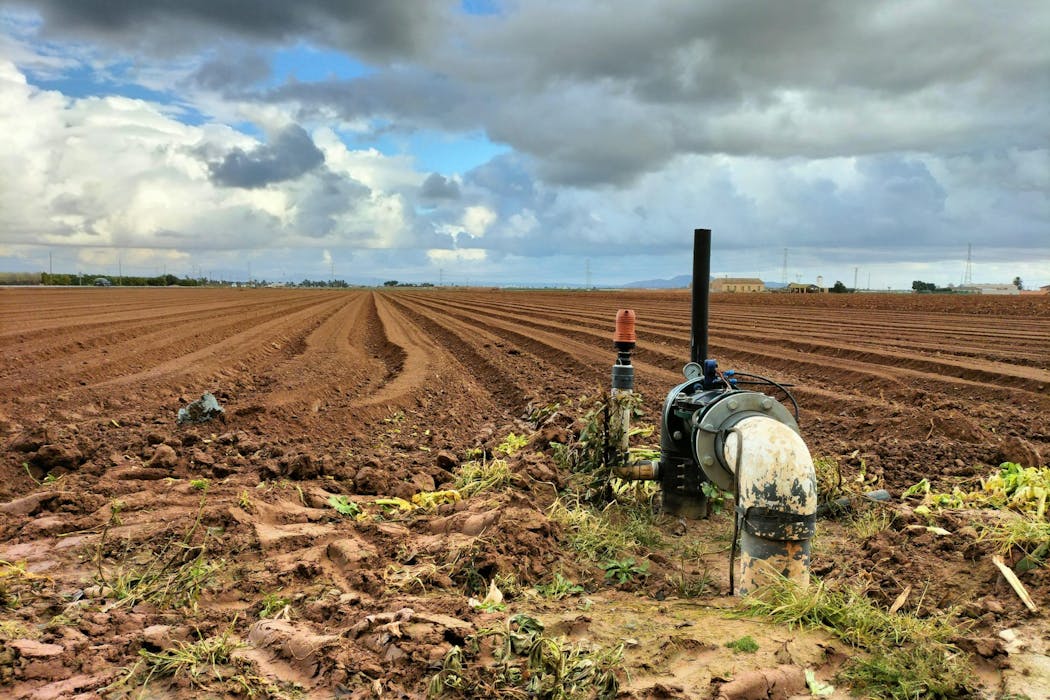
El regadío se identifica tanto como un problema de desertificación como una barrera contra el mismo. Esta doble concepción puede integrarse en uno de los clásicos síndromes de desertificación. Se trata de un caso de desarrollo socioeconómico que deriva en la sobreexplotación de los recursos hídricos. Julia Martínez, CC BY-SA
En 2027 se cumplirán cien años desde que se empleó por primera vez el término desertificación. Durante este siglo se han logrado diversos avances conceptuales y de concienciación sobre ese grave problema socioambiental, además de algunas propuestas solventes. Sin embargo, prevalecen diversas confusiones que impiden el desarrollo de soluciones verdaderamente efectivas. Una de ellas es la identificación de lo qué es desertificación, cuestión que ha obstaculizado, por ejemplo, la localización del problema.
Regadío agroindustrial en Campo de Cartagena (Región de Murcia). Jaime Martínez Valderrama, CC BY-SA
Ni la aridez, ni los desiertos, ni las calimas son desertificación
Como imagen de la desertificación se suelen presentar casos que nada tienen que ver con el problema. Así, es habitual mostrar las típicas formaciones acarcavadas bajo un titular que sugiere que el desierto avanza. Son varios los errores acumulados en estas noticias. Esas geoformas –como las que encontramos en las Bardenas Reales (Navarra y Aragón) o el Campo de Tabernas (Almería)– se denominan malpaís por el hecho de que su incómoda orografía ha imposibilitado históricamente su aprovechamiento, con lo que no han podido ser degradadas por la actividad humana (uno de los requisitos para que haya desertificación).
Además, la desertificación es un problema in situ, no una amenaza externa a modo de meteorito que arrasa un territorio. Del mismo modo, el polvo sahariano que nos visita en forma de calimas cada vez con más frecuencia se asocia con la desertificación, pero se trata de un problema de otra índole. Las sequías y las zonas áridas son otras de las erróneas equiparaciones a este complejo fenómeno socioambiental.
Situado entre Navarra y Aragón, las Bardenas Reales (418 km²) son el área más extensa con formaciones de tierras baldías en la península ibérica. La actividad erosiva está ligada a las fases de incisión cuaternarias de los ríos Aragón y Ebro. Estela Nadal-Romero, CC BY-SA
Los sospechosos habituales
Una segunda familia de casos, habitualmente presentes en las listas de paisajes o síndromes de desertificación, tienen que ver con la agricultura. Se trata de cultivos que debido a su intensificación y malas prácticas desencadenan procesos de erosión, contaminación de suelos y aguas, o degradación de masas de agua, con las consecuentes repercusiones en la biodiversidad.
Ejemplos de ellos son diversos cultivos leñosos (olivar, almendro y vid) o las frutas y hortalizas (cultivos tropicales, invernaderos, cítricos, etc.). Estos “paisajes de la desertificación”, tal como se denominan en la Estrategia Nacional de Lucha contra la Desertificación (ENLD), representan al mismo tiempo soluciones económicas para muchas regiones, lo que dificulta enormemente su reconversión.
No resulta sencillo reconducir la agricultura intensiva en los alrededores del Parque Nacional de Doñana cuando constituye la principal vía de ingresos de muchas personas. Comprender en profundidad los mecanismos implicados –tanto socioeconómicos como biofísicos– es fundamental para que el desarrollo económico no sea efímero, sino verdaderamente sostenible.
En España, como en otros países de su entorno, se ha producido un éxodo rural que ha desencadenado unas dinámicas y apaciguado otras. Lo que vemos desde las ciudades es un paisaje más verde, consecuencia de que ya no utilizamos leña para calentarnos y cocinar, de que gran parte de la ganadería ha sido estabulada y muchos cultivos, abandonados.
Muchas zonas, previamente degradadas, tan solo son capaces de albergar matorrales; en otras se producen incendios debido a la acumulación de material inflamable. Por otra parte, pese al aumento de la superficie forestal, pocas masas boscosas se parecen a las originales. Hay especies invasoras y bosques que se secan.
El abandono del territorio es un paisaje de desertificación llamativo: contraviene la norma de que la degradación ocurre por sobreexplotación de los recursos, no por subexplotación.
Los matorrales se siguen considerando como hábitats degradados, cuando en muchas zonas áridas son la única posibilidad real del territorio para albergar vegetación. Sus funciones ecológicas no son nada desdeñables. Jaime Martínez Valderrama, CC BY-SA
Considerar que una densa masa de matorrales sea degradación no encaja con su papel protector frente a la erosión, su fijación de carbono o la facilitación de fases más avanzadas de ocupación.
Quizás no sea tan buena idea que el ganado desaparezca por completo. Si lo gestionamos adecuadamente y lo movemos puede ayudar a mejorar el entorno y crear fuentes de riqueza alternativas. En el fondo, puede ser una pieza más de la gestión forestal, que a su vez es un engranaje de la planificación territorial.
Todas estas afirmaciones son ciertas según el contexto, por lo que cuesta mucho decir si son o no desertificación. La cuestión es bastante más compleja, y depende de sus sinergias y condicionantes.
Jugando al despiste
Para complicar el panorama entran en juego otros dos casos que distorsionan nuestra percepción de la desertificación. En muchas ocasiones la degradación ocurrió hace demasiado tiempo como para considerar que un paisaje que observamos era otro mucho más brioso.
La tala de árboles y los posteriores episodios de erosión han convertido hermosas sierras cubiertas de bosques en estériles pendientes polvorientas. Los dispersos matorrales que las cubren pasan, a ojos de las generaciones que las conocen por primera vez, por áridas sierras que siempre fueron así.
Por último, tenemos el caso en el que el desplazamiento es espacial. El comercio global mueve mercancías de una punta del planeta a otra y, a rebufo, la degradación salta de un continente a otro. Así, la mencionada estabulación del ganado reduce la presión sobre el territorio, pero ha supuesto que se talen miles de hectáreas de bosques primarios para cultivar soja, la base de los piensos que alimentan a esa ganadería. Esa exportación de degradación elimina paisajes de desertificación en unos territorios, pero crea profundas heridas en otros.
Paisajes de desertificación, una herramienta esencial
Las situaciones analizadas permiten actualizar los paisajes de desertificación identificados inicialmente en el proyecto SURMODES, posteriormente incorporados al Programa de Acción Nacional de Lucha contra la Desertificación (PAND) y a la ENLD.
Los paisajes resultan especialmente útiles por su escala espacial, que coincide con la de los procesos de desertificación. Además, facilitan la comprensión del problema al sintetizar, de forma cualitativa, las interacciones entre los factores socioeconómicos y biofísicos. Esta descripción –y, sobre todo, la reflexión sobre las verdaderas causas de su desarrollo, los motores del fenómeno y sus efectos– puede contribuir a establecer las bases para diseñar soluciones eficaces y sostenibles.
Jaime Martínez Valderrama recibe fondos de Fundación Biodiversidad.
Javier Martí Talavera recibe fondos de Fundación Biodiversidad.
Jorge Olcina Cantos recibe fondos de Fundación Biodiversidad.
After years of disciplined reform and painful sacrifice, Jamaica had done what few global debt specialists thought possible. Through tough and sometimes controversial spending cuts and fiscal discipline, it slashed its debt from a staggering 150% of GDP in 2013 to just 62% by 2024.
By 2025, Jamaica was hitting its stride. One internationally recognised credit rating agency upgraded the country’s credit ratings from category BB- to BB (slightly less vulnerable in the near term to adverse economic conditions).
This gives the country more leeway to borrow on the international market. Unemployment and crime rates were falling. Jamaica’s economy was on track for one of its best years in decades.
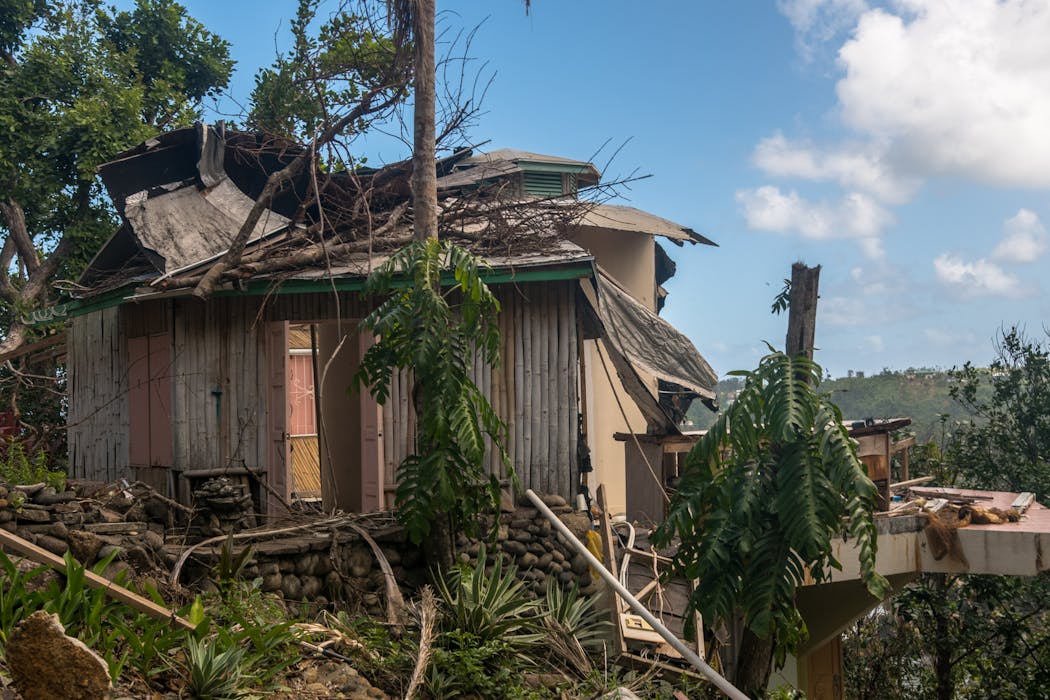
However, in late October Hurricane Melissa, a Category 5 storm, tore across the island, leaving catastrophic destruction in its wake. The island nation was prepared, but not protected.
Preliminary estimates put the damage at a staggering US$7 billion (£5.3 billion) – equivalent to 28-32% of last year’s GDP. Jamaica has a multi-layered financial safety net: a contingency fund, catastrophe insurance through the Caribbean Catastrophe Risk Insurance Facility – which will pay out US$91.9 million, its largest ever payout – and a US$150 million catastrophe bond.
But these buffers barely make a dent in the US$7 billion recovery bill. There is a shortfall of more than US$6 billion. Given the scale of the destruction, Jamaica will likely have to borrow to fund its recovery – deepening its debt, just as it had emerged from a debt crisis.
This loop of disaster, debt, recovery and the another disaster does not just affect Jamaica. Increasingly frequent climate disasters wipe out years of progress in small island developing states, forcing them into increasingly costly borrowing to fund their recovery.
One study shows that climate destruction is becoming more expensive for small island developing states such as Fiji, Guyana and the Dominican Republic, because these nations typically rely on expensive private external debt to cover their disaster recovery costs.
Our team at the thinktank ODI Global estimates that between 2000 to 2022, extreme weather events in small island developing states may have caused an estimated total of US$141 billion in economic loss and damage, of which US$53 billion (38%) could be attributed to climate change.
For severe tropical cyclones and hurricanes, the estimated total economic loss and damage during the same period could be as high as US$122 billion. Climate change may have been responsible for US$52 billion of that. This translates to a total loss of US$5.3 billion from hurricanes, with US$2 billion attributable to climate change each year.
For countries with fragile economies and limited fiscal space, these shocks are existential. Each dollar spent on rebuilding is a dollar not spent on healthcare, education or infrastructure. To meet their development goals, small island developing states would need to raise social spending by 6.6% of GDP by 2030.
Yet disaster recovery and debt repayments continue to consume their limited budgets. The ODI global study found that among 23 small island developing states, external debt service payments are now growing faster than spending on education, health and capital investment combined.
What is loss and damage? An expert explains.
A wake-up call
Jamaica’s story is a preview of what’s to come if the world doesn’t change course.
As global leaders gather for the UN climate summit, Cop30, Jamaica’s devastation should be a wake-up call. The promise of the fund for responding to loss and damage, launched in 2023 to help developing countries pay for the damage from climate-related events caused by global warming, remains largely unfulfilled, woefully undercapitalised, and a low priority for developed countries.
Indeed, loss and damage issues are being currently sidelined at Cop30, with the overall 2035 climate finance goal, national pledges known as nationally determined contributions, and adaptation indicators being top of the agenda. Small islands such as Jamaica, represented by the Alliance of Small Island States (a coalition of leaders of these most vulnerable nations), flagged concerns before the conference had even begun that loss and damage finance has fallen off the radar completely.
Fiji Red Cross has provided thousands of people with emergency relief since Cyclone Winston made landfall in Fiji on Feb 2016. ChameleonsEye/Shutterstock
Developed countries can help ensure the viability of small island developing states in a harsh climate context by offering predictable and accessible grant finance for loss and damage to support recovery and reconstruction. By providing debt relief for climate-vulnerable countries after disasters, they can also ensure that rebuilding does not result in deeper debt.
Without these commitments, the loss and damage fund risks drifting into obscurity as a symbolic gesture rather than the lifeline small island developing states desperately need.
Hurricane Melissa’s impact on Jamaica, Hurricane Maria’s devastation in Dominica in 2017 and several other climate disasters demonstrate that even with fiscal discipline, prudent planning, strong institutions and improved governance, these small island nations remain just one storm away from fiscal collapse and unsustainable debt – the repayment of which diverts critical resources from health, education, and sustainable development.
Without decisive action, Cop30 will fail the world’s most climate-vulnerable nations. Small island developing states need real systemic change, not unfulfilled pledges.
Don’t have time to read about climate change as much as you’d like?
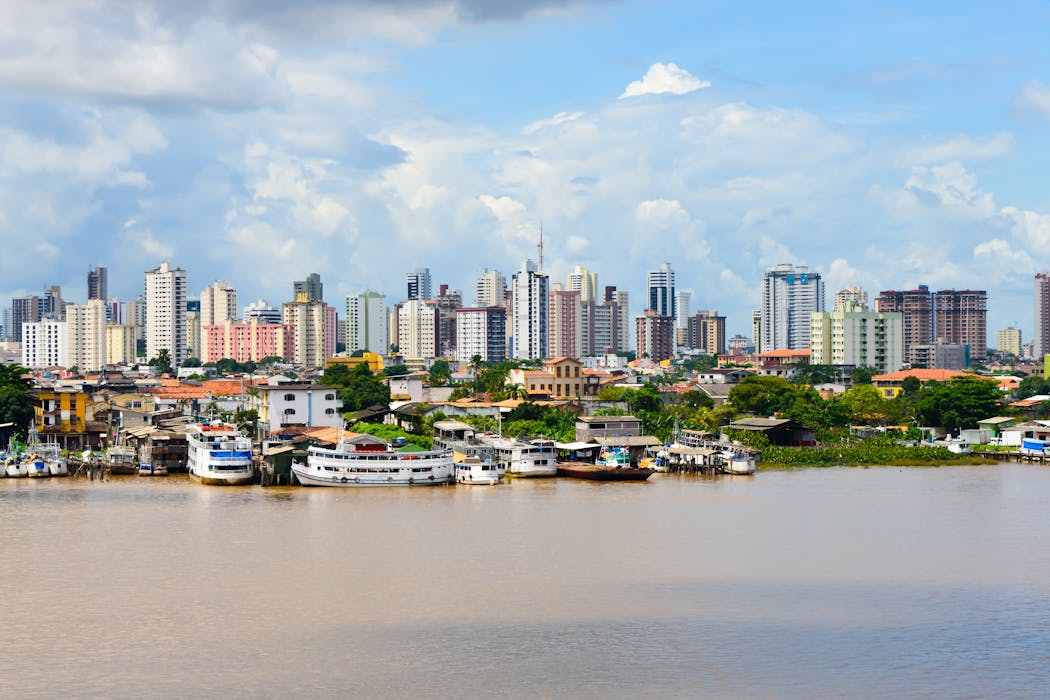
Belém has more than 1 million people yet is too small for a modern ‘Cop’. Maritime Art Blog / shutterstock
If you’re still heading to this year’s UN climate conference in Belém, Brazil, I hope you booked early. Hotels long sold out, and latecomers face extortionate rates – or the prospect of a dubious “love hotel”.
The incredible cost and variable quality of accommodation have sparked outrage. It’s been the subject of high-level meetings and dialogues. But it’s also a symptom of a wider problem: these climate summits have grown so large they’re no longer fit for purpose.
I have been to 11 of these summits over the years, and follow them closely for my academic work, and with the Earth Negotiations Bulletin – a free, curated summary of global environmental negotiations. Cop30, which started on November 10 in Belém, is the first I have missed since Cop18 in Doha in 2012.
I have seen first hand how these annual negotiations and accompanying summit and events (together, broadly called Cops) have grown. They are now MegaCops – enormous conglomerations of events, parallel workshops, receptions, exhibitions and photo ops that attract over 50,000 people. They are the largest events on the UN calendar.
Even with a population of 1 million, Belém is too small. Most cities are. Only a handful of wealthy countries can hope to host them. Many negotiators from poorer countries, along with Indigenous and civil society groups, simply can’t afford to attend this summit.
All this means power is subtly shifting further towards those with the money to participate and host. This bodes poorly for global climate governance.
Prestige and power, for those who can pay
Cities and countries big enough to host a Cop gain some soft power in exchange for the large bill they foot. For instance Paris hosted 25,000 people for the summit in 2015, which cost around €187 million (£164m). In return, the city got its name on a climate treaty we’ll be talking about for decades.
Other MegaCop hosts have also pushed to have an outcome with their name, like the UAE Consensus or Glasgow Climate Pact. It’s hard to imagine a Majuro Pact simply because the Marshall Islands capital won’t be hosting 50,000 diplomats anytime soon, despite the island nation’s climate leadership.
The host countries also set the themes for high-level events and gain support for political declarations of their choosing. The UAE-hosted Cop in 2023 featured declarations on health, renewable energy, peace and gender (among others). None mentioned phasing out fossil fuels. This was no accident – the UAE was reluctant to push its fellow oil-producing states towards such language in the negotiations.
Recent Cop hosts have been oil-producing and exporting states such as the UAE, UK, and Azerbaijan. It’s perhaps little wonder that they spearhead declarations outside the negotiation space on peace or forests, and not fossil fuels.
Too big for small countries
Far fewer declarations have focused on loss and damage (UN jargon for the permanent consequences of climate change), at a time when lives and livelihoods are at risk. Small island states – some of the most climate-vulnerable nations in the world – could get this message across, but these efforts require diplomatic capacity.
Successful Cop hosts have networks of ambassadors or professional diplomats to sound out ideas from negotiators. They can rally consensus in negotiations and support for the president’s various legacy initiatives and declarations. Small countries often lack this capacity. Last year, 39 small island states together sent 261 negotiators to the summit (an average of six or seven people each, compared to the UK’s 37 diplomats).
Cop hosts sometimes find donor money to hire consultants to manage public relations and provide legal and technical advice. Many of these consultants are from developed countries, which has led to questions about their influence.
Inequality in the pavilion
It’s a pervasive myth that a bigger Cop is a more inclusive Cop. It just means more people. At Cop27, there were twice as many fossil fuel lobbyists as Indigenous peoples’ representatives, for instance.
Richer Cop participants can also pay to get their messages across. In Brazil, space in the pavilion – the exhibition zone that runs alongside the main negotiations – starts at US$1,250 (£856) per square meter, excluding additional costs for audio and visual equipment, coffee machines, and decor. These pavilions are offered on a commercial basis by the host countries to help recoup costs.
Governments, corporations and NGOs with deep pockets buy space to host events, distribute their reports, and push their preferred solutions. From the WWF’s Panda Hub to the Gulf Cooperation Council’s space, the pavilion usually focuses on the issues of richer countries and organisations.
In smaller spaces, youth and Indigenous peoples are afforded their own pavilions, paid for by donors or donated by the Cop presidencies. These groups are disproportionately affected by climate change. Yet they struggle to be heard above the din.
If the global climate process could shed its obsession with ever-larger Cops, it would be to its benefit. Smaller countries could help set the agenda, and climate-vulnerable voices might not be outnumbered or outspent.
One practical solution would be to split up the three different events: the main negotiations, the summit for political leaders, and the exhibition zone. Negotiations could take place somewhere smaller and less glamorous, perhaps the UN campus in Bonn, Germany. Political summits and climate action showcases could rotate or sometimes be held online.
We could also limit delegation sizes and centre the talks on implementing the rules we already have rather than new rule-making. These changes would reduce costs and make it easier for smaller and poorer countries to have their say. True climate equity demands a rethink of the very process meant to deliver it.
Don’t have time to read about climate change as much as you’d like?
Universal basic income (UBI) has supporters across the political spectrum. The idea is that if every citizen received a payment from the state to cover their living costs, it this will allow them the freedom to live as they choose.
UBI could, for example, let people decide whether to work and let them live in dignity after AI has made their labour redundant. Everyone gets the transfer, so the bureaucratic costs of monitoring who is eligible are removed. At the same time, it seems like a just arrangement as taxpayers also receive their fair share. What’s not to like?
But voters who turned down a UBI pilot in a recent referendum in the German city of Hamburg apparently found something to dislike. A frequent argument against UBI is that recipients will decide to work less. This in turn will make labour (and consequently labour-intensive products) more expensive.
Indeed, a recent study on a UBI experiment has found that recipients of an unconditional monthly transfer of US$1,000 (£760) were significantly less likely to work. And if they did work, they put in fewer hours than a control group who received only US$50 per month.
Supporters of UBI may still argue that the increase in recipients’ wellbeing reported by research is worth these mild economic costs. However, the most striking costs of implementing UBI in practice are often overlooked. If a country implemented a UBI on a large scale, the money to be distributed would have to be raised via new taxes.
The Hamburg pilot would have required public funds to the tune of €50 million (£44 million). Paying out the monthly US$1,000 from the US study to all 55 million adults in the UK would require the government to raise an extra £500 billion per year to fund this scheme.
But why should we care about the public funds needed to finance a UBI scheme? After all, the whole point of UBI is that these funds are going to be equally distributed among everyone. So isn’t this just some rearranging of money from some rich people to the less well-off?
The simple answer is no. In practice, taxes are always based on some economic activity. If I earn more labour income, I will pay more income tax. If I spend more money at the grocer’s, I will pay more VAT. Income tax reduces my compensation for the leisure time I sacrificed and makes leisure artificially more attractive as compared to working.
All this will affect my decision on how much to work, and means that decision will differ from what I would do if there were no taxes. Economists call this a distortion.
Counting the costs
Due to the distortion that most taxes create, raising public funds imposes costs on society over and above the amount of the money to be raised. One could think of this as if the tax was water that the taxman taps through a leaking hose – some of it will be lost before it is collected.
For instance, economists estimate for the UK that this distortion imposes costs between a tenth and a quarter of an additional pound raised in a proportional increase in labour income tax.
To imagine what this means, suppose the UK wanted to replace the current universal credit system of welfare benefits with a UBI that pays every adult citizen the standard universal credit allowance of £400 per month.
Imagine you are a middle-income taxpayer whose monthly income tax bill would rise by £400 to finance this scheme. Although it might seem fair that you also receive the same transfer as everyone else, you are no better off than you were under the old system due to the tax increase.
Even worse, this extra tax makes working less attractive for you, as explained above. This distortion makes your labour supply choices less efficient. It implies that this imposes further costs of £40-£100 on society.
The total funds needed to pay £400 per month to every adult in the UK is £22 billion, compared to the £7.3 billion that the government currently spends on universal credit. This means (based on the example above) that the extra funds needed for a UBI of that size would impose a loss between £1.5 billion and £3.7 billion per month purely due to the distortion that raising these funds creates.
Pilots on UBI typically distribute money that was gained through a windfall such as a donation. Consequently, studies based on these events focus on the effect on the people receiving the UBI transfer. However, governments cannot rely on windfalls – and the costs of raising the funds needed to implement a large-scale UBI system cannot be ignored.
Economists aren’t all naysayers against redistribution. Redistribution is an important feature of a fair society. However, there’s a strong arugment that UBI is a bad way of achieving this.
Instead, governments should aim to avoid taxes that distort behaviour. A carefully designed means-tested benefits system can have the same redistributive effect as UBI – at less cost to the state.
Ansgar Wohlschlegel thanks Benjamin Anthony, MSc candidate at Swansea University, for research support and discussions during supervision meetings for his dissertation on universal basic income. Dr Wohlschlegel is on the Research Advisory Committee of the Vegan Society.
This year’s new university students are settling into life on campuses often notable for their diversity – and that includes in religion. Over 33,000 Buddhist students started university in the UK in 2023-24, for instance, alongside 769,220 Christian and 37,520 Sikh students.
Universities have a role to play in helping their students relate to others of different religious backgrounds, especially at a time of concern over antisemitism and Islamophobia on campus.
Our research has pinpointed some key things universities can do that make a positive difference. We can also highlight the things they shouldn’t do.
We surveyed 1,000 students twice, one year apart. We wanted to investigate how the university environment, or campus climate, influences how students engage with other religions and worldviews. To assess this we asked students how far they agreed with statements such as “there are people of other faiths or beliefs whom I admire”, “I try to build relationships with people who hold religious or non-religious beliefs that I disagree with”, and “my faith or beliefs are strengthened by relationships with those of diverse religious and non-religious backgrounds”.
We call students’ positive engagement with differences in religion and worldview their “pluralism orientation”.
Diversity, discussion and safety
We found that three key features of the campus climate affect how positively students feel about difference in religion and worldview.
First, students feel more positive about difference when they see a diversity of worldviews around them. When students think of their campus as a place inhabited by students of a wide range of religious and non-religious worldviews, this correlates with growth in pluralism orientation. Interestingly, this is less about actual diversity than perceived diversity. We tested an analysis of actual diversity, and it wasn’t significant. It’s what students perceive that makes a difference.
Second, students’ pluralism orientation grows when they have spaces to express their religion or worldview. Having spaces where students feel safe to be themselves, with like-minded others, leads them to have a more positive attitude to those who are different from them.
It might seem paradoxical. But feeling safe on campus, such as through having a chaplaincy space to pray at lunchtime, a student society for others of the same worldview, or a religious diet that’s catered for by the university cafeteria, gives students the resilience they need to engage well with different religions and worldviews.
Third, it’s important that students have critical conversations that help them challenge their own and others’ worldviews.
We call these “provocative encounters”. They are conversations that provoke students to question the stereotypes they hold about others, as well as their unexamined assumptions about their own beliefs. These happen both in the classroom and outside it, as students socialise or live in student accommodation. A Sikh student we interviewed talked about the dinners she cooked for her white Christian and non-religious flatmates. Eating together sparked conversations about their different faiths and cultures.
Striking a balance
We also found that aspects of the campus climate led to students’ pluralism orientation declining. One example is when they heard insensitive comments about their worldview. These might be from friends, peers or staff.
This is a tricky area, as one person’s insensitive comment is another person’s provocative encounter. The key point is that when students feel their worldviews are under significant threat, they’re less likely to engage with religiously different others in a positive way. Instead, they will close down, compartmentalise life and study, and miss out on the value university provides.
Healthy debate is vital to ensuring freedom of speech and helping students grow intellectually. But if students feel under threat, or that their religious views are seen as incompatible with student life, they’ll stop discussing their views, stop sharing their lives with anyone who thinks differently, and interfaith relations will be impaired.
It can help student relations when universities demonstrate that the campus is religiously diverse and represents a wide range of worldviews. This can be done through communications from universities to students, such as by posting “Happy Vaisakhi” or “Eid Mubarak” on social media to acknowledge religious festivals, or by advertising events, such as World Humanist Day.
Creating opportunities for students to have the provocative encounters they need to mature in their own views should be central to what universities do. Students are good at doing this in their own social spaces. But sometimes staff shy away from classroom discussions of students’ worldviews, perhaps out of fear of causing offence.
Some students we spoke to talked about feeling their views were “shut down” by lecturers who didn’t want to discuss religion. This needs to change. Provocative encounters should not turn into coercive or hate-filled shouting matches, but universities should nurture robust debate and dialogue about religion, politics and social relations.
Religion is global and ubiquitous. So it’s something universities should highlight – not avoid. Our findings show the need for institutional practices that promote pluralism. This can be done through providing supportive spaces for students to engage with worldview differences in ways that ensure safety and exploration, creating climates where students learn about religion.
Kristin Aune receives funding from Porticus.
Mathew Guest receives funding from Porticus and the Spalding Trust.
Matthew J. Mayhew receives funding from the Templeton Religions Trust, the Arthur Vining Davis Foundations, the Pew Charitable Trusts, the Educational Credit Management Corporation (ECMC) Foundation, the National Science Foundation, the Alfred P. Sloan Foundation, the Merrifield Family Trust, the Andrew W. Mellon Foundation, the Fetzer Institute, the Ewing Marion Kauffman Foundation, the Merrifield Family Trust, Porticus, and the United States Department of Education.
The resignations of the BBC’s director general and director of news were shocking. Perhaps just as shocking is the US$1 billion legal threat the broadcaster now faces from US president Donald Trump.
The full story of what has happened at the BBC may take months (or years) to emerge. But it’s become evident that a combination of poor editorial judgement and political meddling by longstanding BBC critics contributed to Tim Davie and Deborah Turness’s departures.
That there were editorial mistakes is not in question. The BBC Panorama documentary on Trump spliced together two different parts of Trump’s notorious January 6 2021 speech on Capitol Hill, without making the edit clear.
The programme itself, which was broadcast a few days before the 2024 US presidential election, was arguably carefully balanced, containing an equal number of Trump supporters and detractors. Notably, it did not receive a single complaint at the time of transmission.
It was broadcast a week before the 2024 US presidential election – nearly four years after the speech itself. It wasn’t a programme that was likely to sway anyone’s views of the president, who was impeached for “incitement of insurrection” after January 6. He was later acquitted.
Nevertheless, it was wrong to edit the speech in this way. That error was one of many allegations of institutional bias included in a dossier by Michael Prescott. Until June, Prescott – a former political editor for Rupert Murdoch’s Sunday Times and longtime PR professional – was an external adviser to the BBC’s editorial guidelines and standards committee.
The report was leaked to the Telegraph, which splashed with selected excerpts alleging that the programme had been “doctored”, and listing other editorial problems that he claimed the BBC had failed to put right.
Political influence
The Telegraph, like much of the British press, has for decades waged an editorial war against the BBC. As a publicly funded, free-to-air broadcaster, which is by some distance the most trusted news provider in the UK, the BBC is a serious challenge to news publishers’ commercial interests. It also offends the political sensibilities of those opposed to public funding interventions more generally.
It was therefore only a matter of time before the Telegraph “exclusive” on BBC bias and the Panorama programme escalated, especially once noticed by the White House. As the crisis gathered steam, one of the many burning questions was: why on earth is the BBC not responding?
It has now been reported – including by the BBC’s media editor Katie Razzall and BBC presenter Nick Robinson – that an apology was drafted by the BBC news team and was ready to be signed off a week ago.
Unfortunately, the BBC board reportedly prevented Turness from putting out the apology, instead opting for a letter to MPs on the media select committee. What followed was a damaging vacuum, with the BBC unable to defend itself or acknowledge its error. As internal arguments raged, it simply issued a bland statement that it would respond in writing to the select committee.
Key to this institutional paralysis and the fallout that followed were the political appointees to the BBC board. When the BBC charter was renewed in 2016, the then Conservative government introduced a new governance structure. The BBC would be governed by a unitary board of 14, including a chair, and four part-time members, each representing one of the UK’s nations. These five were all government appointees.
That boardroom dissent was, it now appears, led by those political appointees, in particular Sir Robbie Gibb. Following time as a BBC executive in charge of political programmes, Gibb was Conservative prime minister Theresa May’s director of communications. He was subsequently involved in the founding of GB News, an avowedly right-wing news channel.
In the words of Prospect magazine and former Guardian editor Alan Rusbridger, Gibb “does not pretend to be impartial on issues related to British politics or Israel”.
Gibb was appointed to the BBC board by Boris Johnson, reappointed by Rishi Sunak, and his term runs until 2028. It is therefore unsurprising that Liberal Democrat leader Ed Davey has called for Gibb’s immediate removal from the board and for an end to the practice of political appointments.
The Conversation has reached out to Gibb for comment.
In his letter to the chair of the media select committee on Monday, BBC chairman Samir Shah acknowledged the Panorama mistake and apologised for the news team’s “error of judgement”. He made it clear, however, that Prescott’s report “does not present a full picture of the discussions, decisions and actions that were taken”.
Changes for the future
This peculiar arrangement of political appointments appears to have effectively given partisan appointees a veto over a crucial senior management decision, resulting in the forced departure of the BBC’s two most senior news executives.
While Davey is right that this anomaly needs to be rectified, the whole BBC governance structure is in need of an overhaul. At a time of increasing polarisation and social media misinformation, it is more important than ever that the BBC is protected from political interference.
The next BBC charter, starting from January 2028, offers a perfect opportunity to provide the kind of protective structure that the BBC requires. As part of a campaign to support public service broadcasting in the UK, the British Broadcasting Challenge – a group of academics and media professionals that includes myself and The Conversation’s CEO Chris Waiting – published a report last month calling for a “genuinely independent public appointments process for the chair and trustees, insulated from covert and overt government influence”.
This could be done through a dedicated body set up under the same terms as the wholly independent Press Recognition Panel, with no links to any political party or partisan campaigning group. Such a body could be responsible not just for non-executive BBC appointments (including its chair) but also for the chair of regulator Ofcom and the chair of Channel 4 – both currently in the gift of government.
The Labour government is about to kickstart a debate on the next BBC charter. Lisa Nandy, as the responsible secretary of state, has it in her hands to rectify some of the egregious damage inflicted on the BBC’s reputation by the political meddling of the last few days. Let’s hope that she rises to the challenge.
Steven Barnett is on the management and editorial boards of the British Journalism Review. He is a member of the British Broadcasting Challenge which campaigns for Public Service Broadcasting. He is on the Advisory Board of the Charitable Journalism Project which campaigns for public interest journalism and on the board of Hacked Off which campaigns for a free and accountable press.
Source: The Conversation – UK – By Stewart Lansley, Visiting Fellow, School of Policy Studies, University of Bristol
In the run-up to the 2024 election, future prime minister Keir Starmer labelled wealth creation Labour’s number one mission. “It’s the only way our country can go forward,” he declared. “We should nourish and encourage that – not just individuals but businesses.”
Starmer was right, in theory. But wealth creation is a slippery concept. Essential for economic and social progress, it can also work against both. It’s therefore vital to distinguish between “good” and “bad” wealth.
According to one definition, increases in “good” wealth come from innovation, investment and more productive business methods. Such activity boosts economic resilience, social strength and the size of the economic cake.
Examples include investment in medical and scientific technology – but also, crucially, in the activities that provide vital everyday services and goods to sustain our daily lives. Improvements in the quality of local shops, transport, services for children, adult care and decent hospitality all expand a country’s resources in ways that see the gains shared widely across society.
However, over the past half-century, a rising share of economic activity in the UK and other rich countries has been connected with “bad” wealth accumulation, which actively hampers and harms a country’s prospects.
The Conversation and LSE’s International Inequalities Institute have teamed up for a special online event on Tuesday, November 18 from 5pm-6.30pm. Join experts from the worlds of business, taxation and government policy as they discuss the difficult choices facing Chancellor Rachel Reeves in her budget. Sign up for free here
Bad wealth is especially associated with non-productive or low social-value activities geared to personal enrichment. In Britain and elsewhere, decades of privatisation and wider tax, benefit and monetary economic policies have
fuelled rising inequality while handing much of the command over resources to corporate boardrooms, top bankers and the very rich – with damaging effects for societies and economies alike.
A central source of bad wealth has been a rise in the level of economic “extraction” or “appropriation”. This occurs when capital owners use their power to capture excessive shares of economic gains through activity which weakens economic strength and social resilience. Examples include the rigging of financial markets and manipulation of corporate balance sheets, a range of anti-competitive devices such as the rise in aggressive acquisitions and mergers, and the skimming of returns from financial transactions – a process City of London traders like to call “the croupier’s take”.
Bad wealth is also the product of passive activity unrelated to merit, skill or prescient risk-taking. Over half of the increase in household wealth in the UK since 2010 has come from rising asset prices – in particular relating to property – rather than from more productive activity. This means a huge amount of that wealth is trapped in property and other assets which are not available for reinvestment in the economy.
Britain’s economic record since the 2008 financial crisis has been dismal, with a collapse in the rate of economic growth amid much hand-wringing about its “productivity puzzle”. Yet over the same period, private wealth holdings have surged. In total, UK wealth – comprising property, physical and financial assets – is now more than six times the size of the country’s economy, up from three times in the 1970s. Other rich countries have seen similar trends.
This surge in levels of personal wealth is not the product of more dynamic and innovative economies and record rates of investment. As an editorial in UK financial investment magazine MoneyWeek argued in 2019, too much personal wealth is the result of “mismanaged monetary policy, politically unacceptable rent-seeking, corruption, asset bubbles, a failure of anti-trust laws, or some miserable mixture of the lot”.
It is these activities which account for the burgeoning bank accounts of the already super-rich. Around the world, from the mid-1990s to 2021, the top 1% of wealth holders captured 38% of the growth in personal wealth, while the bottom 50% received just 2%. In the UK, the average wealth of the richest 200 people grew from 6,000 times the average person in 1989 to 18,000 times in 2023.
One of the most important outcomes of the rise of bad accumulation, and the associated surge in the concentration of personal wealth, has been the way opulence and plenty sit beside social scarcity and growing impoverishment. It has brought a significant shift in how national resources are used – away from meeting basic needs to serving the demands of corporate elites, a growing billionaire class, and private markets.
“The test of our progress is not whether we add more to the abundance of those who have much,” declared US president Franklin D. Roosevelt during his second inaugural address in January 1937. “It is whether we provide enough for those who have too little.”
By most metrics, Britain and many other wealthy countries are failing that test.
A key explanation for Britain’s low private investment, low productivity and slow growing economy is the disproportionate share of the rising profit levels of Britain’s biggest companies that has gone in payments to shareholders and executives in recent times. Dividend payments in the UK and globally have greatly outstripped wage rises over the last 40 years. In 2020, aggregate dividend payouts by the FTSE 350 companies made up some 90% of pre-tax profits.
Often, these heightened dividend payments have been financed through borrowing, thus undermining corporate strength. In the case of Thames Water – stripped of much of its value by an aggressive profit strategy by its overseas owners – this has brought near-bankruptcy.
Meanwhile, far from the promise of a property-owning society, large sections of the UK population have – outside of pension provision – no, or only a minimal, stake in the way the economy works. Those with few assets lose out from rising property prices and higher interest rates on savings.
How a nation’s productive resources – land, labour and raw materials plus physical, social and intellectual infrastructure – are owned and used is key to its productive power, social stability, and distribution of life chances. “Money is like muck – not good except it be spread,” wrote the English philosopher and statesman Francis Bacon in 1625.
In the UK, the more egalitarian politics after the second world war led to a more equal sharing of private wealth, and a much higher level of public ownership of key utilities and land. Then in 1979, newly elected prime minister Margaret Thatcher launched her drive for a “property owning democracy”. The windfall gains from council house sales and the selling of cut-price shares in her great privatisation bonanza initially benefited many ordinary people.
But today, the balance sheet looks markedly different. While the sale of council houses initially boosted levels of home ownership in the UK, the number of first-time home buyers is now less than half its mid-1990s rate. As a result, the rate of home ownership has shrunk from a peak of 71% in 2000 to 65% in 2024, with the most marked decline among those aged 25-34.
Getting on the housing ladder is now heavily dependent on having rich parents. The proportion of young people aged 18-34 living with their parents reached 28% in 2024 – a significant rise since the millennium.
At the same time, today’s much more heavily privatised economy has eroded Britain’s holdings of common wealth. Publicly owned assets as a share of GDP have fallen from around 30% in the 1970s to about a tenth. This is one of the principal causes of the deterioration in the UK’s public finances, while handing more control over the economy to private company owners.
The French economist Thomas Piketty has argued that today’s model of corporate capitalism has a natural, inbuilt tendency to generate ever-growing levels of inequality – “a fundamental force for divergence”, as he termed it.
When the return on capital from dividends, interest, rents and capital gains exceeds the overall growth rate, asset holders accumulate wealth at a faster rate than that at which the economy expands, thereby securing an ever-greater slice of the pie – and leaving less and less for everyone else.
In his 2014 book, Capital in the Twenty-First Century, Piketty offered an essentially pessimistic conclusion that breaking this inequality cycle has only happened across history through war or serious social conflict. In response to critics, he modified this position and now seems to accept that there are democratic mechanisms for delivering more equal societies – whatever the undoubted hurdles of implementation.
Suppressing the profiteering and excessive returns that have driven higher levels of inequality is one of the biggest challenges of our time. But such an alignment of growth and rates of return on capital was broadly achieved in the post-war era, and there are several routes for achieving such convergence again – even in today’s very different conditions.
1. Shift the tax focus from income to wealth
Despite the scale of today’s wealth boom, Britain’s tax system is still heavily biased to earnings. Income from work is taxed at an average of around 33% and wealth at less than 4%. Through political inertia, the UK tax system has failed to catch up with the growing importance of wealth over income in the way the economy operates, and does little to dent the growing concentration of wealth holdings at the top.
In her first budget in October 2024, the chancellor, Rachel Reeves, took steps to raise revenue through changes to inheritance and capital gains tax (the profits made on selling shares or property other than your home). But these were too modest to alter the imbalance in the taxation of wealth and earnings.
A more fundamental shift would be to reform the existing system of council tax with a larger number of tax bands at the top. Still based on 1991 property values, this is perhaps the least defensible tax in Britain. Households in poorer areas pay more than better off households in the richest.
In Burnley, the typical household pays some 1.1% of the value of their home in council tax every year. In a typical property in Kensington and Chelsea, it is 0.1%. The most effective alternative would be to replace council tax and stamp duty – the tax on the purchase of homes – with a single progressive or proportionate “property tax”. Any serious reform requires a long overdue property revaluation and an extension in the number of tax bands.
A modest and phased rise in capital taxation would also help to break up today’s wealth concentrations and reduce the passive – and often malign – role played by wealth holdings. Even small changes would release funds which could be used to improve social infrastructure from schools to hospitals.
One such change, as recommended by the Office for Tax Simplification, should be to raise the rates on capital gains tax so that they are equal to income tax rates. In 2024, 378,000 people paid UK capital gains tax worth a total of £12.1 billion – a decrease of 19% on the previous year.
Measures to limit asset inflation could include extending the Bank of England’s remit on inflation to limit rises in property prices, which have led to historically high rents and priced a rising proportion of young people out of home ownership.
2. Reduce how much wealth gets passed on
“A power to dispose of estates forever is manifestly absurd,” the Scottish economist Adam Smith declared 250 years ago. “The Earth and the fulness of it belongs to every generation, and the preceding one can have no right to bind it up from posterity. Such extension of property is quite unnatural.”
Despite Smith’s exhortations, birth and inheritance remain the most powerful indicators across most countries of where you end up in the wealth stakes and the pattern of life chances.
Importantly, inheritance does little to boost productive activity. Higher ratios of inheritance in wealth holdings – and recent decades have seen an upward shift – tend to be associated with reduced economic dynamism. Assets tied up in large wealth pools are often little more than “dead money”: idle resources that could be put to use funding public services or productive investment.
Yet, helped by light taxation, social privileges continue to be handed on in perpetuity. Only 4.6% of deaths in the UK resulted in an inheritance tax charge in the 2023 financial year, contributing a tiny 0.7% of all tax receipts.
Around 36% of all wealth is stored in property, and there is a strong public attachment to people retaining their inherited housing wealth – even among those who are not beneficiaries. In part, inheritance tax is widely perceived as unfair because of the way the richest are able to avoid it.
Of people born in the UK in the 1980s, those in the poorest fifth by wealth will enjoy an average 5% boost to their lifetime income through inheritance, compared with 29% for the top fifth. Clearly, those on the wrong side of this gap will be left even further behind by the end of their lives.
And the divide is widening sharply. The scale of intergenerational wealth transfer is on a steeply upward trend, with projected levels of inheritance set to dwarf all previous wealth transfers in the coming decade. Little of this process contributes to more productive activity, with one of its primary and malign effects being to fuel higher house prices.
3. Introduce a ‘whole wealth’ tax
Another much-debated option would be to levy a new tax on whole wealth holdings, rather than just the revenue these assets generate. An annual 1% tax on wealth over £2 million – affecting some 600,000 people in the UK – could raise around £16 billion a year, according to the 2020 Wealth Tax Commission report.
Such taxes would be easier to levy on immobile assets like buildings and land taxes than on liquid assets, such as financial holdings. But this complexity is not insurmountable – and nor is public opinion. Such a measure could be sold politically as a “solidarity tax” to help pay for key under-resourced but high social-value services – such as a proper social care system and improved services for children.
While many governments have been wary of the political reaction to higher taxes on wealth, YouGov’s most recent survey suggests around three-quarters of the public now support such a tax, with more than half strongly supporting it.
The Inequality Crisis – a talk by the article’s author, Stewart Lansley, in March 2013. Video: RSA.
4. Increase public ownership of utilities and services
Tackling inequality and profiteering also require a greater level of common and social ownership. Britain is a heavily privatised and marketised economy. Few other developed countries have handed over such control of key utilities to private firms.
Privatised in 1989, Britain’s water industry has been turned into a potent example of profiteering. Under private ownership, it has delivered leaky and unrepaired pipes, the illegal dumping of sewage spills into rivers and beaches, and two decades of under-investment in large part because of the disproportionate share of profits going in dividend payments to mostly overseas owners.
Another significant trend has been the private takeover of a range of public services – from social care to children’s services. According to the Competition and Markets Authority (CMA), the UK has “sleepwalked” into a dysfunctional system with widespread profiteering in privately run children’s homes. It found operating profit margins averaging 22.6% from 2016-20, driven by escalating charges and cost-cutting.
These examples of bad accumulation have hollowed out some of the UK’s most vital industries. A mix of public and social ownership and much more effective regulation are necessary to turn these industries into effective service providers rather than cash machines for investors.
Regulatory reforms are also needed to moderate the way some markets work. The CMA suggests that anti-competitive behaviour and “oligopolistic structures” are hallmarks of a rising volume of business activity. For example, it has accused the UK’s seven largest housebuilders of collusion on issues from pricing to marketing.
Price gouging – when firms exploit emergencies such as the COVID pandemic and Russia’s invasion of Ukraine to charge excessively high prices for essential goods – is another area ripe for tougher intervention.
5. Establish citizens’ wealth funds
Alongside greater social ownership, all citizens need to be given a more direct stake in the gains from economic activity. As one heckler put it during the Brexit referendum: “That’s your bloody GDP, not ours.”
One route would be to build models of “people’s capital” through a new strategy of asset redistribution to individuals. This would extend the principle of income redistribution that has been one of the main, if now much weakened, pro-equality instruments of the post-war era. A medium to long-term plan would be to create one or more national and local “citizens’ wealth funds”, owned collectively by all on an equal basis.
Originally advanced by the British economist and Nobel laureate James Meade, such funds would be created by the state but owned by society, with returns distributed either as universal dividends or as investment in public services. Such a fund could be financed from a mix of sources including long-term government bonds; the transfer of several highly commercial state-owned enterprises, such as the Land Registry, Ordnance Survey or Crown Estate; part of the proceeds from higher wealth taxes; and new equity stakes in large corporations.
Anchorage, capital of the US state of Alaska, which operates a permanent fund for its citizens. TripWalkers/Shutterstock
Perhaps the most notable example of citizen-owned capital is the Alaska Permanent Fund. This was created in 1976 from oil revenues and effectively owned by all of the US state’s citizens. It has since paid out a highly popular annual dividend which averages about US$1,150 (£875) a year.
The UK has its own example: also in 1976, the Shetland Islands Council established a charitable trust from “disturbance payments” paid by oil companies in return for operational access to the seas around the islands. The returns from this trust have been used to fund social projects, from leisure centres to support for the elderly.
Another possibility is to establish a national pension fund that would eventually pay for the cost of state pensions. Australia’s Future Fund, for example, is an independently managed sovereign wealth fund to meet future civil service pension obligations. Established in 2006 by receipts of AUS$50 billion (£20 billion) from the sale of Telstra, the national telecoms company, it has since been supplemented by direct government grants and is projected to reach a value of AUS$380 billion by 2033.
The UK government has launched the Community Wealth Fund, a £175 million initiative aiming to “transform neighbourhoods with long-term financing”. Working with local communities the initiative will fund projects in local communities across England. Despite its modest finances, this establishes the principle of collectively owned social funds. This is funded through the government’s Dormant Assets Scheme, which unlocks old bank accounts and other financial products that have been left untouched.
6. Spread access to the nation’s assets across society
Any meaningful redistribution of wealth across society requires a suite of deep structural reforms from improving access to affordable housing to reducing levels of corporate extraction.
One of the most important issues is finding ways of extending access to assets to all citizens as a condition of democratic opportunity. The Child Trust Fund, introduced by New Labour in 2005, was an ambitious attempt to address wealth inequality by giving every child a modest financial stake – a kind of citizen’s inheritance. Yet the scheme was abolished in 2010 by the incoming coalition government.
In the event, it only achieved a modest impact. Average payouts when children reached 18 were around £2,000, with a quarter of all accounts being forgotten or lost. The desired shift in household saving habits tended to be limited to more affluent parents paying extra into the trust funds, meaning the policy reinforced some of the inequalities it had aimed to challenge.
Bold decisions required
While recent years have seen a growing debate about the impact of ever higher concentrations of wealth in the UK, few proposals for real change – beyond a mere tampering at the edges of inheritance and capital gains tax – are yet on the political agenda. Some of these measures would take longer to achieve, and some, such as citizens’ wealth funds, are more ambitious and potentially transformative than others. All would require bold decisions by government.
In the run-up to her much-anticipated November 26 budget, the chancellor has hinted that higher taxes on the wealthy will be “part of the story” – although a manifesto-busting rise in the base rate of income tax is also on the cards.
Against this, Reeves has ruled out a standalone wealth tax, and there appear to be no plans for more radical measures to rein in excessive profiteering. This means that the wealth gap is probably set to widen.
Yet history suggests the idea of limiting high concentrations of wealth is far from utopian. Limits operated relatively effectively among nations including the UK and US in the post-war decades, through a combination of regulation, highly progressive taxation and changes in cultural norms.
The highest personal fortunes were more modest in part because of the destructive effect of war on the size of asset holdings. There was also a new social and cultural climate that would not have tolerated today’s towering fortunes, and which allowed the post-war progressive tax systems to be maintained for decades.
Restructuring the process of wealth accumulation is never going to be straightforward politically. The protests over the adjustment to inheritance tax in 2024, in particular its impact on farmers, demonstrates how sensitive these issues are – particularly when stoked by those seeking to make political capital out of pro-equality reforms.
But Britain stands at a historic moment. Failure to tackle mounting wealth-driven inequality will have harmful consequences for the social and economic stability of generations to come. Amid rising public anxiety about the future and a widespread sense that the economy is “rigged” against ordinary people, a more ambitious political agenda that addresses inequality and economic stagnation could win public backing, if any government is brave enough to try.
The Conversation and LSE’s International Inequalities Institute have teamed up for a special online event on Tuesday, November 18 from 5pm-6.30pm. Join experts from the worlds of business, taxation and government policy as they discuss the difficult choices facing Chancellor Rachel Reeves in her budget. Sign up for free here
To hear about new Insights articles, join the hundreds of thousands of people who value The Conversation’s evidence-based news. Subscribe to our newsletter.
Stewart Lansley is a fellow of the Academy of Social Sciences. His latest book, The Richer, The Poorer: How Britain Enriched the Few and Failed the Poor, is published by Bristol University Press.