How new asylum policies will affect child refugees

Source: The Conversation – UK – By Ala Sirriyeh, Senior Lecturer in Sociology, Lancaster University

shutterstock Sean Aidan Calderbank/Shutterstock

The home secretary, Shabana Mahmood, has announced plans for the biggest overhaul of the UK asylum system in decades. Some of the harshest criticism of the proposals has come from Labour peer Lord Alf Dubs, a former child refugee who came to Britain on the Kindertransport from Prague in 1939. He has said that the home secretary is seeking to “use children as a weapon”.

There is a long history of refugee children becoming moral touchstones in debates around asylum. For example, photos of the body of Syrian toddler Alan Kurdi, during the 2015 so-called refugee crisis, were a catalyst for an unprecedented outpouring of compassion among media, the public and politicians.

In the year ending June 2025, there were 88,738 asylum applications to the UK relating to 111,084 people. Of these, 15,123 were child dependents (children who are included on a parent’s asylum application).

Other children enter through family reunion visas once their parent has gained refugee status. In 2024, 10,728 family reunion visas were granted to children under the age of 18. However in September 2025, in the face of growing public discontent with the asylum system, the government paused new applications for family reunion from refugees.

Under the new plans, refugees will not be allowed to apply for family reunion, unless they are able to transfer to a work or study visa.

Removing support

The UK currently has a legal duty to provide accommodation to asylum seekers who would otherwise be destitute. The government argues that this incentivises people to make dangerous journeys across the English Channel, including with babies and children.

Labour minister Steve Reed has claimed that the new system would remove such incentives and save lives. This is a familiar justification for restrictive asylum policies and an example of what I call “compassionate refusals”, whereby politicians argue that the removal of support or the infliction of punitive measures will alleviate suffering or avoid future suffering.

The Home Office says that the current system allows people to “exploit the fact that they have had children and put down roots in order to thwart removal”.
Currently, destitute families with children who are refused asylum and have exhausted their appeal rights can continue to receive accommodation and basic financial support. Under the new plans, the Home Office will look to remove financial support from families who have been refused asylum, even if they have children.

A smiling Shabana Mahmood walks out of Downing Street with a red folder
The home secretary, Shabana Mahmood, says the asylum overhaul will remove incentives for people to cross the English Channel in small boats.
Zeynep Demir Aslim/Shutterstock

The most significant change appears to be in the government’s approach to removals. Currently, families are not prioritised by the government for deportation. “Our hesitancy around returning families creates particularly perverse incentives,” the proposals say. “To some, the personal benefit of placing a child on a dangerous small boat outweighs the considerable risks of doing so.”

Under the plans, people refused asylum, including children, could be deported if they fail to leave voluntarily.

For families who are granted asylum, the proposals also introduce a new level of uncertainty. Refugee status will be reassessed every 30 months, with the possibility of being returned to their country of origin if it is deemed safe. Some will have to wait 20 years instead of the current five years before they can apply for settlement.

This means that refugees brought to the UK as children could live their entire childhoods in Britain with no guarantee that they will remain in the place they have come to think of as home.

Facial recognition

Specific measures also focus on unaccompanied child asylum applicants. In the year ending June 2025, 3,553 unaccompanied children applied for asylum. They are looked after by local authorities in foster care, or shared semi-independent accommodation with social work support.

A recurring aspect of debate over asylum has to do with arrivals who are age disputed – that is, those who claim to be under 18, but may be older. The assumption is that they claim to be younger to try to access temporary leave to remain, services and support provided to minors. In the year ending June 2024, 6,270 age disputes were raised.

Under the new asylum plan, young people whose age is disputed will be subjected to facial age estimation technology. This technology uses artificial intelligence to estimate the age of the young person, despite concerns about its accuracy.

This issue of age disputes has been under regular media scrutiny, most notably when 220 children were transferred to the UK in late 2016 from Calais. As these (predominantly teenage) boys arrived in Britain, media headlines disputed their age, focusing on appearance such as facial hair and demeanour. Such an approach can reinforce Eurocentric understandings of age, and ignore the toll that conflict and arduous journeys take on bodies and behaviour.

According to current Home office guidance, when claiming asylum, if the young person claims to be a minor they should be treated as such unless their physical appearance and demeanour very strongly suggests they are significantly over the of 18. There have previously been calls to use invasive or discredited methods of age testing such as dental examinations and bone scans.

Currently, if a young person is age disputed, they are usually referred to the local authority who conducts a holistic age assessment. This takes into account appearance, demeanour, documents, the young person’s own account and observations by adults working with them, among other evidence. Given the uncertainties over the use of AI, introducing this technology to the age determination process is unlikely to resolve the existing challenges.

The Conversation

Ala Sirriyeh receives funding from the British Academy

ref. How new asylum policies will affect child refugees – https://theconversation.com/how-new-asylum-policies-will-affect-child-refugees-270118

Red hair and fair skin gene may also play role in healing chronic wounds – new research

Source: The Conversation – UK – By Jenna Cash, Lecturer, School of Regeneration and Repair, University of Edinburgh

The gene MC1R is not only responsible for red hair and fair skin – it can also help with wound healing. Super8/ Shutterstock

Millions of people around the world live with wounds that simply won’t heal. These long-lasting wounds, often caused by diabetes, poor circulation or pressure, can be painful, prone to infection and can seriously affect quality of life. In severe cases, they can lead to amputation.

Current treatments help manage symptoms, but they don’t always address the underlying problem. That means dressings, antibiotics and repeated clinic visits, often for months or years. For many people, that cycle never truly ends.

But the latest research published by my colleagues and myself offers a new perspective on why some wounds just won’t heal – and points to a potential new way of treating them.

By studying both human tissue and experimental models, we found that a molecule in the skin called MC1R is consistently disrupted in chronic wounds. When we stimulated this molecule, the skin was able to reduce inflammation and begin healing again.

MC1R is best known for something quite different from wound healing: the gene is responsible for red hair and very fair skin. But MC1R does far more than influence pigment.

MC1R is found on many different types of skin cells, including immune cells, keratinocytes (the cells that form the outer layer of the skin), fibroblasts (the cells that make scar tissue) and the cells that line blood vessels. This means MC1R can influence several parts of the healing process.

The healing process is more complex than simply “closing” a wound. The skin first triggers inflammation (the body’s early defence response that removes microbes and damaged tissue), then gradually turns that inflammation off to allow repair. When that switch-off fails, wounds can remain inflamed for months.

Because MC1R has known anti-inflammatory roles in other conditions such as arthritis, we wanted to know whether its behaviour might also help explain why chronic wounds fail to heal.

To answer this, we used two complementary approaches. First, we analysed human tissue samples from three major types of chronic wounds: diabetic foot ulcers, venous leg ulcers and pressure ulcers. Despite having different causes, these wounds showed a similar problem: the mechanism that normally helps calm inflammation was disrupted. Both MC1R and its natural partner molecule, POMC, were also out of balance – and this imbalance was present across all wound types.

Second, we used experimental models to understand how this disruption affects healing. We examined mice that carry a non-functional version of MC1R. These animals developed wounds that were slow to heal and showed some of the same features we see in human chronic wounds.

Their wounds contained many inflammatory immune cells and abundant “neutrophil extracellular traps” – sticky webs of DNA and proteins that, when they persist, are associated with ongoing inflammation and delayed repair.

To better replicate human chronic wounds, we also created a new mouse model that produces slow-healing, inflammation-rich ulcers. This allowed us to test potential treatments in conditions that closely mimic human disease.

When we applied a topical drug that selectively activates MC1R, healing improved dramatically. The ulcers produced less exudate (the fluid that often leaks from chronic wounds), blood-vessel growth increased (improving the supply of oxygen and nutrients to the wound bed) and the outer layer of skin began to recover and close over the wound. Importantly, activating MC1R reduced neutrophil extracellular traps and limited the arrival of new inflammatory cells.

We also applied the drug to a small cut on healthy animals. Stimulating MC1R further boosted blood flow, improved lymphatic drainage and reduced scarring. This suggests MC1R supports healing not only when wounds are stuck, but also under normal conditions.

Together, these findings indicate that MC1R plays a meaningful role in coordinating several key aspects of skin repair. When the pathway is disrupted, inflammation persists. When MC1R is activated, that inflammation can resolve and allow other healing processes to progress.

Healing chronic wounds

Chronic wounds affect millions of people – and the numbers are rising alongside global rates of diabetes, ageing and obesity. They’re also extremely costly for healthcare systems. Even small improvements in healing could make a significant difference to patients and reduce strain on services.

Our findings raise the possibility of new treatments that target MC1R to help the skin move out of a chronic inflammatory state. Because we saw positive effects with a topical application, future therapies might take the form of ointments or gels that patients could apply themselves.

While more research is needed, identifying MC1R as a key pathway disrupted in chronic wounds gives us a clearer understanding of why some wounds fail to heal – and offers hope for finding new ways to help the skin repair itself.

The Conversation

Jenna Cash receives funding from the Wellcome Trust, Royal Society and the British Skin Foundation. She has provided consulting services for third parties including pharmaceutical companies.

ref. Red hair and fair skin gene may also play role in healing chronic wounds – new research – https://theconversation.com/red-hair-and-fair-skin-gene-may-also-play-role-in-healing-chronic-wounds-new-research-268915

How a desperate lie saved a Gustav Klimt portrait from the Nazis – and helped shape its record sale price

Source: The Conversation – UK – By Benedict Carpenter van Barthold, Lecturer, School of Art & Design, Nottingham Trent University

Portrait of Elisabeth Lederer by Gustav Klimt (1914-1916). Wiki Commons

Gustav Klimt’s Portrait of Elisabeth Lederer has sold to an anonymous phone bidder for US$236.4 million (£180.88 million) at Sotheby’s New York. Only Leonardo Da Vinci’s Salvator Mundi has achieved a higher hammer price. For modern art, Klimt is the uncontested champion.

What’s more, this record was achieved despite a cooling global art market, and with Klimt lacking the universal household recognition of Da Vinci in much of the world.

The painting is valued so highly because it carries a deep personal and political history – and because the artist’s incredible skill once helped it serve as a life-saving disguise.

Standing over six-foot tall, the canvas depicts Elisabeth Lederer, daughter of Klimt’s most important patrons, August and Szerena Lederer. Painted between 1914 and 1916, it represents the artist’s late, ornamental style.

Elisabeth is swaddled in a billowing, diaphanous dress, nestled within a textured and ornamental pyramid, an implied Imperial dragon robe. The upper half of her torso is ensconced in an arc of stylised Chinese figures. The effect reminds me of a halo in an icon (religious images painted on wooden panels).

Black and white photo of a woman stood next to a life-size portrait
Elisabeth’s mother Szerena in her apartment in Vienna with the portrait.
Wiki Commons

The setting is fantastical, abstracted, unreal, ornamental – above all, rich. Despite the jewel-like setting, Elisabeth’s face is painted with a striking, psychological realism. Her expression is detached, enigmatic, perhaps isolated. Her hands seem fretful.

It is hard not to project meaning with the benefit of hindsight, but she seems to gaze out from a world of immense Viennese wealth, a world unknowingly on the brink of annihilation.

The Lederers were a prominent Jewish family. After the 1938 Anschluss (the annexation of Austria by Nazi Germany), they faced persecution. The family scattered. But Elisabeth remained, divorced and isolated, in Vienna.

Classified as a Volljüdin (“full Jew”) under the Nazi regime’s antisemitic rule, she faced a likely death. In desperation, she circulated a rumour that she was the illegitimate child of Klimt, the Austrian and Aryan painter of her earlier portrait.

To aid this endeavour, her mother Szerena, who had fled to Budapest, swore an affidavit that Elisabeth’s biological father was not her Jewish husband, August, but Klimt, a notorious philanderer. The claim was not without plausibility. Klimt had a long personal relationship with the Lederer household. Elisabeth’s portrait is itself a document of this interest and closeness.

The Nazis, eager to reclaim Klimt’s genius for the Reich, accepted the fabrication. If Elisabeth was not a “full Jew” but instead a Mischling (half-Jewish), then the painting itself could be reclassified as an Aryan work of art. With Elisabeth’s desperate sleight of hand, both she and the painting were saved.

Aided by her former brother-in-law, a high-ranking Nazi official, Elisabeth was legally reclassified as illegitimate and “half-Aryan”. This lie successfully shielded her from the death camps, uniting art history, gossip and survival in a single legal document.

Klimt in a painter's gown
Klimt in 1914, the same year he began the portrait of Elisabeth.
Wiki Commons

This deception also ensured the painting’s physical survival. The Lederer Klimts fell into two camps. The Jewish portraits were degenerate art, and were set aside to be sold. But the rest were considered important heritage. While the Nazis moved the bulk of the looted Lederer collection to the castle Schloss Immendorf for safekeeping, Elisabeth’s portrait remained in Vienna due to its newly contested “Aryan” status, in limbo. In May 1945, SS troops set fire to the Schloss, incinerating over a dozen Klimt masterpieces, including a painting of Elisabeth’s grandmother. But in Vienna, the painting of Elisabeth, and another of her mother, Szerena, survived. This brutal and arbitrary destruction is what makes Elisabeth’s painting such a statistical anomaly.

As one of only two full-length Klimt portraits remaining in private hands, its scarcity is near absolute. For collectors, this auction was an inelastic opportunity. On Tuesday November 18, if you wanted to own a major Klimt portrait, it was this one, or none.

The work’s post-war provenance further amplifies its value. The painting was restituted to Elisabeth’s brother Erich in 1948. In 1985, it was purchased by the cosmetics billionaire Leonard A. Lauder.

Unlike many investment-grade masterpieces that are sequestered in free ports, unseen and treated as financial assets, Lauder lived intimately with the work for 40 years, reportedly eating lunch beside it daily.

He frequently loaned it anonymously to major institutions, ensuring its visibility to art history and scholarship, but without testing its value on the market for four decades. Lauder’s loving stewardship added a premium, presenting the work not just as a commodity, but as a cherished, well-documented piece of cultural heritage.

Ultimately, the US$236.4 million price tag reflects a value proposition that transcends simple supply and demand. The anonymous buyer has acquired an object of extreme aesthetic power, but also a tangible relic of resilience. It is a painting saved by a daughter’s lie, a mother’s perjury, the vanity and cupidity of an odious regime, emerging intact from the wreckage of the second world war.

In a market characterised by hype and speculation, this sale rewards deep historical density and incredible technical prowess. Elisabeth’s portrait, which is both monumental and deeply personal, opens a window to the tragic heart of the 20th century.

This legacy should not be financialised, but it is disturbing to speculate to what extent its dark past is reflected in the hammer price. Let’s hope the new owner treats the work as lovingly as her previous custodian. The painting deserves to be shared with the world.


Looking for something good? Cut through the noise with a carefully curated selection of the latest releases, live events and exhibitions, straight to your inbox every fortnight, on Fridays. Sign up here.


The Conversation

Benedict Carpenter van Barthold does not work for, consult, own shares in or receive funding from any company or organisation that would benefit from this article, and has disclosed no relevant affiliations beyond their academic appointment.

ref. How a desperate lie saved a Gustav Klimt portrait from the Nazis – and helped shape its record sale price – https://theconversation.com/how-a-desperate-lie-saved-a-gustav-klimt-portrait-from-the-nazis-and-helped-shape-its-record-sale-price-270395

How technology is reshaping children’s development – the good, the bad and the unknown

Source: The Conversation – UK – By Valentina Fantasia, Associate Professor of Cognitive Science, Lund University

arthierry/Shutterestock

It’s a common scene on public transport. A parent holds a mobile phone showing noisy cartoons to their young child. The pair is looking at the screen together, laughing. Yet parent and child rarely exchange a gaze or look out across the landscape.

While many parents can relate to such moments, this is just an example of how technology (mainly digital screens but also vocal assistants, domestic robots and so on) have become part of our daily routines, changing the way we interact and engage with the world around and – most importantly – with each other.

But how does all this change how young children develop?

Human development is essentially a social practice. From infancy, we participate in the world around us and learn from experience, especially from unfamiliar situations and cultural encounters, with the help of more knowledgeable partners.

As adults interact with kids, they share views and create new knowledge. We make sense of the world around us, in its variety, complexity and beauty. Children learn from it, and adults learn how to see the world from the child’s eyes. How can we possibly encounter the world or make sense of it when our attention is captured by a screen?

Five decades of research in developmental disciplines have shown just how much human development is dependent on the fine-grained details of daily social communication. For infants and young children, communicating is not an abstract or conceptual thing: it’s based on the small, routine moments shared with others, from stopping to observe a slow-paced slug on the way to school to reading a book together at the breakfast table. This is how we become humans.

What makes those early activities between children and adults special is the fact that they are co-constructed moment by moment through talk, gaze, gestures (such as pointing to something) and movements.

As our research has extensively shown, in the first months and years of life, infants experience and learn the patterns of interaction with others, in which the timings of gaze, movements, vocalisations and language are crucial.

This includes how long you look at each other, or learn to make pauses and take turns in a conversation or activity. It’s also about making eye contact before pointing to an interesting object in the room. These patterns teach us how to relate to others and participate in joint activities, and there is currently no substitute for such learning.

Becoming post-digital humans

Smart devices and streaming tools have made digital media become an integral part of family life. Two-thirds of children aged two to five use screens for more than an hour a day, and the average starting age of screen use is getting dramatically lower.

During the past two decades, researchers have showed how digital technologies are changing the way children cope with everyday tasks and activities, from playing and paying attention to remembering things and sleeping.

Exposure to digital devices on a daily basis has been linked to difficulties with completing homework, finishing tasks and staying calm when issues arise in the family. Sleep quality also seems negatively affected by screens, particularly if it’s right before bedtime.

Even having a TV on in the background can negatively influence very young children’s play time, disturbing the quality of their focused attention and shortening their play activity.

But although neuroscience is telling us that recurrent exposure to smart technologies is already rewiring humans’ brains, not all of it is negative. High-quality media content, offered for instance by cartoons or educational apps, may help children cope better with their emotions and improve language skills.

So are we evolving into techno-hybrid super-intelligent creatures? As we let kids roam free on Sesame Street on our smartphones, are they becoming smarter?

Maybe it is not a completely negative thing after all, as writers and academics such as Jeannette Winterson and Katherine N. Hayles suggest. Becoming post-human, in their view, is the next step in humans natural evolution towards adapting and transforming into something different – not better, not worse.

Ultimately, while there is potential for technology to make children smarter in some domains, we also know it can disrupt their attention, play and sleep. What we don’t know is exactly how it impacts how children and parents relate to each other. Our group, SITE, at the Robotic lab at Lund University, is currently investigating how children understand technology and how digital practices shape interactions in early school and family.

No magic recipe

A century ago, Maria Montessori suggested that attention is the finest gift an adult can give to a child. Attention, in her view, was the capacity to attend to a child’s way of discovering the world, and then share it together.

When adults and children’s attention is oriented towards something else, detached from its context, like watching a video on the phone while sitting in a park, there might be missing opportunity to discover and learn together through moments of mutual attention.

Father swinging a child in the air.
Attention is crucial.
Valentina Fantasia, CC BY-SA

It is there that children test their agency and influence, and learn to engage and disengage with others. As technology is advancing faster than ever, we need to gauge how much technology is changing this vital contact.

Western parents are increasingly concerned over their kids’ screen time and for most, negotiating this time is a real struggle. But instead of blaming family practices, we should support parents in understanding that no magic recipe exists. The key is to find out which shared moments are best out-sourced to tech devices and which should be preserved as tech-free.

And this is our suggestion: any moment of the day spent together without screens is precious, even the ones which seem irrelevant. Reading a book at bedtime, telling invented stories while driving the car, picking up chestnuts on the street on the way home or even being bored together are all crucial.

Keep those moments and choose which ones may just be worth screens, for example when the adult’s energy is simply too low to offer anything better. No size fits everyone – just find what works for your own family.

In a few years, we might see that our slow-pace process of learning with and through others has profoundly changed. And while technology itself should not be seen as all bad or good, a deeper understanding of how children are watching, playing and doing things with digital tools is necessary.

The Conversation

Valentina Fantasia receives funding from The Wallenberg AI, Autonomous Systems and Software Program – Humanity and Society (WASP-HS). She is affiliated with the Department of Philosophy and Cognitive Science at Lund University, Sweden.

Joanna Rączaszek-Leonardi is a professor at the University of Warsaw. Her research was funded by the Polish-German collaborative research Beethoven on “Early Semantic Development” and EU H2020 Twinning project “Towards Human-centered Technology Development.”

ref. How technology is reshaping children’s development – the good, the bad and the unknown – https://theconversation.com/how-technology-is-reshaping-childrens-development-the-good-the-bad-and-the-unknown-268148

From invasive species tracking to water security – what’s lost with federal funding cuts at US Climate Adaptation Science Centers

Source: The Conversation – USA (2) – By Bethany Bradley, Professor of Biogeography and Spatial Ecology, UMass Amherst

Mahonia bealei, also known as Beale’s barberry or leatherleaf mahonia, is invasive but still sold for landscaping. HQ Flower Guide via Wikimedia Commons, CC BY-SA

When the Trump administration began freezing federal funding for climate and ecosystem research, one of the programs hit hard was ours: the U.S. Geological Survey’s Climate Adaptation Science Centers.

These nine regional centers help fish, wildlife, water, land – and, importantly, people – adapt to rising global temperatures and other climate shifts.

The centers have been helping to track invasive species, protect water supplies and make agriculture more sustainable in the face of increasing drought conditions. They’re improving wildfire forecasting, protecting shorelines and saving Alaska salmon, among many other projects.

All of this work happens through partnerships: Scientists, many of them affiliated with universities, team up with public and private resource managers – the people who manage water supplies, wildlands, recreation areas, shorelines and other natural resources – to develop the research and solutions those managers need.

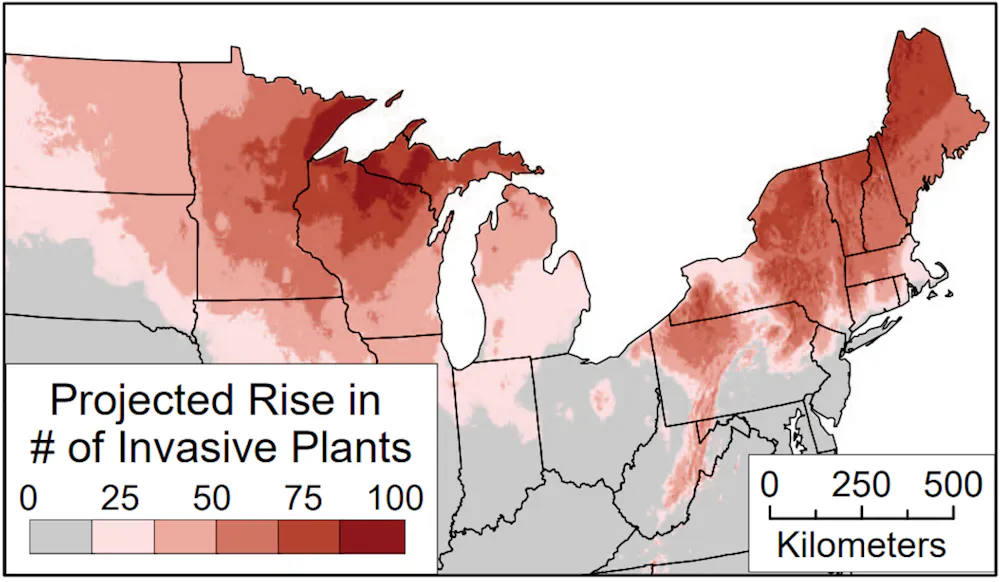
A map of the Northeast and Midwest showing the projected rise of invasive species, with the large number in the northern areas.
The Northeast Climate Adaptation Science Center has been tracking invasive species to help natural resource managers prepare. Federally funded scientists develop risk maps and work with local communities to head off invasive species damage.
Regional Invasive Species and Climate Change Network, CC BY

But in spring 2025, after 15 years of operation of the centers, the president’s proposed federal budget zeroed out funding for them. Federal workers at the centers were threatened with layoffs.

Three of the nine regional centers – covering the South Central, Pacific Islands and Northeast regions – were left unfunded when the Office of Management and Budget withheld and then blocked funds Congress had already appropriated.

In spite of these challenges, we have hope that the work will eventually continue. Congress’ proposed budgets in both the U.S. House and Senate recommend fully funding the Climate Adaptation Science Centers, and there’s a reason: Natural resources managers and the public have consistently told their elected officials that the work is important.

Here are three examples of projects in regions where funding has been blocked that show why resource managers are speaking up.

Sustainable water supplies in arid lands

In south-central Texas, the Edwards Aquifer Authority is responsible for providing sustained water resources for 2.5 million people in cities such as San Antonio and Uvalde. It also maintains the groundwater-fed springs that support threatened and endangered species.

In recent decades, however, both heavy rainfall and prolonged, intense droughts have increased uncertainty about how much water will be available from the aquifer.

At the South Central Climate Adaptation Science Center, researchers from the University of Oklahoma teamed up with the aquifer authority to develop high-resolution climate projections for assessing future changes to groundwater recharge and ecologically sensitive springs.

The climate projections are helping the authority determine whether its existing drought-mitigation practices are effective for sustaining freshwater springs and groundwater levels.

A panorama photo of a lake next to a building
The San Marcos springs on the Texas State University campus, shown in this panorama photo, are fed by the Edwards aquifer.
Adrienne Wootten

Losing funding for the Climate Adaptation Science Center means this technical guidance for water management and many other projects in the region are no longer available.

Stalled science doesn’t just hurt Texas. Many arid and semi-arid regions of the U.S. rely on aquifers to provide water supplies for homes, businesses and agriculture, and they need this type of research to maintain water security.

Solutions for agriculture and fire protection

On the Hawaiian island of O’ahu, up to 40% of agricultural land is unmanaged and unplanted pasture that is often invaded by non-native grasses. These grasses increase fire risk as the islands face more intense and longer-lasting droughts.

The Pacific Islands Climate Adaptation Science Center has been working on a solution to help restore fallow lands through agroforestry, in which farmers grow crops among trees, mirroring Indigenous practices.

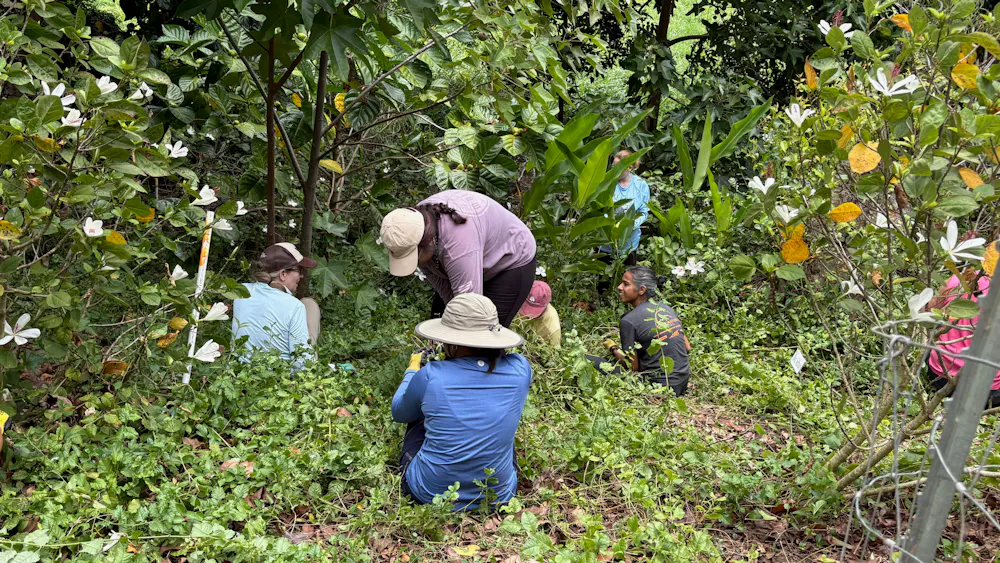
People plant crops among existing trees on Oahu.
In agroforestry, crops such as coffee are grown among trees, preserving the trees’ carbon storage while helping to keep invasive plants at bay.
Leah Bremer/University of Hawaii at Mānoa Institute for Sustainability and Resilience

Climate Adaptation Science Center researchers at the University of Hawai’i Mānoa partnered with Kākoʻo ʻŌiwi, a nonprofit organization that is restoring Indigenous food systems, to identify lands that will remain suitable for agroforestry even under worsening drought caused by climate change. The research has shown how management practices can increase soil health and increase the soil’s carbon storage.

Since 2019, researchers have taught hundreds of volunteers from the community and student groups about restoration practices that include food production, forest conservation and climate resilience.

Lost funding for Climate Adaptation Science Centers put the brakes on science that supports local communities.

Managing invasive species in a warming world

Invasive species cost the U.S. economy an estimated US$10 billion a year in damage to crops, forests and ecosystems. At the same time, climate change is increasing the range of many invasive species and making them harder to control.

A map of the Northeast shows the spread of an invasive evergreen shrub.
Scientists involved in the Northeast Climate Adaptation Science Center map invasive species risks. This map shows the current and potential range map of Beale’s barberry, or leatherleaf mahonia, an invasive evergreen shrub that is still being sold for ornamental uses. The plant, which deer don’t eat, has taken over habitat and outcompeted native species in parts of the U.S.
Regional Invasive Species and Climate Change Network, CC BY

In 2016, researchers from the Northeast Climate Adaptation Science Center at the University of Massachusetts Amherst learned that resource managers were concerned about how climate change would affect invasive species ranges. To understand and address the needs of resource managers, Climate Adaptation Science Center researchers created the Regional Invasive Species and Climate Change Network, which has become a primary source for mapping invasive species’ movement and sharing invasive species research across the region.

Climate Adaptation Science Center researchers conducted a series of projects to identify invasive plants expanding into northern and southern New England and mid-Atlantic states. The results have helped the state of Massachusetts update its invasive plant risk assessment and expanded regulators’ lists of invasive species to prohibit from sales in New York and Maine.

States recently asked the center’s researchers to develop a database of current and emerging invasive plants across the Northeast to help them build consistent and proactive defenses against emerging invasive species. Stalled funding has also stalled this project.

These are the kind of real-world solutions that federal funding cuts are stopping. When that work disappears, it leaves America and Americans more vulnerable to climate change.

The Conversation

Bethany Bradley receives funding from the US Geological Survey as the University Director of the Northeast Climate Adaptation Science Center.

Adrienne Wootten previously received funding from the US Geological Survey for research projects through the South Central Climate Adaptation Science Center and is currently engaged in research with the Edwards Aquifer Authority.

Ryan Longman receives funding from the US Geological Survey as the University Director of the Pacific Islands Climate Adaptation Science Center

ref. From invasive species tracking to water security – what’s lost with federal funding cuts at US Climate Adaptation Science Centers – https://theconversation.com/from-invasive-species-tracking-to-water-security-whats-lost-with-federal-funding-cuts-at-us-climate-adaptation-science-centers-269908

Nonprofit news outlets are often scared that selling ads could jeopardize their tax-exempt status, but IRS records show that’s been rare

Source: The Conversation – USA (2) – By Katherine Fink, Associate Professor of Media, Communications, and Visual Arts, Pace University

Volunteer Bonnie Ralston hosts a show in the Allegheny Mountain Radio studio in Monterey, Va., in September 2025. Pierre Hardy/AFP via Getty Images

Although advertising revenue largely sustained the news media in the 20th century, it’s been harder to come by in the digital age. News media outlets just aren’t as important these days for advertisers when they can reach potential customers so many other ways, including through social media.

Some news outlets are relying more on subscription revenue. But that can also be a tough sell when readers have so many alternatives – often free – for finding news, if they’re even looking for it at all.

Increasingly, local news media outlets are adopting nonprofit models to be able to obtain grants from foundations and donations from individuals as new revenue sources.

At the same time, some nonprofit news leaders have avoided selling ads because the IRS has said their organizations would have to pay taxes on that revenue. They have also heard that selling too many ads might jeopardize their tax-exempt status altogether.

My research suggests that they need not worry about that – although, given recent threats by the Trump administration against Harvard University and other nonprofits, they may have reasons to be wary.

Encouraging earned revenue

I’m a former public radio journalist who now researches the nonprofit news sector.

I interviewed 23 nonprofit news leaders in 2023 about their fundraising practices. I also reviewed hundreds of 990 forms that most nonprofits are required to file annually with the IRS.

In early 2025, I published a study that found most nonprofit news leaders still depended heavily on foundations and individual donors. That’s despite calls from foundations and the Institute for Nonprofit News, an organization representing these media outlets, that they should diversify their revenue sources.

The Institute for Nonprofit News especially encourages news nonprofits to consider adding earned revenue. That category can include lots of things, but most often it means selling ads. The nonprofit news leaders I spoke with had mixed feelings about that.

Taxing unrelated business income

The philanthropic dollars that charitable nonprofits get from foundations, individual donors and corporations are exempt from taxes. But their earned revenue from sources such as advertising, sponsorships or ticketed events is often taxable.

That’s because U.S. tax law requires nonprofits to pay taxes on income deemed to be “not substantially related” to their public service missions.

Take, for example, money that a nonprofit museum earns through its gift shop. The government taxes that as unrelated business income so nonprofits don’t get an unfair edge over their for-profit competitors.

Money raised through ad sales has also historically counted as unrelated business income for nonprofits, according to the IRS. Some nonprofit news leaders say that’s not how it should be.

Some news nonprofits are directly challenging the traditional classification of advertising revenue as unrelated business income.

For example, the San Antonio Report, a nonprofit news outlet, reported receiving US$361,649 in advertising revenue in tax year 2022. But the organization did not pay taxes on it, because it identifies advertising as part of its mission. In fact, a Supreme Court ruling in the 1986 United States v. American College of Physicians case left open the possibility that advertising could be a tax-exempt form of revenue if it had an “educational function” related to the nonprofit’s purpose.

Someone writes using a laptop in a hazy photo.
Nonprofit news outlets need revenue, and their donors want them to find new sources of it.
Maria Korneeva/Moment via Getty Images

Selling ads anyway

Nonprofit news leaders not trying to challenge that classification still had reason to be concerned about running paid ads.

The IRS has warned it could revoke the tax-exempt status of nonprofits that had too much unrelated business income in their portfolios. That’s one of the top six reasons organizations lose their nonprofit status, according to the IRS. Other reasons include failure to serve an exempt purpose, lobbying, political campaigning, mission drift and failure to complete annual 990 forms.

How much unrelated business income is too much? The IRS has not provided clear guidance on this, despite pleas from local nonprofit news advocates.

One editor I interviewed, whose free weekly newspaper had recently converted from a for-profit enterprise to a nonprofit, lamented that her copious ad portfolio could put her tax-exempt status in jeopardy. Ads had always been part of what readers appreciated about her newspaper, she said – it was how they learned about restaurants and nightlife.

Some tax advisers recommend that nonprofits keep unrelated business income below 25% of their total revenue. But the ambiguity is enough to make some nonprofit news leaders prefer to not get any at all.

Some local news nonprofits are selling ads, despite their reservations about the potential tax impact and the potential threat of the IRS revoking their tax-exempt status. Of the Institute for Nonprofit News’ roughly 201 local newsroom members, 21 reported earning at least $1,000 in unrelated business income in the most recent year for which data was available when I conducted these interviews – usually 2022 or 2023. That happens to be the minimum reportable amount.

Paying no taxes

Only three of these 21 local news nonprofits paid taxes on their advertising revenue – and the ones that paid did so at reduced amounts. The outlets were largely able to avoid taxes due to exemptions the IRS allows nonprofits to claim for advertising-related expenses, such as commissions, agency fees and production. Several news nonprofits were also able to deduct readership costs, such as printing and distribution.

Local news nonprofits also appeared not to draw the ire of the IRS for accepting too much advertising revenue. While most reported unrelated business income that amounted to less than 25% of their total revenue, five news nonprofits did exceed that percentage, sometimes by quite a bit.

Rarely revoking tax exemptions

It turns out the IRS rarely revokes the tax-exempt status of charitable nonprofits of any kind for collecting too much unrelated business income.

IRS records indicate that the most common reason for revocations was the failure of nonprofits to file their 990 forms annually.

Not doing so for three years in a row triggers an automatic revocation, which can be reversed if nonprofits get back into compliance by belatedly filing their overdue paperwork. Revocations for all other reasons, including excessive unrelated business income, have impacted less than 0.1% of nonprofits, according to my analysis of IRS records.

In other words, two common concerns about advertising expressed by the nonprofit news leaders I interviewed – the potential tax burden and the risk of running afoul of the IRS – appear to have been unfounded.

At the same time, it can be hard to keep up with what might run afoul of IRS rules.

Starting in April 2025, the Trump administration threatened to revoke the nonprofit status of Harvard University after its leaders resisted numerous demands, including changes to its leadership and admissions policies.

Nonprofit news organizations have also faced pressure from the Trump administration. Several public media outlets are planning to shut down or reduce their operations following the Corporation for Public Broadcasting’s loss of government funding in 2025. It’s part of what’s widely seen as the administration’s attempt to control news media, a campaign that has also led to defamation lawsuits, a leadership shakeup at CBS News, and the Federal Communications Commission’s deregulation efforts.

So far, Harvard’s nonprofit status remains intact, and legal experts say it’s likely to stay that way. Still, at a time when many local news nonprofits are struggling to keep the lights on, I can understand why they might choose to tread lightly.

The Conversation U.S. is a member of the Institute for Nonprofit News and does not get any revenue from advertising.

The Conversation

Katherine Fink does not work for, consult, own shares in or receive funding from any company or organization that would benefit from this article, and has disclosed no relevant affiliations beyond their academic appointment.

ref. Nonprofit news outlets are often scared that selling ads could jeopardize their tax-exempt status, but IRS records show that’s been rare – https://theconversation.com/nonprofit-news-outlets-are-often-scared-that-selling-ads-could-jeopardize-their-tax-exempt-status-but-irs-records-show-thats-been-rare-268844

We created health guidelines for fighting loneliness – here’s what we recommend

Source: The Conversation – USA (3) – By Daniel P. Aldrich, Professor of Political Science, Public Policy and Urban Affairs, Northeastern University

Extensive research shows that social connection is crucial for good health, but there have been no standardized metrics for assessing it. Yaakov Aldrich, CC BY

Social isolation kills. It increases your risk of death by 30% — roughly the same as smoking cigarettes and much worse than factors such as obesity and sedentary living.

Americans are living through what researchers call a friendship recession, spending less time with friends than at any point in recent history.

In 2023, the U.S. Surgeon General declared loneliness an epidemic. Deaths from factors like suicide, addiction and alcoholism, referred to as deaths of despair, continue climbing.

While doctors routinely check patients’ blood pressure and ask about exercise habits, they rarely assess social health.

Public health guidelines urge Americans to eat their vegetables, exercise for 150 minutes weekly, sleep seven to nine hours nightly and drink less than one or two alcoholic beverages per day. But few public health bodies have addressed social connection — until now.

As scholars who focus on public policy and social determinants of health and well-being, we are part of an international team of more than 100 experts who undertook the first systematic effort to develop evidence-based guidelines for social connection.

These guidelines, which are now publicly available, aim to do more than offer advice. Elements of them are already being embedded into policies in the Netherlands and the U.K.

Our hope is that the guidelines can elevate the importance of social connection to the same level as basic public health practices such as exercising, not smoking and relying on a designated driver when you go out drinking with friends.

Social isolation increases people’s risk of death dramatically – about as much as smoking does.

The value of guidelines

Research has shown for decades that social connection is crucial for good health. The World Health Organization’s constitution, adopted in 1946, defines health as “complete physical, mental and social well-being.”

Codifying different dimensions of health into evidence-based guidelines matters because guidelines allow people to put recommendations into action. Nutrition labels help people understand what they’re eating. Exercise recommendations help people know how much movement protects their health. Blood pressure cutoffs tell both patients and clinicians when it’s time to intervene.

Guidelines also shape systems in ways people feel every day. Exercise guidelines, for example, helped motivate cities to invest in walkable streets and bike lanes, workplaces to design wellness programs, and schools to include physical activity in curricula.

Social health guidelines can play a similar role.

Standardized metrics for social well-being can help health care providers identify when someone is socially isolated, enable employers to design workplaces that foster connection, and give schools and cities clearer targets for building socially supportive environments.

They also lay the groundwork for “social prescriptions” — structured ways to connect people with community programs or group activities — which some health care systems are already beginning to test.

The science of connection

Beginning in the summer of 2023, our team spent more than two years developing a set of international guidelines for social health by drawing on more than 40 plain-language evidence summaries, numerous case studies, conversations with marginalized communities, and extensive consultation with global experts.

What we found highlights several foundational principles of social well-being.

First, there are no universal rules for social health. There is no magic number of friends or ideal number of weekly social hours. Social needs vary widely. Both introverts and extroverts need connection, but they meet that need differently. A new parent’s social world is completely unlike a retiree’s. And quality trumps quantity: One meaningful conversation can be more nourishing than a dozen quick exchanges.

Second, technology is not the villain it’s often made out to be. Passive scrolling can harm well-being, but active, intentional use can strengthen bonds — whether through video calls with distant family, group chats that sustain friendships or apps that help neighbors organize local meetups. The key is using technology to facilitate real connection rather than replace it.

Older woman talking to family on a cell phone video call.
Technology can help maintain connections at a distance.
FG Trade Latin/E+ via Getty Images

Third, relationships are shaped as much by systems as by individuals. Social health isn’t just about personal effort. It emerges from local environments that make connection possible. Research shows that investments in social infrastructure – the places and spaces where we connect, such as libraries, parks and cafes – measurably improve well-being. And communities that have denser concentrations of such spaces have better health outcomes after disasters.

Finally, diverse networks matter. Strong social health includes both close relationships and “weak ties” — acquaintances, neighbors, local business staff and others you see in passing. These lighter-touch interactions offer meaningful benefits: the barista who remembers your order, a colleague you exchange a few words with, a fellow dog walker along your route.

Studies show that weak ties provide novel information, unexpected opportunities and a broader sense of belonging that close friends alone can’t provide. A mix of ties — deep and shallow — forms the basis of a socially healthy life.

From research to reality

Forward-thinking institutions are already experimenting with principles that underpin our guidelines.

Some workplaces now assess social health when making decisions about policies such as remote work or office layout, recognizing that communication norms and physical design shape how employees connect. Schools are teaching emotional intelligence and friendship skills as core curriculum, not extras. Cities are investing in social infrastructure — community centers, shared public spaces and plazas — that naturally bring people together.

On a personal level, the guidelines suggest a few simple shifts:

  • Prioritize face-to-face time. Even short, in-person interactions boost mood, reduce stress and build trust.

  • Use technology actively, not passively. Reach out to someone, schedule a video call or use apps to create opportunities for connection — not just to scroll.

  • Treat solitude as restoration, not failure. Healthy social lives include both meaningful interaction and the downtime needed to recharge.

  • Build routines that create natural interaction. Walk the same route daily, become a regular at neighborhood spots or join recurring community activities to create predictable opportunities for connection.

  • And most importantly, take initiative. In a culture that treats socializing as a luxury, prioritizing connection is quietly radical.

The Conversation

Kiffer George Card receives funding from the Social Sciences and Humanities Research Council, The Canadian Institutes of Health Research, and the Health Research BC. He is also an affiliate of Social Health Canada and the GenWell Project.

Daniel P. Aldrich does not work for, consult, own shares in or receive funding from any company or organization that would benefit from this article, and has disclosed no relevant affiliations beyond their academic appointment.

ref. We created health guidelines for fighting loneliness – here’s what we recommend – https://theconversation.com/we-created-health-guidelines-for-fighting-loneliness-heres-what-we-recommend-268560

Trump y Putin se reparten el botín de guerra en Ucrania con un plan de paz que pone a la UE contra las cuerdas

Source: The Conversation – (in Spanish) – By José Ángel López Jiménez, Profesor de Derecho Internacional Público, Universidad Pontificia Comillas

El borrador de acuerdo de alto el fuego/plan de paz para Ucrania negociado por Donald Trump y Vladimir Putin reproduce las mismas sospechas que en los últimos días han suscitado las resoluciones aprobadas por el Consejo de Seguridad sobre el Sáhara Occidental y la Franja de Gaza, estas dos últimas ratificadas con la abstención de China y Rusia.

Tanto el caso de Ucrania como los referidos sobre Sáhara y Gaza revelan que las decisiones nacen al calor de acuerdos negociados entre bambalinas. En el caso del borrador sobre Ucrania, todo indica que los líderes de Rusia y Estados Unidos se están repartiendo negocios y esferas de influencia al margen de los principios estructurales del derecho internacional contemporáneo.

El presidente ucraniano, Volodymyr Zelenski, como se encargó de recordar Trump durante su infame encerrona en la Casa Blanca, no tiene buenas cartas en esta partida. Con la supresión de la ayuda norteamericana a Ucrania (financiera, armamentística y en inteligencia), queda sin garantizar la potencial continuidad del apoyo de algunos estados de la UE.

Los 28 puntos trasladan un potencial acuerdo plagado de sombras para el futuro de una Ucrania post-conflicto. Redactado por los dos principales beneficiarios (Rusia y Estados Unidos), deja al margen a la Unión Europea, a la inane Organización para la Seguridad y Cooperación en Europa (OSCE) y al sistema de Naciones Unidas.

El hecho de ignorar a la Unión Europea supone un agravio flagrante, si tenemos en cuenta que Ucrania es un Estado candidato a la adhesión a la organización internacional de carácter regional.

Una rendición incondicional

El contenido de la propuesta promueve una rendición incondicional del Estado agredido desde la anexión ilegal de Crimea en el año 2014. La publicación del texto ha ido acompañada de un inédito ultimátum de Trump, que exige respuesta definitiva en el margen de una semana. Detallamos a continuación algunas cuestiones recogidas en los diferentes puntos.

1. En primer término, hay que destacar que se presenta como un acuerdo jurídicamente vinculante, cuando viola abiertamente algunos principios estructurales de la Carta de Naciones Unidas, que conforman las reglas básicas del derecho internacional contemporáneo.

El principio de no injerencia en los asuntos internos de Ucrania se vulnera con la imposición de recoger constitucionalmente la prohibición de una potencial adhesión a la OTAN. Esta imposición se hace extensiva también a la misma organización atlántica de defensa, que deberá de recoger esta disposición en sus estatutos.

2. Obliga a la convocatoria de elecciones en Ucrania en un plazo máximo de cien días desde la aceptación del acuerdo. Claramente, Trump y Putin quieren a Zelenski fuera de la ecuación. También plantea una reducción unilateral de las capacidades militares del Estado ucraniano, con un notable debilitamiento sobre los niveles de gasto y contingentes actuales.

3. La integridad territorial de Ucrania se fragmenta, consolidando el control de los cuatro distritos ocupados –aunque no controlados militarmente– y de Crimea. Esto avala los objetivos de la guerra de agresión de Putin.

4. Resultan grotescos los compromisos recogidos en los puntos segundo y tercero, que establecen un pacto de no agresión entre Rusia, Ucrania y Europa. El texto afirma de forma literal que, con este acuerdo, se “resuelven las ambigüedades de los últimos treinta años”. La redacción de estos puntos sitúa al mismo nivel dos obligaciones muy dispares. Por un lado, que Rusia no invada a otros vecinos. Por otro, impone la no expansión de OTAN. Putin ha demostrado el valor de su palabra a través del incumplimiento sistemático de las normas internacionales.

5. Desde la Segunda Guerra Mundial se ha ido construyendo toda una arquitectura normativa y judicial para juzgar la responsabilidad internacional de los estados y de los individuos por la comisión de crímenes internacionales (genocidio, crímenes de guerra, crímenes contra la humanidad y crímenes de agresión).

Todo este esfuerzo de la comunidad internacional y del ordenamiento jurídico internacional se evapora en el punto 26 del proyecto de acuerdo, que recoge una amnistía total. “Todas las partes implicadas en el conflicto recibirán amnistía total por sus actos durante la guerra y aceptarán no presentar reclamaciones ni examinar denuncias en el futuro”.

Bajo esta premisa, la demanda ucraniana ante la Corte Internacional de Justicia respecto a la Convención para la Prevención y Sanción del Delito de Genocidio de 1948, o la orden de detención de la Fiscalía de la Corte Penal Internacional contra Putin y María Lvova-Belova por la desaparición de los niños ucranianos desde el inicio de la agresión rusa queda en papel mojado. Al igual que los numerosos crímenes de guerra de los que hemos sido testigos y que han quedado documentados.

La Unión Europea, cómplice por inacción

Todo un rosario de concesiones ucranianas se desprenden de este lamentable (e impuesto) proyecto de acuerdo de paz, que puede contar con el apoyo de la UE por inacción.

Estas incluyen la desnuclearización permanente de Ucrania, en una reedición del memorándum de Budapest de 1994, y el reparto energético de la producción de la central nuclear de Zaporiya. También favorecen acuerdos bilaterales de cooperación entre Rusia y Estados Unidos, el “blanqueo de Putin” y el retorno de Rusia al escenario internacional con el levantamiento de las sanciones.

En definitiva, sentencian a Ucrania, que se convierte en objeto de rapiña económica para Trump. Un expolio que se anticipaba hace unos meses, cuando se firmó el acuerdo sobre la explotación de las “tierras raras”.

Incógnitas no resueltas para Ucrania

¿Qué consigue Ucrania de este acuerdo? El cese de las hostilidades en unas condiciones sumamente desfavorables. ¿Hasta cuándo? Hasta que Putin vuelva activar sus ambiciones neoimperiales. No hay explicitada ninguna garantía de seguridad concreta para Kiev. ¿Quién supervisará el alto el fuego excluida la OTAN? Resulta evidente que este eventual papel se traslada a la UE, que incorporará un nuevo Estado miembro con su soberanía territorial fragmentada, la economía quebrada y una inseguridad permanente, con tropas rusas instaladas en sus distritos orientales.

La comisión de ilícitos internacionales muy graves por parte de Rusia en Ucrania y su responsabilidad internacional deberían derivar en un conjunto de obligaciones tendentes a reparar el daño causado. El punto 14 recoge que, tanto Rusia como la UE destinarían 100 000 millones de dólares para la reconstrucción de Ucrania, equiparando las obligaciones del Estado agresor con las que se atribuyen unilateralmente a la UE. En el caso de Rusia, estos fondos provendrán en parte de sus activos congelados por las sanciones.

Todo ello a beneficio de Estados Unidos y, en menor grado, de Rusia, como fruto un acuerdo de cooperación bilateral entre ambos estados.

Si el escenario dibujado por los mencionados acuerdos sobre el Sáhara, la Franja de Gaza y este proyecto de imposición bilateral ruso-norteamericana a Ucrania no representan un escandaloso reparto en esferas de influencia de las grandes potencias dentro de un nuevo orden multipolar, se le parece bastante.

Como dice el aforismo atribuido al filósofo italiano Giordano Bruno, [Si non e vero e ben trovato].

The Conversation

José Ángel López Jiménez no recibe salario, ni ejerce labores de consultoría, ni posee acciones, ni recibe financiación de ninguna compañía u organización que pueda obtener beneficio de este artículo, y ha declarado carecer de vínculos relevantes más allá del cargo académico citado.

ref. Trump y Putin se reparten el botín de guerra en Ucrania con un plan de paz que pone a la UE contra las cuerdas – https://theconversation.com/trump-y-putin-se-reparten-el-botin-de-guerra-en-ucrania-con-un-plan-de-paz-que-pone-a-la-ue-contra-las-cuerdas-270418

Pourquoi en France les start-ups dirigées par des femmes lèvent en moyenne 2,5 fois moins de fonds que celles dirigées par des hommes ? retour sur des biais partagés par tous (ou presque)

Source: The Conversation – in French – By Pauline Gibard, Maîtresse de conférences en entrepreneuriat, Université Jean Moulin Lyon 3

L’investisseuse est souvent perçue comme bienveillante, plus accessible et plus à l’écoute. Un stéréotype ancré chez certaines entrepreneures. Lightspring/Shutterstock

Le financement d’une entreprise n’est pas qu’une affaire d’argent. C’est une relation, une danse à deux où chaque partenaire projette des stéréotypes. Une étude donne la parole à des entrepreneures qui portent elles-mêmes ces représentations.


En France, les start-ups fondées par des femmes lèvent en moyenne 2,5 fois moins de fonds que celles fondées par des hommes. Ce constat illustre à quel point le financement reste l’un des principaux enjeux liés de l’entrepreneuriat féminin, parfois décrit comme un second plafond de verre. Il faut déjà s’imposer comme entrepreneuse, puis encore franchir la barrière de l’accès aux capitaux.

Jusqu’ici, c’est l’offre de financement qui a été principalement étudié : combien d’argent est disponible, comment fonctionnent les banques et les fonds ? Mais pour obtenir un financement, il faut d’abord… en faire la demande. Sur ce point, la recherche est encore rare.

C’est précisément ce que nous avons exploré dans notre étude publiée dans la Revue internationale PME, à travers 29 entretiens narratifs avec des entrepreneures. Leurs récits montrent que la demande de financement est avant tout une relation : une danse à deux entre entrepreneuse et financeurs, imprégnée d’attentes, de craintes et de stéréotypes.

La finance pensée comme un univers masculin

Dans cette danse, l’investisseur est spontanément imaginé comme un homme : « Quand je pense à un investisseur, je pense automatiquement à un homme » raconte une entrepreneure. Cela leur confère une légitimité « naturelle », rationnels, ambitieux, cartésiens.

Certaines entrepreneures y voient même un atout : « Je pense que les hommes investisseurs seraient plus à même de nous pousser dans nos retranchements pour faire avancer notre projet », estime l’une. Mais cette admiration s’accompagne souvent d’un malaise.

Plusieurs redoutent un regard condescendant ou un manque de crédibilité : « Si je demande un financement à un homme, j’aurais tendance à penser qu’il estime que j’ai moins de revenus », observe une autre. D’autres évoquent un sentiment de domination, voire le risque d’abus : « Je ne suis pas une friandise. Avec une femme au moins, on ne risque pas d’attouchement », insiste une fondatrice.

Les investisseuses, trop bienveillantes ?

Quand la partenaire de danse est une investisseuse, le pas change. Elle est souvent perçue comme plus accessible et plus à l’écoute « Je pense que les femmes seraient plus bienveillantes avec moi » estime une entrepreneure. Pour certaines, elles incarnent même un modèle inspirant.

On pourrait croire que les entrepreneures se tournent plus facilement vers des investisseuses. Mais la réalité est plus ambivalente. Certaines redoutent un excès de bienveillance, perçu comme un manque d’exigence :

« C’est très cliché, mais j’aurais peur qu’avec un trop-plein de bienveillance, on ne me “pousse” pas assez. J’ai l’impression qu’entre hommes, on fait plus d’argent, on pousse plus ».

D’autres craignent au contraire une rivalité ou un jugement plus sévère : « On a un peu plus de pression face à une femme, car c’est soit de la compassion, soit du mépris… » explique une autre.

« Pas prévu de faire des enfants ensemble »

Face à ces représentations contrastées, les entrepreneures apprennent à choisir leurs partenaires de danse.

Certaines privilégient les investisseuses pour des projets destinés à un public féminin, ou dans des situations particulières comme une grossesse perçue comme mieux acceptée par une femme. D’autres préfèrent des investisseurs masculins, jugés plus crédibles ou plus susceptibles de « pousser » leur projet.


À lire aussi :
Pour la première fois, une étude révèle ce qui se passe dans le cerveau d’un entrepreneur


Notons que toutes ne se laissent pas enfermer dans ce jeu de projections :

« Pour mon financement, je cherche des investisseurs qui font écho à mes valeurs profondes. Fille ou garçon, nous n’avons pas prévu de faire des enfants ensemble donc ce n’est pas un problème » raconte une fondatrice.

Une danse à deux traversée de stéréotypes

Ces témoignages rappellent que le financement entrepreneurial n’est pas qu’une affaire de capitaux ou de business plans. C’est une relation, une danse à deux, où chaque partenaire projette des stéréotypes.

Nos résultats montrent que les entrepreneures elles-mêmes portent et mobilisent des représentations. Voir les hommes comme plus rationnels, ou les femmes comme plus bienveillantes, influe sur la façon dont elles valorisent une relation de financement, et parfois sur leur capacité à s’y engager.

Améliorer l’accès au financement ne peut pas se limiter à féminiser les instances d’investissement. Il faut aussi comprendre comment ces imaginaires se construisent et orientent les relations. Car finalement, lever des fonds, ce n’est pas seulement obtenir un chèque. C’est accepter de danser, et la danse n’a de sens que si les deux partenaires trouvent l’accord.

The Conversation

Les auteurs ne travaillent pas, ne conseillent pas, ne possèdent pas de parts, ne reçoivent pas de fonds d’une organisation qui pourrait tirer profit de cet article, et n’ont déclaré aucune autre affiliation que leur organisme de recherche.

ref. Pourquoi en France les start-ups dirigées par des femmes lèvent en moyenne 2,5 fois moins de fonds que celles dirigées par des hommes ? retour sur des biais partagés par tous (ou presque) – https://theconversation.com/pourquoi-en-france-les-start-ups-dirigees-par-des-femmes-levent-en-moyenne-2-5-fois-moins-de-fonds-que-celles-dirigees-par-des-hommes-retour-sur-des-biais-partages-par-tous-ou-presque-267562

COP30 : cinq raisons pour lesquelles la conférence sur le climat a manqué à sa promesse d’être un « sommet des peuples »

Source: The Conversation – in French – By Simon Chin-Yee, Lecturer in International Development, UCL

À Belém, au Brésil, la COP30 devait réconcilier ambitions climatiques et justice sociale. Elle a finalement exposé la fragilité du processus onusien, pris en étau entre le poids des industries fossiles et les frustrations croissantes des pays les plus vulnérables, sur fond d’urgence climatique. Voici cinq raisons qui illustrent en quoi ce grand sommet tient du rendez-vous manqué.


La promesse d’un « sommet des peuples » s’est éteinte avec les feux de la COP30, samedi 22 novembre 2025. Le dernier sommet des Nations unies sur le climat, organisé dans la ville brésilienne de Belém, s’est déroulé dans le contexte géopolitique habituel, avec en prime le chaos suscité par une inondation et un incendie.

Le sommet a été marqué par des manifestations de communautés de peuples autochtones d’une ampleur sans précédent, mais les négociations finales ont, une fois de plus, été dominées par les intérêts des énergies fossiles et les tactiques pour jouer la montre. Après dix ans d’(in)action climatique depuis l’accord de Paris, le Brésil avait promis que la COP30 serait une « COP de mise en œuvre ». Mais le sommet n’a pas tenu ses promesses, alors même que le monde a enregistré un réchauffement climatique de 1,6 °C l’année dernière.

Voici nos cinq observations principales à porter au bilan de la COP30.


À lire aussi :
1,5 °C en plus au thermomètre en 2024 : quelles leçons en tirer ?


Des peuples autochtones présents mais pas assez impliqués

Le sommet se déroulait en Amazonie, ce qui a permis de présenter cette COP climat comme celle vouée aux populations en première ligne face au changement climatique. De fait, plus de 5 000 autochtones y ont participé et ont fait entendre leur voix.

Cependant, seuls 360 d’entre eux ont obtenu un laissez-passer pour la « zone bleue » ; principale zone consacrée aux négociations. Un chiffre à comparer aux 1 600 délégués de l’industrie des combustibles fossiles qui y ont été admis. À l’intérieur des salles de négociation régnait l’approche traditionnelle visant à privilégie la bonne marche des affaires (« business as usual »).

Les groupes autochtones n’avaient que le statut d’observateurs, privés du droit de voter ou d’assister aux réunions à huis clos.

Le choix du lieu, en Amazonie, était un symbole fort, mais qui s’est révélé délicat au plan logistique. Il a coûté des centaines de millions de dollars dans une région où une large partie de la population n’a toujours pas accès aux infrastructures de base.

Une image frappante de ces inégalités pourrait être la suivante : les chambres d’hôtel étant toutes occupées, le gouvernement brésilien a immobilisé deux bateaux de croisière pour les participants aux négociations. Or, ces derniers peuvent générer huit fois plus d’émissions de gaz à effet de serre qu’une nuitée en hôtel cinq étoiles par personne.


À lire aussi :
COP après COP, les peuples autochtones sont de plus en plus visibles mais toujours inaudibles


Des manifestations qui ont permis des avancées locales

Mais il s’agissait du deuxième plus grand sommet des Nations unies sur le climat jamais organisé et le premier depuis la COP26 de Glasgow en 2021 à se dérouler dans un pays autorisant de véritables manifestations publiques.

Cela avait son importance. Des manifestations de toutes dimensions ont eu lieu tous les jours pendant les deux semaines de la conférence, notamment une « grande marche populaire » menée par les peuples autochtones le samedi 15 novembre au milieu de la conférence.

Cette pression, bien visible, a permis d’obtenir la reconnaissance de quatre nouveaux territoires autochtones au Brésil. Cela a montré que lorsque la société civile a voix au chapitre, elle peut remporter des victoires, même en dehors des négociations principales.


À lire aussi :
Climat : les jeunes manifestants peuvent-ils encore peser sur les négociations pendant les COP ?


L’absence des États-Unis, à la fois un vide et une opportunité

Lors du premier mandat de Donald Trump, après son retrait de l’accord de Paris, en 2016, les États-Unis avaient malgré tout envoyé une équipe réduite de négociateurs. Cette fois-ci, pour la première fois dans l’histoire, les États-Unis n’ont envoyé aucune délégation officielle.

Donald Trump a récemment qualifié le changement climatique de « plus grande escroquerie jamais perpétrée dans le monde ». Depuis son retour au pouvoir, les États-Unis ont ralenti le développement des énergies renouvelables et relancé celui du pétrole et du gaz. Ils ont même contribué à faire échouer, en octobre 2025, les plans visant à mettre en place un cadre de neutralité carbone pour le transport maritime mondial.


À lire aussi :
Les États-Unis torpillent la stratégie de décarbonation du transport maritime


Alors que les États-Unis reviennent sur leurs ambitions passées, ils permettent à d’autres pays producteurs de pétrole, comme l’Arabie saoudite, d’ignorer leurs propres engagements climatiques et de tenter de saper ceux des autres.

La Chine a comblé ce vide et est devenue l’une des voix les plus influentes dans la salle. En tant que premier fournisseur mondial de technologies vertes, Pékin a profité de la COP30 pour promouvoir ses industries solaire, éolienne et électrique et courtiser les pays désireux d’investir.

Mais pour de nombreux délégués, l’absence des États-Unis a été un soulagement. Sans la distraction causée par les États-Unis qui tentaient de « mettre le feu aux poudres » comme ils l’avaient fait lors des négociations sur le transport maritime, la conférence a pu se concentrer sur l’essentiel : négocier des textes et des accords pour limiter l’ampleur du réchauffement climatique.


À lire aussi :
Empreinte carbone : les trois thermomètres de l’action climatique


Une mise en œuvre non plus sur la scène principale, mais grâce à des accords parallèles

Qu’est-ce qui a été réellement mis en œuvre lors de la COP30 ? Cette année encore, l’action principale s’est traduite par des engagements volontaires de certains États plutôt que par un accord mondial contraignant.

Le pacte de Belém, soutenu par des pays tels que le Japon, l’Inde et le Brésil, engage ses signataires à quadrupler la production et l’utilisation de carburants durables d’ici 2035.

Le Brésil a également lancé un important fonds mondial pour les forêts, avec environ 6 milliards de dollars (environ 5,2 milliards d’euros) déjà promis aux communautés qui œuvrent pour la protection des forêts tropicales. L’Union européenne (UE) a emboîté le pas en s’engageant à verser de nouveaux fonds pour le bassin du Congo, la deuxième plus grande forêt tropicale du monde.

Il s’agit d’étapes utiles, mais elles montrent que les avancées les plus importantes lors des sommets climatiques de l’ONU se produisent désormais souvent en marge plutôt que dans le cadre des négociations principales.

Le résultat des discussions principales de la COP30 – le « paquet politique de Belém » – est faible et ne nous permettra pas d’atteindre l’objectif de l’accord de Paris visant à limiter le réchauffement climatique à 1,5 °C.

Le plus frappant est l’absence des mots « combustibles fossiles » dans le texte final, alors qu’ils occupaient une place centrale dans l’accord de Glasgow sur le climat (en 2021, à la suite de la COP26, ndlr) et dans le consensus des Émirats arabes unis (en 2023, après la COP28, ndlr)… et qu’ils représentent bien sûr la principale cause du changement climatique.


À lire aussi :
Les textes des COP parlent-ils vraiment de climat ? Le regard de l’écolinguistique


Le texte du « mutirão » mondial, une occasion manquée

Une avancée potentielle avait toutefois vu le jour dans les salles de négociation : le texte du « mutirão (effort collectif, en tupi-guarani, ndlr) mondial », une feuille de route proposée pour sortir des énergies fossiles. Plus de 80 pays l’ont signé, des membres de l’UE aux États insulaires du Pacifique vulnérables au changement climatique.

Tina Stege, envoyée spéciale pour le climat de l’un de ces États vulnérables, les îles Marshall, a pressé les délégués :

« Soutenons l’idée d’une feuille de route pour les combustibles fossiles, travaillons ensemble et transformons-la en un plan d’action. »

Mais l’opposition de l’Arabie saoudite, de l’Inde et d’autres grands producteurs d’énergies fossiles l’a édulcoré. Les négociations se sont prolongées, aggravées par un incendie qui a reporté les discussions d’une journée.

Lorsque l’accord final a été conclu, les références clés à l’élimination progressive des combustibles fossiles avaient disparu. La Colombie, par exemple, a réagi vivement à l’absence de mention de la transition vers l’abandon des combustibles fossiles dans le texte final. Cela a contraint la présidence de la COP à proposer un réexamen dans six mois en guise de geste d’apaisement.

Ce fut une énorme déception car, au début du sommet, l’élan semblait très fort.


À lire aussi :
Comment échapper à la malédiction de la rente fossile ?


Un fossé qui se creuse

Ce sommet sur le climat a donc été une nouvelle fois source de divisions. Le fossé entre les pays producteurs de pétrole (en particulier au Moyen-Orient) et le reste du monde n’a jamais été aussi large.

Le sommet a toutefois eu un aspect positif : il a montré la force des mouvements organisés. Les groupes autochtones et la société civile ont pu faire entendre leur voix, même si leurs revendications n’ont pas été reprises dans le texte final.

Le sommet de l’année prochaine se tiendra en Turquie. Ces sommets annuels sur le climat se déplacent de plus en plus vers des pays autoritaires où les manifestations ne sont pas les bienvenues, voire totalement interdites. Nos dirigeants ne cessent de répéter que le temps presse, mais les négociations elles-mêmes restent enlisées dans un cycle sans fin de reports.

The Conversation

Mark Maslin est vice-recteur adjoint du programme « UCL Climate Crisis Grand Challenge » et directeur fondateur de l’Institut pour l’aviation et l’aéronautique durables de l’UCL. Il a été codirecteur du partenariat de formation doctorale NERC de Londres et est membre du groupe consultatif sur la crise climatique. Il est conseiller auprès de Sheep Included Ltd, Lansons, NetZeroNow et a conseillé le Parlement britannique. Il a reçu des subventions du NERC, de l’EPSRC, de l’ESRC, de la DFG, de la Royal Society, du DIFD, du BEIS, du DECC, du FCO, d’Innovate UK, du Carbon Trust, de l’Agence spatiale britannique, de l’Agence spatiale européenne, de Research England, du Wellcome Trust, du Leverhulme Trust, du CIFF, de Sprint2020 et du British Council. Il a reçu des financements de la BBC, du Lancet, de Laithwaites, de Seventh Generation, de Channel 4, de JLT Re, du WWF, d’Hermes, de CAFOD, de HP, du Royal Institute of Chartered Surveyors, de la John Templeton Foundation, de la Nand & Jeet Khemka Foundation et de la Quadrature Climate Foundation.

La professeur Priti Parikh est directrice de la Bartlett School of Sustainable Construction de l’UCL et vice-doyenne internationale de la Bartlett Faculty of Built Environment. Elle est membre et administratrice de l’Institution of Civil Engineers. Ses recherches sont financées par l’UKRI, la Royal Academy of Engineering, Water Aid, la British Academy, Bboxx Ltd, l’UCL, la Royal Society et le British Council. Son cabinet de conseil a reçu des financements de l’AECOM, du Cambridge Institute for Sustainable Leadership, de Water and Sanitation for the Urban Poor, de l’UNHABITAT, d’Arup, de l’ITAD et de la GTZ.

Simon Chin-Yee ne travaille pas, ne conseille pas, ne possède pas de parts, ne reçoit pas de fonds d’une organisation qui pourrait tirer profit de cet article, et n’a déclaré aucune autre affiliation que son organisme de recherche.

ref. COP30 : cinq raisons pour lesquelles la conférence sur le climat a manqué à sa promesse d’être un « sommet des peuples » – https://theconversation.com/cop30-cinq-raisons-pour-lesquelles-la-conference-sur-le-climat-a-manque-a-sa-promesse-detre-un-sommet-des-peuples-270475