Cada día dedicamos una parte importante de nuestro tiempo a las redes sociales. Deslizamos el dedo, vemos fotos y vídeos, seguimos historias y comentamos publicaciones. Y, entre toda esa actividad, aparecen contenidos de marcas. En 2025, los usuarios pasan de media 2,5 horas al día en esas plataformas, lo que explica por qué los contenidos de marca forman parte de nuestra rutina digital.
Si algunas marcas pasan desapercibidas, otras despiertan sensaciones de confianza, cercanía o familiaridad. A veces, incluso, nos llevan a repetir compra o a recomendarlas casi sin darnos cuenta. ¿Por qué ocurre eso?, ¿qué tienen esas marcas que otras no transmiten?
En una investigación reciente abordamos esta cuestión desde una perspectiva poco explorada: no solo analizamos lo que publican las marcas, sino también cómo vivimos las redes sociales. Revisamos más de dos décadas de investigaciones sobre redes y lealtad, y estudiamos la rutina digital de 455 usuarios pertenecientes a la generación X y a los millenials: su tiempo diario de uso, los contenidos que consumían y su relación con las marcas.
Esta combinación permitió construir un modelo que integra tiempo de uso, diferencias generacionales y características del contenido para explicar cómo se forma la fidelidad en entornos digitales. El hallazgo fue claro: existe un factor decisivo en la lealtad hacia las marcas que casi siempre se había ignorado. Ese factor es el tiempo diario que pasamos conectados.
El tiempo en redes: un predictor silencioso
En marketing digital suele asumirse que el contenido determina la reacción del usuario: un vídeo llamativo, una imagen cuidada o un mensaje emocional deberían generar respuestas positivas. Sin embargo, nuestros datos muestran que, antes de analizar qué se publica, debemos entender en qué contexto se recibe. Y ese contexto empieza con una pregunta clave: ¿cuánto tiempo pasamos cada día en las redes sociales?
Quienes pasan más tiempo conectados muestran niveles más altos de lealtad hacia las marcas que siguen: confían más en ellas, las recomiendan más y tienen mayor intención de repetir compra. No porque las marcas sean mejores, sino porque están más presentes en su vida digital. Se integran en momentos cotidianos y esa familiaridad silenciosa crea cercanía y fortalece el vínculo.
Dos generaciones, dos formas de vivir las redes
Esto nos llevó a preguntarnos quiénes son los usuarios que más tiempo dedican a las redes. Los millenials, que han crecido junto a estas plataformas, siguen siendo quienes los que se llevan la palma. Las redes son para ellos un espacio de relación, inspiración y socialización cotidiana. La generación X también las usa, pero de forma más instrumental. Dedica menos tiempo y las emplea, sobre todo, para informarse o mantenerse en contacto.
En promedio, los millenials pasan tres horas al día en redes sociales frente a la hora y media de la generación X, lo que puede explicar las diferencias en exposición y compromiso (engagement) con las marcas.
Estas diferencias importan porque condicionan la posibilidad de que una marca construya una relación duradera. Como en las relaciones personales, la frecuencia de contacto es determinante.
No todo lo que se publica genera lealtad
Pasar más tiempo en redes no basta para generar fidelidad. Lo que convierte esa exposición en una relación sólida es el tipo de contenido que el usuario encuentra. Identificamos tres categorías con impacto claro en la lealtad:
El contenido relevante: información útil, ideas inspiradoras o mensajes significativos. Cuando una marca aporta valor, genera más confianza.
Las promociones y ventajas reales. Descuentos, sorteos o concursos crean reciprocidad y fortalecen la relación, sobre todo entre usuarios activos.
El contenido que llega a través del entorno social. Las recomendaciones de amigos o contactos influyen más que los mensajes corporativos, y quienes pasan más tiempo en redes están más expuestos a esta circulación.
Sin embargo, uno de los resultados más llamativos es que, cuando se analiza junto al tiempo de uso, la calidad estética del contenido no predice la lealtad del usuario. Un vídeo impecable o una fotografía muy cuidada pueden captar su atención, pero no generan necesariamente un vínculo sostenido. La fidelidad se construye a partir de la utilidad, la cercanía y la conexión social.
La lealtad se construye con tiempo
Más que centrándose únicamente en qué publicar, las marcas conseguirán el compromiso si son capaces de entender cómo viven los usuarios las redes y cuánto tiempo pasan en ellas. Conocer su rutina digital les permitirá adaptar sus contenidos de manera más eficaz. No es tan necesario alcanzar la perfección estética como aportarles valor y formar parte de sus conversaciones digitales.
En un entorno digital cada vez más saturado, las marcas que consiguen fidelizar son aquellas que entienden cómo viven los usuarios las redes y qué esperan de ellas. Cuanto mayor es nuestra presencia en estas plataformas, mayor es la probabilidad de que ciertas marcas se integren en nuestra rutina y generen un vínculo basado en la familiaridad y la confianza.
Ahora bien, el tiempo por sí solo no garantiza esa relación. Se trata de estar presentes y aportando contenido que realmente encaje con la experiencia digital del usuario.
El tiempo que pasamos conectados, a veces casi sin darnos cuenta, moldea más de lo que imaginamos nuestras decisiones, nuestras preferencias y las marcas que dejamos entrar en nuestro día a día.
Las personas firmantes no son asalariadas, ni consultoras, ni poseen acciones, ni reciben financiación de ninguna compañía u organización que pueda obtener beneficio de este artículo, y han declarado carecer de vínculos relevantes más allá del cargo académico citado anteriormente.
La presencia de mujeres en la investigación ha crecido de forma constante en todas las disciplinas. Este avance numérico convive, sin embargo, con un fenómeno menos visible que ayuda a explicar por qué la desigualdad sigue presente en el mundo académico: la homofilia de género, es decir, la tendencia a colaborar con personas del mismo sexo. Lejos de desaparecer, esta dinámica ha ganado fuerza con el tiempo, y lo hace de manera desigual para hombres y mujeres.
En un estudio reciente, analizamos más de 28 millones de artículos publicados entre 1980 y 2019 en todas las áreas del conocimiento, para entender cómo la presencia de mujeres y hombres transforma las redes de colaboración científica.
Colaboración entre géneros, patrón asimétrico
En 1980, la investigación estaba fuertemente marcada por la brecha de género. En áreas como Mecánica o Electroquímica las mujeres apenas firmaban un 8 % de los artículos publicados. Resulta aún más llamativo que, incluso en áreas que hoy solemos considerar “tradicionalmente femeninas” –como estudios de familia–, ellas apenas alcanzaban el 25 % de las autorías.
Al igual que sucede en el mercado laboral, la presencia de mujeres en la ciencia ha crecido de forma sostenida durante las últimas cuatro décadas. Con la incorporación progresiva de mujeres a campos tradicionalmente masculinizados, cabría esperar que aumentaran las publicaciones firmadas por equipos mixtos.
Pero los datos muestran algo muy distinto: la colaboración entre mujeres y hombres toca valores mínimos cuando ellas alcanzan entre un 35 % y un 40 % de representación en un área, es decir, en el punto en que el campo deja de estar claramente dominado por hombres.
¿Por qué justo ahí? Una explicación posible es el desequilibrio histórico de poder en la academia: los hombres han ocupado durante décadas la mayoría de las posiciones de influencia y pueden percibir que una presencia femenina creciente amenaza ese privilegio. Como reacción, tienden a reforzar el statu quo, colaborando preferentemente entre ellos y dejando fuera a las mujeres.
Las mujeres, más proclives a alianzas mixtas
Podríamos pensar que las mujeres reaccionan igual, pero los datos muestran lo contrario. En las áreas donde ellas son mayoría –por encima del 55 %–, la homofilia de género cae a mínimos. Una posible explicación es que los hombres siguen ocupando, incluso en esos campos, la mayoría de los puestos de mayor poder, prestigio y acceso a recursos. Colaborar con ellos puede abrir puertas a más visibilidad, financiación y oportunidades.
En otras palabras, mientras los hombres tienden a reforzar alianzas para mantener su posición, las mujeres suelen mostrarse más abiertas a las colaboraciones mixtas, porque estas les permiten avanzar en un sistema donde el prestigio académico continúa inclinado a favor de los hombres.
Por qué importa con quién se publica
En la academia, publicar es sinónimo de progresar laboralmente. Las colaboraciones abren la puerta a nuevos proyectos, financiación y oportunidades de promoción. Cuando esas redes se concentran en grupos mayoritariamente masculinos, son los varones quienes mantienen un acceso preferente a los recursos que impulsan una carrera científica.
Este desequilibrio tiene efectos duraderos. Aunque aumente la participación de mujeres en un campo, las dinámicas de colaboración no siempre cambian al mismo ritmo. Ellas siguen encontrando más obstáculos para firmar como primeras autoras, reciben menos citas y tienen más difícil acceder a los círculos de influencia que marcan el paso dentro de la academia.
Además, numerosos estudios muestran que la colaboración entre géneros es beneficiosa para todos. Los entornos diversos reducen el estrés, distribuyen mejor la carga de trabajo y mejoran el rendimiento.
Sobre todo, los equipos mixtos producen resultados más innovadores e influyentes que los formados por personas muy similares. En consecuencia, reducir la homofilia es clave para mejorar tanto la eficiencia de las organizaciones como la experiencia profesional de cada persona.
Paridad numérica no significa integración
Que la homofilia aumente justo cuando un campo avanza hacia la paridad plantea una paradoja: lograr equilibrio numérico no es suficiente para garantizar la igualdad. En las últimas décadas se han desplegado numerosas iniciativas –como, por ejemplo, programas para atraer a más mujeres a las carreras STEM, medidas de conciliación o sistemas de cuotas– que han conseguido el objetivo más tangible: hoy hay más mujeres investigando en todos los campos.
Pero tener más mujeres no implica necesariamente más colaboración entre géneros. La distribución desigual de recursos, la existencia de redes ya consolidadas y los incentivos ligados a posiciones históricamente dominantes hacen que las formas de trabajar sigan favoreciendo a quienes han ocupado el poder durante décadas. Por ello, el avance hacia una ciencia más equitativa no se mide solo en porcentajes: también requiere actuar sobre las formas de relación y colaboración.
La igualdad no termina en la puerta del laboratorio, se construye dentro de él: en qué correos se envían para proponer coautorías, a quién se invita a un proyecto y quién aparece en la firma final.
Por el momento, la homofilia funciona como un mecanismo silencioso que mantiene desigualdades incluso cuando las cifras parecen equilibradas. Reconocerlo es un paso imprescindible para que la ciencia sea no solo diversa, sino realmente inclusiva.
Iñaki Úcar ha recibido financiación del Gobierno de Madrid (Comunidad de Madrid) a través del Acuerdo Plurianual con la UC3M en la iniciativa Fostering Young Doctors Research (CONCIERGE-CM-UC3M), en el marco del V PRICIT. Asimismo, ha recibido fondos para el APC de la Universidad Carlos III de Madrid (Acuerdo CRUE-Madroño 2025).
Margarita Torre ha recibido financiación del Gobierno de Madrid (Comunidad de Madrid) a través del Acuerdo Plurianual con la UC3M en la iniciativa Fostering Young Doctors Research (CONCIERGE-CM-UC3M), en el marco del V PRICIT. Asimismo, ha recibido fondos para el APC de la Universidad Carlos III de Madrid (Acuerdo CRUE-Madroño 2025). Además, cuenta con financiación de la Fundación Española para la Ciencia, MCIN/AEI /10.13039/501100011033, mediante el proyecto PID2022-142457OB-I00.
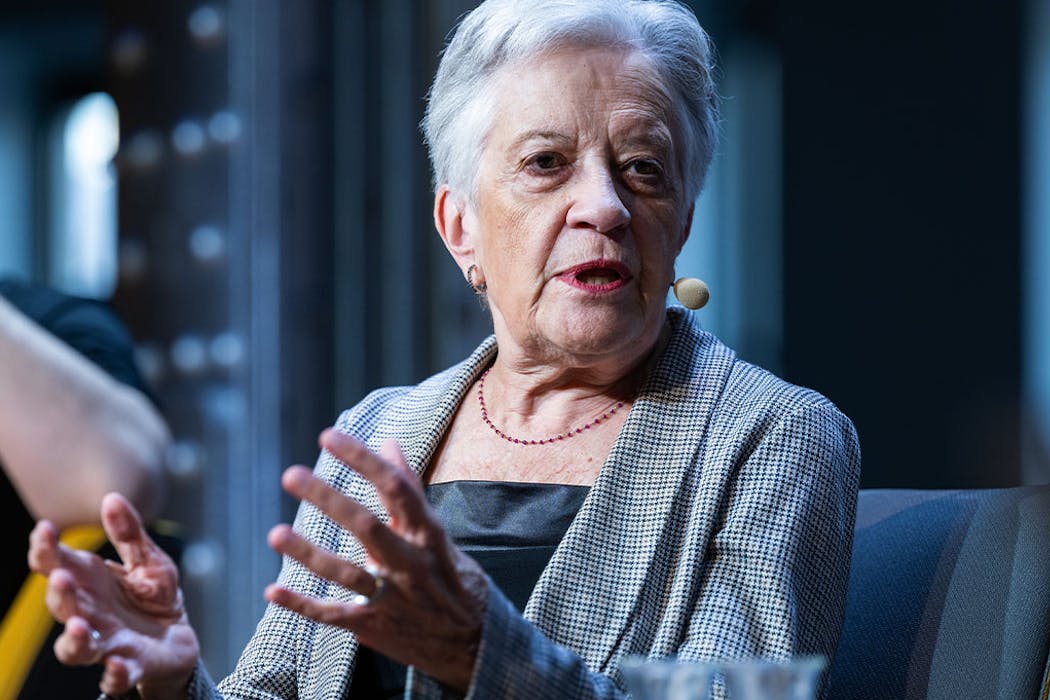
Victoria Camps, catedrática emérita de Filosofía moral y política, es una de las mentes más lúcidas de la filosofía en España. Fue senadora y se desempeñó como presidenta de la Sección Séptima del Consejo de Estado y consejera permanente de este órgano. Haber vivido la política desde dentro le otorga la facultad de analizar con rigor crítico sus limitaciones, contradicciones y retos. Con esta doble mirada habla con nosotros y se pasea por las grandes inquietudes de nuestro tiempo: la conquista de las libertades, el papel de la tecnología, los deseos, la soledad o el individualismo de algunos jóvenes. En su último libro, La sociedad de la desconfianza (Arpa Editores, 2025) analiza por qué hemos dejado de confiar en muchas de las cosas que nos rodean como la política o las instituciones y nos hemos refugiado en círculos íntimos. Entre algoritmos que condicionan nuestras decisiones y vínculos humanos que se debilitan, emergen muchas preguntas urgentes.
¿En qué momento hemos perdido la confianza como sociedad? ¿Es que no confiamos ya en nada?
En casi nada. Confiamos en núcleos pequeños, en el núcleo familiar, en el núcleo de amigos. En la política es evidente que cada vez confiamos menos. Confiamos poco en las instituciones porque no cumplen las expectativas que ponemos en ellas. Confiamos poco en las grandes corporaciones y en esas empresas que deberían darnos servicios. Cuesta mucho entender que las eléctricas o los bancos, es decir, las grandes compañías, no nos ayuden. La inteligencia artificial lo hace, y eso es un progreso, pero también nos complica la vida. En muchas ocasiones, las relaciones personales han ido decreciendo porque todo lo hacemos a través de pantallas, a través de máquinas, a través de robots que nos contestan. Vivimos en un mundo que se nos hace bastante hostil, todo ha empeorado por ese clima de polarización, de confrontación, de guerras que parecen cotidianas y con las que no hay manera de acabar. En fin, necesitamos dar un salto hacia adelante que resulte realmente prometedor. La sociedad está cambiando mucho, hay necesidades muy nuevas.
Gran parte de la sociedad tiene la impresión de que todo es caótico a su alrededor: guerras, migrantes perseguidos, odio, cambio climático, nacionalismos, líderes extremistas…
¿Estamos en un periodo histórico especialmente pesimista?
El siglo pasado fue un siglo malo, un siglo de dos grandes guerras en las que murió mucha gente, donde se perdieron muchas cosas. Pero luego hubo un rebrote que permitió hacer la Declaración Universal de los Derechos Humanos y, por ejemplo,
crear el estado de bienestar en Europa. Ahora tenemos más conciencia que antes de los peligros del fascismo. Los Estados están más estructurados democráticamente, con poderes separados (aunque a veces no lo parezca) que intentan, en definitiva, frenar los despropósitos. Pero ha habido, por supuesto, épocas socialmente malas. Ha habido épocas de grandes retrocesos. Ahora sería el momento de dar un salto hacia un mundo distinto, hacer un cambio, una revolución. Si miramos atrás en la historia, vemos un cierto progreso. El propio liberalismo fue un progreso al considerar que el sujeto, el ser humano, debía ser considerado un sujeto libre, un sujeto de libertades básicas. Luego eso ha evolucionado de una forma indebida, porque ese sujeto libre no ha sabido autolimitarse. Por eso hay que esperar. A pesar de la desconfianza, hay que tener esperanza en que, si algo puede mejorar, dependerá de nosotros.
Ha mencionado la inteligencia artificial como un progreso dentro del mundo de la desconfianza, pero también como algo que nos puede complicar las cosas. ¿Qué riesgos éticos observa en ella y cómo debería regularse su uso?
La inteligencia artificial es un progreso para la humanidad. Es decir, nos puede ayudar mucho y nos ayuda ya en muchos aspectos. Por ejemplo, a calcular porque lo hace mucho más rápido que la inteligencia humana. También puede ser muy beneficiosa
aplicada a diagnósticos médicos, a tratamientos, etcétera. Sin duda es un gran avance. Pero también limita en parte nuestra libertad. Nos impone una manera de hacer las cosas. Lo vemos continuamente cuando queremos buscar algo, pero la web quiere que lo hagamos de una manera determinada, lo cual repercute en el aprendizaje. Hace falta que los gobiernos y los supragobiernos regulen la IA.
Pero tenemos también que insistir en autorregularnos con respecto al uso que hagamos de todas las ventajas que ofrece.
Las redes sociales hoy en día fomentan una comunicación inmediata, a menudo agresiva. ¿Qué virtudes cívicas deberíamos recuperar para humanizar el impacto digital?
Quizá lo mejor sería no usar las redes sociales, que es lo que hago yo. No participar de ellas también es una opción. No tenemos por qué estar en todos lados. Se nos ofrecen muchas cosas y parece que hay que estar en todas. Si supiéramos discernir más… Yo conozco a gente que no ha tenido móvil nunca, que son profesionales pero no quieren ser dependientes de un móvil. Creo que uno mismo tendría que ser capaz de decir no a las cosas, aunque los demás las tengan; así, tomas decisiones más individuales. Vivimos en un mundo muy individualizado, pero en realidad el ser humano como tal toma pocas decisiones y se mete en todo aquello que le ofrecen como una necesidad nueva.
Usted ha reflexionado profundamente sobre la tolerancia: ¿cómo se traza la línea entre la libertad de expresión y el discurso del odio que se palpa en las redes?
Es difícil, pero sobre todo hay que fomentar la autorregulación. No podemos
decir que unos insultos son odio y otros no. Tenemos que conocer siempre el contexto y autorregularnos. No hay autocontrol porque solo acepto los límites que me imponen desde fuera, que son los de la ley. Pero si la ley no me dice, por ejemplo, que no puedo decir tacos en el Parlamento, pues ahí hacemos
lo que nos da la gana. La ley es el límite en un estado de derecho. Un mundo liberal tiende a disminuir las prohibiciones, a poner menos límites, porque da más libertad al individuo, sobre todo esa libertad que es tan difícil de delimitar: la libertad de expresión. Hay que poner más límites desde fuera y no celebrar el insulto público.
Diferencia en su último libro dos tipos de libertad, la positiva y la negativa. ¿Cuál es el concepto que tiene ahora mismo nuestra sociedad?
Los filósofos llamamos libertad negativa a esa libertad de hacer todo lo que
me apetece, todo lo que me interesa y me conviene con el único límite que
ponen el derecho y la ley. No es una libertad que lleve al progreso, a la mejora
del mundo o de uno mismo. No es una libertad que se pregunte qué debo hacer en el sentido moral del concepto, sino que se deja llevar. La libertad positiva es la que tiene en cuenta la propia mejora de uno mismo y la de la sociedad en la toma de decisiones.
¿Cree que nos estamos convirtiendo en una sociedad sin valores?
Yo no diría eso, porque tenemos muchos más valores hoy que hace cien años. Por ejemplo, contamos con unos derechos humanos consensuados. El valor de la libertad y el valor de la igualdad se han desarrollado mucho, y eso es nuevo, tiene pocos
siglos de existencia. Por lo tanto, esos valores existen; lo que ocurre es que
son abstractos, teóricos. La dificultad es llevarlos a la práctica y hacerlo
de la mejor manera, porque a veces en torno a, por ejemplo, lo que debe ser la igualdad de oportunidades, cada persona opina algo distinto y no se llega a un acuerdo. Tener un código ético no resuelve nada. Lo que lo resuelve es la práctica del código, que es más complicado que elaborarlo.
Usted ha defendido la ética como una guía para la vida democrática. ¿Qué principios considera más urgentes en una sociedad marcada por la polarización?
El valor que deberíamos intentar practicar más es el respeto mutuo. Etimológicamente, la palabra viene del latín respicere, que significa “mirar dos veces”. Pues eso: hay que mirar dos veces a una persona, detenernos en sus rasgos
para respetarla. De todas las virtudes cívicas que deberíamos recuperar en momentos de polarización, la más importante sería ese respeto mutuo que significa escuchar, que significa reflexionar otra vez.
Ese es quizá otro de los retos de nuestra sociedad: saber reflexionar, tener un espíritu crítico ante lo que nos rodea… Pero ¿cómo podemos enseñar a los más jóvenes a hacerlo?
La idea de que hay que transmitir un espíritu crítico está en todas las leyes
de educación de la democracia; otra cosa es que se sepa poner en práctica.
Entendemos el espíritu crítico como algo que parece que tiene que salir espontáneamente. Como si la cosa fuera tan fácil como poner a un joven ante un
problema y preguntarle: “¿Y tú, qué opinas?”. Eso no es espíritu crítico. Formar el carácter es inculcarlo también. Es decir, establecer la relación entre lo que está bien y lo que está mal. En términos generales, es algo que se aprende con el ambiente. Se aprende creando lo que algunos llaman círculos virtuosos, donde cada cual piensa por sí mismo.
¿Qué papel cree que debería desempeñar la filosofía en la formación ciudadana
de las nuevas generaciones?
El objetivo de la filosofía es intentar comprender mejor el mundo y comprenderse
uno a sí mismo. Y hacerlo desde una perspectiva global, intentando ver qué es aquello que nos satisface, cómo debería ser y aportar algo que sirva para mejorar.
La filosofía sirve para razonar mejor, hacer las preguntas adecuadas, tener hábitos de pensamiento, conceptualizar mejor las situaciones para hacer las preguntas más adecuadas. Es un trabajo de hábitos de pensamiento. Hoy se da mucho pábulo a las emociones. Las emociones son importantes porque motivan el comportamiento. El odio es una pasión, un sentimiento que hay que descartar siempre. Pero la indignación es buena. La indignación ante las injusticias, ante lo que está ocurriendo en Gaza. Aristóteles decía que es muy fácil enfadarse. Todo el mundo sabe hacerlo, pero hay que enfadarse bien, por la causa adecuada.
Dedica mucho espacio al deseo en su último libro. ¿De dónde nace el deseo de muchos jóvenes de tenerlo todo, aquí y ahora?
Nace de una economía de consumo que llega por todas partes. Siempre digo que a los niños no hay que enseñarles a consumir, que ellos lo hacen en cuanto entienden el valor del dinero. Pero eso no tiene límites. Porque han ido desapareciendo casi todas las normas y el esfuerzo de autodominio es, para mí, comparable al que existía cuando la religión tenía más peso y era más potente en la vida de las personas. Antes, la fuerza de la religión y del pecado era muy grande, separar entre lo que se debía desear y lo que no. El simple deseo ya estaba condenado. La
religión cumplía esa función de enseñarle a la persona a autodominarse. En cuanto nos hemos secularizado, lo que antes hacía la religión ahora no lo hace nadie. Y claro que la autolimitación impuesta por la doctrina religiosa no era la adecuada, pero deberíamos tener una autolimitación que no sea impuesta desde fuera.
Asegura que el individualismo moderno ha ido deshaciendo todos los lazos, salvo los familiares. Sin embargo, hay miles de personas mayores que viven solas, que no tienen apoyo familiar…
La soledad no deseada es una expresión que aparece mucho actualmente y que se asocia, sobre todo, a la soledad de los mayores porque es algo intrínseco a la mayor esperanza de vida. Quienes viven más van perdiendo la pareja, los amigos, las posibilidades de relacionarse y las capacidades físicas, lo que distancia a estas personas del mundo. Tienen una especie de cansancio de vivir y, ante las novedades como la inteligencia artificial, se sienten aún más distantes. Dicen eso de que “Bueno, es que ya no tengo ganas de meterme y aprender otra cosa…”. Claro, eso es algo que deberíamos aprender a corregir, porque la esperanza de vida debería ir acompañada también de una reflexión sobre cómo hacer para que las ganas de vivir no se pierdan.
Decía Nietzsche que la grandeza de un hombre se mide por la soledad que es
capaz de soportar… ¿Será que los humanos no somos grandes entonces? Hay miles de personas que no son capaces de vivir con ella, e incluso es la causa de muchos suicidios. ¿Cree que no nos han enseñado desde pequeños a valorar y disfrutar de la soledad?
Seguramente es verdad que no hemos aprendido. No me gusta decir que no nos han enseñado, porque lo que hacemos es culpar a los demás de algo que uno debe ir aprendiendo sin que se lo enseñen explícitamente. Vivimos en un mundo donde se valora mucho la independencia y existen modos de vida distintos. Por ejemplo, parejas que prefieren vivir separadas, pero seguir siendo pareja. Si realmente
valoramos la independencia, la autonomía de la persona, deberíamos ser más capaces de disfrutar la soledad, pero también hay que tener recursos para llevar bien el estar solos. La bióloga italiana y premio nobel Rita Levi-Montalcini, en su libro El as en la manga. Los dones reservados a la vejez, decía que las personas deben, precisamente, tener alguna baza para hacer frente a la vejez con ganas, gozando
de la vida. Ese as en la manga pueden ser muchas cosas: la música, el arte, la
lectura… Pero lo que más nos ayuda son las relaciones de amistad.
¿Por qué a pesar de ser unos privilegiados vivimos en la era del pesimismo y
de las contradicciones? ¿A lo mejor es que no lo somos tanto?
Sí, somos privilegiados. Somos privilegiados porque vivimos en un mundo desarrollado y teóricamente civilizado, aunque esta última sea una palabra que podríamos discutir mucho si la aplicamos a nosotros mismos. Pero si nos comparamos,
por ejemplo, con los migrantes que llegan cada día en esas embarcaciones
que muchas veces se quedan a medio camino, pues realmente somos privilegiados. El mundo, en general, está viviendo su mejor época: las mujeres disfrutan hoy de una vida mucho mejor que hace cien años, no hay esclavos, existen unos derechos
fundamentales reconocidos… Es decir, se han ido consiguiendo muchas cosas y hemos progresado moralmente. Pero estamos enfadados, estamos hartos de un mundo
que no nos acaba de gustar. Hemos llegado a unos extremos de libertad individualista egoísta, de entender la libertad como satisfacer solo los propios deseos, hacer lo que uno quiere mientras la ley se lo permita, es decir, no pensar en el otro.
¿Por qué desconfiamos tanto de la política?
Porque es lo que tenemos más presente y vemos más a menudo. Yo no creo que la política vaya mucho peor que otras cosas. Es cierto que el Parlamento siempre ha sido un poco una olla de grillos, pero yo creo que ahora hemos llegado a unos extremos tremendos, por el ascenso de los partidos de extrema derecha, y a veces de extrema izquierda también. Todo está muy distorsionado, se ha pervertido mucho
y se desvirtúa el sentido que debería tener la democracia. No se puede insultar,
ni lanzar determinadas expresiones racistas. No se llegan a discutir los temas porque nos perdemos en tonterías y en debates ridículos.
Esta entrevista se publicó originalmente en la Revista Telos de la Fundación Telefónica, y forma parte de un número monográfico dedicado a los derechos digitales.
As headlines about heatwaves, floods and wildfires become more frequent, many people report a growing sense of worry about what climate change means for their future. Some recent media reports have even suggested that emotions like “eco-grief” could drive people toward unhealthy coping strategies, including increased use of alcohol or drugs.
But this framing misses the bigger picture. Research shows that climate change affects mental health in several ways – yet it also reveals something more hopeful.
Here is what the science tells us.
Direct effects: when extreme weather hits
Experiencing a flood, heatwave or wildfire can have a major effect on mental health. Direct and often life-threatening experiences of extreme weather can markedly raise the risk of anxiety, depression and post-traumatic stress disorder.
Rises in temperature are associated with increased hospital visits for mental health problems, even on days that don’t qualify as an official heatwave. Hotter weather can disrupt sleep, increase agitation and risk-taking, and interact with common psychiatric medications in ways that make it harder for the body to regulate heat.
For people already living with conditions such as depression, psychosis or dementia, that extra physical stress can be enough to trigger a crisis. As the climate warms, we not only see more extreme events, but also more hot days overall and those background temperature rises are increasingly recognised as a direct stressor on mental health, not just a trigger for floods and wildfires.
Indirect effects: financial strain and disrupted lives
Climate change affects our daily life. Droughts are strongly linked with higher levels of depression and anxiety, especially among farmers and rural communities that face lost harvests, mounting debts and uncertainty about the future.
People who lose homes, livelihoods or community networks after extreme weather often experience emotional consequences that last for years. In Fiji, for example, climate-driven relocation, damaged infrastructure and unstable incomes are already placing strain on mental health at the community level.
Extreme weather can also intensify pressures at home. It may lead to more financial problems, housing instability and even domestic violence, adding significant psychological stress to families already under strain.
Psychological effects: worry, grief and climate-related distress
The ongoing awareness of climate change and its consequences can create many emotions, including worry, grief, frustration, anger and hopelessness. These reactions are increasingly understood as forms of climate-related distress, a broad category reflecting both concern for the future and emotional responses to current events.
International surveys show that most people in most countries now worry about climate change. This is a valid human response to what’s happening in the world, but these feelings can sometimes become overwhelming.
High levels of climate-related distress can affect sleep, mood and day-to-day functioning. Reaching out – whether to friends, family, peer groups or a mental-health professional – can help ease the burden.
Does “eco-grief” drive alcohol and substance use, as some recent media reports have claimed? There is little scientific support for a direct link between climate-related distress and alcoholism.
However, after extreme weather events, some affected communities have reported increases in substance use. Also, the risk of intoxication tends to be higher during hot weather.
This does not mean climate distress directly causes substance misuse. But together with the trauma, loss and practical problems brought on by extreme weather, it can make it harder for some people to cope in healthy ways.
The hopeful side: climate action can strengthen wellbeing
Feeling worried about climate change does not only create problems. It can also motivate people to take meaningful action. People who worry more about climate change generally do more for the environment – provided they have access to actionable solutions.
In other words, when people can see real, practical ways to make a difference, their worry can turn into positive action. But when no solutions are available, that same worry can start to feel overwhelming or hopeless.
Also, research consistently shows that taking climate-positive actions can improve wellbeing. For example, studies from the UK show that people in “greener” households – those who recycle, save energy and make sustainable choices – tend to report higher life satisfaction.
Other research finds that climate-friendly actions in everyday life can boost feelings of purpose, meaning and social connection.
Climate change is shaping our emotional lives, and solutions are needed at every level.
For healthcare systems, climate-related mental health problems represent a growing challenge. Traditional treatments such as cognitive behavioural therapy, trauma-focused talking therapies and scalable digital interventions can all play a role, particularly for those directly affected by extreme weather.
For society and policymakers, protecting mental health means reducing inequality and strengthening support systems — but also making it easier for people to take climate-friendly action.
When the structures around us support sustainable choices, worry becomes a driver for engagement rather than helplessness. And when people are supported to act, everyone wins: it boosts wellbeing while also moving us toward a more sustainable future.
Don’t have time to read about climate change as much as you’d like?
Source: The Conversation – in French – By Jean-Charles Pelland, Postdoctoral Researcher, Department of Psychosocial Science, University of Bergen
Même si nous utilisons quotidiennement des bases de numération, peu d’entre nous ont réfléchi à la nature de ces outils cognitifs.(Getty Images/Unsplash+), CC BY-NC-ND
La plupart des gens n’ont pas de difficulté à calculer le nombre de millilitres contenus dans 2,4 litres d’eau (2 400). En revanche, il est plus ardu d’évaluer combien il y a de minutes dans 2,4 heures (144).
La raison en est simple : les chiffres indo-arabes que nous utilisons pour représenter les nombres sont en base 10, tandis que le système de mesure du temps est généralement en base 60.
Exprimer le temps en notation décimale implique une interaction entre ces deux bases, ce qui peut avoir des incidences tant sur le plan cognitif que culturel.
Les interactions entre différentes bases et leurs conséquences font partie des thèmes abordés dans un nouveau numéro de la revue Philosophical Transactions of the Royal Society, que j’ai coédité avec mes collègues Andrea Bender (Université de Bergen), Mary Walworth (Centre national de la recherche scientifique) et Simon J. Greenhill (Université d’Auckland).
Ce numéro thématique rassemble des travaux issus de l’anthropologie, de la linguistique, de la philosophie et de la psychologie, et examine la manière dont nous conceptualisons les nombres et les systèmes numériques.
Qu’est-ce qu’une base, et qu’est-ce que ça change ?
Bien que nous ayons recours quotidiennement à des bases de numération, peu de gens ont réfléchi à leur nature. Comme je l’explique dans ma contribution à ce numéro, les bases sont des nombres spéciaux dans nos systèmes numériques.
Notre mémoire n’étant pas illimitée, nous ne pouvons pas représenter chaque nombre par une étiquette unique. Nous utilisons plutôt un petit ensemble de chiffres pour en construire de plus grands, comme « trois cent quarante-deux ».
C’est la raison pour laquelle la plupart des systèmes numériques sont structurés autour d’un ancre de composition, c’est-à-dire un nombre spécial dont le nom sert à former le nom d’autres nombres. Les bases sont des ancres qui utilisent les puissances d’un nombre pour former des expressions numériques complexes.
En français et en anglais, on fonctionne avec un système décimal, qui repose sur des puissances de 10 pour composer les nombres. Par exemple, le nombre « trois cent quarante-deux » se compose de trois fois la deuxième puissance de 10 (100), de quatre fois la première puissance de 10 (10) et de deux fois la puissance zéro de 10 (1).
Cette structure nous permet de représenter des nombres de toutes tailles sans solliciter excessivement nos ressources cognitives.
Malgré la nature abstraite des nombres, le degré de transparence avec lequel les systèmes numériques reflètent leurs bases a des implications très concrètes, pas seulement lorsqu’il s’agit de donner l’heure. Les langues dont les règles sont moins transparentes sont plus difficiles à apprendre, à traiter, et peuvent entraîner davantage d’erreurs de calcul et de transcription.
Prenons l’exemple du français. Différentes langues, comme le français, l’anglais et le mandarin, fonctionnent avec une base 10, cependant, la plupart des pays français ont une manière, disons, inusitée de représenter les nombres compris entre 70 et 99.
Soixante-dix est composé de « six fois dix plus dix », tandis que pour 80, c’est 20 qui sert de base pour former quatre-vingts, ou « quatre fois vingt ». Pour « quatre-vingt-dix », on fait « quatre fois vingt plus dix ».
Le français n’est pas la seule langue à avoir des règles particulières pour les nombres. En allemand, les nombres de 13 à 99 s’expriment en plaçant les unités avant les dizaines, mais les nombres supérieurs à 100 suivent la règle habituelle qui consiste à commencer par la plus grande unité.
En anglais, le fait de dire « twelve » au lieu de « ten two », ou « dix deux », camoufle les règles décimales. Outre le langage, on retrouve des irrégularités similaires dans plusieurs types de représentations numériques, incluant dans de [complexes systèmes pour compter sur les mains].(https://royalsocietypublishing.org/doi/10.1098/rstb.2024.0215).
Comment les bases façonnent l’apprentissage et la pensée
Une étude a par exemple révélé que le manque de transparence de la base ralentit l’acquisition de certaines capacités numériques chez les enfants, tandis qu’une autre a mis en évidence des effets similaires sur la rapidité avec laquelle ils apprennent à compter.
Une autre étude a démontré que les enfants parlant des langues où la base est transparente parvenaient plus rapidement à utiliser de gros blocs correspondant à 10 unités pour représenter de grands nombres (comme exprimer 32 à l’aide de trois gros blocs et deux petits) que les enfants parlant des langues où la base est cachée derrière des irrégularités.
Si la structure décimale parfaitement transparente du mandarin peut simplifier l’apprentissage, une nouvelle méthode de recherche indique toutefois que les enfants pourraient comprendre les nombres plus facilement avec des systèmes dont les ancres de composition sont inférieures à 10.
Des techniciens descendent le Mars Climate Orbiter sur son support de travail dans l’Installation d’assemblage et d’encapsulation 2 en 1998. (NASA)
Sur le plan culturel, la représentation de la base influence notre capacité à collaborer avec des scientifiques issus de disciplines et de cultures différentes. L’incident tristement célèbre du Mars Climate Orbiter, survenu en 1999, en est un exemple frappant : une confusion entre les unités métriques et impériales a causé l’écrasement sur Mars d’un vaisseau spatial d’une valeur de 327 millions de dollars.
De l’importance de comprendre les bases
La numératie, c’est-à-dire la capacité à comprendre et à utiliser les chiffres, est une compétence essentielle dans la vie moderne. Elle a des répercussions sur notre qualité de vie et notre capacité à prendre des décisions éclairées dans des domaines tels que la santé et les finances.
Une bonne maîtrise des chiffres permet de faire des choix plus éclairés, par exemple entre différents plans de retraite, en évaluant les compromis entre effets secondaires et avantages d’un médicament, ou en permettant de saisir comment les probabilités s’appliquent à nos investissements.
Pourtant, beaucoup de gens ont du mal à comprendre les nombres, et des millions de personnes souffrent d’anxiété mathématique. Développer de meilleures méthodes pour soutenir la maîtrise des chiffres pourrait donc améliorer la vie de nombreuses personnes.
Les recherches sur les implications cognitives et culturelles des bases, publiées dans la revue Philosophical Transactions of the Royal Society, nous aident à mieux percevoir notre façon de penser les nombres, ce qui constitue une étape importante pour rendre ceux-ci plus accessibles.
Les travaux de Jean-Charles Pelland ont été rendus possibles grâce au soutien financier du projet « QUANTA : Evolution of Cognitive Tools for Quantification », qui a reçu un financement du Conseil européen de la recherche (CER) dans le cadre du programme de recherche et d’innovation Horizon 2020 de l’Union européenne (convention de subvention n° 951388).
Source: The Conversation – in French – By Amélie Guèvremont, Professeur titulaire, Marketing, chercheure à l’Observatoire de la consommation responsable, Université du Québec à Montréal (UQAM)
Le phénomène intrigue : des adolescents et jeunes adultes troquent volontairement leur téléphone intelligent contre un à clapet, communément appelé flip phone. Pourquoi renoncer à l’objet technologique le plus central de notre quotidien ? En analysant plus de 10 000 commentaires publiés sur TikTok, YouTube et Reddit, nous avons constaté que ce mouvement, bien que minoritaire, révèle une fatigue profonde face à l’hyperconnexion. Derrière le geste, un besoin : retrouver du temps, de l’attention et une forme de liberté que le téléphone intelligent semble ôter.
« J’ai passé 11,5 heures sur TikTok cette semaine 🤮 », écrit un utilisateur sur Reddit. « Passé tout le weekend à scroller, me sens vide », confie un autre. Ces témoignages, parmi 10 697 commentaires récoltés sur les réseaux sociaux, illustrent un phénomène de plus en plus documenté : les effets néfastes des écrans, particulièrement du téléphone intelligent, l’hyperconnexion et la dépendance vécus par la société actuelle.
C’est dans ce contexte qu’a émergé l’abandon du téléphone intelligent au profit… du flip phone. Ce petit appareil « à l’ancienne », sans applications ni notifications, séduit de plus en plus. Certains adolescents ont même surnommé l’été 2025 le « flip phone summer ». Le mouvement rejoint aussi des célébrités : des personnalités comme Léna Situations, influenceuse très connue notamment en France, a passé un mois sans écran en utilisant un téléphone de base. Et sur TikTok, YouTube ou Reddit, des milliers d’utilisateurs documentent désormais leur transition vers une vie numérique plus sobre.
Dans les commentaires analysés, un thème émerge : la prise de conscience des effets délétères de l’hyperconnexion. Les utilisateurs parlent d’« anxiété », de « fatigue mentale », de « FOMO » et même d’une impression d’avoir été « empoisonné » par un mode de vie dominé par le téléphone intelligent.
Notre analyse paralinguistique confirme l’intensité émotionnelle : emojis de détresse, répétitions, interjections. Une forme de fatalisme ressort, parfois incarnée par 💀 : « Ça m’a fait réaliser à quel point je suis anxieux sans mon téléphone 💀 ».
Plusieurs utilisateurs décrivent une véritable dépendance — « J’ai réalisé que l’addiction numérique est bien réelle et qu’elle ruinait ma vie » — tandis que d’autres la comparent à une drogue.
Pourquoi revenir au flip phone ?
Ce qui frappe dans les récits, c’est le contraste entre le ton désespéré associé au téléphone intelligent et le soulagement presque physique à l’idée de passer au flip phone : « J’ai besoin d’une pause 😢 », écrit un utilisateur. Un autre s’exprime : « Abandonner son smartphone pour un téléphone simple procure un sentiment de liberté et de libération »
Notre analyse paralinguistique montre que les commentaires relatifs au flip phone adoptent une tonalité plus sereine, plus posée, avec un lexique centré sur la reconstruction : « repos », « calme », « recharge mentale », « retour à l’essentiel ». Les emojis se tournent vers le positif (ex. ☺️,☀️). Cette utilisatrice résume : « C’est super — tout revient toujours à la base❤️ ». Le flip phone semble offrir du temps : « J’ai terminé trois livres en 30 jours » ou « j’ai pu porter attention à la vie ».
Il ne s’agit pas de rejeter la technologie, mais de garder l’utile et d’éliminer la dépendance. Une démarche qui s’apparente à la sobriété — « consommer moins, mais mieux ».
Un changement graduel
Notre analyse montre que la transition vers la sobriété numérique n’est pas un geste impulsif, mais un processus graduel, similaire aux autres trajectoires décrites par le modèle transthéorique du changement. Ce modèle, largement utilisé en santé et en marketing social, distingue cinq étapes de changement de comportement.
Lors de la précontemplation, les individus reconnaissent parfois leur excès, mais sans intention d’agir. Un utilisateur admet avoir fait des efforts, « POURTANT mon temps reste à 8+ heures🤡🤡🤡 ». Les émojis de cette phase (🤮, 😭, 🤡) résument le malaise : dégoût, tristesse, autodérision. Ils servent d’exutoire, mais ne s’accompagnent pas encore d’une véritable intention d’agir.
La phase de contemplation est marquée par l’ambivalence. Les utilisateurs reconnaissent l’impact de leur hyperconnexion : « J’ai réalisé que j’utilise trop les réseaux sociaux, ils m’empêchent de vivre chaque moment », mais l’hésitation persiste : « Je ne suis pas certaine d’être prêt pour un flip phone » Les emojis (👀, 😮) expriment une curiosité naissante pour le flip phone, sans que le passage à l’action soit assuré.
Dans la phase de préparation, le discours devient tourné vers l’action. Plusieurs ont acheté un appareil : « J’ai acheté un flip phone aujourd’hui… je l’ouvre. Je l’adore 🥰 ». Les marqueurs paralinguistiques — emojis enthousiastes (🥰,❤️), étirements (« trooooooooop cool »), majuscules (« WOOOOOOOW ») traduisent un engagement imminent.
Lors de l’action, les utilisateurs partagent des bénéfices, tels une concentration accrue (« Je ne me suis jamais senti autant concentré de ma vie ») et de nouvelles activités (« J’ai recommencé à lire »). Quelqu’un affirme même que « les vieux téléphones vont nous ramener en vie ». Les verbes d’action (« débuté », « aimé », « révolutionné ») illustrent une excitation liée aux premiers bénéfices ressentis.
Lors du maintien, une relation plus apaisée au numérique est décrite. Le ton est posé, centré sur la routine et les ajustements — planifier ses trajets, trouver des solutions pratiques — tout en affirmant la stabilité d’un mode de vie moins connecté : « Je ne retournerai jamais à un téléphone intelligent ».
Ce parcours personnel s’inscrit dans une dynamique beaucoup plus large. Depuis quelques années, plusieurs initiatives internationales encouragent la remise en question du rapport au numérique, normalisent la déconnexion et légitiment la sobriété numérique comme une pratique sociale émergente. Le « OFF Movement », né en Europe, encourage des périodes régulières sans connexion afin de rétablir un rapport plus sain aux technologies. Plus près d’ici, un défi récent, 24 heures sans écran de PAUSE, invite familles, écoles et organisations à relever un défi collectif de déconnexion.
Ces mouvements ne font pas que proposer des pauses : ils créent un cadre social, un vocabulaire commun et un sentiment d’appartenance. Nos résultats montrent justement que la transition vers un usage plus sobre du numérique n’émerge pas dans le vide : elle s’appuie sur des espaces, en ligne et hors ligne.
Un mouvement individuel… aux résonances collectives
Déjà des milliers d’abonnés à l’infolettre de La Conversation. Et vous ? Abonnez-vous gratuitement à notre infolettre pour mieux comprendre les grands enjeux contemporains.
Des travaux montrent d’ailleurs une dépendance profondément collective : les individus sont beaucoup plus enclins à modifier leurs habitudes — voire à se déconnecter — lorsque leur entourage s’engage dans la même démarche.
Le flip phone n’est pas appelé à devenir la norme, mais il symbolise quelque chose de plus large : un désir de reprendre le contrôle, de récupérer du temps, de restaurer sa capacité d’attention.
En ce sens, le flip phone n’est pas une fin en soi, mais un révélateur : il montre que l’enjeu n’est pas de renoncer à la technologie, mais de trouver une manière de vivre avec elle, avec modération.
Les auteurs ne travaillent pas, ne conseillent pas, ne possèdent pas de parts, ne reçoivent pas de fonds d’une organisation qui pourrait tirer profit de cet article, et n’ont déclaré aucune autre affiliation que leur organisme de recherche.
Your 20s can be an intense decade. In the words of Taylor Swift, those years are “happy, free, confused and lonely at the same time”. Many of us turn to literature to guide us through the highs and the lows of this formative time. We asked 20 of our academic experts to recommend the book that steered them through those ten years. This is the second half of that list, so make sure you’ve read our first instalment too. And we’d love to know the book of your own 20s – let us know in the comments below.
To be young is to feel alone with your suffering. Whatever has happened to you – a broken heart, bullying, your parents’ divorce, a death – you feel you are alone with your fate. No one else understands how much it hurts, no one tells you how it really is.
In my own 20s, I felt less alone by reading the older classics. In particular, the Swedish Nobel prize laureate Selma Lagerlöf’s gothic novel A Manor House Tale moved me deeply. The portrayal of two young people who fall in love, yet are separated by mental illness and financial hardship, taught me something about love beyond superficial dating and convention.
It helped me understand that love is the strength to endure the deepest darkness for the sake of the other, and how difficult that is. Both protagonists are struck by mental illness, and each must struggle with their own affliction to be able to receive love.
Katarina Båth is a senior lecturer in comparative literature
12. To the Lighthouse by Virginia Woolf (1927)
When I first encountered Woolf’s work, her prose struck me as impossibly, infuriatingly vague. Luckily for me, her novels were required reading on the course I was taking, so I had no choice but to persevere. It took a while for my inner ear to attune to the poetry of her rhythmical cadences; but once I learnt to attend to them properly, they utterly transformed my sense of what writing could be.
It took time, too, for my life to catch up with the existential and elegiac tenor of Woolf’s writing. Loss and grief came to me in my 20s, and amid the utter devastation of those times it was to Woolf that I turned. To the Lighthouse, in particular – in which she reconjures her childhood and the parents she had lost decades before – afforded me a powerful sense of recognition.
Amid the sorrow it evokes, I marvelled at Woolf’s depiction of many moments of “ecstasy” and “rapture” arising from the most mundane situations – moments which, in their radiance, seemed to point to the importance of living on.
Scarlett Baron is an associate professor of 20th- and 21st-century literature
13. The Best of Everything by Rona Jaffe (1958)
I surprised myself with this choice. Standing before my bookshelf, full of colourful spines, broken and creased, evidence of stories told and read, my fingers reached for an unsuspecting novel: The Best of Everything.
It was given to me by a friend who sometimes knows me better than I know myself. I first heard about it from the actor Sarah Jessica Parker, who said that without it, Sex and the City would not exist. The book reaches for a certain universality. I am sceptical of that word, but I do wonder: What touches us all?
As a Black woman, it might seem unlikely I would find fragments of myself in four white women in 1950s New York, yet I do. In the quiet recognitions, the man who does not love you back, the first day you realise what you are good at, the sudden throb of ambition, the book crystallises something electric. It bottles the shock of adulthood that strikes every 20-something-year-old. Who am I? And what do I want?
Olumayokun Ogunde is a doctoral researcher in English
No one’s 20s and 30s look the same. You might be saving for a mortgage or just struggling to pay rent. You could be swiping dating apps, or trying to understand childcare. No matter your current challenges, our Quarter Life series has articles to share in the group chat, or just to remind you that you’re not alone.
When I turned 23, I landed a graduate IT role for an international bank. It was a long commute to a pretty, northern city so daily, for an hour each way, I read.
Reading made late trains, weather and crowded buses tolerable. It wasn’t what I’d imagined after my English degree and master’s but I appreciated it, and had been awarded a place on a competitive employee environmental project in the Kalahari desert (I still lament leaving before taking up this opportunity).
One week, I reread Voltaire’s Candide. Candide is about journeys, changes and seeking “the best of all possible worlds”. Violent, impossible, ridiculous and laconic, it turned me into an annoyingly vocal reader. Suddenly, I knew I must return to university – I started my PhD soon after.
Candide’s desperate situations and peaks and troughs of optimism and despair shook me out of my routine during my 20s, a rare period in life when I could change direction. I recommend it for anyone seeking encouragement to take a calculated risk.
Jenni Ramone is an associate professor of postcolonial and global literature and director of the Postcolonial and Global Studies Research Group
15. The Sparrow by Mary Doria Russell (1996)
What does it mean to have a calling? And what do you do when that calling betrays you and leads the people you love to unbearable suffering? Mary Doria Russell’s novel The Sparrow ostensibly tells the story of Emilio Sandoz, a Jesuit priest and linguist who joins a mission to the planet Rakhat to translate the language of its inhabitants, but these questions burn at its heart.
I first read The Sparrow in my mid-20s, fighting to balance my newfound vocation to progressive Christian ministry with multiple family members’ deaths and the unravelling of a young marriage. For many, our 20s are a time when we struggle to define who we are and what we are called to do in the world. Both inspiring and harrowing, The Sparrow speaks to that struggle – and to the discernment we must use to avoid doing more harm than good as we wage it.
The Reverend Tom Emanuel is PhD candidate in English literature.
16. The Song of Achilles by Madeline Miller (2011)
The Song of Achilles came out right at the beginning of my PhD in classics. It was the start of my 20s, and I’d just become interested in how fiction can challenge the classical canon, especially epics like Homer’s.
I’d been reading Margaret Atwood’s The Penelopiad, and I’d begun writing the early chapters (though I didn’t know it then) of what would become my first novel, For the Most Beautiful (itself a retelling of the Iliad, through the women). And then Madeline Miller came to Yale, and I heard her speak about what it means to retell stories as she does. I read (or rather, devoured) her beautiful book, and something clicked.
There is nothing more powerful than to have trailblazers like Miller who lay the path. The Song of Achilles is a masterful, gorgeous, timeless novel that I come back to again and again. I would encourage anyone in their 20s who wants to know that there is more than one way of telling a story – and that that can be its own story and its own gift, in itself – to turn to this book.
Emily Hauser is a senior lecturer in classics
17. The God of Small Things by Arundhati Roy (1997)
I first read this stunning, Booker prize-winning novel at the age of 22, as part of my master’s degree at the University of Edinburgh.
At the time, I was reading voraciously for classes, sometimes getting through a book a day. But Roy’s opening chapter, a challenging piece that contains all the elements of the story she’s about to tell, stopped me in my tracks because of its beauty, tragedy and complexity. I was instantly hooked.
Set in Kerela, India, The God of Small Things traces the lives of fraternal twins, Rahel and Estha, and their extended family from the late 1960s to the early 1990s. Roy puts the small stories of the family’s life into conversation with the big narratives and structures that shape Indian society over this period. The book’s revelations enthralled me in terms of plot, while Roy’s stylistic innovations and intricate structuring (her training as an architect perhaps played a role here) made it a mesmerising read.
The God of Small Things examines the specifics of Indian society such as (de)colonisation and caste while also speaking to questions of family, death and ultimately, love. It is a novel to savour at any age but since it’s one worth returning to, reading it in your 20s just means more chances to do so!
Ellen Howley is an assistant professor in the School of English
18. Heart of Darkness by Joseph Conrad (1899)
Heart of Darkness is crucial reading in your 20s because it contains multiple opportunities for discovery, including self-discovery. Or at least, that’s what my future self can tell my past self.
On the face of it, Conrad’s novella is a journey into the heart of Africa. It is also, though, a story about the discovery of historic injustice as it reports on Belgium’s colonial regime. To learn about colonial history is a vital education.
Less obviously, it also exposes you to a narrative style which gets you questioning how a work of fiction can play with your confidence in truth. We’re warned early on of “old sailor’s yarns” while imposters, facades and silences can be found throughout the story. Reading it in my 20s, I discovered that critical thinking and observation skills make for valuable mental equipment.
Conrad’s story teaches you how to be a better reader, a crucial skill in our times – and rewards a reader that pays attention.
Lewis Mondal is a lecturer in African American literature
19. Mrs Dalloway by Virginia Woolf (1925)
Virginia Woolf’s Mrs Dalloway (1925) came to me in my early 20s, as I was beginning to understand how the life we live inwardly rarely mirrors the one other people perceive.
Set across a single day in post-war London, the novel captures the texture of our thoughts: fleeting, associative, irrepressible. Clarissa Dalloway’s quiet crisis – was this the right life? did she love the right way? – and Septimus Smith’s descent into trauma spoke to the realisation that adulthood isn’t a destination but a continual negotiation of memory, grief and the mundane.
For readers in their 20s, Mrs Dalloway is invaluable because it resists the binary of success and failure. Instead, it explores the richness of interiority, how past selves linger in present choices, and how the smallest gestures can shape a life. Woolf teaches us that meaning is stitched not in milestones but in moments, in glances, in a solitary walk to buy flowers.
Nada Saadaoui is a PhD candidate in English literature
20. Madame Bovary by Gustave Flaubert (1856)
Since having children in my 30s, I am reduced to a sobbing ball by media in which people get depressed, or toddlers worry about things, or inanimate objects seem like they might be lonely. But in my 20s, when I was better equipped to face the realities of the human condition, I returned frequently to Madame Bovary.
It tells of Emma, a sheltered young woman who marries a kind but prosaic country doctor. Desperate for romance, she embarks on affairs and spends beyond her means, with predictably tragic results. There is some hauntingly beautiful imagery, as in the scene when Emma incinerates her wedding bouquet and watches petals flit like butterflies up the chimney.
Mainly, though, the novel reassured me that there was someone out there (albeit a fictional someone) making a bigger mess of life than me. My ill-advised student purchases included unwearable shoes, fishnet tights for the Scottish winter, and a pool table – but at least I never spent 14 francs in a month on lemons for polishing my nails.
Martha McGill a historian of memory and supernatural beliefs
Did a particular book help you navigate your 20s? Let us know in the comments below.
Looking for something good? Cut through the noise with a carefully curated selection of the latest releases, live events and exhibitions, straight to your inbox every fortnight, on Fridays. Sign up here.
This article features references to books that have been included for editorial reasons, and may contain links to bookshop.org. If you click on one of the links and go on to buy something from bookshop.org The Conversation UK may earn a commission.
The authors do not work for, consult, own shares in or receive funding from any company or organisation that would benefit from this article, and have disclosed no relevant affiliations beyond their academic appointment.
Source: The Conversation – UK – By Cormac Cleary, Postdoctoral Researcher, Institute for Climate and Society, Dublin City University
Artem Avetisyan / shutterstock
Wolves are returning across Europe – but not to the UK and Ireland, where public support is lukewarm at best. Ecologists point out their benefits, while farmers worry about their livestock. But another influence on public opinion is rarely discussed: Hollywood’s obsession with the wolf as a monster.
This is a particular issue in places where wolves are native yet have been extinct for centuries. Though wolves once roamed across Britain and Ireland, for most people there today they exist only in stories or on screen. The tropes we absorb through entertainment can carry far more weight than scientific facts, and have an outsized impact on how we think and feel about these animals.
Think of the big bad wolf or Little Red Riding Hood. Nearly every child in the English-speaking world is introduced to the villainous wolf from a young age. They’re cunning, cruel and ravenous.
However, we don’t leave that imagery behind us in childhood. Horror cinema keeps our nightmares full of wolves, drawing on familiar – and often entirely false – tropes. Recent films offer some particularly clear examples.
In Guillermo Del Toro’s recent adaptation of Frankenstein, wolves are depicted as villains. After escaping Dr Frankenstein, the monster takes refuge in an isolated farmstead and tries to help its residents. Twice, wolves descend on the farmstead – not only taking sheep but breaking into the house and attacking humans.
During the first attack, the monster muses that “the hunter did not hate the wolf. The wolf did not hate the sheep. But violence felt inevitable between them. This was the way of the world. It would hunt you and kill you, just for being who you are.” Del Toro uses wolves as a metaphor for the world’s brutality. To make that connection, he depicts conflict between wolf and human as “inevitable”, along with portraying wolves – very inaccurately – as determined home invaders.
This negative portrayal is not drawn from Mary Shelley’s novel, which contains no such scenes. Del Toro appears to have inserted it to heighten tension and scare viewers.
Metaphors and monsters
Robert Eggers’s Nosferatu offers another recent big budget example. When Nicholas Hoult’s character tried to escape the vampire Count Orlok’s castle, he is pursued by a pack of wolves. This is very close to older fairytale wolf characters, depicted as overtly evil or demonic.
This was reinforced by the film’s promotional campaign. In a widely reported interview, Hoult claimed he was “nearly attacked” by “real wolves”. In fact, the animals involved were Czech shepherd dogs who played their roles a little too convincingly – not wolves at all. Horror producers sometimes play up events like this to heighten the sense of threat and drum up ticket sales, in this case using an erroneous wolf attack to do so.
This isn’t limited to big budget cinema. A recent independent horror, Out Come The Wolves, shows two men and a woman who are attacked by wolves on a weekend getaway. Meanwhile, a menacing love triangle plot plays out in which a jealous would-be lover abandons his competition to a wolf attack.
The behaviour of wild predators is presented as an allegory for an opportunistic approach to romance. All’s fair in love and wolves. The film also contains an explicit reference to wolf reintroduction: when hearing about the wolf attack, one character is sceptical, saying “there haven’t been wolves in this area for years!” The message here is clear: as wolves come back to a landscape, so does the danger of attack.
Each of these films draws on existing tropes and fears in slightly different ways. This is what horror does as a genre: works with what scares us already and amplifies it for entertainment. But, in doing so, as high profile cinema events, they risk playing into inaccurate public perceptions. And because most people in Britain and Ireland will never encounter a wolf in the wild, these fictional wolves become their reference points.
On screen v reality
There are valid concerns around wolves preying on sheep, calves or other livestock, but attacks on humans are extremely rare. A pack of wolves surrounding and repeatedly terrorising a home simply doesn’t happen.
There is a strong ecological case for reintroducing wolves where they once lived. As apex predators they reduce populations of deer and other animals which can otherwise damage the environment, often by overgrazing. In Yellowstone national park in the US, grey wolf reintroductions triggered a cascade of unexpected biodiversity benefits, as overgrazing elk were forced on the move, trees recovered, rivers stabilised and beaver populations grew.
When wolves were reintroduced to Yellowstone, scientists had an ‘almost unique’ chance to study what happens when an ecosystem becomes whole again. Agnieszka Bacal / shutterstock
The same is happening in Europe as wolves spread back into their original range. But to reintroduce wolves to the UK or Ireland, conservationists would have to physically transport them there. Opinion polls show approval rates of 52% in Ireland and just 36% in the UK.
It’s hard to extract these numbers from the cumulative effect of centuries of storytelling, from ancient folklore through Victorian gothic novels to modern Hollywood horror. They all contribute to the idea that wolves are dangerous, unpredictable, and should be nowhere near humans.
It’s meant as entertainment. But horror’s ongoing reliance on the wolf as a symbol of evil or violence may be damaging efforts to promote coexistence with healthy wild populations. Our natural landscapes need wolves. And right now, wolves need all the good PR they can get.
Don’t have time to read about climate change as much as you’d like?
Cormac Cleary does not work for, consult, own shares in or receive funding from any company or organisation that would benefit from this article, and has disclosed no relevant affiliations beyond their academic appointment.
Source: The Conversation – UK – By Dalia Alazzeh, Lecturer in Accounting and Finance, University of the West of Scotland
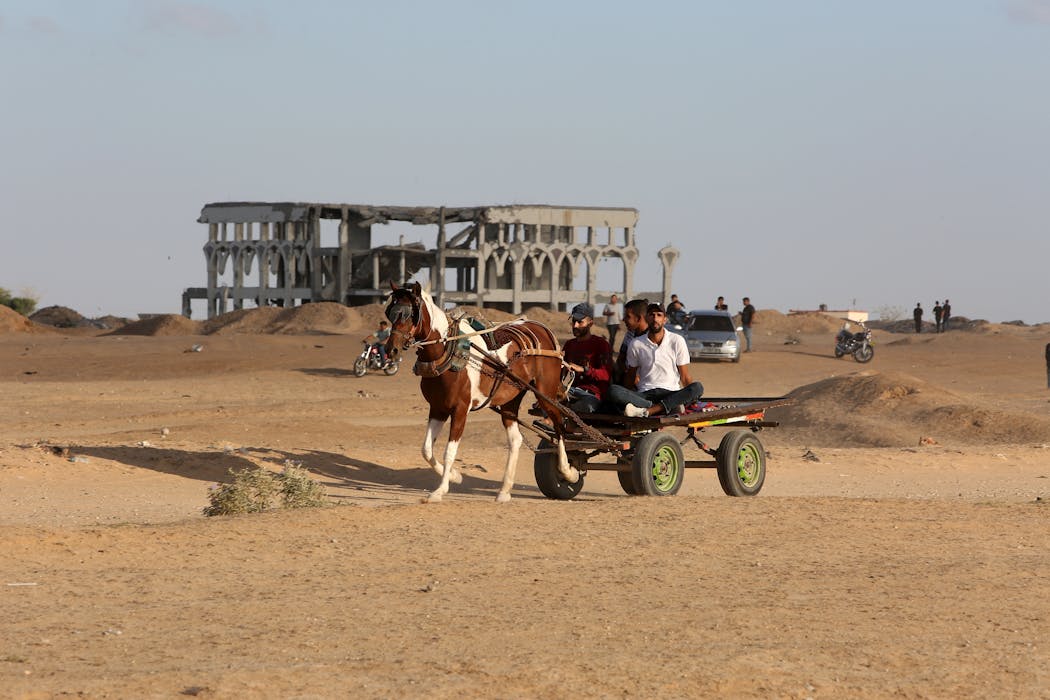
Palestinians near the ruins of Gaza’s international airport, which was shut down in 2001.Anas-Mohammed / Shutterstock
Gaza is going through one of the most severe economic collapses the world has seen in modern times. According to a UN report published in late November, the average income per person there is now just US$161 (£122) a year. Before 2007, when Israel imposed a blockade of Gaza after Hamas won elections and took control of the enclave, it was close to US$2,000.
This income drop has happened slowly over many years. But since the war between Israel and Hamas began in October 2023, Gaza’s economy has fallen apart at speed. The UN report suggests that in the space of just two years, Gaza’s economy has shrunk by 87% to US$362 million.
A major reason for this collapse is the massive destruction caused by the Israeli military’s bombing campaign, which has left almost no functioning economic life behind. In the first four months of the war alone, Israeli strikes caused an estimated US$18.5 billion worth of damage across Gaza.
More recent estimates suggest that 83% of all buildings in Gaza City have now been damaged or destroyed. With buildings gone, roads ruined, land burned and machinery destroyed, Gaza has lost the basic infrastructure it needs for people there to work, study, run businesses and move around safely.
This destruction has deeply affected everyday life. An October 2024 assessment by the UN suggested that Gaza’s Human Development Index score – a measure that summarises an area’s progress in health, education and income – was projected to soon fall to a level not seen in the enclave since the 1950s.
Hospitals are overwhelmed or destroyed, schools cannot function, electricity and water systems barely work and most families have been forced to leave their homes. Nearly the entire population of Gaza has been displaced by the war and cut off from their usual jobs, neighbourhoods and support networks.
This is all happening while the Palestinian Authority (PA), the body responsible for paying teachers, nurses and other public workers in Gaza and the West Bank, battles a severe financial crisis.
Israel controls the collection and transfer of the main tax revenues that the PA depends on, and kept or deducted around US$1.8 billion of this revenue between 2019 and 2025. These funds normally make up most of the PA’s budget, so losing them makes it harder to pay salaries, keep schools and hospitals open and help Gaza deal with its current crisis.
Gaza’s vulnerable economy
The Gazan economy was in a vulnerable state long before the start of the war. After the Oslo accords in 1993, which were intended to establish a framework for peace between Israel and Palestine, Gaza’s economy saw some growth. This was helped by international aid and the ability of some Palestinians to work in Israel.
Between 1994 and 1999, Gaza’s economy grew by an average of 6.1% annually. However, there was considerable volatility throughout this period, largely because Israel retained control of Gaza’s trade rules and borders. A spurt of growth in 1994, for example, was followed by contractions in two consecutive years as border closures disrupted the flow of Palestinian labour and goods to Israel.
Israel tightened movement restrictions in the early 2000s with the beginning of the second Palestinian uprising, and the Gazan economy entered a period of prolonged struggle. Growth dropped by 2% on average annually between 2000 and 2006.
The economic situation worsened again in 2007, when Israel responded to Hamas’s ascent to power by placing Gaza under a strict land, sea and air blockade. This blockade limited almost everything from entering Gaza, including farming supplies and construction materials like cement and steel.
It prevented many exports from leaving the enclave too, and reduced the fishing area accessible to Gazans to just six nautical miles – much smaller than had been agreed in the Oslo accords. Fuel and energy restrictions also caused long daily power cuts.
Over the next 15 years, Gaza’s economy experienced persistent decline. Unemployment remained extremely high throughout this period and poverty became widespread. Between 2007 and 2022, annual growth dropped to 0.4% on average while real GDP per capita contracted by 37%.
Since 2023, the war has pushed the Gazan economy from long-term struggle into complete collapse. Farms have been destroyed, industrial areas flattened and basic public services barely function. With most people displaced and almost no local production left, Gaza now depends almost entirely on humanitarian aid for its economic survival.
What Gaza needs
Rebuilding Gaza will require huge resources. Experts estimate that it may cost between US$70 billion and US$90 billion to clear the rubble and rebuild Gaza’s homes, schools, hospitals, roads and water systems – and that it could take decades.
But money alone will not be enough. Gaza cannot recover fully while the blockade, border restrictions, limits on imports and exports, and withheld Palestinian tax revenues remain in place.
Studies by the UN Development Programme show that if Israel releases the tax revenues it is withholding from the PA, allows more movement of Palestinian workers and goods and if donors provide steady support, Gaza could slowly start to recover. Even a small rise in productivity would be a major improvement after years of decline.
Gaza’s crisis is not the result of the recent war alone. It is the outcome of decades of blockade, tight Israeli control over economic life and repeated military destruction. The current situation shows how much Gaza’s economy depends on decisions made outside the territory.
Unless access, autonomy and financial stability are restored, Gaza’s recovery will remain slow, uncertain and vulnerable to future shocks.
The authors do not work for, consult, own shares in or receive funding from any company or organisation that would benefit from this article, and have disclosed no relevant affiliations beyond their academic appointment.
Source: The Conversation – UK – By Martin B. Richards, Research Professor in Archaeogenetics, Department of Physical and Life Sciences, University of Huddersfield
The question of when people first arrived in the land mass that now comprises much of Australasia has long been a source of scientific debate.
Many Aboriginal people believe they have lived on the land since time immemorial. But until the advent of radiocarbon dating techniques, many western scholars thought they had arrived not long before European contact 250 years ago.
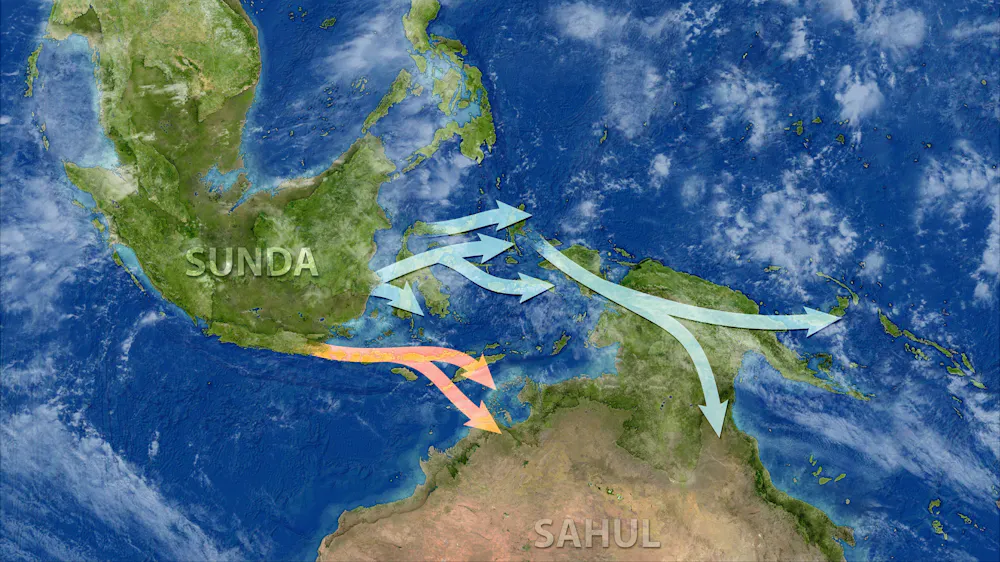
Now a new study by an international collaboration of geneticists and archaeologists, including myself, suggests that humans first arrived in Sahul – the “super-continent” that encompassed New Guinea and Australia during the last ice age – by two different routes around 60,000 years ago.
The research, led by archaeologist Helen Farr at the University of Southampton, also points to the earliest uncontested example of travel by boat – probably simple watercraft such as paddled bamboo rafts or canoes. The first people to arrive would have migrated into the region following a rapid dispersal from Africa around 10,000 years earlier.
The key to the work of our genetics team, based at the University of Huddersfield, is mitochondrial DNA (mtDNA). People only inherit mtDNA from their mothers, so we were able to track an unbroken maternal line of descent down many generations, during which the mtDNA gradually accumulates small mutations.
We sequenced mtDNA genomes in almost 1,000 samples, mainly from New Guineans and Aboriginal people – collected by colleagues at La Trobe University in Melbourne and the University of Oxford, in close collaboration with the communities.
The samples were all collected with the help of Aboriginal elders. The principal elder, Lesley Williams from Brisbane, arranged invitations for the researchers to address Aboriginal groups to explain the purpose of the study and answer any questions before signed consent was given. The results of the analysis of each sample were returned in person whenever possible.
These genealogical trees were then combined with another 1,500 sequences that were already available. By counting the number of mutations from ancestors in these trees, we could use a “molecular clock” to date lineages that were unique to New Guineans, Aboriginal people or both.
After correcting for natural selection (which makes the mutation rate non-linear) and checking the results against well-known colonisation events in the Pacific, we concluded that the deepest lineages were 60,000 years old. Reanalysing previously published male-lineage and genome-wide data found that this also fitted with our results.
Clashing chronologies
The debate about when and how people first arrived in modern-day Australasia was transformed during the 20th century, especially by the introduction and gradual refinement of radiocarbon dating techniques.
This pushed the time of people’s first arrival back to around 45,000 years – ironically, now known as the “short chronology”. However, some archaeologists argued they may have arrived even earlier.
In 2017, newer scientific dating methods – such as optical luminescence dating, which estimates the time quartz grains in the sediments embedding human remains were last exposed to sunlight – supported the so-called “long chronology” of people first arriving in northern Australia at least 60,000 years ago. But this view remainedcontentious.
The pendulum swung again in 2024, as geneticists weighed in with a genetic clock based on the recombination that takes place between pairs of chromosomes with every generation. New results using this clock suggested that interbreeding between early modern humans and Neanderthals, shortly after modern humans left their African homeland, took place less than 50,000 years ago – more recently than had previously been proposed.
All present-day non-Africans carry around 2% Neanderthal DNA, suggesting they must all be descended from that small group. This research therefore supported the short chronology view.
The genetic and archaeological evidence could apparently only be squared if there had been a first wave of early arrivals in Sahul at least 60,000 years ago, that was entirely replaced by a second wave of modern humans around 40,000 years ago. For some experts this seemed implausible, since people were already widespread in Sahul by that time.
Our genetic dates suggest a simpler solution. There was only one wave 60,000 years ago, and these earliest arrivals were the ancestors of today’s New Guineans and Aboriginal people in Australia.
Our results suggest there were two distinct migrations into Sahul – both around the same time about 60,000 years ago. This is because the most ancient lineages fell into two groups.
The major set, with ancestry in the Philippines, was distributed throughout New Guineans and Aboriginal people in Australia. But we also identified another minor set, with ancestry in South Asia or Indochina, only in Aboriginal people. The simplest explanation for these patterns is that there were two dispersals into Sahul: a major northern pathway and a minor southern route.
Both groups of migrating people met more archaic species of human along the way. As well as the 2% Neanderthal DNA that all non-Africans carry, the genomes of modern New Guineans and Aboriginal people in Australia carry a further 5% of archaic human DNA with more local origins – the results of interbreeding in Southeast Asia and perhaps even in Sahul itself.
Even with the lower sea levels 60,000 years ago, that second group must have crossed at least 60 miles (100km) of open sea to reach Sahul – some of the earliest evidence we have for human seafaring. An increasing amount of research suggests maritime technology played a role in early humans’ rapid dispersal from Africa some 10,000 years earlier, taking a coastal route via Arabia to Southeast Asia and beyond.
But the debate about precise timings of these earliest journeys doesn’t end here. We are now analysing whole human genome sequences – each consisting of 3 billion base units, compared with 16,500 for mtDNA – to further test our results. But both kinds of genetic clock – the mutation clock we use, and the recombination clock advocated by others – are indirect evidence. If ancient DNA can eventually be recovered from key remains, we can test these models more directly.
It may happen. Recovering ancient DNA from the tropics is challenging, but in the rapidly evolving world of archaeogenetics, almost anything now seems possible.
Martin B. Richards received funding from the European Research Council’s ACROSS (Australian Colonisation Research: Origins of Seafaring to Sahul) grant to Professor Helen Farr under the European Union’s Horizon 2020 research and innovation programme.