Outdoor swimming is becoming a sanctuary for female swimmers in the UK

Source: The Conversation – UK – By Abi Lafbery, PhD Candidate, Sociology, Lancaster University

Wild swimmers in Burry Port, Wales. jax10289/Shutterstock

Centuries after the upper class flocked to the coast for therapeutic sea bathing, outdoor swimming is having a renaissance. Swimmers enter cold water for the many physical and mental health benefits it offers.

Despite the dangers – hypothermia, cardiac-related death and drowning – for many women, outdoor swimming feels like a safe space. My PhD research, which explored outdoor swimming in north-west England, found that some women experience their swimming as a form of liberation, from what they see as a male-centric culture, the male gaze and social convention.

Despite recent gains in women’s sport, men are still participating in higher numbers, especially in outdoor activities. However, approximately two-thirds of outdoor swimmers are women.

In this environment, stripping off at the water’s edge can feel like stripping back notions of how female swimmers feel they “ought to” look or behave.

This is particularly relevant in a context where more than half of women feel that the UK has become more dangerous in the past five years, and reports of violence against women are increasing.

While men are loved and valued members, founders of and advocates for outdoor swimming communities across the UK, female swimmers comment on enjoying a female-majority atmosphere. Compared to perceived male-dominated environments such as the city, where women may feel that they need to take precautions to ensure their safety, or change how and where they exercise during darker winter months, one woman described outdoor swimming as, “a sense of freedom that I don’t think I would necessarily have elsewhere”.

Outdoor spaces are widely perceived to be a male domain. The outdoors is where tropes of masculinity, including stoicism and the conquering of nature, are performed.

Through the practice of outdoor swimming, female swimmers are rewriting outdated ideas of how women might be, do and what they look like in the outdoors.

As late as the Victorian era, many outdoor sports were imagined to threaten a woman’s femininity and fertility. Recent research has shown that mainstream media often portrays women as passive or requiring male assistance during outdoor activities.

Outdoor swimming is a sport in which female physiology provides a significant edge, and women can feel athletic and empowered, no matter their body type.

Many of the swimmers in my research are between their 30s and 60s, and several are experiencing the menopause or ageing bodies. In each other’s company and in the water, patriarchal and capitalist ideals of a “good body” (slim, able-bodied and cisgender), are felt to wash away.

Female swimmers laugh heartily about their “bioprene”, a beloved euphemism for the body fat that allows them to outlast their husbands in cold water. As one swimmer in my study said:

When you’re swimming outdoors, there’s no glamour … it’s a levelling thing and I think in a world where we’re just bombarded with what we should be doing and what we should look like, it’s the way that people can just be themselves.

The outdoor swimming movement is known for its self-proclaimed non-conformist and subversive roots. For some female swimmers, their personal practice is a way to be unconventional. One swimmer commented:

I’ve got this concern about convention and what I ought to be doing, what people expect me to do, but I’ve got more concerned with what I need to do to find pleasure and peace.

For this swimmer, letting go of social norms is a way to find peace within herself.

Finding community

A sense of peace also comes in the form of the friendships that are forged in the water. Previous research has indicated that the social and communal elements of outdoor swimming are an important factor in the sense of wellbeing associated with the practice.

My research indicates that the femininity of some swimming circles can be a harbour for emotional intimacy.

One swimmer described how she and her fellow swimmers have had beautiful exchanges while immersed in the waves, including singing together:

That lovely little moment, which, had it been a male-dominated environment, we perhaps wouldn’t have felt comfortable to be like that. Lots of women around you, you just feel freer… it was spontaneous, it was beautiful.“

The rivers, lakes and seas of the UK offer energising and emboldening spaces where many women feel safe to be fully and unapologetically themselves. As outdoor swimming grows in popularity, and grassroots organisations such as Mental Health Swims have closed due to a lack of funding, nurturing female communities in the outdoors is increasingly important, such that more women may find safety, joy and more of themselves in the outdoors.

The Conversation

Abi Lafbery received funding from the Economic and Social Research Council, North West Social Science Doctoral Training Partnership, ES/P000665/1.

ref. Outdoor swimming is becoming a sanctuary for female swimmers in the UK – https://theconversation.com/outdoor-swimming-is-becoming-a-sanctuary-for-female-swimmers-in-the-uk-268009

Good sleep starts in the gut

Source: The Conversation – UK – By Manal Mohammed, Senior Lecturer, Medical Microbiology, University of Westminster

Zhur_Sa/Shutterstock

You might think good sleep happens in your brain, but restorative sleep actually begins much lower in the body: in the gut.

The community of trillions of microbes living in your digestive tract, known as the gut microbiome, plays a powerful role in regulating sleep quality, mood and overall wellbeing. When the gut microbiome is balanced and healthy, sleep tends to follow. When it is disrupted, insomnia, restless nights and poor sleep cycles often appear.

Gut and brain communicate constantly through the gut-brain axis. This communication network involves nerves, hormones and immune signals.

The best known part of this system is the vagus nerve, which acts like a two-way communication line carrying information between gut and brain. Researchers are still studying how important the vagus nerve is for sleep, but evidence suggests that stronger vagal activity supports calmer nervous system states, steadier heart rhythms and smoother transitions into rest.

Because of this intimate connection, changes in the gut influence how the brain regulates stress, mood and sleep.

So, how does the gut actually communicate these signals to the brain?

Gut microbes do more than digest food. They produce neurotransmitters and metabolites that influence sleep-related hormones. Metabolites are small chemical by-products created when microbes break down food or interact with each other. Many of these compounds can influence inflammation, hormone production and the body’s internal clock. When the gut is in balance, these substances send steady, calming signals that support regular sleep. When the microbiome becomes imbalanced, a condition known as dysbiosis, this messaging system becomes unreliable.

The gut also produces several key sleep-related chemicals. Serotonin, for example, regulates mood and helps set the sleep-wake cycle. Most of the body’s serotonin is produced in the gut, and healthy bacteria help keep its production stable. Melatonin, which makes you feel sleepy at night, is made not only in the pineal gland but also throughout the digestive tract. The gut helps convert serotonin into melatonin, so its condition directly shapes how efficiently this happens.

The gut also supports the production of Gaba (gamma-aminobutyric acid), a calming neurotransmitter made by certain beneficial microbes. Gaba quiets the nervous system and signals that the body is safe enough to relax. Together, these chemicals form part of the body’s circadian rhythm, the internal 24-hour cycle that regulates sleep, appetite, hormones and temperature. When harmful bacteria dominate, that rhythm becomes less stable, which can contribute to insomnia, anxiety at bedtime and fragmented sleep.

Another major route linking gut and sleep is inflammation. A healthy gut maintains a balanced immune response. It does this by protecting the gut lining, hosting microbes that regulate immune activity and producing compounds that calm inflammatory reactions. If dysbiosis develops or a poor diet irritates the gut lining, gaps can form between the cells of the intestinal wall. This allows inflammatory molecules to escape into the bloodstream, creating chronic, low-grade inflammation.

Inflammation is known to interfere with sleep regulation. It disrupts the brain’s ability to coordinate smooth transitions between the stages of sleep because inflammatory chemicals influence the same brain regions that control alertness and rest. People with inflammatory gut conditions often experience this in very practical ways.

Irritable bowel syndrome, food sensitivities or increased intestinal permeability, often called leaky gut, all involve irritation or loosening of the gut lining. This allows immune-triggering substances to enter the bloodstream more easily, which increases inflammation and interferes with sleep. Inflammation also raises levels of the stress hormone cortisol, which makes the body feel primed for action rather than rest.

Stress, sleep and gut health continually reinforce each other. Stress alters the gut microbiome by reducing beneficial microbes and increasing inflammatory compounds. A disrupted gut then sends distress signals to the brain, which heightens anxiety and disrupts sleep. Poor sleep raises cortisol further, which worsens gut imbalance. This creates a cycle that can be difficult to break unless the gut is supported.

Strengthening the gut can make sleep noticeably better, and the changes do not need to be complicated. Eating prebiotic and probiotic foods, particularly fermented foods, supports beneficial microbes because fermentation creates live cultures that help repopulate the gut. Reducing sugar and ultra-processed foods lowers inflammation and prevents dysbiosis because these foods tend to feed bacteria that promote irritation or produce inflammatory by-products.

Keeping consistent meal times helps the gut maintain a steady daily rhythm because the digestive system has its own internal clock. Managing stress makes a difference. Staying well hydrated helps the gut microbiome because fluid supports digestion, nutrient transport and the mucus layer that protects the gut lining. Together, these changes create a more stable gut environment that supports deeper and more restorative sleep.

Good sleep does not begin the moment you climb into bed. It begins long before that, shaped by the health of the gut and the messages it sends to the brain throughout the day. When the gut is supported and balanced, the body is better able to settle, recover and shift into the rhythms that allow sleep to improve naturally.

The Conversation

Manal Mohammed does not work for, consult, own shares in or receive funding from any company or organisation that would benefit from this article, and has disclosed no relevant affiliations beyond their academic appointment.

ref. Good sleep starts in the gut – https://theconversation.com/good-sleep-starts-in-the-gut-270487

Why our physical bodies may be a core part of conscious experience – new research

Source: The Conversation – UK – By Renzo Lanfranco, Principal Researcher, Department of Clinical Neuroscience, Karolinska Institutet

Inna_Kandybka/Shutterstock

Most of us go through the day without thinking much about our bodies – until something goes wrong. Yet beneath that apparent simplicity lies a remarkable achievement: the brain must constantly knit together sights, touches and signals from muscles and joints into a coherent sense of “this body is mine”.

Psychologists and neuroscientists call this body ownership. It is a key part of self-consciousness: the feeling of being a self located in a particular body, separate from the world around you. It’s partly what makes us different to AI.

For decades, theories have proposed that a lot of this bodily processing happens outside awareness. It’s a kind of unconscious process that quietly guides our movements while consciousness focuses on other things. Now our new study challenges this idea – giving interesting insights into theories of consciousness.

Most experiments on consciousness have used flashes of light or sounds, asking when and how these external stimuli reach awareness. Surprisingly, very little work has directly tested how conscious awareness relates to the bodily self.

Rubber hand experiments

To investigate this, we used a modern version of the famous rubber hand illusion. In this illusion, a participant’s real hand is hidden from view while a lifelike rubber hand is placed in front of them. If both hands are stroked in synchrony, most people begin to feel that the rubber hand is, strangely, part of their own body.

We built a robotic set-up that allowed us to control this illusion with millisecond precision. In our main experiment, 32 participants saw two rubber hands side by side, while a robot tapped their real, hidden hand.

On every trial, one rubber hand was tapped in perfect synchrony with the real hand and the other was tapped with a slight delay – from 18 to 150 milliseconds. After a short sequence of taps, people had to choose which rubber hand felt more like their own. Then they rated how clear that feeling was.

This gave us two things to compare. One was objective performance – how accurately people’s feeling of hand ownership could tell which hand matched their real hand’s timing. The second was subjective awareness – how clearly they reported feeling that sense of ownership.

If a lot of body ownership processing happens unconsciously, we might expect people to be more likely to pick the correct rubber hand, even when they report only a vague or unclear feeling of ownership.

Illustration of the rubber hand illusion
The rubber hand illusion with two rubber hands presented simultaneously.
Illustration by Mattias Karlén, CC BY

That is not what we found. As we increased the lack of synchrony between the real and fake hands, people became better at picking the “correct” hand. Crucially, their awareness ratings improved in lockstep.

Both objective performance and reported clarity started to rise at around 30 milliseconds of mismatch. Below that, people were essentially guessing; above that, they both chose more accurately and reported clearer feelings of ownership.

In other words, as soon as the brain started to reliably tell the difference between “my hand” and “not my hand”, people’s conscious experience reflected that difference. We did not see the common pattern reported in visual studies, where unconscious processing can occur before stimuli reach awareness.

Body ownership vs timing

To test whether this was really about body ownership – rather than simply noticing timing – we ran two control experiments. When we rotated the rubber hands into an anatomically impossible position, the illusion disappeared and people mostly reported no clear feeling of ownership, regardless of timing.

And when we replaced the hands with wooden blocks and asked people to judge simultaneity instead of ownership, their awareness no longer tracked their performance as tightly. This suggests that strong conscious access is specific to body ownership, not just to any kind of multisensory integration.

In further experiments, we asked whether the same close relationship holds when body ownership builds up gradually. In one study, we varied how many taps people received before making their choice. More taps meant more sensory evidence. As expected, their ability to discriminate ownership improved with more touches. But again, their awareness ratings improved proportionally.

Taken together, our findings point to a simple but powerful conclusion: for body ownership, consciousness seems to have continuous, privileged access to the relevant information.

This contrasts with many studies of vision and hearing, where stimuli can be processed and influence behaviour without ever entering awareness. It suggests that the bodily self may occupy a special place in our conscious lives.

One reason may be that body ownership is intrinsically self-related: it anchors a first-person perspective in space and underpins almost everything else we experience. Another is that it depends on complex integration across many senses, which may require the kind of widespread brain activation associated with conscious experience.

Implications for mental health

Understanding how body ownership and awareness are linked is not just a philosophical exercise. Distortions of bodily self-perception are common in conditions such as schizophrenia, eating disorders, borderline personality disorder and autism spectrum disorders, where people may feel alienated from their bodies or misperceive their size, shape or boundaries. Our work offers new tools to study how finely tuned the system is.

The findings also resonate with rapidly developing technologies in virtual reality and prosthetics. Many applications aim to “embody” a user in a digital or artificial body. Knowing that body ownership is tightly tied to awareness suggests that successful embodiment will depend on keeping multisensory signals aligned in a way that sustains a clear, conscious sense of “this is me”.

Finally, our results speak to big-picture theories of consciousness. If information about our own body is almost always admitted into awareness, this supports the idea that maintaining a stable, embodied self may be one of the core functions of conscious experience. This perspective ultimately highlights a key gap between humans and current artificial systems, challenging the idea that AI – at least in its current forms – could resemble human consciousness.

The Conversation

Renzo Lanfranco receives funding from the Swedish Research Council (Vetenskapsrådet) and the Strategic Research Area Neuroscience (StratNeuro).

ref. Why our physical bodies may be a core part of conscious experience – new research – https://theconversation.com/why-our-physical-bodies-may-be-a-core-part-of-conscious-experience-new-research-270836

How the UK’s dependency on cars slows down the economy

Source: The Conversation – UK – By Renaud Foucart, Senior Lecturer in Economics, Lancaster University Management School, Lancaster University

Jarek Kilian/Shutterstock

The UK government makes a lot of money from cars. It taxes car ownership, it taxes the fuel, and it is about to charge drivers of electric vehicles by the distance they travel.

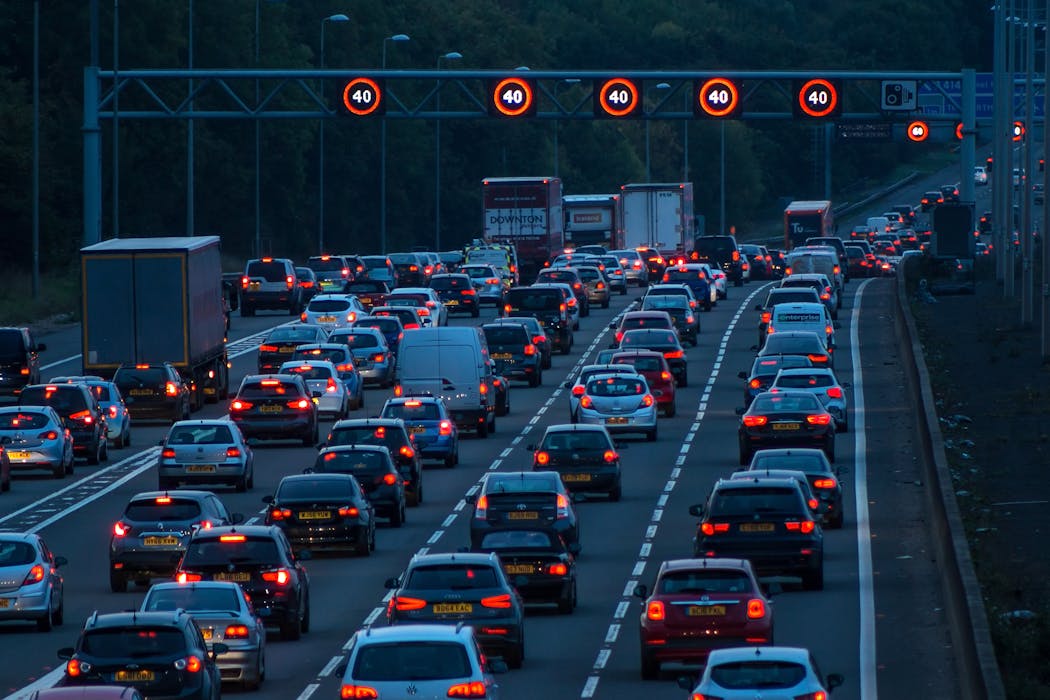
But Britons’ reliance on their 34 million cars also comes at great expense to the economy. Heavy traffic and congestion costs £7.5 billion a year in wasted time. An estimated £17 billion is needed to fix the worn out road network.

In the last 30 years, as the UK population has grown by 19%, the number of cars has exploded by 56%. Outside of London, 81% of British households own at least one car.

Fitting all of these vehicles into a fairly small country means that driving has clear priority over other forms of transport. In Germany, 90% of people living in large cities have access to a tramway or underground train system. In France, it’s 80%.

In the UK, the figure is less than 20%, a similar level to the US.

But the US has vast amounts of space, where brand new roads are regularly built to ease congestion. And so the UK has to deal with a population density comparable to the Netherlands (at least for England) and the urban transport choices of Texas.

This lack of decent public transport is expensive to sustain for all sorts of reasons – like the councils forking out £2.3 billion a year transporting 470,000 children to school, mostly in taxis. Or the cost of subsidising 800,000 motability vehicles, which accounted for one in every five new cars sold in 2024.

While the government should absolutely support the travel needs of people with disabilities and help children get to school, in a strange case of state-provided individualism, the UK has become a country where only cars can deliver these vital public services.

Designated drivers

Yet urban design is ultimately a choice. While the UK has a system which allows for 560 cars per 1,000 people, other places have taken a different route.

In Singapore, there are 146 cars per 1,000 people. This came about after the government implemented a quota system to release a limited number of (expensive) car-ownership licenses to limit congestion and finance public transport.

A ten-year “certificate of entitlement” to own a car in Singapore now costs more than US$100,000 (£76,000) on top of an additional congestion tax.

Red locomotive on rails.
Public transport in Singapore.
Tupungato/Shutterstock

The result? Singapore’s public transport is cheap, fast, reliable and efficient.

People without cars are fine, because the number of overall cars is so small that buses and taxis don’t get stuck in traffic. People with cars subsidise the buses and trains, while enjoying smooth traffic.

The Netherlands used a different strategy. In the 1970s, Dutch streets were dominated by cars and had become dangerous for pedestrians and cyclists. Protests led to a reorganisation of cities to become far less car friendly.

My research with a fellow economist demonstrated that if you decrease the space given to cars, they go slower, public transit goes faster, and walking and cycling become safer.

Then, as more people turn to public transport, the higher uptake makes it a faster and more reliable form of transit. It gets to a point where people who would never have taken public transport end up using it and getting to their destination much more quickly than when the car was dominant.

So for the UK to be more like Singapore, the government needs to make motorists pay much more for their car use. To be more like the Netherlands, it must take away their space.

The UK, and especially England, which invented the railway and used to be full of electric tramways, has the population density to make a dramatic switch away from cars actually work. In fact, it’s hard to think of a country better suited to public transport, or where it is more needed. It just hasn’t been built.

Or at least, it has not been built outside of London, the only place in the UK where most households don’t own a car.

So London is rich, well connected and people don’t need cars. Elsewhere, people park on pavements in derelict high streets and drive to supermarkets and places of work.

With stretched public finances, doing nothing about this state of affairs is a risky option. The UK has been described by the Local Government Association as a “country in a jam”, where productivity is held back by car traffic, with no hope for improvement. Lost time on roads is set to increase by 27% in the coming decades.

Moving to a situation where cars are not considered the fastest and most convenient mode of transportation will take ambition and imagination. But the alternative is a very expensive dependency, which clogs up the UK economy.

The Conversation

Renaud Foucart does not work for, consult, own shares in or receive funding from any company or organisation that would benefit from this article, and has disclosed no relevant affiliations beyond their academic appointment.

ref. How the UK’s dependency on cars slows down the economy – https://theconversation.com/how-the-uks-dependency-on-cars-slows-down-the-economy-270393

The UK’s food supply is more fragile than you might think – here’s why it should be a national priority

Source: The Conversation – UK – By Sven Batke, Associate Head of Research and Knowledge Exchange – Reader in Plant Science, Edge Hill University

Ink Drop/Shutterstock

If you walked into a supermarket during a supply hiccup, storm, fuel protest, or even the early days of the COVID pandemic, you will remember the sight of empty shelves. For most people in the UK, these moments are surprising, even unsettling, precisely because they are rare. We are a generation largely spared the rationing, shortages and hunger our grandparents and great-grandparents once endured.

But that rarity is exactly why we must not become complacent. Food security (the reliable availability, access and affordability of food) should be recognised as a major national concern. That means placing it firmly on the UK’s national risk register.

The national risk register is the UK government’s openly available list of the most serious risks that could affect the country in the short to medium term. These risks range from flooding and heatwaves to threats such as cyberattacks and energy shortages.

Being listed on the register does not mean the event is likely to happen tomorrow (but it could). It means the government has assessed it as significant enough, based on impact and probability, to require planning and mitigation measures.

Think of the national risk register as the country’s official “what could really go wrong?” list. If a threat is on the register, policymakers, emergency planners and critical industries take it seriously and plan accordingly. If it is not, the risk can drift into the background (even when it should not).

For all its importance, food security occupies a limited and somewhat indirect presence in the risk register. It only appears within broader categories such as supply-chain disruption, fuel shortages and animal disease. It’s not mentioned as a clearly defined risk in its own right.

Placing food security on the national risk register as its own defined category would send a clear signal that safeguarding stable, affordable food is a national priority – on par with energy, health and security. My team’s recent white paper for the government highlights this urgency.

Our modern food system is more complex, interconnected and vulnerable than many people realise. The UK imports around half of its food.

Some categories, such as fruit and vegetables, depend on imports for as much as 80–95% of supply. We rely on long, intricate supply chains involving overseas farming conditions, global shipping routes, international labour markets and constantly changing energy prices. When any of these are disrupted, our food system feels the shock.

In 2023, extremely bad weather in Spain and Morocco reduced crop yields, leaving UK supermarkets rationing tomatoes and peppers. The war in Ukraine has caused spikes in grain and sunflower oil prices. And the COVID pandemic and subsequent labour shortages have exposed how reliant farming and food distribution are on migrant workers.

An uncomfortable truth lies behind each of these disruptions: we are more dependent on global systems than the public think. Those systems are under pressure from climate change, geopolitical instability and resource competition.

Food systems also operate with tight margins. Fresh produce is harvested, shipped and sold quickly. Livestock feed supply needs to be constant. Fertiliser production depends heavily on natural gas for providing both the hydrogen feedstock and the energy required to make ammonia, the key ingredient in most nitrogen fertilisers. All of these dependencies create points of vulnerability. When several of those break at once, shortages can cascade.


Read more:
How unsustainable global supply chains exacerbate food insecurity


For many households, even small disturbances lead to real consequences: higher prices, reduced choice and increased stress about meeting weekly food bills. Families on tight budgets feel these effects most sharply.

While we are nowhere near the wartime rationing experienced by earlier generations, food banks across the UK are already serving record numbers, and food-price inflation has recently reached levels not seen in decades. Food insecurity is not a hypothetical risk for millions, it is a reality.

An expert explains the meaning of climate resilience.

Lessons from the past

Historically, Britain has faced food insecurity before. During the second world war, German U-boats targeted supply ships, leading to rationing that lasted until 1954. Earlier still, crop failures and poor harvests in the 19th century caused widespread hardship. Today we benefit from refrigeration, global trade, advanced agriculture and data-driven logistics, but those advantages can create an illusion of invulnerability that our supply chains are robust.

Food security, even in the UK, is more fragile than it might seem. Our shelves look full until suddenly they do not. A combination of climate-driven harvest failures, rising energy prices and trade disruptions could create national shortages or unaffordable prices much more quickly than many people may expect.

Including food security on the national risk register would prompt government departments to plan coordinated responses. It would drive investment in resilient agriculture, storage and domestic production while encouraging diversification of food imports to avoid overreliance on just a few regions.

Better risk planning would also support households through better safety nets and targeted interventions such as emergency rations and direct support to vulnerable households. Raising public awareness that food security is a shared national responsibility does not suggest panic – it means preparation.


Don’t have time to read about climate change as much as you’d like?

Get a weekly roundup in your inbox instead. Every Wednesday, The Conversation’s environment editor writes Imagine, a short email that goes a little deeper into just one climate issue. Join the 47,000+ readers who’ve subscribed so far.


The Conversation

Sven Batke is affiliated with the Greenhouse Innovation Consortium.

ref. The UK’s food supply is more fragile than you might think – here’s why it should be a national priority – https://theconversation.com/the-uks-food-supply-is-more-fragile-than-you-might-think-heres-why-it-should-be-a-national-priority-270709

L’« effet Lazare », ou quand certains êtres vivants ressurgissent après des millions d’années

Source: The Conversation – France (in French) – By Violaine Nicolas Colin, Maitre de conférence en systématique et phylogéographie, Muséum national d’histoire naturelle (MNHN)

Les lézards iguanidés ( ici, _G. longicaudatus_) étaient très répandus et diversifiés en Europe durant l’Éocène (entre 56 millions et 33,9 millions d’années). On les pensait totalement disparus du continent après la transition Éocène-Oligocène. Jusqu’à la découverte, en 2012, de spécimens du genre _Geiseltaliellus_ dans le sud de la France. Chris Woodrich, CC BY

Nommé d’après la figure biblique revenue d’entre les morts, l’« effet Lazare » désigne un phénomène bien plus fréquent qu’on ne le pense : la réapparition de certains groupes d’organismes que l’on croyait éteints.


Tout le monde connaît Lazare, ce personnage du Nouveau Testament que Jésus aurait ramené à la vie. C’est de cette image symbolique qu’est né le terme d’« effet Lazare », utilisé aujourd’hui dans différents domaines de la biologie.

En paléontologie et en phylogénie (l’étude des relations évolutives entre les organismes), il désigne un phénomène fascinant : celui de groupes d’organismes – espèces, genres ou familles – qui semblent avoir disparu pendant des millions d’années si l’on se fie à l’ensemble des fossiles découverts à ce jour, avant de réapparaître comme par miracle.

Le concept a été introduit dans les années 1980 par les scientifiques états-uniens Karl Flessa et David Jablonski, puis affiné par la suite. Toutefois, les scientifiques ne sont pas toujours d’accord sur la manière de le définir : certains, comme Jablonski, y voient une simple absence temporaire dans les archives fossiles pendant un intervalle de temps donné, d’autres le réservent aux retours spectaculaires après les grandes crises d’extinction massive.

Pourquoi ces « résurrections » apparentes ?

L’effet Lazare demeure de fait étroitement lié à la qualité du registre fossile, c’est-à-dire à l’ensemble des fossiles découverts à ce jour, qui n’offre qu’une image partielle du passé de la vie. La fossilisation est un processus rare et sélectif : certains organismes se fossilisent mieux (par exemple, ceux dotés de coquilles ou d’os) et certains milieux (comme les fonds marins) favorisent la conservation des restes biologiques. De plus, les roches peuvent être détruites, transformées ou tout simplement jamais explorées. Résultat : de larges pans de l’histoire du vivant nous échappent encore.

L’absence d’un taxon (unité de genre, de famille ou d’espèce) dans le registre fossile pendant des millions d’années peut donc avoir deux explications :

  • une cause « stratigraphique », autrement dit un trou dans les archives. Le taxon a bien survécu, mais nous n’en avons conservé aucune trace ;

  • une cause « biologique » signifiant qu’il s’agit d’un véritable événement évolutif.

Plusieurs scénarios peuvent alors expliquer cette disparition apparente :

→ Le taxon a pu trouver refuge dans des zones isolées, de petite taille ou mal explorées. Après une longue période d’isolement dans ces refuges, le taxon a ensuite envahi de nouveau son territoire originel et est réapparu dans le registre fossile.

→ Il a pu subsister à très faible densité, en dessous du seuil nécessaire pour laisser des traces fossiles. En dessous de ce seuil, la population reste viable, mais nous n’avons tout simplement aucune trace de son existence. Malheureusement, ce seuil varie selon les environnements et les taxons, et il est quasiment impossible à quantifier.

La distinction entre les alternatives stratigraphique et biologique est souvent difficile. L’intensité des fouilles, la qualité de l’identification des fossiles et le niveau taxonomique (espèce, genre, famille…) jouent tous un rôle crucial dans l’interprétation de ces cas. Il faut aussi noter que l’interprétation de l’effet Lazare est une procédure asymétrique, car l’alternative biologique n’est privilégiée que lorsque l’alternative stratigraphique ne peut être documentée. Par conséquent, les techniques analytiques évaluant l’exhaustivité des archives fossiles sont essentielles pour comprendre la signification des taxons Lazare.

Origines de l’effet Lazare mettant en évidence les alternatives stratigraphique et biologique qui soit empêchent la préservation, soit limitent le nombre de restes préservés encore non découverts en raison d’un échec d’échantillonnage. Adapté de Fara (2001).
Fourni par l’auteur

Quand la vie joue à cache-cache : quelques exemples

Une chose reste elle certaine, les exemples de taxons Lazare sont bien moins rares qu’on pourrait le penser.

Les lézards iguanidés, par exemple, étaient très répandus et diversifiés en Europe durant l’Éocène (de -56 millions à -33,9 millions d’années). On pensait qu’ils avaient totalement disparu du continent après la transition Éocène-Oligocène. Pourtant, la découverte, en 2012, de spécimens du genre Geiseltaliellus dans le sud de la France a montré qu’ils avaient survécu quelque temps en faible abondance avant de s’éteindre définitivement, probablement à la fin de l’Oligocène, il y a 23 millions d’années.

Autre cas remarquable : le gastéropode du genre Calyptraphorus. Longtemps considéré comme disparu à la fin de l’Éocène, il a refait surface au Pliocène (de -5,3 millions à -2,6 millions d’années) dans des gisements des Philippines (Asie du Sud-Est), prolongeant son existence fossile d’environ 30 millions d’années ! Cette longévité cachée suggère qu’il aurait survécu discrètement dans des zones refuges du Pacifique tropical.

La redécouverte d’espèces vivantes appartenant à des groupes que l’on pensait éteints constitue une expression rare et spectaculaire de l’effet Lazare. Parmi les exemples les plus emblématiques on peut par exemple citer, le cœlacanthe, véritable icône de l’effet Lazare. Ce poisson, que l’on croyait éteint depuis 66 millions d’années, a été redécouvert vivant en 1938 au large de l’Afrique du Sud (Afrique australe).

Un autre cas remarquable est celui de Laonastes, un petit rongeur découvert en 2005 au Laos, en Asie du Sud-Est, sur les étals d’un marché local de viande sauvage. Au départ, les chercheurs pensaient avoir affaire à une nouvelle famille de rongeurs, qu’ils ont appelée Laonastidæ.

Le kanyou (Laonastes aenigmamus) est un rongeur découvert au Laos dans la province de Khammouane. Décrit en 2005 il est le seul représentant vivant de la famille de Diatomyidæ ; famille que l’on pensait disparue depuis plus de 11 millions d’années
Le kanyou ou khan-you (Laonastes aenigmamus) est un rongeur découvert au Laos, dans la province de Khammouane. Décrit en 2005, il est le seul représentant vivant de la famille des Diatomyidæ ; famille que l’on pensait disparue depuis plus de 11 millions d’années.
Jean-Pierre Hugot, CC BY

Cette classification reposait sur des analyses génétiques basées sur un nombre limité de gènes et sur la comparaison de sa morphologie avec celle d’espèces actuelles. Mais un véritable bouleversement scientifique est survenu lorsque les scientifiques ont intégré des fossiles dans leurs analyses morphologiques. En comparant en détail le crâne, la mandibule, les dents et le squelette de Laonastes avec des rongeurs fossiles et actuels, ils ont découvert qu’il appartenait en réalité à la famille des Diatomyidæ, que l’on croyait éteinte depuis plus de 11 millions d’années.

Ces analyses ont également révélé que les plus proches parents actuels de cette famille sont les goundis Ctenodactylus gundi. Des études génétiques plus poussées sur les espèces actuelles ont ensuite confirmé ce lien de parenté entre Laonastes et les goundis, et révélé que ces deux lignées auraient divergé il y a environ 44 millions d’années. Laonastes représente donc un exemple frappant de taxon Lazare.

Pourquoi ces découvertes sont-elles si importantes ?

Les taxons Lazare sont ainsi bien plus que des curiosités de la nature. Ils offrent aux scientifiques des clés uniques pour comprendre l’évolution du vivant, la résilience des espèces face aux crises et surtout les limites du registre fossile.

En phylogénie, leur réapparition peut modifier notre compréhension des liens de parenté entre les espèces, des dates de divergence et d’extinction ou encore de la vitesse d’évolution morphologique.

En paléontologie, ils rappellent à quel point le registre fossile est biaisé et incomplet, et combien il faut être prudent avant de déclarer une espèce « disparue ».

Enfin, les taxons Lazare montrent que la vie ne disparaît pas toujours là où on le croit. Parfois, elle se retire simplement dans l’ombre pour ressurgir des millions d’années plus tard, comme un témoin silencieux de la longue histoire de l’évolution.

Parce que dans les usages de nomenclature biologique, seuls les noms de rangs générique et infra-générique (genre, espèce, sous-espèce) se composent en italique, tandis que les noms de familles et au-dessus (famille, sous-famille, ordre, etc.) se composent en romain. Ainsi, Laonastidæ a parfois été perçu comme un nom de genre par confusion et mis en italique à tort, alors que Diatomyidæ est un nom de famille correctement laissé en romain.

The Conversation

Violaine Nicolas Colin a reçu des financements de l’ANR.

ref. L’« effet Lazare », ou quand certains êtres vivants ressurgissent après des millions d’années – https://theconversation.com/l-effet-lazare-ou-quand-certains-etres-vivants-ressurgissent-apres-des-millions-dannees-269236

Le bonheur s’achète-t-il en solde ?

Source: The Conversation – France (in French) – By Mickaël Mangot, Docteur en économie, spécialiste d’économie comportementale et d’économie du bonheur, conférencier, chargé de cours, ESSEC

Les difficultés de la vie quotidienne peuvent modérer le bénéfice de la consommation sur notre bonheur. Pack-Shot/Shutterstock

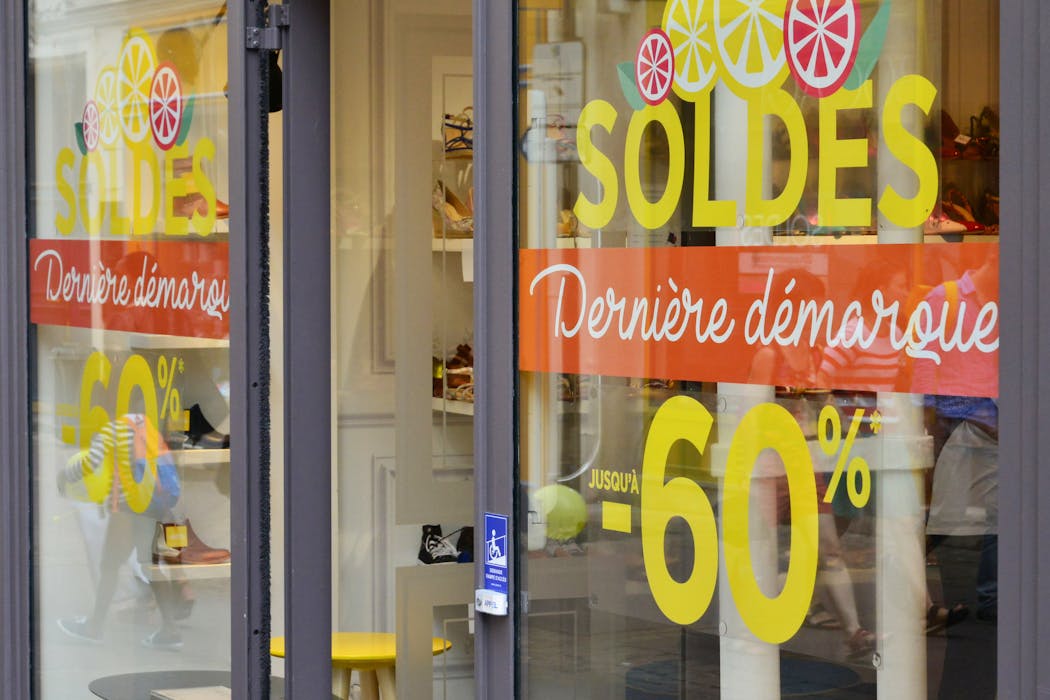
Consommer nous rend-il plus heureux ? Les soldes nous rapprochent du bonheur ou, au contraire, nous en éloigne-t-il ? Selon l’économie du bonheur, toutes les consommations ne se valent pas…

Depuis le début des années 1970, l’économie du bonheur constitue un courant de recherche, au sein de la science économique, qui se propose de décrypter comment les comportements des individus influencent leur niveau de bonheur.

Si la relation entre revenus et bonheur a beaucoup occupé la discipline, de plus en plus de chercheurs s’intéressent désormais à la relation entre consommation et bonheur, sur un plan quantitatif – combien on consomme – comme qualitatif – ce que l’on consomme.

Est-on d’autant plus heureux que l’on consomme ? À l’instar de la relation entre revenus et bonheur, la réponse est clairement affirmative, que ce soit en Europe, aux États-Unis ou en Asie. Mais, comme pour le revenu, la consommation explique à elle seule très peu des différences de bonheur entre individus, entre 5 % et 15 %. Il existe beaucoup de personnes qui sont heureuses tout en consommant peu et, inversement, des individus très dépensiers qui sont insatisfaits de leur vie.

Impact éphémère

Cette absence de relation forte entre niveau de consommation et niveau de bonheur s’explique en grande partie par plusieurs mécanismes psychologiques.

Hormis quelques exceptions – chômage, handicap lourd, maladies chroniques ou dégénératives, etc., les humains s’adaptent aux chocs de vie, positifs ou négatifs.

La consommation, notamment de biens matériels, fait partie de ces événements qui ne laissent plus aucune de trace sur le bonheur à moyen long terme. Une fois l’achat effectué, nos consommations sont vite reléguées à l’arrière-plan de nos vies. Cette règle s’applique autant pour les petits achats – vêtements, déco ou high-tech – que pour les biens durables très onéreux comme la voiture ou le logement.

Les désirs se renouvellent et progressent constamment. Plus le niveau de vie augmente, plus les aspirations s’élèvent.

Cette montée en gamme (ou lifestyle inflation) s’applique à tout : logement, voiture, vêtements, restaurants, loisirs… À 20 ans on rêve d’un McDo et d’une chambre de bonne et à 60 ans d’un restaurant étoilé et d’une maison de maître. Dans nos armoires ou sur nos étagères, les consommations passées sont les vestiges visibles de désirs aujourd’hui dépassés.

Compétition sociale

S’ajoute aussi le mécanisme de la comparaison sociale : on fait l’expérience de son niveau de vie en partie cognitivement, en l’évaluant par rapport à celui des autres. Un niveau de vie élevé n’est pas gage de satisfaction s’il traduit un statut inférieur à celui de ses collègues, de ses voisins et de sa famille.

Ce n’est donc pas seulement notre propre consommation qui est importante pour le bonheur (positivement), mais également celle de notre entourage immédiat (négativement), du moins pour les consommations facilement observables – logement, voiture, vêtements, montres…

La satisfaction de la vie au sein d’un ménage augmente en fonction du rang de ce ménage en termes de consommation observable au sein de la même localité. D’ailleurs, lorsqu’un ménage gagne à la loterie, cela tend à augmenter les consommations observables des ménages dans ses alentours.


À lire aussi :
Soldes : les commerçants sont-ils d’honnêtes manipulateurs ?


L’observation de biens de luxe chez les autres peut être particulièrement nocive pour le bonheur. Une étude a obtenu que plus la proportion de Porsche et de Ferrari est élevée dans une ville ou une région, et plus le niveau de bonheur moyen y était faible.

Privilégier les expériences

De nombreux travaux ont cherché à distinguer différents types de consommation selon leur intensité et selon la durabilité de leur impact sur le bonheur. Ils ont fait émerger une liste de consommations plus propices au bonheur :

Ces consommations ont la particularité de renforcer la connexion aux autres, d’améliorer l’image sociale ou l’image de soi, ou de contribuer à forger une identité.

Il est à noter que la liste n’est pas exactement la même pour tout le monde. Elle est modérée par les valeurs, la personnalité et les difficultés propres à la personne. Les biens matériels influencent plus le bonheur des personnes ayant des revenus modestes ou des valeurs matérialistes. Les valeurs matérialistes expliquent que la possession d’une voiture et sa valeur marchande sont particulièrement impactantes pour le bonheur des… boomers.

Plus la consommation est alignée avec la personnalité, et plus elle a généralement d’effet. Par exemple, les extravertis bénéficient plus que les introvertis des consommations sociales comme les sorties dans les bars et restaurants, et inversement pour les achats de livres.

Pallier les difficultés

Les difficultés du quotidien modèrent l’effet de la consommation sur le bonheur. La voiture est particulièrement importante pour le bonheur chez les personnes qui ont des problèmes de mobilité du fait d’une santé défaillante ou de l’absence d’alternatives. De même, le recours à des services pour gagner du temps est particulièrement efficace pour doper le bonheur des personnes qui en manquent (comme les parents en activité).

Ces dernières observations sont à relier à un autre mécanisme psychologique fondamental : le biais de négativité. Les émotions négatives affectent plus fortement et plus durablement l’évaluation de la vie que les émotions positives. On s’adapte en général moins rapidement aux chocs de vie négatifs qu’aux chocs positifs.

Les domaines de la vie pour lesquels on est insatisfait influencent plus l’évaluation générale de la vie que les domaines apportant satisfaction. Les consommations ont généralement plus d’effet sur le bonheur quand elles permettent de corriger un manque, plutôt que lorsqu’elles ajoutent du positif.

Plaisir de la transaction

Ces découvertes sont, pour certaines, plutôt intuitives. Néanmoins, les consommateurs peinent à en tirer les leçons pratiques du fait d’erreurs systématiques au moment des décisions. Par exemple, ils tendent à sous-estimer la puissance de l’adaptation aux évènements de la vie, notamment positifs, tout comme ils sous-estiment leurs changements de goûts et de priorités dans le temps.

Lors d’un achat, la quête du bonheur entre souvent en conflit avec la recherche d’une rationalité économique. La satisfaction attendue de la consommation est mise en balance avec le plaisir de la transaction, comme l’a montré le Prix Nobel d’économie Richard Thaler. En période de promotions, on se laisse aller à acheter des produits dont on n’a ni besoin ni réellement envie uniquement pour faire une bonne affaire. Le plaisir de la transaction est éphémère ; après coup on oublie vite avec quel niveau de remise l’achat a été réalisé.

Finalement, essayons de renverser la question : être vraiment heureux changerait-il notre façon de consommer ? Quelques études pionnières suggèrent que les personnes heureuses consomment différemment des autres : elles consomment moins (et épargnent plus) tout en ayant une consommation davantage orientée vers les sorties que vers les biens matériels. Ces études ne disent pas, en revanche, si ces personnes déjà très heureuses vont jusqu’à ignorer le Black Friday…

The Conversation

Mickaël Mangot ne travaille pas, ne conseille pas, ne possède pas de parts, ne reçoit pas de fonds d’une organisation qui pourrait tirer profit de cet article, et n’a déclaré aucune autre affiliation que son organisme de recherche.

ref. Le bonheur s’achète-t-il en solde ? – https://theconversation.com/le-bonheur-sachete-t-il-en-solde-270576

Sumatra’s flood crisis: How deforestation turned a cyclonic storm into a likely recurring tragedy

Source: The Conversation – Indonesia – By Dian Fiantis, Professor of Soil Science, Universitas Andalas

Cyclone Senyar hit South and Southeast Asian countries in late November. In Indonesia, the island of Sumatra, especially its northern parts, took the worst hit.

The storm set off flash floods and landslides that tore through towns, killed hundreds of people, and pushed thousands of families out of their homes. Many houses were submerged to their rooftops or swept away entirely, while rivers turned into sudden, violent torrents.

But this wasn’t just a natural disaster brought on by intense rain. Weather was only part of the story. The real damage occured when extreme rainfall collided with an already weakened ecosystem.

The result was a deadly catastrophe.

When forests are cleared and the land is degraded, the ecosystem loses its natural ability to act as a “sponge.” Rainwater that once slowly seeped into the forest floor now rushes over the land, turning into torrential runoff that crashes into people’s homes.

This is why the recent floods in Sumatra must be understood not only as a hydrometeorological phenomenon, but as a sign of ecosystem collapse: the soil–forest–water cycle is degrading, exacerbated by decades of deforestation and land-use change.

Healthy soil: A silent water absorber

Healthy soil works like a sponge. It is rich in organic matter and full of pores and channels created by roots and soil organisms. Well-maintained soil can absorb remarkably large volumes of water.

A forest is not only a collection of trees. It is a hydrological system whose functions extend from underground to the atmosphere. Plant roots create pathways for water to seep into the soil, the canopy slows the fall of rain, and leaf litter protects the surface from erosion. Trees absorb water from the soil and release it through transpiration, helping regulate humidity and rainfall patterns.

When forests are cleared for plantations, mining, or agricultural expansion, the soil’s capacity to absorb water collapses. The roots that once bound the soil decay. The soil loses its protection. Leaf litter disappears. Organic matter declines, the soil becomes compacted, eroded, and damaged.

As a result, the landscape loses its ability to absorb water, runoff increases, and slopes in hilly and mountainous regions become unstable. Meanwhile, rivers receive large amounts of water in a short time. When they cannot contain it, they overflow, triggering deadly floods.


Baca juga:
Death and devastation: why a rare equatorial cyclone and other storms have hit southern Asia so hard


The case of Sumatra

In North Sumatra, the Batang Toru, a major river in the Tapanuli Selatan highlands, flows through one of the most biodiverse mountain ranges.

Its watershed provides water for irrigation, household use, fisheries, and micro-hydropower.

The surrounding tropical rainforest is the last primary forest block in this region, serving as home for a huge biodoversity and acting as a natural buffer against floods and landslides.

But this resilience is rapidly disappearing. The northern zone of Batang Toru, at 300–400 metres elevation, has been opened up for mining since 2010. Forest clearing for oil palm plantations continued until 2024.

Our latest satellite analysis shows that approximately 1,550 hectares of the forests in the area have lost their vegetation cover, leaving bare soil highly susceptible to erosion in the Batang Toru watershed.

Degraded slopes like these can no longer absorb rainfall or stabilise the watershed. Communities downstream become increasingly vulnerable when extreme storms hit.

In West Sumatra, a week earlier, relentless rainfall soaked Padang City. Rainfall intensity rose sharply: daily totals increased from 37 mm on 19 November to 145 mm on 27 November 2025, with total accumulation exceeding 770 mm. The soil finally gave way, unable to hold any more water in its pore network.

An estimated 152 hectares of forest have been lost in the upstream areas of the Batang Kuranji and Batang Aie Dingin rivers in Padang City. As a result, the entire water cycle has been disrupted. Groundwater recharge declined, surface runoff increased, and rivers turned “ferocious,” with surging discharge volumes that triggered flooding.

When rain falls, the water is clear. But during floods, it turns brownish-yellow or even black — a sign that eroded soil has been carried away by the flow.

Four days after the flash floods, the Batang Kuranji (19.68 km) and Batang Aie Dingin (14.27 km) rivers in Padang remained brownish-yellow, flowing rapidly towards Padang Beach.

Communities suffer the consequences, while coastal ecosystems become increasingly choked by sediment.

The four rivers in Padang originate in the Bukit Barisan Mountains, where their exposed soil surfaces easily wash away during heavy rain.

Ecosystem-based disaster adaptation

We often see deforestation and soil degradation as local issues. But the scale of the impacts shows that these problems carry national consequences.

As extreme rainfall becomes more frequent, every damaged watershed becomes a risk multiplier.

In areas with healthy soils and intact forests, storms can still cause damage, but the ecosystem absorbs part of the impact. In critically degraded areas, the same storm can escalate into a major disaster.

Taking the lesson from Sumatra, this shows that a climate resilience strategy cannot rely solely on levees, dams, or emergency responses. We must rebuild the ecological infrastructure that regulates water flow.

Maintaining the soil–forest–water relationship is essential for our safety — now and in the future.

Thus, we must protect remaining forests, especially headwater catchments and peatlands; restore degraded soils by increasing organic matter, expanding agroforestry, and promoting sustainable farming practices; and include soil-health and land-cover indicators in flood-risk planning.

Ecosystem-based adaptation, from reforestation to planting vegetation along riverbanks, must go hand in hand with engineered solutions.

If we only react to disasters without restoring the ecological buffers that prevent them, future floods will be even bigger and more deadly.

Extreme weather will always come. But we can reduce the impacts by restoring forests and improving the condition of the soils beneath our feet so that the next storm does not have to become the next tragedy.

The Conversation

Para penulis tidak bekerja, menjadi konsultan, memiliki saham atau menerima dana dari perusahaan atau organisasi mana pun yang akan mengambil untung dari artikel ini, dan telah mengungkapkan bahwa ia tidak memiliki afiliasi di luar afiliasi akademis yang telah disebut di atas.

ref. Sumatra’s flood crisis: How deforestation turned a cyclonic storm into a likely recurring tragedy – https://theconversation.com/sumatras-flood-crisis-how-deforestation-turned-a-cyclonic-storm-into-a-likely-recurring-tragedy-271302

Becoming human in southern Africa: what ancient hunter-gatherer genomes reveal

Source: The Conversation – Africa (2) – By Marlize Lombard, Professor with Research Focus in Stone Age Archaeology, Palaeo-Research Institute, University of Johannesburg

New genetic research is shedding light on some of the earliest chapters of our human history. In one of the largest studies of its kind, scientists analysed DNA from 28 individuals who lived in southern Africa between 10,200 and a few hundred years ago. The study provides more evidence that hunter-gatherers from southern Africa were some of the earliest modern human groups, with a genetic ancestry tracing back to about 300,000 years ago. Marlize Lombard, an archaeologist whose research focuses on the development of the human mind, breaks down the key findings.

Why did you study the DNA of ancient hunter-gatherers in southern Africa?

According to the genetic, palaeo-anthropological and archaeological evidence, modern humans – Homo sapiens – originated in Africa hundreds of thousands of years ago and then spread around the world. But the evolutionary process of exactly how, where and when this happened is debated.

Africa has the greatest human genetic diversity and the hunter-gatherers of southern Africa represent some of the oldest known genetic lineages. They can therefore reveal more about where and when we originated as a species.

After thousands of years of migration, modern African populations have a mixed genetic heritage. So their genomes are not very helpful for understanding our deep evolutionary history. For that, we need to look at genetic variation among individuals living before large-scale population movements on the continent.

In southern Africa, it means going back to before about 1,400-2,000 years ago. It also means that such rare ancient hunter-gatherer DNA can provide valuable information, not available in the DNA of living people.

What we specifically wanted to learn from the ancient southern African DNA was to which extent the biological and behavioural patterns we observe in the fossil and archaeological records were continuous and particular to the region.

For example, at a South African fossil-bearing site called Florisbad, we have a human skull dating to about 260,000 years ago that shows a possible transition from Homo heidelbergensis into Homo sapiens. And from about 100,000 years ago there was a rapid increase in technological innovations such as paint-making, glue-making and long-range weapon use.

We sequenced the DNA of 28 ancient individuals from what is now South Africa, all dating to the Holocene epoch that started about 11,700 years ago. DNA sequencing “reads” the order of the chemical base-pairs that make up an individual’s DNA. This helps us to reconstruct a person’s genome, or their complete set of genetic information. Among other things, it can tell us something about the individual’s biological and behavioural characteristics.

Eight of the individuals used to live near the coast at Matjes River, in today’s Western Cape province. Several others lived at inland sites across South Africa. We dated their remains with radiocarbon dating, finding that the oldest died about 10,200 years ago at Matjes River and the most recent died just 280 years ago in the Free State. (All DNA from archaeological contexts is scientifically known as ancient DNA.)

What did the DNA reveal?

Our study shows that the genetic makeup of the southern African hunter-gatherer population didn’t change much for 9,000 years across the whole of South Africa, not only in the southern Cape, even though their technologies and lifeways may have changed or differed during this time.

All ancient southern Africans dated to more than 1,400 years ago had some unique Homo sapiens genetic variations. The ancient DNA had genes associated with UV-light protection, skin diseases, and skin pigmentation. These could have been essential to life on southern Africa’s grasslands and fynbos. Among the genetic variants that were common to ancient and modern humans were genes related to kidney function (potentially connected to improved water-retention) and immune-system related genes.

About 40% of the ancient southern African genes are associated with neurons, brain growth and the way that human brains process information today. Some of these gene variants may have been involved in the evolution of how humans pay attention today. Attention is a cognitive or mental trait that seems to have evolved differently in African Homo sapiens compared to the now extinct Neanderthals and Denisovans from Eurasia. It may have played a role in the successful spread of Homo sapiens out of Africa after about 60,000 years ago.

What does this tell us about human evolution and population migration?

Our work shows that some biological adaptations for becoming modern humans were unique to southern African hunter-gatherers who lived in a relatively large, stable population for many thousands of years south of the Limpopo River.

Co-author and geneticist from Uppsala University in Sweden, Carina Schlebusch, commented that

Because we now have more unadmixed ancient genomes from southern Africa, we are gaining better population-level insights, and a much clearer foundation for understanding how modern humans evolved across Africa.

Our findings contrast with linguistic, archaeological and some early genetic studies pointing to a shared ancestry or long-term interaction between different regions of Africa. Instead, it seems that southern Africa may have offered humans a climate and landscape refuge where hunter-gatherers thrived, adapting to a place rich in plant and animal resources for 200,000 years or more. During this time, we see no genetic evidence for incoming populations. Instead, sometime after about 100,000-70,000 years ago, small groups of southern African hunter-gatherers may have wandered northwards, carrying with them some of their genetic and technological characteristics.

According to population geneticist Mattias Jakobsson at Uppsala University,

these ancient genomes tell us that southern Africa played a key role in the human journey, perhaps ‘the’ key role.

Up to now, humans seemed to have developed their modern anatomical (physical) form before they developed modern behaviour and thinking. Learning more about ancient genes could help to close this gap, especially once more becomes known from genetic studies of other ancient African forager groups, and indigenous peoples elsewhere on the globe.

The Conversation

Marlize Lombard works for the University of Johannesburg. She received funding from the National Research Foundation of South Africa.

ref. Becoming human in southern Africa: what ancient hunter-gatherer genomes reveal – https://theconversation.com/becoming-human-in-southern-africa-what-ancient-hunter-gatherer-genomes-reveal-270378

How the internet became enshittified – and how we might be able to deshittify it

Source: The Conversation – Global Perspectives – By Charles Barbour, Associate Professor, Philosophy, Western Sydney University

Annie PM/Unsplash

Remember when Twitter used to be good? I reckon it peaked somewhere around the first COVID lockdowns.

In those days, there was a running gag on the site where everyone would refer to it as a “hellscape”. And it did invite some of the worst that humanity has to offer. Opinions, as the old joke goes, are like assholes: everybody has one.

But if you curated your Twitter feed effectively, you could have immediate scrolling access to the best journalism and cultural commentary, excellent podcasts and comedians, film criticism and book reviews, the latest trends in food, music or clothing, decent information about public health, live stream feeds of smart people on the ground at the most pressing events of the day, not to mention the wisecracks and insights of your friends.

It was like being perpetually part of an in-crowd. The promise of a world where potentially anyone could feel connected, in touch, popular.


Review: Enshittification: Why Everything Suddenly Got Worse and What to Do About It – Cory Doctorow (Verso)


Then came the rumours that the increasingly fascist-curious Elon Musk was scheming to buy the platform. Not possible, we thought at first. It would be a terrible business decision. And anyone interesting or important would flee overnight.

Then Musk did buy Twitter, horribly rebranding it as X. Then we speculated (or hoped) it would drive him bankrupt. Then it didn’t. Then, through deliberate and explicit effort, it went to shit.

Musk decided he would raise money by selling the coveted blue-checks, a form of authentication previously reserved for those who had developed their influence organically. He changed the algorithm to reflect his own views and fired moderators tasked with weeding out misinformation and hate speech. As a result, the platform formerly known as Twitter was soon full of ads, gore, porn, toxicity, AI slop and scams of all variety.

Yet, as if trapped by their established followings or perhaps some contagious fear of missing out, people stayed. Calls to migrate en masse to other liberal-coded platforms largely failed.

For some reason, this logic seems to be taking over all social media, even the internet itself. Facebook, Instagram, TikTok, Amazon, Google, Apple, Uber, Spotify: everything turns to shit. And no one is able to escape.

To paraphrase a song about another way we get trapped by misplaced desires: welcome to the Hotel Crapifornia. You can check in any time you like, but you can never leave.

An inhuman nightmare

In 2022, Canadian journalist, novelist and activist Cory Doctorow coined the term “enshittification” to describe the degeneration of the internet.

Back when the internet was good, in the late 1990s and early 2000s, Doctorow was every hipster’s hero. His blog Boing Boing was required reading for anyone interested in emerging technologies. If you wanted to be recognised as cool, you entered the coffee shop conspicuously carrying a copy of his latest book. It seemed that no one knew more about where technology had come from, and where it was likely to go. He was our prophet.

His 2003 novel Down and Out in the Magic Kingdom, for example, was a dystopian story of a post-scarcity world where monetary currency had been replaced with what Doctorow called “whuffie” – essentially a measure of how much others respect you.

This was just before social media stormed into all our lives, with its vertiginous economy of likes and followers, attention and influence.

All these years later, Doctorow’s Enshittification: Why Everything Suddenly Got Worse and What to Do About It is an attempt to explain how the great dream of the internet – its powerful democratising potential, its incredible capacity to generate human communities and circulate human knowledge – turned into an inhuman nightmare.

We were offered a world of connection and cooperation – an open-source paradise of instant and free access, liberated from the fetters of both corporate ownership and state control.

What we got was a world of ruthless monopolies and oligarchs who control a colossal surveillance apparatus capable of tracking our most private behaviours, producing a population of powerless, compliant consumers – people who have no choice but to keep using their abysmally bad products, because there is nowhere else to go.

Prisoners of our own devices

“Enshittification” is not just a clever term for the grumpy complaint of an ageing Gen-X tech-head. Doctorow wants to develop it as a formal concept that explains the process by which internet platforms, applications and innovations go from being loved by their users to being despised.

Beginning with the case studies of Facebook, Amazon and the iPhone, then expanding out to more or less every platform on the internet, Doctorow proposes that enshittification has three basic stages.

First, platforms are good to their users. People genuinely want to participate. A community develops, but not much profit is made.

Second, in an effort to monetise this new community, platforms are good to companies. They offer them access to markets through advertising or shipping or proprietary arrangements.

Finally, they find a way to screw over those business customers as well as their users to claw all excess value back for themselves.

That is how we arrived at what Doctorow calls “a giant pile of shit”.

Amazon is the easiest example to explain. It started by providing a service that people wanted: fast cheap delivery of products. It then attracted business customers by providing a means to increase profit and market share.

But then, like a medieval warlord, it crushed all competition and used its market dominance to compel tributes from its business customers, in the form of fees that absorbed and exceeded whatever extra profit they may have made in the first place.

At this point, Amazon has absolutely no reason to improve its service. In fact, in order to siphon off even more value by cutting costs, it has every reason to make its service worse.

For Doctorow, the problem is not that some or many internet platforms follow this kind of enshittifying procedure; it is that almost all of them do. And given the ubiquity of the internet in our daily lives, particularly with the advent of the smartphone, our entire world has become enshittified.

We are now in what Doctorow calls the “enshittoscene”. To return to the musical reference mentioned above: we are all just prisoners here, of our own devices.

Cory Doctorow coined the term ‘enshittification’ in 2022.
Internet Archive, Public domain, via Wikimedia Commons

Make the internet good again

As Doctorow notes, it is easy to predict how the tiny handful of ghouls who benefit from this situation are likely to respond. Well, they are going to say, it might not be great, but that’s capitalism. And as everyone knows, capitalism is the worst system, except for all the others.

But Doctorow refuses to accept the familiar neoliberal logic of “there is no alternative”, because members of his generation (which also happens to be mine) know this is a sham. We know there is an alternative, because we have seen it with our own eyes. The internet was not always shit. It used to be good. And it could be good again.

Doctorow’s proposals for recreating a good internet – one that combines the autonomy and choice of the old internet with the mass scale of the current shit internet – are fourfold: competition, regulation, interoperability and tech-worker power.

In the first instance, Doctorow insists that the internet today is not capitalist at all. Following the economist Yanis Varoufakis, he calls it “technofeudalist”. Like medieval landlords, the tech overlords don’t make money in the enshittoscene by creating or circulating new products. They make it by owning the platforms for the creation or circulation of products and compelling everyone else to rent space on those platforms.

Smashing these rentier monopolies and opening spaces for healthy competition is step one. But doing so will require robust antitrust regulations, which can break the near-monopolies enjoyed by tech companies like Google and prevent anti-competitive corporate mergers. Avenues for enshittification must be shut down by law and this must be coordinated at an international level.

These laws must guarantee the interoperability of all technological systems. Currently, one of the most expensive fluids on planet earth is HP printer ink. HP sets the price unilaterally, because they construct their printers so that no other ink cartridges will work.

In the enshittoscene, the principle of anti-interoperability spreads across nearly all platforms and products. But regulation could ensure that all technological operating systems are compatible with one another, just as regulation ensures that household electronic devices are compatible with uniform powerpoints.

Finally, and most importantly, the people who work in tech industries can be empowered to realise the ethos of collaboration and innovation that, by and large, they share. For the truth is, Doctorow suggests, that most of the people who actually do the work in the enshittoscene – those who build and manage the platforms – hate it as much as the users do. And empowering them would go a long way towards empowering all of us.

The Conversation

Charles Barbour does not work for, consult, own shares in or receive funding from any company or organisation that would benefit from this article, and has disclosed no relevant affiliations beyond their academic appointment.

ref. How the internet became enshittified – and how we might be able to deshittify it – https://theconversation.com/how-the-internet-became-enshittified-and-how-we-might-be-able-to-deshittify-it-269376