Maruja Mallo, una pintora… ¿surrealista?

Source: The Conversation – (in Spanish) – By Almudena Baeza Medina, Teórica del arte, profesora de Narrativa Audiovisual Interactiva en el Grado de Artes Digitales de la Facultad de Tecnología y Ciencia, Universidad Camilo José Cela
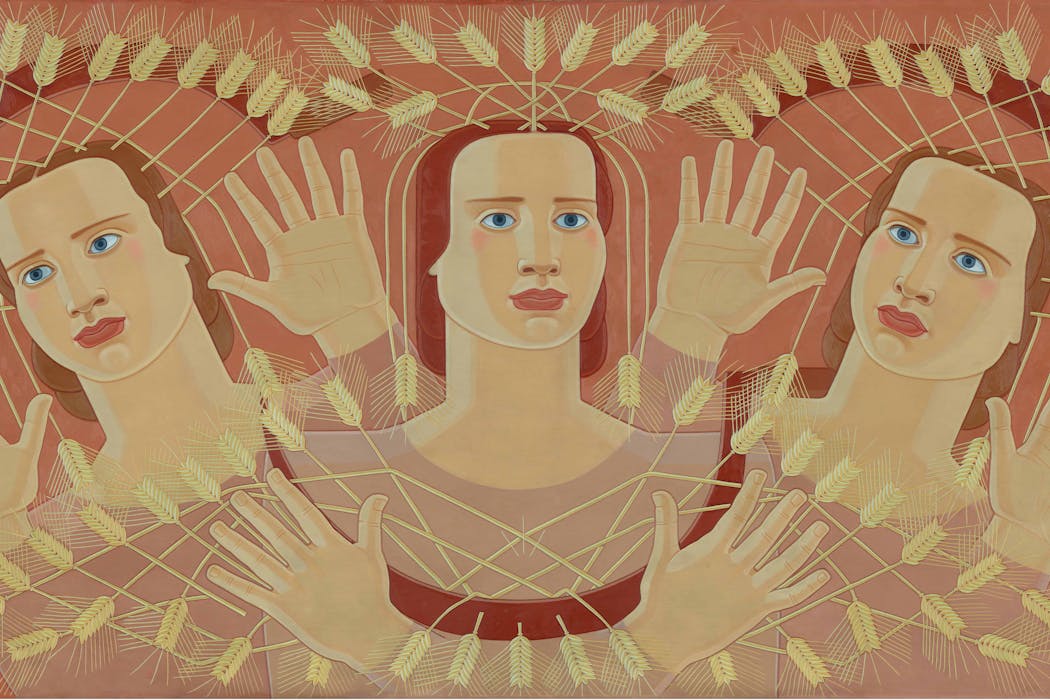
_Canto de las espigas_, de Maruja Mallo (1939). Museo Nacional Centro de Arte Reina Sofía

En este 2025, la artista Maruja Mallo (Viveiro, 1902 – Madrid, 1995) ha sido protagonista de una concienzuda exposición antológica en España, Máscara y compás, que se ha podido ver en el Centro Botín de Santander y ahora en el Museo Nacional Centro de Arte Reina Sofía. En ella se califica a Mallo de pintora surrealista pero… esta identidad está siendo cuestionada por la crítica especializada.

Por ejemplo, en el documental de Antón Reixa Maruja Mallo: mitad ángel, mitad marisco (2013), el crítico de arte Fernando Huici y la historiadora Estrella de Diego discrepan de otros expertos –Antonio Bonet Correa, Juan Manuel Bonet, Antón Castro, Isaac Díaz Pardo– y consideran a nuestra protagonista más geometrizante que surrealista. Igualmente, en la 59 Bienal de Venecia (2022), la comisaria Cecilia Alemani situó a la gallega como pionera entre creadoras dadaístas, surrealistas y geométricas, como si no fuese fácil ubicarla en un movimiento concreto.

_La verbena_, de Maruja Mallo (1927).
La verbena, de Maruja Mallo (1927).
VEGAP/Museo Nacional Centro de Arte Reina Sofía

La mirada correcta

Se trata de dilucidar si la gafa “surrealista” es la más apropiada para disfrutar de la obra de Maruja o si existen otras más ajustadas.

Según De Diego, “no hay nada dejado al azar en el caso de Mallo”, lo que la separa de los surrealistas, siempre tan interesados en hacerlo surgir mediante toda clase de juegos. Igualmente, para Huici las estructuras geométricas que resplandecen en su obra expresan un rigor constructivo muy alejado de ensoñaciones y ocurrencias espontáneas características del movimiento al que se la quiere circunscribir.

Por otro lado, no se puede negar que la artista utiliza estrategias surrealistas, si entendemos el surrealismo como esa corriente de pensamiento que se burla de la gazmoñería del burgués oponiéndole la vida sin tabúes del inconsciente. Pensemos, por ejemplo, en su serie “Cloacas y campanarios” (1929-32). Esta trata, en palabras de Mallo, de “muerto, esqueleto, andrajo y huella” y muestra todo eso además de excrementos “abandonados en la tierra baldía”.

Podemos detenernos también en la estética personal de la artista, siempre muy pintada y vestida con colores fuertes que hacían las delicias de los creadores de la Movida. O revisar su forma grandilocuente de expresarse, con afirmaciones como “estoy en conexión con la Vía Láctea, con la astrología, la astronomía, la ciencia, el arte y con todo”, que nos recuerdan al histriónico Dalí.

Para dilucidar el peculiar “surrealismo” de la gallega hemos empezado por analizar una de las obras de la serie “Cloacas y Campanarios”, la más onírica, según Patricia Molins, comisaria de la muestra actual: Antro de fósiles (1930). Detrás de la fachada surrealista de este cuadro, los esqueletos, las ruinas, la sequedad, los reptiles… hay unos trazados geométricos rectores de la composición basados en la proporción áurea.

_Antro de fósiles_ en una imagen de la exposición _Máscara y compás_ del MNCARS.
Antro de fósiles en una imagen de la exposición Máscara y compás del MNCARS.
Museo Nacional Centro de Arte Reina Sofía

En este cuadro, pero también en otros muchos de la artista –como las Verbenas (1926-28)–, se establecen zonas y puntos de intersección donde se coloca a los personajes y objetos clave para que la pintura resulte más equilibrada y se ordene de una manera clásica. Esto no tiene nada que ver con la imagen de la surrealista que pinta guiada por la inspiración y siguiendo los dictados del subconsciente que rechazan Huici y De Diego.

De la geometría a la cibernética

Lo interesante es que esta estrategia formal permite a Mallo crear una distancia con el tema, porque la geometría no marca una lectura jerárquica o autoritaria, tan propia de la perspectiva cónica: nada se impone, todo se despliega a la misma distancia. Las figuras pasan las unas a las otras y se amoldan, como si la geometría fuera un medio para generar un espacio igualitario y confortable a la visión.

_Naturaleza viva III_ de Maruja Mallo, 1942.
Naturaleza viva III de Maruja Mallo, 1942.
VEGAP/Museo Nacional de Artes Visuales de Montevideo

En este sentido, podríamos considerar que la llamativa simetría de las series de los 40 “Las naturalezas vivas” y “Las cabezas” son la verdadera excentricidad de Mallo y no el tema o el aire onírico de las piezas. Por ejemplo, hay una Naturaleza viva de 1943 en la que dos rosas rojas se encuentran a igual distancia de un eje de simetría que pasara por el centro de la composición en vertical y que dividirá ambas figuras en dos mitades extrañamente iguales. Sucede lo mismo en La cierva humana (frente), de 1948, con los moñetes de la joven. Pero una simetría tan acusada parece más propia de formas mecánicas que de los seres vivos.

Bajo esta perspectiva, Mallo sería una artista cibernética. Es decir, está interesada en esa forma de comunicación entre lo animado y lo inanimado que entiende la naturaleza como un gran mecanismo.

Pero también podríamos calificarla de creadora pop. Después de todo, en su serie de los atletas tanto los hombres como las mujeres son tan perfectos, estereotipados y graciosos como los Li’l Abner y Daisy Mae del cómic de los 50 de Al Capp. ¿O mejor consideramos que las series de las máscaras y los bañistas son más bien naif, dado que no hay perspectiva y es el afecto el que guía la composición, como sucede en las representaciones infantiles donde las figuras queridas son tan grandes como las casas o las montañas?

Fotografía en blanco y negro de una mujer cubierta de algas.
Maruja Mallo, Autorretrato con manto de algas, 1945.
Museo Nacional Centro de Arte Reina Sofía

Incluso podríamos circunscribir las fotografías de Maruja Mallo con manto de algas realizadas en Chile junto a Pablo Neruda en los años 40 en el Land Art, movimiento artístico que crea obras efímeras en la naturaleza con elementos encontrados y que se documenta por medio de la fotografía. ¿O deberíamos incluirlas en el terreno de la performance?

Como se ve, es complicado encontrar solo una corriente artística para definir las creaciones de la gallega. De las numerosas gafas que podríamos usar para revisar la obra de Maruja Mallo, mi favorita es la de “cibernética”.

Su curiosidad por la geometría guía su percepción desprejuiciada y le permite expresar un entramado de relaciones afectivas, culturales, ecológicas, feministas, políticas… con lo que se ponga por delante, sea corpóreo o incorpóreo, vivo o inanimado. Sus obras comunican cibernéticamente porque son propuestas liberadoras lanzadas al espacio para que surjan comunicaciones inesperadas con minerales, vegetales, animales o humanos. Estas imágenes activan la atención, no la capturan, y logran así hacer un vacío para que surja algo no programado.

The Conversation

Almudena Baeza Medina no recibe salario, ni ejerce labores de consultoría, ni posee acciones, ni recibe financiación de ninguna compañía u organización que pueda obtener beneficio de este artículo, y ha declarado carecer de vínculos relevantes más allá del cargo académico citado.

ref. Maruja Mallo, una pintora… ¿surrealista? – https://theconversation.com/maruja-mallo-una-pintora-surrealista-270825
¿Quién mató al gato de Schrödinger?

Source: The Conversation – (in Spanish) – By Juan Antonio Aguilar Saavedra, Investigador científico del CSIC en física teórica de partículas elementales, Consejo Superior de Investigaciones Científicas (CSIC)

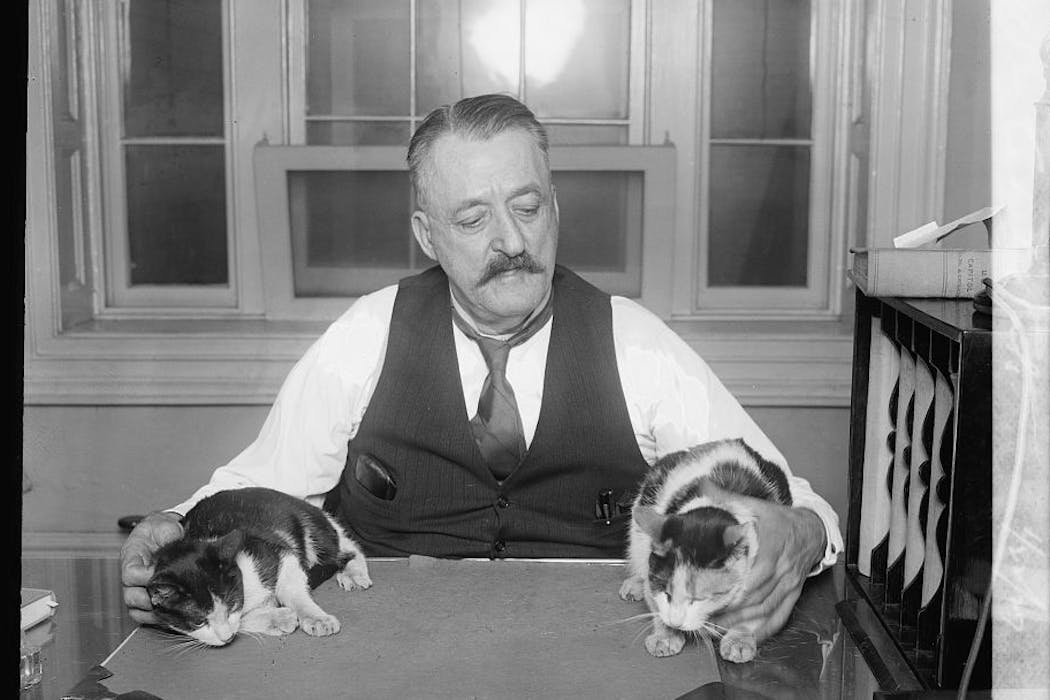
Gatos de ciudad, 1927 Library of congress EE UU, CC BY

Ni vivo, ni muerto, sino todo lo contrario. El gato de Schrödinger es la paradoja icónica de la mecánica cuántica, propuesta en 1935 como experimento mental por el físico Erwin Schrödinger. Según los principios cuánticos, un gato encerrado en una caja podría estar simultáneamente vivo y muerto – en superposición de estados – hasta que se abre la caja y se observa.

La superposición no se observa cotidianamente en sistemas macroscópicos. Pero ha sido verificada en partículas elementales y moléculas, y nos sirve para introducir uno de los principales aspectos sin resolver de la mecánica cuántica.

El problema de la medida

La interpretación ortodoxa de la mecánica cuántica, llamada interpretación de Copenhague, introduce una separación entre sistema y observador. El observador, cuando mide una propiedad del sistema, provoca que esa propiedad pase a tener un valor definido, lo que en cuántica se denomina “colapso del estado”.

Este tema ha sido tratado extensamente tanto en literatura especializada como en divulgación. Pero aquí nos vamos a centrar en otro aspecto diferente, y para ilustrarlo, nada mejor que renovar un ejemplo clásico.

El gato de Schrödinger 2.0

Consideremos ahora una versión más sofisticada del experimento hipotético del gato de Schrödinger utilizando cúbits. Los cúbits son las unidades de información básicas de los computadores cuánticos. Pueden encontrarse en un estado |0>, |1>, o en una superposición de ambos.

Dos científicos, Alice y Bob, tienen cada uno un cúbit, “A” y “B” respectivamente. Instalan una caja con otro cúbit “C” y un dispositivo tal que, si C está en estado |0>, libera un veneno mortal, mientras que si está en estado |1>, abre la caja y deja escapar al gato.

Alice y Bob preparan el sistema de tres cúbits en un estado entrelazado |ABC> = |000> + |111> y encierran al pobre gato en la caja. Y se marchan cada uno con sus respectivos cúbits a sus laboratorios, situados en extremos opuestos de la ciudad.

Mientras Alice o Bob no observen el estado de sus cúbits, nada malo puede pasar: el cúbit C del que depende la vida del gato no se encuentra en un estado definido. Pero, tan pronto uno de ellos observe su cúbit, lo forzará a definirse: bien |0>, bien |1>. Y con ello arrastrará a todo el estado entrelazado de los tres cúbits a colapsar, en |000> o en |111>. En el primer caso el gato morirá, mientras que en el segundo caso podrá escapar de la caja.

Inevitablemente, Alice acaba por observar el estado de su cúbit A, con tan mala fortuna que obtiene el resultado |0> y su medida hace colapsar el estado entrelazado a |000>. De forma que el gato muere. Un instante después, Bob también observa su cúbit B, que tras la medida de Alice ya ha colapsado a un estado definido |0>.

Alice y Bob, ¿quién miró primero?

Naturalmente, la muerte de su gato enfurece a Schrödinger, quien denuncia a Alice y Bob por el experimento. En el juicio, la acusación particular afirma que fue Alice quien observó su cúbit en primer lugar, haciendo colapsar el estado a |000>, y por tanto conduciendo al fatal desenlace. Sin embargo, la abogada de Alice tiene un as en la manga, y ha solicitado un informe pericial a Albert Einstein.

Einstein admite que, para cualquier testigo en el sistema de referencia de la ciudad, Alice observó su cúbit antes de que Bob lo hiciera. Pero también hace notar la gran distancia entre los laboratorios de Alice y Bob, y el minúsculo instante de tiempo transcurrido entre que Alice observó su cúbit A y Bob hizo lo propio con B.

Einstein señala que la diferencia de tiempo entre ambas observaciones es menor que el tiempo que tardaría la luz en desplazarse entre ambos laboratorios, llamando al intervalo entre ambas observaciones “de tipo espacio” en su jerga. Y manifiesta que, de acuerdo con su teoría de la relatividad, en estos casos el orden temporal es relativo: depende del sistema de referencia.

Einstein afirma bajo juramento que para otro testigo viajando a suficiente velocidad, fue Bob quien en primer lugar observó su cúbit B y obtuvo |0>, colapsando así el sistema. Y por tanto, fue Bob quien provocó el trágico desenlace. Ante estos argumentos el juez no puede determinar la culpabilidad de Alice o de Bob, y se ve obligado a declarar a ambos no culpables de la muerte del gato. No sin antes reconvenirlos por la realización del experimento.

Experimentos con muones

La interpretación de Copenhague de la medida (colapso del estado) se lleva mal con la relatividad especial. De acuerdo con esta interpretación, para un sistema A-B entrelazado en el que se realizan medidas en ambos subsistemas, es la primera medida la que colapsa el estado común. Pero, ¿cuál es la primera? ¿Miró primero Alice, o fue Bob quien activó el veneno?

En determinadas situaciones (intervalos de tipo espacio entre las medidas), el orden temporal es relativo según quien lo describa.

Y las paradojas relativas al entrelazamiento cuántico y el tiempo no se limitan a “determinar la culpabilidad” como en el caso de Alice y Bob. Recientemente se ha descrito otro experimento, hipotético pero realizable (sin necesidad de gatos), que presenta una paradoja aún más intrigante.

Supongamos una pareja de dos muones A y B (partículas inestables de espín ½) en un estado entrelazado. El estado análogo para cúbits sería |AB> = |01> – |10>. Sobre el muón A efectuamos medidas de espín casi simultáneas a la desintegración del muón B.

Aquí el orden temporal también es relativo, como en el caso de Alice y Bob. Pero hay más: la naturaleza misma de la correlación entre la medida realizada en el muón A y la desintegración del muón B varía de forma radical dependiendo de quién lo describa. Lo cual resulta cuando menos inquietante.

¿Es la mecánica cuántica la teoría definitiva?

Estas paradojas nos sugieren que la interpretación de Copenhague de la medida no es más que una herramienta de cálculo. Aunque minoritaria, esta corriente de pensamiento no es nueva. En palabras de N. Mermin:

“Si me viera obligado a resumir en una sola frase lo que dice la interpretación de Copenhague, sería: “¡Cállate y calcula!”.

¿Hay una teoría subyacente a la mecánica cuántica que explique estas paradojas? Tal vez, cuando consigamos unificar la mecánica cuántica con la relatividad general, sepamos la respuesta.

Nota: ningún gato fue dañado durante la escritura de este artículo.

The Conversation

Juan Antonio Aguilar Saavedra es IP1 del proyecto de investigación “Fenomenología de física de partículas en colisionadores y factorías de neutrinos, en el modelo estándar y sus extensiones” PID2022-142545NB-C21, del Plan Estatal de Investigación Científica, Técnica y de Innovación 2021-2023.

ref. ¿Quién mató al gato de Schrödinger? – https://theconversation.com/quien-mato-al-gato-de-schrodinger-269969

Emergencia universitaria en ciencias de la salud: faltan profesores

Source: The Conversation – (in Spanish) – By Raúl Quintana Alonso, Vicedecano de Ordenación Académica. Profesor de Enfermería, Universidad Pontificia de Salamanca

PeopleImages.com/Shutterstock

En la universidad española las plantillas docentes envejecen, las jubilaciones se acercan y la llegada de nuevo profesorado se produce tarde y con dificultades. Este problema de relevo generacional también sucede fuera de España, y es especialmente acusado en las titulaciones de Ciencias de la Salud.

Las titulaciones sanitarias avanzan con lentitud: los docentes universitarios pasan una parte importante de su vida laboral encadenando contratos temporales con escasa remuneración y con poco margen para investigar o formarse, lo que retrasa su progreso y su consolidación profesional.

Pero que las carreras se desarrollen de manera tan lenta es un problema cuando vemos que casi el 40 % del profesorado europeo supera los 50 años. Sustituir a estos perfiles requiere profesionales con doctorado, experiencia investigadora y formación pedagógica.

El déficit en España

En España la tendencia es aún más acusada. Solo las universidades públicas necesitarían 2 600 profesores más para desarrollar adecuadamente la docencia en Medicina. Este déficit se agrava con la previsión de jubilaciones en los próximos años, dado que buena parte del profesorado que sostiene la estructura docente pertenece a las cohortes de mayor edad. Esto afectará a la capacidad de las universidades para mantener asignaturas complejas, supervisar prácticas clínicas y liderar la innovación curricular.


Leer más:
Por qué el desgaste laboral en la universidad afecta sobre todo a los docentes más jóvenes


La precariedad en la universidad tampoco favorece la incorporación de nuevos perfiles. La actual temporalidad, la rotación contractual y los salarios poco competitivos actúan como frenos para que profesionales clínicos con alta cualificación se planteen una carrera académica estable. Esta situación dificulta tanto el acceso como la permanencia del profesorado novel.

Enfermería confirma la tendencia

Las disciplinas sanitarias comparten problemas estructurales, aunque Enfermería ofrece una radiografía especialmente clara. Estudios recientes indican que la consolidación académica plena, con doctorado y formación pedagógica avanzada, se alcanza en torno a los 54 años. Esta edad tan tardía es consecuencia de etapas prolongadas en la práctica clínica y falta de estructuras para una transición más temprana hacia la docencia y la investigación.

En la práctica esto significa que, cuando un profesor consigue finalmente la estabilidad y la formación necesarias para ejercer plenamente como docente universitario, está más cerca de la jubilación que del momento en que inició su carrera profesional. Como consecuencia, sus años efectivos de contribución académica son relativamente pocos, lo que limita la capacidad de las instituciones para renovar equipos docentes y consolidar proyectos a largo plazo.

Un problema que atraviesa fronteras

La situación española encaja en un panorama internacional que avanza en la misma dirección. En Estados Unidos, la American Association of Colleges of Nursing (Asociación de Facultades de Enfermería) alerta cada año de la escasez de profesorado con doctorado, un problema que lleva a muchas facultades a limitar la admisión de estudiantes por falta de docentes cualificados.

En Medicina, la Association of American Medical Colleges describe un envejecimiento progresivo del profesorado, sin apreciarse planes claros para encontrar un relevo adecuadamente preparado para los profesores que se jubilan.

En esta misma línea, en el Reino Unido el Medical Schools Council observa un descenso continuo de académicos clínicos y una creciente dificultad para atraer profesionales que combinen experiencia asistencial y carrera académica, un equilibrio fundamental en las titulaciones sanitarias.

Acreditación, exigencias y acceso difícil

¿Por qué no llegan estos profesionales a ser docentes universitarios en edades más tempranas? España cuenta con un sistema de acreditación exigente que busca garantizar la calidad del profesorado universitario. Este marco es esencial, pero puede resultar difícil de alcanzar para quienes han desarrollado la mayor parte de su trayectoria en la asistencia sanitaria.

Un ejemplo habitual es el de una enfermera, un médico o un fisioterapeuta con años de experiencia clínica que, cuando decide dar el salto a la universidad, se encuentra con que se valoran de forma central indicadores como haber publicado múltiples artículos en revistas científicas de impacto, haber participado en proyectos de investigación competitivos y haber realizado actividades académicas en el extranjero, como estancias prolongadas o colaboraciones formales.

Reunir ese conjunto de méritos rara vez está al alcance de quien sigue trabajando a turnos en un centro sanitario mientras intenta iniciar su recorrido académico. El resultado es una entrada lenta y complicada para profesionales altamente cualificados que podrían aportar un gran valor a la docencia universitaria.

La universidad como embudo del sistema sanitario

El debate público se centra con frecuencia en la falta de profesionales sanitarios, las listas de espera o las dificultades de los hospitales para cubrir vacantes. Sin embargo, la capacidad de formar a esos profesionales depende de algo previo y esencial: la universidad.

Una universidad sin suficientes docentes no solo tendrá dificultades para ampliar plazas en titulaciones sanitarias, también corre el riesgo de no poder mantener su oferta actual.

La Organización Mundial de la Salud advierte de un déficit global de profesionales de la salud para 2030. ¿Cómo podrá responder el sistema sanitario a la demanda creciente de profesionales si la universidad pierde capacidad para formarlos?

Actuar ahora para proteger el futuro

La respuesta no pasa por abrir más facultades, sino garantizar que existe un cuerpo docente suficiente, preparado y estable.

Facilitar la transición desde la clínica hacia la academia, promover el doctorado temprano, ofrecer estabilidad laboral al profesorado novel y revisar los sistemas de acreditación para que reflejen de forma más ajustada la realidad de las trayectorias profesionales en las titulaciones sanitarias son medidas urgentes. Europa y Estados Unidos ya discuten estrategias para afrontar este reto. España necesita incorporarse a este debate con decisión.

The Conversation

Raúl Quintana Alonso no recibe salario, ni ejerce labores de consultoría, ni posee acciones, ni recibe financiación de ninguna compañía u organización que pueda obtener beneficio de este artículo, y ha declarado carecer de vínculos relevantes más allá del cargo académico citado.

ref. Emergencia universitaria en ciencias de la salud: faltan profesores – https://theconversation.com/emergencia-universitaria-en-ciencias-de-la-salud-faltan-profesores-271240

¿Por qué es tan letal el virus de la peste porcina africana?

Source: The Conversation – (in Spanish) – By Luis Franco Serrano, Profesor de Ciencias de la Salud, UOC – Universitat Oberta de Catalunya

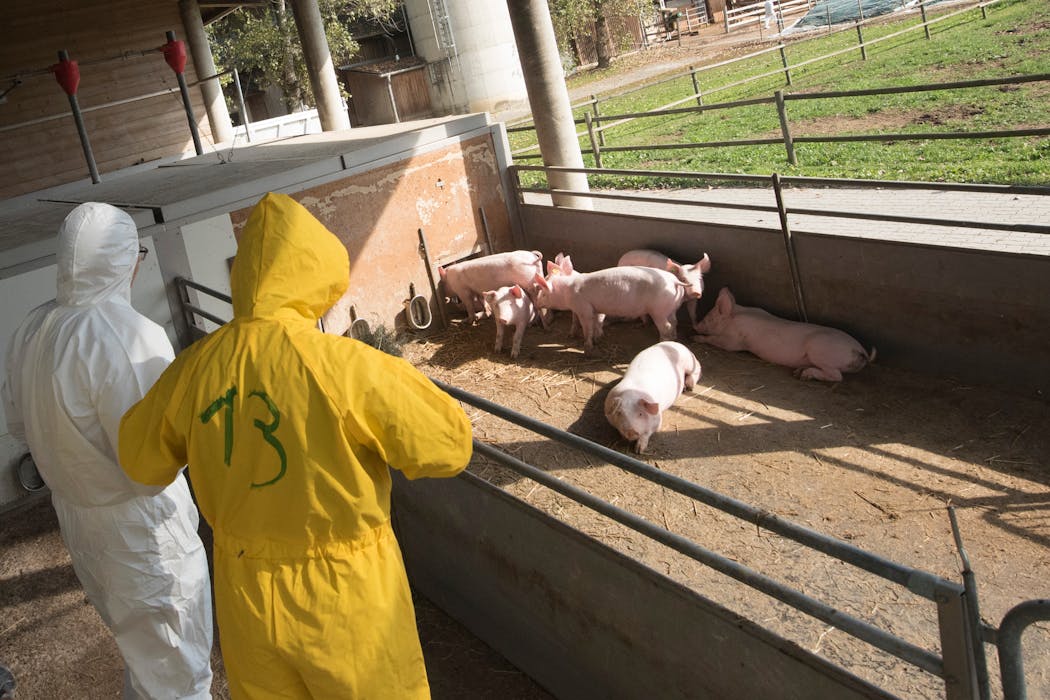
Tras la detección del virus de la peste porcina africana en Cerdanyola del Vallès (Barcelona), se decretó el confinamiento de 39 granjas de cerdos en las inmediaciones del foco de la infección. elmar gubisch/Shutterstock

La inquietud desatada por el regreso a España del virus de la peste porcina africana (PPA) tiene justificación: arroja unas cifras de mortalidad altísimas, cercanas al 100 %, y todos los cerdos y jabalíes contagiados suelen morir en una o dos semanas tras la infección. Además, por si fuera poco, los animales enfermos pueden ser asintomáticos durante algunos días, transmitiendo más fácilmente la enfermedad.

Ataque directo al sistema inmune

Tal poder devastador se debe a una estrategia ofensiva muy específica: el virus ataca directamente al sistema defensivo del animal. En concreto, infecta y destruye macrófagos y monocitos. Estas células habitualmente son la primera línea de defensa, y su drástica reducción deja al animal completamente desprotegido.

Además, la PPA causa también la destrucción de los linfocitos, células del sistema inmune encargadas de producir anticuerpos. Pese a que el virus no es capaz de penetrar en esos linfocitos, puede inducirlos a entrar en apoptosis (muerte celular programada). ¿Cómo lo consigue?

Cuando son infectados, los macrófagos liberan ciertas sustancias proinflamatorias, llamadas citocinas, como el TNF-alpha. Estas sustancias sirven como señal para que el organismo active las defensas específicas, es decir, los linfocitos. Sin embargo, la activación excesiva del sistema inmunológico provoca el efecto contrario: una inducción a la muerte de linfocitos. Esto es así porque el cuerpo interpreta que la reacción puede resultar dañina y pone en marcha un mecanismo de seguridad denominado AICD (Muerte Celular Inducida por Activación, por sus siglas en inglés).

Una vez que las defensas del animal están gravemente dañadas, el virus ataca a las células endoteliales, las que recubren los vasos sanguíneos. Esto causa hemorragias internas y edemas pulmonares. Adicionalmente, en un intento de reparar los daños, el propio organismo intenta tapar las fugas creando coágulos generalizados. Esos tres procesos llevan inevitablemente a un fallo multiorgánico que causa la muerte del animal.

Sin vacuna ni tratamiento

El virus de la peste porcina africana es el único miembro conocido de la familia Asfarviridae. Se trata de un virus gigante y con un ADN complejo que tiene la capacidad de replicarse en el citoplasma de la célula sin necesidad de entrar al núcleo. Los únicos virus conocidos que utilizan el mismo mecanismo son los de la viruela o de la viruela del mono, aunque evolutivamente no están relacionados.

Estrategias de infección similares desarrollan los virus hemorrágicos como el del ébola o el de Marburgo, que también atacan a los macrófagos y producen además un síndrome hemorrágico.

Ese carácter único, así como el hecho de que no tenga equivalentes evolutivos en humanos, explica que no dispongamos a día de hoy de ninguna vacuna preventiva ni tratamientos aprobados y disponibles a nivel europeo. Aunque actualmente se utiliza una inmunización en Vietnam, no está autorizada para administrarse en Europa. La razón es que, al tratarse de una vacuna de virus vivo atenuado, no permitiría distinguir en un laboratorio animales infectados de vacunados. Además, ha habido polémica por la muerte de muchos cerdos inmunizados con ese fármaco en algunas provincias del país asiático.

Un virus ultrarresistente

Otro aspecto preocupante del patógeno es su extremada resistencia y persistencia en el ambiente. Mientras que muchos virus solo duran minutos en contacto con el aire y sin fluidos corporales, el de la peste porcina africana puede aguantar incluso meses en suelos de corrales, especialmente en épocas frías. Se inactiva fácilmente con temperaturas superiores a 60 grados, pero es muy resistente a la congelación y a cambios en el pH. Esta característica le permite sobrevivir durante mucho tiempo en cualquier superficie, haciendo que el contagio entre animales estabulados resulte muy fácil.

El origen del brote podría estar en un laboratorio

Recientemente, las autoridades han abierto una investigación para determinar si el origen del brote podría estar vinculado a las instalaciones del IRTA-CReSA, un centro de investigación animal situado a apenas un kilómetro de la zona afectada, tras confirmarse que el virus hallado en los jabalíes es una cepa inusual en el medio natural y coincide con la utilizada habitualmente en el complejo científico.

La clave del caso reside en la genética del virus. Las variantes que circulan actualmente por Europa provienen de un brote inicial en Georgia en el año 2007; sin embargo, durante su expansión por el continente a lo largo de casi dos décadas, ha ido mutando y diferenciándose del original. Sorprendentemente, la secuenciación de las muestras recogidas en España ha revelado que el virus detectado es genéticamente idéntico a la cepa primigenia de “Georgia 2007”.

No se contagia a las personas

Pese a que podemos actuar como transmisores indirectos –con nuestras ropas, residuos, ruedas del coche, etc.–, la infección de las personas es actualmente imposible. Los virus son muy específicos y requieren entrar dentro de las células y producir interacciones moleculares muy concretas que únicamente pueden darse en la especie para la que están especializados. Nunca se ha registrado un salto de este virus porcino al humano, como sí ocurre, por ejemplo, en los virus de la gripe porcina o aviar.

Por lo tanto, la preocupación de las autoridades se centra en que el virus infecte masivamente a los cerdos de las instalaciones de producción alimentaria y que esto provoque una grave crisis económica en el sector.

The Conversation

Luis Franco Serrano no recibe salario, ni ejerce labores de consultoría, ni posee acciones, ni recibe financiación de ninguna compañía u organización que pueda obtener beneficio de este artículo, y ha declarado carecer de vínculos relevantes más allá del cargo académico citado.

ref. ¿Por qué es tan letal el virus de la peste porcina africana? – https://theconversation.com/por-que-es-tan-letal-el-virus-de-la-peste-porcina-africana-271638

‘If I must die’: poetry from Gaza creates an alternative archive of testimony

Source: The Conversation – UK – By Clodagh Philippa Guerin, PhD Candidate in Refugee World Literature, University of Limerick

In times of war and crisis, poetry can become more than just art: it can become testimony. For the people of Palestine living under siege, poetry is not a mere reflection of their suffering, but rather an act of resistance which campaigns for survival and remembrance.

Poetry has adopted these functions throughout history. Most famously in the west, the poetry of the first and second world wars still haunts cultural and sociological imaginations, from Wilfred Owen’s depictions of the trenches to Primo Levi’s poetic recollections of surviving the Holocaust.

But survivors from across history and the wider world have turned to the poetic form in an attempt to distil chaos into meaning, and to offer a language to witnessing where oppressive silence threatens to prevail.

For more than two years our phones, newspapers and televisions have displayed an onslaught of imagery documenting the violence in Palestine. The images that we have come to expect from the bitter conflict, while recording the realities of survivors on the ground, can also often portray Palestinian people as the passive victims of what has become a largely decontextualised violence.

While coverage of crisis in the media aims to elicit empathy and immediate action, it relies on portraying displaced people as hopeless victims. This re-enforces their position as outsiders while attempting to rekindle a sense of urgency in audiences who have grown desensitised to crises across the globe that are protracted and countless.

This is a common trope in the portrayal of refugees and displaced people. Many have come to expect bleak images of destruction, starving children with crying mothers, and people in camps without basic necessities.

In the era of 24-hour news cycles and never-ending scrolling, why does poetry in times of crisis still matter? I believe it is because the enduring nature of poetry slows us down.

Where headlines and TikToks flash and vanish, poetry lingers, demanding contemplation. Social media no doubt plays a role in the wider dissemination of poetry. After their deaths, Alareer’s and Abu Nada’s poems have been shared millions of times for example. However, the poem as a form itself resists the fleeting, disposable nature of digital content.

Poetry offers something that news and visual imagery cannot in times of crisis: depth over immediacy and meaning over spectacle. The poetry being penned by Palestinian people is an alternative archive of their experience of Israel’s two-year assault on Gaza, preserving their voices and identity against erasure.

The deaths of Refaat Alareer and Hiba Abu Nada in Israeli airstrikes underscores the stakes of this literary resistance. Posthumously, their work has transformed from the art of witnessing into enduring evidence and history from below.

Examples of Palestinian poetry

Alareer’s “If I Must Die” centres around the use of conditionality: language that expresses possibility or uncertainty. The titular phrase might first signal the poet’s resignation but also highlights his resistance.

The poem does not focus on the trauma porn of violence and death but rather focuses on the practicalities and imperative nature of remembrance.

If I must die,

you must live

to tell my story

If I must die

let it bring hope

let it be a tale.

The transformation of the poet’s impending mortality into narrative immortality and continuity situates individual loss within a collective horizon for Palestinian people.

By framing his death in this conditional way, and by using simplistic language to belie the complexity of his poetic message, Alareer asserts agency in what was to become his final moments.

Similarly, Abu Nada’s I Grant You Refuge uses the conceit of shelter to complicate the concepts of safety and asylum.

The poem’s central theme of offering refuge creates a powerful paradox: the destruction of homes and lives in Palestine has created mass displacement and precarity, yet I Grant You Refuge attempts to create a symbolic space for community where literal, physical safety is unachievable.

Nada’s persistent repetition of the phrase “I grant you refuge” inverts the normative dynamic of refugee and host, where the displaced person has become the one who grants refuge, creating a new social dynamic for the Palestinian people. Nada’s death in October 2023 renders the poem tragically self-reflexive. The promise of refuge collapses under bombardment yet endures through poetic testimony.

I grant you refuge in knowing

that the dust will clear,

and they who fell in love and died together

will one day laugh.

In contrast to If I Must Die and I Grant You Refuge, Abu Toha’s Under the Rubble sidesteps metaphor in favour of stark imagery, cataloguing painful scenes of mutilation and violence. For example, a mother collecting her daughter’s flesh “in a piggy bank”, a father killed while fetching bread, a child’s drawings on a wall ending at four feet high because “the painter has died in an air strike”.

Toha’s use of imagery imbues the minutiae details of everyday life with suffering. The poem’s short lines create a fractured structure and a crotchety sense of time, where mundane routine is interrupted by unpredictable violence.

These three poems are but a selection of many testimonial works emerging from Palestine. They illustrate that poetry in times of crisis is neither incidental nor ornamental. Digital platforms accelerate the circulation of images, stories and data, but the rapid, incessant flow of information can make them seem temporary and disconnected from their original meaning.

Poetry, by contrast, demands interpretive engagement and reflection. The viral dissemination of crisis poetry creates a paradox: social media at once amplifies poetry’s reach while its richness of meaning keeps it from feeling as fleeting as other online material.


Looking for something good? Cut through the noise with a carefully curated selection of the latest releases, live events and exhibitions, straight to your inbox every fortnight, on Fridays. Sign up here.


The Conversation

Clodagh Philippa Guerin does not work for, consult, own shares in or receive funding from any company or organisation that would benefit from this article, and has disclosed no relevant affiliations beyond their academic appointment.

ref. ‘If I must die’: poetry from Gaza creates an alternative archive of testimony – https://theconversation.com/if-i-must-die-poetry-from-gaza-creates-an-alternative-archive-of-testimony-271138

Three things that might trigger massive ice sheet collapse

Source: The Conversation – UK – By Inès Otosaka, Assistant Professor in Physical Geography and Environmental Science, Northumbria University, Newcastle

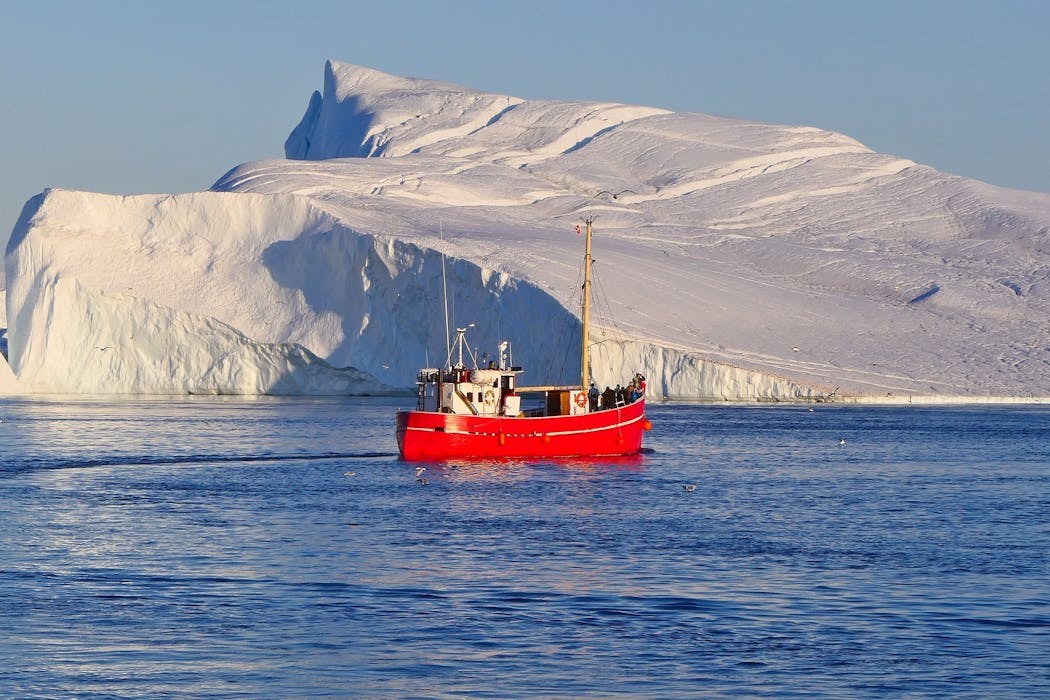
Icebergs in Disko Bay, Greenland. iralgo74/Shutterstock

The Greenland and Antarctic ice sheets are highly vulnerable to global warming and scientists are being increasingly worried about the possibility of large parts of the ice sheets collapsing, if global temperatures keep on rising.

Scientists have identified three elements that could be triggered, putting the ice sheets in Greenland and Antarctica at further risk.

These three instabilities are marine ice sheet instability (Misi), marine ice cliff instability (Mici) and surface elevation melt instability (Semi).

The first one (Misi) occurs when the seafloor beneath the ice sheet slopes downwards toward the interior of the ice sheet. The floating platforms of ice that fringe the Antarctic continent, ice shelves, are too weak to help slow down the ice from flowing into the ocean.

Because of this, the retreat of the ice sheet will happen at an accelerated pace and might become irreversible. When this happens, ice thickness increases inland, meaning that more ice is transported from the ice sheet to the ocean, causing the ice sheet to thin and further retreat.

The second factor (Mici) is linked with the collapse of ice cliffs, left after the disintegration of an ice shelf. These ice cliffs, if they become taller than a 30-storey building, are structurally unstable and would collapse through hydrofracturing.

This is a process through which surface meltwater fills crevasses, forcing fractures to rip open and causing the ice shelves to disintegrate. Their collapse would trigger a rapid retreat of the ice sheet as further, taller ice cliffs – also prone to failure – would become exposed behind.

The third one (Semi) relates to when the melting of the ice sheet causes its surface elevation to decrease, exposing it to higher air temperatures and further increasing melt.

An illustration of the three main factors that may cause ice sheet instability
Illustration of the three main factors causing ice sheet instability.
Illustration by Ricarda Winkelmann based on the Global Tipping Point Report

Which regions are most vulnerable?

West Antarctica, which is home to some of the fastest moving glaciers in the world including Pine Island and Thwaites glaciers, is particularly vulnerable to global warming.

Satellite observations have revealed that these glaciers have retreated, thinned and are flowing faster to the ocean, indicating that Misi is potentially already under way in this region. At the same time, computer models have shown that the retreat of these glaciers will continue in the future.

So far, marine ice cliff instability has been simulated in an ice sheet model but has never been observed in the real world. The conditions that might lead to the formation of such tall ice cliffs and whether their collapse would lead to such dramatic consequences are still poorly understood.

But more glaciers could be at risk if they were to lose their ice shelves, potentially exposing unstable ice cliffs.

Ice melts at Thwaites Glacier.

Surface melt instability is of particular concern in Greenland where surface melt has increased in the past decade and is becoming the main driver of ice losses.

What would happen?

If one (or several) of these instabilities are triggered, there would be an irreversible retreat of parts of the ice sheets, raising sea levels much faster than currently planned. It would still take centuries for the ice across whole regions to fully retreat.

But it could take just under 300 years, under a catastrophic Mici-driven retreat in west Antarctica. So we would already see a much higher contribution of the ice sheets to rising sea levels by 2300, with more frequent coastal flooding worldwide.

As a rule of thumb, for every centimetre of sea level rise, an additional 6 million people are at risk of coastal flooding.

According to the latest IPCC report, sea levels are predicted to rise between 0.3 and 1.6 metres by 2100, depending on future greenhouse gas emissions. However, an increase of more than 15 meters by 2300 cannot be ruled out.

Satellite observations and computer models help us understand how Greenland and Antarctica are changing and how they will continue to do so in the future. Analysis of satellite records shows that regions of both ice sheets are thinning and flowing more rapidly than before. Using computer models, self-sustaining mechanisms that could lead to increased ice sheet melting in the future have been identified.

My international team, supported by the European Space Agency, is bringing together experts in satellite remote sensing and numerical modelling to determine how close the polar ice sheets are to crossing “tipping points”, beyond which their retreat will become irreversible.

However, there is still much to understand and to research around the triggers of these instabilities, and some computer simulations suggest that
ice cliff failure might not lead to the dramatic outcome that some researchers have predicted.

Understanding more about what this means for future sea level rise will help reduce future risks so that we can avoid the dramatic human, social, and economic consequences that would come with more frequent and severe coastal flooding, storm surging and coastal population relocation.


Don’t have time to read about climate change as much as you’d like?

Get a weekly roundup in your inbox instead. Every Wednesday, The Conversation’s environment editor writes Imagine, a short email that goes a little deeper into just one climate issue. Join the 47,000+ readers who’ve subscribed so far.


The Conversation

Inès Otosaka receives funding from the European Space Agency and the UK Natural Environment Research Council.

ref. Three things that might trigger massive ice sheet collapse – https://theconversation.com/three-things-that-might-trigger-massive-ice-sheet-collapse-267275

Should the UK follow Australia’s under-16s social media ban? It could do more harm than good

Source: The Conversation – UK – By Jessica Ringrose, Professor of the Sociology of Gender and Education, Institute of Education, UCL

Drazen Zigic/Shutterstock

A ban on social media for under-16s in Australia comes into effect on December 10 2025. Young people will see their accounts deactivated, with social media companies responsible for enacting the ban.

In the UK, the government has committed to addressing young people’s use of the internet through the Online Safety Act rather than enforcing an outright ban.

However, children’s use of devices is often limited. Bans on smartphones in schools, as well as parent pledges to delay their children’s smartphone use, have gained widespread traction in the UK. They are based on assumptions including that smartphone use is addictive, distracting and leads to children doing worse in school.

On the other hand, though, research suggests the cause and effect may not be so clearcut. Studies have found that phone banning in schools does not significantly increase academic attainment or improve wellbeing.

We are academics with decades of experience exploring young people’s use of digital media. Our ongoing research suggests that an outright ban on social media platforms for under-16s is problematic. It neglects young people’s rights and voice and penalises them rather than targeting social media platforms.

Boy and mum looking at phone
Bans may deter children from talking to adults if they do see something harmful online.
VH-studio/Shutterstock

Bans could erode trust between young people and the adults in their lives. Children may be put off telling adults about something harmful they’re not supposed to have seen. This could lead to them being less able to access support.

Our ongoing study is exploring the implications of banning smartphones in schools in England. Survey data suggests that most schools in the UK do not allow phones to be used at all during the school day.

Previous research by one of us (Jessica Ringrose) explored young people’s experiences with smartphones and social media at school. This research found that girls were being sent nude images by boys at their schools and were exposed to misogynistic messages originating from the manosphere.

Nevertheless, our ongoing work shows widespread opposition to phone school bans among young people. There’s a generational divide: 75% of young people opposed school phone bans, while most parents (88%) and teachers (87%) supported them.

A problem with strict bans in school settings is that issues and harms young people may encounter online, including those that originate from their classmates, are displaced from school.

One of us (Jessica) has previously carried out research on the challenges of combating digital harms in schools that found schools lacked victim support and young people feared reporting online abuse. “No phone” policies may perpetuate this. Young people may be put off showing teachers something online that upset them when they know they’re not supposed to get out their phone.

For parents, too, phone bans may be a way of pushing away a problem they don’t feel equipped or supported to deal with. Interviews with mothers in the US who had signed pledges to delay giving young people smartphones revealed this uncertainty.

Smartphone avoidance strategies delayed the need to engage in other, more nuanced, forms of parental mediation of digital devices. Simply deferring young people’s use of smartphones may not deal with the doubts and fears that parents feel around their children’s use of technology.

Interviews with parents and carers from our ongoing study show they feel overwhelmed and unsupported when it comes to their children’s smartphone use. “When you’re a busy parent, making sure you’re on top of monitoring what they’re doing seems like quite a hard task,” one mother said. “There’s just not enough guidance,” another commented.

What teens think

Our ongoing work is focused on hearing what young people have to say about phone bans. It suggests that bans make young people feel a loss of autonomy and agency, and that they want guidance from adults on smartphone and social media use.

This need for support is something that research has consistently found that young people want. They want to be able to talk to adults and to be listened to without judgement.

We are not dismissing parents’ or teachers’ concerns, nor their hopes for safer smartphone futures. We are also not suggesting students use phones during lessons when it is not appropriate. Rather we argue that listening to young people’s and families’ views about and hopes for tech is crucial.

Research from the House of Lords shows an urgent need for critical thinking and analytical skills to access, evaluate, create and act on media, for both children and adults. Teachers have pointed to major gaps in media literacy education, especially around social media and AI.

But without addressing this at school, online harms are not reduced. Instead, responsibility for them is shifted onto parents, who already feel ill-equipped to address children’s online lives.

By focusing on media literacy in both policies and the curriculum, schools can address children’s experiences and views. This could include covering issues such as AI and social media business models, algorithms, misinformation, surveillance, privacy and consent in the use of technology.

It’s best if schools and parents are able to work together to address rapidly shifting technology concerns such as AI, instead of shifting responsibility back and forth. Parents and families need support to help children navigate responsible use of social media and issues including AI and consent.

The Conversation

Rebecca Coleman receives funding from the Economic and Social Research Council (ESRC).

Jessica Ringrose does not work for, consult, own shares in or receive funding from any company or organisation that would benefit from this article, and has disclosed no relevant affiliations beyond their academic appointment.

ref. Should the UK follow Australia’s under-16s social media ban? It could do more harm than good – https://theconversation.com/should-the-uk-follow-australias-under-16s-social-media-ban-it-could-do-more-harm-than-good-269754

Rage bait: the psychology behind social media’s angriest posts

Source: The Conversation – UK – By John McAlaney, Professor in Psychology, Bournemouth University

Jack_the_sparow/Shutterstock

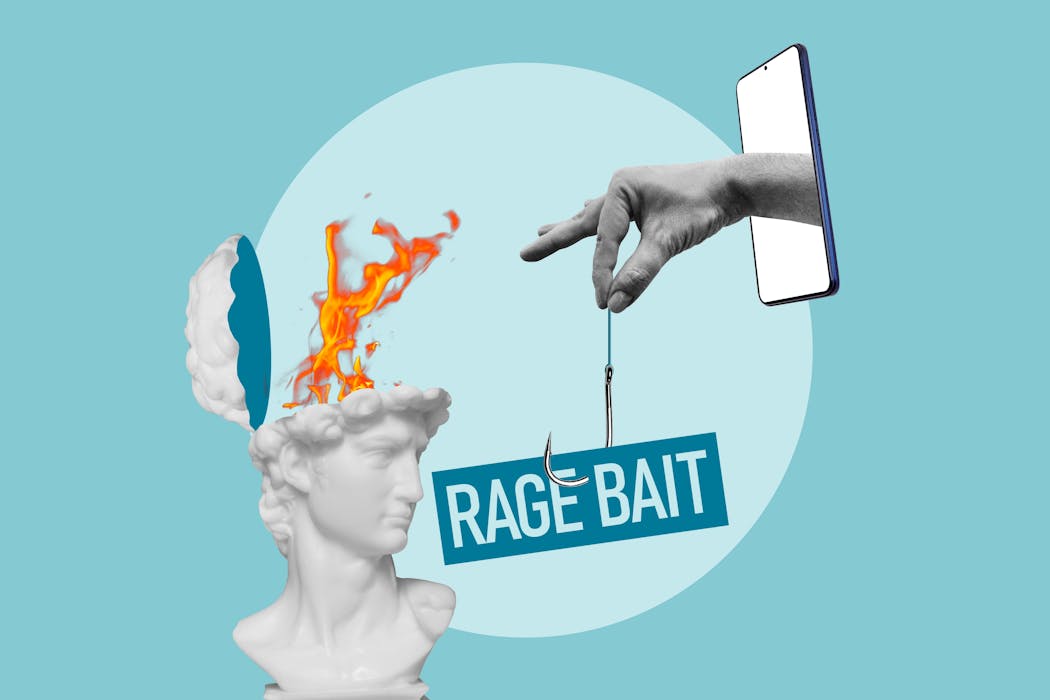
“Rage bait” has been named the word of the year by the Oxford University Press. It means social media content that is designed to create a strong and negative reaction.

Posting content intended to antagonise people may not seem like a wise strategy for a social media influencer. But people who post content on social media can make more money if their channel has a high level of engagements – regardless of how positively people are responding.

In addition, social media platforms use algorithms that tailor the content we see to what we are likely to engage with. This doesn’t necessarily mean content that will make us happy – the algorithm will learn from any engagement that we have with the content, including angry comments we might post in response.

But there are things you can do to help control your reaction to this kind of content. First though, you need to understand why rage bait is so effective.

Provocative posts can result in a higher number of clicks, shares and comments. This may be a result of a negativity bias, where negative emotions such as anger spread more quickly and more intensely through social networks.

In evolutionary terms, it is more important for us to pay attention to a situation that has caused anger to our group than a situation that has created happiness. Anger suggests that action needs to be taken to resolve an issue, whereas happiness suggests that everything is OK.

Although social media technologies are relatively new, the ways in which we understand and navigate our world are not. We are primed to look for social information, which includes anything that indicates a difference of opinion or possible threat within our social groups.

In the past, the groups we belonged to were typically local to where we lived – our friends, neighbours and colleagues. But the growth of social media means that we can now connect with people from all around the world. That means there are far more groups we can be part of and, in turn, routes through which anger can reach us.

Research has found that people can be quick to align their views with others on anything that prompts a negative emotion, which provides another evolutionary benefit by providing safety in numbers from a potential threat. In this case the person posting the rage bait content takes on the role of the pantomime villain who the audience unites against to boo at.

The other problem is we can post content or comments and immediately get a reply, non-stop 24 hours a day. Typically, we used to have some breaks from anything, or anyone, that caused us a feeling of rage. This would give us an opportunity to calm down and reflect on what had happened, but with the ubiquity of social media it can feel like we no longer have that escape.

Coping with rage bait

An awareness of the motivations behind these posts is a good place to start. There are of course people who post negative content who genuinely believe in what they are posting. But knowing that many of these posts are posted solely to drive engagement helps us reclaim our power over those interactions.

A 2020 study showed that giving people an understanding of manipulation strategies used in the media empowered them to resist these techniques.

Man in hoodie smashing through laptop screen with fist.
How not to deal with rage bait.
Ollyy/Shutterstock

Think of the person posting the content as being an actor who is playing a character, and whose actions are driven more by a desire for fame – whether that means being famous or infamous – rather than personal beliefs.

The more that we avoid engaging with any content that induces rage in us the less it will be presented to us. Unlike traditional broadcast media such as TV, we do not need to be a passive audience to social media. Instead we can influence and shape social media through both what we choose to engage with, or not engage with.

Hope instead of rage

Despite the speed and strength with which anger can spread through social media through rage bait, there is emerging research which suggests people can be nudged into reflecting on media content designed to provoke anger before they respond. This can dilute the influence of rage bait.

One benefit of social media as compared to offline interactions is that social media is, by its nature, publicly visible. This means that researchers can more easily understand what is happening on these platforms, including how rage bait is being used to drive engagements.

It can also help us better understand how to help people take control over social media content that we are exposed to, so that we can benefit from the positive aspects of these technologies without being drawn into negative content posted solely for profit.

The Conversation

John McAlaney does not work for, consult, own shares in or receive funding from any company or organisation that would benefit from this article, and has disclosed no relevant affiliations beyond their academic appointment.

ref. Rage bait: the psychology behind social media’s angriest posts – https://theconversation.com/rage-bait-the-psychology-behind-social-medias-angriest-posts-271041

Why Grand Designs-style eco-homes aren’t a good blueprint for sustainable living

Source: The Conversation – UK – By Alan Collins, Professor of Economics and Public Policy, Nottingham Trent University

A family builds an off-grid home in rural Wales. TV celebrates it as a blueprint for net-zero living. But what if this vision of sustainability simply doesn’t scale up?

Television shows such as Channel 4’s Grand Designs have long celebrated ambitious one-off homebuilding projects. These programmes often frame bespoke rural housing as a model of sustainable living.

With large audiences, they wield real influence over what viewers imagine an environmentally sustainable lifestyle looks like. But the reality behind many of these supposedly “eco” homes is far more complicated.

The BBC recently explored one such case in Wales, where a family secured planning permission under the Welsh government’s One Planet Development policy. Introduced in 2012, the policy allows zero-carbon homes to be constructed on land where conventional buildings would not be permitted. In return, residents must demonstrate they can provide their own energy and water and derive a basic income from the surrounding land.

At first glance, this all seems a laudable and well-meaning attempt to encourage net-zero living. Yet projects like these raise deeper questions about sustainability, fairness and what it means for a society as a whole to be environmentally responsible.

We can’t all live in rural eco-homes

The first issue is scalability. Rural “eco-homestead” living can appear green at the level of a single household. But how many of these homes, each taking up considerable land, could be built in the Welsh countryside – or the UK more broadly?

A few might operate as experimental demonstration sites in rural areas, but if that’s the goal then a location in or near urban areas would reach far more people.

These homes are not as self-sufficient as the image of rural idyll suggests. People living there would still own cars, commute to work, send children to school and make regular trips for food, healthcare and to socialise. Multiply these car trips over many such developments and their environmental footprint would undermine the very rationale used to approve the developments.

This is the opposite of the 15-minute city ideal. Dispersed rural living simply cannot match the efficiency of compact urban living.

Academic research in economics, geography and planning has long showed that cities generate “agglomeration economies”: the practical benefits of living around lots of other people means schools, healthcare, public transport and other services tend to be more efficient than in the countryside. This makes urban living far more sustainable for large populations and is one reason rural eco-homes are completely unsustainable as a means of meeting genuine housing needs.

Fair and inclusive

The second issue concerns fairness and access. If permission for remote single household plots is to be restricted in number, then that cap should be explicit and justified. At present, it is neither.

The result is that only the wealthy – people able to acquire attractive rural land, navigate the planning system and fund bespoke eco-builds – can pursue this lifestyle. This risks breeding resentment, especially if access to attractive countryside or forest locations becomes effectively privatised by those who can afford large, low-density housing.

This has broader political implications. As the climate crisis intensifies, public support for environmental action depends on perceptions of fairness. If “sustainable living” is seen as something the wealthy perform in idyllic rural retreats while ultimately relying on urban services and infrastructure, that narrative becomes exclusionary and demotivating. It signals that meaningful environmental responsibility isn’t possible for the majority living in towns and cities. That helps create a form of socio-environmental separation: green lifestyles for a wealthy minority, higher environmental costs for everyone else.

Programmes like Grand Designs play an important role in shaping expectations for green living and dream “forever home” residential building projects. Their enthusiasm for remote, self-built eco-homes gives viewers the impression that sustainability is achieved through architectural daring and a retreat from urban life. These stories generate a warm glow for the featured household, but they don’t represent a realistic way to collectively tackle the climate and environment crises.

The most effective solutions are more mundane, and far less televisual. For instance, better roof insulation or the replacement of old boilers could be rolled out for millions of homes and would have a far greater environmental impact. Such policies lack the drama of building a fancy off-grid smallholding, but they are scalable, accessible for all and genuinely aligned with climate goals.


Don’t have time to read about climate change as much as you’d like?

Get a weekly roundup in your inbox instead. Every Wednesday, The Conversation’s environment editor writes Imagine, a short email that goes a little deeper into just one climate issue. Join the 47,000+ readers who’ve subscribed so far.


The Conversation

Alan Collins is a very passive member of the Labour Party

ref. Why Grand Designs-style eco-homes aren’t a good blueprint for sustainable living – https://theconversation.com/why-grand-designs-style-eco-homes-arent-a-good-blueprint-for-sustainable-living-268751

How short-form videos could be harming young minds

Source: The Conversation – UK – By Katherine Easton, Lecturer, Psychology, University of Sheffield

Prostock-studio/Shutterstock.com

Online short-form video has shifted from a light distraction to a constant backdrop in many children’s lives. What used to fill a spare moment now shapes how young people relax, communicate and form opinions, with TikTok, Instagram Reels, Douyin and YouTube Shorts drawing in hundreds of millions of under-18s through endlessly personalised feeds.

These apps feel lively and intimate, offering quick routes to humour, trends and connection, yet their design encourages long sessions of rapid scrolling that can be difficult for young users to manage. They were never built with children in mind, although many children use them daily and often alone.

For some pre-teens, these platforms help develop identity, spark interests and maintain friendships. For others, the flow of content disrupts sleep, erodes boundaries or squeezes out time for reflection and meaningful interaction.

Problematic use is less about minutes spent and more about patterns where scrolling becomes compulsive or hard to stop. These patterns can begin to affect sleep, mood, attention, schoolwork and relationships.

Short-form videos (typically between 15 and 90 seconds) are engineered to capture the brain’s craving for novelty. Each swipe promises something different, whether a joke, prank or shock – and the reward system responds instantly.

Because the feed rarely pauses, the natural breaks that help attention reset vanish. Over time, this can weaken impulse control and sustained focus. A 2023 analysis of 71 studies and nearly 100,000 participants found a moderate link between heavy short-form video use and reduced inhibitory control and attention spans.

Attention hijacked

Sleep is one of the clearest areas where short-form video can take a toll.

Many children today view screens when they should be winding down. The bright light delays the release of melatonin, a hormone that helps regulate sleep, making it harder for them to drift off.

But the emotional highs and lows of rapid content make it particularly difficult for the brain to settle. A recent study found that for some teenagers, excessive short-form video use is connected to poorer sleep and higher social anxiety.

These sleep disturbances affect mood, resilience and memory, and can create a cycle that is especially hard for stressed or socially pressured children to break.

A young girl lying awake in bed.
Short-form video use may lead to insomnia.
StasyKID/Shutterstock.com

Beyond sleep, the constant stream of peer images and curated lifestyles can amplify comparison. Pre-teens may internalise unrealistic standards of popularity, appearance or success, which is linked to lower self-esteem and anxiety – although the same is true for all forms of social media.

Younger children are more susceptible

Most research focuses on teenagers, but younger children have less mature self-regulation and a more fragile sense of identity, leaving them highly susceptible to the emotional pull of quick-fire content.

Exposure to material children never intended to see adds risk and the design of short-form video apps can make this far more likely. Because clips appear instantly and autoplay one after another, children can be shown violent footage, harmful challenges or sexual content before they have time to process what they are seeing or look away.

Unlike longer videos or traditional social media posts, short-form content provides almost no context, no warning, and no opportunity to prepare emotionally. A single swipe can produce a sudden shift in tone from silly to disturbing, which is particularly jarring for developing brains.

Although this content may not always be illegal, it can still be inappropriate for a child’s stage of development. Algorithmic systems learn from a brief moment of exposure, sometimes escalating similar content into the feed. This combination of instant appearance, lack of context, emotional intensity and rapid reinforcement is what makes inappropriate content in short-form video especially problematic for younger users.

Not every child is affected in the same way, though. Those with anxiety, attention difficulties or emotional volatility seem more vulnerable to compulsive scrolling and to the mood swings that follow it.

Some research suggests a cyclical relationship, where young people with attention deficit hyperactivity disorder, or ADHD, are particularly drawn to rapid content, while heavy use may intensify the symptoms that make self-regulation difficult. Children dealing with bullying, stress, family instability or poor sleep may also use late-night scrolling to cope with difficult emotions.

This matters because childhood is a critical period for learning how to build relationships, tolerate boredom and handle uncomfortable feelings. When every quiet moment is filled with quick entertainment, children lose chances to practise daydreaming, invent games, chat with family or simply let their thoughts wander.

Unstructured time is part of how young minds learn to soothe themselves and develop internal focus. Without it, these skills can weaken.

New guidelines

There are encouraging signs of change as governments and schools begin to address digital wellbeing more explicitly. In England, new statutory guidelines encourage schools to integrate online safety and digital literacy into the curriculum.

Some schools are restricting smartphone use during the school day, and organisations such as Amnesty International are urging platforms to introduce safer defaults, better age-verification and greater transparency around algorithms.

At home, open conversation can help children understand their habits and build healthier ones. Parents can watch videos together, discuss what makes certain clips appealing and explore how particular content made the child feel.

Establishing simple family routines, such as keeping devices out of bedrooms or setting a shared cut-off time for screen use, can protect sleep and reduce late-night scrolling. Encouraging offline activities, hobbies, sports and time with friends also helps maintain a healthy balance.

Short-form videos can be creative, funny and comforting. With thoughtful support, responsive policies and safer platform design, children can enjoy them without compromising their wellbeing or development.

The Conversation

Katherine Easton has recently received funding from:
2021 – UKRI eNurture (PI) £26,762.00 Hacking the school system.
2022 – Research England, HEIF TUoS (PI) £48,983 Digiware: Knowledge Exchange in Education and Internet of Things.
to research young people’s views on the use of technology in their schools

ref. How short-form videos could be harming young minds – https://theconversation.com/how-short-form-videos-could-be-harming-young-minds-271159