What’s the safest way to walk home at night? We’ve created an AI-powered app that shows you

Source: The Conversation – UK – By Ilya Ilyankou, PhD candidate at SpaceTimeLab, UCL

Night-time view of Derry city centre in Northern Ireland, where the Safest Way app is promoted in pubs to advise on safer walking routes. Irina WS/Shutterstock

In the historic walled city of Derry (also known as Londonderry) in Northern Ireland, the night-time economy is vibrant. But like many urban centres, it presents safety challenges for those trying to get home. At night, a volunteer group known as the Inner City Assistance Team (iCat) often patrols the streets, intervening when people feel vulnerable – whether due to intoxication, a mental health issue, or simply being alone in unlit or unfamiliar areas.

Recently in the city, iCat introduced Safest Way, a pedestrian navigation app I co-developed during my PhD research at UCL. The app employs AI technology to show users not just faster but safer routes when walking to and from a destination – for example, the safest way home after a night out.

The necessity for such interventions is rooted in a stark disparity in how urban safety is experienced by women and men.

Research by the Office for National Statistics in 2022 found that 82% of women feel unsafe walking alone in parks or open spaces after dark, compared with 42% of men. And 63% of women actively avoid travelling alone when it is dark, against 34% of men.

A survey by Plan International UK in 2024 found that nearly three-quarters of girls and young women (ages 14-21) sometimes choose longer routes home to avoid potential danger, and almost two-thirds take taxis home at least once a month because of the risks associated with public transport or walking.

Such fears are a direct response to the built environment, with research showing that factors such as street lighting and conditions of pavements are key aspects of how safe women feel . Lighting is often the deciding factor: 60% of women who feel unsafe walking to and from public transport cite poor lighting as the primary reason.

Woman walking along a street at night.
The vast majority of women say they feel unsafe walking alone after dark.
Haru Photography/Shutterstock

Bridging the data gap

For decades, urban walkers have been treated like vehicles, with mapping tools optimising routes for a single metric – travel time – while treating a dark alley and a high street as identical, if the distance is the same. The question of feeling safe has been largely overlooked by this technology.

Part of the reason for this has been a lack of unified data. While local authorities and police forces collect vast amounts of information regarding street lighting, CCTV locations and crime incidents, this data is typically fragmented, incompatible or locked in static PDFs.

To bridge this gap, my team and I developed a data pipeline to aggregate these and other sources. In London, this required issuing dozens of freedom of information requests to borough councils to obtain precise geospatial data on over half a million street lights and thousands of public CCTV cameras. Our lighting map was awarded first prize in the 2025 UCL data visualisation competition.

We then combined this information with official police crime datasets, urban features such as the location of parks, industrial areas and run-down buildings, plus open-source Mapillary and OpenStreetMap data to “safety score” individual street segments.

Even then, objective data is only half the picture. Perceived safety – how safe a street feels to someone walking it – is critical to the route choices they make. To model this at scale, we turned to Artificial Intelligence: specifically, OpenAI’s vision-language model Clip (Contrastive Language-Image Pre-Training).

Unlike traditional computer vision that detects discrete objects such as street lamps, Clip (and similar vision-language models) encodes the semantic meaning of an entire scene – converting both visual data and user-provided text prompts into mathematical vectors.

Classifying subjective viewpoints such as “feels safe” or “quite risky” is an ongoing area of research. But in our 2025 study, we found a high correlation between the way AI and our human testers perceived safety, based on 500 photographs of London street segments.

While we now hope to scale this approach to modelling urban safety to millions of streets in the UK and beyond, we are realistic about the limitations. Past crime and urban design data can inform safer choices, but they cannot predict individual incidents. Our model is designed to support decision-making not guarantee safety, and it should sit alongside wider efforts by venues, councils and police to make night-time streets safer.

Derry’s early adoption

Since launching its beta version, the Safest Way app has been adopted by approximately 1,000 users, primarily in London and Derry, where most of the safety infrastructure is fully mapped.

Coordinating the Derry launch from afar was a challenge. A Safest Way team member visited the city early in 2025 to learn about the city’s complex political landscape firsthand. But the pilot’s success was made possible largely thanks to our partners, iCat.

The volunteer group’s co-founder, Stephen Henry, told the Irish News that the idea to bring the app to the city had come about following some attacks on women there in 2024.

The group now distributes beer mats with Safest Way logos and QR codes in local pubs. “We encourage staff to download the app too,” Henry points out, “as they often don’t leave the premises until 3am or later”.

Having recently showcased our technology at the Prototypes for Humanity conference in Dubai, we are now scaling the app’s data coverage – from street lighting to AI-modelled perception of safety – to cover all of England and then the rest of the UK. We aim to close the information gap that currently forces vulnerable groups to pay a safety tax.

In Derry, the technology already provides a digital layer of protection that complements the physical presence of volunteers. By including this tech in their vulnerability training for security staff and using it during their patrols, iCat is moving beyond reactive assistance to proactive risk reduction.

This article was commissioned in conjunction with Prototypes for Humanity, a global initiative that showcases and accelerates academic innovation to solve social and environmental challenges. The Conversation is the media partner of Prototypes for Humanity 2025.

The Conversation

Ilya Ilyankou receives PhD funding from the UKRI’s Engineering and Physical Sciences Research Council and Ordnance Survey. He is a co-founder and chief technology officer of Safest Way, a startup supported by the Ordnance Survey’s Geovation accelerator programme. This article was commissioned in conjunction with Prototypes for Humanity, a global initiative that showcases and accelerates academic innovation to solve social and environmental challenges. The Conversation is the media partner of Prototypes for Humanity 2025.

ref. What’s the safest way to walk home at night? We’ve created an AI-powered app that shows you – https://theconversation.com/whats-the-safest-way-to-walk-home-at-night-weve-created-an-ai-powered-app-that-shows-you-271710

AI’s errors may be impossible to eliminate – what that means for its use in health care

Source: The Conversation – USA – By Carlos Gershenson, Professor of Innovation, Binghamton University, State University of New York

Federal legislation introduced in early 2025 proposed allowing AI to prescribe medication. Wladimir Bulgar/Science Photo Library via Getty Images

In the past decade, AI’s success has led to uncurbed enthusiasm and bold claims – even though users frequently experience errors that AI makes. An AI-powered digital assistant can misunderstand someone’s speech in embarrassing ways, a chatbot could hallucinate facts, or, as I experienced, an AI-based navigation tool might even guide drivers through a corn field – all without registering the errors.

People tolerate these mistakes because the technology makes certain tasks more efficient. Increasingly, however, proponents are advocating the use of AI – sometimes with limited human supervision – in fields where mistakes have high cost, such as health care. For example, a bill introduced in the U.S. House of Representatives in early 2025 would allow AI systems to prescribe medications autonomously. Health researchers as well as lawmakers since then have debated whether such prescribing would be feasible or advisable.

How exactly such prescribing would work if this or similar legislation passes remains to be seen. But it raises the stakes for how many errors AI developers can allow their tools to make and what the consequences would be if those tools led to negative outcomes – even patient deaths.

As a researcher studying complex systems, I investigate how different components of a system interact to produce unpredictable outcomes. Part of my work focuses on exploring the limits of science – and, more specifically, of AI.

Over the past 25 years I have worked on projects including traffic light coordination, improving bureaucracies and tax evasion detection. Even when these systems can be highly effective, they are never perfect.

For AI in particular, errors might be an inescapable consequence of how the systems work. My lab’s research suggests that particular properties of the data used to train AI models play a role. This is unlikely to change, regardless of how much time, effort and funding researchers direct at improving AI models.

Nobody – and nothing, not even AI – is perfect

As Alan Turing, considered the father of computer science, once said: “If a machine is expected to be infallible, it cannot also be intelligent.” This is because learning is an essential part of intelligence, and people usually learn from mistakes. I see this tug-of-war between intelligence and infallibility at play in my research.

In a study published in July 2025, my colleagues and I showed that perfectly organizing certain datasets into clear categories may be impossible. In other words, there may be a minimum amount of errors that a given dataset produces, simply because of the fact that elements of many categories overlap. For some datasets – the core underpinning of many AI systems – AI will not perform better than chance.

A portrait of seven dogs of different breeds.
Features of different dog breeds may overlap, making it hard for some AI models to differentiate them.
MirasWonderland/iStock via Getty Images Plus

For example, a model trained on a dataset of millions of dogs that logs only their age, weight and height will probably distinguish Chihuahuas from Great Danes with perfect accuracy. But it may make mistakes in telling apart an Alaskan malamute and a Doberman pinscher, since different individuals of different species might fall within the same age, weight and height ranges.

This categorizing is called classifiability, and my students and I started studying it in 2021. Using data from more than half a million students who attended the Universidad Nacional Autónoma de México between 2008 and 2020, we wanted to solve a seemingly simple problem. Could we use an AI algorithm to predict which students would finish their university degrees on time – that is, within three, four or five years of starting their studies, depending on the major?

We tested several popular algorithms that are used for classification in AI and also developed our own. No algorithm was perfect; the best ones − even one we developed specifically for this task − achieved an accuracy rate of about 80%, meaning that at least 1 in 5 students were misclassified. We realized that many students were identical in terms of grades, age, gender, socioeconomic status and other features – yet some would finish on time, and some would not. Under these circumstances, no algorithm would be able to make perfect predictions.

You might think that more data would improve predictability, but this usually comes with diminishing returns. This means that, for example, for each increase in accuracy of 1%, you might need 100 times the data. Thus, we would never have enough students to significantly improve our model’s performance.

Additionally, many unpredictable turns in lives of students and their families – unemployment, death, pregnancy – might occur after their first year at university, likely affecting whether they finish on time. So even with an infinite number of students, our predictions would still give errors.

The limits of prediction

To put it more generally, what limits prediction is complexity. The word complexity comes from the Latin plexus, which means intertwined. The components that make up a complex system are intertwined, and it’s the interactions between them that determine what happens to them and how they behave.

Thus, studying elements of the system in isolation would probably yield misleading insights about them – as well as about the system as a whole.

Take, for example, a car traveling in a city. Knowing the speed at which it drives, it’s theoretically possible to predict where it will end up at a particular time. But in real traffic, its speed will depend on interactions with other vehicles on the road. Since the details of these interactions emerge in the moment and cannot be known in advance, precisely predicting what happens to the the car is possible only a few minutes into the future.

AI is already playing an enormous role in health care.

Not with my health

These same principles apply to prescribing medications. Different conditions and diseases can have the same symptoms, and people with the same condition or disease may exhibit different symptoms. For example, fever can be caused by a respiratory illness or a digestive one. And a cold might cause cough, but not always.

This means that health care datasets have significant overlaps that would prevent AI from being error-free.

Certainly, humans also make errors. But when AI misdiagnoses a patient, as it surely will, the situation falls into a legal limbo. It’s not clear who or what would be responsible if a patient were hurt. Pharmaceutical companies? Software developers? Insurance agencies? Pharmacies?

In many contexts, neither humans nor machines are the best option for a given task. “Centaurs,” or “hybrid intelligence” – that is, a combination of humans and machines – tend to be better than each on their own. A doctor could certainly use AI to decide potential drugs to use for different patients, depending on their medical history, physiological details and genetic makeup. Researchers are already exploring this approach in precision medicine.

But common sense and the precautionary principle
suggest that it is too early for AI to prescribe drugs without human oversight. And the fact that mistakes may be baked into the technology could mean that where human health is at stake, human supervision will always be necessary.

The Conversation

Carlos Gershenson does not work for, consult, own shares in or receive funding from any company or organization that would benefit from this article, and has disclosed no relevant affiliations beyond their academic appointment.

ref. AI’s errors may be impossible to eliminate – what that means for its use in health care – https://theconversation.com/ais-errors-may-be-impossible-to-eliminate-what-that-means-for-its-use-in-health-care-251036

AI-generated political videos are more about memes and money than persuading and deceiving

Source: The Conversation – USA – By Lisa Fazio, Associate Professor of Psychology, Vanderbilt University

Politicians are posting AI-generated videos of themselves and their opponents. Screenshots by The Conversation

Zohran Mamdani as a creepy trick-or-treater, Gavin Newsom body-slamming Donald Trump and Hakeem Jeffries in a sombrero. This is not the setup to an elaborate joke. Instead, these are all examples of recent AI-generated political videos. New easy-to-use tools – and acceptance of those tools by politicians – means that these fake videos are quickly becoming commonplace in American politics.

Perhaps the most interesting thing about many of the videos is how clearly fake they are. Rather than trying to deceive the viewer into thinking a depicted event actually happened, the videos serve a different purpose. President Trump didn’t post a video of himself wearing a crown in a fighter jet dumping feces on a group of protesters because he wanted people to believe that the flight actually happened. He likely did it to express his feelings about the protest and to create an in-joke with his followers.

Fears about the political implications of AI-generated videos have been around since the term deepfakes was coined in 2017. Steady improvements in the technology mean that distinguishing real from fake could become a significant threat. But today’s use of AI imagery is largely about making memes and making money – in other words, typical social media content.

Getting a rise out of people

Internet platforms use algorithms designed to keep people engaged, and that typically means promoting content that stirs emotions. AI-generated political videos often provoke an emotional response – amusement or outrage.

People are more likely to share information when it is emotionally arousing. For example, people are more likely to pass along urban legends that elicit feelings of disgust, and news articles that are emotionally charged are more likely to make the New York Times list of most emailed articles. Similar patterns occur online, where emotional content is much more likely to go viral than nonemotional content.

In addition, strong emotions can interfere with people’s ability to detect false information. People are worse at distinguishing between true and false political news headlines when they are experiencing stronger emotions – for instance, enthusiasm, excitement or fear. Thus, emotionally appealing AI-generated videos are both more likely to spread and reduce people’s ability to judge whether they are real or fake.

Online politics

Creating and sharing AI videos is also a powerful way for people to demonstrate their allegiances and show their political identities. “I am a Trump supporter, so I post AI videos of ICE detainees crying to own the libs” or “I am a Democrat and so I share Governor Newsom’s AI-video of JD Vance talking about couches to show that I’m in on the joke.”

What’s new in recent months is that campaigns and politicians are using AI-created videos, not just their supporters. An analysis from The New York Times showed that Trump commonly uses AI imagery to “attack enemies and rouse supporters”.

These new tools also allow for active participation in the political process. Rather than simply watching politicians and voting, citizens can play an active role in shaping the conversation between elections.

Information and technology researcher Kate Starbird has written about similar dynamics in the ways that everyday Americans found “evidence” for voter fraud in the 2020 election. Politicians told the public that voter fraud was going to occur, and then when voters saw things that they did not understand when voting, such as the use of Sharpie pens to mark ballots, they interpreted that action as evidence of voter fraud. Politicians then circulated that evidence online to support the false narrative.

New AI tools make this cycle of participatory disinformation even simpler. Instead of reinterpreting actual events as evidence for a false claim, people can easily generate that evidence themselves.

AI video at volume

AI video creation tools make it incredibly easy for people to churn out hundreds of videos, post them online and simply see what content becomes popular and goes viral. In fact, that’s exactly what seems to have happened with recent AI-generated videos of raids by Immigration and Customs Enforcement. According to an investigation by 404 media, Facebook user “USA Journey 897” used to post a variety of real videos of police activity as well as absurd AI videos of people carrying whales and riding tigers.

However, after the release of a new version of OpenAI’s Sora video generator on Sept. 30, 2025, the account switched entirely to posting multiple fake videos of deportations every day. Most of the videos accumulated hundreds of thousands of views, and one fake video of a Walmart employee being detained had over 4 million views.

Typically these accounts are hosted overseas and exist to earn money through creator incentive programs. These incentives create an environment where social media no longer informs people about the world, but instead serves as a fun-house mirror, presenting back to us the world that we want to see – or at least the version of the world that will capture our attention and outrage.

AI-generated political ads are stretching ethical boundaries.

Flowing into the internet

It’s not always easy for people to detect which videos are real and which are AI-generated. A recent audit by the publication Indicator found that platforms regularly fail to properly label AI content. Researchers posted over 500 AI-generated images and videos across Instagram, LinkedIn, Pinterest, TikTok and YouTube. Less than one-third were properly labeled as AI-generated, and even posts generated by the platform’s own AI tools were often missed.

For years, the great fear concerning political deepfakes was that they were going to fool people into believing something happened that didn’t. They still might, but at the moment, AI-generated political videos are a mix of entertainment and memes, legitimate attempts at persuasion, and ways of capturing attention for money.

In other words, they are now just like the rest of the internet. Most of what we see and share is meant to entertain, some is meant to inform and persuade, and a great deal exists solely to monetize our attention.

The Conversation

Lisa Fazio does not work for, consult, own shares in or receive funding from any company or organization that would benefit from this article, and has disclosed no relevant affiliations beyond their academic appointment.

ref. AI-generated political videos are more about memes and money than persuading and deceiving – https://theconversation.com/ai-generated-political-videos-are-more-about-memes-and-money-than-persuading-and-deceiving-268977

The Ivies can weather the Trump administration’s research cuts – it’s the nation’s public universities that have the most to lose

Source: The Conversation – USA (2) – By Todd L. Pittinsky, Professor of Technology and Society, Stony Brook University (The State University of New York)

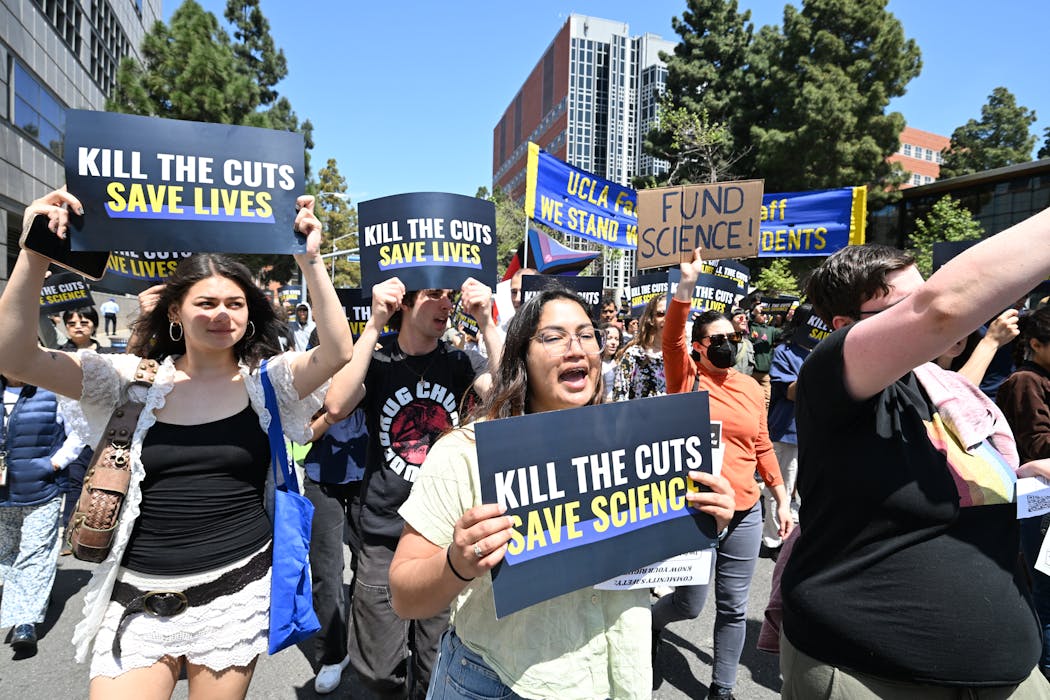
UCLA students and researchers protest the Trump administration’s funding cuts for research, health and higher education in April 2025. Robyn Beck/AFP via Getty Images

Most of the media coverage of the federal government’s recent cuts in federal research money for universities has focused on its effects on a handful of elite Ivy League universities, such as Harvard, Columbia and Cornell.

“When you take money away from a Columbia or a Harvard or other institutions, you’ve just taken away funds from the best researchers,” Toby Smith, the senior vice president for government relations at the Association of American Universities, told CNN in April 2025.

But these schools account for only a small fraction of the nation’s scientific output that federal research money helps generate.

In my view, too many policy discussions and debates obsess over what happens on the campuses of elite colleges. Meanwhile, public universities quietly power the nation’s research engine.

The Ivies do play a critical role in advanced research. But the nation’s public universities make up the backbone of U.S. innovation – research powerhouses such as the University of Michigan, the University of Texas at Austin, Georgia Institute of Technology and Stony Brook University, where I teach.

These places train the overwhelming majority of science, technology, engineering and mathematics graduates for the U.S. workforce and run the lion’s share of federally funded science and engineering research.

Slashing research and development

U.S. colleges and universities spend more than US$108.8 billion annually on research and development, of which about 55% – roughly $60 billion – comes from federal funding via agencies such as the National Institutes of Health and the National Science Foundation. Together, the country’s eight Ivy League schools received approximately $4.6 billion of federal university research and development funding in 2023 – or 7.8% of all federal research and development funding allocated to academia.

In 2023, meanwhile, the University of Washington, Georgia Institute of Technology, the University of California, San Diego, and the University of Michigan, Ann Arbor, each received over $1 billion in federal research funds.

The Trump administration’s federal research and development funding cuts are largely tied to what are called “indirect costs.”

Direct costs fund researcher salaries and lab supplies. Indirect costs support the infrastructure that makes research possible and compliant with federal guidelines: lighting, heating and cooling for labs; high-speed data networks; security; and administrative staff who handle payroll and ensure adherence to federal safety and ethics standards.

In 2025, the Trump administration decided to cap indirect costs for grants awarded by the National Institutes of Health and the National Science Foundation at 15% of the total grant. Traditionally, universities have negotiated their own rates based on documented overhead expenses, with many institutions citing indirect cost rates between 50% and 70%.

Many aspects of the 15% cap have been paused as they’re being challenged in court. Should these cuts go through, it would be incredibly disruptive for universities that have counted on this funding.

However, outside of the battle over indirect costs, many research projects simply lost funding or experienced major delays. Over the past year, thousands of grants have been frozen, terminated or left unfunded.

Ivy League institutions are much better equipped to weather the storm.

In 2021, Forbes reported that the collective endowment of the eight Ivies was approximately $192.6 billion – led by Harvard’s $53.2 billion and Yale’s $42.3 billion. Supporters of Trump’s funding cuts have argued that this immense, tax-exempt financial arsenal could significantly subsidize their overhead costs, rather than relying on taxpayers to do so. While endowments don’t serve as a blank check, schools can still pull from them in times of need.

In contrast, public universities are far more dependent on federal funds to sustain labs, staff and graduate programs. In 2021, the entire Texas public university system – the University of Texas at Austin, Texas A&M, the University of Houston, the University of Texas at Dallas and Texas Tech – held an endowment of around $40 billion, more than $10 billion less than Harvard’s.

Public schools are the training ground

This isn’t to argue that the Ivies should have their research funding cut, while public universities ought to be spared. It’s to shift the focus of the conversation to who stands to lose the most: the public universities that educate the vast majority of the U.S.’s future scientists and fuel most of the nation’s scientific output.

The Ivy League’s geographic reach is extremely concentrated, situated across just seven states, all in the Northeast. Public four-year institutions are located in all 50 states and draw from a much more economically and racially diverse population. They award the vast majority of engineering degrees in the U.S., with more than 144,701 given out in 2023, or more than 70% of the nation’s total.

Purdue University awarded 3,827 engineering degrees that year, with Texas A&M conferring 3,704. By contrast, Cornell University granted just 820 engineering degrees – the most among the Ivies, but just 25th nationally.

Elite schools, including the Ivies, have increasingly steered graduates into finance, law or consulting. Just 2.72% of Yale’s 2024 graduating class was employed as engineers six months after graduation. Meanwhile, public universities serve as the top feeder schools for major defense and aerospace firms.

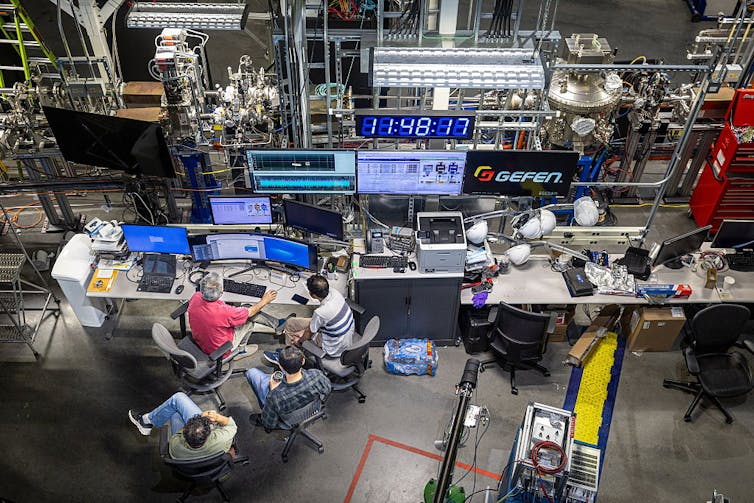
Stony Brook University’s College of Engineering and Applied Sciences enrolled over 5,600 students in fall 2024, making it one of the top producers of engineering talent in New York. The university manages the Department of Energy’s Brookhaven National Laboratory, which uses advanced tools such as particle colliders to make discoveries in physics, energy, materials and biology. It’s one of a handful of universities that directly operate a national lab.

A bird's-eye view of a group of scientists surrounded by an array of electronic equipment.
The U.S. Department of Energy’s Brookhaven National Laboratory in Brookhaven, N.Y., is managed by Stony Brook University.
J. Conrad Williams Jr./Newsday RM via Getty Images

Collateral damage

The Trump administration has argued that federal research funding cuts are necessary because too many dollars have been allocated for social policy goals, whether it’s $349,985 to train engineers to “enable engineering for social justice” or $600,000 to teach aerospace engineering students “critical consciousness and sensitivity to injustices within social systems.”

While federal law bars the Department of Education from influencing curriculum, the National Science Foundation faces no such constraint. Too much funding, it claimed, went to research that strayed from the federal agencies’ core scientific mandates and crowded out the kind of critical research that underpins U.S. innovation.

While I think fiscal responsibility and mission creep merit attention, cuts that are too dramatic and too indiscriminate risk gutting the high-impact research that is essential to national security and technological leadership, much of which takes place at public institutions. Fields from supercomputing and wireless communications to biothreat countermeasures and health sciences will and have felt the pain of widespread cuts.

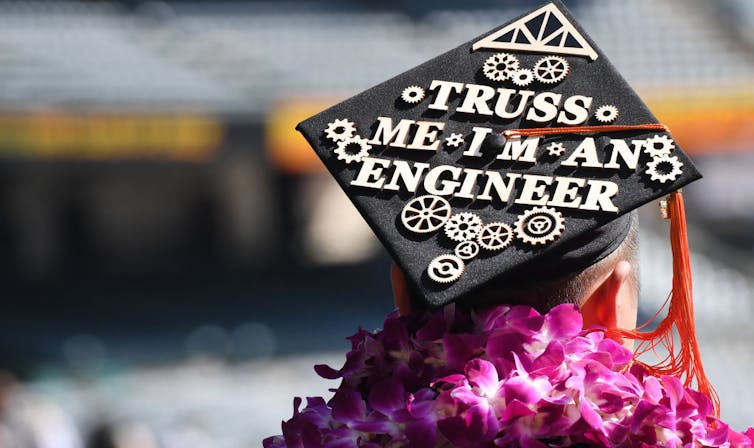
A graduate wearing a black cap decorated with the phrase 'Truss Me I'm an Engineer.'
An engineering graduate celebrates during the 73rd commencement ceremony for California State University, Long Beach, in 2022.
Brittany Murray/MediaNews Group/Long Beach Press-Telegram via Getty Images

Federal research funding is not merely academic spending. It is an important national investment that directly fuels local and national economic growth. It supports high-wage jobs and “innovation districts” centered on university and federal laboratories.

The future of scientific research funding isn’t a debate over how much government help the privileged Ivies ought to receive.

It’s a question of whether public universities will be given the resources to nurture the next generation of scientists, drive bold discoveries and keep America at the forefront of scientific innovation for generations to come.

The Conversation

Todd L. Pittinsky is a Professor of Technology, AI & Society in the College of Engineering and Appled Sciences at Stony Brook University (SUNY).

ref. The Ivies can weather the Trump administration’s research cuts – it’s the nation’s public universities that have the most to lose – https://theconversation.com/the-ivies-can-weather-the-trump-administrations-research-cuts-its-the-nations-public-universities-that-have-the-most-to-lose-267197

Polytechnic universities focus on practical, career-oriented skills, offering an alternative to traditional universities

Source: The Conversation – USA (2) – By Kelly Droege, Assistant Professor, University of Wisconsin-Stout

Unlike traditional research universities and private liberal arts colleges, polytechnic universities tend to offer apprenticeships and microcredentials, all geared toward giving students practical skills they can use in the workforce. iStock/Getty Images Plus

For decades, a four-year college degree was widely seen as the standard path to getting most midlevel jobs in the United States. It was the expected entry point for getting a job as a marketing specialist, project manager, IT support analyst, among other roles.

But this expectation is shifting. Many fields – including cybersecurity, health care and advanced manufacturing – are facing significant shortages in skilled workers. The gap between available skilled jobs and workers is likely to push employers to rethink what they require from job candidates over the next decade.

A major demographic shift will also play a role. Between 2024 and 2032, an estimated 18.4 million experienced workers with education beyond high school are expected to retire, according to September 2025 findings by Georgetown University’s center on education and the workforce.

Only 13.8 million younger workers with similar education levels are expected to enter the workforce during the same period, these findings show. This trend will also make it harder for employers to fill roles that traditionally require a college degree.

At the same time, 25 states over the past few years have enacted legislation and executive orders to remove college degree requirements for people applying for some public sector jobs, signaling a shift in how essential college degrees are for getting hired for some kinds of work.

These shifts underscore a broader trend: A four-year degree is no longer essential for many kinds of work.

Hiring data tells a similar story. As of January 2024, 52% of U.S. job postings on Indeed did not mention any formal education requirement, up from 48% in 2019. Job postings requiring at least a bachelor’s degree also dropped from 20.4% to 17.8% between 2018 and 2023.

As hiring expectations change – influenced in part by advances in artificial intelligence – employers may struggle to find candidates who already have the right job-specific skills.

With over 20 years of experience as professors who also train employees in industries such as manufacturing, health care and business information technologies, we believe that college degrees shouldn’t be mandatory for some jobs.

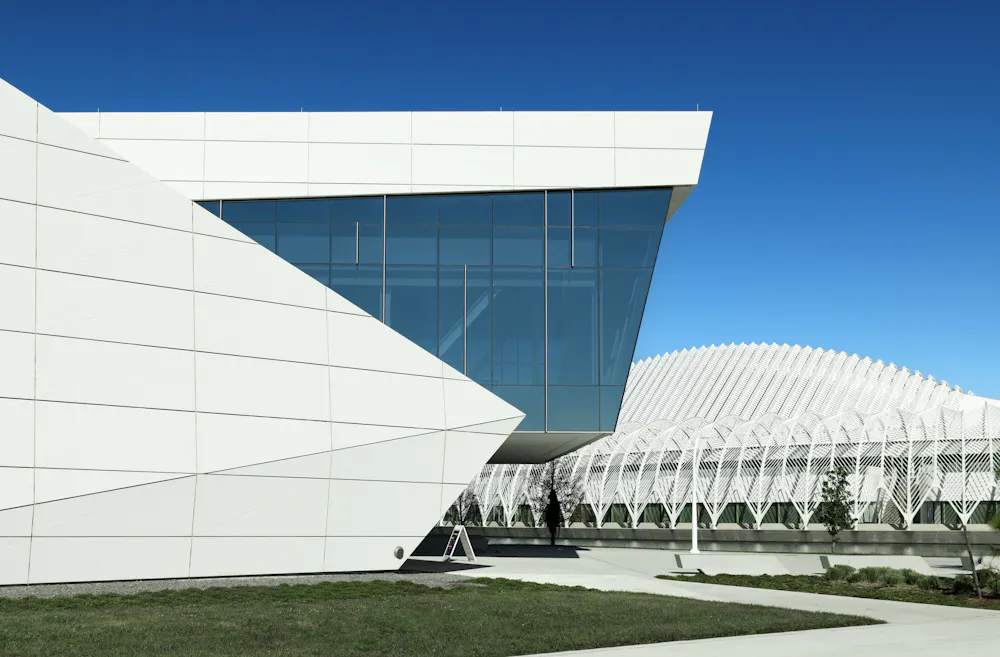
A large white, modern looking building is seen against a bright blue sky.
Florida Polytechnic University is one of several polytechnic universities in the U.S. offering a STEM and career-focused education.
John Greim/LightRocket via Getty Images

A widening gap

Nearly half of recent college graduates say they feel unprepared for entry-level work, and 56% cite a lack of job-specific skills as the biggest issue, according to a 2025 report by Cengage Group, an education and workforce training company.

Alternative pathways – apprenticeships, certifications and on-the-job training – can give workers practical skills and help employers fill crucial roles more quickly.

Employers dropping degree requirements is only one step toward this goal. We think it is also important that prospective college students and their families are aware of educational opportunities besides a traditional four-year degree.

Understanding polytechnic universities

Some people think of higher education in terms of traditional liberal arts colleges or research universities. But there are also polytechnic universities, which focus on hands-on, career-aligned learning and emphasize strong STEM and technical programs. These schools often prepare students for exactly the kinds of jobs employers struggle to fill.

There are about 10 major polytechnic universities in the U.S. Some well-known polytechnic universities are California Polytechnic State University in San Luis Obispo, California, Worcester Polytechnic Institute in Worcester, Massachusetts, and State University of New York Polytechnic Institute in Marcy and Albany, New York.

Instead of offering a wide range of liberal arts majors, polytechnic universities offer majors such as engineering, robotics, construction management and information technology.

A central feature of these schools is applied learning – hands-on labs, real-world projects and problem-solving experiences.

Polytechnic students can earn bachelor’s and master’s degrees, but they also can often get short-term certificates in fields such as human resources, instructional design, project management and digital marketing. Many programs also include apprenticeships, such as workplace training specialists.

Students can also pursue microcredentials, which involve short course sequences that build targeted skills, such as business writing or engineering mechanics. These options give students more flexible and affordable ways to learn without committing to a traditional four-year degree.

Polytechnic universities also tend to cost less than research universities and private colleges, and students can use federal financial aid or private loans to attend.

There are some limitations. Polytechnic schools generally offer fewer majors, usually within STEM fields. Their alumni networks may be smaller, and we have found that some people perceive them as less prestigious than traditional universities because they focus more on teaching than on research.

Real world relevance

In March 2025, we asked 10 online instructors at different polytechnic universities how they bring career-focused learning into their classes.

Our research, which will likely be published in 2026, shows that every instructor tried to make their courses feel relevant to real workplaces.

Some instructors used simulations in the course. Others shared examples from their own industry backgrounds with students. All agreed that students learn best when they can clearly connect their coursework to their career goals.

One of the most effective strategies is hiring instructors with deep industry experience. Their professional networks help programs stay aligned with the skills employers currently value.

Not every college wants to become a polytechnic, and not every student wants that style of education.

However, traditional universities can still learn from this model by adding more applied learning, embedding essential job skills into their programs, and partnering more closely with industry. These changes can better prepare students to succeed in the workforce.

The Conversation

Kelly Droege works for the University of Wisconsin – Stout, a polytechnic institution.

Laura Reisinger does not work for, consult, own shares in or receive funding from any company or organization that would benefit from this article, and has disclosed no relevant affiliations beyond their academic appointment.

ref. Polytechnic universities focus on practical, career-oriented skills, offering an alternative to traditional universities – https://theconversation.com/polytechnic-universities-focus-on-practical-career-oriented-skills-offering-an-alternative-to-traditional-universities-268349

Even with Trump’s support, coal power remains expensive – and dangerous

Source: The Conversation – USA (2) – By Hannah Wiseman, Professor of Law, Penn State

President Donald Trump has aligned himself with the coal industry, including at this meeting in April 2025. Andrew Thomas/Middle East Images/AFP via Getty Images

As projections of U.S. electricity demand rise sharply, President Donald Trump is looking to coal – historically a dominant force in the U.S. energy economy – as a key part of the solution.

In an April 2025 executive order, for instance, Trump used emergency powers to direct the Department of Energy to order the owners of coal-fired power plants that were slated to be shut down to keep the plants running.

He also directed federal agencies to “identify coal resources on Federal lands” and ease the process for leasing and mining coal on those lands. In addition, he issued orders to exclude coal-related projects from environmental reviews, promote coal exports and potentially subsidize the production of coal as a national security resource.

But there remain limits to the president’s power to slow the declining use of coal in the U.S. And while efforts continue to overcome these limits and prop up coal, mining coal remains an ongoing danger to workers: In 2025, there have been five coal-mining deaths in West Virginia and at least two others elsewhere in the U.S.

A large industrial area with towers, a rail line and large buildings with large metal connections.
A coal-fired power plant in Michigan has remained open at Trump administration orders.
Jim West/UCG/Universal Images Group via Getty Images

A long legacy

Until 2015, coal-fired power plants generated more electricity than any other type of fuel in the U.S. But with the rapid expansion of a new type of hydraulic fracturing, natural gas became a cheap and stable source for power generation. The prices of solar and wind power also dropped steadily. These alternatives ultimately overcame coal in the U.S. power supply.

Before this change, coal mining defined the economy and culture of many U.S. towns – and some states and regions, such as Wyoming and Appalachia – for decades. And in many small towns, coal-related businesses, including power plants, were key employers.

Coal has both benefits and drawbacks. It provides a reliable fuel source for electricity that can be piled up on-site at power plants without needing a tank or underground facility for storage.

But it’s dirty: Thousands of coal miners developed a disease called black lung. The federal government pays for medical care for some sick miners and makes monthly payments to family members of miners who die prematurely. Burning coal also emits multiple air pollutants, prematurely killing half a million people in the United States from 1999 through 2020.

Coal is dangerous for workers, too. Some coal-mining companies have had abysmal safety records, leading to miner deaths, such as the recent drowning of a miner in a sudden flood in a West Virginia mine. Safety reforms have been implemented since the Big Branch Mine explosion in 2010, and coal miner deaths in the U.S. have since declined. But coal mining remains a hazardous job.

A stone plaque with names carved on it, between two statues of coal miners.
A memorial honors coal miners who died on the job in Harlan County, Ky.
Jim West/UCG/Universal Images Group via Getty Images

A champion of coal

In both of his terms, Trump has championed the revival of coal. In 2017, for example, Trump’s Department of Energy asked the Federal Energy Regulatory Commission to pay coal and nuclear plants higher rates than the competitive market would pay, saying they were key to keeping the U.S. electricity grid running. The commission declined.

In his second term, Trump is more broadly using powers granted to the president in emergencies, and he is seeking to subsidize coal across the board – in mining, power plants and exports.

At least some of the urgency is coming from the rapid construction of data centers for artificial intelligence, which the Trump administration champions. Many individual data centers use as much power as a small or medium city. There’s enough generation capacity to power them, though only by activating power plants that are idle most of the time and that operate only during peak demand periods. Using those plants would require data centers to reduce their electricity use during those peaks – which it’s not clear they would agree to do.

So many data centers, desperate for 24/7 electricity, are relying on old coal-fired power plants – buying electricity from plants that otherwise would be shutting down.

A long train of cargo cars carrying a black substance stretches to the horizon.
The sun rises on a coal train outside Ritzville, Wash.
Visions of America/Joseph Sohm/Universal Images Group via Getty Images

Limits remain

Despite the Trump adminstration’s efforts to rapidly expand data centers and coal to power them, coal is more expensive than most other fuels for power generation, with costs still rising.

Half of U.S. coal mines have closed within the past two decades, and productivity at the remaining mines is declining due to a variety of factors, such as rising mining costs, environmental regulation and competition from cheaper sources. Coal exports have also seen declines in the midst of the tariff wars.

The U.S. Department of the Interior’s recent effort to follow Trump’s orders and lease more coal on federal lands received only one bid – at a historically low price of less than a penny per ton. But in fact, even if the government gave its coal away for free, it would still make more economic sense for utilities to build power plants that use other fuels. This is due to the high cost of running old coal plants as compared to new natural gas and renewable infrastructure.

Natural gas is cheaper – and, in some places, so are renewable energy and battery storage. Government efforts to prevent the retirement of coal-fired power plants and boost the demand for coal may slow coal’s decline in the short term. In the long term, however, coal faces a very uncertain future as a part of the U.S. electricity mix.

The Conversation

Hannah Wiseman is affiliated with the Center for Progressive Reform. Along with a team of other Penn State researchers, she also received a seed grant from the Penn State Institute of Energy and the Environment for a project entitled “Assessing distributional effects of coal-fired power plant operations on pollution and health.”

Seth Blumsack receives funding from the U.S. National Science Foundation, NASA, the Alfred P. Sloan Foundation and the Heising Simons Foundation.

ref. Even with Trump’s support, coal power remains expensive – and dangerous – https://theconversation.com/even-with-trumps-support-coal-power-remains-expensive-and-dangerous-269668

Célèbres et captifs : comment les réseaux sociaux profitent du mal-être des animaux sauvages

Source: The Conversation – in French – By Margot Michaud, Enseignante-chercheuse en biologie évolutive et anatomie , UniLaSalle

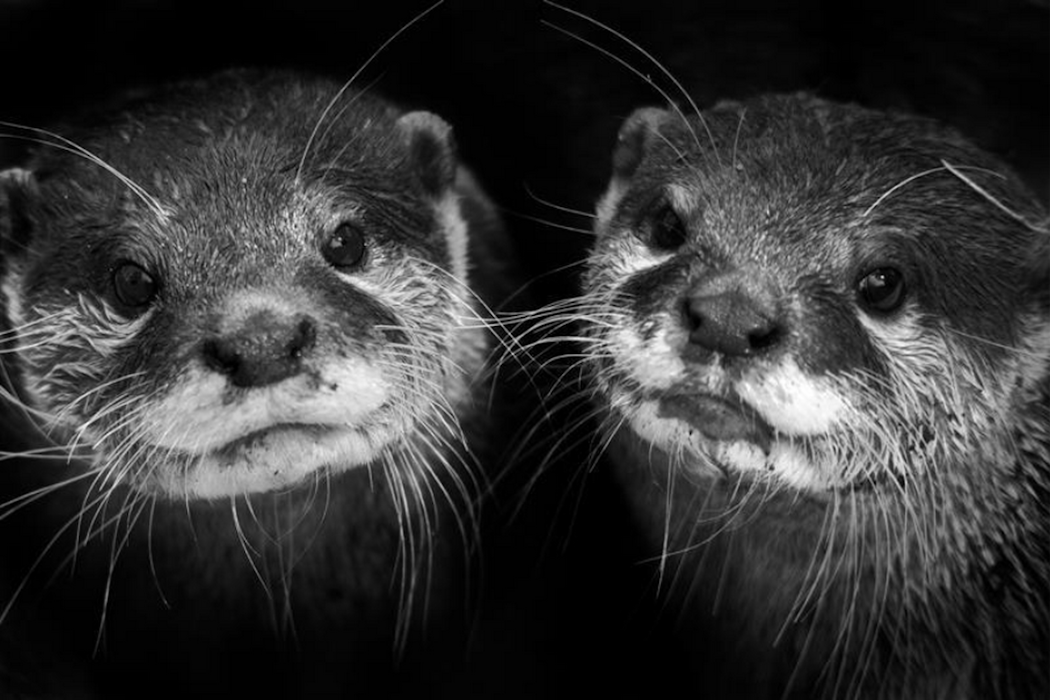
En Asie, on peut cajoler des loutres cendrées (_Aonyx cinereus_) dans des cafés qui leur sont consacrés. Mais qu’en est-il du bien-être de ces animaux sauvages qui se voient piégés dans des environnements inadaptés à leurs besoins fondamentaux ? Sara Hoummady/UniLaSalle, Fourni par l’auteur

Sur les réseaux sociaux, la popularité des animaux exotiques va de pair avec la banalisation de leur mauvais traitement. Ces plateformes monétisent la possession d’espèces sauvages tout en invisibilisant leur souffrance. Cette tendance nourrit une méprise courante selon laquelle l’apprivoisement serait comparable à la domestication. Il n’en est rien, comme le montre l’exemple des loutres de compagnie au Japon.


Singes nourris au biberon, perroquets dressés pour les selfies, félins obèses exhibés devant les caméras… Sur TikTok, Instagram ou YouTube, ces mises en scène présentent des espèces sauvages comme des animaux de compagnie, notamment via des hashtags tels que #exoticpetsoftiktok.

Cette tendance virale, favorisée par le fonctionnement même de ces plateformes, normalise l’idée selon laquelle un animal non domestiqué pourrait vivre comme un chat ou un chien, à nos côtés. Dans certains pays, posséder un animal exotique est même devenu un symbole ostentatoire de statut social pour une élite fortunée qui les met en scène lors de séances photo « glamour ».

Or, derrière les images attrayantes qui recueillent des milliers de « likes » se dissimule une réalité bien moins séduisante. Ces stars des réseaux sociaux sont des espèces avec des besoins écologiques, sociaux et comportementaux impossibles à satisfaire dans un foyer humain. En banalisant leur possession, ces contenus, d’une part, entretiennent des croyances erronées et, d’autre part, stimulent aussi le trafic illégal. En cela, ils participent à la souffrance de ces animaux et fragilisent la conservation d’espèces sauvages.


À lire aussi :
Qui est le capybara, cet étonnant rongeur qui a gagné le cœur des internautes ?


Ne pas confondre domestique et apprivoisé

Pour comprendre les enjeux liés à la possession d’un animal exotique, il faut d’abord définir les termes : qu’est-ce qu’un animal domestique et qu’est-ce qu’un animal exotique  ?

Le manul, ou chat de Pallas, est un petit félin sauvage endémique de la Mongolie, du Kazakhstan, de la Russie, du sud de l’Iran, du Pakistan et du Népal. Malgré son adorable bouille, c’est un animal territorial et solitaire qui peut être agressif.
Sander van der Wel, CC BY-SA

Force est de constater que le terme « animal exotique » est particulièrement ambigu. Même si en France l’arrêté du 11 août 2006 fixe une liste claire des espèces considérées comme domestiques, sa version britannique dresse une liste d’animaux exotiques pour lesquels une licence est requise, à l’exclusion de tous les autres.

Une licence est ainsi requise pour posséder, par exemple, un serval (Leptailurus serval), mais pas pour un hybride de serval et de chat de deuxième génération au moins, ou encore pour détenir un manul, aussi appelé chat de Pallas (Otocolobus manul).

Ce flou sémantique entretient la confusion entre apprivoisement et domestication :

  • le premier consiste à habituer un animal sauvage à la présence humaine (comme des daims nourris en parc) ;

  • la seconde correspond à un long processus de sélection prenant place sur des générations et qui entraîne des changements génétiques, comportementaux et morphologiques.

Chat Savannah (croisement entre un chat domestique et un serval) de première génération.
Flickr Gottawildside, CC BY-NC-ND

Ce processus s’accompagne de ce que les scientifiques appellent le « syndrome de domestication », un ensemble de traits communs (oreilles tombantes, queue recourbée, etc.) déjà décrits par Darwin dès 1869, même si ce concept est désormais remis en question par la communauté scientifique.

Pour le dire plus simplement : un loup élevé par des humains reste un loup apprivoisé et ne devient pas un chien. Ses besoins et ses capacités physiologiques, son comportement et ses aptitudes cognitives restent fondamentalement les mêmes que celles de ces congénères sauvages. Il en va de même pour toutes les autres espèces non domestiques qui envahissent nos écrans.


À lire aussi :
Le chien descend-il vraiment du loup ?


Des animaux stars au destin captif : le cas des loutres d’Asie

Les félins et les primates ont longtemps été les animaux préférés des réseaux sociaux, mais une nouvelle tendance a récemment émergé en Asie : la loutre dite de compagnie.

Parmi les différentes espèces concernées, la loutre cendrée (Aonyx cinereus), particulièrement prisée pour son apparence juvénile, représente la quasi-totalité des annonces de vente en ligne dans cette région. Cela en fait la première victime du commerce clandestin de cette partie du monde, malgré son inscription à l’Annexe I de la Convention sur le commerce international des espèces menacées depuis 2019.

Les cafés à loutres, particulièrement en vogue au Japon, ont largement participé à normaliser cette tendance en les exposant sur les réseaux sociaux comme animaux de compagnie, un phénomène documenté dans un rapport complet de l’ONG World Animal Protection publié en 2019. De même, le cas de Splash, loutre employée par la police pour rechercher des corps en Floride (États-Unis), montre que l’exploitation de ces animaux s’étend désormais au-delà du divertissement.

En milieu naturel, ces animaux passent la majorité de leurs journées à nager et à explorer un territoire qui mesure plus d’une dizaine de kilomètres au sein d’un groupe familial regroupant jusqu’à 12 individus. Recréer ces conditions à domicile est bien entendu impossible. En outre, leur régime, principalement composé de poissons frais, de crustacés et d’amphibiens, est à la fois extrêmement contraignant et coûteux pour leurs propriétaires. Leur métabolisme élevé les oblige en plus à consommer jusqu’à un quart de leur poids corporel chaque jour.

Privés de prédation et souvent nourris avec des aliments pour chats, de nombreux animaux exhibés sur les réseaux développent malnutrition et surpoids. Leur mal-être s’exprime aussi par des vocalisations et des troubles graves du comportement, allant jusqu’à de l’agressivité ou de l’automutilation, et des gestes répétitifs dénués de fonction, appelés « stéréotypies ». Ces comportements sont la conséquence d’un environnement inadapté, sans stimulations cognitives et sociales, quand elles ne sont pas tout simplement privées de lumière naturelle et d’espace aquatique.

Une existence déconnectée des besoins des animaux

Cette proximité n’est pas non plus sans risques pour les êtres humains. Les loutres, tout comme les autres animaux exotiques, peuvent être porteurs de maladies transmissibles à l’humain : salmonellose, parasites ou virus figurent parmi les pathogénies les plus fréquemment signalées. De plus, les soins vétérinaires spécialisés nécessaires pour ces espèces sont rarement accessibles et de ce fait extrêmement coûteux. Rappelons notamment qu’aucun vaccin antirabique n’est homologué pour la majorité des espèces exotiques.

Dans le débat public, on oppose souvent les risques pour l’humain au droit de posséder ces animaux. Mais on oublie l’essentiel : qu’est-ce qui est réellement bon pour l’animal  ? La légitimité des zoos reste débattue malgré leur rôle de conservation et de recherche, mais alors comment justifier des lieux comme les cafés à loutres, où l’on paie pour caresser une espèce sauvage  ?

Depuis 2018, le bien-être animal est défini par l’Union européenne et l’Anses comme :

« Le bien-être d’un animal est l’état mental et physique positif lié à la satisfaction de ses besoins physiologiques et comportementaux, ainsi que de ses attentes. Cet état varie en fonction de la perception de la situation par l’animal. ».

Dès lors, comment parler de bien-être pour un animal en surpoids, filmé dans des situations anxiogènes pour le plaisir de quelques clients ou pour quelques milliers de likes ?

Braconnés pour être exposés en ligne

Bien que la détention d’animaux exotiques soit soumise à une réglementation stricte en France, la fascination suscitée par ces espèces sur les réseaux ne connaît aucune limite géographique. Malgré les messages d’alerte mis en place par TikTok et Instagram sur certains hashtags, l’engagement du public, y compris en Europe, alimente encore la demande mondiale et favorise les captures illégales.

Une étude de 2025 révèle ainsi que la majorité des loutres captives au Japon proviennent de deux zones de braconnage en Thaïlande, mettant au jour un trafic important malgré la législation. En Thaïlande et au Vietnam, de jeunes loutres sont encore capturées et séparées de leurs mères souvent tuées lors du braconnage, en violation des conventions internationales.

Les réseaux sociaux facilitent la mise en relation entre vendeurs et acheteurs mal informés, conduisant fréquemment à l’abandon d’animaux ingérables, voire des évasions involontaires.

Photographie du serval qui a erré dans le département du Rhône pendant plus de six mois en 2025.
© Tonga Terre d’Accueil

Ce phénomène peut également avoir de graves impacts écologiques, comme la perturbation des écosystèmes locaux, la transmission de maladies infectieuses aux populations sauvages et la compétition avec les espèces autochtones pour les ressources.

Récemment en France, le cas d’un serval ayant erré plusieurs mois dans la région lyonnaise illustre cette réalité : l’animal, dont la détention est interdite, aurait probablement été relâché par un particulier.

Quand l’attention profite à la cause

Mais cette visibilité n’a pas que des effets délétères. Les réseaux sociaux offrent ainsi un nouveau levier pour analyser les tendances d’un marché illégal. D’autres initiatives produites par des centres de soins et de réhabilitation ont une vocation pédagogique : elles sensibilisent le public et permettent de financer des actions de protection et de lutte contre le trafic.

Il ne s’agit donc pas de rejeter en bloc la médiatisation autour de la question de ces animaux, mais d’apprendre à en décoder les intentions et les impacts. En définitive, le meilleur moyen d’aider ces espèces reste de soutenir les associations, les chercheurs et les programmes de réintroduction. Et gardons à l’esprit qu’un simple like peut avoir des conséquences, positives ou négatives, selon le contenu que l’on choisit d’encourager.

The Conversation

Les auteurs ne travaillent pas, ne conseillent pas, ne possèdent pas de parts, ne reçoivent pas de fonds d’une organisation qui pourrait tirer profit de cet article, et n’ont déclaré aucune autre affiliation que leur organisme de recherche.

ref. Célèbres et captifs : comment les réseaux sociaux profitent du mal-être des animaux sauvages – https://theconversation.com/celebres-et-captifs-comment-les-reseaux-sociaux-profitent-du-mal-etre-des-animaux-sauvages-268683

Mascottes sportives : les clubs peuvent-ils devenir les nouveaux champions de la biodiversité ?

Source: The Conversation – France (in French) – By Ugo Arbieu, Chercheur postdoctoral, Université Paris-Saclay

Du lion de l’Olympique lyonnais aux ours, tigres et autres aiglons qui ornent les logos des clubs sportifs de toutes disciplines du monde entier, les animaux sauvages sont au cœur de l’imaginaire sportif. Pourtant, dans la nature, beaucoup de ces espèces déclinent. Et si cet engouement se transformait en levier pour mieux défendre la biodiversité ? La littérature scientifique récente propose plusieurs pistes pour faire des clubs de véritables champions de la biodiversité.


Quand on se promène aux abords du Groupama Stadium à Lyon (Rhône), on ne peut les ignorer. Quatre lions majestueux aux couleurs de l’Olympique lyonnais trônent devant le stade, symboles du rayonnement d’un club qui dominait le championnat de France de football au début des années 2000.

Le lion est présent partout dans l’image de marque du club : sur le logo, sur les réseaux, et même sur les pectoraux de quelques supporters qui vivent et respirent pour leur équipe. Ce sont ceux qui se lèvent comme un seul homme quand Lyou, la mascotte, parcourt les travées du stade à chaque but marqué par l’équipe. Pourtant, s’il rugit dans le stade lyonnais, dans la savane, le lion s’éteint.

Lors de la neuvième journée de Ligue 1 (dont les matchs se sont déroulés du 24 au 26 octobre 2025), il y avait deux fois plus de monde dans le stade pour le match Lyon-Strasbourg (soit un peu plus de 49 000 spectateurs) que de lions à l’état sauvage sur la planète (environ 25 000). Les populations de lions en Afrique et en Inde ont chuté de 25 % entre 2006 et 2018, comme bien d’autres espèces sur la planète, selon l’Union internationale pour la conservation de la nature (UICN).

Un des lions qui trônent devant le Groupama Stadium à Lyon (Rhône).
Zakarie Faibis, CC BY-SA

C’est un curieux paradoxe : alors que le secteur du sport est en plein essor, capitalisant souvent sur la symbolique animale pour développer marques et logos et pour fédérer les foules autour de valeurs partagées, ces mêmes espèces animales font face à de nombreuses menaces dans la nature, sans que les fans ou les clubs ne le sachent vraiment.

Ce paradoxe entre l’omniprésence des représentations animales dans le sport et la crise globale de la biodiversité a été le point de départ d’une étude publiée dans la revue BioScience. Celle-ci a quantifié la diversité des espèces représentées dans les plus grands clubs de sport collectif dans chaque région du monde, d’une part, et évalué leur statut de conservation, d’autre part. De quoi dégager au passage des tendances entre régions du globe et sports collectifs (féminins et masculins).

L’enjeu ? Explorer les passerelles possibles entre sport professionnel et protection de la biodiversité. En effet, le sport réunit des millions de passionnés, tandis que l’identité des clubs s’appuie sur des espèces à la fois charismatiques et le plus souvent menacées. À la clé, une opportunité unique de promouvoir la conservation de la biodiversité dans un cadre positif, fédérateur et valorisant.

Le secteur du sport a récemment pris conscience des enjeux climatiques, de par ce qu’ils représentent comme risque pour la pratique sportive, mais aussi par l’impact que les événements sportifs ont sur le climat, mais la biodiversité n’a pas encore reçu la même attention.

La diversité des espèces représentées dans le sport collectif

Ces travaux ont porté sur une sélection de 43 pays sur les cinq grands continents. Ils mettent en lumière de nombreux enseignements, au premier rang desquels l’importance et la grande quantité d’animaux sauvages dans les emblèmes sportifs. Ainsi, 25 % des organisations sportives professionnelles utilisent un animal sauvage soit dans leur nom ou surnom, soit dans leur logo.

Les ours (ici, un ours polaire pour l’équipe de hockey d’Orlando, aux États-Unis) sont parmi les animaux les plus utilisés en guise de mascotte par les sports collectifs répertoriés dans le cadre de l’étude.
Vector Portal/Creative Commons, CC BY

Cela représente plus de 700 équipes masculines et féminines, dans chacun des dix sports collectifs pris en compte dans l’étude : football, basketball, football américain, baseball, rugby à XV et à XIII, volleyball, handball, cricket et hockey sur glace. Sans surprise, les espèces les plus représentées sont, dans cet ordre, les lions (Panthera leo), les tigres (Panthera tigris), les loups (Canis lupus), les léopards (Panthera pardus) et les ours bruns (Ursus arctos).

Si les grands mammifères prennent la part du lion sur ce podium, il existe en réalité une formidable diversité taxonomique représentée, avec plus de 160 types d’animaux différents. Ainsi, les calamars, les crabes, les grenouilles ou les frelons côtoient les crocodiles, les cobras et les pélicans, dans un bestiaire sportif riche et révélateur de contextes socio-écologiques très spécifiques. Nous les avons recensés dans une carte interactive accessible en ligne.

On associe plus facilement cette imagerie animale aux grandes franchises états-uniennes de football (NFL), de basket-ball (NBA) ou de hockey sur glace (NHL), avec des clubs comme les Miami Dolphins (NFL), les Memphis Grizzlies (NBA) ou les Pittsburgh Penguins (NHL).

Les symboles animaliers sont très variés dans les équipes masculines et féminines de volley-ball de dix pays européens : mammifères, oiseaux, insectes et reptiles sont présents sur les étendards de plus de 30 équipes.
Fourni par l’auteur

Or, la France aussi possède une faune diverse, avec plus de 20 espèces représentées dans plus de 45 clubs professionnels : les aiglons de l’OGC Nice (football), le loup du LOU Rugby (rugby), ou les lionnes du Paris 92 (handball) en sont de beaux exemples. C’est également le cas pour le volley-ball, comme le montre l’illustration ci-dessus.


À lire aussi :
Pas de ski (alpin) cette année… c’est l’occasion de s’intéresser à la biodiversité montagnarde !


Des symboles culturels, esthétiques ou encore identitaires

Les emblèmes des clubs font souvent écho à l’héritage culturel de leur région. L’hermine, emblème des ducs de Bretagne, est ainsi utilisée depuis le XIVe siècle pour véhiculer l’identité culturelle bretonne. On la retrouve dans plusieurs clubs sportifs de la région, dont le Stade rennais FC, le Rugby club Vannes ou le Nantes Basket Hermine.

Logo de l’équipe de rugby Lyon olympique universitaire.
LOU Rugby

Les symboles animaliers permettent aussi de communiquer sur les valeurs et spécificités du club, telles que la cohésion et la solidarité, à l’instar du groupe de supporters du LOU Rugby, qui se surnomme « la meute ».

Ces surnoms permettent également de créer un narratif autour de l’esthétique des couleurs de l’équipe, comme le font les « zèbres », surnom donné à l’équipe de la Juventus FC de Turin (Italie) qui joue traditionnellement en blanc rayé de noir.

Enfin, les emblèmes faisant directement référence à l’environnement local sont fréquents, tels les Parramatta Eels (qui doit son nom à celui du quartier de Sydney où joue l’équipe et qui signifie « lieu où vivent les anguilles », en dharug, langue aborigène), ou les « Brûleurs de loups » de Grenoble (du nom d’une pratique en Dauphiné qui consistait à faire de grands feux pour éloigner les prédateurs et gagner des terres agricoles sur les forêts).


À lire aussi :
Comprendre la diversité des émotions suscitées par le loup en France


Des clubs au service de la vie sauvage ?

Le secteur du sport a récemment pris conscience des enjeux climatiques, tant ceux liés à la pratique sportive qu’aux événéments sportifs. La biodiversité n’a pas encore reçu la même attention. Or, notre étude montre que 27 % des espèces animales utilisées dans ces identités sportives font face à des risques d’extinction à plus ou moins court terme. Cela concerne 59 % des équipes professionnelles, soit une vaste majorité.

Six espèces, en particulier, sont en danger critique d’extinction selon l’UICN : le rhinocéros noir (Diceros bicornis), la baleine bleue (Balænoptera musculus), l’éléphant d’Afrique (Loxodonta africana), l’éléphant d’Asie (Elephas maximus), le tigre et le carouge (Agelaius xanthomus) de Porto Rico. Lions et léopards, deux des espèces les plus souvent représentées par les clubs sportifs, ont un statut d’espèces vulnérables.

Au total, 64 % des équipes ont un emblème animal dont la population est en déclin dans la nature. Et 18 équipes ont même pour emblème une espèce… dont on ne connaît tout simplement pas la dynamique d’évolution des populations. Si vous pensiez que cela concerne des espèces inconnues, détrompez-vous : l’ours polaire (Ursus maritimus), l’orque (Orcinus orca) ou encore le chat forestier (Felis silvestris) font partie de ces espèces populaires, mais très mal connues au plan démographique.

Dans ces conditions, le sport peut-il aider à promouvoir la conservation de la biodiversité dans un cadre fédérateur et valorisant ? De fait, les clubs et les athlètes emblématiques, dont les identités s’appuient sur des espèces souvent charismatiques mais menacées, rassemblent des millions de passionnés.

Modèle tripartite qui montre comment peuvent s’aligner les intérêts des biologistes de la conservation, des organisations sportives et des communautés de supporters. L’idée est de créer des synergies positives permettant des changements transformateurs en faveur de la biodiversité grâce au sport.
Fourni par l’auteur

Une autre étude publiée récemment présente un modèle qui alignerait les intérêts des clubs, de leurs partenaires commerciaux, de leurs communautés de supporters et des protecteurs de la biodiversité autour de la figure centrale des emblèmes sportifs animaliers.


À lire aussi :
Comment limiter l’empreinte carbone des Coupes du monde de football ?


Jouer collectif pour protéger la biodiversité

Le projet The Wild League, dans lequel s’inscrit la nouvelle publication scientifique, vise à mettre ce modèle en application avec l’appui des clubs (professionnels ou non) et de leurs communautés, afin d’impliquer le plus grand nombre d’acteurs (équipes, partenaires, supporters) pour soutenir la recherche en écologie et la préservation de la biodiversité.

Ces engagements sont gagnant-gagnant : pour les clubs, c’est l’occasion de toucher de nouveaux publics et de mobiliser les supporters autour de valeurs fortes. Les sponsors, eux, peuvent associer leurs marques à une cause universelle. En passant à l’échelle, une ligue professionnelle, si elle se mobilisait à travers toutes ses équipes, pourrait ainsi jouer un rôle clé pour sensibiliser à la biodiversité.

Les emblèmes de la ligue de hockey allemande DEL font quasiment tous référence à des animaux.
Deutsche Eishockey Liga/X.com

Par exemple, la première division de hockey sur glace allemand (Deutsche Eishockey Liga) comprend 15 équipes, dont 13 présentent des emblèmes très charismatiques. Chaque semaine, les panthères affrontent les ours polaires, les pingouins ferraillent contre les tigres et les requins défient les grizzlis. Autant d’occasions pour mieux faire connaître la richesse du vivant sur la Terre.

La diversité des emblèmes animaliers des clubs sportifs permettrait d’attirer l’attention sur la diversité d’espèces pour un animal donné. Par exemple, certains termes comme les « crabes », les « chauve-souris » ou les « abeilles » cachent en réalité une diversité taxonomique immense. Il existe plus de 1 400 espèces de crabes d’eau douce, autant d’espèces de chauve-souris (et qui représentent une espèce sur cinq parmi les mammifères) et plus de 20 000 espèces d’abeilles dans le monde.

Ces mascottes peuvent également mettre en lumière des espèces locales.
L’équipe de basket-ball des Auckland Tuatara, par exemple, est la seule équipe à présenter comme emblème le tuatara (Sphenodon punctatus), ce reptile endémique à la Nouvelle-Zélande (qui n’existe que dans ce pays). Ces associations uniques entre une équipe et une espèce sont une occasion rêvée de développer un sens de responsabilité de l’un envers l’autre.

Le sport est avant tout une industrie du divertissement qui propose des expériences émotionnelles fondées sur des valeurs fortes. Les emblèmes animaliers des clubs doivent permettre de mettre ces émotions au service de la nature et d’engager les communautés sportives pour leur protection et pour la préservation de la biodiversité au sens large. C’est à cette condition qu’on évitera que le rugissement du lion, comme cri de ralliement sportif, ne devienne qu’un lointain souvenir et qu’on redonnera un vrai sens symbolique à ces statues si fièrement érigées devant nos stades.


À lire aussi :
Sport, nature et empreinte carbone : les leçons du trail pour l’organisation des compétitions sportives


The Conversation

Ugo Arbieu est fondateur de The Wild League, un projet international visant à promouvoir l’intégration des enjeux de la protection de la biodiversité dans les organisations sportives professionnelles

Franck Courchamp ne travaille pas, ne conseille pas, ne possède pas de parts, ne reçoit pas de fonds d’une organisation qui pourrait tirer profit de cet article, et n’a déclaré aucune autre affiliation que son organisme de recherche.

ref. Mascottes sportives : les clubs peuvent-ils devenir les nouveaux champions de la biodiversité ? – https://theconversation.com/mascottes-sportives-les-clubs-peuvent-ils-devenir-les-nouveaux-champions-de-la-biodiversite-268906

Why global environmental negotiations keep failing – and what we can do about it

Source: The Conversation – UK – By Catalina Turcu, Professor of Sustainable Built Environment, UCL

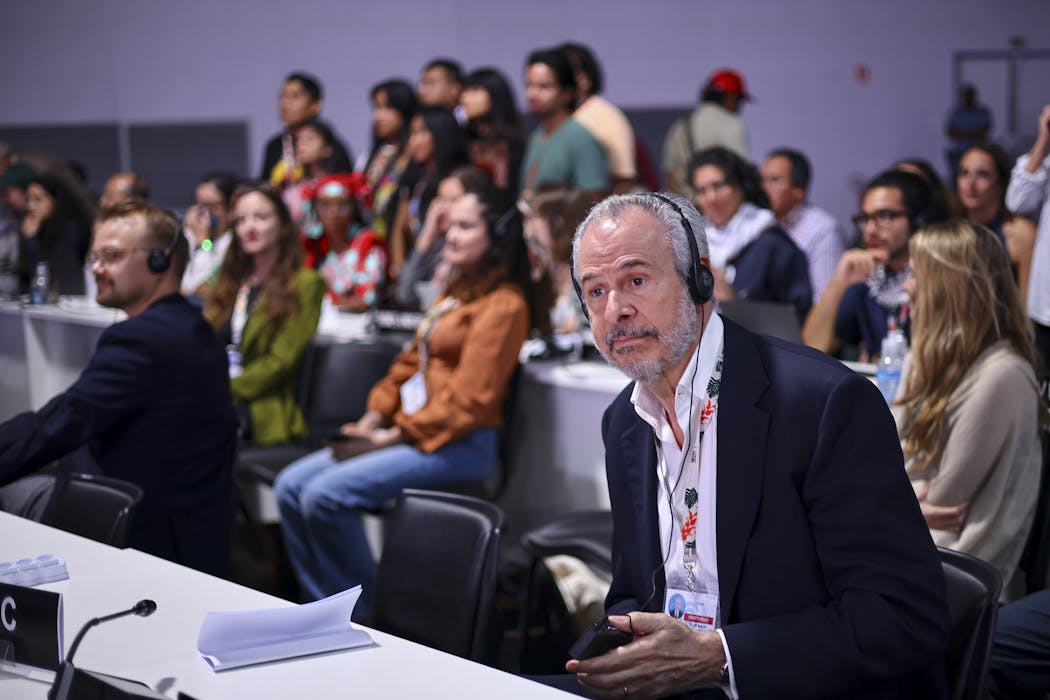
President Andre Correa do Lago during closing plenary meeting of the 30th UN climate summit (Cop30). Photo by Ueslei Marcelino/Cop30, CC BY-NC-ND

In the past year alone, four major environmental negotiations have collapsed.

Global talks on a treaty to cut plastic pollution fell apart. Governments did not agree on the timeline and scope for the seventh assessment report of the Intergovernmental Panel on Climate Change (IPCC). Talks on the International Maritime Organization’s net-zero framework failed to reach consensus. And the summary for policymakers for the UN Environment Programme’s flagship report on the state of the environment was not approved.

These failures signal a deeper breakdown in how the world tackles environmental crises such as climate change, biodiversity loss, pollution and waste and land degradation.

There are cracks in the system. International negotiations are built on principles of representation and consensus, meant to ensure fairness and inclusivity. In theory, every country has a voice, and decisions reflect collective agreement. In practice, however, these principles often paralyse or delay progress.

Consensus can allow a few countries to block collective action, even when most members are in favour, while calls for representation are sometimes used to delay decisions in the name of democracy – ironically, sometimes by states where democratic principles are in question.

Take the global plastics treaty negotiations. Talks have hit a deadlock between countries seeking limits on plastic production and oil-producing countries pushing to focus only on waste and recycling. Similarly, the IPCC process is grappling with unprecedented disputes over timelines and plans for removing carbon from oceans and rivers.

Then there’s the politicisation of science. Every paragraph of a policy summary – distilling key scientific findings for governments – is negotiated line by line. This process often dilutes or deletes science to fit national agendas, with the recent UN climate summit (Cop30) declaration removing any mention of fossil fuels. The result: assessments that take years to produce and summaries mired in political wrangling, eroding trust in science, and delaying the urgent action they are meant to drive.


Read more:
Why climate summits fail – and three ways to save them


Who really decides? Formally, it is the member states – that’s nations and entities like the EU. On paper, every country has an equal voice. In reality, power dynamics tell a different story.

Some nations dominate the floor with large, well-prepared teams, armed with technical experts and seasoned negotiators. They arrive with detailed positions, ready to shape the agenda. Others, often from smaller or less-well-resourced states, struggle to be heard. Their delegations are thin, sometimes just one or two people juggling multiple sessions.

Gender gaps persist, too. Despite decades of commitments to equality, men still speak far more often than women in many negotiations – up to four times more in some sessions of the recently collapsed Global Environment Outlook, the UN’s flagship report on the state of the global environment that connects climate change, nature loss and pollution to unsustainable consumption.

Negotiations to agree on possible ways to tackle the issues fell apart when some governments failed to agree with scientific conclusions outlined in the report. This is not just about optics, and it affects whose perspectives shape global environmental policy. When voices are missing, so are ideas and priorities.

Scientists, meanwhile, sit at the back of the room. Their role is largely reactive – allowed to clarify technical points only when specifically asked by member states. Their expertise, which should anchor decisions in evidence, is often sidelined by political bargaining. The result? Policies that sometimes drift away from what science says is necessary to protect ecosystems and communities.

The new fault lines

Rising nationalism and geopolitical tensions make cooperation harder. Environmental action is increasingly framed as a sovereignty issue, with domestic interests trumping global solutions. Climate pledges are weighed against economic competitiveness, biodiversity targets through trade-offs and resource control. Trust erodes, negotiations drag on, and the planet pays the price.

This reality shows in the slow progress of major agreements. Multilateralism, once the only path forward, now splinters into shifting blocs. Some countries stall decisions to protect short-term gains; others walk away entirely, creating a void – and an opportunity for others to step in.

Improving this means rethinking the system from the ground up. That involves challenging the consensus stranglehold. The requirement for consensus often paralyses negotiations. Allowing coalitions of ambitious countries to move ahead when consensus fails could break deadlocks and create momentum. So-called “coalitions of the willing” (such as the fossil fuel phase-out coalition announced at Cop30) can set higher standards and inspire others to follow.

Giving science a stronger voice, while allowing political input, ensures that decisions remain grounded in facts without ignoring legitimate national concerns.
Current models treat scientific input as secondary to political negotiation. Hybrid approval systems can protect evidence without ignoring legitimate national concerns.

Modernising the process can speed up negotiations. Moving away from paper-heavy, language-dependent systems towards digital tools and AI-assisted drafting could accelerate text negotiations, reduce translation or language delays and make participation easier for smaller delegations.

Beyond funding and technical aid, small delegations can be empowered through real-time intelligence, dedicated staff, mentorship and early access to information. Gender and regional balance can be ensured through measures like speaking-time quotas and consistent, process-long leadership roles.

The collapse of these talks is a warning. Our governance systems were built for another era, yet environmental crises today are more complex and more interconnected than ever. The machinery meant to solve them is buckling under outdated rules and rising pressure.

Without bold reform, multilateral environmentalism risks irrelevance. Failure to reach global agreements will invite fragmented, unilateral fixes – patchwork solutions far too weak to prevent ecological breakdown. The question is not whether reform is needed, but whether we act before it’s too late.

The stakes are high. Every delay means more emissions, more extinctions and more communities exposed to environmental impacts. The world cannot afford negotiations that stall while ecosystems collapse. We need systems that are agile, inclusive, evidence-based and fit for the 21st century.


Don’t have time to read about climate change as much as you’d like?

Get a weekly roundup in your inbox instead. Every Wednesday, The Conversation’s environment editor writes Imagine, a short email that goes a little deeper into just one climate issue. Join the 47,000+ readers who’ve subscribed so far.


The Conversation

The author served as Coordinating Lead Author for the GEO 7 assessment and participated in the SPM approval meeting in Nairobi (27–31 October 2025). She also acted as a scientific observer at COP28 in the UAE and at the 60th session of the Subsidiary Body for Scientific and Technological Advice (SBSTA), following negotiations in the Research and Systematic Observation (RSO) Working Group in preparation for COP29 in Azerbaijan.

ref. Why global environmental negotiations keep failing – and what we can do about it – https://theconversation.com/why-global-environmental-negotiations-keep-failing-and-what-we-can-do-about-it-269749

El cambio climático y la actividad humana están transformando las montañas en todo el mundo

Source: The Conversation – (in Spanish) – By David Elustondo Valencia, Catedrático en Tecnologías del Medioambiente y director científico del Instituto de Biodiversidad y Medio Ambiente, Universidad de Navarra

Lago Enol, en Picos de Europa, en Asturias (España). Chris WM Willemsen/Shutterstock

Las montañas cubren cerca de una cuarta parte de la superficie terrestre. Además de su valor ecológico, sostienen directa o indirectamente a más de la mitad de la población mundial proporcionando servicios fundamentales: abastecen de agua dulce a grandes ciudades y regiones agrícolas, regulan el clima local y regional, almacenan carbono en bosques y turberas, conservan una biodiversidad única y ofrecen recursos esenciales para la cultura, el ocio y el bienestar.

Sin embargo, en las últimas décadas, estos ecosistemas se han convertido en uno de los escenarios donde el cambio climático se manifiesta con mayor intensidad y rapidez. Lejos de ser territorios remotos o inmutables, están experimentando una transformación profunda con consecuencias ecológicas, económicas y sociales de gran alcance.

Territorios vulnerables al cambio climático

Estos territorios son especialmente sensibles al calentamiento global, que en las zonas de montaña supera ampliamente la media global.

Este aumento de temperatura está provocando la pérdida acelerada de nieve y el retroceso de glaciares, con efectos directos sobre la regulación hidrológica.

Muchos de los ríos más importantes del mundo dependen del equilibrio nival y glaciar para mantener sus caudales. La reducción del manto de nieve y el deshielo prematuro están alterando los flujos estacionales de agua, generando una mayor circulación de agua en invierno y menor en verano, cuando aumenta la demanda agrícola y urbana. Por tanto, este desequilibrio no solo afecta a la biodiversidad, sino también al abastecimiento humano, la producción hidroeléctrica y la seguridad alimentaria.


Leer más:
La gran avalancha que sepultó el pueblo suizo de Blatten nos deja lecciones para un futuro más cálido


El calentamiento global ejerce además una fuerte presión sobre la biodiversidad de alta montaña, una de las más singulares y frágiles del planeta. Muchas especies se desplazan hacia cotas superiores en busca de temperaturas más frías, pero en los sistemas montañosos ese margen altitudinal es limitado.

En consecuencia, especies adaptadas a ambientes fríos, desde plantas alpinas hasta aves, insectos y anfibios, se encuentran cada vez más acorraladas y, en algunos casos, al borde de la extinción local.

A ello se suman desajustes en los ciclos fisiológicos –los ritmos de funciones biológicas– que generan una creciente asincronía entre especies que dependen unas de otras. Estos cambios repercuten en procesos ecológicos esenciales como la polinización, el control de plagas o el ciclado de nutrientes.

Rana de tonos marrones sobre una superficie rocosa húmeda y con musgo
La rana pineraica (Rana pyrenaica) es una especie endémica de algunas regiones montañosas españolas amenazada por el cambio climático y las actividades humanas, entre otros factores.
Benny Trapp/Wikimedia Commons, CC BY-SA

Impacto de las actividades humanas

A estas presiones se suma una creciente influencia humana. El aumento del turismo, la urbanización de valles, la construcción de infraestructuras y la demanda creciente de agua y energía están transformando aceleradamente los ecosistemas de montaña. Este incremento de usos favorece el desplazamiento de especies nativas y altera el equilibrio ecológico, especialmente en zonas de alta sensibilidad ambiental.

Existe, además, un factor menos visible pero igualmente determinante: el depósito atmosférico de contaminantes, especialmente nitrógeno y fósforo. Aunque a menudo se perciben como espacios aislados, las montañas reciben cantidades crecientes de nutrientes procedentes de actividades humanas situadas a grandes distancias.

En muchos sistemas oligotróficos (es decir, adaptados a niveles muy bajos de nutrientes) como turberas, praderas alpinas, suelos de alta montaña y lagos glaciares, estos aportes superan la cantidad que pueden soportar, alterando la química del agua, favoreciendo proliferaciones algales y desplazando especies nativas adaptadas a ambientes pobres en nutrientes. Como consecuencia, disminuye la capacidad de estos ecosistemas para depurar agua, almacenar carbono o mantener su biodiversidad característica.


Leer más:
SOS por el Observatorio de Cambio Global de Sierra Nevada, herramienta clave para estudiar ecosistemas de montaña


Centinelas del cambio global

El impacto del cambio global en las zonas de montaña es, por tanto, claramente multifactorial. El efecto combinado del cambio climático, la disminución de la ganadería extensiva, la contaminación atmosférica y el aumento de la presión constructiva está incrementando la frecuencia e intensidad de eventos extremos e incendios forestales y transformando elementos icónicos del paisaje. Los glaciares desaparecen, las turberas se degradan, los bosques ascienden en altitud o cambian de composición y los lagos de alta cota experimentan alteraciones químicas y biológicas sin precedentes.

Este conjunto de cambios afecta de forma directa a actividades clave para las comunidades locales, como la ganadería extensiva, el turismo, la producción de alimentos y el abastecimiento de agua. La intensificación de la presión humana amplifica estos efectos y acelera la degradación de unos ecosistemas frágiles por naturaleza. De mantenerse esta tendencia, las regiones de montaña se enfrentarán a retos profundos para lograr mantener sus pilares económicos y el modo de vida de sus comunidades.

Por su sensibilidad y su papel estratégico en el funcionamiento del planeta, las montañas se han convertido en centinelas del cambio global. Lo que ocurre en ellas anticipa escenarios climáticos y ecológicos que afectarán a otras regiones en las próximas décadas.


Leer más:
¿Por qué estudiar los efectos del cambio climático en los escarabajos de montaña?


Proteger estos ecosistemas y reforzar su resiliencia es esencial para garantizar los servicios ecosistémicos que sostienen a millones de personas y para preservar un patrimonio natural de valor incalculable. En este contexto, en los próximos años será imprescindible consolidar y ampliar estrategias transfronterizas de mitigación y adaptación en regiones de montaña, siguiendo el ejemplo de iniciativas pioneras en Europa como la Estrategia Pirenaica del Cambio Climático (EPiCC) y el proyecto LIFE Pyrenees4Clima, que impulsa su implementación.

The Conversation

David Elustondo Valencia no recibe salario, ni ejerce labores de consultoría, ni posee acciones, ni recibe financiación de ninguna compañía u organización que pueda obtener beneficio de este artículo, y ha declarado carecer de vínculos relevantes más allá del cargo académico citado.

ref. El cambio climático y la actividad humana están transformando las montañas en todo el mundo – https://theconversation.com/el-cambio-climatico-y-la-actividad-humana-estan-transformando-las-montanas-en-todo-el-mundo-271773