Busting brain myths: The evolving story of menopause hormone therapy and cognitive health

Source: The Conversation – Canada – By Zahinoor Ismail, Professor, Cumming School of Medicine, University of Calgary

In the early 2000s, a major women’s health study — Women’s Health Initiative (WHI) — made headlines. As an ongoing study launched in the ‘90s, the WHI asked: could menopause hormone therapy (MHT), used to ease menopause symptoms, also protect against serious health problems in later life?

A smaller arm, the WHI Memory Study (WHIMS), focused on brain health in women without dementia.

When results were released in 2002, they were shocking. Women on MHT were more likely — not less — to develop heart disease, stroke, breast cancer and dementia. Doctors quickly advised against MHT, prescriptions plummeted, and for years, MHT nearly disappeared from the conversation.

But the story the findings told at the time was incomplete. The WHI findings weren’t wrong; they revealed real risks. But in the years since, researchers have re-examined the WHI data — not only the brain findings, but also the heart, stroke and cancer results — to better understand when, why and how MHT should be used. Today, experts agree that for many women who start MHT around menopause and don’t have medical reasons to avoid it, the benefits outweigh the risks, and MHT can be safely prescribed to manage menopause symptoms.

Still, several myths about MHT have persisted, including misperceptions about how it affects brain aging.

Let’s bust a few of the biggest myths about MHT and brain health.

Myth 1: MHT raises the risk of dementia for all women

According to WHIMS, women who started MHT at 65 years or older were more likely to develop dementia than those who did not. But most women start MHT much earlier, typically in their 40s or 50s around menopause.

And timing is important to MHT.

Researchers describe this as the critical window hypothesis: starting MHT around menopause may support brain health, while starting years later may increase risk of cognitive decline and dementia. WHIMS didn’t test this “window” — most participants were long past menopause and no longer had menopause symptoms. So the results don’t show the effects of MHT when used at the right age, for the right reasons (experiencing menopause symptoms).

Recent studies show a mixed picture: some women who start MHT near menopause may see brain benefits in later life, like better memory and fewer dementia-related changes. Others see little difference in cognition and dementia risk — but not worse outcomes.

However, starting MHT much later, such as in your 70s or even more than five years after menopause, may link to greater tau protein build-up, which is a marker of Alzheimer disease.

In short, MHT isn’t automatically bad for the brain, but its effects may depend on when it’s started and what kind is used.

Myth 2: All MHT affects the brain the same way

When people hear “MHT” (formerly known as hormone replacement therapy or HRT), they may picture one standard treatment. But MHT comes in many forms, and these differences may matter. In WHIMS, women took conjugated equine estrogen pills and medroxyprogesterone acetate if they had a uterus. This combination was once the standard treatment, but is now rarely used.

Today, 17-beta estradiol, (a type of estrogen), is more common and linked to brain benefits and lower risk of cognitive decline.

Those with a uterus also take progestogens to reduce uterine cancer risk. Progestogens may support brain health, but could also blunt estrogen’s protective effects, including its role in the growth, maintenance and function of brain cells that support memory and thinking. Clearly, both hormone type and combination matter.

Delivery methods of MHT — which are available as pills, patches, gels, creams, sprays or vaginal rings — also matters because each is processed differently.

Oral pills pass through the liver and can increase risk of blood clots and high blood pressure, which can affect brain health by slowing blood flow and increasing stroke risk.

Patches and gels, absorbed through the skin, can carry lower risks by avoiding the liver.

The bottom line is that not all MHTs are created equal. But even with the right form and timing, can MHT prevent dementia?

Myth 3: WHIMS showed that MHT can prevent dementia

Somewhere along the way, MHT was recast from a treatment for menopause symptoms into a supposed defence against dementia. This misconception traces back to WHIMS, which asked whether MHT could reduce dementia risk.

But risk reduction isn’t prevention. WHIMS did not test whether MHT prevents dementia, and because the study enrolled women long after menopause, the results don’t show what happens when MHT is used during the menopause transition. Even so, the findings were often taken to support broader claims about MHT and brain health, even though MHT was never designed to prevent dementia or serve as a stand-alone strategy for lowering dementia risk.

And not everyone needs or should take MHT. Some women breeze through menopause; others struggle. MHT isn’t one-size-fits-all.

But why do some women have symptoms and others don’t? New research suggests menopause symptoms themselves may offer clues about brain health, possibly reflecting the brain’s sensitivity to falling estrogen. Since estrogen supports memory, thinking and mood, more symptoms might signal greater vulnerability to brain aging.

And it’s not just the symptoms — it’s their impact on daily life. When night sweats interrupt sleep or mood changes strain relationships, stress and fatigue may further tax the brain.

In short, MHT isn’t a magic shield against dementia. But for those who struggle and can safely take MHT, managing menopause symptoms may support current well-being and future brain health.

The next chapter for MHT

WHIMS marked an important first chapter in the MHT story, but the science is still unfolding.

Researchers are now asking: when is the best time to start MHT? Which hormones matter most? Who benefits, and why?

Menopause is personal. For some, MHT brings relief and better quality of life. It’s not a guaranteed defence against dementia. But for the right person, at the right time, MHT may support healthy brain aging — an encouraging sign for the next generation entering midlife with more knowledge and support than ever before.

Want to be part of this evolving story? Consider joining Canadian studies like CAN-PROTECT or BAMBI, which explore how MHT and menopause experiences shape brain aging.

The Conversation

Zahinoor Ismail receives funding from the Canadian Institutes of Health Research and Gordie Howe CARES.

Jasper Crockford receives funding from the Canadian Institutes of Health Research, Alberta SPOR Support Unit, Canadian Federation of University Women, Vascular Training Platform, and Brain Health Care Canada.

Maryam Ghahremani does not work for, consult, own shares in or receive funding from any company or organisation that would benefit from this article, and has disclosed no relevant affiliations beyond their academic appointment.

ref. Busting brain myths: The evolving story of menopause hormone therapy and cognitive health – https://theconversation.com/busting-brain-myths-the-evolving-story-of-menopause-hormone-therapy-and-cognitive-health-266855


Tariffs 101: What they are, who pays them, and why they matter now

Source: The Conversation – USA (2) – By Kent Jones, Professor Emeritus, Economics, Babson College

The U.S. Supreme Court is currently reviewing a case to determine whether President Donald Trump’s global tariffs are legal.

Until recently, tariffs rarely made headlines. Yet today, they play a major role in U.S. economic policy, affecting the prices of everything from groceries to autos to holiday gifts, as well as the outlook for unemployment, inflation and even recession.

I’m an economist who studies trade policy, and I’ve found that many people have questions about tariffs. This primer explains what they are, what effects they have, and why governments impose them.

What are tariffs, and who pays them?

Tariffs are taxes on imports of goods, usually for purposes of protecting particular domestic industries from import competition. When an American business imports goods, U.S. Customs and Border Protection sends it a tariff bill that the company must pay before the merchandise can enter the country.

Because tariffs raise costs for U.S. importers, those companies usually pass the expense on to their customers by raising prices. Sometimes, importers choose to absorb part of the tariff’s cost so consumers don’t switch to more affordable competing products. However, firms with low profit margins may risk going out of business if they do that for very long. In general, the longer tariffs are in place, the more likely companies are to pass the costs on to customers.

Importers can also ask foreign suppliers to absorb some of the tariff cost by lowering their export price. But exporters don’t have an incentive to do that if they can sell to other countries at a higher price.

Studies of Trump’s 2025 tariffs suggest that U.S. consumers and importers are already paying the price, with little evidence that foreign suppliers have borne any of the burden. After six months of the tariffs, importers are absorbing as much as 80% of the cost, which suggests that they believe the tariffs will be temporary. If the Supreme Court allows the Trump tariffs to continue, the burden on consumers will likely increase.

While tariffs apply only to imports, they tend to indirectly boost the prices of domestically produced goods, too. That’s because tariffs reduce demand for imports, which in turn increases the demand for substitutes. This allows domestic producers to raise their prices as well.

A brief history of tariffs

The U.S. Constitution assigns all tariff- and tax-making power to Congress. Early in U.S. history, tariffs were used to finance the federal government. Especially after the Civil War, when U.S. manufacturing was growing rapidly, tariffs were used to shield U.S. industries from foreign competition.

The introduction of the individual income tax in 1913 displaced tariffs as the main source of U.S. tax revenue. The last major U.S. tariff law was the Smoot-Hawley Tariff Act of 1930, which established an average tariff rate of 20% on all imports by 1933.

Those tariffs sparked foreign retaliation and a global trade war during the Great Depression. After World War II, the U.S. led the formation of the General Agreement on Tariffs and Trade, or GATT, which promoted tariff reduction policies as the key to economic stability and growth. As a result, global average tariff rates dropped from around 40% in 1947 to 3.5% in 2024. The U.S. average tariff rate fell to 2.5% that year, while about 60% of all U.S. imports entered duty-free.

While Congress is officially responsible for tariffs, it can delegate emergency tariff power to the president for quick action as long as constitutional boundaries are followed. The current Supreme Court case involves Trump’s use of the International Emergency Economic Powers Act, or IEEPA, to unilaterally change all U.S. general tariff rates and duration, country by country, by executive order. The controversy stems from the claim that Trump has overstepped his constitutional authority granted by that act, which does not mention tariffs or specifically authorize the president to impose them.

The pros and cons of tariffs

In my view, though, the bigger question is whether tariffs are good or bad policy. The disastrous experience of the tariff war during the Great Depression led to a broad global consensus favoring freer trade and lower tariffs. Research in economics and political science tends to back up this view, although tariffs have never disappeared as a policy tool, particularly for developing countries with limited sources of tax revenue and the desire to protect their fledgling industries from imports.

Yet Trump has resurrected tariffs not only as a protectionist device, but also as a source of government revenue for the world’s largest economy. In fact, Trump insists that tariffs can replace individual income taxes, a view contested by most economists.

Most of Trump’s tariffs have a protectionist purpose: to favor domestic industries by raising import prices and shifting demand to domestically produced goods. The aim is to increase domestic output and employment in tariff-protected industries, whose success is presumably more valuable to the economy than the open market allows. The success of this approach depends on labor, capital and long-term investment flowing into protected sectors in ways that improve their efficiency, growth and employment.

Critics argue that tariffs come with trade-offs: Favoring one set of industries necessarily disfavors others, and it raises prices for consumers. Manipulating prices and demand results in market inefficiency, as the U.S. economy produces more goods that are less efficiently made and fewer that are more efficiently made. In addition, U.S. tariffs have already resulted in foreign retaliatory trade actions, damaging U.S. exporters.

Trump’s tariffs also carry an uncertainty cost because he is constantly threatening, changing, canceling and reinstating them. Companies and financiers tend to invest in protected industries only if tariff levels are predictable. But Trump’s negotiating strategy has involved numerous reversals and new threats, making it difficult for investors to calculate the value of those commitments. One study estimates that such uncertainty has actually reduced U.S. investment by 4.4% in 2025.

A major, if underappreciated, cost of Trump’s tariffs is that they have violated U.S. global trade agreements and GATT rules on nondiscrimination and tariff-binding. This has made the U.S. a less reliable trading partner. The U.S. had previously championed this system, which brought stability and cooperation to global trade relations. Now that the U.S. is conducting trade policy through unilateral tariff hikes and antagonistic rhetoric, its trading partners are already beginning to look for new, more stable and growing trade relationships.

So what’s next? Trump has vowed to use other emergency tariff measures if the Supreme Court strikes down his IEEPA tariffs. So as long as Congress is unwilling to step in, it’s likely that an aggressive U.S. tariff regime will continue, regardless of the court’s judgment. That means public awareness of tariffs ⁠– and of who pays them and what they change ⁠– will remain crucial for understanding the direction of the U.S. economy.

The Conversation

Kent Jones does not work for, consult, own shares in or receive funding from any company or organization that would benefit from this article, and has disclosed no relevant affiliations beyond their academic appointment.

ref. Tariffs 101: What they are, who pays them, and why they matter now – https://theconversation.com/tariffs-101-what-they-are-who-pays-them-and-why-they-matter-now-271576

Time banks could ease the burden of elder care and promote connection

Source: The Conversation – USA (2) – By Chao Guo, Professor of Nonprofit Management, University of Pennsylvania

Older people may need help getting the hang of using technology. Maskot/GettyImages

Long-term care for older people is challenging for everyone. The costs are high and the quality of care is unpredictable at best, often falling short.

The U.S. health care system is so hard to navigate that experts can find it aggravating. Even when people who need help with activities of daily living – a list that includes getting dressed, preparing meals and bathing – receive the care they need, they may still experience social isolation. And it can take a relentless emotional toll on caretakers, be they family members or trained professionals.

We are researchers of government, business and nonprofits. Together, we are seeking innovative solutions to pressing social problems such as the aging population and the growing need for long-term care.

In our ongoing research, we’re exploring a promising concept that could potentially ease some of these burdens: time banking, a community-based mutual aid system that treats everyone’s time as equally valuable.

A global demographic shift

By 2050, 1 in 6 people around the world will be over 65, up from 1 in 11 in 2019, the United Nations projects. By the late 2070s, older adults could outnumber children under 18 for the first time in human history.

Caring for a growing number of older people with a shrinking number of younger people is expensive and complicated. A 2022 Kaiser Family Foundation survey found that 90% of respondents could not afford the estimated US$100,000 annual cost of nursing home care, and even the roughly $60,000 cost of in-home assistance was beyond the reach for most U.S. families.

These high costs are compounded by a growing shortage of professional caregivers. The U.S. Bureau of Labor Statistics estimates that nearly 9 million new direct-care workers, such as nursing assistants, home health aides and personal care aides, will be needed in the next decade to care for the people who will need their services.

Yet a 2023 survey by the American Health Care Association found that 77% of nursing homes face staffing shortages, and 95% report difficulty hiring.

A large group of older people gathers.
The share of people over 65 is growing quickly around the world.
kei_gokei/iStock via Getty Images Plus

Time banking origins

Time banking emerged in Japan in 1973 through the work of Teruko Mizushima, a housewife who became a social activist. It was later popularized in the United States by Edgar Cahn, a lawyer who dedicated his life to making society more fair.

The idea is simple: One hour of help equals one time credit, regardless of the task or its market value.

Members earn time credits by assisting others. The options are endless, but here are some examples: They can drive someone to an appointment, prepare a meal or teach basic skills, such as how to knit or change a tire. After they’ve earned credits, participants can spend them when they need support themselves. So, if you dedicated a total of 60 hours helping others, you could then redeem 60 hours at a future date in the form of someone caring for you.

Mizushima’s Volunteer Labor Bank in Osaka, the world’s first time bank, used a time-based complementary currency known as “love currency,” which members could save for later use or transfer to their relatives.

Hour Exchange Portland, one of the longest-running time banks in the U.S., is a system where neighbors have traded services using time credits for nearly three decades. It’s among hundreds of time banks operating in the country.

Resonating with the realities of aging

We have designed our research to facilitate a comparative investigation of time-banking practices across countries and regions. In the past two years, we have conducted interviews and convened focus groups with dozens of time bank participants and adults who were either middle-aged or over 65 in the U.S. and China.

Our findings suggest that time banking might be particularly helpful in solving three problems associated with aging that conventional systems fail to address: the affordability of care, the scope of care, and social isolation.

First, as the cost of paid care rises, time credits offer a new way to obtain basic assistance without spending more money. For many families, the ability to pay with their time instead of their money could make caring for their loved ones more affordable.

Time banking also brings visibility to types of labor that market-based systems routinely overlook or undercompensate: emotional support, companionship, help with small daily routines, and patient explanations for how new technologies work. These forms of care are rarely paid for, yet they are central to maintaining independence and dignity.

Perhaps more importantly, time banking fosters connections because it doesn’t simply reward transactions. Instead, it assigns value to many kinds of human interactions.

Our interviews indicated that services are exchanged through a wide range of activities: practicing calligraphy with someone else, teaching Tai Chi, reading aloud to someone who is visually impaired, or checking in with a neighbor to remind them to take their medication.

These exchanges are less about specialized skills and more about showing up for one another. They broaden the caregiving ecosystem and remind older adults that they remain essential members of their communities.

As we learned, when older adults engage in time banking, they feel seen, useful and woven into the fabric of community life.

An older woman bends over as she vacuums her carpet.
Some basic chores get harder to handle as you age.
Iuliia Burmistrova/Moment via Getty Images

A path forward

Creating time banks that can make it easier for families to handle their elder care responsibilities would require meeting numerous challenges.

Some are inherent in time banks. For example, it’s hard to sustain high levels of participation, meet the diverse needs of a time bank’s members, reduce the risks of some members exploiting the system, and pay for administrative costs.

Other challenges are more specific to elder care. For example, it might not be feasible to maintain reciprocity among members, as those who are frail tend to be on the receiving end of time-banked services and can’t easily give back.

But by analyzing the pros and cons of various designs, our research team hopes to develop a time-banking model tailored to elder care.

The Conversation

The authors do not work for, consult, own shares in or receive funding from any company or organization that would benefit from this article, and have disclosed no relevant affiliations beyond their academic appointment.

ref. Time banks could ease the burden of elder care and promote connection – https://theconversation.com/time-banks-could-ease-the-burden-of-elder-care-and-promote-connection-264541

The dystopian Pottersville in ‘It’s a Wonderful Life’ is starting to feel less like fiction

Source: The Conversation – USA (2) – By Nora Gilbert, Professor of Literary and Film Studies, University of North Texas

To many Americans, George Bailey’s dystopian nightmare is disquietingly familiar. Paramount

Along with millions of others, I’ll soon be taking 2 hours and 10 minutes out of my busy holiday schedule to sit down and watch a movie I’ve seen countless times before: Frank Capra’sIt’s a Wonderful Life,” which tells the story of a man’s existential crisis one Christmas Eve in the fictional town of Bedford Falls.

There are lots of reasons why this eight-decade-old film still resonates, from its nostalgic pleasures to its cultural critiques.

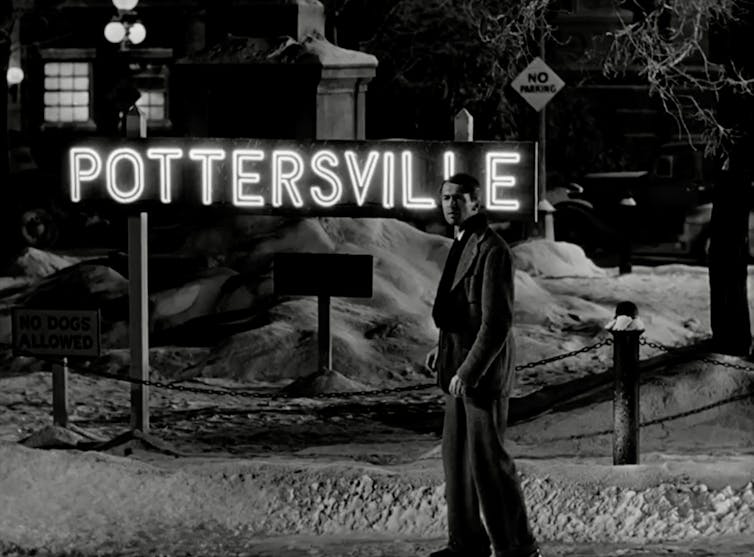
But when I watch it this year, the sequence where Bedford Falls transforms into the dark and dystopian “Pottersville” will resonate the most.

In the film, protagonist George Bailey, who’s played by Jimmy Stewart, is on the brink of suicide. He seems to have achieved the hallmarks of the American dream: He’s taken over his father’s loan business, married the love of his life and fathered four excessively adorable children. But George feels stifled and beaten down. His Uncle Billy has misplaced US$8,000 of the company’s money, and the town’s resident tyrant, Mr. Potter, is using the mishap to try to ruin George, who’s his last remaining business competitor.

An angel named Clarence is tasked with pulling George back from the brink. To stop him from attempting suicide, Clarence decides to show George what life would have been like if he’d never been born. In this alternate reality, Bedford Falls is called Pottersville, a place Mr. Potter runs as a ruthless banker and slumlord.

Movie still of young man walking through a dark, snowy town and passing by a bright sign reading 'Pottersville.'
Pottersville, the dark, dystopian version of Bedford Falls, is a place characterized by vice and moral decay.
Paramount

Having previously written about “It’s a Wonderful Life” in my book on literary and film censorship, I can’t help but see parallels between Pottersville and the U.S. today.

Think about it:

In Pottersville, one man hoards all the financial profits and political power.

In Pottersville, greed, corruption and cynicism reign supreme.

In Pottersville, hard-working immigrants like Giuseppe Martini who were able to build a life and run a business in Bedford Falls have vanished.

In Pottersville, homeless addicts like Mr. Gower and nonconformist “pixies” like Clarence are scorned and ostracized, then booted out of the local watering hole.

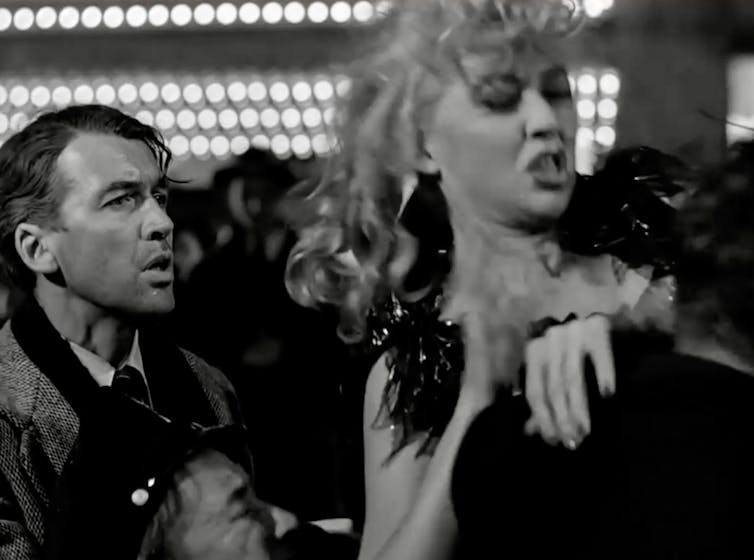
In Pottersville, cops arrest people like Violet Bick while they’re at work and haul them away, kicking and screaming.

Black-and-white movie still of a young women being dragged away by the police as a worried young man looks on.
Violet Bick gets dragged away by the Pottersville police as George looks on.
Paramount

But what horrifies George the most about Pottersville is how desensitized the people living in it seem to be to its harshness and cruelty – how they treat him like he’s the crazy, deranged one for wanting and expecting things to be different and better.

This is what the current political moment feels like to me. There are days when the latest headlines feel so jarringly unprecedented that I find myself thinking, “Can this be happening? Can this be real?”

If you think these comparisons are a bit of a stretch, consider when “It’s a Wonderful Life” was made, and the frame of mind Capra was in when he made it.

Frank Capra, anti-fascist

In 1946, Capra was just returning to Hollywood filmmaking after serving for four years in the U.S. Army, where the Office of War Information had tasked him with producing a series of documentary films about World War II and the lead-up to it. Even though Capra hadn’t been on the front lines, he’d been immersed in the sounds and images of war for years on end, and he had become acutely familiar with Germany, Italy and Japan’s respective rises to fascism.

Young man posing and smiling while wearing a military uniform.
Frank Capra served in the U.S. Army during World War II.
Keystone/Hulton Archive via Getty Images

When deciding on his first postwar film, Capra recalled in his autobiography that he specifically “knew one thing – it would not be about war.” Instead, he chose to adapt a short story by Philip Van Doren Stern, “The Greatest Gift,” that Stern had originally sent to friends and family as a Christmas card in 1943.

Stern’s story is certainly not about war. But it’s not exactly about Christmas, either.

As Stern writes in his opening lines:

“The little town straggling up the hill was bright with colored Christmas lights. But George Pratt did not see them. He was leaning over the railing of the iron bridge, staring down moodily at the black water.”

The protagonist contemplates suicide because he’s “sick of everything” in the small-town “mudhole” he’s stuck in – until, that is, a “strange little man” gives him the chance to see what life would be like if he’d never been born.

It was Capra and his team of screenwriters who added the sinister Henry F. Potter to Stern’s short, simple tale. The Potter subplot encapsulates the film’s most trenchant, still-resonant themes: the unfairness of socioeconomic injustices; the pervasiveness of corporate and political corruption; the threat of monopolized power; the need for affordable housing.

These themes had, of course, run through many of Capra’s prewar films as well: “Mr. Deeds Goes to Town,” “You Can’t Take It with You”“Meet John Doe” and “Mr. Smith Goes to Washington,” the last of which also starred Jimmy Stewart.

But they take on a different kind of weight in “It’s a Wonderful Life” – a weight that’s especially visible on the weathered face of Stewart, who himself had just returned from a harrowing four-year tour of duty as a fighter pilot in Europe.

The idealistic vigor with which Stewart had fought crooked politicians and oligarchs as Mr. Smith is replaced by the bitterness, exhaustion, frustration and desperation with which he battles against Mr. Potter as George Bailey.

Black-and-white movie still of a distraught man with snow on his jacket.
George Bailey feels helpless in the face of corruption and cruelty.
Paramount

Life after Pottersville

By the time George has begged and pleaded his way out of Pottersville, the lost $8,000 is no longer top of mind. He’s mainly just relieved to find Bedford Falls as he had left it, warts and all.

And yet, the Bedford Falls that George returns to isn’t quite the same as the one he left behind.

In this Bedford Falls, the community rallies together to figure out a way to recoup George’s missing money. Their pre-digital version of a GoFundMe page saves George from what he’d feared most: bankruptcy, scandal and prison.

And even though his wife, Mary, tries to attribute this sudden wave of collectivist, activist energy to some sort of divine intervention – “George, it’s a miracle; it’s a miracle!” – Uncle Billy points out that it really came about through more earthly organizing means: “Mary did it, George; Mary did it! She told some people you were in trouble, and they scattered all over town collecting money!”

A group of smiling people dump a large basket of cash on a desk.
The residents of Bedford Falls come together to save George from financial ruin.
Paramount

But the question of whether George actually wins his battle against Potter is a murky one.

While the typical Capra protagonist triumphs by defeating vice and exposing subterfuge, George never even realizes that Potter is the one who got hold of his money and tried to ruin his life. Potter is never held accountable for his crimes.

On the other hand, George is able to learn, from his time in Pottersville, what a crucial role he plays in his community. George’s victory over Potter, then, lies not in some grand final act of retribution, but in the incremental ways he has stood up to Potter throughout his life: not capitulating to Potter’s bullying or intimidation tactics; speaking truth to power; and running a community-centered business rather than one guided by greed and exploitation.

In recent months, there have been similar acts of protest, large and small, in the form of rallies, boycotts, immigrant aid efforts, subscription cancellations, food bank donations and more.

That doesn’t mean the U.S. has made it out of Pottersville, however.

Each day, more head-spinning headlines appear, whether they’re about masked agents terrorizing immigrant communities, the dismantling of anti-corruption oversights, the consolidation of executive power or the naked display of political grift.

Zuzu’s petals are still missing. Clarence still hasn’t gotten his wings.

But this holiday season, I’m hoping it will feel helpfully cathartic to go with George Bailey, for the umpteenth time, through the dark abyss of his dystopian nightmare – and come out with him, stronger and wiser, on the other side.

The Conversation

Nora Gilbert does not work for, consult, own shares in or receive funding from any company or organization that would benefit from this article, and has disclosed no relevant affiliations beyond their academic appointment.

ref. The dystopian Pottersville in ‘It’s a Wonderful Life’ is starting to feel less like fiction – https://theconversation.com/the-dystopian-pottersville-in-its-a-wonderful-life-is-starting-to-feel-less-like-fiction-270759

Hanukkah celebrates both an ancient military victory and a miracle of light – modern Jews can pick from either tradition

Source: The Conversation – USA (3) – By Joshua Shanes, Emanuel Ringelblum Professor in Jewish History, University of California, Davis

The main ritual of Hanukkah is the lighting of the menorah. skynesher/ E+ via Getty Images

Friends and family will come together to celebrate, share gifts and eat traditional foods as the eight-day Jewish festival of Hanukkah begins on Dec. 14, 2025.

Hanukkah commemorates the rededication of the Second Temple in Jerusalem, the center of ancient Judean worship, in 164 B.C.E. It had been defiled by the Seleucid king Antiochus IV Epiphanes and was recaptured by Judean forces. Judean culture had been transformed by Greek influence for centuries, but Antiochus attempted to quash Judean religious distinctiveness altogether. This led to a rebellion by the Hasmonean family, known also as the Maccabees. They established a dynasty that lasted until the conquest by Rome in 63 B.C.E.

The story is preserved in the Books of the Maccabees, written during the second and first centuries B.C.E. Some Christians consider the texts part of the Bible, though Jews today do not. The first rabbis working 2,000 years ago left it out of the Jewish Bible.

As a scholar of modern Jewish religion and politics, I have always been fascinated by the ways in which modern Jews pick and choose from the well of tradition to construct a form of Jewishness they feel is authentic.

Hanukkah serves as a prime example of this process.

What does the holiday celebrate?

The eight-day holiday has two traditional components. On the one hand, its liturgy gives thanks to God for the military victory. This reflects the original pre-rabbinic core of the holiday, which was declared by the new Hasmonean dynasty to celebrate its triumph.

The primary ritual of the holiday, however, is the lighting of the Hanukkah menorah. It celebrates the legend of a single flask of pure oil found in the Temple that was sufficient for just one day, but miraculously burned for eight.

A black-and-white sketch depicts several soldiers destroying statues and other things, while others with stern expressions stand alongside them.
A sketch illustrating Judas Maccabeus’ orders to priests to cleanse the temple sanctuary.
Sepia Times/Universal Images Group via Getty Images

The earliest version of this story appears in the Talmud – the main collection of rabbinic laws and commentary – some 500 years after the story occurred. The founders of Rabbinic Judaism – the Judaism of the past 2,000 years – were apparently uncomfortable with its military message and reshaped the holiday to give it new meaning.

In the words of historian Malka Simkovich, “Instead of glorying military prowess, the holiday instead glorifies the unconditional and miraculous divine light that Jews can depend on, even in the gloomiest of darkness.” This reflects Rabbinic Judaism’s tendency to reread biblical and other texts about land and power as metaphors for spiritual growth and faith.

Though popular today, Hanukkah is traditionally a minor holiday on which work is permitted. Over time, it developed into a celebration emphasizing family and children, games and gifts and special foods.

Modernity brings new meanings

In the 19th century, this shared meaning of the holiday changed. In America and parts of Europe, Jews experienced emancipation and economic mobilization and sought ways to integrate into their local national communities.

As Jews became more integrated into wider society, Hanukkah served as an opportunity to celebrate at a time of year when their Christian neighbors were doing the same. They continued to celebrate the holiday in its rabbinic, spiritual meaning, however. As the pioneering European Hebrew newspaper Hamagid wrote in 1857: “More than we recall the physical valor of the Maccabees, we understand the war as a struggle for spiritual deliverance from Greek culture.”

Then came Zionism, the Jewish nationalist movement born in the 1880s in Europe, that defined Jews as a modern nation rather than just a religion. It hoped one day to establish a home in Palestine, the site of the ancient Israelite kingdoms. They used Jewish traditions, especially pre-rabbinic biblical traditions about Jews living in that land, to prove the validity of their worldview.

Zionists quickly adopted Hanukkah as their most important holiday. They did this for a variety of reasons, but most important was its easy reformulation into a secular nationalist festival.

Zionism remakes Hanukkah

Hanukkah was not merely repackaged by Zionists in Europe; it was totally transformed from a relatively minor holiday into the central annual celebration of the movement.

Moreover, while the miracle of the oil defined traditional celebrations, it was specifically the military victory that defined Zionist ones. For the fledgling nationalist movement, the ancient story gave a historical example of Jewish heroes who successfully fought to expel foreign invaders from their homeland.

They exemplified the “new Jew,” the “Jew of muscle” that their leaders promoted, in contrast to the European stereotype of Jews as weak or bookish.

The role of God and even the Temple was limited; the story was refocused on the nation and its military struggle for freedom and independence. Hanukkah offered weapons, heroes and victories, writes historian Francois Guesnet: “It was an occasion to confront the glorious past with the needs of the contemporary national re-awakening.”

At the same time, Zionist Hanukkah celebrations also connected the movement to Jewish religious observance, thereby appealing to traditional groups without alienating its secular core. After all, Hanukkah was a traditional Jewish celebration, and since work is allowed, they were not violating any ritual laws with their events.

Orthodox leaders did not buy it.

In Sanz, for example – a city today in Poland – the Zionists’ first Hanukkah celebration in 1900 raised a storm of protest by local Hasidic leaders. They accused the Zionists of desanctifying the holiday and defiling the Hanukkah miracle. They even complained that the Zionists defiled the Star of David by using it in their signage and directed that the emblem be torn off the Holy Ark in the synagogue.

Over time, the Zionists’ version of Hanukkah largely won, especially in Israel. Zionists brought these values into the new Jewish state that they succeeded in creating in 1948. But it has also been embraced by many Jews in the diaspora.

Other meanings persist

The rabbinic tradition has not disappeared. There are still ultra-Orthodox Jews who reject the Zionist return to pre-rabbinic traditions of the Book of Maccabees, for example. There are also many liberal Jews, especially young Jews, who reject the infusion of Zionism into their Jewish identity.

These numbers have grown in recent years due to Israel’s actions in the Gaza Strip and the West Bank.

The Book of Maccabees describes the battle against Antiochus being preceded by a battle against Jews who sided with him. As a result, it has become almost an annual tradition for Jews to accuse each other of representing that traitorous group and to claim that one’s own camp represents the true Jews.

A man and a woman dressed in black bending down while lighting candles placed inside a glass box mounted on a wall.
An ultra-Orthodox Jewish man and woman light candles on the second night of Hanukkah, in the Mea Shearim neighborhood of Jerusalem, on Dec. 13, 2017.
Menahem Kahana/AFP via Getty Images

Some Jews will write editorials and social media posts about how Hanukkah “proves” that Zionism is the authentic interpretation of Jewish tradition. Some even question why non-Zionist or anti-Zionist Jews bother lighting candles. Their opponents respond with articles about Hanukkah’s history as a rabbinic holiday and how it has been reinterpreted since the start of the Zionist movement.

Each argues that their own interpretation is the correct one.

In truth, Judaism is constantly being made and remade. Is Hanukkah’s “real” meaning the Zionist return to pre-rabbinic sources? Or is it the rabbinic spiritualization of the holiday and its metaphor of bringing light into darkness? There is no clear answer.

In other words, both sides have sources to support their interpretation. Zionists can draw on the military imagery featured in the First Book of Maccabees and other sources. For those who prefer the holiday as presented by the rabbis who founded Rabbinic Judaism 2,000 years ago, there is an equal wealth of material, including in the prayers recited in synagogues.

The rabbis assigned a special reading from the later biblical books for each Sabbath and holiday. Their choice for the Sabbath of Hanukkah – Zechariah 2:14-4:7 – is revealing: “This is the word of the Lord to Zerubbabel, saying: ‘Not by military might and not by physical power, but by My spirit,’ says the Lord of Hosts.”

The Conversation

Joshua Shanes does not work for, consult, own shares in or receive funding from any company or organization that would benefit from this article, and has disclosed no relevant affiliations beyond their academic appointment.

ref. Hanukkah celebrates both an ancient military victory and a miracle of light – modern Jews can pick from either tradition – https://theconversation.com/hanukkah-celebrates-both-an-ancient-military-victory-and-a-miracle-of-light-modern-jews-can-pick-from-either-tradition-271624

What’s the safest way to walk home at night? We’ve created an AI-powered app that shows you

Source: The Conversation – UK – By Ilya Ilyankou, PhD candidate at SpaceTimeLab, UCL

Night-time view of Derry city centre in Northern Ireland, where the Safest Way app is promoted in pubs to advise on safer walking routes. Irina WS/Shutterstock

In the historic walled city of Derry (also known as Londonderry) in Northern Ireland, the night-time economy is vibrant. But like many urban centres, it presents safety challenges for those trying to get home. At night, a volunteer group known as the Inner City Assistance Team (iCat) often patrols the streets, intervening when people feel vulnerable – whether due to intoxication, a mental health issue, or simply being alone in unlit or unfamiliar areas.

Recently in the city, iCat introduced Safest Way, a pedestrian navigation app I co-developed during my PhD research at UCL. The app employs AI technology to show users not just faster but safer routes when walking to and from a destination – for example, the safest way home after a night out.

The necessity for such interventions is rooted in a stark disparity in how urban safety is experienced by women and men.

Research by the Office for National Statistics in 2022 found that 82% of women feel unsafe walking alone in parks or open spaces after dark, compared with 42% of men. And 63% of women actively avoid travelling alone when it is dark, against 34% of men.

A survey by Plan International UK in 2024 found that nearly three-quarters of girls and young women (ages 14-21) sometimes choose longer routes home to avoid potential danger, and almost two-thirds take taxis home at least once a month because of the risks associated with public transport or walking.

Such fears are a direct response to the built environment, with research showing that factors such as street lighting and conditions of pavements are key aspects of how safe women feel . Lighting is often the deciding factor: 60% of women who feel unsafe walking to and from public transport cite poor lighting as the primary reason.

Woman walking along a street at night.
The vast majority of women say they feel unsafe walking alone after dark.
Haru Photography/Shutterstock

Bridging the data gap

For decades, urban walkers have been treated like vehicles, with mapping tools optimising routes for a single metric – travel time – while treating a dark alley and a high street as identical, if the distance is the same. The question of feeling safe has been largely overlooked by this technology.

Part of the reason for this has been a lack of unified data. While local authorities and police forces collect vast amounts of information regarding street lighting, CCTV locations and crime incidents, this data is typically fragmented, incompatible or locked in static PDFs.

To bridge this gap, my team and I developed a data pipeline to aggregate these and other sources. In London, this required issuing dozens of freedom of information requests to borough councils to obtain precise geospatial data on over half a million street lights and thousands of public CCTV cameras. Our lighting map was awarded first prize in the 2025 UCL data visualisation competition.

We then combined this information with official police crime datasets, urban features such as the location of parks, industrial areas and run-down buildings, plus open-source Mapillary and OpenStreetMap data to “safety score” individual street segments.

Even then, objective data is only half the picture. Perceived safety – how safe a street feels to someone walking it – is critical to the route choices they make. To model this at scale, we turned to Artificial Intelligence: specifically, OpenAI’s vision-language model Clip (Contrastive Language-Image Pre-Training).

Unlike traditional computer vision that detects discrete objects such as street lamps, Clip (and similar vision-language models) encodes the semantic meaning of an entire scene – converting both visual data and user-provided text prompts into mathematical vectors.

Classifying subjective viewpoints such as “feels safe” or “quite risky” is an ongoing area of research. But in our 2025 study, we found a high correlation between the way AI and our human testers perceived safety, based on 500 photographs of London street segments.

While we now hope to scale this approach to modelling urban safety to millions of streets in the UK and beyond, we are realistic about the limitations. Past crime and urban design data can inform safer choices, but they cannot predict individual incidents. Our model is designed to support decision-making not guarantee safety, and it should sit alongside wider efforts by venues, councils and police to make night-time streets safer.

Derry’s early adoption

Since launching its beta version, the Safest Way app has been adopted by approximately 1,000 users, primarily in London and Derry, where most of the safety infrastructure is fully mapped.

Coordinating the Derry launch from afar was a challenge. A Safest Way team member visited the city early in 2025 to learn about the city’s complex political landscape firsthand. But the pilot’s success was made possible largely thanks to our partners, iCat.

The volunteer group’s co-founder, Stephen Henry, told the Irish News that the idea to bring the app to the city had come about following some attacks on women there in 2024.

The group now distributes beer mats with Safest Way logos and QR codes in local pubs. “We encourage staff to download the app too,” Henry points out, “as they often don’t leave the premises until 3am or later”.

Having recently showcased our technology at the Prototypes for Humanity conference in Dubai, we are now scaling the app’s data coverage – from street lighting to AI-modelled perception of safety – to cover all of England and then the rest of the UK. We aim to close the information gap that currently forces vulnerable groups to pay a safety tax.

In Derry, the technology already provides a digital layer of protection that complements the physical presence of volunteers. By including this tech in their vulnerability training for security staff and using it during their patrols, iCat is moving beyond reactive assistance to proactive risk reduction.

This article was commissioned in conjunction with Prototypes for Humanity, a global initiative that showcases and accelerates academic innovation to solve social and environmental challenges. The Conversation is the media partner of Prototypes for Humanity 2025.

The Conversation

Ilya Ilyankou receives PhD funding from the UKRI’s Engineering and Physical Sciences Research Council and Ordnance Survey. He is a co-founder and chief technology officer of Safest Way, a startup supported by the Ordnance Survey’s Geovation accelerator programme. This article was commissioned in conjunction with Prototypes for Humanity, a global initiative that showcases and accelerates academic innovation to solve social and environmental challenges. The Conversation is the media partner of Prototypes for Humanity 2025.

ref. What’s the safest way to walk home at night? We’ve created an AI-powered app that shows you – https://theconversation.com/whats-the-safest-way-to-walk-home-at-night-weve-created-an-ai-powered-app-that-shows-you-271710

AI’s errors may be impossible to eliminate – what that means for its use in health care

Source: The Conversation – USA – By Carlos Gershenson, Professor of Innovation, Binghamton University, State University of New York

Federal legislation introduced in early 2025 proposed allowing AI to prescribe medication. Wladimir Bulgar/Science Photo Library via Getty Images

In the past decade, AI’s success has led to uncurbed enthusiasm and bold claims – even though users frequently experience errors that AI makes. An AI-powered digital assistant can misunderstand someone’s speech in embarrassing ways, a chatbot could hallucinate facts, or, as I experienced, an AI-based navigation tool might even guide drivers through a corn field – all without registering the errors.

People tolerate these mistakes because the technology makes certain tasks more efficient. Increasingly, however, proponents are advocating the use of AI – sometimes with limited human supervision – in fields where mistakes have high cost, such as health care. For example, a bill introduced in the U.S. House of Representatives in early 2025 would allow AI systems to prescribe medications autonomously. Health researchers as well as lawmakers since then have debated whether such prescribing would be feasible or advisable.

How exactly such prescribing would work if this or similar legislation passes remains to be seen. But it raises the stakes for how many errors AI developers can allow their tools to make and what the consequences would be if those tools led to negative outcomes – even patient deaths.

As a researcher studying complex systems, I investigate how different components of a system interact to produce unpredictable outcomes. Part of my work focuses on exploring the limits of science – and, more specifically, of AI.

Over the past 25 years I have worked on projects including traffic light coordination, improving bureaucracies and tax evasion detection. Even when these systems can be highly effective, they are never perfect.

For AI in particular, errors might be an inescapable consequence of how the systems work. My lab’s research suggests that particular properties of the data used to train AI models play a role. This is unlikely to change, regardless of how much time, effort and funding researchers direct at improving AI models.

Nobody – and nothing, not even AI – is perfect

As Alan Turing, considered the father of computer science, once said: “If a machine is expected to be infallible, it cannot also be intelligent.” This is because learning is an essential part of intelligence, and people usually learn from mistakes. I see this tug-of-war between intelligence and infallibility at play in my research.

In a study published in July 2025, my colleagues and I showed that perfectly organizing certain datasets into clear categories may be impossible. In other words, there may be a minimum amount of errors that a given dataset produces, simply because of the fact that elements of many categories overlap. For some datasets – the core underpinning of many AI systems – AI will not perform better than chance.

A portrait of seven dogs of different breeds.
Features of different dog breeds may overlap, making it hard for some AI models to differentiate them.
MirasWonderland/iStock via Getty Images Plus

For example, a model trained on a dataset of millions of dogs that logs only their age, weight and height will probably distinguish Chihuahuas from Great Danes with perfect accuracy. But it may make mistakes in telling apart an Alaskan malamute and a Doberman pinscher, since different individuals of different species might fall within the same age, weight and height ranges.

This categorizing is called classifiability, and my students and I started studying it in 2021. Using data from more than half a million students who attended the Universidad Nacional Autónoma de México between 2008 and 2020, we wanted to solve a seemingly simple problem. Could we use an AI algorithm to predict which students would finish their university degrees on time – that is, within three, four or five years of starting their studies, depending on the major?

We tested several popular algorithms that are used for classification in AI and also developed our own. No algorithm was perfect; the best ones − even one we developed specifically for this task − achieved an accuracy rate of about 80%, meaning that at least 1 in 5 students were misclassified. We realized that many students were identical in terms of grades, age, gender, socioeconomic status and other features – yet some would finish on time, and some would not. Under these circumstances, no algorithm would be able to make perfect predictions.

You might think that more data would improve predictability, but this usually comes with diminishing returns. This means that, for example, for each increase in accuracy of 1%, you might need 100 times the data. Thus, we would never have enough students to significantly improve our model’s performance.

Additionally, many unpredictable turns in lives of students and their families – unemployment, death, pregnancy – might occur after their first year at university, likely affecting whether they finish on time. So even with an infinite number of students, our predictions would still give errors.

The limits of prediction

To put it more generally, what limits prediction is complexity. The word complexity comes from the Latin plexus, which means intertwined. The components that make up a complex system are intertwined, and it’s the interactions between them that determine what happens to them and how they behave.

Thus, studying elements of the system in isolation would probably yield misleading insights about them – as well as about the system as a whole.

Take, for example, a car traveling in a city. Knowing the speed at which it drives, it’s theoretically possible to predict where it will end up at a particular time. But in real traffic, its speed will depend on interactions with other vehicles on the road. Since the details of these interactions emerge in the moment and cannot be known in advance, precisely predicting what happens to the the car is possible only a few minutes into the future.

AI is already playing an enormous role in health care.

Not with my health

These same principles apply to prescribing medications. Different conditions and diseases can have the same symptoms, and people with the same condition or disease may exhibit different symptoms. For example, fever can be caused by a respiratory illness or a digestive one. And a cold might cause cough, but not always.

This means that health care datasets have significant overlaps that would prevent AI from being error-free.

Certainly, humans also make errors. But when AI misdiagnoses a patient, as it surely will, the situation falls into a legal limbo. It’s not clear who or what would be responsible if a patient were hurt. Pharmaceutical companies? Software developers? Insurance agencies? Pharmacies?

In many contexts, neither humans nor machines are the best option for a given task. “Centaurs,” or “hybrid intelligence” – that is, a combination of humans and machines – tend to be better than each on their own. A doctor could certainly use AI to decide potential drugs to use for different patients, depending on their medical history, physiological details and genetic makeup. Researchers are already exploring this approach in precision medicine.

But common sense and the precautionary principle
suggest that it is too early for AI to prescribe drugs without human oversight. And the fact that mistakes may be baked into the technology could mean that where human health is at stake, human supervision will always be necessary.

The Conversation

Carlos Gershenson does not work for, consult, own shares in or receive funding from any company or organization that would benefit from this article, and has disclosed no relevant affiliations beyond their academic appointment.

ref. AI’s errors may be impossible to eliminate – what that means for its use in health care – https://theconversation.com/ais-errors-may-be-impossible-to-eliminate-what-that-means-for-its-use-in-health-care-251036

AI-generated political videos are more about memes and money than persuading and deceiving

Source: The Conversation – USA – By Lisa Fazio, Associate Professor of Psychology, Vanderbilt University

Politicians are posting AI-generated videos of themselves and their opponents. Screenshots by The Conversation

Zohran Mamdani as a creepy trick-or-treater, Gavin Newsom body-slamming Donald Trump and Hakeem Jeffries in a sombrero. This is not the setup to an elaborate joke. Instead, these are all examples of recent AI-generated political videos. New easy-to-use tools – and acceptance of those tools by politicians – means that these fake videos are quickly becoming commonplace in American politics.

Perhaps the most interesting thing about many of the videos is how clearly fake they are. Rather than trying to deceive the viewer into thinking a depicted event actually happened, the videos serve a different purpose. President Trump didn’t post a video of himself wearing a crown in a fighter jet dumping feces on a group of protesters because he wanted people to believe that the flight actually happened. He likely did it to express his feelings about the protest and to create an in-joke with his followers.

Fears about the political implications of AI-generated videos have been around since the term deepfakes was coined in 2017. Steady improvements in the technology mean that distinguishing real from fake could become a significant threat. But today’s use of AI imagery is largely about making memes and making money – in other words, typical social media content.

Getting a rise out of people

Internet platforms use algorithms designed to keep people engaged, and that typically means promoting content that stirs emotions. AI-generated political videos often provoke an emotional response – amusement or outrage.

People are more likely to share information when it is emotionally arousing. For example, people are more likely to pass along urban legends that elicit feelings of disgust, and news articles that are emotionally charged are more likely to make the New York Times list of most emailed articles. Similar patterns occur online, where emotional content is much more likely to go viral than nonemotional content.

In addition, strong emotions can interfere with people’s ability to detect false information. People are worse at distinguishing between true and false political news headlines when they are experiencing stronger emotions – for instance, enthusiasm, excitement or fear. Thus, emotionally appealing AI-generated videos are both more likely to spread and reduce people’s ability to judge whether they are real or fake.

Online politics

Creating and sharing AI videos is also a powerful way for people to demonstrate their allegiances and show their political identities. “I am a Trump supporter, so I post AI videos of ICE detainees crying to own the libs” or “I am a Democrat and so I share Governor Newsom’s AI-video of JD Vance talking about couches to show that I’m in on the joke.”

What’s new in recent months is that campaigns and politicians are using AI-created videos, not just their supporters. An analysis from The New York Times showed that Trump commonly uses AI imagery to “attack enemies and rouse supporters”.

These new tools also allow for active participation in the political process. Rather than simply watching politicians and voting, citizens can play an active role in shaping the conversation between elections.

Information and technology researcher Kate Starbird has written about similar dynamics in the ways that everyday Americans found “evidence” for voter fraud in the 2020 election. Politicians told the public that voter fraud was going to occur, and then when voters saw things that they did not understand when voting, such as the use of Sharpie pens to mark ballots, they interpreted that action as evidence of voter fraud. Politicians then circulated that evidence online to support the false narrative.

New AI tools make this cycle of participatory disinformation even simpler. Instead of reinterpreting actual events as evidence for a false claim, people can easily generate that evidence themselves.

AI video at volume

AI video creation tools make it incredibly easy for people to churn out hundreds of videos, post them online and simply see what content becomes popular and goes viral. In fact, that’s exactly what seems to have happened with recent AI-generated videos of raids by Immigration and Customs Enforcement. According to an investigation by 404 media, Facebook user “USA Journey 897” used to post a variety of real videos of police activity as well as absurd AI videos of people carrying whales and riding tigers.

However, after the release of a new version of OpenAI’s Sora video generator on Sept. 30, 2025, the account switched entirely to posting multiple fake videos of deportations every day. Most of the videos accumulated hundreds of thousands of views, and one fake video of a Walmart employee being detained had over 4 million views.

Typically these accounts are hosted overseas and exist to earn money through creator incentive programs. These incentives create an environment where social media no longer informs people about the world, but instead serves as a fun-house mirror, presenting back to us the world that we want to see – or at least the version of the world that will capture our attention and outrage.

AI-generated political ads are stretching ethical boundaries.

Flowing into the internet

It’s not always easy for people to detect which videos are real and which are AI-generated. A recent audit by the publication Indicator found that platforms regularly fail to properly label AI content. Researchers posted over 500 AI-generated images and videos across Instagram, LinkedIn, Pinterest, TikTok and YouTube. Less than one-third were properly labeled as AI-generated, and even posts generated by the platform’s own AI tools were often missed.

For years, the great fear concerning political deepfakes was that they were going to fool people into believing something happened that didn’t. They still might, but at the moment, AI-generated political videos are a mix of entertainment and memes, legitimate attempts at persuasion, and ways of capturing attention for money.

In other words, they are now just like the rest of the internet. Most of what we see and share is meant to entertain, some is meant to inform and persuade, and a great deal exists solely to monetize our attention.

The Conversation

Lisa Fazio does not work for, consult, own shares in or receive funding from any company or organization that would benefit from this article, and has disclosed no relevant affiliations beyond their academic appointment.

ref. AI-generated political videos are more about memes and money than persuading and deceiving – https://theconversation.com/ai-generated-political-videos-are-more-about-memes-and-money-than-persuading-and-deceiving-268977

The Ivies can weather the Trump administration’s research cuts – it’s the nation’s public universities that have the most to lose

Source: The Conversation – USA (2) – By Todd L. Pittinsky, Professor of Technology and Society, Stony Brook University (The State University of New York)

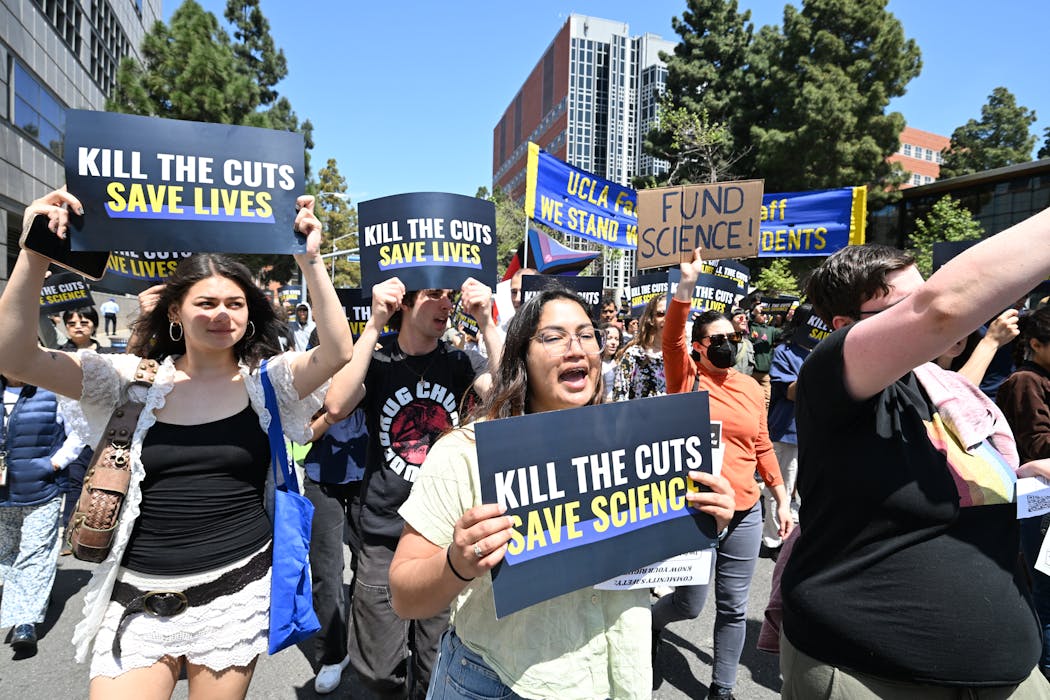
UCLA students and researchers protest the Trump administration’s funding cuts for research, health and higher education in April 2025. Robyn Beck/AFP via Getty Images

Most of the media coverage of the federal government’s recent cuts in federal research money for universities has focused on its effects on a handful of elite Ivy League universities, such as Harvard, Columbia and Cornell.

“When you take money away from a Columbia or a Harvard or other institutions, you’ve just taken away funds from the best researchers,” Toby Smith, the senior vice president for government relations at the Association of American Universities, told CNN in April 2025.

But these schools account for only a small fraction of the nation’s scientific output that federal research money helps generate.

In my view, too many policy discussions and debates obsess over what happens on the campuses of elite colleges. Meanwhile, public universities quietly power the nation’s research engine.

The Ivies do play a critical role in advanced research. But the nation’s public universities make up the backbone of U.S. innovation – research powerhouses such as the University of Michigan, the University of Texas at Austin, Georgia Institute of Technology and Stony Brook University, where I teach.

These places train the overwhelming majority of science, technology, engineering and mathematics graduates for the U.S. workforce and run the lion’s share of federally funded science and engineering research.

Slashing research and development

U.S. colleges and universities spend more than US$108.8 billion annually on research and development, of which about 55% – roughly $60 billion – comes from federal funding via agencies such as the National Institutes of Health and the National Science Foundation. Together, the country’s eight Ivy League schools received approximately $4.6 billion of federal university research and development funding in 2023 – or 7.8% of all federal research and development funding allocated to academia.

In 2023, meanwhile, the University of Washington, Georgia Institute of Technology, the University of California, San Diego, and the University of Michigan, Ann Arbor, each received over $1 billion in federal research funds.

The Trump administration’s federal research and development funding cuts are largely tied to what are called “indirect costs.”

Direct costs fund researcher salaries and lab supplies. Indirect costs support the infrastructure that makes research possible and compliant with federal guidelines: lighting, heating and cooling for labs; high-speed data networks; security; and administrative staff who handle payroll and ensure adherence to federal safety and ethics standards.

In 2025, the Trump administration decided to cap indirect costs for grants awarded by the National Institutes of Health and the National Science Foundation at 15% of the total grant. Traditionally, universities have negotiated their own rates based on documented overhead expenses, with many institutions citing indirect cost rates between 50% and 70%.

Many aspects of the 15% cap have been paused as they’re being challenged in court. Should these cuts go through, it would be incredibly disruptive for universities that have counted on this funding.

However, outside of the battle over indirect costs, many research projects simply lost funding or experienced major delays. Over the past year, thousands of grants have been frozen, terminated or left unfunded.

Ivy League institutions are much better equipped to weather the storm.

In 2021, Forbes reported that the collective endowment of the eight Ivies was approximately $192.6 billion – led by Harvard’s $53.2 billion and Yale’s $42.3 billion. Supporters of Trump’s funding cuts have argued that this immense, tax-exempt financial arsenal could significantly subsidize their overhead costs, rather than relying on taxpayers to do so. While endowments don’t serve as a blank check, schools can still pull from them in times of need.

In contrast, public universities are far more dependent on federal funds to sustain labs, staff and graduate programs. In 2021, the entire Texas public university system – the University of Texas at Austin, Texas A&M, the University of Houston, the University of Texas at Dallas and Texas Tech – held an endowment of around $40 billion, more than $10 billion less than Harvard’s.

Public schools are the training ground

This isn’t to argue that the Ivies should have their research funding cut, while public universities ought to be spared. It’s to shift the focus of the conversation to who stands to lose the most: the public universities that educate the vast majority of the U.S.’s future scientists and fuel most of the nation’s scientific output.

The Ivy League’s geographic reach is extremely concentrated, situated across just seven states, all in the Northeast. Public four-year institutions are located in all 50 states and draw from a much more economically and racially diverse population. They award the vast majority of engineering degrees in the U.S., with more than 144,701 given out in 2023, or more than 70% of the nation’s total.

Purdue University awarded 3,827 engineering degrees that year, with Texas A&M conferring 3,704. By contrast, Cornell University granted just 820 engineering degrees – the most among the Ivies, but just 25th nationally.

Elite schools, including the Ivies, have increasingly steered graduates into finance, law or consulting. Just 2.72% of Yale’s 2024 graduating class was employed as engineers six months after graduation. Meanwhile, public universities serve as the top feeder schools for major defense and aerospace firms.

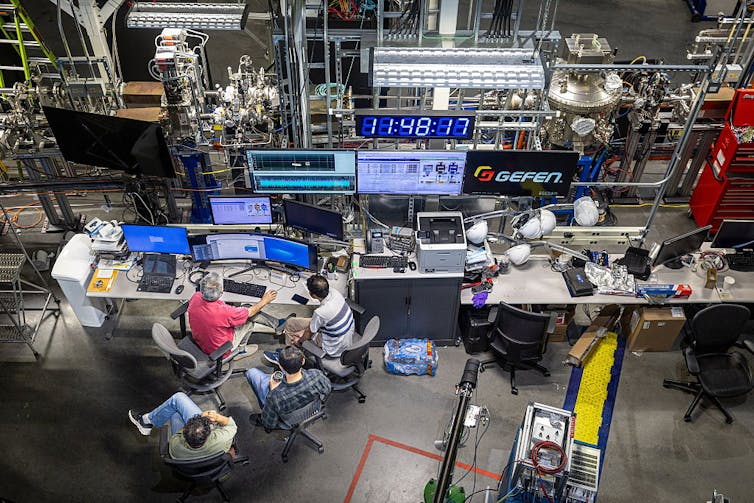
Stony Brook University’s College of Engineering and Applied Sciences enrolled over 5,600 students in fall 2024, making it one of the top producers of engineering talent in New York. The university manages the Department of Energy’s Brookhaven National Laboratory, which uses advanced tools such as particle colliders to make discoveries in physics, energy, materials and biology. It’s one of a handful of universities that directly operate a national lab.

A bird's-eye view of a group of scientists surrounded by an array of electronic equipment.
The U.S. Department of Energy’s Brookhaven National Laboratory in Brookhaven, N.Y., is managed by Stony Brook University.
J. Conrad Williams Jr./Newsday RM via Getty Images

Collateral damage

The Trump administration has argued that federal research funding cuts are necessary because too many dollars have been allocated for social policy goals, whether it’s $349,985 to train engineers to “enable engineering for social justice” or $600,000 to teach aerospace engineering students “critical consciousness and sensitivity to injustices within social systems.”

While federal law bars the Department of Education from influencing curriculum, the National Science Foundation faces no such constraint. Too much funding, it claimed, went to research that strayed from the federal agencies’ core scientific mandates and crowded out the kind of critical research that underpins U.S. innovation.

While I think fiscal responsibility and mission creep merit attention, cuts that are too dramatic and too indiscriminate risk gutting the high-impact research that is essential to national security and technological leadership, much of which takes place at public institutions. Fields from supercomputing and wireless communications to biothreat countermeasures and health sciences will and have felt the pain of widespread cuts.

A graduate wearing a black cap decorated with the phrase 'Truss Me I'm an Engineer.'
An engineering graduate celebrates during the 73rd commencement ceremony for California State University, Long Beach, in 2022.
Brittany Murray/MediaNews Group/Long Beach Press-Telegram via Getty Images

Federal research funding is not merely academic spending. It is an important national investment that directly fuels local and national economic growth. It supports high-wage jobs and “innovation districts” centered on university and federal laboratories.

The future of scientific research funding isn’t a debate over how much government help the privileged Ivies ought to receive.

It’s a question of whether public universities will be given the resources to nurture the next generation of scientists, drive bold discoveries and keep America at the forefront of scientific innovation for generations to come.

The Conversation

Todd L. Pittinsky is a Professor of Technology, AI & Society in the College of Engineering and Appled Sciences at Stony Brook University (SUNY).

ref. The Ivies can weather the Trump administration’s research cuts – it’s the nation’s public universities that have the most to lose – https://theconversation.com/the-ivies-can-weather-the-trump-administrations-research-cuts-its-the-nations-public-universities-that-have-the-most-to-lose-267197

Polytechnic universities focus on practical, career-oriented skills, offering an alternative to traditional universities

Source: The Conversation – USA (2) – By Kelly Droege, Assistant Professor, University of Wisconsin-Stout

Unlike traditional research universities and private liberal arts colleges, polytechnic universities tend to offer apprenticeships and microcredentials, all geared toward giving students practical skills they can use in the workforce. iStock/Getty Images Plus

For decades, a four-year college degree was widely seen as the standard path to getting most midlevel jobs in the United States. It was the expected entry point for getting a job as a marketing specialist, project manager, IT support analyst, among other roles.

But this expectation is shifting. Many fields – including cybersecurity, health care and advanced manufacturing – are facing significant shortages in skilled workers. The gap between available skilled jobs and workers is likely to push employers to rethink what they require from job candidates over the next decade.

A major demographic shift will also play a role. Between 2024 and 2032, an estimated 18.4 million experienced workers with education beyond high school are expected to retire, according to September 2025 findings by Georgetown University’s center on education and the workforce.

Only 13.8 million younger workers with similar education levels are expected to enter the workforce during the same period, these findings show. This trend will also make it harder for employers to fill roles that traditionally require a college degree.

At the same time, 25 states over the past few years have enacted legislation and executive orders to remove college degree requirements for people applying for some public sector jobs, signaling a shift in how essential college degrees are for getting hired for some kinds of work.

These shifts underscore a broader trend: A four-year degree is no longer essential for many kinds of work.

Hiring data tells a similar story. As of January 2024, 52% of U.S. job postings on Indeed did not mention any formal education requirement, up from 48% in 2019. Job postings requiring at least a bachelor’s degree also dropped from 20.4% to 17.8% between 2018 and 2023.

As hiring expectations change – influenced in part by advances in artificial intelligence – employers may struggle to find candidates who already have the right job-specific skills.

With over 20 years of experience as professors who also train employees in industries such as manufacturing, health care and business information technologies, we believe that college degrees shouldn’t be mandatory for some jobs.

A large white, modern looking building is seen against a bright blue sky.
Florida Polytechnic University is one of several polytechnic universities in the U.S. offering a STEM and career-focused education.
John Greim/LightRocket via Getty Images

A widening gap

Nearly half of recent college graduates say they feel unprepared for entry-level work, and 56% cite a lack of job-specific skills as the biggest issue, according to a 2025 report by Cengage Group, an education and workforce training company.

Alternative pathways – apprenticeships, certifications and on-the-job training – can give workers practical skills and help employers fill crucial roles more quickly.

Employers dropping degree requirements is only one step toward this goal. We think it is also important that prospective college students and their families are aware of educational opportunities besides a traditional four-year degree.

Understanding polytechnic universities

Some people think of higher education in terms of traditional liberal arts colleges or research universities. But there are also polytechnic universities, which focus on hands-on, career-aligned learning and emphasize strong STEM and technical programs. These schools often prepare students for exactly the kinds of jobs employers struggle to fill.

There are about 10 major polytechnic universities in the U.S. Some well-known polytechnic universities are California Polytechnic State University in San Luis Obispo, California, Worcester Polytechnic Institute in Worcester, Massachusetts, and State University of New York Polytechnic Institute in Marcy and Albany, New York.

Instead of offering a wide range of liberal arts majors, polytechnic universities offer majors such as engineering, robotics, construction management and information technology.

A central feature of these schools is applied learning – hands-on labs, real-world projects and problem-solving experiences.

Polytechnic students can earn bachelor’s and master’s degrees, but they also can often get short-term certificates in fields such as human resources, instructional design, project management and digital marketing. Many programs also include apprenticeships, such as workplace training specialists.

Students can also pursue microcredentials, which involve short course sequences that build targeted skills, such as business writing or engineering mechanics. These options give students more flexible and affordable ways to learn without committing to a traditional four-year degree.

Polytechnic universities also tend to cost less than research universities and private colleges, and students can use federal financial aid or private loans to attend.

There are some limitations. Polytechnic schools generally offer fewer majors, usually within STEM fields. Their alumni networks may be smaller, and we have found that some people perceive them as less prestigious than traditional universities because they focus more on teaching than on research.

Real world relevance

In March 2025, we asked 10 online instructors at different polytechnic universities how they bring career-focused learning into their classes.

Our research, which will likely be published in 2026, shows that every instructor tried to make their courses feel relevant to real workplaces.

Some instructors used simulations in the course. Others shared examples from their own industry backgrounds with students. All agreed that students learn best when they can clearly connect their coursework to their career goals.

One of the most effective strategies is hiring instructors with deep industry experience. Their professional networks help programs stay aligned with the skills employers currently value.

Not every college wants to become a polytechnic, and not every student wants that style of education.

However, traditional universities can still learn from this model by adding more applied learning, embedding essential job skills into their programs, and partnering more closely with industry. These changes can better prepare students to succeed in the workforce.

The Conversation

Kelly Droege works for the University of Wisconsin – Stout, a polytechnic institution.

Laura Reisinger does not work for, consult, own shares in or receive funding from any company or organization that would benefit from this article, and has disclosed no relevant affiliations beyond their academic appointment.

ref. Polytechnic universities focus on practical, career-oriented skills, offering an alternative to traditional universities – https://theconversation.com/polytechnic-universities-focus-on-practical-career-oriented-skills-offering-an-alternative-to-traditional-universities-268349