How one Florida program reduced preterm births – and how it could serve as a model for other communities

Source: The Conversation – USA (3) – By Loveline Chizobam Phillips, Ph.D. Candidate, George Mason University

Preterm birth is the second-leading cause of infant deaths. Pressmaster/iStock via Getty Images Plus

One in 10 babies in the U.S. – nearly 374,000 infants – were born preterm in 2023, meaning before 37 weeks of pregnancy. More than 15% were very preterm, meaning they were born before 32 weeks. A full-term pregnancy lasts 40 weeks.

Florida’s rate is slightly higher, at about 1 in 9 babies born preterm. In an average week, 456 of the 4,257 babies born in the state will be preterm, and 75 of those will be very preterm.

According to the March of Dimes, preterm birth and low birthweight-related health complications cause 37.5% of infant deaths nationwide. This makes preterm birth the second-leading cause of infant deaths, after birth defects. Preterm babies who survive infancy are susceptible to health complications later in life, including cerebral palsy and learning disabilities.

Preterm and low-birthweight babies – those weighing less than 5.5 pounds (2,500 grams) – are far more likely to go to the neonatal intensive care unit, or NICU. Very preterm infants tend to have the longest NICU stays, averaging around 43 days.

Beyond the emotional toll this takes on a family, preterm births and their resulting health complications carry substantial financial costs. The average NICU admission in 2021 cost around US$71,000. And economists estimated the lifetime societal cost of all preterm babies born in 2016, from birth to subsequent disability care, at $25.2 billion.

We are a public policy Ph.D. student and public policy researcher focusing on health policy and population health outcomes.

Recently, we were sifting through the data on preterm and low birthweight rates in the U.S., in search of places that are doing better than average at preventing preterm births. And that is what we found in the Central Hillsborough Healthy Start program, which serves a cluster of Tampa ZIP codes with roughly 177,000 residents.

In 2008, this program published records showing 30% lower preterm and low-birthweight rates among families at highest risk. Peer-reviewed evaluations link participation in the program to substantial reductions in preterm and low-birthweight outcomes.

These remarkable improvements remained consistent through 2020.

When we looked at what this program is doing, we found a set of practices that can serve as a model for other counties in Florida and around the U.S. to lower preterm birth rates, saving money and, more importantly, lives.

Screening for risk factors

The program does early screening for risk factors of preterm birth using Florida’s Healthy Start prenatal risk screen at the pregnant person’s first prenatal visit. This screening has been proven to correctly flag a good share of higher-risk pregnancies, while avoiding many false alarms, helping scarce services reach families who need them most.

This is key, because the risk of preterm birth isn’t spread out evenly across all pregnancies. The neighborhoods that Central Hillsborough Healthy Start serves include many young, Black, unmarried, low-income families that are eligible for Medicaid. All of these factors place them at high risk for preterm birth.

Early screening allows the Healthy Start program to identify mothers at highest risk and tailor its resources to assist them.

Measuring against the rest of the state

The Florida Healthy Start prenatal risk screen is available throughout the state. Florida created Healthy Start in 1991 precisely to reduce infant deaths and low birthweight through universal prenatal and infant risk screening, community coalitions and coordinated services.

While Florida’s preterm birth rate in 2023, the most recent year for which there is data, was 10.7%, Hillsborough County tracked slightly below the U.S. average of 10.4% at about 10.2% of the county’s 16,900 births.

That difference may seem small, but it represents 85 fewer preterm babies in Hillsborough County, and at the average rate of $71,000 per NICU admission, that’s about $6 million in hospital spending avoided in a single year.

Two nurses look at an infant lying in an incubator.
Infants born preterm must remain in the NICU until their organs develop enough to keep them alive without medical support.
andresr/E+ via Getty Images

In addition, statewide, 14.8% of Black infants were born preterm in 2023, slightly higher than the 14.65% average across the U.S. In Hillsborough County in the same year, it was 13.9%.

Among pregnant women without a partner, participation reduced very preterm births by 52% and halved the rate of very low-birthweight babies – that is, babies weighing less than 3.3 pounds (1,500 grams).

Obese mothers in the program had a 61% lower chance of extremely preterm birth, which means birth before 28 weeks of pregnancy, than comparable women elsewhere in Florida. Even exposure to air pollution, a known risk factor for preterm birth, was less harmful among women in the program.

So what has Central Hillsborough Healthy Start been doing differently?

The Central Hillsborough Healthy Start model

The model used by Central Hillsborough Healthy Start is practical and straightforward.

After early screening, nurses make home visits and help coordinate patient care for mothers in the program.

Central Hillsborough Healthy Start also provides prenatal education, depression screening and programs to help pregnant mothers improve their health and decrease harmful practices such as smoking or substance abuse. These programs are critical, because obesity, diabetes, hypertension and smoking during pregnancy are significant risk factors for preterm births.

The program also helps to connect patients to resources they may need during and after pregnancy by making personal introductions to community partners such as women and infant resource specialists in women, infants and children, or WIC, clinics.

Healthy Start workers also connect patients to interconception care for healthy birth spacing between pregnancies, which can help prevent future preterm births. Studies show that more than 30% of U.S. mothers who give birth preterm conceived their baby less than 18 months after having their previous child.

The Healthy Start staff use Florida’s coordinated intake and referral approach to track referrals and follow up across partners. This is vital to helping the program’s staff see who has been contacted, which services were delivered and whether referrals took place. They can then follow up if necessary.

Stability and sustainability

Central Hillsborough Healthy Start operates through a local nonprofit, REACHUP Inc., in partnership with the University of South Florida and the Hillsborough Healthy Start Coalition.

Its funding comes primarily from the federal government through the Health Resources and Services Administration’s national Healthy Start program. The program’s current federal funding extends into 2029. But proposed changes to the federal budget threaten to eliminate this funding altogether.

The program’s budget is supplemented by local partners, including Hillsborough County, which helps sustain operations despite federal uncertainty.

Locally, the Hillsborough coalition’s portfolio includes programs that work together like one team, sharing information so families keep getting help even when one grant ends. These partnerships with local community organizations allow the program to remain stable.

A model for others

Looking at the data, we believe Central Hillsborough Healthy Start has succeeded by using the same basic approach for everyone, then customizing. Everyone gets screened early and set up with nurse visits. Then, its adds what each family needs so that support fits real life.

The Central Hillsborough story shows that health disparities are not inevitable. And this model can serve as a feasible blueprint for other communities. With early identification, consistent support and sustained investment, the outcomes for mothers and babies can improve dramatically.

Read more stories from The Conversation focused on Florida.

The Conversation

The authors do not work for, consult, own shares in or receive funding from any company or organization that would benefit from this article, and have disclosed no relevant affiliations beyond their academic appointment.

ref. How one Florida program reduced preterm births – and how it could serve as a model for other communities – https://theconversation.com/how-one-florida-program-reduced-preterm-births-and-how-it-could-serve-as-a-model-for-other-communities-268058

Why big shops are trying to sell you a glamorous Christmas

Source: The Conversation – UK – By Lorna Stevens, Senior Lecturer (Associate Professor) in Strategic Marketing, University of Bath

In the dark months of winter, the warm glow of Christmas fairy lights and flickering candles brings some welcome atmospheric respite. And that atmosphere is something many retailers try to capture as they tempt shoppers with their festive marketing campaigns.

The John Lewis Christmas advert for example, has become a seasonal staple, while rival Marks and Spencer has found success with its “Magic and Sparkle” campaign, which plays on the company’s brand name.

There are many more. Christmas is a vital period in the retail calendar, and the amount of festive advertising can seem overwhelming.

Many of those adverts will feature beautifully wrapped presents, happy faces and snowy streets. But there’s another marketing strategy which is widely employed at this time of year, and involves brands seeking to be associated with the idea of glamour.

Glamour can mean different things to different people. It’s a subjective term, with Scottish roots, and defined in the Oxford English Dictionary as something possessing “magic” and “enchantment” or “bewitching beauty and charm”. Others may associate glamour with luxury or celebrity.

For the author Nigel Thrift, glamour is an aesthetic that creates a more magical world. He notes that the appeal of sparkling surfaces, one of glamour’s most visible markers, goes far back in human history.

So glamour is a perfect match for Christmas – and a perfect tool for brands trying to enchant consumers.

The high street chain Oliver Bonas, for example, currently has a homeware range that offers “a hint of glamour and a touch of luxe” while its social media posts promote clothing with “daytime glamour”.

The fashion store Whistles hailed a recent winter collection which featured plenty of sequins and velvet as “new wave glamour”. Similarly, Mint Velvet uses the strapline “relaxed glamour” for a range of clothing which it calls “high-low dressing”.

And research I conducted with colleagues into retail branding suggests some rules that companies should follow if they want to persuade customers of their glamorous status.

First on the list is not appearing to be trying too hard. Effortless glamour – even if the lack of effort is an illusion – is a vital part of appearing glamorous. It also feeds into what we call glamour’s “affective force” – the idea that glamour is about not just visual aesthetics, but also about how it makes us feel.

We found that The White Company for example, creates a sense of transformation and escape, which is at the emotional core of glamour. To do this, the brand uses expert techniques to make their products seem more alluring, aspirational and appealing.

Its imagery is extremely subtle, benefiting from a monochromatic palate and simplicity, which creates an aura of effortlessness, but it also adds a touch of glamour which serves to elevate the brand.

Shiny things

Other brands seeking to use a glamour aesthetic should also avoid being too heavy-handed, in case their efforts start to veer towards brashness and bling. This removes the sense of mystery and intrigue that is essential for glamour to work as an affective force.

But there are certain familiar props which can help to instil some glamour into a brand. We call these glamour “markers”, and they include things like glass, mirrors, shiny surfaces and luxurious fabrics.

Sparkling light is also particularly evocative of glamour. A crystal chandelier is the most obvious example, but carefully placed candles and table lamps and the addition of sparkling elements can render an object or a setting glamorous.

Then there is the promise of transformation and escape. Aspirational scenes and settings on websites and social media can stimulate customers’ imaginations and escapist fantasies, which heightens their emotional engagement with a brand.

But it’s also important to convey a sense that the lifestyle the brand promises is accessible. By striking a careful balance between the achievable and the aspirational, customers are more likely to believe in the brand offering.

Not everyone is a believer, of course. Some may feel that the magic and sparkle of Christmas is at best illusory, and at worst an excuse for crass commercialism and excessive materialism.

Others will embrace Christmas time as a sparkling light amid the bleak midwinter. And part of that might be lifestyle brands putting on a glamorous show.

They will do their best to attract attention, feed aspirational longing and lift spirits. And ideally, they will make us believe that our lives and the lives of our loved ones can magically be enhanced and transformed – if we just buy a little of the glamour they offer.

The Conversation

Lorna Stevens does not work for, consult, own shares in or receive funding from any company or organisation that would benefit from this article, and has disclosed no relevant affiliations beyond their academic appointment.

ref. Why big shops are trying to sell you a glamorous Christmas – https://theconversation.com/why-big-shops-are-trying-to-sell-you-a-glamorous-christmas-270316

Why teenagers won’t quit vaping, even when the risks are clear – a psychologist explains

Source: The Conversation – UK – By Andy Levy, Reader in Psychology, Edge Hill University

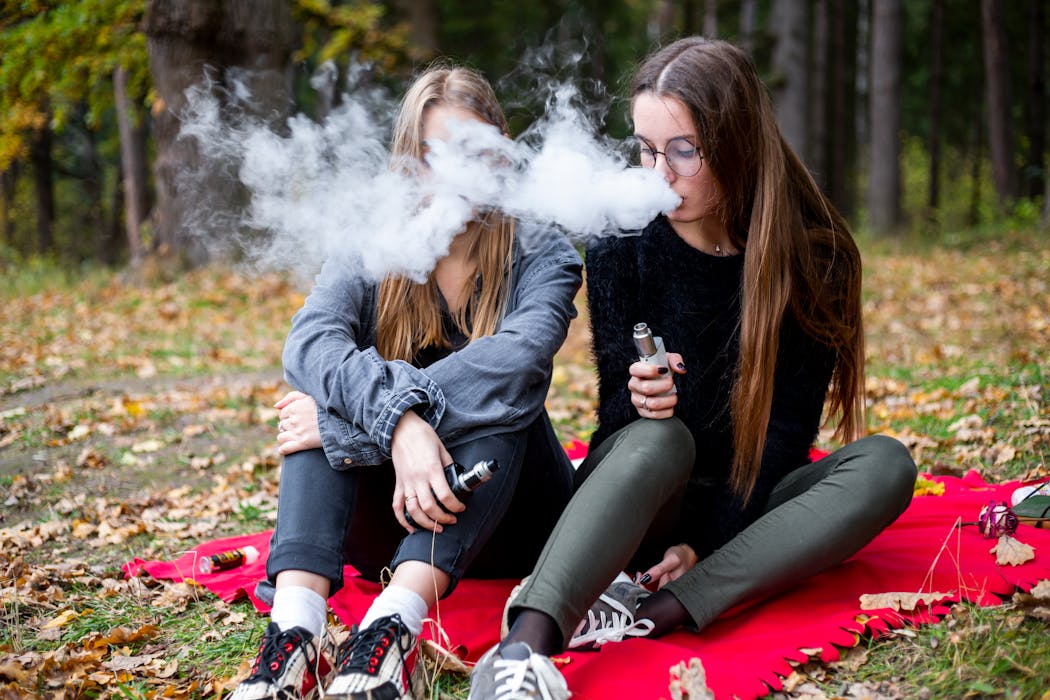
Aleksandr Yu/Shutterstock

Vaping among teenagers is a growing global health problem.

In the UK, schools are reporting a surge in young people struggling with dependence, including cases of students needing medical attention after vaping in class. In the Netherlands, researchers have found that many teenagers wake up at night specifically to vape, a sign of growing nicotine addiction in adolescents.

And in New Zealand, a widely shared image of a teenager’s blackened, shrivelled lung after three years of vaping renewed fears about the speed at which harm can develop.

These stories show how far vaping has drifted from its original purpose. Once introduced as a safer alternative to cigarettes, it is now embedded in youth culture, driven as much by social influence as by nicotine itself.

E-cigarettes have now become a lifestyle accessory: sleek, flavoured and often perceived as harmless. But behind the clouds of “strawberry ice” and “blueberry burst” vapour lies a powerful lesson in how misinformation shapes behaviour, based less on chemistry than on psychology.

Understanding why vaping feels safe, appealing and difficult to quit requires looking not only at the device but at how our minds process risk, reward and social cues.

Psychology shows that people rarely process health information in nuanced ways. Faced with complex or uncertain evidence, including emerging research on vaping, our brains reduce it to simple categories, such as safe or unsafe.

This mental shortcut helps us make quick decisions without examining every detail. When people hear that vaping is less harmful than cigarettes, many take it to mean harmless, because judging relative risk feels complicated. Brightly coloured devices, sweet flavours and wellness-focused marketing reinforce the perception that vaping is good or safe, even without long-term evidence.

This simplification helps explain why misinformation spreads easily. Once a behaviour is mentally categorised as safe or desirable, people are less likely to question it or seek contradicting evidence. Our natural tendency to think in binaries leaves complex health messages open to distortion, strengthening the influence of marketing and social cues.

Social influence then amplifies the effect. When friends, peers and influencers post vaping content online, the behaviour becomes not just visible but celebrated, making it feel socially normal and desirable. Social proof encourages experimentation and reinforces the idea that quitting would mean losing belonging, identity or enjoyment.

Social media platforms magnify these cues, circulating anecdotes, trends and endorsements. The result is one million people in England vaping despite never having smoked regularly, under the illusion of safety.

Vaping took off not only because people were misinformed, but because their brains had reasons to keep believing it was safe. Loss aversion, the tendency to feel losses more intensely than gains, explains part of this.

When vaping seems harmless, the perceived losses of quitting, such as stress relief, enjoyable flavours, social connection and identity, feel immediate and real, while the long-term risks seem distant or unlikely. People hold on to vaping not just because they underestimate the dangers, but because stopping feels like giving up something valuable.


Read more:
Two of the best stop smoking medications have been available in the UK since 2024 – so why is no one using them?


Together, these forces create a self-reinforcing cycle. Binary thinking simplifies risk, social proof builds desirability and loss aversion makes quitting feel costly. Misinformation does not just mislead. It reshapes how people think, turning a harm-reduction tool into a socially embedded, hard-to-quit habit.

The rise of vaping reveals a deeper issue in how health information spreads. In the digital age, public understanding changes faster than scientific consensus. Online trends and anecdotes often outrun the slow, careful process of research, and young people are particularly susceptible. Once misinformation takes hold, it is difficult to reverse. One in ten UK secondary school pupils currently vape, even though the NHS warns that long-term effects remain uncertain.

If misinformation helped drive the vaping boom by exaggerating its benefits, reversing the trend requires changing what people believe they stand to gain. Improving media literacy is a start, helping people spot when relatable content is actually advertising, when trends are engineered or when claims are overstated.

Public health messages also need to meet people where they are, using short, engaging content that feels native to social media. When influencers and peers highlight the real costs of vaping, such as money, energy and lung capacity, and expose the marketing behind its appeal, perceptions can shift. This taps into loss aversion by making continued vaping feel like the bigger loss.

Combining media literacy with relatable, well-targeted content can change vaping perceptions, make psychological biases work in favour of health and help people resist misleading narratives.

Ultimately, addressing the vaping boom requires understanding the minds and social environments of those caught up in it, not just the science behind the device.

The Conversation

Andy Levy does not work for, consult, own shares in or receive funding from any company or organisation that would benefit from this article, and has disclosed no relevant affiliations beyond their academic appointment.

ref. Why teenagers won’t quit vaping, even when the risks are clear – a psychologist explains – https://theconversation.com/why-teenagers-wont-quit-vaping-even-when-the-risks-are-clear-a-psychologist-explains-269476

Donald Trump’s strikes against narcoterrorists are new but the logic behind them isn’t

Source: The Conversation – UK – By Elisabeth Schweiger, Lecturer in International Politics, University of Stirling

The Trump administration’s push to label drug traffickers as “narcoterrorists” and kill them at sea has generated global outrage. But the controversy risks missing the larger story.

Experts, non-governmental organisations and the UN have condemned the strikes as unlawful assassinations and Washington’s claim that it is acting in self-defence does not appear to hold up to legal analysis.

Yet these attacks are not a dramatic break. They extend a decades-long pattern of US “targeted killings”, from Yemen to Somalia to Syria. These attacks are almost always justified through controversial legal interpretations and have often been met with muted international opposition.

There’s a chance that the current narrative doesn’t address the deeper, more meaningful criticisms of the thinking behind it.

Recent escalations by the Trump administration in targeting what the White House describe as narcoterrorists in the Caribbean have sparked significant debate. The attacks against accused drug traffickers have been extensively reported and the UN High Commissioner for Human Rights has called on the US government to halt the “extrajudicial killing of people aboard these boats, whatever the criminal conduct alleged against them”.

The Trump administration has vaguely justified the attacks through the right to self-defence in an armed conflict against narcoterrorists. But that claim has been refuted by UN experts, who have pointed out that “international law does not permit the unilateral use of force abroad to fight terrorism or drug trafficking”.

Under international law, the use of force in self-defence can only be justified if an armed attack against a state has occurred first or is imminent. For a situation to be classed as an armed conflict, certain threshold requirements need to be reached. Simply declaring that you are in an armed conflict with a group does not make it so.

Furthermore, criminals are not combatants, no matter how politically and socially problematic they may be. As such, lethal actions against them infringe upon fundamental human rights obligations – such as the right to life and the right to a fair trial.

‘War on terror’

The assaults and their justifications undoubtedly represent a troubling new development in US military practices. Yet the focus on attacks against drug criminals in the Caribbean obscures the similarities to current military operations conducted by the US against people they have designated as terrorists in the Middle East and Africa.

These have received barely any attention in public debates even though hundreds of people have recently been killed in Yemen, as well as in attacks in Syria, Iraq and Somalia.

The current campaign in the Caribbean is part of a broader pattern. For more than two decades, successive US administrations have carried out targeted killings overseas under contested definitions of what combatants are and what constitutes an armed conflict during the so-called “war on terror”.

The US-led campaign against Islamic State killed thousands of people, with civilian deaths estimated between 8,000 and 13,000 between 2014 and 2019. US airstrikes in Somalia and Yemen continue. Strikes at the port of Ras Isa and Sadaa’s remand migration detention centre a few months ago appear to have killed at least 150 civilians and injuring 200 more.

A witness, interviewed by Amnesty International described the attack on the migration centre: “They said they woke up to find dismembered bodies around them. You could see the shock and horror on their faces.”

The first attack on a so-called ‘drug boat’ in the Caribbean, close to Venezuela, September 2 2025.

It is worth remembering that the UK and other European powers have often participated in and facilitated such attacks and rarely challenged their legality.

Many countries have been fearful of directly confronting the US and objecting to these infringements of international law. As I have showed elsewhere, the legality of targeted killing strikes of terrorists outside of armed conflict has been consistently rejected by the overwhelming majority of countries.

States have characterised such practices by Israel as extrajudicial executions and have indicated concern over US practices – but they have often stopped short of openly opposing a global superpower.

So the strikes in Venezuela follow a pattern used regularly by the US and others. The Trump administration may have justified its strikes by coming up with the new and deeply problematic category of narcoterrorists. But the underlying logic remains unchanged. The US claims the authority to execute any individual it deems a threat – wherever and whenever it chooses.

Normalising murder

The consequences of this pattern are hardly unforeseeable. Experts have long warned that normalising such practices risks undermining the prohibition on the use of force and of extrajudicial killings. This potentially sets a precedent for powerful states to use lethal force against anyone they deem inconvenient.

The risk is that the monstrosity of this logic becomes obscured and the idea of targeting non-combatant narcoterrorists is eventually normalised once the initial surge of outrage fades. Already, the discussion in some quarters is beginning to shift from whether such strikes should occur to how they should be conducted, focusing on issues like target identification.

And while the attacks on drug traffickers rightly attract scrutiny, comparatively little attention is paid to the continuing, systemic use of lethal operations in parts of Africa or the Middle East, which often takes place under similar legal rationales.

This relative silence is significant. As I argue in my forthcoming book Silent War, this lack of protest and media attention – and the silence in public debates – not only reflects orientalist assumptions and power asymmetries. It also effectively enables and legitimises such political aggression.

The Conversation

Elisabeth Schweiger does not work for, consult, own shares in or receive funding from any company or organisation that would benefit from this article, and has disclosed no relevant affiliations beyond their academic appointment.

ref. Donald Trump’s strikes against narcoterrorists are new but the logic behind them isn’t – https://theconversation.com/donald-trumps-strikes-against-narcoterrorists-are-new-but-the-logic-behind-them-isnt-271688

Paddington The Musical: why the little bear from Peru is a hero in a very classical sense

Source: The Conversation – UK – By Emma Stafford, Professor of Greek Culture, University of Leeds

This year, fans of the tiny marmalade-loving bear from Peru can catch him on stage at London’s Savoy Theatre in the West End, in Paddington The Musical.

This is a stage adaptation of the first film in the most recent Paddington franchise, which began in 2014. While it features more than 18 new songs by Tom Fletcher (of the band McFly), it follows the film’s plot quite closely. It also shares its values of home, family and tolerance of difference – particularly relevant to current debates on immigration.

As an expert in ancient Greek culture, what struck me most was how this theatrical re-imagining casts Paddington as a hero in the tradition of Homeric epic.

Although there have been several iterations of the Paddington story since he was first introduced by Michael Bond in A Bear Called Paddington (1958), his journey has always been prompted by the destruction of his Peruvian home by an earthquake. His only surviving relative, Aunt Lucy, is too old to look after him, so he must find a new home. And so Paddington makes his way to London and to his new adopted family, the Browns.

This quest can be compared to Virgil’s epic poem the Aeneid. In this tale Aeneas flees the fall of Troy and wanders the Mediterranean until he eventually settles at the site of the future Rome. Arguably, both stories conform with American writer Joseph Campbell’s theory of the monomyth, or the “hero’s journey”, in which a quest is precipitated by a crisis. In this, the hero must overcome various challenges, often with the help of a mentor and some form of talisman or supernatural aid. In the end, he is victorious and reaches home transformed.

The quest for home and belonging is a popular theme in 21st-century film but it goes right back to Homer’s Odyssey. There the hero Odysseus has to overcome monsters, gods and men before finally achieving his nostos, his return home, with the help of the goddess Athene.

Such divine assistance may not be available to Paddington, but Aunt Lucy serves as his spiritual guide. In the musical, we never see her but her guidance is communicated by letter. As her words are read out, a bear-shaped constellation appears on the wall behind, giving her an almost magical quality.

Adversaries and talismans

Ancient and modern heroes alike must face monsters of one sort or another. Paddington’s adversaries are primarily human.

Opposition is briefly offered in act one by the splendidly bombastic Lady Sloane (Amy Booth-Steel) who is the leader of the Geographers’ Guild.

This institution originally sent the explorer Montgomery Clyde to Peru to collect dead animal specimens, but expelled him when came back empty handed, having instead befriended Paddington’s bear family. Lady Sloane is easily vanquished by Paddington’s superpower – his famous hard stare.

Paddington turns this withering look on people he thinks are behaving badly, making them feel hot under the collar and forcing them to realise the error of their ways. A whole musical number is dedicated to this small but mighty gesture.

In act two, the geographers reappear in pursuit of Paddington. Their song, The Geographer’s Guild, pays musical homage to Gilbert and Sullivan for whose light operas the Savoy Theatre was originally built. Its lyrics joke about the imperialist acquisitiveness of the geographers, who have already “collected” the Elgin marbles and now have their eye on the Statue of Liberty.

Foremost of his adversaries, however, is Millicent Clyde (Victoria Hamilton-Barritt), evil daughter of the sympathetic explorer Montgomery. She introduces herself with the magnificent number Pretty Little Dead Things in which she lists the animals she has subjected to taxidermy – many of which can be seen as part of the stage set.

Millicent is on a mission to complete what her father could not, and in the climactic scene, Millicent has taken Paddington to be stuffed at the Natural History Museum. These scenes wonderfully feature the distinct hind quarters of Dippy, the dinosaur skeleton-cast that, until recently, stood in the museum’s entrance, Hintze Hall.

If the hard stare is his superpower, Paddington’s talisman is undoubtedly that orange sticky substance. Act two opens with the ridiculously catchy song Marmalade, an extravagant fantasy in which the Brown’s cantankerous neighbour Mr Curry is won over by the taste of a marmalade sandwich, a fantasy into which the audience are drawn as they join in with the “ma-ma-ma-ma-marmalade” refrain.

While the marmalade sandwich kept in Paddington’s hat is a fundamental part of Michael Bond’s original character, it is pressed into service in the film as the secret weapon with which he escapes the clutches of Millicent Clyde. In the musical, it is likewise used to enlist the aid of Hank the Pigeon (voice/puppeteer Ben Redfern) and his fellow birds.

So Paddington is a hero, in the classical sense of the word. He is on a journey to find home after his was destroyed and is guided from afar by his Aunt Lucy. Along the way he must overcome evil and other obstacles. But with the help of his hard stare as his weapon and his trusty talisman, a marmalade sandwich, he triumphs.

This article features references to books that have been included for editorial reasons, and may contain links to bookshop.org. If you click on one of the links and go on to buy something from bookshop.org The Conversation UK may earn a commission.


Looking for something good? Cut through the noise with a carefully curated selection of the latest releases, live events and exhibitions, straight to your inbox every fortnight, on Fridays. Sign up here.


The Conversation

Emma Stafford does not work for, consult, own shares in or receive funding from any company or organisation that would benefit from this article, and has disclosed no relevant affiliations beyond their academic appointment.

ref. Paddington The Musical: why the little bear from Peru is a hero in a very classical sense – https://theconversation.com/paddington-the-musical-why-the-little-bear-from-peru-is-a-hero-in-a-very-classical-sense-271654

Lahore’s toxic winters: how smog is reshaping daily life in urban Pakistan

Source: The Conversation – UK – By Gulnaz Anjum, Assistant Professor of Climate Psychology, Centre for Social Issues Research, Department of Psychology, University of Limerick

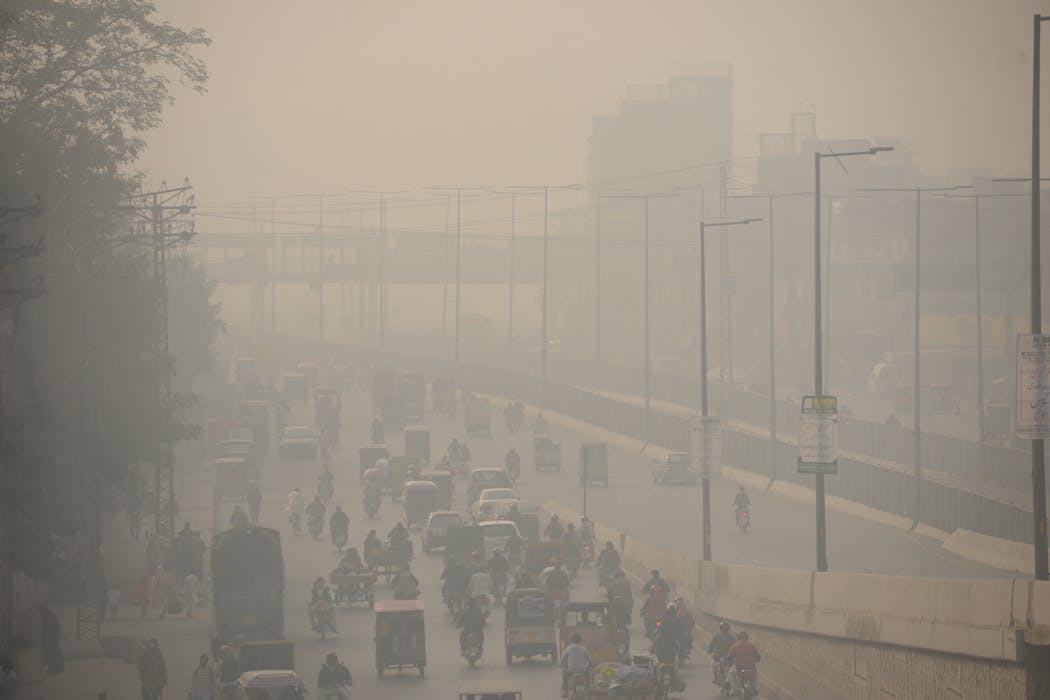
Commuters make their way along a road amid smoggy conditions in Lahore, Pakistan. Murtaza.Ali/Shutterstock

In November 2025, Lahore, the second-largest city in Pakistan, registered a “hazardous” air quality index of 509, according to IQAir, a global air quality monitoring organisation. The number speaks for itself. Eyes sting, throats burn and headlights blur into halos. In winter, the city feels as though it has slipped beneath a toxic sea.

Across Pakistan’s major cities, the shift into colder months no longer brings relief from heat or flooding. Winter has become smog season.

For weeks at a time, the sky turns grey-brown and the air tastes metallic before noon, a result of fine particles and acidic gases accumulating in the air and irritating the mouth and throat. These are not abstract environmental problems but daily, sensory realities. Smog now shapes routines, moods and the way people move through their day.

Lahore’s smog crisis is not new, but the numbers are becoming more alarming. The World Health Organization recommends that annual average levels of fine particulate matter should remain below five micrograms per cubic metre. According to a recent IQAir report, Lahore’s 2024 average was 102.

The burden of disease caused by air pollution is now estimated to be on a par with unhealthy diets and tobacco smoking. Global assessments place Pakistan among the countries with the highest mortality linked to air pollution, with particle concentrations far above recommended limits.

For residents of Pakistan’s cities, these statistics translate into physical and emotional strain. People describe waking with headaches after nights of coughing. Parents say the school run feels like walking through exhaust fumes.

Outdoor workers such as drivers, street vendors and construction labourers often report tasting metal in the air by late afternoon. Emerging research links smog episodes with spikes in respiratory illness, cardiovascular stress and hospital visits, especially among children and people with existing health conditions.

Winter in Lahore is sometimes described as “a lockdown without staying at home”. Public health advice on very polluted days often includes avoiding outdoor exercise, keeping windows closed and wearing masks when outside. Air quality apps now send real-time alerts to hundreds of thousands of users across the city.

But staying indoors is a luxury for many. Street vendors cannot sell food from their kitchens. Transport workers cannot drive rickshaws or buses from behind sealed windows. Families living in cramped, poorly ventilated housing do not breathe clean indoor air either; they breathe a mixture of outdoor pollution and indoor smoke from cooking or heating.


Read more:
Toxic air in the home is a global health emergency


The causes of this toxic winter mix are well documented. Older diesel trucks and buses emit large quantities of fine particles and nitrogen dioxide. Industrial zones and poorly regulated brick kilns burn low-quality fuel. Construction activity increases the amount of dust in the air. Seasonal burning of crop residues left behind after harvesting, such as stalks and straw, in Punjab and neighbouring regions worsens pollution even further.

Cold winter temperatures trap pollutants close to the ground. With little wind or rain to disperse them, a dense brown haze settles over Lahore and other urban areas. Recent analyses show that Lahore’s emissions remain high throughout the year, but peak during winter when weather conditions are least favourable.

Smog affects more than the lungs. It influences how people feel, behave and cope with daily life. Residents frequently report a sense of heaviness or irritability on high pollution days, difficulty concentrating or a “claustrophobic” feeling when visibility drops and the city seems to close in. Studies show that air pollution has negative effects on mental health. For families already dealing with crowded housing, unstable work and unreliable transport, smog adds another layer of psychological strain.

Smog’s uneven toll

These effects are not shared equally. Low-income communities in cities like Lahore and Karachi often live closer to industrial corridors, busy roads or burning waste sites, and have far less control over their exposure.

People who work outdoors breathe in more polluted air than those who can work remotely or retreat indoors. Women managing unpaid care work describe feeling exhausted by the constant monitoring of children’s coughs, many of whom also miss school.

For many households in Pakistan, air pollution interacts with other environmental threats such as extreme heat, flooding and water shortages. It is a pattern seen across developing countries, where climate change and pollution intensify existing inequalities and resilience depends not only on people’s physical wellbeing but also on collective capacity to support one another and withstand overlapping crises.

Recognising these psychological and social dimensions is essential for designing effective public health and environmental responses. When smog becomes seasonal – a regular feature of winter rather than an occasional occurrence – people adapt in ways that affect social life, work patterns, schooling and mental wellbeing.

Persistent exposure can lead to hopelessness, a sense that nothing can be done, which undermines motivation to participate in civic discussions or environmental initiatives. Others experience heightened worry about their children’s health, education and future, a form of “pollution anxiety”.

These emotional responses matter because they shape how communities understand risk, respond to public messaging and engage with policy measures.

No one can solve city-wide smog alone, yet waiting only for national reforms can feel too slow and too distant. Community-level action occupies the space in between. Neighbourhood clean-air campaigns, school-based monitoring, local tree planting, reporting of illegal burning and collaborations between residents, health workers and municipal staff can increase awareness and create political pressure for broader systemic change.

These efforts do not replace national policy; they make it more likely to succeed. And they give people a sense of agency in a context where pollution can otherwise feel overwhelming.


Don’t have time to read about climate change as much as you’d like?

Get a weekly roundup in your inbox instead. Every Wednesday, The Conversation’s environment editor writes Imagine, a short email that goes a little deeper into just one climate issue. Join the 47,000+ readers who’ve subscribed so far.


The Conversation

The authors do not work for, consult, own shares in or receive funding from any company or organisation that would benefit from this article, and have disclosed no relevant affiliations beyond their academic appointment.

ref. Lahore’s toxic winters: how smog is reshaping daily life in urban Pakistan – https://theconversation.com/lahores-toxic-winters-how-smog-is-reshaping-daily-life-in-urban-pakistan-270494

Busting brain myths: The evolving story of menopause hormone therapy and cognitive health

Source: The Conversation – Canada – By Zahinoor Ismail, Professor, Cumming School of Medicine, University of Calgary

In the early 2000s, a major women’s health study — Women’s Health Initiative (WHI) — made headlines. As an ongoing study launched in the ‘90s, the WHI asked: could menopause hormone therapy (MHT), used to ease menopause symptoms, also protect against serious health problems in later life?

A smaller arm, the WHI Memory Study (WHIMS), focused on brain health in women without dementia.

When results were released in 2002, they were shocking. Women on MHT were more likely — not less — to develop heart disease, stroke, breast cancer and dementia. Doctors quickly advised against MHT, prescriptions plummeted, and for years, MHT nearly disappeared from the conversation.

But the story the findings told at the time was incomplete. The WHI findings weren’t wrong; they revealed real risks. But in the years since, researchers have re-examined the WHI data — not only the brain findings, but also the heart, stroke and cancer results — to better understand when, why and how MHT should be used. Today, experts agree that for many women who start MHT around menopause and don’t have medical reasons to avoid it, the benefits outweigh the risks, and MHT can be safely prescribed to manage menopause symptoms.

Still, several myths about MHT have persisted, including misperceptions about how it affects brain aging.

Let’s bust a few of the biggest myths about MHT and brain health.

Myth 1: MHT raises the risk of dementia for all women

According to WHIMS, women who started MHT at 65 years or older were more likely to develop dementia than those who did not. But most women start MHT much earlier, typically in their 40s or 50s around menopause.

And timing is important to MHT.

Researchers describe this as the critical window hypothesis: starting MHT around menopause may support brain health, while starting years later may increase risk of cognitive decline and dementia. WHIMS didn’t test this “window” — most participants were long past menopause and no longer had menopause symptoms. So the results don’t show the effects of MHT when used at the right age, for the right reasons (experiencing menopause symptoms).

Recent studies show a mixed picture: some women who start MHT near menopause may see brain benefits in later life, like better memory and fewer dementia-related changes. Others see little difference in cognition and dementia risk — but not worse outcomes.

However, starting MHT much later, such as in your 70s or even more than five years after menopause, may link to greater tau protein build-up, which is a marker of Alzheimer disease.

In short, MHT isn’t automatically bad for the brain, but its effects may depend on when it’s started and what kind is used.

Myth 2: All MHT affects the brain the same way

When people hear “MHT” (formerly known as hormone replacement therapy or HRT), they may picture one standard treatment. But MHT comes in many forms, and these differences may matter. In WHIMS, women took conjugated equine estrogen pills and medroxyprogesterone acetate if they had a uterus. This combination was once the standard treatment, but is now rarely used.

Today, 17-beta estradiol, (a type of estrogen), is more common and linked to brain benefits and lower risk of cognitive decline.

Those with a uterus also take progestogens to reduce uterine cancer risk. Progestogens may support brain health, but could also blunt estrogen’s protective effects, including its role in the growth, maintenance and function of brain cells that support memory and thinking. Clearly, both hormone type and combination matter.

Delivery methods of MHT — which are available as pills, patches, gels, creams, sprays or vaginal rings — also matters because each is processed differently.

Oral pills pass through the liver and can increase risk of blood clots and high blood pressure, which can affect brain health by slowing blood flow and increasing stroke risk.

Patches and gels, absorbed through the skin, can carry lower risks by avoiding the liver.

The bottom line is that not all MHTs are created equal. But even with the right form and timing, can MHT prevent dementia?

Myth 3: WHIMS showed that MHT can prevent dementia

Somewhere along the way, MHT was recast from a treatment for menopause symptoms into a supposed defence against dementia. This misconception traces back to WHIMS, which asked whether MHT could reduce dementia risk.

But risk reduction isn’t prevention. WHIMS did not test whether MHT prevents dementia, and because the study enrolled women long after menopause, the results don’t show what happens when MHT is used during the menopause transition. Even so, the findings were often taken to support broader claims about MHT and brain health, even though MHT was never designed to prevent dementia or serve as a stand-alone strategy for lowering dementia risk.

And not everyone needs or should take MHT. Some women breeze through menopause; others struggle. MHT isn’t one-size-fits-all.

But why do some women have symptoms and others don’t? New research suggests menopause symptoms themselves may offer clues about brain health, possibly reflecting the brain’s sensitivity to falling estrogen. Since estrogen supports memory, thinking and mood, more symptoms might signal greater vulnerability to brain aging.

And it’s not just the symptoms — it’s their impact on daily life. When night sweats interrupt sleep or mood changes strain relationships, stress and fatigue may further tax the brain.

In short, MHT isn’t a magic shield against dementia. But for those who struggle and can safely take MHT, managing menopause symptoms may support current well-being and future brain health.

The next chapter for MHT

WHIMS marked an important first chapter in the MHT story, but the science is still unfolding.

Researchers are now asking: when is the best time to start MHT? Which hormones matter most? Who benefits, and why?

Menopause is personal. For some, MHT brings relief and better quality of life. It’s not a guaranteed defence against dementia. But for the right person, at the right time, MHT may support healthy brain aging — an encouraging sign for the next generation entering midlife with more knowledge and support than ever before.

Want to be part of this evolving story? Consider joining Canadian studies like CAN-PROTECT or BAMBI, which explore how MHT and menopause experiences shape brain aging.

The Conversation

Zahinoor Ismail receives funding from the Canadian Institutes of Health Research and Gordie Howe CARES.

Jasper Crockford receives funding from the Canadian Institutes of Health Research, Alberta SPOR Support Unit, Canadian Federation of University Women, Vascular Training Platform, and Brain Health Care Canada.

Maryam Ghahremani does not work for, consult, own shares in or receive funding from any company or organisation that would benefit from this article, and has disclosed no relevant affiliations beyond their academic appointment.

ref. Busting brain myths: The evolving story of menopause hormone therapy and cognitive health – https://theconversation.com/busting-brain-myths-the-evolving-story-of-menopause-hormone-therapy-and-cognitive-health-266855

Tariffs 101: What they are, who pays them, and why they matter now

Source: The Conversation – USA (2) – By Kent Jones, Professor Emeritus, Economics, Babson College

The U.S. Supreme Court is currently reviewing a case to determine whether President Donald Trump’s global tariffs are legal.

Until recently, tariffs rarely made headlines. Yet today, they play a major role in U.S. economic policy, affecting the prices of everything from groceries to autos to holiday gifts, as well as the outlook for unemployment, inflation and even recession.

I’m an economist who studies trade policy, and I’ve found that many people have questions about tariffs. This primer explains what they are, what effects they have, and why governments impose them.

What are tariffs, and who pays them?

Tariffs are taxes on imports of goods, usually for purposes of protecting particular domestic industries from import competition. When an American business imports goods, U.S. Customs and Border Protection sends it a tariff bill that the company must pay before the merchandise can enter the country.

Because tariffs raise costs for U.S. importers, those companies usually pass the expense on to their customers by raising prices. Sometimes, importers choose to absorb part of the tariff’s cost so consumers don’t switch to more affordable competing products. However, firms with low profit margins may risk going out of business if they do that for very long. In general, the longer tariffs are in place, the more likely companies are to pass the costs on to customers.

Importers can also ask foreign suppliers to absorb some of the tariff cost by lowering their export price. But exporters don’t have an incentive to do that if they can sell to other countries at a higher price.

Studies of Trump’s 2025 tariffs suggest that U.S. consumers and importers are already paying the price, with little evidence that foreign suppliers have borne any of the burden. After six months of the tariffs, importers are absorbing as much as 80% of the cost, which suggests that they believe the tariffs will be temporary. If the Supreme Court allows the Trump tariffs to continue, the burden on consumers will likely increase.

While tariffs apply only to imports, they tend to indirectly boost the prices of domestically produced goods, too. That’s because tariffs reduce demand for imports, which in turn increases the demand for substitutes. This allows domestic producers to raise their prices as well.

A brief history of tariffs

The U.S. Constitution assigns all tariff- and tax-making power to Congress. Early in U.S. history, tariffs were used to finance the federal government. Especially after the Civil War, when U.S. manufacturing was growing rapidly, tariffs were used to shield U.S. industries from foreign competition.

The introduction of the individual income tax in 1913 displaced tariffs as the main source of U.S. tax revenue. The last major U.S. tariff law was the Smoot-Hawley Tariff Act of 1930, which established an average tariff rate of 20% on all imports by 1933.

Those tariffs sparked foreign retaliation and a global trade war during the Great Depression. After World War II, the U.S. led the formation of the General Agreement on Tariffs and Trade, or GATT, which promoted tariff reduction policies as the key to economic stability and growth. As a result, global average tariff rates dropped from around 40% in 1947 to 3.5% in 2024. The U.S. average tariff rate fell to 2.5% that year, while about 60% of all U.S. imports entered duty-free.

While Congress is officially responsible for tariffs, it can delegate emergency tariff power to the president for quick action as long as constitutional boundaries are followed. The current Supreme Court case involves Trump’s use of the International Emergency Economic Powers Act, or IEEPA, to unilaterally change all U.S. general tariff rates and duration, country by country, by executive order. The controversy stems from the claim that Trump has overstepped his constitutional authority granted by that act, which does not mention tariffs or specifically authorize the president to impose them.

The pros and cons of tariffs

In my view, though, the bigger question is whether tariffs are good or bad policy. The disastrous experience of the tariff war during the Great Depression led to a broad global consensus favoring freer trade and lower tariffs. Research in economics and political science tends to back up this view, although tariffs have never disappeared as a policy tool, particularly for developing countries with limited sources of tax revenue and the desire to protect their fledgling industries from imports.

Yet Trump has resurrected tariffs not only as a protectionist device, but also as a source of government revenue for the world’s largest economy. In fact, Trump insists that tariffs can replace individual income taxes, a view contested by most economists.

Most of Trump’s tariffs have a protectionist purpose: to favor domestic industries by raising import prices and shifting demand to domestically produced goods. The aim is to increase domestic output and employment in tariff-protected industries, whose success is presumably more valuable to the economy than the open market allows. The success of this approach depends on labor, capital and long-term investment flowing into protected sectors in ways that improve their efficiency, growth and employment.

Critics argue that tariffs come with trade-offs: Favoring one set of industries necessarily disfavors others, and it raises prices for consumers. Manipulating prices and demand results in market inefficiency, as the U.S. economy produces more goods that are less efficiently made and fewer that are more efficiently made. In addition, U.S. tariffs have already resulted in foreign retaliatory trade actions, damaging U.S. exporters.

Trump’s tariffs also carry an uncertainty cost because he is constantly threatening, changing, canceling and reinstating them. Companies and financiers tend to invest in protected industries only if tariff levels are predictable. But Trump’s negotiating strategy has involved numerous reversals and new threats, making it difficult for investors to calculate the value of those commitments. One study estimates that such uncertainty has actually reduced U.S. investment by 4.4% in 2025.

A major, if underappreciated, cost of Trump’s tariffs is that they have violated U.S. global trade agreements and GATT rules on nondiscrimination and tariff-binding. This has made the U.S. a less reliable trading partner. The U.S. had previously championed this system, which brought stability and cooperation to global trade relations. Now that the U.S. is conducting trade policy through unilateral tariff hikes and antagonistic rhetoric, its trading partners are already beginning to look for new, more stable and growing trade relationships.

So what’s next? Trump has vowed to use other emergency tariff measures if the Supreme Court strikes down his IEEPA tariffs. So as long as Congress is unwilling to step in, it’s likely that an aggressive U.S. tariff regime will continue, regardless of the court’s judgment. That means public awareness of tariffs ⁠– and of who pays them and what they change ⁠– will remain crucial for understanding the direction of the U.S. economy.

The Conversation

Kent Jones does not work for, consult, own shares in or receive funding from any company or organization that would benefit from this article, and has disclosed no relevant affiliations beyond their academic appointment.

ref. Tariffs 101: What they are, who pays them, and why they matter now – https://theconversation.com/tariffs-101-what-they-are-who-pays-them-and-why-they-matter-now-271576

Time banks could ease the burden of elder care and promote connection

Source: The Conversation – USA (2) – By Chao Guo, Professor of Nonprofit Management, University of Pennsylvania

Older people may need help getting the hang of using technology. Maskot/GettyImages

Long-term care for older people is challenging for everyone. The costs are high and the quality of care is unpredictable at best, often falling short.

The U.S. health care system is so hard to navigate that experts can find it aggravating. Even when people who need help with activities of daily living – a list that includes getting dressed, preparing meals and bathing – receive the care they need, they may still experience social isolation. And it can take a relentless emotional toll on caretakers, be they family members or trained professionals.

We are researchers of government, business and nonprofits. Together, we are seeking innovative solutions to pressing social problems such as the aging population and the growing need for long-term care.

In our ongoing research, we’re exploring a promising concept that could potentially ease some of these burdens: time banking, a community-based mutual aid system that treats everyone’s time as equally valuable.

A global demographic shift

By 2050, 1 in 6 people around the world will be over 65, up from 1 in 11 in 2019, the United Nations projects. By the late 2070s, older adults could outnumber children under 18 for the first time in human history.

Caring for a growing number of older people with a shrinking number of younger people is expensive and complicated. A 2022 Kaiser Family Foundation survey found that 90% of respondents could not afford the estimated US$100,000 annual cost of nursing home care, and even the roughly $60,000 cost of in-home assistance was beyond the reach for most U.S. families.

These high costs are compounded by a growing shortage of professional caregivers. The U.S. Bureau of Labor Statistics estimates that nearly 9 million new direct-care workers, such as nursing assistants, home health aides and personal care aides, will be needed in the next decade to care for the people who will need their services.

Yet a 2023 survey by the American Health Care Association found that 77% of nursing homes face staffing shortages, and 95% report difficulty hiring.

A large group of older people gathers.
The share of people over 65 is growing quickly around the world.
kei_gokei/iStock via Getty Images Plus

Time banking origins

Time banking emerged in Japan in 1973 through the work of Teruko Mizushima, a housewife who became a social activist. It was later popularized in the United States by Edgar Cahn, a lawyer who dedicated his life to making society more fair.

The idea is simple: One hour of help equals one time credit, regardless of the task or its market value.

Members earn time credits by assisting others. The options are endless, but here are some examples: They can drive someone to an appointment, prepare a meal or teach basic skills, such as how to knit or change a tire. After they’ve earned credits, participants can spend them when they need support themselves. So, if you dedicated a total of 60 hours helping others, you could then redeem 60 hours at a future date in the form of someone caring for you.

Mizushima’s Volunteer Labor Bank in Osaka, the world’s first time bank, used a time-based complementary currency known as “love currency,” which members could save for later use or transfer to their relatives.

Hour Exchange Portland, one of the longest-running time banks in the U.S., is a system where neighbors have traded services using time credits for nearly three decades. It’s among hundreds of time banks operating in the country.

Resonating with the realities of aging

We have designed our research to facilitate a comparative investigation of time-banking practices across countries and regions. In the past two years, we have conducted interviews and convened focus groups with dozens of time bank participants and adults who were either middle-aged or over 65 in the U.S. and China.

Our findings suggest that time banking might be particularly helpful in solving three problems associated with aging that conventional systems fail to address: the affordability of care, the scope of care, and social isolation.

First, as the cost of paid care rises, time credits offer a new way to obtain basic assistance without spending more money. For many families, the ability to pay with their time instead of their money could make caring for their loved ones more affordable.

Time banking also brings visibility to types of labor that market-based systems routinely overlook or undercompensate: emotional support, companionship, help with small daily routines, and patient explanations for how new technologies work. These forms of care are rarely paid for, yet they are central to maintaining independence and dignity.

Perhaps more importantly, time banking fosters connections because it doesn’t simply reward transactions. Instead, it assigns value to many kinds of human interactions.

Our interviews indicated that services are exchanged through a wide range of activities: practicing calligraphy with someone else, teaching Tai Chi, reading aloud to someone who is visually impaired, or checking in with a neighbor to remind them to take their medication.

These exchanges are less about specialized skills and more about showing up for one another. They broaden the caregiving ecosystem and remind older adults that they remain essential members of their communities.

As we learned, when older adults engage in time banking, they feel seen, useful and woven into the fabric of community life.

An older woman bends over as she vacuums her carpet.
Some basic chores get harder to handle as you age.
Iuliia Burmistrova/Moment via Getty Images

A path forward

Creating time banks that can make it easier for families to handle their elder care responsibilities would require meeting numerous challenges.

Some are inherent in time banks. For example, it’s hard to sustain high levels of participation, meet the diverse needs of a time bank’s members, reduce the risks of some members exploiting the system, and pay for administrative costs.

Other challenges are more specific to elder care. For example, it might not be feasible to maintain reciprocity among members, as those who are frail tend to be on the receiving end of time-banked services and can’t easily give back.

But by analyzing the pros and cons of various designs, our research team hopes to develop a time-banking model tailored to elder care.

The Conversation

The authors do not work for, consult, own shares in or receive funding from any company or organization that would benefit from this article, and have disclosed no relevant affiliations beyond their academic appointment.

ref. Time banks could ease the burden of elder care and promote connection – https://theconversation.com/time-banks-could-ease-the-burden-of-elder-care-and-promote-connection-264541

The dystopian Pottersville in ‘It’s a Wonderful Life’ is starting to feel less like fiction

Source: The Conversation – USA (2) – By Nora Gilbert, Professor of Literary and Film Studies, University of North Texas

To many Americans, George Bailey’s dystopian nightmare is disquietingly familiar. Paramount

Along with millions of others, I’ll soon be taking 2 hours and 10 minutes out of my busy holiday schedule to sit down and watch a movie I’ve seen countless times before: Frank Capra’sIt’s a Wonderful Life,” which tells the story of a man’s existential crisis one Christmas Eve in the fictional town of Bedford Falls.

There are lots of reasons why this eight-decade-old film still resonates, from its nostalgic pleasures to its cultural critiques.

But when I watch it this year, the sequence where Bedford Falls transforms into the dark and dystopian “Pottersville” will resonate the most.

In the film, protagonist George Bailey, who’s played by Jimmy Stewart, is on the brink of suicide. He seems to have achieved the hallmarks of the American dream: He’s taken over his father’s loan business, married the love of his life and fathered four excessively adorable children. But George feels stifled and beaten down. His Uncle Billy has misplaced US$8,000 of the company’s money, and the town’s resident tyrant, Mr. Potter, is using the mishap to try to ruin George, who’s his last remaining business competitor.

An angel named Clarence is tasked with pulling George back from the brink. To stop him from attempting suicide, Clarence decides to show George what life would have been like if he’d never been born. In this alternate reality, Bedford Falls is called Pottersville, a place Mr. Potter runs as a ruthless banker and slumlord.

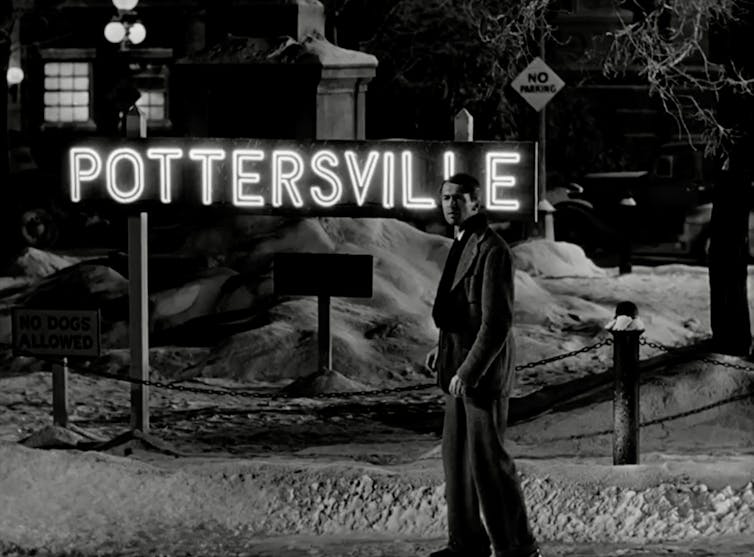
Movie still of young man walking through a dark, snowy town and passing by a bright sign reading 'Pottersville.'
Pottersville, the dark, dystopian version of Bedford Falls, is a place characterized by vice and moral decay.
Paramount

Having previously written about “It’s a Wonderful Life” in my book on literary and film censorship, I can’t help but see parallels between Pottersville and the U.S. today.

Think about it:

In Pottersville, one man hoards all the financial profits and political power.

In Pottersville, greed, corruption and cynicism reign supreme.

In Pottersville, hard-working immigrants like Giuseppe Martini who were able to build a life and run a business in Bedford Falls have vanished.

In Pottersville, homeless addicts like Mr. Gower and nonconformist “pixies” like Clarence are scorned and ostracized, then booted out of the local watering hole.

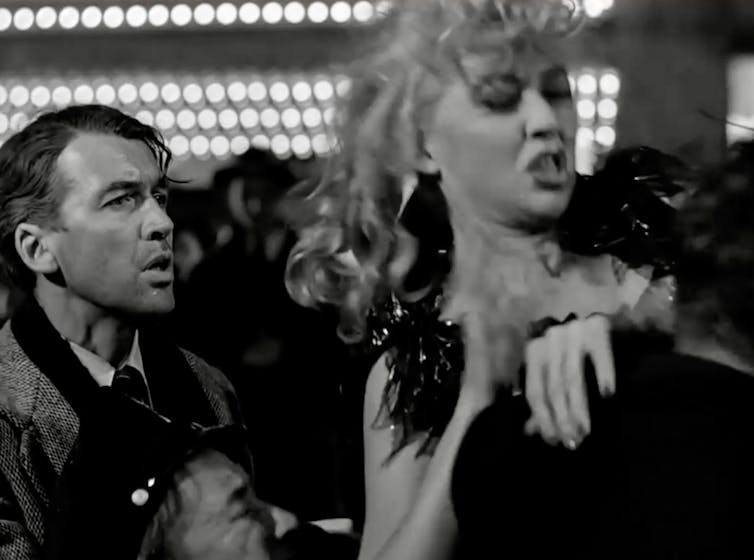
In Pottersville, cops arrest people like Violet Bick while they’re at work and haul them away, kicking and screaming.

Black-and-white movie still of a young women being dragged away by the police as a worried young man looks on.
Violet Bick gets dragged away by the Pottersville police as George looks on.
Paramount

But what horrifies George the most about Pottersville is how desensitized the people living in it seem to be to its harshness and cruelty – how they treat him like he’s the crazy, deranged one for wanting and expecting things to be different and better.

This is what the current political moment feels like to me. There are days when the latest headlines feel so jarringly unprecedented that I find myself thinking, “Can this be happening? Can this be real?”

If you think these comparisons are a bit of a stretch, consider when “It’s a Wonderful Life” was made, and the frame of mind Capra was in when he made it.

Frank Capra, anti-fascist

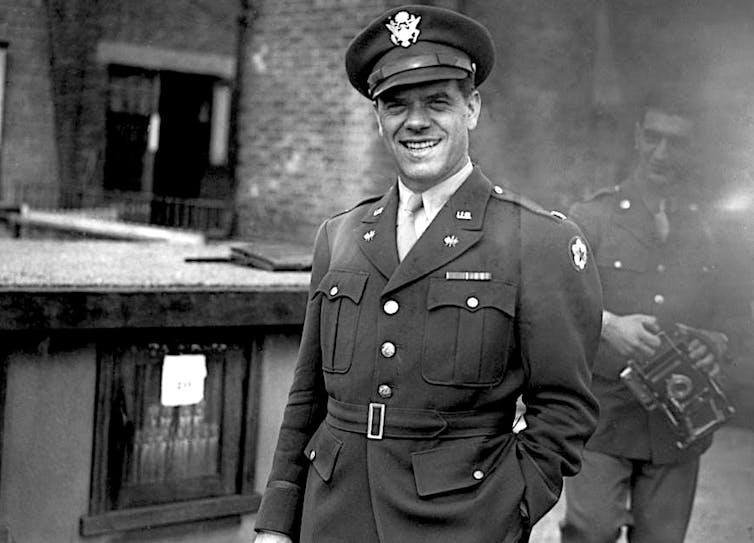
In 1946, Capra was just returning to Hollywood filmmaking after serving for four years in the U.S. Army, where the Office of War Information had tasked him with producing a series of documentary films about World War II and the lead-up to it. Even though Capra hadn’t been on the front lines, he’d been immersed in the sounds and images of war for years on end, and he had become acutely familiar with Germany, Italy and Japan’s respective rises to fascism.

Young man posing and smiling while wearing a military uniform.
Frank Capra served in the U.S. Army during World War II.
Keystone/Hulton Archive via Getty Images

When deciding on his first postwar film, Capra recalled in his autobiography that he specifically “knew one thing – it would not be about war.” Instead, he chose to adapt a short story by Philip Van Doren Stern, “The Greatest Gift,” that Stern had originally sent to friends and family as a Christmas card in 1943.

Stern’s story is certainly not about war. But it’s not exactly about Christmas, either.

As Stern writes in his opening lines:

“The little town straggling up the hill was bright with colored Christmas lights. But George Pratt did not see them. He was leaning over the railing of the iron bridge, staring down moodily at the black water.”

The protagonist contemplates suicide because he’s “sick of everything” in the small-town “mudhole” he’s stuck in – until, that is, a “strange little man” gives him the chance to see what life would be like if he’d never been born.

It was Capra and his team of screenwriters who added the sinister Henry F. Potter to Stern’s short, simple tale. The Potter subplot encapsulates the film’s most trenchant, still-resonant themes: the unfairness of socioeconomic injustices; the pervasiveness of corporate and political corruption; the threat of monopolized power; the need for affordable housing.

These themes had, of course, run through many of Capra’s prewar films as well: “Mr. Deeds Goes to Town,” “You Can’t Take It with You”“Meet John Doe” and “Mr. Smith Goes to Washington,” the last of which also starred Jimmy Stewart.

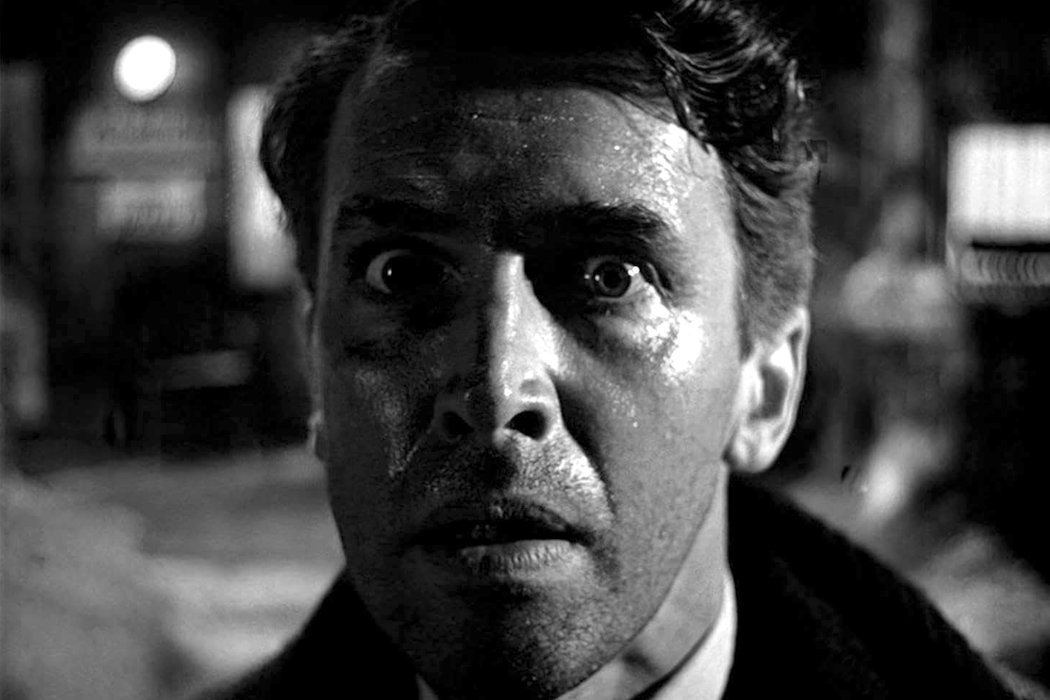
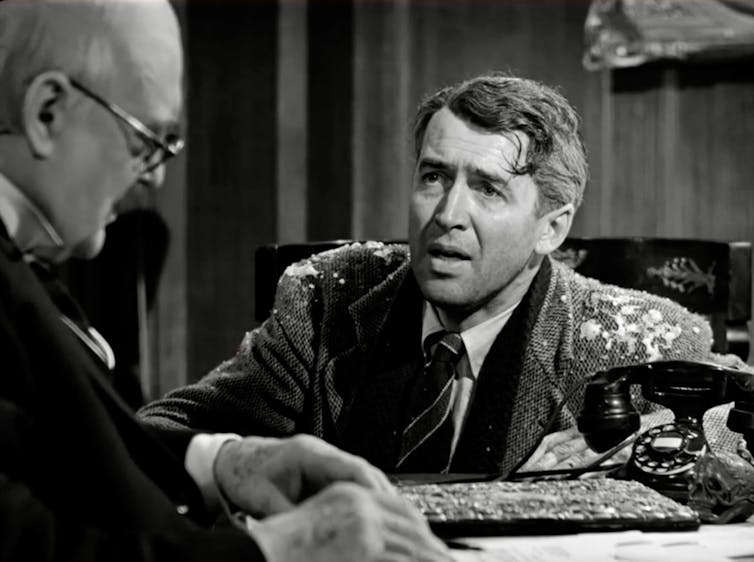
But they take on a different kind of weight in “It’s a Wonderful Life” – a weight that’s especially visible on the weathered face of Stewart, who himself had just returned from a harrowing four-year tour of duty as a fighter pilot in Europe.

The idealistic vigor with which Stewart had fought crooked politicians and oligarchs as Mr. Smith is replaced by the bitterness, exhaustion, frustration and desperation with which he battles against Mr. Potter as George Bailey.

Black-and-white movie still of a distraught man with snow on his jacket.
George Bailey feels helpless in the face of corruption and cruelty.
Paramount

Life after Pottersville

By the time George has begged and pleaded his way out of Pottersville, the lost $8,000 is no longer top of mind. He’s mainly just relieved to find Bedford Falls as he had left it, warts and all.

And yet, the Bedford Falls that George returns to isn’t quite the same as the one he left behind.

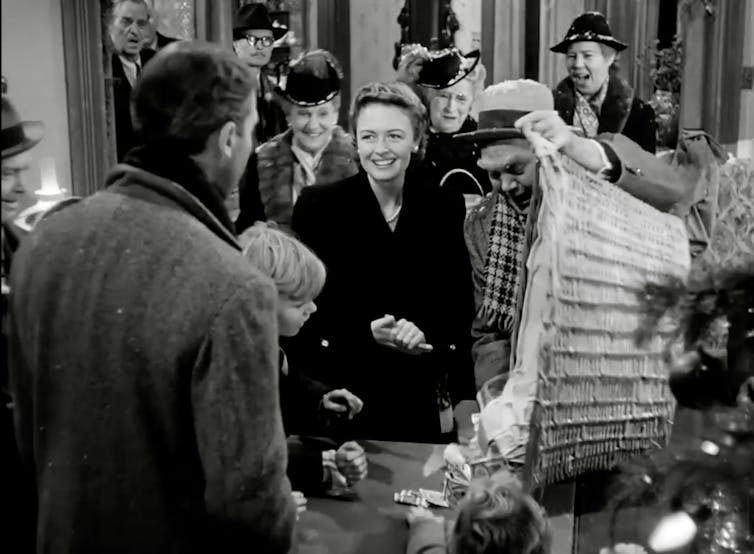
In this Bedford Falls, the community rallies together to figure out a way to recoup George’s missing money. Their pre-digital version of a GoFundMe page saves George from what he’d feared most: bankruptcy, scandal and prison.

And even though his wife, Mary, tries to attribute this sudden wave of collectivist, activist energy to some sort of divine intervention – “George, it’s a miracle; it’s a miracle!” – Uncle Billy points out that it really came about through more earthly organizing means: “Mary did it, George; Mary did it! She told some people you were in trouble, and they scattered all over town collecting money!”

A group of smiling people dump a large basket of cash on a desk.
The residents of Bedford Falls come together to save George from financial ruin.
Paramount

But the question of whether George actually wins his battle against Potter is a murky one.

While the typical Capra protagonist triumphs by defeating vice and exposing subterfuge, George never even realizes that Potter is the one who got hold of his money and tried to ruin his life. Potter is never held accountable for his crimes.

On the other hand, George is able to learn, from his time in Pottersville, what a crucial role he plays in his community. George’s victory over Potter, then, lies not in some grand final act of retribution, but in the incremental ways he has stood up to Potter throughout his life: not capitulating to Potter’s bullying or intimidation tactics; speaking truth to power; and running a community-centered business rather than one guided by greed and exploitation.

In recent months, there have been similar acts of protest, large and small, in the form of rallies, boycotts, immigrant aid efforts, subscription cancellations, food bank donations and more.

That doesn’t mean the U.S. has made it out of Pottersville, however.

Each day, more head-spinning headlines appear, whether they’re about masked agents terrorizing immigrant communities, the dismantling of anti-corruption oversights, the consolidation of executive power or the naked display of political grift.

Zuzu’s petals are still missing. Clarence still hasn’t gotten his wings.

But this holiday season, I’m hoping it will feel helpfully cathartic to go with George Bailey, for the umpteenth time, through the dark abyss of his dystopian nightmare – and come out with him, stronger and wiser, on the other side.

The Conversation

Nora Gilbert does not work for, consult, own shares in or receive funding from any company or organization that would benefit from this article, and has disclosed no relevant affiliations beyond their academic appointment.

ref. The dystopian Pottersville in ‘It’s a Wonderful Life’ is starting to feel less like fiction – https://theconversation.com/the-dystopian-pottersville-in-its-a-wonderful-life-is-starting-to-feel-less-like-fiction-270759