Why does Netflix want to buy Warner Bros? To copy, not kill, traditional TV

Source: The Conversation – UK – By Anthony Smith, Lecturer in Television Theory, University of Salford

The recent news that Netflix has agreed to buy part of Warner Bros Discovery (WBD) for US$83 billion (£61.8 billion), followed by Paramount Global’s hostile counterbid to acquire WBD in its entirety for US US$108.4 billion, has triggered shockwaves through Hollywood and the wider entertainment industry.

Initial responses – and passionate outcries – have largely centred on fears over job cuts, subscription fee rises, anti-trust concerns regarding the increased market share either bid would create, and the potential negative impact that Netflix’s acquisition might have on the future of the film industry.

While these issues are no doubt important, one aspect of the Netflix deal has been relatively overlooked: the streamer’s decision to cut out Discovery’s portfolio of cable channels from its agreed acquisition of WBD. But this element of the deal is significant for what it reveals about the current state, and future, of the television industry.

Netflix’s decision to excise Discovery’s cable channels from the agreement indicates its desire to avoid ownership of the legacy TV infrastructure of broadcast, cable and satellite television. It also reflects the broader trend of linear TV businesses becoming less attractive to media corporations as audiences continue to migrate online. At first glance, Netflix’s exclusion of Discovery seems to confirm what we’ve been told for over a decade: streaming is killing traditional TV.

Since launching House of Cards in 2013, Netflix has cultivated an image as television’s great disruptor, a tech company that rendered the old broadcast model obsolete. What’s more, this is a reputation that journalistic and scholarly debate has often burnished.

But as we argue in our new book, Television Goes Back to the Future: Rethinking TV’s Streaming Revolution, this narrative of revolution is overstated and oversold. Beneath the rhetoric, streamers have persistently adopted, adapted, and often directly copied the conventions of legacy television.

The Netflix-WBD deal is no exception to this trend. Netflix’s own announcement celebrates combining its “innovation” with Warner Bros’ “century-long legacy of world-class storytelling”. Yet in potentially acquiring HBO, Netflix is set to buy the very cable TV innovator it originally modelled its prestige drama strategy on. This deal, then, represents less of a break from television history than prevailing narratives suggest.

Back to the evergreen future

This is evident in the rationale underpinning Netflix’s aims to acquire WBD’s vast back catalogue of film and television. For decades, channels like TBS, TNT, and in the UK, Gold and Dave, have built their business models on syndicated repeats of evergreen programming, such as studio sitcoms and police procedurals.

Streaming platforms have adopted the same approach. For example, both Suits and Lost recently became streaming hits years after their original linear TV runs ended.

When Netflix UK recently announced Friends would be leaving the platform at the end of the year, subscribers responded with uproar, revealing just how much “reruns” matter to streaming audiences. The Warner catalogue – which includes Friends – offers Netflix a ready-made library to meet this demand.

Amazon’s US$8.5 billion purchase of MGM in 2022 reflected a similar calculation, with the studio’s library alone valued at US$3.4 billion. What this tells us is that the film and TV back catalogue, long the foundation of cable television, has become equally foundational to streaming.

Should the Netflix-WBD deal succeed, it would represent another step in what industry observers call “the great rebundling”. Under the American cable model that solidified in the 1980s, viewers pay a monthly fee for a large package of channels rather than selecting them individually.

Streaming initially fragmented this model, leaving viewers to juggle competing subscriptions (and frequently cancel them). In response, platforms have begun consolidating content and brands in ways that echo the cable bundle model.

This pattern is already evident in Disney’s ongoing integration of Hulu within the Disney+ app, offering US consumers both services as part of a bundle deal. Industry commentators predict Netflix will take a similar approach with HBO.

Media analyst Rua Aguete foresees that Netflix will eventually operate as “a global gateway” for viewers, with HBO sitting as a “premium content brand within that ecosystem”, allowing Netflix to offer both services under a single subscription.

But Netflix’s embrace of traditional television practices is not new, nor limited to bundling and the reliance on much-loved TV classics. The platform spent years positioning itself against appointment viewing: watch what you want, when you want.

Yet as we show in Television Goes Back to the Future, the platform has increasingly embraced live events that create shared, simultaneous experiences in the long tradition of broadcast TV: WWE wrestling, NFL matches and comedy specials like The Roast of Tom Brady.

Netflix’s introduction of an ad-supported tier in 2022 marked a further retreat from its original promise of uninterrupted viewing – a direct adoption of commercial television’s long-established funding model.

Similar continuities are evident in how Netflix operates across borders. Streaming was supposed to make borders irrelevant: one global library, available everywhere. Instead, as media scholar Ramon Lobato argues, Netflix can be seen as “a series of national services linked through a common platform architecture”.

The company establishes local production offices, hires regional executives, and commissions programming calibrated to national audiences, resulting in culturally specific originals such as the UK’s Adolescence, Spain’s Money Heist, and South Korea’s Squid Game. Through such practices, Netflix, in some ways, mimics the practices and infrastructures of national broadcasting systems.

Should Netflix’s deal with WBD go through, it would represent not a departure from Netflix’s recent trajectory, but its logical culmination. For all its disruptive rhetoric, the platform has spent the past decade embracing the very conventions it once positioned itself against.

Purchasing WBD would simply accelerate this process, enabling Netflix to further adapt the models and logics of longstanding network and cable TV practices to online contexts.


Looking for something good? Cut through the noise with a carefully curated selection of the latest releases, live events and exhibitions, straight to your inbox every fortnight, on Fridays. Sign up here.


The Conversation

The authors do not work for, consult, own shares in or receive funding from any company or organisation that would benefit from this article, and have disclosed no relevant affiliations beyond their academic appointment.

ref. Why does Netflix want to buy Warner Bros? To copy, not kill, traditional TV – https://theconversation.com/why-does-netflix-want-to-buy-warner-bros-to-copy-not-kill-traditional-tv-271770

Bread of Angels: Patti Smith’s eloquent memoir wrestles with ‘the beauty and sorrow of a lifetime’

Source: The Conversation – UK – By Julia Toppin, Senior Lecturer, Music Enterprise and Entrepreneurship, University of Westminster

Documenting the life of an extraordinarily talented musician and writer, Bread of Angels – Patti Smith’s latest memoir, published at the age of 78 – further charts a life filled with genius, creativity, adversity and tragedy.

“It took a decade to write this book, grappling with the beauty and sorrow of a lifetime,” she wrote. “I’m hoping that people will find something they need.”

Bread of Angels follows on from Just Kids (which details her relationship with the artist Robert Mapplethorpe), M Train (which focuses on her life with her husband Fred “Sonic” Smith), and Year of the Monkey (written after a year of travelling in 2016, examining loss and ageing).

Released on the date of her late husband’s death, and close to the 50th anniversary of her seminal debut album, Horses, Bread of Angels is a deeply personal and authentic story that will provide inspiration for women trying to forge a career in the music industry.

The memoir takes the reader on a journey through the myriad roles Smith has inhabited: daughter, sister, invalid; friend, collaborator, activist; lover, poet, musician; wife, mother, widow. This moving account of a life well lived details the highs and lows of walking the earth as a woman.

Bread of Angels begins in infancy, building up a portrait of a young artistic and creative performer who gives it all up for love at the height of her fame. It ends with a rediscovery of music, writing and being on the road as a touring performer.

The six-decade rollercoaster ride that Smith describes so eloquently serves as a reminder that there is no joy without pain. And sadly, that perhaps the most creative of us are those to whom fate has been most unkind. Yet, to read how Patti Smith has lived, created, loved and lost while staying true to herself is an uplifting experience.

The blossoming of an artist

Smith endured a childhood of hardship, frailty and illness boosted by a mother who used art – from Puccini’s Madame Butterfly to Lewis Carroll’s Alice in Wonderland – to inspire her daughter to stay alive. Bread of Angels starkly illustrates the plight of a post-war working-class American family moving from place to place to stay above the poverty line.

Moving into young adulthood, Smith quickly rejects a conventional life and blossoms into an artist and key collaborator in the New York punk scene. Here she lives in the notorious Chelsea Hotel alongside contemporaries Robert Mapplethorpe, Bob Dylan, Allen Ginsberg, Janis Joplin, Jimi Hendrix and Andy Warhol. But the focus of Bread of Angels is Smith’s career as a recording artist and falling in love, marrying and forging a family.

Smith’s career as a recording artist parallels many of the challenges facing women in the music industry. It satisfyingly describes Smith’s insistence on asserting her creative independence in a male-dominated environment that seems to want to control every aspect. Smith’s refusal to submit to the patriarchal control that is still so pervasive in the industry will resonate with many women.

But more importantly, Bread Of Angels will probably embolden young female artists to reject this pressure. Smith made a brave decision to go for less money and sign with legendary A&R Clive Davis of Arista Records. Davis honoured his promise that Smith would have full creative control, which led to eight albums.

These include her groundbreaking debut Horses (produced by JJ Cale), the politically charged Radio Ethiopia (produced by Jack Douglas) and Easter (produced by Jimmy Iovine), which included Smith’s biggest hit Because The Night. It is fascinating to read the author’s recollections on how various albums were produced, including her initial ambivalence about the track written with Bruce Springsteen that would become her most well-known song.

Then there’s the startling tale of Smith’s infamous stage accident on tour in Tampa, Florida, where she tripped and fell 15ft into a concrete orchestra pit breaking several vertebrae in her neck. Once again she returns to the convalescent bed of her youth. Her recovery was a great period of reflection that allowed Smith to re-evaluate her life. To get back to music, she joined a strenuous sports rehabilitation programme while writing her first published collection of poetry entitled Babel.

At the height of her fame after the release of Easter, Smith gives it all up to go and live with the love of her life, Fred Smith. She states simply: “I did it for art. I did it for love. But most of all I did it for myself.”

She describes their instant attraction and marriage as inevitable. They make a life in Michigan, have two children and immerse themselves in reading, writing and being by the sea. Smith creates Virginia Woolf’s notion of a room of one’s own in the kitchen and allows the writer within her to fully evolve.

The penultimate section of the book is permeated with grief, loss and pain as Smiths loses several people dear to her. These include the man she describes as the “artist of her life”, Robert Mapplethorpe; the “love of her life” Fred Smith; her brother Todd; and several friends during the Aids epidemic.

A yearning for purpose following an extended period of grieving leads Smith back on the road, where this memoir ends, leaving the reader with a sense of Smith’s relentless vitality and positivity.

Bread of Angels is a beautifully life-affirming memoir. Smith’s eloquent rendering of an extraordinary life makes the ending inspiring when it could have easily been profoundly sad. Patti Smith remains, as she enters her 80th year, a touchstone for women in music everywhere.

Looking for something good? Cut through the noise with a carefully curated selection of the latest releases, live events and exhibitions, straight to your inbox every fortnight, on Fridays. Sign up here.


The Conversation

Julia Toppin does not work for, consult, own shares in or receive funding from any company or organisation that would benefit from this article, and has disclosed no relevant affiliations beyond their academic appointment.

ref. Bread of Angels: Patti Smith’s eloquent memoir wrestles with ‘the beauty and sorrow of a lifetime’ – https://theconversation.com/bread-of-angels-patti-smiths-eloquent-memoir-wrestles-with-the-beauty-and-sorrow-of-a-lifetime-271067

Exotic animal cafes: cute trend or welfare crisis?

Source: The Conversation – UK – By Samantha Ward, Professor of Zoo Animal Welfare & Legislation, Nottingham Trent University

Imagine sipping a latte while stroking an owl or watching an otter play at your feet. This is the promise of exotic animal cafes, a trend that blends coffee culture with wildlife encounters. But behind the Instagram-worthy photos lies a troubling reality – the welfare of the animals themselves.

Since the mid-2000s, animal cafes have increased in popularity with customers paying low-cost entrance fees, ranging from £8 to around £15, depending on the location and animals housed there. The concept seemed to have started with cat cafes but now include owls, meerkats, capybara, snakes and even penguins.

Taiwan, China and Japan seem to be leading the trend. But they are starting to pop up in the UK too, with plans for a capybara cafe in Norfolk announced in 2025. And there are already capybara cafes in Florida, US, that offer a “curated, slow-living experience that lets you connect with animals in a meaningful and memorable way”.

The appeal is obvious: exotic animals are fascinating. However animal rights activists have concerns about the cost to the animals. My colleagues and I recently published research on animal cafes in Japan which reveals they are failing animals on almost every welfare measure.

We visited 79 exotic animal cafes across Tokyo, Osaka, Kyoto and other regions, observing 231 mammal, bird and reptile species. We scored conditions in five areas: environment, nutrition, behaviour, restraint and visitor interactions.

Our findings showed welfare standards were consistently poor across all species.

Birds suffered most. Owls, by far the most common species, were often tethered to
perches, unable to fly. Owls are nocturnal species and therefore their natural behaviour is to hide away during daylight hours. Many were exposed to loud music and constant human contact, conditions known to cause stress to birds.

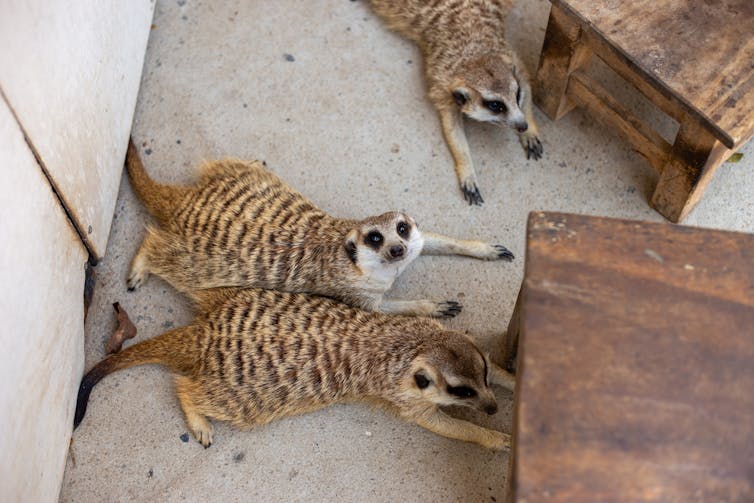
Otters didn’t have water for swimming during opening hours. Meerkats, highly social animals, were kept alone in tiny cages. Even domestic species such as rabbits scored poorly for the number of human-animal interactions and the environment that was provided for them.

Reptiles fared slightly better, probably because their spatial needs are smaller.
But many were housed in enclosures with no place for them to escape the public gaze or people tapping on their glass enclosures and had minimal enrichment.

Rabbits however did score higher on the nutrition scores. We linked this to the fact that they are domesticated, which means appropriate food is easy to purchase.

Meerkats lying on concrete floor next to wooden tables.
Do meerkats really belong in cafes?
CoreRock/Shutterstock

Poor welfare isn’t just an ethical issue, it’s a public health concern. Close contact with stressed wild animals increases the risk of bites, scratches and disease transmission, from salmonella to cryptosporidiosis, a parasitic infection that causes profuse watery diarrhoea, stomach pains, nausea or vomiting and low-grade fever for up to two weeks.

In cramped cafes, these risks multiply. A recent study and report compiled by WWF Japan found dangerous bacteria such as enterohemorrhagic Escherichia coli, salmonella, and drug-resistant bacteria in some facilities.

Another issue is where these animals are coming from. Many of the species housed in exotic cafes are of conservation importance. It might be that they are being bought and sold in violation of international animal trade laws that prohibit the movement or sale of certain animals from their original native homeland.

The bigger picture

As mentioned above, Japan isn’t an outlier, with similar opportunities in China and Taiwan. The UK has more than 40 cat cafes plus the proposed capybara cafe in Norfolk. The number of cat cafes in the UK is increasing, with a 44% surge in licences granted over the past financial year.

A report from the RSPCA and Cats Protection, two of the largest animal welfare charities in the UK, is calling for a phase-out of cat cafes. They believe that cats, “having descended from solitary, territorial, roaming wildcats” are “likely to find the enforced proximity to other felines as well as unfamiliar visitors wishing to stroke them extremely stressful.”

It’s unclear whether these types of cafe can ever meet the complex physical and psychological needs of any species that they house any species that they house, whether they are wild or domesticated animals. Our research suggests the answer is no. These environments cannot provide space, stimulation or choice – the foundations of good animal welfare.

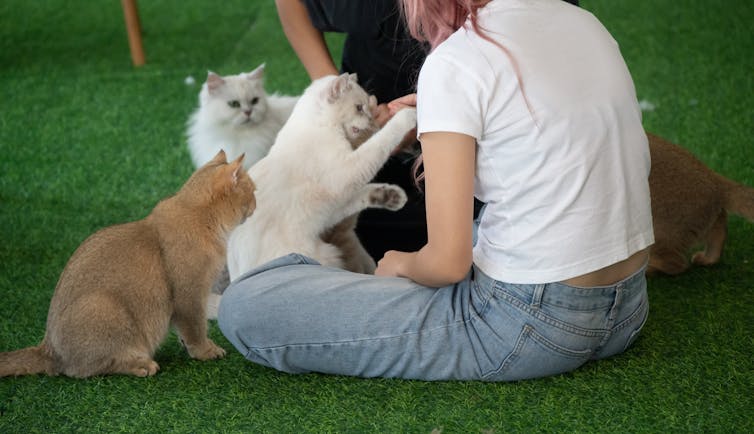
Woman sitting on artificial grass playing with cats.
Cat cafes are becoming increasingly popular.
Boyloso/Shutterstock

Animal welfare legislation around the world is complex. In a lot of countries, exotic cafes would fall under the same license as zoos. This is the case in Japan. Japan’s animal welfare law offers little specific protection for exotic species. It acknowledges animal sentience but provides little consideration to the care of captive wild animals.

In England, Scotland and Wales there are two forms of legislation that might be relevant to animal cafes. For a domestic cat cafe, The Animal Welfare (Licensing of Activities Involving Animals) (England) Regulations 2018 applies.

This includes the need for the cafe staff and owners to provide a suitable environment and diet and protect the animals from pain, suffering, injury and disease. It would also require cat cafes to monitor the animals’ behaviour, handling of the cats and interactions with customers. Inspections of these facilities do occur but are dependant on the local authorities who may or may not have animal welfare knowledge.

If cafes are to house non-domestic species, such as capybara, they would also need to have a dispensation zoo license under the Zoo Licensing Act 1981. This will mean that in the case of the proposed capybara cafe, they will need to be inspected in a similar way to a standard GB zoo but without having to contribute to conservation or education.

No matter where you are in the world or which animals they showcase, society must ask whether such cafes align with modern ethical values.

The simplest and most effective action you can take to oppose them is not to support these businesses. Every visit fuels demand for keeping wild animals in unsuitable environments.

When away from the UK, visit accredited zoos, wildlife sanctuaries, or conservation centres where animal welfare, conservation and education are prioritised. If you encounter cafés with poor conditions you should report them to local authorities or animal welfare charities such as Wild Welfare.

As these cafes gain popularity on social media, the conversation must shift from cuteness to responsibility.

The Conversation

Samantha Ward is the Research Advisor for Wild Welfare, an international animal welfare charity.

ref. Exotic animal cafes: cute trend or welfare crisis? – https://theconversation.com/exotic-animal-cafes-cute-trend-or-welfare-crisis-271147

Patients blocking A&E with minor ailments? Here’s what’s probably going on

Source: The Conversation – UK – By Robin Bailey, Assistant professor, University of Cambridge

Picture a busy A&E department on a winter evening. Among the emergencies – heart attacks, broken bones, severe injuries – sits someone with a sore throat. Another with an ingrown toenail. Last winter in England, over 200,000 people turned up to emergency departments with complaints like these, leading many to ask: are people misusing A&E – or is something else going on?

A perspective not always considered in this discussion is that the sore throat (or other seemingly minor ailment) isn’t really the problem. The problem is the terror that it might be something worse. Unfortunately, the healthcare system has no idea how to address that fear.

The term for this fear is health anxiety. A person with health anxiety constantly worries that they might be sick or have a serious disease. It’s accompanied by repeatedly checking the body for symptoms, obsessively searching online for explanations and constantly seeking reassurance – often from medical professionals.

Studies suggest that 3% of people in the general population and 20% of hospital out-patients struggle with health anxiety. And the trend appears to be moving in the wrong direction. A large international review found that health anxiety has increased over the past 30 years.

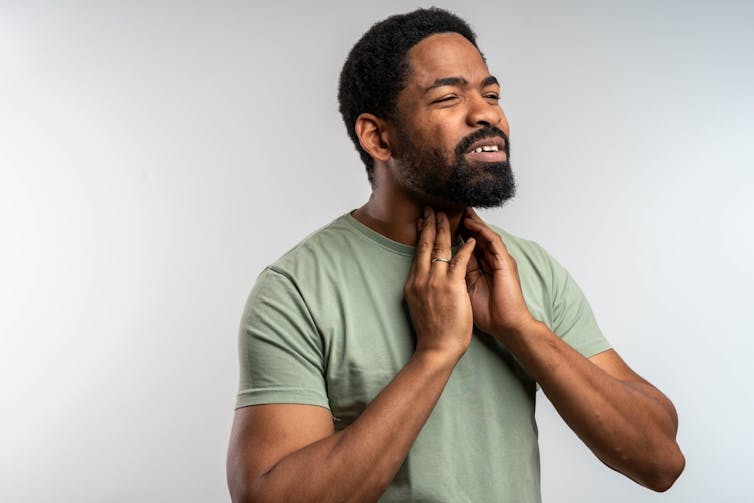
A man touching his neck, a pained look on his face.
If a patient isn’t reassured that their sore throat is nothing to worry about, they may have health anxiety.
Nenad Cavoski/Shutterstock.com

One catalyst for this trend could be the internet. Researchers call this aspect of health anxiety “cyberchondria”.

Studies find that people who worry a lot about their health tend to feel worse, not better, after searching for their symptoms, and that they are more likely to seek further reassurance from doctors and emergency departments.

A dry throat becomes a sign of a serious infection. A headache becomes a brain tumour. A rash becomes sepsis.

The more a person searches, the more alarming possibilities they find. The more alarming possibilities they find, the more urgently they seek reassurance.

Emergency departments are a natural destination for this problematic cycle. They offer rapid testing, expert authority and the promise of immediate safety.

For someone whose worry feels uncontrollable, waiting days for a routine appointment can feel like gambling with survival.

A 2025 study in Australia looked at 400 people who came to emergency care with non-urgent problems. Researchers found that people who worried most about their health were more likely to see symptoms as needing emergency attention, even when they did not.

This group also reported more emergency visits and more use of other health services over the previous six months. This suggests that worry itself, rather than the severity of the symptom, may be driving repeat visits.

Similar findings are emerging in the UK. A recent emergency department study found that severe health anxiety was common in patients well enough to walk into a hospital and was closely tied to how they interpreted and escalated symptoms.

The cost of fear

The cost of this cycle is not just emotional. A 2023 review pulled together studies from Europe and the US and estimated that untreated health anxiety costs healthcare systems between about US$857 (£644) and US$21,138 per person per year.

Although common and costly – and placing high demands on health services – health anxiety remains neglected in policy.

Although health anxiety is recognised by professionals as a real condition, the UK’s National Institute for Health and Care Excellence and the American Psychiatric Association have not published specific guidelines on how doctors should treat it.

In a recent Lancet article, I argued for health anxiety to be treated with the same seriousness as other mental disorders, and for clear routes between physical and mental health services so that health anxiety does not simply keep cycling through clinics and emergency departments.

The absence of guidance leaves doctors in an awkward position. In emergency departments, staff are trained to rule out serious physical illness quickly. But when tests suggest low risk and a patient remains intensely frightened, there is no agreed-upon clinical approach for addressing the fear that brought them in.

A review of health anxiety in hospitals suggests that, without a consistent way to recognise and explain this problem, the encounter often ends with further investigation, brief reassurance or discharge.

These responses are understandable when staff are busy and under pressure, but they don’t address the underlying anxiety and can lead to people coming back again and again.

A consistent approach would help doctors acknowledge someone’s distress without making them more worried, explain what’s happening in a clear way, and connect them to psychological support before a pattern of seeking emergency reassurance becomes established.

Researchers have begun to explore practical ways to do this.

The debate about minor ailments in emergency care is perhaps missing an important point. The issue is not always the symptom, but the meaning the symptom has become.

Until health anxiety is given the same clinical seriousness as other common disorders, emergency departments may continue to absorb a problem they were never designed to treat.

The Conversation

Robin Bailey does not work for, consult, own shares in or receive funding from any company or organisation that would benefit from this article, and has disclosed no relevant affiliations beyond their academic appointment.

ref. Patients blocking A&E with minor ailments? Here’s what’s probably going on – https://theconversation.com/patients-blocking-aande-with-minor-ailments-heres-whats-probably-going-on-271346

Growing a mix of plants in fields can save farmers money and help the environment – new research

Source: The Conversation – UK – By Caroline Brophy, Professor in Statistics, Trinity College Dublin

goodluz/Shutterstock

Farmers have increasingly sown a single type of grass in their fields over the past 100 years, and then added chemical fertiliser to increase their harvest. But new research suggests that there are alternatives that are cheaper and can increase the potential of these grasslands to feed livestock.

My research team and I were particularly interested in the potential of mixing up the species of plants grown in agricultural grasslands and what the benefits might be.

This meant the sowing of two grasses, two legumes (for instance, red clover and white clover) and two herbs (such as plantain and chicory) together in a field. These groups of species can play different roles in a grassland. For example, legumes can extract nitrogen from the atmosphere, and herbs can have deep roots.

We wanted to find out if mixing plants that differ in their ecological traits can provide a nature-based and sustainable solution to reducing chemical fertiliser use.

There was another potential benefit. If farmers could find a way to reduce their chemical fertiliser use, it would lower their operational costs, and also benefit the environment.

The price of chemical fertilisers around the world has risen in the past five years. Costs tripled from 2021 to 2022, and while they have reduced since, they are still higher than pre-2021 prices. So there’s a financial motivation to reduce use.

Chemical fertilisers also harm the environment, including by releasing greenhouse gases and leaching nitrate.

A field with a pink clover growing.
A multispecies mixture growing as part of the research.
Caroline Brophy

In our new international study published in Science, my colleagues from the LegacyNet project and I have shown that planting mixtures of different species can improve grassland yields compared to conventional practices, and crucially do so while using substantially less chemical nitrogen fertiliser.

This means farmers could save money and reduce their environmental footprint by doing this.

How was the research carried out?

The team conducted the same experiment at 26 research institutes across Europe, North America, Asia and New Zealand. At each site, we had plots sized at least three metres by five metres ranging from just one species up to six species, managed with moderate levels of chemical nitrogen fertiliser. We also had plots with a single grass species, managed with at least twice the amount of fertiliser.

In each case we measured crop yield. The research showed that planting a variety of species produced 11% higher yields than sowing a single grass, despite the single grass being treated with more than double the chemical nitrogen fertiliser.

This was in part due to the inclusion of legume species – for example, white clover and red clover, in our six-species multispecies mixtures. Legumes can extract nitrogen from the atmosphere through a natural process.

And this “free” nitrogen is released into the soil to be used by all species in the grassland. Since grass and legumes work well together, a now widespread farming practice is to sow 70% of one grass and 30% of one legume. This is often a combination of the grass perennial ryegrass and the legume white clover.

Does this mean that by growing just one grass and one legume we could get just as much yield as a multispecies mixtures? Not necessarily, because for example, herbs have deeper roots compared to grasses, which can bring benefits such as increased water uptake from lower down in the soil. Indeed, previous research has shown that multispecies mixtures can even mitigate the yield losses associated with drought conditions.

A man in a field kneeling down.
James O’Malley, a researcher, checks the crops growing from the multi species mix.
Caroline Brophy.

Our research found that there was an 18% increase in yield from using our multispecies mixture, compared to sowing 70% of one grass and 30% of one legume.

We also found that having two grasses, two legumes and two herbs was better than having just one grass, one legume and one herb.

From Roman times, agricultural grasslands have been used to feed grazing animals or as part of a crop rotation system, where farmers plant different crops in the same field in rotation, and also leave it fallow. We now know that we can improve grassland systems by combining two grasses, two legumes and two herbs in a field.

Adapting to climate challenges

Climate change poses a significant risk to farming livelihoods, agricultural production and food security. Our experiment spanned a range of climates, which allowed us to investigate the potential of multispecies mixtures to cope with rising temperatures. We found that as temperatures increased, the benefits of multispecies mixtures increased even further, compared to previous practices.

This suggests potential for farmers to increase the productivity of their lands using less fertiliser despite increasing temperatures.

Historically, farmers understood that increasing the species diversity of a grassland could improve productivity compared to sowing a single species.

But the prevalence of using a single crop and applying high amounts of chemical fertilisers has increased massively over the past century, a period ironically termed the “green revolution”. Food shortages after the second world war prompted the use of technologies such as fertilisers, herbicides, pesticides and farm machinery as ways of protecting crops.

How the research was carried out.

And yields from agricultural grasslands flourished as these technologies grew in popularity and until recently, chemical nitrogen fertilisers were relatively cheap.

However, the evidence showing how chemical nitrogen fertilisers emit the potent greenhouse gas called nitrous oxide is now much better known. Chemical fertilisers can cause other environment problems such as nitrate leaching into groundwater. Creating chemical fertilisers is an intensive industrial process that relies heavily on burning fossil fuels.

In the past two decades, scientific studies testing species diversity in agricultural grasslands began to emerge. There was evidence that mixing grass and legume species could improve the yields compared to grass species being grown on their own.

Our study further advances this knowledge to show that we can do better by planting mixtures of grasses, legumes and herbs, and with less chemical fertiliser.

This research confirming that farmers can produce more by using less fertiliser is a win for farmers’ pockets and a win for the environment.


Don’t have time to read about climate change as much as you’d like?

Get a weekly roundup in your inbox instead. Every Wednesday, The Conversation’s environment editor writes Imagine, a short email that goes a little deeper into just one climate issue. Join the 47,000+ readers who’ve subscribed so far.


The Conversation

Caroline Brophy receives funding from Research Ireland Frontiers for the Future program, grant number 19/FFP/6888; the Department of Agriculture, Food & the Marine, project ref. 21R456; and the European Union’s Horizon 2021 doctoral network program under the Marie Skłodowska-Curie grant agreement No. 101072579 (LegumeLegacy).

ref. Growing a mix of plants in fields can save farmers money and help the environment – new research – https://theconversation.com/growing-a-mix-of-plants-in-fields-can-save-farmers-money-and-help-the-environment-new-research-271432

Unions have been in decline in the UK for 50 years. A new law could begin to reverse that trend

Source: The Conversation – UK – By Steven Daniels, Lecturer in Politics, Edge Hill University

The UK’s employment rights bill will usher in major changes for workers from April 2026. But beyond promising improved rights for employees over unfair dismissal and sick pay, one of the most controversial aspects of the bill concerns the rights of trade unions.

Millions of UK workers belong to a trade union. They are found in virtually every key industry in the UK, including healthcare, education and transport. This new legislation promises to strengthen their rights – notably by forcing employers to make their staff aware that they have the right to join one.

Under the new law, employers will have to share a government-approved message with workers setting out their right to join a union and details of the unions the employer recognises. The government hopes that this will put pressure on exploitative employers to treat staff better and not to discourage union membership.

By the time the bill is fully rolled out in 2027, changes are also expected around unfair dismissal, bereavement leave, and zero-hour contracts – all changing in favour of the worker.

Politically, this milestone allows Labour to reassert its longstanding relationship with the broader trade union movement, which was vital to the founding of the party back in 1900.

The bill has been approved by both the Commons and the Lords, and when it becomes law it will represent the biggest change in favour of trade unions since the ascent of Margaret Thatcher in the late 1970s. More broadly, it could mark the start of reversing 50 years of continuous trade union decline in the UK.

My research focuses on the history of the British trade union movement since the 1980s. In the UK, unions reached the peak of their power in the 1970s, even contributing to the fall of Edward Heath’s Conservative government in 1974.

Then, the “winter of discontent” (characterised by widespread industrial action) helped usher Thatcher to electoral victory in 1979 on a promise of taking a tougher line on trade unions.

If anything, Thatcher overdelivered on this promise. Over the next decade, numerous new laws reduced the ability of unions to call disruptive strike action.

These included forcing votes to take place if any strike action was to be legal, restricting what counts as a “trade dispute”, protecting workers who refused to go on strike from reprisals, and giving employers more power to dismiss those taking part in unofficial strike action.

Tightening the screw

Subsequent Conservative governments followed this pattern, further restricting union power. In the 1990s, John Major’s government gave employers the power to decide whether to recognise a union, regardless of the size of the membership. It also mandated that unions give seven days’ notice of strike action.

David Cameron’s government doubled the notice period for strike action, and required a 50% turnout for any ballot to be legal, with strike action itself tightly regulated. Then the government of Boris Johnson allowed employers to hire temporary agency workers to undercut strike action.

Rishi Sunak’s government introduced “minimum service levels” in key industries in the event of strike action, with unions legally liable if they refused to co-operate with employers and make members go to work.

It wasn’t just the Conservatives. Even when New Labour was elected in 1997, hopes for a change in union fortunes did not materialise. The governments of Tony Blair and Gordon Brown refused to reverse or change the restrictive legislation, concerned that being seen as too pro-union would damage their re-election prospects, particularly among middle class voters.

If anything, New Labour’s policies may have inadvertently reduced union power further. Laws such as the National Minimum Wage Act reduced the need for collective bargaining.

Labour’s new bill will reverse some of these restrictions. When fully implemented, minimal service levels and the 50% turnout requirement will be abolished in favour of a simple majority. The notice period will be reduced to 10 days, and rules on union recognition and balloting will be simplified.

But the years of decline have had consequences, both for employers and staff. The number of working days lost to strike action declined significantly: having peaked at 29.5 million in 1979, it was as low as 170,000 in 2015.

This suggests that unions are increasingly unable to bring their members together and encourage them to take strike action. An increasingly restrictive legal environment probably helped employers keep pressure on workers.

Similarly, the number of workers with union membership has halved – from a peak of 13.2 million in 1979 to 6.7 million in 2023. This represents a continuous decline since 1979.

Among younger workers, those with no memory or experience of what strike action and collective bargaining can achieve, the unionisation rate is even lower. In 2022, only 3.7% of trade union members were aged between 16 and 24. As well as the long-term decline in their power and efficacy, unions have also become much less visible in the workplace.

congested traffic around the centre of paris as the result of a transport workers' strike.
Despite low membership, French unions can disrupt day-to-day lives – as happened during a transport worker walkout in 2019.
Tupungato/Shutterstock

When compared internationally, the UK’s trade union landscape is even worse. French unions wield significant influence even though a relatively low proportion of the workforce belongs to a union, and can effectively disrupt transport and even energy supplies.

Germany’s social partnership model provides formal roles for unions in both business and politics, such as giving union representatives a seat on the board, resulting in low levels of conflict and union successes.

And South Africa elected a former trade union leader, Cyril Ramaphosa, as its president in 2018 (and for a second term in 2024).

The employment rights bill will not reverse decades of union decline and marginalisation in the UK overnight – but it represents the first pro-union reform in decades. For workers, this could reverse long-term trends in wage suppression and exploitation.

However, for many unions this is not a replacement for five decades of restrictive legislation. Even when the bill receives royal assent and becomes law, unions will still be leagues away from their 1970s peak. But given what it could mean for workers’ rights and representation in the workplace, this bill is the closest thing unions have had to a political and legal “victory” in decades.

The Conversation

Steven Daniels is a member of the University and College Union (UCU).

ref. Unions have been in decline in the UK for 50 years. A new law could begin to reverse that trend – https://theconversation.com/unions-have-been-in-decline-in-the-uk-for-50-years-a-new-law-could-begin-to-reverse-that-trend-271702

Visible for diversity, invisible in research: the burdens Black female academics face in universities

Source: The Conversation – UK – By Yaz Iyabo Osho, Director of Academic Professional Development, University of Westminster

Lenar Nigmatullin/Shutterstock

Black women are underrepresented in senior roles in British academia. As of May 2024, there were only 70 Black women professors.

This is less than 1% of all female professors in the UK. Black women are also more likely to be employed on fixed-term contracts in academia.

In our research, we’ve reviewed academic studies on the experiences of Black women in UK universities to identify some of the key reasons for this under-representation.

Promotion to the role of professor typically requires evidence of sustained academic excellence. This includes high-quality research, winning grant funding and publication in high-impact journals. It also requires supervising PhD students and a record of disciplinary or institutional leadership.

Many Black women academics in the UK work in newer, less research-intensive institutions where teaching and student support loads are comparatively higher. This can limit time for research and publishing.

What’s more, these opportunities for promotion are unevenly distributed. Black women are more often overburdened with pastoral care, teaching and equality, diversity and inclusion work. This is labour that’s important to the university, but undervalued in promotion criteria.

Invisible labour

Evidence suggests that Black women scholars in academia experience gendered and anti-Black racism. This can severely affect their work environments, career progression and wellbeing in academic institutional spaces.

They have to grapple with the exhausting task of proving they belong in universities that are not built with them in mind. This sense of not belonging is reinforced by structural and symbolic signals. Hallways are adorned with portraits of white male scholars, reading lists dominated by western scholarship and disciplinary norms rooted in Eurocentric assumptions.

Addressing this question of belonging often means taking a lead on work to make these spaces more equitable. Black women may find themselves supporting Black and racially minoritised students who may feel more able to connect with them than other academics.

They may carry out extra work that their colleagues don’t. This includes promoting equality, diversity and inclusion initiatives and building support networks, while trying to meet the same research and scholarship demands as others.

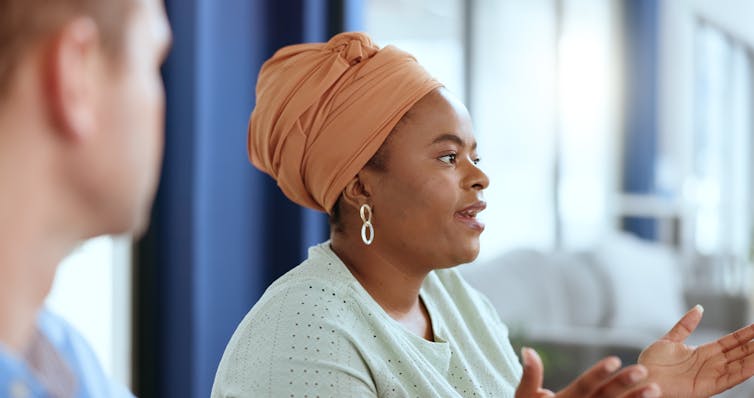
Black woman in meeting
Black women often take a lead in equality, diversity and inclusion initiatives.
PeopleImages/Shutterstock

Black women are often both highly visible and yet largely invisible in academia. They’re visible as they are one of a few standing out for their ethnicity – becoming symbols of diversity.

Yet their scholarship is frequently under-recognised or overlooked. At the same time, the additional labour they undertake often goes unseen and they are less like to have senior sponsorship than their peers.

The burden of being under scrutiny and engaging in emotional labour often weighs heavily on Black women. Black women also have to navigate sometimes hostile environments. This can take subtle forms, such as being excluded in meetings and being treated as less credible than non-Black colleagues.

Making connections

Despite the challenges faced by some Black women academics, there are independent networks outside of universities set up by Black academics that are dedicated to supporting women from racial minorities.

One of us (Yaz Iyabo Osho) founded Global Ethnic Majority Women in Academia. Others include the Black Female Academic Network and the Sisters in Higher Education Network. These networks collectively offer peer support and advocacy. They also run conferences, events and opportunities for development for Black women scholars.

These networks also offer vital forums for communication and collaboration. This is important for Black women academics when they encounter difficulties within their own institutions. Informal networks can also help foster social capital and peer support. This can be the difference between leaving a career in academia and staying put.

Collaborative spaces, peer networks and co-mentorship can build both professional capital and emotional resilience. These are not just discussion spaces outside of the university, but places for knowledge production, community building, and collective resistance.

Action from universities must take the intersecting oppressions Black women face seriously. Generic policies on equality, diversity and inclusion fail to account for how racism, sexism, ageism, and classism intersect in academic life.

Requiring Black women academics to do the emotional, pastoral and institutional labour of improving their own inclusion – at the expense of their career – is not true inclusion. Structural change and collective accountability is required.

The Conversation

The authors do not work for, consult, own shares in or receive funding from any company or organisation that would benefit from this article, and have disclosed no relevant affiliations beyond their academic appointment.

ref. Visible for diversity, invisible in research: the burdens Black female academics face in universities – https://theconversation.com/visible-for-diversity-invisible-in-research-the-burdens-black-female-academics-face-in-universities-260975

Lo que los dientes nos enseñan sobre la evolución de la vida acuática

Source: The Conversation – (in Spanish) – By Antonio Figueras Huerta, Profesor de investigación del Consejo Superior de Investigaciones Científicas, Instituto de Investigaciones Marinas (IIM-CSIC)

A lo largo de su vida, un tiburón puede producir más de 30 000 dientes. Marcelo Cidrack / Unsplash., CC BY

Si hay un rasgo que refleja con claridad la enorme creatividad de la evolución en el mar, es la boca.

En los océanos y aguas dulces del planeta, los dientes han adoptado las formas más insospechadas: algunos animales carecen por completo de ellos, mientras que otros producen decenas de miles a lo largo de su vida. En el medio acuático, donde la comida puede escapar, flotar o resistirse, la boca se convierte en un laboratorio evolutivo: los dientes son herramientas, armas y, en muchos casos, auténticas piezas de ingeniería biológica.

Útiles “raspadores”

Lampetra fluviatilis o lamprea, un pez ‘sin mandíbulas’.
Wikimedia Commons., CC BY

La historia comienza con los vertebrados más primitivos, los agnatos, un grupo sin mandíbulas que incluye a las lampreas. Estos animales, que recuerdan a una mezcla de anguila y vampiro, no poseen dientes verdaderos, sino un disco oral cubierto de estructuras córneas en forma de pequeños ganchos o raspas. Con ellos, se adhieren a otros peces y se alimentan de su sangre o de los fluidos de sus tejidos.

Aunque su aspecto es inquietante, sus “dientes” no son dientes en sentido estricto. Están formados por queratina, como nuestras uñas o el pelo, y no por esmalte. Son un invento distinto de la naturaleza para resolver el mismo problema: cómo agarrar y desgarrar.

Durante siglos, los zoólogos intentaron clasificar las especies de lamprea por la forma y número de estos “raspadores”. Sin embargo, estudios genéticos recientes han demostrado que esa clasificación era engañosa: especies que parecían diferentes resultaron ser genéticamente iguales, y viceversa.

Tiburones: fábricas dentales

Si las lampreas representan el origen más humilde de la dentición, los tiburones encarnan el extremo opuesto. En ellos, la naturaleza se desató. Estos peces cartilaginosos, que llevan dominando los mares desde antes de los dinosaurios, han convertido su dentadura en una fábrica perpetua de dientes.

Un gran tiburón blanco puede tener entre 120 y 130 dientes funcionales, organizados en varias hileras. Cada vez que uno se cae, algo que puede ocurrir al atrapar presas, otro ya está listo para reemplazarlo. A lo largo de su vida, un tiburón puede producir más de 30 000 dientes. Algunos incluso almacenan varios miles a la vez en una especie de cinta transportadora viva que garantiza que nunca les falte filo.

Tiburón tigre fotografiado en Las Bahamas.
Wikimedia Commons., CC BY

El tiburón tigre (Galeocerdo cuvier) lleva la variación a otro nivel. A medida que crece, cambia el diseño de sus dientes: los jóvenes tienen piezas estrechas, perfectas para atrapar peces, mientras que los adultos desarrollan cuchillas afiladas, capaces de desgarrar tortugas o mamíferos marinos. Este fenómeno, conocido como cambio ontogenético, muestra cómo la dentición refleja las necesidades del animal en cada etapa de su vida.

Detrás de esta maquinaria de recambio hay un secreto celular: en la lámina dental del tiburón existen poblaciones de células madre que regeneran continuamente los dientes.

Curiosamente, las mismas bases moleculares que controlan este proceso se parecen a las que intervienen en el desarrollo dental humano. Estudiar a los tiburones, por tanto, no solo nos dice cómo cazan, sino también cómo podrían, algún día, regenerarse los dientes en medicina humana.

Peces óseos: los más curiosos

En los peces óseos o teleósteos la diversidad es aún mayor. Este grupo, que incluye desde caballitos de mar hasta meros y salmones, ha experimentado con todas las posibles soluciones dentales.

Dibujos de teleósteos realizados por Francis de Laporte de Castelnau en su expedición desde Rio de Janeiro a Lima, 1856.
Francis de Laporte de Castelnau.

Algunos, como el tambor de agua dulce (Aplodinotus grunniens), poseen más de mil diminutos dientes faríngeos situados en el fondo de la garganta, donde trituran moluscos y crustáceos. Otros, como el sargo (Archosargus probatocephalus), sorprenden por su dentición casi “humana”: incisivos al frente, molares detrás y una disposición perfectamente adaptada para romper conchas o triturar algas.

Pero no todos poseen dientes. Muchas especies carecen de ellos y se alimentan por succión, como los caballitos de mar, o mediante estructuras de filtrado situadas en las branquias.

Y, en el extremo de la rareza, algunos teleósteos los desarrollan fuera de la boca: en la piel, en las aletas o incluso en los opérculos. Estos “dientes externos”, llamados odontoides, se sitúan en la frontera entre escamas y los dientes y nos dan pistas sobre cómo los primeros vertebrados transformaron escudos dérmicos en auténticos trituradores hace cientos de millones de años.

Un ejemplo de pez con dientes externos es el pez rata manchado Hydrolagus colliei, que posee un apéndice en la frente cubierto de dientes que utiliza para la reproducción.
Wikimedia Commons., CC BY

Ballenas, cuestión de barbas

Los mamíferos marinos siguieron un camino evolutivo completamente diferente. Aunque la forma de su cuerpo sea similar, todos sabemos que las ballenas y los delfines son mamíferos que descienden de antepasados terrestres.

Entre ellos, encontramos dos estrategias opuestas. Los odontocetos, el grupo de los delfines, cachalotes y marsopas, conservan los dientes, aunque con una sorprendente variedad de formas.

El narval solo tiene una función, que se alarga y retuerce hasta formar su famoso colmillo, mientras que algunos delfines pueden superar los 160 dientes. El cachalote, en cambio, los concentra todos en la mandíbula inferior: de 36 a 50 piezas cónicas que encajan en los huecos del maxilar superior.

Ballena jorobada, en el santuario marino Stellwagen Bank, océano Atlántico.
Wikimedia Commons., CC BY

En el otro extremo, están los misticetos o ballenas barbadas. Durante su desarrollo embrionario, forman dientes que nunca llegan a salir. En su lugar, la naturaleza inventó una solución nueva: las barbas, unas láminas de queratina dispuestas como un peine que les permiten filtrar toneladas de krill y plancton. Este cambio –de morder a filtrar– es uno de los saltos evolutivos más radicales del reino animal.

Una ventana a la evolución

Más allá de la mera curiosidad, estudiar la diversidad dental nos revela cómo la evolución resuelve un mismo problema de distintas maneras. Los dientes son una huella de la dieta, del comportamiento y del entorno de cada especie.

Diente rostral de un pez sierra extinto, Onchorpristis numidus, con 80 millones de años de antigüedad.
Wikimedia Commons., CC BY

En los tiburones, la sustitución continua refleja un equilibrio entre fuerza y fragilidad: las presas resbalan, los dientes se rompen, pero siempre hay repuestos. En las ballenas barbadas, la pérdida total de dientes simboliza la transición a una nueva forma de alimentarse. Y en los peces óseos, la variedad extrema muestra cómo una mandíbula puede convertirse en un laboratorio evolutivo de adaptaciones infinitas.

Incluso la forma microscópica del esmalte o la disposición de los dientes en el cráneo puede revelar estrategias ecológicas: peces con dientes puntiagudos suelen ser cazadores de presas móviles, mientras que los de dientes planos y fuertes son trituradores de conchas o raspadores de algas.

En cada diente, se esconde una historia de millones de años. Desde la lamprea que se aferra como un vampiro en la oscuridad de un río, hasta el delfín que atrapa peces con precisión milimétrica o la ballena que filtra océanos enteros, todas ellas muestran que la evolución, cuando se trata de bocas, nunca deja de sonreír.

The Conversation

Antonio Figueras Huerta no recibe salario, ni ejerce labores de consultoría, ni posee acciones, ni recibe financiación de ninguna compañía u organización que pueda obtener beneficio de este artículo, y ha declarado carecer de vínculos relevantes más allá del cargo académico citado.

ref. Lo que los dientes nos enseñan sobre la evolución de la vida acuática – https://theconversation.com/lo-que-los-dientes-nos-ensenan-sobre-la-evolucion-de-la-vida-acuatica-271217

El eco de ‘La voz de Hind’: cuando el relato resuena más que los hechos

Source: The Conversation – (in Spanish) – By Isadora García Avis, Profesora de Narrativa Audiovisual, Universitat Internacional de Catalunya

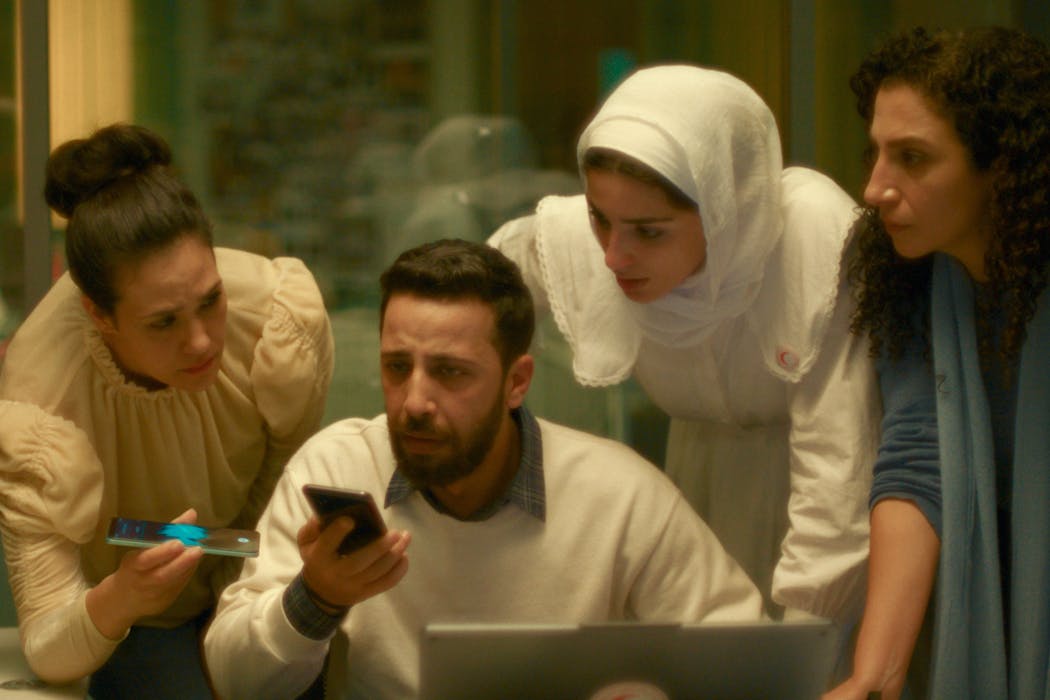
Fotograma de _La voz de Hind_ con los trabajadores de la Media Luna Roja hablando por teléfono con Hind. La Zona

Una ovación en pie que se prolongó durante 23 minutos. Esa fue la acogida que tuvo la película La voz de Hind (Kaouther Ben Hania, 2025) en la última edición de la Bienal de Venecia, festival donde también recibió el Gran Premio del Jurado. Después llegaron el Premio del Público en el Zinemaldia de San Sebastián (con una puntuación histórica de 9.52) y el Premio del Jurado en el Festival Internacional de Cine de Chicago. El último hito logrado por este filme ha sido una nominación a los Globos de Oro, en la categoría de Mejor Película de Habla No Inglesa.

Un grupo de personas serias delante de un photocall.
El equipo de La voz de Hind presentó la película en el Festival Internacional de Cine de Venecia 2025.
La Zona

La voz de Hind cuenta la historia real de Hind Rajab Hamada, una niña palestina de 5 años que fue asesinada por el ejército israelí en Gaza. El 29 de enero de 2024, el coche en el que Hind viajaba con su tío, su tía y cuatro primos recibió 335 impactos de bala. Escondida entre los escombros del vehículo, y rodeada por los cadáveres de sus familiares, Hind pasó las últimas horas de su vida hablando por teléfono con voluntarios de la Media Luna Roja (Omar, Rana, Nisreen, Mahdi), que hicieron todo lo posible por intentar rescatarla.

A principios de 2024, este suceso fue cubierto por numerosos medios internacionales y tuvo un impacto notable en la opinión pública. Sin embargo, a medida que pasaron las semanas y los meses, quedó diluido entre las nuevas noticias que se publicaban diariamente sobre el genocidio en Gaza.

Ahora, en forma de película, avalada por su trayectoria en festivales y por el aclamo de la crítica, la historia de Hind está logrando conectar con espectadores de todo el mundo. ¿Por qué los relatos audiovisuales que dramatizan hechos reales pueden, en ocasiones, interpelar al público más que los datos y las estadísticas?

La era de la sobreinformación

Nunca antes los seres humanos habíamos podido acceder a tanta cantidad de información, y de manera tan inmediata, como ahora. Estamos rodeados de noticias, 24 horas al día, 7 días a la semana. En nuestros bolsos y bolsillos llevamos un aparato móvil que nos permite acceder instantáneamente a todo lo que está ocurriendo en cualquier lugar del mundo. En tan sólo unos segundos, y con un único clic, podemos encontrar infinidad de datos sobre cualquier tema.

Sin embargo, esto también tiene consecuencias negativas: además de la rápida propagación de bulos y desinformaciones, tal sobrecarga puede generar hastío e incluso desensibilización en los ciudadanos.

A esto se le añade que la propia naturaleza de los ciclos informativos, tan acelerados y saturados de contenido, facilita que las noticias tengan una vida muy corta. Un suceso trágico nos puede conmocionar en un momento determinado, para caer en el olvido pocos días después. Eso ocurrió, por ejemplo, con la foto de Aylan Kurdi, el niño sirio que falleció intentando cruzar el mar Egeo para llegar a Grecia. Su imagen dio la vuelta al mundo y se convirtió en el símbolo de una crisis migratoria que, desde entonces, se ha agravado aún más.

Ahora bien, cuando convertimos un hecho real en un relato audiovisual, dramatizando lo ocurrido con herramientas propias de la ficción, el impacto emocional de esas historias llega a los espectadores de una manera diferente.

El poder de las historias (y de sus personajes)

Los relatos audiovisuales (sean de ficción o estén basados en hechos reales) son recreaciones de la realidad humana. Como tales, pueden ayudarnos a comprender cuestiones profundas sobre nuestra naturaleza, a viajar a otras realidades y conocer otras culturas, a entendernos a nosotros mismos y a entender mejor a otros.

Esta es una de las razones por las que, para el escritor Paul Auster, los seres humanos necesitamos las historias “casi tanto como el comer, y sea cual sea la forma en que se presenten, en la página impresa o en la pantalla de televisión, resultaría imposible imaginar la vida sin ellas”.

Generalmente, las obras que más recordamos son aquellas que nos han hecho sentir emociones de manera más intensa. Y esa conexión emocional que establecemos con las historias proviene, en gran medida, de la empatía que nos generan sus personajes. El guionista y analista Karl Iglesias afirma que, al escribir el guion de una película, es imprescindible emplear técnicas narrativas que potencien ese impacto emocional.

En una escena de La voz de Hind, Nisreen le explica a Omar que, tras perder a alguien en una llamada de emergencia, es bueno pedir una foto de esa persona. Es decir, ponerle una cara. Lo mismo ocurre con los relatos: cuando contamos una historia con nombre y apellidos, situamos el foco en un personaje concreto. En el caso de las películas basadas en hechos reales, ponerle cara a una persona puede lograr que deje de ser un mero número en una estadística. Así, su historia será más difícil de olvidar.

Una fotografía de una niña enfocada delante del rostro desenfocado de un hombre.
Durante la noche en la que intentan activar el protocolo de ayuda, Omar cuelga imágenes de Hind en la oficina para que no se les olvide a quién están intentando salvar.
La Zona

Técnicas narrativas para recrear hechos reales

La voz de Hind es un claro ejemplo de cómo la forma en la que se cuenta una historia puede reforzar el mensaje que se quiere transmitir. El suceso narrado se prolongó durante varias horas, pero la película lo condensa en 89 minutos.

No sólo se han seleccionado los momentos clave de lo ocurrido; también se les ha dotado de una estructura de relato cinematográfico, con su conflicto ascendente, su midpoint, sus puntos de giro y un clímax final desolador: cuando la ambulancia que por fin ha sido autorizada para rescatar a Hind está a tan sólo unos metros de la niña, se escucha el impacto de un proyectil. La comunicación con los rescatistas, Yusuf Zeino y Ahmed al-Madhoun, se corta inmediatamente. En ese preciso instante, la desesperanza que invade las oficinas de la Media Luna Roja atraviesa también a los espectadores.

Más allá de las técnicas tradicionales de guion, el equipo creativo de esta película tomó una decisión radical: mezclar el relato ficcionado con la voz real de Hind. Desde el primer momento la audiencia sabe que, aunque está viendo a actores interpretar a los voluntarios de la Media Luna Roja, las grabaciones con la voz de Hind son auténticas.

Un fotograma de la película en el que se reproducen los audios de Hind indica que las voces en el teléfono son reales.
La Zona

Fragmentos de esas grabaciones fueron compartidos por la organización en redes sociales en 2024, con el objetivo de concienciar sobre lo que estaba ocurriendo en Gaza. Sin embargo, un reel es breve y se pierde rápido en las profundidades de internet. Cuando las grabaciones se integran en un relato audiovisual como La voz de Hind, se puede generar un impacto emocional de manera más certera.

La dramatización se entrelaza con lo real

Saber que estamos escuchando a la verdadera Hind pedir ayuda, en los últimos momentos de su vida, lo cambia todo. Esta decisión creativa hace que el espectador establezca un vínculo inmediato con la niña y con su historia. Se trata de la clave narrativa del relato y, para la directora de la película, la tunecina Kaouther Ben Hania, contarlo de otra manera no habría tenido sentido.

Así lo explica la propia cineasta: “Cuando escuché la grabación, lo primero que hice fue llamar a su madre. Estaba de luto, y lo primero que me dijo fue: ‘Quiero que se escuche la voz de mi hija’. Así que, para mí, era una obligación moral honrar su voz”.

La hibridación entre realidad y ficción se expande en algunos puntos concretos de la película, cuando también se escuchan las voces de los voluntarios reales, entrelazadas con las voces de los actores que les dan vida. En una de las últimas escenas, además, vemos sus rostros. Omar y Nisreen están siendo grabados con un teléfono móvil mientras hablan con Hind. En un momento dado, la lente de la cámara desenfoca a los actores, y en la pantalla del móvil aparecen los rostros de los verdaderos voluntarios. Esta decisión formal, en un momento de máxima tensión dramática, nos vuelve a recordar que esto es una historia real, incrementando aún más el impacto emocional de lo narrado.

Dos voluntarios hablan con una niña por unos cascos y un micro.
Omar y Rana hablando con la niña por teléfono.
La Zona

El eco de la voz de Hind

Hind Rajab Hamada era una niña de 5 años. En la escuela estaba en la clase de las mariposas. Le daba miedo la oscuridad y le encantaba ir a la playa de Gaza. De hecho, quería que pararan las bombas y los disparos para poder volver a jugar en la arena con su familia. Tanto al inicio como al final de la película podemos escuchar el sonido de esas olas del mar que tanto añoraba.

Cuando nos cuentan esta historia en forma de relato cinematográfico, con técnicas de narrativa audiovisual y utilizando la voz de la propia Hind, los espectadores podemos establecer una conexión emocional mucho más profunda con ella. Así, Hind deja de ser una mera cifra en las estadísticas, una niña más entre las decenas de miles de personas asesinadas en Gaza. Y, gracias al alcance que está teniendo la película, el eco de su voz continúa resonando por todo el mundo.

The Conversation

Isadora García Avis no recibe salario, ni ejerce labores de consultoría, ni posee acciones, ni recibe financiación de ninguna compañía u organización que pueda obtener beneficio de este artículo, y ha declarado carecer de vínculos relevantes más allá del cargo académico citado.

ref. El eco de ‘La voz de Hind’: cuando el relato resuena más que los hechos – https://theconversation.com/el-eco-de-la-voz-de-hind-cuando-el-relato-resuena-mas-que-los-hechos-271151

La nueva guerra rusa se libra dentro de los modelos de IA

Source: The Conversation – (in Spanish) – By Antonio César Moreno Cantano, Miembro del Grupo de Investigación Paz y Seguridad Internacional de la UCM (UCM-971010-GR96/20). Investigador del proyecto Radicalización política en entornos lúdicos digitales: producción, mediación y diseminación de ideologías extremistas -Rage Game- (PID2024-158794OB-I00), financiado por la Agencia Estatal de Investigación (Ministerio de Ciencia, Innovación y Universidades), Universidad Complutense de Madrid

La desinformación, como herramienta de influencia geopolítica, ha sido una constante histórica, pero su naturaleza y alcance han sido transformados radicalmente por la emergencia de la inteligencia artificial (IA) generativa.

La irrupción de los grandes modelos de lenguaje (LLM, por sus siglas en inglés), como ChatGPT o Gemini, ha redefinido el campo de batalla informativo, desplazando el foco de la manipulación de las audiencias humanas a la contaminación de los propios sistemas algorítmicos.

Inundación de contenido pro-Kremlin

Este texto aborda esta mutación a través del análisis del fenómeno conocido como LLM grooming, una estrategia de influencia atribuida a actores estatales, notablemente la Federación Rusa, que busca infiltrar narrativas sesgadas directamente en los conjuntos de datos de entrenamiento de la IA.

Esta maniobra consiste en la inundación deliberada de la web con volúmenes masivos de contenido de baja calidad o narrativas manipuladas, diseñados específicamente para ser capturados por los rastreadores (crawlers) de los modelos de IA.

El objetivo primordial es que estos textos, que replican la visión pro-Kremlin, se integren en los conjuntos de datos de entrenamiento de los LLM o en las fuentes de información en tiempo real que estos modelos utilizan para generar respuestas.

El mecanismo de LLM grooming busca alterar la base cognitiva de los sistemas automatizados. Cuando un usuario interactúa con un LLM para obtener información sobre temas sensibles –como la guerra en Ucrania, la expansión de la OTAN o procesos electorales occidentales–, el modelo ofrece respuestas que ya incorporan sutilmente las narrativas diseñadas por Moscú.

Este proceso no solo busca influir en la opinión pública humana, sino que sesga el resultado generado por los sistemas de IA, convirtiéndolos en vectores involuntarios de propaganda.

La efectividad de esta táctica reside en la propia arquitectura de los LLM, que dependen de la abundancia y diversidad de datos para su funcionamiento, haciendo que la saturación intencionada de fuentes sesgadas sea un método de contaminación altamente escalable.

Portal Kombat en África

Un ejemplo paradigmático de esta estrategia es la operación Portal Kombat, documentada en febrero de 2024 por la agencia francesa VIGI-NUM/SGDSN.

Este informe reveló una red coordinada de al menos 193 portales web. La característica distintiva de esta red es que no produce contenido original, sino que se dedica a la replicación masiva y automatizada de publicaciones de medios rusos y figuras influyentes favorables al Kremlin. El propósito es claro: influir en países occidentales mediante la amplificación artificial de contenido.

La red Portal Kombat utiliza técnicas avanzadas de optimización para motores de búsqueda (SEO) y difusión multilingüe para asegurar que sus dominios sean indexados por motores de búsqueda, rastreadores y agregadores de noticias que, a su vez, son las fuentes primarias de los LLM.

Esta integración automática convierte a los modelos de IA en un vector de influencia invisible para la mayoría de los usuarios. Además, esta táctica se exporta a regiones geopolíticamente sensibles, como el continente africano, donde las campañas de Manipulación e Interferencia de Información Extranjera (FIMI) de Rusia encuentran ecosistemas informativos con menor resistencia institucional.

En estos contextos, la guerra informativa muta: el objetivo ya no es solo desbordar las redes sociales, sino infectar las infraestructuras algorítmicas que son percibidas erróneamente como neutrales.

Este patrón se extiende al ámbito electoral. Estudios recientes, como el del Center for International Governance Innovation (CIGI) sobre la injerencia rusa en las elecciones de EE. UU., indican un desplazamiento del foco: la manipulación se dirige a “contaminar” los LLM en lugar de centrarse exclusivamente en los electores humanos.

En la práctica, cuando un sistema de IA genera resúmenes, predicciones o análisis, la narrativa manipulada ya está integrada, permitiendo que los modelos actúen como generadores de propaganda sin que el usuario final detecte la fuente del sesgo.

¿Qué está en juego?

La amenaza del LLM grooming presenta una doble dimensión crítica. En primer lugar, el volumen de información: la necesidad insaciable de los LLM por datos de entrenamiento hace que la inyección de contenido prorruso desplace la base del modelo hacia un sesgo estructural.

En segundo lugar, la escalabilidad y automatización: al desplegar redes de replicación optimizadas para crawlers (un programa informático que navega por internet de forma automática, siguiendo enlaces para recopilar y analizar el contenido de las páginas web), Rusia reduce drásticamente los costos de producción de propaganda, multiplicando el alcance de su “fábrica de ruido” informativo y dirigiéndola al algoritmo, no al consumidor final.

Para las democracias y los medios de comunicación, esto plantea desafíos inéditos:

  • Fragmentación de la autoridad cognitiva: el debate sobre la verdad se desplaza de lo que el humano consume a lo que la IA ofrece como referencia. Si los sistemas generativos legitiman narrativas manipuladas, se erosiona la capacidad de la sociedad para señalar la propaganda.

  • Opacidad y trazabilidad de la influencia: rastrear la contaminación exige auditar las complejas y a menudo opacas cadenas de entrenamiento de los LLM, incluyendo rastreadores, agregadores de datos e indexación web.

  • Erosión ético y política y de la memoria social: la dependencia de “cajas negras” de IA que replican manipulación socava la confianza fundamental en la información digital y, al igual que en el concepto orwelliano de la manipulación de la memoria social, debilita la capacidad de resistencia política al fragmentar la realidad compartida.

Frente a esta realidad, las líneas de acción deben combinar estrategias clásicas (verificación, alfabetización mediática) con una adaptación regulatoria urgente.

En conclusión, la guerra informativa de Rusia no esperó a que la IA madurara para atacarla: la está moldeando desde su base de datos. La estrategia de LLM grooming abre un frente silencioso pero decisivo, donde el adversario busca contaminar el algoritmo que define lo que la sociedad percibe como verdad.

The Conversation

Antonio César Moreno Cantano no recibe salario, ni ejerce labores de consultoría, ni posee acciones, ni recibe financiación de ninguna compañía u organización que pueda obtener beneficio de este artículo, y ha declarado carecer de vínculos relevantes más allá del cargo académico citado.

ref. La nueva guerra rusa se libra dentro de los modelos de IA – https://theconversation.com/la-nueva-guerra-rusa-se-libra-dentro-de-los-modelos-de-ia-270554