That’s because unlike most other ball sports, a golfer spends most of the time thinking about their game instead of actually playing it: the contact time a player has with the ball is minuscule compared to the time spent planning the next shot, or frustratedly replaying a previous wonky hit.
This can take a toll on even the best players – who can forget Greg Norman’s 1996 US Masters collapse, considered one of the worst chokes in the history of sport?
But there can be times when these wobbles go next level: the yips.
Let’s unpack this rare, fascinating and occasionally devastating disorder, which can affect athletes in sports such as golf, tennis, archery, baseball, softball and darts.
What are the yips?
The yips is a movement disorder that involves involuntary muscle spasms that disrupt the normal execution of mostly small muscle movements, such as finger and hand movements.
It is likely a result of bad injuries, training these small muscle groups too much, and/or worrying excessively about an upcoming performance.
In that respect, it is largely a mental issue, but the causes can be physical, psychological, or both.
Athletes with the yips can struggle to hit a ball with another object (such as in golf or tennis) or accurately throw a ball or object toward a target (such as darts or baseball).
It is unclear how many athletes are affected by the yips, but some studies in golf (the most frequently yips-affected sport) estimate between 17% and even up to 50% of serious golfers have endured this problem.
Although more research is needed, golfers are probably more at risk due to a combination of the small motor movements that occur during a golf swing and the sport’s intense mental pressures.
Much of the golf world was captivated by Ian Baker-Finch’s battle with the yips.
There are different causes
Three causes can trigger the yips: something physical (a past injury), something psychological (anxiety experienced when performing the task), or combined (such as a previous traumatic sporting event like failing under pressure in an important moment).
Yips always involve involuntary muscle spasms: jerking and “freezing” of body parts crucial to perform a skill.
Athletes may experience these physical ailments with or without being nervous.
It’s not just ‘choking’
The yips is a term often used inaccurately by media and fans to explain why athletes miss an AFL set shot or a short putt in golf.
This is incorrect – the term “choking under pressure” should be used instead.
the yips involve involuntary muscle movements; choking does not
the yips may occur over a prolonged period (days, weeks, months); choking only occurs during one event or competition
the yips occur with or without being nervous (they can happen during training or in competition); choking only occurs when an athlete is nervous (for example, during competition).
The yips can be a chronic, more severe form of choking where an increase in anxiety leads to the involuntary muscle movements, but chronic choking does not always lead to the yips.
Can athletes recover from them?
Some athletes can overcome them but others get defeated.
Jon Lester, a former professional baseball player, developed the yips and could not throw accurately to first base – a basic yet vital skill for elite pitchers.
Several throwing coaches suggested he change his technique, with no success. So Lester decided to purposely bounce the ball off the ground when throwing to first base instead of throwing it on the full. This is hardly ideal considering the importance of throwing quickly and accurately to bases.
He said at the time the new technique was an idea to:
[…] eliminate all tension and bounce it over there. I don’t really care what it looks like. I don’t care if it bounces 72 times.
It didn’t work – at the 1997 British Open he played so poorly that he withdrew before the second round and retired with immediate effect.
The title of his biography is To Hell And Back, which delves into his battle with the yips and then finding fulfilment in golf commentary.
How can the yips be overcome?
There isn’t much research that has focused specifically on how to overcome the yips.
Interventions are usually based on the type of yips the athlete is experiencing.
For example, if the issue is more physical, medication is often used to reduce the likelihood of muscle spasms and jerking. Acupuncture can also help.
With psychological yips, pre-performance (or pre-shot) routines and solution-focused guided imagery may help yips-affected athletes (and performance generally).
With golf’s next major, the 2026 PGA Championship, starting on Thursday, the best golfers in the world will descend on Aronimink Golf Club in Philadelphia.
Some will excel under the immense pressure but let’s hope none of them succumb to choking – or even worse, the yips.
Christopher Mesagno does not work for, consult, own shares in or receive funding from any company or organisation that would benefit from this article, and has disclosed no relevant affiliations beyond their academic appointment.
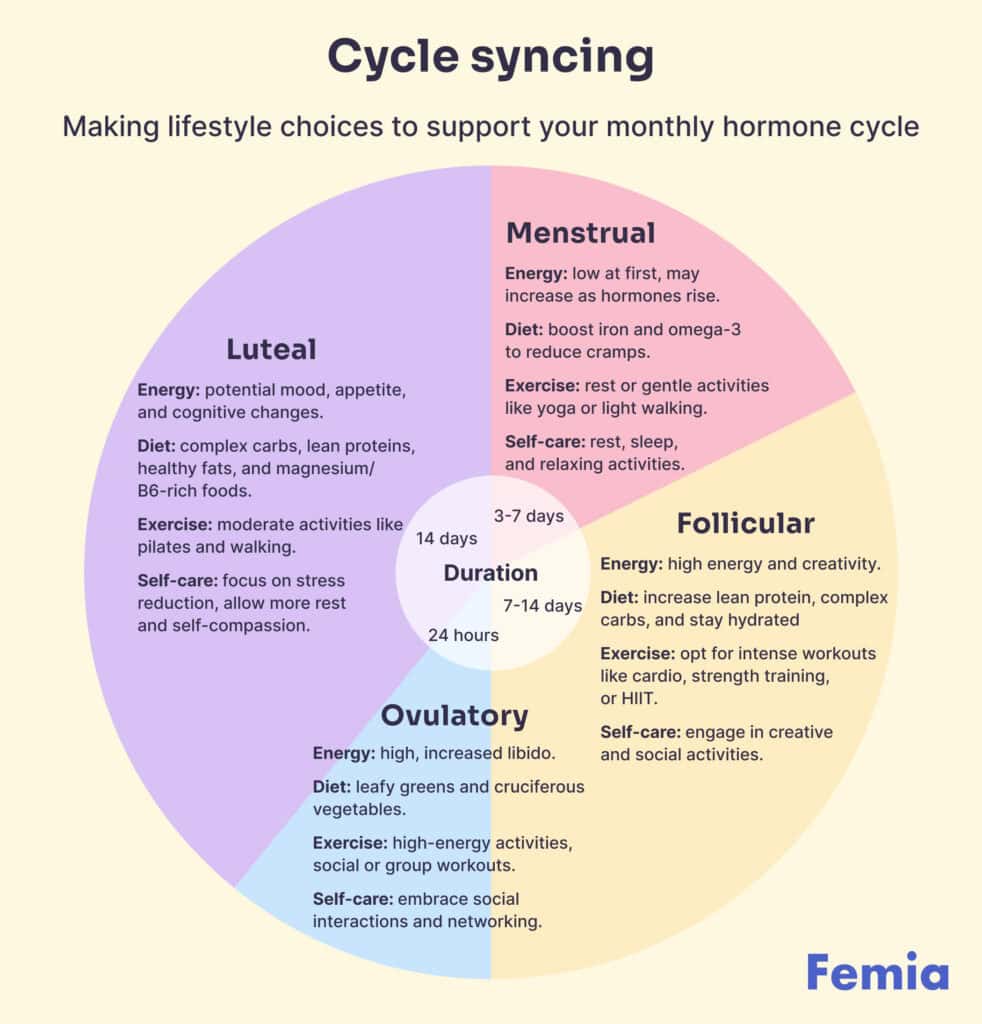
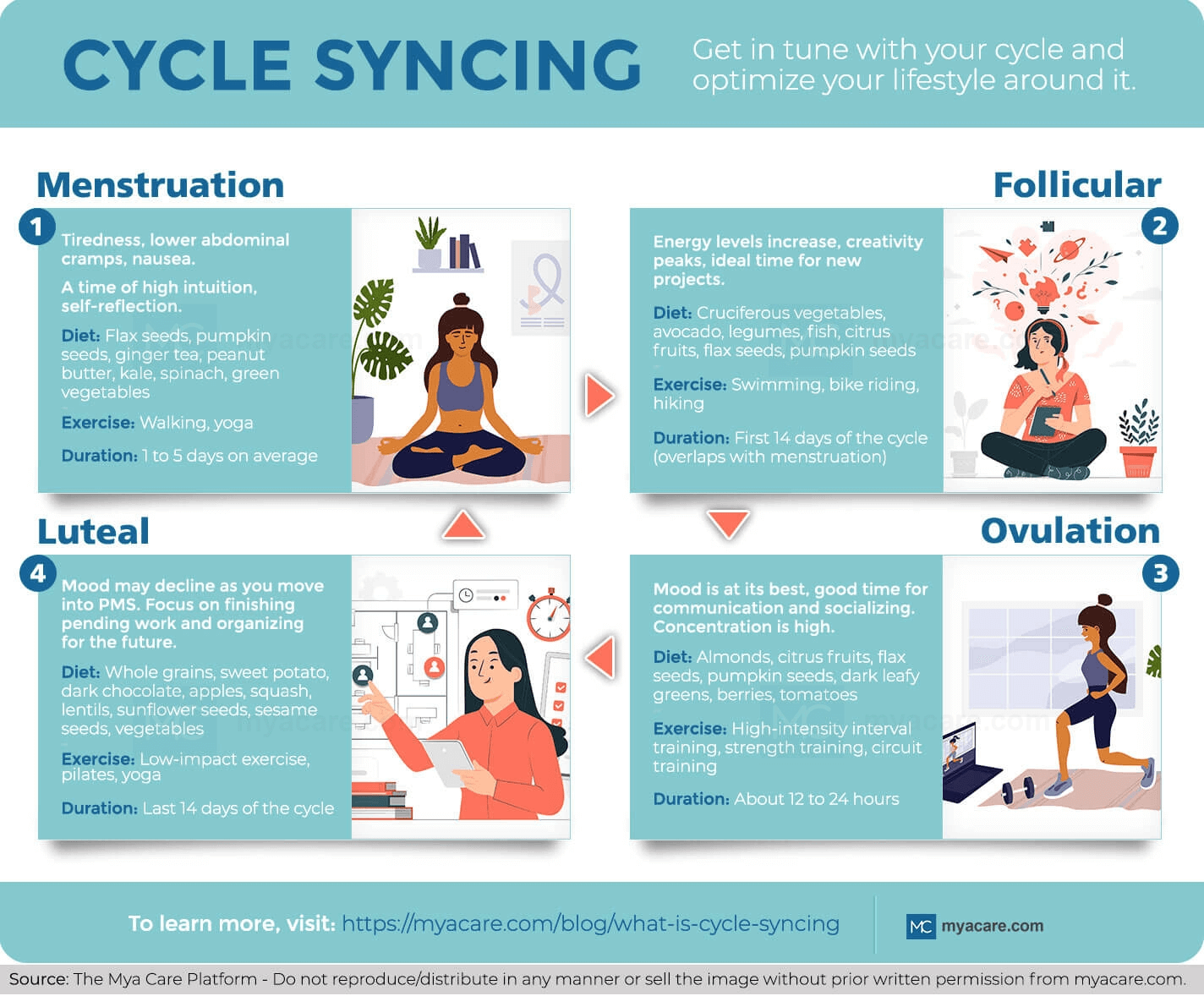
Menstruation is once again a hot topic on social media, thanks to a new health trend known as “cycle syncing”.
It involves aligning your diet and exercise habits to each phase of your menstrual cycle. For example, you may only do gentle exercises such as yoga or eat more fermented foods during the first phase of menstruation.
Social media influencers are spruiking cycle syncing as a more natural way for women to manage negative symptoms, such as period pain, and be more in tune with their bodies.
So how does it work? And is it supported by research?
The menstrual cycle
During menstruation, the body sheds the uterus lining to prepare for pregnancy. This usually happens every 28–35 days. But bleeding is only one part of the menstrual cycle. The menstrual cycle can be divided into three main phases:
follicular phase, where the body releases a hormone called the follicle-stimulating hormone to help follicles grow in the uterus
ovulation, where the ovary releases a mature egg that may or may not be fertilised
luteal phase, where the body releases a hormone known as progesterone that thickens the lining of the uterus, in preparation for pregnancy. But if the egg is not fertilised, the uterus will shed its lining and this cycle repeats.
Throughout the menstrual cycle, fluctuating hormone levels can cause symptoms such as fatigue, cramps, bloating, mood swings and changes in appetite.
Advocates of cycle syncing say it helps women manage period symptoms and meet the the body’s changing energy needs during menstruation.
However, specific claims often conflict with each other. For example, some who promote cycle syncing suggest eating fermented foods and fresh vegetables during the follicular phase, while others recommend eating lean proteins and wholegrains. Certain cycle syncing advocates emphasise doing cardio workouts and other high-intensity exercise in the follicular phase. Meanwhile, others say swimming or cycling are better options to manage period symptoms.
However, there is little evidence to support these claims.
Various systematic reviews – which summarise all the available research on a specific question – have found no evidence that doing exercise during certain phases of the menstrual cycle improves muscle development or performance. This is the case with both resistance training which aims to build strength, and aerobic exercise, which increases your heart rate.
It also does not appear to reduce your risk of muscle injuries. Research shows immune function may fluctuate throughout the menstrual cycle, but one systematic review found this variation is unlikely to impact exercise.
However, research suggests female athletes may feel less motivated or confident playing sport in the late luteal phase. They were also more likely to think they performed worse at the start and end of their period. This may be because symptoms such as cramping, back pain and tiredness make exercise seem much harder during menstruation.
There’s even less evidence examining the link between nutrition and different phases of the menstrual cycle. One 2024 study suggested women may be hungrier or eat more during their luteal phase, compared to the follicular phase. This may be because during the luteal phase, the body consumes more energy to prepare for a potential pregnancy.
However, one systematic review found no conclusive evidence that changing your diet reduces symptoms such as cramps, bloating and fatigue.
What to do instead
Existing studies looking at the relationship between diet, exercise and different menstrual phases have produced extremely varied results. And there are still many gaps in current research, including what the mechanism behind cycle syncing actually is and what its benefits may be.
So for those who want to manage period symptoms, the best approach is to be patient with yourself and listen to bodily cues. For example, if you slept badly because of night-time cramps, you don’t need to do a high-intensity workout the next morning. Consider going for a walk instead. And if you feel extra hungry near the end of your period – in the luteal phase – it’s fine to eat a little more.
The jury’s out as to whether cycle syncing actually works. But making small lifestyle tweaks could help make your time of the month that bit more manageable.
Emmalee Ford is employed by Family Planning Australia, a non-government sexual and reproductive health organisation.
For many in the West, China still feels hard to fully understand. Public debate and media coverage too often focus on the “China threat”. Critics highlight the flaws of China’s political system and limits on freedom, yet China has still managed to rise as a major power that can now compete with the United States.
One reason for this gap in understanding is that the media often interprets China through a Western-centric perspective.
US President Donald Trump’s summit with Chinese leader Xi Jinping this week, for instance, will be analysed in the West very differently from the way it will be seen in China. Xi’s language will be parsed and scrutinised for couched messages, veiled threats and hidden meanings.
But analysts may be missing some of the tools China uses to explain and justify its actions.
My co-authored new research offers a new way to look at China’s grand strategy: by analysing the way the government uses storytelling. My research partners and I are part of a growing group of scholars looking at how geopolitics is becoming a contest of narratives – how states tell stories about themselves and each other.
To do this, we studied four major speeches by Xi from 2021–23. We read them as stories and dissected the narratives – as well as the characters and language – to better understand the meaning behind the words.
Why narrative in politics matters
The use of political narratives by leaders is not new.
In ancient Athens and Rome, politicians relied on strong public rhetoric to persuade people. Aristotle described three key elements of persuasion in rhetoric: logic (logos), emotional appeal (pathos), and the speaker’s credibility (ethos).
Modern theorists like Kenneth Burke argue rhetoric creates a sense of shared purpose between leaders and the public, but it can also create division between groups.
And communications scholar Michael Kent identifies 20 master “plots” that have been used by storytellers for thousands of years to craft effective narratives. These include: quest, adventure, pursuit, transformation, revenge, sacrifice, discovery and of course love.
My research partners and I used these plot devices to analyse Xi’s speeches to see how he communicates – and tells stories – about China’s strategies.
The plot devices in Xi’s speeches
We found several master plots that consistently shape China’s official stories:
To save the nation from peril, the Chinese people put up a courageous fight. As noble-minded patriots sought to pull the nation together.
This storyline frames China as a nation on a long journey towards strength and prosperity, marked by setbacks and breakthroughs. This is seen as a type of political adventure. This narrative also appeals to shared memories in China of hardship and endurance.
Xi Jinping’s speech to mark the 100th anniversary of Chinese Communist Party’s founding.
Quest
Xi’s speeches also described a quest – the nation’s striving towards a difficult goal, under the leadership of the Chinese Communist Party (CCP).
There has never been an instruction manual or ready-made solution for the Chinese people and the Chinese nation to turn to […] as they moved on toward the bright future of rejuvenation.
The message is intended to inspire unity, patriotism and pride among Chinese listeners.
The Chinese nation has achieved the great transformation from standing up and growing prosperous to becoming strong, and China’s national rejuvenation has become a historical inevitability.
Transformation stories describe not just change, but growth and renewal. This narrative presents China’s rise as a natural evolution built on decades of reform and sacrifice.
Xi Jinping’s speech at the 14th National People’s Congress.
Rivalry
Rivalry stories tend to feature internal and external threats.
In two of the speeches we studied, Xi refers to efforts by foreign powers to “blackmail, contain, blockade, and exert maximum pressure on China,” and recalls a past when foreign bullying caused “great suffering”.
In the CCP’s 100th anniversary speech, Xi also said:
Anyone who would attempt to do so will find themselves on a collision course with a great wall of steel forged by over 1.4 billion Chinese people.
These storylines reinforce the idea that China must remain vigilant and united against outside pressure.
Love
Xi doesn’t refer to a romantic-type of love story in his speeches; rather, he speaks of the dedication and loyalty of the Communist Party’s supporters.
In the 100th anniversary speech, for instance, Xi said:
And I would like to express my heartfelt gratitude to people and friends from around the world who have shown friendship to the Chinese people and understanding and support for China’s endeavours in revolution, development and reform.
How audiences see these messages
The impact of this messaging is strong at home. It’s often reinforced through state media, cultural products and patriotic education to reach as wide an audience as possible.
The frequent contrast between past suffering and present strength encourages the public to see China as a peaceful but firm global actor.
For a foreign audience, this storytelling can help other countries interpret China’s actions and anticipate its responses.
For example, China’s narratives about past humiliation and the need to defend its sovereignty help explain its strong stance on Taiwan – and the Communist Party’s legitimacy on this issue in the eyes of the people.
But this does not mean a military conflict is inevitable. Any future military action over Taiwan would depend on a multitude of factors, including careful calculations of risk, China’s economic interdependence with the world, and the potentially catastrophic consequences for the region and its people.
This cannot be easily conveyed in storytelling, which is why we can’t rely on this device alone to explain China’s actions. But it does give us a window into leadership’s thinking – and in a political system like China’s, this is vital.
The author would like to acknowledge her co-researchers on the project: Mitchell Hobbs of the University of Sydney (project lead), and Zhao Alexandre Huang and Lucile Desmoulins of Gustave Eiffel University, France.
This piece is based on the author’s contribution to a research project funded by the Australia-France Social Science Collaborative Research Program from the Academy of Social Sciences in Australia.
From live speech translation in video calls to auto-dubbing on TikTok, the technology to dissolve language barriers has arrived. Real-time translation powered by artificial intelligence (AI) is now embedded in everyday life.
Tools from OpenAI, Meta, Google and many others now offer near-instant translation across dozens of languages, and they keep improving.
All this raises a vital question. If machines can do this faster and more accurately than humans, is investing years in learning another language still worth it?
The logic is appealing. Humans have always offloaded cognitive work onto tools. Writing reduced demands on our memory. Calculators removed the burden of mental arithmetic. AI sits within this long tradition. Used well, it can support learning and expand access in ways that matter enormously.
But there’s a difference between using a tool to extend your capabilities and using it to avoid doing something altogether. That distinction becomes important when you are not just replacing a skill, but a form of cognitive and cultural engagement.
The effort is the point
Effort plays a central role in how we acquire knowledge.
Psychologists use the phrase “desirable difficulties” to describe challenges that may feel inefficient, but produce stronger long-term retention and understanding.
Struggling with grammar, searching for the right word, or constructing meaning across multiple languages engages brain networks that support memory, attention and cognitive flexibility. Over time, they consolidate knowledge far more deeply than passive exposure.
Sustained mental engagement contributes to what researchers call cognitive resilience – the brain’s capacity to maintain function as we age. Managing multiple languages is one form of this engagement. It requires the brain to resolve competition, monitor context and adapt dynamically.
These are not trivial demands. And they’re difficult to achieve if you just use translation tools passively, such as resolving the meaning of a foreign phrase with the click of a button.
What multilingualism research actually shows
The evidence on multilingualism is often presented as a simple “bilingual advantage”, a shorthand that obscures a more complicated picture. Some studies report benefits for attention or working memory, while others find no differences. The truth appears to be more selective.
Our recent study examined cognitive performance in 94 adults aged 18 to 83, using both visuospatial and auditory tasks across working memory, attention and inhibition. Put simply, we looked at how people process and respond to information they see or mentally map out in space (visuospatial) and information they hear (auditory). Examples include remembering sounds, focusing on visual patterns, or ignoring distractions.
Our study measured multilingualism as a spectrum, not a category. This allowed us to capture diverse language backgrounds and experiences. Multilingual participants spoke a range of languages with varying levels of proficiency and daily use, reflecting the linguistic diversity common within multicultural communities.
Across most tasks, multilinguals and monolinguals performed similarly. However, one pattern was striking. Individuals with richer, more diverse multilingual experience showed markedly better performance in visuospatial working memory. These effects were most pronounced in older people.
This suggests that multilingual experience doesn’t broadly enhance cognition, like some headlines claim. Instead, it may help preserve specific functions over time.
Overall, however, it appears that sustained use of multiple languages represents a form of mental activity with effects that accumulate across a lifetime.
What AI translation can’t replicate
AI translation excels at speed and accessibility. For many practical purposes, it works remarkably well. But it operates through pattern recognition, not lived understanding. It can struggle with cultural context, humour, register and emotionally embedded meaning, especially for languages with less representation in training data.
At best, AI captures literal dimensions of language while missing social ones. Consider the scene in the 2003 film Love Actually where Jamie, played by Colin Firth, delivers an awkward but sincere proposal to Aurelia in broken Portuguese.
It is moving because of the effort, vulnerability and intent his imperfect words carry. Resort to real-time translation software and what remains is information, not expression.
This is the deeper distinction: translation is not the same as participation. Learning a language involves understanding how people think, their values, and how meaning is shaped by context and history. This cultural literacy develops through interaction and experience. We can’t fully outsource that to systems that translate on demand.
I definitely think in Telugu, but I remember numbers and count using English.
Afrikaans is the language of my heart and best used to express intense emotion. English is the language of business and used mostly in everyday life.
These are not descriptions of switching between translation modes. They are descriptions of inhabiting different selves.
AI will continue to change how we engage with language learning. It can personalise instruction, minimise barriers and provide feedback at scale. What it can’t do is replace the cognitive and cultural work that comes from learning a language. This work leads to a deeper relationship with how other people see the world, and with how you express yourself. And that difference still matters.
Olivia Maurice completed her PhD at the MARCS Institute, Western Sydney University.
Mark Antoniou receives funding from the Australian Research Council.
US President Donald Trump’s visit to Beijing this week may ease tensions at the margins of the US–China rivalry. But it will not change a central fact: neither side can escape the rivalry, and neither side can decisively win it.
The biggest challenge for Trump and Chinese leader Xi Jinping is whether they can compete without turning the world’s most consequential bilateral relationship into its most dangerous one. A war is not inevitable.
If Washington and Beijing want to keep their competition peaceful, they must try to accomplish a few basic things:
preserve military deterrence without turning it into provocation
channel their rivalry into institutions and public goods, such as infrastructure development, rather than a military confrontation
keep ideology from hardening every disagreement into a zero-sum struggle.
So, how can this be done?
1. Establish mutual restraint
Both countries will continue to build military capabilities and balance against each other. The danger comes when each side convinces itself that its actions are intended to deter hostilities, while the other interprets them as a provocation.
Nowhere is that danger greater than the impasse over Taiwan. For Beijing, Taiwan is a core sovereignty issue and a test of national resolve. For Washington, it is tied to US credibility as a security guarantor in the Indo-Pacific, regional stability, and its ability to deter coercive unification.
Both sides claim to be defending the status quo. Both believe the other is eroding it. And both are acting in ways that may be making the situation less stable.
The answer is not a unilateral concession by one side or the other. Rather, both sides need to establish mutual restraint, backed by clearer political reassurance.
For instance, China could reduce the scale and frequency of coercive military actions around Taiwan, such as military aircraft sorties, naval patrols and drone operations near the island. And the US could avoid steps that blur the line between support for Taiwan and support for formal independence.
Trust may be absent. But trust is not a precondition for stability. Clarity and restraint are.
This requires a serious framework for deterrence management, including:
sustained efforts to clarify red lines
reducing misperceptions about each other’s intentions and resolve
preventing competitive signalling from spiralling into a confrontation.
During the Cold War, Washington and Moscow eventually learned that an arms race without guardrails was too dangerous to sustain. Washington and Beijing have not yet reached that level of strategic maturity. They need to.
Rivalries can be channelled into forms that are less dangerous than military conflict, and can sometimes even be productive.
That is already happening. The United States and China are competing through global institutions and alignments, from the Quad and AUKUS (on the US side) to the BRICS and the Shanghai Cooperation Organisation (on China’s side).
Both are trying to shape the rules, memberships and agendas of the regional and global orders in ways that advance their own influence and constrain the other’s.
On the surface, this can look like just another front in a new cold war. But institutional competition can be one of the safer forms of rivalry.
Competition can force institutions to adapt rather than stagnate. It can encourage new forms of regional cooperation. It can also push rival powers to provide public goods – such as infrastructure, development financing, technological investments and climate initiatives – in order to win support from others.
The competition between the two has been beneficial – and it has expanded the options available to developing countries.
This is also why a rush toward broad economic decoupling would be such a mistake. Some restrictions in sensitive sectors may be unavoidable. But a sweeping effort to sever economic ties would remove one of the few remaining guardrails in the relationship.
As long as the United States and China remain economically intertwined, both sides are incentivised to maintain stability and avoid conflict.
3. Lower the temperature
The US and China are not simply clashing over interests. They also have very different political and historical narratives.
US policymakers often cast the rivalry as a defence of the liberal order against authoritarian revisionism. Chinese leaders often see it as a struggle against containment, humiliation and foreign interference.
These are not just different rhetorical narratives. They shape what each side sees as threatening, acceptable or beyond compromise. They also help explain why the relationship has become so emotionally and politically charged.
Ideological competition is safest when it remains indirect. Neither Washington nor Beijing is likely to convert the other to its way of thinking. And neither is likely to persuade the wider world through their lectures on ideology.
The sounder strategy is to compete by example.
For the United States, it means showing that democratic governance can still deliver competence, cohesion and long-term economic vitality. For China, it means showing that its model can bring growth, social stability and international cooperation.
Both sides also need to recognise that ideological overreach is dangerous. The more Washington frames competition as a global struggle between democracy and autocracy, the more it encourages Beijing to see compromise as capitulation.
And the more Beijing wraps its foreign policy in narratives of anti-hegemony, the more likely Washington is to see its own restraint as weakness.
Engagement still matters for the same reason. If the United States and China stop talking, this ideological competition will harden and become more dangerous.
The greatest danger in the US–China competition is that both sides will come to see restraint as weakness, compromise as surrender and coexistence as impossible. Once that happens, catastrophe becomes far more likely.
The most realistic goal is not friendship, or even reconciliation. It is something harder and more modest: competition without war.
Kai He receives funding from the Australian Research Council and the Toda Peace Institute, an independent institute in Japan promoting policy-oriented peace research. He serves as a non-resident senior research fellow at the Toda Peace Institute.
Huiyun Feng receives funding from Australia Research Council.
Source: The Conversation – (in Spanish) – By Raúl Rivas González, Catedrático de Microbiología. Miembro de la Sociedad Española de Microbiología, Universidad de Salamanca
El crucero llegó a Burdeos procedente de las Islas Shetland, tras hacer escala en Belfast (Irlanda del Norte), Liverpool (Reino Unido) y Brest (noroeste de Francia). En los próximos días tenía previsto parar en Gijón y Bilbao.
De momento han sido notificados alrededor de 50 casos con síntomas de vómitos, diarrea y dolor abdominal. Solo ha fallecido una persona, de 92 años. Aunque sus síntomas coinciden con el brote, las autoridades aún están realizando la autopsia para confirmar si el virus fue la causa directa.
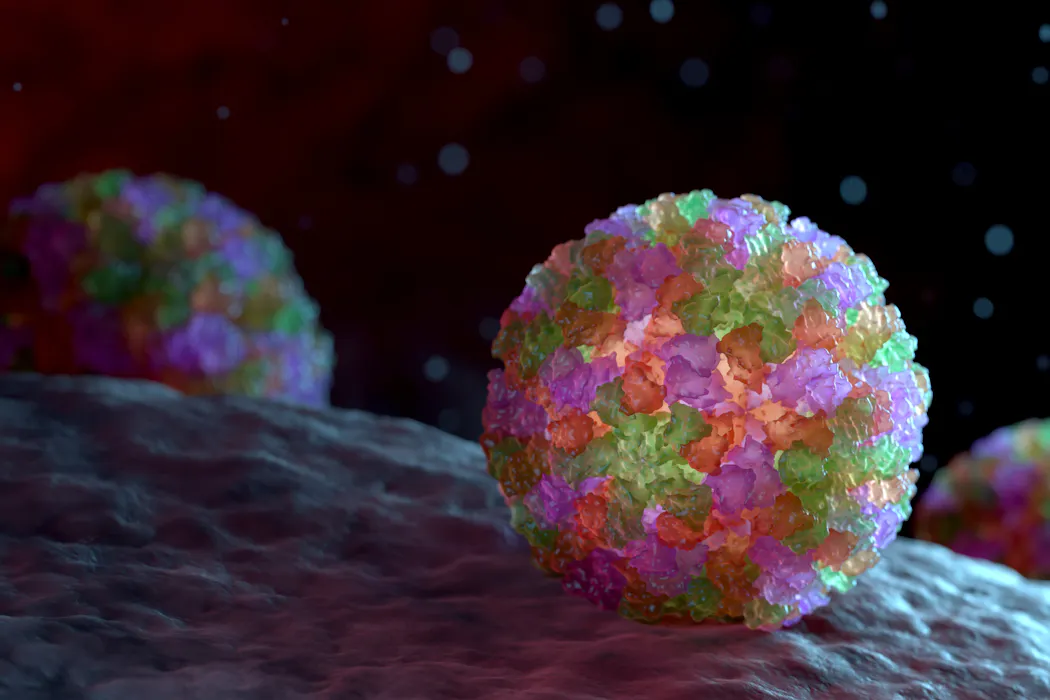
Todo apunta a que el brote ha sido causado por norovirus.
La principal causa de gastroenteritis aguda en el mundo
Este agente infeccioso fue identificado por primera vez en 1968 durante un brote de gastroenteritis aguda en Norwalk (Ohio, EE. UU.), donde se aisló de las heces de pacientes afectados. Por esta circunstancia, en primera instancia recibió el nombre de “virus de Norwalk”.
En la actualidad, se conocen 10 genogrupos y 49 genotipos. La clasificación en genogrupos y genotipos está basada en la diversidad de aminoácidos en dos proteínas, VP1 y ORF1. Las infecciones humanas se deben predominantemente a los genogrupos GI, GII y GIV, siendo el genogrupo GII la causa más común de gastroenteritis.
Los niños y los ancianos son los más afectados
Las infecciones por norovirus son comunes en todo el mundo y, aunque pueden ocurrir durante todo el año, en climas templados la actividad alcanza su punto máximo durante el invierno. La mayoría de los niños habrán tenido al menos una infección antes de cumplir los 5 años.
Los niños, los ancianos y las personas inmunocomprometidas son especialmente susceptibles a desarrollar cuadros graves. En países de bajos ingresos, la mortalidad es común en niños debido a la deshidratación. Por el contrario, en países desarrollados, las muertes ocurren principalmente en ancianos.
El norovirus es muy contagioso y se propaga con mucha facilidad y rapidez a través de personas enfermas y alimentos, agua y superficies contaminadas. Es ampliamente reconocido por su capacidad de provocar brotes rápidos y masivos en lugares cerrados o semicerrados, donde la alta concentración de personas y la convivencia estrecha facilitan la transmisión. Es el caso de hospitales, campamentos, residencias de ancianos o estudiantes, guarderías, escuelas y, en especial, en cruceros.
La infección causa náuseas, dolor abdominal, repentinos vómitos y diarrea grave sin sangre. Otros síntomas incluyen calambres abdominales, náuseas y, en ocasiones, fiebre leve.
El periodo de incubación oscila entre 12 y 48 horas. La enfermedad suele ser autolimitada y la mayoría de los pacientes se recuperan completamente en 1 a 3 días.
El virus de los cruceros
El norovirus representa una amenaza para la industria turística porque tiene un impacto desproporcionado debido a la alta visibilidad mediática. Por esa razón, la prevención y el manejo de brotes de gastroenteritis aguda en cruceros siguen estándares y planes de higiene acordados internacionalmente.
Entre otras medidas, se realiza un cribado previo al embarque, existe un protocolo de vigilancia una vez a bordo y se aísla a las personas infectadas. La aplicación de medidas de higiene ambiental y la educación de la tripulación y los pasajeros sobre el lavado de manos y la notificación de síntomas también son esenciales. En caso de brote, se cierran los restaurantes de autoservicio.
Dado que los humanos son el único reservorio, el riesgo de infección está presente en cualquier lugar donde se preparen alimentos de manera insalubre y puedan contaminarse. Los alimentos fríos listos para el consumo contaminados, por ejemplo, ensaladas, representan un riesgo particular. Los mariscos crudos, especialmente las ostras, son una fuente frecuente de infección porque las partículas virales presentes en el agua contaminada se concentran en el intestino de estos organismos filtradores. El hielo contaminado también se ha relacionado con brotes.
Los criterios de Kaplan son un conjunto de cuatro reglas epidemiológicas utilizadas para determinar si un brote de gastroenteritis aguda tiene una alta probabilidad de haber sido causado por un norovirus, especialmente cuando aún no se dispone de confirmación por laboratorio. Fueron establecidos en 1982 por el Dr. Jeffrey Kaplan y siguen siendo una regla de oro clínica por su alta especificidad.
Para sospechar de un brote por norovirus, se deben cumplir los siguientes puntos:
1. Vómitos en más del 50 % de los casos.
2. Periodo de incubación medio de 24 a 48 horas.
3. Duración media de la enfermedad de 12 a 60 horas.
4. Coprocultivos negativos para patógenos bacterianos comunes.
Cuando se cumplen los cuatro criterios, es muy probable que el brote haya sido causado por norovirus. Sin embargo, alrededor del 30 % de los brotes de norovirus no cumplen estos criterios. Si no se cumplen, no significa que el brote no haya sido causado por norovirus. Dicho de otro modo, que existan lo confirma pero su ausencia no lo descarta.
La hidratacion es el mejor tratamiento
No hay medicamentos específicos para tratar las infecciones por norovirus y tampoco existen vacunas disponibles. En la mayoría de los casos, los síntomas desaparecen por sí solos después de unos días. Sin embargo, es importante mantenerse hidratado para prevenir la deshidratación severa y guardar reposo.
Los casos más graves pueden requerir tratamiento médico para prevenir la deshidratación, especialmente en niños pequeños, ancianos y personas con sistemas inmunológicos debilitados.
El tratamiento de soporte es fundamental para la gastroenteritis por norovirus, especialmente la rehidratación oral o intravenosa. No se recomiendan antidiarreicos ni antieméticos para el manejo rutinario de la gastroenteritis aguda en niños. Los antibióticos no son útiles. En adultos, los antieméticos, medicamentos antimotilidad y antisecretores pueden resultar útiles como complemento de la rehidratación.
Raúl Rivas González no recibe salario, ni ejerce labores de consultoría, ni posee acciones, ni recibe financiación de ninguna compañía u organización que pueda obtener beneficio de este artículo, y ha declarado carecer de vínculos relevantes más allá del cargo académico citado.
The shape of the word bubble resembles the shape of an actual bubble, according to research participants. (Unsplash)
Think about a word that looks like its meaning. For instance, the word bed kind of looks like a bed, with the vertical lines resembling the posts at either end. Loop looks very loopy.
Some words are more subtly evocative — like blizzard, whose zigzagging letters might evoke something chaotic.
The term for this is “iconicity” and it has typically been studied in the sounds of words. For example, the word meow resembles the sound of a cat. The word teeny sounds like something small.
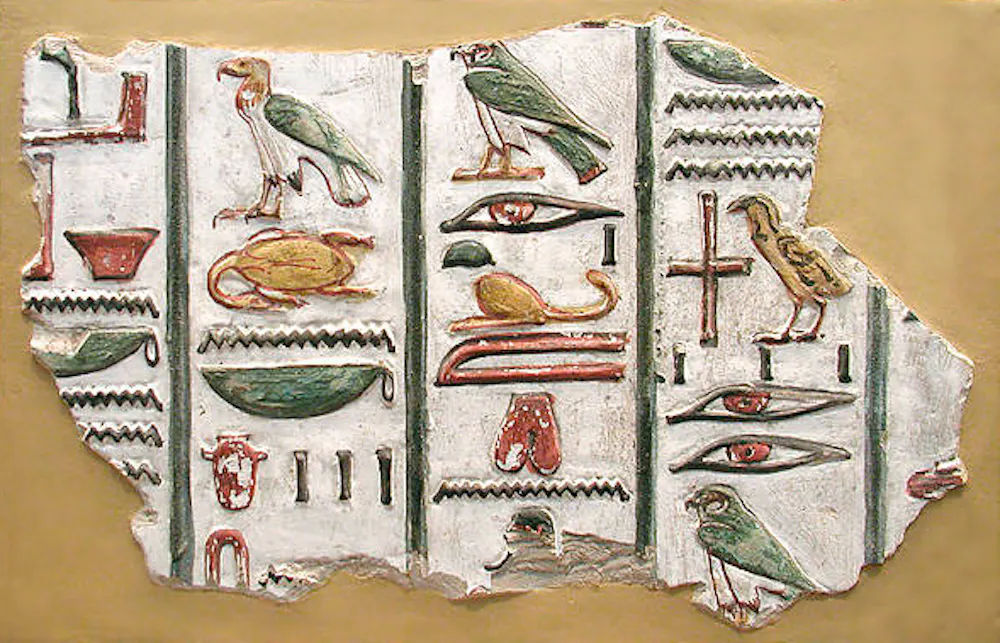
The letters we use in English (which is a Latin script inherited from the Roman alphabet) actually started out as visual symbols. They likely evolved from Egyptian hieroglyphs.
One possibility is that these Egyptian symbols were adopted by speakers of a North Semitic language, around 1800-1600 BC, into what is called the “Proto-Sinaitic” script.
Hieroglyphs from the tomb of Pharaoh Seti I, in Egypt’s Valley of the Kings. (Wikimedia Commons)
The letters have changed so much that these ancient origins aren’t relevant to reading English today. But there is some evidence that the shapes of letters have some relationship to the sounds they convey. For example, one study assembled letters for the sound /i/ (as in bee) and /u/ (as in boo) from 56 different languages and asked people to guess which was which. It turned out that people could do this, more often than expected by chance.
But this isn’t quite what I was interested in here. Rather than asking if the shapes of letters are related to the sounds of words, I was interested in whether those shapes are related to the meanings of words.
Bubble, hoop, wiggle
In this research, I asked participants to rate more than 3,000 words according to how much the shape of their letters resembled their meaning, using a scale of one to seven.
This is a common approach in the study of psycholinguistics. We often ask people to rate words on one dimension — for example, how concrete a word is, or how positive a word is — and then use those ratings to understand how people process word meaning.
The first thing to note is that there was agreement across participants, at least on par with ratings of other word properties in the past.
It’s easy to come up with explanations for these ratings. Puppy looks like it has legs and a tail. There is something wiggly about the two G’s in the middle of wiggle.
But can we actually tell how participants made their ratings? We can get some clues by looking at the kinds of words that get higher ratings.
Round letters, spiky letters
Words with high ratings tended to refer to things you can see. This makes sense if participants were actually considering a resemblance between the word and its meaning.
Getting more specific, when a word for a round thing contained round letters (for example, O, G and C), it was rated higher. When a word for a spiky thing contained spiky letters (like W, Z and X), it was rated higher. Words for small things tended to be rated higher when they contained fewer letters.
All in all, it seems like the ratings actually did capture a resemblance between the look of a word and its meaning.
This is all well and good, but does it matter? To answer this, I used threeexistingdatabases with information on how quickly people can process individual words. These are from studies that, for example, present participants with strings of letters (for example, spoon or flarg) and have them identify them as real or invented words as quickly as possible.
In all three databases, I found that people were faster and more accurate at processing words that looked like their meanings. This was after accounting for all kinds of things like how common a word is, how many letters it contains and how easy a word’s meaning is to picture. Not only that, these words tended to be learned at an earlier age.
Source: The Conversation – Canada – By Srdjan Vucetic, Professor, Graduate School of Public and International Affairs, L’Université d’Ottawa/University of Ottawa
Canada has been chosen to house the Defence, Security and Resilience Bank (DSRB). Originally dubbed “the NATO bank,” the new institution will help NATO and non-NATO countries more easily direct funding toward defence and security needs.
This translates to hundreds of new jobs in finance, research and analysis in Montréal, Ottawa, Toronto or Vancouver — all potential host cities.
This comes as a boost for Prime Minister Mark Carney, a former banker who has sought to craft a bold new foreign policy for Canada.
As Carney argued in his acclaimed Davos speech, the ongoing geopolitical “rupture” requires countries to “hedge against uncertainty.”
Carney’s emerging foreign policy doctrine extols the influence of middle powers alongside a commitment to “variable geometry” multilateralism — his term for the once controversial idea that institutions and coalitions should be shaped by the issue or mission at hand, rather than the other way around.
Could this approach also work in defence and security? Geography and history have bound Canada and the United States through countless formal and informal agreements, including a mutual commitment to come to each other’s defence in the event of an attack.
However strained relations between Canada and the U.S. have become, the partnership is not simply an either/or choice. Canada must instead carefully balance its relationships and interests.
The Carney government’s opening moves have included a sweeping expansion of military spending and security-related infrastructure, pushing investment toward levels not seen since the Cold War, alongside a landmark strategic defence and security partnership with the European Union and Canada’s first-ever Defence Industrial Strategy.
Combined, these initiatives reveal the core logic of the approach: to bolster Canada’s capacity for strategic autonomy over the long term.
In theory, changing where defence supplies come from is less complicated than helping Canadian companies find new markets.
Yet the hardest challenges still lie ahead.
Biggest obstacles
First, boosting current spending to meet NATO’s new spending target of five per cent of GDP will be impossible without a combination of cutting back non-defence expenditures, increasing taxes and borrowing more. No democracy can achieve this quickly without a declaration of a war economy.
The challenge for the government, therefore, is not just to spend more on defence, but to ensure new investments are aligned with the objectives set out in its policy and strategy documents.
Yet the Carney government is still working on these initiatives. The delay once again has to do with Trump.
From the new defence policy (last updated in April 2024) to the new intelligence priorities (first issued in September 2024) and — most significantly — a long-overdue national security strategy (last released in April 2004), these initiatives must set clear goals for the relevant government ministries and agencies while piloting the political interplay between the Trump White House and largely anti-Trump Canadian public opinion.
The Trump influence
This is a delicate dance in which every word matters. Before Trump, every new Canadian defence policy statement was predictable, emphasizing the same three roles — domestic; NORAD and other North American operations; and NATO and other multilateral operations.
Now the government often struggles to communicate even the prime minister’s own basic talking point — that intensifying rivalries among major powers makes Canada more vulnerable because of its deep dependency on its unreliable, unpredictable but powerful neighbour to the south.
The same goes for the new intelligence priorities statement. The 2024 version outlined 14 areas of focus, spanning Arctic security and cyber- threats to technological change and violent extremism.
The Carney government won’t entertain the idea of a “royal commission for securing Canada’s future” — which could be a comprehensive, non-partisan review of the nation’s long-term stability and adaptability in the new geopolitical context
This makes the long-awaited national security strategy even more important. Meant to guide resource allocation and capability development throughout at least Carney’s tenure as prime minister, this policy should not only fully acknowledge the scale of the security challenges confronting Canada but also assess the country’s comparative advantages and structural vulnerabilities as a middle power.
This, in turn, would require incorporating key dimensions of climate and economic security, as well as science and technology policy, into the strategic framework.
With some luck, this would mark a step forward in answering some of the most pressing questions about Canada’s future, including:
What security issues should Ottawa prioritize in its “variable-geometry” multilateralism?
If the Carney government is serious about both preparing for different scenarios and following through on its plans, clear communication will be essential.
Politicians and the public alike recognize the need to rethink the assumptions and decisions that have shaped Canadian life over the past 50 years, if not longer. The more Canadians understand why some risks are being prioritized over others, and why resources are being directed accordingly, the better equipped the country will be to handle what comes next.
Srdjan Vucetic has received funding from the Social Sciences and Humanities Research Council of Canada and the Mobilizing Insights in Defence and Security (MINDS) program of the Department of National Defence. He is also the co-author, with Hager Ben Jaffel, of the forthcoming book Beyond Five Eyes Intelligence: An International Political Sociology.
El MV Hondius zarpó de Ushuaia (Argentina) el 1 de abril. A los pocos días, un pasajero cayó enfermo. En cuestión de semanas, el viaje se convirtió en el centro de una respuesta sanitaria internacional tras detectarse casos del hantavirus Andes. A principios de mayo, varias personas habían fallecido. A estas alturas, los pasajeros y la tripulación han abandonado el barco, pero muchos se enfrentan ahora a la cuarentena y al seguimiento médico, además de a un intenso escrutinio público.
En definitiva, para los afectados la amenaza no es solo médica: también es psicológica. Los hantavirus son una familia de virus que suelen transmitirse a los seres humanos a través del contacto con roedores infectados o con su orina, excrementos o saliva. El hantavirus Andes es inusual porque también se han registrado casos de transmisión limitada de persona a persona.
Para los pasajeros y la tripulación, esto implica convivir con una amenaza grave, desconocida y difícil de evaluar. Además, lo hacen bajo la atenta mirada de los medios de comunicación de todo el mundo, en el centro de una respuesta médica de emergencia internacional, mientras se enfrentan a un aislamiento imprevisto lejos de casa. Se trata de un tipo particular de tensión psicológica.
Un incidente similar ocurrió durante la pandemia de covid-19, cuando el crucero Diamond Princess estuvo en cuarentena durante varias semanas. Durante ese tiempo, los pasajeros experimentaron miedo a contagiarse, hipervigilancia –estar constantemente en alerta, escudriñando el cuerpo o el entorno en busca de señales de peligro–, preocupación por sus síntomas físicos y dificultad para dormir. Todas estas son características comunes de la ansiedad.
El coste psicológico del aislamiento
Ante un brote, las autoridades sanitarias suelen pedir a las personas que mantengan la distancia, se aíslen, ventilen los espacios compartidos, usen mascarillas y se laven las manos para reducir el riesgo de transmisión. Ese aislamiento social conlleva un coste psicológico. Las personas que se encuentran aisladas en cuarentena en hoteles, hospitales u otros entornos controlados pueden ser más propensas a sufrir ansiedad, trastornos del ánimo y problemas de sueño, especialmente si no pueden salir al exterior o mantener el contacto habitual con otras personas.
El modelo de autorregulación basado en el sentido común puede ayudar a entender lo que los pasajeros del MV Hondius están experimentando. Este modelo sugiere que, cuando las personas se enfrentan a una enfermedad, intentan dar sentido a dos cosas a la vez: lo que la enfermedad significa para ellas y las emociones que experimentan. Estas percepciones determinan qué estrategias de afrontamiento emplean.
Por ejemplo, cuando las personas pierden el control y creen que las consecuencias de la infección podrían ser graves, es más probable que experimenten angustia y pánico. “He estado expuesto, podría enfermar, podría morir”, puede pensar un pasajero. Pensamientos como estos pueden intensificar las reacciones emocionales, aumentar la percepción de peligro y desembocar en el uso de estrategias de afrontamiento poco útiles, como la comprobación repetida de síntomas, la rumiación, la ira o el aislamiento.
Por eso, durante un brote, es tan importante disponer de información precisa y coherente. Incluso reconocer con honestidad lo que aún se desconoce puede generar confianza de forma más eficaz que dar falsas garantías. Con una comunicación clara, a largo plazo la mayoría de las personas terminan adoptando estrategias de afrontamiento positivas, como seguir las directrices para hacerse pruebas, aislarse cuando sea necesario o buscar ayuda médica si aparecen síntomas. Y suelen recuperarse bien tras la cuarentena.
Las redes de apoyo informales, como los grupos de WhatsApp, las videollamadas o las rutinas diarias compartidas, también pueden proteger psicológicamente a las personas.
No es otra pandemia
La Organización Mundial de la Salud ha dejado claro que esto no es el inicio de una pandemia similar a la covid-19. Aunque el riesgo para la salud pública, en general, se considera bajo, para los pasajeros y la tripulación se han recomendado medidas de seguimiento y cuarentena.
A medida que la cuarentena avance, la tensión psicológica también puede prolongarse. Dado que el virus Andes puede tener un periodo de incubación –tiempo que transcurre entre la exposición al virus y la aparición de los síntomas– prolongado, es posible que los síntomas no aparezcan de inmediato. Esto significa que los pasajeros pueden permanecer en un estado de alerta física elevado durante varias semanas, lo que prolonga el estrés y el agotamiento.
Tras una experiencia altamente controlada y estresante, algunos pasajeros pueden necesitar seguimiento al volver a la vida normal, especialmente si han sido testigos de una enfermedad grave o están pasando por un duelo. También es posible que, si se confirman nuevos casos, los afectados sean estigmatizados o tratados por los demás como contagiosos. Esto conlleva dos riesgos: exclusión social que afecte a sus relaciones o a su trabajo; y culpa o dolor, si temen haber expuesto involuntariamente a otras personas al virus.
Gestionar la incertidumbre
Es absolutamente normal experimentar estrés como respuesta a la incertidumbre, el aislamiento y el miedo. Para minimizarlo, las personas en cuarentena necesitan un contacto social significativo, aunque sea virtual.
Hay estrategias sencillas que pueden ayudar a gestionar momentos de incertidumbre: mantener una rutina diaria predecible, cuidar el sueño, comer de forma saludable, hacer ejercicio siempre que sea posible y utilizar técnicas de relajación para calmar el sistema nervioso. Incluso los ejercicios de respiración, la meditación, darse una ducha o prepararse una taza de té o café puede ayudar.
Ante una experiencia como la de los afectados por el brote de hantavirus, recibir información clara, mantenerse en conexión con los demás y normalizar la angustia es esencial. La incertidumbre no puede eliminarse por completo: es la forma en que la gestionamos lo que nos protege de que el miedo a lo desconocido se apodere de nosotros.
Jilly Gibson-Miller no recibe salario, ni ejerce labores de consultoría, ni posee acciones, ni recibe financiación de ninguna compañía u organización que pueda obtener beneficio de este artículo, y ha declarado carecer de vínculos relevantes más allá del cargo académico citado.
Humedal del Baíco en la cuenca de Baza durante la primavera de 2010. Aparecen una pareja de cigüeñuelas comunes a la izquierda, una garceta común en el centro y tres garcillas bueyeras a la derecha. Fotografía proporcionada por José Ángel Rodríguez.
Contemplar la belleza árida y agreste de los parajes semidesérticos de la depresión de Guadix-Baza, en el altiplano de Granada (España), no deja a nadie indiferente. Estos terrenos, escasamente poblados por la vegetación, se conocen como “tierras baldías” o “badlands”. Pero si pudiésemos viajar atrás en el tiempo un millón y medio de años, cuando las precipitaciones eran más abundantes que las actuales, el paisaje que veríamos sería completamente distinto.
Paisaje de la cuenca de Guadix, en el altiplano granadino, fotografiado desde el mirador de las Cárcavas de Marchal. Estas cárcavas se forman en materiales poco consolidados, conocidos como badlands, al ser erosionados por el agua de escorrentía. El proceso se conoce como piping (erosión en túnel). Paul Palmqvist, Francisco J. Serrano Alarcón, Guillermo Rodríguez Gómez, M. Patrocinio Espigares., CC BY-SA
En el entorno de este inmenso lago, que debió ser un auténtico vergel, se desenvolvía una fauna muy diversa de grandes mamíferos que recuerda a la de las sabanas arboladas actuales del África subtropical.
Diente de leche humano (A) y remontaje de un núcleo de sílex tallado (B) en el yacimiento arqueopaleontológico de Barranco León en Orce (cuenca de Baza, Geoparque de Granada). Reconstrucción de los homininos del Pleistoceno inferior de Europa (C) tallando industrias líticas olduvayenses (dibujo de Mauricio Antón). Paul Palmqvist, Francisco J. Serrano Alarcón, Guillermo Rodríguez Gómez, M. Patrocinio Espigares., CC BY-NC-SA
¿Por qué son escasos los fósiles de aves?
Es mucho lo que sabemos sobre esta fauna pretérita de grandes mamíferos gracias a los yacimientos orcenses, que son uno de los grandes recursos patrimoniales que atesora el Geoparque de Granada. Ahora bien, hasta ahora no conocíamos prácticamente nada de las aves que debieron habitar también en estos extensos humedales.
La razón es sencilla: a diferencia de los huesos de los mamíferos, los de la mayoría de las aves son pequeños, con una cortical (superficie externa) muy fina y, además, están neumatizados (son huecos). Esto los aligera para el vuelo, pero disminuye su potencial de fosilizar. Además, las aves carecen de dientes, que son los elementos más mineralizados y más perdurables como fósiles.
Por ello, en estos yacimientos, donde los restos esqueléticos fueron acumulados por hienas capaces de fracturar hasta los huesos de un gran elefante, la conservación como fósiles de los huesos de aves resulta anecdótica y hasta ahora solo se había citado algún fragmento aislado sin identificar.
Algunos de los fósiles de aves estudiados del yacimiento paleontológico del Pleistoceno inferior de Venta Micena. A: húmero distal de cuervo (vista craneal). B: húmero distal de tarro blanco (vista craneal). C: fragmento de pelvis con el acetábulo de un ave indeterminada (vista lateral) en el que se aprecian evidencias de abrasión por digestión. D: falange del pie de un ave indeterminada (vista dorsal) con marcas de digestión. E: ulna de grulla (vista dorsal). Paul Palmqvist, Francisco J. Serrano Alarcón, Guillermo Rodríguez Gómez, M. Patrocinio Espigares., CC BY-NC-SA
Nuestro nuevo estudio, publicado el 13 de mayo en Swiss Journal of Palaeontology, se ha realizado sobre los únicos fósiles de Venta Micena que se pueden atribuir a aves. Son solo 18 especímenes entre las decenas de miles exhumados tras décadas de excavaciones en el yacimiento. De estos fósiles, siete se conservaron con integridad anatómica suficiente como para ser asignados a especies concretas.
A partir de estos huesecillos fragmentarios, se ha puesto de manifiesto la existencia de tres especies de aves diferentes, cada una de las cuales aporta información valiosa sobre los ambientes del humedal orcense e, incluso, sobre la ecología de la comunidad de animales que habitaba en ellos.
Las aves de Venta Micena
La primera especie identificada es un pato, el tarro blanco o Tadorna tadorna. Estas aves se alimentan de pequeños invertebrados, en especial caracoles del género Hydrobia, bien documentados en los yacimientos orcenses. Al ser moluscos que viven en aguas de salinidad variable, la presencia del tarro informa de que en las inmediaciones del gran lago de Orce habría charcas sujetas a una evaporación intensa, lo que ocasionaría un aumento de su salinidad.
La segunda especie es una grulla, de tamaño algo mayor que la grulla común actual, Grus grus. La especie, asignada preliminarmente a Grus cf. primigenia, representa el registro más antiguo conocido hasta el momento en Europa de las grullas gigantes del Pleistoceno. Las grullas son aves omnívoras típicamente asociadas a los humedales, por lo que su presencia aquí no resulta insólita.
Finalmente, la tercera especie identificada en Venta Micena es un cuervo, concretamente la subespecie Corvus corax antecorax. Nuevamente, se trata del registro más antiguo de estos animales en la península ibérica. Ahora bien, su verdadero interés radica en el papel que desempeñó en los ecosistemas de hace más de un millón de años, ya que debió de consumir una porción apreciable de la carne disponible para los depredadores y carroñeros.
Tarros blancos, grullas y humedales
La presencia en Venta Micena del tarro blanco y la grulla es coherente con los ambientes húmedos en los que ambos habitan actualmente. De hecho, el tarro (de forma ocasional) y la grulla (con mayor frecuencia) se encuentran en El Baíco, un pequeño humedal situado entre las ciudades de Baza y Benamaurel. Se trata de una laguna semiendorreica, oligosalina (con baja concentración de sal, ~2,5 g/l) y situada a 700 metros de altitud sobre el nivel del mar. Mantiene una lámina de agua relativamente estable a lo largo del año, colonizada por vegetación halófila (adaptada a la presencia de sal). Su extensión actual es muy reducida, solo unos 0,7 km², aunque a comienzos del siglo XIX cubría entre 2 y 5 km². En los años lluviosos, la frecuentan más de 50 especies de aves y muchas de ellas se reproducen allí.
Vista del humedal de El Baíco (Granada), con un grupo de flamencos y al fondo el paisaje de la Sierra de Baza cubierta de nieve. Fotografía proporcionada por José Ángel Rodríguez, CC BY-NC-SA
A partir de la década de 1960 se intentó desecar esta laguna con canales de desagüe, conocidos como sangradores, que descargan al río de Baza un flujo de agua de unos 1 000 l/s. Incluso se ha intentado nivelarla con sedimentos de las colinas circundantes, a efectos de aprovechar los terrenos para usos agrícolas. Por ello, El Baíco solo se recupera de forma natural los años más lluviosos y es un criptohumedal el resto del tiempo.
La elevada diversidad de aves que se encuentran hoy día en esta pequeña laguna sugiere que las escasas especies identificadas en Venta Micena debieron ser solo la punta del iceberg de la ornitofauna que habitó en la cuenca de Baza durante el Pleistoceno inferior, cuando los humedales cubrían más de 1 000 km².
Las poblaciones actuales de tarros blancos y grullas en la península ibérica reúnen individuos invernantes, que llegan tras reproducirse en el norte de Europa, excepto un pequeño contingente de tarros residentes. Esto contrasta con el comportamiento sugerido por el hallazgo de ambas especies en Venta Micena: al haber acumulado las hienas los restos esqueléticos durante la estación estival, los tarros y grullas identificados en el yacimiento sugieren que hace un millón y medio de años estas especies residían todo el año en la cuenca de Baza, reproduciéndose también allí.
Al incluir en el modelo al cuervo como una especie carroñera más, se apreció que la cantidad de carne que podría consumir cada carnívoro terrestre disminuía apreciablemente. Así, estas aves carroñeras habrían jugado un papel muy relevante en el ecosistema, algo que había pasado desapercibido hasta ahora.
Distribución de los recursos cárnicos entre los consumidores secundarios de la paleocomunidad de Venta Micena. El diagrama de tarta de la izquierda muestra las estimaciones porcentuales de la carne consumida por los depredadores y carroñeros terrestres; a la derecha se muestran dichos consumos tras introducir al cuervo como un carroñero más, lo que hace disminuir la proporción de recursos aprovechados por las otras especies. Paul Palmqvist, Francisco J. Serrano Alarcón, Guillermo Rodríguez Gómez, M. Patrocinio Espigares., CC BY-NC-SA
Los fósiles permiten poner en valor el patrimonio
El conocimiento de las aves que habitaron en Venta Micena hace un millón y medio de años aporta una información muy interesante sobre los humedales del sur de Andalucía. Contribuyen a la puesta en valor del legado paleontológico de esta región, en su doble vertiente de patrimonio natural e histórico.
Son precisamente estos estudios los que permiten pasar de la idea más o menos inmediata de que los fósiles son objetos patrimoniales que se deben conservar a la de que su valor singular emana de los conocimientos sobre el pasado que genera su estudio.
A fin de cuentas, las explicaciones que alimentan pueden ser tanto o más interesantes que la belleza o el interés que lleguen a despertar por sí mismos los restos fosilizados de estos yacimientos.
Reconstrucción del humedal de Venta Micena en la cuenca de Baza (Granada) hace un millón y medio de años. Se aprecian las aves identificadas en este estudio, el tarro blanco (Tadorna tadorna), en primer plano a la izquierda; la grulla (Grus cf. primigenia), en primer plano a la derecha, y el cuervo (Corvus corax antecorax), volando junto a la hiena gigante (Pachycrocuta brevirostris). Al fondo se distinguen dos elefantes (Mammuthus meridionalis) y un grupo de caballos (Equus altidens). Escena dibujada por Óscar Sanisidro
Las personas firmantes no son asalariadas, ni consultoras, ni poseen acciones, ni reciben financiación de ninguna compañía u organización que pueda obtener beneficio de este artículo, y han declarado carecer de vínculos relevantes más allá del cargo académico citado anteriormente.