How abandoned land can power a fair energy transition

Source: The Conversation – UK – By Harry Radzuan, Lecturer in Project Management, London South Bank University; University of Manchester

EvaL Miko/Shutterstock

Across the UK, millions of households are struggling to afford to heat their homes. Energy poverty has risen sharply since 2021, with around 6 million households unable to keep warm without cutting back on essentials.

At the same time, the UK faces a race to meet net zero by 2050, including delivering 70GW of solar power by 2035 (that’s enough energy to power 35 million homes).

Brownfield sites – the abandoned or disused lands that dot the UK’s cities and towns as a result of de-industrialisation – could be an untapped asset.

As a multidisciplinary sustainability researcher, I have seen how brownfield has slowly been incorporated into urban planning in the UK – from locally managed brownfield assets and datasets through to combined brownfield datasets and eventually to a national register.

To date, there are still more than 37,000 brownfield sites in England alone, many in deprived areas where property values are low and investment scarce. These sites range from as small as 0.001 hectares (0.00000386 square miles) to 157,945 hectares (610 square miles), according to the UK government’s brownfield land register.

Although different countries have different interpretations of what constitutes brownfields, they are often fenced off, contaminated or derelict – a symbol of neglect rather than renewal.

My team’s recent study shows that repurposing this land for community-based renewable energy projects, such as solar farms, wind turbines or ground source heat pumps, could not only help boost the renewable energy uptake, but also cut carbon footprint and tackle energy poverty.


Read more:
Green belt land just isn’t that green anymore


The idea is simply to transform brownfield land from environmental liability and eyesore into local renewable energy generators. Even the smallest brownfield site can house a small number of solar PVs, rooftop wind turbines or a deep-borehole ground-source heat collector.

In the US, this is already happening. Since 1999, the Brightfields Initiative has converted disused industrial sites in California, Connecticut, Minnesota, New York and Virginia into solar farms. The US Environmental Protection Agency has also created a national RE-Powering Mapper tool to find suitable brownfield lands for renewable energy projects.

solar panels and heat pump
The grid of the future will include a mix of renewable energy sources such as solar and air-source heat pumps.
ThomsonD/Shutterstock

The UK has yet to adopt a similar approach. Since launching in 2017, the current brownfield register mainly tracks potential housing sites, which may limit its redevelopment opportunity due to the site contamination that may require a high cleanup cost and a long restoration period before it can be safe for habitation. Energy development is rarely considered, even though many brownfield sites sit near densely populated areas that would benefit most from cheaper, cleaner power.

The good news is that momentum is building. The energy bill was amended in July 2023 to encourage solar installations on rooftops and brownfield land. In 2024, the government launched its brownfield passport consultation to seek ways to speed up redevelopment of derelict land. Our research supports this effort, and suggests that energy generation should be a formal part of that strategy.

Turning brownfields into brightfields

Brownfield redevelopment isn’t just about land use, it is also about energy justice, where fair access to affordable and sustainable, clean energy can be guaranteed.

This involves three principles. Distributive justice is the element of ensuring a fair allocation of energy resources and burdens between individuals and communities. In this case, brownfield renewable energy can supply affordable energy directly to low income households, who tend to live in underdeveloped areas, reducing their dependence on volatile fossil fuel prices.

This can be more affordable because community-owned renewables avoid profit-driven pricing, reduce transmission losses by generating energy locally and benefit from lower operating costs once the systems are installed. This means savings can be passed directly to households.

Procedural justice emphasises fairness and inclusion in energy-related decision making. In other words, brownfield development should integrate greater public participation, enabling communities to co-design and co-own energy solutions (such as Brixton Energy in London).

Recognition justice involves acknowledging individual and collective energy needs, values and rights. Many brownfield sites lie in areas long burdened by environmental damage. Renewable energy projects can therefore revitalise the land, create jobs and improve local wellbeing.

Community energy, where residents jointly own and manage renewable energy, delivers on all three of these principles. Community energy projects create local jobs, generate income that stays in the area and build trust between citizens and local authorities.

But renewable brownfield redevelopment is not simple. Contamination, complex regulations and financing challenges have slowed progress for decades. Developers also frequently shy away from uncertain cleanup costs or lengthy approvals. These barriers can be overcome through targeted policy support, such as grants for site remediation, streamlined planning processes and public-private partnerships that can reduce financial risks while ensuring community participation.

By developing brownfield for renewable energy, multiple issues can be addressed using existing resources while reaping benefits beyond free sustainable energy. It can enrich energy poor households, enhance biodiversity, provide cleaner air, create safe neighbourhoods and increase property values. This reduces the competition for fresh land development, often termed as greenbelt.

With coordinated policies, community participation and a clear national vision, the energy system can become more just.


Don’t have time to read about climate change as much as you’d like?

Get a weekly roundup in your inbox instead. Every Wednesday, The Conversation’s environment editor writes Imagine, a short email that goes a little deeper into just one climate issue. Join the 47,000+ readers who’ve subscribed so far.


The Conversation

Harry Radzuan does not work for, consult, own shares in or receive funding from any company or organisation that would benefit from this article, and has disclosed no relevant affiliations beyond their academic appointment.

ref. How abandoned land can power a fair energy transition – https://theconversation.com/how-abandoned-land-can-power-a-fair-energy-transition-269730


What makes people welcome or reject refugees? What research in Germany reveals

Source: The Conversation – UK – By Tobias Hillenbrand, PhD candidate, Innovation, Economics, Governance and Sustainable Development, UNU-MERIT, United Nations University

Across the EU, immigration is one of the most divisive topics in politics today. Germany, a country once known for its “Willkommenskultur” (welcome culture), is a case in point.

The German chancellor, Friedrich Merz, has recently said that Syrians no longer have “grounds for asylum in Germany”, and that they will be encouraged to return voluntarily. Some could also be deported in the near future.

Polling suggests that tough approaches to immigration resonate well with the public, reflecting a broader shift toward more negative immigration attitudes.

What determines whether people in a host country like Germany welcome or reject refugees? This is what my colleagues Bruno Martorano, Laura Metzger and Melissa Siegel and I sought to better understand in a recent paper.

Through a survey experiment, we tested how different factors would affect whether participants express concern for refugees’ wellbeing, or consider them a threat.

The study was designed to assess the effects of different factors on people’s attitudes towards refugees. For example, whether a participant held humanitarian values (is committed to help fellow humans in need). We measured this based on their responses to a frequently-used set of four questions. Humanitarian considerations have received little attention in earlier studies in this area.

We also measured if people’s views changed depending on the amount of adversity refugees faced (such as whether they were fleeing war), and the personal characteristics of the refugees – their age and gender, and whether they were part of families.

We surveyed more than 2,000 participants in 2023, using short, professionally-produced videos about Syrian refugees in Turkish refugee camps.

Some participants watched a control video, which provided only some background information. Others watched one of four videos: two emphasised the humanitarian situation of Syrian refugees in refugee camps in Turkey, the other two stressed challenges that the immigration of these refugees may imply for German society.

One of the “humanitarian message” videos and one of the “threat message” videos focused on families with small children among the refugees. The other two highlighted young refugee men.

After they watched the videos, we surveyed respondents about their views and concerns about the refugees.

Humanitarian compassion

On average, respondents overall showed a moderate level of concern for the wellbeing of Syrian refugees. They were somewhat more worried about the impact on Germany’s welfare system, security and cultural life. Fears that refugees might take away jobs were less common.

We identified a strong correlation between how humanitarian someone generally is, and the compassion that respondent expressed toward the refugees. We also found that exposure to short videos highlighting the humanitarian plight of refugees made participants care significantly more for most aspects of refugees’ wellbeing, compared to those who only saw the control video.

Additionally, we gave participants the possibility to sign pro-refugee policy petitions within the survey. Only a quarter of respondents overall signed a petition calling for increased funding for Syrian refugees abroad. An even smaller share supported a petition for more admissions of Syrians to Germany. But highlighting the humanitarian plight of refugees largely increased the share of respondents advocating for more support for refugees abroad.

The limits of this kind of messaging were also apparent. Watching the humanitarian videos did nothing to reduce immigration-related fears, nor did it increase acceptance for allowing refugees into the country.

Scepticism of (some) refugees

Those who watched videos of young male refugees were significantly less likely to support allowing more refugees into the country. Our data suggests that this is likely due to heightened concerns about negative cultural effects among those who viewed a video featuring young refugee men, rather than economic concerns or participants feeling more physically threatened.

Those who watched the videos highlighting families were more concerned about the refugees’ safety. Yet, they also expressed greater concerns that refugees may represent a burden for the welfare state.

The videos did not impact all respondents equally. For example, among respondents who identified as politically leftwing, seeing a video with a humanitarian message was associated with fewer cultural concerns about immigration, compared to the control group. For right-leaning respondents, we observed the opposite: seeing one of the humanitarian videos was associated with more concerns.

In addition, it was remarkable how differently east and west Germans reacted to our experiment. The political legacy of eastern Germany – the region which used to be the socialist authoritarian German Democratic Republic (GDR) until 1990 – is relevant in explaining persistent differences between the eastern and western German populations. It has been well established that east and west Germans differ in their values, preferences and voting behaviour, including support for the anti-immigration party AfD.

While similar at baseline, we found that exposure to the four videos affected the views of east Germans more negatively than those of west Germans, regardless of the exact message or the group of refugees the video highlighted. For example, focusing on refugee families largely boosted the share of west Germans who supported increasing support for refugees abroad. Among east Germans though, it had if anything the reverse effect.

It was remarkable how different these populations reacted to the very same message. Their reactions diverge more strongly than across any other divide, such as age or education.

Taken together, our results suggest that people’s opinions on immigration are more complex than a simple pro- v anti-immigration split. Whether a political message is effective or not – that is, whether it changes minds – depends on the framing of the message itself, as well as the views and values held by the people receiving that message.

The Conversation

Tobias Hillenbrand does not work for, consult, own shares in or receive funding from any company or organisation that would benefit from this article, and has disclosed no relevant affiliations beyond their academic appointment.

ref. What makes people welcome or reject refugees? What research in Germany reveals – https://theconversation.com/what-makes-people-welcome-or-reject-refugees-what-research-in-germany-reveals-269436

Cannabis dependence is rising in England and Wales – but treatment is lagging

Source: The Conversation – UK – By Francesca Spiga, Research Fellow in Research Synthesis, University of Bristol

Cannabis is often seen as relatively harmless – but the latest figures tell a different story. Julian Wiskemann/ Shutterstock

Cannabis dependence is on the rise, according to the latest data on drug use and dependence published by NHS England.

Although cannabis use has remained stable over the past decade in England and Wales, dependence on the drug has risen significantly. In 2024, 6.7% of people aged 16 to 64 showed signs of drug dependence – compared with only 3.8% in 2014. This rise in drug dependence has mainly been attributed to an increase in the number of adults reporting cannabis dependence.

In England’s substance misuse treatment services alone, 86% of children aged 14-17 enrolled in treatment between 2024 and 2025 were there for cannabis problems – making it by far the most commonly used substance among young people.

Trends are slightly different in adults, with 21% of those in treatment reporting issues with cannabis use alongside opiates. Among people entering treatment for substance misuse, 22.2% were there for cannabis problems – continuing a steady climb since 2022 (20.9%).

Cannabis is often seen as relatively harmless, but these figures tell a different story. For some, cannabis use becomes difficult to control – interfering with work, relationships and mental health. It can also lead to cannabis use disorder, a serious condition that, due to its relatively mild perceived physical harms, receives far less attention than other substance use disorders.

What is cannabis use disorder?

Cannabis remains the most commonly used illicit drug in the UK. While many people use it without major problems, some develop patterns of harmful or dependent use.

Cannabis use disorder is defined by symptoms such as difficulty cutting down cannabis use, spending excessive time using or recovering from use, and continuing to use cannabis despite negative consequences. These problems can affect education, employment and relationships, and are linked to mental health issues such as psychosis and depression.


Read more:
What is cannabis use disorder? And how do you know if you have a problem?


Despite these risks, cannabis is often perceived as “safe” compared to other drugs. The perception that cannabis doesn’t cause serious problems increases the risk of use and decreases the motivation to stop. This perception may partly explain why treatment services are now seeing such high numbers of young people with cannabis-related problems.

The latest ONS figures highlight a persistent public health challenge – one that requires more than just awareness.

Can cannabis use disorder be treated?

Treatment for cannabis use disorder isn’t straightforward. Unlike opioid dependence, there are no approved drug-based treatments for cannabis problems.

Current UK clinical guidelines recommend psychosocial interventions, such as cognitive behavioural therapy, as first-line options. But the evidence base for these therapies is surprisingly thin. Studies are small, inconsistent and often measure success in different ways – making it hard to know what really works.

A young girl smokes a marijuana cigarette.
In England, 85% of young people in treatment programmes were there for cannabis problems.
2Design/ Shutterstock

Our research group recently reviewed all available trials of psychosocial and pharmacological treatments for cannabis use disorder.

We found that while psychosocial approaches such as cognitive behaviour therapy (teaching people practical strategies to change unhelpful thoughts and actions and boost motivation) and acceptance-based approaches (teaching skills to manage difficult emotions, accept challenging thoughts and stay focused on the present moment) show promise, the benefits are modest and vary widely between studies.

Other psychological strategies such as contingency management (offering rewards for meeting treatment goals) have shown some success for other substance use disorders (such as cocaine and amphetamine). But the evidence for cannabis is limited.

The benefits of prescription drug treatments for cannabis use disorder remain uncertain. No drug that has been investigated to date, including antidepressants and cannabinoid agonists (which mimic the effects of cannabis), have produced convincing results.

In short, while there are some encouraging findings, the research base is still too limited to draw firm conclusions about which interventions work best. This leaves doctors and patients with uncertainty and limited guidance on treatments.

Where do we go from here?

The rise in cannabis-related treatment demand comes at a time when recreational cannabis use is highly common and high-potency products are increasingly available. This means that it could become a more common problem, which is why developing a treatment base is so important.

But a challenge researchers face in developing suitable treatments for cannabis use disorder is deciding what counts as a good outcome.

Many trials aim to have participants achieve abstinence (complete cessation of cannabis use) – but this isn’t always realistic or even what people want. For some, reducing use rather than stopping completely can still improve mental health and quality of life.

Yet there’s no universal agreement on what constitutes meaningful change. This matters because treatment goals should reflect what people actually value. If someone wants to cut down rather than quit, measuring success only by abstinence risks overlooking meaningful progress.

So until researchers agree on a core outcome set, comparing studies and developing treatment guidelines will remain difficult.

To ensure that support is based on robust evidence, we need more research, better and bigger trials and a clearer understanding of what works – and for whom.

The good news is that with growing recognition of cannabis use disorder as a genuine public health concern, researchers have an opportunity to shape a more effective and compassionate response.

For those personally affected by cannabis use disorders, psychosocial therapies are still the most supported options. Opening a non-judgemental conversation, encouraging professional support and staying informed about what treatments are available can make a real difference.

The Conversation

Francesca Spiga is funded by the NIHR Evidence Synthesis Programme. The views expressed are those of the authors and not necessarily those of the NIHR or the Department of Health and Social Care.

Monika Halicka is funded by the NIHR Evidence Synthesis Programme. The views expressed are those of the authors and not necessarily those of the NIHR or the Department of Health and Social Care.

ref. Cannabis dependence is rising in England and Wales – but treatment is lagging – https://theconversation.com/cannabis-dependence-is-rising-in-england-and-wales-but-treatment-is-lagging-271642

The best dinosaur discoveries of 2025

Source: The Conversation – UK – By Richard Butler, Professor of Palaeobiology, University of Birmingham

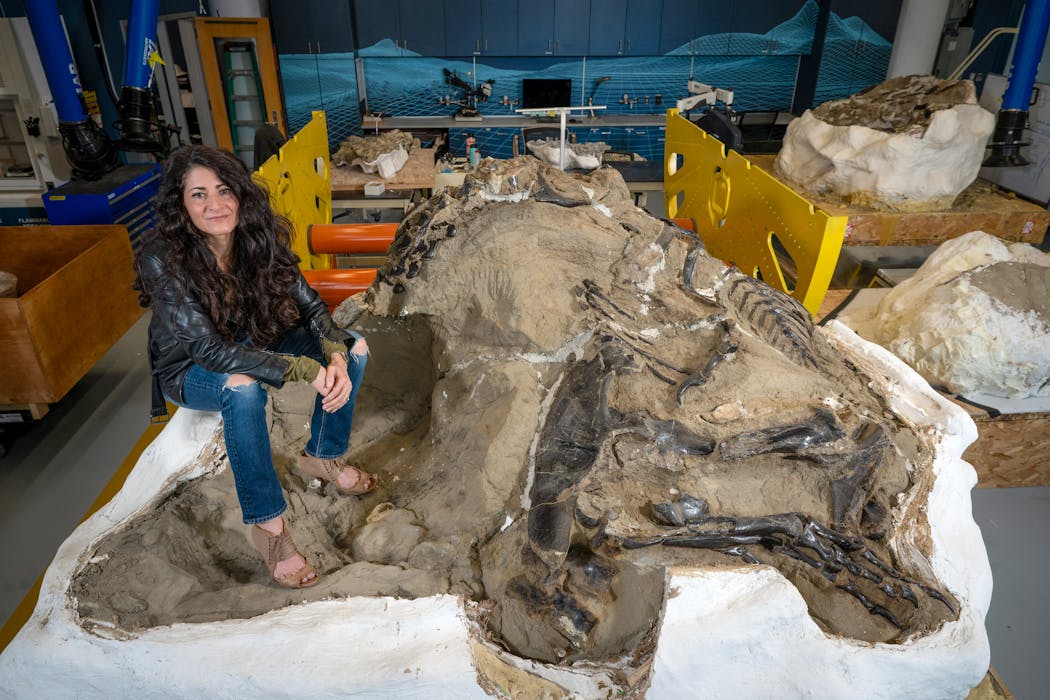
Lindsay Zanno, associate research professor at North Carolina State University, with the Dueling Dinosaurs fossil N.C. State University, CC BY-NC-ND

In 2025, dinosaurs were everywhere. In May, the BBC revived their landmark series Walking With Dinosaurs, while July saw the release of Jurassic World Rebirth, the seventh film in the extinction-proof Jurassic Park franchise.

Rising auction prices for dinosaur skeletons were a rich source of media headlines and academic concern. And a record-breaking number of visitors (6.3 million in 2024–2025) flocked to the Natural History Museum in London, where dinosaurs are a key draw.

A golden era in dinosaur science is driving this fascination with dinosaurs. Around 1,400 dinosaur species are now known from more than 90 countries, with the rate of discovery accelerating in the last two decades. The year 2025 has so far seen the discovery of 44 new dinosaur species – nearly one a week.

Many new discoveries come from palaeontological hotspots, such as Argentina, China, Mongolia and the US, but dinosaur fossils are also being found in many other places, from a Serbian village to the rainswept coast of north-west Scotland. Even as a researcher, it is hard to keep track, but here is a personal view of some of the year’s highlights.

Zavacephale rinpoche

Some fossils are so exciting that when first shown at academic conferences, they draw audible gasps even from experienced palaeontologists. Zavacephale is one of these. The stunning skeleton of this one-metre-long plant-eating dinosaur was discovered in 110-million-year-old rocks in the Gobi Desert of Mongolia and described by palaeontologist Tsogtbaatar Chinzorig and colleagues.

Zavacephale is the oldest known member of the pachycephalosaurs, a group of dinosaurs famed for their domed skulls, probably used to butt heads like today’s bighorn sheep. Pachycephalosaurs have long been one of the most enigmatic dinosaur groups, and the discovery of Zavacephale is critical to understanding their early evolution.

Istiorachis macarthurae

Dinosaur fossils have been common discoveries in the rapidly eroding Cretaceous Period-aged cliffs of the Isle of Wight, off the south coast of England, for nearly two centuries. Yet, even here, there is much to learn. Jeremy Lockwood, a retired doctor turned dinosaur expert, has since 2021 named three new species of large ornithopods, one of the most common groups of plant-eating dinosaurs. These new species are closely related to Iguanodon, a four-legged ornithopod from Belgium with a very distinctive thumb spike.

Lockwood’s latest discovery, the six-metre-long Istiorachis, is another herbivorous ornithopod with a striking sail-like structure running along its back. This sail may have been a display structure used to attract mates and to deter predators by making this 128-million-year-old animal look bigger.

Spicomellus afer

Spicomellus was named in 2021 based on an incomplete rib from 165-million-year-old rocks in Morocco. It is a rib unlike that in any other animal, alive or extinct, with a series of long spines fused to its surface. In 2025, I was part of a team led by researcher Susie Maidment that described a much more complete skeleton. It revealed one of the strangest dinosaurs ever discovered.

The new fossils show that Spicomellus is the oldest known member of the ankylosaurs, heavily armoured, low and squat plant-eaters described by Maidment as resembling “walking coffee tables”.

Spicomellus is characterised by its bizarre armour, bristling with long spines all over the body, including a bony collar around the neck with spines the length of golf clubs sticking out of it. Dubbed the “punk rock dinosaur” by the BBC, Spicomellus is changing our understanding of ankylosaur evolution, but also highlighting the importance of the Moroccan fossil record.

Nanotyrannus lethaeus

For many years, one of the fiercest debates in dinosaur palaeontology has been about Nanotyrannus, a 66-million-year-old predator from Montana in the US. Nanotyrannus was first named in 1988, and suggested to be a small tyrannosaurid, around 5m long, that lived alongside the giant Tyrannosaurus rex. But many other palaeontologists disagreed, suggesting that fossils of Nanotyrannus were just young individuals of T rex.

In 2025, palaeontologists Lindsay Zanno and James Napoli published a description of a new Nanotyrannus fossil specimen, preserved as part of the Duelling Dinosaurs fossil alongside a herbivorous Triceratops. They showed that this Nanotyrannus was nearly an adult, but also that it was different from T rex in lots of ways that cannot be explained by growth, including a longer hand.

A subsequent study on the original Nanotyrannus demonstrated that this specimen was also fully grown. Together, these studies end a 35-year-long controversy and reveal Nanotyrannus as a slender, agile pursuit predator, built for speed.

Illustration of dinosaurs preparing for attack.
A pack of Nanotyrannus attacks a juvenile T. rex.
Anthony Hutchings, CC BY-NC-ND

Huayracursor jaguensis

Gigantic, four-legged, long-necked, plant-eating sauropod dinosaurs of the Jurassic and Cretaceous periods, such as Brachiosaurus, were the largest animals to ever walk the Earth, weighing up to 70 tonnes (equivalent of 12 African elephants). The year 2025 saw many new sauropod discoveries, including a Jurassic Highway of trackways announced by our team from a quarry in Oxfordshire, UK.

Important new information on sauropod origins came from the Triassic Period rocks of Argentina, long a key source of dinosaur discoveries. The 2m long Huayracursor was described from 228-million-year-old rocks in the Andes, making it one of the oldest known sauropod ancestors. It has a much longer neck than other species from the dawn of dinosaur evolution, revealing the earliest stages in the evolution of the extreme neck elongation seen in later sauropods.

Image of dinosaur skeleton
Skeletal reconstruction of Huayracursor jaguensis.
Martín Hechenleitner and Malena Juarez, CC BY

The year 2025 was another remarkable year for dinosaur discovery and 2026 will have a lot to live up to. But I’m looking forward to seeing what surprises the new year brings.

The Conversation

Richard Butler receives funding from the Leverhulme Trust, the European Commission and the British Institute for Libyan and Northern African Studies.

ref. The best dinosaur discoveries of 2025 – https://theconversation.com/the-best-dinosaur-discoveries-of-2025-271224

Christmas adverts are hijacking the Love Actually feel-good spirit to get us spending more

Source: The Conversation – UK – By Michal Chmiel, Senior Lecturer in Psychology, Royal Holloway, University of London

The Christmas advert season has officially started, and Richard Curtis’s genius is all around – again.

From the carrot expressing love on a placard in the Aldi advert, to the moment when Keira Knightley finally says yes to Joe Wilkinson (and to his food) in the Waitrose commercial, the Love Actually film seems to be everywhere in Christmas adverts. The spending spirit is being neatly squeezed into our minds, just like the extra syllable in the original lyrics of the Love Is All Around anthem.

These adverts are trying to tap into our growing loneliness and desire for togetherness and to persuade us that the best way to get it is to spend money on gifts. In the Pandora advert, for example, the boy character plans a Christmas gift for his mother to the sound of the Beach Boys hit song God Only Knows, which could be intended to remind us of the ending of Love Actually in the arrivals hall at Heathrow airport.

It’s no surprise that advertisers use works of fiction to reconnect us with past memories of joy and happiness. Take Roald Dahl’s BFG, for example, in Sainsbury’s Christmas 2025 TV ad. During Christmas, when we listen to familiar tunes or watch films together, we often experience a sense of togetherness, recognising that we share more than we disagree on.

Love Actually is an example of a cultural phenomenon that many people in the UK share nostalgic feelings towards, which evokes a feeling of belonging in us. We often respond in the same way to the movements and dialogue of Knightley, Hugh Grant and Emma Thompson, and we seem to feel united in our responses.

Once we form a connection between Love Actually or BFG and pleasant feelings associated with watching or reading them, advertisers can use the familiar songs, scenes or characters to borrow the connected positive feelings and shape our responses to their ads.

This happens because of the wiring of the impulsive system, which is often referred to as the hot system, which is a metaphor coined by psychologists to explain why we respond with predictable actions or thoughts to familiar content. Much of human behaviour is automatic. In familiar situations, we tend to act in a routine or habitual way.

Just as a Christmas carol can make us nostalgic for past Christmases, the Love Actually scene in which Grant’s character dances to Jump (For My Love) after defending matters important to Britain can make us feel happy and proud. The feeling of moments that make us proud has been recreated by Google Pixel Ad in another attempt to invoke the spirit of Love Actually.

Our willingness to buy things to reconnect with positive memories from the past is not irrational. When we experience happiness, we want to hold on to that feeling, and buying goods is a way of prolonging this state, as one 2022 study showed. If something makes us happy, such as buying goods, we do exactly that.

All those familiar movie moments, tunes and purchases can make us feel united. The need to belong and feel connected is one of the fundamental human motivations. We need stable and meaningful relationships. Sadly, there are fewer chances to meet up now that more people are working from home. John Lewis’s advert offers us a way of reconnecting: buying a gift when “you can’t find words”.

The small but significant innovations that have shaped the way we spend our working days and weekends have also changed the way we communicate. Social media was another development of the first decade of the 21st century that seemed to enable social contact while exposing us to a new set of psychological threats.

One of these was a desire to feel popular on social media. This is why, together with media communication scholar Gareth Thompson, I coined the term digital peacocks. Just like peacocks, digital poseurs post content to attract attention and feel recognised.

The combination of focusing on ourselves and the need for recognition from others could indicate narcissistic tendencies, leading us to spend more money on unnecessary purchases. Why are we responding in this way?

One possible explanation is the feeling of exhaustion caused by information coming at us from all directions, and the experience of division and loneliness. According to a 2018 study, loneliness leads us to focus disproportionately on ourselves.
Adverts that we watch outside of the unifying Christmas period do not help with that. (You are unique! You’re so much better than everyone else – doesn’t that sound familiar?)

As a 2022 study of narcissists and their attraction to luxury goods found, the more unique we feel, the more we feel the urge to demonstrate this through
unnecessary purchases. However, this is an attempt to address a psychological need with material items.

Gifts are fine but conversation is even better

It would be a mistake to think that social connections are only about having a lot of people around who are similar to us. Sharing similar values may be important, but what makes humans unique is the multitude of small differences.

Buying a gift isn’t the best way to get that sense of togetherness. Talking to other people and feeling listened to is what helps alleviate feelings of loneliness, even if we don’t necessarily agree with them.

Finally, Waitrose, it would only count if Keira said yes to Andrew Lincoln,
wouldn’t it? Readers, now I’m open to hearing your opinions – after all, we don’t have to agree on that.

The Conversation

Michal Chmiel does not work for, consult, own shares in or receive funding from any company or organisation that would benefit from this article, and has disclosed no relevant affiliations beyond their academic appointment.

ref. Christmas adverts are hijacking the Love Actually feel-good spirit to get us spending more – https://theconversation.com/christmas-adverts-are-hijacking-the-love-actually-feel-good-spirit-to-get-us-spending-more-271255

Buy now, panic later is the new holiday ritual – stopping it won’t be easy

Source: The Conversation – UK – By Olga Cam, Lecturer in Accounting, University of Sheffield

Olya Detry/Shutterstock

The holiday season brings celebration and gift-giving, but it also ushers in something less festive: financial stress. In the UK, retailers now shape much of the spending calendar, with Black Friday one of the busiest shopping events of the year.

This year on Black Friday weekend, Nationwide building society alone saw more than 31.2 million transactions, a 5.8% increase on last year. What’s more, households that usually spend around £2,460 a month (a typical amount in the UK) shell out an additional £713 (29% more) in the month of December.

This spending culture can lead to people worrying about their budget for December and January, and often pushes them towards borrowing just to take care of their household and family.

Some estimates suggest that three quarters of UK families rely on credit, including credit cards, overdrafts and buy now, pay later (BNPL) services, to manage Christmas costs. These purchases may feel harmless at the time, but they quickly add up.

The UK already has high levels of consumer borrowing. A report by the Financial Conduct Authority (FCA) found that 65% of UK adults (35.3 million people) held a credit card.

BNPL has grown especially quickly, probably because it feels effortless to use. In fact, research shows that BNPL use rose from 17% in 2022 to 27% of adults in 2023, with further increases in 2024.

For the moment, many BNPL products in the UK fall outside the Consumer Credit Act 1974 and therefore remain unregulated. But this is due to change – from July 15 2026 third-party BNPL products will be fully regulated by the FCA.

In terms of the cost to consumers of BNPL, a study from Stanford University involving 570,000 people found that BNPL users paid more overall due to higher overdraft fees, interest charges and late payment fines. These costs often become visible only after the holidays when many households realise that the supposedly cheap option was not cheap at all.


Read more:
Mobile payments used to be less ‘painful’ than using cash. That might be changing


A recent report on financial capability in the UK suggests that low levels of financial literacy play into these economic difficulties around times of increased spending. Strikingly, these gaps are not limited to a single demographic – they appear across age groups and income levels.

Financial literacy is often misunderstood. Many people assume it is simply mathematics, yet it is far more complex. True financial literacy is about behaviour and confident decision-making rather than understanding complex products.

In a social and digital environment shaped by targeted advertising, limited-time offers and frictionless credit, even financially knowledgeable people can overspend. The problem is rarely numerical skill. It is the challenge of managing behaviour and emotion at the point of purchase.

What’s going on in your brain?

Behavioural economist Richard Thaler’s concept of mental accounting helps to explain why BNPL and credit cards encourage overspending. Thaler’s theory shows that people treat money differently depending on how they categorise it. Creating a category such as holiday spending makes it easier to justify purchases that would otherwise feel unnecessary.

Another concept, payment decoupling, also helps to explain the appeal of BNPL. When buying is separated from paying, consumers feel less of the “pain” of payment. Humans naturally prefer immediate rewards over long-term consequences. BNPL strengthens this tendency by delaying the moment when the financial cost becomes real.

Understanding these psychological processes can help consumers make more confident decisions.

female teacher sitting beside a young girl at her desk, helping her with her work.
Teachers aren’t always confident enough to teach financial literacy.
Monkey Business Images/Shutterstock

Financial literacy has never been a core part of the UK school curriculum. Even where it appears, it is often presented as an add-on rather than a fully developed programme. The new skills for life and work curriculum in England aims to strengthen financial capability, but it remains heavily weighted towards knowledge rather than behaviour.

According to the Organisation for Economic Co-operation and Development (OECD), financial literacy includes knowledge, behaviour, attitudes and decision-making. Many people will recognise the tension: understanding the sensible option, yet not acting on it.

A further challenge we have found when conducting financial literacy workshops is that most teachers have never been trained to teach about money. They feel confident teaching literature or algebra, but not long-term financial planning, credit agreements, debt or interest.

In our workshops, teachers often report feeling unsure about how to discuss everyday financial risks with students. This matters for families too. Children usually learn financial behaviour from the adults around them. If both teachers and parents feel uncertain, young people receive inconsistent messages.

Our workshops also showed that young people are eager to talk about money when given the opportunity. They ask thoughtful questions that challenge assumptions that they might be uninterested in finances. They are quick to understand the emotional and psychological aspects of spending, demonstrating why financial literacy should be lived and discussed rather than memorised.

Financial literacy is not about becoming an accountant. It is about understanding why people spend the way they do and building the confidence to make decisions that support wellbeing, especially during emotionally charged or financially pressured moments.

This Christmas, the most valuable gift many people can give themselves is the space to pause before spending and the skills to avoid entering the new year in a buy-now-panic-later cycle.

The Conversation

Mohammad Rajjaque is affiliated with Citizen’s Advise Sheffield where he is Vice-Chair of the board of trustees. CAS is Sheffield’s largest provider of advice and advocacy services, including debt advice.

Olga Cam does not work for, consult, own shares in or receive funding from any company or organisation that would benefit from this article, and has disclosed no relevant affiliations beyond their academic appointment.

ref. Buy now, panic later is the new holiday ritual – stopping it won’t be easy – https://theconversation.com/buy-now-panic-later-is-the-new-holiday-ritual-stopping-it-wont-be-easy-271559

Sophie Kinsella showed that ‘light’ fiction can speak to women’s real lives

Source: The Conversation – UK – By Charlotte Ireland, Associate Researcher, Department of English, University of Birmingham

The bestselling British author Sophie Kinsella “peacefully” died two days before her 56th birthday on December 10, 2025. Across more than 30 books published between 1995 and 2024, Kinsella became one of the most commercially successful writers of popular women’s fiction. Her novels were the books readers packed for holidays, lent to friends and read on commutes – stories that created a sense of connection through shared experience.

Born Madeleine Wickham, she was one of Britain’s most successful novelist. She has sold more than 50 million books in more than sixty countries. Since her death, fellow contemporary writers Jennifer Weiner and Jenny Colgan, have shared tributes celebrating her impact.

Her death comes only three months after that of Jilly Cooper, described as the queen of the bonkbuster – popular novels featuring explicit sexual encounters and wild storylines. If Cooper defined the sexy, sensational bestsellers of the late 20th century, Kinsella did the same for the early 21st-century romantic comedy novel.

Although she preferred to describe her work as romantic comedies, she is frequently situated within chick lit: satirical, confessional stories about women by women.

Controversy surrounds the term “chick lit” which has often been used pejoratively, implying that fiction about women’s lives is lightweight or disposable rather than culturally meaningful. Such dismissal rarely applied to male-authored popular fiction. The debate reveals how stories about women’s work, relationships and personal lives are routinely undervalued.

But, as fellow author Jennifer Weiner argues, being labelled “chick lit” carries advantages. The tag gives “booksellers and readers, a quick and easy shorthand with which to refer to books that feature smart, funny, struggling, relatable female protagonists.”

Alongside Helen Fielding (Bridget Jones), Candace Bushnell (Sex and the City) and Terry McMillan (Waiting to Exhale), Kinsella stands as one of the genre’s foundational voices.

What made Kinsella distinct was her focus on consumerism, finances and the stresses of modern work, shaped in part by her background as a financial journalist. In an interview with the Guardian, she described how shopping had become a national pastime, full of contradictions – the thrill of spending, the shame of debt – and “nobody has written about it”. So she did, blending the “funny and painful”.

Her most famous heroine, Becky Bloomwood, embodies this perfectly in The Secret Dreamworld Of A Shopaholic, which would be the first in the nine-book Shopaholic series and adapted for the screen as Confessions of a Shopaholic. Bloomwood insists: “They should list shopping as a cardiovascular activity.”

The line is typical of the voice that made Kinsella’s fiction so distinctive. Her writing was full of internal monologues that combine comedy with anxious, “Oh God, what now?” moments. Her heroines are flawed, panicked and often ridiculous – and it is precisely because of that, readers stayed loyal.

While some have called for the end of chick lit, the genre has continued to thrive because of authors like Kinsella. It has not disappeared, it has evolved, reflecting new social norms and including older female protagonists.

Kinsella’s novels are markedly contemporary, as she explained: “The world changes and I reflect the world. I’m writing about issues that didn’t even exist when I started writing.”

Book cover with a silver dress

Transworld Digital

Her writing may look light, but in classrooms and scholarship alike, Kinsella’s novels demonstrate how comedy can carry sharp cultural critique. Her books have been used to teach students
about different waves of feminism, showing how humour can make social critique accessible. Her novels have also been linked with post-feminist discourse and compared to 19th century classics.

Kinsella’s stories interrogate (rather than simply embrace) the demands placed upon women. Her gift was balancing this critique with levity, allowing serious themes to coexist with warmth and wit. As she put it: “The best comedy comes out of truth. So, it can’t be just silly. It’s got to have a kind of underlying message.”

Across her fiction, she wrote not only about shopping but about the pressure to curate a perfect life, marriage, sisterhood, workplace misery and, recently, an unforgettable, semi-autobiographical novella about living with a brain tumour.

Kinsella’s final year also brought a different kind of visibility. In April 2024, she publicly shared her diagnosis of glioblastoma. She resisted the idea of a grand bucket list. She didn’t want to “swim with dolphins” or “meet a celebrity”.

Instead, she said, she wanted simply to “lead [her] life, but just make it a bit nicer,” with “a little treat here, a little treat there”. In many ways, this mirrors what her books offer readers: not grand transformations, but small joys, respites from pressure and moments of laughter.

In Shopaholic Ties the Knot (2001), Becky reflects: “We’re on this planet for too short a time … What’s more important? Knowing a few meaningless figures balanced – or knowing that you were the person you wanted to be?” It feels sharper in the wake of Kinsella’s passing. But her novels remain stories full of wit, resilience and warmth, still offering readers “a little treat here, a little treat there”.

This article features references to books that have been included for editorial reasons, and may contain links to bookshop.org. If you click on one of the links and go on to buy something from bookshop.org The Conversation UK may earn a commission.


Looking for something good? Cut through the noise with a carefully curated selection of the latest releases, live events and exhibitions, straight to your inbox every fortnight, on Fridays. Sign up here.


The Conversation

Charlotte Ireland does not work for, consult, own shares in or receive funding from any company or organisation that would benefit from this article, and has disclosed no relevant affiliations beyond their academic appointment.

ref. Sophie Kinsella showed that ‘light’ fiction can speak to women’s real lives – https://theconversation.com/sophie-kinsella-showed-that-light-fiction-can-speak-to-womens-real-lives-272097

Manger des insectes : solution d’avenir ou fausse bonne idée ?

Source: The Conversation – in French – By Nina Klioueva, Université de Montréal

Face à une demande mondiale en protéines qui explose et à l’impact environnemental grandissant de l’élevage animal, les insectes s’imposent comme une alternative séduisante : riches en nutriments, peu gourmands en ressources, déjà testés par chercheurs, entreprises et chefs.

Mais derrière cet engouement, une question demeure : représentent-ils vraiment une solution durable et sécuritaire pour nourrir la planète ?

Aujourd’hui, la production mondiale de viande exerce une pression croissante sur les ressources naturelles. Elle nécessite d’importantes surfaces agricoles, génère des émissions massives de gaz à effet de serre et contribue à la déforestation. En effet, la production de viande représente près de 12 % des émissions mondiales de gaz à effet de serre, selon l’Organisation pour l’alimentation et l’agriculture. Elle occupe environ 80 % des terres agricoles et consomme des quantités importantes d’eau et de nourriture pour nourrir le bétail.

Or, les protéines demeurent indispensables à la santé humaine, ce qui oblige à trouver des sources alternatives plus durables.

Dans ce contexte, les insectes apparaissent comme une piste de diversification des sources protéiques. Leur élevage nécessite jusqu’à 12 fois moins de nourriture et 2000 fois moins d’eau que celui du bœuf. De plus, la majorité de leur masse corporelle est comestible : près de 80 % pour un grillon, comparativement à seulement 40 % pour une vache. Cette efficacité en fait une option prometteuse pour réduire notre empreinte écologique sans compromettre nos besoins nutritionnels.


À lire aussi :
Taxer les aliments ultra-transformés : solution ou fléau ?


Un profil nutritionnel intéressant

Sur le plan nutritionnel, les insectes sont loin d’être négligeables. Ils contiennent entre 35 % et 70 % de protéines, selon l’espèce, ainsi que des acides gras essentiels, du fer, du zinc et des vitamines du groupe B. Certains y voient même une alternative crédible à la viande, notamment pour lutter contre la malnutrition ou optimiser les apports nutritionnels.

Cependant, toutes les espèces ne se valent pas. Le ver de farine, par exemple, offre une qualité protéique similaire à celle des légumineuses, mais demeure légèrement inférieure à celle du soya ou du bœuf. Le régime alimentaire et les conditions d’élevage modifient également leur teneur en protéines, et surtout en lipides, notamment les oméga-3 et oméga-6 et micronutriments, ce qui signifie que la composition nutritive peut fluctuer considérablement d’une espèce à l’autre et d’une méthode d’élevage à l’autre.

Il faut également rester prudent : certains insectes contiennent des substances antinutritionnelles, comme la thiaminase, qui peut interférer avec l’absorption de la vitamine B1. Leur consommation régulière nécessite donc un contrôle rigoureux de la transformation et de la qualité des produits.

Les risques sanitaires à ne pas ignorer

Si les insectes sont consommés depuis des millénaires dans plusieurs cultures, du Mexique à la Thaïlande, en passant par le Congo ou le Japon, leur intégration dans les systèmes alimentaires à plus grande échelle est relativement récente. Cela soulève des questions sur la salubrité et la réglementation de ces produits.

Les risques microbiologiques constituent une préoccupation majeure. Comme tout aliment d’origine animale, les insectes peuvent être porteurs de bactéries pathogènes telles que Salmonella spp. ou E. coli. Néanmoins, selon un rapport de l’Agence canadienne d’inspection des aliments ayant analysé 51 échantillons d’insectes comestibles vendus au pays, aucune contamination n’a été détectée. Ces résultats sont encourageants, mais les chercheurs soulignent que la prudence reste de mise, surtout en ce qui concerne la traçabilité et les conditions d’élevage.

Un autre enjeu, souvent méconnu, est le risque allergique. Les protéines de certains insectes, comme celles du grillon ou du ver de farine, sont semblables à celles des crustacés. Cela signifie que les personnes allergiques aux crevettes ou aux crabes pourraient réagir de manière similaire aux produits à base d’insectes. Pour cette raison, Santé Canada recommande un étiquetage clair afin d’avertir les consommateurs.


À lire aussi :
Pourquoi apprendre à cuisiner dès l’enfance est un outil de santé publique


Une production pas sans conséquences écologiques

La question de la biodiversité mérite également une attention particulière. Si l’élevage contrôlé en milieu industriel présente des risques comparables à ceux des autres productions animales, la collecte ou la production à grande échelle pourrait, elle, avoir des répercussions sur les écosystèmes. Dans plusieurs régions du monde, la consommation d’insectes sauvages fait déjà partie des traditions alimentaires locales. Une augmentation de la demande mondiale risquerait d’intensifier cette exploitation, mettant en péril certaines espèces et les équilibres écologiques dont elles dépendent.

Ainsi, loin d’être une solution universelle, l’entomophagie s’impose plutôt comme une option complémentaire qui nécessite un encadrement rigoureux et une gestion durable des ressources. Comme toute innovation alimentaire, son développement devra s’accompagner d’une réflexion sur ses impacts à long terme, tant sur la biodiversité que sur les communautés qui en dépendent.

Changer nos habitudes alimentaires

Au-delà des aspects techniques et environnementaux, l’adoption des insectes dans nos assiettes pose un défi culturel majeur. Dans de nombreux pays occidentaux, le simple fait de penser à manger un insecte provoque un réflexe de dégoût. Pourtant, plusieurs entreprises tentent de normaliser leur consommation en les intégrant dans des produits transformés : barres protéinées, farines, burgers ou pâtes à base de poudre de grillon.


Déjà des milliers d’abonnés à l’infolettre de La Conversation. Et vous ? Abonnez-vous gratuitement à notre infolettre pour mieux comprendre les grands enjeux contemporains.


Des études montrent qu’une exposition progressive, sous des formes familières, peut aider à surmonter cette barrière psychologique. Manger des insectes pourrait ainsi devenir une habitude d’ici quelques décennies, surtout si les préoccupations environnementales continuent de s’accentuer.

Une piste prometteuse, mais pas une panacée

Ainsi, les insectes comestibles ne sont pas qu’une curiosité culinaire ou une simple source de protéines alternatives : ils s’inscrivent au cœur d’un débat plus vaste sur la durabilité de nos systèmes alimentaires. Leur potentiel interroge nos manières de produire, de consommer et de valoriser les aliments. Comment nourrir une population mondiale croissante sans aggraver les crises climatiques, épuiser les ressources naturelles ou multiplier les risques sanitaires ?

Et si, au-delà de leur simple substitution nutritionnelle, ils nous amenaient à repenser nos modèles alimentaires, tout en révélant les limites de notre quête de solutions rapides à des problèmes profondément structurels ? Cette réflexion rappelle que la transition vers des régimes durables exige davantage qu’un nouvel ingrédient : elle appelle une transformation en profondeur de nos habitudes, de nos politiques et de nos priorités collectives.

La Conversation Canada

Nina Klioueva a reçu des financements sous forme de bourse de maîtrise en recherche pour titulaires d’un diplôme professionnel – volet régulier du FRQ, ainsi qu’une Bourse d’études supérieures du Canada – maîtrise (BESC M) des IRSC.

Maude Perreault ne travaille pas, ne conseille pas, ne possède pas de parts, ne reçoit pas de fonds d’une organisation qui pourrait tirer profit de cet article, et n’a déclaré aucune autre affiliation que son organisme de recherche.

ref. Manger des insectes : solution d’avenir ou fausse bonne idée ? – https://theconversation.com/manger-des-insectes-solution-davenir-ou-fausse-bonne-idee-268050

France–Chine : une relation déséquilibrée, au profit de Pékin

Source: The Conversation – in French – By Paco Milhiet, Visiting fellow au sein de la Rajaratnam School of International Studies ( NTU-Singapour), chercheur associé à l’Institut catholique de Paris, Institut catholique de Paris (ICP)

Le récent déplacement d’Emmanuel Macron en Chine a mis en évidence la difficulté qu’éprouve la France à influencer diplomatiquement la République populaire et à rééquilibrer les échanges commerciaux bilatéraux.


Du 3 au 5 décembre 2025, Emmanuel Macron a effectué une visite d’État en Chine, sa quatrième depuis 2017. Conformément à l’ambition de construire entre les deux pays une relation d’engagement à la fois respectueuse et exigeante, l’Élysée a déployé un dispositif conséquent : pas moins de six ministres (affaires étrangères, économie, agriculture, environnement, enseignement supérieur et culture) ainsi que trente-cinq chefs d’entreprise accompagnaient la délégation présidentielle.

Une mobilisation importante, symbole d’une relation multidimensionnelle… dont l’équilibre penche désormais résolument du côté de Pékin.

Un dialogue géopolitique de sourds

Les deux États sont de facto investis d’une responsabilité en matière de sécurité internationale, en tant que puissances nucléaires et membres permanents du Conseil de sécurité des Nations unies.

C’est au nom de cette responsabilité commune, et d’une supposée conception partagée du multilatéralisme, qu’Emmanuel Macron tente depuis 2022 de convaincre son homologue chinois d’œuvrer pour la paix en Ukraine : d’abord en s’assurant que Pékin s’abstienne de tout soutien à Moscou, ensuite en encourageant Xi Jinping à utiliser son influence sur Vladimir Poutine pour faciliter l’ouverture d’un processus diplomatique. Mais le président français n’a pas obtenu plus de succès lors de ce déplacement que les fois précédentes, se heurtant à une fin de non-recevoir polie mais ferme, son hôte se contentant d’appeler à « un renfort de la coopération » et à « écarter toute interférence ».

Il est vrai que, sur ce sujet, la neutralité de façade affichée par Pékin ne résiste pas à l’examen des faits. Le commerce sino-russe a doublé depuis 2020, et de nombreuses entreprises chinoises contribuent, discrètement mais de manière significative, à l’effort de guerre russe. Au reste, en termes de stratégie, Pékin n’a aucun intérêt à ce que le conflit russo-ukrainien cesse. Il affaiblit chaque mois davantage l’Union européenne, attire la Russie dans le giron chinois et retient pour l’heure les États-Unis sur le front occidental.

Concernant l’autre sujet géopolitique brûlant, Taïwan, Emmanuel Macron s’est gardé, cette fois-ci, de toute déclaration sujette à interprétation douteuse. Il faut dire qu’en la matière le président marche sur des œufs, et peut faire l’objet de tirs croisés. En 2023, il avait suscité l’ire de ses partenaires occidentaux en appelant les Européens à n’être « suivistes » ni des États-Unis ni de la Chine sur le dossier taïwanais. Un an plus tard, la comparaison qu’il a esquissée sur le podium du Shangri-La Dialogue, à Singapour, entre les situations ukrainienne et taïwanaise était jugée inacceptable, cette fois-ci par les Chinois.


À lire aussi :
Un dialogue de sourds entre les grandes puissances en Asie-Pacifique ?


In fine, la portée réelle du dialogue franco-chinois sur les questions de sécurité internationale demeure très limitée. La diplomatie française adopte donc une approche prudente, soucieuse de ne pas compromettre une relation commerciale déjà largement fragilisée.

Une relation économique asymétrique

La France souffre en effet d’un déficit commercial abyssal vis-à-vis de la Chine, qui est d’ailleurs son plus important déficit bilatéral. En 2024, il s’est élevé à 47 milliards d’euros. Si les multinationales françaises continuent de réaliser des profits substantiels en Chine (notamment dans l’aéronautique et le spatial, l’agroalimentaire, le luxe ou le cosmétique), les retombées pour l’ensemble du tissu économique national sont moins évidentes. Depuis l’accession de la Chine à l’Organisation mondiale du commerce (OMC) en 2001, l’ouverture tous azimuts au capitalisme d’État chinois a contribué, en France, à la désindustrialisation et à la perte d’avantages compétitifs de nombreux produits à haute valeur ajoutée.

Le président français a beau prévenir que « le déficit du reste du monde vis-à-vis de la Chine est en train de devenir insoutenable », la République populaire de Chine (RPC) est devenue un maillon essentiel de nombreuses chaînes d’approvisionnement stratégiques (informatique, équipements électroménagers, textiles, batteries, terres rares, etc.). Cette dépendance sera difficilement réversible. Sauf si, en concertation avec ses partenaires européens, elle exige de la Chine des transferts de technologie, et des investissements créateurs d’emplois sur les territoires nationaux.

Mais pour l’heure, la diplomatie française n’a d’autre choix que de jouer sur des mesures de court terme : elle tente notamment de limiter l’impact des enquêtes anti-dumping menées par la douane chinoise, qui visent plusieurs produits français (spiritueux – cognac en tête –, produits laitiers, porc, viande bovine). Les filières françaises sont ici les victimes collatérales des contre-mesures chinoises adoptées pour répondre aux droits de douane imposés par Bruxelles (et soutenus par Paris) sur les véhicules électriques chinois depuis octobre 2024.

Ces manœuvres réciproques ressemblant de plus en plus à une guerre commerciale entre l’Union européenne (UE) et la Chine. Quelques heures seulement après son retour de Chine, Emmanuel Macron menaçait même d’imposer des droits de douane à la Chine « dans les tout prochains mois », si le déficit commercial ne se réduisait pas.

Ambivalences françaises, inflexibilités chinoises

Les investissements croisés constituent également un point de friction. En effet, la France investit largement plus en Chine que l’inverse : le stock d’investissements français y atteint environ 46 milliards d’euros, contre quelque 12 milliards pour les investissements chinois en France.

Paris cherche dès lors à obtenir un rééquilibrage des flux et, plus largement, à promouvoir des conditions de concurrence équitables. Dans cette perspective, les autorités françaises continuent de courtiser les investisseurs chinois… à condition que cela ne compromette pas la souveraineté nationale. Une attitude, parfois ambivalente, qui ne va pas sans casse. Ainsi, l’usine Huawei en Alsace, livrée en septembre 2025, qui a représenté un investissement de 300 millions d’euros, risque d’être abandonnée et mise en vente avant même d’avoir ouvert.

À l’échelle politique, la diplomatie française qualifie « en même temps » la Chine de rival systémique dans le cadre européen, et de partenaire stratégique dans le cadre bilatéral. Un double discours parfois illisible et souvent incantatoire, tant la dépendance au partenaire (et/ou rival) chinois reste prépondérante. Une situation que ni la France ni l’Europe n’arrivent à infléchir.

À Pékin, la France gaullienne continue d’être célébrée comme un modèle d’indépendance et de non-alignement. Personne n’est toutefois dupe : la Chine flatte à l’échelle bilatérale pour mieux diviser les Européens et préserver les avantages structurels dont elle bénéficie. Une stratégie payante : alors que l’Union européenne et la Chine célébraient cinquante ans de relations diplomatiques, et que le président français avait pris l’habitude d’être accompagné par la présidente de la Commission européenne lors de ses rencontres avec Xi Jinping, Emmanuel Macron s’est cette fois déplacé seul.

Si l’UE demeure le deuxième partenaire commercial de la Chine (derrière l’Asean) – et à ce titre un acteur incontournable –, le déficit commercial européen s’élevait en 2024 à près de 350 milliards d’euros.

La RPC entend tirer pleinement parti de cette asymétrie, tout en veillant à ce que le bloc européen ne se fédère pas contre elle. Dans ce contexte, la France est aux yeux des Chinois un pays « romantique », comprenons : has been, politiquement inefficace et économiquement étriqué.

De Beauval à Chengdu, le soft power comme dernier point d’équilibre ?

Soixante-et-un ans après l’établissement de la relation bilatérale, ce déplacement aura surtout révélé les insuffisances françaises et le déséquilibre bilatéral structurel au profit de la Chine.

Emmanuel Macron pourra toujours se féliciter d’avoir été accueilli en grand chef d’État, Xi Jinping n’ayant pas lésiné sur les moyens pour lui « donner de la face ». Fait exceptionnel dans le protocole chinois, le président français a été convié pour la troisième fois en province – après Xi’an en 2018 et Canton en 2023 –, cette fois à Chengdu, quatrième ville de Chine et siège du plus grand centre de recherche et de conservation des pandas géants, des ursidés que Pékin érige en ambassadeurs et en véritables instruments diplomatiques.

Brigitte Macron a donc pu revoir son filleul Yuan Meng, premier panda géant né en France en 2017 et retourné à Chengdu en 2023. La Chine enverra d’ailleurs deux nouveaux pandas au ZooParc de Beauval d’ici à 2027. Simultanément, Emmanuel Macron a pu échanger quelques balles avec Félix Lebrun, le jeune pongiste médaillé à Paris 2024, venu disputer en Chine une compétition internationale. Cinquante ans après, la « diplomatie du ping-pong » reste donc d’actualité, comme démonstration maîtrisée d’amitié symbolique. Sans oublier le sprint aussi inédit que disruptif du président français qui lui permit de braver les cordons de sécurité chinois pour aller saluer les étudiants de l’Université du Sichuan. La France a pu ainsi se montrer sous un jour libertaire et sympathique.

À défaut d’influer sur les orientations géopolitiques et économiques de Pékin, la France peut toujours compter sur le soft power pour entretenir un dialogue. L’honneur est donc sauf… Mais à quel prix !

The Conversation

Les auteurs ne travaillent pas, ne conseillent pas, ne possèdent pas de parts, ne reçoivent pas de fonds d’une organisation qui pourrait tirer profit de cet article, et n’ont déclaré aucune autre affiliation que leur organisme de recherche.

ref. France–Chine : une relation déséquilibrée, au profit de Pékin – https://theconversation.com/france-chine-une-relation-desequilibree-au-profit-de-pekin-271767

Faut-il fuir, se cacher ou intervenir si l’on est pris dans un attentat de masse comme celui en Australie ?

Source: The Conversation – in French – By Milad Haghani, Associate Professor and Principal Fellow in Urban Risk and Resilience, The University of Melbourne

Ahmed Al-Ahmed (en blanc) désarme l’un des tireurs pendant la tuerie de Bondi Beach, à Sydney (Australie), le 14 décembre 2025.
Instagram

Le bilan de la tuerie de Bondi Beach (Sydney, Australie), hier 14 décembre, aurait probablement été plus lourd sans l’intervention héroïque – et extrêmement risquée – d’un passant. Cet épisode invite à s’interroger sur les recommandations officielles des autorités sur le comportement à adopter si l’on est pris dans ce type d’événements. On constate que les conseils donnés par les responsables australiens ne sont pas tout à fait les mêmes que ceux diffusés par leurs homologues états-uniens. L’étude de nombreux cas similaires survenus dans le monde donne également des indications utiles.


Les images ont fait le tour du monde : pendant l’attentat de Bondi Beach, ce dimanche 14 décembre à Sydney, un homme s’est précipité vers l’un des tireurs et lui a arraché son arme des mains.

Durant cet acte de bravoure extraordinaire, le civil en question, Ahmed Al-Ahmed, un vendeur de fruits âgé de 43 ans, a été blessé à la main et à l’épaule par le second tireur.

Le courage et le risque

Nous n’avons aucun moyen de savoir combien de vies ont été sauvées grâce au courage d’Al-Ahmed. Mais il est presque certain que son intervention a permis d’éviter des pertes humaines supplémentaires (le bilan s’élève à ce stade à 15 morts et 42 blessés, en plus des deux tireurs, dont l’un a été tué et l’autre se trouve dans un état critique).

Cette scène rappelle d’autres, y compris récemment toujours à Sydney : le 13 avril 2024, un passant français, Damien Guérot, était également intervenu au péril de sa vie lors de l’attaque du centre commercial de Bondi Junction pour faire face à un homme armé d’un couteau, qui avait ce jour-là poignardé six personnes à mort.

Lorsque des actes de courage comme ceux-ci se produisent, nous les saluons à juste titre. Cependant, ils soulèvent des questions importantes et souvent négligées : qu’est-ce qui motive des gens ordinaires à se conduire d’une façon aussi altruiste et risquée ? L’intervention des témoins est-elle une bonne stratégie ou va-t-elle à l’encontre des conseils officiels relatifs à la conduite à tenir si l’on est pris dans un acte de violence de masse ?

Les deux types d’« effet spectateur »

L’« effet spectateur » se produit lorsque la présence d’autres personnes dissuade quelqu’un d’intervenir dans une situation d’urgence, lors d’une agression ou d’un autre crime.

Mais des décennies de recherche comportementale ont remis en cause l’idée reçue selon laquelle les gens ont tendance à se figer ou à détourner le regard lorsque d’autres personnes sont présentes dans des situations dangereuses.

Une vaste méta-analyse du comportement des témoins montre que dans les situations d’urgence véritablement dangereuses et sans ambiguïté (comme celles impliquant un auteur clairement identifiable), l’effet spectateur classique (c’est-à-dire passif) est considérablement affaibli, voire dans certains cas inversé.

En d’autres termes, les attaques violentes sont précisément le type de situations où les gens sont plus enclins à agir.

L’une des raisons est que le danger clarifie les responsabilités. Lorsqu’une situation menace clairement leur vie, les gens identifient le danger plus rapidement et sont moins enclins à attendre des signaux sociaux ou des assurances de la part des autres.

On a constaté à maintes reprises que dans les situations d’urgence clairement à haut risque (en particulier celles impliquant de la violence physique), le sentiment de responsabilité individuelle s’accentue souvent au lieu de s’estomper.

Une analyse de plus de 100 attentats-suicides effectués en Israël montre que l’intervention des témoins peut réduire considérablement le nombre total de victimes.

Dans tous ces incidents documentés, l’intervention n’a que rarement permis d’empêcher complètement l’attaque, mais elle a souvent perturbé le contrôle de l’agresseur sur le moment et le lieu de l’attaque, le poussant à agir prématurément dans des lieux moins fréquentés et sauvant ainsi des vies.

Cependant, la même analyse montre également que l’intervention des témoins a souvent eu un coût personnel direct pour les intervenants.

Mais le comportement actif des témoins peut prendre plusieurs formes et intervenir à différents stades : une personne connaissant l’auteur des faits, qui remarque et signale un comportement suspect avant l’agression ; un individu qui guide les autres vers un lieu sûr ou qui partage des informations importantes au fur et à mesure que les événements se déroulent ; des gens qui apportent leur aide et assurent la coordination de diverses actions immédiatement après les faits.

Il n’en reste pas moins qu’une implication personnelle pour empêcher un acte de violence semble aller à l’encontre des conseils officiels des autorités australiennes. En effet, il y a quelques semaines à peine, le Comité australo-néo-zélandais de lutte contre le terrorisme a lancé une nouvelle campagne nationale de sécurité publique.

Un nouveau message de sécurité

La nouvelle campagne de sécurité publique reconnaît explicitement que l’Australie est un pays sûr, mais qu’il existe toujours un risque d’attaques à l’arme à feu dans les lieux très fréquentés, et que savoir comment réagir peut sauver des vies.

La campagne a introduit les consignes suivantes : « Fuir. Se cacher. Prévenir. », définies comme suit :

  • fuir : éloignez-vous rapidement et discrètement du danger, mais uniquement si cela ne présente aucun danger pour vous ;

  • se cacher : restez hors de vue et mettez votre téléphone portable en mode silencieux ;

  • prévenir : appelez la police lorsque cela ne présente aucun danger ;

L’objectif de ces conseils est d’aider les personnes à réagir dans les premiers instants critiques avant l’arrivée de la police, à prendre des décisions éclairées et à augmenter leurs chances de rester en sécurité.

Les directives officielles australiennes n’incitent à aucun moment à se confronter aux assaillants.

En revanche, les messages de sécurité publique diffusés aux États-Unis, tels que les consignes du FBI « Run. Hide. Fight » (Courez. Cachez-vous. Luttez), incluent une étape « luttez », mais uniquement en dernier recours, lorsque la fuite et la dissimulation sont impossibles et que la vie est en danger immédiat.

Les autorités australiennes ont choisi de ne pas inclure cette étape, mettant l’accent sur l’évitement et le signalement plutôt que sur la confrontation.

Quelques conseils pratiques

Mes précédentes recherches expérimentales ont permis d’identifier des conseils plus spécifiques susceptibles d’améliorer les chances de survie lors d’attaques violentes, en particulier dans des environnements bondés.

À l’aide de modélisations informatiques et d’expériences contrôlées menées avec de véritables foules, j’ai identifié plusieurs domaines stratégiques pour améliorer les chances de survie lors de tels événements.

Premièrement, s’éloigner lentement du danger n’est pas idéal : il est préférable de s’éloigner de la source de la menace aussi rapidement que possible, dès lors que cela se fait en prenant les précautions nécessaires pour rester en sécurité.

Deuxièmement, l’hésitation, qu’il s’agisse de recueillir des informations, d’inspecter ce qui se passe ou de filmer les événements, augmente le risque d’être blessé.

Troisièmement, les gens doivent rester agiles dans leur prise de décision et leur orientation lorsqu’ils se déplacent, et être prêts à adapter leurs mouvements à mesure que la situation évolue et que les informations deviennent plus claires. Cela signifie qu’il faut continuellement observer son environnement et ajuster sa direction à mesure que de nouvelles informations apparaissent, plutôt que de s’arrêter pour réévaluer la situation.

Enfin, lorsque vous vous déplacez en famille ou entre amis, il vaut mieux se mettre en file indienne, plutôt qu’en se tenant par la main côte à côte. Cela profite à tout le monde en réduisant les bousculades et en améliorant la fluidité de la fuite des personnes.

Être toujours sur ses gardes

Les horribles événements survenus à Sydney soulignent une dure réalité : la préparation aux risques de violence dans les lieux très fréquentés doit devenir plus courante.

Les espaces très fréquentés resteront toujours vulnérables à la violence délibérée, qu’elle soit motivée par des intentions terroristes ou autres.

Les messages doivent toucher un plus grand nombre de personnes, être fondés sur des preuves, nuancés et largement accessibles.

À l’approche de plusieurs événements publics majeurs et de grands rassemblements de masse (notamment le réveillon du Nouvel An), il est plus important que jamais que les gens soient conscients de ces risques et restent vigilants.

The Conversation

Milad Haghani ne travaille pas, ne conseille pas, ne possède pas de parts, ne reçoit pas de fonds d’une organisation qui pourrait tirer profit de cet article, et n’a déclaré aucune autre affiliation que son organisme de recherche.

ref. Faut-il fuir, se cacher ou intervenir si l’on est pris dans un attentat de masse comme celui en Australie ? – https://theconversation.com/faut-il-fuir-se-cacher-ou-intervenir-si-lon-est-pris-dans-un-attentat-de-masse-comme-celui-en-australie-272100