Universities’ work towards Indigenous identity policies signal difficult conversations

Source: The Conversation – Canada – By Frank Deer, Professor, Faculty of Education, University of Manitoba

In recent years, members of the Canadian public have witnessed the misrepresentation of Indigenous identities.

Recently, we learned that University of Guelph professor emeritus Thomas King is not Indigenous. The highly regarded author of literary works such as The Inconvenient Indian: A Curious Account of Native People in North America and The Back of the Turtle captured the imagination of readers interested in Indigenous experiences.

Both non-Indigenous readers, either less or more familiar with Indigenous lives, and Indigenous readers trusted and respected King. Many of us revered him.

In King, we had a source of literary representation that informed knowledge of the Indigenous experience, and inspired curiosity about who Indigenous people are — and how we might understand “their” or “our” knowledge, histories and experiences.

King’s situation is yet another in a queue of high-profile individuals such as Buffy Sainte-Marie, Carrie Bourassa and Vianne Timmons who have made dubious claims about Indigenous identities.


Read more:
Thomas King: As we learn another ‘hero’ is non-Indigenous, let’s not ignore a broader cultural problem


Some Canadian universities have begun to develop policies to address erroneous claims to indigeneity. Some have already been affected by the fallout of such cases, while others wish to mitigate potential problems of misrepresentation.

Our respective research interests are in Indigenous education related to Indigenous identity and languages and interdisciplinary research related to intersectional justice, decolonization and equity.

We are both “Status Indian,” who consider ourselves to have connections to our respective communities, in Kanienkeha’ka (Frank) and Wendat (Annie) territories. In our own cases, and many others, these connections are also made complicated by migration, work/life changes and relationships.

Universities address Indigenous identity

Many universities are attempting to develop appropriate policies for Indigenous identity verification that will address and possibly prevent false claims to Indigenous identity.

For example, community consultations at the University of Manitoba and working groups at the University of Winnipeg have provided some valuable input into the problem of false claims of Indigenous identity and potential approaches to address them.

The University of Montréal is also in the process of developing a policy on Indigenous self-declaration, although it has not yet been formally adopted.

While there are many aspects to take into consideration, policies may vary from one institution or community to another. Yet across contexts, policy development about Indigenous identity will often lead to difficult conversations.

Indentity is personal and complex

As such policies emerge, it ought to be acknowledged that Indigenous identity is profoundly personal and complex. For instance, some Indigenous people may lack connections due to the Sixties Scoop phenomenon.


Read more:
How journalists tell Buffy Sainte-Marie’s story matters — explained by a ’60s Scoop survivor


Viewing the complexities that may exist when considering an individual’s Indigenous identity as “challenges” might adversely affect our orientations toward the exercise.

Fundamentally, the constituent elements of one’s Indigenous identity ought to be treated charitably. This approach should not be understood as a dismissal of the problems experienced when one misrepresents their identity as being Indigenous. The concern here is the impact that such dialogue has upon Indigenous people and Peoples at large.

Rights of individuals, nations

We acknowledge the prevailing notion that claims of Indigenous identity ought to be consistent with the rights of nations: this has become an important concern for how Indigenous Peoples understand membership in their communities.

The current prevailing view among many is that some sort of national affiliation is central to any personal declaration to Indigenous identity.

Many academics have expressed confidence in the notion that Indigenous communities are in the best positions to determine how Indigenous identity may be understood in their respective communal or national contexts.

It is also important to include the rights of individuals in the conversation on Indigenous identity. This reflects what is contained in Article 33 of the United Nations Declaration on the Rights of Indigenous Peoples which affirms Indigenous peoples’ right to define their own identity and membership based on their customs and traditions.

Although connections to Indigenous communities are regarded as essential to claims of Indigenous identity, many Indigenous people may not be connected to their community.

Thus, claims to indigeneity made by those without such apparent connections must be considered carefully.

Non-material harms of false claims

While prospective policies around Indigenous identity are developed to regulate situations that would lead a person to make a false claim for material benefits — like access to funding or Indigenous-specific hiring — we believe that non-material impacts, such as community well-being and trust, should also be considered.

False declarations unquestionably impact the person and, sometimes, the reputation of the institution. These also also harm other groups like Indigenous academics, and wider research communities, through division and the erosion of confidence.

Impacts of misrepresentation

Although the Tribal Alliance Against Frauds highlighted the dubiousness of King’s claims to indigeneity, King has owned up publicly to his misrepresentation.

In an essay in The Globe and Mail, King shared what he had learned of his non-Cherokee ancestry, family stories shared about his darker skin, as well as the impacts that his misrepresentation has had on others.

Perhaps we can be charitable to a man who has learned about himself, set the record straight and contributed to a difficult conversation.

The Conversation

Frank Deer receives funding from the Social Sciences and Humanities Research Council of Canada.

Annie Pullen Sansfaçon receives funding from the Canada Research Chair Program. She is member of the National Indigenous University Senior Leaders’ Association (NIUSLA)

ref. Universities’ work towards Indigenous identity policies signal difficult conversations – https://theconversation.com/universities-work-towards-indigenous-identity-policies-signal-difficult-conversations-271074

En Polynésie, on croise savoirs locaux et science pour mieux gérer les lagons

Source: The Conversation – France (in French) – By Marguerite Taiarui, Doctorante au Criobe, Centre de ressources pour les rahui, UMR241 Secopol, École pratique des hautes études (EPHE)

Les lagons polynésiens connaissent un déclin marqué de certaines populations de poissons. Dans ce contexte, la science seule ne suffira pas à prendre des décisions pour améliorer l’état de ces écosystèmes : les connaissances acquises par les pêcheurs à travers leur expérience de terrain apportent un regard complémentaire précieux. Ces deux formes de savoirs peuvent être alliées au service d’une gestion plus durable de la pêche.


La nuit est tombée depuis longtemps sur le récif barrière de Mo’orea. Je suis dans l’eau, lampe éteinte, guidée seulement par les silhouettes de deux pêcheurs et d’un collègue anthropologue. Nous sommes là pour observer une technique de pêche que je ne connaissais jusqu’ici qu’à travers des récits, et qui est souvent qualifiée de ravageuse : le ha’apua.

Plus tôt dans la journée, les pêcheurs ont passé plusieurs heures à disposer des filets, formant un cœur et menant à une cage. À l’endroit précis où ils ont installé ce dispositif, ils savent que les poissons se mettront en mouvement et s’y engouffreront.

Le signal est donné. Nous allumons nos lampes et les agitons dans l’eau. Nous avançons en ligne, sans vraiment comprendre ce que nous faisons, jusqu’à distinguer, dans la pénombre, les reflets argentés d’une cage pleine de ’ī’ihi (poissons-soldats). Ce qui me frappe n’est pas tant la quantité de poissons que la finesse de la manœuvre : tout repose sur une compréhension du lagon que ces pêcheurs ont reçu de leurs aînés mais ont également construite par l’observation, l’expérience et l’affûtage de leurs pratiques.

Cette expédition nocturne en dit long sur la pêche récifo-lagonaire en Polynésie française : une pratique à la fois ancienne, complexe et exigeante. Essentielle à la vie des communautés, elle nourrit les familles, soutient une économie locale et porte une dimension culturelle forte. Cependant, pêcheurs, scientifiques et habitants observent désormais des changements inquiétants : diminution de l’abondance et des tailles de certaines espèces pêchées, dégradation des habitats, prolifération de macroalgues. Les causes sont multiples : surpêche, croissance démographique, urbanisation, pollution terrigène, réchauffement climatique.

Que faire pour gérer durablement la ressource face à ces transformations ? On aurait tendance à se tourner vers la science pour obtenir des chiffres, les analyser puis définir des règles. Pourtant, les savoirs locaux sont immenses : la finesse du ha’apua, orchestré dans la nuit noire par deux pêcheurs expérimentés, révèle une compréhension du lagon qu’aucun instrument scientifique ne peut remplacer.


À lire aussi :
C’est quoi la pêche durable ? Quand une étude d’ampleur inédite bouscule les idées reçues


Des savoirs à croiser pour comprendre le lagon

Comprendre ce qui se passe dans les lagons polynésiens nécessite de mobiliser plusieurs formes de connaissances. La science, d’un côté, apporte des outils puissants pour étudier la biologie des espèces ciblées, mesurer certaines tendances et quantifier l’effet des pressions environnementales. Ces repères sont indispensables pour imaginer des règles de gestion cohérentes : tailles minimales de capture, seuils d’effort de pêche, fermetures spatiales ou temporelles.

Mais ces approches reposent en général sur des données abondantes, standardisées et recueillies sur de longues périodes. Dans les lagons polynésiens, elles sont difficiles à collecter : le nombre de pêcheurs est inconnu, les captures rarement déclarées, les ventes souvent informelles, les techniques variées et plusieurs dizaines d’espèces sont ciblées. S’ajoute à cela une contrainte simple : les scientifiques ne peuvent pas être partout, tout le temps. Documenter finement chaque portion de lagon, pour chaque engin de pêche et chaque espèce demanderait des moyens considérables, alors même que les changements environnementaux se produisent dès maintenant. Nous n’avons ni le temps, ni la possibilité de revenir en arrière pour savoir comment les choses ont évolué.

C’est précisément là que les savoirs locaux deviennent essentiels. Les pêcheurs observent le lagon au quotidien, parfois depuis des décennies. Ils détectent des signaux, des variations d’abondance ou de comportement que les suivis scientifiques peinent à capter. Leurs connaissances fines constituent un matériau précieux pour comprendre le fonctionnement du lagon. Mais ces savoirs ont aussi leurs limites : ils sont situés, fragmentés, liés à des pratiques spécifiques. Ils ne suffisent plus toujours pour anticiper l’avenir dans un contexte de changements rapides.

Science et savoirs locaux éclairent chacun une facette du lagon, sans jamais en offrir une vision complète. C’est la complémentarité de ces deux systèmes de connaissances, et non leur opposition, qui permet d’imaginer des solutions plus justes, plus robustes et adaptées au terrain.


À lire aussi :
Prévisions météo : quand savoirs locaux et sciences se nourrissent


Des règles à construire ensemble

Le lendemain de notre expédition nocturne, je dissèque, sous le regard attentif des deux pêcheurs, quelques ’ī’ihi capturés dans le ha’apua, dans le cadre d’une étude de traits biologiques. L’un d’eux me glisse :

« Tu verras, ils sont tous matures. Cette espèce, ça commence à se reproduire tôt, autour de 12 centimètres. »

Ce moment, en apparence anodin, résume pourtant le cœur du travail engagé depuis plusieurs mois à Tahiti et Mo’orea. Les pêcheurs, les gestionnaires et les scientifiques ont choisi six espèces de poissons à étudier, en fonction de leurs préoccupations. Parmi ces dernières, la mise en place de tailles minimales de capture revient régulièrement. Les pêcheurs le demandent depuis longtemps : ils voient eux-mêmes que certains prélèvent des poissons trop petits et que la pression augmente. Mais comment fixer ces tailles ?

Nous sommes en mars 2023. Après quatre années d’interdiction, la zone de pêche réglementée de Tautira s’apprête à rouvrir à la pêche pour deux demi-journées. Le comité de gestion souhaite instaurer des tailles minimales de capture et se tournent vers des scientifiques pour les conseiller. Sur la base d’études menées ailleurs dans le Pacifique, les recommandations tombent : 18 cm pour les ’ī’ihi et 25 cm pour les ume tārei (nasons).

Les pêcheurs contestent immédiatement : « on ne voit jamais d’individus de ces tailles ». Après discussion, la taille des ’ī’ihi est abaissée à 15 cm mais celle des ume tārei est maintenue.

Les résultats de l’ouverture confirment la complexité de l’exercice. Sur 1 490 ’ī’ihi capturés, seuls 7 % mesuraient moins de 18 cm. À l’inverse, moins d’une vingtaine de ume tārei ont pu être pêchés et 69 % étaient en dessous de 25 cm. La biologie « importée » ne reflétait pas la réalité locale, tandis que l’intuition des pêcheurs sur les ’ī’ihi ne traduisait pas non plus les tailles réelles de cette espèce sous l’eau.

Ces deux exemples montrent bien que ni pêcheurs ni scientifiques ne détiennent, seuls, la solution complète. Les premiers apportent leur observation continue du terrain ; les seconds des repères biologiques indispensables. La question n’est pas d’avoir raison, mais d’apprendre à se comprendre pour élaborer ensemble des règles réalistes, légitimes et applicables.

Une gestion fondée sur le respect et l’écoute mutuelle

Les pêcheurs sont souvent présentés comme les premiers responsables du déclin des stocks. Pourtant, ceux que l’on accuse si facilement sont aussi ceux qui nourrissent la population.

Leur connaissance fine du milieu, construite au fil des saisons et de l’expérience, n’est pas opposée à la science : elle la complète là où les données manquent ou arrivent trop tard. La science, de son côté, apporte des repères indispensables pour comprendre la biologie des espèces et anticiper les effets des changements en cours.

Reconnaître ces savoirs à égalité, c’est faire preuve d’empathie et d’intelligence : accepter que chacun voit une part du lagon, selon son histoire et ses outils. C’est en croisant ces regards, plutôt qu’en les hiérarchisant, que peuvent émerger des solutions durables, légitimes et réellement applicables.


Cet article est publié dans le cadre de la Fête de la science (qui a eu lieu du 3 au 13 octobre 2025), dont The Conversation France est partenaire. Cette nouvelle édition porte sur la thématique « Intelligence(s) ». Retrouvez tous les événements de votre région sur le site Fetedelascience.fr.

The Conversation

Marguerite Taiarui est membre du Centre de ressources pour les rāhui, du Criobe (UAR3278) et de l’UMR241 Secopol. Elle a reçu des financements de la Direction des ressources marines de la Polynésie française, de la Fondation de France, de l’Association nationale pour la recherche et technologie et de Bloomberg Philanthropies. Elle tient à remercier les pêcheurs pour le partage de leurs connaissances et de leur temps, ainsi que les collègues et étudiants ayant contribué aux travaux mentionnés dans cet article.

ref. En Polynésie, on croise savoirs locaux et science pour mieux gérer les lagons – https://theconversation.com/en-polynesie-on-croise-savoirs-locaux-et-science-pour-mieux-gerer-les-lagons-271884

Les calendriers de l’Avent pour les animaux de compagnie, un signe d’attachement de leur propriétaire

Source: The Conversation – France (in French) – By Aurore Ingarao, Maitre de conférences en Marketing , Université d’Orléans

Même les animaux de compagnie ont désormais le droit à des calendriers de l’Avent. Rien d’étonnant alors que les « pets » occupent une place de plus en plus grande dans la vie des personnes. Il était fatal que le monde des affaires et du marketing s’intéressât à ce marché prometteur.


La période des fêtes de fin d’année est l’occasion pour les marques de s’enrichir, en raison des nombreux rendez-vous qui sont autant d’occasions de cadeaux qui sont aussi des achats payés en monnaie sonnante et trébuchante. Entre les fêtes et les secret santa, la tradition du calendrier de l’Avent est devenue importante, créant un attachement symbolique et émotionnel avec les consommateurs. Les calendriers de l’Avent représentent ainsi un marché particulièrement porteur avec plus de 35 millions de vente chaque année en France.

Si l’origine du calendrier de l’Avent est religieux, il a évolué vers une véritable machine marketing. Depuis quelques années, nous assistons à une diversité des calendriers proposés, traduisant l’ouverture croissante de cette pratique, autrefois réservée aux enfants et désormais plébiscitée aussi par les adultes. Décriés par certains car les traditions collectives seraient de cette façon mises au service du consumérisme, voire du capitalisme, les calendriers de l’Avent n’en finissent pas pour autant de séduire. Illustrant le succès des calendriers, certains sites se spécialisent et le site calendrierdelavent.com s’affiche comme le site de référence dédié. Ce sont plus de 30 catégories et 450 calendriers différents qui y sont alors proposés. Sur ce site, par exemple, une catégorie connaît un succès particulier : les calendriers destinés aux animaux de compagnie (pets en anglais et dans la langue du marketing).

Si, en 2025, le calendrier de l’Avent pour animaux « tendance » se veut éco-responsable, fabriqué à partir de matériaux recyclés, avec des friandises naturelles ou des jouets issus de l’artisanat local, le site calendrierdelavent.com propose une catégorie pour animaux : 10 pour les chats, 20 pour les chiens et… deux pour les rongeurs, avec des prix variants de 5,99€ à 59,99€.

75 millions de clients en France

Ce marché trouve toute sa place en France qui compte parmi les pays européens ayant le plus d’animaux de compagnie. On dénombre, en effet, 75 millions d’animaux domestiques détenus par 61 % de Français, soit un marché de pas moins de 6,6 milliards d’euros.


À lire aussi :
Derrière chaque petite porte : les secrets du succès des calendriers de l’avent


Les chiffres du marché témoignent de l’évolution du statut de l’animal de compagnie, qui a fortement évolué depuis le 18 février 2015. La loi n°2015-177 (Code civil, art. 515-14) stipule que « Les animaux sont des êtres vivants doués de sensibilité. Sous réserve des lois qui les protègent, les animaux sont soumis au régime des biens ».

Un membre de la famille

L’animal de compagnie est ainsi un véritable membre de la famille, comme le clame le slogan de Santévet, une assurance pour animaux : « Votre animal fait partie de votre famille : assurez sa santé ».

L’attachement aux animaux de compagnie se révèle être un levier efficace pour le succès des entreprises. Étudié par les chercheurs, notamment via le budget consacré à l’alimentation des animaux de compagnie, le concept d’attachement trouve ses origines dans la psychologie sociale, à partir des travaux sur les relations interpersonnelles.

Pour Géraldine Michel, professeure à l’IAE de Paris-Sorbonne, le calendrier de l’Avent est un « produit qui ne connaît pas les crises parce que c’est un objet symbolique qui a une dimension sociale, régressive et d’attachement. Aussi bien pour les enfants que pour les parents_ ». Et quand l’animal de compagnie est un véritable membre de la famille, impossible de le priver de cette symbolique de l’attachement et la théorie du même nom qui se basent sur plusieurs critères principaux, tels que la recherche de proximité ou encore le sentiment de sécurité. Les relations homme-animal de compagnie se construisent ainsi selon ces critères dans leurs relations d’attachement. La théorie du même nom se base sur plusieurs critères principaux, tels que la recherche de proximité ou encore le sentiment de sécurité. Les relations homme-animal de compagnie se construisent ainsi selon ces critères dans leurs relations d’attachement.

Un calendrier personnalisé

Les calendriers à destination des pets sont divers : du format très classique offrant des friandises ou des jouets, aux conseils ou activités à partager, des formules proposent même de créer son propre calendrier ou de le personnaliser avec le prénom de son animal.

Ces calendriers permettent de générer un rituel et accentuent l’inclusion de l’animal dans la vie familiale, de même qu’un enfant attend d’ouvrir la petite fenêtre magique chaque soir. Le rituel vient alors s’inscrire comme une activité familiale.

Un moment privilégié

Du point de vue du discours, les entreprises jouent la carte de la séduction : « Partagez chaque jour du mois de décembre une parenthèse de bonheur avec votre fidèle compagnon, grâce à notre sélection de calendriers de l’Avent animaux ». Il s’agit de stimuler « la curiosité et la gourmandise », instaurer « un moment de complicité unique » et valoriser « votre animal aux yeux de toute la famille ».

Le discours intègre l’animal à la vie de famille. On s’adresse aux « amoureux des animaux » à qui l’on propose de « partager la féérie de Noël » en « instaurant une tradition festive qui ravit toute la famille ». Tous ces arguments proviennent de sites Internet proposant des calendriers de l’Avent pour les animaux.

France24 2025.

Les marques misent sur « le plaisir, la santé et la sécurité », car les calendriers de l’Avent sont proposés par les meilleures marques qui répondent aux propriétaires soucieux de la composition des produits pour « leur offrir une expérience sensorielle originale ». Le discours est orienté vers le bien-être mais également le plaisir des animaux. Et pour rassurer leur propriétaire, ce sont des produits éco-responsables, en circuits courts ou présentés en éditions limitées. Les mots ne sont pas anodins et font écho au discours des marques alimentaires pour enfants, dont les industriels cherchent à rassurer les parents quant à leur qualité.

Un jeu de questions réponses

Et pour finir de convaincre les propriétaires hésitants, certains adoptent une approche pédagogique avec un jeu de questions/réponses : « Qu’est-ce qu’un calendrier de l’Avent animaux et pourquoi en offrir un ? », « Comment choisir un calendrier de l’Avent animal adapté à son compagnon ? », ou encore « Quels sont les bienfaits d’un calendrier de l’Avent animaux au quotidien ? »…

Si les calendriers de l’Avent ne cessent de monter en gamme, nous pouvons imaginer ce que pourront être les prochaines éditions ? Pourquoi pas des accessoires tels que des colliers ou manteaux qui répondraient aux critères de l’originalité ? Des produits inédits de la part des marques de luxe, comme les colliers Louis Vuitton ou les hoodies Prada pour répondre aux attentes de luxe des propriétaires de nos amis à quattre pattes ?

The Conversation

Aurore Ingarao ne travaille pas, ne conseille pas, ne possède pas de parts, ne reçoit pas de fonds d’une organisation qui pourrait tirer profit de cet article, et n’a déclaré aucune autre affiliation que son organisme de recherche.

ref. Les calendriers de l’Avent pour les animaux de compagnie, un signe d’attachement de leur propriétaire – https://theconversation.com/les-calendriers-de-lavent-pour-les-animaux-de-compagnie-un-signe-dattachement-de-leur-proprietaire-271113

Why it’s so hard to tell if a piece of text was written by AI – even for AI

Source: The Conversation – USA – By Ambuj Tewari, Professor of Statistics, University of Michigan

Large language models have become extremely good at mimicking human writing. Robert Wicher/iStock via Getty Images

People and institutions are grappling with the consequences of AI-written text. Teachers want to know whether students’ work reflects their own understanding; consumers want to know whether an advertisement was written by a human or a machine.

Writing rules to govern the use of AI-generated content is relatively easy. Enforcing them depends on something much harder: reliably detecting whether a piece of text was generated by artificial intelligence.

Some studies have investigated whether humans can detect AI-generated text. For example, people who themselves use AI writing tools heavily have been shown to accurately detect AI-written text. A panel of human evaluators can even outperform automated tools in a controlled setting. However, such expertise is not widespread, and individual judgment can be inconsistent. Institutions that need consistency at a large scale therefore turn to automated AI text detectors.

The problem of AI text detection

The basic workflow behind AI text detection is easy to describe. Start with a piece of text whose origin you want to determine. Then apply a detection tool, often an AI system itself, that analyzes the text and produces a score, usually expressed as a probability, indicating how likely the text is to have been AI-generated. Use the score to inform downstream decisions, such as whether to impose a penalty for violating a rule.

This simple description, however, hides a great deal of complexity. It glosses over a number of background assumptions that need to be made explicit. Do you know which AI tools might have plausibly been used to generate the text? What kind of access do you have to these tools? Can you run them yourself, or inspect their inner workings? How much text do you have? Do you have a single text or a collection of writings gathered over time? What AI detection tools can and cannot tell you depends critically on the answers to questions like these.

There is one additional detail that is especially important: Did the AI system that generated the text deliberately embed markers to make later detection easier?

These indicators are known as watermarks. Watermarked text looks like ordinary text, but the markers are embedded in subtle ways that do not reveal themselves to casual inspection. Someone with the right key can later check for the presence of these markers and verify that the text came from a watermarked AI-generated source. This approach, however, relies on cooperation from AI vendors and is not always available.

How AI text detection tools work

One obvious approach is to use AI itself to detect AI-written text. The idea is straightforward. Start by collecting a large corpus, meaning collection of writing, of examples labeled as human-written or AI-generated, then train a model to distinguish between the two. In effect, AI text detection is treated as a standard classification problem, similar in spirit to spam filtering. Once trained, the detector examines new text and predicts whether it more closely resembles the AI-generated examples or the human-written ones it has seen before.

The learned-detector approach can work even if you know little about which AI tools might have generated the text. The main requirement is that the training corpus be diverse enough to include outputs from a wide range of AI systems.

But if you do have access to the AI tools you are concerned about, a different approach becomes possible. This second strategy does not rely on collecting large labeled datasets or training a separate detector. Instead, it looks for statistical signals in the text, often in relation to how specific AI models generate language, to assess whether the text is likely to be AI-generated. For example, some methods examine the probability that an AI model assigns to a piece of text. If the model assigns an unusually high probability to the exact sequence of words, this can be a signal that the text was, in fact, generated by that model.

Finally, in the case of text that is generated by an AI system that embeds a watermark, the problem shifts from detection to verification. Using a secret key provided by the AI vendor, a verification tool can assess whether the text is consistent with having been generated by a watermarked system. This approach relies on information that is not available from the text alone, rather than on inferences drawn from the text itself.

AI engineer Tom Dekan demonstrates how easily commercial AI text detectors can be defeated.

Limitations of detection tools

Each family of tools comes with its own limitations, making it difficult to declare a clear winner. Learning-based detectors, for example, are sensitive to how closely new text resembles the data they were trained on. Their accuracy drops when the text differs substantially from the training corpus, which can quickly become outdated as new AI models are released. Continually curating fresh data and retraining detectors is costly, and detectors inevitably lag behind the systems they are meant to identify.

Statistical tests face a different set of constraints. Many rely on assumptions about how specific AI models generate text, or on access to those models’ probability distributions. When models are proprietary, frequently updated or simply unknown, these assumptions break down. As a result, methods that work well in controlled settings can become unreliable or inapplicable in the real world.

Watermarking shifts the problem from detection to verification, but it introduces its own dependencies. It relies on cooperation from AI vendors and applies only to text generated with watermarking enabled.

More broadly, AI text detection is part of an escalating arms race. Detection tools must be publicly available to be useful, but that same transparency enables evasion. As AI text generators grow more capable and evasion techniques more sophisticated, detectors are unlikely to gain a lasting upper hand.

Hard reality

The problem of AI text detection is simple to state but hard to solve reliably. Institutions with rules governing the use of AI-written text cannot rely on detection tools alone for enforcement.

As society adapts to generative AI, we are likely to refine norms around acceptable use of AI-generated text and improve detection techniques. But ultimately, we’ll have to learn to live with the fact that such tools will never be perfect.

The Conversation

Ambuj Tewari receives funding from NSF and NIH.

ref. Why it’s so hard to tell if a piece of text was written by AI – even for AI – https://theconversation.com/why-its-so-hard-to-tell-if-a-piece-of-text-was-written-by-ai-even-for-ai-265181

With wolves absent from most of eastern North America, can coyotes replace them?

Source: The Conversation – USA – By Alex Jensen, Postdoctoral Associate – Wildlife Ecology, North Carolina State University

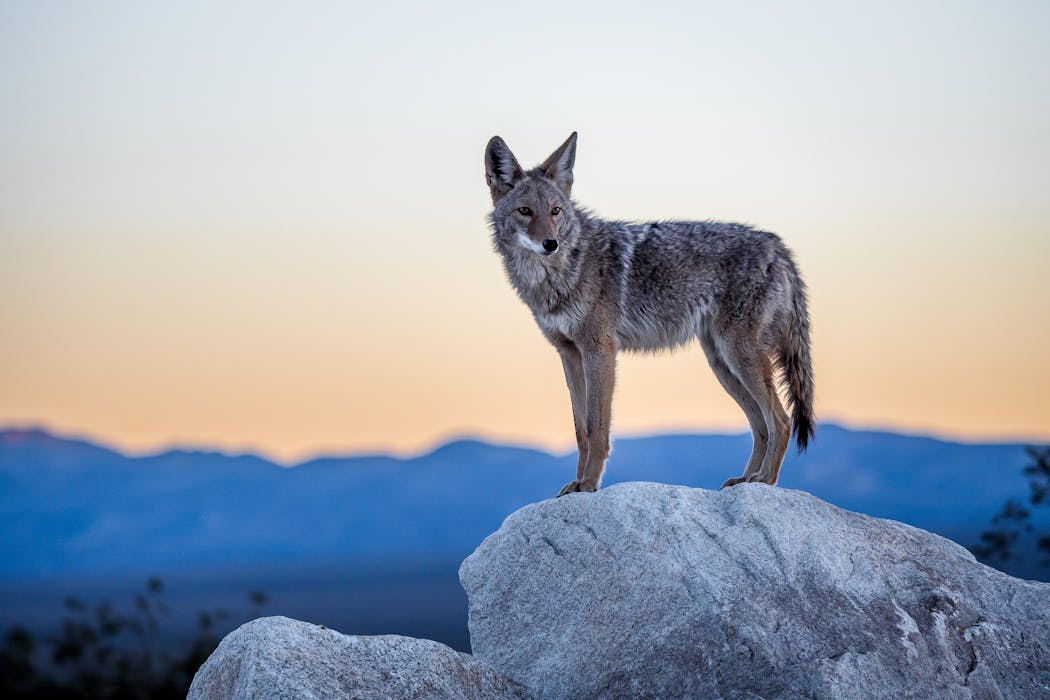
Coyotes have expanded across the United States. Davis Huber/500px via Getty Images

Imagine a healthy forest, home to a variety of species: Birds are flitting between tree branches, salamanders are sliding through leaf litter, and wolves are tracking the scent of deer through the understory. Each of these animals has a role in the forest, and most ecologists would argue that losing any one of these species would be bad for the ecosystem as a whole.

Unfortunately – whether due to habitat loss, overhunting or introduced specieshumans have made some species disappear. At the same time, other species have adapted to us and spread more widely.

As an ecologist, I’m curious about what these changes mean for ecosystems – can these newly arrived species functionally replace the species that used to be there? I studied this process in eastern North America, where some top predators have disappeared and a new predator has arrived.

A primer on predators

Wolves used to roam across every state east of the Mississippi River. But as the land was developed, many people viewed wolves as threats and wiped most of them out. These days, a mix of gray wolves and eastern wolves persist in Canada and around the Great Lakes, which I collectively refer to as northeastern wolves. There’s also a small population of red wolves – a distinct and smaller species of wolf – on the coast of North Carolina.

The disappearance of wolves may have given coyotes the opportunity they needed. Starting around 1900, coyotes began expanding their range east and have now colonized nearly all of eastern North America.

A map of central to eastern North America. Parts of southern Canada are marked as 'current northeast wolf range,' the northeast US is marked 'current coyote and historical wolf range,' the rest of the southern and eastern US is marked 'red wolf range' and to the west is marked 'coyote range ~1900.'
Coyotes colonized most of eastern North America in the wake of wolf extirpation.
Jensen 2025, CC BY

So are coyotes the new wolf? Can they fill the same ecological role that wolves used to? These are the questions I set out to answer in my paper published in August 2025 in the Stacks Journal. I focused on their role as predators – what they eat and how often they kill big herbivores, such as deer and moose.

What’s on the menu?

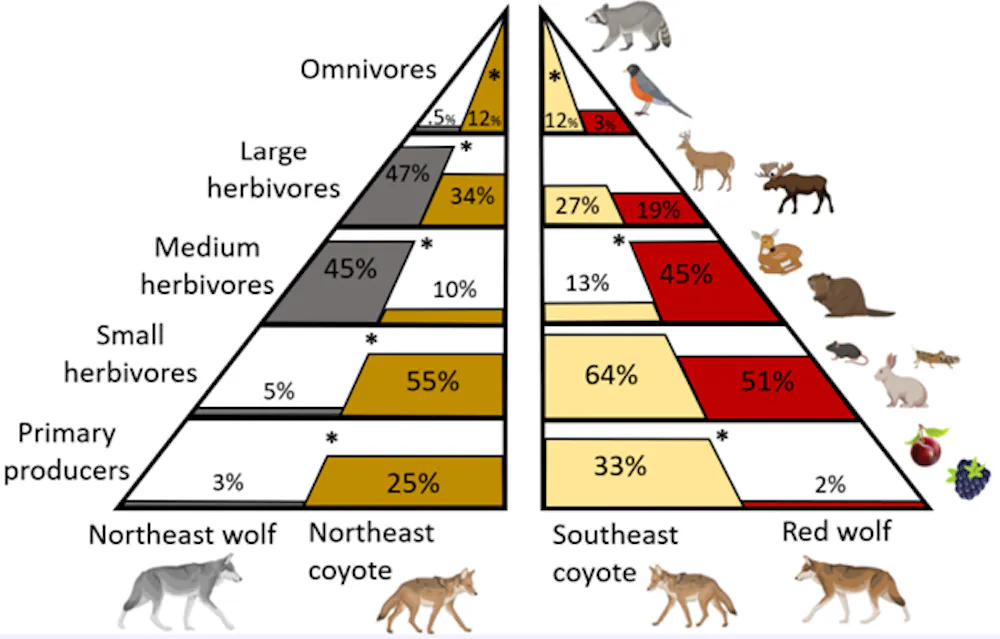
I started by reviewing every paper I could find on wolf or coyote diets, recording what percent of scat or stomach samples contained common food items such as deer, rabbits, small rodents or fruit. I compared northeastern wolf diets to northeastern coyote diets and red wolf diets to southeastern coyote diets.

I found two striking differences between wolf and coyote diets. First, wolves ate more medium-sized herbivores. In particular, they ate more beavers in the northeast and more nutria in the southeast. Both of these species are large aquatic rodents that influence ecosystems – beaver dam building changes how water moves, sometimes undesirably for land owners, while nutria are non-native and damaging to wetlands.

Second, wolves have narrower diets overall. They eat less fruit and fewer omnivores such as birds, raccoons and foxes, compared to coyotes. This means that coyotes are likely performing some ecological roles that wolves never did, such as dispersing fruit seeds in their poop and suppressing populations of smaller predators.

A diagram showing the diets of wolves and coyotes
Grouping food items by size and trophic level revealed some clear differences between wolf and coyote diets. Percents are the percent of samples containing each level, and stars indicate a statistically significant difference.
Alex Jensen, CC BY

Killing deer and moose

But diet studies alone cannot tell the whole story – it’s usually impossible to tell whether coyotes killed or scavenged the deer they ate, for example. So I also reviewed every study I could find on ungulate mortality – these are studies that tag deer or moose, track their survival, and attribute a cause of death if they die.

These studies revealed other important differences between wolves and coyotes. For example, wolves were responsible for a substantial percentage of moose deaths – 19% of adults and 40% of calves – while none of the studies documented coyotes killing moose. This means that all, or nearly all, of moose in coyote diets is scavenged.

Coyotes are adept predators of deer, however. In the northeast, they killed more white-tailed deer fawns than wolves did, 28% compared to 15%, and a similar percentage of adult deer, 18% compared to 22%. In the southeast, coyotes killed 40% of fawns but only 6% of adults.

Rarely killing adult deer in the southeast could have implications for other members of the ecological community. For example, after killing an adult ungulate, many large predators leave some of the carcass behind, which can be an important source of food for scavengers. Although there is no data on how often red wolves kill adult deer, it is likely that coyotes are not supplying food to scavengers to the same extent that red wolves do.

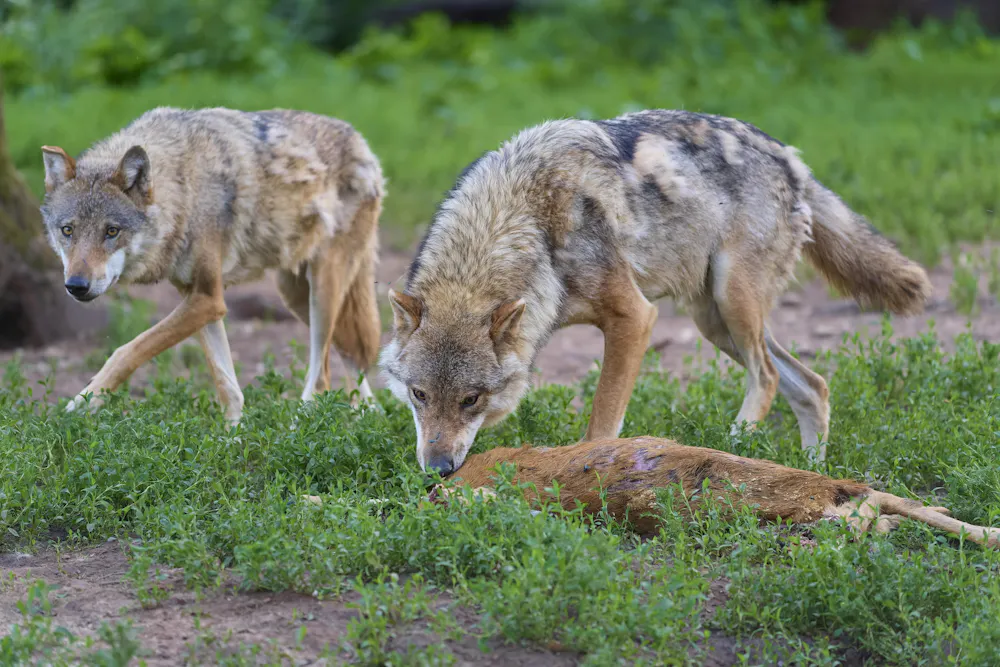
Two wolves walking through the grass. One is sniffing a dead deer on the ground.
Wolves and coyotes both kill a substantial proportion of deer, but they focus on different age classes.
imageBROKER/Raimund Linke via Getty Images

Are coyotes the new wolves?

So what does this all mean? It means that although coyotes eat some of the same foods, they cannot fully replace wolves. Differences between wolves and coyotes were particularly pronounced in the northeast, where coyotes rarely killed moose or beavers. Coyotes in the southeast were more similar to red wolves, but coyotes likely killed fewer nutria and adult deer.

The return of wolves could be a natural solution for regions where wildlife managers desire a reduction in moose, beaver, nutria or deer populations.

Yet even with the aid of reintroductions, wolves will likely never fully recover their former range in eastern North America – there are too many people. Coyotes, on the other hand, do quite well around people. So even if wolves never fully recover, at least coyotes will be in those places partially filling the role that wolves once had.

Indeed, humans have changed the world so much that it may be impossible to return to the way things were before people substantially changed the planet. While some restoration will certainly be possible, researchers can continue to evaluate the extent to which new species can functionally replace missing species.

The Conversation

Alex Jensen does not work for, consult, own shares in or receive funding from any company or organization that would benefit from this article, and has disclosed no relevant affiliations beyond their academic appointment.

ref. With wolves absent from most of eastern North America, can coyotes replace them? – https://theconversation.com/with-wolves-absent-from-most-of-eastern-north-america-can-coyotes-replace-them-270235

‘This year nearly broke me as a scientist’ – US researchers reflect on how 2025’s science cuts have changed their lives

Source: The Conversation – USA – By Carrie McDonough, Associate Professor of Chemistry, Carnegie Mellon University

U.S. researchers are seeking the light at the end of a rough year for science. Westend61/Getty Images

From beginning to end, 2025 was a year of devastation for scientists in the United States.

January saw the abrupt suspension of key operations across the National Institutes of Health, not only disrupting clinical trials and other in-progress studies but stalling grant reviews and other activities necessary to conduct research. Around the same time, the Trump administration issued executive orders declaring there are only two sexes and ending DEI programs. The Trump administration also removed public data and analysis tools related to health disparties, climate change and environmental justice, among other databases.

February and March saw a steep undercutting of federal support for the infrastructure crucial to conducting research as well as the withholding of federal funding from several universities.

And over the course of the following months, billions of dollars of grants supporting research projects across disciplines, institutions and states were terminated. These include funding already spent on in-progress studies that have been forced to end before completion. Federal agencies, including NASA, the Environmental Protection Agency, the National Oceanic and Atmospheric Administration and the U.S. Agency for International Development have been downsized or dismantled altogether.

The Conversation asked researchers from a range of fields to share how the Trump administration’s science funding cuts have affected them. All describe the significant losses they and their communities have experienced. But many also voice their determination to continue doing work they believe is crucial to a healthier, safer and more fair society.


Pipeline of new scientists cut off

Carrie McDonough, Associate Professor of Chemistry, Carnegie Mellon University

People are exposed to thousands of synthetic chemicals every day, but the health risks those chemicals pose are poorly understood. I was a co-investigator on a US$1.5 million grant from the EPA to develop machine-learning techniques for rapid chemical safety assessment. My lab was two months into our project when it was terminated in May because it no longer aligned with agency priorities, despite the administration’s Make America Healthy Again report specifically highlighting using AI to rapidly assess childhood chemical exposures as a focus area.

Labs like mine are usually pipelines for early-career scientists to enter federal research labs, but the uncertain future of federal research agencies has disrupted this process. I’m seeing recent graduates lose federal jobs, and countless opportunities disappear. Students who would have been the next generation of scientists helping to shape environmental regulations to protect Americans have had their careers altered forever.

Protestors holding signs supporting science in front of a domed federal building
Many researchers are working to advocate for science in the public sphere.
John McDonnell/AP Photo

I’ve been splitting my time between research, teaching and advocating for academic freedom and the economic importance of science funding because I care deeply about the scientific and academic excellence of this country and its effects on the world. I owe it to my students and the next generation to make sure people know what’s at stake.


Fewer people trained to treat addiction

Cara Poland, Associate Professor of Obstetrics, Gynecology and Reproductive Biology, Michigan State University

I run a program that has trained 20,000 health care practitioners across the U.S. on how to effectively and compassionately treat addiction in their communities. Most doctors aren’t trained to treat addiction, leaving patients without lifesaving care and leading to preventable deaths.

This work is personal: My brother died from substance use disorder. Behind every statistic is a family like mine, hoping for care that could save their loved one’s life.

With our federal funding cut by 60%, my team and I are unable to continue developing our addiction medicine curriculum and enrolling medical schools and clinicians into our program.

Meanwhile, addiction-related deaths continue to rise as the U.S. health system loses its capacity to deliver effective treatment. These setbacks ripple through hospitals and communities, perpetuating treatment gaps and deepening the addiction crisis.


Communities left to brave extreme weather alone

Brian G. Henning, Professor of Philosophy and Environmental Studies and Sciences, Gonzaga University

In 2021, a heat dome settled over the Northwest, shattering temperature records and claiming lives. Since that devastating summer, my team and I have been working with the City of Spokane to prepare for the climate challenges ahead.

We and the city were awarded a $19.9 million grant from the EPA to support projects that reduce pollution, increase community climate resilience and build capacity to address environmental and climate justice challenges.

People sitting at chairs and tables spread out in a large warehouse-like room
Cooling centers are becoming more critical as extreme heat becomes more common.
Nathan Howard/Getty Images

As our work was about to begin, the Trump administration rescinded our funding in May. As a result, the five public facilities that were set to serve as hubs for community members to gather during extreme weather will be less equipped to handle power failures. Around 300 low-income households will miss out on efficient HVAC system updates. And our local economy will lose the jobs and investments these projects would have generated.

Despite this setback, the work will continue. My team and I care about our neighbors, and we remain focused on helping our community become more resilient to extreme heat and wildfires. This includes pursuing new funding to support this work. It will be smaller, slower and with fewer resources than planned, but we are not deterred.


LGBTQ+ people made invisible

Nathaniel M. Tran, Assistant Professor of Health Policy and Administration, University of Illinois Chicago

This year nearly broke me as a scientist.

Shortly after coming into office, the Trump administration began targeting research projects focusing on LGBTQ+ health for early termination. I felt demoralized after receiving termination letters from the NIH for my own project examining access to preventive services and home-based care among LGBTQ+ older adults. The disruption of publicly funded research projects wastes millions of dollars from existing contracts.

Then, news broke that the Centers for Disease Control and Prevention would no longer process or make publicly available the LGBTQ+ demographic data that public health researchers like me rely on.

But instead of becoming demoralized, I grew emboldened: I will not be erased, and I will not let the LGBTQ+ community be erased. These setbacks renewed my commitment to advancing the public’s health, guided by rigorous science, collaboration and equity.

Two people wearing surgical masks embracing, paintings of Frida Kahlo on the wall behind them
Research on LGBTQ+ health informs the kind of care patients receive.
Jessica Rinaldi/The Boston Globe via Getty Images


Pediatric brain cancer research squelched

Rachael Sirianni, Professor of Neurological Surgery, UMass Chan Medical School

My lab designs new cancer treatments. We are one of only a few groups in the nation focused on treating pediatric cancer that has spread across the brain and spinal cord. This research is being crushed by the broad, destabilizing impacts of federal cuts to the NIH.

Compared to last year, I am working with around 25% of our funding and less than 50% of our staff. We cannot finish our studies, publish results or pursue new ideas. We have lost technology in development. Students and colleagues are leaving as training opportunities and hope for the future of science dries up.

I’m faced with impossible questions about what to do next. Do I use my dwindling research funds to maintain personnel who took years to train? Keep equipment running? Bet it all on one final, risky study? There are simply no good choices remaining.


Inequality in science festers

Stephanie Nawyn, Associate Professor of Sociology, Michigan State University

Many people have asked me how the termination of my National Science Foundation grant to improve work cultures in university departments has affected me, but I believe that is the wrong question. Certainly it has meant the loss of publications, summer funding for faculty and graduate students, and opportunities to make working conditions at my and my colleagues’ institutions more equitable and inclusive.

But the greatest effects will come from the widespread terminations across science as a whole, including the elimination of NSF programs dedicated to improving gender equity in science and technology. These terminations are part of a broader dismantling of science and higher education that will have cascading negative effects lasting decades.

Infrastructure for knowledge production that took years to build cannot be rebuilt overnight.

The Conversation

Carrie McDonough receives funding from the U.S. EPA. She previously led the Pittsburgh chapter of Stand Up for Science and volunteers with Indivisible Pittsburgh, Casa San Jose and Pittsburgh Healthcare Workers and Scientists.

Brian G. Henning received funding from the Environmental Protection Agency.

Cara Poland receives funding from the Michigan Health Endowment Fund, the State of Michigan, and SAMHSA. She previously received funding from NIDA, Blue Cross Blue Shield Foundation of Michigan, and Michigan Opioid Partnership. She is the vice president and legislative and public policy chair of the American Society of Addiction Medicine and opioid task force chair of the Michigan State Medical Society.

Nathaniel M. Tran receives funding from the National Institute on Aging, RRF Foundation on Aging, and the University of Illinois Chicago.

Rachael Sirianni receives funding from the National Institutes of Health and Ian’s Friends Foundation. She is a member of the Board of Directors for the nonprofit fundraising group Cofund Connect, Inc. She previously received funding from the Department of Defense, the National Science Foundation, the Ben and Catherine Ivy Foundation, the Morgan Adams Foundation, the Amyotrophic Lateral Sclerosis Foundation, and the Matthew Larson Foundation.

Stephanie J. Nawyn received funding from the National Science Foundation.

ref. ‘This year nearly broke me as a scientist’ – US researchers reflect on how 2025’s science cuts have changed their lives – https://theconversation.com/this-year-nearly-broke-me-as-a-scientist-us-researchers-reflect-on-how-2025s-science-cuts-have-changed-their-lives-271282

There’s little evidence tech is much help stopping school shootings

Source: The Conversation – USA – By Emily Greene-Colozzi, Assistant Professor of Criminology and Justice Studies, UMass Lowell

Schools are increasingly turning to technology like ShotSpotter to address the threat of mass shootings. Jessica Rinaldi/The Boston Globe via Getty Images

A group of college students braved the frigid New England weather on Dec. 13, 2025, to attend a late afternoon review session at Brown University in Providence, Rhode Island. Eleven of those students were struck by gunfire when a shooter entered the lecture hall. Two didn’t survive.

Shortly after, a petition circulated calling for better security for Brown students, including ID-card entry to campus buildings and improved surveillance cameras. As often happens in the aftermath of tragedy, the conversation turned to lessons for the future, especially in terms of school security.

There has been rapid growth of the nation’s now US$4 billion school security industry. Schools have many options, from traditional metal detectors and cameras to gunshot detection systems and weaponized drones. There are also purveyors of artificial-intelligence-assisted surveillance systems that promise prevention: The gun will be detected before any shots are fired, and the shooting will never happen.

They appeal to institutions struggling to protect their communities, and are marketed aggressively as the future of school shooting prevention.

I’m a criminologist who studies mass shootings and school violence. In my research, I’ve found that there’s a lack of evidence to support the effectiveness of these technological interventions.

Grasping for a solution

Implementation has not lagged. A survey from Campus Safety Magazine found that about 24% of K-12 schools report video-assisted weapons detection systems, and 14% use gunshot detection systems, like ShotSpotter.

Gunshot detection uses acoustic sensors placed within an area to detect gunfire and alert police. Research has shown that gunshot detection may help police respond faster to gun crimes, but it has little to no role in preventing gun violence.

Still, schools may be warming to the idea of gunshot detection to address the threat of a campus shooter. In 2022, the school board in Manchester, New Hampshire, voted to implement ShotSpotter in the district’s schools after a series of active-shooter threats.

Other companies claim their technologies provide real-time visual weapons detection. Evolv is an AI screening system for detecting concealed weapons, which has been implemented in more than 400 school buildings since 2021. ZeroEyes and Omnilert are AI-assisted security camera systems that detect firearms and promise to notify authorities within seconds or minutes of a gun being detected.

These systems analyze surveillance video with AI programs trained to recognize a range of visual cues, including different types of guns and behavioral indicators of aggression. Upon recognizing a threat, the system notifies a human verification team, which can then activate a prescribed response plan.

But even these highly sophisticated systems can fail to detect a real threat, leading to questions about the utility of security technology. Antioch High School in Nashville, Tennessee, was equipped with Omnilert’s gun detection technology in January 2025 when a student walked inside the school building with a gun and shot several classmates, one fatally, before killing himself.

cameras mounted on a ceiling painted green
School security technology firm ZeroEyes uses this greenscreen lab to test and train artificial intelligence to spot visible guns.
AP Photo/Matt Slocum

Lack of evidence

This demonstrates an enduring problem with the school security technology industry: Most of these technologies are untested, and their effect on safety is unproven. Even gunshot detection systems have not been studied in the context of school and mass shootings outside of simulation studies. School shooting research has very little to offer in terms of assessing the value of these tools, because there are no studies out there.

This lack is partly due to the low incidence of mass and school shootings. Even with a broad definition of school shootings – any gunfire on school grounds resulting in injury – the annual rate across America is approximately 24 incidents per year. That’s 24 more than anyone would want, but it’s a small sample size for research. And there are few, if any, ethically and empirically sound ways to test whether a campus fortified with ShotSpotter or the newest AI surveillance cameras is less likely to experience an active shooter incident because the probability of that school being victimized is already so low.

Existing research provides a useful overview of the school safety technology landscape, but it offers little evidence of how well this technology actually prevents violence. The National Institute of Justice last published its Comprehensive Report on School Safety Technology in 2016, but its finding that the adoption of biometrics, “smart” cameras and weapons detection systems was outpacing research on the efficacy of the technology is still true today. The Rand Corporation and the University of Michigan Institute for Firearm Injury Prevention have produced similar findings that demonstrate limited or no evidence that these new technologies improve school safety and reduce risks.

While researchers can study some aspects of how the environment and security affect mass shooting outcomes, many of these technologies are too new to be included in studies, or too sparsely implemented to show any meaningful impact on outcomes.

My research on active and mass shootings has suggested that the security features with the most lifesaving potential are not part of highly technical systems: They are simple procedures like lockdowns during shootings.

The tech keeps coming

Nevertheless, technological innovations continue to drive the school safety industry. Campus Guardian Angel, launched out of Texas in 2023, promises a rapid drone response to an active school shooter. Founder Justin Marston compared the drone system to “having a SEAL team in the parking lot.” At $15,000 per box of six drones, and an additional monthly service charge per student, the drones are equipped with nonlethal weaponry, including flash-bangs and pepper spray guns.

In late 2025, three Florida school districts announced their participation in Campus Guardian Angel’s pilot programs.

Three school districts in Florida are part of a pilot program to test drones that respond to school shootings.

There is no shortage of proposed technologies. A presentation from the 2023 International Conference on Computer and Applications described a cutting-edge architectural design system that integrates artificial intelligence and biometrics to bolster school security. And yet, the language used to describe the outcomes of this system leaned away from prevention, instead offering to “mitigate the potential” for a mass shooting to be carried out effectively.

While the difference is subtle, prevention and mitigation reflect two different things. Prevention is stopping something avoidable. Mitigation is consequence management: reducing the harm of an unavoidable hazard.

Response versus prevention

This is another of the enduring limitations of most emerging technologies being advertised as mass shooting prevention: They don’t prevent shootings. They may streamline a response to a crisis and speed up the resolution of the incident. With most active shooter incidents lasting fewer than 10 minutes, time saved could have critical lifesaving implications.

But by the time ShotSpotter has detected gunshots on a college campus, or Campus Guardian Angel has been activated in the hallways of a high school, the window for preventing the shooting has long since passed.

The Conversation

Emily Greene-Colozzi receives funding from the National Institute of Justice.

ref. There’s little evidence tech is much help stopping school shootings – https://theconversation.com/theres-little-evidence-tech-is-much-help-stopping-school-shootings-272233

What are gas stove manufacturers trying to hide? Warning labels

Source: The Conversation – USA – By Alan K. Chen, Thompson G. Marsh Law Alumni Professor, University of Denver

Colorado was the first state to pass a law requiring warning labels on gas stoves. mapodile/GettyImages

Colorado passed first-in-the-nation legislation requiring warning labels on gas stoves in June 2025. These warnings are similar to what is required by cigarette labeling laws.

The required labels urge consumers to educate themselves about the air quality implications of indoor gas stoves and direct consumers to the Colorado Department of Public Health and Environment for information on the health impacts. This could have a substantial impact, as government agencies estimate that about one-third of Colorado’s households use gas as their primary cooking source.

The law went into effect on Aug. 6. The Association of Home Appliance Manufacturers is now suing Colorado and is asking a federal court to temporarily block the law from being enforced while the case proceeds. The parties are awaiting a hearing on this request.

I’m a legal scholar with expertise in First Amendment law. I research and publish papers focusing on laws, such as the new Colorado statute, that compel businesses to disclose information to consumers.

In my opinion, in opposing warning labels, the gas industry and its trade association are weaponizing the First Amendment to undermine a commonsense regulation that aims to keep residents safe and informed.

Warning labels in the US

Walk down an aisle in any toy store and you’ll see tags alerting parents to the risk of choking. Flip over your prescription medication and you can read its side effects and interactions with other drugs. In the grocery store, food products have labels bearing information about calorie and sugar content to help consumers make healthier decisions.

A crumbled cigarette box with a Surgeon General's warning on the side.
Warning labels on cigarettes have been required in the U.S. since 1965.
MediaNews Group/Reading Eagle via Getty Images

Often taken for granted, these warning labels provide critical information to protect Americans’ health and safety. Perhaps the most recognizable warning labels can be found on cigarette packages, required in the U.S. since 1965, to inform customers about the health harms of smoking. Despite the fact that warning labels on cigarettes have saved millions of lives, the tobacco industry fought tooth and nail against them to keep consumers in the dark. Since that time, federal, state and local laws requiring businesses to make truthful factual disclosures about their products have become commonplace.

Colorado lawsuit

In its lawsuit, the gas industry invokes the First Amendment’s compelled speech doctrine. This doctrine prohibits the government from forcing people to make ideological statements they don’t actually believe, such as reciting the Pledge of Allegiance.

A 9News report on the lawsuit against Colorado’s new law.

In 2018, in National Institute of Family and Life Advocates v. Becerra, the U.S. Supreme Court greatly expanded this rule and opened the door for challenges to government efforts to require businesses to disclose truthful statements of fact. The court held that the government cannot compel businesses to disclose factual information if it is “controversial.”

Of course, it would be hard to find a manufacturer who does not think such disclosures are controversial, given that businesses are likely to disagree that their products are dangerous. If a subjective claim that a disclosure is controversial is all it takes to strike a law down, many such laws are vulnerable to legal attacks.

Interest groups representing the tobacco industry, the gas industry and others have seized on this opportunity to dismantle what most people understand to be routine labeling requirements. For example, companies have filed lawsuits challenging federal laws requiring companies to disclose that they use “conflict minerals” and local laws requiring beverage manufacturers to disclose that drinking sugar-sweetened drinks “contributes to obesity, diabetes and tooth decay.”

In its lawsuit, the Association of Home Appliance Manufacturers, a trade association that lobbies on behalf of the home appliance industry, argues that Colorado’s law compels gas stove manufacturers to place warning labels on their products that it believes contain “scientifically controversial and factually misleading” information around gas stoves.

However, abundant evidence shows that cooking with a gas stove releases pollutants that harm human health. Multiple studies have shown that burning methane gas produces nitrogen oxide, carbon monoxide, formaldehyde and benzene that can worsen respiratory illnesses such as asthma and increase the risk of cancer.

A young child wears a mask connected to a white tube over their face.
Cooking with gas stoves indoors has been linked to human health harms such as asthma.
Michael Robinson Chavez/GettyImages

Furthermore, in 2022, the American Medical Association recognized that gas stove use can increase household air pollution, the risk of childhood asthma and asthma severity. The same year, the American Public Health Association recommended putting warning labels on gas stoves as an official policy position.

Public health advocates contend that the gas industry has known about the health harms of gas stoves for decades, but that the industry has repeatedly attempted to paint its products in a better light.

A 2023 expose by The New York Times, for example, revealed that the gas industry paid toxicologist Julie Goodman to downplay the health impacts of gas stoves. Just eight years earlier, Goodman provided testimony on behalf of tobacco companies. A judge described her testimony on tobacco as “contrary to consensus of the scientific community.”

Risk to consumers

If the Association of Home Appliance Manufacturers’ claim succeeds in court, it could, in my analysis, make it much easier for companies to fund biased research or bring in experts to argue that something is not well-established science.

For example, a drug manufacturer could hire an expert to dispute the side effects of a drug. Food producers might claim their experts disagree with the science underlying nutrition and calorie information required by government regulation. Even manufacturers of everyday items such as lawnmowers or toasters could hire experts and proclaim that their products pose no safety harms.

Everyday people would bear the brunt of harm from the invalidation of warning label laws. These people currently have the right to know critical health and safety information before buying any product. If we let corporate interests undermine regulations such as warning labels, I believe we will no longer be able to inform the public about commonsense steps they can take to protect their health.

Read more of our stories about Colorado.

The Conversation

Alan K. Chen does not work for, consult, own shares in or receive funding from any company or organization that would benefit from this article, and has disclosed no relevant affiliations beyond their academic appointment.

ref. What are gas stove manufacturers trying to hide? Warning labels – https://theconversation.com/what-are-gas-stove-manufacturers-trying-to-hide-warning-labels-271370

Understanding climate change in America: Skepticism, dogmatism and personal experience

Source: The Conversation – USA (2) – By Gary W. Yohe, Professor of Economics and Environmental Studies, Wesleyan University

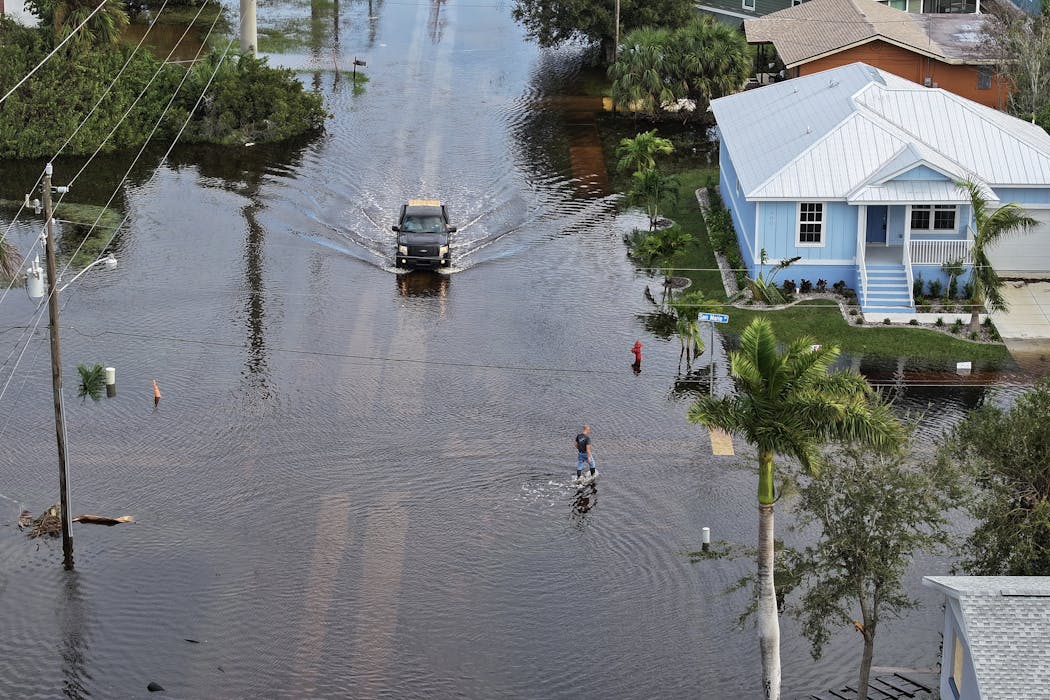
Warmer temperatures can supercharge storms. Joe Raedle/Getty Images

Scientists are trained to be professional skeptics: to always judge the validity of a claim or finding on the basis of objective, empirical evidence. They are not cynics; they just ask themselves and each other a lot of questions.

If they see a claim that a finding is true, they will ask: “Why?” They may hypothesize that if that finding is true, then some related findings must also be true. If it’s unclear whether one or more of those other findings is true, they will do more work to find out.

It is no wonder that science moves so slowly, especially on really important topics such as climate change.

Dogmatism is the opposite of skepticism. It is the proclivity to assert opinions as unequivocally true without taking account of contrary evidence or the contradictory findings. It is why public debate over scientific findings never seems to go away.

An example of the difference is the reaction to the Intergovernmental Panel on Climate Change’s finding in 1995 that “evidence suggests a discernible human influence on global climate.” The IPCC’s assessment reports involve hundreds of researchers from around the world who reviewed the global scientific understanding of the planet’s changing climate.

It’s an instructive case in the differences between skepticism and dogmatism, and it’s something to think about as you hear people talk about climate change.

Origins of a dogmatic response

Shortly after the IPCC released that finding in 1995, persistent and well-organized attacks on the science began. Many came from groups supported by the owners of Koch Industries, a conglomerate involved in oil refining and chemicals.

Their strategies mimicked earlier assaults on science and scientists who had warned the public that smoking posed a serious threat to their health. This time it was a warning about fossil fuels’ impact on the climate.

The similarity should not be a surprise. Science historians Naomi Oreskes and Erik Conway, in their 2011 book “Merchants of Doubt,” and American historian Nancy MacLean, in her 2010 book “Democracy in Chains,” have explained how the strategy was written by some of the same people who had tried to stop efforts to tighten tobacco regulations a decade or so earlier.

The dogma presented to the public for fighting regulation held that personal freedoms are paramount and that they are not to be diminished by any efforts designed explicitly to improve the general welfare.

What a skeptical response looks like

Climate scientists understood in 1995 that they must provide more than laboratory results, which go back to Svante Arrhenius’ work in 1895 demonstrating a causal correlation between increasing carbon dioxide concentrations and rising temperatures.

They also accepted the challenge of exploring collections of associated effects that should also be true if human activity was changing the climate.

Scientists have since examined dozens of different independently monitored aspects of climate change and confirmed the expected fingerprints of climate change all around the world.

Since the upper layers of the oceans absorb 90% of the atmosphere’s excess heat, they should be persistently warming as global temperatures rise. Has that happened? Yes, it has.

Since land-based ice melts when temperatures get too warm, global sea level should rise. And it should rise by more than would happen with thermal expansion of warming ocean water alone. Is it? Data shows that it is.

A line chart showing meltwater as the top contributor, followed by thermal expansion
The major contributors to sea level rise.
NOAA Climate.gov

Syukuro Manabe and Richard Wetherald argued in 1967 that the upper atmosphere should cool while surface temperatures rise in response to higher carbon dioxide concentrations. Has it cooled over the past 50 years? Yes, it has, just as Manabe predicted.

A temperature map of the atmosphere shows cooling in the upper atmosphere, above the tropopause, and warming below it, over the past two decades.
The upper atmosphere has been cooling while the lower atosphere, close to Earth’s surface, has warmed over the past two decades. The gray line marks the tropopause, between the lower troposphere and higher stratosphere.
IPCC 6th Assessment Report

By 2021, as the evidence piled up, the IPCC’s Sixth Assessment stated: “It is unequivocal that human influence has warmed the global climate system since pre-industrial times. Combining the evidence from across the climate system increases the level of confidence in the attribution of observed climate change to human influence and reduces the uncertainties associated with assessments based on single variables. Large-scale indicators of climate change in the atmosphere, ocean, cryosphere and at the land surface show clear responses to human influence consistent with those expected based on model simulations and physical understanding.”

Convincing the public

But has the public been convinced? The data on this is mixed.

Annual surveys conducted by the Yale Program on Climate Change Communication have found that the percentage of Americans “alarmed” about climate change rose over the past 11 years – from 15% in 2014 to 26% in 2024. And they show that much of that increase came from an increase in concern among Americans who earlier considered themselves “concerned” or “cautious.”

Over the same time period, though, the proportion of citizens in the survey who considered themselves “disengaged,” “doubtful” or “dismissive” shrank only modestly, from 29% to 27%.

Other surveys suggest that personal experience likely plays a significant role in how people understand climate change.

Many local and national news stations have mentioned climate change as a contributing factor in their extensive coverage of destructive wildfires in Los Angeles and Hawaii, flash floods in North Carolina and Texas, persistent drought across the Southwest, extreme heat waves and destructive hurricanes.

Some of their viewers could certainly be coming around to believing what evidence shows: that climate-related disasters have become more frequent and more intense.

Americans are also directly experiencing other effects of climate change on their homes, health and wallets. For example:

Stories like these do not make the national news very often, but they do show up in conversations around the kitchen table.

Reaching those with dismissive views

So, how can those Americans who are dismissive of climate change be reached? Some dogmatically believe claims that “climate change is a hoax” despite ever-growing evidence to the contrary.

Talking about personal experiences with extreme weather events, wildfires or droughts and their connections to rising global temperatures can help.

It might also help to remind them of failed dogma from the past that was disproved by science, yet people continued for years to believe them. For example, we know today that the Earth is not flat, the Sun does not circle the Earth, and living organisms cannot materialize spontaneously from nonliving matter.

The shift in public perceptions of climate risks leaves me hopeful that more people are acknowledging the scientific understanding of climate change and catching up with the climate scientists who have produced, questioned, reexamined and reaffirmed their findings through rigorous application of the scientific method.

The Conversation

Gary W. Yohe does not work for, consult, own shares in or receive funding from any company or organization that would benefit from this article, and has disclosed no relevant affiliations beyond their academic appointment.

ref. Understanding climate change in America: Skepticism, dogmatism and personal experience – https://theconversation.com/understanding-climate-change-in-america-skepticism-dogmatism-and-personal-experience-271516

Resolve to stop punching the clock: Why you might be able to change when and how long you work

Source: The Conversation – USA (2) – By Jennifer Tosti-Kharas, Professor of Management, Babson College

The U.S. workweek hasn’t always been 40 hours long, so maybe something else is possible. Gearstd/iStock via Getty Images Plus

About 1 in 3 Americans make at least one New Year’s resolution, according to Pew Research. While most of these vows focus on weight loss, fitness and other health-related goals, many fall into a distinct category: work.

Work-related New Year’s resolutions tend to focus on someone’s current job and career, whether to find a new job or, if the timing and conditions are right, whether to embark on a new career path.

We’re an organizational psychologist and a philosopher who have teamed up to study why people work – and what they give up for it. We believe that there is good reason to consider concerns that apply to many if not most professionals: how much work to do and when to get it done, as well as how to make sure your work doesn’t harm your physical and mental health – while attaining some semblance of work-life balance.

Country music icon Dolly Parton wrote and sang the theme song in the movie ‘9 to 5,’ and had a starring role as well.

How we got here

Most Americans consider the 40-hour workweek, which calls for employees being on the job from nine to five, to be a standard schedule.

This ubiquitous notion is the basis of a hit Dolly Parton song and 1980 comedy film, “9 to 5,” in which the country music star had a starring role. Microsoft Outlook calendars by default shade those hours with a different color than the rest of the day.

This schedule didn’t always reign supreme.

Prior to the Great Depression, which lasted from 1929-1941, 6-day workweeks were the norm. In most industries, U.S. workers got Sundays off so they could go to church. Eventually, it became customary for employees to get half of Saturday off too.

Legislation that President Franklin D. Roosevelt signed into law as part of his sweeping New Deal reforms helped establish the 40-hour workweek as we know it today. Labor unions had long advocated for this abridged schedule, and their activism helped crystallize it across diverse occupations.

Despite many changes in technology as well as when and how work gets done, these hours have had a surprising amount of staying power.

Americans work longer hours

In general, workers in richer countries tend to work fewer hours. However, in the U.S. today, people work more on average than in most other wealthy countries.

For many Americans, this is not so much a choice as it is part of an entrenched working culture.

There are many factors that can interfere with thriving at work, including boredom, an abusive boss or an absence of meaning and purpose. In any of those cases, it’s worth asking whether the time spent at work is worth it. Only 1 in 3 employed Americans say that they are thriving.

What’s more, employee engagement is at a 10-year low. For both engaged and disengaged employees, burnout increased as the number of work hours rose. People who were working more than 45 hours per week were at greatest risk for burnout, according to Gallup.

However, the average number of hours Americans spend working has declined from 44 hours and 6 minutes in 2019 to just under 43 hours per week in 2024. The reduction is sharper for younger employees.

We think this could be a sign that younger Americans are pushing back after years of being pressured to embrace a “hustle culture” in which people brag about working 80 and even 100 hours per week.

Critiques of ‘hustle culture’ are becoming more common.

Fight against a pervasive notion

Anne-Marie Slaughter, a lawyer and political scientist who wears many hats, coined the term “time macho” more than a decade ago to convey the notion that someone who puts in longer hours at the office automatically will outperform their colleagues.

Another term, “face time,” describes the time that we are seen by others doing our work. In some workplaces, the quantity of an employee’s face time is treated as a measure of whether they are dependable – or uncommitted.

It can be easy to jump to the conclusion that putting in more hours at the office automatically boosts an employee’s performance. However, researchers have found that productivity decreases with the number of hours worked due to fatigue.

Even those with the luxury to choose how much time they devote to work sometimes presume that they need to clock as many hours as possible to demonstrate their commitment to their jobs.

To be sure, for a significant amount of the workforce, there is no choice about how much to work because that time is dictated, whether by employers, the needs of the job or the growing necessity to work multiple jobs to make ends meet.

4-day workweek experiments

One way to shave hours off the workweek is to get more days off.

A multinational working group has examined experiments with a four-day workweek: an arrangement in which people work 80% of the time – 32 hours over four days – while getting paid the same as when they worked a standard 40-hour week. Following an initial pilot in the U.S. and Ireland in 2022, the working group has expanded to six continents. The researchers consistently found that employers and employees alike thrive in this setup and that their work didn’t suffer.

Most of those employees, who ranged from government workers to technology professionals, got Friday off. Shifting to having a three-day weekend meant that employees had more time to take care of themselves and their families. Productivity and performance metrics remained high.

This picture depicts a 4-day workweek.
Some studies examining four-day workweek experiments have had promising results.
Andrzej Rostek/iStock via Getty Images Plus

Waiting for technology to take a load off

Many employment experts wonder whether advances in artificial intelligence will reduce the number of hours that Americans work.

Might AI relieve us all of the tasks we dread doing, leaving us only with the work we want to do – and which, presumably, would be worth spending time on? That does sound great to both of us.

But there’s no guarantee that this will be the case.

We think the likeliest scenario is one in which the advantages of AI are unevenly distributed among people who work for a living. Economist John Maynard Keynes predicted almost a century ago that “technological unemployment” would lead to 15-hour workweeks by 2030. As that year approaches, it’s become clear that he got that wrong.

Researchers have found that for every working hour that technology saves us, it increases our work intensity. That means work becomes more stressful and expectations regarding productivity rise.

Deciding when and how much time to work

Many adults spend so much time working that they have few waking hours left for fitness, relationships, new hobbies or anything else.

If you have a choice in the matter of when and how much you work, should you choose differently?

Even questioning whether you should stick to the 40-hour workweek is a luxury, but it’s well worth considering changing your work routines as a new year gets underway if that’s a possibility for you. To get buy-in from employers, consider demonstrating how you will still deliver your core work within your desired time frame.

And, if you are fortunate enough to be able to choose to work less or work differently, perhaps you can pass it on: You probably have the power and privilege to influence the working hours of others you employ or supervise.

The Conversation

The authors do not work for, consult, own shares in or receive funding from any company or organization that would benefit from this article, and have disclosed no relevant affiliations beyond their academic appointment.

ref. Resolve to stop punching the clock: Why you might be able to change when and how long you work – https://theconversation.com/resolve-to-stop-punching-the-clock-why-you-might-be-able-to-change-when-and-how-long-you-work-270766