We analysed 73,000 articles and found the UK media is divorcing ‘climate change’ from net zero

Source: The Conversation – UK – By James Painter, Research Associate, Reuters Institute, University of Oxford

Zerbor / shutterstock

In October 2024, Conservative leader Kemi Badenoch declared herself a “net zero sceptic”, but “not a climate sceptic”. Most recently she doubled down, announcing plans to scrap the 2030 ban on new petrol cars in a 900-word Sunday Telegraph article that did not mention climate change once.

Badenoch is not an outlier. She’s following a similar script to one increasingly found in the British press.

My new research reveals a surprising trend: the linguistic divorcing of “net zero” from “climate change”. My colleague Will Vowell and I analysed more than 73,000 articles across nine UK media outlets and found that the two terms – once closely linked – are becoming more detached.

In 2018, when our data begins, the link was explicit. In that year, 90% of articles mentioning “net zero” also included the phrase “climate change” or a similar term like “global warming”. By 2024, this figure had fallen to just 42%.

line graph
The reduction in climate change mentions in net zero articles is particularly marked in the Sun, Mail and Express compared to the Guardian.
Painter & Vowell / ECIU, CC BY-SA

We then looked at those articles where net zero appeared in the headline and at least two (other) mentions in the text. This was a more robust measure of whether the article included an important discussion about net zero, rather than a passing mention.

Here there was a similar pattern of a gradual decline. In 2018 – a year before the Conservative government brought a net zero target into law – 100% of net zero discussions also mentioned climate change. That dropped to 75% in 2022 and to 59% in 2024.

This trend was replicated in articles where net zero appeared in the headline along with at least four other mentions in the text. In this category, out of the broadsheet papers, the Times – often regarded as the UK’s paper of record – had the lowest percentage of articles referencing climate change, at 64%. Four articles in 2024 – across the Telegraph, Sunday Telegraph and Express – had as many as eight mentions of net zero, but no mention at all of the climate emergency it is designed to solve.

In 2018-19, there appeared to be a reasonable amount of support in newspapers for the net zero policy. For example, the Daily Mail published an article around the time of the 2019 youth climate strike headlined: “Net zero hero! How being carbon neutral will help the planet”. Fast forward to 2024, and in September the Mail published the headline “Bonkers’ net-zero target could cost 1 MILLION jobs, union chief warns”, which included four mentions of net zero but no mention of climate change.

The rise of ‘response scepticism’

Our new report was commissioned by thinktank Energy and Climate Intelligence Unit (ECIU). Its director Peter Chalkley notes there is a “strong case” that certain papers or editors are driving an agenda to “divide climate change (an issue that the public greatly care about) from net zero (its solution, which is less understood)”.

This is part of a wider trend of “response scepticism” over the past decade in parts of the UK media. I co-authored a report published in early 2025 which found that scepticism of climate science has largely disappeared from opinion pieces and editorials, but criticism of the policies required to tackle climate change is pervasive.

“By removing the scientific and policy context,” argues Chalkley, “net zero risks being reframed – no longer the solution to stopping climate change, but part of a green culture war.”

A confused public

Despite the UK having a net zero target for more than six years, public understanding remains disappointing.

Awareness of the term is high (around 90%), but actual knowledge is low: around 50% say they knew a little, hardly anything or nothing at all about it.

In April 2025, Climate Barometer, an organisation that tracks public opinion on climate change, found 22% of people wrongly thought net zero meant “producing no carbon emissions at all”, a figure which rose to 41% among Reform supporters. The organisation argues that public confusion around the meaning of net zero and its implications for the country reflected attacks on net zero in the media and political debates.

Given these levels of public confusion and misunderstanding, reporters should remind audiences more frequently of why net zero is a necessity. At the very least, a simple statement outlining that scientists view net zero as essential to stopping global warming should be standard practice.


Don’t have time to read about climate change as much as you’d like?

Get a weekly roundup in your inbox instead. Every Wednesday, The Conversation’s environment editor writes Imagine, a short email that goes a little deeper into just one climate issue. Join the 47,000+ readers who’ve subscribed so far.


The Conversation

James Painter receives funding from the Energy and Climate Intelligence Unit. He is a senior visiting fellow at the Grantham Research Institute on Climate Change and the Environment.

ref. We analysed 73,000 articles and found the UK media is divorcing ‘climate change’ from net zero – https://theconversation.com/we-analysed-73-000-articles-and-found-the-uk-media-is-divorcing-climate-change-from-net-zero-272527


England now has a plan to end homelessness – here’s how to test whether it will work

Source: The Conversation – UK – By Michael Sanders, Professor of Public Policy, King’s College London

Yau Ming Low/Shutterstock

The UK has proved before that it can end homelessness. The Everyone In scheme during COVID lockdowns accommodated tens of thousands of people in emergency and supported housing, who would otherwise have continued sleeping rough.

But this was only temporary. Nearly six years later, the scale of the challenge is immense. In June 2025, 132,410 households were living in temporary accommodation, almost two-thirds of which were families with children.

The UK government has published a new homelessness strategy for England. The strategy speaks to different forms of homelessness, from rough sleeping to more hidden forms of homelessness, like sofa surfing.

This is a wide-ranging plan, bringing in approaches from different government departments. The £3.5 billion strategy aims to “address the root causes” of homelessness, firstly through a number of universal approaches.

Some of these have already been announced. The plan emphasises the government’s plan to build 1.5 million new homes during this parliament, reforms to renters’ rights, ending the two-child benefit cap and the youth guarantee to get more young people into work or education. It introduces a new commitment to update social housing allocation guidelines, and a legal “duty to collaborate” for public services to address homelessness.

Several more targeted measures look at specific at-risk populations. This includes care leavers, of whom a worrying proportion still go on to experience homelessness. It also includes people leaving institutions including healthcare settings and prisons. These targeted approaches are essential to move from a crisis-based approach to managing homelessness towards a more proactive approach to preventing it.

How do we know what works?

Our research focuses on methods such as randomised trials to evaluate policies across a range of topics, including homelessness. This is why we were pleased to see an emphasis on the government’s “test and learn” approach to technology and AI being applied to the homelessness strategy:

We want to adopt a test and learn approach to evidence, where local areas trial innovative practice, roll this out where it is effective, and subsequently share learning with others.

Given the UK government’s precarious financial situation, it’s important that policies work for the people who need them, without wasting money on untested approaches.

Randomised controlled trials, most common in medicine, are the gold standard method to show simply what the effect of an intervention or policy is. They work by assigning who gets an intervention (such as a vaccine or targeted homelessness support) at random, and comparing those that do to a control group.

A randomised trial in Canada has shown that modest, unconditional cash transfers for people experiencing homelessness can significantly reduce the number of days the average participant spent homeless in a year.

New studies are evaluating whether this approach can have the same kinds of effects in the UK. We are leading the evaluation of one project – administered by the charity Greater Change – which will test how giving people a personalised budget of around £4,000 can help them change their trajectory in life. We are looking forward to having results next summer.

Another trial already underway in the UK involves local councils working with data science company Xantura to give early warnings of households at risk of homelessness. In this trial, households identified by algorithm as being high-risk are randomly assigned either to receive proactive support, or not to. The outcomes of both groups are followed up later.

The evidence for this kind of approach is mixed. There is a burden of proof that companies selling these tools, and governments purchasing them, bear before making their use widespread. Randomised trials, while not perfect, are arguably the most rigorous and efficient way to test them.

Close up hand holding a stack of 20 pound notes
Randomised trials can test the effects of approaches like giving people grants or housing.
Alexey Fedorenko/Shutterstock

Sometimes, randomisation is not possible. But we can still use experimental approaches or evaluations to test the effects of policies.

In recent projects, we’ve seen that two approaches have statistically meaningful effects on reducing homelessness for these young people. These are Staying Put, a policy that allows young people to remain with their foster carers after they turn 18, and Lifelong Links, an approach that supports young people in care to build and maintain relationships with people from their birth families. The government has continued to fund the expansion of these programmes, which the evidence suggests will have substantial effects on reducing homelessness for care leavers.

Of course, research evaluations can and do find when interventions are not successful – or are even actively harmful. For example, we found that a model of “extended families” for young people in foster care actually increased the rate at which they go on to experience homelessness.

It’s a positive sign that the government is embracing testing and learning. But this should mean making use of rigorous methods like randomised trials. Shying away from them risks imperilling the UK’s ability to actually end homelessness.

The Conversation

Michael Sanders receives funding from the Centre for Homelessness Impact.

Julia Ellingwood receives funding from the Centre for Homelessness Impact.

ref. England now has a plan to end homelessness – here’s how to test whether it will work – https://theconversation.com/england-now-has-a-plan-to-end-homelessness-heres-how-to-test-whether-it-will-work-272377

Martin Parr: an astute and uniquely British photographer

Source: The Conversation – UK – By Mark Durden, Emeritus Professor, University of South Wales

The kitsch, the gaudy, the banal, the common, the superficial, the cheap: Martin Parr – who has died at the age of 73 – embraced and celebrated them all in his extraordinary pictures.

Born in Epsom in 1952 to solidly middle-class Methodist parents, Parr’s suburban childhood was dominated by his parents’ church going and passionate interest in ornithology. He was a keen trainspotter. His interest in photography was kindled by his grandfather George Parr, an amateur photographer, with whom Parr spent his childhood holidays in Yorkshire.

“I make serious photographs disguised as entertainment,” he once said, but the very nature of his photography saw some in his profession deny him the respect and acknowledgement he deserved.

His work chimed with elements of pop art and its obsession with consumerism, but in the photography world – certainly within the UK – there still seemed to be a certain cultural snobbery and unease about consciously engaging with this subject matter.

Part of that unease is to do with how the kitsch and the common are, certainly in Britain, bound up in questions of taste and class. Parr’s exhibition and book The Last Resort (1983-1986) brought him important recognition, including a show at London’s Serpentine Gallery, but also much criticism for its harsh portrayal of working-class people holidaymaking in New Brighton, Merseyside.

A life in pictures

Inspired by what was then the new American colour photography and the work of photographers such as Stephen Shore and William Eggleston, as well the British colour photographer John Hinde, Parr’s pictures broke with the more sober and gloomy black and white British documentary photography tradition.

Exploring the life and work of Martin Parr.

Deploying similar colour saturation to the summer holiday postcard, Parr countered its idealism by focusing on scenes of slovenliness, notably through pictures showing the consumption of food – chips, hot dogs, ice creams – with all the ensuing spillage.

Both the beach and lido were crowded and littered, and people seemed oblivious to the mess around them. As a result, some saw such pictures as presenting a degraded vision of the working-class people of this popular northern seaside resort. But despite its critics, Last Resort has remained in print since it was published and is his bestselling book.

The Cost of Living (1986-1989) offered a counterpoint to The Last Resort, concentrating on a more appearance-driven and aspirational culture: the uptight realm of the comfortable middle classes, exemplified through vivid, cutting and critical portraits of people at social gatherings, shopping or keeping fit.

For Small World (1987-1994), his photography took on the bigger subject of worldwide travel. His critical and comical response to tourism often rested upon a witty interplay between the people and the attractions they had come to consume, many of them shown carrying cameras or videos or taking photographs.

Here the comedy is bathetic, as we sense the shortfall between the sublime nature of what the masses have come to see and the plethora of tourist tat that filters that encounter.

The tourists’ clothing also became a recurring focus and point of irony – such as the back of a yellow t-shirt with the single word “Bali”, worn by a tourist as they contemplate Gaudí’s Sagrada Familia in Barcelona, or a man in a loud summer shirt bearing an image of a tropical sunset in the Piazza della Signoria, Florence.

Parr’s remarkable and most significant book, Common Sense (1999) conveyed an apocalyptic vision of humanity’s over-consumption, a global binge presented through a glut of images, all in close up. It is a crazed delirious montage, as if replaying fragments drawn from all his past work, but with the colour saturation racked up.

Common Sense also marked a shift in the form of the photo book in its use of full-bleed images (where the images extend to the edges of the page) throughout, from front cover to back, and the only text, the title, author and publisher imprint. Parr had been a passionate collector of photo books since the beginning of his career and saw the photo book as the ideal way of both presenting and disseminating photographs.

Publishing multi-volumes on the photo book with various authors, his work in this field is an important part of his legacy. His collection of over 12,000 photo books was part gifted to and purchased by the Tate galleries in 2017.

In 2014, he established the Martin Parr Foundation which opened as a dedicated photography space in 2017 in Bristol. As well as providing an archive of his photography, the foundation shows and collects the work of photographers who make work focused on Britain and Ireland. It also seeks to support and promote younger, emerging photographers.

When travelling the world, Parr started having his picture taken by local street and studio photographers, as well as in photo booths. The resulting portraits constitute his most comic book, Autoportrait, (2000; expanded and revised in 2016) with Parr deadpanning amid a carnival of possible and other selves created for him.

Rooted in the passion and joy of the tradition of photographic portraiture, Autoportrait is also an important document of less-feted photographic practices, such as the humble photo booth, as well as a testimony to the creativity and imaginings of others.

It also bears comparison with the collaborative photobook Julie Bullard (2025) for which Parr “documented” scenarios reflecting the creative imaginings of another, this time the artist and filmmaker, Nadia Lee Cohen.

Cohen hired Parr to take pictures of tableaux she created, as she and family members played out a fictional version of the life and death of the glamorous babysitter she idolised as a child in in the 1990s.

Cohen’s stylised and over the top fantasy about a working-class life, was already imbued with Parr’s now distinctive aesthetic. To be asked to photograph her project meant he was in effect also photographing himself. As one of his last significant projects, it seems a beautifully absurd and comic ending to an extraordinary and exceptional artistic life and career.

This article features references to books that have been included for editorial reasons, and may contain links to bookshop.org; if you click on one of the links and go on to buy something, The Conversation UK may earn a commission.


Looking for something good? Cut through the noise with a carefully curated selection of the latest releases, live events and exhibitions, straight to your inbox every fortnight, on Fridays. Sign up here.


The Conversation

Mark Durden does not work for, consult, own shares in or receive funding from any company or organisation that would benefit from this article, and has disclosed no relevant affiliations beyond their academic appointment.

ref. Martin Parr: an astute and uniquely British photographer – https://theconversation.com/martin-parr-an-astute-and-uniquely-british-photographer-272316

Worried about statins? Here’s what the evidence shows

Source: The Conversation – UK – By Dipa Kamdar, Senior Lecturer in Pharmacy Practice, Kingston University

pimpampix/Shutterstock

Few medicines have sparked as much debate as statins. Cardiologists often describe them as life-saving, while some patients remain wary of side effects or uneasy about taking a daily pill.

Statins sit at the intersection of medical treatment and everyday lifestyle because high cholesterol is strongly influenced by factors such as diet, physical activity, weight and smoking. Although statins are prescribed based on clinical evidence, their use often prompts questions about whether cardiovascular risk should be reduced primarily through medication, lifestyle change, or a combination of both.

Statins are a group of drugs that block an enzyme called HMG-CoA reductase. This enzyme plays a central role in the liver’s production of cholesterol. Cholesterol is a fatty substance the body needs to build cell membranes, produce hormones, make vitamin D and generate bile, which helps digest fats.

Cholesterol travels through the bloodstream attached to proteins, forming particles known as lipoproteins. The most familiar are low density lipoprotein (LDL) and high density lipoprotein (HDL).

LDL is often labelled “bad cholesterol” because high levels can lead to fatty build-ups inside arteries, while HDL helps transport excess cholesterol back to the liver. Another important blood fat is triglycerides, which, when elevated, also increase cardiovascular risk.

Cholesterol itself is not harmful. Problems arise when LDL and triglyceride levels remain too high for too long. This can lead to atherosclerosis, a condition in which fatty deposits narrow and stiffen arteries, increasing the risk of heart attacks and strokes. By lowering LDL cholesterol and triglycerides, statins reduce the likelihood of these deposits forming.

Large clinical trials have consistently shown statins to be effective. A major review found that statins significantly reduce the risk of heart attacks and stroke.

The size of the benefit depends on a person’s underlying cardiovascular risk and how much their LDL cholesterol is lowered. Reflecting this evidence, national guidelines recommend statins for primary prevention in people at higher risk who have not yet had cardiovascular disease, and secondary prevention for those with established disease.

Given this strong evidence, why do statins still generate so much hesitation?

Like all medicines, statins have side effects. Common ones include headache, digestive upset and dizziness. More serious but uncommon or rare effects include liver inflammation and muscle problems.

One such condition is myopathy, meaning muscle pain or weakness with raised levels of creatine kinase, an enzyme released when muscle tissue is damaged. In very rare cases, severe muscle breakdown known as rhabdomyolysis can occur.

Large datasets show that most people tolerate statins well. When patients report muscle symptoms while taking statins, there is less than a 10% chance that the statin is actually the cause. Rhabdomyolysis is extremely rare, affecting only a few people per million users. The risk increases at very high doses or when statins are taken alongside medicines that interfere with how they are broken down.

Statins can also cause a small rise in blood glucose, mainly affecting people with prediabetes or diabetes. However, because statins substantially reduce heart attack risk in these groups, the overall benefit outweighs this modest increase. Most side effects are reversible once treatment is stopped, whereas damage from heart attacks or strokes can be permanent.

Drug interactions are another concern. Statins such as simvastatin and atorvastatin are broken down in the liver by enzymes known as CYP enzymes, particularly CYP3A4. When other medicines block these enzymes, statin levels in the blood can rise, increasing the risk of muscle-related side effects.

Important interactions include antifungal medications such as ketoconazole, certain antibiotics like erythromycin, immunosuppressants such as ciclosporin, and some heart drugs including amiodarone and diltiazem.

Even grapefruit can interfere with statin metabolism. It contains chemicals called furanocoumarins, which block CYP3A4 enzymes in the gut, allowing more statin to enter the bloodstream. Not all statins are affected to the same extent, so switching to a different statin could reduce this risk.

While statins are effective, they are not the only tool for managing cholesterol. Lifestyle measures play a central role and are recommended alongside medication. Obesity is a major cardiovascular risk factor.

A review found that combining diet and exercise reduced body weight, improved cholesterol levels and lowered cardiometabolic risk: it reduces factors linked to heart disease and type 2 diabetes.

Dietary changes are particularly important. National guidelines recommend reducing saturated fat intake to help lower LDL cholesterol. Saturated fats are commonly found in butter, fatty meats and processed foods.

Replacing them with unsaturated fats, such as those found in olive oil, nuts and seeds, can improve cholesterol levels. Shifting towards plant-based proteins like beans, lentils and soy may also reduce reliance on red and processed meats.

Fibre intake matters too. Research shows that higher fibre consumption is associated with better cholesterol levels and lower heart disease risk.

A large 2019 review found that people with high fibre intake had a 15 to 30% lower risk of dying from heart disease or developing coronary heart disease. Whole grains, fruits and vegetables provide fibre alongside vitamins and antioxidants that support heart health.

Regular physical activity raises HDL cholesterol and lowers triglycerides. Current guidelines recommend 150 minutes of moderate-intensity exercise per week, but even smaller amounts offer meaningful benefits.

The choice between statins and lifestyle change is not an either-or decision. For people at high risk, including those with previous heart attacks, inherited cholesterol disorders or multiple risk factors, statins are often essential.

For others with mildly raised cholesterol, lifestyle changes may delay or prevent the need for medication. Healthy total cholesterol levels are usually below 5 mmol/L, but targets vary depending on individual risk.

Ultimately, treatment decisions should be personalised, balancing cardiovascular risk, the proven benefits of statins, potential side effects and what lifestyle change is realistically achievable.

Statins have transformed cardiovascular care and saved millions of lives. Yet they remain controversial. Addressing poor diet, physical inactivity and obesity remains central to reducing the burden of heart disease in the long term.

The Conversation

Dipa Kamdar does not work for, consult, own shares in or receive funding from any company or organisation that would benefit from this article, and has disclosed no relevant affiliations beyond their academic appointment.

ref. Worried about statins? Here’s what the evidence shows – https://theconversation.com/worried-about-statins-heres-what-the-evidence-shows-269524

The politics of the hyper-polluting private transport used by the world’s super-rich is hotting up

Source: The Conversation – UK – By Rowland Atkinson, Professor and Research Chair in Inclusive Societies, University of Sheffield

Roman Abramovich’s super-yacht Eclipse. Bulent Demir/Shutterstock

While millions of people make the effort to sort their recycling, buy fewer clothes and generally make greener choices, the world’s wealthiest can emit the same amount of carbon as the average person does in a year by going on holiday just once.

Among the many things worrying the climate-conscious is the question of the carbon-intensive movements of the super-rich – classed as those with more than US$30 million (£23 million) in disposable assets. This phenomenon, characterised by the use of private jets, fossil-fuelled yachts, heavy cars and space rockets, represents an enormous, and unnecessary, environmental impact.

It is estimated that the 125 wealthiest billionaires alone emit three million tonnes of carbon annually. This is close to the carbon footprint of Madagascar, a country of 30 million people.

Recent attention on the super-emitters has focused on jets, but private super-yachts are also major contributors. Despite their names, these vessels lack sails and require gigalitres of fuel to transport only a small number of crew and passengers.

Large yachts can consume hundreds of litres of fuel per hour, while super-yachts may use thousands of litres per hour even when just cruising. Yacht engines must “idle” at anchor to maintain heating and energy systems, consuming thousands of litres per week.

The yacht owned by former Chelsea FC owner Roman Abramovich, Eclipse, reportedly has a 1,000,000-litre fuel tank, while Google’s Sergey Brin’s super-yacht uses enough power to supply 580 homes, even when it is simply moored in port.

The emerging trend of private rockets also involves burning vast quantities of fuel – with no current limits on use. Former Amazon CEO Jeff Bezos’ first trip to the edge of the atmosphere reportedly produced around 93 metric tons of CO².

It has been calculated that there are 41.3 million high net worth individuals in the world, and, within this group, 510,000 ultra-high net worth individuals. Together, they are thought to possess liquid wealth of nearly US$60 trillion.

More money, more travel

This growth in private wealth has directly translated into an increase in jets and yachts and their use over time. For example, the global private super-yacht fleet has grown by 50% in about ten years and continues to see strong demand. The number of private jets has also increased substantially, leading to greater use and expansion of ground facilities at numerous airports.

The data shows the massive carbon footprints associated with the most luxurious (and unnecessary) forms of mobility utilised by the world’s wealthiest people. While many may scoff at the prospect of a human exit to Mars, this does not prevent a ramping-up of exploratory and carbon-intensive trial flights in pursuit of this mission.

Compared to the essential carbon emitted by everyday citizens going about their work and lives, the contrast is stark. It highlights how luxury and entitlement combine to create a new class of hyper-mobile carbon-emitting groups.

private jets lined up on the apron at an airport at night time.
The proliferation of private jets is creating a new class of hypermobility.
Thierry Weber/Shutterstock

The expansion of the super-rich and their carbon footprint poses significant challenges to curbing emissions and fostering social unity. Inequality threatens social cohesion and has undermined the effectiveness of the political sphere, both of which are crucial for climate action.

The primary “winners” in the global political economy have been positioned as legitimate users of private jets by the aero industry on the basis that they save time that is critical to business activity. But it seems that something else is blocking action, given how publicly unpopular the use of private jets by the rich has become.

In 2024 Oxfam reported that 80% of the public support higher passenger duties on private jets and yachts. Another survey the same year showed that more than 40% of people in six European nations (UK, Germany, France, Spain, the Netherlands and Belgium) supported an outright ban on the use of private jets.

It is increasingly clear that the global climate emergency outweighs the need for “Instagram sunsets” of private super-yacht and jet users in public opinion. For brave leaders, there could be real political capital to be gained from reducing this mobility as feelings run high over waste, pollution and emissions.

Social cohesion and collective action are necessary to reduce emissions. But efforts to discourage unnecessary mobility will be challenged by powerful voices celebrating choice, individual freedoms to move and consume, and life experiences that entail massive carbon costs. The planet cannot support this outdated growth and status-conscious economic model – it must be challenged for all our sakes.

The Conversation

Rowland Atkinson does not work for, consult, own shares in or receive funding from any company or organisation that would benefit from this article, and has disclosed no relevant affiliations beyond their academic appointment.

ref. The politics of the hyper-polluting private transport used by the world’s super-rich is hotting up – https://theconversation.com/the-politics-of-the-hyper-polluting-private-transport-used-by-the-worlds-super-rich-is-hotting-up-270343

La location de jouets, une nouvelle tendance pour Noël ?

Source: The Conversation – France (in French) – By Service Environnement, The Conversation France

Et si, pour Noël, on troquait l’achat de jouets contre la location ? Moins coûteuse, plus écologique, cette solution remise au goût du jour par plusieurs marques s’inspire des ludothèques. Reste une question : tous les jouets sont-ils adaptés à ce modèle ?


Et si pour Noël, vous offriez au petit dernier des jouets de location plutôt que des objets coûteux qui finissent souvent au fond d’un placard ? L’intérêt est à la fois d’ordre économique mais aussi écologique : la durée de vie des jouets est courte. Les enfants eux-mêmes expriment une préoccupation environnementale grandissante.

Dans ce contexte, les marques de jouets commencent à proposer de nouveaux services, comme la location. Mais ces entreprises très médiatisées à la faveur de cette pratique sont-elles vraiment des pionnières ?


À lire aussi :
Depuis quand offre-t-on des jouets aux enfants à Noël ?


La ludothèque, une invention ancienne

La location de jouets existe en réalité en France depuis 1968, où a ouvert la toute première ludothèque à Dijon. Une ludothèque, mot formé à partir du latin ludus « jeu » et du grec θήκη/thḗkē « lieu de dépôt », c’est un lieu qui met à la disposition de ses membres des jouets et des jeux de société en prêt. On peut aussi jouer sur place, dans des espaces dédiés, ce qui favorise les rencontres et les liens sociaux.

Des entreprises ont ainsi eu l’idée de remettre au goût du jour ce concept. Par exemple Lib&Lou, la première plateforme de location de jouets et jeux éducatifs, créée en 2019. Elle dispose d’un partenariat avec le leader du marché de location de jeux et de matériels éducatifs écoresponsable, Juratoys, entreprise jurassienne qui propose des jouets en bois de haute qualité.

Autre acteur sur le marché, Les Jouets voyageurs proposent trois formules d’abonnements, qui permettent de choisir des jouets de seconde main dans un catalogue en ligne, puis de changer tous les mois de jouets. La marque a également développé un service de rénovation des jouets usagés, autre tendance de fond depuis la loi de janvier 2023 qui impose aux magasins spécialisés dans la vente de jouets de proposer, sans condition d’achat, un service de reprise des jouets usagés

Miljo.fr, nouvel entrant sur le marché, offre également des formules d’abonnement pour ses jouets de seconde main. La marque propose des services aux structures d’accueil de la petite enfance et aux professionnels du jouet.

Une solution gagnant-gagnant

La location de jouets présente de nombreux avantages. D’un point de vue économique, elle coûte souvent moins cher que l’achat. D’un point de vue écologique, elle permet de réduire le gaspillage et les déchets car les jouets sont réutilisés. Enfin, d’un point de vue pratique, elle évite de devoir stocker des jouets encombrants lorsque les enfants grandissent. En somme, la location de jouets est une solution gagnante pour les parents, les enfants et l’environnement.

Quelques questions restent cependant en suspens : toutes les marques peuvent-elles adhérer à ce concept, par exemple pour des questions d’hygiène ? Par exemple, une poupée Corolle en location peut-elle survivre au passage des désinfectants nécessaire pour garantir une propreté irréprochable aux futurs utilisateurs ?


Cet article est la version courte de celui publié par Elodie Jouny-Rivier (ESSCA School of Management) en juillet 2024.

The Conversation

Service Environnement ne travaille pas, ne conseille pas, ne possède pas de parts, ne reçoit pas de fonds d’une organisation qui pourrait tirer profit de cet article, et n’a déclaré aucune autre affiliation que son organisme de recherche.

ref. La location de jouets, une nouvelle tendance pour Noël ? – https://theconversation.com/la-location-de-jouets-une-nouvelle-tendance-pour-noel-271967

De Ford à Tesla : ce que l’automobile nous apprend sur l’art de s’adapter

Source: The Conversation – France (in French) – By Norchene Ben Dahmane Mouelhi, Marketing, ESCE International Business School

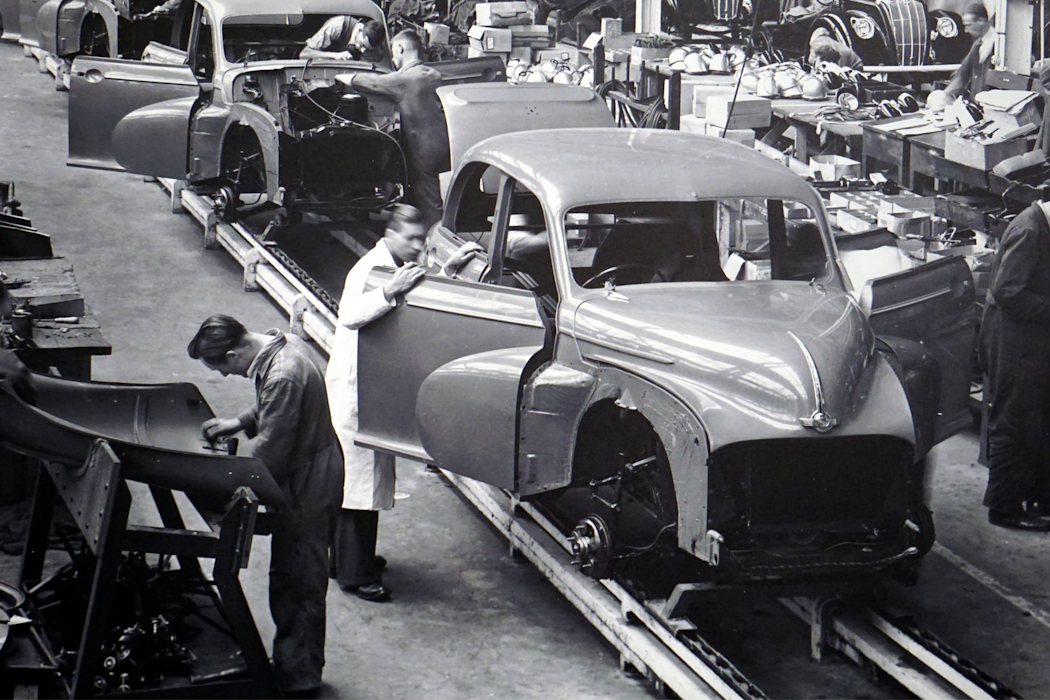
De Ford à Tesla, l’histoire de l’industrie automobile et celle du management sont liées. PxHere, CC BY

L’automobile a longtemps été au centre des mutations de l’économie capitaliste. Ce secteur a même inventé des modes de management : du fordisme au toyotisme. Sans oublier le controversé Tesla et son dirigeant aussi connu que sujet de critiques. Mais qu’en est-il vraiment ?


Ford, Toyota, Tesla… Derrière ces marques emblématiques se cachent des modèles de gestion et de management enseignés dans les écoles de commerce. Le contexte historique de chaque modèle impose aussi de s’adapter et de se renouveler.

Le fordisme : un premier modèle critiqué

En 1913, Henry Ford propose de lancer la Ford T comme modèle unique de voiture, proposée en une seule couleur : « Le client peut avoir une voiture de la couleur qu’il veut, tant qu’elle est noire ». Il va alors mettre en place un système de travail à la chaîne inspiré des abattoirs de Chicago en proposant que ce ne soit plus l’ouvrier qui se déplace mais la voiture qui vienne à l’employé posté.

Cette idée révolutionnaire, désignée par le terme d’« organisation scientifique du travail » (OST), a permis à l’entreprise un gain sur le temps de production (en passant de 12 heures à 93 minutes) avec un prix plus abordable (de 850 dollars à 260 dollars). Un an après, en 1914, Ford propose d’augmenter les salaires des employés à 5 dollars par jour pour leur permettre d’acheter les voitures qu’ils fabriquent. La Ford T devient alors l’une des voitures les plus vendues dans le monde. Cependant, ce modèle de production, aliénant et déshumanisé, ne tarde pas à subir des critiques, immortalisées par Charlie Chaplin en 1936 dans son film les Temps Modernes.


À lire aussi :
Tesla en route pour les profits : mirage ou réalité ?


Et General Motors inventa le contrôle de gestion

Face à l’uniformisation excessive promue par le système de Ford, Alfred Sloan, président de General Motors en 1923, propose cinq marques, allant de Chevrolet à Cadillac, et plusieurs modèles adaptés à différents segments du marché et clients. C’est lui qui inventera le contrôle de gestion : un système où chaque marque devient un « centre de profit » autonome, le siège fixant les grandes lignes et les stratégies du groupe. Pour Sloan, il est important de « centraliser grâce à la décentralisation » ou encore « décentraliser les opérations, centraliser le contrôle ». Ce modèle de management permettra à GM de rester leader de son marché pendant 77 ans.

Le Kaizen par Toyota

Dans un contexte de post-guerre en 1950 où le Japon essaye de se reconstruire, Kiichiro Toyoda et l’ingénieur Taiichi Ohno se fixent comme défi de trouver un modèle de management novateur qui pourrait détrôner le fordisme. La production massive associée à ce premier modèle d’organisation du travail est jugée inadaptée à leur petit pays. Ils décident donc de produire à la demande ce qui est commandé, sans gaspillage. Ils suggèrent alors le Kaizen, un processus d’évaluation dans lequel chaque employé peut suggérer des améliorations. Ce sont les prémices du cercle de qualité en méthode de gestion. Cette philosophie pousse les individus à se surpasser avec des petits pas et le désir permanent de l’amélioration continue.

Ce concept a été vulgarisé en 2024 par Inoxtag, un jeune youtubeur qui ne pratiquait pas de sport, qui se fixe alors le défi de se challenger et de gravir l’Everest dans un documentaire vu par plus de 43 millions de personnes.

Stellantis ou le géant aux 14 marques

L’exemple du groupe Stellantis met en lumière la difficulté de gérer différentes marques, différentes usines dans différents pays avec des cultures différentes. En 2021, PSA Fiat et Chrysler ont fusionné.

Carlos Tavares, à la tête du groupe, a choisi une approche darwinienne selon laquelle chaque marque peut se gérer seule et être rentable ou disparaître. Il fallait dans ce contexte gérer un paradoxe : partager une chaîne de valeur éclatée par pôle d’expertise et commune à toutes les marques du groupe Stellantis, tout en cherchant à différencier les marques au détriment du contrôle de la chaîne de valeur. Cette situation reflète bien la réalité du XXIe siècle où le management devient une affaire de survie des entreprises et non pas seulement de performance.

Tesla : le management disruptif controversé

Si de nombreuses entreprises ont adopté un management disruptif, Tesla a une valeur d’exemplarité dans le secteur automobile. Fondée en 2003, elle fonctionne en mode start-up, à savoir comme une entreprise technologique qui mise sur l’innovation pour s’adapter à l’évolution du marché de l’automobile. Elon Musk, son dirigeant depuis 2004, va jusqu’à livrer lui-même les voitures à certains clients privilégiés. Ceci est difficilement transposable à l’international.

Arts et métiers Alumni, 2019.

La recherche-développement est aussi au cœur du modèle de management de Tesla (Tesla dépense en R&D 5 203 euros contre 1 000 euros chez la concurrence). Certains critiquent Tesla et notamment les conditions de travail controversées, le fait par exemple que la plupart des composants de la voiture soient chinois ou la gestion financière fragile. Il est aussi à noter que la concurrence (Mercedes, Audi, BMW, Aston Martin) s’est lancée dans une véritable course de production d’automobiles électriques, notamment face à la domination des entreprises chinoises.

De quoi sera fait demain ?

De 1903 à aujourd’hui, de Ford à Tesla en passant par Toyota, GM ou Stellantis, on peut voir que tous ces exemples révèlent qu’il est possible de voir que les révolutions opérées ne sont pas brutales, il est important d’évoluer et de s’adapter.

Le management lui aussi n’est pas figé dans le temps. Chaque modèle managérial est la résultante de plusieurs paramètres en partant d’un mécanisme spécifique à un contexte, un pays, une période, une culture.

The Conversation

Les auteurs ne travaillent pas, ne conseillent pas, ne possèdent pas de parts, ne reçoivent pas de fonds d’une organisation qui pourrait tirer profit de cet article, et n’ont déclaré aucune autre affiliation que leur organisme de recherche.

ref. De Ford à Tesla : ce que l’automobile nous apprend sur l’art de s’adapter – https://theconversation.com/de-ford-a-tesla-ce-que-lautomobile-nous-apprend-sur-lart-de-sadapter-270303

Comment pictogrammes et émojis traitent la question du genre

Source: The Conversation – France in French (3) – By Jonathan Groff, Docteur en psychologie, Université de Technologie de Troyes (UTT)

Les pictogrammes fabriquent du masculin par défaut, mais pas les émojis : pourquoi ? Daiki Sato/Unsplash, CC BY

Pensés pour être universels, les pictogrammes racontent une histoire moins neutre qu’il n’y paraît. Au fil des normes et des usages, la figure de l’homme s’est silencieusement imposée. Comment cette évidence graphique s’est-elle construite ? Du côté des émojis, une sous-catégorie du système iconique, la situation est moins androcentrique – et ce n’est pas seulement parce qu’ils sont apparus plus récemment. Comment s’en inspirer pour rendre les pictogrammes plus représentatifs de l’ensemble de la société ?


Ils recouvrent nos écrans, ponctuent nos correspondances et investissent l’espace public : les pictogrammes. Conçus pour exprimer des concepts simples, immédiatement déchiffrables, ils sont utilisés dans le but de « communiquer des informations nécessaires indépendamment de toute langue ». Pour autant ils ne sont pas neutres. Ils peuvent être les vecteurs d’androcentrisme graphique. L’androcentrisme désigne une propension à considérer « l’humain » ou « le générique » par le prisme exclusif du masculin.

Cette forme de stéréotype de genre appliqué aux pictogrammes apparaît dans la littérature scientifique, tout particulièrement dans les recherches des trente dernières années. Cette période correspond à une époque d’intensification des échanges internationaux qui s’est traduite par une circulation accrue de normes visuelles. D’autre part, elle coïncide avec une phase de démocratisation des outils informatiques qui a entraîné une multiplication des pictogrammes.

Les transports publics les exploitent, notamment pour communiquer des informations intelligibles rapidement. C’est justement à l’occasion de travaux menés dans la filière ferroviaire et destinés à évaluer la compréhension de messages pictographiques que j’ai supposé l’existence de stéréotypes dans ce milieu. Pour comprendre comment se diffusent ces biais, il était cependant nécessaire d’élargir le champ d’étude à un domaine mieux documenté : le genre.

Mon analyse porte sur les environnements où les pictogrammes sont les plus nombreux, les plus exposés et les plus fréquemment utilisés – les hôpitaux et la signalisation routière (l’un des premiers secteurs à avoir fait l’objet d’une normalisation et dont les codes tiennent toujours lieu de modèles en matière de signalétique).

Ces pictogrammes qui nous guident… et perpétuent des stéréotypes

Les transports, terrain propice à l’iconographie, n’ont pas échappé à la diffusion de stéréotypes de genre, aujourd’hui encore ancrés dans les standards. Une étude récente portant sur 227 pictogrammes routiers provenant de plusieurs pays a ainsi mis en évidence une prédominance de figures masculines sur les profils féminins et neutres.

Comme je l’avais observé dans le monde ferroviaire, ce déséquilibre varie selon le type de panneaux. Ceux qui évoquent des passages d’enfants, comptent davantage d’images féminines, comparés aux passages piétons ou travaux, qui représentent quasi exclusivement des hommes. Lorsqu’il apparaît, le féminin se limite généralement à des icônes de fillette accompagnée. Un seul (sur 227) la montre indépendante.

Exemples de piétons traversant la rue
Exemples de piétons traversant la rue.
Motel, Peck, 2018, CC BY

Point de référence, le système de signalisation routière voit ses biais reproduits dans d’autres univers visuels. Dans les espaces publics, par exemple les aéroports, cette tendance se confirme avec une nuance. Les femmes ne sont pas totalement absentes mais semblent confinées à des fonctions d’assistance (ex. prendre soin d’un bébé). Dès qu’elles sont associées à un ou plusieurs hommes, elles sont renvoyées au second plan (ou matérialisées dans des proportions plus réduites).

Cette récurrence invite à interroger les mécanismes mêmes de production des pictogrammes et plus précisément les banques d’illustrations mises à disposition par les organismes de normalisation. Dans beaucoup d’entre elles, les femmes sont peu présentes ou cantonnées à des rôles subalternes. Par exemple, la norme ISO 7010, qui régit la conception des symboles de sécurité, fait principalement appel à des figures masculines.

Il en est de même dans le secteur du handicap, où les icônes sont majoritairement composées d’hommes (ex. 89 % sur un échantillon de 40, dont 28 personnages) alors que les femmes constituent 56 % des personnes en situation de handicap âgées de 16 ans ou plus et vivant à domicile.

Au-delà des lieux publics, les tableaux de bord électroniques (ex. grues, machines de production, hôpitaux) ont largement participé à la propagation des stéréotypes de genre dans la pictographie. Le domaine médical en est un exemple. Des symboles sont couramment employés pour désigner l’activation de commandes, chez les professionnels (ex. moniteurs de signes vitaux) comme chez les patients (ex. télécommandes de chevet).

Dans une étude menée en 2019 et couvrant 8 pays, 56 appareils d’appel de soignants ont été comparés. Parmi eux, 37 recouraient à des figures féminines pour illustrer le concept d’assistance. Neuf étaient neutres et dix sans illustration. Une telle distribution suggère une association automatique entre la femme et la notion d’assistance, et par extension une orientation genrée du processus de codage iconographique.

Dispositifs de demande d’assistance en milieu médical
Dispositifs de demande d’assistance en milieu médical.
Chapman & al., 2019, CC BY

Les émojis : un modèle de gouvernance distinct

Le numérique n’échappe pas à cette logique même si des progrès sont notables.

Ainsi, dans une étude menée en 1997 et portant sur 14 000 cliparts (représentations simplifiées d’un concept, d’un objet, d’une personne, d’une situation) les femmes ne constituaient que 4 % des items, souvent secrétaires ou infirmières.

Si les améliorations restent globalement limitées, des transformations positives se dessinent dans une autre branche proche des pictogrammes, plus populaire : les émojis.

En 2016, le consortium Unicode, chargé de normaliser l’encodage du texte et des symboles, a entrepris une révision de son système en faveur de la diversité. Onze nouveaux émojis décrivant des femmes en activité (ex. programmeuses, scientifiques) sont venus s’ajouter à la féminisation de 33 items existants (ex. espionnes, surfeuses). Des sociétés comme Google ont introduit des figures féminines dans des rôles valorisés (ex. scientifique, médecin).

Des emojis représentant des femmes dans des métiers valorisés.
Unicode

Ces trajectoires distinctes entre pictogrammes et émojis pourraient en partie s’expliquer par leurs modèles de gouvernance. Du côté des pictogrammes, celui-ci est dispersé : certaines normes sectorielles (ISO, par exemple) coexistent avec de vastes banques de symboles libres (notamment Noun Project), sans qu’aucune instance unique ne fixe définitivement les usages. Du côté des émojis, il est plus centralisé. Une forme de standardisation est assurée par le Consortium Unicode, une organisation soutenue par des entreprises technologiques (dont Google), qui reconnaissent son autorité et contribuent ainsi à renforcer son rôle dans l’uniformisation des caractères numériques.

En clair, les émojis suivraient un processus formalisé de propositions et de standardisation qui rend possible l’introduction de modificateurs (ex. genre). À l’inverse, la construction des pictogrammes, en particulier dans le monde logiciel, serait atomisée entre une multitude de systèmes graphiques qui ne bénéficient d’aucun effort collectif comparable.

Et après ? Rendre les pictogrammes réellement universels

Les démarches entreprises dans le contexte des émojis laissent entrevoir plusieurs axes d’amélioration pour les pictogrammes. Ainsi, une approche de création empirique et standardisée serait susceptible de limiter les effets de l’androcentrisme graphique.

Empirique d’abord : s’appuyer sur des méthodes et outils scientifiques permettrait de mesurer de manière quantitative l’ampleur des biais et d’estimer leur impact sur le public dans le but de définir des lignes directrices respectueuses de l’égalité.

Standardisée ensuite : en combinant les recommandations d’organisations reconnues (ex. Unicode), les travaux d’instituts de normalisation (ex. ISO) et les initiatives individuelles (ex : designers indépendants), la diversité des représentations se trouveraient renforcées.

En tant que signe visuel simple, intelligible de tous et omniprésent, le pictogramme contribue à propager une certaine forme d’androcentrisme. De fait, pour s’assurer qu’elle réponde à sa promesse d’universalité et éviter qu’elle ne véhicule des stéréotypes, la communication pictographique implique un questionnement du prisme masculin « par défaut ». Cette étape suppose l’établissement concerté de nouveaux référentiels, couplé à une évaluation continue des normes de conception.

The Conversation

Jonathan Groff ne travaille pas, ne conseille pas, ne possède pas de parts, ne reçoit pas de fonds d’une organisation qui pourrait tirer profit de cet article, et n’a déclaré aucune autre affiliation que son organisme de recherche.

ref. Comment pictogrammes et émojis traitent la question du genre – https://theconversation.com/comment-pictogrammes-et-emojis-traitent-la-question-du-genre-268928

More dialogue, less debate: At an ‘Ethics Bowl,’ students learn to handle tough conversations

Source: The Conversation – Canada – By Rackeb Tesfaye, Knowledge Mobilization Lead and Senior Scientist at the Bridge Research Consortium, Simon Fraser University

As Canadian federal election candidates prepared for their final debate in April 2025, youth across the country were preparing for collaborative conversations around timely and potentially divisive issues for the National Ethics Bowl at the Canadian Museum of Human Rights in Winnipeg.

Ethics Bowl Canada is a non-profit organization that hosts competitions where high school and university students explore complex ethical issues through respectful dialogue in teams.

Rather than trying to undermine their opponents’ arguments, as in traditional debates, Ethics Bowl competitors win by engaging constructively, responding positively to reasonable criticism and refining or amending their views.

Polarization and engaging with disagreement

The Public Policy Forum’s 2023 report Far and Widening: The Rise of Polarization in Canada documented serious issues around how young people think about their futures. It highlighted that, among young people’s concerns like pandemics, climate emergencies and a declining economy, their deepest fear for Canada’s future is growing political and ideological polarization.

The erosion of trust in institutions like government, industry and media contributes to people seeking alternative sources of information.

Alternative sources sometimes contribute to healthy social empowerment and democratic participation. But we are also living with cascading misinformation — sometimes sewn by groups seeking to destabilize society — with harmful effects. Through algorithmic filtering we’ve seen a growth of ideological echo chambers.

Philosophers like John Stuart Mill, John Rawls and Seyla Benhabib have long proposed that engaging with diverse and sometimes contrary points of view is part of what legitimizes democracy.

Conflict and disagreement are healthy parts of a democracy. But these need to be engaged with productively.

How the Ethics Bowl works

The Ethics Bowl is a “gamified” way of engaging in deliberative dialogue about civic issues. More than 1,500 high school and university students now participate in Ethics Bowls each year.

Ethics Bowl teams conduct research on cases created by philosophers and subject matter experts, and then form their opinions and arguments on them. Teams of three to five students then participate first in regional competitions, where they present their arguments, listen to other arguments, provide comments and respond to feedback.

A panel of judges (including philosophers, subject matter experts and community members) scores the teams. Their rubric rewards acknowledging nuance, refining positions and being respectful. Regional winners then compete nationally.

Evidence shows thinking and talking about ethics alone can be a driver for social change. The Ethics Bowl is also an intervention that allows participants to develop their civic discussion skills.

Research shows that engaging in this kind of dialogue can help participants acquire civic virtues, such as tolerance, respect for diverse viewpoints and willingness to engage in conversation.

Vaccines as a timely topic

While the legitimization of anti-vaccine rhetoric continues in the United States, Canada is not immune to divisiveness around vaccines.

Since the pandemic, Canada has seen a rise in vaccine hesitancy, a resurgence of measles and a shift in COVID-19 vaccine accessibility.

Among young people in Canada, vaccination is now one of the most polarizing topics of discussion.

To support young people reflecting upon ethical tensions around vaccines, Ethics Bowl Canada partnered with the Bridge Research Consortium (BRC), a national consortium of social scientists and humanity scholars. BRC scholars have a broad range of expertise to support public trust and equitable access to new vaccines.

Vaccine case studies

BRC Bioethicists developed timely case studies for the National Ethics Bowl:

Participants in the National Ethics Bowl found these cases the most challenging in the competition. One participant said:

“Public health is not something we often think about.”

A graphic illustration visually captured the many themes and reflections emerging from six teams discussions, and a version with links to the case studies is available on the Ethics Bowl website.

Engaging in civil dialogues is a transformative experience for students. As one teacher explained:

“These discussions matter. This type of dialogue has the power to change individuals.”

They also contribute to a sense of belonging. One high school student shared:

“Being around people who care about real world issues feels good.”

An educational model to train scientists

Scientists have also been caught in the crosshairs of political partisanship on vaccines. Despite a decline of trust in many institutions, scientists are still trusted sources of information by the public globally.

As evidenced by the COVID-19 pandemic, confidence in and the adoption of immune-based innovations moves at the speed of trust. Yet, rather than a loss of trust, scientists are losing influence to other information sources.

The need for scientists to strengthen trust and resonate with the public among the sea of other voices was addressed by a second mini Ethics Bowl with science graduate students in Montréal in June 2025. Before the event, 86 per cent of the science graduate students indicated they rarely or sometimes discussed the ethical implications of their work.

Student participants were part of RAMP-UP, a Québec-based research initiative developing reliable, scalable and adaptable biomanufacturing processes to produce vaccines and immunotherapies ahead of a future health emergency.

This mini ethics bowl was a teaching and learning tool to support students’ deeper engagement with the moral and ethical implications of their work, and to instil more socially informed science engagement.

Science researchers deliberate ethical concepts

As part of the full day of the mini Ethics Bowl training, students were introduced to ethical and philosophical concepts and engaged with experts in multiple disciplines. They competed in an Ethics Bowl with their peers discussing the above described vaccine-related case studies.

As captured in an illustration of events, not only did students feel stimulated and learn new knowledge, they came away calling for more integration of the social sciences and humanities in their education.

They also reflected on other ethical tensions in their work — like pharmaceutical companies profiting from their research.

We recommend this novel model of learning be introduced into curricula for scientists working on polarizing topics like immunology.

How to engage in productive dialogue

From election periods to holiday dinners with family, here is a blueprint for how people can collectively engage in productive dialogues:

1. Disagreement isn’t a failure: Instead of viewing someone disagreeing with you as having failed in some way (perhaps by being irrational), view them as an intellectual equal. Rational processes can result in more extreme (farther in content from other opinions) and radical (more strongly held) opinions. The processes that produce more extreme and radical opinions can also work on you.

2. Listen and try to understand: Be curious about, and interested in, interpreting what your conversation partner is saying with empathy. This can allow you to evaluate their points more fairly. Empathizing might allow you to better understand where others are coming from.

3. Set realistic expectations: People rarely change their minds during a conversation. But if sustained conversation focuses on practical issues, as opposed to foundational values, parties change their minds more often while reflecting between conversations.

Cem Erkli, program co-ordinator for Ethics Bowl Canada, and Pierre-Jean Alarco, knowledge mobilization officer for RAMP-UP, co-authored this story.


Immunity and Society is a new series from The Conversation Canada that presents new vaccine discoveries and immune-based innovations that are changing how we understand and protect human health. Through a partnership with the Bridge Research Consortium, these articles — written by experts in Canada at the forefront of immunology, biomanufacturing, social science and humanities — explore the latest developments and their impacts.

The Conversation

Rackeb Tesfaye receives funding from the Bridge Research Consortium (BRC), part of Canada’s Immuno-Engineering and Biomanufacturing Hub, which in turn is funded by the Canada Biomedical Research Fund, Canada Foundation for Innovation and the BC Knowledge Development Fund.

Nicolas Fillion is chair of the board of Ethics Bowl Canada.

ref. More dialogue, less debate: At an ‘Ethics Bowl,’ students learn to handle tough conversations – https://theconversation.com/more-dialogue-less-debate-at-an-ethics-bowl-students-learn-to-handle-tough-conversations-271822

Seven of the best novels of 2025 – chosen by our literary experts

Source: The Conversation – UK – By Tessa Whitehouse, Reader in 18th-century Literature and Director of Queen Mary Centre for Religion and Literature, Queen Mary University of London

Reading is very subjective, but one thing most book lovers can agree on is that 2025 was a notable year for fresh, inventive, affecting storytelling. Books translated from their original language are proving increasingly popular as readers seek out global perspectives beyond their own, as evidenced in this year’s International Booker win, Heart Lamp by Banu Mushtaq, which is included here.

We also bring you five other novels our academic experts have chosen as their favourites this year. From a Mrs Dalloway for the service economy, to a dreamlike encounter between people across time, place and mortality, do our academic picks chime with yours?

Pick A Colour by Souvankham Thammavongsa

This slender little novel is both a reverie and a dash of icy water to the face that will make you think twice about tuning out from your surroundings next time you get a mani-pedi. We follow the owner of a low-price nail bar through a workday from turning on the fluorescent lights to pulling down the metal shutter.

In this Mrs Dalloway for the service economy, the painful intersections of the personal and the political are inescapable for the “Susans” (the name each employee must adopt), but as invisible as the workers themselves to many of their customers.

Slight in length, light in touch, full of humour, and closely observed, Pick A Colour can be read in a single, intense afternoon. But the troubling thoughts it raises through its memorable characters linger long after your Christmas nail polish has all chipped away.

Tessa Whitehouse is reader in English and director of Queen Mary Centre for Religion and Literature

Perfection by Vincenzo Latronico

Perfection is a curious sort of novel. There is no dialogue and almost no conflict between the two central characters, Anna and Tom, digital nomads who spend their days in Berlin designing websites and always appear together, almost like a single entity.

In a sequence of beautifully written, perfectly observed chapters, Latronico itemises and describes their apartment, their social media habits, their limited perspective on Berlin, their sex life, their futile attempts at meaningful political activism, their growing disillusionment and desire for relocation – the repetitive consumption and socially structured habits of a globalised lifestyle built around image and taste.

The result is a remarkably astute and compelling novel – social realism at its sharpest – as Latronico nails the manners of the millennial generation and that brief period of optimism, from 2006 to 2016, when we felt digital media might make a positive difference and lifestyle choices seemed imbued with an optimistic ethical resonance – soon shown to be hollow.

James Miller is a senior lecturer in creative writing and English literature

Old Soul by Susan Barker

At first, Barker’s novel seems a gorgeously written adaptation of one of my favourite gothic tropes: the vampire. The story opens with two strangers, Jake and Mariko, who meet at Osaka airport. They have both lost loved ones in strange and brutal circumstances but in common, each of the deceased encountered a mysterious, dark-haired woman just before their deaths. A woman who came looking for Mariko, and then disappeared.

As the plot advances, Barker takes familiar tropes and themes in unexpected directions, turning this novel into an unforgettable tale of cosmic horror. There is the terrifying lore of “the Tyrant”, different timelines and settings from Wales to New Mexico, not to mention a cast of unreliable narrators who become more vibrant, twisted and compelling as the novel advances. Ultimately, this is a story about our societal obsession with becoming famous and being seen – Barker’s novel goes a step further and asks: who gets to witness? Who gets to record? And for what purpose?

Inés Gregori Labarta is a lecturer in creative writing

Big Kiss, Bye-Bye by Claire-Louise Bennett

There is no shortage of contemporary novels with first-person narrators who are women, often writers, struggling to keep themselves together in the face of late capitalism, the internet and the patriarchy. Claire-Louise Bennett’s Big Kiss, Bye-Bye is narrated by a woman, a writer, but beyond that, all similarities to other works in this category disappear.

The narrator’s interior world is made up of thoughts about and responses to others – her friend and ex-lover Xavier, her old schoolteacher with whom she had a relationship as a teenager, and another old schoolteacher who has recently emailed her.

It is a novel of extraordinary noticing, but it is a noticing that has such rhythm and intensity that it enters your very bones as you read. It is as unrepeatable as a dream, and like a dream stays with you way beyond the ability of words to account for it.

Leigh Wilson is a professor of English literature

We Do Not Part by Han Kang

The English translation of We Do Not Part followed Han Kang’s 2024 Nobel Prize in Literature. Her earlier Greek Lessons (2011, translated into English 2023) considered loss of sight and speech through the arresting metaphor of burial in snow.

We Do Not Part reconsiders this metaphor, employing the destructive and creative force of a snowstorm to convey the danger of lost histories. Kyungha reluctantly agrees to house sit and look after the much-loved pet bird of her sick friend, Inseon, and travels in snow and darkness to reach her rural cabin.

The novel is at once a dreamlike encounter between people across time, place, and mortality; a recollection of the women’s friendship and childhoods; a personal history of the impact of the 1948-49 Jeju massacre (an intense period of anti-communist violence and suppression that resulted in thousands of deaths); and a portrait of the rural South Korean landscape in bleak winter. The prose is crisp and poetic, the dialogue sparse, and the protagonist introspective and self-questioning. An intelligent, graceful, bruising novel and an encounter with the rural and the local.

Jenni Ramone is an associate professor of postcolonial and global literatures

Dream Count by Chimamanda Ngozi Adichie

At a time when many literary novels are becoming shorter and increasingly opaque, the luminous Dream Count – Adichie’s first novel in a decade – bucks the trend. Expansive and richly detailed, it follows the lives of four African women, moving fluidly between the US and Nigeria.

Set at the onset of the Covid pandemic, the pause in ordinary life creates space for the women to reflect and dream, deepening the novel’s engagement with memory and personal history alongside its comparative exploration of women’s experiences in different parts of the world.

Like many recent novels, films, and television series (Conversations with Friends; Girl, Woman, Other; Derry Girls), the women here both contrast and complement one another, offering nuanced insight into what it means to be Black and female and with varying degrees of privilege.

The novel skilfully intertwines universal aspects of the female experience, such as cultural pressure to marry and produce children, with a post-#MeToo focus on sexual violence rooted in stark racial and gendered power inequalities.

Roberta Garrett is a Senior Lecturer in Literature and Cultural Studies

Heart Lamp by Banu Mushtaq

Delicately woven over a period of 33 years, this collection of 12 short stories comes from the heart of the Muslim community in southern India. Rendered nearly invisible in the nation’s literary imagination despite its substantial presence, Heart Lamp offers a necessary intervention into the silences of Indian Muslim women’s interior lives.

It maps the emotional landscapes and the intricate layers of marginalisation through caste, class and gender expectations embracing the politics of location. Mushtaq, an activist, inevitably represents Karnataka’s “Bandaya Sahitya” (Rebel Literature) movement, rooted in anti-caste, feminist and secular traditions.

The stories juxtapose modern India’s patriarchal structures with the obscured lives of women through literal and metaphorical veils where pain, suffering, injustice are critiqued through razor sharp realism mingled with sentimentality and humour. Deepa Bhasthi’s translation performs its own quiet rebellion, refusing to italicise Kannada words or append footnotes.

Prathiksha Betala is a PhD researcher in contemporary feminist dystopian fiction

This article features references to books that have been included for editorial reasons, and may contain links to bookshop.org; if you click on one of the links and go on to buy something, The Conversation UK may earn a commission.


Looking for something good? Cut through the noise with a carefully curated selection of the latest releases, live events and exhibitions, straight to your inbox every fortnight, on Fridays. Sign up here.


The Conversation

The authors do not work for, consult, own shares in or receive funding from any company or organisation that would benefit from this article, and have disclosed no relevant affiliations beyond their academic appointment.

ref. Seven of the best novels of 2025 – chosen by our literary experts – https://theconversation.com/seven-of-the-best-novels-of-2025-chosen-by-our-literary-experts-271885