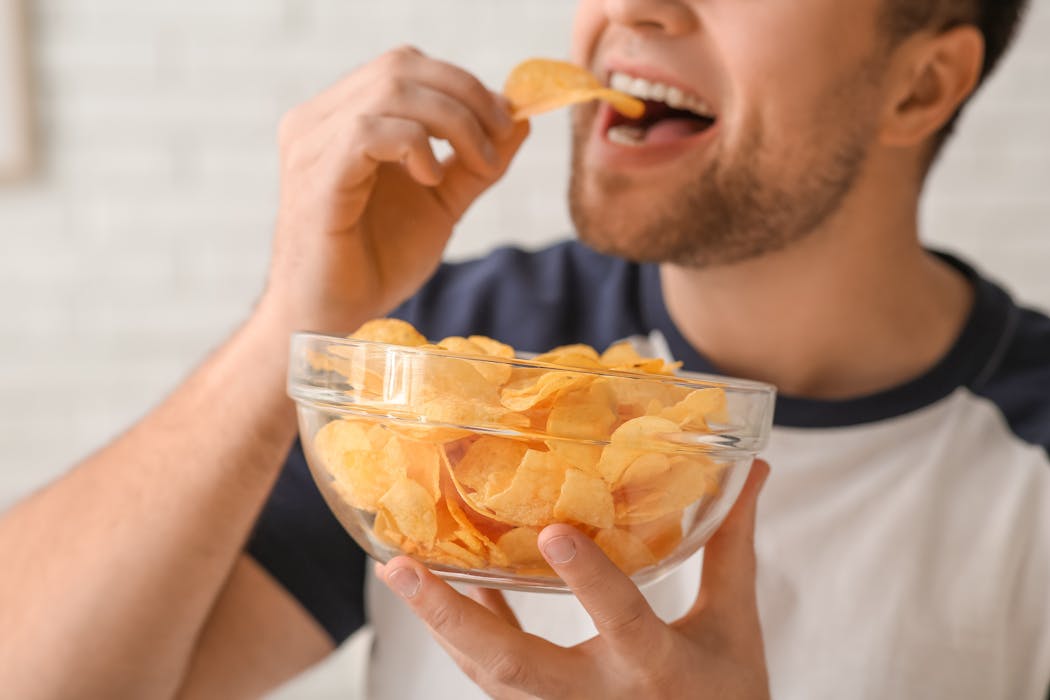
Según un estudio publicado por los autores del artículo, consumir habitualmente productos de origen vegetal ultraprocesado, como las patatas fritas, puede alterar el ADN de los espermatozoides.Pixel-Shot/Shutterstock
La infertilidad afecta a una de cada seis parejas, y la causa es de origen masculino en casi la mitad de ellas. Actualmente, sabemos con bastante certeza que el estilo de vida influye de manera importante en la salud reproductiva del hombre, y la alimentación es uno de los factores clave.
Pero no se trata solo de “comer sano”. El espermatozoide es una célula muy sensible a distintos componentes de la dieta. Algunos nutrientes pueden favorecer su funcionamiento, mientras que otros lo perjudican. Estas influencias afectan a su capacidad para cumplir su misión: entregar la mitad del material genético al óvulo para dar inicio a una nueva vida.
La fertilidad también se cocina con hábitos
Entonces, ¿qué hay que comer? La pregunta parece simple, pero la respuesta no lo es tanto. A menudo los hombres que desean ser padres buscan alimentos o suplementos para mejorar la calidad de su esperma. Y es cierto que estudios con alto grado de evidencia muestran que algunos componentes como los ácidos grasos omega-3, el zinc o la fibra dietética pueden favorecer la salud espermática, mientras que otros como las carnes procesadas, los azúcares simples o el café en exceso se asocian a un efecto negativo.
Sin embargo, la mirada ingrediente por ingrediente se queda corta para entender el impacto real de la alimentación en la fertilidad masculina. La ciencia apunta cada vez más hacia el concepto de “patrón dietético”, es decir, el conjunto de hábitos alimentarios y la combinación de alimentos que caracterizan la dieta global.
Dicho de otro modo, es la forma en que comemos cada día, y no un alimento específico, lo que realmente marca la diferencia en nuestra salud y fertilidad.
Los estudios muestran que los patrones dietéticos saludables, como la dieta mediterránea, se asocian con una mejor calidad seminal. En cambio, los patrones de estilo occidental, ricos en ultraprocesados, fritos, carnes procesadas y azúcares añadidos, se relacionan con peores resultados. El mensaje es claro: la fertilidad masculina no depende de un “superalimento”, sino de la coherencia del conjunto de hábitos alimentarios.
La dieta deja huella en el ADN
Hasta hace poco se pensaba que la dieta influía sobre todo en parámetros clásicos del semen, como su movilidad, concentración o morfología. Sin embargo, estudios recientes han mostrado un hallazgo más profundo: puede modificar la integridad molecular del espermatozoide.
En un estudio que publicamos recientemente en Reproductive BioMedicine Online, dentro del proyecto internacional Led‑Fertyl y en colaboración con la Universitat Rovira i Virgili (URV), el Instituto de Investigación Sanitaria Pere Virgili y la Universitat de Girona , observamos que la dieta también puede influir en el ADN del esperma.
En concreto, detectamos que los hombres que seguían un patrón alimentario basado en productos de origen vegetal pero con un alto nivel de procesamiento –como snacks, fritos, bollería o bebidas azucaradas– presentaban niveles más elevados de un marcador que refleja un empaquetamiento anómalo del ADN del espermatozoide. Este tipo de alteración se ha relacionado, en diferentes estudios, con una menor probabilidad de fecundación y con un peor desarrollo embrionario.
Y aún hay más que tener en cuenta. Buena parte de la evidencia actual en este campo procede de estudios con animales, donde se ha observado que dietas paternas muy ricas en grasas pueden modificar pequeñas moléculas del esperma llamadas sncRNA (siglas de small non coding RNAs). Los sncRNA actúan como “sensores metabólicos” y pueden transmitirse al embrión. En este tipo de modelos, la descendencia mostró un mayor riesgo de alteraciones metabólicas, aunque estos resultados no pueden extrapolarse de forma directa a humanos.
Y por si fuera poco, la literatura científica también señala la existencia de cambios epigenéticos inducidos por la dieta: modificaciones químicas que actúan como pequeños “interruptores” en el ADN, capaces de apagar o encender genes. La alimentación paterna podría modular estos “interruptores” del esperma sin alterar la secuencia de ADN, influyendo en las primeras etapas del desarrollo del embrión.
Aunque la magnitud de tales efectos aún se está investigando, todo ello refuerza la idea de que la dieta no solo afecta a la fertilidad masculina, sino también al material genético que transmite el espermatozoide.
La paternidad empieza mucho antes del embarazo
El espermatozoide responde a lo que come regularmente el padre y esa respuesta puede dejar una huella funcional e incluso heredable. Pero esto no significa que pequeños desajustes dietéticos tengan consecuencias inevitables: hablamos de modificaciones del riesgo, no de determinismo biológico. Por eso, más que buscar alimentos “milagro”, lo esencial es mantener un patrón dietético saludable y sostenido en el tiempo, basado en alimentos frescos, mínimamente procesados y ricos en nutrientes.
Las personas firmantes no son asalariadas, ni consultoras, ni poseen acciones, ni reciben financiación de ninguna compañía u organización que pueda obtener beneficio de este artículo, y han declarado carecer de vínculos relevantes más allá del cargo académico citado anteriormente.
Although the world of diplomacy often seen as glamorous and progressive, women and men continue to operate within a gender order that privileges masculine norms, while women still struggle to be recognised fully as diplomats and as independent subjects, beyond their social roles as wives or mothers.
Our recently published policy brief reveals a side of diplomacy that is rarely discussed, and is even considered taboo: how symbolic violence — a form of domination in everyday life by the dominant group through written and unwritten rules — is reproduced through formal and informal institutional practices.
We focus particularly on the everyday experiences of women in diplomacy — both female diplomats and the wives of diplomats.
Everyday diplomacy in postcolonial Indonesia
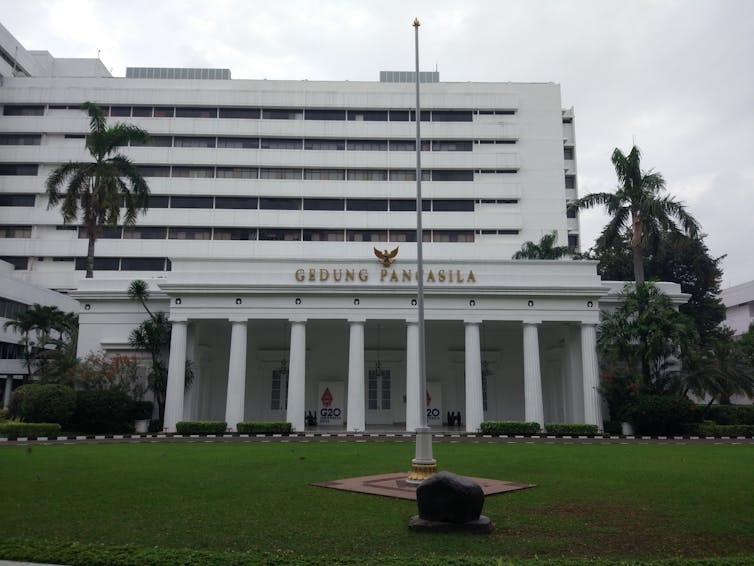
In Indonesia, diplomats are also civil servants, making them subject to a range of written and unwritten bureaucratic rules, including the legacy of “state ibuism” — a state-sponsored gender ideology formulated during Suharto’s New Order era.
Our research is the first to integrate an analysis of everyday diplomatic practices with a historical understanding of how state ibuism operates in and around diplomatic institutions.
In everyday diplomacy, both female diplomats and diplomats’ wives are expected to embody the ibu (mothers) ideal — that women should be fully responsible in taking care of their children, skilful in hospitality, catering, decoration, and femininely dressed.
In various ways, the women diplomats in our study narrated how they are often assigned to handling catering duties, shopping for office needs, and attending arisan, a rotating savings gathering.
These are akin to symbolic violence maintained through rules and social punishments. They normalise and reproduce gender hierarchy through everyday organisational routines, often sustained by those who, having internalised these norms, become complicit in reproducing them and consider them as neutral.
The wives of diplomats are also expected to be loyal partners who support their husband’s mission abroad without pay. This often means mastering traditional cooking, performing traditional dances, and playing traditional musical instruments such as gamelan and angklung.
Such practices are consistent with the research finding that 42% of our study participants, consisting of diplomats and their spouses, reported experiencing unpleasant treatment because of their gender.
Indonesian embassies and consulates around the world often treat diplomats’ wives as cultural agents, a practice rooted in the New Order institutional legacy of Dharma Wanita (women’s virtue), a social organisation composed of the wives of civil servants.
Despite claims of reforms, it continuously promotes state ibuism.
One of our participants elaborated on how those who are not willing to participate fully in Dharma Wanita often face intimidation and social sanctions.
These seemingly mundane practices quietly reinforce a patriarchal gender order and constitute forms of symbolic violence, creating distressing experiences for many of our participants, both diplomats and their spouses.
Symbolic violence continues to operate quietly through everyday norms and expectations, reproducing gendered hierarchies despite numerical gains.
As a result, broader representation does not necessarily translate into equal access to social capital, visibility, or strategic opportunities. Women may enter in greater numbers, yet still find themselves constrained by gendered expectations that determine the roles they can take on and how their contributions are valued.
Another myth worth debunking is the belief that empowered, educated women from privileged backgrounds are somehow immune to violence. This is simply untrue.
First, examining how gender functions within elite institutions reveals how power operates at the top tiers of society. Women holding “elite” state positions show how the state shapes and enforces a narrative of the “ideal woman.”
Second, privilege does not erase gendered power. Even privileged women continue to experience structural inequalities – often in more subtle ways. Privilege can mask, rather than eliminate, systems of gender domination.
Why gendered practices endure in MoFA
Our research shows despite the growing number of women entering the diplomatic corps, especially within the Ministry of Foreign Affairs (MoFA), everyday gendered practices continue to persist.
This persistence is deeply shaped by MoFA’s militaristic organisational style inherited from the New Order era. Following the 1965–66 purge, Suharto embedded military logic into MoFA’s structure and culture through the hybridisation of Cold War anti-communist ideology with US military family norms.
This influence continued even after the Reform era. MoFA retained key New Order legacies, such as rigid hierarchy, a culture of seniority, and moral conservatism regarding gender roles. These cultural residues form the institutional terrain in which State Ibuism continues to take hold.
As a result, the logic of housewifisation persists: women diplomats and diplomats’ wives are expected to embody ibu-like morality, supporting representational roles such as event hosting and cultural performances, and adhere to gendered norms of behaviour and appearance.
The military-style gender regime of the New Order thus continues to shape diplomatic femininity and constrain women’s authority in Indonesia’s foreign service.
Possibilities for disruption
To move forward, MoFA must begin by recognising the limitations of its existing organisational culture. Our policy brief offers three recommendations:
First, the current gender mainstreaming strategy should continue, but it needs to move beyond performative metrics. A rigorous audit is essential to assess its real impact on women and on others whose voices are rarely heard within the bureaucracy.
Second, strong leadership commitment is essential to chart a meaningful path forward and strengthen the institution. Leaders serve as key gatekeepers, determining how far gender mainstreaming can move beyond symbolic compliance.
Finally, MoFA needs a permanent gender task force capable of sustained coordination, monitoring, and cultural change. Such a task force should provide consistent leadership and oversight, ensuring that gender mainstreaming achieves continuity and quality rather than remaining a collection of isolated activities.
Kanti Pertiwi terafiliasi dengan Akademi Ilmuwan Muda Indonesia (ALMI)
Fitri Hariana Oktaviani terafiliasi dengan Akademi Ilmuwan Muda Indonesia (ALMI)
We used to have a pretty clear idea of what an autocrat was. History is full of examples: Adolf Hitler, Joseph Stalin, Mao Zedong, along with Vladimir Putin and Xi Jinping today. The list goes on.
So, where does Donald Trump fit in?
In this six-part podcast series, The Making of an Autocrat, we are asking six experts on authoritarianism and US politics to explain how exactly an autocrat is made – and whether Trump is on his way to becoming one.
Like strongmen around the world, Trump’s first step was to take control of a party, explains Erica Frantz, associate professor of political science at Michigan State University.
Trump began this process long before his victory in the 2024 US presidential election. When he first entered the political stage in 2015, he started to transform the Republican Party into his party, alienating his critics, elevating his loyalists to positions of power and maintaining total control through threats and intimidation.
And once a would-be autocrat dominates a party like this, they have a legitimate vehicle to begin dismantling a democracy. As Frantz explains:
Now, many Republican elites see it as political suicide to stand up to Trump. So, fast forward to 2024, and we have a very personalist Trump party – the party is synonymous with Trump.
Not only does the party have a majority in the legislature, but it is Trump’s vehicle. And our research has shown this is a major red flag for democracy. It’s going to enable Trump to get rid of executive constraints in a variety of domains, which he has, and pursue his strongman agenda.
Listen to the interview with Erica Frantz at The Making of an Autocrat podcast.
This episode was written by Justin Bergman and produced and edited by Isabella Podwinski and Ashlynne McGhee. Sound design by Michelle Macklem.
Listen to The Conversation Weekly via any of the apps listed above, download it directly via our RSS feedor find out how else to listen here. A transcript of this episode is available via the Apple Podcasts or Spotify apps.
Erica Frantz is a research fellow at the Charles F. Kettering Foundation.
Source: The Conversation – UK – By Johan Kjellberg Jensen, Visiting research fellow in Environmental Sciences, Lund University
We’re constantly told that spending time in nature is good for the body and the mind alike. A large body of research shows multiple health benefits from contact with nature, ranging from stress reduction to an improved immune system and even improved academic achievement in children.
But not everyone is getting these benefits. Some people have feelings of fear, dislike or disgust towards animals and nature. The phenomenon, biophobia, has been somewhat overlooked in studies of human-nature relationships. This means the concept is poorly understood; it is unclear exactly what causes it and how it can best be treated. What’s more, there are signs it is on the rise.
In my new study with colleagues, we aimed to shed light on biophobia by outlining a conceptual framework of negative relationships with nature that can be applied across scientific disciplines – and systematically reviewing all studies that have been done on the topic.
The flipside of biophobia is called biophilia, an innate affinity for nature. Both of these terms stem from evolutionary psychology, which originally framed positive and negative response to nature as adaptive mechanisms to resources and threats.
Today, biophobia more broadly refers to the aversion towards nature, leading to negative relationships with the natural world. These negative relationships can take many forms, but crucially reduce exposure to the health benefits which are associated with nature, as well as undermining nature conservation efforts. As such, understanding the full range of human-nature relationships – from affinity to aversion – is important.
In total, we found 196 studies on biophobia. These were spread across the world, with some bias toward western countries. Although much fewer than the studies on positive human-nature relationships, we saw a rapid growth in the research subject. These studies were also scattered across a wide variety of research fields, including conservation, social sciences and psychology. One of our key findings was that there are strong silos between fields, with clear biases in terms of what part of nature is studied.
Multiple causes
We found biophobia to be caused by multiple factors. Generally, these can be divided into external and internal ones. External factors include our physical environment, such as our exposure to different species. Social attitudes are another external factor, and can include media narratives around nature – think of how the movie Jaws, for example, created a widespread fear of sharks.
Internal factors, on the other hand, covers personal traits. These include knowledge and age, both of which can mediate our feelings toward nature. For example, having good species knowledge and understanding of how nature works lowers the risk for negative relationships with nature. By contrast, feeling weak or in poor health correlates to a higher fear of large carnivores.
However, it is important to note that these drivers can interact and be intertwined in complex ways. Attitudes, interactions and behaviour towards nature are also affected by the biophobia itself. For example, biophobic individuals may avoid areas where they believe there are species of animals they fear. And this may lead to greater support for culling animals such as wolves, bears and sharks.
Animals typically viewed as threats – snakes, spiders and carnivores – are well studied. But biophobia can also be directed at harmless or even species beneficial to have in our proximity, for example native species of frogs.
Treatments
Given the benefits of spending time in nature, is there any way to treat biophobia? We defined general categories of biophobia treatments, although there’s not a single treatment that will work for everyone.
One line of treatment is exposure. This could range from simply getting used to spending time in nature to actual clinical treatments. For example, people who are scared of spiders can overcome their fears with professional help, starting with looking at picture of spiders and reframing their thinking about them.
Another type of “treament” is education. This could range from formal studies of the natural world to putting up information signs in nature reserves, helping people better understand what’s surrounding them, what species are around, and how these species behave.
Finally, there’s conflict mitigation. This is a technique to reduce negative experiences or compensate for past bad experiences Indeed, it is important to note that nature can be dangerous and, depending on context, negative sentiments can be fully rational. For example, farmers may be negative about wild animals destroying crops. Conflict mitigation will propose ways to reduce such destruction.
The research we examined that came from the fields of psychology and social studies focused on effects on humans, but often defined nature in either very broad strokes or in very narrow terms. Environmental science, on the other hand, had a focus on the impacts on nature conservation, but often oversimplified social contexts and psychological drivers. It is clear to us that researchers must combine these two complementary views on biophobia to better understand and ultimately mitigate it.
If you feel joy and relaxation in the outdoors, you are in the majority. But studies suggest that rates of biophobia are increasing. As we remove ourselves farther from nature, living urban lives where wild animals and plants are becoming a distant echo, it is all the more important to try and preserve a love for nature – especially if we want to retain the health benefits and maintain stable ecosystems.
Opening our eyes to our hate for nature is ultimately crucial in reversing a trend of negative relationships with nature.
Johan Kjellberg Jensen received funding from the strategic research area Biodiversity and Ecosystem Services in a Changing Climate (BECC), funded by the Government of Sweden, and funding from The Royal Physiographic Society in Lund, Sweden, to support this research. He is currently affiliated with White arkitekter, an architectural firm that had no involvement in this article, the original research paper, and has no vested interests in its results.
Source: The Conversation – UK – By Jolanta Burke, Associate Professor, Centre for Positive Health Sciences, RCSI University of Medicine and Health Sciences
For many people, the run-up to Christmas is filled with excitement and anticipation. For others, it can quietly tip into something more difficult. A drop in mood is particularly common after Christmas, especially in the final week of the year and the first days of the new one. Understanding why this happens can help make that emotional dip easier to manage.
The post-Christmas blues are closely linked to the brain’s reward system. Neurotransmitters are chemical messengers that allow brain cells to communicate with each other and play a key role in how we feel, think and behave. One of the most important of these is dopamine, which helps regulate motivation, pleasure and reward, and is often targeted by antidepressants.
During the festive period, dopamine levels tend to rise. Anticipation of celebration, time spent with others, indulgent food and festive rituals all stimulate this feel-good system. Compared with everyday life, the brain experiences a powerful boost. Even thinking about Christmas before it arrives can activate these pathways, creating a surge of sensory excitement.
Once Christmas is over, dopamine levels naturally fall back to their usual baseline. This sharp contrast between heightened stimulation and everyday routine can leave people feeling flat, unmotivated or low. This is the familiar post-Christmas slump.
Another hormone involved is oxytocin, often referred to as the “love hormone”. Oxytocin supports social bonding and emotional connection. It rises when we experience closeness, such as when a parent hugs their child, helping to strengthen feelings of trust and attachment. Christmas often involves more time with family and loved ones, which can increase oxytocin release.
After the holidays, however, that intensity of connection often drops away. When shared meals, visits and quality time suddenly decrease, oxytocin levels may fall too. This shift can contribute to feelings of loneliness, emotional emptiness, or low mood.
Who we spend time with over Christmas also matters. Not everyone at the table evokes comfort or closeness. Research suggests that time spent with in-laws, for example, may be more stressful than time spent with one’s own family. In these studies, changes in gut microbiota suggested higher stress responses when people spent time with in-laws over the holidays. This highlights that not all social interactions have the same emotional or physiological effects.
Not all festive social gatherings are good for your wellbeing. alexkich/Shutterstock
From a psychological perspective, positive experiences during the festive season are often linked to greater social connection, bursts of positive emotion and higher life satisfaction. Gift-giving can also create a surge of positive emotions and even improve cognitive functioning, but only when it goes well.
Choosing gifts for people we care about often comes with high expectations. When a gift is poorly received or feels disappointing, neuroscientific evidence shows that givers may experience emotional pain similar to social rejection. This is why expressions of gratitude matter. Even when a gift misses the mark, appreciation helps protect the emotional wellbeing of the giver.
Christmas also disrupts everyday routines. Later nights, overeating and increased alcohol consumption are common. All of these affect sleep quality, which is closely linked to mood and emotional regulation. When sleep is disturbed, people are more vulnerable to low mood, making the post-Christmas period feel even harder.
Start by noticing how your environment affects you. Recent research suggests that protecting mental health begins with recognising situations and interactions that drain or distress you. If this happens during family gatherings, it can help to step away, disengage from tense conversations, or take short breaks to reduce emotional strain.
If you are spending Christmas alone and festive surroundings intensify feelings of sadness, it is reasonable to limit your exposure. Choose activities and places that genuinely comfort you, and reduce unnecessary reminders that worsen your mood. Setting boundaries, taking time out and disengaging from emotionally draining interactions are valid forms of self-care.
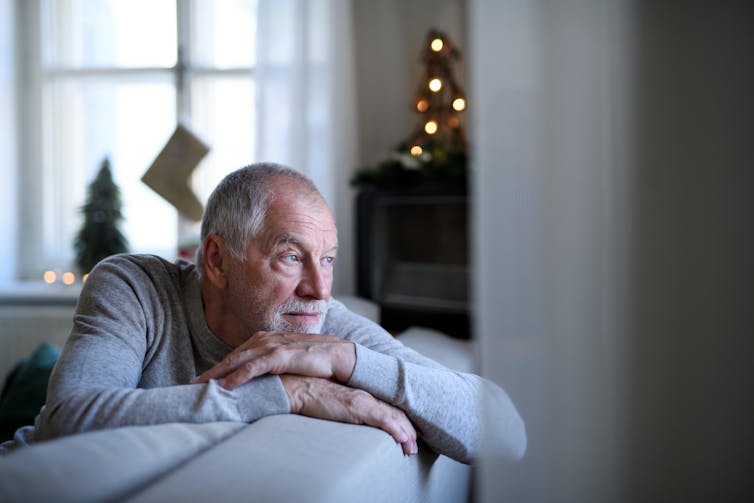
Christmas can be a difficult time for some people, which makes protecting your wellbeing especially important. Ground Picture/Shutterstock
Re-establishing your usual routine as soon as possible can also help. Returning to regular bedtimes and wake times supports your circadian rhythm and helps your body regain a sense of normality. Exposure to daylight soon after waking is especially useful, as natural light signals to the brain that the day has begun. A short walk around midday, when light levels peak, can further support energy and mood.
Finally, create an “after Christmas” plan. Scheduling small activities, social connections, or goals gives you something to look forward to and softens the emotional contrast between the festive season and everyday life. Practising presence and finding small moments of enjoyment each day can also help restore balance.
If you feel low after Christmas, it is not a personal failing. It is your brain and body responding to the emotional, social and sensory intensity of the season. By understanding what is happening, you can soften the post-Christmas crash and support your wellbeing. Christmas ends, but its emotional echoes do not have to overwhelm the weeks that follow.
Jolanta Burke does not work for, consult, own shares in or receive funding from any company or organisation that would benefit from this article, and has disclosed no relevant affiliations beyond their academic appointment.
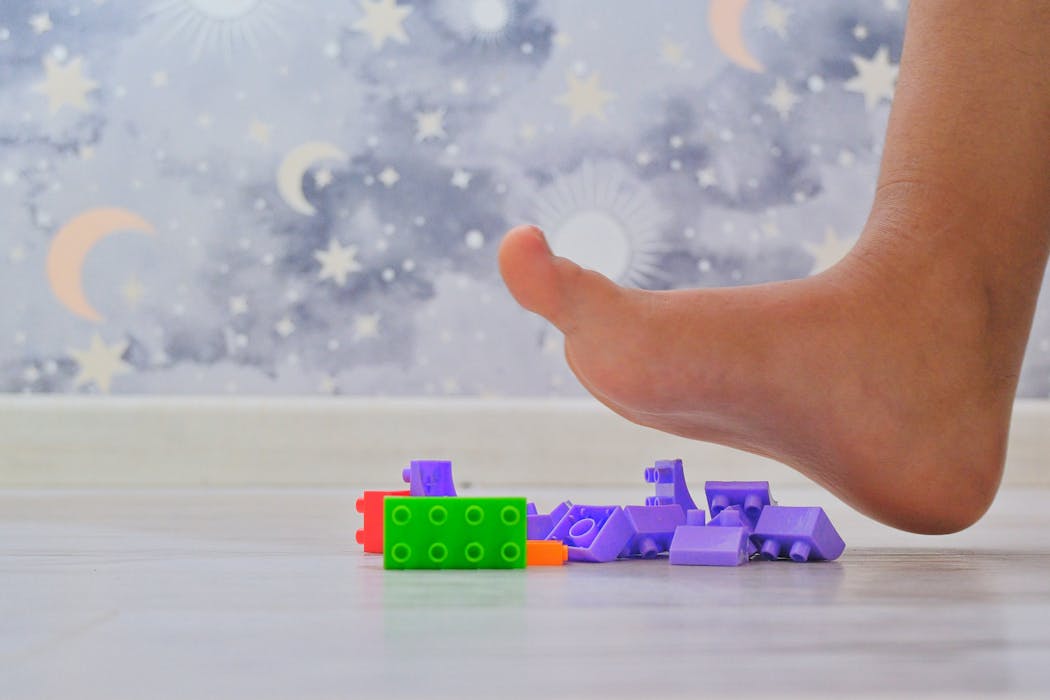
You stub your toe on the bedpost. Before your brain even registers the pain, a word explodes from your mouth – sharp, loud and oddly satisfying.
Far from being a simple slip in manners, swearing is a reflex rooted deep in the structure of the human body, drawing on networks in the brain and autonomic nervous system that evolved to help us survive pain and shock.
Research shows that a well-placed expletive can dull pain, regulate the heart and help the body recover from stress. The occasional outburst, it seems, isn’t a moral failure – it’s a protective reflex wired into us.
The impulse to swear begins far below the level of conscious speech. Most everyday language originates in the cerebral cortex, where ideas are shaped into words. Swearing, however, lights up a much older network – the limbic system, which governs emotion, memory and survival responses.
Important parts of the limbic system include the amygdala, which acts like an emotional alarm system, and the basal ganglia, a group of connected structures that help control movement and automatic behaviour, including instinctive vocalisation.
These areas send quick signals down the brainstem before the thinking part of the brain can respond. This is why the words come out so fast – it’s part of an ancient reflex that prepares the body to react to sudden shock or pain.
The outburst activates the autonomic nervous system, which temporarily raises heart rate, blood pressure and alertness. Muscles tighten as the motor cortex and spinal pathways prime the limbs for action – a reflexive brace that prepares the body to defend or withdraw.
Then the voice joins in, powered by a sharp contraction of the diaphragm and intercostal muscles that forces air through the larynx in a single, explosive exhalation. Even the skin responds: sweat glands activate and tiny electrical changes occur, with small beads of moisture marking the body’s emotional signature.
Deep inside the brain, the pituitary gland and the periaqueductal grey – a column of grey matter in the midbrain – release beta-endorphins and enkephalins, the body’s natural painkillers. These chemicals dull pain and create a faint sense of relief, turning language into a physical act – mobilising breath, muscles and blood before returning the body to calm.
This integrated response – from brain to muscle to skin – explains why a sharp expletive can feel simultaneously instinctive and satisfying.
How swearing dulls pain
Recent research shows that swearing can actually change how much pain people can handle. A 2024 review looked at studies on swearing’s pain-reducing effects and found consistent evidence that people who repeated taboo words could keep their hands in icy water significantly longer than those who repeated neutral words.
Another 2024 report found that swearing can also increase physical strength during certain tasks, further supporting the idea that the body’s response is real rather than merely psychological.
This suggests that the body’s reflexive vocalisation – the curse word – triggers more than just emotional release. One possible explanation is that a burst of automatic bodily arousal activates natural pain-control systems, releasing endorphins and enkephalins and helping people tolerate discomfort better.
What is less clear is the exact pathway – whether the effect is purely physiological or partly psychological, involving reduced self-consciousness, increased confidence, or distraction from pain. Importantly, the effect seems strongest among people who do not habitually swear, suggesting that novelty or emotional charge plays a key role.
Swearing also helps the body recover from sudden stress. When shocked or hurt, the hypothalamus and pituitary release adrenaline and cortisol into the bloodstream, preparing the body to react. If this energy surge isn’t released, the nervous system can remain in a heightened state, linked to anxiety, sleep difficulties, weakened immunity and extra strain on the heart.
Studies of heart-rate variability – small changes between heartbeats controlled by the vagus nerve – show that swearing may cause a quick rise in stress, then a faster return to calm. This bounce-back, driven by the vagus nerve’s effect on the heart, helps the body settle down more quickly than if you held the words in.
Viewed anatomically, swearing is one of several reflexive vocal acts – alongside gasping, laughing, and shouting – shaped by ancient neural circuits. Other primates produce sharp calls under pain or threat, activating the same midbrain regions that fire when humans swear.
That emotional charge is what gives profanity its potency. The taboo word bridges mind and body, giving shape and sound to visceral experience. When released at the right moment, it is the nervous system expressing itself, a primal and protective reflex that has endured through evolution.
Michelle Spear does not work for, consult, own shares in or receive funding from any company or organisation that would benefit from this article, and has disclosed no relevant affiliations beyond their academic appointment.
How did life begin on Earth? While scientists have theories, they don’t yet fully understand the precise chemical steps that led to biology, or when the first primitive life forms appeared.
But what if Earth’s life did not originate here, instead arriving on meteorites from Mars? It’s not the most favoured theory for life’s origins, but it remains an intriguing hypothesis. Here, we’ll examine the evidence for and against.
Timing is a key factor. Mars formed around 4.6 billion years ago, while Earth is slightly younger at 4.54 billion years old. The surfaces of both planets were initially molten, before gradually cooling and hardening.
Life could, in theory, have arisen independently on both Earth and Mars shortly after formation. While the surface of Mars today is probably uninhabitable for life as we know it, early Mars probably had similar conditions to the early Earth.
Early Mars seems to have had a protective atmosphere and liquid water in the form of oceans, rivers, and lakes. It may also have been geothermally active, with plenty of hydrothermal vents and hot springs to provide the necessary conditions for the emergence of life.
However, about 4.51 billion years ago, a Mars-sized, rocky planet called Theia crashed into the proto-Earth. This impact caused both bodies to melt together and then separate into our Earth and its moon. If life had begun before this event, it certainly would not have survived it.
Mars, on the other hand, probably didn’t experience a global remelting event. The red planet had its fair share of impacts in the violent early solar system, but evidence suggests that none of these would have been large enough to completely destroy the planet – and some areas could have remained relatively stable.
So if life arose on Mars shortly after formation of the planet 4.6 billion years ago, it could have continued evolving without major interruptions for at least half a billion years. After this time, Mars’ magnetic field collapsed, marking the beginning of the end for Martian habitability. The protective atmosphere disappeared, leaving the planet’s surface exposed to freezing temperatures and ionising radiation from space.
Supercomputer simulation showing the collision between the Earth and a Mars-sized body that formed the Moon.
A question of timing
But what of Earth: how soon did life appear after the impact that formed the Moon? Tracing the tree of life back to its root leads to a microorganism called Luca – the last universal common ancestor. This is the microbial species from which all life today is descended. A recent study reconstructed Luca’s characteristics using genetics and the fossil record of early life on Earth. It inferred that Luca lived 4.2 billion years ago – earlier than some previous estimates.
Luca was not the earliest organism on Earth, but one of multiple species of microbe existing in tandem on our planet at this time. They were competing, cooperating, and surviving the elements, as well as fending off attacks from viruses.
If small but fairly complex ecosystems were present on Earth around 4.2 billion years ago, life must have originated earlier. But how much earlier? The new estimate for the age of Luca is 360 million years after the formation of the Earth and 290 million years after the Moon-forming impact. All we know is that in these 290 million years, chemistry somehow became biology. Was this enough time for life to originate on Earth and then diversify into the ecosystems present when Luca was alive?
Luca’s habitat was either a shallow marine hydrothermal vent system or a geothermal hot spring, like this spectacular example in Yellowstone, US. NPS/Diane Renkin
A Martian origin for terrestrial life circumvents this question. According to the hypothesis, species of Martian microorganism could have travelled to Earth on meteorites just in time to take advantage of the clement conditions following the Moon’s formation.
The timing may be convenient for this idea. However, as someone who works in the field, my hunch would be that 290 million years is plenty of time for chemical reactions to produce the first living organisms on Earth, and for biology to subsequently diversify and become more complex.
Surviving the journey
Luca’s reconstructed genome suggests that it could live off molecular hydrogen or simple organic molecules as food sources. Along with other evidence, this suggests that Luca’s habitat was either a shallow marine hydrothermal vent system or a geothermal hot spring. Current thought in the origin of life field is that these kinds of environments on the early Earth had the necessary conditions for life to emerge from non-living chemistry.
Luca also contained biochemical machinery that could protect it from high temperatures and UV radiation – real dangers in these early Earth environments.
However, it’s far from certain that early life forms could have survived the journey from Mars to Earth. And there’s nothing in Luca’s genome to suggest that it was particularly well adapted to space flight.
In order to have made it to Earth, microorganisms would need to have survived the initial impact on Mars’ surface, a high speed ejection from the Martian atmosphere and travel through the vacuum of space while being bombarded by cosmic rays for at least the best part of a year.
They would then have needed to survive the high-temperature entry through Earth’s atmosphere and another impact onto the surface. This last event may or may not have deposited it in an environment to which it was even remotely adapted.
The chances of all of this seem pretty slim to me. However difficult the transition from chemistry to biology may appear, it seems far easier to me than the idea that this transition would occur on Mars, with life forms surviving the journey to Earth, and then adapting to a completely new planet. However, I could be wrong.
It’s useful to look at studies of whether microorganisms could survive the journey between planets. So far, it looks like only the hardiest microorganisms could survive the journey between Mars and Earth. These are species adapted to preventing damage from radiation and capable of surviving desiccation through the formation of spores.
But maybe, just maybe, if a population of microorganisms were trapped in the interior of a sufficiently large meteorite, they could be protected from most of the harsh conditions of space. Some computer simulations even support this idea. Further simulations and laboratory experiments to test this are ongoing.
This raises another question – if life made it from Mars to Earth within the first 500 million years of our Solar System’s existence, why hasn’t it spread from Earth to the rest of the Solar System in the following four billion years? Maybe we’re not the Martians after all.
Seán Jordan does not work for, consult, own shares in or receive funding from any company or organisation that would benefit from this article, and has disclosed no relevant affiliations beyond their academic appointment.
Language learning is often a daunting prospect. Many of us wish we had learned a language to a higher level at school. But even though adults of all ages can do well in acquiring a new language, fear – or the memory of struggling to memorise grammar at school – can hold us back.
We both work in languages education and recognise the real benefits that learning another language can bring. As well as myriad cognitive benefits, it brings with it cultural insights and empathetic awareness.
With that in mind, we’re here to dispel five myths about language learning that might be putting you off.
Myth one: it’s all about grammar and vocabulary
In fact, learning about people, history and culture is arguably the best part of learning a language. While grammar and vocabulary are undeniably important aspects of language learning, they don’t exist in isolation from how people communicate in everyday life.
Language learning can help us to have “intercultural agility”: the ability to engage empathically with people who have very different experiences from our own. To be able to do this means learning about people, history and culture.
Immersing yourself in a particular country or location, for example through studying or working, is a fantastic way to do this. But when this isn’t feasible, there are so many other options available. We can learn so much through music, books, films, musical theatre and gaming.
Film and TV can be a great way to immerse in a different language and culture. Ellyy/Shutterstock
Myth two: we should focus on avoiding mistakes – they’re embarrassing
One problem with formal language learning is that it encourages us to focus on accuracy at all costs. To pass exams, you need to get things “right”. And many of us feel nervous about getting things wrong.
But in real-life communication, even in our expert languages, we often make mistakes and get away with it. Think of the number of times you have misspelled something, or said the wrong word, and still been understood.
Less formal language learning can encourage us to think more about communication than accuracy.
One advocate of this approach is author Benny Lewis, who popularised a communicative learning approach he calls “language hacking” which focuses on the language skills needed for conversation. Language apps also encourage this, as does real-life travel and communication.
Myth three: it’s too much effort to start over with a new language
You can use languages in lots of ways, and the language you learn at school doesn’t have to be the only one you learn.
In England, most people learn one or more of French, Spanish or German at school. These languages can often serve as great apprenticeship languages, teaching us how to learn a language and about grammatical structures.
But they are not always the languages that we are most likely to use as adults, when family and work could take us anywhere. Our cultural interests might also lead us to want to know more about a new language.
Learning a language that you have a personal interest in can be very motivating and help you to keep going when things get a bit rocky.
Myth four: learning a language is an individual endeavour
You don’t have to learn alone. Learning with others, or having the support of others, can help motivate us to learn.
This might be through a multilingual marriage, joining a conversation group or chatting in a language learning forum online. Don’t feel that you have to have reached a certain proficiency before you start reaching out to others.
Language apps can also make language learning a collective endeavour. You can learn along with friends and family, and congratulate them on their language learning streaks.
This is something both of us do with multiple generations of our families, helping us engage with language learning in a lighthearted way.
Myth five: it’s a lot of hard graft
Learning a language in a systematic way can be challenging, whether in a classroom or from a self-study course. But some things make this easier. We have found that people are more motivated to engage when they have a personal reason to learn. This could be, for example, wanting to communicate with family or to travel to a particular country or region.
The growth in popularity and accessibility of language learning apps has made language learning possible from any location and at any time, often for free.
You can easily catch up on your Chinese from the comfort of your own armchair, at whatever time is most convenient for you. Apps can be fun and playful, and can help us maintain motivation, develop vocabulary and embed grammatical structures.
There are lots of reasons for learning a language, and lots of benefits. We encourage everyone to focus on these benefits, and give it a go.
Jessica Mary Bradley currently receives funding from the British Academy / Leverhulme Trust in collaboration with Wellcome.
Abigail Parrish does not work for, consult, own shares in or receive funding from any company or organisation that would benefit from this article, and has disclosed no relevant affiliations beyond their academic appointment.
The world of work today, in the 21st century, is far more unpredictable than it was in the 20th century. Jobs come and go, roles change constantly, and automation and digital disruption are the only constants. Many young people will one day do jobs that don’t yet exist or did not exist a few years ago. Change is the new normal.
In this world, career counselling focuses on navigating repeated transitions and developing resilience. It is about employability and designing meaningful work-lives – not about finding a single “job for life”. It recognises that economic activity is part of wider social realities.
At its heart is the search for a sense of purpose.
As a career counsellor and academic, I’ve been through decades of innovation, research, and practice in South Africa and beyond. I have found that the work of US counselling psychologist Mark Savickas offers a useful way to understand how people build successful and purpose-filled careers in changing times.
His career construction theory says that rather than trying to “match” people to the “right” environment, counsellors should see their clients as authors of their own careers, constantly trying to create meaning, clarify their career-life themes, and adapt to an unpredictable world.
In simple terms, this means in practice that career decisions are not just about skills or interests, but about how we make sense of our lives. They are about our values and how we adapt when the world shifts.
In my own work I emphasise that career counselling should draw on people’s “stories” (how they understand themselves) as well as their “scores” (information about them). This is why I developed instruments that blend qualitative and quantitative approaches to exploring a person’s interests.
I also think career counselling should be grounded in context – the world each person lives in. For example, in South Africa, young people face multiple career-life transitions, limited opportunities and systemic constraints, such as uneven and restricted access to quality education and schooling, lack of employment opportunities, and insufficient career counselling support. My work in this South African context emphasises (personal) agency, (career) adaptability, purpose, and hope.
This goes beyond “what job suits you best”, into a richer, narrative-based process. Clients recount their career-life story, identify “crossroads”, reflect on their values and purpose, and design their next career-life chapters. Essentially, this approach helps them listen to themselves – to their memories, dreams, prospects, values, and emerging self- and career identities – and construct a story that really matters to the self and others.
I also believe that career counsellors should try to help people deal with their disappointments, sadness and pain, and empower them to heal others and themselves.
Tips for career builders
Adaptability is a central theme in current career theory. It has four dimensions:
concern (about the future)
control (over your destiny)
curiosity (exploring possibilities)
confidence (in your capacity to act).
When you develop these capacities, you are better equipped to manage career-life transitions, redesign your career appropriately and promptly, and achieve a meaningful work-life balance.
reflect on key “turning points” in your career-life and earliest memories
integrate self-understanding with awareness of what’s happening in an industry, technology and the economy
draw on “stories” (subjective information about yourself) and “scores” (objective data)
develop a sense of mission (what the job means for you personally) and vision (your contribution to society, not just your job title).
I invite you to reflect deeply on your story, identify the key moments that shaped you, clarify your values, and decide what contribution you want to make. Then (re-)design your way forward, step by step, one transition at a time.
If it’s possible, a gap year can be a good time to do this reflection, learn new skills and develop qualities in yourself, like adaptability.
One of the best pieces of advice for school leavers I’ve ever seen was this: “Get yourself a passport and travel the world.”
How a counsellor can help
One of the key tenets of my work is the belief that career counselling should be beneficial not only to individuals but also to groups of people. It should promote the ideals of social justice, decent work, and the meaningful contribution of all people to society.
For me, the role of practitioners is not to advise others but to enable them to listen to their inner selves.
To put it another way: in a world of uncertainty, purpose becomes a compass; a North Star. It gives direction. By helping you find the threads that hold your life together and your unique career story, a counsellor helps you take control of your career-life in changing contexts.
There’s also a shift of emphasis in career counselling towards promoting the sustainability of societies and environments on which all livelihoods are dependent.
Career counselling is more vital than ever – not a luxury. It’s not about providing answers but about helping people become adaptive, reflective, resilient and hopeful.
Kobus Maree does not work for, consult, own shares in or receive funding from any company or organisation that would benefit from this article, and has disclosed no relevant affiliations beyond their academic appointment.
Source: The Conversation – UK – By Neil Saunders, Senior Lecturer in Mathematics, Department of Mathematical Sciences, City St George’s, University of London
Here are the answers to the festive maths quiz I set on December 23. I hope you enjoyed it.
Puzzle 1: You are given nine gold coins that look identical. You are told that one of them is fake, and that this coin weighs less than the real ones. Using a set of old-fashioned balance scales, what is the smallest number of weighings you need to determine which is the fake coin?
Solution: You can do this in just two weighings:
(1) Divide the nine coins into three sets of three, and choose two of these sets to weigh against one another. If one set is lighter than the other, then the fake is one of these three coins. If the two sets weigh the same, then the fake is in the three unweighed coins.
(2) Now take the set with the fake coin, and weigh two of its coins against each other. If one is lighter, that is the fake. If they weigh the same, then the fake is the third coin.
Puzzle 2: You’ve been transported back in time to help cook Christmas dinner. Your job is to bake the Christmas pie, but all you’ve got is two egg-timers: one that times exactly four minutes, and one that times exactly seven minutes. How can you time ten minutes exactly?
Solution: There are multiple answers to this puzzle, but supposing the chef wants you cook this pie as quickly as possible, here’s how to do it:
– Start both timers at the same time.
– Once the four-minute timer has finished, the seven-minute timer will have three minutes to go. At this point, put the pie in the oven.
– Once the remaining three minutes on the seven-minute timer has finished, turn the seven-minute timer over.
– Let the seven-minute timer run its full course, then take the pie out immediately. The pie will have been in the oven for ten minutes exactly.
Puzzle 3: You are now entrusted with allocating the mulled wine, which is currently in two full ten-litre barrels. The chef hands you one five-litre bottle and one four-litre bottle, both empty. He orders you to fill the bottles with exactly three litres of wine each, without wasting a drop. How can you do this?
Solution: Here is a solution in 11 steps (see table below), recording the quantities of mulled wine in each barrel and bottle. B1 and B2 are the two ten-litre barrels; b5 and b4 are the five-litre and four-litre bottles respectively.
Note: You might have found a quicker solution than mine, but this is what I could come up with!
Puzzle 4: Suppose there are 100 days of Christmas. On the n-th day, you receive £n as a gift, ranging from £1 on the first day to £100 on the final day. Can you calculate the total amount of money you are given, without laboriously adding all 100 numbers together?
Solution: When Carl Friedrich Gauss was posed this question by his maths teacher, the budding mathematician is said to have performed the following calculation:
Let s be the sum of the first 100 digits. Then we can write: s = 1 + 2 + 3 + 4 + … + 99 + 100
But we can also write this backwards: s = 100 + 99 + 98 + … + 4 + 3 + 2 + 1
If we now add these two equations vertically term by term, we see that the left hand side is s + s = 2s.
On the right-hand side, adding vertically again, the sum of every two terms is always the same, namely 101 (1 + 100, 2 + 99 and so on). And there are 100 terms in all – so the easy calculation for the total on the right-hand side is 100 * 101 = 10,100.
Therefore: 2s = 10,100, and s = 5,050. The total amount of money you are given is £5,050.
Puzzle 5: Here’s a Christmassy sequence of numbers. The first six in the sequence are: 9, 11, 10, 12, 9, 5 … (Note: the fifth number is 11 in some versions of this puzzle.) What is the next number in this sequence?
Solution: This sequence is the number of letters in each consecutive present given over the 12 days of Christmas. So the answer is 5, for swans. Here’s the full list:
Partridge (9), turtle doves (11), French hens (10), calling birds (12), gold rings (9, or 11 for those who sing “golden”), geese (5), swans (5), maids (5), ladies (6), lords (5), pipers (6), drummers (8).
Note: this might seem like a non-mathematical puzzle, but maths – and more broadly, critical and creative thinking – in part relies on spotting patterns that might look a little tenuous at first. Recruitment to the Allies’ code-breaking headquarters Bletchley Park during the second world war was partly based on the ability to solve a cryptic crossword.
Puzzle 6: Which of the following 100 statements is the only true one?
Exactly one statement in this list is false.
Exactly two statements in this list are false.
… and so on until:
Exactly 99 statements in this list are false.
Exactly 100 statements in this list are false.
Solution: Only the 99th statement in this list is true. Since there are 100 statements, and the n-th statement asserts that exactly n statements in the list are false, this can only be true when n = 99.
Puzzle 7: You and your friends Arthur and Bob are wearing Christmas hats that are either red or green. Nobody can see their own hat but you can all see the other two. Arthur’s and Bob’s hats are both red.
You are all told that at least one of the hats is red. Arthur says: “I do not know what colour my hat is.” Then Bob says: “I do not know what colour my hat is.” Assuming your friends have impeccable logic, can you deduce what colour your Christmas hat is?
Solution: Your hat must be red. If your hat were green, then both Arthur and Bob would see one green and one red hat. So when Arthur says that he doesn’t know the colour of his hat, Bob could immediately deduce that his hat was red. But since Bob doesn’t know the colour of his hat, Bob must be seeing two red hats, and so you can deduce that your hat is red.
Puzzle 8: There are three boxes under your Christmas tree. One contains two small presents, one contains two pieces of coal, and one contains a small present and a piece of coal. Each box has a label on it that shows what’s inside – but the labels have got mixed up, so every box currently has the wrong label on it.
You are told that you can reach in and take out one object from just one box. Which box should you choose in order to then be able to switch the labels so that every label correctly corresponds to the contents of its box?
Solution: Since all the boxes have the wrong labels, you know that if you open the box currently labelled as containing one small present and one piece of coal, you will either see two small presents or two pieces of coal.
Suppose you open it and see two small presents. Then the label of two small presents must be fixed to this box. And since you also know that every box originally had the wrong label, the label of one small present and one piece of coal should go on the box currently labelled two pieces of coal. Finally, the two pieces of coal label belongs to the box originally labelled two small presents.
Puzzle 9: There is a one-litre bottle of orange juice and a one-litre bottle of apple juice in the kitchen. Jack puts a tablespoon of orange juice into the bottle of apple juice, then stirs it around so it’s evenly mixed. Now Jill takes a tablespoon of liquid from that apple juice bottle puts it back in the bottle of orange juice. Is there now more orange juice in the bottle of apple juice, or more apple juice in the bottle of orange juice?
Solution: They are the same. This is a nice example of “invariance” – a term that comes up a lot in mathematics.
After all the adding of tablespoons of juice and all the mixing, the amount of orange juice in the apple juice bottle must have replaced the same amount of apple juice that was originally in the apple juice bottle, because the amount of liquid in each bottle is still one litre (they have remained invariant).
This explanation can feel unsatisfactory when you first read it. But exploiting the power of invariance allows you to deduce that the amounts must be the same, without any calculation.
Puzzle 10: In Santa’s home town, all banknotes carry pictures of either Santa or Mrs Claus on one side, and pictures of either a present or reindeer on the other. A young elf places four notes on a table showing the following pictures in this order:
Santa | Mrs Claus | Present | Reindeer
Now an older, wiser elf tells him: “If Santa is on one side of the note, a present must be on the other.” Which notes must the young elf turn over to confirm what the older elf says is true?
Solution: First, the young elf should turn over the banknote with Santa on it. If there isn’t a present on the other side, then the older elf is lying. Next, the young elf should turn over the reindeer banknote to confirm that Santa is not on the other side. Again, if Santa were on the other side, the older elf would be lying.
It might be tempting to turn over the present banknote. But the older elf only says “if Santa, then present”, which doesn’t imply “if present, then Santa”. So it doesn’t matter whether Santa or Mrs Claus is on the other side of the present banknote – and it also doesn’t matter what is on the other side of the Mrs Claus banknote, because the older elf doesn’t say anything about those notes.
Bonus puzzle solution
Santa travels on his sleigh from Greenland to the North Pole at a speed of 30 miles per hour, then immediately returns from the North Pole to Greenland at a speed of 40 miles per hour. What is the average speed of Santa’s entire journey?_
Solution: This puzzle is perhaps an example of what psychologist Daniel Kahneman called Thinking Fast and Slow. Our fast-thinking system might say “just take the average”, and so we would guess 35 miles per hour. A reasonable answer, but wrong.
Our slower-thinking system – which is effortful to use, requiring tools like algebra and critical thinking – is needed here. First, let’s set up some variables:
– let d be the distance from Greenland to the North Pole.
– let t₁ be the time taken on the out-journey.
– let t₂ be the time taken on the return journey.
Using the standard equation “speed = distance divided by time”, we can say:
30 = d/t₁ and 40 = d/t₂
Rearranging these equations, we also know that t₁ = d/30 and t₂ = d/40
Since Santa travels the same distance there and back, his total distance travelled is 2d. And the average speed for the total journey is this total distance divided by the total time taken: 2d/(t₁ + t₂)
Using all of the above, we can say the average speed of Santa’s journey is 2d/(d/30 + d/40)
Now, (d/30 + d/40) = (4d/120 + 3d/120) = 7d/120
So Santa’s average speed = 2d / (7d/120) = 240/7 = 34.3
In this equation, the ‘d’s cancel out. This means we can work out the average speed of the journey without knowing either the distance or the time it took Santa to make his journey. This is the power of algebra: it allows you to use and manipulate quantities, using them as place holders even when you don’t know what the quantities are.
The answer is that Santa travelled at an average speed of 34.3 miles per hour.
Neil Saunders does not work for, consult, own shares in or receive funding from any company or organisation that would benefit from this article, and has disclosed no relevant affiliations beyond their academic appointment.