Año nuevo, hábitos viejos: por qué empezar es fácil y mantener es lo difícil

Source: The Conversation – (in Spanish) – By Oliver Serrano León, Director y profesor del Máster de Psicología General Sanitaria, Universidad Europea

El 1 de enero tiene algo de “interruptor psicológico”. De repente, parece más fácil imaginarse y comprometerse con una versión mejorada de uno mismo: más activo, más ordenado, más saludable. Es como si el calendario ofreciera una línea de salida nítida y, con ella, una sensación de control: “empiezo de cero”, “ahora sí toca”, “este año lo hago bien”.

No es solo una sensación. El llamado fresh start effect (“efecto reinicio”) muestra que los hitos temporales –año nuevo, cumpleaños, comienzo de mes o incluso de semana– actúan como “marcadores” que nos empujan a perseguir metas, porque facilitan que dejemos mentalmente atrás errores pasados y miremos hacia adelante. Dicho de otra forma: esos cortes en el tiempo hacen más fácil activar la intención de cambio, porque aumentan la saliencia de nuestros ideales (cómo nos gustaría ser) y reducen, momentáneamente, el peso de la inercia.

El problema es que iniciar es la parte sencilla. Mantener, por el contrario, cuesta. El impulso del “reinicio” suele durar lo que dura la novedad: unos días, quizá unas semanas. Después regresan la rutina, el cansancio, las prisas y los mismos estímulos de siempre. Y cuando fallamos, solemos explicarlo con una palabra que lo tapa todo: la falta de “fuerza de voluntad”.

Desde la psicología, sin embargo, lo habitual es que no falle la voluntad: falla el diseño del cambio. Si el propósito no se traduce en conductas concretas, si no hay un plan para los obstáculos y si el entorno sigue empujando hacia el hábito antiguo, la intención se queda sola frente a un sistema (tu día a día) que está optimizado para “lo de siempre”.

Convertimos un deseo en un eslogan, no en una conducta

“Este año me cuido” suena bien, pero el cerebro no se mueve con titulares. Se mueve con conductas concretas: qué hago, cuándo, dónde y durante cuánto tiempo. La investigación sobre metas lleva décadas señalando que las metas específicas (y con cierto grado de desafío realista) funcionan mejor que las vagas, porque guían la atención y permiten medir progreso.

Hay una regla útil: si no puedes escribir tu propósito como una acción observable, todavía no es un plan. “Hacer ejercicio” no compite contra el sofá. “Caminar 25 minutos lunes, miércoles y viernes al salir del trabajo” sí compite, porque ya tiene forma.

Subestimamos el poder del hábito y del entorno

Nos gusta pensar que decidimos en frío, pero buena parte de lo que hacemos es automático. Los hábitos se disparan por señales del contexto (lugares, horarios, rutinas, personas). Y, cuando están muy asentados, pueden activarse incluso aunque la intención consciente sea otra.

Por eso el cambio fracasa cuando pretende ocurrir “en el aire”, sin tocar el entorno. Si tu propósito es comer mejor, pero tu despensa sigue igual y la compra del supermercado la haces con hambre a última hora, el guión de siempre gana. No por falta de valores, sino por exceso de fricción.

Pedimos al autocontrol que haga un trabajo que no le corresponde

El autocontrol existe, claro. Pero es más fiable como “empuje ocasional” que como sistema de vida. La conclusión práctica es simple: cuanto más dependas de “aguantar”, más vulnerable será tu propósito en semanas de estrés, sueño irregular o carga laboral.

En cambio, cuando el cambio se apoya en decisiones previas (por ejemplo, dejar preparada la ropa deportiva para salir a correr, planificar cenas sencillas, desinstalar una app, pactar con alguien un plan), reduces la necesidad de negociar contigo mismo cada día.

Formulamos propósitos en negativo: “dejar” y “evitar”

Muchos propósitos son prohibiciones: “no comer dulce”, “no fumar”, “no procrastinar”. El problema es que “no” no dice qué hacer cuando llegue el disparador. ¿Qué harás cuando te ofrezcan postre? ¿Qué harás cuando tengas ansiedad? ¿Qué harás cuando aparezca el impulso de posponer?

Un detallado experimento sobre los propósitos de año nuevo encontró que las metas de aproximación (añadir una conducta deseada) se sostienen mejor que las metas de evitación (dejar o evitar algo).

No significa que “dejar” sea imposible; significa que conviene traducir el “dejar” a un “hacer”. Por ejemplo: no “dejar el azúcar”, sino “tomar fruta después de comer” o “tomar yogur natural con canela” (alternativas concretas).

Queremos resultados rápidos, pero el hábito es lento (y no lineal)

Aquí aparece otra trampa: expectativas. Un estudio clásico sobre formación de hábitos observó que la automaticidad crece con el tiempo, pero a ritmos muy distintos según la persona y la conducta. En promedio, no hablamos de “una semana de motivación”, sino de varias semanas o meses de repetición.

Y hay un detalle tranquilizador: un tropiezo puntual no “rompe” el hábito en construcción. Lo que lo rompe es abandonar la repetición durante demasiado tiempo. Dicho en lenguaje cotidiano: no te hunde un día malo; te hunde convertir ese día malo en “ya da igual”.

Intención no es acción: falta el puente

En consulta se ve a menudo: la persona sabe lo que quiere, pero no logra hacerlo en el momento clave. Para construir ese puente hay una herramienta sorprendentemente simple y con evidencia sólida: las implementation intentions, planes del tipo “si pasa X, entonces haré Y”.

Por ejemplo, “Si es martes y salgo tarde, entonces pediré una cena ‘plan A’ (ensalada + proteína)” o “Si me descubro abriendo redes por inercia, entonces las cierro y pongo un temporizador de 10 minutos para empezar la tarea” o bien “Si me ofrecen una segunda copa, entonces pediré agua con gas”.

Un complemento útil es el mental contrasting: imaginar el beneficio deseado, pero también el obstáculo realista que probablemente aparecerá, y planificar la respuesta. En estudios educativos, combinar este enfoque con planes “si–entonces” ha mostrado mejoras en desempeño y persistencia.

Propósitos “prestados”: cuando el cambio no es tuyo

Por último, hay propósitos que nacen de presión externa (“debería”, “para no sentirme culpable”, “para encajar”). La teoría de la autodeterminación distingue entre motivación autónoma (alineada con valores propios) y motivación controlada (por presión o recompensa externa). La primera sostiene mejor el esfuerzo a largo plazo.

Hay una pregunta útil, sencilla y reveladora: “Si nadie me viera, ¿seguiría queriendo este cambio?” Si la respuesta es “no”, quizá el propósito necesita reformularse para que conecte con algo personal.

Probemos a escribir los propósitos en tres líneas:

  • Conducta: “Voy a ___ (acción concreta)”.

  • Contexto: “Lo haré ___ (día/hora/lugar)”.

  • Plan si–entonces: “Si aparece ___ (obstáculo), entonces haré ___ (alternativa)”.

Este enfoque no promete perfección. Promete algo más realista: menos negociación diaria y más consistencia. Y, al final, los cambios duraderos suelen parecerse menos a un gran gesto de enero y más a una suma de decisiones pequeñas bien diseñadas.

The Conversation

Oliver Serrano León no recibe salario, ni ejerce labores de consultoría, ni posee acciones, ni recibe financiación de ninguna compañía u organización que pueda obtener beneficio de este artículo, y ha declarado carecer de vínculos relevantes más allá del cargo académico citado.

ref. Año nuevo, hábitos viejos: por qué empezar es fácil y mantener es lo difícil – https://theconversation.com/ano-nuevo-habitos-viejos-por-que-empezar-es-facil-y-mantener-es-lo-dificil-272616

LA fires showed how much neighborliness matters for wildfire safety – schools can do much more to teach it

Source: The Conversation – USA (2) – By Elizabeth A. Logan, Associate Director of the Huntington-USC Institute on California and The West, USC Dornsife College of Letters, Arts and Sciences

Eaton fire survivors gather in Altadena, Calif., to talk about recovery six months after the LA fires. Sarah Reingewirtz/MediaNews Group/Los Angeles Daily News via Getty Images

On Jan. 7, 2025, people across the Los Angeles area watched in horror as powerful winds began spreading wildfires through neighborhood after neighborhood. Over three weeks, the fires destroyed more than 16,000 homes and businesses. At least 31 people died, and studies suggest the smoke and stress likely contributed to hundreds more deaths.

For many of us who lived through the fires, it was a traumatic experience that also brought neighborhoods closer together. Neighbors scrambled to help each other as burning embers started spot fires that threatened homes. They helped elderly and disabled residents evacuate.

A man turns a hose on a burning house while another runs.
Samuel Girma runs to get another hose as he and others try to stop the Eaton fire from spreading to more homes in Altadena, Calif. Girma was in the area on a construction job. The other man lives nearby.
Robert Gauthier/Los Angeles Times via Getty Images

As the LA region rebuilds a year later, many people are calling for improvements to zoning regulations, building codes, insurance and emergency communications systems. Conversations are underway about whether rebuilding in some locations makes sense at all.

But managing fire risk is about more than construction practices, regulations and rules. It is also about people and neighborliness – the ethos and practice of caring for those in your community, including making choices and taking steps on your own property to help keep the people around you safe.

Three men, one an older man, stand in the still-smoky ruins of what was once a home, with fire damage all around them.
Neighbors who lost their homes to a fire in Altadena, Calif., on Jan. 9, 2025, talk amid the ruins.
Zoë Meyers/AFP via Getty Images

As LA-area residents and historians who witnessed the fires’ destruction and have been following the recovery closely, we believe building a safer future for fire-risk communities includes increasing neighborliness and building shared knowledge of the past. Much of that starts in the schools.

Neighborliness matters in community fire safety

Being neighborly means recognizing the connectedness of life and addressing the common good, beyond just the individual and family network.

It includes community-wide fire mitigation strategies that can help prevent fires from spreading.

During the Southern California fires, houses, fences, sheds, roofs and dry vegetation served as the fuel for wind-blown fires racing through neighborhoods miles away from forested land. Being neighborly means taking steps to reduce risks on your own property that could put your neighbors at risk. Following fire officials’ recommendations can mean clearing defensible space around homes, replacing fire-prone plants and limiting or removing burnable material, such as wood fencing and sheds.

A woman closes her eyes as she hugs her cat.
Denise Johnson holds her cat Ramsey after the Eaton Fire. Her home was one of the few in her immediate neighborhood that survived, but recovery will take time for everyone.
AP Photo/Jae C. Hong

Neighborliness also recognizes the varying mental health impacts of significant wildfire events on the people who experience them. Being neighborly means listening to survivors and reaching out, particularly to neighbors who may be struggling or need help with recovery, and building community bonds.

Neighbors are often the first people who can help in an emergency before local, state and federal responders arrive. A fast neighborhood response, whether helping put out spot fires on a lawn or ensuring elderly residents or those without vehicles are able to evacuate, can save lives and property in natural disasters.

Fire awareness, neighborliness start in school

Community-based K-12 schools are the perfect places for learning and practicing neighborliness and providing transformative fire education.

Learning about the local history of wildfires, from the ecological impact of beneficial fire to fire disasters and how communities responded, can transform how children and their families think about fires and fire readiness.

However, in our view, fire history and safety is not currently taught nearly enough, even in fire-prone California.

A man pushes an older woman in a shopping cart along a pathway with apartments on one side and sand on the other, and thick smoke behind them.
Jerome Krausse pushes his mother-in-law in a shopping cart on a path along the beach as they evacuate amid fires in Pacific Palisades on Jan. 7, 2025.
AP Photo/Richard Vogel

California’s Department of Education Framework and Content Standards for K-12 education offer several opportunities to engage students with innovative lessons about wildfire causes, preparedness and resilience. For example, fourth grade history and social science standards include understanding “how physical environments (e.g., water, landforms, vegetation, climate) affect human activity.” Middle school science standards include mapping the history of natural hazards, though they only mention forest fires when discussing technology.

Schools could, and we believe should, include more fire history, ecological knowledge and understanding of the interconnectedness of neighborhoods and neighbors when it comes to fire safety in those and other classes.

Elementary schools in many states bring in firefighters to talk about fire safety, often through programs run by groups like the California Fire Prevention Organization. These efforts could spend more time looking beyond house fires to discuss how and where wildfires start, how they spread and how to make your own home and neighborhood much safer.

Models such as the U.S. Fire Administration’s collaboration with Sesame Workshop on the Sesame Street Fire Safety Program for preschool kids offer examples, blending catchy phrases with safety and science lessons.

The National Fire Protection Association’s Sparky the Fire Dog shares some simple steps that kids can do with their parents and friends to help keep their neighborhood safer from wildfire.

Including knowledge from Indigenous tribal elders, fire management professionals and other community members can provide more robust fire education and understanding of the roles people play in fire risk and risk reduction. Introducing students to future career pathways in fire safety and response can also help students see their roles in fire safety.

As LA recovers from the 2025 fires, fire-prone states can prepare for future fires by expanding education about fire and neighborliness, and helping students take that knowledge home to their families.

Remembering, because it will happen again

Neighborliness also demands a pivot from the reflexive amnesia regarding natural and unnatural disasters to knowing that it will happen here again.

There’s a dangerous, stubborn forgetfulness in the vaunted Land of Sunshine. It is all part of the myth that helped make Southern California such a juggernaut of growth from the late 19th century forward.

The region was, boosters and public officials insisted, special: a civilization growing in the benign embrace of the environment. Anything grew here, the endless Los Angeles Basin could absorb everyone, and if there wasn’t enough water to slake the thirst of metropolitan ambitions, engineers and taxpayers would see to it that water from far away – even very far away – would be brought here.

The Southland is beautiful, but a place can be both beautiful and precarious, particularly in the grip of climate change. These are lessons we believe should be taught in K-12 classrooms as an important step toward lowering disaster risk. Living with fire means remembering and understanding the past. That knowledge, and developing more neighborly behavior, can save your life and the lives of your neighbors.

The Conversation

Elizabeth A. Logan receives funding from the Sierra Nevada Conservancy and the WHH Foundation.

William Deverell receives funding from the Sierra Nevada Conservancy and the WHH Foundation.

ref. LA fires showed how much neighborliness matters for wildfire safety – schools can do much more to teach it – https://theconversation.com/la-fires-showed-how-much-neighborliness-matters-for-wildfire-safety-schools-can-do-much-more-to-teach-it-272505

West Coast levee failures show growing risks from America’s aging flood defenses

Source: The Conversation – USA (2) – By Farshid Vahedifard, Professor of Civil and Environmental Engineering, Tufts University

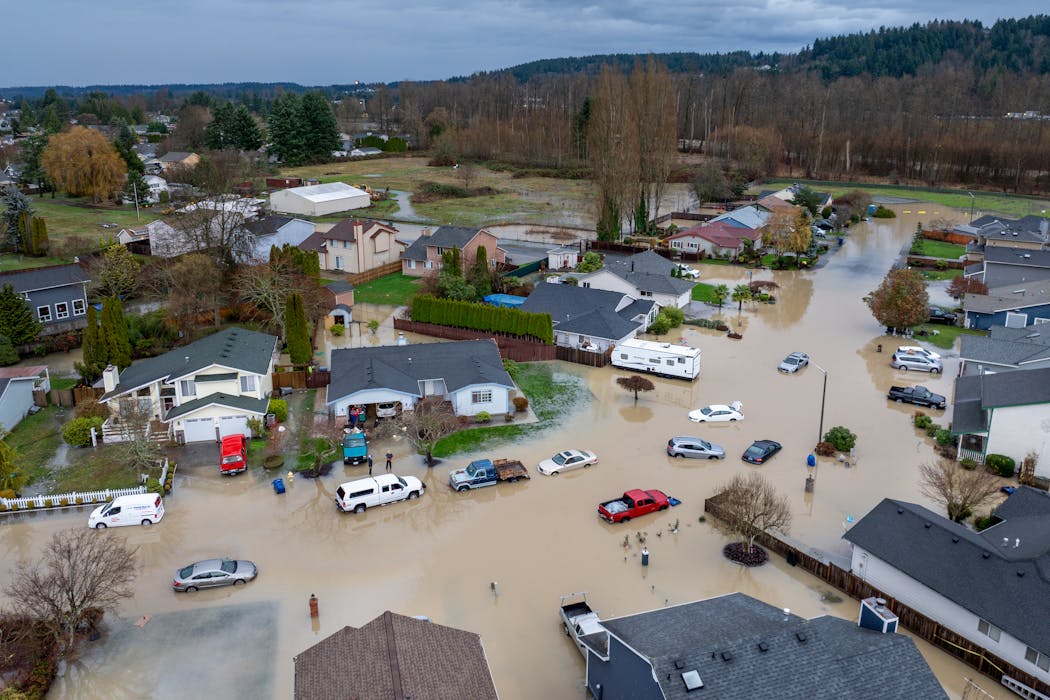
Days of heavy rain caused a levee on the White River to breach, sending water into Pacific, Wash., on Dec. 16, 2025. Brandon Bell/Getty Images

In recent weeks, powerful atmospheric river storms have swept across Washington, Oregon and California, unloading enormous amounts of rain. As rivers surged, they overtopped or breached multiple levees – those long, often unnoticed barriers holding floodwaters back from homes and towns.

Most of the time, levees don’t demand attention. They quietly do their job, year after year. But when storms intensify, levees suddenly matter in a very personal way. They can determine whether a neighborhood stays dry or ends up underwater.

The damage in the West reflects a nationwide problem that has been building for decades. Across the U.S., levees are getting older while weather is getting more extreme. Many of these structures were never designed for the enormous responsibility they now carry.

A paved bicycling path atop a levee is broken and slabs of asphalt pavement are tilted into a breach where water poured through.
Crews inspect damage to a Green River levee in the Seattle suburbs on Dec. 15, 2025. Thousands of people were urged to evacuate during a series of atmospheric river storms, and the National Guard was sent to monitor and reinforce several levees considered at risk.
AP Photo/Manuel Valdes

As a civil engineer at Tufts University, I study water infrastructure, including the vulnerability of levees and strategies for making them more resilient. My research also shows that when levees fail, the consequences don’t fall evenly on the population.

Levees became critical infrastructure almost by accident

Many people assume levees were built as part of modern, carefully engineered flood-control systems. In reality, many of the levees still in use today began much more humbly.

Decades ago, farmers built simple earthen embankments to protect their fields and livestock from seasonal flooding. These early levees were practical solutions, shaped by experience rather than formal engineering. They were not constructed using rigorous design standards, and they did not follow consistent construction or maintenance guidelines.

Over time, the landscape around these levees changed. Farmland gave way to neighborhoods. Roads, railways, factories and ports expanded into floodplains. Populations grew. What were once modest, local structures protecting farms gradually became the first line of defense for millions of people in homes and workplaces.

During the Great Mississippi Flood of 1927, the river poured over and broke through levees, flooding thousands of square miles of land. Both overtopping and a breach are visible in this photo.
National Weather Service Archival Photography by Steve Nicklas, NOS, NGS

Without much public debate or planning, these semi-engineered levees took on a critical and unintended role. The question that still lingers is whether they were ever prepared for it.

Vast, aging levee system now protecting millions

Today, the National Levee Database counts more than 24,000 miles (38,600 kilometers) of levees in the U.S., with an average age of about 61 years and many of them much older. Together, they protect over 23 million people, around 7 million buildings and nearly US$2 trillion in property value.

That’s an extraordinary level of responsibility for a system that is unevenly maintained with varying oversight. Some levees are inspected regularly. Others are owned by small local agencies or private entities with limited funding. In some cases, responsibility is unclear or fragmented.

One levee that was breached along the Green River in Washington state during storms in mid-December 2025 had been due for repairs for several years, but disagreements among governments had recently held up needed work, The Seattle Times reported. The breach forced thousands of people to evacuate

A map shows many breaches in the Midwest, as well as in Washington state and the Northeast.
Many states have at-risk levees. The map shows all levees in the U.S. National Levee Database (in red) and 478 levee segments where overtopping is known to have occurred in the previous 15 years (in blue).
S. Flynn, et al., 2025

The American Society of Civil Engineers’ 2025 Report Card for American Infrastructure, which I contributed to, gave the nation’s levees a D-plus grade, citing aging infrastructure, inconsistent monitoring and long-term underinvestment. A new dataset that colleagues and I created of levee damage includes 487 cases where rivers poured over levees, known as overtopping, in the past 15 years. That doesn’t mean levees are failing everywhere; it means that many are operating with little margin for error.

How levees fail

Levee failures are rarely sudden collapses. More often, they start quietly.

The most common reason levees fail is overtopping, when water from a river, stream or lake behind the levee flows over the top. Once that happens, erosion can begin on the landward side, weakening the structure from behind. What starts as a slow trickle can quickly grow into a breach, creating a large gap in the levee where water can pour in.

Two illustrations. One of overtopping points out that age, height and the materials used can weaken the levee, leading to a breach, which cuts into the levee allowing a faster, deeper steam of water to pour through.
An illustration shows the difference between overtopping and a breach, and some of the reasons a levee can fail.
S. Flynn et al., 2025

Atmospheric river storms make the risk of overtopping and breaches much higher. These storms deliver enormous amounts of rainfall across wide areas in a matter of hours, often combined with snowmelt. Rivers rise faster and stay high longer. Many levees were never designed for that kind of sustained pressure.

When a levee breaches, flooding can be rapid and deep, leaving little time for evacuation and causing damage that spreads far beyond the floodplain.

Who relies on levees today?

Millions of Americans live and work in area protected by levees, often without realizing it. Homes, schools, highways, rail corridors, ports and power facilities depend on the integrity of these structures.

A recent national study found that across the contiguous U.S., urban expansion into floodplains occurred more than twice as fast after levee construction as it did in surrounding counties, highlighting how levees can affect communities’ perception of danger.

In fact, when levees fail, flooding can be worse than in areas without levees, because water rushes in quickly and drains slowly.

The risks are also uneven, shaped by history, economics and policy decisions.

That reality became painfully clear during an atmospheric river storm in March 2023 when a levee along California’s Pajaro River failed, flooding the town of Pajaro. Pajaro is home to many low-income farmworkers. Floodwaters forced hundreds of residents to evacuate, and some people were trapped as water levels rose.

How the Pajaro Valley flooded after intense rainfall from an atmospheric river in March 2023, breaching a levee protecting a small California town.

What made the disaster especially troubling was what emerged afterward. Officials and engineers had known for decades that the Pajaro River levee was vulnerable. Reports documented its weaknesses, but repairs were repeatedly delayed.

Interviews by The Los Angeles Times and public records showed that part of the reason was financial. Decision-makers did not prioritize investing in a levee system protecting the low-income community. The risk was known, but the protection was deferred.

Pajaro is not an isolated case. Across the country, disadvantaged communities and communities of color are more likely to rely on older levees or levees that are not part of major federal programs. Rural towns often depend on agricultural levees. Urban neighborhoods may rely on structures built for a much smaller population.

When levees fail, the impacts cascade, closing roads, knocking out power, contaminating water supplies and disrupting lives for years.

A map shows highest disparities in Idaho, Utah, Colorado, Iowa, Ohio, Tennessee, Georgia, North Carolina, Virginia, Maine, Massachusetts and Vermont.
Disparity refers to the percentage of each state’s residents protected by levees who are considered disadvantaged, based on the U.S. Council on Environmental Quality’s Climate and Economic Justice Screening Tool. All levees in the National Levee Database are counted.
F. Vahedifard et al., 2023

Why this moment matters

Advances in engineering, monitoring and risk assessment have improved how levees are evaluated and designed.

Hurricane Katrina marked a turning point in 2005 when its storm surge broke through levees protecting New Orleans. Hundreds of people died in the flooding. The disaster exposed the consequences of neglect and fragmented responsibility for levee upkeep.

At the same time, there has been real progress. Over the past two decades, significant federal investments have strengthened the condition and management of many of the nation’s levees, particularly through the work of federal agencies such as the U.S. Army Corps of Engineers.

Still, the legacy of decisions made decades ago remains, and climate change is raising the risks. Heavier rainfall, fast snowmelt and rising seas are pushing water control systems beyond what many levees were designed to handle. Events once considered rare are becoming more frequent.

As atmospheric rivers test levees in the West and flood risks grow nationwide, the challenge is no longer just technical. It’s about how society values protection, communicates risk and decides whose safety is prioritized.

Levees will continue to play a vital role in protecting communities. Understanding their history, and their limits, is essential as the storms of the future arrive.

The Conversation

Farshid Vahedifard received funding from the National Science Foundation (NSF) and the National Oceanic and Atmospheric Administration (NOAA). He is affiliated with the United Nations University Institute for Water, Environment and Health (UNU-INWEH).

ref. West Coast levee failures show growing risks from America’s aging flood defenses – https://theconversation.com/west-coast-levee-failures-show-growing-risks-from-americas-aging-flood-defenses-272556

Por qué necesitamos más y mejores áreas marinas protegidas antes de 2030

Source: The Conversation – (in Spanish) – By José Antonio García Charton, Profesor titular de Ecología, Universidad de Murcia

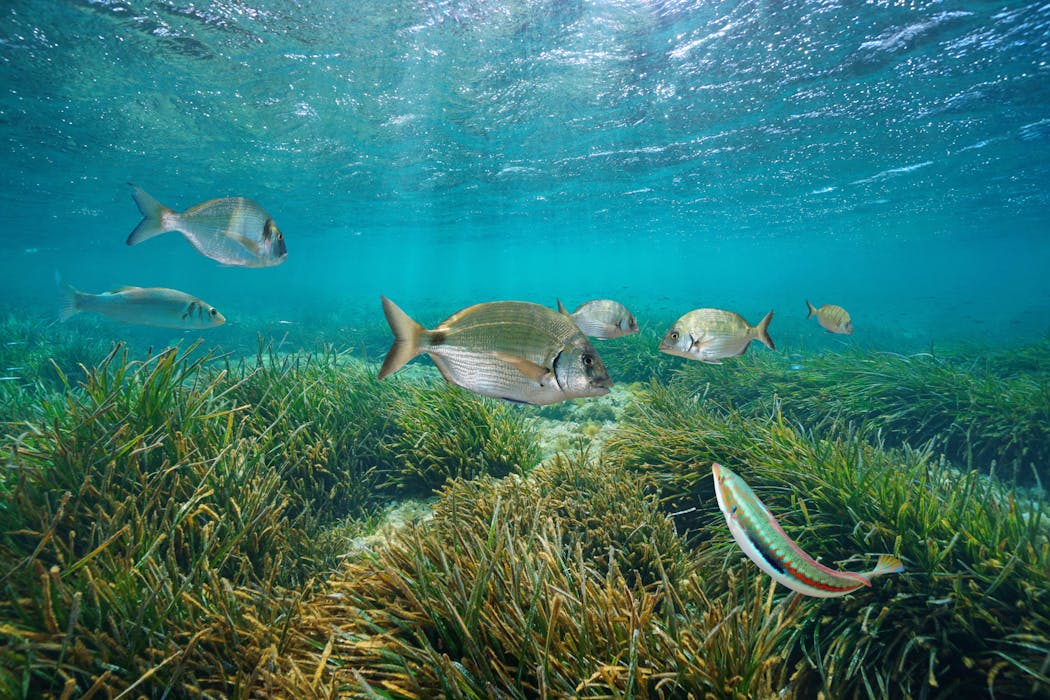
Vista submarina de la Reserva Marina de Cabo de Palos (España) Damsea/Shutterstock

En diciembre de 2022, los países participantes en la COP15 del Convenio sobre la Diversidad Biológica de las Naciones Unidas, celebrada en Montreal (Canadá), acordaron proteger al menos el 30 % de nuestras tierras y océanos para 2030, el conocido como “objetivo 30 x 30”. Este compromiso se basa en estudios científicos que sugieren que el 30 % es el mínimo necesario para restaurar la vida marina y todos los beneficios que proporciona a la humanidad.

En un planeta que sufre una crisis ambiental sin precedentes, las áreas marinas protegidas (AMP) son actualmente una de las mejores herramientas –cuando no la mejor– para proteger la biodiversidad marina, conservar los recursos de los océanos, permitir una mayor resiliencia al cambio climático y mantener los servicios prestados por los ecosistemas marinos que aseguren la calidad de vida de las comunidades costeras.

Con el fin de alcanzar de un modo efectivo el objetivo 30 x 30, los expertos abogan actualmente por la creación de “redes de AMP”, un conjunto de AMP individuales que rinden resultados de manera sinérgica, diseñadas para cumplir las metas que una única área no puede lograr por sí sola.

Para ello se requiere, ante todo, limitar las actividades humanas que dañan los ecosistemas que albergan. Estas redes deben incluir distintos tipos de hábitats –desde praderas submarinas hasta zonas profunda– y replicarlos en distintas extensiones para asegurar su resistencia ante cambios o impactos catastróficos.

También es importante variar el tamaño de las áreas según cómo se mueven las especies, e incluir diferentes niveles de protección, desde reservas totalmente cerradas hasta zonas donde se permitan actividades reguladas como la pesca o el buceo.


Leer más:
Conservación entre fronteras: reservas marinas móviles para proteger especies migratorias


La conectividad es otro aspecto clave: las AMP deben estar lo bastante cerca unas de otras como para permitir el intercambio de larvas y el movimiento de adultos, reforzando así las poblaciones y beneficiando a zonas no protegidas. Además, la red debe cuidar espacios con ecosistemas únicos, especies emblemáticas o poblaciones pesqueras importantes para la sostenibilidad futura.

Por otro lado, las AMP deben diseñarse y gestionarse con una participación real de todos los sectores implicados –pesca, turismo, ciencia, oenegés y administraciones–, promoviendo una gobernanza eficaz y equitativa que incluya también el conocimiento tradicional y local.

Un compromiso global insuficiente

Aunque casi 200 países se han comprometido con el objetivo 30 x 30, hoy solo el 9,6 % del océano global está bajo algún tipo de protección y menos del 3 % corresponde a AMP altamente o totalmente protegidas. Estas, según muchos ecólogos marinos, son las que verdaderamente restauran ecosistemas y aportan beneficios tangibles a la sociedad. El mundo necesita cuadruplicar el nivel actual de protección en apenas 5 años.

La mayor parte del progreso en AMP durante las dos últimas décadas se ha hecho creando muy pocas áreas extremadamente grandes –más de 100 000 km²– en lugares remotos de las zonas económicas exclusivas (ZEE) de ciertos estados. Es decir, en aquellas áreas marítimas que se extienden hasta 200 millas náuticas desde la costa de un país, donde este tiene derechos soberanos sobre la exploración, uso y conservación de sus recursos naturales (pesca, minerales, energía) y jurisdicción sobre actividades como investigación científica y protección ambiental.

Esto ha hecho avanzar los porcentajes globales, pero tiene un efecto limitado sobre los ecosistemas donde se concentra la biodiversidad y la actividad humana: las aguas costeras. Aunque el 94 % de todas las AMPs del planeta se ubican en aguas dentro de las 12 millas (mar territorial), son tan pequeñas (mediana de 1,1 km²) que colectivamente solo protegen el 0,3 % del océano mundial.

Un estudio reciente ha puesto de manifiesto que para cubrir las lagunas de protección global habría que crear cerca de 300 AMP grandes y unas 188 000 AMP pequeñas. Esto supone añadir 1,68 millones de km² de protección costera y más de 16 millones de km² en aguas exteriores. En términos operativos, esto se traduce en crear unas 85 AMP nuevas cada día entre 2025 y 2030. Algo que, evidentemente, no está ocurriendo.

Como además evidencia este reciente trabajo, el problema no es solo de cantidad, sino de calidad. Un tercio de la superficie marina considerada “protegida” permite actividades incompatibles con la conservación, como pesca industrial, minería marina, extracción de hidrocarburos, energía eólica marina, etc. Y miles de AMP carecen de planes de gestión, seguimiento o vigilancia. En realidad, sólo el 3 % del océano mundial está realmente bien protegido.


Leer más:
Proteger el 30 % de los océanos no es suficiente


Las AMP españolas: un ejemplo de lo que pasa en el resto del mundo

El mar Mediterráneo ofrece un ejemplo especialmente claro de la deficiente aplicación de las AMP: hasta el 95 % de ellas no presentan diferencias normativas y la mayoría no albergan más biodiversidad que las zonas no protegidas.

Además de que casi no existen zonas altamente protegidas (0,23 % de toda su superficie), la red actual está muy fragmentada. La mayoría de las zonas protegidas se concentran en la cuenca noroccidental, lo que da lugar a una conectividad deficiente de la red y a enormes desequilibrios territoriales.

La situación en la costa española, tanto mediterránea como atlántica, no difiere demasiado del diagnóstico global. Si bien en la teoría alcanza un alto porcentaje de protección marina (alrededor de un 23 %) y aspira a alcanzar el 25 % a finales de este año, muchos de los planes de gestión de estos espacios no son efectivos en la regulación real de actividades como pesca, turismo, etc. Así que, en la práctica, estas áreas funcionan como espacios sin protección real.

Por otra parte, menos del 1 % del área protegida de España está clasificada como altamente protegida o totalmente protegida. Por el contrario, más de 150 AMP, que comprenden el 40 % del área protegida del país, se consideran ligeramente protegidas o mínimamente protegidas. Asimismo, resulta alarmante que cerca del 45 % del área protegida se considera incompatible con los objetivos de conservación al permitir actividades como la pesca industrial, las prospecciones petrolíferas, la minería o las eólicas marinas.


Leer más:
Arranca la eólica marina en España: retos e incertidumbres de instalar 200 aerogeneradores flotantes en el mar


Además, con el fin de alcanzar “por la vía rápida” el objetivo 30 x 30, en los últimos años se está recurriendo a incluir en la Red Natura 2000 marina espacios muy grandes, de miles de kilómetros cuadrados que, por el momento, adolecen de falta de medidas efectivas de protección. Ejemplos destacados son el Corredor de migración de cetáceos del Mediterráneo o el Corredor migratorio galaico-cantábrico occidental.

Estas áreas se encuentran a menudo muy lejos de la costa, lo que impide afrontar la protección de la zona costera. Y es aquí donde se dan la mayor parte de las presiones antrópicas, así como las debidas al cambio climático y los conflictos entre usos.

Por su parte, las reservas marinas de interés pesquero, aun siendo de pequeño tamaño, presentan en general buenos resultados, pero actualmente se encuentran afectadas por un drástico recorte de la financiación proveniente del Ministerio de Agricultura, Pesca y Alimentación. Esta situación podría provocar una abrupta pérdida de los beneficios conseguidos durante los últimos 30 años, debido a una disminución de la vigilancia, sin la cual toda medida de gestión resulta inútil frente a la presión del furtivismo.

Por último, la gobernanza de las AMP españolas, ya sean de índole ambiental –como los espacios de la Red Natura 2000 marina– o de naturaleza pesquera –como las reservas marinas de interés pesquero–, no cuentan con participación efectiva de los diferentes actores locales. Esto dificulta la colaboración y el acuerdo con los sectores implicados, y con ello la creación de nuevas AMP o la ampliación de las ya existentes.


Leer más:
No podremos alcanzar un desarrollo sostenible con unos océanos enfermos


Claves para que España alcance la meta 30 x 30

Para alcanzar el objetivo 30 x 30 haría falta flexibilizar y descentralizar con urgencia los mecanismos administrativos para crear AMP, las cuales suelen depender de administraciones nacionales o regionales, generalmente con modelos de gobernanza verticales que limitan la participación y corresponsabilidad.

Permitir que municipios o comunidades costeras (por ejemplo, cofradías de pescadores u oenegés, mediante mecanismos como las concesiones administrativas, como una forma de custodia marina) declaren sus propias AMP agilizaría su creación y mejoraría tanto la eficiencia de la gestión como la equidad en la distribución de beneficios.

Para que este enfoque funcione es clave sensibilizar a los actores locales –pescadores, centros de buceo, hostelería, oenegés– sobre el valor de las AMP y formar a personas de la zona para diseñar y gestionar estos espacios de manera participativa y adaptativa, impulsando liderazgos locales que favorezcan la conservación marina.

Además, debe asegurarse que la protección sea real no solo manteniendo las acciones de vigilancia, el personal y los medios suficientes, sino también afianzando la participación pública en la gobernanza para garantizar el éxito de las medidas de protección.

Hoy en día, la mayor parte de las AMP dependen exclusivamente de inversiones públicas, lo cual limita las posibilidades de su expansión y funcionamiento. Incluso las pone en riesgo cuando las autoridades políticas no consideran que esta herramienta sea prioritaria. Una medida efectiva sería promover modelos mixtos de financiación que permitan, por ejemplo, que los beneficios locales obtenidos por la protección (pesca, turismo, hostelería, educación…) reviertan directamente en la gestión y el mantenimiento de las áreas protegidas.

Cuando las AMP incluyen áreas de protección estricta, están bien gestionadas y cuentan con apoyo local, consiguen restaurar la biodiversidad, aumentar las capturas pesqueras, reducir la vulnerabilidad climática y generar beneficios económicos claros.

Es urgente, por tanto, emprender investigaciones que ayuden a identificar las mejores áreas para entrar a formar parte de la red de AMP. También hace falta acometer reformas administrativas que permitan la financiación suficiente, alcanzar la legitimidad social adecuada y adoptar los esquemas de gobernanza participativa apropiados para acercarnos lo más posible al objetivo 30 x 30 de un modo realmente efectivo y equitativo. Una meta que, a día de hoy, parece demasiado lejana.

The Conversation

José Antonio García Charton ha recibido durante los últimos años fondos provenientes de convocatorias públicas competitivas de financiación de la investigación de la Fundación Biodiversidad (programa Pleamar con fondos del FEMPA), programa ThinkInAzul (PCCM), Fundación Séneca y PEICTI-MITECO, entre otras fuentes. Además, ha recibido contratos de investigación del Servicio de Pesca y Acuicultura de la CARM (con fondos del FEMPA), así como de otras empresas y administraciones.

ref. Por qué necesitamos más y mejores áreas marinas protegidas antes de 2030 – https://theconversation.com/por-que-necesitamos-mas-y-mejores-areas-marinas-protegidas-antes-de-2030-271123

À pierre-feuille-ciseaux, nos cerveaux peinent à agir au hasard… et c’est plus important qu’il n’y paraît

Source: The Conversation – in French – By Denise Moerel, Research Fellow in Cognitive Neuroscience, Western Sydney University

Une étude révèle que nos choix en compétition sont influencés par les manches précédentes, même lorsque s’appuyer sur le passé peut nuire à notre stratégie.


Il existe une stratégie optimale pour gagner plusieurs manches de pierre-feuille-ciseaux : être aussi aléatoire et imprévisible que possible ; ne pas tenir compte de ce qui s’est passé lors de la manche précédente. Mais c’est plus facile à dire qu’à faire.

Pour comprendre comment le cerveau prend des décisions en situation de compétition, nous avons demandé à des participants de jouer 15 000 parties de shifumi, tout en enregistrant leur activité cérébrale.

Nos résultats, publiés dans Social Cognitive and Affective Neuroscience, confirmaient que ceux qui se laissaient influencer par les manches précédentes avaient effectivement tendance à perdre plus souvent. Nous avons également montré que les humains peinent à véritablement agir de manière aléatoire, et que l’on peut discerner divers biais dans leur activité cérébrale lorsqu’ils prennent des décisions dans un contexte compétitif.

Ce que l’on peut apprendre d’un jeu simple

Le domaine des neurosciences sociales s’est surtout attaché à étudier le cerveau d’individus pris isolément. Pourtant, pour comprendre comment notre cerveau prend des décisions lorsque nous interagissons en société, il faut recourir à une méthode appelée « hyperscanning ». Cette méthode permet aux chercheurs d’enregistrer l’activité cérébrale de deux personnes ou plus pendant qu’elles interagissent, offrant ainsi une mesure du comportement social plus proche des situations réelles.

Jusqu’à présent, la plupart des travaux utilisant cette approche se sont concentrés sur la coopération. Lorsqu’on coopère avec quelqu’un, il est utile d’agir de la manière la plus prévisible possible afin de faciliter l’anticipation des actions et des intentions de chacun.

De notre côté, nous nous sommes intéressés à la prise de décision en situation de compétition, où l’imprévisibilité peut conférer un avantage — comme lorsqu’on joue à pierre-feuille-ciseaux. Comment notre cerveau prend-il des décisions, et garde-t-il la trace des actions précédentes, à la fois les nôtres et celles de l’autre joueur ?

Pour explorer ces questions, nous avons enregistré simultanément l’activité cérébrale de paires de participants pendant qu’ils jouaient 480 manches de shifumi l’un contre l’autre sur ordinateur. Soit un total de 15 000 manches à partir duquel nous avons constaté que les joueurs peinaient à rester imprévisibles lorsqu’il s’agissait de choisir l’option suivante.

Même si la meilleure stratégie est d’agir de manière aléatoire, la plupart des personnes présentaient un biais net, en jouant trop souvent l’une des options. Plus de la moitié des joueurs privilégiaient « pierre », suivie de « feuille », tandis que « ciseaux » était l’option la moins choisie.

Par ailleurs, les participants avaient tendance à éviter de répéter leurs choix : ils optaient pour une option différente à la manche suivante plus souvent que ce que le hasard seul aurait permis d’attendre.

Des décisions en temps réel

Nous pouvions prédire la décision d’un joueur — choisir « pierre », « feuille » ou « ciseaux » — à partir de ses données cérébrales avant même qu’il n’ait donné sa réponse. Cela signifie que nous pouvions suivre le processus de prise de décision dans le cerveau à mesure qu’il se déroulait, en temps réel.

Nous avons non seulement trouvé dans le cerveau des informations sur la décision à venir, mais aussi sur ce qui s’était produit lors de la partie précédente. Le cerveau contenait des informations à la fois sur la réponse précédente du joueur et sur celle de son adversaire durant cette phase de prise de décision.

Cela montre que, lorsque nous prenons des décisions, nous utilisons des informations sur ce qui s’est passé auparavant pour orienter la suite : « il a joué pierre la dernière fois, alors que dois-je faire ? »

Nous ne pouvons pas nous empêcher d’essayer de prédire ce qui va se passer ensuite en regardant en arrière.

Or, lorsqu’il s’agit d’être imprévisible, s’appuyer sur les résultats passés est contre-productif. Seuls les cerveaux des joueurs qui ont perdu la partie contenaient des informations sur la manche précédente — ceux des gagnants n’en contenaient pas. Cela montre qu’une dépendance excessive aux résultats passés nuit bel et bien à la stratégie.

Pourquoi est-ce important ?

Qui n’a jamais souhaité savoir ce que son adversaire allait jouer ensuite ? Des jeux les plus simples à la politique internationale, une bonne stratégie peut offrir un avantage décisif. Nos travaux montrent que notre cerveau n’est pas un ordinateur : nous cherchons spontanément à prédire ce qui va se passer ensuite et nous nous appuyons sur les résultats passés pour guider nos décisions futures, même lorsque cela peut s’avérer contre-productif.

Bien sûr, pierre-feuille-ciseaux est l’un des jeux les plus simples qui soient — ce qui en faisait un bon point de départ pour cette recherche. Les prochaines étapes consisteront à transposer nos travaux à des contextes compétitifs où il est plus stratégique de tenir compte des décisions passées.

Notre cerveau est mauvais lorsqu’il s’agit d’être imprévisible. C’est généralement une bonne chose dans la plupart des contextes sociaux, et cela peut nous aider lorsque nous coopérons. En situation de compétition, en revanche, cela peut nous desservir.

En définitive, on peut en tirer une leçon simple : ceux qui cessent de trop analyser le passé ont peut-être davantage de chances de gagner à l’avenir.

The Conversation

Manuel Varlet a reçu des financements de l’Australian Research Council.

Tijl Grootswagers a reçu des financements de l’Australian Research Council.

Denise Moerel ne travaille pas, ne conseille pas, ne possède pas de parts, ne reçoit pas de fonds d’une organisation qui pourrait tirer profit de cet article, et n’a déclaré aucune autre affiliation que son organisme de recherche.

ref. À pierre-feuille-ciseaux, nos cerveaux peinent à agir au hasard… et c’est plus important qu’il n’y paraît – https://theconversation.com/a-pierre-feuille-ciseaux-nos-cerveaux-peinent-a-agir-au-hasard-et-cest-plus-important-quil-ny-parait-269438

L’histoire édifiante du premier loup d’Éthiopie jamais capturé, soigné puis réintroduit dans la nature

Source: The Conversation – in French – By Sandra Lai, Postdoctoral Researcher, Ethiopian Wolf Conservation Programme, University of Oxford

Blessé par balle dans les montagnes d’Éthiopie, un loup d’Éthiopie a survécu contre toute attente. Son sauvetage, inédit, a changé bien plus que son destin individuel.


Quelle est la valeur d’un seul animal ? Lorsqu’un animal sauvage est retrouvé grièvement blessé, l’option la plus humaine consiste souvent à pratiquer l’euthanasie pour lui éviter des souffrances prolongées. C’est le plus souvent ce qui se passe, parfois à bon escient. Car quand on réunit les moyens nécessaires pour le sauver, un animal ainsi réhabilité puis réintroduit dans la nature peut être rejeté par son groupe, peiner à trouver de la nourriture ou à échapper aux prédateurs. Et même s’il survit, il peut ne pas se reproduire et ne laisser aucune empreinte durable sur la population.

Mais il arrive parfois qu’un cas isolé montre qu’une intervention peut faire bien davantage que sauver la vie d’un individu. Elle peut aussi transformer notre idée de ce qui est possible.

C’est l’histoire d’une seconde chance qui s’est jouée dans les Monts Simien, en Éthiopie. Là-bas, à 3 000 mètres d’altitude, l’oxygène se fait plus rare. Les nuits sont froides, et la vie n’offre que peu de répit. C’est aussi le territoire du loup d’Éthiopie (Canis simensis), le principal prédateur de cet habitat et le carnivore le plus menacé d’Afrique. Il ne reste plus guère que 500 loups adultes dans les hauts plateaux éthiopiens, dont environ 60 à 70 dans les Monts Simien.

Début mai 2020, l’un d’entre eux a subi une blessure grave — une fracture du fémur causée par un tir d’arme à feu. Parce qu’il n’était plus capable de suivre sa meute dans les hautes terres implacables, son sort semblait scellé. Habituellement, l’histoire s’arrête là. Mais cette fois-ci, il en a été autrement.

Je suis chercheuse en postdoctorat au sein de l’Ethiopian Wolf Conservation Programme, un programme qui se consacre depuis trente ans à la protection du loup d’Éthiopie et de son habitat montagnard. J’ai eu l’honneur de faire partie de l’équipe qui a documenté, pour la toute première fois, le sauvetage d’un loup d’Éthiopie, son traitement clinique en captivité, puis sa remise en liberté réussie après réhabilitation.

Terefe, le survivant chanceux

Des gardes du parc ont découvert le loup étendu sous un pont et ont alerté Getachew Assefa, chef de l’équipe de suivi des loups du Ethiopian Wolf Conservation Programme dans le parc national des monts Simien.

Il est rare qu’un loup d’Éthiopie soit abattu à l’intérieur du parc. Les autorités éthiopiennes chargées de la faune sauvage et l’Ethiopian Wolf Conservation Programme ont donc décidé de capturer l’animal, effrayé, et de tenter de le sauver.

Il s’agissait d’une démarche sans précédent, aucun loup d’Éthiopie n’ayant jamais été maintenu en captivité auparavant. La décision de le sauver reposait à la fois sur l’origine humaine de sa blessure et sur le faible nombre de loups encore présents dans le massif du Simien.

Un petit refuge de montagne a rapidement été transformé en enclos de fortune pour l’accueillir. C’est là que, pendant les 51 jours suivants, sa réhabilitation s’est déroulée.

Durant ces quelques semaines, il a reçu des soins vétérinaires intensifs, sous la supervision d’experts. Il a été pris en charge par Chilot Wagaye, garde issu de la communauté locale. Les progrès ont d’abord été incertains, puis les os fracturés ont commencé à se ressouder et, au bout d’un mois, le loup a pu se tenir debout seul.

On le baptisa alors Terefe, un nom qui signifie « survivant chanceux » en amharique, la langue locale.

Retour à l’état sauvage : une histoire d’espoir

Une fois sa patte rétablie, l’impatience de Terefe à quitter le refuge est vite devenue manifeste. La nuit, il hurlait, sans doute pour tenter d’appeler les membres de sa meute.

Fin juin 2020, il a été relâché près de son groupe, équipé d’un collier GPS léger — le tout premier jamais posé sur un loup d’Éthiopie. Ce dispositif a permis aux chercheurs de suivre ses déplacements et d’explorer une question cruciale : un loup réhabilité peut-il se réintégrer dans la nature ?

L’Ethiopian Wolf Conservation Programme a suivi les déplacements de Tefere après la guérison de sa blessure afin de s’assurer qu’il allait bien.

Peu après sa remise en liberté, les observations ont confirmé que Terefe avait été réintégré au sein de sa meute. Il est resté plusieurs semaines dans son territoire d’origine. Mais il a ensuite commencé à se déplacer plus largement dans les montagnes, rendant parfois visite à des meutes voisines, avant de finir par s’établir près du village de Shehano.

D’abord, les habitants ont été surpris de voir un loup s’approcher ainsi de leurs maisons et ils ont tenté de le chasser. Mais les agents de suivi, dirigés par Getachew et Chilot, leur ont raconté l’histoire de Terefe.

De cette meilleure compréhension a découlé une évolution des attitudes. Les villageois se sont alors montrés plus enclins à protéger Terefe… et les nouveaux membres de sa meute. Car le loup avait trouvé une partenaire et le couple avait donné naissance à une portée de louveteaux.

Un sauvetage historique qui a protégé bien plus qu’une vie

Aujourd’hui, la « meute de Terefe » existe toujours. Terefe a non seulement survécu, mais il a aussi laissé une descendance. Il a également modifié quelque chose de fondamental, mais difficile à mesurer : les perceptions locales. Les loups sont parfois considérés comme une menace. Avec Terefe, ils sont devenus un symbole de résilience et une source de fierté.

L’histoire de Terefe ne signifie pas que chaque animal sauvage blessé peut ou doit être sauvé. Mais lorsque l’intervention est menée avec rigueur, une seule vie peut avoir une portée bien plus grande qu’on ne l’imagine — non seulement pour une espèce menacée, mais aussi pour les populations qui vivent à ses côtés. Aujourd’hui, Getachew me répète souvent que personne n’oserait plus faire de mal à Terefe.

Sa notoriété protégera-t-elle les membres de sa meute lorsqu’il ne sera plus là ? Protègera-t-elle d’autres individus de son espèce ? Terefe a été sauvé d’une blessure infligée par la main de l’homme, alors que de nombreux autres loups disparaissent lentement et silencieusement, victimes de la rage et de la maladie de Carré transmises par les chiens domestiques — une conséquence indirecte de la présence humaine dans les montagnes.

L’histoire de Terefe rappelle toutefois que les efforts de conservation ne sont jamais aussi efficaces que lorsqu’ils sont menés de concert avec les communautés locales. Elle laisse entrevoir l’étendue de ce que l’on peut accomplir lorsque des personnes attachées à un même territoire unissent leurs forces.

The Conversation

Sandra Lai ne travaille pas, ne conseille pas, ne possède pas de parts, ne reçoit pas de fonds d’une organisation qui pourrait tirer profit de cet article, et n’a déclaré aucune autre affiliation que son organisme de recherche.

ref. L’histoire édifiante du premier loup d’Éthiopie jamais capturé, soigné puis réintroduit dans la nature – https://theconversation.com/lhistoire-edifiante-du-premier-loup-dethiopie-jamais-capture-soigne-puis-reintroduit-dans-la-nature-272622

What loving-kindness meditation is and how to practice it in the new year

Source: The Conversation – USA (3) – By Jeremy David Engels, Liberal Arts Endowed Professor of Communication, Penn State

Loving-kindness, the feeling cultivated in metta meditation, is very different from romantic love. Anna Sunderland Engels

A popular New Year’s resolution is to take up meditation – specifically mindfulness meditation. This is a healthy choice.

Regular mindfulness practice has been linked to many positive health benefits, including reduced stress and anxiety, better sleep and quicker healing after injury and illness. Mindfulness can help us to be present in a distracted world and to feel more at home in our bodies, and in our lives.

There are many different types of meditation. Some mindfulness practices ask meditators simply to sit with whatever thoughts, sensations or emotions arise without immediately reacting to them. Such meditations cultivate focus, while granting more freedom in how we respond to whatever events life throws at us.

Other meditations ask practitioners to deliberately focus on one emotion – for example, gratitude or love – to deepen the experience of that emotion. The purpose behind this type of meditation is to bring more gratitude, or more love, into one’s life. The more people meditate on love, the easier it is to experience this emotion even when not meditating.

One such meditation is known as “metta,” or loving-kindness. As a scholar of communication and mindfulness, as well as a longtime meditation teacher, I have both studied and practiced metta. Here is what loving-kindness means and how to try it out for yourself:

Unbounded, universal love

Loving-kindness, or metta, is the type of love which is practiced by Buddhists around the world. Like many forms of meditation today, there are both secular and religious forms of the practice. One does not need to be a Buddhist to practice loving-kindness. It is for anyone and everyone who wants to live more lovingly.

Loving-kindness, the feeling cultivated in metta meditation, is very different from romantic love. In the ancient Pali language, the word “metta” has two root meanings: The first is “gentle,” in the sense of a gentle spring rain that falls on young plants, nourishing them without discrimination. The second is “friend.”

Metta is limitless and unbounded love; it is gentle presence and universal friendliness. Metta practice is meant to grow people’s ability to be present for themselves and others without fail.

A guided loving-kindness meditation practice.

Metta is not reciprocal or conditional. It does not discriminate between us and them, rich and poor, educated and uneducated, popular or unpopular, worthy and unworthy. To practice metta is to give what I describe in my research as “the rarest and most precious gift” – a gift of love offered without any expectation of it being returned.

How to practice loving-kindness meditation

In the fifth century, a Sri Lankan monk, Buddhaghosa, composed an influential meditation text called the “Visuddhimagga,” or “The Path of Purification.” In this text, Buddhaghosa provides instructions for how to practice loving-kindness meditation. Contemporary teachers tend to adapt and modify his instructions.

The practice of loving-kindness often involves quietly reciting to oneself several traditional phrases designed to evoke metta, and visualizing the beings who will receive that loving-kindness.

Traditionally, the practice begins by sending loving kindness to ourselves. It is typical during this meditation to say:

May I be filled by loving-kindness

May I be safe from inner and outer dangers
May I be well in body and mind

May I be at ease and happy

After speaking these phrases, and feeling the emotions they evoke, next it’s common to direct loving-kindness toward someone – or something – else: It can be a beloved person, a dear friend, a pet, an animal, a favorite tree. The phrases become:

May you be filled by loving-kindness

May you be safe from inner and outer dangers

May you be well in body and mind

May you be at ease and happy

Next, this loving-kindness is directed to a wider circle of friends and loved ones: “May they …”

The final step is to gradually expand the circle of well wishes: including the people in our community and town, people everywhere, animals and all living beings, and the whole Earth. This last round of recitation begins: “May we …”

In this way, loving-kindness meditation practice opens the heart further and further into life, beginning with the meditator themselves.

Loving-kindness and mindful democracy

Clinical research shows that loving-kindness meditation has a positive effect on mental health, including lessening anxiety and depression, increasing life satisfaction and improving self-acceptance while reducing self-criticism. There is also evidence that loving-kindness meditation increases a sense of connection with other people.

The benefits of loving-kindness meditation are not just for the individual. In my research, I show that there are also tremendous benefits for society as a whole. Indeed, the practice of democracy requires us to work together with friends, strangers and even purported “opponents.” This is difficult to do if our hearts are full of hatred and resentment.

Each time meditators open their hearts in metta meditation, they prepare themselves to live more loving lives: for their own selves, and for all living beings.

The Conversation

Jeremy David Engels does not work for, consult, own shares in or receive funding from any company or organization that would benefit from this article, and has disclosed no relevant affiliations beyond their academic appointment.

ref. What loving-kindness meditation is and how to practice it in the new year – https://theconversation.com/what-loving-kindness-meditation-is-and-how-to-practice-it-in-the-new-year-270984

AI agents arrived in 2025 – here’s what happened and the challenges ahead in 2026

Source: The Conversation – USA – By Thomas Şerban von Davier, Affiliated Faculty Member, Carnegie Mellon Institute for Strategy and Technology, Carnegie Mellon University

AI agents have emerged from the lab, bringing promise and peril. tadamichi/iStock via Getty Images

In artificial intelligence, 2025 marked a decisive shift. Systems once confined to research labs and prototypes began to appear as everyday tools. At the center of this transition was the rise of AI agents – AI systems that can use other software tools and act on their own.

While researchers have studied AI for more than 60 years, and the term “agent” has long been part of the field’s vocabulary, 2025 was the year the concept became concrete for developers and consumers alike.

AI agents moved from theory to infrastructure, reshaping how people interact with large language models, the systems that power chatbots like ChatGPT.

In 2025, the definition of AI agent shifted from the academic framing of systems that perceive, reason and act to AI company Anthropic’s description of large language models that are capable of using software tools and taking autonomous action. While large language models have long excelled at text-based responses, the recent change is their expanding capacity to act, using tools, calling APIs, coordinating with other systems and completing tasks independently.

This shift did not happen overnight. A key inflection point came in late 2024, when Anthropic released the Model Context Protocol. The protocol allowed developers to connect large language models to external tools in a standardized way, effectively giving models the ability to act beyond generating text. With that, the stage was set for 2025 to become the year of AI agents.

AI agents are a whole new ballgame compared with generative AI.

The milestones that defined 2025

The momentum accelerated quickly. In January, the release of Chinese model DeepSeek-R1 as an open-weight model disrupted assumptions about who could build high-performing large language models, briefly rattling markets and intensifying global competition. An open-weight model is an AI model whose training, reflected in values called weights, is publicly available. Throughout 2025, major U.S. labs such as OpenAI, Anthropic, Google and xAI released larger, high-performance models, while Chinese tech companies including Alibaba, Tencent, and DeepSeek expanded the open-model ecosystem to the point where the Chinese models have been downloaded more than American models.

Another turning point came in April, when Google introduced its Agent2Agent protocol. While Anthropic’s Model Context Protocol focused on how agents use tools, Agent2Agent addressed how agents communicate with each other. Crucially, the two protocols were designed to work together. Later in the year, both Anthropic and Google donated their protocols to the open-source software nonprofit Linux Foundation, cementing them as open standards rather than proprietary experiments.

These developments quickly found their way into consumer products. By mid-2025, “agentic browsers” began to appear. Tools such as Perplexity’s Comet, Browser Company’s Dia, OpenAI’s GPT Atlas, Copilot in Microsoft’s Edge, ASI X Inc.’s Fellou, MainFunc.ai’s Genspark, Opera’s Opera Neon and others reframed the browser as an active participant rather than a passive interface. For example, rather than helping you search for vacation details, it plays a part in booking the vacation.

At the same time, workflow builders like n8n and Google’s Antigravity lowered the technical barrier for creating custom agent systems beyond what has already happened with coding agents like Cursor and GitHub Copilot.

New power, new risks

As agents became more capable, their risks became harder to ignore. In November, Anthropic disclosed how its Claude Code agent had been misused to automate parts of a cyberattack. The incident illustrated a broader concern: By automating repetitive, technical work, AI agents can also lower the barrier for malicious activity.

This tension defined much of 2025. AI agents expanded what individuals and organizations could do, but they also amplified existing vulnerabilities. Systems that were once isolated text generators became interconnected, tool-using actors operating with little human oversight.

The business community is gearing up for multiagent systems.

What to watch for in 2026

Looking ahead, several open questions are likely to shape the next phase of AI agents.

One is benchmarks. Traditional benchmarks, which are like a structured exam with a series of questions and standardized scoring, work well for single models, but agents are composite systems made up of models, tools, memory and decision logic. Researchers increasingly want to evaluate not just outcomes, but processes. This would be like asking students to show their work, not just provide an answer.

Progress here will be critical for improving reliability and trust, and ensuring that an AI agent will perform the task at hand. One method is establishing clear definitions around AI agents and AI workflows. Organizations will need to map out exactly where AI will integrate into workflows or introduce new ones.

Another development to watch is governance. In late 2025, the Linux Foundation announced the creation of the Agentic AI Foundation, signaling an effort to establish shared standards and best practices. If successful, it could play a role like the World Wide Web Consortium in shaping an open, interoperable agent ecosystem.

There is also a growing debate over model size. While large, general-purpose models dominate headlines, smaller and more specialized models are often better suited to specific tasks. As agents become configurable consumer and business tools, whether through browsers or workflow management software, the power to choose the right model increasingly shifts to users rather than labs or corporations.

The challenges ahead

Despite the optimism, significant socio-technical challenges remain. Expanding data center infrastructure strains energy grids and affects local communities. In workplaces, agents raise concerns about automation, job displacement and surveillance.

From a security perspective, connecting models to tools and stacking agents together multiplies risks that are already unresolved in standalone large language models. Specifically, AI practitioners are addressing the dangers of indirect prompt injections, where prompts are hidden in open web spaces that are readable by AI agents and result in harmful or unintended actions.

Regulation is another unresolved issue. Compared with Europe and China, the United States has relatively limited oversight of algorithmic systems. As AI agents become embedded across digital life, questions about access, accountability and limits remain largely unanswered.

Meeting these challenges will require more than technical breakthroughs. It demands rigorous engineering practices, careful design and clear documentation of how systems work and fail. Only by treating AI agents as socio-technical systems rather than mere software components, I believe, can we build an AI ecosystem that is both innovative and safe.

The Conversation

Thomas Şerban von Davier does not work for, consult, own shares in or receive funding from any company or organization that would benefit from this article, and has disclosed no relevant affiliations beyond their academic appointment.

ref. AI agents arrived in 2025 – here’s what happened and the challenges ahead in 2026 – https://theconversation.com/ai-agents-arrived-in-2025-heres-what-happened-and-the-challenges-ahead-in-2026-272325

The ‘sacred’ pledge that will power the relaunch of far-right militia Oath Keepers

Source: The Conversation – USA – By Alexander Lowie, Postdoctoral associate in Classical and Civic Education, University of Florida

Enrique Tarrio, left, former leader of the far-right group the Proud Boys, shakes hands with Oath Keepers founder Stewart Rhodes in Washington on Feb. 21, 2025. Chip Somodevilla/Getty Images

Stewart Rhodes, the founder of the Oath Keepers, a far-right militia, announced in November 2025 that he will relaunch the group after it disbanded following his prison sentence in 2023.

Rhodes was sentenced to 18 years in prison for seditious conspiracy and other crimes committed during the U.S. Capitol riot on Jan. 6, 2021.

In January 2025, President Donald Trump granted clemency to the over 1,500 defendants convicted of crimes connected to the storming of the Capitol.

Trump did not pardon Rhodes – or some others found guilty of the most serious crimes on Jan. 6. He instead commuted Rhodes’ sentence to time served. Commutation only reduces the punishment for a crime, whereas a full pardon erases a conviction.

As a political anthropologist I study the Patriot movement, a collection of anti-government right-wing groups that include the Proud Boys, Oath Keepers and Moms for Liberty. I specialize in alt-right beliefs, and I have interviewed people active in groups that participated in the Capitol riot.

Rhodes’ plans to relaunch the Oath Keepers, largely composed of current and former military veterans and law enforcement officers, is important because it will serve as an outlet for those who have felt lost since his imprisonment. The group claimed it had over 40,000 dues-paying members at the height of its membership during Barack Obama’s presidency. I believe that many of these people will return to the group, empowered by the lack of any substantial punishment resulting from the pardons for crimes committed on Jan. 6.

In my interviews, I’ve found that military veterans are treated as privileged members of the Patriot movement. They are honored for their service and military training. And that’s why I believe many former Oath Keepers will rejoin the group – they are considered integral members.

Their oaths to serving the Constitution and the people of the United States are treated as sacred, binding members to an ideology that leads to action. This action includes supporting people in conflicts against federal agencies, organizing citizen-led disaster relief efforts, and protesting election results like on Jan. 6. The members’ strength results from their shared oath and the reverence they feel toward keeping it.

Who are the Oath Keepers?

Rhodes joined the Army after high school and served for three years before being honorably discharged after a parachuting accident in 1986. He then attended the University of Nevada and later graduated from Yale Law School in 2004. He founded the Oath Keepers in 2009.

Oath Keepers takes its name from the U.S military Oath of Enlistment, which states:

“I, , do solemnly swear (or affirm) that I will support and defend the Constitution of the United States against all enemies, foreign and domestic; that I will bear true faith and allegiance to the same; and that I will obey the orders of the President of the United States …”

Several men wearing hats cheer in front of a federal building.
From left, Stewart Rhodes, leader of the Oath Keepers, and Enrique Tarrio, Joe Biggs and Zach Rehl, members of the far-right group the Proud Boys, rally outside the U.S. Capitol on Feb. 21, 2025.
Chip Somodevilla/Getty Images

Informed by his law background, Rhodes places a particular emphasis on the part of the oath that states they will defend the Constitution against all enemies, foreign and domestic.

He developed a legal theory that justifies ignoring what he refers to as “unlawful orders” after witnessing the aftermath of Hurricane Katrina. Following the natural disaster, local law enforcement was assigned the task of confiscating guns, many of which officers say were stolen or found in abandoned homes.

Rhodes was alarmed, believing that the Second Amendment rights of citizens were being violated. Because of this, he argued that people who had military or law enforcement backgrounds had a legal duty to refuse what the group considers unlawful orders, including any that violated constitutionally protected rights, such as the right to bear arms.

In the Oath Keepers’ philosophy, anyone who violates these rights are domestic enemies to the Constitution. And if you follow the orders, you’ve violated your oath.

Explaining the origin of the group on the right-wing website “The Gateway Pundit” in November 2025, Rhodes said: “… we were attacked out of the gate, labeled anti-government, which is absurd because we’re defending the Constitution that established the federal government. We were labeled anti-government extremists, all kinds of nonsense because the elites want blind obedience in the police and military.”

Rebuilding and restructuring

In 2022, the nonprofit whistleblower site Distributed Denial of Secrets leaked more than 38,000 names on the Oath Keepers’ membership list.

The Anti-Defamation League estimated that nearly 400 of the names were active law enforcement officers, and that over 100 were serving in the military. Some of these members were investigated by their workplaces but never disciplined for their involvement with the group.

Some members who were not military or law enforcement did lose their jobs over their affiliation. But they held government-related positions, such as a Wisconsin alderman who resigned after he was identified as a member.

This breach of privacy, paired with the dissolution of the organization after Rhodes’ sentencing, will help shape the group going forward.

In his interview with “The Gateway Pundit,” where he announced the group’s relaunch, Rhodes said: “I want to make it clear, like I said, my goal would be to make it more cancel-proof than before. We’ll have resilient, redundant IT that makes it really difficult to take down. … And I want to make sure I get – put people in charge and leadership everywhere in the country so that, you know, down the road, if I’m taken out again, that it can still live on under good leadership without me being there.”

There was a similar shift in organizational structure with the Proud Boys in 2018. That’s when their founder, Gavin McInnes, stepped away from the organization. His departure came after a group of Proud Boys members were involved in a fight with anti-fascists in New York.

Several men dressed in military gear stand in front of a federal building.
Members of the Oath Keepers stand on the East Front of the U.S. Capitol on Jan. 6, 2021.
AP Photo/Manuel Balce Ceneta, File

Prosecutors wanted to try the group as a gang. McInnes, therefore, distanced himself to support their defense that they weren’t in a gang or criminal organization. Ultimately, two of the members were sentenced to four years in prison for attempted gang assault charges.

Some Proud Boys members have told me they have since focused on creating local chapters, with in-person recruitment, that communicate on private messaging apps. They aim to protect themselves from legal classification as a gang. It also makes it harder for investigators or activist journalists to monitor them.

This is referred to as a cell style of organization, which is popular with insurgency groups. These groups are organized to rebel against authority and overthrow government structures. The cell organizational style does not have a robust hierarchy but instead produces smaller groups. They all adhere to the same ideology but may not be directly associated.

They may have a leader, but it’s often acknowledged that they are merely a figurehead, not someone giving direct orders. For the Proud Boys, this would be former leader Enrique Tarrio. Proud Boys members I’ve spoken to have referred to him as a “mascot” and not their leader.

Looking ahead

So what does the Rhodes interview indicate about the future of Oath Keepers?

Members will continue supporting Trump while also recruiting more retired military and law enforcement officers. They will create an organizational structure designed to outlive Rhodes. And based on my interactions with the far-right, I believe it’s likely they will create an organizational structure similar to that of the cell style for organizing.

Beyond that, they are going to try to own their IT, which includes hosting their websites and also using trusted online revenue generators.

This will likely provide added security, protecting their membership rolls while making it more difficult for law enforcement agencies to investigate them in the future.

The Conversation

Alexander Lowie does not work for, consult, own shares in or receive funding from any company or organization that would benefit from this article, and has disclosed no relevant affiliations beyond their academic appointment.

ref. The ‘sacred’ pledge that will power the relaunch of far-right militia Oath Keepers – https://theconversation.com/the-sacred-pledge-that-will-power-the-relaunch-of-far-right-militia-oath-keepers-269775

Has the Fed fixed the economy yet? And other burning economic questions for 2026

Source: The Conversation – USA (2) – By D. Brian Blank, Associate Professor of Finance, Mississippi State University

The U.S. economy heads into 2026 in an unusual place: Inflation is down from its peak in mid-2022, growth has held up better than many expected, and yet American households say that things still feel shaky. Uncertainty is the watchword, especially with a major Supreme Court ruling on tariffs on the horizon.

To find out what’s coming next, The Conversation U.S. checked in with finance professors Brian Blank and Brandy Hadley, who study how businesses make decisions amid uncertainty. Their forecasts for 2025 and 2024 held up notably well. Here’s what they’re expecting from 2026 – and what that could mean for households, workers, investors and the Federal Reserve:

What’s next for the Federal Reserve?

The Fed closed out 2025 by slashing its benchmark interest rate by a quarter of a percentage point – the third cut in a year. The move reopened a familiar debate: Is the Fed’s easing cycle coming to an end, or does the cooling labor market signal a long-anticipated recession on the horizon?

While unemployment remains relatively low by historical standards, it has crept up modestly since 2023, and entry-level workers are starting to feel more pressure. What’s more, history reminds us that when unemployment rises, it can do so quickly. So economists are continuing to watch closely for signs of trouble.

So far, the broader labor market offers little evidence of widespread worsening, and the most recent employment report may even be more favorable than the top-line numbers made it appear. Layoffs remain low relative to the size of the workforce – though this isn’t uncommon – and more importantly, wage growth continues to hold up. That’s in spite of the economy adding fewer jobs than most periods outside of recessions.

Gross domestic product has been surprisingly resilient; it’s expected to continue growing faster than the pre-pandemic norm and on par with recent years. That said, the recent shutdown has prevented the government from collecting important economic data that Federal Reserve policymakers use to make their decisions. Does that raise the risk of a policy miscue and potential downturn? Probably. Still, we aren’t concerned yet.

And we aren’t alone, with many economists noting that low unemployment is more important than slow job growth. Other economists continue to signal caution without alarm.

Consumers, the largest driver of economic growth, continue spendingperhaps unsustainably – with strength becoming increasingly uneven. Delinquency rates – the share of borrowers who are behind on required loan payments in housing, autos and elsewherehave risen from historic lows, while savings balances have declined from unusually high post-pandemic levels. A more pronounced K-shaped pattern in household financial health has emerged, with older higher-income households benefiting from labor markets and already seeming past the worst financial hardship.

Still, other households are stretched, even as gas prices fall. This contributes to a continuing “vibecession,” a term popularized by Kyla Scanlon to describe the disconnect between strong aggregate economic data and weaker lived experiences amid economic growth. As lower-income households feel the pinch of tariffs, wealthier households continue to drive consumer spending.

For the Fed, that’s the puzzle: solid top-line numbers, growing pockets of stress and noisier data – all at once. With this unevenness and weakness in some sectors, the next big question is what could tip the balance toward a slowdown or another year of growth. And increasingly, all eyes are on AI.

Is artificial intelligence a bubble?

The dreaded “B-word” is popping up in AI market coverage more often, and comparisons to everything from the railroad boom to the dot-com era are increasingly common.

Stock prices in some technology firms undoubtedly look expensive as they rise faster than earnings. This may be because markets expect more rate cuts coming from the Fed soon, and it is also why companies are talking more about going public. In some ways, this looks similar to bubbles of the past. At the risk of repeating the four most dangerous words in investing: Is this time different?

Comparisons are always imperfect, so we won’t linger on the differences between this time and two decades ago when the dot-com bubble burst. Let’s instead focus on what we know about bubbles.

Economists often categorize bubbles into two types. Inflection bubbles are driven by genuine technological breakthroughs and ultimately transform the economy, even if they involve excess along the way. Think the internet or transcontinental railroad. Mean-reversion bubbles, by contrast, are fads that inflate and collapse without transforming the underlying industry. Some examples include the subprime mortgage crisis of 2008 and The South Sea Company collapse of 1720.

If AI represents a true technological inflection – and early productivity gains and rapid cost declines suggest it may – then the more important questions center on how this investment is being financed.

Debt is best suited for predictable, cash-generating investments, while equity is more appropriate for highly uncertain innovations. Private credit is riskier still and often signals that traditional financing is unavailable. So we’re watching bond markets and the capital structure of AI investment closely. This is particularly important given the growing reliance on debt financing in some large-scale infrastructure projects, especially at firms like Oracle and CoreWeave, which already seem overextended.

For now, caution, not panic, is warranted. Concentrated bets on single firms with limited revenues remain risky. At the same time, it may be premature to lose sleep over “technology companies” broadly defined or even investments in data centers. Innovation is diffusing across the economy, and these tech firms are all quite different. And, as always, if it helps you sleep better, changing your investments to safer bonds and cash is rarely a risky decision.

A quiet but meaningful shift is also underway beneath the surface. Market gains are beginning to broaden beyond mega-cap technology firms, the largest and most heavily weighted companies in major stock indexes. Financials, consumer discretionary companies and some industrials are benefiting from improving sentiment, cost efficiencies and the prospect of greater policy clarity ahead. Still, policy challenges remain ahead for AI and housing with midterms looming.

Will things ever feel affordable again?

Policymakers, economists and investors have increasingly shifted their focus from “inflation” to “affordability,” with housing remaining one of the largest pressure points for many Americans, particularly first-time buyers.

In some cases, housing costs have doubled as a share of income over the past decade, forcing households to delay purchases, take more risk or even give up on hopes of homeownership entirely. That pressure matters not only for housing itself, but for sentiment and consumption more broadly.

Still, there are early signs of relief: Rents have begun to decline in many markets, especially where new supply is coming online, like in Las Vegas, Atlanta and Austin, Texas. Local conditions such as zoning rules, housing supply, population growth and job markets continue to dominate, but even modest improvements in affordability can meaningfully affect household balance sheets and confidence.

Looking beyond the housing market, inflation has fallen considerably since 2021, but certain types of services, such as insurance, remain sticky. Immigration policy also plays an important role here, and changes to labor supply could influence wage pressures and inflation dynamics going forward.

There are real challenges ahead: high housing costs, uneven consumer health, fiscal pressures amid aging demographics and persistent geopolitical risks.

But there are also meaningful offsets: tentative rent declines, broadening equity market participation, falling AI costs and productivity gains that may help cool inflation without breaking the labor market.

Encouragingly, greater clarity on taxes, tariffs, regulation and monetary policy may arrive in the coming year. When it does, it could help unlock delayed business investment across multiple sectors, an outcome the Federal Reserve itself appears to be anticipating.

If there is one lesson worth emphasizing, it’s this: Uncertainty is always greater than anyone expects. As the oft-quoted baseball sage Yogi Berra memorably put it, “It’s tough to make predictions, especially about the future.”

Still, these forces may converge in a way that keeps the expansion intact long enough for sentiment to catch up with the data. Perhaps 2026 will be even better than 2025, as attention shifts from markets and macroeconomics toward things that money can’t buy.

The Conversation

The authors do not work for, consult, own shares in or receive funding from any company or organization that would benefit from this article, and have disclosed no relevant affiliations beyond their academic appointment.

ref. Has the Fed fixed the economy yet? And other burning economic questions for 2026 – https://theconversation.com/has-the-fed-fixed-the-economy-yet-and-other-burning-economic-questions-for-2026-272127