I=I: el mensaje que ha cambiado la prevención del VIH y reducido el estigma

Source: The Conversation – (in Spanish) – By Pablo Ryan Murúa, Especialista en Medicina Interna (Hospital Infanta Leonor). Investigador (CIBERINFEC e IiSGM). Presidente de SEISIDA y Vicepresidente de GEITS. Profesor de Medicina (Facultad de Medicina), Universidad Complutense de Madrid

fizkes/Shutterstock

He aquí uno de los avances más relevantes en la respuesta científica y social frente al virus de la inmunodeficiencia humana (VIH) que, sin embargo aún no es conocido por una parte importante de la población. Se trata de un hecho clave: si una persona que vive con VIH toma su tratamiento y mantiene una carga viral indetectable, no transmite el virus por vía sexual. Este es el significado tras el concepto de “I=I”. Es decir, que indetectable es igual a intransmisible.

A pesar de la importancia de este hecho, todavía existe confusión al respecto. Recientemente en un programa de televisión de ámbito nacional, el programa de TVE La Revuelta, se compartió un mensaje que aseguraba que “todo el mundo con VIH en España es indetectable”. Días después la viróloga Jara Llenas-García puntualizaba en el mismo programa que, para poder decir que “indetectable = intransmisible”, primero la persona haya sido diagnosticada y tratada.

¿Qué significa indetectable?

La carga viral es la cantidad de VIH que circula en la sangre. Con tratamiento antirretroviral esa cantidad disminuye hasta niveles tan bajos que las pruebas de laboratorio habituales no detectan el virus en sangre. A esto lo llamamos “tener una carga viral indetectable”.

En la práctica, cuando el tratamiento se toma de forma constante, la carga viral se vuelve indetectable en los primeros meses y, con una toma regular y continuada se mantiene así a largo plazo.

Estar indetectable no significa que el VIH haya desaparecido del organismo. Significa que el virus está controlado, la salud se protege y, además, no se produce la transmisión sexual.

Indetectable=Instransmisible (I=I) no es un eslogan: es evidencia científica

La afirmación de que el VIH no se transmite por vía sexual cuando la carga viral es indetectable se apoya en más de una década de estudios clínicos y observacionales de alta calidad.

El primer gran punto de inflexión llegó con el ensayo clínico HPTN 052, cuyos resultados se publicaron en 2016. Este estudio se realizó con parejas serodiferentes, en las que solo uno de los miembros vivía con VIH. En el estudio no hubo ninguna transmisión del virus cuando el miembro de la pareja con VIH estaba indetectable tomando su tratamiento.


Leer más:
¿Estamos cerca de derrotar al sida?


Las escasas transmisiones documentadas se dieron exclusivamente cuando la supresión viral aún no se había alcanzado, o cuando el tratamiento había fallado o se había interrumpido.

Este hallazgo fue confirmado y reforzado por tres grandes estudios observacionales diseñados específicamente para detectar transmisiones: PARTNER y PARTNER2 y Opposites Attract que incluyeron en conjunto a parejas serodiferentes, heterosexuales y de hombres que tienen sexo con hombres, en distintos países.

Durante el seguimiento, estas parejas mantuvieron más de 125.000 relaciones sexuales sin preservativo. El resultado fue consistente en todos los estudios: no se observó ninguna transmisión genéticamente vinculada cuando la persona que vivía con VIH estaba indetectable

Desde el punto de vista estadístico, las estimaciones del riesgo de transmisión fueron 0,00 por cada 100 parejas por año, con intervalos de confianza estrechos.

Aquí el lenguaje importa: Hablar de “riesgo casi nulo” no refleja la evidencia de maneja justa y mantiene dudas innecesarias. Los datos permiten, y exigen, un mensaje claro. Indetectable significa intransmisible por vía sexual. Así lo reconocen la OMS, ONUSIDA y los Centros para el Control y Prevención de Enfermedades de Estados Unidos (CDC).

No es una opinión ni una consigna activista, sino uno de los hechos mejor demostrados en la historia de la prevención del VIH.

Dónde aplica I=I (y dónde no)

“Indetectable es igual a intransmisible” se refiere a la transmisión sexual. ONUSIDA lo expresa de forma explícita: con carga viral indetectable sostenida no hay riesgo de transmisión a través de sexo vaginal o anal desprotegido.

Durante el embarazo y el parto, el inicio precoz del tratamiento antirretroviral y la supresión sostenida de la carga viral permiten evitar la transmisión del VIH al bebé.Así, hoy en día, muchas mujeres con VIH tienen hijos sin VIH gracias a estar indetectables por la toma del tratamiento.
En la lactancia materna, el riesgo de transmisión se reduce mucho, aunque no pueda considerarse cero. Disponemos de estudios y revisiones muy recientes, como el metaanálisis publicado en The Lancet en 2025, en el cual se expone que los datos disponibles actualmente son muy tranquilizadores pero escasos. Por eso, las guías a día de hoy recomiendan una decisión compartida en la elección del tipo de lactancia cuando la madre tiene VIH, con un seguimiento estrecho y apoyo continuo.

Tampoco podemos afirmar que haya riesgo cero en otras situaciones como compartir material de inyección o en caso de accidentes con agujas.

Por qué I=I es un mensaje de salud pública

I=I es salud pública porque tratar es prevenir. Cuando el VIH se diagnostica y se trata a tiempo, la transmisión se interrumpe. La mayoría de las nuevas infecciones no proceden de personas con VIH en tratamiento e indetectables, sino de personas no diagnosticadas.

El mensaje es claro: hacerse la prueba y acceder al tratamiento protege a toda la comunidad. Con diagnóstico y seguimiento, el VIH es una infección crónica manejable y, sexualmente, intransmisible.

I=I contra el estigma

I=I no solo ha cambiado la prevención del VIH; también ha transformado el estigma. Durante años, vivir con VIH se ha asociado a ser un riesgo para otras personas. Este mensaje rompe esa idea: una persona con VIH en tratamiento eficaz e indetectable no transmite el virus por vía sexual. Esto tiene un impacto profundo en la autoestima, las relaciones y la vida cotidiana.

La evidencia muestra que la comunicación de I=I se asocia a menor estigma y mayor comprensión del VIH, lo que puede facilitar el acceso a la prueba y la atención, y mejorar el bienestar de las personas y parejas afectadas.

Aun así, ONUSIDA advierte que I=I no debe utilizarse para clasificar a las personas. La carga viral no define el valor de nadie ni puede usarse para estigmatizar, discriminar o criminalizar.

Además, alcanzar y mantener unos niveles indetectables del virus en sangre no siempre depende solo de la persona. Existen factores sociales y de acceso a la atención sanitaria que no podemos obviar. Por eso, el enfoque de salud pública debe ser apoyar y acompañar, nunca señalar.

I=I es ciencia, pero también es derechos y dignidad. Este mensaje nos recuerda que, con acceso al diagnóstico y al tratamiento, las personas que viven con VIH pueden vivir una vida plena. Porque cuidar la salud también es cuidar la dignidad.

The Conversation

Las personas firmantes no son asalariadas, ni consultoras, ni poseen acciones, ni reciben financiación de ninguna compañía u organización que pueda obtener beneficio de este artículo, y han declarado carecer de vínculos relevantes más allá del cargo académico citado anteriormente.

ref. I=I: el mensaje que ha cambiado la prevención del VIH y reducido el estigma – https://theconversation.com/i-i-el-mensaje-que-ha-cambiado-la-prevencion-del-vih-y-reducido-el-estigma-272409

Changement climatique : les stations de ski doivent-elles encore investir dans la production de neige pour s’adapter ?

Source: The Conversation – France (in French) – By Jonathan Cognard, Docteur en économie écologique, Inrae

Face au recul de l’enneigement naturel, la neige de culture est l’outil privilégié par les stations de ski pour sécuriser leurs activités. Mais notre analyse de 56 exploitations de remontées mécaniques alpines sur quinze ans montre que ces investissements n’ont pas eu les effets escomptés. Le bien-fondé économique du soutien public à ces investissements mérite d’être interrogé.


La production de neige, également appelée neige de culture ou neige artificielle, s’est fortement développée ces dernières décennies dans les stations de sports d’hiver. Elle est désormais une pratique courante de gestion de la neige, qui a par le passé facilité l’exploitation des remontées mécaniques face à la variabilité de l’enneigement naturel.

Mais est-il pertinent, d’un point de vue économique, de poursuivre les investissements dans la production de neige pour adapter l’économie des stations de sports d’hiver à la raréfaction de l’enneigement naturel ?

Pour répondre à cette question, nous avons analysé la performance économique de 56 exploitations de remontées mécaniques dans les Alpes françaises entre 2004 et 2019. Nos résultats interrogent la poursuite des investissements dans la production de neige pour adapter l’économie des stations de sports d’hiver au changement climatique.


À lire aussi :
Production de neige : le piège de la dépendance pour les stations de ski ?


La production de neige désormais au cœur du modèle du ski

De fait, l’enneigement naturel varie fortement d’une saison à l’autre. Depuis leur création, les domaines skiables sont confrontés à des hivers d’enneigement variables, les plus difficiles étant qualifiés d’« hiver sans neige ». En raison du changement climatique, la fréquence des hivers bien enneigés diminue et celle des hivers mal enneigés augmente.

Les stations situées à moins de 2000 m d’altitude sont déjà affectées. Dans un scénario avec un réchauffement atteignant +4 °C, il est estimé que 98 % des stations européennes seront exposées à un risque très élevé de déficit d’enneigement naturel. Cette menace sur l’enneigement affecte l’économie des exploitants de domaines skiables, ainsi que plus largement l’avenir de l’économie des territoires qui en dépendent.

La production de neige s’est généralisée dans les domaines skiables à partir des années 1990 afin d’accompagner l’enneigement naturel, et a effectivement permis d’atténuer l’impact des hivers mal enneigés. Plus récemment, son recours s’est fortement intensifié afin de continuer à sécuriser l’enneigement – et de préserver la rentabilité de l’exploitation des remontées mécaniques – face à la raréfaction de l’enneigement naturel dans le contexte du changement climatique. Cela implique d’importants investissements, en partie financés avec de l’argent public.

En France, la proportion de pistes de ski équipées pour la production de neige est passée d’environ 14 % en 2004 à 39 % en 2018. Cette dynamique illustre le changement de rôle donné à la production de neige : d’un accompagnement de l’enneigement naturel, elle est devenue la principale stratégie d’adaptation du tourisme hivernal au changement climatique.


À lire aussi :
Pourra-t-on encore skier en Europe dans un monde à +2 °C ?


Poursuivre ces investissements permet-il aux remontées mécaniques de rester rentables ?

Est-il pertinent, pour l’adaptation de l’économie des stations de sports d’hiver, de poursuivre ces investissements ? Pour le savoir, notre étude de 2024 s’est intéressée aux effets des investissements réalisés dans les équipements de production de neige sur deux indicateurs financiers clés des exploitants de remontées mécaniques : le CA (chiffre d’affaires) et l’EBE (excédent brut d’exploitation).

L’EBE donne un aperçu de la rentabilité économique qu’a une entreprise de par son activité. L’analyse a porté sur un panel de 56 stations situées dans les Alpes françaises, couvrant 15 saisons consécutives de 2004/05 à 2018/19. Ces stations, de taille moyenne à très grande, sont gérées par des exploitants de droit privé, dans le cadre d’une délégation de service public.

Localisation des stations étudiées.
Fourni par l’auteur

Pour mesurer l’effet des investissements dans la production de neige, nous avons utilisé des méthodes économétriques permettant d’analyser leur effet spécifique en isolant l’effet des investissements dans la production de neige des autres facteurs influençant l’économie des stations, par exemple l’altitude de la station, sa taille ou encore sa proximité vis-à-vis des agglomérations urbaines. Cela nous a permis d’établir des liens de causalité, plutôt que de simples corrélations.

Qu’en est-il ? Nos résultats montrent que les investissements réalisés durant la période d’observation n’ont pas eu d’effets significatifs sur les CA ou EBE des entreprises gestionnaires de domaines skiables. Cette absence de relation a été observée en particulier lors des saisons les moins bien enneigées, soit les 20 % des saisons avec le plus faible enneigement naturel.

Le meilleur atout des stations ? L’altitude

À l’inverse, au cours des saisons les plus déficitaires en neige naturelle de la période étudiée, les stations situées en altitude ont bénéficié d’un avantage comparatif, ce qui contraste avec les plus importants investissements réalisés dans la production de neige qui ne se sont pas traduits par une amélioration significative de leur performance économique.

Ces résultats peuvent sembler surprenants, compte tenu de la confiance accordée à ces investissements. Ils corroborent pourtant l’état des connaissances scientifiques sur le sujet.

En effet, dès 2003, une étude canadienne suggérait que la poursuite des investissements dans la production de neige pourrait devenir non-rentable au-delà d’un certain seuil où le surcoût dépasse les gains économiques. Des travaux réalisés en 2008, 2013 et 2016 ont démontré, en France comme en Suisse, que l’intérêt économique de ces investissements était positif mais diminuait progressivement. Plus récemment, une étude menée en Espagne en 2020 a démontré, tout comme notre étude, que les derniers investissements réalisés n’ont pas eu d’effets significatifs sur la profitabilité des exploitants de remontées mécaniques.

Ces conclusions n’invitent pas nécessairement à cesser de produire de la neige dans les stations de sports d’hiver.

Elles interrogent toutefois la pertinence de poursuivre les investissements dans ces équipements, dont l’efficacité comme stratégie de long terme pour maintenir la rentabilité des stations de ski apparaît insuffisante face aux évolutions climatiques.


À lire aussi :
Apocalypse snow : quand l’économie française du ski file tout schuss vers l’abîme


The Conversation

La thèse de Jonathan Cognard a reçu des financements de l’Agence de l’eau RMC et du LabEx ITTEM.

Lucas Berard-Chenu a reçu des financements de diverses organisations publiques dans le cadre de ses projets de recherche

ref. Changement climatique : les stations de ski doivent-elles encore investir dans la production de neige pour s’adapter ? – https://theconversation.com/changement-climatique-les-stations-de-ski-doivent-elles-encore-investir-dans-la-production-de-neige-pour-sadapter-271798

Street food in Mombasa: how city life shaped the modern meal

Source: The Conversation – Africa – By Devin Smart, Assistant Professor, Department of History, West Virginia University

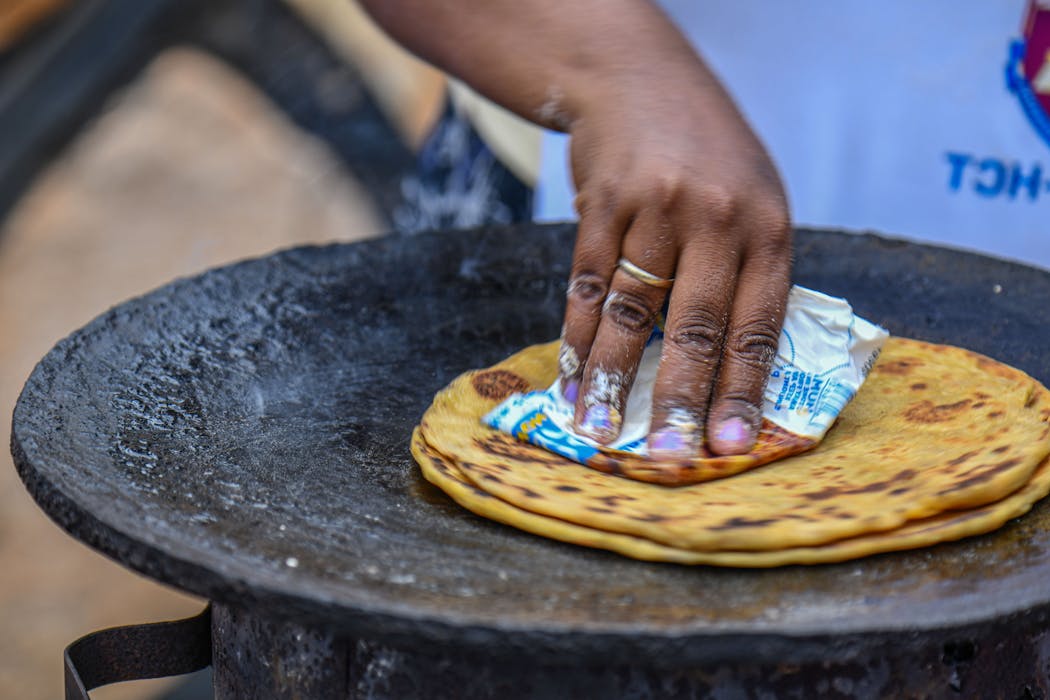
Chapati can be made on the street and paired with meat and vegetables. Ssemmanda Will/Wikimedia Commons, CC BY-SA

As Kenya’s cities grew, more and more people left their rural homes and subsistence farming systems to go to urban settlements like Mombasa to find work. In the city, meals were paid for with cash, a major transformation in Kenya’s food systems.

A new book called Preparing the Modern Meal is an urban history that explores these processes. We asked historian Devin Smart about his study.


What’s the colonial history of Mombasa?

At the turn of the 20th century, the British were expanding their empire throughout sub-Saharan Africa, including the parts of east Africa that would become Kenya.

They built a railway that connected the port town of Mombasa on the Indian Ocean coast with the newly established Protectorate of Uganda in the interior. This created the foundations of the colonial economy and drove urbanisation.

While Nairobi grew in the Kenyan highlands, Mombasa became the most important port in east Africa. The city grew fast as people came to work at the railway, docks and in other parts of the urban economy.

After independence in 1963, cities like Mombasa carried on growing rapidly and more and more people started working in the informal sector, which included making and selling street food.

How did rural people get their food?

During the early 1900s, the cuisines of east Africa’s agrarian (farming) societies were mostly vegetarian. Much of the food people ate was grown in their own fields, though there were also regional markets.

These communities grew lots of staple crops like sorghum, millet, maize, bananas, cassava, and sweet potatoes. They also had legumes, greens, and dairy products as regular parts of their meals.

These ingredients were prepared into a variety of dishes, like the Kikuyu staple irio, a mash of bananas with maize kernels and legumes added to it. The Kamba often ate isio, a combination of beans and maize kernels, while the Luo who lived along the shores of Lake Victoria regularly included a dish called kuon as part of their cuisine. It’s a thick porridge of boiled milled grain (often millet), eaten with fish or vegetables to add contrasting flavours and textures.

In these communities, the daily meal was also defined by seasonal variety. Food changed depending on what was being harvested or what stores of ingredients were dwindling. These were also gendered food systems, with women doing much of the farming work and nearly all the cooking.

In my book, I consider the dramatic changes in how east Africans came by their food when they left these rural food systems for the city.

How was food organised in the city?

In Mombasa, they entered a food system organised around commercial exchange. My study is about Kenya, but the story it reflects is one that’s unfolded on a global scale. The shift from subsistence to commodified food systems, from growing your own to buying it from others, has been one of the central features of the modern world.

By the 1930s, most people in Mombasa bought nearly all their food with cash, visiting small dried-goods grocers, fresh-produce vendors, and working-class eateries. In this urban food system, the seasonal variety of rural cuisines was increasingly replaced by the regularity of commercial supply chains.

A hand holds a folded flatbread above a plate of rice and beans.
Pilau, beans and chapati.
Teddykip/Wikimedia Commons, CC BY

This was especially the case with staple grains. In the countryside, people ate a variety of grains, but in Mombasa maize meal and wheat became daily staples eaten year-round, transforming east African foodways.

Migration also changed domestic labour in the kitchen. Many migrant men now lived in homes without women, which meant they had to prepare their own food, often for significant periods of their lives.

However, the idea that cooking was the work of women proved enduring. When women joined these households in the city, they again prepared the family’s meals.

How did street food emerge?

By the 1930s, Mombasa had a fast-growing working class. The majority of the town’s workers spent their days in the industrial district, around the railway and port. Many also had to commute a considerable distance to work.

With the long working day of urban capitalism, returning home for a filling lunch wasn’t practical, which created strong demand for affordable prepared food at midday. As this was happening, many in the city also struggled to find consistent jobs and turned to informal trades like street food to earn a living.

This convergence of supply and demand led to the rapid growth of the street food industry around the 1950s, with people opening eateries in makeshift structures outside the gates to the port and in nearby alleyways, parks, and other open spaces.

What kind of food was served?

At these working-class food spots, a popular dish was chapati, an east African version of the South Asian flatbread. People could complement it with beans, meat, or fried fish, along with githeri, a mixture of maize kernels and beans (similar to isio).

In later decades, ugali, the ubiquitous Kenyan staple made from maize meal, became more common at street food eateries, as did Swahili versions of Indian Ocean dishes like pilau (aromatic rice with meat) and biryani (rice with meat braised in a spice-infused tomato sauce).

How were street food vendors policed?

The business model that made street food work in Mombasa’s economy also brought these vendors into regular conflict with the city’s administration. Street food vendors kept overheads and thus prices low because they avoided rents and licensing fees by squatting on open land in makeshift structures.

But, in an era of urban development and modernisation, many officials desired a different kind of city, one without this kind of informal land use and architecture. Authorities began campaigns to remove these businesses from Mombasa’s landscape, arresting vendors and demolishing their structures.

This also created a tension, though, because the city’s workers, including those at the port and railway who ran the most important transportation choke point in east Africa’s regional economy, needed affordable meals at lunch.

Given that informal trade had become essential to Mombasa’s economy, there were limits on how far these campaigns could be pushed. However, arrests and demolitions did still occur, and sometimes on a dramatic, city-wide scale, which made street food a precarious way to earn a living in Kenya’s port town.

For example, in 2001, the Kenyan government launched a massive demolition campaign to clear informal business structures from city sidewalks, parks and open spaces.

After the demolitions, many rebuilt and reopened their street food businesses, but in less visible parts of town and on side streets rather than main roads. Today, these eateries remain an essential part of Mombasa’s economy and food system.

What do you hope readers will take away from the book?

I hope that readers will see how food history helps us understand the ways that capitalism transformed the modern world.

The regional focus of the book is east Africa, but it explores themes relevant to the history of capitalism more generally, including the gendered division of household labour, the commercialisation of everyday needs and wants, and the political and economic struggles of working-class communities to find space for themselves in modern cities.

The Conversation

The research for this book was supported with funding from the University of Illinois at Urbana-Champaign and West Virginia University.

ref. Street food in Mombasa: how city life shaped the modern meal – https://theconversation.com/street-food-in-mombasa-how-city-life-shaped-the-modern-meal-266590

Pas de chauffage central mais des lits chauffés… Ce que la ville la plus froide du monde nous enseigne

Source: The Conversation – France (in French) – By Yangang Xing, Associate Professor, School of Architecture Design and the Built Environment, Nottingham Trent University

Et si le confort thermique ne se résumait pas à chauffer plus, mais à chauffer mieux ? Des lits chauffants chinois aux kotatsu japonais, l’Asie a longtemps privilégié des solutions ciblées, sobres et durables face au froid.


Les matins d’hiver à Harbin, où l’air extérieur pouvait vous geler les cils, je me réveillais sur un lit de terre chaude. Harbin, où j’ai grandi, se situe dans le nord-est de la Chine. Les températures hivernales y descendent régulièrement jusqu’à −30 °C et, en janvier, même les journées les plus douces dépassent rarement −10 °C. Avec environ 6 millions d’habitants aujourd’hui, Harbin est de loin la plus grande ville du monde à connaître un froid aussi constant.

Rester au chaud sous de telles températures m’a occupé l’esprit toute ma vie. Bien avant la climatisation électrique et le chauffage urbain, les habitants de la région survivaient à des hivers rigoureux en utilisant des méthodes entièrement différentes des radiateurs et des chaudières à gaz qui dominent de nos jours les foyers européens.

Aujourd’hui, en tant que chercheur en architecture dans une université britannique, je suis frappé par tout ce que nous pourrions apprendre de ces systèmes traditionnels. Les factures d’énergie restent trop élevées et des millions de personnes peinent à chauffer leur logement, tandis que le changement climatique devrait rendre les hivers plus instables. Nous avons besoin de moyens efficaces et peu énergivores pour rester au chaud, sans dépendre du chauffage de l’ensemble d’un logement à l’aide de combustibles fossiles.

Certaines des réponses se trouvent peut-être dans les méthodes avec lesquelles j’ai grandi.

Un lit chaud fait de terre

Mes premiers souvenirs de l’hiver sont liés au fait de me réveiller sur un « kang » – une plateforme-lit chauffée faite de briques de terre, utilisée dans le nord de la Chine depuis au moins 2 000 ans. Le kang est moins un meuble qu’un élément du bâtiment lui-même : une dalle épaisse et surélevée, reliée au poêle familial situé dans la cuisine. Lorsque le poêle est allumé pour cuisiner, l’air chaud circule dans des conduits aménagés sous le kang, réchauffant l’ensemble de sa masse.

Un kang traditionnel chinois, combinant lit et poêle.
Google Gemini, CC BY-SA

Pour un enfant, le kang avait quelque chose de magique : une surface chaude et rayonnante qui restait tiède toute la nuit. Mais à l’âge adulte – et aujourd’hui en tant que chercheur – je peux mesurer à quel point il s’agit d’une pièce d’ingénierie remarquablement efficace.

Contrairement au chauffage central, qui fonctionne en réchauffant l’air de chaque pièce, seul le kang (c’est-à-dire la surface du lit) est chauffé. La pièce elle-même peut être froide, mais les personnes se réchauffent en s’allongeant ou en s’asseyant sur la plateforme, sous d’épaisses couvertures. Une fois chauffée, sa masse de plusieurs centaines de kilogrammes de terre compactée restitue lentement la chaleur pendant de longues heures. Il n’y avait pas de radiateurs, pas besoin de pompes, et nous ne chauffions pas inutilement des pièces inoccupées. Comme une grande partie de la chaleur initiale était produite par des feux nécessaires de toute façon pour cuisiner, nous économisions du combustible.

L’entretien du kang était une affaire familiale. Mon père – professeur de littérature chinoise au collège, pas vraiment un ingénieur – est devenu un expert du kang. Empiler avec soin des couches de charbon autour du foyer afin de maintenir le feu toute la nuit relevait du travail de ma mère. Avec le recul, je mesure l’ampleur des compétences et du travail que cela exigeait, ainsi que la confiance que les familles accordaient à un système nécessitant une bonne ventilation pour éviter les risques d’intoxication au monoxyde de carbone.

Mais malgré tous ses inconvénients, le kang offrait quelque chose que les systèmes de chauffage modernes peinent encore à fournir : une chaleur durable avec très peu de combustible.

Des approches similaires en Asie de l’Est

Dans toute l’Asie de l’Est, les manières de se réchauffer par temps froid ont évolué autour de principes similaires : maintenir la chaleur près du corps et ne chauffer que les espaces qui comptent vraiment.

En Corée, l’ancien système ondol fait également circuler de l’air chaud sous des sols épais, transformant toute la surface du sol en plancher chauffant. Le Japon a développé le kotatsu, une table basse recouverte d’une lourde couverture, avec un petit dispositif chauffant placé en dessous pour garder les jambes au chaud. Ils peuvent être un peu coûteux, mais comptent parmi les objets les plus populaires dans les foyers japonais.

Les vêtements étaient eux aussi très importants. Chaque hiver, ma mère me confectionnait un tout nouveau manteau épais et matelassé, qu’elle garnissait de coton fraîchement cardé. C’est l’un de mes souvenirs les plus tendres.

L’Europe avait des idées similaires – puis les a oubliées

Des approches comparables se sont jadis développées en Europe. Les Romains de l’Antiquité, par exemple, chauffaient les bâtiments grâce à des hypocaustes, qui faisaient circuler l’air chaud sous les sols. Au Moyen Âge, les foyers suspendaient de lourdes tapisseries aux murs pour réduire les courants d’air, et de nombreuses cultures utilisaient des coussins moelleux, des tapis chauffés ou des espaces de couchage clos afin de conserver la chaleur.

La généralisation du chauffage central moderne au XXe siècle a remplacé ces pratiques par un modèle plus énergivore : chauffer des bâtiments entiers à une température uniforme, même lorsqu’une seule personne est présente au domicile. Tant que l’énergie était bon marché, ce modèle fonctionnait, malgré le fait que la plupart des logements européens (notamment en France, NDT) soient mal isolés au regard des standards internationaux.

Mais aujourd’hui, alors que l’énergie est redevenue chère, des dizaines de millions d’Européens ne parviennent pas à chauffer correctement leur logement. De nouvelles technologies comme les pompes à chaleur et les énergies renouvelables aideront – mais elles fonctionnent d’autant mieux que les bâtiments qu’elles chauffent sont déjà performants, ce qui permet de fixer des consignes de chauffage plus basses et des consignes de refroidissement plus élevées.

Les approches traditionnelles du chauffage domestique ont donc encore beaucoup à nous apprendre. Le kang et les systèmes similaires démontrent que le confort ne vient pas toujours d’une consommation accrue d’énergie, mais d’une conception plus intelligente de la chaleur.

The Conversation

Yangang Xing ne travaille pas, ne conseille pas, ne possède pas de parts, ne reçoit pas de fonds d’une organisation qui pourrait tirer profit de cet article, et n’a déclaré aucune autre affiliation que son organisme de recherche.

ref. Pas de chauffage central mais des lits chauffés… Ce que la ville la plus froide du monde nous enseigne – https://theconversation.com/pas-de-chauffage-central-mais-des-lits-chauffes-ce-que-la-ville-la-plus-froide-du-monde-nous-enseigne-272640

Oldest known cremation in Africa poses 9,500-year-old mystery about Stone Age hunter-gatherers

Source: The Conversation – USA – By Jessica C. Thompson, Assistant Professor of Anthropology, Yale University

Why did this community burn one woman’s remains in such a visible, spectacular way? Patrick Fahey

Near the equator, the Sun hurries below the horizon in a matter of minutes. Darkness seeps from the surrounding forest. Nearly 10,000 years ago, at the base of a mountain in Africa, people’s shadows stretch up the wall of a natural overhang of stone.

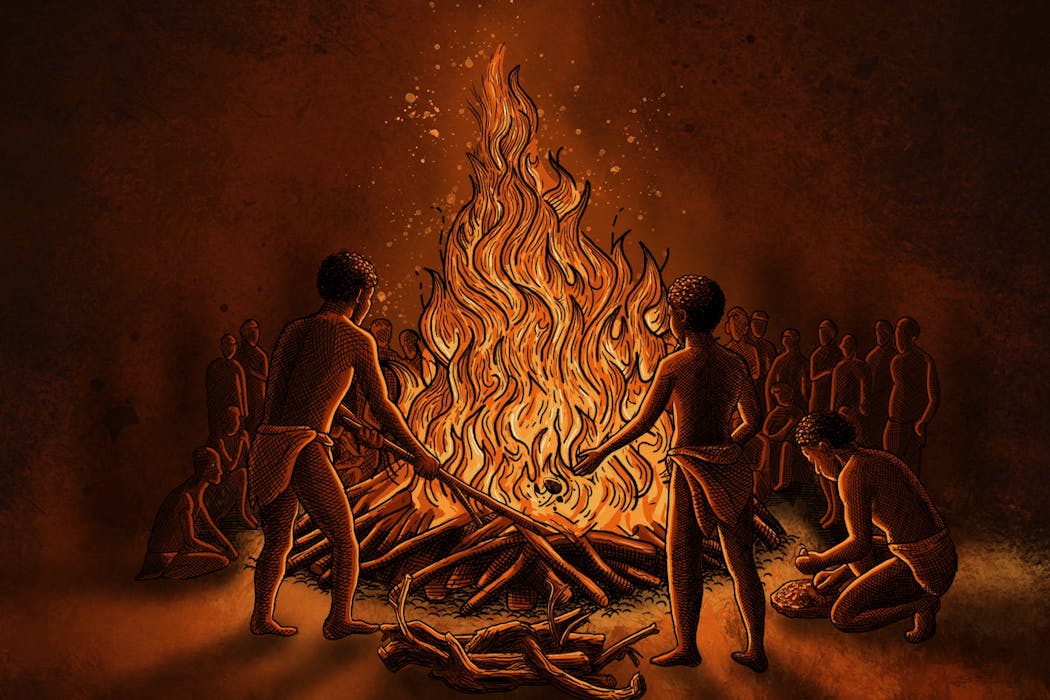
They’re lit by a ferocious fire that’s been burning for hours, visible even to people miles away. The wind carries the smell of burning. This fire will linger in community memory for generations − and in the archaeological record for far longer.

We are a team of bioarchaeologists, archaeologists and forensic anthropologists who, with our colleagues, recently discovered the earliest evidence of cremation – the transformation of a body from flesh to burned bone fragments and ashes – in Africa and the earliest example of an adult pyre cremation in the world.

Small map of Africa next to a big image of a bare rock mountaintop at sunset. The slopes are covered in forest.
The pyre was found under a giant boulder near the base of Mount Hora. The site is in Malawi, which is outlined in black within the Zambezian forest (colored green) on the map of Africa.
Jessica Thompson and Natural Earth

It’s no easy task to produce, create and maintain an open fire strong enough to completely burn a human body. While the earliest cremation in the world dates to about 40,000 years ago in Australia, that body was not fully burned.

It is far more effective to use a pyre: an intentionally built structure of combustible fuel. Pyres appear in the archaeological record only about 11,500 years ago, with the earliest known example containing a cremated child under a house floor in Alaska.

Many cultures have practiced cremation, and the bones, ash and other residues from these events help archaeologists piece together past funeral rituals. Our scientific paper, published in the journal Science Advances, describes a spectacular event that happened about 9,500 years ago in Malawi in south-central Africa, challenging long-held notions about how hunter-gatherers treat their dead.

people with digging tools against a landscape that looks like hardpacked earth
Excavators standing at the depth of the pyre at the Hora 1 site in northern Malawi.
Jessica Thompson

The discovery

At first it was just a hint of ash, then more. It expanded downward and outward, becoming thicker and harder. Pockets of dark earth briefly appeared and disappeared under trowels and brushes until one of the excavators stopped. They pointed to a small bone at the base of a 1½-foot (0.5-meter) wall of archaeological ash revealed under a natural stone overhang at the Hora 1 archaeological site in northern Malawi.

The bone was the broken end of a humerus, from the upper arm of a person. And clinging to the very end of it was the matching end of the lower arm, the radius. Here was a human elbow joint, burned and fractured, preserved in sediments full of debris from the daily lives of Stone Age hunter-gatherers.

We wondered whether this could be a funeral pyre, but such structures are extremely rare in the archaeological record.

man kneeling on a board measures down into the excavated area
Excavators began finding a thick ash deposit about 2 feet (0.6 meters) under the modern-day surface of the rock shelter.
Jessica Thompson

Finding a cremated person from the Stone Age also seemed impossible because cremation is not generally practiced by African foragers, either living or ancient. The earliest evidence of burned human remains from Africa date to around 7,500 years ago, but that body was incompletely burned, and there was no evidence of a pyre.

The first clear cases of cremation date to around 3,300 years ago, carried out by early pastoralists in eastern Africa. But overall the practice remained rare and is associated with food-producing societies and not hunter-gatherers.

We found more charred human remains in a small cluster, while the ash layer itself was as large as a queen bed. The blaze must have been enormous.

When we returned from fieldwork and received our first radiocarbon dates, we were shocked again: The event had happened about 9,500 years ago.

Piecing together the events

We built a team of specialists to piece together what had happened. By applying forensic and bioarchaeological techniques, we confirmed that all the bones belonged to a single person who was cremated shortly after her death.

This was a small adult, probably a woman, just under 5 feet (1.5 meters) in height. In life, she was physically active, with a strong upper body, but had evidence of a partially healed bone infection on her arm. Bone development and the beginnings of arthritis suggested she was probably middle-aged when she died.

Three images showing thin marks on a gray bone fragment. The images get more zoomed in moving to the right.
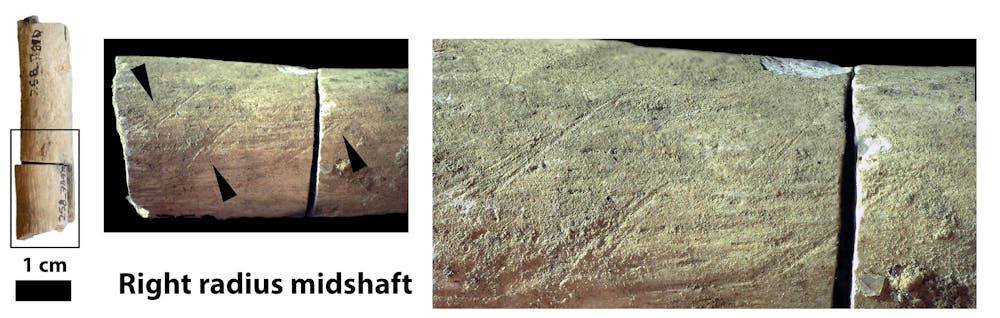
Marks incised on the shaft of the lower arm bone (radius) were inflicted by a stone tool. The bone then turned gray as it burned. The area in the box on the left is enlarged on the right of the image.
Jessica Thompson

Patterns of warping, cracks and discoloration caused by fire damage showed her body was burned with some flesh still on it, in a fire reaching at least 1,000 degrees Fahrenheit (540 degrees Celsius). Under the microscope we could see tiny incisions along her arms and at muscle connections on her legs, revealing that people tending the pyre used stone tools to help the process along by removing flesh.

Six fragments of shiny white and brown stone on a black background.
Tiny pointed tools made from local stone were found within the pyre. They were probably made at the same time that it burned.
Justin Pargeter

Within the pyre ash, we found many small pointed chips of stone that suggested people had added tools to the fire as it burned.

And the way the bones were clustered inside such a large fire showed that this was not a case of cannibalism: It was some other kind of ritual.

Perhaps most surprisingly, we found no evidence of her head. Skull bones and teeth usually preserve well in cremations because they are very dense. While we can’t know for sure, the absence of these body parts suggest her head may have been removed before or during the cremation as part of the funeral ritual.

A communal spectacle

We determined that the pyre must have been built and maintained by multiple people who were actively engaged in the event. During new excavations the following year, we found even more bone fragments from the same ancient woman, displaced and colored differently from in the main pyre. These additional remains suggest that the body was manipulated, attended and moved during the cremation.

Microscopic analysis of ash samples from across the pyre included blackened fungus, reddened soil from termite structures, and microscopic plant remains. These helped us estimate that people collected at least 70 pounds (30 kg) of deadwood to do the task and stoked the fire for hours to days.

We also learned that this was not the first fire at the Hora 1 site – nor its last. To our astonishment, what had seemed during fieldwork to be a single massive pile of ash was in fact a layered series of burning events. Radiocarbon dating of the ash samples showed that people began lighting fires on that spot by about 10,240 years ago. The same location was used to construct the cremation pyre several hundred years later. As the pyre smoldered, new fires were kindled on top of it, resulting in fused ashes in microscopic layers.

A mix of grey, brown, white and black colors showing what soil and ash looks like under a microscope.
Loose, sandy, burned soil was mixed on top of very thin layers of ash, showing that the pyre was lit over and over again.
Flora Schilt

Within a few hundred years of the main event, another large fire was built again at the exact same place. While there is no evidence that anyone else was cremated in the subsequent fires, the fact that people repeatedly returned to the spot for this purpose suggests its significance lived on in community memory.

A new view of ancient cremation

What does all of this tell us about ancient hunter-gatherers in the region?

For one, it shows that entire communities were engaged in a mortuary spectacle of extraordinary scale. An open pyre can take more than a day of constant tending and an enormous amount of fuel to fully reduce a body, and during this time the sights and smells of burning wood and other remains are impossible to hide.

This scale of mortuary effort is unexpected for this time and place. In the African record, complex multigenerational mortuary rituals tied to specific places are generally not associated with a hunting-and-gathering way of life.

flames of a pyre against dark black background
The pyre event was a spectacle that required many hours of communal effort and would have been impossible to hide.
Anders Blomqvist/Stone via Getty Images

It also shows that different people were treated in different ways in death, raising the possibility of more complex social roles in life. Other men, women and children were buried at the Hora 1 site beginning as early as 16,000 years ago. In fact, those other burials have provided ancient DNA evidence showing they were part of a long-term local group. But those burials, and others that came a few hundred years after the pyre, were interred without this labor-intensive spectacle.

What about this person was different? Was she a beloved family member or an outsider? Was this treatment because of something she did in life or a specific hope for the afterlife? Additional excavation and data from across the region may help us better understand why this person was cremated and what cremation meant to this group.

Whoever she was, her death had important meaning not just to the people who made and tended the pyre, but also to the generations that came after.

The Conversation

Jessica C. Thompson has received funding for this research from the Wenner-Gren Foundation, National Geographic Society, and Hyde Family Foundations. She is affiliated with the Yale Peabody Museum and the Institute of Human Origins.

Elizabeth Sawchuk and Jessica Cerezo-Román do not work for, consult, own shares in or receive funding from any company or organization that would benefit from this article, and have disclosed no relevant affiliations beyond their academic appointment.

ref. Oldest known cremation in Africa poses 9,500-year-old mystery about Stone Age hunter-gatherers – https://theconversation.com/oldest-known-cremation-in-africa-poses-9-500-year-old-mystery-about-stone-age-hunter-gatherers-268074

Marchés prédictifs en ligne : miser sur un résultat sportif… ou sur la guerre en Ukraine

Source: The Conversation – France in French (3) – By Léo-Paul Barthélémy, Doctorant en sciences de l’information et de la communication, CREM, Université de Lorraine, Université de Lorraine

Certains parient sur l’issue de tel ou tel événement sportif. D’autres sur l’évolution à court terme d’un indicateur économique largement suivi. D’autres encore – parfois les mêmes – engagent des sommes importantes sur des questions nettement plus discutables d’un point de vue moral, comme la prise d’une ville en Ukraine par l’armée russe. Les sites permettant ce type de paris sont en plein essor.


Un marché prédictif n’est pas tout à fait un site de paris. C’est un dispositif de spéculation collective dans lequel des participants achètent et vendent des contrats indexés sur la réalisation d’un événement futur précisément défini (« X aura lieu avant telle date », « Y gagnera l’élection », etc.). Le prix de ces contrats fluctue en fonction de l’offre et de la demande : plus un événement est jugé probable par les participants, plus le contrat associé est recherché et plus son prix augmente.

À la date fixée – ou une fois l’événement tranché – le marché est résolu : si l’événement s’est bien produit, le contrat correspondant est payé à sa valeur maximale, tandis que les contrats perdants deviennent sans valeur. Les gains ou pertes des participants dépendent donc du prix auquel ils ont acheté ou vendu ces contrats avant la résolution.

Parce qu’ils incitent ceux qui disposent de bribes d’informations utiles à investir, et agrègent donc le savoir d’un maximum d’acteurs sur un événement, ces marchés se révèlent souvent étonnamment précis. Aux États-Unis, des marchés de paris très organisés consacrés à l’issue de l’élection présidentielle ont existé de la fin du XIXe siècle jusqu’à la Seconde Guerre mondiale, notamment à New York. Paul W. Rhode et Koleman S. Strumpf ont montré que ces marchés ont fait preuve d’une précision remarquable, à une époque pourtant dépourvue de sondages scientifiques. Dans quinze élections présidentielles entre 1884 et 1940, le candidat favori un mois avant le scrutin a presque toujours remporté l’élection, avec une seule véritable exception.

Les versions décentralisées, comme Polymarket et Kalshi, ajoutent un avantage, selon leurs promoteurs : elles fonctionnent sans intermédiaire central, reposent sur la blockchain et permettent des échanges mondialisés, en résistant aux réglementations nationales (ces sites sont par exemple interdits en France). Mais cette décentralisation a un revers fondamental : le système ne peut pas, à lui seul, savoir ce qui se passe dans le monde réel. Il doit donc s’appuyer sur des oracles, c’est-à-dire des sources externes (médias, bases de données, experts, indicateurs publics) chargées de confirmer si un événement s’est effectivement produit. Lorsque la réalité est ambiguë, ces oracles peuvent être contestés. D’où la nécessité de mécanismes d’arbitrage humains, censés trancher les litiges : votes communautaires, comités de résolution ou décisions manuelles. Ces moments, où l’interprétation humaine reprend le dessus, constituent précisément le point de fragilité des marchés prédictifs décentralisés, car ils ouvrent la porte aux erreurs, aux biais… et parfois aux manipulations.

Entre vulnérabilités et défis informationnels : parier sur la guerre en Ukraine

Ces marchés de prédiction en ligne, en pleine croissance depuis plusieurs années, donnent à leurs utilisateurs la possibilité d’ouvrir des paris sur n’importe quel thème, y compris sur les sujets géopolitiques les plus sensibles.

Dernièrement, on constate l’existence de très nombreux paris portant sur la guerre en Ukraine, particulièrement documentée et suivie, et donc propice à une multiplicité de paris variés : pertes territoriales, échéances de cessez-le-feu, escalade nucléaire ou rencontres entre dirigeants sont au cœur des questions les plus convoitées. Derrière chaque prévision publiée se joue le sort de milliers de personnes dans la vraie vie. Mais pour les joueurs, les drames vécus par des individus concrets sur le terrain relèvent d’un simple jeu de spéculation. Certains de ces paris brassent des dizaines de millions de dollars.

Polymarket, premier site de marché prédictifs en termes de mises, a été fondé en 2020 par Shayne Coplan, brièvement devenu le plus jeune self-made milliardaire au monde. Simple d’accès, il permet aux internautes de parier en cryptomonnaies sur toutes sortes d’événements : rencontres politiques, compétitions sportives, actualités financières et culturelles. Cette pratique connaît un essor considérable, notamment depuis l’élection présidentielle américaine de 2024, au point que certains suggèrent que les prédictions étaient alors plus fiables que les sondages dans plusieurs États indécis.

Ce succès s’explique aussi par un environnement propice au développement des cryptomonnaies, dont l’usage ne cesse de croître depuis quelques années.

Capture d’écran du site Polymarket montrant la variété des thèmes sur lesquels les parieurs sont invités à parier.
Fourni par l’auteur

Plusieurs prédictions sur la guerre en Ukraine ont été fébrilement relayées durant la première moitié de 2025. Le premier exemple est celui de l’accord minier qui devait être signé par Donald Trump sur l’Ukraine au mois de mars. Malgré l’absence d’un tel accord, la plate-forme a été manipulée par une « baleine crypto » (quelqu’un qui détient une quantité massive d’une cryptomonnaie) qui a pu faire pencher la décision en sa faveur, avec en prime un remboursement impossible pour les parieurs lésés. À ce titre, Polymarket a répondu aux demandes des utilisateurs en précisant que le marché avait été résolu conformément au protocole.

Le second exemple porte sur la tenue du président ukrainien : il était question de parier sur le fait que Volodymyr Zelensky porterait un costume avant juillet 2025. Ce qui semble en apparence assez simple à prouver s’est en réalité avéré extrêmement compliqué, le critère de résolution et de validation du pari ayant été mal défini sur le site.

Derek Guy, spécialiste influent de la mode masculine, a indiqué que « la question était mal formulée » puisque la définition d’un costume peut varier, selon l’aspect technique du vêtement ou de l’attente sociale qu’on lui attribue. Alors que plus de 240 millions de dollars ont été échangés sur ce pari, le débat continue dans les commentaires, plusieurs mois après sa clôture. Courant novembre 2025, on dénombrait près de 100 paris possibles sur divers aspects relatifs à la guerre en Ukraine.

Un autre débat a émergé de la carte interactive Polyglobe, fondée par Le Pentagon Pizza Watch (PPW), un tracker qui surveille l’activité des restaurants autour de bâtiments gouvernementaux américains, en vue d’anticiper des actions stratégiques et militaires importantes. La visualisation des paris Polymarket sur une carte interactive est complétée par des données en sources ouvertes (OSINT), comme des tweets.

Capture d’écran d’une carte de Polyglobe (17/12/2025) représentant la ligne de front dans l’est de l’Ukraine.
Fourni par l’auteur

Il s’agissait pour les parieurs de prédire si l’armée russe allait réussir à capturer la ville de Myrhorod d’ici le 15 novembre. Les pronostics se basaient sur une carte du think tank Institute for the Study of War (ISW). Juste avant la clôture du pari, cette carte a indiqué une avancée russe à l’intérieur de la ville. La zone est apparue en rouge, donc aux mains de la Russie ; les parieurs ont été payés ; puis la carte a été corrigée peu de temps après. L’ISW a confirmé par la suite que la modification n’avait pas été approuvée en interne, ajoutant un système d’annotation tout en dénonçant l’utilisation de ses cartes par des spéculateurs.

Polyglobe a rapidement choisi de changer d’outil cartographique, et de passer désormais cette fois-ci par la carte interactive et collaborative de DeepStateMap.Live, qui affiche l’évolution quotidienne de la ligne de front en Ukraine. Les représentants de ce dernier site ont à leur tour dénoncé le réemploi non souhaité de leurs données à des fins de spéculation, PPW finissant par s’excuser et par retirer la carte. Ces changements et rétractations rapides illustrent bien la zone grise réglementaire dans laquelle évoluent ces nouveaux outils spéculatifs.

Capture d’écran d’une carte de DeepStateMap.Live (17/12/2025) représentant la ligne de front dans l’est de l’Ukraine.
Fourni par l’auteur

Une culture du jeu qui varie, une technologie qui s’en affranchit

La question morale est inévitable : comment est-il possible de parier sur la guerre, de surcroît dans un contexte où les combats s’intensifient et où les civils ukrainiens sont attaqués quotidiennement ?

Une première piste de réflexion est peut-être celle de la culture du jeu, qui varie considérablement d’un pays à un autre. Dans celle anglo-saxonne, dont est issu le fondateur de Polymarket, il n’existe aucun tabou en ce qui concerne les paris. Au Royaume-Uni, c’est même un « sport national », où il est possible, par exemple, de spéculer sur divers détails de la vie de la famille royale.

Cette conception de la prédiction est très différente de celle que nous avons en France, où l’Autorité nationale des jeux (ANJ) régule, entre autres, les sports sur lesquels il est possible de miser. Au niveau de l’Union européenne, il existe des socles juridiques communs et des initiatives de régulation, mais chaque membre fixe ses propres règles. Celles-ci sont d’autant plus disparates qu’elles sont désormais contournables par la décentralisation offerte par la blockchain, laquelle permet de se passer d’intermédiaires financiers soumis aux réglementations nationales. Le recours aux cryptomonnaies permet ainsi à ces plates-formes de contourner les interdictions bancaires, y compris dans les pays où Polymarket est interdit, comme en France, indépendamment des outils de contournement géographique tels que les VPN.

Au-delà des contraintes juridiques et des offres des bookmakers, ce sont aussi nos valeurs qui influencent nos limites philosophiques de ce qui est acceptable. Rappelons que les spéculations sur l’issue des conflits ne datent pas d’aujourd’hui. Entre autres exemples, en 1691, bien longtemps avant notre ère numérique, des paris avaient été pris en Angleterre sur l’issue de la bataille de Limerick en Irlande, qui opposa les partisans de Jacques II à ceux de Guillaume d’Orange.

Quelles limites pour le marché de la prédiction ?

Indéniablement, ces paris qui relèvent de vie et de mort, de guerre et de paix et d’enjeux géopolitiques lourds, posent des questions morales, mais ils nous interrogent aussi quant à toutes ces données du front rapidement diffusées et réinterprétées. Il est également établi que les jeux de hasard favorisent des problèmes psychologiques et émotionnels, sans occulter leur aspect addictif. Une étude de 2023 pointait les biais structurels qu’ils posent, notamment avec le phénomène de paris irrationnels.

Ce marché nous questionne aussi sur la vérification de l’information : les paris prédisent-ils seulement le cours des événements ou ont-ils un impact sur ces derniers ? Qui est légitime pour définir les contours d’un critère de résolution d’une issue ? La manipulation cartographique évoquée précédemment aurait pu poser des soucis de désinformation conséquents, surtout à un moment crucial de la guerre où chaque kilomètre carré capturé par des soldats est commenté en temps réel dans la presse.

L’instrumentalisation de ces données pour la spéculation menace l’intégrité de notre connaissance de la guerre, en mettant une pression supplémentaire sur les analystes qui traitent déjà de grands volumes d’informations, tout en sapant l’image des cartes militaires en ligne. Ceci est d’autant plus dangereux que des paris similaires existent sur à peu près tous les autres théâtres militaires en cours dans le monde.

Enfin, ces exemples nous rappellent les limites de ces plates-formes décentralisées qui font fi de toutes barrières éthiques et techniques. Miser sur le dresscode d’un président n’a évidemment pas la même signification morale que spéculer sur la capture d’un village de l’oblast de Donetsk. Est-il acceptable de parier sur la sécurité de civils et de mettre cela au même niveau que le résultat d’un match de football ? Il est sans doute temps de fixer une limite, a minima celle de l’empathie, pour éviter que la guerre ne soit reléguée à un divertissement, ce qu’elle n’est certainement pas.

The Conversation

Léo-Paul Barthélémy ne travaille pas, ne conseille pas, ne possède pas de parts, ne reçoit pas de fonds d’une organisation qui pourrait tirer profit de cet article, et n’a déclaré aucune autre affiliation que son organisme de recherche.

ref. Marchés prédictifs en ligne : miser sur un résultat sportif… ou sur la guerre en Ukraine – https://theconversation.com/marches-predictifs-en-ligne-miser-sur-un-resultat-sportif-ou-sur-la-guerre-en-ukraine-272369

Three climate New Year’s resolutions that will fail – and four that can actually stick

Source: The Conversation – UK – By Anastasia Denisova, Senior Lecturer in Journalism, University of Westminster

Going cold turkey on flights is tough. Instead, resolve to take the train where possible. Jaromir Chalabala / shutterstock

Four in five adults in the UK say they have changed their lifestyle to help tackle environmental change. The New Year is a good time to implement changes to behaviour, but our willpower is finite.

The secret isn’t to be more virtuous, but to be strategic.

If you want 2026 to be the year you make a difference without burning out, here is what the evidence suggests you should prioritise – and what you should ignore.

Here are some resolutions that are likely to work.

1. Buy clothes from a reselling platform once a month

Immediate gratification is one of the most reliable predictors of long-term success. A vow to “buy nothing” is miserable and hard to keep. A vow to “buy second hand” gives you a treasure hunt.

A garment spends 2.2 years on average in a UK wardrobe, while fashion remains one of the biggest polluters – that’s why buying lots of outfits from the high street is problematic. Reselling platforms such as Vinted, Depop and eBay, or charity shops, can provide a guilt-free solution to the endless consumption encouraged by the fashion media and influencers.

2. Make plans with friends

Making changes is hard – and it’s even harder doing it alone. We are social animals, susceptible to “social proof” – naturally adopting the behaviour of people we admire or respect.

Leverage this by finding your herd. Identify a couple of friends, family members or colleagues who are interested in gardening, walks in nature, mending clothes, volunteering at a local farm or attending or teaching a zero-waste cooking workshop. Having a plan acts as scaffolding for a new habit, but making that plan with friends turns an eco-practice into a social event you actually look forward to.

two people gardening in an allotment
Rope your friends in – they’ll help you stick to your resolutions.
Monkey Business Images / shutterstock

3. Indulge in grains, vegetables and dips twice a week

Numerous studies warn about the harmful effects of a meat-heavy diet. But for “meat-attached” eaters, going cold turkey (or cold tofu) rarely works.

Instead, use positive framing. Not “eat less of this”, but “eat more of this”. Change “meat-free Monday” to “hummus-heavy Mondays”. Research shows that the most unshakeable burger enthusiasts can still be convinced to reduce their meat intake through the argument of food purity (avoiding hormones and factory farming) and the health benefits (weight control, cholesterol). Frame the resolution as indulging in grains, vegetables and dips, rather than restricting meat.

4. The ‘boring’ one: write to your MP

Less entertaining than other resolutions, this suggestion is nonetheless likely to have longer and wider repercussions. Leading climate thinkers such as academics Hannah Ritchie and Kimberly Nicholas argue that influencing policy is a stronger action than adjusting your individual behaviour.

A letter written to your local MP can echo in the higher echelons of power. Imagine your representative telling the Prime Minister: “my constituents are demanding greener energy and transport”. It takes 15 minutes. Charities such as Friends of the Earth even provide templates. It’s a low-effort, high-impact resolution.

On the other hand, there are some resolutions that are more likely to fail.

1. The ‘I will never fly again’ trap

Giving up flying is an effective way to shrink your carbon footprint, but it’s a tough New Year resolution to stick to. For many with family abroad or tight budgets, the price disparity between cheap (often heavily subsidised) flights and expensive trains makes this difficult to sustain, adding financial complications to an already tricky ethical dilemma.

A more realistic approach would be to commit to “no domestic flights” or “trains where possible”. Save the hardline stance for when the mince pies have settled.

2. Trying to go ‘all green’ at once

Beware the “sustainable consumption paradox”. This is the paralysis that comes from being overwhelmed with information when trying to make greener choices: worrying that your recycled plastic takes too much energy to produce, or if your fair trade coffee caused deforestation.

Trying to fix every aspect of your life leads to information overload and failure. Pick two or three battles, no more.

3. Converting the non-believers

Resolving to convert your friends and family is a recipe for conflict, not change. Shame triggers defensiveness, not action.

Instead, lead by example. Talk about your new habits casually – mention the bargain you found on Vinted or your new recipe for beef-free bolognese – without preaching. You are more likely to plant a seed with enthusiasm than with a smug lecture.

Eco-awareness is very high in the UK, so if you’re reading this, know that you’re in the majority. The best strategy to turn concern into action is to quiet the overthinking and begin 2026 with optimism and a realistic, achievable commitment.

The Conversation

Anastasia Denisova received funding from JJ Trust for her research policy brief Fashion Media and Sustainability.

ref. Three climate New Year’s resolutions that will fail – and four that can actually stick – https://theconversation.com/three-climate-new-years-resolutions-that-will-fail-and-four-that-can-actually-stick-271988

Why New Year’s resolutions might feel harder this year – and what could help

Source: The Conversation – UK – By Vlad Glăveanu, Professor of Psychology, Business School, Dublin City University

Boontoom Sae-Kor/Shutterstock

The start of a new year has long been considered an important moment for personal change. Psychological research shows that calendar landmarks such as birthdays, Mondays or the new year can act as mental reset points, making people more likely to reflect on their lives and attempt new goals. This phenomenon was described by researchers more than a decade ago as the “fresh start effect”.

Yet many people reach the new year less enthusiastically than they once did. We live in a world in which mental wellness is deteriorating, particularly among young people, and in which being asked to imagine change can be daunting. Climate anxiety, political instability and economic precarity can all make the idea of “starting over” seem unrealistic.

Research also shows that repeated or imposed change can lead to change fatigue. This is a state of emotional exhaustion that reduces people’s willingness to engage with new initiatives, even when they are presented as positive. Rather than renewing hope, calls for change can provoke scepticism, withdrawal or disengagement in these people.

Our ability to imagine the future is not unlimited. Studies on anxiety and uncertainty consistently show that when people feel under threat or lack control, their future-oriented thinking narrows. Instead of imagining a range of possibilities, people tend to focus on risks, losses and worst-case scenarios.

So if you’re struggling to make changes, the problem is not necessarily a lack of imagination or hope. It could be that circumstances are making it difficult for hope and imagination to operate.

My own research at the DCU Centre for Possibility Studies focuses on what psychologists call possibility thinking. This is about how people perceive what could be different, explore alternatives and feel able to act. A 2024 study showed that these elements need to support each other. When people can see opportunities but feel unable to act on them, or feel motivated but unable to imagine alternatives, meaningful change is difficult.

Woman in suit sitting at desk with hands over her face under her glasses
Feeling too frazzled to set a resolution? It could be change fatigue.
CrizzyStudio/Shutterstock

This pattern emerged in a December 2025 study I co-authored, which involved teachers taking part in a professional development programme meant to stimulate possibility thinking. During the study, participants found out they would soon move into a new school building, as their existing school was to be demolished. Many teachers reported emotional fatigue in response to the prospect of having to “start over” yet again. Instead of excitement, the dominant response was depletion and reduced motivation.

Although this example concerns a life transition rather than the new year, it helps to explain why fresh starts can feel harder in the current climate. When people feel that a change is unfair, badly supported and might harm them, they are less likely to get behind it and more likely to push back. This can undermine their capacity to engage with new possibilities.

This also helps explain why many New Year’s resolutions don’t stick: people often treat them as tests of pure willpower, but research shows that lasting change depends much more on how goals are set up, supported and built into everyday life.

Decades of research on behaviour change show that motivation is shaped by context. Time pressure, financial stress, caring responsibilities and institutional constraints all limit what people can realistically change, regardless of their intentions.

Rather than focusing on dramatic reinvention, it may be more realistic to ask what small shifts are possible within the constraints you’re under. Possibility thinking does not mean ignoring limits or pretending everything will improve. It involves learning how to work creatively with constraints, rather than against them.

For example, someone who knows they have limited time and energy might set a resolution like: “I will add a 10‑minute walk into my daily routine, such as after lunch or school drop‑off, and adjust it each week based on what is actually workable for me.”

It’s also important to recognise that imagining the future doesn’t have to be an individual activity. Research on shared or collective agency shows that people are better at envisioning and sustaining change when responsibility is distributed across groups, whether in families, workplaces or communities. Discussing limits and possibilities together can expand what feels achievable.

For example, a family might make a shared resolution to eat more home‑cooked meals, dividing tasks so that one person plans the menu, another cooks on certain nights, and children help with prep. That way, the change is carried and sustained by the group rather than one person.

In the end, the new year is a powerful cultural moment. But in a world shaped by uncertainty and fatigue, renewal is unlikely to come from pressure to “start fresh” or try harder. It may come, instead, from learning to imagine differently: with others, within limits, and in ways that make positive, even if small, changes still feel possible.

The Conversation

Vlad Glăveanu does not work for, consult, own shares in or receive funding from any company or organisation that would benefit from this article, and has disclosed no relevant affiliations beyond their academic appointment.

ref. Why New Year’s resolutions might feel harder this year – and what could help – https://theconversation.com/why-new-years-resolutions-might-feel-harder-this-year-and-what-could-help-272456

Five ways to improve your health this year that don’t rely on losing weight

Source: The Conversation – UK – By Rachel Woods, Senior Lecturer in Physiology, University of Lincoln

PeopleImages/Shutterstock

Every January, internet searches for the terms “diet” and “weight loss” surge, gyms become busier and diet trends spread across social media. But research shows that most people who try the latest quick-fix plan do not keep the weight off.

Focusing on weight alone can overshadow other changes that improve health in more reliable and sustainable ways. Some of these may lead to weight loss and some may not, but the benefits are clear either way.

Here are five evidence-based resolutions that can support better health – and none are about losing weight.

1. Eat more plants

Eating more plants does not mean you have to become vegetarian. If you eat meat and want to continue, that is fine. You can still increase the amount and variety of plant foods on your plate.


Read more:
The 30-plants-a-week challenge: you’ll still see gut health benefits even if you don’t meet this goal


There is a vast amount of research showing that diets rich in plant foods are linked with lower risks of major diseases. A meta-analysis of more than 2.2 million adults found that consistently sticking to a plant-based dietary pattern was associated with significantly lower risks of type 2 diabetes, cardiovascular disease, cancer and all-cause mortality (the risk of dying from any cause).

Although that study focused on people limiting or avoiding meat, other research has shown that even among omnivores, each additional 200 g of fruits and vegetables per day is linked with reduced risk of coronary heart disease, cardiovascular disease, cancer, stroke and premature mortality (dying earlier than expected for someone of your age).

Adding more plants is one of the simplest ways to improve your diet. This includes fruit and vegetables, but also grains, nuts, seeds, herbs, spices and pulses.

2. Exercise

If exercise were a pill, it would be prescribed to everyone. It is one of the most effective things you can do for your health.

Although exercise is often discussed in the context of weight loss, it is not as effective for losing weight as many people assume. Its real value lies in helping to maintain a healthy body weight and supporting overall health.


Read more:
The exercise paradox: why workouts aren’t great for weight loss but useful for maintaining a healthy body weight


Research has shown that exercise alone improves several important health markers. It can raise levels of HDL cholesterol, often called “good cholesterol”, because higher levels help protect against heart disease. It also lowers triglycerides, a type of fat in the blood that increases cardiovascular risk when elevated.

Exercise helps the body regulate blood glucose more effectively, and it reduces arterial stiffness, meaning the arteries stay more flexible and less prone to the strain that increases the risk of heart disease and stroke. It can also reduce liver fat, which lowers the likelihood of developing non-alcoholic fatty liver disease. All of these improvements can happen even when a person’s weight stays the same.

More broadly, exercise has been shown to improve fitness, quality of life, sleep and symptoms of depression. These benefits arise because physical activity boosts blood flow to the brain, releases mood-supporting chemicals such as endorphins and helps regulate circadian rhythms – the internal 24-hour cycles that guide sleep, wakefulness, hormone release and other essential functions.

The best type of exercise is the one you enjoy, because you are more likely to stick to it. The benefits come from consistency. Building movement into everyday routines, such as taking the stairs, walking part of your commute or cycling the school run, can be as effective as structured workouts. This also means you do not need an expensive gym membership that might be abandoned by the end of January.

These approaches are not possible for everyone, so finding something that fits your circumstances is important. If you are new to exercise, easing in and building up gradually helps reduce the risk of injury and gives your body time to adapt.

3. Stress

This one is easier said than done, since stress is not usually something we choose. But it can have wide-ranging effects on the body. Long-term stress can weaken the immune system, raise blood pressure and cholesterol and disrupt sleep.

It can also change how we eat. Research suggests that around 40% of people eat more when stressed, another 40% eat less and about 20% do not change how much they eat.

Regardless of direction, the types of foods chosen often shift towards more pleasurable options higher in fat and sugar. Stress has also been linked with eating fewer fruits and vegetables.

Looking at what is driving your stress and seeing whether any part of it can be eased or managed differently can have meaningful effects on health.

4. Sleep

Sleep has a major impact on health. Not getting enough is linked with a range of physical and mental health conditions, including high blood pressure, heart disease, dementia and depression.

Adults are usually advised to get around seven hours a night, although this varies from person to person.

Sleep also influences diet. Lack of sleep has been linked with increased appetite and food intake. It also tends to increase preferences for high-energy foods such as sweets and fast food, partly because sleep deprivation disrupts hormones that regulate hunger and craving.


Read more:
Gut microbes may have links with sleep deprivation


This advice can feel frustrating for people dealing with insomnia or caring responsibilities. But making a realistic plan to improve sleep, where possible, may be a new year resolution that pays off over time.

5. Alcohol

Alcohol is linked with long-term risks such as cancer, heart disease and liver disease. But even in the short term, it can disrupt sleep because alcohol changes sleep stages and reduces the amount of restorative deep sleep. Alcohol can also influence appetite and food choices by lowering inhibitions and making high-calorie foods seem more appealing.

NHS guidance advises people not to drink more than 14 units a week on a regular basis (equivalent to six pints of average-strength beer or 10 small glasses of lower-strength wine) and to have several “drink free days” per week. This guideline is intended to keep the risk of alcohol-related illness low, but research shows there is no completely safe level of drinking.

Enjoying a drink now and then is a personal choice. But reducing how much you drink is an evidence-based way to improve health.

Many new year resolutions focus on weight, yet long-term health is shaped by a much wider set of habits. Small, realistic steps can add up to meaningful improvements in health throughout the year.

The Conversation

Rachel Woods does not work for, consult, own shares in or receive funding from any company or organisation that would benefit from this article, and has disclosed no relevant affiliations beyond their academic appointment.

ref. Five ways to improve your health this year that don’t rely on losing weight – https://theconversation.com/five-ways-to-improve-your-health-this-year-that-dont-rely-on-losing-weight-269587

What colour should I repaint my home? Ask a psychologist

Source: The Conversation – UK – By Geoff Beattie, Professor of Psychology, Edge Hill University

I knew there would be an argument. The room had gone eerily quiet. “Isn’t it about time,” my partner began, “that we freshened this place up a little?”

There was a long pause as she glanced around the white walls of our kitchen – which, I’ll admit, do have a little bit of paint chipping off them. Then she dropped a glossy magazine on the table – World of Interiors, I think. I was trying not to look.

My partner is passionate about colours and knows the names of all the different shades. I don’t – but I am a psychologist, and that gives me some skin in this colour game too.

Let’s start with those myriad names. Clay pink, muted teal, warm taupe … psychologists have long argued that the extent of your colour vocabulary affects how good you are at colour recognition. My partner spots subtle differences that I never notice. Recently, it’s been all about katsuobushi smoke, halva sesame and black garlic amber.

Colours exert their influence through a combination of evolutionary predispositions, physiological responses, learned associations and broader cultural meanings. Because of this, I’d argue that choosing a new colour scheme is a psychological issue, not just an aesthetic one.

Indeed, a growing body of neuroscientific, behavioural and psychological research shows that colour is not merely a matter of taste. The hues that surround us influence our emotional states, cognitive performance, social interactions, sleep – and even our long-term psychological wellbeing.

In other words, the colours of our walls might be shaping our lives in ways we rarely consider.

Strong or subtle?

Let’s start with a fundamental question: what does psychology say about whether to go strong or subtle in your paint choices?

Neutral colours (whites, greys, beiges) are low in visual stimulation, which helps reduce sensory overload and stress. They enhance perceived spaciousness, and can have positive effects on cognitive performance in both children and adults. But their psychological impact hinges on shade and context. Cold greys or stark whites may evoke sterility or sadness, particularly in poorly lit spaces.

Recently, there has been a general trend away from white towards using brighter colours in our homes. The hot colours for 2026 apparently include chocolate brown and burgundy – while Ikea’s colour of the year is Rebel Pink: “A vibrant, playful shade chosen to inspire joy, energy and self-expression.”

A pink wall with white side table.
Rebel pink, anyone?
Shutterstock

However, the psychological evidence says choose low- to mid-saturation shades rather than hyper-bright colours for your long-term comfort. Blue and muted green are associated with enhanced creativity and improved problem-solving. A muted green home office or study may make you more innovative without you really noticing why.

Green, with its obvious nature connection, is also linked to restoration and reduced mental fatigue, supporting the broader findings of environmental psychology on biophilic design.

You should probably reserve warm, energising colours for social or active areas in the house. Soft yellow feels cheerful, presumably due to its association with sunlight – but high-saturation yellows may increase agitation.

And then there’s red. In evolutionary terms, bright red wavelengths tend to increase physiological arousal, raising heart rate and galvanic skin response. It can also affect desire – one study found men perceived women as “more attractive” and “more sexually desirable” when their photos were presented on a red rather than white background.

But red is also associated with danger and warning. Children did less well in problem-solving tasks when their exam number was written in red rather than green or black, or if the cover of the test booklet was red. Even just seeing the word “red” can negatively affect intellectual performance.

So think carefully before using red in your home office. A red-accented study might feel “dynamic” initially, but it could backfire when you start on tasks requiring calm focus and clear thinking. In contrast, painting an office blue seems to have a calming effect. It is associated with sky and water, and seems to be connected to improved concentration.

The 60-30-10 rule

In truth, my partner didn’t seem all that keen to take the advice of a psychologist – well, this one, anyway – about the house’s impending makeover. “Haven’t you heard of the 60-30-10 rule?” she sniffed.

The experts of interior design suggest 60% of a room should be devoted to the dominant colour (the majority of the walls plus a key piece of furniture like a sofa, say), 30% for the secondary colour to add visual interest (perhaps including curtains or carpet), and 10% to an “accent colour”. The roots of these proportions have been said to lie in visual psychology and mathematics’ “golden ratio” – although some recent studies suggest the association of this precise mathematical formula with our perceptions of beauty is something of a myth.

Nonetheless, I propose this scheme for our living room: soft sage green (dominant), warm cream (secondary), plus brushed gold as the accent colour (maybe as cushions).

My reasoning? Sage green reduces stress, improves relaxation and mimics the cognitive benefits of being in nature. Cream warms the palette, encouraging a cosy rather than “forest hermit” vibe. Finally, accent colours draw attention, and gold can have a powerful symbolic and emotional impact because of its cultural associations with wealth, success and achievement. It subconsciously signals confidence and positivity (in moderation, of course – Donald Trump famously loves excessive gold decoration).

Now I’m just waiting to see which colour paints my partner returns with.

The Conversation

Geoff Beattie does not work for, consult, own shares in or receive funding from any company or organisation that would benefit from this article, and has disclosed no relevant affiliations beyond their academic appointment.

ref. What colour should I repaint my home? Ask a psychologist – https://theconversation.com/what-colour-should-i-repaint-my-home-ask-a-psychologist-271787