Pourquoi l’obésité est, avant tout, une maladie du cerveau

Source: The Conversation – France in French (3) – By Rosalia Rodriguez Rodriguez, Catedrática. Departamento de Ciencias Biomédicas, Universitat Internacional de Catalunya

L’obésité n’est pas dû à un manque de volonté. Il ne s’agit pas non plus d’un problème individuel. C’est une maladie complexe profondément enracinée dans un cerveau adapté pour survivre à la pénurie.


L’obésité débute dans le cerveau et nous savons aujourd’hui que son développement, tout comme son traitement, ne sont pas les mêmes chez les hommes et les femmes. Cette pandémie silencieuse, qui progresse parallèlement au diabète de type 2 – l’une de ses principales complications – touche déjà plus d’un milliard de personnes.

Alors que notre environnement devient de plus en plus obésogène, le cerveau continue de fonctionner selon des règles ancestrales qui rendent difficile le maintien de la perte de poids, même avec des médicaments aussi révolutionnaires que le sémaglutide (Ozempic). Ce changement de perspective transforme les traitements actuels et ouvre la voie à de nouvelles thérapies ciblant directement le cerveau.

Un cerveau ancestral dans un environnement moderne

L’obésité et le surpoids sont habituellement décrits comme un excès de graisse ou un problème métabolique. Mais leur origine profonde réside dans le système nerveux central, en particulier dans l’hypothalamus, la région qui agit comme un « thermostat énergétique ». Pendant 95 % de notre histoire évolutive, nous avons vécu dans la pénurie : marcher, chasser et cueillir étaient indispensables, et le cerveau a développé des mécanismes très efficaces pour défendre la masse graisseuse, car la perdre pouvait signifier ne pas survivre.

Ce « cerveau ancestral » fonctionne aujourd’hui dans un environnement totalement opposé : aliments hypercaloriques disponibles 24 heures sur 24, sédentarité, stress chronique, troubles du sommeil et régimes alimentaires ultratransformés.


À lire aussi :
Aliments ultratransformés : quels effets sur notre santé et comment réduire notre exposition ?


Il en résulte un déséquilibre entre notre biologie et notre mode de vie, qui est amplifié chez les personnes qui présentent des prédispositions génétiques. À cela s’ajoute un élément que la recherche commence à explorer clairement : le système qui régule le poids ne fonctionne pas de la même manière chez les hommes et chez les femmes.

L’hypothalamus : là où commence l’obésité

L’hypothalamus intègre des signaux hormonaux (comme la leptine ou l’insuline), métaboliques et sensoriels afin d’équilibrer l’énergie ingérée et celle qui est dépensée. Quand nous perdons du poids, le cerveau interprète la situation comme une menace et il active de puissants mécanismes de défense : il augmente l’appétit, réduit la dépense énergétique et renforce une « mémoire métabolique ou obésogène » qui pousse à reprendre le poids perdu.

C’est pourquoi, même si l’alimentation et l’exercice physique sont essentiels à la santé et doivent toujours constituer la première prise en charge, ils ne suffisent pas chez de nombreuses personnes pour inverser l’obésité lorsque les circuits cérébraux sont déjà altérés. Ce point n’invalide pas les bienfaits d’un mode de vie sain : il reconnaît simplement que, dans certains cas, le cerveau a besoin d’un soutien pharmacologique pour sortir de la boucle obésogène.

Quand l’hypothalamus s’enflamme (à cause du stress, d’un régime hypercalorique, d’un manque de sommeil, de troubles hormonaux ou d’une prédisposition génétique), l’activité des neurones qui régulent la faim et la satiété est perturbée. Certaines personnes parviennent à retrouver spontanément leur poids initial après avoir trop mangé ; d’autres, en revanche, présentent un « frein hypothalamique » moins efficace et prennent plus facilement du poids. La différence réside dans le cerveau.

Perspective de genre : deux cerveaux, deux réponses

Les neurones hypothalamiques AgRP (qui stimulent la faim) et POMC (qui favorisent la satiété) régulent avec précision le comportement alimentaire. Cependant, l’hypothalamus n’est pas seulement un ensemble de neurones : il comprend également la microglie et les cellules immunitaires du cerveau, dont le rôle s’est avéré déterminant.
Notre groupe a décrit trois phases d’activation microgliale dans les premiers stades de la suralimentation :

  1. Une activation précoce, rapide et réversible.

  2. Une phase inflammatoire prolongée, qui perturbe les circuits de satiété.

  3. Une phase finale de dérégulation, au cours de laquelle les mécanismes censés limiter la prise de poids ne fonctionnent plus.

Ces phases ne se comportent pas de la même manière chez les hommes et chez les femmes. Chez les modèles murins, les femelles présentent une réponse neuroimmune plus stable et protectrice, ce qui pourrait expliquer pourquoi elles développent l’obésité plus tardivement. Ce schéma rappelle ce que l’on observe chez les femmes préménopausées.


À lire aussi :
Ménopause et prise de poids : des mesures précoces pour accompagner les changements hormonaux


Avant la ménopause, les femmes ont un risque moindre de maladies métaboliques et cardiovasculaires que les hommes, grâce à l’effet protecteur des œstrogènes. Mais cette protection diminue pendant la périménopause et la ménopause, une période encore très peu étudiée et critique pour le risque cardiométabolique.


À lire aussi :
À la ménopause, savez-vous que le risque cardiovasculaire augmente ? L’activité physique peut aider


De plus, dans les modèles animaux et les cultures cellulaires, nous avons détecté des altérations très précoces (au niveau de la microglie, de signaux lipidiques comme les endocannabinoïdes et de la sensibilité neuronale à l’insuline) avant même l’apparition de changements visibles dans les tissus périphériques. Cela suggère que le déclencheur initial de l’obésité est cérébral. Il est essentiel d’intégrer cette perspective de genre pour progresser vers des traitements plus précis et plus efficaces.

Nouvelles thérapies contre l’obésité : incrétines et nanomédecine ciblant le cerveau

Le traitement de l’obésité a radicalement changé depuis 2021 avec les agonistes du récepteur GLP-1. Le semaglutide et d’autres médicaments de la famille des incrétines, initialement développés pour le diabète de type 2, ont démontré une capacité remarquable à réduire le poids grâce à des actions à la fois périphériques et centrales. Cependant, ils présentent des limites connues : effets gastro-intestinaux, perte de masse maigre, reprise de poids après l’arrêt du traitement ou réponses variables selon le profil biologique du patient.

Des études récentes montrent également des différences selon le sexe : les femmes préménopausées ont tendance à mieux répondre à ces traitements que les hommes.

Un défi doit donc être relevé : nous avons besoin de traitements qui agissent directement sur le cerveau, avec une plus grande précision et moins d’effets systémiques. C’est là que la nanomédecine qui cible le cerveau ouvre de nouvelles perspectives. Au sein de notre groupe, nous développons des nanoplateformes (micelles polymères, nanoparticules protéiques ou formulations intranasales) capables de transporter des médicaments de manière sélective vers le cerveau. Ces technologies permettent d’encapsuler des molécules qui, si elles étaient administrées sans protection, seraient inefficaces ou toxiques, afin de les diriger vers les cellules qui contrôlent l’appétit et l’homéostasie énergétique.

Ces approches pourraient compléter ou renforcer les incrétines, réduire leurs effets secondaires, améliorer l’observance aux traitements et augmenter le nombre de patients qui y répondent. Elles constituent un moyen de traiter l’obésité depuis son origine cérébrale, grâce à des interventions plus personnalisées et durables.

Un regard neuf sur un problème ancien

L’obésité n’est pas dû à un manque de volonté, malgré la stigmatisation dont il fait l’objet au niveau social. Il ne s’agit pas non plus d’un problème individuel. L’obésité est une maladie complexe, profondément enracinée dans un cerveau adapté à la survie en période de pénurie. Pour la traiter, il faut adopter une double approche : promouvoir des modes de vie sains et, quand cela se révèle nécessaire, recourir à des thérapies qui agissent sur les circuits cérébraux régulant le poids.

Comprendre comment fonctionne – et comment échoue – l’hypothalamus sera essentiel pour freiner cette pandémie silencieuse du XXIe siècle. Et c’est là, dans le cerveau, que se livre la bataille scientifique la plus prometteuse.

The Conversation

Rosalia Rodriguez Rodriguez reçoit des financements du ministère des sciences, de l’innovation et des universités, de l’AGAUR-Generalitat de Catalogne (PRODUCTE, INNOVADORS) et du Centre de recherche biomédicale en réseau-obésité (CIBER-Obn).

ref. Pourquoi l’obésité est, avant tout, une maladie du cerveau – https://theconversation.com/pourquoi-lobesite-est-avant-tout-une-maladie-du-cerveau-272720

Une poudre de feuilles d’ananas pourrait contribuer à réduire la criminalité et la pollution

Source: The Conversation – in French – By Bienvenu Gael Fouda Mbanga, Research fellow, Nelson Mandela University

En Afrique du Sud, les fabricants de jus d’ananas et d’autres produits à base d’ananas jettent chaque année des milliers de tonnes de feuilles d’ananas, dont la plupart finissent dans des décharges.

Les feuilles sont considérées comme des déchets agricoles et sont généralement considérées comme inutiles. Cependant, elles peuvent être transformées en quelque chose qui résout des problèmes concrets. Les feuilles d’ananas peuvent être transformées en une ressource puissante pour la protection de l’environnement et la sécurité.

Il s’agit de les transformer en un type particulier de nanoparticules. (Les nanoparticules sont des matériaux très petits, dont la taille ne dépasse pas 0,0001 millimètre.)

Je fais partie d’une équipe de chimistes spécialisés dans les nanomatériaux qui se concentrent sur la fabrication de nouveaux matériaux à partir de déchets tels que les feuilles d’ananas. Nous avons cherché à savoir si nous pouvions transformer les feuilles d’ananas en une poudre de nanoparticules capable d’adsorber (retenir une substance à la surface d’un matériau, formant un film mince) le cuivre, ou Cu²⁺, présent dans les eaux usées. Nous avons découvert que c’était possible. Une fois que les nanoparticules à base de feuilles d’ananas absorbent le cuivre, elles peuvent être broyées en une poudre que les enquêteurs médico-légaux utilisent pour relever des empreintes digitales invisibles.

Nos recherches ont comblé un vide. C’est la première fois qu’un adsorbant dérivé de déchets agricoles transformé en nanoparticules est utilisé pour absorber les métaux lourds présents dans l’eau, puis réutilisé ensuite en science médico-légale, à faible coût.

Un avantage supplémentaire est que les feuilles d’ananas ne coûtent rien. Si certaines sont transformées en couches jetables, et que d’autres sont laissées dans les champs d’ananas pour servir de compost, la plupart sont jetées dans des décharges ou même brûlées sur place. Transformer ces déchets en produit utile va dans le sens de l’idée d’une économie circulaire : continuer à utiliser les produits en les réutilisant et en les régénérant autant que possible.

Les produits destinés à dépolluer l’environnement et ceux utilisés en médecine légale ont traditionnellement fait l’objet de recherches distinctes. Il est important de développer un produit qui puisse remplir ces deux fonctions à moindre coût. Il est essentiel de trouver des moyens efficaces et durables d’éliminer les métaux lourds toxiques des sources d’eau afin de protéger la santé humaine et les écosystèmes.. Il est aussi crucial de trouver des moyens améliorés de révéler les empreintes digitales invisibles pour lutter contre la criminalité.

Pourquoi la société a besoin du pouvoir des feuilles d’ananas

Les eaux usées contiennent des ions cuivre toxiques qui s’y déversent depuis des industries telles que l’exploitation minière, la galvanoplastie et la fabrication.

La pollution par le cuivre est un problème bien connu en Afrique du Sud. Les boues contiennent souvent des quantités très élevées de cuivre, et les eaux usées industrielles peuvent également contenir du cuivre à des concentrations supérieures au seuil de sécurité. Une trop grande quantité de cuivre peut nuire à la santé humaine, provoquant des problèmes d’estomac et, à long terme, des lésions du foie et des reins. Elle est également dangereuse pour la vie aquatique : les poissons et d’autres espèces peuvent être empoisonnés par le cuivre.

La plupart des adsorbants sont coûteux lorsqu’ils sont utilisés pour nettoyer les eaux usées contaminées par des métaux lourds tels que le cuivre. Un autre coût caché est que cette eau contaminée ne peut pas être réutilisée dans l’industrie ou l’agriculture tant que le cuivre n’a pas été éliminé.

La société est également touchée. La pollution des sources d’eau sape la confiance du public en matière de sécurité de l’eau, peut déclencher des crises sanitaires au sein des communautés et épuiser les maigres fonds publics destinés au nettoyage. Un adsorbant bon marché est donc très utile.

La police et les autres enquêteurs médico-légaux ont également besoin du pouvoir des ananas. Ils utilisent actuellement une poudre d’empreintes digitales qui contient des produits chimiques présentant des risques potentiels pour la santé des personnes qui la manipulent. Un matériau dérivé des feuilles d’ananas offre une alternative plus sûre, plus durable et plus écologique. La nouveauté ici réside dans la fabrication d’une poudre bon marché à partir de déchets de biomasse.

Comment nous avons fait cette découverte

Nous avons d’abord recouvert de zinc des nanoparticules de carbone fabriquées à partir de feuilles d’ananas. Nous avons ensuite vérifié dans quelle mesure ces nanoparticules pouvaient éliminer le cuivre de l’eau.

Nos recherches ont montré que les nanoparticules à base de feuilles d’ananas recouvertes d’oxyde métallique (dans ce cas, de l’oxyde de zinc) forment un matériau qui absorbe le cuivre en grande quantité.

Si les nanoparticules issues des feuilles d’ananas sont si efficaces, c’est grâce à la synergie entre leurs différents composants. Le revêtement en oxyde de zinc (ZnO) et la structure carbonée spongieuse forment une équipe gagnante. Le revêtement aide les particules à adhérer plus facilement à d’autres matériaux, tandis que le carbone poreux (rempli de trous) leur offre une grande surface de réaction.


Read more:
Noix de cola – du nanofertilisant à la protection des métaux contre la corrosion : notre recherche trouve de nouvelles utilisations pour cette plante précieuse


Ensemble, ils créent davantage de points où des réactions chimiques peuvent se produire et aident les matériaux à adhérer plus fortement, ce qui améliore leurs performances globales.

Nous avons ensuite cherché à savoir s’il existait une autre utilisation pour l’adsorbant usagé (les nanoparticules saturées de cuivre qu’elles avaient adsorbé). Nous avons pulvérisé ces nanoparticules et les avons réparties sur une surface poreuse. Nous avons constaté que la poudre présentait des motifs de crêtes clairs et pouvait être utilisée pour révéler les empreintes digitales latentes (empreintes digitales invisibles laissées par le sébum et la sueur naturels des personnes).

Ce qu’il faut faire ensuite

Notre étude suggère qu’il existe un fort potentiel pour développer cette technologie dans les installations de traitement des eaux et les laboratoires médico-légaux.

Pour commencer, les instituts de recherche et les universités devraient tester les performances de ces nanoparticules dans les stations d’épuration municipales ou industrielles. Des tests plus longs permettraient également de déterminer si les nanoparticules de feuilles d’ananas sont rentables à long terme.

Les nanoparticules doivent également être testées afin de vérifier si elles restent stables pendant longtemps dans l’eau et ne se décomposent pas.


Read more:
Réconcilier engrais minéraux et agroécologie, une piste pour nourrir les populations d’Afrique de l’Ouest


Les laboratoires médico-légaux et les forces de l’ordre devraient explorer les moyens d’intégrer l’adsorbant usagé dans leur travail de recherche d’empreintes digitales invisibles. L’utilisation de l’adsorbant usagé à la place des poudres d’empreintes digitales ordinaires pourrait réduire les coûts.

Les organismes gouvernementaux et les décideurs politiques devraient soutenir cette nouvelle découverte par le biais de financements et d’incitations en faveur de matériaux durables et multifonctionnels.

Les nanoparticules qui valorisent les déchets agricoles et répondent à la fois aux besoins environnementaux et sociétaux devraient être développées en priorité.

À un moment donné, des réglementations seront également nécessaires.

Les partenaires industriels, en particulier ceux des secteurs de la transformation agricole, de l’exploitation minière et de la fabrication, peuvent jouer un rôle en fournissant des déchets agricoles et en trouvant des moyens de commercialiser les produits.

En favorisant la collaboration entre le monde universitaire, l’industrie, le gouvernement et les forces de l’ordre, cette technologie peut contribuer à lutter contre la pollution par les métaux lourds. Elle pourrait également réduire les déchets et stimuler la création de nouveaux produits à base de feuilles d’ananas.

The Conversation

Bienvenu Gael Fouda Mbanga does not work for, consult, own shares in or receive funding from any company or organisation that would benefit from this article, and has disclosed no relevant affiliations beyond their academic appointment.

ref. Une poudre de feuilles d’ananas pourrait contribuer à réduire la criminalité et la pollution – https://theconversation.com/une-poudre-de-feuilles-dananas-pourrait-contribuer-a-reduire-la-criminalite-et-la-pollution-271578

Facing protests and new threats from Trump, is the Iranian regime on its last legs?

Source: The Conversation – Global Perspectives – By Amin Saikal, Emeritus Professor of Middle Eastern Studies, Australian National University; The University of Western Australia; Victoria University

Iran’s Islamic regime is once again faced with nationwide popular protests and a potential confrontation with Israel and the United States.

Protesters have flooded Tehran and many other major cities in recent days, calling for the downfall of the regime. The US and Israel have also voiced strong support for the protesters.

At least 20 people have reportedly been killed, with around 1,000 arrested.

Despite the regime’s increasing vulnerability, though, it might be too early to write its obituary.

Why Iranians are so angry

Public discontent with the Islamic regime has been building for years.

The current wave of protests was triggered in late December by the collapse of the Iranian currency and the rising cost of living. However, the public’s fury is rooted in wider societal grievances. These include:

  • the regime’s theocratic impositions, such as the mandatory headscarf (hijab) rule that women are increasingly flouting in public
  • widespread corruption and mismanagement of the economy under severe US-led sanctions
  • the costly support for a network of proxy militant groups in Lebanon, Gaza, Iraq and Yemen, and
  • the regime’s top-down approach to water governance that has left the country increasingly vulnerable to drought.

The current wave of protests was initially sparked by bazaaris (traditional business owners and shopkeepers). However, in the last week, it has swelled to include university students and those from the “Women, Life and Freedom” movement that took to the streets following the death of a young woman, Mahsa Amini, in the custody of the morality police in 2022.

The regime severely cracked down on those protests, but they have continued in other forms over the past few years.

More threats from Trump

The regime is also facing external pressure from the US and Israel.

US President Donald Trump has warned the Iranian government not to kill protesters, saying the US was “locked and loaded” to act.

In recent days, both Trump and Israeli Prime Minister Benjamin Netanyahu have also threatened another round of military action if Tehran rebuilds its nuclear capability and refuses to curtail its missile industry.

Netanyahu, who has relentlessly castigated the regime as an existential threat, initiated a 12-day war with Iran last June. The US briefly entered the war by bombing Iran’s three main nuclear sites, after which Trump claimed to have “obliterated” Iran’s nuclear program.

Many experts and the UN’s nuclear watchdog, the International Atomic Energy Agency (IAEA), have since cast doubt on this claim.

The foundations of the Iranian program reportedly survived the US and Israeli bombings. Some 400 kilograms of highly enriched uranium, still missing, could potentially enable Tehran to assemble a few nuclear bombs in moments of desperation. There also haven’t been new talks between Iran and Western powers to negotiate a new nuclear deal, either.

In recent days, Trump has accused Tehran of seeking new nuclear sites and attempting to replenish its missile stocks, threatening to “eradicate that build-up”.

Prepared to defend itself

While unpopular, the Iranian regime can still rely on many repressive instruments of state power.

These include the powerful Islamic Revolutionary Guard Corps (IRGC) and the well-equipped and well-trained Basij paramilitary force used to crack down on dissent. The regime also has intelligence services, revolutionary committees and a network of clerical circles.

The fortunes of these forces are closely tied to the survival of the regime. Many of them are headed by figures who were involved in setting them up following the toppling of Shah Mohammad Reza Pahlavi’s pro-Western monarchy in the revolution of 1978–79. They are fully cognisant of the fact that if the regime goes down, they will, too.

The regime has also prepared to defend itself long-term against any foreign threats. It has invested heavily in an asymmetrical warfare strategy and developed a potent defence industry. Since the end of the war with Israel, it has reportedly focused on rebuilding its missile capabilities and acquiring fresh supplies of arms and air defence systems from Russia and China.

Yet, the Islamic government still faces a critical situation, especially following the Trump administration’s toppling of Venezuela’s leader in recent days.

Many Iranians both inside and outside the country want to see the fall of the clerical regime and Reza Pahlavi, the son of the last shah, to return from exile to head a transitional government to democratise Iran.

However, Trump has reportedly not favoured regime change in Iran, possibly fearing the political transition may not be orderly and could be as bloody and disruptive as the one that followed the shah’s fall in 1979. He has also made clear his focus is on the Western hemisphere.

Iran is a very complex country with a diverse population of 93 million people. It is also strategically placed, with the longest coastline on the oil-rich Persian Gulf in a traditional zone of major power rivalry. These considerations should be on Trump’s mind when deciding how to handle Iran.

The Conversation

Amin Saikal does not work for, consult, own shares in or receive funding from any company or organisation that would benefit from this article, and has disclosed no relevant affiliations beyond their academic appointment.

ref. Facing protests and new threats from Trump, is the Iranian regime on its last legs? – https://theconversation.com/facing-protests-and-new-threats-from-trump-is-the-iranian-regime-on-its-last-legs-272795

Venezuela, Gaza, Ukraine: is the UN failing?

Source: The Conversation – Global Perspectives – By Juliette McIntyre, Senior Lecturer in Law, Adelaide University

The United Nations turned 80 in October last year; a venerable age for the most significant international organisation the world has ever seen.

But events of recent years – from last weekend’s Trumpian military action to seize Venezuelan President Nicolás Maduro and Russia’s unlawful invasion of Ukraine in 2022, to the ongoing humanitarian catastrophe in Gaza – represent major challenges to the UN system.

Many are now asking whether the United Nations has any future at all if it cannot fulfil its first promise of maintaining international peace and security.

Has the UN reached the end of its lifespan?

The UN Security Council

The organ of the UN that plays the main role maintaining peace and security is the UN Security Council.

Under the rules established by the UN Charter, military action – the use of force – is only lawful if it has been authorised by a resolution from the UN Security Council (as outlined in Article 42 of the Charter), or if the state in question is acting in self-defence.

Self-defence is governed by strict rules requiring it to be in response to an armed attack (Article 51). Even then, self-defence is lawful only until the Security Council has stepped in to restore international peace and security.

The Security Council is made up of 15 member states:

  • five permanent (China, France, Russia, the United Kingdom and the United States – also known as the P5)

  • ten non-permanent members elected for two-year terms.

Resolutions require nine affirmative votes and no veto from any permanent member, giving the P5 decisive control over all action on peace and security.

This was set up expressly to prevent the UN from being able to take action against the major powers (the “winners” of the second world war), but also to allow them to act as a balance to each other’s ambitions.

This system only works, however, when the P5 agree to abide by the rules.

Could the UN veto system be reformed?

As aptly demonstrated by the Russians and Americans in recent years, the veto power can render the Security Council effectively useless, no matter how egregious the breach of international law.

For that reason, the veto is often harshly criticised.

As one of us (Tamsin Paige) has explained previously, however, self-serving use of the veto power (meaning when a member state uses its veto power to further its own interests) may be politically objectionable but it is not legally prohibited.

The UN Charter imposes no enforceable limits on veto use.

Nor is there any possibility of a judicial review of the Security Council at the moment.

And herein lies one of the most significant and deliberate design flaws of the UN system.

The charter places the P5 above the law, granting them not only the power to veto collective action, but also the power to veto any attempt at reform.

Reforming the UN Security Council veto is thus theoretically conceivable – Articles 108 and 109 of the charter allow for it – but functionally impossible.

Dissolving and reconstituting the UN under a new charter is the only structural alternative.

This, however, would require a level of global collectivism that presently does not exist. One or more of the P5 would likely block any reform or redesign that would see the loss of their veto power.

An uncomfortable truth

It does, therefore, appear as though we are witnessing the collapse of the UN-led international peace and security system in real time.

The Security Council cannot – by design – intervene when the P5 (China, France, Russia, the UK and US) are the aggressors.

But focusing only on the Security Council risks missing much of what the UN actually does, every day, largely out of sight.

Despite its paralysis when it comes to great-power conflict, the UN is not a hollow institution.

The Secretariat, for instance, supports peacekeeping and political missions and helps organise international conferences and negotiations.

The Human Rights Council monitors and reports on human rights compliance.

UN-administered agencies coordinate humanitarian relief and deliver life-saving aid.

The UN machinery touches on everything from health to human rights to climate and development, performing functions that no single state can replicate alone.

None of this work requires Security Council involvement, but all of it depends on the UN’s institutional infrastructure (of which the Security Council is an integral part).

The uncomfortable truth is we have only one real choice at present: a deeply flawed global institution, or none at all.

The future of the UN may simply be one of sheer endurance, holding together what can still function and waiting for political conditions to change.

We support it not because it works perfectly, or even well, but because losing it would be much worse.

Should we work towards a better system that doesn’t reward the powerful by making them unaccountable? Absolutely.

But we shouldn’t throw out all of the overlooked good the UN does beyond the Security Council’s chambers because of the naked hypocrisy and villainy of the P5.

The Conversation

Tamsin Phillipa Paige received an Endeavour Fellowship from the Department of Education in 2014 (in effect through 2015 and 2016), funding her work on the UN Security Council.

Juliette McIntyre does not work for, consult, own shares in or receive funding from any company or organisation that would benefit from this article, and has disclosed no relevant affiliations beyond their academic appointment.

ref. Venezuela, Gaza, Ukraine: is the UN failing? – https://theconversation.com/venezuela-gaza-ukraine-is-the-un-failing-272703

¿Por qué a Donald Trump le fascina el petróleo venezolano?

Source: The Conversation – (in Spanish) – By Eszter Wirth, Profesora de Economía Internacional (ICADE), Universidad Pontificia Comillas

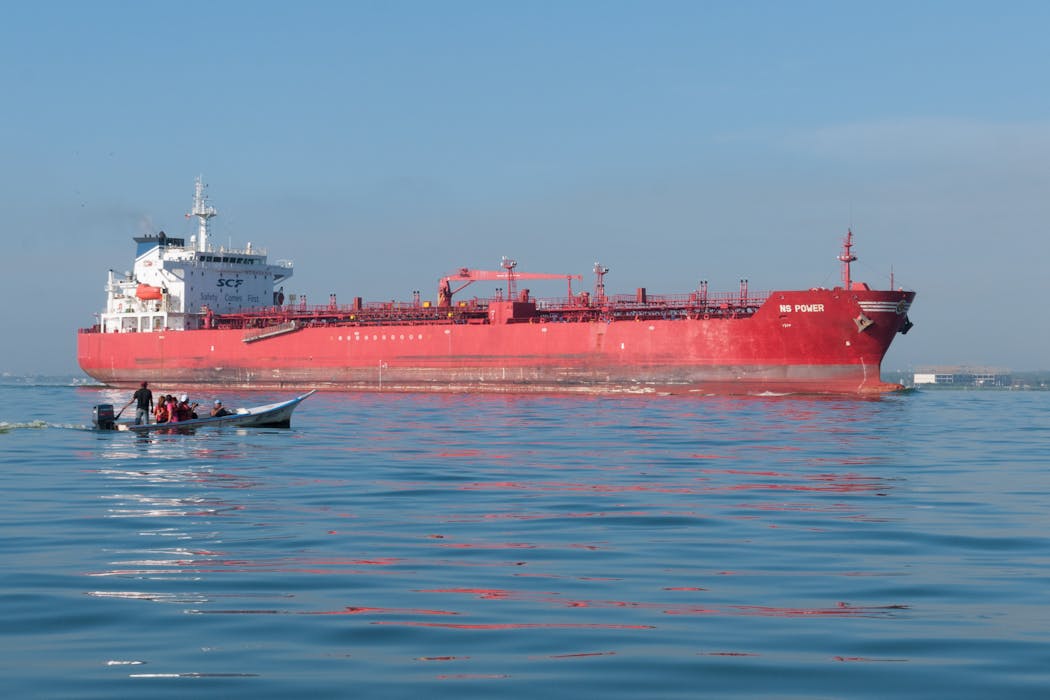
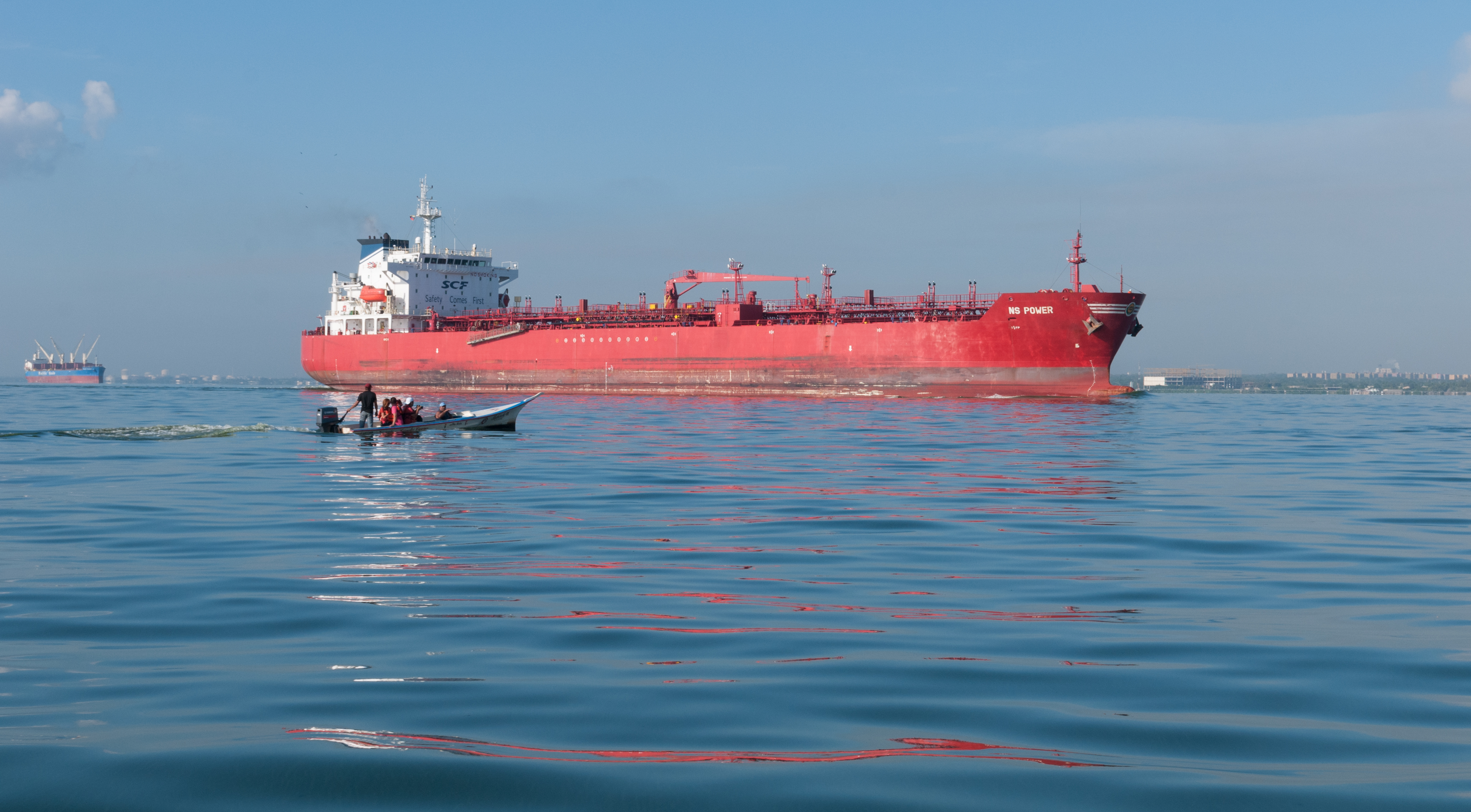
Un buque petrolero en el lago Maracaibo (Venezuela). Wilfredor/Wikimedia Commons, CC BY

El sector hidrocarburífero venezolano ha sido campo de batalla entre el Estado y empresas privadas y ha estado sujeto a ciclos recurrentes de liberalizaciones seguidas de nacionalizaciones petroleras. Estas nacionalizaciones tienden a resurgir cuando los precios petroleros son altos, se descubren yacimientos abundantes o suben los volúmenes extraídos, como sucedió en los años 70 y la primera década de los 2000.

Reventón del pozo Barrosos II en Cabima, estado Zulia, el 14 de diciembre de 1922.
Fuente: Wikipedia, CC BY

El reventón del pozo Barroso II, en 1922, marcó el nacimiento de la Venezuela hidrocarburífera. Desde entonces hubo dos grandes ciclos de inversiones privadas seguidas de nacionalizaciones.

El primer ciclo de nacionalismo perolero: el origen de PDVSA

Entre los años 1920-1950, la extracción estuvo controlada por empresas extranjeras como Shell (Reino Unido-Países Bajos) o Standard Oil y Gulf Oil (EE. UU.). En los años 1950 y 1960, el Estado venezolano incrementó los impuestos y regalías y renegoció las concesiones para obtener mayor soberanía sobre sus materias primas.

Como consecuencia, la inversión privada y la producción de crudo descendieron paulatinamente en los 60-70 y la Administración de Carlos Andrés Pérez llevó a cabo la primera nacionalización petrolera el 1 de enero de 1976, justo hace 50 años. Sin embargo, no fue una nacionalización abrupta y se negoció con las multinacionales, que fueron indemnizadas. Pese a ser 100 % de propiedad estatal, Petróleos de Venezuela S. A. (PDVSA) pudo operar con autonomía e interferencia política mínima.

Reservas de petróleo y gas natural venezolanas en % de las reservas mundiales.
Fuente: US Energy Information Administration

El segundo ciclo de liberalización y grandes inversiones comenzó en los 90, ante la incapacidad del Estado de afrontar los gastos de exploración y explotación del petróleo extrapesado de la Faja del Orinoco. A las empresas multinacionales se les ofreció un marco contractual especial, con amplias garantías ante cambios políticos.

El segundo ciclo de nacionalismo petrolero: el chavismo

Hugo Chávez llegó a la presidencia en 1999 y fue siempre crítico con la apertura del sector al capital extranjero. No obstante, evitó cambiar el régimen contractual y fiscal hasta 2005. Dicha tardanza se explicó por las garantías que ofrecieron los contratos firmados en los 90 y el hecho de que las multinacionales todavía llevaban a cabo importantes proyectos de inversión entre 1999 y 2004.

La subida de los precios hidrocarburíferos entre 2004 y 2013, la finalización de los proyectos con las empresas multinacionales y los despidos de los trabajadores petroleros que participaron en el paro general de 2002-2003, incentivaron al gobierno chavista a endurecer las condiciones fiscales y a renacionalizar el sector en 2007. Más que una expulsión total de las empresas extranjeras o una confiscación generalizada, fue una renacionalización política y contractual. Este proceso sirvió para capturar y redistribuir la renta petrolera y convertir a PDVSA en un instrumento político al servicio del régimen.

Entre 2003 y 2012 se llevaron a cabo numerosos proyectos sociales financiados con rentas petroleras, las llamadas Misiones Bolivarianas. Fueron muy populares pues redujeron la pobreza y la desigualdad. Pero también exacerbaron el carácter rentista del Estado, sin mejorar la productividad del sector ni diversificar la economía. Al contrario, el resultado de la renacionalización fue el colapso de la inversión y la extracción de hidrocarburos a largo plazo, limitando la incorporación de nuevas tecnologías.

Producción y consumo de productos petroleros en miles de barriles diarios.
Fuente: US Energy Information Administration

Cuando Nicolás Maduro asumió la presidencia, en 2013, heredó un sistema de misiones totalmente dependiente las rentas petroleras que, a partir de 2014, comenzaron su caída libre por el desplome de la producción de PDVSA, el descenso de los precios internacionales y la hiperinflación doméstica. Maduro descompuso varias de las misiones redistributivas y mantuvo solo aquellas de mera subsistencia, para evitar los estallidos sociales y retroalimentar el clientelismo político.

El Gobierno trató de atraer inversión extranjera, incluyendo operadoras de países aliados como Rusia o China, para extraer el crudo de la Faja del Orinoco y gas en alta mar. Pero la inestabilidad social, el colapso económico y las sanciones estadounidenses habían desalentado a las multinacionales.

¿Cuál será el interés de Trump?

La renacionalización petrolera de 2014 no fue ilegal, pues los recursos naturales pertenecen a Venezuela, ni tampoco una confiscación generalizada. Pero dos petroleras estadounidenses –ExxonMobil y ConocoPhillips– se negaron a colaborar con el gobierno chavista, mientras que Chevron continuó operando. El Estado expropió los activos de las multinacionales no colaboradoras y ambas se enfrentaron a años de litigios internacionales, que ganaron. Sin embargo, el Estado venezolano aún no ha pagado plenamente las indemnizaciones debido al colapso económico.

Es cierto que, pese a contar con las mayores reservas globales de crudo, el sector petrolero venezolano sufre de subinversión crónica y falta de personal cualificado. Adicionalmente, estas reservas son de petróleo pesado, muy viscoso y con una elevada huella de carbono. De ahí que tenga elevados costes de refino, aunque es un hidrocarburo adecuado para las refinerías estadounidenses del Golfo de México.

Según Rystad Energy, Venezuela necesitaría invertir 110 000 millones de dólares para restaurar los niveles de producción de hace 15 años, el doble de lo que las petroleras estadounidenses invirtieron a nivel global en 2024. Queda por ver si estas mostrarán el mismo entusiasmo que Trump por el petróleo venezolano, especialmente visto el escenario actual, plagado de incógnitas político-jurídicas y precios relativamente bajos.

Cobra entonces más peso la idea de que a Estados Unidos le interesa, sobre todo, impedir que sus rivales políticos, Rusia, China e Irán, con buenas relaciones con el Gobierno actual de Venezuela, controlen el petróleo venezolano y lo conviertan en un arma estratégica futura.

The Conversation

Eszter Wirth no recibe salario, ni ejerce labores de consultoría, ni posee acciones, ni recibe financiación de ninguna compañía u organización que pueda obtener beneficio de este artículo, y ha declarado carecer de vínculos relevantes más allá del cargo académico citado.

ref. ¿Por qué a Donald Trump le fascina el petróleo venezolano? – https://theconversation.com/por-que-a-donald-trump-le-fascina-el-petroleo-venezolano-272672

Estados Unidos cruza la línea: Venezuela y el regreso del intervencionismo abierto en América Latina

Source: The Conversation – (in Spanish) – By Victor Hugo Perez Gallo, Assistant lecturer, Universidad de Zaragoza

Tomas Ragina/Shutterstock

Durante años, Estados Unidos ha presentado su política exterior como defensora de un “orden internacional basado en reglas”. Ese lenguaje ha servido para legitimar sanciones, presiones diplomáticas y operaciones encubiertas, especialmente en América Latina. Sin embargo, la reciente captura del presidente venezolano Nicolás Maduro por fuerzas estadounidenses rompe de forma abrupta con esa retórica.

No es una acción más dentro del conflicto con Venezuela. Se trata de una intervención directa contra un jefe de Estado en ejercicio, ejecutada sin mandato internacional y sin mediación multilateral. Dicho sin rodeos: Estados Unidos ha cruzado una línea que decía defender.

Este artículo no evalúa el carácter democrático del gobierno venezolano ni el historial del chavismo. El problema aquí es otro y más profundo: qué implica para América Latina –y para el sistema internacional– que la principal potencia mundial se arrogue el derecho de capturar gobiernos por la fuerza.

De la presión al atropello del precedente

Hasta ahora, la estrategia estadounidense frente a Venezuela había sido indirecta. Sanciones económicas, bloqueo financiero, aislamiento diplomático y deslegitimación política. Un asedio prolongado que, aunque devastador, se mantenía dentro de una zona gris del derecho internacional.

La captura de un presidente en funciones supone un salto cualitativo. Ya no hablamos de presión, sino de intervención soberana directa. De la suspensión unilateral de las reglas cuando dejan de ser útiles.

Como advierte el experto en relaciones internacionales estadounidense Stephen Walt, el poder hegemónico se vuelve inestable cuando confunde fuerza con autoridad. Los precedentes no se evalúan por su eficacia inmediata, sino por el tipo de mundo que ayudan a construir. Y el mundo que se perfila tras esta acción es uno donde la soberanía es condicional y la legalidad, selectiva.

América Latina: advertencia para todos

Para América Latina, el mensaje es inequívoco. No importa el signo ideológico, el tamaño del país o su grado de alineamiento: ningún Estado está completamente a salvo si entra en la categoría de “inaceptable” para Washington.

Este episodio reactiva una memoria histórica que la región nunca logró cerrar del todo: golpes, tutelas, gobiernos derrocados o disciplinados.

Desde la teoría de la autonomía latinoamericana, el abogado y diplomático argentino Juan Carlos Puig advertía que cuando las grandes potencias actúan sin límites claros, los Estados periféricos reducen su margen de maniobra y refuerzan conductas defensivas. El resultado no suele ser democratización, sino repliegue, militarización y desconfianza estructural.

La historia latinoamericana ofrece ejemplos elocuentes: el derrocamiento de Jacobo Arbenz en Guatemala en 1954, impulsado por Estados Unidos, es señalado por numerosos historiadores como un punto de inflexión regional. Autores como Piero Gleijeses y Greg Grandin han mostrado cómo aquel golpe contribuyó a radicalizar a amplios sectores de la izquierda latinoamericana y alimentó procesos posteriores –entre ellos, la Revolución cubana, la prolongada guerra interna en Colombia y otros movimientos insurgentes–, al cerrar las vías reformistas y reforzar la percepción de que el cambio pacífico era inviable bajo tutela externa.

No es casual que este tipo de acciones empujen a los gobiernos latinoamericanos a buscar contrapesos fuera del continente (China y Rusia), endurecer el control interno y desconfiar aún más de los mecanismos regionales existentes (OEA).

El coste político para Estados Unidos

Desde una lógica de poder inmediato, la operación puede parecer un éxito. Desde una lógica histórica, es un error estratégico.

Antonio Gramsci(1891-1937) explicó que la hegemonía se sostiene tanto por consenso como por coerción. Cuando la coerción se impone sin consenso, la hegemonía entra en crisis. En el plano internacional, esto se traduce en pérdida de legitimidad, incluso entre aliados.

Por su parte, el economista y sociólogo italiano Giovanni Arrighi] mostró en 1994 que las potencias en declive tienden a sustituir autoridad por fuerza. El problema es que ese recurso acelera el desgaste del liderazgo global. En un contexto de competencia con China y Rusia, este tipo de intervenciones refuerza la narrativa de un orden occidental arbitrario e hipócrita.

Lejos de fortalecer su posición, Estados Unidos alimenta la desconfianza global y legitima, indirectamente, que otros actores hagan lo mismo en sus respectivas áreas de influencia.

El retorno del poder sin reglas

El filósofo y jurista alemán Carl Schmitt (1888-1995) sostuvo que soberano es quien decide sobre el estado de excepción. Aplicado a la política internacional, este principio tiene consecuencias devastadoras: si la excepción se normaliza, el derecho internacional deja de ser un marco y se convierte en un instrumento.

Eso es exactamente lo que está en juego. No Venezuela. No Maduro. Sino la idea misma de que existen límites al ejercicio del poder.

Cuando esos límites se cruzan sin consecuencias, la política internacional entra en una fase más cruda, más inestable y más peligrosa. América Latina ya ha vivido ese escenario. Y sabe que nunca termina bien.

La pregunta relevante ya no es qué ocurrirá en Venezuela, sino otra, mucho más inquietante: ¿qué credibilidad puede tener un “orden internacional basado en reglas” cuando quien lo proclama demuestra que puede violarlo sin consecuencias?

Una vez aceptado ese precedente, no hay retorno posible. El derecho deja de ordenar el mundo y el poder vuelve a gobernarlo sin máscaras.

The Conversation

Victor Hugo Perez Gallo no recibe salario, ni ejerce labores de consultoría, ni posee acciones, ni recibe financiación de ninguna compañía u organización que pueda obtener beneficio de este artículo, y ha declarado carecer de vínculos relevantes más allá del cargo académico citado.

ref. Estados Unidos cruza la línea: Venezuela y el regreso del intervencionismo abierto en América Latina – https://theconversation.com/estados-unidos-cruza-la-linea-venezuela-y-el-regreso-del-intervencionismo-abierto-en-america-latina-272725

A regime change in Venezuela could have grim consequences for Canada’s oil sector

Source: The Conversation – Canada – By Philippe Le Billon, Professor, Geography Department and School of Public Policy & Global Affairs, University of British Columbia

Following Nicolás Maduro’s capture in Caracas by United States military forces, active planning for political transition in Venezuela has intensified in Washington, D.C.

For the U.S., the prize is the prospect of reviving one of the world’s largest proven oil reserves and reshaping global energy markets in its favour.

But the ripple effects would extend well beyond Caracas and the U.S. A Venezuelan oil revival could also subtly increase American leverage over Canada — particularly Alberta — through its impact on oil prices, investment flows and longstanding debates about Canada’s energy future.

At first glance, this may seem counterintuitive. Canada is traditionally a close American ally and its largest foreign oil supplier. Yet Canada and Venezuela largely compete in the same heavy-oil regional and global markets, and shifts in supply from Canada to Venezuela would widely reverberate across the Canadian economy and political landscape.

Heavy crude, lower prices and U.S. refineries

If U.S. sanctions on Venezuela are lifted and the country’s oil sector is partially revived, even a modest increase in production could have outsized effects on prices — especially for heavy crude. American Gulf Coast refineries are specifically configured to process heavy crude, historically sourced from Venezuela, Mexico and Canada’s oilsands.

More Venezuelan barrels on the market would increase competition for these refineries and possibly those in the American Midwest. This could push down the price premium currently enjoyed by Canadian heavy crude, such as Western Canadian Select.

For U.S. refiners, cheaper crude is good news. For Canadian producers, it could squeeze margins already vulnerable to global price volatility and high production costs.

In this sense, Venezuela’s return would not simply add supply; it would challenge Canada’s niche in the U.S. oil import market.

Investment trade-offs and the oilsands dilemma

Oil markets are not just about barrels — they’re about capital. Investors make choices about where to place long-term bets, and those choices are increasingly shaped by climate policies, energy transition expectations and geopolitical risk.

A perceived opening in Venezuela could redirect some international investments away from Alberta’s oilsands. Even if Venezuela remains risky, the idea of accessing vast reserves at lower costs may appeal to investors looking for short-term gains in a declining oil market.

This shift could further undermine already fragile (and climate-threatening) prospects for new oilsands expansion and make additional pipeline projects to Canada’s West Coast even harder to justify.

If global capital sees fewer long-term returns in high-cost, high-carbon oil, Alberta may find itself competing not just with renewables, but with other oil producers closer to U.S. markets. This could play in favour of an additional pipeline to Canada’s West Coast to reach China, which may not see so many shipments from Venezuela, especially if the U.S. pressures Caracas to privilege its own market and companies.

Economic pressure and the politics of separatism

Weaker oil revenues could also reshape Alberta politics. Much of the province’s separatist rhetoric has historically rested on the idea that Ottawa “takes” Alberta’s oil wealth through federal transfers and environmental regulations.


Read more:
Alberta has long accused Ottawa of trying to destroy its oil industry. Here’s why that’s a dangerous myth


If oil revenues decline structurally due to lower prices and reduced investment, the economic foundation of this grievance weakens. A less oil-dependent Alberta may have fewer material incentives to push for sovereignty, even if political frustrations remain.

This doesn’t mean discontent would disappear. But it suggests that long-term changes in global energy markets could quietly reduce the appeal of resource-based nationalism in Canada’s West.

The urgent case for diversification

For Alberta and Canada more broadly, the lesson is clear: economic diversification is no longer optional; it’s an urgent necessity. Betting on sustained high oil prices has always been risky; betting on them in a world of messy energy transition is increasingly untenable.

This means doubling down on alternative export revenues, from clean technologies and critical minerals to advanced manufacturing, agri-food and knowledge-based services. It also means investing in workforce transitions, regional innovation and infrastructure that supports economic resilience beyond oil.

The prospect of Venezuela’s return to oil markets underscores why Canada cannot rely indefinitely on being the “safe” oil supplier to the United States.

A Venezuelan oil boom remains unlikely

All of this, however, rests on a big “if.” A rapid and large-scale revival of Venezuela’s oil sector is improbable. Years of mismanagement, underinvestment and sanctions have left infrastructure in poor condition.

Production costs are high, oil quality is low and the carbon footprint of Venezuelan heavy crude is significant, a growing liability in a carbon-constrained world.

What’s more, U.S. oil company interests don’t always align with American energy security and geopolitical policy objectives, and expectations of an oil surplus in the coming decades dampen enthusiasm for massive new investments.

Political uncertainty remains acute, and even American firms like Chevron operate under fragile arrangements that could be reversed. Though it’s unlikely, a more revolutionary, post-American intervention government in Venezuela might even seek retribution against the U.S. and other foreign companies seen as complicit in past pressure campaigns.

In short, Venezuela’s oil is vast, but monetizing it at scale is another matter.

Lessons from past regime change efforts

History offers sobering lessons about past efforts to bring about regime change.

In Iraq, Iran and Libya, attempts to reshape energy sectors through regime change or coercive pressure often backfired. Production disruptions, political instability and nationalist backlash frequently undermined both investor confidence and geopolitical objectives.

There are some reasons to assume Venezuela would be different, including ongoing negotiations between U.S. President Donald Trump’s administration and the regime in Caracas, limited economic and military options for the former Maduro regime and a growing consensus among major powers that they can gain from a return to imperialist “spheres of influence.”

But energy markets reward stability more than ideology, and regime change rarely delivers it quickly.

Who else loses from lower oil prices?

Finally, it’s worth noting that lower oil prices would not hurt Canada alone. In the U.S., the first casualties would likely be some oil producers, particularly smaller shale firms with high debt and thin margins. While a few large American oil companies might benefit from cheaper acquisitions and refinery gains through access to cheaper Venezuelan supply, many smaller U.S. producers could suffer.

This complicates the notion that the U.S. would unambiguously “win” in the event of a Venezuelan oil revival. Energy geopolitics creates winners and losers on all sides.

In the end, Venezuela’s political future may matter less for Canada because of what happens in Caracas and more because it highlights a deeper reality: oil no longer offers the geopolitical and fiscal certainty it once did. For Canada, adapting to that reality, rather than betting against it, may be the most strategic move of all.

The Conversation

Philippe Le Billon does not work for, consult, own shares in or receive funding from any company or organisation that would benefit from this article, and has disclosed no relevant affiliations beyond their academic appointment.

ref. A regime change in Venezuela could have grim consequences for Canada’s oil sector – https://theconversation.com/a-regime-change-in-venezuela-could-have-grim-consequences-for-canadas-oil-sector-272694

Odysseus the destroyer? Christopher Nolan’s new Odyssey adaptation revives an ancient moral question

Source: The Conversation – UK – By Michael La Corte, Research Associate, Curation and Communication, University of Tübingen

Imagine waking up to find strangers in your home – eating your food, killing your animals, then laughing as they blind you. Later, they tell the world you were the monster.

We are describing one of the better known episodes of Homer’s Odyssey, written around the late 8th or early 7th century BC. The intruders are protagonist Odysseus’s men, and the “monster” they attack is Polyphemus, a solitary giant shepherd later remembered only as a cyclops.

For centuries, we’ve followed the hero’s journey without asking what it costs. But what if the cyclops wasn’t the monster, but just one of many lives shattered along the way?

Director Christopher Nolan’s new adaptation of The Odyssey hits cinemas in July 2026. But will it celebrate Odysseus as the clever hero – or finally confront the wreckage he leaves in his wake?

Homer’s Odyssey, composed at the turn of the 8th to the 7th century BC, follows Odysseus, king of Ithaca, as he struggles to return home from the Trojan war, outwitting monsters, gods and fate. It’s a tale of resilience and cunning – and the template for countless stories since: the clever man triumphs over the monstrous other and sails home in glory.

We know the pattern by heart. But we rarely ask: who gets trampled along the way, and whose story is never told?


This article is part of Rethinking the Classics. The stories in this series offer insightful new ways to think about and interpret classic books and artworks. This is the canon – with a twist.


In the scene of Odysseus v Polyphemus, the cyclops is cast as a brute, a savage who traps the hero and his men in a cave. Odysseus responds with legendary cunning: wine, lies, a sharpened stake – and escape.

From the outside, it’s textbook heroism, yet Homer himself hints at the cost of that victory. He has Odysseus reveal his name only after the escape: “Tell them it was Odysseus, sacker of cities, who blinded you.” It’s a moment of pride, not necessity – the spark that seals his fate. In that instant, the clever survivor becomes the arrogant aggressor, and the story’s moral axis begins to tilt.

Yet if we shift perspective, the story changes. Polyphemus is a solitary shepherd, living in peace. Strangers break into his home, steal his food, kill his livestock, and leave him blinded and broken. His cave isn’t a prison but a home under siege. His violence, while brutal, emerges from desperation. You could easily argue that Polyphemus isn’t the villain. He’s the victim.

Painting of a cyclops throwing a huge rock at a boat
Odysseus and Polyphemus by Arnold Böcklin (1896).
Museum of Fine Arts Boston

This reversal reveals a troubling pattern: our cultural instinct to root for the protagonist, no matter what they do – as long as the cause feels noble. From ancient epics to Hollywood blockbusters, we excuse deception, destruction, even murder, if it serves the “greater good”.

We cheer when the hero escapes – but rarely look back at what’s left behind. A burned city. A grieving family. A blinded shepherd. If it fits the story, we accept the collateral damage as necessary. That’s the seductive logic of heroism: clean endings, messy consequences.

In Homer’s writing, Polyphemus gets a single moment of anguish – a prayer to Poseidon, his father – and then vanishes from the story. His voice, his pain, his version of events do not fit the heroic arc.

And this pattern continues. Empires and conquerors have long branded enemies as “barbarians”, “savages” or “monsters” to justify violence. From Roman propaganda to colonial domination in the Americas and Africa – and, more recently, to claims of “denazification” in Ukraine – this tactic dehumanises the “other side” and erases their stories. Strip the enemy of humanity, and their suffering becomes legitimised.

If history is so often written by the victors, we must ask: what remains of heroism when we finally listen to the so-called monsters? As global conflicts polarise public discourse around heroes and villains, the stories we choose, and those we silence, matter more than ever.

The trailer for The Odyssey.

What if we shift the spotlight? Polyphemus becomes more than a monster – he’s a mirror, showing how unchecked heroism can slip into cruelty. Cleverness isn’t virtue. And survival at others’ expense isn’t always justified.

Odysseus, the “man of many turns” is brilliant but ambiguous. His actions bring destruction alongside triumph. For every hero who returns, many suffer or are lost. True heroism lies not just in daring escapes, but in owning the cost left behind.

The cyclops’ tale warns us how easily we dehumanise those in the hero’s way. How we flatten complexity to fit a script. How we justify harm if the story feels right. Rethinking Polyphemus complicates Odysseus and challenges us as storytellers and audiences.

The real challenge for Nolan’s The Odyssey won’t be spectacle or scale, but perspective. Will it dare to look beyond the hero? Will it give voice to those left in his shadow? Clint Eastwood did just that with Flags of Our Fathers (2006) and Letters from Iwo Jima (2006), telling the story of the battle of Iwo Jima from opposing sides. By letting the “enemy” speak, he shattered the illusion of a single, righteous story.

If Nolan embraces that sort of complexity, The Odyssey won’t just retell a myth but will challenge us to rethink who we name as heroes and to listen more closely to those we once dismissed as monsters.


Looking for something good? Cut through the noise with a carefully curated selection of the latest releases, live events and exhibitions, straight to your inbox every fortnight, on Fridays. Sign up here.


This article features references to books that have been included for editorial reasons, and may contain links to bookshop.org. If you click on one of the links and go on to buy something from bookshop.org The Conversation UK may earn a commission.

The Conversation

The authors do not work for, consult, own shares in or receive funding from any company or organisation that would benefit from this article, and have disclosed no relevant affiliations beyond their academic appointment.

ref. Odysseus the destroyer? Christopher Nolan’s new Odyssey adaptation revives an ancient moral question – https://theconversation.com/odysseus-the-destroyer-christopher-nolans-new-odyssey-adaptation-revives-an-ancient-moral-question-270312

What Trump’s Venezuela intervention means for US domestic politics

Source: The Conversation – UK – By Richard Hargy, Visiting Research Fellow in International Studies, Queen’s University Belfast

Republican congresswoman Marjorie Taylor Greene, once a close ally of Donald Trump, spelled out in one short sentence why elements of the US president’s core voter base were dismayed at the weekend operation that captured Venezuelan leader Nicolás Maduro: “This is what many in Maga thought they voted to end.”

The sentiment expressed by Greene, who recently broke with Trump over what she alleged was his unwillingness to order the justice department to fully release its files relating to the late convicted sex offender Jeffrey Epstein, was shared by some other elected Republican officials.

This included Kentucky’s Thomas Massie, who also publicly stated his disapproval with Trump’s decision to order the attack. But so far these voices are in the minority. In the days and hours since the operation, a series of prominent Congressional Republicans have united behind the president.

Senator Lindsey Graham of South Carolina, for example, praised Trump’s decision to green light the US mission. He wrote on social media: “We will be more prosperous and safer for it. I am hoping and praying that the Venezuelan people will soon have a fresh start on democracy and freedom.”

American public opinion on the Venezuela attack will be measured in the coming days. But it is useful to reflect on polling leading up to the event. The Trump administration has authorised a number of military strikes on alleged drug boats near Venezuelan territory in recent months, while Trump himself has repeatedly threatened land strikes in the country.

A poll from December 2025 conducted by Quinnipiac University in the US found that 63% of registered American voters opposed military action against Venezuela – a significant figure against this type of intervention. More than half of the 25% of voters that supported military action were Republicans.

Some Republican political operatives are warning that a prolonged American presence in Venezuela will be detrimental to Trump and his party ahead of midterm elections in November. Dave Carney, a Republican strategist, stated on January 3 that “Nobody wants a quagmire. Nobody wants … body bags coming back to Dover of American soldiers who are being sniped at from … a rebellious minority in Venezuela.”

Philip Elliot, senior correspondent at Time magazine, has asserted that Trump’s aversion to foreign interventions was a huge appeal for many who supported him in the 2024 election. Elliot wrote on January 3 that, for these people, Trump’s “incursion into Venezuela, the capture of its first family, and its about-face of campaign promises stung something bitter”.

Trump’s overseas strategy

The military operation in Venezuela modifies Trump’s make America great again (Maga) foreign policy doctrine. In his second inaugural address in January 2025, Trump pledged that: “We will measure our success not only by the battles we win, but also by the wars that we end, and perhaps most importantly, by the wars we never get into.”

But the recent events in Venezuela seem to indicate a shift in Trump’s overseas strategy. The attack sees the president follow similar forays by his Republican predecessors in the western hemisphere. These include Ronald Reagan’s decision to invade Grenada in 1983 and George H.W. Bush’s authorisation of a military operation to oust Panama’s president, Manuel Noriega, in 1989.

This reorientation was to some extent codified by the Trump administration’s new national security strategy, which was published in late 2025. Vanda Felbab-Brown of the Brookings Institution argues that this document pivots “the US toward the western hemisphere … essentially asserting a neo-imperialist presence in the region”. The document may explain the rationale behind the operation in Venezuela.

The military action in Venezuela represents a victory for the more hawkish members of the Trump administration. This is perhaps most true for secretary of state Marco Rubio, who has long advocated removing Maduro from power. A possible change in government in Venezuela could lead to other geopolitical events in the western hemisphere that Rubio has spent years pushing for.

In 2019, for instance, he intimated that a diminished Cuban regime would be a welcome “byproduct” of Maduro’s removal. Since the raid in Venezuela, Rubio has asserted that Cuba’s government may be on borrowed time. “If I lived in Havana and I was in the government, I’d be concerned at least a little bit,” he said.

Being focused solely on the foreign policy sphere is also currently a political advantage for Rubio, especially if he is contemplating a run for the presidency in 2028. The crisis in Venezuela ensures he avoids becoming ensnared in other current domestic political controversies, including the high cost of living and continuing controversy over the release of the Epstein files.

The road ahead

In the coming weeks and months, the Trump administration will strive to navigate a path that reduces the risk of the US becoming entangled in a military conflict in South America. It will face continuing criticism from within its own party ranks and the Democratic opposition in Congress. The administration will also face media scrutiny on the legality of the action as well as the future scope of the US mission in Venezuela.

Laurel Rapp from Chatham House, a research institute based in the UK, has stated the Trump team will worry particularly about the potential for some of the leaders within the “Maga movement” who have broken with Trump to “exploit this rift as the midterms heat up”.

There could be some political currency for Maga standard bearers opposed to military operation in Venezuela to trade on. But, in my opinion, it is unlikely to have serious national domestic political ramifications in the immediate term. This is due to the fact the military action was executed successfully and without any American deaths.

So, standby for the more established issues to return to the fore soon – the economy, healthcare costs and the Epstein files.

The Conversation

Richard Hargy does not work for, consult, own shares in or receive funding from any company or organisation that would benefit from this article, and has disclosed no relevant affiliations beyond their academic appointment.

ref. What Trump’s Venezuela intervention means for US domestic politics – https://theconversation.com/what-trumps-venezuela-intervention-means-for-us-domestic-politics-272688

How I’m helping rice farmers in India harness the power of fungi in the soil

Source: The Conversation – UK – By Emily Servante, Postdoctoral Researcher, Cereal Symbiosis, Department of Plant Sciences, University of Cambridge

Ramphal. a rice farmer from Chamrori vilaage in India. Tilda, CC BY-NC-ND

It’s an exciting time to be a microbiologist working in rice research. A global push towards the cultivation of water-saving rice is enabling farmers to harness the power of microbes that thrive in less water.

Some farmers already use rice production systems that reduce or eliminate the length of time rice is submerged in a flooded paddy field. At the sowing stage, planting of pre-germinated seeds (direct seeding) rather than traditional transplanting of small plants into flooded paddies reduces the need for waterlogged fields. Waterlogged rice paddies emit huge amounts of methane, a potent greenhouse gas.

Similarly, an irrigation practice known as alternate wetting and drying uses pipes drilled into fields to encourage water management and intermittent flooding, reducing water usage and methane emissions.

Among microbes thriving in less water are arbuscular mycorrhizal fungi. These are beneficial soil fungi that live inside plant roots and help to extend plants’ reach into the soil to collect nutrients, acting as “natural biofertilisers”.

Arbuscular mycorrhizal fungi are aerobic, meaning they require oxygen for survival. This makes them more likely to be well suited to the drier, more aerated soils (with air spaces to allow efficient exchange of nutrients, water and air) that are increasingly promoted in sustainable rice systems.

To test this theory, I stepped out of the Crop Science lab at the University of Cambridge and into the field at the International Rice Research Institute (IRRI) in the Philippines.

Using some ink stain and a microscope, I examined roots from IRRI 154, a direct-seeded water-saving rice variety developed by the institute.

The results were striking: in IRRI 154 grown in traditional flooded paddy conditions, there were no signs of arbuscular mycorrhizal fungi colonising the rice roots. But in irrigated, non-flooded “dry” conditions, the fungi were present in up to 20% of the root. This was a clear indication that water-reducing farming practices like dry direct-seeding can promote arbuscular mycorrhizal fungi colonisation in rice.

Similarly, a recent study reported that arbuscular mycorrhizal fungi help rice grown under alternate wetting and drying in Senegal to have increased resilience to changes in water and nutrient levels.

Arbuscular mycorrhizal fungi don’t just help plants access nutrients. They can also provide resistance to pathogens and increased survival in harsh climate conditions such as drought. Encouraging them to colonise rice plants could therefore enhance the overall resilience of rice, an increasingly important trait in the face of climate change and water shortages.

By supporting and even boosting beneficial microbes like these, our team at the Crop Science Centre also hope to reduce the use of synthetic nitrogen fertilisers. Fertilisers are a major source of nitrous oxide (N₂O), a potent greenhouse gas. One alternative is for farmers to apply biofertilisers, products containing live beneficial microorganisms such as arbuscular mycorrhizal fungi to promote growth.

Determining and testing optimal formulations and application strategies is a big challenge for researchers like me. The effectiveness of biofertilisers depends on several critical quality-control factors. This includes avoiding contamination, preventing spoilage during storage, successful establishment in the soil and efficient colonisation of plant roots.

The soil is a complex environment. Solutions need to be tailored to local landscapes and specific situations. That’s where an ongoing partnership with Tilda, a UK rice brand, comes in. Tilda successfully implemented water-saving alternate wetting and drying with thousands of basmati farmers in India. Since this encourages the arbuscular mycorrhizal fungi, it has enabled my colleagues and I to put our science into practice.

I visited farmers in Haryana and Uttar Pradesh to ask about their thoughts on using local arbuscular mycorrhizal fungi-based biofertilisers to reduce the use of synthetic fertiliser. To my surprise, many had heard of “mycorrhizae” and were optimistic about its potential.

landscape shot of rice farms, green fields
Rice farms around Alahar village in India.
Tilda, CC BY-NC-ND

Our first mission was to check the presence of arbuscular mycorrhizal fungi in Pusa 1, a popular basmati variety grown in the area. Together with the rice farmers in Haryana, we turned the local rice market (mandi) into a lab, setting up ink staining and microscopes for people to see. I found the characteristic tree-like structure of arbuscular mycorrhizal fungi in a root, and ran outside to tell the crowd of over 20 farmers and agronomists to take a look.

From lab to field

Having confirmed that the fungi were present in Pusa 1 basmati, and with advice from Tilda’s local agronomists, we decided to test two locally available “mycorrhizae” biofertilisers in 31 pilot farms.

We visited the farmers involved in this pilot in September 2025. In Uttar Pradesh, we visited the family farm of Bhoti Devi, a female farmer, and gathered under a tree for shade while discussing field observations with her and some other farmers in the area.

The farmers told me that the rice with added mycorrhizae biofertiliser appeared to have increased root growth and a higher number of tillers (farm machinery with rotating blades that churn up and aerate the soil), indicating a potential boost in yields. I shared images from my own tests in Cambridge which showed similar results. It was so exciting to share and compare our observations.

In Haryana, ten farmers similarly described improved root growth. This visible improvement gives us and farmers confidence that these biofertilisers could be improving crop performance while water-saving techniques are being used. Now, we’re gathering data from this season to confirm these initial observations.

Indian woman in orange dress, sat smiling
Bohti Devi, a rice farmer from Alahar village.
Tilda, CC BY-NC-ND

Our next steps for the biofertiliser testing are two-fold: to investigate whether we can apply them to reduce the use of synthetic fertiliser, and to examine the composition and sustainability of the available commercial biofertiliser products. This will ensures they reduce the use of synthetic fertiliser and associated greenhouse gas emissions. With more than 4,000 farmers in Tilda’s network, tests can be scaled up to assess the effects of reduced synthetic fertiliser on rice yields.

Translating our lab-based research into a real-world, scalable application is a dream scenario. From breeding programmes at IRRI in the Philippines to farmer fields in India, water-saving rice systems like direct seeding and alternate wetting and drying are promoting the presence of arbuscular mycorrhizal fungi in rice roots.

Together with rice farmers in India, we can explore how to use more natural biofertilisers to reduce synthetic fertilisers and build more sustainable farming systems.


Don’t have time to read about climate change as much as you’d like?

Get a weekly roundup in your inbox instead. Every Wednesday, The Conversation’s environment editor writes Imagine, a short email that goes a little deeper into just one climate issue. Join the 47,000+ readers who’ve subscribed so far.


The Conversation

Emily Servante is collaborating on a project with Tilda, funded by the Ebro Foundation.

ref. How I’m helping rice farmers in India harness the power of fungi in the soil – https://theconversation.com/how-im-helping-rice-farmers-in-india-harness-the-power-of-fungi-in-the-soil-269209