Americans generally like wolves − except when we’re reminded of our politics

Source: The Conversation – USA – By Alexander L. Metcalf, Associate Professor of Human Dimensions of Natural Resources, University of Montana

Wolf reintroduction is often seen as a polarizing issue. Jason Connolly/AFP via Getty Images

Management of gray wolves (Canis lupus) has a reputation for being one of the most contentious conservation issues in the United States. The topic often conjures stark images of supporters versus opponents: celebratory wolf reintroductions to Yellowstone National Park and Colorado contrasted with ranchers outraged over lost cattle; pro-wolf protests juxtaposed with wolf bounty hunters. These vivid scenes paint a picture of seemingly irreconcilable division.

But in contrast to these common caricatures, surveys of public opinion consistently show that most people around the world hold positive views of wolves, often overwhelmingly so. This trend holds true even in politically conservative U.S. states, often assumed to be hostile toward wolf conservation. For example, a recent study of ours in Montana found that an increasing majority of residents, 74% in 2023, are tolerant or very tolerant of wolves.

Still, the perception of deep conflict persists and is often amplified by media coverage and politicians. But what if these exaggerated portrayals, and the assumptions of division they reinforce, are themselves contributing to the very conflict they describe? In a study published Jan. 6, 2026, we explored this question.

A wolf walking through snow, with a herd of deer in the background.
A wolf roams through Yellowstone National Park. Wolves were reintroduced into Yellowstone in 1995.
William F. Campbell/Getty Images

The human side of conservation

We are social scientists who study the human dimensions of environmental issues, from wildfire to wildlife. Using tools from psychology and other social sciences, we examine how people relate to nature and to each other when it comes to environmental issues. These human relationships often matter more to conservation outcomes than the biology of the species or ecosystems in question. Conservation challenges are typically people problems.

A diagram showing how personal identity flows into social identity, which informs social categorization and leads to distinct social groups -- people then sort them into in-groups, 'us,' and out-groups, 'them.'
Social identity theory describes how many people view those with similar identities as part of their group, and those with different identities as an out-group.
w:en:Jfwang/Wikimedia Commons, CC BY

One of the most powerful yet underappreciated forces in these dynamics is social identity, the psychological force that compels people to sort themselves into groups and take those group boundaries seriously. Social identity theory, a foundational concept in psychology, shows that once people see themselves as members of a group, they are naturally inclined to favor “us” and be wary of “them.”

But strong group loyalties also come with costs: They can distort how people see and interpret the world and exacerbate conflict between groups.

When identity distorts reality

Social identity can shape how people interpret even objectively true facts. It can lead people to misjudge physical distances and sizes and assume the worst about members of different groups. When this identification runs deep, a phenomenon called identity fusion can occur, when someone’s personal identity becomes tightly linked to their group identity.

This phenomenon can lead people to act in questionable ways, even ways they might otherwise find immoral, particularly when they believe their group is under threat. For example, it’s possible these forces contribute to high-profile cover-ups of reprehensible behavior.

In our recent research, we tested how activating people’s political identities – simply reminding them of their own political party affiliations – affected their perceptions of wolves in the U.S.

Across two studies involving over 2,200 participants from nine states with wolf populations, we found a striking pattern. When we activated people’s political identity, their attitudes toward wolves became more polarized. Democrats’ affinity for wolves increased, as did Republicans’ aversion.

A graph showing attitudes toward wolves on the left, and political ideology on the right, with two lines, one showing activated political views and one not. The activated line declines more sharply, which the other stays constant and relatively high.
People’s attitudes toward wolves are relatively positive and weakly related to political ideology when political identity is inactivated, but they quickly polarize along ideological lines when political identity is activated.
Alexander L. Metcalf

On the other hand, when our particants’ political identities were not activated, they generally liked wolves, regardless of their politics. In a follow-up experiment where we had people guess their fellow and rival party members’ attitudes toward wolves, we found this identity-based polarization was driven by people’s assumptions about their in-group but not their out-group. People incorrectly assumed others in their party held extreme views about wolves, and those assumptions in turn shaped their own attitudes toward the species.

In other words, the caricatures themselves created the conflict.

This is an ironic and tragic outcome: A situation where many people actually agree became polarized not because of deep-seated differences but because of how people imagined others feel.

A wolf walking over snow, with a mountain view in the background.
A wolf from the Snake River Pack passes by a remote camera in Oregon.
Oregon Department of Fish and Wildlife via AP, File

Bridging the gap

Fortunately, the same psychological forces that divide people can also bring them together. When we showed our research participants the actual views of others, specifically that most of their fellow political party members held positive attitudes toward wolves, their own attitudes moderated.

Other strategies for uniting people involve activating “cross-cutting” identities, or shared identities that span traditional divides. For instance, someone might identify both as a rancher and a conservationist, or a hunter who is also a wildlife advocate. More broadly, our respondents are all Americans and community members who share a common humanity. Highlighting these blended and shared identities can reduce the sense of “us vs. them” and open the door to more productive conversations.

The debate over wolves may seem like an intractable clash of values. But our research suggests it doesn’t have to be. When people move beyond caricatures of conflict and recognize the common ground that already exists, we can begin to shift the conversation and maybe even find ways to live not just with wolves, but with each other.

The Conversation

The authors do not work for, consult, own shares in or receive funding from any company or organization that would benefit from this article, and have disclosed no relevant affiliations beyond their academic appointment.

ref. Americans generally like wolves − except when we’re reminded of our politics – https://theconversation.com/americans-generally-like-wolves-except-when-were-reminded-of-our-politics-267511

Le Venezuela, un dominion des États-Unis ?

Source: The Conversation – France in French (3) – By Florent Parmentier, Secrétaire général du CEVIPOF. Enseignant, Sciences Po

Dans la nuit du 2 au 3 janvier 2026, les forces armées américaines ont lancé et conduit l’opération militaire massive « Absolute resolve » afin de kidnapper le président vénézuélien Nicolas Maduro au palais Miraflores, à Caracas. Dans la foulée, Donald Trump a annoncé que les États-Unis « dirigeraient » temporairement le Venezuela en attendant la prise de pouvoir d’un gouvernement favorable aux États-Unis (like minded). Pourtant, la vice-présidente Delcy Rodriguez, légalement au pouvoir depuis l’incarcération de Maduro, annonce désormais son intention d’assumer la direction de l’État. Quel destin se prépare pour le pays, entre interventionnisme trumpiste, sursaut nationaliste anti-impérialiste et protestations internationales ?


Une intervention militaire conduite sans base légale et au nom de la « sécurité des États-Unis » ; la destitution et l’emprisonnement du dictateur au pouvoir ; l’annonce de la future prise de contrôle du pays par les forces armées et les entreprises états-uniennes : tout cela rappelle l’opération contre l’Irak et Saddam Hussein de 2003.

Le parallèle avec l’opération irakienne – officiellement destinée à prévenir l’usage d’armes de destruction massive (demeurées introuvables) – est limité : cette fois, derrière le prétexte de la lutte contre le « narcoterrorisme », Donald Trump reconnaît sans ambages le rôle clé qu’occupent les ressources pétrolières dans les motivations profondes de cette opération. Ceux qui veulent y voir une défense de la démocratie en seront pour leurs frais : la promotion de la démocratie et la lutte contre les dictatures sont au centre des discours européens, mais pratiquement absents de ceux de l’équipe Trump.

En outre, l’invasion de 2003 visait à détruire l’État du parti Baas irakien ; or, ce n’est pas l’opposante Maria Corina Machado, prix Nobel de la paix 2025, qui est appelée à gouverner le Venezuela, mais la vice-présidente en exercice Delcy Rodriguez. La situation fait dès lors penser, à ce stade, à l’accaparement des ressources vénézuéliennes par une puissance extérieure, couplé à un lâchage interne de Maduro au sein du régime, quand bien même Rodriguez a exigé sa libération.

Par conséquent, la question cruciale n’est sans doute pas « qui gouverne », mais « comment gouverner après ».

Le Venezuela de Rodriguez, entre souveraineté limitée et nationalisme blessé

L’enlèvement de Nicolas Maduro n’empêche pas la Constitution vénézuélienne de 1999 de continuer de s’appliquer.

L’opération militaire conduite par les États-Unis destitue un des titulaires du pouvoir, mais ne transforme pas mécaniquement les structures politiques, sociales ou économiques du pays. Elle introduit en revanche une contrainte durable. Le nouveau régime doit gouverner sous le regard simultané d’une puissance extérieure tutélaire, qui a montré sa capacité d’intervention, et dont sa survie dépend aujourd’hui, et d’une société nationale très attentive aux signes d’autonomie ou de mise sous tutelle, et foncièrement divisée.

Le 4 janvier 2026, Delcy Rodriguez, devenue le jour même par décision de la Cour suprême cheffe de l’État vénézuélien, préside un conseil des ministres à Caracas. Sur le mur : des portraits de Simon Bolivar, d’Hugo Chavez et, au centre, de Nicolas Maduro et de son épouse, actuellement détenus aux États-Unis.
Site de la vice-présidence vénézuélienne

Cette tension place le pouvoir de Delcy Rodriguez dans une double contrainte : d’une part, éviter une nouvelle intervention en se conciliant la faveur de l’administration Trump ; d’autre part, satisfaire les aspirations de la population au respect d’une souveraineté mise à mal par l’ingérence américaine. En un mot, elle doit combiner survie face à Trump et rhétorique nationaliste compensatoire : elle a par exemple dénoncé la teneur « sioniste » (comprenez colonisatrice) de l’expédition américaine, qualifiée de « kidnapping » et de « barbarie » violant le droit international.

Si Rodriguez et son entourage optent pour un discours trop musclé et offensif à l’égard de Washington, cela offrira à Donald Trump un prétexte pour procéder à un changement de régime complet, ce qui supposerait une action et un investissement beaucoup plus conséquents. Le Venezuela vit donc dorénavant dans un régime de « souveraineté limitée », comme l’annonçait en décembre la nouvelle stratégie nationale de sécurité américaine.


À lire aussi :
L’internationale trumpiste : la Stratégie de sécurité nationale 2025 comme manifeste idéologique


Dans ce contexte, trois destinées sont aujourd’hui ouvertes pour le pays.

Scénario 1, le chavisme sans Chavez ni Maduro : un Thermidor caribéen sous surveillance états-unienne

Premier scénario : une continuité réelle malgré une rupture affichée. Pour les élites bolivariennes, lâcher Maduro a peut-être été le prix à payer pour sauver l’État, restaurer une forme de rationalité, sortir le pays de l’isolement.

Les visages changent à peine, les uniformes pas encore. Durant les six premiers mois, les sanctions américaines pourraient être partiellement suspendues, les marchés pourraient réagir avec prudence, et les institutions seraient « normalisées » plutôt que transformées. Dans ce scénario, le nouveau pouvoir ne parle que de stabilité, jamais de refondation, et gouverne par décrets techniques sous la surveillance discrète des États-Unis, dont l’attention sera focalisée sur la possession des champs pétroliers.

Au bout d’un an, la démocratie revendiquée par les opposants au chavisme sera renvoyée à plus tard, et les structures du pouvoir resteront quasiment intactes. Comme lors du 9-Thermidor en 1794, les excès ont été liquidés, pas le système.

Scénario 2, la souveraineté limitée : un « moment Kadar » tropical

Tout commence par une fracture interne inattendue. Ni chaviste orthodoxe ni opposition traditionnelle, un nouveau centre de gravité politique émerge dans l’entre‑deux, porté par des acteurs fatigués des extrêmes et décidés à stabiliser le pays. Les différentes oppositions (MAGA-compatibles ou non) convergent et s’allient aux « chavistes modérés » (gouverneurs pragmatiques, militaires de second rang, technocrates issus du Parti socialiste unifié du Venezuela (PSUV)
– la formation chaviste –, qui veulent éviter l’effondrement total) pour proposer au pays un régime de transition qui garantit une certaine souveraineté nationale. Dans les six premiers mois, un pacte social minimal est proposé, la coercition recule temporairement, et l’économie redémarre grâce à une série de mesures pragmatiques.

La surprise vient de la société elle‑même : la demande de « vie normale » devient dominante, affaiblissant (peut-être momentanément) la polarisation. Le pays semble entrer dans une phase de pacification inattendue, presque involontaire.

Mais au bout de quelques mois, probablement vers l’automne 2026, surgissent des troubles internes : grèves sectorielles, protestations corporatistes, tensions régionales. Rien de décisif pour la stabilité du régime, mais suffisamment pour rappeler que celui-ci reste fragile. Le pouvoir répond par une combinaison de concessions ciblées et de fermeté mesurée, évitant l’escalade tout en réaffirmant son autorité.

Ces turbulences, paradoxalement, renforcent le récit du compromis : le régime se présente comme le seul capable de contenir le chaos sans revenir à la répression systématique. Comme avec le pouvoir de Janos Kadar instauré en Hongrie après 1956 (à la suite de l’écrasement par l’URSS de l’insurrection de Budapest), ce n’est ni une victoire idéologique ni une défaite politique : c’est la fatigue historique qui gouverne, et la société accepte le compromis, faute de mieux.

Dans ce scénario, les États-Unis jouent un rôle bien plus important : ils soutiennent l’arrivée au pouvoir d’un dirigeant d’inspiration MAGA à Caracas, à l’instar des Soviétiques qui ont porté Janos Kadar à la tête de la Hongrie.

Scénario 3, une évolution à la cubaine pré-castriste : un dominion américain

Si la souveraineté reste intacte sur le papier, la capacité de négociation du pouvoir chaviste est déjà très entamée en ce début d’année 2026. Une fois installé le nouveau leadership, soutenu par Washington et aligné sur ses priorités, vient alors la phase de réouverture sous contrainte : levée conditionnelle des sanctions, retour des majors états-uniennes, accords d’exploitation conclus dans l’urgence. Les nouveaux contrats s’étendent sur des décennies, verrouillés par des clauses de stabilisation et une fiscalité avantageuse pour les intérêts des majors. Le pétrole demeure vénézuélien, mais la rente, elle, devient extraterritoriale, profitable aux milieux économiques des États-Unis.

La troisième phase consacre la captation de la valeur : technologies, assurances, transport et raffinage sont externalisés, les revenus rapatriés hors du pays, et l’État réduit à une fonction fiscale minimale. Le Venezuela produit beaucoup, capte peu et dépend désormais de flux qu’il ne contrôle plus.

Enfin, cette dépendance se normalise. Le récit dominant affirme que « c’est le prix de la stabilité » ; la souveraineté pétrolière est dépolitisée ; et les fractures sociales s’approfondissent. Le pillage n’est plus seulement visible : il est institutionnalisé.

En somme, le Venezuela subit le sort de Cuba entre l’adoption de l’amendement Platt (1901), qui officialisa le droit d’ingérence des États-Unis sur la République de Cuba, et la révolution castriste (1959) : il devient un dominion des États-Unis.

The Conversation

Les auteurs ne travaillent pas, ne conseillent pas, ne possèdent pas de parts, ne reçoivent pas de fonds d’une organisation qui pourrait tirer profit de cet article, et n’ont déclaré aucune autre affiliation que leur organisme de recherche.

ref. Le Venezuela, un dominion des États-Unis ? – https://theconversation.com/le-venezuela-un-dominion-des-etats-unis-272730

What the New Year’s fire at a Swiss bar tells us about fire prevention

Source: The Conversation – Canada – By Brodie Ramin, Assistant Professor, Faculty of Medicine, L’Université d’Ottawa/University of Ottawa

In the early hours of Jan. 1, 2026, a fire ripped through Le Constellation bar in Crans-Montana, Switzerland, killing 40 people and injuring 116, many of them severely.

Investigators believe the blaze began when sparklers on champagne bottles were held too close to the ceiling, igniting interior materials. The investigation is ongoing, and it is premature to draw conclusions about individual actions or responsibility. But fires do not need villains to be instructive.

What matters is not the spark itself, but the system into which that spark was introduced.

Fire safety, as history keeps reminding us, is not about eliminating ignition. We will always cook, heat, wire, decorate, celebrate and repair. Fire prevention is about ensuring that when ignition happens, as it inevitably will, it does not propagate.

My research has focused on how disasters are prevented, and how warning signs are missed when systems drift or protections are taken for granted. Fire safety is one area I have examined, and it reveals recurring patterns that are relevant to understanding this tragedy.

Fire as a contagion

For one thing, fire behaves less like an accident and more like a virus. It spreads through available fuel, follows paths of least resistance and accelerates when conditions are favourable. The historian Stephen Pyne describes fire as a “contagion of combustion.”

Like disease prevention, fire safety has never relied on a single safeguard. Instead, it depends on layers of them: materials that resist ignition, detection systems that identify problems early, compartmentalization that limits spread, suppression systems that slow or extinguish flames and trained humans who know how to respond when technology falters. When fires become destructive, it is almost always because multiple layers fail at once.

The Reason Model and fire prevention

The Reason Model, often visualized as slices of Swiss cheese, helps explain why disasters occur even in systems designed to be safe.

Each slice represents a layer of defence. Each slice also contains holes, imperfections, gaps and latent weaknesses. Most of the time, those holes do not line up, but when they do, harm passes through.

Latent conditions for fire exist everywhere: dry materials, electrical wiring, human fatigue, budget constraints, informal workarounds. These conditions are usually harmless until they align. The spark is not the cause of the disaster. It is merely the moment when all the holes line up.

Celebration and risk perception

The New Year’s fire at Le Constellation bar occurred in a celebratory setting. That matters, because celebration changes how we perceive risk.

Celebratory spaces often bring together the very conditions fire exploits: crowds, alcohol, decorations, reduced vigilance, temporary installation and informal rule-bending “just for the night.” When those conditions align with flammable materials or limited escape access, the margin for error shrinks dramatically.

Latent conditions are not evenly distributed across time. They cluster during moments of exception — holidays, renovations, special events when normal routines are suspended.

Notre-Dame: when multiple failures occur

When the Notre-Dame Cathedral nearly collapsed in a fire in April 2019, it shocked the world. The building was not neglected. It had a sophisticated fire detection system with more than 160 sensors. Fire wardens patrolled the attic three times daily. A firefighter was permanently stationed on site. The Paris Fire Brigade had trained for exactly such a scenario.

And yet, the fire still spread.

An alarm triggered at 6:18 p.m., but a misinterpreted code sent a guard to the wrong attic. A fatigued technician, covering a double shift, struggled to escalate the alert. The system detected the fire, but it did not automatically summon the fire department. By the time the correct location was identified, 30 minutes had passed. The roof timbers, made of centuries old dry oak, were already burning uncontrollably.

Notre-Dame did not burn because no one cared. It burned because multiple failures aligned: ambiguous alarm codes, human fatigue, delayed escalation and architectural features that lacked compartmentalization or sprinklers. A fire protection engineer later remarked that the only surprise was that the disaster had not happened sooner.

Rarity breeds complacency

One of the paradoxes of modern fire safety is that it works so well it becomes invisible. Between 1980 and 2024, the rate of reported fires per 1,000 people in the United States fell by more than 60 per cent, according to long-term data compiled by the National Fire Protection Association. Sprinklers, fire doors, smoke detectors, compartmentalization and education campaigns have made large fires rare.

But that rarity can breed complacency.

When a system prevents disaster hundreds of times, it becomes tempting to ignore precautions. Doors are left open. Materials are substituted. Alarms are misunderstood. Redundancies are trimmed.

The holes in the safety system widen quietly. Then, eventually, they all line up.

Learning from tragedies

The Swiss fire had its own specific causes, and those details matter. But the broader lesson is neither new nor obscure. Fires do not escalate only because people are reckless. They escalate because systems drift away from the conditions under which they were safe.

Fire safety is an engineering and organizational project. It requires constant attention to small details, especially when nothing seems wrong. It demands respect for fire and its destructive potential.

We have learned, repeatedly, how to prevent fires from spreading. Every major advance, from fire doors to sprinklers to automatic shutoff systems, came from studying failures where containment broke down.

The tragedy is not that we do not know what works. It is that, over time, we forget to be afraid.

The Conversation

Brodie Ramin does not work for, consult, own shares in or receive funding from any company or organisation that would benefit from this article, and has disclosed no relevant affiliations beyond their academic appointment.

ref. What the New Year’s fire at a Swiss bar tells us about fire prevention – https://theconversation.com/what-the-new-years-fire-at-a-swiss-bar-tells-us-about-fire-prevention-272777

Denaturalization in the Trump era: When the State questions the citizenship of millions of Americans

Source: The Conversation – France – By Ashley Mantha-Hollands, Max Weber Fellow, Max Weber Programme for Postdoctoral Studies, European University Institute

It is recognised in US law that the government may not take away a naturalized person’s citizenship except in cases of fraud or error on a naturalization application. The Supreme Court has clearly established that unless citizenship was unlawfully procured, denaturalization is unconstitutional. However, a memo issued by the Department of Justice (DoJ) in June attempts to broaden the grounds for denaturalization, potentially putting over 24.5 million naturalized US citizens at risk.

The memo states that the current US administration has directed the DoJ’s Civil Division to “advance the administration’s policy objectives”, among which is “prioritizing denaturalization”. Under this directive, the division is to investigate individuals who either “illegally procured” or “conceal[ed] a material fact” in their naturalization applications. The text outlines 10 “categories” of priority cases, which include individuals who “pose a potential danger to national security”; who “engaged in various forms of financial fraud”, including fraud associated with the Medicaid and Medicare healthcare programmes; and “any other cases referred to the Civil Division that the Division determines to be sufficiently important to pursue”.

The memo could broaden the scope of grounds previously used for denaturalization and will likely face legal challenge. Since September, the DoJ has filed denaturalization complaints against individuals for reasons such as providing false testimony and concealing identity, and for other crimes. In November, following a DoJ complaint filed in August, a US judge revoked the citizenship of a naturalized individual who had pleaded guilty to conspiracy to commit health care fraud. President Donald Trump, in a recent post on Truth Social, reaffirmed his commitment to “denaturalize migrants who undermine domestic tranquillity” and further stated, on November 30, in response to a shooting in Washington, DC, “if I have the power to do it… I would denaturalize, absolutely”.**

The DoJ memo represents a departure from 50 years of US policy between 1967 and mid-June 2017 – nearly five months into Donald Trump’s first term as president. During this period, the practice of citizenship stripping was rare and used primarily in extreme cases, such as for war criminals. In contrast, between 1906 and 1967, the US denaturalized more citizens than any other democracy. Several news and academic sources have highlighted what some see as similar motivations behind the current administration’s directive and past initiatives. It is also important to note that the DoJ memo will afford a discretion that could be much wider than in the past.

Denaturalization in the 20th Century

The original purpose of denaturalization in the US, put into force by the Naturalization Act of 1906, was to wipe out so-called “disbelievers in organized government” from society. The early cases were against political dissidents – some self-described, and some alleged socialists, anarchists and radicals – and often included journalists or labour unionists. One notable case is that of Emma Goldman, the first person to be denaturalized for her political views. Goldman was an anarchist who eventually lost her citizenship due to her activism against US involvement in the First World War. Denaturalization for political views was linked to two provisions in naturalization law: the requirement that a person have “good moral character” and that applicants be “attached to the principles of the US Constitution.”

One of the largest citizenship-stripping campaigns started in the 1940s, after the Nationality Act of 1940 gave naturalization authority to the DoJ. Once more, the primary targets were those with so-called “subversive” beliefs, particularly those with any affiliations to the Communist Party or the German American Bund. After the government denaturalized more than 22,000 people, this particular wave was halted by the Supreme Court in 1943, which declared that a person could not be denaturalized without “clear, unequivocal, and convincing evidence” that they were planning for the violent overthrow of the government. This became a standard impossible to prove, and cases of denaturalization subsided. In 1967, the Court decided that denaturalization was altogether unconstitutional except in cases of fraud or error in a naturalization application, and since, there have been only a handful of cases per year.

The DoJ memo doesn’t refer to ideological views such as “communism” or “socialism”, although the policy manual for US Citizen and Immigration Services (USCIS) states that an individual may be denaturalized “if the person becomes a member of, or affiliated with, the Communist party”. However, the first priority in the memo mentions anyone who “[poses] a potential danger to national security”, which can be broadly interpreted.

Threatening comments

In July, Trump made comments that raised questions about whether the beliefs of some naturalized individuals may put them at risk. These comments were about New York City mayor-elect Zohran Mamdani and actor Rosie O’Donnell. After US Congressman Andy Ogles threatened Mamdani, then a mayoral candidate, with a denaturalization investigation for rap lyrics Mamdani wrote in 2017 that Ogles viewed as “publicly praising” individuals convicted of supporting the militant Palestinian group Hamas, Trump said “a lot of people are saying he’s here illegally” and “we’re going to look at everything”. And the president threatened the birthright citizenship of O’Donnell, who was born in New York, saying that she “is not in the best interests of our Great Country”. Because O’Donnell is a natural-born citizen, there is no provision in US law to revoke her citizenship unless she provides her explicit consent. It’s also worth noting that Trump said he would “take a look” into the question of deporting billionaire Elon Musk, who became a naturalized citizen in 2002, after the Tesla CEO criticised the spending bill that passed into law in early July.“

Threatening denaturalization for opinions or statements, that while perhaps controversial are peaceful, reaches much further than the historical standard of believing in the “violent takeover of government” used to start a denaturalization proceeding in the past. Such threats generate a climate of fear where certain individuals and groups may be scared to voice opinions out of the threat of ending up in a denaturalization trial.

The expanded notion of ‘fraudulent acquisition’

Since 1967, fraudulent acquisition of citizenship has been the exclusive justification for denaturalization. Up until recently, this has been interpreted as a nondisclosure of information on a naturalization application that would have impacted the outcome of the application.

There has been an increasing number of investigations of fraudulent acquisition since 2008, the year that saw “Operation Janus”. This Obama-era policy targeted individuals who had been sent a deportation letter as an immigrant but had subsequently naturalized using a different name. The main driver was the digitization of records and fingerprint testing, which made it easier to identify discrepancies. In 2016, Trump expanded the operation to allow USCIS to investigate over 700,000 cases, marking the first push to “revive denaturalization”.

As scholars have argued, identifying fraud or a mistake is not always clear cut. For example, the US naturalization form asks whether a person has ever committed a crime, but does not specify what is included in its definition of a crime. It is unknown whether a crime committed in another jurisdiction that is not a crime under US law would count. This could have implications for same-sex couples or trans persons who come from countries where their status is illegal – such as in Uganda.

The June DoJ memo further expands what is considered as fraud for denaturalization to include instances of “loan fraud” or “Medicaid/Medicare fraud.” These types of fraud would likely not have previously met the standard of “willful misrepresentation” or “concealing material fact” that would have impacted the outcome of the naturalization process, since they are not related to a person’s immigration history.

Looking at denaturalization through the lens of race

While the memo does not mention race or ethnicity, some lawyers and legal scholars are concerned that, read alongside other developments in the current administration’s management of immigration, it will disproportionately affect certain minority and low-income communities.

Historically, race has been an explicit factor in immigration and denaturalization. Up until 1952, US citizenship law stated that only “white persons, persons of African nativity or descent, and descendants of races indigenous to the Western hemisphere” could be naturalized. In the 1920s, more than 50 naturalized individuals of Indian origin had their citizenship revoked after the Supreme Court decided that people from India were not “white” in “the understanding of the common man”

The DoJ memo came nearly three months after the deportation of hundreds of Venezuelan men with tenuous or non-existent ties to gangs or drug cartels, and nearly two months before a Supreme Court decision that allowed Immigration and Customs Enforcement (ICE) agents to use racial profiling in immigration raids in Los Angeles.

Some human rights groups and journalists have compared ICE immigration enforcement to how the US “War on Drugs” fuelled the mass incarceration of certain low-income and minority groups. As Sarah Tosh, a professor at Rutgers University, wrote in 2021, “these processes draw from a long history of targeted drug enforcement that has served to scapegoat, punish, and exclude immigrants and native-born racial minorities”.

Repeat of history or something bigger?

Unlike some European countries, the US previously had strong safeguards against denaturalization since the Supreme Court’s 1967 ruling. Since the end of September, the government has filed at least thirteen denaturalization actions (exact numbers are not publicly available), 11 of these actions were filed and publicly disclosed between September 30 and January 20, 2025, the beginning of Trump’s second term.

The “One Big Beautiful Bill Act” that passed in July allocated more than $3 billion in additional funds to the DoJ to exercise the administration’s immigration priorities – such as hiring immigration judges, staffing, and investigations.

The expansion of the potential grounds for denaturalization, the upcoming Supreme Court review of birthright citizenship, and even Ohio Senator Bernie Moreno’s recently proposed legislation to ban dual citizenship mark the potential for some of the most fundamental shifts in US citizenship to date. While some have rightly made the connection between present and past denaturalization initiatives, it remains to be seen how the Justice Department will make use of the memo’s criteria for denaturalization during the rest of Trump’s mandate.


The Conversation

Ashley Mantha-Hollands ne travaille pas, ne conseille pas, ne possède pas de parts, ne reçoit pas de fonds d’une organisation qui pourrait tirer profit de cet article, et n’a déclaré aucune autre affiliation que son organisme de recherche.

ref. Denaturalization in the Trump era: When the State questions the citizenship of millions of Americans – https://theconversation.com/denaturalization-in-the-trump-era-when-the-state-questions-the-citizenship-of-millions-of-americans-272130

2026 begins with an increasingly autocratic United States rising on the global stage

Source: The Conversation – USA – By Shelley Inglis, Senior Visiting Scholar with the Center for the Study of Genocide and Human Rights, Rutgers University

Explosions are seen at Fort Tiuna, Venezuela’s largest military complex, Jan. 3, 2026. Luis Jaimes/AFP via Getty Images

The U.S. military operation in Venezuela and capture of President Nicolás Maduro on Jan. 3, 2026, topped off months of military buildup and targeted strikes in the Caribbean Sea. It fulfills President Donald Trump’s claim to assert authoritative control over the Western Hemisphere, articulated in his administration’s 2025 National Security Strategy.

Some national security experts say U.S. military action in Venezuela – taken without U.S. congressional approval or U.N. Security Council authorization – is unlawful. It may violate domestic and international law.

The Venezuela attack represents the clearest example during Trump’s second presidency of the shift from traditional American values of democratic freedom and the rules-based international order to an America exerting unilateral power based purely on perceived economic interests and military might. Autocratic leaders are unconstrained by law and balance of power, using force to impose their will on others.

So, what does this transition from a liberal America in the world to an autocratic U.S. look like? After decades of working internationally on democracy and peace-building, I see three interrelated areas of long-standing U.S. foreign policy engagement being unraveled.

1. Peace and conflict prevention

The Trump administration’s actions in Venezuela reflect its “peace through strength” approach to international relations, which emphasizes military power. The actions also follow the emphasis the administration places on economic pressure and wins as a deterrent to war and a cudgel for peace.

This approach contrasts with decades of diplomatic efforts to build peace processes that last.

Foreign policy experts point out that the Trump administration’s emphasis on business deal-making in its conduct of foreign relations, focused on bargaining between positions, misses the point of peacemaking, which is to address underlying interests shared by parties and build the trust required to tackle the drivers of conflict.

Trump’s focus on deal-making also counters the world’s traditional reliance on the U.S. as an honest broker and a reliable economic partner that supports free trade. Trump made it clear that U.S. interest in oil is a key rationale for the Venezuela attack.

A video still shows an oil tanker.
This image from video posted on Attorney General Pam Bondi’s X account shows an oil tanker being seized by U.S. forces off the coast of Venezuela on Dec. 10, 2025.
U.S. Attorney General’s Office/X via AP

Before Venezuela, the limits of the Trump administration’s approach were already showing in the global conflicts Trump claims to have halted. That’s evident in ongoing violence between Thailand and Cambodia and in ceasefire violations in the Democratic Republic of Congo.

Moreover, U.S. expertise and resources for sustainable peacemaking and preventing conflict are gone.

The entire Bureau of Conflict Stabilization Operations in the U.S. Department of State was dismantled in May 2025, while funding for conflict prevention and key peace programs like Women, Peace and Security was cut.

Trump’s unilateral military action against Venezuela belie an authentic commitment to sustainable peace.

While it’s too soon to predict Venezuela’s future under U.S. control, the Trump administration’s approach is likely to drive more global conflict and violence in 2026, as major powers begin to understand the different rules and learn to play the new game.

2. Democracy and human rights

Since the 1980s, U.S. national security strategies have incorporated aspects of democracy promotion and human rights as U.S. values.

Trump has not highlighted human rights and democracy as rationales for capturing Maduro. And, so far, the administration has rejected claims to the Venezuelan leadership by opposition leader María Corina Machado and Edmundo González, widely considered the legitimate winner of the 2024 presidential election.

Much of the U.S. foreign policy to build democracy globally and promote human rights was delivered through foreign assistance, worth over US$3 billion in 2024. The Trump administration cut that by nearly 75% in 2025.

These funds sought to promote fair elections, supporting civil societies and free media globally. They were also meant to help enable independent and corruption-free judiciaries in many countries, including Venezuela.

Since 1998, for example, the U.S. has funded 85% of the annual $10 million budget of the U.N Voluntary Fund for Victims of Torture. The fund, now imperiled, helps survivors recover from torture in the U.S. and around the world.

The congressionally mandated annual Human Rights Report issued by the State Department in August signaled the Trump administration’s intent to undermine key human rights obligations of foreign governments.

However, the White House has used tariffs, sanctions and military strikes to punish countries on purported human rights-related grounds, such as in Brazil, Nigeria and South Africa. Equally concerning to democracy defenders is its rhetoric chastising European democracies and apparent willingness to elevate political parties in Europe that reject human rights.

3. International cooperation

A major aim of U.S. foreign policy has traditionally been to counter threats to America’s security that require cooperation with other governments.

But the Trump administration is ignoring or denying many transnational threats. They include terrorism, nuclear proliferation, pandemics, new technologies and climate change.

Moreover, the tools that America helped build to tackle shared global threats, like international law and multilateral organizations such as the United Nations, have been disparaged and undermined.

Even before the U.S. attack on Venezuela, scholars were warning of the collapse of the international norm, embedded in the U.N. Charter, that prohibits the use of force by one sovereign country against another, except in specific cases of self-defense.

Early in 2025, Trump signaled an end to much of U.S. multilateral engagement, pulling the country out of many international bodies, agendas and treaties.

A man rips an American flag in half.
Venezuelans rip an American flag in half during a protest in Caracas on Jan. 3, 2026.
AP Photo/Ariana Cubillos

The administration proposed eliminating its contributions to U.N. agencies like the fund for children. It is also allocating only $300 million this year to the U.N., which is about one-fifth of the membership dues it owes the organization by law. A looming budgetary crisis has now consumed this sole worldwide deliberation body.

Meanwhile, the Trump administration says migration and drug trafficking, including from Venezuela, pose the greatest security threats. Its solutions – continuing U.S. economic and military might in the Americas – ignore shared challenges like corruption and human trafficking that drive these threats and also undermine U.S. economic security.

There is also evidence that the Trump administration is not only disregarding international law and retreating from America’s long-standing respect for international cooperation, but it’s also seeking to reshape policy in its own image and punish those it disagrees with.

For example, its call to reframe global refugee protections – to undermine the principle that prohibits a return of people to a country where they could be persecuted – would alter decades-old international and U.S. domestic law. The Trump administration has already dismantled much of the U.S. refugee program, lowering the cap for 2025 to historic levels.

Even for those who work in international institutions, there could also be a price to pay for an illiberal America. For instance, the Trump administration has economically sanctioned many judges and prosecutors of the International Criminal Court for their work.

And the administration has threatened more sanctions unless the court promises not to prosecute Trump – a more salient challenge now with the apparent U.S. aggression against Venezuela, which is a party to the International Criminal Court.

Some democracy experts worry that the U.S. military action in Venezuela not only undermines international law, but it may also serve to reinforce Trump’s project to undo the rule of law and democracy at home.

The Conversation

Until July 1, 2025, Shelley Inglis served in the Bureau for Democracy, Human Rights, and Governance at the United States Agency for International Development (U.S.A.I.D).

ref. 2026 begins with an increasingly autocratic United States rising on the global stage – https://theconversation.com/2026-begins-with-an-increasingly-autocratic-united-states-rising-on-the-global-stage-271670

Virtual National Science Foundation internships aren’t just a pandemic stopgap – they can open up opportunities for more STEM students

Source: The Conversation – USA (2) – By Lisa Bosman, Associate Professor of Technology Leadership and Innovation, Purdue University

Shifts to remote learning during the pandemic showed that there are some benefits for science students undertaking internships. SolStock/Getty Images

Many engineering and science undergraduates are approaching January application deadlines for prestigious summer internships and study abroad programs – or, in some cases, a spot in the National Science Foundation’s highly competitive Research Experience for Undergraduates, a specialized, paid summer research internship.

Roughly 6,000 American undergraduates take part in this internship each year. Landing this competitive research internship is a big deal. It can give young people interested in science, technology, engineering and math (STEM) careers hands-on experience, real confidence and a clear picture of what to expect when enrolling in science and engineering graduate programs.

And even if a student decides graduate school isn’t for them, an REU, as it is often known, still shows young people that there are many exciting paths to consider in STEM professions.

A shift for REU internships

These in-person, 10-week summer research experiences mostly take place at approximately 150 to 200 universities in the United States, but also at schools in the United Kingdom, Singapore, Germany and other countries.

REU internships don’t always produce immediate research breakthroughs, but their real purpose is to spark students’ interest in science and prepare them for graduate school and research careers.

During the pandemic, many universities shifted to running REU programs online. Students participating in online REUs conducted research from home and met mentors online, rather than in person.

Surprisingly, this change not only saved money, but it also improved student outcomes in terms of what they said they learned, entrepreneurial skills they developed and the confidence they gained in applying to engineering and technology graduate programs.

Purdue University, where I work as a researcher and innovation professor, piloted one virtual and facilitated two in-person REU programs between August 2021 and August 2024. We found that the virtual model delivered the same – if not better – learning outcomes at a fraction of the cost.

The 14 students who participated in the virtual REU over the course of one or two semesters reported stronger gains in research skills than those who joined the full-time, in-person summer program.

A group of young people stand in a circle in what looks like a science lab.
Virtual research opportunities can allow students to form deeper connections with their work and advisers.
xavierarnau/iStock/Getty Images

Virtual learning

There are several reasons why this virtual REU approach likely worked.

First, the virtual students met with faculty mentors more often than students who participated in an in-person REU program.

While summer, in-person undergraduate researchers usually met with their mentors around 10 times over the course of 10 weeks, virtual students met weekly with their mentors over 16 to 32 weeks – sometimes having three times as many meetings.

That regular contact helped students stay on track and dive deeper into their renewable energy-focused projects.

Second, because they weren’t spending time in labs, virtual students spent more time doing the kinds of research activities that prepare them for graduate school, like reviewing academic literature, writing up results and thinking through complex problems. These are the kinds of skills that matter most when students make the leap from college to research careers.

Third, the longer, part-time structure of the virtual program gave students more time to absorb new information, reflect on what they were learning and connect ideas. Instead of cramming everything into a 10-week sprint, they took a marathon approach, which helped them learn more.

And finally, virtual REUs made it possible for more students to join the program – especially for those who couldn’t leave home for the summer due to family or other obligations. In our virtual program, we were able to accommodate 14 students, instead of the 10 students who had previously participated in a lab setting.

A woman and a man look at a tablet together in a science lab.
Roughly 6,000 American undergraduates take part in the National Science Foundation’s Research Experience for Undergraduates internships each summer.
andresr/iStock/Getty Images

Cost-effective research

From a financial perspective, the contrast is striking between virtual and in-person research experiences for undergraduates.

The National Science Foundation recommends budgeting about US$1,550 per student per week for summer REUs. Of that, only $600 goes to the student as a stipend – the rest is spent on housing, meals and travel.

For the cost of offering an in-person summer program to two students, we could serve five in a two-semester virtual REU, or even 10 in a one-semester online version. The potential to reach more students, for longer periods, is undeniable.

In other words, virtual REUs are not just a pandemic-era stopgap. They’re a smarter, cheaper and more inclusive way to deliver on the promise of undergraduate research.

To be sure, there can be some downsides.

While virtual REUs still offer valuable research experience and guidance, students participating in remote programs do miss out on working directly in labs and building natural connections with mentors and peers. Because of this, students can feel less connected and less supported than they would in an in-person program.

Also, not everyone thrives with remote learning.

As the National Science Foundation and other agencies that do scientific research grapple with potentially steep budget cuts, I believe that they should take a hard look at what we’ve learned. Virtual REUs aren’t a compromise – they’re a proven, cost-effective strategy that stretches public dollars while giving students more of what they actually need: access, mentorship and real research experience.

I believe that if the U.S. wants to build the next generation of scientists, engineers and innovators, the government needs to try to meet students where they are – and sometimes, that means meeting them online.

The Conversation

Lisa Bosman receives funding from the National Science Foundation.

ref. Virtual National Science Foundation internships aren’t just a pandemic stopgap – they can open up opportunities for more STEM students – https://theconversation.com/virtual-national-science-foundation-internships-arent-just-a-pandemic-stopgap-they-can-open-up-opportunities-for-more-stem-students-257853

Colorado faces a funding crisis for child care − local communities hope to fill the gaps

Source: The Conversation – USA (2) – By Jenn Finders, Assistant Professor of Human Development and Family Studies, Colorado State University

A 2024 Colorado report found that 40,000 parents either quit a job, turned down a job or significantly changed a job due to child care problems. Michael M. Santiago/Getty Images

Colorado is the sixth-least affordable state for child care in the nation. Costs for center-based care average 14% of a two-parent household’s median income and 45% of a single parent’s median income. The federal affordability benchmark is just 7%.

Colorado also faces significant shortages in access to slots in licensed child care programs. In 2023, more than 40,000 Colorado parents reported quitting a job, turning down a job or significantly changing a job because of problems with child care.

Recently, several Colorado counties passed measures to subsidize child care through local taxes. Despite these advancements, Colorado’s child care system is facing a fiscal crisis that is likely to affect families and children for years to come.

Child care disruptions for families with infants and toddlers are estimated to cost the state more than US$2.7 billion in lost economic productivity and revenue. Ensuring access to affordable child care supports workforce participation and enhances the well-being of children and families.

I study early care and education policies and programs that promote children’s cognitive, behavioral and social-emotional learning. My research lab at Colorado State University has been investigating the consequences of a lack of access to high-quality, affordable child care on child and family outcomes.

Colorado’s Child Care Assistance Program

Since the late 1990s, the Colorado Child Care Assistance Program has subsidized the cost of child care for parents and caregivers with lower incomes who are working, searching for work or pursuing education. My research shows these subsidies are a critical lifeline that help lower-income families access child care.

Subsidies allow families to prioritize factors other than cost, such as location, in their search for child care. From 2023 to 2024, the Colorado subsidy program served more than 30,000 children in the state. That’s about 10% of those who qualified, which is typical for most states.

A federal March 2024 rule from the Administration for Children and Families caps family co-payments at no more than 7% of household income. It also requires reimbursement rates to reflect the full cost of care, whereas previously subsidy payments were based on what families could afford to pay.

Although intended to improve affordability for families and adequately compensate child care programs, the rule included no additional federal funding. In Colorado, meeting these new requirements is projected to cost the subsidy system approximately $43 million more per year.

These changes, combined with the expiration of COVID-19 relief funding that provided Colorado an additional $465 million to stabilize and expand child care assistance, has created growing financial instability for the subsidy system.

Approximately one-third of Colorado counties are experiencing an enrollment freeze for their child care subsidies. This means new applicants cannot access subsidized care until the freeze is lifted. There is no set timeline for when that will occur.

Without additional funding that would allow the freeze to be lifted, enrollment in Colorado’s Child Care Assistance Program is estimated to decline by 64%, falling from about 30,000 to just 10,000 enrollees. As children age out or families no longer qualify, spots that would normally open up for new enrollees will remain unfilled during the freeze.

Zooming in on Larimer County

I have been studying the impacts of the enrollment freeze in my hometown of Larimer County, Colorado. It’s a geographically diverse region that includes urban centers such as Fort Collins and Loveland, mountain destinations such as Estes Park, and rural agricultural communities. Like elsewhere in the state, child care costs pose a significant financial strain on local families.

A household in Larimer County with a median income of $64,919 and two children under the age of 5 spends approximately 37% of its income on child care. Due to budget constraints, Larimer County has had an enrollment freeze in the Colorado Child Care Assistance Program since February of 2024. The county has effectively paused the intake of new applicants for subsidies.

The outside of a building that says KinderCare Learning Center.
In Larimer County, Colorado, a household with two children under the age of 5 and an income of just under $65,000 spends about 37% of its income on child care.
UCG/GettyImages

Recently, we administered surveys to 88 families in Larimer County. Approximately half of those surveyed were currently receiving a subsidy and half had applied but were unable to access it because of the freeze. We compared families using advanced statistical modeling that controlled for any differences between groups, allowing us to isolate the effects of the subsidy freeze on family outcomes.

In unpublished research that is being prepared for peer review, we found families affected by the freeze used fewer paid child care hours, faced higher costs, expressed greater concerns about costs, and reported more difficulty paying for care. They also had less reliable and stable arrangements, were less satisfied with their care, experienced higher child care-related stress and displayed greater risk of depression.

But that’s not all. Families without a subsidy reported missing twice as many workdays. When extrapolated across the 425 families in Larimer County affected by the freeze, this translated to over $2.2 million in lost annual earnings.

Local initiatives driving solutions

Recognizing the gaps in affordable child care, counties across Colorado introduced ballot measures to fund local solutions through tax revenue.

These measures come after the state established a universal preschool program in 2022. The following year, the program provided up to 15 hours per week of tuition-free, high-quality preschool for more than 85,000 children.

Measures in Larimer, San Miguel, Garfield, Pitkin and southwest Eagle counties will directly fund child care through sales or property taxes. Measures in Gilpin, Hinsdale, Ouray and Eagle counties will generate funds through lodging taxes.

In Larimer, voters passed a measure that established an additional countywide sales tax of 0.25%, or 25 cents per 100 dollars. The measure is expected to generate $28 million annually for child care assistance and workforce compensation.

A CBS News report on Larimer County’s measure to increase taxes to support child care.

In San Miguel, voters passed a measure to opt-out of a state limit on the existing property tax levy of 75 cents for every 1,000 dollars of assessed property value. This will allow the county to retain nearly $1 million annually to support local child care affordability.

In Eagle County, voters passed a measure approving a lodging tax increase from 2% to 4% on hotel stays and short-term rentals that will raise approximately $4.5 million annually to lower child care costs.

Revenue from these initiatives will provide child care tuition to families, expand child care slots, support quality improvement and raise wages for child care workers.

These local investments cannot by themselves resolve Colorado’s statewide child care funding deficit, but they have the potential to transform access and quality within communities where they are implemented.

Colorado is not alone in these issues. Many other states are facing subsidy enrollment freezes and are exploring regional solutions to stabilize funding.

For example, ballot measures in Cincinnati, Ohio, and Seattle, Washington, also recently passed, providing reliable funding for child care assistance, preschool quality and workforce compensation.

With the uncertainty of the state and federal funding landscape, municipalities across the country may look to Colorado as a model for locally driven strategies that address community needs.

Read more of our stories about Colorado.

The Conversation

Jenn Finders has received funding from the National Science Foundation, Indiana Family and Social Services Administration, and North Central Regional Center for Rural Development.

ref. Colorado faces a funding crisis for child care − local communities hope to fill the gaps – https://theconversation.com/colorado-faces-a-funding-crisis-for-child-care-local-communities-hope-to-fill-the-gaps-270560

With less charitable giving flowing directly to charities, a tax policy scholar suggests some policy fixes

Source: The Conversation – USA (2) – By Ray Madoff, Professor of Law, Boston College

Sometimes, very rich people approach philanthropy with a degree of whimsy. tiero/iStock via Getty Images Plus

Law professor Ray Madoff is the co-founder and director of the Boston College Forum on Philanthropy and the Public Good. In an interview with Emily Schwartz Greco, The Conversation U.S. philanthropy and nonprofits editor, Madoff sums up some of the main points about charitable giving she makes in her 2025 book, “The Second Estate: How the Tax Code Made an American Aristocracy.” This interview has been edited for length and clarity.

How has charitable giving changed over the past 50 years?

Giving has pretty much remained flat as a percentage of personal disposable income. It’s been stable by that measure at about 2%. What’s changed is where that charitable giving is going.

In the early 1990s, about 6% of all giving was going to intermediaries, like foundations and donor-advised funds, and 94% was going directly to charities: hospitals, universities, churches, organizations curing diseases, all sorts of things.

Donor-advised funds, or DAFs, are charitable investment accounts that can serve many of the functions of a foundation – but with fewer rules and regulations.

Fast-forward to today, and there’s been a huge transformation with dramatic growth in giving to intermediaries. Today, around 40% of U.S. giving from individual donors goes instead to charitable intermediaries, and 60% of those donations go straight to charities.

The cover of a book is shown with the title 'The Second Estate: How the Tax Code Made an American Aristocracy.'

University of Chicago Press

When money donated to charity through intermediaries primarily went to foundations, those assets were subject to a 5% payout rule. It was imperfect, but still, at least 5% of those funds, for the most part, had to go to charity.

Now, due to the rise of donor-advised funds, none of this money going to intermediaries is subject to payout rules.

That’s because there are no payout rules that apply to donor-advised funds, and foundations can meet their payout minimum by giving to a donor-advised fund.

Charitable giving, in other words, used to be more connected to what I’d call “charitable getting.” Now, the money is often landing in what’s essentially a halfway house, with no obligation to get out.

What is the current state of play with respect to the tax rules governing charitable giving?

There’s a tale of two systems for charitable giving.

Most Americans have no ability to get any tax benefits for their charitable giving, while the wealthiest Americans can get benefits that are worth up to 74% of the value of their donations.

The reason most Americans get no tax benefits is that they can only offset their income tax if they itemize their tax returns, instead of taking the standard deduction.

Prior to the tax reform package that President Donald Trump signed into law in 2017, about 70% took the standard deduction and 30% didn’t. Once those reforms took effect, the share of taxpayers who were itemizing fell below 10%.

The more than 90% of taxpayers who claimed the standard deduction in 2022, for example, couldn’t get any tax breaks tied to their charitable giving.

What do you expect to see change due to provisions in the big tax and spending package that Trump signed into law on July 4, 2025?

The government is adding a new deduction for non-itemizers. Starting in 2026, they will be able to deduct up to US$1,000 of their taxable income when they file their taxes, if they give at least that amount to charity. That means some charitable tax benefits will be available for people who take the standard deduction.

It’s very hard to tell what kind of impact that is going to have.

If charities publicize this, it might encourage some people to give who might not otherwise give to donate. But it could also cause a lot of confusion and make other people think that there is a $1,000 cap on tax benefits for all charitable donations. I think it’s going to be a difficult messaging problem.

As a matter of policy, I also think it’s not very well drafted. I do think we should be giving charitable tax benefits to non-itemizers, but a better format would be to give everybody a tax credit so they have the same dollar-for-dollar benefit, regardless of their income bracket.

And rather than imposing a ceiling, we should impose a floor, as a certain amount of giving is going to happen even with no incentives.

It’s going to be interesting to see what happens.

Ray Madoff sums up some of the main points made in her book ‘The Second Estate: How the Tax Code Made an American Aristocracy.’

Are there other policy changes that you support?

I have two proposals.

First, I believe that private foundations and donor-advised funds should have to distribute their funds that are reserved for charity within some set time period.

Second, I think that just as other Americans are subject to limitations on their tax benefits, the wealthiest should be subject to limitations on their tax benefits too.

If it’s important for you and me to help pay down the national debt, then why isn’t it important for Warren Buffett to do so?

Is there a risk that giving might decline due to these changes?

If they had to spend it quickly, maybe there would be less money set aside in these charitable intermediaries.

But if someone has no intention to disburse those funds, then I think it wouldn’t matter that their money is no longer getting halfway to actually being received by charities.

Do you believe that the philanthropy of rich people is helpful?

Philanthropy is often used as shorthand for something that is great for society.

But philanthropy includes a lot of not-great things.

Sometimes people make mistakes. Just because someone is good at making money, it doesn’t mean they’re good at solving other people’s problems.

For example, actor Brad Pitt, maybe with good intentions, decided he was going to fix housing problems after Hurricane Katrina in New Orleans’ 9th Ward. He got architects to build houses that are now falling apart. It’s a massive problem.

Sometimes their gifts aren’t so well-intentioned.

Rich philanthropists may donate to groups calling for lower taxes. Or they try to curry favor with the White house by helping pay for the construction of Trump’s new ballroom, which is going to be built with charitable money.

Charity expert Bill Schambra has brought to light what he calls “philanthropy’s original sin: Early U.S. foundations supported eugenics – the pseudoscience movement that sought to encourage “fit” people to have kids and to stop people deemed “unfit” from doing so, sometimes through forced sterilization.

Today, there’s another common problem: the philanthropy of whimsy.

One example is what happened with the nonprofit pre-K-8 school for low-income children in East Palo Alto, California, that Facebook co-founder Mark Zuckerberg and his wife, Priscilla Chan, funded. He was saying “Oh hey, I think I’m going to solve the problems of poverty in East Palo Alto.” And then, “Oops, I changed my mind.”

The school is slated to close at the end of the 2025-2026 year.

That’s why, generally speaking, I don’t think we should assume that what’s done with philanthropy is better than what’s done with tax dollars.

A nonprofit East Palo Alto school that had been funded by Mark Zuckerberg and Priscilla Chan lost that funding. It will close.

What about MacKenzie Scott, Jeff Bezos’ ex-wife? She’s given about $26 billion to charity since 2019.

I am a big supporter of how MacKenzie Scott does her philanthropic giving. She seems to be trying to do the right thing. She’s trying to build civil society, which I think is good. She’s giving to existing organizations, with no strings attached.

A lot of it is about power. If you give money to institutions, as Scott is doing, then the institutions have power. If you keep the money yourself, and you drip it out, then you have power.

The Conversation

Ray Madoff was an adviser to and supporter of the Initiative to Accelerate Charitable Giving, a coalition of philanthropists, foundations and academics.

ref. With less charitable giving flowing directly to charities, a tax policy scholar suggests some policy fixes – https://theconversation.com/with-less-charitable-giving-flowing-directly-to-charities-a-tax-policy-scholar-suggests-some-policy-fixes-271677

‘If you don’t like dark roast, this isn’t the coffee for you’: How exclusionary ads can win over the right customers

Source: The Conversation – USA (2) – By Jaclyn L. Tanenbaum, Associate Teaching Professor, Florida International University

Imagine you are searching for a new mattress online and find something surprising. The retailer displays an ad featuring a “Mattress Comfort Scale” running from 1 (soft) to 10 (firm), followed by the message that if your firmness preference is at either end, this mattress is not for you. Wait … what? A retailer telling someone not to buy its product? No way!

Why would a company tell potential buyers that the product might not suit them? Our team of professors – Karen Anne Wallach, Jaclyn L. Tanenbaum and Sean Blair – examines this question in a recently published article in the Journal of Consumer Research.

Marketers spend billions trying to persuade consumers that a product is right for them. But our research shows that sometimes the most effective way to market something is to say that it isn’t for them. In other words, effective marketing can mean discouraging the wrong customers rather than convincing everyone to buy.

We call this “dissuasive framing.” Instead of saying a product is perfect for everyone, a company is up front about who it might not be for. Surprisingly, that simple shift can make a big difference.

We ran experiments comparing ads with dissuasive versus persuasive framing. For example, one coffee ad said, “If you like dark roast, this is the coffee for you.” Another said, “If you don’t like dark roast, this isn’t the coffee for you.” Most marketers assume the first version would work better. But for people who prefer dark roast, the second message outperformed it.

Across different products, from salsa to mattresses, and in a real Facebook campaign for a toothbrush brand, we consistently saw the same results. The dissuasive ad drove more engagement and clicks, making the brand feel more specialized and its product more appealing for the right customers.

Why? You might think it’s about fear of missing out, or reverse psychology, but we ruled out those explanations. Instead, we found that what really drives the effect is the perception of a stronger match between personal preference and product attributes.

When a message signals that a product may not suit everyone, consumers see it as more focused on a specific set of preferences. This sense of focus, which we call “target specificity,” makes the product feel like a better match for customers whose preferences align with it. For others, it feels less relevant, which helps companies reach their goal of attracting those who are most likely to buy.

Our results show a clear trend: When companies set boundaries in their messages, products appear more focused. This messaging strategy makes the intended customer feel like the product is a better match for them. People assume that if a product isn’t meant for everyone, it must be more specialized. That sense of specificity makes those in the target audience feel the product was designed just for them.

Why it matters

These findings challenge one of marketing’s most enduring assumptions: that effective marketing comes from directly persuading customers that a product matches their needs. In today’s crowded marketplace, where nearly every brand claims to be “for you,” dissuasive messaging offers an alternative. By clearly signaling that a product may not be right for customers with different preferences, brands can communicate focus and specialization. Consumers see this as a sign that the company understands its own product and who it will best serve.

Our work also helps explain how people make what psychologists call compensatory inferences. This means consumers often believe that when a product tries to do too many things, it ends up doing each of them less well. Think of an all-in-one tool that can cut, twist, open and file – but few would say it performs any of those tasks better than the dedicated tool.

From a practical standpoint, dissuasive framing helps marketers communicate more effectively by defining the boundaries of their product’s appeal. In doing so, brands can build trust, strengthen connections with the right customers, and avoid spending their marketing dollars on those unlikely to purchase.

What still isn’t known

Our research focused on products with clear attributes, such as taste or comfort, and on consumers who already knew their preferences. Future work could test how this approach works when people are less certain about what they like or when choices reflect self-expression rather than product fit.

Even with these open questions, one conclusion stands out. Defining whom a product is not for can help the right customers see that it truly fits them. By focusing on preference matching rather than universal appeal, brands can make their messages more targeted, more efficient and ultimately more effective. In other words, telling the wrong customers “This isn’t for you” can actually help the right ones feel that it is.

The Conversation

The authors do not work for, consult, own shares in or receive funding from any company or organization that would benefit from this article, and have disclosed no relevant affiliations beyond their academic appointment.

ref. ‘If you don’t like dark roast, this isn’t the coffee for you’: How exclusionary ads can win over the right customers – https://theconversation.com/if-you-dont-like-dark-roast-this-isnt-the-coffee-for-you-how-exclusionary-ads-can-win-over-the-right-customers-269080

Philly’s walkable streets and public parks offer older residents chances to stay active – but public transit and accessibility pose challenges

Source: The Conversation – USA (3) – By Laura Baehr, Assistant Professor of Physical Therapy and Rehabilitation Sciences, Drexel University

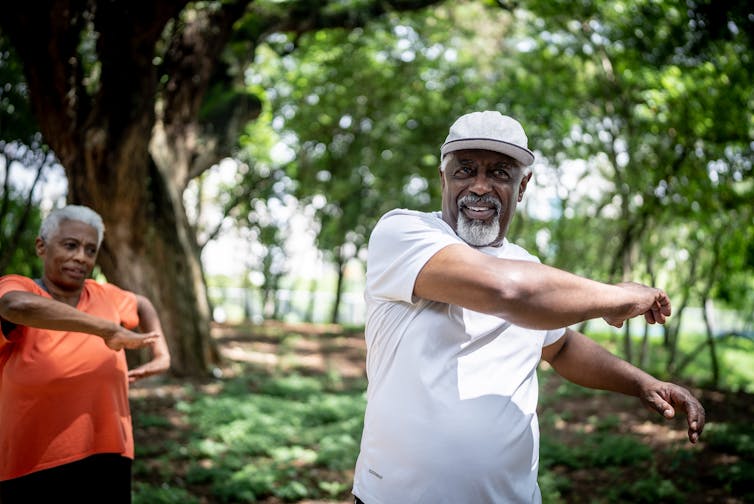
Daily movement and regular strength training support healthy aging. kali9.iStock via Getty Images Plus

One in five Philadelphians are age 60 or older, and the city’s senior population has been growing for at least the past decade.

I’m a Philly-based physical therapist and researcher who studies how to boost physical activity for seniors and people with disabilities. Patients, participants in the studies I conduct, and older community members alike often ask me: “What should I do to stay healthy?”

My answer is simple: Movement is one of the most powerful tools we have to support our bodies and minds, and to stay independent as we grow older.

The World Health Organization recommends that all adults, no matter their age, should aim for at least 150 minutes of cardio activities per week, and strength training twice a week. Older adults should also practice balance training through activities like tai chi, yoga or dance to prevent falls.

But most older adults don’t meet all these metrics. In fact, in Philadelphia, 30% of seniors report having difficulty with mobility activities like walking or climbing stairs.

While staying active is key to aging independently, the environments where we live also influence these outcomes. Think about “blue zones,” places where some of the healthiest and longest-living people in the world reside. They usually live longer because of a combination of social connections, movement opportunities and diets.

Philly is definitely not a blue zone, but there are pros to moving through your golden years here … and some cons.

Urban infrastructure

Philadelphia’s regular street grid, close neighborhoods and the fact that much of Center City is accessible by foot help explain why Philly was named the most walkable city in the U.S. by USA Today for the past three years.

If you’re taking in the city on foot, you’re very likely to stumble upon a public park like one of the five historic squares designed by William Penn in the 1680s, the massive Fairmount Park – which is over 10 times the size of Central Park in New York – or the bustling Clark Park in West Philadelphia, among others.

In fact, 95% of all Philadelphia residents – and 94% of those 65 and older – live within a 10-minute walk of a public park. However, those parks tend to be smaller and lower-quality for people in low-income neighborhoods.

Philly’s public transit system, however, tends to receive less praise.

In the beginning of 2025, over 700,000 people rode some form of Southeastern Pennsylvania Public Transportation Authority, or SEPTA, public transit daily. But this year was marked by dramatic service cuts – though they were quickly reversedfunding uncertainty and fare increases.

Public transportation is directly linked to the overall health of a city and its residents. Healthy public transportation can stimulate local economies, improve air quality and increase access to work, school and health care for everyone, whether they own a car or not.

And the physical activity often required to get to and from a bus, train or trolley stop can provide some extra movement for riders.

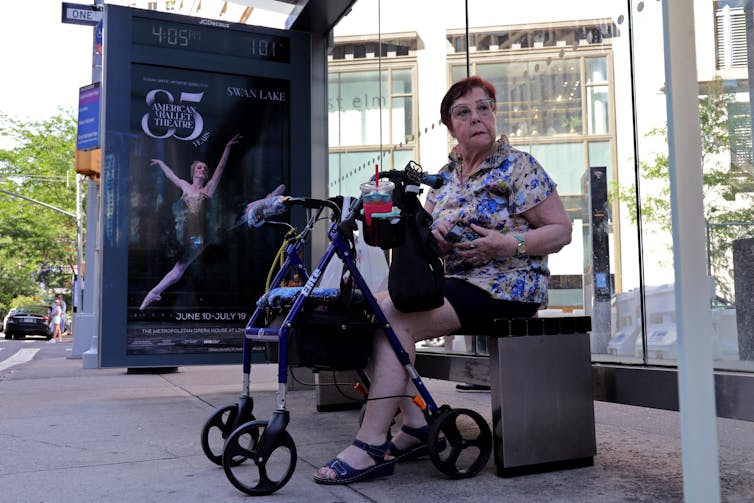
Woman with walker sits on bench under a bus shelter
Adults 65 and older can ride SEPTA free of charge with a SEPTA Key Senior Fare Card.
Leonardo Munoz/AFP via Getty Images

Since older adults make up a significant portion of SEPTA riders, service cuts mean that some seniors cannot get where they need to go, are less physically active and may become lonelier.

Of course, Philly’s historic cobblestone streets, narrow alleyways and uneven sidewalks aren’t wheelchair- or cane-friendly, and are a challenge for people with mobility limitations. However, in 2023, Philadelphia settled a class action lawsuit over inaccessible sidewalks and curb ramps that resulted in a federal mandate that requires the city to install or fix 10,000 curb ramps by 2038. Philly has installed or fixed about 25% of that total so far.

Philadelphia also has many historic buildings, and this designation allows for a loophole to Americans with Disabilities Act compliance laws. These buildings are often inaccessible to people who use wheelchairs or other mobility devices.

Services for seniors

In 2011, Philly launched the Mayor’s Commission on Aging to support policies and projects that aim to improve the quality of life of older adults.

At the time, the U.S. was experiencing a massive shift in demographics. The number of adults age 65 and older grew by nearly 40% from 2010 to 2020. According to research from the Pew Charitable Trusts, Philly experienced a similar, albeit less dramatic, upward trend. The city’s senior population grew by 22% from 2013 to 2023.

The Mayor’s Commission on Aging advocates for older residents and often partners with agencies like the Philadelphia Corporation on Aging that focus on seniors. PCA offers several programs to support senior independence and wellness, such as the Senior Housing Assistance Repair Program and the Caregiver Support Program, which provides help for the family and friends who support seniors.

Older couple stretch in a park
Public parks can be great places for residents to get in their steps or exercise outdoors.
FG Trade/E+ Collection via Getty Images

PCA also oversees 28 senior community centers throughout the city. Each of the centers offers a variety of free or low-cost classes, including nationally recognized physical activity programs that improve strength, balance, quality of life and other important health metrics for older adults.

The Salvation Army Kroc Center of Philadelphia in North Philadelphia is another great resource for older Philadelphians. The state-of-the-art health club offers fitness, swimming and gardening opportunities. An annual membership is US$451 for adults over age 62, and the club accepts some insurance wellness benefits.

In 2026, I will partner with the Kroc Center to launch Bingocize, an evidence-based physical activity program for older adults, as part of a research study funded by the Arthritis Foundation. We hope to find out if the new program boosts physical function and physical activity, and improves arthritis symptoms and quality of life. We’re also looking at what factors will make the program sustainable at the Kroc Center long after the study is over.

I believe Philly has more work to do when it comes to providing seniors access to physical activities that promote healthy aging. But the seeds planted over a decade ago to protect and support the city’s rapidly growing aging population demonstrate a commitment to positive change, and an understanding that where we live affects individual and collective health.

Read more of our stories about Philadelphia, or sign up for our Philadelphia newsletter on Substack.

The Conversation

Laura Baehr receives funding from the Department of Defense, the Arthritis Foundation, and the Clinician-Scientists Transdisciplinary Aging Research Coordinating Center (a National Institutes of Health National Institute on Aging funded center).

Laura Baehr has worked with the Philadelphia Mayor’s Commission on Aging and with Philadelphia Corporation on Aging.

ref. Philly’s walkable streets and public parks offer older residents chances to stay active – but public transit and accessibility pose challenges – https://theconversation.com/phillys-walkable-streets-and-public-parks-offer-older-residents-chances-to-stay-active-but-public-transit-and-accessibility-pose-challenges-270038