« Stranger Things » : pourquoi le final divise tant les fans

Source: The Conversation – France (in French) – By Frédéric Aubrun, Enseignant-chercheur en Marketing digital & Communication au BBA INSEEC – École de Commerce Européenne, INSEEC Grande École
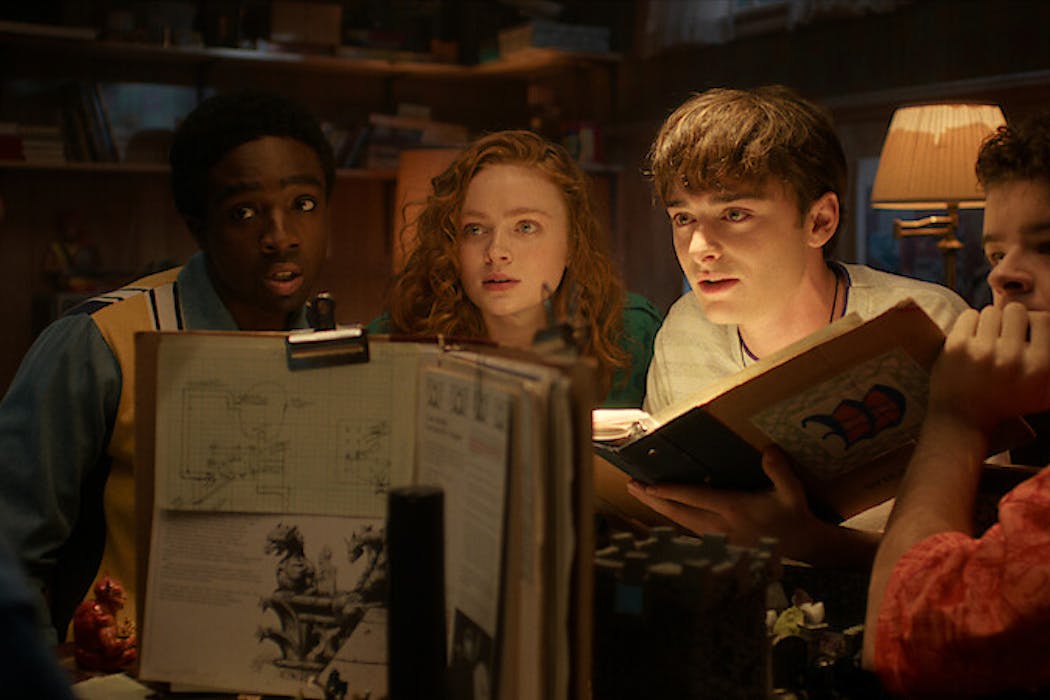
Une dernière partie de “Donjons et Dragons” pour la scène finale de “Stranger Things”. Netflix

Le 1er janvier 2026, Netflix diffusait le dernier épisode de la série Stranger Things. Intitulé « The Rightside Up », cet épisode de deux heures conclut dix années de fiction et d’hommage à la culture populaire des années 1980. Sur les réseaux sociaux, les réactions des fans explosent. Certains crient à la trahison, d’autres défendent les choix narratifs des frères Duffer. Beaucoup pleurent parce que c’est tout simplement la fin. Mais ce qui frappe, c’est l’intensité du débat où se joue une bataille collective pour donner sens à ce qu’on vient de regarder.


Attention, si vous n’avez pas vu la série, cet article en divulgâche l’intrigue !

Pendant dix ans, Netflix a construit un univers tentaculaire autour de l’œuvre des frères Duffer, transformant la série en un véritable espace immersif qui dépasse la fiction : réalité augmentée permettant aux fans de visiter les lieux de la série, jeux vidéo les replongeant dans la ville fictive d’Hawkins, sites interactifs les invitant à participer à l’histoire… Toutes ces expériences ont permis à la plate-forme d’alimenter un lecteur modèle au sens de Umberto Eco, c’est-à-dire un spectateur doté de compétences narratives très développées, capable d’interpréter les codes de la série et d’y participer activement.

La dernière aventure : Le making-of de Stranger Things, Saison 5 | Bande-annonce VOSTFR | Netflix France.

Chaque saison a renforcé les attentes de ce spectateur, qui ne se contentait alors plus seulement de regarder la série mais participait également à la construction de l’univers de la série. Mais comment le final de la série peut-il honorer dix ans de participation et satisfaire une communauté qui a appris à co-créer le sens ?

L’histoire sans fin

Le final peut se lire en deux parties. La première concerne la bataille finale contre Vecna et le Flagelleur mental qui vient clore l’arc narratif principal de la série. La seconde concerne l’épilogue se déroulant dix-huit mois plus tard.

La première partie de ce season finale a beaucoup fait parler d’elle en raison de la faible durée à l’écran de la bataille finale. Les fans se sont alors amusés à comparer la durée de cette scène avec celle où l’un des protagonistes fait son coming-out dans l’épisode précédent.

Mais c’est l’épilogue qui a le plus engendré de réactions divisées de la part des fans. Lors d’une ultime partie de Donjons & Dragons dans le sous-sol des Wheeler, Mike suggère une hypothèse sur ce qui s’est vraiment passé concernant la mort du personnage de Eleven. Kali aurait créé une illusion pour sauver Eleven, la laissant s’échapper. Et puis une vision finale : Eleven vivante, dans un petit village lointain bordé par trois cascades, pour y vivre en paix.

Les frères Duffer laissent volontairement planer le doute, comme ils l’expliquent dans une interview :

« Ce que nous voulions faire, c’était confronter la réalité de sa situation après tout cela et nous demander comment elle pourrait mener une vie normale. Eleven a deux chemins à suivre. Il y a celui qui est plus sombre, plus pessimiste, et celui qui est optimiste, plein d’espoir. Mike est l’optimiste du groupe et a choisi de croire en cette histoire. »

Pour comprendre pourquoi certains fans acceptent cette ambiguïté plutôt que de la rejeter, nous pouvons convoquer le concept du « double visage de l’illusionné » proposé par Philippe Marion. Selon le chercheur, pour entrer pleinement dans une fiction, il faut accepter d’être dupé tout en sachant qu’on l’est.

Les spectateurs de Stranger Things acceptent volontairement les règles du jeu narratif. Ce contrat implicite entre l’œuvre et le spectateur est fondamental. Il explique aussi pourquoi la boucle narrative du final fonctionne. La série débute en 2016 par une partie de Donjons & Dragons et se termine par une autre partie, dans le même lieu. Cela suggère que tout ce que nous avons regardé était en quelque sorte le jeu lui-même, comme l’illustre le générique de fin où l’on voit apparaître le manuel d’utilisation du jeu Stranger Things.

Pendant dix ans, les fans ne sont pas restés passifs. Ils ont débattu, théorisé, réinterprété chaque détail. Et en faisant cela, ils ont construit collectivement le sens de la série. Le théoricien Stanley Fish nomme cela les communautés d’interprétation : des groupes qui créent ensemble la signification d’une œuvre plutôt que de la recevoir. Le final ambigu d’Eleven n’est donc pas une faille narrative mais une invitation à imaginer des suites, à co-créer le sens ensemble.

Mais certains fans ont refusé cette fin. Ils ont alors inventé le « Conformity Gate » : une théorie diffusée sur les réseaux sociaux selon laquelle le final serait une illusion, un faux happy-end. Selon cette théorie, un vrai dernier épisode révélerait que Vecna a gagné. Et pendant quelques jours, les fans y ont cru, espérant un épisode secret qui confirmerait leur lecture.

« J’y crois »

Il se joue dans la conclusion d’une œuvre sérielle un enjeu qui dépasse le simple statut du divertissement ou de l’art. Achever une série, c’est refermer une page de sa vie. La série fonctionne comme un espace de vie organisé parfois autour d’un groupe d’amis, d’un couple, d’une famille, etc.

Infusée pendant des années de rendez-vous répétés, l’implication émotionnelle atteint des sommets qui donnent parfois des réflexions troublantes : « Je connais mieux les personnages de Mad Men que ma propre famille » nous dit un témoignage dans le documentaire d’Olivier Joyard, Fins de séries (2016).

Il y aurait des séries que nous quittons en bons termes, celles qui nous quittent et celles que nous quittons. Ainsi, la fin est une affaire d’affect.

Historiquement, certaines séries ont refusé de conclure explicitement. The Sopranos se termine sur un noir brutal où le destin de Tony reste en suspens. Plus récemment, The Leftlovers, de Damon Lindelof, opère une manœuvre similaire : deux personnages prennent le thé et l’une raconte un voyage dans une réalité alternative. Mais la série refuse d’authentifier ce récit par l’image. Elle laisse les spectateurs décider s’ils y croient ou non.

Le récit de Nora dans le final de The Leftovers.

C’est une stratégie que James Matthew Barrie utilisait déjà dans Peter Pan (1904) où il demandait au public de crier « J’y crois » pour sauver la Fée clochette.

Stranger Things opère la même opération de décentrement final entre deux versions du récit : Eleven s’est-elle sacrifiée ou a-t-elle rejoint cette image d’Épinal de paradis que Mike lui promettait ? C’est d’ailleurs ce même Mike qui apparaît alors en démiurge narratif, alter ego des frères Duffer, maître du jeu et de l’univers ramenant la série entière à sa métafinalité. Il crée deux récits dont l’authentification est laissée à la conviction des auteurs dans la pièce ou presque.

Les personnages font le choix de croire en cette fiction, mais comment peut-il en être autrement puisqu’ils sont eux-mêmes dans la fiction ? Le détail qui diffère de The Leftovers, c’est le choix d’authentifier par l’image la survie d’Eleven dans un plan qui la révèle dans un paysage islandais. Le choix n’est donc pas totalement libre, l’authentification par l’image donne une force supplémentaire à ce happy end dans l’interprétation de la conclusion.

Le débat va néanmoins durer, les fans vont faire vivre la série par la manière dont elle se termine, réactivant ainsi les affects qui lui sont liés.

« Je refuse d’y croire » ou le clivage de la réception

Par ailleurs, l’épilogue final donne à voir quelques images du futur de chaque protagoniste dans les mois à venir prenant soin de laisser hors champ tout un pan à venir de leur vie d’adulte. Rien ne dit que dans quelques années, l’univers de Strangers Things ne sera pas ressuscité à l’instar de tant d’autres œuvres avec une suite directe où Mike et ses amis, devenus adultes, devront faire face à une terrible menace, engageant des retrouvailles inévitables avec Eleven. Pour cela, il suffit de murmurer : « J’y crois. »

Dans une sorte d’ironie finale que seule la fiction sérielle peut nous réserver, les paroles de la chanson de Kate Bush semblent prophétiser la réaction du final pour une partie de l’audience qui souhaite prendre la place des frères Duffer pour réécrire la fin, pour réécrire leur fin, « I’d make a deal with God. And I’d get Him to swap our places » (« Je passerais un accord avec Dieu. Et je lui demanderais d’échanger nos rôles »).

The Conversation

Les auteurs ne travaillent pas, ne conseillent pas, ne possèdent pas de parts, ne reçoivent pas de fonds d’une organisation qui pourrait tirer profit de cet article, et n’ont déclaré aucune autre affiliation que leur organisme de recherche.

ref. « Stranger Things » : pourquoi le final divise tant les fans – https://theconversation.com/stranger-things-pourquoi-le-final-divise-tant-les-fans-272733

L’IA peut-elle rendre la justice ?

Source: The Conversation – France in French (3) – By Naoufel Mzoughi, Chargé de recherches en économie, Inrae

Au Canada, on expérimente des médiateurs automatisés. En Chine, des tribunaux s’appuient sur l’IA. En Malaisie, des tests de condamnations assistées par algorithmes sont en cours. Phonlamai Photo

Dans plusieurs pays, dont la France, la justice expérimente l’usage de l’intelligence artificielle. Quelle serait la légitimité d’une décision de justice rendue par un algorithme ? Serait-elle plus dissuasive ? Des chercheurs ont testé la perception d’une punition selon qu’elle émane d’un juge humain ou d’une IA.


L’idée de confier à des systèmes d’intelligence artificielle (IA) des décisions de justice ne relève plus de la science-fiction : au Canada, on expérimente des médiateurs automatisés ; en Chine, des tribunaux s’appuient sur l’IA ; en Malaisie, des tests de condamnations assistées par algorithmes sont en cours. Ces outils ne se limitent pas à un rôle d’assistance : dans certains contextes, ils influencent directement la sévérité des peines prononcées.

Au Québec, par exemple, une « cour virtuelle » résout déjà de nombreux petits litiges commerciaux. Il suffit de se connecter, d’indiquer les faits et un algorithme propose les issues financières les plus probables, offrant ainsi une solution extrajudiciaire et un dédommagement. Environ 68 % des dossiers sont réglés ainsi, en quelques semaines, ce qui évite les envois recommandés et le recours au juge de proximité. Certains États des États-Unis ont également recours au jugement fondé sur les données probantes (« evidence‑based sentencing »), qui s’appuie sur un algorithme capable d’estimer la durée optimale de la peine à infliger à un condamné, en cherchant à réduire au maximum la probabilité de récidive.

En France, plusieurs expériences sont en cours pour tester et intégrer de plus en plus l’IA dans le fonctionnement quotidien des juridictions, sachant que le ministère de la justice prévoit une charte pour un usage responsable de l’IA. Des applications concrètes sont déjà plus ou moins avancées – par exemple avec un système d’occultation automatique des données sensibles dans les décisions de justice, même si la vérification humaine reste indispensable ou des outils d’aide à la qualification pénale. Autre exemple, la réorganisation du tribunal de commerce de Paris mobilise l’IA avec l’ambition d’améliorer le traitement des litiges et libérer du temps pour les juges consulaires, notamment en plaçant les affaires ou en vérifiant les injonctions de payer. Dernière preuve en date de cet engouement, le ministère de la Justice s’est récemment doté d’une direction stratégique dédiée à l’intelligence artificielle.

À mesure que ces systèmes se déploient, de nombreuses questions surgissent. Par exemple, la justice repose beaucoup sur la confiance accordée au système. La légitimité conférée à l’IA en matière de décision de justice est donc cruciale. Autre point : l’un des rôles essentiels du droit pénal est de décourager les comportements hors-la-loi. Une amende pour stationnement sauvage, une peine de prison pour un délit grave : l’idée est qu’une sanction connue, proportionnée et prévisible empêche de franchir la ligne rouge, au moins pour une partie importante de la population. Cela amène à se demander si les sanctions prononcées par un algorithme paraissent plus, ou moins, dissuasives que celles d’un juge en chair et en os.

Pourquoi l’IA inspire la crainte… et parfois une certaine fascination

Concernant la légitimité de l’IA, ses partisans (comme des entreprises de la legal tech, des réformateurs au sein des institutions publiques ou certains chercheurs) avancent plusieurs arguments. Contrairement à un juge humain, susceptible d’être influencé par la fatigue, l’ordre des dossiers, ses valeurs ou même l’apparence d’un prévenu, l’algorithme se veut impartial. Son verdict repose sur des critères prédéfinis, sans états d’âme.

Cette impartialité accroît la prévisibilité des sanctions : un même acte conduit à une même peine, ce qui réduit les disparités entre décisions. Or, une sanction claire et attendue pourrait envoyer un signal plus fort aux citoyens et prévenir davantage les infractions. En outre, l’IA promet une justice plus rapide en automatisant certaines opérations comme la recherche documentaire, l’analyse ou l’aide à la rédaction : la célérité des sanctions, qui pourrait en découler, est bien connue pour jouer un rôle central dans leur efficacité dissuasive. Plusieurs experts reconnaissent que les IA permettent d’accélérer l’action de la justice.

Benoît Frydman, professeur à la faculté de droit de l’université libre de Bruxelles (ULB), « Comment l’IA transforme le droit et la justice ? », Collège de France, octobre 2025.

Enfin, si elles sont conçues de manière transparente et sur des données non biaisées, les décisions automatisées peuvent réduire les discriminations qui minent parfois les décisions de justice, comme celles liées à l’âge ou au genre. Par exemple, le chercheur Daniel Chen, explique que les IA pourraient permettre de corriger les biais des juges humains. Dans cette perspective, l’IA est alors présentée par divers acteurs (start-up de la legal tech, réformateurs pro-IA, experts) comme ayant la capacité de renforcer le sentiment de justice et, par ricochet, la force dissuasive des peines.

Quand la sanction devient trop « froide »

Mais la médaille a son revers. L’IA apprend essentiellement des données issues de jugements humains. Or, ces données peuvent être biaisées. Au lieu de corriger les injustices du passé, on risque de les ancrer, et ce dans un système encore plus opaque, difficile à contester, typique des armes de destruction mathématique (des algorithmes opaques, à grande échelle, qui prennent des décisions impactant gravement la vie de millions d’individus, tout en étant injustes car ils reproduisent et amplifient les inégalités sociales).

Et surtout, la justice, ce n’est pas qu’un calcul. Les juges incarnent une autorité morale. Leur rôle n’est pas seulement d’appliquer la loi, mais de porter un message à l’échelle de la société : dire publiquement ce qui est inacceptable, reconnaître la souffrance des victimes, condamner un comportement en termes éthiques. Cette dimension symbolique est particulièrement importante pour les crimes graves, où l’attente n’est pas seulement la sanction mais aussi l’expression collective d’un rejet moral. Or, l’IA ne peut transmettre ce message. Dans ces cas, elle pourrait être perçue comme moins légitime et donc moins dissuasive.

De plus, les juges ont une certaine latitude pour individualiser les peines, c’est-à-dire pour ajuster les peines en fonction d’éléments variés, souvent qualitatifs et subjectifs (personnalité du prévenu, circonstances et spécificités de l’infraction), difficiles à formaliser et à intégrer dans un système décisionnel relevant d’une IA.

Petits délits, actes criminels : l’IA et les juges à l’épreuve

Une expérience que nous avons conduite en France, en 2023, sur plus de 200 participants a cherché à tester si la perception d’une même punition varie selon qu’elle émane d’un juge humain ou d’une IA. Sur la base de scénarios d’infractions identiques et de sanctions identiques, les participants ont été affectés aléatoirement soit au cas où la décision avait été rendue par un juge humain, soit au cas où elle avait été rendue par une IA. Dans le cas banal d’une personne négligente laissant les excréments de son chien sur le trottoir, la même sanction apparaissait plus dissuasive si elle venait… d’une IA. Facile à juger, cette infraction mineure semble se prêter à un traitement algorithmique, clair et rapide. Mais dans le cas d’un incendie criminel, la sanction par l’IA n’était pas jugée plus dissuasive que celle d’un juge. Comme si, face à une faute lourde, l’autorité morale d’un magistrat restait indispensable.

Bien entendu, notre étude est une modélisation simplifiée de la réalité, dans un cadre épuré, qui passe sous silence de nombreux paramètres. Par exemple, un contrevenant potentiel ne connaît pas toujours la sanction encourue au moment où il envisage de passer à l’acte. Néanmoins, les études montrent que les individus ont une idée de ce qu’ils encourent en s’engageant dans certains comportements et qu’ils révisent leurs croyances en fonction de leurs propres expériences ou de celles vécues par d’autres.

Faut-il en conclure qu’il vaut mieux confier les délits mineurs aux machines et les crimes graves aux humains ? Pas forcément. Cependant, l’expérience révèle un point clé : nous n’attendons pas la même chose d’une sanction selon la gravité de l’infraction.

Peut-être que l’avenir de la justice réside non pas dans un remplacement, mais dans une alliance, dans l’exploitation intelligente d’une complémentarité. Les juges assurent une multitude de fonctions qui ne pourraient être effectuées par un algorithme. Ils représentent notamment une figure d’autorité humaine, garante d’un principe de justice démocratique et soucieuse du bien-être de la société, qui dépasse la simple répression pour représenter la volonté générale et garantir l’équilibre social. Entre autres missions, ils incarnent la société, interprètent les zones grises et sont chargés de transmettre le message moral de la sanction. L’IA pourrait les épauler en contribuant à renforcer la prise en compte automatisée de certains critères jugés préalablement pertinents. Elle pourrait augmenter la rapidité de la prise de décision et assurer une forme de cohérence des jugements en évitant des écarts trop importants entre sanctions pour une infraction similaire.

Une question de confiance

Derrière cette révolution judiciaire, il y a une question plus large : à qui faisons-nous confiance ? Si l’opinion perçoit l’algorithme comme une boîte noire, reproduisant les biais avec une froideur implacable, c’est l’autorité des systèmes juridique et judiciaire qui risque de vaciller.

La justice n’est pas seulement affaire de règles, c’est aussi une scène où la société dit ses valeurs. Tant que les algorithmes ne pourront pas endosser ce rôle symbolique, leurs sentences ne pourront pas remplacer celles énoncées par les juges. Mais s’ils sont conçus avec transparence, rigueur et contrôle humain, ces algorithmes pourraient rendre la justice plus prévisible, et potentiellement, plus dissuasive. Encore faut-il ne jamais oublier qu’au bout d’une ligne de code, ce n’est pas une donnée abstraite qui est jugée, mais un être humain bien réel.

The Conversation

Les auteurs ne travaillent pas, ne conseillent pas, ne possèdent pas de parts, ne reçoivent pas de fonds d’une organisation qui pourrait tirer profit de cet article, et n’ont déclaré aucune autre affiliation que leur organisme de recherche.

ref. L’IA peut-elle rendre la justice ? – https://theconversation.com/lia-peut-elle-rendre-la-justice-269667

« La normalisation du RN pourrait passer par l’effacement de Marine Le Pen »

Source: The Conversation – France in French (3) – By Luc Rouban, Directeur de recherche CNRS, Sciences Po

Le procès en appel dans l’affaire des assistants parlementaires européens du Front national (Rassemblement national, depuis 2018) a débuté ce mardi 13 janvier à Paris. En première instance, Marine Le Pen avait été condamnée à quatre ans d’emprisonnement pour détournement de fonds publics. Une peine d’inéligibilité de cinq ans avait également été prononcée, compromettant sa candidature à la présidentielle de 2027. Avant le jugement en appel, on constate un affaiblissement politique de Marine Le Pen et une montée en puissance de Jordan Bardella. Quelles sont les perspectives pour le RN à moins de deux ans de la présidentielle ? Entretien avec le politiste Luc Rouban.


The Conversation : Faisant appel de sa condamnation en première instance, Marine Le Pen joue son avenir politique. Elle pourrait être définitivement empêchée de candidater à la présidentielle de 2027. Comment analysez-vous sa position face au tribunal ?

Luc Rouban : On ne peut pas, bien sûr, anticiper le jugement, mais Marine Le Pen semble prisonnière d’une situation inextricable : en première instance, sa stratégie a consisté à délégitimer les juges sur le mode « Vous n’avez pas à intervenir dans cette affaire qui est politique, vous êtes en train de tuer la démocratie, etc. » Cette stratégie n’a pas fonctionné et on ne voit pas pourquoi elle fonctionnerait en appel. Changera-t-elle de stratégie en jouant l’amende honorable ? En plaidant l’erreur et la bonne foi ? Cela reviendrait à avouer des délits très graves et à révéler une hypocrisie qui ne pourrait que lui nuire. Je ne vois pas de bonne solution la concernant.

Marine Le Pen a opposé les juges et la démocratie, lors de son premier procès. Vous considérez au contraire que celui-ci, comme celui de Nicolas Sarkozy qui a conduit à son incarcération (pour le financement libyen de sa campagne présidentielle de 2007), est un signe de maturité démocratique.

L. R. : Effectivement, les condamnations de Marine Le Pen et de Nicolas Sarkozy signalent un changement d’époque dans le rapport des Français au politique. L’emprisonnement de Nicolas Sarkozy ou la condamnation de Marine Le Pen ont suscité des contestations de la part de leurs soutiens directs et de la droite en général mais, au fond, elles n’ont pas choqué la majorité des Français. Un sondage de l’institut Verian montre que la stratégie de dénonciation de la justice n’a pas fonctionné : la moitié des personnes interrogées considèrent que Marine Le Pen a été « traitée comme n’importe quel justiciable » et seulement un tiers des personnes interrogées (soit sa base électorale) considèrent qu’elle a été « traitée plus sévèrement pour des raisons politiques ». Ces deux condamnations marquent la fin des privilèges du personnel politique vis-à-vis de la justice. Comme si nous entrions enfin dans une forme de modernité au moment où les élus ne sont plus crédités d’une autorité telle que les citoyens les autorisent à déroger au droit commun. La politique est devenue une activité professionnelle comme une autre, soumise à des réglementations et à des lois et elle passe progressivement d’une fonction d’autorité, qui autorisait la légitimation d’une règle du jeu à deux vitesses, à une fonction de service.

Pour ma part, je considère que la réaffirmation de l’État de droit est tout à fait indispensable et légitime en France. Notre système démocratique est très fragilisé, bien plus que dans d’autres pays européens. Le niveau de confiance des citoyens envers la classe politique et dans la justice est très bas et il doit être restauré. Cela passe notamment par le fait que la justice s’applique à des personnalités qui abusent des fonds publics et pas uniquement à des caissières de supermarché qui se font licencier et sont poursuivies au pénal pour le vol d’une barre chocolatée.

Depuis sa condamnation en première instance Marine Le Pen chute dans les sondages et semble de moins en moins en capacité de porter une dynamique pour le RN…

L. R. : Marine Le Pen s’est présentée comme porteuse de justice et d’équité. Elle fait partie de ceux qui avaient applaudi au moment de la loi Sapin 2, votée à l’unanimité en 2016 à la suite de l’affaire Cahuzac. Or la voilà jugée pour détournement de fonds européens au profit de son parti.

Elle paie donc le prix de ses contradictions, mais aussi de sa stratégie de normalisation destinée à sortir le RN du giron de l’ancien FN de son père, Jean-Marie Le Pen. C’est elle qui a demandé aux députés de se conduire correctement à l’Assemblée nationale, qu’il n’y ait pas de provocations, de phrases antisémites ou racistes de la part des candidats aux différentes élections. Or ce processus de normalisation est en train de se retourner contre elle avec ce procès. Elle est la victime de sa propre stratégie qui la condamne, soit à rester dans la périphérie et l’imprécation, soit à jouer le jeu de la normalité jusqu’au bout. Dans les deux cas, son avenir politique est compromis.

On peut même penser que la délepénisation du RN va désormais passer par l’élimination politique de Marine Le Pen. En effet, ne plus avoir la marque « Le Pen » à la tête du parti pourrait arranger nombre de dirigeants du RN. Pour avoir une chance de gagner en 2027, ce parti doit étendre son électorat aux couches moyennes supérieures diplômées, et cela passera possiblement par un effacement de Marine Le Pen.

Jordan Bardella semble auréolé d’une forte dynamique médiatique et sondagière. Il a même été placé en tête au second tour de la présidentielle par une enquête : selon le baromètre Odoxa, il recueillerait 53 % des voix face à Édouard Philippe, 58 % face à Raphaël Glucksmann, 56 % face à Gabriel Attal et 74 % face à Jean-Luc Mélenchon… Comment analysez-vous ces sondages ? Quels sont les atouts et les faiblesses du président du RN ?

L. R. : Jordan Bardella ne s’appelle pas Le Pen : c’est désormais un atout au sein du RN. Par là, il peut déjà incarner un moment de rupture et de renouveau pour le parti qui aspire à devenir un parti de droite radicale et non plus d’extrême droite, mais aussi un parti plus libéral sur le plan économique. Ce nouveau RN correspondrait assez bien à une culture trumpiste qui fait son chemin en France. Il permettrait notamment de rallier des électeurs Les Républicains (LR) et Reconquête.

Concernant les sondages qui placent Bardella très haut, il faut commencer par dire que cela est bien logique. Si la peine de Marine Le Pen est confirmée en appel, ce qui est anticipé par beaucoup, Bardella devient le représentant du parti dominant, donc il se retrouve « naturellement » en tête. Ensuite, il faut rester prudent avec ces chiffres car l’échéance est lointaine. Reste la grande question : Bardella tiendra-t-il le choc d’une campagne présidentielle ?

On s’interroge sur la crédibilité personnelle de cet homme âgé de 30 ans. Il ne faut pas oublier que les Français recherchent dans une élection présidentielle une forme d’excellence intellectuelle (même s’ils sont souvent déçus ensuite). La course à l’Élysée est une compétition très élitiste et tous les candidats ou présidents qui se sont succédé jusqu’à présent étaient des personnes qui avaient un haut niveau d’études, des ressources culturelles et sociales importantes sans même parler de leur long parcours politique. Ce n’est pas le cas de Jordan Bardella, qui par ailleurs, n’a aucune expérience de terrain, de gestion publique et aucune expérience professionnelle en dehors de la politique.

Ensuite, tout dépendra de qui lui fera face au second tour. S’il s’agit d’un Édouard Philippe, par exemple, maire du Havre, ancien premier ministre, énarque et homme qui connaît bien les rouages de l’État, Bardella pourra-t-il tenir le choc d’un débat du second tour ? On a bien vu que Marine Le Pen n’a pas pu faire face à Emmanuel Macron en 2017. Elle ne connaissait pas les dossiers européens, elle se perdait dans ses fiches… Bardella fera-t-il mieux ? S’il échoue, il sera certainement remplacé au sein d’un RN où d’autres se préparent.


Propos recueillis par David Bornstein.


*Luc Rouban est l’auteur de_ la Société contre la politique_ (2026), aux Presses de Sciences Po.

The Conversation

Luc Rouban ne travaille pas, ne conseille pas, ne possède pas de parts, ne reçoit pas de fonds d’une organisation qui pourrait tirer profit de cet article, et n’a déclaré aucune autre affiliation que son organisme de recherche.

ref. « La normalisation du RN pourrait passer par l’effacement de Marine Le Pen » – https://theconversation.com/la-normalisation-du-rn-pourrait-passer-par-leffacement-de-marine-le-pen-273371

Enquête sur la diaspora malgache en France

Source: The Conversation – France in French (3) – By Léo Delpy, Maitre de conférences, Université de Lille

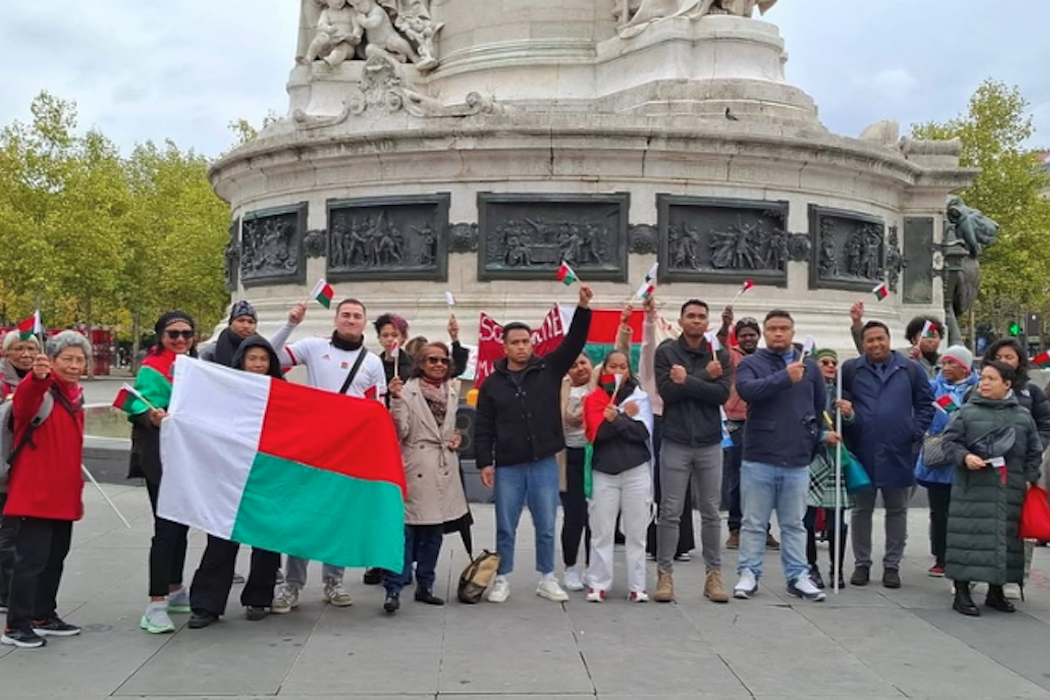
Manifestation de la diaspora malgache en France, place de la République à Paris, en solidarité avec les manifestations en cours à Madagascar à ce moment-là, 25 octobre 2025.
Compte Instagram « Malagasy en France »

Forte de près de 170 000 personnes, cette communauté est pourtant peu connue en France. Une enquête permet de mieux comprendre la perception de l’appartenance à la diaspora malgache ainsi que la diversité des relations entre les membres.


La diaspora malgache est l’une des principales diasporas d’Afrique subsaharienne en France. Les dernières estimations, datant de 2015, font état de 170 000 personnes, ce qui la place au même niveau que les diasporas malienne et sénégalaise. Malgré son importance numérique et son rôle important lors des récentes manifestations de la Gen Z à Madagascar, notamment à travers une mobilisation soutenue sur le réseau social Facebook, cette communauté est peu visible. Elle fait notamment l’objet de peu d’études si on la compare aux autres diasporas préalablement citées.

Une communauté peu connue

On peut faire remonter la première présence malgache en France hexagonale à la moitié du XIXᵉ siècle avec la venue de deux étudiants malgaches inscrits en faculté de médecine. Par la suite, d’autres étudiants, principalement issus des classes bourgeoises proches du pouvoir colonial, suivront le même chemin (études de médecine et de théologie). Cependant, comme le précise Chantal Crenn dans son livre Entre Tananarive et Bordeaux. Les migrations malgaches en France, il est difficile de parler de première vague tant le nombre est faible.

Il faut attendre la Première Guerre mondiale pour observer la première vague importante avec l’arrivée de 40 000 hommes, puis une deuxième vague avec la Seconde Guerre mondiale. Après 1947, la venue de Malgaches en métropole est principalement le fait d’étudiants issus de la bourgeoisie des Hautes Terres. Dans les années 1975-1980, les difficultés économiques et politiques de la Grande île vont pousser une partie des étudiants à venir étudier en France métropolitaine et certains à y rester.

Cet article se propose de combler en partie ces lacunes en analysant les résultats de l’enquête qualitative « Perception et réseaux de la diaspora malgache en France », réalisée dans le cadre du projet de recherche TADY entre janvier 2025 et décembre 2025, regroupant 25 entretiens réalisés avec des membres de la diaspora malgache en France (France hexagonale et La Réunion) et à Madagascar.

Dans le cadre de ces entretiens, deux thématiques principales ont été abordées : d’une part, la perception de l’appartenance à la diaspora malgache ; d’autre part, la diversité des relations entre les membres de la diaspora en France, ainsi que les relations entre cette communauté et Madagascar.

Les résultats développés dans cet article n’engagent pas l’ensemble de l’équipe de recherche du projet TADY mais les seuls auteurs de l’enquête « Perception et réseaux de la diaspora malgache en France ». Cependant, les travaux ont bénéficié d’interactions porteuses au sein du projet TADY et les auteurs remercient à ce titre l’ensemble des membres du projet. Nous renvoyons également les lecteurs au rapport « La diaspora malagasy en France et dans le monde : une communauté invisible ? ».

Définitions endogènes de la diaspora malgache

L’analyse des entretiens de notre enquête ne permet pas d’identifier une définition commune et uniforme à l’ensemble des membres de la diaspora.

Cela rejoint la littérature scientifique sur les diasporas et souligne la nécessité de ne pas adopter une définition trop restrictive des groupes diasporiques. Dans les faits, nous identifions plusieurs visions avancées par les personnes enquêtées, qui peuvent être cumulatives ou non.

Premièrement, une vision identitaire et culturelle met en lumière une série d’arguments en lien avec le fait d’être natif de Madagascar ; d’avoir un attachement identitaire et culturel ; ou encore d’avoir la nationalité malgache (sans forcément avoir un attachement particulier à la culture malgache ou au pays). Ainsi, plusieurs entretiens soulignent que l’appartenance à la diaspora malgache renvoie au fait d’être né à Madagascar puis d’avoir migré, ou encore d’avoir la nationalité et de vivre dans un autre pays que Madagascar.

« La diaspora pour moi, c’est être natif du pays tout en étant parti du pays. »

Cette définition est pour certaines personnes une condition essentielle de l’appartenance au groupe diasporique. D’autres ont une vision plus large et considèrent que l’appartenance à la diaspora malgache est davantage liée aux pratiques culturelles, surtout au fait de parler le malgache.

« Quelqu’un de deuxième génération peut être considéré comme de la diaspora, mais cela dépend de l’éducation. Si les deux parents sont nés à Madagascar, et si les parents entretiennent la langue avec leurs enfants. Dans ce cas, oui. Sinon, les enfants peuvent avoir un rejet. Cette adoption passe par la langue mais aussi la culture, l’adoption du pays. »

Deuxièmement, une vision réticulaire et communautaire, avec deux représentations.

La première (représentation plus individuelle) renvoie au fait d’être en relation avec les membres de la diaspora et/ou d’être en relation avec Madagascar.

« Pour moi, la diaspora c’est toute personne qui a une relation avec Madagascar – que la personne soit malgache ou mariée à un Malgache ou née en France mais enfant de Malgache. Voilà, donc dès qu’il y a une relation avec quelqu’un qui vient de Madagascar ou qui est malgache, qu’il soit né ou pas à Madagascar, pour moi, ça constitue totalement la diaspora. »

La deuxième représentation organisationnelle et communautaire (moins fréquente) qualifie la diaspora comme étant toute forme d’action collective et d’organisation (formelle ou non) qui œuvre pour l’intérêt des Malgaches en France ou à Madagascar.

« Selon moi, la diaspora malgache, c’est la communauté de Malgaches à l’étranger qui se retrouvent par leur origine […] et qui se réunissent selon leurs centres d’intérêt (sportif, religion commune, ou un aspect culturel, etc.). »

Comme nous le verrons dans la suite de l’article, cette dimension réticulaire prend une place importante.

La structuration de la diaspora malgache en France

L’analyse des récits nous permet également d’identifier une dimension centrale de la diaspora : celle de la complexité et de la diversité des relations entre diaspora et Madagascar, d’une part, et entre les membres de la diaspora, d’autre part.

Premièrement, l’ensemble des témoignages soulignent l’importance des relations d’entraide entre les membres de la diaspora et Madagascar.

D’abord, les soutiens sont pour la plupart intrafamiliaux et peuvent être plus ou moins réguliers. Ils peuvent intervenir pendant un événement ponctuel (mariage, enterrement, baptême, maladie) ou bien plus régulièrement (transfert mensuel, paiement de frais de scolarité, etc.).

« Chaque fois que mes parents avaient besoin, ou avaient un pépin à Madagascar, il fallait dépanner. Ils n’avaient personne sur qui compter à part moi. Donc on part, on ne se rend pas forcément compte, mais il y a une responsabilité derrière. »

Ces logiques d’entraide s’apparentent souvent à de véritables mécanismes de protection sociale s’inscrivant dans une stratégie familiale construite autour de la migration.

D’autres témoignages relatent des processus d’entraide qui dépassent le simple cercle intrafamilial. À l’échelle de la famille élargie, de nombreuses initiatives sont développées dans le village d’origine des parents ou, plus largement, dans le lieu d’origine de la famille à Madagascar. Les mécanismes d’entraide sous-tendent de nombreux processus de négociation et des échanges complexes. Les écarts économiques et les perceptions de ces écarts renforcent la complexité de ces relations.

De nombreux témoignages soulignent la complexité des réseaux d’entraide entre la diaspora et Madagascar :

« Quand on envoie de l’argent là-bas, comme c’est un pays pauvre, ma famille a des voisins, les voisins savent que la famille de France envoie de l’argent, alors des fois quand on envoie de l’argent, on nourrit tout un voisinage. Donc des fois ma famille en demande un peu plus. C’est en allant là-bas que je l’ai vu et je l’ai vécu. »

Ainsi, les mécanismes d’entraide intrafamiliaux réguliers (entre enfants en France et parents à Madagascar par exemple) sont souvent le pilier de tout un système de redistribution impliquant de nombreuses personnes à Madagascar et en France.

Ensuite, au-delà de la logique de l’aide privée, plusieurs répondants soulignent la nécessité ressentie d’œuvrer directement pour Madagascar. Ils expriment leur sentiment de devoir moral impérieux, souvent cultivé au sein de la famille, à réinvestir leurs compétences acquises en France pour le développement de Madagascar.

Cette position, ancrée dans leur vision propre des enjeux du développement à l’île, se décline entre s’investir via l’aide au développement ou via le secteur privé, dans une perspective critique de l’aide. Dans les deux cas, toutefois, cette volonté de mobiliser ses compétences pour Madagascar entre en tension avec les opportunités limitées sur le marché du travail local, que ce soit en termes d’accès à l’emploi ou en termes de traitement salarial, en lien avec les écarts rapportés par plusieurs répondants entre conditions salariales des expatriés et conditions salariales des personnels nationaux. Les personnes malgaches venues étudier en France craignent de recevoir un salaire local alors que leur niveau de compétence est validé par un diplôme international.

Toutefois, malgré le manque d’opportunités de retour à Madagascar, la participation de la diaspora au développement du pays est bien réelle et prend notamment la forme de ressources immatérielles à travers le transfert d’opinions et d’idées qui peuvent influencer voire façonner celles des membres de la famille et plus largement l’opinion publique et dont le principal support et espace d’expression est Facebook, le réseau social le plus utilisé par les Malgaches.

Plusieurs enquêtés affirment s’informer régulièrement sur la situation du pays et certains prennent le temps de discuter les actualités avec leurs proches à Madagascar.

Par ailleurs, les influenceurs et lanceurs d’alerte sur Facebook basés en Europe, qui bénéficient d’une grande popularité en France comme à Madagascar, ont joué un rôle important dans le mouvement de la Gen Z.

Deuxièmement, l’analyse des récits permet également de caractériser la diversité des réseaux diasporiques en France selon les personnes.

Certaines se trouvent dans des réseaux exclusivement structurés autour de la famille proche et n’ont que peu de relations avec le reste de la diaspora malgache en France.

« En tant que personne faisant partie de la diaspora, je n’ai pas beaucoup échangé avec d’autres personnes de la diaspora, à part la famille. J’ai une définition très personnelle et très restreinte, je ne connais pas d’associations ou autre, je n’en ai jamais fait partie. »

Ces personnes peuvent par ailleurs maintenir des relations avec les membres de la famille présents à Madagascar. Tandis que d’autres, et ce à des niveaux variables, sont insérées dans des associations sportives, culturelles ou religieuses. Les organisations cultuelles malgaches occupent une place centrale dans la structuration des réseaux diasporiques. Au-delà de la fonction cultuelle, les Églises chrétiennes malgaches, dont les deux plus importantes et présentes dans les grandes villes françaises sont l’Église protestante malgache en France et le réseau des communautés catholiques malgaches de France, assurent souvent un rôle déterminant d’accueil et d’intégration des nouveaux arrivants (recherche d’emploi et de logement, conseil administratif), et favorisent également le maintien d’un lien fréquent et fort avec la communauté malgache.

« Sans la communauté malgache, je ne sais pas trop comment j’aurais pu m’en sortir à mon arrivée en France. C’est complètement grâce à la communauté malgache que j’ai pu m’en sortir, parce que ne serait-ce qu’avoir des amis, avoir des gens qui aident, par rapport à tout ce qui est administratif… parce qu’arriver en France sans rien connaître du tout, c’est très compliqué. […] Tout a été facilité par cette communauté malgache. La communauté de l’Église m’a permis de ne pas trop perdre mes repères et de ne pas être perdu totalement après mon arrivée en France. »

En conclusion, les principaux résultats de l’enquête soulignent la complexité des structures des réseaux diasporiques. Cette dernière s’explique non seulement par la diversité des représentations que la diaspora a d’elle-même mais aussi par la multitude des formes d’interaction qu’elle entretient avec Madagascar.


Cet article a été co-écrit avec Sarah M’Roivili.

The Conversation

Léo Delpy a reçu des financements du projet Tady.

Claire Gondard-Delcroix a reçu des financements du projet Tady.

Tantely Andrianantoandro et Tsiry Andrianampiarivo ne travaillent pas, ne conseillent pas, ne possèdent pas de parts, ne reçoivent pas de fonds d’une organisation qui pourrait tirer profit de cet article, et n’ont déclaré aucune autre affiliation que leur poste universitaire.

ref. Enquête sur la diaspora malgache en France – https://theconversation.com/enquete-sur-la-diaspora-malgache-en-france-271451

Relocalisations industrielles : ces acheteurs qui font (ou défont) le « Made in France »

Source: The Conversation – France (in French) – By Laurence Viale, Professor in Purchasing and Supply Management, IÉSEG School of Management

Les relocalisations d’entreprises sont souhaitées par les pouvoirs publics et une partie des consommateurs. Si leurs motivations sont variées, les dirigeants des entreprises ne doivent pas oublier un relais indispensable dans cette stratégie : les acheteurs professionnels. Et selon les cas, ce ne sont pas les mêmes profils qui seront les plus à même de mener à bien ces projets délicats.


Coca-Cola, un acteur local ! Dans une récente communication, l’entreprise détaille avec précision les spécificités de sa production mettant en avant son ancrage territorial. Cela n’est pas anodin, et correspond à une véritable tendance. Au-delà d’une stratégie industrielle, la relocalisation de la production est devenue désormais un récit adopté par les organisations.

Cette stratégie répond à plusieurs attentes : regain recherché de souveraineté des gouvernements, politiques publiques de soutien à l’industrie nationale (à l’image de France 2030), recherche par les consommateurs de produits issus de circuits courts, et pressions post-Covid sur l’ensemble des chaînes d’approvisionnement. Au sein de ces chaînes, un acteur demeure souvent invisible, alors même qu’il joue un rôle stratégique dans cette politique de relocalisation : l’acheteur professionnel dans l’industrie. Il sélectionne et pilote les relations fournisseurs, arbitre entre coûts, risques et délais et, enfin, coordonne les parties prenantes internes pour rendre une relocalisation faisable.

L’acheteur, un acteur clé

Pour ces raisons, nous avons mené une étude sur le rôle joué par les acheteurs dans les décisions de relocalisations. Longtemps vu comme un simple « cost-killer », il occupe aujourd’hui un rôle stratégique, au croisement des enjeux économiques, environnementaux et industriels. Comment les acheteurs, au travers de leurs valeurs et postures, influencent-ils la réussite (ou l’échec) des relocalisations ? Et si la relocalisation ne se décidait pas seulement dans les usines ou les ministères…


À lire aussi :
Du cost-killer à l’acheteur intrapreneur, un nouveau métier


La relocalisation renvoie à une multitude de termes : reshoring, backshoring, nearshoring… Souvent nouveaux et encore peu balisés, ces projets sont très exposés médiatiquement (campagne sur le « Made in France ») alors qu’ils nécessitent une adaptation de la chaîne d’approvisionnement à long terme. Ce sont donc des projets complexes, qui conduisent l’acheteur à s’adapter et à endosser des rôles différents. Nous distinguons trois grands types de relocalisation.

La relocalisation comme opportunité

La relocalisation comme opportunité est envisagée au cas par cas par les entreprises. Il s’agit avant tout de saisir une opportunité (plan de relance, marché en forte croissance, soutien public), pour un marché ou un produit spécifique, sans remettre en cause l’ensemble de la stratégie de production.

Lesaffre a par exemple rapatrié sa production de chondroïtine, projet soutenu dans le cadre de France Relance. Cette relocalisation permet de tester une solution locale.

Ici, l’objectif n’est pas de relocaliser l’ensemble de la production. Elle demeure une stratégie de niche pour les entreprises. Certains territoires se révèlent alors particulièrement attractifs. En France, la région Auvergne-Rhône-Alpes concentre à elle seule 48,5 % des projets de relocalisation d’après une étude de la CCI publiée en février 2023.

La relocalisation comme véritable stratégie industrielle

Moins opportuniste, la relocalisation s’inscrit alors dans un horizon temporel à long terme. Il s’agit d’intégrer la relocalisation au sein d’une stratégie industrielle globale, à l’instar de Rossignol. Dans cette perspective, les enjeux sont davantage liés à la gestion des risques, comme la sécurisation des approvisionnements, ou la maîtrise technologique.

Il existe de nombreux outils pour aider les entreprises à relocaliser dans le cadre d’une politique industrielle prônant la relocalisation.

La relocalisation comme réponse aux consommateurs

Envisager la relocalisation comme une réponse aux attentes des consommateurs constitue le troisième type de motivation. En effet, les consommateurs associent souvent les relocalisations à des valeurs positives, en lien avec l’image de marque.

Dans cette perspective, la relocalisation s’inscrit dans la tendance du « Made in France ». La relocalisation correspond alors à une volonté de s’inscrire dans une démarche de durabilité, afin de répondre à une demande des consommateurs.

Et l’acheteur dans tout ça ?

Polymorphe, la relocalisation nécessite de composer avec des logiques économiques, sociales, environnementales et identitaires. Le rôle des acheteurs est alors central, que la relocalisation soit envisagée comme une opportunité, une véritable stratégie industrielle ou une réponse aux consommateurs. L’acheteur est à la fois :

  • garant de la faisabilité du projet de la relocalisation face aux nombreuses incertitudes techniques (nouveaux fournisseurs, risques opérationnels, etc.),

  • arbitre face aux incertitudes économiques (pression budgétaire, coûts imprévisibles, etc.),

  • et coordinateur de l’ensemble des parties prenantes du projet (potentiels conflits).

Nous proposons d’adopter ici des métaphores animalières pour décrire le rôle de l’acheteur au sein des différentes relocalisations. En effet, le rôle de l’acheteur est souvent méconnu des consommateurs, tout comme son impact sur les décisions stratégiques de l’industriel. Adopter des métaphores animales dans notre étude nous permet de mieux illustrer la posture de l’acheteur au sein des différents types de relocalisation. Bien qu’elle ait souvent décidé au niveau stratégique, sa mise en œuvre dépend largement de l’acheteur (choix des fournisseurs, sécurisation, négociation, transition avec les partenaires historiques). Selon les organisations, l’acheteur peut aussi peser en amont dans l’arbitrage.

Profil papillon, hibou ou renard ?

Lorsque la relocalisation est vécue comme une opportunité, nous pouvons considérer l’acheteur comme un papillon : flexible, ouvert au changement et guidé par ses convictions personnelles. Il saisit les opportunités de relocalisation dès qu’elles apparaissent, même lorsque le cadre organisationnel demeure flou ou que le soutien interne est limité. Son engagement est déterminant pour lancer un premier projet, mais il peut être fragilisé par la prudence de l’entreprise, la réaction des partenaires historiques ou l’absence d’alignement stratégique.

Si la relocalisation fait partie intégrante de la stratégie industrielle de l’entreprise, le comportement de l’acheteur s’apparente à un renard, pragmatique et rusé. L’acheteur est alors avant tout un gestionnaire de risques, qui jongle avec les contraintes de coûts, de continuité de fournisseurs et d’exigences juridiques. Son seul objectif est de rendre la relocalisation viable, faisant fi parfois de ses convictions personnelles.

BFM, 2024.

Enfin, lorsque la relocalisation est avant tout une réponse aux attentes des consommateurs, l’acheteur adopte une vision globale et une vigilance exacerbée à la manière d’un hibou afin de répondre à la pression du marché. Il agit dans l’urgence tout en suivant les contraintes réglementaires, avec une marge de manœuvre réduite, au risque de ruptures brutales avec des fournisseurs historiques et d’un décalage entre ses convictions et les objectifs affichés par l’entreprise.

Un rôle pivot

L’utilisation de métaphores permet de mieux illustrer le rôle pivot joué par les acheteurs au sein des relocalisations. Elles se construisent aussi à travers leurs décisions quotidiennes sur le terrain. Cela implique que les entreprises prennent davantage en compte le profil des acheteurs lors de projets de relocalisation.

Pour avancer concrètement sur ces sujets, les entreprises doivent s’investir dans trois directions :

  • Identifier le profil de leurs acheteurs (plutôt papillon, renard ou hibou) et les mobiliser en fonction des projets de relocalisation.

  • Constituer des équipes d’acheteurs aux profils complémentaires, en combinant exploration d’opportunité, gestion des risques et cohérence avec l’image de marque.

  • Adapter les objectifs et la formation des acheteurs, en intégrant les enjeux de relocalisation, en termes de gain d’achat, mais aussi de résilience, de coopération fournisseur et de création de valeur locale.

The Conversation

Les auteurs ne travaillent pas, ne conseillent pas, ne possèdent pas de parts, ne reçoivent pas de fonds d’une organisation qui pourrait tirer profit de cet article, et n’ont déclaré aucune autre affiliation que leur organisme de recherche.

ref. Relocalisations industrielles : ces acheteurs qui font (ou défont) le « Made in France » – https://theconversation.com/relocalisations-industrielles-ces-acheteurs-qui-font-ou-defont-le-made-in-france-271413

The making and breaking of Uganda: an interview with scholar Mahmood Mamdani

Source: The Conversation – Africa (2) – By Mahmood Mamdani, Herbert Lehman Professor of Government, Department of Anthropology, Columbia University

In his latest book, Slow Poison: Idi Amin, Yoweri Museveni, and the Making of the Ugandan State, anthropologist Mahmood Mamdani explains the factors and characters – Idi Amin and Yoweri Museveni – that shaped post-independence Uganda.

As he explains to The Conversation Africa, there are striking differences between the two men.

Museveni has been in office for almost four decades. Amin lasted eight years. What explains Museveni’s endurance?

I try to explain in the book some of the most important reasons Museveni has lasted for more than four decades. I think these reasons are both internal and external.

The internal reason is that he has tried to perfect what the British introduced as “divide and rule”, which is to undermine the basis of a unified citizenship in the country. Not just as the British did, taking existing ethnic groups and politicising them into political structures we call tribes. But more than that, taking some sub-ethnic groups and turning them into tribes. So from fewer than 20 tribes, he has created more than 100. It’s an endless process.

And then there is the external. Unlike Amin, who was the sworn enemy of big powers in the west, Museveni is the sworn protégé and the sworn friend of the big powers in the west.

Some analysts seem to suggest that it’s only now, particularly after his son has started making sort of political pronouncements, that Ugandan politics is being militarised. But a theme that comes out clearly in your book is that under both Amin and Museveni, the army has always been a substitute for political organisation in Uganda.

I think that’s a correct reading of the book. Now, within that very broad comparison, there are some important differences in the route taken by Amin.

Amin was recruited as a child soldier by the British at the age of 14 or so. He was trained in what they call the arts of counter insurgency, which is really a polite term for state terrorism. He used to publicly demonstrate, particularly to African heads of state, for example, at their meeting in Morocco, how he could suffocate with a handkerchief.

And Amin went through some kind of a transformation in the first year after he had gained power.

He gained power through the direct assistance of the British and the Israelis. The Israelis, in particular, advised Amin that he could not just overthrow Uganda’s first post-independence president Milton Obote and think that that was the end of the story. He would have to deal with his cohorts, the people he had brought to key positions, and the reckoning would be around the corner.

So the only way he could avoid the reckoning was to annihilate them. And his first year in power was brutal. I mean, he killed hundreds of people in different army barracks. These were massacres. There’s no other word to describe it.

And then, after that, he went to Israel and to Britain with sort of a list of what he wanted. He thought he had gone forward for the Israelis and the British, and now it was time for them to do him a favour. And they were amused, and he was humiliated. He looked for an alternative, and that is how he, through the then Egyptian president Anwar Sadat, met Libyan leader Muammar Gaddafi, and that is how, through Gaddafi, he met Sudanese leader Gaafar Muhammad Nimeiry. Amin, along with Ethiopian emperor Haile Selassie, played a key role in the Addis Ababa agreement of 1972 which brought the first civil war in Sudan to an end.

After the second year of his coming to power, I don’t know of any massacres. He still killed opponents, but he did not generalise the killing to either family or friends or clans or just groups that the person was identified with or associated with. His killing was much more that of a dictator who uses violence to deal with his opposition.

It’s very different in Museveni’s case. Museveni came to power with the sense that violence is critical to politics, and especially critical to liberation politics. Museveni is an avid devotee of Frantz Fanon, particularly The Wretched of the Earth. And the key lesson he takes from Fanon is the essentiality of violence in any emancipatory politics.

And so I try to trace the path whereby Museveni begins by thinking of violence as central to dismantling an oppressive state and ends up with the notion that violence is central to building a state. He arrives at exactly the opposite conclusion. And this is long before his son comes into the picture.

There’s a whole chapter I have in the book on the first few decades after 1986 when Museveni comes to power in his operations in the north and in successive massacres and killings, claiming that what he was fighting in the north was a continuation of the war on terror, which had begun after the 11 September 2001 attacks in the US.

And these claims were just accepted at face value by the international community, which is the name we give to western powers.

So would you say the war on terror was a godsend for Museveni in helping him advance his agenda?

Definitely. Ever since the structural adjustment programme of the late 1980s, he understood that if he was going to stifle opposition at home, he would need support overseas, and this support would come to him if he claimed to be central to waging the war on terror.

Museveni was smart enough to realise that American foreign policy, American military involvement, had political limitations. And those limitations were: how many Americans could be killed? And when these killings took place in Somalia, the Black Hawk Down incident, Museveni offered his services.

He took his soldiers to Somalia. You remember that slogan, African solutions for African problems. Museveni offered that African solution in South Sudan, in Rwanda, in eastern Congo. The African solution was just a fancy name for Africans massacring Africans in the service of imperial powers. And that’s what happened at the end.

You recommend a federation as the most likely to succeed in post Museveni Uganda. Is there a political base for it at the moment? Or would something need to happen for the proposed federation to succeed?

Those of us who are militant nationalists and independents understood federation as a British project. We understood that it was the right wing, it was those who were interested in creating tribal fiefdoms, who used federation as a fig leaf to describe their agenda. We understood that this was their way of undercutting any attempt to build a strong nationalist state.

But since then, with a strong state having been built, we have understood the conditions have changed and the times have changed. Local organisation, local autonomy, has come to have a very different significance.

It is a way of resisting a development of autocracy in the centre and I think people are beginning to draw lessons from this.

Now, the thing is what kind of federation, because Museveni has also promoted something resembling a federation. But he has, as in Ethiopia, promoted what you can call an ethnic federalism. So in each single unit, he has divided the majority from the minority, the majority belonging to the ethnic group living in the country, and the minority having descended from other ethnic groups, even though living in the country, even though born in that place, still deprived of rights.

This is what’s happened in Ethiopia. If you look at Ethiopia, if you look at Sudan, you will see that the British politicised ethnic groups and turned them into tribes. And then after colonialism, what we have done is to militarise these tribes. So we have created tribal militias. That’s what they have done in Ethiopia. That’s the fighting between different tribal militias. That’s what they did in Sudan. They created tribal militias, starting in Darfur and then in other places. It is the state military which led the systems in creating these tribal militias. Then it is the tribal militias which have begun to swallow the state.

So this current civil war we have going on is between the state army and the tribal militias. It’s the same process you see in Uganda. We have not gone to the point of creating tribal militias, but we have been manufacturing tribe after tribe after tribe in order to fragment the country.

Some of these trends that you describe about Uganda can be found in most African countries. What are the lessons about the way forward for the rest of the African continent?

Broadly, we can see these trends in many African countries. The British model of colonialism became the general colonial model. Even the French, known for their assimilationist preferences, adopted indirect rule when they moved from assimilation to what they called association in the 1930s. And the Portuguese followed the French.

South Africans were the last ones in – they called it apartheid. But it was the same thing, the creation of homelands, the tribalisation of local differences. So that’s one trend in much of the thinking on the continent.

The alternative to that trend has been described as centralisation, so we’ve been moving between beefing up autocratic, centralised power and then opposing with fragmented, tribal powers.

I’m proposing a third way. I’m proposing a federation which is more ethnic. I’m proposing a federation which is more based on territory, more based on where you live. So it doesn’t matter where you’re from, but just the fact that you live there means that you have cast your lot with the rest of the people there in creating a common future.

And what matters in politics, more than where you came from, is the decision to make a common future. Migration is characteristic of human society. Human society has not come into being through homelands. So homeland is a colonial fiction.

The idea that Africans did not move, that they were tied to a particular piece of territory, is absurd, because Africans moved more than anybody else. We know that humanity began in Africa and spread to the rest of the world. So where is the homeland? You can have a homeland for this generation, for the previous few generations, but all African people have a story of migration. This is, I think, central.

So the way forward: one is a federation which consolidates democracy rather than eroding it.

The second way forward is to critically think through the whole neoliberal economic model and the empowering of elites, whether they are racial or ethnic or whatever.

I think we have to find a different economic model. But as you say, the book is not dedicated to looking for solutions. The book is dedicated to the proposition that we need to understand the problem before rushing to solutions.

And each country will have its own nuances. Different to Uganda.

The Conversation

Mahmood Mamdani does not work for, consult, own shares in or receive funding from any company or organisation that would benefit from this article, and has disclosed no relevant affiliations beyond their academic appointment.

ref. The making and breaking of Uganda: an interview with scholar Mahmood Mamdani – https://theconversation.com/the-making-and-breaking-of-uganda-an-interview-with-scholar-mahmood-mamdani-272181

Research institutions tout the value of scholarship that crosses disciplines – but academia pushes interdisciplinary researchers out

Source: The Conversation – USA – By Bruce Weinberg, Professor of Economics, The Ohio State University

Interdisciplinary researchers are trained to conduct work that crosses between fields. PixelsEffect/E+ via Getty Images

The most exciting landmark scientific achievements don’t happen without researchers sharing and collaborating with others outside their field. When people first landed on the Moon in 1969, Neil Armstrong’s first footsteps marked the realization of a century-long vision that integrated a variety of scientific fields. Landing on the Moon required expertise in electrical, mechanical, chemical and computer engineering, as well as astronomy and physics.

Similarly, the advances in genetics that have made the biotechnology revolution possible involved contributions from disciplines as far ranging as biology, mathematics and statistics, chemistry and computer science.

Today, some of the biggest challenges that scientists face are interdisciplinary in nature – from studying the effects of climate change to managing generative artificial intelligence.

Climate change isn’t only an environmental problem, just like the impact of AI isn’t solely technological. Scientists in a variety of disciplines can independently come up with ways to examine these issues, but as research has shown, the most effective approaches often integrate multiple fields.

Our own interdisciplinary team of researchers in economics and informatics – itself an interdisciplinary field focused on technology, information and people – explored the career hurdles that many interdisciplinary researchers face in a study published in July 2024. We studied how these challenges affect their careers and the production of interdisciplinary research.

Infrastructure and interdisciplinary work

Government and private funders alike have introduced programs to support interdisciplinary work. Universities foster interdisciplinary research through joint appointments, hiring multiple faculty at once, centers that span disciplines, and graduate programs that join different fields.

With these efforts, you might expect a high demand and exceptional career outcomes for interdisciplinary researchers. However, this does not appear to be the case. The American academic system is still very much dominated by disciplines and academic departments. A researcher whose work doesn’t fit neatly into a category can easily fall through the cracks.

The structure of distinct disciplines and departments is deeply embedded in universities. Many researchers have trouble finding a journal willing to publish interdisciplinary papers or a department willing to offer interdisciplinary classes. Students interested in this work have difficulty finding mentors.

Interdisciplinary researchers may have a harder time publishing their work.
Maggie Villiger, CC BY-ND

When interdisciplinary researchers apply for jobs, promotion and tenure, hiring committees made up of members of a single discipline may have difficulty evaluating their work. That issue can put these researchers at a disadvantage, compared to candidates with more traditional backgrounds.

Interdisciplinary centers, institutes and programs are often less permanent structures than departments. Sometimes they’re devised as solutions to fill in the cracks between the work done in different departments or to address real-world problems. These centers are a kind of borderlands – they can attract scientists, especially established ones, who want to identify and pivot toward new research problems. But they’re not generally designed to support scientists’ careers long term.

Career challenges

Our 2024 study focused on biomedical research, which can benefit from an interdisciplinary approach because of the complexity of biological processes and human behavior.

A venn diagram of three circles
Interdisciplinary researchers work at the nexus of multiple academic subfields.
MirageC/Moment via Getty Images

To start, we wanted to understand whether researchers with interdisciplinary training had longer careers publishing their research than those without. The results were stark.

Interdisciplinary researchers stopped publishing much earlier than researchers who stuck to a single discipline. The most interdisciplinary researchers – those whose work draws the most on other disciplines beyond their primary field – had the shortest careers. Half of the most interdisciplinary researchers – the top 1% in terms of the interdisciplinarity of their work as graduate students – stopped publishing within eight years of graduation. Moderately interdisciplinary and single-discipline researchers kept publishing for more than 20 years.

Many interdisciplinary researchers left academia early in their career, by the point when most scholars transition into faculty positions and start to get promoted or receive tenure.

Many researchers who leave do important work in industry and other sectors. However, the high attrition rate of these researchers in biomedicine means that few senior scientists remain in academia to conduct interdisciplinary research or train future interdisciplinary researchers.

Researchers who started out as interdisciplinary tended to become more focused on one discipline early in their careers, as if recognizing that disciplinary work is the smoothest route to success.

However, we also found that over the 40-year period our study examined, biomedical research became more interdisciplinary overall. Ironically, single-discipline researchers, whose interdisciplinary work tends to be lower quality, drove that growth, becoming more interdisciplinary as their careers progressed.

But our study found that these researchers usually didn’t have specialized training in interdisciplinary research. They may have become more interdisciplinary through collaborations with researchers in other fields.

So, even though the overall level of interdisciplinarity in the field increased, trained interdisciplinary researchers left academia, and the single-discipline researchers without the same training were the ones conducting much of the interdisciplinary work.

Consequences for research

Our findings indicate another striking trend: Researchers entering the research community tended to be less interdisciplinary than the ones already in it.

Studies have shown that early career researchers often do the most innovative work. But at this formative career stage, they do not lend their talents to interdisciplinary work as frequently.

While many people in the academic community say they want to see more interdisciplinary research, the new, more discipline-focused scholars joining the system aren’t conducting this work.

Our analysis suggests that finding ways for universities, departments and funders to support early career interdisciplinary researchers could keep these scholars from leaving and increase the output of interdisciplinary work.

Many difficult societal problems will require research that cuts across the lines of established disciplines to solve. Right now, academia rewards scholars who work within disciplinary boundaries and climb the departmental career ladder.

To remedy this issue, universities and funding agencies could create better incentives for collaboration and research that addresses critical problems regardless of the discipline. These changes could create space for interdisciplinary researchers to thrive and become mentors for future generations of scientists.

The Conversation

Bruce Weinberg receives funding from the National Science Foundation, the National Institutes of Health, the Ewing Marion Kauffman and Alfred P. Sloan Foundations, as well as the National Bureau of Economic Research.

Enrico Berkes received funding from the National Science Foundation and the National Institutes of Health while a postdoctoral researcher at The Ohio State University.

Monica Marion has received funding from the National Science Foundation.

Staša Milojević received funding from the National Science Foundation and the Air Force Office of Scientific Research.

ref. Research institutions tout the value of scholarship that crosses disciplines – but academia pushes interdisciplinary researchers out – https://theconversation.com/research-institutions-tout-the-value-of-scholarship-that-crosses-disciplines-but-academia-pushes-interdisciplinary-researchers-out-254034

Wars without clear purpose erode presidential legacies, and Trump risks political consequences with further military action in Venezuela

Source: The Conversation – USA – By Charles Walldorf, Professor of Politics and International Affairs, Wake Forest University

The body of U.S. Army Spc. Israel Candelaria Mejias is carried in a transfer case at Dover Air Force Base in Delaware after he was killed on April 5, 2009, near Baghdad. AFP Photo/Paul J. Richards via Getty Images

Despite public support in the U.S. for deposing Venezuelan leader Nicolás Maduro, President Donald Trump is unlikely to find that level of support for fighting an actual war in that country.

Even as Trump tries to work through Delcy Rodríguez, Maduro’s vice president and now the acting leader of the country, to manage Venezuela, there are echoes of President George W. Bush in Iraq with Trump saying that the United States will “run” Venezuela and “nurse it back to health” with Venezuelan oil wealth. None of that – which requires a lot of control by Washington and a major presence on the ground – can or will happen without a significant commitment of U.S. military forces, however, which Trump hasn’t ruled out.

“We’re not afraid of boots on the ground,” Trump said.

Yet U.S. citizens have been and remain deeply skeptical of military action in Venezuela. From Lyndon Johnson to George W. Bush, history shows that leaders often pay a high political price – and costs to their legacy, too – when wars they start or expand become unpopular.

As an expert on U.S. foreign policy and regime change wars, my research shows that every major U.S. war since 1900 – especially those that involved regime change – was buoyed at its outset by a big story with a grand purpose or objective. This helped galvanize national support to bear the costs of these wars.

During the Cold War, a story about the dangers of Soviet power to American democracy and the need to combat the spread of communism brought strong public support, at least initially, for wars in Korea and Vietnam, along with smaller operations in the Caribbean and Latin America.

In the 2000s and 2010s, the dominant narrative about preventing another Sept. 11 and quelling global terrorism generated strong initial public support for wars in Iraq – 70% in 2003 – and Afghanistan, 88% in 2001.

A big problem Trump now faces is that no similar story exists for Venezuela.

President Donald Trump said on Jan. 3, 2026, that the US is “not afraid of boots on the ground” in Venezuela.

What national interest?

The administration’s justifications for war cover a hodgepodge of reasons, such as stopping drugs that flow almost exclusively to Europe, not the U.S.; seizing oil fields that benefit U.S. corporations but not the wider public; and somehow curtailing China’s efforts to build roads and bridges in Latin America.

All these are unrelated to any story-driven sense of collective mission or purpose. Unlike Korea or Afghanistan at the start, Americans don’t know what war in Venezuela will bring them and whether it is worth the costs.

This lack of a holistic story or broad rationale shows up in the polls. In November, only 15% of Americans saw Venezuela as a national emergency. A plurality, 45%, opposed an overthrow of Maduro. After Maduro was removed in early January 2026, Americans’ opposition to force in Venezuela grew to 52%. No rally around the flag here.

Americans also worry about where things are heading in Venezuela, with 72% saying Trump has not clearly explained plans going forward. Few want the mantle of regime change, either. Nine in 10 say Venezuelans, not the United States, should choose their next government. And more than 60% oppose additional force against Venezuela or other Latin American countries.

Only 43% of Republicans want the United States to dominate the Western Hemisphere, indicating Trump’s foreign policy vision isn’t even popular in his own party.

Overall, these numbers stand in sharp contrast to past U.S. wars bolstered by big stories, where there was generally a deep, bipartisan consensus behind using force.

For the moment, 89% of Republicans support removing Maduro. But 87% of Democrats and 58% of independents are opposed.

Reflecting the national skepticism – and in a rebuke of Trump – the U.S. Senate advanced a measure to final vote requiring Trump to get congressional approval before taking further military action in Venezuela. Five Senate Republicans joined all Democratic senators in voting for the measure.

All told, the U.S. political system is flashing red when it comes to war in Venezuela.

Hubris can turn deadly

Research shows that U.S. regime change wars almost never go as planned. Yet, the hubris of U.S. leaders sometimes causes them to ignore this fact, which can result in deadly trouble. In Iraq, influential Vice President Dick Cheney told one interviewer, “We’ll be greeted as liberators.” We weren’t, and U.S. forces got bogged down in a bloody insurgency war.

Experts say the same trouble could come in Venezuela.

US soldiers sitting at a table with a tv behind them showing an image of Barack Obama.
U.S. Army soldiers watch a TV airing election coverage of Democratic presidential candidate Barack Obama at a base located along the Afghanistan-Pakistan border on Nov. 4, 2008.
David Furst/AFP via Getty Images

What might stop the United States from rolling into a deeper war that’s not in line with how the public views U.S. interests? My research shows that the answer lies with U.S. leaders taking steps to back away from owning what comes next in Venezuela.

This turns a lot on presidential rhetoric. When leaders make robust commitments to action, it often boxes them in politically later on to follow through, even if they don’t want to do so. Their words create what political scientists call “audience costs,” which are domestic political setbacks, or punishment, that leaders will face if they fail to follow through on what they promised to do.

Audience costs can even form in a case like Venezuela, because despite limited public support for force, the media along with proponents of war inside and outside government often pick up on a president’s words and produce a churning conversation. That conversation is visible now in the news cycle, with leading Republicans and other prominent voices calling for more robust action. It’s the “you broke it, you fix it” discussion.

This churn raises questions about the president’s credibility that sometimes makes leaders feel boxed in to act, even when public support is questionable.

As a presidential candidate in 2008, Barack Obama promised to devote greater attention and resources to the war in Afghanistan. When he got in office, Obama’s words came back to bite him. Political pressure generated by his campaign pledge made it almost impossible for Obama to avoid surging troops into Afghanistan at a much higher level than what he intended.

While presidents should always strive to keep the public informed of the direction policy is headed, research shows that leaders can avoid the trap of audience costs by remaining relatively vague and noncommittal, which the public now prefers, about future military actions.

On Venezuela, Trump has done some of this vague language work already by sidestepping specifics about when and if force will be used again, and by also downplaying talk of U.S.-led democracy promotion. If he stops talking about “running” Venezuela and adopts the more measured language used by advisers such as Secretary of State Marco Rubio, who says the goal is to “move (Venezuela) in a certain direction” but not run the country, Trump could take another step away from being boxed in to do more militarily.

Events on the ground in Venezuela might also factor into future U.S. policy. Obama would not have faced the political pressure for the surge that he did when coming to office if the Afghan war had been going in a more positive direction.

Venezuela is close to economic collapse, according to some experts, due to Caracas’ inability to reap the profits of selling oil abroad. If that happens, political chaos could follow and leave Trump, like Obama in Afghanistan, feeling lots of pressure to act militarily, especially if Trump is still saying he “runs” Venezuela.

Again, Americans don’t want that, which means taking steps, such as loosening the current oil embargo, to alleviate economic pain in Venezuela might make sense for Trump. Otherwise, if American troops are sent in by Trump and deaths mount, even a president deemed virtually untouchable by scandal and failure could find himself finally paying a political price for his decisions.

The Conversation

Charles Walldorf is affiliated with Defense Priorities.

ref. Wars without clear purpose erode presidential legacies, and Trump risks political consequences with further military action in Venezuela – https://theconversation.com/wars-without-clear-purpose-erode-presidential-legacies-and-trump-risks-political-consequences-with-further-military-action-in-venezuela-273199

Nearly half of Detroit seniors spend at least 30% of their income on housing costs − even as real estate values fall

Source: The Conversation – USA – By Amanda Nothaft, Director of Data and Analysis, Poverty Solutions at the University of Michigan, University of Michigan

The high costs of maintaining a home can put Detroit seniors at risk. Nick Hagen/The Washington Post via Getty Images

For Detroit homeowners over 65 who overwhelmingly live on fixed incomes, unexpected costs – increases in grocery prices, rising health care premiums or an emergency repair – heighten their risk of financial instability and can even lead to them falling into poverty.

I am a policy researcher at Poverty Solutions at the University of Michigan. Our initiative uses action-based research, an approach that seeks to understand real-world problems and inform policy changes that could make life work better for people with low incomes. The center recently examined data from the 2023 American Community Survey to explore how low-income seniors in Detroit are affected by declining housing values and high housing costs compared to seniors across Michigan.

Federal, state and local programs to help seniors with these costs are already strained. As the population of older adults in metro Detroit continues to grow, demand for support services, such as caregiving and healthy meal programs, will likely increase.

Housing cost burdens are more acute for Detroit seniors

The poverty rate of senior-headed households in Detroit is nearly twice as high as the rate statewide.

Detroit seniors, both owners and renters, are more likely to be housing cost-burdened than Michigan seniors overall, with 45% paying more than 30% of their income on housing costs compared to 31% of seniors statewide. This is partially driven by lower median incomes in the city compared to the state.

Even when we focus on the seniors who would be considered the most financially stable, those who own their homes free and clear, the proportion burdened by housing costs is twice as high as the state: 32% versus 16%.

Detroit seniors pay more for property taxes and utilities

Lower incomes aren’t the only thing driving the higher housing cost burden. Detroit seniors pay more for all homeownership costs, including utilities – not only as a proportion of home values and income, but also in terms of real costs.

Detroiters face higher rates for auto insurance, and they pay more for utilities, compared to others in the state, adding to a situation where many residents, especially seniors on fixed incomes, struggle to make ends meet.

While the cost of living in urban areas is often higher compared to suburban and rural places, my analysis found that comparative costs for insurance, water, electricity and gas are lower in cities such as Milwaukee and Pittsburgh, which points to systemic issues that might be unique to Detroit.

Insurance and property taxes are also higher for seniors in Detroit compared to seniors across the state, especially relative to median home values. Detroit seniors pay the same or slightly more for these essentials despite living in homes that are worth less, based on the analysis.

The median house value for senior property owners in Detroit is $65,000, compared to $170,000 for seniors in Michigan.

High property taxes and insurance rates drive costs

Detroit lost over half a million residents between 1980 and 2020, causing an oversupply of single-family housing stock and a steady drop in home prices.

As residents left and businesses followed, the property tax base eroded. To generate the same revenue as cities with a richer tax base, Detroit levies property taxes at relatively high rates. Detroiters face a property tax rate close to 3%, significantly higher than the national average of 1.38%.

The housing market in Detroit has seen such large declines in property values that a disconnect has emerged. The replacement cost of a home, which is the actual expense required to reconstruct the dwelling, is often substantially higher than its current market value. This makes the cost of homeowner’s insurance disproportionately expensive relative to the market value of a home in Detroit.

A property’s condition and the condition of neighboring properties also raises the cost of homeowner’s insurance because insurance premiums are primarily influenced by the risk associated with insuring a property. Poor property and neighborhood conditions limit the availability of homeowner’s insurance, driving those who want homeowner’s insurance to purchase costly policies from insurers of last resort, or companies that provide coverage to people who cannot obtain it through other means due to high insurance risks.

The high cost drives many Detroit residents to forgo homeowner’s insurance. According to my analysis, almost 35% of Detroit seniors do not insure their homes, putting their main financial asset at risk.

Big utility bills

Utility bills in Detroit are higher compared to those statewide for two reasons: higher use and higher rates. The housing stock in Detroit is significantly older, with 88% of Detroit seniors living in houses built before 1960, compared to 34% of seniors in the rest of the state. These older homes use more energy because they often lack modern insulation and have single-paned windows, outdated appliances, older plumbing fixtures and poor seals around windows and doors.

Detroiters and others in Michigan served by DTE Energy, a utility provider, pay gas and electricity rates that are higher than others in the state. Detroiters also pay more for utilities due to a 5% “utility users tax” added to their gas and electricity bills. This surcharge isn’t new. It stems from legislation originally passed in the 1970s, and the funds collected flow to the Public Lighting Authority, which is responsible for improving and maintaining street lights in the city, and to the Detroit Police Department.

In the wake of Detroit’s bankruptcy filing in 2013, the Detroit Water and Sewerage Department carried out widespread shut-offs. From 2014 to 2020, the shut-offs affected as many as 141,000 Detroit residents, mostly those with low incomes. The crisis garnered national and international attention.

The initial crisis has passed, yet the cost of water continues to increase across the entire state, with those in the metro Detroit area served by the Great Lakes Water Authority seeing substantially higher rate increases than the state overall to cover deferred maintenance and infrastructure costs.

Costs are compounded by social isolation

Costs stemming from isolation and disability exacerbate the financial strain Detroit seniors already face.

Several factors contribute to older adults living alone, including increased life expectancy for women as well as children and family members moving farther away from each other. Older adults living alone are also more likely to be poorer than older adults who are a part of a larger household.

This issue is more pronounced in Detroit, where 54.7% of seniors live alone compared to the 43.2% statewide average. Living alone increases the risk of social isolation, which is linked to poorer health outcomes. Detroit seniors also have higher rates of disability than other seniors in the state of Michigan, which can lead to higher health care costs, decreased mobility and increased social isolation.

Less funding could create more hardship

Historically the demand for support outstrips the available resources, with only a small proportion of eligible households receiving energy assistance. And now, programs that help vulnerable seniors with the costs of utilities are at risk of funding cuts.

Detroit Water and Sewerage Department’s Lifeline Plan, launched in 2022, ran out of state and federal money in October 2025.

Meanwhile, the entire staff that administers the federal Low Income Home Energy Assistance Program, known as LIHEAP, was cut in April 2025. While the program is funded in the continuing resolution passed on Nov. 12, 2025, it is zeroed out in the president’s fiscal year 2026 proposed budget.

Even before funding uncertainties emerged, Detroit seniors who own their homes faced institutional barriers accessing property tax relief, putting many at risk of tax foreclosure. Additionally, Detroiters struggle to keep up with home repair costs, heightened by the needs of older homes and because the home repair assistance system is fragmented and difficult to access.

Without these programs, Detroit seniors will be left without an essential lifeline.

The Conversation

Amanda Nothaft does not work for, consult, own shares in or receive funding from any company or organization that would benefit from this article, and has disclosed no relevant affiliations beyond their academic appointment.

ref. Nearly half of Detroit seniors spend at least 30% of their income on housing costs − even as real estate values fall – https://theconversation.com/nearly-half-of-detroit-seniors-spend-at-least-30-of-their-income-on-housing-costs-even-as-real-estate-values-fall-268075

Viruses aren’t all bad: In the ocean, some help fuel the food web – a new study shows how

Source: The Conversation – USA (2) – By Steven Wilhelm, Professor of Microbiology, University of Tennessee

A research ship sails in the Atlantic Ocean, where scientists are studying the roles of marine viruses. SW Wilhelm

Virus. The word evokes images of illness and fears of outbreaks. Yet, in the oceans, not all viruses are bad news.

Some play a helpful, even critical, role in sustaining marine life.

In a new study, we and an international team scientists examined the behavior of marine viruses in a large band of oxygen-rich water just under the surface of the Atlantic Ocean. What we discovered there – and its role in the food web – shows marine viruses in a new light.

Studying something so tiny

Viruses are incredibly small, typically no more than tens of nanometers in diameter, nearly a hundred times smaller than a bacterium and more than a thousand times smaller than the width of a strand of hair.

In fact, viruses are so small that they cannot be seen using conventional microscopes.

Four highly magnified images show a tiny round object, the virus. In two of the images, the tail is visible.
An electron microscope view shows examples of Prochlorococcus myoviruses. Images A and D show different viruses with their tails. In B and C, the tail is contracted. The black scale bar indicates a length of 100 nanometers.
MB Sullivan, et al., 2005, PLOS One, CC BY

Decades ago, scientists thought that marine viruses were neither abundant nor ecologically relevant, despite the clear relevance of viruses to humans, plants and animals.

Then, advances in the use of transmission electron microscopes in the late 1980s changed everything. Scientists were able to examine sea water at a very high magnification and saw tiny, circular objects containing DNA. These were viruses, and there were tens of millions of them per milliliter of water – tens of thousands of times greater than had been estimated in the past.

A theory for how viruses feed the marine world

Most marine viruses infect the cells of microorganisms – the bacteria and algae that serve as the base of the ocean food web and are responsible for about half the oxygen generated on the planet.

By the late 1990s, scientists realized that virus activity was likely shaping how carbon and nutrients cycled through ocean systems. We hypothesized, in what’s known as the viral shunt model, that the marine viruses break open the cells of microorganisms and release their carbon and nutrients into the water.

This process could increase the amount of nutrients reaching marine phytoplankton. Phytoplankton provide food for krill and fish, which in turn feed larger marine life across the oceans. That would mean viruses are essential to a food web that drives a vast global fisheries and aquaculture industry producing nearly 200 million metric tons of seafood.

Watching viruses in action

In the new study in the journal Nature Communications led by biologists Naomi Gilbert and Daniel Muratore, our international team demonstrated the viral shunt in action.

The team took samples from a meters-thick band of oxygen that spreads for hundreds of miles across the subtropical Atlantic Ocean. In this region, part of the Sargasso Sea, single-celled cyanobacteria known as Prochlorococcus dominate marine photosynthesis with nearly 50,000 to upwards of 100,000 cells in every milliliter of seawater. These Prochlorococcus can be infected by viruses.

What are Prochlorococcus? Science Magazine.

By sequencing community RNA – molecules that carry genetic instructions within cells – our team was able to look at what nearly all viruses and their hosts were trying to do at once.

We found that the rate of virus infection in this oxygen-rich band of the ocean is about four times higher than in other parts of the surrounding ocean, where cyanobacteria don’t reproduce as quickly. And we observed viruses causing massive infections in Prochlorococcus.

The viruses were attacking cells and spilling organic matter, which bacteria were taking up and using to fuel new growth. The bacteria respired away the carbon and released nitrogen as ammonium. And this nitrogen appears to have been stimulating photosynthesis and the growth of more Prochlorococcus cells, resulting in greater production that generated the ribbon of oxygen.

The viral infection was having an ecosystem-scale impact.

Scientists aboard a research vessel prepare a large device with many tubes for collecting samples once lowered into the ocean.
Scientists aboard a National Science Foundation research expedition in the open Atlantic in 2019 prepare equipment to collect water samples at different depths to analyze the activity of marine viruses.
SW Wilhelm

Understanding the microscopic world matters

Viruses can cause acute, chronic and catastrophic effects on human and animal health. But this new research, made possible by an open-ocean expedition supported by the National Science Foundation, adds to a growing range of studies that demonstrate that viruses are central players in how ecosystems function, including by playing a role in storing carbon in the deep oceans.

We are living on a changing planet. Monitoring and responding to changes in the environment require an understanding of the microbes and mechanisms that drive global processes.

This new study is a reminder of how important it is to explore the microscopic world further – including the life of viruses that shape the fate of microbes and how the Earth system works.

The Conversation

Steven Wilhelm’s work on this study was supported by The National Science Foundation, The National Institute of Environmental Health Science, the Simons Foundation and the Allen Family Philanthropies.

Joshua Weitz’s work on this study was supported by The National Science Foundation, the Simons Foundation, and the Blaise Pascal Chair of the Île-de-Paris Region.

ref. Viruses aren’t all bad: In the ocean, some help fuel the food web – a new study shows how – https://theconversation.com/viruses-arent-all-bad-in-the-ocean-some-help-fuel-the-food-web-a-new-study-shows-how-273088