What our love of ‘Heated Rivalry’ tells us about the state of queer sports in Canada

Source: The Conversation – Canada – By Kyle Rich, Associate Professor of Sport Management, Brock University

The Canadian TV show Heated Rivalry recently went viral and garnered a worldwide audience far beyond its domestic market. Based on the popular novel by Rachel Reid, the series follows the secret romance between two professional hockey players, Shane Hollander and Ilya Rozanov, in a fictitious league.

The queer hockey romance was reported as the most watched original series on Crave and one of the top-rated non-animated series on HBO Max.

The show captivated audiences with steamy sex scenes, but similar to predecessors like Schitt’s Creek, it’s being touted as a Canadian cultural export and has people talking about the intersection of culture, sports and Canadian identity.

Queer people in sports

Queer inclusion in sport has become a political flashpoint. Heated Rivalry offers a timely opportunity to reflect on queer sports in the media, our communities and our national identity. It also illuminates how sports teams may lag behind other parts of society in their thinking about inclusion.

In recent years, there have been increased efforts to exclude and restrict the participation of 2SLGBTIQA+ people in sport. Governments in the United States and Alberta have introduced controversial policies targeting trans athletes specifically.

At the same time, professional sports leagues in many countries have taken steps, such as the introduction of Pride-themed events, intended to welcome queer people. But many have been criticized for tokenism and lack of authenticity — a phenomenon dubbed “rainbow washing.”

Hockey and inclusion initiatives

The NHL, and hockey more broadly, is experiencing a time of change. The league was an early partner in inclusive sport movements like the You Can Play Project and launched campaigns such as Hockey is for Everyone in attempts to reach wider audiences and “celebrate diversity and inclusion in hockey.”

However, in 2023, the league introduced a controversial policy that was widely interpreted as a ban on Pride Tape and likened to a “don’t say gay” policy in sports. Then, in early 2024, NHL Commissioner Gary Bettman showed up at a Pride Event during All-Star Weekend in Toronto to make a donation to a local gay hockey league.

Globally, Canada is often recognized as a leader in relation to sports inclusion. A long history of celebrated queer Canadian athletes — including Mark Tewksbury and Marnie McBean — as well as hockey players like Angela James, Brock McGillis and Harrison Browne have been outspoken advocates for inclusive sport. Browne, notably, also appears in Heated Rivalry as one of Rozanov’s teammates.

Harrison Browne talks about his journey from hockey player to actor with Janet McMordie.

This reputation is reflected by Canadian sport governance. The government of Canada and the Canadian Olympic Committee have clear positions and resources listed on their websites.

Sport Integrity Canada has commissioned research and taken a clear position on trans inclusion in sport. These initiatives are being implemented within national sport organizations such as Skate Canada.

However, professional sport leagues like the NHL operate outside of the sport governance system. As such, they are free to do their own thing. While they get much of the media attention, this doesn’t mean they are in touch with how Canadians feel about inclusion.

Are sport organizations out of touch?

In many ways, Heated Rivalry and the online response to it highlights how some professional sport organizations lag behind societal attitudes toward queer inclusion, and of gay men in particular. Our own research on Australian sporting organizations has shown how sporting institutions often trail broader social change.

While some teams try to leverage support for 2SLGBTIQA+ causes or interests to gain cultural capital and kudos, they often largely fail to advance genuine inclusion efforts towards queer athletes and staff in their own organizations.

There have been some important community-level efforts to make sport organizations more inclusive, and some national, provincial and community sport organizations in Canada are progressive in pursuing change.

However, organizational cultures are experienced differently across contexts, meaning inclusion is experienced unevenly and change remains slow.

While professional teams like the Professional Women’s Hockey League are champions of queer inclusion, men’s hockey seems to be lagging behind. In this context, gay hockey leagues provide important sport opportunities and act as advocates in their communities and the sport system.

For players in these leagues, Heated Rivalry invokes the fantasy to tell a story that we don’t yet have in real life.

Can ‘Heated Rivalry’ influence sport culture?

There has been a lot of online commentary focused on whether Heated Rivalry can lead to actual culture change in the NHL, ice hockey and sport more broadly.

The show draws attention to openly queer professional athletes. Athletes often hide who they are or moderate their behaviour in order to conform to dominant norms in sport.

This remains a persistent issue for many queer people in sport. A recent study shows that young athletes still choose not to come out to teammates for fear of being treated differently.

Hudson Williams, who plays Shane Hollander, has even spoken publicly about being contacted by closeted athletes who saw their own experiences mirrored in the show.

This is where where queer sport organizations play a critical role. Across the country, community-based queer sport groups have been working to offer safe and inclusive places to play.

What comes next?

We know that discrimination remains a key barrier for queer people in sport. In all contexts, addressing homophobia and broader 2SLGBTIQA+ discrimination must be a top priority. Homophobia in men’s sports is also a tool used to police masculinity and cause harm to straight men, meaning everyone stands to benefit from safer, more inclusive sporting environments.

The cultural relevance and global success of Heated Rivalry provides sports organizations, especially in Canada, an opportunity to step up efforts to make sport more inclusive for queer athletes.

It’s also a call for sports to listen to their fans and audiences. The show is a unique opportunity for queer athletes to imagine inclusion as a reality that could be realized beyond fantasy or utopia in a book.

The show has been renewed for a second season, with international releases now underway. Team Canada has even quipped that the fleece jacket featured in Episode 2 may be in the running as official team Canada merchandise. As such, this important and timely conversation is likely far from over.

The Conversation

Kyle Rich receives funding from the Social Sciences and Humanities Research Council of Canada.

Ryan Storr consults to The Diversity Storr and Proud2Play. He has received funding from VicHealth and the Australian Sport Comission. He is affiliated with Proud2Play and the Diversity Storr.

ref. What our love of ‘Heated Rivalry’ tells us about the state of queer sports in Canada – https://theconversation.com/what-our-love-of-heated-rivalry-tells-us-about-the-state-of-queer-sports-in-canada-272979

Damn the torpedoes! Trump ditches a crucial climate treaty in latest move to dismantle America’s climate protections

Source: The Conversation – Global Perspectives – By Gary W. Yohe, Professor of Economics and Environmental Studies, Wesleyan University

Severe storms triggered flooding across the central and eastern U.S. in April 2025, including in Kentucky’s capital, Frankfort. Leandro Lozada/AFP via Getty Images

On Jan. 7, 2026, President Donald Trump declared that he would officially pull the United States out of the world’s most important global treaty for combating climate change. He said it was because the treaty ran “contrary to the interests of the United States.”

His order didn’t say which U.S. interests he had in mind.

Americans had just seen a year of widespread flooding from extreme weather across the U.S. Deadly wildfires had burned thousands of homes in the nation’s second-largest metro area, and 2025 had been the second- or third-hottest year globally on record. Insurers are no longer willing to insure homes in many areas of the country because of the rising risks, and they are raising prices in many others.

For decades, evidence has shown that increasing levels of greenhouse gases in the atmosphere, largely from burning fossil fuels, are raising global temperatures and influencing sea level rise, storms and wildfires.

The climate treaty – the United Nations Framework Convention on Climate Change – was created to bring the world together to find ways to lower those risks.

Trump’s order to now pull the U.S. out of that treaty adds to a growing list of moves by the admnistration to dismantle U.S. efforts to combat climate change, despite the risks. Many of those moves, and there have been dozens, have flown under the public radar.

Why this climate treaty matters

A year into the second Trump administration, you might wonder: What’s the big deal with the U.S. leaving the United Nations Framework Convention on Climate Change now?

After all, the Trump administration has been ignoring the UNFCCC since taking office in January. The administration moved to stop collecting and reporting corporate greenhouse gas emissions data required under the treaty. It canceled U.S. scientists’ involvement in international research. One of Trump’s first acts of his second term was to start the process of pulling the U.S. out of the Paris climate agreement. Trump made similar moves in his first term, but the U.S. returned to the Paris agreement after he left office.

This action is different. It vacates an actual treaty that was ratified by the U.S. Senate in October 1992 and signed by President George H.W. Bush.

People stand near a bridge and searchers look through debris that has washed up.
Volunteers and law enforcement officers searched for weeks for victims who had been swept away when an extreme downpour triggered flash flooding in Texas Hill Country on July 4, 2025. More than 130 people died, including children attending a youth camp.
Ronaldo Schemidt/AFP via Getty Images

America’s ratification that year broke a logjam of inaction by nations that had signed the agreement but were wary about actually ratifying it as a legal document. Once the U.S. ratified it, other countries followed, and the treaty entered into force on March 21, 1994.

The U.S. was a global leader on climate change for years. Not anymore.

Chipping away at climate policy

With the flurry of headlines about the U.S. intervention in Venezuela, renewed threats to seize Greenland, persistent high prices, immigration arrests, ICE and Border Patrol shootings, the Epstein files and the fight over ending health care subsidies, important news from other critical areas that affect public welfare has been overlooked for months.

Two climate-related decisions did dominate a few news cycles in 2025. The Environmental Protection Agency announced its intention to rescind its 2009 Endangerment Finding, a legal determination that certain greenhouse gas emissions endanger the public health and welfare that became the foundation of federal climate laws. There are indications that the move to rescind the finding could be finalized soon – the EPA sent its final draft rule to the White House for review in early January 2026. And the Department of Energy released a misinformed climate assessment authored by five handpicked climate skeptics.

Both moves drew condemnation from scientists, but that news was quickly overwhelmed by concern about a government shutdown and continuing science funding cuts and layoffs.

A man holds a fire hose to try to safe a property as a row of homes behind him burn
Thousands of people lost their homes as wildfires burned through dry canyons in the Los Angeles area and into neighborhoods in January 2025.
AP Photo/Ethan Swope

This chipping away at climate policy continued to accelerate at the end of 2025 with six more significant actions that went largely unnoticed.

Three could harm efforts to slow climate change:

Three other moves by the administration shot arrows at the heart of climate science:

Fossil fuels at any cost

In early January 2025, the United States had reestablished itself as a world leader in climate science and was still working domestically and internationally to combat climate risks.

A year later, the U.S. government has abdicated both roles and is taking actions that will increase the likelihood of catastrophic climate-driven disasters and magnify their consequences by dismantling certain forecasting and warning systems and tearing apart programs that helped Americans recover from disasters, including targeting the Federal Emergency Management Agency.

To my mind, as a scholar of both environmental studies and economics, the administration’s moves enunciated clearly its strategy to discredit concerns about climate change, at the same time it promotes greater production of fossil fuels. It’s “damn the torpedoes, full speed ahead!” with little consideration for what’s at risk.

Trump’s repudiation of the UNFCCC could give countries around the world cover to pull back their own efforts to fight a global problem if they decide it is not in their myopic “best interest.” So far, the other countries have stayed in both that treaty and the Paris climate agreement. However, many countries’ promises to protect the planet for future generations were weaker in 2025 than hoped.

The U.S. pullout may also leave the Trump administration at a disadvantage: The U.S. will no longer have a formal voice in the global forum where climate policies are debated, one where China has been gaining influence since Trump returned to the presidency.

The Conversation

Gary W. Yohe does not work for, consult, own shares in or receive funding from any company or organization that would benefit from this article, and has disclosed no relevant affiliations beyond their academic appointment.

ref. Damn the torpedoes! Trump ditches a crucial climate treaty in latest move to dismantle America’s climate protections – https://theconversation.com/damn-the-torpedoes-trump-ditches-a-crucial-climate-treaty-in-latest-move-to-dismantle-americas-climate-protections-273148

How hands-on textile work inspires creativity and growth

Source: The Conversation – Canada – By Tanya White, Associate professor, Fashion, Toronto Metropolitan University

Seated on the stone floor of a medieval fortress in Italy’s Tuscan hills, students rip thin, one-inch strips of fabric. They then knot the strips together to create extra chunky yarns. With these chunky yarns, they use oversized, thick crochet hooks, knitting needles and six foot-by-six foot tapestry looms.

This is in the Fortezza del Girifalco, in Cortona, in the Tuscany region of Italy, affectionately known to our group as “the castle.”

As a fashion and textile designer and professor at Toronto Metropolitan University (TMU), I am here with students who are participating in the The Creative School’s Global Learning program.

I create with different yarns and software, developing art-to-wear, objects, sculptures and installations. Creating with textiles is how I express and process my ideas. Yet the purpose of this creative textile work with the students in this program goes far beyond exposing them to textiles. It’s about exploring processes through which we can unearth radical new forms, concepts and esthetics.

Students are from diverse programs at the Creative School at Toronto Metropolitan University (fashion, interior design, graphic communication management, journalism, professional communication, media production, performance and sports media). Over three weeks, we’ll create a substantial textile exhibition for peers, visitors and the Cortona residents.

Site of creative life

The Fortezza del Girifalco is a site of creative life. It has been repurposed and renovated for new visitors, artists and audiences. Most notably, it is the centre of the international photography festival Cortona on The Move.

Yearly, the Fortezza is reimagined, with new interior work, additional and updated partitions, floors and surfaces to facilitate the design of this world-class exhibition. It has a bistro, with coffee, drinks and food.

Planning such an educational-immersive experience involved a great deal of collaboration: discussions with the university dean’s office and professor Kathleen Pirrie Adams from the School of Media, and our Cortona operations lead, Tommaso Rossi. After this, the Fortezza Atelier course was planned and piloted in June 2025.

The aims were simple: show up, contribute, be creative and collaborate with your peers.

In three weeks, there was near-perfect attendance. Students gained skills and knowledge, culminating in the creation of a textile exhibition.

Creativity and craft

In the 2021 article, “Build to think, build to learn: What can fabrication and creativity bring to rethink (higher) education?”, authors Jean-Henry Morin and Laurent Moccozet combine their respective expertise in information systems and the representation of and visualization of knowledge to examine the inherent benefits of hands-on education.
They consider how this enriches and deepens theoretical understanding.

It is this common tacit knowledge that can’t be taught in the metaverse because it requires a shared embodied experience.

The course introduced students to making textiles, weaving, crochet, knitting and draping with a common raw material to start with, which was a roll of unbleached cotton calico or muslin. It was a purposely humble material that relied on the students’ creativity and resourcefulness.

The frayed yarns and rudimentary studio environment simplified the output, but this limitation became a benefit; they began to pick their exhibition spaces and discuss concepts, narratives and fabrication.

The Fortezza Atelier gave students the chance to unplug, disconnect and use their hands to create a textile project inspired by the Tuscan setting and their personal impressions of international travel and learning.

The classroom: the Fortezza del Girifalco

The journey to the Fortezza was a large part of the experience, set on top of the Tuscan hills.

Its steep incline provided a panoramic view of the surrounding Basilica of Santa Margherita, towns and valley.

It was accessed by a challenging but hikeable path or a small shuttle van that took the students up to the site in groups of eight. Some students would hike and some would ride.

For me, this daily commute was a near-spiritual set-up for the day, providing separation, concentration and a peaceful attitude toward work in the Fortezza — a pathway for other but related embodied creative practices.

Work began and ended with the journey up the mountain, which took presence and commitment every session.

Our Italian team member, Rossi, who manages the Fortezza, brought his two- year-old dachshund named Rustyn.

Rustyn became an honoured part of the Fortezza Atelier course, playing with the students, providing a mascot/emotional support animal role and even serving as a special guest at their final exhibition.

Communal practice

Not even a full day into the process, and without being asked, students were assisting each other, sharing knowledge and skills, forming teams organically and celebrating each other’s accomplishments. I helped and contributed to the communal learning environment.

After setting the expectations and aims on the first day, we, as a class of 32 plus one dog, worked productively, set our schedule and fulfilled our commitment to the course and each other.

Through interviews, informal conversation and a final reflective assignment, students shared their insights on the course: that with hard work, investment, care and collaboration, you can envision and create something with lasting impact.

For most, these projects seemed unattainable, even unimaginable, before time in Cortona.

The educational and social benefits of this opportunity for faculty, students and higher learning institutions also point to significant potential for other iterations of site-specific studio practice experiential learning programs tailored to specific locations and contexts.

The Conversation

Tanya White works for/consults for Toronto Metropolitan University, teaches in the Creative School Department.

ref. How hands-on textile work inspires creativity and growth – https://theconversation.com/how-hands-on-textile-work-inspires-creativity-and-growth-270914

Martin Luther King Jr. was ahead of his time in pushing for universal basic income

Source: The Conversation – USA – By Tarah Williams, Assistant Professor of Political Science, Allegheny College

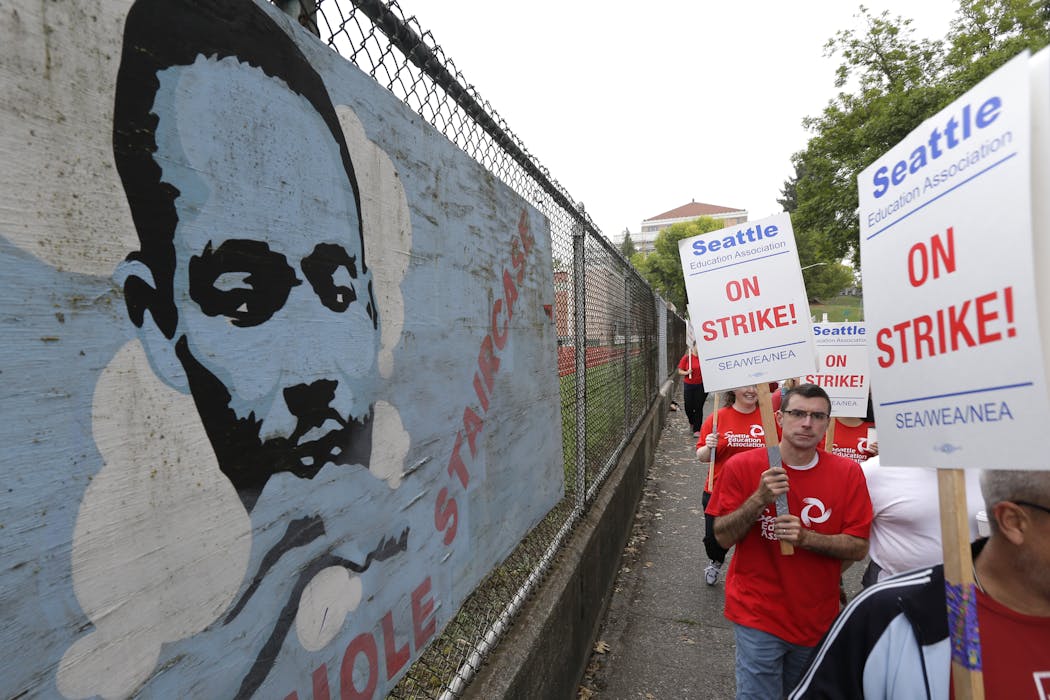
Martin Luther King Jr. became involved not just in fights over racial equality but also economic hardship. Ted S. Warren/AP

Each year on the holiday that bears his name, Martin Luther King Jr. is remembered for his immense contributions to the struggle for racial equality. What is less often remembered but equally important is that King saw the fight for racial equality as deeply intertwined with economic justice.

To address inequality – and out of growing concern for how automation might displace workers – King became an early advocate for universal basic income. Under universal basic income, the government provides direct cash payments to all citizens to help them afford life’s expenses.

In recent years, more than a dozen U.S. cities have run universal basic income programs, often smaller or pilot programs that have offered guaranteed basic incomes to select groups of needy residents. As political scientists, we have followed these experiments closely.

One of us recently co-authored a study which found that universal basic income is generally popular. In two out of three surveys analyzed, majorities of white Americans supported a universal basic income proposal. Support is particularly high among those with low incomes.

King’s intuition was that white people with lower incomes would support this type of policy because they could also benefit from it. In 1967, King argued, “It seems to me that the Civil Rights Movement must now begin to organize for the guaranteed annual income … which I believe will go a long, long way toward dealing with the Negro’s economic problem and the economic problem with many other poor people confronting our nation.”

But there is one notable group that does not support universal basic income: those with higher levels of racial resentment. Racial resentment is a scale that social scientists have used to describe and measure anti-Black prejudice since the 1980s.

Notably, in our research, whites with higher levels of racial resentment and higher incomes are especially inclined to oppose universal basic income. As King well knew, this segment of Americans can create powerful opposition.

Economic self-interest can trump resentment

At the same time, the results of the study also suggest that coalition building is possible, even among the racially resentful.

Economic status matters. Racially resentful whites with lower incomes tend to be supportive of universal basic income. In short, self-interest seems to trump racial resentment. This is consistent with King’s idea of how an economic coalition could be built and pave the way toward racial progress.

Michael Tubbs, the mayor of Stockton, Calif., gestures with his hands while making a point.
As mayor of Stockton, Calif., Michael Tubbs ran a pioneering program that provided a basic income to a limited number of residents.
Rich Pedroncelli/AP

Income is not the only thing that shapes attitudes, however. Some of the strongest supporters of universal basic income are those who have higher incomes but low levels of racial resentment. This suggests an opportunity to build coalitions across economic lines, something King believed was necessary. “The rich must not ignore the poor,” he argued in his Nobel Peace Prize lecture, “because both rich and poor are tied in a single garment of destiny.” Our data shows that this is possible.

This approach to coalition building is also suggested by our earlier research. Using American National Election Studies surveys from 2004-2016, we found that for white Americans, racial resentment predicted lower support for social welfare policies. But we also found that economic position mattered, too.

Economic need can unite white Americans in support of more generous welfare policies, including among some who are racially prejudiced. At a minimum, this suggests that racial resentment does not necessarily prevent white Americans from supporting policies that would also benefit Black Americans.

Building lasting coalitions

During his career as an activist in the 1950s and 1960s, King struggled with building long-term, multiracial coalitions. He understood that many forms of racial prejudice could undermine his work. He therefore sought strategies that could forge alliances across lines of difference. He helped build coalitions of poor and working-class Americans, including those who are white. He was not so naive as to think that shared economic progress would eliminate racial prejudice, but he saw it as a place to start.

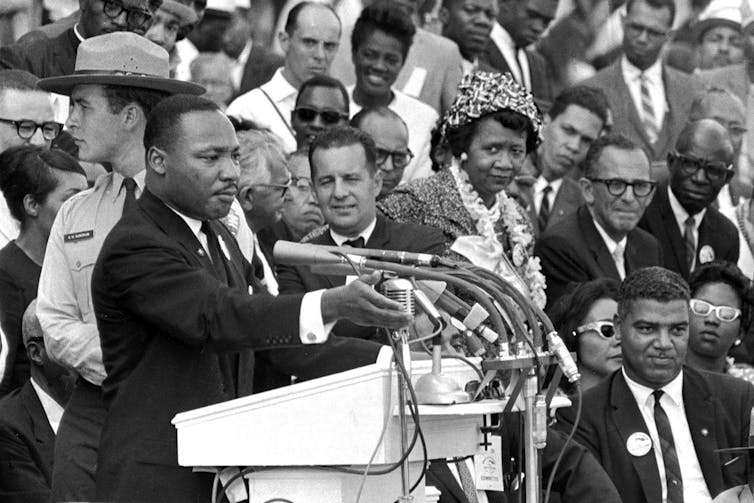
Martin Luther King Jr. speaks before a crowd at the 1963 March on Washington.
Martin Luther King Jr. believed Americans of different racial backgrounds could coalesce around shared economic interests.
AP

Currently, the nation faces an affordability crisis, and artificial intelligence poses new threats to jobs. These factors have increased calls for universal basic income.

Racial prejudice continues to fuel opposition to universal basic income, as well as other forms of social welfare. But our research suggests that this is not insurmountable.

As King knew, progress toward economic equality is not inevitable. But, as his legacy reminds us, progress does remain possible through organizing around shared interests.

The Conversation

The authors do not work for, consult, own shares in or receive funding from any company or organization that would benefit from this article, and have disclosed no relevant affiliations beyond their academic appointment.

ref. Martin Luther King Jr. was ahead of his time in pushing for universal basic income – https://theconversation.com/martin-luther-king-jr-was-ahead-of-his-time-in-pushing-for-universal-basic-income-272963

Bloqué au travail en ce début d’année ? C’est peut-être un signe que vous progressez

Source: The Conversation – in French – By Leda Stawnychko, Associate Professor of Strategy and Organizational Theory, Mount Royal University

Au début de la nouvelle année, il est naturel de se sentir partagé entre la gratitude et l’envie de changement. Le mois de décembre modifie souvent nos habitudes : moins de réunions, des boîtes courriel moins encombrées et une rare occasion de faire le point et de réfléchir.

Pendant cette période, on peut se réjouir du chemin parcouru, tout en ressentant que la voie suivie n’est plus vraiment la bonne.

Ce malaise est particulièrement fréquent à des étapes de la vie où les professionnels s’attendent à se sentir plus stables, mais ont plutôt l’impression de stagner. Il est facile de rejeter ces sentiments comme de l’impatience ou un manque d’engagement.

Mais les recherches sur l’apprentissage et le développement des adultes suggèrent que se sentir bloqué est souvent un signe de croissance personnelle. C’est la preuve que notre développement interne a dépassé ce que notre environnement immédiat peut offrir.

Dans la recherche en éducation, cette tension est souvent décrite comme un dilemme désorientant : une expérience qui remet en question nos hypothèses et révèle un décalage entre la façon dont nous nous voyons et le contexte dans lequel nous évoluons.

Bien que ces moments soient souvent inconfortables, ils agissent comme des catalyseurs pour l’apprentissage et le changement, incitant à réévaluer vos objectifs, vos valeurs et votre orientation. Vu ainsi, le désir d’un nouveau départ est une réponse normale à votre croissance.


À lire aussi :
Cinq conseils pour trouver ce qui vous apporte vraiment de la joie en dehors du travail


Diagnostiquer la source de l’agitation

Si vous êtes prêt à changer, mais que vous ne savez pas par où commencer, une première étape consiste à clarifier ce qui alimente votre sentiment d’agitation. Est-ce le travail lui-même, les personnes avec lesquelles vous travaillez ou la culture organisationnelle au sens large ?

Lorsque les organisations sont généralement favorables, la croissance ne nécessite pas forcément de changer d’entreprise. Le changement peut être possible au sein du même environnement. Dans ces cas, les conversations avec les superviseurs peuvent révéler des opportunités qui ne sont pas immédiatement évidentes, telles que des missions ambitieuses, des projets spéciaux ou le soutien à la formation continue.

Les recherches montrent que les personnes qui restent longtemps dans une même entreprise le font souvent en raison de relations solides, d’une bonne adéquation avec leur vie en général et de ce que les chercheurs appellent « l’ancrage professionnel », c’est-à-dire les avantages financiers, sociaux et psychologiques liés à leur poste qui rendent leur départ coûteux.

Mais si rester freine votre progression, il vaut la peine d’explorer soit la possibilité de renégocier votre trajectoire, soit celle de préparer votre départ de manière réfléchie.

Réévaluer ce qui compte aujourd’hui

Que vous envisagiez un changement au sein de votre organisation ou ailleurs, prendre le temps de clarifier vos besoins, vos objectifs et vos valeurs est essentiel. Ce qui comptait pour vous au début de votre carrière n’a peut-être plus la même importance.

Revenu, apprentissage, flexibilité, stabilité et sens de la vie : l’importance de ces facteurs évolue selon les étapes de votre parcours. Identifier vos priorités actuelles ne signifie pas les figer pour toujours, mais simplement avoir une vision claire pour évaluer les opportunités.

Certaines personnes accordent la priorité au mentorat ou à la formation prise en charge par l’employeur. D’autres ont besoin d’horaires prévisibles, d’une bonne couverture santé ou de flexibilité pour s’occuper de leur famille.

Comprendre ce qui compte vraiment pour vous aujourd’hui aide à réduire les options et à éviter la paralysie que provoquent souvent les grandes décisions.


À lire aussi :
Un robot m’a pris mon stage : l’impact de l’IA sur l’entrée des jeunes dans le monde du travail


Se concentrer sur les activités plutôt que sur les titres

Pour y voir plus clair, imaginez votre rôle idéal sans vous arrêter aux titres de poste. Les titres peuvent être trompeurs et masquent souvent la réalité quotidienne du travail.

Concentrez-vous plutôt sur les activités qui occupent la majeure partie de votre temps et sur les compétences que vous utilisez réellement. Une question utile est : que feriez-vous volontiers même sans être rémunéré ? Ces tâches révèlent souvent vos forces et motivations profondes, ce que les psychologues appellent la motivation intrinsèque – le plaisir d’accomplir une tâche simplement parce qu’elle est gratifiante.

Par exemple, au début de ma carrière, je me suis rendu compte que je prenais beaucoup de plaisir à soutenir des professionnels en transition, en période de conflit ou de changement. Avec le temps, j’ai compris que le mentorat et le coaching étaient des activités qui me passionnaient suffisamment pour les exercer même gratuitement.

Fort de cette prise de conscience, j’ai commencé à chercher des postes qui incluaient ces activités, afin de m’assurer que mon travail reste significatif et stimulant.


Déjà des milliers d’abonnés à l’infolettre de La Conversation. Et vous ? Abonnez-vous gratuitement à notre infolettre pour mieux comprendre les grands enjeux contemporains.


Se préparer pour la prochaine étape

Une fois vos priorités et intérêts clarifiés, identifiez les compétences et qualifications nécessaires pour les postes qui vous intéressent et commencez à les développer de façon intentionnelle.

Cela peut se faire à faible risque, par exemple à travers des projets dans votre emploi actuel, des activités entrepreneuriales, des emplois secondaires, des missions bénévoles ou des formations ciblées. En prenant régulièrement de petites mesures concrètes, vous réduisez progressivement l’écart entre vos capacités actuelles et ce que requiert votre prochaine étape professionnelle.

En cultivant activement ces compétences, vous transformez une période d’agitation en une phase constructive de préparation et de croissance professionnelle.

Lorsque vous réfléchissez à la suite, utilisez votre réseau de manière stratégique pour poser des questions, apprendre et découvrir des opportunités. Les nouveaux départs se construisent à travers les conversations, les expériences et les choix progressifs.

Enfin, soyez également attentif aux croyances qui limitent vos actions. Les idées que vous vous faites sur ce que vous pouvez faire ou non peuvent restreindre vos options bien plus que vos compétences réelles. Le sentiment d’être bloqué n’est pas un obstacle, mais une invitation à évoluer et le signal que vous pouvez commencer un nouveau chapitre dès aujourd’hui.

La Conversation Canada

Leda Stawnychko reçoit des financements du CRSH.

ref. Bloqué au travail en ce début d’année ? C’est peut-être un signe que vous progressez – https://theconversation.com/bloque-au-travail-en-ce-debut-dannee-cest-peut-etre-un-signe-que-vous-progressez-272794

Manifestations en Iran : « Quoi qu’il arrive, la situation s’annonce explosive »

Source: The Conversation – in French – By Francesco Cavatorta, Professor of Political Science, Université Laval

Depuis fin décembre, l’Iran est frappé par un soulèvement inédit. Des manifestants de toutes les régions et de toutes les classes sociales descendent dans les rues pour dénoncer la crise économique et la répression politique, défiant le blocus d’Internet et de télécommunications imposé par le régime.

Le pays traverse une crise économique profonde : dévaluation de la monnaie, inflation galopante et inégalités croissantes alimentent la colère. Les Iraniens dénoncent un régime qui exige des sacrifices constants tout en étant incapable de répondre à leurs besoins.

Face à cette mobilisation massive, le gouvernement répond par une répression violente. Selon les plus récentes estimations d’ONG de défense des droits humains, le bilan de la répression s’élève à plus de 600 morts depuis le début du soulèvement fin décembre, dont une large majorité de manifestants, et plus de 10 000 arrestations ont été signalées dans tout le pays. L’ONG Iran Human Rights (IHR), basée en Norvège, estime néanmoins que le nombre réel de victimes pourrait être beaucoup plus élevé.

Dans ce contexte, le président Donald Trump a menacé de « frapper fort » si la situation devait dégénérer, relançant les inquiétudes sur une possible intervention américaine dans la région.

Pour analyser ces événements, nous avons interrogé le professeur à l’Université Laval Francesco Cavatorta, spécialiste du Moyen‑Orient. Il revient sur les causes du mouvement, les stratégies du régime et les enjeux géopolitiques.


La Conversation Canada : Quelle est l’origine profonde du mouvement de protestation en cours en Iran et en quoi diffère-t-il des précédents soulèvements (2019, 2022) ?

Francesco Cavatorta : Le mouvement actuel est le dernier épisode d’une longue série de mobilisations en Iran, qui date au moins de 2009. Depuis deux décennies, il y a des protestations périodiques. Cette fois-ci, ce qui explique l’intensité de la révolte, c’est la situation socioéconomique, et surtout économique, qui touche même des couches qui étaient auparavant favorisées : la bourgeoisie marchande, les professionnels.

Ces frustrations ont été exacerbées par les récents bombardements israéliens et américains dans la région. On a demandé à la population des sacrifices importants, mais on voit que les puissances étrangères font ce qu’elles veulent. La dévaluation de la monnaie a également contribué au ras-le-bol de personnes qui n’auraient normalement pas manifesté.

Sur les réseaux sociaux, on entend beaucoup de commentaires comme : « Normalement je ne manifeste pas » ou « J’ai convaincu mon père ». Les inégalités croissantes pèsent partout, et même si la dévaluation a été l’étincelle, les conditions de fond étaient déjà en place depuis longtemps.


À lire aussi :
Comment Téhéran a transformé une défaite militaire en victoire symbolique


LCC : Comment expliquer l’ampleur et la rapidité des manifestations malgré le blocus d’Internet par le régime pour contenir les protestations et limiter la diffusion des images et des informations ?

F.C. : Il y a deux ou trois explications. Premièrement, ceux qui sont actifs dans l’opposition ont de l’expérience en communication ; ça fait deux décennies qu’ils protestent. Ensuite, même si l’Internet est limité, les téléphones mobiles restent fonctionnels. On peut filmer, échanger des vidéos, parler avec des proches.

Et pour une fois, la télévision d’État a même diffusé des images de manifestations, [celles pro‑gouvernementales mais aussi de bâtiment en feu]. Enfin, la crise économique touche maintenant tous les quartiers et régions, même ceux qui se croyaient à l’abri. Cela crée un sentiment partagé, ce qui explique la propagation rapide.

LCC : Quelles options réelles les États-Unis ont-ils à leur disposition et quelles seraient les conséquences ?

F.C. Si on savait ce que ferait l’administration Trump, on serait millionnaires. Les options sont difficiles à évaluer : plus de sanctions ? L’Iran est déjà marginalisé, notamment sur le système bancaire international. Bombarder qui et quoi ? Le ministère de l’Intérieur ? Les quartiers généraux de la Garde révolutionnaire ? Mais une attaque pourrait tuer des manifestants et les intimider, sans résoudre le problème de fond.

Pour l’administration Trump, l’idée de tuer le guide suprême, l’ayatollah Ali Khamenei, ne résoudrait rien. Le régime a plus de force qu’on le pense, et une intervention directe avec des soldats ne serait pas souhaitable. L’histoire de l’Irak montre les risques. Même si une intervention avait lieu, son impact serait limité : le régime n’est pas une seule personne, mais un appareil étatique structuré.

LCC : Quelles stratégies les forces de sécurité iraniennes utilisent-elles et quelles sont leurs implications ?

F.C. Avant, la répression était déjà dure, avec des morts dans la rue, mais pas à cette échelle. On arrêtait des personnalités locales, on organisait des procès spectaculaires et on exécutait parfois. Aujourd’hui, les forces de sécurité tirent à bout portant sur les manifestants, ce qui montre que le régime perçoit réellement un danger.

Deux scénarios sont envisageables : soit, à l’image de la Syrie en 2011, la répression dégénère et entraîne une guerre civile prolongée. L’autre scénario est de faire comme en Algérie en 1989 : l’armée tire, mais le régime tente ensuite de se réformer pour préserver sa légitimité [avec l’adoption d’une nouvelle constitution après les émeutes d’octobre 1988]. (Certes, il y a eu une guerre civile qui a débuté quelques années plus tard, en 1992, mais pendant trois ans l’Algérie a vécu un véritable changement.)

LCC : Quel rôle joue la diaspora et les acteurs externes dans le mouvement ?

F.C. La diaspora iranienne est très importante et suit le mouvement depuis longtemps. Reza Pahlavi, le fils exilé du chah d’Iran depuis la révolution khomeyniste de 1979, tente de s’imposer une figure de l’opposition. Son nom est souvent scandé lors des manifestations en Iran.

Mais le régime est en place depuis près de 50 ans. Ceux qui sont à l’extérieur ont moins de poids qu’avant. Il n’y a pas de leaders nationaux clairement identifiés : les manifestants veulent surtout la chute du régime, mais personne ne peut dire ce qui viendra ensuite.

L’histoire montre que se fier uniquement aux exilés peut être trompeur, comme en Irak. Pour le moment, la mobilisation intérieure reste le facteur principal.


À lire aussi :
Le régime iranien est un apartheid des genres. Il faut le dénoncer comme tel


LCC : Quelles perspectives politiques pour le régime iranien ?

F.C. À court terme, c’est très difficile pour les manifestants. L’appareil répressif agit pour sa survie. Mais plus il tire, plus il perd de légitimité. À long terme, tout est possible. Une transition, si elle survient, pourrait être longue et complexe.

La révolution iranienne de 1979 et la chute du Shah d’Iran, Mohammad Reza Pahlavi, n’ont pas suffi : il a fallu une année ou plus de manifestations et de compromis pour que le pays trouve une nouvelle direction. La consolidation de la République islamique a été lente, car de nombreux acteurs aux idéologies différentes avaient participé à la chute du Shah. Après son départ, il a fallu du temps avant que Khomeini ne devienne le leader unique de la révolution et n’impose son modèle de régime théocratique.

Quoi qu’il arrive, la situation s’annonce explosive. C’est un pays de 80 millions d’habitants, divisé sur les plans ethnique et religieux, et doté de réserves pétrolières colossales. Je ne me risquerai à aucune prévision.

La Conversation Canada

Francesco Cavatorta ne travaille pas, ne conseille pas, ne possède pas de parts, ne reçoit pas de fonds d’une organisation qui pourrait tirer profit de cet article, et n’a déclaré aucune autre affiliation que son organisme de recherche.

ref. Manifestations en Iran : « Quoi qu’il arrive, la situation s’annonce explosive » – https://theconversation.com/manifestations-en-iran-quoi-quil-arrive-la-situation-sannonce-explosive-273312

Les stablecoins présentent des risques. Il faut rapidement les encadrer

Source: The Conversation – in French – By Annie Lecompte, Associate professor, Département des sciences comptables, Université du Québec à Montréal (UQAM)

Les stablecoins ambitionnent de combiner le meilleur des deux mondes : l’agilité du numérique et la stabilité d’une devise nationale. La percée au pays de différents stablecoins alignés au dollar canadien ou américain, force toutefois un débat urgent : peut‑on encadrer assez rapidement cette nouvelle monnaie afin de garantir la stabilité financière et l’innovation avant que des stablecoins étrangers n’installent leur domination et ne précarisent l’économie canadienne ?

Au Canada, l’intérêt pour les stablecoins s’est récemment intensifié, avec l’annonce de la Banque Nationale le 9 septembre dernier, qui a donné son appui à un projet de stablecoin arrimé au dollar canadien. La Banque du Canada est également de la partie : Elle plaide pour un cadre fédéral rapide et coordonné encadrant les stablecoins privés, afin d’en tirer les bénéfices tout en protégeant les consommateurs et en préservant la stabilité financière.

En tant que professeure au département des sciences comptables de l’UQAM, je souhaite mettre en lumière les enjeux émergents que ces évolutions soulèvent pour le fonctionnement du système financier canadien, afin de contribuer à une réflexion collective sur la manière d’encadrer ces innovations sans compromettre la stabilité économique du pays.

Stablecoins vs cryptomonnaies vs monnaie numérique de banque centrale

Bien que les stablecoins, les cryptomonnaies comme le Bitcoin, et les monnaies numériques de banques centrales reposent toutes sur des technologies numériques, leur nature et leurs objectifs diffèrent considérablement.

Le Bitcoin a été la première cryptomonnaie largement adoptée. Il repose sur un réseau décentralisé sans autorité centrale, de sorte que sa valeur fluctue librement selon l’offre et la demande. Cette volatilité en fait un actif principalement spéculatif, difficile à utiliser pour des transactions quotidiennes, ou comme unité de compte fiable.

Les stablecoins, au contraire, sont conçus pour limiter ces variations de valeur. En étant adossés à une monnaie traditionnelle ou à d’autres actifs, ils offrent une stabilité qui les rend plus adaptés aux paiements, aux transferts internationaux et à certaines applications de la finance décentralisée. Cependant, ils demeurent émis par des entreprises privées et leur stabilité dépend de la qualité des réserves et de la transparence des mécanismes mis en place.

Les monnaies numériques de banque centrale (CBDC) se distinguent par leur émetteur. Une telle monnaie numérique, comme le dollar numérique que la Banque du Canada a étudié avant de mettre son projet sur pause, est directement émise et garantie par une banque centrale. Elle vise à moderniser le système financier, à renforcer la souveraineté monétaire et à offrir un moyen de paiement numérique sûr et universel. Contrairement aux stablecoins, une CBDC repose sur la confiance dans l’État, et non dans une entreprise privée.

Risques et enjeux liés aux stablecoins

Les stablecoins offrent rapidité et efficacité dans les paiements numériques, mais ils présentent plusieurs risques pour les consommateurs et la stabilité financière.

Le principal enjeu concerne la transparence et la fiabilité des réserves. Pour qu’un stablecoin conserve sa valeur, chaque unité doit être soutenue par des actifs équivalents, comme des devises ou des obligations. Or, certains émetteurs manquent de transparence, comme l’ont montré des scandales liés au Tether. La multiplication de ce type de scandale pourrait entraîner une perte de confiance généralisée dans les stablecoins et provoquer un « bank run » numérique avec des retraits massifs impossibles à honorer.

Un autre risque est systémique. Si un stablecoin largement utilisé faisait défaut, les répercussions pourraient se propager à l’ensemble du système financier, à l’image de la crise financière de 2008. À cela s’ajoutent les risques de fraude et de blanchiment d’argent, amplifiés par la nature transfrontalière de ces actifs, qui peuvent faciliter le financement d’activités illégales.


À lire aussi :
Propriété numérique dans le sport : danger de fraudes et de contrefaçons


Enfin, la domination de stablecoins étrangers comme le Tether poserait un défi de souveraineté monétaire, en réduisant l’efficacité des politiques de la Banque du Canada. Contrairement au Bitcoin, surtout spéculatif, les stablecoins visent un usage quotidien, ce qui accentue leurs effets potentiels en cas de crise. Une réglementation claire et coordonnée est donc essentielle pour encadrer leur usage et protéger la stabilité du système financier.

Situation au Canada

Au Canada, l’encadrement des stablecoins est devenu un sujet prioritaire pour les autorités financières. La popularité croissante de ces actifs numériques a attiré l’attention des régulateurs, qui souhaitent éviter qu’un marché non contrôlé mette en péril la stabilité du système financier. La Banque du Canada souligne qu’il est important de réfléchir à la mise en place d’une réglementation pour encadrer les cryptomonnaies stables, afin de protéger les consommateurs et de préserver la stabilité financière, sans toutefois préciser les modalités concrètes d’un tel cadre.

Actuellement, les stablecoins sont classés dans la catégorie des « actifs cryptographiques à valeur référencée » par les autorités canadiennes. Selon leurs caractéristiques, ils peuvent être considérés comme des valeurs mobilières ou des instruments financiers, ce qui soumet certains émetteurs (notamment ceux dont les stablecoins présentent les attributs d’un titre financier et relèvent donc des valeurs mobilières) aux réglementations provinciales sur les valeurs mobilières.

Dans les faits, cette surveillance accrue des stablecoins classés en tant que valeurs mobilières constitue un filet de protection bienvenu pour les investisseurs et pour l’intégrité du marché. Cette approche fragmentée crée toutefois une certaine incertitude au moment de l’émission puisque les entreprises comme les consommateurs ne savent pas toujours d’emblée dans quelle catégorie réglementaire l’actif sera classé, d’où la volonté de mettre en place une législation fédérale harmonisée.

Le Canada se trouve ainsi à un moment charnière. D’un côté, un cadre réglementaire clair pourrait stimuler l’innovation et permettre l’émergence de projets locaux. De l’autre, une absence de réglementation rapide risquerait de favoriser la domination de stablecoins étrangers et d’exposer les utilisateurs à des risques accrus de fraude et de perte de confiance. Or, un encadrement trop strict ou mal calibré pourrait, à l’inverse, freiner l’innovation, alourdir les coûts de conformité et réduire l’attractivité du marché canadien.


Déjà des milliers d’abonnés à l’infolettre de La Conversation. Et vous ? Abonnez-vous gratuitement à notre infolettre pour mieux comprendre les grands enjeux contemporains.


Regard international

Alors que le Canada élabore encore son cadre réglementaire, plusieurs pays ont déjà avancé. Cette diversité d’approches montre la rapidité avec laquelle les gouvernements s’adaptent à l’essor des stablecoins.

Aux États-Unis, l’USDT et l’USDC dominent le marché mondial. Le pays a adopté en juillet 2025 le GENIUS Act, qui impose aux émetteurs des exigences strictes sur les réserves, la divulgation des avoirs et la lutte contre le blanchiment, tout en favorisant l’innovation et la clarté réglementaire.

En Europe, le règlement MiCA, en cours de déploiement, harmonise la régulation des cryptoactifs et fixe des règles précises sur la gouvernance, la transparence et la protection des consommateurs.

En Asie, la Chine a interdit les cryptomonnaies privées et a plutôt mis l’accent sur le lancement d’un yuan numérique afin de garder un contrôle total sur sa masse monétaire. Le Japon, de son côté, exige que les émetteurs détiennent des réserves en monnaie fiduciaire sous supervision étatique, tandis que Singapour développe, avec Hongkong, un corridor réglementé pour les transactions transfrontalières.

Entre prudence et urgence

Comparé à ces initiatives, le Canada avance plus prudemment. Cette stratégie permet d’apprendre des expériences étrangères, mais un retard prolongé pourrait accroître la dépendance aux stablecoins étrangers et réduire la souveraineté monétaire du pays.

À l’inverse, les pays ayant réglementé très rapidement (comme Singapour et Hongkong) ont déjà constaté certains effets négatifs. En effet, l’introduction de règles strictes peut mener à une sortie de projets locaux incapables d’absorber les coûts de conformité et à une réduction de l’innovation dans l’écosystème, plusieurs entreprises pouvant faire le choix de s’établir dans des juridictions plus souples.

Le Canada semble donc sur la bonne voie pour réglementer les stablecoins de manière efficace, mais il devra clarifier rapidement son cadre afin d’intervenir à temps et préserver sa souveraineté monétaire dans un marché où les acteurs étrangers prennent de l’ampleur.

La Conversation Canada

Annie Lecompte ne travaille pas, ne conseille pas, ne possède pas de parts, ne reçoit pas de fonds d’une organisation qui pourrait tirer profit de cet article, et n’a déclaré aucune autre affiliation que son organisme de recherche.

ref. Les stablecoins présentent des risques. Il faut rapidement les encadrer – https://theconversation.com/les-stablecoins-presentent-des-risques-il-faut-rapidement-les-encadrer-265832

Slanguage: The trouble with idioms is that they can leave even fluent English speakers behind

Source: The Conversation – Canada – By Frank Boers, Professor of Applied Linguistics, Western University

Being a linguist — and someone who has tried to learn several languages (including English) in addition to my mother tongue (Flemish Dutch) — I have an annoying habit: instead of paying attention to what people are saying, I often get distracted by how they are saying it. The other day, this happened again in a meeting with colleagues.

I started writing down some of the expressions my colleagues were using to communicate their ideas that may be puzzling for users of English as a second or additional language.

In a span of about five minutes, I heard “it’s a no-brainer,” “to second something,” “being on the same page,” “to bring people up to speed,” “how you see fit,” “to table something” and “to have it out with someone.”

These are all expressions whose meanings do not follow straightforwardly from their lexical makeup — they’re called idioms by lexicologists.

Idioms are part of daily communication. But this anecdote also suggests that we take it for granted that such expressions are readily understood by members of the same community. However, when it comes to people who are new to said community, nothing could be further from the truth.


Learning a language is hard, but even native speakers get confused by pronunciation, connotations, definitions and etymology. The lexicon is constantly evolving, especially in the social media era, where new memes, catchphrases, slang, jargon and idioms are introduced at a rapid clip.
Slanguage, The Conversation Canada’s new series, dives into how language shapes the way we see the world and what it reveals about culture, power and belonging. Welcome to the wild and wonderful world of linguistics.


Idioms and the limits of language proficiency

Research conducted at the University of Birmingham several years ago revealed that international students for whom English is an additional language often misunderstand lecture content because they misinterpret their lecturers’ metaphorical phrases, including figurative idioms.

More recent research confirms that English idioms can remain elusive to second-language learners even if the expressions are intentionally embedded in transparent contexts.

One of my own recent studies, conducted with international students at Western University in Canada, also found that students incorrectly interpreted idioms and struggled to recall the actual meanings later on after being corrected.

This shows just how persistently confusing these expressions can be.

It’s worth mentioning that we’re talking about students who obtained high enough scores on standardized English proficiency tests to be admitted to English-medium universities. Knowledge of idioms appears to lag behind other facets of language.

When literal meanings get in the way

The challenge posed by idioms is not unique to English. All languages have large stocks of idioms, many of which second-language learners will find puzzling if the expressions do not have obvious counterparts in their mother tongue.

There are various obstacles to comprehending idioms, and recognizing these obstacles can help us empathize with those who are new to a community. For one thing, an idiom will inevitably be hard to understand if it includes a word that the learner does not know at all.

However, even if all the constituent words of an expression look familiar, the first meaning that comes to a learner’s mind can be misleading. For example, as a younger learner of English, I was convinced that the expression “to jump the gun” referred to an act of bravery because, to me, the phrase evoked an image of someone being held at gunpoint and who makes a sudden move to disarm an adversary.

I only realized that this idiom means “to act too soon” when I was told that the gun in this phrase does not allude to a firearm but to the pistol used to signal the start of a race.

I also used to think that to “follow suit” meant taking orders from someone in a position of authority because I thought “suit” alluded to business attire. Its actual meaning — “to do the same thing as someone else” — became clear only when I learned the other meaning of suit in card games such as bridge.

The idea that idioms prompt a literal interpretation may seem counter-intuitive to readers who have not learned a second language because we normally bypass such literal interpretations when we hear idioms in our first language. However, research suggests that second-language learners do tend to use literal meanings as they try to make sense of idioms.

Unfortunately, when language learners use a literal reading of an idiom to guess its figurative meaning, they are very often misled by ambiguous words. For example, they will almost inevitably misunderstand “limb” in the idiom “to go out on a limb” — meaning “to take a serious risk” — as a body part rather than a branch of a tree.

Recognizing the origin of an idiomatic expression can also be difficult because the domains of life from which certain idioms stem are not necessarily shared across cultures. For example, learners may struggle to understand English idioms derived from horse racing (“to win hands down”), golf (“par for the course”), rowing (“pull your weight”) and baseball (“cover your bases”), if these sports are uncommon in the communities in which they grew up.

A language’s stock of idioms provides a window into a community’s culture and history.

Same language, same idioms? Not exactly

Idiom repertoires vary across communities — whether defined regionally, demographically or otherwise — even when those communities share the same general language.

For example, if an Aussie were to criticize an anglophone Canadian for making a fuss by saying “you’re carrying on like a pork chop,” they may be lost in translation, even if there isn’t much of one. At least, linguistically that is.

Although people may have learned a handful of idioms in an English-language course taken in their home country, those particular idioms may not be the ones they will encounter later as international students or immigrants.

The moral is simple: be aware that expressions you consider perfectly transparent because you grew up with them may be puzzling to others. We need to have more empathy for people who are not yet familiar with the many hundreds of potentially confusing phrases that we use so spontaneously.

The Conversation

Frank Boers receives funding from the Social Science and Humanities Research Council of Canada.

ref. Slanguage: The trouble with idioms is that they can leave even fluent English speakers behind – https://theconversation.com/slanguage-the-trouble-with-idioms-is-that-they-can-leave-even-fluent-english-speakers-behind-271681

The Colombian border is one of the biggest obstacles to building a new Venezuela

Source: The Conversation – Canada – By Sally Sharif, Lecturer in Political Science, University of British Columbia

Since American forces captured Venezuelan President Nicolás Maduro, plunging the country into uncertainty, there have been hopes for a transition to democracy, the stabilization of its economy, a reduction in drug trafficking and conditions that might allow millions of Venezuelans abroad to return home.

But one factor will impede efforts at stabilizing the country: Venezuela’s hard-to-control border with Colombia, a shadow security zone that serves as a sanctuary and trafficking corridor for armed and dangerous organizations.

There are two main armed groups along the border:

  1. Leftist guerrillas in Colombia who have used Venezuelan territory to regroup, move supplies and evade counterinsurgency attacks.
  2. Leftist pro-government militias in Venezuela that have squashed dissent and exerted violence against civilians every time protests have erupted against Hugo Chávez and, later, Maduro.

Over time, these groups have often collaborated, turning a porous frontier into a shared operating space that any new Venezuelan government will have to dismantle.

The question, then, is whether any government — democratic or otherwise — can consolidate power in the presence of entities on both sides of an ungoverned international border with the most to lose from a change in the status quo.


Read more:
5 scenarios for a post-Maduro Venezuela — and what they could signal to the wider region


Venezuela: Shielding Colombian leftist rebels

I have been studying armed groups in Colombia for a decade. My research explains why about one-third of disarmed fighters of the guerrilla group the Revolutionary Armed Forces of Colombia (FARC) have picked up arms again since a historic peace agreement in 2016.

The breakup in the organizational structure of FARC is one of these reasons. The other reason is Venezuela’s support.

When a handful of disarmed FARC commanders released a video in August 2019 announcing their return to taking up arms, they were able to do so because Maduro’s government had an ideological and strategic stake in keeping them afloat: a shared leftist, anti-imperialist world view that treated Colombia’s Marxist guerrillas as political allies.

In fact, when I interview disarmed FARC combatants in Colombian provinces on the border for my research, they consistently describe Venezuela as a place where they could recuperate, treat injured fighters and regroup after Colombian military pressure, which was equipped and funded in part by the U.S. government.

In the border province of Norte de Santander, the FARC and another leftist guerrilla group, the National Liberation Army (ELN), collaborate to ship coca paste from the expansive coca fields of northeastern Colombia through alluvial paths and dirt roads to Lake Maracaibo in Venezuela. From there, speed boats take the cocaine to the U.S.

In one interview, I asked a former FARC commander to draw the trafficking route on a map. To my surprise, it zig-zagged across the international border between Colombia and Venezuela.

Any attempt to change the status quo in Venezuela will therefore be met with fierce resistance by Colombian armed groups who have for decades benefited from a porous border and a helping hand across it.

Armed militias mobilized by Chavez

Colombia has done its share of influencing Venezuela’s politics, in particular during the presidency of Álvaro Uribe from 2002 to 2010, when
Colombia was closely tied to the U.S. and was perceived by former president Chávez as a threat to his revolution.

After the failed April 2002 coup attempt against Chávez — when some members of the military and opposition briefly removed him from office before he returned within two days — the president responded by backing armed pro-government militias, known as colectivos, so they could help defend his rule.

For years, Maduro consistently armed and provided impunity to militias that run street-level checkpoints and show up fast across the country when the regime feels threatened.

In the days after Maduro’s recent capture, those groups were visibly deployed across the capital of Caracas, patrolling on motorbikes with rifles, stopping cars and demanding access to people’s phones — signalling that Chávez’s ideology still has muscle on the street, even if its top leader is now in an American jail cell.

Militias are one of the most destructive forces for a society. Once mobilized, they allow governments to avoid accountability for violence and repression. They are also difficult to get rid of. My research also shows that almost half of armed groups return to fighting after going through disarmament.

With armed violence in Colombia surging again and leftist armed groups entrenched along the frontier, any crackdown on Venezuelan colectivos risks pushing them across the border into Colombia, where allied guerrillas can shelter them until the pressure eases.

Sore spots for state-building

International borders are sore spots for countries attempting to consolidate power and transition to peace. The civil war in the Democratic Republic of the Congo has been raging for decades because of neighbouring Rwanda’s support for the rebels.

The World Bank ran into this reality in the Great Lakes region of Africa: it helped launch the Multi-Country Demobilization and Reintegration Program because efforts to demobilize fighters in one country didn’t work when armed groups and combatants were moving and operating across borders.

Similarly, the Colombia-Venezuela border has long fuelled cycles of violence in Colombia. It will now be the main sticking point in any Venezuelan efforts to reduce drug trafficking, consolidate power and transition to democracy and the rule of law.

The Conversation

Sally Sharif does not work for, consult, own shares in or receive funding from any company or organisation that would benefit from this article, and has disclosed no relevant affiliations beyond their academic appointment.

ref. The Colombian border is one of the biggest obstacles to building a new Venezuela – https://theconversation.com/the-colombian-border-is-one-of-the-biggest-obstacles-to-building-a-new-venezuela-272975

Slanguage: How ‘6-7’ makes sense even though it means nothing

Source: The Conversation – Canada – By Nicole Rosen, Professor and Canada Research Chair in Language Interactions, University of Manitoba

The expression “6-7” spread like wildfire last year, making its way outside the realm of usual adolescent slang and into the collective discourse, popping up at public sports events, in Halloween costumes and even in teachers’ lesson plans.

A couple of things are clear about the 6-7 phenomenon: kids love saying it and adults love hating it. But what does it actually mean? The answer — “It doesn’t mean anything” — appears to be the main complaint. But meaning nothing is kind of the whole point.

While it may not signify anything in the conventional sense of meaning, 6-7 expresses solidarity and belonging.

Users of the expression show that they’re part of the in-group as opposed to those who “just don’t get it.” They’re deploying something sociolinguists call “social meaning.”

Social meaning can be thought of as value-added information about the speaker and their attitude, their stance and how they want to portray themselves in the world. It’s an integral part to how we understand language, and the fact that this is being spread by young adolescents is no accident.


Learning a language is hard, but even native speakers get confused by pronunciation, connotations, definitions and etymology. The lexicon is constantly evolving, especially in the social media era, where new memes, catchphrases, slang, jargon and idioms are introduced at a rapid clip.
Slanguage, The Conversation Canada’s new series, dives into how language shapes the way we see the world and what it reveals about culture, power and belonging. Welcome to the wild and wonderful world of linguistics.


Not all meaning is about dictionary definitions

When people think about meaning, it’s normally semantic meaning. Six, for example, is a numerical concept that we understand to mean one more than five and one less than seven. It’s another way of saying half a dozen. It’s the age that most children enter Grade 1. Maybe it’s suppertime.

6-7, on the other hand, is void of any semantic meaning. It doesn’t even refer to quantity. Consider the difference between, “I’d like 6-7 crackers” versus simply yelling “6-7” and doing the viral hand gesture. The 6-7 in the first sentence means an amount of crackers, the 6-7 in the latter does not actually refer to an amount at all. But that doesn’t make it meaningless.

While 6-7 has no semantic meaning, it has a very definite social meaning. Social meaning involves how hearers interpret language not only on the basis of the meaning of the words, but on the basis of what kind of person is speaking and how they align themselves socially.

And the truth is that we rely on social meaning like this all the time, even if we don’t notice it.

Social meaning speaks volumes

Consider a person’s clothing and hairstyle, for example.

Wearing a Winnipeg Jets jersey and a mullet hairstyle signals to people in Canada things about you without you even opening your mouth: you’re a hockey enthusiast, invested in a team, and probably play or watch the game regularly. Then, to add to these visual cues, you can use a phrase such as “Fire that biscuit top shelf!” that lets people know not only that you want your player to “shoot the puck up high in the corner of the net,” (semantic meaning) but also that you’re positioning yourself as a hockey person who is knowledgeable on the matter (social meaning).

True synonyms are rare in languages. Even when there are two words that mean the same thing, they usually have different connotations, are used in different contexts or have different social meanings. Calling a “puck” a “biscuit” might be referring to the same object, but it certainly does not have the same overall meaning in discourse.

Usually, words have at least semantic meaning and sometimes also social meaning. 6-7 is interesting precisely because it has no semantic meaning, only social meaning, which is much more uncommon.

Slang, social development and growing up

The fact that an expression with only social meaning has been adopted primarily by adolescents is to be expected. Adolescence is a period of intense social development.

This age group is leaving childhood behind, and the teenage years have consistently been found to be a time of deep linguistic change when social meaning becomes paramount as they strive to stake their own place in the world. Adolescents are demarcating themselves both from younger children and from their parents.

This era results in what is often called the adolescent peak of 15 to 17, when the use of new slang and innovative items is most pronounced. That said, 6-7 is generally used by a younger group, more in the 11 to 14 age range — and even younger now, as it moves rapidly through the population.

It’s possible that we’re seeing the effects of children being online at a younger age, and that this intense social development is happening earlier.

In the end, the fact that 6-7 doesn’t mean anything is perfectly fine. It’s not simply “brain rot,” but rather the developmentally appropriate creation of a saying with social meaning for adolescents at a time when social dynamics are the most important aspect of their lives.

And if you really hate it, don’t worry, you don’t have to use it, and yes, it will pass. By now it’s so widespread that only the uncool (adults and younger kids) are using it anyway. It has already lost its cachet.

A new perplexing, yet socially meaningful, phrase or expression will soon take its place. In fact, it appears that 41 may be the new 6-7.

The Conversation

Nicole Rosen has received funding from The Social Sciences and Humanities Research Council of Canada and the Canada Research Chair program.

ref. Slanguage: How ‘6-7’ makes sense even though it means nothing – https://theconversation.com/slanguage-how-6-7-makes-sense-even-though-it-means-nothing-270006