Since the beginning of the century, the number of satellites orbiting Earth has increased more than 800%, from less than 1,000 to more than 9,000. This profusion has had a number of strange and disturbing repercussions. One of them is that companies are selling data from satellite images of parking lots to financial analysts. Analysts then use this information to help gauge a store’s foot traffic, compare a retailer to competitors and estimate its revenue.
This is just one example of the new information, or “alternative data”, that is now available to analysts to help them make their predictions about future stock performance. In the past, analysts would make predictions based on firms’ public financial statements.
A weekly e-mail in English featuring expertise from scholars and researchers. It provides an introduction to the diversity of research coming out of the continent and considers some of the key issues facing European countries. Get the newsletter!
According to our research, the plethora of new sources of data has improved short-term predictions but worsened long-term analysis, which could have profound consequences.
Tweets, twits and credit card data
In a paper on alternative data’s effect on financial forecasting, we counted more than 500 companies that sold alternative data in 2017, a number that ballooned from less than 50 in 1996. Today, the alternative data broker Datarade lists more than 3,000 alternative datasets for sale.
In addition to satellite images, sources of new information include Google, credit card statistics and social media such as X or Stocktwits, a popular X-like platform where investors share ideas about the market. For instance, Stocktwits users share charts showing the evolution of the price of a given stock (e.g. Apple stock) and explanations of why the evolution predicts a price increase or decrease. Users also mention the launch of a new product by a firm and whether it makes them bullish or bearish about the firm’s stock.
Using data from the Institutional Brokers’ Estimate System (I/B/E/S) and regression analyses, we measured the quality of 65 million equity analysts’ forecasts from 1983 to 2017 by comparing analysts’ predictions with the actual earnings per share of companies’ stock.
We found, as others had, that the availability of more data explains why stock analysts have become progressively better at making short-term projections. We went further, however, by asking how this alternative data affected long-term projections. And we found that over the same period that saw a rise in accuracy of short-term projections, there was a drop in validity of long-term forecasts.
More data, but limited attention
Because of its nature, alternative data – information about firms in the moment – is useful mostly for short-term forecasts. Longer-term analysis – from one to five years into the future – is a much more important judgment.
Previous papers have proved the common-sense proposition that analysts have a limited amount of attention. If analysts have a large portfolio of firms to cover, for example, their scattered concentration begins to yield diminishing returns.
We wanted to know whether the increased accuracy of short-term forecasts and declining accuracy of long-term predictions – which we had observed in our analysis of the I/B/E/S data – was due to a concomitant proliferation of alternative sources for financial information.
To investigate this proposition, we analyzed all discussions of stocks on Stocktwits that took place between 2009 and 2017. As might be expected, certain stocks like Apple, Google or Walmart generated much more discussion than those of small companies that aren’t even listed on the Nasdaq.
We conjectured that analysts who followed stocks that were heavily discussed on the platform – and so, who were exposed to a lot of alternative data – would experience a larger decline in the quality of their long-term forecasts than analysts who followed stocks that were little discussed. And after controlling for factors such as firms’ size, years in business and sales growth, that’s exactly what we found.
We inferred that because analysts had easy access to information for short-term analysis, they directed their energy there, which meant they had less attention for long-term forecasting.
The broader consequences of poor long-term forecasting
The consequences of this inundation of alternative data may be profound. When assessing a stock’s value, investors must take into account both short- and long-term forecasts. If the quality of long-term forecasts deteriorates, there is a good chance that stock prices will not accurately reflect a firm’s value.
Moreover, a firm would like to see the value of its decisions reflected in the price of its stock. But if a firm’s long-term decisions are incorrectly taken into account by analysts, it might be less willing to make investments that will only pay off years away.
In the mining industry, for instance, it takes time to build a new mine. It’s going to take maybe nine, 10 years for an investment to start producing cash flows. Companies might be less willing to make such investments if, say, their stocks may be undervalued because market participants have less accurate forecasts of these investments’ impacts on firms’ cash flows – the subject of another paper we are working on.
The example of investment in carbon reduction is even more alarming. That kind of investment also tends to pay off in the long run, when global warming will be an even bigger issue. Firms may have less incentive to make the investment if the worth of that investment is not quickly reflected in their valuation.
Practical applications
The results of our research suggest that it might be wise for financial firms to separate teams that research short-term results and those that make long-term forecasts. This would alleviate the problem of one person or team being flooded with data relevant to short-term forecasting and then also expected to research long-term results. Our findings are also noteworthy for investors looking for bargains: though there are downsides to poor long-term forecasting, it could present an opportunity for those able to identify undervalued firms.
Thierry Foucault a reçu des financements du European Research Council (ERC).
Noor Bin Ladin, a right-wing influencer, stridently declares “I don’t want to eat the bugs” on a talk show hosted by a former adviser to US President Donald Trump. Laurent Duplomb, a senator from the conservative Les Républicains party in France, informs his colleagues that the French would be eating “insects without their knowledge”. Bartosz Kownacki, an MP from the nationalist Law and Justice party in Poland, suggests that opposition politicians write “instead of chicken, eat a worm” on their election materials, arguing that “this is their real election programme.” Thierry Baudet, a leader of the far-right Forum for Democracy party in the Netherlands, shouts “No way! No way!” while holding up a bag of mealworms in front of protesting farmers. Politicians in Lega, a far-right party in Italy, warn that the European Union is planning to “impose” the eating of insects on citizens in the bloc – and a Lega electoral campaign includes a billboard-sized image of a person popping an enormous cricket into their mouth, next to the caption, “Let’s change Europe before it changes us.”
A weekly e-mail in English featuring expertise from scholars and researchers. It provides an introduction to the diversity of research coming out of the continent and considers some of the key issues facing European countries. Get the newsletter!
During the 2020s, commentators and politicians across the right-wing political spectrum have amplified an Internet-based conspiracy theory that elite forces are conspiring to make us all eat insects. Often rallying under the slogan “I will not eat the bugs,” right-wing and far-right figures have come out in force against human consumption of insects. Many of these people assert that the EU is planning to force bug-eating on the general public while devastating traditional agriculture and meat consumption under the guise of the European Green Deal, the bloc’s plan to eliminate greenhouse gases by 2050 and decouple economic growth from resource use. Opposing insect-eating has become a symbolic way to protest EU environmental policies, express scepticism of and hostility toward Brussels, and villainize political opponents. Closer inspection reveals that the conspiracy theory underlying such opposition has much older and more sinister resonances.
“Spreading disinformation”
Insect eating (entomophagy) remains a minor practice in Europe and North America, although alternative protein sources do play a role in the EU’s move toward a sustainable future. So far, the European Commission has approved frozen, dried and powdered forms of Tenebrio molitor (yellow mealworm larva), Locusta migratoria (migratory locust), Acheta domesticus (house cricket) and Alphitobius diaperinus (the lesser mealworm larva) for human consumption. But the market for insect powder in foods like bread, pasta and sports bars remains small. Although insects are common food in many parts of the world, consumers in the West, where insects are more commonly used to provide protein in animal feed, are reluctant to eat bugs for historical reasons based in ideas of uncleanliness and primitiveness. So, based on the facts, there seems to be little to no reason for statements such as those made by Rumen Petkov of Bulgaria’s ABV party, who said that EU approval of insect consumption is a “crime against Europe” and that the European Commission is “prepared to kill our European children”.
What led to the rapid spread of this conspiracy theory? Noor Bin Ladin’s remarks give us a clue. During her talk show appearance, Bin Ladin described her words as a message for Klaus Schwab to take to his “masters”. Schwab is the founder and executive chair of the World Economic Forum. Early in the Covid pandemic, Schwab and the WEF produced a set of proposals titled “the Great Reset”, which called for an overhaul of various world systems to produce a stakeholder-driven capitalism that would lead to a more socially and environmentally responsible future. Conspiracists seized on and branded “the Great Reset” as a new iteration of a conspiracy theory known as the New World Order – an imagined global governance system meant to control the lives of everyone. Both the Great Reset and the New World Order lead back to much older and broader antisemitic conspiracy theories that hold that elite Jewish financiers run the world with their hands on invisible levers of power. All these narratives tap into feelings of futility and hopelessness about the future.
US right-wing media personality Tucker Carlson called a 2023 episode of his show, which included a heavy focus on Schwab and the WEF, “Let Them Eat Bugs”, a title that gestures at the remark allegedly made by Marie Antoinette, the last queen of France, when she heard about people suffering from a lack of bread before the French Revolution: “Let them eat cake”. With this title, Carlson is aiming to emphasize that the elite are hopelessly out of touch and have contempt for farmers and the average man, whom they want to force to eat bugs. Like the French bedbug scare in late 2023, right-wing alarm around insect-eating has connections to the spread of anti-EU Russian propaganda. Russian news outlets have suggested that Europeans are so poor and food deprived as a result of sanctions connected to the war in Ukraine that they have been reduced to eating insects. As the European Digital Media Observatory (EDMO) writes, insects are “delicious treats for actors with interest in spreading disinformation against the EU”.
Symbols for dehumanization
The desire to stir up fear about the minor level of European and US insect consumption is not based on the risk of rapid growth in the insect market, but on the power to arouse disgust and fear itself. Insects have long been used as symbols to stir revulsion and paint opponents as objects of physical and moral disgust. During times of political extremism, insects have featured repeatedly in efforts to distance, devalue and dehumanize minorities. Armenians were called locusts during the Armenian genocide, and Jews were compared to lice in Nazi Germany. In the period prior to the ethnic genocide of Tutsis in Rwanda, some Hutus repeatedly called Tutsis “cockroaches” on public radio. The right wing’s current fetishization of insect-eating serves as a narrative to cast political opponents as morally repulsive, even if not labelling them as bugs themselves.
For some figures on the right, insect consumption symbolizes the worst of Eurocentric liberalism – seen as a movement so void of a positive political vision that the only possible future it offers is one of impoverishment and bug-eating. They point to an elite who they claim will go on feasting on meat while forcing mealworms and fly larvae on the rest of us. It’s a potent image. At a moment in which people on the right and the left seem unable to imagine a better political future together, it becomes easier to demonize climate policy-minded leaders as a group of disgusting hypocrites plotting to create a society of contrived scarcity where the general population is reduced to eating bugs.
Meanwhile, since 2015, scientists have been releasing papers warning that the global food system shows risks of genuine structural problems. In a future of environmental disruption, trade wars and real risks of food shortages and famine, we may need all the calories we can get – insect-based or otherwise.
Out of curiosity, I bought a bag of cricket flour last fall. The crickets resulted in a delicious, nutty-flavoured cecina, well… crickcina. So far, none of my friends will try it. They’re missing out.
D. D. Moore ne travaille pas, ne conseille pas, ne possède pas de parts, ne reçoit pas de fonds d’une organisation qui pourrait tirer profit de cet article, et n’a déclaré aucune autre affiliation que son organisme de recherche.
Source: The Conversation – (in Spanish) – By Florian Bonnet, Démographe et économiste, spécialiste des inégalités territoriales, Ined (Institut national d’études démographiques)
The political decisions made during 2020 and 2021 to combat the Covid-19 pandemic profoundly altered daily life. Professionally, societies faced partial unemployment and widespread adoption of remote work; personally, individuals endured lockdowns and social distancing measures. These interventions aimed to reduce infection rates and ease pressure on healthcare systems, with the primary public health goal of minimizing deaths.
A weekly e-mail in English featuring expertise from scholars and researchers. It provides an introduction to the diversity of research coming out of the continent and considers some of the key issues facing European countries. Get the newsletter!
More than five years after the pandemic began, what do we know about its impact on human longevity? Here’s a closer look.
A decline in global life expectancy
Initial assessments of the pandemic’s toll have been refined over time. According to a World Health Organization (WHO) report published in May 2024, global life expectancy declined by 1.8 years between 2019 and 2021, erasing a decade of progress. These estimates rely on “excess mortality”, a metric that measures the difference between observed mortality during the pandemic and expected mortality in its absence.
Excess mortality can be quantified using different indicators, such as the number of excess deaths. However, comparing this indicator between countries of different sizes and age structures can be challenging. Another informative metric is the loss of life expectancy at birth, calculated globally by organisations such as the WHO.
The regular calculation, publication and dissemination of excess mortality indicators are vital for comparing the pandemic’s impact across countries at the national level. However, it is important to recognise that the pandemic did not affect all areas within countries equally. Variability in the severity of the pandemic’s impact often stemmed from differing confinement strategies implemented to contain the virus.
This uneven distribution highlights the need to quantify these indicators at a more granular geographical level. Such localised analysis can reveal the regions most severely affected, providing valuable insights into the pandemic’s effects and enabling the development of targeted response strategies.
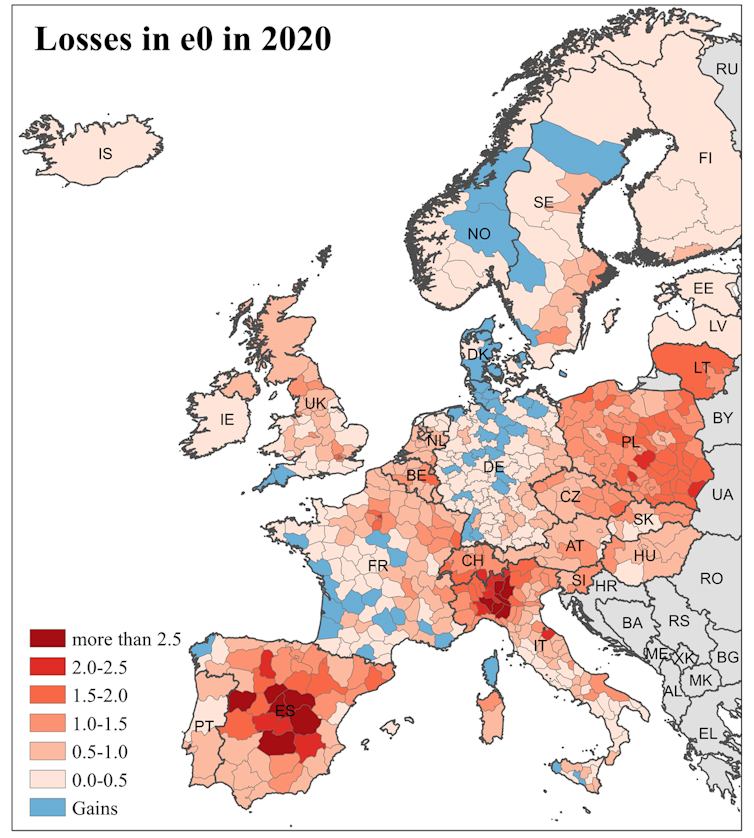
In 2020, significant declines in life expectancy were observed in northern Italy and Spain
Figure 1 illustrates the spatial distribution of estimated losses of life expectancy in 2020. These losses were highest in northern Italy and central Spain. In the Italian regions of Bergamo and Cremona, life expectancy dropped by nearly four years, while Piacenza experienced a decline of three and a half years. In Spain, the regions of Segovia, Ciudad Real, Cuenca and Madrid saw losses of approximately three years.
The losses were even more pronounced among men (data not presented here), who were disproportionately affected by the pandemic. In Cremona, the decline in life expectancy among men reached nearly five years, while in Bergamo, it was close to four and a half years.
Figure 1: Estimated loss of observed life expectancy at birth (e0) in 2020 across 569 regions in 25 European countries. Estimates are for both sexes combined. Fourni par l’auteur
Eastern Europe, particularly Poland, along with eastern Sweden and northern and eastern France, also experienced significant, though less severe, declines. In France, the Paris region and areas near the German border recorded the highest losses, ranging from 1.5 to 2 years.
In contrast, other regions saw much smaller impacts. This is particularly true for southern Italy, much of Scandinavia and Germany, southern parts of the United Kingdom, and western France. In these regions, observed life expectancy is close to what would have been expected in the absence of the pandemic. In France, the implementation of lockdown measures in March and November likely prevented the pandemic from spreading across the entire country from the initial clusters in the north and east.
In 2021, a shift in the pandemic toward Eastern Europe
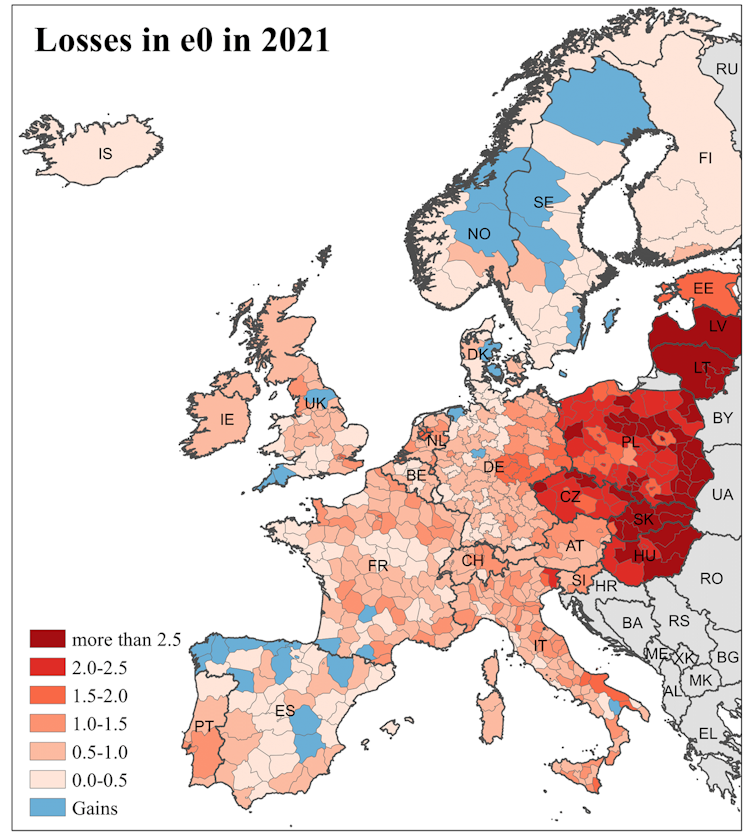
Figure 2 shows the estimated losses of life expectancy in 2021. At a glance, the regions most affected by excess mortality during the Covid-19 pandemic differed significantly from those in 2020. The most substantial losses were concentrated in Eastern Europe.
Figure 2: Estimated loss of observed life expectancy at birth (e0) in 2021 across 569 regions in 25 European countries. Estimates are for both sexes combined. Fourni par l’auteur
Among regions where life expectancy declined by more than two years, 61 of Poland’s 73 regions, 12 of the Czech Republic’s 14 regions, all eight Hungarian regions, and seven of Slovakia’s eight regions were affected. In contrast, only one Italian region and one Spanish region experienced losses exceeding two years, despite these countries being heavily impacted in 2020.
Germany saw much greater losses in 2021 than in 2020, particularly in its eastern regions, where declines often exceeded 1.5 years. In southern Saxony, Halle and Lusatia, losses approached two years. Conversely, Spain and Scandinavia recorded the lowest declines in life expectancy.
In France, the losses were more uniform than in 2020, generally ranging from 0 to 1.5 years. The highest loss occurred in the Parisian suburbs, particularly Seine-Saint-Denis, where life expectancy fell by 1.5 years – or two years for men.
What is the overall assessment for these two years?
To determine the overall impact of 2020 and 2021 in terms of life expectancy loss, we used an indicator that sums up the years of life lost due to the pandemic over this two-year period. This method allows us to rank the 569 European regions.
The regions most affected were Pulawy, Bytom and Przemyski in southeastern Poland, along with Kosice and Presov in eastern Slovakia. Among the top 50 regions, Eastern Europe dominated, with 36 Polish regions, six Slovakian regions, two Czech regions, one Hungarian region, and both Lithuanian regions included. Italian regions such as Cremona, Bergamo and Piacenza also ranked high, falling between the 15th and 30th positions. In France, Seine-Saint-Denis ranked 81st, while all other French regions were outside the top 100.
It is crucial to analyse the impact of a crisis like the Covid-19 pandemic at a fine geographical scale, as within-country disparities can be significant. This was particularly evident in Italy in 2020, where the north was far more affected than the south, and in Germany in 2021, with stark differences between the west and the east.
Our study highlighted the severe impact of the pandemic in specific European regions, where life expectancy losses exceeded three years. The most affected regions shifted over time, moving from areas with traditionally high life expectancy (such as northern Italy, central Spain and the greater Paris region) in 2020 to regions with traditionally lower life expectancy (Eastern Europe) in 2021. France was relatively spared compared to the rest of Europe, with the notable exception of Seine-Saint-Denis.
The coming years will be critical in determining whether life expectancy levels can return to their long-term trajectories or if the pandemic has caused lasting structural changes in certain regions.
Les auteurs ne travaillent pas, ne conseillent pas, ne possèdent pas de parts, ne reçoivent pas de fonds d’une organisation qui pourrait tirer profit de cet article, et n’ont déclaré aucune autre affiliation que leur organisme de recherche.
Source: The Conversation – (in Spanish) – By Małgorzata Zachara-Szymańska, Jean Monnet Fellow, Professor of International Relations, Jagiellonian University, European University Institute
The European Union will have to strike a deal with US President Donald Trump on tariffs, NATO, and the stationing of US troops in EU countries. A trade war with the US will further weaken the already modest growth prospects in EU countries. Europe also still lacks a clear plan for how to defend itself if the US were to withdraw from its security system. Turning NATO into a more “Europeanized” alliance will require the development of a homegrown European military-industrial complex, and these things take time.
A weekly e-mail in English featuring expertise from scholars and researchers. It provides an introduction to the diversity of research coming out of the continent and considers some of the key issues facing European countries. Get the newsletter!
More broadly, Trump openly challenges the postwar international order – an order shaped jointly by the US and Europe. He disregards international trade rules, sees no purpose in most international organizations, and his calls to take over or annex the Panama Canal, Greenland and Canada violate the principles of self-determination and respect for international agreements. The EU can’t stop him, but it must choose: focus energy on resisting the erosion of international law and diplomacy or implement a pragmatic strategy of damage control. The latter demands leverage – bargaining chips – and sustained dialogue with Washington, however strained the politics.
This kind of strategic exercise is something Poland has been quietly mastering for years. It recently signed an agreement with a US firm to build its first nuclear power plant, and the Pentagon has approved the sale of state-of-the-art AIM-120D3 air-to-air missiles to Warsaw.
Just 35 years ago, Poland was a struggling, post-communist state plagued by corruption, lacking democratic traditions and having no experience in a market economy. Today, it is projected to have the fastest-growing European economy in the Organisation for Economic and Co-operative Development (OECD) in 2025. Its political institutions are far from flawless, but they have proven resilient. The key to Poland’s progress has been its ability to skilfully navigate the transatlantic space – strengthening military resilience through its ties with the United States, while also bolstering its economy with support from European Union cohesion funds.
Vito Corleone is wounded and furious
Poland has long been seen in Europe as the eager Atlanticist – sometimes as naive, sometimes as reckless. In 2003, when the continent was deeply divided over the Iraq War, Poland defied European opinion and sent troops to contribute to the US-led invasion. European leaders accused Warsaw of acting as Washington’s Trojan horse in European public debate. French president Jacques Chirac even described Poland’s stance as “infantile” and “dangerous”, famously declaring that Central and Eastern European countries had “missed a good opportunity to shut up”.
However, at the start of the 21st century, Warsaw was focused on strengthening its security and international standing. It got what it wanted, even at the cost of lost lives, a tarnished image, and bitter disappointments, as the expected lucrative contracts for Polish companies to participate in the reconstruction of Iraq never materialized. For the first time since World War II, a Polish contingent gained real combat experience. It became obvious that the army was in urgent need of modernization, and that modernization later occurred. It gives me no pleasure that Poland participated in an illegal war. But as an analyst, I can’t ignore the political and military benefits that followed.
In The Godfather Doctrine: A Foreign Policy Parable, published in 2009, political analysts John C. Hulsman and A. Wess Mitchell likened Poland to Enzo the baker, a character who is loyal and steady, standing guard for the Corleone family in the seminal 1972 film. In their allegory, the US is the wounded Don Vito Corleone, struggling to retain influence, while his sons scramble to save the family’s power.
While pop culture analogies have their limits, they often offer sharp insights. Western European countries now face a defining question: what kind of game do they want to play as their long-standing ally appears to spiral inward? Should they seize this moment to engage in confrontation – like rival mafia families in The Godfather trilogy – or secure what resources they can from a fading superpower to shore up their own vulnerabilities?
Two loyalties, one strategy
The reality is that Polish society is as pro-European as it is pro-American. It is also the case that the dual allegiance lost credibility when the populist Law and Justice party, in power from 2015 to 2023, adopted a combative stance toward Brussels and Berlin, isolating Poland diplomatically and weakening its position as a trustworthy European partner.
The European Commission accused the Law and Justice government of breaching EU treaty law on multiple fronts. Poland faced infringement procedures over its violations of environmental standards, its refusal to accept refugees under the bloc’s relocation mechanism, and its reforms of the common courts. What sparked outrage across Europe, and within Poland itself, was the dismantling of an already conservative abortion law, coupled with a brutal hate campaign targeting the LGBTQ+ community.
Yet even after years in power, Law and Justice failed to shift public opinion about being part of the EU: in 2022, a survey by the Public Opinion Research Centre (CBOS) showed that 92% of Poles expressed support for membership – the highest level recorded since 1994. Since joining the bloc in 2004, EU-funded investments have become permanent features of Poland’s landscape. They include new highways, restored historical landmarks, the Warsaw metro, the port of Szczecin, and widespread access to high-speed Internet. In late 2023, a democratic coalition won the national election, and former European Council president Donald Tusk returned to power for a third term as prime minister after previously serving in the role from 2007 to 2014.
Today, there are few illusions in Warsaw about Donald Trump’s negative impact on transatlantic relations: after his announcement of new tariffs on April 2, Tusk called them “a severe and unpleasant blow” coming “from our closest ally”. Nonetheless, Tusk has put forward a vision that appears to align with the US president’s expectations of Europe taking more responsibility for its own security. The potential missile deal with Washington is part of his strategy.
‘Secure Europe’
“Secure Europe” is the official theme of Poland’s current presidency of the Council of the European Union – unsurprising for a country whose historical memory teaches that without security, nothing else is possible. Situated between Germany and Russia, Poland has a long history of struggling against more powerful conquerors, often finding itself too weak to survive. As a result, it was absent from the map of Europe for over 100 years, divided between Prussia, Russia and the Austro-Hungarian empire. When it regained its statehood after the first world war, it began the difficult task of building a multiethnic, democratic society, but the second world war soon followed. Lacking powerful allies after the war, Poland saw German occupation replaced by Soviet domination, lasting almost half a century.
That’s why Polish troops fought in the NATO-led ISAF mission in Afghanistan and in the US-led invasion of Iraq, earning operational credibility and proving their reliability within the transatlantic alliance. Even before Trump’s first term, Poland was one of the few NATO countries meeting its 2% defence spending target. Today, it spends more than 4% – a higher share of GDP than even the United States. In 2014, when Russia illegally annexed Crimea, Poland had the ninth-largest armed forces in NATO. Today, it ranks third, behind only the US and Turkey, with over 200,000 personnel.
What Poles have long understood – and what much of Europe was slow to acknowledge – is that when Russia operates in imperial mode, it responds only to force. For years, Poland sought to act as Europe’s interpreter of the Russian psyche, but few were willing to listen. Preoccupied with lucrative energy deals and diplomatic overtures, German and French leaders dismissed Polish warnings as paranoia or Russophobia, brushing aside clear red flags.
Could Poland’s long-honed strategy of balancing loyalties across the Atlantic offer a new model for European foreign policy? In a world where old alliances are being tested and new rules are being written, its rationale might point to the pragmatic path forward. For Poles, the EU is more than just a political project – it was the fulfilment of a long-held dream of breaking free from the historical burden of constant threat and dependence. If Poland has been right about Russia all along, then perhaps it’s time to consider whether it might have something to tell us about the US, too.
Małgorzata Zachara-Szymańska ne travaille pas, ne conseille pas, ne possède pas de parts, ne reçoit pas de fonds d’une organisation qui pourrait tirer profit de cet article, et n’a déclaré aucune autre affiliation que son organisme de recherche.
Source: The Conversation – France – By Jeffrey Fields, Professor of the Practice of International Relations, USC Dornsife College of Letters, Arts and Sciences
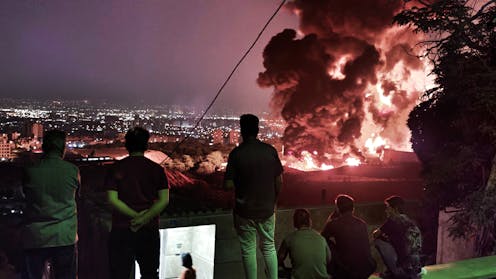
Varias personas observan el fuego y el humo provocados por un ataque aéreo israelí contra un depósito de petróleo en Teherán, el 15 de junio de 2025.Stringer/Getty Images
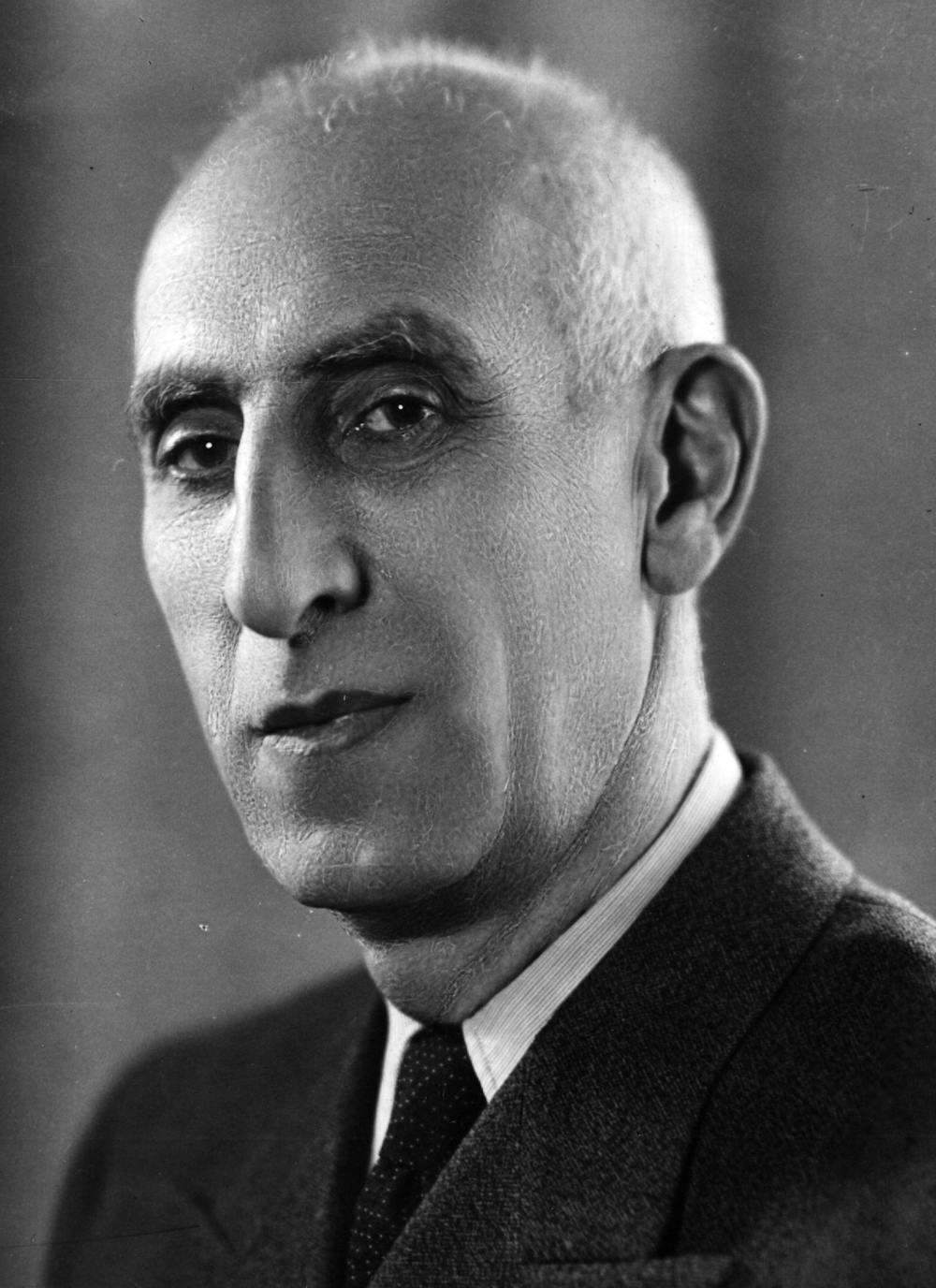
En 1951, el Parlamento iraní eligió un nuevo primer ministro, Mossadegh, quien llevó a los legisladores a votar a favor de tomar el control de la Anglo-Iranian Oil Company, expulsar a los propietarios británicos de la empresa y declarar que querían convertir los beneficios del petróleo en inversiones para el pueblo iraní. Estados Unidos temía que se interrumpiera el suministro mundial de petróleo y le preocupaba que Irán cayera presa de la influencia soviética. Los británicos temían perder el petróleo barato iraní.
El presidente Dwight Eisenhower decidió que lo mejor era deshacerse de Mossadegh. La Operación Ajax, una acción conjunta de la CIA y el Reino Unido, convenció al sah, el monarca del país, para que destituyera a Mossadegh y lo expulsara del poder por la fuerza. Mossadegh fue sustituido por un primer ministro mucho más favorable a Occidente, elegido personalmente por la CIA.
Manifestantes en Teherán exigen el establecimiento de una república islámica. AP Photo/Saris
1979: Los revolucionarios derrocan al sha y toman rehenes
Tras más de 25 años de relativa estabilidad en las relaciones entre Estados Unidos e Irán, la población iraní estaba descontenta con las condiciones sociales y económicas que se desarrollaron bajo el régimen dictatorial del sah Mohammad Reza Pahlavi.
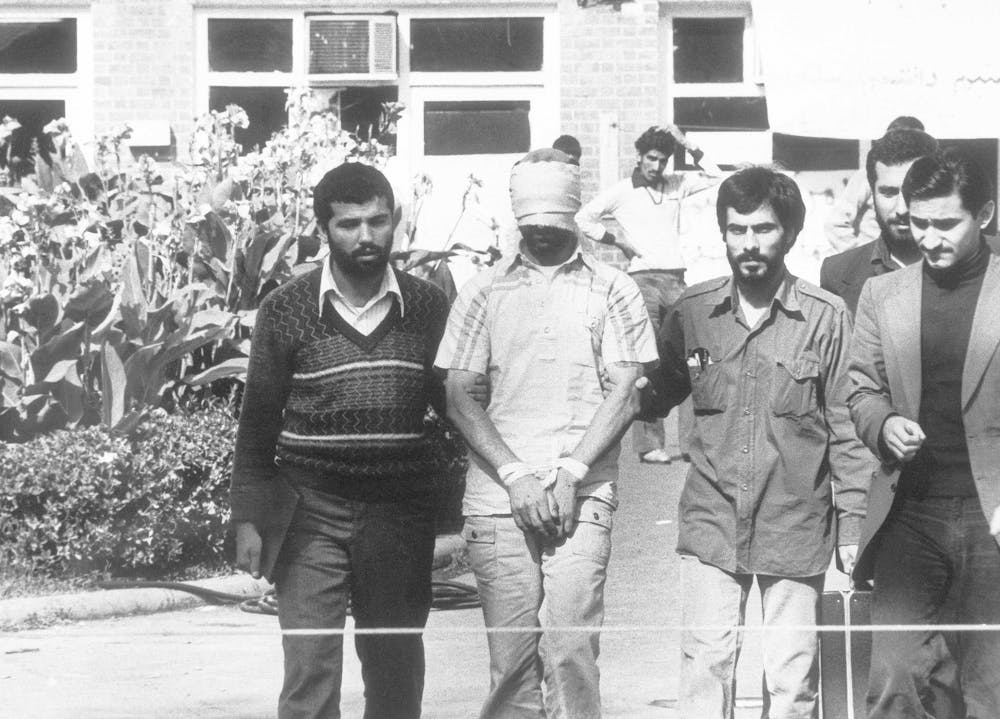
Estudiantes iraníes en la embajada de Estados Unidos en Teherán muestran a la multitud un rehén estadounidense con los ojos vendados en noviembre de 1979. AP Photo
En octubre de 1979, el presidente Jimmy Carter accedió a permitir que el sah viajara a Estados Unidos para recibir tratamiento médico avanzado. Estudiantes iraníes indignados asaltaron la embajada estadounidense en Teherán el 4 de noviembre, tomando como rehenes a 52 estadounidenses. Esto convenció a Carter de romper las relaciones diplomáticas con Irán el 7 de abril de 1980.
Dos semanas más tarde, el ejército estadounidense lanzó una misión para rescatar a los rehenes, pero fracasó y se estrellaron varios aviones, lo que causó la muerte de ocho militares estadounidenses.
El sah murió en Egipto en julio de 1980, pero los rehenes no fueron liberados hasta el 20 de enero de 1981, tras 444 días de cautiverio.
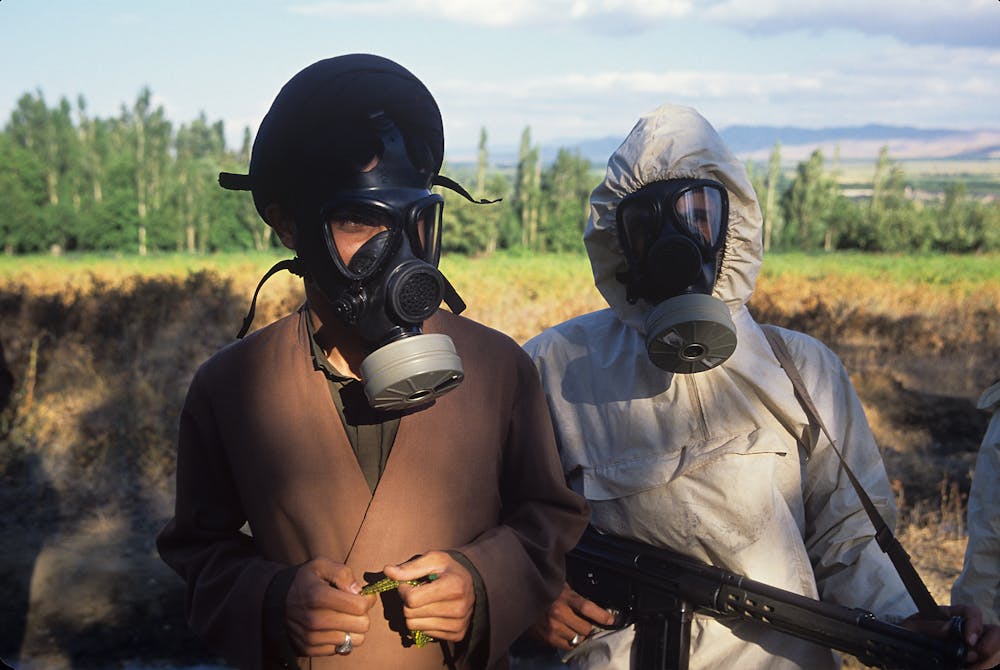
Un clérigo iraní, a la izquierda, y un soldado iraní llevan máscaras antigás para protegerse de los ataques con armas químicas iraquíes en mayo de 1988. Kaveh Kazemi/Getty Images
1980-1988: Estados Unidos se pone tácitamente del lado de Irak
En septiembre de 1980, Irak invadió Irán, lo que supuso una escalada de la rivalidad regional y las diferencias religiosas entre ambos países: Irak estaba gobernado por musulmanes suníes, pero su población era mayoritariamente musulmana chií; Irán estaba liderado y poblado en su mayoría por chiíes.
Estados Unidos temía que el conflicto limitara el flujo de petróleo de Oriente Medio y quería asegurarse de que no afectara a su estrecho aliado, Arabia Saudí.
Estados Unidos apoyó al líder iraquí Saddam Hussein en su lucha contra el régimen iraní antiamericano. Como resultado, Estados Unidos hizo en gran medida la vista gorda ante el uso de armas químicas por parte de Irak contra Irán.
Los funcionarios estadounidenses moderaron su habitual oposición a esas armas ilegales e inhumanas porque el Departamento de Estado de EE. UU. no “quería hacerle el juego a Irán” alimentando su propaganda contra Irak. En 1988, la guerra terminó en un empate. Murieron más de 500 000 militares y 100 000 civiles.
1981-1986: Estados Unidos vende armas en secreto a Irán
EE. UU. impuso un embargo de armas después de que Irán fuera designado Estado patrocinador del terrorismo en 1984. Esto dejó al ejército iraní, en plena guerra con Irak, desesperado por conseguir armas, aviones y piezas de vehículos para seguir luchando.
El último envío, de misiles antitanque, se realizó en octubre de 1986. En noviembre de ese año, una revista libanesa reveló el acuerdo. Esta revelación desató el escándalo Irán-Contra en Estados Unidos, al descubrirse que funcionarios de la administración Reagan habían recaudado dinero de Irán para comprar las armas y enviado ilegalmente esos fondos a rebeldes antisocialistas (la contra nicaragüense).
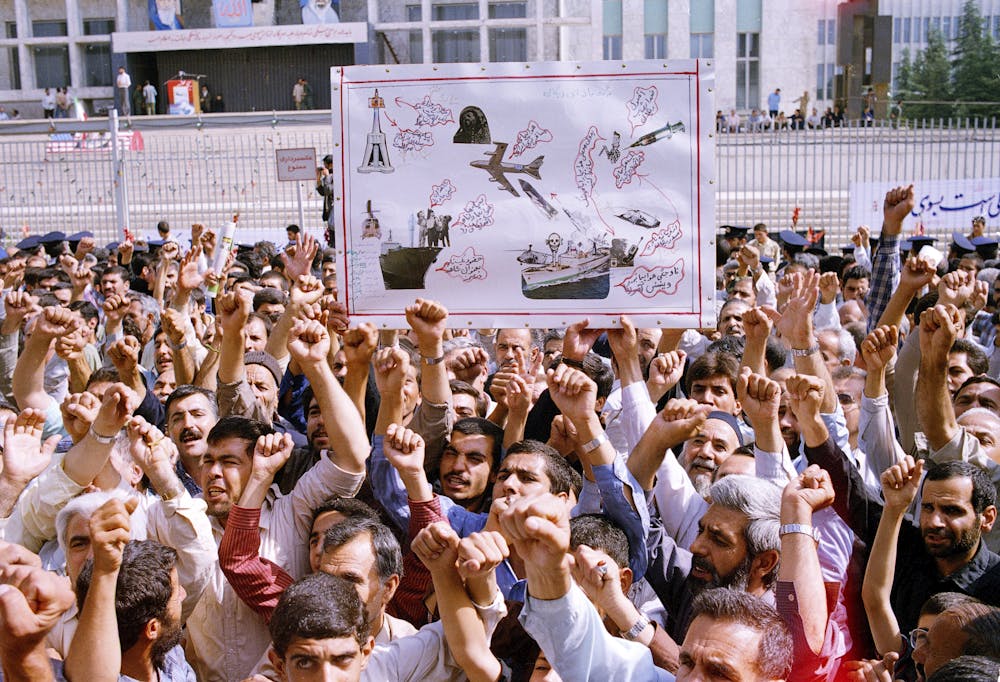
En el funeral multitudinario de 76 de las 290 personas fallecidas en el derribo del vuelo 655 de Iran Air, los dolientes sostienen un cartel que representa el incidente. AP Photo/CP/Mohammad Sayyad
1988: La Marina de los Estados Unidos derriba el vuelo 655 de Iran Air
Durante o justo después de ese intercambio de disparos, la tripulación del Vincennes confundió un avión civil de pasajeros Airbus que pasaba por allí con un caza F-14 iraní. Lo derribaron, matando a las 290 personas a bordo.
Estados Unidos lo calificó de “accidente trágico y lamentable”, pero Irán creyó que el derribo del avión fue intencionado. En 1996, Estados Unidos acordó pagar 131 millones de dólares en concepto de indemnización a Irán.
1997-1998: Estados Unidos busca el contacto
En agosto de 1997, un reformista moderado, Mohammad Khatami, ganó las elecciones presidenciales de Irán.
El presidente estadounidense Bill Clinton intuyó una oportunidad, y envió un mensaje a Teherán a través del embajador suizo en ese país en el que proponía conversaciones directas entre ambos gobiernos.
Poco después, a principios de enero de 1998, Jatamí concedió una entrevista a la CNN en la que expresó su “respeto por el gran pueblo estadounidense”, condenó el terrorismo y recomendó un “intercambio de profesores, escritores, académicos, artistas, periodistas y turistas” entre Estados Unidos e Irán.
Sin embargo, el líder supremo, el ayatolá Alí Jamenei, no estuvo de acuerdo, por lo que las gestiones mutuas no dieron muchos frutos cuando Clinton llegó al final de su mandato.
En su discurso sobre el estado de la Unión de 2002, el presidente George W. Bush calificó a Irán, Irak y Corea del Norte como un “Eje del Mal” que apoyaba el terrorismo y buscaba armas de destrucción masiva, lo que tensó aún más las relaciones.
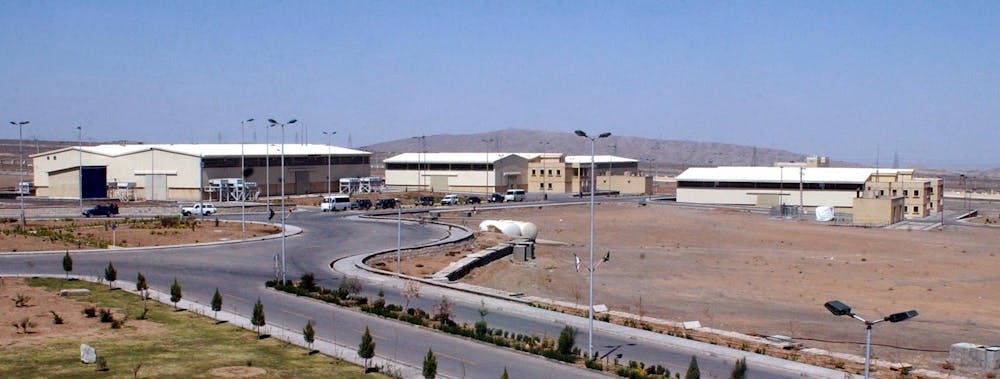
Dentro de estos edificios de la instalación nuclear de Natanz, en Irán, los técnicos enriquecen uranio. AP Photo/Vahid Salemi
2002: El programa nuclear de Irán despierta la alarma
Esto constituía una violación de los términos del Tratado de No Proliferación Nuclear, que Irán había firmado y que exigía a los países revelar sus instalaciones relacionadas con la energía nuclear a los inspectores internacionales.
Una de esas instalaciones anteriormente secretas, Natanz, albergaba centrifugadoras para enriquecer uranio, que podía utilizarse en reactores nucleares civiles o enriquecerse aún más para fabricar armas.
A partir de 2005, ciberataques de los gobiernos de Estados Unidos e Israel se dirigieron contra las centrifugadoras de Natanz con un software malicioso creado a medida que se conoció como Stuxnet.
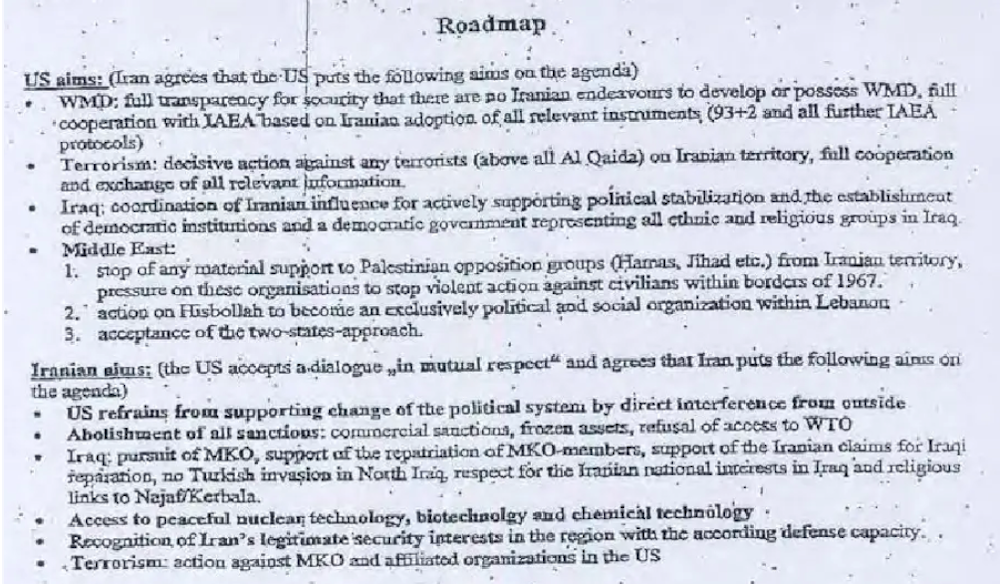
Un extracto del documento enviado desde Irán, a través del Gobierno suizo, al Departamento de Estado de EE. UU. en 2003, parece buscar conversaciones entre EE. UU. e Irán. Washington Post via Scribd
En mayo de 2003, altos funcionarios iraníes se pusieron en contacto discretamente con el Departamento de Estado a través de la embajada suiza en Irán, en busca de “un diálogo en el respeto mutuo” que abordara cuatro grandes cuestiones: las armas nucleares, el terrorismo, la resistencia palestina y la estabilidad en Irak.
Los partidarios de la línea dura del Gobierno de Bush no estaban interesados en ninguna reconciliación importante, aunque el secretario de Estado Colin Powell se mostraba a favor del diálogo y otros funcionarios se habían reunido con Irán para tratar el tema de Al Qaeda.
Cuando el radical iraní Mahmud Ahmadineyad fue elegido presidente de Irán en 2005, la oportunidad se esfumó. Al año siguiente, Ahmadineyad hizo su propia apertura a Washington en una carta de 18 páginas dirigida al presidente Bush. La carta fue ampliamente rechazada.
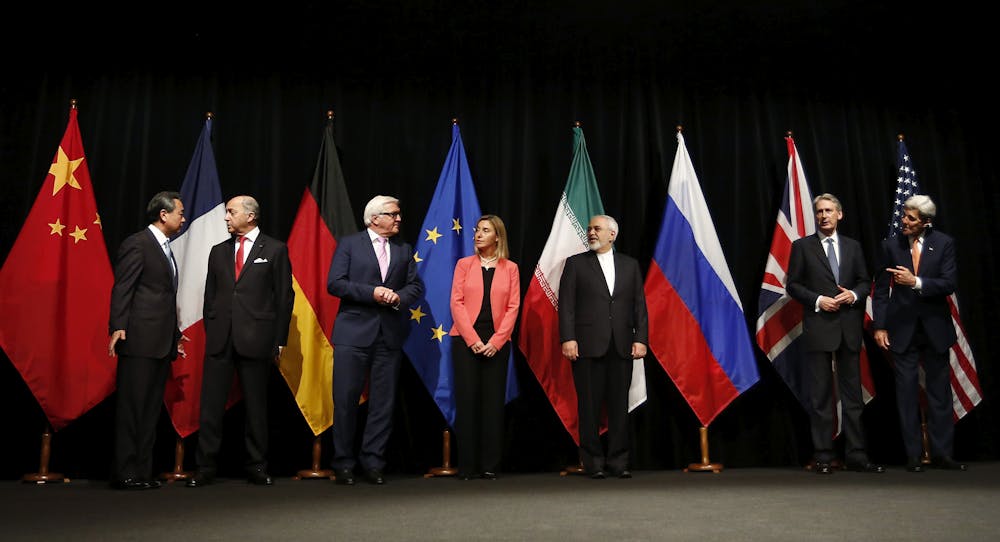
Tras una década de intentos infructuosos por frenar las ambiciones nucleares de Irán, la Administración Obama emprendió una vía diplomática directa a partir de 2013.
Irán, Estados Unidos, China, Francia, Alemania, Rusia y el Reino Unido firmaron el acuerdo en 2015. Este limitaba severamente la capacidad de Irán para enriquecer uranio y obligaba a inspectores internacionales a supervisar y hacer cumplir el acuerdo por parte de Irán.
A cambio, se concedió a Irán el levantamiento de las sanciones económicas internacionales y estadounidenses. Aunque los inspectores certificaron periódicamente que Irán cumplía los términos del acuerdo, el presidente Donald Trump se retiró del acuerdo en mayo de 2018.
2020: Drones estadounidenses matan al general iraní Qassem Soleimani
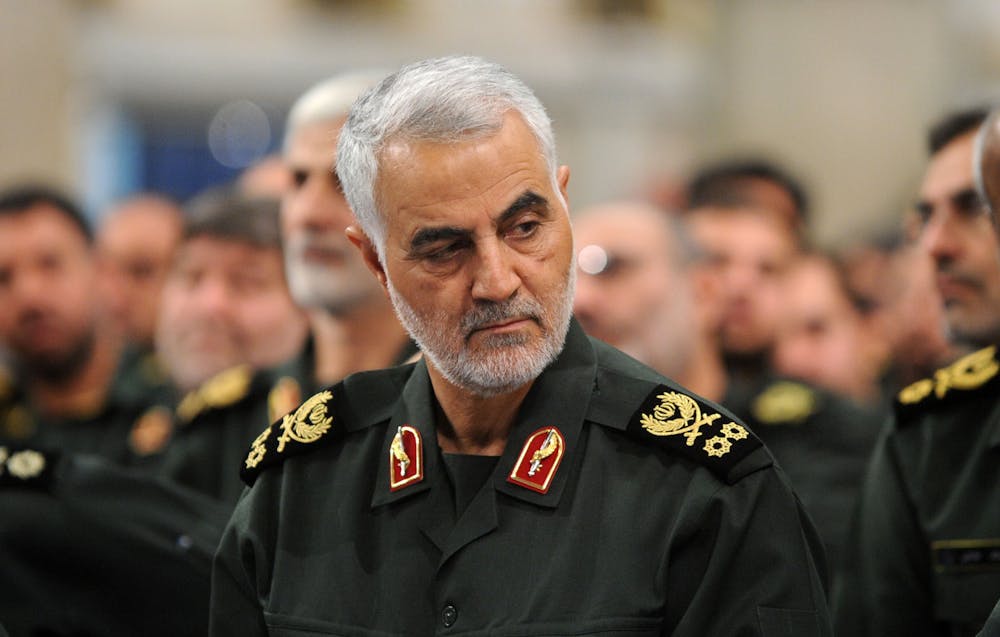
El 3 de enero de 2020, un dron estadounidense disparó un misil que mató al general Qassem Soleimani, líder de la Fuerza Quds de élite iraní. Los analistas consideraban a Soleimani el segundo hombre más poderoso de Irán, después del líder supremo, el ayatolá Jamenei.
En ese momento, la administración Trump afirmó que Soleimani estaba dirigiendo un ataque inminente contra activos estadounidenses en la región, pero las autoridades no han proporcionado pruebas claras que respalden esa afirmación.
El descarado ataque de Hamás contra Israel el 7 de octubre de 2023 provocó una temible respuesta militar por parte de Israel que continúa hoy en día y sirvió para debilitar gravemente a los aliados de Irán en la región, especialmente Hamás, autor de los ataques, y Hezbolá en el Líbano.
2025: Trump 2.0 e Irán
Trump vio la oportunidad de forjar un nuevo acuerdo nuclear con Irán y de buscar otros acuerdos comerciales con Teherán. Una vez investido para su segundo mandato, el presidente estadounidense nombró a Steve Witkoff, un inversor inmobiliario amigo del presidente, como enviado especial para Oriente Medio y para liderar las negociaciones.
Las negociaciones para alcanzar un acuerdo nuclear entre Washington y Teherán comenzaron en abril, pero los países no llegaron a un acuerdo. Estaban planeando una nueva ronda de conversaciones cuando Israel atacó Irán con una serie de ataques aéreos el 13 de junio, lo que obligó a la Casa Blanca a reconsiderar su posición.
En la madrugada del 22 de junio, Estados Unidos decidió actuar con contundencia en un intento de paralizar la capacidad nuclear de Irán, bombardeando tres instalaciones nucleares y causando lo que los responsables del Pentágono calificaron de “daños graves”. Irán prometió tomar represalias.
Este artículo ha sido actualizado para reflejar el bombardeo estadounidense de instalaciones nucleares iraníes el 22 de junio de 2025.
Reciba artículos como este cada día en su buzón. 📩 Suscríbase gratis a nuestro boletín diario para tener acceso directo a la conversación del día de The Conversation en español.
Jeffrey Fields recibe financiación de la Carnegie Corporation de Nueva York y Schmidt Futures.
Source: The Conversation – France – By David Cobos Sanchiz, Profesor Titular Dpto. Educación y Psicología Social, Universidad Pablo de Olavide
Regular los comedores escolares contribuye a crear hábitos saludables.
¿Se imagina una herramienta educativa con la capacidad de reducir la pobreza infantil, fomentar hábitos saludables para toda la vida y mejorar la convivencia y la autonomía? Todo esto es lo que puede lograr un comedor escolar bien gestionado.
Recientemente ha sido aprobada en España una nueva normativa para la promoción de una alimentación saludable y sostenible en los centros educativos. El texto reconoce la relación entre los derechos del niño y las políticas de salud alimentaria, e impulsa un modelo escolar que garantiza entornos protectores y promotores de bienestar para todo el alumnado. ¿Cómo plantea hacerlo?
Límites en máquinas expendedoras
Para empezar, se establecen límites estrictos a las bebidas azucaradas y a los envases monodosis de azúcar, sal, aceite, vinagre y otras salsas, regulando sus contenidos máximos. También se prohíbe la venta de productos no saludables (ricos en grasas trans, azúcares añadidos o cafeína en máquinas expendedoras y cafeterías escolares.
Otra medida importante que recoge el texto es la priorización de alimentos frescos, locales y de temporada, como frutas, verduras, legumbres y cereales integrales. Esta no es solo una recomendación, sino una obligación legal. Así, los centros escolares están obligados a cumplir estos criterios nutricionales al elaborar los menús escolares, mientras que las comunidades autónomas deben supervisar y garantizar el cumplimiento a través de inspecciones y planes de control.
Un buen menú, según la ley
Los menús deben ser equilibrados, estar adaptados a la edad del alumnado y contar con la supervisión de profesionales en nutrición o dietética. De este modo, el comedor escolar deja de concebirse únicamente como un espacio logístico para la alimentación diaria y pasa a ser entendido como un instrumento educativo, social y de equidad.
El decreto busca prevenir la obesidad infantil, reducir las desigualdades sociales en el acceso a una nutrición adecuada y fomentar hábitos saludables desde edades tempranas. Se trata, por tanto, de una apuesta por una escuela comprometida con la salud pública y con el desarrollo integral de la infancia. Sin olvidar que establecer hábitos alimentarios saludables repercute directamente en la salud a lo largo de toda la vida, mejorando incluso el rendimiento académico y el bienestar emocional.
Hay que decir que se trata de una buena norma que viene a paliar un déficit legislativo que tenía España respecto a muchos otros países europeos. Sin ir más lejos, la prohibición de máquinas expendedoras de bebidas azucaradas en las escuelas comenzó en Francia hace dos décadas. En cuanto al Reino Unido, ya en 2015 estableció requisitos nutricionales para las comidas escolares, incluyendo la limitación de productos ultraprocesados y bebidas azucaradas.
Una visión avalada por la investigación científica
Muchos estudios, clásicos y recientes, han demostrado que las intervenciones que modifican el entorno del comedor, combinadas con acciones de formación y sensibilización, son eficaces para mejorar los hábitos alimentarios del alumnado. Distintas iniciativas han logrado aumentar el consumo de frutas y verduras, reducir la ingesta de bebidas azucaradas y reforzar la autoeficacia de los estudiantes a la hora de elegir alimentos saludables.
Además, la participación activa del alumnado en estas iniciativas –por ejemplo, mediante la organización de campañas, talleres o huertos escolares– refuerza el aprendizaje y lo convierte en una experiencia transformadora, logrando cambios profundos y sostenibles en las actitudes y comportamientos alimentarios.
El impacto de los menús
En el sentido contrario, también se ha demostrado que los entornos escolares que permiten el acceso libre a productos ultraprocesados, o que no cuidan la calidad de los menús, dificultan gravemente la promoción de hábitos saludables. La presencia de alimentos no nutritivos en las escuelas puede anular los efectos positivos de cualquier programa de educación alimentaria.
Por tanto, es clave entender el comedor escolar como un espacio con un enorme potencial pedagógico y social. Un comedor escolar bien gestionado alimenta pero también educa, cuida e incluye. No solo enseña a comer mejor, sino que puede convertirse en un escenario de aprendizajes interdisciplinarios y transversales, donde se refuercen áreas como las ciencias naturales, la ética, la economía o la ecología, a través de actividades participativas y experienciales. El comedor es también un espacio para transmitir valores y aprender a convivir, a respetar normas, a compartir y a cuidar de uno mismo y de los demás.
Repensar el comedor escolar con mirada pedagógica
Este enfoque holístico de la alimentación escolar promueve una visión más rica y transformadora del acto de comer. No solo como una necesidad fisiológica, sino como una práctica social, cultural, educativa y política. Las escuelas, al integrar este enfoque, forman ciudadanos más conscientes, autónomos y responsables.
Además de mejorar la calidad de la alimentación en la escuela, esta nueva mirada destaca el papel del comedor como un espacio educativo de primer orden, capaz de generar cambios reales y duraderos en la vida de los estudiantes. Promover hábitos saludables, garantizar entornos equitativos y formar en valores desde el comedor escolar es una obligación ética y pedagógica. Porque una escuela que alimenta bien es una escuela que educa mejor.
Reciba artículos como este cada día en su buzón. 📩 Suscríbase gratis a nuestro boletín diario para tener acceso directo a la conversación del día de The Conversation en español.
David Cobos Sanchiz no recibe salario, ni ejerce labores de consultoría, ni posee acciones, ni recibe financiación de ninguna compañía u organización que pueda obtener beneficio de este artículo, y ha declarado carecer de vínculos relevantes más allá del cargo académico citado.
I was preparing for my early morning class back in January 2025 when I received a notice regarding an asteroid called 2024 YR4. It said the probability it could hit Earth was unusually high.
As defending Earth from unexpected intruders such as asteroids is part of my expertise, I immediately started receiving questions from my students and colleagues about what was happening.
When scientists spot an asteroid whose trajectory might take it close to Earth, they monitor it frequently and calculate the probability that it might collide with our planet. As they receive more observational data, they get a better picture of what could happen.
Just having more data points early doesn’t make scientists’ predictions better. They need to keep following the asteroid as it moves through space to better understand its trajectory.
Reflecting on the incident a few months later, I wondered whether there might have been a better way for scientists to communicate about the risk with the public. We got accurate information, but as the questions I heard indicated, it wasn’t always enough to understand what it actually means.
At the time of the announcement in January, the asteroid’s impact probability was reported to exceed 1%. The impact probability describes how likely a hazardous asteroid is to hit Earth. For example, if the impact probability is 1%, it means that in 1 of 100 cases, it hits Earth. One in 100 is kind of rare, but still too close for comfort if you’re talking about the odds of a collision that could devastate Earth.
Over time, though, further observations and analyses revealed an almost-zero chance of this asteroid colliding with Earth.
After the initial notice in January, the impact probability continuously increased up to 3.1% on Feb. 18, but dropped to 1.5% on Feb. 19. Then, the impact probability continuously went down, until it hit 0.004% on Feb. 24. As of June 15, it now has an impact probability of less than 0.0000081%.
The orbit of 2024 YR4 will take it close to Earth, but scientists have found the chance of a collision to be exceedingly low. NASA/JPL
But while the probability of hitting Earth went down, the probability of the asteroid hitting the Moon started increasing. It went up to 1.7% on Feb. 24. As of April 2, it is 3.8%.
If it hits the Moon, some ejected materials from this collision could reach the Earth. However, these materials would burn away when they enter the Earth’s thick atmosphere.
Impact probability
To see whether an approaching object could hit Earth, researchers find out what an asteroid’s orbit looks like using a technique called astrometry. This technique can accurately determine an object’s orbit, down to only a few kilometers of uncertainty. But astrometry needs accurate observational data taken for a long time.
If an asteroid might get close to Earth, astronomers take observational data to better track the object’s path and eliminate uncertainty.
Any uncertainty in the calculation of the object’s orbit causes variations in the predicted solution. Instead of one precise orbit, the calculation usually gives scientists a cloud of its possible orbits. The ellipse enclosing these locations is called an error ellipse.
The impact probability describes how many orbital predictions in this ellipse hit the Earth.
Without enough observational data, the orbital uncertainty is high, so the ellipse tends to be large. In a large ellipse, there’s a higher chance that the ellipse “accidentally” includes Earth – even if the center is off the planet. So, even if an asteroid ultimately won’t hit Earth, its error ellipse might still include the planet before scientists collect enough data to narrow down the uncertainty.
As the level of uncertainty goes down, the ellipse shrinks. So, when Earth is inside a small error ellipse, the impact probability may become higher than when it’s inside a large error ellipse. Once the error ellipse shrinks enough that it no longer includes Earth, the impact probability goes down significantly. That’s what happened to 2024 YR4.
As the error ellipse shrinks, the chance of the asteroid hitting Earth either goes down or goes way up, if it ends up overlapping with the Earth. Toshi Hirabayashi
The impact probability is a single, practical value offering meaningful insight into an impact threat. However, just using the impact probability without any context may not provide meaningful guidelines to the public, as we saw with 2024 YR4.
Holding on and waiting for more data to refine a collision prediction, or introducing new metrics for assessing impacts on Earth, are alternative courses of action to provide people with better guidelines for future threats before adding confusion and fear.
I have been studying planetary defense, particularly being part of past, ongoing, and future small body missions. I was part of the NASA/DART mission. I am currently part of the NASA/Lucy mission and the ESA/Hera mission. I am also on the Hayabusa2# team, led by the Japanese Aerospace Exploration Agency (JAXA), as part of an international collaboration. I have no affiliation with JAXA.
When most people hear the word uranium, they think of mushroom clouds, Cold War standoffs or the glowing green rods from science fiction. But uranium isn’t just fuel for apocalyptic fears. It’s also a surprisingly common element that plays a crucial role in modern energy, medicine and geopolitics.
Uranium reentered the global spotlight in June 2025, when the U.S. launched military strikes on sites in Iran believed to be housing highly enriched uranium, a move that reignited urgent conversations around nuclear proliferation. Many headlines have mentioned Iran’s 60% enrichment of uranium, but what does that really mean?
As a biochemist, I’m interested in demystifying this often misunderstood element.
What is uranium?
Uranium holds the 92nd position on the periodic table, and it is a radioactive, metallic element. Radioactivity is a natural process where some atoms – like uranium, thorium and radium – break down on their own, releasing energy.
The German chemist Martin Heinrich Klaproth initially identified uranium in 1789, and he named it after the newly discovered planet Uranus. However, its power was not unlocked until the 20th century, when scientists discovered that uranium atoms could split via a process known as nuclear fission. In fission, the nucleus of the atom splits into two or more nuclei, which releases large amounts of energy.
Uranium is found almost everywhere. It is in rocks, soil and water. There are even traces of uranium in plants and animals – albeit tiny amounts. Most of it is found in the Earth’s crust, where it is mined and concentrated to increase the amount of its most useful radioactive form, uranium-235.
The enrichment dilemma
Uranium-235 is an isotope of uranium, which is a version of an element that has the same basic identity but weighs a little more or less. Think about apples from the same tree. Some are big and some are small, but they are all apples – even though they have slightly different weights. Basically, an isotope is the same element but with a different mass.
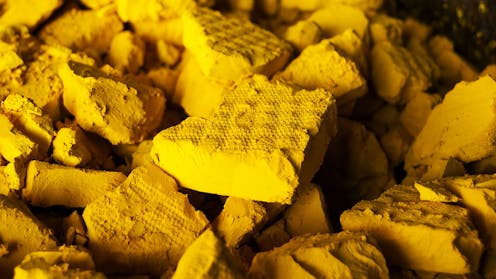
Unprocessed uranium is mostly uranium-238. It only contains approximately 0.7% uranium-235, the isotope that allows the most nuclear fission to occur. So, the enrichment process concentrates uranium-235.
Enrichment can make uranium more useful for the development of nuclear weapons, since natural uranium doesn’t have enough uranium-235 to work well in reactors or weapons. The process usually contains three steps.
Centrifuges spin the uranium to separate out its isotopes.
The first step is to convert the uranium into a gas, called uranium hexafluoride. In the second step, the gas gets funneled into a machine called a centrifuge that spins very fast. Because uranium-235 is a little lighter than uranium-238, it moves outward more slowly when spun, and the two isotopes separate.
It’s sort of like how a salad spinner separates water from lettuce. One spin doesn’t make much of a difference, so the gas is spun through many centrifuges in a row until the uranium-235 is concentrated.
Uranium can typically power nuclear plants and generate electricity when it is 3%-5% enriched, meaning 3%-5% of the uranium is uranium-235. At 20% enriched, uranium-235 is considered highly enriched uranium, and 90% or higher is known as weapons-grade uranium.
The enrichment level depends on the proportion of uranium-235 to uranium-238. Wikimedia Commons
This high grade works in nuclear weapons because it can sustain a fast, uncontrolled chain reaction, which releases a large amount of energy compared with the other isotopes.
Uranium’s varied powers
While many headlines focus on uranium’s military potential, this element also plays a vital role in modern life. At low enrichment levels, uranium powers nearly 10% of the world’s electricity.
In the U.S., many nuclear power plants run on uranium fuel, producing carbon-free energy. In addition, some cancer therapies and diagnostic imaging technologies harness uranium to treat diseases.
Uranium is a story of duality. It is a mineral pulled from ancient rocks that can light up a city or wipe one off the map. It’s not just a relic of the Cold War or science fiction. It’s real, it’s powerful, and it’s shaping our world – from global conflicts to cancer clinics, from the energy grid to international diplomacy.
In the end, the real power is not just in the energy released from the element. It is in how people choose to use it.
André O. Hudson receives funding from the National Institutes of Health.
Plants use light to make energy – and a team of scientists is using the same principle to power chemical reactions. fhm/Moment via Getty Images
Manufactured chemicals and materials are necessary for practically every aspect of daily life, from life-saving pharmaceuticals to plastics, fuels and fertilizers. Yet manufacturing these important chemicals comes at a steep energy cost.
Many of these industrial chemicals are derived primarily from fossil fuel-based materials. These compounds are typically very stable, making it difficult to transform them into useful products without applying harsh and energy-demanding reaction conditions.
As a result, transforming these stubborn materials contributes significantly to the world’s overall energy use. In 2022, the industrial sector consumed 37% of the world’s total energy, with the chemical industry responsible for approximately 12% of that demand.
Conventional chemical manufacturing processes use heat to generate the energy needed for reactions that take place at high temperatures and pressures. An approach that uses light instead of heat could lower energy demands and allow reactions to be run under gentler conditions — like at room temperature instead of extreme heat.
Sunlight represents one of the most abundant yet underutilized energy sources on Earth. In nature, this energy is captured through photosynthesis, where plants convert light into chemical energy. Inspired by this process, our team of chemists at the Center for Sustainable Photoredox Catalysis, a research center funded by the National Science Foundation, has been working on a system that uses light to power reactions commonly used in the chemical manufacturing industry. We published our results in the journal Science in June 2025.
We hope that this method could provide a more economical route for creating industrial chemicals out of fossil fuels. At the same time, since it doesn’t rely on super-high temperatures or pressures, the process is safer, with fewer chances for accidents.
The photoredox catalyst system that our team has developed is powered by simple LEDs, and it operates efficiently at room temperature.
At the core of our system is an organic photoredox catalyst: a specialized molecule that we know accelerates chemical reactions when exposed to light, without being consumed in the process.
Much like how plants rely on pigments to harvest sunlight for photosynthesis, our photoredox catalyst absorbs multiple particles of light, called photons, in a sequence.
These photons provide bursts of energy, which the catalyst stores and then uses to kick-start reactions. This “multi-photon” harvesting builds up enough energy to force very stubborn molecules into undergoing reactions that would otherwise need highly reactive metals. Once the reaction is complete, the photocatalyst resets itself, ready to harvest more light and keep the process going without creating extra waste.
Designing molecules that can absorb multiple photons and react with stubborn molecules is tough. One big challenge is that after a molecule absorbs a photon, it only has a tiny window of time before that energy fades away or gets lost. Plus, making sure the molecule uses that energy the right way is not easy. The good news is we’ve found that our catalyst can do this efficiently at room temperature.
Center for Sustainable Photoredox Catalysis researcher Amreen Bains performs a light-driven photoredox catalyzed reaction. John Cline, Colorado State University Photography
Enabling greener chemical manufacturing
Our work points toward a future where chemicals are made using light instead of heat. For example, our catalyst can turn benzene — a simple component of crude oil — into a form called cyclohexadienes. This is a key step in making the building blocks for nylon. Improving this part of the process could reduce the carbon footprint of nylon production.
Imagine manufacturers using LED reactors or even sunlight to power the production of essential chemicals. LEDs still use electricity, but they need far less energy compared with the traditional heating methods used in chemical manufacturing. As we scale things up, we’re also figuring out ways to harness sunlight directly, making the entire process even more sustainable and energy-efficient.
Right now, we’re using our photoredox catalysts successfully in small lab experiments — producing just milligrams at a time. But to move into commercial manufacturing, we’ll need to show that these catalysts can also work efficiently at a much larger scale, making kilograms or even tons of product. Testing them in these bigger reactions will ensure that they’re reliable and cost-effective enough for real-world chemical manufacturing.
Similarly, scaling up this process would require large-scale reactors that use light efficiently. Building those will first require designing new types of reactors that let light reach deeper inside. They’ll need to be more transparent or built differently so the light can easily get to all parts of the reaction.
Our team plans to keep developing new light-driven techniques inspired by nature’s efficiency. Sunlight is a plentiful resource, and by finding better ways to tap into it, we hope to make it easier and cleaner to produce the chemicals and materials that modern life depends on.
The authors do not work for, consult, own shares in or receive funding from any company or organization that would benefit from this article, and have disclosed no relevant affiliations beyond their academic appointment.
Source: The Conversation – USA (2) – By Stephen L. Levy, Associate Professor of Physics and Applied Physics and Astronomy, Binghamton University, State University of New York
Many heavy atoms form from a supernova explosion, the remnants of which are shown in this image. NASA/ESA/Hubble Heritage Team
How do atoms form? – Joshua, age 7, Shoreview, Minnesota
Richard Feynman, a famous theoretical physicist who won the Nobel Prize, said that if he could pass on only one piece of scientific information to future generations, it would be that all things are made of atoms.
Understanding how atoms form is a fundamental and important question, since they make up everything with mass.
The question of where atoms come from requires a lot of physics to be answered completely – and even then, physicists like me only have good guesses to explain how some atoms are formed.
What is an atom?
An atom consists of a heavy center, called the nucleus, made of particles called protons and neutrons. An atom has lighter particles called electrons that you can think of as orbiting around the nucleus.
The electrons each carry one unit of negative charge, the protons each carry one unit of positive charge, and the neutrons have no charge. An atom has the same number of protons as electrons, so it is neutral − it has no overall charge.
An atom consists of positively charged protons, neutrally charged neutrons and negatively charged electrons. AG Caesar/Wikimedia Commons, CC BY-SA
Now, most of the atoms in the universe are the two simplest kinds: hydrogen, which has one proton, zero neutrons and one electron; and helium, which has two protons, two neutrons and two electrons. Of course, on Earth there are lots of atoms besides these that are just as common, such as carbon and oxygen, but I’ll talk about those soon.
An element is what scientists call a group of atoms that are all the same, because they all have the same number of protons.
When did the first atoms form?
Most of the universe’s hydrogen and helium atoms formed around 400,000 years after the Big Bang, which is the name for when scientists think the universe began, about 14 billion years ago.
And based on their understanding of physics, scientists believe that the universe was much hotter when it was smaller.
Before this time, the electrons had too much energy to settle into orbits around the hydrogen and helium nuclei. So, the hydrogen and helium atoms could form only once the universe cooled down to something like 5,000 degrees Fahrenheit (2,760 degrees Celsius). For historical reasons, this process is misleadingly called recombination − combination would be more descriptive.
The helium and deuterium − a heavier form of hydrogen − nuclei formed even earlier, just a few minutes after the Big Bang, when the temperature was above 1 billion F (556 million C). Protons and neutrons can collide and form nuclei like these only at very high temperatures.
Scientists believe that almost all the ordinary matter in the universe is made of about 90% hydrogen atoms and 8% helium atoms.
How do more massive atoms form?
So, the hydrogen and helium atoms formed during recombination, when the cooler temperature allowed electrons to fall into orbits. But you, I and almost everything on Earth is made of many more massive atoms than just hydrogen and helium. How were these atoms made?
The surprising answer is that more massive atoms are made in stars. To make atoms with several protons and neutrons stuck together in the nucleus requires the type of high-energy collisions that occur in very hot places. The energy needed to form a heavier nucleus needs to be large enough to overcome the repulsive electric force that positive charges, like two protons, feel with each other.
The immense heat and pressure in stars can form atoms through a process called fusion. NASA/SDO
Protons and neutrons also have another property – kind of like a different type of charge – that is strong enough to bind them together once they are able to get very close together. This property is called the strong force, and the process that sticks these particles together is called fusion.
Scientists believe that most of the elements from carbon up to iron are fused in stars heavier than our Sun, where the temperature can exceed 1 billion F (556 million C) – the same temperature that the universe was when it was just a few minutes old.
But even in hot stars, elements heavier than iron and nickel won’t form. These require extra energy, because the heavier elements can more easily break into pieces.
In a dramatic event called a supernova, the inner core of a heavy star suddenly collapses after it runs out of fuel to burn. During the powerful explosion this collapse triggers, elements that are heavier than iron can form and get ejected out into the universe.
Astronomers are still figuring out the details of other fantastic stellar events that form larger atoms. For example, colliding neutron stars can release enormous amounts of energy – and elements such as gold – on their way to forming black holes.
Understanding how atoms are made just requires learning a little general relativity, plus some nuclear, particle and atomic physics. But to complicate matters, there is other stuff in the universe that doesn’t appear to be made from normal atoms at all, called dark matter. Scientists are investigating what dark matter is and how it might form.
Hello, curious kids! Do you have a question you’d like an expert to answer? Ask an adult to send your question to CuriousKidsUS@theconversation.com. Please tell us your name, age and the city where you live.
And since curiosity has no age limit – adults, let us know what you’re wondering, too. We won’t be able to answer every question, but we will do our best.
Stephen L. Levy receives funding from the National Science Foundation and the National Institutes of Health. He is affiliated with CyteQuest, Inc.