Separated men are nearly 5 times more likely to take their lives than married men

Source: The Conversation – Global Perspectives – By Michael Wilson, Research Fellow and PhD Candidate in Men’s Mental Health, The University of Melbourne

Breakups hurt. Emotional and psychological distress are common when intimate relationships break down. For some people, this distress can be so overwhelming that it leads to suicidal thoughts and behaviours.

This problem seems especially the case for men. Intimate partner problems including breakups, separation and divorce feature in the paths to suicide among one in three Australian men aged 25 to 44 who end their lives.

Men account for three in every four suicides in many nations worldwide, including Australia. So improving our understanding of links between relationship breakdown and men’s suicide risk has life-saving potential.

Our research, published today, is the first large-scale review of the evidence to focus on understanding men’s risk of suicide after a breakup. We found separated men were nearly five times more likely to die by suicide compared to married men.

What did we find?

We brought together findings from 75 studies across 30 countries worldwide, involving more than 106 million men.

We focused on understanding why relationship breakdown can lead to suicide in men, and which men are most at risk. We might not be able to prevent breakups from happening, but we can promote healthy adjustment to the stress of relationship breakdown to try and prevent suicide.

Overall, we found divorced men were 2.8 times more likely to take their lives than married men.

For separated men, the risk was much higher. We found that separated men were 4.8 times more likely to die by suicide than married men.

Most strikingly, we found separated men under 35 years of age had nearly nine times greater odds of suicide than married men of the same age.

The short-term period after relationship breakdown therefore appears particularly risky for men’s mental health.

What are these men feeling?

Some men’s difficulties regulating the intense emotional stress of relationship breakdown can play a role in their suicide risk. For some men, the emotional pain tied to separation – deep sadness, shame, guilt, anxiety and loss – can be so intense it feels never-ending.

Many men are raised in a culture of masculinity that often encourages them to suppress or withdraw from their emotions in times of intense stress.

Some men also experience difficulties understanding or interpreting their emotions, which can create challenges in knowing how to respond to them.

Overall, our research found relationship breakdown may lead to suicide for some men because of the complex interaction between the individual (emotional distress) and interpersonal (changes in their social network and availability of support) impacts of a breakup.

Many of these impacts don’t seem to feature in the paths to suicide after a breakup for women in the same way.

Breakups also impact social networks

As intimate relationships become more serious, we tend to spend less time investing in our friendships, especially if juggling the demands of a career and family.

Many men, especially in heterosexual relationships, rely on their intimate partner as a primary source of social and emotional support – often at the expense of connections outside their relationship.

This can create a risky situation if relationships break down, as it seems many men are left with little support to turn to. This rang true in our research, as men’s social disconnection and loneliness seemed to increase their suicide risk following relationship breakdown.

We also know people can struggle to know how to support men after a breakup. Research has found some men who ask for support are told to just “get back on the horse”. Such a response invalidates men’s pain and reinforces masculine stereotypes that relationship breakdown doesn’t affect them.

So, what can we do?

There is no simple answer to preventing suicide following relationship breakdown, but a range of opportunities exist.

We can intervene early, by educating young people with the skills to end relationships healthily, handle rejection and regulate the difficult emotions of a breakup.

We can embed support groups and other opportunities for connection and peer support in relationship services that are regularly in contact with those navigating separation, to help combat loneliness.

We can ensure mental health practitioners are equipped with the skills necessary to engage and respond effectively to men who seek help following a breakup, to help keep them safe until they can get back on their feet.

Most importantly, if men come to any of us seeking support after a breakup, we can remember that time is often a great healer. The best we can do is sit with men in their pain, rather than try and get them to stop feeling it. This connection could be life-saving.

Support and information is available at Relationships Australia and MensLine Australia. If this article has raised issues for you, or if you’re concerned about someone you know, call Lifeline on 13 11 14.

The Conversation

Michael Wilson works for The University of Melbourne and consults to Movember. He receives funding from the Australian Government Research Training Program Scholarship, provided by the Australian Commonwealth Government and the University of Melbourne.

Jacqui Macdonald receives funding from the National Health and Medical Research Council’s Medical Research Future Fund and the Australian Research Council. She convenes the Australian Fatherhood Research Consortium and she is on the Movember Global Men’s Health Advisory Committee.

Zac Seidler has been awarded an NHMRC Investigator Grant. He is also the Global Director of Research with the Movember Institute of Men’s Health. He advises government on men’s suicide, masculinities, violence prevention and social media policy.

ref. Separated men are nearly 5 times more likely to take their lives than married men – https://theconversation.com/separated-men-are-nearly-5-times-more-likely-to-take-their-lives-than-married-men-258196
Clawback of $1.1B for PBS and NPR puts rural stations at risk – and threatens a vital source of journalism

Source: The Conversation – USA – By Allison Perlman, Associate Professor of Film & Media Studies, University of California, Irvine

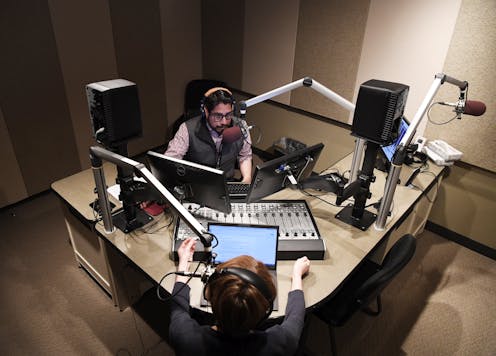
Nathan Heffel and Grace Hood rehearse their Colorado Public Radio public affairs program in Centennial, Colo., in 2017. Andy Cross/The Denver Post via Getty Images

The U.S. Senate narrowly approved on July 16, 2025, a bill that would claw back federal funding for the Corporation for Public Broadcasting, which distributes money to NPR, PBS and their affiliate stations. The US$9 billion rescission package will withdraw $1.1 billion Congress had previously approved for the CPB to receive in the 2026 and 2027 fiscal years. In addition, it makes deep foreign aid cuts. All Democrats present voted against the measure, joined by two Republicans: Sens. Susan Collins of Maine and Lisa Murkowski of Alaska. As long as the House, which approved a previous version, votes in favor of the Senate’s version of the bill by midnight July 18, Trump will be able to meet a budgetary deadline by signing the measure into law in time for it to take effect.

What will happen to NPR, PBS and local stations?

NPR and PBS provide programming to local public television and radio stations across the country. The impact on them will be direct and indirect.

Both NPR and PBS receive money from the Corporation for Public Broadcasting, an independent nonprofit corporation Congress created in 1967 to receive and distribute federal money to public broadcasters. More than 70% of the money it distributes flows directly to local stations. Some stations get up to half of their budgets from the CPB.

But NPR and PBS get much of their funding from foundation grants, viewers’ and listeners’ donations, and corporate underwriting. And local public radio and TV stations also get support from an array of sources besides CPB.

“There’s nothing more American than PBS,” said the network’s CEO, Paula Kerger, at a congressional hearing on March 26, 2025.

Only about 1% of NPR funding, and 15% of PBS funding, comes directly from the government via the CPB. However, once local radio and television stations lose federal funding, they’ll be less able to pay NPR and PBS for the programs they produce.

The nearly 1,500 public media stations in the U.S. rely on a mix of NPR, PBS and third-party producer programming, such as American Public Media and PRX, for the programs they offer. Local stations also produce and air regional news and provide emergency broadcasts for the government.

In rural areas with few broadcast stations and spotty cellphone coverage, public broadcast stations are vital sources of information about important community news and updates during emergencies. Federal support is essential for the programming and day-to-day operations of many local stations and allows for the maintenance of equipment and personnel to operate these vital community resources.

We believe that stations in communities that most need them, especially in rural locations, would be hit especially hard because they rely heavily on CPB funding.

Why are Republicans taking this step?

Public broadcasting has long been a target of conservative Republicans. They say that with a highly diversified media landscape, the public no longer needs media that is subsidized by federal dollars. They also claim that public broadcasting has a liberal bias and taxpayers should not be required to fund media that slants to the left politically.

Why is public media necessary when there’s news on the internet?

As journalism revenue has plummeted, public broadcasting has remained a vital source for news in communities across the nation. This is especially true in rural communities, where economic and political pressures have threatened the survival of local journalism.

In addition, with much online news coverage placed behind paywalls, public radio and television plays an important role in making quality journalism available to the American public.

An online ad for a program, 'Water News,' on a public radio station.
Want crucial information about water systems in your drought-prone community? Public radio station KVMR in Nevada City, Calif., has a program for you.
KVMR screenshot

Why did Congress approve these funds 2 years ahead?

Public broadcasting has gotten roughly $550 million per year from the federal government in recent years. The CPB has always approved and designated those funds two years in advance, due to a provision in the Public Broadcasting Act of 1967, after Congress has voted to provide that money. The CPB then has distributed that funding primarily through grants to PBS and NPR affiliate stations to support their technical infrastructure, program development and audience research.

What are the consequences for Native communities?

Dozens of Native American stations are at risk of closing once the CPB is defunded. Native Public Media, a network of 57 radio stations and four TV stations, is a key source of news and information for tribal communities across the nation and relies on CPB support.

U.S. Sen. Mike Rounds, a South Dakota Republican, publicly stated that he secured an agreement with the White House to move $9.4 million in Interior Department funding to two dozen Native American stations. But there is no provision related to this promise within the legislation.

The Conversation

Allison Perlman is the co-chair of the Scholars Advisory Committee of the American Archive of Public Broadcasting.

Josh Shepperd and Allison Perlman are under contract to co-author an update of the history of public broadcasting for Current, public media’s trade journal, and the Corporation for Public Broadcasting. Josh and Allison are not paid employees or vendors of either institution.

ref. Clawback of $1.1B for PBS and NPR puts rural stations at risk – and threatens a vital source of journalism – https://theconversation.com/clawback-of-1-1b-for-pbs-and-npr-puts-rural-stations-at-risk-and-threatens-a-vital-source-of-journalism-255826

Âgisme et sexisme : dès 45 ans, les femmes sont victimes de préjugés sur le marché du travail, selon une étude

Source: The Conversation – in French – By Martine Lagacé, Professeur titulaire, communication et psychologie sociale, L’Université d’Ottawa/University of Ottawa

En 2024, une étude empirique a permis de dresser un portrait nuancé de la réalité des femmes de 45 ans et plus. (Unsplash)

Elles sont qualifiées, engagées, et pourtant souvent invisibles. Les femmes de 45 ans et plus représentent une force croissante sur le marché du travail québécois. Mais leur expérience suffit-elle à les protéger des préjugés liés à l’âge et au genre ?

Au Québec, on observe une augmentation continue du nombre de personnes âgées de 55 à 69 ans qui demeurent sur le marché du travail, particulièrement chez les femmes. Chez ces dernières, le taux d’activité est, en effet, en croissance constante, particulièrement dans la tranche d’âge de 55 à 59 ans (+ 30 points selon l’Institut de la statistique du Québec).

Malgré tout, ce renfort démographique n’est sans doute pas suffisant pour faire oublier les préjugés liés à l’âge et au genre.


À lire aussi :
Un monde du travail à réinventer pour faire une meilleure place aux femmes


Mieux comprendre l’expérience des travailleuses d’expérience

En 2024, une étude empirique, pilotée par notre équipe de chercheurs et mandatée par le Comité consultatif pour les travailleuses et travailleurs de 45 ans et plus, a permis de dresser un portrait nuancé de leur réalité. L’objectif : cerner leur expérience subjective du marché du travail. Comment perçoivent-elles leur emploi ? Qu’est-ce qui les motive à continuer ? Quels obstacles rencontrent-elles, et comment envisagent-elles la retraite ?

Pour répondre à ces questions, 455 femmes âgées de 45 ans et plus travaillant sur le territoire québécois ont répondu à un questionnaire auto-rapporté. Pourquoi ce seuil d’âge ? Car une littérature abondante suggère que dès l’âge de 45 ans, les travailleurs risquent d’être la cible de comportements et de manifestations d’attitudes âgistes.

Une femme aux longs cheveux gris penchés sur un bureau, crayon à la main
Dès l’âge de 45 ans, les travailleurs risquent d’être la cible de comportements et de manifestations d’attitudes âgistes.
(Unsplash), CC BY

Des 455 participantes, la majorité (55 %) était âgée de 45 à 54 ans, et plus d’un tiers détenaient une formation universitaire. En outre, 88 % de ces femmes se disaient en « bonne » ou « très bonne » santé, physique et mentale. Les quatre secteurs de travail les plus représentés dans l’échantillon étaient l’éducation (28,3 %), la santé (19,4 %), les ventes et services (19,2 %) ainsi que l’administration (80 %). Enfin, la majorité des participantes (58 %) travaillaient dans le secteur public.

Travail valorisant et motivation intrinsèque : un duo gagnant

La majorité des répondantes (84 %) se disent satisfaites ou très satisfaites de leur emploi, surtout lorsqu’elles sont motivées par des raisons personnelles ou sociales : sentiment d’accomplissement, contribution à une mission, défis stimulants.

À l’inverse, celles qui mentionnent la rémunération comme motivation principale se déclarent généralement moins satisfaites. Une tendance qui s’aligne avec la théorie de l’auto-détermination : les motivations extrinsèques, comme l’argent, ne suffisent pas à combler les besoins fondamentaux d’autonomie, de compétence et de lien social.

L’âgisme et le sexisme

Bien que la majorité des participantes soient globalement satisfaites de leur emploi, 27 % d’entre elles qualifient le marché du travail d’âgiste et/ou sexiste envers les travailleuses plus âgées, et près de 20 % évoquent des obstacles concrets. Voici quelques-uns de leurs commentaires :

Dans mon milieu, il y a définitivement un changement face aux femmes de 50 ans et plus. J’ai vu une attitude âgiste chez les hommes qui sont en position d’autorité.

La stigmatisation liée au fait d’être une femme affecte la façon dont mes collègues la perçoivent dans une certaine mesure.

Dur, car l’âge ne joue pas en notre faveur. Le choix est restreint, malgré l’expérience et la maturité, c’est encore un monde où des hommes de 45 ans ont plus de chance d’obtenir des postes de cadre.

Cette perception de discrimination, fondée sur l’âge et/ou le genre, s’exprime aussi sous la forme d’une fracture générationnelle : les travailleuses plus âgées se sentent désavantagées et expriment leur frustration en comparant leur situation à celle des plus jeunes, que ce soit pour les façons de faire au travail ou encore pour les conditions de recherche d’emploi.

Les travailleuses plus âgées se sentent désavantagées et expriment leur frustration en comparant leur situation à celle des plus jeunes.
(Vitaly Gariev sur Unsplash), CC BY

Voici certains témoignages de participantes :

Nous sommes en constante compétition. Les employeurs ne veulent pas prendre de risque d’engager une femme de plus de 45 ans. Et la nouvelle génération est très différente.

Très honnêtement, je pense qu’il est difficile pour une femme de cet âge de réintégrer le marché du travail après une perte d’emploi.

Les retombées de la discrimination fondée sur l’âge

Les résultats de l’étude montrent aussi que les participantes qui se sentent victimes de l’âgisme éprouvent une moins grande satisfaction au travail. Elles sont aussi plus nombreuses à envisager un départ à la retraite à court terme, c’est-à-dire au cours de la prochaine année, par comparaison avec celles qui n’éprouvent pas ce sentiment (soit 12,7 % pour les premières et 6,1 % pour les secondes).

Plus encore, les résultats montrent un lien significatif entre le ressenti d’âgisme et la perception de relations plus difficiles, plus tendues avec les gestionnaires, particulièrement avec les plus jeunes. « Il y a beaucoup de micro-gestion, des enjeux de communication, peu d’écoute et de reconnaissance de notre expérience », nous a dit l’une des participantes.


Déjà des milliers d’abonnés à l’infolettre de La Conversation. Et vous ? Abonnez-vous gratuitement à notre infolettre pour mieux comprendre les grands enjeux contemporains.


Enfin, lorsqu’elles sont questionnées sur l’importance de la transmission de leurs connaissances aux plus jeunes travailleurs, la majorité répond par l’affirmative (72 %). Toutefois, celles qui se perçoivent victimes de l’âgisme témoignent du même coup d’un certain manque de réceptivité des plus jeunes travailleurs à l’égard de ces connaissances ainsi que d’une dévalorisation de leur expérience par l’employeur.

Repenser la culture du travail

Dans l’ensemble, ces résultats, même à partir d’un échantillon restreint, corroborent de nombreuses études montrant la persistance de l’âgisme au travail, doublée, pour les femmes, des stéréotypes de genre, en dépit de leur expérience. Cette réalité dépeinte par ces femmes, on peut le présumer, pèse sur leurs décisions d’interrompre malgré elles leur carrière.

Une femme aux cheveux gris coupés courts assise devant un ordinateur, un crayon à la main
La persistance de l’âgisme au travail, doublée, pour les femmes, des stéréotypes de genre, en dépit de leur expérience, teintent la carrière des femmes.
(Unsplash), CC BY

L’âgisme ciblant les travailleuses d’expérience demeure un phénomène sous-estimé. Ses conséquences sur le bien-être de ces travailleuses, comme pour la santé des organisations n’en sont pas moins négatives. Or si l’on veut réellement reconnaître la contribution de ces femmes, il est urgent de repenser la culture de nos environnements de travail dans un esprit d’inclusion et d’équité.

Le point de départ pour ce faire n’est autre qu’une prise de conscience, de la part des employeurs comme des travailleurs, de la prévalence des préjugés âgistes et sexistes, et des pratiques discriminatoires qui peuvent en découler.

La Conversation Canada

Martine Lagacé a reçu un financement du Comité consultatif pour les travailleuses et travailleurs de 45 ans et plus pour effectuer cette étude.

ref. Âgisme et sexisme : dès 45 ans, les femmes sont victimes de préjugés sur le marché du travail, selon une étude – https://theconversation.com/agisme-et-sexisme-des-45-ans-les-femmes-sont-victimes-de-prejuges-sur-le-marche-du-travail-selon-une-etude-252973

Âgisme et sexisme : dès l’âge de 45 ans, les femmes sont victimes de préjugés sur le marché du travail, selon une étude

Source: The Conversation – in French – By Martine Lagacé, Professeur titulaire, communication et psychologie sociale, L’Université d’Ottawa/University of Ottawa

En 2024, une étude empirique a permis de dresser un portrait nuancé de la réalité des femmes de 45 ans et plus. (Unsplash)

Elles sont qualifiées, engagées, et pourtant souvent invisibles. Les femmes de 45 ans et plus représentent une force croissante sur le marché du travail québécois. Mais leur expérience suffit-elle à les protéger des préjugés liés à l’âge et au genre ?

Au Québec, on observe une augmentation continue du nombre de personnes âgées de 55 à 69 ans qui demeurent sur le marché du travail, particulièrement chez les femmes. Chez ces dernières, le taux d’activité est, en effet, en croissance constante, particulièrement dans la tranche d’âge de 55 à 59 ans (+ 30 points selon l’Institut de la statistique du Québec).

Malgré tout, ce renfort démographique n’est sans doute pas suffisant pour faire oublier les préjugés liés à l’âge et au genre.


À lire aussi :
Un monde du travail à réinventer pour faire une meilleure place aux femmes


Mieux comprendre l’expérience des travailleuses d’expérience

En 2024, une étude empirique, pilotée par notre équipe de chercheurs et mandatée par le Comité consultatif pour les travailleuses et travailleurs de 45 ans et plus, a permis de dresser un portrait nuancé de leur réalité. L’objectif : cerner leur expérience subjective du marché du travail. Comment perçoivent-elles leur emploi ? Qu’est-ce qui les motive à continuer ? Quels obstacles rencontrent-elles, et comment envisagent-elles la retraite ?

Pour répondre à ces questions, 455 femmes âgées de 45 ans et plus travaillant sur le territoire québécois ont répondu à un questionnaire auto-rapporté. Pourquoi ce seuil d’âge ? Car une littérature abondante suggère que dès l’âge de 45 ans, les travailleurs risquent d’être la cible de comportements et de manifestations d’attitudes âgistes.

Une femme aux longs cheveux gris penchés sur un bureau, crayon à la main
Dès l’âge de 45 ans, les travailleurs risquent d’être la cible de comportements et de manifestations d’attitudes âgistes.
(Unsplash), CC BY

Des 455 participantes, la majorité (55 %) était âgée de 45 à 54 ans, et plus d’un tiers détenaient une formation universitaire. En outre, 88 % de ces femmes se disaient en « bonne » ou « très bonne » santé, physique et mentale. Les quatre secteurs de travail les plus représentés dans l’échantillon étaient l’éducation (28,3 %), la santé (19,4 %), les ventes et services (19,2 %) ainsi que l’administration (80 %). Enfin, la majorité des participantes (58 %) travaillaient dans le secteur public.

Travail valorisant et motivation intrinsèque : un duo gagnant

La majorité des répondantes (84 %) se disent satisfaites ou très satisfaites de leur emploi, surtout lorsqu’elles sont motivées par des raisons personnelles ou sociales : sentiment d’accomplissement, contribution à une mission, défis stimulants.

À l’inverse, celles qui mentionnent la rémunération comme motivation principale se déclarent généralement moins satisfaites. Une tendance qui s’aligne avec la théorie de l’auto-détermination : les motivations extrinsèques, comme l’argent, ne suffisent pas à combler les besoins fondamentaux d’autonomie, de compétence et de lien social.

L’âgisme et le sexisme

Bien que la majorité des participantes soient globalement satisfaites de leur emploi, 27 % d’entre elles qualifient le marché du travail d’âgiste et/ou sexiste envers les travailleuses plus âgées, et près de 20 % évoquent des obstacles concrets. Voici quelques-uns de leurs commentaires :

Dans mon milieu, il y a définitivement un changement face aux femmes de 50 ans et plus. J’ai vu une attitude âgiste chez les hommes qui sont en position d’autorité.

La stigmatisation liée au fait d’être une femme affecte la façon dont mes collègues la perçoivent dans une certaine mesure.

Dur, car l’âge ne joue pas en notre faveur. Le choix est restreint, malgré l’expérience et la maturité, c’est encore un monde où des hommes de 45 ans ont plus de chance d’obtenir des postes de cadre.

Cette perception de discrimination, fondée sur l’âge et/ou le genre, s’exprime aussi sous la forme d’une fracture générationnelle : les travailleuses plus âgées se sentent désavantagées et expriment leur frustration en comparant leur situation à celle des plus jeunes, que ce soit pour les façons de faire au travail ou encore pour les conditions de recherche d’emploi.

Les travailleuses plus âgées se sentent désavantagées et expriment leur frustration en comparant leur situation à celle des plus jeunes.
(Vitaly Gariev sur Unsplash), CC BY

Voici certains témoignages de participantes :

Nous sommes en constante compétition. Les employeurs ne veulent pas prendre de risque d’engager une femme de plus de 45 ans. Et la nouvelle génération est très différente.

Très honnêtement, je pense qu’il est difficile pour une femme de cet âge de réintégrer le marché du travail après une perte d’emploi.

Les retombées de la discrimination fondée sur l’âge

Les résultats de l’étude montrent aussi que les participantes qui se sentent victimes de l’âgisme éprouvent une moins grande satisfaction au travail. Elles sont aussi plus nombreuses à envisager un départ à la retraite à court terme, c’est-à-dire au cours de la prochaine année, par comparaison avec celles qui n’éprouvent pas ce sentiment (soit 12,7 % pour les premières et 6,1 % pour les secondes).

Plus encore, les résultats montrent un lien significatif entre le ressenti d’âgisme et la perception de relations plus difficiles, plus tendues avec les gestionnaires, particulièrement avec les plus jeunes. « Il y a beaucoup de micro-gestion, des enjeux de communication, peu d’écoute et de reconnaissance de notre expérience », nous a dit l’une des participantes.


Déjà des milliers d’abonnés à l’infolettre de La Conversation. Et vous ? Abonnez-vous gratuitement à notre infolettre pour mieux comprendre les grands enjeux contemporains.


Enfin, lorsqu’elles sont questionnées sur l’importance de la transmission de leurs connaissances aux plus jeunes travailleurs, la majorité répond par l’affirmative (72 %). Toutefois, celles qui se perçoivent victimes de l’âgisme témoignent du même coup d’un certain manque de réceptivité des plus jeunes travailleurs à l’égard de ces connaissances ainsi que d’une dévalorisation de leur expérience par l’employeur.

Repenser la culture du travail

Dans l’ensemble, ces résultats, même à partir d’un échantillon restreint, corroborent de nombreuses études montrant la persistance de l’âgisme au travail, doublée, pour les femmes, des stéréotypes de genre, en dépit de leur expérience. Cette réalité dépeinte par ces femmes, on peut le présumer, pèse sur leurs décisions d’interrompre malgré elles leur carrière.

Une femme aux cheveux gris coupés courts assise devant un ordinateur, un crayon à la main
La persistance de l’âgisme au travail, doublée, pour les femmes, des stéréotypes de genre, en dépit de leur expérience, teintent la carrière des femmes.
(Unsplash), CC BY

L’âgisme ciblant les travailleuses d’expérience demeure un phénomène sous-estimé. Ses conséquences sur le bien-être de ces travailleuses, comme pour la santé des organisations n’en sont pas moins négatives. Or si l’on veut réellement reconnaître la contribution de ces femmes, il est urgent de repenser la culture de nos environnements de travail dans un esprit d’inclusion et d’équité.

Le point de départ pour ce faire n’est autre qu’une prise de conscience, de la part des employeurs comme des travailleurs, de la prévalence des préjugés âgistes et sexistes, et des pratiques discriminatoires qui peuvent en découler.

La Conversation Canada

Martine Lagacé a reçu un financement du Comité consultatif pour les travailleuses et travailleurs de 45 ans et plus pour effectuer cette étude.

ref. Âgisme et sexisme : dès l’âge de 45 ans, les femmes sont victimes de préjugés sur le marché du travail, selon une étude – https://theconversation.com/agisme-et-sexisme-des-lage-de-45-ans-les-femmes-sont-victimes-de-prejuges-sur-le-marche-du-travail-selon-une-etude-252973

La aventura de divulgar ciencia ‘al otro lado del río’

Source: The Conversation – (in Spanish) – By The Conversation España, Editor

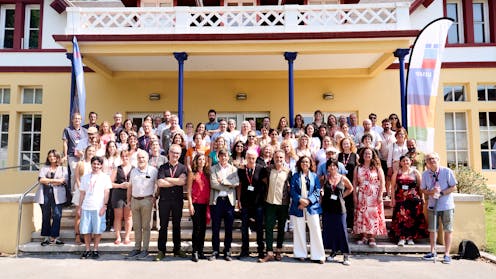
Los 70 alumnos y alumnas que han participado en la cuarta edición del Curso de verano de The Conversation ‘La aventura de divulga ciencia en español con éxito’ en el Palacio de la Magdalena (UIMP) con autoridades, ponentes y Jorge Drexler como invitado de honor. UIMP, CC BY

“Clavo mi remo en el agua, llevo tu remo en el mío / Creo que he visto una luz, al otro lado del río.”

Jorge Drexler, “Al otro lado del río”

Con esos versos –entonados a capela por Jorge Drexler ante un aula entregada– se produjo uno de los momentos más conmovedores del curso La aventura de divulgar ciencia en español con éxito, celebrado del 9 al 11 de julio en el Palacio de la Magdalena de Santander. La sede veraniega de la Universidad Internacional Menéndez Pelayo (UIMP) se convirtió durante tres días en un laboratorio de ideas, gracias a una iniciativa impulsada por The Conversation España, con el respaldo de la Fundación Lilly y la Fundación Ramón Areces.

Lo que allí se vivió fue mucho más que una serie de conferencias y talleres: fue un contagio de conocimiento y entusiasmo por la vida y la ciencia.

Mesa de inauguración del curso
La inauguración corrió a cargo del vicerrector del Campus de Las Llamas de la UIMP Francisco Matorras; Rafael Sarralde, el director general de The Conversation; Manuel Guzmán, Gerente en Fundación Lilly; Carolina Pola, colaboradora del comité científico de la Fundación Ramón Areces, y las codirectoras del curso Elena Sanz y Lorena Sánchez.
UIMP, CC BY

Lenguaje, cerebro y música: la mente en escena

Uno de los momentos más inspiradores fue el encuentro entre el neurofisiólogo y popular divulgador Xurxo Mariño y el músico y médico de formación Jorge Drexler. A medio camino entre el concierto y la charla científica, ambos desplegaron una conversación fascinante sobre cómo emerge la mente humana.

“El oficio del artista consiste en implantar una parte de su mente en otras personas”, explicó Mariño. “No se puede gozar de Beethoven sin ser un poco Beethoven”, respondía Drexler.

“La creatividad ocurre cuando disminuye la actividad de la corteza prefrontal: se apaga el director de orquesta del cerebro y se abren otras conexiones”, decía Xurxo Mariño. Y puso como ejemplo un momento muy concreto: el instante nada más despertar. Drexler, entonces, cantó con ayuda del público la canción que le valió un Óscar en el año 2005, nacida en un estado de duermevela. “Escribí Al otro lado del río a la luz de la mesita de noche”, confesaba.

Genes, mutaciones y el futuro humano

La genetista y catedrática de la Universidad de Barcelona, Gemma Marfany, arrancó la charla inaugural del curso con una afirmación contundente: “El genoma es una máquina perfecta, pero tiene errores”.

La genetista Gemma Marfany
La genetista Gemma Marfany durante una apasionada conversación en Caballerizas, lugar de encuentro de los ponentes en el Palacio de la Magdalena.
The Conversation, CC BY

Gemma Marfany habló de mutaciones, de edición genética con CRISPR –“el bisturí con GPS”– y de los dilemas éticos de la selección genética, que permitirá resolver múltiples enfermedades, pero también rediseñar nuestra especie.

“No queremos ser inmortales, queremos ser eternamente jóvenes”, sentenció, en referencia al sueño (o pesadilla) de modificar el ADN humano para mejorar el cuerpo, la mente y, quizá, el destino.

Con ejemplos como la película Gattaca o la historia de Carlos II el Hechizado, un rey que sufrió la maldición de la endogamia de la Casa de Habsburgo, Marfany dejó claro que la genética explica el pasado y condiciona el porvenir: “si modificas tu ADN, estás cambiando el ADN del futuro”.

Océanos, cosmos y física cuántica: lo que aún no sabemos

En una jornada dedicada a los grandes enigmas de la ciencia, la oceanógrafa Núria Casacuberta Arola habló del mar como “el corazón del clima”, advirtiendo que en lo profundo del océano hay más incógnitas que certezas. “Ha habido más personas en la Luna que en la fosa de las Marianas”, recordó Casacuberta Arola, subrayando el desconocimiento sobre el agua que regula la vida en la Tierra.

Nuria Casacuberta haciendo una exposición
Nuria Casacuberta Arola ha sido galardonada con la Beca de Retorno de la Fundación Ramón Areces, gracias a la cual trasladará sus actividades científicas al Institut de Ciències del Mar (ICM-CSIC) en Barcelona. La oceanógrafa propuso en el curso un viaje espacial al fondo de los océanos.
The Conversation, CC BY

El astrofísico David Galadí, profesor de la Universidad de Córdoba, y el físico cuántico Pablo Martínez Ruiz del Árbol, investigador del Instituto de Física de Cantabria, también colocaron al público ante el abismo de lo desconocido.

Pablo Martínez Ruiz del Árbol, investigador del Instituto de Física de Cantabria.
The Conversation, CC BY

Pablo Martínez comparó la física cuántica con el sushi: “para mi padre, que es de un pueblo de La Rioja, la cuántica es como el sushi, algo que te saca de tu zona de confort”. Y el astrofísico David Galadí, con humor y rigor, confesó que quizás en el futuro nos vean como “gente muy lista que llegó a conclusiones equivocadas”.

La ciencia, coincidieron ambos, solo puede actuar con humildad ante lo infinito por descubrir. Porque por cada conocimiento acumulado, “ampliamos lo que sabemos que no sabemos”, matizaba Martínez.

El astrofísico David Galadí describió la incertidumbre en astrofísica para explicar el universo.
The Conversation, CC BY

Corazón, medicina y mentoria: lecciones de una vida

El cardiólogo Valentín Fuster, una de las voces más esperadas, impartió una lección de sabiduría y humanidad en su conversación con la periodista experta en salud Cristina Sáez.

“Con franqueza, soy cardiólogo, pero no entiendo el corazón, un órgano que se mueve cada segundo y no se estropea hasta el final de una vida. He contribuido a entenderlo, pero aún no sabemos realmente cómo funciona: el corazón es un milagro”, confesó.

Valentín Fuster llegó desde Nueva York a Santander. ‘Si hago este viaje es porque considero esencial la divulgación de la ciencia’.
UIMP, CC BY

Valentín Fuster narró su trayectoria desde sus inicios, cuando su camino era el de un tenista profesional. “Un año suspendí una asignatura y mi padre puso fin al tenis. Siempre confié en mi padre. Y siempre he hecho lo que me han dicho las personas en las que he confiado”.

Así comenzó la carrera del hombre que introdujo en el mundo la medicina preventiva, que supo encontrar en el colesterol la razón de los infartos de miocardio, y que peleó contra gigantes hasta conseguir la polipíldora para tratar problemas de corazón. El estudio SECURE, publicado en The New England Journal of Medicine, mostró una disminución del 33 % en la mortalidad cardiovascular en comparación con el tratamiento habitual.

La periodista Cristina Sáez, coautora con Valentín Fuster de su libro de memorias, condujo la conversación.
UIMP, CC BY

Valentín Fuster habló de la importancia de tener un mentor, de la necesidad de cuidar al paciente como un todo –físico y emocional– y de los peligros de una sociedad que promueve el consumo hasta enfermarnos.

Para él, la clave para una vida íntegra está en lo que llama las “cuatro T”: tiempo para reflexionar, talento cultivado con humildad, transmitir positividad y ser un tutor para los demás.

Cristina Saéz mencionó el altruismo de Valentín Fuster en el trato a pacientes de toda condición social: “Para mí no existen nombres, existen personas, porque si miras por dentro, todos somos iguales”, dijo Fuster.

Pero el corazón no es solo un órgano que late: es un icono universal del amor. Y de amor habló el psicólogo y divulgador Luis Muiño, uno de los conductores de Entiende tu mente, el pódcast en español sobre psicología más escuchado del mundo. Muiño narró, por ejemplo, la historia del matrimonio mudo chino. Mudo, porque durante 60 años no se dirigieron la palabra. Entonces alguien les preguntó por qué seguían juntos. Él respondió: “porque la amo”. Y ella: “porque sé lo que piensa”. Luis Muiño abrió un intenso y apasionado debate con el alumnado planteando preguntas como: ¿por qué nos atrae lo prohibido? ¿Qué podemos hacer los ciudadanos del siglo XXI con las hormonas del Paleolítico? ¿Por qué vemos lo que queremos ver cuando amamos?

Luis Muiño desgranando la ciencia del amor.
The Conversation, CC BY

Ciencia con alma

El curso se nutrió de expertos, pero también de historias humanas. Como la de una alumna que recordó a su madre con alzhéimer, que solo conecta con el presente cuando canta canciones del pasado, “y entonces se emociona”. O la de otra alumna que trabaja como intérprete en contextos extremos, por ejemplo, cuando a alguien le detienen en un país en conflicto y no habla el idioma. Ella trataba de buscar una metáfora para definir su papel, algo que le pedía Emilio José García, responsable de la unidad de cultura científica del Instituto Astrofísico de Andalucía (IAA) al frente del taller Cómo hacer una charla de divulgación que no se olvide. La alumna buscaba una metáfora para definirse y alguien del publico propuso: “sois ángeles”.

Emilio José García (IAA) ofreciendo las claves para una charla de divulgación que no se olvide.
The Conversation, CC BY

También pidió metáforas Estrella Montolío, catedrática de la Universitat de Barcelona, para su taller sobre la ciencia del lenguaje aplicada a la divulgación. Entre las que escribieron los alumnos está: “Los alimentos transgénicos son como Severus Snape, señalados como perversos y malvados, pero en realidad ambos están protegiendo a las personas”.

Estrella Montolío, catedrática de Lengua Española de la Universidad de Barcelona, recogió metáforas científicas en su taller sobre la ciencia del lenguaje aplicada a la divulgación.
The Conversation, CC BY

Herramientas para divulgar

En el curso se entregó al alumnado el libro Comunicando ciencia con ciencia. Promovido por la Fundación Lilly, ha sido elaborado por 36 coautores expertos en comunicación científica.

Marcos Pérez, director de los Museos Científicos de A Coruña y presidente de la Asociación Española de Comunicación Científica (AEC2), Cristina Rico, coordinadora Senior de Programas y Actividades en Fundación Lilly, y Elena Sanz, directora de The Conversation, presentaron el libro Comunicando ciencia con ciencia.
The Conversation, CC BY

Las caras de asombro con mayúscula, y exclamaciones consecutivas, se produjeron durante el taller de uso de inteligencia artificial para divulgar ciencia que impartió Carmen Torrijos, lingüista computacional de Progidioso Volcán. En apenas dos horas, como prometió, hicimos un artículo, gráficos, un pódcast y una presentación en PowerPoint sobre la situación de Isla Calima, un archipiélago inexistente, que Carmen Torrijos presentaba amenazado por el cambio climático, y que sirvió como ejemplo para experimentar lo que las inteligencias artificiales generativas son capaces de hacer.

Carmen Torrijos mostró herramientas de inteligencia artificial aplicables a la divulgación de ciencia.
The Conversation, CC BY

Durante tres días, el curso fue una constelación de voces, ciencia y emociones. Una muestra de que la divulgación científica en español puede ser, además de rigurosa, profundamente humana.

Las codirectoras del curso Elena Sanz y Lorena Sánchez, con Xurxo Mariño y Jorge Drexler en el punto y final de La aventura de divulgar ciencia.
The Conversation, CC BY

The Conversation

ref. La aventura de divulgar ciencia ‘al otro lado del río’ – https://theconversation.com/la-aventura-de-divulgar-ciencia-al-otro-lado-del-rio-261122

When public money is tight, how do governments put a price on culture?

Source: The Conversation – UK – By Steve Nolan, Senior Lecturer in Economics, Liverpool John Moores University

It’s no secret that public finances are tight in the UK. This spells trouble for many sectors, not least culture. After all, this is an area that often relies on public funding – with many projects facing an uncertain future. But in an era of economic bad news, can it be justifiable to pump money into what some see as “frivolous” projects?

For some politicians, investment in cultural infrastructure is an investment in place and in people. This is the hope behind a £270 million fund that aims to boost the resilience of cultural institutions following an era of restricted public spending. There are limitations, and the culture-led approach – as with regeneration projects in general – remains only partially successful and deeply uneven.

From the role of large-scale cultural events like the European Capital of Culture to the so-called “Bilbao effect” (where a new cultural site is thought to spark revitalisation and economic growth), the same questions arise. Who is it for? What type of value is created – and is it shared in equitably?

But the question is also about how we might better understand and measure the value of a cultural site, collection or (re)development.


Get your news from actual experts, straight to your inbox. Sign up to our daily newsletter to receive all The Conversation UK’s latest coverage of news and research, from politics and business to the arts and sciences.


Pinning down the meaning of “value” is a tricky philosophical question – one that has long plagued economists. The standard evaluation tool of cost-benefit analysis tries to collapse these debates into a number. That is, a price that can measure the multi-faceted benefits a project can provide.

But in the cultural sphere, value often comes without a price tag. Access to many of our museums and galleries is free and the values derived from them transcend the monetary.

Even though economists can estimate this non-monetary value (albeit not without criticism), a more wide-ranging benefit of cultural investment is harder to understand. This is the counter-intuitive notion of “non-use value”.

In other words, this is the benefit that flows to an individual from the existence of a cultural good such as a museum. It can be without that person ever setting foot inside the building or engaging with any of the collections.

Consider a current culture-led redevelopment in the UK: the Waterfront Transformation Project in Liverpool. This ambitious scheme takes in the redevelopment of the International Slavery Museum, Maritime Museum and associated outdoor spaces.

Within this collection of cultural goods, “use” could be a visitor stepping inside the museums. They may derive multiple benefits, from the aesthetics of the building, the creativity of the displays and the histories and stories represented in the collection.

pane detailing slave ship history outside liverpool's museum of slavery
If these stones could speak … through their very existence, cultural sites can bring value to people who will never visit them.
NorthSky Films/Shutterstock

But what about a history lover who either lacks the desire or the ability to visit the collection? Or someone whose memories or heritage intertwines with the history? Despite having no direct contact, they might still benefit from the sites’ continuing existence: the fact, for example, that a place exists where other citizens can visit, challenge and debate.

For some, there is value simply in knowing that there are spaces for this kind of engagement. In this way, public use by others can generate indirect benefits. These benefits cannot be captured by traditional metrics like footfall. But they constitute value to that individual and, in turn, the communities in which they live.

Assessing value

The inclusion of non-use value within the Treasury’s evaluation recommendations recognises this complex public relationship with cultural goods. Correctly capturing these benefits is crucial. If not, funders may misconstrue a project’s total economic value when they make their decisions. Some that could generate significant public value might be overlooked.

However, non-use value can be slippery both to define and measure. Understanding how engagement with publicly funded cultural goods varies across communities and regions is crucial. This current gap in our knowledge means that non-use value is not always fully considered in the design or evaluation of cultural programmes.

Our ongoing project, undertaken along with post-doctoral research fellow Laura Taggart, attempts to improve this understanding in the context of Liverpool’s Waterfront Development Project.

This process raises vital questions. What are the benefits and potential harms of the site? How do relationships with it change over time and across economic and ethnic groups? And how does the public’s historic relationship with the dockside change the nature of the non-use value generated?

Clearly, the answers to these questions cannot easily be calculated from the results of a cost-benefit analysis. Like most economic tools it is a model – a simplification of reality that aims to help policymakers make informed decisions. By engaging locally and regionally, it is easier to understand what drives non-use value – and capture it in a way that is relevant across other projects.

At heart, our project aims to capture the voices that are often excluded or overlooked in decisions about cultural funding. By developing a better understanding of the range of non-use value from these spaces, we hope to support more rounded approaches to cultural policy.

This means improving evaluation tools and funding frameworks. They must better reflect how people relate to cultural goods and how this differs across communities and regions. This will help in the quest for a richer concept of “value for money” — one that supports political choices that recognise the long-term civic, emotional and historical returns of cultural infrastructure.

Ultimately, in an era of tight budgets this allows for better and more targeted decision-making that recognises the often complex value and benefit flows that culture generates. But there is work to be done to help the public articulate the nature of benefits and costs. These are as vital and complex as the cultural goods that generate them.

The Conversation

This article is part of the wider project – Cultural Heritage, People and Place (CHerPP) : Understanding Value via a regional case study. It is funded by the Arts and Humanities Research Council (AHRC) and the UK Government’s Department for Culture, Media and Sport (DCMS). Grant reference AH/Y000242/1

ref. When public money is tight, how do governments put a price on culture? – https://theconversation.com/when-public-money-is-tight-how-do-governments-put-a-price-on-culture-259483

The beauty of coral reefs is key to their survival – so we came up with a way to measure it

Source: The Conversation – UK – By Tim Lamont, Research Fellow, Marine Biology, Lancaster University

Why do people care about coral reefs? Why does their damage cause such concern and outrage? What drives people to go to great lengths to protect and restore them?

Of course, it’s partly because of their ecological importance and economic value – but it’s also because they are beautiful. Healthy coral reefs are among the most visually spectacular ecosystems on the planet – and this beauty is far from superficial. It underpins cultural heritage value, supports tourism industries, encourages ocean stewardship and deepens people’s emotional connections to the sea.

But how can such beauty be measured? And when it is destroyed, can it be rebuilt?


Get your news from actual experts, straight to your inbox. Sign up to our daily newsletter to receive all The Conversation UK’s latest coverage of news and research, from politics and business to the arts and sciences.


Traditionally, many coral reef monitoring and restoration programmes overlook their beauty, considering it too subjective to measure. And as a team of scientists, that frustrated us. We knew that to most effectively draw on this key motivator for coral conservation, we had to be able to measure beauty.

In some ways, it’s an impossible task. But our new study grapples with this challenge, delivering a way of quantifying the aesthetic value of a coral reef, as well as measuring its recovery when previously damaged reefs are restored.

Our international team of marine scientists has been working at the Mars coral restoration programme (the largest project of its kind) in central Indonesia. Here, local communities and international businesses have collaborated for over a decade, rebuilding reefs that were once decimated by dynamite fishing. This illegal fishing method uses explosives to stun and kill fish for easy collection, while shattering coral reefs into rubble – wiping out entire reef communities in seconds.

This Indonesian project has already successfully regrown coral reefs. But we wanted to explore whether this programme had been able to recreate the visual appeal of a natural reef ecosystem.

We took standardised seabed photos using settings that automatically adjust white balance and colour to compensate for underwater light conditions. This enabled us to capture accurate colours under consistent shallow-water conditions across healthy, degraded and restored reef sites.

Then we conducted online surveys with more than 3,000 participants, asking them to compare pairs of photographs and choose which they found more beautiful – enabling us to derive a rating for each photograph. Our results showed that people from very different backgrounds consistently shared similar opinions on which reefs were beautiful.

Whether respondents were young or old, from countries with coral reefs or without, or had different levels of education and familiarity with the ocean, they tended to favour images with high coral cover, vibrant colours and complex coral structures. This suggests there is a shared human appreciation for the beauty of thriving reefs.

We also used these ratings to train a machine-learning algorithm based on AI to reliably predict people’s visual preferences for photographs of different coral habitats.

The results of people’s survey responses and the machine learning algorithm were the same. Images of restored reefs were consistently rated just as beautiful as those of healthy reefs, and far more aesthetically pleasing than degraded reefs. This is encouraging, and important. It shows that efforts to rebuild these charismatic ecosystems can recreate the beauty that makes them so highly valued.

Tracking recovery

We found that beauty was strongly linked to the number of colours present in the picture, the proportion of the image taken up by living coral, and the complexity of shapes exhibited by the corals. Meanwhile, images showing grey rubble fields of dead corals with little life were consistently rated lowest.

Our results suggest that promoting a range of different coral colours and shapes will not only help marine life, but also restore the visual, cultural and tourism value of thriving coral reefs. Reef restoration experts can achieve this by choosing donor corals – healthy corals transplanted to degraded sites to aid recovery – to add colour and variety to the reefs they plant.

This also means that coral reef recovery can be tracked using simple photo-based monitoring, like that used in our study.

Coral reefs need long-term care to help them survive, thrive and maintain their beauty and ecological function. To ensure that initial restoration gains are not quickly lost, such efforts need to be paired with ongoing monitoring and maintenance. Any tourism development around restored reefs also needs to be managed carefully and sustainably.

Restoration and sustainable tourism practices can help protect and sustain the ecological and social benefits of beautiful, healthy reefs. Ultimately, restoring beautiful reefs will be crucial for communities that rely on marine tourism, and for inspiring people to care for the ocean.


Don’t have time to read about climate change as much as you’d like?

Get a weekly roundup in your inbox instead. Every Wednesday, The Conversation’s environment editor writes Imagine, a short email that goes a little deeper into just one climate issue. Join the 45,000+ readers who’ve subscribed so far.


The Conversation

Tim Lamont receives funding from the Royal Commission of 1851 and the Fisheries Society of the British Isles.

Gita Alisa receives funding from Friends of Lancaster University in America and Sheba Hope Advocate Program.

Tries Blandine Razak receives funding from the Pew Charitable Trust and the Fisheries Society of the British Isles.

ref. The beauty of coral reefs is key to their survival – so we came up with a way to measure it – https://theconversation.com/the-beauty-of-coral-reefs-is-key-to-their-survival-so-we-came-up-with-a-way-to-measure-it-261013

Japan and South Korea can show governments how to compete with China and US

Source: The Conversation – UK – By Robyn Klingler-Vidra, Vice Dean, Global Engagement | Associate Professor in Political Economy and Entrepreneurship, King’s College London

Governments around the world are hustling. European policymakers, for example, are eager to boost the region’s industrial relevance in a world where the US and China dominate cutting-edge technologies. They want to move beyond the adage that “the US innovates, China replicates and the EU regulates”.

As part of this, policymakers worldwide are striving to foster their own versions of Silicon Valley. They have invested to create ecosystems abundant with ambitious startups backed by venture capital investors. Their ultimate aim is to see these firms develop into what are known as scale-ups and compete in global markets.

But if governments – from Berlin and Brussels to Ho Chi Minh City – are to find their edge, I argue they should follow a model closer to Seoul or Tokyo’s playbook than that of Silicon Valley.

South Korean and Japanese policymakers have long understood that the proliferation of startup activity should not be an isolated aim. In our 2025 book, Startup Capitalism, my colleague Ramon Pacheco Pardo and I revealed that the approach of these countries sees national champion firms like Samsung and Toyota use startups as resources to help them compete internationally.

As the head of a government-backed startup centre in Seoul told me, a key aim of South Korean government policy for startups is to “inject innovative DNA” into the country’s large firms. Policies attempt to embed startups into the fabric of lead firms, and do not try to disrupt their competitive positions.

The 'traitorous eight' group of employees sat at a table.
The ‘traitorous eight’ group of employees.
Wayne Miller / Magnum Photos

For this objective, the Silicon Valley playbook is sub-optimal. US government policy has enabled venture capital investment through regulatory changes and has ensured that talented people are free to challenge their former employers. Classic examples include the so-called “traitorous eight” who left Shockley Semiconductor Laboratory in 1957 to found Fairchild Semiconductor.

A more recent example is Anthony Levandowski, who left Google’s self-driving car project to start his own company, Otto, in 2016. The competition was so close that Google sued Uber – as it had acquired Otto – in 2019 over the trade secrets Levandowski allegedly used to develop his self-driving truck company. Uber eventually paid Google a “substantial portion” of the US$179 million (£134 million) it was awarded initially in arbitration.

Injecting innovative DNA

The Japanese and Korean formula is distinct. South Korea’s 17 Centres for the Creative Economy and Innovation, established about ten years ago to drive innovation and entrepreneurship, each have one of the country’s large firms (chaebol) as an anchor partner. The chaebol’s industrial focus – whether it’s shipbuilding, electronics or heavy machinery – is reflected in the focus of the startups engaging with that centre.

The startups work on issues “that keep the large firm up at night” and, in return, the startups have unparalleled access to distribution channels, marketing and proof-of-concept testing. While the centres have not produced volumes of globally competitive scale-ups, they have delivered on the aim of injecting innovative ideas and talent into large companies like Hyundai, LG Electronics and SK Group.

In Japan, tax incentives encourage big businesses to acquire startups. The “open innovation tax incentive” allows a 25% deduction from the price of the acquisition. The aim here is to encourage Japan’s national champion firms to integrate startups into their core businesses. In 2024, for example, Toyota integrated high-tech wheelchair startup, Whill, into its mobility services offering.

Various government initiatives also aim to provide coaching and mentoring for startups around raising venture capital funding and sharpening a pitch for demo day. In Japan and Korea, these initiatives embed big business throughout.

In J-Startup, an initiative aimed at creating a cohort of so-called unicorns (startups valued at over US$1 billion), the Japanese government involves industrial leaders as judges that help select applicants for the programme. These people then act as coaches and mentors to the startups. Japan’s lead firms are, in return, exposed to innovative technologies and startup culture.

In a similar way, Korea’s K-Startup Grand Challenge connects participating foreign startups with the country’s chaebol for proof-of-concept development. The Korean government cites partnership and licensing agreements between the parties as an important outcome of the programme. Through these connections, Korea’s big businesses have another mechanism for accessing innovative ideas and talent from abroad.

A Samsung sign in Ho Chi Minh City.
Samsung Electronics is the largest chaebol in South Korea.
Sybillla / Shutterstock

Governments that want to compete with China or the US cannot continue on their existing path. They need to do something different, and Japan and South Korea’s approach offers an alternative.

These approaches are not without downsides. There is, of course, the risk of well-resourced corporations operating “kill zones” around their business lines. This might involve early low-value mergers and acquisitions, or even copying their products in a bid to eliminate them.

The central position of large firms to the economy also means that the innovation agenda of startups is set by incumbent firms. This fosters complementary products, and not those that disrupt – and ultimately improve – domestic firms or technologies. There’s also the worry of perceived corruption.

But I argue that pursuing a half-committed strategy is riskier. If governments maintain a wall between big business and startups, believing this is essential to minimise corruption and that large firms will innovate just as startups will scale-up into larger firms, they risk underwhelming outcomes on all levels.

We may see flailing productivity in the sectors in which countries have excelled. And scale-ups will fail to materialise while populations of “zombie startups”, that simply stagnate while propped up on state largesse, increase.

Startups should be considered as resources to boost nationwide industrial capabilities, not efforts aimed at seeding a country’s answer to Silicon Valley’s Google or OpenAI.

The Conversation

Robyn Klingler-Vidra does not work for, consult, own shares in or receive funding from any company or organisation that would benefit from this article, and has disclosed no relevant affiliations beyond their academic appointment.

ref. Japan and South Korea can show governments how to compete with China and US – https://theconversation.com/japan-and-south-korea-can-show-governments-how-to-compete-with-china-and-us-260623

In Reframing Blackness, Alayo Akinkugbe challenges museums to see blackness first

Source: The Conversation – UK – By Wanja Kimani, Associate Curator, The Fitzwilliam Museum, University of Cambridge

In Reframing Blackness, writer and curator Alayo Akinkugbe explores the way that art history is taught, and the impact this has had on what we see in national museums in western cities. This teaching has often led to the exclusion of blackness from mainstream art spaces. Akinkugbe challenges this by shifting our gaze – to see blackness first.

Her book interrogates the place of blackness in relation to art history in several ways. First, she observes that the lack of black curators within national museums in western cities means that blackness is subject to “reactive responses”.

For example, when there was a global outcry after the murder of George Floyd in 2020, institutions reacted by foregrounding their efforts to support black artists and pledging commitments for future initiatives.

But many of these initiatives remain on the surface level and temporary, rather than permanently embedded into the institutional fabric. In my experience, long-term change is unlikely to occur when progress is measured by individual projects, while the decision-making remains in the same hands.

Next, the book draws on Akinkugbe’s experience as a history of art student at the University of Cambridge, during which time there was a call to “decolonise” the curriculum.

She then explores the intersection of race, gender and class, highlighting the double-bind of racial and gender bias that black women may encounter. She suggests ways to shift the gaze by focusing on people of colour depicted in historic artworks, including Portrait d’une Femme Noire (Portrait of a Black Woman) (1800) by Marie-Guillemine Benoist.

Along the way, we are acquainted with figures that have always been present on museum and gallery walls – albeit often ignored or faded into obscurity. Akinkugbe speculates about who some of these unnamed figures were, and what worlds they inhabited.

In Jacques Amans’ painting, Bélizaire and the Frey Children (1837), for example, Bélizaire, a black enslaved child, was over time painted over and faded into the background.


Looking for something good? Cut through the noise with a carefully curated selection of the latest releases, live events and exhibitions, straight to your inbox every fortnight, on Fridays. Sign up here.


Akinkugbe provides an overview of exhibitions held between 2022 and 2024 at the Royal Academy in London and the Fitzwilliam Museum in Cambridge. And she has conversations with curators at other museums, whose work contributes to the understanding of the complexity of black life experiences reflected in contemporary art.

These include Antwaun Sargent (curator of The New Black Vanguard: Photography Between Art and Fashion) and Ekow Eshun (curator, In the Black Fantastic and The Time is Always Now: Artists Reframe the Black Figure). Akinkugbe also discusses the late Koyo Kouoh’s When We See Us: A Century of Black Figuration exhibition. Kouoh, who died in May, was the first African woman to curate the Venice Biennale.

By engaging in dialogue with the curators of these pivotal exhibitions, Akinkugbe demonstrates a shared commitment to uncovering what has been overlooked – and a commitment to deepening the discourse around blackness.

Cautious optimism

Reframing Blackness draws attention to important considerations for museums, curators and higher education institutions. There’s also food for thought for students who are keen to understand some of the factors that have contributed to the historic exclusion of blackness within museum walls and art education.

The book raises key questions that black cultural producers have grappled with in the UK since the 1960s, at the height of the Caribbean artists movement, and during the British black arts movement of the early 1980s. These movements created vital opportunities for discussion around issues of racial justice, visibility and representation.

Following the resurgence of the Black Lives Matter movement in mainstream media in 2020, institutions reacted with pledges for self-reflective work that would lead to more black artists’ work being exhibited and collected. Numerous large exhibitions across national museums followed – some of which are discussed in the book, as are the departmental overhauls of art curricula within higher education.

Portrait of a black woman wrapped in white cloth
Portrait d’une Femme Noire by Marie-Guillemine Benoist (1880).
Louvre Museum

I share in some of Akinkugbe’s optimism – but I do so cautiously.

Following the call to decolonise the curriculum, some art departments in UK higher education have expanded their geographic focus beyond the west. Others have stated their intention to address the legacies of enslavement and colonialism through a commitment to diversity and equality in their job advertisements. Some have done both.

But there are a few hurdles that may limit these efforts. First, newer courses that may not attract sufficient interest are often the first to be cut when budgets are constrained.

Second, if courses offer additional modules that attempt to cover vast areas in the global south, there is a risk of overgeneralising entire continents, marginalising them further. Such symbolic gestures fall short in an attempt to challenge art historical frameworks.

Finally, by adding works by black scholars to reading lists as supplementary instead of core reading, their contributions are treated as being on the margins rather than key producers of knowledge.

Museums have a responsibility to reflect the communities they serve, in a way that respects the individual and collective autonomy of that community. This may be counterintuitive to the museum’s original purpose, which may have been to serve the upper class, showcasing its founders’ interests.

Museums are better equipped to engage communities as partners in shaping their future when permanent staff reflect the diversity of these communities across the intersections of race, gender, class, sexuality and disability. Museum directors have a duty to serve these communities with a long-term commitment to care and accountability.

This book asks us to see blackness first. Akinkugbe guides us closer to a vision that does not require black people to reinsert ourselves, but insists on our resolute presence – both then and now.


This article features references to books that have been included for editorial reasons, and may contain links to bookshop.org. If you click on one of the links and go on to buy something from bookshop.org, The Conversation UK may earn a commission.

The Conversation

Wanja Kimani does not work for, consult, own shares in or receive funding from any company or organisation that would benefit from this article, and has disclosed no relevant affiliations beyond their academic appointment.

ref. In Reframing Blackness, Alayo Akinkugbe challenges museums to see blackness first – https://theconversation.com/in-reframing-blackness-alayo-akinkugbe-challenges-museums-to-see-blackness-first-260734

Why some ‘biodegradable’ wet wipes can be terrible for the environment

Source: The Conversation – UK – By Daniel James Jolly, PhD candidate, University of East Anglia

Daniel James Jolly, CC BY-NC-ND

Have you felt disgust when taking a walk along the riverside or plunging into the sea to escape the summer heat, only to spy a used wet wipe floating along the surface? Or shock at finding out that animals have died choking on plastic products or that the seafood we eat may be contaminated with microfibres?

These pollutants are common in our waterways because of the mismanagement of sewage and inappropriate disposal that flush hygiene products and microfibres into rivers and oceans. In the UK alone, more than 11 billion wet wipes are thrown away annually. Wet wipe litter was found on 72% of UK beaches in 2023.

They persist because they’re made of plastic, a durable material that won’t easily degrade. Plastic can last for decades to hundreds of years. Therefore, governments and manufacturers are eagerly encouraging the use of non-plastics as more “sustainable” alternatives, with the UK banning plastic in wet wipes in 2024.

These textiles can be made from plant or animal fibres such as cotton and wool, or they may be chemically and physically modified, such as rayon or viscose. They are often labelled “biodegradable” on product packaging, suggesting they are environmentally friendly, break down quickly, and are a safe alternative to plastics. But is this really the case?


Get your news from actual experts, straight to your inbox. Sign up to our daily newsletter to receive all The Conversation UK’s latest coverage of news and research, from politics and business to the arts and sciences.


My research focuses on investigating the environmental impact of these non-plastic textiles and their persistence in waterways. My colleagues and I have found that some non-plastic microfibres can be just as problematic or even more harmful than plastic.

While non-plastic textiles are not as long-lived as plastics, with many composting within weeks to months, they can last long enough to accumulate and cause damage to plants, animals and humans. Studies by scientists at the University of Stirling show that biodegradable wet wipes can last up to 15 weeks on beaches, where they can act as a reservoir for faecal bacteria and E.coli. Other studies have highlighted non-plastic textiles lasting for two months or more in rivers and oceans, where they break up into hundreds of thousands of microfibres.

woman in white top golds wet wipes
Non-plastic wet wipes can cause as much an environmental hazard as plastic ones.
Adam Radosavljevic/Shutterstock

These microfibres are so prevalent in waterways that they have contaminated animals across the food chain, from filter-feeding mussels and oysters to top predators such as sharks and the seafood we eat.

They are also found in remote locations as far away as the Arctic seafloor and deep sea, thousands of miles from civilisation. These discoveries highlight that non-plastics last longer than we think.

The dangers of non-plastics

Once exposed to aquatic life, non-plastic microfibres can be easily ingested or inhaled, where they can become trapped in the body and cause damage. During their manufacture, textile fibres can be modified with various chemical additives to improve their function, such as flame retardants, antibacterials, softeners, UV protection and dyes.

It is known that several toxic synthetic chemicals, including the plastic additive bisphenol A (BPA), are used for this purpose. These additives can be carcinogenic, cause neurotoxic effects or damage hormonal and reproductive health.

Researchers like me, have only just begun to explore the dangers of non-plastics. Some have shown that non-plastic microfibres and their additives can damage the digestive system, cause stress, hinder development and alter immune responses in animals such as shrimp, mussels, and oysters. However, other studies have shown little to no effect of non-plastic microfibres on animals exposed to them.

We do not yet know how much of a threat these materials are to the environment. Only the manufacturers know exactly what’s in the textiles we use. This makes it hard to understand what threats we are really facing. Nevertheless, assumptions that non-plastics are environmentally friendly and an easy alternative to plastic materials must be challenged and reconsidered.

To do this, we need to push for greater transparency in the contents of our everyday items and test them to make sure that they are truly sustainable and won’t harm the world around us. So next time you are browsing the supermarket aisles and come across a pack of “biodegradable” or “environmentally friendly” wet wipes, just question, are they really?


Don’t have time to read about climate change as much as you’d like?

Get a weekly roundup in your inbox instead. Every Wednesday, The Conversation’s environment editor writes Imagine, a short email that goes a little deeper into just one climate issue. Join the 45,000+ readers who’ve subscribed so far.


The Conversation

Daniel James Jolly receives funding from the University of East Anglia, Centre for Environment, Fisheries and Aquaculture Science, and the NERC ARIES doctoral training pathway as part of his PhD studentship.
He is a student member of the UK Green Party.

ref. Why some ‘biodegradable’ wet wipes can be terrible for the environment – https://theconversation.com/why-some-biodegradable-wet-wipes-can-be-terrible-for-the-environment-258836