Commerce Sénégal-Turquie : comment les Sénégalais ont bâti un pont entre Dakar et Istanbul

Source: The Conversation – in French – By Papa Sow, Senior Researcher, The Nordic Africa Institute

Le Premier ministre sénégalais Ousmane Sonko effectue une visite officielle en Turquie du 6 au 10 août 2025, un déplacement qui s’inscrit dans la continuité des liens anciens et croissants entre Dakar et Ankara. Ce voyage intervient, alors que la Turquie tente de maintenir une position forte en Afrique, avec sa “Politique d’ouverture vers l’Afrique”, adoptée en 1998.

En tant que chercheur sur les questions migratoires et géopolitiques, j’ai analysé, dans une récente étude, les formes d’agences, les réseaux sociaux et le commerce électronique transnational entre Dakar et Istanbul, ainsi que les personnes impliquées, notamment les migrants, les GP (Gratis Passengers ou gratuité partielle). Ces derniers sont des “expéditeurs” de fret ou “facteurs des airs”, qui utilisent leur franchise de bagages, pour transporter des colis hétéroclites entre Istanbul et Dakar. Cette activité est à tort ou à raison taxée de “clandestine”.

Mon étude met en lumière un commerce transnational actif et une migration circulaire et peu visible mais stratégique.

Les entretiens ont principalement porté sur les allers-retours des commerçants entre Dakar et Istanbul, les GP (essentiellement sénégalais) et autres hommes d’affaires sénégalais. Utilisant la puissance des réseaux sociaux tels que WhatsApp, TikTok et Facebook, ils commercent régulièrement avec la Turquie tout en résidant au Sénégal. Certains d’entre eux n’ont d’ailleurs jamais quitté le Sénégal.

Avec les tarifs préférentiels sur les billets d’avion, ils ont réussi à mettre en place un système de transport de colis payant fondé sur leur franchise de bagages. Contrairement aux passagers ordinaires qui ne peuvent dépasser les 46 kg autorisés, les GP peuvent transporter jusqu’à 100 kg par voyage, souvent avec des réductions de 50 % sur leurs tarifs grâce à des cartes de fidélité de compagnies aériennes.


Read more:
Comment l’Afrique de l’Ouest est devenue un terrain d’expansion pour la diplomatie turque


Origines de la coopération entre les deux pays

Les origines de la coopération entre Dakar et Istanbul remontent à 1900, année où un consulat honoraire fut ouvert à Dakar pour préserver les liens établis avec le Sénégal. Le premier ambassadeur de Turquie fut nommé au Sénégal en 1963. La première ambassade du Sénégal ouvrit en Turquie en 2006. Le Sénégal offre un potentiel considérable pour divers produits tels que le coton, les ressources halieutiques, les céréales, les fruits, les peaux, etc., qui sont tous exportés vers la Turquie.

En 2021, le volume des échanges commerciaux, industriels et d’investissements entre les deux pays a ainsi atteint plus de 540 millions de dollars US, contre plus de 91 millions de dollars américains en 2008. Cette coopération s’étend également à la défense, à la sécurité et à la culture. Une centaine d’entreprises turques sont déjà installées au Sénégal.

En 2017, l’État turc a régularisé plus de 1 400 Sénégalais vivant en Turquie. Le nombre de Sénégalais présents sur le sol turc varie selon les sources. On estime que plusieurs milliers de Sénégalais vivent ou transitent par le territoire turc. Depuis le milieu des années 2000, de nombreux commerçants et entrepreneurs sénégalais, notamment des femmes, effectuent des voyages d’affaires à Istanbul ou promeuvent les échanges commerciaux entre les deux pays.

En compétition avec le hub de Dubai, la nouvelle destination que constitue la Turquie a contribué non seulement à modifier un peu le paysage migratoire des Sénégalais vers l’Europe occidentale (qui demeurait la principale destination), mais a également permis à certains commerçants de se spécialiser dans les importations turques. Ces importations sont communément appelées au Sénégal, en langue Wolof, « bagaassu Turki » (produits turcs). Elles sont composées de cosmétiques, d’accessoires pour la maison, de vêtements et de divers produits technologiques.


Read more:
La Turquie, nouvel acteur majeur en Afrique ?


Les réseaux économiques transnationaux entre Istanbul et Dakar

Les commerçants interrogés ont déclaré avoir choisi Istanbul comme centre international d’approvisionnement en gros en raison du coût élevé des voyages vers la Chine et des problèmes de visas avec ce pays. À Istanbul, certains Sénégalais travaillent comme « expéditeurs » de fret, ou GP, en référence aux tarifs préférentiels des compagnies aériennes, et, par extension, comme transporteurs de colis hors taxes vers le Sénégal et d’autres pays africains.

Nous les distinguons des migrants kargo, qui transportent de grosses quantités de marchandises par bateau pour atteindre le Sénégal. Les GP, transportant de plus petites quantités, utilisent l’avion comme moyen de transport. Mais ils peuvent aussi souvent expédier le reste de leurs marchandises via le système Kargo.

Les GP ont également la possibilité de transporter des bagages supplémentaires, facturés comme fret. Dans ce contexte de transactions permanentes, ils effectuent régulièrement deux à trois allers-retours par mois entre Dakar et Istanbul.

Pistes de réflexion autour du phénomène

Premièrement, il serait intéressant de réaliser des études complètes sur le volume de marchandises et de produits expédiés du Sénégal vers la Turquie et inversement, mais aussi de dresser les profils et la cartographie des transporteurs et de connaître leurs revenus annuels. L’étude que j’ai menée n’a pas pu combler ce gap de statistiques. Les États sénégalais et turc seraient ainsi mieux à même de les soutenir en créant de nouveaux emplois.

Cela pourrait mettre en lumière le chiffre d’affaires global des commerçants turcs et sénégalais dans cette mobilité circulaire, mais aussi des nouveaux entrepreneurs émergents sur les réseaux sociaux qui commercent fréquemment sans jamais quitter le Sénégal.

Deuxièmement, le secteur du e-commerce développé par les entrepreneurs des réseaux sociaux est encore peu connu au Sénégal, mais il génère un nouveau marché. Ce créneau peu étudié, qualifié à tort ou à raison d’« informel », mérite une plus grande attention, car il a non seulement contribué à réduire le coût des marchandises sur les marchés locaux pour les consommateurs, mais a également permis de voir au Sénégal la distribution à grande échelle des produits turcs.

Troisièmement, les échanges qui tournent autour du bagaassu Turki sont diversement interprétés. Le mécontentement est visible parmi les artisans sénégalais qui accusent le bagaassu Turki d’avoir contribué à freiner la production textile et les savoir-faire créatifs locaux.

Plusieurs artisans sénégalais – cordonniers, bijoutiers, tailleurs – nous ont confié, par exemple, que les produits turcs – chaussures, sacs en cuir et vêtements surtout – constituent une sérieuse concurrence pour certains produits locaux. Les bagaassu Turki, plus élaborés et plus raffinés, se vendent facilement sur le marché sénégalais grâce à leurs prix abordables, contrairement aux produits locaux fabriqués à la main et nécessitant souvent de nombreuses heures de travail. Une telle doléance mérite également d’être prise au sérieux par les autorités sénégalaises.

Quatrièmement, la migration circulaire de courte durée – aller-retour – est souvent négligée dans les études sur les migrations, mais constitue une solution endogène pertinente entre pays riches et pays à faible revenu.

En favorisant cette forme de migration, au détriment de la migration de longue durée, susceptible de poser davantage de problèmes aux pays hôtes, il est tout à fait possible de redynamiser l’économie des pays à faible revenu grâce à la contribution des migrants. Cela passe par la mise en valeur de leur expertise et compétence, par des actions ciblées et inclusives favorisant l’accès à l’information en temps opportun et à la création d’emplois dans les pays d’origine.

À terme, une telle politique renforcera les capacités institutionnelles et améliorera les politiques migratoires, les cadres juridiques et les réglementations. Cela pourrait ainsi contribuer à faire de la mobilité des personnes et des biens entre les États une solution mutuellement avantageuse et à dissiper progressivement “l’heuristique de la peur” (décrit par le théoricien allemand Hans Jonas qui domine actuellement le débat politique sur les migrations internationales.

The Conversation

Papa Sow does not work for, consult, own shares in or receive funding from any company or organisation that would benefit from this article, and has disclosed no relevant affiliations beyond their academic appointment.

ref. Commerce Sénégal-Turquie : comment les Sénégalais ont bâti un pont entre Dakar et Istanbul – https://theconversation.com/commerce-senegal-turquie-comment-les-senegalais-ont-bati-un-pont-entre-dakar-et-istanbul-262814
Industrial pollution once ravaged the Adirondacks − decades of history captured in lake mud track their slow recovery

Source: The Conversation – USA (2) – By Sky Hooler, Ph.D. Student in Environmental Science, University at Albany, State University of New York

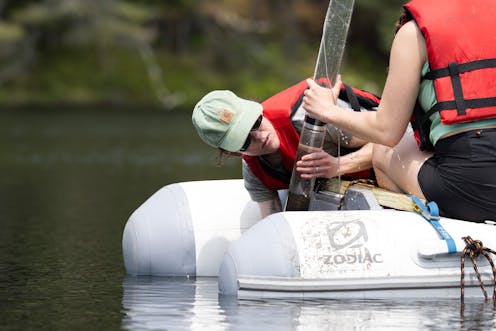
Scientist Aubrey Hillman, one of the authors of this article, extracts a core of mud from the bottom of Black Pond in June 2025. Patrick Dodson/University at Albany

Lush forests and crisp mountain air have drawn people to New York’s Adirondack Mountains for centuries. In the late 1800s, these forests were a haven for tuberculosis patients seeking the cool, fresh air. Today, the region is still a sanctuary where families vacation and hikers roam pristine trails.

However, hidden health dangers have been accumulating in these mountains since industrialization began.

Tiny metal particulates released into the air from factories, power plants and vehicles across the Midwest and Canada can travel thousands of miles on the wind and fall with rain. Among them are microscopic pollutants such as lead and cadmium, known for their toxic effects on human health and wildlife.

For decades, factories released this pollution without controls. By the 1960s and 1970s, their pollution was causing acid rain that killed trees in forests across the eastern U.S., while airborne metals were accumulating in even the most remote lakes in the Adirondacks.

People sit outside tents surrounded by forest.
In the early 1900s, sanatoriums such as the New York State Hospital at Ray Brook, near Saranac Lake, were built to house tuberculosis patients. The crisp mountain air was believed to help their recovery.
Detroit Publishing Company photograph collection (Library of Congress)

As paleolimnologists, we study the history of the environment using sediment cores from lake bottoms, where layers of mud, leaves and pollen pile up over time, documenting environmental and chemical changes.

In a recent study, we looked at two big questions: Have lakes in the Northeast U.S. recovered from the era of industrial metal pollution, and did the Clean Air Act, written to help stop the pollution, work?

Digging up time capsules

On multiple summer trips between 2021 and 2024, we hiked into the Adirondacks’ backcountry with 60-pound inflatable boats, a GPS and piles of long, heavy metal tubes in tow.

We focused on four ponds – Rat, Challis, Black and Little Hope. In each, we dropped cylindrical tubes that plunge into the darkness of the lake bottom. The tubes suction up the mud in a way that preserves the accumulated layers like a history book.

Back in the lab, we sliced these cores millimeter by millimeter, extracting metals such as lead, zinc and arsenic to analyze the concentrations over time.

The changes in the levels of metals we found in different layers of the cores paint a dramatic picture of the pristine nature of these lakes before European settlers arrived in the area, and what happened as factories began going up across the country.

A century plagued by contamination

Starting in the early 1900s, coal burning in power plants and factories, smelting and the growing use of leaded gasoline began releasing pollutants that blew into the region. We found that manganese, arsenic, iron, zinc, lead, cadmium, nickel, chromium, copper and cobalt began to appear in greater concentrations in the lakes and rose rapidly.

At the same time, acid rain, formed from sulfur and nitrogen oxides from coal and gasoline, acted like chemical shovels, freeing more metals naturally held in the bedrock and forest soils.

Acid rain damaged this forest on Mt. Mitchell in western North Carolina.
Acid rain damaged trees in several states over the decades, leaving ghostly patches in forests.
Will & Deni McIntyre/Corbis Documentary via Getty Images

The result was a cascade of metal pollution that washed down the slopes with the rain, winding through creeks and seeping into lakes.

All of this is captured in the lake sediment cores.

As extensive logging and massive fires stripped away vegetation and topsoil, the exposed landscapes created express lanes for metals to wash downhill. When acidification met these disturbed lands, the result was extraordinary: Metal levels didn’t just increase, they skyrocketed. In some cases, we found that lead levels in the sediment reached 328 parts per million, 109 times higher than natural preindustrial levels. That lead would have first been in the air, where people were exposed, and then in the wildlife and fish that people consume.

These particles are so small that they can enter a person’s lungs and bloodstream, infiltrate food webs and accumulate in ecosystems.

A U.S. map shows wind pattern and the source of pollution to the Adirondacks.
A wind map shows how pollution moves from the Midwest, reaching the Adirondacks. The colors show the average wind speed, in meters per second, and arrows show the wind direction about 3,000 meters above ground from 1948 to 2023. Average calculated using NCEP/NCAR reanalysis data.
Sky Hooler

Then, suddenly, the increase stopped.

A public outcry over acid rain, which was stripping needles from trees and poisoning fish, led to major environmental legislation, including the initiation of the Clean Air Act in 1963. The law and subsequent amendments in the following decades began reducing sulfur dioxide emissions and other toxic pollutants. To comply, industries installed scrubbers to remove pollutants at the smokestack rather than releasing them into the air. Catalytic converters reduced vehicle exhaust, and lead was removed from gasoline.

The air grew cleaner, the rain became less acidic, and our sediment cores show that the lakes began to heal through natural biogeochemical processes, although slowly.

Scientists paddle on Black Pond, surrounded by lush forest, in the Adirondacks.
Patrick Dodson

By 1996, atmospheric lead levels measured at Whiteface Mountain in the Adirondacks had declined by 90%. National levels were down 94%. But in the lakes, lead had decreased only by about half.

Only in the past five years, since about 2020, have we seen metal concentrations within the lakes fall to less than 10% of their levels at the height of pollution in the region.

Our study is the first documented case of a full recovery in Northeast U.S. lakes that reflects the recovery seen in the atmosphere.

It’s a powerful success story and proof that environmental policy works.

Looking forward

But the Adirondacks aren’t entirely in the clear. Legacy pollution lingers in the soils, ready to be remobilized by future disturbances from land development or logging. And there are new concerns. We are now tracking the rise of microplastics and the growing pressures of climate change on lake ecosystems.

Recovery is not a finish line; it’s an ongoing process. The Clean Air Act and water monitoring are still important for keeping the region’s air and water clean.

Though our findings come from just a few lakes, the implications extend across the entire Northeast U.S. Many studies from past decades documented declining metal deposition in lakes, and research has confirmed continued reductions in metal pollutants in both soils and rivers.

In the layers of lake mud, we see not only a record of damage but also a testament to nature’s resilience, a reminder that with good legislation and timely intervention, recovery is possible.

The Conversation

Sky Hooler received funding from National Science Foundation with
the Geological Society of America Graduate Student Geoscience
Research Grant #1949901, 2021.

Aubrey Hillman does not work for, consult, own shares in or receive funding from any company or organization that would benefit from this article, and has disclosed no relevant affiliations beyond their academic appointment.

ref. Industrial pollution once ravaged the Adirondacks − decades of history captured in lake mud track their slow recovery – https://theconversation.com/industrial-pollution-once-ravaged-the-adirondacks-decades-of-history-captured-in-lake-mud-track-their-slow-recovery-260182

Bureau of Labor Statistics tells the US what’s up with the economy – Trump firing its top official may undercut trust in its data

Source: The Conversation – USA (2) – By Thomas A. Stapleford, Associate Professor of History and Liberal Studies, University of Notre Dame

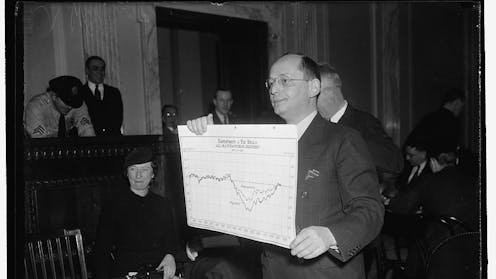
Isador Lubin, chief of the Bureau of Labor Statistics, presents data to a Senate committee in 1937. Library of Congress

Many financial and political analysts are trying to assess the impact of President Donald Trump’s decision to fire U.S. Bureau of Labor Statistics Commissioner Erika McEntarfer on Aug. 1, 2025, the same day that an unemployment report conveyed weakness in the job market. Some of the strongest criticism of this unprecedented move has come from Republican-aligned and nonpartisan experts, including a former BLS commissioner Trump appointed during his first term and the American Economic Association, a nonprofit that has 17,000 members in academic, government and business professions. They have said that what Trump has accused McEntarfer of doing – “rigging” data“ – would be impossible to pull off.

The Conversation U.S. asked Tom Stapleford, a professor who has written a book on the political history of the U.S. consumer price index, to explain why this move could undermine trust in the indicators the government releases and why that could damage the economy.

What key data does the BLS release?

Founded in 1884, the Bureau of Labor Statistics publishes monthly and annual data about American consumers and workers. Historically, the BLS has focused on urban workers and consumers, while the Department of Agriculture covered farmers and agricultural work. But these days, the Bureau of Labor Statistics also collects some data reflecting rural areas too.

The bureau publishes monthly data on inflation, employment and unemployment, and compensation. It also measures productivity on a quarterly basis, and twice per year it issues reports on consumer purchases – what people buy and how much they spend in different categories.

These official statistics are often revised in the months that follow as the bureau adopts new methods or more data becomes available.

A group of men line up at a booth beside a banner that says 'now hiring.'
A recruiter speaks with potential hires at a job fair in Florida in April 2025. Later, that change in employment status could register in the data that the Bureau of Labor Statistics tracks throughout the United States.
Joe Raedle/Getty Images

How can data affect markets and the economy?

The bureau’s data on inflation, employment, unemployment and compensation draws the most attention because it answers basic questions about the economy.

For example: Are prices rising? Are employers adding new jobs? Are people finding work? How much are workers getting paid?

Employment and unemployment may seem very similar, but they show you different things. BLS employment data tells you how many jobs there are, where they are and in what lines of work.

BLS unemployment data is about people. How many Americans are looking for work but can’t find a job? How many have part-time jobs but would prefer to work full time?

The BLS also collects, analyzes and releases inflation data that shows how price changes are affecting American consumers. The BLS consumer price index data is weighted so that changes in the prices of items that are a big part of household expenses will have a larger effect on the final results than other changes.

Each BLS statistic has a narrow focus, but, taken together, they can reveal a lot about economic conditions across the country and in specific states.

Businesses and investors look to BLS data as guides for trends that might affect companies or financial markets as a whole. If prices start to rise quickly, the Federal Reserve might raise interest rates, which reduces bond prices.

If job creation starts to slow, the country might be heading toward a recession, and employers might pull back on hiring and production or invest less in new equipment. Policymakers use BLS statistics to guide decisions about government actions, and everyone else may use them to judge whether politicians have succeeded in managing the economy well.

Of course, all of these uses depend on Americans being able to trust the numbers. The BLS goes to great lengths to secure that trust, publishing detailed descriptions of its methods and research papers that try to explain patterns in the data and test new approaches. Until recently, the BLS also had two unpaid advisory committees of economists and statisticians from companies, universities and nonprofits that analyzed BLS methods and offered advice.

However, the Department of Labor disbanded those committees in March 2025, stating that the committees “had fulfilled their intended purpose.”

A man draws a consumer price index chart.
Even in the early 1970s, the BLS employed artists whose job it was to make charts to clearly convey the data it collected.
Library of Congress

What does the BLS commissioner do?

The BLS commissioner oversees all aspects of the bureau’s operations and serves as the primary liaison with Congress and the leadership of the Department of Labor.

Although some early BLS commissioners did not have advanced degrees, all commissioners since the 1930s have had Ph.D.s in economics or statistics, as well as substantial experience using or producing statistical data.

Unlike rank-and-file BLS staff, who are typically career civil servants, the commissioner is appointed by the president and confirmed by the Senate for a four-year term. Due to the timing of those terms, each commissioner’s tenure normally spans two presidential terms. The Senate overwhelmingly approved McEntarfer’s nomination, for example, in an 86-8 vote held in January 2024.

However, this appointment is at will, meaning that a president can legally remove a commissioner at any time.

Could the top BLS official fudge any data?

It would be very difficult for the commissioner to alter or falsify data on his or her own.

The data is produced collectively by a large nonpartisan staff who are protected by civil service regulations, so it would be impossible for the commissioner simply to change the numbers.

Nonetheless, the commissioner could shape BLS data indirectly. The commissioner could make certain data harder to access, devote fewer resources to some topics or close some data series altogether.

More significantly, creating national statistics is complicated: There is always uncertainty, and even experts will disagree on many issues. A sufficiently motivated commissioner could potentially nudge the data in favored directions simply by altering the methodology.

If BLS staff thought a commissioner was truly trying to manipulate the statistics, however, I would expect many of them would resign or protest publicly. And there’s no sign of that having happened under McEntarfer’s leadership. She has strong support from former BLS commissioners and leading economists.

What are some possible consequences?

I do not expect to see any immediate consequences from McEntarfer’s firing.

The acting commissioner of the BLS, William Wiatrowski, is a longtime BLS employee who has held this role before.

The rest of the bureau’s staff remain the same. Over the long term, the actions of whomever Trump appoints as McEntarfer’s permanent replacement will determine whether her firing was an aberration or the mark of a new relationship between the White House and the BLS that could eventually undercut trust in its statistics.

To strengthen confidence in the BLS, the new commissioner could reinstate the external advisory committees that the Trump administration has disbanded. But he or she could weaken confidence by making controversial changes, especially regarding employment statistics, that are criticized by leading professional organizations or that cause top BLS officials to quit their jobs.

I believe it’s unlikely that BLS statistics could be faked in ways that would deceive economists. But they could become much less useful, and that would be bad for the United States.

The Conversation

Thomas A. Stapleford does not work for, consult, own shares in or receive funding from any company or organization that would benefit from this article, and has disclosed no relevant affiliations beyond their academic appointment.

ref. Bureau of Labor Statistics tells the US what’s up with the economy – Trump firing its top official may undercut trust in its data – https://theconversation.com/bureau-of-labor-statistics-tells-the-us-whats-up-with-the-economy-trump-firing-its-top-official-may-undercut-trust-in-its-data-262673

AI is taking hold in K-12 schools – here are some ways it can improve teaching

Source: The Conversation – USA (2) – By Michael G. Kozak, Associate Clinical Professor of Educational Administration and Leadership, Drexel University

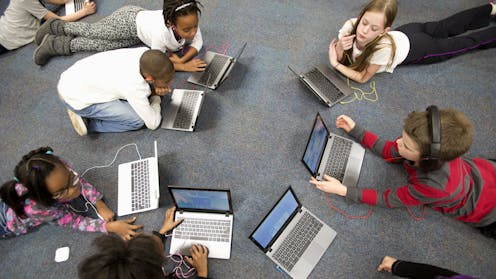
Artificial intelligence can bring a host of benefits, such as individualized learning, but can also encourage kids to shortcut learning. Jonathan Kirn via Getty Images

Generative AI platforms have sent shock waves through the K-12 education sector since the public release of ChatGPT nearly three years ago.

The technology is taking hold under the belief that students and teachers need to be proficient in these powerful tools, even though many concerns remain around equity, privacy, bias and degradation of critical thinking among students.

As a professor who teaches future educators and is part of an AI-focused working group, I have observed the potential for artificial intelligence to transform teaching and learning practices in K-12 schools. The trends I am seeing – and that I encourage – are for K-12 educators to use AI to shift from memorization and rote learning to instead emphasize critical thinking and creativity.

Jumping in the deep end

After the public release of ChatGPT in late 2022, some large school districts initially banned the use of AI due to concerns about cheating. Surveys also reflected worries about chatbots fabricating information, such as references for school papers, in addition to concerns about misinformation and biases existing in AI responses to prompts.

Students, on the other hand, tended to jump into the deep end of the AI pool. Common Sense Media, which offers recommendations on children’s media consumption, published a report in 2024 showing that students were using AI-supported search and chatbots for homework and to stave off boredom as well as other personal reasons, including “creating content as a joke, planning activities, and seeking health advice.” Most of the teachers and parents of the students in the study were unaware that students were using the technology.

In my work at Drexel University teaching graduate students who are aspiring school principals or superintendents, I found that in 2023, K-12 students were afraid of using AI due to the policies implemented in their districts banning it. However, it quickly became apparent that students were able to mask their use of AI by instructing AI to insert some mistakes to their assignments.

Meanwhile, despite teachers’ initial concerns about AI, approximately 60% of K-12 teachers now admit to using AI to plan lessons, communicate with parents and assist with grading. Concerns over students cheating still exist, but time-strapped teachers are finding that using AI can save them time while improving their teaching.

A recent Walton Foundation and Gallup study revealed that teachers who used AI tools weekly saved an average of 5.9 hours per week, which they reallocated to “providing students more nuanced feedback, creating individualized lessons, writing emails and getting home to their families in a more reasonable time.”

Opening up new ways of teaching

I recommend that my graduate students use AI because I think ignoring emerging trends in education is not wise. I believe the benefits outweigh the negatives if students are taught ethical use of the technology and guardrails are put in place, such as requiring that AI be cited as a source if students use it in coursework.

Advocates say AI is changing teaching for the better, since it forces teachers to identify additional ways for students to demonstrate their understanding of content. Some strategies for students who rely too heavily on AI include oral presentations, project-based learning and building portfolios of a student’s best work.

One practice could involve students showing evidence of something they created, implemented or developed to address a challenge. Evidence could include constructing a small bridge to demonstrate how forces act on structures, pictures or a video of students using a water sampling device to check for pollution, or students designing and planting a community garden. AI might produce the steps needed to construct the project, but students would actually have to do the work.

Teachers can also use AI to create lessons tailored to students’ interests, quickly translate text to multiple languages, and recognize speech for students with hearing difficulties. AI can be used as a tutor to individualize instruction, provide immediate feedback and identify gaps in students’ learning.

When I was a school superintendent, I always asked applicants for teaching positions how they connected their classroom lessons to the real world. Most of them struggled to come up with concrete examples. On the other hand, I have found AI is helpful in this regard, providing answers to students’ perennial question of why they need to learn what is being taught.

Thought partner

Teachers in K-12 schools are using AI to help students develop their empathetic skills. One example is prompting an AI to “redesign the first-day experience for a relocated student entering a new middle school.” AI created the action steps and the essential questions necessary for refining students’ initial solutions.

In my own classroom, I’ve used AI to boost my graduate students’ critical thinking skills. I had my students imagine that they were college presidents facing the loss of essential federal funding unless they implemented policies limiting public criticism of federal agencies on campus. This proposed restriction, framed as a requirement to maintain “institutional neutrality,” requires students to develop a plan of action based on their knowledge of systems and design thinking. After each team developed their solution, I used AI to create questions and counterpoints to their proposed solution. In this way, AI becomes a critical thought partner to probe intended and unintended outcomes, gaps in students’ thinking and potential solutions that might have been overlooked.

AI researcher Ethan Mollick encourages educators to use AI as a springboard, similar to jazz musicians improvising, as a way to unleash new possibilities. Mollick advises people to partner with AI as co-intelligence, be the human in the loop, treat AI as a co-worker, albeit one that needs to be prodded for evidence, and to learn to use it well. I concur.

Changing perspectives on AI

Some early studies on the effects of using AI in education have raised concerns that the convenience of generative AI will degrade students’ learning and erode their critical thinking skills.

I think that further studies are needed, but I have found in my own work and in the work of my graduate students that AI can enhance human-produced work. For example, AI-powered teaching assistants, like Khanmigo or Beghetto Bots, use AI to help students solve problems and come up with innovative solutions without giving away the answers.

My experiences with other educators on the front lines show me that they are beginning to change their perspectives toward students using AI, particularly as teachers realize the benefit of AI in their own work. For example, one of my graduate students said his district is employing a committee of educators, students and outside experts to explore how AI can be used ethically and in a way that won’t erode students’ critical thinking skills.

Educators are starting to realize that AI isn’t going away anytime soon – and that it’s better to teach their students how to use it, rather than leave them to their own devices.

The Conversation

Michael G. Kozak does not work for, consult, own shares in or receive funding from any company or organization that would benefit from this article, and has disclosed no relevant affiliations beyond their academic appointment.

ref. AI is taking hold in K-12 schools – here are some ways it can improve teaching – https://theconversation.com/ai-is-taking-hold-in-k-12-schools-here-are-some-ways-it-can-improve-teaching-259501

Taiwan faces a precarious future – whether or not US and China continue on path to conflict

Source: The Conversation – UK – By Kerry Brown, Professor of Chinese Politics; Director, Lau China Institute, King’s College London

Taiwan has often compared itself to being a “shrimp between two whales”. That expression has never been more apt than today with the US and China – which considers Taiwan to be part of its territory – locked in a standoff over the future of the island.

At an event I attended some years ago, a Chinese scholar remarked when the issue of the US-China rivalry came up that they believed there was an African saying: “When two elephants are either having a fight, or making love, the grass around them gets trampled.”

It was best for everyone, they advised the other attendees, for the two superpowers to have a workmanlike, unexciting relationship rather than take the risk of things getting too friendly or hostile.

But whether or not the current period of conflict continues or the US and China magically become more aligned, the challenges facing Taiwan are severe.

First off, Taiwan is itself in a period of domestic turbulence. The government of Taiwanese president William Lai Ching-te, leader of the Democratic Progressive party, was elected in January 2024 with a little over 40% of the vote. This was considerably less than his predecessor from the same party, Tsai Ing-wen.

One of the main opposition leaders, Ke Wen-je of the Taiwan People’s party, has since then been arrested on corruption charges. He is accused of accepting half a million US dollars in bribes during his term as mayor of Taipei as well as misreporting campaign finances during his presidential run.

Most recently, in late July, recall votes were held where citizens in 24 districts of Taiwan chose whether or not to remove their legislator from office. This is the result of a law in Taiwan stipulating a new vote if 10% of the electorate in a specific constituency express dissatisfaction at the previous outcome. Activists supporting the government mobilised to achieve this.

The votes seem to be associated with frustration that, while the Democratic Progressive party controls the presidency, it cannot get legislation through a parliament dominated by its opponents. All of the votes were directed at seats held by the Kuomintang, the main opposition party in recent years that is accused by its critics of being pro-China. Not a single seat was overturned.

When the steady nationalism of Xi Jinping’s leadership in Beijing is factored in, with its conviction that the global influence of the west is slowly declining and the east – dominated by China – is in the nascent, one can see why the issue of Taiwan might look more precarious and worrying. This is regardless of the various predictions that 2027 is the date that China has set to go for reunification.

Ambiguous US position

For the US, President Donald Trump’s fixation has remained on correcting what he sees as China’s unfair trade advantages with its largest single economic partner – something he has long talked about.

The White House proclaimed in March, when the first set of trade negotiations with China concluded after tariffs were imposed by both sides, that: “for too long, unfair trade practices and America’s massive trade deficit with China have fuelled the offshoring of American jobs and the decline of our manufacturing sector.”

The aim at the most recent set of talks in Stockholm, Sweden, in late July was to drive towards a new deal. Trump has also reportedly talked of taking a huge delegation of business people to China at some point later in 2025. This is despite the fact that so far since his inauguration in January, and despite many reasons to talk, Xi and Trump have yet to physically meet.

Taiwanese people are therefore right to feel increasingly uneasy. Under Trump’s predecessor, Joe Biden, they received verbal commitments that the US would come to Taiwan’s aid if it was attacked. This was not formal US policy, which has long maintained an ambiguous stance on Taiwan.

Ambiguity has returned with a vengeance under Trump. His secretary of defence, Pete Hegseth, has said that the US stands by Taiwan. But these days in Washington all roads lead to the Oval Office, and Trump’s stance is far harder to predict.

If China were to dangle a trade deal in front of the US president – committing to buy more US goods, put in more investment that is non-problematic on security grounds in the US and generally abide by American demands – would Trump be able to resist?

It could be presented as a historic achievement, a new concordant between the world’s two greatest powers who had seemed until then set on conflict and clash. There might even be the much desired Nobel Peace Prize in it for the US leader.

Trump, for his part, appears increasingly reluctant to back Taiwan in ways that risk provoking Beijing. Lai delayed a trip to Latin America in July after the Trump administration reportedly told him to cancel a proposed stopover in New York. And the US cancelled a meeting with Taiwan’s defence minister one month earlier.

The likelihood remains that, if a real crisis occurs, then the US will climb down from the middle wall and do something to defend Taiwan. Any trade deal between Beijing and Washington will also probably be a highly circumscribed one. China is not an easy partner to negotiate with, and it is unlikely to offer Trump the kind of capitulation he is seeking.

Even so, these are very unpredictable times. The key calculation going forward will be the simple one of what the US gains and loses from all its relationships – and that includes Taiwan.

The Conversation

Kerry Brown does not work for, consult, own shares in or receive funding from any company or organisation that would benefit from this article, and has disclosed no relevant affiliations beyond their academic appointment.

ref. Taiwan faces a precarious future – whether or not US and China continue on path to conflict – https://theconversation.com/taiwan-faces-a-precarious-future-whether-or-not-us-and-china-continue-on-path-to-conflict-262294

Two charts that lay bare the threat posed by radical right parties to western democracies

Source: The Conversation – UK – By Paul Whiteley, Professor, Department of Government, University of Essex

Shutterstock/Donkeyworx

In the 2024 UK general election, Reform came third with a 14% share of the vote, capturing five seats in the House of Commons. This was a breakthrough election for the party. In the previous general election in 2019, when it was known as the Brexit party, it won a 2% vote share and captured no parliamentary seats at all.

This success is part of a trend. Radical right-wing populist parties are making gains in elections across many democracies and, in plenty of cases, they’re winning power. Giorgia Meloni’s Brothers of Italy has been in government in Italy since the election of September 2022, when they took 26% of the vote and captured 119 seats in the national parliament.

In the National Assembly elections of June 2024, Marine Le Pen’s National Rally increased its representation from 89 seats to 125 seats. And in the Netherlands, the Freedom Party (PVV), led by right-wing populist Geert Wilders won the largest vote share in 2023 with 24%, capturing 37 seats in the House of Representatives.

Perhaps most significantly, Donald Trump won the US presidential election in November 2024 with a rightwing populist agenda – a victory that has created turmoil in American politics and the economy, along with the rest of the world.

Expert views

The American political scientist, Larry Bartels, argued in a recent book that democracy erodes from the top. He explains that contemporary democracies die not by military coups or revolutionary overthrows but by populist leaders winning elections and then subverting the institutions of democracy from within. Once in power, they restrict the freedom of the courts, squeeze the fairness out of elections and attack the press.

The Chapel Hill expert surveys, a database that classifies political parties into ideological groupings, helps illustrate the stakes at play here.

The 2024 survey data covers 31 countries and it was administered in all the European Union member states plus a few others including Britain, Norway and Turkey. It shows that there are more radical right-wing parties than any other kind of party in these countries and they are growing in number and in support.

The 2024 data was compiled by 609 political scientists, who looked at party ideologies, their policy preferences, electoral performances and the extent to which they participate in government. There are 279 parties in the database altogether and so they are classified into “party families” to make the analysis manageable.

A party family is a grouping of parties which the experts think are similar to each other, even though there may be some differences between them. For example, the Alternative for Germany (AfD), the National Rally (RN) in France, the Party for Freedom (VVD) in the Netherlands, the Freedom Party in Austria (FPO) and Reform in Britain are all classified as right-wing populist parties in the dataset. The chart shows the extent to which these 11 party families have been successful in winning votes in the most recent elections.

The Performance of Party Families in 31 Countries in 2024:

The radical right family consisted of 48 parties, and on average they won 11% of the votes and 17% of seats in the various national legislatures. They are growing in support and influence, coming fourth after the conservative, socialist and Christian democrat party families in voting support and representation in parliaments.

The threat to democracy

We can get some idea of how likely such parties are to undermine democracy by looking at responses to a question in the Chapel Hill survey. This asked the experts to judge the extent to which parties think power should or should not be concentrated in the executive. It is measured on a ten-point scale where zero means that the party is strongly in favour of constraining the power of the executive, whereas ten means that a party opposes any restrictions on executive powers.

The chart shows the average scores for each of the party families on this executive power scale. It is readily apparent that the radical right parties are significant outliers on the scale, being very much more likely to support executive dominance than the other party families.

Scores on the Executive Power Scale

The survey showed that parties of the right such as the Conservatives, Agrarian and Religious parties are rather more likely to support executive dominance than parties of the centre or left. But the radical right parties stand out as really strongly supporting this. This is in sharp contrast to radical left parties, which are quite suspicious of such executive dominance.

This is important since it shows that once in power these parties are tempted to subvert the separation of powers between the executive, the legislature and the judiciary. This is likely to be accompanied by attacks on an independent media, the use of the courts against opponents and attempts to gerrymander elections.

All this comes from the belief that a strong leader is the best form of government, a sentiment shared by many Trump supporters in the United States. Anne Applebaum’s recent book Twilight of Democracy illustrates this dynamic in the case of eastern European countries such as Poland and Hungary.

The implication is that if these parties grow stronger and dominate governments they are quite likely to try to subvert democracy. Reform supporters in Britain could get more than they bargained for.


Want more politics coverage from academic experts? Every week, we bring you informed analysis of developments in government and fact check the claims being made.

Sign up for our weekly politics newsletter, delivered every Friday.


This article contains references to books that have been included for editorial reasons, and this may include links to bookshop.org. If you click on one of the links and go on to buy something from bookshop.org The Conversation UK may earn a commission.

The Conversation

Paul Whiteley has received funding from the British Academy and the ESRC.

ref. Two charts that lay bare the threat posed by radical right parties to western democracies – https://theconversation.com/two-charts-that-lay-bare-the-threat-posed-by-radical-right-parties-to-western-democracies-262070

The UK is losing its small fishing boats – and the communities they support

Source: The Conversation – UK – By Phoebe Lewis, PhD Candidate in Marine Science, Newcastle University

If you walk the harbour in Hastings in south-east England or the beach further north in Cromer at dawn, you’ll see the signs of a centuries-old way of life: small boats landing their fresh catch and crews unloading crates of crab, lobster or bass.

But there are fewer boats than a generation ago, fewer working fishers, and fewer incentives for young people to enter the industry. What was once the beating heart of a coastal community is at risk of becoming a memory in many areas.

Inshore and small-scale fishing boats are those vessels that fish predominantly within 6 nautical miles of the coastline and are usually under 10 metres in length. They make up nearly 80% of the UK fishing fleet. Since they operate close to shore, these boats supply local markets and often land directly onto beaches and into small harbours. Inshore fisheries don’t just catch fish, they sustain local economies, cultures and ways of life – but they are disappearing.

Research conducted by ourselves and colleagues confirms that the entire fleet is in decline across the UK. However, this decline is being unevenly felt around the country.

In England alone, between 2008 and 2022, 495 active fishing vessels were lost, equivalent to 20% of the total. Smaller boats were hit hardest: vessels less than 10 metres long declined by 22% – nearly double the 13% fall in larger boats.

These losses are even more severe when fishing activity is taken into account. Days at sea for the under-10 metre fleet fell by 44%, and employment dropped by nearly half (47%).

A heatmap showing the decline of active fishing vessels in the UK.
An uneven distribution of fishing boat decline can be seen across the UK.
Coulthard et al. (2025)/Fish and Fisheries

These numbers don’t just reflect a shrinking fleet. Smaller vessels are less able to fish further afield in response to changing fish stocks, bad weather or increasing pressure from other sea users. This suggests that inshore and small-scale fishing families bear a disproportionate share of the challenges faced across the entire fleet.

And once the last boat has gone from a harbour, with all the knowledge of where and how to fish, it is a way of life that could be lost forever.

Why are we losing boats?

The reasons for the decline are complex and shaped by local contexts. Competition for space, restricted access to fishing grounds, insufficient quotas to target diverse fish stocks, limited access to markets, an ageing workforce – all of these things contribute. But there is a deeper problem: a policy framework that prioritises fish stocks and economic yield over people and places.

Too often, fisheries policy in the UK and internationally has focused on sustainability as predominantly a biological problem. Are fish stocks recovering? Are total catch levels within safe limits? These are important questions, but they miss half the story.

A fishery is not just an ecosystem, it’s a community. The people who fish, mend nets, manage harbours and sell seafood are integral to the sustainability of coastal life. Without them, we lose not just jobs but a whole chain of economic and social support. Fish processors, boat builders, local shops and, in more rural or island locations, even the basic viability of essential services like schools and healthcare can depend on the continued presence of fishing families.

While small-scale fisheries may be marginal from the perspective of national GDP, fewer boats often means fewer families – and the erosion of a community which makes a seaside town more than just a tourist backdrop. As fishing fades, so too does a sense of local character and identity: elements that distinguish these towns and connect them to their maritime heritage.

What would it take to stem the loss?

A number of solutions are frequently discussed, including quota systems designed to meet community needs, improved harbour facilities for small boats, more visible training opportunities and clearer pathways for young people to enter fishing.

Inshore and small-scale fishers also need to have their voices heard, and to trust their experiences and insight will help shape the future of coastal communities. But lasting change also requires a shift in mindset: to see fishing not just as a source of seafood but as part of a sustainable future for coastal Britain.

Two men lower a yellow crate full of fish watched by a crowd.
Fishermen in Cromer, north Norfolk.
Ian Georgeson/Ian Georgeson Photography

The UK government has an important role to play in recognising and addressing the challenges faced by smaller vessels. This aligns with international commitments the UK has already made to support small-scale fisheries, which call for the fair distribution of marine resources and protection of cultural heritage.

But it is not just policymakers who can make a difference. Buying locally landed fish, supporting fishing festivals, learning about local seafood and simply chatting to fishers on the beach or at the harbour – these small acts all help show that people value this work and want it to continue.

The small fishing boats still seen bobbing in UK harbours are more than working vessels – they are signs of a living culture. For those willing to learn the trade, fishing offers a viable independent livelihood and a strong connection to community and the sea.

If we want our coastal communities to thrive, not just survive, action is required before the last boats leave the shore for good.

The Conversation

Sarah Coulthard receives funding from the Esmee Fairbairn Foundation.

Ainsley Hatt and Phoebe Lewis do not work for, consult, own shares in or receive funding from any company or organisation that would benefit from this article, and have disclosed no relevant affiliations beyond their academic appointment.

ref. The UK is losing its small fishing boats – and the communities they support – https://theconversation.com/the-uk-is-losing-its-small-fishing-boats-and-the-communities-they-support-262092

Baby food in pouches is stripped of nutrients – but convenient, healthy alternatives are on the horizon

Source: The Conversation – UK – By Seamus Higgins, Associate Professor Food Process Engineering, Chemical & Environmental Engineering, University of Nottingham

Studio Nut/Shutterstock

Baby food pouches came under scrutiny earlier this year, following a report from the University of Leeds and consumer group Which?.

The findings were troubling. Many pouches are high in sugar, nutritionally inadequate, and potentially harmful if consumed regularly. The report also warns that parents are being misled by so-called “halo” marketing claims – labels like “nutritionally balanced,” “no added sugar” and “organic” – which often obscure poor nutritional profiles.

This isn’t the first time these products have raised concerns. A 2023 study published in BMJ analysed 276 baby food pouches from 15 major manufacturers. It concluded that many were “nutritionally poor, high in sugars, and not fortified with iron”. In 2025, a BBC Panorama investigation found that pouches from six leading UK brands failed to meet essential nutritional standards for infant feeding.

In my forthcoming book, Food and us: the incredible story of how food shapes humanity, I explore how food technology has evolved alongside human history.

The preservation of food by way of heat treatment dates back to the early 19th century, when Frenchman Nicolas Appert developed heat-based methods to extend shelf life for Napoleon’s army rations. Fast-forward to the 1970s, and the US Army developed the first retort pouch: a flexible, heat-resistant food package made from layers of plastic and metal foil, designed to be sterilised under high heat and pressure.

The retort process kills harmful bacteria and allows food to be stored safely at room temperature for up to 18 months, without the need for refrigeration or preservatives. Originally intended for military rations, this packaging method would later revolutionise the baby food industry.

It was around 2006, when Ella’s kitchen and Plum Organics introduced this pouch technology to the baby food market, sparking a global trend. Today, baby food pouches make up over a third (38%) of baby food market.

It’s easy to understand their appeal. These pouches offer ultimate convenience for busy parents: no prep, no refrigeration, no cleanup. Many are designed with built-in spouts, allowing infants to self-feed by sucking directly from the pouch: no spoon or bowl required.

Pouch problems

The trouble lies in how these foods are made. To achieve long shelf life manufacturers subject the pouches to high heat and pressure. To mask any off-tastes caused by this intense processing, they often use fruit concentrates: ingredients high in sugar that appeal to babies and make the product more palatable.

Consider milk as an example. Fresh milk pasteurised at 71°C for 15 seconds tastes natural and requires refrigeration, with a shelf life of about a week. But process that same milk at 130°C–150°C, and it becomes UHT (ultra high temperature) milk – shelf-stable for up to six months, but with a markedly different taste. Process it further in a retort system, and it can last up to 18 months – but at the cost of flavour and nutritional integrity. Now apply the same logic to baby food.

But these pouches don’t just fall short nutritionally – they may also interfere with vital developmental stages.

When infants feed directly from spouts, they miss out on practising essential oral motor skills like chewing, swallowing and tongue lateralisation: the ability to move the tongue from side to side. This movement is crucial for shifting food around the mouth and preparing it for safe swallowing.

Without opportunities to develop these skills, children may struggle to transition to solid foods, increasing the risk of fussy eating and feeding disorders later in childhood.

International child feeding recommendations – from the UK, EU and World Health Organization – all advocate breastfeeding for the first six months where possible, followed by the gradual introduction of safe, nutrient-dense, age-appropriate foods.

These guidelines consistently recommend limiting added sugars and encouraging a variety of tastes, textures and colours to promote long-term acceptance of healthy foods.

But the food industry doesn’t always follow this advice.

Mum’s milk v the market

The global baby food market was worth over US$88 billion (£65 billion) in 2022 and is projected to grow more than 6% annually until 2032. With profits and market share on the line, it’s no surprise that manufacturers prioritise shelf stability and scalability over optimal nutrition.

So how do these pouches compare to breast milk?

Breast milk is a living, dynamic fluid. Its composition changes throughout the day and based on the mother’s diet, helping expose babies to a range of flavours early in life. It contains fat, protein, carbohydrates (mainly lactose), vitamins, minerals and over 200 complex sugars that support gut and immune system development. These sugars are believed to play a crucial role in shaping a baby’s microbiome.

By contrast, baby food pouches processed under high heat and pressure lose many of the original nutrients and flavours found in whole, fresh ingredients, particularly in sterilised, long-life versions.

But we don’t have to choose between convenience and health. Emerging non-thermal technologies – such as high-pressure processing (HPP), pulsed electric fields (PEF), and cold plasma – offer promising alternatives that preserve taste and nutrition without resorting to extreme heat.

HPP works by applying intense pressure to destroy harmful bacteria while retaining flavour, texture and nutrients. PEF uses short bursts of electricity to break down microbial cells, gently preserving food without cooking it.

Cold plasma, meanwhile, relies on ionised gas to inactivate pathogens on food surfaces, making it particularly effective for packaging and delicate ingredients. These innovative methods extend shelf life and ensure food safety, all without compromising the quality of the food itself.

This is a pivotal moment for reflection and action. As the science evolves, so too should our policies. By aligning regulation more closely with expert recommendations, we can help ensure that baby food products support the health and development of the children who rely on them.

After all, what we feed our youngest citizens shouldn’t just fill their bellies – it should nurture their growth, development and long-term wellbeing.

The Conversation

Seamus Higgins does not work for, consult, own shares in or receive funding from any company or organisation that would benefit from this article, and has disclosed no relevant affiliations beyond their academic appointment.

ref. Baby food in pouches is stripped of nutrients – but convenient, healthy alternatives are on the horizon – https://theconversation.com/baby-food-in-pouches-is-stripped-of-nutrients-but-convenient-healthy-alternatives-are-on-the-horizon-262570

Pourquoi l’astrologie et les cartes de tarot, qui ont des siècles d’histoire, nous intéressent-elles encore ?

Source: The Conversation – in French – By Hanna Tervanotko, Associate professor, Religious Studies, McMaster University

Le jeu de tarot Sola Busca, originaire d’Italie, au XVe siècle environ. (Artist unknown), CC BY

D’après un rapport récent du Pew Research Centre, plus de 30 % des Américains croient à des pratiques ésotériques et consultent régulièrement des astrologues, tarologues ou cartomanciens.

Même si l’enquête indique que ces personnes le font « pour s’amuser » et déclarent ne se fier qu’« un peu » aux informations obtenues par la divination, la persistance – et l’augmentation apparente – de ces pratiques semble montrer qu’il y a quelque chose de plus profond en jeu.

un dessin représentant une femme vêtue d’une robe bleue
Carte de tarot : la grande prêtresse (tarot Waite-Smith), vers 1909.
(Pamela Colman Smith), CC BY

Les humains se sont toujours tournés vers la divination pour trouver des réponses à leurs questions et acquérir des connaissances qui pourraient les aider à se préparer pour l’avenir, en particulier dans les périodes d’incertitude. Ainsi, les recherches sur les « cartes de tarot » ont augmenté de plus de 30 % pendant la pandémie.

J’étudie la divination à l’époque de l’antiquité, mais j’ai aussi observé des devins contemporains à l’œuvre et discuté avec eux de leur pratique, afin de mieux comprendre leur travail. Ils affirment que leurs clients demandent des consultations de tarot plus fréquemment qu’auparavant.

Qu’est-ce que la divination ?

Le dictionnaire Usito définit la divination comme suit : « Art, capacité supposée de prévoir l’avenir et de connaître ce qui est caché par l’interprétation non scientifique de phénomènes. » Le Merriam-Webster parle d’un ensemble de « pratiques qui cherchent à prévoir ou à prédire des événements futurs ou à découvrir des connaissances cachées, généralement par l’interprétation de présages ou à l’aide de pouvoirs surnaturels ».

Les méthodes divinatoires, telles que le tarot et l’astrologie, permettent de poser des questions lorsque d’autres systèmes ne fournissent pas de réponse. Ces questions peuvent être très personnelles et difficiles à aborder dans un cadre religieux formel. Les réponses divinatoires donnent le sentiment d’avoir une compréhension plus profonde, ce qui peut engendrer une impression de contrôle sur un avenir incertain.

Outre l’astrologie et le tarot, les méthodes les plus connues sont l’interprétation des rêves, la lecture dans les tasses de café ou les feuilles de thé, l’observation des animaux et de la nature, ainsi que la lecture des lignes de la main et d’autres caractéristiques corporelles, telles que la forme du nez ou l’emplacement des yeux.

Lorsqu’une personne utilise des objets tels que des cartes, des feuilles de thé, des dés ou des coquillages, le facteur commun de ces méthodes est l’impossibilité de contrôler les signes qu’elles produisent. Par exemple, on doit généralement mélanger le jeu de tarot pour garantir des résultats aléatoires. Il ne faut pas manipuler les résultats.

La divination, un autre mode de connaissance

Les données du Pew Centre révèlent qu’aux États-Unis, les jeunes, les femmes et les membres de la communauté LGBTQ sont parmi les personnes qui ont le plus recours à des méthodes divinatoires. Marcelitte Failla, professeure d’études religieuses, a écrit sur les femmes noires contemporaines qui se sont réapproprié le jeu de tarot pour répondre de manière créative à leurs besoins spirituels.

De nombreuses personnes se tournent vers la religion lorsqu’elles sont confrontées à l’inconnu. Elles utilisent leur pratique religieuse pour résoudre leur insécurité et solliciter l’aide divine.

Cependant, il y a toujours eu des personnes qui n’avaient pas accès à une religion formelle. Les pratiques divinatoires peuvent être particulièrement attrayantes pour celles qui ont été exclues de la religion traditionnelle et qui ont dû trouver d’autres moyens de surmonter leurs incertitudes.


Déjà des milliers d’abonnés à l’infolettre de La Conversation. Et vous ? Abonnez-vous gratuitement à notre infolettre pour mieux comprendre les grands enjeux contemporains.


Ce pouvait être le cas pour ceux qui vivaient dans des régions isolées et ne pouvaient se rendre dans des lieux de culte tels que des temples. Ils pouvaient aussi avoir été exclus de la religion pour des raisons d’identité. Les femmes, par exemple, restaient souvent à la maison pour s’occuper des enfants et des malades. Parfois, l’accès aux lieux de culte leur était refusé en raison de leur « impureté » corporelle, lorsqu’elles avaient leurs règles ou qu’elles venaient d’accoucher.

Les personnes LGBTQ+ rencontrent le même type d’obstacle. Aux États-Unis, la discrimination à l’encontre des personnes LGBTQ+ est une des principales raisons pour lesquelles les gens quittent les institutions religieuses traditionnelles. Au Canada, le traitement discriminatoire des minorités sexuelles par les Églises est un des premiers motifs pour lesquels les gens cessent de les fréquenter.

La divination pour répondre à l’incertitude

À une époque marquée par l’anxiété, l’instabilité politique et la perte de confiance dans les institutions, les anciens rituels de divination offrent aux gens des moyens de se divertir, mais aussi de trouver un sentiment de compréhension et de connexion, ainsi qu’une capacité d’action. Ce qui peut sembler n’être qu’un simple divertissement constitue parfois une réponse sérieuse à un monde chaotique. Les pratiques divinatoires apportent à la fois une exploration spirituelle et une validation émotionnelle.

Il est naturel qu’une situation aussi nouvelle qu’une pandémie engendre de l’anxiété et de l’incertitude.

Encore aujourd’hui, les gens ressentent davantage d’anxiété qu’avant la pandémie de Covid-19. Parmi les principales sources d’inquiétude, on compte la politique mondiale, la sécurité d’emploi et les finances personnelles.

Pendant que nous tentons de comprendre des situations nouvelles, déroutantes et en constante évolution, de nombreuses personnes élaborent des théories, dont certaines sont discutables. Pour développer une connaissance du monde, on peut s’intéresser à d’autres approches, comme la divination.

Le tarot pour réfléchir aux émotions

Les gens consultent des lectures de tarot sur des plateformes en ligne. De nombreux comptes de réseaux sociaux présentent du tarot.

Outre l’insécurité politique croissante, une autre raison de cet intérêt accru pour le tarot peut être son aspect visuel. L’attrait pour les cartes illustrées peut refléter notre culture hautement visuelle ainsi que l’intérêt pour d’autres images que nous aimons regarder. Ces cartes sont comme des photos avec des messages.

La fascination pour le tarot peut également refléter un besoin d’avoir une certaine maîtrise de la consultation, car le tarologue et le client voient la même chose. Les images sont symboliques et peuvent être interprétées de différentes manières.

Cela signifie que plutôt que de fournir une réponse directe à une question, les cartes sont des outils qui peuvent aider la personne à réfléchir à ses émotions et à ses sentiments.

Le tarot n’est pas une religion. L’objet que l’on consulte n’est ni une image du divin ni un symbole de transcendance. Cette absence d’alignement sur une religion permet à des personnes de différentes confessions d’aborder le tarot comme une pratique spirituelle.

En principe, il est possible de consulter les cartes n’importe où, sans préparation particulière. Le seul matériel nécessaire est un jeu de cartes. Cette accessibilité peut contribuer à la popularité du tarot.

Les aspects ludiques de la divination

De nombreuses méthodes divinatoires ont un aspect ludique. Les objets utilisés pour la divination par tirage au sort, comme les cailloux, les pierres, les osselets à quatre faces ou les dés, sont en effet les mêmes que ceux utilisés pour jouer à des jeux de société.

Des images anciennes montrent des personnes consultant ces objets ou jouant avec, ce qui suggère que les frontières entre certaines méthodes divinatoires ont toujours été floues.

Le hasard étant un élément important de la consultation divinatoire, les nouvelles perspectives que différentes méthodes permettent d’obtenir peuvent être à la fois surprenantes et divertissantes.

La Conversation Canada

Hanna Tervanotko reçoit un financement du Conseil de recherches en sciences humaines du Canada.

ref. Pourquoi l’astrologie et les cartes de tarot, qui ont des siècles d’histoire, nous intéressent-elles encore ? – https://theconversation.com/pourquoi-lastrologie-et-les-cartes-de-tarot-qui-ont-des-siecles-dhistoire-nous-interessent-elles-encore-260074

Weapons: the film’s horror stems from moral disengagement – a psychologist explains

Source: The Conversation – UK – By Edward White, PhD Candidate in Psychology, Kingston University

Director Zach Cregger’s new horror film Weapons explores the unsettling notion that the real monsters might not be lurking under your bed, but can instead be found within your own mind.

More than merely a scare tactic, the film illustrates how someone’s own brain can transform them from a decent person into the villain in someone else’s story.

Following his breakout hit with the horror flick Barbarian (2022), in Weapons Cregger presents a psychological nightmare that serves as a twisted exploration of human behaviour. It shows how quickly normal people can turn into agents of cruelty, all while still believing they’re the heroes of the story.

The film opens with the chilling premise of 17 children from the same classroom vanishing without a trace, leaving behind only grainy security footage of them running like helpless little planes. However, the true horror unfolds as the community of Maybrook – a small town in Pennsylvania – spirals into chaos instead of unity.

Parents accuse teachers, neighbours distrust one another and innocent lives are upended in the search for a culprit. This breakdown is grounded in psychological research, showcasing how human behaviour can deteriorate under pressure.

The psychology behind Weapons

Social identity theory is a scientific concept that theorises that your brain is wired to compartmentalise the world into “us” (those we consider good) and “them” (those perceived as threats). This process intensifies when people face fear or stress.

In Weapons, we see this theory in action as the community dismantles itself. Teacher Justine Gandy (Julia Garner) becomes an easy target, not due to concrete evidence, but because she fits neatly into the role of the other – “them”. The parents of the missing children seek someone to vilify, and she becomes the scapegoat of their fears.

The trailer for Weapons.

This idea is based on decades of research showing that even the flimsiest group divisions can trigger vicious “us versus them” thinking. In laboratory experiments, people assigned to completely meaningless groups (like “overestimators” versus “underestimators”) will immediately start favouring their own group and discriminating against the other.

Here’s where things get truly frightening. The film shows characters doing horrible things while convinced they’re being righteous – this is a phenomenon psychologists call “moral disengagement”.

Think of it as your brain’s built-in excuse generator. When you want to do something that violates your normal moral standards, your mind helpfully provides justifications, such as:

  • “it’s for the greater good”

  • “they deserve it”

  • “everyone else is doing it”

  • “I’m just following orders.”

Recent studies show that this isn’t just about film villains – it’s how ordinary people convince themselves that cruelty is justified.

One 2025 study found that when people are under stress (like, say, dealing with missing children), they become much more likely to make cold, calculating decisions that prioritise results over moral principles. Your stressed-out brain rewrites your ethics in real time.

Weapons taps into these, and other, unsettling psychological findings. Take, for instance, the controversial 1971 Stanford prison experiment, where participants tasked with being “guards” quickly adopted sadistic behaviours towards the “prisoners”. Or the equally contentious obedience experiments by American psychologist Stanley Milgram, which demonstrated how ordinary people administered what they thought were lethal electric shocks under authority’s command.

Both the Milgram obedience experiment and Stanford prison experiment are now universally condemned by psychologists as deeply unethical, with experts agreeing that ethics gatekeepers would swiftly bar such studies from proceeding if they were proposed today. These controversial experiments were so harmful to participants that they directly led to major reforms in research ethics, including the National Research Act of 1974 and modern institutional review boards that protect human subjects.

But many still believe that these experiments revealed a chilling truth – almost anyone can become a “bad guy” under the right circumstances. Alarmingly, in Milgram’s tests, around 65% of participants proceeded to maximum voltage shocks, indicating that normal people are vulnerable to psychological manipulation within group settings.

Weapons presents this same dynamic, but within the context of a seemingly idyllic suburban neighbourhood.

The empathy trap

Weapons also shows that the people who care the most about a situation can become the biggest targets. The film doesn’t punish characters for being cruel – it punishes them for being kind.

Take teacher Justine Gandy (Julia Garner). Her downfall isn’t that she’s evil or incompetent. It’s that she cared too much about a neglected student and crossed the invisible boundaries of the “proper” teacher-parent relationship. Her empathy makes her an outsider, and outsiders make perfect scapegoats. The community turns her compassion into evidence of her guilt.

Even more chilling is what happens to Marcus (Benedict Wong), the school principal. In a moment where he shows concern for a child, his care gets twisted into something sinister. His empathy is punished with extreme prejudice, transforming his human decency into malice and destruction.

Recent studies have explored “virtue signaling”: when people perform moral outrage not because they genuinely care, but because it makes them look good socially. The research shows that online moral crusades often have little to do with actually helping anyone and everything to do with personal image management.

Even worse, psychologists have identified “weaponised empathy” – using people’s natural desire to help others to manipulate them into supporting harmful causes. Your compassion becomes the weapon someone else uses against you.

Weapons succeeds as horror because it doesn’t rely on supernatural monsters or gore. Instead, it shows us the real monsters – the ones we become when our psychology works exactly the way evolution has led it to.

The film suggests that the greatest threat to any community isn’t some external evil. It’s the collective decision to abandon empathy, critical thinking and basic human decency in favour of tribal warfare and moral theatre.

As the credits roll over the film’s blood-soaked finale, you’re left with an uncomfortable question: In a crisis, which side of that warfare would you be on? And more importantly, would you even know?


Looking for something good? Cut through the noise with a carefully curated selection of the latest releases, live events and exhibitions, straight to your inbox every fortnight, on Fridays. Sign up here.


The Conversation

Edward White is affiliated with Kingston University.

ref. Weapons: the film’s horror stems from moral disengagement – a psychologist explains – https://theconversation.com/weapons-the-films-horror-stems-from-moral-disengagement-a-psychologist-explains-262828