Localiser ses activités dans une ville-monde : quelle incidence sur la performance financière des multinationales ?

Source: The Conversation – in French – By Ana Colovic, Professeur de stratégie / Professor of Strategy, Neoma Business School

Ce n’est pas un hasard si Paris, outre les touristes, attire des entreprises venues du monde entier. La capitale de la France fait partie de ce qu’on appelle « villes-mondes ». Quels sont leurs atouts ? Ne sont-elles pas victimes de leur succès ? Quel type d’entreprises ont vraiment intérêt à s’y installer ?


Comme chaque année, au mois de juin dernier, le salon Vivatech s’est déroulé à Paris, attirant les entreprises tech du monde entier. Plusieurs entreprises étrangères du domaine de l’intelligence artificielle (IA) ont d’ailleurs récemment choisi de localiser leurs activités à Paris : Insider, une plateforme singapourienne d’expérience client, Avanade, leader mondial états-unien des solutions numériques Microsoft en IA, ou bien Tata Consultancy Services, géant indien des services informatiques. De fait, Paris fait partie du club privilégié des villes-mondes ou global cities, ces villes qui concentrent des volumes colossaux d’investissements directs étrangers.

Les villes-mondes comme New York, Londres, Paris ou Tokyo sont des centres de commande et de contrôle de l’économie mondiale. Elles possèdent des caractéristiques uniques. Le réseau de recherche Globalization & World Cities de l’Université de Loughborough en Angleterre propose un classement de ces villes dites mondiales en se basant sur les activités de 175 cabinets de conseil et d’audit (dont les plus connus sont les Big 4 : Deloitte, EY, KPMG et PwC) dans 785 villes à travers le monde.

Les chercheurs établissent trois grandes catégories de villes-monde : alpha, beta et gamma. Parmi les villes françaises, Paris se situe dans la catégorie alpha, Lyon dans la catégorie beta et Marseille dans la catégorie gamma.

Mais la localisation des activités dans ces villes-mondes a-t-elle des conséquences sur la performance des entreprises ? Dans notre recherche, nous répondons positivement à cette question et montrons que localiser une part importante des activités dans les « villes globales » conduit à une meilleure performance financière de l’entreprise multinationale. Toutefois, c’est surtout vrai pour les multinationales opérant dans des secteurs intensifs en connaissances (knowledge-intensive). Plusieurs facteurs expliquent ce phénomène.


À lire aussi :
L’attractivité économique du pays est aussi une question de fiscalité


Concentration de connaissances et de technologie

Premièrement, les villes-mondes concentrent des sources de connaissances et de technologies de pointe : universités et centres de recherche renommés, scientifiques, chercheurs, start-ups high-tech. Les entreprises peuvent ainsi accéder à ces talents et bénéficier des transferts de connaissances. Par exemple, Paris et sa région disposent de nombreuses universités, de grandes écoles d’ingénieur et de commerce, de centres de recherche et de pôles de compétitivité en hautes technologie rassemblant des milliers de scientifiques, d’étudiants, d’ingénieurs et de doctorants. Choose Paris Region, l’agence d’investissement d’Île-de-France, suit de près l’attractivité de Paris et publie des études disponibles gratuitement sur son site ainsi que les success-stories.

Une grande connectivité

Deuxièmement, les villes-mondes sont caractérisées par une grande connectivité. Elles ont des infrastructures leur permettant de réduire les temps et coûts de transports : elles disposent, par exemple, de plusieurs aéroports, gares ferroviaires internationales, réseaux de routes, etc. La connectivité est présente également au niveau des connaissances et de la technologie. Pour préserver leur compétitivité, les entreprises, notamment les multinationales, cherchent à avoir accès à de la connaissance et à des technologies de pointe, y compris les nouvelles technologies, dispersées dans les villes-mondes et ailleurs.

Les villes-mondes peuvent donc leur permettre d’atteindre ces ressources et d’y puiser des connaissances. Ainsi, en localisant une partie importante de leurs activités dans les « villes globales », les multinationales peuvent puiser les connaissances disponibles dans ces villes ainsi qu’à travers le monde. Par exemple, les universités et centres de recherche à Paris sont connectés à des centres de savoir partout dans le monde. L’École polytechnique a ainsi de nombreux partenariats internationaux avec des universités et des centres de recherche de pointe.

Troisièmement, les villes-mondes ont des concentrations très fortes de services spécialisés, en comptabilité, en affaires juridiques, en relations publiques et en services financiers. Des acteurs majeurs comme les Big 4, les grands cabinets d’audit et de conseil, sont localisés dans les villes-mondes et les entreprises peuvent donc facilement accéder à leurs services, indispensables à leur fonctionnement.

Un environnement cosmopolite

Quatrièmement, les villes-mondes jouissent d’un environnement cosmopolite qui attire les expatriés. Beaucoup de langues y sont parlées, de nombreuses personnes y passent, se rencontrent, échangent et fertilisent les idées. On y trouve également des écoles internationales, indispensables pour accueillir les familles des expatriés. Par exemple, à proximité de Paris, le lycée international de Saint-Germain-en-Laye (Hauts-de-Seine) propose 14 sections internationales : espagnole, italienne, néerlandaise, britannique, américaine, danoise, suédoise, norvégienne, russe, polonaise, chinoise, japonaise, portugaise et allemande.

France 24, 2024.

Ces atouts des villes-mondes ne semblent toutefois pas bénéficier à toutes les entreprises de la même manière.

En effet, notre recherche montre qu’ils sont particulièrement importants pour les entreprises évoluant dans les secteurs que l’on caractérise comme « intensif en connaissances » (knowledge-intensive). Pour les autres entreprises, localiser les activités dans ces villes est moins attractif.

Des atouts mais aussi des inconvénients

Car localiser ses activités dans les villes-mondes ne vient pas sans inconvénients. Les prix de l’immobilier sont généralement élevés et il y a une concurrence accrue pour les localisations centrales. Les salaires ont tendance à être plus élevés pour répondre à des coûts de la vie plus importants et il y a une forte concurrence pour attirer les talents.

À cela s’ajoute la difficulté à trouver de grandes surfaces pour installer des bureaux. Pour toutes ces raisons, il est plus judicieux pour certaines entreprises de chercher des localisations dans des plus petites villes ou même dans des zones rurales.

The Conversation

Les auteurs ne travaillent pas, ne conseillent pas, ne possèdent pas de parts, ne reçoivent pas de fonds d’une organisation qui pourrait tirer profit de cet article, et n’ont déclaré aucune autre affiliation que leur organisme de recherche.

ref. Localiser ses activités dans une ville-monde : quelle incidence sur la performance financière des multinationales ? – https://theconversation.com/localiser-ses-activites-dans-une-ville-monde-quelle-incidence-sur-la-performance-financiere-des-multinationales-259750

Elite schools in South Africa: how quiet gatekeeping keeps racial patterns in place

Source: The Conversation – Africa – By Samantha Kriger, Lecturer, Cape Peninsula University of Technology

In South Africa, children’s admission to a particular public school is decided by province. Each provincial education department manages its own digital admissions system. The Western Cape province introduced an online admissions portal in 2018 which became fully operational in 2024. The aim was to make school placement more transparent. This is important because historically, under apartheid, South African education was racially segregated and unequally funded. White schools received the best resources.

Education researcher Samantha Kriger took a closer look at what actually happens in admissions to schools in the Western Cape that used to be exclusively white (known as Model C schools). She set out her findings in a book coauthored with education academic Jonathan Jansen. Though Who Gets In and Why was published in 2020, she says the circumstances remain the same in most of these schools. Here she answers some questions about what she found.

How is the admissions portal supposed to work?

Parents apply online to a minimum of three and maximum of ten schools, via the Western Cape education department admissions portal. The schools receive the applications via the portal and assess them based on provincial guidelines. That implies schools can discriminate between applications.

Schools submit a list of accepted, declined and waiting-list learners to the province via the portal.

Why and how did you research school admissions?

We wanted to know why formerly white schools still looked much as they had under apartheid (with high enrolment of white pupils).

The initial research included school data from the Centralised Education Management Information System, the official data management system used by the Western Cape Education Department. This digital database records and tracks all key information about learners, teachers and schools in the province. The data revealed that many former “Model C” schools continued to preserve their historically exclusive enrolment criteria.

Under apartheid Model C schools were whites-only public schools. In 1990 they were semi-privatised, giving their governing bodies greater control over finances, admissions and staffing.


Read more:
South Africa’s no-fee school system can’t undo inequality


We used a qualitative case study approach, focusing on 30 historically white primary schools in the wealthier southern suburbs of Cape Town. All the schools allowed us to visit and shared information about their admissions processes.

As researchers we visited sites and interviewed principals, admissions officers, staff and stakeholders (such as estate agents and provincial education officials). We also analysed school documents and enrolment data. The study used pseudonyms to protect participant anonymity.

We then analysed admissions practices in relation to broader political, policy and socio-economic contexts.

Some of the schools were wealthy institutions, as measured by the school location and facilities, tuition fees and the range of extramural activities that they offered. Others were not wealthy.

What did you find?

The majority of the schools maintained their white enrolment. This was not simply the result of lingering residential segregation, but was often tied to school-level practices and socio-economic gatekeeping.

These schools frequently employ subtle, yet effective, admissions strategies that indirectly exclude lower-income, predominantly Black families. For example they choose applicants from specific feeder areas with high property prices, emphasise English or Afrikaans proficiency tests, or charge high school fees. Strong alumni networks and parent bodies, historically dominated by white families, also play a role in sustaining existing demographics by influencing school governance and admissions decisions.

South Africa’s public education policy promotes equal access. Yet we found that, in practice, these schools filter who gets in.

In South Africa, prior to 1994, the racially segregated education system privileged white learners while systematically underfunding schools for Black African, Coloured and Indian communities. More than 30 years later, deep inequalities persist because race and class remain closely linked.

High-fee former white schools often exclude, in practice, many Black, Indian and Coloured families who cannot afford the costs or meet other socio-economic entry barriers.


Read more:
What young people have to say about race and inequality in South Africa


Admissions criteria such as language preference, application deadlines, early registration practices and school proximity can function as indirect mechanisms of exclusion.

For example, many parents are unaware that certain schools “lock in” preferred candidates years before formal Grade R or Grade 1 enrolment. This often occurs through unofficial feeder systems, where pre-primary schools enrol children as young as two years old, typically at a substantial financial cost. By the time applications open to the general public, most places have already been informally allocated.

This dynamic is evident in high school admissions too. Preference is frequently given to learners from designated primary schools. Candidates without prior affiliation may stand a chance only if they bring added value, such as athletic excellence, or musical or artistic abilities that align with the school’s interests.

These practices can unintentionally disadvantage families from lower socio-economic backgrounds who engage the system later or lack access to early-stage enrolment opportunities.

Language requirements are often framed as necessary for ensuring that learners can cope with the school’s curriculum. But they may indirectly exclude applicants from homes that mostly use African languages. For many black African families, especially those from lower-income or rural backgrounds, limited exposure to English or Afrikaans before school entry can disadvantage their children in admissions assessments or interviews.

The emphasis on early “lock in” and complex documentation also benefits families who are digitally literate, well-resourced and socially networked.

Another troubling finding was the role of parental profiling in admissions. Some schools assess the social standing of families, including their income, occupation, and perceived “fit” with the school’s culture.

Why does it matter that school admissions work this way?

The implications are serious. While the constitution and education policy mandate non-discrimination and the right to basic education, the reality is that access to elite public schools remains stratified. This is not only by geography or academic ability but by social capital. The effect is to reinforce existing race and class divides.


Read more:
South Africa can’t crack the inequality curse. Why, and what can be done


If transformation in education is to be more than cosmetic, policies must be matched with oversight, transparency, and a commitment to dismantling the quiet mechanisms of exclusion.

The Conversation

Samantha Kriger does not work for, consult, own shares in or receive funding from any company or organisation that would benefit from this article, and has disclosed no relevant affiliations beyond their academic appointment.

ref. Elite schools in South Africa: how quiet gatekeeping keeps racial patterns in place – https://theconversation.com/elite-schools-in-south-africa-how-quiet-gatekeeping-keeps-racial-patterns-in-place-258720

2 in 3 Africans will live in cities by 2050: how planners can put this to good use

Source: The Conversation – Africa – By Astrid R.N. Haas, Research associate at African Centre for Cities, University of Cape Town

Africa’s population is projected to nearly double by 2050, with 80% of that growth being concentrated in urban areas, leaving two out of three Africans living in cities. This expansion of cities at an unprecedented rate will bring both challenges and opportunities for African countries. In this edited extract from a discussion with the OECD’s Women Leading Change podcast series, feminist urban economist Astrid R.N. Haas explores three pillars for inclusive and sustainable growth: governance, planning and financing.

What can policymakers do to plan effectively for this rapid growth?

Policymakers must be more proactive. They need to anticipate future needs for infrastructure, services and housing. And they need to plan and invest in those spaces.

To do this, national policymakers must treat urbanisation not just as a city issue, but as a national priority. If they work properly, cities are engines of growth for the whole country. National strategies must support cities with appropriate policies, financing mechanisms and investments.

So African institutions must fit the purpose and context. Institutions must have clear responsibilities to avoid fragmented decision making. Administrative structures must underpin this, not only from a sectoral but also from a geographic perspective.

One challenge is that local governments are often positioned under the authority of national governments, and in many contexts, working at the local level may not carry the same level of recognition or prestige as national roles, despite the critical responsibilities they shoulder.

The one place that is working to overcome this is South Africa, where the municipal government is a separate sphere of government but equal to the other levels. Here the national treasury is working towards developing a single remuneration framework so that employees performing the same tasks in different spheres of government are compensated equitably.

More thought needs to go into how to support other cities across the continent in a similar way, ensuring they are adequately staffed in terms of numbers and skills. It is about making local government a more attractive place for talent to work and grow.

Most importantly, effort needs to go into making sure governance structures are both legitimate and responsive to citizens. Local government, as the level of government closest to the people, plays a critical role in this. Local authorities must be equipped to engage with residents and incorporate their priorities into decision-making.

What steps can governments take to create long term financing strategies?

African governments must plan beyond the typical two-, three- or five-year horizons. Long-term planning is often challenging because it doesn’t align with shorter political cycles. But infrastructure and service delivery require sustained, long-term investment and commitment.

We also need to think carefully about which services and investments should be the responsibility of government, and which can be delivered by the private sector. Policymakers play a crucial role in prioritising interventions that offer the greatest public benefit, whether by boosting productivity, advancing key social goals like livability through expanded social housing and services, or, ideally, both. Once priorities are set, investments must be appropriately balanced between public and private actors to ensure impact and equity.

How can policymakers guide sustainable and economically productive urban growth?

By making investments in the places people are moving to. This can be done through projections and then urban expansion planning. And here the OECD is at the forefront of some innovative work on data production for African cities.

Together with the United Cities and Local Governments, an association of local and regional governments, they’ve also produced what is probably the most comparable data on subnational financing: the World Observatory on Subnational Government Finance and Investment.

Used well, data like this can help more equitable decisions to be made. These tools can show us where populations are expanding, where services are lagging, and how people move and work across urban areas. Policymakers can then respond with targeted investments that improve livelihoods and expand opportunity. Therefore, for people like me who work with cities, data is an invaluable resource.

A note of caution is also in order. It’s not just about what the data shows, it’s also about what it leaves out. Who’s missing from the numbers? Who isn’t represented? What don’t we see? And why?

If people are underrepresented in official data sets, they risk being forgotten in policymaking too. That is why it is so important that institutions like the OECD not only produce data, but also help identify and fill these gaps. Governments also need to find ways to complement official statistics to “see the unseen” and build a fuller picture of urban life.

An example is the role of women in the informal food economy, urban agriculture, and service sectors. Their contributions are immense, yet often invisible in the data. That invisibility poses a major challenge for urban planning.

Can municipal financing be reimagined to prioritise gender equity and inclusivity?

Most cities around the world have been designed predominantly by men, and, more specifically, by white men from privileged backgrounds. As a result, even today, in cities across Europe and the US, urban spaces continue to reflect patriarchal notions of livability. They often fail to account for the different ways that women and other marginalised groups experience life in cities.

In Africa most urban spaces are yet to be built as most countries have yet to fully urbanise. So there is this unique opportunity to design cities from the outset that are truly inclusive. And here, municipal financing is key. Where we get the money from, and how we spend it, will ultimately shape the urban outcomes that define our cities for generations.

On the revenue side, African countries must carefully examine how both formal taxes and informal fees affect different groups, men, women, and other marginalised communities, and consider who is bearing the greatest burden.

The expenditure side is, in some ways, deemed to be more straightforward. However, it involves trade-offs as African countries need to invest in infrastructure and services that expand not only economic but also social opportunity, such as accessible public transport, affordable childcare, and adequate public spaces.

Borrowing is another critical component of the municipal finance equation. If you look at the OECD-UCLG data, you’ll see that very few African cities currently have access to capital markets. This severely limits their ability to finance the infrastructure they need.

Even where borrowing becomes possible, it carries long-term responsibilities. Borrowing is not just a short-term financial tool; it’s an intergenerational contract. The funds borrowed today will be repaid not only by current taxpayers but by future generations as well.

The full discussion is available via this link.

The Conversation

Astrid R.N. Haas does not work for, consult, own shares in or receive funding from any company or organisation that would benefit from this article, and has disclosed no relevant affiliations beyond their academic appointment.

ref. 2 in 3 Africans will live in cities by 2050: how planners can put this to good use – https://theconversation.com/2-in-3-africans-will-live-in-cities-by-2050-how-planners-can-put-this-to-good-use-251414

African migration: 5 trends and what’s driving them

Source: The Conversation – Africa (2) – By Kevin J.A. Thomas, Distinguished Professor of Sociology, Rice University, Rice University

The Donald Trump administration issued an executive order in June 2025 banning nationals from 12 countries from travelling to the United States. It also imposed entry restrictions on nationals from seven others.

About half of the countries affected by these measures are in Africa. This raises concerns about the future of African migration to the US.

The restrictions are among several new threats and opportunities that affect the dynamics of African migration.

I am a social demographer and in a recent study my co-author and I identified trends that will shape the future of African migration flows and are different from migration patterns of the past. There are at least five emerging trends:

  • Migration between African countries is not following colonial labour migration patterns.

  • Africans are migrating to new destinations (for example in South America and Asia).

  • There’s more diversity in the types of African migrants, based on who they are, why they are migrating and how they are doing it.

  • There is significant migration to Africa from non-African countries (like China).

  • Institutions (such as municipal and traditional authorities) have an expanding role in migration.

I argue that these trends are likely to be accelerated by changes in Africa’s demography. For example, the continent is expected to have the world’s largest population of youth by 2050.

The tendency to migrate is typically concentrated in younger age groups. So Africa’s large youth population is likely to shape the course of future international migration flows more than migrant populations elsewhere.

Shaping the trends

One factor shaping the trends is the expansion of efforts to regulate African international migration. Trump’s executive order is only one example of these strategies.

Many western countries have developed new policies that directly or indirectly restrict the opportunities available for migration from Africa.

For example, there is Canada’s Strong Borders Act, tabled as a bill in June 2025. There are fears it will restrict refugee protections and cause refugee applicants in Canada without legal status to live in hiding. These consequences could negatively affect the resettlement of African refugees in the country.

As part of the tighter controls, countries in the west are restricting Africans’ access to visas. Africans applying for visas to travel to Europe experience disproportionately high rates of visa rejections.


Read more:
Africans who apply for Schengen visas face high rejection rates – migration scholar explains why


Such restrictions are not accounted for in major theories of migration, most of which focus on the influence of economic, social and political factors. It’s possible that these restrictions by themselves will negatively affect overall African migration flows.

The second driver of trends in African migration is the changing patterns within the continent.

The number of Africans migrating to other African countries has always been higher than the number migrating to the west. In the past, these intra-continental migrations revolved around the movement of labour migrants to facilitate the colonial extraction of resources in countries such as Côte d’Ivoire and South Africa.

In recent years, however, the dynamics of these movements have been changing. For example, the fastest growing destinations for Africans on the continent are now in Central Africa. The United Nations’ estimates of international migrants living in African countries indicates that between 1990 and 2020, the number of migrants increased from 2,740 to 230,618 in Equatorial Guinea; from 33,517 to 656,434 in Angola; and from 74,342 to 547,494 in Chad.

Other new destinations are also emerging on the continent. According to the International Organisation for Migration, these include Egypt, Morocco, Burkina Faso and Ethiopia.

These changes suggest that factors like better economic opportunities and the search for safe havens from conflict are causing many Africans to migrate to destinations that are different from those that were most attractive to African migrants during the colonial period.

A third important driver of trends has been a change in the global destinations to which Africans now migrate. As opportunities for migration to the west decline, African migrants are increasingly exploring opportunities for migration to Asia, South America and Australia.

Africans have been arriving in Asian countries such as China and Japan in significant numbers over the past three decades to study or pursue business opportunities.

For example, it’s estimated there are now around 500,000 Africans living in China.

Many are entrepreneurs in business hubs such as Guangzhou. But they also include Africans who have settled in large numbers in places such as Hong Kong, Shanghai and Beijing.

The African-born populations living in Australia, Israel, Japan and Russia are also increasing. For example, although there were very few African immigrants in Japan before 1980, by 2015 there were about 12,000.

African migrants are also increasingly travelling to Central and South American countries, either as transit destinations in their efforts to migrate to the US or as countries of permanent settlement.

Migrants from Africa are also increasingly willing to take risks while migrating to high-income countries. This has resulted in the loss of thousands of lives among migrants attempting to travel to Europe by crossing the Saharan desert and the Mediterranean Sea.

There is no doubt that policy restrictions that affect African migration to western countries will have many negative consequences. However, migration flows always adapt to support the welfare of communities around the world.

The Conversation

Kevin J.A. Thomas does not work for, consult, own shares in or receive funding from any company or organisation that would benefit from this article, and has disclosed no relevant affiliations beyond their academic appointment.

ref. African migration: 5 trends and what’s driving them – https://theconversation.com/african-migration-5-trends-and-whats-driving-them-261511

Swimming in the Seine: an old pastime resurfaces in the age of global warming

Source: The Conversation – France – By Julia Moutiez, Doctorante en Architecture et Enseignante à l’École d’architecture de Paris Val-de-Seine, Université Paris Nanterre – Université Paris Lumières

Bathing on a hot day in Paris, 1932. Agence Rol / Gallica / BNF

As the 2024 Olympic Games drew near, the promise of being able to swim in the Seine turned into a media countdown: first as part of the official sporting events and then for the general public. As bids for the Olympic and Paralympic Games have become less and less popular due to the staggering costs involved and the difficulty of justifying them in terms of benefits for local communities, allowing Parisians to swim in the river flowing through Paris was heavily promoted ahead of last summer’s Games.

This kind of media framing, however, has overlooked current and historical realities. River bathing was widely practised over the last few centuries, and in the Seine, it has survived to the present day despite bans on swimming. Additionally, the practice does not only include recreational or sporting dimensions – it is also climate-related, at a time when rising temperatures suggest that compliance with the Paris Agreement will be a difficult, if not impossible task.

A centuries-old bathing tradition

While bathing in the Seine in 2024 was sometimes presented as a novel project, it is key to remember that swimming in Paris is a centuries-old practice. Traces of bathing facilities have been found in the capital dating back to the 13th century. However, the practice is difficult to document in detail as such traces are few, except in cases of major pieces of infrastructure. Over the centuries, swimming continued for hygiene, refreshment and leisure purposes, gradually spreading beyond the city limits.

It was not until the 17th century that the first documented boom in bathing practices in the Seine took place, as evidenced by the introduction of the first prohibitions on bathing and the emergence of the first facilities specifically designed for river bathers. Whether for washing, relaxing or socialising, these facilities were primarily set up to keep bathers safe from the current, and to conceal their nudity on the riverbanks. From the end of the 18th century onwards, these facilities became more complex: additional services were added to improve the comfort of swimmers and the first swimming schools appeared on the Seine.

At the end of the 19th century, floating baths became increasingly popular on the Seine and the Marne outside Paris, while the first-heated swimming pools were built in the capital.

A long-standing practice despite bans

Bans on swimming in the Seine have been numerous over the centuries, though they never completely eradicated the practice.

Historians Isabelle Duhau and Laurence Lestel trace the first restrictions back to the 17th century, when the provosts of merchants and aldermen expressed concern about public nudity on the banks of the river. Until the end of the 19th century, restrictions on swimming in the capital were always based on concerns about nudity. A second reason, that of hindering navigation, appeared in an ordinance of 1840. This was regularly amended until the prefectural decree of 1923, which is still in force today and prohibits bathing in rivers and canals throughout the former département (administrative unit) of the Seine.

However, these bans did not put an end to swimming. After 1923, bathing establishments continued to operate. They even experienced a boom in the interwar period, especially in the suburbs. Photos show that swimming was quite popular during heatwaves.

It was not until the second half of the 20th century that swimming in the Seine became less common, mainly due to the spread of public swimming pools, which offered a more artificial and controlled environment for this form of leisure.

And it was not until 1970, with the ban on swimming in the Marne, that the issue of water quality was raised, even though water quality was already being measured and questioned before then.

Indefatigable bathers

Even today, however, there are still occasional, activist, or even regular swimmers taking to Paris’s waterways. Sporting competitions have brought athletes to the Seine, for example in 2012 for the Paris triathlon, and in a more gradual way in recent years.

In amateur sports, cold-water swimmers also began training in the canals a few years ago, despite the ban. To deal with the risks posed by water temperatures, and possibly police surveillance, these swimmers set their own safety rules: they watch out for each other from the bank and wear life jackets and caps so they are always clearly visible. To date, none of these swimmers has ever been fined by the police.

In recent years, others have also taken a dip for more political reasons. In 2005, members of the Green Party (including its future leader Cécile Duflot) swam in the Seine on World Water Day to raise awareness about how polluted it was.

Diving in the Seine to raise awareness about river pollution also isn’t a new idea. It’s actually the trademark of the NGO European River Network, founded in 1994 and known for its Big Jump events, annual group swims calling for better water quality. Around the same period in the Paris region, the Marne Vive union was created to make the river swimmable again and protect its flora and fauna. In association with local elected officials, it has also been organising Big Jumps since the early 2000s.

In recent times, members of the Bassines Non Merci collective also took dips in Paris to protest against the appropriation of water resources, ahead of planned demonstrations against schemes for large agricultural water reservoirs in the Poitou region.

Other activists have also taken action to make Parisian waterways more suitable for swimming again. The Laboratoire des baignades urbaines expérimentales (Laboratory for Experimental Urban Swimming) organized collective “pirate” swims and shared them on social media and in the press to get local authorities to take up the issue.

Finally, despite the general ban on swimming throughout Paris, it should be noted that swimming is, once again, permitted under certain conditions in the Bassin de la Villette and the Canal Saint-Martin in the summer. For several years, the city has been organising its own collective swimming events, which are supervised and limited in terms of space and time. This is one of the paradoxes of urban swimming in Paris: on the one hand, public authorities are making efforts to improve water quality, in particular by opening sites where people can swim; on the other, they are reinforcing the general ban on swimming in the Seine, for example through more prominent signposting.

The many European versions of urban bathing

Looking at urban swimming practices in Europe, there are many cities where residents already bathe within city limits. These include Basel, Zurich, Bern, Copenhagen, Vienna, Amsterdam, Bruges, Munich and others. That said, putting together a comprehensive list remains tricky because of differences in how urban regulations are applied across Europe, where swimming might be allowed, tolerated, banned, or just accepted.


A weekly e-mail in English featuring expertise from scholars and researchers. It provides an introduction to the diversity of research coming out of the continent and considers some of the key issues facing European countries. Get the newsletter!


In these different cities, the widespread practice of swimming may have been a goal, or it may be a byproduct of water sanitation policies. Copenhagen, for example, isn’t crossed by a river but by an inlet. In the 1990s, the city renovated its aging sanitation system and restored the port, in particular to prevent overflowing. It is also building on national policies, implemented since the 1970s, aimed at preserving water quality and aquatic biodiversity.

These developments, carried out by separate departments and for sometimes different purposes, gradually improved the water quality in the Danish capital, which then sought to highlight the new environmental standards it had achieved. The initial focus was on developing water-based leisure activities. Ideas included areas for fishing and wildlife observation, and plans for an aquarium and the development of canoeing. Ultimately, the focus shifted to a swimming area inaugurated in the early 2000s called Harbour Bath. The site was initially intended as temporary but was made permanent due to its success. Some 20 years later, urban swimming has become an asset that Copenhagen is keen to promote, for example by distributing maps of swimming areas to tourists.

The links between open water swimming and improved water quality are varied. The practice may be used to raise awareness of the need to improve water quality, or to gain support from the general public and elected officials for sanitation projects.

In Europe, numerous directives aimed at preserving biodiversity and water quality have prompted municipalities to clean up the waterways running through areas under their jurisdiction. In this context, then Paris Mayor Jacques Chirac pledged in 1988 to swim in the Seine following reports of the return of numerous fish species, indicating an improvement in the river’s condition. In this video, however, Chirac was not claiming to make the Seine swimmable again for all Parisians. Rather, he was just trying to demonstrate that its water quality had improved.

River bathing in the age of global warming

Another motivation is becoming increasingly important in the creation of urban waterways: providing people with access to cool places in the face of increasingly frequent heatwaves.

Another motivation for allowing swimming in urban waterways is becoming increasingly important: providing people with access to cool places during frequent heatwaves. Paris is particularly vulnerable to climate change due to its dense landscape. A recent scientific study ranks it as one of Europe’s most dangerous cities in the event of a heatwave.

The urban heat-island effect is particularly strong in Paris, and the city’s housing is not well suited to cope with heatwaves. Waterways are seen as a potential solution to the problem of cooling off outside the home. But riverbanks are often very exposed to the sun, which means that only direct contact with water can effectively cool the body – at least to a certain extent. Paris has therefore set up temporary swimming areas, initially in the form of removable pools, before allowing direct access to canals. The Bassin de la Villette, for example, is part of the city council’s Parcours Fraîcheur (Cooling Route) plan, and is also included in its heatwave plan.

Swimming in the Seine was also mentioned in 2015 in the city’s adaptation strategy, in the context of a general overhaul of municipal water policies that was initiated with the decision to take over Eau de Paris, the company responsible for the city’s water supply and wastewater collection.

A decade later, and after the success of the Paris Olympics where swimmers competed in the Seine, the future of swimming in Paris is still uncertain. But one thing is clear: rarely has the subject of urban bathing generated so much discussion, interest, and media coverage.

The Conversation

Julia Moutiez ne travaille pas, ne conseille pas, ne possède pas de parts, ne reçoit pas de fonds d’une organisation qui pourrait tirer profit de cet article, et n’a déclaré aucune autre affiliation que son organisme de recherche.

ref. Swimming in the Seine: an old pastime resurfaces in the age of global warming – https://theconversation.com/swimming-in-the-seine-an-old-pastime-resurfaces-in-the-age-of-global-warming-263386

Conflit du Sahara : les ressorts de la stratégie symbolique du Maroc

Source: The Conversation – in French – By Azeddine Hannoun, enseignant-chercheur, Ibn Tofail University

Le conflit du Sahara oppose le Maroc aux indépendantistes du Front Polisario, soutenus par l’Algérie, autour du statut de ce vaste territoire désertique. Rabat revendique sa souveraineté sur cette région, tandis que le Polisario milite pour l’indépendance de la « République arabe sahraouie démocratique ». Ce différend, hérité de la décolonisation espagnole, cristallise des rivalités géopolitiques régionales.

La question du Sahara – territoire qui s’étend du Sud du Maroc jusqu’à la frontière mauritanienne – met en évidence les limites du réalisme classique face aux nouvelles dynamiques de politique étrangère. Le néoréalisme est une doctrine des relations internationales qui ajoute une dimension structurelle au réalisme de la politique étrangère en y greffant d’autres éléments en dehors des considérations classiques comme la puissance ou la sécurité. Une nouvelle étude démontre en effet que ce conflit ne relève plus seulement d’enjeux de puissance ou de sécurité. Il engage des dimensions identitaires, historiques et symboliques. Le néoréalisme permet d’éclairer la stratégie marocaine, dans ce conflit, comme une diplomatie de projection intégrant développement et influence régionale.

L’universitaire Azeddine Hannoun, auteur de l’étude, explique à The Conversation Africa comment cette stratégie fonctionne.


Comment la question du Sahara illustre-t-elle les limites du réalisme classique ?

La question du Sahara met en lumière les limites du réalisme classique dans sa capacité à appréhender la complexité des dynamiques actuelles de politique étrangère au sens large. Le réalisme traditionnel postule que les États agissent de manière rationnelle pour maximiser leur puissance dans un environnement anarchique, en poursuivant leurs intérêts nationaux définis essentiellement par la sécurité.

Or, dans le cas marocain, cette vision est réductrice. Le Sahara ne se réduit plus à une question de puissance ou de sécurité : il est aussi un vecteur identitaire, historique, et civilisationnel. Dans mon article, je montre que le réalisme classique ne permet pas de saisir la dimension immatérielle et symbolique de la question saharienne, notamment le rôle du lien d’allégeance (Beia), la centralité de la souveraineté, et le lien entre légitimation interne et positionnement externe.

C’est là qu’intervient le néoréalisme, évoqué dans l’article : un réalisme repensé, davantage tourné vers la structure du système international et les contraintes géopolitiques, mais qui cherche également à intégrer des objectifs économiques et de rayonnement stratégique, en rupture avec la vision axée uniquement sur la sécurité du réalisme classique. Ce néoréalisme permet au Maroc de dépasser une diplomatie de réaction pour adopter une diplomatie de projection.

J’ai évoqué, dans l’article, la question de la transformation fonctionnelle du bloc réaliste de la politique étrangère marocaine à travers un équilibre voire une complémentarité trouvée et entretenue entre le prisme de la question du Sahara en l’intégrant dans d’autres objectifs à caractère stratégique.

En effet, la priorisation de la question du Sahara et de l’intégrité territoriale de manière générale consistait dans une orientation remettant en seconde zone
toutes les autres dimensions. Ainsi, la sortie du Maroc de l’OUA en était un
témoin. La politique de la chaise vide consistait dans la dogmatisation de la
politique étrangère. Or, depuis quelques années la nouvelle politique africaine
du Maroc consistait à pénétrer mêmes les pays classés comme des soutiens du
Polisario comme l’Ethiopie ou le Nigéria…


Read more:
La France soutient le plan marocain d’autonomie du Sahara : les dessous d’un ralliement


Comment les paradigmes ont-ils évolué dans l’approche diplomatique de ce conflit ?

L’approche diplomatique du Maroc vis-à-vis du Sahara a connu une évolution
paradigmatique majeure, passant d’un réalisme classique marqué par une
politique de retrait et d’affirmation univoque de souveraineté (exemple politique de la chaise vide à l’OUA, rupture automatique des relations avec les pays
reconnaissant la «RASD»), à une diplomatie néoréaliste offensive, pragmatique et multidimensionnelle.

Cette évolution est notamment le fait des orientations du Roi Mohammed VI qui dispose d’une vision plus pragmatique consistant à mettre en place une approche équilibrée entre les nécessité du développement économique, le rayonnement stratégique et la place prioritaire de la question du Sahara. Cette évolution est également une résultante logique de la longévité du conflit du Sahara qui ne devrait pas commencer à pénaliser les intérêts économiques du Royaume et ses ambitions stratégiques.

En effet, l’absence du Maroc de l’OUA et ensuite de l’UA pouvait notamment
éloigner le Maroc des logiques de partenariat et d’intégration régionale et
continentale

Le tournant majeur apparaît à partir des années 2000, avec une volonté de créer des convergences entre l’objectif de l’intégrité territoriale et celui du développement économique. Cette évolution s’observe à travers :

• la diversification des alliances (partenariats Sud-Sud, BRICS (groupe de pays réunissant Brésil, Russie, Inde, Chine, Afrique du Sud et d’autres),

• le réinvestissement de l’Union africaine,

• la valorisation géoéconomique du Sahara (modèle de développement des provinces du Sud, port Dakhla Atlantique, Initiative Atlantique).

• une logique de création d’interdépendances stratégiques avec les puissances régionales et mondiales.

Ce redéploiement diplomatique obéit à une stratégie d’adaptation dynamique : le Maroc ne sacrifie pas la priorité du Sahara, mais il la fonctionnalise. Il l’articule avec d’autres objectifs pour renforcer sa position tout en répondant aux défis globaux (développement, sécurité régionale, intégration continentale).


Read more:
Conflit du Sahara occidental : pourquoi l’Algérie soutient le Front Polisario


Cette stratégie est-elle payante de votre point de vue ?

À un certain égard oui. Il ne faut pas oublier que depuis quelques années le Maroc
n’arrête pas d’engranger les fruits de cette nouvelle approche. Des dizaines de
pays ont ouvert des représentations diplomatiques et consulaires dans les villes
de la zone contestée (provinces du sud) comme laayoune et Dakhla..(presque
une trentaine.

Ceci représente une avancée majeure dans la mesure où même les soutiens classiques du Royaume préféraient renvoyer l’affaire au cadre de l’ONU. Le plan marocain d’autonomie est soutenu par des dizaines de pays en Afrique en Europe en Asie et même en Amérique latine.

Votre analyse ouvre-t-elle la voie à une lecture plus normative du réalisme ?

Mon analyse vise justement à dépasser une lecture strictement matérialiste du
réalisme pour ouvrir la voie à une interprétation normative et stratégique.
En effet, le réalisme marocain ne se réduit pas à la recherche simple de gains
en apport avec le contexte géopolitique. Il est structuré par une vision
historique, un récit national et une quête de continuité étatique.

Cela signifie que l’intérêt national, s’il est central, n’est pas défini de manière strictement utilitariste, mais à partir de valeurs, d’un héritage civilisationnel et d’un projet collectif.

Ce projet consiste dans l’arrimage à un espace africain voué à l’intégration. Le Maroc ambitionne de créer un leadership prenant source dans l’histoire et dans les facteurs civilisationnels. Le Maroc se voit en tant que relais géostratégique entre l’Europe et l’Afrique, en tant que terre de paix et de dialogue entre les civilisations et les religions.

Ce réalisme « contextualisé » est aussi un réalisme éthique, dans la mesure où il prend en compte la stabilité régionale, la coopération Sud-Sud, et l’intégration africaine comme éléments d’un intérêt national élargi.

Autrement dit, on assiste à l’émergence d’un réalisme à vocation transformationnelle : non plus seulement réactif, mais constructif, capable d’orienter un ordre régional plus stable, plus interconnecté, et plus juste. C’est cette lecture qui peut renouveler le réalisme, notamment pour les pays du Sud, en le détachant de ses origines occidentales et de sa froideur stratégique, au profit d’une réappropriation par les États porteurs de projets historiques comme le Maroc.

Le paradigme de l’intérêt national ici ne devrait plus être prisonnier d’une dimension matérialiste voire de survie, mais devrait épouser une logique de codéveloppement et de développement. L’exemple type dans ce cadre est l’initiative Atlantique lancée par le Roi Mohammed VI.

Cette initiative fait du Sahara un atout géostratégique permettant au Maroc de construire un leadership dans la région du Nord-Ouest africain. Le fait de permettre un accès maritime des pays de la région sahélo-saharienne à l’océan atlantique à travers notamment le grand port de Dakhla (qui se trouve dans le Sahara, territoire objet de conflit) est un moyen en quelque sorte de joindre l’utile à l’agréable.

The Conversation

Azeddine Hannoun does not work for, consult, own shares in or receive funding from any company or organisation that would benefit from this article, and has disclosed no relevant affiliations beyond their academic appointment.

ref. Conflit du Sahara : les ressorts de la stratégie symbolique du Maroc – https://theconversation.com/conflit-du-sahara-les-ressorts-de-la-strategie-symbolique-du-maroc-263214

Mutation de l’ordre mondial : l’Afrique peut redessiner les relations de pouvoir

Source: The Conversation – in French – By Carlos Lopes, Professor at the Nelson Mandela School of Public Governance, University of Cape Town

Pendant trop longtemps, l’Afrique a exercé son pouvoir de manière défensive : gérer les attentes, préserver la stabilité, réagir aux pressions extérieures. Le continent a reproduit les systèmes politiques d’autres pays et privilégié des choix économiques visant surtout à honorer ses obligations extérieures, comme le remboursement de la dette.

Cette posture était compréhensible au lendemain des indépendances des africaines. À l’époque, le monde était marqué par les contraintes de la guerre froide et par les conditions imposées par les bailleurs de fonds, notamment à travers les programmes d’ajustement structurel.


Read more:
Les pays africains ne peuvent pas résoudre leur crise de la dette dans un système qui leur est défavorable


Mais nous sommes aujourd’hui dans une période différente. L’ordre international évolue rapidement. Le multilatéralisme s’effrite. Ceux qui faisaient les règles les contournent désormais. Par exemple, celles de l’Organisation mondiale du commerce ne sont plus respectées, tandis que le droit international est remis en question par les puissances mêmes qui ont contribué à la façonner.

Le discours sur « l’ordre » s’est effondré pour laisser place à une lutte pour la survie et l’influence. Les principaux moteurs de la création de valeur (la transformation des ressources brutes en biens plus précieux) sont concentrés dans quelques pays puissants. Ils utilisent leur influence pour imposer des règles aux pays plus vulnérables sur des questions aussi diverses que les régimes fiscaux, le contrôle des données ou la taxonomie verte (qui définit ce qui est un investissement vert).

Je suis économiste spécialisé dans le changement climatique et la gouvernance, avec une longue expérience au sein des Nations unies et de l’Union africaine. Je pense que ce désordre ouvre une brèche suffisamment large dans le système pour permettre l’émergence de nouvelles formes d’initiative.

C’est un moment qui exige de la clarté, pas un consensus. Il exige que l’Afrique rompe enfin avec l’héritage de la dépendance sous tutelle et emprunte un chemin plus chaotique, plus difficile, mais finalement plus libérateur: tracer sa propre voie.

L’Afrique doit transformer ce nouveau départ en atout

Contrairement à de nombreuses régions, l’Afrique n’est pas prisonnière d’un pouvoir hérité. Elle n’a guère d’intérêt institutionnel à défendre l’ordre ancien. Elle n’est pas surinvestie dans un système financier mondial qui la pénalise injustement. Par exemple, le Programme des Nations unies pour le développement a constaté que 16 pays africains ont payé 74,5 milliards de dollars supplémentaires en intérêts entre 2000 et 2020 à cause d’évaluations de risque exagérées par les agences de notation.


Read more:
L’Afrique au Conseil de sécurité des Nations unies : pourquoi le continent devrait avoir deux sièges permanents


L’Afrique n’est pas soumise aux verrous post-industriels qui lient les économies aux combustibles fossiles et empêchent la croissance de l’industrie verte. Elle n’est pas freinée par une population en déclin, ni paralysée par la nostalgie d’un passé géopolitique.

À l’heure actuelle, cela constitue un avantage discret : lorsque les anciennes normes s’effondrent, ceux qui ont appris à les contourner sont les mieux placés pour en définir de nouvelles. Longtemps marginalisée dans la gouvernance économique et technologique mondiale, l’Afrique n’a donc pas grand-chose à perdre en expérimentant. C’est une forme de liberté. Mais seulement si elle s’en saisit activement au lieu de la subir.

Au cœur de cette transition se trouve la technologie, non pas comme un outil neutre, mais comme une force qui remodèle activement le pouvoir.

L’intelligence artificielle, l’informatique quantique, la biologie synthétique et les systèmes blockchain redéfinissent ce qui est possible. Elles aggravent également les inégalités et augmentent le risque de nouvelles formes d’exclusion. L’Afrique ne peut pas se permettre de rester en marge de cette transformation. Le continent ne peut pas non plus prétendre faire un bond en avant sans investissements fondamentaux dans les infrastructures, la gouvernance des données et les compétences.

Une fois de plus, le tabula rasa de l’Afrique constitue un atout. Seuls environ 40 % des Africains sont aujourd’hui connectés à Internet, contre 66 % au niveau mondial. La politique numérique peut donc encore être façonnée. L’Afrique a l’opportunité de définir sa propre approche en matière d’éthique de l’IA, de fiscalité numérique, de cybersécurité et de contenu local.

Il est temps d’arrêter d’imiter le Nord

En période d’incertitude, on est tenté de s’accrocher à ce qui nous est familier. Pour l’Afrique, cela signifie souvent imiter les « meilleures pratiques » de systèmes qui sont aujourd’hui en perte de vitesse. Ce à quoi nous assistons dans de nombreuses régions du Nord n’est pas une bonne pratique, mais un épuisement structurel.


Read more:
Réforme du Conseil de sécurité des Nations unies : les obstacles que les pays africains doivent surmonter


Les États-Unis traversent une période de polarisation politique intense. Ils risquent de nouveaux blocages gouvernementaux et des remises en cause de leurs institutions démocratiques. La politique consensuelle de l’Europe est mise à rude épreuve par la montée de l’extrême droite et des politiques migratoires incohérentes.

Le G20, censé être un pilier stabilisateur, peine désormais à s’accorder même sur des communiqués de base. Les États membres de l’Union européenne concluent un accord commercial avec les États-Unis, pour se diviser entre eux dès le lendemain.

Dans ce contexte, il n’est pas dans l’intérêt de l’Afrique de chercher la validation des centres de pouvoir traditionnels.

Continuer à chercher une place à la table des négociations, sans se demander qui a construit cette table et pourquoi elle ne remplit plus son rôle, c’est passer à côté de l’occasion qui se présente.

L’Afrique doit aller de l’avant en tant que bloc

Cela ne signifie pas pour autant rejeter l’engagement mondial. Au contraire, cela signifie s’engager avec plus de clarté, de sélectivité et d’ambition. Cela signifie concevoir des instruments financiers qui correspondent aux priorités de l’Afrique, de la résilience climatique à la définition d’un type d’industrialisation qui ajoute de la valeur aux matières premières africaines. Cela signifie investir dans la capacité à réglementer, taxer et façonner les économies numériques.

Cela signifie que les pays africains doivent négocier collectivement sur le commerce et tout le reste, de la politique industrielle verte à l’espace extra-atmosphérique.

Exercer son pouvoir d’action ne consiste pas simplement à dire « non ». Il s’agit de construire. C’est là que réside la difficulté. Construire demande du temps, des alliances, des expérimentations et une grande tolérance à l’imperfection.


Read more:
600 millions d’Africains n’ont pas d’électricité : la transition vers l’énergie verte doit commencer par eux


L’Afrique doit imaginer ses propres institutions, puis les construire. Cela inclut des institutions financières qui recyclent les capitaux nationaux, telles que le fonds d’infrastructure Africa50 ou les stratégies de fonds souverains (fonds d’investissement publics) afin de tirer le meilleur parti des minéraux critiques, plutôt que de les laisser être extraits pour être transformés ailleurs.

Pour ce faire, de nouveaux types de capacités sont nécessaires, telles que l’expertise en matière d’arrangements juridiques, d’évaluation des actifs ou de structuration des infrastructures.

À l’heure actuelle, seuls 17 pays africains disposent de banques nationales de développement suffisamment importantes pour avoir un impact. Il ne s’agit pas seulement d’un déficit institutionnel, mais aussi d’un déficit d’action.

Cela signifie que les pays africains n’exercent pas leur pouvoir d’action sur leur propre développement. Au contraire, leurs économies sont trop souvent enfermées dans des logiques exctractives : exportation de matières premières, exportation de main-d’œuvre et exportation de discours sur la résilience, tels que les programmes spéciaux de lutte contre la pauvreté.


Read more:
Les banques de développement d’Afrique sont mises à mal : le continent en paiera le prix


Une nouvelle forme d’autonomie consiste à se tourner vers l’intérieur, non pas en isolant l’Afrique du monde, mais en définissant ce que signifie le succès pour le continent.

Les jeunes Africains n’attendent pas. Des start-ups fintech aux innovateurs en matière d’énergie hors réseau, en passant par les artistes et les militants politiques, ils redéfinissent déjà les aspirations du continent. Mais leur leadership a besoin de plus que de la visibilité. Il a besoin du soutien de systèmes de gouvernance qui n’étouffent pas sous la bureaucratie, mais qui ne considèrent pas la créativité comme de la naïveté.

Dans ce contexte, le leadership ne consiste pas à monter sur des estrades mais à les repenser. L’action ne se limite pas à être représenté dans les débats mondiaux. Il s’agit de pouvoir : la capacité à influer sur les résultats et non simplement les subir.

Le désordre mondial actuel offre l’occasion d’exercer ce pouvoir autrement. Mais cette fenêtre ne restera pas ouverte éternellement. Les règles seront réécrites. La seule question est : l’Afrique sera-t-elle l’un des auteurs ?

The Conversation

Carlos Lopes does not work for, consult, own shares in or receive funding from any company or organisation that would benefit from this article, and has disclosed no relevant affiliations beyond their academic appointment.

ref. Mutation de l’ordre mondial : l’Afrique peut redessiner les relations de pouvoir – https://theconversation.com/mutation-de-lordre-mondial-lafrique-peut-redessiner-les-relations-de-pouvoir-263237

Los alimentos ultraprocesados podrían no ser el enemigo público número uno de nuestra dieta

Source: The Conversation – (in Spanish) – By Graham Finlayson, Professor of Psychobiology, University of Leeds

JeniFoto/Shutterstock

Los alimentos ultraprocesados se han convertido en perversos villanos en los debates sobre nutrición. A las patatas fritas, las comidas preparadas y los refrescos, entre productos fabricados industrialmente, se les culpa de una amaplia gama de problemas de salud actuales, desde la demencia hasta la obesidad y la epidemia de “adicción a la comida”.

Es más, algunos expertos sostienen que están “formulados específicamente y comercializados de forma agresiva para maximizar el consumo y los beneficios de las empresas”, secuestrando los sistemas de recompensa de nuestro cerebro para hacernos comer más allá de nuestras necesidades.

Los responsables políticos han propuesto intervenciones audaces: etiquetas de advertencia, restricciones de comercialización, impuestos e incluso prohibiciones totales cerca de las escuelas. Pero ¿en qué medida esta urgencia de acabar con los ultraprocesados se basa en pruebas sólidas?

Mis colegas y yo quisimos dar un paso atrás y averiguar qué es lo que realmente hace que a la gente le guste un alimento concreto. Y también qué les impulsa a comer en exceso, no solo a disfrutarlo, sino a seguir comiendo después de haber saciado el hambre. Trabajamos con más de 3 000 adultos del Reino Unido y con más de 400 alimentos cotidianos. Lo que descubrimos cuestiona la narrativa simplista de los alimentos ultraprocesados y ofrece nuevos matices que nos pueden ayudar a avanzar.

Comer por placer en lugar de por hambre

Hay dos conceptos que a menudo se confunden en el discurso sobre la nutrición: que un alimento nos “guste” y que lo comamos en exceso por placer en lugar de por hambre. Por ejemplo, a mucha gente le gusta el sabor de la avena, pero rara vez se da un atracón de avena. No es el caso del chocolate, las galletas y el helado, que además de gustarnos solemos devorar sin saber ponerle fin.

Para nuestra investigación, realizamos tres grandes estudios en línea en los que los participantes calificaron fotos de raciones de alimentos sin marca según cuánto les gustaban y la probabilidad de que comieran en exceso. Los alimentos eran productos reconocibles en una cesta de la compra típica: patatas asadas, manzanas, pasta, pollo, natillas… Más de 400 en total.

A continuación, sopesamos las respuestas teniendo en cuenta tres aspectos: el contenido nutricional de los alimentos (grasa, azúcar, fibra, densidad energética), su clasificación como ultraprocesados según el ampliamente utilizado sistema Nova –un método de clasificación de alimentos que agrupa los alimentos según el grado y la finalidad de su procesamiento– y la percepción que tenían las personas de ellos (dulces, grasos, procesados, saludables, etc.).

Una mirada sesgada de lo que comemos

Algunos resultados eran previsibles: a las personas les gustaban los alimentos que comían más a menudo, y los alimentos ricos en calorías eran más propensos a provocar un consumo excesivo.

Pero la conclusión más sorprendente se derivó del papel de las creencias y las percepciones. El contenido nutricional era importante: las personas calificaban los alimentos ricos en grasas y carbohidratos como más agradables, y los alimentos bajos en fibra y ricos en calorías como más “adictivos”. Pero lo que la gente creía sobre los alimentos también importaba, y mucho.

Percibir un alimento como dulce, graso o muy procesado aumentaba la probabilidad de comer en exceso, independientemente de su contenido nutricional real. Los alimentos que se consideraban amargos o ricos en fibra tenían el efecto contrario.

En una encuesta, pudimos predecir el 78 % de la variación en la probabilidad de que las personas comieran en exceso combinando datos nutricionales (41 %) con creencias sobre los alimentos y sus cualidades sensoriales (otro 38 %). En resumen: nuestras ideas preconcebidas de los alimentos afectan a cómo los comemos tanto como su contenido nutricional real.

Esto nos lleva a los alimentos ultraprocesados. A pesar del intenso escrutinio, clasificar un alimento como “ultraprocesado” aportó muy poco a nuestros modelos predictivos.

Una vez que tuvimos en cuenta el contenido nutricional y la percepción de los alimentos, la clasificación Nova explicaba menos del 2 % de la variación en el gusto y solo el 4 % en el consumo excesivo.

No todos los ultraprocesados son iguales

Eso no quiere decir que todos los alimentos ultraprocesados sean inofensivos: muchos son ricos en calorías, bajos en fibra y fáciles de consumir en exceso. Pero la etiqueta de “ultraprocesado” es un instrumento poco preciso. Agrupa productos tan distintos como los refrescos azucarados, los cereales enriquecidos o las barritas proteicas.

Algunos de estos productos pueden ser poco saludables, pero otros pueden ser útiles, especialmente para personas mayores con poco apetito, personas con dietas restringidas o aquellas que buscan una nutrición práctica.

El mensaje de que todos los ultraprocesados son malos es demasiado simplista. Las personas no comen basándose únicamente en las etiquetas de los alimentos: comen en función del sabor de los alimentos, cómo les hacen sentir y cómo encajan con sus objetivos de salud, sociales o emocionales.

Basar las políticas en las etiquetas de estos alimentos podría ser contraproducente. Las etiquetas de advertencia podrían alejar a las personas de alimentos que en realidad les benefician, como los cereales integrales, o crear confusión sobre lo que es realmente poco saludable.

En su lugar, recomendamos un enfoque más informado y personalizado:

  • Mejorar la educación alimentaria, ayudando a las personas a comprender qué hace que los alimentos sean satisfactorios, qué provoca los antojos y cómo reconocer sus señales personales de comer en exceso.

  • Reformular con intención, diseñando productos alimenticios que sean agradables y saciantes, en lugar de recurrir a opciones “dietéticas” insípidas o a aperitivos ultraapetecibles.

  • Abordar las motivaciones para comer. No hay que perder de vista que las personas comen por muchas razones más allá del hambre, como por comodidad, conexión y placer. Apoyar hábitos alternativos y maximizar el disfrute podría reducir la dependencia de alimentos de baja calidad.

Lo importante no es si algo viene o no en un paquete

Algunos ultraprocesados sí merecen que nos preocupemos: aquellos ricos en calorías, que se comercializan de forma agresiva y a menudo se venden en porciones excesivas.

Pero etiquetar categorías enteras de alimentos como malos basándose únicamente en su procesamiento pasa por alto la complejidad del comportamiento alimentario. Lo que nos impulsa a comer y a comer en exceso es complicado, pero no imposible de entender. Ahora disponemos de datos y modelos para desentrañar esas motivaciones y ayudar a las personas a adoptar dietas más saludables y satisfactorias.

En última instancia, las características nutricionales y sensoriales de los alimentos, y cómo las percibimos, son más importantes que si algo viene en un paquete o no. Si queremos fomentar buenos hábitos alimenticios, es hora de dejar de demonizar grupos de alimentos y empezar a centrarnos en la psicología que hay detrás de nuestras elecciones.

The Conversation

Graham Finlayson ha recibido financiación de Horizon Europe, UKRI y Slimming World.

James Stubbs es consultor de Slimming World UK. Recibe financiación de UKRI.

ref. Los alimentos ultraprocesados podrían no ser el enemigo público número uno de nuestra dieta – https://theconversation.com/los-alimentos-ultraprocesados-podrian-no-ser-el-enemigo-publico-numero-uno-de-nuestra-dieta-263566

Genética forense para identificar a los “padres” del Cabernet Sauvignon, el Chardonnay y otros vinos

Source: The Conversation – (in Spanish) – By Gemma Marfany Nadal, Profesora Catedrática de Genética, Universitat de Barcelona

Rostislav_Sedlacek/Shutterstock

El vino forma parte de la cultura mediterránea. El resultado de la fermentación del jugo de uva prensada (agua y alcohol acompañados de compuestos químicos volátiles –como aldehídos, cetonas, ésteres…– o no volátiles –como azúcar, flavonoides, terpenos…– en proporciones muy variables) ha acompañado los rituales, fiestas, comidas y momentos de socialización o descanso de los humanos muy probablemente desde el Paleolítico.

La vid salvaje de la que salían aquellos primeros “vinos” produce sus frutos en racimos. Y aunque sus bayas son mucho más pequeñas que las variedades cultivadas, cuando maduran son dulces. Seguramente, nuestros ancestros de las sociedades cazadoras recolectoras aprendieron pronto que estos racimos eran una fuente de energía muy sabrosa y portable. Y seguramente, el vino se descubrió por azar, tras encontrar el jugo de las uvas muy maduras, con inicio de fermentación alcohólica por las levaduras que hay sobre el hollejo (la piel que recubre la uva).

Rastreando el origen del Cabernet Sauvignon

Cuando disfrutamos de una copa del vino Cabernet Sauvignon pocas veces pensamos cómo se cultiva la cepa de la que se obtienen las uvas productoras. Quizás incluso asumimos, sin decirlo, que todas las cepas del mundo con este nombre son genéticamente la misma cepa, clones idénticos derivados de una única cepa original que, al gustarnos tanto el vino que generaba, decidimos clonar millones y millones de veces, cubriendo millones de hectáreas cultivadas.

Y en efecto, así es. Usamos reproducción asexual para cultivar las vides, reproduciendo una y otra vez al mismo individuo que ya existía originalmente. Como hacemos con las patatas Kennebec o las manzanas Fuji cuando vamos al mercado: consumir el clon del clon del clon de una cadena de clones de una planta original que nos cautivó por su sabor y textura.

Genética forense aplicada al vino

Pero ¿cómo podemos saber cuál es el origen genético de la cepa de Cabernet Sauvignon? ¿Es posible rastrearlo? Una biotecnóloga de plantas de California llamada Carole P. Meredith se hizo esa pregunta en los años noventa. Mediante técnicas de genética forense, empezó identificando y caracterizando secuencias repetidas cortas variables en el genoma de Vitis vinifera, para posteriormente analizar genéticamente distintas cepas de interés comercial y otras cultivadas en las regiones supuestamente de origen, hasta identificar las cepas parentales.

Cual detective forense de una serie televisiva, Meredith descubrió, sin lugar a dudas, que Cabernet Sauvignon (uva tinta) es la hija directa de dos progenitores muy apreciados también: Cabernet franc (uva tinta) y Sauvignon blanc (uva blanca). Muy seguramente, fue una polinización al azar, alrededor del siglo XVII en la región de Burdeos, la que dio lugar a esta apreciada variedad.

Poco después, Meredith y colaboradores identificaron cuáles eran las cepas parentales de la segunda cepa más cultivada en el mundo, la Chardonnay: Pinot noir (uva negra) y una cepa de uva blanca llamada “gouais blanc”, poco apreciada. Esta cepa la trajo de su tierra natal el emperador romano Probo, originario de la provincia centroeuropea de Panonia, y la donó a la Galia para promocionar el cultivo vinícola. Sin embargo, no produce vinos de alta calidad. Ambas vides estaban ampliamente cultivadas en Francia durante la Edad Media y, por tanto, la probabilidad de cruzamiento al azar era alta. De hecho, de estos mismos parentales, además del Chardonnay (uva blanca), también han surgido otras cepas hijas de alto valor enológico, como la Gamay (uva tinta).

Tempranillo y Syrah

Tras estos éxitos de identificación genética, y considerando el gran número de variedades cultivadas en países (algunas muy antiguas), se han realizado estudios genéticos de viñas y variedades actuales, pero también de viñas salvajes y de pepitas encontradas de cultivares más antiguos. Todo ello ha permitido establecer las relaciones genéticas entre distintos tipos de vides.

Por si alguien tiene curiosidad sobre la variedad Tempranillo, tan extendida en la península ibérica bajo distintos nombres, se sabe que esta cepa es hija de un cruzamiento entre la variedad Albillo Mayor (todavía cultivada en el centro de España) y la Benedicto (no muy apreciada, y que probablemente ya no se cultiva).

En cuanto a la variedad Syrah, es de origen francés y no tiene ninguna relación con la ciudad persa de Shiraz, aunque el exotismo de esta improbable relación fue y continúa siendo utilizado como elemento de marketing.

Todo el conocimiento genético que se deriva de las plantas de cultivo que nos interesan debe ser salvaguardado en bancos de germoplasma: allí se almacenan años de selección natural y artificial por humanos para que las plantas cultivadas tengan cualidades especiales para nuestro consumo. En la vid, permite descubrir qué variantes genéticas concretas pueden ser interesantes para determinadas características organolépticas del vino producido o para resistencias naturales a plagas.

La enología del futuro: ¿nuevas cepas producidas por ingeniería genética?

Los cruzamientos dirigidos tenían sentido durante el siglo XX e inicios del siglo XXI. Sin embargo, ahora que el genoma de la vid está completamente secuenciado, también se puede comparar el genoma de referencia con el de cualquier otra variedad para descubrir qué variantes genéticas nos interesan, de forma que podrían ser introducidas mediante edición genética, sin necesidad de cruzamientos genéticos ni selección posterior de descendientes. ¿Nos esperan nuevas cepas de vinos producidas por ingeniería genética dirigida?

Podemos vaticinar que la enología del futuro se combinará con la biotecnología para la mejora genética de cepas, para la resistencia de estas al cambio climático y a situaciones climáticas extremas, y para elaborar vinos de calidad que puedan presentar características organolépticas similares o muy diferentes a la de los vinos actuales.

Por cierto, que tras abrir la caja de Pandora de la genética de las variedades vinícolas, Carole P. Meredith se retiró de la investigación en el laboratorio y se dedicó a plantar sus propios viñedos y a producir vino Syrah junto a su marido en el valle de Napa, en California. Sus caldos son muy apreciados por los conocedores del buen vino.

The Conversation

Gemma Marfany Nadal recibe fondos para la investigación en enfermedades raras a partir de convocatorias competitivas del Ministerio de Ciencia, Innovación y Universidades, y del CIBERER. Además, es miembro de la Comisión de Bioética de la UB, miembro de la Comisión Nacional de Bioética de Andorra y Ombudsperson de la Fundació CERCA. También es “síndica de greuges” (ombudsperson) de CIVIC AI.

ref. Genética forense para identificar a los “padres” del Cabernet Sauvignon, el Chardonnay y otros vinos – https://theconversation.com/genetica-forense-para-identificar-a-los-padres-del-cabernet-sauvignon-el-chardonnay-y-otros-vinos-263471

Colorado’s subalpine wetlands may be producing a toxic form of mercury – that’s a concern for downstream water supplies

Source: The Conversation – USA (2) – By Eve-Lyn Hinckley, Associate Professor of Biogeochemistry, University of Colorado Boulder

The drinking water used in many of Colorado’s cities passes through mountain wetlands. Eve-Lyn Hinckley

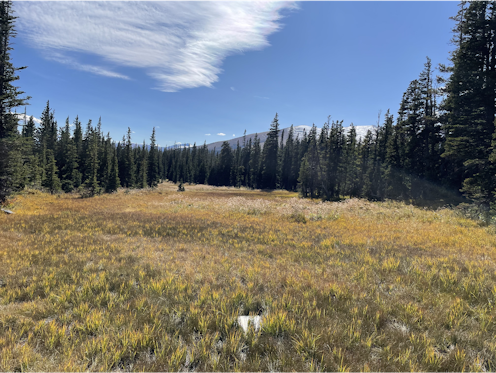
The wetlands found across the Rocky Mountains of Colorado just below tree line are magical places. Dripping with mosses and deep green sedges, these open expanses flanked by evergreens are a breathtaking sight for passing hikers. Moose graze there, and elk gather during their mating season.

These subalpine wetlands are also crucial for regulating the supply of clean water from the highlands to metropolitan regions downslope, including Denver.

However, new research shows the wetlands also harbor a health risk. In a new study, my research group found that just below the surface of subalpine wetland soils, the perfect conditions exist for the production of methylmercury, a potent, toxic form of the heavy metal mercury that can threaten the health of wildlife and people.

As rising temperatures thaw ice and erode the mountain rocks, and mercury pollution from power plants around the world falls with rain, this toxic form of mercury can be produced in the wetlands.

The Goldilocks problem

Methylmercury is a neurotoxin that biomagnifies and bioaccumulates, meaning it becomes more concentrated as it moves up the food chain. Predatory birds and fish high on the food chain are most susceptible to its devastating effects on the nervous and reproductive systems, as are the human populations that consume them.

In the 1950s, hundreds of people in Minamata and Niigata, Japan, died from methylmercury poisoning connected to ingesting water, fish and shellfish from near where chemical plants were discharging mercury into the water.

Mercury methylation is a fickle process. The bacteria involved require sources of inorganic mercury and energy, as well as oxygen-free conditions.

Sulfate concentrations are particularly important. Like in “Goldilocks and the Three Bears,” too much or too little sulfate is unsatisfactory to the methylating microbes – those creating methylmercury. Too little sulfate, and they won’t stimulate mercury methylation. Too much sulfate, and mercury gets sequestered in mineral form, minimizing its risk to living organisms.

Yet, when moderate sulfate concentrations mix with inorganic mercury and organic carbon in a low-oxygen environment, the conditions are dangerously “just right,” as Goldilocks would say, and methylmercury production is high.

New evidence of methylmercury

Prior to our study, most wetlands found to have methylmercury pollution were in lowland areas, such as the Florida Everglades, where the process is fed by sulfate runoff from agriculture fields. However, our study demonstrates that methylmercury production occurs in seemingly remote mountain locations, too.

There are a few reasons why conditions in Colorado’s subalpine wetlands are just right.

First, the soil has ample organic matter, providing a deep store of energy in the form of carbon to fuel methylation. In Colorado’s subalpine wetlands, thick soils are rich in layer upon layer of ancient organic matter that saturates with snowmelt flowing from the highest peaks.

Second, mercury pollution from industrial centers reaches the Rocky Mountains. Most of the mercury that enters subalpine wetlands has actually traveled all the way from China and India. Eventually, it falls out of the atmosphere in rain or dust, and high elevations receive more of it than low elevations.

Third – and this is the key stimulating effect for methylating bacteria – subalpine wetlands receive excess sulfate from warming alpine areas in elevations above them. As rising air temperatures drive the thawing of ice and quicker rates of mineral weathering, more sulfate than was already in the ground flows into streams to the subalpine region.

The result is that these ingredients mix in the flooded, often oxygen-free environment of the wetland soils, and bacteria have everything they need to produce methylmercury.

Our study showed that the concentrations of methylmercury are higher at the outlet than the inlet of subalpine wetlands that we studied in the Colorado Rockies, providing further evidence that wetlands can be a source of the contaminant.

Apart from the local effects of methylmercury on wildlife, our discovery highlights a concern for water supplies. Over 3 million people in the Boulder-Denver metropolitan area rely on clean, fresh water from the mountains. Contamination of the source area by methylmercury may have large-scale ramifications, such as costly treatment measures, for the entire Colorado Front Range’s drinking water supply.

How to lower the risk

High-elevation ecosystems around the world are experiencing many effects that can feed the production of methylmercury.

In every state in the U.S., there is at least one mercury toxicity warning for surface waters, typically urging people not to eat fish or shellfish caught there or to limit the amount they eat. Greater production of methylmercury, and its threat to food and water sources, is now a part of our changing world.

So, what can be done to avoid the risk?

Lowering mercury deposition requires curbing industrial emissions. In 2013, over 140 nations, including the U.S., signed the Minamata Convention on Mercury, committing to regulate and monitor industrial mercury sources. Remaining committed to this agreement is critical.

Reducing the flow of sulfate from ice and rock weathering in the mountains – another key ingredient to this process – requires addressing climate change.

People, governments and industries can take many steps to slow the rise of air temperatures that are increasing ice thaw, from not driving gas-powered vehicles as much to regulating carbon dioxide emissions from power plants and factories. Our new research on methylmercury shows another reason why taking steps to slow climate change are worth the effort.

The Conversation

Eve-Lyn Hinckley receives funding from The National Science Foundation.

ref. Colorado’s subalpine wetlands may be producing a toxic form of mercury – that’s a concern for downstream water supplies – https://theconversation.com/colorados-subalpine-wetlands-may-be-producing-a-toxic-form-of-mercury-thats-a-concern-for-downstream-water-supplies-259008