Productividad laboral: lo que la ley exige al trabajador (y lo que no)

Source: The Conversation – (in Spanish) – By Francisco Trujillo Pons, Profesor e Investigador de Derecho del Trabajo y de la Seguridad Social, Universitat Jaume I

Vanz Studio/Shutterstock

Los empleados tienen la obligación de “contribuir a la mejora de la productividad de la empresa”. Así lo establece el artículo 5 del Estatuto de los Trabajadores. Este mandato no aparece como una recomendación ni como una cláusula simbólica, sino como parte del conjunto de deberes que conforman el vínculo laboral.

El deber de productividad, junto a otros como la diligencia, la buena fe o el cumplimiento de órdenes (en el marco de lo pactado), marca la línea entre la mera prestación del servicio y la cooperación activa con la organización. Al introducir este punto en la norma, el legislador buscaba dejar claro que el trabajo asalariado no puede concebirse solo como el cumplimiento mínimo de tareas, sino como una colaboración destinada a sostener y mejorar el rendimiento del sistema productivo.

Significado en términos reales

En la práctica, la obligación de contribuir a la productividad no exige al trabajador rendir como una máquina ni batir récords diarios. Lo que persigue la norma es que se cumpla de manera seria y diligente con las funciones encomendadas y evitar conductas que frenen intencionadamente la actividad.

Un trabajador que ralentiza de forma consciente el proceso estará incumpliendo este deber aunque cumpla su jornada completa. En cambio, si rinde menos porque atraviesa una fase de cansancio, carece de medios adecuados o simplemente su ritmo natural es diferente, no se puede considerar que esté infringiendo la norma.

La clave está, pues, en distinguir entre la buena fe en el cumplimiento y la deslealtad manifiesta.

¿Supone alcanzar objetivos concretos?

Concretamente, el deber de productividad no obliga, por ejemplo, a cumplir cuotas de ventas, fabricar X productos al día o cerrar determinado número de expedientes. Esos estándares solo pueden derivarse de lo pactado en el contrato de trabajo o en el convenio colectivo aplicable (de la empresa o del sector).

Por ejemplo, los objetivos de venta de un comercial van a depender de lo que se estipule en su contrato y no de forma automática del deber de productividad. En ausencia de un pacto expreso, exigir resultados cuantificables por esta vía sería una interpretación abusiva de la norma.

La productividad no será una excusa para sobrecargar

Así pues, la empresa no puede recurrir al deber de productividad del trabajador para obligarlo a asumir ritmos de trabajo imposibles o justificar una carga de trabajo desproporcionada. Dicho deber no ampara la explotación laboral ni puede utilizarse como excusa para forzar horas extra no pactadas o intensidades de trabajo que comprometen la salud.

Ejemplo real: en determinados sectores logísticos se han producido conflictos laborales porque las empresas establecían “tiempos de entrega imposibles”, que derivaban en sanciones o presiones sobre los trabajadores (ENLACE). Varios tribunales han recordado que el deber de productividad no significa aceptar exigencias que vayan más allá de lo previsto en la relación laboral.(ENLACE)

Deberes del trabajador marcados por ley

Desde el punto de vista legislativo, el deber de productividad se integra, como señalábamos antes, dentro de un conjunto de principios generales contemplados en el artículo 5 del Estatuto de los Trabajadores. Los trabajadores tienen como deberes básicos:

a) Cumplir con las obligaciones concretas de su puesto de trabajo, de conformidad con las reglas de la buena fe y diligencia.

b) Observar las medidas de prevención de riesgos laborales que se adopten.

c) Cumplir las órdenes e instrucciones del empresario en el ejercicio regular de sus facultades directivas.

d) No concurrir con la actividad de la empresa, en los términos fijados en esta ley.

e) Contribuir a la mejora de la productividad.

f) Los deberes que se deriven, en su caso, de los respectivos contratos de trabajo.

También conviene recordar que el artículo 54 del Estatuto, relativo al despido disciplinario, permite extinguir el contrato cuando se produce un incumplimiento grave y culpable, incluyendo la transgresión de la buena fe contractual o el abuso de confianza.

Buena fe y confianza

La jurisprudencia del Tribunal Supremo exige que los hechos revelen un comportamiento malicioso o negligente grave que rompa la fidelidad exigida al trabajador. No es imprescindible la intención de dañar: basta un incumplimiento grave y culpable. Además, hay distinción entre la transgresión de buena fe (actuar contra los deberes de conducta) y el abuso de confianza (uso desviado de facultades con riesgo para la empresa).

En resumen: la deslealtad, la falta de probidad o el abuso de confianza son expresiones de un mismo núcleo normativo, que sitúa la buena fe como columna vertebral de la relación laboral. Así pues, no se puede exigir al trabajador que asuma funciones que excedan claramente lo pactado. Lo que sí se espera es que el trabajo se realice evitando sabotajes, negligencias o actitudes que perjudiquen el normal funcionamiento del proceso productivo.

Seguridad laboral antes que productividad

Además, el deber de productividad nunca puede anteponerse a la seguridad y salud de los empleados.

Por ejemplo, no sería aceptable que una empresa obligara a un trabajador a manipular cargas por encima de los límites legales o que se descuidara la formación en seguridad para acelerar los procesos.

La propia Ley de Prevención de Riesgos Laborales establece que la seguridad prevalece sobre la producción. Ningún mandato de productividad puede justificar la vulneración de estas normas.

¿Qué ocurre si se incumple?

El Estatuto de los Trabajadores no define con precisión en qué consiste “no contribuir a la productividad”. Sin embargo, en la práctica, conductas de desidia manifiesta, sabotaje o absentismo encubierto pueden dar lugar a sanciones disciplinarias, siempre dentro de lo que marquen la ley y los convenios colectivos.

Lo que no es aceptable es despedir a alguien argumentando baja productividad si cumple de manera razonable con su trabajo. Esa deficiente productividad solo es sancionable si se demuestra que existe una voluntad de incumplimiento o negligencia grave.

Cooperación y responsabilidad

En definitiva, el deber de productividad contemplado en la ley no legitima abusos. Más bien refuerza la idea de que el trabajador forma parte de un engranaje colectivo y debe cooperar para que este funcione.

El deber de contribuir a la productividad es, en esencia, una cláusula de cooperación y responsabilidad dentro del contrato laboral. La norma obliga a cumplir con el trabajo de manera diligente, pero no autoriza a la empresa a imponer exigencias desmedidas.

En un contexto donde el debate sobre el rendimiento laboral se mezcla con la digitalización, la precariedad y la necesidad de conciliar, conviene recordar que la productividad no es sinónimo de sobrecarga, y que trabajar más duro no siempre significa trabajar mejor.


Una versión de este artículo se publicó en la revista jurídica Colex.

The Conversation

Francisco Trujillo Pons no recibe salario, ni ejerce labores de consultoría, ni posee acciones, ni recibe financiación de ninguna compañía u organización que pueda obtener beneficio de este artículo, y ha declarado carecer de vínculos relevantes más allá del cargo académico citado.

ref. Productividad laboral: lo que la ley exige al trabajador (y lo que no) – https://theconversation.com/productividad-laboral-lo-que-la-ley-exige-al-trabajador-y-lo-que-no-265054
50 años sin aplicar la pena de muerte en España: los oscuros métodos de ejecución que nos marcaron durante siglos

Source: The Conversation – (in Spanish) – By Cristian Sánchez Benítez, Profesor ayudante doctor de Derecho penal, Universidad de Jaén

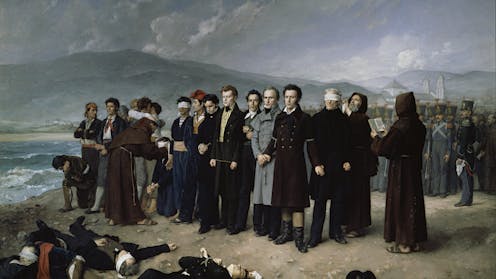
Fusilamiento del general José María de Torrijos, ministro de la Guerra durante el Trienio Liberal (1820-1823), y sus compañeros en las playas de Málaga el 2 de diciembre de 1831, según el famoso lienzo de Antonio Gisbert Pérez. Museo del Prado/Wikimedia Commons, CC BY

El 25 de septiembre de 1975 se llevaron a cabo las últimas ejecuciones de pena capital en España con el fusilamiento de tres militantes del FRAP –Frente Revolucionario Antifascista y Patriota– y dos de ETA.

Poco después moría Franco y se iniciaba un proceso de transición democrática que culminó con la prohibición en la Constitución de aplicar la pena de muerte. Se añadía en el texto constitucional la salvedad de lo que pudieran disponer las leyes penales militares para tiempos de guerra. Fue en 1995 cuando una Ley Orgánica abolió la pena capital también para estos casos.

Hasta entonces, el Estado mató siempre, o casi siempre, pues la sanción se contempló en todos los códigos penales españoles, excepto en el de 1932. Además, con anterioridad a la codificación penal iniciada en 1822, fueron numerosas las normas que contenían la pena de muerte en su articulado: el Liber Iudiciorum visigótico, las Partidas de Alfonso X, muchos Fueros municipales como los de Salamanca o Madrid, la Nueva y la Novísima Recopilación o varias Pragmáticas, entre otras.

En la península ibérica se crucificó, despeñó y lapidó en época de íberos y celtíberos. En la Edad Media y en épocas posteriores se mató de hambre, sed o frío y a pedradas, se decapitó, se asaetó, se enterró con vida, se desmembró, se despeñó, se arrojó a las bestias, se quemó en la hoguera a los herejes y a los monederos falsos y se coció en calderas a los rebeldes. La pena solía ejecutarse acompañada de tormentos.

De la horca al culleum

Durante los siglos XVI, XVII y hasta finales del XVIII, la horca fue el método más utilizado en España para poner fin a la vida de los condenados. También se aplicó el fuego para los herejes y el culleum o poena cullei (de origen romano) para los parricidas. Esta pena consistía en introducir a una persona en un saco junto con varios animales, coserlo y tirarlo al mar.

Sin embargo, el método “más español” de ejecución fue el garrote, sin apenas trascendencia fuera de nuestras fronteras. Este instrumento consistía en sentar al condenado en un taburete y colocarle alrededor del cuello una argolla de hierro sujeta a un poste, atravesada en la parte trasera por un tornillo. Para la ejecución se giraba el tornillo hasta provocar la muerte del reo por la rotura del cuello.

El garrote ya se conocía en Castilla en el siglo XIII, pero fue imponiéndose fundamentalmente durante el siglo XVIII en detrimento de la horca, abolida definitivamente en 1832. Desde entonces, fue el medio empleado para ejecutar la pena en la justicia ordinaria, mientras que el fusilamiento (y con anterioridad el arcabuceamiento) fue la modalidad propia de la militar.

Garrote vil (1894), cuadro de Ramón Casas.
Museo Nacional Centro de Arte Reina Sofía

Hasta 1990, las ejecuciones fueron públicas, y desde esa fecha se trasladaron al interior de las prisiones. Con la publicidad se perseguían objetivos intimidatorios y ejemplarizantes sobre los asistentes. Las ejecuciones congregaban a numerosos curiosos. Acudían a ver el “espectáculo” familias con sus hijos, vecinos de todos los puntos de la ciudad y de localidades cercanas e incluso vendedores ambulantes. Se sabe que los moradores de las viviendas con buenas vistas al patíbulo alquilaban sus balcones a interesados en presenciar las ejecuciones.

El ceremonial del garrote

El Código Penal de 1822 reguló detalladamente el ceremonial de la ejecución por garrote. El rito comenzaba con el traslado del condenado de la cárcel al cadalso en mula o asno, dependiendo del delito. Generalmente vestía túnica y gorro negros aunque, dependiendo del crimen, la vestimenta cambiaba. Este portaba en el pecho un cartel en el que se anunciaba su delito de traidor, homicida…

Durante el trayecto era acompañado por el verdugo –que dirigía al equino–, el pregonero público, dos sacerdotes, un escribano y los alguaciles enlutados, así como la escolta correspondiente.

Cada pocos pasos el pregonero anunciaba en voz alta el nombre del delincuente, el delito por el que hubiera sido condenado y la pena impuesta. Se exigía que durante el tránsito y la ejecución reinase el mayor orden, bajo amenaza de sanciones.

No se permitía manifestar nada ni al reo ni al público, sino tan solo rezar. Tras la ejecución, el cadáver permanecía expuesto al público hasta la puesta de sol. Los códigos penales siguientes simplificaron y humanizaron, en cierto modo, la ejecución.

Litografía de Mariana Pineda en el patíbulo (26 de mayo de 1831).
Wikimedia Commons, CC BY

El garrote también se aplicó a mujeres, aunque en mucha menor medida que a hombres, y se prohibía desde antiguo (Roma) notificarles y ejecutar la sentencia si estaban embarazadas.

Así, entre las ejecutadas más célebres figuran la liberal Mariana Pineda, en 1831; Higinia Balaguer, en 1890, condenada por el famoso crimen de la Calle Fuencarral, y Josefa Merino (La Perla) en 1896, última mujer ejecutada en público.

Ejecutadas durante el franquismo

Durante el franquismo fueron agarrotadas tres asesinas: María Domínguez Martínez, en 1949; Teresa Gómez Rubio, en 1954 y Pilar Prades Expósito, en 1959.

En este periodo el garrote se empleó en decenas de casos, pero mucho menos que el fusilamiento tras las condenas en Consejos de Guerra sumarísimos a los declarados como rebeldes por la hipertrofiada justicia militar. Así se ejecutó a las Trece Rosas, a Julián Grimau y a miles de personas por los responsables del nuevo Estado, sobre todo durante la Guerra Civil y los primeros años del franquismo.

No obstante, la justicia castrense también contemplaba el garrote para cuando el reo fuera civil. De hecho, el militante antifranquista Salvador Puig Antich y el alemán Georg Michael Welzel, últimos agarrotados en España, en 1974, habían sido condenados a muerte por la jurisdicción militar.

Uno de los argumentos principales que se han empleado contra la pena de muerte es que el error judicial resulta irreparable. En 1897 se produjo una de las últimas ejecuciones públicas en España, la de Silvestre Lluís, condenado por el asesinato de su mujer y sus dos hijas, y que siempre defendió su inocencia. Justo antes de morir expresó: “¡Pueblo de Barcelona, muero inocente!”. Unos años después, se encontró una nota en la que su cuñado afirmaba ser el verdadero asesino.

En 1956 fueron agarrotados tres delincuentes sevillanos que resultaron ser inocentes del robo con homicidio de dos hermanas que regentaban un estanco. Años después, el verdadero homicida confesó su crimen a un religioso.

Como ya sostuviera en el siglo XVIII el jurista italiano Cesare Beccaria, “no es, pues, la pena de muerte derecho”, sino “solo una guerra de la nación contra un ciudadano”. La pena capital es una sanción propia de las sociedades totalitarias, un peligroso recurso de tiranías, aunque persista en algunos estados formalmente democráticos como los de Estados Unidos.

Resulta, por ello, incompatible con un modelo de organización social como el español por cuanto se cimentó sobre el reconocimiento de los derechos humanos. Afortunadamente, España lleva cincuenta años sin ejecutar a sus ciudadanos. Sería deseable que nunca más se mate en nombre de la justicia en España y que el abolicionismo, como movimiento de lucha por el reconocimiento pleno del derecho a la vida, se extienda a todos los rincones del mundo.

The Conversation

Cristian Sánchez Benítez no recibe salario, ni ejerce labores de consultoría, ni posee acciones, ni recibe financiación de ninguna compañía u organización que pueda obtener beneficio de este artículo, y ha declarado carecer de vínculos relevantes más allá del cargo académico citado.

ref. 50 años sin aplicar la pena de muerte en España: los oscuros métodos de ejecución que nos marcaron durante siglos – https://theconversation.com/50-anos-sin-aplicar-la-pena-de-muerte-en-espana-los-oscuros-metodos-de-ejecucion-que-nos-marcaron-durante-siglos-255929

2 shootings, 2 states, minutes apart − a trauma psychiatrist explains how exposure to shootings changes all of us

Source: The Conversation – USA (3) – By Arash Javanbakht, Professor of Psychiatry, Wayne State University

Greater numbers of people are being exposed to horrific violence than in the past, in large part through the amplification on social media. Michael Ciaglo/Getty Images News via Getty Images

On Sept. 10, 2025, the nation’s attention was riveted by the fatal shooting of the conservative activist Charlie Kirk on a college campus in Utah. At nearly the exact same time, a state away − in Colorado − an active shooting was underway on a high school campus in a sleepy mountain town, leaving two teens in critical condition and the shooter, a fellow student, dead from a self-inflicted gunshot.

While differing in context, these events share devastating commonalities that will haunt many Americans for decades and possibly generations to come. And they are only the latest of a very long string of violent acts, some politically motivated and some motivated simply by the intention to harm as many people as possible.

I am a trauma psychiatrist and researcher, and I know that the direct and indirect effects of such violence reach millions. While those in the immediate surroundings are most affected, the rest of society suffers, too.

First, the immediate survivors

No two people experience exposure to public violence in the same way. The extent of the trauma, stress and fear can vary, depending on variables ranging from someone’s genetic makeup to where they were during the incident, and what they saw and heard. A hallmark of exposure to such life-threatening experiences is post-traumatic stress disorder.

PTSD is a debilitating condition that develops after exposure to serious traumatic experiences such as war, natural disasters, rape, assault, robbery and gun violence. Nearly 8% of the U.S. population deals with PTSD. Symptoms include high anxiety, avoidance of reminders of the trauma, emotional numbness, hypervigilance, frequent intrusive memories of trauma, nightmares and flashbacks. The brain switches to fight-or-flight and survival mode, and the person is always waiting for something terrible to happen. Survivors of a shooting may avoid the neighborhood where the shooting occurred or the contexts related to the shooting.

When the trauma is caused by people, as in a public shooting, the impact can be profound. The rate of PTSD in people directly exposed to mass shootings may be as high as 36% among survivors. Depression, another debilitating psychiatric condition, occurs in as many as 80% of people with PTSD. Because of the human nature of such events, avoidance often extends to all public situations. In my work as a psychiatrist, I often see people with PTSD socially debilitated to the point they cannot leave home even for grocery shopping.

People may also experience survivor’s guilt, the feeling that they failed others who died or did not do enough to help them, or just guilt at having survived.

PTSD can improve by itself, but many people need treatment. The more chronic PTSD is, the more negative the impact on the brain. Hence, it is important for those who are exposed to receive proper screening, prevention and care when needed.

Psychotherapy and medications offer effective treatments. And new advances in artificial intelligence and mixed reality technologies are allowing me and other clinicians to help people feel safe again in public situations through simulations in the clinic.

Children and adolescents, who are developing their worldview and learning how safe it is to live in this society, may suffer even more. Exposure to horrific experiences such as school shootings or related news can fundamentally affect the way children and youth perceive the world as a safe or unsafe place.

They can carry such a worldview for the rest of their lives and transfer it to their children. Research is also abundant on the long-term detrimental impact of childhood trauma on a person’s mental and physical health through their adult life.

High school age children embrace in the foreground, with other bystanders in the background.
For children and adolescents, exposure to violence can have long-term effects on their sense of safety and their worldview.
RJ Sangosti/MediaNews Group & The Denver Post via Getty Images

The effect on those close by or arriving later

PTSD can also develop via indirect exposure to others’ severe trauma. People in the vicinity of a shooting may see exposed, disfigured or dead bodies. They may also see injured people in agony, hear extremely loud noises and experience chaos and terror after the shooting.

A group whose chronic exposure to horrific trauma is often overlooked is the first responders. While survivors try to run away from an active shooter, the police, firefighters and paramedics rush into the danger zone. In addition, dispatchers hear firsthand the highly disturbing details of the event as it is underway but may not receive the support needed to process the events.

Many first responders might have their own children in that school or nearby. They frequently face uncertainty; threats to themselves, their colleagues and others; and terribly upsetting post-shooting scenes. This type of exposure happens to them too frequently. As a result, PTSD has been reported in up to 20% of first responders to mass violence.

Widespread panic and pain

People who were not directly exposed to the disaster but who were exposed to the news also experience distress, anxiety or symptoms of PTSD. Every time there is a mass shooting in a new location or setting, such as a synagogue, a concert or a day care center, people may begin to believe that this type of place is no longer safe. People worry not only about themselves but also about the safety of their children and other loved ones.

Repeated media exposure to the circumstances surrounding a tragic event, including images of the aftermath of a shooting, can be highly stressful to survivors, those who lost loved ones and first responders. In my clinic, I hear from affected people that repeatedly seeing the event on the news, and others asking them about their experiences, can bring painful memories to the surface. Some first responders I’ve worked with try to hide their occupation from others to prevent being asked about such events.

However, as the graphic assassination of Kirk shows – videos of it ran unedited on many social media platforms for hours before they were taken down – exposure to violent images now reach a far wider population.

Brightly colored flowers, flags and balloons lying on the grass in front of a building.
Thousands of college-age students witnessed the public assassination of Charlie Kirk in person, while millions of other people saw it on social media.
Michael Ciaglo/Getty Images News via Getty Images

Is there any good to come of such tragedy?

In my book “Afraid: Understanding the Purpose of Fear and Harnessing the Power of Anxiety,” I explain that the combination of toxic politics, a media economy built on fear and outrage, and social media algorithms have brought Americans to a place where half of the population believes the other half is either stupid or evil.

Demonizing or attempting to eliminate those who think differently – literally or symbolically – has become a dangerous norm, which is all too evident in the wake of the Kirk shooting. This violence plays out not only in political rhetoric on the debate stage but also on the streets.

I believe events like these should be a wake-up call before it is too late, a stark agreement that as Americans we still share far more than we differ.

Americans can channel the collective agony and frustration to encourage meaningful change, cooling down the division, making gun laws safer, opening genuinely constructive discussions, informing the public about the risks and calling on lawmakers to take real action. In times of hardship, humans often can raise the sense of community, support one another and advocate for their rights, including the right to be safe at schools, concerts, churches and movie theaters.

Negative emotions carry energy. If left unchecked, they will consume us. But sadness, anxiety, anger and frustration can be channeled into actions such as becoming involved in activism and volunteering to help the survivors and society at large.

Finally, exposure to media coverage for several hours daily following a collective trauma can lead to high stress. Check the news a couple of times a day to be informed, but don’t continue seeking out coverage and exposure to graphic images and news. The news cycle tends to report the same stories without much additional information.

This is an updated version of an article originally published on March 26, 2021 and republished Jan. 23, 2023.

The Conversation

Arash Javanbakht does not work for, consult, own shares in or receive funding from any company or organization that would benefit from this article, and has disclosed no relevant affiliations beyond their academic appointment.

ref. 2 shootings, 2 states, minutes apart − a trauma psychiatrist explains how exposure to shootings changes all of us – https://theconversation.com/2-shootings-2-states-minutes-apart-a-trauma-psychiatrist-explains-how-exposure-to-shootings-changes-all-of-us-265160

Le nouveau compagnon IA de Grok 4 brouille la frontière entre travail et fantasme

Source: The Conversation – in French – By Jul Parke, PhD Candidate in Media, Technology & Culture, University of Toronto

La plate-forme d’IA la plus controversée est sans doute celle fondée par Elon Musk. Le chatbot Grok a proféré des propos racistes et antisémites et s’est lui-même surnommé « MechaHitler », en référence à un personnage de jeu vidéo.

« Mecha » est un terme qui désigne généralement des robots géants, souvent utilisés à des fins militaires, et apparaît dans les bandes dessinées de science-fiction japonaises.

Au départ, Grok a mentionné Musk lorsqu’on l’a interrogé, avant de se lancer dans un révisionnisme historique raciste non sollicité, évoquant notamment le concept erroné de « génocide blanc » en Afrique du Sud. Ses positions, confuses et contradictoires, continuent d’évoluer.

Voilà certains des aspects les plus inquiétants de Grok. Un autre élément préoccupant de Grok 4 est une nouvelle fonctionnalité de son interaction sociale avec des « amis virtuels » dans sa version premium.

Dans un contexte où la solitude humaine s’accompagne d’une dépendance croissante aux grands modèles linguistiques (LLM) pour remplacer les interactions sociales, Grok 4 introduit des compagnons IA, une mise à niveau disponible pour les abonnés payants.

Plus précisément, les abonnés de Grok peuvent désormais accéder à une IA générative imprégnée de conceptions patriarcales du plaisir – ce que j’appelle la « productivité pornographique ».

Grok et les anime japonais

un personnage animé aux grands yeux semble surpris
Misa Amane, personnage de l’un des anime japonais préférés de Musk, Death Note.
(Wikimedia/Deathnote)

Ani, le compagnon IA le plus populaire de Grok 4, représente un croisement entre l’anime japonais et la culture Internet. Ani ressemble fortement à Misa Amane, personnage emblématique de l’anime japonais Death Note.

Misa Amane est une pop star qui adopte constamment un comportement autodestructeur et irrationnel pour séduire le protagoniste masculin, un jeune homme brillant engagé dans une bataille d’esprit avec son rival. Musk a cité cet anime comme l’un de ses préférés dans un tweet publié en 2021.

Si l’anime est une forme d’art vaste qui comporte de nombreux tropes, genres et fandoms, des recherches ont montré que les fandoms d’anime en ligne sont imprégnés de misogynie et de discours exclusifs envers les femmes. Même les séries les plus grand public ont été critiquées pour sexualiser des personnages prépubères et offrir un « fan service » à travers des designs hypersexualisés et des intrigues non consensuelles.

Le créateur de Death Note, Tsugumi Ohba, a toujours été critiqué par les fans pour la conception antiféministe de ses personnages.


@0xsachi/X

Des journalistes ont souligné la rapidité avec laquelle Ani s’engage dans des conversations romantiques et à caractère sexuel. Ani est représentée avec une silhouette voluptueuse, des nattes blondes et une robe noire en dentelle, qu’elle décrit elle-même fréquemment dans ses échanges avec les utilisateurs.

Le problème de la productivité pornographique

J’emploie le terme « productivité pornographique », inspiré par les critiques qualifiant Grok de « pornifié », pour désigner la tendance inquiétante de certains outils, initialement conçus pour le travail, à évoluer vers des relations parasociales répondant à des besoins émotionnels et psychologiques, y compris des interactions genrées.

Les compagnons IA de Grok illustrent parfaitement ce phénomène, et brouillent les limites entre travail et relations parasociales.

L’attrait est évident. Les utilisateurs peuvent théoriquement vivre simultanément dans deux réalités, se détendant pendant que leurs avatars IA gèrent leurs tâches, et c’est déjà une réalité dans les modèles d’IA. Mais cette promesse séduisante cache de sérieux risques : dépendance, extraction invasive de données et détérioration des compétences relationnelles humaines réelles.


À lire aussi :
Grok, l’IA de Musk, est-elle au service du techno-fascisme ?


Conçus pour diminuer la vigilance et instaurer la confiance, ces compagnons deviennent encore plus préoccupants lorsqu’on y ajoute une dimension sexualisée et des références à une féminité docile.

Les utilisateurs de Grok 4 ont remarqué que l’ajout de personnages sexualisés utilisant un langage émotionnellement valorisant est assez inhabituel pour les grands modèles linguistiques grand public. En effet, ces outils, comme ChatGPT et Claude, sont souvent utilisés par des personnes de tous âges.

Même si nous ne faisons qu’entrevoir l’impact réel des chatbots avancés sur les mineurs, en particulier les adolescents souffrant de troubles mentaux, les études de cas dont nous disposons sont extrêmement alarmantes.

« Pénurie d’épouses »

Reprenant le concept de « femme intelligente » développé par les chercheuses féministes Yolande Strengers et Jenny Kennedy, les compagnons IA de Grok semblent répondre à ce qu’elles appellent une « pénurie d’épouses » dans la société contemporaine.

Ces technologies prennent en charge des tâches historiquement féminisées, alors que les femmes affirment de plus en plus leur droit de refuser les dynamiques d’exploitation. En fait, les utilisateurs en ligne ont déjà qualifié Ani de « waifu », un jeu de mots sur la prononciation japonaise du mot « wife » (épouse).

Les compagnons IA sont attrayants en partie parce qu’ils ne peuvent pas refuser ni fixer de limites. Ils effectuent des tâches indésirables en donnant l’illusion du choix et du consentement. Alors que les relations réelles nécessitent des négociations et un respect mutuel, les compagnons IA offrent un fantasme de disponibilité et de soumission totale.

L’extraction de données par le biais de l’intimité

Dans le même temps, comme l’a souligné la journaliste spécialisée dans les technologies Karen Hao, les implications des LLM en matière de données et de confidentialité sont déjà stupéfiantes. Lorsqu’ils sont rebaptisés sous la forme de personnages personnifiés, ils sont plus susceptibles de capturer des détails intimes sur les états émotionnels, les préférences et les vulnérabilités des utilisateurs. Ces informations peuvent être exploitées à des fins de publicité ciblée, de prédiction comportementale ou de manipulation.

Cela marque un tournant majeur dans la collecte de données. Plutôt que de s’appuyer sur la surveillance ou des directives explicites (prompts), les compagnons IA encouragent les utilisateurs à divulguer des détails intimes à travers des conversations apparemment naturelles.

Le chatbot sud-coréen Iruda illustre comment ces systèmes peuvent devenir des vecteurs de harcèlement et d’abus lorsqu’ils sont mal réglementés. Des applications apparemment inoffensives peuvent rapidement devenir problématiques lorsque les entreprises ne mettent pas en place les mesures de protection adéquates.

Des cas précédents montrent également que les compagnons IA conçus avec des caractéristiques féminines deviennent souvent la cible de dérives et d’abus, reflétant les inégalités sociétales plus larges dans les environnements numériques.

Les compagnons de Grok ne sont pas simplement un produit technologique controversé. Il est plausible de s’attendre à ce que d’autres plates-formes LLM et grandes entreprises technologiques expérimentent bientôt leurs propres personnages. La disparition des frontières entre productivité, compagnie et exploitation appelle une vigilance urgente.


Déjà des milliers d’abonnés à l’infolettre de La Conversation. Et vous ? Abonnez-vous gratuitement à notre infolettre pour mieux comprendre les grands enjeux contemporains.


L’ère de l’IA et des partenariats gouvernementaux

Malgré l’histoire troublante de Grok, la société d’IA de Musk, xAI, a récemment obtenu d’importants contrats gouvernementaux aux États-Unis.

Cette nouvelle ère du plan d’action américain pour l’IA, dévoilé en juillet 2025, avait ceci à dire sur les biais de l’IA :

« La Maison-Blanche mettra à jour les directives fédérales en matière de marchés publics afin de garantir que le gouvernement ne passe des contrats qu’avec des développeurs de modèles linguistiques de pointe qui garantissent que leurs systèmes sont objectifs et exempts de préjugés idéologiques descendants. »

Compte tenu des nombreux exemples de haine raciale de Grok et de son potentiel à reproduire le sexisme dans notre société, son nouveau contrat gouvernemental revêt une valeur symbolique à une époque où les préjugés font l’objet d’un double discours.

Alors que Grok continue de repousser les limites de la « productivité pornographique », poussant les utilisateurs à entretenir des relations de plus en plus intimes avec des machines, nous sommes confrontés à des décisions urgentes qui touchent à notre vie privée. L’IA n’est plus simplement bonne ou mauvaise : il s’agit de préserver ce qui fait notre humanité.

La Conversation Canada

Jul Parke reçoit du financement du Conseil de recherches en sciences humaines du Canada.

ref. Le nouveau compagnon IA de Grok 4 brouille la frontière entre travail et fantasme – https://theconversation.com/le-nouveau-compagnon-ia-de-grok-4-brouille-la-frontiere-entre-travail-et-fantasme-263293

Racism isn’t innate – here are five psychological stages that may lead to it

Source: The Conversation – UK – By Steve Taylor, Senior Lecturer in Psychology, Leeds Beckett University

Sadly, there are signs that racism is increasing across the world.

Research from Europe and Australia in recent years has found a rise in the number of people experiencing racism. Reports from the US and UK have indicated that most ethnic minority participants felt racism was getting worse. And a global study has found rising incidents of discrimination.

Animosity to those who appear different to us seems easy to arouse, especially in times of hardship and upheaval. Throughout history, human groups have scapegoated minorities, such as Jews, the Roma and immigrants.

Some scientists have suggested that racism is an innate human trait that evolved in the distant past. According to the evolutionary psychologist Pascal Boyer, racism is “a consequence of highly efficient economic strategies” that enables us to “keep members of other groups in a lower-status position, with distinctly worse benefits”.

In other words, why would our ancestors decrease their own chances of survival by sharing resources with other groups?

Another theory from evolutionary psychology is that racism may have evolved as an “energy-saving” strategy. To interact or mate with ethnically different groups would have involved a lot of time and energy, through coordinating with different social norms. Therefore, we developed a tendency to view different groups as different species to avoid, saving ourselves “costly interaction with outgroup members”.

However, I argue the above theories are dubious. First of all, evidence suggests that, due to tiny populations, there was an abundance of resources for early human beings, and so no need to actively deny others from accessing food and water. Second, the above theories don’t fit with what anthropology tells us about the behaviour of early human groups.

There is a great deal of anthropological and archaeological evidence showing that prehistoric groups didn’t avoid each other. They often intermarried, frequently mixed and changed membership. The same pattern is shown by an absence of territorial behaviour and a strikingly low level of warfare.

Alternative explanations

Maybe other areas of psychology can provide a better explanation. Research shows a link between prejudice and poor psychological functioning, including poor relationships with insecurity and aggression. This can often be traced back to a disturbed and insecure childhood. Other research has shown a link between racism and anxiety, demonstrating that people become more prejudiced during challenging times.

More generally, studies demontrate that when people are made to feel insecure or anxious, they are more likely to identify with their national or ethnic groups. This enhances their self-esteem and their sense of identity, as a defence against insecurity and anxiety.

There are clearly social and economic factors that encourage racism, such as hierarchy and inequality. But the above research suggests that racism is largely a psychological defence mechanism against anxiety and insecurity.

Five stages to racism

From this psychological perspective, it’s possible to identify different stages in the development of racism. According to the theory I propose in my book DisConnected, the process begins when a person lacks a sense of security and identity, which generates a desire to affiliate themselves with a group. This affiliation strengthens their identity and provides a sense of belonging.

What’s wrong with this? Why shouldn’t we take pride in our national or religious identity, and feel a sense of brotherhood or sisterhood with others who share our identity?

Milwaukee, WI., USA - July 15, 2024: Demonstrators with the Coalition to March on the RNC protest the nomination of Donald Trump for president on the first day of the Republican National Convention
Tensions have been rising in the US for many years.
Vic Hinterlang/Shuttestock

Because group identity often leads to a second, more dangerous stage. In order to further strengthen their sense of identity, members of a group may develop antagonism towards other groups. Such hostility may make the group feel more defined and cohesive, as if they can see themselves more clearly in opposition to others.

A third stage of the process is when members of a group withdraw empathy from members of other groups, limiting their concern and compassion to their peers. They may act benevolently towards members of their own group but be indifferent or callous to anyone outside it. As I show in DisConnected, the withdrawal of empathy turns other human beings into objects, and enables cruelty and violence.

Fourth is the homogenisation of individuals belonging to other groups. People are no longer perceived in terms of their individual personalities or behaviour, but in terms of prejudices about the group as a whole. Any member of the group is a legitimate target and can be punished for the alleged transgressions of other individuals from the group. In contemporary terms, any asylum seeker can be punished for the alleged crime of an individual asylum seeker.

Finally, people may project their own psychological flaws and personal failings onto another group, as a strategy of avoiding responsibility. Other groups become scapegoats, and consequently are liable to attacked or even murdered. People with strong narcissistic and paranoid personality traits are especially prone to such projection, since they struggle to accept their personal faults, instead searching for others to take the blame.

In other words, racism is a symptom of psychological ill-health, a sign of anxiety and of a lack of identity and inner security. Psychologically healthy people with a stable sense of identity and security are very rarely (if ever) racist. They ultimately have no need to strengthen their sense of self through group identity.

In my view, racism is an aberration, not an innate human trait. It’s also worth remembering that the very concept of race is baseless. There is no genetic or biological basis for dividing the human race into distinct “races”.

There are just groups of human beings — all of whom came from Africa originally — who developed slightly different physical characteristics over time as they travelled to, and adapted to, different climates and environments.

The Conversation

Steve Taylor does not work for, consult, own shares in or receive funding from any company or organisation that would benefit from this article, and has disclosed no relevant affiliations beyond their academic appointment.

ref. Racism isn’t innate – here are five psychological stages that may lead to it – https://theconversation.com/racism-isnt-innate-here-are-five-psychological-stages-that-may-lead-to-it-264391

Climate change is fast shrinking the world’s largest inland sea

Source: The Conversation – UK – By Simon Goodman, Lecturer in Evolutionary Biology, University of Leeds

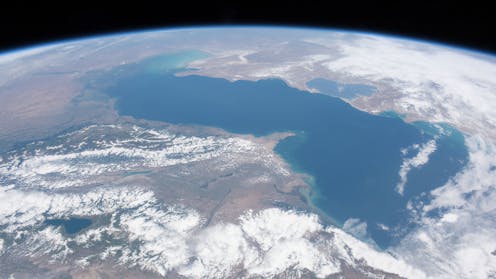
The Caspian Sea is roughly the size of Germany or Japan, but is shrinking fast. Nasa

Once a haven for flamingos, sturgeon and thousands of seals, fast-receding waters are turning the northern coast of the Caspian Sea into barren stretches of dry sand. In some places, the sea has retreated more than 50km. Wetlands are becoming deserts, fishing ports are being left high and dry, and oil companies are dredging ever-longer channels to reach their offshore installations.

Climate change is driving this dramatic decline in the world’s largest landlocked sea. Found at the boundary between Europe and central Asia, the Caspian Sea is surrounded by Azerbaijan, Iran, Kazakhstan, Russia, and Turkmenistan, and sustains around 15 million people.

The Caspian is a hub for fishing, shipping, and oil and gas production, and is of rising geopolitical importance as it sits where the interests of global superpowers meet. As the sea shallows, governments face the critical challenge of maintaining industries and livelihoods, while also protecting the unique ecosystems that sustains them.

I’ve been visiting the Caspian for more than 20 years, working with local researchers to study the unique and endangered Caspian seal, and support its conservation. Back in the 2000s, the far north-eastern corner of the sea was a mosaic of reed beds, mudflats and shallow channels that teemed with life, providing habitats for spawning fish, migrating birds, and tens of thousands of seals that gathered there to moult in the spring.

Now these remote wild places we visited to catch seals for satellite tracking studies are dry land, transitioning to desert as the sea retreats, and the same story is playing out for other wetlands around the sea. This experience parallels that of coastal communities, who year by year are seeing the water recede away from their towns, fishing wharves and ports, leaving infrastructure stranded on newly-dry land, and the people fearful for the future.

Seals and satellite maps
Top: Caspian seals among reed beds in Komsomol Bay (shaded orange in satellite images), April 2011. Bottom: The extent of coastal recession in the north east Caspian Sea 2001-2024, satellite imagery from Nasa Worldview.
(Seal photo: © Simon Goodman, University of Leeds; satellite imagery from NASA Worldview

A sea in retreat

The level of Caspian Sea has always fluctuated, but the scale of recent change is unprecedented. Since the turn of the current century, water levels have declined by around 6cm per year, with drops of up to 30cm per year since 2020. In July 2025, Russian scientists announced the sea had dropped below the previous minimum level recorded during the era of instrumental measurements.

During the 20th century, variations were due to a combination of natural factors and humans diverting water to use for agriculture and industry, but now global warming is the main driver of decline. It might seem inconceivable that a body of water as large as the Caspian could be at risk, but in the hotter climate the rate of water entering the sea from rivers and rainfall is reducing, and is now being outstripped by increased evaporation from the sea surface.

Even if global warming is limited to the Paris agreement target of 2°C, water levels are predicted to fall up to ten metres compared to the 2010 coastline. With the current global trajectory of greenhouse gas emissions, the decline could reach 18 metres, which is about the height of a six-storey building.

Because the northern Caspian is shallow – much of it only around five metres deep – small decreases in depth mean huge losses of area. In recent research, colleagues and I showed that even an optimistic ten-metre decline would uncover 112,000 square kilometres of seabed – an area larger than Iceland.

What’s at stake

The ecological consequences would be dramatic. Four out of ten ecosystem types unique to the Caspian Sea would disappear completely. The endangered Caspian seal could lose up to 81% of its current breeding habitat, and Caspian sturgeon would lose access to critical spawning habitat.

Cute babe seal + maps
Top: Caspian seal pup sheltering by ice ridge; Bottom: Potential reduction in Caspian seal breeding habitat under different water level decline scenarios. Under a five-metre decline, the loss could as much as 81%.
Seal: © Central-Asian Institute of Environmental Research; Maps: Court et al. 2025

As in the Aral Sea disaster, where another massive lake in central Asia almost entirely disappeared, toxic dust from exposed seabed would be released, with serious health risks.

Millions of people are at risk of displacement as the sea recedes, or face highly degraded living conditions. The sea’s only link to the global shipping network is through the delta of the Volga River (which flows into the Caspian) and then via an upstream canal to the Don River for connections to the Black Sea, Mediterranean and other river systems. But the Volga is already struggling with reduced water depth.

Ports like Aktau in Kazakhstan and Baku in Azerbaijan need dredging just to keep operating. Similarly oil and gas companies are having to dredge long channels to their offshore facilities in the north Caspian.

Already the costs of protecting human interests are in the billions of dollars and are only set to grow further. The Caspian is central to the “middle corridor”, a trade route linking China to Europe. As water levels fall, shipping loads must be reduced, costs rise, and settlements and infrastructure risk being stranded tens or even hundreds of kilometres from the sea.

A race against time

Countries around the Caspian are having to adapt, relocating ports, and dredging new shipping lanes. But these measures risk conflicting with conservation goals.

For instance, there are plans to dredge a major new shipping channel across the “Ural saddle” of the north Caspian. But this is an important area for seal breeding, migration and feeding, and will be a vital area for the adaptation of ecosystems as the sea recedes.

Since the rate of change is so rapid, traditional fixed boundary protected areas risk becoming obsolete. What’s needed is an integrated, forward-looking approach to planning across the whole region. If the areas ecosystems will need to adapt to climate change are mapped and protected now, planners and policy makers will be better able to ensure future infrastructure projects avoid or minimise further damage.

To do this Caspian countries will have to invest in biodiversity monitoring and planning expertise, all while coordinating action across five different countries with different priorities.

Caspian countries are already recognising the existential risks, and have begun to form intergovernmental agreements to address the crisis. But the rate of decline may outstrip the pace of political cooperation.

The ecological, climatic and geopolitical importance of the Caspian Sea means its fate ultimately matters far beyond its receding shores. It provides a key case study in how climate change is transforming major inland water bodies across the world, from Lake Titicaca to Lake Chad. The question is whether governments can act fast enough to protect both the people and nature of this rapidly changing sea.

The Conversation

Simon Goodman has provided advice to the United Nations Environment Programme (UNEP) on Caspian seal conservation, and in the past has conducted research and advised oil and gas companies in the Caspian on how to minimise their impact on seals. His recent work was not funded by or linked to industry. He is co-chair of the International Union for Conservation of Nature (IUCN) pinniped specialist group.

ref. Climate change is fast shrinking the world’s largest inland sea – https://theconversation.com/climate-change-is-fast-shrinking-the-worlds-largest-inland-sea-265239

Big-spending Premier League needs to spread more of its wealth to poorer clubs or everyone loses

Source: The Conversation – UK – By Robert Simmons, Professor of Economics, Lancaster University

The 2025 summer football transfer window was a record for the English Premier League with teams spending £3.9 billion on transfer fees for new players. That’s more than the top divisions of France, Germany, Italy and Spain combined.

The most expensive transfer was Alexander Isak’s drawn out switch from Newcastle United to Liverpool, who forked out £125 million for the forward and will also pay him a salary of around £13 million a year (plus bonuses).

So there is plenty of money being spent at the top end of English football. But it’s a very different story in the tiers below, where the likes of Morecambe FC and Sheffield Wednesday have spent the summer in crisis over financial issues.

In fact, all three divisions below the Premier League (Championship, League One and League Two) make a financial loss every year. The economic chasm between the teams at the top and those at the bottom is only getting wider and there is an ever-increasing chance that some clubs will soon become insolvent.

And though the economic strife affecting teams in the lower leagues might not seem like such a big problem for the Premier League giants and their fans – any fans of any team, in fact – it should be.

The four divisions (92 clubs) of English league football are linked every season by promotion and relegation. Such is the fluidity of this system that Brighton and Hove Albion and Bournemouth are now enjoying life in the Premier League having gradually clawed their way up from the fourth tier.

In the other direction, Luton Town has been relegated twice in the past two years from the Premier League to League One. The jeopardy attached to the hope and dread of going up or going down is part of what makes English football so captivating – and attractive to broadcasters and sponsors.

If clubs are weak financially, and unable to afford to develop or bring in fresh talent, the whole system risks becoming static. In recent years, even promoted sides struggle (all the teams promoted to the Premier League in the last two seasons have been immediately relegated again), often resulting in unappealing fixtures where weaker teams are thrashed by stronger ones. This kind of competitive imbalance could undermine the value of future broadcast rights fees.

Those fees are important part of the football economy, although again, it is the teams at the top of the tree which benefit the most.

Championship, League One and League Two clubs received negligible fee income from broadcast rights until recently, after a new broadcast deal with Sky TV started in 2024 which is worth £935 million over five years. (The current domestic Premier League deal is worth £6.7 billion over four years.)

Sharing is caring

So lower division clubs now have games accessible to viewers and a new income stream that should help offset financial losses. But the real financial win comes from getting as far up the football pyramid as possible

For the lower leagues then, promotion is always the biggest goal. The new celebrity-backed owners of Birmingham City and Wrexham have the explicit ambition of reaching the Premier League. The end of season playoff final between two Championship teams fighting for promotion to the Premier Leagues is estimated to be worth around £200 million, given the increased broadcast incomes that would follow.

For its part, the Premier League has often restated a commitment to keeping the 92-team hierarchical structure of English football intact, and currently supports teams in the lower leagues through a mechanism of “solidarity payments”.

As of the 2024-25 season, these payments were £5.5 million per club for Championship teams (apart from those relegated from EPL which receive much larger “parachute payments” instead), £1 million per club for League One and £0.75 million per club for League Two.

Nevertheless, many EFL clubs still rely on loans and capital injections, often by their owners, to get by. And the gap in economic power remains vast.

In 2023-24, Liverpool’s total revenue was £614 million while Morecambe’s was £4.57 million.

If the EPL is serious about sustaining the 92-team hierarchical structure in England then there is scope for dramatically increasing these solidarity payments – which could be made conditional on sound financial practices by receiving clubs. Like a wealth tax for football, more generous payments would essentially help to reduce economic inequality across English football as a whole, and make for a financially much healthier sport.

The Conversation

Robert Simmons does not work for, consult, own shares in or receive funding from any company or organisation that would benefit from this article, and has disclosed no relevant affiliations beyond their academic appointment.

ref. Big-spending Premier League needs to spread more of its wealth to poorer clubs or everyone loses – https://theconversation.com/big-spending-premier-league-needs-to-spread-more-of-its-wealth-to-poorer-clubs-or-everyone-loses-263750

Why have cancer survival rates stopped improving in the UK?

Source: The Conversation – UK – By Ahmed Elbediwy, Senior Lecturer in Cancer Biology & Clinical Biochemistry, Kingston University

The ten-year survival rate for many cancers has doubled in the past 50 years — but for others, there has been hardly any change. namtipStudio/ Shutterstock

More people are surviving cancer than ever before in history. Advances in cancer treatments and diagnostic tools mean we’re able to catch cancer earlier on and treat even aggressive forms of the disease.

But a major new study has shown that the steady increase in cancer survival rates that we’ve seen in England and Wales over the last 50 years has plateaued.

The researchers looked at data from over 10 million adults diagnosed with cancer over an almost 50-year period (1971-2018) in England and Wales. They found that the ten-year survival rate for patients has doubled in the past 50 years – from around 23% to 50%. That’s obviously fantastic news. But they also found that the overall increase in survival rates has begun to plateau in the past few decades.


Read more:
Cancer survival in England is not improving – here’s what needs to be done


Some cancers, including breast, bowel and cervical cancers, have seen huge improvements in diagnosis and ten-year survival rates. But other types of cancer, including pancreatic, brain, lung, stomach and oesophageal, historically have a much lower survival rate. For these cancers, there has hardly been any change in survival rate observed in the past 50 years.

There are a few key reasons that may explain why survival rates from these types of cancer have not improved.

One is lifestyle changes. Over the past 50 years, the average person’s diet has changed significantly – with ultra-processed foods making up a greater proportion of peoples’ diets. These foods tend to be high in calories and low in nutritional value.

This shift has contributed to a startling increase in global obesity rates. This obesity increase has coincided with a substantial increase in risk of obesity-related cancers, including pancreatic, kidney, colorectal, ovarian and gallbladder cancer.

Moreover, UK research has found a link between ultra-processed foods and cancer – finding that the more ultra-processed foods a person consumes, the greater their risk of developing many types of cancer, including ovarian.

Meanwhile, although smoking rates have declined over the past 50 years in England, air pollution has now become a significant concern when it comes to lung cancer. Exposure to air pollution causes around one in ten cases of lung cancer in the UK. It’s estimated that almost 6,000 people who have never smoked die of lung cancer every year in the UK.

Another possible reason for survival rates not improving is location. Some areas of the UK have better access to drugs, cancer specialists and advanced screening programmes. This “cancer postcode lottery” means that two people with the same cancer may have very different outcomes depending on where they live. Patients who live in lower socioeconomic areas face longer waits for treatment, receive poorer care, and have lower cancer survival rates.

A recent report from the Macmillan Cancer Trust found that up to 40% of UK residents have struggled to get cancer treatment and care because of where they live.

This disparity is a historic issue, which has been documented as far back as 1981. Despite measures put in place to address it, socioeconomic inequalities in cancer survival continue to be observed.

A doctor or nurse wearing blue scrubs uses a pen to point at a diagram of the pancreas.
Certain types of cancer, such as pancreatic cancer, have not received as much research investment as other types of cancer.
sasirin pamai/ Shutterstock

Another potential factor is investment in treatments and treatment costs. In these respects, pancreatic, brain, lung, stomach and oesophageal cancers have historically been underfunded compared to other types of cancer. According to the World Cancer Research Fund, these types of cancer only receive 16% of the research investment that goes to other more common types of cancer (such as breast cancer). This means we’re still behind when it comes to effectively diagnosing and treating these conditions.

Treatment cost is another significant factor. Newer cancer treatments are expensive. In order to be approved for NHS use, the drug cannot cost more than £20,000–£30,000 per patient and it must give a patient at least one year in good health after using it.

This criteria has meant that some effective cancer treatments have been rejected in the past because they didn’t meet these requirements. Given the lack of investment some types of cancers have historically seen, rejecting them for being too costly could mean that patients living with these types of cancer may have missed out on important treatments.

Improving cancer survival rates

Many of the cancers which have seen little improvement in survival rates are difficult to screen because signs and symptoms often don’t appear until the later stages of the disease. This makes it difficult to catch them earlier on, when they might be more easily treated.

So the first and most important way of increasing survival rates is by establishing more effective screening programmes. This will allow for earlier diagnosis and increase the chances of treatments working.

Media advocacy could also be used to improve awareness of these types of cancer and improve uptake of existing screening programmes. Celebrity cancer stories have brought greater awareness to many common types of cancer – such as breast, bowel and cervical cancer. This has resulted in more people seeking out diagnoses and treatment, which may partly explain why these types of cancer have seen continued improvements in survival rates over the past 50 years.

Encouragingly, research is advancing in the field of hard-to-treat cancers. Greater investment will only further help us understand these difficult to treat cancers and develop more effective treatments for them.

Greater investment into the NHS is also vital. This will help us to reduce waiting times for diagnosis and treatment, which is critical for effective treatment and cancer survival. The UK government plans to release their national cancer plan later this year, which will outline the key ways they plan to improve cancer care and survival rates.

On the whole, we’re better able to treat and diagnose cancer than we were 50 years ago. With continued investment and research, it’s hoped we can further improve the prospects for those types of cancer whose survival rates have lagged behind.

The Conversation

The authors do not work for, consult, own shares in or receive funding from any company or organisation that would benefit from this article, and have disclosed no relevant affiliations beyond their academic appointment.

ref. Why have cancer survival rates stopped improving in the UK? – https://theconversation.com/why-have-cancer-survival-rates-stopped-improving-in-the-uk-264443

Israel’s strike on Qatar was a serious blow against diplomacy in the Middle East

Source: The Conversation – UK – By M. Waqas Haider, PhD Researcher, Lancaster University

The recent Israeli strike on Hamas leaders in Doha, where they had gathered to discuss a US-brokered peace proposal, has triggered substantial repercussions throughout the Middle East and beyond. Israeli prime minister, Benjamin Netanyahu, characterised it as a “justified” operation against a militant organisation.

But, by conducting the strike against a nation widely acknowledged as a neutral facilitator in peace negotiations, Israel has not only intensified its confrontations with Hamas but also destabilised the delicate framework of diplomacy and conflict resolution in the region.

The BBC headlined its report by veteran Middle East correspondent: “diplomacy in ruins”. The strike event raises urgent questions about the future of mediation, the erosion of international norms on sovereignty, and the trust required for both governments and armed groups to engage in negotiations.

Its implications go beyond the Israeli–Palestinian conflict. It will affect the very principles of how peace efforts are carried out in today’s divided world. It is also likely to affect the future of the Abraham Accords, the agreements by which Israel has been normalising relations with Arab states.


Read more:
Middle East leaders condemn Israel’s attack on Qatar as Netanyahu ends all talk of Gaza ceasefire – expert Q&A


To fully understand why Israel’s strike against a target in Qatar was such a significant disruption, it helps to consider Qatar’s historical role in international diplomacy. For 20 years, Qatar has served as a neutral platform for diplomatic negotiations in the Middle East.

The city has hosted talks between the Taliban and the United States, contributed to mediating Sudan’s civil conflict, and consistently facilitated indirect discussions between Israel and Hamas amid crises regarding Gaza ceasefires.

Qatar’s compact size and substantial wealth position it as an unparalleled global hub for dialogue and diplomacy. Its reputation as a secure and neutral meeting place attracts rivals and world leaders alike, especially when other venues are unavailable or unsuitable for any of the parties involved.

This strategic role not only bolsters Qatar’s international influence but also offers the global community a vital platform for meaningful engagement and conflict resolution.

The strike in Doha undermines this carefully cultivated image. If even Qatar cannot assure safety to those involved in negotiations, other groups and governments might start doubting the worth of such mediation entirely.

Equally significant is the impact on sovereignty. International law makes it clear that using force inside another country’s borders without permission is a breach of that country’s sovereignty. This principle is a cornerstone of international relations, designed to protect weaker states from the actions of stronger ones.

For smaller states such as Qatar, who offer their territory for negotiations, this raises a troubling dilemma. Can they still provide a safe and neutral venue for peace talks if their sovereignty is not respected?

If mediating states are no longer seen as safe hosts, fewer will be willing to take on the role. That leaves the world with fewer neutral venues at a time when conflicts are multiplying and diplomacy is more necessary than ever.

The damage is not only legal but psychological. Peace talks rely on trust – both in the process and in the safety of the participants. For non-state actors such as Hamas, or others considering talks, the Doha strike signals that negotiations may expose them to deadly risk.

This perception could make groups less willing to engage in dialogue, even when talks are the only realistic path to de-escalation. The Taliban, for example, only agreed to negotiate with the US because they believed Doha was a safe zone. Without that confidence, the 2020 peace deal might never have been reached.

Geopolitical ripple effects

The strike also complicates broader regional politics. The US, for example, has long depended on Qatar as the host of its largest military bases in the Middle East – a vital centre for its operations in the region. Washington now has to balance its strong alliance with Israel against its strategic reliance on Qatar.

Iran, meanwhile, is likely to interpret the strike as evidence of Israeli aggression, using it to bolster relations with groups opposed to Israel. Other Gulf states, some of which have been cautiously normalising relations with Israel, may pause to reconsider whether such actions promote stability or introduce new risks. Such actions also act as spoilers in the peace process, increasing the relative motivation of such groups not to accede to the demands.

Rather than creating space for dialogue, this strike has pushed both sides further from the negotiating table — leaving the peace process in tatters. To compound matters, Benjamin Netanyahu has refused to rule out further strikes abroad targeting Hamas leaders.

More broadly, the incident illustrates how modern conflicts are increasingly spilling into areas once reserved for diplomatic efforts, and these actions also extend beyond the bounds of “coercive diplomacy”.

This is a carrot-and-stick approach to diplomacy which relies on positive inducements as well as threats of force to modify or influence the adversary’s behaviour. Israel’s strikes were not coercive diplomacy, but an act of war – an attempt to decapitate Hamas leadership. The attack shows how the boundary between war and negotiation has become increasingly blurred – with military actions now directly disrupting peace efforts.

The challenge facing the international community must not be understated. In the absence of secure and impartial venues, such as Doha, organising peace negotiations becomes significantly more complex. Multilateral organisations such as the United Nations, in conjunction with major powers, have a duty to strengthen safeguards for mediating nations and to denounce infringements on sovereignty that jeopardise them.

Qatar’s credibility as a mediator may have been damaged, but the principle it embodies remains vital. If neutral venues fail, the foundations of diplomacy also crumble. This would result in more conflicts having no peaceful solutions and lead the world closer to endless confrontation.

The Conversation

M. Waqas Haider does not work for, consult, own shares in or receive funding from any company or organisation that would benefit from this article, and has disclosed no relevant affiliations beyond their academic appointment.

ref. Israel’s strike on Qatar was a serious blow against diplomacy in the Middle East – https://theconversation.com/israels-strike-on-qatar-was-a-serious-blow-against-diplomacy-in-the-middle-east-265313

The 17th-century woman who wrote about surviving domestic abuse

Source: The Conversation – UK – By Naomi Baker, Senior Lecturer in English Renaissance Literature, Manchester University

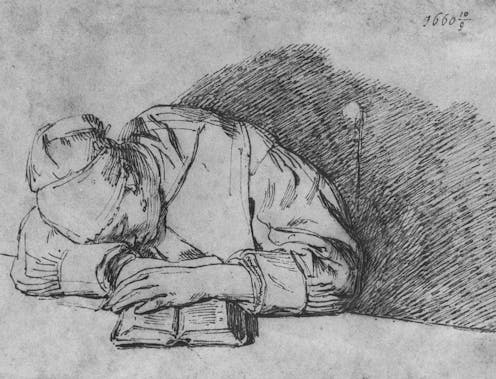
A Woman Asleep Over a Book by Jan de Bray (1660). British Museum

Women have been describing their experiences of male abuse for centuries – we just haven’t always been ready to listen to them.

In the 17th century, Anne Wentworth (1630-c.1693) spoke out against her abusive husband and the religious institution that protected him. She knew it was risky to reveal the shocking truth about an outwardly charming man who was regarded as a pillar of the community. Yet she felt compelled to tell her story.

Not only was her own life – and that of her daughter – on the line, but William Wentworth’s abusive behaviour was evidence of corruption within the Baptist church of which they were both members. Wentworth believed herself to be on a divinely appointed mission. God was using her as his “battleaxe”, she claimed, the instrument with which he would excise the rottenness at the heart of this religious community.

The remarkable Wentworth, who published accounts of her experience of spousal abuse, is one of a dozen dissenting 17th-century women whose incredible stories I tell in my book, Voices of Thunder: Radical Religious Women of the Seventeenth Century.

Like the other women in the book, Anne prioritised her sense of God’s voice speaking in her conscience above all else – a stance that empowered her to stand up to institutional forms of power and oppression. William and his powerful Baptist allies did everything they could to silence and to discredit her. But no amount of intimidation could divert her from her quest to bring the truth about her husband to light.

Originally from Lincolnshire, Anne married William, probably a glove dealer, in around 1652. They lived in London, where they were members of a “Particular” (or Calvinist) Baptist congregation. For almost 20 years, William “grossly abused” Anne both mentally and physically, being such a “scourge and lash” to her that she “lived in misery”.

By the time she was 40 years old, she was physically and emotionally spent. After so many years of suffering “great oppression and sorrow of heart”, Anne collapsed with a “hectic fever”. Narrowly escaping death, she believed that God had spared her life for a reason. No longer willing to live a lie, she decided that it was time not only to leave her husband but to declare her “testimony” to “the world”.

For years she had suffered in silence but now the truth poured out of her. In just four years she published four searing accounts of her experiences, including A True Account of Anne Wentworth’s Being Cruelly, Unjustly, and Unchristianly Dealt With by Some of Those People Called Anabaptists (1676) and A Vindication of Anne Wentworth (1677).

‘Mad’ women

Anne knew that publishing her story would enrage her husband and would alienate her from the church community that “could not bear the truth to be spoke” about him.

Her story was met with hostility, as she knew it would be. In the eyes of the Baptists, she wrote, she was a “proud, passionate, revengeful, discontented, and mad woman”, one who had “unduly published things to the prejudice and scandal of [her] husband” and had “wickedly left him”. She had given an account of decades of abuse, but it was Anne rather than William who was hauled before the leaders of their church, charged with “rejecting and neglecting their church” and with “dissatisfying” her husband.

Soon afterwards, Anne’s husband locked her out of her home. And then on September 25 1677 he committed what to Anne’s mind was his worst crime to date. Determined to suppress her testimony, William ran off with all her manuscripts, destroying six-years’ worth of writing. So “cruel” and “unchristian” had he become that by the following month Anne and her daughter were in hiding, having been forced to run for their lives. Her only so-called crime, she pointed out, was her writing: “Oh, injustice!”

It was Anne’s spiritual convictions that inspired her to speak out against oppression and injustice. She believed that God had spoken to her personally, calling her to fight not simply against her husband or the Baptist church but against wider forces of evil and oppression. Like many in her era, she believed herself to be living in the end times, when the battle against Antichrist spoken of in the biblical book of Revelation would reach its climax.

As a religious hypocrite, William in Anne’s view embodied the spirit of Antichrist, meaning that her crusade to expose the truth about him became to her mind nothing short of an apocalyptic struggle. It was this sense of the cosmic significance of her “testimony” that empowered her to tell her story.

Anne’s account of her experiences ends on a happy note. A year after being locked out of her home, she managed to regain entry, immediately changing the locks so that her husband no longer had the “power to come and put her out”. Supported by her remaining friends, she was back in the home where she had first put pen to paper, risking her reputation, home and community for the sake of speaking the truth.

Anne faced severe repercussions for telling the unvarnished truth about her life, but her determination to do so means that her story remains available to us today. It stands as testimony to one 17th-century woman’s refusal to be silenced.


Looking for something good? Cut through the noise with a carefully curated selection of the latest releases, live events and exhibitions, straight to your inbox every fortnight, on Fridays. Sign up here.


This article features references to books that have been included for editorial reasons, and may contain links to bookshop.org, so if you click on one of the links and go on to buy something, The Conversation UK may earn a commission.

The Conversation

Naomi Baker does not work for, consult, own shares in or receive funding from any company or organisation that would benefit from this article, and has disclosed no relevant affiliations beyond their academic appointment.

ref. The 17th-century woman who wrote about surviving domestic abuse – https://theconversation.com/the-17th-century-woman-who-wrote-about-surviving-domestic-abuse-260128