Cómo afrontar el discurso de odio en la escuela

Source: The Conversation – (in Spanish) – By Jorge Soto Carballo, Profesor Contratado Doctor, Universidade de Vigo

Unai Huizi Photography/Shutterstock

En las escuelas conviven culturas, idiomas y trayectorias diversas. Los espacios escolares, sin embargo, no están a salvo de determinadas actitudes de hostilidad de mayor o menor intensidad hacia el diferente, que pueden traducirse en chistes repetidos en el recreo, silencios incómodos en clase cuando alguien alza la voz contra un estereotipo o la infravaloración académica de estudiantes por su origen.

¿Qué sucede cuando una niña migrante escucha que “viene a quitarnos las ayudas”? ¿O cuando un adolescente racializado es excluido de ciertos espacios escolares? El aumento de la xenofobia, el racismo o la islamofobia está documentado por organismos internacionales, y ese odio se cuela en los pasillos de los centros escolares y en las pantallas de los móviles, reforzado por algoritmos que premian el contenido sensacionalista y polarizador.

Según datos del Consejo de Europa, los mensajes de odio en línea han crecido de forma exponencial en la última década. La OSCE advierte que estos discursos están vinculados al aumento de delitos motivados por prejuicios. Y las Naciones Unidas lo señalan como una de las amenazas más serias para la convivencia democrática del siglo XXI en su United Nations Human Rights Report 2022 (OHCHR).

¿Qué entendemos por discurso del odio?

El discurso del odio no es solo una opinión desagradable. Es una forma de comunicación, verbal, escrita o simbólica, que ataca a personas o colectivos por lo que son: su color de piel, su religión, su orientación sexual, su procedencia… Su objetivo no es debatir, sino deshumanizar. Y cuando esto ocurre, lo que viene después rara vez es pacífico.

No hay una definición única aceptada a nivel internacional, pero sí un consenso creciente: el odio no es una emoción neutra. Es un acto político, social y comunicativo que deja huellas profundas en quienes lo sufren y en quienes lo reproducen. La frontera entre libertad de expresión y fomento del odio sigue siendo espinosa. Mientras en Europa existen límites legales claros al discurso del odio, en Estados Unidos prima la Primera Enmienda, que lo protege como una manifestación de la libertad de expresión.

Inmigración, adolescencia y resiliencia

Los menores migrantes no acompañados son a menudo los más expuestos a estereotipos negativos. En España, más de 10 000 jóvenes estuvieron tutelados por las comunidades autónomas. Muchos llegan tras trayectos marcados por el desarraigo y la violencia. Frente a la narrativa de la amenaza, es urgente visibilizar su resiliencia, su esfuerzo y su deseo de construir un futuro digno.

Pero el sistema no siempre está preparado. Al cumplir 18 años, muchos jóvenes quedan fuera de las redes de protección y se enfrentan a un mercado laboral hostil, sin apoyos suficientes.


Leer más:
Menores tutelados: ¿qué les depara el futuro al alcanzar la mayoría de edad?


Cuando el odio se cuela en el aula

Aunque hay iniciativas positivas, aún falta investigación sobre cómo el odio opera entre el alumnado y cómo contrarrestarlo. Sabemos que los mensajes de odio se propagan más rápido que las estrategias pedagógicas para frenarlos. Pero también sabemos que el aula es un espacio privilegiado para construir ciudadanía crítica, empática y plural. Esto requiere profesorado formado, con recursos didácticos adecuados y apoyo institucional para abordar la diversidad desde la inclusión y no desde la mera tolerancia.

La respuesta no puede ser solo jurídica o policial. El discurso del odio se combate también con educación: una educación que enseñe a pensar, a convivir y a empatizar. Proyectos pedagógicos que incorporen testimonios migrantes, análisis críticos del lenguaje, experiencias de aprendizaje-servicio o formación docente en justicia social son caminos posibles.


Leer más:
Cómo fomentar el espíritu crítico en los jóvenes sin convertirlos en opinadores de todo


Muchas escuelas han implementado talleres de alfabetización mediática y programas de convivencia intercultural. En Galicia, por ejemplo, algunos centros han trabajado con asociaciones locales en proyectos de aprendizaje servicio que conectan alumnado y comunidades migrantes.

Iniciativas para estudiantes

En el ámbito educativo se han desarrollado distintas iniciativas orientadas a contrarrestar el discurso de odio y favorecer la inclusión. Un ejemplo es Break the Hate Chain!, guía educativa impulsada en España por la Fundación FAD Juventud (FAD) y Maldita.es con el apoyo de Google.org, que propone actividades dirigidas a jóvenes de entre 14 y 19 años con el objetivo de trabajar la convivencia, el pensamiento crítico y la construcción de discursos inclusivos.


Leer más:
Así pueden los periodistas luchar contra la desinformación desde las escuelas


En el plano europeo, la iniciativa Education Stops Hate genera recursos educativos abiertos, guías prácticas y kits pedagógicos que permiten al profesorado abordar el odio en las aulas y promover el diálogo intercultural. Finalmente, el proyecto Inmigración, adolescencia y resiliencia centra su atención en los desafíos que atraviesan los adolescentes en contextos migratorios, al tiempo que pone en valor los factores de resiliencia como claves para avanzar en la inclusión social y educativa.

Contra el odio, una pedagogía del cuidado

Frente a la banalización del odio, necesitamos pedagogías del cuidado, de la escucha, de la palabra compartida. Una ciudadanía capaz de detectar y desmontar el odio no se construye solo con leyes o con tuits. Se construye en las aulas, con vínculos, con presencia, con proyectos como los ya citados, que demuestran que es posible.

La Agenda 2030, en su Objetivo de Desarrollo Sostenible 4 (ODS 4), recuerda que una educación inclusiva y de calidad es clave para promover la igualdad y la paz. Combatir el odio no es únicamente frenar un problema puntual: es apostar por un futuro en el que la diversidad sea reconocida como una riqueza y no como una amenaza.

Porque el odio no se combate con silencio: se combate con una educación que no deja a nadie atrás.

The Conversation

Jorge Soto Carballo no recibe salario, ni ejerce labores de consultoría, ni posee acciones, ni recibe financiación de ninguna compañía u organización que pueda obtener beneficio de este artículo, y ha declarado carecer de vínculos relevantes más allá del cargo académico citado.

ref. Cómo afrontar el discurso de odio en la escuela – https://theconversation.com/como-afrontar-el-discurso-de-odio-en-la-escuela-223891
¿Qué pasaría si dejásemos de recibir imágenes de Gaza?

Source: The Conversation – (in Spanish) – By Olga Cruz Moya, Profesora titular de universidad, área de Lengua española, Universidad Pablo de Olavide

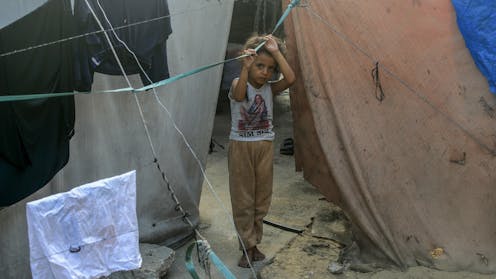
Gazatíes desplazados a las escuelas de UNRWA de Khan Yunis desde Ciudad de Gaza, siguiendo las órdenes del ejército israelí en preparación para una operación y ocupación terrestre, el 7 de septiembre de 2025. Anas-Mohammed/Shutterstock

El pasado 1 de septiembre, la ONG Reporteros sin Fronteras publicó un informe que comenzaba con una frase estremecedora: “Si el Ejército israelí sigue asesinando periodistas a este ritmo, pronto no quedará ninguno en Gaza para informarte”.

Declaración de Reporteros sin Fronteras (1 de septiembre de 2025).
Declaración de la ONG Reporteros sin Fronteras del 1 de septiembre de 2025.
Reporteros sin Fronteras

Días después, la Franja sufrió un corte de comunicaciones que la mantuvo aislada durante más de 24 horas. De no haberse restablecido, desde fuera nos hubiésemos quedado sin imágenes de lo que sucede dentro (Israel prohíbe el acceso a periodistas internacionales; los únicos que están sobre el terreno son los gazatíes).

Y ¿qué consecuencias tiene que dejemos de recibir noticias sobre acontecimientos que implican la pérdida violenta de vidas humanas, como guerras, catástrofes humanitarias o masacres genocidas como la actual?

En la era de la información global, que un conflicto lejano como el de Gaza tenga relevancia en la agenda informativa depende de una compleja cadena de decisiones editoriales. Desde la perspectiva de análisis crítico del discurso, poder-decir es una forma de poder simbólico que se manifiesta en la capacidad de definir la realidad que se expone en el espacio público, lo que influye directamente en la conformación de la opinión pública o el consenso social.

Los medios son nuestras ventanas al mundo

El papel de los medios resulta crucial en todo aquello que queda más allá de la experiencia directa de las personas. Seleccionar lo que se considera noticia implica, necesariamente, silenciar otros hechos. Los criterios de publicación suelen priorizar la imprevisibilidad, lo inusual, la “convulsión informativa” y las situaciones de urgencia.

Este sesgo favorece una cobertura intensiva y circunstancial, pero efímera: las crisis humanitarias irrumpen con fuerza en la agenda mediática durante sus momentos más dramáticos, pero rara vez se sostienen en el tiempo. La atención inicial contrasta con el olvido posterior, lo que debilita la comprensión de las consecuencias a largo plazo.

En el caso de un conflicto prolongado, como el palestino-israelí, cobra especial relevancia el recuerdo mediático, entendido como el proceso mediante el cual la prensa reactualiza episodios pasados, construyendo una memoria compartida que legitima actores y orienta la percepción pública. Así, los medios no solo registran hechos: también sedimentan visiones que configuran el imaginario colectivo.

La importancia de la imagen y el riesgo de saturación

Las imágenes transmitidas desde zonas en conflicto permiten dimensionar la destrucción y el sufrimiento humano, despertando empatía, reacción ciudadana e incluso presión política sobre los gobiernos. Sin embargo, en muchos casos, los medios privilegian el impacto visual por encima de la explicación o el análisis. La televisión, en particular, tiende a conmover antes que a contextualizar, movilizando emociones inmediatas más que comprensión crítica.

En lugar de explicar, informar, educar o analizar, a menudo se busca sacudir al espectador por motivos fundamentalmente humanos y psicológicos, pero también de mero espectáculo. Así sucedió con la retransmisión de la primera guerra de Irak. La prensa puede dar margen a la reflexión y la profundidad, pero la televisión establece el puente hacia los sentimientos, la emoción y la subjetividad.

Imagen de diferentes mujeres con bebés en brazos.
Mujeres con niños con desnutrición en la clínica ambulatoria del Hospital Nasser en Khan Yunis, al sur de la Franja de Gaza, el 13 de septiembre de 2025.
Anas-Mohammed/Shutterstock

Como señaló el filósofo francés Roland Barthes, la imagen funciona como un anclaje semiótico que otorga prueba y densidad al discurso. En España, diversos estudios muestran que la violencia televisada intensifica la implicación moral cuando las víctimas se presentan como cercanas y humanizadas. Pero la abundancia de imágenes puede tener el efecto contrario: la llamada “fatiga compasiva” transforma la tragedia en un espectáculo rutinario, incapaz ya de conmover ni movilizar.

El peso del relato

La manera en la que se describen las crisis no es casual. La información se elabora según una estructura en torno a un “molde” o marco interpretativo (framing) preestablecido que condiciona la interpretación de los hechos.

En los picos de atención mediática, el énfasis suele recaer en el despliegue armamentístico y el sufrimiento de los civiles, mientras se silencian las raíces de los conflictos, de carácter político y económico. Las estrategias discursivas importan: las representaciones personalizadas y humanizadas favorecen la empatía, mientras que las metáforas deshumanizadoras o expresiones connotadas negativamente refuerzan estereotipos y limitan la compasión.

En el caso palestino-israelí, la prensa española ha mostrado una atención intermitente en estos últimos setenta años, recurriendo a denominaciones que fluctúan entre la amplificación y la minimización de estos episodios: “conflicto”, “oleada de ataques”, “espiral de violencia”, “escalada de tensión”, “terrorismo”, “intifada”. Cada elección léxica moldea la forma en que el público percibe la magnitud y legitimidad de los hechos.

Un hombre camina por una calle llena de escombros.
Destrucción en Hamad City, en Khan Yunis, al sur de la Franja de Gaza.
Mohammad Abu Elsebah/Shutterstock

Matar al mensajero: censura, bloqueo y desinformación

La información en contextos de guerra es también un campo de disputa política. Gobiernos y actores en conflicto buscan controlar el flujo de imágenes o manipular narrativas para justificar sus acciones o evitar el descrédito internacional. Esto queda claramente ejemplificado en el hecho de que los periodistas internacionales no puedan acceder a Gaza. La censura y la desinformación niegan a la ciudadanía la posibilidad de formarse una opinión crítica, debilitando los pilares democráticos y desmovilizando la solidaridad internacional.

En el ecosistema digital, además, la lógica algorítmica y la circulación acrítica de fuentes multiplican la fragmentación y la distorsión de los hechos. La verificación periodística y la autorregulación profesional se vuelven, por ello, herramientas imprescindibles para contrarrestar la manipulación interesada y la polarización.

Ojos que no ven…

Dejar de recibir imágenes de Gaza no implica únicamente ignorar lo que ocurre: supone perder los marcos discursivos que sostienen la memoria social y la empatía ciudadana. Cortar las comunicaciones es cortar narrativas, y sin narrativas se debilitan tanto la solidaridad como la rendición de cuentas en la esfera internacional. Y también significa darles la espalda a los periodistas que han muerto para que el mundo pueda ver lo que allí sucede.

The Conversation

Olga Cruz Moya no recibe salario, ni ejerce labores de consultoría, ni posee acciones, ni recibe financiación de ninguna compañía u organización que pueda obtener beneficio de este artículo, y ha declarado carecer de vínculos relevantes más allá del cargo académico citado.

ref. ¿Qué pasaría si dejásemos de recibir imágenes de Gaza? – https://theconversation.com/que-pasaria-si-dejasemos-de-recibir-imagenes-de-gaza-265721

Marie Antoinette Style at the V&A is a rare opportunity to see what survives of the queen’s closet

Source: The Conversation – UK – By Serena Dyer, Associate Professor, Fashion History, De Montfort University

Marie Antoinette (1755 to 1793) is a cultural icon of monumental proportions. She was the last queen of France before the brutal and bloody French Revolution, and her life was ended by the revolutionaries’ guillotine blade.

Her legacy courses through the visual language of music videos, fashion catwalks and drag shows. Even the shapes and styles behind the current corset trend, popularised by the show Bridgerton, owe more to the era of the French queen than to the Netflix regency romp.

Yet, standing in front of a single, gently worn, and very small shoe at the Victoria and Albert Museum’s latest exhibition, Marie Antoinette Style, the French queen suddenly feels as fragile and little as the brittle silk of her surviving heeled pump.


Read more:
Bridgerton – how period dramas made audiences hate the corset


It is the tender fragility of the teenage queen that first greets visitors. The 16-year-old Dauphine smiles coyly in an animated version of Joseph-Siffred Duplessis’s 1772 portrait of the future queen. She is strikingly innocent, entirely oblivious to the tumultuous years which would define her legacy. It is a poignant moment for all who are aware of her tragic fate.

Joyful and incandescent youthfulness thrums from the first few spaces of the exhibition. A glittering mirrored hall filled with some of the most spectacular gowns of the period pulses with magical energy as a ball in Versailles’s hall of mirrors. The gowns that the visitor encounters, like the wedding ensemble of fellow European royal bride, Duchess Hedvig Elisabeth Charlotta, are tiny.

This is not, as many visitors may mumble, because everyone in the past was small (they were not), but because this was a court of teenage royals.

The garments chosen are a spectacular array of pastels, representing the diversity and complexity of styles worn at the French court. But these glistening, dazzling garments pale in comparison to the fragments of gowns which possibly once belonged to Marie Antoinette herself. Other than the shoes, a shift (the linen underwear worn closest to the skin) and a smattering of accessories, very few of Marie Antoinette’s own garments survive.

The revolutionaries who oversaw her downfall and execution in 1793 attempted to destroy her vast wardrobe. So fragments like the ivory silk one, encrusted with silver spangles, gems, velvet and metal embroidery are incredibly exciting. The scars of stitching from its former life as a court gown tantalisingly hint at how it might have formed the sweeping front section of a gown’s skirts.

The exhibition confidently places Marie Antoinette not as an exuberant and frivolous monarch, as she is so often seen, but as an intentional, frequently playful, and decidedly modern patron of the arts. Aside from the gowns, there is furniture, porcelain, jewellery, theatre props and some of the most recognisable and iconic portraits of the infamous French queen – many of which have never travelled to the UK before. It is in this section that the fervour of her celebrity becomes apparent.


Read more:
Marie Antoinette – extravagant French queen has long been a symbol of female excess


There is a bowl supposedly modelled after Marie Antoinette’s breast, complete with nipple, and which it is said is the origin of the coupe glass. There are also an astonishing amount of diamonds, including a copy of the jewels from the infamous affair of the diamond necklace. This audacious con saw a cardinal and a self proclaimed Comtesse steal a priceless necklace while posing as Marie Antoinette. Despite the Queen’s innocence, her reputation is ruined.

It is here that the darker side of her reign also begins to trickle into the exhibition. Her expenses were nowhere near as detrimental to the French economy as her husband’s warmongering, but Antoinette’s very visible and enviably luxurious life earned her the moniker of Madame Déficit. She became an easy target for an angry and starving population, who began to vilify her, depicting her as a harpy and falsely accusing her of torrid affairs.

This insidious shift is cleverly woven into the exhibition narrative. For instance, there is an opportunity for visitors to smell samples of the scents from the court by sniffing perfumed busts of the Queen’s head. Visitors enjoying the scents are then suddenly assaulted with the stench of her impending prison cell.

Marie Antoinette was not oblivious to the rising revolutionary tide. That innocent girl that we met at the start had grown into a sympathetic queen. She recycled her garments, gifting them to her staff, she adopted and released enslaved children, she gave endlessly to charities and turned down gifts which she felt were too extravagant.

And while her luxury consumption looked extravagant, her patronage was essential to the success of French industry. When she stopped wearing silks and turned her attention to simple cotton gowns, for instance, the silk weavers rioted. She was never going to win.

Despite these warning signs, it is impossible to prepare for the next space. The dominance of pastel pinks and greens is quickly supplanted by a deep, blood red. A blade from a guillotine dominates the space cut a few words of repetition here. But her death is not the end.

The remaining rooms celebrate her enduring appeal across art, culture and fashion. She was a fancy dress costume within decades of her death, and by the 20th century cinematic portrayals like Norma Shearer’s 1938 portrayal of the Queen cemented her pop culture position. But her legacy, fraught with misogynistic myth-making and uncomfortable stereotypes, gets lost in a celebratory atmosphere.

It is undeniable that her cultural significance is massive. But so many of the visual signals designers nod to are just as false as the fake news generated during her fall from grace. For instance, the tall white wigs are a Hollywood invention. Marie Antoinette always wore her own, natural blonde hair pristinely pomaded and powdered.

It is disappointing that, while the myth-making from her lifetime is robustly challenged in the exhibition, the perpetuation of those myths in artistic responses to her legacy were largely overlooked. In this section, the fashion of John Galliano or costumes from the 2006 Sophia Coppola film or Hulu’s The Great, while wonderful to see, lacked the deeper critical engagement of the early sections of the exhibition.

The exhibition is a visual treat, and the opportunity to see rarely displayed objects make it a must see. But the imagined Marie Antoinette we leave at the end of the exhibition is a far cry from the real young woman that smiled shyly as we entered. Marie Antoinette may be immortalised in the cultural imagination, but I am not convinced she would recognise herself.


Looking for something good? Cut through the noise with a carefully curated selection of the latest releases, live events and exhibitions, straight to your inbox every fortnight, on Fridays. Sign up here.


The Conversation

Serena Dyer does not work for, consult, own shares in or receive funding from any company or organisation that would benefit from this article, and has disclosed no relevant affiliations beyond their academic appointment.

ref. Marie Antoinette Style at the V&A is a rare opportunity to see what survives of the queen’s closet – https://theconversation.com/marie-antoinette-style-at-the-vanda-is-a-rare-opportunity-to-see-what-survives-of-the-queens-closet-265700

People with schizophrenia were hit hard by B.C.’s deadly 2021 heat dome

Source: The Conversation – Canada – By Liv Yoon, Assistant Professor, School of Kinesiology, University of British Columbia

In June 2021, British Columbia experienced an extreme climate event. A heat dome trapped hot air over the province, pushing temperatures to record highs for several days, killing more than 600 people.

A closer look at the numbers revealed something even more startling: people with schizophrenia — just one per cent of the population — made up 15.7 per cent of the deaths. This statistic underscores a troubling truth: climate change does not affect everyone equally.

Research by the BC Centre for Disease Control found that during the heat dome, people with schizophrenia had roughly three times the risk of dying compared to those without schizophrenia, more than any other chronic condition. Even before introducing housing or other critical social determinants of health, this diagnosis alone carried a much higher mortality risk.

Without targeted action, the most marginalized will continue to face the greatest risks. The heat dome revealed how schizophrenia combined with poverty, precarious and poor-quality housing, medication effects, stigma and social isolation led to a uniquely lethal risk.

As heatwaves grow more frequent and intense with climate change, public health and housing policy must shift from expecting people to cope on their own toward ensuring people are able to stay cool enough.

How schizophrenia increases heat risks

In a recent study, we interviewed 35 people with schizophrenia who lived through the 2021 heat dome for a more granular look at what it took to survive. Participants described suffering the physical effects (fainting, heat rash, exhaustion) and worsening symptoms like hallucinations, disrupted sleep and emotional distress.

Symptoms such as paranoia caused many to avoid news coverage, government warnings or even caretakers. This means many never received — or trusted — urgent alerts issued during the heat dome, and knowledge gaps were common.

For many, public cooling centres felt unsafe or unwelcoming due to previous experiences being stigmatized and feared because of their schizophrenia diagnosis. The stigma around schizophrenia also discouraged many individuals from seeking medical care or other public supports.

Homelessness or poor housing quality was another significant factor that compounded vulnerability. Many interviewees lived in older apartments without air conditioning. Others were unhoused and had to cope without shade, water or safe places to rest. For these reasons, staying cool indoors was not an option for many.

The result was a tragic overlap: people with the fewest resources to cope with extreme heat were also the least able to access help.

Why individual advice isn’t enough

Public health advice for heatwaves often focuses on individual actions: seek shade, buy a fan or check in on neighbours. While important, these messages assume equal access to information and resources — but evidence shows that many people with schizophrenia experience significant barriers to accessing them.

This way of thinking reflects a broader societal tendency to treat health as a matter of personal responsibility: that in the heat, each of us is on our own to prepare. But the disproportionate number of deaths among people with schizophrenia illustrates the flaw in this approach.

Our interviews revealed that many indeed internalized their struggles during the heat dome as personal shortcomings, when in reality, the problem was systemic: inadequate housing, limited access to care, widespread and debilitating social stigma and the lack of tailored public health strategies.

A different approach

To prevent the tragedies of 2021 from happening again, policymakers and experts need to view access to cool, safe spaces as a basic right. This means moving beyond a one-size-fits-all approach for advice, to one addressing the realities faced by those most at risk.

To be clear, this rights-based approach does not mean abandoning practical individual measures that save lives, such as opening public cooling centres or reminding people to drink water. These remain essential in the short term. But on their own, they are not enough.

To truly protect people with schizophrenia and others at high risk, these responses must unfold within a broader vision that treats access to safe temperatures as a basic right.

That means investing in affordable, climate-resilient housing and ensuring cooling centres are welcoming and accessible for all. It also means addressing stigma around mental health challenges, tailoring health advice to account for anti-psychotic medications and supporting outreach through trusted community networks.

We need both immediate interventions that provide relief during a heatwave and structural changes that address the root causes of vulnerability. Without this dual approach, responses to heatwaves will leave the same people exposed when the next extreme event arrives. Our goal should not be fewer deaths; we should aim for no deaths.

Structural solutions needed

The 2021 heat dome was tragic — more so because deaths were not inevitable. They were the result of overlapping vulnerabilities that our current housing and welfare systems fail to address. People with schizophrenia are not inherently more vulnerable to heat; they are made more vulnerable by the obstacles that shape their lives.

This means that solutions must also be structural. We need to change how we think about extreme heat; it is not just a natural hazard. It is a reflection of how social systems are failing people, especially those on the sharp edges of inequality.

Viewing cooling as a right means investing in societies that are more resilient to heat. This means governments investing in safer and more accessible housing for all, building welcoming public spaces, fostering a society where neighbours know and care for each other and allowing people with lived experience to play a central role in shaping future heat-health planning.

The Conversation

Liv Yoon received funding from Health Canada’s Climate Change and Health Office for the study that informs this article.

Samantha Mew does not work for, consult, own shares in or receive funding from any company or organisation that would benefit from this article, and has disclosed no relevant affiliations beyond their academic appointment.

ref. People with schizophrenia were hit hard by B.C.’s deadly 2021 heat dome – https://theconversation.com/people-with-schizophrenia-were-hit-hard-by-b-c-s-deadly-2021-heat-dome-265173

The more in favour of welfare you are, the more likely you are to support cycle lanes

Source: The Conversation – UK – By Joanna Syrda, Assistant Professor in Business Economics, University of Bath

Public transport infrastructure can be deeply political. A new cycle lane appears in a neighbourhood, and suddenly the letters page of the local paper is full. A plan to pedestrianise a city centre street sparks furious debate. A proposal to expand a bus route is hailed as progress by some and criticised as wasteful by others.

The conversations we have around urban planning reflect deeply held values and priorities. They even pit competing visions for society against each other. This was visible in debates over Ulez (ultra-low emission zones) in London, for example. Each of the two sides appealed to a different set of values: critics to individual choice and economic mobility and supporters to collective wellbeing and environmental responsibility.

In my recent study, I looked at how people’s world views affected their views on various transport infrastructure proposals. I used British Social Attitudes (BSA) survey data to investigate attitudes towards cycle lanes, increasing spending on public transport spending (potentially at the cost of other services), reserving parking spaces for electric car charging points, building car parks to introduce more park and ride routes, narrowing roads to widen pavements, and closing roads to create pedestrian high streets.

In each case, I found that whether people supported the change depended heavily on their political ideologies. But among these ideologies, the biggest predictor of how people felt about green transport projects overall was their attitude towards welfare spending.

Those who believed in generous, redistributive welfare systems, government support for the unemployed and efforts to reduce inequality also tended to support government investment in public transport.

Around 41% of differences in opinion on the six analysed infrastructure projects taken together were explained by differences in views on welfare. Political party preference comes next, accounting for 26%. Where people place themselves on the left–right political spectrum explained only 13% of differences of opinion.

When looked at separately, support for the welfare state is the strongest predictor of support for increasing public transport spending, widening pavements, and creating pedestrian high streets. Meanwhile, political party preference plays the biggest role in shaping opinions on cycle lanes, electric car charging points, and building new car parks.

When all political dimensions are considered together, two policies stand out as the most politically charged: narrowing roads to widen pavements and building new cycle lanes. These findings suggest that sidewalks and cycle lanes don’t just redistribute road space – they expose ideological space too. They challenge entrenched ideas about who the city is for, how mobility should be organised, and what kind of future we should invest in.

Historically, the bicycle has been associated with counterculture and leftwing politics. From the 1960s onward, it gained symbolic value as an alternative to the car – a challenge to dominant norms of consumption, status and mobility. Cars came to represent freedom, autonomy and success. Bicycles, by contrast, were reframed as environmental, communal, and anti-establishment. This symbolic opposition still resonates today.

People who are less positive about welfare often emphasise individual responsibility, self-reliance, and a belief that public support creates dependency. From this perspective, cars are earned through work, independence, and personal choice. Cycle lanes or pavements are seen as government interference, taking space (and status) away from drivers.

Changing minds

My research also shows that interest in politics moderates these effects. People who are highly interested in politics are much more likely to filter their views on green transport investment through their broader ideological and partisan commitments. In contrast, those with little political interest are less likely to have their opinions on transport shaped by their political ideology.

This matters because it means that the loudest voices in public debates tend to be the most politically entrenched. When political interest strengthens the link between ideology and opinion, it can polarise the discussion – turning questions of road design or bus funding into flashpoints for wider ideological battles. As a result, pragmatic compromise becomes harder, and transport policy can get stuck in symbolic conflict rather than being debated on practical or social terms.

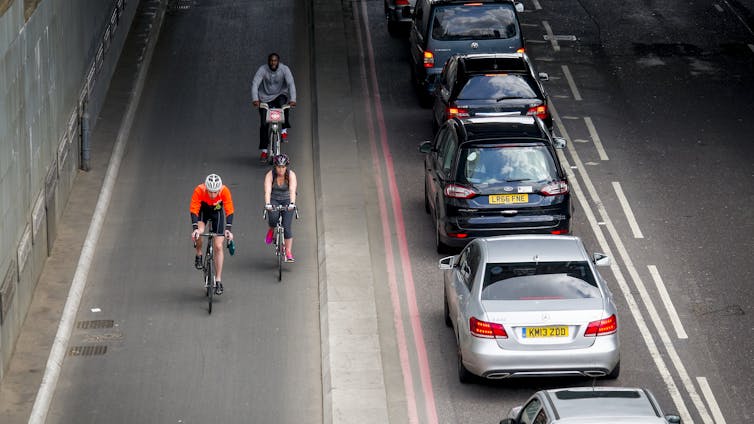
An aerial view of a cycle lane next to a row of cars.
Left or right?
Shutterstock/Lenscap Photography

However, if we understand why people oppose green infrastructure projects, we can start to find ways forward. Framing these initiatives purely in terms of collective impacts, such as lowering pollution, rather than private interests may only resonate with people who already support that kind of public investment.

To reach those who are more sceptical of welfare and state intervention, we may need different messaging. Rather than focusing only on social equity or environmental impact, campaigns could highlight individual interests such as how cycle lanes can reduce congestion, cut commuting costs or boost local high streets. These are benefits that don’t necessarily rely on a belief in state intervention to feel relevant or persuasive.

If we want to build broader coalitions of support for green infrastructure, we need to speak to the diverse motivations people have for how they move through their cities.

The Conversation

Joanna Syrda does not work for, consult, own shares in or receive funding from any company or organisation that would benefit from this article, and has disclosed no relevant affiliations beyond their academic appointment.

ref. The more in favour of welfare you are, the more likely you are to support cycle lanes – https://theconversation.com/the-more-in-favour-of-welfare-you-are-the-more-likely-you-are-to-support-cycle-lanes-264246

Paracetamol, pregnancy and autism: what the science really shows

Source: The Conversation – UK – By Dipa Kamdar, Senior Lecturer in Pharmacy Practice, Kingston University

US president Donald Trump has claimed that paracetamol (acetaminophen or Tylenol) use in pregnancy is linked to autism in children, urging pregnant women to avoid the painkiller. This announcement has sparked alarm, confusion and a flurry of responses from health experts worldwide. Trump’s comments come in a long line of unsubstantiated claims about the causes of autism, with paracetamol now the latest target.

To understand these claims, we need to examine what autism actually is and why diagnoses have increased. Autism spectrum disorder (ASD) or autism is a complex neurodevelopmental condition affecting social interaction, communication and behaviour. It is not a disease but a lifelong difference in how people experience and interact with the world.

While diagnoses of autism have increased in recent decades, this is largely due to better awareness, broader diagnostic criteria and improved access to assessments. Many people, especially women and those with less typical presentations, were previously missed or misdiagnosed.

Trump’s recent statements have cited mounting evidence linking paracetamol in pregnancy to autism and suggested the Amish and Cuban communities have virtually no autism because they don’t use the drug. However, there are documented cases of autism in both the Amish community and Cuba.

Both communities also use paracetamol, but it’s not used as widely as in the US or UK, say, which might suggest a link between the drug’s use and autism (high use, high autism prevalence; low use, low autism prevalence). However, attributing low rates to paracetamol use ignores the complexities of diagnosis, reporting, healthcare access and cultural or religious stigma in different populations.

A Tylenol container with some Tylenol pills in the foreground.
Tylenol is the American branded version of paracetamol.
James Are/Shutterstock.com

A more nuanced picture

The scientific evidence presents a more nuanced picture than the White House statements. A 2025 review, funded by the National Institutes of Health in the US, analysed 46 studies. Twenty-seven of these found a link between paracetamol use during pregnancy and increased risk of neurodevelopmental disorders in children. The review does strengthen the evidence for a potential connection, but importantly, it does not prove that paracetamol causes autism. Other factors – like why women took paracetamol in the first place (infection or fever) – could explain the results.

More reassuring is the largest and most rigorous study to date – a Swedish nationwide analysis of over 2.4 million children. It found no evidence of increased risk of autism in children whose mothers used paracetamol during pregnancy, once family and genetic factors were accounted for.

The study provides strong reassurance that paracetamol, when used as recommended, is an unlikely cause of autism. Another 2025 review similarly showed that taking paracetamol during pregnancy is unlikely to significantly increase the risk of autism in children.

Autism does not have a single, simple cause. It develops through a complex interaction of genetic and environmental factors. While genetics play an important role, no single gene or mutation explains autism on its own. Environmental factors – such as an infection during pregnancy, certain medications, microplastics, advanced parental age, or complications around birth – may also increase risk. However, in most cases, autism cannot be traced back to any one factor alone.

The clinical reality is that paracetamol remains the first-choice painkiller for pregnant women for good reason. Untreated pain and fever in pregnancy can themselves pose serious risks to both mother and baby – increasing the risk of birth defects like spina bifida, cleft lip or palate and heart problems.

Other common painkillers, such as ibuprofen and aspirin, are not recommended in pregnancy unless under medical supervision, as they carry risks to the baby including issues with blood circulation, lungs and kidney development.

The UK’s medicines regulator has reaffirmed that paracetamol is safe to use in pregnancy when taken as directed. There is no evidence that it definitively causes autism and pregnant women should not avoid necessary treatment for pain or fever. Experts agree there’s no need to change existing advice – paracetamol remains safe to use for pain or fever in pregnancy when taken as recommended.

For pregnant women experiencing pain, the NHS continues to recommend trying natural measures first – getting fresh air, drinking water and avoiding screens. But when these don’t work, paracetamol remains the safest pharmaceutical option when taken at the lowest dose for the shortest time necessary.

Ultimately, the paracetamol-autism debate illustrates a familiar pattern: complex science being reduced to political soundbites. Autism is a multifactorial condition shaped by genetics and environment, not a single pill taken in pregnancy.

The overwhelming weight of evidence still supports paracetamol as the safest option for pregnant women when used as recommended. The real danger isn’t the medicine – it’s oversimplified claims that create fear and undermine trust in healthcare.

The Conversation

Dipa Kamdar does not work for, consult, own shares in or receive funding from any company or organisation that would benefit from this article, and has disclosed no relevant affiliations beyond their academic appointment.

ref. Paracetamol, pregnancy and autism: what the science really shows – https://theconversation.com/paracetamol-pregnancy-and-autism-what-the-science-really-shows-265875

Why Ukraine should avoid copying Finland’s 1944 path to peace with Moscow

Source: The Conversation – UK – By Bo Petersson, Professor of Political Science, Malmö University

The Finnish president, Alexander Stubb, recently drew parallels between his country’s experience from its conflicts with the Soviet Union during the second world war and Ukraine’s current struggle against Russian aggression. The analogy has gained considerable traction.

It was at a meeting with Donald Trump and several European leaders at the White House in August that Stubb invoked Finland’s wars with the Soviet Union – the winter war (1939–40) and the continuation war (1941–44) – as a source of hope for Ukraine. His message was clear: even in the darkest times, peace and independence are possible.

In 1944, Finland entered into an armistice agreement with Joseph Stalin’s Soviet Union that ended hostilities. But it came at a heavy price. Finland retained its formal independence, but had to make significant territorial concessions, including the loss of Karelia and Petsamo provinces. It also accepted severe restrictions on its sovereignty.

Stubb was seemingly looking to inspire Ukraine by showing that survival and statehood are achievable, even under immense pressure, and that a durable and lasting peace is possible to establish. However, while the sentiment is understandable, the comparison between Finland’s situation in 1944 and Ukraine’s current war with Russia is problematic and possibly misleading.

First of all, to suggest that Ukraine should accept territorial losses as part of a peace deal risks legitimising Russia’s military aggression and undermines the principles of international law and national sovereignty. It would send a dangerous signal that borders can be redrawn by force, which could embolden future aggressors including Russia.

It also needs to be recalled that the geopolitical context was vastly different in 1944. Finland’s wartime co-belligerent status with Nazi Germany during the continuation war wrecks the analogy. Finland joined forces with Germany to reclaim territory lost to the Soviet Union in the winter war and, initially, Finnish troops advanced deep into Soviet territory.

Ukraine’s situation is fundamentally different. Its limited and essentially defensive military incursions into the Russian Kursk region cannot be compared to Finland’s initial and extensive wartime conquests.

Moreover, drawing parallels between Finland’s tacit alliance with Nazi Germany and Ukraine’s current western support only risks feeding Russian propaganda. Moscow has long tried to portray Ukraine’s government as neo-Nazi, supported by like-minded instigators in the west.

This has allowed the Kremlin to depict Russia’s so-called special military operation as a continuation of the second world war. Even an indirect comparison between Finland then and Ukraine now could reinforce these false narratives.

Prosecuting wartime leaders

Under the 1944 armistice agreement, Finland was also required to prosecute its leaders deemed responsible for the war effort against the Soviet Union. The then-Finnish president, Risto Ryti, was sentenced to ten years in prison while several other ministers were imprisoned for shorter periods of time.

To even imply that Ukraine should demote and prosecute its president, Volodymyr Zelensky, and his government as part of a peace settlement would be morally outrageous and politically disastrous. Such a suggestion would meet hostile Russian demands, undermine Ukraine’s democratic legitimacy and mock its sovereignty.

The issue of reparations highlights the problematic analogy even more. Finland was forced to pay heavy reparations to the Soviet Union as part of the 1944 agreement, equivalent to US$5.3 billion (£3.9 billion) in 2025. These reparations were paid over a period of eight years, mainly in the form of industrial products.

In Ukraine’s case, the roles need to be reversed. Russia should be held accountable for its unprovoked invasion and the death and destruction it has caused. Russian reparations must therefore be part of any future peace agreement, along with justice for war crimes. These include the forced abduction of an estimated 20,000 Ukrainian children who are now held in Russian territory.

Finally, the long-term consequences of Finland’s 1944 agreement included decades of Soviet influence over its domestic and foreign policy. A Soviet control commission operated in the Finnish capital, Helsinki, from 1944 to 1947. This effectively undermined Finnish sovereignty.

The control commission oversaw the prosecution of Finnish wartime leaders and the banning of political parties and organisations deemed undesirable by Moscow. It also essentially took control of Helsinki’s international airport. Ukraine must be spared a similar fate. Any peace deal must ensure Ukraine’s full independence and freedom from future Russian interference.

Historical analogies can be powerful, but they must be used with care. Stubb’s remarks were likely made with the best of intentions. He probably also meant to suggest that Finland has a unique understanding of what it means to fight for independence against its powerful neighbour, whether it be called Russia or the Soviet Union.

However, the use of Finland’s 1944 armistice as a model for Ukraine risks sending a harmful message. Ukraine’s struggle is not just about survival, it is about justice, sovereignty and the rejection of imperial aggression. The country deserves a future free from occupation and coercion, and all western democracies need to support it to attain this.

The Conversation

Bo Petersson receives funding from Malmö University and the Hamrin Foundation.

ref. Why Ukraine should avoid copying Finland’s 1944 path to peace with Moscow – https://theconversation.com/why-ukraine-should-avoid-copying-finlands-1944-path-to-peace-with-moscow-265631

Fantasy rugby: how the animal kingdom could help you form a winning team

Source: The Conversation – UK – By Saskia Goeckeritz, Lecturer in Animal and Environmental Sciences, Nottingham Trent University

The stereotypical rugby player is a larger than average male who is strong, stoic and, occasionally, a bit single minded. But an effective team needs much greater diversity in traits and behaviour, not least because so many rugby players are actually women.

It might surprise you to know that the animal kingdom can help illustrate the variety of characteristics needed in rugby. Here are five animal species that would crush it on the pitch.

Rhinoceros

Often, the most exciting moments in rugby are when a player crashes through the defensive line to score a try. Strength and power are vital for this move, so the first animal on our fantasy team is the rhinoceros, collectively known as a crash of rhinos.

Weighing in at around 2,000kg, rhinos are one of the strongest animals, capable of flipping cars with ease. Rhinos are also relatively agile, accelerating to reach speeds over 30mph.

Although male rhinos are bigger and stronger than females, the females are more sociable. Some herds are led by a matriarch who guides the behaviour of the group, just like the pack leader geeing up the forwards before a scrum.

Caracal

An important part of rugby is a lineout, during which lifters and jumpers work together to get possession of the ball. A key skill is leaping up high.

An artist at jumping is the caracal. One of Africa and Asia’s big cats, the caracal has long, powerful legs that make it an efficient hunter.

Caracals have often been observed vaulting over three metres into the air to capture birds in flight – that’s almost twice the height of an average woman. Male caracals are larger and heavier than females but there is no evidence that they can jump any higher.

Peregrine falcon

Being faster than your opposition not only helps you score more tries, it also means that you can cover more ground in defence. The world’s fastest animal, the peregrine falcon can reach speeds over 200mph in downwards flight.

Females are slightly faster than males – not bad considering they can be twice as heavy as the males. Peregrines can also change direction almost effortlessly. This is a great skill when trying to wrong-foot your foes.

Stoat

One of the key tactics in a rugby game is to deceive the opposition into thinking that you are going in the opposite direction. Cunning footwork can make your opponents speed off the wrong way. Dummy runs draw opponents to a decoy team member, freeing-up that all-important space for a team member to run into. This kind of deception is seen in mustelids – carnivorous mammals with long bodies, such as the British stoat.

These cute but clever mammals perform a deception dance of bizarre leaps and twists, mesmerising their prey before they pounce on them. Stoats have been known to work in tandem with their mating partners, with one performing the luring moves while the other moves in to attack the victim.

Orca

There can be no success in rugby without a team working together, both in defence and attack. So, the final animal in our fantasy rugby team is the orca, a voracious predator, famed among researchers for coordinating as a team to hunt food. Similar to an attacking line in rugby, orcas often swim in formations.

Together, they synchronise tail flicks to create powerful waves that break ice sheets apart. This forces prey such as seals off the ice and into the water where they are easier to capture. Next, they blow air from their blowholes into the water to create “walls” of air bubbles to disorientate prey.

This all takes practice, just like working together as a team in rugby takes training. Orca pods are generally run by an experienced female, the matriarch, who teaches her pod how to perform these strategic manoeuvres.

Animals are adapted for their role in their environment, much like players on a rugby team. Rugby has long been seen as a masculine sport, but people’s attitudes are changing and the game is starting to value diversity in skills, styles and personalities. Disregard of female rugby players is being replaced by an appreciation for their endurance and athleticism on the pitch.

In fact, rugby is a sport in which the strength of a team comes from the variety of behaviour and traits in its players. So, next time you watch rugby, have a think about what animals you might put on a team – and remember, everyone has a role to play.

The Conversation

Saskia Goeckeritz works for Nottingham Trent University.

Louise Gentle works for Nottingham Trent University.

Tom Glenn does not work for, consult, own shares in or receive funding from any company or organisation that would benefit from this article, and has disclosed no relevant affiliations beyond their academic appointment.

ref. Fantasy rugby: how the animal kingdom could help you form a winning team – https://theconversation.com/fantasy-rugby-how-the-animal-kingdom-could-help-you-form-a-winning-team-265021

The US-UK tech prosperity deal carries promise but also peril for the general public

Source: The Conversation – UK – By Simon Thorne, Senior Lecturer in Computing and ​Information Systems, Cardiff Metropolitan University

The UK government hailed the recent US state visit as a landmark for the economy. A record £150 billion of inward investment was announced, including £31 billion targeted at artificial intelligence (AI) development.

That encompasses work on large language models (LLMs), the technology behind AI chatbots such as ChatGPT and other generative AI models. It will also cover the supercomputing infrastructure needed to deliver innovations.

Microsoft alone pledged US$30 billion (about £22 billion) over four years, half on capital expenditure such as new data centres, the rest on operations, research and sales. Tech company Nvidia has also promised £11 billion, with plans to deploy 120,000 of its Blackwell graphics processing units (to speed up computer graphics, for example in games, and process digital images) in UK projects. The US AI cloud computing company CoreWeave is building a £1.5 billion AI data centre in Scotland.

The political narrative is that the UK is becoming a global hub for AI. Yet behind the rhetoric lies a harder question: what kind of AI future do we want? Is it one where prosperity is broadly shared among the public, or one where private firms and foreign interests hold the levers of power, while the technology itself stagnates and spreads misinformation?

LLMs the technology powering generative AI models such as ChatGPT or Gemini, appear to be reaching their technical limits. The underlying hardware that LLMs are built on are called “transformer architectures”, they excel at producing fluent text but have persistent problems with reasoning and fact. Since ChatGPT3.5 arrived in 2022, AI developers have scaled up models with more data and computing power, but gains have slowed and costs have soared.

This progress has also failed to solve their key problem, persistent “hallucinations” that are a significant barrier to leveraging LLMs for organisations and individuals. OpenAI admits that hallucinations – confident but false outputs from AI systems – are a product of how these systems predict words.

Filtering out hallucinations by forcing models to admit uncertainty in their output could cut hallucinations, but reduces usable outputs by around 30%.

Hallucinations may be seen as a necessary downside by OpenAI and other providers, but research also highlights their structural weaknesses. LLMs are not socialised beings but statistical engines, incapable of distinguishing fact from fabrication.

My own work has shown that users place misplaced trust in LLMs, assuming human-like reasoning where none exists. Simple logic tests expose weaknesses and the pattern is consistent: AI often underdelivers and requires human oversight to verify outputs.

This year, the Grok chatbot, developed by Elon Musk’s company xAI, made antisemitic remarks and praised Adolf Hitler in responses on X. The company behind Grok, xAI, apologised and removed the posts, attributing some of the behaviour to an “unauthorised code path” or system update that made the model overly responsive to extremist-tainted user inputs.

In its apology published on X, xAI said: “Our intent for Grok is to provide helpful and truthful responses to users. After careful investigation, we discovered the root cause was an update to a code path upstream of the Grok bot.

The company said the update made Grok “susceptible to existing X user posts; including when such posts contained extremist views”.

They added: “We thank all of the X users who provided feedback to identify the abuse of grok functionality, helping us advance our mission of developing helpful and truth-seeking artificial intelligence.”

Retrospective alignment

All LLMs require retrospective alignment, a process of adjusting their outputs after training, to ensure their responses do not drift into harmful, biased, or destabilising territory. This can mean filtering hate speech, blocking misinformation about vaccines, preventing the promotion of self harm, or constraining political partisanship.

But unlike humans, whose ethical boundaries emerge through lived interaction and socialisation, AI models cannot self regulate. Their alignment is imposed after the fact by those that control them.

This process is not guaranteed to be neutral and we can never be sure who is actually calling the shots. Corporations, governments and powerful individuals may be in there acting as surrogate parents, embedding their own values and interests into the system’s ethical boundaries. The danger here is that instead of aligning the LLM to broadly acceptable norms, it could potentially be aligned to promote undesirable extremist points of view.

In fact, malicious coherence, where AI systems are tuned to confidently repeat political narratives, may turn out to be a bigger risk than hallucinations. On X, Grok is already invoked as an arbiter of truth. It’s very common to see: “Hey @Grok, is this true?” in the comments under posts. This ritual hands authority to a machine owned by one man.

The UK–US trade deal also gestures towards a broader range of machine intelligence applications, from autonomous vehicles and delivery drones to healthcare systems.
Self-driving technology has been imminent for more than a decade, but it remains locked in extended pilot phases with Tesla, Waymo and Cruise all facing setbacks and safety controversies.

Delivery drones remain constrained by regulation, safety and logistical barriers.

There are impressive AI breakthroughs in healthcare, such as protein structure prediction and AI-assisted diagnostic imaging. But deployment in the NHS is fraught with concerns over trust, data governance and accountability.

The lesson is the same as with LLMs, progress is real but uneven, hype outpaces evidence, and without transparent oversight these systems risk being aligned more with corporate profit than with public benefit.

Whose future?

The UK–US trade deal illustrates both the promise and peril of today’s AI moment. Technically, AI systems are stagnating: hallucinations persist, reasoning remains weak, and scaling them up further offers diminishing returns. Politically, the risk is sharper: models could be aligned to private or partisan interests, amplifying disinformation in an already fractured information ecosystem.

The opportunity to change the truth in real time through alignment fits less with Silicon Valley’s promises of innovation than with Orwell’s Ministry of Truth.

Whether in LLMs that confidently fabricate or in driverless cars that make unfortunate manoeuvres, the pattern repeats: systems promoted as transformative struggle with basic reliability, while control over their direction rests with a handful of powerful firms.

So whose AI future do we want? A future of public benefit, built on transparency, oversight, and verifiable outcomes? Or one where private corporations define what counts as truth?

The fanfare of investment cannot answer this. Only governance, accountability, and sovereignty can. Without them, the AI future being built in the UK may not belong to its citizens at all, but to the corporations and governments who claim to speak on their behalf.

The Conversation

Simon Thorne does not work for, consult, own shares in or receive funding from any company or organisation that would benefit from this article, and has disclosed no relevant affiliations beyond their academic appointment.

ref. The US-UK tech prosperity deal carries promise but also peril for the general public – https://theconversation.com/the-us-uk-tech-prosperity-deal-carries-promise-but-also-peril-for-the-general-public-265728

Why Trump’s tariffs could make the apps on your phone worse

Source: The Conversation – UK – By Umair Choksy, Senior Lecturer in Management, University of Stirling

Much of the world’s IT outsourcing goes to companies in India. Gorodenkoff/Shutterstock

The US has imposed a 50% tariff on most Indian exports, following through on its threat to raise them from 25%. Although they are formally applied to goods, there are fears that tariffs could also unleash a domino effect on IT services. As strange as it may sound, the tariff wars sparked by the US’s “liberation day” levies could now filter through to things like apps and online shopping.

India is home to software service providers – companies that deliver and maintain apps for clients all over the world. Already, there have been reports that major Indian providers such as TCS and Wipro are seeing project delays as US clients adopt a “wait-and-watch” stance.

The Trump administration’s recent announcement that it will impose a US$100,000 (£74,072) fee for new H-1B skilled worker visas, which is popular with Indian IT professionals, has added further uncertainty.

While US tariffs don’t hit software services directly, they can create what are known as “second-order effects”. In other words, as companies in industries affected by tariffs (like retail and manufacturing) start to feel the extra costs, they slash discretionary IT spending.

This leaves less in their budgets for outsourcing contracts. My research on other types of shock in countries that provide IT services has shown similar pressures arising.

This all matters because consumers – the end-users of banking apps, hospital portals, online shopping platforms and delivery systems – rely on Indian software providers far more than they may realise. Nearly 60% of the world’s leading companies outsource their IT projects to India, and the country maintains much of the digital infrastructure behind all these systems.

An Indian team might be running the back-end of a US hospital’s patient management system, for example. When tariffs raise hardware costs in the US, the hospital may delay adding new features like online appointment booking.

The cost of tariffs in the US will inevitably squeeze budgets, potentially making organisations pause, downsize or cancel IT projects. For consumers, including those outside the US, this can translate into slower upgrades, glitches and longer waits for appointments that are managed on online platforms.

mobile phone screen showing a form being completed
If US companies cut back on IT spending, app users all over the world could be affected.
Tero Vesalainen/Shutterstock

If tariffs squeeze client budgets and delay IT contracts, shoppers in Europe or Asia could face glitches, slower updates or disrupted payments. A global outage in 2024 caused by a faulty update from US cybersecurity firm CrowdStrike grounded flights and disrupted retailers worldwide. It shows how quickly US digital shocks can cascade to consumers everywhere.

And a study found that some US and UK client firms ended IT projects when political unrest in Pakistan made delivery less predictable. One US client, for example, froze software development, leaving the outsourced team half-way through a system upgrade. This meant end-users never saw the new feature arrive and Pakistani software firms lost their largest US-based client.

Other research has found that a spike in terror attacks in Pakistan from 2008 to 2009 led to a delay in critical information reaching IT teams there who were working on software. This caused bugs to linger and left end-users stuck with faulty or outdated apps.

Keeping services running

When they’re squeezed, outsourcing firms protect the software end-users by reshaping how projects are managed rather than relying on price-cutting or goodwill. My recent study, undertaken with colleagues, found that resilient firms adapt on the fly, shifting work to backup offices or networks when disruptions hit, so people can still access systems, even during blackouts.

If US tariffs squeeze client budgets and similarly disrupt the pipeline of projects, outsourcing firms may respond in the same way. That could mean reallocating tasks, altering delivery timescales or opening offices locally – to shield end-users from service interruptions.

Other research shows that suppliers change processes mid-project when rules or client needs suddenly shift. To handle complex tasks like an orthodontist’s 3D app, for example, a firm might decide to split the work. This could mean sending small teams abroad or opening offices near US or UK clients for sensitive tasks, while keeping most coding offshore.

We, as end-users of software apps, are not just passive recipients. Our research on software firms showed that when everyday users demanded apps that looked good and worked without glitches, companies passed that pressure straight to their outsourcing partners in countries like India and Pakistan. In effect, consumer expectations filtered upwards.

In the end, tariffs are not just abstract trade measures. They work their way through client budgets and outsourcing contracts, potentially shaping how quickly apps are updated or how smoothly systems run. For end-users, that can translate into delays to new features, glitches or systems that freeze just when you need them most.

The Conversation

Umair Choksy does not work for, consult, own shares in or receive funding from any company or organisation that would benefit from this article, and has disclosed no relevant affiliations beyond their academic appointment.

ref. Why Trump’s tariffs could make the apps on your phone worse – https://theconversation.com/why-trumps-tariffs-could-make-the-apps-on-your-phone-worse-264173