L’avortement, un sujet de cinéma et de littérature ?

Source: The Conversation – France in French (3) – By Sandrine Aragon, Chercheuse en littérature française (Le genre, la lecture, les femmes et la culture), Sorbonne Université

Extrait d’« Annie Colère », de Blandine Lenoir, avec l’actrice Laure Calamy. Ce film évoque les MLAC (Mouvements pour la liberté à disposer de son corps), avant la loi Veil, au sein desquels des femmes non médecins étaient formées à la pratique d’IVG clandestines.

Est-il toujours important d’évoquer l’avortement ? Depuis plus de 50 ans, le cinéma et la littérature racontent les combats pour l’IVG, donnent voix aux femmes et dénoncent les attaques. En transmettant une mémoire collective, en brisant les tabous et en exposant les stratégies des mouvements ultraconservateurs, ces œuvres rappellent que l’IVG n’est pas seulement un droit juridique, mais un combat politique et culturel toujours d’actualité.


En décembre 2025, le Parlement européen a approuvé l’initiative « My voice, my choice » soutenue par 1,2 million de signatures dans 19 états membres et a adopté une résolution demandant un mécanisme européen de solidarité pour garantir un avortement sûr et légal pour toutes les Européennes. On estime que 20 millions de femmes en Europe n’ont toujours pas un accès aisé à ce droit à disposer de leurs corps.

Des lois nécessaires pour défendre le droit à l’avortement

La France célébrait, en 2025, les 50 ans de la loi Veil autorisant l’interruption volontaire de grossesse (IVG), de 1975, sous certaines conditions. Car une multitude de femmes mourraient suite à un avortement clandestin en France jusque dans les années 1970.

Depuis, la loi a évolué et levé de nombreux obstacles, notamment, allongé le délai légal qui permet de bénéficier d’une IVG. Désormais, la France est même le premier pays à avoir inscrit dans la constitution le 8 mars 2024 que :

« La loi détermine les conditions dans lesquelles s’exerce la liberté garantie à la femme d’avoir recours à une interruption volontaire de grossesse ».

Cependant, la constitution n’est pas un bouclier total. La loi peut réduire les circonstances qui autorisent le recours à l’avortement, comme c’est le cas en Pologne où l’IVG ne peut être pratiquée que si la grossesse résulte d’une agression sexuelle, d’un inceste ou si elle constitue une menace directe pour la vie ou la santé de la mère.

Une montée des attaques ultraconservatrices contre l’IVG en France aussi

Des groupes s’emploient à envahir l’espace public de messages contre ce droit.

En 2023, à Paris, le groupe « les survivants » avait ainsi collé des stickers antiavortements sur des vélib à Paris, puis procédé à des collages sauvages d’affiches dans le métro.

L’IVG est également source de désinformation dans des médias ultraconservateurs. En 2024, la chaîne CNews a dû présenter ses excuses après avoir présenté l’avortement comme « la première cause de mortalité dans le monde », ce qui a conduit à plusieurs saisines de l’Arcom, le régulateur de la communication audiovisuelle et numérique. En 2021, la chaîne C8, du groupe Bolloré, avait diffusé un film antiavortement en prime time produit par des Texans évangélistes.

Les opposants à l’IVG occupent également les réseaux sociaux, via des influenceurs et créent des sites et des lignes téléphoniques de désinformation, visant à convaincre les femmes de renoncer.

Raconter pour ne pas oublier

En 2024, 251270 interruptions volontaires de grossesse ont été réalisées en France, selon la Drees. Pour que ce droit à disposer de son corps et de sa vie reste effectif, il importe de ne pas en faire un sujet tabou. Le cinéma et la littérature sont essentiels pour diffuser la mémoire, la connaissance, la parole et l’expérience des femmes.

Le cinéma nous rappelle les combats historiques menés pour la liberté à disposer de son corps. Il a été aux avant-gardes du combat en diffusant de façon clandestine Histoire d’A, de Charles Belmont et Marielle Issartel. En 1973, ce documentaire a éveillé les consciences sur les actes et les actions des MLAC (Mouvements pour la liberté de l’avortement et de la contraception). Interdit par le ministre de l’époque en charge des affaires culturelles, ce film a été diffusé dans le cadre de projections clandestines.

Le cinéma a également montré les pratiques des avortements clandestins, dont celles des « faiseuses d’ange » cachées dans les cuisines, avec des instruments peu médicalisés (aiguilles à tricoter, cintres…), comme dans Une affaire de femmes, de Claude Chabrol (1988), avec Isabelle Huppert, ou le film anglais Véra Drake, de Mike Leigh (2004) avec Imelda Staunton.

Il a aussi mis en lumière la détresse de jeunes filles en quête d’avortement, des anonymes, dans l’Une chante, l’autre pas d’Agnès Varda (1977) ou dans l’Événement, de Audrey Diwan (2021), adaptation du roman d’Annie Ernaux, qui raconte l’avortement dans une résidence étudiante dans les années 60.

En 2022, la solidarité au sein des réseaux d’entraides clandestines a été au cœur de deux films : Call Jane aux États-Unis, avec Sigourney Waver et Annie Colère en France, avec Laure Calamy. Le film français de Blandine Lenoir raconte l’histoire des MLAC (Mouvements pour la liberté à disposer de son corps) qui ont formé ainsi des femmes non médecins à la méthode Karman par aspiration et organisé des voyages vers Londres ou Amsterdam.

Enfin, les combats de figures féminines courageuses, qui se sont battues pour défendre la liberté d’autres femmes de disposer de leurs corps, ont donné lieu au portrait de Simone Veil dans Simone le voyage du siècle d’Olivier Dahan (2022), ou de Giselle Halimi dans le Procès de Bobigny, de François Luciano (2006), et dans un biopic, interprété par Charlotte Gainsbourg, dont la sortie en salle est prévue pour 2026.

Le cinéma a révélé ce que sont ces avortements clandestins, des décès évitables, et montré que le droit est le fruit d’un combat collectif. Il importe de ne pas oublier cette réalité. Selon l’Organisation mondiale de la santé (OMS), les avortements non sécurisés sont, de nos jours, la cause de la mort de 39000 femmes environ par an dans le monde.

Écouter les femmes : briser les obstacles et le tabou de la culpabilité

« Aucune femme ne recourt de gaieté de cœur à l’avortement. Il suffit d’écouter les femmes. »

C’est ce que déclare Gisèle Halimi dans son livre la Cause des femmes.

La littérature, elle, a mis les mots sur les maux des femmes dans Victoire ou la douleur des femmes, de Victor Schlogel (1999), l’Évènement, d’Annie Ernaux (2000), Dix sept ans, de Colombe Schneck (2015), jusqu’au roman de Sophie Adriansen le Ciel de Joy (2025).


À lire aussi :
Pourquoi faut-il voir (et lire) « L’Événement » ? Histoire et actualité de l’avortement


La littérature a replacé la question de la liberté individuelle à choisir pour son corps, sa vie, le droit à sa liberté de conscience face aux politiques. Françoise Vergès dans le Ventre des femmes : capitalisme, racialisation, féminisme (2017) a montré combien le traitement des femmes noires poussées à l’avortement par « misogynoire », c’est-à-dire mysogynie et racisme anti-noir, était contraire à la stigmatisation des femmes avortées blanches.

Enfin, la littérature a mis en valeur l’importance de l’accueil médical et de l’écoute des femmes par exemple dans le Choeur des femmes de Martin Winckler, adapté en roman graphique par Aude Mermilliod (2021).

L’avortement n’est un traumatisme que si on le rend traumatisant par un parcours éreintant, un accueil culpabilisant. Il est essentiel de former les médecins, mettre en place des services de qualité, supprimer la double clause de conscience, spécifique à l’avortement, comme le demande le Collège national des gynécologues et obstétriciens français.
Les sociologues Marie Mathieu et Laurine Thizy dans Sociologie de l’avortement (2023) et Raphaël Perrin, dans le Choix d’avorter, contrôle médical et corps des femmes (2025), insistent sur l’importance de la formation de tous les professionnels de santé. Une femme doit pouvoir choisir librement, sans obligation de justification, une IVG médicamenteuse ou instrumentale à l’hôpital.

Pour permettre à chaque personne de faire des choix éclairés, il convient de dénoncer les projections alarmantes, culpabilisantes et d’éduquer à une sexualité comprise et maîtrisée, dès l’école, dans le cadre des programmes gradués officiels d’éducation à la vie affective relationnelle et à la sexualité (EVARS) qui permettent de prévenir et d’éviter les IVG.


À lire aussi :
Éducation à la sexualité : ce que disent vraiment les programmes scolaires


Les associations et plannings familiaux représentent également des lieux de paroles essentiels pour informer et soutenir les femmes mais fort mis à mal par les coupes budgétaires.

Un droit sous pression : dénoncer les attaques

Aujourd’hui, les nouvelles attaques contre ce droit font aussi l’objet de films, documentaires. Les Croisées contre attaquent (2017), d’Alexandra Jousset et Andrea Rawlins-Gastonou ou encore la Peur au ventre (2025), de Léa Clermont Dion, révèlent la force de ces lobbys puissants. Après s’être attaquée au cyberharcèlement des femmes dans Je vous salue salope :la misogynie au temps du numérique, cette réalisatrice québécoise dénonce, dans la Peur au ventre, la propagande de ces groupes « anti-choix » venus au Canada depuis les États-Unis. Parodiant le discours des droits de l’homme, sous le prétexte fallacieux de défendre la vie, ils attaquent le droit à l’avortement, à l’euthanasie comme les droits LGBTQIA+. Avec des slogans chocs, des images macabres, ils cherchent à culpabiliser les femmes, intimider les médecins, dans le but de promouvoir une vision sociale rétrograde.

Informer, raconter, transmettre : la littérature et le cinéma ne se contentent pas d’accompagner le droit à l’avortement, ils le défendent. En donnant voix aux femmes, en portant la mémoire des luttes passées et en révélant les attaques contemporaines, ils rappellent que ce droit n’est jamais acquis et fait l’objet d’attaques incessantes.

En décembre 2025, le parlement a réhabilité les femmes condamnées pour avortement avant 1975. Le projet d’ériger un monument parisien dédié aux milliers de femmes mortes dans des avortements clandestins a été annoncé, rappelant, au pays des droits de l’homme, l’importance du droit de disposer librement de son corps, de sa vie et de sa conscience.


Cet article a été coécrit avec Véronique Séhier, ancienne coprésidente du Planning familial, rapporteure de l’étude du Conseil économique social et environnemental (Cese) « Droits sexuels et reproductifs en Europe : entre menaces et progrès » publié en 2019.

The Conversation

Sandrine Aragon ne travaille pas, ne conseille pas, ne possède pas de parts, ne reçoit pas de fonds d’une organisation qui pourrait tirer profit de cet article, et n’a déclaré aucune autre affiliation que son organisme de recherche.

ref. L’avortement, un sujet de cinéma et de littérature ? – https://theconversation.com/lavortement-un-sujet-de-cinema-et-de-litterature-271778
Supreme Court is set to rule on constitutionality of Trump tariffs – but not their wisdom

Source: The Conversation – USA (2) – By Kent Jones, Professor Emeritus, Economics, Babson College

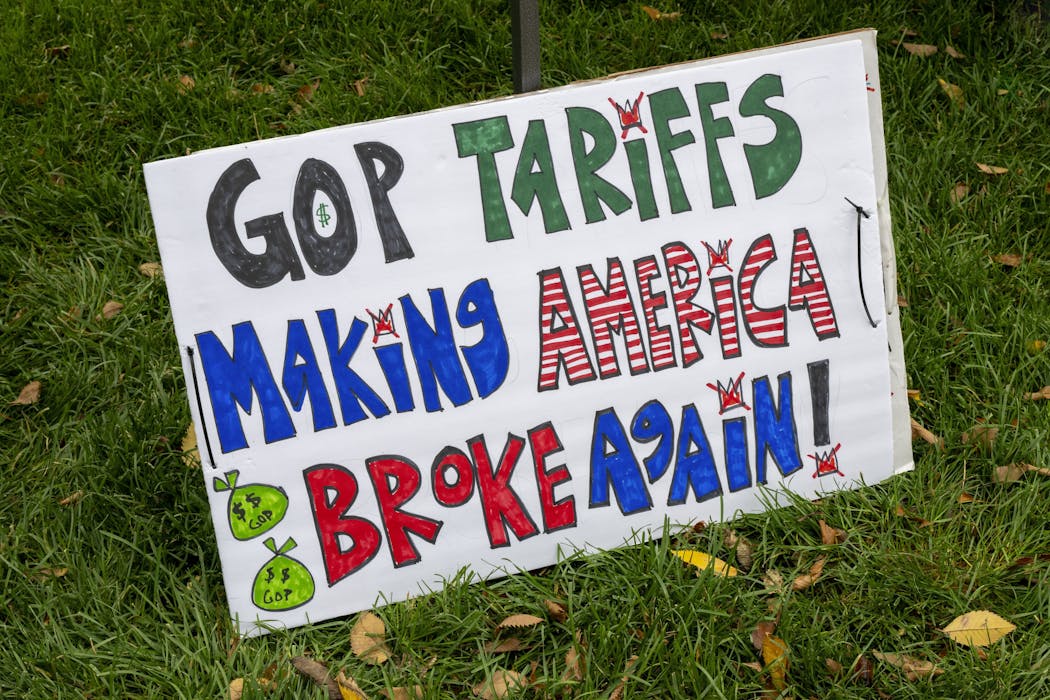
An anti-tariffs placard during a protest in St. Paul, Minnesota, on Oct. 25, 2025. Michael Siluk/UCG/Universal Images Group via Getty Images

The future of many of Donald Trump’s tariffs are up in the air, with the Supreme Court expected to hand down a ruling on the administration’s global trade barriers any day now.

But the question of whether a policy is legal or constitutional – which the justices are entertaining now – isn’t the same as whether it’s wise. And as a trade economist, I worry that Trump’s tariffs also pose a threat to “economic democracy” – that is, the process of decision-making that incorporates the viewpoints of everyone affected by the decision.

Founders and economic democracy

In many ways, the U.S. founders were supporters of economic democracy. That’s why, in the U.S. Constitution, they gave tariff- and tax-making powers exclusively to Congress.

And for good reason. Taxes can often represent a flash point between a government and its people. Therefore, it was deemed necessary to give this responsibility to the branch most closely tied to rule of, and by, the governed: an elected Congress. Through this arrangement, the legitimacy of tariffs and taxes would be based on voters’ approval – if the people weren’t happy, they could act through the ballot box.

To be fair, the president isn’t powerless over trade: Several times over the past century, Congress has passed laws delegating tariff-making authority to the executive branch on an emergency basis. These laws gave the president more trade power but subject to specific constitutional checks and balances.

The stakes for economic democracy

At issue before the Supreme Court now is Trump’s interpretation of one such emergency measure, the International Emergency Economic Powers Act of 1977.

Back in April 2025, Trump interpreted the law – which gives the president powers to respond to “any unusual and extraordinary threat” – to allow him to impose tariffs of any amount on products from nearly every country in the world.

Yet the act does not include any checks and balances on the president’s powers to use tariffs and does not even mention tariffs among its remedies. Trump’s unrestrained use of tariffs in this way was unprecedented in any emergency action ever taken by a U.S. president.

Setting aside the constitutional and legal issues, the move raises several concerns for economic democracy.

The first danger is in regards to a concentration of power. One of the reason tariffs are subjected to congressional debate and voting is that it provides a transparent process that balances competing interests. It prevents the interests of a single individual – such as a president who might substitute his own interests for that of the wider public interest – from controlling complete power.

Instead it subjects any proposed tariffs to the open competition of ideas among elected politicians.

Compare this to the way Trump’s tariffs were made. They were determined in large part by the president’s own political score-settling with other countries, and an ideological preference for trade surpluses. And they were not authorized by Congress. In fact, they bypassed the role of Congress as a check and balance – and this is not good for economic democracy in my view.

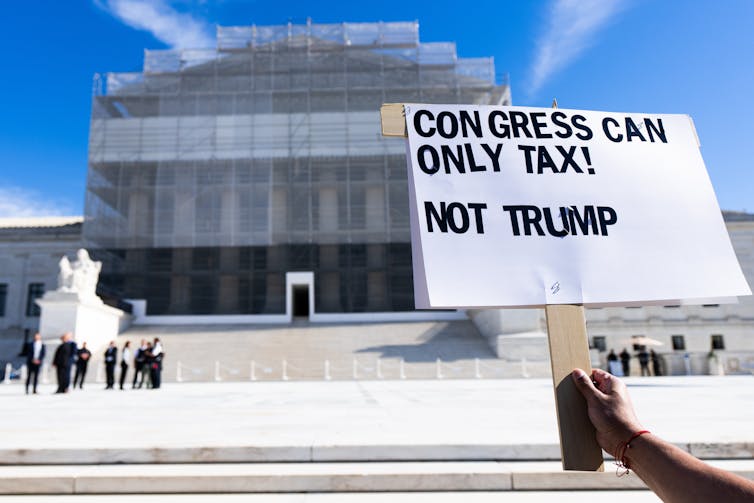
A building behind scaffolding and tarpaulin.
A protester holds a sign as the U.S. Supreme Court hears arguments on President Donald Trump’s tariffs on Nov. 5, 2025.
Bill Clark/CQ-Roll Call, Inc via Getty Images

The second danger is uncertainty. Unlike congressional tariffs, tariffs rolled out through the International Emergency Economic Powers Act under Trump have been altered many times and can continue to change in the future.

While supporters of the president have argued that this unpredictability gives the U.S. a bargaining advantage over competitor nations, many economists have noted that it severely compromises any goal of revitalizing American industries.

This is because both domestic and foreign investment in U.S.-based industries depends on stable and predictable import market access. Investors are unwilling to make large capital expenditures over several years and hire new workers if they think tariff rates might change at any time.

Even in the first year of the Trump tariffs, there is evidence of large-scale reductions in hiring and capital investment in the manufacturing sector due to this uncertainty.

The third danger concerns that lack of accountability involved in circumventing Congress. This can lead to using tariffs as a stealth way of increasing taxes on a population.

Importing companies generate revenue for the government through the additional levies they pay on goods from overseas. These costs are typically borne by domestic consumers, through increased prices, and importing companies, through lower profit margins.

Either way, Trump’s International Emergency Economic Powers Act interpretation has allowed him to use tariffs in a way that would – if allowed to stand – bring in additional government revenue of more than US$2 trillion over a 10-year period, according to estimates.

Trump frames the revenue his tariffs have raised as a windfall of foreign-paid duties. But in fact, the revenue is extracted from domestic consumer pockets and producer profit margins. And that amounts to a tax on both.

Corruption concerns

Finally, the way Trump’s used the act to roll out unilateral and changeable tariffs creates an incentive for political favoritism and even bribery.

This is down to what economists call “rent seeking” – that is, the attempt by companies or individuals to get extra money or value out of a policy through influence or favoritism.

As such, Trump can, should he wish, play favorites with “priority” industries in terms of tariff exemptions. In fact, he has already done this with major U.S. companies that import cell phones and other electronics products. They asked for special exemptions for the products they imported, a favor not granted to other companies. And there is nothing stopping recipients of the exemptions offering, say, to contribute to the president’s political causes or his renovations to the White House.

Smaller and less politically influential U.S. businesses do not have the same clout to lobby for tariff relief.

And this tariff-by-dealmaking goes beyond U.S. companies looking for relief. It extends into the world of manipulating governments to bend to Washington’s will. Unlike congressional tariffs under World Trade Organization rules, International Emergency Economic Powers Act tariffs discriminate from country to country – even on the same products.

And this allows for trade deals that focus on extracting bilateral deals that take place without considering broader U.S. interests. In the course of concluding bilateral Trump trade deals, some foreign governments such as Switzerland and Korea have even offered Trump special personal gifts, presumably in exchange for favorable terms. Presidential side deals and gift exchanges with individual countries are, as many scholars of good international governance have noted, not the best way to conduct global affairs.

The harms of having a tariff system that eschews the normal checks and balances of the American system are nothing new, or at least shouldn’t be.

Back in the late 1700s, with the demands of a tyrannical and unaccountable king at the front of their minds, the founders built a tariff order aimed at maintaining democratic legitimacy and preventing the concentration of power in a single individual’s hands.

A challenge to that order could have worrisome consequences for democracy as well as the economy.

The Conversation

Kent Jones does not work for, consult, own shares in or receive funding from any company or organization that would benefit from this article, and has disclosed no relevant affiliations beyond their academic appointment.

ref. Supreme Court is set to rule on constitutionality of Trump tariffs – but not their wisdom – https://theconversation.com/supreme-court-is-set-to-rule-on-constitutionality-of-trump-tariffs-but-not-their-wisdom-273092

Les États-Unis ont passé des décennies à faire pression pour mettre la main sur le pétrole vénézuélien

Source: The Conversation – France in French (3) – By James Trapani, Associate Lecturer of History and International Relations, Western Sydney University

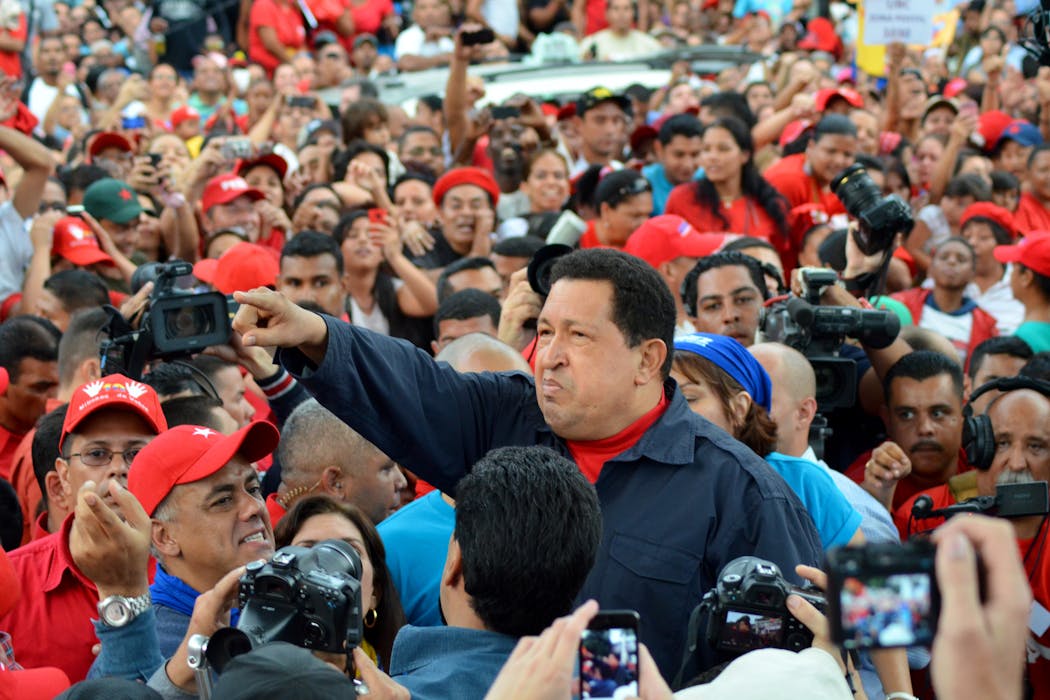
En 2007, Hugo Chavez affirmait que « le pétrole appartient à tous les Vénézuéliens ». Luisarismendi/Shutterstock

Hugo Chavez et Nicolas Maduro ont longtemps résisté aux tentatives des États-Unis d’exercer le contrôle des réserves pétrolières du Venezuela. Car ce pays d’Amérique du Sud, ayant joué un rôle clé dans la création de l’Organisation des pays exportateurs de pétrole (Opep), possède plus de 300 milliards de barils de pétrole.


Après que les forces spéciales des États-Unis ont fait irruption à Caracas pour exfiltrer le président vénézuélien Nicolas Maduro et renverser son gouvernement, Donald Trump déclare que les États-Unis vont désormais « diriger le Venezuela » , y compris ses abondantes ressources pétrolières.

Les entreprises états-uniennes sont prêtes à investir des milliards pour moderniser les infrastructures pétrolières vénézuéliennes en ruine, a-t-il dit, et « commencer à faire de l’argent pour le pays ». Le Venezuela possède les plus grandes réserves de pétrole mondiales – devançant l’Arabie saoudite – avec 303 milliards de barils, soit environ 20 % des réserves mondiales.

Si cela se réalise – et c’est un très grand « si » –, cela marquerait la fin d’une relation conflictuelle qui a commencé il y a près de trente ans.

Oui, l’action militaire de l’administration Trump au Venezuela a été à bien des égards sans précédent. Mais cela n’est pas surprenant, compte tenu de l’immense richesse pétrolière du pays et des relations historiques entre les États-Unis et le Venezuela, sous les mandats de l’ancien président Hugo Chavez et ceux de Nicolas Maduro.

Une longue histoire d’investissement états-unien

Le Venezuela est une république d’environ 30 millions d’habitants située sur la côte nord de l’Amérique du Sud, soit environ deux fois la taille de la Californie. Pendant une grande partie du début du XXᵉ siècle, il était considéré comme le pays le plus riche d’Amérique du Sud en raison de ses réserves pétrolières.

Les entreprises étrangères, y compris les états-uniennes, ont beaucoup investi dans la croissance du pétrole vénézuélien et joué un rôle important dans sa politique. Face à l’opposition de l’Oncle Sam, les dirigeants vénézuéliens ont commencé à exercer un contrôle accru sur leur principale ressource d’exportation. Le Venezuela a joué un rôle clé dans la création de l’Organisation des pays exportateurs de pétrole (Opep) en 1960, et a nationalisé une grande partie de son industrie pétrolière en 1976 (sous la présidence de Carlos Andrés Pérez, ndlr).

Cela a eu un impact négatif sur des entreprises comme ExxonMobil et a alimenté les récentes affirmations de l’administration Trump selon lesquelles le Venezuela aurait « volé » le pétrole américain.

Mais la plupart des Vénézuéliens ne profitent pas de cette prospérité économique. La mauvaise gestion de l’industrie pétrolière conduit à une crise de la dette et à l’intervention du Fonds monétaire international (FMI) en 1988. Des manifestations éclatent à Caracas en février 1989 et le gouvernement (du président Pérez qui vient d’être réélu, ndlr) envoie l’armée pour écraser le soulèvement. On estime que 300 personnes sont tuées, mais le nombre de morts pourrait être dix fois plus élevé.

Par la suite, la société vénézuélienne se divise davantage entre les riches, qui veulent travailler avec les États-Unis, et la classe ouvrière, qui cherche à obtenir l’autonomie vis-à-vis des États-Unis. Cette division définit la politique vénézuélienne depuis lors.

L’ascension de Chavez au pouvoir

Hugo Chavez débute sa carrière comme officier militaire. Au début des années 1980, il fonde le Mouvement révolutionnaire bolivarien-200 au sein de l’armée et donne des conférences passionnées contre le gouvernement.

Puis, après les émeutes de 1989, Chavez planifie le renversement du gouvernement vénézuélien. En février 1992, il organise un coup d’État, raté, contre le président pro-américain Carlos Andrés Pérez. Pendant son emprisonnement, son parti organise une autre tentative de coup d’État qui échoue également. Chavez est condamné à deux ans de prison, mais devient le principal candidat à la présidence en 1998, réunissant les courants socialistes révolutionnaires.

Hugo Chavez devient un géant de la politique vénézuélienne et latino-américaine. Sa révolution évoque la mémoire de Simon Bolívar (1783-1830), le grand libérateur de l’Amérique du Sud face au colonialisme espagnol. Non seulement Chavez est populaire au Venezuela pour son utilisation des revenus pétroliers, subventionnant les programmes gouvernementaux en matière d’alimentation, de santé et d’éducation, mais il est respecté, grâce à sa générosité, par des régimes partageant les mêmes idées dans la région.

Plus particulièrement, Hugo Chavez fournit à Cuba des milliards de dollars de pétrole en échange de dizaines de milliers de médecins cubains travaillant dans des cliniques de santé vénézuéliennes. Il établit un précédent en s’opposant aux États-Unis et au FMI lors des forums mondiaux, appelant le président états-unien de l’époque George W. Bush « le diable » à l’Assemblée générale de l’ONU en 2006.

Les États-Unis accusés d’avoir fomenté un coup d’État

Sans surprise, les États-Unis n’étaient pas fans d’Hugo Chavez.

Après que des centaines de milliers de manifestants de l’opposition descendent dans la rue en avril 2002, Chavez est brièvement renversé lors d’un coup d’État par des officiers militaires dissidents et des figures de l’opposition. Ces derniers installent un nouveau président, l’homme d’affaires Pedro Carmona. Chavez est arrêté, l’administration Bush reconnaît Carmona comme président, et le New York Times célébre la chute d’un « dictateur en devenir ».

Chavez revient au pouvoir seulement deux jours plus tard, grâce à des légions de partisans qui remplissent les rues. L’administration Bush doit se justifier pour son possible rôle dans le coup d’État avorté.

Bien que les États-Unis nient toute implication, les allégations persistent pendant des années sur le fait que Washington ait eu connaissance au préalable du coup d’État et ait tacitement soutenu sa destitution. En 2004, des documents nouvellement classifiés montrent que la CIA était au courant du complot, et il n’est pas clair dans quelle mesure les responsables des États-Unis ont prévenu Chavez.

La pression américaine continue sur Maduro

Nicolas Maduro, syndicaliste, est élu à l’Assemblée nationale en 2000 et rejoint le cercle rapproché de Hugo Chavez. Il accède au poste de vice-président en 2012 et, après la mort de Chavez l’année suivante, remporte sa première élection avec une courte avance.

Maduro n’est pas Chavez. Il ne bénéficie pas du même niveau de soutien parmi la classe ouvrière, l’armée ou dans son pays. La situation économique du Venezuela se détériore et l’inflation explose.

Nicolas Maduro en 2017.
StringerAL/Shutterstock

Les administrations états-uniennes successives continuent d’exercer des pressions sur Nicolas Maduro. Le Venezuela subit des sanctions à la fois sous la présidence de Barack Obama et lors de la première présidence Trump. Les États-Unis et leurs alliés refusent de reconnaître la victoire de Maduro lors des élections de 2018 et de nouveau en 2024.

Isolé d’une grande partie du monde, le gouvernement de Nicolas Maduro devient dépendant de la vente de pétrole à la Chine.

Maduro affirme avoir déjoué plusieurs tentatives de coups d’État et d’assassinats impliquant les États-Unis et l’opposition intérieure, notamment en avril 2019 et en mai 2020 durant le premier mandat de Trump.

Les responsables états-uniens nient toute implication dans tous les complots potentiels ; les rapports n’ont également trouvé aucune preuve de l’implication américaine dans le coup d’État raté de 2020.

Aujourd’hui, Donald Trump a réussi à évincer Nicolas Maduro dans une opération bien plus audacieuse, sans aucune tentative de déni. Il reste à voir comment les Vénézuéliens et les autres nations latino-américaines réagiront aux actions états-uniennes, mais une chose est certaine : l’implication américaine dans la politique vénézuélienne continuera tant qu’elle aura des intérêts financiers dans le pays.

The Conversation

James Trapani ne travaille pas, ne conseille pas, ne possède pas de parts, ne reçoit pas de fonds d’une organisation qui pourrait tirer profit de cet article, et n’a déclaré aucune autre affiliation que son organisme de recherche.

ref. Les États-Unis ont passé des décennies à faire pression pour mettre la main sur le pétrole vénézuélien – https://theconversation.com/les-etats-unis-ont-passe-des-decennies-a-faire-pression-pour-mettre-la-main-sur-le-petrole-venezuelien-273521

D’Adophe Thiers à Édouard Balladur, à qui ont profité les grands emprunts ?

Source: The Conversation – in French – By Éric Pichet, Professeur et directeur du Mastère Spécialisé Patrimoine et Immobilier, Kedge Business School

En France, un grand emprunt pourrait-il sauver la situation financière de l’État ? D’un côté, un endettement qui ne cesse de croître, de l’autre, des ménages qui épargnent toujours plus. Et si la solution était de demander aux seconds de financer plus ou moins volontairement le premier. Sur le papier, l’idée semble alléchante d’autant que le grand emprunt occupe une place particulière dans l’imaginaire français. Tentant lorsque l’épargne des ménages est une mesure de précaution pour se protéger des conséquences de l’endettement du secteur public.


L’incapacité récurrente des pouvoirs publics en France à ramener le déficit dans les critères de Maastricht a été aggravée par les deux grandes crises récentes, celle des subprimes en 2008 et celle du Covid en 2020. Cette dérive s’est encore accentuée avec l’incapacité de l’Assemblée nationale issue de la dissolution de juin 2024 à s’accorder pour voter une loi de finances qui réduirait ce déficit. En conséquence, ce dernier est attendu à 5,4 % du PIB en 2025 et encore vers 5 % en 2026, soit le plus important de la zone euro relativement au PIB, quel que soit le sort de la loi de finances pour 2026 toujours en suspens, soit très loin du seuil de 3 % fixé par le Pacte de stabilité et de croissance.

Quant à la dette publique, partie de 20 % du PIB en 1980, dernière année d’équilibre des comptes publics, elle culmine à 116 % à la fin de 2025, soit près du double du seuil du Pacte fixé à 60 % du PIB. Ce faisant, elle se situe juste après celle de la Grèce et de l’Italie.

L’inquiétante envolée de la charge de la dette

La longue période de taux d’intérêt très bas voire négatifs auxquels empruntait l’État de 2009 à 2022 était la conséquence directe de l’action inédite des grandes banques centrales pour éviter une dépression mondiale à la suite de la crise des subprimes de 2008. Ce volontarisme monétaire exceptionnel s’est achevé brutalement avec la hausse brutale des taux des banques centrales en 2022-2023 pour juguler la forte inflation qui a suivi l’invasion de l’Ukraine.


À lire aussi :
De Chirac à Macron, comment ont évolué les dépenses de l’État


En conséquence, les taux d’émission des obligations françaises à dix ans sont passés de 1 % en 2022 à 3,6 % début 2026, soit à des niveaux supérieurs au Portugal et à l’Espagne et même à la Grèce. Plus grave, la charge de la dette publique (les intérêts versés chaque année aux créanciers des organismes publics) passera de 50 milliards d’euros en 2022 à 75 milliards en 2026 (dont 60 milliards pour le seul État).


Fourni par l’auteur

Source : Programme de stabilité de 2024, charge d’intérêts en comptabilité nationale, Finances publiques et économie (Fipeco).

Le précédent de l’emprunt obligatoire

Face à l’Himalaya diagnostiqué de la dette (avec raison mais un peu tard…) par François Bayrou quand il était premier ministre, les députés socialistes ont repris, au moment des débats sur l’instauration de taxe Zucman l’idée d’un emprunt forcé sur les plus riches en référence à une initiative du premier ministre Pierre Mauroy en 1983. Émis à un taux de 11 % (contre 14 % sur le marché à l’époque) celui-ci avait contraint 7 millions de contribuables à prêter 13,4 milliards de francs (soit environ 5 milliards d’euros) à hauteur de 10 % de leur impôt sur le revenu et de 10 % de leur impôt sur la fortune. Prévu pour trois ans, mais très impopulaire, car touchant également la classe moyenne supérieure, il fut remboursé par anticipation au bout de deux ans et ne fit jamais école.

Si cette idée d’un emprunt forcé a été rejetée par le gouvernement et l’Assemblée nationale le 26 novembre 2025, la piste d’un grand emprunt agite toujours les esprits d’autant que le contexte actuel rappelle celui des précédents historiques, en temps de guerre ou face à des crises budgétaires aiguës, et qu’ils ont toujours été couronnés de succès à l’émission.

L’emprunt de Thiers ou la naissance du mythe

Après la cuisante défaite de la guerre franco-prussienne de 1870-1871, le traité de Francfort du 10 mai 1871 impose à la France, outre la cession de l’Alsace-Lorraine, une indemnité de 5 milliards de francs-or (soit 70 milliards d’euros). Adolphe Thiers, le chef de l’exécutif de l’époque, émet alors un emprunt d’État au taux de 5 % sur cinquante ans garanti sur l’or.

L’engouement des épargnants a permis de payer l’indemnité allemande dès 1873 avec deux ans d’avance mettant ainsi fin à l’occupation militaire. Surtout, le succès de l’emprunt a assis la crédibilité de la toute jeune IIIe République. Puissant symbole de la résilience du pays il inspira d’autres emprunts de sorties de guerre, comme l’emprunt dit de la Libération de 1918 et celui de 1944.

L’emprunt Pinay 1952-1958 ou les délices de la rente

Premier grand emprunt du temps de paix, la rente Pinay – du nom du ministre de l’économie et des finances sous la quatrième et la cinquième République – de 1952 était destinée à sortir le pays des crises alimentaires et du logement de l’après-guerre. L’équivalent de 6 milliards d’euros a été alors levé avec un taux d’intérêt plutôt faible de 3,5 %,, mais assorti d’une indexation de son remboursement sur le napoléon en 1985 (date à laquelle l’emprunt a été complètement remboursé) et surtout une exonération d’impôt sur le revenu et sur les droits de succession.

Cette gigantesque niche fiscale pour les plus riches était d’ailleurs discrètement mise en avant par les agents de change qui conseillaient aux héritiers de « mettre leur parent en Pinay avant de le mettre en bière » pour éviter les droits de succession entraînant au passage de cocasses quiproquos familiaux lorsque le moribond reprenait des forces…

Le succès de la rente Pinay fut tel que de Gaulle, revenant au pouvoir, lui demanda de récidiver avec le Pinay/de Gaulle de 1958 destiné à sauver les finances publiques, restaurer la crédibilité de l’État et accompagner la réforme monétaire qui allait aboutir au nouveau franc de 1960.

L’emprunt Giscard, un grand emprunt coûteux pour l’État

Portant le nom du ministre des finances du président Pompidou, cet emprunt émis en 1973 rapportait 7 % et a levé l’équivalent d’environ 5,6 milliards d’euros sans avantage fiscal mais une obscure sous-clause du contrat, qui prévoyait une indexation automatique sur le lingot d’or en cas d’inflation.

L’or s’étant envolé avec la fin des accords de Bretton Woods de 1971-1974, cet emprunt coûta finalement en francs constants au moment de son remboursement en 1988 près de cinq fois ses recettes.

1993, le dernier grand emprunt

Après la crise des subprimes de 2008, Nicolas Sarkozy avait envisagé l’émission d’un grand emprunt de 22 milliards d’euros pour financer cinq grandes priorités : l’enseignement supérieur, la recherche, l’industrie, le développement durable et l’économie numérique. Il opta finalement pour un financement classique sur les marchés au motif – pertinent – qu’il aurait fallu allécher les particuliers par un taux d’intérêt supérieur.

Le dernier grand emprunt national est donc toujours aujourd’hui l’emprunt Balladur de mai 1993 rapportant 6 % sur quatre ans et destiné à mobiliser l’épargne des Français les plus aisés pour financer l’accès au travail des jeunes et la relance des travaux publics et du bâtiment. Initialement fixé à 40 milliards de francs, son succès fut tel qu’il récolta 110 milliards de francs (30 milliards d’euros) grâce à la souscription de 1,4 million d’épargnants. Le gouvernement Balladur s’étant engagé à accepter toutes les souscriptions des particuliers, il ne put satisfaire les investisseurs institutionnels.

BFM Business, 2025.

Pas (encore) de problèmes de financement pour l’État

Un grand emprunt pourrait-il être la solution dans le contexte actuel pour financer les déficits, comme on l’entend parfois ?

Malgré la dérive des comptes publics, en France, l’État reste crédible avec une note de A+ attribuée par Standard & Poors et par Fitch, et de Aa3 par Moody’s (soit l’équivalent de 16 ou 17/20). Par ailleurs, le Trésor n’a aucune difficulté à emprunter 300 milliards d’euros par an (la moitié pour financer le déficit de l’année et l’autre pour rembourser les emprunts arrivant à échéance), si ce n’est à un taux d’intérêt supérieur de 80 points de base (0,8 %) au taux d’émission des obligations allemandes à dix ans (3,6 % contre 2,8 %). Aujourd’hui la dette publique française s’élève à environ 3 500 milliards d’euros et 55 % de la dette négociable est détenue par les non-résidents.

En France, les particuliers financent environ 10 % de cette dette publique soit 350 milliards d’euros via l’assurance-vie en euros, mais cette niche fiscale est coûteuse et régressive car elle favorise les gros patrimoines. Ainsi, selon le Conseil d’analyse économique, le manque à gagner en recettes fiscales lié à l’assurance-vie au titre des successions serait de l’ordre de 4 à 5 milliards d’euros par an.

Un grand emprunt utile en 2026 ?

Aujourd’hui, les ménages semblent se conformer à la théorie de l’économiste David Ricardo : inquiets de la situation financière du pays, ils augmentent leur taux d’épargne passé de 15 % de leurs revenus en moyenne avant la crise à 18,4 % en 2025. Et leur épargne financière, qui représente 10 % de leurs revenus, culmine à 6 600 milliards d’euros, un niveau bien supérieur à la totalité de la dette publique.

C’est pourquoi un grand emprunt national proposé par un gouvernement stable disposant d’une majorité solide rencontrerait sans doute un grand succès. Il aurait le mérite de redonner confiance au pays et de conjurer ce que The Economist identifie dans un tout récent article publié le 11 janvier 2026 comme le principal problème économique mondial : le pessimisme.

The Conversation

Éric Pichet ne travaille pas, ne conseille pas, ne possède pas de parts, ne reçoit pas de fonds d’une organisation qui pourrait tirer profit de cet article, et n’a déclaré aucune autre affiliation que son organisme de recherche.

ref. D’Adophe Thiers à Édouard Balladur, à qui ont profité les grands emprunts ? – https://theconversation.com/dadophe-thiers-a-edouard-balladur-a-qui-ont-profite-les-grands-emprunts-273372

12 ways the Trump administration dismantled civil rights law and the foundations of inclusive democracy in its first year

Source: The Conversation – USA – By Spencer Overton, Professor of Law, George Washington University

The second Trump administration has weakened federal civil rights law and is shredding the foundations of America’s racially inclusive democracy. imagedepotpro, iStock/Getty Images Plus

One year after Donald Trump’s second inauguration, a pattern emerges. Across dozens of executive orders, agency memos, funding decisions and enforcement changes, the administration has weakened federal civil rights law and the foundations of the country’s racially inclusive democracy.

From the start, the U.S. was not built to include everyone equally. The Constitution protected and promoted slavery. Most states limited voting to white men. Congress restricted naturalized citizenship to “free white persons.” These choices were not accidents. They shaped who could belong and who could exercise political power, and they entrenched a racial political majority that lasted for generations.

That began to change in the 1960s. After decades of protest and pressure, Congress enacted laws that prohibited discrimination in employment, education, voting, immigration and housing.

Federal agencies were charged with enforcing those laws, collecting data to identify discrimination and conditioning public funds on compliance. These choices reshaped U.S. demographics and institutions, with the current Congress “the most racially and ethnically diverse in history,” according to the Pew Research Center. The laws did not eliminate racial inequality, but they made exclusion easier to see and harder to defend.

The first year of the second Trump administration marks a sharp reversal.

In a March 2025 speech to Congress, Trump spoke of dismantling DEI programs.

Cumulative retreat

Rather than repealing civil rights statutes outright, the administration has focused on disabling the mechanisms that make those laws work.

Drawing on over two decades of teaching and writing about civil rights and my experience directing a GW Law project on inclusive democracy, I believe this pattern reflects not isolated administrative actions but a cumulative retreat from the federal government’s role as an enforcer of civil rights law.

Over the past year, the president and his administration have taken a series of connected actions:

• On its first day in office, announced the end of all federal diversity, equity and inclusion programs, including diversity officers, equity plans and related grants and contracts.

• Shut down or sharply cut funding for federal programs aimed at reducing inequality, including offices focused on minority health, minority-owned businesses, fair federal contracting, environmental justice and closing the digital divide in broadband.

• Warned schools that diversity programs could jeopardize their federal funding, opened investigations into colleges offering scholarships to students protected under DACA – the Obama-era policy providing deportation protection for undocumented immigrants who came to the U.S. as children – and signaled that colleges risk losing federal student aid if their accrediting agencies consider diversity.

• Revoked security clearances and access to federal buildings for employees at law firms with diversity policies. The FCC investigated media companies for promoting diversity and threatened to block mergers by companies with similar programs, leading several companies to drop their initiatives.

• Issued a government-wide memo labeling common best practices in hiring, admissions and other selection and evaluation processes – such as compiling diverse applicant pools, valuing cultural competence, considering first-generation or low-income status and seeking geographic and demographic representation – as potentially legally suspect. The memo warned that federal funding could be cut to schools, employers and state and local governments using such practices. Federal prosecutors reportedly investigated federal contractors that consider diversity, characterizing such initiatives as fraud.

• Weakened enforcement against discrimination by ordering agencies to stop using disparate impact analysis. That kind of analysis identifies disparities in outcomes, assesses whether they are justified by legitimate objectives, and intervenes when they are not. The Department of Justice, the EEOC, the National Credit Union Administration and other agencies complied and dropped disparate impact analysis. Because algorithmic systems typically operate without explicit intent, eliminating disparate impact analysis reduces federal agencies’ ability to detect and address discriminatory outcomes produced by increasingly automated government and private-sector decision-making.

Rescinded an executive order that barred discrimination by federal contractors, required steps to ensure nondiscriminatory hiring and employment, and subjected contractors to federal compliance reviews and record-keeping. This weakened a key mechanism used since 1965 to detect and remedy workplace discrimination.

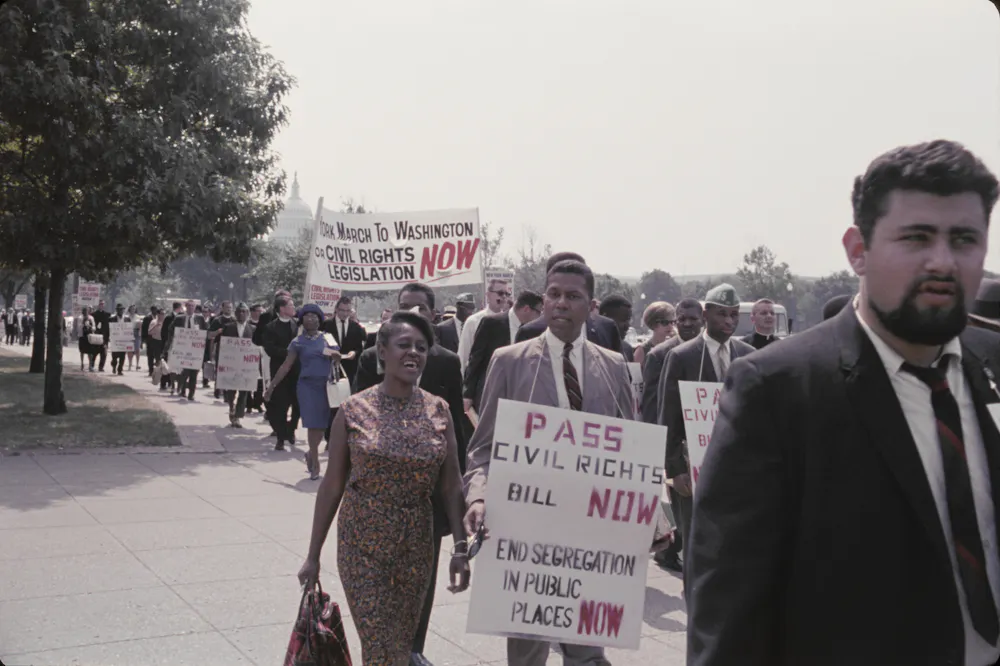
A large group of people marching with signs urging passage of a civil rights bill.
Civil rights, union and religious leaders board a dedicated Pennsylvania Railroad train from New York to Washington, D.C., to march in support of the bill that would become the Civil Rights Act of 1964.
Bob Parent/Getty Images

• Eliminated data used to track inequality, including rolling back guidance encouraging schools to collect data on racial disparities in discipline and special education. The administration also removed data used to identify racial disparities in environmental harms.

• Dismantled or sharply reduced civil rights offices across federal agencies, including the Department of Homeland Security, the Social Security Administration and the Department of Education. About three-quarters of lawyers in the Justice Department’s Civil Rights Division left.

Pressured the Smithsonian to remove exhibits about racial injustice, restored Confederate monuments and military base names, and barred schools and teacher training programs from including material the administration labeled divisive, such as unconscious bias.

• Declared English the nation’s only official language, repealed a requirement that federal agencies provide meaningful access to government programs and services for people with limited English proficiency, and prompted the General Services Admininistration and the departments of Justice, Education and other agencies to scale back language-assistance requirements and services.

Attempted to limit birthright citizenship guaranteed by the 14th Amendment, and adopted practices that treat ethnicity and non-English accents as legitimate reasons for immigration stops.

The pattern is hard to miss

Taken together, these shifts have practical consequences.

When agencies stop collecting data on racial disparities, discrimination becomes harder to detect. When disparate impact analysis is abandoned, unfair practices with no legitimate purpose go unchallenged. When diversity programs are chilled through investigations and funding threats, institutions respond by narrowing opportunity. When history and language are recast as threats to unity, truth and freedom of speech and thought are suppressed and undermined.

A crowd of people gathered at the base of the Statue of Liberty.
Lyndon Johnson at the base of the Statue of Liberty on Oct. 3, 1965, before signing the Immigration and Nationality Act, which prohibited racial discrimination in the immigration process and repealed quotas heavily favoring immigration from northern and western Europe.
LBJ Library

Administration officials argue that these steps are needed to prevent discrimination against white people, promote unity, ensure “colorblind equality” and comply with a Supreme Court decision that struck down affirmative action in college admissions. But that ruling did not ban awareness of racial inequality, or neutral policies aimed at reducing it. Many of the administration’s actions rely on broad claims of illegality without providing specific violations.

The selective nature of enforcement is also telling.

Books about racism and civil rights were removed from military libraries, while books praising Nazi ideas or claiming racial intelligence differences were left untouched. The administration suspended admissions of refugees – over 90% of whom have been from Africa, Asia and Latin America in recent years – but then reopened the refugee program for white South Africans.

One year in, the pattern is hard to miss.

The administration is not simply applying neutral rules. It is dismantling the systems that once helped the U.S. move toward a more open and equal democracy. It is replacing them with policies that selectively narrow access to economic, cultural and educational participation.

The result is not simply a change in policy, but a fundamental shift in the trajectory of American democracy.

The Conversation

Spencer Overton is the faculty director of a program at GW Law that receives grants from non-profit foundations like the David & Lucile Packard Foundation, Democracy Fund, and the Rockefeller Brothers Fund.

ref. 12 ways the Trump administration dismantled civil rights law and the foundations of inclusive democracy in its first year – https://theconversation.com/12-ways-the-trump-administration-dismantled-civil-rights-law-and-the-foundations-of-inclusive-democracy-in-its-first-year-273433

China is becoming more sexually liberal – if you are a man

Source: The Conversation – UK – By Jieyu Liu, Professor of Sociology and China Studies, SOAS, University of London

Sexual attitudes have relaxed significantly in China since the Mao era. Approaching the 50th anniversary of Mao Zedong’s death and the subsequent end of the cultural revolution, there has been a significant de-politicisation of everyday life that some are calling a sexual revolution.

China’s opening up to the outside world has facilitated a gradual relaxation of sexual morality and widespread media discussion of sex and intimacy. But increasingly, it is clear that while sexual behaviour is liberalising in China, it is still closely influenced by traditional views, leaving women less liberated than men.

The American-Chinese documentary Mistress Dispellers (2024) reignited western interest in sex, love and intimacy trends in China – but especially, how men and women experience these developments differently.

It explores the recent phenomenon of professionals who help women remove a lover from their adulterous husband’s life. These paid persuaders deceive their way into the lives of cheating husbands and then, by ousting the extra lover, seek to restore monogamous harmony.

But how did such an extraordinary industry emerge in China? My recently published book, Embedded Generations, offers a comprehensive overview of Chinese family practices, including sexual behaviour seen through the eyes of three generations.

Generational shifts

Sex outside marriage has steadily become more commonplace in China. But for the oldest generation I studied, born in the 1930s and ’40s, courtship was the norm as they entered marriage in the Mao era (1949-76). During these years, the Chinese Communist Party enforced heterosexual marriage throughout the country, with premarital virginity emphasised as a virtue for both men and women.

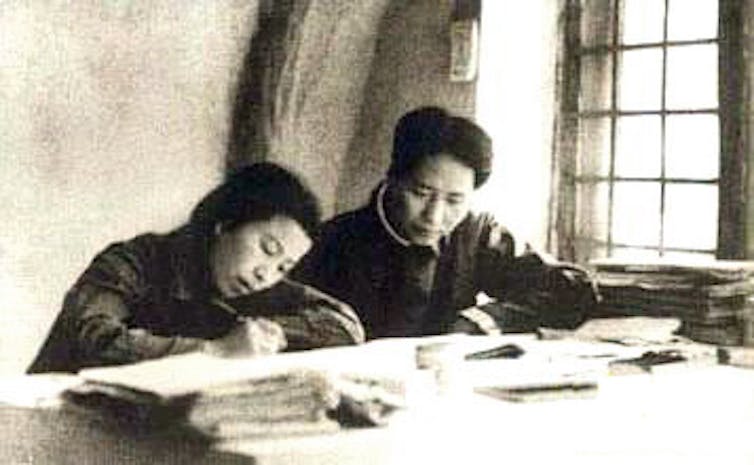
Mao Zedong and his wife Jiang Qing  in 1938 reading and writing.
Mao Zedong and his wife Jiang Qing in 1938: under Mao’s leadership, heterosexual marriage was enforced throughout China.

During the Cultural Revolution (1966-76), the open expression of physical intimacy was forbidden. Social norms, as well as fear of political criticism and attack, meant that almost all men and women of the oldest generation denied any involvement in sex outside marriage.

But after Mao’s death, the modernising reforms under Deng Xiaoping enabled more “liberal” trends for the middle generation, born in the 1960s and ’70s. This was especially true for men, who for the first time could admit to having premarital sex. However, female virginity remained important as a condition of marriage, meaning most women of this generation still denied having pre-marital sex.

A turning point came in the late 1990s, when many barriers to premarital sex were eliminated. Sex outside marriage was legalised after the removal of the potential charge of hooliganism that had acted as a deterrence for so long.

Practical obstacles were overcome, including with the relaxation of university regulations on intimacy restrictions. While dormitories are still single-sex, there is a growing availability of leisure opportunities that include an increasing number of hotels near university campuses.

Most notably of all, the rapid growth of internet use has been hugely influential, helping to spread information about sexual behaviour.

Still a man’s world

The younger generation now regards sex as a key part of a loving relationship. But there is still a lingering cultural emphasis on the value of female virginity, highlighting different social expectations for men and women.

Within this lies a contradiction. Young men expect their girlfriends to be willing to have sex as a demonstration of love and commitment. Yet many also expect their brides to be virgins. This is a considerable source of tension and anxiety for many young women.

This means women who openly embrace feminist principles to assert their sexual agency and pleasure remain in the minority. Most are still conservative in outlook and behaviour. Despite the increased incidence of premarital sex, the number of young women’s sexual partners before marriage (on average, one) is not noticeably different from women of older generations.

Mistress Dispeller trailer.

Reflecting these broad changes, 80% of male and 60% of my female interviewees from the younger generation, born in the 1980s and ’90s, admitted having sex before marriage – but mostly with the person they were planning to marry. The younger generation also shows a growing tolerance towards extramarital affairs. However, in this regard too, women remain more constrained by traditional social norms.

As well as these unequal social norms, the Chinese job market still rewards men more than women. This means in later life, men tend to have accumulated more wealth and status, and so are regarded as still desirable. In contrast, an older woman in a lower-paid job might be regarded as less attractive in the dating market.

As wives have children and grow older, they may need to find ways to prevent their husbands from abandoning their families – which is where the mistress dispeller comes in. Typically, only wealthier and young urban women without children feel able to initiate divorce.

That said, many married men, including those with lovers outside their marriages, have remained cautious in initiating divorce proceedings. The often considerable financial costs of divorce in China, particularly when children are involved, act as a barrier. Under Chinese law, the spouse involved in an extramarital affair is the guilty party and so must carry the financial penalty. These can be so steep that men risk losing their life savings, meaning that divorce in these situations is still less common.

My research helps show that while sex outside marriage has become more normalised in China, sexual attitudes are held in check by deep-rooted traditional views. This has created an environment that disproportionately favours men and a privileged elite, leaving many wives no option but to find help from mistress dispellers when their husbands cheat. Anyone speaking of a sexual revolution in China needs to bear this in mind.

This article refers to a book for editorial reasons, and contains a link to bookshop.org. If you click on the link and go on to buy something from bookshop.org, The Conversation UK may earn a commission.

The Conversation

Jieyu Liu receives funding from European Research Council (grant agreement No. 640488).

ref. China is becoming more sexually liberal – if you are a man – https://theconversation.com/china-is-becoming-more-sexually-liberal-if-you-are-a-man-271010

Why do some people get ‘hangry’ more quickly than others?

Source: The Conversation – UK – By Nils Kroemer, Professor of Medical Psychology, University of Tübingen; University of Bonn

Kues/Shutterstock

“Come on, little fella – we should get going now.” But my son was not listening. The sand in the playground was just right, so he just kept digging with his new toy excavator.

As I drifted back to my list of to-dos, however, the laughter was suddenly replaced by sobs. My son was not hurt, just very upset. When I looked at my phone, I saw it was well past his regular mealtime – and he was feeling very hungry.

However old we are, we all have a tendency to grow irritated if our body lacks enough fuel. But while humans have experienced this for as long as we have been on the planet, a specific word to describe the phenomenon only entered the Oxford English dictionary in 2018. “Hangry: to be bad-tempered or irritable as a result of hunger.”

Perhaps more surprising is the scarcity of research into how hunger affects people’s everyday moods. Most studies on food and mood have focused on patients with metabolic or eating disorders – perhaps because many psychologists have traditionally understood hunger to be such a basic physiological process.

So, with colleagues from the fields of psychology and mental health, I decided to investigate how different people respond to feeling hungry. We wanted to see if (and why) some people are better at reacting calmly when hunger strikes. Perhaps there would be some lessons for those of us with young children, too.

Surprising results

In the animal world, hunger is frequently studied for its role as a key motivator. Hungry rodents, for example, will vigorously press a lever or climb over large walls to get to food rewards. In the wild, hungry animals often roam further to explore their environment, seeming restless as they seek to overcome the threat of low or no energy.

A Pallas’s cat (also known as a manul) gets increasingly hangry as it hunts for food. Video: BBC.

To investigate the relationship between energy levels, hunger and mood in people, we equipped 90 healthy adults with a continuous glucose monitor for a month. Glucose is the primary source of energy for the body and brain, and these monitors – used in clinical practice to help patients with diabetes regulate their blood sugar levels – report values every few minutes. (Participants could actively check their glucose levels using the sensor app, and we could see when they accessed them.)

We also asked our participants to complete mood check-ins on their smartphones up to twice a day. These included questions about how hungry or sated they felt on a scale from 0 to 100, as well as a rating of their current mood.

The results surprised us. First, people were only in a worse mood when they acknowledged feeling hungry – not simply when they had lower blood sugar levels. And second, people who more accurately detected their energy levels in general were less prone to negative mood swings.

This suggests there is a key psychological middle step between a person’s energy and mood levels, which scientists call interoception.

In the brain, hunger is signalled by neurons in the hypothalamus that detect a prolonged energy deficit. Conscious feelings of hunger are then linked to the insula, a part of the cerebral cortex that is folded deep within the brain, and which also processes taste and plays a role in feeling emotions.

In our recent study, people with high interoceptive accuracy experienced fewer mood swings. This does not mean they never felt hungry – they just seemed better at keeping their mood levels stable.

This is important, because a sudden change in mood can have knock-on effects on relationships with family, friends and colleagues. It can lead to bad decision-making and more impulsive behaviour – including buying fast-energy food that can be less good for you.

More generally, paying close attention to our bodies’ needs helps keep our minds at ease too, avoiding unnecessary wear and tear on both. Deviating too much from the body’s ideal state can pose a long-term risk to our health – mental as well as physical.

Caught off-guard

Young children find it hard to interpret all the signals from their rapidly developing body. They are also easily distracted by what is happening around them, and often fail to attend to their hunger or thirst without prompting – leading to a sudden meltdown like my son had in the playground.

Likewise for many adults in today’s fast-paced world full of digital distractions, it can be easy to be caught off-guard by dipping energy levels. One simple life hack is to keep a regular meal schedule, because hunger often kicks in when we skip a meal.

Everyone’s energy levels ebb and flow, of course. But it is possible to improve your interoceptive accuracy by allowing your inner systems to pay closer attention to your energy levels. In addition, exercise and physical activity can sharpen your hunger sensing and improve energy metabolism.

Most of the time, of course, our moods are only modestly affected by hunger, among the many other factors that can come into play. But one of the lessons of my time at the playground has been to take care of my son’s food needs long before they become obvious. Perhaps we all need to be more aware of the risk of getting hangry.

The Conversation

Nils Kroemer receives funding from the German Research Foundation (DFG). He is affiliated with the German Center for Mental Health (partner site Tübingen) and the German Center for Diabetes Research.

ref. Why do some people get ‘hangry’ more quickly than others? – https://theconversation.com/why-do-some-people-get-hangry-more-quickly-than-others-273617

Netflix’s killer new Agatha Christie mystery – what to watch and see this week

Source: The Conversation – UK – By Jane Wright, Commissioning Editor, Arts & Culture, The Conversation

Well 2026 has certainly got off to a flying start with a raft of excellent films, plays and TV dramas to keep our minds off the lack of sunlight and cash during this dreary month. And that’s the marvellous thing about art and culture: it is often free or costs relatively little (apart from going to the theatre in London, of course), and sustains the old spirits when things appear a bit gloomy.

This new year marks the 50th anniversary of the death of Agatha Christie, the British queen of crime; 1976 was also the year her final novel, Sleeping Murder, was published, after she had died on January 12. The author of 66 detective novels, Christie sold millions of books around the world and inspired countless film and TV adaptations.

To mark this anniversary, Netflix pays homage with a lavish production of Seven Dials, a three-part murder mystery set in the aristocratic world of England in the 1920s.

The glittering country pile of Chimneys is the scene, and the lady of the house, Lady Caterham (Helena Bonham Carter) has fallen on hard times and been forced to rent it out to some wealthy industrialist.

Now this sounds exactly like the set up in Jane Austen’s last novel, Persuasion – which is rather apt, given that Lady C’s irrepressible daughter, Lady Eileen “Bundle” Brent, is played by Mia Mckenna-Bruce, who also played the hilariously hypochondriac Mary Elliot, sister of Anne, in the 2022 film version.

Lady C and her daughter return as guests to attend a party in their own house, filled with people from “industry, aristocracy and the foreign office”. Naturally a murder ensues and Bundle is on the case, much to the chagrin of Superintendent Battle (Martin Freeman).

This new adaptation doesn’t just provide a rollicking piece of entertainment as it follows the exploits of feminist trailblazer Bundle. It exposes and confronts the brutal world of empire that provided the backdrop to Christie’s novels. Our reviewer, Catherine Wynne, says this excellent Netflix production refreshes Christie for the 21st century – “and does it admirably”.

Seven Dials is on Netflix


Read more:
Seven Dials: Netflix series turns Agatha Christie’s country-house mystery into a study of empire and war


Zombies and hockey players

Few horror films have actually filled me with a sense of dread – but the 28 Days Later series has always managed to do just that, turning the movie zombie from a shambling figure of fun into something fast, aggressive and terrifying. And as the franchise plays out, we realise it’s not really the zombies that we should be afraid of post-apocalypse, but other surviving humans. After 28 Days, Weeks and Months, the fourth instalment of the franchise, 28 Years Later: The Bone Temple, starring the ever-brilliant Ralph Fiennes, is out today.

28 Years Later: The Bone Temple is in cinemas now


Read more:
28 Years Later: The Bone Temple explores the legacy of shared trauma on the national psyche


I once watched a live ice hockey match in Canada, both spellbound and horrified. It was one of the most aggressive things I had ever seen, where exaggerated rivalry, macho posturing and squaring up for a fight seemed positively encouraged. The spectators, relishing every testosterone-fuelled moment, could have been lifted straight out of Gladiator. So I’m looking forward to watching Heated Rivalry, a gay love story set in this hypermasculine environment. Sports researcher and queer football fan Joe Sheldon gives us his take on the much-talked-about Canadian show that has just landed on Sky in the UK.

Heated Rivalry is on Now TV


Read more:
Heated Rivalry matters in a sporting culture that still sidelines queer men


Tragedy!

The experimental Belgian director Ivo van Hove has notched up another smash show in London’s West End with his production of Arthur Miller’s post-war play, All My Sons. It stars Bryan Cranston and Marianne Jean-Baptiste as Joe and Kate Keller, a couple mourning their son, who remains missing after the second world war. But respected businessman and good family man Joe is hiding a dark secret that threatens to bring his world crashing down. In this stripped-back production, van Hove has chosen to stage Miller’s play as a Greek tragedy, heightening the tensions of this heartwrenching drama.

All My Sons is on at Wyndham’s Theatre, London, till March 7


Read more:
All My Sons: director Ivo Van Hove powers up Arthur Miller’s post-war play with a Greek tragedy staging


The BBC’s new flagship drama Waiting for the Out is based on the real-life experiences of prison educator Andy West, recounted in his 2022 memoir The Life Inside. The drama tells the story of Dan, a young teacher from a criminal family who brings a little philosophy into the lives of inmates at a category-B prison, while trying to overcome his own mental health challenges. Abigail Harrison Moore, once a prison teacher herself, explains how the show illuminates the value of arts education for people often discarded by society, and how it provides a chink of light in a sometimes dark existence.

Waiting for the Out is on BBC iPlayer


Read more:
I taught art in a high-security prison – Waiting for the Out took me straight back to my classroom


Looking for something good? Cut through the noise with a carefully curated selection of the latest releases, live events and exhibitions, straight to your inbox every fortnight, on Fridays. Sign up here.


The Conversation

ref. Netflix’s killer new Agatha Christie mystery – what to watch and see this week – https://theconversation.com/netflixs-killer-new-agatha-christie-mystery-what-to-watch-and-see-this-week-273609

Fast fashion: why changes in return policies don’t do enough to address environmental damage

Source: The Conversation – UK – By Anastasia Vayona, Postdoctoral Research Fellow in Social Science and Policy, Faculty of Science and Technology, Bournemouth University

Around 40% of online shopping globally is driven by impulse buying. JadeThaiCatwalk/Shutterstock

Online fashion retailer Asos recently introduced additional fees for customers who return lots of items, marking a significant shift in the fast fashion model that has relied on free, frictionless return policies as a key competitive advantage.

And now the fashion retailer has introduced a new tool to show shoppers exactly what their return rate is, and if they are about to incur a fee. The new policy is aimed at encouraging shoppers with the highest return rates to cut back.

It’s not clear yet if other fast fashion brands such as H&M, Shein, Zara and Primark might follow Asos’s lead on returns, and whether it will change shopping habits.

There are two common fast fashion shopping scenarios. The first is where customers buy three or four versions of the same item in different sizes, then return the ones that they don’t want. The second is where a shopper will buy three or four completely different dresses, for example.

The first approach, called “bracketing” in the retail industry, may be affected more by the new cost of returns. So it may encourage some shoppers to cut down on the sizes they order, perhaps from four to two, if they continue to use Asos. This may have somewhat of a positive environmental effect, if it reduces the size of orders.

The second scenario, impulse buying, generates almost the 40% of all online spending globally, with clothing being the most frequently purchased category. But when faced with return fees, impulse buyers are significantly more likely to avoid the return process entirely, if it is seen as complicated or pricey.

A study in the US found 75% of online consumers have kept unwanted items due to complicated or expensive return processes, rather than initiating a return. This means instead of items going back to the online shop (where they can potentially be refurbished and resold), they remain in consumers’ homes or end up in local landfills.

Rather than reducing overall consumption, the return fee merely shifts the waste burden from the retail supply chain to individual households and council waste systems.

However, Asos says it is committed to sustainability. Its corporate strategy states that: “We recognise our responsibility for reducing our impact on the environment and protecting the people in our supply chain.” Meanwhile, Shein says: “We are working hard to drive continued progress toward our sustainability and social commitments.”

The environmental implications of Asos’s new policy, and fast fashion generally, reveal a complex picture. To understand what they are, we need to examine what happens to unwanted clothing in our fashion system, and what incentives genuinely drive more sustainable outcomes.

The returns problem

The textile sector is a significant contributor to global carbon emissions, accounting for 8-10% of worldwide emissions – surpassing the combined carbon footprint of aviation and maritime shipping. Within this broader impact, product returns create additional environmental damage through a cascade of effects: extra transportation, packaging waste, energy-intensive inspection and sorting processes, and ultimately disposal.

The costs of fast fashion to the environment are high.

When an item is returned, it enters a reverse logistics system (sending goods back from the customer to the retailer) that is far less efficient than the original chain from manufacturer to supplier. Returns often require individual courier pickups, adding transportation costs and emissions.

So on the surface, return fees appear to offer a straightforward solution: discourage returns, reduce transportation emissions, ease the burden on waste systems. But this logic fails to account for consumer behaviour when faced with financial penalties.

Garments languishing unworn in closets represent entirely wasted resources: all the water, chemicals, energy and labour invested in their production yield no value. Discarding an item of clothing locally just shifts the burden to council waste systems that are often unprepared to handle textiles.

Return fees, in other words, don’t necessarily solve the waste problem. They simply reduce consumers’ options, sometimes forcing them towards worse alternatives.

This reveals a deeper truth: the environmental problem isn’t returns but rather fast fashion itself. The system generates excess production by design. Retailers prefer inventory buffers to avoid being out of stock. This excess is fundamental to how fast fashion operates.

What would make a big difference

Charging for returns is unlikely to improve environmental outcomes that much. The following measures could be more effective:

Extended producer responsibility: In France, retailers are required to finance their collection and sorting systems, creating incentives to design more durable products and manage end-of-life properly. This shifts responsibility from consumers to producers, where it belongs.

Taxation on hazardous materials: Sweden’s proposed tax on clothing containing harmful chemicals targets the production phase, where most environmental damage occurs.

Investment in recycling infrastructure: Research clearly shows that viable textile-to-textile recycling at scale is the bottleneck. Without it, reuse becomes the only circular option.

Design standards: Polyester blends complicate recycling. Requiring higher recycled content percentages or limiting fibre blends would address some root causes of waste.

Transparency in returns data: Multiple studies show that retailers lack basic data on where returned items end up. Mandatory disclosure of what they do with returned items would expose the destruction problem and increase their accountability.

The path to greater sustainability in fashion probably isn’t through discouraging returns. It’s more closely tied to changing how clothing is designed, manufactured and valued. The real question isn’t whether returns should cost money – it’s why we’re producing products no one wants to keep in the first place.

The Conversation

Anastasia Vayona is affiliated with Bournemouth University and ReUse Foundation in volunteer bases

ref. Fast fashion: why changes in return policies don’t do enough to address environmental damage – https://theconversation.com/fast-fashion-why-changes-in-return-policies-dont-do-enough-to-address-environmental-damage-273633

Why the home secretary can’t fire a police chief who has done wrong – it’s key to the integrity of British policing

Source: The Conversation – UK – By John Fox, Senior Lecturer in Police Studies, University of Portsmouth

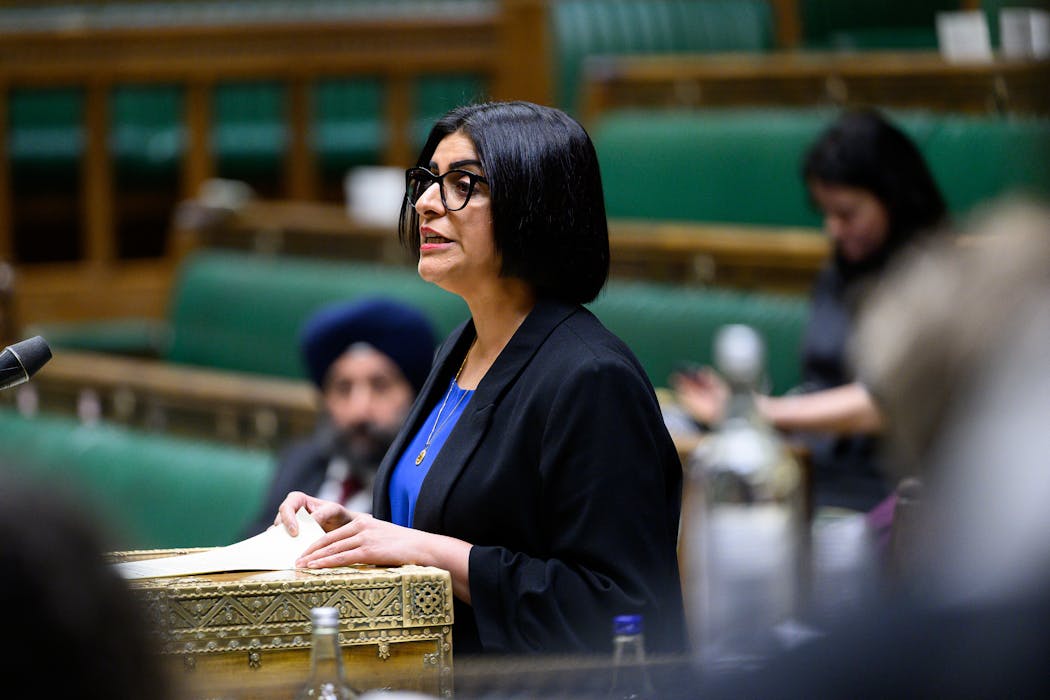
Shabana Mahmood delivers a statement to MPs about West Midlands police. UK Parliament/Flickr, CC BY-NC-ND

Craig Guildford, the chief constable of one of Britain’s largest police forces, West Midlands Police, will retire, after coming under pressure over a controversial decision by the police to ban visiting supporters of the Israeli football team Maccabi Tel Aviv from attending a match against Aston Villa.

Things escalated after it was revealed that the police used incorrect evidence that was hallucinated by AI in a report that led to their decision. Guildford had previously twice denied that AI was used. In an apology, the force said it had not deliberately distorted evidence.

The home secretary, Shabana Mahmood, then told MPs that she had “lost confidence” in Guildford, and announced that she would bring in new powers to allow any future home secretary to sack a chief constable. But such a promise, I argue, may be a threat to a key principle of policing in the UK.

When Robert Peel created the current British policing model, he insisted that officers must be non-partisan and free from political control and influence. Holding the office of constable means a police officer (including a chief constable) swears their allegiance to the king rather than any elected politician.

They should execute their duty independently, without fear or favour. Neither politicians nor anyone else may tell the police what decisions to take or what methods to employ, or not employ, to enforce the law. This is why the home secretary can’t just fire a chief constable.

How police are governed

For policing purposes, the UK has three separate criminal justice jurisdictions: Scotland, Northern Ireland and England and Wales. Whatever Mahmood implements will only apply to her jurisdiction, England and Wales. Since the 1970s, this includes 43 separate police forces, each covering a county or larger urban area such as the West Midlands.

The English and Welsh forces are governed by a shared system. Responsibility is divided between the Home Office, which provides half the police budget and sets national pay awards and regulations; the police and crime commissioner, an elected official with a mandate to set certain policing priorities; and the chief constable for an area, who is supposed to be operationally independent to decide how those priorities are met.

The notion of “independence from politics” has been under threat since the introduction of police and crime commissioners (PCCs) in 2011, most of whom are aligned to one of the main political parties. In addition, there have been questions raised about interference in the operational day-to-day running of police forces by at least one recent home secretary. The judge involved in this case said she found police had “maintained their operational independence”, and that the home secretary’s conversations with senior police had not influenced on-the-ground operations.


Read more:
Suella Braverman: why the home secretary can’t force the police to cancel a pro-Palestine march


Before 2011, the second limb of the three-pronged arrangement was a police authority. This consisted of 17 members drawn from local council, the magistracy and some members of the public. They were responsible for selecting (and if necessary, removing) their chief constable. The national police inspectorate would advise the police authority on suitability and qualifications, but there was no role for central government in the decision. Arguably, this removed personal enmity and political influence from the system.

Things changed in 1996, when the Police Act gave a home secretary the power to direct a police authority to force their chief constable to resign on the grounds of gross inefficiency or ineffectiveness. This was an extremely rare event, and generally chief constables were pretty safe in their role until a time of their choosing.

When the Conservative-led coalition government came to power in 2010, the prime minister was enamoured with the policing model in the US, whereby the local mayor had direct control of policing. This inspired Cameron’s government to create the current system of locally elected PCCs. They removed from the home secretary the power to sack a chief constable, and passed it to the PCC.

Last November, the government announced they were scrapping the model of PCCs. While we don’t yet know exactly what will replace them, the mood seems to be to give responsibility for policing to elected mayors or council leaders. Whether they will have sole power to fire the chief constable remains to be seen, but given Mahmood’s current stance it seems unlikely.

Policing by consent

To work effectively, “policing by consent” requires a sufficiently high level of public trust in the police. For several reasons, public confidence in the police is currently at a low ebb.

People want to be sure that their police service is free from political interference. It is, in my view, obviously undesirable for a chief constable to be scared of upsetting the home secretary of the day, and undesirable that any politician might bully a chief constable to suit their political ends. Losing a £100,000 pension is no doubt a sobering prospect.

As is often the case in politics, this fairly new home secretary probably wants to create the impression that she is strong, and will personally tackle inefficiency in policing. On the face of it, what Mahmood is planning to do is not particularly radical or remarkable – she is simply giving herself back the power that her predecessors had before the Tories took it away in 2011.

Although that power was rarely used, we must ask whether it was ever a desirable power for the home secretary to have in the first place.

The Conversation

John Fox is a former senior police detective.

ref. Why the home secretary can’t fire a police chief who has done wrong – it’s key to the integrity of British policing – https://theconversation.com/why-the-home-secretary-cant-fire-a-police-chief-who-has-done-wrong-its-key-to-the-integrity-of-british-policing-273615