Why coral reefs damaged by blast fishing struggle to recover — even after decades

Source: The Conversation – Indonesia – By Satrio Hani Samudra, Data Manager, UCL

When we think about rapid decline in coral reefs, climate change often first that comes to mind — bringing heatwaves, bleaching events, and intensified cyclones.

But in parts of Indonesia, an old, lasting wound still lingers beneath the waves — inflicted not just by warming seas, but also by explosives.

Blast fishing — where fishers hurl homemade bombs made from fertiliser and kerosene into the sea — is still being used.

This illegal fishing method kills fish instantly for easy collection. As an shattering coral reefs into rubble and wiping out entire reef communities within seconds.

Unlike a fallen tree that can grow back, our research shows that a reef shattered into fragments usually cannot — and may remain damaged for decades.

Rubble that refuses to rest

At first glance, rubble might seem like a natural stage of reef recovery. Storms and cyclones can also break corals into fragments that sometimes stabilise and form a foundation for new coral growth. But rubble from blast fishing is different.

The explosions break corals into much smaller pieces — usually less than 10 cm long. These fragments are light, unstable, and easily swept around by everyday waves and currents. It’s like trying to build a house on marbles instead of bricks: every time you add a piece, the foundation shifts beneath it.

In our surveys across Bunaken National Park in North Sulawesi, we found fewer than 10% of coral fragments stable. Even organisms that typically help “glue” rubble together, such as coralline algae and sponges, were rare. Without stability, young corals struggle to survive — often buried, overturned, or scraped away.

Mixed outcomes from early restoration efforts

One of our study sites underwent “restoration” back in 2003, using ceramic dome-like structures known as EcoReefs. These modules were designed to mimic coral branches, slow currents, and give rubble a chance to stabilise.

Two decades later, the results were underwhelming. Many modules had been overturned or buried, and although some supported coral growth, overall coral cover remained extremely low. In fact, the restored site fared no better than nearby unrestored areas.

Elsewhere in Indonesia, newer methods such as Mars’s “reef stars” have shown faster recovery. These structures are more effective at stabilising rubble, but they still depend heavily on regular maintenance and monitoring.

When restoration falls short of expectations

Blast fishing is not just a relic of the past. Despite being banned for decades, it still takes place illegally in parts of Indonesia.

Moreover, the legacy of past blasting is immense — vast stretches of reef reduced to rubble, showing no sign of natural recovery.

Our research underscores three key lessons:

  • Not all rubble is the same. Storm-generated rubble is usually larger and more stable, allowing recovery to occur, whereas blast-generated rubble remains persistently unstable.

  • Size matters: longer coral fragments are more likely to stay in place, bind together, and support young corals — whereas blasts mostly produce small pieces that shift too easily.

  • Restoration requires care: structures alone won’t save a reef — interventions must be adapted to local conditions and sustained with ongoing maintenance.

Supporting reef recovery

We found that rubble from blast fishing remains unstable even after decades, with small fragments constantly shifting and preventing young corals from settling and growing. In contrast, larger pieces were more likely to stay in place, bind together, and support new coral recruits.

Our findings suggest that blast-fished reefs are unlikely to recover naturally without human intervention. Restoration must prioritise stabilising the rubble bed and employing structures suited to the site’s specific rubble characteristics. Success depends not only on installing these structures but also on maintaining them over time.

Reef managers should also identify and assess the origin of rubble, characterise the fields and fragments, and select suitable intervention methods before taking action, as we did in our study.

Coral reefs require long-term care to survive, thrive, and keep providing food, coastal protection, and tourism opportunities for millions of people. Successful restoration depends not only on the interventions themselves but also on sustained monitoring and responsible stewardship of the broader environment.

Restoration and responsible stewardship can safeguard the ecological and social benefits of coral reefs. Ultimately, giving degraded reefs a second chance is vital both for the communities that depend on them and for the biodiversity that makes them extraordinary.

The Conversation

Para penulis tidak bekerja, menjadi konsultan, memiliki saham atau menerima dana dari perusahaan atau organisasi mana pun yang akan mengambil untung dari artikel ini, dan telah mengungkapkan bahwa ia tidak memiliki afiliasi di luar afiliasi akademis yang telah disebut di atas.

ref. Why coral reefs damaged by blast fishing struggle to recover — even after decades – https://theconversation.com/why-coral-reefs-damaged-by-blast-fishing-struggle-to-recover-even-after-decades-265733


Around the world, migrants are being deported at alarming rates – how did this become normalised?

Source: The Conversation – Global Perspectives – By Andonea Jon Dickson, Postdoctoral Research Fellow, University of Edinburgh

Under President Donald Trump, the United States is expanding its efforts to detain and deport non-citizens at an alarming rate. In recent months, the Trump administration made deals with a number of third states to receive deported non-citizens.

In Australia, the Labor government has similarly established new powers to deport non-citizens to third states. The government signed a secretive deal with Nauru in September, guaranteeing the small Micronesian island A$2.5 billion over the next three decades to accommodate the first cohort of deportees.

In both countries, migrants can now be banished to states to which they have no prior connection.

Last year in the United Kingdom, Prime Minister Keir Starmer’s Labour party promised that the previous Conservative government’s plan to deport people to Rwanda was “dead and buried”. Yet, Labour removed close to 35,000 people in 2024, an increase of 25% over the previous year.

Starmer has also proposed establishing “return hubs” in third countries for people with rejected asylum claims.

Meanwhile, the far-right Reform Party has put forward a “mass deportation” plan involving the use of military bases to detain and deport hundreds of thousands of people, if it wins power in the next general election.

Similar policies may soon come to Europe, too. In May, the European Commission published a proposal that would allow EU member states to deport people seeking asylum to third countries where they have no previous connection.

The deportation of populations deemed problematic is not a new practice. For centuries, states have used forms of deportation to forcibly remove people, as Australia’s own history as a British penal colony illustrates.

Today, deportations are a staple of migration governance around the world. However, the recent expansion of detention and deportations reflects an accelerated criminalisation and punishment of non-citizens, tied to a rising authoritarianism across purportedly liberal Western countries.

Criminalising movement

The expansion and outsourcing of deportation is underpinned by long histories of criminalising migration.

Over the past three decades, legal obstacles and securitised borders have increasingly forced those fleeing war, persecution and insecurity to rely on unauthorised routes to seek refuge.

Governments have simultaneously reframed the act of seeking asylum from a human right to a criminal act, brandishing those on the move as “illegal” as a way of justifying onshore and offshore immigration detention.

Racialised people living in the community have also been subject to increased policing, regardless of their migration status.

In the US, UK and Australia, this criminalising language, once the preserve of the right-wing press, is now echoed by politicians across the political spectrum and enshrined in legislation. This has accelerated what migration expert Alison Mountz has termed “the death of asylum”, and normalising deportations.

In Australia, for example, the government lowered the threshold for visa cancellations in 2014, resulting in people with minor offences being detained and scheduled for deportation. Those who could not be returned to their home countries continued to languish in detention until a 2023 high court ruling mandated their release.

Despite having served their sentences, in addition to protracted periods in immigration detention, a media frenzy framed these people as a major threat to the community. The Labor government then legislated to deport them, in addition to thousands of others on precarious visas, to a third country.

Deportations have also been a central facet of US immigration enforcement for many years.

Former President Barack Obama was branded “Deporter in Chief” for achieving a record three million deportations while in office.

While Obama focused on “felons not families”, Trump has equated migration itself with crime and insecurity. His administration has cast a much wider net, rounding up those with and without criminal convictions, including citizens.

Detentions and deportations have also been used to suppress political dissent on issues, such as the genocide in Gaza.

To expedite his pledge to deport one million people in his first year, the Trump administration hastily set up detention centres in former prisons and military bases, including at Guantánamo Bay.

Reports suggest the government has also approached 58 third countries to accept deported non-nationals. Countries that have agreed, or already received people, are shown in the map below.

In many cases, people are then re-detained on arrival in hotels, prisons and camps, with some subject to further deportation.

Rising authoritarianism

These recent developments reveal an explicit authoritarianism in which deportations are achieved through the elimination of procedural fairness. Reducing notice periods, the ability to appeal decisions, and access to legal counsel allows for rushed and opaque procedures.

In June, eight people were deported from the US to South Sudan without the chance to contest their removal. After a failed court intervention, the three liberal US Supreme Court justices stated:

The government has made clear in word and deed that it feels itself unconstrained by law, free to deport anyone, anywhere without notice or an opportunity to be heard.

In the UK, the Labour party expanded the “Deport Now Appeal Later” scheme in August, extending the countries to which people can be deported without appeal rights from eight to 23.

And this month in Australia, the Migration Act was amended to expunge the rules of natural justice for people scheduled for deportation.

Across all three countries, the rapid expansion of detention and deportation practices terrorise those targeted, leaving whole communities living in fear. Australian human rights lawyer Alison Battisson described deportation as “a creeping death to the individuals and their families”.

These policies have also legitimised and emboldened far-right, neo-Nazi groups, who have taken to the streets in both the UK and Australia in recent weeks calling for an end to migration. In both countries, the effects of decades of neoliberal policies, such as a lack of affordable housing, jobs, and health care, are redefined as a problem of migration.

How communities are responding

Communities are now organising and making the case for a different sort of politics.

In Los Angeles, for example, grassroots organisations mobilised earlier this year to counter escalating raids by Immigration and Customs Enforcement (ICE) agents. Networks also began providing information and support to those targeted by ICE arrests. In July, Detention Watch Network relaunched the Communities Not Cages coalition of grassroots campaigns against detention.

In the UK, far-right rallies at asylum hotels have been met by counter demonstrations, with people insisting on a politics of welcome and unity.

But the challenge remains how to turn local and national opposition into a coalition capable of confronting this rise in authoritarian politics of exclusion and expulsion.

The Conversation

Ċetta Mainwaring is currently funded by a UKRI Future Leaders Fellowship.

Andonea Jon Dickson and Thom Tyerman do not work for, consult, own shares in or receive funding from any company or organisation that would benefit from this article, and have disclosed no relevant affiliations beyond their academic appointment.

ref. Around the world, migrants are being deported at alarming rates – how did this become normalised? – https://theconversation.com/around-the-world-migrants-are-being-deported-at-alarming-rates-how-did-this-become-normalised-264790

Taylor Swift has branded herself a showgirl. These hardworking women have a long and bejewelled history

Source: The Conversation – Global Perspectives – By Emily Brayshaw, Honorary Research Fellow, School of Design, University of Technology Sydney

Taylor Swift/Instagram

The iconic feathered showgirl was born amid the chaos of the first world war, when the wealthy, global French superstar Gaby Deslys entertained Parisians and Allied soldiers in a 1917 show called Laissez-les tombe! (Let Them Fall), a dazzling spectacle of ostrich feathers, rhinestones and beauty.

Although showgirls first appeared in late-19th century music halls, the red, white and blue feathered costumes in Deslys’ revue offered Paris something new and triumphal. The massed plumes, wild dancing and bodily displays celebrated French aesthetics and extravagance and communicated that France and her allies would not bow to Germany.

Gaby Deslys, resplendent in ostrich plumes and jewels, photographed in 1919 by Henri Manuel.
Wikimedia

Prior to 1914 Deslys’s expensive jewellery, haute couture and expansive feathered hats – along with her affairs with powerful men such as department store magnate Harry Selfridge and King Manuel II of Portugal – created countless headlines.

But she was also outspoken about a woman’s right to support herself financially and worked tirelessly during the war raising funds for the Allies. Deslys was so passionate about aiding the devastated Parisian nightlife that she paid for all the costumes in Laissez-les tombe! herself.

Deslys’s cultural impact has inextricably linked feathers, high fashion, celebrity and showgirls ever since.

From France to Broadway

Feathered showgirl revues were so popular that they quickly went global. In 1920s New York, impresarios such as Florenz Ziegfeld staged luxurious Broadway productions that glorified the American showgirl.

But he made exceptions to American women. One of Ziegfeld’s most famous showgirls, Dolores, was born into poverty in London’s East End as Kathleen Mary Rose. She rose to become a supermodel who walked for the couturier Lady Duff-Gordon, known professionally as Lucile.

Ziegfeld considered Dolores one of the world’s most beautiful women. Tall, slender and graceful, she drove audiences wild when she glided across Ziegfeld’s stage and posed in opulent costumes.

The famous haute couture model and showgirl known as ‘Dolores’ posing as the White Peacock in Ziegfeld’s Midnight Frolics (1919).
Wikimedia Commons

On becoming a showgirl, Dolores used her modelling ability to make her fortune, earning today’s equivalent of US$10,000 a week by 1923.

Other performers harnessed the feathered showgirl aesthetic, including the celebrated twins Jenny and Rosie Dolly, who came from humble origins and used their beauty, talent and hard work to dominate American and European stages in the 1910s and 1920s.

Ziegfeld paid the Dollys the equivalent of US$64,000 weekly in 1915. Like Deslys, they became notorious for their consumption of fashion and affairs with famous men.

Two women wearing sequinned, feathered headdresses.
The Dolly Sisters, famous performers in the Ziegfeld Follies of the 1910s and 1920s.
The Metropolitan Museum of Art

However, stage revues became unpopular around 1930 due to their vast expense and the rise of cinema – so the showgirl travelled to Hollywood.

There, she was celebrated in biopics such as The Great Ziegfeld (1936) with its glittering, feathered costumes by the designer Adrian.

In the second world war, showgirls boosted troop morale, like Deslys did in 1917.

Hollywood made feel-good films including the biopic The Dolly Sisters (1945), which reimagined the brunette twins as all-American blondes by casting 1940s pinup stars Betty Grable and June Haver.

From Hollywood to Vegas

From there, the American showgirl arrived in Las Vegas, performing in every hotel and casino on the strip during the 1950s and 1960s.

Like the showgirls of yore, these performers’ allure was their grace, beauty, and extravagant, expensive costumes, produced by the world’s leading designers.

Showgirls remained a fixture of Las Vegas entertainment throughout the 1970s and 1980s. Choreographers including Donn Arden and Madame Bluebell (who also worked in the Parisian revues) created hallmark, visual spectacles featuring costumes by Bob Mackie.

Jubilee!, which opened at the old MGM Grand casino in 1981, was one such revue. In addition to the vast volume of plumes, it was claimed the show had caused a global shortage of Swarovski crystals because the costumes had used them all.

In 1986 the old MGM Grand became Bally’s Casino, but Jubilee! stayed. The costumes, some of which cost more than US$7,000 each (roughly US$25,000 today), were used six nights a year for 35 years and maintained by 18 wardrobe staffers.

Jubilee! closed in 2016, but its costumes live on as valuable cultural artefacts that celebrities borrow to reinterpret the American showgirl for 21st-century audiences.

This includes demonstrating that showgirls are independent, hardworking and talented women.

From Vegas to Taylor Swift

Burlesque performer Dita Von Teese draws on the American showgirls’ legacy by wearing costumes from Jubilee! in her Las Vegas cabaret, and called the 1945 Dolly Sisters film one of her inspirations.

Pamela Anderson wore Jubilee! costumes in The Last Showgirl (2024), a film that highlights the sacrifices female performers often have to make to pursue their dreams.

Taylor Swift is the latest superstar to harness showgirl iconography.
Photographs from her new album show Swift wearing the Jubilee! “Diamond” and “Disco” costumes by Mackie.

Another photograph shows Swift in a cloud of ostrich plumes and rhinestones wearing a dark, bobbed wig: a direct reference to 1920s American showgirls and performers such as the Dolly Sisters.

Swift’s stage costumes are by the world’s leading fashion designers, while her songs often reference historical celebrities to critique how the entertainment and media industry treat female performers.

Choosing Mackie’s Jubilee! costumes allows Swift to become the American showgirl (Taylor’s Version), by tapping into a century of glamour and signalling that she too has worked hard and made sacrifices to reach the top.

The Conversation

Emily Brayshaw does not work for, consult, own shares in or receive funding from any company or organisation that would benefit from this article, and has disclosed no relevant affiliations beyond their academic appointment.

ref. Taylor Swift has branded herself a showgirl. These hardworking women have a long and bejewelled history – https://theconversation.com/taylor-swift-has-branded-herself-a-showgirl-these-hardworking-women-have-a-long-and-bejewelled-history-263188

The Michigan church shooting sits within a long history of hatred against Mormons in America

Source: The Conversation – Global Perspectives – By David Smith, Associate Professor in American Politics and Foreign Policy, US Studies Centre, University of Sydney

On Sunday, a gunman launched a horrifying attack on people at a Church of Jesus Christ of Latter-day Saints in Grand Blanc, Michigan.

Thomas Jacob Sanford allegedly rammed his pickup truck, adorned with American flags, into the doors of the chapel as a service was taking place. Authorities stated he shot at worshippers with an assault weapon, then set fire to the building. Four people died, and police killed Sanford at the scene shortly afterwards.

Media reports and government spokespeople suggest Sanford was motivated by a pronounced hatred of followers of the Church of Jesus Christ of Latter-day Saints (LDS), widely known as Mormons.

According to a childhood friend, Peter Tersigni, Sanford became fixated with the church when he started dating one of its members while living in Utah:

He started dating this girl and then investigated and learned about Mormons because she was a Mormon. And I know that also, he got into meth really hardcore. It messed his life up and it messed his head up. And it just happened to be at the time he was around Mormons.

The language Sanford is reported to have used to describe Mormons – calling them “the antichrist” and saying “they are going to take over the world” – taps into a conspiracist suspicion of Mormons that has existed in America since the LDS church was founded in 1830, and which is still widespread in some subcultures today.

Anti-Mormonism in American history

Joseph Smith, the founder of Mormonism, had enemies from the beginning. New Christian sects were proliferating in America, but Smith went further than most. He declared himself a “prophet” and claimed to have a new religious scripture that was equal to the Bible.

Many denounced Smith as a fraud, and his neighbours feared the political power he wielded over his growing community of followers. After the Mormons were forced out of Missouri by a state Extermination Order and a subsequent massacre, Smith was assassinated by an anti-Mormon militia in Illinois in 1844.

The Mormons fled to Utah in 1847 under the leadership of Brigham Young. There they endured decades of federal government pressure to abandon the practice of polygamy and submit to the authority of the United States, which sometimes brought in armed forces.

This may seem like remote history, but to this day many evangelical Christians fear the fast-growing but “false religion” of Mormonism will lure people away from true Christianity. There is a cottage industry of YouTubers, some of them ex-Mormons, dedicated to disproving the teachings of Joseph Smith.

Nor has the violent past been forgotten. Earlier this year Netflix released a series depicting the Mountain Meadows Massacre, perpetrated by a Mormon militia in 1857.

Jon Krakauer’s 2003 bestselling book, Under the Banner of Heaven, also made into a streaming series, explored 1980s murders in a Mormon splinter sect. The book emphasised the prevalence of violence in early LDS history.

Anti-Mormonism today

Anti-Mormon violence is relatively rare in America today, but aversion to Mormons is not.

A 2022 YouGov poll of Americans found 39% of respondents held unfavourable views of Mormons, compared to just 17% with favourable views. This net negative approval was comparable to American attitudes towards Muslims, and more negative than American attitudes towards atheists.

I argued in a 2014 study that Mormons face hostility from both sides of America’s culture wars. Many conservative Christians believe Mormons are not real Christians. At the same time, many liberal and secular-minded people associate Mormons with the Christian-right.

In 2012, the high-profile Mormon Mitt Romney became the Republican candidate for the presidential election. The number of liberal and non-religious people who said they would not vote for a Mormon for president increased significantly between 2007 and 2012, despite the fact Democratic Senate Majority Leader Harry Reid was also a Mormon.

The LDS church was also prominent in campaigns against same-sex marriage in western states in the late 2000s. This led to protests and some acts of vandalism at LDS houses of worship, prompting expressions of solidarity by other conservative religious groups.

The bipartisan nature of anti-Mormonism arguably makes it one of the more socially acceptable biases in the US. But there is a world of difference between not wanting a Mormon president, or enjoying such mockery as the Book of Mormon musical, and physically attacking Mormons.

From prejudice to violence

Between 2015 and 2024, the FBI counted 160 hate crimes reported against LDS victims. These included 63 acts of vandalism and property destruction and 29 assaults. The states with the most incidents were Utah (25), California (23), Washington (14), Tennessee (12), Georgia (10) and Nevada (10).

A 2019 report in the LDS-owned Deseret News expressed concern over rising anti-Mormon hate crimes. But it pointed out this was part of a larger trend of rising hate crime in the US, and that anti-LDS incidents were dwarfed by hate crimes targeting Jews and Muslims during the same period.

Immediately after the Grand Blanc killings, President Donald Trump called the incident “yet another targeted attack on Christians in the United States of America”.

This fits his culture-war framing of Christians being under constant attack. But it glosses over the specific animus Mormons face in American society, often from other Christians and conservatives (the alleged Grand Blanc shooter wore a Trump 2020 shirt in a social media post).

Since 2000, there have been nearly 500 homicides in American places of worship, three quarters of them by firearm. This is a bigger problem than the violence facing any one religious group.

The Conversation

David Smith does not work for, consult, own shares in or receive funding from any company or organisation that would benefit from this article, and has disclosed no relevant affiliations beyond their academic appointment.

ref. The Michigan church shooting sits within a long history of hatred against Mormons in America – https://theconversation.com/the-michigan-church-shooting-sits-within-a-long-history-of-hatred-against-mormons-in-america-266481

‘Only if we help shall all be saved’: Jane Goodall showed we can all be part of the solution

Source: The Conversation – Global Perspectives – By Euan Ritchie, Professor in Wildlife Ecology and Conservation, School of Life & Environmental Sciences, Deakin University

Penelope Breese/Getty

With the passing of Dr Jane Goodall, the world has lost a conservation giant. But her extraordinary achievements leave a profound legacy.

Goodall was a world-leading expert in animal behaviour and a globally recognised environmental and conservation advocate. She achieved all this at a time when women were commonly sidelined or ignored in science.

Her work with chimpanzees showed it was wrong to assume only humans used tools. She showed us the animals expressed emotions such as love and grief and have individual personalities.

Goodall showed us scientists can express their emotions and values and that we can be respected researchers as well as passionate advocates and science communicators. After learning about how chimpanzees were being used in medical research, she spoke out: “I went to the conference as a scientist, and I left as an activist.”

As childhood rights activist Marian Wright Edelman has eloquently put it, “You can’t be what you can’t see”.

Goodall showed what it was possible to be.

Forging her own path

Goodall took a nontraditional path into science. The brave step of going into the field at the age of 26 to make observations was supported by her mother.

Despite making world-first discoveries such as tool use by non-humans, people didn’t take her seriously because she hadn’t yet gone to university. Nowadays, people who contribute wildlife observations are celebrated under the banner of citizen science.

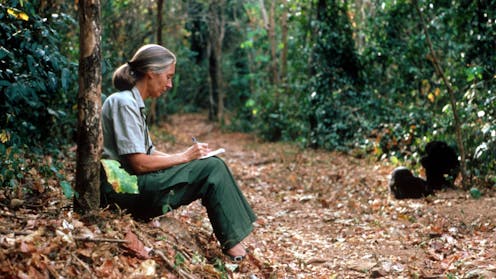
Goodall was a beacon at a time when science was largely dominated by men – especially remote fieldwork. But she changed that narrative. She convinced famous paleoanthropologist Louis Leakey to give her a chance. He first employed her as a secretary. But it wasn’t long until he asked her to go to Tanzania’s remote Gombe Stream National Park. In 1960, she arrived.

This was not easy. It took real courage to work in a remote area with limited support alongside chimpanzees, a species thought to be peaceful but now known to be far stronger than humans and capable of killing animals and humans.

Goodall is believed to be the only person accepted into chimpanzee society. Through calm but determined persistence she won their trust. These qualities served Goodall well – not just with chimps, but throughout her entire career advocating for conservation and societal change.

At Gombe, she showed for the first time that animals could fashion and use tools, had individual personalities, expressed emotions and had a higher intelligence and understanding than they were credited with.

Jane Goodall worked with chimpanzees for decades. This 2015 video shows her releasing Wounda, an injured chimpanzee helped back to health in the Republic of Congo.

Goodall was always an animal person and her love of chimps was in part inspired by her toy Jubilee, gifted by her father. She had close bonds with her pets and extended these bonds to wildlife. Goodall gave her study subjects names such as “David Greybeard”, the first chimp to accept her at Gombe.

Some argue we shouldn’t place a human persona on animals by naming them. But Goodall showed it was not only acceptable to see animals as individuals with different behaviours, but it greatly aids connection with and care for wildlife.

Goodall became an international voice for wildlife. She used her profile to encourage a focus on animal welfare in conservation, caring for both individuals and species.

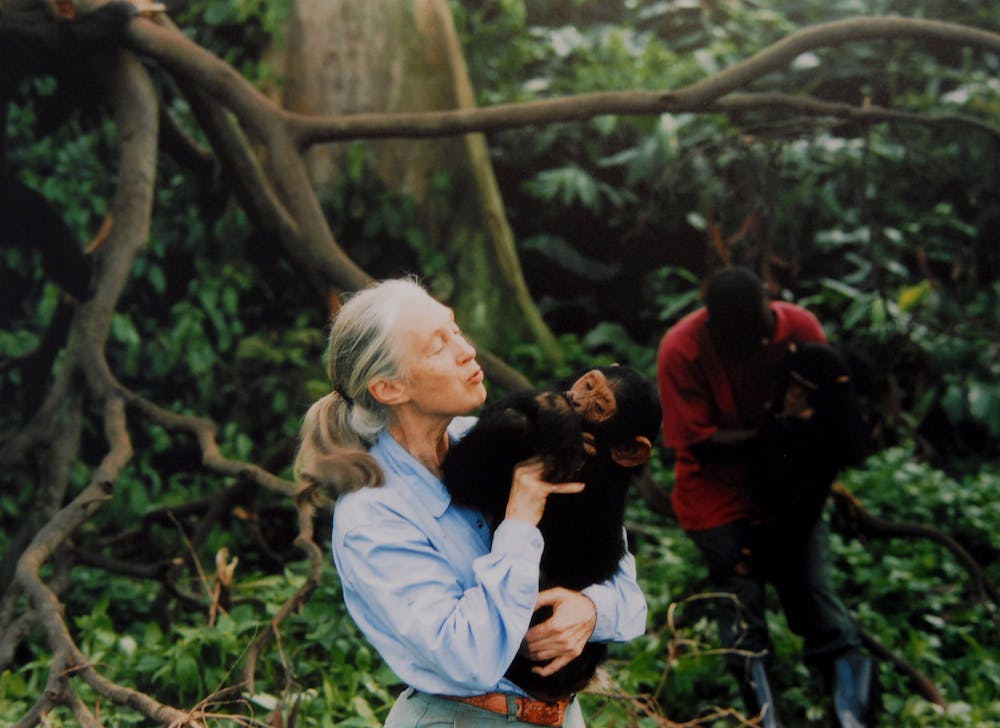
woman holding young chimpanzee in her arms.
Jane Goodall’s pioneering work with chimpanzees shed light on these animals as individuals – and showed they make tools and experience emotions.
Apic/Getty

A pioneer for women in science

With Goodall’s passing, the world has lost one of the three great “nonagenarian environmental luminaries”, to use co-author Vanessa Pirotta’s phrase. The other two are the naturalist documentary maker, Sir David Attenborough, 99, and famed marine biologist Dr Sylvia Earle, who is 90.

Goodall showed us women can be pioneering scientists and renowned communicators as well as mothers.

She shared her work in ways accessible to all generations, from National Geographic documentaries to hip podcasts.

Her visibility encouraged girls and women around the world to be bold and follow our own paths.

Goodall’s story directly inspired several authors of this article.

Co-author Marissa Parrott was privileged to have spoken to Goodall several times during her visits to Melbourne Zoo and on her world tours. Goodall’s story was a direct inspiration for Parrott’s own remote and international fieldwork, supported by her mother just as Goodall’s mother had supported her. They both survived malaria, which also kills chimpanzees and gorillas. Goodall long championed a One Health approach, recognising the health of communities, wildlife and the environment are all interconnected.

Co-author Zara Bending worked and toured alongside Goodall. The experience demonstrated how conservationists could be powerful advocates through storytelling, and how our actions reveal who we are. As Goodall once said:

every single one of us matters, every single one of us has a role to play, and every single one of us makes a difference every single day.

From the forest floor to global icon

Goodall knew conservation is as much about people as it is about wildlife and wild places.

Seventeen years after beginning her groundbreaking research in Gombe, Goodall established the Jane Goodall Institute with the mission of protecting wildlife and habitat by engaging local communities.

Her institute’s global network now spans five continents and continues her legacy of community-centred conservation. Researchers have now been studying the chimps at Gombe for 65 years.

Goodall moved from fieldwork to being a global conservation icon who regularly travelled more than 300 days a year. She observed many young people across cultures and creeds who had lost hope for their future amid environmental and climate destruction. In response, she founded a second organisation, Roots & Shoots, in 1991. Her goal was:

to foster respect and compassion for all living things, to promote understanding of all cultures and beliefs, and to inspire each individual to take action to make the world a better place for people, other animals, and the environment.

Last year, Roots & Shoots groups were active in 75 countries. Their work is a testament to Goodall’s mantra: find hope in action.

woman delivering public lecture.
Jane Goodall went from pioneering field researcher to international conservation icon.
David S. Holloway/Getty

Protecting nature close to home

One of Goodall’s most remarkable attributes was her drive to give people the power to take action where they were. No matter where people lived or what they did, she helped them realise they could be part of the solution.

In a busy, urbanised world, it’s easier than ever to feel disconnected from nature. Rather than presenting nature as a distant concept, Goodall made it something for everyone to experience, care for and cherish.

She showed we didn’t have to leave our normal lives behind to protect nature – we could make just as much difference in our own communities.

One of her most famous quotes rings just as true today as when she first said it:

only if we understand, can we care. Only if we care, will we help. Only if we help shall all be saved.

Let’s honour her world-changing legacy by committing to understand, care and help save all species with whom we share this world. For Jane Goodall.

The Conversation

Euan Ritchie is a Councillor with the Biodiversity Council, a member of the Ecological Society of Australia and the Australian Mammal Society, and President of the Australian Mammal Society.

Marissa Parrott works for Zoos Victoria, a not-for-profit conservation organisation. Zoos Victoria and partner zoos raise funds to help support the Jane Goodall Institute Australia, Gorilla Doctors and others organisations.

Zara Bending is affiliated with the Jane Goodall Institute as a resident expert on wildlife crime and international law.

Kylie Soanes and Marissa Parrott do not work for, consult, own shares in or receive funding from any company or organisation that would benefit from this article, and have disclosed no relevant affiliations beyond their academic appointment.

ref. ‘Only if we help shall all be saved’: Jane Goodall showed we can all be part of the solution – https://theconversation.com/only-if-we-help-shall-all-be-saved-jane-goodall-showed-we-can-all-be-part-of-the-solution-266572

Por qué la interceptación de la flotilla de ayuda a Gaza es una clara violación del derecho internacional

Source: The Conversation – (in Spanish) – By Donald Rothwell, Professor of International Law, Australian National University

Las Fuerzas de Defensa de Israel han interceptado una flotilla de buques humanitarios que intentaban llevar ayuda a Gaza, tomando el control de varios barcos y deteniendo a numerosos activistas, entre ellos Greta Thunberg.

Las interceptaciones tuvieron lugar en el mar Mediterráneo, entre 70 y 80 millas náuticas de la costa de Gaza. Se trata de aguas internacionales en las que existe la libertad de navegación para todos los buques.

Israel ha respondido argumentando que tiene un bloqueo marítimo que prohíbe la entrada a Gaza de buques extranjeros. También ha sugerido que la flotilla contaba con el apoyo de Hamás, una afirmación que los organizadores han desmentido tajantemente.

Flotillas de ayuda humanitaria a Gaza

La Flotilla Global Sumud estaba compuesta por más de 40 barcos que transportaban ayuda humanitaria (alimentos, suministros médicos y otros artículos esenciales), junto con varios cientos de parlamentarios, abogados y activistas de docenas de países.

La flotilla partió de España a finales de agosto y ha estado navegando hacia el este, con escalas en Túnez, Italia y Grecia. Durante el trayecto, los gobiernos italiano, español y griego desplegaron escoltas navales para garantizar su paso seguro.

Los pasajeros de los barcos denunciaron que habían sido acosados por drones en múltiples puntos del viaje.

Esta campaña es la última versión de un movimiento que existe desde hace más de 15 años para desafiar el bloqueo prolongado de Israel sobre la Franja de Gaza.

A principios de este año, un barco llamado Conscience que transportaba activistas y ayuda humanitaria con destino a Gaza fue alcanzado por explosiones frente a la costa de Malta.

Israel interceptó entonces el Madleen, con Thunberg y otros activistas a bordo, en junio, y el Handala en julio.

Y en 2010, una flotilla intentó llegar a Gaza con ayuda humanitaria y cientos de activistas. Comandos israelíes abordaron el Mavi Marmara, de bandera turca, lo que provocó un enfrentamiento violento que causó la muerte de diez activistas. Las muertes provocaron una condena generalizada y tensaron las relaciones entre Israel y Turquía durante años.

La legalidad del bloqueo naval de Gaza

El derecho internacional relativo a las acciones de los barcos de la flotilla y la capacidad de intervención de Israel es complejo.

Israel ha impuesto bloqueos a Gaza de diversas formas durante casi 20 años.

La base jurídica de los bloqueos y su compatibilidad con el derecho internacional, en particular el derecho del mar, ha sido objeto de controversia, lo que se puso de manifiesto durante una investigación de la ONU que siguió al incidente del Mavi Marmara.

Actualmente se considera a Israel una potencia ocupante en Gaza en virtud del derecho internacional.

Las funciones de las potencias ocupantes se codificaron en el Cuarto Convenio de Ginebra de 1949 y se basaron en las obligaciones legales que las potencias aliadas asumieron en Alemania y Japón al final de la Segunda Guerra Mundial. El Convenio de Ginebra establece un marco jurídico claro para las potencias ocupantes.

En las últimas décadas, Israel ha sido tanto una potencia ocupante de jure (reconocida por la ley) como de facto en Palestina.

En 2024, la Corte Internacional de Justicia dictaminó que la ocupación de los territorios palestinos era ilegal según el derecho internacional.

Como potencia ocupante, Israel controla todo el acceso a Gaza, ya sea por tierra, aire o mar. Los camiones de ayuda solo pueden entrar en este territorio palestino bajo estrictos controles. Los lanzamientos de ayuda de las fuerzas aéreas extranjeras que se han producido en los últimos meses también solo se han permitido bajo el estricto control de Israel.

Desde que comenzó la guerra, ha llegado muy poca ayuda por mar, ya que Israel ha restringido severamente el acceso marítimo. En 2024, Estados Unidos construyó un muelle flotante frente a la costa para entregar ayuda, pero pronto se abandonó debido a problemas meteorológicos, de seguridad y técnicos.

Sin embargo, esto indicaba claramente que Israel estaba dispuesto a permitir el flujo de ayuda marítima de su aliado más cercano, Estados Unidos. Esta excepción al bloqueo no se aplicó a otros actores humanitarios.

Interceptación de barcos en aguas internacionales

Aunque la entrega de ayuda por mar es legalmente problemática en este momento, la capacidad de Israel para interrumpir las flotillas tiene sus límites. La libertad de navegación es fundamental para el derecho del mar. Como tal, la flotilla tiene derecho a navegar sin obstáculos por el mar Mediterráneo.

Por lo tanto, cualquier acoso o detención de la flotilla en aguas internacionales constituye una clara violación del derecho internacional.

Israel puede, sin duda, ejercer control sobre las 12 millas náuticas de mar territorial frente a las costas de Gaza. El cierre del mar territorial a los buques extranjeros estaría justificado por el derecho internacional como medida de seguridad, así como para garantizar la seguridad de los buques neutrales debido a la guerra en curso.

Los organizadores de la flotilla afirmaron que sus barcos fueron interceptados entre 70 y 80 millas náuticas de la costa, mucho más allá del mar territorial de Gaza.

Sin duda, esto se hizo por razones operativas. Cuanto más se acercaba la flotilla a la costa de Gaza, más difícil sería para las Fuerzas de Defensa de Israel interceptar con éxito cada barco, lo que aumentaba la posibilidad de que al menos uno de ellos llegara a tierra.

Decenas de activistas a bordo de los barcos han sido detenidos, según se ha informado y serán puestos bajo custodia en el puerto israelí de Ashdod. Es probable que luego sean deportados rápidamente.

Los activistas también gozan de protección en virtud del derecho internacional de los derechos humanos, incluido el acceso a diplomáticos extranjeros que ejercen la protección consular de sus ciudadanos.

The Conversation

Donald Rothwell no recibe salario, ni ejerce labores de consultoría, ni posee acciones, ni recibe financiación de ninguna compañía u organización que pueda obtener beneficio de este artículo, y ha declarado carecer de vínculos relevantes más allá del cargo académico citado.

ref. Por qué la interceptación de la flotilla de ayuda a Gaza es una clara violación del derecho internacional – https://theconversation.com/por-que-la-interceptacion-de-la-flotilla-de-ayuda-a-gaza-es-una-clara-violacion-del-derecho-internacional-266667

US economy is already on the edge – a prolonged government shutdown could send it tumbling over

Source: The Conversation – USA (2) – By John W. Diamond, Director of the Center for Public Finance at the Baker Institute, Rice University

It’s a long way down. IAISI/Moment via Getty Images

The economic consequences of the current federal government shutdown hinge critically on how long it lasts. If it is resolved quickly, the costs will be small, but if it drags on, it could send the U.S. economy into a tailspin.

That’s because the economy is already in a precarious state, with the labor market struggling, consumers losing confidence and uncertainty mounting.

As an economist who studies public finance, I closely follow how government policies affect the economy. Let me explain how a prolonged shutdown could affect the economy – and why it could be a tipping point to recession.

Direct impacts from a government shutdown

The partial government shutdown began on Oct. 1, 2025, as Democrats and Republicans failed to reach a deal on funding some portion of the federal government. A partial shutdown means that some funding bills have been approved, entitlement spending continues since it does not rely on annual appropriations, and some workers are deemed necessary and stay on the job unpaid.

While most of the 20 shutdowns that occurred from 1976 through 2024 lasted only a few days to a week, there are signs the current one may not be resolved so quickly. The economy would definitely take a direct hit to gross domestic product from a lengthy shutdown, but it’s the indirect impacts that could be more harmful.

The most recent shutdown, which extended over the 2018-2019 winter holidays and lasted 35 days, was the longest in U.S. history. After it ended, the Congressional Budget Office estimated the partial shutdown delayed approximately US$18 billion in federal discretionary spending, which translated into an $11 billion reduction in real GDP.

Most of that lost output was made up later once the shutdown ended, the CBO noted. It estimated that the permanent losses were about $3 billion – a drop in the bucket for the $30 trillion U.S. economy.

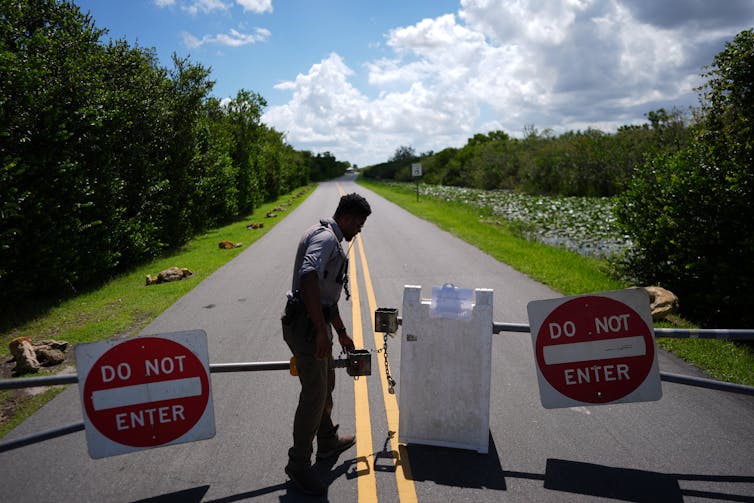
a man in a uniform locks a gate on a road into a park
Many parks, such as Florida’s Everglades National Park, were closed as a result of the shutdown.
AP Photo/Rebecca Blackwell

The indirect and more lasting impacts

The full impact may depend to a large extent on the psychology of the average consumer.

Recent data suggests that consumer confidence is falling as the stagnation in the labor market becomes more clear. Business confidence has been mixed as the manufacturing index continues to indicate the sector is in contraction, while other business confidence measures indicate mixed expectations about the future.

If the shutdown drags on, the psychological effects may lead to a larger loss of confidence among consumers and businesses. Given that consumer spending accounts for 70% of economic activity, a fall in consumer confidence could signal a turning point in the economy.

These indirect effects are in addition to the direct impact of lost income for federal workers and those that operate on federal contracts, which leads to reductions in consumption and production.

The risk of significant government layoffs, beyond the usual furloughs, could deepen the economic damage. Extensive layoffs would shift the losses from a temporary delay to a more permanent loss of income and human capital, reducing aggregate demand and potentially increasing unemployment spillovers into the private sector.

In short, while shutdowns that end quickly tend to inflict modest, mostly recoverable losses, a protracted shutdown – especially one involving layoffs of a significant number of government workers – could inflict larger, lasting impacts on the economy.

US economy is already in distress

This is all occurring as the U.S. labor market is flashing warnings.

Payrolls grew by only 22,000 in August, with July and June estimates revised down by 21,000. This follows payroll growth of only 73,000 in July, with May and June estimates revised down by 258,000.
In addition, preliminary annual revisions to the employment data show the economy gained 911,000 fewer jobs in the previous year than had been reported.

Long-term unemployment is also rising, with 1.8 million people out of work for more than 27 weeks – nearly a quarter of the total number of unemployed individuals.

At the same time, AI adoption and cost-cutting could further reduce labor demand, while an aging workforce and lower immigration shrink labor supply. Fed Chair Jerome Powell refers to this as a “curious kind of balance” in the labor market.

In other words, the job market appears to have come to a screeching halt, making it difficult for recent graduates to find work. Recent graduate unemployment – that is, those who are 22 to 27 years old – is now 5.3% relative to the total unemployment rate of 4.3%.

The latest data from the ADP employment report, which measures only private company data, shows that the economy lost 32,000 jobs in September. That’s the biggest decline in 2½ years. While that’s worrying, economists like me usually wait for the official Bureau of Labor Statistics numbers to come out to confirm the accuracy of the payroll processing firm’s report.

The government data that was supposed to come out on Oct. 3 might have offered a possible counterpoint to the bad ADP news, but due to the shutdown BLS will not be releasing the report.

Problems Fed rate cuts can’t fix

This will only increase the uncertainty surrounding the health of the U.S. economy. And it adds to the uncertainty created by on-again, off-again tariffs as well as the newly imposed tariffs on lumber, furniture and other goods.

Against this backdrop, the Fed is expected to lower interest rates at least two more times this year to stimulate consumer and business spending following its September quarter-point cut. This raises the risk of reigniting inflation, but the cooling labor market is a more immediate concern for the Fed.

While lower short-term rates may help at the margin, I believe they cannot resolve the deeper challenges, such as massive government deficits and debt, tight household budgets, a housing affordability crisis and a shrinking labor force.

The question now is not will the Fed cut rates, because it likely will, but whether that cut will help, particularly if the shutdown lasts weeks or more. Monetary policy alone cannot overcome the uncertainty created by tariffs, the lack of fiscal restraint, companies focused on cutting costs by replacing people with technology, the impact of the shutdown and the fears of consumers about the future.

Lower interest rates may buy time, but they won’t solve these structural problems facing the U.S. economy.

The Conversation

John W. Diamond does not work for, consult, own shares in or receive funding from any company or organization that would benefit from this article, and has disclosed no relevant affiliations beyond their academic appointment.

ref. US economy is already on the edge – a prolonged government shutdown could send it tumbling over – https://theconversation.com/us-economy-is-already-on-the-edge-a-prolonged-government-shutdown-could-send-it-tumbling-over-266327

How Canada can support rural regions in its net-zero transition

Source: The Conversation – Canada – By Tamara Krawchenko, Associate Professor, School of Public Administration, University of Victoria

As Canada advances toward its 2050 net-zero emissions target, it’s facing a fundamental challenge: ensuring all parts of the country can participate in and benefit from the transition to a clean economy.

Canada’s regional economies are diverse, spanning Alberta’s oilsands, Québec’s hydroelectric systems, northern mining operations and urban tech hubs. These differences mean that net-zero transitions will manifest differently, creating opportunities for some regions and vulnerabilities for others.

Rural and remote regions accounted for 52 per cent of Canada’s total greenhouse gas emissions in 2022 alone, and these regions in particular face complex transition dynamics. These regions host oil, gas, coal and mining industries that power Canada’s economic development.

An equitable net-zero transition requires promoting regional competitiveness while ensuring no place is left behind; in other words, cohesion. Successful sustainability transitions demand both innovation-driven growth strategies and support for regions facing economic disruption.

Canada needs to ensure a net-zero transition translates into broadly shared prosperity rather than exacerbated regional inequalities. Doing so can help rectify the historical pattern of resource extraction that has not always benefited local communities.

Challenges faced by rural and remote regions

Rural and remote communities are typically less economically diverse than urban centres. They are often built around one or more dominant industries and have smaller labour markets with fewer specialists. They also have limited access to the financial and human capital necessary for transitioning to net-zero.

Energy transitions can create new industries and transform existing ones to be cleaner. They can replace old industries with new ones and diversify the economy. However, they can also phase out industries in areas where there aren’t enough replacement options. Communities that depend on a single industry are often hit the hardest by these changes.

Canada’s transition policies are rightly focused on regional competitiveness and innovation through, for example, the Regional Economic Growth through Innovation and the Global Innovation Clusters programs. However, they often fail to proactively support the rural, remote and resource-dependent regions and communities most vulnerable to the disruptions of transitions.

This results in reactive policies and programs that are often deployed only after economic shocks. They rarely target the most at-risk groups and governance frameworks lack clear mechanisms for co-ordinated action, accountability and consideration of Indigenous rights and local well-being.

European precedents

The European Union’s 55 billion euro Just Transition Mechanism provides valuable insights for Canadian policymakers. The EU initiative combines both competitiveness and compensation strategies within a comprehensive development model.

The mechanism integrates investment schemes that promote innovation in clean technologies with targeted support for the regions most vulnerable to job losses and economic downturns. Each EU member state develops just transition plans identifying specific regions and industries requiring support, alongside dedicated investment programs tailored to local economic conditions.

This approach recognizes that effective sustainability transitions require incentives for innovation and protections for disrupted communities.

In addition, the EU’s Just Transition Fund specifically targets regions that are socially, economically and environmentally most vulnerable to transition impacts, while simultaneously encouraging investments in emerging sectors critical for reaching net-zero.

Canadian regional development approaches have historically emphasized competitiveness and innovation, with transition management remaining largely reactive rather than proactive.

An exception is the Canada Coal Transition Initiative, which provided flexible, locally tailored approaches and co-ordinated support across federal, provincial and local levels. That approach is essential for sustainable and equitable transition outcomes in diverse regions.

But Canada has generally been reluctant to explicitly identify and designate regions most at-risk from net-zero transitions. This hesitancy may leave vulnerable communities without targeted support.

Institutional capacity and governance challenges

The effectiveness of both competitiveness and cohesion strategies depends on a region’s institutional capacity and governance. On this point, rural and remote regions are often at a disadvantage. They have smaller administrations, fewer resources and limited capacity to manage complex transitions.

The Canadian government’s Regional Energy and Resource Tables offer a new collaborative approach to help bridge these gaps by bringing federal, provincial, territorial and Indigenous partners together.

The tables aim to co-ordinate expertise, resources and partnerships to identify economic priorities and build the capacity to pursue low-carbon growth opportunities. Ten tables are presently underway. This will be an important initiative to watch and evaluate.

Other collaborations can also facilitate peer learning and shared problem-solving. For example, Yukon University’s Northern Energy Innovation group partners with First Nations and utility companies to provide place-based solutions and facilitate knowledge networks. The challenge here lies in connecting these local strengths with external resources and expertise and to expand them as needed.

Sustainable transitions

As Canada encourages new economic activities essential for net-zero transitions, such as critical minerals development, it’s crucial that past inequalities are not reproduced, particularly regarding Indigenous rights holders on territories where these projects are operating.

Canadian governments have substantial room for improvement in this regard, as a lot of rural policy in Cananda continues to treat these regions as sites of resource extraction detached from broader development strategies.

The stakes of this transition are considerable. Managed effectively, net-zero transitions can put Canada on a path to sustainable and inclusive growth. Managed poorly, they risk deepening territorial divisions and creating new patterns of regional disadvantage.

The policies adopted today will determine which of these futures emerge, making the integration of competitiveness and cohesion approaches not merely desirable but essential for Canadian prosperity and social cohesion in the decades ahead.

The Conversation

Tamara Krawchenko received funding for this research from the Centre for Net-Zero Industrial Policy. She is an expert panelist with the Canadian Climate Institute, a Visiting Scholar with the Institute for Research on Public Policy, and a Board member for Ecotrust Canada.

ref. How Canada can support rural regions in its net-zero transition – https://theconversation.com/how-canada-can-support-rural-regions-in-its-net-zero-transition-264747

Vuelve Jon Fosse y, con él, la literatura de lo rural

Source: The Conversation – (in Spanish) – By Alicia Nila Martínez Díaz, Profesor Acreditado Contratado Doctor Filología Hispánica, Universidad Villanueva

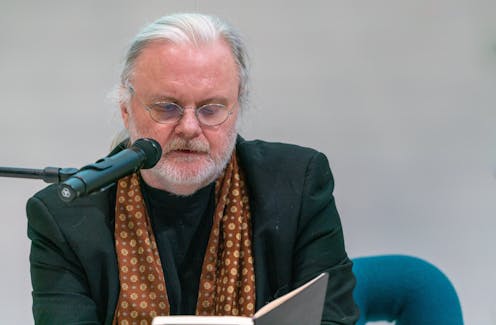
Jon Fosse en la Feria del Libro de Frankfurt en 2019. Markus Wissmann/Shutterstock

El 9 de octubre se publica en español Vaim, la última novela del noruego Jon Fosse y primera que escribe desde que le otorgaron el Premio Nobel de Literatura en 2023. Su publicación sitúa en primer plano las “literaturas de la ruralidad”, historias en las que los entornos rurales reflejan las tensiones y preguntas de la existencia contemporánea.

Desde el poeta romano Horacio hasta Fosse, pasando por Henry David Thoreau, William Wordsworth o el también noruego Knut Hamsun, la literatura ha hecho del mundo rural un espejo desde el que repensar la vida humana.

Muchos escritores reavivan hoy esta rica tradición literaria para afrontar un desafío esencial: ¿es momento de regresar a la tierra?

Lejos, muy lejos del mundanal ruido

Portada de la edición en español de Vaim, de Jon Fosse.

Penguin Libros

En Vaim se despliega la historia de Jatgeir, un hombre solitario instalado en la aldea pesquera cuyo nombre da título al libro. Un viaje a Bergen lo enfrentará al pasado: allí se reencuentra con Eline, ese amor de juventud que nunca se extinguió. Recién separada de Frank, ella le propondrá regresar juntos a Vaim.

Desde ese instante, la narración se adentra en la frágil arquitectura de un triángulo amoroso. La cotidianidad y la fuerza del paisaje pesquero noruego se convierten en catalizadores de las pasiones y dilemas que atraviesan toda existencia humana.

No obstante, la predilección de Fosse por el ámbito rural no constituye una sorpresa. Tanto en Vaim como en sus obras anteriores la vida de los personajes se enraíza en aldeas diminutas, granjas solitarias o apartados pueblos pesqueros, donde el paisaje marca el pulso narrativo de la historia.

Una narrativa que brota de la tierra

Fosse insiste en volver la mirada hacia esos territorios remotos que condensan intimidad, memoria y vulnerabilidad. Surge entonces la pregunta inevitable: ¿de dónde nace esta atracción por narrar historias ancladas en parajes rurales?

Quizá la clave resida en la centralidad del espacio en la obra de Fosse. Más que escenario, el paisaje se convierte en protagonista silencioso, cargado de símbolos y resonancias. En Trilogía, Asle y Alida vagan por aldeas pesqueras que reflejan su desamparo; en Vaim, el pueblo concentra tanto la melancolía del amor perdido como la certeza de que toda vida oscila entre permanencia y exilio.

El espacio deja así de ser territorio para transformarse en experiencia interior: un mapa íntimo, tejido de memoria y fragilidad, donde –como recordó el jurado de la Academia sueca– se alcanza a “dar voz a lo indescriptible”.

Los recuerdos de infancia del escritor ocupan un lugar decisivo en su obra. Fosse ha contado que pasó parte de su niñez junto al fiordo Hardanger, un entorno cuya cadencia natural dejaría una huella imborrable en su sensibilidad.

“Ese sonido, ese ritmo de la naturaleza lo encarno de alguna manera en todo lo que escribo. La música de mi prosa y mis poemas está conectada con ese paisaje”, confesaba en una entrevista.

Imagen de un fiordo con nubes que se meten casi en el agua.
El fiordo de Hardanger a primera hora de la mañana.
Holger Uwe Schmitt/Wikimedia Commons, CC BY-SA

Una mirada planetaria para un escritor de pueblo

Al igual que el irlandés Samuel Beckett o el estadounidense William Faulkner, la mirada de Fosse conjuga lo local y lo universal en los elementos del paisaje de su Noruega natal. Objetos cotidianos –una barca, un haz de leña– se cargan de significado y revelan una dimensión trascendente que recorre toda su obra.

Como él mismo señala en Mañana y tarde, “las cosas más simples son las que llevan más peso”, una declaración que funciona casi como poética de su obra: lo cotidiano nunca se agota en su materialidad, sino que se convierte en símbolo y reflejo de lo primordial.

“Para ser universal habla de tu pueblo”, dice el viejo adagio, y acaso en esa premisa resida la fuerza de la literatura de Fosse, capaz de encontrar resonancia en lectores de cualquier latitud.

Escribe desde su Noruega natal y, sin embargo, lo que emerge de sus páginas nos concierne a todos. En su literatura lo íntimo acaba revelándose como verdad compartida y perdurable.

El retorno a la tierra

Mucho ha llovido desde el clásico beatus ille –con su invitación a la vida retirada en la naturaleza– hasta los los villorrios destartalados del viejo Sur que Faulkner transformó en literatura. Sin embargo, la fascinación por la cabaña de Walden en la que se instalaba Thoreau, la primavera de Wordsworth o la “vida retirada” de fray Luis de León continúa intacta.

Más allá de modas pasajeras o ideales estéticos, la literatura ha demostrado que la naturaleza abre al hombre dimensiones insospechadas de su existencia. La obra de Fosse se suma a este movimiento contemporáneo que devuelve a la tierra su fuerza simbólica dentro del relato.

Retrato en blanco y negro de un hombre de barba y pelo blanco.
Retrato de Jon Fosse en 2020.
Tom A. Kolstad/Det norske samlaget., CC BY-SA

Este giro literario se enmarca en lo que algunos críticos han llamado “neorruralismo”, la corriente de la narrativa contemporánea que mira hacia lo rural como metáfora donde se libran luchas éticas, se despliega la introspección o se buscan formas de resistencia.

En el ámbito español, voces como las de José Jiménez Lozano y Jesús Carrasco ilustran bien esta renovada sensibilidad hacia la vida en contacto con la tierra.

Más allá de nuestras fronteras, otros escritores también han vuelto su mirada hacia los entornos rurales como fuente de de inspiración y reflexión sobre la vida humana.

En las páginas de Peter Handke, en la memoria de Annie Ernaux o en las crónicas de Karl Ove Knausgård, la naturaleza y las aldeas perdidas son fuerzas que modelan la vida de los personajes, obligándoles a confrontar sus destinos.

Todos ellos toman ahora el testigo y se lanzan a reflejar una necesidad constante. Regresar a la tierra, sí, pero sin nostalgia. Volver para reflexionar y afrontar con sosiego las tensiones que desgarran nuestro presente.

El mundo rural se presenta como espacio privilegiado donde reencontrarse con lo esencial y aprender a diferenciar lo importante de lo superfluo.

Mares o fiordos, picos o valles, poco importa el enclave. Se han convertido en coordenadas esenciales desde las que buscar, explorar y redefinir nuestro propio lugar en el mundo.

The Conversation

Alicia Nila Martínez Díaz no recibe salario, ni ejerce labores de consultoría, ni posee acciones, ni recibe financiación de ninguna compañía u organización que pueda obtener beneficio de este artículo, y ha declarado carecer de vínculos relevantes más allá del cargo académico citado.

ref. Vuelve Jon Fosse y, con él, la literatura de lo rural – https://theconversation.com/vuelve-jon-fosse-y-con-el-la-literatura-de-lo-rural-264603

Jane Goodall cambió el paradigma de la evolución humana y el lugar que ocupamos en la naturaleza

Source: The Conversation – (in Spanish) – By Paul Palmqvist Barrena, Catedrático de Paleontología, Universidad de Málaga

Jane Goodall (1934-2025). vitrolphoto/Shutterstock

Parque Nacional de Gombe Stream, Tanzania, finales de noviembre del año 1960. Jane Goodall, una londinense de 26 años, amante de los animales, lleva desde julio viviendo en una choza rodeada por la densa vegetacion selvática, acompañada tan solo por su madre y un cocinero. Durante los meses transcurridos, ha documentado cómo se desplazan los chimpancés, de qué se alimentan y cómo fabrican los nidos de hojarasca donde pasan la noche. Pero estos simios son solo sombras fugaces y esquivas que se mueven entre la densa vegetación, evitando el contacto con ella.

La financiación se acaba y teme defraudar a Louis S.B. Leakey, el gran paleoantropólogo a quien había conocido tres años antes y que confió en ella para encomendarle tamaño trabajo pionero de campo, pese a carecer de formación académica.

Es precisamente en este momento de dudas cuando, por sorpresa, un chimpancé macho a quien bautizará como David Greybeard (“barba gris”) se acerca confiado a ella, sin mostrar una actitud agresiva, sentándose junto a un montículo que alberga un nido de termitas. Toma una ramita, la manipula y la rompe hasta dar con las dimensiones adecuadas, introduciéndola repetidamente en el nido para sacar a las termitas, que se aprestan a defenderlo, y se las come con delectación. Al ser informado por Jane sobre el hallazgo, Leakey respondió entusiasmado con un telegrama que ha pasado a los anales de la evolución humana:

“Ahora debemos redefinir el concepto de herramienta, redefinir el concepto de humano o aceptar también a los chimpancés como seres humanos”.

Cambio de paradigma

Una abrumadora mayoría de las personas pasan por este mundo sin dejar una huella duradera. Muy pocas hacen aportaciones significativas al acervo general de conocimiento de la humanidad, y aún menos aportan una visión que se traduce en un cambio de paradigma. Jane Goodall, quien falleció por causas naturales el pasado 1 de octubre a los 91 años de edad, fue sin duda una de estas personas singulares.

Su legado es inmenso, no solo en los campos científicos de la etología (el análisis del comportamiento animal) y la primatología (el estudio de los primates, el orden de mamíferos al que pertenecemos los seres humanos y nuestros parientes vivos más próximos, los chimpancés), sino también en la concienciación social sobre la necesidad de conservar la biodiversidad y los espacios naturales que la albergan.

Hay múltiples razones para poner en valor el legado excepcional de Jane Goodall, pues antes de que se desplazase a Gombe sabíamos muy poco sobre la conducta de los chimpancés en su medio natural. Sin verse condicionada por los sesgos inherentes a una formación académica reglada, Jane adoptó una metodología heterodoxa.

Entre otras cosas, rehusó seguir la práctica habitual de numerar a los objetos de estudio, justificada por la supuesta pérdida de objetividad que implica el apego emocional al individuo estudiado. En cambio, procedió a darles nombres a los chimpancés, eligiendo los apodos en función de los rasgos observados de su carácter o los parecidos físicos que creía ver con personas conocidas.

Gracias a esta proximidad emocional, y a su inmensa paciencia, documentó aspectos inquietantemente humanos en su comportamiento, como el hecho de que cada uno de los individuos tenía una personalidad única, siendo capaz de desarrollar pensamientos racionales, experimentar emociones –como alegría y tristeza– o desarrollar alianzas complejas –y mudables en el tiempo– con otros congéneres. Algo que por aquella época no resultaba nada convencional.

En sus estudios de campo, cuyos primeros resultados relató magistralmente en su libro En la senda del hombre, publicado en 1971, Jane documentó que, pese a que los chimpancés se habían considerado como estrictamente vegetarianos, consumían carne siempre que les era posible, cazando monos colobos con regularidad. De hecho, se ha estimado que hasta un tercio de la población de estos monos en el parque es devorada cada año por los chimpancés.

En las partidas de caza, cuyo éxito depende en gran medida del número de ejemplares que colaboran para aislar al mono en la copa de un árbol, bloqueando las posibles salidas, el reparto de la carne una vez cobrada la pieza adquiere especial relevancia. Los machos la comparten preferentemente con aquellos otros de quienes depende asegurar su posición en la jerarquía, pero atienden también las solicitudes de las hembras sexualmente receptivas (esto es, pagan a cambio de tener sexo).

Los chimpancés también se enfrascan en guerras

Otro hallazgo inquietante fue que las hembras dominantes del grupo matan ocasionalmente a otras más jóvenes para mantener su posición en la jerarquía, practicando el infanticidio e incluso, a veces, el canibalismo. Pero quizás la mayor conmoción ocasionada por sus estudios fue la de que los chimpancés se enfrascan en conflictos territoriales duraderos con los grupos vecinos, a cuyos miembros matan sistemática y deliberadamente en lo que se pueden denominar con propiedad como auténticas guerras entre clanes. Así lo relató en su libro de 1989, titulado A través de una ventana: treinta años estudiando a los chimpancés.

Transmisión cultural de las madres a sus crías

En definitiva, los estudios pioneros de Jane Goodall han cambiado nuestra percepción sobre la evolución humana y el lugar que ocupamos en la naturaleza. Sus observaciones inspiraron los trabajos de nuevas generaciones de primatólogos, quienes crecieron con el estímulo de sus escritos. Por ejemplo, los relativos al aspecto no trivial de si podemos considerar que los chimpancés tienen una cultura propia, lo que siempre se consideró como algo exclusivamente humano.

Así, en dos trabajos posteriores, en los que también participó Jane, se estudió la distribución de más de seis decenas de rasgos de comportamiento en ocho poblaciones de chimpancés diferentes de África central, detectando en dos tercios de ellos variantes culturales según la aparición o no de tales rasgos en esas poblaciones. Son este tipo de diferencias las que precisamente nos permiten hablar de culturas humanas. No obstante, conviene indicar que las poblaciones estudiadas pertenecen a las tres subespecies de chimpancé, Pan troglodytes troglodytes, P. t. schweinfurthii y P. t. verus, la última de las cuales divergió evolutivamente de las otras dos hace casi 1,6 millones de años según indican los datos genéticos.

Por otra parte, en los chimpancés se produce exogamia femenina (esto es, son las hembras las que se dispersan, cambiando de grupo familiar al alcanzar la edad reproductiva). Esto significa que la diseminación de las variables culturales depende del sexo femenino, como también lo sugiere el hecho de que la transmisión cultural por aprendizaje se da preferentemente desde las madres hacia sus crías. Ello parece venir apoyado por el hecho de que es el número de chimpancés hembras el que se correlaciona con la variedad de hábitos culturales en el grupo, no el de los machos.

En definitiva, resulta difícil calibrar el legado científico y cultural de Jane Goodall sin disponer de la perspectiva temporal adecuada. Este legado se ha materializado, por el momento, en el Instituto Jane Goodall, con treinta oficinas alrededor del mundo, cuyo objetivo es proteger los hábitats de los animales salvajes, realizar investigaciones y promover la educación ambiental. Pero también en el programa mundial para jóvenes “Roots & Shoots” (raíces y brotes), que patrocina unos 10 000 proyectos de impacto local en más de sesenta países, impulsando iniciativas de reciclaje, reforestación y defensa del bienestar animal.

Aunque es mucho lo conseguido en su larga vida, las generaciones venideras, inspiradas por su memoria, tienen todavía bastante por hacer.

The Conversation

Paul Palmqvist Barrena no recibe salario, ni ejerce labores de consultoría, ni posee acciones, ni recibe financiación de ninguna compañía u organización que pueda obtener beneficio de este artículo, y ha declarado carecer de vínculos relevantes más allá del cargo académico citado.

ref. Jane Goodall cambió el paradigma de la evolución humana y el lugar que ocupamos en la naturaleza – https://theconversation.com/jane-goodall-cambio-el-paradigma-de-la-evolucion-humana-y-el-lugar-que-ocupamos-en-la-naturaleza-266606