Male circumcision is made easier by a clever South African invention – we trained healthcare workers to use it

Source: The Conversation – Africa (2) – By Peter S Millard, Adjunct Professor, University of New England

Voluntary medical male circumcision is one of the most important ways to reduce new HIV infections. The foreskin contains receptors that the HIV virus can attach to, and removing it reduces HIV transmission from women to men by about 60% .

But cost and access issues have been barriers for many men and boys in southern Africa. With US funding being cut for HIV programmes, it is increasingly important to scale up voluntary circumcision programmes using local resources.

Together with Bonginkosi Eugene Khumalo, head of circumcision programme at Northdale Hospital, KwaZulu-Natal, we did a study to evaluate the training of primary care providers to use Unicirc, a novel surgical instrument designed in South Africa according to World Health Organization (WHO) specifications.

Our new study describes an ongoing training programme being run by the Centre for Excellence (a long-standing circumcision training programme) at Northdale Hospital in KwaZulu-Natal, a province where traditional circumcision is not practised and which has the highest HIV prevalence in South Africa.

Unicirc is a simple, single-use circumcision tool made of metal and plastic. It’s pre-sterilised, disposable and designed for use by general healthcare workers not just specialists. This makes it safe and practical for use in local clinics.

The study demonstrated the practicality of training primary care doctors, nurses and clinical associates in Unicirc male circumcision.

Circumcision is an important HIV prevention method. It’s vital for countries to scale up services in a cost-effective way and to make them widely available in local areas.

How it’s done

Currently, almost all circumcisions are done by surgical cut and stitch techniques, where specially trained surgeons cut off the foreskin with scissors, then sew up the open wound. It can be done in a surgery under local anaesthesia, but men and boys need to be monitored closely afterwards to make sure all bleeding is stopped. It can cost anywhere between R1000 and R4000 in the private sector in South Africa.

Doctor Cyril and doctor Elisabeth Parker developed the method at their general practice in Cape Town in 2012. This new tool greatly simplifies circumcision so that it can be performed by medical personnel with basic training. It takes only 10 minutes, causes no bleeding, needs no injections or stitches. It results in a rapidly healing, cosmetically pleasing circumcision.

Thousands of these circumcisions have been performed at clinics in Cape Town and an area called Mitchell’s Plain, and nurses and clinical associates have been trained in the technique. Unicirc circumcisions are now being offered at nurse-run Unjani clinics in South Africa.

In the Northdale programme, Dr Cyril Parker and his colleagues trained 67 providers, the majority of whom were nurses and clinical associates. These are mid-level healthcare professionals who work under the supervision of a medical doctor to provide primary medical care. They performed these circumcisions on 1,240 men and boys with no serious complications. Trainees found it faster, simpler and with better results than other methods. The programme is ongoing, with trainees continuing to perform circumcisions safely.

Initially, none of the trainees had used Unicirc. Around 61% of trainees were men and 39% were women, showing a need to encourage more women to join. Nurses (46%) and doctors (45%) made up most trainees, and clinical associates the rest (9%). About 38% had no prior circumcision experience, while 33% were highly experienced in surgical circumcision. This shows the programme can train complete beginners as well as experienced providers.

Nurses and clinical associates are key to expanding cost-effective circumcision access, freeing up medical doctors for other tasks. A disposable, single-use tool reduces infection risks and is well-suited to clinics with limited resources.

What next?

The programme is moving into a phase focused on mentoring, quality checks and further expansion. If widely adopted, Unicirc could greatly improve access to safe, simple and rapid circumcision across resource-limited settings. It is simple enough to be used in traditional circumcision schools.

Along with effective treatment, prevention of mother-to-child transmission, and medication to prevent HIV infection, circumcision plays a critical role in HIV prevention efforts in Africa. Unlike traditional circumcision, voluntary medical circumcision is done under sterile conditions by trained providers with few complications and the ability to deal with any that do occur.

Several southern African countries started their national circumcisions programmes to prevent HIV in 2010. As of 2023, 37 million voluntary medical male circumcisions had been performed in 15 high priority African countries. Estimates are that one million HIV infections have been prevented, saving the cost of treating and monitoring those cases, and avoiding transmission to partners. Circumcision actually saves money in many countries.

The Conversation

Peter S Millard does not work for, consult, own shares in or receive funding from any company or organisation that would benefit from this article, and has disclosed no relevant affiliations beyond their academic appointment.

ref. Male circumcision is made easier by a clever South African invention – we trained healthcare workers to use it – https://theconversation.com/male-circumcision-is-made-easier-by-a-clever-south-african-invention-we-trained-healthcare-workers-to-use-it-265307


Nobel physics prize awarded for pioneering experiments that paved the way for quantum computers

Source: The Conversation – UK – By Rob Morris, Professor of Physics, School of Science and Technology, Nottingham Trent University

The 2025 Nobel prize in Physics has been awarded to three scientists for the discovery of an effect that has applications in medical devices and quantum computing.

John Clarke, Michel Devoret and John Martinis conducted a series of experiments around 40 years ago which would go on to shape our understanding of the strange properties of the quantum world. It’s a timely award, since 2025 is the 100th anniversary of the formulation of quantum mechanics.

In the microscopic world, a particle can sometimes pass through a barrier and appear on the other side. This phenomenon is called quantum tunnelling. The laureates’ experiments demonstrated tunnelling in the macroscopic world – in other words, the world that’s visible to the naked eye. They showed that it could be observed on an experimental electrical circuit.

Quantum tunnelling has potential future applications in improving memory for mobile phones and has been important for the development of “qubits”, which store and process information in quantum computers. It also has applications in superconducting devices, those that conduct electricity with very little resistance.

British-born John Clarke is Professor of Physics at the University of California, Berkeley. Michel Devoret was born in Paris and is the F. W. Beinecke Professor of Applied Physics at Yale University. John Martinis is Professor of Physics at the University of California, Santa Barbara.

What is quantum tunnelling?

Quantum tunnelling is a counter-intuitive phenomenon where the tiny particles which make up everything we can see and touch can appear on the other side of a solid barrier, which you would otherwise expect to stop them.

Since it was first proposed in 1927, it has been observed for very small particles and it is responsible for our explanation of the radioactive decay of large atoms into smaller atoms and something else called an alpha particle. However, it was also predicted that we might be able to see this same behaviour for larger things. We call this macroscopic quantum tunnelling.

How can we see quantum tunnelling?

The key to observing this macroscopic tunnelling is something called a Josephson junction, which is essentially a fancy broken wire. The wire is not a typical wire which you might use to charge your phone, instead it is a special type of material known as a superconductor. A superconductor has no resistance, which means that a current can flow through it forever without losing any energy. They are used, for example, to create the very strong magnetic fields in magnetic resonance imaging (MRI) scanners.

So how does this help us to explain this strange quantum tunnelling behaviour? If we put two superconducting wires end to end, separated by an insulator, we create our Josephson junction. This is normally manufactured in a single device which, with a basic understanding of electricity, shouldn’t conduct electricity. However, thanks to quantum tunnelling we can see that current can flow across the junction.

The three prize winners demonstrated quantum tunnelling in a paper published in 1985 (it’s common to have such large gaps in time before Nobel prizes are awarded). Quantum tunnelling had previously been suggested to be caused by a breakdown in the insulator. The researchers started by cooling their experimental apparatus to within a fraction of a degree of absolute zero, the coldest temperature which can be achieved.

Heat can give the electrons in conductors just enough energy to get through the barrier. So it would make sense that the more the device is cooled, the fewer electrons would escape. If however quantum tunnelling is taking place, there should be a temperature below which the number of electrons which escape should no longer decrease. The three prize winners found exactly this.

Why is this important?

At the time, the three scientists were trying to prove this developing theory about macroscopic quantum tunnelling through experiments. Even during the announcement of the 2025 prize, Clarke downplayed the importance of this discovery, even though it has been pivotal in so many developments which are at the forefront of quantum physics today.

Quantum computing remains one of the most exciting opportunities which is promised for the near future, and is the source of significant investment worldwide. It comes with much speculation about the risks to our encryption technologies.

It will also ultimately solve problems which are outside the reach of even the largest of today’s supercomputers. The handful of quantum computers which are in existence today, rely on the work of the three 2025 physics Nobel laureates and no doubt will be the subject of another physics Nobel prize in the coming decades.

We are already exploiting these effects in other devices such as superconducting quantum interference devices (Squids) which are used to measure small variations in magnetic fields from the Earth, allowing us to find minerals below the surface. Squids also have uses in medicine. By detecting extremely weak magnetic fields, they can improve on the images from MRI and provide high resolution images of tumours. They can also be used to map electrical activity in the brain, helping to manage epilepsy.

We can’t predict if and when we will have quantum computers in our homes, or indeed in our hands. One thing that is for certain, though, is that the speed of development of this new technology is thanks in no small part to the winners of the 2025 Nobel prize in physics, demonstrating macroscopic quantum mechanical tunnelling in electric circuits.

The Conversation

Rob Morris does not work for, consult, own shares in or receive funding from any company or organisation that would benefit from this article, and has disclosed no relevant affiliations beyond their academic appointment.

ref. Nobel physics prize awarded for pioneering experiments that paved the way for quantum computers – https://theconversation.com/nobel-physics-prize-awarded-for-pioneering-experiments-that-paved-the-way-for-quantum-computers-266911

Children are capable of extreme bravery from a young age – a psychologist explains how

Source: The Conversation – UK – By Kirsten Antoncich, Senior Lecturer in Psychology, Birmingham City University

afotostock/Shutterstock

Developmental research often tells us how ego centric children are. Yet all too often we hear of children who are forced to demonstrate great courage and care in in a crisis.

The ongoing inquiry into the 2024 mass stabbing of young girls in Southport, England, has produced accounts of extreme bravery among the children subjected to the attack. Indeed, the report of a child standing in front of her sister to protect her from knife blows shows a level of courage many adults might not have possessed in the same circumstances.

Details have also emerged of young children holding the door open to allow other children to escape from their attacker first and of children helping others not draw attention to themselves by running or screaming. Similar accounts often emerge from school shootings in the US – take, for example, the report of a teenager confronting a gunman who attacked pupils at a high school in Colorado in September 2025.

How could such young people conduct themselves with so much composure and selflessness? Psychological research shows that children develop the cognitive, personal and emotional skills needed earlier than people might realise.

Although much of our understanding of human courage comes from the adult field, developmental psychology professor Peter Muris’s 2009 study examined the link between fear and courage in children aged eight to 13. His interviews and studies with his young participants found there may be a link between increased courage and the personality traits of extroversion, openness and intellect.

He also found 94% of the children in his study had already carried out at least one courageous action in their lives, such as dealing with an animal they were afraid of or defending a friend from bullies.

And a 2021 study found that extroversion in teenagers seemed to protect them from developing anxiety. It could be that many of the young children who have acted bravely in a crisis had higher scores of this protective trait.

Experimental psychologist, Joana Viera, and her colleagues in their 2020 study explored how humans react when faced with a threat in the form of an electric shock and the option to help another person avoid the shock. They found that as the likelihood of the threat increased, humans were more likely to go to the aid of another, even at risk of a shock to themselves. Their study suggests that defensive states of mind also activate cognitive processes which promote care giving.

Psychologists Tony Buchanan and Stephanie Preston explored how stress can promote altruism, in their 2014 analysis. They emphasised that the neural circuits that support care-taking under stress overlap with brain circuits associated with reward and motivation. These two areas act together during times of stress, helping shift the persons response away from avoidance of threat towards the protection of others.

This care taking mechanism is seen in many animals from rats to gorillas. Social psychologist Daniel Batson suggested there are two types of responses to acute threat, one motivated from personal distress which is self focused and another based upon sympathetic or empathic responding linked to altruism. We all have the potential to respond in either way, which makes the courage of these children all the more impressive.

Several psychologists have found children as young as 12 months old can recognise and respond with empathy to distress in other humans. A 2011 study found that children as young as two years old could respond to others’ distress with verbal comfort, advice and distraction. The researchers also demonstrated that infants responded with heightened distress when presented with the sounds of distress in others.

The hands of a little child holding rocks painted like birds.
Very young children can respond with empathy to others’ distress.
Christin Lola/Shutterstock

In order to remember instructions and to show higher order skills such as empathy and the care of others over oneself, the children needed to draw on their developing executive function and areas of the brain’s limbic region. This system is a group of connected brain structures that helps regulate emotions and behaviour. These areas are typically fully developed by young adulthood.

Diagram of the brain's limbic region
The limbic region.
VectorMine/Shutterstock

In the stories that have emerged, you can hear how the children seem to have internalised advice from adults about how to act in an emergency. Repeated instructions are actually easier to recall under acute stress.

These structures are developing throughout childhood. But research has persistently shown that children of preschool age perform executive functioning tasks such as the ability to perceive and respond to another person’s emotional state. Rather than respond from a instinctive fight or flight response, the children who stay calm during critical moments contain their fear enough to care for others.

A 2010 study investigated the areas of the brain in adults associated with increased bravery. Participants with a fear of snakes had to bring a live snake close to their head. The study found courage was associated with the dissociation of fear and sensory arousal. This means that those people who show courage during stressful situations may disconnect from their feelings of fear and their physiological experiences of fear in the body.

The combination of dissociation and instruction retrieval could help explain how they were able to stay so calm and come to the aid of others. Indeed, caring for others in times of distress can distract us from our own acute distress.

Self efficacy, or the ability to act during times of threat can also protect people against the development of post traumatic symptoms. And a 2019 study found that positive traits such as hope, competence and optimism may also protect people against the development of post traumatic stress disorder.

In all instances where children are faced with such great adversity, one can only hope the bravery and mastery they show offers some protection against the immense psychological trauma the endure.

The Conversation

Kirsten Antoncich does not work for, consult, own shares in or receive funding from any company or organisation that would benefit from this article, and has disclosed no relevant affiliations beyond their academic appointment.

ref. Children are capable of extreme bravery from a young age – a psychologist explains how – https://theconversation.com/children-are-capable-of-extreme-bravery-from-a-young-age-a-psychologist-explains-how-265523

Jilly Cooper: why readers still cherish her ‘fat, fun, frothy novels’

Source: The Conversation – UK – By Amy Burge, Associate Professor in Popular Fiction, University of Birmingham

The author Jilly Cooper has died aged 88. Cooper’s books were “bonkbusters” – a form of blockbuster fiction that was most popular in the 1980s and 1990s, characterised by explicit sex, scandalous plots and large casts of characters.

In her 1993 novel, The Man Who Made Husbands Jealous, a reporter rings famous singer Georgie to tell her that her husband Guy had been voted “hubby of the year”. She elaborates: “To be quite honest there wasn’t a lot of choice. Faithful husbands are an endangered species.” This quote is emblematic of the writing that made Cooper famous. It’s full of irreverent wit, tongue-in-cheek scrutiny of British society – and misbehaving men.

Cooper was one of the four major bonkbuster authors, alongside Jackie Collins, Shirley Conran and Judith Krantz. Her racy, ribald romps through the fictional county of Rutshire reached millions of readers. And as we discovered when talking with bonkbuster readers while researching our forthcoming book, they continue to be beloved by many.

The author was born in Essex on February 21 1937, educated in Yorkshire and Wiltshire, and, at the age of 20, became a junior reporter for The Middlesex Independent. This was the beginning of what would be a highly successful career in journalism. Cooper went on to write long-running columns in The Sunday Times Magazine and The Mail on Sunday, which offered a light-hearted look at women’s domestic lives.

Jilly cooper holding a cat
Cooper in 1974.
Allan Warren, CC BY-SA

These columns formed the basis of many of her non-fiction books, such as How to Stay Married (1969) and How to Survive from Nine to Five (1970).

However, she was also busily writing fiction, and after some success publishing short fiction in magazines, Cooper published a series of romantic novels in the 1970s and 1980s, all with women’s names in their titles.

These works offered an account of the urban zeitgeist for young single women of the time, discussing issues like rape, marriage, pregnancy and careers.

But Cooper is best known for her Rutshire Chronicles (1985-2023), a classic bonkbuster series set in the Cotswolds. Characterised by her trademark tongue-in-cheek style, the 11 novels in the series share a huge cast of characters – anchored around the arrogant, irresistible Rupert Campbell-Black – and a wide range of settings.

These books are best known, in the words of one of the readers we talked to, as “full, fat, fun, frothy novel[s] set around class and privilege and horses”. Many of the Rutshire Chronicles blend interpersonal drama with the social drama of the equestrian world: from show-jumping and sex in Riders (1985), polo and illegitimate daughters in Polo (1991), and horse racing and even more sex in Jump! (2010) and Mount! (2016).

However, horses weren’t the only focus. Other novels in the Rutshire Chronicles explored regional television rivalries, bad husbands and infidelity, orchestral drama, murder and opera, art theft, British schools and premier league football.

Sex is good for women (or should be)

Cooper’s books are famous for their sex scenes. From the scandalous (the naked tennis match in Rivals) to the sticky (characters using grass to wipe themselves clean after an al fresco romp), she did not shy away from putting sex on the page.

Many of Cooper’s depictions of sex are very funny. However, there is a clear message throughout – women are entitled to good sex, and it is the job of their (usually male) partners to give it to them.

Rupert Campbell-Black is Cooper’s most famous stud (horses aside), but he is very bad at satisfying his first wife Helen. In Riders, Cooper wrote that Helen “longed for love but, having been married to Rupert for six and a half years … felt she had become what he kept telling her she was: boring, prissy, brittle and frigid”. However, the problem is not Helen. With a different, more attentive partner – Rupert’s rival Jake – Helen has a sexual awakening.

The trailer for The Rivals, a recent Disney adaptation of Cooper’s novels.

The entire premise of The Man Who Made Husbands Jealous revolves around male neglect (sexual and otherwise). Unsatisfied wives engage the services of a man named Lysander in the hope that some competition will reengage their neglectful, philandering husbands.

Along the way, they have considerably better sex with Lysander, whose consideration in bed has his partners “bubbling like a hot churn of butter”. The titular husbands eventually learn that they must do better in order to keep their wives, sexually and otherwise.

Sex aside, what became clear from our research was how much Cooper’s works meant to their readers. Former prime minister Rishi Sunak might be Jilly Cooper’s most famous reader, but many of the readers we spoke to were particularly fond of her books, re-reading them repeatedly for comfort and familiarity. One described her books as “like a friend”.

For some, the appeal was escapism “into this incredibly glamorous world that you … could have some ambition of being part of yourself when you grew up”. For others, Cooper’s books were educational, teaching readers about how to navigate the unfamiliar world of the British upper classes, or providing a form of sex education. Several of our readers noted the unusual (for the time) frankness of Cooper’s novels.

Cooper was the last living “big four” bonkbuster author. Her death marks the end of an era. However, the recent television adaptation of Rivals seems to have attracted a new audience. Filming for a second season commenced in May 2025 – it seems Cooper’s stories live on.


Looking for something good? Cut through the noise with a carefully curated selection of the latest releases, live events and exhibitions, straight to your inbox every fortnight, on Fridays. Sign up here.


The Conversation

The authors do not work for, consult, own shares in or receive funding from any company or organisation that would benefit from this article, and have disclosed no relevant affiliations beyond their academic appointment.

ref. Jilly Cooper: why readers still cherish her ‘fat, fun, frothy novels’ – https://theconversation.com/jilly-cooper-why-readers-still-cherish-her-fat-fun-frothy-novels-266881

Nobel Prize: how a hidden army in your body keeps you alive – and could help treat cancer

Source: The Conversation – UK – By Justin Stebbing, Professor of Biomedical Sciences, Anglia Ruskin University

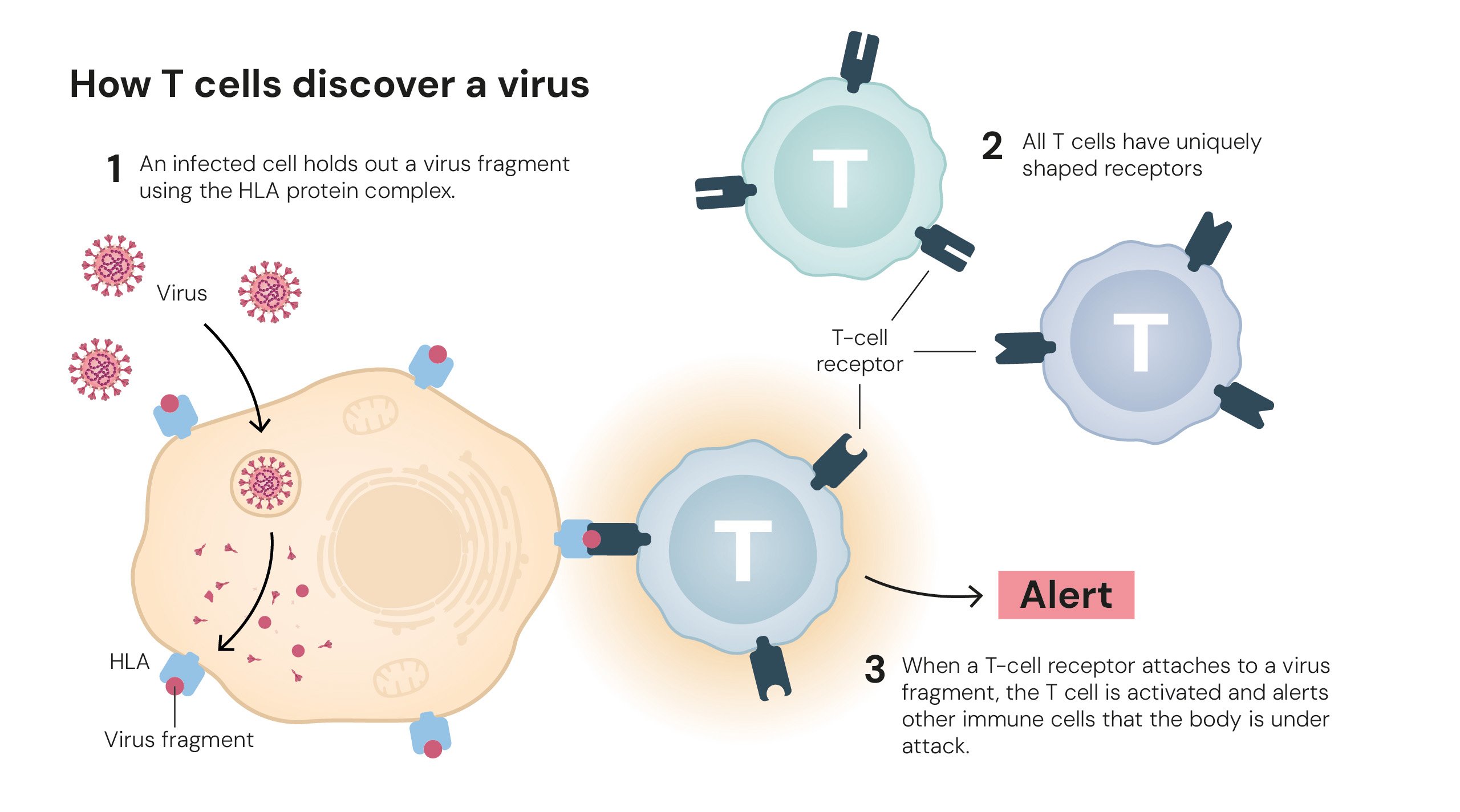
Regulatory T cells monitor other immune cells and ensure that our immune system tolerates our own tissues. © The Nobel Committee for Physiology or Medicine. Ill. Mattias Karlén, CC BY-NC

The 2025 Nobel Prize in Physiology or Medicine celebrates a discovery that answers one of medicine’s most profound questions: how does the immune system know when to attack, and when to stand down?

Most of the time, our defences target dangerous infections and even cancers while leaving the body’s own tissues unharmed. But when that balance fails, the consequences can be devastating – from autoimmune diseases, where the immune system turns on healthy organs, to cancers, where it becomes too restrained to recognise and destroy tumour cells.


Read more:
Nobel prize awarded for discovery of immune system’s ‘security guards’


Three scientists – Mary E. Brunkow, Fred Ramsdell and Shimon Sakaguchi – uncovered how our bodies maintain this delicate control through a special class of immune cells called “regulatory T cells”. Their discovery revealed the immune system’s natural “brakes”: the internal mechanisms that prevent friendly fire but, in some cases, can also shield cancers from attack.

Understanding how these brakes work has already reshaped modern immunology. The same insight guiding new treatments for autoimmune diseases is now helping researchers fine tune cancer immunotherapies; adjusting the immune system’s restraint so it hits hard against tumours without turning against the body.


© The Nobel Committee for Physiology or Medicine. Ill. Mattias Karlén, CC BY-NC

The immune system works like a highly trained security force, patrolling every corner of the body to detect and destroy bacteria, viruses and rogue cells. But even the best security team can be dangerous without oversight.

Left unchecked, immune cells can mistakenly attack healthy tissue: the hallmark of autoimmune diseases such as type 1 diabetes or multiple sclerosis. And when the system becomes too cautious, it can overlook genuine threats, giving cancers the chance to grow unnoticed.

For decades, scientists thought most of this immune “training” happened early in life, inside an organ called the thymus: a small gland above the heart where young immune cells learn which targets to attack and which to ignore. Those that fail this test are eliminated before they can cause harm.

But in the 1990s, Japanese immunologist Shimon Sakaguchi discovered there was more to the story. Through experiments on mice, he identified a previously unknown type of immune cell called a “regulatory T cell”: the peacekeepers of the immune system. These cells don’t attack pathogens themselves.

Instead, they hold the rest of the immune army in check, preventing unnecessary destruction. When Sakaguchi removed these cells in laboratory animals, their immune systems spiralled out of control, launching attacks on healthy organs. His work showed that these peacekeeping cells are essential for preventing the body from waging war on itself.

A few years later, Mary Brunkow and Fred Ramsdell found the genetic switch that makes these peacekeepers possible. They discovered that a single mutation in a gene called Foxp3 could leave both mice and human babies vulnerable to a rare but devastating autoimmune disorder called IPEX syndrome. The Foxp3 gene acts as the “on switch” for producing regulatory T cells. Without it, the immune system loses its referees and chaos follows.

T helper and regulatory T cells

The immune system relies on many types of T cells. T helper cells act as team captains, directing other immune cells to respond to infections. Much of my own research has focused on how these cells behave in HIV infection, where their loss leaves the immune system defenceless. Regulatory T cells belong to this same family but serve the opposite role: they calm things down when the fight goes too far.


© The Nobel Committee for Physiology or Medicine. Ill. Mattias Karlén, CC BY-NC

These peacekeepers keep the immune defenders focused on real threats rather than friendly targets. When they fail, autoimmune diseases emerge. But when they work too well, they can suppress immune attacks on cancer, allowing tumours to hide and grow. Scientists are now learning how to fine-tune this balance: boosting the guards to control autoimmune disease, or easing the brakes so the body can fight back against cancer.

These discoveries have redefined how doctors think about immunity. Clinical trials are already testing therapies that expand regulatory T cells in people with arthritis, diabetes or after an organ transplant; helping the body to tolerate its own tissues.

In cancer treatment, the opposite approach is used: blocking or disabling these peacekeepers to unleash a stronger immune attack on tumours. This is the principle behind modern immunotherapies, which have already transformed outcomes for patients with melanoma, lung cancer and lymphoma.

Science that touches lives

The work of Brunkow, Ramsdell and Sakaguchi shows how basic science can lead to profound changes in medicine. Their discoveries help explain not just why the immune system sometimes goes wrong, but how it can be guided back into balance – a balance that could one day prevent autoimmune diseases, improve transplant survival and make cancer therapies both safer and more effective.

The Nobel committee’s decision this year recognises not only their scientific achievement, but also a vision of the immune system as something far more nuanced than an on-off switch. It’s a finely tuned orchestra and regulatory T cells are its conductors, ensuring the right notes are played at the right time, silencing those that might cause chaos.

By learning to adjust these biological “brakes” with precision, medicine is entering a new era. Treatments inspired by these discoveries are already improving lives and may, in time, transform how we prevent and treat disease across the spectrum, from autoimmunity to cancer.

The Conversation

Justin Stebbing does not work for, consult, own shares in or receive funding from any company or organisation that would benefit from this article, and has disclosed no relevant affiliations beyond their academic appointment.

ref. Nobel Prize: how a hidden army in your body keeps you alive – and could help treat cancer – https://theconversation.com/nobel-prize-how-a-hidden-army-in-your-body-keeps-you-alive-and-could-help-treat-cancer-266860

Tory plan to scrap net zero target puts UK climate leadership at risk

Source: The Conversation – UK – By Sam Fankhauser, Professor of Climate Economics and Policy, Smith School of Enterprise and the Environment, University of Oxford

In the mid-2000s, soon after becoming Conservative leader, David Cameron hugged a husky on a trip to the Arctic, in what was widely described as an attempt to “detoxify” the Tory brand. Eighteen years later, Kemi Badenoch has promised to scrap the law that once made that rebranding credible.

Her announcement that the Conservatives will repeal the 2008 Climate Change Act if they win the next general election has the potential to be a major own goal – politically, environmentally and economically.

To understand why, we need to remember how the Climate Change Act came about. The bill was put forward by the Labour government of Gordon Brown, but it had enthusiastic support from the Conservative opposition, which tabled several amendments to strengthen it. Cameron had concluded that green policies were a good way to modernise his party and lead it back into power.

It worked, both for Cameron, who became prime minister in 2010, and for UK climate policy, which has enjoyed a unique period of consensus and stability. Over seven governments, multiple economic crises, Brexit, COVID-19 and the war in Ukraine, there has been clarity about Britain’s climate change objectives. Policies were chopped and changed, often to the frustration of investors, but the institutional framework was stable and widely appreciated.

The Climate Change Act gives the UK a statutory long-term emissions target – initially an 80% cut from 1990 levels by 2050, strengthened to net zero by 2050 by Theresa May, another Tory prime minister.

Progress is managed through a series of five-year carbon budgets, legislated 12 years in advance and monitored by a powerful independent body, the Climate Change Committee (CCC). For much of its existence, the CCC has been chaired by yet another environmentally-minded Tory, Lord Deben (John Gummer). It is this framework the Conservatives now say they want to dismantle.

Yet the Climate Change Act has delivered, both in terms of process and substance. Indeed, the UK model has been emulated around the world. Nearly 60 countries have UK-style climate change laws and over 20 countries have CCC-style advisory bodies, cementing the UK’s position as a climate leader.

The act gives the UK a steady institutional rhythm. Relevant businesses and other organisations know the formal set pieces, such as the CCC’s annual report to parliament, and can time their interventions accordingly.

When colleagues and I interviewed people from business and civil society about the act a few years ago, they emphasised the predictable process, the clear rules on accountability and the evidence-based discourse it has enabled. This all reduces uncertainty and enables long-term planning.

Importantly, the Climate Change Act has delivered environmentally too. Compared to 1990, UK greenhouse gas emissions are down by 50%. The UK economy now uses three times less carbon per unit of economic output than in 1990. Emissions are at their lowest level since 1872.

This trend started before the act, but it was helped and accelerated by it. This is perhaps most noticeable in the radical transformation of the electricity sector: coal has been completely phased out, while offshore wind and other renewables have flourished.

Most people want climate action

Voters value this progress more than politicians appreciate. A University of Oxford survey found that internationally public support for climate action is almost twice as high as policymakers assume. In the UK, three out of four people are fairly or very concerned about climate change.

Badenoch’s announcement comes just as households are starting to reap the financial benefits of clean technology. Colleagues and I have estimated that four out of five UK households, particularly those owning a car, would be better off if net zero was achieved. The typical savings are £100-£380 per household and year.

It is true that households do not yet see the benefits of renewables on their energy bills. We are still paying for the high costs of early investments in clean power, before technology and sheer scale brought the price down.

Successive governments have chosen to recoup these learning costs through electricity bills, rather than general taxation, which would have been easier on most households. But recent analysis suggests renewables are now cutting electricity prices by up to a quarter.


Read more:
We surveyed British MPs – most don’t know how urgent climate action is


The policy uncertainty generated by the Tory announcement and similar pronouncements by Reform UK will eventually find its way into the risk premiums for investors, though for the time being this effect is still small.

But the reputational damage is immediate. Undoing the act would signal that the UK no longer values the long-term stability that has driven clean investment and made its climate policy admired around the world.

Climate policy requires debate. Deeply political choices need to be made about different decarbonisation strategies, how to pay for necessary investments or the role of controversial technologies like nuclear energy. The past 17 years have shown that these debates are best had within an agreed framework, with support from all major parties. That is what the Climate Change Act provides.


Don’t have time to read about climate change as much as you’d like?

Get a weekly roundup in your inbox instead. Every Wednesday, The Conversation’s environment editor writes Imagine, a short email that goes a little deeper into just one climate issue. Join the 45,000+ readers who’ve subscribed so far.


The Conversation

Sam Fankhauser does not work for, consult, own shares in or receive funding from any company or organisation that would benefit from this article, and has disclosed no relevant affiliations beyond their academic appointment.

ref. Tory plan to scrap net zero target puts UK climate leadership at risk – https://theconversation.com/tory-plan-to-scrap-net-zero-target-puts-uk-climate-leadership-at-risk-266853

Epstein’s ‘birthday book’ transforms private notes into a legacy record

Source: The Conversation – Canada – By Jason Wang, Postdoctoral Fellow, Modern Literature and Culture Research Centre, Toronto Metropolitan University

The United States House Committee on Oversight and Government Reform recently released a 238-page album, compiled by Ghislaine Maxwell in 2003 for Jeffrey Epstein’s 50th birthday. On Oct. 6, the U.S. Supreme Court rejected Maxwell’s appeal of her 2022 conviction for sex trafficking girls with Epstein.

The release of the partially redacted album is part of a larger investigation of the federal government’s handling of Epstein and Maxwell and “possible mismanagement.”


Read more:
Trump’s Epstein problem is real: New poll shows many in his base disapprove of his handling of the files, and some supporters are having second thoughts about electing him


The album is in the spotlight due to an entry allegedly penned by U.S. President Donald Trump, though the White House has denied he wrote it. Entitled The First Fifty Years, the book overflows with handwritten letters, campy sketches and images fixated on women’s bodies.

The book was bound by Weitz & Coleman, an esteemed bookbinder in New York City since 1909, as indicated by a note within the album itself.

Its “vegetable tanned” leather covers, table of contents and sections titled “Family,” “Friends” and “Business” signal an intent to elevate casual notes into a permanent record.

As book historian D.F. McKenzie contends, a book’s physical form shapes its social role. Here, the elaborate binding and careful organization transform private, ephemeral notes into a social gesture, something shared in a legacy format.

In this sense, Epstein’s album sits alongside a tradition of bound tribute books — scrapbooks pressed into leather for golden anniversaries, glossy volumes marking a CEO’s retirement or academic festschrifts that canonize a career. What unites them is the transformation of passing moments into artifacts meant to endure.

Charm, codes, clichés

Maxwell’s prologue describes the book as a retrospective to “jog your memory of places and people and different events.”

In the birthday book, one redacted former “assistant” recalls how working for Epstein transformed her life: she went from being “a 22-year-old divorcée working as a hotel hostess” to rubbing shoulders with royalty, presidents, financiers and celebrities.

One letter from a childhood friend who recently said Maxwell instructed him to write something “raunchy” spins a sexually explicit fantasy about Epstein’s conception before drifting into nostalgic tales of their four-boy Brooklyn clique.

In one vignette, Epstein is praised for flaunting a “beautiful British babe” at his family’s home, his indifference to her feelings reframed as charm. The anecdote turns callousness toward women into a badge of confidence and belonging. The letter concludes: “That shows a lot. It really does … Yes, your charisma and persuasive ways came very early on … you’re my kid’s role model.”

Epstein’s sex life and treatment of women are recurring themes.

A note apparently from private equity investor Leon Black, who was earlier found to have paid millions in fees to Epstein, cast Epstein as Ernest Hemingway’s hero in The Old Man and the Sea, swapping fish for “Blonde, Red or Brunette” women.

Philosophers and scholars of rhetoric have long noted that ready-made clichés can replace inner reflection, forming a “code of expression” that insulates people from moral reckoning.

Laughter as defence

If language conveys loyalty, humour compounds it. Composed in 2003, as Epstein’s notoriety grew, today — amid the knowledge of Epstein’s sex crimes — the birthday book’s laughter seems knowingly defensive.

There are bawdy jokes and mocking nicknames: Epstein is dubbed “Degenerate One” and teased or taunted with “so many girls, so little time.”

As French philosopher Henri Bergson argued, laughter functions as a social corrective: a “kind of social ragging” that polices behaviour by ridiculing deviation under the guise of amusement.

One birthday book contributor quips that Epstein had “avoided the penitentiary.” The comment implies knowledge of punishable behaviour, yet also suggests Epstein is an affable rogue.

Figures of authority

The book’s inclusion of entries from public office and science figures could suggest Maxwell and Epstein sought to keep or commemorate connections with figures of authority as a form of perceived legitimacy.

The Wall Street Journal reported that former U.S. president Bill Clinton, whose name appears in the album’s “Friends” section, gave Epstein a handwritten note praising his “childlike curiosity” and drive to “make a difference.” In 2019, a spokesperson for Clinton said he severed ties with Epstein prior to his 2019 arrest and he was not aware of Epstein’s alleged crimes.

Peter Mandelson, recently forced out as the United Kingdom’s ambassador to the U.S. after the Epstein birthday book’s release, penned a note saying Epstein was an “intelligent, sharp-witted man.” Mandelson has said he felt tremendous regret over his Epstein friendship and sympathy for Epstein’s victims.

The birthday book’s “Science” section, with letters from leading scientists, shows that Epstein’s reach extended beyond business and politics into elite academic networks.


Read more:
How higher ed can deal with ethical questions over its disgraced donors


Eroticized power and dominance

While some entries strike a mundane or playful tone, others veer into vulgarity.

The former CEO of Victoria’s Secret, Leslie Wexner, contributed a sketch resembling a woman’s breasts with the words “I wanted to get you what you want… so here it is” — framing it as a present. Wexner has said before he severed ties with Epstein in 2007 and declined to comment about the book.

The note allegedly written by Trump features a drawing of a naked woman alongside typewritten text imagining a conversation between them. It calls Epstein “a pal” and ends with the wish that “every day be another wonderful secret.”

Former Microsoft executive Nathan Myhrvold contributed a series of African wildlife photographs, claiming they spoke more vividly than words. The images — of copulating lions and a zebra with an erect penis — foreground predatory and sexualized behaviour, and may be interpreted as reflecting a fascination with dominance and raw biological impulse.

The Seattle Times reports that a spokesperson for Myhrvold said Myhrvold knew Epstein “from TED conferences and as a donor to basic scientific research” and “regrets that he ever met him.” The representative did not address the letter.

The legacy of small gestures

While journalists have long documented that Epstein’s networks stretched from political leaders and Wall Street financiers to influential figures in science and culture, it remains to be seen how the carefully curated and gifted birthday book fits into the larger investigation.

The book’s most insidious achievement is its ordinariness. It suggests the ways that power is fortified and legitimized not only with contracts and institutions but through gestures of social life, including commemorative books.

The Conversation

Jason Wang does not work for, consult, own shares in or receive funding from any company or organisation that would benefit from this article, and has disclosed no relevant affiliations beyond their academic appointment.

ref. Epstein’s ‘birthday book’ transforms private notes into a legacy record – https://theconversation.com/epsteins-birthday-book-transforms-private-notes-into-a-legacy-record-265715

Smartphones manipulate our emotions and trigger our reflexes — no wonder we’re addicted

Source: The Conversation – Canada – By Stephen Monteiro, Assistant Professor of Communication Studies, Concordia University

The frequency and length of daily phone use continues to rise, especially among young people. It’s a global concern, driving recent decisions to ban phones in schools in Canada, the United States and elsewhere.


Read more:
School smartphone bans reflect growing concern over youth mental health and academic performance


Social media, gaming, streaming and interacting with AI chatbots all contribute to this pull on our attention. But we need to look at the phones themselves to get the bigger picture.

As I argue in my newly published book, Needy Media: How Tech Gets Personal, our phones — and more recently, our watches — have become animated beings in our lives. These devices can build bonds with us by recognizing our presence and reacting to our bodies.

Packed with a growing range of technical features that target our sensory and psychological soft spots, smartphones create comforting ties that keep us picking them up. The emotional cues designed into these objects and interfaces imply that they need our attention, while in actuality, the devices are soaking up our data.

A responsive presence

Face recognition, geolocation, touchscreens, vibration, sound alerts and audio and motion sensing all play their part in catching our attention and responding to our actions. Separately, these may not create a strong emotional attachment, but collectively they situate the phone as a uniquely intimate, sensitive and knowing presence in our lives.

Take facial recognition locks, for example. Convenient for quick access, a smartphone will light up and unlock with a glance when it encounters a known and trusted face. When introducing Face ID in 2017, Apple claimed: “Do it up anyway you do it, Face ID learns your face. It learns who you are.” This implies a deeper user-device connection, like the one we have with folks we know when we spot them crossing our path.

Some devices have repurposed the hand wave — a typical gesture of friendship — into a feature that triggers the camera to take a photo.

Geolocation converts networking signals into a dot on a map, and we see that dot as us — not our phone — just as we may see the dots of our friends’ phones on the map as them.

Phantom vibrations

Sensory cues play a strong role. Touchscreens allow the phone’s interface to react subtly, like edge lighting and rubberbanding, to mimic the pliability of skin.

Vibration and sound alerts make us highly sensitive to the smallest movement or sound from the device. This produces conditions like phantom vibration syndrome, where we imagine that the device requires our attention, even when it doesn’t.

Audio and motion sensing, on the other hand, allows the device to react to us almost instantly, as when it lowers its ringing on an incoming call when we grab its body.

three people sitting on a train with their mobile phones in hand
Phones are constant companions as we move through our days.
(Muradi/Unsplash), CC BY

Roots and origins

Most of these features were developed decades ago for other uses. GPS was created by the U.S. military in the early 1970s, then was adopted by hikers and sailors to both navigate and to allow others to locate them if necessary.

Vibration alerts were created for pagers in the late 1970s for professionals — from hospital staff to travelling salespeople — to notify them of an important phone call.

Sound alerts became more widespread with Tamagotchi and other 1990s digital pets. Those toys are especially significant when discussing today’s psychological dependency on portable devices.

Through their beeping cries for attention, Tamagotchi trained millions of school-age millennials to build emotional attachments to virtual handheld companions needing care and nurturing. Not surprisingly, these toys were banned in many schools for their tendency to disrupt classes and distract students.

Indiscriminate tracking

Phones have become an essential part of who we are and how we behave. But there’s also an issue of privacy around our most intimate actions and behaviours. Sensors keep sensing, measuring sounds, movements and proximity.

There is the risk that our dependency will intensify as phones learn things about us that have, until recently, been off limits.

Sleep is a good example. Audio and motion sensing allows the device to get a reasonable picture of when and how we sleep, often collecting and sharing biometric data through pre-loaded health and wellness apps.

Another example is more sophisticated facial recognition, that will not only be able to recognize a face, but also analyze expressions to determine alertness or mood.

All of this collected data may have profound consequences, making our bodily behaviour, our off-line interactions with others and our emotional fragility a regular part of the data profiles used to leverage our lives for corporate profit.

Managing dependency

Short of powering off or walking away, what can we do to manage this dependency? We can access device settings and activate only those features we truly require, adjusting them now and again as our habits and lifestyles change.

Turning on geolocation only when we need navigation support, for example, increases privacy and helps break the belief that a phone and a user are an inseparable pair. Limiting sound and haptic alerts can gain us some independence, while opting for a passcode over facial recognition locks reminds us the device is a machine and not a friend. This may also make it harder for others to access the device.

So-called “dumb phones” limit what a user can do with their devices, though that’s a tough sell when 24/7 connectivity is becoming an expectation.

Manufacturers can do their part by placing more invasive device settings in the “off” position in the factory and being more transparent about their potential uses and data liabilities. That’s not likely to happen, however, without stronger government regulation that puts users and their data first.

In the meantime, at a minimum, we should broaden our public discussions of dependency beyond social media, gaming and artificial intelligence to acknowledge how phones, in themselves, can capture our attention and cultivate our loyalty.

The Conversation

Stephen Monteiro does not work for, consult, own shares in or receive funding from any company or organisation that would benefit from this article, and has disclosed no relevant affiliations beyond their academic appointment.

ref. Smartphones manipulate our emotions and trigger our reflexes — no wonder we’re addicted – https://theconversation.com/smartphones-manipulate-our-emotions-and-trigger-our-reflexes-no-wonder-were-addicted-265014

The H-1B visa fee hike in the United States opens a policy window for Canada

Source: The Conversation – Canada – By Richa Shivakoti, Research Lead, Migration Governance at the Canada Excellence Research Chair in Migration & Integration program, Toronto Metropolitan University

The MaRS urban innovation hub building in Toronto. Canada may benefit from the American H-1B visa fee increase by attracting highly skilled tech workers and others from abroad to Canada instead of the United States. (WikiMedia), CC BY

The United States government recently announced a US$100,000 H-1B visa fee on new applications, which will affect highly educated workers from abroad who are seeking jobs in the U.S. This policy could have ripple effects for Canada by reducing the emigration of Canadians going to work in the U.S. — and by attracting a talented workforce to the country.

The H-1B visa program was created in 1990 for applicants with at least a bachelor’s degree or higher to work in the U.S. The current annual statutory cap is 65,000 visas, with 20,000 additional visas for professionals from abroad who graduate with a master’s or doctorate from an American institution of higher learning.

The recent announcement regarding the fee increase has astounded tech companies that have long relied on the visa to employ foreign workers in the U.S. Since 2012, about 60 per cent of H-1B workers approved each year have held a tech-related job. Tech companies have been pushing U.S. Congress to expand the visa program due to the high demand and competition for the H-1B.

Instead, this massive increase in fees will make it much more expensive for firms to hire highly educated and skilled immigrants.

The impact on Canadians

Approximately 828,000 Canadian-born immigrants lived in the U.S. as of 2023, many of whom moved to the country via employment channels. Canadians made up one per cent of the total H-1B applications in 2019, and the new H-1B visa fee could reduce the number of Canadians moving to the U.S. for work.

This is especially true in the tech sector, as noted by Prime Minister Mark Carney in his recent remarks at the Council of Foreign Relations in New York:

“We are a leading developer of AI. And our research universities are some of the biggest producers in volume of AI, computing and quantum talent in the world. Unfortunately, most of them go to the United States. I understand you’re changing your visa policy, I hear, so going to hang onto a few of those.”

But another possibility is that American businesses could shift towards using the TN visa — an American non-immigrant visa for citizens of Canada and Mexico to work in specific professional-level jobs — to hire more Canadian workers. Canadians are eligible for the work permit under the Canada-US-Mexico-trade agreement.

These companies could then bypass paying the new H-1B visa fee while still hiring Canadian talent.

Prime Minister Mark Carney’s full remarks to the Council of Foreign relations. (Reuters)

Competition for global talent

Various countries, including Canada, are competing to attract and retain global talent. For many highly educated people from abroad seeking work in the U.S., especially recent international graduates of American universities, the new visa fee might result in fewer employment opportunities. As they start to look elsewhere, Canada could be an attractive destination if immigration pathways can be provided in a timely fashion.

Research has also shown that when faced with restrictions on immigration policies to hire skilled immigrants, U.S.-based multinational companies have responded by decreasing the number of jobs they offer in the U.S. and by increasing foreign affiliate employment, particularly in India, China and Canada.

So Canada should be proactive in working with these companies as they plan alternate pathways to retain their workforce.

This sudden and drastic change in the H-1B visa fee by the Donald Trump government presents a window of opportunity for Canadian policymakers to react quickly and offer pathways to recruit such foreign talent. The Canadian government seems to be paying attention. Carney told a recent news conference in London:

“Not as many of those people are going to get visas to the United States. And these are people with lots of skills that are enterprising, and they’re willing to move to work …. So it’s an opportunity for Canada, and we’re going to take that into account. And we’ll have a clear offering on that.”

Crises can create opportunities

A policy window opens when there is the right combination of recognizing a problem and providing a feasible policy solution while there is a favourable political climate. This allows policymakers to link the problem to a solution and advocate for change.

In the current environment, policy officials inside and outside of government can provide ideas on creating targeted policies and pathways to recruit talented workers to Canada.

An example of such a targeted initiative was seen in 2023, when the Canadian government, while announcing its Tech Talent Strategy, introduced a program that allowed H-1B visa holders to apply to receive an open three-year work permit in Canada.

It became clear that Canada was regarded as a popular alternative when applications closed within 24 hours after the maximum number of 10,000 applications was reached.

The Conversation

Richa Shivakoti receives funding from the Social Science and Humanities Research Council.

Anna Triandafyllidou receives funding for research related to high-skilled migration and its governance from the Tri-Council Agency and the Social Sciences and Humanities Research Council of Canada, as well as Horizon Europe (Link4Skills research project).

ref. The H-1B visa fee hike in the United States opens a policy window for Canada – https://theconversation.com/the-h-1b-visa-fee-hike-in-the-united-states-opens-a-policy-window-for-canada-266518

Why free speech rights got left out of the Constitution – and added in later via the First Amendment

Source: The Conversation – USA – By Donald Nieman, Professor of History and Provost Emeritus, Binghamton University, State University of New York

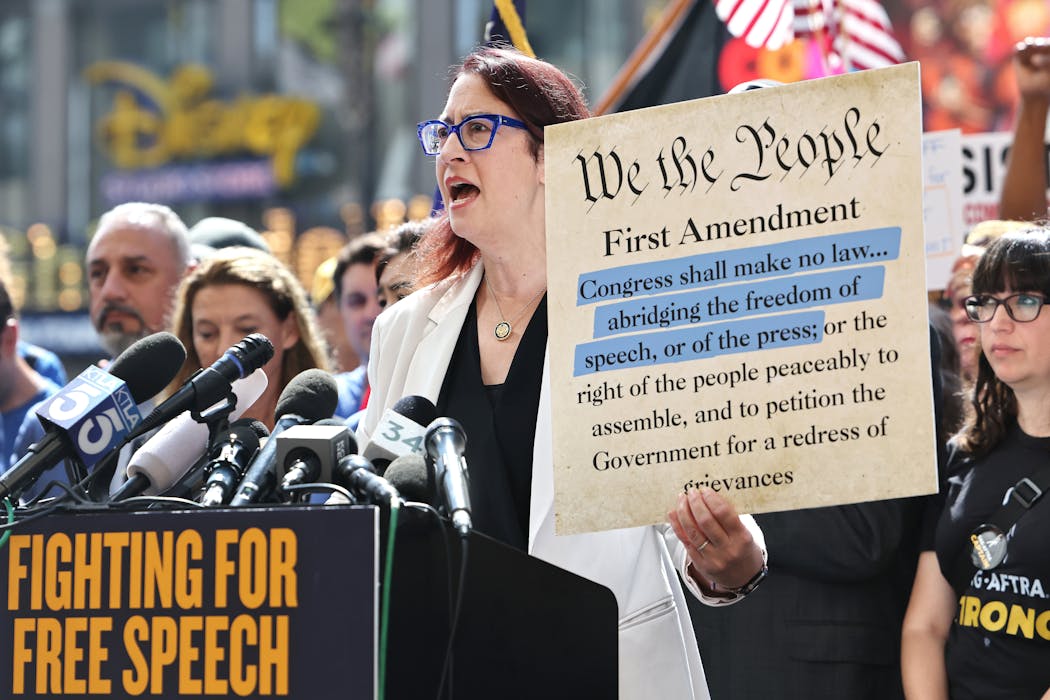
Supporters of free speech gather in September 2025 to protest the suspension of ‘Jimmy Kimmel Live!’, across the street from the theater where the show is produced in Hollywood. Mario Tama/Getty Images

Bipartisan agreement is rare in these politically polarized days.

But that’s just what happened in response to ABC’s suspension of “Jimmy Kimmel Live!” The suspension followed the Federal Communications Commission chairman’s threat to punish the network for Kimmel’s comments about Charlie Kirk’s alleged killer.

It lit up the media. Democrats and civil libertarians denounced the FCC chairman Brendan Carr for violating the First Amendment’s guarantee of freedom of speech. Voices on the right, including Senator Ted Cruz, joined them.

Within a week, Kimmel’s show was back on the air.

While bipartisan agreement may be rare, it’s not surprising that it came in defense of the First Amendment – and a popular TV show. A recent poll found that a whopping 90% of respondents called the First Amendment “vital,” while 64% believed it’s so close to perfection that they wouldn’t change a word.

In just 45 words, it bars Congress from establishing or preventing the free exercise of religion, interfering with the peoples’ right to assemble and petition, or abridging freedom of speech or the press.

I’m a historian and scholar of modern U.S. law and politics. Here’s the story of why this amendment – now considered fundamental to American freedom and identity – wasn’t part of the original Constitution and how it was included later on.

Added three years after the Constitution was ratified, it resulted from political compromise and a change of heart by framer James Madison.

An antique document with both printing and handwritten edits to it.
Handwritten revisions by senators during the process of altering and consolidating the amendments to the U.S. Constitution proposed by James Madison of Virginia.
National Archives

Soured on bills of rights

Building a strong national government was the focus of Madison and the other delegates who met in Philadelphia in May 1787 to draft the Constitution.

They believed the government created by the Articles of Confederation after the colonists declared independence was dysfunctional, and the nation was disintegrating.

The government could not pay its debts, defend the frontier or protect commerce from interference by states and foreign governments.

Although Madison and the other framers aimed to create a stronger national government, they cared about protecting liberty. Many had helped create state constitutions that included pioneering bills of rights.

Madison himself played a critical role in securing passage in 1776 of the Virginia Declaration of Rights, a monument to civil liberties.

By the time the Constitutional Convention met, however, Madison had soured on such measures. During the 1780s, he had watched with alarm as state legislatures trampled on rights explicitly guaranteed by their constitutions. Bills of rights, he concluded, weren’t sufficient to protect rights.

So Madison and his colleagues put their faith in reinventing government.

No appetite to haggle

The Constitution they wrote created a government powerful enough to promote the national interests while maintaining a check on state legislatures. It also established a system of checks and balances that ensured federal power wasn’t abused.

In the convention’s waning days, delegates briefly discussed adding a bill of rights but unanimously decided against it. They had sweated through almost four months of a sweltering Philadelphia summer and were ready to go home. When Virginia’s John Rutledge noted “the extreme anxiety of many members of the Convention to bring the business to an end,” he was stating the obvious. With the Constitution in final form, few had the appetite to haggle over the provisions of a bill of rights.

That decision nearly proved fatal when the Constitution went to the states for ratification.

The new Constitution’s supporters, known as Federalists, faced fierce opposition from Anti-Federalists who charged that a powerful national government, unrestrained by a bill of rights, would inevitably lead to tyranny.

Ratification conventions in three of the most critical states – Massachusetts, New York and Virginia – were narrowly divided; ratification hung in the balance. Federalists resisted demands to make ratification contingent on amendments suggested by state conventions. But they agreed to add a bill of rights – after the Constitution was ratified and took effect.

That concession did the trick.

A poster featuring an image of Colonial men and boys in a blacksmith shop, with 'Our Bill of Rights IS EVERYBODY'S BUSINESS' written on it.
A poster from 1959, published by the U.S. government, about the First Amendment.
Stanley Dersh citizenship poster, U.S. Government Publishing Office via Reagan Library

Harmless, possibly helpful

The three critical states ratified without condition, and by midsummer 1788, the Constitution had been approved.

However, when the First Congress met in March 1789, the Federalist majority didn’t prioritize a bill of rights. They had won and were ready to move on.

Madison, now a Federalist leader in the House of Representatives, insisted that his party keep its word. He warned that failure to do so would undermine trust in the new government and give Anti-Federalists ammunition to demand a new convention to do what Congress had left undone.

But Madison wasn’t just arguing for his party keeping its word. He had also changed his mind.

The ratification debates and Madison’s correspondence with Thomas Jefferson led him to think differently about a bill of rights. He now thought it harmless and possibly helpful. Its provisions, Madison conceded, might become “fundamental maxims of a free government” and part of “the national sentiment.” Broad popular support for a bill of rights might provide a check on government officials and how they wielded power.

Madison pushed his colleagues relentlessly. Wary of provisions that would weaken the national government, he developed a slate of amendments focused on individual rights. Ultimately, Congress approved 12 amendments – ensuring rights from freedom of speech to protection from cruel and unusual punishment – and sent them to the states for ratification.

First Amendment no cure-all

By the end of 1791, 10 of them – including the First Amendment ≠ had been ratified.

As Madison anticipated, the First Amendment wasn’t a cure for a government bent on suppressing dissent. From the Sedition Act in the 1790s to McCarthyism in the 1950s and the Trump administration’s assault on the First Amendment, government has used its awesome powers to pursue and punish critics.

On occasion, courts have intervened to protect First Amendment rights, a weapon Madison didn’t anticipate. But not always.

Perhaps the ultimate protection for First Amendment rights is “national sentiment,” as Madison suggested. Norm-breaking presidents can disregard the law, and judges may cave. But public sentiment is a powerful force, as Jimmy Kimmel can attest.

The Conversation

Donald Nieman receives funding from the National Endowment for the Humanities and the American Council of Learned Societies. He is affiliated with Braver Angels.

ref. Why free speech rights got left out of the Constitution – and added in later via the First Amendment – https://theconversation.com/why-free-speech-rights-got-left-out-of-the-constitution-and-added-in-later-via-the-first-amendment-266639