Why people are watching livestreams of influencers gambling – and how it could be fuelling addiction

Source: The Conversation – UK – By Jamie Torrance, Lecturer and Researcher in Psychology, Swansea University

Top streamers are paid by gambling operators to broadcast themselves betting, often with company money rather than their own. Beto Chagas/Shutterstock

Every night, millions of people across the world tune in to watch influencers spin slot machines, chase jackpots and ride emotional rollercoasters of wins and losses. Online viewers erupt with cheers, emojis and pleas for “one more spin”.

But behind the flashy graphics and charismatic streamers, lies a complex web of psychological triggers, parasocial relationships where fans feel like friends with creators who don’t know they exist, and normalised risk-taking.

New research by my colleagues and I into gambling livestreams reveals how these broadcasts are reshaping the landscape of online betting, and blurring the lines between entertainment and gambling advertising in ways that traditional media never could.

Gambling livestreams have exploded in popularity over the past few years. These are live broadcasts where content creators, including well known celebrities such as the musician, Drake, gamble in real time, often with slots, casino-style games such as roulette and sports betting, while thousands watch online and participate through chat.

Platforms like Twitch once hosted vast amounts of this content until implementing partial restrictions in 2022. But the streams didn’t disappear. Instead, they migrated to newer, less regulated platforms like Kick which has become popular for gambling content.

Young adults are particularly drawn to these streams. On Kick alone, for example, viewers aged 18 to 34 make up the largest demographic, representing approximately 60% of the platform’s global audience. Many of these viewers are of legal gambling age, creating a perfect storm of accessibility and influence.

The business model can be very lucrative. Top streamers are often paid by gambling operators to broadcast themselves betting, sometimes with company money rather than their own. They may earn additional revenue through affiliate links that direct viewers to betting sites. It’s advertising dressed up as entertainment, but far more powerful.

What we discovered

No empirical research had been conducted on this topic in the UK. So, we interviewed 15 young adults who watched gambling livestreams regularly, as part of a wider study. Our questioning focused on the psychological pull of gambling livestreams, what features viewers encounter and the self-reported harms they have experienced. What emerged was a portrait of sophisticated manipulation meeting genuine entertainment value.

Participants described forming deep connections with streamers, following their favourite personalities across multiple platforms like they would a friend. This pathway often started via streams unrelated to gambling, such as video game livestreams. However, when streamers then migrated to producing gambling content, many viewers followed.

What seemed to fascinate the majority of our participants were the eye-watering amounts of money staked, won and lost by streamers. In some instances, more money was lost by streamers in one evening than a single viewer would make in a year.

Collectively spectating these intense gambling sessions provided participants with a shared sense of community, with viewers either rooting for a big win or the chance to witness a crippling loss.

The casino-style features embedded into the streaming platform were also described in detail. Viewers earn “channel points” for watching streams, creating progression systems that mirror slot machine reward schedules.

They can bet these points on stream outcomes, essentially gambling on gambling. These points can then be redeemed for custom rewards, such as a shout-out from the streamer.

Most troubling was how participants told us they initially watched streams as a safer alternative to gambling themselves, hoping to satisfy their gambling urges vicariously. Instead, the opposite occurred. They reported intensified cravings and increased real-money gambling as a result of viewership. This phenomenon is known as the “urge paradox”.

Close up cropped photo of girl hands on laptop featuring online gambling
Gambling livestreams have grown in popularity in recent years.
Andrew Angelov/Shutterstock

Why this matters

Hundreds of thousands struggle with gambling harm in the UK, with young adults representing a particularly vulnerable group.

Traditional gambling advertising faces strict regulations. But livestreams exist in a regulatory vacuum. They aren’t 30-second TV spots, but multi-hour immersive experiences that build relationships, create community and normalise high-risk behaviour.

The combination is uniquely potent. Viewers aren’t just seeing ads but forming parasocial bonds with trusted figures who model gambling behaviour in real time. They’re participating through gamified features that mirror gambling mechanics. They’re watching unedited emotional reactions that feel authentic, even when the financial risk for streamers can be artificial.

Participants in our study recognised the manipulation. They knew streamers often used operator money and received revenue shares for sharing affiliate links. Yet this awareness didn’t deter them. The content remained influential regardless.

Age verification on livestreaming platforms can be particularly poor. Multiple participants noted seeing children in stream chats and described sign-up processes as requiring little more than “clicking to confirm that you’re 18 plus”.

Policymakers must treat livestreams as the powerful advertising vehicles they are, requiring mandatory disclosure of financial relationships, robust age verification and cross-border enforcement mechanisms.

Some countries are leading the way. Germany banned gambling advertising via streamers entirely in 2024, while the UK has restricted influencer marketing to minors. However, enforcement remains patchy as content simply migrates to less regulated platforms.

As these platforms multiply, comprehensive regulation that reflects the sophistication – and potential harm – of this digital gambling landscape is urgently needed. Without it, the line between entertainment and exploitation will only continue to blur.

The Conversation

Jamie Torrance has received funding from Gambling Research Exchange Ontario, the Academic Forum for the Study of Gambling (AFSG), the International Centre for Responsible Gambling and the Economic and Social Research Council.

ref. Why people are watching livestreams of influencers gambling – and how it could be fuelling addiction – https://theconversation.com/why-people-are-watching-livestreams-of-influencers-gambling-and-how-it-could-be-fuelling-addiction-266532

Brides offers a unique insight into the roots of far-right activism and Islamophobia in Britain

Source: The Conversation – UK – By Naida Redgrave, Senior Lecturer in Creative Writing & Co-Course Leader in Journalism, University of East London

Warning: includes some minor spoilers.

Brides is a warm and relatable story of two 15-year-old British Muslim schoolgirls travelling alone to Syria in 2014.

It’s not the first film to explore post-9/11 and 7/7 Britain through a Muslim lens. Films like My Brother the Devil (2012), Four Lions (2010), and After Love (2020) have each offered nuanced depictions of British Muslimhood. However, Brides is the first to address the personal impact of racism and Islamophobia through the lens of young Muslim women whose choices stem from complex social and emotional factors, rather than a duty to Islam.

The film comfortably passes the Bechdel test, which evaluates gender representation by assessing whether at least two named women engage in a conversation about something other than a man. It also passes the Riz test, an evaluative framework inspired by actor Riz Ahmed’s 2017 speech to the UK House of Commons. It measures whether Muslim characters are portrayed with agency beyond stereotypes of terrorism, oppression, or religiosity.

To achieve both is rare for Muslim representation on western screens and is what makes the film feel so refreshing. Woven throughout are delicate challenges to stereotypes often ascribed to Muslim characters.

The trailer for Brides.

Brides tells the story of Doe (Ebada Hassan) and Muna (Safiyya Ingar) who embark on a hazardous journey from the UK to Istanbul. They travel across Turkey and finally to the Syrian border. Many in the UK will recognise the real-world parallel.

Writer Suhayla El-Bushra and director Nadia Fall have stated that Brides reimagines the case of the “Bethnal Green trio”. In 2015, three east London schoolgirls, Amira Abase, Kadiza Sultana and Shamima Begum, fled the UK to become “Isis brides”, leaving their families in shock and generating much media outrage and public fury.

Yet rather than focus on radicalisation, this buddy-girl adventure is interspersed with short flashbacks and longer sequences that contextualise the girls’ desire to escape. These culminate in a racist attack on Doe by a white male classmate and Muna’s suspension from school as she retaliates violently to protect her friend. Before we arrive at this climactic point (shown shortly before the girls reach the border) there are many examples of the everyday racism and Islamophobia that blight their lives.

While the roots of Islamophobia reach deep into western orientalism (the stereotyping of eastern cultures), its modern form has dominated British political debate since the early 2000s. British mosques and Muslim communities, more generally, have persistently been portrayed as breeding grounds for anti-western rhetoric and even terrorism, through a constant stream of online and print stories.

Brides references these through a montage of Islamophobic headlines, such as the Sun’s notorious 2015 claim that one in five British Muslims have sympathy for jihadis.

Brides depicts the real-world consequences of media scaremongering through the various insults and threats that its young heroines are subject to. The unnamed white boy who later attacks shy Doe uses obscene language towards her, prods her hip with a pencil and invades her personal space in the classroom.

The more truculent and outgoing Muna is called a slur by a female classmate. Rather than punish the racist kids, the headteacher moves Muna to a different class and threatens her with the government’s counter-terrorist strategy, Prevent, for retaliating against the racist slur.

The headteacher also tells Doe that she should “rise above” racism after the white boy accuses her of not washing her hair and pulls off her headscarf in the playground.

The attack comes after Doe delivers a charity food parcel to the boy’s home from her community. His sense of personal humiliation is clearly the motivation for his later racist attack. Fall and El-Bushra’s decision to include this detail is striking, as humiliation is often discussed as a driver of misogynistic extremism, but rarely acknowledged as a root of racist or Islamophobic violence.

The uncomfortable classroom scenes echo many real-life incidents and show how, as groups like The Runneymede Trust have pointed out, government policy and the media can fuel Islamophobia in schools and everyday life.

The real Bethnal Green trio grew up in inner city London, but Brides is set in an unspecified coastal area of southern England. By choosing this location, the film again gestures toward the long-term rise of nationalism and Islamophobia in parts of the UK that have been hard hit by recession, under-investment and austerity politics, which was first noted by researchers in the 2000s.

Girls just want to have fun

The recent wave of Islamophobia and racism have been fuelled by the perception that misogyny is endemic in Muslim communities.

Although various religious doctrines are used to justify or condone violence against women, gendered violence and sexual abuse is a social problem that crosses all classes, regions and religions within the UK.

Brides highlights this point as Doe’s widowed mother is subject to the violent rages of her white boyfriend, Jon (Leo Bill) who also displays sexualised behaviour towards her daughter. As young women, both Doe and Muna attract unwanted sexual attention from older men of different racial and ethnic backgrounds, both in the UK and Turkey.

This emphasises that the sexualisation of young women is a result of patriarchy, rather than specific communities or religions. This serves as a corrective to numerous stereotypical representations of Muslim women in which they are shown only in relation to dominant men within their communities – often as either victims or terrorists.

Brides explores Muna and Doe’s friendship through banter and shared enjoyment of ordinary teen girl tastes and interests, such as fun fairs, junk food and romance.
In the end, the film is less about terrorism than about the systems that make dehumanisation seem reasonable. Fall’s timely and perceptive film succeeds not only as great female-centred drama, but as an important intervention into the crude racial politics of the contemporary moment.


Looking for something good? Cut through the noise with a carefully curated selection of the latest releases, live events and exhibitions, straight to your inbox every fortnight, on Fridays. Sign up here.


The Conversation

The authors do not work for, consult, own shares in or receive funding from any company or organisation that would benefit from this article, and have disclosed no relevant affiliations beyond their academic appointment.

ref. Brides offers a unique insight into the roots of far-right activism and Islamophobia in Britain – https://theconversation.com/brides-offers-a-unique-insight-into-the-roots-of-far-right-activism-and-islamophobia-in-britain-266876

How vaping primes the lungs for COVID-19 damage

Source: The Conversation – UK – By Keith Rochfort, Assistant Professor, School of Biotechnology, Life Sciences Institute, Dublin City University

Vitaliy Abbasov/Shutterstock

As colder months set in, respiratory infections begin to climb: everything from the common cold and flu to COVID-19. It’s a time when healthy lungs matter more than ever. Yet the very tissue that lets oxygen pass from air to blood is remarkably delicate, and habits such as vaping can weaken it just when protection is most needed.

The lungs are often pictured as two simple balloons, but their work is far more intricate. They act as a finely tuned exchange system, moving oxygen from inhaled air into the bloodstream while releasing carbon dioxide produced by the body’s cells.

At the centre of this process lies the blood–air barrier: a paper-thin layer where tiny air sacs called alveoli meet a dense network of hair-thin pulmonary capillaries. This barrier must remain both strong and flexible for efficient breathing, yet it is constantly exposed to stress from air pollution, microscopic particles and infectious microbes.

Vaping can add another layer of strain, and growing evidence shows that this extra pressure can damage the surface that makes every breath possible.


Read more:
Want to quit vaping this year? Here’s what the evidence shows so far about effective strategies


The cloud from an e-cigarette carries solvents such as propylene glycol, flavouring chemicals, nicotine (in most products) and even trace metals from the device itself. When this cocktail reaches the lungs it doesn’t stay on the surface. It seeps deeper, irritating the endothelium – the thin layer of cells lining the blood vessels that mesh with the air sacs.


Read more:
What’s in vapes? Toxins, heavy metals, maybe radioactive polonium


Healthy endothelium keeps blood flowing smoothly, discourages unnecessary clotting and acts as a selective gatekeeper for the bloodstream – controlling which substances, such as nutrients, hormones and immune cells, can pass in or out of the blood vessels while blocking harmful or unnecessary ones.

Studies show vaping can disrupt these defences, causing endothelial dysfunction even in young, otherwise healthy people. Controlled human exposure experiments reveal rises in endothelial microparticles – tiny cell fragments released when vessel linings are under stress.

My own research group has linked these changes to surges in inflammatory signals and stress markers in the blood after exposure to vaping aerosols. Together these findings indicate that the endothelium is struggling to maintain its protective role.

Laboratory work shows that vaping aerosols (even without nicotine) can loosen the tight seal of pulmonary endothelial cells. When the barrier leaks, fluid and inflammatory molecules seep into the alveoli. The result: blood–gas exchange is disrupted and respiratory infections become harder to fight.

COVID-19 is usually thought of as an infection of the airways, but the SARS-CoV-2 virus also injures blood vessels. Doctors now describe the condition as causing endotheliopathies – diseases of the blood-vessel lining. In severe cases, capillaries become inflamed, leaky and prone to clotting. That helps explain why some patients develop dangerously low oxygen levels even when their lungs are not full of fluid: the blood side of the barrier is failing.


Read more:
How COVID-19 damages lungs: The virus attacks mitochondria, continuing an ancient battle that began in the primordial soup


The virus exploits a key protein called ACE2, normally a “thermostat” that helps regulate blood pressure and vessel health. SARS-CoV-2 uses ACE2 as its doorway into cells; once the virus binds, the receptor’s protective role is disrupted and vessels become inflamed and unstable.

Vaping and COVID-19: a dangerous combination

My team is using computer models to investigate how vaping may affect COVID-19 infections. Evidence already shows vaping can increase the number of ACE2 receptors in the airways and lung tissue. More ACE2 means more potential entry points for the virus – and more disruption exactly where the blood–air barrier needs to be strongest.

Both vaping and COVID-19 drive inflammation. Vaping irritates and inflames the blood-vessel lining while COVID-19 floods the lungs with pro-inflammatory molecules. Together they create a “perfect storm”: capillaries become leaky, fluid seeps into the air sacs and oxygen struggles to cross the blood–air barrier. COVID-19 also raises the risk of blood clots in the lung’s vessels, while vaping has been linked to the same, compounding the danger.


Read more:
Is lung inflammation worse in e-cigarette users than smokers, as a new study suggests?


Vaping can also hinder recovery after a bout of COVID-19. Healing the fragile exchange surface requires every bit of support the lungs can get. Vaping adds extra stress to tissues the virus has already damaged, even if the vaper feels no immediate symptoms. The result can be prolonged breathlessness, persistent fatigue and a slower return to pre-illness activity levels.

The blood–air barrier is like a piece of delicate fabric: it holds together under normal wear but can tear when pushed too hard. Vaping weakens that weave before illness strikes, making an infection such as COVID-19 harder to overcome. The science is still evolving, but the message is clear: vaping undermines vascular health. Quitting, even temporarily, gives the lungs and blood vessels the cleaner environment they need to heal and to keep every breath effortless.

The Conversation

Keith Rochfort receives funding from Research Ireland.

ref. How vaping primes the lungs for COVID-19 damage – https://theconversation.com/how-vaping-primes-the-lungs-for-covid-19-damage-266162

Green electricity deals are too complex – even as a researcher in sustainability I’ve been confused

Source: The Conversation – UK – By Lala Rukh, PhD Candidate, Energy, University of Galway

P Stock/Shutterstock

After comparing electricity tariffs on a spreadsheet, I can confirm that deciphering the plans feels a bit like learning ancient Greek.

As part of my doctoral research, I decided to explore smarter electricity plans (those that use smart meters and offer fluctuating prices) from different providers. That’s when I realised the standing charges – those fixed costs all customers must pay regardless of usage – took up such a large proportion of my bill that other changes might not make much difference.

Three spreadsheets and two mugs of coffee later, it was clear that choosing the “smarter” electricity plan is more of a labyrinth than a lightbulb moment. If a researcher in sustainability gets tangled in opaque pricing structures, what hope is there for the rest of the population?

In the UK, as well as in Ireland, energy standing charges are regulated, fixed daily fees. All suppliers levy these fees (as well as what’s known as a “public service obligation levy” in Ireland) regardless of how much electricity the customer uses. The charges cover upkeep of the network, meter servicing, billing and customer support.

My PhD focuses on energy performance in homes and sustainability behaviour. As part of my ongoing research, I asked people if they had ever thought about switching their energy plan or provider. Typically, they would shrug and say that they thought they were on the best one.

Many don’t know (or don’t care) about green tariff options. And many are not willing to endure the paperwork or the headache of changing plans. This tends to be the case even if it means they are stuck with something that is far from ideal.

Why is it so complex? First, there are about 20 providers in the UK and a dozen in Ireland. And then there are standard or smart meters to decide on, and 24-hour flat rates or peak/off-peak bands. This is before consumers even get to the “green premium” that pushes up the price they will pay per kWh slightly.

Once consumers have weighed all this up, some still have to consider things like direct-debit discounts, export credits if they have solar panels, and rates for charging electric vehicles. They could be forgiven for wondering if doing the right thing by the planet was meant to be this hard.

The puzzle behind ‘green’ plans

Beyond money and frustration, I found that there is an emotional toll for people in feeling like they have done something meaningful only to hit another barrier further down the line. That disillusionment can lead to “sustainability fatigue”, where the urge to give up outweighs the urge to improve.

In both the UK and Ireland, providers are also required to give consumers an estimated annual energy bill. This figure is generic (it is based on the national average of a three- or four-bedroom house) and as such it doesn’t help households greatly.

From my research, I have found that houses (and especially apartments) of very similar build type vary significantly in terms of energy use. After all, people clearly consume energy differently.

Smart meters could help hugely because they give households an insight into their energy use moment by moment. For instance, the energy expert Hannah E. Daly discovered that an old water pump in her home was silently consuming at least 800 watts of power.

This is the strength of smart meters – they make the invisible visible. When people can see which appliances are driving up their energy use, they are more motivated to change their behaviour or upgrade inefficient devices. They could also shift consumption to cheaper or cleaner times of day – the hours when energy use is best suited to the grid and often cheapest for the consumer (for example, 2am until 5am).

Leaders, brands and marketers often urge consumers to live more sustainably and switch to renewable energy and recyclables where possible. Yet the fine print can feel like it’s designed to trip people up. Sustainability should be baked into every product and service as standard.

For example, the EU-mandated energy label makes it easier for consumers to choose more energy-efficient appliances. In a similar way, all products and services should have a standardised sustainability rating — gold, silver or bronze could work well for this — to help customers understand how sustainable each option is.

Energy suppliers force the work on to consumers, making them jump through hoops just to be a bit greener. If going sustainable is truly the future, it probably shouldn’t feel like a luxury.

The Conversation

Lala Rukh receives funding from the Research Ireland for the ERBE Centre for Doctoral Training under grant agreement No 18/EPSRC-CDT/3586. She is affiliated with the University of Galway, Ireland and MaREI, the Research Ireland Centre for Energy, Climate and Marine research and innovation.

ref. Green electricity deals are too complex – even as a researcher in sustainability I’ve been confused – https://theconversation.com/green-electricity-deals-are-too-complex-even-as-a-researcher-in-sustainability-ive-been-confused-265825

Why US military action against Latin America’s cartels won’t win the war on drugs

Source: The Conversation – UK – By Amalendu Misra, Professor of International Politics, Lancaster University

The Trump administration appears to be laying the groundwork for a possible military escalation against Latin American drug traffickers. Rawpixel.com / Shutterstock

At the start of September 2025, US president Donald Trump sent a naval task force into the Caribbean to tackle drug trafficking in the region. The initiative has led to strikes on four alleged drug boats off the Venezuelan coast so far, killing at least 21 people.

The strikes have been condemned by Venezuela and Colombia, while some international lawyers and human rights groups have questioned their legality. Human Rights Watch, for example, has suggested the strikes amount to “unlawful extrajudicial killings”. However, these attacks are unlikely to stop.

In a post on X on October 3, after US forces killed four people in an attack on a suspected drug boat, US defence secretary Pete Hegseth wrote: “These strikes will continue until the attacks on the American people are over!!!!” Trump claimed, without providing evidence, that this boat was carrying enough drugs to kill 25,000 to 50,000 people.

The Trump administration now looks to be considering moving its campaign in the Caribbean to a second phase. On October 5, while speaking at a US Navy base in Virginia, Trump boasted that drug traffickers are “not coming in by sea any more, so now we’ll have to start looking about the land”. A leaked memo sent to Congress a few days earlier also suggests the US government has decided it is in a “non-international armed conflict” with drug cartels.

Trump’s threats to escalate military pressure against the cartels may be part of a broader campaign to force Venezuela’s leader, Nicolás Maduro, from office. The White House sees his government as illegitimate and has consistently accused Maduro of being a central figure in the Latin American drugs trade. There is little proof that this is the case.

A wider military confrontation with cartels across the region may therefore be unlikely. But it should not be discounted. On October 7, CNN reported that the Trump administration has produced a classified legal opinion that seeks to justify lethal strikes against a list of cartels and suspected drug traffickers.

The opinion argues that the president is allowed to authorise deadly force against a broad range of cartels, beyond those the US government designated as terrorist organisations in early 2025. But is a direct military confrontation really a viable strategy to curtail the power and reach of cartels in the region?


Read more:
Trump labels drug cartels as terrorist groups – what it means for Mexico and beyond


Striking the cartels

Some observers, including the US-based Washington Office on Latin America, have suggested that “the US military’s overwhelming capacities would allow it to disrupt the activities of a specific criminal group, destroy complexes of drug labs and capture kingpins”.

These moves would not be without their challenges. In response to direct military action, it is possible that the cartels may look to attack US military personnel and civilians across the region. The cartels are vindictive in nature and have a history of targeting law enforcement, military personnel and government officials throughout Latin America.

Shortly after becoming president of Mexico in 2006, Felipe Calderón declared a “war on drugs” and deployed military force against the cartels. They retaliated violently, with many public officials assassinated in broad daylight. The cartels may well respond in a similar way if US forces launch operations against them.

This could include retaliation within US borders. In its 2024 National Drug Threat Assessment report, the US Drug Enforcement Administration (DEA) detailed how the cartels have deep networks within the US. These networks, which span from large cities such as Los Angeles and Chicago to rural areas, provides them with the infrastructure to carry out retaliatory attacks.

The US homeland security secretary, Kristi Noem, revealed in an interview with Fox News on October 5 that “cartels, gangs and terror groups” had already “put bounties on the heads of several federal immigration agents, offering US$10,000 (£7,500) to kill them and US$2,000 for their capture”.

“They’ve released their pictures; they’ve sent them between their networks”, Noem added. “It’s an extremely dangerous and unprecedented situation.” The cartels engage in various other criminal activities in addition to trafficking drugs, including the smuggling of migrants into the US.

The killing of a high-value drug kingpin or the arrest of a cartel boss also does not necessarily bring an end to that organisation. It only leads to fragmentation and the emergence of new tiers of leaders and groups that are often more violent than their predecessors.

Research supports this argument. The killing of the Los Zetas cartel leader, Heriberto “El Lazca” Lazcano, in October 2012 by Mexican marines was followed by higher levels of gang violence in the subsequent years as internal conflict between different factions intensified.

Addiction at home

Fentanyl and other opioids entering the US from Latin America have fuelled the worst drugs crisis in the country’s history. According to the US National Institute of Health, more Americans were killed by fentanyl-laced pills and other addictive drugs in 2021 alone than in all the wars the US has fought since the end of the second world war.

The DEA says Mexican criminal organisations, including the Sinaloa Cartel, play a key role in producing and delivering fentanyl and other illicit drugs into the US. But, to truly be successful in its war against the cartels, the US government needs to first address the problem of drug addiction at home.

According to a national 2023 survey on drug use in the US by American Addiction Centers, 48.5 million Americans aged 12 and older have battled a substance use disorder. This corresponds to 16.7% of the total population. A war on drugs needs to be a war against addiction in the US. Anything short of that will only fix the problem temporarily.

The Conversation

Amalendu Misra is a recipient of Nuffield Foundation and British Academy fellowships.

ref. Why US military action against Latin America’s cartels won’t win the war on drugs – https://theconversation.com/why-us-military-action-against-latin-americas-cartels-wont-win-the-war-on-drugs-266933

James Comey’s indictment is a trademark tactic of authoritarians

Source: The Conversation – USA – By Cassandra Burke Robertson, Professor of Law and Director of the Center for Professional Ethics, Case Western Reserve University

Former FBI Director James Comey speaks to reporters on Capitol Hill in Washington on Dec. 7, 2018. AP Photo/J. Scott Applewhite

Former FBI Director James Comey was indicted by a federal grand jury on Sept. 25, 2025 – only the second time in history an FBI director has faced criminal charges.

The indictment came just five days after President Donald Trump took to social media to demand that Comey be prosecuted, and three days after Trump installed a former aide as the prosecutor to bring the case.

Legal experts across the political spectrum describe this as an unprecedented political prosecution that breaks fundamental democratic norms and mirrors tactics used by authoritarian leaders worldwide.

As a professor of law, I think Comey’s indictment is momentous because it tests a principle that has protected American democracy for 50 years: Presidents should not direct prosecutors to charge their political enemies.

When leaders can abuse the justice system to target critics and investigators, the rule of law collapses.

An unconstitutional indictment

The evidence of political interference in Comey’s indictment is unusually strong. Trump waged an eight-year vendetta against Comey after the FBI investigated Russian interference in the 2016 presidential election.

On Sept. 20, Trump posted on Truth Social demanding prosecution: “What about Comey, Adam ‘Shifty’ Schiff, Leticia??? They’re all guilty as hell… We can’t delay any longer… JUSTICE MUST BE SERVED, NOW!!!”

After the indictment, Trump called Comey “one of the worst human beings this country has ever been exposed to.”

The Fifth Amendment protects against vindictive and selective prosecution. To prove vindictive prosecution, a defendant must show through objective evidence that the prosecutor acted with “genuine animus” and that the defendant would not have been prosecuted except for that hostility.

Five men in suits and ties sit at a table.
Comey listens to the committee chairman at the beginning of the Senate Intelligence Committee hearing on Capitol Hill on June 8, 2017, in Washington.
AP Photo/Alex Brandon

As the U.S. Court of Appeals for the 4th Circuit explained in United States v. Wilson in 2001, the government cannot prosecute someone to punish them “for doing what the law plainly allows him to do.” When circumstances create a realistic likelihood of vindictiveness, the burden shifts to the government to justify its conduct.

After Comey’s indictment, Jordan Rubin, a former prosecutor in the Manhattan D.A.’s office, stated: “If the Trump administration’s prosecution of James Comey isn’t ‘selective’ and ‘vindictive,’ then those words have lost all meaning.”

Additionally, three former White House ethics counsels – Norman Eisen, Richard Painter and Virginia Canter – wrote to Congress after Comey’s indictment, saying that in the U.S. “a president should never order prosecutions of his enemies. That happens in Putin’s Russia, and it has happened in other dictatorships, but not here. Until now.”

They concluded: “If the Trump administration can do this, then no American is safe from political prosecution.”

Broken judicial norms

For 50 years since the Watergate scandal that exposed President Richard Nixon’s abuses of power, American presidents have followed a core principle: They must not interfere in decisions about who gets investigated or charged, especially not for political reasons.

The Justice Department’s manual includes the post-Watergate requirement that legal judgments must be “impartial and insulated from political influence.”

The three former ethics counsels emphasized that during their service, they “never once saw” Presidents George W. Bush, Barack Obama or Bill Clinton “suggest that the Department of Justice should prosecute a specific person, much less a political adversary.”

Comey was indicted on two counts – one count of making a false statement to Congress and one count of obstruction of a congressional proceeding, both in connection with his testimony before a Senate committee in September 2020.

The allegations against Comey were reviewed multiple times. Special counsel John Durham examined them during Trump’s first term. Prosecutors with the U.S. attorney’s office in Washington, D.C., during the Biden administration called Comey to testify before a grand jury about allegedly using his friend Daniel Richman as a conduit to leak information to the press. And career prosecutors in 2025 under former U.S. Attorney Erik Siebert also reviewed the allegations. Everyone declined to charge Comey.

The procedural breakdown reveals how fundamentally this case violates norms.

Career prosecutors wrote a memo in September 2025 stating they could not establish probable cause to charge Comey. When Siebert refused to proceed, Trump removed him and installed Lindsey Halligan, Trump’s former personal defense attorney. She has no prosecutorial experience.

Three days later, Halligan brought the indictment. She signed it alone – no career prosecutors put their names on it, as is usually done. The grand jury rejected one of the three charges prosecutors tried to bring, a rare signal of weak evidence.

Comey’s son-in-law, Troy A. Edwards Jr., a federal prosecutor in the same office where Halligan now works, resigned immediately, stating he was leaving “to uphold my oath to the Constitution.”

Comey was arraigned on Oct. 8 and pleaded not guilty.

Echoes of authoritarians

Prosecuting former law enforcement officials who investigated the country’s leader is not typical of democracies. It is a hallmark tactic of authoritarian rulers seeking to consolidate power.

In Turkey, President Recep Tayyip Erdogan arrested his main political rival in March 2025 on corruption charges that critics call politically motivated. Between 2014 and 2020, Erdogan investigated 160,000 Turks for insulting the president and prosecuted 45,000 of them, including a 14-year-old boy. More than 1,400 people were arrested and detained in nationwide protests.

Russia under Vladimir Putin provides the starkest example. Opposition leader Alexei Navalny was poisoned by security services, imprisoned on politically motivated charges and ultimately died in prison in 2024. Even the lawyers who defended Navalny faced criminal prosecution.

Two men in suits and ties smile at each other.
Russian President Vladimir Putin, right, and Hungarian Prime Minister Viktor Orban attend a joint news conference outside Moscow on Feb. 17, 2016.
Maxim Shipenkov/Pool Photo via AP

In Venezuela, President Nicolás Maduro has systematically arrested opposition leaders and forced critics into exile. Maduro inherited a stacked Supreme Court from his predecessor, Hugo Chávez, that has systematically nullified opposition legislation. The court has also orchestrated takeovers of opposition parties and certified Maduro’s fraudulent 2024 election claim despite opposition evidence showing it won by a 2-to-1 margin.

And Hungary’s Viktor Orban created the Sovereignty Protection Office with powers to investigate any organization or person it suspects of receiving foreign support to influence public life or the democratic process. Orban also installed a loyalist chief prosecutor under whose office “numerous high-profile allegations of corruption have been either quietly shelved or investigated perfunctorily before being dropped,” according to EU Today.

The pattern is clear: When leaders can use the justice system to protect themselves, whether by prosecuting investigators, refusing to investigate corruption or intimidating the judiciary, democratic institutions erode and the rule of law becomes a tool of political control rather than a constraint on power.

What this means for America

Legal experts predict Comey will be acquitted – the evidence is weak and the political interference is blatant.

But as a scholar of legal ethics, I believe the damage is already done.

Trump has shown he can force prosecutors to charge his enemies. Future government officials now face an impossible choice: investigate powerful people, as Comey did, and risk prosecution, or decline to investigate and allow corruption to flourish.

Yet there may be a silver lining: When governments break norms this brazenly, they often create legal vulnerabilities.

Legal commentator Ed Whelan has pointed out that Halligan’s appointment may violate a 1986 Office of Legal Counsel memo authored by then-Deputy Assistant Attorney General Samuel Alito, which concluded that only one interim U.S. attorney appointment is permitted under the statute. Former interim U.S. Attorney Erik Siebert had already served that term. If Halligan wasn’t validly appointed, the indictment may be legally void.

The precedent this case sets affects every American. As the former ethics counsels wrote after Comey’s indictment: “No American should have to go through the experience of being prosecuted under these circumstances, and the rest of us should not have to live in fear that it may also happen to us.”

The Conversation

Cassandra Burke Robertson does not work for, consult, own shares in or receive funding from any company or organization that would benefit from this article, and has disclosed no relevant affiliations beyond their academic appointment.

ref. James Comey’s indictment is a trademark tactic of authoritarians – https://theconversation.com/james-comeys-indictment-is-a-trademark-tactic-of-authoritarians-266214

Nobel chemistry prize awarded for crystal materials that could revolutionise green technology

Source: The Conversation – UK – By John Griffin, Professor in Materials Chemistry, Lancaster University

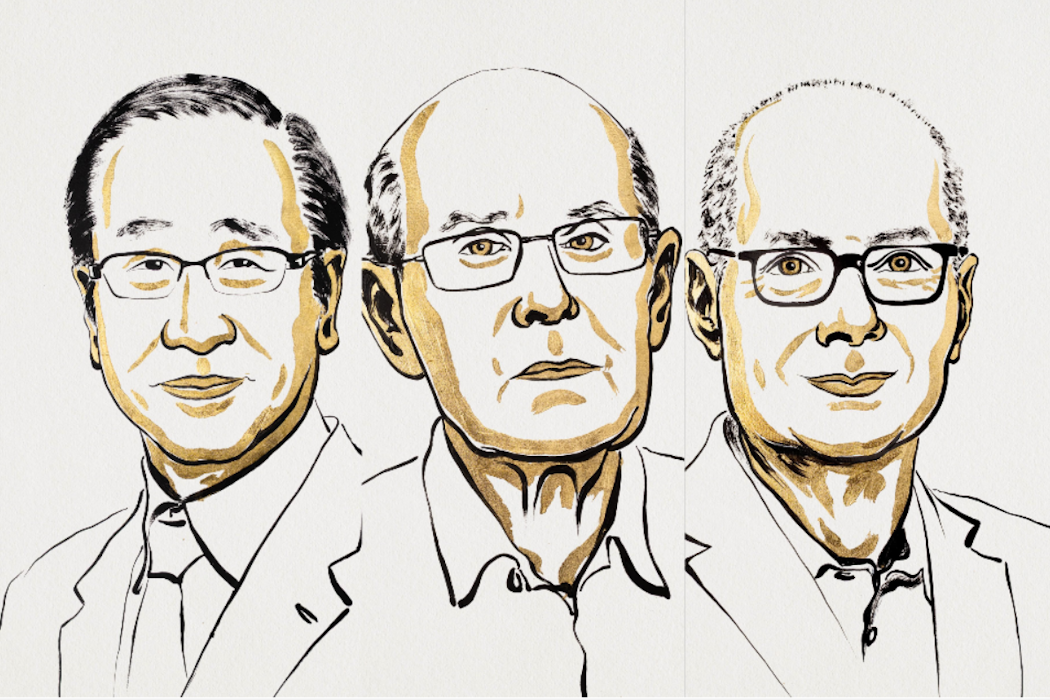
Three scientists have been awarded the 2025 Nobel prize in chemistry for discovering a new form of molecular architecture: crystals that contain large cavities.

Susumu Kitagawa from Kyoto University, Japan, Richard Robson from the University of Melbourne, Australia, and Omar M. Yaghi from the
University of California, Berkeley, in the US, will share a prize sum of 11 million Swedish kronor (£870,000).

The prize recognises the pioneering contributions of the three scientists in the development of something called metal-organic frameworks (Mofs). Mofs are a diverse class of crystalline materials that have attracted much attention in chemistry due to the presence of microscopic open cavities in their structures. They are helping to revolutionise green technology, such as harvesting water from desert air and capturing CO₂.

The widths of the cavities can range from a few angstroms (an angstrom is a unit of length equal to one hundred-millionth of a centimetre) to several nanometres (a millionth of a millimetre). That means they are far too small to see with the naked eye or even with most forms of microscopes. But they’re the perfect size for housing various molecules.

The development of Mofs can be traced back to the late 1950s when researchers started to discover “coordination polymers”. These are materials made up of linked chains of metal ions (atoms that have lost or gained electrons) and carbon-based bridging molecules known as linkers. These materials did not contain cavities, but they were based on the same metal-organic chemistry that would later give rise to Mofs.

In the late 1980s, Robson’s research group reported that some coordination polymers could be prepared as framework-like structures where, crucially, the carbon-based linkers formed three-dimensional arrangements around clusters of liquid solvent molecules. As mentioned in Robson’s research article, this revealed “an unusual situation in which approximately two-thirds of the contents of what is undoubtedly a crystal are effectively liquid”.

Image of Robson's structure made of copper ions and a molecule with four arms, each with a nitrile at the end. When the substances were combined, they formed an ordered and very spacious crystal.
Screenshot at.
Nobelprize outreach, CC BY-SA

In the mid-late 1990s, Yaghi’s group demonstrated that it was possible to prepare coordination polymers that retained their structures even after the solvent molecules were removed from the cavities. This was a surprising result, which dispelled the prevailing assumption that such frameworks are fragile and would collapse if the solvent was removed.

In 1997, Kitigawa’s research group showed that the open cavities could be used to absorb gas molecules. He also showed that, in many cases, the framework itself expands as gas molecules are absorbed into it and contracts as they are released. These coordination polymers with permanent, open cavities came to be known as Mofs.

Image of Yaghi's stable material, which has cubic spaces. Just a couple of grams can hold an area as big as a football pitch.
In 1999, Yaghi constructed a very stable material, MOF-5, which has cubic spaces. Just a couple of grams can hold an area as big as a football pitch.
Nobel prize outreach

The discoveries by the three scientists effectively marked the birth of modern Mof chemistry, with many thousands of research articles published on them since.

Wide range of applications

Why are Mofs so interesting for chemists? The microscopic cavities within Mofs provide a unique and controllable location for chemistry to take place. A key application of Mofs is gas storage. In many cases, these materials can hold gases at much higher densities than in their free gaseous state.

This offers significant advantages for green technologies such as fuel-cell-powered vehicles, in which hydrogen fuel has to be transported as efficiently as possible. Many Mofs work particularly well for specific gases, which means they can also help separate gas mixtures in exhaust streams, or capture CO₂ from the air to mitigate the effects of global warming.

Mofs can also act as effective catalysts for chemical reactions taking place in the cavities. One of the key advantages of Mofs as catalysts is that it is relatively straightforward for chemists to switch and swap the metals and carbon-based linkers in order to tune the properties for a particular purpose.

As well as gas molecules, Mofs can also accommodate other small molecules, such as pharmaceuticals. This means they can be used to store and deliver drugs to a particular target, where their porous nature allows for controlled release of therapeutic chemicals.

In recent years, Mofs have shown promise for many other applications, including batteries, thermal energy storage and chemical sensors (devices that can monitor and detect chemicals such as contaminants). Excitingly, there remain many other applications that have yet to be explored.

Despite having been discovered over three decades ago, Mofs remain one of the hottest research areas in materials chemistry and will no doubt do so for many years to come.

The Conversation

John Griffin receives funding from the Engineering and Physical Sciences Research Council (EPSRC) and the Faraday Institution, and has previously received funding from the Leverhulme Trust.

ref. Nobel chemistry prize awarded for crystal materials that could revolutionise green technology – https://theconversation.com/nobel-chemistry-prize-awarded-for-crystal-materials-that-could-revolutionise-green-technology-267033

Las arquitecturas invisibles atrapan el Nobel de Química 2025

Source: The Conversation – (in Spanish) – By Antonio M. Rodríguez García, Profesor Titular de Universidad, Química Orgánica, Universidad de Castilla-La Mancha

Susumu Kitagawa, Richard Robson y Omar Yaghi, ganadores del Nobel de Química 2025. Niklas Elmehed © Nobel Prize Outreach, CC BY-NC

Construir materiales cristalinos con espacios gigantescos a escala atómica capaces de capturar, almacenar y transformar moléculas no solo parece el guion de una película futurista. También es un sueño científico hecho realidad por los galardonados por el Premio Nobel de Química este año.

Susumu Kitagawa, Richard Robson y Omar M. Yaghi han desarrollado los entramados metal-orgánicos (MOF, por sus siglas en inglés), una clase de materiales que ha revolucionado la química de materiales y que abre nuevas vías para abordar desafíos globales como el cambio climático, la escasez de agua o la transición hacia energías limpias.

El poder de las “jaulas” moleculares

Los MOF son redes tridimensionales formadas por nodos metálicos conectados mediante moléculas orgánicas. Esta combinación crea una estructura cristalina altamente porosa: hasta el 90 % de su volumen puede ser vacío y un solo gramo puede desplegar una superficie interna de hasta 6 000 m². Dicho de otro modo, una cucharadita de polvo de MOF puede tener una superficie equivalente a la de un campo de fútbol.

Su verdadera revolución es que son diseñables a la carta. Al cambiar el tipo de metal y las moléculas orgánicas, los investigadores pueden ajustar con precisión el tamaño de los poros, la forma de los canales y la química de sus paredes internas para hacer que interactúen con moléculas concretas. Esta modularidad es posible gracias a la llamada química reticular, una disciplina que construye materiales siguiendo patrones topológicos predecibles, casi como diseñar edificios con piezas de Lego moleculares.

Por qué son tan importantes

Son muchas sus aplicaciones, con impacto en ámbitos muy importantes de la vida diaria. Por ejemplo, sirven para:

  • Captura y almacenamiento de gases contaminantes. Algunos MOF atrapan dióxido de carbono, incluso a bajas concentraciones, algo esencial para reducir las emisiones industriales y, en el futuro, capturar CO₂ directamente del aire.

  • Transición energética limpia. Su capacidad para almacenar hidrógeno y metano de manera densa y segura los convierte en aliados clave para desarrollar combustibles limpios y avanzar hacia una economía descarbonizada.

  • Obtención de agua en lugares áridos. Existen MOF que absorben vapor de agua, incluso cuando la humedad es mínima, lo que permite diseñar dispositivos portátiles que “fabrican” agua potable a partir del aire del desierto.

  • Catálisis de precisión y química sostenible. Al actuar como microfábricas moleculares, los MOF pueden catalizar reacciones dentro de espacios confinados. Con ello, imitan la precisión de las enzimas y reducen el consumo energético y la generación de residuos.

  • Medicina avanzada y sensores. Su enorme superficie y la facilidad para modificarlos con moléculas activas los hace útiles en imagen biomédica, liberación controlada de fármacos o sensores químicos de alta sensibilidad.

De curiosidad académica a tecnología transformadora

Hace apenas dos décadas, los MOF eran un experimento de laboratorio con nombres complejos y aplicaciones hipotéticas. Hoy son una plataforma tecnológica en rápido desarrollo, estudiada tanto por grupos académicos como por grandes empresas químicas y energéticas.

Sus posibilidades se han multiplicado gracias a técnicas de síntesis más eficientes –que incluyen métodos ecológicos como la mecanoquímica o la sonoquímica, en las que las reacciones químicas se activan con métodos mecánicos o mediante ondas sonoras, respectivamente– y a herramientas de simulación computacional que permiten predecir estructuras antes de fabricarlas.

Un Nobel que mira al futuro

El galardón de 2025 no premia solo un descubrimiento elegante, sino que pone el foco en una nueva forma de pensar la química de materiales: pasar del ensayo y error a la ingeniería molecular racional.

En un mundo que necesita urgentemente tecnologías para capturar CO₂, gestionar el agua, almacenar energía limpia y reducir residuos industriales, los MOF son una pieza clave del futuro sostenible.

Además, este Nobel lanza un mensaje inspirador: la química, a menudo vista como sinónimo de contaminación, también puede ser una herramienta poderosa para proteger el planeta. Los entramados metal-orgánicos son la prueba de que imaginar y construir estructuras invisibles, átomo a átomo, puede tener un impacto muy real en nuestra vida cotidiana y en la salud del medio ambiente.

The Conversation

Las personas firmantes no son asalariadas, ni consultoras, ni poseen acciones, ni reciben financiación de ninguna compañía u organización que pueda obtener beneficio de este artículo, y han declarado carecer de vínculos relevantes más allá del cargo académico citado anteriormente.

ref. Las arquitecturas invisibles atrapan el Nobel de Química 2025 – https://theconversation.com/las-arquitecturas-invisibles-atrapan-el-nobel-de-quimica-2025-266917

Les Français face à la peine de mort, une histoire passionnelle

Source: The Conversation – in French – By Nicolas Picard, Chercheur associé au centre d’histoire du XIXème siècle, Université Paris 1 Panthéon-Sorbonne

Robert Badinter entre au Panthéon ce 9 octobre. Il fut la grande figure du combat contre la peine de mort au moment de son abolition en 1981. À l’époque, 62 % des Français y étaient pourtant favorables. Quel rôle l’opinion publique a-t-elle joué dans les débats relatifs à la peine capitale au cours du XXe siècle ? Quels ont été les déterminants – notamment médiatiques – de son évolution en faveur ou contre l’abolition ?


Ce jeudi 9 octobre, Robert Badinter entre au Panthéon, en hommage à son rôle dans l’abolition de la peine de mort, et, en juin 2026, Paris accueillera le 9e Congrès mondial contre la peine de mort. Cette abolition est inscrite dans la Constitution depuis 2007, après un vote quasi unanime des parlementaires (828 pour, 26 contre). Tout concourt à en faire aujourd’hui l’une des « valeurs de la République » les plus consensuelles, enseignée dans les manuels scolaires et défendue par la diplomatie française. L’abolition n’apparaît guère menacée, y compris à l’extrême droite : les partis politiques ne font plus figurer le rétablissement de la peine capitale dans leur programme, malgré les déclarations de certaines personnalités.

Pourtant, la peine de mort a suscité des débats particulièrement vifs dans notre pays. Indépendamment des arguments philosophiques et scientifiques sur sa légitimité et sur son efficacité dissuasive, ses partisans ont longtemps pu s’appuyer sur le « sentiment public » de la population, auquel la répression pénale devait nécessairement s’accorder. Les opposants ont, à l’inverse, souligné à quel point ce sentiment était versatile, superficiel, et difficilement évaluable. La question de l’adhésion populaire à la peine capitale s’est ainsi reconfigurée à plusieurs reprises au cours du siècle dernier.

L’échec de l’abolition en 1908 : une opinion publique manipulée ?

L’idée qu’une écrasante majorité de citoyens serait en faveur de la peine de mort est largement répandue au début du XXe siècle, ce qui pourtant n’allait pas de soi au XIXe. Victor Hugo, lors de son discours à l’Assemblée nationale en 1848, affirme que, lors de la révolution de février, « le peuple […] voulut brûler l’échafaud » et regrette que l’on n’ait pas été « à la hauteur de son grand cœur ».

En 1871, la guillotine est d’ailleurs effectivement incendiée par un groupe de gardes nationaux pendant la Commune. Ce sont des partis progressistes, se présentant comme des défenseurs des intérêts populaires, qui poussent le thème de l’abolition dans leurs programmes, des socialistes aux radicaux. Ces derniers mettent l’abolition à l’ordre du jour parlementaire en 1906. Le président Fallières commence alors à gracier systématiquement les condamnés à mort en attendant l’examen du projet.

L’échec des [abolitionnistes] en 1908, témoigne d’un revirement spectaculaire, dans lequel l’évocation, ou la fabrication, de l’opinion publique joue le rôle principal. En pleine crise sécuritaire, alors que la presse déborde de faits divers sanglants et s’inquiète de la menace croissante des « apaches », ces jeunes voyous des faubourgs prêts à tous les crimes, l’abolition et les grâces présidentielles sont prises pour cible. De grands titres de la presse populaire n’hésitent pas à susciter l’engagement de leurs lecteurs, selon une logique réclamiste (visant à créer un évènement destiné à attirer l’attention du plus grand nombre).

À l’occasion d’une sordide affaire de meurtre d’enfant, l’affaire Soleilland, le Petit Parisien organise un « référendum »-concours rassemblant 1 412 347 réponses, avec un résultat sans appel : 77 % sont contre l’abolition. La mobilisation « populaire » s’observe également dans les pétitions des jurys s’élevant contre l’abolition, et dans la recrudescence des condamnations capitales. Dans l’Hémicycle, les députés opposés au projet évoquent cet état d’esprit d’une population inquiète. Cette popularité de la peine de mort semble vérifiée par les « retrouvailles » enthousiastes du public avec le bourreau, lors de la quadruple exécution de Béthune (Pas-de-Calais), en 1909, qui met un terme au « moratoire » décidé par Fallières.

Ces campagnes de presse et de pétitions des jurys reflètent-elles bien l’état de l’opinion publique ? Les principaux quotidiens sont ici juges et parties, prenant fait et cause pour la peine de mort et appelant leurs lecteurs à appuyer leur démarche. Le choix de faire campagne sur ce thème est un moyen pour les patrons conservateurs de ces titres, comme Jean Dupuy, de mettre en difficulté le gouvernement Clemenceau. De même, les pétitions des jurys sont en grande partie inspirées par une magistrature traditionnellement conservatrice. Il est certain que l’« opinion publique » a été influencée, mais l’écho rencontré par ces entreprises dans la population suppose une certaine réceptivité de celle-ci. En tous les cas, cette crainte de l’opinion a suffi à modifier les positions de nombreux députés radicaux, ralliés aux « morticoles ».

Retournement de l’opinion à partir des années 1950

La période s’étendant de l’échec abolitionniste de 1908 à l’après-Seconde Guerre mondiale, marquée par les violences de masse, n’est guère propice à une reprise du débat. La Libération et l’épuration représentent sans doute le point d’acmé dans l’adhésion de la population au principe de la mise à mort. La haine contre les collaborateurs conduit, dans les premiers mois, à des lynchages et à une sévérité extrême des tribunaux chargés de l’épuration, mais aussi des cours d’assises ordinaires.

Néanmoins, passée cette vague vindicative, la peine de mort perd rapidement du terrain (du moins en France hexagonale). Au début des années 1950, le nombre de condamnations capitales s’effondre, passant de plusieurs dizaines à quelques unités par an, des propositions de loi en faveur de l’abolition sont régulièrement déposées, à gauche comme à droite, des comités militants se forment. Surtout, les Français ne semblent plus aussi réceptifs aux campagnes de presse prônant la sévérité. Alors que le journal Combat s’engage en avril 1950 pour élargir la peine capitale aux parents dont les maltraitances ont entraîné la mort de leurs enfants, les courriers des lecteurs poussent le quotidien à réorienter son propos pour dénoncer les « causes profondes du mal » : taudis, misère et alcoolisme.

C’est à cette époque que les sondages, nouvel outil venu des États-Unis, permettent d’objectiver l’opinion publique et posent régulièrement la question de la peine de mort. La courbe du soutien à l’abolition s’élève à partir du milieu des années 1950 : de 19 % en 1956, elle passe à 58 % en 1969, à la faveur de la prospérité économique retrouvée et de la contestation croissante des valeurs autoritaires. Nombre d’intellectuels s’engagent et influencent l’opinion par leurs œuvres, qu’il s’agisse des écrivains Albert Camus ou Marcel Aymé, du cinéaste André Cayatte ou de l’avocat Albert Naud. Avec le concile Vatican II (1962-1965), la diffusion d’un christianisme plus social et réformateur permet de rallier une partie des catholiques.

C’est à partir du début des années 1970, notamment après l’affaire de Clairvaux, pour laquelle Claude Buffet et Roger Bontems sont guillotinés, après trois ans sans exécution capitale, que la peine de mort regagne des partisans : 53 % sont en sa faveur en 1972, 62 % en septembre 1981, à la veille du vote de la loi d’abolition. Cette poussée s’observe alors même que de plus en plus d’autorités religieuses, d’associations et de personnalités publiques s’engagent contre la peine de mort.

1981 : de quelle opinion parle-t-on ?

Paradoxalement, l’abolition est ainsi votée dans un contexte de remontée des préoccupations sécuritaires. Mais que valent vraiment ces sondages ? Outre les traditionnelles critiques adressées à cet outil, les abolitionnistes soulignent l’écart existant entre ces chiffres et les réticences certaines des jurés à condamner à mort. Les condamnations capitales restent en effet exceptionnelles. Comme l’affirme Robert Badinter, la véritable abolition serait déjà en large partie à l’œuvre dans les prétoires : 16 condamnations pour l’ensemble des années 1970, et « seulement » 6 exécutions, alors que le thème de l’insécurité prospère dans les médias.

L’abolition est aussi tacitement acceptée par les électeurs, qui portent au pouvoir en 1981 un homme, François Mitterrand, et une majorité politique, qui n’ont pas fait mystère de leurs intentions en la matière. Certes, la peine de mort n’a sans doute pas été le déterminant majeur du vote, mais lors de l’émission télévisée « Cartes sur table », le candidat socialiste ne s’est pas dérobé, en affirmant clairement sa position. Durant la campagne des législatives de 1981 consécutive à la dissolution, le ministre de la justice Maurice Faure présente l’abolition comme un chantier prioritaire, ce qui ne nuit en rien à l’écrasante victoire socialiste. Fort de cette onction démocratique, son successeur, Robert Badinter, a cependant conscience qu’il faut saisir le moment. L’Assemblée nationale, et de manière plus étonnante le Sénat pourtant acquis à la droite, votent l’abolition à la fin du mois de septembre 1981.

Il faudra attendre 1998 pour voir, dans les sondages, la courbe du soutien à la peine de mort croiser celle du soutien à l’abolition. Dans le même temps, cependant, le thème du rétablissement de la peine capitale ne fait plus recette chez les parlementaires, malgré le dépôt de quelques propositions de loi. Sur le long terme, les bénéfices politiques d’une prise de position abolitionniste semblent largement l’emporter sur un engagement inverse. Les associations abolitionnistes mobilisent bien davantage et sont plus structurées que les partisans de la peine de mort. Ce paradoxe est-il la preuve de la superficialité de l’adhésion à la peine capitale, voire de la dissonance cognitive de citoyens qui affirment la soutenir mais qui admirent les responsables qui s’y opposent ?

Dans les dernières enquêtes, le soutien à la peine capitale progresse, passant d’un minimum de 32 % en 2009 à 49 % lors de la dernière mesure de ce type, en février 2025. Comparer les sondages de 1981, alors que des exécutions étaient encore possibles, et ceux de 2025, alors que la peine de mort s’enfonce dans un passé de plus en plus lointain et que la probabilité d’un rétablissement apparaît illusoire, n’a cependant guère de sens. On peut y voir surtout un corollaire du succès actuel des thèses sécuritaires, qui trouvent à s’épanouir dans d’autres dispositifs.

The Conversation

Nicolas Picard ne travaille pas, ne conseille pas, ne possède pas de parts, ne reçoit pas de fonds d’une organisation qui pourrait tirer profit de cet article, et n’a déclaré aucune autre affiliation que son organisme de recherche.

ref. Les Français face à la peine de mort, une histoire passionnelle – https://theconversation.com/les-francais-face-a-la-peine-de-mort-une-histoire-passionnelle-266795

SHIELD : prévenir la maladie d’Alzheimer et la démence grâce à un modèle simple et facile à retenir

Source: The Conversation – in French – By Donald Weaver, Professor of Chemistry and Senior Scientist of the Krembil Research Institute, University Health Network, University of Toronto

On pourrait éviter jusqu’à un tiers des cas de maladie d’Alzheimer en agissant sur certains facteurs de risque. (Piqsels)

La maladie d’Alzheimer (MA) est sur le point de devenir un des principaux défis de santé publique de notre temps. Toutes les trois secondes, une personne est diagnostiquée avec une démence, le plus souvent la maladie d’Alzheimer, quelque part dans le monde.

Actuellement, environ 50 millions de personnes souffrent de la maladie d’Alzheimer. D’ici 2050, ce chiffre pourrait dépasser les 130 millions.


Cet article fait partie de notre série La Révolution grise. La Conversation vous propose d’analyser sous toutes ses facettes l’impact du vieillissement de l’imposante cohorte des boomers sur notre société, qu’ils transforment depuis leur venue au monde. Manières de se loger, de travailler, de consommer la culture, de s’alimenter, de voyager, de se soigner, de vivre… découvrez avec nous les bouleversements en cours, et à venir.


Les conséquences sur la santé humaine et sur le plan socio-économique seront immenses. Et s’il était possible de stopper cette tendance ?


À lire aussi :
Changer son mode de vie peut réduire les risques de démence – mais il faut le faire maintenant


Prévenir la maladie d’Alzheimer

Un rapport publié en 2024 par la Commission Lancet, un organisme influent, indique que jusqu’à un tiers des cas de MA pourraient être évités en éliminant certains facteurs de risque. Parmi ces quatorze facteurs modifiables, on trouve : lésions cérébrales traumatiques, hypertension, dépression, diabète, tabagisme, obésité, taux de cholestérol élevé, manque d’activité physique, consommation excessive d’alcool, faible niveau d’éducation, perte de la vue ou de l’audition, isolement social et pollution atmosphérique.


À lire aussi :
L’isolement augmente le risque de démence chez les personnes âgées


Bien que cette liste exhaustive repose sur des bases scientifiques solides, il n’est pas facile pour le grand public de surveiller et de gérer 14 objectifs de santé distincts, d’autant plus que les efforts de prévention doivent commencer plusieurs décennies avant l’apparition des symptômes.

Ce problème mérite qu’on s’y attarde. Pour ce faire, il faut un modèle simple et facile à retenir, que le public peut facilement adopter, comprendre et suivre.

On peut s’inspirer de modèles qui ont fait leurs preuves. Les associations de prévention des accidents vasculaires cérébraux (AVC) ont adopté avec succès le truc mnémotechnique VITE (visage, incapacité, trouble de la parole, extrême urgence) pour enseigner les signes avant-coureurs de cette maladie. La lutte contre la MA a besoin d’un équivalent du VITE.

SHIELD (en anglais : Sleep, Head Injury prevention, Exercise, Learning et Diet ; soit en français : sommeil, prévention des traumatismes crâniens, exercice, apprentissage et alimentation – peut remplir ce rôle. Il rassemble les principaux facteurs de risque de démence et les classe en cinq catégories, offrant ainsi une stratégie de prévention claire et efficace.

Sommeil

Le sommeil est un élément fondamental de SHIELD. Le maintien d’habitudes de sommeil saines est un important facteur de protection contre la démence. Un bon sommeil favorise les fonctions cérébrales, la mémoire, l’humeur et l’apprentissage.

Un sommeil insuffisant (moins de cinq heures par nuit) ou de mauvaise qualité (réveils fréquents), en particulier à l’âge mûr, augmente les risques de déclin cognitif et de démence. Si on en souffre de manière chronique, cela provoque une accumulation de la protéine bêta-amyloïde, associée au développement de la maladie d’Alzheimer, dans le cerveau.


À lire aussi :
Mieux dormir, un facteur de protection contre la démence


Un mauvais sommeil accroît également les risques d’obésité, d’hypertension artérielle et de dépression, qui sont tous associés à la maladie d’Alzheimer. Si vous dormez actuellement quatre à cinq heures par nuit, voyez si vous pouvez modifier cette habitude pour diminuer votre risque de souffrir de démence plus tard dans votre vie. Le sommeil est un outil essentiel pour protéger le cerveau et prévenir la MA.

Traumatisme crânien

Étonnamment, la prévention des traumatismes crâniens est souvent négligée dans les discussions sur la démence. Il existe pourtant un lien étroit entre les traumatismes crâniens, notamment les commotions cérébrales, et l’augmentation du risque de développer la maladie d’Alzheimer.

Ces lésions peuvent survenir dans des contextes très variés, et pas uniquement dans le cadre de sports professionnels. Ainsi, la violence conjugale est malheureusement courante dans notre société et constitue une cause fréquente, mais souvent ignorée, de traumatismes crâniens.

La prévention des traumatismes crâniens doit débuter tôt et se poursuivre tout au long de la vie, car les dommages peuvent s’accumuler avec le temps. Des mesures de sécurité élargies, telles que l’amélioration de la conception des casques, le renforcement des protocoles relatifs aux commotions cérébrales dans les sports pour jeunes et adultes, ainsi que les efforts visant à prévenir les traumatismes crâniens dans tous les contextes, peuvent jouer un rôle important dans la protection de la santé cérébrale à long terme et la prévention de la maladie d’Alzheimer.

Exercice

Une femme aux cheveux gris utilisant un appareil de musculation
Une activité physique régulière, même modérée, favorise un vieillissement cérébral plus sain.
(Unsplash/Centre for Ageing Better)

L’exercice physique est sans doute l’aspect du mode de vie agissant le plus sur la prévention de la maladie d’Alzheimer. Il permet de lutter directement contre plusieurs facteurs de risque importants, comme l’obésité, l’hypertension artérielle, l’hypercholestérolémie ou encore la dépression. Il favorise également la croissance de cellules cérébrales, la mémoire et la santé émotionnelle.

Pourtant, la sédentarité demeure courante, en particulier dans les pays à revenu élevé, où elle pourrait être à l’origine d’environ un cas de MA sur cinq. L’exercice physique n’est pas seulement bon pour le cœur, mais aussi pour le cerveau. Une activité physique régulière, même modérée, permet au cerveau de mieux vieillir et peut contribuer à prévenir la maladie d’Alzheimer.


À lire aussi :
Prévention de l’Alzheimer : l’exercice physique pourrait réduire l’inflammation du cerveau


Apprentissage

L’apprentissage, qu’il se fasse à l’école ou en dehors, reste l’un des facteurs de protection les plus efficaces contre la démence. Un faible niveau d’éducation, comme le fait de ne pas avoir terminé ses études secondaires, est associé à un risque nettement accru de démence. L’apprentissage contribue à la « réserve cognitive » du cerveau, c’est-à-dire à sa capacité à bien fonctionner malgré des lésions ou des maladies.


À lire aussi :
Maintenir une bonne santé cognitive à tout âge, c’est possible


Les personnes atteintes de la maladie d’Alzheimer conservent de meilleures fonctions mentales si elles ont continué à s’instruire tout au long de leur vie. Les messages de santé publique devraient promouvoir l’apprentissage sous toutes ses formes : lecture, étude d’une langue, loisirs stimulants, etc.

Il n’est jamais trop tôt (ni trop tard) pour découvrir une nouvelle langue ou stimuler son cerveau. Renforcer sa réserve cognitive protège le cerveau contre la maladie d’Alzheimer.

Alimentation

L’alimentation joue également un rôle important dans la santé du cerveau et la prévention de la démence. Toutefois, aucun aliment ne permet à lui seul de l’éviter. C’est plutôt une combinaison d’aliments riches en nutriments qui favorise la santé globale du cerveau.

Pour réduire les risques de démence, il est recommandé de privilégier un régime sain composé d’aliments entiers tels que des fruits, des légumes, des céréales complètes, des noix et du poisson, tout en limitant les produits transformés, la viande rouge et les sucreries.


À lire aussi :
Démence : la viande transformée est-elle un facteur de risque ?


L’adoption d’habitudes alimentaires qui correspondent au régime méditerranéen permettrait de prévenir le déclin cognitif. Inspiré des menus traditionnels des pays bordant la mer Méditerranée, ce régime est bénéfique pour le cerveau et le cœur. Il se compose essentiellement de nourriture d’origine végétale, avec l’huile d’olive comme principale source de graisses, et préconise une faible consommation de viande rouge, d’aliments transformés et de sucres ajoutés.


Déjà des milliers d’abonnés à l’infolettre de La Conversation. Et vous ? Abonnez-vous gratuitement à notre infolettre pour mieux comprendre les grands enjeux contemporains.


Notre alimentation influence l’inflammation et la santé vasculaire du cerveau, deux éléments associés à la maladie d’Alzheimer. Plutôt que d’être abordée sous l’angle des restrictions ou de la punition, un régime sain devrait être considéré comme un investissement positif dans l’indépendance, la clarté d’esprit et l’énergie sur le long terme pour ceux qui souhaitent améliorer leur santé cérébrale.

La prévention, le meilleur outil

En simplifiant la science, le cadre SHIELD propose une approche réaliste et fondée sur des preuves en matière de santé cérébrale. Tant qu’aucun remède n’aura été découvert contre la maladie d’Alzheimer, la prévention demeurera l’outil le plus efficace, et des concepts comme SHIELD pourront constituer un excellent point de départ.

La maladie d’Alzheimer ne doit pas être considérée comme inévitable. On ne doit pas accepter comme une fatalité les prédictions selon lesquelles plus de 130 millions de personnes pourraient être atteintes de cette démence d’ici 2050. Des décisions et des mesures appropriées peuvent contribuer à prévenir la maladie d’Alzheimer et à protéger l’esprit et la mémoire de millions de personnes.


Emma Twiss, étudiante en quatrième année en sciences de la vie à l’Université Queen’s, est co-auteure de cet article.

La Conversation Canada

Donald Weaver ne travaille pas, ne conseille pas, ne possède pas de parts, ne reçoit pas de fonds d’une organisation qui pourrait tirer profit de cet article, et n’a déclaré aucune autre affiliation que son organisme de recherche.

ref. SHIELD : prévenir la maladie d’Alzheimer et la démence grâce à un modèle simple et facile à retenir – https://theconversation.com/shield-prevenir-la-maladie-dalzheimer-et-la-demence-grace-a-un-modele-simple-et-facile-a-retenir-266037